EP1870897A2 - Procédé et appareil de configuration d'une liste d'écoute pour des fichiers de contenu dans un terminal mobile - Google Patents
Procédé et appareil de configuration d'une liste d'écoute pour des fichiers de contenu dans un terminal mobile Download PDFInfo
- Publication number
- EP1870897A2 EP1870897A2 EP07000492A EP07000492A EP1870897A2 EP 1870897 A2 EP1870897 A2 EP 1870897A2 EP 07000492 A EP07000492 A EP 07000492A EP 07000492 A EP07000492 A EP 07000492A EP 1870897 A2 EP1870897 A2 EP 1870897A2
- Authority
- EP
- European Patent Office
- Prior art keywords
- playlist
- content file
- memory unit
- stored
- file
- Prior art date
- Legal status (The legal status is an assumption and is not a legal conclusion. Google has not performed a legal analysis and makes no representation as to the accuracy of the status listed.)
- Withdrawn
Links
Images

Classifications
-
- H—ELECTRICITY
- H04—ELECTRIC COMMUNICATION TECHNIQUE
- H04M—TELEPHONIC COMMUNICATION
- H04M1/00—Substation equipment, e.g. for use by subscribers
- H04M1/72—Mobile telephones; Cordless telephones, i.e. devices for establishing wireless links to base stations without route selection
- H04M1/724—User interfaces specially adapted for cordless or mobile telephones
- H04M1/72403—User interfaces specially adapted for cordless or mobile telephones with means for local support of applications that increase the functionality
-
- G—PHYSICS
- G11—INFORMATION STORAGE
- G11B—INFORMATION STORAGE BASED ON RELATIVE MOVEMENT BETWEEN RECORD CARRIER AND TRANSDUCER
- G11B27/00—Editing; Indexing; Addressing; Timing or synchronising; Monitoring; Measuring tape travel
- G11B27/10—Indexing; Addressing; Timing or synchronising; Measuring tape travel
- G11B27/102—Programmed access in sequence to addressed parts of tracks of operating record carriers
-
- G—PHYSICS
- G06—COMPUTING OR CALCULATING; COUNTING
- G06F—ELECTRIC DIGITAL DATA PROCESSING
- G06F3/00—Input arrangements for transferring data to be processed into a form capable of being handled by the computer; Output arrangements for transferring data from processing unit to output unit, e.g. interface arrangements
- G06F3/06—Digital input from, or digital output to, record carriers, e.g. RAID, emulated record carriers or networked record carriers
- G06F3/0601—Interfaces specially adapted for storage systems
- G06F3/0668—Interfaces specially adapted for storage systems adopting a particular infrastructure
- G06F3/067—Distributed or networked storage systems, e.g. storage area networks [SAN], network attached storage [NAS]
-
- G—PHYSICS
- G06—COMPUTING OR CALCULATING; COUNTING
- G06Q—INFORMATION AND COMMUNICATION TECHNOLOGY [ICT] SPECIALLY ADAPTED FOR ADMINISTRATIVE, COMMERCIAL, FINANCIAL, MANAGERIAL OR SUPERVISORY PURPOSES; SYSTEMS OR METHODS SPECIALLY ADAPTED FOR ADMINISTRATIVE, COMMERCIAL, FINANCIAL, MANAGERIAL OR SUPERVISORY PURPOSES, NOT OTHERWISE PROVIDED FOR
- G06Q50/00—Information and communication technology [ICT] specially adapted for implementation of business processes of specific business sectors, e.g. utilities or tourism
- G06Q50/10—Services
-
- G—PHYSICS
- G11—INFORMATION STORAGE
- G11B—INFORMATION STORAGE BASED ON RELATIVE MOVEMENT BETWEEN RECORD CARRIER AND TRANSDUCER
- G11B27/00—Editing; Indexing; Addressing; Timing or synchronising; Monitoring; Measuring tape travel
- G11B27/10—Indexing; Addressing; Timing or synchronising; Measuring tape travel
- G11B27/102—Programmed access in sequence to addressed parts of tracks of operating record carriers
- G11B27/105—Programmed access in sequence to addressed parts of tracks of operating record carriers of operating discs
Definitions
- the present invention relates to a method and apparatus for setting a playlist for content files stored in a mobile terminal. More particularly, the present invention relates to a method and apparatus for setting a playlist for content files stored in a mobile terminal that can reduce initial execution time associated with the content files by generating the playlist using header information extracted from the content files.
- HDDs hard disk drives
- a mobile terminal has the ability to perform mobile communications, camera function, or the ability to display video and still images.
- the mobile terminal comprises a mobile phone, a digital camera, and a portable multimedia player (PMP), among others.
- PMP portable multimedia player
- a mobile terminal provides a large storage capacity with the use of a data storage device such as a HDD.
- a data storage device such as a HDD.
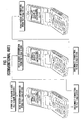
- FIG. 1 is a diagram illustrating an example of a process of executing content files with a conventional mobile terminal.
- the entire file must be downloaded before playback of multimedia data starts.
- an excessively large initial time delay cannot be avoided.
- Streaming refers to a technique in which files do not have to be downloaded in their entirety before playback begins. That is, a small portion of each file is downloaded at a time, thus reducing a delay in playback startup.
- a content file (in particular, multimedia file) must be encoded in a streaming file format.
- 3GPP 3rd Generation Partnership Project
- 3GPP2 3rd Generation Partnership Project 2
- Files of 3GPP and 3GPP2 have filename extensions of .3gp and .3g2 respectively.
- the filename extension .3gp is used as a file encoded for streaming in the mobile environment.
- content files file 1, file 2, and file 3 are stored in a memory unit (HDD) of the mobile terminal.
- HDD memory unit
- a header of a packet in each content file containing video or audio data specifies the name, location, and extension of the content file. Before execution of a specific content file, header information for a packet in the content file must be read from the memory unit (S103).
- the content file is identified by reading the header information and executed content file (S 105).
- connection to the content file is disconnected (S107) and then header information for a packet in the other content file is read from the memory unit (S109 through S 117).
- An aspect of exemplary embodiments of the present invention is to address at least the above problems and/or disadvantages and to provide at least the advantages described below. Accordingly, an aspect of exemplary embodiments of the present invention is to provide a method for setting a playlist for content files stored in a mobile terminal that facilitates execution of the content files without having to read header information and thus reduces the initial execution time associated therewith
- the object may be achieved by generating the playlist using the header information for a packet in each content file before execution.
- a method for setting a playlist for content files stored in a mobile terminal having first and second memory units.
- a specific content file is stored in the first memory unit and header information is extracted from the stored content file.
- a playlist is generated using the header information and the playlist is stored in the second memory unit.
- the playlist stored in the second memory unit is read when a command to execute the content file is received and the content file is executed.
- the method further comprises modifying the playlist stored in the second memory unit when a command is received to delete or add a content file.
- the first memory unit is a hard disk drive (HDD) or non-volatile memory and the second memory unit is a non-volatile memory or a volatile memory.
- the first and second memory units each define a memory region at a different location.
- the content file is either an audio file, still image file, or multimedia video file.
- the header information for each of the stored content files is retrieved.
- the header information contains the name, location, and extension of the content file.
- the playlist is read using random access to one or more content files therein.
- a region preventing the random access is set for a portion of the playlist corresponding to one or more selected content files.
- a track move function allowing a track move is set for a portion of the playlist corresponding to one or more selected content files.
- a region preventing a track move is set for a portion of the playlist corresponding to one or more selected content files.
- a controller of the mobile terminal contains a random access program that allows random access to one or more content files in the playlist and a track move program that allows a track move for the content files and presets regions preventing random access and a track move depending on the type of the content files.
- the random access method is a technique that allows access to header information for a packet in each content file in the playlist in random order regardless of the type of files and the order in which the files are generated.
- the track move method is a technique that allows execution of another content file during execution of a specific content file.
- FIG. 2 illustrates the construction of a mobile terminal comprising first and second memory units according to an exemplary embodiment of the present invention.
- the mobile terminal has features such as the ability to perform mobile communications, camera function, and the ability to display video and still images. To achieve these functions, the mobile terminal comprises a mobile phone, a digital camera, a portable multimedia player (PMP), and other features.
- PMP portable multimedia player
- the mobile terminal 200 comprises a controller 210, first and second memory units 211 and 212, a key input unit 213, an audio processor 214, a camera module 215, an image processor 216, a display unit 217, a radio frequency (RF) unit 218, and a data processor 219.
- a controller 210 the mobile terminal 200 comprises a controller 210, first and second memory units 211 and 212, a key input unit 213, an audio processor 214, a camera module 215, an image processor 216, a display unit 217, a radio frequency (RF) unit 218, and a data processor 219.
- RF radio frequency
- the RF unit 218 performs wireless communications in the mobile terminal.
- the RF unit 218 comprises an RF transmitter that up-converts and amplifies the frequency of a signal being transmitted and an RF receiver that low-noise amplifies a signal being received and down-converts its frequency.
- the data processor 219 comprises a transmitter encoding and modulating the signal transmitted by the RF transmitter and a receiver demodulating and decoding the signal received from the RF receiver. That is, the data processor 219 may comprise a modem and a codec.
- the codec comprises a data codec processing packet data and an audio codec processing audio signals.
- the first memory unit 211 stores data, in particular, multimedia content files.
- the second memory unit 212 temporarily stores data created during the operation of the mobile terminal and a playlist generated using header information in the content files.
- the first memory unit 211 is a non-volatile memory or hard disk drive (HDD).
- the second memory unit 212 comprises a non-volatile memory such as flash memory and a volatile memory such as random access memory (RAM).
- the second memory unit 212 may be embedded within the mobile terminal.
- the content files may be either audio files, still image files or multimedia video files.
- the audio processor 214 reproduces an audio signal output from the audio codec in the data processor 219 or inputs an audio signal generated by a microphone to the audio codec.
- the camera module 215 comprises a camera lens for photographing an object, a camera sensor converting the photographed light signal into an electrical signal, and a signal processor for converting an analog image signal photographed by the camera sensor into digital data.
- the camera sensor and the signal processor may be a charge-coupled device (CCD) sensor and a digital signal processor (DSP), respectively.
- the camera sensor and the signal processor may be integrated with or separated from each other.
- the controller 210 controls the operation of the mobile terminal.
- the controller 210 may comprise the data processor 219.
- the controller 210 is connected to the first memory unit 211, the second memory unit 212, the key input unit 213, the audio processor 214, the image processor 216, the display unit 217, and the data processor 219 to exchange and process data and establish a call.
- the controller 210 extracts header information of content files stored in the first memory unit 211, creates a playlist for the content files using the header information, and stores the playlist in the second memory unit 212.
- the controller 210 also contains a random access program that allows random access to one or more content files in the playlist and a track move program that allows a track move for the content files. Furthermore, the controller 210 presets regions preventing random access and a track move depending on the type of the content files.
- the image processor 216 generates screen-image data for displaying an image signal output from the camera module 215.
- the image processor 216 processes the image signal on a frame-by-frame basis and outputs frame image data according to the properties and size.
- the image processor 216 comprises an image codec that compresses the frame image data displayed on the display unit 217 according to a preset format or decompresses compressed frame image data into the original frame image data.
- the image codec may be Joint Photographic Experts Group (JPEG) codec, Moving Picture Experts Group-4 (MPEG-4) codec, or wavelet codec.
- JPEG Joint Photographic Experts Group
- MPEG-4 Moving Picture Experts Group-4
- the image processor 216 also has an On-Screen Display (OSD) feature.
- the controller 210 controls the image processor 216 to output on-screen data according to the size of the displayed screen.
- the display unit 217 displays the image signal output from the image processor 216 and data output from the controller 210 on the screen.
- the display unit 217 may be a liquid crystal display (LCD) panel or organic light-emitting diode (OLED) display panel.
- the panel has a touch-screen function.
- the key input unit 213 comprises keys for inputting telephone numbers containing numerals and characters and function keys for setting various functions.
- the key input unit 213 may further comprise shortcut keys associated with the function keys, such as '#' or'*'.
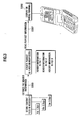
- FIG. 3 is a diagram illustrating an example of a process of executing a content file with a mobile terminal according to an exemplary embodiment of the present invention. The process of executing a content file with the mobile terminal according to an exemplary embodiment of the present invention is described in brief with reference to FIGS. 2 and 3.
- content files for example, multimedia video files
- a file extension .3gp i.e. file 1.3gp, file 2.3gp, and file 3.3gp
- the first memory unit 211 for example that is HDD of the mobile terminal (S301).
- the controller 210 extracts header information of each of the content files (S303), creates a playlist for the header information in the content files, and stores the playlist in the second memory unit 212 (for example that is flash memory) (S305).
- the first memory unit 212 may be a flash memory.
- the first and second memory units 211 and 212 may have the same configuration except for each having a specific region defined as a memory region at different locations.
- the controller 210 When a command to execute a specific content file is received, the controller 210 reads playlist information from the second memory unit 212 (S307) to search for and extract the content file stored in the first memory unit 211 and displays an image corresponding to the content file on the display unit 217 of the mobile terminal (S309).
- the playlist is searched using random access to one or more content files, other than sequential access (in file number order).
- the controller 210 sets regions preventing random access and a track move for a portion of the playlist corresponding to one or more selected content files.
- the controller 210 sets a track move function that allows a track move for a portion of the playlist corresponding to one or more selected content files.
- the controller 210 comprises a random access program that allows random access to one or more content files in the playlist and a track move program that allows a track move for the content files. Further, the controller 210 presets regions preventing random access and a track move depending on the type of the content files.
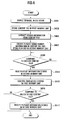
- FIG. 4 is a flowchart illustrating a method for setting a playlist for content files in a mobile terminal and a process of executing the content files according to an exemplary embodiment of the present invention. The process of executing a content file with the mobile terminal is described in detail with reference to FIGS. 2 and 4.
- the mobile terminal is in an idle state (S401).
- the first memory unit 211 may be an HDD for a mobile terminal or a non-volatile memory such as a flash memory.
- the content files may be either audio files, still image files, or multimedia video files.
- the controller 210 extracts header information in the stored content files by retrieving header information for a packet in each content file (S405).
- the header information specifies the name, location, and extension of the content file containing image and audio data.
- the controller 210 creates a playlist using the extracted header information and stores the playlist in the second memory unit 212 (S407).
- the second memory unit 212 may comprise a non-volatile memory such as a flash memory.
- non-volatile memory for the second memory unit 212 eliminates the need to retrieve a specific content file stored in the first memory unit 211. Since the non-volatile memory retains the previously stored data even when the power is off, the header information for the specific file can be stably stored.
- the mobile terminal determines whether a command to execute a specific content is received (S409).
- a command may be input using a keypad in the key input unit 213 or an LCD touch screen in the display unit 217.
- the controller 210 If a command to execute a specific content is received, the controller 210 reads a playlist from the volatile memory device such as RAM in the second memory unit 212 (S411). In particular, the playlist is extracted from the flash memory and stored in the RAM during the booting of the mobile terminal. The playlist stored in the RAM is then read and a specific content is executed. Because the header information associated with the content file stored in the first memory unit 211 has been stored in the playlist in the step S407, extraction of header information in order to read the header information for the specific file is not required before execution. Thus, initial execution time associated with the content file can be reduced.
- the content file stored in the first memory unit 211 is then executed (S413).
- the method for executing a content file with a mobile terminal eliminates the step of checking header information for a content file stored in the first memory unit 211, thereby eliminating a time delay introduced by reading header information containing file name, file location, and file extension, among others when a command to execute the content file is input.
- the method can reduce the initial execution time associated with the content file.
- the mobile terminal determines whether a command is received to delete or add a specific content file stored in the first memory unit 211 (S415).
- the playlist is modified according to the command (S417).
- the content file is deleted from the first memory unit 211 and header information for the content file is removed from the playlist stored in the second memory unit 212.
- the content file is stored in the first memory unit 211, header information for a packet in the stored content file, such as file name, file location, and file extension, is extracted, and the header information is added to the playlist stored in the second memory unit 212.
- the content file By generating a playlist using the header information for a packet in each content file stored in a mobile terminal before execution, the content file can be executed without having to read header information. This reduces initial execution time associated with the content file.
- the present invention can also be embodied as computer readable codes on a computer readable recording medium.
- the computer readable recording medium is any data storage device that can store programs or data which can be thereafter read by a computer system. Examples of the computer readable recording medium include read-only memory (ROM), random-access memory (RAM), CD-ROMs, magnetic tapes, hard disks, floppy disks, flash memory, and optical data storage devices, among others.
- the computer readable recording medium can also be distributed over network-coupled computer systems so that the computer-readable code is stored and executed in a distributed fashion. Also, functional programs, codes and code segments for accomplishing the present invention can be easily construed as within the scope of the invention by programmers skilled in the art to which the present invention pertains.
Landscapes
- Engineering & Computer Science (AREA)
- Theoretical Computer Science (AREA)
- Business, Economics & Management (AREA)
- Physics & Mathematics (AREA)
- Tourism & Hospitality (AREA)
- Human Computer Interaction (AREA)
- General Physics & Mathematics (AREA)
- General Business, Economics & Management (AREA)
- Health & Medical Sciences (AREA)
- Primary Health Care (AREA)
- Marketing (AREA)
- Human Resources & Organizations (AREA)
- General Health & Medical Sciences (AREA)
- Economics (AREA)
- Strategic Management (AREA)
- General Engineering & Computer Science (AREA)
- Computer Networks & Wireless Communication (AREA)
- Signal Processing (AREA)
- Television Signal Processing For Recording (AREA)
- Telephone Function (AREA)
- Two-Way Televisions, Distribution Of Moving Picture Or The Like (AREA)
Applications Claiming Priority (1)
| Application Number | Priority Date | Filing Date | Title |
|---|---|---|---|
| KR1020060056153A KR100775898B1 (ko) | 2006-06-22 | 2006-06-22 | 이동통신단말의 콘텐츠 파일 플레이 리스트 설정방법 |
Publications (2)
| Publication Number | Publication Date |
|---|---|
| EP1870897A2 true EP1870897A2 (fr) | 2007-12-26 |
| EP1870897A3 EP1870897A3 (fr) | 2008-02-06 |
Family
ID=38650130
Family Applications (1)
| Application Number | Title | Priority Date | Filing Date |
|---|---|---|---|
| EP07000492A Withdrawn EP1870897A3 (fr) | 2006-06-22 | 2007-01-11 | Procédé et appareil de configuration d'une liste d'écoute pour des fichiers de contenu dans un terminal mobile |
Country Status (4)
| Country | Link |
|---|---|
| US (1) | US20070299875A1 (fr) |
| EP (1) | EP1870897A3 (fr) |
| KR (1) | KR100775898B1 (fr) |
| CN (1) | CN101094366A (fr) |
Families Citing this family (4)
| Publication number | Priority date | Publication date | Assignee | Title |
|---|---|---|---|---|
| US9544259B2 (en) * | 2006-11-08 | 2017-01-10 | Open Invention Network, Llc | Apparatus and method for dynamic streaming of multimedia files |
| KR101379986B1 (ko) * | 2007-04-05 | 2014-04-03 | 엘지전자 주식회사 | 전자기기 및 이를 이용한 컨텐츠의 추가방법 |
| CN104063438A (zh) * | 2014-06-11 | 2014-09-24 | 惠州华阳通用电子有限公司 | 一种多媒体文件搜索方法 |
| JP7442302B2 (ja) * | 2019-11-22 | 2024-03-04 | キヤノン株式会社 | データ処理装置およびその制御方法、プログラム |
Citations (3)
| Publication number | Priority date | Publication date | Assignee | Title |
|---|---|---|---|---|
| US20020045960A1 (en) | 2000-10-13 | 2002-04-18 | Interactive Objects, Inc. | System and method for musical playlist selection in a portable audio device |
| EP1411512A2 (fr) | 2002-10-16 | 2004-04-21 | Microsoft Corporation | Système adaptif de menus pour lecteur de media |
| US20060111145A1 (en) | 2002-12-11 | 2006-05-25 | Koninikjkle Phillips Electronics N;V; | Mobile device that uses removable medium for playback of content |
Family Cites Families (11)
| Publication number | Priority date | Publication date | Assignee | Title |
|---|---|---|---|---|
| US6876368B2 (en) * | 2001-08-14 | 2005-04-05 | National Instruments Corporation | System and method for deploying a graphical program to a PDA device |
| KR100393619B1 (ko) * | 2001-09-07 | 2003-08-02 | 삼성전자주식회사 | 휴대 단말기의 메모리 장치 및 그 제어방법 |
| US7043477B2 (en) | 2002-10-16 | 2006-05-09 | Microsoft Corporation | Navigating media content via groups within a playlist |
| US7707231B2 (en) * | 2002-10-16 | 2010-04-27 | Microsoft Corporation | Creating standardized playlists and maintaining coherency |
| KR100524750B1 (ko) * | 2003-04-29 | 2005-11-01 | 엘지전자 주식회사 | 이동 통신 단말기의 멀티미디어 컨텐츠 재생 시간 표시 방법 |
| TW200525360A (en) * | 2004-01-19 | 2005-08-01 | Comax Semiconductor Inc | Mobile communication device and memory device and accessing process thereof |
| JP4214475B2 (ja) * | 2004-02-03 | 2009-01-28 | ソニー株式会社 | 情報処理装置および方法、並びにプログラム |
| KR100630185B1 (ko) * | 2004-07-07 | 2006-09-29 | 삼성전자주식회사 | 하드 와이어드 코드를 이용한 시동 모드를 지원하는 이동단말 시스템의 시동 장치 및 방법 |
| JP2006108843A (ja) | 2004-10-01 | 2006-04-20 | Matsushita Electric Ind Co Ltd | 再生装置と再生方法 |
| US7685210B2 (en) * | 2005-12-30 | 2010-03-23 | Microsoft Corporation | Media discovery and curation of playlists |
| US20070220443A1 (en) * | 2006-03-17 | 2007-09-20 | Cranfill David B | User interface for scrolling |
-
2006
- 2006-06-22 KR KR1020060056153A patent/KR100775898B1/ko not_active Expired - Fee Related
- 2006-12-19 US US11/641,049 patent/US20070299875A1/en not_active Abandoned
-
2007
- 2007-01-11 EP EP07000492A patent/EP1870897A3/fr not_active Withdrawn
- 2007-01-12 CN CNA2007100003512A patent/CN101094366A/zh active Pending
Patent Citations (3)
| Publication number | Priority date | Publication date | Assignee | Title |
|---|---|---|---|---|
| US20020045960A1 (en) | 2000-10-13 | 2002-04-18 | Interactive Objects, Inc. | System and method for musical playlist selection in a portable audio device |
| EP1411512A2 (fr) | 2002-10-16 | 2004-04-21 | Microsoft Corporation | Système adaptif de menus pour lecteur de media |
| US20060111145A1 (en) | 2002-12-11 | 2006-05-25 | Koninikjkle Phillips Electronics N;V; | Mobile device that uses removable medium for playback of content |
Also Published As
| Publication number | Publication date |
|---|---|
| KR100775898B1 (ko) | 2007-11-13 |
| CN101094366A (zh) | 2007-12-26 |
| US20070299875A1 (en) | 2007-12-27 |
| EP1870897A3 (fr) | 2008-02-06 |
Similar Documents
| Publication | Publication Date | Title |
|---|---|---|
| US11868314B2 (en) | File processing method and mobile terminal | |
| EP2124438B1 (fr) | Procédé et appareil pour la création de contenu multimédia dans un terminal mobile | |
| CN1973531A (zh) | 用于控制便携式装置中的照相机资源的系统 | |
| KR102014083B1 (ko) | 단말기의 메모리 관리방법 및 장치 | |
| JP2008123511A (ja) | 携帯用端末機のイメージ出力装置及び方法 | |
| CN105704527A (zh) | 一种终端及终端进行视频帧定位的方法 | |
| EP1870897A2 (fr) | Procédé et appareil de configuration d'une liste d'écoute pour des fichiers de contenu dans un terminal mobile | |
| US20070188593A1 (en) | Apparatus and method for managing content with category information in a mobile communication terminal | |
| US20080288672A1 (en) | Information processing system, information terminal and server apparatus | |
| CN102402570B (zh) | 数据管理设备和记录介质 | |
| CN101064885A (zh) | 在无线终端中显示图像的方法和装置 | |
| EP4506831A1 (fr) | Procédé de traitement de données et dispositif électronique | |
| US7310114B2 (en) | Picture storage device | |
| US8219150B2 (en) | Portable electronic equipment capable of displaying candidate of scene based on frequency information | |
| KR101622680B1 (ko) | 이동단말기 및 그의 이미지 처리 방법 | |
| US12307076B2 (en) | Image deletion operation notification method, device, and storage medium | |
| JP2003178061A (ja) | 情報処理装置および方法、並びにプログラム | |
| US20080010261A1 (en) | Integrated content file search method for mobile terminal and mobile terminal implementing the same | |
| KR20050063977A (ko) | 이동통신 단말기에서의 카메라 영상 메모 편집 방법 | |
| US20060244858A1 (en) | Method and system for changing image state in wireless terminal | |
| KR100744476B1 (ko) | 휴대 단말기에서 사용자 데이터 정보 저장 방법 및 장치 | |
| CN114979451A (zh) | 图像预览方法及装置、存储介质 | |
| JP2001306236A (ja) | 情報処理装置、動作認識処理方法及びプログラム格納媒体 | |
| JP2011193387A (ja) | 動画像表示装置および動画像表示方法 | |
| KR20050054288A (ko) | 이동통신단말기의 데이터 저장장치 |
Legal Events
| Date | Code | Title | Description |
|---|---|---|---|
| PUAI | Public reference made under article 153(3) epc to a published international application that has entered the european phase |
Free format text: ORIGINAL CODE: 0009012 |
|
| 17P | Request for examination filed |
Effective date: 20070111 |
|
| AK | Designated contracting states |
Kind code of ref document: A2 Designated state(s): AT BE BG CH CY CZ DE DK EE ES FI FR GB GR HU IE IS IT LI LT LU LV MC NL PL PT RO SE SI SK TR |
|
| AX | Request for extension of the european patent |
Extension state: AL BA HR MK YU |
|
| PUAL | Search report despatched |
Free format text: ORIGINAL CODE: 0009013 |
|
| AK | Designated contracting states |
Kind code of ref document: A3 Designated state(s): AT BE BG CH CY CZ DE DK EE ES FI FR GB GR HU IE IS IT LI LT LU LV MC NL PL PT RO SE SI SK TR |
|
| AX | Request for extension of the european patent |
Extension state: AL BA HR MK YU |
|
| 17Q | First examination report despatched |
Effective date: 20080828 |
|
| AKX | Designation fees paid |
Designated state(s): DE FR GB |
|
| RAP1 | Party data changed (applicant data changed or rights of an application transferred) |
Owner name: SAMSUNG ELECTRONICS CO., LTD. |
|
| STAA | Information on the status of an ep patent application or granted ep patent |
Free format text: STATUS: THE APPLICATION IS DEEMED TO BE WITHDRAWN |
|
| 18D | Application deemed to be withdrawn |
Effective date: 20120801 |