EP1876314B1 - Montageelement - Google Patents
Montageelement Download PDFInfo
- Publication number
- EP1876314B1 EP1876314B1 EP07450117A EP07450117A EP1876314B1 EP 1876314 B1 EP1876314 B1 EP 1876314B1 EP 07450117 A EP07450117 A EP 07450117A EP 07450117 A EP07450117 A EP 07450117A EP 1876314 B1 EP1876314 B1 EP 1876314B1
- Authority
- EP
- European Patent Office
- Prior art keywords
- mounting element
- mounting
- flange
- element according
- hole
- Prior art date
- Legal status (The legal status is an assumption and is not a legal conclusion. Google has not performed a legal analysis and makes no representation as to the accuracy of the status listed.)
- Not-in-force
Links
Images

Classifications
-
- E—FIXED CONSTRUCTIONS
- E04—BUILDING
- E04F—FINISHING WORK ON BUILDINGS, e.g. STAIRS, FLOORS
- E04F13/00—Coverings or linings, e.g. for walls or ceilings
- E04F13/07—Coverings or linings, e.g. for walls or ceilings composed of covering or lining elements; Sub-structures therefor; Fastening means therefor
- E04F13/08—Coverings or linings, e.g. for walls or ceilings composed of covering or lining elements; Sub-structures therefor; Fastening means therefor composed of a plurality of similar covering or lining elements
- E04F13/0801—Separate fastening elements
- E04F13/0803—Separate fastening elements with load-supporting elongated furring elements between wall and covering elements
- E04F13/081—Separate fastening elements with load-supporting elongated furring elements between wall and covering elements with additional fastening elements between furring elements and covering elements
- E04F13/0816—Separate fastening elements with load-supporting elongated furring elements between wall and covering elements with additional fastening elements between furring elements and covering elements the additional fastening elements extending into the back side of the covering elements
- E04F13/0817—Separate fastening elements with load-supporting elongated furring elements between wall and covering elements with additional fastening elements between furring elements and covering elements the additional fastening elements extending into the back side of the covering elements extending completely through the covering elements
-
- F—MECHANICAL ENGINEERING; LIGHTING; HEATING; WEAPONS; BLASTING
- F16—ENGINEERING ELEMENTS AND UNITS; GENERAL MEASURES FOR PRODUCING AND MAINTAINING EFFECTIVE FUNCTIONING OF MACHINES OR INSTALLATIONS; THERMAL INSULATION IN GENERAL
- F16B—DEVICES FOR FASTENING OR SECURING CONSTRUCTIONAL ELEMENTS OR MACHINE PARTS TOGETHER, e.g. NAILS, BOLTS, CIRCLIPS, CLAMPS, CLIPS OR WEDGES; JOINTS OR JOINTING
- F16B5/00—Joining sheets or plates, e.g. panels, to one another or to strips or bars parallel to them
- F16B5/02—Joining sheets or plates, e.g. panels, to one another or to strips or bars parallel to them by means of fastening members using screw-thread
- F16B5/0241—Joining sheets or plates, e.g. panels, to one another or to strips or bars parallel to them by means of fastening members using screw-thread with the possibility for the connection to absorb deformation, e.g. thermal or vibrational
-
- F—MECHANICAL ENGINEERING; LIGHTING; HEATING; WEAPONS; BLASTING
- F16—ENGINEERING ELEMENTS AND UNITS; GENERAL MEASURES FOR PRODUCING AND MAINTAINING EFFECTIVE FUNCTIONING OF MACHINES OR INSTALLATIONS; THERMAL INSULATION IN GENERAL
- F16B—DEVICES FOR FASTENING OR SECURING CONSTRUCTIONAL ELEMENTS OR MACHINE PARTS TOGETHER, e.g. NAILS, BOLTS, CIRCLIPS, CLAMPS, CLIPS OR WEDGES; JOINTS OR JOINTING
- F16B5/00—Joining sheets or plates, e.g. panels, to one another or to strips or bars parallel to them
- F16B5/02—Joining sheets or plates, e.g. panels, to one another or to strips or bars parallel to them by means of fastening members using screw-thread
- F16B5/0258—Joining sheets or plates, e.g. panels, to one another or to strips or bars parallel to them by means of fastening members using screw-thread using resiliently deformable sleeves, grommets or inserts
-
- F—MECHANICAL ENGINEERING; LIGHTING; HEATING; WEAPONS; BLASTING
- F16—ENGINEERING ELEMENTS AND UNITS; GENERAL MEASURES FOR PRODUCING AND MAINTAINING EFFECTIVE FUNCTIONING OF MACHINES OR INSTALLATIONS; THERMAL INSULATION IN GENERAL
- F16B—DEVICES FOR FASTENING OR SECURING CONSTRUCTIONAL ELEMENTS OR MACHINE PARTS TOGETHER, e.g. NAILS, BOLTS, CIRCLIPS, CLAMPS, CLIPS OR WEDGES; JOINTS OR JOINTING
- F16B5/00—Joining sheets or plates, e.g. panels, to one another or to strips or bars parallel to them
- F16B5/04—Joining sheets or plates, e.g. panels, to one another or to strips or bars parallel to them by means of riveting
Definitions
- the invention relates to a mounting element for a mounting holes having facing plate, wherein the mounting element is formed by a compensating bushing, which compensating bushing comprises a plug-in portion, wherein the compensating bushing has a through hole for substantially free of play receiving a fastener, and the compensating bush is formed of an elastic material which receives the relative movements between the facade panel and the fastener by deformation.
- a widespread form of cladding of buildings consists in the attachment of facade panels, which are screwed or riveted to a substructure, such as metal or wood. Both the façade panels and the substructure are subject to external influences such as humidity and temperature, which causes changes in length which lead to stresses in the area of the fastening points.
- a substructure such as metal or wood.
- Both the façade panels and the substructure are subject to external influences such as humidity and temperature, which causes changes in length which lead to stresses in the area of the fastening points.
- For fiber cement facing panels e.g. a significant swelling or shrinkage behavior depending on the moisture, which must be taken into account when mounting the facade panels.
- the mounting holes through which the respective fasteners are guided for connection to the substructure, formed with a considerably larger diameter compared to the diameter of the fasteners.
- a maximum of two of the mounting holes have a slightly smaller diameter, so as not to allow strong intrinsic movements of the facade panels.
- this can lead to collective movements and displacements of the facade panels, which affect the appearance of the facade and at the same time hold the risk of damage in itself.
- a non-centered or oblique attachment of the respective fastener allows, which are mounted by the assembly staff relatively often inclined from the façade plate level projecting screws or rivets, which look visually unfavorable and also allow a reduced expansion margin.
- a sleeve member made of an elastic material which is pressed by tightening the fastening screw in the hole of the component to be fastened.
- the object of the invention is to provide a mounting element which allows a low-vibration, elastic attachment of facade panels, which meets the requirements of a length expansion compensation by environmental influences.
- Another object is to provide a mounting element which protects the mounting holes against penetration of substances of any shape.
- Another object of the invention is to achieve centered attachment of the fasteners within the mounting holes
- the male portion is formed by a hollow cylinder body along the outer circumference spaced from each other, radially outwardly wegêt and parallel to the hollow cylinder axis extending webs are formed, and that the hollow cylindrical body has at one end a flange-like portion whose outer diameter with the free end of the radially projecting webs extends substantially in alignment.
- the mounting element according to an embodiment of the invention may be formed integrally and made of an elastic plastic. In this way, an elastic mounting of the facade panel is ensured on the substructure.
- the centering of the fastener is ensured relative to the mounting hole and at the same time can be performed at relatively length changes between substructure and the facade panel sufficiently large movements.
- the flange-like portion is preferably designed so that it causes a secure fit of the mounting element according to the invention.
- the flange-like portion may have at its end a frusto-conical portion to prevent the mounting member according to the invention is pushed through at its attachment through the mounting hole.
- a sealing lip may be formed on the male portion, which seals the mounting hole of the facade panel after attaching the fastener against the outside penetrating moisture.
- the sealing lip can be formed by an annular cross-sectional widening of the flange-like section whose outer diameter is greater than the diameter of the fastening holes.
- the flange-like portion may have in the region of the through hole opening in the direction of the central axis projecting, frustoconical bearing surface. This is compressed by the fastener and thus seals the through hole from the outside environment.
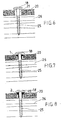
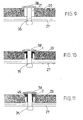
- Fig. 6 and 9 2 show, according to the prior art, a region of a facade panel 20 with a fastening hole 21 through which a screw 25 (FIG. Fig. 6 ) or a rivet 35 (FIG. Fig. 9 ), which is connected to the respective substructure, a wooden battens 26 in Fig. 6 or a metal frame 27 in Fig. 9 are connected.
- the mounting holes 21 are made so large that there is sufficient room for enlargement or reduction eg in the course of shrinkage or a swelling of a fiber cement facade panel remains. How out Fig. 6 and 9 can be seen, it may, due to the size of the mounting hole 21 in case of imprecise mounting to misalignments of the fasteners 25, 35 come, which can have adverse consequences for the expansion margin.
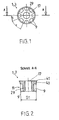
- Fig. 1 and 2 show an inventive mounting element 1 for attachment of facade panels with mounting holes.
- the type of facade panel and the number of mounting holes, which are mounted in this facade panel, is not subject to any limitation in the context of the invention.
- the mounting element 1 according to the invention is used in fiber cement facade panels, since in these the dimensional variations occur particularly strong, so that the mounting holes must have correspondingly large diameter.
- the mounting element 1 is a compensating bushing 3, which has a plug-in portion 11 whose outer diameter D1 is substantially equal to the diameter of the mounting holes.
- fastening element such as a screw has the compensating bushing 3 via a through hole 17 and is formed of an elastic material which receives the relative movements between the facade panel and the fastener by deformation.
- the mounting element 1, 2 or the compensating bushing 3 according to the invention is made in one piece and made of an elastic plastic material, for example EPDM.
- the insertion section is formed by a hollow cylinder body 29, along whose outer circumference are spaced apart, radially outwardly wegêt and parallel to the hollow cylinder axis extending webs 9 are formed, which are arranged like a star and offset by 45 ° to each other.
- the webs 9 provide on the one hand for a central spacing of the hollow cylinder body 29 of the inner wall of the mounting holes and at the same time ensure a Deformability of the compensating bushing in all directions in the plane of the facade panel in the event of longitudinal expansion or contraction.
- the hollow cylindrical body 29 has at one end a flange-like portion 40, the outer diameter of which extends substantially flush with the free end of the radially projecting webs 9.
- This outer diameter may be selected so that the flange-like portion 40 in the mounting hole has a tight fit, so that the compensating bushing can not fall out of the mounting hole during the assembly process.
- the flange-like portion 40 has at its end a frusto-conical portion 41, which prevents the compensating bushing from being pushed through the fastening hole.
- the mounting element 1 of the invention in the mounting hole 21 and then the fastener, namely the screw 25 passed through the through hole 17 of the hollow cylindrical body 29 and then anchored in the substructure 26, such as in Fig. 7 shown.
- a moisture seal in the form of a molded on the insertion portion 11 sealing lip 45 is formed, which seals the mounting hole of the facade panel after attaching the fastener against the outside penetrating moisture.
- the sealing lip 45 is formed by an annular cross-sectional widening of the flange-like portion 40, the outer diameter D2 is greater than the diameter of the mounting holes, so that the sealing lip 45 rests during assembly on the outside facade panel surface.
- Fastener 25, 35 is anchored in the substructure 26, 27, presses this example with his screw head 18 (FIG. Fig. 8 ) or eg with its rivet head 38 ( Fig. 11 ) against the sealing lip 45, whereby a sealing completion with respect to the facade panel 20 is formed.
- the flange-like portion 40 in the region of the through hole opening in the direction of the central axis projecting, frustoconical bearing surface 46 which causes a seal of the through hole 17 relative to the outside environment as soon as the head 18, 38 of the fastener 25, 35 rests satisfactorily.
Landscapes
- Engineering & Computer Science (AREA)
- General Engineering & Computer Science (AREA)
- Mechanical Engineering (AREA)
- Architecture (AREA)
- Civil Engineering (AREA)
- Structural Engineering (AREA)
- Finishing Walls (AREA)
- Insertion Pins And Rivets (AREA)
- Connection Of Plates (AREA)
- Load-Bearing And Curtain Walls (AREA)
Description
- Die Erfindung betrifft ein Montageelement für eine Befestigungslöcher aufweisende Fassadenplatte, wobei das Montageelement durch eine Ausgleichsbuchse gebildet ist, welche Ausgleichsbuchse einen Einsteckabschnitt umfasst, wobei die Ausgleichsbuchse ein Durchgangsloch für die im wesentliche spielfreie Aufnahme eines Befestigungselements aufweist, und die Ausgleichsbuchse aus einem elastischen Material gebildet ist, das die Relativbewegungen zwischen der Fassadenplatte und dem Befestigungselement durch Verformung aufnimmt.
- Eine weit verbreitete Form der Verkleidung von Gebäuden besteht in der Anbringung von Fassadenplatten, die auf eine Unterkonstruktion, etwa aus Metall oder aus Holz geschraubt oder genietet werden. Sowohl die Fassadenplatten als auch die Unterkonstruktion unterliegen äußeren Einflüssen wie Feuchtigkeit und Temperatur, wodurch Längenänderungen hervorgerufen werden, die zu Spannungen im Bereich der Befestigungspunkte führen. Bei Faserzement-Fassadenplatten liegt z.B. ein signifikantes Quell- bzw. Schrumpfverhalten in Abhängigkeit von der Feuchtigkeit vor, welches bei der Montage der Fassadenplatten berücksichtigt werden muß.
- Aus diesem Grund sind die Befestigungslöcher, durch welche hindurch die entsprechenden Befestigungselemente zum Verbinden mit der Unterkonstruktion geführt sind, mit beträchtlich größerem Durchmesser im Vergleich zum Durchmesser der Befestigungselemente ausgebildet. Als Folge davon werden Längenausdehnungen zwar ausgeglichen, die an der Wand angebrachten Fassadenplatten sind aber im Montagezustand gegenüber den Befestigungselementen mit einem erheblichen Spiel bewegbar. Maximal zwei der Befestigungslöcher haben einen etwas kleineren Durchmesser, um nicht starke Eigenbewegungen der Fassadenplatten zuzulassen. Dies kann dennoch zu kollektiven Bewegungen und Verschiebungen der Fassadenplatten führen, die das Erscheinungsbild der Fassade beeinträchtigen und zugleich die Gefahr von Beschädigungen in sich bergen. Weiters wird ein nicht zentriertes oder schräges Ansetzen des jeweiligen Befestigungselements ermöglicht, wodurch vom Montagepersonal relativ häufig geneigt aus der Fassadenplattenebene ragende Schrauben oder Nieten angebracht werden, die optisch unvorteilhaft aussehen und auch einen verminderten Ausdehnungsspielraum zulassen.
- Zugleich können durch die groß dimensionierten Befestigungslöcher Verunreinigungen in Form von Staub und Sand, Regenwasser, Schnee, Schadstoffen sowie Ungeziefer etc. hinter die Fassadenplatten gelangen, wodurch sich über die Jahre Folgeschäden ausbilden können. Wasser dringt zudem bei Faserzementplatten im Bereich der Befestigungslöcher in das Plattenmaterial ein, wodurch sich sichtbare Flecken in Form eines feuchten Hofes rund um das Befestigungsloch und Ausblühungen an der Außenseite durch Salzablagerungen ergeben.
- In
GB 1 151 861 A - In
DE 42 19 761 A1 undUS 3 675 881 A werden Buchsen offenbart, die durch das Anziehen der Befestigungsschraube gegen die Lochlaibung gepresst werden und so eine Fixierung des zu befestigenden Bauteils bewerkstelligt wird. - Aufgabe der Erfindung ist es, ein Montageelement anzugeben, welches eine schwingungsarme, elastische Befestigung von Fassadenplatten ermöglicht, die den Anforderungen eines Längenausdehnungsausgleiches durch umweltbedingte Einflüsse gerecht wird.
- Weitere Aufgabe ist es, ein Montageelement anzugeben, welches die Befestigungslöcher vor einem Eindringen von Stoffen jeglicher Form schützt.
- Ein weiteres Ziel der Erfindung besteht darin, eine zentrierte Befestigung der Befestigungselemente innerhalb der Befestigungslöcher zu erreichen
- Dies wird erfindungsgemäß dadurch erreicht, daß der Einsteckabschnitt durch einen Hohlzylinderkörper gebildet ist, entlang dessen Außenumfang voneinander beabstandete, radial nach außen wegstehende und parallel zur Hohlzylinderachse verlaufende Stege angeformt sind, und daß der Hohlzylinderkörper an einem Ende einen flanschartigen Abschnitt aufweist, dessen Außendurchmesser mit dem freien Ende der radial wegstehenden Stege im wesentlichen fluchtend verläuft.
- Durch die zwischen dem Befestigungselement und dem Befestigungsloch der Fassadenplatte anzubringende erfindungsgemäße Montageelement wird ein zentriertes Anbringen des Befestigungselements ermöglicht und zugleich eine elastische Lagerung gewährleistet, welche auch Längenveränderungen der Fassadenplatte oder der Unterkonstruktion auszugleichen in der Lage ist. Da alle Befestigungslöcher einer Fassadenplatte mit einem solchen erfindungsgemäßen Montageelement versehen sein können, bringt dies auch eine völlig gleichmäßige Gewichtsverteilung für alle Befestigungselemente mit sich.
- In bevorzugter Weise kann das Montageelement gemäß einer Ausführungsform der Erfindung einstückig und aus einem elastischen Kunststoff gebildet sein. Auf diese Weise wird eine elastische Lagerung der Fassadenplatte auf der Unterkonstruktion sichergestellt.
- Mittels der Stege ist die Zentrierung des Befestigungselements gegenüber dem Befestigungsloch gewährleistet und zugleich können bei Relativlängenänderungen zwischen Unterkonstruktion und der Fassadenplatte ausreichend große Bewegungen ausgeführt werden.
- Der flanschartige Abschnitt ist vorzugsweise so ausgeführt, das er einen sicheren Sitz des erfindungsgemäßen Montageelements bewirkt.
- Zusätzlich kann der flanschartige Abschnitt an seinem Ende einen kegelstumpfartigen Abschnitt aufweisen, um zu verhindern, daß das erfindungsgemäße Montageelement bei seiner Anbringung durch das Befestigungsloch hindurchgestoßen wird.
- Um ein Eindringen von Wasser und Feuchtigkeit in das Befestigungsloch der Fassadenplatte zu unterbinden, kann in weiterer Ausbildung der Erfindung an den Einsteckabschnitt eine Dichtlippe angeformt sein, welche das Befestigungsloch der Fassadenplatte nach Anbringen des Befestigungselements gegenüber von außen eindringender Feuchtigkeit abdichtet.
- Es kann die Dichtlippe dabei durch eine ringartige Querschnittserweiterung des flanschartigen Abschnitts gebildet sein, deren Außendurchmesser größer als der Durchmesser der Befestigungslöcher ist. Bei der Verankerung des Befestigungselements in der Unterkonstruktion drückt dieses gegen die Dichtlippe und dichtet somit das Befestigungsloch entlang seines gesamten Öffnungsumfangs gegenüber der Außenumgebung.
- Damit auch das Eindringen von Flüssigkeit durch das Durchgangsloch des erfindungsgemäßen Montageelements vermeidbar ist, kann der flanschartige Abschnitt im Bereich der Durchgangslochöffnung eine in Richtung der Mittelachse vorstehende, kegelstumpfartige Auflagefläche aufweisen. Diese wird durch das Befestigungselement zusammengedrückt und dichtet somit das Durchgangsloch gegenüber der Außenumgebung ab.
- Die Erfindung wird nachfolgend anhand der in den Zeichnungen gezeigten Ausführungsbeispiele eingehend erläutert. Es zeigt dabei
-
Fig. 1 zeigt eine Draufsicht auf die von der Fassadenoberfläche abgewandte Stirnfläche einer Ausführungsform des erfindungsgemäßen Montageelements; -
Fig. 2 zeigt einen Schnitt AA durch die Ausführungsform gemäßFig. 1 ; -
Fig. 3 zeigt eine Draufsicht auf die von der Fassadenoberfläche abgewandte Stirnfläche einer weiteren Ausführungsform des erfindungsgemäßen Montageelements; -
Fig. 4 zeigt einen Schnitt AA durch die Ausführungsform gemäßFig. 3 ; -
Fig. 5 zeigt einen Schrägriß der Ausführungsform gemäßFig. 3 ; -
Fig. 6 einen teilweisen Schnitt durch eine Fassadenplatte und ein Befestigungsloch mit einem Befestigungselement gemäß Stand der Technik; -
Fig. 7 einen teilweisen Schnitt durch eine Fassadenplatte und ein Befestigungsloch mit einem Befestigungselement und einem Montageelement gemäßFig. 1 ; -
Fig. 8 einen teilweisen Schnitt durch eine Fassadenplatte und ein Befestigungsloch mit einem Befestigungselement und einem Montageelement gemäßFig. 3 ; -
Fig. 9 einen teilweisen Schnitt durch eine Fassadenplatte und ein Befestigungsloch mit einem Befestigungselement gemäß Stand der Technik; -
Fig. 10 einen teilweisen Schnitt durch eine Fassadenplatte und ein Befestigungsloch mit einem Befestigungselement und einem Montageelement gemäßFig. 1 und -
Fig. 11 einen teilweisen Schnitt durch eine Fassadenplatte und ein Befestigungsloch mit einem Befestigungselement und einem Montageelement gemäßFig. 3 ; -
Fig. 6 und9 zeigen gemäß Stand der Technik einen Bereich einer Fassadenplatte 20 mit einem Befestigungsloch 21, durch das als Befestigungselement eine Schraube 25 (Fig. 6 ) bzw. eine Niete 35 (Fig. 9 ) hindurchgeführt ist, die mit der jeweiligen Unterkonstruktion, einer Holz-Lattung 26 inFig. 6 bzw. einem Metallgerüst 27 inFig. 9 verbunden sind. Um die auftretenden Längenänderungen, deren Ursache sowohl die Unterkonstruktion 26, 27 als auch die Fassadenplatte 20 sein können, ohne Entstehen von mechanischen Spannungen zuzulassen, sind die Befestigungslöcher 21 so groß ausgeführt, daß genügend Platz für eine Vergrößerung oder eine Verkleinerung z.B. im Verlauf einer Schrumpfung oder einer Quellung einer Faserzement-Fassadenplatte verbleibt. Wie ausFig. 6 und9 zu erkennen ist, kann es, bedingt durch die Größe des Befestigungsloches 21 bei unpräziser Montage zu Schiefstellungen der Befestigungselemente 25, 35 kommen, die nachteilige Folgen für den Ausdehnungsspielraum haben können. -
Fig. 1 und 2 zeigen ein erfindungsgemäßes Montageelement 1 zur Befestigung von Fassadenplatten mit Befestigungslöchern. Die Art der Fassadenplatte und die Anzahl der Befestigungslöcher, die in dieser Fassadenplatte angebracht sind, unterliegt im Rahmen der Erfindung keiner Beschränkung. Bevorzugt findet das erfindungsgemäße Montageelement 1 bei Faserzement-Fassadenplatten Anwendung, da bei diesen die Dimensionsschwankungen besonders stark auftreten, sodaß die Befestigungslöcher entsprechend großen Durchmesser aufweisen müssen. - Das erfindungsgemäße Montageelement 1 ist eine Ausgleichsbuchse 3, die einen Einsteckabschnitt 11 aufweist, dessen Außendurchmesser D1 im wesentlichen gleich dem Durchmesser der Befestigungslöcher ist. Zur spielfreien Aufnahme eines in
Fig. 1 und Fig. 2 nicht dargestellten Befestigungselements, z.B. einer Schraube verfügt die Ausgleichsbuchse 3 über ein Durchgangsloch 17 und ist aus einem elastischen Material gebildet ist, das die Relativbewegungen zwischen der Fassadenplatte und dem Befestigungselement durch Verformung aufnimmt. - In den in den
Fig. 1 bis 5 gezeigten Ausführungsbeispielen ist das erfindungsgemäße Montageelement 1, 2 bzw. die Ausgleichsbuchse 3 einstückig und aus einem elastischen Kunststoff, z.B. EPDM gebildet. - Es wird durch die Ausgleichsbuchse 3 aber auch eine zentrierte Führung des Befestigungselements in Bezug auf das umgebende Befestigungsloch gewährleistet, sodaß sich ein mittiger und senkrecht zur Fassadentafelebene stehender Verlauf ergibt (
Fig. 7, 8 ,10, 11 ). - In den in
Fig. 1, 2 undFig. 3, 4, 5 gezeigten Ausführungsbeispielen ist der Einsteckabschnitt durch einen Hohlzylinderkörper 29 gebildet, entlang dessen Außenumfang voneinander beabstandete, radial nach außen wegstehende und parallel zur Hohlzylinderachse verlaufende Stege 9 angeformt sind, die sternartig angeordnet und um jeweils 45° gegeneinander versetzt sind. Die Stege 9 sorgen einerseits für eine zentrische Beabstandung des Hohlzylinderkörpers 29 von der Innenwand der Befestigungslöcher und gewährleisten zugleich eine Verformbarkeit der Ausgleichsbuchse in allen Richtungen in der Ebene der Fassadenplatte für den Fall einer auftretenden Längenausdehnung oder - kontraktion. - In der Ausführungsform gemäß
Fig. 1, 2 weist der Hohlzylinderkörper 29 an einem Ende einen flanschartigen Abschnitt 40 auf, dessen Außendurchmesser mit dem freien Ende der radial wegstehenden Stege 9 im wesentlichen fluchtend verläuft. Dieser Außendurchmesser kann so gewählt sein, daß der flanschartige Abschnitt 40 im Befestigungsloch einen festen Sitz aufweist, damit die Ausgleichsbuchse während des Montagevorganges nicht aus dem Befestigungsloch fallen kann. In diesem Zusammenhang ist vorgesehen, daß der flanschartige Abschnitt 40 an seinem Ende einen kegelstumpfartigen Abschnitt 41 aufweist, der die Ausgleichsbuchse daran hindert, durch das Befestigungsloch hindurch durchgestoßen zu werden. - Es wird beim Montagevorgang das erfindungsgemäße Montageelement 1 in das Befestigungsloch 21 gesteckt und sodann das Befestigungselement, nämlich die Schraube 25 durch das Durchgangsloch 17 des Hohlzylinderkörpers 29 geführt und dann in der Unterkonstruktion 26 verankert, wie beispielsweise in
Fig. 7 gezeigt. - In der Ausführungsform gemäß
Fig. 3, 4, 5 ist zusätzlich zum Hohlzylinderkörper 29 des erfindungsgemäßen Montageelements 2 eine Feuchtigkeitsdichtung in Form einer an den Einsteckabschnitt 11 angeformten Dichtlippe 45 ausgebildet, welche das Befestigungsloch der Fassadenplatte nach Anbringen des Befestigungselements gegenüber von außen eindringender Feuchtigkeit abdichtet. - Die Dichtlippe 45 ist durch eine ringartige Querschnittserweiterung des flanschartigen Abschnitts 40 gebildet, deren Außendurchmesser D2 größer als der Durchmesser der Befestigungslöcher ist, sodaß die Dichtlippe 45 bei der Montage auf der außenseitigen Fassadenplattenoberfläche aufliegt. Sobald das Befestigungselement 25, 35 in der Unterkonstruktion 26, 27 verankert wird, drückt dieses z.B mit seinem Schraubenkopf 18 (
Fig. 8 ) oder z.B. mit seinem Nietkopf 38 (Fig. 11 ) gegen die Dichtlippe 45, wodurch ein dichtender Abschluß gegenüber der Fassadenplatte 20 ausgebildet wird. - Weiters weist der flanschartige Abschnitt 40 im Bereich der Durchgangslochöffnung eine in Richtung der Mittelachse vorstehende, kegelstumpfartige Auflagefläche 46 auf, die eine Abdichtung des Durchgangsloches 17 gegenüber der Außenumgebung bewirkt, sobald der Kopf 18, 38 des Befestigungselements 25, 35 satt aufliegt. Weitere konstruktive Variationen des erfindungsgemäßen Montageelements sind im Schutzumfang der Erfindung beinhaltet.
Claims (6)
- Montageelement für eine Befestigungslöcher (21) aufweisende Fassadenplatte (20), wobei das Montageelement (1,2) durch eine Ausgleichsbuchse (3) gebildet ist, welche Ausgleichsbuchse (3) einen Einsteckabschnitt (11) umfasst, wobei die Ausgleichsbuchse (3) ein Durchgangsloch (17) für die im wesentliche spielfreie Aufnahme eines Befestigungselements (25, 35) aufweist, und die Ausgleichsbuchse (3) aus einem elastischen Material gebildet ist, das die Relativbewegungen zwischen der Fassadenplatte (20) und dem Befestigungselement (25, 35) durch Verformung aufnimmt, dadurch gekennzeichnet, daß der Einsteckabschnitt (11) durch einen Hohlzylinderkörper (29) gebildet ist, entlang dessen Außenumfang voneinander beabstandete, radial nach außen wegstehende und parallel zur Hohlzylinderachse verlaufende Stege (9) angeformt sind, und daß der Hohlzylinderkörper (29) an einem Ende einen flanschartigen Abschnitt (40) aufweist, dessen Außendurchmesser mit dem freien Ende der radial wegstehenden Stege (9) im wesentlichen fluchtend verläuft.
- Montageelement nach Anspruch 1, dadurch gekennzeichnet, daß der flanschartige Abschnitt (40) an seinem Ende einen kegelstumpfartigen Abschnitt (41) aufweist.
- Montageelement nach Anspruch 1 oder 2, dadurch gekennzeichnet, daß an den Einsteckabschnitt (11) eine Dichtlippe (45) angeformt ist, welche das Befestigungsloch (21) der Fassadenplatte (20) nach Anbringen des Befestigungselements (25, 25) gegenüber von außen eindringender Feuchtigkeit abdichtet.
- Montageelement nach Anspruch 2 und 3, dadurch gekennzeichnet, daß die Dichtlippe (45) durch eine ringartige Querschnittserweiterung des flanschartigen Abschnitts (40) gebildet ist, deren Außendurchmesser (D2) größer als der Durchmesser der Befestigungslöcher (21) ist.
- Montageelement nach Anspruch 3 oder 4, dadurch gekennzeichnet, daß der flanschartige Abschnitt (40) im Bereich der Durchgangslochöffnung (17) eine in Richtung der Mittelachse vorstehende, kegelstumpfartige Auflagefläche (46) aufweist.
- Montageelement nach einem der vorhergehenden Ansprüche, dadurch gekennzeichnet, daß es einstückig und aus einem elastischen Kunststoff gebildet ist.
Priority Applications (1)
| Application Number | Priority Date | Filing Date | Title |
|---|---|---|---|
| SI200730236T SI1876314T1 (sl) | 2006-07-05 | 2007-07-02 | Montažni element |
Applications Claiming Priority (1)
| Application Number | Priority Date | Filing Date | Title |
|---|---|---|---|
| AT0052506U AT9234U1 (de) | 2006-07-05 | 2006-07-05 | Montageelement |
Publications (3)
| Publication Number | Publication Date |
|---|---|
| EP1876314A2 EP1876314A2 (de) | 2008-01-09 |
| EP1876314A3 EP1876314A3 (de) | 2008-07-09 |
| EP1876314B1 true EP1876314B1 (de) | 2010-03-03 |
Family
ID=37943719
Family Applications (1)
| Application Number | Title | Priority Date | Filing Date |
|---|---|---|---|
| EP07450117A Not-in-force EP1876314B1 (de) | 2006-07-05 | 2007-07-02 | Montageelement |
Country Status (5)
| Country | Link |
|---|---|
| EP (1) | EP1876314B1 (de) |
| AT (2) | AT9234U1 (de) |
| DE (1) | DE502007002978D1 (de) |
| DK (1) | DK1876314T3 (de) |
| SI (1) | SI1876314T1 (de) |
Cited By (2)
| Publication number | Priority date | Publication date | Assignee | Title |
|---|---|---|---|---|
| EP2783054A1 (de) * | 2011-11-23 | 2014-10-01 | Imperial Consultants Limited | Verfahren und vorrichtung zur reparatur von senkungsschäden |
| EP3994364B1 (de) * | 2019-07-05 | 2024-09-18 | Ateliers LR Etanco | Vorrichtung zum positionieren einer befestigungsvorrichtung in einer bohrung |
Families Citing this family (4)
| Publication number | Priority date | Publication date | Assignee | Title |
|---|---|---|---|---|
| DE602008001713D1 (de) * | 2008-02-26 | 2010-08-19 | Eternit Ag | Fixierungsvorrichtung für Paneele |
| PL3405624T3 (pl) * | 2016-01-22 | 2022-10-31 | Ejot Se & Co. Kg | Podkładka ustalająca i sposób wstępnego ustalania elementu mocującego |
| DK181532B1 (en) | 2022-09-16 | 2024-04-08 | Dissing As | Mounting element for panels and method for fastening panels to a support structure |
| DK181533B1 (en) | 2022-09-16 | 2024-04-08 | Dissing As | Method for mounting panels and a mounting element for insertion into panel holes |
Family Cites Families (4)
| Publication number | Priority date | Publication date | Assignee | Title |
|---|---|---|---|---|
| GB1151861A (en) * | 1965-04-15 | 1969-05-14 | George Kendrick Findlay | Improvements relating to the Fixing of Wall Claddings to Building Structures. |
| US3675881A (en) * | 1970-11-04 | 1972-07-11 | Huntington Rubber Mills | Bushing for vibration-isolating mounting |
| DE4219761A1 (de) * | 1991-09-13 | 1993-12-23 | Ssm Patente Verwertungsgesells | Schwingungsisolierender Befestigungsmechanismus |
| ES2088558T3 (es) * | 1991-09-17 | 1996-08-16 | Saint Gobain Vitrage | Medio de fijacion sobre un cristal previamente perforado. |
-
2006
- 2006-07-05 AT AT0052506U patent/AT9234U1/de not_active IP Right Cessation
-
2007
- 2007-07-02 AT AT07450117T patent/ATE459770T1/de active
- 2007-07-02 DE DE502007002978T patent/DE502007002978D1/de active Active
- 2007-07-02 DK DK07450117.2T patent/DK1876314T3/da active
- 2007-07-02 EP EP07450117A patent/EP1876314B1/de not_active Not-in-force
- 2007-07-02 SI SI200730236T patent/SI1876314T1/sl unknown
Cited By (2)
| Publication number | Priority date | Publication date | Assignee | Title |
|---|---|---|---|---|
| EP2783054A1 (de) * | 2011-11-23 | 2014-10-01 | Imperial Consultants Limited | Verfahren und vorrichtung zur reparatur von senkungsschäden |
| EP3994364B1 (de) * | 2019-07-05 | 2024-09-18 | Ateliers LR Etanco | Vorrichtung zum positionieren einer befestigungsvorrichtung in einer bohrung |
Also Published As
| Publication number | Publication date |
|---|---|
| ATE459770T1 (de) | 2010-03-15 |
| SI1876314T1 (sl) | 2010-06-30 |
| DK1876314T3 (da) | 2010-06-07 |
| DE502007002978D1 (de) | 2010-04-15 |
| AT9234U1 (de) | 2007-06-15 |
| EP1876314A3 (de) | 2008-07-09 |
| EP1876314A2 (de) | 2008-01-09 |
Similar Documents
| Publication | Publication Date | Title |
|---|---|---|
| DE3420696C1 (de) | Klemmbeschlag für die Befestigung und/oder Verbindung von Glasscheiben, insbesondere für Fassadenplatten aus Einscheibensicherheitsglas | |
| DE202013105584U1 (de) | Lager für eine Unterkonstruktion, beispielsweise einer Terrasse | |
| EP3279404B1 (de) | Vorrichtung zum befestigen einer glasscheibe | |
| EP2299025A2 (de) | Schuppenhalter für die Schnellmontage von Platten und Glastafeln sowie Verfahren zur Montage eines Schuppenhalters | |
| EP1876314A2 (de) | Montageelement | |
| DE102010061139A1 (de) | Adapter zur Befestigung von Gegenständen an Wänden, bei denen an der Anbauseite eine nicht tragfähige Schicht angeordnet ist | |
| EP2278171B1 (de) | Befestigungselement und -system für Anbauteile | |
| EP0935075B1 (de) | Vorrichtung zum Befestigen eines Bauelementes in einem Abstand zu einem tragenden Bauteil | |
| EP1046764A1 (de) | Einrichtung zur distanzierten Befestigung von Wärmedämmplatten an Wänden oder Decken | |
| EP2966233B1 (de) | Vorrichtung zur abgehängten befestigung einer zwischendecke eines tunnels | |
| AT413993B (de) | Isolierte befestigungsvorrichtung für dämmfassaden | |
| DE19505841A1 (de) | Befestigungselement zum Befestigen von Platten großer Dicke an Bauteilen | |
| DE3333055C2 (de) | Vorrichtung zum Befestigen von Latten | |
| EP1700966A1 (de) | Flachdübelverbinder zur Fixierung nebeneinander angeordneter lattenförmiger Holzelemente | |
| DE69100852T2 (de) | Wasserdichteindeckung mit einem Tragteil, einer Dämmschicht und einem Dichtungsbelag. | |
| DE7818691U1 (de) | Verbindungsmittel zum befestigen von isolier- und daemmplatten auf einem blech | |
| DE102021003062B4 (de) | Ankernagel für Faserwolle-Dämmmatten | |
| EP1319765A2 (de) | Verbindung von aus Holzbalken oder -latten bestehenden Pfosten und Riegeln zur Bildung von Wandelementen | |
| DE1625466B2 (de) | Dübel zur Verwendung in Bohrungen, die durch plattenartige Wand- oder Deckenbauteile u.dgl. geführt sind | |
| DE29908054U1 (de) | Justiervorrichtung für in eine Gebäudeöffnung einsetzbare Baukörper | |
| DE29806862U1 (de) | Verankerungsvorrichtung zum Einbetten in Beton | |
| EP1921216A1 (de) | Schalldämmelement und sanitäre Vorrichtung mit einem solchen Schalldämmelement sowie Verfahren zum Montieren einer solchen sanitären Vorrichtung | |
| DE202022103787U1 (de) | Befestigungsvorrichtung mit eindrehbarem Koppelelement | |
| EP1234082A1 (de) | Halteelement zum halten von dünnen, sprödbrechenden platten und dessen verwendung | |
| DE10321345A1 (de) | Befestigungssystem für hohlstabförmige Keramikprofile |
Legal Events
| Date | Code | Title | Description |
|---|---|---|---|
| PUAI | Public reference made under article 153(3) epc to a published international application that has entered the european phase |
Free format text: ORIGINAL CODE: 0009012 |
|
| AK | Designated contracting states |
Kind code of ref document: A2 Designated state(s): AT BE BG CH CY CZ DE DK EE ES FI FR GB GR HU IE IS IT LI LT LU LV MC MT NL PL PT RO SE SI SK TR |
|
| AX | Request for extension of the european patent |
Extension state: AL BA HR MK YU |
|
| PUAL | Search report despatched |
Free format text: ORIGINAL CODE: 0009013 |
|
| AK | Designated contracting states |
Kind code of ref document: A3 Designated state(s): AT BE BG CH CY CZ DE DK EE ES FI FR GB GR HU IE IS IT LI LT LU LV MC MT NL PL PT RO SE SI SK TR |
|
| AX | Request for extension of the european patent |
Extension state: AL BA HR MK RS |
|
| 17P | Request for examination filed |
Effective date: 20081125 |
|
| AKX | Designation fees paid |
Designated state(s): AT BE BG CH CY CZ DE DK EE ES FI FR GB GR HU IE IS IT LI LT LU LV MC MT NL PL PT RO SE SI SK TR |
|
| GRAP | Despatch of communication of intention to grant a patent |
Free format text: ORIGINAL CODE: EPIDOSNIGR1 |
|
| GRAS | Grant fee paid |
Free format text: ORIGINAL CODE: EPIDOSNIGR3 |
|
| GRAA | (expected) grant |
Free format text: ORIGINAL CODE: 0009210 |
|
| AK | Designated contracting states |
Kind code of ref document: B1 Designated state(s): AT BE BG CH CY CZ DE DK EE ES FI FR GB GR HU IE IS IT LI LT LU LV MC MT NL PL PT RO SE SI SK TR |
|
| REG | Reference to a national code |
Ref country code: GB Ref legal event code: FG4D Free format text: NOT ENGLISH |
|
| REG | Reference to a national code |
Ref country code: CH Ref legal event code: EP |
|
| REG | Reference to a national code |
Ref country code: IE Ref legal event code: FG4D |
|
| REF | Corresponds to: |
Ref document number: 502007002978 Country of ref document: DE Date of ref document: 20100415 Kind code of ref document: P |
|
| REG | Reference to a national code |
Ref country code: CH Ref legal event code: NV Representative=s name: HANS RUDOLF GACHNANG PATENTANWALT |
|
| REG | Reference to a national code |
Ref country code: DK Ref legal event code: T3 |
|
| REG | Reference to a national code |
Ref country code: NL Ref legal event code: T3 |
|
| REG | Reference to a national code |
Ref country code: SE Ref legal event code: TRGR |
|
| PG25 | Lapsed in a contracting state [announced via postgrant information from national office to epo] |
Ref country code: LT Free format text: LAPSE BECAUSE OF FAILURE TO SUBMIT A TRANSLATION OF THE DESCRIPTION OR TO PAY THE FEE WITHIN THE PRESCRIBED TIME-LIMIT Effective date: 20100303 |
|
| LTIE | Lt: invalidation of european patent or patent extension |
Effective date: 20100303 |
|
| PG25 | Lapsed in a contracting state [announced via postgrant information from national office to epo] |
Ref country code: LV Free format text: LAPSE BECAUSE OF FAILURE TO SUBMIT A TRANSLATION OF THE DESCRIPTION OR TO PAY THE FEE WITHIN THE PRESCRIBED TIME-LIMIT Effective date: 20100303 Ref country code: PL Free format text: LAPSE BECAUSE OF FAILURE TO SUBMIT A TRANSLATION OF THE DESCRIPTION OR TO PAY THE FEE WITHIN THE PRESCRIBED TIME-LIMIT Effective date: 20100303 Ref country code: FI Free format text: LAPSE BECAUSE OF FAILURE TO SUBMIT A TRANSLATION OF THE DESCRIPTION OR TO PAY THE FEE WITHIN THE PRESCRIBED TIME-LIMIT Effective date: 20100303 |
|
| REG | Reference to a national code |
Ref country code: IE Ref legal event code: FD4D |
|
| PG25 | Lapsed in a contracting state [announced via postgrant information from national office to epo] |
Ref country code: RO Free format text: LAPSE BECAUSE OF FAILURE TO SUBMIT A TRANSLATION OF THE DESCRIPTION OR TO PAY THE FEE WITHIN THE PRESCRIBED TIME-LIMIT Effective date: 20100303 Ref country code: EE Free format text: LAPSE BECAUSE OF FAILURE TO SUBMIT A TRANSLATION OF THE DESCRIPTION OR TO PAY THE FEE WITHIN THE PRESCRIBED TIME-LIMIT Effective date: 20100303 Ref country code: CY Free format text: LAPSE BECAUSE OF FAILURE TO SUBMIT A TRANSLATION OF THE DESCRIPTION OR TO PAY THE FEE WITHIN THE PRESCRIBED TIME-LIMIT Effective date: 20100303 Ref country code: ES Free format text: LAPSE BECAUSE OF FAILURE TO SUBMIT A TRANSLATION OF THE DESCRIPTION OR TO PAY THE FEE WITHIN THE PRESCRIBED TIME-LIMIT Effective date: 20100614 Ref country code: IE Free format text: LAPSE BECAUSE OF FAILURE TO SUBMIT A TRANSLATION OF THE DESCRIPTION OR TO PAY THE FEE WITHIN THE PRESCRIBED TIME-LIMIT Effective date: 20100303 Ref country code: GR Free format text: LAPSE BECAUSE OF FAILURE TO SUBMIT A TRANSLATION OF THE DESCRIPTION OR TO PAY THE FEE WITHIN THE PRESCRIBED TIME-LIMIT Effective date: 20100604 |
|
| PG25 | Lapsed in a contracting state [announced via postgrant information from national office to epo] |
Ref country code: IS Free format text: LAPSE BECAUSE OF FAILURE TO SUBMIT A TRANSLATION OF THE DESCRIPTION OR TO PAY THE FEE WITHIN THE PRESCRIBED TIME-LIMIT Effective date: 20100703 Ref country code: SK Free format text: LAPSE BECAUSE OF FAILURE TO SUBMIT A TRANSLATION OF THE DESCRIPTION OR TO PAY THE FEE WITHIN THE PRESCRIBED TIME-LIMIT Effective date: 20100303 Ref country code: BG Free format text: LAPSE BECAUSE OF FAILURE TO SUBMIT A TRANSLATION OF THE DESCRIPTION OR TO PAY THE FEE WITHIN THE PRESCRIBED TIME-LIMIT Effective date: 20100603 Ref country code: CZ Free format text: LAPSE BECAUSE OF FAILURE TO SUBMIT A TRANSLATION OF THE DESCRIPTION OR TO PAY THE FEE WITHIN THE PRESCRIBED TIME-LIMIT Effective date: 20100303 |
|
| PLBE | No opposition filed within time limit |
Free format text: ORIGINAL CODE: 0009261 |
|
| STAA | Information on the status of an ep patent application or granted ep patent |
Free format text: STATUS: NO OPPOSITION FILED WITHIN TIME LIMIT |
|
| PG25 | Lapsed in a contracting state [announced via postgrant information from national office to epo] |
Ref country code: PT Free format text: LAPSE BECAUSE OF FAILURE TO SUBMIT A TRANSLATION OF THE DESCRIPTION OR TO PAY THE FEE WITHIN THE PRESCRIBED TIME-LIMIT Effective date: 20100705 |
|
| 26N | No opposition filed |
Effective date: 20101206 |
|
| PG25 | Lapsed in a contracting state [announced via postgrant information from national office to epo] |
Ref country code: MC Free format text: LAPSE BECAUSE OF NON-PAYMENT OF DUE FEES Effective date: 20100731 |
|
| PG25 | Lapsed in a contracting state [announced via postgrant information from national office to epo] |
Ref country code: IT Free format text: LAPSE BECAUSE OF FAILURE TO SUBMIT A TRANSLATION OF THE DESCRIPTION OR TO PAY THE FEE WITHIN THE PRESCRIBED TIME-LIMIT Effective date: 20100303 |
|
| PG25 | Lapsed in a contracting state [announced via postgrant information from national office to epo] |
Ref country code: MT Free format text: LAPSE BECAUSE OF FAILURE TO SUBMIT A TRANSLATION OF THE DESCRIPTION OR TO PAY THE FEE WITHIN THE PRESCRIBED TIME-LIMIT Effective date: 20100303 |
|
| PG25 | Lapsed in a contracting state [announced via postgrant information from national office to epo] |
Ref country code: HU Free format text: LAPSE BECAUSE OF FAILURE TO SUBMIT A TRANSLATION OF THE DESCRIPTION OR TO PAY THE FEE WITHIN THE PRESCRIBED TIME-LIMIT Effective date: 20100904 |
|
| PG25 | Lapsed in a contracting state [announced via postgrant information from national office to epo] |
Ref country code: TR Free format text: LAPSE BECAUSE OF FAILURE TO SUBMIT A TRANSLATION OF THE DESCRIPTION OR TO PAY THE FEE WITHIN THE PRESCRIBED TIME-LIMIT Effective date: 20100303 |
|
| REG | Reference to a national code |
Ref country code: CH Ref legal event code: NV Representative=s name: GACHNANG AG PATENTANWAELTE, CH |
|
| REG | Reference to a national code |
Ref country code: FR Ref legal event code: PLFP Year of fee payment: 10 |
|
| REG | Reference to a national code |
Ref country code: FR Ref legal event code: PLFP Year of fee payment: 11 |
|
| REG | Reference to a national code |
Ref country code: FR Ref legal event code: PLFP Year of fee payment: 12 |
|
| PGFP | Annual fee paid to national office [announced via postgrant information from national office to epo] |
Ref country code: LU Payment date: 20180723 Year of fee payment: 12 |
|
| PGFP | Annual fee paid to national office [announced via postgrant information from national office to epo] |
Ref country code: FR Payment date: 20180723 Year of fee payment: 12 Ref country code: GB Payment date: 20180517 Year of fee payment: 12 Ref country code: DE Payment date: 20180725 Year of fee payment: 12 Ref country code: NL Payment date: 20180703 Year of fee payment: 12 |
|
| PGFP | Annual fee paid to national office [announced via postgrant information from national office to epo] |
Ref country code: CH Payment date: 20180723 Year of fee payment: 12 Ref country code: SI Payment date: 20180626 Year of fee payment: 12 Ref country code: DK Payment date: 20180725 Year of fee payment: 12 Ref country code: BE Payment date: 20180723 Year of fee payment: 12 Ref country code: SE Payment date: 20180725 Year of fee payment: 12 Ref country code: AT Payment date: 20180508 Year of fee payment: 12 |
|
| REG | Reference to a national code |
Ref country code: DE Ref legal event code: R119 Ref document number: 502007002978 Country of ref document: DE |
|
| REG | Reference to a national code |
Ref country code: DK Ref legal event code: EBP Effective date: 20190731 |
|
| REG | Reference to a national code |
Ref country code: CH Ref legal event code: PL |
|
| REG | Reference to a national code |
Ref country code: SE Ref legal event code: EUG |
|
| REG | Reference to a national code |
Ref country code: AT Ref legal event code: MM01 Ref document number: 459770 Country of ref document: AT Kind code of ref document: T Effective date: 20190702 |
|
| GBPC | Gb: european patent ceased through non-payment of renewal fee |
Effective date: 20190702 |
|
| REG | Reference to a national code |
Ref country code: BE Ref legal event code: MM Effective date: 20190731 |
|
| REG | Reference to a national code |
Ref country code: SI Ref legal event code: KO00 Effective date: 20200310 |
|
| PG25 | Lapsed in a contracting state [announced via postgrant information from national office to epo] |
Ref country code: GB Free format text: LAPSE BECAUSE OF NON-PAYMENT OF DUE FEES Effective date: 20190702 Ref country code: NL Free format text: LAPSE BECAUSE OF NON-PAYMENT OF DUE FEES Effective date: 20190801 Ref country code: DE Free format text: LAPSE BECAUSE OF NON-PAYMENT OF DUE FEES Effective date: 20200201 Ref country code: SE Free format text: LAPSE BECAUSE OF NON-PAYMENT OF DUE FEES Effective date: 20190703 Ref country code: AT Free format text: LAPSE BECAUSE OF NON-PAYMENT OF DUE FEES Effective date: 20190702 |
|
| REG | Reference to a national code |
Ref country code: NL Ref legal event code: MM Effective date: 20190801 |
|
| PG25 | Lapsed in a contracting state [announced via postgrant information from national office to epo] |
Ref country code: SI Free format text: LAPSE BECAUSE OF NON-PAYMENT OF DUE FEES Effective date: 20190703 Ref country code: CH Free format text: LAPSE BECAUSE OF NON-PAYMENT OF DUE FEES Effective date: 20190731 Ref country code: LI Free format text: LAPSE BECAUSE OF NON-PAYMENT OF DUE FEES Effective date: 20190731 Ref country code: LU Free format text: LAPSE BECAUSE OF NON-PAYMENT OF DUE FEES Effective date: 20190702 Ref country code: BE Free format text: LAPSE BECAUSE OF NON-PAYMENT OF DUE FEES Effective date: 20190731 |
|
| PG25 | Lapsed in a contracting state [announced via postgrant information from national office to epo] |
Ref country code: FR Free format text: LAPSE BECAUSE OF NON-PAYMENT OF DUE FEES Effective date: 20190731 |
|
| PG25 | Lapsed in a contracting state [announced via postgrant information from national office to epo] |
Ref country code: DK Free format text: LAPSE BECAUSE OF NON-PAYMENT OF DUE FEES Effective date: 20190731 |