EP1876905B2 - Lipidsverkapselung - Google Patents
Lipidsverkapselung Download PDFInfo
- Publication number
- EP1876905B2 EP1876905B2 EP06733172.8A EP06733172A EP1876905B2 EP 1876905 B2 EP1876905 B2 EP 1876905B2 EP 06733172 A EP06733172 A EP 06733172A EP 1876905 B2 EP1876905 B2 EP 1876905B2
- Authority
- EP
- European Patent Office
- Prior art keywords
- emulsion
- casein
- whey protein
- lipid
- oxidisable
- Prior art date
- Legal status (The legal status is an assumption and is not a legal conclusion. Google has not performed a legal analysis and makes no representation as to the accuracy of the status listed.)
- Expired - Lifetime
Links
Images





Classifications
-
- A—HUMAN NECESSITIES
- A23—FOODS OR FOODSTUFFS; TREATMENT THEREOF, NOT COVERED BY OTHER CLASSES
- A23C—DAIRY PRODUCTS, e.g. MILK, BUTTER OR CHEESE; MILK OR CHEESE SUBSTITUTES; PREPARATION THEREOF
- A23C9/00—Milk preparations; Milk powder or milk powder preparations
- A23C9/12—Fermented milk preparations; Treatment using microorganisms or enzymes
- A23C9/13—Fermented milk preparations; Treatment using microorganisms or enzymes using additives
- A23C9/1315—Non-milk proteins or fats; Seeds, pulses, cereals or soja; Fatty acids, phospholipids, mono- or diglycerides or derivatives therefrom; Egg products
-
- A—HUMAN NECESSITIES
- A23—FOODS OR FOODSTUFFS; TREATMENT THEREOF, NOT COVERED BY OTHER CLASSES
- A23B—PRESERVATION OF FOODS, FOODSTUFFS OR NON-ALCOHOLIC BEVERAGES; CHEMICAL RIPENING OF FRUIT OR VEGETABLES
- A23B20/00—Preservation of edible oils or fats
- A23B20/10—Preservation of edible oil or fat compositions containing an aqueous phase, e.g. margarines
-
- A—HUMAN NECESSITIES
- A23—FOODS OR FOODSTUFFS; TREATMENT THEREOF, NOT COVERED BY OTHER CLASSES
- A23B—PRESERVATION OF FOODS, FOODSTUFFS OR NON-ALCOHOLIC BEVERAGES; CHEMICAL RIPENING OF FRUIT OR VEGETABLES
- A23B20/00—Preservation of edible oils or fats
- A23B20/30—Preservation of other edible oils or fats, e.g. shortenings or cooking oils
-
- A—HUMAN NECESSITIES
- A23—FOODS OR FOODSTUFFS; TREATMENT THEREOF, NOT COVERED BY OTHER CLASSES
- A23C—DAIRY PRODUCTS, e.g. MILK, BUTTER OR CHEESE; MILK OR CHEESE SUBSTITUTES; PREPARATION THEREOF
- A23C21/00—Whey; Whey preparations
-
- A—HUMAN NECESSITIES
- A23—FOODS OR FOODSTUFFS; TREATMENT THEREOF, NOT COVERED BY OTHER CLASSES
- A23D—EDIBLE OILS OR FATS, e.g. MARGARINES, SHORTENINGS OR COOKING OILS
- A23D7/00—Edible oil or fat compositions containing an aqueous phase, e.g. margarines
- A23D7/005—Edible oil or fat compositions containing an aqueous phase, e.g. margarines characterised by ingredients other than fatty acid triglycerides
- A23D7/0053—Compositions other than spreads
-
- A—HUMAN NECESSITIES
- A23—FOODS OR FOODSTUFFS; TREATMENT THEREOF, NOT COVERED BY OTHER CLASSES
- A23J—PROTEIN COMPOSITIONS FOR FOODSTUFFS; WORKING-UP PROTEINS FOR FOODSTUFFS; PHOSPHATIDE COMPOSITIONS FOR FOODSTUFFS
- A23J1/00—Obtaining protein compositions for foodstuffs; Bulk opening of eggs and separation of yolks from whites
- A23J1/20—Obtaining protein compositions for foodstuffs; Bulk opening of eggs and separation of yolks from whites from milk, e.g. casein; from whey
-
- A—HUMAN NECESSITIES
- A23—FOODS OR FOODSTUFFS; TREATMENT THEREOF, NOT COVERED BY OTHER CLASSES
- A23J—PROTEIN COMPOSITIONS FOR FOODSTUFFS; WORKING-UP PROTEINS FOR FOODSTUFFS; PHOSPHATIDE COMPOSITIONS FOR FOODSTUFFS
- A23J3/00—Working-up of proteins for foodstuffs
- A23J3/04—Animal proteins
- A23J3/08—Dairy proteins
-
- A—HUMAN NECESSITIES
- A23—FOODS OR FOODSTUFFS; TREATMENT THEREOF, NOT COVERED BY OTHER CLASSES
- A23J—PROTEIN COMPOSITIONS FOR FOODSTUFFS; WORKING-UP PROTEINS FOR FOODSTUFFS; PHOSPHATIDE COMPOSITIONS FOR FOODSTUFFS
- A23J3/00—Working-up of proteins for foodstuffs
- A23J3/04—Animal proteins
- A23J3/08—Dairy proteins
- A23J3/10—Casein
-
- A—HUMAN NECESSITIES
- A23—FOODS OR FOODSTUFFS; TREATMENT THEREOF, NOT COVERED BY OTHER CLASSES
- A23V—INDEXING SCHEME RELATING TO FOODS, FOODSTUFFS OR NON-ALCOHOLIC BEVERAGES AND LACTIC OR PROPIONIC ACID BACTERIA USED IN FOODSTUFFS OR FOOD PREPARATION
- A23V2002/00—Food compositions, function of food ingredients or processes for food or foodstuffs
Definitions
- This invention relates to protection of oxidisable lipids and in particular, an emulsion that protects oxidisable lipids from oxidative damage by encapsulating the lipids in a protein complex.
- the invention also provides a method of preparing the emulsion, and foods and cosmetics containing the emulsion.
- omega-3 fatty acids have been documented as contributing to the prevention of coronary heart disease, hypertension, type 2 diabetes, rheumatoid arthritis, Crohn's disease and obstructive pulmomary disease ( Simopoulos AP, Am J Clin Nutr, 1999;70:560-569 ).
- lipids such as omega-3 fatty acids into food products gives rise to major formulation challenges. Many lipids are sensitive to heat, light and oxygen and undergo oxidative damage very quickly. Fatty acid oxidation is a major cause of food deterioration which can affect the flavour, aroma, texture, shelf life and colour of food.
- oxidative damage can eliminate the beneficial biological activity of an oxidisable lipid.
- oxidisable lipids such as omega-3 fatty acids are to be successfully incorporated into food products, these negative characteristics must be avoided.
- Oxidative damage is to encapsulate the oxidisable lipid so as to reduce its contact with oxygen, trace metals and other substances that attack the double bonds and other susceptible locations of the oxidisable lipid.
- oxidisable lipids have been combined with a number of other substances including other oils, polysaccharides and proteins.
- microcapsules Many existing encapsulation systems for fatty acids and other lipids use polysaccharides and gelatine to form microcapsules; see for example, British patent GB 1,236,885 . Because of their relatively large size, these microcapsules can sediment in low-viscosity products and hence are unsuitable for application in beverages, particularly long shelf-life, heat-treated food products.
- microcapsules of fish oil are produced by encapsulating the oil within a non-oil soluble enteric coating. Although palatable, the resulting capsules are not heat stable and are unstable at a pH higher than 7. This greatly limits their application in a wide range of food products.
- Proteins have also been used to encapsulate oxidisable lipids and have been partially successful in reducing the odour of strong smelling lipids.
- Patent Application JP 60-102168 describes a fish oil emulsion incorporating hydrophilic proteins that is able to suppress the fishy smell.
- the composition is vulnerable to oxidation and must still contain an antioxidant. Oxidation mechanisms in complex food systems are different from those in bulk oils. Compounds that are efficient antioxidants in a bulk oil may have pro-oxidant activity in complex food systems. It may therefore be desirable to avoid incorporation of antioxidant compounds if possible. Proteins are also generally unstable when heated so protein-based emulsions may be unsuitable for many food applications.
- PCT publication WO 01/80656 describes a composition that comprises a milk or aqueous portion, a protecting oil such as oat oil or oat bran oil and polyunsaturated lipid stabilised with soy protein.
- the emulsion is reported to demonstrate a lower oxidation rate than an unstabilised emulsion because of the antioxidant properties of the protecting oil.
- PCT publication WO 96/19114 describes a water-in-oil emulsion containing a fish oil.
- the fat phase of the emulsion comprises unhydrogenated fish oil and an antioxidant.
- the aqueous phase must not contain any ingredient that can react or catalyse a reaction with the components of the fat phase.
- milk proteins contain ingredients which may react with or act as catalysts for a reaction with the fish oil and/or antioxidant causing a metallic off-flavour or fishy taste. It is therefore suggested that the use of these proteins in the emulsion is to be avoided.
- Milk proteins have, however, been used in combination with carbohydrates to encapsulate oxygen-sensitive oils in US Patent Application 20030185960 .
- the specification describes heating a milk protein such as casein, soy or whey with a carbohydrate containing a reducing group.
- the resulting Maillard reaction products are mixed with the oil and homogenised.
- Maillard reaction products are considered to have a negative effect on human health.
- the high sugar content of the resulting emulsion precludes its use in low calorie and/or low carbohydrate savoury products.
- the invention provides an emulsion as defined in the claims. In a further aspect, the invention provides a method of making an emulsion as defined in the claims.
- the emulsion comprises about 0.5 to about 60 wt% of at least one oxidisable lipid.
- the emulsion comprises about 1 to about 50 wt% of at least one oxidisable lipid, more preferably about 10 to about 40 wt%.
- the emulsion comprises about 20 to about 30 wt% of at least one oxidisable lipid.
- the oxidisable lipid is an edible lipid such as a polyunsaturated fatty acid or ester thereof.
- the oxidisable lipid is a highly unsaturated fatty acid or ester thereof.
- the oxidisable lipid is fish oil or is derived from fish oil.
- the oxidisable lipid is an omega-3 fatty acid, such as eicosapentaenoic acid (EPA) or docosahexaenoic acid (DHA).
- the emulsion comprises at least about 0.25 wt% casein.
- the emulsion comprises about 0.25 to about 5 wt% casein. More preferably, the emulsion comprises about 1 to about 4 wt% casein, most preferably, about 2 to about 3 wt% casein.
- the emulsion comprises at least about 0.25 wt% whey protein.
- the emulsion comprises about 0.25 to about 5 wt% whey protein. More preferably, the emulsion comprises about 1 to about 4 wt% whey protein, most preferably, about 2 to about 3 wt% whey protein.
- the weight ratio of casein to whey protein in the emulsion is about 10:1 to about 1:10.
- the ratio of casein to whey protein is about 5:1 to about 1:5, more preferably about 2:1 1 to about 1:2 and most preferably 1:1.
- the casein is sodium caseinate.
- the whey protein is whey protein isolate (WPI).
- the complex is formed by heating a mixture of casein and whey protein solutions at about 70°C to about 100°C, more preferably at about 80°C to about 95°C, and most preferably, at about 90°C.
- heating is for about 1 to about 30 minutes. More preferably, heating is for about 5 to about 20 minutes. Most preferably, heating is for about 5 minutes.
- the aqueous solution of casein and whey protein is pH adjusted to about 6 to about 9 before heating. More preferably, the aqueous solution of casein and whey protein is pH adjusted to about 6.5 to about 8 before heating, even more preferably, to about 7.5 to about 8.0.
- the emulsion comprises about 2 wt% casein and about 2 wt% whey protein.
- the emulsion can be deodorised.
- the emulsion can be deodorised by bubbling nitrogen through it at reduced pressure.
- the emulsion can be dried to form a powder.
- the emulsion can be dried by spray-drying.
- the emulsion can be heat treated or sterilised.
- the emulsion is sterilised by ultra-high temperature (UHT) (e.g. 140°C for 5 seconds).
- UHT ultra-high temperature
- the emulsion is pasteurised (e.g. 72°C for 15 seconds).
- the emulsion is retorted (e.g. heated in a sealed container at 120°C for 20 minutes).
- the invention broadly comprises a method of making an emulsion comprising at least one oxidisable lipid encapsulated by a complex of casein and whey protein, the method comprising:
- the emulsion comprises about 0.5 to about 60 wt% of at least one oxidisable lipid.
- the emulsion comprises about 1 to about 50 wt% of at least one oxidisable lipid, more preferably about 10 to about 40 wt%.
- the emulsion comprises about 20 to about 30 wt% of at least one oxidisable lipid.
- the oxidisable lipid is an edible lipid such as a polyunsaturated fatty acid or ester thereof.
- the oxidisable lipid is a highly unsaturated fatty acid or ester thereof.
- the oxidisable lipid is fish oil or is derived from fish oil.
- the oxidisable lipid is an omega-3 fatty acid, such as EPA or DHA.
- the emulsion comprises at least about 0.25 wt% casein, preferably about 0.25 to about 5 wt% casein. More preferably, the emulsion comprises about 1 to about 4 wt% casein, most preferably, about 2 to about 3 wt% casein.
- the emulsion comprises at least about 0.25 wt% whey protein, preferably about 0.25 to about 5 wt% whey protein. More preferably, the emulsion comprises about 1 to about 4 wt% whey protein, most preferably, about 2 to about 3 wt% whey protein.
- the weight ratio of casein to whey protein is about 10:1 to about 1:10.
- the ratio of casein to whey protein is about 5:1 to about 1:5, more preferably about 2:1 to about 1:2 and most preferably 1:1.
- the casein is sodium caseinate.
- the whey protein is whey protein isolate (WPI).
- the complex is formed by heating a mixture of casein and whey protein solutions at about 70°C to about 100°C, more preferably at about 80°C to about 95°C, and most preferably, at about 90°C.
- heating is for about 1 to about 30 minutes. More preferably, heating is for about 5 to about 20 minutes. Most preferably, heating is for about 5 minutes.
- the aqueous solution of casein and whey protein is pH adjusted to about 6 to about 9 before heating. More preferably, the aqueous solution of casein and whey protein is pH adjusted to about 6.5 to about 8 before heating, even more preferably, to about 7.5 to about 8.0.
- the method includes a further step of deodorisation.
- the emulsion can be deodorised by bubbling nitrogen through it at reduced pressure.
- the method includes a further step of drying the emulsion.
- the emulsion can be dried by spray-drying.
- the method includes a further step of heat treating or sterilisation.
- the emulsion is sterilised by ultra-high temperature (UHT (e.g. 140 °C for 5 seconds).
- UHT ultra-high temperature
- the emulsion is pasteurised (e.g. 72 °C for 15 seconds).
- the emulsion is retorted (e.g. heated in a sealed container at 120°C for 20 minutes).
- the invention broadly comprises a method of making an emulsion comprising at least one oxidisable lipid encapsulated by a complex of casein and whey protein, the method comprising:
- the emulsion comprises about 0.5 to about 60 wt% of at least one oxidisable lipid.
- the emulsion comprises about 1 to about 50 wt% of at least one oxidisable lipid, more preferably about 10 to about 40 wt%.
- the emulsion comprises about 20 to about 30 wt% of at least one oxidisable lipid.
- the oxidisable lipid is an edible lipid such as a polyunsaturated fatty acid or ester thereof.
- the oxidisable lipid is a highly unsaturated fatty acid or ester thereof.
- the oxidisable lipid is fish oil or is derived from fish oil.
- the oxidisable lipid is an omega-3 fatty acid, such as EPA or DHA.
- the emulsion comprises at least about 0.25 wt% casein, preferably about 0.25 to about 5 wt% casein. More preferably, the emulsion comprises about 1 to about 4 wt% casein, most preferably, about 2 to about 3 wt% casein.
- the emulsion comprises at least about 0.25 wt% whey protein, preferably about 0.25 to about 5 wt% whey protein. More preferably, the emulsion comprises about 1 to about 4 wt% whey protein, most preferably, about 2 to about 3 wt% whey protein.
- the weight ratio of casein to whey protein is about 10:1 to about 1:10.
- the ratio of casein to whey protein is about 5:1 to about 1:5, more preferably about 2:1 1 to about 1:2 and most preferably 1:1.
- casein is sodium caseinate.
- the whey protein is whey protein isolate (WPI).
- the aqueous solution of casein and whey protein is heated at about 70°C to about 100°C, more preferably at about 80°C to about 95°C, and most preferably, at about 90°C.
- heating is for about 1 to about 30 minutes. More preferably, heating is for about 5 to about 20 minutes. Most preferably, heating is for about 5 minutes.
- the aqueous solution of casein and whey protein is pH adjusted to about 6 to about 9 before heating. More preferably, the aqueous solution of casein and whey protein is pH adjusted to about 6.5 to about 8 before heating, even more preferably, to about 7.5 to about 8.0.
- the method includes a further step of deodorisation.
- the emulsion can be deodorised by bubbling nitrogen through it at reduced pressure.
- the method includes a further step of drying the emulsion.
- the emulsion can be dried by spray-drying.
- the method includes a further step of heat treating or sterilisation.
- the emulsion is sterilised by ultra-high temperature (UHT) (e.g. 140 °C for 5 seconds).
- UHT ultra-high temperature
- the emulsion is pasteurised (e.g. 72 °C for 15 seconds).
- the emulsion is retorted (e.g. heated in a sealed container at 120°C for 20 minutes).
- the invention provides a food such as a dip, condiment, sauce or paste comprising the emulsion or powder of the invention.
- the invention provides a cosmetic such as a moisturiser skin cream, hand cream, face-cream or massage cream comprising the emulsion or powder of the invention
- lipid as used herein means a substance that is soluble in organic solvents and includes, but is not limited to, oils, fats, triglycerides, fatty acids and phospholipids.
- emulsion as used herein means a composition comprising two immiscible liquid phases wherein one of the liquid phases is dispersed in the other in the form of small droplets.
- polyunsaturated fatty acid or ester thereof as used herein means a fatty acid with two or more carbon-carbon double bonds in its hydrocarbon chain or the ester of such an acid.
- highly unsaturated fatty acid or ester thereof means a polyunsaturated fatty acid having at least 18 carbon atoms and at least 3 double bonds or the ester of such an acid.
- fish oil as used herein means oil or fat extracted from an animal living in water including but not limited to fish. Examples include, but are not limited to, oil or fat extracted from tuna, herring, mackerel, sardine, salmon, cod liver, anchovy, halibut and shark and combinations thereof.
- omega-3 fatty acid as used herein means a polyunsaturated fatty acid whose first double bond occurs at the third carbon-carbon bond from the end opposite the acid group.
- the invention provides an emulsion comprising at least one oxidisable lipid encapsulated in a complex of casein and whey protein.
- the complex comprises casein and whey proteins which are cross-linked to some degree or otherwise covalently bonded.
- Encapsulation of the oxidisable lipid by the complex stabilizes the oxidisable lipid, decreasing its rate of oxidation. It also masks the smell and taste of the lipid making it more palatable to consumers.
- the resulting product has the advantage that it is heat stable which allows it to be heat-treated or sterilised.
- the complex is preferably made by heating an aqueous solution of casein and whey protein.
- encapsulation of the oxidisable lipid by the complex is achieved by homogenisation of the mixture of the protein complex and the lipid.
- the protein complex which is adsorbed at the oil-water interface, greatly improves the stability of emulsions and protects the oxidisable lipid from exposure to oxidants and pro-oxidants.
- Pro-oxidants such as metal ions, are able to lower the activation energy for the initiation of lipid oxidation. Some of these metal ions are bound by the protein complexes, which reduces their negative impact on lipid oxidation.
- the casein for use in the invention may be any casein protein including but not limited to ⁇ -casein, ⁇ -casein, ⁇ -casein and ⁇ -casein, and their salts and mixtures thereof.
- the casein is sodium caseinate.
- the whey protein for use in the invention may be any milk serum protein or protein composition including but not limited to whey protein isolate, whey protein concentrate, ⁇ -lactalbumin and ⁇ -lacoglobulin.
- the whey protein is WPI.
- the oxidisable lipid may be any lipid that is at least partially oxidised by exposure to atmospheric oxygen.
- the oxidisable lipid may be any lipid of use in the food, pharmaceutical or cosmetic industries and is preferably an edible lipid.
- the oxidisable lipid may be extracted from a marine animal, plant, phytoplankton or algae including microalgae, or any other appropriate source. Alternatively, it may be produced synthetically.
- the oxidisable lipid may be used in non-purified, purified or highly purified form, concentrated or non-concentrated.
- Oxidisable lipids suitable for use in the invention include but are not limited to plant oils such as canola oil, borage oil, evening primrose oil, safflower oil, sunflower oil, flaxseed oil, wheat germ oil, algal oil, grapeseed oil; oxygen sensitive fats; omega-3 fatty acid precursors such as ⁇ -linolenic acid; and fish oils obtained from fish such as tuna, herring, mackerel, sardine, salmon, cod liver, anchovies, halibut and shark.
- plant oils such as canola oil, borage oil, evening primrose oil, safflower oil, sunflower oil, flaxseed oil, wheat germ oil, algal oil, grapeseed oil
- oxygen sensitive fats such as canola oil, borage oil, evening primrose oil, safflower oil, sunflower oil, flaxseed oil, wheat germ oil, algal oil, grapeseed oil
- oxygen sensitive fats such as canola oil, borage oil, evening primrose oil, s
- Preferred oxidisable lipids are the polyunsaturated fatty acids and esters thereof, in particular, highly unsaturated fatty acids or esters thereof.
- the emulsion of the invention contains at least about 10% polyunsaturated fatty acid or ester.
- Particularly preferred are highly unsaturated fatty acids such as omega-3 and omega-6 fatty acids and oils containing them, for example EPA and DHA.
- the oxidative stability of the emulsions of the invention can be measured using any assay known in the art, for example the peroxide value (Association of Official Analytical Chemists, International; Official Method CD 8-53) or TBARS assay ( Inou, T., Ando, K. and Kikugawa, K. 1998. Journal of the American Oil Chemists' Society, 75, 597-600 ).
- Another technique for analysing the oxidative stability of a composition is by measuring the propanal formation. Propanal is a major oxidative product of omega-3 fatty acids and is though to be the main source of off-odours produced when the lipid is oxidised.
- Figure 1 shows a preferred embodiment of the method of the invention.
- the emulsion is made by first mixing equal amounts (by weight) of casein and whey protein in water to form an aqueous solution.
- a 1:1 ratio of the protein components is preferred, other ratios can be used in the method of the invention.
- the emulsion comprises at least about 0.25 wt% casein.
- the emulsion comprises about 0.25 to about 5 wt% casein. More preferably, the emulsion comprises about 1 to about 4 wt% casein, most preferably, about 2 to about 3 wt% casein.
- the emulsion comprises at least about 0.25 wt% whey protein.
- the emulsion comprises about 0.25 to about 5 wt% whey protein. More preferably, the emulsion comprises about 1 to about 4 wt% whey protein, most preferably, about 2 to about 3 wt% whey protein.
- the total protein concentration is about 0.5 to about 10%. More preferably, the total protein concentration is about 2 to about 8%. In a preferred embodiment, the total protein concentration is 4%.
- Emulsions with differing protein concentration may be useful in different application. High protein concentration emulsions (e.g. 10% protein) may be viscous and difficult to handle. Protein is an expensive component therefore high stable emulsions of low protein concentration are economically advantageous.
- the water can first have been de-ionised and the oxygen removed using techniques known in the art.
- the pH of the mixture is then adjusted to about 6 to about 9.
- the pH is adjusted to about 6.5 to about 8, more preferably to about 7.5 to about 8.
- the pH can be adjusted using any aqueous base such as NaOH solution, and an aqueous acid such as HCl solution.
- the mixture is then heated to about 70°C to about 100°C for 1 to 30 minutes.
- the mixture is heated to about 75°C to about 95°C, more preferably to about 90°C.
- the mixture is heated for 5 minutes. Heating causes unfolding of the proteins and thus exposes their sulphydryl groups. It is believed that the sulphydryl groups undergo sulphydryl-disulphide interchange reactions to form intermolecular bonds, to make a complex of the two types of proteins.
- the oxidisable lipid in this case fish oil, is then mixed in with the complex.
- the mixture is homogenised to form an emulsion of the invention.
- the homogenisation step can be performed by any conventional emulsifying process known in the art.
- the oxidisable lipid may be added to the aqueous phase under high-shear mixing to prepare a pre-emulsion.
- the pre-emulsion can then be subjected to high pressure homogenisation.
- the disulphide-linked complex forms thicker, more stable interfacial layers. This provides greater encapsulation and better heat stability to the emulsion, as compared with emulsions made with a single protein or uncomplexed mixtures of proteins.
- the emulsion may be heat treated or sterilised.
- the emulsion can be subjected to ultra-high heat treatment (e.g., 140°C for 5 seconds) or pasteurised (e.g., 72°C for 15 seconds).
- the emulsion can also be retorted (e.g. heated in a sealed container at 120° for 20 minutes).
- the emulsion can also be dried by any method known in the art to form a powder containing encapsulated oxidisable lipids. Methods of drying the emulsion include, but are not limited to, spray-drying.
- the emulsion of the invention may also comprise additives such as flavouring agents, nutrients, vitamins, stabilisers, preservatives, antioxidants, sweeteners, colouring agents, masking agents, sugars, buffers, disintegrating agents, suspending agents, solubilising agents, emulsifiers, enhancers and the like.
- additives such as flavouring agents, nutrients, vitamins, stabilisers, preservatives, antioxidants, sweeteners, colouring agents, masking agents, sugars, buffers, disintegrating agents, suspending agents, solubilising agents, emulsifiers, enhancers and the like.
- Foods containing oxidisable lipids such as omega-3 fatty acids are considered to be high value, functional foods.
- the emulsions and powders made in accordance with this invention are suitable as ingredients for use in a variety of foodstuffs including but not limited to milk and milk based products, dips, spreads, sauces, pastes, yoghurts, condiments, dressings, beverages, pasta products, bread and bakery products, meat and fish products, infant foods, processed cheese, natural cheese, vegetable juice, fruit juice, sausage,ilia, candy, mayonnaise, dressing, soy bean sauce, soy bean paste. They may also used as an alternative source or partial replacement of oils and fats in ice cream, dairy dessert, creamers, soup bases, filled dairy products, snack foods and nutrition and sports bars.
- the emulsion of the invention has the advantage that it is heat stable which allows it to be sterilised. This is of great benefit as it allows the encapsulated lipid to be added to foods and nutriceutical products that must be sterilized before consumption, for example infant formula and UHT drinks.
- the emulsion of the invention can also be used in other fields, such as to encapsulate oil-soluble flavours, antioxidants and other bioactivies for medical uses.
- nutriceuticals such as cod liver oil, mineral oil, oil-soluble vitamins and drugs delivered in an oil base can all be incorporated into the emulsion of the invention.
- the emulsion of the invention can be used to deliver vitamin A (retinol), vitamin D (calciferol), vitamin E, tocopherols, tocotrienols, vitamin K (quinone), beta-carotene (pro-vitamin-A) and combinations thereof.
- the emulsions of the invention can also be used in the production of cosmetics such as moisturiser, skin cream, hand cream, face cream, massage cream or make-up.
- the emulsion of the invention provides a convenient and cost effective means for stabilizing oxidisable lipids, such as fish oils. Encapsulation in a protein complex reduces the rate of oxidation of the oxidisable lipid and ensures that any offensive smell and/or taste is masked making it more palatable to consumers.
- the exposed sulfhydryl groups may have antioxidant activity themselves. Therefore, the inherent antioxidant properties of the emulsion of the invention also assist in preventing the oxidisable lipids from spoiling. Additionally, casein and whey proteins are known to bind metal ions such as the ions of Fe and Cu. These ions are thought to be catalysts for the induction of lipid oxidation.
- the inherent antioxidant activity of the emulsions of the invention may reduce or eliminate the need for additional antioxidant compounds to be added to the emulsion or products made from the emulsion. This is advantageous because many compounds successfully used as antioxidants in bulk oils can demonstrate pro-oxidant activity in complex food systems.
- the emulsion of the invention is resistant to oxidation, stable to heat treatments, e.g. pasteurisation and UHT, has a long shelf-life, and has an improved flavour and taste.
- whey protein isolate and 20g of sodium caseinate both supplied by Fonterra Co-operative Ltd, New Zealand
- the de-ionised water was produced by passing water through 0.22 ⁇ m membrane filter under vacuum to remove oxygen.
- the pH of the protein solution was adjusted to 7.5 using 1M NaOH.
- the protein solution was rapidly heated to 90°C in an ultra-high temperature (UHT) pilot plant (Alpha Laval, Sweden), held at that temperature for 10 min and then immediately cooled to 20°C in an ice bath.
- UHT ultra-high temperature
- the protein solution (700g) was mixed with 300g Tuna oil (ROPUFA'30' n-3 food oil, Roche Vitamins (UK) Ltd) and the mixture homogenised in a two-stage homogeniser (AVP 2000, Demark) with a first stage pressure of 250 bar and a second stage pressure of 40 bar.
- AVP 2000, Demark a two-stage homogeniser
- the emulsion was homogenised twice for more effective mixing of the oil phase.
- the emulsion was then pasteurized at 72°C for 15 s using a UHT plant.
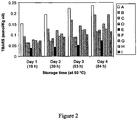
- the oxidation rates of eight protein-containing emulsions were compared with the emulsion of the invention ( E ) over a four day period.
- the composition of the emulsions is shown below.
- Emulsions A to D were prepared based on the paper published by D Djordjevic, D J McClements and E A Decker, Journal of Food Science 2004, Vol. 69 No. 5,356-362 which forms the basis of United States patent US 6,444,242 .
- Emulsion E was prepared according to Example 1.
- Emulsions F to I were prepared from the teachings of US Patent Application No. 20030185960 .
- emulsions contained 30% fish oil.
- the emulsions were incubated at 60°C and tested at 16, 39, 63 and 84 hours. The results are shown in Figure 2 .
- the extent of oxidation was measured using the thiobarbituric acid reactive substances (TBARs) assay which measures the concentration of malonaldehyde (MDA) under acidic conditions in mmol/kg oil.
- TARs thiobarbituric acid reactive substances
- emulsion E showed a significantly lower rate of oxidation than comparative protein-based emulsions.
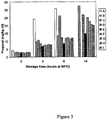
- Emulsions A to I as defined in Example 2 were investigated for oxidative stability and formation of volatile off-flavour by determining the formation of propanal, one of the by products of oxidation of omega-3 fatty acids ( D Djordjevic, D J McClements and E A Decker, Journal of Food Science 2004, Vol. 69 Nr. 5,356-362 .; H Lee et al. Journal of Food Science 2003, Vol. 68 Nr. 7 2169-2177 ; Augustin Mary Ann and Sanguansri, Luz. United States Patent Application 20030185960 ).
- Each emulsion (3 g) was sealed in a glass vial (20 ml), then the sample was incubated at 50 °C followed by solid-phase microextraction (SPME) using the SPME fibre (Supelco 75 ⁇ m Carboxen-PDMS) for 20 minutes.
- SPME solid-phase microextraction
- the sample was then analysed using a Shimatzu AOC-5000 auto sampler and Shimatzu GC-2010 gas chromatograph fitted with Supelcowax 10 fused capilliary column (30 m, 0.32 i.d., 0.5 ⁇ m film) and FID detector. The analysis was carried out at least twice on each sample.
- the propanal concentrations were determined from peak areas using a standard curve made from authentic propanal.
- emulsion E showed a significantly lower rate of oxidation than the comparative protein-based emulsions.
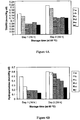
- Emulsions of the invention were prepared using protein complexes of various concentrations to determine the effect of total protein concentration on the extent of lipid oxidation.
- Emulsions were prepared substantially as described in Example 1, except that the protein mixture solutions were adjusted to pH 6.7, and heated to 90°C for 5 minutes, prior to emulsification.
- Table 1 Emulsion sodium caseinate conc. (wt%) whey protein isolate conc. (wt%) total protein conc. (wt%) a 0.25 0.25 0.5 b 0.5 0.5 1.0 c 1.0 1.0 2.0 d 2.0 2.0 4.0 e 3.0 3.0 6.0 f 4.0 8.0
- Figure 4A shows lipid oxidation (TBARs values) and Figure 4B shows hydroperoxide values.
- Lipid oxidation was significantly decreased in emulsions with a protein concentration of over 2%.
- Emulsion d as defined in Example 4 was tested for oxidative stability and formation of volatile off-flavours using propanal analysis against an emulsion of the invention prepared in the same way but using 5% WPI + 5% sodium caseinate.
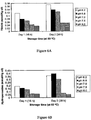
- lipid oxidation rates of emulsions of the invention prepared by heating protein solutions at different pH were determined. Emulsions were prepared as described in Example 1, except that the pH of the mixture of 2 wt% sodium caseinate solution and 2 wt% WPI solution was adjusted in the range 6.2 to 8.0 and then heated at 90°C for 5 min. The results are shown in Figure 6A and 6B.
- Figure 6A shows the lipid oxidation values (TBARs) while Figure 6B shows the hydroperoxide values.
- the lipid oxidation rates and formation of volatile off-flavours of emulsions of the invention were determined by testing the formation of propanal in emulsions of the invention prepared by heating protein solutions at different pH.
- a solution of 2% WPI and 2% sodium caseinate was adjusted to different pH values using 1M HCl or NaOH, and heated at 90°C for 5 min. The samples were cooled to 10°C, and mixed with fish oil, and homogenised to make the final emulsion containing 30% oil.
- Figure 7 shows the formation of propanal in fresh emulsions (7A) and after storage at 60°C for 6 hours (7B).
- the equivalent data for Emulsion A is also provided.
- emulsions of the invention prepared from protein solutions heated at two different temperatures were compared.
- the emulsions were both prepared from a solution of 2 wt% calcium caseinate and 2 wt% whey protein isolate heated at pH 7.5.
- the results are shown in Figure 8A and Figure 8B.
- Figure 8A shows TBARs concentrations and Figure 8B gives the hydroperoxide values.
- Emulsion d as described in Example 4 was mixed with corn syrup solution to form a composition comprising 12% fish oil and 18% corn syrup.
- the mixture emulsion was dried using a laboratory spray dryer with a twin fluid nozzle at 2 bar atomising pressure.
- the inlet and outlet air temperature for drying were 180°C and 80°C respectively.
- the dried powder (containing 40% fish oil) was reconstituted in water to give an emulsion of 10% fish oil.
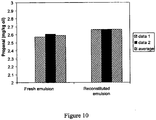
- the oxidative stability of the reconstituted emulsion was compared to that of a fresh emulsion d using propanal analysis, as described in Example 3. This is shown in Figure 10 .
- the reconstituted emulsion did not release significantly more propanal than the fresh emulsion.
- the emulsions of the invention was used to prepare Hummus dips containing a high levels of omega 3 free fatty acids (FFA) namely eicosapentaenoic acid (EPA) and docoshexanoic acid (DHA).
- FFA omega 3 free fatty acids
- EPA eicosapentaenoic acid
- DHA docoshexanoic acid
- Two flavours of hummus were made - "olive and sundried tomato” and “red chilli and jalapeno", as described below.
- the emulsion (made using the process described in Example 1) was added to the hummus dip at a level of 13.3%, equating to 4% fish oil, following the process shown in Figure 11 .
- the emulsion was first pasteurised then combined with the other ingredients until homogenous. After being packaged into sealed containers, the hummus dip was refrigerated.
- the hummus dip was found to be stable for 1 month under refrigerated conditions. Fatty acid compositional analysis was conducted on the hummus dip by the University of Newcastle in Australia and was found to contain the following: Olive and sundried tomato hummus dip Red chilli and jalapeno hummus dip FFA mg per 100g FFA mg per 100g EPA 5456 EPA 530.0 DHA 595.8 DHA 585.1 Total EPA + DHA 1141.4 Total EPA + DHA 1115.1 Total Omega 3 1395.8 Total Omega 3 1278.9
- Both hummus dips contained substantial amounts of EPA and DHA while having no detectable fishy odours.
- the emulsions of the present invention have utility in the food industry. They can be used to protect oxidisable lipids such as omega-3 fatty acids from oxidative damage.
- the emulsions of the present invention can be incorporated into food products and/or cosmetics, preventing or reducing oxidation of the oxidisable lipid, thereby increasing product shelf life.
Landscapes
- Life Sciences & Earth Sciences (AREA)
- Chemical & Material Sciences (AREA)
- Engineering & Computer Science (AREA)
- Food Science & Technology (AREA)
- Polymers & Plastics (AREA)
- Zoology (AREA)
- Biochemistry (AREA)
- Health & Medical Sciences (AREA)
- Nutrition Science (AREA)
- Wood Science & Technology (AREA)
- Microbiology (AREA)
- Oil, Petroleum & Natural Gas (AREA)
- Biophysics (AREA)
- Edible Oils And Fats (AREA)
- Coloring Foods And Improving Nutritive Qualities (AREA)
- Cosmetics (AREA)
- Manufacturing Of Micro-Capsules (AREA)
- Medicinal Preparation (AREA)
Claims (24)
- Emulsion, umfassend mindestens ein oxidierbares Lipid, das in einem Casein-Molkeprotein-Komplex verkapselt ist, wobei der Komplex dadurch gebildet wird, dass man eine Mischung aus Casein-und Molkeproteinlösungen bei 70°C bis 100°C erhitzt.
- Emulsion nach Anspruch 1 , umfassend ungefähr 0,5 bis 60 Gew.-% des mindestens einen oxidierbaren Lipids.
- Emulsion nach Anspruch 2, umfassend 20 bis 30 Gew.-% des mindestens einen oxidierbaren Lipids.
- Emulsion nach einem vorhergehenden Anspruch, wobei es sich bei dem mindestens einen oxidierbaren Lipid um Fischöl handelt.
- Emulsion nach einem vorhergehenden Anspruch, wobei es sich bei dem mindestens einen oxidierbaren Lipid um eine mehrfach ungesättigte Fettsäure oder einen Ester davon handelt.
- Emulsion nach Anspruch 5 wobei es sich bei der mehrfach ungesättigten Fettsäure um eine Omega-3-Fettsäure handelt.
- Emulsion nach Anspruch 6, wobei es sich bei der Omega-3-Fettsäure um Docosahexaensäure oder Eicosapentaensäure handelt.
- Emulsion nach einem vorhergehenden Anspruch, die 1 bis 5 Gew.-% Casein umfasst.
- Emulsion nach einem vorhergehenden Anspruch, die 1 bis 5 Gew.-% Molkeprotein umfasst.
- Emulsion nach einem vorhergehenden Anspruch, wobei das Gewichtsverhältnis von Casein zu Molkeprotein in der Emulsion 2:1 bis 1:2 beträgt.
- Emulsion nach einem vorhergehenden Anspruch, wobei es sich bei dem Casein um Natriumcaseinat handelt.
- Emulsion nach einem vorhergehenden Anspruch, wobei es sich bei dem Molkeprotein um Molkeproteinisolat (whey protein isolate, WPI) oder Molkeproteinkonzentrat (whey protein concentrate, WPC) handelt.
- Emulsion nach einem vorhergehenden Anspruch, die 2 bis 4 Gew.-% Casein und 2 bis 4 Gew.-% Molkeprotein umfasst.
- Verfahren zur Herstellung einer Emulsion, umfassend mindestens ein oxidierbares Lipid, das in einem Casein-Molkeprotein-Komplex verkapselt ist, wobei das Verfahren Folgendes umfasst:(a) Bilden eines Casein-Molkeprotein-Komplexes in wässriger Lösung, wobei das Casein und das Molkeprotein durch Disulfidbrücken verknüpft sind,(b) Dispergieren des mindestens einen oxidierbaren Lipids in der wässrigen Lösung, und(c) Homogenisieren der in Schritt (b) gebildeten Mischung.
- Verfahren zur Herstellung einer Emulsion, umfassend mindestens ein oxidierbares Lipid, das in einem Casein-Molkeprotein-Komplex verkapselt ist, wobei das Verfahren Folgendes umfasst:(a) Erhitzen einer wässrigen Lösung von Casein und Molkeprotein, wodurch ein Proteinkomplex gebildet wird,(b) Dispergieren des mindestens einen oxidierbaren Lipids in der wässrigen Lösung, und(c) Homogenisieren der in Schritt (b) gebildeten Mischung.
- Verfahren nach Anspruch 15 , wobei die wässrige Lösung von Casein und Molkeprotein einen pH-Wert im Bereich von 6 bis 9 aufweist.
- Verfahren nach einem der Ansprüche 14 bis 16 , wobei es sich bei dem mindestens einen oxidierbaren Lipid um Fischöl handelt.
- Verfahren nach einem der Ansprüche 14 bis 16 , wobei es sich bei dem mindestens einen oxidierbaren Lipid um eine mehrfach ungesättigte Fettsäure handelt.
- Verfahren nach Anspruch 19, wobei es sich bei der mehrfach ungesättigten Fettsäure um eine Omega-3-Fettsäure handelt.
- Verfahren nach einem der Ansprüche 14 bis 19 , wobei die Emulsion 1 bis 5 Gew.-% Casein umfasst.
- Verfahren nach einem der Ansprüche 14 bis 20 , wobei die Emulsion 1 bis 5 Gew.-% Molkeprotein umfasst.
- Verfahren nach einem der Ansprüche 14 bis 21 , wobei das Verhältnis von Casein zu Molkeprotein 2:1 bis 1:2 beträgt.
- Verfahren nach einem der Ansprüche 14 bis 22, wobei es sich bei dem Casein um Natriumcaseinat handelt.
- Verfahren nach einem der Ansprüche 14 bis 23, wobei es sich bei dem Molkeprotein um Molkeproteinisolat (whey protein isolate, WPI) oder Molkeproteinkonzentrat (whey protein concentrate, WPC) handelt.
Applications Claiming Priority (2)
| Application Number | Priority Date | Filing Date | Title |
|---|---|---|---|
| NZ53962805 | 2005-04-26 | ||
| PCT/NZ2006/000083 WO2006115420A1 (en) | 2005-04-26 | 2006-04-26 | Lipid encapsulation |
Publications (4)
| Publication Number | Publication Date |
|---|---|
| EP1876905A1 EP1876905A1 (de) | 2008-01-16 |
| EP1876905A4 EP1876905A4 (de) | 2010-05-12 |
| EP1876905B1 EP1876905B1 (de) | 2012-06-13 |
| EP1876905B2 true EP1876905B2 (de) | 2020-06-17 |
Family
ID=37214985
Family Applications (1)
| Application Number | Title | Priority Date | Filing Date |
|---|---|---|---|
| EP06733172.8A Expired - Lifetime EP1876905B2 (de) | 2005-04-26 | 2006-04-26 | Lipidsverkapselung |
Country Status (9)
| Country | Link |
|---|---|
| US (1) | US10143212B2 (de) |
| EP (1) | EP1876905B2 (de) |
| JP (1) | JP4723638B2 (de) |
| KR (1) | KR101421296B1 (de) |
| CN (1) | CN101208012B (de) |
| AU (1) | AU2006240567B2 (de) |
| ES (1) | ES2387816T5 (de) |
| NZ (1) | NZ562745A (de) |
| WO (1) | WO2006115420A1 (de) |
Families Citing this family (34)
| Publication number | Priority date | Publication date | Assignee | Title |
|---|---|---|---|---|
| GB2428678B (en) * | 2005-08-02 | 2010-01-27 | Univ Keele | Glyceride compounds and uses thereof |
| NO323912B1 (no) * | 2005-12-01 | 2007-07-16 | Tine Sa | Sammensetning, fremgangsmåte til fremstilling derav, og anvendelse derav. |
| CA2649788A1 (en) * | 2006-04-20 | 2007-11-01 | Technion Research And Development Foundation Ltd. | Casein micelles for nanoencapsulation of hydrophobic compounds |
| EP2034973B2 (de) * | 2006-06-22 | 2022-01-19 | DSM IP Assets B.V. | Verkapselte labile zusammensetzungen und herstellungsverfahren dafür |
| WO2008092552A1 (en) * | 2007-01-31 | 2008-08-07 | Dsm Ip Assets B.V. | Premix emulsion |
| EP1955597A1 (de) * | 2007-01-31 | 2008-08-13 | DSMIP Assets B.V. | Emulgierte Vormischung |
| FI120642B (fi) * | 2007-10-19 | 2010-01-15 | Biomed Oy | Mikrokapseloidut liposomikoostumukset |
| WO2009070011A1 (en) * | 2007-11-29 | 2009-06-04 | Nizo Food Research B.V. | Method for making protein-based encapsulates |
| US20110045147A1 (en) * | 2007-11-29 | 2011-02-24 | Nizo Food Research B.V. | Protein-based oil encapsulates |
| US20090162525A1 (en) * | 2007-12-21 | 2009-06-25 | Tropicana Products, Inc. | Food product including one or more encapsulated omega-3 fatty acids and one or more fruit flavors |
| US8871276B2 (en) | 2008-02-11 | 2014-10-28 | Technion Research And Development Foundation Ltd. | Beta-casein assemblies for mucosal delivery of therapeutic bioactive agents |
| WO2009101614A1 (en) * | 2008-02-11 | 2009-08-20 | Technion Research & Development Foundation Ltd. | Casein particles encapsulating therapeutically active agents and uses thereof |
| EP2252266A1 (de) * | 2008-02-11 | 2010-11-24 | Yissum Research Development Company of the Hebrew University of Jerusalem | Beta-casein-verbindungen zur abgabe therapeutischer bioaktiver wirkstoffe über die schleimhaut |
| US8865222B2 (en) * | 2008-02-11 | 2014-10-21 | Technion Research And Development Foundation Ltd. | Beta-casein assemblies for enrichment of food and beverages and methods of preparation thereof |
| EP2149305A1 (de) * | 2008-07-31 | 2010-02-03 | DSM IP Assets B.V. | Premix-Emulsion |
| DE102009023482A1 (de) * | 2009-06-02 | 2010-12-09 | Fraunhofer-Gesellschaft zur Förderung der angewandten Forschung e.V. | Emulsion oder Gel zur Herstellung von Omega-3-Fettsäure-haltigen Nahrungsmitteln |
| WO2011136662A1 (en) * | 2010-04-26 | 2011-11-03 | Massey University | Emulsion |
| AU2011300428B2 (en) | 2010-09-07 | 2016-03-24 | Dsm Nutritional Products Ag | Comestible emulsions |
| US20120128850A1 (en) * | 2010-11-24 | 2012-05-24 | Martek Biosciences Corporation | Fortifying non-fat food products with polyunsaturated fatty acids |
| FR2977801B1 (fr) * | 2011-07-11 | 2013-08-16 | Fabre Pierre Dermo Cosmetique | Dispositif et procede pour la sterilisation a ultra-haute temperature d'une emulsion, notamment dermo-cosmetique, instable a la temperature de sterilisation |
| WO2014006086A1 (en) * | 2012-07-03 | 2014-01-09 | Nestec S.A. | Chocolate confectionery product |
| FR3006190A1 (fr) | 2013-05-31 | 2014-12-05 | Univ Lorraine | Procede d'encapsulation de molecules bioactives dans des matrices laitieres et microparticules obtenues. |
| JP6291972B2 (ja) * | 2014-03-31 | 2018-03-14 | 三菱マテリアル株式会社 | サンプリング位置表示装置、サンプリング方法 |
| JP6717577B2 (ja) * | 2015-07-30 | 2020-07-01 | 株式会社Adeka | 水中油型乳化脂用乳化材 |
| CN105558354B (zh) * | 2016-01-26 | 2019-08-20 | 武汉轻工大学 | 饲用鱼油微胶囊及其制备工艺 |
| KR102172036B1 (ko) * | 2017-11-08 | 2020-10-30 | 주식회사 오스테온 | 악취 억제형 불포화오일 및 아르기닌 함유 조성물의 제조 방법 |
| MX2020008823A (es) * | 2018-06-21 | 2020-09-28 | Firmenich & Cie | Proceso para preparar microcapsulas. |
| EP3817567A1 (de) * | 2018-07-02 | 2021-05-12 | Naturex S.A. | Emulsion mit antioxidanten partikeln |
| CN111213719A (zh) * | 2018-11-27 | 2020-06-02 | 内蒙古伊利实业集团股份有限公司 | 一种组合物及其在制备酸奶中的应用 |
| WO2020130856A1 (en) * | 2018-12-21 | 2020-06-25 | Massey University | Metal-organic frameworks for gas adsorption |
| CN111374181B (zh) * | 2018-12-27 | 2023-04-14 | 内蒙古蒙牛乳业(集团)股份有限公司 | 一种乳制品及其制备工艺 |
| KR102208446B1 (ko) * | 2020-08-13 | 2021-01-27 | 주식회사 다림바이오텍 | Omega-3 불포화지방산의 생선 비린 냄새를 제거하는 방법과 이러한 방법을 통해 제조된 Omega-3 불포화지방산 |
| IT202100008693A1 (it) * | 2021-04-07 | 2022-10-07 | Alessandro Longhin | Crema alimentare spalmabile salata, nonche’ semilavorato e metodo per la preparazione della stessa |
| KR102670859B1 (ko) * | 2024-01-03 | 2024-05-30 | 주식회사 네오캠코리아 | 피부 보습 및 진정용 화장료 조성물 및 이의 제조방법 |
Citations (4)
| Publication number | Priority date | Publication date | Assignee | Title |
|---|---|---|---|---|
| JPH104918A (ja) † | 1996-06-19 | 1998-01-13 | Meiji Milk Prod Co Ltd | 核酸関連物質含有栄養組成物 |
| JP2001292695A (ja) † | 2000-04-07 | 2001-10-23 | Asahi Denka Kogyo Kk | 水中油型乳化組成物 |
| US20040017017A1 (en) † | 2002-07-24 | 2004-01-29 | Van Lengerich Bernhard H. | Encapsulation of sensitive components using pre-emulsification |
| WO2005013708A1 (en) † | 2003-07-15 | 2005-02-17 | Dsm Ip Assets B.V. | Powderous formulations of fat-soluble active ingredients |
Family Cites Families (20)
| Publication number | Priority date | Publication date | Assignee | Title |
|---|---|---|---|---|
| US2282790A (en) * | 1940-04-23 | 1942-05-12 | Musher Foundation Inc | Stabilization of glyceride oils |
| GB1236885A (en) | 1968-09-28 | 1971-06-23 | Fuji Photo Film Co Ltd | Method of making multi-wall capsules |
| US4168322A (en) * | 1974-02-27 | 1979-09-18 | Mars Limited | Protein product |
| US4376072A (en) * | 1980-11-17 | 1983-03-08 | New Zealand Milk Products, Inc. | Method of producing milk protein isolates and milk protein/vegetable protein isolates and compositions of same |
| NL8204923A (nl) * | 1982-12-21 | 1984-07-16 | Stichting Nl I Zuivelonderzoek | Werkwijze voor het bereiden van een precipitaat van caseine en wei-eiwit alsmede aldus bereid precipitaat. |
| JPS60102168A (ja) | 1983-11-08 | 1985-06-06 | Tsukishima Shokuhin Kogyo Kk | エイコサペンタエン酸強化乳化物及び食品の製造方法 |
| US4895725A (en) | 1987-08-24 | 1990-01-23 | Clinical Technologies Associates, Inc. | Microencapsulation of fish oil |
| DK88692D0 (da) * | 1992-07-06 | 1992-07-06 | Danochemo As | Fremgangsmaade til fremstilling af mikrokapsler |
| GB2280449B (en) | 1993-07-02 | 1996-10-02 | Charleville Res | A method for preparing an edible water-in-oil emulsion |
| JP3118155B2 (ja) * | 1994-12-01 | 2000-12-18 | アサヒフーズ株式会社 | 低脂肪分、耐酸性および凍結耐性を有するホイップクリーム組成物並びにその製造方法 |
| JPH09121766A (ja) * | 1995-10-31 | 1997-05-13 | Meiji Milk Prod Co Ltd | n−6系列/n−3系列脂肪酸比率 を調整した乳児用食品 |
| US6168819B1 (en) * | 1999-04-06 | 2001-01-02 | Kraft Foods, Inc. | Cappuccino creamer with improved foaming characteristics |
| PH12001000675B1 (en) * | 2000-04-04 | 2009-09-22 | Australian Food Ind Sci Ct | Encapsulation of food ingredients |
| SE523211C2 (sv) | 2000-04-26 | 2004-04-06 | Skaanemejerier Ekonomisk Foere | Lipidkomposition omfattande en skyddande olja och en fleromättad fettsyra, emulsion innehållande en sådan komposition och förfarande för framställning av emulsionen |
| CN1231137C (zh) * | 2001-07-18 | 2005-12-14 | Dsmip资产有限公司 | 乳类蛋白质水解的方法 |
| US7393552B2 (en) * | 2002-04-24 | 2008-07-01 | The Procter & Gamble Company | Compositions comprising protein and fatty acid |
| US20050233074A1 (en) * | 2002-08-14 | 2005-10-20 | Dalziel Sean M | Solid flowable powder with high liquid loading |
| CA2496923A1 (en) | 2002-08-29 | 2004-03-11 | University Of Massachusetts | Utilization of emulsion interface engineering to produce oxidatively stable lipid delivery systems |
| US20040191390A1 (en) | 2003-03-31 | 2004-09-30 | Lee John H. | Encapsulated oil and fat products with free fatty acids |
| US20050233002A1 (en) * | 2004-04-15 | 2005-10-20 | Trubiano Paolo C | Encapsulation of oxygen sensitive agents |
-
2006
- 2006-04-26 JP JP2008508779A patent/JP4723638B2/ja not_active Expired - Fee Related
- 2006-04-26 US US11/912,639 patent/US10143212B2/en active Active
- 2006-04-26 CN CN200680023076XA patent/CN101208012B/zh not_active Expired - Fee Related
- 2006-04-26 WO PCT/NZ2006/000083 patent/WO2006115420A1/en not_active Ceased
- 2006-04-26 EP EP06733172.8A patent/EP1876905B2/de not_active Expired - Lifetime
- 2006-04-26 AU AU2006240567A patent/AU2006240567B2/en not_active Ceased
- 2006-04-26 NZ NZ562745A patent/NZ562745A/en not_active IP Right Cessation
- 2006-04-26 ES ES06733172T patent/ES2387816T5/es not_active Expired - Lifetime
- 2006-04-26 KR KR1020077027077A patent/KR101421296B1/ko not_active Expired - Fee Related
Patent Citations (4)
| Publication number | Priority date | Publication date | Assignee | Title |
|---|---|---|---|---|
| JPH104918A (ja) † | 1996-06-19 | 1998-01-13 | Meiji Milk Prod Co Ltd | 核酸関連物質含有栄養組成物 |
| JP2001292695A (ja) † | 2000-04-07 | 2001-10-23 | Asahi Denka Kogyo Kk | 水中油型乳化組成物 |
| US20040017017A1 (en) † | 2002-07-24 | 2004-01-29 | Van Lengerich Bernhard H. | Encapsulation of sensitive components using pre-emulsification |
| WO2005013708A1 (en) † | 2003-07-15 | 2005-02-17 | Dsm Ip Assets B.V. | Powderous formulations of fat-soluble active ingredients |
Also Published As
| Publication number | Publication date |
|---|---|
| EP1876905B1 (de) | 2012-06-13 |
| HK1111065A1 (en) | 2008-08-01 |
| ES2387816T3 (es) | 2012-10-02 |
| CN101208012B (zh) | 2011-01-12 |
| EP1876905A1 (de) | 2008-01-16 |
| US20090029017A1 (en) | 2009-01-29 |
| AU2006240567A1 (en) | 2006-11-02 |
| CN101208012A (zh) | 2008-06-25 |
| US10143212B2 (en) | 2018-12-04 |
| WO2006115420A1 (en) | 2006-11-02 |
| JP4723638B2 (ja) | 2011-07-13 |
| NZ562745A (en) | 2010-07-30 |
| ES2387816T5 (es) | 2021-05-04 |
| EP1876905A4 (de) | 2010-05-12 |
| KR20080018169A (ko) | 2008-02-27 |
| JP2008538916A (ja) | 2008-11-13 |
| KR101421296B1 (ko) | 2014-07-18 |
| AU2006240567B2 (en) | 2010-08-26 |
Similar Documents
| Publication | Publication Date | Title |
|---|---|---|
| EP1876905B2 (de) | Lipidsverkapselung | |
| AU2011245768B2 (en) | Emulsion | |
| CA2632114C (en) | Compositions comprising whey proteins and lipids and processes of their preparation | |
| KR20080055788A (ko) | 이송 장치가 구비된 식품 및 이의 제조를 위한 방법 | |
| JP2007526918A (ja) | 抗酸化組成物およびその使用方法 | |
| JP2017531429A (ja) | 被酸化性成分および水溶性植物抽出物を含む栄養組成物 | |
| MX2012000610A (es) | Sopas y salsas enriquecidas con acidos grasos omega-3. | |
| JPH0748992B2 (ja) | 血栓防止用粉末組成物 | |
| HK1111065B (en) | Lipid encapsulation | |
| KR20240170828A (ko) | 단백질, 그 단백질을 포함하는 단백질 입자 분산액 및 유화 조성물, 그리고 이들의 제조 방법 | |
| O'Dwyer | Stabilisation of omega-3 oils in food emulsion systems | |
| HK1124489A (en) | Food articles with delivery devices and methods for the preparation thereof |
Legal Events
| Date | Code | Title | Description |
|---|---|---|---|
| PUAI | Public reference made under article 153(3) epc to a published international application that has entered the european phase |
Free format text: ORIGINAL CODE: 0009012 |
|
| 17P | Request for examination filed |
Effective date: 20071123 |
|
| AK | Designated contracting states |
Kind code of ref document: A1 Designated state(s): AT BE BG CH CY CZ DE DK EE ES FI FR GB GR HU IE IS IT LI LT LU LV MC NL PL PT RO SE SI SK TR |
|
| DAX | Request for extension of the european patent (deleted) | ||
| REG | Reference to a national code |
Ref country code: HK Ref legal event code: DE Ref document number: 1111065 Country of ref document: HK |
|
| A4 | Supplementary search report drawn up and despatched |
Effective date: 20100412 |
|
| GRAP | Despatch of communication of intention to grant a patent |
Free format text: ORIGINAL CODE: EPIDOSNIGR1 |
|
| GRAS | Grant fee paid |
Free format text: ORIGINAL CODE: EPIDOSNIGR3 |
|
| GRAA | (expected) grant |
Free format text: ORIGINAL CODE: 0009210 |
|
| AK | Designated contracting states |
Kind code of ref document: B1 Designated state(s): AT BE BG CH CY CZ DE DK EE ES FI FR GB GR HU IE IS IT LI LT LU LV MC NL PL PT RO SE SI SK TR |
|
| REG | Reference to a national code |
Ref country code: GB Ref legal event code: FG4D |
|
| REG | Reference to a national code |
Ref country code: CH Ref legal event code: EP Ref country code: AT Ref legal event code: REF Ref document number: 561570 Country of ref document: AT Kind code of ref document: T Effective date: 20120615 |
|
| REG | Reference to a national code |
Ref country code: IE Ref legal event code: FG4D |
|
| REG | Reference to a national code |
Ref country code: DE Ref legal event code: R096 Ref document number: 602006030120 Country of ref document: DE Effective date: 20120816 |
|
| REG | Reference to a national code |
Ref country code: ES Ref legal event code: FG2A Ref document number: 2387816 Country of ref document: ES Kind code of ref document: T3 Effective date: 20121002 |
|
| REG | Reference to a national code |
Ref country code: NL Ref legal event code: VDEP Effective date: 20120613 |
|
| PG25 | Lapsed in a contracting state [announced via postgrant information from national office to epo] |
Ref country code: CY Free format text: LAPSE BECAUSE OF FAILURE TO SUBMIT A TRANSLATION OF THE DESCRIPTION OR TO PAY THE FEE WITHIN THE PRESCRIBED TIME-LIMIT Effective date: 20120613 Ref country code: SE Free format text: LAPSE BECAUSE OF FAILURE TO SUBMIT A TRANSLATION OF THE DESCRIPTION OR TO PAY THE FEE WITHIN THE PRESCRIBED TIME-LIMIT Effective date: 20120613 Ref country code: LT Free format text: LAPSE BECAUSE OF FAILURE TO SUBMIT A TRANSLATION OF THE DESCRIPTION OR TO PAY THE FEE WITHIN THE PRESCRIBED TIME-LIMIT Effective date: 20120613 Ref country code: FI Free format text: LAPSE BECAUSE OF FAILURE TO SUBMIT A TRANSLATION OF THE DESCRIPTION OR TO PAY THE FEE WITHIN THE PRESCRIBED TIME-LIMIT Effective date: 20120613 |
|
| REG | Reference to a national code |
Ref country code: AT Ref legal event code: MK05 Ref document number: 561570 Country of ref document: AT Kind code of ref document: T Effective date: 20120613 |
|
| REG | Reference to a national code |
Ref country code: LT Ref legal event code: MG4D Effective date: 20120613 |
|
| PG25 | Lapsed in a contracting state [announced via postgrant information from national office to epo] |
Ref country code: LV Free format text: LAPSE BECAUSE OF FAILURE TO SUBMIT A TRANSLATION OF THE DESCRIPTION OR TO PAY THE FEE WITHIN THE PRESCRIBED TIME-LIMIT Effective date: 20120613 Ref country code: GR Free format text: LAPSE BECAUSE OF FAILURE TO SUBMIT A TRANSLATION OF THE DESCRIPTION OR TO PAY THE FEE WITHIN THE PRESCRIBED TIME-LIMIT Effective date: 20120914 Ref country code: SI Free format text: LAPSE BECAUSE OF FAILURE TO SUBMIT A TRANSLATION OF THE DESCRIPTION OR TO PAY THE FEE WITHIN THE PRESCRIBED TIME-LIMIT Effective date: 20120613 |
|
| REG | Reference to a national code |
Ref country code: HK Ref legal event code: GR Ref document number: 1111065 Country of ref document: HK |
|
| PG25 | Lapsed in a contracting state [announced via postgrant information from national office to epo] |
Ref country code: EE Free format text: LAPSE BECAUSE OF FAILURE TO SUBMIT A TRANSLATION OF THE DESCRIPTION OR TO PAY THE FEE WITHIN THE PRESCRIBED TIME-LIMIT Effective date: 20120613 Ref country code: AT Free format text: LAPSE BECAUSE OF FAILURE TO SUBMIT A TRANSLATION OF THE DESCRIPTION OR TO PAY THE FEE WITHIN THE PRESCRIBED TIME-LIMIT Effective date: 20120613 Ref country code: SK Free format text: LAPSE BECAUSE OF FAILURE TO SUBMIT A TRANSLATION OF THE DESCRIPTION OR TO PAY THE FEE WITHIN THE PRESCRIBED TIME-LIMIT Effective date: 20120613 Ref country code: BE Free format text: LAPSE BECAUSE OF FAILURE TO SUBMIT A TRANSLATION OF THE DESCRIPTION OR TO PAY THE FEE WITHIN THE PRESCRIBED TIME-LIMIT Effective date: 20120613 Ref country code: CZ Free format text: LAPSE BECAUSE OF FAILURE TO SUBMIT A TRANSLATION OF THE DESCRIPTION OR TO PAY THE FEE WITHIN THE PRESCRIBED TIME-LIMIT Effective date: 20120613 Ref country code: RO Free format text: LAPSE BECAUSE OF FAILURE TO SUBMIT A TRANSLATION OF THE DESCRIPTION OR TO PAY THE FEE WITHIN THE PRESCRIBED TIME-LIMIT Effective date: 20120613 Ref country code: IS Free format text: LAPSE BECAUSE OF FAILURE TO SUBMIT A TRANSLATION OF THE DESCRIPTION OR TO PAY THE FEE WITHIN THE PRESCRIBED TIME-LIMIT Effective date: 20121013 |
|
| PG25 | Lapsed in a contracting state [announced via postgrant information from national office to epo] |
Ref country code: PT Free format text: LAPSE BECAUSE OF FAILURE TO SUBMIT A TRANSLATION OF THE DESCRIPTION OR TO PAY THE FEE WITHIN THE PRESCRIBED TIME-LIMIT Effective date: 20121015 Ref country code: PL Free format text: LAPSE BECAUSE OF FAILURE TO SUBMIT A TRANSLATION OF THE DESCRIPTION OR TO PAY THE FEE WITHIN THE PRESCRIBED TIME-LIMIT Effective date: 20120613 |
|
| PLBI | Opposition filed |
Free format text: ORIGINAL CODE: 0009260 |
|
| PG25 | Lapsed in a contracting state [announced via postgrant information from national office to epo] |
Ref country code: NL Free format text: LAPSE BECAUSE OF FAILURE TO SUBMIT A TRANSLATION OF THE DESCRIPTION OR TO PAY THE FEE WITHIN THE PRESCRIBED TIME-LIMIT Effective date: 20120613 |
|
| 26 | Opposition filed |
Opponent name: DSM NUTRITIONAL PRODUCTS LTD Effective date: 20130313 |
|
| PG25 | Lapsed in a contracting state [announced via postgrant information from national office to epo] |
Ref country code: DK Free format text: LAPSE BECAUSE OF FAILURE TO SUBMIT A TRANSLATION OF THE DESCRIPTION OR TO PAY THE FEE WITHIN THE PRESCRIBED TIME-LIMIT Effective date: 20120613 |
|
| PLAX | Notice of opposition and request to file observation + time limit sent |
Free format text: ORIGINAL CODE: EPIDOSNOBS2 |
|
| REG | Reference to a national code |
Ref country code: DE Ref legal event code: R026 Ref document number: 602006030120 Country of ref document: DE Effective date: 20130313 |
|
| PG25 | Lapsed in a contracting state [announced via postgrant information from national office to epo] |
Ref country code: BG Free format text: LAPSE BECAUSE OF FAILURE TO SUBMIT A TRANSLATION OF THE DESCRIPTION OR TO PAY THE FEE WITHIN THE PRESCRIBED TIME-LIMIT Effective date: 20120913 |
|
| PLAF | Information modified related to communication of a notice of opposition and request to file observations + time limit |
Free format text: ORIGINAL CODE: EPIDOSCOBS2 |
|
| PLBB | Reply of patent proprietor to notice(s) of opposition received |
Free format text: ORIGINAL CODE: EPIDOSNOBS3 |
|
| PG25 | Lapsed in a contracting state [announced via postgrant information from national office to epo] |
Ref country code: MC Free format text: LAPSE BECAUSE OF FAILURE TO SUBMIT A TRANSLATION OF THE DESCRIPTION OR TO PAY THE FEE WITHIN THE PRESCRIBED TIME-LIMIT Effective date: 20120613 |
|
| REG | Reference to a national code |
Ref country code: CH Ref legal event code: PL |
|
| REG | Reference to a national code |
Ref country code: IE Ref legal event code: MM4A |
|
| PG25 | Lapsed in a contracting state [announced via postgrant information from national office to epo] |
Ref country code: CH Free format text: LAPSE BECAUSE OF NON-PAYMENT OF DUE FEES Effective date: 20130430 Ref country code: LI Free format text: LAPSE BECAUSE OF NON-PAYMENT OF DUE FEES Effective date: 20130430 |
|
| PG25 | Lapsed in a contracting state [announced via postgrant information from national office to epo] |
Ref country code: IE Free format text: LAPSE BECAUSE OF NON-PAYMENT OF DUE FEES Effective date: 20130426 |
|
| PG25 | Lapsed in a contracting state [announced via postgrant information from national office to epo] |
Ref country code: TR Free format text: LAPSE BECAUSE OF FAILURE TO SUBMIT A TRANSLATION OF THE DESCRIPTION OR TO PAY THE FEE WITHIN THE PRESCRIBED TIME-LIMIT Effective date: 20120613 |
|
| APBM | Appeal reference recorded |
Free format text: ORIGINAL CODE: EPIDOSNREFNO |
|
| APBP | Date of receipt of notice of appeal recorded |
Free format text: ORIGINAL CODE: EPIDOSNNOA2O |
|
| APAH | Appeal reference modified |
Free format text: ORIGINAL CODE: EPIDOSCREFNO |
|
| PG25 | Lapsed in a contracting state [announced via postgrant information from national office to epo] |
Ref country code: LU Free format text: LAPSE BECAUSE OF NON-PAYMENT OF DUE FEES Effective date: 20130426 Ref country code: HU Free format text: LAPSE BECAUSE OF FAILURE TO SUBMIT A TRANSLATION OF THE DESCRIPTION OR TO PAY THE FEE WITHIN THE PRESCRIBED TIME-LIMIT; INVALID AB INITIO Effective date: 20060426 |
|
| APBQ | Date of receipt of statement of grounds of appeal recorded |
Free format text: ORIGINAL CODE: EPIDOSNNOA3O |
|
| PLAB | Opposition data, opponent's data or that of the opponent's representative modified |
Free format text: ORIGINAL CODE: 0009299OPPO |
|
| R26 | Opposition filed (corrected) |
Opponent name: DSM NUTRITIONAL PRODUCTS AG Effective date: 20130313 |
|
| REG | Reference to a national code |
Ref country code: FR Ref legal event code: PLFP Year of fee payment: 11 |
|
| REG | Reference to a national code |
Ref country code: FR Ref legal event code: PLFP Year of fee payment: 12 |
|
| REG | Reference to a national code |
Ref country code: FR Ref legal event code: PLFP Year of fee payment: 13 |
|
| APBU | Appeal procedure closed |
Free format text: ORIGINAL CODE: EPIDOSNNOA9O |
|
| PUAH | Patent maintained in amended form |
Free format text: ORIGINAL CODE: 0009272 |
|
| STAA | Information on the status of an ep patent application or granted ep patent |
Free format text: STATUS: PATENT MAINTAINED AS AMENDED |
|
| 27A | Patent maintained in amended form |
Effective date: 20200617 |
|
| AK | Designated contracting states |
Kind code of ref document: B2 Designated state(s): AT BE BG CH CY CZ DE DK EE ES FI FR GB GR HU IE IS IT LI LT LU LV MC NL PL PT RO SE SI SK TR |
|
| REG | Reference to a national code |
Ref country code: DE Ref legal event code: R102 Ref document number: 602006030120 Country of ref document: DE |
|
| REG | Reference to a national code |
Ref country code: ES Ref legal event code: DC2A Ref document number: 2387816 Country of ref document: ES Kind code of ref document: T5 Effective date: 20210504 |
|
| PGFP | Annual fee paid to national office [announced via postgrant information from national office to epo] |
Ref country code: DE Payment date: 20240418 Year of fee payment: 19 |
|
| REG | Reference to a national code |
Ref country code: DE Ref legal event code: R079 Ref document number: 602006030120 Country of ref document: DE Free format text: PREVIOUS MAIN CLASS: A23D0007060000 Ipc: A23B0020100000 |
|
| PGFP | Annual fee paid to national office [announced via postgrant information from national office to epo] |
Ref country code: GB Payment date: 20250418 Year of fee payment: 20 Ref country code: ES Payment date: 20250529 Year of fee payment: 20 |
|
| PGFP | Annual fee paid to national office [announced via postgrant information from national office to epo] |
Ref country code: IT Payment date: 20250422 Year of fee payment: 20 |
|
| PGFP | Annual fee paid to national office [announced via postgrant information from national office to epo] |
Ref country code: FR Payment date: 20250423 Year of fee payment: 20 |
|
| REG | Reference to a national code |
Ref country code: DE Ref legal event code: R119 Ref document number: 602006030120 Country of ref document: DE |
|
| PG25 | Lapsed in a contracting state [announced via postgrant information from national office to epo] |
Ref country code: DE Free format text: LAPSE BECAUSE OF NON-PAYMENT OF DUE FEES Effective date: 20251104 |