EP1877097B1 - Konjugate aus beta-lapachon und aminosäuren für tumor-targeting - Google Patents
Konjugate aus beta-lapachon und aminosäuren für tumor-targeting Download PDFInfo
- Publication number
- EP1877097B1 EP1877097B1 EP05785192A EP05785192A EP1877097B1 EP 1877097 B1 EP1877097 B1 EP 1877097B1 EP 05785192 A EP05785192 A EP 05785192A EP 05785192 A EP05785192 A EP 05785192A EP 1877097 B1 EP1877097 B1 EP 1877097B1
- Authority
- EP
- European Patent Office
- Prior art keywords
- benzo
- dihydro
- dimethyl
- chromen
- acetyloxy
- Prior art date
- Legal status (The legal status is an assumption and is not a legal conclusion. Google has not performed a legal analysis and makes no representation as to the accuracy of the status listed.)
- Expired - Lifetime
Links
- 0 CC(C)C(*O)NC Chemical compound CC(C)C(*O)NC 0.000 description 2
Images

Classifications
-
- B—PERFORMING OPERATIONS; TRANSPORTING
- B82—NANOTECHNOLOGY
- B82Y—SPECIFIC USES OR APPLICATIONS OF NANOSTRUCTURES; MEASUREMENT OR ANALYSIS OF NANOSTRUCTURES; MANUFACTURE OR TREATMENT OF NANOSTRUCTURES
- B82Y5/00—Nanobiotechnology or nanomedicine, e.g. protein engineering or drug delivery
-
- A—HUMAN NECESSITIES
- A61—MEDICAL OR VETERINARY SCIENCE; HYGIENE
- A61K—PREPARATIONS FOR MEDICAL, DENTAL OR TOILETRY PURPOSES
- A61K31/00—Medicinal preparations containing organic active ingredients
- A61K31/74—Synthetic polymeric materials
- A61K31/785—Polymers containing nitrogen
-
- A—HUMAN NECESSITIES
- A61—MEDICAL OR VETERINARY SCIENCE; HYGIENE
- A61K—PREPARATIONS FOR MEDICAL, DENTAL OR TOILETRY PURPOSES
- A61K47/00—Medicinal preparations characterised by the non-active ingredients used, e.g. carriers or inert additives; Targeting or modifying agents chemically bound to the active ingredient
- A61K47/50—Medicinal preparations characterised by the non-active ingredients used, e.g. carriers or inert additives; Targeting or modifying agents chemically bound to the active ingredient the non-active ingredient being chemically bound to the active ingredient, e.g. polymer-drug conjugates
- A61K47/51—Medicinal preparations characterised by the non-active ingredients used, e.g. carriers or inert additives; Targeting or modifying agents chemically bound to the active ingredient the non-active ingredient being chemically bound to the active ingredient, e.g. polymer-drug conjugates the non-active ingredient being a modifying agent
- A61K47/54—Medicinal preparations characterised by the non-active ingredients used, e.g. carriers or inert additives; Targeting or modifying agents chemically bound to the active ingredient the non-active ingredient being chemically bound to the active ingredient, e.g. polymer-drug conjugates the non-active ingredient being a modifying agent the modifying agent being an organic compound
-
- A—HUMAN NECESSITIES
- A61—MEDICAL OR VETERINARY SCIENCE; HYGIENE
- A61K—PREPARATIONS FOR MEDICAL, DENTAL OR TOILETRY PURPOSES
- A61K47/00—Medicinal preparations characterised by the non-active ingredients used, e.g. carriers or inert additives; Targeting or modifying agents chemically bound to the active ingredient
- A61K47/50—Medicinal preparations characterised by the non-active ingredients used, e.g. carriers or inert additives; Targeting or modifying agents chemically bound to the active ingredient the non-active ingredient being chemically bound to the active ingredient, e.g. polymer-drug conjugates
- A61K47/51—Medicinal preparations characterised by the non-active ingredients used, e.g. carriers or inert additives; Targeting or modifying agents chemically bound to the active ingredient the non-active ingredient being chemically bound to the active ingredient, e.g. polymer-drug conjugates the non-active ingredient being a modifying agent
- A61K47/54—Medicinal preparations characterised by the non-active ingredients used, e.g. carriers or inert additives; Targeting or modifying agents chemically bound to the active ingredient the non-active ingredient being chemically bound to the active ingredient, e.g. polymer-drug conjugates the non-active ingredient being a modifying agent the modifying agent being an organic compound
- A61K47/542—Carboxylic acids, e.g. a fatty acid or an amino acid
-
- A—HUMAN NECESSITIES
- A61—MEDICAL OR VETERINARY SCIENCE; HYGIENE
- A61K—PREPARATIONS FOR MEDICAL, DENTAL OR TOILETRY PURPOSES
- A61K47/00—Medicinal preparations characterised by the non-active ingredients used, e.g. carriers or inert additives; Targeting or modifying agents chemically bound to the active ingredient
- A61K47/50—Medicinal preparations characterised by the non-active ingredients used, e.g. carriers or inert additives; Targeting or modifying agents chemically bound to the active ingredient the non-active ingredient being chemically bound to the active ingredient, e.g. polymer-drug conjugates
- A61K47/51—Medicinal preparations characterised by the non-active ingredients used, e.g. carriers or inert additives; Targeting or modifying agents chemically bound to the active ingredient the non-active ingredient being chemically bound to the active ingredient, e.g. polymer-drug conjugates the non-active ingredient being a modifying agent
- A61K47/62—Medicinal preparations characterised by the non-active ingredients used, e.g. carriers or inert additives; Targeting or modifying agents chemically bound to the active ingredient the non-active ingredient being chemically bound to the active ingredient, e.g. polymer-drug conjugates the non-active ingredient being a modifying agent the modifying agent being a protein, peptide or polyamino acid
- A61K47/64—Drug-peptide, drug-protein or drug-polyamino acid conjugates, i.e. the modifying agent being a peptide, protein or polyamino acid which is covalently bonded or complexed to a therapeutically active agent
-
- A—HUMAN NECESSITIES
- A61—MEDICAL OR VETERINARY SCIENCE; HYGIENE
- A61K—PREPARATIONS FOR MEDICAL, DENTAL OR TOILETRY PURPOSES
- A61K47/00—Medicinal preparations characterised by the non-active ingredients used, e.g. carriers or inert additives; Targeting or modifying agents chemically bound to the active ingredient
- A61K47/50—Medicinal preparations characterised by the non-active ingredients used, e.g. carriers or inert additives; Targeting or modifying agents chemically bound to the active ingredient the non-active ingredient being chemically bound to the active ingredient, e.g. polymer-drug conjugates
- A61K47/51—Medicinal preparations characterised by the non-active ingredients used, e.g. carriers or inert additives; Targeting or modifying agents chemically bound to the active ingredient the non-active ingredient being chemically bound to the active ingredient, e.g. polymer-drug conjugates the non-active ingredient being a modifying agent
- A61K47/62—Medicinal preparations characterised by the non-active ingredients used, e.g. carriers or inert additives; Targeting or modifying agents chemically bound to the active ingredient the non-active ingredient being chemically bound to the active ingredient, e.g. polymer-drug conjugates the non-active ingredient being a modifying agent the modifying agent being a protein, peptide or polyamino acid
- A61K47/66—Medicinal preparations characterised by the non-active ingredients used, e.g. carriers or inert additives; Targeting or modifying agents chemically bound to the active ingredient the non-active ingredient being chemically bound to the active ingredient, e.g. polymer-drug conjugates the non-active ingredient being a modifying agent the modifying agent being a protein, peptide or polyamino acid the modifying agent being a pre-targeting system involving a peptide or protein for targeting specific cells
- A61K47/665—Medicinal preparations characterised by the non-active ingredients used, e.g. carriers or inert additives; Targeting or modifying agents chemically bound to the active ingredient the non-active ingredient being chemically bound to the active ingredient, e.g. polymer-drug conjugates the non-active ingredient being a modifying agent the modifying agent being a protein, peptide or polyamino acid the modifying agent being a pre-targeting system involving a peptide or protein for targeting specific cells the pre-targeting system, clearing therapy or rescue therapy involving biotin-(strept) avidin systems
-
- A—HUMAN NECESSITIES
- A61—MEDICAL OR VETERINARY SCIENCE; HYGIENE
- A61P—SPECIFIC THERAPEUTIC ACTIVITY OF CHEMICAL COMPOUNDS OR MEDICINAL PREPARATIONS
- A61P35/00—Antineoplastic agents
Definitions
- the present invention relates to improved therapeutic agents for treating cancer. More particularly, the invention relates to improved quinone and ⁇ -lapachone compositions according to the claims for the treatment of cancer.
- the quinones are a large and varied group of natural products found in all major groups of organisms.
- Quinones are a group of aromatic dioxo compounds derived from benzene or multiple-ring hydrocarbons such as naphthalene, anthracene, etc. They are classified as benzoquinones, naphthoquinones, anthraquinones, etc:, on the basis of the ring system. Quinones have a variety of medicinal and industrial uses.
- antineoplastic drugs are either quinones (anthracycline derivatives, mitoxantrone, actinomycin), quinonoid derivatives (quinolones, genistein, bactracyclin), or drugs such as etoposide that can easily be converted to quinones by in vivo oxidation. Gantchev et al. (1997) Biochem. Biophys. Res. Comm. 237:24-27 . Quinones are now widely used as anticancer, antibacterial and anti-malarial drugs, as well as fungicides.
- ⁇ -lapachone (3,4-dihydro-2,2-dimethyl-2H-naphtho[1,2-b]pyran-5,6-dione), a quinone, is derived from lapachol (a naphthoquinone) which can be isolated from the lapacho tree ( Tabebuia avellanedae ), a member of the catalpa family ( Bignoniaceae ).
- Lapachol and ⁇ -lapachone (with numbering) have the following chemical structures:
- ⁇ -lapachone has demonstrated significant antineoplastic activity against human cancer cell lines at concentrations typically in the range of 1-10 ⁇ M (IC 50 ). Cytotoxicity has been demonstrated in transformed cell lines derived from patients with promyelocytic leukemia ( Planchon et al., (1996) Cancer Res., 55: 3706-3711 ), prostate ( Li, C.J., et al., (1995) Cancer Res., 55: 3712-3715 ), malignant glioma ( Weller, M. et al., (1997) Int. J.
- pancreatic Li, Y., et al., (2000) Mol Med, 6: 1008-1015 ; Li, Y., (1999) Mol Med, 5: 232-239 ), and multiple myeloma cell lines, including drug-resistant lines ( Li, Y., (2000) Mol Med, 6: 1008-1015 ). No cytotoxic effects were observed on normal fresh or proliferating human PBMC ( Li, Y., (2000) Mol Med, 6: 1008-1015 ).
- j3-lapachone appears to work by inducing unscheduled expression of checkpoint molecules, e.g ., E2F, independent of DNA damage and cell cycle stages.
- checkpoint molecules e.g ., E2F
- Several studies have shown that ⁇ -lapachone activates checkpoints and induces apoptosis in cancer cells from a variety of tissues without affecting normal cells from these tissues ( U.S. Patent Application Publication No. 2002/0169135 ).
- checkpoint molecules e.g ., E2F
- ⁇ -lapachone has been shown to be a DNA repair inhibitor that sensitizes cells to DNA-damaging agents including radiation ( Boothman, D. A. et al., Cancer Res, 47 (1987) 5361 ; Boorstein, R. J., et al., Biochem. Biophys. Commun., 117 (1983) 30 ).
- ⁇ -lapachone has also shown potent in vitro inhibition of human DNA Topoisomerases I ( Li, C. J. et al., J. Biol. Chem., 268 (1993) 22463 ) and II ( Frydman, B. et al., Cancer Res., 57 (1997) 620 ) with novel mechanisms of action.
- topoisomerase "poisons” e.g ., camptothecin, etoposide, doxorubicin
- ⁇ -lapachone interacts directly with the enzyme to inhibit catalysis and block the formation of cleavable complex ( Li, C. J. et al., J. Biol. Chem., 268 (1993) 22463 ) or with the complex itself, causing religation of DNA breaks and dissociation of the enzyme from DNA ( Krishnan, P. et al., Biochem Pharm, 60 (2000) 1367 ).
- ⁇ -lapachone and its derivatives have also been synthesized and tested as anti-viral and anti-parasitic agents ( Goncalves, A. M., et al., Mol. Biochem. Parasitology, 1 (1980) 167-176 ; Schaffner-Sabba, K., et al., J. Med. Chem., 27 (1984) 990-994 ).
- Topoisomerase I is an enzyme that unwinds the DNA that makes up the chromosomes.
- the chromosomes must be unwound in order for the cell to use the genetic information to synthesize proteins; ⁇ -lapachone keeps the chromosomes wound tight, so that the cell cannot make proteins. As a result, the cell stops growing. Because cancer cells are constantly replicating and circumvent many mechanisms that restrict replication in normal cells, they are more vulnerable to topoisomerase inhibition than are normal cells.
- NAP(P)H:quinone oxidoreductase Another possible intracellular target for ⁇ -lapachone in tumor cells is the enzyme NAP(P)H:quinone oxidoreductase (NQO1).
- NAP(P)H:quinone oxidoreductase NAP(P)H:quinone oxidoreductase
- Biochemical studies suggest that reduction of ⁇ -lapachone by NQO1 leads to a "futile cycling" between the quinone and hydroquinone forms with a concomitant loss of reduced NADH or NAD(P)H ( Pink, J. J. et al., J Biol Chem., 275 (2000) 5416 ).
- the exhaustion of these reduced enzyme cofactors may be a critical factor for the activation of the apoptotic pathway after ⁇ -lapachone treatment.
- ⁇ -lapachone is actively being developed for the treatment of cancer and tumors.
- a method and composition for the treatment of cancer which comprises the administration of an effective amount of a first compound, a G 1 or S phase drug, such as a ⁇ -lapachone, in combination with a G 2 /M drug, such as a taxane derivative.
- a G 1 or S phase drug such as a ⁇ -lapachone
- G 2 /M drug such as a taxane derivative.
- U.S. Pat. No. 6,245,807 discloses the use of ⁇ -lapachone, amongst other ⁇ -lapachone derivatives, for use in the treatment of human prostate disease.
- Quinones also have a number of other medicinal uses. Terpenoid-type quinones are also useful as treatments for diabetes, ( U.S. Pat. No. 5,674,900 ). Additional quinones can be used to treat cirrhosis and other liver disorders, ( U.S. Pat. Nos. 5,210,239 and 5,385,942 ).
- Hydroquinone amines and quinone amines are also useful for treating a number of conditions, including spinal trauma and head injury ( U.S. Pat. No. 5,120,843 ).
- Degenerative central nervous system diseases, as well as vascular diseases are treatable with quinones such as Idebenone [2,3-dimethoxy-5-methyl-6-(10-hydroxydecyl)-1,4-benzoquinone] and Rifamycin.
- quinones such as Idebenone [2,3-dimethoxy-5-methyl-6-(10-hydroxydecyl)-1,4-benzoquinone] and Rifamycin.
- Chung et al. (1996) Biochem. Pharmacol. 52:1461-8 and Nanji et al. (1996) Toxicol. Appl. Pharmacol. 140:101-7 .
- Quinones capsaicin and resiniferatoxin blocked activation of nuclear transcription factor NF- ⁇ B, which is required for viral replication, immune regulation and induction of various inflammatory and growth-regulatory genes.
- Singh et al. (1996) J. Immunol. 157:4412-20 .
- Antiretroviral and antiprotozoan naphthoquinones are described in U.S. Pat.
- a quinone prodrug composition comprising a quinone compound of formula Ia: wherein:
- a pharmaceutical composition comprising a therapeutically effective amount of at least one quinone prodrug composition of the present invention and a pharmaceutically acceptable excipient.
- quinone prodrug compositions comprising a quinone compound covalently linked to one or two pro-moieties, such as an amino acid moiety.
- the quinone compound may be released from the pro-moiety via hydrolytic, oxidative, and/or enzymatic release mechanisms.
- the quinone prodrug compositions exhibit the added benefit of increased aqueous solubility, improved stability, and improved pharmacokinetic profiles.
- the pro-moiety may be selected to obtain desired prodrug characteristics.
- the pro-moiety e.g ., an amino acid moiety, may be selected based on solubility, stability, bioavailability, and/or in vivo delivery or uptake.
- the methods can be used to treat or prevent any disease or condition in which the quinone compound is useful.
- the methods of the invention relate to the treatment of cancer.
- compositions useful in the methods herein described may be formulated with pharmaceutically acceptable excipients such as carriers, solvents, stabilizers, adjuvants, diluents, etc ., depending upon the particular mode of administration and dosage form.
- pharmaceutically acceptable excipients such as carriers, solvents, stabilizers, adjuvants, diluents, etc ., depending upon the particular mode of administration and dosage form.
- Figure 1 illustrates the release of ⁇ -lapachone form a preferred a ⁇ -lapachone prodrug composition of the invention.
- quinone prodrug compositions comprising a quinone compound covalently linked to one or two pro-moieties, such as an amino acid moiety , to thereby result in a quinone prodrug composition.
- the quinone compound may be released from the pro-moiety via hydrolytic, oxidative, and/or enzymatic release mechanisms.
- the quinone prodrug compositions according to the claims exhibit the added benefit of increased aqueous solubility, improved stability, and improved pharmacokinetic profiles.
- the pro-moiety may be selected to obtain desired prodrug characteristics.
- the pro-moiety e.g. , an amino acid moiety, may be selected based on solubility, stability, bioavailability, and/or in vivo delivery or uptake.
- the prodrug compositions comprise a quinone compound according to the claims.
- ⁇ -lapachone has the following chemical structure (Compound 1, with numbering):
- the pro-moiety herein described may be selected so as to obtain desired solubility, stability, bioavailability, pharmacokinetic properties, or targeted/selective in vivo drug delivery.
- the pro-moiety may be covalently attached to either or both of the quinone carbonyl groups.
- the pro-moiety is an amino acid moiety.
- Pro-moieties as herein described also include the side chain of a naturally occurring alpha amino acid or the side chain, alpha carbon, and the alpha amino group of a naturally occurring amino acid (e.g., an alpha amino acid without its carboxyl group).
- Naturally occurring alpha amino acids include alanine, valine, leucine, isoleucine, phenylalanine, tryptophan, methionine, glycine, serine, threonine, cysteine, tyrosine, asparagine, glutamine, aspartic acid, glutamic acid, lysine, arginine, proline, and histidine.
- Preferred amino acid residues include glycine, alanine, valine and proline.
- the quinone prodrug compositions according to the claims generally comprise a quinone compound covalently attached to one or two pro-moieties, such as an amino acid moiety.
- R 1 is a (C 1 - C 4 ) alcohol and R 2 , R 3 , R 4 and n are as described above.
- a carbon atom in parentheses linked by a double bond to another atom need not bear any additional hydrogen atoms to be properly tetravalent.
- R 1 and R 2 taken together form a cyclic aromatic moiety the carbon atom in parentheses need not bear an additional hydrogen atom.
- the carbon atom to which it is immediately bound may bear an independently selected hydrogen or methyl group.
- Certain preferred ⁇ -lapachone prodrug compositions include Prodrug 1 through Prodrug 28, as illustrated in the table below.
- compositions include, those described in the examples.
- the quinone prodrug compositions herein described may be prepared in any manner known in the art.
- the ⁇ -lapachone prodrug compositions of Formula In of the invention may be prepared in accordance with Scheme la, illustrate below. However, many modifications can be made to the synthesis scheme, as recognized by those skilled in the art.
- the methods can be used to treat or prevent any disease or condition in which the quinone compound is useful.
- the methods relate to the treatment of cancer.
- the methods herein described include methods for treating cancer comprising administering a composition comprising a therapeutically effective amount of at least one quinone prodrug composition herein described to a subject in need thereof.
- Also herein described are methods for obtaining improved plasma half-life of quinone compounds in vivo comprising administering a therapeutically effective amount of at least one quinone prodrug composition herein described to a subject in need thereof, wherein the quinone prodrug exhibits an improved plasma half-life in vivo as compared to administration of the quinone compound not in a prodrug form.
- the methods herein described are particularly useful for the treatment of mammalian cancers, including lung, breast, colon, ovarian and prostate cancers, multiple myeloma and malignant melanoma, or for improving the accumulation of drug in such cancer tissues.
- the compound(s) may be administered to the subject via any drug delivery route known in the art.
- Specific exemplary administration routes include peripheral and central routes such as oral, ocular, rectal, buccal, topical, nasal, ophthalmic, subcutaneous, intramuscular, intraveneous (bolus and infusion), intracerebral, transdermal, and pulmonary.
- the quinone prodrug compositions herein described are particularly suited for oral or parenteral administration.
- therapeutically effective amount refers to an amount of a pharmaceutical agent to treat, ameliorate, or prevent the identified disease or condition, or to exhibit a detectable therapeutic or inhibitory effect.
- the effect can be detected by any assay method known in the art.
- the precise effective amount for a subject will depend upon the subject's body weight, size, and health; the nature and extent of the condition; and the therapeutic or combination of therapeutics selected for administration.
- Therapeutically effective amounts for a given situation can be determined by routine experimentation that is within the skill and judgment of the clinician.
- the therapeutically effective amount can be estimated initially either in cell culture assays, e.g ., of neoplastic cells, or in animal models, usually rats, mice, rabbits, dogs, or pigs.
- the animal model may also be used to determine the appropriate concentration range and route of administration. Such information can then be used to determine useful doses and routes for administration in humans.
- Therapeutic/prophylactic efficacy and toxicity may be determined by standard pharmaceutical procedures in cell cultures or experimental animals, e.g ., ED 50 (the dose therapeutically effective in 50% of the population) and LD 50 (the dose lethal to 50% of the population).
- the dose ratio between therapeutic and toxic effects is the therapeutic index, and it can be expressed as the ratio, ED 50 /LD 50 .
- Pharmaceutical compositions that exhibit large therapeutic indices are preferred. The dosage may vary within this range depending upon the dosage form employed, sensitivity of the patient, and the route of administration.
- the compounds herein described may be administered at doses that vary from 0. 1 ⁇ g to 100,000 mg, depending upon the route of administration.
- the preferred dose will be in the range of about 0.1 mg/day to about 10 g/day, or more preferably about 0.1 mg to about 3g/day, or still more about 0.1 mg to about 1 g/day, in single, divided, or continuous doses (which dose may be adjusted for the patient's weight in kg, body surface area in m 2 , and age in years).
- Dosage and administration are adjusted to provide sufficient levels of the active agent(s) or to maintain the desired effect.
- Factors which may be taken into account include the severity of the disease state, general health of the subject, age, weight, and gender of the subject, diet, time and frequency of administration, drug combination(s), reaction sensitivities, and tolerance/response to therapy.
- Long-acting pharmaceutical compositions may be administered every 3 to 4 days, every week, or once every two weeks depending on half-life and clearance rate of the particular formulation.
- Metabolites of the prodrug compounds described herein include the active moiety released from the prodrug following administration to a subject, including the base quinone such as the ⁇ -lapachone compounds described herein. Such products may result for example from the oxidation, reduction, hydrolysis, amidation, esterification and the like of the administered compound, primarily due to enzymatic processes. Accordingly, there is herein described compounds produced by a process comprising contacting a quinone prodrug composition described herein with a mammalian tissue or a mammal for a period of time sufficient to yield a metabolic product thereof.
- Such products typically are identified by preparing a radio-labeled (e.g . 14 C and/or 3 H) prodrug as herein described, administering it in a detectable dose (e.g ., greater than about 0.5 mg/kg) to a mammal such as rat, mouse, guinea pig, monkey, or to man, allowing sufficient time for metabolism to occur (typically about 30 seconds to 30 hours), and isolating its conversion products from urine, blood, tumor, or other biological samples.
- a detectable dose e.g ., greater than about 0.5 mg/kg
- a mammal such as rat, mouse, guinea pig, monkey, or to man
- sufficient time for metabolism to occur typically about 30 seconds to 30 hours
- isolating its conversion products from urine, blood, tumor, or other biological samples typically isolating its conversion products from urine, blood, tumor, or other biological samples.
- the metabolite structures are determined in conventional fashion, e.g ., by MS, MS
- compositions useful in the methods described herein may be formulated with pharmaceutically acceptable excipients such as carriers, solvents, stabilizers, adjuvants, diluents, etc., depending upon the particular mode of administration and dosage form.
- pharmaceutical compositions should generally be formulated to achieve a physiologically compatible pH, and may range from a pH of about 3.0 to a pH of about 11.0, depending on the formulation, route of administration, and any other factors required to deliver a therapeutically effective dosage.
- the pharmaceutical compositions herein described comprise a therapeutically effective amount of at least one quinone prodrug composition herein described, together with one or more pharmaceutically acceptable excipients.
- the composition preferably comprises from about 0.1 mg/ml to about 50 mg/ml of the quinone prodrug composition.
- the pharmaceutical compositions may comprise a combination of quinone prodrug compositions herein described, or may include a second therapeutic agent useful in the treatment of cancer.
- Therapeutic amounts of second agents are generally known in the art or may be determined by the skilled clinician.
- Formulations e.g ., for parenteral or oral administration, are most typically solids, liquid solutions, emulsions or suspensions, while inhaleable formulations for pulmonary administration are generally liquids or powders, with powder formulations being generally preferred.
- a preferred pharmaceutical composition may also be formulated as a lyophilized solid that is reconstituted with a physiologically compatible solvent prior to administration.
- Alternative pharmaceutical compositions may be formulated as syrups, creams, ointments, tablets, and the like.
- pharmaceutically acceptable excipient refers to an excipient for administration of a pharmaceutical agent, such as the compounds herein described.
- the term refers to any pharmaceutical excipient that may be administered without undue toxicity.
- Pharmaceutically acceptable excipients are determined in part by the particular composition being administered, as well as by the particular method used to administer the composition. Accordingly, there exist a wide variety of suitable formulations of pharmaceutical compositions ( see, e.g., Remington's Pharmaceutical Sciences).
- Suitable excipients may be carrier molecules that include large, slowly metabolized macromolecules such as proteins, polysaccharides, polylactic acids, polyglycolic acids, polymeric amino acids, amino acid copolymers, and inactive virus particles.
- Other exemplary excipients include antioxidants such as ascorbic acid; chelating agents such as EDTA; carbohydrates such as dextrin, hydroxyalkylcellulose, hydroxyalkylmethylcellulose, stearic acid; liquids such as oils, water, saline, glycerol and ethanol; wetting or emulsifying agents; pH buffering substances; and the like. Liposomes are also included within the definition of pharmaceutically acceptable excipients.
- compositions may be formulated in any form suitable for the intended method of administration.
- tablets, troches, lozenges, aqueous or oil suspensions, non-aqueous solutions, dispersible powders or granules (including micronized particles or nanoparticles), emulsions, hard or soft capsules, syrups or elixirs may be prepared.
- Compositions intended for oral use may be prepared according to any method known to the art for the manufacture of pharmaceutical compositions, and such compositions may contain one or more agents including sweetening agents, flavoring agents, coloring agents and preserving agents, in order to provide a palatable preparation.
- compositions particularly suitable for use in conjunction with tablets include, for example, inert diluents, such as celluloses, calcium or sodium carbonate, lactose, calcium or sodium phosphate; disintegrating agents, such as croscarmellose sodium, cross-linked povidone, maize starch, or alginic acid; binding agents, such as povidone, starch, gelatin or acacia; and lubricating agents, such as magnesium stearate, stearic acid or talc. Tablets may be uncoated or may be coated by known techniques including microencapsulation to delay disintegration and adsorption in the gastrointestinal tract and thereby provide a sustained action over a longer period. For example, a time delay material such as glyceryl monostearate or glyceryl distearate alone or with a wax may be employed.
- inert diluents such as celluloses, calcium or sodium carbonate, lactose, calcium or sodium phosphate
- disintegrating agents such
- Formulations for oral use may be also presented as hard gelatin capsules where the active ingredient is mixed with an inert solid diluent, for example celluloses, lactose, calcium phosphate or kaolin, or as soft gelatin capsules wherein the active ingredient is mixed with non-aqueous or oil medium, such as glycerin, propylene glycol, polyethylene glycol, peanut oil, liquid paraffin or olive oil.
- an inert solid diluent for example celluloses, lactose, calcium phosphate or kaolin
- non-aqueous or oil medium such as glycerin, propylene glycol, polyethylene glycol, peanut oil, liquid paraffin or olive oil.
- compositions herein described may be formulated as suspensions comprising a compound herein described in admixture with at least one pharmaceutically acceptable excipient suitable for the manufacture of a suspension.
- Pharmaceutical compositions herein described may be formulated as dispersible powders and granules suitable for preparation of a suspension by the addition of suitable excipients.
- Excipients suitable for use in connection with suspensions include suspending agents, such as sodium carboxymethylcellulose, methylcellulose, hydroxypropyl methylcelluose, sodium alginate, polyvinylpyrrolidone, gum tragacanth, gum acacia, dispersing or wetting agents such as a naturally occurring phosphatide (e.g ., lecithin), a condensation product of an alkylene oxide with a fatty acid ( e.g ., polyoxyethylene stearate), a condensation product of ethylene oxide with a long chain aliphatic alcohol ( e.g ., heptadecaethyleneoxycethanol), a condensation product of ethylene oxide with a partial ester derived from a fatty acid and a hexitol anhydride (e.g ., polyoxyethylene sorbitan monooleate); and thickening agents, such as carbomer, beeswax, hard paraffin or cetyl alcohol.
- suspending agents such
- the suspensions may also contain one or more preservatives such as acetic acid, methyl and/or n-propyl p-hydroxy-benzoate; one or more coloring agents; one or more flavoring agents; and one or more sweetening agents such as sucrose or saccharin.
- preservatives such as acetic acid, methyl and/or n-propyl p-hydroxy-benzoate
- coloring agents such as acetic acid, methyl and/or n-propyl p-hydroxy-benzoate
- flavoring agents such as sucrose or saccharin.
- sweetening agents such as sucrose or saccharin.
- the pharmaceutical compositions herein described may also be in the form of oil-in-water emulsions.
- the oily phase may be a vegetable oil, such as olive oil or arachis oil, a mineral oil, such as liquid paraffin, or a mixture of these.
- Suitable emulsifying agents include naturally-occurring gums, such as gum acacia and gum tragacanth; naturally occurring phosphatides, such as soybean lecithin, esters or partial esters derived from fatty acids; hexitol anhydrides, such as sorbitan monooleate; and condensation products of these partial esters with ethylene oxide, such as polyoxyethylene sorbitan monooleate.
- the emulsion may also contain sweetening and flavoring agents.
- Syrups and elixirs may be formulated with sweetening agents, such as glycerol, sorbitol or sucrose. Such formulations may also contain a demulcent, a preservative, a flavoring or a coloring agent.
- sweetening agents such as glycerol, sorbitol or sucrose.
- Such formulations may also contain a demulcent, a preservative, a flavoring or a coloring agent.
- the pharmaceutical compositions may be in the form of a sterile injectable preparation, such as a sterile injectable aqueous emulsion or oleaginous suspension.
- a sterile injectable preparation such as a sterile injectable aqueous emulsion or oleaginous suspension.
- This emulsion or suspension may be formulated according to the known art using those suitable dispersing or wetting agents and suspending agents which have been mentioned above.
- the sterile injectable preparation may also be a sterile injectable solution or suspension in a non-toxic parenterally acceptable diluent or solvent, such as a solution in 1,2-propane-diol.
- the sterile injectable preparation may also be prepared as a lyophilized powder.
- the acceptable vehicles and solvents that may be employed are water, Ringer's solution, and isotonic sodium chloride solution.
- sterile fixed oils may be employed as a solvent or suspending medium.
- any bland fixed oil may be employed including synthetic mono- or diglycerides.
- fatty acids such as oleic acid may likewise be used in the preparation of injectables.
- any quinone prodrug composition herein described with one or more other active agents useful in the treatment of the target disease or disorder such as cancer, including compounds, in a unitary dosage form, or in separate dosage forms intended for simultaneous or sequential administration to a patient in need of treatment.
- the combination may be administered in two or more administrations. It is possible to administer one or more compounds herein described and one or more additional active ingredients by different routes.
- second anticancer agents include, but are not limited to, taxane derivatives such as paclitaxel and docetaxol; gemcitabine (Gemzar®), other nucleoside and nucleotide anticancer agents; cisplatin (Platinol®); targeted agents such as imatnibmeasylate (Gleevec®) and trastuzumab (Herceptin®); or any other anticancer agent approved for therapeutic use in humans.
- Further anticancer agents useful in combination therapies are disclosed, e.g ., in U.S. 2004/0087610 A1 .
- the combination of active ingredients may be: (1) co-formulated and administered or delivered simultaneously in a combined formulation; (2) delivered by alternation or in parallel as separate formulations; or (3) by any other combination therapy regimen known in the art.
- the methods may comprise administering or delivering the active ingredients sequentially, e.g ., in separate solution, emulsion, suspension, tablets, pills or capsules, or by different injections in separate syringes.
- an effective dosage of each active ingredient is administered sequentially, i.e ., serially
- simultaneous therapy effective dosages of two or more active ingredients are administered together.
- Various sequences of intermittent combination therapy may also be used.
- the acetylation step is carried out using zinc dust (1.0 g, 15.3 mmol), thriethylamine (1.04 mL, 7.43 mmol) and acetic anhydride (30 mL). Both the compounds are generated in the reaction.
- the crude mixture is purified by three consecutive flash column chromatography on SiO 2 (twice using a gradient from 10% EtOAc in hexanes to 25% EtOAc in hexanes once using 100% dichloromethane) to afford pure desired product (1.37 g, 36%) as mixture of isomers ( 3:4 ) in a ratio of 2.8:1, as established by 1 H NMR. M.p.
- the acetylation step is carried out using zinc dust (1.5 g, 23 mmol), thriethylamine (3.3 mL, 23.7 mmol) and acetic anhydride (30 mL). Both the compounds are generated in the reaction.
- the reaction is stirred at room temperature for 4 hours. The reaction is dried under reduced pressure.
- the product is obtained as a white solid (0.72 g, 95%) and is a mixture of both the isomers 5-(acetyloxy)-2,2-dimethyl-3,4-dihydro-2 H -benzo[ h ]chromen-6-yl L-valinate hydrochloride ( 9 ) and 6-(acetyloxy)-2,2-dimethyl-3,4-dihydro-2 H -benzo[ h ]chromen-5-yl L-valinate hydrochloride ( 10 ).
- the acetylation step is carried out using zinc dust (1.5 g, 18.6 mmol), thriethylamine (2.6 mL, 18.6 mmol) and acetic anhydride (40 mL). Both the compounds are generated in the reaction.
- the two isomers in the crude mixture are separated by two consecutive flash column chromatography on SiO 2 (1 st purification is carried out using a step gradient from 100% dichloromethane to 2% EtOAc in dichloromethane and 2 nd purification using a step gradient from 15% EtOAc in hexanes to 20% EtOAc in hexanes).
- the acetylation step is carried out using zinc dust (2.0 g, 30.6 mmol), thriethylamine (2.6 mL, 18.2 mmol) and acetic anhydride (40 mL). Both the compounds are generated in the reaction.
- the reaction is stirred at room temperature for 2 hours. The reaction is dried under reduced pressure.
- the product is obtained as a white solid (1.31 g, 94%) and is a mixture of both the isomers 5-(acetyloxy)-2,2-dimethyl-3,4-dihydro-2 H- benzo[h]chromen-6-yl piperidine-4-carboxylate hydrochloride ( 17 ) and 6-(acetyloxy)-2,2-dimethyl-3,4-dihydro-2 H -benzo[ h ]chromen-5-yl piperidine-4-carboxylate hydrochloride ( 18 ).
- the ratio of the isomers 17:18 is determined to be 3:1 by 1 H NMR.
- the acetylation step is carried out using zinc dust (0.75 g, 11.5 mmol), thriethylamine (0.9 mL, 6.4 mmol) and acetic anhydride (10 mL). Both the compounds are generated in the reaction.
- the crude mixture is purified by flash column chromatography (SiO 2 using a gradient from 100% dichloromethane to 5% EtOAc in dichloromethane) to afford pure desired free-base of the product (1.038 g) as mixture of isomers.
- the free-base of the product is dissolved in Et 2 O and treated with a solution of hydrogen chloride gas in anhydrous 1.,4-dioxane (4.0 M, 1.2 mL) for 15 minutes at room temperature.
- the desired hydrogen chloride salt of the product separates out as a pale yellow solid (0.973g, 36%), which is filtered and dried under reduced pressure.
- the acetylation step is carried out using zinc dust (0.75 g, 11.5 mmol), thriethylamine (0.9 mL, 6.4 mmol) and acetic anhydride (10 mL). Both the compounds are generated in the reaction.
- the crude mixture is purified by flash column chromatography (SiO 2 , using a gradient from 100% dichloromethane to 5% EtOAc in dichloromethane) to afford pure desired free-base of the product (1.184 g) as mixture of isomers.
- the free-base of the product is dissolved in Et 2 O and treated with a solution of hydrogen chloride gas in anhydrous 1,4-dioxane (4.0 M, 1.2 mL) for 15 minutes at room temperature.
- the desired hydrogen chloride salt of the product is separated out as a pale yellow solid (1.123 g, 41%), which is filtered and dried under reduced pressure.
- the acetylation step is carried out using zinc dust (1.0 g, 15.3 mmol), thriethylamine (1.2 mL, 8.3 mmol) and acetic anhydride (15 mL). Both the compounds are generated in the reaction.
- the crude mixture is purified using two consecutive flash column chromatography (SiO 2 1 st purification is carried out using linear gradient from 50% dichloromethane in hexanes to 100% dichloromethane. 2 nd purification using 2% EtOAc in dichloromethane) to afford pure desired product (1.42 g, 33%) as mixture of isomers ( 23:24 ) in a ratio of 2.7:1 as established by 1 H NMR.
- the reaction is stirred at room temperature for 30 minutes. The reaction is dried under reduced pressure.
- the product is obtained as a white solid (1.09 g, 92%) and is a mixture of both the isomers 5-(acetyloxy)-2,2-dimethyl-3,4-dihydro-2 H- benzo[ h ]chromen-6-yl piperidin-4-ylacetate hydrochloride (25) and 6-(acetyloxy)-2,2-dimethyl-3,4-dihydro-2 H benzo[ h ]chromen-5-yl piperidin-4-ylacetate hydrochloride (26).
- the ratio of the isomers 25:26 is determined to be 2.6:1 by 1 H NMR.
- the acetylation step is carried out using zinc dust (1.0 g, 15.3 mmol), thriethylamine (1.04 mL, 7.43 mmol) and acetic anhydride (20 mL). Both the compounds are generated in the reaction.
- the crude mixture is purified by two consecutive flash column chromatography (SiO 2 , 1 st using a gradient from 100% dichloromethane to 2% EtOAc in dichloromethane and 2 nd using a gradient from 10% EtOAc in hexanes to 25% EtOAc in hexanes) to afford pure desired single isomer product (0.405 g, %) as a white solid.
- the acetylation step is carried out using zinc dust (2.0 g, 30.6 mmol), thriethylamine (2.0 mL, 14.2 mmol) and acetic anhydride (30 mL). Both the compounds are generated in the reaction.
- the crude mixture is purified by three consecutive flash column chromatography on SiO 2 (twice using a gradient from 10% EtOAc in hexanes to 25% EtOAc in hexanes once using 100% dichloromethane) to afford pure desired product as mixture of isomers ( 29:30 ) in a ratio of 7:1 as established by 1 H NMR. M.p.
- the reaction is dried under reduced pressure.
- the product is obtained as a white solid (0.55 g, 64%) after recrystallization in 30 of toluene and is a mixture of both the isomers 5-(acetyloxy)-2,2-dimethyl-3,4-dihydro-2 H -benzo[ h ]chromen-6-yl- ⁇ -alaninate hydrochloride ( 31 ) and 6-(acetyloxy)-2,2-dimethyl-3,4-dihydro-2 H -benzo[ h ]chromen-5-yl- ⁇ -alaninate hydrochloride ( 32 ).
- the ratio of the isomers 31:32 is determined to be 10:1 by 1 H NMR. M.p.
- a preferred ⁇ -lapachone prodrug composition of the invention using glycine as the amino acid moiety may be prepared in general, accordance with Scheme la as follows.
- ⁇ -lapachone from a ⁇ -lapachone prodrug composition of the invention may be demonstrated under basic conditions (1.0 N NaOH).
- Figure 1 shows the release of ⁇ -lapachone from Prodrug 1 at varying pH values.
Landscapes
- Health & Medical Sciences (AREA)
- Life Sciences & Earth Sciences (AREA)
- Chemical & Material Sciences (AREA)
- Engineering & Computer Science (AREA)
- Medicinal Chemistry (AREA)
- Pharmacology & Pharmacy (AREA)
- General Health & Medical Sciences (AREA)
- Bioinformatics & Cheminformatics (AREA)
- Animal Behavior & Ethology (AREA)
- Public Health (AREA)
- Veterinary Medicine (AREA)
- Epidemiology (AREA)
- Proteomics, Peptides & Aminoacids (AREA)
- Molecular Biology (AREA)
- Nanotechnology (AREA)
- Cell Biology (AREA)
- Biophysics (AREA)
- Biotechnology (AREA)
- General Engineering & Computer Science (AREA)
- Medical Informatics (AREA)
- Crystallography & Structural Chemistry (AREA)
- Chemical Kinetics & Catalysis (AREA)
- General Chemical & Material Sciences (AREA)
- Nuclear Medicine, Radiotherapy & Molecular Imaging (AREA)
- Organic Chemistry (AREA)
- Pharmaceuticals Containing Other Organic And Inorganic Compounds (AREA)
- Acyclic And Carbocyclic Compounds In Medicinal Compositions (AREA)
- Medicinal Preparation (AREA)
- Medicines That Contain Protein Lipid Enzymes And Other Medicines (AREA)
- Organic Low-Molecular-Weight Compounds And Preparation Thereof (AREA)
Claims (10)
- Chinon-Pro-Pharmakon-Zusammensetzung, die eine Chinonverbindung der Formel la umfasst:
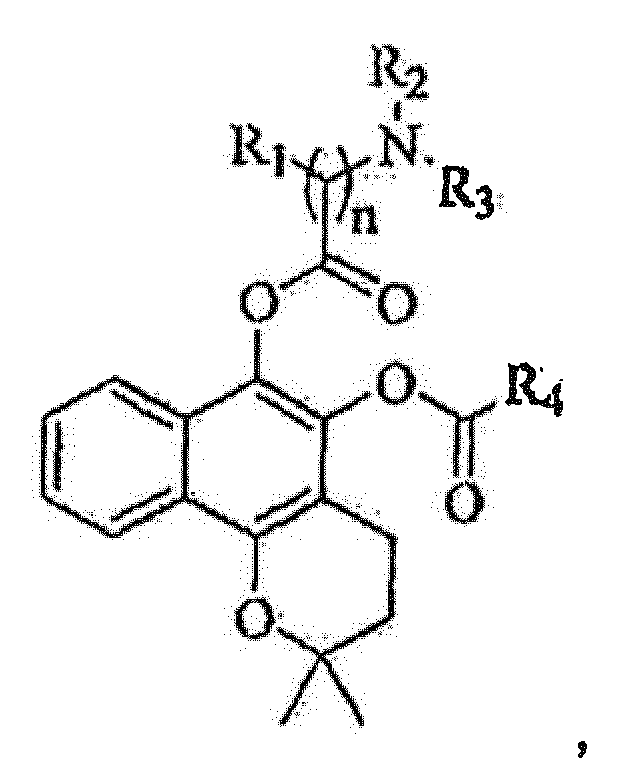 R1 H, Alkyl, Alkyl, das mit einer Sulfylgruppe (-SH oder Thioalkyl) substituiert ist, oder ein (C1-C4)-Alkohol ist oder zusammen mit R2 einen gesättigten, ungesättigten oder aromatischen cyclischen Rest bildet,R2 und R3 unabhängig H, Alkyl oder ein aromatischer Rest sind oder zusammen einen gesättigten, ungesättigten oder aromatischen cyclischen Rest bilden,R4 Alkyl, die Seitenkette einer natürlich vorkommenden alpha-Aminosäure oder die Seitenkette, das alpha-Kohlenstoffatom und die alpha-Aminogruppe einer natürlich vorkommenden Aminosäure ist, undn 1, 2 oder 3 ist.
 - Chinon-Pro-Pharmakon-Zusammensetzung nach Anspruch 1, wobei die Chinonverbindung aus der Gruppe, bestehend aus


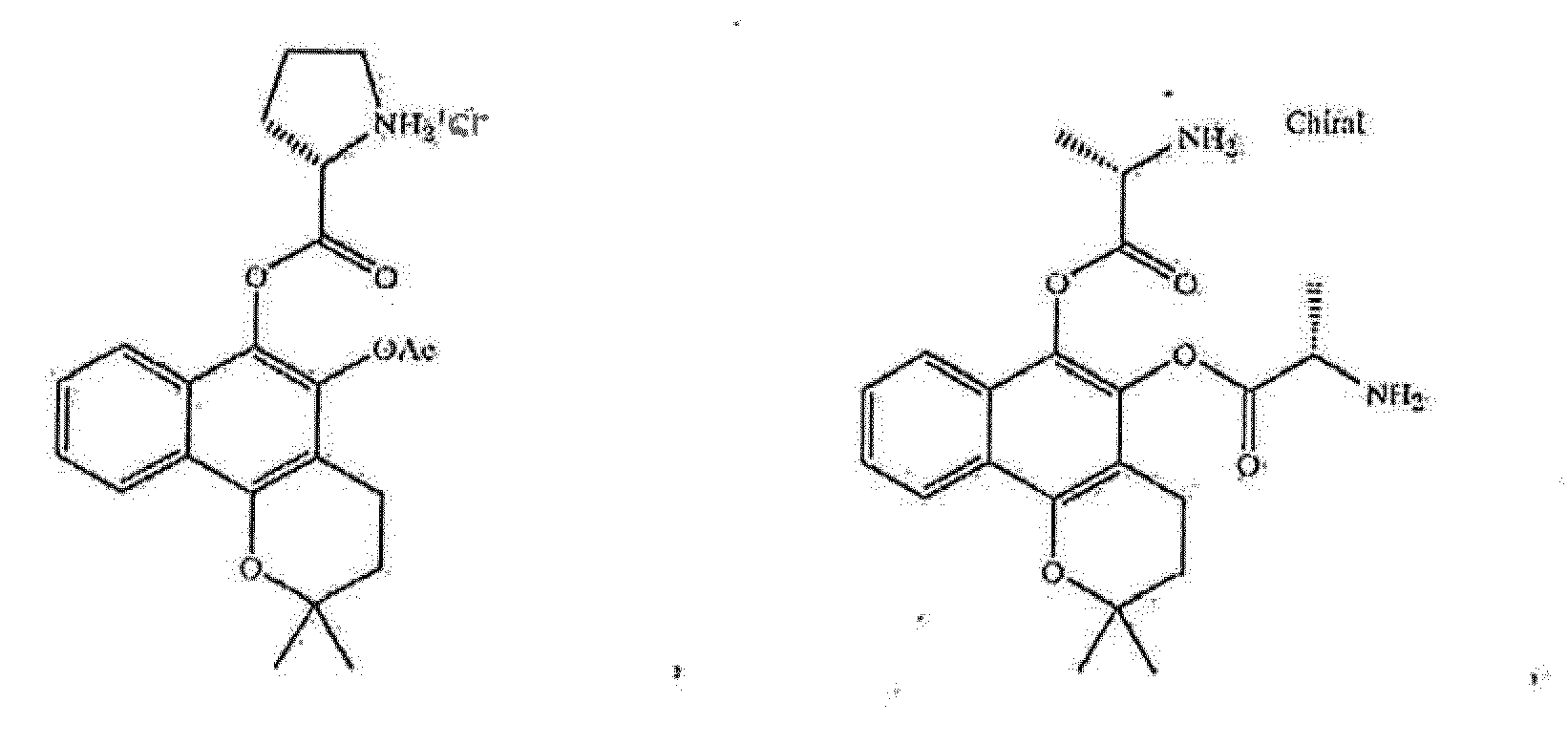


- Chinon-Pro-Pharmakon-Zusammensetzung nach Anspruch 1, wobei die Chinonverbindung

- Pharmazeutische Zusammensetzung, die eine therapeutisch wirksame Menge von mindestens einer Chinon-Pro-Pharmakon-Zusammensetzung nach Anspruch 1 und einen pharmazeutisch verträglichen Träger umfasst.
- Pharmazeutische Zusammensetzung nach Anspruch 4, wobei die pharmazeutische Zusammensetzung eine wässrige Lösung ist.
- Pharmazeutische Zusammensetzung nach Anspruch 4, wobei die pharmazeutische Zusammensetzung ein lyophilisierter Feststoff ist.
- Pharmazeutische Zusammensetzung nach Anspruch 4, wobei die pharmazeutische Zusammensetzung 0,1 mg/ml bis 10 mg/ml der Chinon-Pro-Pharmakon-Zusammensetzung umfasst.
- Pharmazeutische Zusammensetzung nach Anspruch 4, die ferner ein zweites Antikrebsmittel umfasst.
- Pharmazeutische Zusammensetzung nach Anspruch 8, wobei das zweite Antikrebsmittel aus der Gruppe, bestehend aus Taxanderivaten, Gemcitabin, Nukleosid- und ukleotid-Antikrebsmitteln, Cisplatin, Imatinibmesylat und Trastuzumab, ausgewählt ist.
- Pharmazeutische Zusammensetzung nach Anspruch 9, wobei das Taxanderivat Paclitaxel oder Docetaxol ist.
Applications Claiming Priority (2)
| Application Number | Priority Date | Filing Date | Title |
|---|---|---|---|
| US60037304P | 2004-08-11 | 2004-08-11 | |
| PCT/US2005/028438 WO2006020719A2 (en) | 2004-08-11 | 2005-08-11 | Aminoacid conjugates of beta - lapachone for tumor targeting |
Publications (2)
| Publication Number | Publication Date |
|---|---|
| EP1877097A2 EP1877097A2 (de) | 2008-01-16 |
| EP1877097B1 true EP1877097B1 (de) | 2012-06-20 |
Family
ID=35677399
Family Applications (1)
| Application Number | Title | Priority Date | Filing Date |
|---|---|---|---|
| EP05785192A Expired - Lifetime EP1877097B1 (de) | 2004-08-11 | 2005-08-11 | Konjugate aus beta-lapachon und aminosäuren für tumor-targeting |
Country Status (4)
| Country | Link |
|---|---|
| US (2) | US7812051B2 (de) |
| EP (1) | EP1877097B1 (de) |
| CA (1) | CA2583700A1 (de) |
| WO (2) | WO2006020719A2 (de) |
Families Citing this family (36)
| Publication number | Priority date | Publication date | Assignee | Title |
|---|---|---|---|---|
| AU2003254029A1 (en) * | 2002-07-17 | 2004-02-02 | Arqule, Inc. | Activated checkpoint therapy and methods of use thereof |
| US20050187288A1 (en) * | 2004-02-20 | 2005-08-25 | Chiang Li | Beta-lapachone and methods of treating cancer |
| EP1877097B1 (de) | 2004-08-11 | 2012-06-20 | Arqule, Inc. | Konjugate aus beta-lapachon und aminosäuren für tumor-targeting |
| US8614228B2 (en) | 2004-08-11 | 2013-12-24 | Arqule, Inc. | Quinone prodrug compositions and methods of use |
| KR20080047959A (ko) * | 2006-11-27 | 2008-05-30 | 주식회사 엠디바이오알파 | 비만, 당뇨, 대사성 질환, 퇴행성 질환 및 미토콘드리아이상 질환의 치료 또는 예방을 위한 나프토퀴논계 약제조성물 |
| ES2532656T3 (es) * | 2007-04-30 | 2015-03-30 | Arqule, Inc. | Compuestos de hidroxi sulfonato de quinona y sus usos |
| KR100967833B1 (ko) * | 2008-05-20 | 2010-07-05 | 아이디비켐(주) | 고순도의 폴리에틸렌글리콜 알데하이드 유도체의 제조방법 |
| US8497356B2 (en) | 2009-02-17 | 2013-07-30 | Duke University | Biomolecule polymer conjugates and methods for making the same |
| CN102753165A (zh) | 2009-12-28 | 2012-10-24 | 株式会社Kt&G生命科学 | 包含萘醌基化合物的、用于治疗或预防听力损失的组合物 |
| EP2560491A1 (de) * | 2010-04-21 | 2013-02-27 | Signature Therapeutics, Inc. | Periphere opioid-agonisten und periphere opioid-antagonisten |
| WO2012040492A1 (en) | 2010-09-22 | 2012-03-29 | The Board Of Regents Of The University Of Texas System | Methods of treating cancer comprising targeting nqo1 |
| WO2012039855A1 (en) | 2010-09-22 | 2012-03-29 | The Board Of Regents Of The University Of Texas System | Ph-sensitive compositions for delivery of beta lapachone and methods of use |
| US9511152B2 (en) | 2012-04-05 | 2016-12-06 | The Board Of Regents Of The University Of Texas System | Multicolored pH-activatable fluorescence nanoplatform |
| US10364451B2 (en) | 2013-05-30 | 2019-07-30 | Duke University | Polymer conjugates having reduced antigenicity and methods of using the same |
| US10392611B2 (en) | 2013-05-30 | 2019-08-27 | Duke University | Polymer conjugates having reduced antigenicity and methods of using the same |
| WO2014194244A1 (en) | 2013-05-30 | 2014-12-04 | Duke University | Enzyme-catalyzed synthesis of site-specific and stoichiometric biomolecule-polymer conjugates |
| US10385115B2 (en) | 2015-03-26 | 2019-08-20 | Duke University | Fibronectin type III domain-based fusion proteins |
| US10031234B1 (en) | 2015-04-03 | 2018-07-24 | Interstate Electronics Corporation | Global navigation satellite system beam based attitude determination |
| US10024973B1 (en) | 2015-04-03 | 2018-07-17 | Interstate Electronics Corporation | Global navigation satellite system spoofer identification technique |
| EA037478B1 (ru) | 2015-08-04 | 2021-04-01 | Дьюк Юниверсити | Генетически кодируемые внутренне неупорядоченные полимеры-"невидимки" для доставки и способы их применения |
| US11752213B2 (en) | 2015-12-21 | 2023-09-12 | Duke University | Surfaces having reduced non-specific binding and antigenicity |
| WO2017210476A1 (en) | 2016-06-01 | 2017-12-07 | Duke University | Nonfouling biosensors |
| WO2018053201A1 (en) | 2016-09-14 | 2018-03-22 | Duke University | Triblock polypeptide-based nanoparticles for the delivery of hydrophilic drugs |
| JP2020500150A (ja) | 2016-09-23 | 2020-01-09 | デューク ユニバーシティ | 下限臨界溶液温度挙動を有する非反復かつ非構造的ポリペプチド |
| WO2018132732A1 (en) | 2017-01-12 | 2018-07-19 | Duke University | Genetically encoded lipid-polypeptide hybrid biomaterials that exhibit temperature triggered hierarchical self-assembly |
| WO2018213320A1 (en) | 2017-05-15 | 2018-11-22 | Duke University | Recombinant production of hybrid lipid-biopolymer materials that self-assemble and encapsulate agents |
| WO2019006374A1 (en) | 2017-06-30 | 2019-01-03 | Duke University | ORDER AND DISORDER AS A DESIGN PRINCIPLE FOR STIMULI-SENSITIVE BIOPOLYMER NETWORKS |
| WO2019147954A1 (en) | 2018-01-26 | 2019-08-01 | Duke University | Albumin binding peptide-drug (aibiped) conjugates and methods of making and using same |
| CN108192095B (zh) * | 2018-02-01 | 2020-07-31 | 苏州大学 | 主链含酰胺键的聚合物的制备方法 |
| EP3788343B1 (de) | 2018-04-30 | 2024-03-27 | Duke University | Auf stimuli reagierende plattform zur abgabe von auf peg-like-polymer basierendem arzneimittel |
| US11649275B2 (en) | 2018-08-02 | 2023-05-16 | Duke University | Dual agonist fusion proteins |
| US12594347B2 (en) | 2018-09-07 | 2026-04-07 | Duke University | Nanoparticulate drug delivery systems |
| US11512314B2 (en) | 2019-07-12 | 2022-11-29 | Duke University | Amphiphilic polynucleotides |
| US11786464B2 (en) | 2020-04-24 | 2023-10-17 | The Board Of Regents Of The University Of Texas System | PH responsive block copolymer compositions and micelles that inhibit MCT 1 and related proteins |
| KR20220007554A (ko) | 2020-07-10 | 2022-01-18 | (주)나디안바이오 | 나프토퀴논계 화합물 및 면역관문 억제제를 유효성분으로 포함하는 암의 예방 또는 치료용 약학적 조성물 |
| CN116730969B (zh) * | 2023-06-26 | 2024-04-19 | 中国药科大学 | 一种β-拉帕醌-氨基酸缀合物及其制备方法和应用 |
Family Cites Families (39)
| Publication number | Priority date | Publication date | Assignee | Title |
|---|---|---|---|---|
| EP0040506B1 (de) * | 1980-05-21 | 1986-08-20 | Teijin Limited | Reaktives Polymer und Verfahren zu seiner Herstellung |
| US4963565A (en) | 1986-07-30 | 1990-10-16 | National Jewish Center For Immunology And Respiratory Medicine | In vivo treatment of mycobacterial infections with 6-cyclo octylamino-5,8-quinoline quinone |
| US5120843A (en) | 1987-04-27 | 1992-06-09 | Upjohn | Pharmaceutically active amines |
| FI102273B (fi) | 1989-09-11 | 1998-11-13 | Eisai Co Ltd | Kinonijohdannaiset, niiden valmistaminen ja niiden farmakologinen käyt tö |
| JP3111099B2 (ja) | 1991-10-31 | 2000-11-20 | 科学技術振興事業団 | 水溶性高分子化薬剤の製造法 |
| US5559156A (en) | 1993-09-30 | 1996-09-24 | Glaxo Wellcome, Inc. | Method for treating animals infected with Babesia spp. |
| WO1994004145A1 (en) | 1992-08-21 | 1994-03-03 | Dana Farber Cancer Institute | Treatment of human viral infections |
| US5672607A (en) | 1993-01-29 | 1997-09-30 | The United States Of America As Represented By The Department Of Health And Human Services | Antiviral naphthoquinone compounds, compositions and uses thereof |
| GB2282384B8 (en) | 1993-08-18 | 1997-09-04 | Europ Economic Community | Drug delivery agents incorporating mitomycin |
| EP0640609A1 (de) * | 1993-08-24 | 1995-03-01 | Ono Pharmaceutical Co., Ltd. | Kondensierte Phenolderivate mit Hemmwirkung auf TXA2 Synthetase und 5-Lipoxygenase, und zum Abfangen von Säuerstoffverbindungen |
| US5880131A (en) | 1993-10-20 | 1999-03-09 | Enzon, Inc. | High molecular weight polymer-based prodrugs |
| US5840900A (en) | 1993-10-20 | 1998-11-24 | Enzon, Inc. | High molecular weight polymer-based prodrugs |
| US5763625A (en) | 1995-04-25 | 1998-06-09 | Wisconsin Alumni Research Foundation | Synthesis and use of β-lapachone analogs |
| US5674900A (en) | 1995-06-06 | 1997-10-07 | Shaman Pharmaceuticals, Inc. | Terpenoid-type quinones for treatment of diabetes |
| US6245807B1 (en) | 1995-08-24 | 2001-06-12 | Dana-Farber Cancer Institute | Treatment of human prostate disease |
| US5824700A (en) | 1996-02-20 | 1998-10-20 | Wisconsin Alumni Research Foundation | Ortho-quinone derivatives novel synthesis therefor and their use in the inhibition of neoplastic cell growth |
| CN1304058C (zh) | 1996-03-12 | 2007-03-14 | Pg-Txl有限公司 | 水溶性紫杉醇产品 |
| AU2411197A (en) * | 1996-04-30 | 1997-11-19 | Affymax Technologies N.V. | Methods for the synthesis of fmoc protected amines |
| US6331289B1 (en) * | 1996-10-28 | 2001-12-18 | Nycomed Imaging As | Targeted diagnostic/therapeutic agents having more than one different vectors |
| US5959163A (en) * | 1997-09-04 | 1999-09-28 | The Dow Chemical Company | Process for the preparation of 1,4-butenediol from epoxybutene |
| DE60031268T2 (de) | 1999-04-14 | 2007-05-24 | Dana-Farber Cancer Institute, Inc., Boston | Verfahren und zusammansetzung zur behandlung von krebs |
| IL146126A0 (en) | 1999-04-30 | 2002-07-25 | Slil Biomedical Corp | Novel polyamine analog conjugates and quinone conjugates as therapies for cancers and prostate diseases |
| US6376470B1 (en) | 1999-09-23 | 2002-04-23 | Enzon, Inc. | Polymer conjugates of ara-C and ara-C derivatives |
| BRPI0014652B1 (pt) | 1999-10-12 | 2016-08-09 | Cell Therapeutics Inc | fabricação de conjugados de agente terapêutico-poliglutamato |
| HUP0204562A2 (hu) | 2000-03-17 | 2003-04-28 | Cell Therapeutics, Inc. | Poliglutaminsav-kamptotecin konjugátumok, eljárás előállításukra és ilyen konjugátumokat tartalmazó gyógyászati készítmények |
| EP1387677A2 (de) | 2000-11-07 | 2004-02-11 | Dana-Farber Cancer Institute, Inc. | Verfahren zur behandlung von hämatologischen tumoren und krebs mit beta lapachone |
| US6458974B1 (en) * | 2001-01-25 | 2002-10-01 | Cyclis Pharmaceuticals, Inc. | Synthesis of β-lapachone and its intermediates |
| US7074824B2 (en) * | 2001-07-31 | 2006-07-11 | Arqule, Inc. | Pharmaceutical compositions containing beta-lapachone, or derivatives or analogs thereof, and methods of using same |
| US6962944B2 (en) * | 2001-07-31 | 2005-11-08 | Arqule, Inc. | Pharmaceutical compositions containing beta-lapachone, or derivatives or analogs thereof, and methods of using same |
| CZ293787B6 (cs) | 2001-12-20 | 2004-07-14 | Zentiva, A.S. | pH senzitivní polymerní konjugáty antracyklinového kancerostatika pro cílenou terapii |
| US6890950B2 (en) | 2002-04-23 | 2005-05-10 | Case Western Reserve University | Lapachone delivery systems, compositions and uses related thereto |
| US6608076B1 (en) | 2002-05-16 | 2003-08-19 | Enzon, Inc. | Camptothecin derivatives and polymeric conjugates thereof |
| AU2003251904A1 (en) | 2002-07-15 | 2004-02-02 | Combinatorx, Incorporated | Combinations of drugs for the treatment of neoplasms |
| BR0316296A (pt) | 2002-11-18 | 2005-12-13 | Arqule Inc | Compostos lapacone e seus métodos de uso |
| JP2007523190A (ja) | 2004-02-20 | 2007-08-16 | アークル・インコーポレーテツド | 肺癌の治療のためのβ−ラパコンの使用 |
| WO2005082357A1 (en) | 2004-02-20 | 2005-09-09 | Arqule, Inc. | Use of beta-lapachone for treating hematologic tumors |
| EP1877097B1 (de) | 2004-08-11 | 2012-06-20 | Arqule, Inc. | Konjugate aus beta-lapachon und aminosäuren für tumor-targeting |
| US8614228B2 (en) | 2004-08-11 | 2013-12-24 | Arqule, Inc. | Quinone prodrug compositions and methods of use |
| WO2006128120A2 (en) | 2005-05-26 | 2006-11-30 | Arqule, Inc. | Novel lapachone compounds and methods of use thereof |
-
2005
- 2005-08-11 EP EP05785192A patent/EP1877097B1/de not_active Expired - Lifetime
- 2005-08-11 US US11/201,097 patent/US7812051B2/en active Active
- 2005-08-11 CA CA002583700A patent/CA2583700A1/en not_active Abandoned
- 2005-08-11 WO PCT/US2005/028438 patent/WO2006020719A2/en not_active Ceased
- 2005-08-11 WO PCT/US2005/028445 patent/WO2006020722A2/en not_active Ceased
-
2009
- 2009-05-01 US US12/387,385 patent/US20090226395A1/en not_active Abandoned
Also Published As
| Publication number | Publication date |
|---|---|
| WO2006020722A2 (en) | 2006-02-23 |
| US20060034796A1 (en) | 2006-02-16 |
| CA2583700A1 (en) | 2006-02-23 |
| EP1877097A2 (de) | 2008-01-16 |
| WO2006020722A3 (en) | 2007-02-08 |
| US7812051B2 (en) | 2010-10-12 |
| WO2006020719A3 (en) | 2007-05-18 |
| WO2006020719A2 (en) | 2006-02-23 |
| US20090226395A1 (en) | 2009-09-10 |
Similar Documents
| Publication | Publication Date | Title |
|---|---|---|
| EP1877097B1 (de) | Konjugate aus beta-lapachon und aminosäuren für tumor-targeting | |
| EP1301500B1 (de) | Nitrosierte und nitrosylierte taxane, zubereitungen und methoden der verwendung | |
| EP1406608B1 (de) | Nitrosiertes und nitrosyliertes nebivolol und seine metaboliten, zusammensetzungen und anwendungsverfahren | |
| Spoerlein-Guettler et al. | Ferrocene and (arene) ruthenium (II) complexes of the natural anticancer naphthoquinone plumbagin with enhanced efficacy against resistant cancer cells and a genuine mode of action | |
| US8614228B2 (en) | Quinone prodrug compositions and methods of use | |
| WO1999053917A1 (en) | Cannabinoids as antioxidants and neuroprotectants | |
| JP2007509978A (ja) | トコフェロール修飾治療薬化合物 | |
| EP2152686B1 (de) | Hydroxysulfonat aus chinonverbindungen und verwendung | |
| US7786164B2 (en) | Lipophilic di(anticancer drug) compounds, compositions, and related methods | |
| JP2007517861A (ja) | カンナビノイドのキノン派生物の治療使用方法 | |
| Ma et al. | Bromocoumarinplatin, targeting simultaneously mitochondria and nuclei with p53 apoptosis pathway to overcome cisplatin resistance | |
| US20130158106A1 (en) | Tocopherol derivatives and methods of use | |
| Manfredini et al. | Design, synthesis and in vitro evaluation on HRPE cells of ascorbic and 6-bromoascorbic acid conjugates with neuroactive molecules | |
| CN111362837A (zh) | 一种NQO1激活型Combretastatin A4前药及其合成方法和应用 | |
| US6004997A (en) | Trioxane dimer compounds having antiproliferative and antitumor activities | |
| US12285437B2 (en) | Reversing the undesirable pH-profile of doxorubicin via activation of a disubstituted maleamic acid prodrug at tumor acidity | |
| EP4365590B1 (de) | Mittel zum targeting von organellen-dna mit doppelter membran | |
| WO1998024786A9 (en) | Trioxane dimer compounds having antiproliferative and antitumor activities | |
| HK1139411B (en) | Hydroxy sulfonate of quinone compounds and their uses | |
| CN115819189A (zh) | 多酚类化合物及其制备方法和应用 |
Legal Events
| Date | Code | Title | Description |
|---|---|---|---|
| PUAI | Public reference made under article 153(3) epc to a published international application that has entered the european phase |
Free format text: ORIGINAL CODE: 0009012 |
|
| 17P | Request for examination filed |
Effective date: 20070405 |
|
| AK | Designated contracting states |
Kind code of ref document: A2 Designated state(s): AT BE BG CH CY CZ DE DK EE ES FI FR GB GR HU IE IS IT LI LT LU LV MC NL PL PT RO SE SI SK TR |
|
| 17Q | First examination report despatched |
Effective date: 20081110 |
|
| GRAP | Despatch of communication of intention to grant a patent |
Free format text: ORIGINAL CODE: EPIDOSNIGR1 |
|
| GRAS | Grant fee paid |
Free format text: ORIGINAL CODE: EPIDOSNIGR3 |
|
| GRAA | (expected) grant |
Free format text: ORIGINAL CODE: 0009210 |
|
| AK | Designated contracting states |
Kind code of ref document: B1 Designated state(s): AT BE BG CH CY CZ DE DK EE ES FI FR GB GR HU IE IS IT LI LT LU LV MC NL PL PT RO SE SI SK TR |
|
| REG | Reference to a national code |
Ref country code: GB Ref legal event code: FG4D |
|
| REG | Reference to a national code |
Ref country code: CH Ref legal event code: EP |
|
| REG | Reference to a national code |
Ref country code: AT Ref legal event code: REF Ref document number: 562643 Country of ref document: AT Kind code of ref document: T Effective date: 20120715 |
|
| REG | Reference to a national code |
Ref country code: IE Ref legal event code: FG4D |
|
| REG | Reference to a national code |
Ref country code: DE Ref legal event code: R096 Ref document number: 602005034863 Country of ref document: DE Effective date: 20120823 |
|
| PG25 | Lapsed in a contracting state [announced via postgrant information from national office to epo] |
Ref country code: LT Free format text: LAPSE BECAUSE OF FAILURE TO SUBMIT A TRANSLATION OF THE DESCRIPTION OR TO PAY THE FEE WITHIN THE PRESCRIBED TIME-LIMIT Effective date: 20120620 Ref country code: FI Free format text: LAPSE BECAUSE OF FAILURE TO SUBMIT A TRANSLATION OF THE DESCRIPTION OR TO PAY THE FEE WITHIN THE PRESCRIBED TIME-LIMIT Effective date: 20120620 Ref country code: SE Free format text: LAPSE BECAUSE OF FAILURE TO SUBMIT A TRANSLATION OF THE DESCRIPTION OR TO PAY THE FEE WITHIN THE PRESCRIBED TIME-LIMIT Effective date: 20120620 |
|
| REG | Reference to a national code |
Ref country code: NL Ref legal event code: VDEP Effective date: 20120620 |
|
| REG | Reference to a national code |
Ref country code: AT Ref legal event code: MK05 Ref document number: 562643 Country of ref document: AT Kind code of ref document: T Effective date: 20120620 |
|
| REG | Reference to a national code |
Ref country code: LT Ref legal event code: MG4D Effective date: 20120620 |
|
| PG25 | Lapsed in a contracting state [announced via postgrant information from national office to epo] |
Ref country code: LV Free format text: LAPSE BECAUSE OF FAILURE TO SUBMIT A TRANSLATION OF THE DESCRIPTION OR TO PAY THE FEE WITHIN THE PRESCRIBED TIME-LIMIT Effective date: 20120620 Ref country code: SI Free format text: LAPSE BECAUSE OF FAILURE TO SUBMIT A TRANSLATION OF THE DESCRIPTION OR TO PAY THE FEE WITHIN THE PRESCRIBED TIME-LIMIT Effective date: 20120620 Ref country code: GR Free format text: LAPSE BECAUSE OF FAILURE TO SUBMIT A TRANSLATION OF THE DESCRIPTION OR TO PAY THE FEE WITHIN THE PRESCRIBED TIME-LIMIT Effective date: 20120921 |
|
| PG25 | Lapsed in a contracting state [announced via postgrant information from national office to epo] |
Ref country code: CY Free format text: LAPSE BECAUSE OF FAILURE TO SUBMIT A TRANSLATION OF THE DESCRIPTION OR TO PAY THE FEE WITHIN THE PRESCRIBED TIME-LIMIT Effective date: 20120620 Ref country code: SK Free format text: LAPSE BECAUSE OF FAILURE TO SUBMIT A TRANSLATION OF THE DESCRIPTION OR TO PAY THE FEE WITHIN THE PRESCRIBED TIME-LIMIT Effective date: 20120620 Ref country code: RO Free format text: LAPSE BECAUSE OF FAILURE TO SUBMIT A TRANSLATION OF THE DESCRIPTION OR TO PAY THE FEE WITHIN THE PRESCRIBED TIME-LIMIT Effective date: 20120620 Ref country code: EE Free format text: LAPSE BECAUSE OF FAILURE TO SUBMIT A TRANSLATION OF THE DESCRIPTION OR TO PAY THE FEE WITHIN THE PRESCRIBED TIME-LIMIT Effective date: 20120620 Ref country code: CZ Free format text: LAPSE BECAUSE OF FAILURE TO SUBMIT A TRANSLATION OF THE DESCRIPTION OR TO PAY THE FEE WITHIN THE PRESCRIBED TIME-LIMIT Effective date: 20120620 Ref country code: BE Free format text: LAPSE BECAUSE OF FAILURE TO SUBMIT A TRANSLATION OF THE DESCRIPTION OR TO PAY THE FEE WITHIN THE PRESCRIBED TIME-LIMIT Effective date: 20120620 Ref country code: AT Free format text: LAPSE BECAUSE OF FAILURE TO SUBMIT A TRANSLATION OF THE DESCRIPTION OR TO PAY THE FEE WITHIN THE PRESCRIBED TIME-LIMIT Effective date: 20120620 Ref country code: IS Free format text: LAPSE BECAUSE OF FAILURE TO SUBMIT A TRANSLATION OF THE DESCRIPTION OR TO PAY THE FEE WITHIN THE PRESCRIBED TIME-LIMIT Effective date: 20121020 |
|
| PG25 | Lapsed in a contracting state [announced via postgrant information from national office to epo] |
Ref country code: PL Free format text: LAPSE BECAUSE OF FAILURE TO SUBMIT A TRANSLATION OF THE DESCRIPTION OR TO PAY THE FEE WITHIN THE PRESCRIBED TIME-LIMIT Effective date: 20120620 Ref country code: PT Free format text: LAPSE BECAUSE OF FAILURE TO SUBMIT A TRANSLATION OF THE DESCRIPTION OR TO PAY THE FEE WITHIN THE PRESCRIBED TIME-LIMIT Effective date: 20121022 Ref country code: IT Free format text: LAPSE BECAUSE OF FAILURE TO SUBMIT A TRANSLATION OF THE DESCRIPTION OR TO PAY THE FEE WITHIN THE PRESCRIBED TIME-LIMIT Effective date: 20120620 |
|
| REG | Reference to a national code |
Ref country code: CH Ref legal event code: PL |
|
| PG25 | Lapsed in a contracting state [announced via postgrant information from national office to epo] |
Ref country code: MC Free format text: LAPSE BECAUSE OF NON-PAYMENT OF DUE FEES Effective date: 20120831 Ref country code: NL Free format text: LAPSE BECAUSE OF FAILURE TO SUBMIT A TRANSLATION OF THE DESCRIPTION OR TO PAY THE FEE WITHIN THE PRESCRIBED TIME-LIMIT Effective date: 20120620 |
|
| PLBE | No opposition filed within time limit |
Free format text: ORIGINAL CODE: 0009261 |
|
| STAA | Information on the status of an ep patent application or granted ep patent |
Free format text: STATUS: NO OPPOSITION FILED WITHIN TIME LIMIT |
|
| PG25 | Lapsed in a contracting state [announced via postgrant information from national office to epo] |
Ref country code: LI Free format text: LAPSE BECAUSE OF NON-PAYMENT OF DUE FEES Effective date: 20120831 Ref country code: CH Free format text: LAPSE BECAUSE OF NON-PAYMENT OF DUE FEES Effective date: 20120831 Ref country code: ES Free format text: LAPSE BECAUSE OF FAILURE TO SUBMIT A TRANSLATION OF THE DESCRIPTION OR TO PAY THE FEE WITHIN THE PRESCRIBED TIME-LIMIT Effective date: 20121001 Ref country code: DK Free format text: LAPSE BECAUSE OF FAILURE TO SUBMIT A TRANSLATION OF THE DESCRIPTION OR TO PAY THE FEE WITHIN THE PRESCRIBED TIME-LIMIT Effective date: 20120620 |
|
| REG | Reference to a national code |
Ref country code: FR Ref legal event code: ST Effective date: 20130430 |
|
| REG | Reference to a national code |
Ref country code: IE Ref legal event code: MM4A |
|
| 26N | No opposition filed |
Effective date: 20130321 |
|
| GBPC | Gb: european patent ceased through non-payment of renewal fee |
Effective date: 20120920 |
|
| PG25 | Lapsed in a contracting state [announced via postgrant information from national office to epo] |
Ref country code: DE Free format text: LAPSE BECAUSE OF NON-PAYMENT OF DUE FEES Effective date: 20130301 Ref country code: GB Free format text: LAPSE BECAUSE OF NON-PAYMENT OF DUE FEES Effective date: 20120920 Ref country code: BG Free format text: LAPSE BECAUSE OF FAILURE TO SUBMIT A TRANSLATION OF THE DESCRIPTION OR TO PAY THE FEE WITHIN THE PRESCRIBED TIME-LIMIT Effective date: 20120920 Ref country code: IE Free format text: LAPSE BECAUSE OF NON-PAYMENT OF DUE FEES Effective date: 20120811 |
|
| PG25 | Lapsed in a contracting state [announced via postgrant information from national office to epo] |
Ref country code: FR Free format text: LAPSE BECAUSE OF NON-PAYMENT OF DUE FEES Effective date: 20120831 |
|
| REG | Reference to a national code |
Ref country code: DE Ref legal event code: R119 Ref document number: 602005034863 Country of ref document: DE Effective date: 20130301 |
|
| PG25 | Lapsed in a contracting state [announced via postgrant information from national office to epo] |
Ref country code: TR Free format text: LAPSE BECAUSE OF FAILURE TO SUBMIT A TRANSLATION OF THE DESCRIPTION OR TO PAY THE FEE WITHIN THE PRESCRIBED TIME-LIMIT Effective date: 20120620 |
|
| PG25 | Lapsed in a contracting state [announced via postgrant information from national office to epo] |
Ref country code: LU Free format text: LAPSE BECAUSE OF NON-PAYMENT OF DUE FEES Effective date: 20120811 |
|
| PG25 | Lapsed in a contracting state [announced via postgrant information from national office to epo] |
Ref country code: HU Free format text: LAPSE BECAUSE OF FAILURE TO SUBMIT A TRANSLATION OF THE DESCRIPTION OR TO PAY THE FEE WITHIN THE PRESCRIBED TIME-LIMIT Effective date: 20050811 |