EP3788343B1 - Auf stimuli reagierende plattform zur abgabe von auf peg-like-polymer basierendem arzneimittel - Google Patents
Auf stimuli reagierende plattform zur abgabe von auf peg-like-polymer basierendem arzneimittel Download PDFInfo
- Publication number
- EP3788343B1 EP3788343B1 EP19796027.1A EP19796027A EP3788343B1 EP 3788343 B1 EP3788343 B1 EP 3788343B1 EP 19796027 A EP19796027 A EP 19796027A EP 3788343 B1 EP3788343 B1 EP 3788343B1
- Authority
- EP
- European Patent Office
- Prior art keywords
- conjugate
- exendin
- poegma
- therapeutic molecule
- conjugates
- Prior art date
- Legal status (The legal status is an assumption and is not a legal conclusion. Google has not performed a legal analysis and makes no representation as to the accuracy of the status listed.)
- Active
Links
Images








Classifications
-
- A—HUMAN NECESSITIES
- A61—MEDICAL OR VETERINARY SCIENCE; HYGIENE
- A61K—PREPARATIONS FOR MEDICAL, DENTAL OR TOILETRY PURPOSES
- A61K47/00—Medicinal preparations characterised by the non-active ingredients used, e.g. carriers or inert additives; Targeting or modifying agents chemically bound to the active ingredient
- A61K47/50—Medicinal preparations characterised by the non-active ingredients used, e.g. carriers or inert additives; Targeting or modifying agents chemically bound to the active ingredient the non-active ingredient being chemically bound to the active ingredient, e.g. polymer-drug conjugates
- A61K47/51—Medicinal preparations characterised by the non-active ingredients used, e.g. carriers or inert additives; Targeting or modifying agents chemically bound to the active ingredient the non-active ingredient being chemically bound to the active ingredient, e.g. polymer-drug conjugates the non-active ingredient being a modifying agent
- A61K47/56—Medicinal preparations characterised by the non-active ingredients used, e.g. carriers or inert additives; Targeting or modifying agents chemically bound to the active ingredient the non-active ingredient being chemically bound to the active ingredient, e.g. polymer-drug conjugates the non-active ingredient being a modifying agent the modifying agent being an organic macromolecular compound, e.g. an oligomeric, polymeric or dendrimeric molecule
- A61K47/58—Medicinal preparations characterised by the non-active ingredients used, e.g. carriers or inert additives; Targeting or modifying agents chemically bound to the active ingredient the non-active ingredient being chemically bound to the active ingredient, e.g. polymer-drug conjugates the non-active ingredient being a modifying agent the modifying agent being an organic macromolecular compound, e.g. an oligomeric, polymeric or dendrimeric molecule obtained by reactions only involving carbon-to-carbon unsaturated bonds, e.g. poly[meth]acrylate, polyacrylamide, polystyrene, polyvinylpyrrolidone, polyvinylalcohol or polystyrene sulfonic acid resin
-
- A—HUMAN NECESSITIES
- A61—MEDICAL OR VETERINARY SCIENCE; HYGIENE
- A61P—SPECIFIC THERAPEUTIC ACTIVITY OF CHEMICAL COMPOUNDS OR MEDICINAL PREPARATIONS
- A61P3/00—Drugs for disorders of the metabolism
- A61P3/08—Drugs for disorders of the metabolism for glucose homeostasis
- A61P3/10—Drugs for disorders of the metabolism for glucose homeostasis for hyperglycaemia, e.g. antidiabetics
-
- A—HUMAN NECESSITIES
- A61—MEDICAL OR VETERINARY SCIENCE; HYGIENE
- A61K—PREPARATIONS FOR MEDICAL, DENTAL OR TOILETRY PURPOSES
- A61K38/00—Medicinal preparations containing peptides
- A61K38/16—Peptides having more than 20 amino acids; Gastrins; Somatostatins; Melanotropins; Derivatives thereof
- A61K38/17—Peptides having more than 20 amino acids; Gastrins; Somatostatins; Melanotropins; Derivatives thereof from animals; from humans
- A61K38/22—Hormones
- A61K38/2278—Vasoactive intestinal peptide [VIP]; Related peptides (e.g. Exendin)
Definitions
- the present disclosure relates to a novel drug delivery platform.
- Therapeutic biomolecules have some significant limitations as drugs; they typically have a short plasma half-life, and some peptides and proteins have poor stability in circulation. These attributes lead to their rapid in vivo elimination, which necessitates frequent injections that result in high treatment costs and suboptimal patient compliance and thus limits their utility as therapeutics.
- therapeutic biomolecules are often covalently attached to linear polyethylene glycol (PEG) moieties, termed PEGylation.
- PEG polyethylene glycol
- the current invention relates to a thermally responsive polymer-therapeutic molecule conjugate comprising a backbone comprising 100 to 400 repeating monomer units selected from the group consisting of acrylate, methacrylate, acrylamide, methacrylamide, and combinations thereof; a plurality of oligoethylene glycol side chains; and a therapeutic molecule conjugated to the backbone; wherein a first end of each oligoethylene glycol side chain is covalently attached to the backbone and each oligoethylene glycol side chain comprises two or three monomers of ethylene glycol repeated in tandem, wherein between 45% and 80% of the plurality of oligoethylene glycol side chains comprise two monomers of ethylene glycol repeated in tandem, and wherein the conjugate has a transition temperature between 23°C and 40 °C.
- the disclosure provides a drug depot comprising the thermally responsive polymer-therapeutic molecule conjugates described above.
- the disclosure provides a thermally responsive polymer-therapeutics molecule conjugate as described above for use in a method of treating a disease or disorder in a subject in need thereof comprising administering a therapeutically effective amount of the thermally responsive polymer-therapeutic molecule conjugates described herein.
- the delivery system utilizes POEGMA as an injectable depot-based drug delivery platform to improve in vivo efficacy of therapeutics upon their sustained release from subcutaneous depots into bloodstream.
- a highly tunable amphiphilic structure of POEGMA was engineered such that it undergoes phase transition near body temperature to form depots of therapeutics but remains soluble at room temperature allowing injection.
- Depot-forming POEGMAs were conjugated to exendin, a potent peptide with a short plasma half-life ( ⁇ 2.4h) used in the treatment of type 2 diabetes (T2D), and the in vitro and in vivo profiles of the exendin-POEGMA depots were assessed in diabetic mice.
- subcutaneous depots of POEGMA significantly improved in vivo efficacy of exendin by lowering blood glucose for 6 days and providing significant body weight lowering benefits.
- the innovative stimuli-responsive "PEG-like" stealth drug delivery system offers great advantages and has a wide application area in pharmaceutical industry.
- this stealth drug delivery system allows for efficient delivery of therapeutic conjugates in depot formulation with improved pharmacokinetics necessitating less frequent injections and thus increasing patient compliance.
- this system offers great versatility in terms of achieving tunable release of therapeutic compounds of interest and thus desired pharmacokinetics owing to its easily tunable amphiphilicity, which allows wide utility in pharmaceutical industry as many drugs have varying therapeutic windows.
- this system allows for local delivery of therapeutics directly to a region of interest so that sustained release of the compound of interest at the selected region is provided.
- This feature of the system allows for efficient delivery of therapeutics that have high systemic toxicity such as chemotherapy agents and offers a wide application area since reducing the unwanted side-effects of such treatments has been long-desired. Lastly, this system allows for effective delivery of therapeutics that do not suffer from a harmful interaction with pre-existing anti-PEG antibodies.
- the stimuli-responsive "PEG-like" stealth drug delivery system also represents a potential strategy to combat the growing problem of PEG antigenicity, as evidenced by the halted clinical trial of pegnivacogin (PEGylated Factor IXa aptamer, Regado Biosciences) due to the reactivity against pre-existing anti-PEG antibodies, and thus has a wide application in pharmaceutical industry where eliminating PEG antigenicity is desired. Consequently, the stimuli responsive "PEG-like" stealth drug delivery system offers great advantages allowing it to have a wide application area in pharmaceutical industry and has a potential to replace the PEGylation technology.
- the modifier "about” used in connection with a quantity is inclusive of the stated value and has the meaning dictated by the context (for example, it includes at least the degree of error associated with the measurement of the particular quantity).
- the modifier “about” should also be considered as disclosing the range defined by the absolute values of the two endpoints. For example, the expression “from about 2 to about 4" also discloses the range “from 2 to 4.”
- the term “about” may refer to plus or minus 10% of the indicated number. For example, “about 10%” may indicate a range of 9% to 11%, and “about 1" may mean from 0.9-1.1. Other meanings of "about” may be apparent from the context, such as rounding off, so, for example "about 1” may also mean from 0.5 to 1.4.
- each intervening number there between with the same degree of precision is explicitly contemplated.
- the numbers 7 and 8 are contemplated in addition to 6 and 9, and for the range 6.0-7.0, the number 6.0, 6.1, 6.2, 6.3, 6.4, 6.5, 6.6, 6.7, 6.8, 6.9, and 7.0 are explicitly contemplated.
- compositions of the disclosure are used interchangeably herein and refer to the placement of the compositions of the disclosure into a subject by a method or route which results in at least partial localization of the composition to a desired site.
- the compositions can be administered by any appropriate route which results in delivery to a desired location in the subject.
- alkoxy refers to an alkyl group, as defined herein, appended to the parent molecular moiety through an oxygen atom.
- Representative examples of alkoxy include, but are not limited to, methoxy, ethoxy, propoxy, 2-propoxy, butoxy and tert-butoxy.
- alkyl refers to a straight or branched hydrocarbon chain, containing the indicated number of carbon atoms.
- C 1 -C 12 alkyl indicates that the alkyl group may have from 1 to 12 (inclusive) carbon atoms
- C 1 -C 4 alkyl indicates that the alkyl group may have from 1 to 4 (inclusive) carbon atoms.
- An alkyl group may be optionally substituted. Examples of C 1 -C 4 alkyl groups include methyl, ethyl, n-propyl, isopropyl, n-butyl, sec-butyl and tert-butyl.
- an “effective amount” or “therapeutically effective amount,” as used herein, refer to a sufficient amount of an agent or a composition or combination of compositions being administered which will relieve to some extent one or more of the symptoms of the disease or condition being treated. The result can be reduction and/or alleviation of the signs, symptoms, or causes of a disease, or any other desired alteration of a biological system.
- an “effective amount” for therapeutic uses is the amount of the composition comprising a compound as disclosed herein required to provide a clinically significant decrease in disease symptoms.
- An appropriate "effective" amount in any individual case may be determined using techniques, such as a dose escalation study. The dose could be administered in one or more administrations.
- the precise determination of what would be considered an effective dose may be based on factors individual to each patient, including, but not limited to, the patient's age, size, type or extent of disease, stage of the disease, route of administration of the regenerative cells, the type or extent of supplemental therapy used, ongoing disease process and type of treatment desired (e.g., aggressive vs. conventional treatment).
- exendin As used herein, “exendin,” “EX,” and “Ex” are used interchangeably to mean the 39 amino acid polypeptide that acts as a glucagon-like peptide-1 receptor agonist.
- the polypeptide can be natural or synthetic.
- exendin may be isolated or purified from recombinant or natural sources, such as bacteria or Gila monster lizard venom.
- Exendin may also be synthetic, such as the commercial form exenatide.
- hydroxyl or "hydroxy,” as used herein, means an -OH group.
- a "peptide” or “polypeptide” is a linked sequence of two or more amino acids linked by peptide bonds.
- the polypeptide can be natural, synthetic, or a modification or combination of natural and synthetic.
- Small molecule refers to any small compound, generally less than 1 kDa, which may regulate or control a biological process.
- small molecules bind specific biological macromolecules and act as an effector, altering the activity or function of the target.
- These compounds can be natural, such as secondary metabolites, or synthetic, such as antiviral drugs. They may have a beneficial effect against a disease, such as drugs or therapeutics.
- Stealth or “stealth polymer,” as used herein, refer to a molecule-polymer conjugate, or to the polymer thereof, that can remain undetected by immune cells in the bloodstream for a prolonged period of time.
- Stealth molecule-polymer conjugates are at least partially resistant to enzymatic degradation of the conjugate, or to the polypeptide thereof, such as by proteases, and opsonization, which is a common method used by immune system to recognize foreign particles.
- stealth molecule-polymer conjugates may have one or more of reduced antigenicity, reduced immunogenicity, increased stability, increased half-life, and increased bioavailability relative to other polymers, conjugates, non-stealth polymers, and/or non-stealth conjugates.
- the ability to delay, reduce, or prevent opsonization, recognition by the immune system, or clearance of a conjugate (or the polypeptide or molecules thereof) from the body may be referred to herein as a stealth property.
- a “subject” or “patient” may be human or non-human and may include, for example, animal strains or species used as "model systems” for research purposes, such a mouse model as described herein. Likewise, patient may include either adults or juveniles ( e.g., children). Moreover, patient may mean any living organism, preferably a mammal (e.g., human or non-human) that may benefit from the administration of compositions contemplated herein.
- mammals include, but are not limited to, any member of the Mammalian class: humans, non-human primates such as chimpanzees, and other apes and monkey species; farm animals such as cattle, horses, sheep, goats, swine; domestic animals such as rabbits, dogs, and cats; laboratory animals including rodents, such as rats, mice and guinea pigs, and the like.
- non-mammals include, but are not limited to, birds, fish and the like.
- the mammal is a human.
- transition temperature or “T t” refers to the temperature at which the material changes from one state to another, for example, soluble to insoluble. For example, below the Tt the conjugate may be highly soluble. Upon heating above the transition temperature, for example, the conjugate may aggregate, forming a separate phase.
- treating means a slowing, stopping or reversing of progression of a disease or disorder when provided a composition described herein to an appropriate control subject.
- the terms also mean a reversing of the progression of such a disease or disorder to a point of eliminating or greatly reducing the cell proliferation.
- “treating” means an application or administration of the compositions described herein to a subject, where the subject has a disease or a symptom of a disease, where the purpose is to cure, heal, alleviate, relieve, alter, remedy, ameliorate, improve or affect the disease or symptoms of the disease.
- thermally responsive polymer-therapeutic molecule conjugates comprising: a backbone comprising repeating monomer units; a plurality of oligoethylene glycol side chains; and a therapeutic molecule conjugated to the backbone, wherein the conjugate has a transition temperature between 23°C and 40°C.
- Each oligoethylene glycol side chain is covalently attached at a first end to the backbone and may comprise two or three monomers of ethylene glycol repeated in tandem.
- the thermally responsive polymer-therapeutic molecule conjugates comprise a backbone comprising repeating monomer units.
- the repeating monomer units may be selected from the group consisting of acrylate, methacrylate, acrylamide, methacrylamide, and combinations thereof.
- the monomer unit is acrylate.
- the monomer unit is methacrylate.
- the backbone may comprise any number of repeating monomer units necessary for a transition temperature between 23°C and 40°C.
- the backbone comprises 100 to 400 monomer units.
- the backbone may comprise at least 200, or at least 300 monomer units.
- the backbone may comprise less than less than 300, or less than 200 monomer units. In some embodiments, the backbone comprises 200 to 300 repeating monomer units.
- the repeating monomer unit may be substituted with at least one functional group.
- the functional group may be hydroxyl, C 1 -C 4 alkoxy, or C 1 -C 4 alkyl.
- Each oligoethylene glycol side chain comprises two or three monomers of ethylene glycol repeated in tandem.
- the plurality of oligoethylene glycol side chains comprise two monomers of ethylene glycol repeated in tandem. At least 50%, at least 55%, at least 60%, at least 65%, at least 70%, at least 75% of the plurality of oligoethylene glycol side chain may comprise two monomers of ethylene glycol repeated in tandem. Less than 75%, less than 70%, less than 65%, less than 60%, less than 55%, or less than 50% of the plurality of oligoethylene glycol side chain may comprise two monomers of ethylene glycol repeated in tandem.
- Each oligoethylene glycol side chain may comprise a capping moiety on a second end.
- the capping moiety may be hydroxyl or C 1 -C 4 alkyl. In some embodiments, the capping moiety is a C 1 -C 4 alkyl.
- the therapeutic molecule may be selected from a polynucleotide, a peptide, a polypeptide, a carbohydrate, a small molecule, and a combination thereof.
- the therapeutic molecule may be a peptide or polypeptide.
- the polypeptide may be a protein, protein domain, or a segment of a protein.
- the peptide and/or polypeptide may include, but is not limited to, therapeutic polypeptides such as interferons, insulin, exendin, blood factors, colony stimulating factors, growth hormones, interleukins, growth factors, therapeutic vaccines, calcitonins, tumor necrosis factors (TNF), and enzymes.
- therapeutic proteins include, without limitation, enzymes utilized in enzyme replacement therapy; hormones for promoting growth in animals, or cell growth in cell culture; anticoagulants and active proteinaceous substances used in various applications, for example, in biotechnology or in medical diagnostics.
- peptide and/or polypeptide include, but are not limited to: asparaginase; glutamase; arginase; arginine deaminase; adenosine deaminase; ribonuclease; cytosine deaminase, trypsin; chymotrypsin, papin, betatrophin; epidermal growth factor (EGF), insulin; exendin; insulin-like growth factor (IGF), transforming growth factor (TGF), nerve growth factor (NGF), platelet-derived growth factor (PDGF), bone morphogenic protein (BMP), fibroblast growth factor (FGF) and the like; somatostatin; somatotropin; somatropin; somatrem; calcitonin; parathyroid hormone; colony stimulating factors (CSF); clotting factors; gastrointestinal peptides, such as vasoactive intestinal peptide (VIP), cholecytokinin (CCK), gastrin, secretin
- VIP
- the therapeutic molecule may be a polynucleotide.
- polynucleotides include, but are not limited to, polynucleotides and oligonucleotide sequences, including DNA and RNA, which may be double-stranded or single-stranded.
- polynucleotides include any natural or synthetic polynucleotides.
- polynucleotides include, but are not limited to, antisense oligonucleotides, silencing RNA (siRNAs), and anti-microRNA (anti-miR), long non-coding RNA, ribozymes, and analogs, derivatives or combinations thereof.
- the therapeutic molecule may be a carbohydrate.
- Carbohydrates and their derivatives are clinically used for treatment of various diseases.
- the carbohydrate may be a polysaccharide or a monosaccharide or derivatives thereof, such as sulfonated compounds.
- the carbohydrates may be purified from natural sources, or be synthetically produced and include natural or modified synthetic monosaccharides.
- the backbone of the thermally responsive polymer may be conjugated to any site anywhere on the molecule.
- the backbone may be conjugated to the polypeptide at the C-terminus, the N-terminus, or an internal amino acid, or a combination thereof.
- the molecule comprises a polypeptide with the backbone conjugated to the C-terminus of the polypeptide.
- At least one thermally responsive polymer may be conjugated to the molecule.
- the molecule comprises a polypeptide conjugated to at least one thermally responsive polymer.
- the conjugate may have a transition temperature (T t ) between 23°C and 40°C. In some embodiments, the conjugate has a transition temperature between 23°C and 37°C.
- the transition temperature may be about 23°C, about 24°C, about 25°C, about 26°C, about 27°C, about 28°C, about 29°C, about 30°C, about 31°C, about 32°C, about 33°C, about 34°C, about 35°C, about 36°C, or about 37°C.
- This phase transition behavior may allow the conjugate to form a gel-like depot upon administration to a subject.
- the depot will have the highest concentration of drug in the center, at the site of injection, and a decreasing concentration gradient towards the perimeter. Since the transition temperature is concentration dependent, the thermally responsive polypeptide may allow the gel-like depot to gradually resolubilize at the low concentration perimeter of the depot and slowly release the conjugate into the surrounding tissue.
- the phase transition behavior may be used to localize the conjugate within a subject thereby improving the biodistribution or bioaccumulation at the cell, tissue, disease site, or organ level in need of the therapeutic molecule.
- this improved targeted delivery of biomolecules to disease sites may thus provide enhanced diagnostic and therapeutic efficacy of these compounds.
- Phase transition behavior may also enable purification of the conjugate using inverse transition cycling.
- “Inverse transition cycling” refers to a protein purification method for polypeptides having phase transition behavior, and the method may involve the use of the conjugate's reversible phase transition behavior to cycle the solution through soluble and insoluble phases, thereby removing contaminants and eliminating the need for chromatography.
- the conjugates may also exhibit desirable properties over non-conjugated therapeutic molecules, or over polymer conjugates formed using methods other than those described herein.
- conjugates produced as described herein may show improvement in one or more of solubility, stability, pharmacokinetics, or immunogenicity.
- the conjugates may have one or more of reduced antigenicity, reduced immunogenicity, increased stability, increased half-life, and increased bioavailability relative to non-conjugated therapeutic molecules or conjugates differing from those described herein, such as other forms of PEGylation.
- the conjugates may be at least partially resistant to enzymatic degradation of the conjugate, or to the therapeutic molecule thereof, such as by proteases, nucleases, and opsonization, which is a common method used by immune system to recognize foreign particles.
- the improved stability and pharmacokinetics of the conjugates may manifest as an improvement in the half-life compared with a comparable biomolecule that is not conjugated to a polymer.
- the thermally responsive polymer may be synthesized and subsequently grafted to the therapeutic molecule to form the conjugate, or alternatively, the thermally responsive polymer may be synthesized on the therapeutic molecule in situ.
- Methods of making the conjugate may include any of those methods known in the art. For example, the methods may include those detailed in International Patent Application No. PCT/US2010/024385, filed February 17, 2010 , published as WO 2010096422 .
- the thermally responsive polymer and conjugate may be synthesized using free-radical polymerization.
- the free-radical polymerization comprises at least one of atom transfer radical polymerization (ATRP), reversible addition-fragmentation chain transfer (RAFT) polymerization, single-electron transfer free radical polymerization (SET-LRP), radical ring-opening polymerization (radical ROP), nitroxide-mediated radical polymerization (NMP), cobalt-mediated radical polymerization, telluride-mediated polymerization, and stibine-mediated polymerization.
- the free-radical polymerization comprises Activator-Regenerated Electron Transfer-Atom Transfer Radical Polymerization (ARGET-ATRP).
- the thermally responsive polymer and conjugate may be synthesized using at least one method selected from ionic ring-opening polymerization (ionic ROP), ring opening metathesis polymerization, ionic polymerization, condensation polymerization, and coordination polymerization.
- ionic ROP ionic ring-opening polymerization
- ring opening metathesis polymerization ionic polymerization
- condensation polymerization ionic polymerization
- coordination polymerization ionic ROP
- the thermally responsive polymer may include chemical moieties that are reactive to specific chemical moieties that may be present or introduced into a therapeutic molecule, thereby allowing site-specific conjugation.
- the thermally responsive polymer may include nitrophenyl carbonate, succinimidyl carbonate, carboxyl, hydroxyl, azide, maleimide, linear alkyne, and strained alkynes, aldehyde and acetal end groups.
- the site specific conjugation may include, but is not limited to, specific and controllable biorthogonal reactions including: 1,3-dipolar cycloadditions between azides and cyclooctynes or between nitrones and cyclooctynes, oxime/hydrazone formation from aldehydes and ketones, tetrazine ligations, isocyanide-based click reactions, and quadricyclane ligations.
- the thermally responsive polymer may include a chemical moiety that can react with a portion of the therapeutic molecule, such as an amino acid side chain in a peptide or polypeptide, or a phosphate group in a polynucleotide.
- the thermally responsive polymer may be synthesized in situ.
- the therapeutic molecule may be contacted with an initiator agent for free-radical polymerization under conditions that permit attachment of the initiator agent to the therapeutic molecule, for example at one or more of the N-terminus or C-terminus of a polypeptide, protein or combination thereof, or at one or more of the 5' or 3' end of a polynucleotide.
- the initiator agent assists in beginning the polymerization by interacting with the therapeutic molecule and the monomer unit.
- the therapeutic molecule with the attached initiator may be contacted with the monomer units under conditions suitable for polymerization to occur. Initiation sites on the therapeutic molecule can be generated prior to polymerization, or concurrently as polymerization occurs. Successive monomer units may be incorporated in the growing polymer chain by participating in the same type of chemical reactions used to initiate the polymer chain. Alternatively, the monomer units may include a leaving group that can be displaced with a nucleophilic group.
- a drug depot comprising the thermally responsive polymer-therapeutic molecule conjugate as described herein.
- the conjugate may undergo a phase transition to form a drug depot.
- the depot restricts the release of drug and thus sustains its release over a longer period of time.
- the present disclosure also provides conjugates for use in methods of treating a disease or disorder in a subject.
- the methods comprise administering an effective amount of the thermally responsive polymer-therapeutic molecule conjugate as detailed herein to the subject.
- the disease may include, but is not limited to, cancers, metabolic diseases, autoimmune diseases, cardiovascular diseases, respiratory diseases, allergies, and orthopedic disorders.
- the disease may be a disease associated with aberrant biological activity that a therapeutic molecule as described above may ameliorate.
- the invention provides a method for treating one or more metabolic disorders including type 1 or type 2 diabetes, hyperglycemia, and impaired glucose tolerance.
- the therapeutic molecule comprising a blood clotting factor
- the inventors provides a method for treating one or more disorders including hemophilia, post-surgical bleeding, anticoagulation-induced bleeding, thrombocytopenia, factor VII deficiency, factor XI deficiency, and intracranial hemorrhage.
- the disease or disorder is diabetes.
- the disclosed conjugates may be incorporated into pharmaceutical compositions suitable for administration to a subject (such as a patient, which may be a human or non-human) well known to those skilled in the pharmaceutical art.
- the pharmaceutical composition may be prepared for administration to a subject.
- Such pharmaceutical compositions may be administered in dosages and by techniques well known to those skilled in the medical arts taking into consideration such factors as the age, sex, weight, and condition of the particular subject, and the route of administration.
- compositions may include pharmaceutically acceptable carriers.
- pharmaceutically acceptable carrier means a non-toxic, inert solid, semi-solid or liquid filler, diluent, encapsulating material or formulation auxiliary of any type.
- materials which can serve as pharmaceutically acceptable carriers are sugars such as, but not limited to, lactose, glucose and sucrose; starches such as, but not limited to, corn starch and potato starch; cellulose and its derivatives such as, but not limited to, sodium carboxymethyl cellulose, ethyl cellulose and cellulose acetate; powdered tragacanth; malt; gelatin; talc; excipients such as, but not limited to, cocoa butter and suppository waxes; oils such as, but not limited to, peanut oil, cottonseed oil, safflower oil, sesame oil, olive oil, corn oil and soybean oil; glycols; such as propylene glycol; esters such as, but not limited to, ethyl oleate and ethyl laurate; agar; buffering agents such as, but not limited to, magnesium hydroxide and aluminum hydroxide; alginic acid; pyrogen-free water; isotonic saline;
- the conjugates and compositions disclosed herein may be administered prophylactically or therapeutically.
- the conjugate or composition may be administered in an amount sufficient to induce a response.
- the conjugate or composition is administered to a subject in need thereof in an amount sufficient to elicit a therapeutic effect.
- An amount adequate to accomplish this is defined as "therapeutically effective dose.” Amounts effective for this use will depend on, e.g., the particular composition of the conjugate regimen administered, the manner of administration, the stage and severity of the disease, the general state of health of the patient, and the judgment of the prescribing physician.
- the conjugates or compositions disclosed herein may be administered by methods well known in the art as described in Donnelly et al. (Ann. Rev. Immunol. 1997, 15, 617-648 ); Feigner et al. (U.S. Patent No. 5,580,859, issued Dec. 3, 1996 ); Feigner ( U.S. Patent No. 5,703,055, issued Dec. 30, 1997 ); and Carson et al. (U.S. Patent No. 5,679,647, issued Oct. 21, 1997 ).
- a pharmaceutically acceptable carrier including a physiologically acceptable compound, depends, for example, on the route of administration.
- conjugates or compositions disclosed herein may conveniently be presented in a single dose or as divided doses administered at appropriate intervals, for example, as two, three, four or more sub-doses per day.
- the sub-dose itself may be further divided, e.g., into a number of discrete loosely spaced administrations.
- the useful in vivo dosage to be administered and the particular mode of administration will vary depending upon the age, weight, the severity of the affliction, and mammalian species treated, the particular conjugates employed, and the specific use for which these conjugates are employed.
- the determination of effective dosage levels that is the dosage levels necessary to achieve the desired result, can be accomplished by one skilled in the art using routine methods, for example, human clinical trials, in vivo studies and in vitro studies.
- Dosage amount(s) and interval(s) may be adjusted individually to provide plasma levels of the therapeutic molecule which are sufficient to maintain the modulating effects, or minimal effective concentration (MEC).
- MEC minimal effective concentration
- the MEC will vary for each therapeutic molecule but can be estimated from in vivo and/or in vitro data. Dosages necessary to achieve the MEC will depend on individual characteristics and route of administration. However, assays well known to those in the art may be used to determine plasma concentrations. Dosage intervals can also be determined using MEC value. Conjugates or compositions should be administered using a regimen which maintains plasma levels above the MEC for 10-90% of the time, preferably between 30-90% and most preferably between 50-90%. In cases of local administration or selective uptake, the effective local concentration of the therapeutic molecule may not be related to plasma concentration.
- the attending physician would know how to and when to terminate, interrupt, or adjust administration due to toxicity or organ dysfunctions. Conversely, the attending physician would also know to adjust treatment to higher levels if the clinical response were not adequate (precluding toxicity).
- the magnitude of an administrated dose in the management of the disorder of interest will vary with the severity of the symptoms to be treated and the route of administration. Further, the dose, and perhaps dose frequency, will also vary according to the age, body weight, and response of the individual patient. A program comparable to that discussed above may be used in veterinary medicine.
- a therapeutically effective amount of the conjugates or compositions may be administered alone or in combination with a therapeutically effective amount of at least one additional therapeutic agents.
- effective combination therapy is achieved with a single composition or pharmacological formulation that includes both agents, or with two distinct compositions or formulations, administered at the same time, wherein one composition includes a compound of this invention, and the other includes the second agent(s).
- the therapy precedes or follows the other agent treatment by intervals ranging from minutes to months.
- a wide range of second therapies may be used in conjunction with the conjugates or compositions of the present disclosure.
- the second therapy may be a combination of a second therapeutic agent or may be a second therapy not connected to administration of another agent.
- Such second therapies include, but are not limited to, surgery, immunotherapy, radiotherapy, or administration of a chemotherapeutic agent.
- the final product (C 7 H 13 BrN 4 O) was also analyzed by reverse-phase high pressure liquid chromatography (RP-HPLC) equipped with a high-resolution mass spectrometer at positive ion mode using a C18 column.
- the mobile phase consisted of water/acetonitrile/0.3% formic acid with 0-95% acetonitrile gradient.
- OEGMA monomers Triethylene glycol methyl ether methacrylate (EG3, Sigma Aldrich, #729841) and diethylene glycol methyl ether methacrylate (EG2, Sigma Aldrich, #447927) monomers were diluted in water/acetonitrile (1:20000) and analyzed by RP-HPLC equipped with a high-resolution mass spectrometer at positive ion mode using a C18 column. The mobile phase consisted of water/acetonitrile/0.3% formic acid. The gradient was 5-95% acetonitrile over 10 min. The monomers were also characterized via NMR spectroscopy using deuterated chloroform as solvent and upstream reference and using TMS as downstream reference.
- EG3 and EG2 monomers were passed through basic alumina column to remove inhibitors. All other materials (tris(2-pyridylmethyl) amine (TPMA), copper (II) bromide (CuBr2), ascorbic acid, methanol and sodium chloride (NaCl)) were purchased from Sigma Aldrich and used as received.
- TPMA tris(2-pyridylmethyl) amine
- CuBr2 copper
- ascorbic acid methanol and sodium chloride
- Absolute molar mass (Mn and Mw) and polydispersity ( ⁇ ) characterization of POEGMA Absolute number-averaged molar mass (Mn), absolute weight-averaged molar mass (Mw) and polydispersity ( ⁇ ) of POEGMAs were measured via gel-permeation chromatography-multi-angle light scattering (GPC-MALS). To do so, 2 mg ml -1 POEGMA solution in tetrahydrofuran (THF) was prepared followed by filtration through a 0.22 ⁇ m filter.
- GPC-MALS gel-permeation chromatography-multi-angle light scattering
- the sample (50 ⁇ l) was then separated on an Agilent 1100 analytical HPLC system equipped with a UV detector operating at 254 nm, DAWN TREOS (Wyatt Technology) light scattering detector and Wyatt Optilab T-rEX (Wyatt Technology) refractive index detectors.
- the mobile phase consisted of 0.1% LiBr in THF and flow rate was set to 1 ml/min. Absolute number-averaged molar mass (Mti), absolute weight-averaged molar mass (Mw) and polydispersity ( ⁇ ) of a particular POEGMA were calculated by ASTRA software (v.
- DAWN TREOS light scattering detector was annually calibrated in toluene by Wyatt Technology and normalized with 30 kDa polystyrene (Wyatt Technology) prior to each analysis.
- Monomer composition of POEGMAs was defined as 2EG-long monomer content (%) and calculated from the integral value that corresponds to average number of hydrogens (H) present in the OEG side-chain (b; 3.4-4.4 ppm; 6H for EG2 100% homopolymer, 10H for EG3 100% homopolymer) except chain end-group (c; 3.5-3.3 ppm; 3H) and methylene protons (a; 4.0-4.4 ppm; 2H).
- H average number of hydrogens
- b 3.4-4.4 ppm
- 6H for EG2 100% homopolymer 100% homopolymer
- 10H for EG3 100% homopolymer except chain end-group
- methylene protons a; 4.0-4.4 ppm; 2H
- This equation was formed based on the fact that EG2 100% , which exclusively consists of EG2 monomers (100% EG2), and EG3 100% polymer, which does not contain any EG2 monomer (0% EG2), have integral values of 6 and 10 H in the b region described above, respectively ( FIG 5A ).
- Degrees of polymerization (DP) of POEGMA was calculated by subtracting mass of initiator from Mw calculated by GPC-MALS and then dividing the resulting mass to average mass of monomeric unit at the indicated monomer composition calculated by hydrogen NMR spectroscopy.
- Hydrodynamic size characterization of POEGMA and Exendin-POEGMA conjugates Hydrodynamic size of POEGMA and exendin-POEGMA conjugates was characterized via Dynamic Light Scattering (DLS). Samples were prepared in PBS at a concentration of 25-50 ⁇ M and filtered through 100 nm filters (Whatman Anotop 10). The samples were then loaded on a black 384-well-plate and DLS was performed on a temperature controlled DynaPro Plate Reader (Wyatt Technology). 10 repeat measurements of 10 second acquisitions were made for each sample at 15°C and data was analyzed by applying a regularization fit to the light scattering intensity autocorrelation function for Raleigh spheres using Dynamics 6.12.0.3 software (Wyatt Technology). The laser wavelength and scattering angle of the instrument was 831.95 nm and 90°, respectively.
- DLS Dynamic Light Scattering
- Phase behavior characterization of POEGMA and Exendin-POEGMA conjugates Phase behavior of POEGMA and exendin-POEGMA conjugates was characterized via UV-vis spectroscopy. Samples were prepared at indicated concentrations varying between 1-1000 ⁇ M in Dulbecco's phosphate buffered saline (DPBS) without calcium and magnesium (Hyclone) followed by filtration through a 1 ⁇ m filter. The filtered samples were then loaded on quartz cuvettes and optical density of samples at 600 nm (OD 600 ) was monitored as temperature increased and decreased at a rate of 1°C min-1 using a temperature-controlled UV-vis spectrophotometer (Cary 300 Bio, Varian Instruments).
- DPBS Dulbecco's phosphate buffered saline
- Hyclone calcium and magnesium
- phase transition of POEGMA was indicated by a sharp increase or decrease in OD 600 as temperature increased or decreased, respectively.
- Transition temperature (Tt) was defined as inflection point of OD 600 when it was plotted as a function of temperature and calculated as the maximum of first derivative using GraphPad Prism 7.0 software.
- Exendin was expressed as a fusion protein of elastin-like polypeptide (ELP) with a sortase A recognition sequence (LPETG amino acids; srt) and polyhistidine tag (His6) inserted in between, exendin-srt-His 6 -ELP (ESE).
- ESE elastin-like polypeptide
- LEPG amino acids LETG amino acids
- His6 polyhistidine tag
- ESE exendin-srt-His 6 -ELP
- Cells harboring ESE gene inserted plasmid were cultured in 2XYT media (16 g L -1 Tryptone, 10 g L -1 yeast extract and 5.0 g L -1 NaCl) supplemented with 45 ⁇ g ml -1 kanamycin at 25°C until OD 600 reaches to 0.6.
- OD 600 When OD 600 is 0.6, temperature was set to 16°C and isopropyl ⁇ -D-1-thiogalactopyranoside (IPTG, AMRESCO) was added to final concentration of 0.75 mM to induce expression of the fusion protein.
- IPTG isopropyl ⁇ -D-1-thiogalactopyranoside
- Cells were harvested after overnight culture by centrifugation at 700 g for 15 minutes at 4°C followed by resuspension in PBS. Resuspended cells were then lysed by sonication on a Misonex Ultrasonic Liquid Processer (Qsonica, LLC). The sonicator was set to 85 amplitude and was operated for 10 s after followed by a 40 s off-cycle for a total of 15 minutes.
- nucleic acids were precipitated by adding polyethyleneimine (PEI) to 1% vol (Acros Chemicals) followed by centrifugation at 21000 g for 15 minutes at 4°C.
- PEI polyethyleneimine
- ITC nonchromatographic inverse transition cycling
- the supernatant was removed, and the fusion protein was dissolved in cold PBS followed by centrifugation at 21000 g for 15 minutes at 4°C to remove any insoluble material (cold spin).
- the hot and cold spins were repeated two more times to obtain >99 % purity, verified by sodium dodecyl sulfate-polyacrylamide gel electrophoresis (SDS-PAGE).
- SDS-PAGE sodium dodecyl sulfate-polyacrylamide gel electrophoresis
- the fusion was resolubilized in sortase buffer (50 mM Tris, 150 mM NaCl, 10 mM CaCl2, pH 7.5). ESE yield was determined to be 15 mg L -1 using bicinchoninic acid (BCA) assay (Pierce, Thermo Scientific).
- the cells harboring gene encoding sortase-A with an N terminal polyhistidine tag were cultured in 2XYT media supplemented with 100 ⁇ g ml -1 ampicillin at 37°C until OD 600 reaches to 0.6. When OD 600 is 0.6, IPTG was added to final concentration of 0.1 mM to induce protein expression. Cells were harvested after overnight culture by centrifugation at 700 g for 15 minutes at 4°C followed by resuspension in PBS. Resuspended cells were then lysed by sonication on a Misonex Ultrasonic Liquid Processer (Qsonica, LLC).
- Qsonica, LLC Misonex Ultrasonic Liquid Processer
- the sonicator was set to 85 amplitude and was operated for 10 s after followed by a 40 s off-cycle for a total of 15 minutes.
- nucleic acids were precipitated by adding polyethyleneimine (PEI) to 1% vol (Acros Chemicals) followed by centrifugation at 21000 g for 15 minutes at 4°C.
- the resulting solution consisting of were then loaded on ElisPur Cobalt Resin (Pierce, Thermo Scientific) and sortase-A was purified according to the manufacturer's protocols. Sortase-A purity and yield were determined to be > 95% by SDS-PAGE and 186 mg L -1 by absorbance measurement at 280 nm, respectively.
- Exendin-DBCO was collected in flow through as it was the only species not bearing a His 6 moiety thus not interacting with the resin. Exendin-DBCO was concentrated using Centricon 70 (Milipore Sigma) concentrators with 3000 Da cut-off followed by dialysis into cold water overnight to remove unreacted DBCO-Gly 3 and lyophilization.
- Exendin-POEGMA conjugate synthesis and purification Azide functional POEGMA and exendin-DBCO was dissolved in PBS at 1:1.05 ratio and reacted overnight at 4°C. Conjugation was confirmed via SDS-PAGE.
- Soluble exendin-POEGMA conjugates were purified via a single round of size exclusion chromatography. Conjugates were purified using an AKTA purifier equipped with a photodiode array detector operating at 220 and 280 nm and a HiLoad 16/600 Superdex 75 pg at 4oC using water as mobile phase. Purified conjugates were concentrated using amicon concentrators (Milipore Sigma) with 3000 Da cut-off and lyophilized.
- Exendin-POEGMA conjugates were characterized in terms of their Mn, Mw and ⁇ by SEC-MALS. To do so, conjugates at 0.5 mg ml -1 were dissolved in 10 mM phosphate buffer at pH 7.4 followed by filtration through a 100 nm filter. Filtered conjugates were then separated on an Agilent 1260 analytical HPLC system equipped with a KW803 protein column (Shodex) and a DAWN HELEOS II (Wyatt Technology) light scattering detector in addition to a UV detector operating at 280 nm and an Optilab T-rEX (Wyatt Technology) refractive index detector serving as upstream and downstream concentration detectors, respectively. The mobile phase was 30 vol% methanol in 10 mM phosphate buffer at pH 7.4 and flow rate was 0.5 ml min -1 .
- Mn, Mw and D of a particular exendin-POEGMA conjugate were calculated by ASTRA 7.0 software (Wyatt Technology) using build-in protein conjugate method.
- the method requires to enter dn/dc values and 280 nm UV-extinction coefficients of exendin-DBCO and that particular POEGMA used in the synthesis of the conjugate, dn/dc values were measured in the given mobile phase using build-in dn/dc calculation method of ASTRA and confirmed by injecting known concentrations of samples directly into Optilab T-rEX detector.
- 280 nm UV extinction coefficient of exendin-DBCO was calculated by ExPASY ProtPram tool upon entering its sequence, while that of POEGMAs was calculated by ASTRA software using its build-in methods.
- DAWN HELEOS II light scattering detector was annually calibrated in toluene by Wyatt Technology and normalized with 2 mg ml -1 bovine serum albumin (Pierce, Thermo Scientific) using the given mobile phase prior to each analysis.
- exendin variants In vitro activity of exendin variants. In vitro activity of exendin-POEGMA conjugates was tested in terms of their ability to activate a G-protein-coupled receptor, namely glucagon-like peptide 1 receptor (GLP1R), whose intracellular signaling cascade is mediated by cyclic adenosine monophosphate (cAMP). Intracellular cAMP release upon GLP1R activation by exendin variants was quantified in Human Embryonic Kidney 293 (HEK293) cells, which were recombinantly engineered to express GLP1R as well as cAMP responsive element (CRE) fused to luciferase as reporter, abbreviated as HEK293/CRE-Luc/GLP1R.
- HEK293/CRE-Luc/GLP1R Human Embryonic Kidney 293
- HEK293/CRE-Luc/GLPIR cells were cultured in high glucose DMEM (Gibco) supplemented with 10% fetal bovine serum, 400 ⁇ g ml -1 G418 (Thermo Fisher) and 200 ⁇ g ml -1 G418 (Invitrogen). Cells were subcultured at least once prior to assay at approximately 80 % confluency. One day prior to performing the assay, cells were seeded without antibiotics in phenol-free DMEM (Gibco) on 96-well plates at 25, 000 cell per well in 90 ⁇ l media, and incubated at 37°C under 5% CO2 atmosphere overnight.
- Exendin-POEGMA conjugates (20 ⁇ M in PBS) were incubated with dipeptidyl peptidase IV (DPP-IV, Prospec Bio) to expose active N-terminus for 16 h at room temperature. DPPIV amount was set to 2.5 mass % of exendin present in the conjugates. On the day of the assay, exendin stock (Santa Cruz Biotechnology) was dissolved to a final concentration of 20 ⁇ M in PBS, and logarithmic serial dilutions were made for each exendin variant in PBS in the range of 0-10-6 ⁇ M.
- DPP-IV dipeptidyl peptidase IV
- mice Animal studies and endotoxin purification. All in vivo studies were conducted under protocols approved by Duke Institutional Animal Care and Use Committee (IACUC) with six-week old male C57BL/6J mice (stock no. 000664.) purchased from Jackson Laboratories. On the day of arrival, mice were placed on 60 kcal % fat diet (#D12492, Research Diets Inc.) and kept on the diet for at least 10 days to induce diabetic phenotype. Previous literature studies have established C57BL/6J mice kept on 60 kcal % fat diet for one week as an adequate diet-induced obesity (DIO) type-2 diabetes model as they exhibit elevated blood glucose, compromised insulin response and high insulin levels.
- DIO diet-induced obesity
- mice were group-housed (3 mice per cage) under controlled photoperiod with 12 h light and 12 h dark cycles and acclimated to the facility for at least 10 days prior to start of experiments. Mice had ad libitum access to water and food unless otherwise noted. Treatment groups were randomized.
- exendin-variants were endotoxin purified and sterilized prior to injection by using high capacity endotoxin removal spin columns (Pierce, Thermo Scientific) and sterile 0.22 ⁇ m Acrodisc filter with Mustang E membrane (Pall Corporation). Endotoxin amount was tested using Charles River Endosafe nexgen-PTS instrument and Endosafe cartridges and confirmed to be below 5 EU per kg mouse body weight as suggested by USP (United States Pharmacopeia).
- S.C. subcutaneous
- mice Immediately after injection, mice were placed in their cages to have ad libitum access to water and food and fed blood glucose levels were measured at 1-, 4-, and 8-h time points and every 24 h thereafter until no significant effect was observed. Body weight was also tracked daily as exendin provides weight-lowering benefits.
- Blood glucose data was plotted as a function of time as raw values and/or normalized values. Normalization was achieved by dividing the raw values by average glucose level measured immediately before injection to correct transient variations in blood glucose and reflect per cent change in blood glucose as previously described in literature. Area under the curve (AUC) was quantified for each subject and plotted to compare glycemic regulation across groups as previously described in literature.
- AUC Area under the curve
- POEGMA poly[oligo(ethylene glycol) methyl ether methacrylate]
- conjugate technology was previously developed in which the immunogenic and hydrophilic long ethylene glycol sequences found in PEG are distributed along a hydrophobic poly(methacrylate) backbone as oligomeric ethylene glycol (EG) side-chains ( FIG. 1 ).
- POEGMA with an average of nine EGs as side-chains conferred the same pharmacokinetic (PK) advantages of traditional PEGylation technology and eliminated the reactivity towards patient-derived anti-PEGs upon further shortening the OEG side-chain length down to three without compromising in vivo efficacy and PK advantages.
- PK pharmacokinetic
- anti-PEGs was overcome by utilizing POEGMA in which epitope sites are sufficiently shortened by presenting only 3EG-long side-chains along a hydrophobic backbone.
- OEG side-chain length down to two or combinations of two and three decreased overall hydrophilicity of POEGMA resulting in favored polymer-polymer interactions and phase transition from soluble chains to insoluble coacervates with increased temperatures.
- further shortening of OEG side-chain also affected water interactions of POEGMA as OEG moieties favor polymer-water interactions by making hydrogen bonds, while hydrophobic backbone and OEG chain end-groups favor polymer-polymer interactions. When polymer-water interactions dominate, POEGMA forms homogenous solutions.
- EG3 and cliethylene glycol methyl ether methacrylate (EG2) monomers Poly disperse EG monomers typically provide limited control over the structure and properties of POEGMAs resulting in polydisperse polymers that exhibit non-uniform physical and in vivo profile. To achieve uniformity in polymer and bioconjugates, the structure of EG2 and EG3 monomers were analyzed via nuclear magnetic resonance (NMR) spectroscopy and high-resolution mass spectrophotometry (MS) and confirmed to consist of only 2 EG- and 3 EG-long chains, respectively.
- NMR nuclear magnetic resonance
- MS mass spectrophotometry
- ester-based polymerization initiators may be susceptible to hydrolytic cleavage and attacks by esterase enzymes upon in vivo administration, which may result in early cleavage of biomolecule from polymer moiety. To prevent this, an amide-based polymerization initiator bearing an azide moiety was synthesized, which was resistant to hydrolytic cleavage and esterase activity. Its structure was confirmed via NMR spectroscopy and high-resolution MS.
- Synthesis and structural characterization of POEGMA library Well-defined and azide functional POEGMAs were synthesized using activator-regenerated by electron transfer-atom transfer radical polymerization (ARGET-ATRP). The resulting POEGMAs with 3EG-long side chains, EG3 100% , phase-transitioned above body temperature allowing only soluble state drug delivery, whereas more hydrophobic POEGMA with 2EG-long side-chains, EG2 100% , phase-transitioned at room temperature preventing it from being injected. To tune transition temperature of POEGMA to near body temperature, average OEG side-chain length was varied by copolymerizing 2EG- and 3EG-long monomers at various ratios in monomer feed.
- ARGET-ATRP electron transfer-atom transfer radical polymerization
- POEGMAs at various molecular weight (Mw) and degrees of polymerization (DP) were synthesized, where 58, 66, 74, 82 and 90% of monomer chains were 2EG-long, yielding EG2 58% , EG2 66% , EG2 74% , EG2 82% and EG2 90% , respectively ( FIGS. 3A-3C ).
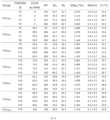
- the copolymers were monodisperse (polydispersity index (PDI) ⁇ 1.2), at the expected M w, structure and monomer composition, and azide end-functional. Summary of the characterization data is in FIG. 4 .
- Monomer composition of copolymers was defined as 2EG-long monomer content (%) and determined via Nuclear Magnetic Resonance (NMR) spectroscopy.
- 2EG-long monomer content (%) was calculated from the integral value that corresponds to average number of hydrogens (H) present in the OEG side-chain ( FIG. 5 ; b; 3.4-4.4 ppm; 6H EG2 100% ; 10H EG3 100% ) except chain end-group ( FIG. 5 ; c; 3.5-3.3 ppm; 3H) and methylene protons ( FIG. 5 ; a; 4.0-4.4 ppm; 2H) in NMR spectrum. No significant monomer composition drift was observed under the applied conditions.
- Rh of copolymers was determined via Dynamic Light Scattering at 15°C, where all copolymers were soluble. Even though, no statistically significant monomer composition-dependence was observed (P > 0.05), we have found that DP and Mw had a significant effect on R h of POEGMA copolymers. Rh increased with increasing DP and M w as expected ( FIG. 4 ).
- the first aim was to utilize POEGMA as an injectable depot-based drug delivery platform to improve in vivo efficacy of therapeutics upon their sustained release from subcutaneous depots into bloodstream.
- Depot-forming POEGMAs were conjugated to exendin, a potent peptide with a short plasma half-life ( ⁇ 2.4h) used in the treatment of type 2 diabetes (T2D).
- exendin a potent peptide with a short plasma half-life ( ⁇ 2.4h) used in the treatment of type 2 diabetes (T2D).
- T2D type 2 diabetes
- Most peptide and protein biomolecule therapeutics, similar to exendin, are potent, selective, well-tolerated and have therefore become an important class of drugs despite their significant limitations in clinical use such as sub-optimal pharmacokinetics, poor stability, low solubility and immunogenicity.
- Exendin was used to exemplify the benefits of the POEGMA conjugates described herein.
- exendin was chosen because it could tolerate being modified without complete loss of activity.
- DBCO was utilized because it could readily react with azide groups present on POEGMAs via strain-promoted azide-alkyne cycloaddition (SPAAC).
- Site-specificity and stoichiometry (1:1) of exendin-DBCO were confirmed by Matrix-Assisted Laser Desorption/Ionization-Time-of-Flight mass spectroscopy (MALD1-TOF-MS) and tryptic digestion followed by MS, respectively (data not shown).
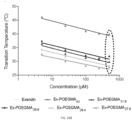
- Exendin-DBCO was next conjugated to azide-functional POEGMAs with an EG2% of 76.5, 69.5, 60.5 and 48.6, yielding depot-forming exendin-POEGMA conjugates with Tt of 27.9°C, 28.4°C, 29.9°C and 31.9°C, Ex-POEGMA 27.9 .
- Ex-POEGMA 28.4 , Ex-POEGMA 29.9 and Ex-POEGMA 31.9 respectively.
- T t of depot-forming POEGMAs used in conjugate synthesis was engineered such that the conjugates remain soluble in a syringe at room temperature, but transitioned to an insoluble coacervates when injected, triggered by the increase from ambient to body temperature, at the injection concentration of 500 ⁇ M.
- Exendin-POEGMA conjugates were well defined, monodisperse, and at the expected M w ( FIG. 8A , FIG. 9 ). They had a slightly larger Rh and higher Tt than their parent molecules ( FIG. 8A , FIG. 9 ). Their phase behavior was monomer composition-dependent and reversible with no significant hysteresis ( FIG. 8B and FIG. 10A ). The conjugates also showed concentration-dependence ( FIG. 8C and FIG. 10B ) indicating that they could be released from depot into bloodstream in response to the concentration gradient at the boundary layer of depot.
- soluble and depot-forming exendin-POEGMA conjugates were tested in terms of their ability to activate GLP1R in an in vitro cell-based assay using exendin and PBS as positive and negative controls, respectively ( FIG. 8D and FIG. 10C ).
- Both soluble and depot-forming conjugates had significantly lower half-maximal effective concentration (EC 50 ) than exendin (0.04 ⁇ 0.01 nM) due to steric hindrance imparted by POEGMA.
- Exendin-DBCO also had lower EC 50 (0.56 ⁇ 0.09 nM) than exendin due to C-terminus modification with DBCO (data not shown).
- a dose-response experiment was performed to determine optimal dose of exendin-POEGMA conjugates.
- 7-week old male diet induced obese (DIO) C57BL/6J mice which were kept on 60 kcal% fat diet to induce diabetic phenotype, were used.
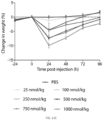
- Mice treated with an exendin-POEGMA conjugate with Tt of 27.9°C (Ex-POEGMA 27.9 ) at 1000, 750, 500, 250, 100 and 25 nmol kg body weight -1 doses and PBS (- control) ( n 6).
- Blood glucose was tracked throughout the injection day and every 24h thereafter until no significant effect was observed. Body weight was tracked daily.
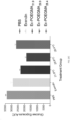
- Glucose exposure was calculated by integrating blood glucose over time (120h), yielding area under the curve (AUC).
- Ex-POEGMA 27.9 lowered blood glucose in a dose-dependent manner ( FIGS. 11A-11B ) for up to 3 days and provided body weight lowering benefits ( FIG. 11C ) for 4 days ( P ⁇ 0.05).
- the optimal dose was verified to be 1000 nmol kg -1 as it provided lowest glucose exposure ( FIG. 11D ), which accounted for both magnitude and duration of blood glucose control.
- exendin-POEGMA conjugates with Tt below SC temperature of mice would form stable depots allowing for sustained release of exendin upon concentration gradient at the boundary layer of depot.
- exendin-POEGMA conjugates with variable Tt, 28.4°C, 29.9°C and 31.9°C, but near-constant MW of ⁇ 55 kDa were synthesized. This M w was chosen because it was reported to be the optimal POEGMA M w in literature.
- POEGMA improved in vivo efficacy of exendin significantly by lowering blood glucose for 6 day as opposed to few hours with free peptide.
- a stealth polymer conjugate technology superior to immunogenic PEGylation in which therapeutics can only be delivered in soluble-state was identified.
- POEGMA allowed for sustained release or systemic delivery of therapeutics either in depot or soluble formulation, respectively, and eliminate reactivity towards anti-PEGs.
- Phase behavior of POEGMA could be tuned to near body temperature upon engineering its hydrophobicity by varying its monomer content.
- Phase behavior of POEGMA was found to be a strong function of concentration indicating that drug release from the subcutaneous depot can be achieved in response to the concentration gradient at the boundary layer of the depot, which was crucial for the release of drug into bloodstream at constant body temperature.
- POEGMA conjugates of exendin with a T t just below subcutaneous temperature optimized the magnitude and duration of exendin release from the depot into the bloodstream. The amount of therapeutic biomolecule in bloodstream could be tuned to desired level by tuning structure of POEGMA.
Landscapes
- Health & Medical Sciences (AREA)
- Life Sciences & Earth Sciences (AREA)
- Diabetes (AREA)
- Animal Behavior & Ethology (AREA)
- Public Health (AREA)
- Veterinary Medicine (AREA)
- Chemical & Material Sciences (AREA)
- Engineering & Computer Science (AREA)
- Bioinformatics & Cheminformatics (AREA)
- General Health & Medical Sciences (AREA)
- Medicinal Chemistry (AREA)
- Pharmacology & Pharmacy (AREA)
- Endocrinology (AREA)
- Epidemiology (AREA)
- Nuclear Medicine, Radiotherapy & Molecular Imaging (AREA)
- Obesity (AREA)
- Organic Chemistry (AREA)
- General Chemical & Material Sciences (AREA)
- Chemical Kinetics & Catalysis (AREA)
- Emergency Medicine (AREA)
- Hematology (AREA)
- Vascular Medicine (AREA)
- Immunology (AREA)
- Gastroenterology & Hepatology (AREA)
- Proteomics, Peptides & Aminoacids (AREA)
- Zoology (AREA)
- Medicinal Preparation (AREA)
- Medicines That Contain Protein Lipid Enzymes And Other Medicines (AREA)
Claims (12)
- Thermisch reagierendes polymer-therapeutisches Molekülkonjugat, umfassend:ein Grundgerüst, das 100 bis 400 sich wiederholende Monomereinheiten umfasst, die ausgewählt sind aus der Gruppe bestehend aus Acrylat, Methacrylat, Acrylamid, Methacrylamid und Kombinationen hiervon;eine Vielzahl von Oligoethylenglykol-Seitenketten; undein an das Grundgerüst konjugiertes therapeutisches Molekül;wobei ein erstes Ende jeder Oligoethylenglykol-Seitenkette kovalent an das Grundgerüst gebunden ist und jede Oligoethylenglykol-Seitenkette zwei oder drei Monomere von Ethylenglykol umfasst, die sich in Tandemanordnung wiederholen, wobei zwischen 45% und 80% der Vielzahl von Oligoethylenglykol-Seitenketten zwei Monomere von Ethylenglykol umfassen, die sich in Tandemanordnung wiederholen, undwobei das Konjugat eine Übergangstemperatur zwischen 23°C und 40°C aufweist.
- Konjugat nach Anspruch 1, wobei das Grundgerüst 200 bis 300 sich wiederholende Monomereinheiten umfasst.
- Konjugat nach Anspruch 1, wobei die Monomereinheit mit mindestens einer funktionellen Gruppe substituiert ist, wobei die funktionelle Gruppe vorzugsweise ein Hydroxyl, C1-C4-Alkoxy oder C1-C4-Alkyl ist.
- Konjugat nach Anspruch 1, wobei jede Oligoethylenglykol-Seitenkette einen begrenzenden Anteil an einem zweiten Ende umfasst, wobei der begrenzende Anteil vorzugsweise Hydroxyl oder C1-C4-Alkyl ist.
- Konjugat nach Anspruch 1, wobei das therapeutische Molekül ausgewählt ist aus der Gruppe bestehend aus einem Polynukleotid, einem Peptid, einem Polypeptid, einem Kohlenhydrat, einem kleinen Molekül und einer Kombination hiervon.
- Konjugat nach Anspruch 1, wobei das therapeutische Molekül ein Polypeptid ist, wobei vorzugsweise das Grundgerüst an einer Stelle an das Polypeptid konjugiert ist, die aus dem C-Terminus, dem N-Terminus und einer internen Aminosäure des Polypeptids ausgewählt ist.
- Konjugat nach Anspruch 1, wobei das therapeutische Molekül Exendin ist.
- Konjugat nach Anspruch 1, wobei das Konjugat eine Übergangstemperatur zwischen 23°C und 37°C aufweist.
- Arzneimitteldepot, das das thermisch reagierende polymer-therapeutische Molekülkonjugat nach Anspruch 1 umfasst.
- Thermisch reagierendes polymer-therapeutisches Molekülkonjugat nach Anspruch 1 zur Verwendung in einem Verfahren zur Behandlung einer Erkrankung oder Störung bei einem Patienten.
- Konjugat zur Verwendung nach Anspruch 10, wobei in dem Verfahren das thermisch reagierende polymer-therapeutische Molekülkonjugat bei Verabreichung ein Arzneimitteldepot bildet.
- Konjugat zur Verwendung nach Anspruch 10, wobei die Erkrankung oder Störung Diabetes ist.
Applications Claiming Priority (2)
| Application Number | Priority Date | Filing Date | Title |
|---|---|---|---|
| US201862664512P | 2018-04-30 | 2018-04-30 | |
| PCT/US2019/030022 WO2019213150A1 (en) | 2018-04-30 | 2019-04-30 | Stimuli-responsive peg-like polymer-based drug delivery platform |
Publications (3)
| Publication Number | Publication Date |
|---|---|
| EP3788343A1 EP3788343A1 (de) | 2021-03-10 |
| EP3788343A4 EP3788343A4 (de) | 2022-04-13 |
| EP3788343B1 true EP3788343B1 (de) | 2024-03-27 |
Family
ID=68386314
Family Applications (1)
| Application Number | Title | Priority Date | Filing Date |
|---|---|---|---|
| EP19796027.1A Active EP3788343B1 (de) | 2018-04-30 | 2019-04-30 | Auf stimuli reagierende plattform zur abgabe von auf peg-like-polymer basierendem arzneimittel |
Country Status (3)
| Country | Link |
|---|---|
| US (1) | US12257308B2 (de) |
| EP (1) | EP3788343B1 (de) |
| WO (1) | WO2019213150A1 (de) |
Families Citing this family (8)
| Publication number | Priority date | Publication date | Assignee | Title |
|---|---|---|---|---|
| US11752213B2 (en) | 2015-12-21 | 2023-09-12 | Duke University | Surfaces having reduced non-specific binding and antigenicity |
| JP2020500150A (ja) | 2016-09-23 | 2020-01-09 | デューク ユニバーシティ | 下限臨界溶液温度挙動を有する非反復かつ非構造的ポリペプチド |
| WO2019147954A1 (en) | 2018-01-26 | 2019-08-01 | Duke University | Albumin binding peptide-drug (aibiped) conjugates and methods of making and using same |
| EP3788343B1 (de) | 2018-04-30 | 2024-03-27 | Duke University | Auf stimuli reagierende plattform zur abgabe von auf peg-like-polymer basierendem arzneimittel |
| US12594347B2 (en) | 2018-09-07 | 2026-04-07 | Duke University | Nanoparticulate drug delivery systems |
| US11512314B2 (en) | 2019-07-12 | 2022-11-29 | Duke University | Amphiphilic polynucleotides |
| WO2022212911A1 (en) * | 2021-04-01 | 2022-10-06 | Duke University | Poegma copolymer conjugates and methods of treating diseases |
| US20250332269A1 (en) * | 2021-08-23 | 2025-10-30 | Duke University | Non-immunogenic, high density poegma conjugates |
Family Cites Families (200)
| Publication number | Priority date | Publication date | Assignee | Title |
|---|---|---|---|---|
| US4500707A (en) | 1980-02-29 | 1985-02-19 | University Patents, Inc. | Nucleosides useful in the preparation of polynucleotides |
| US4458066A (en) | 1980-02-29 | 1984-07-03 | University Patents, Inc. | Process for preparing polynucleotides |
| US4554101A (en) | 1981-01-09 | 1985-11-19 | New York Blood Center, Inc. | Identification and preparation of epitopes on antigens and allergens on the basis of hydrophilicity |
| US4415732A (en) | 1981-03-27 | 1983-11-15 | University Patents, Inc. | Phosphoramidite compounds and processes |
| US4973679A (en) | 1981-03-27 | 1990-11-27 | University Patents, Inc. | Process for oligonucleo tide synthesis using phosphormidite intermediates |
| US4668777A (en) | 1981-03-27 | 1987-05-26 | University Patents, Inc. | Phosphoramidite nucleoside compounds |
| US4976734A (en) | 1985-10-31 | 1990-12-11 | Uab Research Foundation | Stimulation of chemotaxis by chemotactic peptides |
| US5153319A (en) | 1986-03-31 | 1992-10-06 | University Patents, Inc. | Process for preparing polynucleotides |
| US5336256A (en) | 1986-04-17 | 1994-08-09 | Uab Research Foundation | Elastomeric polypeptides as vascular prosthetic materials |
| US5250516A (en) | 1986-04-17 | 1993-10-05 | Uab Research Foundation | Bioelastomeric materials suitable for the protection of burn areas or the protection of wound repair sites from the occurrence of adhesions |
| US5120643A (en) | 1987-07-13 | 1992-06-09 | Abbott Laboratories | Process for immunochromatography with colloidal particles |
| US5602244A (en) | 1988-05-26 | 1997-02-11 | Competitive Technologies, Inc. | Polynucleotide phosphorodithioate compounds |
| US5278302A (en) | 1988-05-26 | 1994-01-11 | University Patents, Inc. | Polynucleotide phosphorodithioates |
| US5703055A (en) | 1989-03-21 | 1997-12-30 | Wisconsin Alumni Research Foundation | Generation of antibodies through lipid mediated DNA delivery |
| US5362623A (en) | 1991-06-14 | 1994-11-08 | The John Hopkins University | Sequence specific DNA binding by p53 |
| ES2259800T3 (es) | 1990-06-11 | 2006-10-16 | Gilead Sciences, Inc. | Procedimientos de uso de ligandos de acido nucleico. |
| US5545130A (en) | 1992-04-08 | 1996-08-13 | Genetronics, Inc. | Flow through electroporation method |
| US5534408A (en) | 1993-09-24 | 1996-07-09 | University Of Massachusetts Medical Center | 2-deoxystreptamine aminoglycoside inhibition of HIV RRE/Rev binding |
| JPH08502966A (ja) | 1992-10-23 | 1996-04-02 | ユニバーシティー・オブ・マサチューセッツ・メディカル・センター | Rna/リガンド結合の低分子抑制 |
| US5702359A (en) | 1995-06-06 | 1997-12-30 | Genetronics, Inc. | Needle electrodes for mediated delivery of drugs and genes |
| US5679647A (en) | 1993-08-26 | 1997-10-21 | The Regents Of The University Of California | Methods and devices for immunizing a host against tumor-associated antigens through administration of naked polynucleotides which encode tumor-associated antigenic peptides |
| US5919455A (en) | 1993-10-27 | 1999-07-06 | Enzon, Inc. | Non-antigenic branched polymer conjugates |
| US6933366B2 (en) | 1996-12-27 | 2005-08-23 | Tripep Ab | Specificity exchangers that redirect antibodies to bacterial adhesion receptors |
| US5763548A (en) | 1995-03-31 | 1998-06-09 | Carnegie-Mellon University | (Co)polymers and a novel polymerization process based on atom (or group) transfer radical polymerization |
| US6541580B1 (en) | 1995-03-31 | 2003-04-01 | Carnegie Mellon University | Atom or group transfer radical polymerization |
| US5869326A (en) | 1996-09-09 | 1999-02-09 | Genetronics, Inc. | Electroporation employing user-configured pulsing scheme |
| JP2001511162A (ja) | 1997-02-06 | 2001-08-07 | ノボ ノルディスク アクティーゼルスカブ | 付加され、そして/又は除去された付着基を有するポリペプチド−ポリマー結合体 |
| US6974669B2 (en) | 2000-03-28 | 2005-12-13 | Nanosphere, Inc. | Bio-barcodes based on oligonucleotide-modified nanoparticles |
| US6216034B1 (en) | 1997-08-01 | 2001-04-10 | Genetronics, Inc. | Method of programming an array of needle electrodes for electroporation therapy of tissue |
| US6241701B1 (en) | 1997-08-01 | 2001-06-05 | Genetronics, Inc. | Apparatus for electroporation mediated delivery of drugs and genes |
| US6055453A (en) | 1997-08-01 | 2000-04-25 | Genetronics, Inc. | Apparatus for addressing needle array electrodes for electroporation therapy |
| US6208893B1 (en) | 1998-01-27 | 2001-03-27 | Genetronics, Inc. | Electroporation apparatus with connective electrode template |
| US6120493A (en) | 1998-01-27 | 2000-09-19 | Genetronics, Inc. | Method for the introduction of therapeutic agents utilizing an electroporation apparatus |
| US6841617B2 (en) | 2000-09-28 | 2005-01-11 | Battelle Memorial Institute | Thermogelling biodegradable aqueous polymer solution |
| US7087244B2 (en) | 2000-09-28 | 2006-08-08 | Battelle Memorial Institute | Thermogelling oligopeptide polymers |
| US6296831B1 (en) | 1998-04-10 | 2001-10-02 | Battelle Memorial Institute | Stimulus sensitive gel with radioisotope and methods of making |
| DE69920198T2 (de) | 1998-04-13 | 2005-09-22 | Massachusetts Institute Of Technology, Cambridge | Kamm-polymere zur regelung der zelloberflächenwechselwirkung |
| US6153655A (en) | 1998-04-17 | 2000-11-28 | Enzon, Inc. | Terminally-branched polymeric linkers and polymeric conjugates containing the same |
| JP2002520101A (ja) | 1998-07-13 | 2002-07-09 | ジェネトロニクス、インコーポレーテッド | 電気的に補助される化粧用薬剤の局部送達法および装置 |
| US6192270B1 (en) | 1998-08-14 | 2001-02-20 | Genetronics, Inc. | Apparatus and method for the delivery of drugs and genes into tissue |
| US6150148A (en) | 1998-10-21 | 2000-11-21 | Genetronics, Inc. | Electroporation apparatus for control of temperature during the process |
| US6413587B1 (en) | 1999-03-02 | 2002-07-02 | International Business Machines Corporation | Method for forming polymer brush pattern on a substrate surface |
| AU3867400A (en) | 1999-03-19 | 2000-10-09 | Duke University | Methods of using bioelastomers |
| US7163712B2 (en) | 2000-03-03 | 2007-01-16 | Duke University | Microstamping activated polymer surfaces |
| US6852834B2 (en) | 2000-03-20 | 2005-02-08 | Ashutosh Chilkoti | Fusion peptides isolatable by phase transition |
| US20050255554A1 (en) | 2000-03-20 | 2005-11-17 | Ashutosh Chilkoti | Fusion peptides isolatable by phase transition |
| US7351376B1 (en) | 2000-06-05 | 2008-04-01 | California Institute Of Technology | Integrated active flux microfluidic devices and methods |
| US6660247B1 (en) | 2000-06-23 | 2003-12-09 | Battelle Memorial Institute | Multiple stimulus reversible hydrogels |
| US6649138B2 (en) | 2000-10-13 | 2003-11-18 | Quantum Dot Corporation | Surface-modified semiconductive and metallic nanoparticles having enhanced dispersibility in aqueous media |
| CA2425648A1 (en) | 2000-10-19 | 2002-04-19 | Epimmune Inc. | Hla class i and ii binding peptides and their uses |
| US7264810B2 (en) | 2001-01-19 | 2007-09-04 | Cytos Biotechnology Ag | Molecular antigen array |
| US6528287B2 (en) | 2001-02-13 | 2003-03-04 | Nestor D. Tomycz | Recombinant human serum transferrins containing peptides for inducing apoptosis in HIV-1 infected cells |
| EP1384022A4 (de) | 2001-04-06 | 2004-08-04 | California Inst Of Techn | Nukleinsäure-amplifikation verwendende mikrofluidvorrichtungen |
| ATE470647T1 (de) | 2001-04-06 | 2010-06-15 | Univ Carnegie Mellon | Verfahren zur herstellung von nanostrukturierten materialien |
| DK2070939T3 (da) | 2001-05-25 | 2014-06-23 | Univ Duke | Modulatorer af farmakologiske midler |
| US20070117173A1 (en) | 2001-09-05 | 2007-05-24 | Levison Peter R | Stable storage of proteins |
| AU2002365396A1 (en) | 2001-11-21 | 2003-06-10 | The Trustees Of The University Of Pennsylvania | Peptides, peptide compositions,and methods of use in binding p 185 |
| WO2003048295A1 (en) | 2001-11-30 | 2003-06-12 | Fluidigm Corporation | Microfluidic device and methods of using same |
| US7314974B2 (en) | 2002-02-21 | 2008-01-01 | Monsanto Technology, Llc | Expression of microbial proteins in plants for production of plants with improved properties |
| US7245963B2 (en) | 2002-03-07 | 2007-07-17 | Advisys, Inc. | Electrode assembly for constant-current electroporation and use |
| US20040101852A1 (en) | 2002-11-21 | 2004-05-27 | Isis Pharmaceuticals Inc. | Modulation of CGG triplet repeat binding protein 1 expression |
| US7491691B2 (en) | 2002-05-03 | 2009-02-17 | Sindrey Dennis R | Connective tissue stimulating peptides |
| AU2003249366A1 (en) | 2002-06-24 | 2004-01-06 | Tufts University | Silk biomaterials and methods of use thereof |
| ES2377318T3 (es) | 2002-09-06 | 2012-03-26 | Cerulean Pharma Inc. | Polímeros a base de ciclodextrina para el suministro de los agentes terapéuticos enlazados covalentemente a ellos |
| US8129330B2 (en) | 2002-09-30 | 2012-03-06 | Mountain View Pharmaceuticals, Inc. | Polymer conjugates with decreased antigenicity, methods of preparation and uses thereof |
| US6918284B2 (en) | 2003-03-24 | 2005-07-19 | The United States Of America As Represented By The Secretary Of The Navy | Interconnected networks of single-walled carbon nanotubes |
| AU2003237792A1 (en) | 2003-04-01 | 2004-11-23 | Genentech, Inc. | Compositions and methods for the diagnosis and treatment of tumor |
| ES2633604T3 (es) | 2003-09-17 | 2017-09-22 | Cytori Therapeutics, Inc. | Métodos para usar células regenerativas derivadas de adiposo en el tratamiento de una enfermedad vascular periférica |
| WO2005062977A2 (en) | 2003-12-23 | 2005-07-14 | The Regents Of The University Of California | Prostate cancer specific internalizing human antibodies |
| EP2460811A1 (de) | 2004-04-22 | 2012-06-06 | Regado Biosciences, Inc. | Verbesserte Modulatoren von Gerinnungsfaktoren |
| WO2006004778A2 (en) | 2004-06-30 | 2006-01-12 | Dentsply International Inc. | Implant with a biofunctionalized surface and method for its production |
| US7884185B2 (en) | 2004-07-28 | 2011-02-08 | University Of Delaware | Hydrogels and uses thereof |
| EP1877097B1 (de) | 2004-08-11 | 2012-06-20 | Arqule, Inc. | Konjugate aus beta-lapachon und aminosäuren für tumor-targeting |
| WO2006110292A2 (en) | 2005-03-25 | 2006-10-19 | The Regents Of The University Of California | Temperature-triggered immobilization and purification of antibodies |
| KR101637140B1 (ko) | 2005-05-09 | 2016-07-06 | 테라노스, 인코포레이티드 | 현장진료 유체 시스템 및 그 용도 |
| EP2664340B1 (de) | 2005-06-24 | 2020-02-12 | Duke University | System zur direkten Heilmittelverabreichung auf der basis wärmegesteuerter Biopolymere |
| CA2619361C (en) | 2005-08-25 | 2015-10-20 | University Of Washington | Super-low fouling sulfobetaine and carboxybetaine materials and related methods |
| US7713689B2 (en) | 2005-09-15 | 2010-05-11 | Duke University | Non-fouling polymeric surface modification and signal amplification method for biomolecular detection |
| WO2007073486A2 (en) | 2005-12-20 | 2007-06-28 | Duke University | Methods and compositions for delivering active agents with enhanced pharmacological properties |
| US20130172274A1 (en) | 2005-12-20 | 2013-07-04 | Duke University | Methods and compositions for delivering active agents with enhanced pharmacological properties |
| US7709227B2 (en) | 2006-01-04 | 2010-05-04 | Phasebio Pharmaceuticals, Inc. | Multimeric ELP fusion constructs |
| US8841414B1 (en) | 2006-01-27 | 2014-09-23 | University Of Mississippi Medical Center | Targeted delivery of therapeutic peptides by thermally responsive biopolymers |
| WO2007108013A2 (en) | 2006-03-22 | 2007-09-27 | National Institute Of Immunology | Novel bioconjugates as therapeutic agent and synthesis thereof |
| US20100119529A1 (en) | 2006-05-12 | 2010-05-13 | Furgeson Darin Y | Elastin-like polymer delivery vehicles |
| ES2557402T3 (es) | 2006-06-13 | 2016-01-25 | Helix Biomedix Inc. | Fragmentos peptídicos para inducir la síntesis de proteínas de la matriz extracelular |
| CN101505872B (zh) | 2006-06-23 | 2011-12-28 | 意法半导体股份有限公司 | 用于分析生物材料的微流控装置的组件 |
| AU2007265628B2 (en) | 2006-06-23 | 2012-12-06 | Revvity Health Sciences, Inc. | Methods and devices for microfluidic point-of-care immunoassays |
| GB0614780D0 (en) | 2006-07-25 | 2006-09-06 | Ucb Sa | Biological products |
| CA2663047A1 (en) | 2006-09-06 | 2008-03-13 | Phase Bioscience, Inc. | Therapeutic elastin-like polypeptide (elp) fusion proteins |
| WO2008033847A2 (en) | 2006-09-11 | 2008-03-20 | Emory University | Modified protein polymers |
| US8101403B2 (en) | 2006-10-04 | 2012-01-24 | University Of Washington | Method and device for rapid parallel microfluidic molecular affinity assays |
| WO2008055931A1 (de) | 2006-11-08 | 2008-05-15 | Basf Se | Verwendung von natürlichen, rekombinanten und synthetischen resilinen in der kosmetik |
| US20080276935A1 (en) | 2006-11-20 | 2008-11-13 | Lixiao Wang | Treatment of asthma and chronic obstructive pulmonary disease with anti-proliferate and anti-inflammatory drugs |
| EP2139992A4 (de) | 2007-03-30 | 2011-08-10 | Univ Duke | Verfahren zur modulation der aktivität eines nukleinsäuremoleküls |
| US20110110866A1 (en) | 2007-04-10 | 2011-05-12 | Duke University | Elastin-like polypeptide and gadolinium conjugate for magnetic resonance imaging |
| EP2190863B1 (de) | 2007-07-31 | 2015-09-02 | Affibody AB | Neue albuminbindende zusammensetzungen, verfahren und anwendungen |
| US8366652B2 (en) | 2007-08-17 | 2013-02-05 | The Invention Science Fund I, Llc | Systems, devices, and methods including infection-fighting and monitoring shunts |
| WO2009026233A2 (en) | 2007-08-17 | 2009-02-26 | Northwestern University | Self assembling peptide systems and methods |
| ES2319061B1 (es) | 2007-09-11 | 2010-02-10 | Biomedal, S.L. | Metodo de conservacion de peptidos o proteinas. |
| CA3138078C (en) | 2007-10-02 | 2024-02-13 | Labrador Diagnostics Llc | Modular point-of-care devices and uses thereof |
| US20110207673A1 (en) | 2007-11-20 | 2011-08-25 | Ashutosh Chilkoti | Methods and compositions for modulating drug-polymer architecture, pharmacokinetics and biodistribution |
| DE102007057802B3 (de) | 2007-11-30 | 2009-06-10 | Geneart Ag | Steganographische Einbettung von Informationen in kodierenden Genen |
| CA2708751A1 (en) | 2007-12-14 | 2009-06-25 | Minitube Of America, Inc. | Gender-specific separation of sperm cells and embryos |
| US8796184B2 (en) | 2008-03-28 | 2014-08-05 | Sentilus, Inc. | Detection assay devices and methods of making and using the same |
| CN102131516B (zh) | 2008-06-27 | 2016-03-16 | 杜克大学 | 包含弹性蛋白样肽的治疗剂 |
| KR101026468B1 (ko) | 2008-09-10 | 2011-04-01 | 한국전자통신연구원 | 생분자 검출 장치 및 검출 방법 |
| EP2362729A1 (de) | 2008-11-17 | 2011-09-07 | Enzon Pharmaceuticals, Inc. | Freisetzbare konjugate für nukleinsäurefreisetzungssysteme |
| WO2010054699A1 (en) | 2008-11-17 | 2010-05-20 | Affibody Ab | Conjugates of albumin binding domain |
| BRPI0923155A2 (pt) | 2008-12-05 | 2018-10-23 | Abraxis Bioscience Llc | scfcs de ligação a sparc |
| GB0913775D0 (en) | 2009-08-06 | 2009-09-16 | Medical Res Council | Multispecific peptides |
| US8497356B2 (en) | 2009-02-17 | 2013-07-30 | Duke University | Biomolecule polymer conjugates and methods for making the same |
| US8586347B2 (en) | 2010-09-15 | 2013-11-19 | Mbio Diagnostics, Inc. | System and method for detecting multiple molecules in one assay |
| JP2012529463A (ja) | 2009-06-11 | 2012-11-22 | ノヴォ ノルディスク アー/エス | 2型糖尿病を治療するための、glp−1とfgf21との組合せ |
| USPP21973P3 (en) | 2009-06-23 | 2011-06-14 | Cellfor Inc. | Loblolly pine tree named ‘CF LP1-7696’ |
| EP2287221A1 (de) | 2009-07-16 | 2011-02-23 | Stichting Katholieke Universiteit meer in het bijzonder Radboud Universiteit Nijmegen | Verfahren zur Herstellung hochmolekularer Oligo(alkylen)glykol-funktionalisierter Polyisocyanopeptide |
| CA2770490C (en) | 2009-08-11 | 2024-04-16 | The Johns Hopkins University | Compositions and methods for implantation of processed adipose tissue and processed adipose tissue products |
| CA2772551A1 (en) | 2009-08-26 | 2011-03-03 | Immunotope, Inc. | Cytotoxic t-lymphocyte-inducing immunogens for prevention, treatment, and diagnosis of cancer |
| JP5680087B2 (ja) | 2009-09-22 | 2015-03-04 | シャンハイ・イージェー・バイオテクノロジー・カンパニー、リミテッドShanghai Yijie Biotechnology Co.,Ltd | 特異的結合タンパク質およびその使用 |
| US8602051B2 (en) | 2009-12-10 | 2013-12-10 | Brent W. Proper | Trap-primer system for floor drains |
| WO2011100700A2 (en) | 2010-02-12 | 2011-08-18 | University Of Rochester | Antigenic mimics of discontinuous epitopes of pathogen recognized by broadly neutralizing antibodies |
| EP4012714A1 (de) | 2010-03-23 | 2022-06-15 | Iogenetics, LLC. | Bioinformatikverfahren zur bestimmung von peptidbindungen |
| US8557961B2 (en) | 2010-04-02 | 2013-10-15 | Amunix Operating Inc. | Alpha 1-antitrypsin compositions and methods of making and using same |
| ES2993140T3 (en) | 2010-04-02 | 2024-12-23 | Amunix Pharmaceuticals Inc | Binding fusion proteins, binding fusion protein-drug conjugates, xten-drug conjugates and methods of making and using same |
| WO2011130324A1 (en) | 2010-04-13 | 2011-10-20 | Medimmune, Llc | Fibronectin type iii domain-based multimeric scaffolds |
| WO2011146486A1 (en) | 2010-05-17 | 2011-11-24 | Duke University | Detection devices and related methods of use |
| EP2418284A1 (de) | 2010-08-13 | 2012-02-15 | ERA Biotech, S.A. | Polypeptidsequenzen zur Induzierung von Proteinkörpern |
| WO2011155565A1 (ja) | 2010-06-10 | 2011-12-15 | 国立大学法人九州工業大学 | 可逆的な性質を示す温度応答性シートとそれを用いた細胞シートの製造方法 |
| US8470967B2 (en) | 2010-09-24 | 2013-06-25 | Duke University | Phase transition biopolymers and methods of use |
| BR112013010911A2 (pt) | 2010-11-01 | 2017-05-02 | Peptimed Inc | composições de um sistema à base de peptídeo para direcionamento para céllas específicas |
| EP2522689A1 (de) | 2011-05-13 | 2012-11-14 | Universität Bayreuth | Nicht virale Transfektionssysteme |
| WO2012162426A1 (en) | 2011-05-23 | 2012-11-29 | The University Of North Carolina At Chapel Hill | Methods and compositions for heptameric targeting ligands |
| KR101357117B1 (ko) | 2011-06-28 | 2014-02-06 | 비앤엘델리팜 주식회사 | 폴리에틸렌글라이콜 또는 이의 유도체로 페길화된 엑센딘-4 유사체, 이의 제조방법 및 이를 유효성분으로 함유하는 당뇨병 예방 또는 치료용 약학적 조성물 |
| UY34347A (es) | 2011-09-26 | 2013-04-30 | Novartis Ag | Proteínas de función dual para tratar trastornos metabólicos |
| US9775803B2 (en) | 2011-10-19 | 2017-10-03 | Samsung Electronics Co., Ltd. | Liposome comprising elastin-like polypeptide and tumor cell targeting material and use thereof |
| AU2012325697B2 (en) | 2011-10-21 | 2015-11-26 | Decimadx, Llc | Point-of care immunoassay for quantitative small analyte detection |
| WO2013065009A1 (en) | 2011-11-01 | 2013-05-10 | National Institute Of Immunology | A sortase-click reaction suite for synthesis of multivalent dendrimeric protein assembly |
| JP2014534265A (ja) | 2011-11-28 | 2014-12-18 | フェーズバイオ ファーマシューティカルズ,インコーポレイテッド | インスリンアミノ酸配列を含む治療薬 |
| WO2013106715A1 (en) | 2012-01-13 | 2013-07-18 | Allergan, Inc. | Crosslinked hyaluronic acid-collagen gels for improving tissue graft viability and soft tissue augmentation |
| US20130197359A1 (en) | 2012-02-01 | 2013-08-01 | Samsung Electronics Co., Ltd. | Solid lipid nanoparticles including elastin-like polypeptides and use thereof |
| JP2015533483A (ja) | 2012-09-07 | 2015-11-26 | サノフイ | メタボリックシンドロームを治療するための融合タンパク質 |
| KR101993714B1 (ko) | 2013-01-30 | 2019-06-28 | 엔지엠 바이오파마슈티컬스, 아이엔씨. | 대사 장애를 치료하는데 이용하기 위한 조성물과 방법 |
| JP2014156428A (ja) | 2013-02-15 | 2014-08-28 | Univ Of Tokyo | 抗体結合タンパク質 |
| US8980864B2 (en) | 2013-03-15 | 2015-03-17 | Moderna Therapeutics, Inc. | Compositions and methods of altering cholesterol levels |
| KR102109188B1 (ko) | 2013-04-01 | 2020-05-11 | 삼성전자주식회사 | 양이온성 지질을 포함하는 온도민감성 리포좀 및 그의 용도 |
| US10392611B2 (en) | 2013-05-30 | 2019-08-27 | Duke University | Polymer conjugates having reduced antigenicity and methods of using the same |
| US10364451B2 (en) | 2013-05-30 | 2019-07-30 | Duke University | Polymer conjugates having reduced antigenicity and methods of using the same |
| WO2014194244A1 (en) | 2013-05-30 | 2014-12-04 | Duke University | Enzyme-catalyzed synthesis of site-specific and stoichiometric biomolecule-polymer conjugates |
| WO2015011231A1 (en) | 2013-07-25 | 2015-01-29 | Universitat Rovira I Virgili | Method and system for the multiplex identification of analytes in fluids |
| US9777041B2 (en) | 2013-09-09 | 2017-10-03 | New York University | Protein nanofibers from self-assembling pentamers |
| WO2015051199A2 (en) | 2013-10-06 | 2015-04-09 | The United States Of America, As Represented By The Secretary, Department Of Health And Human Services | Modified pseudomonas exotoxin a |
| CA2929277C (en) | 2013-11-01 | 2018-01-16 | Yale University | Delivery vehicles comprising il-2 and losartan |
| WO2015126480A2 (en) | 2013-11-13 | 2015-08-27 | Massachusetts Institute Of Technology | Self-assembling underwater adhesives |
| US11268127B2 (en) | 2014-02-04 | 2022-03-08 | Duke University | Systems and devices for protease detection based on engineered polymers and biopolymers and methods of use |
| WO2015120287A2 (en) | 2014-02-06 | 2015-08-13 | Yale University | Compositions and methods of use thereof for making polypeptides with many instances of nonstandard amino acids |
| WO2015130846A2 (en) | 2014-02-25 | 2015-09-03 | Duke University | Compositions and methods for the site-specific modification of polypeptides |
| US10131690B2 (en) | 2014-04-25 | 2018-11-20 | Phi Pharma Sa | C6S specific transporter molecules |
| BR102014014502B1 (pt) | 2014-06-13 | 2020-09-15 | Ouro Fino Saúde Animal Ltda | Vetor de expressão |
| CN104877127B (zh) | 2015-06-23 | 2017-11-10 | 厦门赛诺邦格生物科技股份有限公司 | 一种八臂聚乙二醇衍生物、制备方法及其修饰的生物相关物质 |
| CN104725628B (zh) | 2014-10-01 | 2018-04-17 | 厦门赛诺邦格生物科技股份有限公司 | 一种含可降解基团的单一官能化支化聚乙二醇、制备方法及其生物相关物质 |
| WO2016065300A1 (en) | 2014-10-24 | 2016-04-28 | Eshoo Mark W | Microfluidic cartridge |
| WO2016065273A1 (en) | 2014-10-24 | 2016-04-28 | The University Of Chicago | Heat-inducible self-assembling protein domains |
| US11331392B2 (en) * | 2014-12-04 | 2022-05-17 | The Trustees Of Columbia University In The City Of New York | Biodegradable thermo-responsive polymers and uses thereof |
| US9702847B2 (en) | 2014-12-30 | 2017-07-11 | Avails Medical, Inc. | Systems and methods for detecting a substance in bodily fluid |
| US9804170B2 (en) | 2015-02-09 | 2017-10-31 | Bristol-Myers Squibb Company | Antibodies to polyethylene glycol |
| US9956300B2 (en) | 2015-03-18 | 2018-05-01 | Duke Univerity | Hydrogels formed from polypeptide micelles and methods of use thereof |
| US10385115B2 (en) | 2015-03-26 | 2019-08-20 | Duke University | Fibronectin type III domain-based fusion proteins |
| US10064954B2 (en) | 2015-06-23 | 2018-09-04 | Nian Wu | Polymer-cyclodextrin-lipid conjugates |
| EP3314027A4 (de) | 2015-06-29 | 2019-07-03 | Caris Science, Inc. | Therapeutische oligonukleotide |
| JP6962914B2 (ja) | 2015-07-20 | 2021-11-05 | センティルス ホールディングカンパニー エルエルシーSentilus Holdco, Llc | チップ、検出器、ならびにそれらの製造方法および使用方法 |
| EA037478B1 (ru) | 2015-08-04 | 2021-04-01 | Дьюк Юниверсити | Генетически кодируемые внутренне неупорядоченные полимеры-"невидимки" для доставки и способы их применения |
| DE212016000165U1 (de) | 2015-08-07 | 2018-04-16 | Poc Medical Systems Inc. | Mikrofluidikvorrichtungen |
| US10688175B2 (en) | 2015-10-13 | 2020-06-23 | Daniel C. Carter | NSP10 self-assembling fusion proteins for vaccines, therapeutics, diagnostics and other nanomaterial applications |
| HRP20230209T1 (hr) | 2015-10-28 | 2023-04-14 | Acuitas Therapeutics Inc. | Novi lipidi i lipidne formulacije nanočestica za isporuku nukleinskih kiselina |
| US10633662B2 (en) | 2015-11-10 | 2020-04-28 | The Board Of Trustees Of The Leland Stanford Junior University | Methods and compositions for modulating AAV infection |
| US9496239B1 (en) | 2015-12-11 | 2016-11-15 | International Business Machines Corporation | Nitride-enriched oxide-to-oxide 3D wafer bonding |
| WO2017112826A2 (en) | 2015-12-21 | 2017-06-29 | Duke University | Polymer conjugates having reduced antigenicity and methods of using the same |
| CN108884458A (zh) | 2016-03-31 | 2018-11-23 | 味之素株式会社 | 丝心蛋白样蛋白质改造体及细胞培养方法 |
| MX2018013546A (es) | 2016-05-06 | 2019-04-22 | Phasebio Pharmaceuticals Inc | Proteinas de fusion de elp para liberacion controlada y sostenida. |
| CA3040337A1 (en) | 2016-10-26 | 2018-05-03 | Curevac Ag | Lipid nanoparticle mrna vaccines |
| BR112019012693A2 (pt) | 2016-12-22 | 2019-11-19 | Sanofi | combinações de composto de fgf21/agonista do glp-1r com razão de atividade otimizada |
| EP3562510A4 (de) | 2016-12-30 | 2021-01-06 | Genevant Sciences GmbH | Verzweigte peg-moleküle sowie zugehörige zusammensetzungen und verfahren |
| WO2018144854A1 (en) | 2017-02-02 | 2018-08-09 | Caris Science, Inc. | Targeted oligonucleotides |
| WO2018213320A1 (en) | 2017-05-15 | 2018-11-22 | Duke University | Recombinant production of hybrid lipid-biopolymer materials that self-assemble and encapsulate agents |
| EP3639003A4 (de) | 2017-06-14 | 2021-03-17 | Emulate, Inc. | Auswirkungen von raumfahrt auf menschliche gehirnzellen |
| WO2019006374A1 (en) | 2017-06-30 | 2019-01-03 | Duke University | ORDER AND DISORDER AS A DESIGN PRINCIPLE FOR STIMULI-SENSITIVE BIOPOLYMER NETWORKS |
| US11235324B2 (en) | 2017-11-22 | 2022-02-01 | Hewlett-Packard Development Company, L.P. | Temperature-cycling microfluidic devices |
| WO2019147954A1 (en) | 2018-01-26 | 2019-08-01 | Duke University | Albumin binding peptide-drug (aibiped) conjugates and methods of making and using same |
| US20190292549A1 (en) | 2018-03-22 | 2019-09-26 | Northeastern University | Poly(ethylene glycol) brushes for efficient rna delivery |
| EP3788343B1 (de) | 2018-04-30 | 2024-03-27 | Duke University | Auf stimuli reagierende plattform zur abgabe von auf peg-like-polymer basierendem arzneimittel |
| EP3790602A1 (de) | 2018-05-09 | 2021-03-17 | The Johns Hopkins University | Nanofaserhydrogel-verbundstoffe für zell- und gewebefreisetzung |
| WO2020051223A1 (en) | 2018-09-04 | 2020-03-12 | The Board Of Regents Of The University Of Texas System | Compositions and methods for organ specific delivery of nucleic acids |
| US12269847B2 (en) | 2018-08-16 | 2025-04-08 | Donaldson Company, Inc. | Genetically encoded polypeptide for affinity capture and purification of biologics |
| AU2019321593B2 (en) | 2018-08-17 | 2025-01-23 | The Regents Of The University Of California | Particle-containing droplet systems with monodisperse fluid volumes |
| US20220146502A1 (en) | 2019-02-01 | 2022-05-12 | Sentilus Holdco, Llc | High-sensitivity assay |
| CA3174553A1 (en) | 2020-03-05 | 2021-09-10 | Flagship Pioneering Innovations Vi, Llc | Host defense suppressing methods and compositions for modulating a genome |
| WO2021252879A1 (en) | 2020-06-11 | 2021-12-16 | Arizona Board Of Regents On Behalf Of The University Of Arizona | Compositions and methods for delivering pharmaceutical agents |
| AU2021307952A1 (en) | 2020-07-17 | 2023-03-02 | Generation Bio Co. | Methods for encapsulating polynucleotides into reduced sizes of Lipid nanoparticles and novel formulation thereof |
| US20230381112A1 (en) | 2020-09-22 | 2023-11-30 | Vaccitech North America, Inc. | Compositions and Methods of Manufacturing Amphiphilic Block Copolymers that Form Nanoparticles in Situ |
| CN112961065B (zh) | 2021-02-05 | 2023-03-14 | 嘉晨西海(杭州)生物技术有限公司 | 一种可电离脂质分子及其制备方法及其在制备脂质纳米颗粒的应用 |
| WO2022178438A1 (en) | 2021-02-22 | 2022-08-25 | Duke University | Non-immunogenic poegma-aptamer conjugates |
-
2019
- 2019-04-30 EP EP19796027.1A patent/EP3788343B1/de active Active
- 2019-04-30 US US17/051,202 patent/US12257308B2/en active Active
- 2019-04-30 WO PCT/US2019/030022 patent/WO2019213150A1/en not_active Ceased
Also Published As
| Publication number | Publication date |
|---|---|
| EP3788343A4 (de) | 2022-04-13 |
| EP3788343A1 (de) | 2021-03-10 |
| US20210128734A1 (en) | 2021-05-06 |
| WO2019213150A1 (en) | 2019-11-07 |
| US12257308B2 (en) | 2025-03-25 |
Similar Documents
| Publication | Publication Date | Title |
|---|---|---|
| EP3788343B1 (de) | Auf stimuli reagierende plattform zur abgabe von auf peg-like-polymer basierendem arzneimittel | |
| EP3393500B1 (de) | Polymerkonjugate mit verringerter antigenizität | |
| Qi et al. | Protein–polymer conjugation—moving beyond PEGylation | |
| US9387254B2 (en) | Prodrugs and drug-macromolecule conjugates having controlled drug release rates | |
| Kong et al. | Long acting hyaluronate–exendin 4 conjugate for the treatment of type 2 diabetes | |
| KR102064142B1 (ko) | 이중으로 유도화된 키토산 나노입자 및 이의 제조 방법과 생체 내 유전자 도입을 위하여 이를 이용하는 방법 | |
| US9562111B2 (en) | Soluble hydrophobic core carrier compositions for delivery of therapeutic agents, methods of making and using the same | |
| US20170239363A1 (en) | Polymer conjugates having reduced antigenicity and methods of using the same | |
| US20170233714A1 (en) | Polymer conjugates having reduced antigenicity and methods of using the same | |
| WO2016115234A1 (en) | Hydrogels for delivery of therapeutic compounds | |
| Ozer et al. | An injectable PEG-like conjugate forms a subcutaneous depot and enables sustained delivery of a peptide drug | |
| AU2020234067B2 (en) | Reversible coating of chitosan-nucleic acid nanoparticles and methods of their use | |
| Viegas et al. | Poly (oxazolines) | |
| US8916693B2 (en) | Monoconjugated chitosans as delivery agents for small interfering nucleic acids | |
| EP3152248A1 (de) | Dendrimerwirkstoffkonjugate | |
| US20240181013A1 (en) | Poegma copolymer conjugates and methods of treating diseases | |
| US20250332269A1 (en) | Non-immunogenic, high density poegma conjugates | |
| Salunkhe et al. | Cationic lipid-polymer hybrid carrier for delivery of miRNA and peptides | |
| AU2010226243A1 (en) | Terminally-functionalized conjugates and uses thereof | |
| Ozer et al. | Injectable non-immunogenic PEG-like conjugate that forms a subcutaneous depot and enables sustained delivery of a peptide drug | |
| Ozer | Stealth Polymer Conjugates of Biologics | |
| CN115845076A (zh) | 一种两性离子聚合物-胰岛素偶联物及其制备方法和应用 |
Legal Events
| Date | Code | Title | Description |
|---|---|---|---|
| STAA | Information on the status of an ep patent application or granted ep patent |
Free format text: STATUS: THE INTERNATIONAL PUBLICATION HAS BEEN MADE |
|
| PUAI | Public reference made under article 153(3) epc to a published international application that has entered the european phase |
Free format text: ORIGINAL CODE: 0009012 |
|
| STAA | Information on the status of an ep patent application or granted ep patent |
Free format text: STATUS: REQUEST FOR EXAMINATION WAS MADE |
|
| 17P | Request for examination filed |
Effective date: 20201029 |
|
| AK | Designated contracting states |
Kind code of ref document: A1 Designated state(s): AL AT BE BG CH CY CZ DE DK EE ES FI FR GB GR HR HU IE IS IT LI LT LU LV MC MK MT NL NO PL PT RO RS SE SI SK SM TR |
|
| AX | Request for extension of the european patent |
Extension state: BA ME |
|
| DAV | Request for validation of the european patent (deleted) | ||
| DAX | Request for extension of the european patent (deleted) | ||
| RIN1 | Information on inventor provided before grant (corrected) |
Inventor name: CHILKOTI, ASHUTOSH Inventor name: OZER, IMRAN |
|
| REG | Reference to a national code |
Ref country code: DE Ref legal event code: R079 Free format text: PREVIOUS MAIN CLASS: G01N0001340000 Ipc: A61K0047580000 Ref country code: DE Ref legal event code: R079 Ref document number: 602019049107 Country of ref document: DE Free format text: PREVIOUS MAIN CLASS: G01N0001340000 Ipc: A61K0047580000 |
|
| A4 | Supplementary search report drawn up and despatched |
Effective date: 20220315 |
|
| RIC1 | Information provided on ipc code assigned before grant |
Ipc: A61P 3/10 20060101ALI20220309BHEP Ipc: A61K 47/58 20170101AFI20220309BHEP |
|
| GRAP | Despatch of communication of intention to grant a patent |
Free format text: ORIGINAL CODE: EPIDOSNIGR1 |
|
| STAA | Information on the status of an ep patent application or granted ep patent |
Free format text: STATUS: GRANT OF PATENT IS INTENDED |
|
| INTG | Intention to grant announced |
Effective date: 20231026 |
|
| GRAS | Grant fee paid |
Free format text: ORIGINAL CODE: EPIDOSNIGR3 |
|
| GRAA | (expected) grant |
Free format text: ORIGINAL CODE: 0009210 |
|
| STAA | Information on the status of an ep patent application or granted ep patent |
Free format text: STATUS: THE PATENT HAS BEEN GRANTED |
|
| AK | Designated contracting states |
Kind code of ref document: B1 Designated state(s): AL AT BE BG CH CY CZ DE DK EE ES FI FR GB GR HR HU IE IS IT LI LT LU LV MC MK MT NL NO PL PT RO RS SE SI SK SM TR |
|
| P01 | Opt-out of the competence of the unified patent court (upc) registered |
Effective date: 20240216 |
|
| RAP3 | Party data changed (applicant data changed or rights of an application transferred) |
Owner name: DUKE UNIVERSITY |
|
| REG | Reference to a national code |
Ref country code: GB Ref legal event code: FG4D |
|
| REG | Reference to a national code |
Ref country code: CH Ref legal event code: EP |
|
| REG | Reference to a national code |
Ref country code: DE Ref legal event code: R096 Ref document number: 602019049107 Country of ref document: DE |
|
| REG | Reference to a national code |
Ref country code: IE Ref legal event code: FG4D |
|
| PG25 | Lapsed in a contracting state [announced via postgrant information from national office to epo] |
Ref country code: LT Free format text: LAPSE BECAUSE OF FAILURE TO SUBMIT A TRANSLATION OF THE DESCRIPTION OR TO PAY THE FEE WITHIN THE PRESCRIBED TIME-LIMIT Effective date: 20240327 |
|
| REG | Reference to a national code |
Ref country code: LT Ref legal event code: MG9D |
|
| PG25 | Lapsed in a contracting state [announced via postgrant information from national office to epo] |
Ref country code: GR Free format text: LAPSE BECAUSE OF FAILURE TO SUBMIT A TRANSLATION OF THE DESCRIPTION OR TO PAY THE FEE WITHIN THE PRESCRIBED TIME-LIMIT Effective date: 20240628 |
|
| PG25 | Lapsed in a contracting state [announced via postgrant information from national office to epo] |
Ref country code: RS Free format text: LAPSE BECAUSE OF FAILURE TO SUBMIT A TRANSLATION OF THE DESCRIPTION OR TO PAY THE FEE WITHIN THE PRESCRIBED TIME-LIMIT Effective date: 20240627 Ref country code: HR Free format text: LAPSE BECAUSE OF FAILURE TO SUBMIT A TRANSLATION OF THE DESCRIPTION OR TO PAY THE FEE WITHIN THE PRESCRIBED TIME-LIMIT Effective date: 20240327 |
|
| PG25 | Lapsed in a contracting state [announced via postgrant information from national office to epo] |
Ref country code: RS Free format text: LAPSE BECAUSE OF FAILURE TO SUBMIT A TRANSLATION OF THE DESCRIPTION OR TO PAY THE FEE WITHIN THE PRESCRIBED TIME-LIMIT Effective date: 20240627 Ref country code: NO Free format text: LAPSE BECAUSE OF FAILURE TO SUBMIT A TRANSLATION OF THE DESCRIPTION OR TO PAY THE FEE WITHIN THE PRESCRIBED TIME-LIMIT Effective date: 20240627 Ref country code: LT Free format text: LAPSE BECAUSE OF FAILURE TO SUBMIT A TRANSLATION OF THE DESCRIPTION OR TO PAY THE FEE WITHIN THE PRESCRIBED TIME-LIMIT Effective date: 20240327 Ref country code: HR Free format text: LAPSE BECAUSE OF FAILURE TO SUBMIT A TRANSLATION OF THE DESCRIPTION OR TO PAY THE FEE WITHIN THE PRESCRIBED TIME-LIMIT Effective date: 20240327 Ref country code: GR Free format text: LAPSE BECAUSE OF FAILURE TO SUBMIT A TRANSLATION OF THE DESCRIPTION OR TO PAY THE FEE WITHIN THE PRESCRIBED TIME-LIMIT Effective date: 20240628 Ref country code: FI Free format text: LAPSE BECAUSE OF FAILURE TO SUBMIT A TRANSLATION OF THE DESCRIPTION OR TO PAY THE FEE WITHIN THE PRESCRIBED TIME-LIMIT Effective date: 20240327 Ref country code: BG Free format text: LAPSE BECAUSE OF FAILURE TO SUBMIT A TRANSLATION OF THE DESCRIPTION OR TO PAY THE FEE WITHIN THE PRESCRIBED TIME-LIMIT Effective date: 20240327 |
|
| REG | Reference to a national code |
Ref country code: NL Ref legal event code: MP Effective date: 20240327 |
|
| PG25 | Lapsed in a contracting state [announced via postgrant information from national office to epo] |
Ref country code: SE Free format text: LAPSE BECAUSE OF FAILURE TO SUBMIT A TRANSLATION OF THE DESCRIPTION OR TO PAY THE FEE WITHIN THE PRESCRIBED TIME-LIMIT Effective date: 20240327 Ref country code: LV Free format text: LAPSE BECAUSE OF FAILURE TO SUBMIT A TRANSLATION OF THE DESCRIPTION OR TO PAY THE FEE WITHIN THE PRESCRIBED TIME-LIMIT Effective date: 20240327 |
|
| PG25 | Lapsed in a contracting state [announced via postgrant information from national office to epo] |
Ref country code: NL Free format text: LAPSE BECAUSE OF FAILURE TO SUBMIT A TRANSLATION OF THE DESCRIPTION OR TO PAY THE FEE WITHIN THE PRESCRIBED TIME-LIMIT Effective date: 20240327 |
|
| REG | Reference to a national code |
Ref country code: AT Ref legal event code: MK05 Ref document number: 1669297 Country of ref document: AT Kind code of ref document: T Effective date: 20240327 |
|
| PG25 | Lapsed in a contracting state [announced via postgrant information from national office to epo] |
Ref country code: NL Free format text: LAPSE BECAUSE OF FAILURE TO SUBMIT A TRANSLATION OF THE DESCRIPTION OR TO PAY THE FEE WITHIN THE PRESCRIBED TIME-LIMIT Effective date: 20240327 |
|
| PG25 | Lapsed in a contracting state [announced via postgrant information from national office to epo] |
Ref country code: IS Free format text: LAPSE BECAUSE OF FAILURE TO SUBMIT A TRANSLATION OF THE DESCRIPTION OR TO PAY THE FEE WITHIN THE PRESCRIBED TIME-LIMIT Effective date: 20240727 |
|
| PG25 | Lapsed in a contracting state [announced via postgrant information from national office to epo] |
Ref country code: SM Free format text: LAPSE BECAUSE OF FAILURE TO SUBMIT A TRANSLATION OF THE DESCRIPTION OR TO PAY THE FEE WITHIN THE PRESCRIBED TIME-LIMIT Effective date: 20240327 Ref country code: PT Free format text: LAPSE BECAUSE OF FAILURE TO SUBMIT A TRANSLATION OF THE DESCRIPTION OR TO PAY THE FEE WITHIN THE PRESCRIBED TIME-LIMIT Effective date: 20240729 |
|
| PG25 | Lapsed in a contracting state [announced via postgrant information from national office to epo] |
Ref country code: ES Free format text: LAPSE BECAUSE OF FAILURE TO SUBMIT A TRANSLATION OF THE DESCRIPTION OR TO PAY THE FEE WITHIN THE PRESCRIBED TIME-LIMIT Effective date: 20240327 |
|
| PG25 | Lapsed in a contracting state [announced via postgrant information from national office to epo] |
Ref country code: EE Free format text: LAPSE BECAUSE OF FAILURE TO SUBMIT A TRANSLATION OF THE DESCRIPTION OR TO PAY THE FEE WITHIN THE PRESCRIBED TIME-LIMIT Effective date: 20240327 Ref country code: CZ Free format text: LAPSE BECAUSE OF FAILURE TO SUBMIT A TRANSLATION OF THE DESCRIPTION OR TO PAY THE FEE WITHIN THE PRESCRIBED TIME-LIMIT Effective date: 20240327 |
|
| PG25 | Lapsed in a contracting state [announced via postgrant information from national office to epo] |
Ref country code: AT Free format text: LAPSE BECAUSE OF FAILURE TO SUBMIT A TRANSLATION OF THE DESCRIPTION OR TO PAY THE FEE WITHIN THE PRESCRIBED TIME-LIMIT Effective date: 20240327 |
|
| PG25 | Lapsed in a contracting state [announced via postgrant information from national office to epo] |
Ref country code: PL Free format text: LAPSE BECAUSE OF FAILURE TO SUBMIT A TRANSLATION OF THE DESCRIPTION OR TO PAY THE FEE WITHIN THE PRESCRIBED TIME-LIMIT Effective date: 20240327 |
|
| PG25 | Lapsed in a contracting state [announced via postgrant information from national office to epo] |
Ref country code: SK Free format text: LAPSE BECAUSE OF FAILURE TO SUBMIT A TRANSLATION OF THE DESCRIPTION OR TO PAY THE FEE WITHIN THE PRESCRIBED TIME-LIMIT Effective date: 20240327 |
|
| PG25 | Lapsed in a contracting state [announced via postgrant information from national office to epo] |
Ref country code: SM Free format text: LAPSE BECAUSE OF FAILURE TO SUBMIT A TRANSLATION OF THE DESCRIPTION OR TO PAY THE FEE WITHIN THE PRESCRIBED TIME-LIMIT Effective date: 20240327 Ref country code: SK Free format text: LAPSE BECAUSE OF FAILURE TO SUBMIT A TRANSLATION OF THE DESCRIPTION OR TO PAY THE FEE WITHIN THE PRESCRIBED TIME-LIMIT Effective date: 20240327 Ref country code: RO Free format text: LAPSE BECAUSE OF FAILURE TO SUBMIT A TRANSLATION OF THE DESCRIPTION OR TO PAY THE FEE WITHIN THE PRESCRIBED TIME-LIMIT Effective date: 20240327 Ref country code: PT Free format text: LAPSE BECAUSE OF FAILURE TO SUBMIT A TRANSLATION OF THE DESCRIPTION OR TO PAY THE FEE WITHIN THE PRESCRIBED TIME-LIMIT Effective date: 20240729 Ref country code: PL Free format text: LAPSE BECAUSE OF FAILURE TO SUBMIT A TRANSLATION OF THE DESCRIPTION OR TO PAY THE FEE WITHIN THE PRESCRIBED TIME-LIMIT Effective date: 20240327 Ref country code: IS Free format text: LAPSE BECAUSE OF FAILURE TO SUBMIT A TRANSLATION OF THE DESCRIPTION OR TO PAY THE FEE WITHIN THE PRESCRIBED TIME-LIMIT Effective date: 20240727 Ref country code: ES Free format text: LAPSE BECAUSE OF FAILURE TO SUBMIT A TRANSLATION OF THE DESCRIPTION OR TO PAY THE FEE WITHIN THE PRESCRIBED TIME-LIMIT Effective date: 20240327 Ref country code: EE Free format text: LAPSE BECAUSE OF FAILURE TO SUBMIT A TRANSLATION OF THE DESCRIPTION OR TO PAY THE FEE WITHIN THE PRESCRIBED TIME-LIMIT Effective date: 20240327 Ref country code: CZ Free format text: LAPSE BECAUSE OF FAILURE TO SUBMIT A TRANSLATION OF THE DESCRIPTION OR TO PAY THE FEE WITHIN THE PRESCRIBED TIME-LIMIT Effective date: 20240327 Ref country code: AT Free format text: LAPSE BECAUSE OF FAILURE TO SUBMIT A TRANSLATION OF THE DESCRIPTION OR TO PAY THE FEE WITHIN THE PRESCRIBED TIME-LIMIT Effective date: 20240327 |
|
| REG | Reference to a national code |
Ref country code: CH Ref legal event code: PL |
|
| PG25 | Lapsed in a contracting state [announced via postgrant information from national office to epo] |
Ref country code: IT Free format text: LAPSE BECAUSE OF FAILURE TO SUBMIT A TRANSLATION OF THE DESCRIPTION OR TO PAY THE FEE WITHIN THE PRESCRIBED TIME-LIMIT Effective date: 20240327 |
|
| PG25 | Lapsed in a contracting state [announced via postgrant information from national office to epo] |
Ref country code: LU Free format text: LAPSE BECAUSE OF NON-PAYMENT OF DUE FEES Effective date: 20240430 |
|
| REG | Reference to a national code |
Ref country code: BE Ref legal event code: MM Effective date: 20240430 |
|
| PG25 | Lapsed in a contracting state [announced via postgrant information from national office to epo] |
Ref country code: LU Free format text: LAPSE BECAUSE OF NON-PAYMENT OF DUE FEES Effective date: 20240430 Ref country code: IT Free format text: LAPSE BECAUSE OF FAILURE TO SUBMIT A TRANSLATION OF THE DESCRIPTION OR TO PAY THE FEE WITHIN THE PRESCRIBED TIME-LIMIT Effective date: 20240327 |
|
| REG | Reference to a national code |
Ref country code: DE Ref legal event code: R097 Ref document number: 602019049107 Country of ref document: DE |
|
| PG25 | Lapsed in a contracting state [announced via postgrant information from national office to epo] |
Ref country code: MC Free format text: LAPSE BECAUSE OF FAILURE TO SUBMIT A TRANSLATION OF THE DESCRIPTION OR TO PAY THE FEE WITHIN THE PRESCRIBED TIME-LIMIT Effective date: 20240327 |
|
| PG25 | Lapsed in a contracting state [announced via postgrant information from national office to epo] |
Ref country code: DK Free format text: LAPSE BECAUSE OF FAILURE TO SUBMIT A TRANSLATION OF THE DESCRIPTION OR TO PAY THE FEE WITHIN THE PRESCRIBED TIME-LIMIT Effective date: 20240327 |
|
| PG25 | Lapsed in a contracting state [announced via postgrant information from national office to epo] |
Ref country code: BE Free format text: LAPSE BECAUSE OF NON-PAYMENT OF DUE FEES Effective date: 20240430 |
|
| PG25 | Lapsed in a contracting state [announced via postgrant information from national office to epo] |
Ref country code: MC Free format text: LAPSE BECAUSE OF FAILURE TO SUBMIT A TRANSLATION OF THE DESCRIPTION OR TO PAY THE FEE WITHIN THE PRESCRIBED TIME-LIMIT Effective date: 20240327 Ref country code: DK Free format text: LAPSE BECAUSE OF FAILURE TO SUBMIT A TRANSLATION OF THE DESCRIPTION OR TO PAY THE FEE WITHIN THE PRESCRIBED TIME-LIMIT Effective date: 20240327 Ref country code: BE Free format text: LAPSE BECAUSE OF NON-PAYMENT OF DUE FEES Effective date: 20240430 Ref country code: CH Free format text: LAPSE BECAUSE OF NON-PAYMENT OF DUE FEES Effective date: 20240430 |
|
| PLBE | No opposition filed within time limit |
Free format text: ORIGINAL CODE: 0009261 |
|
| STAA | Information on the status of an ep patent application or granted ep patent |
Free format text: STATUS: NO OPPOSITION FILED WITHIN TIME LIMIT |
|
| 26N | No opposition filed |
Effective date: 20250103 |
|
| PG25 | Lapsed in a contracting state [announced via postgrant information from national office to epo] |
Ref country code: IE Free format text: LAPSE BECAUSE OF NON-PAYMENT OF DUE FEES Effective date: 20240430 |
|
| PG25 | Lapsed in a contracting state [announced via postgrant information from national office to epo] |
Ref country code: SI Free format text: LAPSE BECAUSE OF FAILURE TO SUBMIT A TRANSLATION OF THE DESCRIPTION OR TO PAY THE FEE WITHIN THE PRESCRIBED TIME-LIMIT Effective date: 20240327 |
|
| PGFP | Annual fee paid to national office [announced via postgrant information from national office to epo] |
Ref country code: DE Payment date: 20250429 Year of fee payment: 7 |
|
| PGFP | Annual fee paid to national office [announced via postgrant information from national office to epo] |
Ref country code: GB Payment date: 20250428 Year of fee payment: 7 |
|
| PGFP | Annual fee paid to national office [announced via postgrant information from national office to epo] |
Ref country code: FR Payment date: 20250425 Year of fee payment: 7 |
|
| PG25 | Lapsed in a contracting state [announced via postgrant information from national office to epo] |
Ref country code: CY Free format text: LAPSE BECAUSE OF FAILURE TO SUBMIT A TRANSLATION OF THE DESCRIPTION OR TO PAY THE FEE WITHIN THE PRESCRIBED TIME-LIMIT; INVALID AB INITIO Effective date: 20190430 |
|
| PG25 | Lapsed in a contracting state [announced via postgrant information from national office to epo] |
Ref country code: HU Free format text: LAPSE BECAUSE OF FAILURE TO SUBMIT A TRANSLATION OF THE DESCRIPTION OR TO PAY THE FEE WITHIN THE PRESCRIBED TIME-LIMIT; INVALID AB INITIO Effective date: 20190430 |