EP1878492B2 - N,N,N'-Trimethyl-bis-(aminoethyl-)ether und seine Derivate als Katalysatoren für Polyurethane - Google Patents
N,N,N'-Trimethyl-bis-(aminoethyl-)ether und seine Derivate als Katalysatoren für Polyurethane Download PDFInfo
- Publication number
- EP1878492B2 EP1878492B2 EP07013630.4A EP07013630A EP1878492B2 EP 1878492 B2 EP1878492 B2 EP 1878492B2 EP 07013630 A EP07013630 A EP 07013630A EP 1878492 B2 EP1878492 B2 EP 1878492B2
- Authority
- EP
- European Patent Office
- Prior art keywords
- catalyst
- foam
- pphp
- ether
- blowing
- Prior art date
- Legal status (The legal status is an assumption and is not a legal conclusion. Google has not performed a legal analysis and makes no representation as to the accuracy of the status listed.)
- Active
Links
Images

Classifications
-
- B—PERFORMING OPERATIONS; TRANSPORTING
- B01—PHYSICAL OR CHEMICAL PROCESSES OR APPARATUS IN GENERAL
- B01J—CHEMICAL OR PHYSICAL PROCESSES, e.g. CATALYSIS OR COLLOID CHEMISTRY; THEIR RELEVANT APPARATUS
- B01J31/00—Catalysts comprising hydrides, coordination complexes or organic compounds
- B01J31/02—Catalysts comprising hydrides, coordination complexes or organic compounds containing organic compounds or metal hydrides
- B01J31/0201—Oxygen-containing compounds
- B01J31/0209—Esters of carboxylic or carbonic acids
-
- B—PERFORMING OPERATIONS; TRANSPORTING
- B01—PHYSICAL OR CHEMICAL PROCESSES OR APPARATUS IN GENERAL
- B01J—CHEMICAL OR PHYSICAL PROCESSES, e.g. CATALYSIS OR COLLOID CHEMISTRY; THEIR RELEVANT APPARATUS
- B01J31/00—Catalysts comprising hydrides, coordination complexes or organic compounds
-
- B—PERFORMING OPERATIONS; TRANSPORTING
- B01—PHYSICAL OR CHEMICAL PROCESSES OR APPARATUS IN GENERAL
- B01J—CHEMICAL OR PHYSICAL PROCESSES, e.g. CATALYSIS OR COLLOID CHEMISTRY; THEIR RELEVANT APPARATUS
- B01J31/00—Catalysts comprising hydrides, coordination complexes or organic compounds
- B01J31/02—Catalysts comprising hydrides, coordination complexes or organic compounds containing organic compounds or metal hydrides
- B01J31/0201—Oxygen-containing compounds
- B01J31/0204—Ethers
-
- B—PERFORMING OPERATIONS; TRANSPORTING
- B01—PHYSICAL OR CHEMICAL PROCESSES OR APPARATUS IN GENERAL
- B01J—CHEMICAL OR PHYSICAL PROCESSES, e.g. CATALYSIS OR COLLOID CHEMISTRY; THEIR RELEVANT APPARATUS
- B01J31/00—Catalysts comprising hydrides, coordination complexes or organic compounds
- B01J31/02—Catalysts comprising hydrides, coordination complexes or organic compounds containing organic compounds or metal hydrides
- B01J31/0234—Nitrogen-, phosphorus-, arsenic- or antimony-containing compounds
- B01J31/0235—Nitrogen containing compounds
- B01J31/0237—Amines
-
- B—PERFORMING OPERATIONS; TRANSPORTING
- B01—PHYSICAL OR CHEMICAL PROCESSES OR APPARATUS IN GENERAL
- B01J—CHEMICAL OR PHYSICAL PROCESSES, e.g. CATALYSIS OR COLLOID CHEMISTRY; THEIR RELEVANT APPARATUS
- B01J31/00—Catalysts comprising hydrides, coordination complexes or organic compounds
- B01J31/02—Catalysts comprising hydrides, coordination complexes or organic compounds containing organic compounds or metal hydrides
- B01J31/0234—Nitrogen-, phosphorus-, arsenic- or antimony-containing compounds
- B01J31/0271—Nitrogen-, phosphorus-, arsenic- or antimony-containing compounds also containing elements or functional groups covered by B01J31/0201 - B01J31/0231
-
- C—CHEMISTRY; METALLURGY
- C07—ORGANIC CHEMISTRY
- C07C—ACYCLIC OR CARBOCYCLIC COMPOUNDS
- C07C275/00—Derivatives of urea, i.e. compounds containing any of the groups, the nitrogen atoms not being part of nitro or nitroso groups
- C07C275/04—Derivatives of urea, i.e. compounds containing any of the groups, the nitrogen atoms not being part of nitro or nitroso groups having nitrogen atoms of urea groups bound to acyclic carbon atoms
- C07C275/06—Derivatives of urea, i.e. compounds containing any of the groups, the nitrogen atoms not being part of nitro or nitroso groups having nitrogen atoms of urea groups bound to acyclic carbon atoms of an acyclic and saturated carbon skeleton
- C07C275/10—Derivatives of urea, i.e. compounds containing any of the groups, the nitrogen atoms not being part of nitro or nitroso groups having nitrogen atoms of urea groups bound to acyclic carbon atoms of an acyclic and saturated carbon skeleton being further substituted by singly-bound oxygen atoms
-
- C—CHEMISTRY; METALLURGY
- C08—ORGANIC MACROMOLECULAR COMPOUNDS; THEIR PREPARATION OR CHEMICAL WORKING-UP; COMPOSITIONS BASED THEREON
- C08G—MACROMOLECULAR COMPOUNDS OBTAINED OTHERWISE THAN BY REACTIONS ONLY INVOLVING UNSATURATED CARBON-TO-CARBON BONDS
- C08G18/00—Polymeric products of isocyanates or isothiocyanates
- C08G18/06—Polymeric products of isocyanates or isothiocyanates with compounds having active hydrogen
- C08G18/08—Processes
- C08G18/16—Catalysts
- C08G18/18—Catalysts containing secondary or tertiary amines or salts thereof
-
- C—CHEMISTRY; METALLURGY
- C08—ORGANIC MACROMOLECULAR COMPOUNDS; THEIR PREPARATION OR CHEMICAL WORKING-UP; COMPOSITIONS BASED THEREON
- C08G—MACROMOLECULAR COMPOUNDS OBTAINED OTHERWISE THAN BY REACTIONS ONLY INVOLVING UNSATURATED CARBON-TO-CARBON BONDS
- C08G18/00—Polymeric products of isocyanates or isothiocyanates
- C08G18/06—Polymeric products of isocyanates or isothiocyanates with compounds having active hydrogen
- C08G18/08—Processes
- C08G18/16—Catalysts
- C08G18/18—Catalysts containing secondary or tertiary amines or salts thereof
- C08G18/1833—Catalysts containing secondary or tertiary amines or salts thereof having ether, acetal, or orthoester groups
-
- C—CHEMISTRY; METALLURGY
- C08—ORGANIC MACROMOLECULAR COMPOUNDS; THEIR PREPARATION OR CHEMICAL WORKING-UP; COMPOSITIONS BASED THEREON
- C08G—MACROMOLECULAR COMPOUNDS OBTAINED OTHERWISE THAN BY REACTIONS ONLY INVOLVING UNSATURATED CARBON-TO-CARBON BONDS
- C08G18/00—Polymeric products of isocyanates or isothiocyanates
- C08G18/06—Polymeric products of isocyanates or isothiocyanates with compounds having active hydrogen
- C08G18/08—Processes
- C08G18/16—Catalysts
- C08G18/18—Catalysts containing secondary or tertiary amines or salts thereof
- C08G18/1841—Catalysts containing secondary or tertiary amines or salts thereof having carbonyl groups which may be linked to one or more nitrogen or oxygen atoms
-
- C—CHEMISTRY; METALLURGY
- C08—ORGANIC MACROMOLECULAR COMPOUNDS; THEIR PREPARATION OR CHEMICAL WORKING-UP; COMPOSITIONS BASED THEREON
- C08G—MACROMOLECULAR COMPOUNDS OBTAINED OTHERWISE THAN BY REACTIONS ONLY INVOLVING UNSATURATED CARBON-TO-CARBON BONDS
- C08G18/00—Polymeric products of isocyanates or isothiocyanates
- C08G18/06—Polymeric products of isocyanates or isothiocyanates with compounds having active hydrogen
- C08G18/70—Polymeric products of isocyanates or isothiocyanates with compounds having active hydrogen characterised by the isocyanates or isothiocyanates used
- C08G18/72—Polyisocyanates or polyisothiocyanates
- C08G18/74—Polyisocyanates or polyisothiocyanates cyclic
- C08G18/76—Polyisocyanates or polyisothiocyanates cyclic aromatic
- C08G18/7614—Polyisocyanates or polyisothiocyanates cyclic aromatic containing only one aromatic ring
- C08G18/7621—Polyisocyanates or polyisothiocyanates cyclic aromatic containing only one aromatic ring being toluene diisocyanate including isomer mixtures
-
- C—CHEMISTRY; METALLURGY
- C08—ORGANIC MACROMOLECULAR COMPOUNDS; THEIR PREPARATION OR CHEMICAL WORKING-UP; COMPOSITIONS BASED THEREON
- C08G—MACROMOLECULAR COMPOUNDS OBTAINED OTHERWISE THAN BY REACTIONS ONLY INVOLVING UNSATURATED CARBON-TO-CARBON BONDS
- C08G18/00—Polymeric products of isocyanates or isothiocyanates
- C08G18/06—Polymeric products of isocyanates or isothiocyanates with compounds having active hydrogen
- C08G18/70—Polymeric products of isocyanates or isothiocyanates with compounds having active hydrogen characterised by the isocyanates or isothiocyanates used
- C08G18/72—Polyisocyanates or polyisothiocyanates
- C08G18/74—Polyisocyanates or polyisothiocyanates cyclic
- C08G18/76—Polyisocyanates or polyisothiocyanates cyclic aromatic
- C08G18/7657—Polyisocyanates or polyisothiocyanates cyclic aromatic containing two or more aromatic rings
-
- C—CHEMISTRY; METALLURGY
- C08—ORGANIC MACROMOLECULAR COMPOUNDS; THEIR PREPARATION OR CHEMICAL WORKING-UP; COMPOSITIONS BASED THEREON
- C08J—WORKING-UP; GENERAL PROCESSES OF COMPOUNDING; AFTER-TREATMENT NOT COVERED BY SUBCLASSES C08B, C08C, C08F, C08G or C08H
- C08J9/00—Working-up of macromolecular substances to porous or cellular articles or materials; After-treatment thereof
- C08J9/04—Working-up of macromolecular substances to porous or cellular articles or materials; After-treatment thereof using blowing gases generated by a previously added blowing agent
-
- C—CHEMISTRY; METALLURGY
- C08—ORGANIC MACROMOLECULAR COMPOUNDS; THEIR PREPARATION OR CHEMICAL WORKING-UP; COMPOSITIONS BASED THEREON
- C08J—WORKING-UP; GENERAL PROCESSES OF COMPOUNDING; AFTER-TREATMENT NOT COVERED BY SUBCLASSES C08B, C08C, C08F, C08G or C08H
- C08J9/00—Working-up of macromolecular substances to porous or cellular articles or materials; After-treatment thereof
- C08J9/04—Working-up of macromolecular substances to porous or cellular articles or materials; After-treatment thereof using blowing gases generated by a previously added blowing agent
- C08J9/12—Working-up of macromolecular substances to porous or cellular articles or materials; After-treatment thereof using blowing gases generated by a previously added blowing agent by a physical blowing agent
- C08J9/14—Working-up of macromolecular substances to porous or cellular articles or materials; After-treatment thereof using blowing gases generated by a previously added blowing agent by a physical blowing agent organic
-
- B—PERFORMING OPERATIONS; TRANSPORTING
- B01—PHYSICAL OR CHEMICAL PROCESSES OR APPARATUS IN GENERAL
- B01J—CHEMICAL OR PHYSICAL PROCESSES, e.g. CATALYSIS OR COLLOID CHEMISTRY; THEIR RELEVANT APPARATUS
- B01J2231/00—Catalytic reactions performed with catalysts classified in B01J31/00
- B01J2231/10—Polymerisation reactions involving at least dual use catalysts, e.g. for both oligomerisation and polymerisation
- B01J2231/14—Other (co) polymerisation, e.g. of lactides or epoxides
-
- C—CHEMISTRY; METALLURGY
- C08—ORGANIC MACROMOLECULAR COMPOUNDS; THEIR PREPARATION OR CHEMICAL WORKING-UP; COMPOSITIONS BASED THEREON
- C08G—MACROMOLECULAR COMPOUNDS OBTAINED OTHERWISE THAN BY REACTIONS ONLY INVOLVING UNSATURATED CARBON-TO-CARBON BONDS
- C08G2110/00—Foam properties
- C08G2110/0008—Foam properties flexible
-
- C—CHEMISTRY; METALLURGY
- C08—ORGANIC MACROMOLECULAR COMPOUNDS; THEIR PREPARATION OR CHEMICAL WORKING-UP; COMPOSITIONS BASED THEREON
- C08G—MACROMOLECULAR COMPOUNDS OBTAINED OTHERWISE THAN BY REACTIONS ONLY INVOLVING UNSATURATED CARBON-TO-CARBON BONDS
- C08G2110/00—Foam properties
- C08G2110/0041—Foam properties having specified density
- C08G2110/005—< 50kg/m3
-
- C—CHEMISTRY; METALLURGY
- C08—ORGANIC MACROMOLECULAR COMPOUNDS; THEIR PREPARATION OR CHEMICAL WORKING-UP; COMPOSITIONS BASED THEREON
- C08G—MACROMOLECULAR COMPOUNDS OBTAINED OTHERWISE THAN BY REACTIONS ONLY INVOLVING UNSATURATED CARBON-TO-CARBON BONDS
- C08G2110/00—Foam properties
- C08G2110/0041—Foam properties having specified density
- C08G2110/0058—≥50 and <150kg/m3
-
- C—CHEMISTRY; METALLURGY
- C08—ORGANIC MACROMOLECULAR COMPOUNDS; THEIR PREPARATION OR CHEMICAL WORKING-UP; COMPOSITIONS BASED THEREON
- C08J—WORKING-UP; GENERAL PROCESSES OF COMPOUNDING; AFTER-TREATMENT NOT COVERED BY SUBCLASSES C08B, C08C, C08F, C08G or C08H
- C08J2375/00—Characterised by the use of polyureas or polyurethanes; Derivatives of such polymers
- C08J2375/04—Polyurethanes
Definitions
- the present invention relates generally to methods of making polyurethane gels and foams.
- Polyurethane foams are widely known and used in automotive, housing and other industries. Such foams are produced by reacting a polyisocyanate with a polyol in the presence of various additives.
- One such additive is a chlorofluorocarbon (CFC) blowing agent which vaporizes as a result of the reaction exotherm causing the polymerising mass to form a foam.
- CFC chlorofluorocarbon
- Production of water-blown foams, in which blowing is performed with CO 2 generated by the reaction of water with the polyisocyanate has therefore become increasingly important.
- Certain tertiary amine catalysts have been used in the production of polyurethanes and polyurethane foams. Such tertiary amine catalysts can be used to accelerate both blowing (reaction of water with polyisocyante to generate CO 2 ) and gelling (reaction of polyol
- the ability of the tertiary amine catalyst to selectively promote either blowing or gelling is an important consideration in selecting a catalyst for the production of particular polyurethane foam. If a catalyst promotes the blowing reaction too selectively, much of the CO 2 will evolve before sufficient reaction of isocyanate with polyol has occurred. As a result, the CO 2 will bubble out of the formulation, resulting in a collapse of the polymerization mass yielding foam of poor quality. In contrast, if a catalyst too strongly promotes the gelling reaction, a substantial portion of the CO 2 will evolve after a significant degree of polymerization has occurred. Again, poor quality foams are produced. These foams are generally characterized by high density, broken or poorly defined cells, or other undesirable features.
- Tertiary amine catalysts generally are malodorous and offensive and many have high volatility due to their low molecular weight.
- the release of tertiary amines during foam processing may present safety and toxicity problems, and the release of residual amines from customer products is generally undesirable.
- EP 08 16408 refers to the use of hydroxyalkylbis(aminoethyl) ether derivatives as catalysts for producing polyurethanes.
- Catalysts containing functionalities capable of reacting with isocyanate are desirable because they can be immobilized in the polyurethane matrix to yield products substantially free of amine emissions.
- a high molecular weight moiety that imparts low vapor pressure to the amine catalysts is advantageous.
- the present invention provides a method of making a polyurethane comprising contacting at least one polyisocyanate with at least one active hydrogen-containing compound which is at least one polyether polyol, at least one polyester polyol, at least one polymer polyol, or any combination thereof in the presence of a catalytically effective amount of a catalyst composition under conditions sufficient to produce the polyurethane, the catalyst composition comprises at least one compound having the formula (I): wherein n in each occurrence is selected independently from 1, 2, or 3 and R b is a hydrogen atom.
- a polyurethane foam can be produced when the contacting of the at least one polyisocyanate and the at least one active hydrogen-containing compound occurs in the presence of at least one blowing agent and a catalytically effective amount of a catalyst composition in the method according to the present invention under conditions sufficient to produce the polyurethane foam.
- the catalyst composition of the method according to the present invention offers high activity, promotes a balance between the gelling and blowing reactions, and is substantially free of volatile amines and/or amine odors.
- PUR - polyurethane The actual amount of polyisocyanate used divided by the theoretically required stoichiometric amount of polyisocyanate required to react with all the active hydrogen in the reaction mixture, multiplied by 100. Also known as (Eq NCO/Eq of active hydrogen)x100. pphp - parts by weight per hundred weight parts polyol. pbw - parts by weight. TMAEE - N,N,N'-trimethyl-bis-(aminoethyl) ether.
- the present invention provides a method of making a polyurethane comprising contacting at least one polyisocyanate with at least one active hydrogen-containing compound which is at least one polyether polyol, at least one polyester polyol, at least one polymer polyol, or any combination thereof in the presence of a catalytically effective amount of a catalyst composition under conditions sufficient to produce the polyurethane, the catalyst composition comprises at least one compound having the formula (I): wherein n in each occurrence is selected independently from 1, 2, or 3, and R b is a hydrogen atom, as indicated above.
- a polyurethane foam can be produced when the contacting of the at least one polyisocyanate and the at least one active hydrogen-containing compound occurs in the presence of at least one blowing agent and a catalytically effective amount of a catalyst composition method according to the of the present invention under conditions sufficient to produce the polyurethane foam.
- the catalyst compositions of the method according to the present invention offer high activity, promote a balance between the gelling and blowing reactions, and are substantially free of volatile amines and/or amine odors.
- Applicants disclose or claim a range of any type Applicants' intent is to disclose or claim individually each possible number that such a range could reasonably encompass, as well as any sub-ranges and combinations of sub-ranges encompassed therein.
- a catalyst composition of the present invention per hundred weight parts of the at least one active hydrogen-containing compound in a foam formulation. If the at least one active hydrogen-containing compound is an at least one polyol, the parts by weight per hundred weight parts polyol is abbreviated as pphp.
- the catalyst composition is present in an amount from about 0.01 to about 20 pphp, for example, Applicants intend to recite that the pphp can be selected from about 0.01, about 0.02, about 0.03, about 0.04, about 0.05, about 0.06, about 0.07, about 0.08, about 0.09, about 0.1, about 0.2, about 0.3, about 0.4, about 0.5, about 0.6, about 0.7, about 0.8, about 0.9, about 1, about 2, about 3, about 4, about 5, about 6, about 7, about 8, about 9, about 10, about 11, about 12, about 13, about 14, about 15, about 16, about 17, about 18, about 19, or about 20. Likewise, all other ranges disclosed herein are to be interpreted in a manner similar to this example.
- compositions of the method according to the present invention are thermally stable if they comprise compounds having a secondary amine group and/or a secondary hydroxyl group. Not wishing to be bound by theory, it is generally believed that the presence of a secondary amine group and/or a secondary hydroxyl group, which can react with isocyanate, can immobilize the amine moiety during and after the PUR polymerization.
- compositions of the method according to the present invention have thermal stability up to about 80°C, wherein no or substantially no volatile amine compounds are emitted. In a further aspect, the compositions of the method according to the present invention have thermal stability up to about 100°C, up to about 120°C, or up to about 150°C.
- contact product is used herein to describe compositions wherein the components are contacted together in any order, in any manner, and for any length of time.
- the components can be contacted by blending or mixing.
- contacting of any component can occur in the presence or absence of any other component of the compositions or foam formulations described herein.
- Combining additional components of a composition or a foam formulation can be achieved by any method known to one of skill in the art.
- compositions and methods are described in terms of “comprising” various components or steps, the compositions and methods can also “consist essentially of” or “consist of' the various components or steps.
- the ether compound of formula (I) when n is 2 in each occurrence, is N,N,N'-trimethyl-bis-(aminoethyl) ether (TMAEE). In another aspect, the ether compound of formula (I) is N,N-dimethylaminopropyl-N'-methylaminoethyl ether.
- composition of the method according to the invention is a catalyst composition which can be employed to produce polyurethane gels and/or foams.
- polyurethane foam catalyst compositions can comprise compounds which accelerate both the blowing (water-isocyanate) and gelling (polyol-isocyanate) reactions. It is beneficial to balance these reactions in order to produce quality foams with acceptable properties.
- Compositions of the present invention can comprise a single compound which accelerates, but keeps in balance, both the blowing and gelling reactions.
- the composition can further comprise at least one catalyst that predominantly accelerates the blowing reaction (a blowing catalyst), at least one other catalyst that predominantly accelerates the gelling reaction (a gelling catalyst), or a combination thereof.
- a blowing catalyst is a catalyst that predominantly accelerates the blowing reaction, but can also, in certain circumstances, accelerate the gelling reaction, albeit to a lesser degree.
- a gelling catalyst is a catalyst that predominantly accelerates the gelling reaction, but can also, in certain circumstances, accelerate the blowing reaction, albeit to a lesser degree.
- Optional urethane catalysts that are suitable for use in the compositions described herein include, but are not limited to, metal salt catalysts, organometallic compounds, compounds with amine functionality, or combination thereof.
- metal salt catalysts and organometallic compounds include organotins, organobismuths, tin salts, bismuth salts, and the like, or any combination thereof.
- Optional amine compounds can include, for example, gelling catalysts such as triethylenediamine (TEDA), N-methylimidazole, 1,2-dimethylimidazole, N-methylmorpholine (commercially available as the DABCO® NMM catalyst), N-ethylmorpholine (commercially available as the DABCO® NEM catalyst), triethylamine (commercially available as the DABCO® TETN catalyst), N,N'-dimethylpiperazine, 1,3,5-tris(dimethylaminopropyl)hexahydrotriazine (commercially available as the Polycat® 41 catalyst), 2,4,6-tris(dimethylaminomethyl)phenol (commercially available as the DABCO TMR® 30 catalyst), N-methyldicyclohexylamine (commercially available as the Polycat® 12 catalyst), pentamethyldipropylene triamine (commercially available as the Polycat® 77 catalyst), N-methyl-N'-(2-dimethylamino)-e
- Such optional urethane catalysts can include, for example, blowing catalysts.
- Blowing catalysts include, but are not limited to, pentamethyldiethylenetriamine (commercially available as the Polycat® 5 catalyst), hexamethyltriethylenetetramine, heptamethyltetraethylenepentamine, bis(dimethylaminoethyl)ether (commercially available as the DABCO® BL19 catalyst, and the like, as well as any combination thereof.
- some of these optional catalysts can accelerate both the gelling and blowing reactions. Additionally, some of these optional catalysts also can accelerate the trimerization reaction, i.e., the reaction of polyisocyanates to form polyisocyanurates.
- compositions comprising compounds having the formula (I) can further comprise other catalytic materials, such as carboxylate salts, which can accelerate the trimerization reaction.
- the quantity will include the total amount of all catalysts, unless stated otherwise.
- the amount of the total polyurethane foam catalyst is 1.5 pphp.
- Polyisocyanates that are useful in the polyurethane gel or foam formation process include, but are not limited to, hexamethylene diisocyanate, isophorone diisocyanate, phenylene diisocyante, toluene diisocyanate (TDI), diphenyl methane diisocyanate isomers (MDI), hydrated MDI and 1,5-naphthalene diisocyanate.
- TDI toluene diisocyanate
- MDI diphenyl methane diisocyanate isomers
- hydrated MDI 1,5-naphthalene diisocyanate.
- 1,5-naphthalene diisocyanate 2,4-TDI, 2,6-TDI, and mixtures thereof, can be readily employed in the present invention.
- suitable mixtures of diisocyanates include, but are not limited to, those known in the art as crude MDI, or PAPI, which contain 4,4'-diphenylmethane diisocyanate along with other isomeric and analogous higher polyisocyanates.
- prepolymers of polyisocyanates comprising a partially prereacted mixture of polyisocyanates and polyether or polyester polyol are suitable.
- the polyisocyanate comprises MDI, or consists essentially of MDI or mixtures of MDI's.
- the polyisocyanate is MDI, TDI, or a combination thereof.
- compositions of the method according to the invention and the methods of making PUR foam of the present invention can be used to produce many types of foam.
- the compositions are useful, for example, in the formation of foam products for rigid, semi-rigid, and flexible applications, each of which can require a different Isocyanate Index.
- Isocyanate Index is the actual amount of polyisocyanate used divided by the theoretically required stoichiometric amount of polyisocyanate required to react with all the active hydrogen in the reaction mixture, multiplied by 100.
- Isocyanate Index (Eq NCO/Eq of active hydrogen)x100, wherein Eq NCO is the number of NCO functional groups in the polyisocyanate, and Eq of active hydrogen is the number of equivalent active hydrogen atoms.
- Foam products which are produced with an Isocyanate Index from about 40 to about 500 are within the scope of this invention.
- the Isocyanate Index is from about 50 to about 300, from about 60 to about 200, or from about 70 to about 15.
- Active hydrogen-containing compounds for use with the foregoing polyisocyanates in forming the polyurethane foams of this invention can be any of those organic compounds having at least two hydroxyl groups such as, for example, polyols.
- Polyols that are typically used in PUR foam formation processes include polyalkylene ether and polyester polyols.
- the polyalkylene ether polyol includes the poly(alkyleneoxide) polymers such as poly(ethyleneoxide) and poly(propyleneoxide) polymers and copolymers with terminal hydroxyl groups derived from polyhydric compounds, including diols and triols, Polyols include, but are not limited to, ethylene glycol, propylene glycol, 1,3-butane diol, 1,4-butane diol, 1,6-hexane diol, neopentyl glycol, diethylene glycol, dipropylene glycol, pentaerythritol, glycerol, diglycerol, trimethylol propane, cyclohexane diol, sugars such as sucrose and like low molecular weight polyols, or a combination thereof.
- Polyols include, but are not limited to, ethylene glycol, propylene glycol, 1,3-butane diol, 1,4-butane diol, 1,
- Amine polyether polyols can be used in the present invention. These can be prepared when an amine such as, for example, ethylenediamine, diethylenetriamine, tolylenediamine, diphenylmethanediamine, or triethanolamine is reacted with ethylene oxide or propylene oxide.
- an amine such as, for example, ethylenediamine, diethylenetriamine, tolylenediamine, diphenylmethanediamine, or triethanolamine is reacted with ethylene oxide or propylene oxide.
- a single high molecular weight polyether polyol, or a mixture of high molecular weight polyether polyols, such as mixtures of di- and tri-functional materials and/or different molecular weight or different chemical composition materials can be used.
- polyester polyols can be used, including those produced when a dicarboxylic acid is reacted with an excess of a diol. Non-limiting examples include adipic acid or phathalic acid or phthalic anhydride reacting with ethylene glycol or butanediol.
- Polyols useful in the present invention can be produced by reacting a lactone with an excess of a diol, for example, caprolactone reacted with propylene glycol.
- active hydrogen-containing compounds such as polyester polyols and polyether polyols, and combinations thereof, are useful in the present invention.
- the masterbatches, or premix compositions frequently contain a polymer polyol.
- Polymer polyols can be used, for example, in polyurethane foams to increase the foam's resistance to deformation, i.e., to increase the load-bearing properties of the foam.
- Suitable polymer polyols include, but are not limited to, graft polyols, polyurea modified polyols, and the like, or mixtures thereof.
- a graft polyol can be a triol in which vinyl monomers, such as styrene and acrylonitrile, are graft copolymerized.
- a polyurea modified polyol can be a polyol containing a polyurea dispersion formed by the reaction of a diamine with TDI.
- TDI is used often in excess, so some of the TDI may react with both the polyol and polyurea.
- a variation of the polyurea modified polyol is abbreviated PIPA polyol, and is formed by the in-situ polymerization of TDI and alkanolamine in the polyol.
- the at least one active hydrogen-containing compound that is useful in the compositions or formulations of the method according to the present invention is an at least one polyether polyol, at least one polyester polyol, at least one polymer polyol, or any combination thereof.
- polymer polyols can be absent from the premix or foam formulation, or can comprise up to about 100 percent of the polyol portion of the premix or foam formulation.
- polymer polyols can comprise from about 10 percent to about 80 percent, or from about 25 percent to about 65 percent, of the polyol portion of the premix composition or foam formulation.
- Blowing agents that can be used alone or in combination in the PUR foam formation process include, but are not limited to, water, methylene chloride, acetone, chlorofluorocarbons (CFCs), hydrofluorocarbons (HFCs), hydrochlorofluorocarbons (HCFCs), and hydrocarbons.
- HFCs chlorofluorocarbons
- HFCs hydrofluorocarbons
- HCFCs hydrochlorofluorocarbons
- hydrocarbons include n -pentane, iso -pentane, cyclopentane, and the like, or any combination thereof.
- the amount of blowing agent used can vary based on, for example, the intended use and application of the foam product and the desired foam stiffness and density.
- the blowing agent is present in amounts from about 0.5 to about 20 parts by weight per hundred weight parts polyol (pphp), from about 1 to about 15 pphp, from about 1.5 to about 10 pphp, or from about 2 to about 5 pphp.
- water is present in the formulation, for use as a blowing agent or otherwise, water is present in amounts up to about 20 pphp. In other words, water can range from 0 to about 20 pphp. In another aspect, water can range from 0 to about 15 pphp, from 0 to about 12 pphp, from 0 to about 8 pphp, or from 0 to about 4 pphp.
- compositions and PUR foam formulations can be employed in the compositions and PUR foam formulations to tailor specific properties.
- additives include, but are not limited to, crosslinkers, cell stabilizers, flame retardants, chain extenders, epoxy resins, acrylic resins, fillers, pigments, or any combination thereof. It is understood that other mixtures or materials that are known in the art can be included in the compositions and foam formulations and are within the scope of the present invention.
- Suitable crosslinkers include, but are not limited to, diethanolamine, diisopropanolamine, triethanolamine, tripropanolamine, and the like, or any combination thereof. Crosslinkers also can function as urethane catalysts due to the presence of an amine group in their chemical structure. Crosslinkers can be present in the foam formulation in amounts from about 0.05 to about 10 pphp, about 0.1 to about 8 pphp, about 0.2 to about 6 pphp, about 0.3 to about 4 pphp, about 0.4 to about 3 pphp, or about 0.5 to about 2 pphp.
- Cell stabilizers include surfactants such as organopolysiloxanes.
- Silicon surfactants can be present in the foam formulation in amounts from about 0.5 to about 10 pphp, about 0.6 to about 9 pphp, about 0.7 to about 8 pphp, about 0.8 to about 7 pphp, about 0.9 to about 6 pphp, about 1 to about 5 pphp, or about 1.1 to about 4 pphp.
- Useful flame retardants include halogenated organophosphorous compounds and non-halogenated compounds.
- a non-limiting example of a halogenated flame retardant is trichloropropylphosphate (TCPP).
- TCPP trichloropropylphosphate
- TEP triethylphosphate ester
- DMMP are non-halogenated flame retardants.
- flame retardants can be present in the foam formulation in amounts from 0 to about 50 pphp, from 0 to about 40 pphp, from 0 to about 30 pphp, or from 0 to about 20 pphp. In another aspect, the flame retardant is present from 0 to about 15 pphp, 0 to about 10 pphp, 0 to about 7 pphp, or 0 to about 5 pphp. Chain extenders such as ethylene glycol and butane diol can also be employed in the present invention.
- the catalyst compositions according to the method of the present invention can catalyze the reaction between an isocyanate functionality and the active hydrogen-containing compound and especially the urethane (gelling) reaction of polyol hydroxyl groups with isocyanate to make polyurethanes and the blowing reaction of water with isocyanate to release carbon dioxide for making polyurethane foam.
- Catalyst compositions comprising at least one compound having the formula (I) are present in the PUR gel or foam formulation in a catalytically effective amount.
- the catalyst composition is present in amounts from about 0.01 to about 20 parts by weight per hundred weight parts of the at least one active hydrogen-containing compound.
- the catalyst composition is present in amounts from about 0.05 to about 15 parts, from about 0.1 to about 10 parts, from about 0.15 to about 5 parts, or from about 0.25 to about 2 parts, by weight per hundred weight parts of the at least one active hydrogen-containing compound.
- the catalyst composition is present in amounts from about 0.01 to about 20 parts by weight per hundred weight parts polyol (pphp). In another aspect, the catalyst composition is present in amounts from about 0.05 to about 15 pphp, about 0.1 to about 10 pphp, about 0.15 to about 5 pphp, about 0.2 to about 4 pphp, or about 0.25 to about 2 pphp.
- the catalyst composition can further comprise additional urethane catalysts, such as gelling catalysts, blowing catalysts, or a combination thereof.
- a method of making a polyurethane comprises contacting at least one polyisocyanate with at least one active hydrogen-containing compound which is at least an polyether polyol, at least an polyester polyol, at least one polymer polyol, or any combination thereof in the presence of a catalytically effective amount of a catalyst composition under conditions sufficient to produce the polyurethane.
- the conditions sufficient to produce the polyurethane would be readily known to one of ordinary skill in the art.
- the catalyst composition comprises at least one compound having the formula (I), wherein n in each occurrence is selected independently from 1, 2, or 3 and R b is a hydrogen atom, as indicated previously.
- a polyurethane foam can be produced by contacting at least one polyisocyanate and at least one active hydrogen-containing compound in the presence of at least one blowing agent and a catalytically effective amount of a catalyst composition of the present invention under conditions sufficient to produce the polyurethane foam.
- the conditions sufficient to produce the polyurethane foam would be readily known to one of ordinary skill in the art. For instance, activation of the blowing agent can occur at a specific reaction temperature, or the blowing agent can react with isocyanate, for example, if the blowing agent comprises water.
- the contacting of the at least one polyisocyanate and the at least one active hydrogen-containing compound in the presence of at least one blowing agent and a catalytically effective amount of a catalyst composition in accordance with the method of the present invention can occur in the presence of at least one additive selected from at least one crosslinker, at least one cell stabilizer, at least one flame retardant, at least one chain extender, at least one epoxy resin, at least one acrylic resin, at least one filler, at least one pigment, or any combination thereof.
- PUR foams can be produced having a tailored density.
- PUR foams can be produced having from about 20 Kg/m 3 to about 250 Kg/m 3 , from about 24 Kg/m 3 to about 60 Kg/m 3 , or from about 35 Kg/m 3 to about 50 Kg/m 3 .
- the method of the present invention can produce PUR foams with no or substantially no undesirable amine odor.
- the method for preparing PUR foam has thermally stability up to about 80°C, about 100°C, about 120°C, or about 150°C.
- the method of the present invention produces PUR foam that is substantially free of volatile amines and/or amine odors.
- the components of the PUR foam formulation are contacted substantially contemporaneously.
- at least one polyisocyanate, at least one active hydrogen-containing compound, at least one blowing agent and a catalytically effective amount of a catalyst composition comprising at least one compound having the formula (I) are contacted together.
- the foam formulation of the present invention can further comprise additional urethane catalysts.
- the method of producing PUR foams can further comprise the presence of at least one additive selected from at least one crosslinker, at least one cell stabilizer, at least one flame retardant, at least one chain extender, at least one epoxy resin, at least one acrylic resin, at least one filler, at least one pigment, or any combination thereof.
- at least one additive selected from at least one crosslinker, at least one cell stabilizer, at least one flame retardant, at least one chain extender, at least one epoxy resin, at least one acrylic resin, at least one filler, at least one pigment, or any combination thereof.
- a premix of ingredients other than the at least one polyisocyanate are contacted first, followed by the addition of the at least one polyisocyanate.
- the at least one active hydrogen-containing compound, the at least one blowing agent, and a catalyst composition comprising at least one compound having the formula (I) are contacted initially to form a premix.
- the premix is then contacted with the at least one polyisocyanate to produce PUR foams in accordance with the method of the present invention.
- the same method can be employed, wherein the premix further comprises additional urethane catalysts.
- the premix can further comprise at least one additive selected from at least one crosslinker, at least one cell stabilizer, at least one flame retardant, at least one chain extender, at least one epoxy resin, at least one acrylic resin, at least one filler, at least one pigment, or any combination thereof.
- Yet another aspect of the method of the present invention provides a method for preparing a polyurethane foam comprising (a) forming a premix comprising:
- An exemplary polyurethane flexible foam formulation containing a gelling and a blowing catalyst such as the catalyst compositions according to the present invention can comprise the components in parts by weight (pbw) shown in Table I.
- the general formulation in Table I would enable one of skill in the art to produce the polyurethane foams illustrated in the examples with densities in the range of about 35 Kg/m 3 to about 50 Kg/m 3 .
- the catalyst quantity listed is the total catalyst amount, including both gelling and blowing catalysts, if applicable.
- Table I Formulations of Foams in Examples 1-6 (catalyst varied). COMPONENT pbw Polyol 20-100 Polymer Polyol 0-80 Silicone Surfactant 1-2.5 Blowing Agent 2-4.5 Crosslinker 0.5-2 Catalyst 0.25-2 Isocyanate Index 70-115
- the foams of the following examples were produced in a 32-oz (951 ml) paper cup by adding the catalyst (or catalysts) into approximately 192 grams of the premix formulation in Table I. polyol or polyols, surfactant, blowing agent, and crosslinker. This composition was mixed for about 10 seconds (s) at about 6,000 RPM using an overhead stirrer fitted with a 2-inch (5.1 cm) diameter stirring paddle. Sufficient isocyanate (either MDI or TDI) was then added to achieve the desired Isocyanate Index of about 100, and the formulation was mixed well for about 6 seconds (s) at about 6,000 RPM using the same stirrer.
- isocyanate either MDI or TDI
- the 32-oz cup was dropped through a hole in the bottom of a 128-oz (3804 ml) paper cup on a stand.
- the hole was sized appropriately to catch the lip of the 32-oz cup.
- the total volume of the foam container was about 160 oz (4755 ml). Foams approximated this volume at the end of the PUR foam forming reaction.
- catalyst quantities were chosen to provide similar properties. Specifically, In Examples 1 and 2, the catalyst quantities were chosen to provide similar foam start time, rise time, and free rise density. In Example 3, the catalyst quantities were chosen to match physical properties of the foams. In Examples 4-6, the catalyst quantities were chosen to provide similar foaming performance, or a similar foam height versus time profile, as measured by automated rate of rise equipment.
- Gelling catalyst standard 1 was a mixture of mono and bis-dimethylaminopropyl urea, commercially available as the DABCO® NE1070 catalyst from Air Products and Chemicals, Inc. (APCI).
- Blowing catalyst standard 2 was N,N,N'-trimethyl-N'-hydroxyethyl-bis-aminoethyl ether.
- Inventive catalyst 3 was N,N,N'-trimethyl-bis-(aminoethyl) ether (TMAEE).
- Gelling catalyst standard 1 and blowing catalyst standard 2 were the same catalysts as described in Example 1.
- inventive catalyst 3 was N, N, N'-trimethyl-bis-(aminoethyl) ether (TMAEE).
- Table III summarizes the TDI foam results at an Isocyanate Index of about 100 using catalyst 3. Both gelling and blowing catalyst quantities are listed in pphp. Foams E and F were produced using a mixture of the blowing catalyst standard 2 and a gelling catalyst. Foam E used the gelling catalyst standard 1 at about 0.7 pphp, and Foam F used inventive catalyst 3, TMAEE, at about 0.5 pphp. Foam F had similar foaming properties to Foam E, as illustrated by the similar start time, rise time, and free rise density. Thus, catalyst 3 gave similar foaming performance to the commercial catalyst, gelling catalyst standard 1. However, the data also indicates that catalyst 3, TMAEE, is more active than the standard catalyst, since it provided similar foaming results at a lower addition level (about 0.5 pphp versus about 0.7 pphp).
- Foams G and H which did not use blowing catalyst standard 2.
- Foams G and H had similar start times, rise times, and free rise densities.
- catalyst 3 was used at about 1.0 pphp, while gelling catalyst standard 1 was present at about 1.3 pphp. This confirms the higher activity of inventive catalyst 3, TMAEE, as compared to a commercial standard gelling catalyst. Table III.
- Gelling catalyst standard 1 and blowing catalyst standard 2 were the same catalysts as described in Example 1.
- inventive catalyst 3 was N,N,N'-trimethyl-bis-(aminoethyl) ether (TMAEE).
- Table IV summarizes the physical properties of PUR foams made with inventive catalyst 3, and either MDI and TDI, and compared with current industry standards. As shown in Table IV and discussed above, catalyst 3 is more active than the industry standard. Table IV also illustrates that physical properties of the foam measured under humid aged conditions (e.g., HALL, HACS, etc.) produced with catalyst 3 are comparable to those obtained with industry standard catalyst systems. Table IV. Physical property comparison of foams using catalyst 3 with foams using a standard catalyst. d Iso e Molded Density f Blowing Cat. 2 g Gelling Cat. 1 h Cat.
- h Cat. 3 is the Inventive Catalyst 3 (TMAEE) of Examples 1 and 2.
- i 40% CLD Ambient is the compression load deflection when the foam is compressed to 40% of its initial volume.
- j HALL is Humid Aged Load Loss, calculated according to the following equation: 40 % Hardness final ⁇ 40 % Hardness initial 40 % Hardness initial d Iso e Molded Density f blowing Cat. 2 g Gelling Cat. 1 h Cat.
- l HA Tensile is Humid Aged Tensile Strength, the tensile strength measured after aging the sample for 200 hours at 90°C and 100% relative humidity.
- m HA Elongation is Humid Aged Elongation, the elongation measured after aging the sample for 200 hours at 90°C and 100% relative humidity.
- TMAEE N,N,N'-trimethyl-bis-(aminoethyl) ether
- Gelling catalyst standard 1 was the same catalyst as described in Example 1.
- Blowing catalyst standard 7 was a mixture of N,N,N'-trimethyl-N'-hydroxyethyl-bis-(aminoethyl) ether and mono and bis-dimethylaminopropyl ureas, commercially available as the DABCO NE210 catalyst from Air Products and Chemicals, Inc. (APCI).
- catalyst 4 was N,N,N'-trimethyl-N'-(2-hydroxypropylbutylether)-bis-(aminoethyl) ether.
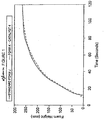
- Reference Figure 1 compares the foam height versus time for the standard or comparative Foam J with Foam K, which was produced using a catalyst mixture comprising about 0.33 pphp catalyst 4 and about 0.70 pphp gelling catalyst standard 1.
- Foam K had a foam height versus time (rate of rise) profile that was very similar to that of the standard Foam J.
- catalyst 4 can provide similar foaming performance to commercially available polyurethane catalysts.
- TMAEE Approximately 25 g (about 0.17 mol) of TMAEE was placed in a 250-ml temperature-controlled flask with a stir bar and a reflux condenser. TMAEE was heated to about 80°C and controlled at that target temperature. While stirring the flask contents constantly, about 35 g (about 0.19 mol) of 2-ethylhexyl glycidyl ether were added slowly from an addition funnel to the flask over a time period of about 1 hour.
- the 2-ethylhexyl glycidyl ether is commercially available as EPODIL® 746 from Air Products and Chemicals, Inc. (APCI). A mild exotherm was noted during the addition of the 2-ethylhexyl glycidyl ether.
- Table V lists the catalyst levels used to produce Foam J and Foam L at an Isocyanate Index of about 100.
- Gelling catalyst standard 1 was the same catalyst as described in Example 1.
- Blowing catalyst standard 7 was the same catalyst as described in reference Example 4.
- catalyst 5 was N,N,N'-trimethyl-N'-(2-hydroxypropyl-2-ethylhexylether)-bis-(aminoethyl) ether.
- Reference Figure 2 compares the foam height versus time for the standard or comparative Foam J with Foam L, which was produced using a catalyst mixture comprising about 0.43 pphp catalyst 5 and about 0.70 pphp gelling catalyst standard 1.
- Foam L had a foam height versus time (rate of rise) profile that was almost identical to that of the standard Foam J.
- catalyst 5 can provide similar foaming performance to commercially available polyurethane catalysts.
- TMAEE Approximately 25 g (about 0.17 mol) of TMAEE was placed in a 250-ml temperature-controlled flask with a stir bar and a reflux condenser. TMAEE was heated to about 80°C and controlled at that target temperature. While stirring the flask contents constantly, about 50.8 g of a mixture of approximately 75% dodecyl glycidyl ether and approximately 25% tetradecyl glycidyl ether (C 12 and C 14 glycidyl ethers) were added slowly from an addition funnel to the flask over a time period of about 1 hour.
- the approximate 75% C 12 /25% C 14 glycidyl ether blend is commercially available as EPODIL® 748 from Air Products and Chemicals, Inc. (APCI). A mild exotherm was noted during the addition of the C 12 / C 14 glycidyl ether blend.
- Table V lists the catalyst levels used to produce Foam J and Foam M at an Isocyanate Index of about 100.
- Gelling catalyst standard 1 was the same catalyst as described in Example 1.
- Blowing catalyst standard 7 was the same catalyst as described in reference Example 4.
- catalyst 6 was a mixture of N,N,N'-trimethyl-N'-(2-hydroxypropyl-dodecylether)-bis-(aminoethyl) ether and NNN'-trimethyl-N'-(2-hydroxypropyl-tetradecylether)-bis-(aminoethyl) ether.
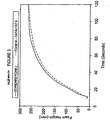
- Reference Figure 3 compares the foam height versus time for the standard or comparative Foam J with Foam M, which was produced using a catalyst mixture comprising about 0.65 pphp catalyst 6 and about 0.70 pphp gelling catalyst standard 1.
- Foam M had a foam height versus time (rate of rise) profile that was very similar to that of the standard Foam J.
- catalyst 6 can provide similar foaming performance to commercially available polyurethane catalysts. Table V.
- Catalysts used in the Foam Formulations of reference Examples 4-6 Catalyst Foam J Foam K Foam L Foam M Gelling Catalyst Standard 1 (pphp) 0.19 0.70 0.70 0.70 Blowing Catalyst 0.68 ---- ---- ---- Standard 7 (pphp) Catalyst 4 (pphp) ---- 0.33 ---- ---- Catalyst 5 (pphp) ---- ---- 0.43 ---- Catalyst 6 (pphp) ---- ---- ---- 0.65
- Foams can be produced at an Isocyanate Index of about 100 using catalyst levels similar to those illustrated in Table V and using the foam formulation illustrated in Table I.
- Gelling catalyst standard 1 can be the same catalyst as described in Example 1 and used at a level of about 0.7 pphp.
- Blowing catalyst standard 7 can be the same catalyst as described in Example 4.
- catalyst 7 will be N,N,N'-trimethyl-N'-(2-hydroxypropyl-butylester)-bis-(aminoethyl) ether and can be used a level of about 0.3 to about 0.5 pphp, chosen to match the foaming performance of the standard formulation (e.g., Foam J in Table V).
- One or ordinary skill in the art would be able to produce polyurethane foams with densities in the range of about 35 Kg/m 3 to about 50 Kg/m 3 .
- the foams can be produced in a 32-oz (951 ml) paper cup by adding the catalyst (or catalysts) into approximately 192 grams of the premix formulation in Table I: polyol or polyols, surfactant, blowing agent, and crosslinker. This composition is then mixed for about 10 seconds (s) at about 6,000 RPM using an overhead stirrer fitted with a 2-inch (5.1 cm) diameter stirring paddle. Sufficient isocyanate (either MDI or TDI) is added to achieve the desired Isocyanate Index of about 100, and the formulation is mixed well for about 6 seconds (s) at about 6,000 RPM using the same stirrer.
- isocyanate either MDI or TDI
- the 32-oz cup then is dropped through a hole in the bottom of a 128-oz (3804 ml) paper cup on a stand.
- the hole should be sized appropriately to catch the lip of the 32-oz cup.
- the total volume of the foam container is about 160 oz (4755 ml).
- Foams can approximate this volume at the end of the PUR foam forming reaction.
- Foaming performance of catalyst 7 can be evaluated by comparing the foam height versus time profile versus that of standard Foam J, as is shown in reference Figures 1-3 pertaining to reference Examples 4-6.
- Foam height profiles can be measured by automated rate of rise equipment.
Landscapes
- Chemical & Material Sciences (AREA)
- Organic Chemistry (AREA)
- Chemical Kinetics & Catalysis (AREA)
- Engineering & Computer Science (AREA)
- Materials Engineering (AREA)
- Health & Medical Sciences (AREA)
- Medicinal Chemistry (AREA)
- Polymers & Plastics (AREA)
- Polyurethanes Or Polyureas (AREA)
- Compositions Of Macromolecular Compounds (AREA)
- Organic Low-Molecular-Weight Compounds And Preparation Thereof (AREA)
- Epoxy Resins (AREA)
Claims (8)
- Verfahren zum Herstellen von Polyurethan, umfassend das Inkontaktbringen von zumindest einem Polyisocyanat mit zumindest einer aktive Wasserstoffatome enthaltenden Verbindung, die zumindest ein Polyetherpolyol, zumindest ein Polyesterpolyol, zumindest ein Polymerpolyol oder irgendeine Kombination davon ist, in Gegenwart einer katalytisch wirksamen Menge einer Katalysatorzusammensetzung unter ausreichenden Bedingungen, so dass das Polyurethan erzeugt wird, wobei die Katalysatorzusammensetzung zumindest eine Verbindung mit der folgenden Formel umfasst:
 n jeweils unabhängig voneinander aus 1, 2 oder 3 ausgewählt ist;Rb ein Wasserstoffatom ist.
 - Verfahren nach Anspruch 1, wobei die zumindest eine Verbindung N,N,N'-Trimethyl-bis-(aminoethyl)ether ist.
- Verfahren nach Anspruch 1, wobei das zumindest eine Polyisocyanat Diphenylmethandiisocyanat, Toluoldiisocyanat oder eine Kombination davon ist.
- Verfahren nach Anspruch 1, wobei die Katalysatorzusammensetzung in einer Menge von etwa 0,01 bis etwa 20 Gewichtsteilen pro 100 Gewichtsteile der zumindest einen aktive Wasserstoffatome enthaltenden Verbindung vorliegt.
- Verfahren nach Anspruch 1, wobei das Inkontaktbringen von dem zumindest einen Polyisocyanat und der zumindest einen aktive Wasserstoffatome enthaltenden Verbindung in Gegenwart von zumindest einem Blähmittel unter ausreichenden Bedingungen erfolgt, so dass ein Polyurethanschaum erzeugt wird.
- Verfahren nach Anspruch 5, wobei das zumindest eine Blähmittel Wasser, Methylenchlorid, Aceton, ein Chlorfluorkohlenstoff, ein Fluorkohlenwasserstoff, ein Chlorfluorkohlenwasserstoff, ein Kohlenwasserstoff oder irgendeine Kombination davon ist.
- Verfahren nach Anspruch 5, wobei das Inkontaktbringen von dem zumindest einen Polyisocyanat und der zumindest einen aktive Wasserstoffatome enthaltenden Verbindung in Gegenwart von zumindest einem Zusatz erfolgt, der aus zumindest einem Vernetzungsmittel, zumindest einem Zellstabilisator, zumindest einem Flammhemmstoff, zumindest einem Kettenverlängerungsmittel, zumindest einem Epoxidharz, zumindest einem Acrylharz, zumindest einem Füllstoff, zumindest einem Pigment oder irgendeiner Kombination davon ausgewählt ist.
- Verfahren nach Anspruch 1, wobei die Katalysatorzusammensetzung ferner zumindest einen gelbildenden Urethankatalysator, zumindest einen aufblähenden Urethankatalysator oder irgendeine Kombination davon umfasst.
Priority Applications (2)
| Application Number | Priority Date | Filing Date | Title |
|---|---|---|---|
| EP08012678A EP1977826B1 (de) | 2006-07-13 | 2007-07-11 | N,N,N'-Trimethyl-bis-(aminoethyl)etherderivate als Katalysatoren für Polyurethane |
| EP08012677A EP1977825B1 (de) | 2006-07-13 | 2007-07-11 | N,N,N'-Trimethyl-Bi-(Aminoethyl-)Ether und seine Derivate als Katalysatoren für Polyurethane |
Applications Claiming Priority (1)
| Application Number | Priority Date | Filing Date | Title |
|---|---|---|---|
| US11/485,724 US8143321B2 (en) | 2006-07-13 | 2006-07-13 | N,N,N,′-trimethyl-bis-(aminoethyl) ether and its derivatives as catalysts for polyurethanes |
Related Child Applications (4)
| Application Number | Title | Priority Date | Filing Date |
|---|---|---|---|
| EP08012677A Division-Into EP1977825B1 (de) | 2006-07-13 | 2007-07-11 | N,N,N'-Trimethyl-Bi-(Aminoethyl-)Ether und seine Derivate als Katalysatoren für Polyurethane |
| EP08012677A Division EP1977825B1 (de) | 2006-07-13 | 2007-07-11 | N,N,N'-Trimethyl-Bi-(Aminoethyl-)Ether und seine Derivate als Katalysatoren für Polyurethane |
| EP08012678A Division EP1977826B1 (de) | 2006-07-13 | 2007-07-11 | N,N,N'-Trimethyl-bis-(aminoethyl)etherderivate als Katalysatoren für Polyurethane |
| EP08012678A Division-Into EP1977826B1 (de) | 2006-07-13 | 2007-07-11 | N,N,N'-Trimethyl-bis-(aminoethyl)etherderivate als Katalysatoren für Polyurethane |
Publications (4)
| Publication Number | Publication Date |
|---|---|
| EP1878492A2 EP1878492A2 (de) | 2008-01-16 |
| EP1878492A3 EP1878492A3 (de) | 2008-02-20 |
| EP1878492B1 EP1878492B1 (de) | 2010-02-03 |
| EP1878492B2 true EP1878492B2 (de) | 2018-05-23 |
Family
ID=38564619
Family Applications (3)
| Application Number | Title | Priority Date | Filing Date |
|---|---|---|---|
| EP07013630.4A Active EP1878492B2 (de) | 2006-07-13 | 2007-07-11 | N,N,N'-Trimethyl-bis-(aminoethyl-)ether und seine Derivate als Katalysatoren für Polyurethane |
| EP08012677A Active EP1977825B1 (de) | 2006-07-13 | 2007-07-11 | N,N,N'-Trimethyl-Bi-(Aminoethyl-)Ether und seine Derivate als Katalysatoren für Polyurethane |
| EP08012678A Not-in-force EP1977826B1 (de) | 2006-07-13 | 2007-07-11 | N,N,N'-Trimethyl-bis-(aminoethyl)etherderivate als Katalysatoren für Polyurethane |
Family Applications After (2)
| Application Number | Title | Priority Date | Filing Date |
|---|---|---|---|
| EP08012677A Active EP1977825B1 (de) | 2006-07-13 | 2007-07-11 | N,N,N'-Trimethyl-Bi-(Aminoethyl-)Ether und seine Derivate als Katalysatoren für Polyurethane |
| EP08012678A Not-in-force EP1977826B1 (de) | 2006-07-13 | 2007-07-11 | N,N,N'-Trimethyl-bis-(aminoethyl)etherderivate als Katalysatoren für Polyurethane |
Country Status (9)
| Country | Link |
|---|---|
| US (3) | US8143321B2 (de) |
| EP (3) | EP1878492B2 (de) |
| JP (1) | JP4718521B2 (de) |
| KR (1) | KR100894661B1 (de) |
| CN (1) | CN101104674B (de) |
| AT (2) | ATE456981T1 (de) |
| BR (1) | BRPI0703133A2 (de) |
| DE (2) | DE602007005102D1 (de) |
| MX (1) | MX2007008457A (de) |
Families Citing this family (43)
| Publication number | Priority date | Publication date | Assignee | Title |
|---|---|---|---|---|
| US8143321B2 (en) * | 2006-07-13 | 2012-03-27 | Air Products And Chemicals, Inc. | N,N,N,′-trimethyl-bis-(aminoethyl) ether and its derivatives as catalysts for polyurethanes |
| US8552078B2 (en) * | 2006-10-17 | 2013-10-08 | Air Products And Chemicals, Inc. | Crosslinkers for improving stability of polyurethane foams |
| WO2008134460A1 (en) * | 2007-04-25 | 2008-11-06 | Rio Sisa Idea Farm | Mobile navigation system with graphic crime-risk display |
| JP2010530469A (ja) * | 2007-06-19 | 2010-09-09 | ハンツマン ペトロケミカル エルエルシー | ポリウレタン用の反応性アミン触媒 |
| KR101721267B1 (ko) | 2008-05-30 | 2017-03-29 | 도소 가부시키가이샤 | 하이드록시알킬트리에틸렌디아민류의 제조 방법, 및 그것을 사용한 폴리우레탄 수지 제조용의 촉매 조성물 |
| US20110077376A1 (en) * | 2008-05-30 | 2011-03-31 | Katsumi Tokumoto | Process for producing hydroxyalkyltriethylenediamine, and catalyst composition for the production of polyurethane resin using it |
| US8636500B2 (en) * | 2008-09-26 | 2014-01-28 | Air Products And Chemicals, Inc. | Transient operation of oxy/fuel combustion system |
| DE102010063241A1 (de) | 2010-12-16 | 2012-06-21 | Evonik Goldschmidt Gmbh | Siliconstabilisatoren für Polyurethan- oder Polyisocyanurat-Hartschaumstoffe |
| US9657129B2 (en) | 2010-12-22 | 2017-05-23 | Tosoh Corporation | Cyclic amine compound and process for producing polyurethane resin by using it |
| DE102011007468A1 (de) | 2011-04-15 | 2012-10-18 | Evonik Goldschmidt Gmbh | Zusammensetzung, enthaltend spezielle Carbamat-artige Verbindungen, geeignet zur Herstellung von Polyurethanschäumen |
| DE102011007479A1 (de) | 2011-04-15 | 2012-10-18 | Evonik Goldschmidt Gmbh | Zusammensetzung, enthaltend spezielle Amide und organomodifizierte Siloxane, geeignet zur Herstellung von Polyurethanschäumen |
| JP2013151635A (ja) * | 2011-06-16 | 2013-08-08 | Tosoh Corp | ポリウレタンフォーム製造用原料配合組成物 |
| DE102011109541A1 (de) | 2011-08-03 | 2013-02-07 | Evonik Goldschmidt Gmbh | Verwendung von Polysiloxanen enthaltend verzweigte Polyetherreste zur Herstellung von Polyurethanschäumen |
| US9765009B2 (en) * | 2011-11-17 | 2017-09-19 | Evonik Degussa Gmbh | Processes, products, and compositions having tetraalkylguanidine salt of aromatic carboxylic acid |
| DE102012203639A1 (de) | 2012-03-08 | 2013-09-12 | Evonik Industries Ag | Additiv zur Einstellung der Glasübergangstemperatur von viskoelastischen Polyurethanweichschaumstoffen |
| CN103102468B (zh) * | 2012-12-30 | 2015-08-05 | 浙江工业大学 | 一种泡沫封堵防火材料 |
| DE102013201829A1 (de) | 2013-02-05 | 2014-08-07 | Evonik Industries Ag | Amine, geeignet zur Verwendung bei der Herstellung von Polyurethanen |
| EP2886591A1 (de) | 2013-12-19 | 2015-06-24 | Evonik Industries AG | Zusammensetzung, geeignet zur Herstellung von Polyurethanschäumen, enthaltend mindestens ein Nukleierungsmittel |
| CA2934489C (en) * | 2013-12-19 | 2019-08-06 | Evonik Operations Gmbh | New non-emissive amine composition for improved system shelf life stability |
| DE102013226575B4 (de) | 2013-12-19 | 2021-06-24 | Evonik Operations Gmbh | Zusammensetzung, geeignet zur Herstellung von Polyurethanschäumen, enthaltend mindestens einen ungesättigten Fluorkohlenwasserstoff oder ungesättigten Fluorkohlenwasserstoff als Treibmittel, Polyurethanschäume, Verfahren zu deren Herstellung und deren Verwendung |
| DE102014215382A1 (de) | 2014-08-05 | 2016-02-11 | Evonik Degussa Gmbh | Stickstoffhaltige Verbindungen, geeignet zur Verwendung bei der Herstellung von Polyurethanen |
| DE102014215384A1 (de) | 2014-08-05 | 2016-02-11 | Evonik Degussa Gmbh | Stickstoffhaltige Verbindungen, geeignet zur Verwendung bei der Herstellung von Polyurethanen |
| DE102014215381B4 (de) | 2014-08-05 | 2020-06-10 | Evonik Operations Gmbh | Stickstoffhaltige Verbindungen, geeignet zur Verwendung bei der Herstellung von Polyurethanen |
| DE102014215380B4 (de) | 2014-08-05 | 2022-04-28 | Evonik Operations Gmbh | Stickstoffhaltige Verbindungen, geeignet zur Verwendung bei der Herstellung von Polyurethanen |
| DE102014215388A1 (de) | 2014-08-05 | 2016-02-11 | Evonik Degussa Gmbh | Stickstoffhaltige Verbindungen, geeignet zur Verwendung bei der Herstellung von Polyurethanen |
| DE102014215387B4 (de) | 2014-08-05 | 2020-06-10 | Evonik Operations Gmbh | Stickstoffhaltige Verbindungen, geeignet zur Verwendung bei der Herstellung von Polyurethanen |
| DE102014215383B4 (de) | 2014-08-05 | 2020-06-10 | Evonik Operations Gmbh | Stickstoffhaltige Verbindungen, geeignet zur Verwendung bei der Herstellung von Polyurethanen |
| EP2987598B1 (de) | 2014-08-19 | 2019-04-10 | Evonik Degussa GmbH | Hybride Dispersion und ihre Verwendung |
| EP3078696A1 (de) | 2015-04-08 | 2016-10-12 | Evonik Degussa GmbH | Herstellung emissionsarmer polyurethane |
| EP3385293B1 (de) | 2015-11-30 | 2022-01-19 | Tosoh Corporation | Katalysatorzusammensetzung zur herstellung eines polyurethanschaumstoffes, und verfahren zur herstellung eines flexiblen polyurethanschaumstoffs damit |
| EP3176206A1 (de) | 2015-12-01 | 2017-06-07 | Evonik Degussa GmbH | Verfahren zur herstellung feinzelliger schaumstoffe unter verwendung eines zellalterungshemmers |
| EP3205678A1 (de) | 2016-02-10 | 2017-08-16 | Evonik Degussa GmbH | Alterungsbeständige und emissionsarme matratzen und/oder kissen |
| EP3760659A1 (de) | 2019-07-01 | 2021-01-06 | Covestro Deutschland AG | Amingestartete polyole als einbaubare katalysatoren im hr-schaum |
| US12458150B2 (en) * | 2019-07-19 | 2025-11-04 | Evonik Operations Gmbh | Shaped PU foam articles |
| MX2022000856A (es) | 2019-07-24 | 2022-02-10 | Evonik Operations Gmbh | Preparacion de sistemas de poliuretano. |
| LT3819323T (lt) | 2019-11-07 | 2025-12-10 | Evonik Operations Gmbh | Suspaudimo rinkinys |
| EP3940012A1 (de) | 2020-07-16 | 2022-01-19 | Evonik Operations GmbH | Stickstofffreie und stickstoffarme vernetzende additive für kaltblockweichschaum mit verbesserten kompressions- und alterungseigenschaften |
| TWI805177B (zh) * | 2022-01-07 | 2023-06-11 | 中日合成化學股份有限公司 | 多支化界面活性劑及其製作方法 |
| EP4257325A1 (de) | 2022-04-08 | 2023-10-11 | Evonik Operations GmbH | Optische vorhersage von polyurethanschaumparametern |
| EP4257326A1 (de) | 2022-04-08 | 2023-10-11 | Evonik Operations GmbH | Optische bestimmung eines steuersignals als reaktion auf den nachweis von makroskopischen polyurethanschaumdefekten |
| EP4257327A1 (de) | 2022-04-08 | 2023-10-11 | Evonik Operations GmbH | Optische bestimmung eines steuersignals für die herstellung von polyurethanblockschaum |
| EP4257324A1 (de) | 2022-04-08 | 2023-10-11 | Evonik Operations GmbH | System und verfahren zum automatischen einstellen von parametern für die schaumproduktion |
| EP4257323A1 (de) | 2022-04-08 | 2023-10-11 | Evonik Operations GmbH | System und verfahren zur bestimmung von parametern für die schaumerzeugung |
Citations (1)
| Publication number | Priority date | Publication date | Assignee | Title |
|---|---|---|---|---|
| EP1505059A1 (de) † | 2003-08-04 | 2005-02-09 | Air Products And Chemicals, Inc. | Verfahren zur Herstellung N-Methylierter Amine durch selektiver Gasphaseaminierung von Aminoetheralkoholen. |
Family Cites Families (26)
| Publication number | Priority date | Publication date | Assignee | Title |
|---|---|---|---|---|
| US3330782A (en) * | 1963-11-12 | 1967-07-11 | Union Carbide Corp | Beta-(n, n-dimethylamino)alkyl ethers as catalysts for isocyanate reactions |
| US4026840A (en) * | 1975-06-09 | 1977-05-31 | Air Products And Chemicals, Inc. | Hydroxyalkyl tertiary amine catalysts for isocyanate reactions |
| DE3104738A1 (de) | 1981-02-11 | 1982-08-19 | Basf Ag, 6700 Ludwigshafen | Verfahren zur herstellung von permethylierten oligoaminen und aminoalkanolen |
| US4433170A (en) * | 1981-07-20 | 1984-02-21 | Texaco Inc. | Novel bis(aminoethyl)ether derivatives useful as polyurethane catalysts |
| US4338408A (en) * | 1981-07-20 | 1982-07-06 | Texaco Inc. | Polyurethanes using bis(aminoethyl)ether derivatives as catalysts |
| JPS59134754A (ja) | 1983-01-20 | 1984-08-02 | Nippon Niyuukazai Kk | ビス〔2−(n,n−ジメチルアミノ)エチル〕エ−テルの製造法 |
| US4464488A (en) * | 1983-08-11 | 1984-08-07 | Texaco Inc. | Polyurethanes using monocarboxylic acid salts of bis(aminoethyl)ether derivatives as catalysts |
| DE3422610A1 (de) | 1984-06-19 | 1985-12-19 | Basf Ag, 6700 Ludwigshafen | Verfahren zur herstellung von aminen |
| US5229430A (en) * | 1990-07-30 | 1993-07-20 | Tosoh Corporation | Amine catalyst for producing polyurethane and process for producing polyurethane |
| US5591781A (en) * | 1993-10-27 | 1997-01-07 | Tosoh Corporation | Process for producing polyurethane foam with high curing rate |
| JPH07206964A (ja) * | 1994-01-11 | 1995-08-08 | Mitsubishi Motors Corp | ポリウレタンフォームの製造方法 |
| US5559161A (en) * | 1994-02-18 | 1996-09-24 | Air Products And Chemicals, Inc. | Hydroxy-functional triamine catalyst compositions for the production of polyurethanes |
| US5508314A (en) * | 1994-02-18 | 1996-04-16 | Air Products And Chemicals, Inc. | Hydroxyl group-containing blowing catalyst compositions for the production of polyurethanes |
| US5874483A (en) | 1995-09-27 | 1999-02-23 | Air Products And Chemicals, Inc. | Aminopropylbis (aminoethyl) ether compositions for the production of polyurethanes |
| US5633293A (en) * | 1995-11-30 | 1997-05-27 | Air Products And Chemicals, Inc. | Hydroxy-functional triamine catalyst compositions for polyurethane production |
| US5756558A (en) | 1996-07-03 | 1998-05-26 | Air Products And Chemicals, Inc. | Hydroxyalkylbis(aminoethyl) ether compositions for the production of polyurethanes |
| US6313346B1 (en) * | 1999-03-26 | 2001-11-06 | Air Products And Chemicals, Inc. | Catalyst compositions for the production of polyurethanes |
| US6305143B1 (en) | 1999-06-25 | 2001-10-23 | Ashland Inc. | Composite roof structures prepared using one-part moisture curing polyurethane foaming adhesive compositions containing a reversibly blocked catalyst |
| JP3860694B2 (ja) * | 1999-12-17 | 2006-12-20 | 花王株式会社 | ポリウレタンフォームの製造法 |
| US6387972B1 (en) * | 2001-02-15 | 2002-05-14 | Crompton Corporation | Process to enhance polyurethane foam performance |
| US6747068B2 (en) * | 2001-02-15 | 2004-06-08 | Wm. T. Burnett & Co. | Hydrophobic polyurethane foam |
| US6534555B1 (en) * | 2001-09-10 | 2003-03-18 | Huntsman Petrochemical Corporation | Catalyst systems for polyurethane polyester foams |
| US6699916B2 (en) * | 2001-10-29 | 2004-03-02 | Dow Global Technologies Inc. | Rigid hybrid polyurethane foams |
| US6858654B1 (en) * | 2003-10-27 | 2005-02-22 | Air Products And Chemicals, Inc. | Catalyst blends for producing low thermal desorption polyurethane foams |
| US20070066697A1 (en) * | 2005-08-31 | 2007-03-22 | Gilder Stephen D | Strut-reinforced polyurethane foam |
| US8143321B2 (en) | 2006-07-13 | 2012-03-27 | Air Products And Chemicals, Inc. | N,N,N,′-trimethyl-bis-(aminoethyl) ether and its derivatives as catalysts for polyurethanes |
-
2006
- 2006-07-13 US US11/485,724 patent/US8143321B2/en not_active Expired - Fee Related
-
2007
- 2007-07-10 BR BRPI0703133-5A patent/BRPI0703133A2/pt not_active IP Right Cessation
- 2007-07-11 MX MX2007008457A patent/MX2007008457A/es unknown
- 2007-07-11 AT AT07013630T patent/ATE456981T1/de not_active IP Right Cessation
- 2007-07-11 DE DE602007005102T patent/DE602007005102D1/de active Active
- 2007-07-11 EP EP07013630.4A patent/EP1878492B2/de active Active
- 2007-07-11 EP EP08012677A patent/EP1977825B1/de active Active
- 2007-07-11 AT AT08012677T patent/ATE459418T1/de not_active IP Right Cessation
- 2007-07-11 EP EP08012678A patent/EP1977826B1/de not_active Not-in-force
- 2007-07-11 KR KR1020070069417A patent/KR100894661B1/ko not_active Expired - Fee Related
- 2007-07-11 DE DE602007004654T patent/DE602007004654D1/de active Active
- 2007-07-12 JP JP2007183057A patent/JP4718521B2/ja not_active Expired - Fee Related
- 2007-07-13 CN CN2007101291733A patent/CN101104674B/zh active Active
-
2012
- 2012-02-22 US US13/401,971 patent/US9878317B2/en not_active Expired - Fee Related
-
2018
- 2018-01-29 US US15/882,371 patent/US20180214857A1/en not_active Abandoned
Patent Citations (1)
| Publication number | Priority date | Publication date | Assignee | Title |
|---|---|---|---|---|
| EP1505059A1 (de) † | 2003-08-04 | 2005-02-09 | Air Products And Chemicals, Inc. | Verfahren zur Herstellung N-Methylierter Amine durch selektiver Gasphaseaminierung von Aminoetheralkoholen. |
Also Published As
| Publication number | Publication date |
|---|---|
| EP1977825B1 (de) | 2010-03-03 |
| CN101104674B (zh) | 2012-10-10 |
| EP1977826B1 (de) | 2012-05-30 |
| MX2007008457A (es) | 2008-10-29 |
| CN101104674A (zh) | 2008-01-16 |
| US20180214857A1 (en) | 2018-08-02 |
| EP1977826A1 (de) | 2008-10-08 |
| ATE456981T1 (de) | 2010-02-15 |
| ATE459418T1 (de) | 2010-03-15 |
| US20120149794A1 (en) | 2012-06-14 |
| EP1878492A3 (de) | 2008-02-20 |
| DE602007004654D1 (de) | 2010-03-25 |
| EP1878492A2 (de) | 2008-01-16 |
| DE602007005102D1 (de) | 2010-04-15 |
| KR20080007115A (ko) | 2008-01-17 |
| BRPI0703133A2 (pt) | 2009-03-17 |
| JP4718521B2 (ja) | 2011-07-06 |
| EP1977825A1 (de) | 2008-10-08 |
| KR100894661B1 (ko) | 2009-04-24 |
| US20080015273A1 (en) | 2008-01-17 |
| US9878317B2 (en) | 2018-01-30 |
| JP2008045113A (ja) | 2008-02-28 |
| US8143321B2 (en) | 2012-03-27 |
| EP1878492B1 (de) | 2010-02-03 |
Similar Documents
| Publication | Publication Date | Title |
|---|---|---|
| EP1878492B1 (de) | N,N,N'-Trimethyl-bis-(aminoethyl-)ether und seine Derivate als Katalysatoren für Polyurethane | |
| EP2196493B1 (de) | Katalysatorzusammensetzung für wassergeblasenen, steifen Polyurethanschaum mit geringer Dichte | |
| EP3310827B1 (de) | Trimerisierungskatalysatoren aus sterisch gehinderten salzen und tertiären aminen mit isocyanatreaktiven gruppen | |
| EP1852448A2 (de) | Neue Trimerisierungskatalysatoren aus sterisch gehinderten Salzen | |
| CN101104149B (zh) | 作为三聚催化剂的稳定碳负离子 | |
| EP4253442B1 (de) | Aminzusammensetzung zur herstellung von stabilen polyurethanschaumsystemen | |
| EP1528072B1 (de) | Katalysatormischungen zur Herstellung von Polyurethanschäumen mit niedriger thermischer Desorption | |
| EP1059318B1 (de) | Verwendung von Polyurethankatalysatorzusammensetzungen zur Verbesserung von Hartschaumeigenschaften | |
| AU2008266219A1 (en) | Reactive amine catalysts for polyurethane foam | |
| EP4562069A1 (de) | Tertiäre aminoamidzusammensetzung zur herstellung von polyurethanpolymeren | |
| US5112878A (en) | Catalysts for extending the shelf life of formulations for producing rigid polyurethane foams | |
| WO2024022833A1 (en) | Method for preparing flexible slabstock polyurethane foam | |
| JP4147871B2 (ja) | 硬質ポリイソシアヌレートフォームの製造用触媒組成物及びそれを用いた硬質ポリイソシアヌレートフォームの製造方法 | |
| JP3994740B2 (ja) | ポリウレタン樹脂を製造するためのイミダゾール触媒 | |
| WO2025027093A1 (en) | Closed cell polyurethane foam spray additives for improving adhesion under low temperature conditions | |
| MXPA98003525A (en) | Compositions of aminometil pyrrolidine urea parala polyurette production |
Legal Events
| Date | Code | Title | Description |
|---|---|---|---|
| PUAI | Public reference made under article 153(3) epc to a published international application that has entered the european phase |
Free format text: ORIGINAL CODE: 0009012 |
|
| AK | Designated contracting states |
Kind code of ref document: A2 Designated state(s): AT BE BG CH CY CZ DE DK EE ES FI FR GB GR HU IE IS IT LI LT LU LV MC MT NL PL PT RO SE SI SK TR |
|
| AX | Request for extension of the european patent |
Extension state: AL BA HR MK YU |
|
| PUAL | Search report despatched |
Free format text: ORIGINAL CODE: 0009013 |
|
| AK | Designated contracting states |
Kind code of ref document: A3 Designated state(s): AT BE BG CH CY CZ DE DK EE ES FI FR GB GR HU IE IS IT LI LT LU LV MC MT NL PL PT RO SE SI SK TR |
|
| AX | Request for extension of the european patent |
Extension state: AL BA HR MK YU |
|
| 17P | Request for examination filed |
Effective date: 20080520 |
|
| 17Q | First examination report despatched |
Effective date: 20080722 |
|
| AKX | Designation fees paid |
Designated state(s): AT BE BG CH CY CZ DE DK EE ES FI FR GB GR HU IE IS IT LI LT LU LV MC MT NL PL PT RO SE SI SK TR |
|
| GRAP | Despatch of communication of intention to grant a patent |
Free format text: ORIGINAL CODE: EPIDOSNIGR1 |
|
| GRAS | Grant fee paid |
Free format text: ORIGINAL CODE: EPIDOSNIGR3 |
|
| GRAA | (expected) grant |
Free format text: ORIGINAL CODE: 0009210 |
|
| AK | Designated contracting states |
Kind code of ref document: B1 Designated state(s): AT BE BG CH CY CZ DE DK EE ES FI FR GB GR HU IE IS IT LI LT LU LV MC MT NL PL PT RO SE SI SK TR |
|
| REG | Reference to a national code |
Ref country code: GB Ref legal event code: FG4D |
|
| REG | Reference to a national code |
Ref country code: CH Ref legal event code: EP |
|
| REG | Reference to a national code |
Ref country code: IE Ref legal event code: FG4D |
|
| REF | Corresponds to: |
Ref document number: 602007004654 Country of ref document: DE Date of ref document: 20100325 Kind code of ref document: P |
|
| REG | Reference to a national code |
Ref country code: NL Ref legal event code: VDEP Effective date: 20100203 |
|
| LTIE | Lt: invalidation of european patent or patent extension |
Effective date: 20100203 |
|
| PG25 | Lapsed in a contracting state [announced via postgrant information from national office to epo] |
Ref country code: LT Free format text: LAPSE BECAUSE OF FAILURE TO SUBMIT A TRANSLATION OF THE DESCRIPTION OR TO PAY THE FEE WITHIN THE PRESCRIBED TIME-LIMIT Effective date: 20100203 Ref country code: PT Free format text: LAPSE BECAUSE OF FAILURE TO SUBMIT A TRANSLATION OF THE DESCRIPTION OR TO PAY THE FEE WITHIN THE PRESCRIBED TIME-LIMIT Effective date: 20100603 Ref country code: IS Free format text: LAPSE BECAUSE OF FAILURE TO SUBMIT A TRANSLATION OF THE DESCRIPTION OR TO PAY THE FEE WITHIN THE PRESCRIBED TIME-LIMIT Effective date: 20100603 Ref country code: ES Free format text: LAPSE BECAUSE OF FAILURE TO SUBMIT A TRANSLATION OF THE DESCRIPTION OR TO PAY THE FEE WITHIN THE PRESCRIBED TIME-LIMIT Effective date: 20100514 |
|
| PG25 | Lapsed in a contracting state [announced via postgrant information from national office to epo] |
Ref country code: PL Free format text: LAPSE BECAUSE OF FAILURE TO SUBMIT A TRANSLATION OF THE DESCRIPTION OR TO PAY THE FEE WITHIN THE PRESCRIBED TIME-LIMIT Effective date: 20100203 Ref country code: LV Free format text: LAPSE BECAUSE OF FAILURE TO SUBMIT A TRANSLATION OF THE DESCRIPTION OR TO PAY THE FEE WITHIN THE PRESCRIBED TIME-LIMIT Effective date: 20100203 Ref country code: FI Free format text: LAPSE BECAUSE OF FAILURE TO SUBMIT A TRANSLATION OF THE DESCRIPTION OR TO PAY THE FEE WITHIN THE PRESCRIBED TIME-LIMIT Effective date: 20100203 Ref country code: SI Free format text: LAPSE BECAUSE OF FAILURE TO SUBMIT A TRANSLATION OF THE DESCRIPTION OR TO PAY THE FEE WITHIN THE PRESCRIBED TIME-LIMIT Effective date: 20100203 Ref country code: AT Free format text: LAPSE BECAUSE OF FAILURE TO SUBMIT A TRANSLATION OF THE DESCRIPTION OR TO PAY THE FEE WITHIN THE PRESCRIBED TIME-LIMIT Effective date: 20100203 |
|
| PLBI | Opposition filed |
Free format text: ORIGINAL CODE: 0009260 |
|
| PG25 | Lapsed in a contracting state [announced via postgrant information from national office to epo] |
Ref country code: NL Free format text: LAPSE BECAUSE OF FAILURE TO SUBMIT A TRANSLATION OF THE DESCRIPTION OR TO PAY THE FEE WITHIN THE PRESCRIBED TIME-LIMIT Effective date: 20100203 Ref country code: SE Free format text: LAPSE BECAUSE OF FAILURE TO SUBMIT A TRANSLATION OF THE DESCRIPTION OR TO PAY THE FEE WITHIN THE PRESCRIBED TIME-LIMIT Effective date: 20100203 Ref country code: GR Free format text: LAPSE BECAUSE OF FAILURE TO SUBMIT A TRANSLATION OF THE DESCRIPTION OR TO PAY THE FEE WITHIN THE PRESCRIBED TIME-LIMIT Effective date: 20100504 Ref country code: EE Free format text: LAPSE BECAUSE OF FAILURE TO SUBMIT A TRANSLATION OF THE DESCRIPTION OR TO PAY THE FEE WITHIN THE PRESCRIBED TIME-LIMIT Effective date: 20100203 Ref country code: CY Free format text: LAPSE BECAUSE OF FAILURE TO SUBMIT A TRANSLATION OF THE DESCRIPTION OR TO PAY THE FEE WITHIN THE PRESCRIBED TIME-LIMIT Effective date: 20100203 Ref country code: BE Free format text: LAPSE BECAUSE OF FAILURE TO SUBMIT A TRANSLATION OF THE DESCRIPTION OR TO PAY THE FEE WITHIN THE PRESCRIBED TIME-LIMIT Effective date: 20100203 Ref country code: RO Free format text: LAPSE BECAUSE OF FAILURE TO SUBMIT A TRANSLATION OF THE DESCRIPTION OR TO PAY THE FEE WITHIN THE PRESCRIBED TIME-LIMIT Effective date: 20100203 |
|
| 26 | Opposition filed |
Opponent name: HUNTSMAN INTERNATIONAL LLC Effective date: 20101020 |
|
| PG25 | Lapsed in a contracting state [announced via postgrant information from national office to epo] |
Ref country code: CZ Free format text: LAPSE BECAUSE OF FAILURE TO SUBMIT A TRANSLATION OF THE DESCRIPTION OR TO PAY THE FEE WITHIN THE PRESCRIBED TIME-LIMIT Effective date: 20100203 Ref country code: BG Free format text: LAPSE BECAUSE OF FAILURE TO SUBMIT A TRANSLATION OF THE DESCRIPTION OR TO PAY THE FEE WITHIN THE PRESCRIBED TIME-LIMIT Effective date: 20100503 Ref country code: SK Free format text: LAPSE BECAUSE OF FAILURE TO SUBMIT A TRANSLATION OF THE DESCRIPTION OR TO PAY THE FEE WITHIN THE PRESCRIBED TIME-LIMIT Effective date: 20100203 |
|
| PLAX | Notice of opposition and request to file observation + time limit sent |
Free format text: ORIGINAL CODE: EPIDOSNOBS2 |
|
| PG25 | Lapsed in a contracting state [announced via postgrant information from national office to epo] |
Ref country code: DK Free format text: LAPSE BECAUSE OF FAILURE TO SUBMIT A TRANSLATION OF THE DESCRIPTION OR TO PAY THE FEE WITHIN THE PRESCRIBED TIME-LIMIT Effective date: 20100203 |
|
| PG25 | Lapsed in a contracting state [announced via postgrant information from national office to epo] |
Ref country code: MC Free format text: LAPSE BECAUSE OF NON-PAYMENT OF DUE FEES Effective date: 20100731 |
|
| PLAF | Information modified related to communication of a notice of opposition and request to file observations + time limit |
Free format text: ORIGINAL CODE: EPIDOSCOBS2 |
|
| PLBB | Reply of patent proprietor to notice(s) of opposition received |
Free format text: ORIGINAL CODE: EPIDOSNOBS3 |
|
| PG25 | Lapsed in a contracting state [announced via postgrant information from national office to epo] |
Ref country code: IE Free format text: LAPSE BECAUSE OF NON-PAYMENT OF DUE FEES Effective date: 20100711 |
|
| PG25 | Lapsed in a contracting state [announced via postgrant information from national office to epo] |
Ref country code: MT Free format text: LAPSE BECAUSE OF FAILURE TO SUBMIT A TRANSLATION OF THE DESCRIPTION OR TO PAY THE FEE WITHIN THE PRESCRIBED TIME-LIMIT Effective date: 20100203 |
|
| REG | Reference to a national code |
Ref country code: CH Ref legal event code: PL |
|
| GBPC | Gb: european patent ceased through non-payment of renewal fee |
Effective date: 20110711 |
|
| PG25 | Lapsed in a contracting state [announced via postgrant information from national office to epo] |
Ref country code: CH Free format text: LAPSE BECAUSE OF NON-PAYMENT OF DUE FEES Effective date: 20110731 Ref country code: LI Free format text: LAPSE BECAUSE OF NON-PAYMENT OF DUE FEES Effective date: 20110731 |
|
| PG25 | Lapsed in a contracting state [announced via postgrant information from national office to epo] |
Ref country code: GB Free format text: LAPSE BECAUSE OF NON-PAYMENT OF DUE FEES Effective date: 20110711 |
|
| PLCK | Communication despatched that opposition was rejected |
Free format text: ORIGINAL CODE: EPIDOSNREJ1 |
|
| APAH | Appeal reference modified |
Free format text: ORIGINAL CODE: EPIDOSCREFNO |
|
| APBM | Appeal reference recorded |
Free format text: ORIGINAL CODE: EPIDOSNREFNO |
|
| APBP | Date of receipt of notice of appeal recorded |
Free format text: ORIGINAL CODE: EPIDOSNNOA2O |
|
| PG25 | Lapsed in a contracting state [announced via postgrant information from national office to epo] |
Ref country code: LU Free format text: LAPSE BECAUSE OF NON-PAYMENT OF DUE FEES Effective date: 20100711 Ref country code: HU Free format text: LAPSE BECAUSE OF FAILURE TO SUBMIT A TRANSLATION OF THE DESCRIPTION OR TO PAY THE FEE WITHIN THE PRESCRIBED TIME-LIMIT Effective date: 20100804 |
|
| PG25 | Lapsed in a contracting state [announced via postgrant information from national office to epo] |
Ref country code: TR Free format text: LAPSE BECAUSE OF FAILURE TO SUBMIT A TRANSLATION OF THE DESCRIPTION OR TO PAY THE FEE WITHIN THE PRESCRIBED TIME-LIMIT Effective date: 20100203 |
|
| PLAB | Opposition data, opponent's data or that of the opponent's representative modified |
Free format text: ORIGINAL CODE: 0009299OPPO |
|
| APBQ | Date of receipt of statement of grounds of appeal recorded |
Free format text: ORIGINAL CODE: EPIDOSNNOA3O |
|
| R26 | Opposition filed (corrected) |
Opponent name: HUNTSMAN INTERNATIONAL LLC Effective date: 20101020 |
|
| APAH | Appeal reference modified |
Free format text: ORIGINAL CODE: EPIDOSCREFNO |
|
| PLAB | Opposition data, opponent's data or that of the opponent's representative modified |
Free format text: ORIGINAL CODE: 0009299OPPO |
|
| R26 | Opposition filed (corrected) |
Opponent name: HUNTSMAN INTERNATIONAL LLC Effective date: 20101020 |
|
| APAH | Appeal reference modified |
Free format text: ORIGINAL CODE: EPIDOSCREFNO |
|
| PLAB | Opposition data, opponent's data or that of the opponent's representative modified |
Free format text: ORIGINAL CODE: 0009299OPPO |
|
| R26 | Opposition filed (corrected) |
Opponent name: HUNTSMAN INTERNATIONAL LLC Effective date: 20101020 |
|
| PLAB | Opposition data, opponent's data or that of the opponent's representative modified |
Free format text: ORIGINAL CODE: 0009299OPPO |
|
| R26 | Opposition filed (corrected) |
Opponent name: HUNTSMAN INTERNATIONAL LLC Effective date: 20101020 |
|
| APBU | Appeal procedure closed |
Free format text: ORIGINAL CODE: EPIDOSNNOA9O |
|
| REG | Reference to a national code |
Ref country code: FR Ref legal event code: PLFP Year of fee payment: 10 |
|
| PLAY | Examination report in opposition despatched + time limit |
Free format text: ORIGINAL CODE: EPIDOSNORE2 |
|
| PLBC | Reply to examination report in opposition received |
Free format text: ORIGINAL CODE: EPIDOSNORE3 |
|
| PLAY | Examination report in opposition despatched + time limit |
Free format text: ORIGINAL CODE: EPIDOSNORE2 |
|
| REG | Reference to a national code |
Ref country code: FR Ref legal event code: PLFP Year of fee payment: 11 |
|
| RAP2 | Party data changed (patent owner data changed or rights of a patent transferred) |
Owner name: EVONIK DEGUSSA GMBH |
|
| PUAH | Patent maintained in amended form |
Free format text: ORIGINAL CODE: 0009272 |
|
| STAA | Information on the status of an ep patent application or granted ep patent |
Free format text: STATUS: PATENT MAINTAINED AS AMENDED |
|
| 27A | Patent maintained in amended form |
Effective date: 20180523 |
|
| AK | Designated contracting states |
Kind code of ref document: B2 Designated state(s): AT BE BG CH CY CZ DE DK EE ES FI FR GB GR HU IE IS IT LI LT LU LV MC MT NL PL PT RO SE SI SK TR |
|
| REG | Reference to a national code |
Ref country code: DE Ref legal event code: R102 Ref document number: 602007004654 Country of ref document: DE |
|
| REG | Reference to a national code |
Ref country code: FR Ref legal event code: PLFP Year of fee payment: 12 |
|
| P01 | Opt-out of the competence of the unified patent court (upc) registered |
Effective date: 20230527 |
|
| PGFP | Annual fee paid to national office [announced via postgrant information from national office to epo] |
Ref country code: IT Payment date: 20230724 Year of fee payment: 17 |
|
| PGFP | Annual fee paid to national office [announced via postgrant information from national office to epo] |
Ref country code: FR Payment date: 20230725 Year of fee payment: 17 |
|
| PGFP | Annual fee paid to national office [announced via postgrant information from national office to epo] |
Ref country code: DE Payment date: 20240719 Year of fee payment: 18 |
|
| PG25 | Lapsed in a contracting state [announced via postgrant information from national office to epo] |
Ref country code: FR Free format text: LAPSE BECAUSE OF NON-PAYMENT OF DUE FEES Effective date: 20240731 |
|
| REG | Reference to a national code |
Ref country code: DE Ref legal event code: R119 Ref document number: 602007004654 Country of ref document: DE |
|
| PG25 | Lapsed in a contracting state [announced via postgrant information from national office to epo] |
Ref country code: DE Free format text: LAPSE BECAUSE OF NON-PAYMENT OF DUE FEES Effective date: 20260203 |