EP1890143B1 - Réactif pour analyse d'échantillon, kit de réactif d'analyse d'échantillon et procédé d'analyse d'échantillon - Google Patents
Réactif pour analyse d'échantillon, kit de réactif d'analyse d'échantillon et procédé d'analyse d'échantillon Download PDFInfo
- Publication number
- EP1890143B1 EP1890143B1 EP07110753.6A EP07110753A EP1890143B1 EP 1890143 B1 EP1890143 B1 EP 1890143B1 EP 07110753 A EP07110753 A EP 07110753A EP 1890143 B1 EP1890143 B1 EP 1890143B1
- Authority
- EP
- European Patent Office
- Prior art keywords
- blood cell
- sample
- reagent
- red blood
- basophil
- Prior art date
- Legal status (The legal status is an assumption and is not a legal conclusion. Google has not performed a legal analysis and makes no representation as to the accuracy of the status listed.)
- Not-in-force
Links
- 0 CCC(C)CCCCC1(*2)[C@@]2(C)C=CC1 Chemical compound CCC(C)CCCCC1(*2)[C@@]2(C)C=CC1 0.000 description 7
Images

Classifications
-
- G—PHYSICS
- G01—MEASURING; TESTING
- G01N—INVESTIGATING OR ANALYSING MATERIALS BY DETERMINING THEIR CHEMICAL OR PHYSICAL PROPERTIES
- G01N33/00—Investigating or analysing materials by specific methods not covered by groups G01N1/00 - G01N31/00
- G01N33/48—Biological material, e.g. blood, urine; Haemocytometers
- G01N33/50—Chemical analysis of biological material, e.g. blood, urine; Testing involving biospecific ligand binding methods; Immunological testing
- G01N33/5005—Chemical analysis of biological material, e.g. blood, urine; Testing involving biospecific ligand binding methods; Immunological testing involving human or animal cells
- G01N33/5094—Chemical analysis of biological material, e.g. blood, urine; Testing involving biospecific ligand binding methods; Immunological testing involving human or animal cells for blood cell populations
-
- G—PHYSICS
- G01—MEASURING; TESTING
- G01N—INVESTIGATING OR ANALYSING MATERIALS BY DETERMINING THEIR CHEMICAL OR PHYSICAL PROPERTIES
- G01N15/00—Investigating characteristics of particles; Investigating permeability, pore-volume or surface-area of porous materials
- G01N15/10—Investigating individual particles
- G01N15/14—Optical investigation techniques, e.g. flow cytometry
- G01N15/1456—Optical investigation techniques, e.g. flow cytometry without spatial resolution of the texture or inner structure of the particle, e.g. processing of pulse signals
- G01N15/1459—Optical investigation techniques, e.g. flow cytometry without spatial resolution of the texture or inner structure of the particle, e.g. processing of pulse signals the analysis being performed on a sample stream
-
- G—PHYSICS
- G01—MEASURING; TESTING
- G01N—INVESTIGATING OR ANALYSING MATERIALS BY DETERMINING THEIR CHEMICAL OR PHYSICAL PROPERTIES
- G01N33/00—Investigating or analysing materials by specific methods not covered by groups G01N1/00 - G01N31/00
- G01N33/48—Biological material, e.g. blood, urine; Haemocytometers
- G01N33/50—Chemical analysis of biological material, e.g. blood, urine; Testing involving biospecific ligand binding methods; Immunological testing
- G01N33/53—Immunoassay; Biospecific binding assay; Materials therefor
- G01N33/569—Immunoassay; Biospecific binding assay; Materials therefor for microorganisms, e.g. protozoa, bacteria, viruses
- G01N33/56966—Animal cells
- G01N33/56972—White blood cells
-
- G—PHYSICS
- G01—MEASURING; TESTING
- G01N—INVESTIGATING OR ANALYSING MATERIALS BY DETERMINING THEIR CHEMICAL OR PHYSICAL PROPERTIES
- G01N15/00—Investigating characteristics of particles; Investigating permeability, pore-volume or surface-area of porous materials
- G01N15/10—Investigating individual particles
- G01N2015/1006—Investigating individual particles for cytology
-
- G—PHYSICS
- G01—MEASURING; TESTING
- G01N—INVESTIGATING OR ANALYSING MATERIALS BY DETERMINING THEIR CHEMICAL OR PHYSICAL PROPERTIES
- G01N15/00—Investigating characteristics of particles; Investigating permeability, pore-volume or surface-area of porous materials
- G01N15/10—Investigating individual particles
- G01N15/14—Optical investigation techniques, e.g. flow cytometry
- G01N2015/1402—Data analysis by thresholding or gating operations performed on the acquired signals or stored data
-
- Y—GENERAL TAGGING OF NEW TECHNOLOGICAL DEVELOPMENTS; GENERAL TAGGING OF CROSS-SECTIONAL TECHNOLOGIES SPANNING OVER SEVERAL SECTIONS OF THE IPC; TECHNICAL SUBJECTS COVERED BY FORMER USPC CROSS-REFERENCE ART COLLECTIONS [XRACs] AND DIGESTS
- Y10—TECHNICAL SUBJECTS COVERED BY FORMER USPC
- Y10T—TECHNICAL SUBJECTS COVERED BY FORMER US CLASSIFICATION
- Y10T436/00—Chemistry: analytical and immunological testing
- Y10T436/10—Composition for standardization, calibration, simulation, stabilization, preparation or preservation; processes of use in preparation for chemical testing
- Y10T436/101666—Particle count or volume standard or control [e.g., platelet count standards, etc.]
Definitions
- the present invention relates to a reagent kit for sample analysis for analyzing a blood cell in a biological sample, and a method for analyzing thereof.
- analysis of a blood cell in a sample is very useful for diagnosing various diseases of a circulatory organ or the like of a subject.
- the number of particular blood cells is increased or decreased, or blood cells which are not usually present appear in peripheral blood in some cases.
- erythrocytes in a blood sample are lysed to prepare a measurement sample.
- a leukocyte usually includes the following five kinds; a lymphocyte, a monocyte, a neutrophil, an eosinophile, and a basophil.
- a leukocyte can be classified into five kinds by further performing fluorescence staining in addition to erythrocyte lysing treatment, irradiating the fluorescently stained blood cell with excitation light, detecting a fluorescent signal and a scattered light signal emitted from the stained blood cell, and analyzing it.
- a leukocyte can be more precisely classified into five kinds by the following method rather than by classification of a leukocyte into five kinds by one time measurement.
- the number of the basophil is measured by treating a blood sample exclusively for measuring a basophil (see U.S. Patent No. 5,518,928 ). Then, by combining the result obtained from measurement of the number of the basophil and the result of leukocyte classification obtained by another method, a leukocyte can be classified into five kinds more precisely.
- NRBC nucleated red blood cell
- a treatment exclusive for a particular blood cell is increased in order to perform precise leukocyte classification, it is laborious and there is a possibility that a device is complicated or is increased in size.
- a plurality of reagents for exclusive use in particular blood cell measurement are used, the cost of a total blood test is increased. From such a viewpoint, it is preferable that a treatment exclusive for a particular blood cell is performed as little as possible.
- a basophil and a nucleated red blood cell can be measured by treating a blood sample under an acidic condition. Therefore, there is a possibility that, when a blood sample is treated under an acidic condition, there is a possibility that both of a basophil and a nucleated red blood cell can be measured by one time measurement. As one of such trials, Japanese Laid-Open Patent Application Publication No.
- a basophil and an erythroblast can be measured by mixing a sample with an aqueous solution containing a red-blood cell dissolving agent and a surfactant which bring a leukocyte and an abnormal cell into a suitable state for staining, adding a staining solution containing a fluorescent dye to stain it, and measuring a fluorescent intensity and a scattered light intensity with a flow cytometer.
- the aforementioned conventional method does not sufficiently separate a basophil and a leukocyte other than a basophil in some cases.
- EP 0 895 231 concerns a reagent comprising the dye NK-3251 dissolved in diacetone alcohol.
- EP 0 695 936 relates to a method for classifying and counting leukocytes which includes the steps of (i) adding a first reagent used for classifying leukocytes into four groups which comprises, (a) at least one ionic surfactant in a sufficient amount to lyse erythrocytes and to damage a part of cell membrane of leukocytes, (b) at least one organic compound having an anionic group in a sufficient amount to bond with a cationic component present in leukocytes to give morphological differences between leukocytes, (c) a nonionic surfactant, and (d) a buffer for adjusting pH, to a part of a blood sample to determine information on the cell size and morphological features in order to classify leukocytes into four groups consisting of three groups corresponding to lymphocytes, mononuclear cells and eosinophils and one group corresponding to neutrophils and basophils; (ii) adding a second reagent used for measuring basophils to
- EP 1 744 145 concerns a reagent comprising 2-phenoxy ethanol and NK-529 and NK-136, and relates to a method and an analyzer that can judge an abnormal portion in a particle analyzer.
- EP 1 865 318 relates to a reagent for measuring basophils and/or nucleated red blood cells in a sample, which comprises at least one fluorescent dye, and to a kit and method for measuring basophils and/or nucleated red blood cells.
- the specification relates to a reagent for measuring sample and a method for measuring sample, which can more precisely differentiate and count a nucleated red blood cell and a basophil in a sample from other leukocytes.
- the specification relates to a reagent for measuring a basophil and/or a nucleated red blood cell, comprising:
- the specification also provides a reagent kit for measuring a basophil and/or a nucleated red blood cell, comprising:
- the specification also relates to a method for analyzing sample, comprising the steps of:
- the present inventors conducted intensive studies and found out that it is possible to clearly differentiate a basophil from leukocytes other than a basophil by using a reagent for sample analysis, which contains an alcohol having 4 to 8 total carbon atoms together with a particular fluorescent dye.
- the reagent for sample analysis is a reagent for measuring a basophil and/or a nucleated red blood cell.
- the reagent comprises the following (a) and (b).
- this reagent for sample analysis, it becomes possible to differentiate and count a nucleated red blood cell and a basophil from other blood cells more clearly. Thereby, it becomes possible to perform test and diagnosis of a disease more precisely.
- a nucleated red blood cell and a basophil can be counted by one time measurement.
- one of a nucleated red blood cell and a basophil have only to be measured in some cases. Even in such a case, only either one of a nucleated red blood cell and a basophil can be measured by using the reagent.
- the basophil which can be measured by the reagent for sample analysis is a kind of leukocyte having a large acidic granule which can be stained with a basic dye.
- the nucleated red blood cell is generally also called an erythroblast, and includes a proerythroblast, a basophilic erythroblast, a polychromatophilic erythroblast and an orthochromatophilic erythroblast.
- sample refers to a body fluid sample collected from a mammal (preferably human).
- sample includes blood, marrow liquid and urine collected from a mammal (preferably human), as well as a sample collected from a mammal (preferably human) by apheresis or the like.
- the reagent for sample analysis contains an alcohol having 4 to 8 total carbon atoms.
- the "alcohol having 4 to 8 total carbon atoms” means an alcohol having 4 to 8 total carbon atoms in one molecule.
- an aliphatic alcohol having 4 to 8 total carbon atoms which may be substituted with a phenyl group or a phenoxy group, is preferable.
- Examples of the alcohol include 1-butanol, 2-butanol, 1-pentanol, 2-pentanol, 3-pentanol, 1-hexanol, 2-hexanol, 3-hexanol, 1-heptanol, 2-heptanol, 3-heptanol, 1-octanol, 2-octanol, isobutanol (2-methyl-1-propanol), isoamyl alcohol (isopentyl alcohol), isooctyl alcohol, 2-phenylethanol, and 2-phenoxyethanol.
- An alcohol selected from the group consisting of 1-butanol, 2-butanol, 1-pentanol, 1-heptanol, isobutanol (2-methyl-propanl), isoamyl alcohol, 2-phenylethanol and 2-phenoxyethanol is preferable. These alcohols may be used alone, or two or more kinds may be used.
- the reagent for sample analysis by containing an alcohol having 4 to 8 total carbon atoms, has a more improved performance of differentiation between a basophil and leukocytes other than a basophil and differentiation of a nucleated red blood cell, as compared with the conventional reagent.
- a concentration of the alcohol in the reagent can be appropriately selected depending on a kind of an alcohol used.
- the concentration of the alcohol is, for example, preferably 0.01 to 10% by weight, more preferably 0.01 to 5% by weight of the reagent.
- the fluorescent dye contained in the reagent for sample analysis is represented by the aforementioned general formulas (I) and (II).
- alkyl group in the general formulas (I) and (II) may be straight or branched.
- the alkyl group usually has 1 to 20 carbon atoms, preferably 1 to 10 carbon atoms. From a viewpoint of water solubility of the fluorescent dye, the alkyl group more preferably has 1 to 6 carbon atoms.
- Preferable examples of the alkyl group include methyl, ethyl, propyl, butyl, pentyl, and hexyl.
- anion X - in the general formula (I) examples include a halogen ion such as F - , Cl - , Br - and I - , and CF 3 SO 3 - , BF 4 - , and ClO 4 - .
- the "acidic group" of the general formula (II) includes both of a group which can release a proton, and a group which has released a proton.
- Examples of the group which can release a proton include a carboxyl group, a sulfonic group, and a phosphoric group, and a carboxyl group or a sulfonic group is preferable.
- the acidic group may form a salt.
- such salt include alkali metal salts such as a sodium salt, and a potassium salt, an ammonium salt, and an alkylammonium salt.
- a preferable salt is an alkali metal salt or an alkylammonium salt. More preferable is a sodium salt or a triethylammonium salt. That is, a preferable counter ion of the acidic group is an alkali metal ion or an alkylammonium ion, and a more preferable counter ion is a sodium ion or a triethylammonium ion.
- the fluorescent dyes of the general formulas (I) and (II) can be used alone, or two or more kinds may be used.
- the fluorescent dyes can be purchased from Hayashibara Biochemical Labs., Inc.
- a concentration of the dye in the reagent can be appropriately selected depending on a kind of the dye.
- the concentration of the dye is generally 0.01 to 100mg/L, preferably 0.1 to 10 mg/L, more preferably 0.3 to 6.0 mg/L.
- a blood cell When a blood cell is stained with the reagent for sample analysis, it is preferable to hemolyze a red blood cell which becomes an obstacle for measuring a nucleated red blood cell and a leukocyte (lymphocyte, monocyte, neutrophil, eosinophil, basophil), and give damage to a cell membrane of a nucleated red blood cell and a leukocyte. By this damage, permeability of a fluorescent dye into a nucleated red blood cell and a leukocyte is improved, and a blood cell can be effectively stained.
- a red blood cell which becomes an obstacle for measuring a nucleated red blood cell and a leukocyte (lymphocyte, monocyte, neutrophil, eosinophil, basophil)
- permeability of a fluorescent dye into a nucleated red blood cell and a leukocyte is improved, and a blood cell can be effectively stained.
- a pore is generated on a cell membrane of a red blood cell at an osmotic pressure of not higher than about 150 mOsm/kg.
- an osmotic pressure of not higher than about 150 mOsm/kg.
- a pH of the reagent for sample analysis is preferably 2.0 to 4.5, more preferably 2.0 to 3.5.
- a granule of a basophil is stabilized.
- a red blood cell can be effectively hemolyzed without excessively influencing on a leukocyte and a nucleated red blood cell.
- scattered light and fluorescent light of a non-nucleated red blood cell become extremely small, and does not substantially adversely influence on measurement of a nucleated red blood cell and a leukocyte.
- the pH of the reagent may be adjusted using a buffer.
- a preferable buffer is a buffer having pKa around a desired pH ⁇ 2.0. Examples of such buffer include citric acid, malic acid, diglycolic acid, malonic acid, and maleic acid.
- a concentration of the buffer in the reagent is not particularly limited as far as it can retain the pH within the above range.
- an electrolyte such as NaCl and KCl, and sugars can be used.
- the osmotic pressure can be adjusted by a concentration of the buffer.
- the reagent for sample analysis contains a surfactant which hemolyzes red blood cell, and gives damage to a cell membrane of a leukocyte to such an extent that the fluorescent dye can permeate therethrough.
- a surfactant which hemolyzes red blood cell, and gives damage to a cell membrane of a leukocyte to such an extent that the fluorescent dye can permeate therethrough.
- a cationic surfactant is preferable.
- a more preferable cationic surfactant is a quaternary ammonium salt or a pyridinium salt type.
- Examples of the preferable quaternary ammonium salt-type surfactant include a quaternary ammonium salt represented by the following formula.
- R 7 , R 8 and R 9 are a hydrogen atom, an alkyl group having 1 to 8 carbon atoms, or an aralkyl group having 6 to 8 carbon atoms.
- R 7 , R 8 and R 9 may be the same or different.
- R 10 is an alkyl group having 8 to 18 carbon atoms, an alkenyl group having 8 to 18 carbon atoms, or an aralkyl group having 6 to 18 carbon atoms.
- X - is an anion.
- examples of the preferable pyridinium salt-type surfactant include a pyridinium salt represented by the following formula.
- R 11 is an alkyl group having 8 to 18 carbon atoms.
- X - is an anion.
- the surfactant examples include decyltrimethylammonium bromide, dodecyltrimethylammonium chloride, octyltrimethylammonium bromide, octyltrimethylammonium chloride, lauryltrimethylammonium bromide, lauryltrimethylammonium chloride, myristyltrimethylammonium bromide, myristyltrimethylammonium chloride, and laurylpyridinium chloride.
- a concentration of the surfactant in the reagent is preferably 10 to 10, 000 mg/L, more preferably 100 to 5, 000 mg/L. When the concentration is in this range, a red blood cell can be effectively hemolyzed without excessively influencing on a leukocyte and a nucleated red blood cell.
- the reagent for sample analysis contains at least one kind of an organic acid having at least one aromatic ring in a molecule (hereinafter, referred to as "aromatic organic acid”) or a salt thereof.
- aromatic organic acid is salicylic acid or phthalic acid.
- a concentration of the aromatic organic acid or a salt thereof in the reagent is not particularly limited as far as a pH of the reagent is within the above range.
- the concentration of the aromatic organic acid or a salt thereof is, for example, preferably 0.1 to 100 mM, more preferably 1 to 50 mM.
- the reagent for sample analysis can be obtained by dissolving the fluorescent dye and the alcohol having 4 to 8 total carbon atoms in a suitable aqueous solvent to attain the aforementioned concentration.
- the fluorescent dye and the alcohol having 4 to 8 total carbon atoms, as well as the surfactant and the aromatic organic acid or a salt thereof may be dissolved in a suitable aqueous solvent to attain the above concentration.
- a pH may be adjusted using NaOH, HCl or the like.
- the reagent for sample analysis may be obtained by mixing a solution of the fluorescent dye and a solution of the alcohol, each being dissolved in a suitable solvent, so that a final concentration of each component of them becomes in the aforementioned range.
- a solution of the fluorescent dye and a solution of the alcohol, as well as a solution of the surfactant and a solution of the aromatic organic acid, each being dissolved in a suitable solvent may be mixed so that a final concentration of each component of them falls within the above range.
- a pH may be adjusted using NaOH, HCl or the like.
- the suitable solvent is not particularly limited as far as it can dissolve these components.
- Examples of the suitable solvent include water, alcohol, ethylene glycol, dimethyl sulfoxide (DMSO), and a mixture thereof.
- the reagent for sample analysis is mixed with a sample in such an amount that a volumetric ratio of the reagent: the sample is preferably 5 to 1000:1, more preferably 10 to 500: 1.
- a volumetric ratio of the reagent: the sample is preferably 5 to 1000:1, more preferably 10 to 500: 1.
- a reagent kit for sample analysis which is described herein comprises the surfactant, the alcohol having 4 to 8 total carbon atoms, and the fluorescent dye.
- the reagent kit may contain a first reagent and a second reagent. It is preferable that the first reagent is a solution containing the surfactant and the alcohol having 4 to 8 total carbon atoms, and the second reagent is a solution containing the fluorescent dye.
- a solvent used in the first reagent or the second reagent is not particularly limited as far as it can dissolve the surfactant or the fluorescent dye. Examples of the solvent include water, an alcohol, an organic solvent (ethylene glycol, dimethyl sulfoxide (DMSO) etc.), and a mixture thereof.
- the fluorescent dye has low long term storage stability in an aqueous solution in some cases. In that case, it is preferable that the fluorescent dye is dissolved in the organic solvent.
- the first reagent may contain the aromatic organic acid or a salt thereof.
- the reagent kit for sample analysis may further contain a third reagent containing an aromatic organic acid or a salt thereof in addition to the first reagent and the second reagent.
- a method for analyzing sample which is described herein comprises a step of staining a blood cell in a sample with the fluorescent dye and the alcohol having 4 to 8 total carbon atoms, a step of irradiating the stained blood cell with light, a step of obtaining scattered light information and fluorescent information from the stained blood cell, and a step of counting a basophil and/or a nucleated red blood cell in the sample based on the obtained scattered light information and fluorescent information. It is preferable that, in the staining step, a red blood cell is hemolyzed, damage is given to a cell membrane of a blood cell other than the hemolyzed red blood cell to such an extent that the fluorescent dye can permeate therethrough, and the damaged blood cell is stained.
- the fluorescent dye, the alcohol having 4 to 8 total carbon atoms and the sample are mixed.
- the fluorescent dye, the alcohol having 4 to 8 total carbon atoms, the surfactant, and the sample are mixed.
- this surfactant gives damage to a cell membrane of a blood cell to such an extent that the fluorescent dye can permeate therethrough. For this reason, by mixing the surfactant and the sample, it becomes possible to effectively fluorescently stain a blood cell to be measured.
- an order of mixing the surfactant, the fluorescent dye, the alcohol having 4 to 8 total carbon atoms, and the sample is not particularly limited.
- the surfactant, the fluorescent dye, and the alcohol having 4 to 8 total carbon atoms may be mixed in advance, and this mixed solution and the sample may be mixed.
- the surfactant and the sample may be mixed in advance, and this mixed solution, the fluorescent dye and the alcohol having 4 to 8 total carbon atoms may be mixed. Irrespective of the mixing order, an equivalent measuring result can be obtained.
- the reagent for sample analysis may be mixed with the sample, or each component of the reagent kit for sample analysis may be mixed with the sample.
- the staining step it is preferable that, after the fluorescent dye, the alcohol having 4 to 8 total carbon atoms, and the sample are mixed, they are reacted at a predetermined temperature for a predetermined time.
- a reaction temperature is preferably 15 to 50°C, more preferably 20 to 40°C.
- a reaction time is preferably 5 to 120 seconds, more preferably 5 to 30 seconds.
- the blood cell stained in the staining step can be analyzed using a flow cytometer. Analysis of a blood cell using a flow cytometer will be explained below.
- scattered light information is not particularly limited as far as it is scattered light which can be measured with a commercially available general flow cytometer. Examples of the scattered light information include a pulse width and a scattered light intensity of scattered light such as forward scattered light (e.g. light receiving angle around 0 to 20 degrees), and side scattered light (light receiving angle around 90 degrees).
- side scattered light reflects internal information of a cell such as a nucleus and a granule of a cell.
- forward scattered light reflects information of a size of a cell. It is preferable that, as the scattered light information, a forward scattered light intensity is used in the method for analyzing sample.
- the fluorescent information is obtained by irradiating the measurement sample with light having a suitable wavelength, and measuring excited fluorescence.
- a suitable light receiving wavelength can be selected depending on the fluorescent dye used. Fluorescence is emitted from a nucleic acid and a granule in a cell which has been stained with the fluorescent dye.
- a light source of a flow cytometer used is not particularly limited, but a light source having an appropriate wavelength for exciting the fluorescent dye is selected.
- a light source of a flow cytometer for example, a red semiconductor laser, a blue semiconductor laser, an argon laser, and a He-Ne laser are used.
- a semiconductor laser is very inexpensive as compared with a gas laser, it is suitable as a light source of a flow cytometer.
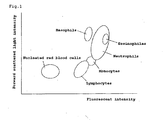
- a nucleated red blood cell and a basophil can be differentiated from other blood cells and counted. It is preferable that this step comprises, for example, (1) producing a scattergram using fluorescent information and forward scattered light information as two axes, and (2) analyzing the obtained scattergram by suitable analysis software.
- a scattergram is drawn using a fluorescent intensity on an X axis, and a forward scattered light intensity on a Y axis, for example, as shown in Fig. 1 , each cell is distributed, forming a cluster.
- N nucleated red blood cell has a smaller size than that of a granulocyte (neutrophil, eosinophil and basophil).
- the number and a ratio of a nucleated red blood cell and a basophil can be calculated.
- a cluster is recognized at a position considered that a predetermined blood cell (provisionally referred to as blood cell A) appears in a scattergram
- a center of this cluster is specified.
- blood cell B an appearance region of a cluster of another blood cell
- a blood cell appearing in a set region can be counted as the predetermined blood cell A.
- nucleated red blood cell ratio a ratio of a basophil relative to a total leukocyte (basophil/total leukocyte: hereinafter, referred to as "basophil ratio"), and a ratio of a nucleated red blood cell relative to a total leukocyte (nucleated red blood cell/total leukocyte: hereinafter, referred to as "nucleated red blood cell ratio"
- basophil ratio a ratio of a nucleated red blood cell relative to a total leukocyte
- nucleated red blood cell ratio a ratio of a nucleated red blood cell relative to a total leukocyte
- reagent kit for sample analysis and method for analyzing sample When the aforementioned reagent for sample analysis, reagent kit for sample analysis and method for analyzing sample are used, a cluster formed by a nucleated red blood cell, and a cluster formed by a basophil are clearly separated from a cluster formed by another blood cell, respectively. Therefore, a nucleated red blood cell and a basophil can be counted more precisely.
- Fluorescent dyes used in the following Examples are as follows. NK-3383 NK-1840 NK-2929 NK-5056 NK-9001 NK-9002 NK-9003 NK-4249 NK-3606
- Stomatolyzer FBII manufactured by Sysmex Corporation
- Baso sample 1 and Baso sample 2 A basophil ratio of the Baso sample 1 was 2.3%, and a basophil ratio of the Baso sample 2 was 1.2%.
- Stomatolyzer NR manufactured by Sysmex Corporation was used as a reagent.
- NRBC sample 1 and NRBC sample 2 nucleated red blood cells appeared therein (hereinafter, these samples are referred to as NRBC sample 1 and NRBC sample 2).
- a nucleated red blood cell ratio of the NRBC sample 1 was 4.0 cells/100 WBC
- a nucleated red blood cell ratio of the NRBC sample 2 was 20.2 cells/100 WBC.
- aqueous solution containing 10 mM of salicylic acid (pH: 2.7), 2% of 1-butanol and 3000 ppm of DTAB.
- each dye (6 ppm of NK-3383, 2 ppm of NK-1840, 6 ppm of NK-2929, 6 ppm of NK-5056, 2 ppm of NK-9001, 2 ppm of NK-9002, 2 ppm of NK-9003, 2 ppm of NK-4249, and 2 ppm of NK-3606) described in Fig. 2 and Fig. 3 so that each concentration became the aforementioned concentration, respectively, to dissolve it, to obtain each reagent for sample analysis containing each dye.
- a blood sample (Baso sample 1 or 2, or NRBC sample 1 or 2) were sufficiently mixed.
- the resulting measurement sample was reacted for 20 seconds in a constant temperature bath (35°C).
- the measurement sample was taken out from the constant temperature bath, and the measurement sample was guided to a detection part of a flow cytometer having a 633 nm excitation light source.
- a blood cell in the measurement sample was irradiated with excitation light, and a scattered light signal and a fluorescent signal emitted from the blood cell were detected.
- the resulting signals were analyzed, and a basophil, a nucleated red blood cell and a total leukocyte were measured. This measurement was performed using an automatic hemocyte counting device XE-2100.
- Measurement was performed by adding each of a reagent containing NK9001, a reagent containing NK9002, a reagent containing NK9003, a reagent containing NK4249, and a reagent containing NK3606, to the Baso sample 2.
- Measurement was performed by adding each of a reagent containing NK3383, a reagent containing NK1840, a reagent containing NK2929 and a reagent containing NK5056, to the NRBC sample 1.
- Measurement was performed by adding each of a reagent containing NK9001, a reagent containing NK9002, a reagent containing NK9003, a reagent containing NK4249, and a reagent containing NK3606, to the NRBC sample 2.
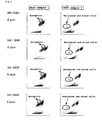
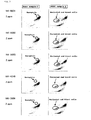
- a scattergram was produced using a fluorescent intensity and a forward scattered light intensity as two axes. The produced scattergrams are shown in Fig. 2 and Fig. 3 . Based on the scattergrams of Fig. 2 and Fig. 3 , a total leukocyte, a basophil and a nucleated red blood cell were counted, and a basophil ratio and a nucleated red blood cell ratio were calculated. Basophil ratios in the Baso samples calculated in Comparative Example 1 and the present Example are shown in Table 1, and nucleated red blood cell ratios in the NRBC samples calculated in Comparative Example 1 and the present Example are shown in Table 2.
- a basophil is clearly differentiated from leukocyte components other than a basophil, and it is also seen that a nucleated red blood cell is clearly differentiated. Like this, a basophil and a nucleated red blood cell are clearly differentiated, respectively. For this reason, as shown in Figs. 2 and 3 , blood cells appearing in certain regions on a scattergram are handled as a basophil and a nucleated red blood cell, and the number and a ratio relative to the total leukocyte of them can be precisely obtained.
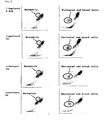
- a scattergram was produced using a fluorescent intensity and a forward scattered light intensity as two axes. The produced scattergrams are shown in Fig. 4 and Fig. 5 . Based on the scattergrams of Fig. 4 and Fig. 5 , a total leukocyte, a basophil and a nucleated red blood cell were counted, and a basophil ratio and a nucleated red blood cell ratio were calculated.
- Table 3 shows the results on basophil ratios in samples and Table 4 shows nucleated red blood cell ratios in samples.
- Dye added to sample Alcohol added to sample Basophil ratio (%) Example 1 XE-2100 NK-2929 1-Heptanol 1.4 1.1 1-Pentanol 1.6 1.4 1-Butanol 2.5 2.9 Isobutanol 2.4 2.9 2-Butanol 1.3 1.4 Isoamyl alcohol 1.5 1.4 2-Phenoxyethanol 1.2 1.6 2-Phenylethanol 1.5 1.6
- Dye added to sample Alcohol added to sample Nucleated red blood cell ratio (Number/100WBC) Example 1 XE-2100 NK-2929 1-Heptanol 2.6 2.7 1-Pentanol 4.2 4.5 1-Butanol 6.3 5.8 Isobutanol 6.1 5.8 2-Butanol 8.5 7.2 Isoamyl alcohol 9.3 7.2 2-Phenoxyethanol 3.5 3.2 2-P
Landscapes
- Health & Medical Sciences (AREA)
- Life Sciences & Earth Sciences (AREA)
- Immunology (AREA)
- Engineering & Computer Science (AREA)
- Chemical & Material Sciences (AREA)
- Hematology (AREA)
- Cell Biology (AREA)
- Molecular Biology (AREA)
- Urology & Nephrology (AREA)
- Biomedical Technology (AREA)
- General Physics & Mathematics (AREA)
- General Health & Medical Sciences (AREA)
- Pathology (AREA)
- Biochemistry (AREA)
- Analytical Chemistry (AREA)
- Physics & Mathematics (AREA)
- Microbiology (AREA)
- Biotechnology (AREA)
- Tropical Medicine & Parasitology (AREA)
- Food Science & Technology (AREA)
- Medicinal Chemistry (AREA)
- Ecology (AREA)
- Dispersion Chemistry (AREA)
- Zoology (AREA)
- Virology (AREA)
- Investigating Or Analysing Biological Materials (AREA)
Claims (9)
- Kit de réactif pour mesurer un basophile et/ou un érythrocyte nucléé, comprenant :une première solution contenantun alcool ayant 4 à 8 atomes de carbone au total et un tensioactif pour hémolyser un érythrocyte et endommager une membrane cellulaire d'un leucocyte à un degré tel qu'un colorant fluorescent est capable de la traverser, et un acide organique aromatique, etune deuxième solution contenant un ou plusieurs colorants fluorescents choisis dans le groupe constitué d'un composé de formule générale (I) et un composé de formule générale (II)


 R3, R4, R1 et R6 sont indépendamment un atome d'hydrogène ou un groupe alkyle ; etX- est un anion), etun composé de formule générale (II) :

 R9, R10, R11 et R12 sont indépendamment un atome d'hydrogène ou un groupe acide qui peut former un sel ; etau moins l'un de R7 à R12 a un groupe acide qui a libéré un proton).
 - Kit de réactif selon la revendication 1, dans lequel l'alcool est choisi dans le groupe constitué des butanol, pentanol, heptanol, isobutanol, alcool isoamylique, 2-phényléthanol et 2-phénoxyéthanol.
- Kit de réactif selon l'une quelconque des revendications 1 à 2, dans lequel le tensioactif est un tensioactif cationique.
- Kit de réactif selon l'une quelconque des revendications 1 à 3, dans lequel la première solution a un pH de 2,0 à 4,5.
- Kit de réactif selon l'une quelconque des revendications 1 à 4, dans lequel la deuxième solution contient un solvant organique.
- Procédé d'analyse d'échantillon, comprenant les étapes de :coloration d'une cellule sanguine dans l'échantillon en utilisantune première solution contenant :un alcool ayant 4 à 8 atomes de carbone au totalun tensioactif pour hémolyser un érythrocyte et endommager une membrane cellulaire d'une leucocyte à un degré tel qu'un colorant fluorescent est capable de la traverser et un acide organique aromatique et une deuxième solution contenant un ou plusieurs colorants fluorescents choisis dans le groupe constitué d'un composé de formule générale (I) et un composé de formule générale (II) selon la revendication 1 ;irradiation de la cellule sanguine colorée avec de la lumière ;obtention d'informations de lumière diffusée et d'informations de fluorescence à partir de la cellule sanguine colorée ; etcomptage d'un basophile et/ou un érythrocyte nucléé dans l'échantillon sur la base des informations de lumière diffusée et des informations de fluorescence.
- Procédé selon la revendication 6, dans lequel l'échantillon est mélangé avec la première solution et la deuxième solution dans l'étape de coloration.
- Procédé selon la revendication 6 ou 7, dans lequel les informations de lumière diffusée sont des informations de lumière diffusée vers l'avant.
- Procédé selon l'une quelconque des revendications 6 à 8, dans lequel le tensioactif est un tensioactif cationique.
Applications Claiming Priority (1)
| Application Number | Priority Date | Filing Date | Title |
|---|---|---|---|
| JP2006175716A JP4914656B2 (ja) | 2006-06-26 | 2006-06-26 | 試料分析用試薬、試料分析用試薬キット及び試料分析方法 |
Publications (2)
| Publication Number | Publication Date |
|---|---|
| EP1890143A1 EP1890143A1 (fr) | 2008-02-20 |
| EP1890143B1 true EP1890143B1 (fr) | 2015-11-11 |
Family
ID=38698379
Family Applications (1)
| Application Number | Title | Priority Date | Filing Date |
|---|---|---|---|
| EP07110753.6A Not-in-force EP1890143B1 (fr) | 2006-06-26 | 2007-06-21 | Réactif pour analyse d'échantillon, kit de réactif d'analyse d'échantillon et procédé d'analyse d'échantillon |
Country Status (4)
| Country | Link |
|---|---|
| US (1) | US8101414B2 (fr) |
| EP (1) | EP1890143B1 (fr) |
| JP (1) | JP4914656B2 (fr) |
| CN (1) | CN101097181B (fr) |
Families Citing this family (19)
| Publication number | Priority date | Publication date | Assignee | Title |
|---|---|---|---|---|
| MY150548A (en) * | 2007-09-27 | 2014-01-30 | Sysmex Corp | Reagent kit for sample analysis and sample analysis method |
| CN101723874B (zh) * | 2008-10-31 | 2013-09-11 | 深圳迈瑞生物医疗电子股份有限公司 | 花菁类化合物及其在生物样品染色中的用途 |
| CN101750476B (zh) * | 2008-12-08 | 2015-06-03 | 深圳迈瑞生物医疗电子股份有限公司 | 血液分析试剂及其使用方法 |
| JP5670052B2 (ja) * | 2009-03-26 | 2015-02-18 | シスメックス株式会社 | 血液分析装置、血液分析方法及びコンピュータプログラム |
| CN102109430B (zh) * | 2009-12-25 | 2013-11-06 | 深圳迈瑞生物医疗电子股份有限公司 | 有核红细胞模拟粒子,血液质控物及其制备方法和用途 |
| JP5583629B2 (ja) * | 2011-04-28 | 2014-09-03 | シスメックス株式会社 | 白血球の分類計数方法、白血球分類試薬キット及び白血球分類試薬 |
| US9103759B2 (en) | 2011-05-04 | 2015-08-11 | Abbott Laboratories | Nucleated red blood cell analysis system and method |
| US9091625B2 (en) | 2011-05-04 | 2015-07-28 | Abbott Laboratories | Basophil analysis system and method |
| ES2927316T3 (es) | 2011-05-04 | 2022-11-04 | Abbott Lab | Sistema y método de análisis de glóbulos blancos |
| CN103674912B (zh) * | 2013-12-03 | 2016-01-27 | 齐齐哈尔大学 | 吡啶季铵盐阳离子表面活性剂的荧光检测方法及其应用 |
| JP6092132B2 (ja) * | 2014-01-29 | 2017-03-08 | シスメックス株式会社 | 血球分析装置 |
| CN106687810B (zh) * | 2014-12-31 | 2019-10-22 | 深圳迈瑞生物医疗电子股份有限公司 | 一种非诊断目的的有核红细胞报警方法、装置及流式细胞分析仪 |
| JP6738652B2 (ja) * | 2016-05-26 | 2020-08-12 | シスメックス株式会社 | 試料分析方法、試料分析装置および試薬 |
| CN111602046B (zh) * | 2018-04-28 | 2024-01-09 | 深圳迈瑞生物医疗电子股份有限公司 | 一种血液分析仪及分析方法 |
| CN108732082A (zh) * | 2018-06-07 | 2018-11-02 | 北京唯公医疗技术有限公司 | 细胞分群方法 |
| WO2020133256A1 (fr) | 2018-12-28 | 2020-07-02 | 深圳迈瑞生物医疗电子股份有限公司 | Procédé d'analyse de globules rouges nucléés, analyseur de cellules sanguines et support de stockage |
| CN111157431A (zh) * | 2020-01-14 | 2020-05-15 | 迪瑞医疗科技股份有限公司 | 用于有核红细胞、嗜碱性粒细胞分类的试剂 |
| CN114317673A (zh) * | 2020-09-29 | 2022-04-12 | 深圳市帝迈生物技术有限公司 | 用于有核红细胞、嗜碱性粒细胞和其他白细胞分类的试剂 |
| CN117233067B (zh) * | 2023-11-10 | 2024-03-05 | 广东省大湾区华南理工大学聚集诱导发光高等研究院 | 一种白细胞检测试剂盒及其应用 |
Citations (1)
| Publication number | Priority date | Publication date | Assignee | Title |
|---|---|---|---|---|
| JP2002148261A (ja) * | 2000-11-09 | 2002-05-22 | Sysmex Corp | 異常細胞分類計数方法 |
Family Cites Families (23)
| Publication number | Priority date | Publication date | Assignee | Title |
|---|---|---|---|---|
| CA1255197A (fr) * | 1984-09-24 | 1989-06-06 | Joseph L. Orlik | Compose et methode pour la differenciation des leucocytes |
| US5090009A (en) | 1988-07-30 | 1992-02-18 | Taiyo Yuden Co., Ltd. | Optical information recording medium |
| US5316814A (en) * | 1991-05-14 | 1994-05-31 | Ricoh Company, Ltd. | Optical information recording medium |
| JPH0540097A (ja) * | 1991-08-06 | 1993-02-19 | Hitachi Chem Co Ltd | 蛍光標識用色素、蛍光標識用色素で標識された生物由来物質、及びそれらを含有する試薬 |
| US5445853A (en) * | 1992-01-09 | 1995-08-29 | Sony Corporation | Optical data storage media |
| JP3320869B2 (ja) * | 1993-12-22 | 2002-09-03 | シスメックス株式会社 | 白血球分析用試薬 |
| US5631165A (en) * | 1994-08-01 | 1997-05-20 | Abbott Laboratories | Method for performing automated hematology and cytometry analysis |
| JP3355038B2 (ja) * | 1994-08-03 | 2002-12-09 | シスメックス株式会社 | 白血球分類方法 |
| JP3553691B2 (ja) * | 1995-04-12 | 2004-08-11 | シスメックス株式会社 | 網状赤血球測定用試薬及び測定方法 |
| US6004536A (en) * | 1995-11-14 | 1999-12-21 | Molecular Probes, Inc. | Lipophilic cyanine dyes with enchanced aqueous solubilty |
| US6082863A (en) | 1996-08-16 | 2000-07-04 | Raychem Corporation | Color projection prism |
| JP4107441B2 (ja) | 1997-06-10 | 2008-06-25 | シスメックス株式会社 | 赤芽球の分類計数用試薬 |
| JPH11102538A (ja) * | 1997-08-01 | 1999-04-13 | Taiyo Yuden Co Ltd | 光情報記録媒体 |
| US6911313B2 (en) * | 1998-02-06 | 2005-06-28 | Sysmex Corporation | Process for discriminating and counting erythroblasts |
| FR2783326B1 (fr) | 1998-09-10 | 2000-12-01 | Immunotech Sa | Procede de detection ou de quantification des basophiles et des eosinophiles |
| JP3886271B2 (ja) * | 1998-11-27 | 2007-02-28 | シスメックス株式会社 | 赤芽球の分類計数用試薬及び分類計数方法 |
| PT1363126E (pt) | 2002-05-14 | 2006-05-31 | Univ Salamanca | Analise multidimensional diferencial de leucocitos |
| EP1638423B1 (fr) | 2003-07-02 | 2011-09-21 | Ansell Healthcare Products LLC | Procede de fabrication de revetement a surface a reliefs pour gants |
| WO2005085842A2 (fr) | 2004-03-09 | 2005-09-15 | Universite Libre De Bruxelles | Procede de detection simultanee de populations de plusieurs entites biologiques differentes par cytometrie de flux, dispositif et programme informatique a cet effet |
| ES2547643T3 (es) * | 2005-07-12 | 2015-10-07 | Sysmex Corporation | Material de referencia para un analizador de partículas |
| JP4953710B2 (ja) * | 2005-07-12 | 2012-06-13 | シスメックス株式会社 | 尿中有形成分分析装置用標準物質 |
| JP4794334B2 (ja) * | 2006-03-22 | 2011-10-19 | シスメックス株式会社 | 尿試料分析用試薬及び尿試料の分析方法 |
| JP4796443B2 (ja) * | 2006-06-08 | 2011-10-19 | シスメックス株式会社 | 試料分析用試薬、試料分析用試薬キット及び試料分析方法 |
-
2006
- 2006-06-26 JP JP2006175716A patent/JP4914656B2/ja not_active Expired - Fee Related
-
2007
- 2007-06-15 US US11/763,827 patent/US8101414B2/en not_active Expired - Fee Related
- 2007-06-21 EP EP07110753.6A patent/EP1890143B1/fr not_active Not-in-force
- 2007-06-26 CN CN200710109477.3A patent/CN101097181B/zh active Active
Patent Citations (1)
| Publication number | Priority date | Publication date | Assignee | Title |
|---|---|---|---|---|
| JP2002148261A (ja) * | 2000-11-09 | 2002-05-22 | Sysmex Corp | 異常細胞分類計数方法 |
Non-Patent Citations (1)
| Title |
|---|
| SYSMEX EUROPE: "XS-1000i XS-800i Launch Information.", 1 March 2006 (2006-03-01), Retrieved from the Internet <URL:www.dovermed.co.il/Images/Products/pdf/989.pdf> [retrieved on 20110930] * |
Also Published As
| Publication number | Publication date |
|---|---|
| CN101097181A (zh) | 2008-01-02 |
| CN101097181B (zh) | 2012-05-09 |
| JP4914656B2 (ja) | 2012-04-11 |
| JP2008003062A (ja) | 2008-01-10 |
| EP1890143A1 (fr) | 2008-02-20 |
| US8101414B2 (en) | 2012-01-24 |
| US20070298408A1 (en) | 2007-12-27 |
Similar Documents
| Publication | Publication Date | Title |
|---|---|---|
| EP1890143B1 (fr) | Réactif pour analyse d'échantillon, kit de réactif d'analyse d'échantillon et procédé d'analyse d'échantillon | |
| EP1865318B1 (fr) | Réactif pour analyse d'échantillon, kit d'analyse d'échantillon et procédé d'analyse d'échantillon | |
| EP2166353B1 (fr) | Réactif et trousse de réactifs pour analyse de leucocyte primitif | |
| JP5600726B2 (ja) | 試料分析方法 | |
| US20030219850A1 (en) | Method for automatically analyzing nucleated bone marrow cells | |
| US9222934B2 (en) | Reagent and reagent kit for analysis of immature leukocyte | |
| JP4806342B2 (ja) | 幼若白血球分析用試薬及び試薬キット |
Legal Events
| Date | Code | Title | Description |
|---|---|---|---|
| PUAI | Public reference made under article 153(3) epc to a published international application that has entered the european phase |
Free format text: ORIGINAL CODE: 0009012 |
|
| AK | Designated contracting states |
Kind code of ref document: A1 Designated state(s): AT BE BG CH CY CZ DE DK EE ES FI FR GB GR HU IE IS IT LI LT LU LV MC MT NL PL PT RO SE SI SK TR |
|
| AX | Request for extension of the european patent |
Extension state: AL BA HR MK YU |
|
| 17P | Request for examination filed |
Effective date: 20080811 |
|
| AKX | Designation fees paid |
Designated state(s): AT BE BG CH CY CZ DE DK EE ES FI FR GB GR HU IE IS IT LI LT LU LV MC MT NL PL PT RO SE SI SK TR |
|
| GRAP | Despatch of communication of intention to grant a patent |
Free format text: ORIGINAL CODE: EPIDOSNIGR1 |
|
| INTG | Intention to grant announced |
Effective date: 20150401 |
|
| GRAS | Grant fee paid |
Free format text: ORIGINAL CODE: EPIDOSNIGR3 |
|
| GRAJ | Information related to disapproval of communication of intention to grant by the applicant or resumption of examination proceedings by the epo deleted |
Free format text: ORIGINAL CODE: EPIDOSDIGR1 |
|
| GRAL | Information related to payment of fee for publishing/printing deleted |
Free format text: ORIGINAL CODE: EPIDOSDIGR3 |
|
| GRAP | Despatch of communication of intention to grant a patent |
Free format text: ORIGINAL CODE: EPIDOSNIGR1 |
|
| GRAP | Despatch of communication of intention to grant a patent |
Free format text: ORIGINAL CODE: EPIDOSNIGR1 |
|
| GRAA | (expected) grant |
Free format text: ORIGINAL CODE: 0009210 |
|
| INTG | Intention to grant announced |
Effective date: 20150929 |
|
| AK | Designated contracting states |
Kind code of ref document: B1 Designated state(s): AT BE BG CH CY CZ DE DK EE ES FI FR GB GR HU IE IS IT LI LT LU LV MC MT NL PL PT RO SE SI SK TR |
|
| REG | Reference to a national code |
Ref country code: GB Ref legal event code: FG4D |
|
| REG | Reference to a national code |
Ref country code: CH Ref legal event code: EP |
|
| REG | Reference to a national code |
Ref country code: IE Ref legal event code: FG4D |
|
| REG | Reference to a national code |
Ref country code: AT Ref legal event code: REF Ref document number: 760711 Country of ref document: AT Kind code of ref document: T Effective date: 20151215 |
|
| REG | Reference to a national code |
Ref country code: DE Ref legal event code: R096 Ref document number: 602007043836 Country of ref document: DE |
|
| REG | Reference to a national code |
Ref country code: LT Ref legal event code: MG4D |
|
| REG | Reference to a national code |
Ref country code: NL Ref legal event code: MP Effective date: 20160211 |
|
| REG | Reference to a national code |
Ref country code: AT Ref legal event code: MK05 Ref document number: 760711 Country of ref document: AT Kind code of ref document: T Effective date: 20151111 |
|
| PG25 | Lapsed in a contracting state [announced via postgrant information from national office to epo] |
Ref country code: IS Free format text: LAPSE BECAUSE OF FAILURE TO SUBMIT A TRANSLATION OF THE DESCRIPTION OR TO PAY THE FEE WITHIN THE PRESCRIBED TIME-LIMIT Effective date: 20160311 Ref country code: ES Free format text: LAPSE BECAUSE OF FAILURE TO SUBMIT A TRANSLATION OF THE DESCRIPTION OR TO PAY THE FEE WITHIN THE PRESCRIBED TIME-LIMIT Effective date: 20151111 Ref country code: IT Free format text: LAPSE BECAUSE OF FAILURE TO SUBMIT A TRANSLATION OF THE DESCRIPTION OR TO PAY THE FEE WITHIN THE PRESCRIBED TIME-LIMIT Effective date: 20151111 Ref country code: LT Free format text: LAPSE BECAUSE OF FAILURE TO SUBMIT A TRANSLATION OF THE DESCRIPTION OR TO PAY THE FEE WITHIN THE PRESCRIBED TIME-LIMIT Effective date: 20151111 Ref country code: NL Free format text: LAPSE BECAUSE OF FAILURE TO SUBMIT A TRANSLATION OF THE DESCRIPTION OR TO PAY THE FEE WITHIN THE PRESCRIBED TIME-LIMIT Effective date: 20151111 |
|
| REG | Reference to a national code |
Ref country code: FR Ref legal event code: PLFP Year of fee payment: 10 |
|
| PG25 | Lapsed in a contracting state [announced via postgrant information from national office to epo] |
Ref country code: GR Free format text: LAPSE BECAUSE OF FAILURE TO SUBMIT A TRANSLATION OF THE DESCRIPTION OR TO PAY THE FEE WITHIN THE PRESCRIBED TIME-LIMIT Effective date: 20160212 Ref country code: LV Free format text: LAPSE BECAUSE OF FAILURE TO SUBMIT A TRANSLATION OF THE DESCRIPTION OR TO PAY THE FEE WITHIN THE PRESCRIBED TIME-LIMIT Effective date: 20151111 Ref country code: PL Free format text: LAPSE BECAUSE OF FAILURE TO SUBMIT A TRANSLATION OF THE DESCRIPTION OR TO PAY THE FEE WITHIN THE PRESCRIBED TIME-LIMIT Effective date: 20151111 Ref country code: SE Free format text: LAPSE BECAUSE OF FAILURE TO SUBMIT A TRANSLATION OF THE DESCRIPTION OR TO PAY THE FEE WITHIN THE PRESCRIBED TIME-LIMIT Effective date: 20151111 Ref country code: PT Free format text: LAPSE BECAUSE OF FAILURE TO SUBMIT A TRANSLATION OF THE DESCRIPTION OR TO PAY THE FEE WITHIN THE PRESCRIBED TIME-LIMIT Effective date: 20160311 Ref country code: AT Free format text: LAPSE BECAUSE OF FAILURE TO SUBMIT A TRANSLATION OF THE DESCRIPTION OR TO PAY THE FEE WITHIN THE PRESCRIBED TIME-LIMIT Effective date: 20151111 Ref country code: FI Free format text: LAPSE BECAUSE OF FAILURE TO SUBMIT A TRANSLATION OF THE DESCRIPTION OR TO PAY THE FEE WITHIN THE PRESCRIBED TIME-LIMIT Effective date: 20151111 |
|
| PG25 | Lapsed in a contracting state [announced via postgrant information from national office to epo] |
Ref country code: CZ Free format text: LAPSE BECAUSE OF FAILURE TO SUBMIT A TRANSLATION OF THE DESCRIPTION OR TO PAY THE FEE WITHIN THE PRESCRIBED TIME-LIMIT Effective date: 20151111 |
|
| REG | Reference to a national code |
Ref country code: DE Ref legal event code: R097 Ref document number: 602007043836 Country of ref document: DE |
|
| PG25 | Lapsed in a contracting state [announced via postgrant information from national office to epo] |
Ref country code: EE Free format text: LAPSE BECAUSE OF FAILURE TO SUBMIT A TRANSLATION OF THE DESCRIPTION OR TO PAY THE FEE WITHIN THE PRESCRIBED TIME-LIMIT Effective date: 20151111 Ref country code: RO Free format text: LAPSE BECAUSE OF FAILURE TO SUBMIT A TRANSLATION OF THE DESCRIPTION OR TO PAY THE FEE WITHIN THE PRESCRIBED TIME-LIMIT Effective date: 20151111 Ref country code: SK Free format text: LAPSE BECAUSE OF FAILURE TO SUBMIT A TRANSLATION OF THE DESCRIPTION OR TO PAY THE FEE WITHIN THE PRESCRIBED TIME-LIMIT Effective date: 20151111 Ref country code: DK Free format text: LAPSE BECAUSE OF FAILURE TO SUBMIT A TRANSLATION OF THE DESCRIPTION OR TO PAY THE FEE WITHIN THE PRESCRIBED TIME-LIMIT Effective date: 20151111 |
|
| PLBE | No opposition filed within time limit |
Free format text: ORIGINAL CODE: 0009261 |
|
| STAA | Information on the status of an ep patent application or granted ep patent |
Free format text: STATUS: NO OPPOSITION FILED WITHIN TIME LIMIT |
|
| 26N | No opposition filed |
Effective date: 20160812 |
|
| PG25 | Lapsed in a contracting state [announced via postgrant information from national office to epo] |
Ref country code: SI Free format text: LAPSE BECAUSE OF FAILURE TO SUBMIT A TRANSLATION OF THE DESCRIPTION OR TO PAY THE FEE WITHIN THE PRESCRIBED TIME-LIMIT Effective date: 20151111 |
|
| PG25 | Lapsed in a contracting state [announced via postgrant information from national office to epo] |
Ref country code: BE Free format text: LAPSE BECAUSE OF FAILURE TO SUBMIT A TRANSLATION OF THE DESCRIPTION OR TO PAY THE FEE WITHIN THE PRESCRIBED TIME-LIMIT Effective date: 20151111 |
|
| PG25 | Lapsed in a contracting state [announced via postgrant information from national office to epo] |
Ref country code: MC Free format text: LAPSE BECAUSE OF FAILURE TO SUBMIT A TRANSLATION OF THE DESCRIPTION OR TO PAY THE FEE WITHIN THE PRESCRIBED TIME-LIMIT Effective date: 20151111 |
|
| REG | Reference to a national code |
Ref country code: CH Ref legal event code: PL |
|
| REG | Reference to a national code |
Ref country code: IE Ref legal event code: MM4A |
|
| PG25 | Lapsed in a contracting state [announced via postgrant information from national office to epo] |
Ref country code: CH Free format text: LAPSE BECAUSE OF NON-PAYMENT OF DUE FEES Effective date: 20160630 Ref country code: LI Free format text: LAPSE BECAUSE OF NON-PAYMENT OF DUE FEES Effective date: 20160630 |
|
| REG | Reference to a national code |
Ref country code: FR Ref legal event code: PLFP Year of fee payment: 11 |
|
| PG25 | Lapsed in a contracting state [announced via postgrant information from national office to epo] |
Ref country code: IE Free format text: LAPSE BECAUSE OF NON-PAYMENT OF DUE FEES Effective date: 20160621 |
|
| REG | Reference to a national code |
Ref country code: FR Ref legal event code: PLFP Year of fee payment: 12 |
|
| PG25 | Lapsed in a contracting state [announced via postgrant information from national office to epo] |
Ref country code: CY Free format text: LAPSE BECAUSE OF FAILURE TO SUBMIT A TRANSLATION OF THE DESCRIPTION OR TO PAY THE FEE WITHIN THE PRESCRIBED TIME-LIMIT Effective date: 20151111 Ref country code: HU Free format text: LAPSE BECAUSE OF FAILURE TO SUBMIT A TRANSLATION OF THE DESCRIPTION OR TO PAY THE FEE WITHIN THE PRESCRIBED TIME-LIMIT; INVALID AB INITIO Effective date: 20070621 |
|
| PG25 | Lapsed in a contracting state [announced via postgrant information from national office to epo] |
Ref country code: MT Free format text: LAPSE BECAUSE OF NON-PAYMENT OF DUE FEES Effective date: 20160630 Ref country code: TR Free format text: LAPSE BECAUSE OF FAILURE TO SUBMIT A TRANSLATION OF THE DESCRIPTION OR TO PAY THE FEE WITHIN THE PRESCRIBED TIME-LIMIT Effective date: 20151111 Ref country code: LU Free format text: LAPSE BECAUSE OF NON-PAYMENT OF DUE FEES Effective date: 20160621 |
|
| PG25 | Lapsed in a contracting state [announced via postgrant information from national office to epo] |
Ref country code: BG Free format text: LAPSE BECAUSE OF FAILURE TO SUBMIT A TRANSLATION OF THE DESCRIPTION OR TO PAY THE FEE WITHIN THE PRESCRIBED TIME-LIMIT Effective date: 20151111 |
|
| PGFP | Annual fee paid to national office [announced via postgrant information from national office to epo] |
Ref country code: DE Payment date: 20180605 Year of fee payment: 12 |
|
| PGFP | Annual fee paid to national office [announced via postgrant information from national office to epo] |
Ref country code: FR Payment date: 20180511 Year of fee payment: 12 |
|
| PGFP | Annual fee paid to national office [announced via postgrant information from national office to epo] |
Ref country code: GB Payment date: 20180620 Year of fee payment: 12 |
|
| REG | Reference to a national code |
Ref country code: DE Ref legal event code: R119 Ref document number: 602007043836 Country of ref document: DE |
|
| GBPC | Gb: european patent ceased through non-payment of renewal fee |
Effective date: 20190621 |
|
| PG25 | Lapsed in a contracting state [announced via postgrant information from national office to epo] |
Ref country code: DE Free format text: LAPSE BECAUSE OF NON-PAYMENT OF DUE FEES Effective date: 20200101 Ref country code: GB Free format text: LAPSE BECAUSE OF NON-PAYMENT OF DUE FEES Effective date: 20190621 |
|
| PG25 | Lapsed in a contracting state [announced via postgrant information from national office to epo] |
Ref country code: FR Free format text: LAPSE BECAUSE OF NON-PAYMENT OF DUE FEES Effective date: 20190630 |