EP1902067B1 - Alleles du gene opca provenant de bacteries coryneformes - Google Patents
Alleles du gene opca provenant de bacteries coryneformes Download PDFInfo
- Publication number
- EP1902067B1 EP1902067B1 EP06777211A EP06777211A EP1902067B1 EP 1902067 B1 EP1902067 B1 EP 1902067B1 EP 06777211 A EP06777211 A EP 06777211A EP 06777211 A EP06777211 A EP 06777211A EP 1902067 B1 EP1902067 B1 EP 1902067B1
- Authority
- EP
- European Patent Office
- Prior art keywords
- seq
- amino acid
- nucleotide sequence
- opca
- gene
- Prior art date
- Legal status (The legal status is an assumption and is not a legal conclusion. Google has not performed a legal analysis and makes no representation as to the accuracy of the status listed.)
- Expired - Lifetime
Links
Images

Classifications
-
- C—CHEMISTRY; METALLURGY
- C12—BIOCHEMISTRY; BEER; SPIRITS; WINE; VINEGAR; MICROBIOLOGY; ENZYMOLOGY; MUTATION OR GENETIC ENGINEERING
- C12P—FERMENTATION OR ENZYME-USING PROCESSES TO SYNTHESISE A DESIRED CHEMICAL COMPOUND OR COMPOSITION OR TO SEPARATE OPTICAL ISOMERS FROM A RACEMIC MIXTURE
- C12P13/00—Preparation of nitrogen-containing organic compounds
- C12P13/04—Alpha- or beta- amino acids
- C12P13/08—Lysine; Diaminopimelic acid; Threonine; Valine
-
- C—CHEMISTRY; METALLURGY
- C12—BIOCHEMISTRY; BEER; SPIRITS; WINE; VINEGAR; MICROBIOLOGY; ENZYMOLOGY; MUTATION OR GENETIC ENGINEERING
- C12N—MICROORGANISMS OR ENZYMES; COMPOSITIONS THEREOF; PROPAGATING, PRESERVING, OR MAINTAINING MICROORGANISMS; MUTATION OR GENETIC ENGINEERING; CULTURE MEDIA
- C12N9/00—Enzymes; Proenzymes; Compositions thereof; Processes for preparing, activating, inhibiting, separating or purifying enzymes
- C12N9/0004—Oxidoreductases (1.)
- C12N9/0006—Oxidoreductases (1.) acting on CH-OH groups as donors (1.1)
-
- C—CHEMISTRY; METALLURGY
- C12—BIOCHEMISTRY; BEER; SPIRITS; WINE; VINEGAR; MICROBIOLOGY; ENZYMOLOGY; MUTATION OR GENETIC ENGINEERING
- C12P—FERMENTATION OR ENZYME-USING PROCESSES TO SYNTHESISE A DESIRED CHEMICAL COMPOUND OR COMPOSITION OR TO SEPARATE OPTICAL ISOMERS FROM A RACEMIC MIXTURE
- C12P13/00—Preparation of nitrogen-containing organic compounds
- C12P13/04—Alpha- or beta- amino acids
- C12P13/22—Tryptophan; Tyrosine; Phenylalanine; 3,4-Dihydroxyphenylalanine
- C12P13/227—Tryptophan
Definitions
- the invention relates to mutants and alleles of the opcA gene coding for variants of the OpcA subunit of glucose-6-phosphate dehydrogenase (EC: 1.1.1.49) and to processes for the preparation of amino acids, in particular L-lysine and L-tryptophan Use of bacteria that contain these alleles.
- Amino acids are used in human medicine, in the pharmaceutical industry, in the food industry and especially in animal nutrition.
- AEC lysine analog S- (2-aminoethyl) -L-cysteine
- the nucleotide sequence of the Corynebacterium glutamicum glucose-6-phosphate dehydrogenase opcA deficient unit gene is described, inter alia, in the National Library of Medicin's National Center for Biotechnology Information (NCBI, Bethesda, MD) (Bethesda, MD, USA) under the number AX121828. It may be further taken from the patent application EP1108790 as Sequence No. 1744.
- nucleotide sequence database of the European Molecular Biology Laboratories (EMBL, Heidelberg, Germany and Cambridge, UK) or the Swiss Institute of Bioinformatics (Swissprot, Geneve, Switzerland) or the Protein Information Resource Database (PIR, Washington , DC, USA) can also be used.
- the inventors have set themselves the task to provide improved strains of microorganisms, which increased. Amounts of amino acids, especially L-lysine and L-tryptophan prodtifug.
- the polypeptide contained in the mutants of the present invention may also be referred to as OpcA polypeptide, glucose-6-phosphate dehydrogenase OpcA polypeptide, glucose-6-phosphate dehydrogenase OpcA subunit, or OpcA polypeptide subunit become.
- the OpcA polypeptide is also referred to as "glucose-6-phosphate dehydrogenase assembly protein".
- Strains designated "ATCC” can be obtained from the American Type Culture Collection (Manassas, Va, USA). Strains designated “DSM” can be obtained from the German Collection of Microorganisms and Cell Cultures (DSMZ, Braunschweig, Germany). Strains named “FERM” can be obtained from the National Institute of Advanced Industrial Science and Technology (AIST Tsukuba Central 6, 1-1-1 Higashi, Tsukuba Ibaraki, Japan). The mentioned strains of Corynebacterium thermoaminogenes (FERM BP-1539, FERM BP-1540, FERM BP-1541 and FERM BP-1542) are in the US-A 5,250,434 described. Strains designated “NRRL” can be obtained from the Agricultural Research Service Patent Culture Collection (ARS, Peoria, Ill., US).
- Proteinogenic amino acids are understood as meaning the amino acids which are present in natural proteins, that is to say in proteins of microorganisms, plants, animals and humans. These include in particular L-amino acids selected from the group L-aspartic acid, L-asparagine, L-threonine, L-serine, L-glutamic acid, L-glutamine, glycine, L-alanine, L-cysteine, L-valine , L-methionine, L-isoleucine, L-leucine, L-tyrosine, L-phenylalanine, L-histidine, L-lysine, L-tryptophan, L-proline and L-arginine.
- the L-amino acids also include the L-homoserine.
- the mutants according to the invention preferably excrete said proteinogenic amino acids, in particular L-lysine and L-tryptophan.
- amino acids also includes their salts such as the lysine monohydrochloride or lysine sulfate in the case of the amino acid L-lysine.
- the invention furthermore relates to mutants of coryneform bacteria which contain an opcA allele which contains the amino acid sequence corresponding to position 107 to 261 of SEQ ID NO: 6 for an OpcA polypeptide which, at position 107 to 261 of the amino acid sequence.
- the amino acid sequence of the encoded polypeptide comprises an amino acid sequence corresponding to positions 98 to 270 of SEQ ID NO: 6 or positions 83 to 285 of SEQ ID NO: 6 or positions 63 to 305 of SEQ ID NO: 6 or positions 38 to 315 of SEQ ID NO: 6 or positions 8 to 315 of SEQ ID NO: 6 or positions 2 to 315 of SEQ ID NO: 6 or positions 2 to 317 of SEQ ID NO: 6 or positions 2 to 319 of SEQ ID NO: 6.
- the length of the encoded polypeptide comprises 319 amino acids of SEQ ID NO: 6
- nucleotide sequence of an opcA allele having at least 99% identity with the nucleotide sequence of SEQ ID NO: 5 is shown in SEQ ID NO: 7.
- the nucleotide sequence of this opcA allele has, in addition to the nucleotide exchanges, thymine for cytosine at position 319, adenine for cytosine at position 657, cytosine for thymine at position 697, and thymine for cytosine at position 781 (see SEQ ID NO: 5) for cytosine against nucleotide exchanges Thymine at position 402, thymine against cytosine at position 600, and guanine against cytosine at position 648 (see SEQ ID NO: 7).
- guanine versus cytosine at position 648 and comparable formulations - means that the nucleobase guanine present in the wild-type sequence of the coding region at position 648 (see SEQ ID NO: 1) has been replaced by cytosine (See SEQ ID NO : 7).
- the aromatic amino acids are called conservative substitutions when phenylalanine, tryptophan and tyrosine are interchangeable.
- the hydrophobic amino acids are called conservative exchanges when leucine, isoleucine and valine are exchanged.
- the polar amino acids are called conservative exchanges when glutamine and asparagine are interchanged.
- the basic amino acids are called conservative exchanges when arginine, lysis and histidine are interchanged.
- the acidic amino acids are called conservative exchanges when aspartic acid and glutamic acid are exchanged.
- the hydroxyl-containing amino acids are called conservative substitutions when serine and threonine are interchanged.
- the invention relates to mutants of coryneform bacteria which contain an opcA allele which codes for an OpcA polypeptide comprising the amino acid sequence of SEQ ID NO: 6.
- aminovertidases It is known that the endogenous methionine is removed during protein synthesis by its own enzymes, so-called aminovertidases.
- mutants of the invention classical in vivo mutagenesis methods can be used with cell populations of coryneform bacteria using mutagenic substances such as N-methyl-N'-nitro-N-nitrosoguanidine (MNNG), ethyl methanesulfonate (EMS), 5-bromouracil, or ultraviolet light become.
- Mutagenesis methods are described, for example, in the Manual of Methods for General Bacteriology ( Gerhard et al. (Eds.), American Society for Microbiology, Washington, DC, USA, 1981 ) or at Tosaka et al.
- Typical mutageneses using MNNG include concentrations of 50 to 500 mg / L or even higher concentrations up to a maximum of 1 g / L, an incubation time of 1 to 30 minutes at a pH of 5.5 to 7.5. Under these conditions, the number of viable cells is reduced by a proportion of about 50% to 90% or about 50% to 99% or about 50% to 99.9% or more.
- mutants or cells are removed and propagated.
- suitable nutrient media and test conditions are, inter alia, in US 6,221,636 , in the US 5,840,551 , in the US 5,770,409 , in the US 5,605,818 , in the US 5,275,940 and in the US 4,224,409 described.
- suitable robotic systems such as in Zimmermann et al. (VDI reports No.
- mutants can be examined in a short time. In this way, mutants are identified which, in comparison to the parent strain or non-mutagenized parent strain, excrete more amino acids into the nutrient medium or into the cell interior. These include, for example, those mutants whose amino acid secretion is increased by at least 0.5%.
- DNA is then provided from the mutants or isolated and, with the aid of the polymerase chain reaction using primer pairs, the amplification of the opcA gene or the opcA alleles according to the invention or the mutations according to the invention at positions 107, 219, 233 and 261
- the DNA is preferably isolated from those mutants which, to a greater extent, excrete or accumulate amino acids in the cell compared to the parent strain.
- any primer pairs can be selected from the nucleotide sequence located upstream and downstream of the mutation according to the invention and the nucleotide sequence complementary thereto.
- a primer of a primer pair here preferably comprises at least 15, at least 18, at least 20, at least 21 or at least 24 consecutive nucleotides selected from the nucleotide sequence between position 1 and 652 of SEQ ID NO: 3.
- the associated second primer of a primer pair comprises at least 15, at least 18, at least 20, at least 21 or at least 24 consecutive nucleotides selected from the complementary nucleotide sequence of positions 1600 and 1118 of SEQ ID NO: 3.
- the primer pair is preferably selected from the nucleotide sequence between position 1 and 334 of SEQ ID NO: 3 and from the complementary nucleotide sequence between position 1600 and. 1292 selected from SEQ ID NO: 3.
- the primer pair is preferably selected from the nucleotide sequence between position 335 and 652 of SEQ ID NO: 3 and from the complementary nucleotide sequence between position 1291 and 1118 selected from SEQ ID NO: 3.
- primer pairs examples include the primer pair opcA-A1 and opcA-E1 reproduced under SEQ ID NO: 11 and SEQ ID NO: 12, and the primer pair opcA-int1 and opcA-int2 reproduced under SEQ ID NO: 13 and SEQ ID NO: 14.
- the primer can also be equipped with recognition sites for restriction enzymes, with a biotin group or other accessories as described in the prior art.
- the total length of the primer is generally at most 30, 40, 50 or 60 nucleotides.
- thermostable DNA polymerases are generally used for the production of polynucleotides by amplification of selected sequences, such as the opcA allele according to the invention.
- DNA polymerases examples include the Taq polymerase from Thermus aquaticus, which is marketed inter alia by the company Qiagen (Hilden, Germany), which Vent polymerase from Thermococcus litoralis, which is sold, inter alia, by the company New England Biolabs (Frankfurt, Germany) or the Pfu polymerase from Pyrococcus furiosus, which is sold, inter alia, by the company Stratagene (La Jolla, USA). Preference is given to polymerases with "proof-reading" activity.
- Proof-reading activity means that these polymerases are able to recognize erroneously incorporated nucleotides and to remedy the error by re-polymerization ( Lottspeich and Zorbas, Bioanalytics, Spektrum Akademischer Verlag, Heidelberg, Germany (1998 )).
- Examples of polymerases with "proof-reading” activity are the VentPolymerase and the Pfu polymerase.
- the conditions in the reaction mixture are set according to the manufacturer.
- the polymerases are generally supplied by the manufacturer together with the customary buffer, which usually contains concentrations of. 10-100 mM Tris / HCl and 6-55 mM KC1 at pH 7.5-9.3.
- Magnesium chloride is added in a concentration of 0.5-10 mM if it is not contained in the buffer supplied by the manufacturer ...
- Deoxynucleoside triphosphates are also added to the reaction mixture in a concentration of 0..1-16.6 mM.
- the primers are presented in the reaction mixture with a final concentration of 0.1-3 ⁇ M and the template DNA in the optimal case with 10 2 to 10 5 copies. It can also 10 6 to 10 7 copies are used ..
- the corresponding polymerase is added to the reaction mixture in an amount of 2-5 units.
- a typical reaction mixture has a volume of 20-100 ⁇ l.
- bovine serum albumin Tween-20, gelatin, glycerol, formamide or DMSO can be added to the reaction ( Dieffenbach and Dveksler, PCR Primer - A Laboratory Manual, Cold Spring Harbor Laboratory Press, USA 1995 ).
- a typical PCR run consists of three different, consecutively repeating ones Temperature levels.
- the reaction is started with a temperature increase to 92 ° C - 98 ° C for 4 to 10 minutes to denature the submitted DNA.
- a step of denaturing the initial DNA for 10 to 60 seconds at about 92 to 98 ° C is repeated, followed by a step of binding the primers to the subject DNA for 10 to 60 seconds at a certain temperature dependent on the primers ("Annealing temperature”), which is experience at 50 ° C to 60 ° C and can be calculated individually for each primer pair.
- Annealing temperature a certain temperature dependent on the primers
- Extension a synthesis step to extend the primers presented ("Extension") at the respective optimum activity for the polymerase, usually depending on the polymerase in the range of 73 ° C to 67 ° C preferably 72 ° C to 68 ° C.
- the duration of this extension step depends on the performance of the polymerase and the length of the PCR product to be amplified. In a typical PCR. This step takes 0.5 - 8 minutes, preferably 2 - 4 minutes. These three steps are repeated 30 to 35 times, optionally up to 50 times. A final “extension” step of 4 - 10 minutes ends the reaction.
- the polynucleotides prepared in this way are also referred to as amplicons; the term nucleic acid fragment is also common.
- the nucleotide sequence is then, for example, after the chain termination method of Sanger et al. (Proceedings of the National Academys of Sciences, USA, 74, 5463-5467 (1977 )) with the of Zimmermann et al. (Nucleic Acids Research 18, 1067pp (1990 )) and analyzes the polypeptide encoded by this nucleotide sequence, in particular with respect to the amino acid sequence. For this purpose, the nucleotide sequence is entered into a program for the translation of DNA sequence into an amino acid sequence.
- Suitable programs include, for example, the "Patent” program available from patent offices, such as the US Patent Office (USPTO), or the “Translate Tool” available on the ExPASy Proteomics Server on the World Wide Web (US Pat. Gasteiger et al., Nucleic Acids Research 31, 3784-3788 (2003 )) is available.
- USPTO US Patent Office
- Translate Tool available on the ExPASy Proteomics Server on the World Wide Web
- mutants are identified whose opcA alleles encode OpcA polypeptides containing the mutations of the invention.
- mutants generated in this manner typically contain one (1) copy of one of the described opcA alleles.
- the method described herein is also an object of the invention.
- the coding regions of an opcA allele of a mutant according to the invention are reproduced by way of example in SEQ ID NO: 5.
- the coding region of the wild-type gene is represented as SEQ ID NO: 1.
- SEQ ID NO: 1 contains at position 319 to 321 the coding for the amino acid L-tyrosine TAT codon.
- SEQ ID NO: 5 at position 319 contains the nucleobase cytosine. By this thymine cytosine transition arises at position 319 to 321 coding for the amino acid L-histidine CAT codon.
- SEQ ID NO: 1 contains at position 655 to 657 the coding for the amino acid L-lysine AAA codon.
- SEQ ID NO: 5 at position 657 contains the nucleobase cytosine. This adenine cytosine transversion produces the AAC codon coding for the amino acid L-asparagine at positions 655 to 657.
- SEQ ID NO: 1 contains at position 697-699 the coding for the amino acid L-proline CCA codon.
- SEQ ID NO: 5 contains at position 697 the nucleobase thymine. By this cytosine thymine transition arises at position 697 to 699 coding for the amino acid L-serine TCA codon.
- SEQ ID NO: 1 contains at position 781 to 783 the coding for the amino acid L-tyrosine TAT codon.
- SEQ ID NO: 5 at position 781 contains the nucleobase cytosine. By this thymine cytosine transition arises at position 781 to 783 coding for the amino acid L-histidine CAT codon.
- nucleotide sequence shown in SEQ ID NO: 5 may contain further base exchanges, which have resulted from the mutagenesis treatment, but do not manifest themselves in an altered amino acid sequence.
- Such mutations are also referred to in the art as silent or neutral mutations. These silent mutations may also be included in the coryneform bacterium used for the mutagenesis treatment. Examples of such silent mutations are the cytosine-thymine transition at position 402, the thymine-cytosine transition at position 600 and the guanine-cytosine transversion at position 648 as shown in SEQ ID NO: 7.
- coryneform bacteria used for the mutagenesis preferably already have the ability to excrete the desired amino acid into the surrounding nutrient medium or fermentation broth or to enrich it in the cell interior.
- L-lysine producing coryneform bacteria typically have a "feed back" resistant or desensitized aspartate kinase.
- "Feed back” resistant aspartate kinases are aspartate kinases that have less sensitivity to inhibition by mixtures of lysine and threonine or mixtures of AEC (aminoethylcysteine) and threonine or lysine alone or AEC alone compared to the wild type.
- the genes or alleles coding for these desensitized aspartate kinases are also referred to as lysC FBR alleles.
- Table 1 describes numerous lysC FBR alleles encoding aspartate kinase variants which have amino acid changes compared to the wild type protein.
- the coding region of the wild-type lysC gene of Corynebacterium glutamicum corresponding to accession number AX756575 of the NCBI database is shown in SEQ ID NO: 19 and the protein encoded by this gene is shown in SEQ ID NO: 20.
- L-lysine-secreting coryneform bacteria typically have one or more of the amino acid changes listed in Table 1.
- lysC FBR alleles lysC A279T (exchange of alanine at position 279 of the encoded aspartate kinase protein according to SEQ ID NO: 20 for threonine), lysC A279V (exchange of alanine at position 279 of the encoded aspartate kinase protein according to SEQ ID NO: 20 against Valine), lysC S301F (exchange of serine at position 301 of the encoded aspartate kinase protein according to SEQ ID NO: 20 for phenylalanine), lysC T308I (exchange of threonine at position 308 of the encoded aspartate kinase protein according to SEQ ID NO: 20 for isoleucine), lysC S301Y ( Exchange of serine at position 308 of the encoded aspartate kinase protein according to SEQ ID NO: 20 for tyrosine), lysC G345D (exchange of
- lysC FBR allele lysC T311I exchange of threonine at position 311 of the encoded aspartate kinase protein according to SEQ ID NO: 20 for isoleucine
- a lysC FBR allele containing at least one substitution selected from the group A279T replacement of alanine at position 279 of the encoded aspartate kinase protein according to SEQ ID NO: 20 against threonine
- S317A exchange of serine at position 317 of the encoded aspartate kinase protein according to SEQ ID NO: 20 for alanine.
- lysC FBR allele lysC T311I is included in strain DM1797 deposited with DSMZ under number DSM16833.
- DM1797 is a mutant of Corynebacterium glutamicum ATCC13032.
- a lysC FBR allele containing amino acid substitution A279T is included in the mutant deposited with the NRRL under number NRRL B-11474.
- a mutant designated DM1825 which contains an opcA allele encoding an OpcA polypeptide at position 107 of the amino acid sequence L-histidine, at position 219 L-asparagine, at position 233 L-serine and at position 261 L-histidine.
- the nucleotide sequence of the coding region of the opcA allele of the mutant DM1825 is shown as SEQ ID NO: 7 and the. Amino acid sequence of the encoded polypeptide as SEQ ID NO: 8 and 10, respectively.
- SEQ ID NO: 7 contains at position 319 cytosine instead of thymine, at position 402 thymine instead of cytosine, at position 600 cytosine instead of thymine, at position 648 cytosine instead of guanine, at position. 657. Cytosine instead of adenine, at position 697 thymine instead of cytosine and at position 781 cytosine instead of thymine.
- the phrase "at position 648 cytosine instead of guanine" - and comparable formulations - means that the nucleobase guanine (see SEQ ID NO: 1) present in the wild-type sequence of the coding region at position 648 has been replaced by cytosine (See SEQ ID NO: 7 ).
- upstream and downstream (SEQ ID NO: 7) nucleotide sequences are indicated.
- L-lysine-secreting coryneform bacteria may be used which have an attenuated homoserine dehydrogenase or homoserine kinase or have other properties as known in the art.
- L-tryptophan producing coryneform bacteria typically have a feed back resistant or desensitized anthranilate synthase.
- feed back resistant anthranilate synthase is understood to mean anthranilate synthases which have a lower susceptibility to inhibition (5 to 10%, 10% to 15% or 10% to 20%) compared with wild-type by tryptophan or 5-fluorotryptophan ( Matsui et al., Journal of Bacteriology 169 (11): 5330-5322 (1987 ) or similar analogues.
- the genes or alleles encoding these desensitized anthranilate synthases are also referred to as trpE FBR alleles. Examples of such mutants or alleles are for example in the US 6180373 and EP0338474 described.
- the mutants obtained show an increased excretion or production of the desired amino acid in a fermentation process compared to the starting strain or parent strain used.
- the polynucleotide according to the invention can be isolated from a mutant according to the invention.
- in vitro methods can be used for the mutagenesis of the opcA gene.
- isolated polynucleotides which contain an opcA gene of a coryneform bacterium, preferably the wild-type gene of Corynebacterium glutamicum described in the prior art are subjected to a mutagenic treatment.
- the isolated polynucleotides may be, for example, isolated total DNA or chromosomal DNA or else amplicons of the opcA gene, which were prepared by means of the polymerase chain reaction (PCR). Such amplicons are also referred to as PCR products; the term nucleic acid fragment is also common.
- PCR polymerase chain reaction
- the skilled worker will find, inter alia, in the handbook of Gait: Oligonucleotide Synthesis: A Practical Approach (IRL Press, Oxford, UK, 1984 ) and at Newton and Graham: PCR (Spektrum Akademischer Verlag, Heidelberg, Germany, 1994 ). It is also possible to first incorporate the opcA gene to be mutagenized into a vector, for example into a bacteriophage or into a plasmid.
- Suitable methods for in-vitro mutagenesis include the treatment with hydroxylamine Miller ( Miller, JH: A Short Course in Bacterial Genetics. A Laboratory Manual and Handbook for Escherichia coli and Related Bacteria, Cold Spring Harbor Laboratory Press, Cold Spring Harbor, 1992 ), the use of mutagenic oligonucleotides ( TA Brown: Genetic Engineering for Beginners, Spektrum Akademischer Verlag, Heidelberg, 1993 and RM Horton: PCR-Mediated Recombination and Mutagenesis, Molecular Biotechnology 3, 93-99 (1995 )) and the use of a polymerase chain reaction using a DNA polymerase which has a high error rate.
- a DNA polymerase is, for example, the Mutazyme DNA Polymerase (GeneMorph PCR Mutagenesis Kit, No. 600550) from Stratagene (LaJolla, CA, USA).
- the invention further provides an isolated polynucleotide encoding an OpcA polypeptide having an amino acid sequence corresponding to positions 98 to 270 of SEQ ID NO: 6 or positions 83 to 285 of SEQ ID NO: 6 or positions 63 to 305 of SEQ ID NO: 6 or positions 38 to 315 of SEQ ID NO: 6 or positions 8 to 315 of SEQ ID NO: 6 or positions 2 to 315 of SEQ ID NO: 6 or positions 2 to 317 of SEQ ID NO: 6 or position, 2 to 319 of SEQ ID NO: 6.
- the length of the encoded polypeptide comprises the 319 amino acids of SEQ ID NO: 6.
- the stringency of the hybridization is influenced or determined by varying the buffer composition, the temperature and the salt concentration.
- The. Hybridization reaction is generally performed at a relatively low stringency compared to the washing steps ( Hybaid Hybridization Guide, Hybaid Limited, Teddington, UK, 1996 ).
- SEQ ID NO: 7 An example of a polynucleotide encoding an OpcA polypeptide of the invention having a nucleotide sequence at least 99% identical to that of SEQ ID NO: 5 is shown in SEQ ID NO: 7.
- the nucleotide sequence of this opcA allele has, in addition to the nucleotide exchanges, thymine for cytosine at position 319, adenine for cytosine at position 657, cytosine for thymine at position 697, and thymine for cytosine at position 781 (see SEQ ID NO: 5) for cytosine nucleotide substitutions Thymine at position 402, thymine against cytosine at position 600, and guanine against cytosine at position 648 (see SEQ ID NO: 7).
- the invention further provides an isolated polynucleotide encoding an opcA polypeptide comprising the amino acid sequence of SEQ ID NO: 6 including an extension at the N- or C-terminus, at least one (1) amino acid.
- This extension is not more than 50, 40, 30, 20, 10, 5, 3 or 2 amino acids or amino acid residues.
- the invention furthermore relates to an isolated polynucleotide which comprises the nucleotide sequence according to SEQ ID NO: 5 or 7.
- the invention is finally an isolated. Polynucleotide containing the opcA allele of the mutant DM1825.
- the invention also provides an isolated polynucleotide comprising part of the coding region of an opcA allele according to the invention, wherein the isolated polynucleotide in each case comprises the part of the coding region comprising the four Amihosäuretere invention.
- the term "part of the coding region” means that either the start codon (typically ATG or GTG) or the last coding codon (in the present case GTC corresponding to position 955-957 of SEQ ID NO: 5) or both in the isolated polynucleotide are missing ,
- Nucleic acid molecules which are suitable for at least one amino acid sequence corresponding to positions 98 to 270 of SEQ ID NO: 6, or at least corresponding to positions 83 to 285 of SEQ ID NO: 6, or at least corresponding to position 63 to 305 of SEQ ID NO: 6, or at least corresponding to position 38 to 315 of SEQ ID NO: 6, or at least corresponding to position 8 to 315 of SEQ ID NO: 6 encode.
- SEQ ID NO: 16 shows the amino acid sequence encoded by this reading frame.
- Position 10 in SEQ ID NO: 16 corresponds to position 107 of SEQ ID NO: 2, 4, 6, 8 or 10.
- Position 122 in SEQ ID NO: 16 corresponds to position 219 of SEQ ID NO: 2, 4
- Position 136 in SEQ ID NO: 16 corresponds to position 233 of SEQ ID NO: 2, 4, 6, 8 or 10.
- Position 164 in SEQ ID NO: 16 corresponds to position 261 of SEQ ID NO: 2, 4, 6, 8 or 10.
- nucleic acid molecules which have at least one nucleotide sequence corresponding to positions 292 to 810 of SEQ ID NO: 5 or 7, or at least one nucleotide sequence corresponding to positions 247 to 855 of SEQ ID NO: 5 or 7, or positions 187 to 915 corresponding to at least one nucleotide sequence of SEQ ID NO: 5 or 7, or at least one nucleotide sequence corresponding to position 112 to 948 of SEQ ID NO: 5 or 7, or at least one nucleotide sequence corresponding to position 22 to 948 of SEQ ID NO: 5 or 7.
- the reading frame corresponding to positions 292 to 810 of SEQ ID, NO: 5 is shown as SEQ ID NO: 15.
- the associated coded amino acid sequence is shown as SEQ ID NO: 16.
- the reading frame corresponding to positions 292 to 810 of SEQ ID NO: 7 is shown as SEQ ID NO: 17.
- the associated coded amino acid sequence is shown as SEQ ID NO: 18.
- the reading frames of the invention may also contain one or more mutations leading to a maximum of five conservative amino acid changes.
- the mutations preferably lead to a maximum of 4%, to a maximum of 2% or to a maximum of 1% conservative amino acid substitutions.
- the reading frames of the invention may contain one or more silent mutations.
- the reading frames according to the invention preferably contain at most 4% and more preferably at most 2% to at most 1% silent mutations.
- the isolated polynucleotides of the present invention can be used to produce recombinant strains of microorganisms which, in an improved manner, release amino acids into the surrounding medium or accumulate them inside the cell, as compared to the parent strain.
- a common method for incorporating mutations in genes of coryneform bacteria is that of allele exchange, also known as "gene replacement".
- gene replacement also known as "gene replacement”.
- a DNA fragment containing the mutation of interest is transferred to the desired strain of a coryneform bacterium and the mutation is incorporated into the chromosome of the desired strain through at least two recombination events or cross-over events, respectively Replaced sequence of a gene against the _mutêtieri sequence.
- a polynucleotide according to the invention can be used which.
- the entire coding region comprises, for example as shown in SEQ ID NO: 5 or 7, or which comprises a part of the coding region, such as the nucleotide sequence coding for at least the amino acid sequence corresponding to positions 98 to 270 of SEQ ID NO: 6 or 8 and which are shown as SEQ ID NO: 15 and 17.
- the part of the coding region corresponding to at least SEQ ID NO: 15 or 17 has a length of ⁇ 519 nucleobases.
- those parts of the coding region whose length is ⁇ 747 nucleobases such as nucleic acid molecules which code for at least one amino acid sequence corresponding to position from 63 to 305 of SEQ ID NO: 6 or 8, respectively.
- the DNA fragment containing the mutation of interest in this method is typically present in a vector, in particular a plasmid, which is preferably not or only to a limited extent replicated by the strain to be mutated.
- a vector in particular a plasmid, which is preferably not or only to a limited extent replicated by the strain to be mutated.
- an auxiliary or intermediate host in which the vector is replicable is generally a Bacterium of the genus Escherichia, preferably of the species Escherichia coli used.
- plasmid vectors examples include those of Shufer et al. (Gene 145, 69-73 (1994 ) described pK * mob and pK * mobsacB vectors, such as pK18mobsacB, and those described in the WO 02/070685 and WO 03/014362 described vectors. These are replicative in Escherichia coli, but not in coryneform bacteria. Especially suitable are vectors which contain a conditionally negatively dominant gene such as the sacB gene (levansucrase gene) of, for example, Bacillus or the galK gene (galactose kinase gene) of, for example, Escherichia coli.
- the sacB gene levansucrase gene
- the galK gene galactose kinase gene
- conditionally negatively dominant gene refers to a gene which, under certain conditions, is, for example, toxic to the host, but under other conditions has no negative effect on the host carrying the gene.
- the vector is then by conjugation, for example, by the method of Schwarzer (Journal of Bacteriology 172, 1663-1666 (1990 )) or transformation, for example, according to the method of Dunican and Shivnan (Bio / Technology 7, 1067-1070 (1989 )) or the method of Thierbach et al. (Applied Microbiology and Biotechnology 29, 356-362 (1988 )) into the coryneform bacterium.
- the transfer of the DNA can also be achieved by particle bombardment.
- hosts or host cells preferably microorganisms, particularly preferably coryneform bacteria and bacteria of the genus Escherichia, which contain the polynucleotides according to the invention.
- the invention also relates to microorganisms prepared using the isolated polynucleotides. Such microorganisms or bacteria are also referred to as recombinant microorganisms or recombinant bacteria.
- vectors containing the polynucleotides of the invention are the subject of the invention.
- hosts containing these vectors are also the subject of the invention.
- the isolated polynucleotides of the invention may also be used to obtain overexpression of the polypeptides encoded by them.
- Overexpression is generally understood to mean an increase in the intracellular concentration or activity of a ribonucleic acid, protein or enzyme.
- opcA alleles or polynucleotides which code for the OpcA polypeptides according to the invention are overexpressed.
- N-terminal amino acids in particular the N-terminal methionine, can be cleaved off from the polypeptide formed by host-specific enzymes, so-called aminopeptidases.
- the said increase in the concentration or activity of a gene product can be achieved, for example, by increasing the copy number of the corresponding polynucleotides by at least one copy.
- a widely used method of increasing copy number is to replicate the corresponding gene or allele into a vector, preferably a plasmid, from a coryneform bacterium.
- Suitable plasmid vectors are, for example, pZ1 ( Menkel et al., Applied and Environmental Microbiology (1989) 64: 549-554 ) or the of Tauch et al. (Journal of Biotechnology 99, 79-91 (2002 )) described pSELF vectors.
- pZ1 Menkel et al., Applied and Environmental Microbiology (1989) 64: 549-554
- Tauch et al. Journal of Biotechnology 99, 79-91 (2002 )
- a review article on plasmids in Corynebacterium glutamicum is found Tauch et al. (Journal of Biotechnology 104, 27-40 (2003 )).
- Another common method of overexpression is chromosomal gene amplification.
- at least one additional copy of the gene or allele of interest is inserted into the chromosome of a coryneform bacterium.
- a C. glutamicum non-replicative plasmid containing the gene of interest is transformed into a coryneform bacterium. After homologous recombination by means of a "cross over" event, the resulting strain contains at least two copies of the gene or allele in question.
- one or more copies of the gene of interest is inserted by means of at least two recombination events in a desired location of the chromosome of C. glutamicum.
- a copy of a lysC allele encoding an L-lysine-insensitive aspartate kinase was incorporated into the gluB gene of C. glutamicum.
- At least one further copy, preferably in tandem arrangement to the already existing gene or allele, of the gene of interest is incorporated by means of at least two recombination events at the natural site.
- a tandem duplication of a lysC FBR allele at the natural lysC locus was achieved.
- Another method for achieving overexpression is to link the corresponding gene or allele in a functional manner (operably linked) with a promoter or an expression cassette.
- Suitable promoters for Corynebacterium glutamicum are, for example, in the review article of Patek et al. (Journal of Biotechnology 104 (1-3), 311-323 (2003 ).
- the well-known of Amann et al. (Gene 69 (2), 301-315 (1988 )) and Amann and Brosius (Gene 40 (2-3); 183-190 (1985 )) Promoters T3, T7, SP6, M13, lac, tac and trc are used.
- Such a promoter may, for example, be inserted upstream of the coding region of an opcA allele of the invention, typically at a distance of about 1-500 or 1-334 nucleotides from the start codon of a recombinant coryneform bacterium. Such a promoter may of course also be inserted upstream of the opcA allele of a mutant according to the invention. It is furthermore possible to link an isolated polynucleotide according to the invention which codes for a variant of the OpcA polypeptide according to the invention with a promoter and to incorporate the expression unit obtained in an extrachromosomally replicating plasmid or in the chromosome of a coryneform bacterium.
- the promoter and regulatory region or ribosome binding site located upstream of the structural gene can be mutated. Measures to extend the lifetime of mRNA also improve expression. Furthermore, by preventing degradation of the enzyme protein, enzyme activity is also enhanced. Alternatively, overexpression of the gene or allele concerned can be achieved by altering the composition of the medium and culture.
- the activity or concentration of the corresponding protein is generally increased by at least 10%, 25%, 50%, 75%, 100%, 150%, 200%, 300%, 400% or 500%, up to a maximum of 1000 % or 2000%, based on the activity or concentration of the protein in the parent microorganism or parent strain increased.
- a starting microorganism or parent strain is meant a microorganism on which the measures of the invention are carried out.
- the concentration of the protein can be monitored by 1- and 2-dimensional protein gel separation and subsequent optical identification of the protein concentration Appropriate evaluation software are determined in the gel.
- a common method for preparing the protein gels in coryneform bacteria and for identifying the proteins is that of Hermann et al. (Electrophoresis, 22: 1712-23 (2001 )).
- the protein concentration can also be determined by Western blot hybridization with an antibody specific for the protein to be detected ( Sambrook et al., Molecular cloning: a laboratory manual. 2nd Ed.
- the invention accordingly relates to methods for overexpression of the OpcA polypeptides according to the invention.
- a method according to the invention for overexpression consists, inter alia, of increasing the copy number of a polynucleotide according to the invention which codes for an OpcA polypeptide variant according to the invention by at least one (1) or by several copies.
- a further method according to the invention consists in linking a promoter functionally to the polynucleotide.
- the invention furthermore relates to microorganisms which have an increased concentration of an OpcA polypeptide according to the invention in their cell interior.
- these microorganisms have an increased activity of glucose-6-phosphate dehydrogenase in their cell interior.
- mutants or recombinant strains of the present invention one or more enzymes of the particular biosynthetic pathway, glycolysis, anaplerotic, citric acid cycle, pentose phosphate cycle, amino acid export and optionally overexpress regulatory proteins.
- enzymes of the particular biosynthetic pathway glycolysis, anaplerotic, citric acid cycle, pentose phosphate cycle, amino acid export and optionally overexpress regulatory proteins.
- endogenous genes is generally preferred.
- endogenous genes or “endogenous nucleotide sequences” is meant the genes or nucleotide sequences or alleles present in the population of a species.
- the term "attenuation” in this context describes the reduction or elimination of the intracellular activity of one or more enzymes (proteins) in a microorganism which are encoded by the corresponding DNA, for example by using a weak promoter or by using a gene or allele, which codes for a corresponding enzyme with a low activity or inactivates the corresponding gene or enzyme (protein) and optionally combines these measures.
- the activity or concentration of the corresponding protein is generally 0 to 75%, 0 to 50%, 0 to 25%, 0 to 10% or 0 to 5% of the activity or concentration of the wild-type protein, respectively the activity or concentration of the protein in the initial microorganism lowered.
- Transitions, transversions, insertions and deletions of at least one (1) base pair or nucleotide may be considered as mutations for the generation of an attenuation.
- mutation-induced amino acid exchange on enzyme activity one speaks of missense mutations or nonsense mutations.
- the missense mutation results in the replacement of a given amino acid in one protein for another, in particular a non-conservative amino acid substitution.
- the functionality or activity of the protein is impaired and reduced to a value of 0 to 75%, 0 to 50%, 0 to 25%, 0 to 10% or 0 to 5%.
- the nonsense mutation leads to a stop codon in the coding region of the gene and thus to premature termination of translation.
- Insertions or deletions of at least one base pair in a gene result in frameshift mutations that result in the incorporation of incorrect amino acids or the premature termination of translation. If a stop codon arises in the coding area as a consequence of the mutation, this also leads to a premature termination of the translation.
- the isolated coryneform bacteria obtained by the measures of the invention show an increased excretion or production of the desired amino acid in a fermentation process compared to the starting strain or parent strain used.
- Isolated bacteria are the mutants according to the invention, isolated or produced, and recombinant bacteria, in particular coryneform bacteria, which contain an opcA allele which codes for an OpcA polypeptide according to the invention.
- the performance of the isolated bacteria or fermentation process using the same with respect to one or more of the parameters selected from the group of product concentration (product per volume), product yield (product formed per carbon source consumed), and product formation (product formed per volume and time) or other process parameters and combinations thereof is reduced by at least 0.5%, at least 1%, at least 1.5% or at least 2% relative to the parent strain or parent strain or fermentation process using the same improved.
- the isolated coryneform bacteria according to the invention can be used continuously - as in the PCT / EP2004 / 008882 described batchwise or batchwise (batch culturing) or in the fed batch. (Feed method) or repeated fed batch method (repetitive feed method) are cultivated for the purpose of producing L-amino acids.
- Feed method or repeated fed batch method (repetitive feed method) are cultivated for the purpose of producing L-amino acids.
- a general summary of known cultivation methods is given in the textbook by Chmiel (Bioprocessing Technique 1. Introduction to the Bioprocess Engineering (Gustav Fischer Verlag, Stuttgart, 1991 )) or in the textbook of Storhas (bioreactors and peripheral facilities (Vieweg Verlag, Braunschweig / Wiesbaden, 1994 )) available.
- the culture medium or fermentation medium to be used must suitably satisfy the requirements of the respective strains. Descriptions of culture media of various microorganisms are in the handbook " Manual of Methods for General Bacteriology of the American Society for Bacteriology (Washington D.C., USA, 1981 ) contain. The terms culture medium and fermentation medium or medium are mutually exchangeable.
- sugars and carbohydrates such as e.g. Glucose, sucrose, lactose, fructose, maltose, molasses, sucrose-containing solutions of sugar beet or sugar cane production, starch, starch hydrolyzate and cellulose, oils and fats such as soybean oil, sunflower oil, peanut oil and coconut fat, fatty acids such as palmitic acid , Stearic and linoleic acids, alcohols such as glycerin, methanol and ethanol, and organic acids such as acetic acid. These substances can be used singly or as a mixture.
- sugars and carbohydrates such as e.g. Glucose, sucrose, lactose, fructose, maltose, molasses, sucrose-containing solutions of sugar beet or sugar cane production, starch, starch hydrolyzate and cellulose, oils and fats such as soybean oil, sunflower oil, peanut oil and coconut fat, fatty acids such as palmitic acid , Stearic and
- nitrogen source organic nitrogen-containing.
- Compounds such as peptones; Yeast extract, meat extract, malt extract, corn steep liquor, soybean meal and urea; or inorganic compounds such as ammonium sulfate, ammonium chloride; Ammonium phosphate, ammonium carbonate and ammonium nitrate can be used.
- the nitrogen sources can be used singly or as a mixture.
- Phosphoric acid potassium dihydrogen phosphate or dipotassium hydrogen phosphate or the corresponding sodium-containing salts can be used as the phosphorus source.
- the culture medium must further contain salts, for example, in the form of chlorides or sulfates of metals such as sodium, potassium, magnesium, calcium and iron, such as magnesium sulfate or ferric sulfate, necessary for growth.
- essential growth substances such as amino acids such as homoserine and vitamins such as thiamine, biotin or pantothenic acid in addition to the above substances can be used.
- suitable precursors of the respective amino acid can be added to the culture medium.
- the said feedstocks may be added to the culture in the form of a one-time batch or fed in a suitable manner during the cultivation.
- basic compounds such as sodium hydroxide, potassium hydroxide, ammonia or ammonia water or acidic compounds such as phosphoric acid or sulfuric acid are suitably used.
- the pH is generally adjusted to a value of 6.0 to 9.0, preferably 6.5 to 8 set.
- antifoams such as, for example, fatty acid polyglycol esters, can be used.
- suitable selective substances such as antibiotics may be added to the medium.
- oxygen or oxygen-containing gas mixtures such as air, are introduced into the culture.
- liquids enriched with hydrogen peroxide is also possible.
- the fermentation at elevated pressure, for example at a pressure of 0.03 to 0.2 MPa, driven.
- the temperature of the culture is usually 20 ° C to 45 ° C, and preferably 25 ° C to 40 ° C.
- the cultivation is continued until a maximum of the desired amino acid has formed. This goal is usually within 10 hours to 160 hours. In continuous processes longer cultivation times are possible.
- Suitable fermentation media are inter alia in the US 6,221,636 , in the US 5,840,551 , in the US 5,770,409 , in the US 5,605,818 , in the US 5,275,940 and in the US 4,224,409 described.
- the fermentation broth prepared in this way is then collected and preferably further processed to a solid or liquid product.
- a fermentation broth is understood as meaning a fermentation medium in which a microorganism has been cultivated for a certain time and at a certain temperature.
- the fermentation medium or the medium used during the fermentation contains / contain all substances or components which ensure an increase of the microorganism and a formation of the desired amino acid.
- the resulting fermentation broth accordingly contains a) the biomass of the microorganism resulting from the multiplication of the cells of the microorganism, b) the desired amino acid formed during the fermentation, c) the organic by-products formed during the fermentation and d) the by the fermentation unused components of / the fermentation medium / fermentation media used or the starting materials such as vitamins such as biotin, amino acids such as homoserine or salts such as magnesium sulfate.
- the organic by-products include substances which are optionally produced by the microorganisms used in the fermentation next to the particular desired L-amino acid and optionally excreted. These include L-amino acids, which in comparison to desired amino acid less than 30%, 20% or 10%. These include organic acids which carry one to three carboxyl groups such as acetic acid, lactic acid, citric acid, malic acid or fumaric acid. Finally, it also includes sugar such as trehalose.
- Typical industrial fermentation broths have an amino acid content of 40 g / kg to 180 g / kg or 50 g / kg to 150 g / kg.
- the content of biomass (as dried biomass) is generally 20 to 50 g / kg.
- a group of L-lysine containing products comprises concentrated, aqueous, alkaline solutions of purified L-lysine ( EP-B-053-4865 ).
- Another group such as in the US 6,340,486 and US 6,465,025 describes aqueous, acidic, biomass-containing concentrates of L-lysine-containing fermentation broths.
- the most common group of solid products comprises powdered or crystalline forms of purified or pure L-lysine, which is typically in the form of a salt such as L-lysine monohydrochloride.
- Another group of solid product forms is for example in the EP-B-0533039 described.
- the product form described there contains, in addition to L-lysine, the major part of the starting materials used during the fermentative production and not consumed and optionally the biomass of the microorganism used with a proportion of> 0% -100%.
- lysine in the case of lysine is in the EP-B-0534865 describes a process for preparing aqueous, basic L-lysine-containing solutions from fermentation broths.
- the biomass is separated from the fermentation broth and discarded.
- the mineral constituents inorganic salts are separated from the broth after concentration and cooling by crystallization and either used as fertilizer or discarded by means of a base such as sodium, potassium or ammonium hydroxide.
- processes for producing lysine using the bacteria of the invention those processes are preferred in which products containing components of the fermentation broth are obtained. These are used in particular as animal feed additives.
- the biomass can be completely or partially removed from the fermentation broth by separation methods such as, for example, centrifugation, filtration, decanting or a combination thereof or left completely in it.
- the biomass or the biomass-containing fermentation broth is inactivated during a suitable process step, for example by thermal treatment (heating) or by acid addition.
- the chemical constituents of the biomass include the cell envelope, for example the peptidoglycan and arabinogalactan, the protein or polypeptide, for example the glucose-6-phosphate dehydrogenase polypeptide, lipids and phospholipids and nucleic acids (DNA and RNA), for example containing polynucleotides the mutation of the invention.
- the cell envelope for example the peptidoglycan and arabinogalactan
- the protein or polypeptide for example the glucose-6-phosphate dehydrogenase polypeptide, lipids and phospholipids and nucleic acids (DNA and RNA), for example containing polynucleotides the mutation of the invention.
- nucleic acids are typically in the form of fragments having a length of, inter alia, ⁇ 40-60 bp,> 60-80 bp,> 80-100 bp ,> 100-200 bp,> 200-300 bp,> 300-400 bp,> 400-500 bp,> 500-750 bp,> 750-1000 bp,> 1000-1250 bp,> 1250-1500 bp,> 1500 - 1750 bp,> 1750 - 2000 bp,> 2000-2500 bp,> 2500 - 3000 bp,> 3000 - 4000 bp,> 4000 - 5000 bp.
- the biomass is completely or almost completely removed so that no (0%) or at most 30%, at most 20%, at most 10%, at most 5%, at most 1% or at most 0.1% biomass remains in the product produced.
- the biomass is not removed or only in minor proportions, so that all (100%) or more than 70%, 80%, 90%, 95%, 99% or 99.9% biomass remains in the product produced. Accordingly, in a method according to the invention, the biomass is removed in proportions of ⁇ 0% to ⁇ 100%.
- the fermentation broth obtained after the fermentation can be adjusted to an acidic pH before or after complete or partial removal of the biomass with an inorganic acid such as hydrochloric acid, sulfuric acid or phosphoric acid or organic acid such as propionic acid ( GB 1,439,728 or EP 1 331 220 ). It is also possible the fermentation broth with the completely contained To acidify biomass ( US 6,340,486 or US 6,465,025 ). Finally, the broth can also by the addition of sodium bisulfite (NaHSO 3 GB 1,439,728 ) or another salt, for example ammonium, alkali metal or alkaline earth metal salt of sulfurous acid.
- organic or inorganic solids are partially or completely removed.
- the dissolved in the fermentation broth organic by-products and the dissolved unused components of the fermentation medium (feedstocks) remain at least partially (> 0%), preferably to at least 25%, more preferably at least 50%, and most preferably at least 75% in the product. if necessary, these also remain completely (100%) or almost completely ie> 95% or> 98% in the product.
- the term "fermentation broth base" means that a product contains at least a portion of the components of the fermentation broth.
- the broth is withdrawn or thickened or concentrated by known methods, for example by means of a rotary evaporator, thin-film evaporator, falling-film evaporator, by reverse osmosis or by nanofiltration.
- This concentrated fermentation broth can then be purified by freeze-drying, spray-drying, spray granulation or other methods such as in the circulating fluidized bed PCT / EP2004 / 006655 described, be worked up into free-flowing products, in particular to a finely divided powder or preferably coarse-grained granules.
- a desired product is isolated from the resulting granules by sieving or dust separation.
- the fermentation broth directly d. H. without prior concentration by spray drying or spray granulation to dry.
- Free-flowing refers to powders that flow out of a series of glass outlet vessels with differently sized outlet openings at least from the vessel with the opening 5 mm (millimeters) unhindered ( Klein: soaps, oils, fats, waxes 94, 12 (1968 )).
- finely divided is meant a powder with a predominant proportion (> 50%) of a particle size of 20 to 200 ⁇ m in diameter.
- particle-grained is meant a product with a predominant proportion (> 50%) of a particle size of 200 to 2000 ⁇ m in diameter
- the grain size determination can be carried out by laser diffraction spectrometry methods. The corresponding methods are described in the textbook “ Particle Size Measurement in Laboratory Practice “by RH Müller and R. Schuhmarin,ticianliche Verlagsgesellschaft stuttgart (1996 ) or in the textbook “ Introduction to Particle Technology “by M. Rhodes, published by Wiley & Sons (1998 ).
- the free-flowing, finely divided powder in turn, can be converted, by suitable compacting or granulation processes, into a coarse-grained, free-flowing, storable and substantially dust-free product.
- dust-free means that the product contains only small amounts ( ⁇ 5%) of particle sizes smaller than 100 ⁇ m in diameter.
- "storable” means a product which is at least one (1) year or longer, preferably at least 1.5 years or longer, more preferably two (2) may be stored for years or more in a dry and cool environment without substantial loss ( ⁇ 5%) of the particular amino acid.
- step a) or b) water is removed from the L-amino acid-containing fermentation broth (concentration).
- auxiliaries such as starch, gelatin, cellulose derivatives or similar substances, such as are commonly used in food or feed processing as binders, gelling or thickening agents, or of other substances such as silicas, silicates ( EP0743016A ) Stearates.
- oils mineral oils vegetable oils or mixtures of vegetable oils can be used. Examples of such oils are soybean oil, olive oil, soybean oil / lecithin mixtures.
- silicone oils, polyethylene glycols or hydroxyethycellulose are suitable.
- the treatment of the surfaces with the oils mentioned achieves an increased abrasion resistance of the product and a reduction in the dust content.
- the content of oil in the product is 0.02 to 2.0 wt .-%, preferably 0.02 to 1.0 wt .-%, and most preferably 0.2 to 1.0 wt .-% based on the Total amount of feed additive.
- the proportion of dust, ie particles with a particle size ⁇ 100 ⁇ m, is preferably> 0 to 1% by weight, more preferably at most 0.5% by weight.
- the product can also be applied to a known and customary in feed processing organic or inorganic carrier such as silicas, silicates, shot, brans, flours, starches sugar or other and / or mixed with conventional thickening or binding agents and stabilized , Application examples and methods for this purpose are described in the literature (Die Mill + Mischfuttertechnik 132 (1995) 49, page 817 ).
- the product can also be obtained by coating processes with film formers, such as, for example, metal carbonates, silicas, silicates, alginates, stearates, starches, gums and cellulose ethers, as described in US Pat DE-C-4100920 be brought into a state in which it is stable to digestion by animal stomachs in particular the stomach of ruminants.
- film formers such as, for example, metal carbonates, silicas, silicates, alginates, stearates, starches, gums and cellulose ethers
- the corresponding amino acid can be added during the process in the form of a concentrate or, if appropriate, a substantially pure substance or its salt in liquid or solid form. These can be added individually or as mixtures to the obtained or concentrated fermentation broth, or also during the drying or granulation process.
- the ratio of the ions is preferably adjusted so that the ionic ratio according to the following formula 2x [SO 4 2- ] + [Cl - ] - [NH 4 + ] - [Na + ] - [K + ] -2x [Mg + ] -2x [Ca 2+ ] / [L-Lys] 0.68 to 0.95, preferably 0.68 to 0.90, as described by Kushiki et al. in the US 20030152633 described.
- the fermentation broth-based solid product thus prepared has a lysine content (as lysine base) from 10 wt% to 70 wt% or 20 wt% to 70 wt%, preferably 30 wt% to 70 wt% and most preferably 40 wt% % to 70 wt .-% based on the dry matter of the product.
- a lysine content from 10 wt% to 70 wt% or 20 wt% to 70 wt%, preferably 30 wt% to 70 wt% and most preferably 40 wt% % to 70 wt .-% based on the dry matter of the product.
- Maximum levels of lysine base of 71% by weight, 72% by weight, 73% by weight are also possible.
- the fermentation broth-based solid product thus prepared has an amino acid content of at least 5% by weight, 10% by weight, 20% by weight, 30% by weight and maximum 50% by weight, 60% by weight, 70% by weight, 80% by weight, 90% by weight or up to 95% by weight.
- the water content of the solid product is up to 5 wt .-%, preferably up to 4 wt .-%, and particularly preferably less than 3 wt .-%.
- DSM 16833 A mutant of Corynebacterium glutamicum designated DM1797, containing the amino acid substitution lysC T311I in aspartate kinase, was deposited on October 28, 2004 with the German Collection of Microorganisms and Cell Cultures (DSMZ, Braunschweig, Germany) as DSM 16833.
- the mutant Corynebacterium glutamicum DM1825 of the present invention containing L-histidine at position 107, L-lysine at position 219, L-proline at position 233 and L-tyrosine at position 261 of the amino acid sequence of the OpcA polypeptide was incorporated on April 5, 2005 the German Collection of Microorganisms and Cell Cultures (DSMZ, Braunschweig, Germany) as DSM 17223 deposited.
- the Corynebacterium glutamicum strain DM1797 was used as a starting strain for mutagenesis with N-methyl-N'-nitro-N-nitrosoguanidine (MNNG).
- MNNG N-methyl-N'-nitro-N-nitrosoguanidine
- the strain DM1797 is an aminoethylcysteine-resistant mutant of Corynebacterium glutamicum ATCC13032 and deposited under the name DSM16833 in the German Collection of Microorganisms and Cell Cultures (DSMZ, Braunschweig, Germany).
- Strain DM1797 was placed in 10 ml of LB broth (Merck, Darmstadt, Germany) contained in a 100 ml Erlenmeyer flask for 24 hours at 33 ° C and 200 rpm on a Certomat BS-1 rotary shaker (B Braun Biotech International, Melsungen, Germany). The culture was then centrifuged off, the sediment was resuspended in 10 ml of 0.9% NaCl solution, the suspension obtained was again centrifuged off and the sediment obtained was taken up in 10 ml of 0.9% NaCl solution. 5 ml of this cell suspension were treated with 400 ⁇ g / ml MNNG for 15 minutes at 30 ° C and 200 rpm on a shaker (see above).
- Example 1 The mutants obtained in Example 1 were cultured in a nutrient medium suitable for the production of lysine and the lysine content in the culture supernatant was determined.
- the clones were initially propagated on brain-heart agar plates (Merck, Darmstadt, Germany) for 24 hours at 33 ° C. Starting from these agar plate cultures, one preculture was in each case inoculated (10 ml of medium in the 100 ml Erlenmeyer flask). The medium MM was used as medium for the preculture. The preculture was incubated for 24 hours at 33 ° C and 240 rpm on a shaker. From this preculture, a major culture was inoculated so that the initial OD (660 nm) of the major culture was 0.1 OD. The medium MM was also used for the main culture.
- CSL Corn Steep Liquor
- MOPS morpholinopropanesulfonic acid
- saline solution was adjusted to pH 7 with ammonia water and autoclaved. Subsequently, the sterile substrate and vitamin solutions as well as the dry autoclaved CaCO 3 were added.
- Culturing was done in volumes of 10 ml contained in 100 ml baffled Erlenmeyer flasks. The temperature was 33 ° C, the number of revolutions was 250 rpm and the humidity was 80%.
- OD optical density
- Biomek 1000 Beckmann Instruments GmbH, Munich.
- the amount of lysine formed was determined using an amino acid analyzer from Eppendorf-BioTronik (Hamburg, Germany) by ion exchange chromatography and post-column derivatization with ninhydrin detection.
- a mutant characterized by increased lysine formation was designated DM1825.
- the primers shown were synthesized by the company MWG Biotech (Ebersberg, Germany). They allow the amplification of a ca. 1.05 kb DNA segment carrying the opcA gene.
- the primer opcA-A1 binds to the region corresponding to position 302 to 321 of the strand complementary to SEQ ID NO: 3.
- the primer opcA-E1 binds to the region enrovend position 1335 to 1316 of the strand according to SEQ ID NO: 3.
- the PCR reaction was carried out with the Phusion High Fidelity DNA Polymerase (New England Biolabs, Frankfurt, Germany).
- the reaction mixture was prepared according to the manufacturer and contained at 50 ul total volume 10 ul of the supplied 5 x Phusion HF buffer, deoxynucleoside triphosphates in a concentration of 200 uM, primer in a concentration of 0.5 uM, about 50 ng template DNA and 2 units of phage polymerase. By adding H 2 O, the volume was adjusted to 50 ⁇ l.
- the PCR approach was first subjected to preliminary denaturation at 98 ° C for 30 seconds. This was followed 35x repetitively by a denaturation step at 98 ° C for 20 seconds, a step of binding the primer to the submitted DNA at 60 ° C for 20 seconds and Extension step to extend the primer at 72 ° C for 60 seconds. After the final extension step for 5 minutes at 72 ° C, the PCR was subjected to agarose gel electrophoresis (0.8% agarose). A DNA fragment of about 1.85 kb in length was identified, isolated from the gel and purified using the QIAquick Gel Extraction Kit from Qiagen, (Hilden, Germany).
- the nucleotide sequence of the amplified DNA fragment or PCR product was determined by Agowa (Berlin, Germany).
- the obtained sequence of the coding region of the opcA allele is shown in SEQ ID NO: 7.
- the amino acid sequence of the corresponding glucose-6-phosphate-dehydrogenase protein resulting from the program Patentin is shown in SEQ ID NO: 8.
- the nucleotide sequence of the coding region of the opcA allele of mutant DM1825 contains cytosine at position 319, cytosine at position 657, thymine at position 697 and cytosine at position 781 (See SEQ ID NO: 5).
- the wild-type gene (see SEQ ID NO: 1) contains at position 319 thymine, at position 657 adenine, at position 697 cytosine and at position 781 thymine.
- opcAY107H opcAK219N
- opcAP233S opcAY261H.
- opcA allele of DM1825 contains three more nucleotide exchanges at positions 402, 600 and 648 (see SEQ ID NO: 7), which do not result in an amino acid exchange ("silent mutations").
- a fragment containing the coding region of the opcA allele was amplified, carrying the mutations opcAY107H, opcAK219N, opcAP233S and opcAY261H.
- the template used was the chromosomal DNA obtained in Example 3.
- the oligonucleotides used in Example 3 opcA-A1 (SEQ ID NO: 11) and opcA-E1 (SEQ ID NO: 12) were selected.
- the PCR reaction was performed with Phusion High-Fidelity DNA Polymerase (New England Biolabs, Frankfurt, Germany). The reaction batch had the composition described above. The PCR was carried out with one exception as above: the 72 ° C extension step in the 35-fold repetition was performed for each 30 seconds only.
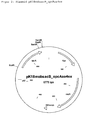
- Plasmid DNA was isolated from a transformant using the QIAprep Spin Miniprep Kit from Qiagen (Hilden, Germany) and checked by treatment in each case once with the restriction enzyme BamHI and once with the restriction enzyme EcoRI with subsequent agarose gel electrophoresis (0.8%) , The plasmid was named pCRII_opcAaa4ex and is in FIG. 1 shown.
- the plasmid was treated with the restriction endonuclease EcoRI and electrophoresed in 0.8% Agarose gel separated. The fragment, about 1.05 kb in size, was then isolated from the gel and purified with the QIAquick Gel Extraction Kit from Qiagen.
- the thus purified DNA fragment contains the described mutations in opcA and has EcoRI compatible ends (opcAaa4ex fragment). It was then in the of Schfer et al. (Gene, 145, 69-73 (1994 ), mobilizable vector pK18mobsacB, to facilitate allelic or mutational exchange.
- pK18mobsacB was digested with the restriction enzyme EcoRI and the ends were dephosphorylated with alkaline phosphatase (alkaline phosphatase, Boehringer Mannheim, Germany). The prepared vector was mixed with the opcAaa4ex fragment and the batch was treated with the Ready-To-Go T4 DNA ligase kit (Amersham-Pharmacia, Freiburg, Germany).
- Plasmid DNA was isolated from a transformant using the QIAprep Spin Miniprep Kit from Qiagen and checked by restriction digestion in each case once with the enzyme BamHI and once with the enzyme EcoRI and subsequent agarose gel electrophoresis.
- the plasmid was named pK18mobsacB_opcAaa4ex and is in FIG. 2 shown.
- the vector pK18mobsacB_opcAaa4ex described in Example 4 was used according to the protocol of Shufer et al. (Journal of Microbiology 172: 1663-1666 (1990 )) were transferred into the C. glutamicum strain DM1797 by conjugation.
- the vector can not self-replicate in DM1797 and will only be retained in the cell if it is integrated into the chromosome as a result of a recombination event.
- transconjugants ie clones with integrated pK18mobsacB_opcAaa4ex
- the selection of transconjugants was carried out by plating out the conjugation mixture on LB agar; which had been supplemented with 25 mg / l kanamycin and 50 mg / l nalidixic acid. Kanamycin-resistant transconjugants were then streaked on kanamycin (25 mg / L) supplemented LB agar plates and incubated for 24 hours at 33 ° C.
- the clones were cultured unsupported in LB liquid medium for 30 hours, then streaked on LB agar supplemented with 10% sucrose for 24 hours Incubated at 33 ° C.
- the plasmid pK18mobsacB_opcAaa4ex contains, in addition to the kanamycin resistance gene, a copy of the sacB gene coding for the Levan sucrase from Bacillus subtilis.
- the sucrose inducible expression of the sacB gene results in the formation of levan sucrase, which catalyzes the synthesis of the C. glutamicum toxic product Levan.
- On sucrose-supplemented LB agar therefore, only those clones grow in which the integrated pK18mobsacB_opcAaa4ex has excised as a result of a second recombination event.
- the allelic exchange or the incorporation of the mutation takes place or the original copy remains in the chromosome of the host.
- a clone was sought in which the desired exchange, i. H. the incorporation of the mutations opcAY107H, opcAK219N, opcAP233S and opcAY261H was carried out.
- the sequence of the opcA gene was determined from 20 clones with the phenotype "growth in the presence of sucrose” and "non-growth in the presence of kanamycin.” In this way, a clone was identified that had the mutations opcAY107H, opcAK219N, opcAP233S and wearing opcAY261H. This strain was designated as C. glutamicum DM1797_opcAaa4ex.
Landscapes
- Chemical & Material Sciences (AREA)
- Organic Chemistry (AREA)
- Life Sciences & Earth Sciences (AREA)
- Engineering & Computer Science (AREA)
- Zoology (AREA)
- Wood Science & Technology (AREA)
- Health & Medical Sciences (AREA)
- Genetics & Genomics (AREA)
- Bioinformatics & Cheminformatics (AREA)
- General Health & Medical Sciences (AREA)
- Biochemistry (AREA)
- General Engineering & Computer Science (AREA)
- Microbiology (AREA)
- Biotechnology (AREA)
- Chemical Kinetics & Catalysis (AREA)
- General Chemical & Material Sciences (AREA)
- Medicinal Chemistry (AREA)
- Molecular Biology (AREA)
- Biomedical Technology (AREA)
- Micro-Organisms Or Cultivation Processes Thereof (AREA)
- Preparation Of Compounds By Using Micro-Organisms (AREA)
- Enzymes And Modification Thereof (AREA)
Claims (36)
- Mutants isolés de bactéries corynéformes, qui contiennent un gène qui code pour le polypeptide de la glucose-6-phosphate-déshydrogénase, la séquence d'acides aminés du polypeptide étant choisie dans le groupe consistant en :a) SEQ ID N° 6, dans laquelle on a
une L-histidine sur la position 107 de la séquence d'acides aminés,
une L-asparagine sur la position 219,
une L-sérine sur la position 233, et
une L-histidine sur la position 261,b) SEQ ID N° 6, dans laquelle au plus 5 échanges d'acides aminés conservateurs existent au-delà des mutations mentionnées,c) SEQ ID N° 6, dans laquelle au plus 5 insertions ou délétions existent au-delà des mutations mentionnées. - Mutants de bactéries corynéformes selon la revendication 1, caractérisés en ce que, pour ce qui concerne les bactéries corynéformes, il s'agit d'une bactérie choisie dans le groupe consistant en Corynebacterium efficiens, Corynebacterium glutamicum, Corynebacterium thermoaminogenes et Corynebacterium aminogenes.
- Mutants de bactéries corynéformes selon la revendication 2, caractérisés en ce qu'il s'agit de Corynebacterium glutamicum.
- Mutants de bactéries corynéformes selon les revendications 1, 2 ou 3, caractérisés en ce qu'il s'agit de bactéries produisant un acide L-aminé.
- Mutants de bactéries corynéformes selon la revendication 4, caractérisés en ce qu'il s'agit de bactéries produisant de la L-lysine ou du L-tryptophane.
- Mutants de bactéries corynéformes selon l'une ou plusieurs des revendications 1 à 5, caractérisés en ce que le gène comprend une séquence nucléotidique qui est identique à la séquence nucléotidique d'un polynucléotide qui peut être obtenu par une réaction en chaîne par polymérase (PCR) par utilisation d'un ADN obtenu à partir d'une bactérie corynéforme et par utilisation d'une paire d'amorces constituée d'une première amorce comprenant au moins 15 nucléotides successifs choisis dans la séquence nucléotidique entre la position 1 et la position 334 de SEQ ID N° 3, et d'une deuxième amorce, comprenant au moins 15 nucléotides successifs choisis dans la séquence nucléotidique complémentaire entre la position 1600 et la position 1292 de SEQ ID N° 3.
- Mutants de bactéries corynéformes selon l'une ou plusieurs des revendications 1 à 5, caractérisés en ce que le gène comprend une séquence nucléotidique qui a une identité d'au moins 90 % avec les séquences nucléotidiques de SEQ ID N°5 ou SEQ ID N° 7.
- Mutants de bactéries corynéformes selon les revendications 6 et 7, caractérisés en ce que le gène comprend la séquence nucléotidique qui a une identité de 100 % avec celle de SEQ ID N° 5 ou SEQ ID N° 7.
- Polynucléotide isolé, qui code pour le polypeptide de la glucose-6-phosphate-déshydrogénase, la séquence d'acides aminés du polypeptide étant choisie dans le groupe consistant en :a) SEQ ID N° 6, dans laquelle on a
une L-histidine sur la position 107 de la séquence d'acides aminés,
une L-asparagine sur la position 219,
une L-sérine sur la position 233, et
une L-histidine sur la position 261,b) SEQ ID N° 6, dans laquelle au plus 5 échanges d'acides aminés conservateurs existent au-delà des mutations mentionnées,c) SEQ ID N° 6, dans laquelle au plus 5 insertions ou délétions existent au-delà des mutations mentionnées. - Polynucléotide isolé selon la revendication 9, caractérisé en ce qu'il est identique à la séquence nucléotidique d'un polynucléotide qui peut être obtenu par une réaction en chaîne par polymérase (PCR) par utilisation d'un ADN obtenu à partir d'une bactérie corynéforme et par utilisation d'une paire d'amorces constituée d'une première amorce comprenant au moins 15 nucléotides successifs choisis dans la séquence nucléotidique entre la position 1 et la position 334 de SEQ ID N° 3 et d'une deuxième amorce comprenant au moins 15 nucléotides successifs choisis dans la séquence nucléotidique complémentaire entre la position 1600 et la position 1292 de SEQ ID N° 3.
- Polynucléotide isolé selon la revendication 9, caractérisé en ce qu'il s'hybride dans des conditions stringentes à une séquence nucléotidique complémentaire de SEQ ID N° 5, les conditions stringentes comprenant une étape de lavage avec un tampon correspondant à 2xSSC à une température de 52 à 68°C.
- Polynucléotide isolé selon la revendication 9, caractérisé en ce que le polynucléotide comprend une séquence nucléotidique qui a une identité d'au moins 90 % avec la séquence nucléotidique de SEQ ID N° 5 ou SEQ ID N° 7.
- Polynucléotide isolé selon la revendication 9, caractérisé en ce que le polynucléotide comprend une séquence nucléotidique qui a une identité d'au moins 96 % avec la séquence nucléotidique de SEQ ID N° 5.
- Polynucléotide isolé selon la revendication 12, caractérisé en ce que les séquences nucléotidiques comprennent SEQ ID N° 5 ou SEQ ID N°7.
- Polynucléotide isolé, caractérisé en ce qu'il code pour au moins un cadre de lecture ayant une séquence d'acides aminés correspondant aux positions 98 à 270 de SEQ ID N° 6.
- Polynucléotide isolé selon la revendication 15, caractérisé en ce qu'il contient une ou plusieurs mutations silencieuses.
- Polynucléotide isolé selon les revendications 15 ou 16, caractérisé en ce qu'il comprend au moins la séquence nucléotidique correspondant aux positions 292 à 810 de SEQ ID N°5 ou de SEQ ID N°7.
- Micro-organisme recombinant, qui contient le polynucléotide isolé selon les revendications 9 à 17, ou qui a été préparé par utilisation de ce dernier.
- Micro-organisme recombinant selon la revendication 18, caractérisé en ce qu'il s'agit d'une bactérie corynéforme ou d'une bactérie du genre Escherichia.
- Micro-organisme recombinant selon la revendication 19, caractérisé en ce que, pour ce qui concerne la bactérie corynéforme, il s'agit du genre Corynebacterium.
- Micro-organisme recombinant selon la revendication 20, caractérisé en ce que, pour ce qui concerne la bactérie du genre Corynebacterium, il s'agit de l'espèce Corynebacterium glutamicum.
- Vecteur qui contient le polynucléotide isolé selon les revendications 9 à 17.
- Micro-organisme recombinant qui contient le vecteur selon la revendication 22.
- Micro-organisme recombinant selon la revendication 23, caractérisé en ce qu'il s'agit d'une bactérie corynéforme ou d'une bactérie du genre Escherichia.
- Micro-organisme recombinant selon la revendication 24, caractérisé en ce que, pour ce qui concerne la bactérie corynéforme, il s'agit du genre Corynebacterium.
- Micro-organisme recombinant selon la revendication 25, caractérisé en ce que, pour ce qui concerne la bactérie du genre Corynebacterium, il s'agit de l'espèce Corynebacterium glutamicum.
- Bactérie corynéforme recombinante, qui dans son chromosome contient un polynucléotide selon la revendication 9, ledit polynucléotide étant surexprimé par liaison avec un promoteur.
- Procédé de préparation d'un acide L-aminé, caractérisé en ce qu'on fermente dans un milieu approprié une bactérie corynéforme isolée selon les revendications 1-8, 18-21, 23-27.
- Procédé selon la revendication 28, caractérisé en ce qu'on isole ou collecte l'acide L-aminé souhaité.
- Procédé selon la revendication 29, caractérisé en ce qu'on purifie l'acide L-aminé souhaité.
- Procédé selon les revendications 28 à 30, caractérisé en ce qu'on isole ou collecte l'acide L-aminé souhaité en même temps que des constituants du bouillon de fermentation et/ou de la biomasse (> 0 à 100 %).
- Procédé selon la revendication 28, caractérisé en ce quea) on élimine du bouillon de fermentation la biomasse formée, en une quantité de 0 à 100 %, etb) à partir du bouillon ainsi obtenu, on prépare un produit pour l'essentiel sec et façonné, par un procédé choisi dans le groupe consistant en une granulation, un compactage, un séchage par atomisation et une extrusion.
- Procédé selon la revendication 32 caractérisé en ce qu'on ajoute au bouillon de fermentation, avant ou après l'étape a), un acide choisi dans le groupe consistant en l'acide sulfurique, l'acide chlorhydrique et l'acide phosphorique.
- Procédé selon la revendication 32, caractérisé en ce qu'on élimine l'eau du bouillon obtenu avant ou après l'étape a).
- Procédé selon la revendication 32, caractérisé en ce qu'on pulvérise de l'huile sur le produit façonné obtenu dans l'étape b) ou pendant cette dernière.
- Souche DM 1825 de Corynebacterium glutamicum, déposée sous le numéro DSM 17223 auprès du DSMZ (Braunschweig).
Priority Applications (1)
| Application Number | Priority Date | Filing Date | Title |
|---|---|---|---|
| PL06777211T PL1902067T3 (pl) | 2005-05-24 | 2006-05-03 | Allele genu OPCA z bakterii maczugowatych |
Applications Claiming Priority (2)
| Application Number | Priority Date | Filing Date | Title |
|---|---|---|---|
| DE102005023829A DE102005023829A1 (de) | 2005-05-24 | 2005-05-24 | Allele des opcA-Gens aus coryneformen Bakterien |
| PCT/EP2006/062010 WO2006125714A2 (fr) | 2005-05-24 | 2006-05-03 | Alleles du gene opca provenant de bacteries coryneformes |
Publications (2)
| Publication Number | Publication Date |
|---|---|
| EP1902067A2 EP1902067A2 (fr) | 2008-03-26 |
| EP1902067B1 true EP1902067B1 (fr) | 2011-10-26 |
Family
ID=37387593
Family Applications (1)
| Application Number | Title | Priority Date | Filing Date |
|---|---|---|---|
| EP06777211A Expired - Lifetime EP1902067B1 (fr) | 2005-05-24 | 2006-05-03 | Alleles du gene opca provenant de bacteries coryneformes |
Country Status (9)
| Country | Link |
|---|---|
| US (2) | US7700313B2 (fr) |
| EP (1) | EP1902067B1 (fr) |
| CN (1) | CN101180314A (fr) |
| AT (1) | ATE530568T1 (fr) |
| DE (1) | DE102005023829A1 (fr) |
| DK (1) | DK1902067T3 (fr) |
| ES (1) | ES2374837T3 (fr) |
| PL (1) | PL1902067T3 (fr) |
| WO (1) | WO2006125714A2 (fr) |
Families Citing this family (7)
| Publication number | Priority date | Publication date | Assignee | Title |
|---|---|---|---|---|
| DE102006026328A1 (de) * | 2006-06-02 | 2008-01-03 | Evonik Degussa Gmbh | Verfahren zur Herstellung eines L-Lysin enthaltenden Futtermitteladditivs |
| DE102008001874A1 (de) | 2008-05-20 | 2009-11-26 | Evonik Degussa Gmbh | Verfahren zur Herstellung von L-Aminosäuren |
| US8647642B2 (en) | 2008-09-18 | 2014-02-11 | Aviex Technologies, Llc | Live bacterial vaccines resistant to carbon dioxide (CO2), acidic PH and/or osmolarity for viral infection prophylaxis or treatment |
| EP2940144A1 (fr) | 2014-04-30 | 2015-11-04 | Evonik Degussa GmbH | Procédé de production de L-lysine en utilisant une bactérie alcaliphile |
| US10676723B2 (en) | 2015-05-11 | 2020-06-09 | David Gordon Bermudes | Chimeric protein toxins for expression by therapeutic bacteria |
| US11129906B1 (en) | 2016-12-07 | 2021-09-28 | David Gordon Bermudes | Chimeric protein toxins for expression by therapeutic bacteria |
| US11180535B1 (en) | 2016-12-07 | 2021-11-23 | David Gordon Bermudes | Saccharide binding, tumor penetration, and cytotoxic antitumor chimeric peptides from therapeutic bacteria |
Family Cites Families (42)
| Publication number | Priority date | Publication date | Assignee | Title |
|---|---|---|---|---|
| SU507634A1 (ru) | 1973-09-24 | 1976-03-25 | Институт Микробиологии Имени А.Кирхенштейна Ан Латвийской Сср | Способ получени -лизина |
| JPS54105293A (en) | 1978-02-01 | 1979-08-18 | Ajinomoto Co Inc | Preparation of l-proline by fermentation |
| JPS559783A (en) | 1978-07-10 | 1980-01-23 | Ajinomoto Co Inc | Preparation of l-lysine by fermentation |
| DE2921918A1 (de) | 1979-05-30 | 1980-12-04 | Kloeckner Humboldt Deutz Ag | Verfahren zur optimierung der stoffwechselaktivitaet von mikro-organismen im substrat eines biologichen reaktions-systems |
| US4601983A (en) | 1983-06-15 | 1986-07-22 | Ajinomoto Co., Inc. | Coryneform bacteria carrying recombinant plasmids and their use in the fermentative production of L-threonine and L-isoleucine |
| US5250434A (en) | 1987-03-27 | 1993-10-05 | Ajinomoto Co., Inc. | Microorganisms for production of glutamic acid |
| JP2656300B2 (ja) | 1988-04-18 | 1997-09-24 | 協和醗酵工業株式会社 | L−トリプトファンの製造法 |
| GB2223754B (en) | 1988-09-12 | 1992-07-22 | Degussa | Dna encoding phosphoenolpyruvate carboxylase |
| JP2990735B2 (ja) | 1990-04-20 | 1999-12-13 | 味の素株式会社 | L―リジンの発酵的製造法 |
| JP3023615B2 (ja) | 1990-08-30 | 2000-03-21 | 協和醗酵工業株式会社 | 発酵法によるl―トリプトファンの製造法 |
| DE4100920A1 (de) | 1991-01-15 | 1992-07-16 | Degussa | Wirkstoffzubereitung zur oralen verabreichung an wiederkaeuer |
| FR2679569B1 (fr) | 1991-07-26 | 1995-05-19 | Eurolysine | Procede de separation de la lysine sous la forme de solutions aqueuses et utilisation de ces solutions pour l'alimentation animale. |
| DE4130868C2 (de) | 1991-09-17 | 1994-10-13 | Degussa | Tierfuttermittelsupplement auf der Basis einer Aminosäure und Verfahren zu dessen Herstellung |
| DE4130867A1 (de) | 1991-09-17 | 1993-03-18 | Degussa | Verfahren zur fermentativen herstellung von aminosaeuren |
| JPH05195736A (ja) | 1992-01-20 | 1993-08-03 | Mazda Motor Corp | エンジンのバルブ駆動装置 |
| JP3369231B2 (ja) | 1992-12-03 | 2003-01-20 | 協和醗酵工業株式会社 | 芳香族アミノ酸の製造法 |
| AU706285B2 (en) | 1995-05-16 | 1999-06-10 | Ajinomoto Co., Inc. | Feed additive |
| DE19547361A1 (de) | 1995-12-19 | 1997-06-26 | Degussa | Verfahren zur Herstellung von L-Aminosäuren durch Fermentation |
| DE19548222A1 (de) | 1995-12-22 | 1997-06-26 | Forschungszentrum Juelich Gmbh | Verfahren zur mikrobiellen Herstellung von Aminosäuren durch gesteigerte Aktivität von Exportcarriern |
| JPH09224661A (ja) | 1996-02-23 | 1997-09-02 | Mitsubishi Chem Corp | グルコース−6−リン酸デヒドロゲナーゼおよびそれをコードするdna |
| JP4075087B2 (ja) | 1996-12-05 | 2008-04-16 | 味の素株式会社 | L−リジンの製造法 |
| DE19831609B4 (de) | 1997-10-04 | 2009-11-12 | Evonik Degussa Gmbh | Verfahren zur Herstellung von Aminosäuren der Aspartat- und/oder Glutamatfamilie und im Verfahren einsetzbare Mittel |
| JP2000262288A (ja) | 1999-03-16 | 2000-09-26 | Ajinomoto Co Inc | コリネ型細菌の温度感受性プラスミド |
| CN1236690C (zh) | 1999-06-23 | 2006-01-18 | 德古萨股份公司 | 含有赖氨酸的含水动物饲料添加剂及其生产方法 |
| MXPA01013123A (es) | 1999-06-25 | 2002-06-21 | Basf Ag | Genes de corynebacterium glutamicum que codifican proteinas de via metabolica. |
| ES2178979T1 (es) | 1999-06-25 | 2003-01-16 | Basf Ag | Genes de corynebacterium glutamicum que codifican proteinas implicadas en el metabolismo del carbono y la produccion de energia. |
| ID29569A (id) * | 1999-07-09 | 2001-09-06 | Degussa Ag Cs | Urutan nucleotida yang menyandi gen opca |
| WO2001007626A2 (fr) | 1999-07-23 | 2001-02-01 | Archer-Daniels-Midland Company | Procedes de production des l-aminoacides |
| US6586214B1 (en) | 1999-09-15 | 2003-07-01 | Degussa Ag | Method for increasing the metabolic flux through the pentose phosphate cycle in coryneform bacteria by regulation of the phosphoglucose isomerase (pgi gene) |
| DE19959328A1 (de) | 1999-12-09 | 2001-06-13 | Degussa | Neue für das zwa1-Gen codierende Nukleotidsequenzen |
| JP4623825B2 (ja) | 1999-12-16 | 2011-02-02 | 協和発酵バイオ株式会社 | 新規ポリヌクレオチド |
| US20030175911A1 (en) | 2000-03-20 | 2003-09-18 | Stephen Hans | Process for the preparation of L-amino acids with amplification of the zwf gene |
| US6958228B2 (en) * | 2000-08-02 | 2005-10-25 | Degussa Ag | Nucleotide sequence which code for the metH gene |
| DE60108144T2 (de) | 2000-10-13 | 2005-06-02 | Archer-Daniels-Midland Co., Decatur | Rückkopplungfestes pyruvatcarboxylase gen aus corynebacterium |
| DE10109996A1 (de) | 2001-03-01 | 2002-09-05 | Basf Ag | Verfahren zur Veränderung des Genoms von gram-positiven Bakterien mit einem neuen konditional negativ dominanten Markergen |
| US7160711B2 (en) | 2001-08-06 | 2007-01-09 | Degussa Ag | Coryneform bacteria which produce chemical compounds I |
| BR0211723A (pt) | 2001-08-06 | 2004-09-21 | Degussa | Bactérias corineformes que produzem compostos quìmicos i |
| KR100943834B1 (ko) | 2001-08-06 | 2010-02-24 | 에보니크 데구사 게엠베하 | L-리신을 생산하는 코리네형 세균 및 코리네형 세균을 사용하여 l-리신을 생산하는 방법 |
| DE10137815A1 (de) | 2001-08-06 | 2003-02-27 | Basf Ag | Verfahren zur Herstellung eines marker-freien mutierten Zielorganismus sowie dafür geeignete Plasmidvektoren |
| DE10154180A1 (de) * | 2001-11-05 | 2003-05-15 | Basf Ag | gene die für genetische Stabilitäts-, genexpressions-und Faltungsproteine codieren |
| JP2003219807A (ja) | 2002-01-25 | 2003-08-05 | Ajinomoto Co Inc | L−リジンを主成分とする造粒乾燥物 |
| US20040115304A1 (en) | 2002-12-16 | 2004-06-17 | Frank Dubner | Feesdstuffs additives containing L-lysine with improved abrasion resistance, and process for their production |
-
2005
- 2005-05-24 DE DE102005023829A patent/DE102005023829A1/de not_active Withdrawn
-
2006
- 2006-05-03 WO PCT/EP2006/062010 patent/WO2006125714A2/fr not_active Ceased
- 2006-05-03 CN CNA2006800178065A patent/CN101180314A/zh active Pending
- 2006-05-03 EP EP06777211A patent/EP1902067B1/fr not_active Expired - Lifetime
- 2006-05-03 AT AT06777211T patent/ATE530568T1/de active
- 2006-05-03 DK DK06777211.1T patent/DK1902067T3/da active
- 2006-05-03 ES ES06777211T patent/ES2374837T3/es not_active Expired - Lifetime
- 2006-05-03 PL PL06777211T patent/PL1902067T3/pl unknown
- 2006-05-15 US US11/383,253 patent/US7700313B2/en not_active Expired - Fee Related
-
2010
- 2010-01-29 US US12/696,449 patent/US7915394B2/en not_active Expired - Fee Related
Also Published As
| Publication number | Publication date |
|---|---|
| US20080131927A1 (en) | 2008-06-05 |
| US7700313B2 (en) | 2010-04-20 |
| US7915394B2 (en) | 2011-03-29 |
| CN101180314A (zh) | 2008-05-14 |
| DE102005023829A1 (de) | 2006-11-30 |
| PL1902067T3 (pl) | 2012-03-30 |
| ATE530568T1 (de) | 2011-11-15 |
| EP1902067A2 (fr) | 2008-03-26 |
| ES2374837T3 (es) | 2012-02-22 |
| DK1902067T3 (da) | 2012-02-06 |
| WO2006125714A3 (fr) | 2007-05-03 |
| US20100196959A1 (en) | 2010-08-05 |
| WO2006125714A2 (fr) | 2006-11-30 |
Similar Documents
| Publication | Publication Date | Title |
|---|---|---|
| EP2041276B1 (fr) | Procédé de production de l-aminoacides au moyen du gène glta codant citrate synthase | |
| EP2061881B1 (fr) | Allèles du gène rel de bactéries corynéformes | |
| EP1824968B1 (fr) | Alleles du gene gnd de bacteries coryneformes | |
| US8153404B2 (en) | Alleles of the zwf gene from coryneform bacteria | |
| EP2026662A2 (fr) | Procédé de production d'un additif alimentaire pour animaux contenant de la l-lysine | |
| EP2078085B1 (fr) | Allèles du gène prpd1 issu de bactéries corynéformes | |
| EP2762571A1 (fr) | Microorganisme et procédé de fabrication par fermentation d'acides aminés | |
| EP2089525B1 (fr) | Allèles du gène oxyr de bactéries corynéformes | |
| US7214526B2 (en) | Alleles of the mqo gene from coryneform bacteria | |
| WO2006100211A1 (fr) | Alleles mutes du gene zwf (g6pdh) tire de corynebacteries pour la production accrue de lysine | |
| EP1902067A2 (fr) | Alleles du gene opca provenant de bacteries coryneformes | |
| EP1841859B1 (fr) | Alleles du gene mqo issus de bacteries coryneformes | |
| DE102005045301A1 (de) | Verfahren zur Herstellung von organisch-chemischen Verbindungen unter Verwendung coryneformer Bakterien | |
| DE102011006716A1 (de) | Mikroorganismus und Verfahren zur fermentativen Herstellung einer organisch-chemischen Verbindung | |
| EP1861493B1 (fr) | Alleles mutes du gene zwf (g6pdh) tire de corynebacteries pour la production accrue de lysine | |
| DE10220574A1 (de) | Verfahren zur Herstellung von Aminosäuren mit coryneformen Bakterien unter Verwendung von Phosphoglucose-Isomerasen aus coryneformen Bakterien |
Legal Events
| Date | Code | Title | Description |
|---|---|---|---|
| PUAI | Public reference made under article 153(3) epc to a published international application that has entered the european phase |
Free format text: ORIGINAL CODE: 0009012 |
|
| 17P | Request for examination filed |
Effective date: 20070907 |
|
| AK | Designated contracting states |
Kind code of ref document: A2 Designated state(s): AT BE BG CH CY CZ DE DK EE ES FI FR GB GR HU IE IS IT LI LT LU LV MC NL PL PT RO SE SI SK TR |
|
| 17Q | First examination report despatched |
Effective date: 20080514 |
|
| RAP1 | Party data changed (applicant data changed or rights of an application transferred) |
Owner name: EVONIK DEGUSSA GMBH |
|
| DAX | Request for extension of the european patent (deleted) | ||
| GRAP | Despatch of communication of intention to grant a patent |
Free format text: ORIGINAL CODE: EPIDOSNIGR1 |
|
| GRAS | Grant fee paid |
Free format text: ORIGINAL CODE: EPIDOSNIGR3 |
|
| GRAA | (expected) grant |
Free format text: ORIGINAL CODE: 0009210 |
|
| AK | Designated contracting states |
Kind code of ref document: B1 Designated state(s): AT BE BG CH CY CZ DE DK EE ES FI FR GB GR HU IE IS IT LI LT LU LV MC NL PL PT RO SE SI SK TR |
|
| REG | Reference to a national code |
Ref country code: GB Ref legal event code: FG4D Free format text: NOT ENGLISH |
|
| REG | Reference to a national code |
Ref country code: CH Ref legal event code: EP |
|
| REG | Reference to a national code |
Ref country code: IE Ref legal event code: FG4D |
|
| REG | Reference to a national code |
Ref country code: DE Ref legal event code: R096 Ref document number: 502006010483 Country of ref document: DE Effective date: 20111229 |
|
| REG | Reference to a national code |
Ref country code: NL Ref legal event code: T3 |
|
| REG | Reference to a national code |
Ref country code: DK Ref legal event code: T3 |
|
| REG | Reference to a national code |
Ref country code: ES Ref legal event code: FG2A Ref document number: 2374837 Country of ref document: ES Kind code of ref document: T3 Effective date: 20120222 |
|
| LTIE | Lt: invalidation of european patent or patent extension |
Effective date: 20111026 |
|
| REG | Reference to a national code |
Ref country code: PL Ref legal event code: T3 |
|
| PG25 | Lapsed in a contracting state [announced via postgrant information from national office to epo] |
Ref country code: IS Free format text: LAPSE BECAUSE OF FAILURE TO SUBMIT A TRANSLATION OF THE DESCRIPTION OR TO PAY THE FEE WITHIN THE PRESCRIBED TIME-LIMIT Effective date: 20120226 Ref country code: LT Free format text: LAPSE BECAUSE OF FAILURE TO SUBMIT A TRANSLATION OF THE DESCRIPTION OR TO PAY THE FEE WITHIN THE PRESCRIBED TIME-LIMIT Effective date: 20111026 |
|
| PG25 | Lapsed in a contracting state [announced via postgrant information from national office to epo] |
Ref country code: GR Free format text: LAPSE BECAUSE OF FAILURE TO SUBMIT A TRANSLATION OF THE DESCRIPTION OR TO PAY THE FEE WITHIN THE PRESCRIBED TIME-LIMIT Effective date: 20120127 Ref country code: SI Free format text: LAPSE BECAUSE OF FAILURE TO SUBMIT A TRANSLATION OF THE DESCRIPTION OR TO PAY THE FEE WITHIN THE PRESCRIBED TIME-LIMIT Effective date: 20111026 Ref country code: LV Free format text: LAPSE BECAUSE OF FAILURE TO SUBMIT A TRANSLATION OF THE DESCRIPTION OR TO PAY THE FEE WITHIN THE PRESCRIBED TIME-LIMIT Effective date: 20111026 Ref country code: SE Free format text: LAPSE BECAUSE OF FAILURE TO SUBMIT A TRANSLATION OF THE DESCRIPTION OR TO PAY THE FEE WITHIN THE PRESCRIBED TIME-LIMIT Effective date: 20111026 Ref country code: PT Free format text: LAPSE BECAUSE OF FAILURE TO SUBMIT A TRANSLATION OF THE DESCRIPTION OR TO PAY THE FEE WITHIN THE PRESCRIBED TIME-LIMIT Effective date: 20120227 |
|
| REG | Reference to a national code |
Ref country code: IE Ref legal event code: FD4D |
|
| PG25 | Lapsed in a contracting state [announced via postgrant information from national office to epo] |
Ref country code: CY Free format text: LAPSE BECAUSE OF FAILURE TO SUBMIT A TRANSLATION OF THE DESCRIPTION OR TO PAY THE FEE WITHIN THE PRESCRIBED TIME-LIMIT Effective date: 20111026 |
|
| PG25 | Lapsed in a contracting state [announced via postgrant information from national office to epo] |
Ref country code: BG Free format text: LAPSE BECAUSE OF FAILURE TO SUBMIT A TRANSLATION OF THE DESCRIPTION OR TO PAY THE FEE WITHIN THE PRESCRIBED TIME-LIMIT Effective date: 20120126 Ref country code: EE Free format text: LAPSE BECAUSE OF FAILURE TO SUBMIT A TRANSLATION OF THE DESCRIPTION OR TO PAY THE FEE WITHIN THE PRESCRIBED TIME-LIMIT Effective date: 20111026 Ref country code: CZ Free format text: LAPSE BECAUSE OF FAILURE TO SUBMIT A TRANSLATION OF THE DESCRIPTION OR TO PAY THE FEE WITHIN THE PRESCRIBED TIME-LIMIT Effective date: 20111026 Ref country code: IE Free format text: LAPSE BECAUSE OF FAILURE TO SUBMIT A TRANSLATION OF THE DESCRIPTION OR TO PAY THE FEE WITHIN THE PRESCRIBED TIME-LIMIT Effective date: 20111026 Ref country code: SK Free format text: LAPSE BECAUSE OF FAILURE TO SUBMIT A TRANSLATION OF THE DESCRIPTION OR TO PAY THE FEE WITHIN THE PRESCRIBED TIME-LIMIT Effective date: 20111026 |
|
| PG25 | Lapsed in a contracting state [announced via postgrant information from national office to epo] |
Ref country code: RO Free format text: LAPSE BECAUSE OF FAILURE TO SUBMIT A TRANSLATION OF THE DESCRIPTION OR TO PAY THE FEE WITHIN THE PRESCRIBED TIME-LIMIT Effective date: 20111026 |
|
| PLBE | No opposition filed within time limit |
Free format text: ORIGINAL CODE: 0009261 |
|
| STAA | Information on the status of an ep patent application or granted ep patent |
Free format text: STATUS: NO OPPOSITION FILED WITHIN TIME LIMIT |
|
| 26N | No opposition filed |
Effective date: 20120727 |
|
| REG | Reference to a national code |
Ref country code: DE Ref legal event code: R097 Ref document number: 502006010483 Country of ref document: DE Effective date: 20120727 |
|
| PG25 | Lapsed in a contracting state [announced via postgrant information from national office to epo] |
Ref country code: MC Free format text: LAPSE BECAUSE OF NON-PAYMENT OF DUE FEES Effective date: 20120531 |
|
| REG | Reference to a national code |
Ref country code: CH Ref legal event code: PL |
|
| PG25 | Lapsed in a contracting state [announced via postgrant information from national office to epo] |
Ref country code: LI Free format text: LAPSE BECAUSE OF NON-PAYMENT OF DUE FEES Effective date: 20120531 Ref country code: CH Free format text: LAPSE BECAUSE OF NON-PAYMENT OF DUE FEES Effective date: 20120531 |
|
| PG25 | Lapsed in a contracting state [announced via postgrant information from national office to epo] |
Ref country code: FI Free format text: LAPSE BECAUSE OF FAILURE TO SUBMIT A TRANSLATION OF THE DESCRIPTION OR TO PAY THE FEE WITHIN THE PRESCRIBED TIME-LIMIT Effective date: 20111026 |
|
| REG | Reference to a national code |
Ref country code: AT Ref legal event code: MM01 Ref document number: 530568 Country of ref document: AT Kind code of ref document: T Effective date: 20120503 |
|
| PG25 | Lapsed in a contracting state [announced via postgrant information from national office to epo] |
Ref country code: AT Free format text: LAPSE BECAUSE OF NON-PAYMENT OF DUE FEES Effective date: 20120503 |
|
| PG25 | Lapsed in a contracting state [announced via postgrant information from national office to epo] |
Ref country code: TR Free format text: LAPSE BECAUSE OF FAILURE TO SUBMIT A TRANSLATION OF THE DESCRIPTION OR TO PAY THE FEE WITHIN THE PRESCRIBED TIME-LIMIT Effective date: 20111026 |
|
| PG25 | Lapsed in a contracting state [announced via postgrant information from national office to epo] |
Ref country code: LU Free format text: LAPSE BECAUSE OF NON-PAYMENT OF DUE FEES Effective date: 20120503 |
|
| PG25 | Lapsed in a contracting state [announced via postgrant information from national office to epo] |
Ref country code: HU Free format text: LAPSE BECAUSE OF FAILURE TO SUBMIT A TRANSLATION OF THE DESCRIPTION OR TO PAY THE FEE WITHIN THE PRESCRIBED TIME-LIMIT Effective date: 20060503 |
|
| REG | Reference to a national code |
Ref country code: FR Ref legal event code: PLFP Year of fee payment: 11 |
|
| PGFP | Annual fee paid to national office [announced via postgrant information from national office to epo] |
Ref country code: GB Payment date: 20160520 Year of fee payment: 11 |
|
| PGFP | Annual fee paid to national office [announced via postgrant information from national office to epo] |
Ref country code: IT Payment date: 20160524 Year of fee payment: 11 |
|
| REG | Reference to a national code |
Ref country code: FR Ref legal event code: PLFP Year of fee payment: 12 |
|
| PGFP | Annual fee paid to national office [announced via postgrant information from national office to epo] |
Ref country code: FR Payment date: 20170523 Year of fee payment: 12 |
|
| PGFP | Annual fee paid to national office [announced via postgrant information from national office to epo] |
Ref country code: PL Payment date: 20170421 Year of fee payment: 12 |
|
| GBPC | Gb: european patent ceased through non-payment of renewal fee |
Effective date: 20170503 |
|
| PG25 | Lapsed in a contracting state [announced via postgrant information from national office to epo] |
Ref country code: GB Free format text: LAPSE BECAUSE OF NON-PAYMENT OF DUE FEES Effective date: 20170503 |
|
| PG25 | Lapsed in a contracting state [announced via postgrant information from national office to epo] |
Ref country code: IT Free format text: LAPSE BECAUSE OF NON-PAYMENT OF DUE FEES Effective date: 20170503 |
|
| PG25 | Lapsed in a contracting state [announced via postgrant information from national office to epo] |
Ref country code: FR Free format text: LAPSE BECAUSE OF NON-PAYMENT OF DUE FEES Effective date: 20180531 |
|
| PGFP | Annual fee paid to national office [announced via postgrant information from national office to epo] |
Ref country code: SE Payment date: 20190611 Year of fee payment: 19 Ref country code: DK Payment date: 20190523 Year of fee payment: 14 |
|
| PG25 | Lapsed in a contracting state [announced via postgrant information from national office to epo] |
Ref country code: PL Free format text: LAPSE BECAUSE OF NON-PAYMENT OF DUE FEES Effective date: 20180503 |
|
| REG | Reference to a national code |
Ref country code: DE Ref legal event code: R081 Ref document number: 502006010483 Country of ref document: DE Owner name: EVONIK OPERATIONS GMBH, DE Free format text: FORMER OWNER: EVONIK DEGUSSA GMBH, 45128 ESSEN, DE |
|
| REG | Reference to a national code |
Ref country code: BE Ref legal event code: HC Owner name: EVONIK OPERATIONS GMBH; DE Free format text: DETAILS ASSIGNMENT: CHANGE OF OWNER(S), CHANGEMENT DE NOM DU PROPRIETAIRE; FORMER OWNER NAME: EVONIK DEGUSSA GMBH Effective date: 20191122 |
|
| PGFP | Annual fee paid to national office [announced via postgrant information from national office to epo] |
Ref country code: BE Payment date: 20200527 Year of fee payment: 15 |
|
| REG | Reference to a national code |
Ref country code: NL Ref legal event code: HC Owner name: EVONIK OPERATIONS GMBH; DE Free format text: DETAILS ASSIGNMENT: CHANGE OF OWNER(S), CHANGE OF OWNER(S) NAME Effective date: 20200928 |
|
| REG | Reference to a national code |
Ref country code: DK Ref legal event code: EBP Effective date: 20200531 |
|
| PG25 | Lapsed in a contracting state [announced via postgrant information from national office to epo] |
Ref country code: DK Free format text: LAPSE BECAUSE OF NON-PAYMENT OF DUE FEES Effective date: 20200531 |
|
| PGFP | Annual fee paid to national office [announced via postgrant information from national office to epo] |
Ref country code: DE Payment date: 20210520 Year of fee payment: 16 Ref country code: NL Payment date: 20210519 Year of fee payment: 16 |
|
| PG25 | Lapsed in a contracting state [announced via postgrant information from national office to epo] |
Ref country code: ES Free format text: LAPSE BECAUSE OF NON-PAYMENT OF DUE FEES Effective date: 20200504 |
|
| REG | Reference to a national code |
Ref country code: BE Ref legal event code: MM Effective date: 20210531 |
|
| PG25 | Lapsed in a contracting state [announced via postgrant information from national office to epo] |
Ref country code: BE Free format text: LAPSE BECAUSE OF NON-PAYMENT OF DUE FEES Effective date: 20210531 |
|
| REG | Reference to a national code |
Ref country code: DE Ref legal event code: R119 Ref document number: 502006010483 Country of ref document: DE |
|
| REG | Reference to a national code |
Ref country code: NL Ref legal event code: MM Effective date: 20220601 |
|
| PG25 | Lapsed in a contracting state [announced via postgrant information from national office to epo] |
Ref country code: DE Free format text: LAPSE BECAUSE OF NON-PAYMENT OF DUE FEES Effective date: 20221201 |
|
| PG25 | Lapsed in a contracting state [announced via postgrant information from national office to epo] |
Ref country code: NL Free format text: LAPSE BECAUSE OF NON-PAYMENT OF DUE FEES Effective date: 20220601 |