EP1904442B1 - Histamin-h3-rezeptor-mittel, deren herstellung und therapeutische verwendung - Google Patents
Histamin-h3-rezeptor-mittel, deren herstellung und therapeutische verwendung Download PDFInfo
- Publication number
- EP1904442B1 EP1904442B1 EP06774260A EP06774260A EP1904442B1 EP 1904442 B1 EP1904442 B1 EP 1904442B1 EP 06774260 A EP06774260 A EP 06774260A EP 06774260 A EP06774260 A EP 06774260A EP 1904442 B1 EP1904442 B1 EP 1904442B1
- Authority
- EP
- European Patent Office
- Prior art keywords
- histamine
- receptor
- compound
- compounds
- pyrrolidin
- Prior art date
- Legal status (The legal status is an assumption and is not a legal conclusion. Google has not performed a legal analysis and makes no representation as to the accuracy of the status listed.)
- Expired - Lifetime
Links
- LHKCWUAJCIPTSW-UHFFFAOYSA-N CCCN(CCC)S(c(cc1)ccc1C(N1C(CN2CCCC2)CCC1)=O)(=O)=O Chemical compound CCCN(CCC)S(c(cc1)ccc1C(N1C(CN2CCCC2)CCC1)=O)(=O)=O LHKCWUAJCIPTSW-UHFFFAOYSA-N 0.000 description 1
Classifications
-
- C—CHEMISTRY; METALLURGY
- C07—ORGANIC CHEMISTRY
- C07D—HETEROCYCLIC COMPOUNDS
- C07D207/00—Heterocyclic compounds containing five-membered rings not condensed with other rings, with one nitrogen atom as the only ring hetero atom
- C07D207/02—Heterocyclic compounds containing five-membered rings not condensed with other rings, with one nitrogen atom as the only ring hetero atom with only hydrogen or carbon atoms directly attached to the ring nitrogen atom
- C07D207/04—Heterocyclic compounds containing five-membered rings not condensed with other rings, with one nitrogen atom as the only ring hetero atom with only hydrogen or carbon atoms directly attached to the ring nitrogen atom having no double bonds between ring members or between ring members and non-ring members
- C07D207/08—Heterocyclic compounds containing five-membered rings not condensed with other rings, with one nitrogen atom as the only ring hetero atom with only hydrogen or carbon atoms directly attached to the ring nitrogen atom having no double bonds between ring members or between ring members and non-ring members with hydrocarbon radicals, substituted by hetero atoms, attached to ring carbon atoms
- C07D207/09—Radicals substituted by nitrogen atoms, not forming part of a nitro radical
-
- A—HUMAN NECESSITIES
- A61—MEDICAL OR VETERINARY SCIENCE; HYGIENE
- A61P—SPECIFIC THERAPEUTIC ACTIVITY OF CHEMICAL COMPOUNDS OR MEDICINAL PREPARATIONS
- A61P25/00—Drugs for disorders of the nervous system
-
- A—HUMAN NECESSITIES
- A61—MEDICAL OR VETERINARY SCIENCE; HYGIENE
- A61P—SPECIFIC THERAPEUTIC ACTIVITY OF CHEMICAL COMPOUNDS OR MEDICINAL PREPARATIONS
- A61P25/00—Drugs for disorders of the nervous system
- A61P25/28—Drugs for disorders of the nervous system for treating neurodegenerative disorders of the central nervous system, e.g. nootropic agents, cognition enhancers, drugs for treating Alzheimer's disease or other forms of dementia
-
- A—HUMAN NECESSITIES
- A61—MEDICAL OR VETERINARY SCIENCE; HYGIENE
- A61P—SPECIFIC THERAPEUTIC ACTIVITY OF CHEMICAL COMPOUNDS OR MEDICINAL PREPARATIONS
- A61P3/00—Drugs for disorders of the metabolism
- A61P3/04—Anorexiants; Antiobesity agents
-
- C—CHEMISTRY; METALLURGY
- C07—ORGANIC CHEMISTRY
- C07D—HETEROCYCLIC COMPOUNDS
- C07D401/00—Heterocyclic compounds containing two or more hetero rings, having nitrogen atoms as the only ring hetero atoms, at least one ring being a six-membered ring with only one nitrogen atom
- C07D401/02—Heterocyclic compounds containing two or more hetero rings, having nitrogen atoms as the only ring hetero atoms, at least one ring being a six-membered ring with only one nitrogen atom containing two hetero rings
- C07D401/12—Heterocyclic compounds containing two or more hetero rings, having nitrogen atoms as the only ring hetero atoms, at least one ring being a six-membered ring with only one nitrogen atom containing two hetero rings linked by a chain containing hetero atoms as chain links
-
- C—CHEMISTRY; METALLURGY
- C07—ORGANIC CHEMISTRY
- C07D—HETEROCYCLIC COMPOUNDS
- C07D403/00—Heterocyclic compounds containing two or more hetero rings, having nitrogen atoms as the only ring hetero atoms, not provided for by group C07D401/00
- C07D403/02—Heterocyclic compounds containing two or more hetero rings, having nitrogen atoms as the only ring hetero atoms, not provided for by group C07D401/00 containing two hetero rings
- C07D403/12—Heterocyclic compounds containing two or more hetero rings, having nitrogen atoms as the only ring hetero atoms, not provided for by group C07D401/00 containing two hetero rings linked by a chain containing hetero atoms as chain links
Definitions
- the present invention relates to novel aryl-methanone-pyrrolidinyl-methyl-pyrrolidinyl compounds, to pharmaceutical compositions comprising the compounds, to therapeutic uses of these compounds and compositions, and to intermediates and methods for making these compounds.
- the histamine H3 receptor is relatively neuron specific and inhibits the release of a number of monoamines, including histamine.
- the histamine H3 receptor is a presynaptic autoreceptor and hetero-receptor located both in the central and the peripheral nervous system.
- the histamine H3 receptor regulates the release of histamine and other neurotransmitters, such as serotonin and acetylcholine. These are examples of histamine H3 receptor mediated responses.
- Recent evidence suggests that the H3 receptor shows intrinsic, constitutive activity, in vitro as well as in vivo (i.e. it is active in the absence of an agonist). Compounds acting as inverse agonists can inhibit this activity.
- a histamine H3 receptor antagonist or inverse agonist would therefore be expected to increase the release of H3 receptor-regulated neurotransmitters in the brain.
- a histamine H3 receptor agonist leads to an inhibition of the biosynthesis and or release of histamine, and other neurotransmitters, such as serotonin and acetylcholine.
- the histamine H3 receptor is an important target for new therapeutics in Alzheimers disease, mood and attention adjustments, cognitive deficiencies, obesity, dizziness, schizophrenia, epilepsy, sleeping disorders, narcolepsy and motion sickness.
- H1R histamine mediates its activity via four receptor subtypes, H1R, H2R, H3R and a newly identified receptor designated GPRv53 [( Oda T., et al., J.Biol.Chem. 275 (47): 36781-6 (2000 )].
- Alternative names for GPRv53 are PORT3 or H4R.
- H4R Although relatively selective ligands have been developed for H1R, H2R and H3R, few specific ligands have been developed that can distinguish H3R from H4R.
- H4R is a widely distributed receptor found at high levels in human leukocytes. Activation or inhibition of this receptor could result in undesirable side effects when targeting antagonism of the H3R receptor.
- the identification of the H4R receptor has fundamentally changed histamine biology and must be considered in the development of histamine H3 receptor antagonists.
- histamine H3 receptor antagonists were created which resembled histamine in possessing an imidazole ring generally substituted in the 4(5) position ( Ganellin et al., Ars Pharmaceutica, 1995, 36:3, 455-468 ). These imidazole-containing compounds have the disadvantage of poor blood-brain barrier penetration, interaction with cytochrome P-450 proteins, and hepatic and ocular toxicities. Recently other imidazole and non-imidazole ligands of the histamine H3 receptor have been described, such as those of WO 2002/076925 .
- WO 2004/037257 relates to phenyl piperidines and phenyl pyrrolidines as histamine H3 receptor modulators and WO 2003/064411 relates to amides of aminoalkylsubstituted azetidines, pyrrolidines, piperidines and azepanes, useful for the treatment of disorders related to the histamine H3 receptor.
- the present invention provides such a contribution to the art based on the finding that a novel class of aryl-methanone-pyrrolidinyl-methyl-pyrrolidinyl compounds has a high affinity, selective, and potent activity at the histamine H3 receptor.
- the subject invention is distinct in the particular structures and their activities.
- the present invention provides a compound structurally represented by Formula I: or a pharmaceutically acceptable salt thereof, wherein:
- the present invention provides compounds that show a selective and high affinity binding for the histamine H3 receptor, and thus the compounds are useful as histamine H3 receptor antagonists or inverse agonists.
- the present invention provides compounds that are useful as selective antagonists or inverse agonists of the histamine H3 receptor but have little or no binding affinity of GPRv53.
- the present invention provides a compound of Formula I for use in the treatment of a nervous system disorder.
- the present invention further provides a compound of Formula I for use in the treatment of obesity or cognitive disorders.
- the present invention provides pharmaceutical compositions comprising antagonists or inverse agonists of the histamine H3 receptor.
- GPRv53 means a recently identified novel histamine receptor as described in Oda, et al., supra. Alternative names for this receptor are PORT3 or H4R.
- H3R means the histamine H3 receptor that inhibits the release of a number of monoamines, including histamine.
- H1R means the histamine H1 receptor subtype.
- H2R means the histamine H2 receptor subtype.
- H3R antagonists is defined as a compound of the present invention with the ability to block forskolin-stimulated cAMP production in response to agonist R (-) ⁇ methylhistamine.
- H3R inverse agonist is defined as a compound of the present invention with the ability to inhibit the constitutive activity of H3R.
- Selective H3R antagonists or inverse agonists means a compound of the present invention having a greater affinity for H3 histamine receptor than for GPRv53 histamine receptor.
- (C 1 -C 4 ) alkylene are a saturated hydrocarbyldiyl radical of straight or branched configuration made up of from 1 to 4 carbon atoms. Included within the scope of this term are methylene, 1,2-ethane-diyl, 1,1-ethane-diyl, 1,3-propane-diyl, 1,2-propane-diyl, 1,3 butane-diyl, 1,4 -butane-diyl, and the like.
- “(C 2 -C 4 ) alkylene” are a saturated hydrocarbyldiyl radical of straight or branched configuration made up of from 2 to 4 carbon atoms.
- 1,2-ethane-diyl 1,3-propane-diyl, 1,2-propane-diyl, 1,3-butane-diyl, 1,4-butane-diyl, and the like.
- (C 1 -C 3 ) alkyl are one to three carbon atoms such as methyl, ethyl, propyl, and the like, optionally substituted with one to three halogens
- “(C 1 -C 4 ) alkyl” are one to four carbon atoms such as methyl, ethyl, propyl, butyl, and the like, and branched or isomeric forms thereof, optionally substituted with one to three halogens
- “(C 1 -C 6 ) alkyl” are one to six carbon atoms such as methyl, ethyl, propyl, butyl, pentyl, hexyl, and the like, and branched or isomeric forms thereof, optionally substituted with one to three halogens.
- (C 3 -C 7 )cycloalkyl means a ring with three to seven carbon atoms such as cyclopropyl, cyclobutyl, cyclopentyl, cyclohexyl, and cycloheptyl.
- Halogen or "halo" means fluoro, chloro, bromo and iodo.
- the term "patient” includes human and non-human animals such as companion animals (dogs and cats and the like) and livestock animals.
- Livestock animals are animals raised for food production. Ruminants or "cud-chewing" animals such as cows, bulls, heifers, steers, sheep, buffalo, bison, goats and antelopes are examples of livestock.
- Other examples of livestock include pigs and avians (poultry) such as chickens, ducks, turkeys and geese.
- livestock include fish, shellfish and crustaceans raised in aquaculture.
- exotic animals used in food production such as alligators, water buffalo and ratites (e.g., emu, rheas or ostriches).
- the patient to be treated is preferably a mammal, in particular a human being.
- treatment include their generally accepted meanings, i.e., the management and care of a patient for the purpose of preventing, prohibiting, restraining, alleviating, ameliorating, slowing, stopping, delaying, or reversing the progression or severity of a disease, disorder, or pathological condition, described herein, including the alleviation or relief of symptoms or complications, or the cure or elimination of the disease, disorder, or condition.
- the term "therapeutically effective amount” means an amount of compound of the present invention that is capable of alleviating the symptoms of the various pathological conditions herein described.
- the specific dose of a compound administered according to this invention will, of course, be determined by the particular circumstances surrounding the case including, for example, the compound administered, the route of administration, the state of being of the patient, and the pathological condition being treated.
- the term "pharmaceutical” when used as an adjective means substantially non-toxic to living organisms.
- pharmaceutically acceptable salt refers to salts of the compounds of Formula I which are substantially non-toxic to living organisms. See, e.g. , Berge, S.M, Bighley, L.D., and Monkhouse, D.C., "Pharmaceutical Salts," J. Pharm. Sci., 66:1, 1977 .
- the present invention also encompasses pharmaceutically acceptable salts of the present compounds.
- composition means a pharmaceutical composition and is intended to encompass a pharmaceutical product comprising the active ingredient(s) including compound(s) of Formula I, and the inert ingredient(s) that make up the carrier. Accordingly, the pharmaceutical compositions of the present invention encompass any composition made by admixing a compound of the present invention and a pharmaceutically acceptable carrier.
- suitable solvent refers to any solvent, or mixture of solvents, inert to the ongoing reaction that sufficiently solubilizes the reactants to afford a medium within which to effect the desired reaction.
- unit dosage form means physically discrete units suitable as unitary dosages for human subjects and other non-human animals, each unit containing a predetermined quantity of active material calculated to produce the desired therapeutic effect, in association with a suitable pharmaceutical carrier.
- the present invention provides compounds of Formula I as described in detail above. While all of the compounds of the present invention are useful, certain of the compounds are particularly interesting and are preferred.
- the present invention provides a compound structurally represented by Formula I or a pharmaceutically acceptable salt thereof, wherein:
- the present invention is a compound structurally represented by Formula I: or pharmaceutically acceptable salts thereof, wherein:
- R2 is -H.
- R2 is -(C 1 -C 3 ) alkyl.
- R2 is methyl or ethyl.
- R3 is -(C 1 -C 6 ) alkyl(optionally substituted with one to three halogens).
- R4 is -SO 2 CH 3 .
- R6 is -H.
- R7 is -H.
- R6 is -H and R7 is -H.
- R6 and R7 are independently -H or -CH 3 .
- R6 is -CH 3 and R7 is -H.
- FIG. 1 Formula Number Structure X7 X17 X18 X19
- the present invention further provides an antagonist or inverse agonist of Formula I which is characterized by having little or no binding affinity for the histamine receptor GPRv53. Due to their interaction with the histamine H3 receptor, the present compounds are useful in the treatment of a wide range of conditions and disorders in which an interaction with the histamine H3 receptor is beneficial. Thus, the uses of this invention encompass a prophylactic and therapeutic administration of a compound or pharmaceutical composition of Formula I.
- the present invention also provides a pharmaceutical composition which comprises a compound of Formula I and a pharmaceutically acceptable carrier.
- compositions of Formula I can provide a method of selectively increasing histamine levels in cells, or increasing histamine release by cells, by contacting the cells with an antagonist or inverse agonist of the histamine H3 receptor, the antagonist or inverse agonist being a compound of Formula I.
- the compounds or pharmaceutical compositions of formula I may find use for example to prevent, treat and/or alleviate diseases or conditions of the central nervous system, the peripheral nervous system, the cardiovascular system, the pulmonary system, the gastrointestinal system and the endocrinological system, while reducing and or eliminating one or more of the unwanted side effects associated with the current treatments.
- the present invention provides to a compound of Formula I, or a pharmaceutical salt thereof, or a pharmaceutical composition which comprises a compound of Formula I, or a pharmaceutical salt thereof, and a pharmaceutically acceptable carrier, diluent, or excipient; for use in inhibiting the histamine H3 receptor; for use in inhibiting a histamine H3 receptor mediated cellular response in a mammal; for use to increase the release of H3 receptor-regulated neurotransmitters in a mammal; for use in treating a disease arising from excessive histamine H3 receptor activity; and for use in treating nervous system disorders in a mammal including but not limited to obesity, cognitive disorders, attention deficit disorders, memory processes, dementia and cognition disorders such as Alzheimer's disease and attention-deficit hyperactivity disorder; bipolar disorder, cognitive deficits in psychiatric disorders, deficits of memory, deficits of learning, dementia, mild cognitive impairment, migraine, mood and attention alteration, motion sickness, neurogenic inflammation, obsessive compulsive disorder, Parkinson's disease
- the present invention is further related to the use of a compound of Formula I, or a pharmaceutical salt thereof, or a pharmaceutical composition which comprises a compound of Formula I, or a pharmaceutical salt thereof, and a pharmaceutically acceptable carrier, diluent, or excipient; for the manufacture of a medicament for inhibiting the histamine H3 receptor; for the manufacture of a medicament for inhibiting a histamine H3 receptor mediated cellular response in a mammal; for the manufacture of a medicament to increase the release of H3 receptor-regulated neurotransmitters in the brain of a mammal; for the manufacture of a medicament for treating a disease arising from excessive histamine H3 receptor activity; for the manufacture of a medicament for treating cognitive disorders in a mammal; and for the manufacture of a medicament for treating nervous system disorders in a mammal including but not limited to obesity, cognitive disorders, attention deficit disorders, memory processes, dementia and cognition disorders such as Alzheimer's disease and attention-deficit hyperactivity disorder; bipolar disorder, cognitive deficits in psychia
- the present invention further provides a pharmaceutical composition of Formula I which can be useful in the treatment or prevention of a disorder or disease in which modulation of histamine H3 receptor activity has a beneficial effect.
- the present invention further provides an antagonist or inverse agonist of Formula I which is characterized by having greater affinity for the histamine H3 receptor as compared to the affinity for the histamine H1R, H2R, or H4R receptors.
- the present compounds are used for the preparation of a pharmaceutical composition for the treatment of an appetite regulation or energy expenditure disorder.
- treatment of a patient with the present compounds is combined with diet and/or exercise.
- the intermediate compounds are useful for preparing final compounds of the invention.
- embodiments of the present invention include the synthesis of the examples named herein by methods included herein, and supplemented by methods known in the art, to create positron emission topography (PET) ligands that bind to histamine H3 receptors and are useful for PET imaging.
- PET positron emission topography
- the invention includes tautomers, enantiomers and other stereoisomers of the compounds also.
- certain aryls may exist in tautomeric forms. Such variations are contemplated to be within the scope of the invention.
- references to the compounds of Formula I are meant to also include the pharmaceutical salts, enantiomers and racemic mixtures thereof.
- the compounds of the present invention may be chiral, and it is intended that any enantiomers, as separated, pure or partially purified enantiomers or racemic mixtures thereof are included within the scope of the invention.
- the designation " " refers to a bond that protrudes forward out of the plane of the page.
- the designation " " refers to a bond that protrudes backward out of the plane of the page.
- the designation " " refers to a bond wherein the stereochemistry is not defined.
- the compounds of Formula I when existing as a diastereomeric mixture, may be separated into diastereomeric pairs of enantiomers by, for example, fractional crystallization from a suitable solvent, such as methanol or ethyl acetate, or a mixture thereof.
- a suitable solvent such as methanol or ethyl acetate, or a mixture thereof.
- the pair of enantiomers thus obtained may be separated into individual stereoisomers by conventional means, for example by the use of an optically active acid as a resolving agent.
- any enantiomer of a compound of Formula I may be obtained by stereospecific synthesis using optically pure starting materials or reagents of known configuration or through enantioselective synthesis.
- stereoisomers and enantiomers of compounds of Formula I can be prepared by one of ordinary skill in the art utilizing well known techniques and processes, such as those disclosed by J. Jacques, et al., “Enantiomers, Racemates, and Resolutions,” John Wiley and Sons, Inc., 1981 , and E.L. Eliel and S.H. Wilen," Stereochemistry of Organic Compounds," (Wiley-Interscience 1994 ), and European Patent Application No. EP-A-838448, published April 29, 1998 .
- the compounds of the present invention may form solvates with standard low molecular weight solvents using methods well known to the person skilled in the art. Such solvates are also contemplated as being within the scope of the present invention.
- the invention also encompasses prodrugs of the present compounds, which on administration undergo chemical conversion by metabolic processes before becoming pharmacologically active substances.
- prodrugs will be functional derivatives of present compounds, which are readily convertible in vivo into a compound of the present invention.
- Conventional procedures for the selection and preparation of suitable prodrug derivatives are described, for example in " Design of Prodrugs", ed. H. Bundgaard, Elsevier, 1985 .
- the compounds of Formula I can be prepared by one of ordinary skill in the art following a variety of procedures, some of which are illustrated in the procedures and schemes set forth below.
- the particular order of steps required to produce the compounds of Formula I is dependent upon the particular compound to being synthesized, the starting compound, and the relative liability of the substituted moieties.
- the reagents or starting materials are readily available to one of skill in the art, and to the extent not commercially available, are readily synthesized by one of ordinary skill in the art following standard procedures commonly employed in the art, along with the various procedures and schemes set forth below.
- R a is H, or the corresponding acid salts.
- Step 1 the carboxylic acids or the lithium, sodium or potassium salt of the acid where R a can be H, Li, Na or K are converted to the corresponding amides using a number of different coupling methods known in the literature. Some of these methods are described in Klausner & Bodansky, Synthesis, 1972, 9, 453-463 .
- a suitable amide coupling agent i.e. TBTU, or HATU, is added, or EDC, DCC, etc., is added, followed by HOBt, etc., at room temperature.
- An amine base such as diisopropylethyl amine and suitable amine in this case, (S)(+)-1-(2-pyrrolidinylmethyl)pyrrolidine are added to the mixture.
- the mixture is stirred at room temperature for a period of 8-48 hours.
- the reaction is quenched by addition of water.
- the resulting mixture may be extracted, concentrated and purified according to techniques well known in the art.
- the corresponding acid chloride can be formed from the corresponding acid or salt thereof using thionyl chloride or oxalyl chloride and a few drops of DMF, and treated with a suitable amine to give the desired amide.
- Y is any group that contains a functional group that can be further modified to R1 via alkylation, acylation, oxidation, reduction, sulfonylation, displacement, etc.
- Step 1 the carboxylic acids are converted to the pyrrolidinylmethylpyrrolidine amides by the methods described in Scheme A (step 1).
- a suitable nucleophile in this case, 2-pyrrolidin-1-yl-ethylamine in a suitable solvent such as DMSO and 33% KF/Al 2 O 3
- 4-amino-benzoic acid methyl ester is treated with a sulfonyl halide, in this case 4-methanesulfonyl benzenesulfonyl chloride, in a suitable solvent, such as a 1:1 mixture of dichloromethane and pyridine at ambient temperature for 2 - 24 hours to yield 4-(4-methanesulfonyl-benzenesulfonylamino)-benzoic acid methyl ester.
- a suitable solvent such as a 1:1 mixture of dichloromethane and pyridine
- the thiol group can be converted to R1 by alkylation with an alkyl halide or methane sulfonyl alkyl ester.
- an alkylating agent in this case methanesulfonic acid 3-pyridin-4-yl-propyl ester (prepared by sulfonylation of the alcohol) in a suitable solvent such as DMF in the presence of potassium carbonate and heated for 2-24 hours to yield 4-(3-pyridin-4-yl-propylsulfanyl)-benzoic acid methyl ester.
- R a can be H, Li, Na or K.
- 3-(1-methanesulfonyl-piperidin-4-ylmethyl)-benzoic acid methyl ester is dissolved in a suitable solvent such as MeOH or dioxane and 1M LiOH is added.
- the reaction mixture is stirred at room temperature overnight or can be heated to 50 °C for 30 minutes to 18 hours.
- the solvent is removed in vacuo and the acid or salt isolated according to techniques well known in the art.
- Step 1 the acid chloride is acylated with an alkyl group to give an amide.
- terephtalic acid monomethyl ester chloride is treated with an alkylamine, in this case 3-piperidinopropylamine, and triethylamine, in a suitable solvent such as dichloromethane at ambient temperature for 1-12 hours to provide the desired amide, N-(3-piperidin-1-yl-propyl)-terephthalamic acid methyl ester.
- alkylamine in this case 3-piperidinopropylamine, and triethylamine
- Step 2 the methyl ester is converted directly to the pyrrolidine amide by treatment with 1-(2-pyrrolodinylmethyl)pyrrolidine and trimethyl aluminum in a suitable solvent such as tetrahydrofuran.
- a suitable solvent such as tetrahydrofuran.
- the mixture is stirred at ambient temperature for 2-24 hours to provide N-(3-piperidin-1-yl-propyl)-4-(2-(S)-pyrrolidin-1-ylmethyl-pyrrolidine-1-carbonyl)-benzamine.
- the title compound is prepared from 4-(morpholine-4-sulfonyl)-benzoic acid (407 mg, 1.5 mmol) and (S)(+)-1-(2-pyrrolidinylmethyl)pyrrolidine (CAS 51207-66-0)(193 mg, 1.2 mmol) in a manner substantially similar to Procedure G to provide 175 mg (34%) of the title compound.
- the title intermediate is prepared from 4-(chlorosulfonyl)benzoic acid (CAS 10130-89-9) (375 mg, 1.7 mmol) and 3-(methylsulfonyl)pyrrolidine (CAS 433980-62-2) (343mg, 2.3 mmol) in a manner substantially similar to Procedure F to provide 250 mg (44%) of the title compound.
- the title compound is prepared from 4-(3-methanesulfonyl-pyrrolidine-1-sulfonyl)-benzoic acid (230 mg, 0.69 mmol) and (S)(+)-1-(2-pyrrolidinylmethyl)pyrrolidine (CAS 51207-66-0)(88 mg, 0.57 mmol) in a manner substantially similar to Procedure G to provide 133 mg (50%) of the title compound. MS(ES+) 470.2 (M+ H) + .
- the optimal time for performing the reactions of the Schemes, Preparations, and Procedures can be determined by monitoring the progress of the reaction via conventional chromatographic techniques.
- the skilled artisan will appreciate that not all substituents are compatible with all reaction conditions. These compounds may be protected or modified at a convenient point in the synthesis by methods well known in the art. (For example, see: Greene and Wuts, Protective Groups in Organic Synthesis, Third Edition, John Wiley and Sons Inc., 1999 ).
- Choice of solvent is generally not critical so long as the solvent employed is inert to the ongoing reaction and sufficiently solubilizes the reactants to effect the desired reaction.
- the compounds are preferably isolated and purified before their use in subsequent reactions. Some compounds may crystallize out of the reaction solution during their formation and then collected by filtration, or the reaction solvent may be removed by extraction, evaporation, or decantation. The intermediates and final products of Formula I may be further purified, if desired by common techniques such as recrystallization or chromatography over solid supports such as silica gel or alumina.
- the compound is administered orally.
- the pharmaceutical preparation is in a unit dosage form.
- the preparation is subdivided into suitably sized unit doses containing appropriate quantities of the active components, e.g., an effective amount to achieve the desired purpose.
- the quantity of the inventive active composition in a unit dose of preparation may be generally varied or adjusted from about 0.01 milligrams to about 1,000 milligrams, preferably from about 0.01 to about 950 milligrams, more preferably from about 0.01 to about 500 milligrams, and typically from about 1 to about 250 milligrams, according to the particular application.
- the actual dosage employed may be varied depending upon the patient's age, sex, weight and severity of the condition being treated. Such techniques are well known to those skilled in the art.
- the human oral dosage form containing the active ingredients can be administered 1 or 2 times per day.
- compositions of the invention may be formulated so as to provide quick, sustained or delayed release of the active ingredient after administration to the patient.
- Suitable dosage forms for sustained release include layered tablets containing layers of varying disintegration rates or controlled release polymeric matrices impregnated with the active components and shaped in tablet form or capsules containing such impregnated or encapsulated porous polymeric matrices.
- compositions administered by a variety of routes Most preferably, such compositions are for oral administration.
- Such pharmaceutical compositions and processes for preparing same are well known in the art. See, e.g. , REMINGTON: THE SCIENCE AND PRACTICE OF PHARMACY (A. Gennaro, et al., eds., 19th ed., Mack Publishing Co., 1995 ).
- H3R antagonists Although a number of H3R antagonists are known in the art, none have proven to be satisfactory obesity or cognitive drugs. There is increasing evidence that histamine plays an important role in energy homeostasis. Histamine, acting as a neurotransmitter in the hypothalamus, suppressed appetite. Histamine is an almost ubiquitous amine found in many cell types and it binds to a family of G protein-coupled receptors (GPCRs). This family provides a mechanism by which histamine can elicit distinct cellular responses based on receptor distribution. Both the H1R and H2R are widely distributed. H3R is primarily expressed in the brain, notably in the thalamus and caudate nucleus. High density of expression of H3R was found in feeding center of the brain.
- GPCRs G protein-coupled receptors
- GPRv53 A novel histamine receptor GPRv53 has been recently identified. GPRv53 is found in high levels in peripheral white blood cells; only low levels have been identified in the brain by some investigators while others cannot detect it in the brain. However, any drug discovery effort initiated around H3R must consider GPRv53 as well as the other subtypes.
- the compounds of the present invention can readily be evaluated by using a competitive inhibition Scintillation Proximity Assay (SPA) based on a H3R binding assay using [3H] ⁇ methylhistamine as ligand.
- Stable cell lines including but not limited to HEK can be transfected with cDNA coding for H3R to prepare membranes used for the binding assay. The technique is illustrated below ( Preparation of Histamine Receptor Subtype Membranes ) for the histamine receptor subtypes.
- Membranes isolated as described in are used in a [35S]GTP ⁇ S functional assay. Binding of [35S]GTP ⁇ S to membranes indicates agonist activity.
- Compounds of the invention of Formula I are tested for their ability to inhibit binding in the presence of agonists. Alternately, the same transfected cell lines are used for a cAMP assay wherein H3R agonists inhibited forskolin-activated synthesis of cAMP.
- Compounds of Formula I are tested for their ability to permit forskolin -stimulated cAMP synthesis in the presence of agonist.
- cDNA for the human histamine 1 receptor is cloned into a mammalian expression vector containing the CMV promoter (pcDNA3.1(+), Invitogen) and transfected into HEK293 cells using the FuGENE Tranfection Reagent (Roche Diagnostics Corporation). Transfected cells are selected using G418 (500 ⁇ /ml). Colonies that survived selection are grown and tested for histamine binding to cells grown in 96-well dishes using a scintillation proximity assay (SPA) based radioligand binding assay.
- SPA scintillation proximity assay
- Astemizole (10 ⁇ M, Sigma #A6424) is added to appropriate wells to determine non-specific binding. Plates are covered with FasCal and incubated at room temperature for 120 minutes. Following incubation, plates are centrifuged at 1,000rpm ( ⁇ 800g) for 10 minutes at room temperature. Plates are counted in a Wallac Trilux 1450 Microbeta scintillation counter. Several clones are selected as positive for binding, and a single clone (H1R40) is used to prepare membranes for binding studies. Cell pellets, representing ⁇ 10 grams, are resuspended in 30ml assay buffer, mixed by vortexing, and centrifuged (40,000g at 4°C) for 10 minutes.
- the pellet resuspension, vortexing, and centrifugation is repeated 2 more times.
- the final cell pellet is resuspended in 30ml and homogenized with a Polytron Tissue Homogenizer. Protein determinations are done using the Coomassie Plus Protein Assay Reagent (Pierce). Five micrograms of protein is used per well in the SPA receptor-binding assay.
- H2R10 a single clone (H2R10) is used to prepare membranes for binding studies. Five micrograms of protein is used per well in the SPA receptor-binding assay.
- cDNA for the human histamine 3 receptor is cloned and expressed as described in (A. Preparation H1R membranes), above.
- Transfected cells are selected using G418 (500 ⁇ /ml), grown, and tested for histamine binding by the SPA described above.
- Thioperimide is added to determine non-specific binding.
- Several clones are selected as positive for binding, and a single clone (H3R8) is used to prepare membranes for binding studies described above. Five micrograms of protein is used per well in the SPA receptor-binding assay.
- the compounds according to the invention preferably have a Ki value of no greater than 5 ⁇ M as determined by the Histamine H3 Receptor Binding Assay disclosed herein. More preferably, the compounds according to the invention have a Ki value of less than 1 ⁇ M. All compounds set forth in the examples have a Ki for the H3 receptor of less than 1 uM. Preferably compounds of the invention have a Ki value of less than 500 nM and even more preferred of less than 100 nM as determined by the Histamine H3 Receptor Binding Assay disclosed herein. Most preferred compounds of the invention exhibit affinity for the H3 receptor greater than 20 nM. Furthermore, the compounds according to the invention preferably have a higher binding affinity to the histamine H3 receptor than to the GPRv53 receptor.
- cDNA for the human GPRv53 receptor is cloned and expressed as described in (A. Preparation H1R membranes), above. Transfected cells are selected, tested for histamine binding, and selected.
- HEK293 GPRv53 50 cells are grown to confluency in DMEM/F12 (Gibco) supplemented with 5 % FBS and 500 ug/ml G418 and washed with Delbecco's PBS (Gibco) and harvested by scraping. Whole cells are homogenized with a Polytron tissuemizer in binding buffer, 50 mM Tris pH 7.5.
- Cell lysates 50 ug, are incubated in 96 well dishes with 3 nM (3H) Histamine and compounds in binding buffer for 2 hours at room temperature. Lysates are filtered through glass fiber filters (Perkin Elmer) with a Tomtec cell harverster. Filters are counted with melt-on scintillator sheets (Perkin Elmer) in a Wallac Trilux 1450 Microbeta Scintillation counter for 5 minutes.
- HEK293 H3R8 cells prepared as described above are seeded at a density of 50,000 cells/well and grown overnight in DMEM/F12 (Gibco) supplemented with 5 % FBS and 500 ug/ml G418. The next day tissue culture medium is removed and replaced with 50 ⁇ l cell culture medium containing 4 mM 3-isobutyl-1-methylxanthine (Sigma) and incubated for 20 minutes at room temperature. Antagonist are added in 50 ⁇ l cell culture medium and incubated for 20 minutes at room temperature.
- Agonist R (-) ⁇ methylhistamine (RBI) at a dose response from 1x10 -10 to 1x10 -5 M is then added to the wells in 50 ⁇ l cell culture medium and incubated for 5 minutes at room temperature. Then 50 ⁇ l of cell culture medium containing 20 ⁇ M Forskolin (Sigma) is added to each well and incubated for 20 minutes at room temperature. Tissue culture medium is removed and cells are lysed in 0.1M HCl and cAMP is measured by ELISA (Assay Designs, Inc.).
- Antagonist activity of selected compounds is tested for inhibition of [35S] GDP ⁇ [S] binding to H3R membranes in the presence of agonists.
- Assays are run at room temperature in 20 mM HEPES, 100 mM NaCl ,5 mM MgCl 2 and 10 uM GDP at pH 7.4 in a final volume of 200 ul in 96-well Costar plates.
- Membranes isolated from H3R8-expressing HEK293 cell line (20 ug/well) and GDP are added to each well in a volume of 50 ⁇ l assay buffer.
- Antagonist is then added to the wells in a volume of 50 ⁇ l assay buffer and incubated for 15 minutes at room temperature.
- Agonist R(-)alpha methylhistamine (RBI) at either a dose response from 1x10 -10 to 1x10 -5 M or fixed concentration of 100 nM are then added to the wells in a volume of 50 ⁇ l assay buffer and incubated for 5 minutes at room temperature.
- GTP ⁇ [35S] is added to each well in a volume of 50 ⁇ l assay buffer at a final concentration of 200 pM, followed by the addition of 50 ⁇ l of 20 mg/ml WGA coated SPA beads (Amersham). Plates are counted in Wallac Trilux 1450 Microbeta scintillation counter for 1 minute.
- Compounds that inhibited more than 50% of the specific binding of radioactive ligand to the receptor are serially diluted to determine a K[i](nM).
Landscapes
- Chemical & Material Sciences (AREA)
- Organic Chemistry (AREA)
- Health & Medical Sciences (AREA)
- Engineering & Computer Science (AREA)
- Bioinformatics & Cheminformatics (AREA)
- Animal Behavior & Ethology (AREA)
- Public Health (AREA)
- Neurosurgery (AREA)
- Chemical Kinetics & Catalysis (AREA)
- General Chemical & Material Sciences (AREA)
- Medicinal Chemistry (AREA)
- Nuclear Medicine, Radiotherapy & Molecular Imaging (AREA)
- Pharmacology & Pharmacy (AREA)
- Life Sciences & Earth Sciences (AREA)
- Biomedical Technology (AREA)
- General Health & Medical Sciences (AREA)
- Neurology (AREA)
- Veterinary Medicine (AREA)
- Hospice & Palliative Care (AREA)
- Psychiatry (AREA)
- Child & Adolescent Psychology (AREA)
- Diabetes (AREA)
- Hematology (AREA)
- Obesity (AREA)
- Pharmaceuticals Containing Other Organic And Inorganic Compounds (AREA)
- Plural Heterocyclic Compounds (AREA)
- Pyrrole Compounds (AREA)
- Acyclic And Carbocyclic Compounds In Medicinal Compositions (AREA)
- Hydrogenated Pyridines (AREA)
Claims (9)
- Verbindung der folgenden Strukturformel I
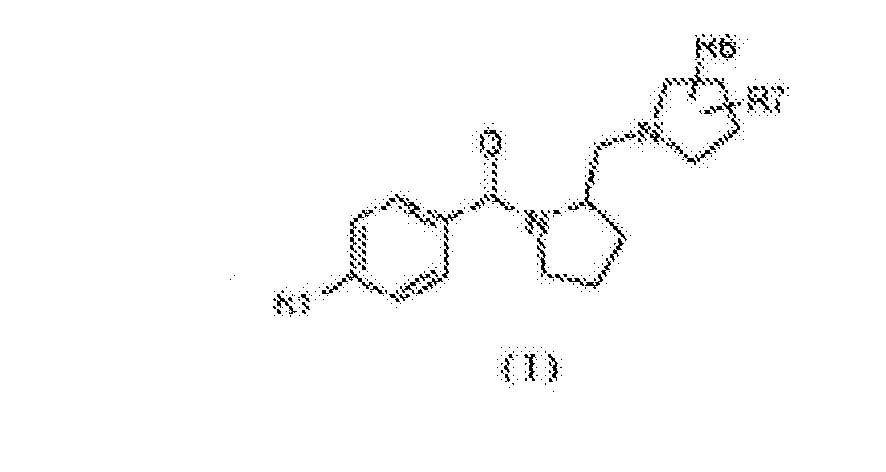 R1 unabhängig für -SO2N(R2)(R3), -SO2-N-Pyrrolidinyl (worin das Pyrrolidin optional mit R4 substituiert ist), -SO2-N-Piperidinyl (worin das Piperidin optional mit R4 substituiert ist) oder-SO2-N-Morpholinyl steht;R2 unabhängig für -H oder -(C1C4)-Alkyl (optional substituiert mit einem bis drei Halogenen) steht;R3 unabhängig für -(C1-C6)-Alkyl (optional substituiert mit einem bis drei Halogenen), -(C2-C4)-Alkylen-N-pyrrolidinyl, -(C2-C4)-Alkylen-N-piperidinyl, -(C2-C4-)-Alkylen-N-morpholinyl, -(C1-C4)-Alkylen-2-pyridinyl, -(C1-C4)-Alkylen-3-pyridinyl oder -(C1-C4)-Alkylen-4-pyridinyl steht;R4 unabhängig für -CH3, -CF3, -CN oder -SO2CH3 steht;R6 unabhängig für -H oder -(C1C3)-Alkyl (optional substituiert mit einem bis drei Halogenen) steht undR7 unabhängig für -H oder -(C1C3)-Alkyl (optional substituiert mit einem bis drei Halogenen) steht.
- Verbindung nach Anspruch 1, worin R6 und R7 für -H oder -CH3 stehen.
- Verbindung nach Anspruch 1, worin R6 für -CH3 steht und R7 für-H steht.
- Verbindung nach Anspruch 1, worin R6 für -H steht und R7 für-H steht.
- Verbindung nach Anspruch 1, die aus der Gruppe ausgewählt ist, die aus den Formeln X7, X17, X18 und X19:
Formelnummer Struktur X7 
X17 
X18 
X19 
- Verbindung nach Anspruch 1, die aus der Gruppe ausgewählt ist, die aus den folgenden besteht:N,N-Dipropyl-4-(2-(S)-pryrrolidin-1-ylmethyl-pyrrolidin-1-carbonyl)-benzolsulfonamid;[4-(Piperidin-1-sulfonyl)-phenyl]-(2-(S)-pyrrolidin-1-ylmethyl-pyrrolidin-1-yl)-methanon;[4-(Morpholin-4-sulfonyl)-phenyl]-(2-(S)-pyrrolidin-1-ylmethyl-pyrrolidin-1-yl)-methanon;[4-(3-Methansulfonyl-pyrrolidin-1-sulfonyl)-phenyl]-(2-(S)-pyrrolidin-1-ylmethyl-pyrrolidin-1-yl)-methanon;oder ein pharmazeutisch akzeptables Salz hiervon.
- Pharmazeutische Zusammensetzung, die eine Verbindung nach einem der Ansprüche 1 bis 6 und einen pharmazeutisch akzeptablen Träger umfasst.
- Verbindung der Formel I oder ein Salz hiervon gemäß einem der Ansprüche 1 bis 6 zur Verwendung in einer Therapie.
- Verbindung der Formel I oder ein Salz hiervon gemäß einem der Ansprüche 1 bis 6 zur Verwendung bei der Behandlung von Fettleibigkeit.
Priority Applications (1)
| Application Number | Priority Date | Filing Date | Title |
|---|---|---|---|
| EP11151531A EP2322506A1 (de) | 2005-07-01 | 2006-06-28 | Histamin-H3-Rezeptor-Mittel, deren Herstellung und therapeutische Verwendung |
Applications Claiming Priority (2)
| Application Number | Priority Date | Filing Date | Title |
|---|---|---|---|
| US69625705P | 2005-07-01 | 2005-07-01 | |
| PCT/US2006/025328 WO2007005503A1 (en) | 2005-07-01 | 2006-06-28 | Histamine h3 receptor agents, preparation and therapeutic uses |
Related Child Applications (1)
| Application Number | Title | Priority Date | Filing Date |
|---|---|---|---|
| EP11151531.8 Division-Into | 2011-01-20 |
Publications (2)
| Publication Number | Publication Date |
|---|---|
| EP1904442A1 EP1904442A1 (de) | 2008-04-02 |
| EP1904442B1 true EP1904442B1 (de) | 2011-09-07 |
Family
ID=37131500
Family Applications (2)
| Application Number | Title | Priority Date | Filing Date |
|---|---|---|---|
| EP11151531A Withdrawn EP2322506A1 (de) | 2005-07-01 | 2006-06-28 | Histamin-H3-Rezeptor-Mittel, deren Herstellung und therapeutische Verwendung |
| EP06774260A Expired - Lifetime EP1904442B1 (de) | 2005-07-01 | 2006-06-28 | Histamin-h3-rezeptor-mittel, deren herstellung und therapeutische verwendung |
Family Applications Before (1)
| Application Number | Title | Priority Date | Filing Date |
|---|---|---|---|
| EP11151531A Withdrawn EP2322506A1 (de) | 2005-07-01 | 2006-06-28 | Histamin-H3-Rezeptor-Mittel, deren Herstellung und therapeutische Verwendung |
Country Status (11)
| Country | Link |
|---|---|
| US (1) | US8008296B2 (de) |
| EP (2) | EP2322506A1 (de) |
| JP (1) | JP5193033B2 (de) |
| CN (1) | CN101263112B (de) |
| AT (1) | ATE523488T1 (de) |
| AU (1) | AU2006265997B2 (de) |
| BR (1) | BRPI0613495A2 (de) |
| CA (1) | CA2613192C (de) |
| ES (1) | ES2370518T3 (de) |
| MX (1) | MX2007016216A (de) |
| WO (1) | WO2007005503A1 (de) |
Families Citing this family (7)
| Publication number | Priority date | Publication date | Assignee | Title |
|---|---|---|---|---|
| US8008301B2 (en) | 2004-04-01 | 2011-08-30 | Eli Lilly And Company | Histamine H3 receptor agents, preparation and therapeutic uses |
| SI2212282T1 (sl) * | 2007-10-17 | 2012-01-31 | Sanofi Sa | Substituirani n-fenil-bipirolidin karboksamidi in njihova terapevtska uporaba |
| EP2205558B1 (de) * | 2007-10-17 | 2012-07-25 | Sanofi | Substituierte n-phenylpyrrolidinylmethylpyrrolidinamide und deren therapeutische verwendung als modulatoren des histamin-h3-rezeptors |
| DK2212283T3 (da) | 2007-10-17 | 2011-12-19 | Sanofi Sa | Substituerede N-phenylbipyrrolidincarboxamider og terapeutisk anvendelse deraf |
| KR20100082349A (ko) * | 2007-10-17 | 2010-07-16 | 사노피-아벤티스 | 치환된 n-페닐-비피롤리딘 우레아 및 이의 치료적 용도 |
| AR074467A1 (es) * | 2008-12-05 | 2011-01-19 | Sanofi Aventis | Tetrahidropiran espiro pirrolidinonas y piperidinonas sustituidas, composiciones farmaceuticas que las contienen y uso de las mismas en el tratamiento y/o prevencion de enfermedades del snc ,tales como alzheimer y parkinson, entre otras. |
| WO2013151982A1 (en) | 2012-04-03 | 2013-10-10 | Arena Pharmaceuticals, Inc. | Methods and compounds useful in treating pruritus, and methods for identifying such compounds |
Family Cites Families (8)
| Publication number | Priority date | Publication date | Assignee | Title |
|---|---|---|---|---|
| NL1004346C2 (nl) | 1996-10-23 | 1998-04-24 | Dsm Nv | Werkwijze voor het scheiden van een mengsel van enantiomeren in een geschikt oplosmiddel. |
| JP2004532834A (ja) * | 2001-03-23 | 2004-10-28 | イーライ・リリー・アンド・カンパニー | ヒスタミンh3受容体アンタゴニストである非イミダゾール系アリールアルキルアミン化合物、その製造および治療的使用 |
| WO2003064411A1 (en) * | 2002-02-01 | 2003-08-07 | Novo Nordisk A/S | Amides of aminoalkyl-substituted azetidines, pyrrolidines, piperidines and azepanes |
| US7279491B2 (en) * | 2002-10-23 | 2007-10-09 | Janssen Pharmaceutica N.V. | Phenylpiperidines and phenylpyrrolidines |
| KR20050059294A (ko) | 2002-10-24 | 2005-06-17 | 스테릭스 리미티드 | 11-베타-하이드록시 스테로이드 데하이드로게나제 형태 1및 형태 2의 억제제 |
| CA2561628C (en) * | 2004-04-01 | 2012-05-08 | Eli Lilly And Company | Histamine h3 receptor agents, preparation and therapeutic uses |
| JP4572566B2 (ja) * | 2004-04-09 | 2010-11-04 | マックス株式会社 | 自走式ステープラ |
| US20060014733A1 (en) * | 2004-07-19 | 2006-01-19 | Pfizer Inc | Histamine-3 agonists and antagonists |
-
2006
- 2006-06-28 EP EP11151531A patent/EP2322506A1/de not_active Withdrawn
- 2006-06-28 AT AT06774260T patent/ATE523488T1/de not_active IP Right Cessation
- 2006-06-28 JP JP2008519550A patent/JP5193033B2/ja not_active Expired - Fee Related
- 2006-06-28 WO PCT/US2006/025328 patent/WO2007005503A1/en not_active Ceased
- 2006-06-28 ES ES06774260T patent/ES2370518T3/es not_active Expired - Lifetime
- 2006-06-28 MX MX2007016216A patent/MX2007016216A/es active IP Right Grant
- 2006-06-28 CA CA2613192A patent/CA2613192C/en not_active Expired - Fee Related
- 2006-06-28 EP EP06774260A patent/EP1904442B1/de not_active Expired - Lifetime
- 2006-06-28 AU AU2006265997A patent/AU2006265997B2/en not_active Ceased
- 2006-06-28 BR BRPI0613495-5A patent/BRPI0613495A2/pt not_active IP Right Cessation
- 2006-06-28 US US11/917,941 patent/US8008296B2/en not_active Expired - Fee Related
- 2006-06-28 CN CN2006800239868A patent/CN101263112B/zh not_active Expired - Fee Related
Also Published As
| Publication number | Publication date |
|---|---|
| WO2007005503A1 (en) | 2007-01-11 |
| JP5193033B2 (ja) | 2013-05-08 |
| CN101263112A (zh) | 2008-09-10 |
| CN101263112B (zh) | 2012-10-10 |
| US20100160319A1 (en) | 2010-06-24 |
| AU2006265997A1 (en) | 2007-01-11 |
| AU2006265997B2 (en) | 2011-11-17 |
| MX2007016216A (es) | 2008-03-11 |
| ES2370518T3 (es) | 2011-12-19 |
| CA2613192A1 (en) | 2007-01-11 |
| BRPI0613495A2 (pt) | 2011-01-11 |
| CA2613192C (en) | 2013-12-31 |
| EP1904442A1 (de) | 2008-04-02 |
| EP2322506A1 (de) | 2011-05-18 |
| US8008296B2 (en) | 2011-08-30 |
| JP2009500335A (ja) | 2009-01-08 |
| ATE523488T1 (de) | 2011-09-15 |
Similar Documents
| Publication | Publication Date | Title |
|---|---|---|
| CN101151244B (zh) | 组胺h3受体活性剂、制备和治疗用途 | |
| EA018032B1 (ru) | Производные фенилсульфамоилбензамидов в качестве антагонистов брадикининовых рецепторов, способ их получения и фармацевтическая композиция, их содержащая | |
| US7902191B2 (en) | Histamine H3 receptor antagonists, preparation and therapeutic uses | |
| US8008296B2 (en) | Histamine H3 receptor agents, preparation and therapeutic uses | |
| WO2004026837A2 (en) | Histamine h3 receptor antagonists, preparaton and therapeutic uses | |
| EP1861360B1 (de) | Pyrrolidinderivate als histamin-h3-rezeptorantagonisten | |
| EP1805169B1 (de) | Histamin-h3-rezeptor inhibitoren, ihre herstellung und therapeutische anwendungen | |
| ES2392978T3 (es) | Agentes del receptor H3 de histamina, preparación y usos terapéuticos |
Legal Events
| Date | Code | Title | Description |
|---|---|---|---|
| PUAI | Public reference made under article 153(3) epc to a published international application that has entered the european phase |
Free format text: ORIGINAL CODE: 0009012 |
|
| 17P | Request for examination filed |
Effective date: 20080201 |
|
| AK | Designated contracting states |
Kind code of ref document: A1 Designated state(s): AT BE BG CH CY CZ DE DK EE ES FI FR GB GR HU IE IS IT LI LT LU LV MC NL PL PT RO SE SI SK TR |
|
| DAX | Request for extension of the european patent (deleted) | ||
| RIN1 | Information on inventor provided before grant (corrected) |
Inventor name: TAKAKUWA, TAKAKO Inventor name: JESUDASON, CYNTHIA, DARSHINI Inventor name: VAUGHT, GRANT, MATHEWS Inventor name: BEAVERS, LISA, SELSAM Inventor name: FINLEY, DON, RICHARD Inventor name: GADSKI, ROBERT, ALAN Inventor name: PICKARD, RICHARD, TODD Inventor name: HIPSKIND, PHILIP, ARTHUR Inventor name: HORNBACK, WILLIAM, JOSEPH |
|
| DAX | Request for extension of the european patent (deleted) | ||
| 17Q | First examination report despatched |
Effective date: 20090128 |
|
| GRAP | Despatch of communication of intention to grant a patent |
Free format text: ORIGINAL CODE: EPIDOSNIGR1 |
|
| GRAS | Grant fee paid |
Free format text: ORIGINAL CODE: EPIDOSNIGR3 |
|
| GRAA | (expected) grant |
Free format text: ORIGINAL CODE: 0009210 |
|
| REG | Reference to a national code |
Ref country code: GB Ref legal event code: FG4D |
|
| REG | Reference to a national code |
Ref country code: CH Ref legal event code: EP |
|
| REG | Reference to a national code |
Ref country code: IE Ref legal event code: FG4D |
|
| REG | Reference to a national code |
Ref country code: DE Ref legal event code: R096 Ref document number: 602006024247 Country of ref document: DE Effective date: 20111110 |
|
| REG | Reference to a national code |
Ref country code: ES Ref legal event code: FG2A Ref document number: 2370518 Country of ref document: ES Kind code of ref document: T3 Effective date: 20111219 |
|
| REG | Reference to a national code |
Ref country code: NL Ref legal event code: VDEP Effective date: 20110907 |
|
| PG25 | Lapsed in a contracting state [announced via postgrant information from national office to epo] |
Ref country code: SE Free format text: LAPSE BECAUSE OF FAILURE TO SUBMIT A TRANSLATION OF THE DESCRIPTION OR TO PAY THE FEE WITHIN THE PRESCRIBED TIME-LIMIT Effective date: 20110907 Ref country code: FI Free format text: LAPSE BECAUSE OF FAILURE TO SUBMIT A TRANSLATION OF THE DESCRIPTION OR TO PAY THE FEE WITHIN THE PRESCRIBED TIME-LIMIT Effective date: 20110907 Ref country code: LT Free format text: LAPSE BECAUSE OF FAILURE TO SUBMIT A TRANSLATION OF THE DESCRIPTION OR TO PAY THE FEE WITHIN THE PRESCRIBED TIME-LIMIT Effective date: 20110907 |
|
| LTIE | Lt: invalidation of european patent or patent extension |
Effective date: 20110907 |
|
| PG25 | Lapsed in a contracting state [announced via postgrant information from national office to epo] |
Ref country code: SI Free format text: LAPSE BECAUSE OF FAILURE TO SUBMIT A TRANSLATION OF THE DESCRIPTION OR TO PAY THE FEE WITHIN THE PRESCRIBED TIME-LIMIT Effective date: 20110907 Ref country code: LV Free format text: LAPSE BECAUSE OF FAILURE TO SUBMIT A TRANSLATION OF THE DESCRIPTION OR TO PAY THE FEE WITHIN THE PRESCRIBED TIME-LIMIT Effective date: 20110907 Ref country code: AT Free format text: LAPSE BECAUSE OF FAILURE TO SUBMIT A TRANSLATION OF THE DESCRIPTION OR TO PAY THE FEE WITHIN THE PRESCRIBED TIME-LIMIT Effective date: 20110907 Ref country code: CY Free format text: LAPSE BECAUSE OF FAILURE TO SUBMIT A TRANSLATION OF THE DESCRIPTION OR TO PAY THE FEE WITHIN THE PRESCRIBED TIME-LIMIT Effective date: 20110907 Ref country code: GR Free format text: LAPSE BECAUSE OF FAILURE TO SUBMIT A TRANSLATION OF THE DESCRIPTION OR TO PAY THE FEE WITHIN THE PRESCRIBED TIME-LIMIT Effective date: 20111208 |
|
| REG | Reference to a national code |
Ref country code: AT Ref legal event code: MK05 Ref document number: 523488 Country of ref document: AT Kind code of ref document: T Effective date: 20110907 |
|
| PG25 | Lapsed in a contracting state [announced via postgrant information from national office to epo] |
Ref country code: BE Free format text: LAPSE BECAUSE OF FAILURE TO SUBMIT A TRANSLATION OF THE DESCRIPTION OR TO PAY THE FEE WITHIN THE PRESCRIBED TIME-LIMIT Effective date: 20110907 |
|
| PG25 | Lapsed in a contracting state [announced via postgrant information from national office to epo] |
Ref country code: CZ Free format text: LAPSE BECAUSE OF FAILURE TO SUBMIT A TRANSLATION OF THE DESCRIPTION OR TO PAY THE FEE WITHIN THE PRESCRIBED TIME-LIMIT Effective date: 20110907 Ref country code: SK Free format text: LAPSE BECAUSE OF FAILURE TO SUBMIT A TRANSLATION OF THE DESCRIPTION OR TO PAY THE FEE WITHIN THE PRESCRIBED TIME-LIMIT Effective date: 20110907 Ref country code: IS Free format text: LAPSE BECAUSE OF FAILURE TO SUBMIT A TRANSLATION OF THE DESCRIPTION OR TO PAY THE FEE WITHIN THE PRESCRIBED TIME-LIMIT Effective date: 20120107 |
|
| PG25 | Lapsed in a contracting state [announced via postgrant information from national office to epo] |
Ref country code: PL Free format text: LAPSE BECAUSE OF FAILURE TO SUBMIT A TRANSLATION OF THE DESCRIPTION OR TO PAY THE FEE WITHIN THE PRESCRIBED TIME-LIMIT Effective date: 20110907 Ref country code: RO Free format text: LAPSE BECAUSE OF FAILURE TO SUBMIT A TRANSLATION OF THE DESCRIPTION OR TO PAY THE FEE WITHIN THE PRESCRIBED TIME-LIMIT Effective date: 20110907 Ref country code: PT Free format text: LAPSE BECAUSE OF FAILURE TO SUBMIT A TRANSLATION OF THE DESCRIPTION OR TO PAY THE FEE WITHIN THE PRESCRIBED TIME-LIMIT Effective date: 20120109 Ref country code: NL Free format text: LAPSE BECAUSE OF FAILURE TO SUBMIT A TRANSLATION OF THE DESCRIPTION OR TO PAY THE FEE WITHIN THE PRESCRIBED TIME-LIMIT Effective date: 20110907 Ref country code: EE Free format text: LAPSE BECAUSE OF FAILURE TO SUBMIT A TRANSLATION OF THE DESCRIPTION OR TO PAY THE FEE WITHIN THE PRESCRIBED TIME-LIMIT Effective date: 20110907 |
|
| PLBE | No opposition filed within time limit |
Free format text: ORIGINAL CODE: 0009261 |
|
| STAA | Information on the status of an ep patent application or granted ep patent |
Free format text: STATUS: NO OPPOSITION FILED WITHIN TIME LIMIT |
|
| PG25 | Lapsed in a contracting state [announced via postgrant information from national office to epo] |
Ref country code: DK Free format text: LAPSE BECAUSE OF FAILURE TO SUBMIT A TRANSLATION OF THE DESCRIPTION OR TO PAY THE FEE WITHIN THE PRESCRIBED TIME-LIMIT Effective date: 20110907 |
|
| 26N | No opposition filed |
Effective date: 20120611 |
|
| REG | Reference to a national code |
Ref country code: DE Ref legal event code: R097 Ref document number: 602006024247 Country of ref document: DE Effective date: 20120611 |
|
| PG25 | Lapsed in a contracting state [announced via postgrant information from national office to epo] |
Ref country code: MC Free format text: LAPSE BECAUSE OF NON-PAYMENT OF DUE FEES Effective date: 20120630 |
|
| REG | Reference to a national code |
Ref country code: CH Ref legal event code: PL |
|
| REG | Reference to a national code |
Ref country code: CH Ref legal event code: PL |
|
| REG | Reference to a national code |
Ref country code: IE Ref legal event code: MM4A |
|
| PG25 | Lapsed in a contracting state [announced via postgrant information from national office to epo] |
Ref country code: LI Free format text: LAPSE BECAUSE OF NON-PAYMENT OF DUE FEES Effective date: 20120630 Ref country code: IE Free format text: LAPSE BECAUSE OF NON-PAYMENT OF DUE FEES Effective date: 20120628 Ref country code: CH Free format text: LAPSE BECAUSE OF NON-PAYMENT OF DUE FEES Effective date: 20120630 |
|
| PG25 | Lapsed in a contracting state [announced via postgrant information from national office to epo] |
Ref country code: BG Free format text: LAPSE BECAUSE OF FAILURE TO SUBMIT A TRANSLATION OF THE DESCRIPTION OR TO PAY THE FEE WITHIN THE PRESCRIBED TIME-LIMIT Effective date: 20111207 |
|
| PG25 | Lapsed in a contracting state [announced via postgrant information from national office to epo] |
Ref country code: TR Free format text: LAPSE BECAUSE OF FAILURE TO SUBMIT A TRANSLATION OF THE DESCRIPTION OR TO PAY THE FEE WITHIN THE PRESCRIBED TIME-LIMIT Effective date: 20110907 |
|
| PG25 | Lapsed in a contracting state [announced via postgrant information from national office to epo] |
Ref country code: LU Free format text: LAPSE BECAUSE OF NON-PAYMENT OF DUE FEES Effective date: 20120628 |
|
| PG25 | Lapsed in a contracting state [announced via postgrant information from national office to epo] |
Ref country code: HU Free format text: LAPSE BECAUSE OF FAILURE TO SUBMIT A TRANSLATION OF THE DESCRIPTION OR TO PAY THE FEE WITHIN THE PRESCRIBED TIME-LIMIT Effective date: 20060628 |
|
| PGFP | Annual fee paid to national office [announced via postgrant information from national office to epo] |
Ref country code: GB Payment date: 20140527 Year of fee payment: 9 |
|
| PGFP | Annual fee paid to national office [announced via postgrant information from national office to epo] |
Ref country code: IT Payment date: 20140625 Year of fee payment: 9 Ref country code: FR Payment date: 20140527 Year of fee payment: 9 Ref country code: ES Payment date: 20140609 Year of fee payment: 9 |
|
| PGFP | Annual fee paid to national office [announced via postgrant information from national office to epo] |
Ref country code: DE Payment date: 20140630 Year of fee payment: 9 |
|
| REG | Reference to a national code |
Ref country code: DE Ref legal event code: R119 Ref document number: 602006024247 Country of ref document: DE |
|
| PG25 | Lapsed in a contracting state [announced via postgrant information from national office to epo] |
Ref country code: IT Free format text: LAPSE BECAUSE OF NON-PAYMENT OF DUE FEES Effective date: 20150628 |
|
| GBPC | Gb: european patent ceased through non-payment of renewal fee |
Effective date: 20150628 |
|
| REG | Reference to a national code |
Ref country code: FR Ref legal event code: ST Effective date: 20160229 |
|
| PG25 | Lapsed in a contracting state [announced via postgrant information from national office to epo] |
Ref country code: DE Free format text: LAPSE BECAUSE OF NON-PAYMENT OF DUE FEES Effective date: 20160101 Ref country code: GB Free format text: LAPSE BECAUSE OF NON-PAYMENT OF DUE FEES Effective date: 20150628 |
|
| PG25 | Lapsed in a contracting state [announced via postgrant information from national office to epo] |
Ref country code: FR Free format text: LAPSE BECAUSE OF NON-PAYMENT OF DUE FEES Effective date: 20150630 |
|
| REG | Reference to a national code |
Ref country code: ES Ref legal event code: FD2A Effective date: 20160729 |
|
| PG25 | Lapsed in a contracting state [announced via postgrant information from national office to epo] |
Ref country code: ES Free format text: LAPSE BECAUSE OF NON-PAYMENT OF DUE FEES Effective date: 20150629 |