EP1908783A1 - Procede pour la production de derive de chaine de sucre, procede d'analyse de structure, et derive de chaine de sucre - Google Patents
Procede pour la production de derive de chaine de sucre, procede d'analyse de structure, et derive de chaine de sucre Download PDFInfo
- Publication number
- EP1908783A1 EP1908783A1 EP06781624A EP06781624A EP1908783A1 EP 1908783 A1 EP1908783 A1 EP 1908783A1 EP 06781624 A EP06781624 A EP 06781624A EP 06781624 A EP06781624 A EP 06781624A EP 1908783 A1 EP1908783 A1 EP 1908783A1
- Authority
- EP
- European Patent Office
- Prior art keywords
- oligosaccharide
- mixture
- oligosaccharides
- column
- group
- Prior art date
- Legal status (The legal status is an assumption and is not a legal conclusion. Google has not performed a legal analysis and makes no representation as to the accuracy of the status listed.)
- Granted
Links
- 238000000034 method Methods 0.000 title claims abstract description 40
- 230000008569 process Effects 0.000 title claims abstract description 14
- 238000003696 structure analysis method Methods 0.000 title 1
- 150000002482 oligosaccharides Chemical class 0.000 claims abstract description 244
- 229920001542 oligosaccharide Polymers 0.000 claims abstract description 243
- 239000000203 mixture Substances 0.000 claims abstract description 86
- QZAYGJVTTNCVMB-UHFFFAOYSA-N serotonin Chemical compound C1=C(O)C=C2C(CCN)=CNC2=C1 QZAYGJVTTNCVMB-UHFFFAOYSA-N 0.000 claims abstract description 43
- 229940076279 serotonin Drugs 0.000 claims abstract description 23
- 238000001042 affinity chromatography Methods 0.000 claims abstract description 20
- 238000004519 manufacturing process Methods 0.000 claims abstract description 14
- -1 2-carboxyphenylamino group Chemical group 0.000 claims description 19
- 125000002924 primary amino group Chemical group [H]N([H])* 0.000 claims description 18
- 150000001408 amides Chemical class 0.000 claims description 14
- 102000005744 Glycoside Hydrolases Human genes 0.000 claims description 12
- 108010031186 Glycoside Hydrolases Proteins 0.000 claims description 12
- 238000004587 chromatography analysis Methods 0.000 claims description 12
- 238000004949 mass spectrometry Methods 0.000 claims description 12
- 125000003088 (fluoren-9-ylmethoxy)carbonyl group Chemical group 0.000 claims description 4
- 125000002777 acetyl group Chemical group [H]C([H])([H])C(*)=O 0.000 claims description 4
- 125000000613 asparagine group Chemical group N[C@@H](CC(N)=O)C(=O)* 0.000 claims description 4
- 125000006239 protecting group Chemical group 0.000 claims description 4
- 125000004105 2-pyridyl group Chemical group N1=C([*])C([H])=C([H])C([H])=C1[H] 0.000 claims description 3
- 125000002887 hydroxy group Chemical group [H]O* 0.000 claims description 3
- 239000000439 tumor marker Substances 0.000 claims description 2
- 210000004027 cell Anatomy 0.000 description 45
- QTBSBXVTEAMEQO-UHFFFAOYSA-N Acetic acid Chemical compound CC(O)=O QTBSBXVTEAMEQO-UHFFFAOYSA-N 0.000 description 37
- 239000000243 solution Substances 0.000 description 32
- 238000000926 separation method Methods 0.000 description 28
- RWZYAGGXGHYGMB-UHFFFAOYSA-N anthranilic acid Chemical compound NC1=CC=CC=C1C(O)=O RWZYAGGXGHYGMB-UHFFFAOYSA-N 0.000 description 24
- WEVYAHXRMPXWCK-UHFFFAOYSA-N Acetonitrile Chemical compound CC#N WEVYAHXRMPXWCK-UHFFFAOYSA-N 0.000 description 18
- OKKJLVBELUTLKV-UHFFFAOYSA-N Methanol Chemical compound OC OKKJLVBELUTLKV-UHFFFAOYSA-N 0.000 description 18
- 239000000047 product Substances 0.000 description 17
- 238000004128 high performance liquid chromatography Methods 0.000 description 15
- 239000006228 supernatant Substances 0.000 description 15
- ZMANZCXQSJIPKH-UHFFFAOYSA-N Triethylamine Chemical compound CCN(CC)CC ZMANZCXQSJIPKH-UHFFFAOYSA-N 0.000 description 12
- 239000000872 buffer Substances 0.000 description 12
- 108090000623 proteins and genes Proteins 0.000 description 12
- DCXYFEDJOCDNAF-REOHCLBHSA-N L-asparagine Chemical compound OC(=O)[C@@H](N)CC(N)=O DCXYFEDJOCDNAF-REOHCLBHSA-N 0.000 description 11
- 238000004305 normal phase HPLC Methods 0.000 description 11
- 239000012071 phase Substances 0.000 description 11
- 235000018102 proteins Nutrition 0.000 description 11
- 102000004169 proteins and genes Human genes 0.000 description 11
- 206010028980 Neoplasm Diseases 0.000 description 10
- 235000009582 asparagine Nutrition 0.000 description 10
- 201000011510 cancer Diseases 0.000 description 10
- 210000000170 cell membrane Anatomy 0.000 description 10
- 239000012528 membrane Substances 0.000 description 10
- 239000011541 reaction mixture Substances 0.000 description 10
- DCXYFEDJOCDNAF-UHFFFAOYSA-N Asparagine Natural products OC(=O)C(N)CC(N)=O DCXYFEDJOCDNAF-UHFFFAOYSA-N 0.000 description 9
- 229960001230 asparagine Drugs 0.000 description 9
- KRKNYBCHXYNGOX-UHFFFAOYSA-N citric acid Chemical compound OC(=O)CC(O)(C(O)=O)CC(O)=O KRKNYBCHXYNGOX-UHFFFAOYSA-N 0.000 description 9
- 0 CCCCCCCCCCOCCC1CC(C2)*(C)C2C1 Chemical compound CCCCCCCCCCOCCC1CC(C2)*(C)C2C1 0.000 description 8
- 102000005348 Neuraminidase Human genes 0.000 description 8
- 108010006232 Neuraminidase Proteins 0.000 description 8
- 239000007864 aqueous solution Substances 0.000 description 8
- 230000005284 excitation Effects 0.000 description 8
- 238000001840 matrix-assisted laser desorption--ionisation time-of-flight mass spectrometry Methods 0.000 description 8
- 102000005936 beta-Galactosidase Human genes 0.000 description 7
- 108010005774 beta-Galactosidase Proteins 0.000 description 7
- 238000006243 chemical reaction Methods 0.000 description 7
- XLYOFNOQVPJJNP-UHFFFAOYSA-N water Substances O XLYOFNOQVPJJNP-UHFFFAOYSA-N 0.000 description 7
- 102000003886 Glycoproteins Human genes 0.000 description 6
- 108090000288 Glycoproteins Proteins 0.000 description 6
- NBIIXXVUZAFLBC-UHFFFAOYSA-N Phosphoric acid Chemical compound OP(O)(O)=O NBIIXXVUZAFLBC-UHFFFAOYSA-N 0.000 description 6
- SQVRNKJHWKZAKO-UHFFFAOYSA-N beta-N-Acetyl-D-neuraminic acid Natural products CC(=O)NC1C(O)CC(O)(C(O)=O)OC1C(O)C(O)CO SQVRNKJHWKZAKO-UHFFFAOYSA-N 0.000 description 6
- 238000010828 elution Methods 0.000 description 6
- 238000002360 preparation method Methods 0.000 description 6
- 125000005629 sialic acid group Chemical group 0.000 description 6
- 229920000936 Agarose Polymers 0.000 description 5
- 239000002033 PVDF binder Substances 0.000 description 5
- 102000000447 Peptide-N4-(N-acetyl-beta-glucosaminyl) Asparagine Amidase Human genes 0.000 description 5
- 108010055817 Peptide-N4-(N-acetyl-beta-glucosaminyl) Asparagine Amidase Proteins 0.000 description 5
- 229920001213 Polysorbate 20 Polymers 0.000 description 5
- 102000019199 alpha-Mannosidase Human genes 0.000 description 5
- 108010012864 alpha-Mannosidase Proteins 0.000 description 5
- 238000004440 column chromatography Methods 0.000 description 5
- 235000010486 polyoxyethylene sorbitan monolaurate Nutrition 0.000 description 5
- 239000000256 polyoxyethylene sorbitan monolaurate Substances 0.000 description 5
- 229920002981 polyvinylidene fluoride Polymers 0.000 description 5
- QKNYBSVHEMOAJP-UHFFFAOYSA-N 2-amino-2-(hydroxymethyl)propane-1,3-diol;hydron;chloride Chemical compound Cl.OCC(N)(CO)CO QKNYBSVHEMOAJP-UHFFFAOYSA-N 0.000 description 4
- DHMQDGOQFOQNFH-UHFFFAOYSA-N Glycine Chemical compound NCC(O)=O DHMQDGOQFOQNFH-UHFFFAOYSA-N 0.000 description 4
- 239000000463 material Substances 0.000 description 4
- SQVRNKJHWKZAKO-OQPLDHBCSA-N sialic acid Chemical compound CC(=O)N[C@@H]1[C@@H](O)C[C@@](O)(C(O)=O)OC1[C@H](O)[C@H](O)CO SQVRNKJHWKZAKO-OQPLDHBCSA-N 0.000 description 4
- USFZMSVCRYTOJT-UHFFFAOYSA-N Ammonium acetate Chemical compound N.CC(O)=O USFZMSVCRYTOJT-UHFFFAOYSA-N 0.000 description 3
- 239000005695 Ammonium acetate Substances 0.000 description 3
- SHZGCJCMOBCMKK-UHFFFAOYSA-N D-mannomethylose Natural products CC1OC(O)C(O)C(O)C1O SHZGCJCMOBCMKK-UHFFFAOYSA-N 0.000 description 3
- 239000006144 Dulbecco’s modified Eagle's medium Substances 0.000 description 3
- LFQSCWFLJHTTHZ-UHFFFAOYSA-N Ethanol Chemical compound CCO LFQSCWFLJHTTHZ-UHFFFAOYSA-N 0.000 description 3
- MHAJPDPJQMAIIY-UHFFFAOYSA-N Hydrogen peroxide Chemical compound OO MHAJPDPJQMAIIY-UHFFFAOYSA-N 0.000 description 3
- 102000004157 Hydrolases Human genes 0.000 description 3
- 108090000604 Hydrolases Proteins 0.000 description 3
- SHZGCJCMOBCMKK-DHVFOXMCSA-N L-fucopyranose Chemical compound C[C@@H]1OC(O)[C@@H](O)[C@H](O)[C@@H]1O SHZGCJCMOBCMKK-DHVFOXMCSA-N 0.000 description 3
- ZMXDDKWLCZADIW-UHFFFAOYSA-N N,N-Dimethylformamide Chemical compound CN(C)C=O ZMXDDKWLCZADIW-UHFFFAOYSA-N 0.000 description 3
- 208000005718 Stomach Neoplasms Diseases 0.000 description 3
- 102000004357 Transferases Human genes 0.000 description 3
- 108090000992 Transferases Proteins 0.000 description 3
- 229910000147 aluminium phosphate Inorganic materials 0.000 description 3
- 125000003277 amino group Chemical group 0.000 description 3
- 229940043376 ammonium acetate Drugs 0.000 description 3
- 235000019257 ammonium acetate Nutrition 0.000 description 3
- 238000004458 analytical method Methods 0.000 description 3
- 238000009835 boiling Methods 0.000 description 3
- 150000001875 compounds Chemical class 0.000 description 3
- 206010017758 gastric cancer Diseases 0.000 description 3
- 238000011534 incubation Methods 0.000 description 3
- 238000005259 measurement Methods 0.000 description 3
- 238000011160 research Methods 0.000 description 3
- 210000002966 serum Anatomy 0.000 description 3
- 238000002415 sodium dodecyl sulfate polyacrylamide gel electrophoresis Methods 0.000 description 3
- 201000011549 stomach cancer Diseases 0.000 description 3
- 125000001424 substituent group Chemical group 0.000 description 3
- DGVVWUTYPXICAM-UHFFFAOYSA-N β‐Mercaptoethanol Chemical compound OCCS DGVVWUTYPXICAM-UHFFFAOYSA-N 0.000 description 3
- WQZGKKKJIJFFOK-SVZMEOIVSA-N (+)-Galactose Chemical compound OC[C@H]1OC(O)[C@H](O)[C@@H](O)[C@H]1O WQZGKKKJIJFFOK-SVZMEOIVSA-N 0.000 description 2
- WXTMDXOMEHJXQO-UHFFFAOYSA-N 2,5-dihydroxybenzoic acid Chemical compound OC(=O)C1=CC(O)=CC=C1O WXTMDXOMEHJXQO-UHFFFAOYSA-N 0.000 description 2
- IJGRMHOSHXDMSA-UHFFFAOYSA-N Atomic nitrogen Chemical compound N#N IJGRMHOSHXDMSA-UHFFFAOYSA-N 0.000 description 2
- 241000283690 Bos taurus Species 0.000 description 2
- 206010008342 Cervix carcinoma Diseases 0.000 description 2
- WQZGKKKJIJFFOK-QTVWNMPRSA-N D-mannopyranose Chemical compound OC[C@H]1OC(O)[C@@H](O)[C@@H](O)[C@@H]1O WQZGKKKJIJFFOK-QTVWNMPRSA-N 0.000 description 2
- PNNNRSAQSRJVSB-SLPGGIOYSA-N Fucose Natural products C[C@H](O)[C@@H](O)[C@H](O)[C@H](O)C=O PNNNRSAQSRJVSB-SLPGGIOYSA-N 0.000 description 2
- PEDCQBHIVMGVHV-UHFFFAOYSA-N Glycerine Chemical compound OCC(O)CO PEDCQBHIVMGVHV-UHFFFAOYSA-N 0.000 description 2
- 239000004471 Glycine Substances 0.000 description 2
- OAKJQQAXSVQMHS-UHFFFAOYSA-N Hydrazine Chemical compound NN OAKJQQAXSVQMHS-UHFFFAOYSA-N 0.000 description 2
- 102100020870 La-related protein 6 Human genes 0.000 description 2
- 108050008265 La-related protein 6 Proteins 0.000 description 2
- 241000124008 Mammalia Species 0.000 description 2
- YNAVUWVOSKDBBP-UHFFFAOYSA-N Morpholine Chemical compound C1COCCN1 YNAVUWVOSKDBBP-UHFFFAOYSA-N 0.000 description 2
- OVRNDRQMDRJTHS-UHFFFAOYSA-N N-acelyl-D-glucosamine Natural products CC(=O)NC1C(O)OC(CO)C(O)C1O OVRNDRQMDRJTHS-UHFFFAOYSA-N 0.000 description 2
- MBLBDJOUHNCFQT-LXGUWJNJSA-N N-acetylglucosamine Natural products CC(=O)N[C@@H](C=O)[C@@H](O)[C@H](O)[C@H](O)CO MBLBDJOUHNCFQT-LXGUWJNJSA-N 0.000 description 2
- 108091005804 Peptidases Proteins 0.000 description 2
- 239000004365 Protease Substances 0.000 description 2
- 229940124158 Protease/peptidase inhibitor Drugs 0.000 description 2
- UIIMBOGNXHQVGW-UHFFFAOYSA-M Sodium bicarbonate Chemical compound [Na+].OC([O-])=O UIIMBOGNXHQVGW-UHFFFAOYSA-M 0.000 description 2
- 229930006000 Sucrose Natural products 0.000 description 2
- CZMRCDWAGMRECN-UGDNZRGBSA-N Sucrose Chemical compound O[C@H]1[C@H](O)[C@@H](CO)O[C@@]1(CO)O[C@@H]1[C@H](O)[C@@H](O)[C@H](O)[C@@H](CO)O1 CZMRCDWAGMRECN-UGDNZRGBSA-N 0.000 description 2
- 239000007983 Tris buffer Substances 0.000 description 2
- 102000004142 Trypsin Human genes 0.000 description 2
- 108090000631 Trypsin Proteins 0.000 description 2
- 208000006105 Uterine Cervical Neoplasms Diseases 0.000 description 2
- KYIKRXIYLAGAKQ-UHFFFAOYSA-N abcn Chemical compound C1CCCCC1(C#N)N=NC1(C#N)CCCCC1 KYIKRXIYLAGAKQ-UHFFFAOYSA-N 0.000 description 2
- 230000000397 acetylating effect Effects 0.000 description 2
- 239000002253 acid Substances 0.000 description 2
- 239000000427 antigen Substances 0.000 description 2
- 102000036639 antigens Human genes 0.000 description 2
- 108091007433 antigens Proteins 0.000 description 2
- 230000015572 biosynthetic process Effects 0.000 description 2
- 201000010881 cervical cancer Diseases 0.000 description 2
- NKLPQNGYXWVELD-UHFFFAOYSA-M coomassie brilliant blue Chemical compound [Na+].C1=CC(OCC)=CC=C1NC1=CC=C(C(=C2C=CC(C=C2)=[N+](CC)CC=2C=C(C=CC=2)S([O-])(=O)=O)C=2C=CC(=CC=2)N(CC)CC=2C=C(C=CC=2)S([O-])(=O)=O)C=C1 NKLPQNGYXWVELD-UHFFFAOYSA-M 0.000 description 2
- 238000011161 development Methods 0.000 description 2
- BNIILDVGGAEEIG-UHFFFAOYSA-L disodium hydrogen phosphate Chemical compound [Na+].[Na+].OP([O-])([O-])=O BNIILDVGGAEEIG-UHFFFAOYSA-L 0.000 description 2
- 229910000397 disodium phosphate Inorganic materials 0.000 description 2
- 239000011521 glass Substances 0.000 description 2
- 238000005342 ion exchange Methods 0.000 description 2
- 238000002955 isolation Methods 0.000 description 2
- 239000003446 ligand Substances 0.000 description 2
- 239000000137 peptide hydrolase inhibitor Substances 0.000 description 2
- BEOOHQFXGBMRKU-UHFFFAOYSA-N sodium cyanoborohydride Chemical compound [Na+].[B-]C#N BEOOHQFXGBMRKU-UHFFFAOYSA-N 0.000 description 2
- 239000007790 solid phase Substances 0.000 description 2
- 238000010186 staining Methods 0.000 description 2
- 238000012916 structural analysis Methods 0.000 description 2
- 239000005720 sucrose Substances 0.000 description 2
- 125000005931 tert-butyloxycarbonyl group Chemical group [H]C([H])([H])C(OC(*)=O)(C([H])([H])[H])C([H])([H])[H] 0.000 description 2
- 238000012546 transfer Methods 0.000 description 2
- LENZDBCJOHFCAS-UHFFFAOYSA-N tris Chemical compound OCC(N)(CO)CO LENZDBCJOHFCAS-UHFFFAOYSA-N 0.000 description 2
- 239000012588 trypsin Substances 0.000 description 2
- 229910021642 ultra pure water Inorganic materials 0.000 description 2
- 239000012498 ultrapure water Substances 0.000 description 2
- WMSUFWLPZLCIHP-UHFFFAOYSA-N (2,5-dioxopyrrolidin-1-yl) 9h-fluoren-9-ylmethyl carbonate Chemical compound C12=CC=CC=C2C2=CC=CC=C2C1COC(=O)ON1C(=O)CCC1=O WMSUFWLPZLCIHP-UHFFFAOYSA-N 0.000 description 1
- 125000003903 2-propenyl group Chemical group [H]C([*])([H])C([H])=C([H])[H] 0.000 description 1
- 102100033400 4F2 cell-surface antigen heavy chain Human genes 0.000 description 1
- HRPVXLWXLXDGHG-UHFFFAOYSA-N Acrylamide Chemical group NC(=O)C=C HRPVXLWXLXDGHG-UHFFFAOYSA-N 0.000 description 1
- 241000282465 Canis Species 0.000 description 1
- 241000283707 Capra Species 0.000 description 1
- KXDHJXZQYSOELW-UHFFFAOYSA-M Carbamate Chemical compound NC([O-])=O KXDHJXZQYSOELW-UHFFFAOYSA-M 0.000 description 1
- 241000700199 Cavia porcellus Species 0.000 description 1
- 241000699800 Cricetinae Species 0.000 description 1
- 102000004190 Enzymes Human genes 0.000 description 1
- 108090000790 Enzymes Proteins 0.000 description 1
- 230000005526 G1 to G0 transition Effects 0.000 description 1
- 102000002464 Galactosidases Human genes 0.000 description 1
- 108010093031 Galactosidases Proteins 0.000 description 1
- 241000287828 Gallus gallus Species 0.000 description 1
- 108010015899 Glycopeptides Proteins 0.000 description 1
- 102000002068 Glycopeptides Human genes 0.000 description 1
- 101000800023 Homo sapiens 4F2 cell-surface antigen heavy chain Proteins 0.000 description 1
- 101000605020 Homo sapiens Large neutral amino acids transporter small subunit 1 Proteins 0.000 description 1
- 206010058467 Lung neoplasm malignant Diseases 0.000 description 1
- 208000031422 Lymphocytic Chronic B-Cell Leukemia Diseases 0.000 description 1
- 206010052178 Lymphocytic lymphoma Diseases 0.000 description 1
- 102000001696 Mannosidases Human genes 0.000 description 1
- 108010054377 Mannosidases Proteins 0.000 description 1
- 241000699666 Mus <mouse, genus> Species 0.000 description 1
- OVRNDRQMDRJTHS-RTRLPJTCSA-N N-acetyl-D-glucosamine Chemical compound CC(=O)N[C@H]1C(O)O[C@H](CO)[C@@H](O)[C@@H]1O OVRNDRQMDRJTHS-RTRLPJTCSA-N 0.000 description 1
- OVRNDRQMDRJTHS-FMDGEEDCSA-N N-acetyl-beta-D-glucosamine Chemical compound CC(=O)N[C@H]1[C@H](O)O[C@H](CO)[C@@H](O)[C@@H]1O OVRNDRQMDRJTHS-FMDGEEDCSA-N 0.000 description 1
- SQVRNKJHWKZAKO-LUWBGTNYSA-N N-acetylneuraminic acid Chemical compound CC(=O)N[C@@H]1[C@@H](O)CC(O)(C(O)=O)O[C@H]1[C@H](O)[C@H](O)CO SQVRNKJHWKZAKO-LUWBGTNYSA-N 0.000 description 1
- 229930182474 N-glycoside Natural products 0.000 description 1
- 229930182473 O-glycoside Natural products 0.000 description 1
- 150000008444 O-glycosides Chemical class 0.000 description 1
- 241000283973 Oryctolagus cuniculus Species 0.000 description 1
- 241001494479 Pecora Species 0.000 description 1
- 102000035195 Peptidases Human genes 0.000 description 1
- 206010035226 Plasma cell myeloma Diseases 0.000 description 1
- 239000012980 RPMI-1640 medium Substances 0.000 description 1
- 241000700159 Rattus Species 0.000 description 1
- 208000006265 Renal cell carcinoma Diseases 0.000 description 1
- 102100037486 Reverse transcriptase/ribonuclease H Human genes 0.000 description 1
- VMHLLURERBWHNL-UHFFFAOYSA-M Sodium acetate Chemical compound [Na+].CC([O-])=O VMHLLURERBWHNL-UHFFFAOYSA-M 0.000 description 1
- 206010042971 T-cell lymphoma Diseases 0.000 description 1
- 208000027585 T-cell non-Hodgkin lymphoma Diseases 0.000 description 1
- 230000001133 acceleration Effects 0.000 description 1
- 150000001299 aldehydes Chemical class 0.000 description 1
- 102000012086 alpha-L-Fucosidase Human genes 0.000 description 1
- 108010061314 alpha-L-Fucosidase Proteins 0.000 description 1
- 229940024606 amino acid Drugs 0.000 description 1
- 235000001014 amino acid Nutrition 0.000 description 1
- 150000001413 amino acids Chemical group 0.000 description 1
- 238000005349 anion exchange Methods 0.000 description 1
- 210000000628 antibody-producing cell Anatomy 0.000 description 1
- 150000001508 asparagines Chemical class 0.000 description 1
- 229920005601 base polymer Polymers 0.000 description 1
- 125000001797 benzyl group Chemical group [H]C1=C([H])C([H])=C(C([H])=C1[H])C([H])([H])* 0.000 description 1
- 230000000903 blocking effect Effects 0.000 description 1
- 210000004369 blood Anatomy 0.000 description 1
- 239000008280 blood Substances 0.000 description 1
- KGBXLFKZBHKPEV-UHFFFAOYSA-N boric acid Chemical compound OB(O)O KGBXLFKZBHKPEV-UHFFFAOYSA-N 0.000 description 1
- 239000004327 boric acid Substances 0.000 description 1
- 239000012888 bovine serum Substances 0.000 description 1
- 239000007853 buffer solution Substances 0.000 description 1
- 244000309466 calf Species 0.000 description 1
- 229940022399 cancer vaccine Drugs 0.000 description 1
- 238000009566 cancer vaccine Methods 0.000 description 1
- 125000003178 carboxy group Chemical group [H]OC(*)=O 0.000 description 1
- 238000004113 cell culture Methods 0.000 description 1
- 239000003638 chemical reducing agent Substances 0.000 description 1
- 238000005352 clarification Methods 0.000 description 1
- 230000002950 deficient Effects 0.000 description 1
- 238000011033 desalting Methods 0.000 description 1
- 230000004069 differentiation Effects 0.000 description 1
- 230000029087 digestion Effects 0.000 description 1
- YPTUAQWMBNZZRN-UHFFFAOYSA-N dimethylaminoboron Chemical compound [B]N(C)C YPTUAQWMBNZZRN-UHFFFAOYSA-N 0.000 description 1
- 238000010494 dissociation reaction Methods 0.000 description 1
- 230000005593 dissociations Effects 0.000 description 1
- 238000009826 distribution Methods 0.000 description 1
- 239000003814 drug Substances 0.000 description 1
- 230000000694 effects Effects 0.000 description 1
- 235000013601 eggs Nutrition 0.000 description 1
- 238000001962 electrophoresis Methods 0.000 description 1
- 230000004720 fertilization Effects 0.000 description 1
- 102000013361 fetuin Human genes 0.000 description 1
- 108060002885 fetuin Proteins 0.000 description 1
- 239000000945 filler Substances 0.000 description 1
- 238000011049 filling Methods 0.000 description 1
- 238000005194 fractionation Methods 0.000 description 1
- 238000010230 functional analysis Methods 0.000 description 1
- 230000004927 fusion Effects 0.000 description 1
- 238000001502 gel electrophoresis Methods 0.000 description 1
- 238000002523 gelfiltration Methods 0.000 description 1
- 235000011187 glycerol Nutrition 0.000 description 1
- 238000010438 heat treatment Methods 0.000 description 1
- 239000005556 hormone Substances 0.000 description 1
- 229940088597 hormone Drugs 0.000 description 1
- 210000005260 human cell Anatomy 0.000 description 1
- 210000004408 hybridoma Anatomy 0.000 description 1
- 230000003100 immobilizing effect Effects 0.000 description 1
- 230000001900 immune effect Effects 0.000 description 1
- 230000010189 intracellular transport Effects 0.000 description 1
- 150000002500 ions Chemical class 0.000 description 1
- 238000002372 labelling Methods 0.000 description 1
- 150000002632 lipids Chemical class 0.000 description 1
- 201000005202 lung cancer Diseases 0.000 description 1
- 208000020816 lung neoplasm Diseases 0.000 description 1
- 230000007246 mechanism Effects 0.000 description 1
- 239000002609 medium Substances 0.000 description 1
- QSHDDOUJBYECFT-UHFFFAOYSA-N mercury Chemical compound [Hg] QSHDDOUJBYECFT-UHFFFAOYSA-N 0.000 description 1
- 229910052753 mercury Inorganic materials 0.000 description 1
- XELZGAJCZANUQH-UHFFFAOYSA-N methyl 1-acetylthieno[3,2-c]pyrazole-5-carboxylate Chemical compound CC(=O)N1N=CC2=C1C=C(C(=O)OC)S2 XELZGAJCZANUQH-UHFFFAOYSA-N 0.000 description 1
- 235000013336 milk Nutrition 0.000 description 1
- 210000004080 milk Anatomy 0.000 description 1
- 230000004048 modification Effects 0.000 description 1
- 238000012986 modification Methods 0.000 description 1
- 201000000050 myeloid neoplasm Diseases 0.000 description 1
- SYSQUGFVNFXIIT-UHFFFAOYSA-N n-[4-(1,3-benzoxazol-2-yl)phenyl]-4-nitrobenzenesulfonamide Chemical class C1=CC([N+](=O)[O-])=CC=C1S(=O)(=O)NC1=CC=C(C=2OC3=CC=CC=C3N=2)C=C1 SYSQUGFVNFXIIT-UHFFFAOYSA-N 0.000 description 1
- 229950006780 n-acetylglucosamine Drugs 0.000 description 1
- 239000005445 natural material Substances 0.000 description 1
- 229940060155 neuac Drugs 0.000 description 1
- CERZMXAJYMMUDR-UHFFFAOYSA-N neuraminic acid Natural products NC1C(O)CC(O)(C(O)=O)OC1C(O)C(O)CO CERZMXAJYMMUDR-UHFFFAOYSA-N 0.000 description 1
- 230000007935 neutral effect Effects 0.000 description 1
- 229910052757 nitrogen Inorganic materials 0.000 description 1
- 230000001766 physiological effect Effects 0.000 description 1
- 238000002264 polyacrylamide gel electrophoresis Methods 0.000 description 1
- 229920000642 polymer Polymers 0.000 description 1
- 239000002244 precipitate Substances 0.000 description 1
- 108090000765 processed proteins & peptides Proteins 0.000 description 1
- 238000010992 reflux Methods 0.000 description 1
- 238000004062 sedimentation Methods 0.000 description 1
- 230000035945 sensitivity Effects 0.000 description 1
- 230000008054 signal transmission Effects 0.000 description 1
- 235000020183 skimmed milk Nutrition 0.000 description 1
- 239000001632 sodium acetate Substances 0.000 description 1
- 235000017281 sodium acetate Nutrition 0.000 description 1
- 229910000030 sodium bicarbonate Inorganic materials 0.000 description 1
- 235000017557 sodium bicarbonate Nutrition 0.000 description 1
- 238000005063 solubilization Methods 0.000 description 1
- 230000007928 solubilization Effects 0.000 description 1
- 239000000126 substance Substances 0.000 description 1
- 238000003786 synthesis reaction Methods 0.000 description 1
- 229960005486 vaccine Drugs 0.000 description 1
- 229920002554 vinyl polymer Polymers 0.000 description 1
- 238000001262 western blot Methods 0.000 description 1
Images


Classifications
-
- C—CHEMISTRY; METALLURGY
- C08—ORGANIC MACROMOLECULAR COMPOUNDS; THEIR PREPARATION OR CHEMICAL WORKING-UP; COMPOSITIONS BASED THEREON
- C08B—POLYSACCHARIDES; DERIVATIVES THEREOF
- C08B37/00—Preparation of polysaccharides not provided for in groups C08B1/00 - C08B35/00; Derivatives thereof
-
- G—PHYSICS
- G01—MEASURING; TESTING
- G01N—INVESTIGATING OR ANALYSING MATERIALS BY DETERMINING THEIR CHEMICAL OR PHYSICAL PROPERTIES
- G01N30/00—Investigating or analysing materials by separation into components using adsorption, absorption or similar phenomena or using ion-exchange, e.g. chromatography or field flow fractionation
- G01N30/02—Column chromatography
- G01N30/62—Detectors specially adapted therefor
- G01N30/72—Mass spectrometers
-
- C—CHEMISTRY; METALLURGY
- C07—ORGANIC CHEMISTRY
- C07H—SUGARS; DERIVATIVES THEREOF; NUCLEOSIDES; NUCLEOTIDES; NUCLEIC ACIDS
- C07H3/00—Compounds containing only hydrogen atoms and saccharide radicals having only carbon, hydrogen, and oxygen atoms
- C07H3/06—Oligosaccharides, i.e. having three to five saccharide radicals attached to each other by glycosidic linkages
-
- C—CHEMISTRY; METALLURGY
- C08—ORGANIC MACROMOLECULAR COMPOUNDS; THEIR PREPARATION OR CHEMICAL WORKING-UP; COMPOSITIONS BASED THEREON
- C08B—POLYSACCHARIDES; DERIVATIVES THEREOF
- C08B37/00—Preparation of polysaccharides not provided for in groups C08B1/00 - C08B35/00; Derivatives thereof
- C08B37/006—Heteroglycans, i.e. polysaccharides having more than one sugar residue in the main chain in either alternating or less regular sequence; Gellans; Succinoglycans; Arabinogalactans; Tragacanth or gum tragacanth or traganth from Astragalus; Gum Karaya from Sterculia urens; Gum Ghatti from Anogeissus latifolia; Derivatives thereof
-
- G—PHYSICS
- G01—MEASURING; TESTING
- G01N—INVESTIGATING OR ANALYSING MATERIALS BY DETERMINING THEIR CHEMICAL OR PHYSICAL PROPERTIES
- G01N30/00—Investigating or analysing materials by separation into components using adsorption, absorption or similar phenomena or using ion-exchange, e.g. chromatography or field flow fractionation
- G01N30/02—Column chromatography
- G01N30/84—Preparation of the fraction to be distributed
-
- G—PHYSICS
- G01—MEASURING; TESTING
- G01N—INVESTIGATING OR ANALYSING MATERIALS BY DETERMINING THEIR CHEMICAL OR PHYSICAL PROPERTIES
- G01N30/00—Investigating or analysing materials by separation into components using adsorption, absorption or similar phenomena or using ion-exchange, e.g. chromatography or field flow fractionation
- G01N30/02—Column chromatography
- G01N30/88—Integrated analysis systems specially adapted therefor, not covered by a single one of the groups G01N30/04 - G01N30/86
-
- G—PHYSICS
- G01—MEASURING; TESTING
- G01N—INVESTIGATING OR ANALYSING MATERIALS BY DETERMINING THEIR CHEMICAL OR PHYSICAL PROPERTIES
- G01N30/00—Investigating or analysing materials by separation into components using adsorption, absorption or similar phenomena or using ion-exchange, e.g. chromatography or field flow fractionation
- G01N30/02—Column chromatography
- G01N30/84—Preparation of the fraction to be distributed
- G01N2030/8429—Preparation of the fraction to be distributed adding modificating material
-
- Y—GENERAL TAGGING OF NEW TECHNOLOGICAL DEVELOPMENTS; GENERAL TAGGING OF CROSS-SECTIONAL TECHNOLOGIES SPANNING OVER SEVERAL SECTIONS OF THE IPC; TECHNICAL SUBJECTS COVERED BY FORMER USPC CROSS-REFERENCE ART COLLECTIONS [XRACs] AND DIGESTS
- Y02—TECHNOLOGIES OR APPLICATIONS FOR MITIGATION OR ADAPTATION AGAINST CLIMATE CHANGE
- Y02P—CLIMATE CHANGE MITIGATION TECHNOLOGIES IN THE PRODUCTION OR PROCESSING OF GOODS
- Y02P20/00—Technologies relating to chemical industry
- Y02P20/50—Improvements relating to the production of bulk chemicals
- Y02P20/55—Design of synthesis routes, e.g. reducing the use of auxiliary or protecting groups
-
- Y—GENERAL TAGGING OF NEW TECHNOLOGICAL DEVELOPMENTS; GENERAL TAGGING OF CROSS-SECTIONAL TECHNOLOGIES SPANNING OVER SEVERAL SECTIONS OF THE IPC; TECHNICAL SUBJECTS COVERED BY FORMER USPC CROSS-REFERENCE ART COLLECTIONS [XRACs] AND DIGESTS
- Y10—TECHNICAL SUBJECTS COVERED BY FORMER USPC
- Y10T—TECHNICAL SUBJECTS COVERED BY FORMER US CLASSIFICATION
- Y10T436/00—Chemistry: analytical and immunological testing
- Y10T436/14—Heterocyclic carbon compound [i.e., O, S, N, Se, Te, as only ring hetero atom]
- Y10T436/142222—Hetero-O [e.g., ascorbic acid, etc.]
- Y10T436/143333—Saccharide [e.g., DNA, etc.]
Definitions
- the present invention relates to a process for preparing oligosaccharide derivatives from a mixture of oligosaccharides and a method of analyzing the structure of oligosaccharides.
- the invention also relates to novel oligosaccharide derivatives produced by the process of the invention for preparing oligosaccharide derivatives.
- oligosaccharides in glycoproteins have the functions, for example, of retaining the stereo structure of the protein and acquiring resistance for preventing the protein from decomposing with proteases. It has recently been revealed that oligosaccharides in glycoproteins participate in the phenomena of life such as fertilization and differentiation, signal transmission, canceration, intracellular transport of proteins and control of physiological activity. The clarification of the relationship between the bonding molecules on the surface of cells, glycoproteinaceous hormones and like oligosaccharides and the functions thereof has matured to the concept of glycoscience consortium.
- the structural glycomics in glycoscience functions to comprehensively analyze the oligosaccharide recognition mechanism which plays an important role in many phenomena of life, and this function is an indispensable element in functional glycomics.
- the technical factors required of structural glycomics are high comprehensiveness, high throughput, high sensitivity and high precision.
- Nonpatent Literature 1 Biomed Chromatogr. 16:103-115(2002)
- Nonpatent Literature 2 Anal Biochem.
- Nonpatent Literature 3 Biochem Soc Trans. 21:121-125(1993)
- Nonpatent Literature 4 Chem Rev. 102: 321-369(2002)
- Nonpatent Literature 5 Biochim Biophys Acta. 705: 167-173(1982)
- the comprehensive analysis of oligosaccharides in cells and tissues involves the problem of the versatility in the modification of the nonreducing terminal of sialic acid, fucose or the like and the branching of the oligosaccharide, so that it is impossible to fully separate the oligosaccharides which are present conjointly and to obtain a satisfactory result.
- the ion exchange column which has no specific separating function, not only fails to effect full separation but also requires desalting treatment subsequent to the separation procedure, and is therefore not practically useful.
- An object of the present invention is to provide means for individually separating and obtaining oligosaccharides from a mixture thereof like those present in cells or tissues.
- Another object of the invention is to provide means for analyzing the structure of each oligosaccharide compound separated off.
- Still another object of the invention is to provide novel oligosaccharide derivatives.
- the present invention provides the following.
- oligosaccharides We have conducted intensive research and treated oligosaccharides by introducing a liophilic group into the oligosaccharides to obtain oligosaccharide derivatives, and subjecting the derivatives to affinity column chromatography wherein serotonin having affinity for sialic acid serves as a ligand. Consequently, we have found that asialo oligosaccharides can be separated from sialo oligosaccharides by this treatment, and that the sialo oligosaccharides can be separated further into monosialo, disialo, trisialo and tetrasialo oligosaccharides according to the number of sialic acid residues.
- the oligosaccharides of the oligosaccharide mixture to be used in the preparation process are not limited particularly but include asparagine-linked oligosaccharides (N-glycoside-linked oligosaccharides), mucin-type oligosaccharides (O-glycoside-linked oligosaccharides), free-type oligosaccharides and further oligosaccharides having an amino acid attached thereto, such as oligosaccharide-linked asparagine.
- oligosaccharides may be those prepared by a chemical method.
- oligosaccharides derived from natural glycoproteins are in the form of a mixture of oligosaccharides which are randomly deficient in the sugar residue at the nonreducing terminal, preferable to use is a mixture of such oligosaccharides.
- an oligosaccharide mixture including oligosaccharides having a sialic acid residue.
- mixtures of oligosaccharides are oligosaccharide mixtures derived from natural materials such as milks, bovine-derived fetuin, eggs, or cells and tissues of living bodies. It is especially desirable to use oligosaccharides derived from cancer tissues or cancer cells since results of great interest are then expectable.
- oligosaccharide mixtures including sialo oligosaccharides are desirable.
- a mixture of oligosaccharide-linked asparagines which is prepared by obtaining a mixture of glycoproteins and/or glycopeptides from a natural material by a known method, causing a protease or the like to act on the mixture to cut off peptide portions and purifying the cut-off portions by chromatography with use of a gel filtration column or ion exchange column.
- oligosaccharides which is obtained by homogenizing tissues or cells in an incubation medium using tissues or cells of a living body or incubated tissues or incubated cells, centrifuging the homogenized mixture to obtain a cell membrane fraction, treating the fraction with 2-mercaptoethyl alcohol and thereafter causing N-glycanase to act on the resulting fraction.
- oligosaccharides include neutral oligosaccharides, i.e., high mannose-type oligosaccharides or a wide variety of sialo oligosaccharides and are therefore suitable for use in preparing various oligosaccharides.
- a lipophilic group is introduced into the oligosaccharides in the oligosaccharide mixture to obtain a mixture of oligosaccharide derivatives.
- the lipophilic group is a substituent capable of dissolving lipids or soluble therein and to be formed by reacting with a ring-opened aldehyde at the reducing terminal of the oligosaccharide, or with the asparagineamino group or carboxyl group of the oligosaccharide-linked asparagine.
- substituents are those usually useful as fluorescent labels, such as 2-, 3- or 4-carboxyphenylamino group, p-ethoxycarbonylphenylamino group and 2-pyridylamino group, and substituents for use as carbamate-type or amide-type protective groups, such as 9-fluorenylmethoxycarbonyl (Fmoc) group, tert-butoxycarbonyl (BOC) group, benzyl, allyl, allyloxycarbonyl and acetyl.
- fluorescent labels such as 2-, 3- or 4-carboxyphenylamino group, p-ethoxycarbonylphenylamino group and 2-pyridylamino group
- substituents for use as carbamate-type or amide-type protective groups such as 9-fluorenylmethoxycarbonyl (Fmoc) group, tert-butoxycarbonyl (BOC) group, benzyl, allyl, allyloxycarbony
- lipophilic groups can be introduced into oligosaccharides by a known method.
- Preferable to use is 2-carboxyphenylamino group, Fmoc group or BOC group in view of ease of handling and the stability of the oligosaccharide to be obtained, and because the excitation light corresponds to a mercury light source or laser light source.
- an aminoalditol derivative can be prepared by reacting 2-aminobenzoic acid with an oligosaccharide in the presence of a reducing agent such as sodium cyanoborohydride or (dimethylamino)borane.
- a reducing agent such as sodium cyanoborohydride or (dimethylamino)borane.
- 9-fluorenylmethyl-N-succinimidyl carbonate can be reacted with oligosaccharide asparagine in the presence of sodium hydrogencarbonate, whereby Fmoc group can be introduced into the asparagine, as attached to the amino group of the asparagine in the manner of carbamate.
- the mixture of oligosaccharide derivatives obtained is subjected to serotonin affinity column chromatography for separation.
- An affinity column wherein serotonin having affinity for sialic acid serves as a ligand is used for the serotonin affinity chromatography to be conducted in the present invention.
- the serotonin affinity column may be prepared by immobilizing serotonin to a filler material, or a column commercially available may be used.
- An example of commercial column is LA-Serotonin Column (product of J-OIL MILLS, INC.).
- the separation conditions for chromatography are suitably determined. For example, linear gradient elution can be conducted for separation using a fluorescent detector at an excitation wavelength of 350 nm, fluorescent wavelength of 425 nm and flow rate of 0.5 ml/min, and using a mobile phase comprising ultrapure water and aqueous solution of ammonium acetate.
- the mixture of oligosaccharide derivatives can be separated according to the number of sialic acid residues in the oligosaccharide derivatives.
- First eluted are asialo oligosaccharide derivatives having no sialic acid residues, subsequently eluted are monosialo oligosaccharide derivatives and thereafter eluted are disialo derivatives.
- eluates are separately obtained in proportion to the increase in the number of sialic acid residues.
- oligosaccharide derivatives thus separated by the serotonin affinity column are treated by normal phase HPLC using a polymer-base amino column or silica-base amide column, whereby the oligosaccharide derivatives can be separated from one another meticulously.
- normal phase chromatography refers to a chromatographic procedure wherein a polar solid phase of amino group, aminopropyl group or acrylamide group is used as the filling material. This procedure is characterized by the separation effected based on the difference in the degree of distribution of the sample components to the solid phase and mobile phase. Basically this mode of separation is based on the hydrophilic properties of oligosaccharides.
- This mode of chromatography is usable favorably also for the separation of isomers of oligosaccharides having sialic acid attached thereto.
- the procedure is usable also favorably for the separation of asialo oligosaccharides which are treated with a dilute acid or neuraminidase.
- the polymer-base amino column to be used may be a column prepared by the user and filled with a stationary phase which comprises a polymer, such as polyvinyl alcohol-base polymer gel, having amino group attached thereto, whereas a commercial column is usable.
- the amino column commercially available is, for example, Asahi Shodex NH2P-504E (product of Showa Denko K.K.).
- An example of commercial amide column is TSK-GEL Amide-80 (product of TOSOH Corp.).
- linear gradient elution can be conducted for separation using a fluorescent detector at an excitation wavelength of 350 nm, fluorescent wavelength of 425 nm and flow rate of 1 ml/min, and using a mobile phase comprising acetonitrile containing acetic acid and aqueous solution containing acetic acid and triethylamine.
- the oligosaccharide structure of the oligosaccharide derivative thus obtained by isolation can be analyzed by the application of glycosidase and mass spectrometry.
- glycosidase to be used can be a known one.
- examples of such enzymes usable are sialidase, galactosidase, mannosidase, N-acetylglucosamidase, fucosidase, etc.
- the mass spectrometry can be conducted by a mass spectrometer for practicing a conventional known mass spectrometric method.
- the measurement may preferably be conducted by MALDI-TOF MS that is used especially for oligosaccharide analysis in recent years.
- oligosaccharides The structure of oligosaccharides is analyzed by causing a specified glycosidase to act on the oligosaccharide, thereafter treating the reaction mixture by normal phase HPLC using a polymer-base amino column or a silica-base amide column, subjecting the resulting fraction to mass spectrometry with consideration given to a loss of mass and characteristics of hydrolase, and repeating these steps.
- the lipophilic group is removed from the oligosaccharide derivative obtained. In this way, various oligosaccharides can be artificially obtained easily in large quantities.
- the lipophilic group can be removed by a conventional known method.
- 2-carboxyphenylamino group can be removed by reacting hydrogen peroxide with the oligosaccharide derivative in acetic acid at room temperature, whereby a free-type oligosaccharide can be collected easily.
- Fmoc group is removable by reacting morpholine with the oligosaccharide derivative in N,N-dimethylformamide.
- BOC group is removable by reacting a weak acid with the oligosaccharide derivative.
- the asparagine residue is removable, for example, by reacting anhydrous hydrazine with the asparagine and thereafter acetylating the reaction mixture, or by refluxing the asparagine in a basic aqueous solution with heating and thereafter acetylating the reaction mixture.
- Such oligosaccharides are very useful in the field of developing pharmaceuticals. For example, these oligosaccharides are useful for the synthesis of cancer vaccines.
- the oligosaccharide obtained may be subjected to a combination of chemical reactions and reactions with sugar transferases and thereby made into a derivative wherein new sugar residues are added to the oligosaccharide for the development of a novel vaccine.
- R 1 is 2-caboxyphenyl, 3-carboxyphenyl, 4-carboxyphenyl, p-ethoxycarbonylphenyl or 2-pyridyl
- R 2 is hydroxyl, the group -Asn or the group -Asn-R 3 wherein Asn is an asparagine group, R 3 is a carbamate-type or amide-type protective group, and Ac is acetyl.
- a polyclonal antibody or monoclonal antibody is prepareed which specifically recognizes a specific oligosaccharide in cancer cells, for use in detecting the oligosaccharide by an immunological technique.
- the oligosaccharide or a hapten thereof is combined with a protein or like high molecular compound (carrier) to serve as an antigen, which is used to immunologically sensitize a mammal, such as mouse, hamster, guinea pig, chicken, rat, rabbit, canine, goat, sheep or bovine, and blood is collected from the mammal to obtain an antiserum containing a polyclonal antibody.
- a mammal such as mouse, hamster, guinea pig, chicken, rat, rabbit, canine, goat, sheep or bovine
- a hybridoma which is obtained by the fusion, for example, of antibody-producing cells and myeloma cell strain is incubated to produce a monoclonal antibody, which is then purified.
- the reaction mixture was fractionated using a Sephadex LH-20 column (0.7 cm, i.d., 30 cm) as equilibrated with a 50% aqueous solution of methanol, the resulting fractions were measured using a spectrophotometer (product of Hitachi, Ltd., Model F-4010) at an excitation wavelength of 335 nm and fluorescent wavelength of 410 nm, and the fluorescent fraction eluted first was collected as a mixture of oligosaccharide derivatives.
- a spectrophotometer product of Hitachi, Ltd., Model F-4010
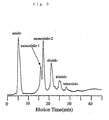
- FIG. 1 shows the result of separation by the affinity column chromatography.
- Conditions for serotonin affinity column chromatography Column: LA-Serotonin column (4.6 X 150 mm, product of Japan Oil Mills) Pump: JASCO Model PU-980 Flow rate: 0.5 ml/min Detector: JASCO Model FP-920 fluorescent detector Excitation wavelength: 350 nm Fluorescent wavelength: 425 nm
- Mobile phase ultrapure water used as solution A, and 40 mM ammonium acetate aqueous solution as solution B
- Gradient conditions Linear gradient elution was conducted using 5% of solution B for 2 minutes after the sample was poured in and using the ammonium acetate solution so that the concentration thereof would be 30 mM 37 minutes later and subsequently 40 mM 10 minutes later.
- the cells other than U937 were washed as held in an 80% confluent state with an isotonic phosphoric acid buffer (PBS) during cultivation and then treated at 37° C for 5 minutes with addition of trypsin, and the cells separated off were collected, subsequently washed with PBS and thereafter subcultured.
- PBS isotonic phosphoric acid buffer
- Cells in 80% confluent state for use in preparing a cell membrane fraction were collected from the incubator using a cell scraper.
- the cells collected were washed with PBS and homogenized with a glass homogenizer in 10 mM Na 2 HPO 4 (pH 7.5) containing 1% protease inhibitor to a concentration of 1 ⁇ 10 5 cells/5 ml, 10 ml of 20 mM Tris-HCl buffer (pH 7.5) containing 0.5 M sucrose was then added to the mixture, the resulting mixture was centrifuged at 3000 rpm, 4° C for 15 minutes, and the supernatant was thereafter collected and centrifuged at 19000 rpm, 4° C to obtain a precipitate as a cell membrane fraction.
- the solution containing the membrane fraction was cooled to room temperature, NP-40 was added to a concentration of 1%, and phosphoric acid buffer (pH 7.5) was added to the mixture to a final concentration of 20 mM.
- N-glycanase F (2 units, product of Roche Diagnostics)
- the mixture was incubated at 37° C overnight and boiled on a water bath boiling at 100° C for 5 minutes, 95% ethanol was added to the mixture to a final concentration of 75%, the resulting mixture was centrifuged at 15000 rpm, 4° C, and the supernatant was treated in a vacuum to dryness to obtain oligosaccharides derived from the cell membranes.
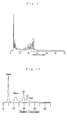
- FIG. 2 shows the result of separation by the column chromatography.
- the cancer cell-derived oligosaccharide derivatives (corresponding to 1 ⁇ 10 7 cells) of each fraction obtained in Example 2 were dissolved in 20 ⁇ l of 20 mM acetic acid buffer (pH 5.0), 4 ⁇ l of sialidase (2 mU, product of Marukin Bio) was added to the solution, and the mixture was reaction at 37° C for 24 hours. The reaction mixture was boiled at 100° C for 3 minutes and centrifuged to obtain a supernatant.
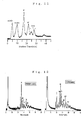
- FIGS. 3 to 7 show the result of separation by HPLC.
- Conditions for HPLC Column: TSK-GEL Amide-80 (TOSOH CORPORATION, Japan, 4.6 X 250 mm) Column temperature: 40° C
- Mobile phase acetonitrile solution containing 0.2% acetic acid and serving as solution A and aqueous solution containing 0.1% of acetic acid and 0.1% of triethylamine and used as solution B
- Gradient conditions Linear gradient elution was conducted using 30% of solution B for 2 minutes after the sample was poured in so that the amount of solution B would be 65% in 60 minutes.
- the oligosaccharide derivative of peak 31 derived from U937 was dissolved in 20 ⁇ l of 20 mM citric acid buffer (pH 3.5), 1 ⁇ l of ⁇ -galactosidase (25 mU, product of Seikagaku Kogyo Co., Ltd) was added to the solution, and the mixture was reacted at 37° C for 24 hours.
- the reaction mixture was boiled at 100° C for 3 minutes and centrifuged to collect the supernatant.
- the supernatant obtained was subjected to normal phase HPLC using an amide column, affording a fraction, which was analyzed by MALDI-TOF MS. As a result, an oligosaccharide (a) was obtained which was 2718 in molecular weight.
- the oligosaccharide derivative (a) obtained was dissolved in 20 ⁇ l of 20 mM citric acid buffer (pH 5.0), 1 ⁇ l of ⁇ -N-acetylhexaminidase (10 mU, product of Seikagaku Kogyo Co., Ltd) was added to the solution, and the mixture was reacted at 37° C for 24 hours. The reaction mixture was boiled at 100° C for 3 minutes and centrifuged to collect the supernatant. The supernatant obtained was analyzed in the same manner as above, affording an oligosaccharide derivative (b) which was 1906 in molecular weight.
- oligosaccharide derivative (b) was further treated with ⁇ -galactosidase, consequently affording an oligosaccharide derivative (c) which was 1582 in molecular weight.
- the oligosaccharide derivative of peak 35 was treated with ⁇ -galactosidase, ⁇ -N-acetylhexaminidase and then with ⁇ -galactosidase, whereby the derivative was found to be the oligosaccharide of the formula given below.
- Tables 1 to 5 show oligosaccharide structures corresponding to the peaks shown in FIGS. 3 to 7 .
- the molecular weights given in Tables 1 to 14 are those (MW) of compounds wherein 2-aminobenzoic acid is attached to the reducing terminal of the oligosaccharide.
- the symbols resent the following. Gal: D-galactose, GlcNAc: N-acetylglucosamine, Man: D-mannose, Fuc: fucose, 2-AA: 2-aminobenzoic acid, NeuAc: sialic acid.
- the oligosaccharide wherein 2-aminobenzoic acid is attached to the reducing terminal thereof for example, the structure of the oligosaccharide portion represented by the formula given below will be represented by -4GlcNAc ⁇ 1-4GlcNAc-2-AA.
- the device used was Voyager DE-PRO (PE Biosystems, Framingham, MA). The measurement was conducted in linear/negative ion mode at an acceleration voltage of 20 kV and grid voltage of 96.3% with a delay time of 1000 nsec, lens offset 1.25 and laser intensity (nitrogen laser) of 2700. A 0.5 ⁇ L quantity of the sample as dissolved in water was kneaded with 0.5 ⁇ L of 20 mg/mL methanol solution of 2,5-dihydroxybenzoic acid (DHB), and the mixture was dried to obtain a sample for use in measurement.
- MW Structure 12 1760 13 1840 14 1906 15 2002 16 2052 17 2125 18 2116 19 2636 20 3001 Table 3 Peak No. MW Structure 21 1557 22 1598 23 1743 24 2270 25 2417 26 2491 27 2563 28 2782 Table 4 Peak No. MW Structure 29 2928 30 3147 31 3366 32 1921 33 2109 34 3731 Table 5 Peak No. MW Structure 35 4096 36 4461 37 4826 38 5191 39 5556 40 2474
- Human gastric cancer cells MKN 45 were washed with PBS and homogenized with a glass homogenizer in 10 mM Na 2 HPO 4 (pH 7.5) containing 1% protease inhibitor to a concentration of 1 ⁇ 10 8 cells/5 ml, 10 ml of 20 mM Tris-HCl buffer (pH 7.5) containing 0.5 M sucrose was then added to the mixture, the resulting mixture was centrifuged at 3000 rpm, 4° C for 15 minutes, and the supernatant was thereafter collected and centrifuged at 19000 rpm, 4° C. The resulting supernatant was treated in a vacuum to dryness to obtain a free-type oligosaccharide mixture.
- FIG. 8 shows the result of separation by the affinity column chromatography. Each fraction obtained was separated by normal phase HPLC using an amino column to obtain a free-type oligosaccharide derivative.
- Conditions for HPLC Column: Asahi Shodex NH2P-50 4E (Showa Denko, Tokyo, Japan, 4.6 ⁇ 250 mm) Column temperature: 50° C Pump: JASCO Model PU-980 Flow rate: 1 ml/min Detector: JASCO Model FP-920 fluorescent detector Excitation wavelength: 350 nm Fluorescent wavelength: 425 nm
- Mobile phase acetonitrile solution containing 2% acetic acid and serving as solution A and aqueous solution containing 5% of acetic acid and 3% of triethylamine and used as solution B
- Gradient conditions Linear gradient elution was conducted using 30% of solution B for 2 minutes after the sample was poured in so that the amount of solution B would be 95% in 80 minutes. Solution B was maintained in an amount of 95% for
- the free-type oligosaccharide derivative obtained was suitably treated with glycosidase (sialidase, ⁇ -mannosidase, ⁇ -galactosidase, ⁇ -acetylhexaminidase, etc.), followed by normal phase HPLC for separation using the above-mentioned amino column.
- glycosidase sialidase, ⁇ -mannosidase, ⁇ -galactosidase, ⁇ -acetylhexaminidase, etc.
- the fractions obtained were lyophilized and analyzed by MALDI-TOF MS to determine the structure of the oligosaccharide derivative.
- the treatment with ⁇ -mannosidase is conducted by dissolving the oligosaccharide derivative in 20 ⁇ l of 20 mM citric acid buffer (pH 4.5), adding 2 ⁇ l of ⁇ -mannosidase (10 mM, product of Seikagaku Kogyo Co., Ltd.), reacting the mixture at 37° C for 24 hours, boiling the reaction mixture at 100° C for 3 minutes, centrifuging the mixture and collecting the supernatant.
- the treatment with the other hydrolases were conducted in the same manner as in the foregoing example. Tables 6 and 7 show the oligosaccharide derivatives obtained.
- oligosaccharide derivative No. 1 which is 1321 in molecular weight is represented by the formula given below.
- Table 6 MW Structure 1321 1483 1686 2140 2343 2505 2795 2999 3160
- Table 7 MW Structure 3451 3816
- a mixture of free-type oligosaccharides was obtained by the same procedure as in Example 4 with the exception of using human T cell lymphoma Jurkat 27 (oligosaccharide-introduced cell strain) in place of human gastric cancer cells MKN45.
- Human cervical cancer cells HeLa were incubated using DMEM containing 10% of NCS immobilized in advance by being heated at 50° C for 30 minutes. In 80% confluent state, the cells being incubated were washed with PBS and then treated at 37° C for 5 minutes with addition of a trypsin solution, and the cells separated were collected, washed with PBS and thereafter subcultured.
- the same procedures as in Example 2 were repeated for the preparation of a cell membrane fraction and separation of oligosaccharides from the cell membrane fraction to obtain an oligosaccharide mixture derived from cell membranes.
- 2-AA aws introduced into the mixture, followed by serotonin affinity chromatography to obtain oligosaccharide derivative fractions.
- FIG. 10 shows the result of separation by the column chromatography.
- the asialo oligosaccharide derivative fraction, monosialo oligosaccharide derivative fraction and disialo oligosaccharide derivative fraction were treated with sialidase and thereafter subjected to normal phase HPLC using an amino column for separation to obtain oligosaccharide derivatives
- the same conditions as in Example 4 were used for HPLC.
- the oligosaccharide derivatives obtained were suitably treated with glycosidase (sialidase, ⁇ -mannosidase, ⁇ -galactosidase, ⁇ -acetylhexaminidase, etc.), followed by normal phase HPLC for separation using the above-mentioned amino column.
- glycosidase sialidase, ⁇ -mannosidase, ⁇ -galactosidase, ⁇ -acetylhexaminidase, etc.
- the fractions obtained were lyophilized and thereafter analyzed by MALDI-TOF MS to determine the structure of the oligosaccharide derivatives.
- Tables 9 to 12 show the oligosaccharide derivatives obtained.
- Table 10 monosialo oligosaccharide derivative MW Structure 1686 1889 2051 2197 2254 2343 2400 2546
- Table 11 disialo oligosaccharide derivative-1 MW Structure 2342 2545 2691 2748 2894 3056 3113
- Table 12 disialo oligosaccharide derivative-2 MW Structure 3259 3405 3421 3624
- Protein A-Agarose (50 ⁇ l, product of Sigma-Aldrich Japan) was washed with 200 ⁇ l of PBS. 50 ⁇ l of PBS and 10 ⁇ g/10 ⁇ l of anti-CD 98 antibody were added to the agarose, and the mixture was reacted at room temperature for 60 minutes. The resation mixture was washed with 1 ml of PBS to remove the unadsorbed component to obtain Agarose having anti-CD98 antibody immobilized thereon. To the agarose was added a membrane fraction (2 ⁇ 10 7 cells) of HeLa cells solubilized with 400 ⁇ l of 1% NP-40, and the mixture was incubated overnight at 4° C using a rotary shaker.
- the culture was washed with 1 ml of PBS, the unadsorbed component was removed, followed by centrifuging.
- To the agarose having anti-CD98 antibody immobilized thereon was added 20 ⁇ l of a 9:1 mixture of dissociation solution (250 mM Tris-HCl buffer pH 6.8/4.6% SDS, 20% glycerin) and 2-mercaptoethyl alcohol, the mixture was boiled for 5 minutes and centrifuged at 15000 rpm, and the supernatant was taken as CD98-HC and subjected to PAGE.
- dissociation solution 250 mM Tris-HCl buffer pH 6.8/4.6% SDS, 20% glycerin
- 2-mercaptoethyl alcohol 2-mercaptoethyl alcohol
- the gel electrophoresis device and power source used were products of Bio Rad.
- the electrophoresis was conducted using 7.5% gel and a buffer of 25 mM Tris, 198 mM glycine and 1% (w/v) SDS, at 5 mA per sheet of gel for the first 1 hour and subsequently at 10 mA to the lower side portion of the gel.
- the protein sample in the gel resulting from SDS-PAGE was transferred onto the PVDF membrane using Semi-Dry Blotting Device (Trans-Blot SD cell, product of BIO-RAD). Before use, the PVDF membrane was immersed in methanol for 60 seconds and thereafter immersed in 48 mM Tris, 39 mM glycine, 20% methanol (pH 9.0) for 1 hour. The transfer was conducted with the application of voltage for 1 hour at a constant current of 100 mA.
- FIG. 11 shows the result of separation by the column chromatography.
- the monosialo oligosaccharide derivative fraction and the disialo oligosaccharide derivative fraction obtained were treated with sialidase and thereafter treated by normal phase HPLC using an amino column to obtain oligosaccharide derivatives.
- the same conditions as in Example 4 were used for HPLC.
- FIG. 12 shows the result of separation by HPLC.
- the oligosaccharide derivatives obtained were suitably treated with glycosidase (sialidase, ⁇ -mannosidase, ⁇ -galactosidase, ⁇ -acetylhexaminidase, etc.), followed by normal phase HPLC for separation using the above-mentioned amino column.
- glycosidase sialidase, ⁇ -mannosidase, ⁇ -galactosidase, ⁇ -acetylhexaminidase, etc.
- the fractions obtained were lyophilized and thereafter analyzed by MALDI-TOF MS to determine the structure of the oligosaccharide derivatives.
- Tables 13 and 14 show the oligosaccharide derivatives obtained.
- Table 13 Peak No. MW Structure I 2051 II 2197 III 2343 IV 2400 V 2562 VI 2781 VII 2927
- Table 14 Peak No. MW Structure VIII 2342 IX 2488 X 2545 XI 2691 XII 2853 XIII 3072 XIV 3275
- Oligosaccharide mixtures in cells and tissues can be meticulously separated and the structure of oligosaccharides can be comprehensively analyzed by the processes of the invention. This serves to explore the oligosaccharides and functions thereof which still remain to be clarified. The invention is therefore expected to contribute a great deal to the research on oligosaccharides in the future.
Landscapes
- Chemical & Material Sciences (AREA)
- Health & Medical Sciences (AREA)
- Life Sciences & Earth Sciences (AREA)
- General Health & Medical Sciences (AREA)
- Biochemistry (AREA)
- Organic Chemistry (AREA)
- Molecular Biology (AREA)
- Engineering & Computer Science (AREA)
- Analytical Chemistry (AREA)
- General Physics & Mathematics (AREA)
- Immunology (AREA)
- Pathology (AREA)
- Physics & Mathematics (AREA)
- Materials Engineering (AREA)
- Medicinal Chemistry (AREA)
- Polymers & Plastics (AREA)
- Chemical Kinetics & Catalysis (AREA)
- Biotechnology (AREA)
- Genetics & Genomics (AREA)
- Saccharide Compounds (AREA)
- Preparation Of Compounds By Using Micro-Organisms (AREA)
- Polysaccharides And Polysaccharide Derivatives (AREA)
- Investigating Or Analysing Biological Materials (AREA)
- Measuring Or Testing Involving Enzymes Or Micro-Organisms (AREA)
- Pharmaceuticals Containing Other Organic And Inorganic Compounds (AREA)
- Other Investigation Or Analysis Of Materials By Electrical Means (AREA)
Applications Claiming Priority (2)
| Application Number | Priority Date | Filing Date | Title |
|---|---|---|---|
| JP2005209077 | 2005-07-19 | ||
| PCT/JP2006/314712 WO2007011055A1 (fr) | 2005-07-19 | 2006-07-19 | Procede pour la production de derive de chaine de sucre, procede d'analyse de structure, et derive de chaine de sucre |
Publications (3)
| Publication Number | Publication Date |
|---|---|
| EP1908783A1 true EP1908783A1 (fr) | 2008-04-09 |
| EP1908783A4 EP1908783A4 (fr) | 2009-12-02 |
| EP1908783B1 EP1908783B1 (fr) | 2016-06-08 |
Family
ID=37668925
Family Applications (1)
| Application Number | Title | Priority Date | Filing Date |
|---|---|---|---|
| EP06781624.9A Active EP1908783B1 (fr) | 2005-07-19 | 2006-07-19 | Procédé pour la production d'un dérivé de chaine saccharidique, procédé d'analyse de structure, et dérivé de chaine saccharidique |
Country Status (10)
| Country | Link |
|---|---|
| US (2) | US8318694B2 (fr) |
| EP (1) | EP1908783B1 (fr) |
| JP (2) | JP5011108B2 (fr) |
| KR (3) | KR100968691B1 (fr) |
| CN (3) | CN102516402A (fr) |
| AU (2) | AU2006270732B2 (fr) |
| CA (2) | CA2759070C (fr) |
| SG (1) | SG149832A1 (fr) |
| TW (2) | TWI342880B (fr) |
| WO (1) | WO2007011055A1 (fr) |
Cited By (1)
| Publication number | Priority date | Publication date | Assignee | Title |
|---|---|---|---|---|
| WO2019115770A1 (fr) * | 2017-12-17 | 2019-06-20 | Upfront Chromatography A/S | Séparation d'oligosaccharides |
Families Citing this family (19)
| Publication number | Priority date | Publication date | Assignee | Title |
|---|---|---|---|---|
| JP5004464B2 (ja) * | 2005-12-02 | 2012-08-22 | 大塚化学株式会社 | 糖鎖修飾リポソーム |
| JP2007297429A (ja) * | 2006-04-27 | 2007-11-15 | Institute Of Physical & Chemical Research | 糖鎖ライブラリの作製方法及びその利用 |
| WO2008096790A1 (fr) * | 2007-02-07 | 2008-08-14 | Galpharma Co., Ltd. | Analyse et utilisation d'une chaîne de sucre en tant que marqueur de tumeur |
| CA2694542C (fr) * | 2007-07-31 | 2017-08-29 | Otsuka Chemical Co., Ltd. | Procede de fabrication d'un peptide |
| US8765669B2 (en) | 2008-06-17 | 2014-07-01 | Glytech, Inc. | Glycosylated GLP-1 peptide |
| HUE037238T2 (hu) | 2008-08-19 | 2018-08-28 | Glytech Inc | Glikoprotein elõállítási eljárás és screening eljárás |
| JP2012063140A (ja) * | 2008-12-15 | 2012-03-29 | Hokkaido Univ | 糖鎖分析による肺がんの診断方法 |
| TW201031749A (en) | 2009-02-10 | 2010-09-01 | Otsuka Chemical Co Ltd | IgG-Fc fragment and method for manufacturing the same |
| EP2455396A4 (fr) | 2009-07-16 | 2013-05-01 | Otsuka Chemical Co Ltd | Domaine extracellulaire ailim à chaîne de sucre ajoutée et son procédé de production |
| KR20120101037A (ko) | 2009-10-30 | 2012-09-12 | 오츠카 가가쿠 가부시키가이샤 | 항원성 glp?1 아날로그의 당쇄 부가체 |
| EP2590722A4 (fr) * | 2010-07-07 | 2015-06-24 | Ironstone Separations Inc | Méthodes chromatographiques |
| BR112014004936A2 (pt) | 2011-09-04 | 2017-04-04 | Glytech Inc | polipeptídeo glicosilado e composição de drogas contendo referido polipeptídeo |
| AU2012302636B2 (en) | 2011-09-04 | 2016-09-15 | Glytech, Inc. | Glycosylated polypeptide and drug composition containing said polypeptide |
| EP2924053B1 (fr) | 2012-11-22 | 2020-11-11 | Glytech, Inc. | Lieur glycosylé, composé contenant un fragment de lieur glycosylé et un fragment de substance physiologiquement active ou son sel et procédés de production dudit composé ou de son sel |
| WO2014084110A1 (fr) | 2012-11-30 | 2014-06-05 | 株式会社糖鎖工学研究所 | Lieur à chaîne glucidique liée, composé contenant un lieur à chaîne glucidique liée et substance physiologiquement active ou son sel, et son procédé de production |
| CA2908136C (fr) | 2013-03-30 | 2021-06-29 | Glytech, Inc. | Complexe chaine de sucre-polypeptide |
| CN107001528A (zh) | 2014-07-09 | 2017-08-01 | 米德瑞(美国)有限公司 | 低聚糖组合物及其制备方法 |
| HK1246600B (en) | 2015-01-26 | 2020-04-09 | Cadena Bio, Inc. | Oligosaccharide compositions for use animal feed and methods of producing thereof |
| WO2017002918A1 (fr) * | 2015-06-30 | 2017-01-05 | 株式会社糖鎖工学研究所 | Complexe d'albumine-chaîne de sucre |
Family Cites Families (9)
| Publication number | Priority date | Publication date | Assignee | Title |
|---|---|---|---|---|
| JPS5936102A (ja) | 1982-08-24 | 1984-02-28 | Seikagaku Kogyo Co Ltd | シアル酸又はシアル酸含有物質の分離・精製法 |
| JP3495378B2 (ja) * | 1991-01-25 | 2004-02-09 | 中外製薬株式会社 | カゼイノグリコペプチドの製造及び精製方法 |
| FR2780901B1 (fr) * | 1998-07-09 | 2000-09-29 | Coletica | Particules, en particulier micro- ou nanoparticules de monosaccharides et oligosaccharides reticules, leurs procedes de preparation et compositions cosmetiques, pharmaceutiques ou alimentaires en contenant |
| DE19860376A1 (de) * | 1998-12-28 | 2000-07-06 | Aventis Res & Tech Gmbh & Co | Alpha-1,4 Glucanketten enthaltende Polysaccharide sowie Verfahren zu ihrer Herstellung |
| US6441293B1 (en) * | 2000-04-28 | 2002-08-27 | Labarbera Anthony | System for generating percussion sounds from stringed instruments |
| CA2451971C (fr) | 2001-06-19 | 2010-09-07 | Otsuka Chemical Co., Ltd. | Methode de production d'un derive d'asparagine de chaines des sucres |
| TWI335920B (en) | 2002-12-24 | 2011-01-11 | Yasuhiro Kajihara | Sugar chain asparagine derivatives, sugar chain asparagine and sugar chain and manufacture thereof |
| KR100876518B1 (ko) | 2002-12-26 | 2008-12-31 | 오츠카 가가쿠 가부시키가이샤 | 당사슬 아스파라긴 유도체 및 그의 제조방법 |
| JP4515387B2 (ja) * | 2003-12-25 | 2010-07-28 | 独立行政法人産業技術総合研究所 | 糖鎖構造プロファイリング技術 |
-
2006
- 2006-07-18 TW TW095126175A patent/TWI342880B/zh not_active IP Right Cessation
- 2006-07-18 TW TW100107065A patent/TWI466897B/zh not_active IP Right Cessation
- 2006-07-19 CN CN2011103291255A patent/CN102516402A/zh active Pending
- 2006-07-19 AU AU2006270732A patent/AU2006270732B2/en not_active Ceased
- 2006-07-19 WO PCT/JP2006/314712 patent/WO2007011055A1/fr not_active Ceased
- 2006-07-19 CN CN2010102667806A patent/CN101949901B/zh not_active Expired - Fee Related
- 2006-07-19 KR KR1020087003370A patent/KR100968691B1/ko not_active Expired - Fee Related
- 2006-07-19 CA CA2759070A patent/CA2759070C/fr not_active Expired - Fee Related
- 2006-07-19 CN CN2006800261734A patent/CN101223194B/zh not_active Expired - Fee Related
- 2006-07-19 US US11/989,012 patent/US8318694B2/en active Active
- 2006-07-19 CA CA2616065A patent/CA2616065C/fr not_active Expired - Fee Related
- 2006-07-19 JP JP2007525520A patent/JP5011108B2/ja active Active
- 2006-07-19 EP EP06781624.9A patent/EP1908783B1/fr active Active
- 2006-07-19 KR KR1020107014711A patent/KR101001433B1/ko not_active Expired - Fee Related
- 2006-07-19 KR KR1020107002862A patent/KR101001489B1/ko not_active Expired - Fee Related
- 2006-07-19 SG SG200900258-5A patent/SG149832A1/en unknown
-
2010
- 2010-05-20 AU AU2010202058A patent/AU2010202058C1/en not_active Ceased
-
2012
- 2012-03-29 JP JP2012077958A patent/JP5688043B2/ja active Active
- 2012-11-20 US US13/682,494 patent/US8691795B2/en not_active Expired - Fee Related
Non-Patent Citations (6)
| Title |
|---|
| BIGGE J C ET AL: "Nonselective and efficient fluorescent labelling of glycans using 2-amino benzamide and anthranilic acid" ANALYTICAL BIOCHEMISTRY, ACADEMIC PRESS INC, NEW YORK, vol. 230, no. 2, 1 January 1995 (1995-01-01), pages 229-238, XP002489980 ISSN: 0003-2697 * |
| EL RASSI, ZIAD ET AL.: "High-Performance Liquid Chromatography of Sialooligosaccharides and Gangliosides" JOURNAL OF CHROMATOGRAPHY, vol. 488, 1989, pages 229-236, XP002550562 * |
| FUJIMOTO I ET AL: "Systematic Analysis of N-Linked Sugar Chains from Whole Tissue Employing Partial Automation" ANALYTICAL BIOCHEMISTRY, ACADEMIC PRESS INC, NEW YORK, vol. 267, no. 2, 15 February 1999 (1999-02-15), pages 336-343, XP002993791 ISSN: 0003-2697 * |
| NAKAGAWA H ET AL: "Identification of Neutral and Sialyl N-Linked Oligosaccharide Structures from Human Serum Glycoproteins Using Three Kinds of High-Performance Liquid Chromatography" ANALYTICAL BIOCHEMISTRY, ACADEMIC PRESS INC, NEW YORK, vol. 226, no. 1, 1 March 1995 (1995-03-01), pages 130-138, XP002484580 ISSN: 0003-2697 * |
| OTAKE Y ET AL: "ISOLATION AND CHARACTERIZATION OF AN N-LINKED OLIGOSACCHARIDE THAT IS SIGNIFICANTLY INCREASED IN SERA FROM PATIENTS WITH NON-SMALL CELL LUNG CANCER" JOURNAL OF BIOCHEMISTRY, JAPANESE BIOCHEMICAL SOCIETY / OUP, TOKYO, JP, vol. 129, no. 4, 1 January 2001 (2001-01-01), pages 537-542, XP002944725 ISSN: 0021-924X * |
| See also references of WO2007011055A1 * |
Cited By (1)
| Publication number | Priority date | Publication date | Assignee | Title |
|---|---|---|---|---|
| WO2019115770A1 (fr) * | 2017-12-17 | 2019-06-20 | Upfront Chromatography A/S | Séparation d'oligosaccharides |
Also Published As
Similar Documents
| Publication | Publication Date | Title |
|---|---|---|
| US8691795B2 (en) | Process for producing sugar chain derivative, structure analysis method, and sugar chain derivative | |
| Hanfland et al. | Isolation and characterization of an I-active ceramide decasaccharide from rabbit erythrocyte membranes | |
| Harvey | Analysis of carbohydrates and glycoconjugates by matrix‐assisted laser desorption/ionization mass spectrometry: An update for 2009–2010 | |
| Poulter et al. | [36] Desorption mass spectrometry of oligosaccharides coupled with hydrophobic chromophores | |
| Viau et al. | Isolation and characterization of the O-glycan chain of the human vitamin-D binding protein | |
| EP2135091A1 (fr) | Procédés faisant appel à la spectrométrie de masse pour évaluer des glycanes | |
| Yamada et al. | Rapid and sensitive analysis of mucin-type glycans using an in-line flow glycan-releasing apparatus | |
| Lipniunas et al. | Separation of biosynthetic oligosaccharide branch isomers using high-performance liquid chromatography on a porous two-dimensional graphite stationary phase | |
| WO1990004596A1 (fr) | Isolation d'oligosaccharides | |
| Wang et al. | Compositional Monosaccharide Analysis of Transgenic Corn Glycoproteins by HPLC with Fluorescence Detection and LC—MS with Sonic Spray Ionization | |
| JP5060113B2 (ja) | クロマトグラフィー用展開溶媒、クロマトグラフィー法、及びクロマトグラム、並びに検出方法 | |
| Hancox | Integrated workflows for carbohydrate analysis-artificial glycoconjugates as tools for glycan analysis | |
| Reinhold et al. | Structural elucidation of complex carbohydrates | |
| JPH06242074A (ja) | グリカンの一次元分離及び同定法、並びにデータベースの設立及びグリカンの構造の決定のためのこの方法の使用 | |
| Merry et al. | Analysis of N‐and O‐Glycans of Glycoproteins by HPLC Technology | |
| Gillece-Castro | Structural identification of protein glycosylation and other chemical modifications using mass spectrometry | |
| Settineri | Characterization of protein glycosylation by mass spectrometry | |
| Smejkal et al. | Enrichment and Analysis of Glycoproteins in the Proteome |
Legal Events
| Date | Code | Title | Description |
|---|---|---|---|
| PUAI | Public reference made under article 153(3) epc to a published international application that has entered the european phase |
Free format text: ORIGINAL CODE: 0009012 |
|
| 17P | Request for examination filed |
Effective date: 20080213 |
|
| AK | Designated contracting states |
Kind code of ref document: A1 Designated state(s): AT BE BG CH CY CZ DE DK EE ES FI FR GB GR HU IE IS IT LI LT LU LV MC NL PL PT RO SE SI SK TR |
|
| RAP1 | Party data changed (applicant data changed or rights of an application transferred) |
Owner name: OTSUKA CHEMICAL CO., LTD. |
|
| RIN1 | Information on inventor provided before grant (corrected) |
Inventor name: KAKEHI, KAZUAKI Inventor name: KINOSHITA, MITSUHIRO Inventor name: MATSUNO, YUKI |
|
| RAP1 | Party data changed (applicant data changed or rights of an application transferred) |
Owner name: OTSUKA CHEMICAL CO., LTD. |
|
| A4 | Supplementary search report drawn up and despatched |
Effective date: 20091029 |
|
| 17Q | First examination report despatched |
Effective date: 20120116 |
|
| DAX | Request for extension of the european patent (deleted) | ||
| RAP1 | Party data changed (applicant data changed or rights of an application transferred) |
Owner name: GLYTECH, INC. |
|
| REG | Reference to a national code |
Ref country code: DE Ref legal event code: R079 Ref document number: 602006049303 Country of ref document: DE Free format text: PREVIOUS MAIN CLASS: C08B0037000000 Ipc: C07H0003060000 |
|
| GRAP | Despatch of communication of intention to grant a patent |
Free format text: ORIGINAL CODE: EPIDOSNIGR1 |
|
| RIC1 | Information provided on ipc code assigned before grant |
Ipc: G01N 30/84 20060101ALI20151124BHEP Ipc: G01N 30/72 20060101ALI20151124BHEP Ipc: C08B 37/00 20060101ALI20151124BHEP Ipc: C07H 3/06 20060101AFI20151124BHEP |
|
| INTG | Intention to grant announced |
Effective date: 20151217 |
|
| GRAS | Grant fee paid |
Free format text: ORIGINAL CODE: EPIDOSNIGR3 |
|
| GRAA | (expected) grant |
Free format text: ORIGINAL CODE: 0009210 |
|
| AK | Designated contracting states |
Kind code of ref document: B1 Designated state(s): AT BE BG CH CY CZ DE DK EE ES FI FR GB GR HU IE IS IT LI LT LU LV MC NL PL PT RO SE SI SK TR |
|
| REG | Reference to a national code |
Ref country code: GB Ref legal event code: FG4D |
|
| RIN1 | Information on inventor provided before grant (corrected) |
Inventor name: MATSUNO, YUKI Inventor name: KAKEHI, KAZUAKI Inventor name: KINOSHITA, MITSUHIRO |
|
| REG | Reference to a national code |
Ref country code: CH Ref legal event code: EP |
|
| REG | Reference to a national code |
Ref country code: IE Ref legal event code: FG4D |
|
| REG | Reference to a national code |
Ref country code: AT Ref legal event code: REF Ref document number: 805157 Country of ref document: AT Kind code of ref document: T Effective date: 20160715 |
|
| REG | Reference to a national code |
Ref country code: DE Ref legal event code: R096 Ref document number: 602006049303 Country of ref document: DE |
|
| REG | Reference to a national code |
Ref country code: FR Ref legal event code: PLFP Year of fee payment: 11 |
|
| REG | Reference to a national code |
Ref country code: CH Ref legal event code: NV Representative=s name: ISLER AND PEDRAZZINI AG, CH |
|
| REG | Reference to a national code |
Ref country code: LT Ref legal event code: MG4D |
|
| REG | Reference to a national code |
Ref country code: NL Ref legal event code: MP Effective date: 20160608 |
|
| PG25 | Lapsed in a contracting state [announced via postgrant information from national office to epo] |
Ref country code: FI Free format text: LAPSE BECAUSE OF FAILURE TO SUBMIT A TRANSLATION OF THE DESCRIPTION OR TO PAY THE FEE WITHIN THE PRESCRIBED TIME-LIMIT Effective date: 20160608 Ref country code: LT Free format text: LAPSE BECAUSE OF FAILURE TO SUBMIT A TRANSLATION OF THE DESCRIPTION OR TO PAY THE FEE WITHIN THE PRESCRIBED TIME-LIMIT Effective date: 20160608 |
|
| REG | Reference to a national code |
Ref country code: AT Ref legal event code: MK05 Ref document number: 805157 Country of ref document: AT Kind code of ref document: T Effective date: 20160608 |
|
| PG25 | Lapsed in a contracting state [announced via postgrant information from national office to epo] |
Ref country code: ES Free format text: LAPSE BECAUSE OF FAILURE TO SUBMIT A TRANSLATION OF THE DESCRIPTION OR TO PAY THE FEE WITHIN THE PRESCRIBED TIME-LIMIT Effective date: 20160608 Ref country code: LV Free format text: LAPSE BECAUSE OF FAILURE TO SUBMIT A TRANSLATION OF THE DESCRIPTION OR TO PAY THE FEE WITHIN THE PRESCRIBED TIME-LIMIT Effective date: 20160608 Ref country code: SE Free format text: LAPSE BECAUSE OF FAILURE TO SUBMIT A TRANSLATION OF THE DESCRIPTION OR TO PAY THE FEE WITHIN THE PRESCRIBED TIME-LIMIT Effective date: 20160608 Ref country code: NL Free format text: LAPSE BECAUSE OF FAILURE TO SUBMIT A TRANSLATION OF THE DESCRIPTION OR TO PAY THE FEE WITHIN THE PRESCRIBED TIME-LIMIT Effective date: 20160608 Ref country code: GR Free format text: LAPSE BECAUSE OF FAILURE TO SUBMIT A TRANSLATION OF THE DESCRIPTION OR TO PAY THE FEE WITHIN THE PRESCRIBED TIME-LIMIT Effective date: 20160909 |
|
| PG25 | Lapsed in a contracting state [announced via postgrant information from national office to epo] |
Ref country code: BE Free format text: LAPSE BECAUSE OF NON-PAYMENT OF DUE FEES Effective date: 20160731 |
|
| PG25 | Lapsed in a contracting state [announced via postgrant information from national office to epo] |
Ref country code: SK Free format text: LAPSE BECAUSE OF FAILURE TO SUBMIT A TRANSLATION OF THE DESCRIPTION OR TO PAY THE FEE WITHIN THE PRESCRIBED TIME-LIMIT Effective date: 20160608 Ref country code: RO Free format text: LAPSE BECAUSE OF FAILURE TO SUBMIT A TRANSLATION OF THE DESCRIPTION OR TO PAY THE FEE WITHIN THE PRESCRIBED TIME-LIMIT Effective date: 20160608 Ref country code: CZ Free format text: LAPSE BECAUSE OF FAILURE TO SUBMIT A TRANSLATION OF THE DESCRIPTION OR TO PAY THE FEE WITHIN THE PRESCRIBED TIME-LIMIT Effective date: 20160608 Ref country code: EE Free format text: LAPSE BECAUSE OF FAILURE TO SUBMIT A TRANSLATION OF THE DESCRIPTION OR TO PAY THE FEE WITHIN THE PRESCRIBED TIME-LIMIT Effective date: 20160608 Ref country code: IS Free format text: LAPSE BECAUSE OF FAILURE TO SUBMIT A TRANSLATION OF THE DESCRIPTION OR TO PAY THE FEE WITHIN THE PRESCRIBED TIME-LIMIT Effective date: 20161008 |
|
| PG25 | Lapsed in a contracting state [announced via postgrant information from national office to epo] |
Ref country code: PL Free format text: LAPSE BECAUSE OF FAILURE TO SUBMIT A TRANSLATION OF THE DESCRIPTION OR TO PAY THE FEE WITHIN THE PRESCRIBED TIME-LIMIT Effective date: 20160608 Ref country code: BE Free format text: LAPSE BECAUSE OF FAILURE TO SUBMIT A TRANSLATION OF THE DESCRIPTION OR TO PAY THE FEE WITHIN THE PRESCRIBED TIME-LIMIT Effective date: 20160608 Ref country code: AT Free format text: LAPSE BECAUSE OF FAILURE TO SUBMIT A TRANSLATION OF THE DESCRIPTION OR TO PAY THE FEE WITHIN THE PRESCRIBED TIME-LIMIT Effective date: 20160608 Ref country code: PT Free format text: LAPSE BECAUSE OF FAILURE TO SUBMIT A TRANSLATION OF THE DESCRIPTION OR TO PAY THE FEE WITHIN THE PRESCRIBED TIME-LIMIT Effective date: 20161010 |
|
| REG | Reference to a national code |
Ref country code: DE Ref legal event code: R097 Ref document number: 602006049303 Country of ref document: DE |
|
| PG25 | Lapsed in a contracting state [announced via postgrant information from national office to epo] |
Ref country code: MC Free format text: LAPSE BECAUSE OF FAILURE TO SUBMIT A TRANSLATION OF THE DESCRIPTION OR TO PAY THE FEE WITHIN THE PRESCRIBED TIME-LIMIT Effective date: 20160608 |
|
| PLBE | No opposition filed within time limit |
Free format text: ORIGINAL CODE: 0009261 |
|
| STAA | Information on the status of an ep patent application or granted ep patent |
Free format text: STATUS: NO OPPOSITION FILED WITHIN TIME LIMIT |
|
| REG | Reference to a national code |
Ref country code: IE Ref legal event code: MM4A |
|
| 26N | No opposition filed |
Effective date: 20170309 |
|
| PG25 | Lapsed in a contracting state [announced via postgrant information from national office to epo] |
Ref country code: SI Free format text: LAPSE BECAUSE OF FAILURE TO SUBMIT A TRANSLATION OF THE DESCRIPTION OR TO PAY THE FEE WITHIN THE PRESCRIBED TIME-LIMIT Effective date: 20160608 Ref country code: DK Free format text: LAPSE BECAUSE OF FAILURE TO SUBMIT A TRANSLATION OF THE DESCRIPTION OR TO PAY THE FEE WITHIN THE PRESCRIBED TIME-LIMIT Effective date: 20160608 |
|
| REG | Reference to a national code |
Ref country code: FR Ref legal event code: PLFP Year of fee payment: 12 |
|
| PG25 | Lapsed in a contracting state [announced via postgrant information from national office to epo] |
Ref country code: IE Free format text: LAPSE BECAUSE OF NON-PAYMENT OF DUE FEES Effective date: 20160719 |
|
| PG25 | Lapsed in a contracting state [announced via postgrant information from national office to epo] |
Ref country code: LU Free format text: LAPSE BECAUSE OF NON-PAYMENT OF DUE FEES Effective date: 20160719 |
|
| PG25 | Lapsed in a contracting state [announced via postgrant information from national office to epo] |
Ref country code: HU Free format text: LAPSE BECAUSE OF FAILURE TO SUBMIT A TRANSLATION OF THE DESCRIPTION OR TO PAY THE FEE WITHIN THE PRESCRIBED TIME-LIMIT; INVALID AB INITIO Effective date: 20060719 Ref country code: CY Free format text: LAPSE BECAUSE OF FAILURE TO SUBMIT A TRANSLATION OF THE DESCRIPTION OR TO PAY THE FEE WITHIN THE PRESCRIBED TIME-LIMIT Effective date: 20160608 |
|
| PG25 | Lapsed in a contracting state [announced via postgrant information from national office to epo] |
Ref country code: TR Free format text: LAPSE BECAUSE OF FAILURE TO SUBMIT A TRANSLATION OF THE DESCRIPTION OR TO PAY THE FEE WITHIN THE PRESCRIBED TIME-LIMIT Effective date: 20160608 |
|
| REG | Reference to a national code |
Ref country code: FR Ref legal event code: PLFP Year of fee payment: 13 |
|
| PG25 | Lapsed in a contracting state [announced via postgrant information from national office to epo] |
Ref country code: BG Free format text: LAPSE BECAUSE OF FAILURE TO SUBMIT A TRANSLATION OF THE DESCRIPTION OR TO PAY THE FEE WITHIN THE PRESCRIBED TIME-LIMIT Effective date: 20160608 |
|
| PGFP | Annual fee paid to national office [announced via postgrant information from national office to epo] |
Ref country code: IT Payment date: 20190723 Year of fee payment: 14 |
|
| PG25 | Lapsed in a contracting state [announced via postgrant information from national office to epo] |
Ref country code: IT Free format text: LAPSE BECAUSE OF NON-PAYMENT OF DUE FEES Effective date: 20200719 |
|
| PGFP | Annual fee paid to national office [announced via postgrant information from national office to epo] |
Ref country code: GB Payment date: 20230724 Year of fee payment: 18 Ref country code: CH Payment date: 20230801 Year of fee payment: 18 |
|
| PGFP | Annual fee paid to national office [announced via postgrant information from national office to epo] |
Ref country code: FR Payment date: 20230724 Year of fee payment: 18 Ref country code: DE Payment date: 20230628 Year of fee payment: 18 |
|
| REG | Reference to a national code |
Ref country code: DE Ref legal event code: R119 Ref document number: 602006049303 Country of ref document: DE |
|
| REG | Reference to a national code |
Ref country code: CH Ref legal event code: PL |
|
| GBPC | Gb: european patent ceased through non-payment of renewal fee |
Effective date: 20240719 |
|
| PG25 | Lapsed in a contracting state [announced via postgrant information from national office to epo] |
Ref country code: DE Free format text: LAPSE BECAUSE OF NON-PAYMENT OF DUE FEES Effective date: 20250201 |
|
| PG25 | Lapsed in a contracting state [announced via postgrant information from national office to epo] |
Ref country code: CH Free format text: LAPSE BECAUSE OF NON-PAYMENT OF DUE FEES Effective date: 20240731 |
|
| PG25 | Lapsed in a contracting state [announced via postgrant information from national office to epo] |
Ref country code: FR Free format text: LAPSE BECAUSE OF NON-PAYMENT OF DUE FEES Effective date: 20240731 |
|
| PG25 | Lapsed in a contracting state [announced via postgrant information from national office to epo] |
Ref country code: GB Free format text: LAPSE BECAUSE OF NON-PAYMENT OF DUE FEES Effective date: 20240719 |