EP1908832A2 - Verfahren zur Erhöhung der Konzentration eines Nukleinsäuremoleküls - Google Patents
Verfahren zur Erhöhung der Konzentration eines Nukleinsäuremoleküls Download PDFInfo
- Publication number
- EP1908832A2 EP1908832A2 EP07019329A EP07019329A EP1908832A2 EP 1908832 A2 EP1908832 A2 EP 1908832A2 EP 07019329 A EP07019329 A EP 07019329A EP 07019329 A EP07019329 A EP 07019329A EP 1908832 A2 EP1908832 A2 EP 1908832A2
- Authority
- EP
- European Patent Office
- Prior art keywords
- nucleic acid
- dna
- microcapsules
- gene
- activity
- Prior art date
- Legal status (The legal status is an assumption and is not a legal conclusion. Google has not performed a legal analysis and makes no representation as to the accuracy of the status listed.)
- Granted
Links
- 238000000034 method Methods 0.000 title claims abstract description 120
- 102000039446 nucleic acids Human genes 0.000 title claims abstract description 68
- 108020004707 nucleic acids Proteins 0.000 title claims abstract description 68
- 150000007523 nucleic acids Chemical class 0.000 title claims abstract description 68
- 239000003094 microcapsule Substances 0.000 claims abstract description 186
- 239000007762 w/o emulsion Substances 0.000 claims abstract description 19
- 230000003321 amplification Effects 0.000 claims abstract description 16
- 238000003199 nucleic acid amplification method Methods 0.000 claims abstract description 16
- 239000007864 aqueous solution Substances 0.000 claims abstract description 4
- 239000000839 emulsion Substances 0.000 claims description 82
- 238000003752 polymerase chain reaction Methods 0.000 claims description 42
- 229960002685 biotin Drugs 0.000 claims description 38
- 239000011616 biotin Substances 0.000 claims description 38
- YBJHBAHKTGYVGT-ZKWXMUAHSA-N (+)-Biotin Chemical compound N1C(=O)N[C@@H]2[C@H](CCCCC(=O)O)SC[C@@H]21 YBJHBAHKTGYVGT-ZKWXMUAHSA-N 0.000 claims description 26
- 239000011324 bead Substances 0.000 claims description 20
- 238000005859 coupling reaction Methods 0.000 claims description 19
- 108010090804 Streptavidin Proteins 0.000 claims description 15
- 230000008878 coupling Effects 0.000 claims description 14
- 238000010168 coupling process Methods 0.000 claims description 14
- 235000020958 biotin Nutrition 0.000 claims description 13
- 108090001008 Avidin Proteins 0.000 claims description 11
- 230000010076 replication Effects 0.000 claims description 11
- KXGVEGMKQFWNSR-LLQZFEROSA-N deoxycholic acid Chemical compound C([C@H]1CC2)[C@H](O)CC[C@]1(C)[C@@H]1[C@@H]2[C@@H]2CC[C@H]([C@@H](CCC(O)=O)C)[C@@]2(C)[C@@H](O)C1 KXGVEGMKQFWNSR-LLQZFEROSA-N 0.000 claims description 10
- 229960003964 deoxycholic acid Drugs 0.000 claims description 10
- 235000010482 polyoxyethylene sorbitan monooleate Nutrition 0.000 claims description 8
- 229920000053 polysorbate 80 Polymers 0.000 claims description 8
- 239000003945 anionic surfactant Substances 0.000 claims description 6
- 238000007834 ligase chain reaction Methods 0.000 claims description 6
- 239000007790 solid phase Substances 0.000 claims description 4
- ZORQXIQZAOLNGE-UHFFFAOYSA-N 1,1-difluorocyclohexane Chemical group FC1(F)CCCCC1 ZORQXIQZAOLNGE-UHFFFAOYSA-N 0.000 claims description 3
- 108090000626 DNA-directed RNA polymerases Proteins 0.000 claims description 3
- 102000004163 DNA-directed RNA polymerases Human genes 0.000 claims description 3
- 239000004793 Polystyrene Substances 0.000 claims description 3
- 108010066717 Q beta Replicase Proteins 0.000 claims description 3
- 238000006073 displacement reaction Methods 0.000 claims description 3
- 239000002736 nonionic surfactant Substances 0.000 claims description 3
- 239000000244 polyoxyethylene sorbitan monooleate Substances 0.000 claims description 3
- 229920002223 polystyrene Polymers 0.000 claims description 3
- NRHMKIHPTBHXPF-TUJRSCDTSA-M sodium cholate Chemical group [Na+].C([C@H]1C[C@H]2O)[C@H](O)CC[C@]1(C)[C@@H]1[C@@H]2[C@@H]2CC[C@H]([C@@H](CCC([O-])=O)C)[C@@]2(C)[C@@H](O)C1 NRHMKIHPTBHXPF-TUJRSCDTSA-M 0.000 claims description 3
- JAJWGJBVLPIOOH-IZYKLYLVSA-M sodium taurocholate Chemical compound [Na+].C([C@H]1C[C@H]2O)[C@H](O)CC[C@]1(C)[C@@H]1[C@@H]2[C@@H]2CC[C@H]([C@@H](CCC(=O)NCCS([O-])(=O)=O)C)[C@@]2(C)[C@@H](O)C1 JAJWGJBVLPIOOH-IZYKLYLVSA-M 0.000 claims description 3
- 239000001593 sorbitan monooleate Substances 0.000 claims description 3
- 235000011069 sorbitan monooleate Nutrition 0.000 claims description 3
- 229940035049 sorbitan monooleate Drugs 0.000 claims description 3
- OABYVIYXWMZFFJ-ZUHYDKSRSA-M sodium glycocholate Chemical compound [Na+].C([C@H]1C[C@H]2O)[C@H](O)CC[C@]1(C)[C@@H]1[C@@H]2[C@@H]2CC[C@H]([C@@H](CCC(=O)NCC([O-])=O)C)[C@@]2(C)[C@@H](O)C1 OABYVIYXWMZFFJ-ZUHYDKSRSA-M 0.000 claims description 2
- 239000003381 stabilizer Substances 0.000 claims 5
- 239000011248 coating agent Substances 0.000 claims 1
- 238000000576 coating method Methods 0.000 claims 1
- 108090000623 proteins and genes Proteins 0.000 description 257
- 239000000047 product Substances 0.000 description 234
- 230000002068 genetic effect Effects 0.000 description 222
- 238000006243 chemical reaction Methods 0.000 description 138
- 108020004414 DNA Proteins 0.000 description 130
- 230000000694 effects Effects 0.000 description 104
- 238000013519 translation Methods 0.000 description 81
- 108010022394 Threonine synthase Proteins 0.000 description 70
- 102000004419 dihydrofolate reductase Human genes 0.000 description 70
- 230000014616 translation Effects 0.000 description 65
- 238000000338 in vitro Methods 0.000 description 63
- 239000000758 substrate Substances 0.000 description 61
- 238000013518 transcription Methods 0.000 description 57
- 230000035897 transcription Effects 0.000 description 57
- 230000027455 binding Effects 0.000 description 41
- 239000000872 buffer Substances 0.000 description 36
- 239000012634 fragment Substances 0.000 description 36
- 102000004169 proteins and genes Human genes 0.000 description 33
- 150000001875 compounds Chemical class 0.000 description 32
- 235000018102 proteins Nutrition 0.000 description 31
- RTZKZFJDLAIYFH-UHFFFAOYSA-N Diethyl ether Chemical class CCOCC RTZKZFJDLAIYFH-UHFFFAOYSA-N 0.000 description 28
- 108091032973 (ribonucleotides)n+m Proteins 0.000 description 26
- XJLXINKUBYWONI-DQQFMEOOSA-N [[(2r,3r,4r,5r)-5-(6-aminopurin-9-yl)-3-hydroxy-4-phosphonooxyoxolan-2-yl]methoxy-hydroxyphosphoryl] [(2s,3r,4s,5s)-5-(3-carbamoylpyridin-1-ium-1-yl)-3,4-dihydroxyoxolan-2-yl]methyl phosphate Chemical compound NC(=O)C1=CC=C[N+]([C@@H]2[C@H]([C@@H](O)[C@H](COP([O-])(=O)OP(O)(=O)OC[C@@H]3[C@H]([C@@H](OP(O)(O)=O)[C@@H](O3)N3C4=NC=NC(N)=C4N=C3)O)O2)O)=C1 XJLXINKUBYWONI-DQQFMEOOSA-N 0.000 description 26
- 101000969376 Haemophilus aegyptius Type II methyltransferase M.HaeIII Proteins 0.000 description 25
- 101710137500 T7 RNA polymerase Proteins 0.000 description 24
- 108090000765 processed proteins & peptides Proteins 0.000 description 24
- 239000011541 reaction mixture Substances 0.000 description 24
- XLYOFNOQVPJJNP-UHFFFAOYSA-N water Substances O XLYOFNOQVPJJNP-UHFFFAOYSA-N 0.000 description 24
- 102000004190 Enzymes Human genes 0.000 description 23
- 108090000790 Enzymes Proteins 0.000 description 23
- 229940088598 enzyme Drugs 0.000 description 23
- 230000014509 gene expression Effects 0.000 description 23
- 238000007069 methylation reaction Methods 0.000 description 22
- 210000004027 cell Anatomy 0.000 description 21
- 239000012071 phase Substances 0.000 description 21
- 230000008569 process Effects 0.000 description 21
- 241000588724 Escherichia coli Species 0.000 description 20
- 101150064419 folA gene Proteins 0.000 description 20
- 239000003446 ligand Substances 0.000 description 19
- 229930027945 nicotinamide-adenine dinucleotide Natural products 0.000 description 19
- 208000034454 F12-related hereditary angioedema with normal C1Inh Diseases 0.000 description 17
- 208000016861 hereditary angioedema type 3 Diseases 0.000 description 17
- 230000008859 change Effects 0.000 description 15
- 238000003776 cleavage reaction Methods 0.000 description 15
- 230000007017 scission Effects 0.000 description 15
- 238000003756 stirring Methods 0.000 description 15
- 230000011987 methylation Effects 0.000 description 14
- 230000004048 modification Effects 0.000 description 14
- 238000012986 modification Methods 0.000 description 14
- 108091034117 Oligonucleotide Proteins 0.000 description 13
- 238000003556 assay Methods 0.000 description 13
- 230000003197 catalytic effect Effects 0.000 description 13
- 239000000203 mixture Substances 0.000 description 13
- 102000004196 processed proteins & peptides Human genes 0.000 description 13
- 101100013238 Bacillus subtilis (strain 168) folB gene Proteins 0.000 description 12
- 241000894006 Bacteria Species 0.000 description 12
- 101100171532 Haloferax volcanii (strain ATCC 29605 / DSM 3757 / JCM 8879 / NBRC 14742 / NCIMB 2012 / VKM B-1768 / DS2) hdrA gene Proteins 0.000 description 12
- 101100178317 Methylorubrum extorquens (strain ATCC 14718 / DSM 1338 / JCM 2805 / NCIMB 9133 / AM1) folK gene Proteins 0.000 description 12
- RAXXELZNTBOGNW-UHFFFAOYSA-N imidazole Natural products C1=CNC=N1 RAXXELZNTBOGNW-UHFFFAOYSA-N 0.000 description 12
- 239000012528 membrane Substances 0.000 description 12
- 239000002480 mineral oil Substances 0.000 description 12
- 235000010446 mineral oil Nutrition 0.000 description 12
- 239000003921 oil Substances 0.000 description 12
- RXWNCPJZOCPEPQ-NVWDDTSBSA-N puromycin Chemical compound C1=CC(OC)=CC=C1C[C@H](N)C(=O)N[C@H]1[C@@H](O)[C@H](N2C3=NC=NC(=C3N=C2)N(C)C)O[C@@H]1CO RXWNCPJZOCPEPQ-NVWDDTSBSA-N 0.000 description 12
- 108091008146 restriction endonucleases Proteins 0.000 description 12
- 108010035563 Chloramphenicol O-acetyltransferase Proteins 0.000 description 11
- 108060004795 Methyltransferase Proteins 0.000 description 11
- 238000000265 homogenisation Methods 0.000 description 11
- 229920001184 polypeptide Polymers 0.000 description 11
- 101000714491 Escherichia phage T7 Major capsid protein Proteins 0.000 description 10
- 239000008346 aqueous phase Substances 0.000 description 10
- 238000006555 catalytic reaction Methods 0.000 description 10
- 239000000284 extract Substances 0.000 description 10
- 230000006870 function Effects 0.000 description 10
- 238000011065 in-situ storage Methods 0.000 description 10
- 238000002955 isolation Methods 0.000 description 10
- 239000013612 plasmid Substances 0.000 description 10
- 230000001105 regulatory effect Effects 0.000 description 10
- SHIBSTMRCDJXLN-UHFFFAOYSA-N Digoxigenin Natural products C1CC(C2C(C3(C)CCC(O)CC3CC2)CC2O)(O)C2(C)C1C1=CC(=O)OC1 SHIBSTMRCDJXLN-UHFFFAOYSA-N 0.000 description 9
- FAPWRFPIFSIZLT-UHFFFAOYSA-M Sodium chloride Chemical compound [Na+].[Cl-] FAPWRFPIFSIZLT-UHFFFAOYSA-M 0.000 description 9
- JLCPHMBAVCMARE-UHFFFAOYSA-N [3-[[3-[[3-[[3-[[3-[[3-[[3-[[3-[[3-[[3-[[3-[[5-(2-amino-6-oxo-1H-purin-9-yl)-3-[[3-[[3-[[3-[[3-[[3-[[5-(2-amino-6-oxo-1H-purin-9-yl)-3-[[5-(2-amino-6-oxo-1H-purin-9-yl)-3-hydroxyoxolan-2-yl]methoxy-hydroxyphosphoryl]oxyoxolan-2-yl]methoxy-hydroxyphosphoryl]oxy-5-(5-methyl-2,4-dioxopyrimidin-1-yl)oxolan-2-yl]methoxy-hydroxyphosphoryl]oxy-5-(6-aminopurin-9-yl)oxolan-2-yl]methoxy-hydroxyphosphoryl]oxy-5-(6-aminopurin-9-yl)oxolan-2-yl]methoxy-hydroxyphosphoryl]oxy-5-(6-aminopurin-9-yl)oxolan-2-yl]methoxy-hydroxyphosphoryl]oxy-5-(6-aminopurin-9-yl)oxolan-2-yl]methoxy-hydroxyphosphoryl]oxyoxolan-2-yl]methoxy-hydroxyphosphoryl]oxy-5-(5-methyl-2,4-dioxopyrimidin-1-yl)oxolan-2-yl]methoxy-hydroxyphosphoryl]oxy-5-(4-amino-2-oxopyrimidin-1-yl)oxolan-2-yl]methoxy-hydroxyphosphoryl]oxy-5-(5-methyl-2,4-dioxopyrimidin-1-yl)oxolan-2-yl]methoxy-hydroxyphosphoryl]oxy-5-(5-methyl-2,4-dioxopyrimidin-1-yl)oxolan-2-yl]methoxy-hydroxyphosphoryl]oxy-5-(6-aminopurin-9-yl)oxolan-2-yl]methoxy-hydroxyphosphoryl]oxy-5-(6-aminopurin-9-yl)oxolan-2-yl]methoxy-hydroxyphosphoryl]oxy-5-(4-amino-2-oxopyrimidin-1-yl)oxolan-2-yl]methoxy-hydroxyphosphoryl]oxy-5-(4-amino-2-oxopyrimidin-1-yl)oxolan-2-yl]methoxy-hydroxyphosphoryl]oxy-5-(4-amino-2-oxopyrimidin-1-yl)oxolan-2-yl]methoxy-hydroxyphosphoryl]oxy-5-(6-aminopurin-9-yl)oxolan-2-yl]methoxy-hydroxyphosphoryl]oxy-5-(4-amino-2-oxopyrimidin-1-yl)oxolan-2-yl]methyl [5-(6-aminopurin-9-yl)-2-(hydroxymethyl)oxolan-3-yl] hydrogen phosphate Polymers Cc1cn(C2CC(OP(O)(=O)OCC3OC(CC3OP(O)(=O)OCC3OC(CC3O)n3cnc4c3nc(N)[nH]c4=O)n3cnc4c3nc(N)[nH]c4=O)C(COP(O)(=O)OC3CC(OC3COP(O)(=O)OC3CC(OC3COP(O)(=O)OC3CC(OC3COP(O)(=O)OC3CC(OC3COP(O)(=O)OC3CC(OC3COP(O)(=O)OC3CC(OC3COP(O)(=O)OC3CC(OC3COP(O)(=O)OC3CC(OC3COP(O)(=O)OC3CC(OC3COP(O)(=O)OC3CC(OC3COP(O)(=O)OC3CC(OC3COP(O)(=O)OC3CC(OC3COP(O)(=O)OC3CC(OC3COP(O)(=O)OC3CC(OC3COP(O)(=O)OC3CC(OC3COP(O)(=O)OC3CC(OC3COP(O)(=O)OC3CC(OC3CO)n3cnc4c(N)ncnc34)n3ccc(N)nc3=O)n3cnc4c(N)ncnc34)n3ccc(N)nc3=O)n3ccc(N)nc3=O)n3ccc(N)nc3=O)n3cnc4c(N)ncnc34)n3cnc4c(N)ncnc34)n3cc(C)c(=O)[nH]c3=O)n3cc(C)c(=O)[nH]c3=O)n3ccc(N)nc3=O)n3cc(C)c(=O)[nH]c3=O)n3cnc4c3nc(N)[nH]c4=O)n3cnc4c(N)ncnc34)n3cnc4c(N)ncnc34)n3cnc4c(N)ncnc34)n3cnc4c(N)ncnc34)O2)c(=O)[nH]c1=O JLCPHMBAVCMARE-UHFFFAOYSA-N 0.000 description 9
- 239000003054 catalyst Substances 0.000 description 9
- QONQRTHLHBTMGP-UHFFFAOYSA-N digitoxigenin Natural products CC12CCC(C3(CCC(O)CC3CC3)C)C3C11OC1CC2C1=CC(=O)OC1 QONQRTHLHBTMGP-UHFFFAOYSA-N 0.000 description 9
- SHIBSTMRCDJXLN-KCZCNTNESA-N digoxigenin Chemical compound C1([C@@H]2[C@@]3([C@@](CC2)(O)[C@H]2[C@@H]([C@@]4(C)CC[C@H](O)C[C@H]4CC2)C[C@H]3O)C)=CC(=O)OC1 SHIBSTMRCDJXLN-KCZCNTNESA-N 0.000 description 9
- 238000009826 distribution Methods 0.000 description 9
- 230000003647 oxidation Effects 0.000 description 9
- 238000007254 oxidation reaction Methods 0.000 description 9
- 108700008625 Reporter Genes Proteins 0.000 description 8
- 238000001261 affinity purification Methods 0.000 description 8
- 230000035772 mutation Effects 0.000 description 8
- 238000002823 phage display Methods 0.000 description 8
- 108010005512 Cytosine 5-methyltransferase Proteins 0.000 description 7
- KCXVZYZYPLLWCC-UHFFFAOYSA-N EDTA Chemical compound OC(=O)CN(CC(O)=O)CCN(CC(O)=O)CC(O)=O KCXVZYZYPLLWCC-UHFFFAOYSA-N 0.000 description 7
- 230000015572 biosynthetic process Effects 0.000 description 7
- OZRNSSUDZOLUSN-LBPRGKRZSA-N dihydrofolic acid Chemical compound N=1C=2C(=O)NC(N)=NC=2NCC=1CNC1=CC=C(C(=O)N[C@@H](CCC(O)=O)C(O)=O)C=C1 OZRNSSUDZOLUSN-LBPRGKRZSA-N 0.000 description 7
- 238000005538 encapsulation Methods 0.000 description 7
- OVBPIULPVIDEAO-LBPRGKRZSA-N folic acid Chemical compound C=1N=C2NC(N)=NC(=O)C2=NC=1CNC1=CC=C(C(=O)N[C@@H](CCC(O)=O)C(O)=O)C=C1 OVBPIULPVIDEAO-LBPRGKRZSA-N 0.000 description 7
- 238000004519 manufacturing process Methods 0.000 description 7
- 239000002245 particle Substances 0.000 description 7
- 239000000243 solution Substances 0.000 description 7
- 239000004094 surface-active agent Substances 0.000 description 7
- MSTNYGQPCMXVAQ-RYUDHWBXSA-N (6S)-5,6,7,8-tetrahydrofolic acid Chemical compound C([C@H]1CNC=2N=C(NC(=O)C=2N1)N)NC1=CC=C(C(=O)N[C@@H](CCC(O)=O)C(O)=O)C=C1 MSTNYGQPCMXVAQ-RYUDHWBXSA-N 0.000 description 6
- TWRXJAOTZQYOKJ-UHFFFAOYSA-L Magnesium chloride Chemical compound [Mg+2].[Cl-].[Cl-] TWRXJAOTZQYOKJ-UHFFFAOYSA-L 0.000 description 6
- 238000005842 biochemical reaction Methods 0.000 description 6
- 239000003112 inhibitor Substances 0.000 description 6
- 230000003993 interaction Effects 0.000 description 6
- 238000012544 monitoring process Methods 0.000 description 6
- 229950010131 puromycin Drugs 0.000 description 6
- 239000000126 substance Substances 0.000 description 6
- 238000008416 Ferritin Methods 0.000 description 5
- 101000969370 Haemophilus parahaemolyticus Type II methyltransferase M.HhaI Proteins 0.000 description 5
- MEFKEPWMEQBLKI-AIRLBKTGSA-N S-adenosyl-L-methioninate Chemical compound O[C@@H]1[C@H](O)[C@@H](C[S+](CC[C@H](N)C([O-])=O)C)O[C@H]1N1C2=NC=NC(N)=C2N=C1 MEFKEPWMEQBLKI-AIRLBKTGSA-N 0.000 description 5
- NWGKJDSIEKMTRX-AAZCQSIUSA-N Sorbitan monooleate Chemical compound CCCCCCCC\C=C/CCCCCCCC(=O)OC[C@@H](O)[C@H]1OC[C@H](O)[C@H]1O NWGKJDSIEKMTRX-AAZCQSIUSA-N 0.000 description 5
- 239000007983 Tris buffer Substances 0.000 description 5
- 230000004913 activation Effects 0.000 description 5
- 229960001570 ademetionine Drugs 0.000 description 5
- 235000001014 amino acid Nutrition 0.000 description 5
- 150000001413 amino acids Chemical class 0.000 description 5
- 230000009286 beneficial effect Effects 0.000 description 5
- 239000003153 chemical reaction reagent Substances 0.000 description 5
- 230000029087 digestion Effects 0.000 description 5
- 238000001727 in vivo Methods 0.000 description 5
- 238000011534 incubation Methods 0.000 description 5
- 238000004020 luminiscence type Methods 0.000 description 5
- 230000003287 optical effect Effects 0.000 description 5
- 239000011780 sodium chloride Substances 0.000 description 5
- 238000009987 spinning Methods 0.000 description 5
- 239000005460 tetrahydrofolate Substances 0.000 description 5
- LENZDBCJOHFCAS-UHFFFAOYSA-N tris Chemical compound OCC(N)(CO)CO LENZDBCJOHFCAS-UHFFFAOYSA-N 0.000 description 5
- 239000013598 vector Substances 0.000 description 5
- QKNYBSVHEMOAJP-UHFFFAOYSA-N 2-amino-2-(hydroxymethyl)propane-1,3-diol;hydron;chloride Chemical compound Cl.OCC(N)(CO)CO QKNYBSVHEMOAJP-UHFFFAOYSA-N 0.000 description 4
- CIWBSHSKHKDKBQ-JLAZNSOCSA-N Ascorbic acid Chemical compound OC[C@H](O)[C@H]1OC(=O)C(O)=C1O CIWBSHSKHKDKBQ-JLAZNSOCSA-N 0.000 description 4
- XEEYBQQBJWHFJM-UHFFFAOYSA-N Iron Chemical compound [Fe] XEEYBQQBJWHFJM-UHFFFAOYSA-N 0.000 description 4
- 102000016397 Methyltransferase Human genes 0.000 description 4
- OVBPIULPVIDEAO-UHFFFAOYSA-N N-Pteroyl-L-glutaminsaeure Natural products C=1N=C2NC(N)=NC(=O)C2=NC=1CNC1=CC=C(C(=O)NC(CCC(O)=O)C(O)=O)C=C1 OVBPIULPVIDEAO-UHFFFAOYSA-N 0.000 description 4
- 102000003992 Peroxidases Human genes 0.000 description 4
- 229920001213 Polysorbate 20 Polymers 0.000 description 4
- 240000004808 Saccharomyces cerevisiae Species 0.000 description 4
- 239000002253 acid Substances 0.000 description 4
- 230000009471 action Effects 0.000 description 4
- 239000012190 activator Substances 0.000 description 4
- 230000008901 benefit Effects 0.000 description 4
- 239000011230 binding agent Substances 0.000 description 4
- 230000001419 dependent effect Effects 0.000 description 4
- 238000000502 dialysis Methods 0.000 description 4
- 239000003995 emulsifying agent Substances 0.000 description 4
- 238000002474 experimental method Methods 0.000 description 4
- 229960000304 folic acid Drugs 0.000 description 4
- 235000019152 folic acid Nutrition 0.000 description 4
- 239000011724 folic acid Substances 0.000 description 4
- 230000004927 fusion Effects 0.000 description 4
- 230000007246 mechanism Effects 0.000 description 4
- 230000000051 modifying effect Effects 0.000 description 4
- 238000007857 nested PCR Methods 0.000 description 4
- -1 nucleoside triphosphate Chemical class 0.000 description 4
- 108040007629 peroxidase activity proteins Proteins 0.000 description 4
- 239000000256 polyoxyethylene sorbitan monolaurate Substances 0.000 description 4
- 235000010486 polyoxyethylene sorbitan monolaurate Nutrition 0.000 description 4
- 238000002360 preparation method Methods 0.000 description 4
- 230000004083 survival effect Effects 0.000 description 4
- DGVVWUTYPXICAM-UHFFFAOYSA-N β‐Mercaptoethanol Chemical compound OCCS DGVVWUTYPXICAM-UHFFFAOYSA-N 0.000 description 4
- CSCPPACGZOOCGX-UHFFFAOYSA-N Acetone Chemical compound CC(C)=O CSCPPACGZOOCGX-UHFFFAOYSA-N 0.000 description 3
- 102000000546 Apoferritins Human genes 0.000 description 3
- 108010002084 Apoferritins Proteins 0.000 description 3
- 108090000994 Catalytic RNA Proteins 0.000 description 3
- 102000053642 Catalytic RNA Human genes 0.000 description 3
- 230000004544 DNA amplification Effects 0.000 description 3
- 108010066072 DNA modification methylase EcoRI Proteins 0.000 description 3
- 238000002965 ELISA Methods 0.000 description 3
- 101001116558 Escherichia coli Type II methyltransferase M.EcoRV Proteins 0.000 description 3
- 102000008857 Ferritin Human genes 0.000 description 3
- 108050000784 Ferritin Proteins 0.000 description 3
- FBOZXECLQNJBKD-ZDUSSCGKSA-N L-methotrexate Chemical compound C=1N=C2N=C(N)N=C(N)C2=NC=1CN(C)C1=CC=C(C(=O)N[C@@H](CCC(O)=O)C(O)=O)C=C1 FBOZXECLQNJBKD-ZDUSSCGKSA-N 0.000 description 3
- 108010054278 Lac Repressors Proteins 0.000 description 3
- BAWFJGJZGIEFAR-NNYOXOHSSA-O NAD(+) Chemical compound NC(=O)C1=CC=C[N+]([C@H]2[C@@H]([C@H](O)[C@@H](COP(O)(=O)OP(O)(=O)OC[C@@H]3[C@H]([C@@H](O)[C@@H](O3)N3C4=NC=NC(N)=C4N=C3)O)O2)O)=C1 BAWFJGJZGIEFAR-NNYOXOHSSA-O 0.000 description 3
- 108091005461 Nucleic proteins Proteins 0.000 description 3
- 241000223892 Tetrahymena Species 0.000 description 3
- 108020004566 Transfer RNA Proteins 0.000 description 3
- 238000002835 absorbance Methods 0.000 description 3
- 238000013459 approach Methods 0.000 description 3
- 230000003851 biochemical process Effects 0.000 description 3
- 238000004945 emulsification Methods 0.000 description 3
- 238000005516 engineering process Methods 0.000 description 3
- 230000001747 exhibiting effect Effects 0.000 description 3
- 239000013604 expression vector Substances 0.000 description 3
- 238000000605 extraction Methods 0.000 description 3
- 239000000499 gel Substances 0.000 description 3
- 238000001502 gel electrophoresis Methods 0.000 description 3
- 238000010348 incorporation Methods 0.000 description 3
- 229940059904 light mineral oil Drugs 0.000 description 3
- 239000002502 liposome Substances 0.000 description 3
- 235000018977 lysine Nutrition 0.000 description 3
- 229910001629 magnesium chloride Inorganic materials 0.000 description 3
- 230000001404 mediated effect Effects 0.000 description 3
- 229960000485 methotrexate Drugs 0.000 description 3
- 239000002773 nucleotide Substances 0.000 description 3
- 125000003729 nucleotide group Chemical group 0.000 description 3
- 210000002729 polyribosome Anatomy 0.000 description 3
- 238000010791 quenching Methods 0.000 description 3
- 230000000171 quenching effect Effects 0.000 description 3
- 108091092562 ribozyme Proteins 0.000 description 3
- 238000012216 screening Methods 0.000 description 3
- 238000012360 testing method Methods 0.000 description 3
- 238000011144 upstream manufacturing Methods 0.000 description 3
- 102000005369 Aldehyde Dehydrogenase Human genes 0.000 description 2
- 108020002663 Aldehyde Dehydrogenase Proteins 0.000 description 2
- 239000005711 Benzoic acid Substances 0.000 description 2
- 102000000584 Calmodulin Human genes 0.000 description 2
- 108010041952 Calmodulin Proteins 0.000 description 2
- 102000053602 DNA Human genes 0.000 description 2
- 238000001712 DNA sequencing Methods 0.000 description 2
- 241000724791 Filamentous phage Species 0.000 description 2
- 241000606768 Haemophilus influenzae Species 0.000 description 2
- 101710163270 Nuclease Proteins 0.000 description 2
- 241000283973 Oryctolagus cuniculus Species 0.000 description 2
- 238000012408 PCR amplification Methods 0.000 description 2
- 239000004952 Polyamide Substances 0.000 description 2
- 229920002684 Sepharose Polymers 0.000 description 2
- 108091081024 Start codon Proteins 0.000 description 2
- 108010006785 Taq Polymerase Proteins 0.000 description 2
- 108091023040 Transcription factor Proteins 0.000 description 2
- 102000040945 Transcription factor Human genes 0.000 description 2
- DTQVDTLACAAQTR-UHFFFAOYSA-N Trifluoroacetic acid Chemical compound OC(=O)C(F)(F)F DTQVDTLACAAQTR-UHFFFAOYSA-N 0.000 description 2
- 241000209140 Triticum Species 0.000 description 2
- 235000021307 Triticum Nutrition 0.000 description 2
- 238000003314 affinity selection Methods 0.000 description 2
- 239000011543 agarose gel Substances 0.000 description 2
- 150000001299 aldehydes Chemical class 0.000 description 2
- 238000004458 analytical method Methods 0.000 description 2
- 239000000427 antigen Substances 0.000 description 2
- 108091007433 antigens Proteins 0.000 description 2
- 102000036639 antigens Human genes 0.000 description 2
- 235000010323 ascorbic acid Nutrition 0.000 description 2
- 229960005070 ascorbic acid Drugs 0.000 description 2
- 239000011668 ascorbic acid Substances 0.000 description 2
- HUMNYLRZRPPJDN-UHFFFAOYSA-N benzaldehyde Chemical compound O=CC1=CC=CC=C1 HUMNYLRZRPPJDN-UHFFFAOYSA-N 0.000 description 2
- 230000004071 biological effect Effects 0.000 description 2
- 238000007413 biotinylation Methods 0.000 description 2
- 239000007853 buffer solution Substances 0.000 description 2
- 239000002775 capsule Substances 0.000 description 2
- HVYWMOMLDIMFJA-DPAQBDIFSA-N cholesterol Chemical compound C1C=C2C[C@@H](O)CC[C@]2(C)[C@@H]2[C@@H]1[C@@H]1CC[C@H]([C@H](C)CCCC(C)C)[C@@]1(C)CC2 HVYWMOMLDIMFJA-DPAQBDIFSA-N 0.000 description 2
- 239000000084 colloidal system Substances 0.000 description 2
- OPTASPLRGRRNAP-UHFFFAOYSA-N cytosine Chemical compound NC=1C=CNC(=O)N=1 OPTASPLRGRRNAP-UHFFFAOYSA-N 0.000 description 2
- 229940075933 dithionate Drugs 0.000 description 2
- 229940047650 haemophilus influenzae Drugs 0.000 description 2
- 230000002209 hydrophobic effect Effects 0.000 description 2
- 229910052742 iron Inorganic materials 0.000 description 2
- BPHPUYQFMNQIOC-NXRLNHOXSA-N isopropyl beta-D-thiogalactopyranoside Chemical compound CC(C)S[C@@H]1O[C@H](CO)[C@H](O)[C@H](O)[C@H]1O BPHPUYQFMNQIOC-NXRLNHOXSA-N 0.000 description 2
- 150000002632 lipids Chemical class 0.000 description 2
- 239000007788 liquid Substances 0.000 description 2
- 150000002669 lysines Chemical class 0.000 description 2
- 238000000329 molecular dynamics simulation Methods 0.000 description 2
- 238000002703 mutagenesis Methods 0.000 description 2
- 231100000350 mutagenesis Toxicity 0.000 description 2
- BOPGDPNILDQYTO-NNYOXOHSSA-N nicotinamide-adenine dinucleotide Chemical compound C1=CCC(C(=O)N)=CN1[C@H]1[C@H](O)[C@H](O)[C@@H](COP(O)(=O)OP(O)(=O)OC[C@@H]2[C@H]([C@@H](O)[C@@H](O2)N2C3=NC=NC(N)=C3N=C2)O)O1 BOPGDPNILDQYTO-NNYOXOHSSA-N 0.000 description 2
- 125000006502 nitrobenzyl group Chemical group 0.000 description 2
- 239000002777 nucleoside Substances 0.000 description 2
- JTJMJGYZQZDUJJ-UHFFFAOYSA-N phencyclidine Chemical compound C1CCCCN1C1(C=2C=CC=CC=2)CCCCC1 JTJMJGYZQZDUJJ-UHFFFAOYSA-N 0.000 description 2
- 229920002647 polyamide Polymers 0.000 description 2
- 229920001223 polyethylene glycol Polymers 0.000 description 2
- 238000011176 pooling Methods 0.000 description 2
- SCVFZCLFOSHCOH-UHFFFAOYSA-M potassium acetate Chemical compound [K+].CC([O-])=O SCVFZCLFOSHCOH-UHFFFAOYSA-M 0.000 description 2
- 230000003389 potentiating effect Effects 0.000 description 2
- 230000000750 progressive effect Effects 0.000 description 2
- 238000000746 purification Methods 0.000 description 2
- 230000002829 reductive effect Effects 0.000 description 2
- 238000009877 rendering Methods 0.000 description 2
- 230000004044 response Effects 0.000 description 2
- 230000000717 retained effect Effects 0.000 description 2
- 210000001995 reticulocyte Anatomy 0.000 description 2
- 238000010839 reverse transcription Methods 0.000 description 2
- 230000002441 reversible effect Effects 0.000 description 2
- 238000012552 review Methods 0.000 description 2
- 210000003705 ribosome Anatomy 0.000 description 2
- 238000003345 scintillation counting Methods 0.000 description 2
- 238000010187 selection method Methods 0.000 description 2
- 238000000926 separation method Methods 0.000 description 2
- 238000000638 solvent extraction Methods 0.000 description 2
- 239000006228 supernatant Substances 0.000 description 2
- 238000003786 synthesis reaction Methods 0.000 description 2
- 230000014621 translational initiation Effects 0.000 description 2
- 239000001226 triphosphate Substances 0.000 description 2
- 235000011178 triphosphate Nutrition 0.000 description 2
- 230000007306 turnover Effects 0.000 description 2
- 238000000870 ultraviolet spectroscopy Methods 0.000 description 2
- OEYXIKVHQYSDGI-KRWDZBQOSA-N (2s)-2-(9h-fluoren-1-ylmethoxycarbonylamino)pentanedioic acid Chemical compound C1C2=CC=CC=C2C2=C1C(COC(=O)N[C@@H](CCC(=O)O)C(O)=O)=CC=C2 OEYXIKVHQYSDGI-KRWDZBQOSA-N 0.000 description 1
- NJZHEQOUHLZCOX-ZENOOKHLSA-N (3aR,4R,9bS)-golgicide A Chemical compound C1([C@@H]2NC3=C(F)C=C(C=C3[C@H]3C=CC[C@H]32)F)=CC=CN=C1 NJZHEQOUHLZCOX-ZENOOKHLSA-N 0.000 description 1
- 102000040650 (ribonucleotides)n+m Human genes 0.000 description 1
- 101150084750 1 gene Proteins 0.000 description 1
- SNBCLPGEMZEWLU-QXFUBDJGSA-N 2-chloro-n-[[(2r,3s,5r)-3-hydroxy-5-(5-methyl-2,4-dioxopyrimidin-1-yl)oxolan-2-yl]methyl]acetamide Chemical compound O=C1NC(=O)C(C)=CN1[C@@H]1O[C@H](CNC(=O)CCl)[C@@H](O)C1 SNBCLPGEMZEWLU-QXFUBDJGSA-N 0.000 description 1
- MSTNYGQPCMXVAQ-KIYNQFGBSA-N 5,6,7,8-tetrahydrofolic acid Chemical compound N1C=2C(=O)NC(N)=NC=2NCC1CNC1=CC=C(C(=O)N[C@@H](CCC(O)=O)C(O)=O)C=C1 MSTNYGQPCMXVAQ-KIYNQFGBSA-N 0.000 description 1
- FGFVTJNJPXCCAE-UFLZEWODSA-N 5-[(3aS,4S,6aR)-2-oxo-1,3,3a,4,6,6a-hexahydrothieno[3,4-d]imidazol-4-yl]pentanoic acid benzaldehyde Chemical compound C(C1=CC=CC=C1)=O.OC(=O)CCCC[C@@H]1SC[C@@H]2NC(=O)N[C@H]12 FGFVTJNJPXCCAE-UFLZEWODSA-N 0.000 description 1
- SHEORRXAEDNCOC-UFLZEWODSA-N 5-[(3as,4s,6ar)-2-oxo-1,3,3a,4,6,6a-hexahydrothieno[3,4-d]imidazol-4-yl]pentanoic acid;benzoic acid Chemical compound OC(=O)C1=CC=CC=C1.N1C(=O)N[C@@H]2[C@H](CCCCC(=O)O)SC[C@@H]21 SHEORRXAEDNCOC-UFLZEWODSA-N 0.000 description 1
- FHVDTGUDJYJELY-UHFFFAOYSA-N 6-{[2-carboxy-4,5-dihydroxy-6-(phosphanyloxy)oxan-3-yl]oxy}-4,5-dihydroxy-3-phosphanyloxane-2-carboxylic acid Chemical compound O1C(C(O)=O)C(P)C(O)C(O)C1OC1C(C(O)=O)OC(OP)C(O)C1O FHVDTGUDJYJELY-UHFFFAOYSA-N 0.000 description 1
- WEVYAHXRMPXWCK-UHFFFAOYSA-N Acetonitrile Chemical compound CC#N WEVYAHXRMPXWCK-UHFFFAOYSA-N 0.000 description 1
- 102100026605 Aldehyde dehydrogenase, dimeric NADP-preferring Human genes 0.000 description 1
- 108091023037 Aptamer Proteins 0.000 description 1
- 241000972773 Aulopiformes Species 0.000 description 1
- 241000589151 Azotobacter Species 0.000 description 1
- 101100275473 Caenorhabditis elegans ctc-3 gene Proteins 0.000 description 1
- OYPRJOBELJOOCE-UHFFFAOYSA-N Calcium Chemical compound [Ca] OYPRJOBELJOOCE-UHFFFAOYSA-N 0.000 description 1
- 206010010144 Completed suicide Diseases 0.000 description 1
- 230000007067 DNA methylation Effects 0.000 description 1
- 108700020911 DNA-Binding Proteins Proteins 0.000 description 1
- 102000052510 DNA-Binding Proteins Human genes 0.000 description 1
- 108020005199 Dehydrogenases Proteins 0.000 description 1
- 108010053770 Deoxyribonucleases Proteins 0.000 description 1
- 102000016911 Deoxyribonucleases Human genes 0.000 description 1
- 108091027757 Deoxyribozyme Proteins 0.000 description 1
- 241000702374 Enterobacteria phage fd Species 0.000 description 1
- 241000588722 Escherichia Species 0.000 description 1
- 241000206602 Eukaryota Species 0.000 description 1
- VTLYFUHAOXGGBS-UHFFFAOYSA-N Fe3+ Chemical compound [Fe+3] VTLYFUHAOXGGBS-UHFFFAOYSA-N 0.000 description 1
- 241000287227 Fringillidae Species 0.000 description 1
- 108010012003 GGCC-specific type II deoxyribonucleases Proteins 0.000 description 1
- 102000002464 Galactosidases Human genes 0.000 description 1
- 108010093031 Galactosidases Proteins 0.000 description 1
- 238000010268 HPLC based assay Methods 0.000 description 1
- 241000606822 Haemophilus parahaemolyticus Species 0.000 description 1
- 108010093488 His-His-His-His-His-His Proteins 0.000 description 1
- 108060003951 Immunoglobulin Proteins 0.000 description 1
- 102000008394 Immunoglobulin Fragments Human genes 0.000 description 1
- 108010021625 Immunoglobulin Fragments Proteins 0.000 description 1
- ROHFNLRQFUQHCH-YFKPBYRVSA-N L-leucine Chemical compound CC(C)C[C@H](N)C(O)=O ROHFNLRQFUQHCH-YFKPBYRVSA-N 0.000 description 1
- FFEARJCKVFRZRR-BYPYZUCNSA-N L-methionine Chemical compound CSCC[C@H](N)C(O)=O FFEARJCKVFRZRR-BYPYZUCNSA-N 0.000 description 1
- ROHFNLRQFUQHCH-UHFFFAOYSA-N Leucine Natural products CC(C)CC(N)C(O)=O ROHFNLRQFUQHCH-UHFFFAOYSA-N 0.000 description 1
- 108060001084 Luciferase Proteins 0.000 description 1
- 239000005089 Luciferase Substances 0.000 description 1
- KDXKERNSBIXSRK-UHFFFAOYSA-N Lysine Natural products NCCCCC(N)C(O)=O KDXKERNSBIXSRK-UHFFFAOYSA-N 0.000 description 1
- 239000004472 Lysine Substances 0.000 description 1
- 108010052285 Membrane Proteins Proteins 0.000 description 1
- 239000000020 Nitrocellulose Substances 0.000 description 1
- 102000004316 Oxidoreductases Human genes 0.000 description 1
- 108090000854 Oxidoreductases Proteins 0.000 description 1
- 229910019142 PO4 Inorganic materials 0.000 description 1
- 108010002747 Pfu DNA polymerase Proteins 0.000 description 1
- 102000004160 Phosphoric Monoester Hydrolases Human genes 0.000 description 1
- 108090000608 Phosphoric Monoester Hydrolases Proteins 0.000 description 1
- 108091000080 Phosphotransferase Proteins 0.000 description 1
- 108010039918 Polylysine Proteins 0.000 description 1
- 108700040121 Protein Methyltransferases Proteins 0.000 description 1
- 102000055027 Protein Methyltransferases Human genes 0.000 description 1
- 101710086015 RNA ligase Proteins 0.000 description 1
- 102000044126 RNA-Binding Proteins Human genes 0.000 description 1
- 108700020471 RNA-Binding Proteins Proteins 0.000 description 1
- 230000004570 RNA-binding Effects 0.000 description 1
- 108010008281 Recombinant Fusion Proteins Proteins 0.000 description 1
- 102000007056 Recombinant Fusion Proteins Human genes 0.000 description 1
- 108010034634 Repressor Proteins Proteins 0.000 description 1
- 102000009661 Repressor Proteins Human genes 0.000 description 1
- 108010083644 Ribonucleases Proteins 0.000 description 1
- 102000006382 Ribonucleases Human genes 0.000 description 1
- 229930182558 Sterol Natural products 0.000 description 1
- QAOWNCQODCNURD-UHFFFAOYSA-N Sulfuric acid Chemical compound OS(O)(=O)=O QAOWNCQODCNURD-UHFFFAOYSA-N 0.000 description 1
- 241000589500 Thermus aquaticus Species 0.000 description 1
- 108010034949 Thyroglobulin Proteins 0.000 description 1
- 102000009843 Thyroglobulin Human genes 0.000 description 1
- 239000013504 Triton X-100 Substances 0.000 description 1
- 229920004890 Triton X-100 Polymers 0.000 description 1
- FJWGYAHXMCUOOM-QHOUIDNNSA-N [(2s,3r,4s,5r,6r)-2-[(2r,3r,4s,5r,6s)-4,5-dinitrooxy-2-(nitrooxymethyl)-6-[(2r,3r,4s,5r,6s)-4,5,6-trinitrooxy-2-(nitrooxymethyl)oxan-3-yl]oxyoxan-3-yl]oxy-3,5-dinitrooxy-6-(nitrooxymethyl)oxan-4-yl] nitrate Chemical compound O([C@@H]1O[C@@H]([C@H]([C@H](O[N+]([O-])=O)[C@H]1O[N+]([O-])=O)O[C@H]1[C@@H]([C@@H](O[N+]([O-])=O)[C@H](O[N+]([O-])=O)[C@@H](CO[N+]([O-])=O)O1)O[N+]([O-])=O)CO[N+](=O)[O-])[C@@H]1[C@@H](CO[N+]([O-])=O)O[C@@H](O[N+]([O-])=O)[C@H](O[N+]([O-])=O)[C@H]1O[N+]([O-])=O FJWGYAHXMCUOOM-QHOUIDNNSA-N 0.000 description 1
- 238000010521 absorption reaction Methods 0.000 description 1
- 238000000862 absorption spectrum Methods 0.000 description 1
- 238000000246 agarose gel electrophoresis Methods 0.000 description 1
- 239000000556 agonist Substances 0.000 description 1
- 125000003172 aldehyde group Chemical group 0.000 description 1
- 229940072056 alginate Drugs 0.000 description 1
- 235000010443 alginic acid Nutrition 0.000 description 1
- 229920000615 alginic acid Polymers 0.000 description 1
- 125000001931 aliphatic group Chemical group 0.000 description 1
- 238000005904 alkaline hydrolysis reaction Methods 0.000 description 1
- 230000003281 allosteric effect Effects 0.000 description 1
- 230000004075 alteration Effects 0.000 description 1
- 238000000137 annealing Methods 0.000 description 1
- 239000005557 antagonist Substances 0.000 description 1
- PYMYPHUHKUWMLA-WDCZJNDASA-N arabinose Chemical compound OC[C@@H](O)[C@@H](O)[C@H](O)C=O PYMYPHUHKUWMLA-WDCZJNDASA-N 0.000 description 1
- PYMYPHUHKUWMLA-UHFFFAOYSA-N arabinose Natural products OCC(O)C(O)C(O)C=O PYMYPHUHKUWMLA-UHFFFAOYSA-N 0.000 description 1
- 150000003934 aromatic aldehydes Chemical class 0.000 description 1
- 238000005844 autocatalytic reaction Methods 0.000 description 1
- 210000003719 b-lymphocyte Anatomy 0.000 description 1
- 230000001580 bacterial effect Effects 0.000 description 1
- 125000001797 benzyl group Chemical group [H]C1=C([H])C([H])=C(C([H])=C1[H])C([H])([H])* 0.000 description 1
- SRBFZHDQGSBBOR-UHFFFAOYSA-N beta-D-Pyranose-Lyxose Natural products OC1COC(O)C(O)C1O SRBFZHDQGSBBOR-UHFFFAOYSA-N 0.000 description 1
- 229940086248 biofreeze Drugs 0.000 description 1
- 230000033228 biological regulation Effects 0.000 description 1
- 150000001615 biotins Chemical class 0.000 description 1
- 230000006287 biotinylation Effects 0.000 description 1
- 210000004899 c-terminal region Anatomy 0.000 description 1
- 239000011575 calcium Substances 0.000 description 1
- 229910052791 calcium Inorganic materials 0.000 description 1
- 150000001735 carboxylic acids Chemical class 0.000 description 1
- 230000015556 catabolic process Effects 0.000 description 1
- 230000003915 cell function Effects 0.000 description 1
- 230000004715 cellular signal transduction Effects 0.000 description 1
- 238000012512 characterization method Methods 0.000 description 1
- 150000005829 chemical entities Chemical class 0.000 description 1
- 238000007385 chemical modification Methods 0.000 description 1
- 239000002962 chemical mutagen Substances 0.000 description 1
- 239000007795 chemical reaction product Substances 0.000 description 1
- 235000012000 cholesterol Nutrition 0.000 description 1
- 239000002299 complementary DNA Substances 0.000 description 1
- 238000010668 complexation reaction Methods 0.000 description 1
- 238000007796 conventional method Methods 0.000 description 1
- 229940104302 cytosine Drugs 0.000 description 1
- RGWHQCVHVJXOKC-SHYZEUOFSA-J dCTP(4-) Chemical compound O=C1N=C(N)C=CN1[C@@H]1O[C@H](COP([O-])(=O)OP([O-])(=O)OP([O-])([O-])=O)[C@@H](O)C1 RGWHQCVHVJXOKC-SHYZEUOFSA-J 0.000 description 1
- 230000006378 damage Effects 0.000 description 1
- 238000006731 degradation reaction Methods 0.000 description 1
- 230000017858 demethylation Effects 0.000 description 1
- 238000010520 demethylation reaction Methods 0.000 description 1
- 230000030609 dephosphorylation Effects 0.000 description 1
- 238000006209 dephosphorylation reaction Methods 0.000 description 1
- 238000001514 detection method Methods 0.000 description 1
- 238000010790 dilution Methods 0.000 description 1
- 239000012895 dilution Substances 0.000 description 1
- 239000003814 drug Substances 0.000 description 1
- 229940079593 drug Drugs 0.000 description 1
- 238000007877 drug screening Methods 0.000 description 1
- 230000009977 dual effect Effects 0.000 description 1
- 239000003623 enhancer Substances 0.000 description 1
- 230000002255 enzymatic effect Effects 0.000 description 1
- 238000006911 enzymatic reaction Methods 0.000 description 1
- 239000002532 enzyme inhibitor Substances 0.000 description 1
- 229940125532 enzyme inhibitor Drugs 0.000 description 1
- 238000012869 ethanol precipitation Methods 0.000 description 1
- 150000002170 ethers Chemical class 0.000 description 1
- ZMMJGEGLRURXTF-UHFFFAOYSA-N ethidium bromide Chemical compound [Br-].C12=CC(N)=CC=C2C2=CC=C(N)C=C2[N+](CC)=C1C1=CC=CC=C1 ZMMJGEGLRURXTF-UHFFFAOYSA-N 0.000 description 1
- 229960005542 ethidium bromide Drugs 0.000 description 1
- 238000000855 fermentation Methods 0.000 description 1
- 230000004151 fermentation Effects 0.000 description 1
- 239000012467 final product Substances 0.000 description 1
- 108091006047 fluorescent proteins Proteins 0.000 description 1
- 102000034287 fluorescent proteins Human genes 0.000 description 1
- 150000002224 folic acids Chemical class 0.000 description 1
- 102000034238 globular proteins Human genes 0.000 description 1
- 108091005896 globular proteins Proteins 0.000 description 1
- 235000013922 glutamic acid Nutrition 0.000 description 1
- 239000004220 glutamic acid Substances 0.000 description 1
- 150000002307 glutamic acids Chemical class 0.000 description 1
- 150000002310 glutaric acid derivatives Chemical class 0.000 description 1
- PCHJSUWPFVWCPO-UHFFFAOYSA-N gold Chemical compound [Au] PCHJSUWPFVWCPO-UHFFFAOYSA-N 0.000 description 1
- 239000010931 gold Substances 0.000 description 1
- 229910052737 gold Inorganic materials 0.000 description 1
- 229960004198 guanidine Drugs 0.000 description 1
- PJJJBBJSCAKJQF-UHFFFAOYSA-N guanidinium chloride Chemical compound [Cl-].NC(N)=[NH2+] PJJJBBJSCAKJQF-UHFFFAOYSA-N 0.000 description 1
- 238000004128 high performance liquid chromatography Methods 0.000 description 1
- 235000014304 histidine Nutrition 0.000 description 1
- 150000002411 histidines Chemical class 0.000 description 1
- 230000006801 homologous recombination Effects 0.000 description 1
- 238000002744 homologous recombination Methods 0.000 description 1
- 238000003018 immunoassay Methods 0.000 description 1
- 102000018358 immunoglobulin Human genes 0.000 description 1
- 229940072221 immunoglobulins Drugs 0.000 description 1
- 239000000411 inducer Substances 0.000 description 1
- 230000006698 induction Effects 0.000 description 1
- 239000004615 ingredient Substances 0.000 description 1
- 230000005764 inhibitory process Effects 0.000 description 1
- 230000002452 interceptive effect Effects 0.000 description 1
- 230000002427 irreversible effect Effects 0.000 description 1
- 230000000155 isotopic effect Effects 0.000 description 1
- 230000000670 limiting effect Effects 0.000 description 1
- 239000007791 liquid phase Substances 0.000 description 1
- 230000004807 localization Effects 0.000 description 1
- 150000002678 macrocyclic compounds Chemical class 0.000 description 1
- UEGPKNKPLBYCNK-UHFFFAOYSA-L magnesium acetate Chemical compound [Mg+2].CC([O-])=O.CC([O-])=O UEGPKNKPLBYCNK-UHFFFAOYSA-L 0.000 description 1
- 239000011654 magnesium acetate Substances 0.000 description 1
- 235000011285 magnesium acetate Nutrition 0.000 description 1
- 229940069446 magnesium acetate Drugs 0.000 description 1
- 238000007885 magnetic separation Methods 0.000 description 1
- 230000014759 maintenance of location Effects 0.000 description 1
- 210000004962 mammalian cell Anatomy 0.000 description 1
- 238000004949 mass spectrometry Methods 0.000 description 1
- 239000000463 material Substances 0.000 description 1
- 239000011159 matrix material Substances 0.000 description 1
- 230000037353 metabolic pathway Effects 0.000 description 1
- 239000011325 microbead Substances 0.000 description 1
- 230000003278 mimic effect Effects 0.000 description 1
- 230000009456 molecular mechanism Effects 0.000 description 1
- 238000003541 multi-stage reaction Methods 0.000 description 1
- 231100000219 mutagenic Toxicity 0.000 description 1
- 239000003471 mutagenic agent Substances 0.000 description 1
- 230000003505 mutagenic effect Effects 0.000 description 1
- 229920001220 nitrocellulos Polymers 0.000 description 1
- QNGNSVIICDLXHT-UHFFFAOYSA-N para-ethylbenzaldehyde Natural products CCC1=CC=C(C=O)C=C1 QNGNSVIICDLXHT-UHFFFAOYSA-N 0.000 description 1
- 230000037361 pathway Effects 0.000 description 1
- HGBOYTHUEUWSSQ-UHFFFAOYSA-N pentanal Chemical compound CCCCC=O HGBOYTHUEUWSSQ-UHFFFAOYSA-N 0.000 description 1
- 230000000144 pharmacologic effect Effects 0.000 description 1
- 238000002205 phenol-chloroform extraction Methods 0.000 description 1
- NBIIXXVUZAFLBC-UHFFFAOYSA-K phosphate Chemical compound [O-]P([O-])([O-])=O NBIIXXVUZAFLBC-UHFFFAOYSA-K 0.000 description 1
- 239000010452 phosphate Substances 0.000 description 1
- 150000003904 phospholipids Chemical class 0.000 description 1
- 230000026731 phosphorylation Effects 0.000 description 1
- 238000006366 phosphorylation reaction Methods 0.000 description 1
- 102000020233 phosphotransferase Human genes 0.000 description 1
- 230000002186 photoactivation Effects 0.000 description 1
- 230000000704 physical effect Effects 0.000 description 1
- MVMXJBMAGBRAHD-UHFFFAOYSA-N picoperine Chemical compound C=1C=CC=NC=1CN(C=1C=CC=CC=1)CCN1CCCCC1 MVMXJBMAGBRAHD-UHFFFAOYSA-N 0.000 description 1
- 239000013600 plasmid vector Substances 0.000 description 1
- 230000008488 polyadenylation Effects 0.000 description 1
- 229920000656 polylysine Polymers 0.000 description 1
- 235000011056 potassium acetate Nutrition 0.000 description 1
- 238000001556 precipitation Methods 0.000 description 1
- 125000006239 protecting group Chemical group 0.000 description 1
- 238000004451 qualitative analysis Methods 0.000 description 1
- 238000004445 quantitative analysis Methods 0.000 description 1
- 238000007420 radioactive assay Methods 0.000 description 1
- 239000000376 reactant Substances 0.000 description 1
- 230000009257 reactivity Effects 0.000 description 1
- 238000006479 redox reaction Methods 0.000 description 1
- 230000009467 reduction Effects 0.000 description 1
- 238000004007 reversed phase HPLC Methods 0.000 description 1
- 235000019515 salmon Nutrition 0.000 description 1
- 238000007423 screening assay Methods 0.000 description 1
- 230000035945 sensitivity Effects 0.000 description 1
- 210000002966 serum Anatomy 0.000 description 1
- 229910000033 sodium borohydride Inorganic materials 0.000 description 1
- 239000012279 sodium borohydride Substances 0.000 description 1
- 238000002415 sodium dodecyl sulfate polyacrylamide gel electrophoresis Methods 0.000 description 1
- 241000894007 species Species 0.000 description 1
- 210000000952 spleen Anatomy 0.000 description 1
- 239000007858 starting material Substances 0.000 description 1
- 150000003432 sterols Chemical class 0.000 description 1
- 235000003702 sterols Nutrition 0.000 description 1
- 238000006467 substitution reaction Methods 0.000 description 1
- 230000001502 supplementing effect Effects 0.000 description 1
- 230000009897 systematic effect Effects 0.000 description 1
- 230000008685 targeting Effects 0.000 description 1
- 230000001225 therapeutic effect Effects 0.000 description 1
- 238000005382 thermal cycling Methods 0.000 description 1
- CWERGRDVMFNCDR-UHFFFAOYSA-N thioglycolic acid Chemical compound OC(=O)CS CWERGRDVMFNCDR-UHFFFAOYSA-N 0.000 description 1
- 229960002175 thyroglobulin Drugs 0.000 description 1
- 210000001519 tissue Anatomy 0.000 description 1
- 230000002103 transcriptional effect Effects 0.000 description 1
- 238000006276 transfer reaction Methods 0.000 description 1
- 230000009466 transformation Effects 0.000 description 1
- 238000000844 transformation Methods 0.000 description 1
- 230000001960 triggered effect Effects 0.000 description 1
- PIEPQKCYPFFYMG-UHFFFAOYSA-N tris acetate Chemical compound CC(O)=O.OCC(N)(CO)CO PIEPQKCYPFFYMG-UHFFFAOYSA-N 0.000 description 1
- 238000010396 two-hybrid screening Methods 0.000 description 1
- 238000002604 ultrasonography Methods 0.000 description 1
- 238000009281 ultraviolet germicidal irradiation Methods 0.000 description 1
- 241001515965 unidentified phage Species 0.000 description 1
- 239000003981 vehicle Substances 0.000 description 1
Images

Classifications
-
- C—CHEMISTRY; METALLURGY
- C12—BIOCHEMISTRY; BEER; SPIRITS; WINE; VINEGAR; MICROBIOLOGY; ENZYMOLOGY; MUTATION OR GENETIC ENGINEERING
- C12N—MICROORGANISMS OR ENZYMES; COMPOSITIONS THEREOF; PROPAGATING, PRESERVING, OR MAINTAINING MICROORGANISMS; MUTATION OR GENETIC ENGINEERING; CULTURE MEDIA
- C12N15/00—Mutation or genetic engineering; DNA or RNA concerning genetic engineering, vectors, e.g. plasmids, or their isolation, preparation or purification; Use of hosts therefor
- C12N15/09—Recombinant DNA-technology
- C12N15/10—Processes for the isolation, preparation or purification of DNA or RNA
- C12N15/1034—Isolating an individual clone by screening libraries
- C12N15/1058—Directional evolution of libraries, e.g. evolution of libraries is achieved by mutagenesis and screening or selection of mixed population of organisms
-
- C—CHEMISTRY; METALLURGY
- C12—BIOCHEMISTRY; BEER; SPIRITS; WINE; VINEGAR; MICROBIOLOGY; ENZYMOLOGY; MUTATION OR GENETIC ENGINEERING
- C12N—MICROORGANISMS OR ENZYMES; COMPOSITIONS THEREOF; PROPAGATING, PRESERVING, OR MAINTAINING MICROORGANISMS; MUTATION OR GENETIC ENGINEERING; CULTURE MEDIA
- C12N15/00—Mutation or genetic engineering; DNA or RNA concerning genetic engineering, vectors, e.g. plasmids, or their isolation, preparation or purification; Use of hosts therefor
- C12N15/09—Recombinant DNA-technology
- C12N15/10—Processes for the isolation, preparation or purification of DNA or RNA
- C12N15/1034—Isolating an individual clone by screening libraries
- C12N15/1062—Isolating an individual clone by screening libraries mRNA-Display, e.g. polypeptide and encoding template are connected covalently
-
- C—CHEMISTRY; METALLURGY
- C12—BIOCHEMISTRY; BEER; SPIRITS; WINE; VINEGAR; MICROBIOLOGY; ENZYMOLOGY; MUTATION OR GENETIC ENGINEERING
- C12N—MICROORGANISMS OR ENZYMES; COMPOSITIONS THEREOF; PROPAGATING, PRESERVING, OR MAINTAINING MICROORGANISMS; MUTATION OR GENETIC ENGINEERING; CULTURE MEDIA
- C12N15/00—Mutation or genetic engineering; DNA or RNA concerning genetic engineering, vectors, e.g. plasmids, or their isolation, preparation or purification; Use of hosts therefor
- C12N15/09—Recombinant DNA-technology
- C12N15/10—Processes for the isolation, preparation or purification of DNA or RNA
- C12N15/1034—Isolating an individual clone by screening libraries
- C12N15/1075—Isolating an individual clone by screening libraries by coupling phenotype to genotype, not provided for in other groups of this subclass
-
- C—CHEMISTRY; METALLURGY
- C12—BIOCHEMISTRY; BEER; SPIRITS; WINE; VINEGAR; MICROBIOLOGY; ENZYMOLOGY; MUTATION OR GENETIC ENGINEERING
- C12Q—MEASURING OR TESTING PROCESSES INVOLVING ENZYMES, NUCLEIC ACIDS OR MICROORGANISMS; COMPOSITIONS OR TEST PAPERS THEREFOR; PROCESSES OF PREPARING SUCH COMPOSITIONS; CONDITION-RESPONSIVE CONTROL IN MICROBIOLOGICAL OR ENZYMOLOGICAL PROCESSES
- C12Q1/00—Measuring or testing processes involving enzymes, nucleic acids or microorganisms; Compositions therefor; Processes of preparing such compositions
- C12Q1/68—Measuring or testing processes involving enzymes, nucleic acids or microorganisms; Compositions therefor; Processes of preparing such compositions involving nucleic acids
- C12Q1/6811—Selection methods for production or design of target specific oligonucleotides or binding molecules
Definitions
- the present invention relates to methods for use in in vitro evolution of molecular libraries.
- the present invention relates to methods of selecting nucleic acids encoding gene products in which the nucleic acid and the activity of the encoded gene product are linked by compartmentation.
- nucleic acids that encode them.
- the selected nucleic acids can subsequently be cloned for further analysis or use, or subjected to additional rounds of mutation and selection.
- Molecules having the desired characteristics can be isolated through selection regimes that select for the desired activity of the encoded gene product, such as a desired biochemical or biological activity, for example binding activity.
- Phage display technology has been highly successful as providing a vehicle that allows for the selection of a displayed protein by providing the essential link between nucleic acid and the activity of the encoded gene product (Smith, 1985; Bass et al. , 1990; McCafferty et al., 1990; for review see Clackson and Wells, 1994).
- Filamentous phage particles act as genetic display packages with proteins on the outside and the genetic elements which encode them on the inside.
- the tight linkage between nucleic acid and the activity of the encoded gene product is a result of the assembly of the phage within bacteria. As individual bacteria are rarely multiply infected, in most cases all the phage produced from an individual bacterium will carry the same genetic element and display the same protein.
- phage display relies upon the creation of nucleic acid libraries in vivo in bacteria.
- the practical limitation on library size allowed by phage display technology is of the order of 10 7 to 10 11 , even taking advantage of ⁇ , phage vectors with excisable filamentous phage replicons.
- the technique has mainly been applied to selection of molecules with binding activity.
- a small number of proteins with catalytic activity have also been isolated using this technique, however, in no case was selection directly for the desired catalytic activity, but either for binding to a transition-state analogue (Widersten and Mannervik, 1995) or reaction with a suicide inhibitor (Soumillion et al., 1994; Janda et al., 1997).
- Specific peptide ligands have been selected for binding to receptors by affinity selection using large libraries of peptides linked to the C terminus of the lac repressor Lacl (Cull et al., 1992). When expressed in E. coli the repressor protein physically links the ligand to the encoding plasmid by binding to a lac operator sequence on the plasmid.
- RNA selection and evolution In vitro RNA selection and evolution (Ellington and Szostak, 1990), sometimes referred to as SELEX (systematic evolution of ligands by exponential enrichment) (Tuerk and Gold, 1990) allows for selection for both binding and chemical activity, but only for nucleic acids.
- SELEX systematic evolution of ligands by exponential enrichment
- Tuerk and Gold 1990
- This method can also be adapted to allow isolation of catalytic RNA and DNA (Green and Szostak, 1992; for reviews see Chapman and Szostak, 1994; Joyce, 1994; Gold et al., 1995; Moore, 1995).
- a method for isolating one or more genetic elements encoding a gene product having a desired activity comprising the steps of :
- microcapsules according to the present invention compartmentalise genetic elements and gene products such that they remain physically linked together. Surprisingly, nucleic acid expression remains possible within the artificial microcapsules allowing for isolation of nucleic acid on the basis if the activity of the gene product which it encodes.
- a genetic element is a molecule or molecular construct comprising a nucleic acid.
- the genetic elements of the present invention may comprise any nucleic acid (for example, DNA, RNA or any analogue, natural or artificial, thereof).
- the nucleic acid component of the genetic element may moreover be linked, covalently or non-covalently, to one or more molecules or structures, including proteins, chemical entities and groups, solid-phase supports such as magnetic beads, and the like.
- these structures or molecules can be designed to assist in the sorting and/or isolation of the genetic element encoding a gene product with the desired activity.
- expression is used in its broadest meaning, to signify that a nucleic acid contained in the genetic element is converted into its gene product.
- expression refers to the transcription of the DNA into RNA; where this RNA codes for protein, expression may also refer to the translation of the RNA into protein.
- expression may refer to the replication of this RNA into further RNA copies, the reverse transcription of the RNA into DNA and optionally the transcription of this DNA into further RNA molecule(s), as well as optionally the translation of any of the RNA species produced into protein.
- expression is performed by one or more processes selected from the group consisting of transcription, reverse transcription, replication and translation.
- Expression of the genetic element may thus be directed into either DNA, RNA or protein, or a nucleic acid or protein containing unnatural bases or amino acids (the gene product) within the microcapsule of the invention, so that the gene product is confined within the same microcapsule as the genetic element.
- the genetic element and the gene product thereby encoded are linked by confining each genetic element and the respective gene product encoded by the genetic element within the same microcapsule. In this way the gene product in one microcapsule cannot cause a change in any other microcapsules.
- microcapsule is used herein in accordance with the meaning normally assigned thereto in the art and further described hereinbelow. In essence, however, a microcapsule is an artificial compartment whose delimiting borders restrict the exchange of the components of the molecular mechanisms described herein which allow the sorting of genetic elements according to the function of the gene products which they encode.
- the microcapsules used in the method of the present invention will be capable of being produced in very large numbers, and thereby to compartmentalise a library of genetic elements which encodes a repertoire of gene products.
- the sorting of genetic elements may be performed in one of essentially four techniques.
- the "secondary encapsulation" may also be performed with genetic elements linked to gene products by other means, such as by phage display, polysome display, RNA-peptide fusion or lac repressor peptide fusion.
- the selected genetic element(s) may also be subjected to subsequent, possibly more stringent rounds of sorting in iteratively repeated steps, reapplying the method of the invention either in its entirety or in selected steps only.
- genetic elements encoding gene products having a better optimised activity may be isolated after each round of selection.
- the genetic elements isolated after a first round of sorting may be subjected to mutagenesis before repeating the sorting by iterative repetition of the steps of the method of the invention as set out above. After each round of mutagenesis, some genetic elements will have been modified in such a way that the activity of the gene products is enhanced.
- the selected genetic elements can be cloned into an expression vector to allow further characterisation of the genetic elements and their products.
- the invention provides a product when selected according to the first aspect of the invention.
- a product may refer to a gene product, selectable according to the invention, or the genetic element (or genetic information comprised therein).
- the invention provides a method for preparing a gene product, comprising the steps of :
- step (a) preferably comprises preparing a repertoire of genetic elements, wherein each genetic element encodes a potentially differing gene product.
- Repertoires may be generated by conventional techniques, such as those employed for the generation of libraries intended for selection by methods such as phage display. Gene products having the desired activity may be selected from the repertoire, according to the present invention.
- the invention provides a method for screening a compound or compounds capable of modulation the activity of a gene product, comprising the steps of:
- the method further comprises the step of:
- This selection system can be configured to select for RNA, DNA or protein molecules with catalytic, regulatory or binding activity.
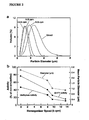
- Droplet size distribution and activities of DHFR and HaeIII methylase in emulsions size distribution of the aqueous compartments in an emulsion determined by laser diffraction
- In vitro transcription/translation reaction mixtures containing DNA and sodium deoxycholate are emulsified by stirring, or by stirring followed by homogenisation at 8k, 9.5k or 13.5k rpm.
- the size distribution of the aqueous particles is shown by percentage of the total aqueous volume.
- DHFR formed in situ by transcription and translation of its gene (Fig. 1b) in aqueous compartments of an emulsion.
- concentration of the fol A gene used (2.5 nM) gives an average of one gene per droplet in the finest emulsions (homogenised at 13.5 k rpm).
- the mean diameter calculated from the size distribution data (in Figure 2a) is presented as a function of the speed of homogenisation (0k rpm refers to the emulsion prepared by stirring with no further homogenisation).
- Activity is presented as percentage of the activity observed in the non-emulsified in vitro reaction mixture under the same conditions.
- the activity of HaeIII methylase formed in situ by transcription and translation of its gene (Fig. 1b ) in aqueous compartments of an emulsion.
- concentration of the M. Hae III gene used (2.5 nM) gives an average of one gene per droplet in the finest emulsions (homogenised at 13.5 k rpm).
- the mean diameter calculated from the size distribution data (in Figure 2a) is presented as a function of the speed of homogenisation; (0k rpm refers to the emulsion prepared by stirring with no further homogenisation).
- Activity is presented as percentage of the activity observed in the non-emulsified in vitro reaction mixture under the same conditions.
- microcapsules of the present invention require appropriate physical properties to allow the working of the invention.
- the contents of each microcapsule must be isolated from the contents of the surrounding microcapsules, so that there is no or little exchange of the genetic elements and gene products between the microcapsules over the timescale of the experiment.
- the method of the present invention requires that there are only a limited number of genetic elements per microcapsule. This ensures that the gene product of an individual genetic element will be isolated from other genetic elements. Thus, coupling between genetic element and gene product will be highly specific. The enrichment factor is greatest with on average one or fewer genetic elements per microcapsule, the linkage between nucleic acid and the activity of the encoded gene product being as tight as is possible, since the gene product of an individual genetic element will be isolated from the products of all other genetic elements.
- a ratio of 5, 10, 50, 100 or 1000 or more genetic elements per microcapsule may prove beneficial in sorting a large library. Subsequent rounds of sorting, including renewed encapsulation with differing genetic element distribution, will permit more stringent sorting of the genetic elements.
- the formation and the composition of the microcapsules must not abolish the function of the machinery the expression of the genetic elements and the activity of the gene products.
- any microencapsulation system used must fulfil these three requirements.
- the appropriate system(s) may vary depending on the precise nature of the requirements in each application of the invention, as will be apparent to the skilled person.
- microencapsulation procedures are available (see Benita, 1996) and may be used to create the microcapsules used in accordance with the present invention. Indeed, more than 200 microencapsulation methods have been identified in the literature (Finch, 1993).
- lipid vesicles liposomes
- non-ionic surfactant vesicles van Hal et al., 1996.
- lipid vesicles liposomes
- van Hal et al., 1996 closed-membranous capsules of single or multiple bilayers of non-covalently assembled molecules, with each bilayer separated from its neighbour by an aqueous compartment.
- liposomes the membrane is composed of lipid molecules; these are usually phospholipids but sterols such as cholesterol may also be incorporated into the membranes (New, 1990).
- RNA and DNA polymerisation can be performed within liposomes (Chakrabarti et al., 1994; Oberholzer et al., 1995a; Oberholzer et al., 1995b; Walde et al., 1994; Wick & Luisi, 1996).
- aqueous phase With a membrane-enveloped vesicle system much of the aqueous phase is outside the vesicles and is therefore non-compartmentalised. This continuous, aqueous phase should be removed or the biological systems in it inhibited or destroyed (for example, by digestion of nucleic acids with DNase or RNase) in order that the reactions are limited to the microcapsules (Luisi et al., 1987).
- Enzyme-catalysed biochemical reactions have also been demonstrated in microcapsules generated by a variety of other methods. Many enzymes are active in reverse micellar solutions (Bru & Walde, 1991; Bru & Walde, 1993; Creagh et al., 1993; Haber et al., 1993; Kumar et al., 1989; Luisi & B., 1987; Mao & Walde, 1991; Mao et al., 1992; Perez et al., 1992; Walde et al., 1994; Walde et al., 1993; Walde et al., 1988) such as the AOT-isooctane-water system (Menger & Yamada, 1979).
- Microcapsules can also be generated by interfacial polymerisation and interfacial complexation (Whateley, 1996). Microcapsules of this sort can have rigid, nonpermeable membranes, or semipermeable membranes. Semipermeable microcapsules bordered by cellulose nitrate membranes, polyamide membranes and lipid-polyamide membranes can all support biochemical reactions, including multienzyme systems (Chang, 1987; Chang, 1992; Lim, 1984). Alginate/polylysine microcapsules (Lim & Sun, 1980), which can be formed under very mild conditions, have also proven to be very biocompatible, providing, for example, an effective method of encapsulating living cells and tissues (Chang, 1992; Sun et al., 1992).
- Non-membranous microencapsulation systems based on phase partitioning of an aqueous environment in a colloidal system, such as an emulsion, may also be used.
- the microcapsules of the present invention are formed from emulsions; heterogeneous systems of two immiscible liquid phases with one of the phases dispersed in the other as droplets of microscopic or colloidal size (Becher, 1957; Sherman, 1968; Lissant, 1974; Lissant, 1984).
- Emulsions may be produced from any suitable combination of immiscible liquids.
- the emulsion of the present invention has water (containing the biochemical components) as the phase present in the form of finely divided droplets (the disperse, internal or discontinuous phase) and a hydrophobic, immiscible liquid (an 'oil') as the matrix in which these droplets are suspended (the nondisperse, continuous or external phase).
- water containing the biochemical components
- an 'oil' hydrophobic, immiscible liquid
- W/O water-in-oil'
- This has the advantage that the entire aqueous phase containing the biochemical components is compartmentalised in discreet droplets (the internal phase).
- the external phase being a hydrophobic oil, generally contains none of the biochemical components and hence is inert.
- the emulsion may be stabilised by addition of one or more surface-active agents (surfactants).
- surfactants are termed emulsifying agents and act at the water/oil interface to prevent (or at least delay) separation of the phases.
- Many oils and many emulsifiers can be used for the generation of water-in-oil emulsions; a recent compilation listed over 16,000 surfactants, many of which are used as emulsifying agents (Ash and Ash, 1993). Suitable oils include light white mineral oil and non-ionic surfactants (Schick, 1966) such as sorbitan monooleate (Span TM 80; ICI) and polyoxyethylenesorbitan monooleate (Tween TM 80; ICI).
- anionic surfactants may also be beneficial.
- Suitable surfactants include sodium cholate and sodium taurocholate. Particularly preferred is sodium deoxycholate, preferably at a concentration of 0.5% w/v, or below. Inclusion of such surfactants can in some cases increase the expression of the genetic elements and/or the activity of the gene products. Addition of some anionic surfactants to a non-emulsified reaction mixture completely abolishes translation. During emulsification, however, the surfactant is transferred from the aqueous phase into the interface and activity is restored. Addition of an anionic surfactant to the mixtures to be emulsified ensures that reactions proceed only after compartmentalisation.
- stirrers such as magnetic stir-bars, propeller and turbine stirrers, paddle devices and whisks
- homogenisers including rotor-stator homogenisers, high-pressure valve homogenisers and jet homogenisers
- colloid mills ultrasound and 'membrane emulsification' devices
- Aqueous microcapsules formed in water-in-oil emulsions are generally stable with little if any exchange of genetic elements or gene products between microcapsules. Additionally, we have demonstrated that several biochemical reactions proceed in emulsion microcapsules. Moreover, complicated biochemical processes, notably gene transcription and translation are also active in emulsion microcapsules. The technology exists to create emulsions with volumes all the way up to industrial scales of thousands of litres (Becher, 1957; Sherman, 1968; Lissant, 1974; Lissant, 1984).
- the preferred microcapsule size will vary depending upon the precise requirements of any individual selection process that is to be performed according to the present invention. In all cases, there will be an optimal balance between gene library size, the required enrichment and the required concentration of components in the individual microcapsules to achieve efficient expression and reactivity of the gene products.
- the processes of expression must occur within each individual microcapsule provided by the present invention. Both in vitro transcription and coupled transcription-translation become less efficient at sub-nanomolar DNA concentrations. Because of the requirement for only a limited number of DNA molecules to be present in each microcapsule, this therefore sets a practical upper limit on the possible microcapsule size.
- the mean volume of the microcapsules is less that 5.2 x 10 -16 m 3 , (corresponding to a spherical microcapsule of diameter less than 10 ⁇ m, more preferably less than 6.5 x 10 -17 m 3 (5 ⁇ m), more preferably about 4.2 x 10 -18 m 3 (2 ⁇ m) and ideally about 9 x 10 -18 m 3 (2.6 ⁇ m).
- the effective DNA or RNA concentration in the microcapsules may be artificially increased by various methods that will be well-known to those versed in the art. These include, for example, the addition of volume excluding chemicals such as polyethylene glycols (PEG) and a variety of gene amplification techniques, including transcription using RNA polymerases including those from bacteria such as E. coli (Roberts, 1969; Blattner and Dahlberg, 1972; Roberts et al., 1975; Rosenberg et al. , 1975), eukaryotes e. g. (Weil et al.
- PEG polyethylene glycols
- thermostable for example, the coupled transcription-translation systems could be made from a thermostable organism such as Thermus aquaticus ).
- microcapsule volume 5.2 x 10 -16 m 3 (corresponding to a sphere of diameter 10 ⁇ m).
- microcapsule size must be sufficiently large to accommodate all of the required components of the biochemical reactions that are needed to occur within the microcapsule. For example, in vitro, both transcription reactions and coupled transcription-translation reactions require a total nucleoside triphosphate concentration of about 2mM.
- RNA molecules of nucleoside triphosphate per microcapsule 8.33 x 10 -22 moles.
- this number of molecules must be contained within a microcapsule of volume 4.17 x 10 -19 litres (4.17 x 10 -22 m 3 which if spherical would have a diameter of 93nm.
- the ribosomes necessary for the translation to occur are themselves approximately 20nm in diameter.
- the preferred lower limit for microcapsules is a diameter of approximately 0.1 ⁇ m (100nm).
- the microcapsule volume is preferably of the order of between 5.2 x 10 -22 m 3 and 5.2 x 10 -16 m 3 corresponding to a sphere of diameter between 0.1 ⁇ m and 10 ⁇ m, more preferably of between about 5.2 x 10 -19 m 3 and 6.5 x 10 -17 m 3 (1 ⁇ m and 5 ⁇ m). Sphere diameters of about 2.6 ⁇ m are most advantageous.
- compartments droplets of 2.6 ⁇ m mean diameter
- Escherichia are 1.1-1.5 x 2.0-6.0 ⁇ m rods
- Azotobacter are 1.5-2.0 ⁇ m diameter ovoid cells.
- Darwinian evolution is based on a 'one genotype one phenotype' mechanism.
- the concentration of a single compartmentalised gene, or genome drops from 0.4 nM in a compartment of 2 ⁇ m diameter, to 25 pM in a compartment of 5 ⁇ m diameter.
- the prokaryotic transcription/translation machinery has evolved to operate in compartments of ⁇ 1-2 ⁇ m diameter, where single genes are at approximately nanomolar concentrations.
- a single gene, in a compartment of 2.6 ⁇ m diameter is at a concentration of 0.2 nM. This gene concentration is high enough for efficient translation. Compartmentalisation in such a volume also ensures that even if only a single molecule of the gene product is formed it is present at about 0.2 nM, which is important if the gene product is to have a modifying activity of the genetic element itself.
- the volume of the microcapsule should thus be selected bearing in mind not only the requirements for transcription and translation of the genetic element, but also the modifying activity required of the gene product in the method of the invention.
- the size of emulsion microcapsules may be varied simply by tailoring the emulsion conditions used to form the emulsion according to requirements of the selection system.
- the size of the microcapsules is selected not only having regard to the requirements of the transcription/translation system, but also those of the selection system employed for the genetic element.
- the components of the selection system such as a chemical modification system, may require reaction volumes and/or reagent concentrations which are not optimal for transcription/translation.
- such requirements may be accommodated by a secondary re-encapsulation step; moreover, they may be accommodated by selecting the microcapsule size in order to maximise transcription/translation and selection as a whole.
- Empirical determination of optimal microcapsule volume and reagent concentration is preferred.
- a “genetic element” in accordance with the present invention is as described above.
- a genetic element is a molecule or construct selected from the group consisting of a DNA molecule, an RNA molecule, a partially or wholly artificial nucleic acid molecule consisting of exclusively synthetic or a mixture of naturally-occurring and synthetic bases, any one of the foregoing linked to a polypeptide, and any one of the foregoing linked to any other molecular group or construct.
- the other molecular group or construct may be selected from the group consisting of nucleic acids, polymeric substances, particularly beads, for example polystyrene beads, magnetic substances such as magnetic beads, labels, such as fluorophores or isotopic labels, chemical reagents, binding agents such as macrocycles and the like.
- the nucleic acid portion of the genetic element may comprise suitable regulatory sequences, such as those required for efficient expression of the gene product, for example promoters, enhancers, translational initiation sequences, polyadenylation sequences, splice sites and the like.
- the polypeptide or other molecular group or construct is a ligand or a substrate which directly or indirectly binds to or reacts with the gene product in order to tag the genetic element. This allows the sorting of the genetic element on the basis of the activity of the gene product.
- the ligand or substrate can be connected to the nucleic acid by a variety of means that will be apparent to those skilled in the art (see, for example, Hermanson, 1996). Any tag will suffice that allows for the subsequent selection of the genetic element. Sorting can be by any method which allows the preferential separation, amplification or survival of the tagged genetic element. Examples include selection by binding (including techniques based on magnetic separation, for example using Dynabeads TM ), and by resistance to degradation (for example by nucleases, including restriction endonucleases).
- nucleic acid molecule may be linked to a ligand or substrate is through biotinylation. This can be done by PCR amplification with a 5'-biotinylation primer such that the biotin and nucleic acid are covalently linked.
- the ligand or substrate to be selected can be attached to the modified nucleic acid by a variety of means that will be apparent to those of skill in the art.
- a biotinylated nucleic acid may be coupled to a polystyrene microbead (0.035 to 0.2 ⁇ m in diameter) that is coated with avidin or streptavidin, that will therefore bind the nucleic acid with very high affinity.
- This bead can be derivatised with substrate or ligand by any suitable method such as by adding biotinylated substrate or by covalent coupling.
- a biotinylated nucleic acid may be coupled to avidin or streptavidin complexed to a large protein molecule such as thyroglobulin (669 Kd) or ferritin (440 Kd).
- This complex can be derivatised with substrate or ligand, for example by covalent coupling to the ⁇ -amino group of lysines or through a non-covalent interaction such as biotin-avidin.
- the substrate may be present in a form unlinked to the genetic element but containing an inactive "tag” that requires a further step to activate it such as photoactivation (e.g. of a "caged" biotin analogue, (Sundberg et al., 1995; Pirrung and Huang, 1996)).
- the catalyst to be selected then converts the substrate to product.
- the "tag” could then be activated and the "tagged” substrate and/or product bound by a tag-binding molecule (e.g. avidin or streptavidin) complexed with the nucleic acid.
- a tag-binding molecule e.g. avidin or streptavidin
- an alternative is to couple the nucleic acid to a product-specific antibody (or other product-specific molecule).
- the substrate or one of the substrates
- the substrate is present in each microcapsule unlinked to the genetic element, but has a molecular "tag” (for example biotin, DIG or DNP).
- tag for example biotin, DIG or DNP.
- the catalyst to be selected converts the substrate to product
- the product retains the "tag” and is then captured in the microcapsule by the product-specific antibody.
- the genetic element only becomes associated with the "tag” when it encodes or produces an enzyme capable of converting substrate to product.
- the genetic elements encoding active enzymes can be enriched using an antibody or other molecule which binds, or reacts specifically with the "tag". Although both substrates and product have the molecular tag, only the genetic elements encoding active gene product will co-purify.
- Isolation refers to the process of separating an entity from a heterogeneous population, for example a mixture, such that it is free of at least one substance with which it was associated before the isolation process.
- isolation refers to purification of an entity essentially to homogeneity.
- Sorting of an entity refers to the process of preferentially isolating desired entities over undesired entities. In as far as this relates to isolation of the desired entities, the terms "isolating" and “sorting” are equivalent.
- the method of the present invention permits the sorting of desired genetic elements from pools (libraries or repertoires) of genetic elements which contain the desired genetic element. Selecting is used to refer to the process (including the sorting process) of isolating an entity according to a particular property thereof.
- the method of the present invention is useful for sorting libraries of genetic elements.
- the invention accordingly provides a method according to preceding aspects of the invention, wherein the genetic elements are isolated from a library of genetic elements encoding a repertoire of gene products.
- library the terms "library”, “repertoire” and “pool” are used according to their ordinary signification in the art, such that a library of genetic elements encodes a repertoire of gene products.
- libraries are constructed from pools of genetic elements and have properties which facilitate sorting.
- Libraries can also be made by introducing mutations into a genetic element or pool of genetic elements 'randomly' by a variety of techniques in vivo, including; using 'mutator strains', of bacteria such as E. coli mutD5 (Liao et al., 1986; Yamagishi et al., 1990; Low et al., 1996); using the antibody hypermutation system of B-lymphocytes (Yelamos et al., 1995).
- Random mutations can also be introduced both in vivo and in vitro by chemical mutagens, and ionising or UV irradiation (see Friedberg et al., 1995), or incorporation of mutagenic base analogues (Freese, 1959; Zaccolo et al., 1996). 'Random' mutations can also be introduced into genes in vitro during polymerisation for example by using error-prone polymerases (Leung et al., 1989).
- Mutations may be introduced into the genetic elements(s) as set forth above.
- the genetic elements according to the invention advantageously encode enzymes, preferably of pharmacological or industrial interest, activators or inhibitors, especially of biological systems, such as cellular signal transduction mechanisms, antibodies and fragments thereof, other binding agents suitable for diagnostic and therapeutic applications.
- the invention permits the identification and isolation of clinically or industrially useful products.
- a product when isolated by the method of the invention.
- encapsulation conditions are desirable. Depending on the complexity and size of the library to be screened, it may be beneficial to set up the encapsulation procedure such that 1 or less than 1 genetic element is encapsulated per microcapsule. This will provide the greatest power of resolution. Where the library is larger and/or more complex, however, this may be impracticable; it may be preferable to encapsulate several genetic elements together and rely on repeated application of the method of the invention to achieve sorting of the desired activity. A combination of encapsulation procedures may be used to obtain the desired enrichment.
- a repertoire size of at least 10 11 can be selected using 1ml aqueous phase in a 20 ml emulsion.
- the microcapsules according to the invention will comprise further components required for the sorting process to take place.
- Other components of the system will for example comprise those necessary for transcription and/or translation of the genetic element. These are selected for the requirements of a specific system from the following; a suitable buffer, an in vitro transcription/replication system and/or an in vitro translation system containing all the necessary ingredients, enzymes and cofactors, RNA polymerase, nucleotides, nucleic acids (natural or synthetic), transfer RNAs, ribosomes and amino acids, and the substrates of the reaction of interest in order to allow selection of the modified gene product.
- a suitable buffer will be one in which all of the desired components of the biological system are active and will therefore depend upon the requirements of each specific reaction system. Buffers suitable for biological and/or chemical reactions are known in the art and recipes provided in various laboratory texts, such as Sambrook et al., 1989.
- the in vitro translation system will usually comprise a cell extract, typically from bacteria (Zubay, 1973; Zubay, 1980; Lesley et al., 1991; Lesley, 1995), rabbit reticulocytes (Pelham and Jackson, 1976), or wheat germ (Anderson et al., 1983).
- a cell extract typically from bacteria (Zubay, 1973; Zubay, 1980; Lesley et al., 1991; Lesley, 1995), rabbit reticulocytes (Pelham and Jackson, 1976), or wheat germ (Anderson et al., 1983).
- Many suitable systems are commercially available (for example from Promega) including some which will allow coupled transcription/translation (all the bacterial systems and the reticulocyte and wheat germ TNT TM extract systems from Promega).
- the mixture of amino acids used may include synthetic amino acids if desired, to increase the possible number or variety of proteins produced in the library. This can be accomplished by charging tRNAs with artificial amino acids and using these tRNAs for the in vitro translation of the proteins
- the enrichment of the pool of genetic elements for those encoding the molecules of interest can be assayed by non-compartmentalised in vitro transcription/replication or coupled transcription-translation reactions.
- the selected pool is cloned into a suitable plasmid vector and RNA or recombinant protein is produced from the individual clones for further purification and assay.
- the invention moreover relates to a method for producing a gene product, once a genetic element encoding the gene product has been sorted by the method of the invention.
- the genetic element itself may be directly expressed by conventional means to produce the gene product.
- alternative techniques may be employed, as will be apparent to those skilled in the art.
- the genetic information incorporated in the gene product may be incorporated into a suitable expression vector, and expressed therefrom.
- the invention also describes the use of conventional screening techniques to identify compounds which are capable of interacting with the gene products identified by the first aspect of the invention.
- gene product encoding nucleic acid is incorporated into a vector, and introduced into suitable host cells to produce transformed cell lines that express the gene product.
- the resulting cell lines can then be produced for reproducible qualitative and/or quantitative analysis of the effect(s) of potential drugs affecting gene product function.
- gene product expressing cells may be employed for the identification of compounds, particularly small molecular weight compounds, which modulate the function of gene product.
- host cells expressing gene product are useful for drug screening and it is a further object of the present invention to provide a method for identifying compounds which modulate the activity of the gene product, said method comprising exposing cells containing heterologous DNA encoding gene product, wherein said cells produce functional gene product, to at least one compound or mixture of compounds or signal whose ability to modulate the activity of said gene product is sought to be determined, and thereafter monitoring said cells for changes caused by said modulation.
- modulators such as agonists, antagonists and allosteric modulators
- a compound or signal that modulates the activity of gene product refers to a compound that alters the activity of gene product in such a way that the activity of gene product is different in the presence of the compound or signal (as compared to the absence of said compound or signal).
- Cell-based screening assays can be designed by constructing cell lines in which the expression of a reporter protein, i.e. an easily assayable protein, such as b galactosidase, chloramphenicol acetyltransferase (CAT) or luciferase, is dependent on gene product.
- a reporter protein i.e. an easily assayable protein, such as b galactosidase, chloramphenicol acetyltransferase (CAT) or luciferase
- CAT chloramphenicol acetyltransferase
- the present invention also provides a method to exogenously affect gene product dependent processes occurring in cells.
- Recombinant gene product producing host cells e.g. mammalian cells
- the invention relates to a method for optimising a production process which involves at least one step which is facilitated by a polypeptide.
- the step may be a catalytic step, which is facilitated by an enzyme.
- the invention provides a method for preparing a compound or compounds comprising the steps of:
- enzymes involved in the preparation of a compound may be optimised by selection for optimal activity.
- the procedure involves the preparation of variants of the polypeptide to be screened, which equate to a library of polypeptides as refereed to herein.
- the variants may be prepared in the same manner as the libraries discussed elsewhere herein.
- the system can be configured to select for RNA, DNA or protein gene product molecules with catalytic, regulatory or binding activity.
- the genetic element may be linked to the gene product in the microcapsule via the ligand. Only gene products with affinity for the ligand will therefore bind to the genetic element itself and therefore only genetic elements that produce active product will be retained in the selection step.
- the genetic element will thus comprise a nucleic acid encoding the gene product linked to a ligand for the gene product.
- all the gene products to be selected contain a putative binding domain, which is to be selected for, and a common feature - a tag.
- the genetic element in each microcapsule is physically linked to the ligand. If the gene product produced from the genetic element has affinity for the ligand, it will bind to it and become physically linked to the same genetic element that encoded it, resulting in the genetic element being 'tagged'.
- all of the microcapsules are combined, and all genetic elements and gene products pooled together in one environment. Genetic elements encoding gene products exhibiting the desired binding can be selected by affinity purification using a molecule that specifically binds to, or reacts specifically with, the "tag".
- genetic elements may be sorted on the basis that the gene product, which binds to the ligand, merely hides the ligand from, for example, further binding partners.
- the genetic element rather than being retained during an affinity purification step, may be selectively eluted whilst other genetic elements are bound.
- the invention provides a method according to the first aspect of the invention, wherein in step (b) the gene products bind to genetic elements encoding them.
- the gene products together with the attached genetic elements are then sorted as a result of binding of a ligand to gene products having the desired activity.
- all gene products can contain an invariant region which binds covalently or non-covalently to the genetic element, and a second region which is diversified so as to generate the desired binding activity.
- binding pair refers to any pair of molecules capable of binding to one another.
- binding pairs include an antigen and an antibody or fragment thereof capable of binding the antigen, the biotin-avidin/streptavidin pair (Savage et al., 1994), a calcium-dependent binding polypeptide and ligand thereof (e.g.
- calmodulin and a calmodulin-binding peptide (Stofko et al., 1992; Montigiani et al., 1996)), pairs of polypeptides which assemble to form a leucine zipper (Tripet et al., 1996), histidines (typically hexahistidine peptides) and chelated Cu 2+ , Zn 2+ and Ni 2+ , (e.g. Ni-NTA; Hochuli et al., 1987), RNA-binding and DNA-binding proteins (Klug, 1995) including those containing zinc-finger motifs (Klug and Schwabe, 1995) and DNA methyltransferases (Anderson, 1993), and their nucleic acid binding sites.
- the genetic element in each microcapsule may comprise the substrate of the reaction. If the genetic element encodes a gene product capable of acting as a catalyst, the gene product will catalyse the conversion of the substrate into the product. Therefore, at the end of the reaction the genetic element is physically linked to the product of the catalysed reaction.
- genetic elements encoding catalytic molecules can be enriched by selecting for any property specific to the product ( Figure 1).
- enrichment can be by affinity purification using a molecule (e.g. an antibody) that binds specifically to the product.
- a molecule e.g. an antibody
- the gene product may have the effect of modifying a nucleic acid component of the genetic element, for example by methylation (or demethylation) or mutation of the nucleic acid, rendering it resistant to or susceptible to attack by nucleases, such as restriction endonucleases.
- selection may be performed indirectly by coupling a first reaction to subsequent reactions that takes place in the same microcapsule.
- first reaction could be reacted with, or bound by, a molecule which does not react with the substrate of the first reaction.
- a second, coupled reaction will only proceed in the presence of the product of the first reaction.
- An active genetic element can then be purified by selection for the properties of the product of the second reaction.
- the product of the reaction being selected may be the substrate or cofactor for a second enzyme-catalysed reaction.
- the enzyme to catalyse the second reaction can either be translated in situ in the microcapsules or incorporated in the reaction mixture prior to microencapsulation. Only when the first reaction proceeds will the coupled enzyme generate a selectable product.
- This concept of coupling can be elaborated to incorporate multiple enzymes, each using as a substrate the product of the previous reaction. This allows for selection of enzymes that will not react with an immobilised substrate. It can also be designed to give increased sensitivity by signal amplification if a product of one reaction is a catalyst or a cofactor for a second reaction or series of reactions leading to a selectable product (for example, see Johannsson and Bates, 1988; Johannsson, 1991). Furthermore an enzyme cascade system can be based on the production of an activator for an enzyme or the destruction of an enzyme inhibitor (see Mize et al., 1989). Coupling also has the advantage that a common selection system can be used for a whole group of enzymes which generate the same product and allows for the selection of complicated chemical transformations that cannot be performed in a single step.
- Such a method of coupling thus enables the evolution of novel "metabolic pathways" in vitro in a stepwise fashion, selecting and improving first one step and then the next.
- the selection strategy is based on the final product of the pathway, so that all earlier steps can be evolved independently or sequentially without setting up a new selection system for each step of the reaction.
- a similar system can be used to select for regulatory properties of enzymes.
- the components of the biochemical process can either be translated in situ in each microcapsule or can be incorporated in the reaction mixture prior to microencapsulation. If the genetic element being selected is to encode an activator, selection can be performed for the product of the regulated reaction, as described above in connection with catalysis. If an inhibitor is desired, selection can be for a chemical property specific to the substrate of the regulated reaction.
- microcapsules may be sorted as such when the change induced by the desired gene product either occurs or manifests itself at the surface of the microcapsule or is detectable from outside the microcapsule.
- the change may be caused by the direct action of the gene product, or indirect, in which a series of reactions, one or more of which involve the gene product having the desired activity leads to the change.
- the microcapsule may be so configured that the gene product is displayed at its surface and thus accessible to reagents. Where the microcapsule is a membranous microcapsule, the gene product may be targeted or may cause the targeting of a molecule to the membrane of the microcapsule.
- microcapsule localisation sequence such as those derived from membrane proteins, which will favour the incorporation of a fused or linked molecule into the microcapsule membrane.
- a membrane localisation sequence such as those derived from membrane proteins, which will favour the incorporation of a fused or linked molecule into the microcapsule membrane.
- a molecule having parts which are more soluble in the extra-capsular phase will arrange themselves such that they are present at the boundary of the microcapsule.
- microcapsule sorting is applied to sorting systems which rely on a change in the optical properties of the microcapsule, for example absorption or emission characteristics thereof, for example alteration in the optical properties of the microcapsule resulting from a reaction leading to changes in absorbance, luminescence, phosphorescence or fluorescence associated with the microcapsule. All such properties are included in the term "optical".
- microcapsules can be sorted by luminescence, fluorescence or phosphorescence activated sorting.
- fluorescence activated sorting is employed to sort microcapsules in which the production of a gene product having a desired activity is accompanied by the production of a fluorescent molecule in the cell.
- the gene product itself may be fluorescent, for example a fluorescent protein such as GFP.
- the gene product may induce or modify the fluorescence of another molecule, such as by binding to it or reacting with it.
- Microcapsules may be identified by virtue of a change induced by the desired gene product which either occurs or manifests itself at the surface of the microcapsule or is detectable from the outside as described in section iii (Microcapsule Sorting). This change, when identified, is used to trigger the modification of the gene within the compartment.
- microcapsule identification relies on a change in the optical properties of the microcapsule resulting from a reaction leading to luminescence, phosphorescence or fluorescence within the microcapsule. Modification of the gene within the microcapsules would be triggered by identification of luminescence, phosphorescence or fluorescence.
- identification of luminescence, phosphorescence or fluorescence can trigger bombardment of the compartment with photons (or other particles or waves) which leads to modification of the genetic element.
- Modification of the genetic element may result, for example, from coupling a molecular "tag", caged by a photolabile protecting group to the genetic elements: bombardment with photons of an appropriate wavelength leads to the removal of the cage. Afterwards, all microcapsules are combined and the genetic elements pooled together in one environment. Genetic elements encoding gene products exhibiting the desired activity can be selected by affinity purification using a molecule that specifically binds to, or reacts specifically with, the "tag".
- the selection procedure may comprise two or more steps. First, transcription/replication and/or translation of each genetic element of a genetic element library may take place in a first microcapsule. Each gene product is then linked to the genetic element which encoded it (which resides in the same microcapsule). The microcapsules are then broken, and the genetic elements attached to their respective gene products optionally purified. Alternatively, genetic elements can be attached to their respective gene products using methods which do not rely on encapsulation.
- phage display Smith, G.P.,1985), polysome display (Mattheakkis et al., 1994), RNA-peptide fusion (Roberts and Szostak, 1997) or lac repressor peptide fusion (Cull, et al., 1992).
- each purified genetic element attached to its gene product is put into a second microcapsule containing components of the reaction to be selected. This reaction is then initiated. After completion of the reactions, the microcapsules are again broken and the modified genetic elements are selected.
- one or more intervening steps may be performed between the initial step of creation and linking of gene product to genetic element, and the final step of generating the selectable change in the genetic element.
- the system can be configured such that the desired binding, catalytic or regulatory activity encoded by a genetic element leads, directly or indirectly to the activation of expression of a "reporter gene" that is present in all microcapsules. Only gene products with the desired activity activate expression of the reporter gene. The activity resulting from reporter gene expression allows the selection of the genetic element (or of the compartment containing it) by any of the methods described herein.
- activation of the reporter gene may be the result of a binding activity of the gene product in a manner analogous to the "two hybrid system" (Fields and Song, 1989).
- Activation might also result from the product of a reaction catalysed by a desirable gene product.
- the reaction product could be a transcriptional inducer of the reporter gene.
- arabinose could be used to induce transcription from the araBAD promoter.
- the activity of the desirable gene product could also result in the modification of a transcription factor, resulting in expression of the reporter gene.
- the desired gene product is a kinase or phosphatase the phosphorylation or dephosphorylation of a transcription factor may lead to activation of reporter gene expression.
- the method comprises the further step of amplifying the genetic elements.
- Selective amplification may be used as a means to enrich for genetic elements encoding the desired gene product.
- genetic material comprised in the genetic elements may be amplified and the process repeated in iterative steps.
- Amplification may be by the polymerase chain reaction (Saiki et al., .1988) or by using one of a variety of other gene amplification techniques including; Q ⁇ replicase amplification (Cahill, Foster and Mahan, 1991; Chetverin and Spirin, 1995; Katanaev, Kurnasov and Spirin, 1995); the ligase chain reaction (LCR) (Landegren et al., 1988; Barany, 1991); the self-sustained sequence replication system (Fahy, Kwoh and Gingeras, 1991) and strand displacement amplification (Walker et al., 1992).
- LCR ligase chain reaction
- a method for compartmentalising a genetic element and expressing the genetic element to form its gene product within the compartment comprising the steps of:
- a library of genetic elements encoding a repertoire of gene products is encapsulated by the method set forth above, and the genetic elements expressed to produce their respective gene products, in accordance with the invention.
- microencapsulation is achieved by forming a water-in-oil emulsion of the aqueous solution comprising the genetic elements.
- the invention accordingly, also provides a microcapsule obtainable by the method set forth above.
- Microcapsules within the preferred size range of the present invention can be generated using a water-in-oil emulsion system.
- Light white mineral oil (Sigma; M-3516) is used herein as the continuous phase and the emulsion is stabilised by emulsifiers sorbitan monooleate (Span 80, Fluka; 85548) and polyoxyethylenesorbitan monooleate (Tween 80, Sigma Ultra; P-8074) and in some cases also with 0.5% w/v sodium deoxycholate (Fluka; 30970).
- the oil phase is freshly prepared by dissolving 4.5% (v/v) Span 80 (Fluka) in mineral oil (Sigma, #M-5904) followed by 0.5% (v/v) Tween 80 (SigmaUltra; #P-8074). Ice-cooled in vitro reaction mixtures (50 ⁇ l) are added gradually (in 5 aliquots of 10 ⁇ l over ⁇ 2 minutes) to 0.95 ml of ice-cooled oil-phase in a 5 ml Costar Biofreeze Vial (#2051) whilst stirring with a magnetic bar (8x3 mm with a pivot ring; Scientific Industries International, Loughborough, UK). Stirring (at 1150 rpm) is continued for an additional 1 minute on ice.
- the aqueous phase is supplemented with an anionic surfactant - e.g., sodium deoxycholate, sodium cholate, sodium glycocholate, and sodium taurocholate, typically to 0.5% (w/v).
- an anionic surfactant e.g., sodium deoxycholate, sodium cholate, sodium glycocholate, and sodium taurocholate, typically to 0.5% (w/v).
- the emulsion is further homogenised using an Ultra-Turrax T25 disperser (IKA) equipped with an 8 mm diameter dispersing tool at 8k, 9k or 13.5k rpm for 1 minute, or at 20k rpm for 1 or 5 minutes, on ice. This reduces the microcapsule size.
- IKA Ultra-Turrax T25 disperser
- the reactions may be quenched and the emulsion broken as indicated in individual examples, by spinning at 3,000 g for 5 minutes and removing the oil phase, leaving the concentrated emulsion at the bottom of the vial.
- Quenching buffer typically, 0.2 ml of 25 ⁇ g/ml yeast RNA in W+B buffer: 1 M NaCl, 10 mM Tris-HCl, 1 mM EDTA pH 7.4
- 2 ml of water-saturated diethyl ether is added and the mixture vortexed, centrifuged briefly, and the ether phase removed.
- the aqueous phase is washed with ether and dried (5 minutes in a Speedvac at ambient temperature).
- the size distribution of the aqueous droplets in the emulsions was determined by laser diffraction using a Coulter LS230 Particle Size Analyser. An aliquot of emulsion, freshly diluted (1:10) in mineral oil is added to the micro-volume chamber containing stirred mineral oil. Results are analysed with the instrument's built-in Mie optical model using refractive indices of 1.468 for mineral oil and 1.350 for the aqueous phase. The size distribution of the aqueous droplets in the emulsion is shown in Figure 2. Addition of sodium deoxycholate does not significantly alter the size distribution.
- RNA RNA from DNA within each microcapsule
- the single molecule of DNA present within each aqueous microcapsule of the system must be transcribed efficiently.
- in vitro transcription is demonstrated within microcapsules.
- the catalytic core of the Tetrahymena self-splicing intron is a much-studied ribozyme which can catalyse a variety of phosphoester transfer reactions (Sag et al., 1986; Sag and Czech, 1986; Sag and Czech, 1986).
- a modified Tetrahymena intron missing the P1 stem-loop from the 5'-end, and missing the 3' stem-loops P9.1 and P9.2 can function as an RNA ligase, efficiently splicing together two or more oligonucleotides aligned on a template strand (Green and Szostak, 1992).
- DNA encoding the above-described Tetrahymena ribozyme is PCR-amplified using primers P2T7Ba (which anneals to the P2 loop region and appends a T7 RNA polymerase promoter) and P9Fo (which anneals to the P9 loop region). This creates a 331 base pair DNA fragment carrying the T7 RNA polymerase promoter. This fragment is purified directly using Wizard PCR Preps (Promega) and used as the template for an in vitro transcription reaction using T7 RNA polymerase.
- a transcription reaction is set up in a volume of 200 ⁇ l and divided into 2 aliquots, each containing 3 x 10 11 molecules of DNA (5nM).
- One 100 ⁇ l aliquot is added to 2ml Sigma light mineral oil containing 4.5% Span 80 and 0.5% Tween 80 and homogenised for 5 minutes with an Ultra-Turrax T25 disperser at 20,000 rpm as in Example 1.
- Based on the mean microcapsule volume in these emulsions (2.8 X 10 -19 m 3 for a 0.81 ⁇ m diameter microcapsule) the 100 ⁇ l reaction would be divided into 3.6 x 10 11 microcapsules. Hence, there should be 1 molecule of DNA per microcapsule on average.
- the rate of transcription is taken as the increase in acid perceptible cpm over the 10 minute incubation at 37°C.
- the rate of transcription in the emulsion is 33% of that found in the non-emulsified control reaction.
- RNA can be efficiently synthesised by T7 RNA polymerase in the aqueous microcapsules of a water-in-oil emulsion.
- translation In order to synthesise proteins using the procedure of the present invention, translation must be active in the aqueous microcapsules of the water-in-oil emulsion described herein.
- a protein E. coli dihydrofolate reductase
- a coupled transcription/translation system E. coli dihydrofolate reductase
- the E. coli fol A gene encoding dihydrofolate reductase (DHFR) is PCR-amplified using oligonucleotides EDHFRFo and EDHFRBa. This DNA is then cloned into the pGEM-4Z vector (Promega) digested with Hind III and Kpn I downstream of the both the lac promoter and the T7 RNA polymerase promoter.
- the oligonucleotide EDHFRBa appends the efficient phage T7 gene 10 translational start site upstream of the DHFR start codon.
- DNA sequencing identifies a clone which has the correct nucleotide sequence.
- Bacteria transformed with this clone (pGEM -fol A) are found to over express active DHFR (driven from the lac promoter) when induced with IPTG.
- the pGEM- fol A plasmid is then PCR-amplified using primers LMB2 and LMB3 under the conditions described above to create a 649bp DNA fragment carrying the T7 RNA polymerase promoter, the phage T7 gene 10 translational start site and the fol A gene.
- This PCR fragment is purified directly using Wizard PCR Preps (Promega) and used to program a prokaryotic in vitro coupled transcription/translation system designed for linear templates (Lesley, Brow and Burgess, 1991).
- a 300 ⁇ l translation reaction is set up on ice containing 3 x 10 12 molecules of DNA.
- T7 RNA polymerase (10 4 units) is added to drive transcription and the translated protein is labelled by the addition of [ 35 S] methionine.
- a 150 ⁇ l aliquot of this reaction is added to 2.85 ml Sigma light mineral oil containing 4.5% Span 80 and 0.5% Tween 80 and homogenised for 1 minute with an Ultra-Turrax T25 disperser at 20,000 rpm, as in Example 1. The other aliquot is not emulsified.
- the 150 ⁇ l reaction would be divided into 1.3 x 10 11 , microcapsules). Hence, there should be roughly 11 molecules of DNA per microcapsule.
- the emulsions are spun in a microfuge at 13,000 r.p.m. for 5 minutes at 4°C and the mineral oil removed leaving the concentrated (but still intact) emulsion at the bottom of the tube. After briefly re-spinning and removing any further mineral oil, the emulsion is broken and any further translation stopped by adding 100 ⁇ l water containing 125 ⁇ g/ml puromycin, and 1 ml water saturated diethyl ether. This mixture is vortexed and respun in a microfuge at 13,000 r.p.m. for 1 minute at 4°C. The ether and dissolved mineral oil is then removed by aspiration and the extraction repeated with a further 1 ml of ether. Any remaining ether is driven off by spinning for 5 minutes in a Speedvac at room temperature.
- the mean area under the 18kd peak is 15,073 units whereas the mean area under the same peak in the non-emulsified control reactions is 18,990 units.
- the amount of DHFR protein is calculated to be 79% that found in the nonemulsified control reactions. This therefore indicates that the transcription/translation system is functional in the water-in-oil emulsion system of the present invention.
- Dihydrofolate reductase produced using the coupled in vitro transcription/translation reactions is active.
- protein E . coli dihydrofolate reductase
- a catalytically active form by coupled transcription/translation of the fol A gene in the aqueous microcapsules of a water-in-oil emulsion system.
- an emulsion comprising microcapsules below optimal size is used; DHFR activity is shown to be higher in the larger microcapsule sizes.
- 175 ⁇ l translation reactions (unlabelled) are set up on ice containing either 2 x 10 11 , 6 x 10 12 or 1.8 x 10 12 molecules of the fol A template DNA used in Example 3, or no DNA.
- T7 RNA polymerase (6 x 10 3 units) are added to each reaction to drive transcription.
- Example 1 A 100 ⁇ l aliquot of each reaction is added to 1.9ml Sigma light mineral oil containing 4.5% Span 80 and 0.5% Tween 80 and homogenised for 1 minute or 5 minutes with an Ultra-Turrax T25 Homogeniser equipped with an 8mm diameter dispersing tool, at 20,000 rpm as in Example 1. After homogenisation for 1 minute the mean diameter of particles (by volume) is 1.30 ⁇ m (median 1.28 ⁇ m). 98% by volume of the internal (aqueous) phase is present in particles varying from 0.63 ⁇ m to 2.12 ⁇ m. After homogenisation for 5 minutes the mean diameter of microcapsules (by volume) is 0.81 ⁇ m (median 0.79 ⁇ m) and 98% by volume of the internal (aqueous) phase is present in particles varying from 0.41 ⁇ m to 1.38 ⁇ M.
- the emulsions, and the non-emulsified reaction mix are incubated in a 25°C water bath. 0.5 ml samples of the emulsion are removed immediately before the start of the incubation and after 2 hours and placed on ice. 25 ⁇ l samples are removed from the non-emulsified control reactions at the same times.
- the emulsions are spun in a microfuge at 13,000 r.p.m. for 5 min. at 4°C and the mineral oil removed by aspiration, leaving the concentrated (but still intact) emulsion at the bottom of the tube. After briefly re-spinning and removing any further mineral oil the emulsion is broken and any further translation stopped by adding 100 ⁇ l Buffer A (100 mM Imidazole pH 7.0, 10 mM ⁇ -mercaptoethanol), containing 125 ⁇ g/ml puromycin and 1ml water saturated diethyl ether. The mixture is vortexed and spun in a microfuge at 13,000 r.p.m. for 1 min. at 4°C.
- Buffer A 100 mM Imidazole pH 7.0, 10 mM ⁇ -mercaptoethanol
- ether and dissolved mineral oil is removed by aspiration and the extraction repeated with a further 1ml of ether. Any remaining ether is driven off by spinning for 5 minutes in a Speedvac at room temperature. 100 ⁇ l Buffer A containing (125 ⁇ g/ml) puromycin is also added to the 25 ⁇ l non-emulsified control reactions.
- Dihydrofolate reductase activity is assayed as by spectrophotometrically monitoring the oxidation of NADPH to NADP at 340nm over a 10 minute time course as described by Williams et al., 1979; Ma et al., 1993. 10 ⁇ l of each quenched in vitro translation reaction is added to 150 ⁇ l Buffer A (100 mM Imidazole, pH 7.0, 10 mM ⁇ -mercaptoethanol) and 20 ⁇ l 1mM NADPH. 20 ⁇ l Dihydrofolate (1mM)(H 2 F) is added after 1 minute and the reaction monitored at 340nm using a ThermoMax microplate reader (Molecular Devices). Activity is calculated by initial velocities under So>>K M conditions ( ⁇ max ). The background activity in the S30 extract is subtracted from all samples.
- DHFR activity generated in the emulsions is taken from the difference in activity measured at 0 hours and 2 hours incubation. No increase in NADPH oxidation occurred between the 0 hour and 2 hour samples when 0.1 ⁇ M methotrexate (a specific inhibitor of DHFR) is added showing that all the increase in NADPH oxidation observed is due to DHFR produced in the in vitro translation reactions.
- methotrexate a specific inhibitor of DHFR
- the DHFR activity generated in the emulsions is 31% that found in the non-emulsified control reactions with 1.3 molecules of DNA per microcapsule; 45% with 3.9 molecules of DNA per microcapsule; and 84% with 11.8 molecules of DNA per microcapsule.
- the DHFR activity generated in the emulsions is 7% that found in the non-emulsified control reactions with 0.3 molecules of DNA per microcapsule; 15% with 1 molecule of DNA per microcapsule; and 35% with 2.9 molecules of DNA per microcapsule, on average.
- the DHFR activity resulting from coupled transcription/translation of fol A genes is also measured in the larger microcapsules produced by stirring alone, or by stirring followed by further homogenisation with an Ultra-Turrax T25 disperser at 8,000 rpm, 9,000 rpm, or 13,500 rpm for 1 minute as described in Example 1.
- the results are presented in Figure 2b.
- the concentration of fol A genes used (2.5 nM) gives an average of 1, 1.5 and 4.8 genetic elements per droplet in the emulsions homogenised at 13,500 rpm, 9,500 rpm and 8,000 rpm, respectively, and an average of 14 genetic element per droplet in the emulsion prepared by stirring only.
- Addition of sodium deoxycholate (0.5%) to the in vitro translation reaction mixture does not significantly affect the DHFR activity observed in the broken emulsions.
- the DNA fragment is first biotinylated and then coupled to a complex of avidin with apoferritin.
- Horse spleen apoferritin is a large, near spherical protein molecule of 12.5nm diameter which therefore provides multiple sites which can be derivatised with substrate (e.g. the ⁇ -amino group of surface lysines).
- substrate e.g. the ⁇ -amino group of surface lysines.
- coli DHFR is PCR amplified using the primers LMB3 and 5'-biotinylated LMB2 (LMB2-Biotin) to create a biotinylated 649bp DNA fragment carrying the T7 RNA polymerase promoter, the phage T7 gene 10 translational start site and the fol A gene (see Example 3).
- the DNA is radiolabelled by supplementing the 500 ⁇ l PCR reaction mix with 100 ⁇ Ci [ ⁇ - 32 P]dCTP (Amersham; 3000 Ci/mmol).
- the biotinylated PCR fragment is purified directly using Wizard PCR Preps (Promega) and the concentration determined spectrophotometrically. The percentage of DNA biotinylated is assayed by binding to Streptavidin M-280 Dynabeads (Dynal) and scintillation counting. 83% of the DNA is determined to be biotinylated using this technique.
- the sequestered iron is removed from a commercial conjugate of avidin and ferritin (Avidin-Ferritin; approx. 1.1 mole ferritin per mole avidin; Sigma) by the overnight dialysis (4°C) of a solution of avidin-ferritin in PBS (1 mg/ml) against 0.12M thioglycollic acid, pH 4.25, followed by 24 hours dialysis against PBS (4°C) as described by Kadir and Moore, 1990. Removal of iron is checked by analysis of the absorbance spectra (sequestered Fe(III) absorbs strongly at 310-360nm).
- biotinylated DNA is incubated with varying molar ratios of avidin-apoferritin in PBS (total volume 9 ⁇ l) for 30 minutes at room temperature. A 4.5 ⁇ l aliquot is removed and the percentage of DNA complexed with avidin-apoferritin assayed using band-shifting assay on a 1.5% agarose gel as described by Berman et al., 1987. The gel is then dried and scanned using a PhosphorImager (Molecular Dynamics). The percentage of DNA remaining unshifted (i.e.
- the remaining 4.5 ⁇ l of DNA complexed with avidin-apoferritin is used as the template for a 25 ⁇ l in vitro transcription/translation reaction ( E . coli S30 Extract System for Linear Templates; Promega). After 2 hours at 25°C, the reaction is stopped by adding 100 ⁇ l Buffer A containing puromycin (125 ⁇ g/ml). Dihydrofolate reductase activity is assayed as above by spectrophotometrically monitoring the oxidation of NADPH to NADP at 340nm over a 10 minute time course.
- both the transcription-translation reaction and DHFR must be active in the same buffer system.
- a direct assay for DHFR activity in a complete E. coli in vitro translation system based on the spectrophotometrically monitoring of the oxidation of NADPH to NADP at 340nm is not practical due to the turbidity of the S30 extracts.
- E. coli DHFR is obtained by IPTG-induction of bacteria containing the plasmid pGEM- fol A and affinity-purified on a methotrexate-Sepharose column (Baccanari et al., 1977).
- DHFR activity is compared in Buffer A as above or in an in vitro translation mixture complete except for the substitution of S30 dialysis buffer (Lesley 1995) (10mM Tris-acetate pH8.0, 14mM magnesium acetate, 60mM potassium acetate, 1mM DTT) for the S30 fraction.
- S30 dialysis buffer (Lesley 1995) (10mM Tris-acetate pH8.0, 14mM magnesium acetate, 60mM potassium acetate, 1mM DTT) for the S30 fraction.
- the total reaction volume is 200 ⁇ l and the concentration of NADPH and Emulsions were broken and reactions were stopped with 0.5 ml EDTA (50 mM) and 2 ml water-saturated diethyl ether as described in Example 1 each 0.1mM. Reactions are monitored spectrophotometrically at 340nm. Addition of 1.75pmole (1.3mUnits) E . coli DHFR gives initial rates of -25.77 mOD/min (in
- DHFR The activity of DHFR on a genetic element containing an immobilised dihydrofolate substrate leads to the formation of a tetrahydrofolate product linked to nucleic acid encoding DHFR.
- a peptide is synthesised comprising three glutamic acids linked via their ⁇ -caboxylates (using N-fluorenylmethoxycarbonyl-glutamic acid ⁇ -benzyl ester as a starting material) with a lysine at the carboxy-terminus and biotin linked to its ⁇ -amino group by modifying published procedures (Krumdiek et al., 1980). Folic acid is linked at the amino-terminus and the benzyl and trifluoroacetamide protective groups removed by alkaline hydrolysis as previously described. The peptide is purified by reverse phase HPLC and characterised by mass and UV spectroscopy.
- This folic acid peptide is chemically reduced to the corresponding dihydrofolic acid peptide (using dithionate and ascorbic acid) and then to the corresponding tetrahydrofolic acid peptide (using sodium borohydride) by applying published procedures (Zakrzewski et al., 1980). These transformations are characterised by UV spectroscopy.
- a genetic element is constructed by linking, on average, two to three molecules of the folic acid peptide to avidin (or streptavidin) together with one molecule of the DHFR encoding, PCR-amplified DNA from the plasmid pGEM -fol A using primers LMB2-Biotin (SEQ. ID. No. 9) and LMB3 (see Example 3).
- the immobilised folic acid is chemically reduced to dihydrofolate using dithionate and ascorbic acid and purified by dialysis against buffer A.
- E. coli DHFR is obtained by IPTG induction of bacteria containing the plasmid pGEM -fol A and affinity purified on a methotrexate-Sepharose column.
- coli DHFR is shown to react with the dihydrofolic acid immobilised to this genetic element by monitoring the oxidation of NADPH to NADP spectrophotometrically using 0-10 ⁇ M of the avidin-linked dihydrofolic acid peptide and 0-50 ⁇ M NADPH.
- the product tetrahydrofolate is linked to the fol A gene which encodes for the enzyme (i.e., DHFR) that catalyses its formation.
- the second approach is based on the use of a tagged reagent which reacts specifically with the immobilised product, but not with the substrate.
- DNP dinitrophenyl
- the aldehyde group reacts specifically with tetrahydrofolate to form a covalent adduct (Kallen and Jencks, 1966) and affinity purification can be performed using an anti-DNP antibody.
- the DHFR-catalysed reaction can be selected for by in situ coupling to a second reaction, catalysed by Yeast Aldehyde Dehydrogenase, with a 'tagged' substrate.
- the DHFR reaction is coupled to a second reaction. Selection is in this case is mediated by the formation of the second product of the DHFR-catalysed reaction - nicotinamide adenine dinucleotide phosphate (NADP + ).
- the reaction we have chosen to couple is catalysed by Yeast Aldehyde Dehydrogenase (YAD; EC 1.2.1.5).
- YAD Yeast Aldehyde Dehydrogenase
- This enzyme uses either NAD + or NADP + in the oxidation of a wide range of aliphatic and aromatic aldehydes to their corresponding carboxylic acids, generating NADH or NADPH in the process.
- the reaction has the big advantage of being essentially irreversible - namely, dehydrogenases (including DHFR and YAD) do not catalyse the reduction of the acid back to the aldehyde. Since a large number of enzymes catalysing redox reactions generate NAD + or NADP + the YAD reaction can be used in the selection of these enzymes too, and is not limited solely to selection for Dihydrofolate Reductase.
- a pentaldehyde substrate is synthesised and linked to a DNP (dinitrophenyl) tag via a C 20 linker (hereafter, DNP-PA).
- DNP-PA ditrophenyl
- the oxidation of DNP-PA to the corresponding acid (DNP-PC) is followed and by HPLC (reverse phase C 18 column; H 2 O/CH 3 CN gradient + 0.1% trifluoroacetic acid; retention times: DNP-PA, 5.0 mins; DNP-PC, 4.26 mins).
- Conversion of DNP-PA to DNP-PC is observed only in the presence of both YAD and NADP + . Reactions are also followed spectrophotometrically; the increase of absorbance at 340nm indicated that NADP + is simultaneously converted to NADPH.
- the coupled DHFR-YAD reaction is followed using the same HPLC assay.
- the initial reaction mixture contained the substrates for DHFR - NADPH (50 ⁇ M) and 7-8-dihydrofolate (H 2 F; 50 ⁇ M), YAD (Sigma, 0.5 unit) and DNP-PA (50 ⁇ M) in buffer pH 7.7 (100 mM imidazole, 5 mM ⁇ -mercaptoethanol and 25 mM KCl). Conversion of DNP-PA to DNP-PC is observed when DHFR is added to the above reaction mixture (DHFR 5 nM, 83 %.; 1.25 nM, 14.5 % after 32 mins).
- the concentration of DHFR obtained in the compartmentalised in vitro translation is in fact much higher than 5 nM (see Example 4).
- the conversion of DNP-PA to DNP-PC is negligible in the absence of DHFR, or when methotrexate (MTX) - a potent inhibitor of the enzyme - is present (10 ⁇ M).
- MTX methotrexate
- proteins conferring DHFR activity can be selected by: i) linking the genes to antibodies that specifically bind the carboxylic product of DNP-PA, and ii) isolating these genes by affinity purification using an anti-DNP antibody.
- the plate is rinsed and an anti-DNP antibody (mouse monoclonal SPE21.11) diluted in the same buffer (1: 10,000) is added and incubated for an hour.
- the plate is rinsed and peroxidase labelled anti mouse antibody (Jackson) is added followed by a peroxidase substrate (BM Blue; Boehringer Mannheim).
- DHFR in addition to H 2 F, NADPH, YAD and DNP-PA.
- the anti-carboxylic acid antibody is coupled chemically to a high molecular weight avidin (or streptavidin) containing complex such as that described in Example 5.
- Biotinylated DNA encoding DHFR is coupled to this complex via the avidin-biotin interaction as described in Example 5.
- This complex is then used in a compartmentalised coupled transcription/translation system which also contains YAD and a tagged YAD substrate such as DNP-PA. If there is DHFR activity in the compartment the DNP-PA is converted to DNP-PC.
- the anti-carboxylic acid antibodies, coupled to the DNA via the high molecular weight complex will capture only DNP-PC molecules and not aldehyde molecules. DNA from those compartments containing active DHFR (and hence encoding active DHFR if there is only one molecule of DNA per compartment) are then affinity purified by using anti-DNP antibodies.
- multiple streptavidin molecules are coupled together in a high molecular weight complex which can easily be coupled to biotinylated DNA encoding DHFR (see Example 5).
- This complex is used in a compartmentalised coupled transcription/translation system which also contains YAD and a YAD substrate such as MeNPOC-biotin-benzaldehyde.
- YAD a YAD substrate
- MeNPOC-biotin-benzaldehyde a YAD substrate
- the biotin group in MeNPOC-biotin-benzaldehyde is "caged" (Sundberg et al., 1995; Pirrung and Huang, 1996), that is, it cannot be bound by avidin or streptavidin until a photoremovable nitrobenzyl group has been cleaved off by irradiation with light.
- MeNPOC-biotin-benzaldehyde If there is DHFR activity in the compartment the MeNPOC-biotin-benzaldehyde is converted to MeNPOC-biotin-benzoic acid. After the compartmentalised reaction has run for a while the reaction is irradiated with light and the nitrobenzyl group removed and the compound will bind to the streptavidin-DNA complex. DNA in those compartments containing active DHFR (and hence encoding active DHFR if there is only one molecule of DNA per compartment) is complexed with biotin-benzoic acid (instead of biotin-benzaldehyde) and can be affinity purified using immobilised anti-benzoic acid antibodies.
- the presence of other enzymes which can catalyse the oxidation NAD + or NADP + to NADH or NADPH in the in vitro transcription/translation system can under certain circumstances make it difficult to use this YAD system for selection directly in the compartmentalised in vitro transcription/translation system.
- the selection is carried out using the two-step compartmentalisation system described earlier. That is, the DHFR is first translated in compartments and then linked to the DNA in the same compartment by means of a suitable affinity tag.
- the emulsion is broken, the contents of the compartments pooled and the DNA affinity purified away from the other components of the transcription/translation system (including contaminating oxido-reductases), by using antibodies specific to a digoxigenin 'tag' attached to one end of the DNA molecule.
- the purified DNA molecules, together with the attached DHFR protein are then put into a reaction mixture contained the substrates for DHFR - NADPH (50 ⁇ M) and 7-8-dihydrofolate (H 2 F; 50 ⁇ M), YAD (Sigma, 0.5 unit) and DNP-PA (50 ⁇ M) in buffer pH 7.7 (100 mM imidazole, 5 mM ⁇ -mercaptoethanol and 25 mM KCl) and the reaction re-compartmentalised by emulsification to give only one, or at most a few, molecules of DNA per compartment.
- Anti-carboxylic acid antibodies (Tawfik et al., 1993) are used for selection in either of the two formats described above.
- DNA methyltransferases produced by in vitro transcription/translation in the aqueous compartments of a water-in-oil emulsion, methylate the DNA molecules which encode them in the compartments.
- the in vitro translated DNA methyltransferases efficiently modify the DNA molecules which encode them in situ in the aqueous compartments so that they can be selected and amplified.
- the target sites on the DNA molecules are modified by methylation of a cytosine at the C5 position which renders the sites resistant to cleavage by the cognate restriction endonuclease (i.e. Hha I for M. Hha I, and Hae III for M. Hae III).
- Hha I for M. Hha I
- Hae III for M. Hae III
- the gene encoding M. Hha I is amplified by PCR using oligonucleotides HhaI-Fo2S and HhaI-Bc directly from Haemophilus parahaemolyticus (ATCC 10014).
- the gene encoding M. Hae III is amplified by PCR using oligonucleotides HaeIII-Fo2s and HaeIII-Bc (SEQ. ID. No. 4) directly from Haemophilus influenzae (biogroup aegyptius ) (ATCC 11116).
- Both PCR fragments are cloned into the vector pGEM-4Z (Promega) digested with Hind III and Kpn I downstream of the lac promoter and T7 RNA polymerase promoter.
- the oligonucleotides HhaI-Bc and HaeIII-Bc (SEQ. ID. No. 4) append the efficient phage T7 gene 10 translational start site upstream of the methyltransferase gene start codon.
- Oligonucleotide HhaI-Fo appends an Hha I methylation/restriction site (M/R) and a Hae III (/ Not I) site to function as substrates for M. Hha I and M. Hae III respectively.
- Oligonucleotide HaeIII-Fo appends a Not I/ Hae III M/R site which functions as a substrate for M.
- Hae III the M .Hae III gene already contains two internal Hha I M/R sites.
- DNA sequencing identifies clones with the correct nucleotide sequence.
- the pGEM-M. Hha I and pGEM-M. Hae III plasmids described above are amplified by PCR using primers LMB2-Biotin (SEQ. ID. No. 9) and LMB3-DIG (SEQ. ID. NO. 10) as above to create either 1167 base pair DIG-M. Hha I-Biotin or a 1171 base pair DIG-M.
- Hae III-Biotin DNA fragment labelled at one end by biotin and the other end by digoxigenin, and which carry the T7 RNA polymerase promoter, the phage T7 gene 10 translational start site, the methyltransferase gene and M/R sites of Hae III and Hha I .
- the PCR fragments are each purified directly using Wizard PCR Preps (Promega).
- the genes required for the coupled in vitro transcription-translation of M. Eco RI and M. Eco RV are amplified by PCR using plasmids pMB1 (Betlach et al., 1976) and pLB1 (Bougueleret et al., 1984) respectively, as templates, a back primer appending the phage T7 gene 10 translational start site and LMB3 upstream of the methyltransferase gene ribosome binding site (EcoRI-Bc or EcoRV-Bc) and a forward primer (EcoRI-Fo or EcoRI-Fo) appending LMB2. These fragments are further amplified by PCR using primers LMB2-Biotin (SEQ. ID. No.
- PCR-amplified DNA-methylases genes described above are expressed in a prokaryotic in vitro coupled transcription/translation system designed for linear templates (Lesley et al., 1991).
- a commercial preparation of this system is used ( E . coli S30 Extract System for Linear Templates; Promega) supplemented with T7 RNA polymerase and S-adenosyl methionine (SAM) at 80 ⁇ M concentration.
- SAM S-adenosyl methionine
- Methylation is assayed by measuring the resistance of DNA fragments labelled with DIG and biotin to cleavage by the cognate restriction enzyme using the Boehringer-Mannheim DIG-Biotin ELISA or with radioactively labelled DNA fragments and streptavidin coated magnetic beads.
- the plate is rinsed (3 times 2xW&B and finally with 50 mM Tris pH 7.4 + 5 mM MgCl 2 ) and the restriction enzymes (NEB) are added (10-50 units enzyme in 0.2 ml of the corresponding buffer) and incubated at 37° for 3-12 hrs.
- the plate is rinsed and peroxidase-linked anti-DIG antibodies (diluted 1:1,500 in PBS + 0.1% Tween-20 + 2 mg/ml BSA) are added for 40-60 min followed by the peroxidase substrate (BM Blue; 70 ⁇ l/well).
- the absorbance (at 450 minus 650nm) is measured after quenching with 0.5M H 2 SO 4 (130 ⁇ l/well).
- the plasmids and PCR fragments described above are amplified by PCR using primers LMB2-Biotin (SEQ. ID. No. 9) and LMB3 and ⁇ -P 32 -CTP to give P 32 -labelled DNA fragments labelled at one end by biotin and which carry the T7 RNA polymerase promoter, the phage T7 gene 10 translational start site, the methyltransferase gene and the relevant M/R sites.
- LMB2-Biotin SEQ. ID. No. 9
- LMB3 and ⁇ -P 32 -CTP to give P 32 -labelled DNA fragments labelled at one end by biotin and which carry the T7 RNA polymerase promoter, the phage T7 gene 10 translational start site, the methyltransferase gene and the relevant M/R sites.
- Reaction mixtures containing the Biotin-P 32 -labelled DNA reacted in situ by coupled in vitro transcription-translation are diluted in 1xW&B buffer + 0.1% Tween-20 and incubated with streptavidin coated magnetic beads (Dynal, M-280; 1-5 x10 6 beads) for 30-60 mins.
- the beads are separated and rinsed (3 times 2xW&B + 0.1% Tween-20 + 3% BSA and finally with 50 mM Tris pH 7.4 + 5 mM MgCl 2 ).
- the restriction enzymes (NEB) are added (10-50 units enzyme in 50-150 ⁇ l of the corresponding buffer) and incubated at 37° for 5-20 hrs. The supernatant is removed and the beads rinsed and resuspended in 100 ⁇ l water. The amount of radioactively-labelled DNA on the beads and in the supernatants is determined by scintillation.
- DNA fragments (at 0.5 to 10 nM concentrations) which carry the T7 RNA polymerase promoter, the phage T7 gene 10 translational start site, a methyltransferase gene and M/R sites of all four methylases become resistant to cleavage by the cognate restriction endonuclease.
- the DNA fragment encoding M .Eco RI methyltransferase becomes resistant to cleavage by Eco RI (75-100% after 20-90 minutes at 25°C) when incubated with E. coli S30 Extract System for Linear Templates (Promega), SAM (80 ⁇ M) and T7 RNA polymerase.
- the resistance to cleavage as a result of methylation is selective and specific: under the same conditions, resistance to cleavage by Hha I or M. Eco RV is not observed; moreover, resistance to cleavage by Eco RI is not observed when translation is inhibited (e.g. in the presence of puromycin or in the absence of T7 RNA polymerase). Similar results where obtained when survival of the genes is assayed by DIG-Biotin ELISA or with Biotin-P 32 -labelled DNA fragments as described above. Methylation in trans, i.e., of DNA fragments (other than those encoding for the cognate methylase) appending M/R sites is also observed in the E. coli S30 coupled in vitro transcription-translation system in the presence of a gene encoding for a methylase.
- the ice cooled reaction mixtures are emulsified by homogenising for 1 minute with an Ultra-Turrax T25 disperser at 20,000 rpm as described in Example 1 and incubated at 25°-30° for 0-180 mins.
- the reaction is stopped and the aqueous phase is separated (see Example 1) and the methylation of the DIG-Biotin or Biotin-P 32 -labelled DNA fragments is assayed as described above.
- Methylation of up to 20% of the compartmentalised genes to cleavage by Hha I is observed after 60-180 mins incubation. No resistance is observed when the ice-cold emulsion is broken just after it is made and the reaction quenched by ether extraction ('0 mins').
- the methylation is selective: under the same conditions, resistance to cleavage by Hae III or Eco RI is not observed.
- the assay of P 32 -labelled DNA fragments has shown that self-methylation of both M. Hae III and M. Hha I proceed at concentrations of genes that correspond to an average of less than one gene per compartment (0.1-0.5 nM; see Example 4).
- the coupled in vitro transcription-translation of the methylases genes as well as their self-methylation proceed efficiently even when only a single genetic element is present in aqueous compartments of the water-in-oil emulsion.
- Hae III methylase activity resulting from coupled transcription/translation of M. Hae III genes is also measured in the larger microcapsules produced by stirring alone, and by stirring followed by further homogenisation with an Ultra-Turrax T25 disperser at 8,000 rpm, 9,000 rpm, or 13,500 rpm for 1 minute as described in Example 1. The results are presented in Figure 2b.
- the concentration of M. Hae III genes used (2.5 nM) gives an average of 1, 1.5 and 4.8 genetic elements per droplet in the emulsions homogenised at 13,500 rpm, 9,500 rpm and 8,000 rpm, respectively, and an average of 14 genetic elements per droplet in the emulsion prepared by stirring only.
- an anionic surfactant - e.g., sodium deoxycholate, typically to 0.5% (w/v) significantly increases the percentage of genetic elements methylated in the emulsions.
- DNA methyltransferases can be selected and amplified following their self-methylation in the aqueous compartments of a water-in-oil emulsion.
- the methylation of genes encoding for DNA-methylases allows them to be isolated and amplified in a subsequent step.
- the methylated DNA is selectable over non-methylated DNA by virtue of its resistance to restriction endonuclease cleavage.
- the genetic elements that remain intact after treatment with the cognate restriction enzyme can be amplified by PCR.
- such a selection is obviously unattainable if other genes that contain the same R/M site but do not encode for the methylase are present in same reaction mixture. This is because cross-methylation of the non-methylase genes (that are present at a large excess) will render them resistant to cleavage by the cognate restriction enzyme and thus amplifiable by PCR.
- the genes used in the experiment are a 1194 base pair M. Hae III fragment (DIG-M. Hae III-3s-Biotin) encoding methylase Hae III and a 681 base pair fol A fragment (DIG- fol A-3s-Biotin) encoding the enzyme dihydrofolate reductase (DHFR) containing additional Hae III and Hha I restriction/modification sites (See Fig. 1b).
- Both DNA fragments are labelled at one end with digoxigenin (DIG) and the other with biotin, and contain a T7 RNA polymerase promoter (T7 Promoter) and T7 gene 10 translational initiation site (rbs) for expression in vitro.
- pGEM-4Z-3s is created by annealing oligonucleotides HaeHha-P1 and HaeHha-Mi (SEQ. ID. No. 2) (Table 1) and ligating them into Hind III and Eco RI cut pGEM-4Z (Promega).
- the M. Hae III gene is amplified by PCR from Haemophilus influenzae (biogroup aegyptius ) (ATCC 11116) using oligonucleotides HaeIII-FoNC (SEQ. ID. No. 3) and HaeIII-Bc (SEQ. ID. No. 4) (Table 1).
- the fol A gene is amplified from Escherichia coli using primers EDHFR-Fo (SEQ. ID. No. 5) and EDHFR-Ba (SEQ. ID. No. 6) (Table 1). Both amplified genes are digested with Hind III and Kpn I and cloned into pGEM-4Z-3s, creating the expression vectors pGEM- Hae III-3s and pGEM- fol A - 3s . DIG-M. Hae III-3s-Biotin and DIG- fol A-3s-Biotin (see Fig. 1b) are amplified from these vectors by PCR with Pfu polymerase using primers LMB2-Biotin (SEQ. ID. No.
- DIG-D1.3-Biotin a 942 bp DNA fragment containing four Hae III R/M sites used as a substrate to assay Hae III methylase activity, is amplified from a pUC19 derivative containing a D1.3 single-chain Fv gene (McCafferty et al., 1990) as above.
- a 558 bp carrier DNA (g3 carrier DNA; an internal fragment of phage fd gene III which has no T7 promoter, Hae III or Hha I R/M sites) is amplified by PCR with Taq polymerase from pHEN1 DNA (Hoogenboom et al., 1991) using primers G3FRAG-Fo (SEQ. ID. No. 11) and G3FRAG-Ba (SEQ. ID. No. 12) (Table 1) and purified by phenol-chloroform extraction and ethanol precipitation. This DNA (at ⁇ 10 nM) was used as a carrier in dilution of all DNA used for the reactions in this example.
- FIG. 3 demonstrates the selection of M.
- Hae III genes encoding the DNA methylase Hae III from an excess of fol A genes (encoding DHFR which does not methylate DNA). Both genes have the same Hae III R/M sequences appended to act as a substrate (Fig. 1b). After translation in the aqueous compartments of an emulsion the Hae III R/M sequences attached to methylase genes are methylated. These genes are rendered resistant to cleavage by Hae III endonuclease and are subsequently amplified by PCR. fol A genes, present in other compartments, remain unmethylated, are cleaved and not amplified. The PCR products are analysed by agarose gel electrophoresis where enrichment for the M. Hae III genes can be visualised by the appearance of a 1194 bp band (Fig. 2b).
- the E. coli S30 extract system for linear DNA (Promega) is used, supplemented with g3 carrier DNA (10 nM), DNA fragments (DIG-M. Hae III-3s-Biotin and DIG-M. fol A-3s-Biotin at ratios and concentrations indicated below), T7 RNA polymerase (10 4 units), sodium deoxycholate (Fluka, 0.5% w/v; in emulsified reactions only) and S-adenosyl methionine (NEB, 80 ⁇ M). Reactions are set up using DNA fragments DIG-M. Hae III-3s-Biotin and DIG-M.
- Quenching buffer (0.2 ml of 25 ⁇ g/ml yeast RNA in W+B buffer: 1 M NaCl, 10 mM Tris-HCl, 1 mM EDTA pH 7.4) and 2 ml of water-saturated ether are added and the mixture is vortexed, centrifuged briefly, and the ether phase removed. The aqueous phase is washed with ether and dried (5 minutes in a Speedvac at ambient temperature). DNA is captured on 100 ⁇ g M-280 streptavidin Dynabeads (2 hours at ambient temperature).
- the Dynabeads are washed sequentially with: W+B buffer; 2.25 M Guanidine-HCl, 25 mM Tris-HCl, pH 7.4; W+B buffer; and, twice with restriction buffer. Beads are resuspended in 100 ⁇ l restriction buffer containing 10 units Hae III (or Hha I) and incubated at 37°C for 5 hours. The beads are washed three times with W+B buffer, twice with 50 mM KCl, 10 mM Tris-HCl, 0.1% Triton X-100, pH 9.0, and then resuspended in 100 ⁇ l of the same buffer supplemented with 1.5 mM MgCl 2 (PCR buffer).
- this DNA (diluted to ⁇ 1pM) is further amplified with primers LMB2-Nest and LMB3-Nest which anneal immediately inside LMB2 and LMB3 respectively (25 cycles of 1 minute at 94°, 1 minute at 50°, 1.5 minutes at 72°) and purified as above.
- This DNA (at 10 nM), which has neither DIG nor Biotin appended, is also translated in vitro in the presence of 10 nM DIG-D1.3-Biotin, a 942 bp DNA containing four Hae III R/M sites. Methylation of the DIG-D1.3-Biotin substrate is determined by DIG-Biotin ELISA as Example 9.
- the yield of M .Hae III DNA after selection is less than 100% primarily due to incomplete digestion by Hae III rather than cross-methylation as indicated by the large fol A band observed in the absence of methylase activity (when T7 polymerase is not added). During digestion, the concentration of DNA drops well below the K M of Hae III (6 nM) and digestion becomes extremely inefficient.
- Hae III genes also becomes visible after a single-round of selection starting from M.
- Selection of a small number of genes from a large pool e.g., a gene library
- Hae III genes also became visible from 1:10 6 and 1:10 7 starting ratios of M.
- a second round of selection is also performed on the DNA derived from the 1:10 4 to 1:10 5 starting ratios of M. Hae III: fol A . This gives a further enrichment, up to a ratio of approximately 3:1 in favour of the M.Hae III genes.
- the genes are amplified, translated in vitro and reacted with a separate DNA substrate to assay for Hae III methylase activity. These assays indicate that enrichment for the M. Hae III genes as observed by gel electrophoresis results in a parallel increase in Hae III methylase activity (Fig. 3b).
- LMB2 5'-GTA AAA CGA CGG CCA GT-3' (SEQ. ID. No. 15) LMB3 5'-CAG GAA ACA GCT ATG AC-3' (SEQ. ID. No. 16) HhaI-Fo2S HhaI-Bc HaeIII-Fo2s EcoRI-Bc EcoRI-Fo 5'-GTA AAA CGA CGG CCA GTG AAT TCT TAT TAC TTT TGT AAT CGT TTG TTT TTT ATC-3' (SEQ. ID. No.
- LMB2-Biotin has a 5'-terminal biotin linked by a 16-atom spacer arm.
- LMB3-DIG has a 5'-terminal digoxygenin linked by a 12-atom spacer arm. Oligonucleotides labelled at the 5' terminus with Biotin or Digoxigenin were purchased from Eurogentec.
Landscapes
- Life Sciences & Earth Sciences (AREA)
- Chemical & Material Sciences (AREA)
- Health & Medical Sciences (AREA)
- Genetics & Genomics (AREA)
- Engineering & Computer Science (AREA)
- Organic Chemistry (AREA)
- Zoology (AREA)
- Wood Science & Technology (AREA)
- Bioinformatics & Cheminformatics (AREA)
- Biotechnology (AREA)
- General Engineering & Computer Science (AREA)
- Biomedical Technology (AREA)
- Biophysics (AREA)
- Biochemistry (AREA)
- Molecular Biology (AREA)
- Physics & Mathematics (AREA)
- Microbiology (AREA)
- General Health & Medical Sciences (AREA)
- Crystallography & Structural Chemistry (AREA)
- Bioinformatics & Computational Biology (AREA)
- Plant Pathology (AREA)
- Proteomics, Peptides & Aminoacids (AREA)
- Ecology (AREA)
- Analytical Chemistry (AREA)
- Immunology (AREA)
- Measuring Or Testing Involving Enzymes Or Micro-Organisms (AREA)
- Micro-Organisms Or Cultivation Processes Thereof (AREA)
- Preparation Of Compounds By Using Micro-Organisms (AREA)
- Medicines Containing Material From Animals Or Micro-Organisms (AREA)
- Investigating Or Analysing Biological Materials (AREA)
- Manufacturing Of Micro-Capsules (AREA)
- Control And Other Processes For Unpacking Of Materials (AREA)
- Enzymes And Modification Thereof (AREA)
- Pharmaceuticals Containing Other Organic And Inorganic Compounds (AREA)
- Saccharide Compounds (AREA)
- Immobilizing And Processing Of Enzymes And Microorganisms (AREA)
- Control Of Vending Devices And Auxiliary Devices For Vending Devices (AREA)
- Pinball Game Machines (AREA)
- Apparatus Associated With Microorganisms And Enzymes (AREA)
Priority Applications (1)
| Application Number | Priority Date | Filing Date | Title |
|---|---|---|---|
| EP10184602A EP2258846A3 (de) | 1997-07-07 | 1998-06-29 | Verfahren zur Erhöhung der Konzentration eines Nucleinsäuremoleküls |
Applications Claiming Priority (4)
| Application Number | Priority Date | Filing Date | Title |
|---|---|---|---|
| GBGB9714300.2A GB9714300D0 (en) | 1997-07-07 | 1997-07-07 | In vitro sorting method |
| GBGB9806393.6A GB9806393D0 (en) | 1998-03-25 | 1998-03-25 | In vitro sorting method |
| EP98930958A EP1019496B1 (de) | 1997-07-07 | 1998-06-29 | In vitro selektionsmethode |
| EP04077211A EP1482036B1 (de) | 1997-07-07 | 1998-06-29 | Methode zur Erhöhung der Konzentration von Nucleinsäuremolekülen |
Related Parent Applications (3)
| Application Number | Title | Priority Date | Filing Date |
|---|---|---|---|
| EP98930958.8 Division | 1998-06-29 | ||
| EP04077211A Division EP1482036B1 (de) | 1997-07-07 | 1998-06-29 | Methode zur Erhöhung der Konzentration von Nucleinsäuremolekülen |
| EP04077211.3 Division | 2004-08-02 |
Related Child Applications (1)
| Application Number | Title | Priority Date | Filing Date |
|---|---|---|---|
| EP10184602.0 Division-Into | 2010-09-30 |
Publications (3)
| Publication Number | Publication Date |
|---|---|
| EP1908832A2 true EP1908832A2 (de) | 2008-04-09 |
| EP1908832A3 EP1908832A3 (de) | 2009-05-20 |
| EP1908832B1 EP1908832B1 (de) | 2012-12-26 |
Family
ID=26311843
Family Applications (6)
| Application Number | Title | Priority Date | Filing Date |
|---|---|---|---|
| EP10184602A Withdrawn EP2258846A3 (de) | 1997-07-07 | 1998-06-29 | Verfahren zur Erhöhung der Konzentration eines Nucleinsäuremoleküls |
| EP98930958A Expired - Lifetime EP1019496B1 (de) | 1997-07-07 | 1998-06-29 | In vitro selektionsmethode |
| EP07019329A Revoked EP1908832B1 (de) | 1997-07-07 | 1998-06-29 | Verfahren zur Erhöhung der Konzentration eines Nukleinsäuremoleküls |
| EP07002417A Expired - Lifetime EP1801214B1 (de) | 1997-07-07 | 1998-06-29 | In-vitro-Sortierverfahren |
| EP04077211A Revoked EP1482036B1 (de) | 1997-07-07 | 1998-06-29 | Methode zur Erhöhung der Konzentration von Nucleinsäuremolekülen |
| EP04077102A Expired - Lifetime EP1496120B1 (de) | 1997-07-07 | 1998-06-29 | Ein in vitro Sortierverfahren |
Family Applications Before (2)
| Application Number | Title | Priority Date | Filing Date |
|---|---|---|---|
| EP10184602A Withdrawn EP2258846A3 (de) | 1997-07-07 | 1998-06-29 | Verfahren zur Erhöhung der Konzentration eines Nucleinsäuremoleküls |
| EP98930958A Expired - Lifetime EP1019496B1 (de) | 1997-07-07 | 1998-06-29 | In vitro selektionsmethode |
Family Applications After (3)
| Application Number | Title | Priority Date | Filing Date |
|---|---|---|---|
| EP07002417A Expired - Lifetime EP1801214B1 (de) | 1997-07-07 | 1998-06-29 | In-vitro-Sortierverfahren |
| EP04077211A Revoked EP1482036B1 (de) | 1997-07-07 | 1998-06-29 | Methode zur Erhöhung der Konzentration von Nucleinsäuremolekülen |
| EP04077102A Expired - Lifetime EP1496120B1 (de) | 1997-07-07 | 1998-06-29 | Ein in vitro Sortierverfahren |
Country Status (13)
| Country | Link |
|---|---|
| US (7) | US6489103B1 (de) |
| EP (6) | EP2258846A3 (de) |
| JP (3) | JP4298912B2 (de) |
| AT (4) | ATE278013T1 (de) |
| AU (1) | AU736836B2 (de) |
| CA (3) | CA2792122C (de) |
| CY (1) | CY1111537T1 (de) |
| DE (4) | DE69826697T2 (de) |
| DK (3) | DK1019496T3 (de) |
| ES (4) | ES2283936T3 (de) |
| GB (1) | GB2342094B (de) |
| PT (2) | PT1496120E (de) |
| WO (1) | WO1999002671A1 (de) |
Cited By (10)
| Publication number | Priority date | Publication date | Assignee | Title |
|---|---|---|---|---|
| US9850526B2 (en) | 2007-03-07 | 2017-12-26 | President And Fellows Of Harvard College | Assays and other reactions involving droplets |
| US10344329B2 (en) | 2014-06-26 | 2019-07-09 | 10X Genomics, Inc. | Methods and systems for processing polynucleotides |
| US10343166B2 (en) | 2014-04-10 | 2019-07-09 | 10X Genomics, Inc. | Fluidic devices, systems, and methods for encapsulating and partitioning reagents, and applications of same |
| US10378050B2 (en) | 2011-06-08 | 2019-08-13 | Life Technologies Corporation | Polymerization of nucleic acids using proteins having low isoelectric points |
| US10384187B2 (en) | 2014-02-10 | 2019-08-20 | Gencell Biosystems Ltd | Composite liquid cell (CLC) mediated nucleic acid library preparation device, and methods for using the same |
| US10395758B2 (en) | 2013-08-30 | 2019-08-27 | 10X Genomics, Inc. | Sequencing methods |
| US10400235B2 (en) | 2017-05-26 | 2019-09-03 | 10X Genomics, Inc. | Single cell analysis of transposase accessible chromatin |
| US10400280B2 (en) | 2012-08-14 | 2019-09-03 | 10X Genomics, Inc. | Methods and systems for processing polynucleotides |
| US10428326B2 (en) | 2017-01-30 | 2019-10-01 | 10X Genomics, Inc. | Methods and systems for droplet-based single cell barcoding |
| US10457977B2 (en) | 2008-12-19 | 2019-10-29 | President And Fellows Of Harvard College | Particle-assisted nucleic acid sequencing |
Families Citing this family (371)
| Publication number | Priority date | Publication date | Assignee | Title |
|---|---|---|---|---|
| US7285416B2 (en) | 2000-01-24 | 2007-10-23 | Gendaq Limited | Regulated gene expression in plants |
| US7262055B2 (en) | 1998-08-25 | 2007-08-28 | Gendaq Limited | Regulated gene expression in plants |
| US7622294B2 (en) | 1997-03-14 | 2009-11-24 | Trustees Of Tufts College | Methods for detecting target analytes and enzymatic reactions |
| US20030027126A1 (en) | 1997-03-14 | 2003-02-06 | Walt David R. | Methods for detecting target analytes and enzymatic reactions |
| EP1591541B1 (de) | 1997-04-01 | 2012-02-15 | Illumina Cambridge Limited | Verfahren zur Vervielfältigung von Nukleinsäuren |
| ES2283936T3 (es) | 1997-07-07 | 2007-11-01 | Medical Research Council | Procedimiento de clasificacion in vitro. |
| AR021833A1 (es) | 1998-09-30 | 2002-08-07 | Applied Research Systems | Metodos de amplificacion y secuenciacion de acido nucleico |
| AU2004242526B2 (en) * | 1999-01-07 | 2007-08-30 | United Kingdom Research And Innovation | Optical Sorting Method |
| GB9900298D0 (en) * | 1999-01-07 | 1999-02-24 | Medical Res Council | Optical sorting method |
| CA2365981A1 (en) | 1999-03-24 | 2000-09-28 | Board Of Regents, The University Of Texas System | Linear and circular expression elements |
| GB9917027D0 (en) | 1999-07-20 | 1999-09-22 | Affibody Technology Sweeden Ab | In vitro selection and optional identification of polypeptides using solid support carriers |
| US6770441B2 (en) | 2000-02-10 | 2004-08-03 | Illumina, Inc. | Array compositions and methods of making same |
| GB0022458D0 (en) * | 2000-09-13 | 2000-11-01 | Medical Res Council | Directed evolution method |
| AR031640A1 (es) | 2000-12-08 | 2003-09-24 | Applied Research Systems | Amplificacion isotermica de acidos nucleicos en un soporte solido |
| EP1370664B1 (de) * | 2001-03-16 | 2009-12-02 | Qiagen GmbH | Gegen abbau stabilisierte nukleinsäure |
| JP4838957B2 (ja) | 2001-05-02 | 2011-12-14 | 独立行政法人理化学研究所 | 無細胞タンパク質合成系を用いたタンパク質の製造方法 |
| GB0114854D0 (en) * | 2001-06-18 | 2001-08-08 | Medical Res Council | Selective gene amplification |
| GB0115841D0 (en) | 2001-06-28 | 2001-08-22 | Medical Res Council | Ligand |
| US20040076966A1 (en) * | 2001-10-30 | 2004-04-22 | J. Brian Windsor | Method and system for the co-isolation of cognate DNA, RNA and protein sequences and method for screening co-isolates for defined activities |
| GB0127564D0 (en) | 2001-11-16 | 2002-01-09 | Medical Res Council | Emulsion compositions |
| WO2003097829A1 (fr) | 2002-05-22 | 2003-11-27 | Riken | Procede de production d'une proteine dans un systeme de synthese de proteine sans cellule utilisant un vecteur d'expression de proteine fusionnee de thioredoxine |
| AUPS298102A0 (en) * | 2002-06-13 | 2002-07-04 | Nucleics Pty Ltd | Method for performing chemical reactions |
| US9321832B2 (en) | 2002-06-28 | 2016-04-26 | Domantis Limited | Ligand |
| JP2006507921A (ja) | 2002-06-28 | 2006-03-09 | プレジデント・アンド・フェロウズ・オブ・ハーバード・カレッジ | 流体分散のための方法および装置 |
| US7842476B2 (en) | 2002-09-06 | 2010-11-30 | Isogenica Limited | In vitro peptide expression library |
| GB0221053D0 (en) * | 2002-09-11 | 2002-10-23 | Medical Res Council | Single-molecule in vitro evolution |
| JP4441170B2 (ja) | 2002-11-28 | 2010-03-31 | 独立行政法人理化学研究所 | S12リボソームタンパク質に変異を有する大腸菌細胞抽出液及びそれを用いる無細胞系によるタンパク質の製造方法 |
| GB0228819D0 (en) * | 2002-12-11 | 2003-01-15 | British American Tobacco Co | Improvements relating to smoking articles |
| GB0230203D0 (en) | 2002-12-27 | 2003-02-05 | Domantis Ltd | Fc fusion |
| US7575865B2 (en) | 2003-01-29 | 2009-08-18 | 454 Life Sciences Corporation | Methods of amplifying and sequencing nucleic acids |
| CA2513889A1 (en) | 2003-01-29 | 2004-08-19 | 454 Corporation | Double ended sequencing |
| US7041481B2 (en) | 2003-03-14 | 2006-05-09 | The Regents Of The University Of California | Chemical amplification based on fluid partitioning |
| US20230366125A1 (en) * | 2003-03-31 | 2023-11-16 | President And Fellows Of Harvard College | Compartmentalised combinatorial chemistry by microfluidic control |
| GB0307403D0 (en) * | 2003-03-31 | 2003-05-07 | Medical Res Council | Selection by compartmentalised screening |
| GB0307428D0 (en) * | 2003-03-31 | 2003-05-07 | Medical Res Council | Compartmentalised combinatorial chemistry |
| US20060078893A1 (en) | 2004-10-12 | 2006-04-13 | Medical Research Council | Compartmentalised combinatorial chemistry by microfluidic control |
| FI20030615A0 (fi) * | 2003-04-24 | 2003-04-24 | Marko Virta | Nanopartikkeli bioaffiniteettimäärityksiin |
| EP3023140B1 (de) | 2003-04-10 | 2019-10-09 | President and Fellows of Harvard College | Erzeugung und kontrolle von fluiden |
| US20090005257A1 (en) | 2003-05-14 | 2009-01-01 | Jespers Laurent S | Process for Recovering Polypeptides that Unfold Reversibly from a Polypeptide Repertoire |
| CA2531105C (en) | 2003-07-05 | 2015-03-17 | The Johns Hopkins University | Method and compositions for detection and enumeration of genetic variations |
| CN104069784B (zh) | 2003-08-27 | 2017-01-11 | 哈佛大学 | 流体物种的电子控制 |
| ES2300808T3 (es) * | 2003-10-01 | 2008-06-16 | Eth Zurich | Procedimiento para la evolucion in vitro de polipeptidos. |
| GB0325653D0 (en) | 2003-11-03 | 2003-12-10 | Medical Res Council | CST emulsions |
| WO2005049787A2 (en) * | 2003-11-24 | 2005-06-02 | Yeda Research And Development Co.Ltd. | Compositions and methods for in vitro sorting of molecular and cellular libraries |
| ES2432040T3 (es) | 2004-01-28 | 2013-11-29 | 454 Life Sciences Corporation | Amplificación de ácido nucleico con emulsión de flujo continuo |
| US20050221339A1 (en) * | 2004-03-31 | 2005-10-06 | Medical Research Council Harvard University | Compartmentalised screening by microfluidic control |
| US9477233B2 (en) | 2004-07-02 | 2016-10-25 | The University Of Chicago | Microfluidic system with a plurality of sequential T-junctions for performing reactions in microdroplets |
| US7655470B2 (en) | 2004-10-29 | 2010-02-02 | University Of Chicago | Method for manipulating a plurality of plugs and performing reactions therein in microfluidic systems |
| GB0418651D0 (en) * | 2004-08-20 | 2004-09-22 | Medical Res Council | Method |
| GB0419628D0 (en) | 2004-09-03 | 2004-10-06 | European Molecular Biology Lab Embl | Method for determining protein solubility |
| US7968287B2 (en) | 2004-10-08 | 2011-06-28 | Medical Research Council Harvard University | In vitro evolution in microfluidic systems |
| EP1841452B8 (de) | 2004-10-08 | 2014-06-11 | Domantis Limited | Einzel-domän antikörper gegen tnfr1 und verfahren und deren verwendungen |
| WO2006051552A2 (en) * | 2004-11-15 | 2006-05-18 | Yeda Research And Development Co. Ltd. At The Weizmann Institute Of Science | Directed evolution and selection using in vitro compartmentalization |
| JP4868731B2 (ja) | 2004-11-17 | 2012-02-01 | 独立行政法人理化学研究所 | 哺乳動物培養細胞由来の無細胞タンパク質合成システム |
| JP4787488B2 (ja) | 2004-11-19 | 2011-10-05 | 独立行政法人理化学研究所 | 直鎖状鋳型dnaを用いた無細胞タンパク質合成方法及びそのための細胞抽出液 |
| EP2272983A1 (de) | 2005-02-01 | 2011-01-12 | AB Advanced Genetic Analysis Corporation | Reagentien, Verfahren und Bibliotheken zur Sequenzierung mit Kügelchen |
| EP2236628A3 (de) | 2005-02-01 | 2010-10-13 | AB Advanced Genetic Analysis Corporation | Reagentien, Verfahren und Bibliotheken zur Sequenzierung mit Kügelchen |
| US9039273B2 (en) | 2005-03-04 | 2015-05-26 | President And Fellows Of Harvard College | Method and apparatus for forming multiple emulsions |
| US20070054119A1 (en) * | 2005-03-04 | 2007-03-08 | Piotr Garstecki | Systems and methods of forming particles |
| US20060228721A1 (en) * | 2005-04-12 | 2006-10-12 | Leamon John H | Methods for determining sequence variants using ultra-deep sequencing |
| ATE474937T1 (de) * | 2005-04-29 | 2010-08-15 | Synthetic Genomics Inc | Amplifikation und klonierung einzelner dna- moleküle mittels rolling-circle-amplifikation |
| CA2615323A1 (en) * | 2005-06-06 | 2007-12-21 | 454 Life Sciences Corporation | Paired end sequencing |
| US20090233291A1 (en) * | 2005-06-06 | 2009-09-17 | 454 Life Sciences Corporation | Paired end sequencing |
| AU2006259565B2 (en) | 2005-06-15 | 2011-01-06 | Complete Genomics, Inc. | Single molecule arrays for genetic and chemical analysis |
| EP1915446B1 (de) | 2005-08-11 | 2017-06-14 | Synthetic Genomics, Inc. | In vitro-rekombinationsmethode |
| JP5033949B2 (ja) * | 2005-08-12 | 2012-09-26 | 国立大学法人豊橋技術科学大学 | 電気乳化法 |
| US7955864B2 (en) * | 2005-08-22 | 2011-06-07 | Life Technologies Corporation | Device and method for making discrete volumes of a first fluid in contact with a second fluid, which are immiscible with each other |
| EP1951900B1 (de) | 2005-10-07 | 2016-06-15 | Callida Genomics, Inc. | Selbstzusammengesetzte einzelmolekül-arrays und verwendungen davon |
| WO2007133831A2 (en) | 2006-02-24 | 2007-11-22 | Callida Genomics, Inc. | High throughput genome sequencing on dna arrays |
| KR100828714B1 (ko) | 2005-10-25 | 2008-05-09 | 주식회사 엘지화학 | 리보핵산을 이용한 멀티플렉스 증폭방법 |
| EP1801212A1 (de) * | 2005-12-21 | 2007-06-27 | Eidgenössische Technische Hochschule Zürich | Selektion von Biokatalysatoren für die chemische Synthese |
| EP2363205A3 (de) | 2006-01-11 | 2014-06-04 | Raindance Technologies, Inc. | Mikrofluidische Vorrichtungen Und Verfahren Zur Verwendung Bei Der Bildung Und Kontrolle Von Nanoreaktoren |
| WO2007089541A2 (en) * | 2006-01-27 | 2007-08-09 | President And Fellows Of Harvard College | Fluidic droplet coalescence |
| SG170028A1 (en) | 2006-02-24 | 2011-04-29 | Callida Genomics Inc | High throughput genome sequencing on dna arrays |
| JP2009538123A (ja) * | 2006-04-19 | 2009-11-05 | アプライド バイオシステムズ, エルエルシー | ゲル非含有ビーズベースの配列決定のための試薬、方法およびライブラリー |
| EP2530168B1 (de) | 2006-05-11 | 2015-09-16 | Raindance Technologies, Inc. | Mikrofluidische Vorrichtungen |
| US9562837B2 (en) | 2006-05-11 | 2017-02-07 | Raindance Technologies, Inc. | Systems for handling microfludic droplets |
| WO2007140015A2 (en) * | 2006-05-26 | 2007-12-06 | Althea Technologies, Inc | Biochemical analysis of partitioned cells |
| EP2077912B1 (de) | 2006-08-07 | 2019-03-27 | The President and Fellows of Harvard College | Fluorkohlenstoffemulsionsstabilisierende tenside |
| US8399188B2 (en) | 2006-09-28 | 2013-03-19 | Illumina, Inc. | Compositions and methods for nucleotide sequencing |
| WO2008070352A2 (en) | 2006-10-27 | 2008-06-12 | Complete Genomics, Inc. | Efficient arrays of amplified polynucleotides |
| US7682791B2 (en) * | 2006-10-29 | 2010-03-23 | Macevicz Stephen C | Method of generating nested sets of double stranded DNA circles |
| US20090111706A1 (en) | 2006-11-09 | 2009-04-30 | Complete Genomics, Inc. | Selection of dna adaptor orientation by amplification |
| WO2008093098A2 (en) | 2007-02-02 | 2008-08-07 | Illumina Cambridge Limited | Methods for indexing samples and sequencing multiple nucleotide templates |
| US8772046B2 (en) | 2007-02-06 | 2014-07-08 | Brandeis University | Manipulation of fluids and reactions in microfluidic systems |
| JP2010518863A (ja) * | 2007-02-23 | 2010-06-03 | ニユー・イングランド・バイオレイブス・インコーポレイテツド | インビトロ区画化を用いるタンパク質の選択および富化 |
| WO2008115427A2 (en) * | 2007-03-16 | 2008-09-25 | 454 Life Sciences Corporation | System and method for detection of hiv drug resistant variants |
| EP2136786B8 (de) * | 2007-03-28 | 2012-11-14 | President and Fellows of Harvard College | Vorrichtung zur Formung von Tröpfchen |
| WO2008130623A1 (en) | 2007-04-19 | 2008-10-30 | Brandeis University | Manipulation of fluids, fluid components and reactions in microfluidic systems |
| WO2008150432A1 (en) * | 2007-06-01 | 2008-12-11 | 454 Life Sciences Corporation | System and meth0d for identification of individual samples from a multiplex mixture |
| US7883265B2 (en) * | 2007-06-01 | 2011-02-08 | Applied Biosystems, Llc | Devices, systems, and methods for preparing emulsions |
| AU2008259590A1 (en) | 2007-06-06 | 2008-12-11 | Domantis Limited | Methods for selecting protease resistant polypeptides |
| US20090053724A1 (en) * | 2007-06-28 | 2009-02-26 | 454 Life Sciences Corporation | System and method for adaptive reagent control in nucleic acid sequencing |
| WO2009046149A1 (en) * | 2007-10-01 | 2009-04-09 | Applied Biosystems Inc. | Chase ligation sequencing |
| EP2213747B1 (de) | 2007-11-05 | 2021-06-30 | Riken | Verfahren zur herstellung eines membranproteins |
| AU2008329549B2 (en) | 2007-11-27 | 2013-08-22 | Human Genetic Signatures Pty Ltd | Enzymes for amplification and copying bisulphite modified nucleic acids |
| EP2222709B1 (de) | 2007-11-30 | 2016-11-23 | Glaxo Group Limited | Antigenbindende konstrukte |
| EP2235210B1 (de) | 2007-12-21 | 2015-03-25 | President and Fellows of Harvard College | Verfahren zur nukleinsäuresequenzierung |
| WO2009100080A1 (en) | 2008-02-04 | 2009-08-13 | Life Technologies Corporation | Composition and method for sequencing nucleic acid |
| US20090203086A1 (en) * | 2008-02-06 | 2009-08-13 | 454 Life Sciences Corporation | System and method for improved signal detection in nucleic acid sequencing |
| KR20100132535A (ko) | 2008-03-31 | 2010-12-17 | 글락소 그룹 리미티드 | 약물 융합체 및 컨주게이트 |
| EP2260130B1 (de) * | 2008-04-04 | 2013-10-23 | Allopartis Biotechnologies, Inc. | Verfahren zur verstärkung einer enzymaktivität |
| GB0806562D0 (en) | 2008-04-10 | 2008-05-14 | Fermentas Uab | Production of nucleic acid |
| US7888034B2 (en) | 2008-07-01 | 2011-02-15 | 454 Life Sciences Corporation | System and method for detection of HIV tropism variants |
| WO2010003132A1 (en) | 2008-07-02 | 2010-01-07 | Illumina Cambridge Ltd. | Using populations of beads for the fabrication of arrays on surfaces |
| US12038438B2 (en) | 2008-07-18 | 2024-07-16 | Bio-Rad Laboratories, Inc. | Enzyme quantification |
| WO2010009365A1 (en) | 2008-07-18 | 2010-01-21 | Raindance Technologies, Inc. | Droplet libraries |
| US8583380B2 (en) | 2008-09-05 | 2013-11-12 | Aueon, Inc. | Methods for stratifying and annotating cancer drug treatment options |
| US20110218123A1 (en) | 2008-09-19 | 2011-09-08 | President And Fellows Of Harvard College | Creation of libraries of droplets and related species |
| US9417190B2 (en) | 2008-09-23 | 2016-08-16 | Bio-Rad Laboratories, Inc. | Calibrations and controls for droplet-based assays |
| US12090480B2 (en) | 2008-09-23 | 2024-09-17 | Bio-Rad Laboratories, Inc. | Partition-based method of analysis |
| US9156010B2 (en) | 2008-09-23 | 2015-10-13 | Bio-Rad Laboratories, Inc. | Droplet-based assay system |
| US12162008B2 (en) | 2008-09-23 | 2024-12-10 | Bio-Rad Laboratories, Inc. | Partition-based method of analysis |
| US8709762B2 (en) | 2010-03-02 | 2014-04-29 | Bio-Rad Laboratories, Inc. | System for hot-start amplification via a multiple emulsion |
| US8951939B2 (en) | 2011-07-12 | 2015-02-10 | Bio-Rad Laboratories, Inc. | Digital assays with multiplexed detection of two or more targets in the same optical channel |
| US9764322B2 (en) | 2008-09-23 | 2017-09-19 | Bio-Rad Laboratories, Inc. | System for generating droplets with pressure monitoring |
| US9598725B2 (en) | 2010-03-02 | 2017-03-21 | Bio-Rad Laboratories, Inc. | Emulsion chemistry for encapsulated droplets |
| US8633015B2 (en) | 2008-09-23 | 2014-01-21 | Bio-Rad Laboratories, Inc. | Flow-based thermocycling system with thermoelectric cooler |
| US9132394B2 (en) | 2008-09-23 | 2015-09-15 | Bio-Rad Laboratories, Inc. | System for detection of spaced droplets |
| CA2738578C (en) | 2008-09-23 | 2021-05-04 | Quantalife, Inc. | Droplet-based assay system |
| US11130128B2 (en) | 2008-09-23 | 2021-09-28 | Bio-Rad Laboratories, Inc. | Detection method for a target nucleic acid |
| US10512910B2 (en) | 2008-09-23 | 2019-12-24 | Bio-Rad Laboratories, Inc. | Droplet-based analysis method |
| US9492797B2 (en) | 2008-09-23 | 2016-11-15 | Bio-Rad Laboratories, Inc. | System for detection of spaced droplets |
| WO2010038042A1 (en) | 2008-10-02 | 2010-04-08 | Illumina Cambridge Ltd. | Nucleic acid sample enrichment for sequencing applications |
| US20100261189A1 (en) * | 2008-10-03 | 2010-10-14 | Roche Molecular Systems, Inc. | System and method for detection of HLA Variants |
| US20100087325A1 (en) * | 2008-10-07 | 2010-04-08 | Illumina, Inc. | Biological sample temperature control system and method |
| US8541207B2 (en) | 2008-10-22 | 2013-09-24 | Illumina, Inc. | Preservation of information related to genomic DNA methylation |
| WO2010062775A2 (en) | 2008-11-03 | 2010-06-03 | The Regents Of The University Of California | Methods for detecting modification resistant nucleic acids |
| US9506119B2 (en) | 2008-11-07 | 2016-11-29 | Adaptive Biotechnologies Corp. | Method of sequence determination using sequence tags |
| US9528160B2 (en) | 2008-11-07 | 2016-12-27 | Adaptive Biotechnolgies Corp. | Rare clonotypes and uses thereof |
| US8691510B2 (en) | 2008-11-07 | 2014-04-08 | Sequenta, Inc. | Sequence analysis of complex amplicons |
| US9365901B2 (en) | 2008-11-07 | 2016-06-14 | Adaptive Biotechnologies Corp. | Monitoring immunoglobulin heavy chain evolution in B-cell acute lymphoblastic leukemia |
| US8628927B2 (en) | 2008-11-07 | 2014-01-14 | Sequenta, Inc. | Monitoring health and disease status using clonotype profiles |
| US8748103B2 (en) | 2008-11-07 | 2014-06-10 | Sequenta, Inc. | Monitoring health and disease status using clonotype profiles |
| EP2364368B1 (de) | 2008-11-07 | 2014-01-15 | Sequenta, Inc. | Verfahren zur überwachung von krankheitszuständen mittels sequenzanalyse |
| WO2010063818A2 (en) | 2008-12-05 | 2010-06-10 | Glaxo Group Limited | Methods for selecting protease resistant polypeptides |
| GB0822260D0 (en) | 2008-12-05 | 2009-01-14 | Merten Christoph | Assay |
| GB0822261D0 (en) | 2008-12-05 | 2009-01-14 | Merten Christoph | Assay |
| EP2607496B1 (de) | 2008-12-23 | 2014-07-16 | Illumina, Inc. | Für Nukleinsäuresequenzierungsprotokolle geeignete Verfahren |
| DK3059337T3 (da) | 2009-01-15 | 2019-07-22 | Adaptive Biotechnologies Corp | Adaptive immunity profiling og metoder til frembringelse af monoklonale antibodier |
| US8581209B2 (en) * | 2009-01-29 | 2013-11-12 | Southwest Research Institute | Fluorescent monitoring of microcapsule oxidation |
| EA022925B1 (ru) | 2009-02-19 | 2016-03-31 | Глаксо Груп Лимитед | Улучшенные полипептиды, вариабельные домены антител и антагонисты против tnfr1 |
| US20110305692A1 (en) | 2009-02-24 | 2011-12-15 | Glaxo Group Limited | Antigen-binding contructs |
| CA2753263A1 (en) | 2009-02-24 | 2010-09-02 | Glaxo Group Limited | Multivalent and/or multispecific rankl-binding constructs |
| EP2401297A1 (de) | 2009-02-24 | 2012-01-04 | Glaxo Group Limited | Antigenbindende konstrukte |
| JP5909095B2 (ja) | 2009-03-13 | 2016-04-26 | プレジデント アンド フェローズ オブ ハーバード カレッジ | マイクロ流体デバイスのスケールアップ |
| GB0904957D0 (en) | 2009-03-23 | 2009-05-06 | Univ Erasmus Medical Ct | Tumour gene profile |
| US8528589B2 (en) | 2009-03-23 | 2013-09-10 | Raindance Technologies, Inc. | Manipulation of microfluidic droplets |
| PE20120514A1 (es) | 2009-03-27 | 2012-05-14 | Glaxo Group Ltd | Fusiones y conjugados de agentes insulinotropicos o farmacos incretina con anticuerpos dab anti-albumina serica |
| WO2010117461A2 (en) * | 2009-04-08 | 2010-10-14 | Applied Biosystems, Llc | System and method for preparing and using bulk emulsion |
| WO2010129541A1 (en) * | 2009-05-04 | 2010-11-11 | Affomix Corporation | Emulsion selection of antibodies |
| RU2014144463A (ru) | 2009-06-25 | 2015-06-20 | Фред Хатчинсон Кансэр Рисёч Сентер | Способ измерения адаптивного иммунитета |
| JP5099455B2 (ja) * | 2009-07-16 | 2012-12-19 | 独立行政法人科学技術振興機構 | エマルジョンを用いたrnaの選択的増幅法 |
| WO2011006914A2 (en) | 2009-07-16 | 2011-01-20 | Glaxo Group Limited | Antagonists, uses & methods for partially inhibiting tnfr1 |
| CA2767056C (en) | 2009-09-02 | 2018-12-04 | Bio-Rad Laboratories, Inc. | System for mixing fluids by coalescence of multiple emulsions |
| WO2011028764A2 (en) | 2009-09-02 | 2011-03-10 | President And Fellows Of Harvard College | Multiple emulsions created using jetting and other techniques |
| US8182994B2 (en) | 2009-09-15 | 2012-05-22 | Illumina Cambridge Limited | Centroid markers for image analysis of high denisty clusters in complex polynucleotide sequencing |
| SG10201406063XA (en) | 2009-09-30 | 2014-11-27 | Glaxo Group Ltd | Drug fusions and conjugates with extended half life |
| US8609339B2 (en) * | 2009-10-09 | 2013-12-17 | 454 Life Sciences Corporation | System and method for emulsion breaking and recovery of biological elements |
| US10520500B2 (en) | 2009-10-09 | 2019-12-31 | Abdeslam El Harrak | Labelled silica-based nanomaterial with enhanced properties and uses thereof |
| GB0918564D0 (en) | 2009-10-22 | 2009-12-09 | Plasticell Ltd | Nested cell encapsulation |
| TW201125877A (en) | 2009-10-27 | 2011-08-01 | Glaxo Group Ltd | Stable anti-TNFR1 polypeptides, antibody variable domains & and antagonists |
| EP3842150A1 (de) | 2009-10-27 | 2021-06-30 | President and Fellows of Harvard College | Tröpfchenbildungsverfahren |
| US8524450B2 (en) * | 2009-10-30 | 2013-09-03 | Illumina, Inc. | Microvessels, microparticles, and methods of manufacturing and using the same |
| EP2333102A1 (de) * | 2009-12-14 | 2011-06-15 | Max-Planck-Gesellschaft zur Förderung der Wissenschaften e.V. | Verfahren zur Identifizierung von RNA-Liganden |
| EP2517025B1 (de) | 2009-12-23 | 2019-11-27 | Bio-Rad Laboratories, Inc. | Verfahren zur reduzierung des austauschs von molekülen zwischen tröpfchen |
| JP2013516967A (ja) | 2010-01-14 | 2013-05-16 | グラクソ グループ リミテッド | 肝臓標的化ドメイン抗体 |
| WO2011093939A1 (en) | 2010-02-01 | 2011-08-04 | Illumina, Inc. | Focusing methods and optical systems and assemblies using the same |
| JP5934657B2 (ja) | 2010-02-12 | 2016-06-15 | レインダンス テクノロジーズ, インコーポレイテッド | デジタル検体分析 |
| US10351905B2 (en) | 2010-02-12 | 2019-07-16 | Bio-Rad Laboratories, Inc. | Digital analyte analysis |
| US9366632B2 (en) | 2010-02-12 | 2016-06-14 | Raindance Technologies, Inc. | Digital analyte analysis |
| US9399797B2 (en) | 2010-02-12 | 2016-07-26 | Raindance Technologies, Inc. | Digital analyte analysis |
| DE202011003570U1 (de) | 2010-03-06 | 2012-01-30 | Illumina, Inc. | Systeme und Vorrichtungen zum Detektieren optischer Signale aus einer Probe |
| BR112012023441A2 (pt) * | 2010-03-17 | 2016-05-24 | Basf Se | emulsificação por fusão |
| CA2767113A1 (en) | 2010-03-25 | 2011-09-29 | Bio-Rad Laboratories, Inc. | Detection system for droplet-based assays |
| CA2767182C (en) | 2010-03-25 | 2020-03-24 | Bio-Rad Laboratories, Inc. | Droplet generation for droplet-based assays |
| EP2556170A4 (de) | 2010-03-25 | 2014-01-01 | Quantalife Inc | Tröpfchentransport- und erkennungssystem |
| CA2793970A1 (en) | 2010-04-30 | 2011-11-03 | F. Hoffmann-La Roche Ag | System and method for purification and use of inorganic pyrophosphatase from aquifex aeolicus |
| US8530158B2 (en) | 2010-05-10 | 2013-09-10 | Life Technologies Corporation | System and method for processing a biological sample |
| US20110287432A1 (en) | 2010-05-21 | 2011-11-24 | 454 Life Science Corporation | System and method for tailoring nucleotide concentration to enzymatic efficiencies in dna sequencing technologies |
| US9650629B2 (en) | 2010-07-07 | 2017-05-16 | Roche Molecular Systems, Inc. | Clonal pre-amplification in emulsion |
| EP2595754B1 (de) | 2010-07-22 | 2018-04-04 | Gencell Biosystems Limited | Verbund-flüssigkeitszellen |
| RU2565550C2 (ru) | 2010-09-24 | 2015-10-20 | Те Борд Оф Трастиз Оф Те Лилэнд Стэнфорд Джуниор Юниверсити | Прямой захват, амплификация и секвенирование днк-мишени с использованием иммобилизированных праймеров |
| US20120077716A1 (en) | 2010-09-29 | 2012-03-29 | 454 Life Sciences Corporation | System and method for producing functionally distinct nucleic acid library ends through use of deoxyinosine |
| US8759038B2 (en) | 2010-09-29 | 2014-06-24 | Illumina Cambridge Limited | Compositions and methods for sequencing nucleic acids |
| WO2012045012A2 (en) | 2010-09-30 | 2012-04-05 | Raindance Technologies, Inc. | Sandwich assays in droplets |
| US20120322665A1 (en) | 2010-10-08 | 2012-12-20 | 454 Life Sciences Corporation | System and method for detection of hiv-1 clades and recombinants of the reverse transcriptase and protease regions |
| WO2012055929A1 (en) | 2010-10-26 | 2012-05-03 | Illumina, Inc. | Sequencing methods |
| WO2012058647A1 (en) | 2010-10-28 | 2012-05-03 | Life Technologies Corporation | Chemically-enhanced primer compositions, methods and kits |
| SG190074A1 (en) | 2010-11-01 | 2013-06-28 | Bio Rad Laboratories | System for forming emulsions |
| EP2643484A4 (de) | 2010-11-22 | 2014-04-16 | Univ California | Verfahren zur identifizierung eines rna-transkripts zellulären ursprungs |
| SG190362A1 (en) | 2010-11-24 | 2013-06-28 | Glaxo Group Ltd | Multispecific antigen binding proteins targeting hgf |
| WO2012073045A2 (en) | 2010-12-03 | 2012-06-07 | Cyclogenix Ltd | Polypeptide scaffold |
| US8951781B2 (en) | 2011-01-10 | 2015-02-10 | Illumina, Inc. | Systems, methods, and apparatuses to image a sample for biological or chemical analysis |
| EP3859011A1 (de) | 2011-02-11 | 2021-08-04 | Bio-Rad Laboratories, Inc. | Verfahren zur bildung gemischter tröpfchen |
| US12097495B2 (en) | 2011-02-18 | 2024-09-24 | Bio-Rad Laboratories, Inc. | Methods and compositions for detecting genetic material |
| EP2675819B1 (de) | 2011-02-18 | 2020-04-08 | Bio-Rad Laboratories, Inc. | Zusammensetzungen und verfahren für molekulare etikettierung |
| AU2012231098B2 (en) | 2011-03-18 | 2016-09-29 | Bio-Rad Laboratories, Inc. | Multiplexed digital assays with combinatorial use of signals |
| US20120244523A1 (en) | 2011-03-25 | 2012-09-27 | 454 Life Sciences Corporation | System and Method for Detection of HIV Integrase Variants |
| WO2012136792A2 (en) | 2011-04-07 | 2012-10-11 | Glaxo Group Limited | Cck compositions |
| WO2012136790A1 (en) | 2011-04-07 | 2012-10-11 | Glaxo Group Limited | Compositions comprising fusion proteins or conjugates with an improved half -life |
| WO2012149042A2 (en) | 2011-04-25 | 2012-11-01 | Bio-Rad Laboratories, Inc. | Methods and compositions for nucleic acid analysis |
| GB201108259D0 (en) * | 2011-05-17 | 2011-06-29 | Cambridge Entpr Ltd | Gel beads in microfluidic droplets |
| JP6122843B2 (ja) | 2011-05-23 | 2017-04-26 | プレジデント アンド フェローズ オブ ハーバード カレッジ | 多重エマルジョンを含むエマルジョンの制御 |
| US8841071B2 (en) | 2011-06-02 | 2014-09-23 | Raindance Technologies, Inc. | Sample multiplexing |
| DE202012013668U1 (de) | 2011-06-02 | 2019-04-18 | Raindance Technologies, Inc. | Enzymquantifizierung |
| DK2718260T3 (en) | 2011-06-08 | 2018-11-19 | Life Technologies Corp | DESIGN AND DEVELOPMENT OF NEW DETERGENTS FOR USE IN PCR SYSTEMS |
| US20140220350A1 (en) | 2011-07-06 | 2014-08-07 | President And Fellows Of Harvard College | Multiple emulsions and techniques for the formation of multiple emulsions |
| US8658430B2 (en) | 2011-07-20 | 2014-02-25 | Raindance Technologies, Inc. | Manipulating droplet size |
| WO2013019751A1 (en) | 2011-07-29 | 2013-02-07 | Bio-Rad Laboratories, Inc., | Library characterization by digital assay |
| KR20130023091A (ko) * | 2011-08-26 | 2013-03-07 | (주)바이오니아 | 단백질 합성 키트, 자동추출장비를 이용한 단백질 발현 및 추출 방법 |
| JP5924888B2 (ja) * | 2011-08-26 | 2016-05-25 | 関東化學株式会社 | 核酸抽出方法、核酸抽出試薬キットおよび核酸抽出用試薬 |
| US10385475B2 (en) | 2011-09-12 | 2019-08-20 | Adaptive Biotechnologies Corp. | Random array sequencing of low-complexity libraries |
| EP3623481B1 (de) | 2011-09-23 | 2021-08-25 | Illumina, Inc. | Zusammensetzungen zur nukleinsäuresequenzierung |
| US10152569B2 (en) | 2011-09-26 | 2018-12-11 | Gen-Probe Incorporated | Algorithms for sequence determinations |
| US10378051B2 (en) | 2011-09-29 | 2019-08-13 | Illumina Cambridge Limited | Continuous extension and deblocking in reactions for nucleic acids synthesis and sequencing |
| DE102011054101A1 (de) | 2011-09-30 | 2013-04-04 | Albert-Ludwigs-Universität Freiburg | Verfahren zur räumlichen Anordnung von Probenfragmenten zur Amplifikation und Immobilisierung für weitere Derivatisierungen |
| US9279159B2 (en) | 2011-10-21 | 2016-03-08 | Adaptive Biotechnologies Corporation | Quantification of adaptive immune cell genomes in a complex mixture of cells |
| DE102011085473A1 (de) | 2011-10-28 | 2013-05-02 | Albert-Ludwigs-Universität Freiburg | Verfahren zur Identifikation von Aptameren |
| CA2854023A1 (en) | 2011-11-07 | 2013-05-16 | Illumina, Inc. | Integrated sequencing apparatuses and methods of use |
| GB201120711D0 (en) | 2011-12-01 | 2012-01-11 | Univ Erasmus Medical Ct | Method for classifying tumour cells |
| DK2788499T3 (en) | 2011-12-09 | 2016-03-21 | Illumina Inc | Enhanced root for polymer tags |
| EP3388535B1 (de) | 2011-12-09 | 2021-03-24 | Adaptive Biotechnologies Corporation | Diagnose von lymphoid-malignomen und nachweis von minimaler resterkrankung |
| US9499865B2 (en) | 2011-12-13 | 2016-11-22 | Adaptive Biotechnologies Corp. | Detection and measurement of tissue-infiltrating lymphocytes |
| WO2013101896A1 (en) | 2011-12-30 | 2013-07-04 | Quest Diagnostics Investments Incorporated | Nucleic acid analysis using emulsion pcr |
| AU2013213349B2 (en) | 2012-01-25 | 2018-02-01 | Gencell Biosystems Limited | Biomolecule isolation |
| US9701959B2 (en) | 2012-02-02 | 2017-07-11 | Invenra Inc. | High throughput screen for biologically active polypeptides |
| US20130217023A1 (en) | 2012-02-22 | 2013-08-22 | 454 Life Sciences Corporation | System And Method For Generation And Use Of Compact Clonally Amplified Products |
| DK2823060T3 (en) | 2012-03-05 | 2018-05-28 | Adaptive Biotechnologies Corp | Determination of associated immune receptor chains from frequency-matched subunits |
| NO2694769T3 (de) | 2012-03-06 | 2018-03-03 | ||
| US20130261984A1 (en) | 2012-03-30 | 2013-10-03 | Illumina, Inc. | Methods and systems for determining fetal chromosomal abnormalities |
| WO2013155531A2 (en) | 2012-04-13 | 2013-10-17 | Bio-Rad Laboratories, Inc. | Sample holder with a well having a wicking promoter |
| EP3091089B1 (de) | 2012-05-08 | 2019-01-23 | Adaptive Biotechnologies Corporation | Verfahren zum vermessen und kalibrieren eines amplifikationsbias in multiplexierten pcr-reaktionen |
| US10192024B2 (en) | 2012-05-18 | 2019-01-29 | 454 Life Sciences Corporation | System and method for generation and use of optimal nucleotide flow orders |
| WO2014008448A1 (en) | 2012-07-03 | 2014-01-09 | Sloan Kettering Institute For Cancer Research | Quantitative assessment of human t-cell repertoire recovery after allogeneic hematopoietic stem cell transplantation |
| US9977861B2 (en) | 2012-07-18 | 2018-05-22 | Illumina Cambridge Limited | Methods and systems for determining haplotypes and phasing of haplotypes |
| GB2539836B (en) | 2012-08-13 | 2017-03-29 | Univ California | Methods for detecting target nucleic acids in sample lysate droplets |
| US9701998B2 (en) | 2012-12-14 | 2017-07-11 | 10X Genomics, Inc. | Methods and systems for processing polynucleotides |
| JP6367196B2 (ja) | 2012-08-14 | 2018-08-01 | テンエックス・ジェノミクス・インコーポレイテッド | マイクロカプセル組成物および方法 |
| US10221442B2 (en) | 2012-08-14 | 2019-03-05 | 10X Genomics, Inc. | Compositions and methods for sample processing |
| US10752949B2 (en) | 2012-08-14 | 2020-08-25 | 10X Genomics, Inc. | Methods and systems for processing polynucleotides |
| US11591637B2 (en) | 2012-08-14 | 2023-02-28 | 10X Genomics, Inc. | Compositions and methods for sample processing |
| US10323279B2 (en) | 2012-08-14 | 2019-06-18 | 10X Genomics, Inc. | Methods and systems for processing polynucleotides |
| US10273541B2 (en) | 2012-08-14 | 2019-04-30 | 10X Genomics, Inc. | Methods and systems for processing polynucleotides |
| NL2017959B1 (en) | 2016-12-08 | 2018-06-19 | Illumina Inc | Cartridge assembly |
| US20160002731A1 (en) | 2012-10-01 | 2016-01-07 | Adaptive Biotechnologies Corporation | Immunocompetence assessment by adaptive immune receptor diversity and clonality characterization |
| US10150996B2 (en) | 2012-10-19 | 2018-12-11 | Adaptive Biotechnologies Corp. | Quantification of adaptive immune cell genomes in a complex mixture of cells |
| CA2888042A1 (en) | 2012-11-27 | 2014-06-05 | Gencell Biosystems Ltd. | Handling liquid samples |
| US10533221B2 (en) | 2012-12-14 | 2020-01-14 | 10X Genomics, Inc. | Methods and systems for processing polynucleotides |
| EP3567116A1 (de) | 2012-12-14 | 2019-11-13 | 10X Genomics, Inc. | Verfahren und systeme zur verarbeitung von polynukleotiden |
| KR102190198B1 (ko) | 2013-02-08 | 2020-12-14 | 10엑스 제노믹스, 인크. | 폴리뉴클레오티드 바코드 생성 |
| EP3611262B1 (de) | 2013-03-15 | 2020-11-11 | Lineage Biosciences, Inc. | Verfahren zur sequenzierung des immunrepertoirs |
| US9708657B2 (en) | 2013-07-01 | 2017-07-18 | Adaptive Biotechnologies Corp. | Method for generating clonotype profiles using sequence tags |
| US9348897B2 (en) | 2013-08-07 | 2016-05-24 | Google Inc. | Method and system for providing scheduling suggestions |
| EP2840148B1 (de) | 2013-08-23 | 2019-04-03 | F. Hoffmann-La Roche AG | Verfahren für nukleinsäureamplifikation |
| EP2848698A1 (de) | 2013-08-26 | 2015-03-18 | F. Hoffmann-La Roche AG | System und Methode zur automatisierten Nukleinsäure-Amplifikation |
| US11901041B2 (en) | 2013-10-04 | 2024-02-13 | Bio-Rad Laboratories, Inc. | Digital analysis of nucleic acid modification |
| CN106458885B (zh) | 2013-10-25 | 2019-12-10 | 生命技术公司 | 用于聚合酶链式反应系统的新颖化合物及其应用 |
| WO2015069634A1 (en) | 2013-11-08 | 2015-05-14 | President And Fellows Of Harvard College | Microparticles, methods for their preparation and use |
| US10088973B2 (en) * | 2013-11-08 | 2018-10-02 | Google Llc | Event scheduling presentation in a graphical user interface environment |
| US9944977B2 (en) | 2013-12-12 | 2018-04-17 | Raindance Technologies, Inc. | Distinguishing rare variations in a nucleic acid sequence from a sample |
| US9824068B2 (en) | 2013-12-16 | 2017-11-21 | 10X Genomics, Inc. | Methods and apparatus for sorting data |
| US11193176B2 (en) | 2013-12-31 | 2021-12-07 | Bio-Rad Laboratories, Inc. | Method for detecting and quantifying latent retroviral RNA species |
| WO2015134787A2 (en) | 2014-03-05 | 2015-09-11 | Adaptive Biotechnologies Corporation | Methods using randomer-containing synthetic molecules |
| US10066265B2 (en) | 2014-04-01 | 2018-09-04 | Adaptive Biotechnologies Corp. | Determining antigen-specific t-cells |
| US11390921B2 (en) | 2014-04-01 | 2022-07-19 | Adaptive Biotechnologies Corporation | Determining WT-1 specific T cells and WT-1 specific T cell receptors (TCRs) |
| WO2015200869A1 (en) | 2014-06-26 | 2015-12-30 | 10X Genomics, Inc. | Analysis of nucleic acid sequences |
| JP2017526046A (ja) | 2014-06-26 | 2017-09-07 | 10エックス ゲノミクス,インコーポレイテッド | 核酸配列アセンブルのプロセス及びシステム |
| US12312640B2 (en) | 2014-06-26 | 2025-05-27 | 10X Genomics, Inc. | Analysis of nucleic acid sequences |
| EP4574974A3 (de) | 2014-06-26 | 2025-10-08 | 10x Genomics, Inc. | Verfahren zur analyse von nukleinsäuren aus einzelnen zellen oder zellpopulationen |
| WO2015200717A2 (en) | 2014-06-27 | 2015-12-30 | The Regents Of The University Of California | Pcr-activated sorting (pas) |
| JP6802154B2 (ja) | 2014-09-18 | 2020-12-16 | イラミーナ インコーポレーテッド | 核酸シーケンシングデータを解析するための方法およびシステム |
| US20170247756A1 (en) | 2014-10-03 | 2017-08-31 | Life Technologies Corporation | Genetic sequence verification compositions, methods and kits |
| WO2016065056A1 (en) | 2014-10-22 | 2016-04-28 | The Regents Of The University Of California | High definition microdroplet printer |
| CA2966201A1 (en) | 2014-10-29 | 2016-05-06 | Adaptive Biotechnologies Corp. | Highly-multiplexed simultaneous detection of nucleic acids encoding paired adaptive immune receptor heterodimers from many samples |
| WO2016069939A1 (en) | 2014-10-29 | 2016-05-06 | 10X Genomics, Inc. | Methods and compositions for targeted nucleic acid sequencing |
| US9975122B2 (en) | 2014-11-05 | 2018-05-22 | 10X Genomics, Inc. | Instrument systems for integrated sample processing |
| US10246701B2 (en) | 2014-11-14 | 2019-04-02 | Adaptive Biotechnologies Corp. | Multiplexed digital quantitation of rearranged lymphoid receptors in a complex mixture |
| EP3224384A4 (de) | 2014-11-25 | 2018-04-18 | Adaptive Biotechnologies Corp. | Charakterisierung von adaptiver immunreaktion auf impfungen oder infektionen unter verwendung von immunrepertoiresequenzierung |
| CN107427808B (zh) | 2015-01-12 | 2020-10-23 | 10X基因组学有限公司 | 用于制备核酸测序文库的方法和系统以及用其制备的文库 |
| WO2016115273A1 (en) | 2015-01-13 | 2016-07-21 | 10X Genomics, Inc. | Systems and methods for visualizing structural variation and phasing information |
| AU2016215304B2 (en) | 2015-02-04 | 2022-01-27 | The Regents Of The University Of California | Sequencing of nucleic acids via barcoding in discrete entities |
| CN107208156B (zh) | 2015-02-09 | 2021-10-08 | 10X基因组学有限公司 | 用于使用变异识别数据来确定结构变异和定相的系统和方法 |
| CN107532202A (zh) | 2015-02-24 | 2018-01-02 | 10X 基因组学有限公司 | 用于靶向核酸序列覆盖的方法 |
| US11047008B2 (en) | 2015-02-24 | 2021-06-29 | Adaptive Biotechnologies Corporation | Methods for diagnosing infectious disease and determining HLA status using immune repertoire sequencing |
| EP3262407B1 (de) | 2015-02-24 | 2023-08-30 | 10X Genomics, Inc. | Partitionsverarbeitungsverfahren und -systeme |
| WO2016150771A1 (en) | 2015-03-20 | 2016-09-29 | Novozymes A/S | Droplet-based selection by injection |
| US9976174B2 (en) | 2015-03-24 | 2018-05-22 | Illumina Cambridge Limited | Methods, carrier assemblies, and systems for imaging samples for biological or chemical analysis |
| WO2016161273A1 (en) | 2015-04-01 | 2016-10-06 | Adaptive Biotechnologies Corp. | Method of identifying human compatible t cell receptors specific for an antigenic target |
| EP3280818A2 (de) | 2015-04-07 | 2018-02-14 | Novozymes A/S | Verfahren zur selektion von enzymen mit lipase-aktivität |
| EP3280817A2 (de) * | 2015-04-07 | 2018-02-14 | Novozymes A/S | Verfahren zum auswählen von enzymen mit verbesserter aktivität |
| JP6698708B2 (ja) | 2015-06-09 | 2020-05-27 | ライフ テクノロジーズ コーポレーション | 分子タグ付けのための方法、システム、組成物、キット、装置、及びコンピュータ可読媒体 |
| CA3032514C (en) | 2015-07-31 | 2021-05-04 | Takehiro SHINODA | Method of producing membrane protein and utilization thereof |
| US10647981B1 (en) | 2015-09-08 | 2020-05-12 | Bio-Rad Laboratories, Inc. | Nucleic acid library generation methods and compositions |
| EP3362032A4 (de) | 2015-10-13 | 2019-05-01 | President and Fellows of Harvard College | Systeme und verfahren zur herstellung und verwendung von gel-mikrokugeln |
| US11371094B2 (en) | 2015-11-19 | 2022-06-28 | 10X Genomics, Inc. | Systems and methods for nucleic acid processing using degenerate nucleotides |
| SG10202108763UA (en) | 2015-12-04 | 2021-09-29 | 10X Genomics Inc | Methods and compositions for nucleic acid analysis |
| SG11201806757XA (en) | 2016-02-11 | 2018-09-27 | 10X Genomics Inc | Systems, methods, and media for de novo assembly of whole genome sequence data |
| US20190161786A1 (en) | 2016-04-07 | 2019-05-30 | Novozymes A/S | Methods for selecting enzymes having protease activity |
| US10287620B2 (en) * | 2016-04-29 | 2019-05-14 | Bio-Rad Laboratories, Inc. | Digital polymerase fidelity assay |
| WO2017197343A2 (en) | 2016-05-12 | 2017-11-16 | 10X Genomics, Inc. | Microfluidic on-chip filters |
| WO2017197338A1 (en) | 2016-05-13 | 2017-11-16 | 10X Genomics, Inc. | Microfluidic systems and methods of use |
| US11142791B2 (en) | 2016-08-10 | 2021-10-12 | The Regents Of The University Of California | Combined multiple-displacement amplification and PCR in an emulsion microdroplet |
| US10428325B1 (en) | 2016-09-21 | 2019-10-01 | Adaptive Biotechnologies Corporation | Identification of antigen-specific B cell receptors |
| WO2018064116A1 (en) | 2016-09-28 | 2018-04-05 | Illumina, Inc. | Methods and systems for data compression |
| EP4439045A3 (de) | 2016-10-14 | 2024-11-27 | Illumina, Inc. | Kartuschenanordnung |
| EP3889258A1 (de) | 2016-12-19 | 2021-10-06 | Editas Medicine, Inc. | Emulsionsbasierte screening-verfahren |
| CN110462053A (zh) | 2016-12-21 | 2019-11-15 | 加利福尼亚大学董事会 | 使用基于水凝胶的液滴进行单细胞基因组测序 |
| US10011872B1 (en) | 2016-12-22 | 2018-07-03 | 10X Genomics, Inc. | Methods and systems for processing polynucleotides |
| US10550429B2 (en) | 2016-12-22 | 2020-02-04 | 10X Genomics, Inc. | Methods and systems for processing polynucleotides |
| US10815525B2 (en) | 2016-12-22 | 2020-10-27 | 10X Genomics, Inc. | Methods and systems for processing polynucleotides |
| US12264411B2 (en) | 2017-01-30 | 2025-04-01 | 10X Genomics, Inc. | Methods and systems for analysis |
| US10995333B2 (en) | 2017-02-06 | 2021-05-04 | 10X Genomics, Inc. | Systems and methods for nucleic acid preparation |
| GB201707143D0 (en) | 2017-05-04 | 2017-06-21 | Plasticell Ltd | Method for producing cells |
| CN110870018B (zh) | 2017-05-19 | 2024-11-22 | 10X基因组学有限公司 | 用于分析数据集的系统和方法 |
| CN109526228B (zh) | 2017-05-26 | 2022-11-25 | 10X基因组学有限公司 | 转座酶可接近性染色质的单细胞分析 |
| US10837047B2 (en) | 2017-10-04 | 2020-11-17 | 10X Genomics, Inc. | Compositions, methods, and systems for bead formation using improved polymers |
| US10501739B2 (en) | 2017-10-18 | 2019-12-10 | Mission Bio, Inc. | Method, systems and apparatus for single cell analysis |
| WO2019076955A1 (en) | 2017-10-18 | 2019-04-25 | Novozymes A/S | IMMUNOLOGICAL ASSAY FOR THE STABILITY OF A BIO-ACTIVE POLYPEPTIDE |
| US11634757B2 (en) | 2017-10-20 | 2023-04-25 | Stilla Technologies | Emulsions with improved stability |
| WO2019084043A1 (en) | 2017-10-26 | 2019-05-02 | 10X Genomics, Inc. | METHODS AND SYSTEMS FOR NUCLEIC ACID PREPARATION AND CHROMATIN ANALYSIS |
| CN111479631B (zh) | 2017-10-27 | 2022-02-22 | 10X基因组学有限公司 | 用于样品制备和分析的方法和系统 |
| CN111051523B (zh) | 2017-11-15 | 2024-03-19 | 10X基因组学有限公司 | 功能化凝胶珠 |
| US10829815B2 (en) | 2017-11-17 | 2020-11-10 | 10X Genomics, Inc. | Methods and systems for associating physical and genetic properties of biological particles |
| US11254980B1 (en) | 2017-11-29 | 2022-02-22 | Adaptive Biotechnologies Corporation | Methods of profiling targeted polynucleotides while mitigating sequencing depth requirements |
| WO2019108851A1 (en) | 2017-11-30 | 2019-06-06 | 10X Genomics, Inc. | Systems and methods for nucleic acid preparation and analysis |
| CN111699388B (zh) | 2017-12-12 | 2024-08-02 | 10X基因组学有限公司 | 用于单细胞处理的系统和方法 |
| WO2019143622A1 (en) | 2018-01-19 | 2019-07-25 | Bio-Rad Laboratories, Inc. | Mutant dna polymerases |
| SG11202007686VA (en) | 2018-02-12 | 2020-09-29 | 10X Genomics Inc | Methods characterizing multiple analytes from individual cells or cell populations |
| US11639928B2 (en) | 2018-02-22 | 2023-05-02 | 10X Genomics, Inc. | Methods and systems for characterizing analytes from individual cells or cell populations |
| WO2019169028A1 (en) | 2018-02-28 | 2019-09-06 | 10X Genomics, Inc. | Transcriptome sequencing through random ligation |
| WO2019195166A1 (en) | 2018-04-06 | 2019-10-10 | 10X Genomics, Inc. | Systems and methods for quality control in single cell processing |
| WO2019217758A1 (en) | 2018-05-10 | 2019-11-14 | 10X Genomics, Inc. | Methods and systems for molecular library generation |
| US11932899B2 (en) | 2018-06-07 | 2024-03-19 | 10X Genomics, Inc. | Methods and systems for characterizing nucleic acid molecules |
| US11703427B2 (en) | 2018-06-25 | 2023-07-18 | 10X Genomics, Inc. | Methods and systems for cell and bead processing |
| US12188014B1 (en) | 2018-07-25 | 2025-01-07 | 10X Genomics, Inc. | Compositions and methods for nucleic acid processing using blocking agents |
| US20200032335A1 (en) | 2018-07-27 | 2020-01-30 | 10X Genomics, Inc. | Systems and methods for metabolome analysis |
| SG11202101164TA (en) | 2018-08-03 | 2021-03-30 | 10X Genomics Inc | Methods and systems to minimize barcode exchange |
| US12065688B2 (en) | 2018-08-20 | 2024-08-20 | 10X Genomics, Inc. | Compositions and methods for cellular processing |
| WO2020041148A1 (en) | 2018-08-20 | 2020-02-27 | 10X Genomics, Inc. | Methods and systems for detection of protein-dna interactions using proximity ligation |
| US11459607B1 (en) | 2018-12-10 | 2022-10-04 | 10X Genomics, Inc. | Systems and methods for processing-nucleic acid molecules from a single cell using sequential co-partitioning and composite barcodes |
| US11268091B2 (en) | 2018-12-13 | 2022-03-08 | Dna Script Sas | Direct oligonucleotide synthesis on cells and biomolecules |
| US12169198B2 (en) | 2019-01-08 | 2024-12-17 | 10X Genomics, Inc. | Systems and methods for sample analysis |
| US11845983B1 (en) | 2019-01-09 | 2023-12-19 | 10X Genomics, Inc. | Methods and systems for multiplexing of droplet based assays |
| US11467153B2 (en) | 2019-02-12 | 2022-10-11 | 10X Genomics, Inc. | Methods for processing nucleic acid molecules |
| WO2020167866A1 (en) | 2019-02-12 | 2020-08-20 | 10X Genomics, Inc. | Systems and methods for transposon loading |
| EP3924505B1 (de) | 2019-02-12 | 2025-12-17 | 10X Genomics, Inc. | Verfahren zur verarbeitung von nukleinsäuremolekülen |
| WO2020167862A1 (en) | 2019-02-12 | 2020-08-20 | 10X Genomics, Inc. | Systems and methods for transfer of reagents between droplets |
| US11851683B1 (en) | 2019-02-12 | 2023-12-26 | 10X Genomics, Inc. | Methods and systems for selective analysis of cellular samples |
| US12275993B2 (en) | 2019-02-12 | 2025-04-15 | 10X Genomics, Inc. | Analysis of nucleic acid sequences |
| US12305239B2 (en) | 2019-02-12 | 2025-05-20 | 10X Genomics, Inc. | Analysis of nucleic acid sequences |
| US11655499B1 (en) | 2019-02-25 | 2023-05-23 | 10X Genomics, Inc. | Detection of sequence elements in nucleic acid molecules |
| US11920183B2 (en) | 2019-03-11 | 2024-03-05 | 10X Genomics, Inc. | Systems and methods for processing optically tagged beads |
| EP3947722A1 (de) | 2019-03-27 | 2022-02-09 | 10X Genomics, Inc. | Systeme und verfahren zur verarbeitung von rna aus zellen |
| US12465911B2 (en) | 2019-05-02 | 2025-11-11 | The Regents Of The University Of California | Laser-induced confocal microscope and microfluidic device for dielectrophoretic fluorescence-activated droplet sorting |
| EP3973074A4 (de) | 2019-05-22 | 2023-09-06 | Mission Bio, Inc. | Verfahren und vorrichtung zur simultanen gezielten sequenzierung von dna, rna und protein |
| US11667954B2 (en) | 2019-07-01 | 2023-06-06 | Mission Bio, Inc. | Method and apparatus to normalize quantitative readouts in single-cell experiments |
| US12235262B1 (en) | 2019-09-09 | 2025-02-25 | 10X Genomics, Inc. | Methods and systems for single cell protein analysis |
| US12449419B1 (en) | 2020-02-12 | 2025-10-21 | 10X Genomics, Inc. | Methods for detecting binding of peptide-MHC monomers to T cells |
| US12421558B2 (en) | 2020-02-13 | 2025-09-23 | 10X Genomics, Inc. | Systems and methods for joint interactive visualization of gene expression and DNA chromatin accessibility |
| US11851700B1 (en) | 2020-05-13 | 2023-12-26 | 10X Genomics, Inc. | Methods, kits, and compositions for processing extracellular molecules |
| US12084715B1 (en) | 2020-11-05 | 2024-09-10 | 10X Genomics, Inc. | Methods and systems for reducing artifactual antisense products |
| US12480158B1 (en) | 2020-11-05 | 2025-11-25 | 10X Genomics, Inc. | Methods and systems for processing polynucleotides |
| WO2022155331A1 (en) | 2021-01-13 | 2022-07-21 | Pacific Biosciences Of California, Inc. | Surface structuring with colloidal assembly |
| US12398262B1 (en) | 2021-01-22 | 2025-08-26 | 10X Genomics, Inc. | Triblock copolymer-based cell stabilization and fixation system and methods of use thereof |
| CN120158497A (zh) | 2021-02-23 | 2025-06-17 | 10X基因组学有限公司 | 基于探针的核酸和蛋白质分析 |
| US20230215515A1 (en) | 2021-12-23 | 2023-07-06 | Illumina Software, Inc. | Facilitating secure execution of external workflows for genomic sequencing diagnostics |
| WO2023122363A1 (en) | 2021-12-23 | 2023-06-29 | Illumina Software, Inc. | Dynamic graphical status summaries for nucelotide sequencing |
| EP4457814A1 (de) | 2021-12-29 | 2024-11-06 | Illumina, Inc. | Automatische umschaltung von variantenanalysemodellversionen für genomanalyseanwendungen |
| CA3256783A1 (en) | 2022-05-16 | 2023-11-23 | Enkefalos Biosciences, Llc | Blood-brain barrier translocation peptides and associated molecules and their methods of use |
| EP4594519A1 (de) | 2022-09-27 | 2025-08-06 | Nautilus Subsidiary, Inc. | Polypeptiderfassung, in-situ-fragmentierung und identifizierung |
Citations (1)
| Publication number | Priority date | Publication date | Assignee | Title |
|---|---|---|---|---|
| WO1993003151A1 (en) | 1991-08-10 | 1993-02-18 | Medical Research Council | Treatment of cell populations |
Family Cites Families (58)
| Publication number | Priority date | Publication date | Assignee | Title |
|---|---|---|---|---|
| US2747570A (en) * | 1954-05-19 | 1956-05-29 | Jobst Conrad | Means for assisting return circulation of fluids in an animal body |
| US3826249A (en) * | 1973-01-30 | 1974-07-30 | A Lee | Leg constricting apparatus |
| US3908642A (en) * | 1973-10-29 | 1975-09-30 | Pred Vinmont | Means for aerating and applying air pulsations within casts |
| US4206751A (en) * | 1978-03-31 | 1980-06-10 | Minnesota Mining And Manufacturing Company | Intermittent compression device |
| US4801529A (en) * | 1985-06-18 | 1989-01-31 | Brandeis University | Methods for isolating mutant microoganisms using microcapsules coated with indicator material |
| US5099030A (en) * | 1987-03-09 | 1992-03-24 | The Procter & Gamble Company | Novel compounds, pharmaceutical compositions, and methods for treating inflammation and pain |
| ES2118066T3 (es) * | 1989-10-05 | 1998-09-16 | Optein Inc | Sintesis y aislamiento, exentos de celulas, de nuevos genes y polipeptidos. |
| WO1991012342A1 (en) * | 1990-02-16 | 1991-08-22 | F. Hoffmann-La Roche Ag | Improvements in the specificity and convenience of the polymerase chain reaction |
| DE476178T1 (de) | 1990-09-21 | 1992-07-23 | Bioplex Medical B.V., Vaals | Geraet zum anbringen von blutstillendem stoff auf perforierten blutgefaessen. |
| US5955341A (en) * | 1991-04-10 | 1999-09-21 | The Scripps Research Institute | Heterodimeric receptor libraries using phagemids |
| GB9107628D0 (en) | 1991-04-10 | 1991-05-29 | Moonbrook Limited | Preparation of diagnostic agents |
| ES2112916T3 (es) | 1991-10-15 | 1998-04-16 | Multilyte Ltd | Ensayo de union que utiliza un reactivo marcado. |
| US5270170A (en) * | 1991-10-16 | 1993-12-14 | Affymax Technologies N.V. | Peptide library and screening method |
| US5413924A (en) | 1992-02-13 | 1995-05-09 | Kosak; Kenneth M. | Preparation of wax beads containing a reagent for release by heating |
| DE4223169C1 (de) * | 1992-07-10 | 1993-11-25 | Ferring Arzneimittel Gmbh | Verfahren zur Mikroverkapselung wasserlöslicher Wirkstoffe |
| RU2048522C1 (ru) * | 1992-10-14 | 1995-11-20 | Институт белка РАН | Способ размножения нуклеиновых кислот, способ их экспрессии и среда для их осуществления |
| IL104384A (en) * | 1993-01-13 | 1996-11-14 | Yeda Res & Dev | Method for screening catalytic non-enzyme polypeptides and proteins |
| US5436149A (en) | 1993-02-19 | 1995-07-25 | Barnes; Wayne M. | Thermostable DNA polymerase with enhanced thermostability and enhanced length and efficiency of primer extension |
| JPH09500007A (ja) * | 1993-04-19 | 1997-01-07 | スチュアート エイ コーフマン | 新規化合物生成に関するランダム化学 |
| WO1994023738A1 (en) | 1993-04-19 | 1994-10-27 | Medisorb Technologies International L.P. | Encapsulation of nucleic acids with conjugates that facilitate and target cellular uptake and gene expression |
| WO1995011922A1 (en) * | 1993-10-29 | 1995-05-04 | Affymax Technologies N.V. | In vitro peptide and antibody display libraries |
| DE4402038A1 (de) | 1994-01-25 | 1995-07-27 | Borries Horst Von | Durchdrückpackung |
| WO1995024929A2 (en) * | 1994-03-15 | 1995-09-21 | Brown University Research Foundation | Polymeric gene delivery system |
| US5508348A (en) * | 1994-08-12 | 1996-04-16 | The Research Foundation Of Suny | Inverted emulsion pathways to conductive polymers |
| US5680283A (en) | 1994-09-30 | 1997-10-21 | Kabushiki Kaisha Toshiba | Magnetic head and magnetic disk drive |
| WO1996034112A1 (en) | 1995-04-24 | 1996-10-31 | Chromaxome Corp. | Methods for generating and screening novel metabolic pathways |
| US5910408A (en) * | 1995-06-07 | 1999-06-08 | The General Hospital Corporation | Catalytic DNA having ligase activity |
| US5756122A (en) | 1995-06-07 | 1998-05-26 | Georgetown University | Liposomally encapsulated nucleic acids having high entrapment efficiencies, method of manufacturer and use thereof for transfection of targeted cells |
| DE69614768T2 (de) * | 1995-06-14 | 2002-06-20 | Tonen Corp., Tokio/Tokyo | Emulsionsspaltung durch Mikroorganismen |
| AU6691496A (en) | 1995-08-01 | 1997-02-26 | Advanced Therapies, Inc. | Enhanced artificial viral envelopes for cellular delivery of therapeutic substances |
| DE19646372C1 (de) * | 1995-11-11 | 1997-06-19 | Evotec Biosystems Gmbh | Genotyp und Phänotyp koppelnde Verbindung |
| GB9608540D0 (en) | 1996-04-25 | 1996-07-03 | Medical Res Council | Isolation of enzymes |
| US5876711A (en) * | 1996-05-31 | 1999-03-02 | Onyx Pharmaceuticals, Inc. | Methods and compositions for determining the tumor suppressor status of cells |
| US6083693A (en) | 1996-06-14 | 2000-07-04 | Curagen Corporation | Identification and comparison of protein-protein interactions that occur in populations |
| US5876771A (en) | 1996-06-20 | 1999-03-02 | Tetra Laval Holdings & Finance, Sa | Process and article for determining the residence time of a food particle |
| CA2236867A1 (en) | 1996-09-27 | 1998-04-02 | Icos Corporation | Method to identify compounds for disrupting protein/protein interactions |
| WO1998023733A2 (en) | 1996-11-27 | 1998-06-04 | University Of Washington | Thermostable polymerases having altered fidelity |
| US6310354B1 (en) * | 1996-12-03 | 2001-10-30 | Erkki Soini | Method and a device for monitoring nucleic acid amplification reactions |
| DK0971946T3 (da) | 1997-01-21 | 2006-10-30 | Gen Hospital Corp | Selektion af proteiner ved anvendelse af RNA-protein-fusioner |
| CA2196496A1 (en) | 1997-01-31 | 1998-07-31 | Stephen William Watson Michnick | Protein fragment complementation assay for the detection of protein-protein interactions |
| GB9703369D0 (en) * | 1997-02-18 | 1997-04-09 | Lindqvist Bjorn H | Process |
| US6023540A (en) * | 1997-03-14 | 2000-02-08 | Trustees Of Tufts College | Fiber optic sensor with encoded microspheres |
| EP0975969A4 (de) | 1997-03-18 | 2002-07-31 | Chromaxome Corp | Screening-methode für verbindungen mit hilfe eingekapselter zellen |
| US6048551A (en) * | 1997-03-27 | 2000-04-11 | Hilfinger; John M. | Microsphere encapsulation of gene transfer vectors |
| ES2283936T3 (es) | 1997-07-07 | 2007-11-01 | Medical Research Council | Procedimiento de clasificacion in vitro. |
| JP2981547B1 (ja) * | 1998-07-02 | 1999-11-22 | 農林水産省食品総合研究所長 | クロスフロー型マイクロチャネル装置及び同装置を用いたエマルションの生成または分離方法 |
| EP1100889A4 (de) | 1998-07-17 | 2002-03-06 | Mirus Corp | Micell systeme |
| GB9900298D0 (en) * | 1999-01-07 | 1999-02-24 | Medical Res Council | Optical sorting method |
| GB9921155D0 (en) | 1999-09-08 | 1999-11-10 | Medical Res Council | Selection system |
| CN1189159C (zh) * | 2000-05-05 | 2005-02-16 | 欧莱雅 | 含水溶性美容活性组分水性核的微胶囊及含其的组合物 |
| GB0022458D0 (en) | 2000-09-13 | 2000-11-01 | Medical Res Council | Directed evolution method |
| US6936264B2 (en) * | 2001-03-05 | 2005-08-30 | The Procter & Gamble Company | Delivery of reactive agents via multiple emulsions for use in shelf stable products |
| JP3570714B2 (ja) | 2001-05-24 | 2004-09-29 | 株式会社リコー | 現像剤収納容器及び画像形成装置 |
| GB0114856D0 (en) | 2001-06-18 | 2001-08-08 | Medical Res Council | Selection by avidity capture |
| GB0127564D0 (en) * | 2001-11-16 | 2002-01-09 | Medical Res Council | Emulsion compositions |
| GB0221053D0 (en) * | 2002-09-11 | 2002-10-23 | Medical Res Council | Single-molecule in vitro evolution |
| EP1587940A4 (de) | 2002-12-20 | 2006-06-07 | Caliper Life Sciences Inc | Einzelmolekül amplifikation und dna-nachweis |
| CA2513889A1 (en) * | 2003-01-29 | 2004-08-19 | 454 Corporation | Double ended sequencing |
-
1998
- 1998-06-29 ES ES04077102T patent/ES2283936T3/es not_active Expired - Lifetime
- 1998-06-29 AT AT98930958T patent/ATE278013T1/de not_active IP Right Cessation
- 1998-06-29 EP EP10184602A patent/EP2258846A3/de not_active Withdrawn
- 1998-06-29 ES ES07019329T patent/ES2402516T3/es not_active Expired - Lifetime
- 1998-06-29 DE DE69826697T patent/DE69826697T2/de not_active Expired - Lifetime
- 1998-06-29 DE DE69837453T patent/DE69837453T2/de not_active Expired - Lifetime
- 1998-06-29 JP JP2000502169A patent/JP4298912B2/ja not_active Expired - Lifetime
- 1998-06-29 DE DE69838521T patent/DE69838521T2/de not_active Expired - Lifetime
- 1998-06-29 GB GB9929447A patent/GB2342094B/en not_active Expired - Lifetime
- 1998-06-29 PT PT04077102T patent/PT1496120E/pt unknown
- 1998-06-29 CA CA2792122A patent/CA2792122C/en not_active Expired - Lifetime
- 1998-06-29 EP EP98930958A patent/EP1019496B1/de not_active Expired - Lifetime
- 1998-06-29 CA CA2295324A patent/CA2295324C/en not_active Expired - Lifetime
- 1998-06-29 EP EP07019329A patent/EP1908832B1/de not_active Revoked
- 1998-06-29 DK DK98930958T patent/DK1019496T3/da active
- 1998-06-29 WO PCT/GB1998/001889 patent/WO1999002671A1/en not_active Ceased
- 1998-06-29 EP EP07002417A patent/EP1801214B1/de not_active Expired - Lifetime
- 1998-06-29 AT AT04077102T patent/ATE358177T1/de active
- 1998-06-29 DE DE69841997T patent/DE69841997D1/de not_active Expired - Lifetime
- 1998-06-29 EP EP04077211A patent/EP1482036B1/de not_active Revoked
- 1998-06-29 ES ES98930958T patent/ES2230701T3/es not_active Expired - Lifetime
- 1998-06-29 CA CA002584453A patent/CA2584453A1/en not_active Abandoned
- 1998-06-29 PT PT07002417T patent/PT1801214E/pt unknown
- 1998-06-29 AT AT07002417T patent/ATE487790T1/de active
- 1998-06-29 AT AT04077211T patent/ATE374815T1/de active
- 1998-06-29 DK DK07002417.9T patent/DK1801214T3/da active
- 1998-06-29 EP EP04077102A patent/EP1496120B1/de not_active Expired - Lifetime
- 1998-06-29 DK DK04077102T patent/DK1496120T3/da active
- 1998-06-29 ES ES04077211T patent/ES2294427T3/es not_active Expired - Lifetime
- 1998-06-29 AU AU81231/98A patent/AU736836B2/en not_active Expired
-
1999
- 1999-12-16 US US09/464,122 patent/US6489103B1/en not_active Expired - Lifetime
-
2002
- 2002-10-03 US US10/263,984 patent/US7138233B2/en not_active Expired - Lifetime
-
2004
- 2004-06-03 US US10/860,750 patent/US7252943B2/en not_active Expired - Lifetime
- 2004-06-04 US US10/861,930 patent/US7638276B2/en not_active Expired - Fee Related
-
2005
- 2005-02-17 JP JP2005041355A patent/JP4299255B2/ja not_active Expired - Lifetime
-
2006
- 2006-09-08 US US11/518,094 patent/US7582446B2/en not_active Expired - Fee Related
-
2007
- 2007-03-09 JP JP2007060915A patent/JP4156009B2/ja not_active Expired - Fee Related
- 2007-06-21 US US11/820,903 patent/US8367326B2/en not_active Expired - Fee Related
-
2011
- 2011-02-07 CY CY20111100136T patent/CY1111537T1/el unknown
-
2013
- 2013-01-03 US US13/733,473 patent/US9528106B2/en not_active Expired - Fee Related
Patent Citations (1)
| Publication number | Priority date | Publication date | Assignee | Title |
|---|---|---|---|---|
| WO1993003151A1 (en) | 1991-08-10 | 1993-02-18 | Medical Research Council | Treatment of cell populations |
Cited By (13)
| Publication number | Priority date | Publication date | Assignee | Title |
|---|---|---|---|---|
| US9850526B2 (en) | 2007-03-07 | 2017-12-26 | President And Fellows Of Harvard College | Assays and other reactions involving droplets |
| US10457977B2 (en) | 2008-12-19 | 2019-10-29 | President And Fellows Of Harvard College | Particle-assisted nucleic acid sequencing |
| US12241119B2 (en) | 2011-06-08 | 2025-03-04 | Life Technologies Corporation | Polymerization of nucleic acids using proteins having low isoelectric points |
| US10378050B2 (en) | 2011-06-08 | 2019-08-13 | Life Technologies Corporation | Polymerization of nucleic acids using proteins having low isoelectric points |
| US10450607B2 (en) | 2012-08-14 | 2019-10-22 | 10X Genomics, Inc. | Methods and systems for processing polynucleotides |
| US10400280B2 (en) | 2012-08-14 | 2019-09-03 | 10X Genomics, Inc. | Methods and systems for processing polynucleotides |
| US10395758B2 (en) | 2013-08-30 | 2019-08-27 | 10X Genomics, Inc. | Sequencing methods |
| US10384187B2 (en) | 2014-02-10 | 2019-08-20 | Gencell Biosystems Ltd | Composite liquid cell (CLC) mediated nucleic acid library preparation device, and methods for using the same |
| US10343166B2 (en) | 2014-04-10 | 2019-07-09 | 10X Genomics, Inc. | Fluidic devices, systems, and methods for encapsulating and partitioning reagents, and applications of same |
| US10457986B2 (en) | 2014-06-26 | 2019-10-29 | 10X Genomics, Inc. | Methods and systems for processing polynucleotides |
| US10344329B2 (en) | 2014-06-26 | 2019-07-09 | 10X Genomics, Inc. | Methods and systems for processing polynucleotides |
| US10428326B2 (en) | 2017-01-30 | 2019-10-01 | 10X Genomics, Inc. | Methods and systems for droplet-based single cell barcoding |
| US10400235B2 (en) | 2017-05-26 | 2019-09-03 | 10X Genomics, Inc. | Single cell analysis of transposase accessible chromatin |
Also Published As
Similar Documents
| Publication | Publication Date | Title |
|---|---|---|
| EP1908832B1 (de) | Verfahren zur Erhöhung der Konzentration eines Nukleinsäuremoleküls | |
| CA2357037C (en) | Optical sorting method | |
| HK1115412A (en) | A method for increasing the concentration of a nucleic acid molecule | |
| ES2354480T3 (es) | Procedimiento de clasificación in vitro. |
Legal Events
| Date | Code | Title | Description |
|---|---|---|---|
| PUAI | Public reference made under article 153(3) epc to a published international application that has entered the european phase |
Free format text: ORIGINAL CODE: 0009012 |
|
| AC | Divisional application: reference to earlier application |
Ref document number: 1482036 Country of ref document: EP Kind code of ref document: P Ref document number: 1019496 Country of ref document: EP Kind code of ref document: P |
|
| AK | Designated contracting states |
Kind code of ref document: A2 Designated state(s): AT BE CH CY DE DK ES FI FR GB GR IE IT LI LU MC NL PT SE |
|
| RIN1 | Information on inventor provided before grant (corrected) |
Inventor name: TAWFIK, DAN Inventor name: GRIFFITHS, ANDREWUNIVERSITE LOUIS PASTEUR CNRS UMR |
|
| REG | Reference to a national code |
Ref country code: HK Ref legal event code: DE Ref document number: 1115412 Country of ref document: HK |
|
| PUAL | Search report despatched |
Free format text: ORIGINAL CODE: 0009013 |
|
| AK | Designated contracting states |
Kind code of ref document: A3 Designated state(s): AT BE CH CY DE DK ES FI FR GB GR IE IT LI LU MC NL PT SE |
|
| 17P | Request for examination filed |
Effective date: 20091119 |
|
| AKX | Designation fees paid |
Designated state(s): AT BE CH CY DE DK ES FI FR GB GR IE IT LI LU MC NL PT SE |
|
| 17Q | First examination report despatched |
Effective date: 20100129 |
|
| GRAP | Despatch of communication of intention to grant a patent |
Free format text: ORIGINAL CODE: EPIDOSNIGR1 |
|
| GRAS | Grant fee paid |
Free format text: ORIGINAL CODE: EPIDOSNIGR3 |
|
| GRAA | (expected) grant |
Free format text: ORIGINAL CODE: 0009210 |
|
| AC | Divisional application: reference to earlier application |
Ref document number: 1019496 Country of ref document: EP Kind code of ref document: P Ref document number: 1482036 Country of ref document: EP Kind code of ref document: P |
|
| AK | Designated contracting states |
Kind code of ref document: B1 Designated state(s): AT BE CH CY DE DK ES FI FR GB GR IE IT LI LU MC NL PT SE |
|
| REG | Reference to a national code |
Ref country code: GB Ref legal event code: FG4D |
|
| REG | Reference to a national code |
Ref country code: CH Ref legal event code: EP |
|
| REG | Reference to a national code |
Ref country code: AT Ref legal event code: REF Ref document number: 590512 Country of ref document: AT Kind code of ref document: T Effective date: 20130115 |
|
| REG | Reference to a national code |
Ref country code: DE Ref legal event code: R096 Ref document number: 69842925 Country of ref document: DE Effective date: 20130228 |
|
| RAP2 | Party data changed (patent owner data changed or rights of a patent transferred) |
Owner name: MEDICAL RESEARCH COUNCIL |
|
| REG | Reference to a national code |
Ref country code: NL Ref legal event code: T3 |
|
| PG25 | Lapsed in a contracting state [announced via postgrant information from national office to epo] |
Ref country code: SE Free format text: LAPSE BECAUSE OF FAILURE TO SUBMIT A TRANSLATION OF THE DESCRIPTION OR TO PAY THE FEE WITHIN THE PRESCRIBED TIME-LIMIT Effective date: 20121226 Ref country code: FI Free format text: LAPSE BECAUSE OF FAILURE TO SUBMIT A TRANSLATION OF THE DESCRIPTION OR TO PAY THE FEE WITHIN THE PRESCRIBED TIME-LIMIT Effective date: 20121226 |
|
| REG | Reference to a national code |
Ref country code: CH Ref legal event code: NV Representative=s name: BOHEST AG, CH |
|
| REG | Reference to a national code |
Ref country code: ES Ref legal event code: FG2A Ref document number: 2402516 Country of ref document: ES Kind code of ref document: T3 Effective date: 20130506 |
|
| REG | Reference to a national code |
Ref country code: AT Ref legal event code: MK05 Ref document number: 590512 Country of ref document: AT Kind code of ref document: T Effective date: 20121226 |
|
| PG25 | Lapsed in a contracting state [announced via postgrant information from national office to epo] |
Ref country code: GR Free format text: LAPSE BECAUSE OF FAILURE TO SUBMIT A TRANSLATION OF THE DESCRIPTION OR TO PAY THE FEE WITHIN THE PRESCRIBED TIME-LIMIT Effective date: 20130327 |
|
| PG25 | Lapsed in a contracting state [announced via postgrant information from national office to epo] |
Ref country code: AT Free format text: LAPSE BECAUSE OF FAILURE TO SUBMIT A TRANSLATION OF THE DESCRIPTION OR TO PAY THE FEE WITHIN THE PRESCRIBED TIME-LIMIT Effective date: 20121226 |
|
| PG25 | Lapsed in a contracting state [announced via postgrant information from national office to epo] |
Ref country code: PT Free format text: LAPSE BECAUSE OF FAILURE TO SUBMIT A TRANSLATION OF THE DESCRIPTION OR TO PAY THE FEE WITHIN THE PRESCRIBED TIME-LIMIT Effective date: 20130426 |
|
| PLBI | Opposition filed |
Free format text: ORIGINAL CODE: 0009260 |
|
| 26 | Opposition filed |
Opponent name: LIFE TECHNOLOGIES CORPORATION Effective date: 20130919 |
|
| PG25 | Lapsed in a contracting state [announced via postgrant information from national office to epo] |
Ref country code: DK Free format text: LAPSE BECAUSE OF FAILURE TO SUBMIT A TRANSLATION OF THE DESCRIPTION OR TO PAY THE FEE WITHIN THE PRESCRIBED TIME-LIMIT Effective date: 20121226 |
|
| PLAX | Notice of opposition and request to file observation + time limit sent |
Free format text: ORIGINAL CODE: EPIDOSNOBS2 |
|
| PG25 | Lapsed in a contracting state [announced via postgrant information from national office to epo] |
Ref country code: CY Free format text: LAPSE BECAUSE OF FAILURE TO SUBMIT A TRANSLATION OF THE DESCRIPTION OR TO PAY THE FEE WITHIN THE PRESCRIBED TIME-LIMIT Effective date: 20121226 |
|
| REG | Reference to a national code |
Ref country code: DE Ref legal event code: R026 Ref document number: 69842925 Country of ref document: DE Effective date: 20130919 |
|
| PG25 | Lapsed in a contracting state [announced via postgrant information from national office to epo] |
Ref country code: MC Free format text: LAPSE BECAUSE OF FAILURE TO SUBMIT A TRANSLATION OF THE DESCRIPTION OR TO PAY THE FEE WITHIN THE PRESCRIBED TIME-LIMIT Effective date: 20121226 |
|
| PLAF | Information modified related to communication of a notice of opposition and request to file observations + time limit |
Free format text: ORIGINAL CODE: EPIDOSCOBS2 |
|
| REG | Reference to a national code |
Ref country code: IE Ref legal event code: MM4A |
|
| PG25 | Lapsed in a contracting state [announced via postgrant information from national office to epo] |
Ref country code: IE Free format text: LAPSE BECAUSE OF NON-PAYMENT OF DUE FEES Effective date: 20130629 |
|
| PLBB | Reply of patent proprietor to notice(s) of opposition received |
Free format text: ORIGINAL CODE: EPIDOSNOBS3 |
|
| REG | Reference to a national code |
Ref country code: CH Ref legal event code: PCAR Free format text: NEW ADDRESS: HOLBEINSTRASSE 36-38, 4051 BASEL (CH) |
|
| PG25 | Lapsed in a contracting state [announced via postgrant information from national office to epo] |
Ref country code: LU Free format text: LAPSE BECAUSE OF NON-PAYMENT OF DUE FEES Effective date: 20130629 |
|
| RDAF | Communication despatched that patent is revoked |
Free format text: ORIGINAL CODE: EPIDOSNREV1 |
|
| APBM | Appeal reference recorded |
Free format text: ORIGINAL CODE: EPIDOSNREFNO |
|
| APBP | Date of receipt of notice of appeal recorded |
Free format text: ORIGINAL CODE: EPIDOSNNOA2O |
|
| APAH | Appeal reference modified |
Free format text: ORIGINAL CODE: EPIDOSCREFNO |
|
| APBQ | Date of receipt of statement of grounds of appeal recorded |
Free format text: ORIGINAL CODE: EPIDOSNNOA3O |
|
| REG | Reference to a national code |
Ref country code: FR Ref legal event code: PLFP Year of fee payment: 19 |
|
| PLBP | Opposition withdrawn |
Free format text: ORIGINAL CODE: 0009264 |
|
| REG | Reference to a national code |
Ref country code: FR Ref legal event code: PLFP Year of fee payment: 20 |
|
| PLAB | Opposition data, opponent's data or that of the opponent's representative modified |
Free format text: ORIGINAL CODE: 0009299OPPO |
|
| PGFP | Annual fee paid to national office [announced via postgrant information from national office to epo] |
Ref country code: GB Payment date: 20170526 Year of fee payment: 20 Ref country code: FR Payment date: 20170518 Year of fee payment: 20 Ref country code: CH Payment date: 20170424 Year of fee payment: 20 |
|
| PGFP | Annual fee paid to national office [announced via postgrant information from national office to epo] |
Ref country code: BE Payment date: 20170614 Year of fee payment: 20 Ref country code: IT Payment date: 20170609 Year of fee payment: 20 Ref country code: NL Payment date: 20170613 Year of fee payment: 20 |
|
| PGFP | Annual fee paid to national office [announced via postgrant information from national office to epo] |
Ref country code: DE Payment date: 20170623 Year of fee payment: 20 Ref country code: ES Payment date: 20170705 Year of fee payment: 20 |
|
| REG | Reference to a national code |
Ref country code: DE Ref legal event code: R071 Ref document number: 69842925 Country of ref document: DE |
|
| REG | Reference to a national code |
Ref country code: NL Ref legal event code: MK Effective date: 20180628 |
|
| REG | Reference to a national code |
Ref country code: CH Ref legal event code: PL |
|
| REG | Reference to a national code |
Ref country code: GB Ref legal event code: PE20 Expiry date: 20180628 |
|
| PG25 | Lapsed in a contracting state [announced via postgrant information from national office to epo] |
Ref country code: GB Free format text: LAPSE BECAUSE OF EXPIRATION OF PROTECTION Effective date: 20180628 |
|
| REG | Reference to a national code |
Ref country code: BE Ref legal event code: MK Effective date: 20180629 |
|
| REG | Reference to a national code |
Ref country code: ES Ref legal event code: FD2A Effective date: 20200723 |
|
| REG | Reference to a national code |
Ref country code: DE Ref legal event code: R064 Ref document number: 69842925 Country of ref document: DE Ref country code: DE Ref legal event code: R103 Ref document number: 69842925 Country of ref document: DE |
|
| APBU | Appeal procedure closed |
Free format text: ORIGINAL CODE: EPIDOSNNOA9O |
|
| RDAG | Patent revoked |
Free format text: ORIGINAL CODE: 0009271 |
|
| STAA | Information on the status of an ep patent application or granted ep patent |
Free format text: STATUS: PATENT REVOKED |
|
| REG | Reference to a national code |
Ref country code: FI Ref legal event code: MGE |
|
| 27W | Patent revoked |
Effective date: 20200910 |
|
| PG25 | Lapsed in a contracting state [announced via postgrant information from national office to epo] |
Ref country code: ES Free format text: LAPSE BECAUSE OF EXPIRATION OF PROTECTION Effective date: 20180630 |