EP1911770A1 - Procede de fabrication d'une composition polymerique et composition polymerique - Google Patents
Procede de fabrication d'une composition polymerique et composition polymerique Download PDFInfo
- Publication number
- EP1911770A1 EP1911770A1 EP06781948A EP06781948A EP1911770A1 EP 1911770 A1 EP1911770 A1 EP 1911770A1 EP 06781948 A EP06781948 A EP 06781948A EP 06781948 A EP06781948 A EP 06781948A EP 1911770 A1 EP1911770 A1 EP 1911770A1
- Authority
- EP
- European Patent Office
- Prior art keywords
- polymer
- carbon atoms
- polymer composition
- solvent
- meth
- Prior art date
- Legal status (The legal status is an assumption and is not a legal conclusion. Google has not performed a legal analysis and makes no representation as to the accuracy of the status listed.)
- Ceased
Links
Images


Classifications
-
- C—CHEMISTRY; METALLURGY
- C08—ORGANIC MACROMOLECULAR COMPOUNDS; THEIR PREPARATION OR CHEMICAL WORKING-UP; COMPOSITIONS BASED THEREON
- C08F—MACROMOLECULAR COMPOUNDS OBTAINED BY REACTIONS ONLY INVOLVING CARBON-TO-CARBON UNSATURATED BONDS
- C08F2/00—Processes of polymerisation
- C08F2/04—Polymerisation in solution
- C08F2/06—Organic solvent
-
- C—CHEMISTRY; METALLURGY
- C08—ORGANIC MACROMOLECULAR COMPOUNDS; THEIR PREPARATION OR CHEMICAL WORKING-UP; COMPOSITIONS BASED THEREON
- C08F—MACROMOLECULAR COMPOUNDS OBTAINED BY REACTIONS ONLY INVOLVING CARBON-TO-CARBON UNSATURATED BONDS
- C08F2/00—Processes of polymerisation
- C08F2/38—Polymerisation using regulators, e.g. chain terminating agents, e.g. telomerisation
-
- C—CHEMISTRY; METALLURGY
- C08—ORGANIC MACROMOLECULAR COMPOUNDS; THEIR PREPARATION OR CHEMICAL WORKING-UP; COMPOSITIONS BASED THEREON
- C08F—MACROMOLECULAR COMPOUNDS OBTAINED BY REACTIONS ONLY INVOLVING CARBON-TO-CARBON UNSATURATED BONDS
- C08F2/00—Processes of polymerisation
- C08F2/44—Polymerisation in the presence of compounding ingredients, e.g. plasticisers, dyestuffs, fillers
-
- C—CHEMISTRY; METALLURGY
- C08—ORGANIC MACROMOLECULAR COMPOUNDS; THEIR PREPARATION OR CHEMICAL WORKING-UP; COMPOSITIONS BASED THEREON
- C08F—MACROMOLECULAR COMPOUNDS OBTAINED BY REACTIONS ONLY INVOLVING CARBON-TO-CARBON UNSATURATED BONDS
- C08F4/00—Polymerisation catalysts
- C08F4/28—Oxygen or compounds releasing free oxygen
- C08F4/32—Organic compounds
-
- C—CHEMISTRY; METALLURGY
- C09—DYES; PAINTS; POLISHES; NATURAL RESINS; ADHESIVES; COMPOSITIONS NOT OTHERWISE PROVIDED FOR; APPLICATIONS OF MATERIALS NOT OTHERWISE PROVIDED FOR
- C09D—COATING COMPOSITIONS, e.g. PAINTS, VARNISHES OR LACQUERS; FILLING PASTES; CHEMICAL PAINT OR INK REMOVERS; INKS; CORRECTING FLUIDS; WOODSTAINS; PASTES OR SOLIDS FOR COLOURING OR PRINTING; USE OF MATERIALS THEREFOR
- C09D11/00—Inks
- C09D11/02—Printing inks
- C09D11/10—Printing inks based on artificial resins
- C09D11/106—Printing inks based on artificial resins containing macromolecular compounds obtained by reactions only involving carbon-to-carbon unsaturated bonds
- C09D11/107—Printing inks based on artificial resins containing macromolecular compounds obtained by reactions only involving carbon-to-carbon unsaturated bonds from unsaturated acids or derivatives thereof
Definitions
- the present invention relates to a method producing a polymer composition and a polymer composition. More particularly, the first aspect of the present invention provides a method producing a polymer composition having high solubility in solvents, and a polymer composition. The second aspect of the present invention provides a method for producing a polymer composition having excellent compatibility suitable as a constituent of an ink composition.
- Ink compositions generally comprise a pigment, a binder resin, an additive, a solvent and the like.
- the binder resin for the ink composition should have satisfactory solubility in a solvent and affinity for pigments and the like from the viewpoint of good preparation and coating work of the ink composition and further should form a coating film having, for example, good durability after drying and curing.
- the ink composition In order to have excellent properties as the ink composition, it is very important to control the compatibility of these constituents. For example, poor compatibility of the binder resin with the solvent sometimes imposes problems such as difficulties of preparing a highly concentrated ink composition, impossibility to efficiently prepare an ink composition, necessity of taking a long time to perform coating work or curing by drying, and difficulties of forming a coating film having satisfactory durability.
- Acrylic resins may be mentioned as the binder resin which has hitherto been widely used in the ink composition.
- the acrylic resin can easily undergo a change, for example, in properties upon a change in the type, composition and molecular weight of an acrylic monomer to be polymerized and thus is suitable as a binder resin for inks.
- a radical polymerization reaction is generally used as a method for polymerizing the acrylic monomer to produce a binder resin.
- a solution polymerization method in which the monomer is polymerized in a solvent in the presence of a radical polymerization initiator, has been used on a commercial scale as a method for producing binder resins for solvent-based inks because the resultant resin solution as such can be used.
- a binder resin is dissolved in a solvent.
- the acrylic resin which has been preferably used as the binder resin, suffers from a problem of poor solubility, for example, in alkyl esters or polyalkylene glycol alkyl ethers which are common solvents for ink compositions.
- An ink composition which is excellent in rubbing/scratch resistance and has high coating film strength, can be produced by using a binder resin having a high glass transition (Tg).
- the resin having a high Tg value is generally very poor in compatibility with solvents and is very difficult to be dissolved in solvents, particularly solvents for ink compositions.
- polymer compositions having excellent solubility in solvents particularly resin compositions having a high Tg value, could not have been produced without difficulties.
- ink compositions, which can form a coating film having excellent durability, using the polymer composition having excellent solubility as the binder resin could not have also been produced.
- Polymer compositions have hitherto been used in various fields and have hitherto been widely used, for example, as binder resins in ink compositions.
- Ink compositions generally comprise a pigment, a binder resin, and a solvent as indispensable ingredients and optionally assistants, for example, pigment dispersants.
- a pigment for example, a pigment, a binder resin, and a solvent as indispensable ingredients and optionally assistants, for example, pigment dispersants.
- it is very important to control the compatibility and affinity of these constituents.
- poor affinity of the pigment for the binder resin results in poor ink storage stability, that is, makes it impossible to prepare inks having stable properties.
- pigment dispersant In order to stably disperse a pigment in an ink composition, in preparing an ink composition, it is common practice to mix a pigment dispersant with other constituents of the ink composition, for example, a pigment and a binder resin.
- Extensively used pigment dispersants comprise a pigment adsorption moiety having affinity for the pigment and a moiety which interacts with the binder resin.
- the moiety which interacts with the binder resin in the pigment dispersant generally comprises a polyester group and a hydrocarbon group.
- compatibility with the pigment dispersant is so poor that the properties of the resultant inks are often unsatisfactory.
- Japanese Patent Laid-Open No. 344795/2004 discloses a method for synthesizing vinyl polymer-grafted polyethyleneimine as an example of a dispersant having improved interaction with a vinyl polymer.
- the vinyl polymer-grafted polyethyleneimine however, has poor versatility, for example, because of the necessity of providing many synthesis steps and the gelation under some synthesis conditions.
- the polymerization of a radical polymerizable monomer in a specific solvent can provide a polymer which has a significantly improved solubility in solvents over the conventional polymer produced from the same radical polymerizable monomer.
- the present invention can also be regarded as a resin improvement method or resin modification method which can render the resin, which cannot be used as an ink binder because of its poor solubility, soluble in solvents.
- a process for producing a polymer composition comprising polymerizing a radical polymerizable monomer in a solvent containing a compound represented by formula (1) or (2) in the presence of a radical polymerization initiator: wherein R 1 and R 3 each independently represent hydrogen or a monovalent hydrocarbon group; R 2 and R 4 each independently represent a divalent hydrocarbon group, provided that R 2 optionally represents nil; Y represents hydrogen, a monovalent hydrocarbon group or a hydroxyalkyl group; m is an integer of zero (0) or 1; n is an integer of 1 to 10; and X 1 and X 2 each independently represent any of the following divalent substituents: wherein R 5 and R 6 each independently represent hydrogen, a monovalent hydrocarbon group or a hydroxyalkyl group.
- R 1 and R 3 represent hydrogen or an alkyl group having 1 to 6 carbon atoms
- R 2 and R 4 represent an alkylene group having 1 to 6 carbon atoms
- Y represents hydrogen, an alkyl group having 1 to 6 carbon atoms, or a hydroxyalkyl group having 1 to 6 carbon atoms
- n is 1 to 6
- R 5 and R 6 represent hydrogen, an alkyl group having 1 to 6 carbon atoms, or a hydroxyalkyl group having 1 to 6 carbon atoms.
- the radical polymerization initiator is one or at least two organic peroxides selected from hydroperoxides, dialkyl peroxides, peroxyesters, diacyl peroxides, peroxycarbonates, peroxyketals, and ketone peroxides.
- polymer composition comprising polymer (A) represented by formula: wherein S represents a solvent-derived component; (M) p represents a polymer moiety comprising a radical polymerizable monomer unit M; and p is any integer.
- polymers having high solubility can be produced. Accordingly, in a resin design, an originally sparingly soluble resin can be rendered soluble in a desired solvent, and, thus, the resin can be designed without any concern of solubility.
- the polymer composition produced by the present invention can be utilized, for example, in various fields such as binder resins for printing inks and their coatings, binder resins for coating materials and their coatings, binder resins for photoresists, color resists, black matrixes and the like, and resins for adhesives. Further, the polymer composition according to the present invention can be utilized, either as such or optionally in combination with other organic materials or inorganic materials, in a wide variety of fields where the polymer composition according to the present invention may be dissolved or mixed in a solvent, fields where the dissolved material is utilized, and fields related thereto.
- An object of the second aspect of the present invention is to provide a process for producing a polymer composition having excellent compatibility suitable as a constituent of an ink composition. This object can be attained by the polymerization of a radical polymerizable monomer under specific conditions.
- a process for producing a polymer composition comprising polymerizing a radical polymerizable monomer in a pigment dispersant or a pigment dispersant-containing solution in the presence of a radical polymerization initiator.
- the pigment dispersant is a urethane dispersant in which a hydrogen atom is attached to a carbon atom adjacent to -O-, -COO-, -NR 7 -, -NR 8 CO- or NR 9 COO-, wherein R 7 , R 8 , and R 9 each independently represent hydrogen, a monovalent hydrocarbon group having 1 to 20 carbon atoms, or a monovalent hydroxyalkyl group having 1 to 20 carbon atoms, a polyamine dispersant, or an A-B block copolymer of an A block having a quaternary ammonium base on its side chain with a B block not having a quaternary ammonium base on its side chain, and/or a B-A-B block copolymer.
- the radical polymerization initiator is one or at least two organic peroxides selected from hydroperoxides, dialkyl peroxides, peroxyesters, diacyl peroxides, peroxycarbonates, peroxyketals, and ketone peroxides.
- a compound represented by formula (1) or (2) is used as a solvent: wherein R 1 and R 3 each independently represent hydrogen or a monovalent hydrocarbon group; R 2 and R 4 each independently represent a divalent hydrocarbon group, provided that R 2 optionally represents nil; Y represents hydrogen, a monovalent hydrocarbon group or a hydroxyalkyl group; m is an integer of zero (0) or 1; n is an integer of 1 to 10; and X 1 and X 2 each independently represent any of the following divalent substituents: wherein R 5 and R 6 each independently represent hydrogen, a monovalent hydrocarbon group or a hydroxyalkyl group.
- the present invention can provide a polymer composition having excellent compatibility. Therefore, according to the present invention, the compatibility can be improved by a combination of a pigment dispersant with an acrylic binder resin which could not have hitherto been used in inks due to poor compatibility, and, thus, the degree of freedom of ink design can be increased.
- an ink composition which can provide an ink composition comprising highly compatible constituents can be produced, an ink composition can be provided which has improved temporal ink stability and, at the same time, can form a coating film having good coating film properties.
- resins having a high glass transition temperature (Tg) which have hitherto been regarded as difficult to be used due to poor compatibility, can be used as a constituent of the ink composition, and can realize good compatibility, and, by virtue of synergistic effect of these advantages, a coating film having a significantly improved coating film strength can easily be provided. Further, a significant improvement in gloss of the printed surface can also be realized.
- the polymer composition produced by the present invention can be utilized, for example, in various fields such as binder resins for printing inks and their coatings, binder resins for coating materials and their coatings, binder resins for photoresists, color resists, black matrixes and the like, and resins for adhesives. Further, the polymer composition according to the present invention can be utilized, either as such or optionally in combination with other organic materials or inorganic materials, in a wide variety of fields where the polymer composition according to the present invention may be dissolved or mixed in a solvent, fields where the dissolved material is utilized, and fields related thereto.
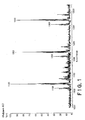
- FIG. 1 is a diagram showing data on the measurement of polymer 1 produced in Example A1 with a laser ionization time-of-flight mass spectrometric analyzer.
- radical polymerizable monomer which have at least one radical polymerizable ethylenic double bond in its molecule and are polymerizable in a solvent, which will be described later, in the presence of a radical polymerization initiator can be used as the radical polymerizable monomer in the present invention.
- radical polymerizable monomers include, for example,
- one of the above exemplified radical polymerizable monomers may be used solely.
- two or more of the above exemplified radical polymerizable monomers may be used in combination.
- other monomer(s) copolymerizable with the above radical polymerizable monomers may be used in combination with the radical polymerizable monomers. Accordingly, homopolymers and copolymers of the above radical polymerizable monomers and, copolymers of the above radical polymerizable monomers with other monomers fall within the scope of the polymer composition produced in the present invention.
- the solvent used in the present invention comprises a compound represented by formula (1) or (2): wherein R 1 and R 3 each independently represent hydrogen or a monovalent hydrocarbon group; R 2 and R 4 each independently represent a divalent hydrocarbon group, provided that R 2 optionally represents nil; Y represents hydrogen, a monovalent hydrocarbon group or a hydroxyalkyl group; m is an integer of zero (0) or 1; n is an integer of 1 to 10; and X 1 and X 2 each independently represent any of the following divalent substituents: wherein R 5 and R 6 each independently represent hydrogen, a monovalent hydrocarbon group or a hydroxyalkyl group.
- R 1 and R 3 each independently represent hydrogen or a monovalent hydrocarbon group.
- hydrogen and alkyl groups having 1 to 12 carbon atoms, particularly 1 to 6 carbon atoms, are preferred, and alkyl groups having 1 to 4 carbon atoms are more preferred.
- R 2 represents a divalent hydrocarbon group.
- alkylene groups having 1 to 8 carbon atoms, particularly 1 to 6 carbon atoms are preferred.
- Alkyl groups having 1 to 4 carbon atoms are more preferred.
- R 2 optionally represents nil.
- R 4 represents a divalent hydrocarbon group.
- alkylene groups having 1 to 8 carbon atoms, particularly 1 to 6 carbon atoms are preferred. Alkyl groups having 1 to 4 carbon atoms are more preferred.
- Y represents hydrogen, a monovalent hydrocarbon group, or hydroxyalkyl.
- Y represents hydrogen or an alkyl group having 1 to 6 carbon atoms, particularly 1 to 4 carbon atoms.
- Y represents hydrogen or an alkyl group having 1 to 3 carbon atoms.
- n is an integer of 1 to 10, preferably 1 to 8, particularly preferably 1 to 6.
- X 1 preferably represents -O-, -CO-O-, -NR 5 -, or -NR 6 -CO-, particularly preferably -O- or -CO-O-.
- X 2 preferably represents -O-, -CO-O-, -NR 5 -, or -NR 6 -CO-, particularly preferably -O- or -CO-O-.
- the term "nil” means that X 2 is absent. Accordingly, when X 2 represents "nil,” in the compound of formula (2), R 2 and R 4 are attached directly to each other. When X 2 represents "nil" and, at the same time, m is zero (0), X 1 and R 2 are attached directly to each other.
- R 5 represents hydrogen or a monovalent hydrocarbon or monovalent hydroxyalkyl group.
- R 5 represents hydrogen or an alkyl or hydroxyalkyl group having 1 to 8 carbon atoms, particularly 1 to 6 carbon atoms, particularly preferably hydrogen, an alkyl group having 1 to 3 carbon atoms, or a hydroxyalkyl group having 1 to 3 carbon atoms.
- R 6 represents hydrogen, a monovalent hydrocarbon group, or a monovalent hydroxyalkyl group.
- R 6 represents hydrogen or an alkyl or hydroxyalkyl group having 1 to 8 carbon atoms, particularly 1 to 6 carbon atoms, particularly preferably hydrogen, an alkyl group having 1 to 3 carbon atoms, or a hydroxyalkyl group having 1 to 3 carbon atoms.
- a solvent consisting of a compound represented by formula (1) only, a solvent consisting of a compound represented by formula (2) only, a mixed solvent composed of a compound represented by formula (1) and a compound represented by formula (2), and a solvent composed of any one of or both a compound represented by formula (1) and a compound represented by formula (2) and other solvent compound(s) may be used.
- Other solvent compounds include, for example, toluene and xylene.
- hydrogen which can easily be eliminated refers to hydrogen attached to a carbon atom adjacent to X 1 or X 2 .
- X 1 and X 2 represent a lone electron pair or an atom or atomic group having a ⁇ electron and thus are considered as electrically stabilizing the carbon atom from which hydrogen has been eliminated.
- particularly preferred compounds include, for example,
- Preferred radical polymerization initiators usable in the present invention include organic peroxides, for example, hydroperoxides, dialkyl peroxides, peroxyesters, diacyl peroxides, peroxycarbonates, peroxyketals, and ketone peroxides. Specific examples of such compounds include the following compounds. Among the following compounds, compounds marked with "*" on their upper right are particularly preferred in the present invention.
- radical polymerization initiators include
- organic peroxides such as dialkyl peroxide, peroxyesters, and diacyl peroxides are preferred.
- radical polymerization initiators may be used either solely or in a combination of two or more.
- the production process of a polymer composition according to the present invention comprises polymerizing the above radical polymerizable monomer in a solvent composed of a compound represented by formula (1) or (2) in the presence of a radical polymerization initiator.
- the radical polymerizable monomer and the radical polymerization initiator are added to the solvent composed of a compound represented by formula (1) or (2) preferably by (i) a method in which a mixture of the radical polymerizable monomer with the radical polymerization initiator is added or (ii) a method in which the radical polymerizable monomer is first added followed by the addition of the radical polymerization initiator.
- a method may be adopted in which the radical polymerization initiator is added to the solvent composed of a compound represented by formula (1) or (2) followed by the addition of the radical polymerizable monomer.
- the resin composition according to the present invention is produced as a random, block or graft copolymer of a plurality of radical polymerizable monomers
- the division of the method for supplying the radical polymerizable monomers and the polymerization process into a plurality of steps, or a combination of a plurality of polymerization processes may be adopted so as to be suitable for the production of the above copolymers.
- the amount of the radical polymerizable monomer used is preferably such that the concentration of the radical polymerizable monomer in the solvent is 10 to 80% by weight, particularly preferably 20 to 60% by weight.
- concentration of the radical polymerizable monomer in the solvent is 10 to 80% by weight, particularly preferably 20 to 60% by weight.
- the monomer concentration is less than 10% by weight, there is a tendency that the monomer is not satisfactorily polymerized and the amount of the unreacted monomer is increased.
- a concentration of the radical polymerizable monomer in the solvent exceeding 80% by weight is disadvantageous from the industrial viewpoint, because the control of heat generation during the polymerization is difficult and, further, the viscosity of the resultant polymer solution is excessively high.
- the radical polymerization initiator may be used in any desired amount.
- the addition amount of the radical polymerization initiator is generally in the range of 0.05 to 25% by weight, preferably in the range of 0.1 to 20% by weight, based on 100% by weight of the radical polymerizable monomer.
- the addition amount of the radical polymerization initiator is less than 0.05% by weight, a part of the monomer remains unreacted. This is unfavorable, for example, from the viewpoints of odor of the monomer and skin irritation.
- an addition amount of the radical polymerization initiator exceeding 25% by weight is industrially disadvantageous, for example, from the viewpoints of heat generation during the reaction.
- the polymerization temperature may vary depending upon the initiator used. Preferably, however, the polymerization temperature is one-hour half-life temperature of the initiator ⁇ 20°C.
- the reaction is carried out at a temperature below the lower limit of the above-defined temperature, disadvantageously, the amount of the unreacted initiator or monomer is increased, or a lot of time is taken for the synthesis.
- the reaction is carried out at a temperature above the upper limit of the above-defined temperature, disadvantageously, due to excessively rapid decomposition of the initiator, the monomer is not satisfactorily reacted and, consequently, a large amount of the monomer remains unreacted.
- radical polymerization is carried out by a method using a radical polymerizable monomer, a radical polymerization initiator, and optionally a chain transfer agent and comprises the following three stages (reference document: " Kaitei Kobunshi Gosei No Kagaku (Revised Edition of Polymer Synthesis Chemistry),” published by Kagaku-Dojin Publishing Company, Inc., Second Edition, (publication date: January 10, 1979 )).
- the proportion of polymer (A) produced should not vary depending upon the type of the initiator.
- I represents a radical polymerization initiator
- I 1 • and I 2 • represent a radical polymerization initiator decomposition-derived radical
- S-H represents a solvent molecule
- M represents a radical polymerizable monomer
- M ⁇ M represents a polymer.
- the above reaction mechanism supports the analytical results that the proportion of polymer (A) produced varies depending upon the type of the initiator.
- the above mechanism is considered to provide the polymer composition according to the present invention comprising the following polymer (A) having a solvent-derived component S at its end. wherein S represents a solvent-derived component; (M) p represents a polymer moiety comprising a radical polymerizable monomer unit M; and p is an arbitrary integer.
- the polymer composition according to the present invention refers to a composition comprising polymer (A) as an indispensable component and optionally a component other than polymer (A), for example, polymer (B).
- I 1 represents a radical polymerization initiator-derived component
- M represents a polymer moiety comprising a radical polymerizable monomer unit M
- q is an arbitrary integer.
- the polymer composition according to the present invention has high solubility in solvents. Further, in the present invention, for example, the contents and properties of the polymer composition can easily be regulated, for example, by the selection of the radical polymerizable monomer, the solvent, and the radical polymerization initiator and the selection of polymerization conditions. Accordingly, a polymer composition suitable particularly for specific applications can be produced as desired. Thus, the polymer composition according to the present invention can be utilized in a wide variety of applications.
- the present invention can be practiced without any problem in the copresence of other ingredients contained in ink, for example, pigments, dispersants, polymers, and additives.
- the use of the polymer composition according to the present invention for example, in an ink composition, particularly as a binder resin for an ink composition, can realize an improvement in fastness properties, rubbing/scratch resistance, fast drying properties, color development and other properties of the ink composition over those of the conventional ink composition.
- the pigment dispersant according to the present invention may be any pigment dispersant.
- preferred pigment dispersants include (i) urethane dispersants, (ii) polyamine dispersants, and (iii) A-B block copolymers of an A block having a quaternary ammonium base on its side chain with a B block not having a quaternary ammonium base on its side chain, and/or B-A-B block copolymers.
- Particularly preferred pigment dispersants include: urethane dispersants in which a hydrogen atom is attached to a carbon atom adjacent to -O-, -COO-, -NR 7 -, -NR 8 CO- or -NR 9 COO-, wherein R 7 , R 8 , and R 9 each independently represent hydrogen, a monovalent hydrocarbon group having 1 to 20 carbon atoms, preferably 1 to 10 carbon atoms, or a monovalent hydroxyalkyl group having 1 to 20 carbon atoms, preferably 1 to 10 carbon atoms; polyamine dispersants; or A-B block copolymers of an A block having a quaternary ammonium base on its side chain with a B block not having a quaternary ammonium base on its side chain, and/or B-A-B block copolymers.
- urethane dispersants are described, for example, in Japanese Patent No. 1879529 , Japanese Patent Laid-Open No. 166318/1985 , Japanese Patent Laid-Open No. 37845/2002 , and Japanese Patent No. 3101824
- polyamine dispersants are described, for example, in Japanese Patent No. 1940521 , Japanese Patent No. 1570685 , Japanese Patent No. 3504268 , and Japanese Translation of PCT Publication No.
- A-B block copolymers of an A block having a quaternary ammonium base on its side chain with a B block not having a quaternary ammonium base on its side chain, and/or B-A-B block copolymers are described, for example, in Japanese Patent No. 2680594 , Japanese Patent Laid-Open No. 66235/2004 , and Japanese Patent No. 3590382 .
- Pigments utilizable as the pigment dispersant in the present invention are also commercially available.
- "Disperbyk-161," “Disperbyk-164,” “Disperbyk-165,” “Disperbyk-182,” and “Disperbyk-184,” manufactured by BYK-Chemie, and "EFKA46” and “EFKA47” manufactured by EFKA CHEMICALS correspond to (i) urethane dispersants, "Solsperse 33500,” “Solsperse 32000,” and “Solsperse 24000,” manufactured by The Lubrizol Corporation, and "Ajisper PB821" and “Ajisper PB822” manufactured by Ajinomoto Fine-Techno.
- the pigment dispersant according to the present invention is preferably in the form of a liquid or viscous liquid at room temperature or in a form or under temperature conditions in which the radical polymerizable monomer is polymerized, so that the radical polymerizable monomer can be polymerized in a solution containing the pigment dispersant in the presence of the radical polymerization initiator.
- the solvent preferably comprises a compound represented by formula (1) or (2): wherein R 1 and R 3 each independently represent hydrogen or a monovalent hydrocarbon group; R 2 and R 4 each independently represent a divalent hydrocarbon group, provided that R 2 optionally represents nil; Y represents hydrogen, a monovalent hydrocarbon group or a hydroxyalkyl group; m is an integer of zero (0) or 1; n is an integer of 1 to 10; and X 1 and X 2 each independently represent any of the following divalent substituents: wherein R 5 and R 6 each independently represent hydrogen, a monovalent hydrocarbon group or a hydroxyalkyl group.
- R 1 and R 3 each independently represent hydrogen or a monovalent hydrocarbon group
- R 2 and R 4 each independently represent a divalent hydrocarbon group, provided that R 2 optionally represents nil
- Y represents hydrogen, a monovalent hydrocarbon group or a hydroxyalkyl group
- m is an integer of zero (0) or 1
- n is an integer of 1 to 10
- R 1 and R 3 each independently represent hydrogen or a monovalent hydrocarbon group.
- hydrogen and alkyl groups having 1 to 20 carbon atoms, particularly 1 to 16 carbon atoms, are preferred, and alkyl groups having 1 to 12 carbon atoms are more preferred.
- R 2 represents a divalent hydrocarbon group.
- alkylene groups having 1 to 12 carbon atoms, particularly 1 to 10 carbon atoms are preferred.
- Alkyl groups having 1 to 8 carbon atoms are more preferred.
- R 2 optionally represents nil.
- R 4 represents a divalent hydrocarbon group.
- alkylene groups having 1 to 12 carbon atoms, particularly 1 to 10 carbon atoms are preferred. Alkyl groups having 1 to 8 carbon atoms are more preferred.
- Y represents hydrogen, a monovalent hydrocarbon group, or a hydroxyalkyl group.
- Y represents hydrogen or an alkyl group having 1 to 12 carbon atoms, particularly 1 to 10 carbon atoms.
- Y represents hydrogen or an alkyl group having 1 to 8 carbon atoms.
- n is an integer of 1 to 10, preferably 1 to 8, particularly preferably 1 to 6.
- X 1 preferably represents -O-, -CO-O-, -NR 5 -, or -NR 6 -CO-.
- X 2 preferably represents -O-, -CO-O-, -NR 5 -, or -NR 6 -CO-.
- the term “nil” means that X 2 is absent. Accordingly, when X 2 represents “nil,” in the compound of formula (2), R 2 and R 4 are attached directly to each other. When X 2 represents “nil" and, at the same time, m is zero (0), X 1 and R 2 are attached directly to each other.
- R 5 represents hydrogen or a monovalent hydrocarbon or monovalent hydroxyalkyl group.
- R 5 represents hydrogen or an alkyl or hydroxyalkyl group having 1 to 12 carbon atoms, particularly 1 to 8 carbon atoms, particularly preferably hydrogen, an alkyl group having 1 to 6 carbon atoms, or a hydroxyalkyl group having 1 to 6 carbon atoms.
- R 6 represents hydrogen, a monovalent hydrocarbon group, or a monovalent hydroxyalkyl group.
- R 6 represents hydrogen or an alkyl or hydroxyalkyl group having 1 to 12 carbon atoms, particularly 1 to 8 carbon atoms, particularly preferably hydrogen, an alkyl group having 1 to 6 carbon atoms, or a hydroxyalkyl group having 1 to 6 carbon atoms.
- a solvent consisting of a compound represented by formula (1) only, a solvent consisting of a compound represented by formula (2) only, a mixed solvent composed of a compound represented by formula (1) and a compound represented by formula (2), and a solvent composed of any one of or both a compound represented by formula (1) and a compound represented by formula (2) and other solvent compound(s) may be used.
- Other solvent compounds include, for example, toluene and xylene.
- particularly preferred compounds include, for example, compounds exemplified in the first aspect of the present invention. Further, it should be noted that the contents described in connection with the first aspect of the present invention are incorporated in the second aspect of the present invention.
- radical polymerizable monomer and the radical polymerization initiator may be the same as those described in the first aspect of the present invention.
- the production process of a polymer composition according to the present invention comprises polymerizing a radical polymerizable monomer in a pigment dispersant or a pigment dispersant-containing solution in the presence of a radical polymerization initiator.
- the radical polymerizable monomer and the radical polymerization initiator are added preferably by (i) a method in which the radical polymerizable monomer is first added to the pigment dispersant or the pigment dispersant-containing solution followed by the addition of the radical polymerization initiator, or (ii) a method in which a mixture of the radical polymerizable monomer with the radical polymerization initiator is added to the pigment dispersant or the pigment dispersant-containing solution.
- use may be made of (iii) a method in which the radical polymerization initiator is added to the pigment dispersant or the pigment dispersant-containing solution followed by the addition of the radical polymerizable monomer.
- the resin composition according to the present invention is produced as a random, block or graft copolymer of a plurality of radical polymerizable monomers, for example, a radical polymerizable monomer supply method and a polymerization process can be properly determined so as to be suitable for the production of the above copolymers.
- the amounts of the radical polymerizable monomer, radical polymerization initiator, and pigment dispersant used in the production of the polymer composition according to the present invention are not particularly limited.
- the amount of the radical polymerizable monomer used is preferably such that the concentration of the radical polymerizable monomer in the pigment dispersant or the pigment dispersant-containing solution is 10 to 80% by weight, particularly 15 to 70% by weight.
- the monomer concentration is less than 10% by weight, there is a tendency that the monomer is not satisfactorily polymerized and the amount of the unreacted monomer is increased.
- a concentration of the radical polymerizable monomer in the solution exceeding 80% by weight is disadvantageous from the industrial viewpoint, because the control of heat generation during the polymerization is difficult and, further, the viscosity of the resultant polymer solution is excessively high.
- the pigment dispersant may be used in any desired amount. Preferably, however, the pigment dispersant is added so that the dispersant/solvent weight ratio is 1/99 to 99/1, preferably 5/95 to 95/5. When the amount of the pigment dispersant used is outside the above-defined range, disadvantegeously, the effect of the present invention cannot be satisfactorily attained.
- the radical polymerization initiator may be used in any desired amount.
- the addition amount of the radical polymerization initiator is generally in the range of 0.05 to 30% by weight, preferably in the range of 0.1 to 25% by weight, based on 100% by weight of the radical polymerizable monomer.
- the addition amount of the radical polymerization initiator is less than 0.05% by weight, a part of the monomer remains unreacted. This is unfavorable, for example, from the viewpoints of odor of the monomer and skin irritation.
- an addition amount of the radical polymerization initiator exceeding 30% by weight is industrially disadvantageous, for example, from the viewpoints of heat generation during the reaction.
- the polymerization temperature may vary depending upon the initiator used. Preferably, however, the polymerization temperature is one-hour half-life temperature of the initiator ⁇ 20°C.
- the reaction is carried out at a temperature below the lower limit of the above-defined temperature, disadvantageously, the amount of the unreacted initiator or monomer is increased, or a lot of time is taken for the synthesis.
- the reaction is carried out at a temperature above the upper limit of the above-defined temperature, disadvantageously, due to excessively rapid decomposition of the initiator, the monomer is not satisfactorily reacted and, consequently, alarge amount of the monomer remains unreacted.
- the polymer composition produced by the present invention has a weight average molecular weight of 3,000 to 200,000 as measured by GPC measurement using polystyrene as a standard and can be mixed with various ingredients, for example, pigments and optionally a solvent and various assistants to prepare an ink composition.
- the contents and properties of the polymer composition can easily be regulated, for example, by the selection of the radical polymerizable monomer and the radical polymerization initiator and the selection of polymerization conditions. Accordingly, a polymer composition suitable particularly for specific applications can be produced as desired. Thus, the polymer composition according to the present invention can be utilized in a wide variety of applications.
- the polymer composition according to the present invention can be produced without any problem in the copresence of other ingredients contained in ink, for example, pigments, polymers, and additives.
- the use of the polymer composition according to the present invention can realize a significant improvement in fastness properties, rubbing/scratch resistance, fast drying properties, color development, gloss of printed face and the like over those of the conventional ink composition.
- ⁇ -Butyrolactone (hereinafter referred to as "GBL") (300 parts by weight) was placed in a four-necked flask equipped with a stirrer and a nitrogen introduction tube, and the flask was heated to 100°C with a mantle heater.
- MMA methyl methacrylate
- ACRYESTER M t-butyl peroxy-2-ethyl hexanoate
- the reaction solution was cooled, and the weight average molecular weight of the resultant polymer A1 was determined by gel permeation chromatography with a GPC measuring device ("HLC-8220GPC" manufactured by Tosoh Corporation) and was found to be 29000 (as determined using polystyrene as a standard). Further, the solid content was determined by heating the product in a 150°C oven for 2 hr and was found to be 42.0%.
- a colorless transparent MMA polymer solution was synthesized in the same manner as in polymer A1, except that diethylene glycol diethyl ether (hereinafter referred to as "DEDG”) was used as the solvent and the dropwise addition amount of "PERBUTYL O” was changed to 2.40 parts by weight.
- DEDG diethylene glycol diethyl ether
- PERBUTYL O dropwise addition amount of "PERBUTYL O” was changed to 2.40 parts by weight.
- the weight average molecular weight of polymer A2 thus obtained was determined by GPC measurement in the same manner as in Example A1 and was found to be 29900 (as determined using polystyrene as a standard). Further, the solid content was determined by heating the product in a 150°C oven for 2 hr and was found to be 40.8%.
- a colorless transparent MMA polymer solution was synthesized in the same manner as in polymer A1, except that ethylene glycol monobutyl ether acetate (hereinafter referred to as "BGAc") was used as the solvent and the dropwise addition amount of "PERBUTYL O” was changed to 2.80 parts by weight.
- BGAc ethylene glycol monobutyl ether acetate
- the weight average molecular weight of polymer A3 thus obtained was determined by GPC measurement in the same manner as in Example A1 and was found to be 28900 (as determined using polystyrene as a standard). Further, the solid content was determined by heating the product in a 150°C oven for 2 hr and was found to be 40.2%.
- a colorless transparent MMA/BMA copolymer solution was synthesized in the same manner as in polymer A2, except that a mixture of 180 parts by weight of MMA with 20 parts by weight of butyl methacrylate (BMA) ("ACRYESTER B” manufactured by Mitsubishi Rayon Co., Ltd.) was used as the radical polymerizable monomer.
- BMA butyl methacrylate
- the weight average molecular weight of the resultant polymer A4 was determined by GPC measurement in the same manner as in Example A1 and was found to be 30500 (as determined using polystyrene as a standard). Further, the solid content was determined by heating the product in a 150°C oven for 2 hr and was found to be 40.0%.
- a colorless transparent MMA/ETMA copolymer solution was synthesized in the same manner as in polymer A2, except that a mixture of 180 parts by weight of MMA with 20 parts by weight of ethoxyethyl methacrylate (ETMA) ("ACRYESTER ET” manufactured by Mitsubishi Rayon Co., Ltd.) was used as the radical polymerizable monomer.
- the weight average molecular weight of the resultant polymer A5 was determined by GPC measurement in the same manner as in Example A1 and was found to be 30200 (as determined using polystyrene as a standard). Further, the solid content was determined by heating the product in a 150°C oven for 2 hr and was found to be 40.1%.
- a colorless transparent MMA polymer solution was synthesized in the same manner as in polymer A1, except that DEDG was used as the solvent and dibenzoyl peroxide ("NYPER BW" manufactured by Nippon Oils & Fats Co., Ltd.) was used as the radical polymerization initiator.
- the weight average molecular weight of the resultant polymer A6 was determined by GPC measurement in the same manner as in Example A1 and was found to be 29500 (as determined using polystyrene as a standard). Further, the solid content was determined by heating the product in a 150°C oven for 2 hr and was found to be 40.5%.
- a colorless transparent MMA polymer solution was synthesized in the same manner as in polymer A1, except that N,N-dimethylacetamide (hereinafter referred to as "DMAc") was used as the solvent and the dropwise addition amount of "PERBUTYL O” was changed to 3.20 parts by weight.
- the weight average molecular weight of the resultant polymer A7 was determined by GPC measurement in the same manner as in Example A1 and was found to be 29000 (as determined using polystyrene as a standard). Further, the solid content was determined by heating the product in a 150°C oven for 2 hr and was found to be 39.3%.
- a colorless transparent MMA polymer solution was synthesized in the same manner as in polymer A1, except that ethyl lactate was used as the solvent and the dropwise addition amount of "PERBUTYL O" was changed to 2.65 parts by weight.
- the weight average molecular weight of polymer A8 thus obtained was determined by GPC measurement in the same manner as in Example A1 and was found to be 30000 (as determined using polystyrene as a standard). Further, the solid content was determined by heating the product in a 150°C oven for 2 hr and was found to be 39.8%.
- a colorless transparent MMA polymer solution was synthesized in the same manner as in polymer A1, except that propylene glycol monomethyl ether acetate (hereinafter referred to as "PGMEA”) was used as the solvent and the dropwise addition amount of "PERBUTYL O” was changed to 3.00 parts by weight.
- the weight average molecular weight of polymer A9 thus obtained was determined by GPC measurement in the same manner as in Example A1 and was found to be 30300 (as determined using polystyrene as a standard). Further, the solid content was determined by heating the product in a 150°C oven for 2 hr and was found to be 39.5%.
- a colorless transparent MMA polymer solution was synthesized in the same manner as in polymer A1, except that N-methyl-2-pyrrolidone (hereinafter referred to as "NMP") was used as the solvent and the dropwise addition amount of "PERBUTYL O” was changed to 4.00 parts by weight.
- NMP N-methyl-2-pyrrolidone
- the weight average molecular weight of polymer A10 thus obtained was determined by GPC measurement in the same manner as in Example A1 and was found to be 30300 (as determined using polystyrene as a standard). Further, the solid content was determined by heating the product in a 150°C oven for 2 hr and was found to be 39.9%.
- a colorless transparent MMA polymer solution was synthesized in the same manner as in polymer A1, except that ⁇ -caprolactone (hereinafter referred to as " ⁇ -cap”) was used as the solvent and the dropwise addition amount of "PERBUTYL O” was changed to 4.50 parts by weight.
- the weight average molecular weight of polymer A11 thus obtained was determined by GPC measurement in the same manner as in Example A1 and was found to be 29300 (as determined using polystyrene as a standard). Further, the solid content was determined by heating the product in a 150°C oven for 2 hr and was found to be 42.4%.
- a colorless transparent MMA polymer solution was synthesized in the same manner as in polymer A1, except that toluene was used the solvent and the dropwise addition amount of "PERBUTYL O" was changed to 1.00 parts by weight.
- the weight average molecular weight of polymer A12 thus obtained was determined by GPC measurement in the same manner as in Example A1 and was found to be 28400 (as determined using polystyrene as a standard). Further, the solid content was determined by heating the product in a 150°C oven for 2 hr and was found to be 39.7%.
- a colorless transparent MMA/BMA copolymer solution was synthesized in the same manner as in polymer A4, except that toluene was used as the solvent and the dropwise addition amount of "PERBUTYL O" was changed to 1.00 part by weight.
- the weight average molecular weight of polymer A13 thus obtained was determined by GPC measurement in the same manner as in Example A1 and was found to be 29400 (as determined using polystyrene as a standard). Further, the solid content was determined by heating the product in a 150°C oven for 2 hr and was found to be 39.5%.
- Polymer A1 was analyzed with a pyrolysis-gas chromatograph mass spectrometer (pyrolysis part: "PY-2020D” manufactured by Frontier Laboratories Ltd., GC part: “6890” manufactured by Agilent Technologies, Inc., and MS part: “5973N” manufactured by Agilent Technologies, Inc.). As a result, a component having mass number m/z: 186 was detected. In this case, a sample obtained by purifying only a resin from a resin solution with hexane was used for the analysis.
- This numeric value is in agreement with the mass number of a molecule formed by combining one molecule of MMA with ⁇ -butyrolactone as the solvent.
- Polymers A1 to A13 produced above were purified in hexane to remove the polymerization solvent, and the purified polymers were then dried in vacuo for 12 hr to give resin powders.
- the solubility of these resin powders in GBL, DEDG, BGAc, DMAc, ethyl lactate, PGMEA, NMP, and ⁇ -cap was determined.
- the resin powder (100 mg) was mixed with 5.0 g of the contemplated solvent in which the resin powder is to be dissolved. The mixture was stirred to measure the time necessary for the resin powder to be completely dissolved. The results were evaluated according to the following criteria. The evaluation results were as shown in Table 1 below.
- the resins synthesized in toluene had a low level of solubility in GBL, DEDG, BGAc, DMAc, lactic ester, PGMEA, NMP, and ⁇ -cap.
- the resins synthesized in respective solvents which are solvents in which the resins are contemplated to be dissolved, had an improved solubility in the respective contemplated solvents.
- Example B solvent-containing pigment dispersants were used after drying at 40°C in vacuo for 12 hr.
- the mixing amount of the pigment dispersant is expressed in terms of solid content of the dried material.
- Disposablebyk-161 (manufactured by BYK-Chemie) (300 parts by weight) was placed in a four-necked flask equipped with a stirrer and a nitrogen introduction tube and was heated to 100°C with a mantle heater.
- a mixed liquid composed of 180 parts by weight of MMA, 20 parts by weight of BMA, and 5.00 parts by weight of "PERBUTYL O” was added dropwise to the flask through a dropping funnel over a period of 1.5 hr. After the completion of the dropwise addition, 0.6 part by weight of "PERBUTYL O” was added, and a reaction was allowed to proceed for 3 hr while maintaining the temperature at 100°C to give a brown MMA/BMA copolymer.
- the reaction solution was cooled, and the weight average molecular weight of the resultant polymer B1 was determined by gel permeation chromatography with a GPC measuring device ("HLC-8220GPC" manufactured by Tosoh Corporation) and was found to be 21000 (as determined using polystyrene as a standard).
- a brown MMA/BzMA copolymer was synthesized in the same manner as in polymer B1, except that a mixture of 180 parts by weight of MMA with 20 parts by weight of benzyl methacrylate (BzMA; "ACRYESTER Bz” manufactured by Mitsubishi Rayon Co., Ltd.) was used as the radical polymerizable monomer to be added dropwise.
- BzMA benzyl methacrylate
- the weight average molecular weight of polymer B2 thus obtained was determined by GPC measurement in the same manner as in Example B1 and was found to be 20500 (as determined using polystyrene as a standard).
- a light brown MMA/BMA copolymer was synthesized in the same manner as in polymer B1, except that "Ajisper PB822" (manufactured by Ajinomoto Fine-Techno. Co. Inc.) was used as the dispersant.
- the weight average molecular weight of polymer B3 thus obtained was determined by GPC measurement in the same manner as in Example B1 and was found to be 21500 (as determined using polystyrene as a standard).
- a light brown MMA/BMA copolymer was synthesized in the same manner as in polymer B1, except that "Disperbyk-2001" (manufactured by BYK-Chemie) was used as the dispersant.
- the weight average molecular weight of polymer B4 thus obtained was determined by GPC measurement in the same manner as in Example B1 and was found to be 19500 (as determined using polystyrene as a standard).
- a brown MMA/BMA copolymer was synthesized in the same manner as in polymer B1, except that "Solsperse 33500" (manufactured by The Lubrizol Corporation) was used as the dispersant.
- the weight average molecular weight of polymer B5 thus obtained was determined by GPC measurement in the same manner as in Example B1 and was found to be 20000 (as determined using polystyrene as a standard).
- a brown MMA/BMA copolymer was synthesized in the same manner as in polymer B5, except that 5.00 parts by weight of dibenzoyl peroxide ("NYPER BW” manufactured by Nippon Oils & Fats Co., Ltd.) was used as the radical polymerization initiator used in the polymerization.
- the weight average molecular weight of polymer B6 thus obtained was determined by GPC measurement in the same manner as in Example B1 and was found to be 19000 (as determined using polystyrene as a standard).
- GBL 270 parts by weight
- 30 parts by weight of "Solsperse 33500” were placed in a four-necked flask equipped with a stirrer and a nitrogen introduction tube and were heated to 100°C with a mantle heater.
- a mixed liquid composed of 200 parts by weight of MMA and 3.60 parts by weight of "PERBUTYL O” was added dropwise to the flask through a dropping funnel over a period of 1.5 hr. After the completion of the dropwise addition, 0.6 part by weight of "PERBUTYL O” was added, and a reaction was allowed to proceed for 3 hr while maintaining the temperature at 100°C to give a brown MMA polymer solution.
- the weight average molecular weight of polymer B7 thus obtained was determined by GPC measurement in the same manner as in Example B1 and was found to be 29500 (as determined using polystyrene as a standard). Further, the solid content was determined by heating the product in a 150°C oven for 2 hr and was found to be 45.6%.
- a brown MMA/BMA copolymer solution was synthesized in the same manner as in polymer B8, except that DEDG was used as the solvent, a mixture of 190 parts by weight of MMA with 10 parts by weight of BMA was used as the radical polymerizable monomer to be added dropwise, and the dropwise addition amount of "PERBUTYL O" was changed to 2.40 parts by weight.
- the weight average molecular weight of polymer B8 thus obtained was determined by GPC measurement in the same manner as in Example B1 and was found to be 29000 (as determined using polystyrene as a standard). Further, the solid content was determined by heating the product in a 150°C oven for 2 hr and was found to be 45.8%.
- a brown MMA/BMA copolymer solution was synthesized in the same manner as in polymer B8, except that "Disperbyk-2001" was used as the dispersant and a mixture of 180 parts by weight of MMA with 20 parts by weight of BMA was used as the radical polymerizable monomer.
- the weight average molecular weight of polymer B9 thus obtained was determined by GPC measurement in the same manner as in Example B1 and was found to be 30000 (as determined using polystyrene as a standard). Further, the solid content was determined by heating the product in a 150°C oven for 2 hr and was found to be 46.0%.
- a brown MMA/BMA copolymer solution was synthesized in the same manner as in polymer B9, except that "Disperbyk-161" was used as the dispersant.
- the weight average molecular weight of polymer B10 thus obtained was determined by GPC measurement in the same manner as in Example B1 and was found to be 29100 (as determined using polystyrene as a standard). Further, the solid content was determined by heating the product in a 150°C oven for 2 hr and was found to be 46.1%.
- a light brown MMA/BMA copolymer solution was synthesized in the same manner as in polymer B9, except that "Ajisper PB822" was used as the dispersant.
- the weight average molecular weight of polymer B11 thus obtained was determined by GPC measurement in the same manner as in Example B1 and was found to be 30100 (as determined using polystyrene as a standard). Further, the solid content was determined by heating the product in a 150°C oven for 2 hr and was found to be 45.9%.
- Toluene (300 parts by weight) was placed in a four-necked flask equipped with a stirrer and a nitrogen introduction tube and was heated to 100°C with a mantle heater.
- a mixed liquid composed of 180 parts by weight of MMA, 20 parts by weight of BMA, and 2.50 parts by weight of azobisisobutyronitrile (AIBN; manufactured by Wako Pure Chemical Industries, Ltd.) was added dropwise to the flask through a dropping funnel over a period of 1.5 hr. After the completion of the dropwise addition, 0.6 part by weight of AIBN was added, and a reaction was allowed to proceed for 3 hr while maintaining the temperature at 100°C to give a colorless transparent MMA/BMA copolymer.
- AIBN azobisisobutyronitrile
- the reaction solution was cooled, and the weight average molecular weight of polymer B12 thus obtained was determined by GPC measurement and was found to be 20300 (as determined using polystyrene as a standard). Further, the solid content was determined by heating the product in a 150°C oven for 2 hr and was found to be 39.1%.
- a colorless transparent MMA/BMA copolymer was synthesized in the same manner as in polymer B12, except that 2.50 parts by weight of "PERBUTYL O" was used as the radical polymerization initiator used in the polymerization.
- the weight average molecular weight of polymer B13 thus obtained was determined by GPC measurement in the same manner as in Example B1 and was found to be 19800 (as determined using polystyrene as a standard). Further, the solid content was determined by heating the product in a 150°C oven for 2 hr and was found to be 38.9%.
- a colorless transparent MMA/BzMA copolymer was synthesized in the same manner as in polymer B13, except that a mixture of 180 parts by weight of MMA with 20 parts by weight of BzMA was used as the radical polymerizable monomer to be added dropwise.
- the weight average molecular weight of polymer B14 thus obtained was determined by GPC measurement in the same manner as in Example B1 and was found to be 20100 (as determined using polystyrene as a standard). Further, the solid content was determined by heating the product in a 150°C oven for 2 hr and was found to be 39.1%.
- a colorless transparent MMA/BMA copolymer was synthesized in the same manner as in polymer B13, except that 5.20 parts by weight of "PERBUTYL O" was used as the radical polymerization initiator used in the polymerization.
- the weight average molecular weight of polymer B15 thus obtained was determined by GPC measurement in the same manner as in Example B1 and was found to be 10800 (as determined using polystyrene as a standard). Further, the solid content was determined by heating the product in a 150°C oven for 2 hr and was found to be 38.8%.
- DEDG 300 parts by weight
- a mixed liquid composed of 180 parts by weight of MMA, 20 parts by weight of BMA, and 3.60 parts by weight of "PERBUTYL O” was added dropwise to the flask through a dropping funnel over a period of 1.5 hr.
- 0.6 part by weight of "PERBUTYL O” was added, and a reaction was allowed to proceed for 3 hr while maintaining the temperature at 100°C to give a colorless transparent MMA/BMA copolymer solution.
- the reaction solution was cooled, and the weight average molecular weight of polymer B16 thus obtained was determined by GPC measurement in the same manner as in Example B1 and was found to be 29800 (as determined using polystyrene as a standard). Further, the solid content was determined by heating the product in a 150°C oven for 2 hr and was found to be 39.5%.
- a colorless transparent MMA/BMA copolymer solution was synthesized in the same manner as in polymer B16, except that 10.00 parts by weight of "PERBUTYL O" was used as the radical polymerization initiator used in the polymerization.
- the weight average molecular weight of polymer B17 thus obtained was determined by GPC measurement in the same manner as in Example B1 and was found to be 15000 (as determined using polystyrene as a standard). Further, the solid content was determined by heating the product in a 150°C oven for 2 hr and was found to be 39.4%.
- Polymers B1 to B6 produced in Examples B1 to B6 were diluted with diluent solvents (for more detail, see Table 2) by a factor of three (weight ratio) to prepare evaluation samples.
- evaluation samples were prepared by diluting these resin solutions with polymerization solvents to bring the solid content to 30%.
- evaluation samples were prepared by adding pigment dispersant (for more detail of "additive dispersant,” see Table 4) in an amount of 1.5 times (weight ratio) the resin solid content and toluene in an amount of 3.5 times (weight ratio) the resin solid content.
- evaluation samples were prepared by mixing the polymers with 15% by weight, based on the resin solid content, of an additive dispersant and DEDG in an amount of 2.7 times (weight ratio) the resin solid content.
- B11 (polymer B11) MMA/BMA 90/10 DEDG Ajisper PB822 II 30100
- DEDG diethylene glycol diethyl ether
Landscapes
- Chemical & Material Sciences (AREA)
- Chemical Kinetics & Catalysis (AREA)
- Organic Chemistry (AREA)
- Health & Medical Sciences (AREA)
- Medicinal Chemistry (AREA)
- Polymers & Plastics (AREA)
- Engineering & Computer Science (AREA)
- Materials Engineering (AREA)
- Life Sciences & Earth Sciences (AREA)
- Wood Science & Technology (AREA)
- Addition Polymer Or Copolymer, Post-Treatments, Or Chemical Modifications (AREA)
- Polymerisation Methods In General (AREA)
- Inks, Pencil-Leads, Or Crayons (AREA)
Priority Applications (2)
| Application Number | Priority Date | Filing Date | Title |
|---|---|---|---|
| EP20110008114 EP2404940B1 (fr) | 2005-08-03 | 2006-07-28 | Méthode de production d'une composition de polymère et composition de polymère |
| EP20110008113 EP2407489B1 (fr) | 2005-08-03 | 2006-07-28 | Procédé de production de composition polymère et composition polymère |
Applications Claiming Priority (3)
| Application Number | Priority Date | Filing Date | Title |
|---|---|---|---|
| JP2005225660 | 2005-08-03 | ||
| JP2005378781 | 2005-12-28 | ||
| PCT/JP2006/315038 WO2007015437A1 (fr) | 2005-08-03 | 2006-07-28 | Procede de fabrication d'une composition polymerique et composition polymerique |
Related Child Applications (2)
| Application Number | Title | Priority Date | Filing Date |
|---|---|---|---|
| EP20110008114 Division EP2404940B1 (fr) | 2005-08-03 | 2006-07-28 | Méthode de production d'une composition de polymère et composition de polymère |
| EP20110008113 Division EP2407489B1 (fr) | 2005-08-03 | 2006-07-28 | Procédé de production de composition polymère et composition polymère |
Publications (2)
| Publication Number | Publication Date |
|---|---|
| EP1911770A1 true EP1911770A1 (fr) | 2008-04-16 |
| EP1911770A4 EP1911770A4 (fr) | 2009-07-22 |
Family
ID=37708718
Family Applications (3)
| Application Number | Title | Priority Date | Filing Date |
|---|---|---|---|
| EP20110008114 Active EP2404940B1 (fr) | 2005-08-03 | 2006-07-28 | Méthode de production d'une composition de polymère et composition de polymère |
| EP20110008113 Active EP2407489B1 (fr) | 2005-08-03 | 2006-07-28 | Procédé de production de composition polymère et composition polymère |
| EP06781948A Ceased EP1911770A4 (fr) | 2005-08-03 | 2006-07-28 | Procede de fabrication d'une composition polymerique et composition polymerique |
Family Applications Before (2)
| Application Number | Title | Priority Date | Filing Date |
|---|---|---|---|
| EP20110008114 Active EP2404940B1 (fr) | 2005-08-03 | 2006-07-28 | Méthode de production d'une composition de polymère et composition de polymère |
| EP20110008113 Active EP2407489B1 (fr) | 2005-08-03 | 2006-07-28 | Procédé de production de composition polymère et composition polymère |
Country Status (6)
| Country | Link |
|---|---|
| US (1) | US7960470B2 (fr) |
| EP (3) | EP2404940B1 (fr) |
| JP (2) | JP5175098B2 (fr) |
| KR (1) | KR101352239B1 (fr) |
| CN (1) | CN101052658B (fr) |
| WO (1) | WO2007015437A1 (fr) |
Families Citing this family (17)
| Publication number | Priority date | Publication date | Assignee | Title |
|---|---|---|---|---|
| US8208198B2 (en) | 2004-01-14 | 2012-06-26 | Carl Zeiss Smt Gmbh | Catadioptric projection objective |
| US20080151364A1 (en) | 2004-01-14 | 2008-06-26 | Carl Zeiss Smt Ag | Catadioptric projection objective |
| JP4869707B2 (ja) * | 2005-12-22 | 2012-02-08 | セイコーエプソン株式会社 | インクジェット記録用油性インク組成物 |
| JP5344743B2 (ja) * | 2008-08-04 | 2013-11-20 | 三菱レイヨン株式会社 | レジスト用重合体の製造方法 |
| WO2014208491A1 (fr) * | 2013-06-27 | 2014-12-31 | シャープ株式会社 | Filtre de conversion de longueur d'onde, substrat de conversion de longueur d'onde et affichage électroluminescent organique |
| CA2902093C (fr) | 2014-08-28 | 2023-03-07 | Kevin Alan Tussy | Procede d'authentification de reconnaissance faciale comprenant des parametres de chemin |
| US11256792B2 (en) | 2014-08-28 | 2022-02-22 | Facetec, Inc. | Method and apparatus for creation and use of digital identification |
| US10698995B2 (en) | 2014-08-28 | 2020-06-30 | Facetec, Inc. | Method to verify identity using a previously collected biometric image/data |
| US10915618B2 (en) | 2014-08-28 | 2021-02-09 | Facetec, Inc. | Method to add remotely collected biometric images / templates to a database record of personal information |
| US12130900B2 (en) | 2014-08-28 | 2024-10-29 | Facetec, Inc. | Method and apparatus to dynamically control facial illumination |
| US10614204B2 (en) | 2014-08-28 | 2020-04-07 | Facetec, Inc. | Facial recognition authentication system including path parameters |
| US10803160B2 (en) | 2014-08-28 | 2020-10-13 | Facetec, Inc. | Method to verify and identify blockchain with user question data |
| USD1074689S1 (en) | 2016-04-26 | 2025-05-13 | Facetec, Inc. | Display screen or portion thereof with animated graphical user interface |
| USD987653S1 (en) | 2016-04-26 | 2023-05-30 | Facetec, Inc. | Display screen or portion thereof with graphical user interface |
| KR101976116B1 (ko) | 2017-07-17 | 2019-05-07 | 주식회사 엘지화학 | 포토폴리머 조성물 |
| KR102139407B1 (ko) * | 2017-09-13 | 2020-07-29 | 주식회사 엘지화학 | 감광재 바인더의 모노머 정량분석방법 |
| KR20230022865A (ko) * | 2020-06-12 | 2023-02-16 | 가부시키가이샤 파이롯트 코포레이숀 | 유성 볼펜 |
Family Cites Families (47)
| Publication number | Priority date | Publication date | Assignee | Title |
|---|---|---|---|---|
| US1881282A (en) * | 1928-09-22 | 1932-10-04 | Du Pont | Process of polymerizing vinyl derivatives |
| NL234595A (fr) * | 1957-12-28 | |||
| US3355412A (en) * | 1965-08-16 | 1967-11-28 | Pittsburgh Plate Glass Co | Resinous compositions |
| GB1153826A (en) * | 1966-03-21 | 1969-05-29 | Monsanto Co | New Organic Liquid Systems and Tacky Polymers made therefrom |
| US3558574A (en) * | 1968-12-09 | 1971-01-26 | Johnson & Johnson | Acrylated adhesive products |
| US3862066A (en) * | 1971-05-26 | 1975-01-21 | Universal Pvc Resins | Method for making rigid vinyl chloride polymer compounds |
| US3997624A (en) * | 1975-10-01 | 1976-12-14 | Princeton Polymer Laboratories, Incorporated | Polyethylene waxes |
| GB1557269A (en) * | 1976-12-30 | 1979-12-05 | Nippon Paint Co Ltd | Process for preparation of a pigment dispersed composition |
| US4224212A (en) | 1977-07-15 | 1980-09-23 | Imperial Chemical Industries Limited | Dispersing agents, dispersions containing these agents and paints and inks made from the dispersions |
| US4500658A (en) * | 1983-06-06 | 1985-02-19 | Austenal International, Inc. | Radiopaque acrylic resin |
| DE3465599D1 (en) | 1984-01-27 | 1987-10-01 | Byk Chemie Gmbh | Addition compounds suited as dispersing agents, process for their preparation, their use and solid materials coated with them |
| ATE29138T1 (de) | 1984-01-27 | 1987-09-15 | Byk Chemie Gmbh | Als dispergiermittel geeignete additionsverbindungen, verfahren zu ihrer herstellung, ihre verwendung und damit beschichtete feststoffe. |
| EP0208041B1 (fr) | 1985-01-22 | 1991-05-15 | Imperial Chemical Industries Plc | Composition contenant un dispersant |
| JP2651161B2 (ja) * | 1987-01-12 | 1997-09-10 | 日本ペイント株式会社 | 粒度単分散粒子の製造方法 |
| US4920187A (en) * | 1987-01-12 | 1990-04-24 | Nippon Paint Co., Ltd. | Process for preparing particles having monodisperse particle size |
| JP2680594B2 (ja) | 1988-03-02 | 1997-11-19 | イー・アイ・デュポン・ドゥ・ヌムール・アンド・カンパニー | ブロツク共重合体分散剤 |
| CA2032992C (fr) | 1989-12-29 | 2001-04-10 | Peter H. Quednau | Agents de dispersion et procede de preparation connexe |
| CA2063473C (fr) * | 1991-07-01 | 1998-09-22 | T. Hwee Ng | Procede de preparation de copolymeres |
| JPH064810A (ja) | 1992-06-19 | 1994-01-14 | Sony Corp | 再生等化器の調整方法 |
| GB9306222D0 (en) | 1993-03-25 | 1993-05-19 | Zeneca Ltd | Dispersants |
| JP2727398B2 (ja) | 1993-04-28 | 1998-03-11 | ライオン株式会社 | 低分子量水溶性重合体の製造方法 |
| DE4419906C2 (de) | 1994-06-07 | 1998-04-09 | Dainippon Ink & Chemicals | Anhydridgruppen enthaltende lösliche unvernetzte Polymere und ihre Verwendung |
| AUPM807094A0 (en) * | 1994-09-09 | 1994-10-06 | Commonwealth Scientific And Industrial Research Organisation | Polymer beads and method for preparation thereof |
| US5558705A (en) * | 1994-10-31 | 1996-09-24 | Silberline Manufacturing Co., Inc. | Colored metallic pigments |
| US5578687A (en) * | 1995-10-13 | 1996-11-26 | Hoechst Celanese Corporation | Process for preparing poly(4-hydroxystyrene) |
| GB9609439D0 (en) * | 1996-05-04 | 1996-07-10 | Zeneca Ltd | Polymerisable composition |
| JPH11209558A (ja) * | 1998-01-28 | 1999-08-03 | Dainippon Printing Co Ltd | 光重合性顔料分散剤、感光性着色組成物及び遮光層用組成物 |
| JP4298117B2 (ja) | 1999-03-04 | 2009-07-15 | 関東電化工業株式会社 | 含フッ素共重合体を主成分とするワニスまたは塗料 |
| GB9922039D0 (en) | 1999-09-18 | 1999-11-17 | Avecia Ltd | Polyester dispersants |
| US6413306B1 (en) | 1999-10-07 | 2002-07-02 | E. I. Du Pont De Nemours And Company | Pigment dispersions containing ABC-block polymer dispersant |
| JP2001207098A (ja) * | 2000-01-31 | 2001-07-31 | Toyo Ink Mfg Co Ltd | 活性エネルギー線硬化型インクジェットインキ |
| JP2002037845A (ja) | 2000-07-26 | 2002-02-06 | Mitsubishi Chemicals Corp | ポリイソシアネートポリ付加物、これを用いた分散剤及び分散液 |
| JP2002273191A (ja) * | 2001-03-21 | 2002-09-24 | Dainippon Printing Co Ltd | 顔料分散剤および感光性着色組成物 |
| US6903175B2 (en) * | 2001-03-26 | 2005-06-07 | Shipley Company, L.L.C. | Polymer synthesis and films therefrom |
| JP2002341600A (ja) | 2001-05-18 | 2002-11-27 | Fuji Photo Film Co Ltd | 静電写真用液体現像剤 |
| JP2003177525A (ja) * | 2001-12-13 | 2003-06-27 | Sumitomo Chem Co Ltd | 着色感光性樹脂組成物 |
| JP2003215322A (ja) * | 2002-01-18 | 2003-07-30 | Dainippon Printing Co Ltd | カラーフィルター用電離放射線硬化性樹脂組成物、カラーフィルター及び液晶パネル |
| JP2003330185A (ja) * | 2002-05-09 | 2003-11-19 | Mitsubishi Chemicals Corp | 光重合性組成物及び画像形成材料 |
| JP4040359B2 (ja) * | 2002-05-15 | 2008-01-30 | キヤノン株式会社 | 着色樹脂微粒子水分散体の製造方法、着色樹脂微粒子水分散体、インク、記録ユニット、インクカートリッジ、インクジェット記録装置及びインクジェット記録方法 |
| DE10236133A1 (de) | 2002-08-07 | 2004-02-26 | Byk-Chemie Gmbh | Verwendung von Gradientencopolymeren als Dispergiermittel zur Behandlung von Pigmenten und Feststoffen |
| CN1283739C (zh) | 2002-09-30 | 2006-11-08 | 罗姆和哈斯公司 | 喷墨油墨用聚合物粘合剂 |
| JP4434570B2 (ja) * | 2002-11-28 | 2010-03-17 | 東京応化工業株式会社 | 樹脂の製造方法 |
| JP4419435B2 (ja) | 2003-05-23 | 2010-02-24 | 東洋インキ製造株式会社 | 顔料分散剤、それを用いた顔料組成物および顔料分散体 |
| DE10361274A1 (de) * | 2003-12-24 | 2005-07-28 | Bayer Materialscience Ag | Lösemittelarme, OH-funktionelle Dispersionen |
| JP2006111710A (ja) | 2004-10-14 | 2006-04-27 | Nof Corp | 無水マレイン酸(共)重合体の製造方法、無水マレイン酸(共)重合体、及びその加水分解物 |
| US20060217485A1 (en) * | 2005-03-23 | 2006-09-28 | Basf Corporation | Pigment dispersant, method of making coating compositions, and coating compositions |
| CN101466741B (zh) * | 2006-06-13 | 2012-09-19 | 昭和电工株式会社 | 聚合促进剂、固化性组合物和固化物以及硫醇化合物的制造方法 |
-
2006
- 2006-07-28 JP JP2007529243A patent/JP5175098B2/ja active Active
- 2006-07-28 EP EP20110008114 patent/EP2404940B1/fr active Active
- 2006-07-28 EP EP20110008113 patent/EP2407489B1/fr active Active
- 2006-07-28 US US11/989,904 patent/US7960470B2/en active Active
- 2006-07-28 EP EP06781948A patent/EP1911770A4/fr not_active Ceased
- 2006-07-28 WO PCT/JP2006/315038 patent/WO2007015437A1/fr not_active Ceased
- 2006-07-28 KR KR1020077009482A patent/KR101352239B1/ko active Active
- 2006-07-28 CN CN2006800011565A patent/CN101052658B/zh active Active
-
2012
- 2012-11-12 JP JP2012248700A patent/JP5571153B2/ja active Active
Also Published As
| Publication number | Publication date |
|---|---|
| US20100160554A1 (en) | 2010-06-24 |
| JP2013049864A (ja) | 2013-03-14 |
| EP1911770A4 (fr) | 2009-07-22 |
| KR20080039331A (ko) | 2008-05-07 |
| CN101052658B (zh) | 2012-11-21 |
| KR101352239B1 (ko) | 2014-01-21 |
| EP2404940B1 (fr) | 2014-12-24 |
| EP2407489B1 (fr) | 2014-12-24 |
| CN101052658A (zh) | 2007-10-10 |
| US7960470B2 (en) | 2011-06-14 |
| JP5175098B2 (ja) | 2013-04-03 |
| EP2407489A1 (fr) | 2012-01-18 |
| JP5571153B2 (ja) | 2014-08-13 |
| EP2404940A1 (fr) | 2012-01-11 |
| WO2007015437A1 (fr) | 2007-02-08 |
| JPWO2007015437A1 (ja) | 2009-02-19 |
Similar Documents
| Publication | Publication Date | Title |
|---|---|---|
| JP5571153B2 (ja) | 重合体組成物の製造方法および重合体組成物 | |
| EP2141208B1 (fr) | Encre blanche à base d'huile pour impression jet d'encre et son procédé de production | |
| EP2695921B1 (fr) | Composition durcissable par rayonnement actif, composition d'encre d'impression à jet d'encre vulcanisable par rayon actif et composition adhésive durcissable par rayonnement actif utilisant celle-ci | |
| KR101317694B1 (ko) | 잉크젯 기록용 유성 잉크 조성물 | |
| CN101652437B (zh) | 用于喷墨记录的油基白色油墨及其制备方法 | |
| KR20160117249A (ko) | 잉크 조성물 | |
| JP5692896B2 (ja) | 顔料分散樹脂の製造方法、顔料分散樹脂、顔料分散体及び塗料 | |
| EP4130172B1 (fr) | Composition d'encre durcissable par rayonnement à énergie active | |
| WO2016098578A1 (fr) | Résine à pigment dispersé et pâte à pigment dispersé | |
| JP7756785B2 (ja) | 重合性組成物 | |
| JP2021024970A (ja) | 活性エネルギー線硬化型平版インキ、それを用いた印刷物の製造方法、および活性エネルギー線硬化型平版インキ用ワニス | |
| JP2009132747A (ja) | グラフト型分散剤、及びそれを用いた顔料組成物 | |
| JP2021152150A (ja) | 活性エネルギー線硬化型平版インキ用ワニス、および活性エネルギー線硬化型平版インキとそれを用いた印刷物の製造方法 | |
| JP5194774B2 (ja) | グラフト型分散剤、及びそれを用いた顔料組成物 | |
| KR20220050770A (ko) | 흑색 안료 분산체 | |
| JP5463029B2 (ja) | 塗工液用重合性共重合体の製造方法、塗工液用重合性共重合体、および塗工液 | |
| JPH09255728A (ja) | ノニオン系高分子界面活性剤及びその用途 | |
| JP7804750B2 (ja) | 重合性組成物 | |
| KR20150097404A (ko) | 수용성 계면 활성제 조성물 및 그것을 배합한 잉크 조성물 | |
| KR20220010254A (ko) | 공중합체의 제조방법 및 이 방법으로 제조된 공중합체 | |
| JPH01131269A (ja) | 耐熱性塩化ビニル系樹脂組成物 |
Legal Events
| Date | Code | Title | Description |
|---|---|---|---|
| PUAI | Public reference made under article 153(3) epc to a published international application that has entered the european phase |
Free format text: ORIGINAL CODE: 0009012 |
|
| 17P | Request for examination filed |
Effective date: 20080207 |
|
| AK | Designated contracting states |
Kind code of ref document: A1 Designated state(s): DE FR GB IT |
|
| RBV | Designated contracting states (corrected) |
Designated state(s): DE FR GB IT |
|
| A4 | Supplementary search report drawn up and despatched |
Effective date: 20090624 |
|
| 17Q | First examination report despatched |
Effective date: 20091006 |
|
| REG | Reference to a national code |
Ref country code: DE Ref legal event code: R003 |
|
| DAX | Request for extension of the european patent (deleted) | ||
| STAA | Information on the status of an ep patent application or granted ep patent |
Free format text: STATUS: THE APPLICATION HAS BEEN REFUSED |
|
| 18R | Application refused |
Effective date: 20111110 |