EP1920553B1 - Verfahren zum Verlagern eines Rechteobjekts in der digitalen Rechteverwaltung - Google Patents
Verfahren zum Verlagern eines Rechteobjekts in der digitalen Rechteverwaltung Download PDFInfo
- Publication number
- EP1920553B1 EP1920553B1 EP06783587.6A EP06783587A EP1920553B1 EP 1920553 B1 EP1920553 B1 EP 1920553B1 EP 06783587 A EP06783587 A EP 06783587A EP 1920553 B1 EP1920553 B1 EP 1920553B1
- Authority
- EP
- European Patent Office
- Prior art keywords
- move
- moving
- subset
- drm agent
- drm
- Prior art date
- Legal status (The legal status is an assumption and is not a legal conclusion. Google has not performed a legal analysis and makes no representation as to the accuracy of the status listed.)
- Not-in-force
Links
Images


Classifications
-
- H—ELECTRICITY
- H04—ELECTRIC COMMUNICATION TECHNIQUE
- H04L—TRANSMISSION OF DIGITAL INFORMATION, e.g. TELEGRAPHIC COMMUNICATION
- H04L63/00—Network architectures or network communication protocols for network security
- H04L63/04—Network architectures or network communication protocols for network security for providing a confidential data exchange among entities communicating through data packet networks
- H04L63/0428—Network architectures or network communication protocols for network security for providing a confidential data exchange among entities communicating through data packet networks wherein the data content is protected, e.g. by encrypting or encapsulating the payload
-
- G—PHYSICS
- G06—COMPUTING OR CALCULATING; COUNTING
- G06F—ELECTRIC DIGITAL DATA PROCESSING
- G06F21/00—Security arrangements for protecting computers, components thereof, programs or data against unauthorised activity
- G06F21/10—Protecting distributed programs or content, e.g. vending or licensing of copyrighted material ; Digital rights management [DRM]
- G06F21/108—Transfer of content, software, digital rights or licenses
- G06F21/1084—Transfer of content, software, digital rights or licenses via third party
-
- H—ELECTRICITY
- H04—ELECTRIC COMMUNICATION TECHNIQUE
- H04L—TRANSMISSION OF DIGITAL INFORMATION, e.g. TELEGRAPHIC COMMUNICATION
- H04L63/00—Network architectures or network communication protocols for network security
- H04L63/06—Network architectures or network communication protocols for network security for supporting key management in a packet data network
- H04L63/065—Network architectures or network communication protocols for network security for supporting key management in a packet data network for group communications
-
- H—ELECTRICITY
- H04—ELECTRIC COMMUNICATION TECHNIQUE
- H04L—TRANSMISSION OF DIGITAL INFORMATION, e.g. TELEGRAPHIC COMMUNICATION
- H04L63/00—Network architectures or network communication protocols for network security
- H04L63/10—Network architectures or network communication protocols for network security for controlling access to devices or network resources
- H04L63/104—Grouping of entities
-
- H—ELECTRICITY
- H04—ELECTRIC COMMUNICATION TECHNIQUE
- H04L—TRANSMISSION OF DIGITAL INFORMATION, e.g. TELEGRAPHIC COMMUNICATION
- H04L9/00—Cryptographic mechanisms or cryptographic arrangements for secret or secure communications; Network security protocols
- H04L9/08—Key distribution or management, e.g. generation, sharing or updating, of cryptographic keys or passwords
- H04L9/0816—Key establishment, i.e. cryptographic processes or cryptographic protocols whereby a shared secret becomes available to two or more parties, for subsequent use
- H04L9/0819—Key transport or distribution, i.e. key establishment techniques where one party creates or otherwise obtains a secret value, and securely transfers it to the other(s)
- H04L9/083—Key transport or distribution, i.e. key establishment techniques where one party creates or otherwise obtains a secret value, and securely transfers it to the other(s) involving central third party, e.g. key distribution center [KDC] or trusted third party [TTP]
- H04L9/0833—Key transport or distribution, i.e. key establishment techniques where one party creates or otherwise obtains a secret value, and securely transfers it to the other(s) involving central third party, e.g. key distribution center [KDC] or trusted third party [TTP] involving conference or group key
-
- H—ELECTRICITY
- H04—ELECTRIC COMMUNICATION TECHNIQUE
- H04L—TRANSMISSION OF DIGITAL INFORMATION, e.g. TELEGRAPHIC COMMUNICATION
- H04L2209/00—Additional information or applications relating to cryptographic mechanisms or cryptographic arrangements for secret or secure communication H04L9/00
- H04L2209/60—Digital content management, e.g. content distribution
- H04L2209/603—Digital right managament [DRM]
-
- H—ELECTRICITY
- H04—ELECTRIC COMMUNICATION TECHNIQUE
- H04L—TRANSMISSION OF DIGITAL INFORMATION, e.g. TELEGRAPHIC COMMUNICATION
- H04L2463/00—Additional details relating to network architectures or network communication protocols for network security covered by H04L63/00
- H04L2463/101—Additional details relating to network architectures or network communication protocols for network security covered by H04L63/00 applying security measures for digital rights management
Definitions
- the present invention relates to a Digital Rights Management (DRM), and more particularly, to a method for moving Rights Object (RO) between Devices in a DRM, a DRM system, and a Device.
- DRM Digital Rights Management
- RO Rights Object
- the DRM is technique to protect Rights Object (RO) for digital content (or DRM content) and systematically manage it, and provides a protecting and managing scheme for preventing an illegal copy of the content, acquiring RO, and generating/transferring the content.
- RO Rights Object
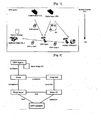
- FIG. 1 is a configuration view showing a Digital Rights Management (DRM) system in accordance with the related art.
- the DRM system controls content issued to a user by a content provider to be used only in a right-limit of RO.
- the content provider is an entity corresponding to a Content Issuer (CI) or a Rights Issuer (RI).
- the CI issues DRM content protected by a specific encryption method so as to protect content from a user having no access right, and the RI issues a Rights Object (RO) necessary to use the DRM content.
- RO Rights Object
- a DRM Agent is mounted at a Device thus to receive the DRM content and RO from the CI or the RI, and controls a usage of the DRM content at a corresponding device by analyzing a 'Permission' or a 'Constraint'.
- a method for moving DRM content and RO between Devices is required so as to enhance a utility of the DRM content.
- a method for protecting RO for DRM content (hereinafter, will be referred to as 'RO') by safely moving the RO between Devices in a specific group is required.
- an object of the present invention is to provide a method for moving Rights Object (RO) in a Digital Rights Management (DRM) capable of safely moving a part or all of RO for DRM content between Devices.
- RO Rights Object
- DRM Digital Rights Management
- a method for moving Rights Object (RO) in a Digital Rights Management comprising: moving to second device a part or all of RO for DRM content by first device having RO for DRM content; and deleting a part or all of RO stored in the first device by the first device, when the moving of the RO is completed.
- a DRM system comprising: first device for moving a part or all of Rights Object (RO) for DRM content; second device for receiving the RO; and a Rights Issuer (RI) having 'move permission' to instruct whether the RO is to be moved or not, for moving the RO to the first device.
- RO Rights Object
- RI Rights Issuer
- a Device comprising: a DRM Agent for moving a part or all of Rights Object (RO) for DRM content to another Device.
- a DRM Agent for moving a part or all of Rights Object (RO) for DRM content to another Device.
- RO Rights Object
- DRM Digital Rights Management
- FIG. 2 is a block diagram schematically showing a system for implementing a method for moving Rights Object (RO) for DRM according to the present invention.
- RO Rights Object
- a Group (or a Domain) is an entity managed by a Rights Issuer (RI), and is provided with a Group Key (or a Domain Key).
- the Group Key is allocated to a corresponding Group, and is used to encode and decode Group RO (or Domain RO).
- the Group RO is issued by the RI, and includes RO for DRM content encoded by the Group Key.
- the DRM content is configured to be decoded by an encryption key included in the Group RO so as to be used only by a user having the Group Key.
- a DRM Agent is mounted in a specific Device thus to allow join or leave to/from the Group, and moves the Group RO to another DRM Agent which is present in the Group as a member of the Group.
- the Group denotes a collection of one or more Devices, in which the Devices are grouped so that one Device can have an exclusive RO at a certain time point.
- the RO is moved to another Device inside the Group, State Information of the RO is together moved.
- Rights Object for DRM content is divided into a Stateful RO and a Stateless RO.
- the Stateless RO is RO that a Device does not manage State Information.
- the Stateful RO is RO that a Device manages State Information so as to precisely utilize the Permission and Constraint inside the RO.
- the Constraint managed by the State Information includes 'interval', 'count', 'timed-count', 'accumulated', etc.
- the State Information indicates a usable amount of RO, and one State Information is managed by one Stateful RO.
- the DRM content can be issued by the CI or the RI.
- the DRM content is issued by the RI.
- FIG. 3 is a flowchart showing a method for moving RO according to a first embodiment of the present invention, in which one user having RO for specific content moves the RO to another user.
- a first user joins a Group managed by RI through DRM Agent 1 mounted at Device 1 (S11), and downloads Group RO encoded by a corresponding Group Key from the RI (S12).
- the DRM Agent 1 can receive a Group Key used to decode the RO in steps S11 and S12.
- the DRM content may be downloaded independently of a downloading of the Group RO. That is, the DRM content can be downloaded before/after the Group RO, or simultaneously with the Group RO.
- the first user instructs the DRM Agent 1 to move the RO for the DRM content to the Device 2 having the DRM Agent 2 (S 13). Then, the DRM Agent 1 checks whether to move the Group RO or not from the DRM Agent 2 or the second user (S 14 to S 17).
- the DRM content with respect to the Group RO can be moved independently of or together with the Group RO.
- the DRM Agent 1 can move to the DRM Agent 2 the following parameters; an Group RO ID and brief information of the Group RO, and/or an DRM content ID and brief information of the DRM content so that the DRM Agent 2 or the second user may view the DRM content and/or the Group RO to be transferred.
- the DRM Agent 1 can move State Information such as a usable amount, that is, a usable number of times or time to the DRM Agent 2 after moving the Group RO to the DRM Agent 2.
- a part or all of the Group RO can be moved to the DRM Agent 2 from the DRM Agent 1 with State Information.
- a method for moving a part or all of the Group RO to the DRM Agent 2 from the DRM Agent 1 will be explained in more detail with reference to FIGS. 9 and 10 .
- the steps S 14 to S 17 can be optionally performed.
- the DRM Agent 1 moves a request for moving RO to the DRM Agent 2 (S 14), and the DRM Agent 2 asks the second user whether to consent to receive the Group RO thus to request an acknowledgement from the second user (S15).
- the DRM Agent 2 receives the request for moving RO, it can move a result with respect to the request for moving RO to the second user without asking the second user whether to consent to receive the Group RO.
- the second user requested to respond to the acknowledgement request from the DRM Agent 2, selects an acceptance (approval) or a refusal for moving RO, thereby responding to the acknowledgement request from the DRM Agent 2 (S16). Then, the DRM Agent 2 moves a response for moving RO to the DRM Agent 1 (S 17).
- the DRM Agent 2 can move a Public Key of the Device 2 to the DRM Agent 1 together with the response for moving RO.
- the DRM Agent 1 having received the response for moving RO from the DRM Agent 2 or having received an acceptance (approval) for moving Group RO from the second user moves a start for moving Group RO to the DRM Agent 2 (S18).
- the DRM Agent 2 can inform the start for moving Group RO to the second user, e.g. by a visual means or an auditory means (S19).
- the steps S18 and S19 can be optionally performed.
- the DRM Agent 1 moves the Group RO to the DRM Agent 2 (S20).
- the DRM Agent 1 can move the DRM content and the Group RO as one package, or separately from each other.
- the DRM Agent 1 moves State Information to the DRM Agent 2 (S21).
- the DRM Agent 1 can move the State Information to the DRM Agent 2 with an encoded state by using a Public Key of the DRM Agent 2 for security.
- the step of S21 can be optionally performed, or can be performed simultaneously with the step S20.
- the DRM Agent 1 sends a completion for moving the Group RO to the DRM Agent 2 (S22). Then, the DRM Agent 2 sends a signal (or a message) informing that the Group RO or the State Information is successfully installed to the DRM Agent 1 (S23).
- the step for moving a signal (or a message) to the DRM Agent 1 from the DRM Agent 2 can be performed or omitted.
- the DRM Agent 2 notifies to the second user that the DRM content and the Group RO have been moved (S24).
- the DRM Agent 1 When the DRM Agent 1 receives a signal (or a message) that the Group RO or the State Information have been installed from the DRM Agent 2, or when the DRM Agent 1 completes to send the Group RO or the State Information to the DRM Agent 2, the DRM Agent 1 deletes the Group RO or the State Information therefrom (S25). When a part of the Group RO is moved, the DRM Agent 1 deletes the part of the Group RO (that is, moved Group RO). Herein, the State Information (for the Group RO) is not deleted but is changed.
- the DRM Agent 1 notifies the RI that the Group RO has been moved to the DRM Agent 2 (S26).
- Information notified to the RI from the DRM Agent 1 includes at least one of an Device ID of a Device for moving the Group RO, an Device ID of a Device for receiving the Group RO, an Group RO ID of a Group RO, a Timestamp and a Signature.
- the step for moving the information to the RI by the DRM Agent 1 can be optionally performed.
- the DRM Agent 1 notifies to the first user that the DRM content and the Group RO have been successfully moved to the DRM Agent 2 (S27), and the DRM Agent 2 joins the Group so as to obtain a Group Key for decoding the Group RO received from the DRM Agent 1 (S28).
- the DRM Agent 2 can access to the RI by using an address (e.g. Uniform Resource Locator: URL) of RI included in the Group RO.
- URL Uniform Resource Locator
- FIG. 3 shows that the DRM Agent 2 joins the Group after receiving the Group RO. However, the DRM Agent 2 can join the Group before receiving the Group RO.
- FIG. 4 is a flowchart showing a method for moving RO according to a second embodiment of the present invention.
- the second embodiment shown in FIG. 4 is similar to the first embodiment shown in FIG. 3 . However, the second embodiment is different from the first embodiment in a time point of the DRM Agent 2 having received the Group RO to join the Group.
- steps S31 to S43 according to the second embodiment of FIG. 4 are equal to the steps S11 to S23 according to the first embodiment of FIG. 3 , and thus their explanation will be omitted. Hereinafter, steps next to the step S43 will be explained.
- the DRM Agent 2 joins the Group managed by the RI thereby to obtain a Group Key for decoding the Group RO (S44). Then, the RI sends a signal (or a message) to the DRM Agent 1, the signal informing that the Group RO is completely moved to the DRM Agent 2 and the DRM Agent 2 has joined the Group (S45).
- the DRM Agent 2 can access to the RI by using an address of RI included in the Group RO.
- the DRM Agent 1 having received the signal (or a message) that the DRM Agent 2 has joined the Group deletes the Group RO and/or the State Information therefrom (S46).
- the DRM Agent 1 deletes the part of the Group RO (that is, moved Group RO).
- the State Information for the Group RO is not deleted but is changed.
- the DRM Agent 2 sends a signal (or a message) that the DRM content and/or the Group RO have been successfully received to the second user (S47), and the DRM Agent 1 sends a signal (or a message) that the DRM content and/or the Group RO have been successfully moved to the first user (S48).
- FIG. 5 is a flowchart showing a method for moving RO according to a third embodiment of the present invention, which shows a method for moving RO from one user having the RO to another user when requested to move the RO.
- another user requesting moving of the RO for a DRM content already knows the DRM content ID and/or Group RO ID of said one user.
- the second user instructs the DRM Agent 2 to receive Group RO of the DRM Agent 1 mounted in the Device 1 of the first user (S51).
- the DRM Agent 2 sends a request for moving Group RO to the DRM Agent 1 (S52).
- the request signal includes an DRM content ID of the DRM content and/or an Group RO ID of Group RO, both of which are requested by the DRM Agent 2, and can include a Public Key for a Device of the second user.
- the DRM Agent 1 asks the first user whether to permit moving of the Group RO (S53), and the first user responds to the DRM Agent 1 (S54).
- the step of S53 can be optionally performed.
- the DRM Agent 1 having received the request for moving Group RO from the DRM Agent 2 or having received 'move permission' for moving the Group RO from the first user sends a start for moving Group RO to the DRM Agent 2 (S55), and/or sends a start for moving Group RO to the second user through the DRM Agent 2 (S56).
- the steps S55 and S56 can be optionally performed.
- the DRM Agent 1 sends the Group RO to the DRM Agent 2 (S57).
- the DRM content and the Group RO can be moved as one package, or can be separately moved from each other.
- the DRM Agent 1 moves State Information to the DRM Agent 2 (S58).
- the Group RO can be moved as an encoded state by a Group Key, or can be moved as an encoded state by a Public Key for Device of the second user.
- the DRM Agent 1 sends a completion signal (or a message) for moving the DRM content and the Group RO to the DRM Agent 2 (S59).
- the DRM Agent 2 sends a signal (or a message) informing that the Group RO and the State Information are successfully installed to the DRM Agent 1 and the second user (S61).
- the steps S61 to S65 according to the third embodiment are equal to the steps S24 to S28 according to the first embodiment of FIG. 3 , and thus their explanation will be omitted.
- FIG. 5 shows that the DRM Agent 2 joins the Group after receiving the Group RO. However, the DRM Agent 2 can join the Group before receiving the Group RO.
- FIG. 6 is a flowchart showing a method for moving RO according to a fourth embodiment of the present invention, which shows a method for moving RO from one user having the RO to another user when requested to move the RO.
- a fourth embodiment of the present invention shows a method for moving RO from one user having the RO to another user when requested to move the RO.
- another user requesting moving of the RO already knows a content ID of said one user having the RO and/or an ID of Group RO.
- the fourth embodiment shown in FIG. 6 is similar to the third embodiment shown in FIG. 5 .
- the fourth embodiment is different from the third embodiment in a time point of the DRM Agent 2 having received the Group RO to join the Group.
- the steps S71 to S80 according to the fourth embodiment of FIG. 6 are equal to the steps S51 to S60 according to the first embodiment of FIG. 3 , and thus their explanation will be omitted. Also, the steps S80 to S85 according to the fourth embodiment of FIG. 6 are equal to the steps S44 to S48 according to the second embodiment of FIG. 4 , and thus their explanation will be omitted.
- a Device In order to move a part or all of RO between Devices, a Device (a Device for moving RO) has to receive 'move permission' for moving RO from RI.
- the Rights Issuer (RI) issues RO to the Device 1 together with 'move permission' to instruct whether to move the RO to at least one Device 2.
- the move permission can be included in the RO, or can be moved as a certain parameter when the RO is moved.
- the Device 1 determines whether to move a part or all of the RO received from the RI to another Device after checking whether 'move permission' exists in the RO.
- Whether to move the RO to another Device can be determined according to whether 'move permission' exists in the RO or not, or according to a value of 'move permission' in the RO.
- the Device 1 When a part or all of the RO can be moved as a result of the checking of the move permission, the Device 1 directly moves a part or all of the RO to the Device 2 after obtaining consent from the Device 2. When a request for moving RO is received from the Device 2, the Device 1 directly moves to the Device 2 a part or all of the RO after checking the move permission of the RO if the RO can be movable.
- All of the RO denotes all of usable RO not having been used yet after being issued from the RI, or all of usable RO remaining after being used.
- a part of the RO denotes a part of usable RO not having been used yet after being issued from the RI, or a part of usable RO remaining after being used.
- the RO is expressed by using a Right Expression Language (REL).
- REL Right Expression Language
- the REL expressed as various formats is mainly expressed as an XML format. Accordingly, 'move permission' when the RO is expressed as an XML format will be explained in the present invention.
- the Device 1 is provided with DRM Agent 1
- the Device 2 is provided with DRM Agent 2.
- the RI sends 'move permission' to instruct moving of RO to the Device 1 together with the RO.
- the RO is expressed as an XML format, information relevent to the moving is included in the move permission.
- the 'Move' element can include at least one of 'Permission' and 'Constraint' as a sub-element.
- the 'Move' element can be used as a sub-element of the 'Permission'.
- the Constraint has a limited condition used in a general DRM system, and includes 'count', 'timed-count', 'datetime', 'interval', 'accumulated', 'individual', 'system', etc.
- the 'count' is a condition for limiting the number of times of content usage
- the 'timed-count' is a condition for limiting the number of times of content usage considering that content is used one time whenever a certain time is lapsed.
- the 'datetime' is a condition for limiting content usage by setting starting and ending time
- the 'interval' is a condition for limiting content usage by allowing content usage only during a certain period from a starting time.
- the 'accumulated' is a condition for limiting content usage by calculating a total usage time of content and limiting content usage to a certain time.
- the 'individual' is a condition for allowing only a certain user or a certain Device to use content
- the 'system' is a condition for limiting a system in which content is used.
- the DRM Agent 1 of the Device issues RO for allowing only operations defined by the Permission to the DRM Agent 2 of the Device 2.
- the DRM Agent 1 of the Device issues RO for allowing all operations issued from the RI to the DRM Agent 2 of the Device 2.
- the Device 1 issues RO including the 'Move' to the Device 2. Then, the Device 2 moves the RO including the 'Move' to another Device such as Device 3.
- the 'Move' may has a partial characteristic (or attribute) indicating moving a part of RO.
- the partial characteristic has a value for indicating moving a part of RO (for instance, when the partial characteristic has a true value or RO is Stateful RO)
- the Device 1 moves a part of RO to the Device 2.
- the Device 1 can move a part (3 hours) of the remaining hours (8 hours) to the Device 2. Moving a part of RO is performed by changing State Information, etc.
- FIG. 8 is a flowchart showing a method for partially or entirely moving RO including move permission between Devices according to a fifth embodiment of the present invention.
- RI can issue movable RO or unmovable RO
- the Device 1 can purchase content by representing intention to move RO to another Device.
- the RI issues to the Device 1 RO including 'move permission' according to the intention of the Device 1, the 'move permission' for allowing moving of RO to another Device (S101).
- the 'move permission' has a partial characteristic value for indicating moving a part of RO.
- the Device 1 checks the 'move permission' of RO, and determines whether to move the RO according to the 'move permission' (S102). When moving a part or all of RO is allowed, the Device 1 moves a part or all of the RO to another Device (such as Device 2). On the contrary, when moving a part or all of RO is not allowed, the Device 1 does not move a part or all of the RO to another Device.
- the Device 1 can move the RO to the Device 2 together with the 'Move' in the RO.
- the Device 1 When the Device 1 moves the RO to the Device 2, the Device 1 decodes the RO by using a Private Key thereof thus to generate decoded RO, and then encodes the decoded RO by using a Public Key of the Device 2 thus to generate encoded RO (S103).
- the Device 1 copies content to the Device 2 (S104).
- the step of S104 can be performed before or after moving RO, or can be simultaneously performed at the time of moving RO.
- the Device 1 moves the encoded RO generated in S103 to the Device 2 (S105).
- the Device 1 moves State Information to the Device 2 (S106). However, when the encoded RO is Stateful RO and a part of the RO is to be moved in S106, the Device 1 moves State Information relevant to a part of the RO to the Device 2.
- the Device 1 When all of the RO are to be moved, the Device 1 deletes the RO. When the RO is Stateful RO, the Device 1 deletes State Information of the RO (S107). However, when a part of the RO is to be moved, the Device 1 updates the State Information.
- At least one of the Device 1 and the Device 2 notifies moving of the RO to the RI (S108, S109).
- RO can be moved from one Device to another Device after 'move permission' of the RO is checked.
- FIG. 9 is a flowchart showing a method for partially or entirely moving RO from Device 1 to Device 2 according to a sixth embodiment of the present invention.
- the first user is a user of the Device 1
- the DRM Agent 1 is a DRM Agent of the Device 1.
- the second user is a user of the Device 2
- the DRM Agent 2 is a DRM Agent of the Device 2.
- the RI issues RO to the DRM Agent 1 of the Device 1 with 'move permission', which is the same as FIG. 8 . Accordingly, the 'move permission' aforementioned in FIG. 8 is applied to FIG. 9 .
- the first user instructs the DRM Agent 1 to move DRM content and a part or all of RO to the Device 2 (S211).
- the part or all of RO can be a part or all of usable RO not having been used yet after being issued from the RI, or can be a part or all of usable RO remaining after being used by the Device 1.
- the DRM Agent 1 checks 'move permission' of the RO, and determines whether to move the RO according to the 'move permission'. When moving of the RO is not allowed, the DRM Agent 1 informs the first user that moving of the RO is not allowed and then finishes a next step.
- the DRM Agent 1 requests the DRM Agent 2 to check whether the second user wants to receive the DRM content and the RO (S212).
- an ID of the DRM content, information of the DRM content, an ID of the RO, and information of the RO, information with respect to an authentication request of the Device 2, etc. are moved from the DRM Agent 1 to the DRM Agent 2.
- the RO is Stateful RO, a usable amount of the RO is moved. For instance, if all of RO that can be used 10 times are to be moved, when a remaining amount of the RO is 7 times, State Information that the RO can be used 7 times is moved.
- the DRM Agent 2 asks the second user whether to receive the DRM content and the RO (S213). Then, the second user sends a response for the question to the DRM Agent 2 (S214).
- the DRM Agent 2 sends a result of the received response to the DRM Agent 1 (S215).
- an authentication of the Device 2 is performed, and a Public Key of the Device 2 is also moved to the DRM Agent 1.
- the DRM Agent 1 decodes the RO by using a Private Key of the Device 1 thus to generate decoded RO, and then encodes the decoded RO by using a Public Key of the Device 2 thus to generate encoded RO (RO') (S216).
- the DRM Agent 1 disables the RO.
- the DRM Agent 1 can optionally inform the DRM Agent 2 a start for moving RO (S217), and the DRM Agent 2 can inform the second user the start for moving RO (S218).
- the DRM Agent 1 moves the DRM content and the RO (RO') encoded in step S216 to the DRM Agent 2 (S219).
- the RO (RO') and the DRM content can be moved separately from each other, or can be moved together by being packaged in a DRM content format (DCF).
- DCF DRM content format
- the DRM Agent 1 moves the encoded RO(RO') to the DRM Agent 2 together with State Information (S220).
- the State Information shows a remaining amount of the RO.
- the DRM Agent 1 can move the State Information to the DRM Agent 2 by encoding with using a Public Key of the Device 2.
- the DRM Agent 1 When the RO is Stateless RO, the DRM Agent 1 does not manage State Information of che RO.
- the DRM Agent 1 notifies a completion for moving RO to the DRM Agent 2 (S221).
- the DRM Agent 2 informs the DRM Agent 1 whether the received RO(RO'), the State Information, the DRM content have been successfully installed (S222).
- the step of S222 can be optionally performed.
- the DRM Agent 2 notifies the completion for moving RO to the second user (S223).
- the DRM Agent 1 When the DRM Agent 2 have successfully installed the RO(RO'), the State Information, the DRM content, the DRM Agent 1 deletes the RO managed by itself. When the RO is Stateful RO, the DRM Agent 1 also deletes the State Information of the RO (S224). However, when the Device 1 have moved a part or all of the DRM content and the RO to the Device 2 in step S224, the DRM Agent 1 of the Device 1 does not delete the RO but updates only the State Information of the RO managed by itself. That is, the State Information of the RO shows a remaining amount of the RO after being moved to the DRM Agent 2. However, when the RO can not be used any longer as a result of the update of the State Information, the DRM Agent 1 can delete the RO.
- the DRM Agent 1 notifies moving of the RO to the RI (S225).
- the notification information includes an ID of the transferring Device (Device 1), a Device ID of the receiving Device (Device 2), an RO ID of moved RO, and Timestamp denoting moved time of the RO, etc.
- a Signature can be optionally included in the notification information.
- the Signature serves to certify the notification information including a Device ID of the transferring Device (Device 1), a Device ID of the receiving Device (Device 2), an RO ID of moved RO, and Timestamp indicating moved time of the RO, etc.
- the step of S225 can be optionally performed.
- the DRM Agent 1 notifies a completion for moving the RO and the DRM content to the first user (S226).
- the DRM Agent 2 can notify a reception of the RO to the RI.
- the Device 1 moves a part or all of the RO to the Device 2.
- FIG. 10 is a flowchart showing a method for partially or entirely moving RO from Device 1 to Device 2 by a request of the Device 2 according to a seventh embodiment of the present invention.
- FIG. 10 is different from FIG. 9 in that RO is moved to the Device 2 from the Device 1 by a request of the Device 2.
- the RI can issue the RO to the DRM Agent 1 of the Device 1 with including 'move permission' as aforementioned in FIG. 8 .
- the DRM Agent 1 of the Device 1 checks the 'move permission' of the RO when moving of the RO is requested, and determines whether to the move the RO according to the 'move permission'.
- the DRM Agent 2 can already know the RO ID and the DRM content ID both of which managed by the DRM Agent 1.
- the second user can select DRM content and RO required to be received while searching the DRM content of the Device 1 through the Device 2.
- the second user instructs the DRM Agent 2 to request the Device 1 to move a part or all of specific DRM content and RO (S231).
- the DRM Agent 2 requests the Device 1 to move a part or all of the specific DRM content and RO (S232).
- an ID of the DRM content and an ID of the RO are moved to the DRM Agent 1
- an authentication of the Device 2 is performed
- a Public Key of the Device 2 is together moved to the DRM Agent 1.
- the DRM Agent 1 of the Device 1 certifies the 'move permission' and determines whether to move the RO when moving of the RO is requested.
- the DRM Agent 1 asks the first user whether to consent to the moving of the RO.
- the DRM Agent 1 informs the fact and finishes a next step. The step is performed when the RO is issued with 'move permission'.
- the DRM Agent 1 of the Device 1 having received the request for moving RO asks the first user whether to consent to the moving of the DRM content and the RO (S233).
- the first user sends a response for the question to the DRM Agent 1 (S234).
- the DRM Agent 1 When the first user consents to the moving of the DRM content and the RO as a result of the response, the DRM Agent 1 notifies a start for moving RO to the DRM Agent 2 (S235). Then, the DRM Agent 2 notifies the start for moving RO to the second user (S236).
- the steps S235 and 236 can be optionally performed.
- the DRM Agent 1 decodes the RO by using a Private Key of the Device 1 thus to generate decoded RO (RO'), and then encodes the decoded RO by using a Public Key of the Device 2 thus to generate encoded RO (RO') (S237).
- the DRM Agent 1 moves the DRM content and the RO (RO') encoded in step S237 to the DRM Agent 2 (S238).
- the RO (RO') and the DRM content can be moved separately from each other, or can be moved together by being packaged in a DRM content format (DCF).
- DCF DRM content format
- the DRM Agent 1 moves the State Information to the DRM Agent 2 (S239).
- the State Information indicates an entire remaining amount of the RO when all of the RO are to be moved, and indicates a part of a usable amount of the RO when a part of the RO is to be moved.
- the DRM Agent 1 can move the State Information to the DRM Agent 2 by encoding with using a Public Key of the Device 2.
- the DRM Agent 1 does not manage State Information of the RO.
- the DRM Agent 1 notifies a completion for moving RO to the DRM Agent 2 (S240).
- the DRM Agent 2 informs the DRM Agent 1 whether the received RO has been successfully installed (S241).
- the step of S241 can be optionally performed.
- the DRM Agent 2 notifies the completion for moving RO to the second user (S242).
- the DRM Agent 1 When the DRM Agent 2 have successfully installed the RO, the State Information, the DRM content, the DRM Agent 1 deletes the RO managed by itself. When the RO is Stateful RO, the DRM Agent 1 also deletes the State Information of the RO (S243). However, when the Device 1 has moved to the Device 2 the DRM content and a part of the RO in step S243, the DRM Agent 1 of the Device 1 does not delete the RO but updates only the State Information of the RO managed by itself. That is, the State Information of the RO shows a remaining amount of the RO after being moved to the DRM Agent 2. However, when the RO can not be used any longer as a result of the update of the State Information, the DRM Agent 1 can delete the RO.
- the DRM Agent 1 notifies moving of the RO to the RI (S244).
- the notification information includes a Device ID of the transferring Device, a Device ID of the receiving Device, an RO ID of moved RO, and Timestamp denoting moved time of the RO, etc.
- a Signature can be optionally included in the notification information.
- the Signature serves to certify the notification information including a Device ID of the transferring Device, a Device ID of the receiving Device, an RO ID of moved RO, and Timestamp indicating moved time of the RO, etc.
- the step of S244 can be optionally performed.
- the DRM Agent 1 notifies a completion for moving the RO to the first user (S245).
- the DRM Agent 2 of the Device 2 can notify a reception of the RO to the RI (not shown in FIG. 4 ).
- the Device 2 receives all of RO and specific DRM content from the Device 1 by a request.
- the Device of the present invention includes all types of mobile communication terminals (such as a user equipment (UE), a portable phone, a cellular phone, a DMB phone, a DVB-H phone, a PDA phone, a PTT phone, etc.), a digital TV, a GPS navigation, a portable game machine, an MP3, a home appliance, etc.
- the Device of the present invention includes all Devices that can use DRM content.
- the term of Group of the present invention can be referred to as a Domain
- the Group RO can be referred to as a Domain RO
- the Group Key can be referred to as a Domain Key.
- one specific Device directly moves RO to another Device inside Group.
- a user does not newly receive RO from content issuer or RI but receives the RO from another Device by a request, thereby reducing a cost to obtain the RO and reducing a load required to issue the RO from the RI.
- RO can be moved between Devices.
Landscapes
- Engineering & Computer Science (AREA)
- Computer Security & Cryptography (AREA)
- General Engineering & Computer Science (AREA)
- Signal Processing (AREA)
- Computer Hardware Design (AREA)
- Computer Networks & Wireless Communication (AREA)
- Computing Systems (AREA)
- Software Systems (AREA)
- Theoretical Computer Science (AREA)
- Multimedia (AREA)
- Technology Law (AREA)
- Physics & Mathematics (AREA)
- General Physics & Mathematics (AREA)
- Storage Device Security (AREA)
Claims (16)
- Verfahren zum Handhaben digitaler Rechteverwaltung von digitalen Inhalten zwischen einem ersten Gerät und einem zweiten Gerät, wobei das Verfahren durch das erste Gerät ausgeführt wird und umfasst:Erhalten (S101), durch das erste Gerät von einem Rechteausgeber (englisch: Rights Issuer) "RI", einer Bewegungserlaubnis zum Bewegen eines Rechteobjekts (englisch: Rights Object) "RO", das das erste Gerät zu dem zweiten Gerät bewegen möchte;einen ersten Überprüfungsschritt (S102), durch das erste Gerät, ob die Bewegungserlaubnis für ein RO existiert, das sich auf einen bestimmten digitalen Inhalt bezieht, auf den durch das erste Gerät zugreifbar ist, und, falls die Bewegungserlaubnis als ein Ergebnis des ersten Überprüfungsschritts nicht existiert, das RO nicht bewegt wird;einen zweiten Überprüfungsschritt (S102), durch das erste Gerät, ob die Bewegungserlaubnis ein Teilbewegungsattribut aufweist, das eine Bewegung nur einer Untermenge des ROs angibt, oder ob die Bewegungserlaubnis angibt, dass eine Bewegung des ROs in seiner Gesamtheit erlaubt ist für das RO, das die Bewegungserlaubnis als ein Ergebnis des ersten Überprüfungsschritts aufweist,wobei das RO entweder ein zustandsloses RO oder zustandsbehaftetes RO ist, wobei das zustandslose RO ein RO für ein Gerät ist, das Zustandsinformation nicht verwaltet, und das zustandsbehaftete RO ein RO für ein Gerät ist, das Zustandsinformation verwaltet, undwobei das zustandsbehaftete RO Beschränkungselemente aufweist, die zumindest eines aus 'Intervall' (englisch: interval), 'Zählung' (englisch: count), 'zeitlich festgelegte Zählung' (englisch: timed-count), 'angehäuft' (englisch: accumulated), 'Datumszeit' (englisch: datetime), 'individuell' (englisch: individual) und 'System' (englisch: system) umfasst; undSenden (S103), durch das erste Gerät an das zweite Gerät, einer Bewegungserlaubnisnachricht, nur die Untermenge des ROs von dem ersten Gerät an das zweite Gerät basierend auf dem zweiten Überprüfungsschritt zu bewegen, abhängig von Ergebnissen des Überprüfens, ob oder nicht nur Bewegung der Untermenge des ROs erlaubt ist für das RO, das die Bewegungserlaubnis basierend auf dem ersten Überprüfungsschritt hat,wobei das RO ein Domain-RO oder ein Gruppen-RO umfasst, undwobei das Domain-RO oder das Gruppen-RO in Beziehung steht mit einer Systembeschränkung und das zustandsbehaftete RO in Beziehung steht mit einer Zählungs-/Zeit-Beschränkung.
- Verfahren nach Anspruch 1, wobei der Schritt des Bewegens nur der Untermenge des ROs von dem ersten Gerät an das zweite Gerät umfasst:Bewegen von dem ersten Gerät an das zweite Gerät, zumindest eines von einer Identität "ID" des bestimmten digitalen Inhalts, Information des bestimmten digitalen Inhalts, einer ID des ROs, Information über das RO, und Information betreffend eine Authentifizierung des ersten und zweiten Geräts,wobei die Untermenge des ROs einen Teil eines verwendbaren ROs anzeigt, das noch nicht verwendet worden ist nachdem es von einem RI ausgegeben worden ist oder einen Teil eines verwendbaren ROs, das nach Verwendung verbleibt, undwobei die Zustandsinformation eine verwendbare Menge eines entsprechenden ROs angibt, und wobei eine Zustandsinformation durch das zustandsbehaftete RO verwaltet wird.
- Verfahren nach Anspruch 1, wobei dem zweiten Gerät, das die Untermenge des ROs von dem ersten Gerät empfangen hat, erlaubt werden kann, einige oder alle der Untermenge des ROs zu einem anderen Gerät zu bewegen.
- Verfahren nach Anspruch 1, ferner umfassend:Aktualisieren der Zustandsinformation, um die verwendbare Menge des entsprechenden ROs zu verändern; undLöschen des ROs, falls das RO nicht mehr länger verwendet werden kann als ein Ergebnis des Aktualisierens der Zustandsinformation.
- Verfahren nach Anspruch 1, wobei die 'Zählung' eine Bedingung ist zum Begrenzen einer Anzahl von Zeitpunkten einer Inhaltsverwendung, die 'zeitlich festgelegte Zählung' eine Bedingung ist zum Begrenzen einer Anzahl von Zeitpunkten einer Inhaltsverwendung unter Berücksichtigung, dass Inhalt einmal verwendet wird wann immer eine bestimmte Zeit vergangen ist, und das 'System' eine Bedingung ist zum Begrenzen eines Systems, in welchem Inhalt verwendet wird.
- Verfahren nach Anspruch 1, wobei der Schritt des Bewegens nur der Untermenge des ROs von dem ersten Gerät an das zweite Gerät umfasst:Bewegen nur der Untermenge des ROs zusammen mit dem digitalen Inhalt oder Bewegen nur der Untermenge des ROs getrennt von dem digitalen Inhalt.
- Gerät, das ein Verfahren zum Handhaben digitaler Rechteverwaltung von digitalen Inhalten zwischen dem Gerät und einem Zielgerät unterstützt, wobei das Gerät umfasst:einen Speicher, der dazu ausgebildet ist, digitalen Inhalt und ein Rechteobjekt (englisch: Rights Object) "RO", das sich auf den digitalen Inhalt bezieht, zu speichern; undeinen digitalen Rechteverwaltungs (englisch: Digital Rights Management) "DRM" -Agenten, der dazu ausgebildet ist, mit dem Speicher zusammenzuarbeiten und dazu ausgebildet ist:von einem Rechteausgeber (englisch: Rights Issuer) "RI" eine Bewegungserlaubnis zum Bewegen eines Rechteobjekts (englisch: Rights Object) "RO" zu erhalten (101), das das erste Gerät zu dem zweiten Gerät bewegen möchte;einen ersten Überprüfungsschritt auszuführen (S102), um zu überprüfen, ob die Bewegungserlaubnis für ein RO existiert, und, falls die Bewegungserlaubnis als ein Ergebnis des ersten Überprüfungsschritts nicht existiert, das RO nicht bewegt wird;einen zweiten Überprüfungsschritt auszuführen (S102), um zu überprüfen, ob die Bewegungserlaubnis ein Teilbewegungsattribut aufweist, das eine Bewegung nur einer Untermenge des ROs angibt, oder ob die Bewegungserlaubnis angibt, dass eine Bewegung des ROs in seiner Gesamtheit erlaubt ist für das RO, das die Bewegungserlaubnis als ein Ergebnis des ersten Überprüfungsschritts aufweist,wobei der Speicher ferner ausgebildet ist, ein RO, das entweder ein zustandsloses RO oder zustandsbehaftetes RO ist, zu speichern, wobei das zustandslose RO ein RO für ein Gerät ist, das Zustandsinformation nicht verwaltet, und das zustandsbehaftete RO ein RO für ein Gerät ist, das Zustandsinformation verwaltet, undwobei das zustandsbehaftete RO Beschränkungselemente aufweist, die zumindest eines aus 'Intervall' (englisch: interval), 'Zählung' (englisch: count), 'zeitlich festgelegte Zählung' (englisch: timed-count), 'angehäuft' (englisch: accumulated), 'Datumszeit' (englisch: datetime), 'individuell' (englisch: individual) und 'System' (englisch: system) umfasst; undeine Bewegungserlaubnisnachricht zu senden, nur die Untermenge des ROs von dem ersten Gerät an das zweite Gerät basierend auf dem zweiten Überprüfungsschritt zu bewegen, abhängig von Ergebnissen des Überprüfens, ob oder nicht nur Bewegung der Untermenge des ROs erlaubt ist für das RO, das die Bewegungserlaubnis basierend auf dem ersten Überprüfungsschritt hat,wobei der Speicher ferner ausgebildet ist, das RO, das ein Domain-RO oder ein Gruppen-RO umfasst, zu speichern undwobei das Domain-RO oder das Gruppen-RO in Beziehung steht mit einer Systembeschränkung und das zustandsbehaftete RO in Beziehung steht mit einer Zählungs-/Zeit-Beschränkung.
- Gerät nach Anspruch 7, wobei der DRM-Agent ausgebildet ist, mit dem Speicher zusammenzuarbeiten, um:zumindest eines aus einer Identität "ID" des bestimmten digitalen Inhalts, Information des bestimmten digitalen Inhalts, einer ID des ROs, Information über das RO, und Information betreffend eine Authentifizierung des Geräts und Zielgerät von dem Gerät an das Zielgerät zu bewegen,wobei die Untermenge des ROs einen Teil eines verwendbaren ROs anzeigt, das noch nicht verwendet worden ist nachdem es von einem RI ausgegeben worden ist, oder einen Teil eines verwendbaren ROs, das nach Verwendung verbleibt, undwobei die Zustandsinformation eine verwendbare Menge eines entsprechenden ROs angibt, und wobei eine Zustandsinformation durch das zustandsbehaftete RO verwaltet wird.
- Gerät nach Anspruch 7, wobei dem Zielgerät, das die Untermenge des ROs von dem Gerät empfängt, erlaubt werden kann, einige oder alle der Untermenge des ROs zu einem anderen Gerät zu bewegen.
- Gerät nach Anspruch 7, wobei der DRM-Agent ausgebildet ist, mit dem Speicher zusammenzuarbeiten, um:die Zustandsinformation zu aktualisieren, um die verwendbare Menge des entsprechenden ROs zu verändern; unddas RO zu löschen, falls das RO nicht mehr länger verwendet werden kann als ein Ergebnis des Aktualisierens der Zustandsinformation.
- Gerät nach Anspruch 7, wobei die 'Zählung' eine Bedingung ist zum Begrenzen einer Anzahl von Zeitpunkten einer Inhaltsverwendung, die 'zeitlich festgelegte Zählung' eine Bedingung ist zum Begrenzen einer Anzahl von Zeitpunkten einer Inhaltsverwendung unter Berücksichtigung, dass Inhalt einmal verwendet wird wann immer eine bestimmte Zeit vergangen ist, und das 'System' eine Bedingung ist zum Begrenzen eines Systems, in welchem Inhalt verwendet wird.
- Gerät nach Anspruch 7, wobei DRM-Agent ausgebildet ist, mit dem Speicher zusammenzuarbeiten, um:nur die Untermenge des ROs zusammen mit dem digitalen Inhalt oder nur die Untermenge des ROs getrennt von dem digitalen Inhalt zu bewegen.
- Verfahren nach Anspruch 1, ferner umfassend:bei Empfang einer Antwort der Bewegungserlaubnisnachricht, nur Bewegen der Untermenge des ROs von dem ersten Gerät zu dem zweiten Gerät; undbei Empfang nur der Untermenge des ROs, die Untermenge des ROs als unverwendbar in dem ersten Gerät setzen, wenn das RO das zustandsbehaftete RO ist.
- Gerät nach Anspruch 8, wobei der DRM-Agent ferner ausgebildet ist, zum:bei Empfang einer Antwort der Bewegungserlaubnisnachricht, nur Bewegen der Untermenge des ROs von dem Gerät zu dem Zielgerät; undbei Empfang nur der Untermenge des ROs, die Untermenge des ROs als unverwendbar in dem Gerät setzen, wenn das RO das zustandsbehaftete RO ist.
- Verfahren nach Anspruch 1, wobei der Schritt des Überprüfens, ob nur die Untermenge des RO bewegt werden darf, umfasst: Überprüfen, ob ein Wert des Teilbewegungsattributs wahr oder falsch ist.
- Gerät nach Anspruch 8, wobei der DRM-Agent ferner ausgebildet ist zum, wenn überprüft wird, ob nur die Untermenge des RO bewegt werden darf, Überprüfen, ob ein Wert des Teilbewegungsattributs wahr oder falsch ist.
Applications Claiming Priority (5)
| Application Number | Priority Date | Filing Date | Title |
|---|---|---|---|
| KR1020050074456A KR100894470B1 (ko) | 2005-08-12 | 2005-08-12 | 디지털 저작권 관리에 있어서 사용권리 이전방법 |
| KR20050074691 | 2005-08-16 | ||
| US72975505P | 2005-10-25 | 2005-10-25 | |
| KR1020060066574A KR20070021033A (ko) | 2005-08-16 | 2006-07-14 | 콘텐츠의 사용권리 전달 방법 및 장치 |
| PCT/KR2006/003168 WO2007021108A1 (en) | 2005-08-12 | 2006-08-11 | Method for moving rights object in digital rights management |
Publications (3)
| Publication Number | Publication Date |
|---|---|
| EP1920553A1 EP1920553A1 (de) | 2008-05-14 |
| EP1920553A4 EP1920553A4 (de) | 2011-08-17 |
| EP1920553B1 true EP1920553B1 (de) | 2015-03-11 |
Family
ID=37757742
Family Applications (1)
| Application Number | Title | Priority Date | Filing Date |
|---|---|---|---|
| EP06783587.6A Not-in-force EP1920553B1 (de) | 2005-08-12 | 2006-08-11 | Verfahren zum Verlagern eines Rechteobjekts in der digitalen Rechteverwaltung |
Country Status (3)
| Country | Link |
|---|---|
| EP (1) | EP1920553B1 (de) |
| MX (1) | MX2008000442A (de) |
| WO (1) | WO2007021108A1 (de) |
Families Citing this family (5)
| Publication number | Priority date | Publication date | Assignee | Title |
|---|---|---|---|---|
| US20090025061A1 (en) * | 2007-07-17 | 2009-01-22 | Motorola, Inc. | Conditional peer-to-peer trust in the absence of certificates pertaining to mutually trusted entities |
| KR101486377B1 (ko) | 2007-08-31 | 2015-01-26 | 엘지전자 주식회사 | 디지털 콘텐츠의 사용권리 이동에서의 포스트 브라우징 지원 방법 및 그 단말 |
| KR100988374B1 (ko) | 2007-12-14 | 2010-10-18 | 엘지전자 주식회사 | 사용권리 이동 방법, 사용권리의 발급권한 관리 방법 및시스템 |
| CN102118391B (zh) * | 2011-01-17 | 2014-03-26 | 李岩 | 一种用于数字出版提供版权保护的多媒体文件结构及装置 |
| CN102427458B (zh) * | 2011-12-21 | 2014-03-05 | 李岩 | 具有版权保护功能的多媒体文件数字化阅读添加注解和批注的方法及装置 |
Family Cites Families (2)
| Publication number | Priority date | Publication date | Assignee | Title |
|---|---|---|---|---|
| KR100493900B1 (ko) * | 2003-08-21 | 2005-06-10 | 삼성전자주식회사 | 사용자간 콘텐츠에 대한 권한정보의 공유방법 |
| KR101254209B1 (ko) * | 2004-03-22 | 2013-04-23 | 삼성전자주식회사 | 디바이스와 휴대용 저장장치간에 권리 객체를 이동,복사하는 방법 및 장치 |
-
2006
- 2006-08-11 WO PCT/KR2006/003168 patent/WO2007021108A1/en not_active Ceased
- 2006-08-11 MX MX2008000442A patent/MX2008000442A/es active IP Right Grant
- 2006-08-11 EP EP06783587.6A patent/EP1920553B1/de not_active Not-in-force
Also Published As
| Publication number | Publication date |
|---|---|
| MX2008000442A (es) | 2008-03-10 |
| WO2007021108A1 (en) | 2007-02-22 |
| EP1920553A4 (de) | 2011-08-17 |
| EP1920553A1 (de) | 2008-05-14 |
Similar Documents
| Publication | Publication Date | Title |
|---|---|---|
| US20100192232A1 (en) | Method for moving rights object in digital rights management | |
| US7930250B2 (en) | Method for managing user domain in digital rights management and system thereof | |
| US8321673B2 (en) | Method and terminal for authenticating between DRM agents for moving RO | |
| US7885871B2 (en) | Method and system for managing DRM agent in user domain in digital rights management | |
| US20030100297A1 (en) | Method of software configuration assurance in programmable terminal devices | |
| US20130034019A1 (en) | Updating of network selection information | |
| EP2013766B1 (de) | Verfahren zum gemeinsamen benutzen eines rechteobjekts bei der digitalen rechteverwaltung und einrichtung dafür | |
| WO2008034366A1 (en) | Method and system of service subscription and device therefof | |
| JP2008541635A (ja) | モバイルデバイスを無効化する方法 | |
| JP2006040291A (ja) | コンテンツの使用権限の管理方法及びそのための使用者端末 | |
| JP6133310B2 (ja) | ユーザ装置上のソフトウェア資産に対するアクセスの時間制制御 | |
| WO2011134287A1 (zh) | 物联网通知消息的管理方法和通知业务能力装置 | |
| EP1920553B1 (de) | Verfahren zum Verlagern eines Rechteobjekts in der digitalen Rechteverwaltung | |
| WO2007108619A1 (en) | Method for moving and sharing digital contents and rights object and device thereof | |
| WO2009110156A1 (ja) | コンテンツ配布システム及びコンテンツ配布方法 | |
| CN101233717B (zh) | 在移动数字版权管理中移动版权对象的方法 | |
| EP2093687B1 (de) | Verfahren und Vorrichtung zur Verwaltung der Autorisierung eines Rechtsobjekt bei der Verwaltung digitaler Rechte | |
| US20090151001A1 (en) | Method and apparatus for operating rights | |
| CN119383586A (zh) | 感知模式的确定方法、装置及存储介质 | |
| KR20070021033A (ko) | 콘텐츠의 사용권리 전달 방법 및 장치 | |
| JP2004102908A (ja) | 通信システム、通信方法、サーバ装置、プログラム及び記録媒体 | |
| JP2004112233A (ja) | 移動機、サーバ装置、情報処理システム、情報処理方法、及びプログラム | |
| KR20100042248A (ko) | 콘텐츠의 사용권리 전달 방법 및 장치 | |
| KR20050023895A (ko) | 정보 제공 시스템 및 방법 |
Legal Events
| Date | Code | Title | Description |
|---|---|---|---|
| PUAI | Public reference made under article 153(3) epc to a published international application that has entered the european phase |
Free format text: ORIGINAL CODE: 0009012 |
|
| 17P | Request for examination filed |
Effective date: 20080312 |
|
| AK | Designated contracting states |
Kind code of ref document: A1 Designated state(s): AT BE BG CH CY CZ DE DK EE ES FI FR GB GR HU IE IS IT LI LT LU LV MC NL PL PT RO SE SI SK TR |
|
| RAP1 | Party data changed (applicant data changed or rights of an application transferred) |
Owner name: LG ELECTRONICS INC. |
|
| A4 | Supplementary search report drawn up and despatched |
Effective date: 20110715 |
|
| RIC1 | Information provided on ipc code assigned before grant |
Ipc: H04L 9/32 20060101AFI20110711BHEP Ipc: G06F 21/00 20060101ALI20110711BHEP Ipc: H04L 29/06 20060101ALI20110711BHEP |
|
| 17Q | First examination report despatched |
Effective date: 20111121 |
|
| RIC1 | Information provided on ipc code assigned before grant |
Ipc: H04L 29/06 20060101ALI20111111BHEP Ipc: H04L 9/32 20060101AFI20111111BHEP Ipc: G06F 21/00 20060101ALI20111111BHEP |
|
| DAX | Request for extension of the european patent (deleted) | ||
| GRAP | Despatch of communication of intention to grant a patent |
Free format text: ORIGINAL CODE: EPIDOSNIGR1 |
|
| INTG | Intention to grant announced |
Effective date: 20140703 |
|
| GRAS | Grant fee paid |
Free format text: ORIGINAL CODE: EPIDOSNIGR3 |
|
| GRAP | Despatch of communication of intention to grant a patent |
Free format text: ORIGINAL CODE: EPIDOSNIGR1 |
|
| GRAJ | Information related to disapproval of communication of intention to grant by the applicant or resumption of examination proceedings by the epo deleted |
Free format text: ORIGINAL CODE: EPIDOSDIGR1 |
|
| GRAS | Grant fee paid |
Free format text: ORIGINAL CODE: EPIDOSNIGR3 |
|
| GRAP | Despatch of communication of intention to grant a patent |
Free format text: ORIGINAL CODE: EPIDOSNIGR1 |
|
| INTG | Intention to grant announced |
Effective date: 20141222 |
|
| INTG | Intention to grant announced |
Effective date: 20150116 |
|
| GRAA | (expected) grant |
Free format text: ORIGINAL CODE: 0009210 |
|
| AK | Designated contracting states |
Kind code of ref document: B1 Designated state(s): AT BE BG CH CY CZ DE DK EE ES FI FR GB GR HU IE IS IT LI LT LU LV MC NL PL PT RO SE SI SK TR |
|
| REG | Reference to a national code |
Ref country code: GB Ref legal event code: FG4D |
|
| REG | Reference to a national code |
Ref country code: CH Ref legal event code: EP |
|
| REG | Reference to a national code |
Ref country code: IE Ref legal event code: FG4D |
|
| REG | Reference to a national code |
Ref country code: AT Ref legal event code: REF Ref document number: 715832 Country of ref document: AT Kind code of ref document: T Effective date: 20150415 |
|
| REG | Reference to a national code |
Ref country code: DE Ref legal event code: R096 Ref document number: 602006044773 Country of ref document: DE Effective date: 20150423 |
|
| REG | Reference to a national code |
Ref country code: NL Ref legal event code: VDEP Effective date: 20150311 |
|
| REG | Reference to a national code |
Ref country code: NL Ref legal event code: VDEP Effective date: 20150311 |
|
| PG25 | Lapsed in a contracting state [announced via postgrant information from national office to epo] |
Ref country code: ES Free format text: LAPSE BECAUSE OF FAILURE TO SUBMIT A TRANSLATION OF THE DESCRIPTION OR TO PAY THE FEE WITHIN THE PRESCRIBED TIME-LIMIT Effective date: 20150311 Ref country code: SE Free format text: LAPSE BECAUSE OF FAILURE TO SUBMIT A TRANSLATION OF THE DESCRIPTION OR TO PAY THE FEE WITHIN THE PRESCRIBED TIME-LIMIT Effective date: 20150311 Ref country code: FI Free format text: LAPSE BECAUSE OF FAILURE TO SUBMIT A TRANSLATION OF THE DESCRIPTION OR TO PAY THE FEE WITHIN THE PRESCRIBED TIME-LIMIT Effective date: 20150311 Ref country code: LT Free format text: LAPSE BECAUSE OF FAILURE TO SUBMIT A TRANSLATION OF THE DESCRIPTION OR TO PAY THE FEE WITHIN THE PRESCRIBED TIME-LIMIT Effective date: 20150311 |
|
| REG | Reference to a national code |
Ref country code: AT Ref legal event code: MK05 Ref document number: 715832 Country of ref document: AT Kind code of ref document: T Effective date: 20150311 |
|
| REG | Reference to a national code |
Ref country code: LT Ref legal event code: MG4D |
|
| PG25 | Lapsed in a contracting state [announced via postgrant information from national office to epo] |
Ref country code: LV Free format text: LAPSE BECAUSE OF FAILURE TO SUBMIT A TRANSLATION OF THE DESCRIPTION OR TO PAY THE FEE WITHIN THE PRESCRIBED TIME-LIMIT Effective date: 20150311 Ref country code: GR Free format text: LAPSE BECAUSE OF FAILURE TO SUBMIT A TRANSLATION OF THE DESCRIPTION OR TO PAY THE FEE WITHIN THE PRESCRIBED TIME-LIMIT Effective date: 20150612 |
|
| PG25 | Lapsed in a contracting state [announced via postgrant information from national office to epo] |
Ref country code: NL Free format text: LAPSE BECAUSE OF FAILURE TO SUBMIT A TRANSLATION OF THE DESCRIPTION OR TO PAY THE FEE WITHIN THE PRESCRIBED TIME-LIMIT Effective date: 20150311 |
|
| PG25 | Lapsed in a contracting state [announced via postgrant information from national office to epo] |
Ref country code: EE Free format text: LAPSE BECAUSE OF FAILURE TO SUBMIT A TRANSLATION OF THE DESCRIPTION OR TO PAY THE FEE WITHIN THE PRESCRIBED TIME-LIMIT Effective date: 20150311 Ref country code: CZ Free format text: LAPSE BECAUSE OF FAILURE TO SUBMIT A TRANSLATION OF THE DESCRIPTION OR TO PAY THE FEE WITHIN THE PRESCRIBED TIME-LIMIT Effective date: 20150311 Ref country code: SK Free format text: LAPSE BECAUSE OF FAILURE TO SUBMIT A TRANSLATION OF THE DESCRIPTION OR TO PAY THE FEE WITHIN THE PRESCRIBED TIME-LIMIT Effective date: 20150311 Ref country code: RO Free format text: LAPSE BECAUSE OF FAILURE TO SUBMIT A TRANSLATION OF THE DESCRIPTION OR TO PAY THE FEE WITHIN THE PRESCRIBED TIME-LIMIT Effective date: 20150311 Ref country code: PT Free format text: LAPSE BECAUSE OF FAILURE TO SUBMIT A TRANSLATION OF THE DESCRIPTION OR TO PAY THE FEE WITHIN THE PRESCRIBED TIME-LIMIT Effective date: 20150713 |
|
| PG25 | Lapsed in a contracting state [announced via postgrant information from national office to epo] |
Ref country code: IS Free format text: LAPSE BECAUSE OF FAILURE TO SUBMIT A TRANSLATION OF THE DESCRIPTION OR TO PAY THE FEE WITHIN THE PRESCRIBED TIME-LIMIT Effective date: 20150711 Ref country code: AT Free format text: LAPSE BECAUSE OF FAILURE TO SUBMIT A TRANSLATION OF THE DESCRIPTION OR TO PAY THE FEE WITHIN THE PRESCRIBED TIME-LIMIT Effective date: 20150311 Ref country code: PL Free format text: LAPSE BECAUSE OF FAILURE TO SUBMIT A TRANSLATION OF THE DESCRIPTION OR TO PAY THE FEE WITHIN THE PRESCRIBED TIME-LIMIT Effective date: 20150311 |
|
| REG | Reference to a national code |
Ref country code: DE Ref legal event code: R097 Ref document number: 602006044773 Country of ref document: DE |
|
| PG25 | Lapsed in a contracting state [announced via postgrant information from national office to epo] |
Ref country code: IT Free format text: LAPSE BECAUSE OF FAILURE TO SUBMIT A TRANSLATION OF THE DESCRIPTION OR TO PAY THE FEE WITHIN THE PRESCRIBED TIME-LIMIT Effective date: 20150311 |
|
| PLBE | No opposition filed within time limit |
Free format text: ORIGINAL CODE: 0009261 |
|
| STAA | Information on the status of an ep patent application or granted ep patent |
Free format text: STATUS: NO OPPOSITION FILED WITHIN TIME LIMIT |
|
| PG25 | Lapsed in a contracting state [announced via postgrant information from national office to epo] |
Ref country code: DK Free format text: LAPSE BECAUSE OF FAILURE TO SUBMIT A TRANSLATION OF THE DESCRIPTION OR TO PAY THE FEE WITHIN THE PRESCRIBED TIME-LIMIT Effective date: 20150311 |
|
| 26N | No opposition filed |
Effective date: 20151214 |
|
| PG25 | Lapsed in a contracting state [announced via postgrant information from national office to epo] |
Ref country code: SI Free format text: LAPSE BECAUSE OF FAILURE TO SUBMIT A TRANSLATION OF THE DESCRIPTION OR TO PAY THE FEE WITHIN THE PRESCRIBED TIME-LIMIT Effective date: 20150311 |
|
| PG25 | Lapsed in a contracting state [announced via postgrant information from national office to epo] |
Ref country code: LU Free format text: LAPSE BECAUSE OF FAILURE TO SUBMIT A TRANSLATION OF THE DESCRIPTION OR TO PAY THE FEE WITHIN THE PRESCRIBED TIME-LIMIT Effective date: 20150811 Ref country code: MC Free format text: LAPSE BECAUSE OF FAILURE TO SUBMIT A TRANSLATION OF THE DESCRIPTION OR TO PAY THE FEE WITHIN THE PRESCRIBED TIME-LIMIT Effective date: 20150311 |
|
| REG | Reference to a national code |
Ref country code: CH Ref legal event code: PL |
|
| PG25 | Lapsed in a contracting state [announced via postgrant information from national office to epo] |
Ref country code: LI Free format text: LAPSE BECAUSE OF NON-PAYMENT OF DUE FEES Effective date: 20150831 Ref country code: CH Free format text: LAPSE BECAUSE OF NON-PAYMENT OF DUE FEES Effective date: 20150831 |
|
| REG | Reference to a national code |
Ref country code: IE Ref legal event code: MM4A |
|
| REG | Reference to a national code |
Ref country code: FR Ref legal event code: ST Effective date: 20160429 |
|
| PG25 | Lapsed in a contracting state [announced via postgrant information from national office to epo] |
Ref country code: IE Free format text: LAPSE BECAUSE OF NON-PAYMENT OF DUE FEES Effective date: 20150811 |
|
| PG25 | Lapsed in a contracting state [announced via postgrant information from national office to epo] |
Ref country code: FR Free format text: LAPSE BECAUSE OF NON-PAYMENT OF DUE FEES Effective date: 20150831 Ref country code: BE Free format text: LAPSE BECAUSE OF FAILURE TO SUBMIT A TRANSLATION OF THE DESCRIPTION OR TO PAY THE FEE WITHIN THE PRESCRIBED TIME-LIMIT Effective date: 20150311 |
|
| PG25 | Lapsed in a contracting state [announced via postgrant information from national office to epo] |
Ref country code: HU Free format text: LAPSE BECAUSE OF FAILURE TO SUBMIT A TRANSLATION OF THE DESCRIPTION OR TO PAY THE FEE WITHIN THE PRESCRIBED TIME-LIMIT; INVALID AB INITIO Effective date: 20060811 Ref country code: BG Free format text: LAPSE BECAUSE OF FAILURE TO SUBMIT A TRANSLATION OF THE DESCRIPTION OR TO PAY THE FEE WITHIN THE PRESCRIBED TIME-LIMIT Effective date: 20150311 |
|
| PG25 | Lapsed in a contracting state [announced via postgrant information from national office to epo] |
Ref country code: CY Free format text: LAPSE BECAUSE OF FAILURE TO SUBMIT A TRANSLATION OF THE DESCRIPTION OR TO PAY THE FEE WITHIN THE PRESCRIBED TIME-LIMIT Effective date: 20150311 |
|
| PG25 | Lapsed in a contracting state [announced via postgrant information from national office to epo] |
Ref country code: TR Free format text: LAPSE BECAUSE OF FAILURE TO SUBMIT A TRANSLATION OF THE DESCRIPTION OR TO PAY THE FEE WITHIN THE PRESCRIBED TIME-LIMIT Effective date: 20150311 |
|
| PGFP | Annual fee paid to national office [announced via postgrant information from national office to epo] |
Ref country code: DE Payment date: 20180705 Year of fee payment: 13 |
|
| PGFP | Annual fee paid to national office [announced via postgrant information from national office to epo] |
Ref country code: GB Payment date: 20180706 Year of fee payment: 13 |
|
| REG | Reference to a national code |
Ref country code: DE Ref legal event code: R119 Ref document number: 602006044773 Country of ref document: DE |
|
| GBPC | Gb: european patent ceased through non-payment of renewal fee |
Effective date: 20190811 |
|
| PG25 | Lapsed in a contracting state [announced via postgrant information from national office to epo] |
Ref country code: DE Free format text: LAPSE BECAUSE OF NON-PAYMENT OF DUE FEES Effective date: 20200303 |
|
| PG25 | Lapsed in a contracting state [announced via postgrant information from national office to epo] |
Ref country code: GB Free format text: LAPSE BECAUSE OF NON-PAYMENT OF DUE FEES Effective date: 20190811 |