EP1927385A2 - Dispositif de jeu, procédé de mise en oeuvre de jeu, programme, et support d'enregistrement - Google Patents
Dispositif de jeu, procédé de mise en oeuvre de jeu, programme, et support d'enregistrement Download PDFInfo
- Publication number
- EP1927385A2 EP1927385A2 EP07022987A EP07022987A EP1927385A2 EP 1927385 A2 EP1927385 A2 EP 1927385A2 EP 07022987 A EP07022987 A EP 07022987A EP 07022987 A EP07022987 A EP 07022987A EP 1927385 A2 EP1927385 A2 EP 1927385A2
- Authority
- EP
- European Patent Office
- Prior art keywords
- game
- prescribed
- player character
- displayed
- virtual
- Prior art date
- Legal status (The legal status is an assumption and is not a legal conclusion. Google has not performed a legal analysis and makes no representation as to the accuracy of the status listed.)
- Granted
Links
Images


Classifications
-
- A—HUMAN NECESSITIES
- A63—SPORTS; GAMES; AMUSEMENTS
- A63F—CARD, BOARD, OR ROULETTE GAMES; INDOOR GAMES USING SMALL MOVING PLAYING BODIES; VIDEO GAMES; GAMES NOT OTHERWISE PROVIDED FOR
- A63F13/00—Video games, i.e. games using an electronically generated display having two or more dimensions
- A63F13/50—Controlling the output signals based on the game progress
- A63F13/52—Controlling the output signals based on the game progress involving aspects of the displayed game scene
- A63F13/525—Changing parameters of virtual cameras
-
- A—HUMAN NECESSITIES
- A63—SPORTS; GAMES; AMUSEMENTS
- A63F—CARD, BOARD, OR ROULETTE GAMES; INDOOR GAMES USING SMALL MOVING PLAYING BODIES; VIDEO GAMES; GAMES NOT OTHERWISE PROVIDED FOR
- A63F13/00—Video games, i.e. games using an electronically generated display having two or more dimensions
- A63F13/20—Input arrangements for video game devices
- A63F13/21—Input arrangements for video game devices characterised by their sensors, purposes or types
- A63F13/214—Input arrangements for video game devices characterised by their sensors, purposes or types for locating contacts on a surface, e.g. floor mats or touch pads
- A63F13/2145—Input arrangements for video game devices characterised by their sensors, purposes or types for locating contacts on a surface, e.g. floor mats or touch pads the surface being also a display device, e.g. touch screens
-
- A—HUMAN NECESSITIES
- A63—SPORTS; GAMES; AMUSEMENTS
- A63F—CARD, BOARD, OR ROULETTE GAMES; INDOOR GAMES USING SMALL MOVING PLAYING BODIES; VIDEO GAMES; GAMES NOT OTHERWISE PROVIDED FOR
- A63F13/00—Video games, i.e. games using an electronically generated display having two or more dimensions
- A63F13/40—Processing input control signals of video game devices, e.g. signals generated by the player or derived from the environment
- A63F13/42—Processing input control signals of video game devices, e.g. signals generated by the player or derived from the environment by mapping the input signals into game commands, e.g. mapping the displacement of a stylus on a touch screen to the steering angle of a virtual vehicle
- A63F13/426—Processing input control signals of video game devices, e.g. signals generated by the player or derived from the environment by mapping the input signals into game commands, e.g. mapping the displacement of a stylus on a touch screen to the steering angle of a virtual vehicle involving on-screen location information, e.g. screen coordinates of an area at which the player is aiming with a light gun
-
- A—HUMAN NECESSITIES
- A63—SPORTS; GAMES; AMUSEMENTS
- A63F—CARD, BOARD, OR ROULETTE GAMES; INDOOR GAMES USING SMALL MOVING PLAYING BODIES; VIDEO GAMES; GAMES NOT OTHERWISE PROVIDED FOR
- A63F13/00—Video games, i.e. games using an electronically generated display having two or more dimensions
- A63F13/40—Processing input control signals of video game devices, e.g. signals generated by the player or derived from the environment
- A63F13/44—Processing input control signals of video game devices, e.g. signals generated by the player or derived from the environment involving timing of operations, e.g. performing an action within a time slot
-
- A—HUMAN NECESSITIES
- A63—SPORTS; GAMES; AMUSEMENTS
- A63F—CARD, BOARD, OR ROULETTE GAMES; INDOOR GAMES USING SMALL MOVING PLAYING BODIES; VIDEO GAMES; GAMES NOT OTHERWISE PROVIDED FOR
- A63F13/00—Video games, i.e. games using an electronically generated display having two or more dimensions
- A63F13/50—Controlling the output signals based on the game progress
- A63F13/52—Controlling the output signals based on the game progress involving aspects of the displayed game scene
- A63F13/525—Changing parameters of virtual cameras
- A63F13/5258—Changing parameters of virtual cameras by dynamically adapting the position of the virtual camera to keep a game object or game character in its viewing frustum, e.g. for tracking a character or a ball
-
- G—PHYSICS
- G06—COMPUTING OR CALCULATING; COUNTING
- G06F—ELECTRIC DIGITAL DATA PROCESSING
- G06F3/00—Input arrangements for transferring data to be processed into a form capable of being handled by the computer; Output arrangements for transferring data from processing unit to output unit, e.g. interface arrangements
- G06F3/01—Input arrangements or combined input and output arrangements for interaction between user and computer
- G06F3/048—Interaction techniques based on graphical user interfaces [GUI]
- G06F3/0481—Interaction techniques based on graphical user interfaces [GUI] based on specific properties of the displayed interaction object or a metaphor-based environment, e.g. interaction with desktop elements like windows or icons, or assisted by a cursor's changing behaviour or appearance
- G06F3/04815—Interaction with a metaphor-based environment or interaction object displayed as three-dimensional [3D], e.g. changing the user viewpoint with respect to the environment or object
-
- G—PHYSICS
- G06—COMPUTING OR CALCULATING; COUNTING
- G06F—ELECTRIC DIGITAL DATA PROCESSING
- G06F3/00—Input arrangements for transferring data to be processed into a form capable of being handled by the computer; Output arrangements for transferring data from processing unit to output unit, e.g. interface arrangements
- G06F3/01—Input arrangements or combined input and output arrangements for interaction between user and computer
- G06F3/048—Interaction techniques based on graphical user interfaces [GUI]
- G06F3/0487—Interaction techniques based on graphical user interfaces [GUI] using specific features provided by the input device, e.g. functions controlled by the rotation of a mouse with dual sensing arrangements, or of the nature of the input device, e.g. tap gestures based on pressure sensed by a digitiser
- G06F3/0488—Interaction techniques based on graphical user interfaces [GUI] using specific features provided by the input device, e.g. functions controlled by the rotation of a mouse with dual sensing arrangements, or of the nature of the input device, e.g. tap gestures based on pressure sensed by a digitiser using a touch-screen or digitiser, e.g. input of commands through traced gestures
- G06F3/04883—Interaction techniques based on graphical user interfaces [GUI] using specific features provided by the input device, e.g. functions controlled by the rotation of a mouse with dual sensing arrangements, or of the nature of the input device, e.g. tap gestures based on pressure sensed by a digitiser using a touch-screen or digitiser, e.g. input of commands through traced gestures for inputting data by handwriting, e.g. gesture or text
-
- A—HUMAN NECESSITIES
- A63—SPORTS; GAMES; AMUSEMENTS
- A63F—CARD, BOARD, OR ROULETTE GAMES; INDOOR GAMES USING SMALL MOVING PLAYING BODIES; VIDEO GAMES; GAMES NOT OTHERWISE PROVIDED FOR
- A63F13/00—Video games, i.e. games using an electronically generated display having two or more dimensions
- A63F13/25—Output arrangements for video game devices
- A63F13/26—Output arrangements for video game devices having at least one additional display device, e.g. on the game controller or outside a game booth
-
- A—HUMAN NECESSITIES
- A63—SPORTS; GAMES; AMUSEMENTS
- A63F—CARD, BOARD, OR ROULETTE GAMES; INDOOR GAMES USING SMALL MOVING PLAYING BODIES; VIDEO GAMES; GAMES NOT OTHERWISE PROVIDED FOR
- A63F13/00—Video games, i.e. games using an electronically generated display having two or more dimensions
- A63F13/80—Special adaptations for executing a specific game genre or game mode
- A63F13/822—Strategy games; Role-playing games
-
- A—HUMAN NECESSITIES
- A63—SPORTS; GAMES; AMUSEMENTS
- A63F—CARD, BOARD, OR ROULETTE GAMES; INDOOR GAMES USING SMALL MOVING PLAYING BODIES; VIDEO GAMES; GAMES NOT OTHERWISE PROVIDED FOR
- A63F13/00—Video games, i.e. games using an electronically generated display having two or more dimensions
- A63F13/90—Constructional details or arrangements of video game devices not provided for in groups A63F13/20 or A63F13/25, e.g. housing, wiring, connections or cabinets
- A63F13/92—Video game devices specially adapted to be hand-held while playing
-
- A—HUMAN NECESSITIES
- A63—SPORTS; GAMES; AMUSEMENTS
- A63F—CARD, BOARD, OR ROULETTE GAMES; INDOOR GAMES USING SMALL MOVING PLAYING BODIES; VIDEO GAMES; GAMES NOT OTHERWISE PROVIDED FOR
- A63F2300/00—Features of games using an electronically generated display having two or more dimensions, e.g. on a television screen, showing representations related to the game
- A63F2300/10—Features of games using an electronically generated display having two or more dimensions, e.g. on a television screen, showing representations related to the game characterized by input arrangements for converting player-generated signals into game device control signals
- A63F2300/1068—Features of games using an electronically generated display having two or more dimensions, e.g. on a television screen, showing representations related to the game characterized by input arrangements for converting player-generated signals into game device control signals being specially adapted to detect the point of contact of the player on a surface, e.g. floor mat, touch pad
- A63F2300/1075—Features of games using an electronically generated display having two or more dimensions, e.g. on a television screen, showing representations related to the game characterized by input arrangements for converting player-generated signals into game device control signals being specially adapted to detect the point of contact of the player on a surface, e.g. floor mat, touch pad using a touch screen
-
- A—HUMAN NECESSITIES
- A63—SPORTS; GAMES; AMUSEMENTS
- A63F—CARD, BOARD, OR ROULETTE GAMES; INDOOR GAMES USING SMALL MOVING PLAYING BODIES; VIDEO GAMES; GAMES NOT OTHERWISE PROVIDED FOR
- A63F2300/00—Features of games using an electronically generated display having two or more dimensions, e.g. on a television screen, showing representations related to the game
- A63F2300/20—Features of games using an electronically generated display having two or more dimensions, e.g. on a television screen, showing representations related to the game characterised by details of the game platform
- A63F2300/204—Features of games using an electronically generated display having two or more dimensions, e.g. on a television screen, showing representations related to the game characterised by details of the game platform the platform being a handheld device
-
- A—HUMAN NECESSITIES
- A63—SPORTS; GAMES; AMUSEMENTS
- A63F—CARD, BOARD, OR ROULETTE GAMES; INDOOR GAMES USING SMALL MOVING PLAYING BODIES; VIDEO GAMES; GAMES NOT OTHERWISE PROVIDED FOR
- A63F2300/00—Features of games using an electronically generated display having two or more dimensions, e.g. on a television screen, showing representations related to the game
- A63F2300/60—Methods for processing data by generating or executing the game program
- A63F2300/6045—Methods for processing data by generating or executing the game program for mapping control signals received from the input arrangement into game commands
-
- A—HUMAN NECESSITIES
- A63—SPORTS; GAMES; AMUSEMENTS
- A63F—CARD, BOARD, OR ROULETTE GAMES; INDOOR GAMES USING SMALL MOVING PLAYING BODIES; VIDEO GAMES; GAMES NOT OTHERWISE PROVIDED FOR
- A63F2300/00—Features of games using an electronically generated display having two or more dimensions, e.g. on a television screen, showing representations related to the game
- A63F2300/60—Methods for processing data by generating or executing the game program
- A63F2300/63—Methods for processing data by generating or executing the game program for controlling the execution of the game in time
- A63F2300/638—Methods for processing data by generating or executing the game program for controlling the execution of the game in time according to the timing of operation or a time limit
-
- A—HUMAN NECESSITIES
- A63—SPORTS; GAMES; AMUSEMENTS
- A63F—CARD, BOARD, OR ROULETTE GAMES; INDOOR GAMES USING SMALL MOVING PLAYING BODIES; VIDEO GAMES; GAMES NOT OTHERWISE PROVIDED FOR
- A63F2300/00—Features of games using an electronically generated display having two or more dimensions, e.g. on a television screen, showing representations related to the game
- A63F2300/60—Methods for processing data by generating or executing the game program
- A63F2300/66—Methods for processing data by generating or executing the game program for rendering three dimensional images
- A63F2300/6661—Methods for processing data by generating or executing the game program for rendering three dimensional images for changing the position of the virtual camera
-
- A—HUMAN NECESSITIES
- A63—SPORTS; GAMES; AMUSEMENTS
- A63F—CARD, BOARD, OR ROULETTE GAMES; INDOOR GAMES USING SMALL MOVING PLAYING BODIES; VIDEO GAMES; GAMES NOT OTHERWISE PROVIDED FOR
- A63F2300/00—Features of games using an electronically generated display having two or more dimensions, e.g. on a television screen, showing representations related to the game
- A63F2300/60—Methods for processing data by generating or executing the game program
- A63F2300/66—Methods for processing data by generating or executing the game program for rendering three dimensional images
- A63F2300/6661—Methods for processing data by generating or executing the game program for rendering three dimensional images for changing the position of the virtual camera
- A63F2300/6684—Methods for processing data by generating or executing the game program for rendering three dimensional images for changing the position of the virtual camera by dynamically adapting its position to keep a game object in its viewing frustrum, e.g. for tracking a character or a ball
-
- A—HUMAN NECESSITIES
- A63—SPORTS; GAMES; AMUSEMENTS
- A63F—CARD, BOARD, OR ROULETTE GAMES; INDOOR GAMES USING SMALL MOVING PLAYING BODIES; VIDEO GAMES; GAMES NOT OTHERWISE PROVIDED FOR
- A63F2300/00—Features of games using an electronically generated display having two or more dimensions, e.g. on a television screen, showing representations related to the game
- A63F2300/80—Features of games using an electronically generated display having two or more dimensions, e.g. on a television screen, showing representations related to the game specially adapted for executing a specific type of game
- A63F2300/8047—Music games
-
- A—HUMAN NECESSITIES
- A63—SPORTS; GAMES; AMUSEMENTS
- A63F—CARD, BOARD, OR ROULETTE GAMES; INDOOR GAMES USING SMALL MOVING PLAYING BODIES; VIDEO GAMES; GAMES NOT OTHERWISE PROVIDED FOR
- A63F2300/00—Features of games using an electronically generated display having two or more dimensions, e.g. on a television screen, showing representations related to the game
- A63F2300/80—Features of games using an electronically generated display having two or more dimensions, e.g. on a television screen, showing representations related to the game specially adapted for executing a specific type of game
- A63F2300/807—Role playing or strategy games
Definitions
- the present invention relates to a game device or the like which, in a three-dimensional video game in which a viewpoint position of a virtual camera changes in accordance with a movement of a player character, activates a prescribed effect at a second object, forming a pair with a first object, for which the prescribed effect is set.
- a player has implemented a game by moving a player character in a virtual space.
- an action hereafter, a special action which can be implemented only when the player character, in a game implementation process, approaches a specified place (for example, a place in which there is a wooden box or the like) in the virtual space (for example, JP-A-2002-200351 (paragraph 0056 to paragraph 0057)).
- a viewpoint position of a virtual camera which perspective transforms the virtual space, is switched flexibly in accordance with a condition of the characters and an implementation status of the game (for example, JP-A-2003-24636 (paragraphs 0004 to 0005)).
- the invention has an object of providing a game device or the like which improves game quality, considering how to show to the player, in a three-dimensional game in which a viewpoint position changes in accordance with a movement of a player character, an activation of a prescribed effect at a second object, forming a pair with a first object, for which the effect is set.
- a game device includes: a character mover which, in accordance with an operation by a player, moves a player character in a virtual three-dimensional space, a first object, and a second object being provided in the virtual three-dimensional space, a prescribed effect being set for the second object, forming a pair with the first object; a viewpoint mover which moves a viewpoint of a virtual camera in accordance with the movement of the player character by the character mover; a perspective transformer which projects a prescribed range of the virtual three-dimensional space, including at least the player character, onto a virtual screen from a position of the viewpoint moved by the viewpoint mover, and generates a two-dimensional game image; and a game image display which displays the two-dimensional game image generated by the perspective transformer; and a coordinate position input which, in accordance with an operation by the player, inputs an optional coordinate position corresponding to a coordinate position on the game image display.
- the perspective transformer when the player character moves within the prescribed range of the virtual three-dimensional space, sets the prescribed range for perspective transformation to project both the first object and the second object, along with the player character, onto the virtual screen, and display them on the game image display.
- the game device further includes: a game effect activator which, when a locus from a coordinate position in which the first object is displayed to a coordinate position in which the second object is displayed is input by the coordinate position input, where both the first object and the second object are displayed on the game image display, activates the prescribed effect, set for the second object, during an implementation of a game.
- the effect, set for the second object, during the implementation of the game is activated.
- the position of the viewpoint of the virtual camera changes in accordance with the movement of the player character
- the coordinate positions to be input by the coordinate position input device change in accordance with the position of the viewpoint of the virtual camera.
- the game device further includes: an effect display which, when both the first object and the second object are displayed on the game image display, applies the prescribed effect to the locus of the coordinate positions input by the coordinate position input, and displays the prescribed effect on the game image display, superimposed on the two-dimensional image of the game generated by the perspective transformer.
- the effect is applied to the input locus, and displayed, superimposed on the game image.
- the effect set for the second object is activated.
- the game effect activator when the locus from the coordinate position in which the first object is displayed to the coordinate position in which the second object is displayed is input at, or faster than, a prescribed speed, activates the prescribed effect set for the second object.
- the effect display when the locus from the coordinate position in which the first object is displayed to the coordinate position in which the second object is displayed is input at, or faster than, the prescribed speed, applies the prescribed effect to the locus, and displays it on the game image display device.
- the player in order to acquire the effect during the implementation of the game set for the second object, has to input the locus from the position of the first object to the position of the second object, as the two-dimensional plane in the game image, at, or faster than, the prescribed speed.
- the speed at which the locus is input there is also a case in which it is comparatively difficult to input the locus from the first object to the second object.
- the game performance is enhanced.
- the player can recognize that the input causing the activation of the prescribed effect is being carried out.
- the game effect activation system on condition that the locus from the coordinate position in which the first object is displayed to the coordinate position in which the second object is displayed has been input within a prescribed time, activates the prescribed effect set for the second object.
- the effect display system for only the duration of the prescribed time, applies the prescribed effect to the locus input from the coordinate position input device, and displays it on the game image display device.
- the player in order to acquire the effect during the implementation of the game set for the second object, has to input the locus from the position of the first object to the position of the second object, as the two-dimensional plane in the game image, within the prescribed time.
- the time for inputting the locus there is also a case in which it is comparatively difficult to input the locus from the first obj ect to the second object.
- the game performace is improved.
- the player can recognize that, the first object and the second object forming a pair, the input causing the activation of the prescribed effect is being carried out.
- the game apparatus it is possible to arrange in such a way that a plurality of the second objects forming pairs with the first object being formed in the virtual three-dimensional space, a prescribed effect during the implementation of the game is set for each of the plurality of second objects; the perspective transformer, when the player character is within a prescribed plurality of display ranges of the virtual three-dimensional space, sets the prescribed ranges for perspective transformation so that each of the plurality of second objects is projectable, along with the first object, onto the virtual screen, and display them on the game image display; and the game effect activator, when a locus, with the first object as an origin, passing through each of the plurality of second objects, is input by the coordinate position input, where the plurality of second objects are displayed on the game image display along with the first object, activates each of the prescribed effects during the implementation of the game set one for each of the second objects on the locus.
- the player character when the player character is within the plurality of display ranges of the virtual three-dimensional space, as long as the locus, with the position of the first object as the origin, passing through a position of each of the plurality of second objects, has been input as the two-dimensional plane in the game image, the effects during the implementation of the game set one for each of the second objects on the locus are activated.
- the viewpoint of the virtual camera moves further in accordance with a difference in position within the plurality of display ranges and, in a case in which the position of the viewpoint of the virtual camera is taken as a reference, the positional relationship between the first object and the plurality of second objects differs.
- the positional relationship between the first object and the plurality of second objects, as the two-dimensional plane in the generated game image changes.
- the difficulty of inputting the locus, with the position of the first object as the origin, passing through all the plurality of second objects changes.
- the game effect activation system on condition that the locus which passes through each of the plurality of second objects, with the coordinate position in which the first object is being displayed as the origin, has been input at, or faster than, a prescribed speed, activates all of the prescribed effects during the implementation of the game set one for each of the second objects on the locus.
- the game effect activation system on condition that the locus from the coordinate position in which the first object is displayed to the coordinate position in which the second object is displayed has been input within a prescribed time, activates the prescribed effect set for the second object.
- the player in order to acquire the effects during the implementation of the game set one for each of the plurality of second objects, has to input the locus, with the position of the first object as the origin, passing through the position of each of the plurality of second obj ects, as the two-dimensional plane in the game image, at, or faster than, the prescribed speed (or alternatively, within the prescribed time).
- the prescribed speed or alternatively, within the prescribed time.
- the game performance is improved.
- the game apparatus it is possible to arrange in such a way that a plurality of the second objects forming pairs with the first object being formed in the virtual three-dimensional space, prescribed effects during the implementation of the game are set for the plurality of second objects as a whole;
- the perspective transformer when the virtual three-dimensional space of the player character is within a prescribed plurality of display ranges, sets the prescribed ranges to be perspective transformed in such a way that it is possible to project all the plurality of second objects, along with the first object, onto the virtual screen, and display them on the game image display device;
- the game effect activator when a locus, with the first object as an origin, passing through each of the plurality of second objects, has been input by the coordinate position input device, in the condition in which the plurality of second objects are displayed on the game image display device along with the first object, activates all of the prescribed effects during the implementation of the game set for the second objects on the locus as a whole.
- the player character when the player character is within the plurality of display ranges of the virtual three-dimensional space, as long as the locus, with the position of the first object as the origin, passing through a position of each of the plurality of second objects, has been input as the two-dimensional plane in the game image, the effects during the implementation of the game set for the second objects on the locus as a whole are activated.
- the viewpoint of the virtual camera moves further in accordance with the difference in position within the plurality of display ranges and, in the case in which the position of the viewpoint of the virtual camera is taken as the reference, the positional relationship between the first object and the plurality of second objects differs.
- the positional relationship between the first object and the plurality of second objects, as the two-dimensional plane in the generated game image changes.
- the difficulty of inputting the locus, with the position of the first object as the origin, passing through all the plurality of second objects changes.
- the game quality is enhanced.
- the game effect activation system on condition that the locus which passes through each of the plurality of second objects, with the coordinate position in which the first object is displayed as the origin, has been input at, or faster than, the prescribed speed, activates all of the prescribed effects during the implementation of the game set for the second obj ects on the locus as a whole.
- the game effect activation system on condition that the locus which passes through each of the plurality of second obj ects, with the coordinate position in which the first object is displayed as the origin, has been input within the prescribed time, activates all of the prescribed effects during the implementation of the game set for the second objects on the locus as a whole.
- the viewpoint of the virtual camera moves further in accordance with the difference in position within the plurality of display ranges and, in the case in which the position of the viewpoint of the virtual camera is taken as the reference, the positional relationship between the first object and the plurality of second objects differs.
- the positional relationship between the first object and the plurality of second objects changes.
- the game performance is enhanced.
- the game apparatus it is possible to arrange in such a way that there exists in the virtual three-dimensional space, in a vicinity of the first object and the second object, a third object which invalidates the prescribed effect, and the game effect activation system, when the locus from the coordinate position in which the first object is displayed to the coordinate position in which the second object is displayed is input by the coordinate position input device, without passing through a coordinate position in which the third object is displayed, activates the prescribed effect, set for the second object, during the implementation of the game.
- the first object and/or the second object move in the virtual three-dimensional space, while maintaining a distance between them within a prescribed range.
- the apparatus according to the first aspect further includes a player character stopping system which, in accordance with an operation by the player, stops the movement of the player character by the character mover, in which case the game effect activation system, when the locus from the coordinate position in which the first object is displayed to the coordinate position in which the second object is displayed is input by the coordinate position input device, in a condition in which the movement of the player character has been stopped by the player character stopping system, and both the first object and the second object are displayed on the game image display device, activates the prescribed effect.
- a player character stopping system which, in accordance with an operation by the player, stops the movement of the player character by the character mover, in which case the game effect activation system, when the locus from the coordinate position in which the first object is displayed to the coordinate position in which the second object is displayed is input by the coordinate position input device, in a condition in which the movement of the player character has been stopped by the player character stopping system, and both the first object and the second object are displayed on the game image display device, activates the prescribed effect
- the effect set for the second object can only be activated when the movement of the player character has been stopped.
- the viewpoint of the virtual camera also stops.
- the viewpoint mover when the player character is positioned within a vicinity range set in the vicinity of the first object and/or the second object, controls the movement of the viewpoint of the virtual camera in accordance with the movement of the player character differently from when the player character is positioned outside the vicinity range.
- the coordinate position input device being disposed on a front surface of the game image display device, is a touch panel which transmissively shows an image displayed on the game image display device.
- the player carries out the inputting of the coordinate position via the coordinate position input device on the touch panel disposed on the front surface of the game image display device.
- the player being able to input the locus of the positions of the first object and the second object being displayed on the game image display device by intuitively inputting the coordinates of the display positions via the touch panel, the gaming quality is improved.
- a game implementation method which, being executed in a apparatus including a display device which displays a game image, and a coordinate position input device which, in accordance with an operation by a player, inputs an optional coordinate position on the display device, implements a game by moving a player character in a virtual three-dimensional space, a first object, and a second object, for which a prescribed effect is set, forming a pair with the first object, includes: moving the player character in the virtual three-dimensional space, in accordance with an operation by the player; moving a viewpoint of a virtual camera in accordance with the movement of the player character; in the event that the player character has been moved within a prescribed range of the virtual three-dimensional space, setting a prescribed range to be perspective transformed in such a way that it is possible to project both the first object and the second object, along with the player character, onto a virtual screen, and display them on the display device, projecting the prescribed range of the virtual three-dimensional space
- a program causes a computer device, including a display device which displays an image of a game implemented by moving a player character in a virtual three-dimensional space, a first object, and a second object, for which a prescribed effect is set, forming a pair with the first object, and a coordinate position input device which, in accordance with an operation by a player, inputs an optional coordinate position on the display device, to function as: a character mover which moves the player character in the virtual three-dimensional space, in accordance with an operation by the player; a viewpoint mover which moves a viewpoint of a virtual camera in accordance with the movement of the player character by the character mover; a perspective transformer which, in the event that the player character has been moved within a prescribed range of the virtual three-dimensional space, sets a prescribed range to be perspective transformed in such a way that it is possible to project both the first object and the second object, along with the player character, onto a virtual screen, and display
- the program according to the third aspect can be provided recorded on a computer readable recording medium.
- the computer readable recording medium being configured in such a way as to be attachable to and removable from the computer device, is a recording medium provided separately from the computer device.
- the computer readable recording medium, being provided inside the computer device is a recording medium such as a fixed disc device, provided along with the computer device.
- the program according to the third aspect is delivered from a server device existing on a network, its data signal being superimposed on a carrier wave, via the network to the computer device.
- Fig. 1 is an outline view showing a configuration of a apparatus 1 applied to the embodiment.
- a portable apparatus is shown as one example of the apparatus 1.
- the apparatus 1 is configured housing two liquid crystal displays (LCD's) 11 and 12 in a housing 18, in such a way that they are in prescribed disposition positions.
- LCD's liquid crystal displays
- a first liquid crystal display (hereafter referred to as an LCD) 11 and a second LCD 12 are housed disposed one on top of the other, the housing 18 being configured of a lower housing 18a and an upper housing 18b, the upper housing 18b is supported in such a way as to be pivotable about one portion of a top edge of the lower housing 18a.
- the upper housing 18b which has a flat form slightly bigger than a flat form of the first LCD 11, an opening is formed in such a way as to expose a display screen of the first LCD 11 through one principal surface.
- an opening which exposes a display screen of the second LCD 12 is formed in an approximately central portion of a horizontal direction and, as well as sound outlet apertures of a speaker 15 being formed on one of right and left sides sandwiching the second LCD 12, operating switches 14 are attached to the right and left sides.
- the operating switches 14 include an action switch (hereafter referred to as an "A button”) 14a and an action switch (hereafter referred to as a "B button”) 14b, a direction indicating switch (hereafter referred to as a “arrow key”) 14c, a start switch 14d, a selection switch 14e, a side switch (hereafter referred to as an "L button”) 14f and a side switch (hereafter referred to as an "R button”) 14g.
- a button action switch
- B button action switch
- arrow key a direction indicating switch
- start switch 14d a selection switch 14e
- a side switch hereafter referred to as an "L button”
- R button side switch
- the A button 14a and the B button 14b are attached to one principal surface of the lower housing 18a, to a right side of the second LCD 12.
- the A button 14a and the B button 14b are used, for example, in an action role playing game (hereafter referred to as an "action RPG") applied in the embodiment, to input an instruction to attack an enemy character, or the like.
- the arrow key 14c is attached to one principal surface of the lower housing 18a, to a left side of the second LCD 12.
- the arrow key 14c is used for a direction instruction on a game screen, such as instructing a movement direction of a player object (a player character in the embodiment), operable by a player using the operating switches 14, or instructing a movement direction of a cursor.
- the L button 14f and the R button 14g are provided on a right and left of a top surface (a top side surface) of the lower housing 18a.
- the L button 14f is used to input an instruction to interchange an image being displayed on the first LCD 11 and an image being displayed on the second LCD 12, and fix images to be displayed on the first LCD 11 and second LCD 12 as the relevant images (hereafter referred to as an "image fixing").
- the R button 14g is used to input an instruction to release the fixing of the images of the first LCD 11 and second LCD 12 (also including the interchange) (hereafter referred to as an "image fixing release").
- the game screen (one which is generated by a perspective transformation of a virtual three-dimensional space) is displayed on the first LCD 11, and a command selection screen is displayed on the second LCD 12.
- a selection of a command is accepted by a touch on a touch panel.
- the command selection screen is displayed on the first LCD 11, and the game screen is displayed on the second LCD 12.
- a line drawing operation to be described hereafter, is accepted, but the selection of the command is not accepted.
- the touch panel 13 (an area delineated by a broken line in Fig. 1 ) is attached to a top surface of the second LCD 12.
- the touch panel 13, which can be any kind among, for example, a resistive type, an optical type (an infrared type), or a capacitive coupling type, is one which, when a pressing operation or a movement operation has been carried out on its top surface using a stick 16 (or, as is also possible, a finger), detects and transmits a coordinate position of the stick 16.
- the touch panel 13 is used, in a condition in which the images are fixed, to input an instruction implementing an effect from an action source object against an action target object.
- a storage slot (an area delineated by a two-dot broken line in Fig. 1 ) for storing the stick 16 which operates, when necessary, the touch panel 13 is formed in a vicinity of a side surface of the upper housing 18b.
- the stick 16 is stored in the storage slot.
- a cartridge insertion portion (an area delineated by a one-dot broken line in Fig. 1 ) for removably attaching a game cartridge 17 (hereafter referred to as a "cartridge 17”) , which contains a memory (for example, an ROM) in which a game program is stored, is formed in a portion of a side surface of the lower housing 18a.
- the cartridge 17 being an information storage medium which stores the game program, a non-volatile semiconductor memory such as, for example, an ROM or a flash memory, is used.
- a connector for electrically connecting with the cartridge 17 (refer to Fig. 2 ) is built into an interior of the cartridge insertion portion.
- an electronic circuit substrate on which are mounted various electronic parts, such as a CPU, is housed in the lower housing 18a (or, as is also possible, in the upper housing 18b).
- FIG. 2 is a block diagram showing the circuit configuration of the apparatus 1 .
- a CPU core 21 is mounted on the electronic circuit substrate housed in the housing 18.
- an input-output interface (I/F) circuit 27 As well as the connector 28 for connecting with the cartridge 17 being connected, an input-output interface (I/F) circuit 27, a first graphics processing unit (first GPU) 24, a second graphics processing unit (second GPU) 26, and a working RAM (WRAM) 22 are connected, via a prescribed bus, to the CPU core 21.
- I/F input-output interface
- first GPU first graphics processing unit
- second GPU second graphics processing unit
- WRAM working RAM
- the cartridge 17 is removably connected to the connector 28.
- the cartridge 17, being the storage medium for storing the game program, as heretofore described, specifically, is loaded with an ROM 171 which stores the game program, and an RAM 172, which stores backup data in such a way that they are rewritable.
- the game program stored in the ROM 171 of the cartridge 17 is loaded into the WRAM 22, and the game program loaded into the WRAM 22 is executed by the CPU core 21.
- Data for generating temporary data and images obtained by the CPU core 21 executing the game program are stored in the WRAM 22.
- the game program which is a group of orders and a group of data of formats which can be executed by a computer of the apparatus 1, in particular by the CPU core 21, is stored in the ROM 171. Then, the game program is read and executed as appropriate by the WRAM 22.
- a first video RAM (hereafter referred to as a "VRAM”) 23 is connected to the first GPU 24, while a second video RAM (hereafter referred to as a "VRAM”) 25 is connected to the second GPU 26.
- the first GPU 24, in accordance with an instruction from the CPU core 21, generates a first game image based on the data for generating the images stored in the WRAM 22, and draws it in the first VRAM 23.
- the second GPU 26, in accordance with an instruction from the CPU core 21, generates a second game image based on the data for generating the images stored in the WRAM 22, and draws it in the second VRAM 25.
- the first GPU 24 is connected to the first LCD 11, while the second GPU 26 is connected to the second LCD 12.
- the first GPU 24 transmits the first game image, drawn in the first VRAM 23 in accordance with the instruction from the CPU core 21, to the first LCD 11.
- the first LCD 11 displays the first game image transmitted from the first GPU 24.
- the second GPU 26 transmits the second game image, drawn in the second VRAM 25 in accordance with the instruction from the CPU core 21, to the second LCD 12.
- the second LCD 12 displays the second game image transmitted from the second GPU 26.
- the touch panel 13, the operating switches 14, and the speaker 15 are connected to the I/F circuit 27.
- the I/F circuit 27 is a circuit which carries out a passing of data between the CPU core 21 and external input-output devices, such as the touch panel 13, the operating switches 14, and the speaker 15.
- the touch panel 13 (including a device driver for the touch panel), having a coordinate system corresponding to a coordinate system of the second VRAM 25, transmits coordinate data corresponding to a position input (instructed) by the stick 16 or the like to a prescribed register provided in the WRAM 22.
- a resolution of the display screen of the second LCD 12 being 256 dots by 192 dots
- a detection accuracy of the touch panel 13 is also 256 dots by 192 dots, corresponding to the display screen. It is also acceptable that the detection accuracy of the touch panel 13 is either lower or higher than the resolution of the display screen of the second LCD 12.
- a field is formed in the virtual three-dimensional space, which is a player character movement space, and the player implements the game while moving the player character on the field by operating the operating switches 14 (the arrow key 14c).
- An enemy character which appears when the player character moves to a prescribed point on the field, and moves in such a way as to come closer to the player character, carries out an attack on the player character in the event that a distance from the player character in the virtual three-dimensional space reaches a prescribed distance.
- a movement speed of the enemy character in the virtual three-dimensional space is equal to or less than a maximum movement speed of the player character.
- the player character using a weapon or magic, can attack the enemy character, or defend against the attack by the enemy character.
- the player by having the player character use the magic in accordance with a progress of the game, can implement the game to his or her advantage.
- action source objects, and action target objects which form pairs with the relevant action source objects exist in prescribed positions on the field.
- An effect in the game, to be described hereafter, is set for each action target object. The effect is activated by the line drawing operation from the action source object to the action target object being carried out at, or faster than, a prescribed speed.
- Fig. 3 shows an action management table which manages the action source objects, and the action target objects which form pairs with the relevant action source objects.
- an action source number 101, an action source position 102, an action target number 103, an action target position 104, an effect 105, and an activation flag 106 are registered, for each action target object which forms a pair with the relevant action source object, in the action management table 100.
- the action source number 101 is identification information which uniquely identifies each action source object.
- the action source position 102 shows a position of each action source object in the virtual three-dimensional space by coordinates set in a game space.
- the action target number 103 is identification information which uniquely identifies each action target object. It can also happen that there exist a plurality of action target objects which form pairs with one action source object. For example, there are two action target objects which have a pair relationship with an action source object of which the action source number 101 is 2, while there are three action target objects which have a pair relationship with an action source object of which the action source number 101 is 3.
- the action target position 104 indicates a position of each of the action target objects in the virtual three-dimensional space by coordinates set in the game space.
- the effect 105 is an effect, during the implementation of the game, set against the relevant action target object.
- the effect 105 is set against each action target object, but it is also possible to implement the effects simultaneously with one line drawing operation for as long as the line drawing operation continues at, or faster than, the prescribed speed.
- There are various kinds of the effect 105 such as turning on a light in darkness, linking a non-displayed bridge, adding a parameter set for the player character, or carrying out an attack on the enemy character.
- the activation flag 106 is a flag set for an action target object against which an effect set against the action target object has already been activated.
- the activation flag 106 is set when the line drawing operation is carried out from an action source object to an action target object, which have a pair relationship. An activation flag 106 which has once been set is not reset.
- the positions of the player character, the action source objects and the action target objects on the field of the virtual three-dimensional space are each uniquely specified by coordinates of a world coordinate system (X, Y, Z).
- Graphic data of the objects (including the action source objects and the action target objects) existing on the field, are all configured of a plurality of polygons, coordinates of vertices of which are indicated by coordinates of the world coordinate system.
- the player character is configured of a plurality of polygons, coordinates of vertices of which are indicated by coordinates of a local coordinate system (x, y, z).
- An approximate central point of the player character being set as a reference point, its position in the virtual three-dimensional space is indicated by coordinates of the world coordinate system of the reference point.
- a direction of the player character is represented by an angle which each axis of the local coordinate system forms with each axis of the world coordinate system.
- coordinates of feature points (the vertex of each polygon) of all objects included in a visible range are converted into coordinates of the world coordinate system. Also, a direction of movement of the player character is determined based on a relationship between a position of the player character in a current frame period, and a position of the player character in an immediately preceding frame period.
- An aspect of the player character moving on the field in the virtual three-dimensional space is depicted on the first LCD 11 or the second LCD 12, and is recognized by the player.
- An image (the game image) in which the virtual three-dimensional space has been perspective transformed by a virtual camera, a viewpoint of which is set in a prescribed position with the player character as the reference point, is displayed on the first LCD 11 (on the second LCD 12 at the image fixing time).
- An image (the command selection screen) in which a plurality of kinds of command are included is displayed on the second LCD 12 (on the first LCD 11 at the image fixing time).
- Fig. 4 schematically shows an aspect of a perspective transformation of the virtual three-dimensional space by the virtual camera which displays the image on the first LCD 11 (on the second LCD 12 at the image fixing time) .
- the virtual camera 301 is placed in the virtual three-dimensional space, and an image projected onto a virtual screen 302 becomes the image displayed on the first LCD 11 (on the second LCD 12 at the image fixing time).
- the position of the virtual camera 301 is the viewpoint 303
- an orientation of the virtual camera 301 is a visual axis 304
- an area formed by four straight lines, which join the viewpoint 303 and four corner vertices of the virtual screen 302 is a field of view 305.
- a size of the virtual screen 302 being fixed, there is a relationship such that by determining an area of the field of view 305, a position of the virtual screen 302 is determined, and by determining the position of the virtual screen 302, the area of the field of view 305 is determined.
- a rear clip plane 306 is fixed at a prescribed distance from the viewpoint 303 in a direction of the visual axis 304.
- a clipping range that is, a range in the virtual three-dimensional space in which images are generated by perspective transformation (that is, the visible range) , is a range from the virtual screen 302 to the rear clip plane 306 within a range of the field of view 305.
- a coordinate system used for projecting the image onto the virtual screen 302 being a viewpoint coordinate system (X', Y', Z')
- the direction of the visual axis 304 is a Z' axis of the viewpoint coordinate system.
- the coordinates of the world coordinate system including the coordinates converted from the coordinates of the local coordinate system) being converted into coordinates of the viewpoint coordinate system, a perspective transformation process, including a hidden surface removal process to be shown next, is carried out.
- a hidden surface removal method a Z buffer method is used.
- the CPU core 21, as well as sending the coordinates of each feature point to the first GPU 24 (to the second GPU 26 at the image fixing time) transmits a drawing order.
- the first GPU 24 (the second GPU 26 at the image fixing time) updates a value of a Z buffer in such a way that data (a value of Z') of a point on a front surface (a small point of Z' coordinates) remain for each feature point and, for every update, transmits image data for the relevant points to the first VRAM 23 (to the second VRAM 25 at the image fixing time) .
- the position of the viewpoint 303, the direction of the visual axis 304, and the size of the field of view 305 are decided (by these being decided, the position of the virtual screen 302 is automatically decided) .
- the direction of the visual axis 304, the size of the field of view 305, and the clipping distances are set at constant values.
- the position of the player character 200 on the field of the virtual three-dimensional space is more than a prescribed distance (10) from a position of an action source object
- the position of the viewpoint 303 being maintained in a position a certain distance, in a prescribed direction, from the player character 200, moves in pursuit of the player character 200.
- the position of the viewpoint 303 changes slightly in accordance with a positional relationship of the action source object and the player character 200. Consequently, as the position of the viewpoint 303 of the virtual camera 301 changes considerably when the position of the player character 200 on the field of the virtual three-dimensional space changes even a little, positions of the action source object and action target object displayed on the first LCD 11 (on the second LCD 12 at the image fixing time) change considerably, and coordinate positions at which a line drawing input is to be carried out change considerably.
- a difficulty of the line drawing operation on the touch panel 13 that is, whether or not it is easily possible to maintain the prescribed speed or greater in the line drawing operation
- Figs. 5A-1 and 5B-1 are views showing an example of the second LCD 12 in the condition in which the images are fixed.
- a player character 200, an action source object 201, and two action target objects 202-1 and 202-2, which form pairs with the action source object 201 are displayed on the second LCD 12.
- positions of the action source object 201 and the two action target objects 202, displayed on the second LCD 12 differ.
- Figs. 5A-2 and 5B-2 schematically show the position of the action source object 201 as point A, the position of the action target object 202-1 as point B, and the position of the action target object 202-2 as point C.
- an angle ABC formed between a direction heading toward point B from point A, and a direction heading toward point C from point B is an obtuse angle.
- the angle ABC formed between the direction heading toward point B from point A, and the direction heading toward point C from point B is an acute angle.
- An angle ACB is also an acute angle.
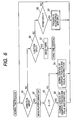
- Fig. 6 is a flowchart showing the process for operating the player character 200 at the normal time, when the images are not fixed, in the action RPG according to the embodiment.
- the process of the flowchart is a process in which the CPU core 21 executes the game program loaded from the ROM 171 of the cartridge 17 into the WRAM 22.
- the normal time process in particular in a condition in which the action source object 201 is displayed, an enemy character approaches the player character, and carries out an attack.
- the CPU core 21 determines whether or not any direction has been input from the arrow key 14c (step S1). If a direction has been input from the arrow key 14c, the CPU core 21 moves the player character 200 on the field in accordance with the relevant direction (step S2) . The CPU core 21 determines whether or not an action source object 201, of which a distance X between the position of the player character 200 and the action source position 102 on the field of the virtual three-dimensional space is less than 10, has been registered in the action management table 100 (step S3).
- step S4 If there is no action source object 201 within a range of 10 from the position of the player character 200, the CPU core 21, with a control of the position of the viewpoint 303 of the virtual camera 301 as a normal control (a control causing the virtual camera 301 to pursue the player character 200), displays the image on the first LCD 11 (step S4). Then, the CPU core 21 returns to the process of step S1.
- the CPU core 21 changes the control of the position of the viewpoint 303 of the virtual camera 301 from the normal control (to a control which carries out a prescribed calculation in accordance with a positional relationship between the player character 200, the action source object 201, and the action target objects 202, and moves the position of the viewpoint 303), and displays the image on the first LCD 11 (step S5) .
- the CPU core 21 determines whether or not there has been an input from the L button 14f (step S6). If there has been an input from the L button 14f, the CPU core 21 interchanges an image being displayed at the present moment on the first LCD 11 with an image being displayed on the second LCD 12, and sends an instruction to the first GPU 24 and second GPU 26 to fix the displays of the first LCD 11 and second LCD 12 with the relevant images (step S7). Then, the CPU core 21 shifts to the fixing time process. Details of the fixing time process will be given hereafter.
- the CPU core 21 determines whether or not there has been another input from the operating switches 14 (apart from the arrow key 14c and the R button 14g), or the touch panel 13 (step S8). If there has been another input from the operating switches 14 (apart from the arrow key 14c and the R button 14g), or the touch panel 13, the CPU core 21 carries out a process in accordance with the relevant input (for example, causing the player character 200 to attack the enemy character) (step S9). Subsequently, the CPU core 21 returns again to the process of step S1. If there has been no other input either, the CPU core 21 returns directly to the process of step S1.
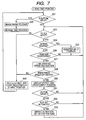
- Fig. 7 is a flowchart showing the process carried out at the time when the images are fixed, in the action RPG according to the embodiment.
- the CPU core 21 determines whether or not there has been an input from the R button 14g (step S21). If there has been an input from the R button 14g, the CPU core 21 sends an instruction to the first GPU 24 and the second GPU 26 to finish the fixing of the images carried out in step S7 (step S22). Then, the CPU core 21 shifts to the previously described normal time process.
- the CPU core 21 determines whether or not the touch panel 13 has been touched, and any of its coordinate positions been input (step S23). If no coordinate position has been input from the touch panel 13, the CPU core 21 proceeds to a process of step S29. If a coordinate position has been input from the touch panel 13, the CPU core 21 determines whether or not the input coordinate position is the position in which the action source object 201 is being displayed (step S24).
- the CPU core 21 registers the input coordinate position in the WRAM 22 (step S25). Then, the CPU core 21 returns to the process of step S23. If the input coordinate position is not the position in which the action source object 201 is being displayed, the CPU core 21 determines whether or not the coordinate position has been registered in the WRAM 22 (step S26). If the coordinate position has not been registered, the CPU core 21 returns to the process of step S23.
- the CPU core 21 calculates the speed at which the line drawing operation is being carried out from the coordinate position input on this occasion and the coordinate positions registered in the WRAM 22 (step S27) . Then, the CPU core 21 determines whether or not the calculated line drawing speed is equal to or greater than the prescribed speed (immediately after starting the line drawing operation, the prescribed speed is taken to be lower) (step S28) . If it is not equal to or greater than the prescribed speed, the CPU core 21 proceeds to the process of step S29.
- step S29 if there is an effect being displayed on the second LCD 12, the CPU core 21 deletes the effect display. Also, if the coordinate position has been registered in the WRAM 22, the CPU 21 deletes the registration of the coordinate position. Then, the CPU core 21 returns to the process of step S21.
- the CPU core 21 displays the effect, applying it to the range of the certain width, centered on the coordinate position input on this occasion, on the second LCD 12. Also, the CPU core 21 updates the coordinate position registered in the WRAM 22 to the coordinate position input on this occasion (step S30).
- the CPU core 21 determines whether or not the coordinate position input on this occasion is the position in which an action target object 202 is being displayed (step S31). If it is not the position in which an action target object 202 is being displayed, the CPU core 21 returns to the process of step S23. If it is the position in which an action target object 202 is being applied, the CPU core 21, based on whether or not the activation flag 106 has been set for the relevant action target object 202 in the action management table 100, determines whether or not the effect 105 set for the action target object 202 has been activated (step S32).
- step S23 If the effect 105 set for the action target object 202 has already been activated, the CPU core 21 returns to the process of step S23. If the effect 105 set for the action target object 202 has not yet been activated, the CPU core 21 activates the effect 105 set for the action target object 202, and sets the activation flag 106 (step S33). Then, the CPU core 21 returns to the process of step S23.
- the action RPG at the time of fixing the images in accordance with the input of the L button 14f, when the line drawing operation from the display position of the action source object 201 to the display positions of the action target objects 202 is carried out at or faster than the prescribed speed, in the condition in which the action source object 201, and the action target objects 202 which form pairs with the action source object 201, are displayed on the second LCD 12, the effect 105 set for the action target object 202 is activated.
- the position of the viewpoint 303 of the virtual camera 301 changes in accordance with the movement of the player character 200 on the field.
- the position of the viewpoint 303 is delicately controlled near the action source object 201.
- the coordinate position input by the line drawing operation changes depending on the position of the viewpoint 303 of the virtual camera 301.
- the player being able to obtain an advantage in the implementation of the game by inputting the coordinate position which changes in accordance with the position of the player character 200 moved by the operation of the arrow key 14c, game performance is improved.
- the player in order to activate the effects 105 set for each of the plurality of action target objects 202 with one line drawing operation, has to carry out a line drawing operation, with the action source object 201 as an origin, which passes through each of the plurality of action target objects 202 at, or faster than, the prescribed speed.
- the action source object 201 By there being a limit to the speed at which the line drawing operation which passes through the plurality of action target objects 202 is carried out, there is a case in which it is comparatively difficult to carry out the line drawing operation, with the action source object 201 as the origin, which passes through each of the plurality of action target objects 202 (for example, the kind of example shown in Fig. 5B-1 ).
- the gaming quality is improved.
- the position of the viewpoint 303 changes in accordance with not only the position of the player character 200, but also the positional relationship with the action source object 201 and the action target objects 202.
- the viewpoint 303 being delicately controlled by even a slight movement of the player character 200, a considerable effect is had by the display positions of the action source object 201 and the action target objects 202 displayed on the first LCD 11 (on the second LCD 12 at the image fixing time). Consequently, when moving the player character 200 by controlling the arrow key 14c too, a more precise control being required, the gaming quality is improved.
- an effect is displayed on the second LCD 12, applied to the range of the certain width, centered on the input positions.
- the line drawing operation from the action source object 201 to the action target objects 202 being shown by the effect, by the effect being positioned at the action target objects 202, the effects 105 set for the action target objects 202 are activated.
- the action source object 201 and the action target objects 202 forming pairs, the player can easily recognize that the effect 105 has been activated.
- this effect it is possible to recognize that a line drawing operation enabling the activation of the effect 105 is being continued, even before the line drawing operation reaches the action target objects 202.
- the effects 105 set for the action target objects 202 can only be activated at the image fixing time. At the image fixing time, the movements of the player character 200 and the enemy characters stop. As the position of the player character 200 does not change, the viewpoint 303 of the virtual camera 301 depicted on the second LCD 12 also stops. Herein, it is possible to effectively show the player the activation of the effects 105 set for the action target objects 202, without being affected by an implementation of another game.
- the player carries out the line drawing operation on the touch panel 13 attached to the front surface of the second LCD 12.
- the screen displayed on the second LCD 12 is the game screen displayed on the first LCD 11 at the normal time (one which is generated by a perspective transformation of the virtual three-dimensional space).
- the player being able to carry out the line drawing operation by intuitively inputting, via the touch panel 13, the coordinates of the display positions, on the game screen being displayed on the second LCD 12, of the action source object 201 and the action target objects 202, the game quality is improved.
- the touch panel 13 being disposed on the front surface of the second LCD 12 means that it is not disposed on the front surface of the first LCD 11.
- an effect 105 is set in the action management table 100 for each action target object 202.
- an effect 105 is set for each action source object 201.
- the position of the viewpoint 303 in the case in which the position of the player character 200 is within the prescribed distance (10) from the position of the action source object 201, the position of the viewpoint 303, being changed from the normal control, changes in accordance with the positional relationship between the action source object 201 and the player character 200.
- the changing of the position of the viewpoint 303 from the normal control is either carried out in accordance with the relationship between the position of the player character 200 and the position of the action target object 202, or carried out in accordance with the relationship between the position of the player character 200, the position of the action source object 201 and the position of the action target object 202.
- the effects 105 set for the action target objects 202 are activated in the same way.
- the effect activated at the action target object 202 differs depending on a way in which the line drawing operation is carried out.
- the effect 105 activated by drawing the line, with the action source object 201 as the origin, which passes through each of the plurality of action target objects 202 is superior to the effect 105 activated by drawing a line from the action source object 201 to each action target object 202.
- the effect 105 set in the action management table 100 for the action target object 202 is activated.
- the effect 105 activated is fixed by a prescribed method.
- the effect 105 activated differs in accordance with the time required for the line drawing operation.
- the effect 105 activated differs in accordance with a length of a line for which the line drawing operation is being carried out.
- the action target object 202 being taken to exist at a prescribed point on the field of the virtual three-dimensional space, as long as it is included in the visible range, it is displayed on the first LCD 11 (on the second LCD 12 at the image fixing time).
- any one of the action target objects 202, not being displayed at the normal time is displayed by fulfilling a prescribed condition.
- the action target object 202, not being displayed in the image displayed on the first LCD 11, is displayed only on the second LCD 12 in the condition in which the images are fixed.
- the action target object 202 being an invisible object at first, when a prescribed line drawing operation is carried out, with the action source object 201 as the origin, as far as the invisible action target object 202, the action target object 202 changes to being visible, and is displayed on the second LCD 12 for the first time.
- the action source object 201 and the action target object 202 exist at prescribed points on the field of the virtual three-dimensional space.
- the action source object 201 and/or the action target object 202 move in the virtual three-dimensional space (although a distance between the two is maintained within a certain range), and stop moving at the image fixing time.
- the action source object 201 is an item belonging to the player character 200. In this case, a further minuteness being required of the movement operation of the position of the player character 200 in accordance with the movement of the action source object 201 and/or the action target object 202, an improvement of the gaming quality is achieved.
- a positional relationship of the action source object 201, the action target object 202, and the invalidated object displayed on the first LCD 11 (on the second LCD 12 at the image fixing time) is decided by the movement of the player character 200 on the field.
- moving the player character 200 by controlling the arrow key 14c not simply causing the action source object 201 and the action target object 202 to be displayed on the first LCD 11 (on the second LCD 12 at the image fixing time), but in what position on the first LCD 11 (on the second LCD 12 at the image fixing time) the action source object 201, the action target object 202, and the invalidated object are caused to be displayed also has an effect on the implementation of the game.
- the game performance further improves.
- the movements of the enemy character stop at the image fixing time.
- the movements of the enemy character do not stop at the image fixing time either.
- the enemy character also carrying out an attack on the player character 200 while the line drawing operation is being carried out, in order to activate the effect 105 without undergoing the attack by the enemy character, it is necessary to move the player character 200 while helping the player character 200 to escape from the attack by the enemy character, or while causing it to counterattack, fix the images and, in the condition in which the images are fixed, carry out the line drawing operation before undergoing the attack by the enemy character.
- a temporal restriction arising with regard to the player moving the player character 200 in such a way that it is easy to carry out the line drawing operation, and with regard to the line drawing operation, the gaming performance improves.
- the invention is applied to the action RPG in which the effect 105 set for the action target object 202 is activated, but it is also acceptable to apply the invention to another kind of game.
- the action source object and the action target object are positioned on a battlefield, and it is possible, by the line drawing operation from the action source object to the action target object, to make an attack on the enemy character.
- the coordinate positions are input via the touch panel 13 disposed on the front surface of the second LCD 12.
- a device which inputs the coordinate positions not being limited to the touch panel 13, it is also acceptable to use another pointing device, such as a mouse which carries out the inputting of the coordinates via a position of a cursor displayed on the display device.
- a mouse which carries out the inputting of the coordinates via a position of a cursor displayed on the display device.
- the apparatus 1 includes the two display devices, the first LCD 11 and the second LCD 12. As opposed to this, it is also acceptable that there is one display device. In the event that the touch panel is used as the device which inputs the coordinate positions, it can be arranged that the touch panel is disposed on the front surface of the one display device. Also, in the event that there is only one display device, although obviously no switching of the screens occurs, it is possible to arrange in such a way that the fixing and release of the images is possible by a prescribed operation of the player.
- the apparatus 1 which includes the two display devices, the first LCD and second LCD 12, and the pointing device referred to as the touch panel 13.
- the computer device which executes the game to which the invention is applied is either a dedicated game machine or a general-purpose personal computer, it matters not whether it is a portable type or a fixed type. Also, it is also possible to utilize a portable telephone as the computer device which executes the game to which the invention is applied.
- the program and data of the apparatus 1 are distributed stored in the ROM 171 of the game cartridge 17.
- the recording medium which stores the program and data not being limited to this kind of article, it is also possible to utilize an optical and/or magnetic disc device (such as a flexible disc, a CD-ROM or a DVD-ROM), in accordance with an aspect of the computer device which forms a platform.
- an optical and/or magnetic disc device such as a flexible disc, a CD-ROM or a DVD-ROM
- the program and data are distributed stored in advance in the fixed disc device.
- the program and data are stored in a fixed disc device included in a server device which exists on the network, and distributed via the network.
Landscapes
- Engineering & Computer Science (AREA)
- Multimedia (AREA)
- Human Computer Interaction (AREA)
- General Engineering & Computer Science (AREA)
- Theoretical Computer Science (AREA)
- Physics & Mathematics (AREA)
- General Physics & Mathematics (AREA)
- Processing Or Creating Images (AREA)
Applications Claiming Priority (1)
| Application Number | Priority Date | Filing Date | Title |
|---|---|---|---|
| JP2006322208A JP4128595B2 (ja) | 2006-11-29 | 2006-11-29 | ゲーム装置及びゲームの進行方法、並びにプログラム及び記録媒体 |
Publications (3)
| Publication Number | Publication Date |
|---|---|
| EP1927385A2 true EP1927385A2 (fr) | 2008-06-04 |
| EP1927385A3 EP1927385A3 (fr) | 2010-02-17 |
| EP1927385B1 EP1927385B1 (fr) | 2011-05-11 |
Family
ID=39166884
Family Applications (1)
| Application Number | Title | Priority Date | Filing Date |
|---|---|---|---|
| EP07022987A Ceased EP1927385B1 (fr) | 2006-11-29 | 2007-11-27 | Dispositif de jeu, procédé de mise en oeuvre de jeu, programme, et support d'enregistrement |
Country Status (3)
| Country | Link |
|---|---|
| US (1) | US7938724B2 (fr) |
| EP (1) | EP1927385B1 (fr) |
| JP (1) | JP4128595B2 (fr) |
Cited By (2)
| Publication number | Priority date | Publication date | Assignee | Title |
|---|---|---|---|---|
| US9026359B2 (en) | 2010-11-01 | 2015-05-05 | Nokia Corporation | Visually representing a three-dimensional environment |
| CN110930795A (zh) * | 2018-12-13 | 2020-03-27 | 湖南汉坤建筑安保器材有限公司 | 基于vr技术的9d太空舱安全事故动作模拟系统 |
Families Citing this family (11)
| Publication number | Priority date | Publication date | Assignee | Title |
|---|---|---|---|---|
| JP3869452B1 (ja) * | 2005-07-28 | 2007-01-17 | 株式会社スクウェア・エニックス | ビデオゲーム処理装置、ビデオゲーム処理方法、およびビデオゲーム処理プログラム |
| JP3881363B1 (ja) * | 2005-09-22 | 2007-02-14 | 株式会社コナミデジタルエンタテインメント | ゲーム装置、ゲーム装置の制御方法及びプログラム |
| JP4350722B2 (ja) * | 2006-05-22 | 2009-10-21 | 株式会社スクウェア・エニックス | 通信ゲームシステム、及びゲームの進行方法 |
| US8320461B2 (en) | 2008-02-20 | 2012-11-27 | Gil Hoon Chang | Remote resource access interface apparatus |
| JP5800526B2 (ja) * | 2011-02-22 | 2015-10-28 | 任天堂株式会社 | ゲーム装置、ゲームプログラム、ゲームシステム、およびゲーム処理方法 |
| KR101529388B1 (ko) * | 2013-08-20 | 2015-06-17 | 주식회사 엔씨소프트 | 시점고정형 3d 게임에서의 데드 스페이스 제거 방법 및 장치 |
| US9332285B1 (en) * | 2014-05-28 | 2016-05-03 | Lucasfilm Entertainment Company Ltd. | Switching modes of a media content item |
| WO2016114591A1 (fr) * | 2015-01-16 | 2016-07-21 | 주식회사 웨이브쓰리스튜디오 | Procédé et dispositif de déplacement de position de personnage de jeu et procédé de désignation de cible l'utilisant |
| JP6418299B1 (ja) * | 2017-09-15 | 2018-11-07 | 株式会社セガゲームス | 情報処理装置及びプログラム |
| CN109568956B (zh) * | 2019-01-10 | 2020-03-10 | 网易(杭州)网络有限公司 | 游戏中的显示控制方法、装置、存储介质、处理器及终端 |
| JP6928709B1 (ja) * | 2020-12-28 | 2021-09-01 | プラチナゲームズ株式会社 | 情報処理プログラム、情報処理装置、および情報処理方法 |
Citations (3)
| Publication number | Priority date | Publication date | Assignee | Title |
|---|---|---|---|---|
| JP2002200351A (ja) | 2000-04-28 | 2002-07-16 | Square Co Ltd | キャラクタに対するヒントを表示する処理を実行するゲーム制御方法、記録媒体、ゲーム装置、及び、ゲームプログラム |
| JP2003024636A (ja) | 2001-07-13 | 2003-01-28 | Square Co Ltd | ビデオゲームのプログラムを記録したコンピュータ読み取り可能な記録媒体及びビデオゲームのプログラム及びビデオゲーム処理方法及びビデオゲーム処理装置 |
| JP2006322208A (ja) | 2005-05-18 | 2006-11-30 | Sumitomo Kinzoku Kozan Siporex Kk | 軽量気泡コンクリートパネルの固定方法 |
Family Cites Families (21)
| Publication number | Priority date | Publication date | Assignee | Title |
|---|---|---|---|---|
| US265047A (en) * | 1882-09-26 | Journal-bearing | ||
| US202936A (en) * | 1878-04-30 | Improvement in invalid-bedsteads | ||
| US9352A (en) * | 1852-10-26 | Boot-crimp | ||
| US27637A (en) * | 1860-03-27 | johnson | ||
| US265046A (en) * | 1882-09-26 | Lead-shot-drying machine | ||
| US281791A (en) * | 1883-07-24 | William pountney | ||
| US7750891B2 (en) * | 2003-04-09 | 2010-07-06 | Tegic Communications, Inc. | Selective input system based on tracking of motion parameters of an input device |
| JP2001269482A (ja) * | 2000-03-24 | 2001-10-02 | Konami Computer Entertainment Japan Inc | ゲームシステム、ゲーム用プログラムを記録したコンピュータ読み取り可能な記録媒体及び画像表示方法 |
| US6609976B1 (en) | 2000-04-28 | 2003-08-26 | Kabushiki Kaisha Square Enix | Method of executing processing for displaying hints to a character, program product and game system for the same |
| JP2002224435A (ja) * | 2001-01-30 | 2002-08-13 | Konami Co Ltd | ビデオゲーム装置、プレイヤーキャラクターの行動制御方法及びビデオゲームプログラム |
| US6722987B2 (en) * | 2002-04-16 | 2004-04-20 | Microsoft Corporation | Processing collisions between digitally represented mobile objects and free form dynamically created electronic ink |
| JP3696216B2 (ja) * | 2003-03-05 | 2005-09-14 | 株式会社スクウェア・エニックス | 3次元ビデオゲーム装置、3次元ビデオゲームにおける仮想カメラの制御方法、並びにプログラム及び記録媒体 |
| JP2006192246A (ja) * | 2004-12-13 | 2006-07-27 | Nintendo Co Ltd | ゲーム装置およびゲームプログラム |
| JP4262217B2 (ja) * | 2005-04-26 | 2009-05-13 | 任天堂株式会社 | ゲームプログラム及びゲーム装置 |
| JP4118920B2 (ja) * | 2006-02-22 | 2008-07-16 | 株式会社スクウェア・エニックス | ゲーム装置、フィールド間境界表示方法、並びにプログラム及び記録媒体 |
| JP4125758B2 (ja) | 2006-02-27 | 2008-07-30 | 株式会社スクウェア・エニックス | ビデオゲーム処理装置、ビデオゲーム処理方法、およびビデオゲーム処理プログラム |
| JP4346625B2 (ja) | 2006-04-28 | 2009-10-21 | 株式会社スクウェア・エニックス | ビデオゲーム処理装置、およびビデオゲーム処理プログラム |
| JP4137140B2 (ja) | 2006-05-01 | 2008-08-20 | 株式会社スクウェア・エニックス | ビデオゲーム処理装置、およびビデオゲーム処理プログラム |
| JP4350722B2 (ja) | 2006-05-22 | 2009-10-21 | 株式会社スクウェア・エニックス | 通信ゲームシステム、及びゲームの進行方法 |
| JP4125762B2 (ja) | 2006-07-06 | 2008-07-30 | 株式会社スクウェア・エニックス | オンラインビデオゲーム制御サーバ |
| JP4545809B2 (ja) * | 2008-06-05 | 2010-09-15 | 株式会社スクウェア・エニックス | ゲーム装置及びプログラム |
-
2006
- 2006-11-29 JP JP2006322208A patent/JP4128595B2/ja active Active
-
2007
- 2007-09-25 US US11/860,971 patent/US7938724B2/en active Active
- 2007-11-27 EP EP07022987A patent/EP1927385B1/fr not_active Ceased
Patent Citations (3)
| Publication number | Priority date | Publication date | Assignee | Title |
|---|---|---|---|---|
| JP2002200351A (ja) | 2000-04-28 | 2002-07-16 | Square Co Ltd | キャラクタに対するヒントを表示する処理を実行するゲーム制御方法、記録媒体、ゲーム装置、及び、ゲームプログラム |
| JP2003024636A (ja) | 2001-07-13 | 2003-01-28 | Square Co Ltd | ビデオゲームのプログラムを記録したコンピュータ読み取り可能な記録媒体及びビデオゲームのプログラム及びビデオゲーム処理方法及びビデオゲーム処理装置 |
| JP2006322208A (ja) | 2005-05-18 | 2006-11-30 | Sumitomo Kinzoku Kozan Siporex Kk | 軽量気泡コンクリートパネルの固定方法 |
Cited By (2)
| Publication number | Priority date | Publication date | Assignee | Title |
|---|---|---|---|---|
| US9026359B2 (en) | 2010-11-01 | 2015-05-05 | Nokia Corporation | Visually representing a three-dimensional environment |
| CN110930795A (zh) * | 2018-12-13 | 2020-03-27 | 湖南汉坤建筑安保器材有限公司 | 基于vr技术的9d太空舱安全事故动作模拟系统 |
Also Published As
| Publication number | Publication date |
|---|---|
| EP1927385A3 (fr) | 2010-02-17 |
| US7938724B2 (en) | 2011-05-10 |
| JP4128595B2 (ja) | 2008-07-30 |
| JP2008132273A (ja) | 2008-06-12 |
| EP1927385B1 (fr) | 2011-05-11 |
| US20080125202A1 (en) | 2008-05-29 |
Similar Documents
| Publication | Publication Date | Title |
|---|---|---|
| US7938724B2 (en) | Game device, game implementation method, program and recording medium | |
| US9878245B2 (en) | Computer-readable storage medium having information processing program stored therein, information processing apparatus, information processing system, and information processing method for zooming on an imaging subject in a virtual space without changing an imaging direction of the virtual camera | |
| EP1972364B1 (fr) | Appareil de jeux, programme de contrôle de caméra virtuelle et support d'enregistrement | |
| US9149720B2 (en) | Computer-readable storage medium having information processing program stored therein, information processing apparatus, information processing system, and information processing method | |
| US9533225B2 (en) | Computer-readable storage medium having information processing program stored therein, information processing apparatus, information processing system, and information processing method | |
| US7884822B2 (en) | Game apparatus, storage medium storing a game program, and game controlling method | |
| US7762893B2 (en) | Storage medium having game program stored thereon and game apparatus | |
| US10653958B2 (en) | Image processing program and image processing device for moving display area | |
| US8684840B2 (en) | Game device, game implementation method, program and recording medium | |
| US8262476B2 (en) | Game apparatus, character and virtual camera control method, program and recording medium | |
| US8608561B2 (en) | Computer-readable storage medium having object control program stored therein and object control apparatus | |
| TWI604874B (zh) | Game device and game program | |
| JP2007130312A (ja) | ゲームプログラムおよびゲーム装置 | |
| CN113041616B (zh) | 游戏中控制跳字显示的方法、装置、电子设备及存储介质 | |
| US11195335B2 (en) | Application control program, application control method, and application control system | |
| US20070078007A1 (en) | Game program | |
| JP7116220B2 (ja) | アプリケーション制御プログラム、アプリケーション制御方法及びアプリケーション制御システム | |
| JP4662271B2 (ja) | プログラム、情報記憶媒体、及び画像生成システム | |
| JP3786671B1 (ja) | プログラム、情報記憶媒体、及び画像生成システム | |
| JP2015186571A (ja) | 画像処理装置およびその方法 | |
| HK40048399A (en) | Virtual object-based interaction method and apparatus, device and medium | |
| JP2009072640A (ja) | ゲームプログラム及びゲーム装置 |
Legal Events
| Date | Code | Title | Description |
|---|---|---|---|
| PUAI | Public reference made under article 153(3) epc to a published international application that has entered the european phase |
Free format text: ORIGINAL CODE: 0009012 |
|
| AK | Designated contracting states |
Kind code of ref document: A2 Designated state(s): AT BE BG CH CY CZ DE DK EE ES FI FR GB GR HU IE IS IT LI LT LU LV MC MT NL PL PT RO SE SI SK TR |
|
| AX | Request for extension of the european patent |
Extension state: AL BA HR MK RS |
|
| RAP1 | Party data changed (applicant data changed or rights of an application transferred) |
Owner name: KABUSHIKI KAISHA SQUARE ENIX HOLDINGS (ALSO TRADIN |
|
| RAP1 | Party data changed (applicant data changed or rights of an application transferred) |
Owner name: KABUSHIKI KAISHA SQUARE ENIX (ALSO TRADING AS SQUA |
|
| PUAL | Search report despatched |
Free format text: ORIGINAL CODE: 0009013 |
|
| AK | Designated contracting states |
Kind code of ref document: A3 Designated state(s): AT BE BG CH CY CZ DE DK EE ES FI FR GB GR HU IE IS IT LI LT LU LV MC MT NL PL PT RO SE SI SK TR |
|
| AX | Request for extension of the european patent |
Extension state: AL BA HR MK RS |
|
| 17P | Request for examination filed |
Effective date: 20100318 |
|
| 17Q | First examination report despatched |
Effective date: 20100414 |
|
| AKX | Designation fees paid |
Designated state(s): DE FR GB |
|
| GRAP | Despatch of communication of intention to grant a patent |
Free format text: ORIGINAL CODE: EPIDOSNIGR1 |
|
| GRAS | Grant fee paid |
Free format text: ORIGINAL CODE: EPIDOSNIGR3 |
|
| GRAA | (expected) grant |
Free format text: ORIGINAL CODE: 0009210 |
|
| AK | Designated contracting states |
Kind code of ref document: B1 Designated state(s): DE FR GB |
|
| REG | Reference to a national code |
Ref country code: GB Ref legal event code: FG4D |
|
| REG | Reference to a national code |
Ref country code: DE Ref legal event code: R096 Ref document number: 602007014459 Country of ref document: DE Effective date: 20110622 |
|
| PLBE | No opposition filed within time limit |
Free format text: ORIGINAL CODE: 0009261 |
|
| STAA | Information on the status of an ep patent application or granted ep patent |
Free format text: STATUS: NO OPPOSITION FILED WITHIN TIME LIMIT |
|
| 26N | No opposition filed |
Effective date: 20120214 |
|
| REG | Reference to a national code |
Ref country code: DE Ref legal event code: R097 Ref document number: 602007014459 Country of ref document: DE Effective date: 20120214 |
|
| REG | Reference to a national code |
Ref country code: FR Ref legal event code: PLFP Year of fee payment: 9 |
|
| REG | Reference to a national code |
Ref country code: FR Ref legal event code: PLFP Year of fee payment: 10 |
|
| REG | Reference to a national code |
Ref country code: FR Ref legal event code: PLFP Year of fee payment: 11 |
|
| REG | Reference to a national code |
Ref country code: FR Ref legal event code: PLFP Year of fee payment: 12 |
|
| PGFP | Annual fee paid to national office [announced via postgrant information from national office to epo] |
Ref country code: FR Payment date: 20230929 Year of fee payment: 17 |
|
| PGFP | Annual fee paid to national office [announced via postgrant information from national office to epo] |
Ref country code: GB Payment date: 20231006 Year of fee payment: 17 |
|
| PGFP | Annual fee paid to national office [announced via postgrant information from national office to epo] |
Ref country code: DE Payment date: 20230929 Year of fee payment: 17 |
|
| REG | Reference to a national code |
Ref country code: DE Ref legal event code: R119 Ref document number: 602007014459 Country of ref document: DE |
|
| GBPC | Gb: european patent ceased through non-payment of renewal fee |
Effective date: 20241127 |
|
| PG25 | Lapsed in a contracting state [announced via postgrant information from national office to epo] |
Ref country code: DE Free format text: LAPSE BECAUSE OF NON-PAYMENT OF DUE FEES Effective date: 20250603 |
|
| PG25 | Lapsed in a contracting state [announced via postgrant information from national office to epo] |
Ref country code: GB Free format text: LAPSE BECAUSE OF NON-PAYMENT OF DUE FEES Effective date: 20241127 |
|
| PG25 | Lapsed in a contracting state [announced via postgrant information from national office to epo] |
Ref country code: FR Free format text: LAPSE BECAUSE OF NON-PAYMENT OF DUE FEES Effective date: 20241130 |