EP1928097A2 - Fernsehgerät mit Telefonfunktion und Fernsehsystem mit einem solchen Fernsehgerät - Google Patents
Fernsehgerät mit Telefonfunktion und Fernsehsystem mit einem solchen Fernsehgerät Download PDFInfo
- Publication number
- EP1928097A2 EP1928097A2 EP07023269A EP07023269A EP1928097A2 EP 1928097 A2 EP1928097 A2 EP 1928097A2 EP 07023269 A EP07023269 A EP 07023269A EP 07023269 A EP07023269 A EP 07023269A EP 1928097 A2 EP1928097 A2 EP 1928097A2
- Authority
- EP
- European Patent Office
- Prior art keywords
- signal
- television
- depressed
- buttons
- telephone
- Prior art date
- Legal status (The legal status is an assumption and is not a legal conclusion. Google has not performed a legal analysis and makes no representation as to the accuracy of the status listed.)
- Withdrawn
Links
- 230000000994 depressogenic effect Effects 0.000 claims abstract description 94
- 230000005236 sound signal Effects 0.000 claims abstract description 77
- 230000005540 biological transmission Effects 0.000 claims abstract description 20
- 238000006243 chemical reaction Methods 0.000 claims abstract description 7
- 238000000034 method Methods 0.000 description 22
- 230000003287 optical effect Effects 0.000 description 15
- 230000008569 process Effects 0.000 description 14
- 239000000284 extract Substances 0.000 description 5
- 230000006870 function Effects 0.000 description 4
- 238000010586 diagram Methods 0.000 description 3
- 230000008901 benefit Effects 0.000 description 2
- 230000000694 effects Effects 0.000 description 2
- 230000008859 change Effects 0.000 description 1
- 230000000881 depressing effect Effects 0.000 description 1
- 230000006872 improvement Effects 0.000 description 1
- 230000005855 radiation Effects 0.000 description 1
- 230000035945 sensitivity Effects 0.000 description 1
- 230000000007 visual effect Effects 0.000 description 1
Images





Classifications
-
- H—ELECTRICITY
- H04—ELECTRIC COMMUNICATION TECHNIQUE
- H04M—TELEPHONIC COMMUNICATION
- H04M1/00—Substation equipment, e.g. for use by subscribers
- H04M1/253—Telephone sets using digital voice transmission
- H04M1/2535—Telephone sets using digital voice transmission adapted for voice communication over an Internet Protocol [IP] network
-
- H—ELECTRICITY
- H04—ELECTRIC COMMUNICATION TECHNIQUE
- H04M—TELEPHONIC COMMUNICATION
- H04M1/00—Substation equipment, e.g. for use by subscribers
- H04M1/60—Substation equipment, e.g. for use by subscribers including speech amplifiers
- H04M1/6033—Substation equipment, e.g. for use by subscribers including speech amplifiers for providing handsfree use or a loudspeaker mode in telephone sets
- H04M1/6041—Portable telephones adapted for handsfree use
- H04M1/6058—Portable telephones adapted for handsfree use involving the use of a headset accessory device connected to the portable telephone
-
- H—ELECTRICITY
- H04—ELECTRIC COMMUNICATION TECHNIQUE
- H04M—TELEPHONIC COMMUNICATION
- H04M1/00—Substation equipment, e.g. for use by subscribers
- H04M1/72—Mobile telephones; Cordless telephones, i.e. devices for establishing wireless links to base stations without route selection
- H04M1/724—User interfaces specially adapted for cordless or mobile telephones
- H04M1/72403—User interfaces specially adapted for cordless or mobile telephones with means for local support of applications that increase the functionality
- H04M1/72409—User interfaces specially adapted for cordless or mobile telephones with means for local support of applications that increase the functionality by interfacing with external accessories
- H04M1/72415—User interfaces specially adapted for cordless or mobile telephones with means for local support of applications that increase the functionality by interfacing with external accessories for remote control of appliances
-
- H—ELECTRICITY
- H04—ELECTRIC COMMUNICATION TECHNIQUE
- H04N—PICTORIAL COMMUNICATION, e.g. TELEVISION
- H04N21/00—Selective content distribution, e.g. interactive television or video on demand [VOD]
- H04N21/40—Client devices specifically adapted for the reception of or interaction with content, e.g. set-top-box [STB]; Operations thereof
- H04N21/41—Structure of client; Structure of client peripherals
- H04N21/4104—Peripherals receiving signals from specially adapted client devices
- H04N21/4126—The peripheral being portable, e.g. PDAs or mobile phones
- H04N21/41265—The peripheral being portable, e.g. PDAs or mobile phones having a remote control device for bidirectional communication between the remote control device and client device
-
- H—ELECTRICITY
- H04—ELECTRIC COMMUNICATION TECHNIQUE
- H04N—PICTORIAL COMMUNICATION, e.g. TELEVISION
- H04N21/00—Selective content distribution, e.g. interactive television or video on demand [VOD]
- H04N21/40—Client devices specifically adapted for the reception of or interaction with content, e.g. set-top-box [STB]; Operations thereof
- H04N21/41—Structure of client; Structure of client peripherals
- H04N21/422—Input-only peripherals, i.e. input devices connected to specially adapted client devices, e.g. global positioning system [GPS]
- H04N21/42204—User interfaces specially adapted for controlling a client device through a remote control device; Remote control devices therefor
-
- H—ELECTRICITY
- H04—ELECTRIC COMMUNICATION TECHNIQUE
- H04N—PICTORIAL COMMUNICATION, e.g. TELEVISION
- H04N21/00—Selective content distribution, e.g. interactive television or video on demand [VOD]
- H04N21/40—Client devices specifically adapted for the reception of or interaction with content, e.g. set-top-box [STB]; Operations thereof
- H04N21/41—Structure of client; Structure of client peripherals
- H04N21/422—Input-only peripherals, i.e. input devices connected to specially adapted client devices, e.g. global positioning system [GPS]
- H04N21/42204—User interfaces specially adapted for controlling a client device through a remote control device; Remote control devices therefor
- H04N21/42206—User interfaces specially adapted for controlling a client device through a remote control device; Remote control devices therefor characterized by hardware details
- H04N21/4222—Remote control device emulator integrated into a non-television apparatus, e.g. a PDA, media center or smart toy
-
- H—ELECTRICITY
- H04—ELECTRIC COMMUNICATION TECHNIQUE
- H04N—PICTORIAL COMMUNICATION, e.g. TELEVISION
- H04N21/00—Selective content distribution, e.g. interactive television or video on demand [VOD]
- H04N21/40—Client devices specifically adapted for the reception of or interaction with content, e.g. set-top-box [STB]; Operations thereof
- H04N21/47—End-user applications
-
- H—ELECTRICITY
- H04—ELECTRIC COMMUNICATION TECHNIQUE
- H04N—PICTORIAL COMMUNICATION, e.g. TELEVISION
- H04N21/00—Selective content distribution, e.g. interactive television or video on demand [VOD]
- H04N21/40—Client devices specifically adapted for the reception of or interaction with content, e.g. set-top-box [STB]; Operations thereof
- H04N21/47—End-user applications
- H04N21/478—Supplemental services, e.g. displaying phone caller identification, shopping application
-
- H—ELECTRICITY
- H04—ELECTRIC COMMUNICATION TECHNIQUE
- H04N—PICTORIAL COMMUNICATION, e.g. TELEVISION
- H04N21/00—Selective content distribution, e.g. interactive television or video on demand [VOD]
- H04N21/40—Client devices specifically adapted for the reception of or interaction with content, e.g. set-top-box [STB]; Operations thereof
- H04N21/47—End-user applications
- H04N21/478—Supplemental services, e.g. displaying phone caller identification, shopping application
- H04N21/4788—Supplemental services, e.g. displaying phone caller identification, shopping application communicating with other users, e.g. chatting
-
- H—ELECTRICITY
- H04—ELECTRIC COMMUNICATION TECHNIQUE
- H04N—PICTORIAL COMMUNICATION, e.g. TELEVISION
- H04N7/00—Television systems
- H04N7/16—Analogue secrecy systems; Analogue subscription systems
- H04N7/173—Analogue secrecy systems; Analogue subscription systems with two-way working, e.g. subscriber sending a programme selection signal
-
- H—ELECTRICITY
- H04—ELECTRIC COMMUNICATION TECHNIQUE
- H04N—PICTORIAL COMMUNICATION, e.g. TELEVISION
- H04N21/00—Selective content distribution, e.g. interactive television or video on demand [VOD]
- H04N21/40—Client devices specifically adapted for the reception of or interaction with content, e.g. set-top-box [STB]; Operations thereof
- H04N21/41—Structure of client; Structure of client peripherals
- H04N21/422—Input-only peripherals, i.e. input devices connected to specially adapted client devices, e.g. global positioning system [GPS]
- H04N21/42204—User interfaces specially adapted for controlling a client device through a remote control device; Remote control devices therefor
- H04N21/42206—User interfaces specially adapted for controlling a client device through a remote control device; Remote control devices therefor characterized by hardware details
- H04N21/4221—Dedicated function buttons, e.g. for the control of an EPG, subtitles, aspect ratio, picture-in-picture or teletext
Definitions
- the present invention relates to television devices and television systems, particularly a television device with a telephone function, and a television system including such a television device.
- Patent Document 1 Japanese Patent Laying-Open Nos. 2005-039540 (Patent Document 1), 2004-080289 (Patent Document 2), 2002-281174 (Patent Document 3), 2005-109666 (Patent Document 4), and 2002-009968 (Patent Document 5). It is assumed that the user will use the remote controller device directed to remote control of the television device to carry out conversation through the television device with a telephone function.
- IP Internet Protocol
- An object of the present invention is to provide a television device and a television system that allows improvement in the operability of the remote controller device.
- a television system includes a television device and a remote controller device.
- the remote controller device includes a first audio processor converting externally received sound to an external audio signal, an operation unit including a plurality of buttons, detecting whether each of the plurality of buttons is depressed or not to generate an operation signal indicating the detected result, and a transmitter converting the external audio signal and the operation signal to a radio signal for transmission.
- the television device includes a receiver receiving the radio signal from the remote controller device for conversion to the external audio signal and the operation signal, a network interface unit transmitting a telephone signal onto a network based on the external audio signal and the operation signal, a display unit displaying a depressed form or non-depressed form of each of the plurality of buttons based on the operation signal, a second audio processor generating an operation sound signal corresponding to a depressed button based on the operation signal, and a speaker issuing sound based on the operation sound signal.
- the plurality of buttons include a mode switching button to designate selection of a telephone mode or a television mode, and a numeric-key button for entry of a telephone number.
- the receiver also receives a television broadcast signal.
- the television device further includes a video processor extracting a video signal from the received television broadcast signal.
- the display unit concurrently displays, based on the operation signal, a number corresponding to a depressed numeric-key button, a depressed or non-depressed form of each of the plurality of buttons, and video based on the video signal, when the numeric-key button is depressed in a telephone mode selected state.
- the second audio processor further extracts a television audio signal from the received television broadcast signal.
- the speaker issues sound based on the extracted television audio signal at a volume differing between a telephone mode selected state and a television mode selected state based on the operation signal.
- the display unit concurrently displays, based on the operation signal and external audio signal, an indicator representing the volume of sound received by the first audio processor, a depressed or non-depressed form of each of the plurality of buttons, and video based on the video signal, when in the telephone mode selected state.
- a television system includes a television device and a remote controller device.
- the remote controller device includes a first audio processor converting externally received sound to an external audio signal, an operation unit including a plurality of buttons, detecting whether each of the plurality of buttons is depressed or not to generate an operation signal representing the detected result, and a transmitter converting the external audio signal and the operation signal to a radio signal for transmission.
- the television device includes a receiver receiving the radio signal from the remote controller device for conversion to the external audio signal and the operation signal, a network interface unit transmitting a telephone signal onto a network based on the external audio signal and operation signal, and a display unit displaying a depressed form or non-depressed form of each of the plurality of buttons based on the operation signal.
- the television device further includes a second audio processor generating an operation sound signal corresponding to the depressed button based on the operation signal, and a speaker issuing sound based on the operation sound signal.
- the plurality of buttons include a mode switching button to designate selection of a telephone mode or a television mode, and a numeric-key button for entry of a telephone number.
- the display unit displays a number corresponding to a depressed numeric-key button when the numeric-key button is depressed in a telephone mode selected state based on the operation signal.
- the receiver further receives a television broadcast signal.
- the television device further includes a video processor extracting a video signal from the received television broadcast signal.
- the display unit concurrently displays, based on the operation signal, a depressed form or non-depressed form of each of the plurality of buttons, and video based on the video signal.
- the plurality of buttons include a mode switching button to designate selection of a telephone mode or a television mode, and a numeric-key button for entry of a telephone number.
- the receiver further receives a television broadcast signal.
- the television device further includes a video processor extracting a video signal from the received television broadcast signal.
- the display unit concurrently displays, based on the operation signal, a number corresponding to a depressed numeric-key button, a depressed form or non-depressed form of each of the plurality of buttons, and video based on the video signal, when the numeric-key button is depressed in a telephone mode selected state.
- the plurality of buttons include a mode switching button to designate selection of a telephone mode or a television mode.
- the receiver further receives a television broadcast signal.
- the television device further includes a second audio processor extracting a television audio signal from the received television broadcast signal, and a speaker issuing sound based on the extracted television audio signal at a volume differing between a telephone mode selected state and a television mode selected state based on the operation signal.
- the plurality of buttons include a mode switching button to designate selection of a telephone mode or a television mode.
- the receiver further receives a television broadcast signal.
- the television device further includes a video processor extracting a video signal from the received television broadcast signal.
- the display unit concurrently displays, based on the operation signal and the external audio signal, an indicator representing the volume of sound received by the first audio processor, a depressed form or non-depressed form of each of the plurality of buttons, and video based on the video signal, when in a telephone mode selected state.
- a television device is remotely controlled by a remote controller device.
- the remote controller device includes a first audio processor converting externally received sound to an external audio signal, an operation unit including a plurality of buttons, detecting whether each of the plurality of buttons is depressed or not to generate an operation signal representing the detected result, and a transmitter converting the external audio signal and the operation signal to the radio signal for transmission.
- the television device includes a receiver receiving the radio signal from the remote controller device for conversion into the external audio signal and the operation signal, a network interface unit transmitting a telephone signal onto a network based on the external audio signal and the operation signal, and a display unit displaying a depressed form or non-depressed form of each of the plurality of buttons based on the operation signal.
- the operability of the remote controller device can be improved.
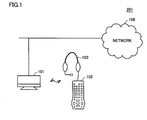
- a television system 201 includes a television device 101 and a remote controller device 102.
- a headset 103 is attached to remote controller device 102.
- Television device 101 receives a television broadcast signal and displays video based on the received television broadcast signal.
- Television device 101 extracts an audio signal corresponding to the video to be displayed (television audio signal) from the received television broadcast signal to issue sound based on the extracted audio signal.
- Television device 101 converts an internet telephone signal received via a network 106 to a radio signal for transmission to remote controller device 102.
- the internet telephone signal includes voice, ringing sound, and the like.
- Television device 101 may be configured to incorporate a transmitter that transmits a television radio signal, or have a wireless device connected thereto via an audio output terminal to which a headphone or the like is to be connected.
- Remote controller device 102 converts the radio signal received from television device 101 to an audio signal (external audio signal), and provides the converted audio signal to headset 103.
- Remote controller device 102 generates an operation signal based on an operation made by the user, and converts the generated operation signal to an optical signal that is a radio signal for transmission to television device 101.
- Television device 101 and remote controller device 102 transmit and receive a radio signal based on infrared radiation or a communication scheme such as Bluetooth (registered trademark), wireless LAN (Local Area Network), and the like.
- a radio signal based on infrared radiation or a communication scheme such as Bluetooth (registered trademark), wireless LAN (Local Area Network), and the like.
- Television device 101 carries out an operation associated with the television such as turning on/off the power, changing the channel, and the like based on the optical signal received from remote controller device 102.
- Television device 101 also carries out an operation associated with an IP telephone such as issuing a call to another device via network 106 based on the optical signal received from remote controller device 102.
- Remote controller device 102 generates an audio signal based on the voice of the user (external audio signal), and converts the generated audio signal to a radio signal for transmission to television device 101.
- Television device 101 transmits an internet telephone signal to another device via network 106 based on the radio signal received from remote controller device 102.
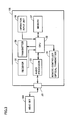
- Fig. 2 is a functional block diagram of a configuration of a television device according to an embodiment of the present invention.
- television device 101 includes a broadcast signal receiver 1, a descrambler 2, an AV (Audio Visual) decoder 3, an audio processor (second audio processor) 4, a speaker 5, a video processor 6, a display (display unit) 7, a network I/F (interface) unit 8, an operation input unit 9, a remote controller optical receiver (receiver) 10, a CPU (Central Processing Unit) 11, a RAM (Random Access Memory) 12, a ROM (Read Only Memory) 13, an amplify/AD (Analog Digital) converter 14, and a jack (connector) J1.
- Television device 101 may be configured to include a transmission and reception unit 15.
- Broadcast signal receiver 1 receives a television broadcast signal that is subjected to scrambling via an antenna ANT and provides the scrambled television broadcast signal to descrambler 2. Broadcast signal receiver 1 may be configured to receive a television broadcast signal via network 106.
- Descrambler 2 decrambles the television broadcast signal from television signal receiver 1 to restore the signal to the state prior to scrambling, and provides the restored signal to AV decoder 3.
- AV decoder 3 decodes the restored signal from descrambler 2 and provides the decoded signal to audio processor 4 and video processor 6.
- Video processor 6 extracts a video signal from the decoded signal output from AV decoder 3, and provides the extracted video signal to display 7.
- Display 7 displays video based on the video signal received from video processor 6.
- Audio processor 4 extracts an audio signal from the decoded signal output from AV decoder 3, i.e. obtains an audio signal corresponding to the video to be displayed by display 7. Audio processor 4 provides the extracted audio signal to speaker 5. Speaker 5 issues sound based on the audio signal received from audio processor 4.
- Network interface unit 8 provides the internet telephone signal received through network 106 to CPU 11.
- CPU 11 decodes the internet telephone signal and provides the decoded signal to audio processor 4. In the case where the internet telephone signal does not have to be subjected to a decoding process, CPU 11 directly provides the internet telephone signal to audio processor 4.
- Audio processor 4 extracts an audio signal from the decoded signal received from CPU 11. Audio processor 4 provides the extracted audio signal to speaker 5. Speaker 5 issues sound based on the audio signal received from audio processor 4. Audio processor 4 provides the extracted audio signal to transmission and reception unit 15 via jack J1.
- Transmission and reception unit 15 converts the audio signal from audio processor 4 to a radio signal for transmission to remote controller device 102.
- Transmission and reception unit 15 receives and provides to amplify/AD converter 14 the radio signal from remote controller device 102.
- Transmission and reception unit 15 accommodates IEEE802.11a/11b/11g, i.e. WiFi (Wireless Fidelity), that is the standard of a wireless LAN.
- Amplify/AD converter 14 amplifies the signal received from transmission and reception unit 15, and converts the amplify signal to a digital signal for output to CPU 11.
- Operation input unit 9 detects an operation made by the user such as depressing a button at television device 101, and provides an operation signal representing the detected result to CPU 11.
- Remote controller optical receiver 10 converts the optical signal that is the radio signal received from remote controller device 102 to an operation signal representing the operation mode by the user at remote controller device 102, and provides the operation signal to CPU 11.
- CPU 11 controls video processor 6 such that an image is displayed at display 7, or controls audio processor 4 such that sound is issued from speaker 5, according to the signals received from amplify/AD converter 14, operation input unit 9 and remote controller optical receiver 10.
- CPU 11 applies a predetermined signal process on the digital signal received from amplify/AD converter 14 and provides the processed signal to audio processor 4.
- Audio processor 4 converts the signal received from CPU 11 to an audio signal representing the voice of the user received by remote controller device 102, and provides the converted audio signal to speaker 5.
- the digital signal is the audio signal per se
- the audio signal is provided to speaker 5 via CPU 11 and audio processor 4.
- CPU 11 generates an internet telephone signal based on the signals received from amplify/AD converter 14, operation input unit 9, and remote controller optical receiver 10 to provide the generated internet telephone signal to network interface unit 8.
- the internet telephone signal includes the telephone number corresponding to another device that is the party of communication, as well as the user's voice received by remote controller device 102, and the like.
- Network interface unit 8 transmits the internet telephone signal from CPU 11 to another device through network 106.
- remote controller device 102 includes a receiver 21, a CPU (Control Unit) 22, an audio processor (first audio processor) 23, a remote controller optical transmitter (transmitter) 24, a memory 27, an operation input unit 28, and a jack (connector) J21.
- Receiver 21 and transmitter 29 accommodate IEEE802.11a/11b/11g, i.e. WiFi (Wireless Fidelity), that is the standard of a wireless LAN.
- Jack J21 has a headset 103 connected thereto.
- An earphone or a headphone may be connected to jack J21.
- Headset 103 converts the user's voice into an electric signal for output to audio processor 23.
- Audio processor 23 applies a predetermined signal process on the electric signal received from headset 103 to generate an audio signal, which is provided to transmitter 29 via CPU 22.
- Transmitter 29 converts the audio signal received from CPU 22 to a radio signal for transmission to television device 101.
- Operation input unit 28 includes a plurality of buttons, and detects whether each button has been depressed or not by the user. Operation input unit 28 generates an operation signal representing the detected result, and provides the operation signal to a remote controller optical transmitter 24 via CPU 22.
- Remote controller optical transmitter 24 converts the operation signal received from CPU 22 into an optical signal that is a radio signal for transmission to television device 101.
- Receiver 21 receives the radio signal from television device 101, and provides the received signal to CPU 22 as a reception signal.
- CPU 22 provides the reception signal from receiver 21 to audio processor 23.
- Audio processor 23 converts the reception signal from CPU 22 to an audio signal. Then, audio processor 23 provides the converted audio signal to headset 103 via jack J21. Headset 103 issues sound based on the audio signal received from audio processor 23.
- Remote controller device 102 may be configured to have a microphone and speaker built in, instead of having headset 103 connected thereto.
- operation input unit 28 includes a numeric-key button region B1, a mode switching button B2, a cursor button region B3, a volume adjust button B4, a clear button B5, and a conversation cut button B6.
- Numeric-key button region B1 includes twelve numeric-key buttons corresponding to the numbers 1-12 for entry of the television channel number and telephone number.
- the numeric-key buttons corresponding to the numbers of 10, 11, and 12 are used as "0", "*" and "#", respectively, in a telephone mode.
- Mode switching button B2 is used to select a telephone mode or a television mode.
- Cursor button region B3 includes four direction buttons to move the cursor vertically and horizontally on the screen of display 7, and a determination button to designate decision.
- Volume adjust button B4 is used to adjust the volume of speaker 5 of television device 101.
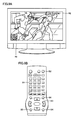
- Figs. 6A - 12A represent a screen display and appearance of television device 101 according to an embodiment of the present invention.
- Figs. 6B - 12B represent an appearance of remote controller device 102 corresponding to Figs. 6A - 12A , respectively.
- CPU 11 effects a switching process to a telephone mode in the case where the operation signal from remote controller optical receiver 10 represents depression of mode switching button B2 in the event of currently in the television mode (YES at step S1). Specifically, CPU 11 provides a control signal to video processor 6. Video processor 6 generates a video signal based on the control signal from CPU 11 and provides the generated video signal to display 7. Display 7 displays video corresponding to the television broadcast signal based on the video signal from video processor 6, and also displays a picture of remote controller device 102 including a plurality of buttons at operation input unit 28.
- Display 7 may be configured not to display video corresponding to the television broadcast signal in a telephone mode.
- CPU 11 controls video processor 6 and display 7 such that the text of "IP telephone" representing a telephone mode is displayed on the screen (step S3, R2 in Fig. 6A ).
- CPU 11 waits for a button to be depressed at operation input unit 28 of remote controller device 102 (NO at step S4).
- a button at operation input unit 28 of remote controller device 102 is depressed, i.e. the operation signal from remote controller optical receiver 10 represents button depression (YES at step S4), and the depressed button is not associated with a telephone operation (NO at step S5), waiting is conducted until the next depression of a button at operation input unit 28 of remote controller device 102.
- CPU 11 controls video processor 6 and display 7 such that the plurality of buttons of operation input unit 28 are displayed in the relevant depressed or non-depressed form. More specifically, CPU 11 provides a control signal to video processor 6. Video processor 6 generates a video signal based on the control signal received from CPU 11, and provides the generated video signal to display 7. Display 7 displays a picture of remote controller device 102 with the plurality of buttons of operation input unit 28 based on the video signal from video processor 6. Each of the plurality of buttons of operation input unit 28 is indicated in a relevant depressed or non-depress state (step S6).
- CPU 11 controls video processor 6 and display 7 to modify the image of the depressed button to a non-depressed form, and causes the button that was depressed to blink for a predetermined time.
- step S7 In the case where the depressed button is a numeric-key button in numeric-key button region B1 (step S7), and the user is currently making a telephone call through television system 201 (YES at step S8), CPU 11 waits for the next depression of a button at operation input unit 28 of remote controller device 102 (step S4).
- step S7 When the depressed button is a numeric-key button in numeric-key button region B1 (step S7), and not in a telephone communication state (NO at step S8), a dial process that will be described afterwards with reference to Fig. 13 is carried out.
- step S7 the depressed button is the determination button at cursor button region B3 (step S7), and a dial number is stored in RAM 12 (YES at step S9), a calling process that will be described afterwards with reference to Fig. 14 is carried out.
- step S7 In the case where the depressed button is the determination button of cursor button region B3 (step S7), and a dial number is not stored in RAM 12 (NO at step S9), CPU 11 waits for the next depression of a button at operation input unit 28 of remote controller device 102 (step S4).
- CPU 11 may be configured to carry out the disconnecting process of Fig. 15 in the case where the determination button at cursor button region B3 is depressed for three seconds or more and television device 101 is in a telephone communication state ( Fig. 11A ).
- step S7 In the case where the depressed button is conversation cut button B6 (step S7), and television device 101 is not currently in a telephone communication state (NO at step S10), the dial number stored in RAM 12 is deleted (step S11), and CPU 11 waits for the next depression of a button at operation input unit 28 of remote controller device 102 (step S4).
- CPU 11 controls audio processor 4 and speaker 5 to change the volume of the television and the IP telephone (step S13).
- CPU 11 controls video processor 6 and display 7 such that a television volume adjust image R7, an IP telephone volume adjustment image R8, and a microphone sensitivity adjustment image R9 are displayed (step S 14 and Fig. 12A ).
- CPU 11 waits for the next depression of a button at operation input unit 28 of remote controller device 102 (step S4).
- CPU 11 modifies the content of the dial number stored in RAM 12 such as deleting one number from the plurality of dial numbers stored in RAM 12 according to the combination of the depressed buttons (step S 15, R1 and R4 in Fig. 8A ).
- step S7 CPU 11 effects a switching process to a television mode (step S12).
- step S7 CPU 11 waits for the next depression of a button in operation input unit 28 at remote controller device 102 (step S4).
- CPU 11 controls audio processor 4 such that sound corresponding to the depressed numeric-key button is issued from speaker 5.
- audio processor 4 generates an operation sound signal corresponding to the depressed numeric-key button and provides the generated signal to speaker 5 under control of CPU 11.
- Speaker 5 issues sound based on the operation sound signal received from audio processor 4 (step S22).
- CPU 11 controls speaker 5 such that sound is not issued therefrom in the case where remote controller device 102 is set as the operation sound output destination (step S21).
- CPU 22 of remote controller device 102 controls audio processor 23 such that sound corresponding to the depressed numeric-key button is issued from headset 103 (step S23), in the case where remote controller device 102 is set as the operation sound output destination (step S21).
- CPU 11 and CPU 22 cause sound corresponding to the depressed numeric-key button to be issued from speaker 5 and headset 103, respectively (step S24).
- CPU 11 stores the number corresponding to the depressed numeric-key button sequentially into RAM 12 as the dial number.
- CPU I 1 controls video processor 6 and display 7 to display one or more dial numbers stored in RAM 12 (step S25, R1 and R3 in Fig. 7A ).
- remote controller device 102 By the configuration of issuing sound corresponding to the depressed numeric-key button from television device 101, or displaying the dial number at television device 101, the operability of remote controller device 102 can be improved.
- CPU 11 waits for the next depression of a button at operation input unit 28 of remote controller device 102 (step S4).
- step S31 CPU 11 determines that sound is to be output from speaker 5 (step S32).
- remote controller device 102 In the case where remote controller device 102 is set as the telephone sound output destination (step S31), CPU 11 determines that sound output from speaker 5 is to be suppressed. In contrast, CPU 22 of remote controller device 102 determines that sound is to be output from headset 103 (step S33).
- step S31 CPU 11 and CPU 22 determine that sound is to be output from speaker 5 and headset 103, respectively (step S34).
- CPU 11 controls audio processor 4 such that a conversation start notification sound is issued from speaker 5 (S35).
- CPU 11 suppresses the output of a conversation start notification sound from speaker 5.
- CPU 11 controls audio processor 4 and transmission and reception unit 15 such that a radio signal including the conversation start notification sound is transmitted to remote controller device 102.
- CPU 22 of remote controller device 102 controls audio processor 23 based on the conversation start notification sound received from television device 101 such that the conversation start notification sound is output from headset 103 (step S35).
- CPU 11 and CPU 22 causes the conversation start notification sound to be issued from speaker 5 and headset 103, respectively (step S35).
- CPU 11 controls video processor 6 and display 7 such that an icon representing that a telephone connection is currently established is displayed concurrently with the video corresponding to a television broadcast signal (step S36, R5 in Fig. 9 (A) ).
- CPU 11 dials the number stored in RAM 12 to establish a telephone call. Specifically, CPU 11 generates an internet telephone signal including the dial number stored in RAM 12, and provides the internet telephone signal to network interface unit 8. Network interface unit 8 transmits the internet telephone signal received from CPU 11 to network 106 (step S37).
- CPU 11 or CPU 22 issues the connection sound from at least one of speaker 5 and headset 103 corresponding to the setting of the telephone sound output destination (step S38).
- CPU 11 controls audio processor 4 and speaker 5 such that the volume of sound corresponding to the television broadcast signal to be issued from speaker 5 is altered from the volume for a television mode to the volume for a telephone mode.
- speaker 5 has the volume of the sound corresponding to the television broadcast signal set to a lower level when a telephone mode is selected than the level when a television mode is selected (step S39).
- CPU 11 may be configured to adjust the relationship of the volume of the sound corresponding to a television broadcast signal and the level of the telephone sound taking advantage of auditory lateralization.
- CPU 11 controls video processor 6 and display 7 such that an indicator representing the volume of the user's voice received at remote controller device 102 is displayed concurrently with the video corresponding to the television broadcast signal (step S40, R6 in Fig. 10 (A) ).
- CPU 11 may be configured to take a numeric-key button as the button for a television channel, after the calling process.
- remotely controlling the television such as changing the television channel can be effected during a conversation state.
- CPU 11 controls network interface unit 8 such that the telephone connection with another device is disconnected (step S41).
- CPU 11 or CPU 22 causes a conversation end sound to be output from at least one of speaker 5 and headset 103 according to the setting of the telephone sound output destination (step S42).
- CPU 11 determines that sound is to be issued from speaker 5 (step S44).
- remote controller device 102 In the case where remote controller device 102 is set as the television sound output destination (step S43), CPU 11 determines that sound from speaker 5 is to be suppressed. CPU 22 of remote controller device 102 determines that sound is to be issued from headset 103 (step S45).
- step S43 When television device 101 and remote controller device 102 are both set as the television sound output destination (step S43), CPU 11 and CPU 22 determine that sound is to be issued from speaker 5 and headset 103, respectively (step S46).
- CPU 11 controls audio processor 4 and speaker 5 such that the volume of sound corresponding to a television broadcast signal to be output from speaker 5 is altered to the volume level for a television mode from the volume level for a telephone mode.
- the television devices disclosed in Patent Documents 1-5 lack sufficient measures to improve the operability of the remote controller device.
- CPU 11 controls video processor 6 and display 7 such that the plurality of buttons at operation input unit 28 are displayed in a depressed form or non-depressed form, in the case where a button at operation input unit 28 of remote controller device 102 is depressed and the depressed button is associated with a telephone operation.
Landscapes
- Engineering & Computer Science (AREA)
- Signal Processing (AREA)
- Multimedia (AREA)
- Human Computer Interaction (AREA)
- Computer Networks & Wireless Communication (AREA)
- General Engineering & Computer Science (AREA)
- Details Of Television Systems (AREA)
- Selective Calling Equipment (AREA)
- Telephonic Communication Services (AREA)
Applications Claiming Priority (1)
| Application Number | Priority Date | Filing Date | Title |
|---|---|---|---|
| JP2006325783A JP2008141487A (ja) | 2006-12-01 | 2006-12-01 | テレビジョン装置およびテレビジョンシステム |
Publications (2)
| Publication Number | Publication Date |
|---|---|
| EP1928097A2 true EP1928097A2 (de) | 2008-06-04 |
| EP1928097A3 EP1928097A3 (de) | 2010-12-29 |
Family
ID=39052478
Family Applications (1)
| Application Number | Title | Priority Date | Filing Date |
|---|---|---|---|
| EP07023269A Withdrawn EP1928097A3 (de) | 2006-12-01 | 2007-11-30 | Fernsehgerät mit Telefonfunktion und Fernsehsystem mit einem solchen Fernsehgerät |
Country Status (4)
| Country | Link |
|---|---|
| US (1) | US20080129888A1 (de) |
| EP (1) | EP1928097A3 (de) |
| JP (1) | JP2008141487A (de) |
| CN (1) | CN101272429A (de) |
Families Citing this family (12)
| Publication number | Priority date | Publication date | Assignee | Title |
|---|---|---|---|---|
| GB2463124B (en) | 2008-09-05 | 2012-06-20 | Skype Ltd | A peripheral device for communication over a communications sytem |
| GB2463108B (en) | 2008-09-05 | 2012-08-29 | Skype | Communication system and method |
| GB2463107A (en) * | 2008-09-05 | 2010-03-10 | Skype Ltd | A remote control unit of a media device for placing/receiving calls, comprising activating one of the two wireless transceivers when needed. |
| GB2463104A (en) | 2008-09-05 | 2010-03-10 | Skype Ltd | Thumbnail selection of telephone contact using zooming |
| US8572251B2 (en) | 2008-11-26 | 2013-10-29 | Microsoft Corporation | Hardware acceleration for remote desktop protocol |
| CN101772116B (zh) * | 2008-12-26 | 2012-12-26 | 中国移动通信集团公司 | 一种视频数据发送方法和系统 |
| JP5493611B2 (ja) * | 2009-09-09 | 2014-05-14 | ソニー株式会社 | 情報処理装置、情報処理方法およびプログラム |
| JP5146885B2 (ja) * | 2010-02-17 | 2013-02-20 | Necアクセステクニカ株式会社 | テレビ電話装置及びその音量制御方法 |
| JP5750946B2 (ja) | 2011-03-09 | 2015-07-22 | 株式会社リコー | コンテンツ配信システム、コンテンツ配信サーバ、コンテンツ配信方法、プログラムおよび記録媒体 |
| CN103544958B (zh) * | 2013-11-04 | 2018-02-27 | 深圳Tcl新技术有限公司 | 切换音频输出时控制音频啸叫的方法和装置 |
| CN103841266B (zh) * | 2014-03-03 | 2018-04-10 | 宇龙计算机通信科技(深圳)有限公司 | 一种终端设备、辅助设备、协同通信方法及音量调节系统 |
| CN105450972A (zh) * | 2014-08-29 | 2016-03-30 | 瑞昱半导体股份有限公司 | 控制器及其语音传输系统 |
Citations (5)
| Publication number | Priority date | Publication date | Assignee | Title |
|---|---|---|---|---|
| JP2002009968A (ja) | 2000-06-27 | 2002-01-11 | Funai Electric Co Ltd | テレビ電話システム、及び、携帯型電話機 |
| JP2002281174A (ja) | 2001-03-16 | 2002-09-27 | Nikon Gijutsu Kobo:Kk | テレビ画面が利用可能な通信機器およびテレビ装置 |
| JP2004080289A (ja) | 2002-08-15 | 2004-03-11 | Sony Corp | 通信装置 |
| JP2005039540A (ja) | 2003-07-15 | 2005-02-10 | Sony Corp | テレビジョン受像機 |
| JP2005109666A (ja) | 2003-09-29 | 2005-04-21 | Nec Corp | ハンドセット及び通話システム |
Family Cites Families (7)
| Publication number | Priority date | Publication date | Assignee | Title |
|---|---|---|---|---|
| US4456925A (en) * | 1982-10-04 | 1984-06-26 | Zenith Radio Corporation | Television/telephone system with automatic dialing |
| US5999207A (en) * | 1997-05-16 | 1999-12-07 | Scientific-Atlanta, Inc. | Method and apparatus for implementing a user interface for a videophone in a cable television network |
| US20020012353A1 (en) * | 1997-12-31 | 2002-01-31 | Irwin Gerszberg | Isd controlled set-top box |
| US6512838B1 (en) * | 1999-09-22 | 2003-01-28 | Canesta, Inc. | Methods for enhancing performance and data acquired from three-dimensional image systems |
| CN1168261C (zh) * | 2000-02-03 | 2004-09-22 | 玄泰电信株式会社 | 连接互联网电话的装置和方法 |
| US6760415B2 (en) * | 2000-03-17 | 2004-07-06 | Qwest Communications International Inc. | Voice telephony system |
| US20040247138A1 (en) * | 2003-06-03 | 2004-12-09 | Randall Wang | Audio/video remote control with built-in earphone system |
-
2006
- 2006-12-01 JP JP2006325783A patent/JP2008141487A/ja not_active Withdrawn
-
2007
- 2007-11-30 CN CNA2007101857727A patent/CN101272429A/zh active Pending
- 2007-11-30 US US11/948,666 patent/US20080129888A1/en not_active Abandoned
- 2007-11-30 EP EP07023269A patent/EP1928097A3/de not_active Withdrawn
Patent Citations (5)
| Publication number | Priority date | Publication date | Assignee | Title |
|---|---|---|---|---|
| JP2002009968A (ja) | 2000-06-27 | 2002-01-11 | Funai Electric Co Ltd | テレビ電話システム、及び、携帯型電話機 |
| JP2002281174A (ja) | 2001-03-16 | 2002-09-27 | Nikon Gijutsu Kobo:Kk | テレビ画面が利用可能な通信機器およびテレビ装置 |
| JP2004080289A (ja) | 2002-08-15 | 2004-03-11 | Sony Corp | 通信装置 |
| JP2005039540A (ja) | 2003-07-15 | 2005-02-10 | Sony Corp | テレビジョン受像機 |
| JP2005109666A (ja) | 2003-09-29 | 2005-04-21 | Nec Corp | ハンドセット及び通話システム |
Also Published As
| Publication number | Publication date |
|---|---|
| CN101272429A (zh) | 2008-09-24 |
| EP1928097A3 (de) | 2010-12-29 |
| JP2008141487A (ja) | 2008-06-19 |
| US20080129888A1 (en) | 2008-06-05 |
Similar Documents
| Publication | Publication Date | Title |
|---|---|---|
| US20080129888A1 (en) | Television device with telephone function, and television system including such television device | |
| EP1940156A2 (de) | Fernsehsystem mit installierter Telefonfunktion und darauf gerichtete Fernsteuerungsvorrichtung | |
| US6281925B1 (en) | Video telephone device having automatic sound level setting along with operation mode switching | |
| KR100731809B1 (ko) | 이동통신 단말기 간의 착 발신 전환에 따른 과금 처리 방법 | |
| CN101236690A (zh) | 具备无线电话功能的遥控器 | |
| US7266834B1 (en) | Sharing functions between a television-based information appliance and remote control devices | |
| US8422952B2 (en) | Wireless communication terminal and sound volume control method | |
| US20020042288A1 (en) | Multiple-channel portable wireless communication apparatus and method | |
| EP1816861A1 (de) | Vorrichtung und Verfahren zum Bereitstellen von elektronischen Programminformationen in einem digitalen Multimedia-Rundfunkempfangsendgerät | |
| US20090245491A1 (en) | Digital information device and method for processing calls | |
| JP2011010084A (ja) | ホームネットワークシステム及び通信方法 | |
| EP3487170A1 (de) | Verfahren und vorrichtung zur steuerung von bilddaten in einem drahtlosen endgerät mit normalem videokommunikationsmodus und bildausblendungsmodus | |
| JPH11313262A (ja) | テレビジョン受像機 | |
| KR101044064B1 (ko) | 리모컨 겸용 인터넷 전화기를 일체로 구비한 셋탑박스장치 및 서비스 방법 | |
| KR101051382B1 (ko) | 티브이를 이용한 이동통신 서비스 제공 장치 및 그 방법 | |
| KR100304879B1 (ko) | 자동다이얼링을위한송수신장치 | |
| KR101886675B1 (ko) | 디지털 티브이에서 통신 단말기의 이벤트 발생 알림 방법 및 장치 | |
| KR100630101B1 (ko) | 휴대단말기에서 다기능을 구비한 휴대용 홈 씨어터 제어방법 | |
| KR100606092B1 (ko) | 휴대 단말기의 하울링 방지 방법 | |
| KR100828321B1 (ko) | 텔레비전을 이용한 화상 전화 시스템 및 방법 | |
| KR0148745B1 (ko) | 송신기를 이용한 다이얼링 장치 및 방법 | |
| KR20110127378A (ko) | 블루투스를 이용한 영상통화의 방법 및 시스템 | |
| KR20020080072A (ko) | 무선 전화 기능을 갖는 영상 전화기 | |
| KR19990043044A (ko) | 인터넷 텔레비전수상기에서 지정수신자 표시방법 및 그 장치 | |
| KR20030055558A (ko) | 단말기의 링착신 알림장치 |
Legal Events
| Date | Code | Title | Description |
|---|---|---|---|
| PUAI | Public reference made under article 153(3) epc to a published international application that has entered the european phase |
Free format text: ORIGINAL CODE: 0009012 |
|
| AK | Designated contracting states |
Kind code of ref document: A2 Designated state(s): AT BE BG CH CY CZ DE DK EE ES FI FR GB GR HU IE IS IT LI LT LU LV MC MT NL PL PT RO SE SI SK TR |
|
| AX | Request for extension of the european patent |
Extension state: AL BA HR MK RS |
|
| PUAL | Search report despatched |
Free format text: ORIGINAL CODE: 0009013 |
|
| AK | Designated contracting states |
Kind code of ref document: A3 Designated state(s): AT BE BG CH CY CZ DE DK EE ES FI FR GB GR HU IE IS IT LI LT LU LV MC MT NL PL PT RO SE SI SK TR |
|
| AX | Request for extension of the european patent |
Extension state: AL BA HR MK RS |
|
| AKY | No designation fees paid | ||
| REG | Reference to a national code |
Ref country code: DE Ref legal event code: R108 |
|
| REG | Reference to a national code |
Ref country code: DE Ref legal event code: R108 Effective date: 20110907 |
|
| STAA | Information on the status of an ep patent application or granted ep patent |
Free format text: STATUS: THE APPLICATION IS DEEMED TO BE WITHDRAWN |
|
| 18D | Application deemed to be withdrawn |
Effective date: 20110630 |