EP1930657A2 - Commande de l'air d'alimentation d'une combustion de biomasse - Google Patents
Commande de l'air d'alimentation d'une combustion de biomasse Download PDFInfo
- Publication number
- EP1930657A2 EP1930657A2 EP07021313A EP07021313A EP1930657A2 EP 1930657 A2 EP1930657 A2 EP 1930657A2 EP 07021313 A EP07021313 A EP 07021313A EP 07021313 A EP07021313 A EP 07021313A EP 1930657 A2 EP1930657 A2 EP 1930657A2
- Authority
- EP
- European Patent Office
- Prior art keywords
- air
- amount
- biomass
- supplied
- fresh air
- Prior art date
- Legal status (The legal status is an assumption and is not a legal conclusion. Google has not performed a legal analysis and makes no representation as to the accuracy of the status listed.)
- Granted
Links
Images


Classifications
-
- F—MECHANICAL ENGINEERING; LIGHTING; HEATING; WEAPONS; BLASTING
- F23—COMBUSTION APPARATUS; COMBUSTION PROCESSES
- F23N—REGULATING OR CONTROLLING COMBUSTION
- F23N3/00—Regulating air supply or draught
- F23N3/002—Regulating air supply or draught using electronic means
-
- F—MECHANICAL ENGINEERING; LIGHTING; HEATING; WEAPONS; BLASTING
- F23—COMBUSTION APPARATUS; COMBUSTION PROCESSES
- F23G—CREMATION FURNACES; CONSUMING WASTE PRODUCTS BY COMBUSTION
- F23G5/00—Incineration of waste; Incinerator constructions; Details, accessories or control therefor
- F23G5/50—Control or safety arrangements
-
- F—MECHANICAL ENGINEERING; LIGHTING; HEATING; WEAPONS; BLASTING
- F23—COMBUSTION APPARATUS; COMBUSTION PROCESSES
- F23G—CREMATION FURNACES; CONSUMING WASTE PRODUCTS BY COMBUSTION
- F23G2209/00—Specific waste
- F23G2209/26—Biowaste
-
- F—MECHANICAL ENGINEERING; LIGHTING; HEATING; WEAPONS; BLASTING
- F23—COMBUSTION APPARATUS; COMBUSTION PROCESSES
- F23N—REGULATING OR CONTROLLING COMBUSTION
- F23N2241/00—Applications
- F23N2241/18—Incinerating apparatus
Definitions
- the present invention relates to a control of biomass combustion, and more particularly to control in consideration of supplied and used air.
- biomass combustion There are various types of biomass combustion known, such as biomass furnaces for a variety of requirements for the service to be provided, for example, large-scale installations, medium-sized installations or even private-sector facilities.
- Modern biomass furnaces such as those used in private households, often extract air from the room in which they are installed for combustion in biomass firing.
- the air taken from the room is fed to the biomass firing either as primary and / or as secondary air.
- modern stoves which have a transparent panel in the kiln door, a secondary air duct, in which the secondary air is passed over the transparent panel to keep it free of combustion residues.
- Other kilns extract air from the room even as primary air and as secondary air for combustion.
- biomass furnaces which have an external air supply, is - as described above, for example for the stove - secondary air taken from the room in which the biomass firing is set up for the combustion.
- the operation of biomass combustion may lead to disruptions in forced ventilation or to disturbances in the operation of other ventilation systems, such as air conditioning systems, due to the room air taken for combustion.
- the object of the invention is to provide an improved method for controlling or regulating a biomass furnace.
- a first aspect of the present invention relates to a method of controlling the air supply for a biomass furnace, comprising: measuring the amount of air taken from a space in which the biomass furnace is located, the amount of air taken being sent to combustion in the biomass furnace; Measuring an amount of fresh air supplied to the room via the biomass furnace; Controlling the amount of fresh air supplied as a function of the amount of air taken from the room.
- a second aspect of the present invention relates to a biomass firing control apparatus, comprising: a microprocessor; a memory; a first air quantity measuring device configured to determine a quantity of air taken from a space in which the biomass furnace is arranged and to output a first measured value, the amount of air taken being supplied to combustion in the biomass furnace; a second Heilmengenmeß worn which is adapted to determine a space supplied via the biomass firing amount of fresh air and output a second measured value; wherein the microprocessor stores the first and second measured values in the memory and, on the basis of a comparison of the first and second measured values, outputs a control signal for controlling an actuator for the fresh air supply as a function of the first measured value.
- a third aspect of the present invention relates to biomass firing comprising a control apparatus according to the second aspect of the present invention.
- FIG. 2 illustrates a first embodiment of a biomass furnace in a room with a fresh air control device in accordance with the present invention.
- biomass furnaces for various types of biomass that serve as fuel.
- biomass furnaces for example, kilns for burning biomass, such as logs, shreds, pellets, agricultural fuels (for example, grain, straw), reeds, sewage sludge, textile fibers, etc. are meant.
- the biomass furnaces in the embodiments differ not only in terms of their fuel used (Biomass), but also in terms of their construction and their purpose.
- Applications include, for example, the use of a small room fireplace, such as a stove, a complete home central heating, which also produces hot water, up to the middle system, as for example for larger halls or for heating stables and other residential / utility buildings, for example used in agriculture.
- the air supply for the biomass combustion is different.
- the air needed for combustion in the biomass furnace is completely removed from the space in which the biomass furnace is located.
- the air supply is divided.
- primary air is drawn from outside the room in which the biomass furnace is located, while secondary air is taken from the room.
- the secondary air is additionally used as a disk rinsing of a transparent pane of an oven door.
- the primary and secondary air is supplied from outside the room and taken an additional air flow from the room and thus passed over the disc flushing.
- the disc purging air is supplied from outside the room.
- the air supply is thus divided in some embodiments by supplying part of the air from outside the room while another part of the air is taken from the room becomes, in which the biomass firing stands.
- the externally supplied air is referred to in the embodiments partially as fresh air. This is to express that this air just is not taken from the room in which the biomass firing is located.
- the fresh air must therefore not necessarily be supplied from, for example, outside of a house in the embodiments.
- the fresh air differs accordingly from the room air in that it comes from another "air reservoir".
- the space in which the biomass furnace is located in some embodiments as a closed volume of air auffemblbar. Completed here is not a completely closed air volume referred to, but the seclusion of the space or the air volume is such that the amount of air that is fed to the biomass combustion during combustion, is greater or at least of the same magnitude as the amount of air which is supplied by space leaks in the "closed air volume”.
- the biomass combustion is in a room in which certain amounts of air to be removed or discharged. This happens, for example, due to a ventilation system or an air conditioning system, which exchange the room air to a certain degree for heating / cooling or for room climate improvement.
- the generation of a negative pressure in a closed space or a malfunction of ventilation systems or air conditioning systems is prevented by the extracted air from the biomass firing. This is achieved in some embodiments in that the amount of air taken from the biomass firing is compensated by the same amount of fresh air supplied. As stated above, the fresh air is taken from an air reservoir located outside the room where the biomass firing is installed.
- the amount of fresh air supplied is measured by means of an air quantity sensor, for example a mass flow sensor, in a supply air line, which supplies the biomass firing with fresh air.
- the used air ie the air which is taken out of the room, in some embodiments flows past a further air quantity sensor.
- This second air flow sensor is located, for example, in a supply air line, which leads room air for combustion in the biomass combustion.
- the supplied fresh air is passed through the biomass furnace so that it absorbs a certain amount of heat. In some embodiments, therefore, the fresh air is heated to room temperature, for example, before being led into the room.
- an actuator for the supply of fresh air as a function of the air removed from the room, for example, such that the amount of fresh air supplied to the room extracted combustion air amount corresponds.
- the determination of the amount of air in some embodiments refers to the volume of air while in others Embodiments refers to the mass of air. That is, in some embodiments, the density of the supplied air or the used air is determined. With supplied air here again the fresh air is meant, while with used air, the air is meant, which was taken from the room for combustion in biomass firing.
- the balance between supplied fresh air and used room air is not completely complete in all embodiments. In some embodiments, for example, more fresh air is supplied than is consumed by the biomass combustion for combustion. In contrast, in other embodiments, the amount of fresh air supplied is lower than the room air consumed for the combustion.
- the biomass firing includes a control by means of which the fresh air supply is controlled or regulated.
- a controller includes a microprocessor that analyzes the corresponding data.
- the microprocessor receives data representing the amount of fresh air supplied and data representing the amount of air consumed, and stores it, for example, in a memory for further processing. Then, the microprocessor compares the two air quantity data, that is, the data for the supplied fresh air amount and those for the used amount of indoor air, and outputs a corresponding control signal for a control of the fresh air supply.
- This control sequence or control sequence is repeated in certain controls or arrangements at specific time intervals. These time intervals can be set arbitrarily, as is obvious to the person skilled in the art.
- the biomass firing or the control or regulation of biomass firing comprises appropriate actuators, for example, to control the fresh air supply, the exhausted room air, the division between primary and secondary air and the deduction of the flue gas formed during combustion.
- actuators can each individually or in combination with each other in the Embodiments are operated.
- at least one actuator is realized.
- the actuators are different depending on the embodiment and include, for example, blower, slide, plates or similar actuators. In some embodiments, not all actuators are electrically operable, but are, for example, mechanically operable.
- FIG. 1 This shows a room 1 with a biomass furnace 5, as it can be used in the embodiments.
- the room 1 is surrounded by a wall 3, which in the Fig. 1 is shown as dense.
- This is of course an idealized representation and under a dense space is here understood a room in which the amount of air supplied due to leaks is so low that by the consumption of room air during combustion, a negative pressure in the room 1 may arise.
- the biomass furnace 5 has an internal structure 6, not shown.
- the biomass furnace 5 has an air supply line 21, passes through the fresh air 13 in the biomass furnace 5.
- the amount of fresh air supplied 13 is determined by means of a Heilmengenmeßffens, here for example a mass flow sensor 11.
- the mass flow sensor 11 located in other embodiments at a different position.
- the mass flow sensor 11 is within the structure 6 of the biomass furnace 5.
- the completely supplied fresh air 13 is not led out again as fresh air 8 in the room 1, but it is a part of the supplied fresh air 13 as the primary air and / or used as secondary air for combustion in the biomass furnace 5. That is, in some embodiments of the mass flow sensor 11 is not measured, the entire amount of fresh air supplied 13, but only the amount of fresh air, which is performed as fresh air 8 in the room 1.
- the total amount of fresh air 13 is determined, which is the biomass firing 5 is supplied.
- a corresponding control which is adapted to a more precisely determinable part of the supplied fresh air amount 13 as fresh air amount 8, which is intended for the room 1, dissipate.
- biomass furnace 5 also has a flue gas outlet 19, is removed from the flue gas 23 from the biomass furnace 5.
- the flue gas 23 is formed during combustion within the structure 6 of the biomass furnace 5
- a flue gas blower 17 is shown, which can control the withdrawal of the flue gas 23 from the biomass furnace 5.
- the biomass furnace 5 also has a room air duct 25 through which room air 7 enters the biomass furnace 5.
- the room air 7 is required for combustion that takes place in the biomass furnace 5.
- the amount of room air 7 discharged from the room 1 is determined by means of an air quantity measuring means, here a mass flow sensor 9. In this way, therefore, the supplied fresh air amount 13 is determined with the mass flow sensor 11 and with the mass flow sensor 9, the volume of air discharged from the room 1. 7
- the fresh air actuator includes, for example, a fresh air blower 15, by means of which the supplied fresh air amount 13 can be accurately controlled.
- the fresh air blower 15 is operated so that sets in the room 1, a certain pressure. This ensures a sufficient fresh air supply of the room 1 in any case.
- a second embodiment of a biomass furnace 35 is shown in a room 31.
- the space 31 has a boundary 33 which is interrupted by symbolized fresh air supply openings 59.
- room 31 is connected via a line 65 to a ventilation system, not shown.
- Line 65 is further shown a fan 63, which can remove air 61 from the space 31.
- the blower 63 may also be operated to supply air to the space 31.
- the fan 63 therefore merely symbolizes that the space 31 is not "tight".
- a biomass furnace 35 is arranged in the space 31, which has a heat exchanger area 67 and a combustion chamber 66. Both rooms are shown only symbolically.
- combustion takes place in the biomass furnace 35.
- Flue gas which is formed during combustion in the combustion chamber 66, is discharged through a flue gas outlet 49 as a flue gas 53.
- the biomass firing 35 comprises a smoke glass blower 47.
- the biomass firing 35 comprises a room air duct 55 through which room air 37 enters the combustion space 66 of the biomass firing 35.
- the amount of the supplied room air 37 is determined by means of a Heilmengenmeßffens 39, for example, a mass flow sensor.
- the biomass firing 35 comprises a fresh air supply line 51, in which a fresh air actuator, namely a fresh air blower 43, is arranged.
- the supplied fresh air amount 43 is determined by means of a Heilmengenmeßffens, here a mass flow sensor 41.
- the supplied Fresh air quantity passes through the fresh air supply line 51 into the heat exchanger area 67 of the biomass furnace 35.
- the fresh air 43 is heated, for example to room temperature, and further discharged into the room 31 as fresh air 38.
- a fresh air control not shown, controls the fresh air actuator 45 based on the supplied fresh air amount 43 and the discharged room air 37 so that the fresh air amount 38 discharged into the room 31 corresponds to the discharged room air amount 37. Thereby, the air flow established by the blower 63 and the openings 59 is not disturbed.
- the supplied fresh air 43 is not completely discharged as fresh air 38 into the space 31.
- a portion of the fresh air 43 is used for combustion in the biomass furnace 35.
- the air distribution of the supplied fresh air 43 within the biomass 35 may be arbitrary in some embodiments.
- the split between fresh air supplied to the combustion in the biomass furnace 35 and the fresh air 38 supplied in the space 31 is controllable.
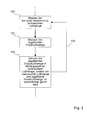
- Fig. 3 shows an embodiment of a process flow, as for example in a biomass combustion or in a control and / or a regulation of such biomass combustion, as for example in connection with the Fig. 1 and 2 described is used.
- the amount of air consumed in a combustion is measured. This may be, for example, the amount of air that is taken from a room, such as, for example, above in connection with the Fig. 1 or 2 has been described.
- the supplied fresh air amount is determined.
- the amount of fresh air supplied is, as stated above, the amount that is supplied from outside the combustion chamber or the biomass combustion, in which the combustion takes place. Accordingly, two quantities of air are determined. Once the amount of air that is taken from a room to a combustion to be fed.
- the amount of air that is ultimately returned to the room from outside is not passed through the Biomassefeuerung in all embodiments.
- the supplied fresh air is introduced into the room independently of the biomass firing.
- the amount of fresh air supplied is controlled depending on the amount of air consumed. That is, for example, that the supplied fresh air amount is adapted to the amount of air consumed that the amount of fresh air supplied and the amount of air consumed are substantially equal. Substantially equal here is also to be understood as a scenario in which the amount of fresh air supplied is increased compared to the amount of air consumed. In an increased supply of fresh air quantity, that is, in a supply in which the amount of fresh air is higher than the amount of air consumed, it is ensured in any case that no negative pressure arises in the room. On the other hand, in some embodiments, the process will occur so that the amount of fresh air supplied is slightly below the amount of air consumed. In yet other embodiments, the amount of fresh air supplied within the measurement accuracy of the amount of air consumed by the corresponding control is the same.
- the connection 105 between the control step and the measuring step for the amount of air consumed symbolizes a loop-like repetition of the method steps.
- This loop-like repetition of the process steps ensures that during combustion, the supplied fresh air quantity is regularly adapted to the amount of air consumed.
- the repetition rate of the method steps is different in the exemplary embodiments.
- the repetition rate can also depend on other parameters. For example, in some embodiments at a combustion start, the amount of fresh air supplied is adjusted more frequently, since at incipient combustion, the amount of air consumed changes faster than in a uniform burnup. Continue In some embodiments, the repetition rate of the process steps adapted to the fuel itself.
- pellet stoves for example, a more stable burning behavior and concomitantly a stable consumption of the air quantity is to be expected, so that fewer repetition steps in a certain time interval are necessary there than, for example, in the case of a wood-burning stove.
- wood-burning stoves which are operated, for example, with firewood, due to the fuel used (such as logs) a less constant burning behavior and concomitantly a greater variation in the air consumption is expected.
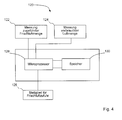
- Fig. 4 shows an embodiment of a control device 120.
- the control device 120 comes, for example, in a biomass firing, as in connection with Fig. 1 respectively.
- Fig. 2 described is used.
- the control device 120 is suitable, a method, as for example in connection with Fig. 3 has been described.
- the controller 120 includes a microprocessor 128 and a memory 130.
- the microprocessor 128 receives signals from an air flow meter 122 and an air flow meter 124.
- the air flow meter 122 measures the amount of fresh air supplied and outputs a corresponding data signal which is communicated to the microprocessor 128.
- the air flow meter 124 determines the amount of air consumed during combustion and outputs a corresponding data signal to the microprocessor 128.
- the microprocessor for example, inputs both measured data to the memory 130.
- the memory 130 is in some embodiments integrated into the microprocessor 128 itself. Further, the microprocessor 128 evaluates the measurement data obtained from the air flow rate measurement means 122 and 124.
- the microprocessor outputs a corresponding control signal to the actuator 126 for the supply of fresh air.
- the control signal output from the microprocessor 128 to the fresh air supply actuator 126 causes the actuator 126 to adjust so that the supply Fresh air quantity is substantially equal to the amount of air consumed.
- the controller 120 includes substantially more control lines than shown herein Fig. 4 are illustrated. In some embodiments, therefore, the in Fig. 4 shown control or regulating device is only a small section.
- actuators for a flue gas blower for an actuator which divides the primary and secondary air
- an actuator which divides the fresh air supply to both the combustion and the space in which the biomass furnace is to feed an actuator for the amount of air that is supplied from the room of combustion, etc.
- the amount of fresh air supplied and the amount of air consumed is controlled. Accordingly, not only an actuator for the supply of fresh air, but also an actuator for the amount of air consumed is controlled. In yet other embodiments, however, only the amount of air consumed is controlled instead of the amount of fresh air supplied.
Landscapes
- Engineering & Computer Science (AREA)
- Mechanical Engineering (AREA)
- General Engineering & Computer Science (AREA)
- Chemical & Material Sciences (AREA)
- Combustion & Propulsion (AREA)
- Regulation And Control Of Combustion (AREA)
- Solid-Fuel Combustion (AREA)
- Incineration Of Waste (AREA)
Applications Claiming Priority (1)
| Application Number | Priority Date | Filing Date | Title |
|---|---|---|---|
| DE102006057349A DE102006057349B4 (de) | 2006-12-05 | 2006-12-05 | Zuluftsteuerung einer Biomassefeuerung |
Publications (3)
| Publication Number | Publication Date |
|---|---|
| EP1930657A2 true EP1930657A2 (fr) | 2008-06-11 |
| EP1930657A3 EP1930657A3 (fr) | 2015-02-11 |
| EP1930657B1 EP1930657B1 (fr) | 2015-12-23 |
Family
ID=39135112
Family Applications (1)
| Application Number | Title | Priority Date | Filing Date |
|---|---|---|---|
| EP07021313.7A Not-in-force EP1930657B1 (fr) | 2006-12-05 | 2007-10-31 | Commande de l'air d'alimentation d'une combustion de biomasse |
Country Status (2)
| Country | Link |
|---|---|
| EP (1) | EP1930657B1 (fr) |
| DE (1) | DE102006057349B4 (fr) |
Family Cites Families (5)
| Publication number | Priority date | Publication date | Assignee | Title |
|---|---|---|---|---|
| GB833457A (en) * | 1956-03-23 | 1960-04-27 | Hans Fauser | Improvements in and relating to open fire-places combined with air heating means |
| US4434783A (en) * | 1980-05-02 | 1984-03-06 | Gorman Michael C O | Controlled fireplaces for concurrently varying combustion air and convected air |
| CH665270A5 (de) * | 1983-02-10 | 1988-04-29 | Vaillant Gmbh | Heiz- oder entlueftungsvorrichtung in einem gebaeude. |
| DE29820785U1 (de) * | 1998-11-20 | 2000-03-30 | Robert Bosch Gmbh, 70469 Stuttgart | Heizgerät |
| DE10012485B4 (de) * | 2000-03-15 | 2004-09-02 | Heybey, Heiko | Einrichtung zur Steuerung der Zufuhr von Verbrennungsluft zum Brennraum einer Einzelfeuerstätte beispielsweise eines Ofens, Kaminofens, Herdes oder dergleichen |
-
2006
- 2006-12-05 DE DE102006057349A patent/DE102006057349B4/de not_active Expired - Fee Related
-
2007
- 2007-10-31 EP EP07021313.7A patent/EP1930657B1/fr not_active Not-in-force
Also Published As
| Publication number | Publication date |
|---|---|
| EP1930657A3 (fr) | 2015-02-11 |
| DE102006057349A1 (de) | 2008-06-19 |
| EP1930657B1 (fr) | 2015-12-23 |
| DE102006057349B4 (de) | 2010-11-04 |
Similar Documents
| Publication | Publication Date | Title |
|---|---|---|
| DE102010055567B4 (de) | Verfahren zur Stabilisierung eines Betriebsverhaltens eines Gasgebläsebrenners | |
| EP2136147B1 (fr) | Procédé et dispositif de réglage de la température, de l'humidité et de la teneur en dioxyde de carbone de l'air dans des pièces | |
| DE102017212412A1 (de) | Befeuchter und Verfahren zur Konditionierung von Luft | |
| EP4058727B1 (fr) | Procédé de réglage de la combustion dans des installations de chauffage | |
| DE102007055168A1 (de) | Verfahren zur Regelung einer Festbrennstoff-Befeuerungseinrichtung | |
| DE2728954A1 (de) | Verfahren und vorrichtung zum konstanthalten des wirkungsgrades von geraeten mit brennkammer und zwangsabsaugung der rauchgase | |
| EP1930657B1 (fr) | Commande de l'air d'alimentation d'une combustion de biomasse | |
| EP0184887A1 (fr) | Dispositif de ventilation pour bâtiments, en particulier pour appartements conçus sans courants d'air | |
| DE102019002848A1 (de) | Steuerungsvorrichtung einer anlage, anlage, steuerungsverfahren einer anlage und steuerungsprogramm einer anlage | |
| EP1918637A1 (fr) | Contrôle d'un four à biomasse | |
| DE19546641C5 (de) | Backofen | |
| DE3244373C2 (de) | Anlage zur Luftheizung | |
| DE1803985A1 (de) | Waermegenerator,insbesondere Winderhitzer fuer Hochoefen | |
| EP3896339B1 (fr) | Procédé d'ajustement d'une commande d'un appareil de chauffage | |
| DE102013019954A1 (de) | Ofen zur Wärmeerzeugung | |
| DE102013218470A1 (de) | Brennstoffzellenanordnung sowie Verfahren zum Betreiben einer Brennstoffzellenanordnung | |
| DE3030130A1 (de) | Feuerungsanlage | |
| DE102021210198A1 (de) | Lüftungssystem für ein Gebäude, Verfahren zum Betrieb eines Lüftungssystems, sowie Gebäude | |
| DE102013012943B4 (de) | Verfahren zum Betreiben eines Mehrbrennersystems | |
| DE102017110314A1 (de) | Anlage zur Bereitstellung von Wärme und Strom und Verfahren zum Betrieb einer solchen Anlage | |
| DE3517471A1 (de) | Regelung fuer das brennstoff-luftverhaeltnis einer brennstoffbeheizten waermequelle | |
| DE102015102009B4 (de) | Backvorrichtung mit Pelletbrenner | |
| DE102022125151A1 (de) | Verfahren zur Regelung eines Fluids, Regelung und Computerprogramm | |
| CH676145A5 (fr) | ||
| EP2687784B1 (fr) | Système doté d'un dispositif de gaz d'échappement et procédé de fonctionnement d'un tel système |
Legal Events
| Date | Code | Title | Description |
|---|---|---|---|
| PUAI | Public reference made under article 153(3) epc to a published international application that has entered the european phase |
Free format text: ORIGINAL CODE: 0009012 |
|
| AK | Designated contracting states |
Kind code of ref document: A2 Designated state(s): AT BE BG CH CY CZ DE DK EE ES FI FR GB GR HU IE IS IT LI LT LU LV MC MT NL PL PT RO SE SI SK TR |
|
| AX | Request for extension of the european patent |
Extension state: AL BA HR MK RS |
|
| PUAL | Search report despatched |
Free format text: ORIGINAL CODE: 0009013 |
|
| AK | Designated contracting states |
Kind code of ref document: A3 Designated state(s): AT BE BG CH CY CZ DE DK EE ES FI FR GB GR HU IE IS IT LI LT LU LV MC MT NL PL PT RO SE SI SK TR |
|
| AX | Request for extension of the european patent |
Extension state: AL BA HR MK RS |
|
| RIC1 | Information provided on ipc code assigned before grant |
Ipc: F23G 5/50 20060101AFI20150106BHEP Ipc: F23N 3/00 20060101ALI20150106BHEP |
|
| 17P | Request for examination filed |
Effective date: 20150311 |
|
| RBV | Designated contracting states (corrected) |
Designated state(s): AT BE BG CH CY CZ DE DK EE ES FI FR GB GR HU IE IS IT LI LT LU LV MC MT NL PL PT RO SE SI SK TR |
|
| GRAP | Despatch of communication of intention to grant a patent |
Free format text: ORIGINAL CODE: EPIDOSNIGR1 |
|
| INTG | Intention to grant announced |
Effective date: 20150604 |
|
| GRAS | Grant fee paid |
Free format text: ORIGINAL CODE: EPIDOSNIGR3 |
|
| AKX | Designation fees paid |
Designated state(s): AT BE BG CH CY CZ DE DK EE ES FI FR GB GR HU IE IS IT LI LT LU LV MC MT NL PL PT RO SE SI SK TR |
|
| GRAA | (expected) grant |
Free format text: ORIGINAL CODE: 0009210 |
|
| AK | Designated contracting states |
Kind code of ref document: B1 Designated state(s): AT BE BG CH CY CZ DE DK EE ES FI FR GB GR HU IE IS IT LI LT LU LV MC MT NL PL PT RO SE SI SK TR |
|
| REG | Reference to a national code |
Ref country code: GB Ref legal event code: FG4D Free format text: NOT ENGLISH |
|
| REG | Reference to a national code |
Ref country code: CH Ref legal event code: EP |
|
| REG | Reference to a national code |
Ref country code: IE Ref legal event code: FG4D Free format text: LANGUAGE OF EP DOCUMENT: GERMAN |
|
| REG | Reference to a national code |
Ref country code: AT Ref legal event code: REF Ref document number: 766720 Country of ref document: AT Kind code of ref document: T Effective date: 20160115 |
|
| REG | Reference to a national code |
Ref country code: DE Ref legal event code: R096 Ref document number: 502007014462 Country of ref document: DE |
|
| REG | Reference to a national code |
Ref country code: LT Ref legal event code: MG4D |
|
| REG | Reference to a national code |
Ref country code: NL Ref legal event code: MP Effective date: 20151223 |
|
| PG25 | Lapsed in a contracting state [announced via postgrant information from national office to epo] |
Ref country code: LT Free format text: LAPSE BECAUSE OF FAILURE TO SUBMIT A TRANSLATION OF THE DESCRIPTION OR TO PAY THE FEE WITHIN THE PRESCRIBED TIME-LIMIT Effective date: 20151223 |
|
| PG25 | Lapsed in a contracting state [announced via postgrant information from national office to epo] |
Ref country code: NL Free format text: LAPSE BECAUSE OF FAILURE TO SUBMIT A TRANSLATION OF THE DESCRIPTION OR TO PAY THE FEE WITHIN THE PRESCRIBED TIME-LIMIT Effective date: 20151223 Ref country code: GR Free format text: LAPSE BECAUSE OF FAILURE TO SUBMIT A TRANSLATION OF THE DESCRIPTION OR TO PAY THE FEE WITHIN THE PRESCRIBED TIME-LIMIT Effective date: 20160324 Ref country code: LV Free format text: LAPSE BECAUSE OF FAILURE TO SUBMIT A TRANSLATION OF THE DESCRIPTION OR TO PAY THE FEE WITHIN THE PRESCRIBED TIME-LIMIT Effective date: 20151223 Ref country code: FI Free format text: LAPSE BECAUSE OF FAILURE TO SUBMIT A TRANSLATION OF THE DESCRIPTION OR TO PAY THE FEE WITHIN THE PRESCRIBED TIME-LIMIT Effective date: 20151223 Ref country code: SE Free format text: LAPSE BECAUSE OF FAILURE TO SUBMIT A TRANSLATION OF THE DESCRIPTION OR TO PAY THE FEE WITHIN THE PRESCRIBED TIME-LIMIT Effective date: 20151223 |
|
| PG25 | Lapsed in a contracting state [announced via postgrant information from national office to epo] |
Ref country code: CZ Free format text: LAPSE BECAUSE OF FAILURE TO SUBMIT A TRANSLATION OF THE DESCRIPTION OR TO PAY THE FEE WITHIN THE PRESCRIBED TIME-LIMIT Effective date: 20151223 Ref country code: ES Free format text: LAPSE BECAUSE OF FAILURE TO SUBMIT A TRANSLATION OF THE DESCRIPTION OR TO PAY THE FEE WITHIN THE PRESCRIBED TIME-LIMIT Effective date: 20151223 Ref country code: IT Free format text: LAPSE BECAUSE OF FAILURE TO SUBMIT A TRANSLATION OF THE DESCRIPTION OR TO PAY THE FEE WITHIN THE PRESCRIBED TIME-LIMIT Effective date: 20151223 |
|
| PG25 | Lapsed in a contracting state [announced via postgrant information from national office to epo] |
Ref country code: SK Free format text: LAPSE BECAUSE OF FAILURE TO SUBMIT A TRANSLATION OF THE DESCRIPTION OR TO PAY THE FEE WITHIN THE PRESCRIBED TIME-LIMIT Effective date: 20151223 Ref country code: PT Free format text: LAPSE BECAUSE OF FAILURE TO SUBMIT A TRANSLATION OF THE DESCRIPTION OR TO PAY THE FEE WITHIN THE PRESCRIBED TIME-LIMIT Effective date: 20160426 Ref country code: EE Free format text: LAPSE BECAUSE OF FAILURE TO SUBMIT A TRANSLATION OF THE DESCRIPTION OR TO PAY THE FEE WITHIN THE PRESCRIBED TIME-LIMIT Effective date: 20151223 Ref country code: PL Free format text: LAPSE BECAUSE OF FAILURE TO SUBMIT A TRANSLATION OF THE DESCRIPTION OR TO PAY THE FEE WITHIN THE PRESCRIBED TIME-LIMIT Effective date: 20151223 Ref country code: RO Free format text: LAPSE BECAUSE OF FAILURE TO SUBMIT A TRANSLATION OF THE DESCRIPTION OR TO PAY THE FEE WITHIN THE PRESCRIBED TIME-LIMIT Effective date: 20151223 Ref country code: IS Free format text: LAPSE BECAUSE OF FAILURE TO SUBMIT A TRANSLATION OF THE DESCRIPTION OR TO PAY THE FEE WITHIN THE PRESCRIBED TIME-LIMIT Effective date: 20160423 |
|
| REG | Reference to a national code |
Ref country code: DE Ref legal event code: R097 Ref document number: 502007014462 Country of ref document: DE |
|
| PLBE | No opposition filed within time limit |
Free format text: ORIGINAL CODE: 0009261 |
|
| STAA | Information on the status of an ep patent application or granted ep patent |
Free format text: STATUS: NO OPPOSITION FILED WITHIN TIME LIMIT |
|
| PG25 | Lapsed in a contracting state [announced via postgrant information from national office to epo] |
Ref country code: DK Free format text: LAPSE BECAUSE OF FAILURE TO SUBMIT A TRANSLATION OF THE DESCRIPTION OR TO PAY THE FEE WITHIN THE PRESCRIBED TIME-LIMIT Effective date: 20151223 |
|
| 26N | No opposition filed |
Effective date: 20160926 |
|
| PG25 | Lapsed in a contracting state [announced via postgrant information from national office to epo] |
Ref country code: SI Free format text: LAPSE BECAUSE OF FAILURE TO SUBMIT A TRANSLATION OF THE DESCRIPTION OR TO PAY THE FEE WITHIN THE PRESCRIBED TIME-LIMIT Effective date: 20151223 Ref country code: BE Free format text: LAPSE BECAUSE OF NON-PAYMENT OF DUE FEES Effective date: 20161031 |
|
| REG | Reference to a national code |
Ref country code: DE Ref legal event code: R119 Ref document number: 502007014462 Country of ref document: DE |
|
| REG | Reference to a national code |
Ref country code: CH Ref legal event code: PL |
|
| GBPC | Gb: european patent ceased through non-payment of renewal fee |
Effective date: 20161031 |
|
| REG | Reference to a national code |
Ref country code: IE Ref legal event code: MM4A |
|
| REG | Reference to a national code |
Ref country code: FR Ref legal event code: ST Effective date: 20170630 |
|
| PG25 | Lapsed in a contracting state [announced via postgrant information from national office to epo] |
Ref country code: DE Free format text: LAPSE BECAUSE OF NON-PAYMENT OF DUE FEES Effective date: 20170503 Ref country code: GB Free format text: LAPSE BECAUSE OF NON-PAYMENT OF DUE FEES Effective date: 20161031 Ref country code: LI Free format text: LAPSE BECAUSE OF NON-PAYMENT OF DUE FEES Effective date: 20161031 Ref country code: CH Free format text: LAPSE BECAUSE OF NON-PAYMENT OF DUE FEES Effective date: 20161031 Ref country code: FR Free format text: LAPSE BECAUSE OF NON-PAYMENT OF DUE FEES Effective date: 20161102 |
|
| PG25 | Lapsed in a contracting state [announced via postgrant information from national office to epo] |
Ref country code: LU Free format text: LAPSE BECAUSE OF NON-PAYMENT OF DUE FEES Effective date: 20161031 |
|
| PG25 | Lapsed in a contracting state [announced via postgrant information from national office to epo] |
Ref country code: IE Free format text: LAPSE BECAUSE OF NON-PAYMENT OF DUE FEES Effective date: 20161031 |
|
| REG | Reference to a national code |
Ref country code: BE Ref legal event code: MM Effective date: 20161031 |
|
| REG | Reference to a national code |
Ref country code: AT Ref legal event code: MM01 Ref document number: 766720 Country of ref document: AT Kind code of ref document: T Effective date: 20161031 |
|
| PG25 | Lapsed in a contracting state [announced via postgrant information from national office to epo] |
Ref country code: AT Free format text: LAPSE BECAUSE OF NON-PAYMENT OF DUE FEES Effective date: 20161031 |
|
| PG25 | Lapsed in a contracting state [announced via postgrant information from national office to epo] |
Ref country code: CY Free format text: LAPSE BECAUSE OF FAILURE TO SUBMIT A TRANSLATION OF THE DESCRIPTION OR TO PAY THE FEE WITHIN THE PRESCRIBED TIME-LIMIT Effective date: 20151223 Ref country code: HU Free format text: LAPSE BECAUSE OF FAILURE TO SUBMIT A TRANSLATION OF THE DESCRIPTION OR TO PAY THE FEE WITHIN THE PRESCRIBED TIME-LIMIT; INVALID AB INITIO Effective date: 20071031 |
|
| PG25 | Lapsed in a contracting state [announced via postgrant information from national office to epo] |
Ref country code: MC Free format text: LAPSE BECAUSE OF FAILURE TO SUBMIT A TRANSLATION OF THE DESCRIPTION OR TO PAY THE FEE WITHIN THE PRESCRIBED TIME-LIMIT Effective date: 20151223 Ref country code: TR Free format text: LAPSE BECAUSE OF FAILURE TO SUBMIT A TRANSLATION OF THE DESCRIPTION OR TO PAY THE FEE WITHIN THE PRESCRIBED TIME-LIMIT Effective date: 20151223 Ref country code: MT Free format text: LAPSE BECAUSE OF FAILURE TO SUBMIT A TRANSLATION OF THE DESCRIPTION OR TO PAY THE FEE WITHIN THE PRESCRIBED TIME-LIMIT Effective date: 20151223 |
|
| PG25 | Lapsed in a contracting state [announced via postgrant information from national office to epo] |
Ref country code: BG Free format text: LAPSE BECAUSE OF FAILURE TO SUBMIT A TRANSLATION OF THE DESCRIPTION OR TO PAY THE FEE WITHIN THE PRESCRIBED TIME-LIMIT Effective date: 20151223 |