EP1940066A2 - Procédé de commutation optique et commutateur optique - Google Patents
Procédé de commutation optique et commutateur optique Download PDFInfo
- Publication number
- EP1940066A2 EP1940066A2 EP07023748A EP07023748A EP1940066A2 EP 1940066 A2 EP1940066 A2 EP 1940066A2 EP 07023748 A EP07023748 A EP 07023748A EP 07023748 A EP07023748 A EP 07023748A EP 1940066 A2 EP1940066 A2 EP 1940066A2
- Authority
- EP
- European Patent Office
- Prior art keywords
- polarization state
- signal light
- light
- input signal
- monitoring
- Prior art date
- Legal status (The legal status is an assumption and is not a legal conclusion. Google has not performed a legal analysis and makes no representation as to the accuracy of the status listed.)
- Granted
Links
Images






Classifications
-
- H—ELECTRICITY
- H04—ELECTRIC COMMUNICATION TECHNIQUE
- H04J—MULTIPLEX COMMUNICATION
- H04J14/00—Optical multiplex systems
- H04J14/08—Time-division multiplex systems
-
- G—PHYSICS
- G01—MEASURING; TESTING
- G01R—MEASURING ELECTRIC VARIABLES; MEASURING MAGNETIC VARIABLES
- G01R13/00—Arrangements for displaying electric variables or waveforms
- G01R13/20—Cathode-ray oscilloscopes
- G01R13/22—Circuits therefor
- G01R13/34—Circuits for representing a single waveform by sampling, e.g. for very high frequencies
- G01R13/347—Circuits for representing a single waveform by sampling, e.g. for very high frequencies using electro-optic elements
-
- G—PHYSICS
- G02—OPTICS
- G02F—OPTICAL DEVICES OR ARRANGEMENTS FOR THE CONTROL OF LIGHT BY MODIFICATION OF THE OPTICAL PROPERTIES OF THE MEDIA OF THE ELEMENTS INVOLVED THEREIN; NON-LINEAR OPTICS; FREQUENCY-CHANGING OF LIGHT; OPTICAL LOGIC ELEMENTS; OPTICAL ANALOGUE/DIGITAL CONVERTERS
- G02F1/00—Devices or arrangements for the control of the intensity, colour, phase, polarisation or direction of light arriving from an independent light source, e.g. switching, gating or modulating; Non-linear optics
- G02F1/35—Non-linear optics
- G02F1/3515—All-optical modulation, gating, switching, e.g. control of a light beam by another light beam
- G02F1/3517—All-optical modulation, gating, switching, e.g. control of a light beam by another light beam using an interferometer
- G02F1/3519—All-optical modulation, gating, switching, e.g. control of a light beam by another light beam using an interferometer of Sagnac type, i.e. nonlinear optical loop mirror [NOLM]
-
- H—ELECTRICITY
- H04—ELECTRIC COMMUNICATION TECHNIQUE
- H04B—TRANSMISSION
- H04B10/00—Transmission systems employing electromagnetic waves other than radio-waves, e.g. infrared, visible or ultraviolet light, or employing corpuscular radiation, e.g. quantum communication
- H04B10/07—Arrangements for monitoring or testing transmission systems; Arrangements for fault measurement of transmission systems
- H04B10/075—Arrangements for monitoring or testing transmission systems; Arrangements for fault measurement of transmission systems using an in-service signal
- H04B10/077—Arrangements for monitoring or testing transmission systems; Arrangements for fault measurement of transmission systems using an in-service signal using a supervisory or additional signal
- H04B10/0775—Performance monitoring and measurement of transmission parameters
-
- H—ELECTRICITY
- H04—ELECTRIC COMMUNICATION TECHNIQUE
- H04Q—SELECTING
- H04Q11/00—Selecting arrangements for multiplex systems
- H04Q11/0001—Selecting arrangements for multiplex systems using optical switching
- H04Q11/0005—Switch and router aspects
-
- G—PHYSICS
- G01—MEASURING; TESTING
- G01J—MEASUREMENT OF INTENSITY, VELOCITY, SPECTRAL CONTENT, POLARISATION, PHASE OR PULSE CHARACTERISTICS OF INFRARED, VISIBLE OR ULTRAVIOLET LIGHT; COLORIMETRY; RADIATION PYROMETRY
- G01J4/00—Measuring polarisation of light
- G01J4/04—Polarimeters using electric detection means
-
- H—ELECTRICITY
- H04—ELECTRIC COMMUNICATION TECHNIQUE
- H04J—MULTIPLEX COMMUNICATION
- H04J14/00—Optical multiplex systems
- H04J14/06—Polarisation multiplex systems
-
- H—ELECTRICITY
- H04—ELECTRIC COMMUNICATION TECHNIQUE
- H04Q—SELECTING
- H04Q11/00—Selecting arrangements for multiplex systems
- H04Q11/0001—Selecting arrangements for multiplex systems using optical switching
- H04Q11/0005—Switch and router aspects
- H04Q2011/0007—Construction
- H04Q2011/0035—Construction using miscellaneous components, e.g. circulator, polarisation, acousto/thermo optical
-
- H—ELECTRICITY
- H04—ELECTRIC COMMUNICATION TECHNIQUE
- H04Q—SELECTING
- H04Q11/00—Selecting arrangements for multiplex systems
- H04Q11/0001—Selecting arrangements for multiplex systems using optical switching
- H04Q11/0005—Switch and router aspects
- H04Q2011/0037—Operation
- H04Q2011/0039—Electrical control
-
- H—ELECTRICITY
- H04—ELECTRIC COMMUNICATION TECHNIQUE
- H04Q—SELECTING
- H04Q2213/00—Indexing scheme relating to selecting arrangements in general and for multiplex systems
- H04Q2213/1301—Optical transmission, optical switches
Definitions
- the present invention relates to an optical switching method and an optical switch, and in particular to an optical switching method and an optical switch using a nonlinear optical effect which occurs in a nonlinear medium.
- an optical waveform measuring device which measures the waveform of a signal light becomes essential for monitoring/evaluating the quality of the signal light.
- optical waveform measuring device In order to measure the waveform of the signal light by the optical waveform measuring device, an optical switch for appropriately sampling the signal light is used.
- optical waveform measuring device has measured the optical waveform by firstly performing an opto/electro conversion to the optical signal with an opto/electro converter and then electrically sampling the converted electric signal with an electronic circuit.
- a response speed of the nonlinear optical effect is said to be on the order of femtosecond, and the signal processing speed of the optical switch applying the effect greatly exceeds the processing speed of the above-mentioned electric signal. If this optical switch is applied to the optical waveform measuring device, the optical waveform measuring device which can observe even a signal light of Tb/s can be realized.
- Fig.10 is a block diagram showing an arrangement of such a prior art optical switch.
- a prior art optical switch 800 has a polarization adjuster 801a, a polarization adjuster 801b, an optical coupler 802, a highly-nonlinear fiber (nonlinear optical medium) 803, a polarizer 804, and an optical bandpass filter 805.
- the polarization adjuster 801a adjusts a polarization direction of a signal light Os inputted to a polarization direction (polarization state) inclined by 90 degrees with respect to a passing axis of the polarizer 804.
- the polarization adjuster 801b adjusts a polarization direction of a control light O P (sampling pulse) inputted to a polarization direction inclined by approximately 45 degrees with respect to the passing axis of the polarizer 804.
- the optical coupler 802 couples or multiplexes the signal light O S with the control light O P whose polarization directions are respectively adjusted by the polarization adjusters 801a and 801b.
- the highly-nonlinear fiber 803 passes the signal light Os and the control light O P coupled by the optical coupler 802, thereby generating an intensity correlation signal (cross phase modulation signal) of the signal light Os and the control light O P .
- the polarization direction of the signal light O S is changed by the nonlinear optical effect in the highly-nonlinear fiber 803, and the signal light Os is outputted in the polarization direction approaching to the polarization direction of the control light O P .
- the polarizer 804 has the passing axis of the signal light Os and the control light O P in a predetermined direction, and passes therethrough only polarization components in the polarization direction in parallel with the passing axis.
- the optical bandpass filter 805 passing therethrough only a wavelength ⁇ s of the signal light Os passes and outputs only the polarization component of the signal light Os among the polarization components of the signal light Os and the control light O P having passed through the polarizer 804.
- Figs.11A-11C The above-mentioned operation will now be more specifically described referring to Figs.11A-11C .
- the direction and the size of the arrow corresponding to the signal light Os shown in Figs.11A and 11B indicate the polarization direction and the amplitude of the signal light Os.
- the polarization direction of the signal light Os by the polarization adjuster 801a is, as shown in Fig.11A , orthogonal to a polarization main axis direction "y" of the polarizer 804.
- Fig.11C schematically shows a switching operation by the optical switch.
- a polarization direction of a signal light Oso (see Fig.11B ) outputted from the nonlinear optical fiber 803 is the same as that of the input end thereof. Namely, the present polarization direction of the output signal light Oso is orthogonal to the polarization main axis direction "y" of the polarizer 804, so that the signal light Oso is completely interrupted by the polarizer 804.
- the signal light Os is amplified with optical parametric amplification by the nonlinear optical fiber 803, and the polarization direction is changed by the cross phase modulation.
- the power of the control light O P is extremely large, so that the signal light Os becomes a signal light Osi (see Fig.11B ) amplified with the optical parametric amplification due to optical four-wave mixing.
- the efficiency of the optical parametric amplification becomes maximum when the polarization direction of the control light O P coincides with that of the signal light Os as shown in Fig.11B .
- a signal light component newly generated by the optical four-wave mixing for the signal light O S1 in the polarization state which coincides with that of the control light O P is not affected by the cross phase modulation, so that the polarization direction is not changed by the cross phase modulation. Accordingly, the polarization direction of the signal light amplified with the optical parametric amplification in the nonlinear optical fiber 803 is fixed in approximately the same direction as that of the control light O P as shown in Fig.11B , and the polarization direction never rotates in excess of 90 degrees.
- the polarization state of the signal light whose polarization direction is adjusted by the polarization adjuster 801a is monitored, and the adjustment of the polarization direction of the signal light based on the monitored result is controlled in a feedback mode.
- the present invention when a signal light passing through a nonlinear optical medium and extracted from the output light of the medium is provided as an output signal light through a polarizer, power of the output light from the polarizer is monitored and the polarization state of the signal light inputted is controlled so that the power may become minimum.
- the polarization state is controlled so that the signal light may be orthogonal to a transparent axis direction of the polarizer, whereby the output of the polarizer becomes minimum.
- the polarization state of the input signal light is monitored at this time, and a calculation of performing a predetermined conversion to the polarization state is executed, so that the calculated polarization state is recorded.
- the polarization state of the control light is controlled so as to be coincident with the polarization state of the input signal light calculated and recorded as mentioned above. Accordingly, even when the signal light fluctuates, the polarization state of the control light is controlled so as to follow the signal light, so that the control light is prevented from being affected by the fluctuation of the signal light.
- the input signal light is provided to the nonlinear optical medium together with the control light, and the signal light is amplified with the parametric amplification by the control light, so that only the signal light component is extracted and outputted from the polarizer.
- This output signal light becomes the signal light switched and amplified by the control light from the polarizer.
- the polarization state of the input signal light in the above-mentioned (1) is controlled so that the power of the output light of the polarizer may become not minimum but maximum. Also, the polarization state of the input signal light at this time is recorded as it is without the calculation of a predetermined conversion. Accordingly, the polarization state of the control light is controlled so as to be coincident with the polarization state of the input signal light recorded:
- the polarization state of the signal light at this time is controlled so that the output power of the polarizer may become maximum, namely, may be coincident with the transparent axis of the polarizer. Therefore, the signal light goes through the polarizer regardless of presence/absence of the control light.
- control light in this case is to be used mainly for parametric amplification rather than a switching operation with respect to the input signal light.
- the polarization state of the input signal light is preliminarily recorded, in which when the signal light is received, the polarization state of the control light is controlled in the same way as the above-mentioned (2) so that the polarization state of the signal light may be coincident with the polarization state of the input signal light recorded.
- the input signal optical component, control light, and another wavelength component (idler light) generated by the optical four-wave mixing due to the component and the control light are outputted from the polarizer.
- the input signal light component is used only for controlling the polarization state of the input signal light, and is not outputted with the control light, so that only the idler light is extracted and outputted.
- the input signal light is outputted from the polarizer without a switching control of the control light in the same way as the above-mentioned (2), it is not outputted together with the control light.
- the idler light generated by the optical four-wave mixing by the input signal light and the control light is outputted as the signal light switched in the same way as the above-mentioned (1).
- the above-mentioned (1) and (2) may further comprise a fourth step of (or fourth portion) monitoring a polarization state of the signal light extracted from the output light of the nonlinear optical medium; and a fifth step of (or fifth portion) executing steps (portions) from the first step (or first portion) to the third step (or third portion) only when the polarization state of the signal light monitored at the fourth step (or fourth portion) has changed beyond a threshold.
- the monitoring of the polarization state of the input signal light at the above-mentioned second step (or second portion) and the monitoring of the polarization state of the control light at the third step (or third portion) are performed under the condition of the same close polarization state.
- the polarization state of the control light can accurately follow the polarization state of the input signal light.
- the above-mentioned polarization state may represented by a Stokes parameter
- the above-mentioned predetermined conversion comprises e.g. a 45-degree rotation.
- the control light is controlled so as to follow the input signal light, thereby enabling the waveform of the signal light to be stably and accurately measured.
- Fig.1 shows an arrangement [1] of the optical switch using the optical switching method according to the present invention.
- an input signal light Os is provided as an output signal light O 0 through a series circuit composed of a polarization controller 2, an optical coupler 3, a highly-nonlinear fiber 4 which is a nonlinear optical medium, an optical filter 5, a polarization monitor 6, a polarizer 7, and an optical coupler 8.
- an optical fiber whose nonlinearity is enhanced such as a photonic crystal fiber, a bismuth-substituted fiber (optical fiber whose core is doped with bismuth), or a germanium-substituted fiber (optical fiber whose core is doped with germanium) is effective.
- the optical coupler 8 decouples or demultiplexes the input signal light into an optical signal light component O 0 of the optical switch 1 and the output signal light component to a power meter 9.
- the power meter 9 controls the polarization state of the input signal light Os through a comparator/controller 10 and a driver 11 by the polarization controller 2, thereby forming a feedback control loop for the polarization state of the input signal light Os.
- the optical power meter 9 is an optical detector converting an optical signal into an electric signal, and is composed of e.g. a photo detector (PD), a photomultiplier, and the like.
- the optical coupler 3 decouples the output light from the polarization controller 2 into the nonlinear fiber 4 and an optical filter 12.
- the optical filter 12 is connected to a polarization state calculator 14 through a polarization monitor 13.
- the polarization state calculator 14 is connected so as to control a polarization controller 16 through a driver 15.
- the polarization controller 16 receives the control light O P from a control light pulse source 17, and provides the light to the optical coupler 3 through a polarization monitor 18.
- the optical coupler 3 couples the input signal light and the control light.
- a multilayer film WDM coupler which can couple light waves of different wavelengths with low loss, and a Fiber Brag Grating (FBG) can be used.
- the fusion optical coupler can be connected to the WDM coupler or the FBG in series to be used.
- the polarization monitor 6 is connected so as to observe the polarization state of the output light from the optical filter 5 and to provide the polarization state to the comparator/controller 10 and the polarization state calculator 14. Also, the polarization state of the control light observed by the polarization monitor 18 is provided to the polarization state calculator 14.
- a band rejection filter such as an FBG which can interrupt only the bandwidth of the control light and pass only the signal light, as well as a WDM coupler can be used. In this case, the optical filter is not required to be adjusted according to the wavelength of the signal light.
- the distance between the polarization monitors 13 and 18 (optical fiber length) is made several tens of centimeters whereby neither bending of the optical fiber nor stress which may change the polarization state is applied, the same polarization state can be monitored in the polarization monitors 13 and 18.
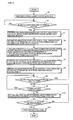
- control light O P is provided to the optical switch 1 (at step S1 in Fig.2 ).
- control light O P generated by the control light pulse source 17 is provided to the optical coupler 3 through the polarization controller 16 and the polarization monitor 18.
- step S2 whether or not the signal light Os is inputted to the optical switch 1 is determined (at step S2) because the monitored value of the power meter 9 is preliminarily recorded in a recording medium such as an HDD within the comparator/controller 10 or a RAM, and a value at the time of no signal light input and a threshold are preset and compared with the monitored value.
- a control such as a control start is performed.
- a personal computer, an FPGA, a DSP, or the like is used for the comparator/controller 10, so that processing such as a comparison calculation can be performed.
- the polarization controller 2 is controlled so that the monitored value of the signal light observed by the power meter 9 from the optical coupler 8 may become minimum (at step S3).
- the comparator/controller 10 records the monitored value (optical power) of the power meter 9, and drives the polarization controller 2 through the driver 11.
- the driver 11 is composed of a motor or the like which rotates a wavelength plate if the polarization controller 2 is a wavelength plate polarization controller.
- the driver 11 corresponds to an applying portion which applies the stress by using a piezoelectric element or the like.
- a polarization controller of an LN (LiNbO 3 modulator type, a liquid-crystal type, a variable Faraday rotator type where the wavelength plate is combined with a Faraday rotator, or the like can be applied.
- the comparator/controller 10 once rotates the wavelength plate, then monitors the value of the parameter 9, compares the value with the monitored value previously recorded, and performs a control of rotating the wavelength plate in the opposite direction if the power increases. When the difference by the comparison decreases, the control of further rotating forward direction is performed.
- the determination of the minimum value is performed by setting a threshold to a value of power to be compared and by stopping the control when the compared power difference is less than the threshold.
- the polarization state of the input signal light Os is similarly controlled by the polarization controller 2 through the power meter 9, the comparator/controller 10, and the driver 11 so that the power of the output signal light Oo may become minimum.
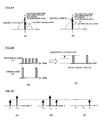
- the polarization state of the input signal light Os is controlled in the vertical direction to the transparent axis of the polarizer 7 as shown in Figs.11A and 3A(a) , which is the same as Fig.11A , so that the output level of the output signal light O 0 outputted from the polarizer 7 becomes minimum.
- a polarization state (i) of the signal light observed by the polarization monitor 6 at this time is recorded in a recording medium such as an HDD within the comparator/controller 10 and the polarization state calculator 14 or a RAM (at step S4).
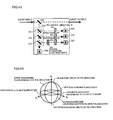
- Fig.4A shows an arrangement of a generally-known inline polarimeter used as the polarization monitor. As shown in Fig.4A , this polarimeter has demultiplexers 310 and 330, polarizers 341 and 342, a 1/4 wavelength plate 343, a polarizer 344, and 4 units of photo detectors (PD) 350-353.
- this polarimeter has demultiplexers 310 and 330, polarizers 341 and 342, a 1/4 wavelength plate 343, a polarizer 344, and 4 units of photo detectors (PD) 350-353.
- the demultiplexer 310 demultiplexes or branches the signal light and the control light having passed through the nonlinear medium 4, outputs one of the branched lights, and outputs the other to the demultiplexer 330.
- the demultiplexer 330 demultiplexes the light outputted from the demultiplexer 310 into 4 demultiplexed lights.
- the demultiplexer 330 has optical couplers 331-333.
- the optical coupler 331 outputs 1/4 of the light outputted from the demultiplexer 310 to the polarizer 341, and outputs 3/4 of the light outputted from the demultiplexer 310 to the optical coupler 332.
- the optical coupler 332 outputs 1/3 of the light outputted from the optical coupler 331 to the polarizer 342, and outputs 2/3 of the light outputted from the optical coupler 331 to the optical coupler 333.
- the optical coupler 333 outputs 1/2 of the light outputted from the optical coupler 332 to the 1/4 wavelength plate 343, and outputs 1/2 of the light outputted from the optical coupler 332 to the PD 350.
- the polarizer 341 passes only the polarization component in the polarization direction in parallel with the polarization direction "y" (see Fig.3A ) of the decoupled light outputted from the optical coupler 331. Also, the polarizer 341 may pass only the polarization component in the polarization direction inclined by 90 degrees with respect to the polarization direction "y" of the decoupled light outputted from the optical coupler 331.
- the PD 351 is a light receiving element which receives the decoupled light having passed through the polarizer 341 and converts the light into the electric signal.
- the polarizer 342 passes only the polarization component in the polarization direction inclined by 45 degrees with respect to the polarization direction "y" of the decoupled light outputted from the optical coupler 332.
- the PD 352 is a light receiving element which receives the decoupled light having passed through the polarizer 342 and converts the light into the electric signal.
- the 1/4 wavelength plate 343 generates a phase difference corresponding to 1/4 wavelength between the orthogonal polarization components of the decoupled light outputted from the optical coupler 333, namely, between the components of the polarization direction "x" and the polarization direction "y".
- the polarizer 344 passes only the polarization component of the polarization direction inclined by 45 degrees with respect to the polarization direction "y" of the decoupled light outputted from the optical coupler 333.
- the PD 353 is a light receiving element which receives the decoupled light having passed through the polarizer 344 and converts the light into the electric signal.
- the PD 350 is a light receiving element which directly receives the decoupled light outputted from the optical coupler 333 and converts the light into the electric signal.
- Stokes parameters (So, S 1 , S 2 , S 3 ) are calculated by using the following Equations (1)-(4) with the electric signals converted by the PDs being made intensity information of various polarization components of the above-mentioned signal light and control light, where PDo-PDs indicate intensities of the respective electric signals received and converted by the PD 350-PD 353:
- Fig.4B is a diagram showing a Poincare sphere indicating the Stokes parameters.
- the Stokes parameters (So, S 1 , S 2 , S 3 ) calculated as mentioned above are respectively indicated as one point on the Poincare sphere as shown in Fig.4B .
- S 0 corresponds to a radius of the sphere and indicates intensity.
- S 1 indicates a horizontal and vertical polarization.
- S 2 indicates a polarization component of a diagonal direction.
- S 3 indicates a circular polarization.
- the values S 0 -S 3 of the Stokes parameters have the relationship shown in the following equation:
- the Stokes parameters thus obtained are provided to the comparator/controller 10 and the polarization state calculator 14 as the polarization state.
- the input signal light Os coupled by the optical coupler 3 is taken out by the optical bandpass filter 12 after step S4, and the signal light is further transmitted to the polarization monitor 13.
- the polarization monitor 13 records the polarization state (Stokes parameter) of the signal light observed in a recording medium such as an HDD within the polarization state calculator 14 or a RAM.
- the polarization state calculator 14 executes a predetermined conversion, e.g. a calculation of 45-degree rotation with respect to the polarization state of the signal light provided from the polarization monitor 13, and records a polarization state (ii) after having been rotated in this way (at step S5).
- the calculation processing at the polarization state calculator 14 at this time can be executed by a personal computer, an FPGA, a DSP, or the like. While these calculations are performed by using the Stokes parameter, they can be similarly performed by using the Jones vector.
- the Stokes parameter and the Jones vector are associated with each other by an operator called Pauli spin matrices in a one-on-one manner.
- the angle between the polarization direction of the signal light and the polarization direction of the control light pulse is assumed to be approximately 45 degrees, adjustments with another angle which is most efficient can be appropriately performed according to the various setting conditions.
- the above-mentioned angle resides preferably between approximately 40 degrees to approximately 50 degrees at the input end of the nonlinear optical fiber by experiments and simulations. If this angle is too large, the optical parametric amplification by the optical four-wave mixing and the polarization change of the signal light by the cross phase modulation become hard to occur, that is not preferable. If this angle is too small, a loss at the polarizer becomes large, that is not preferable.
- the polarization state calculator 14 receives the polarization state (Stokes parameter) of the control light O P coupled with the input signal light Os by the optical coupler 3 as a polarization state (iii) from the polarization monitor 18, and controls the polarization controller 16 through the driver 15 so that the polarization state (iii) of the control light may coincide with the polarization state (ii) of the signal light (at step S6).
- the input signal light Os is controlled so that the polarization state of the input signal light Os may coincide with that of the control O P , so that the input signal light Os becomes a signal light O S1 amplified with the parametric amplification.
- an output wavelength of the optical switch only a wavelength ⁇ s component of the signal light Os is passed through by the existence of the optical filter 5, so that the input signal light Os synchronized with the control light O P becomes, as shown in Fig.3B(b) , the output signal O 0 of the component O S2 (see Fig.3A(b) ).
- the input/output wavelength of the optical switch 1 it is found from the wavelength ⁇ s of the signal light and a wavelength ⁇ p of the control light O P that as shown in Fig.3C(a) , only the wavelength ⁇ s of the signal light Os shown in Fig.3C(b) is included in the output signal light O P .
- the polarization state (iii) of the control light observed by the polarization monitor 18 is stored in the polarization state calculator 14 (at step S7).
- the comparator/controller 10 and the polarization state calculator 14 determine based on the polarization state (i) provided from the polarization monitor 6 whether or not the polarization state (i) of the signal light fluctuates beyond the threshold (at step S8). As a result, when the polarization state (i) exceeds the threshold, the above-mentioned steps S3-S7 are repeatedly executed, otherwise the process proceeds to next step S9.
- step S9 it is determined whether or not the signal light is inputted. In the presence of the signal light input, the process returns to step S8.
- the polarization state (i) does not fluctuate and the signal light is not inputted
- the polarization state of the control light observed by the polarization monitor 18 at step S10 is fixed to the polarization state (iii) recorded at the above-mentioned step S7. This is to prevent the polarization control of the control light from being uncontrolled in the absence of the input of the signal light.
- step S11 it is determined whether or not the control of the optical switch 1 is continued.
- step S12 the control light pulse source 17 of the control light is turned off (at step S12), so that the control ends.
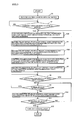
- steps S30 and S50 in Fig.5 are respectively substituted for steps S3 and S5 in Fig.2 . Accordingly, only the different points will now be described.
- the polarization controller 2 is controlled so that the observed value of the output signal light O 0 observed by the power meter 9 in the arrangement [1] shown in Fig.1 may become maximum.
- the input signal light Os is controlled so as to assume the polarization state in the same direction as a transparent axis "y" of the polarizer 7, thereby enabling all of the input signal lights Os to be passed through the polarizer 7.
- the polarization state calculator 14 records the polarization state of the signal light observed by the polarization monitor 13 as it is without conversions, as the polarization state (ii).
- the polarization controller 16 is controlled at step S6 so that the polarization state (iii) of the control light observed by the polarization monitor 18 may coincide with the polarization state (ii), the polarization state of the control light O P coincides with the polarization state of the input signal light Os as shown in Fig.6A(a) .
- the control light O P with respect to the input signal light Os assumes a toothless or intermittent state as shown in Fig.3B(a) (state where the cycle of repeating the control light is longer than that of repeating the signal light data), the input signal light Os passes through the polarizer 7 as it is. Therefore, the highly-nonlinear fiber 4 having received the input signal light and the control light through the optical coupler 3 is provided with the control light O P synchronized with the input signal light Os as shown in Fig.6B(a) to obtain the output signal light O 0 amplified with the parametric amplification as shown in Fig.6B(b) . This state becomes the polarization state shown in Fig.6A(b) . In this case, the control light O P can not pass through the optical filter 5, so that the output signal light O 0 assumes only the component of the input signal light Os amplified with the parametric amplification.
- the relationship between the input wavelength and the output wavelength in the optical switch 1, as shown in Figs.6C(a) and 6C(b) is that only the wavelength ⁇ s of the input signal light Os is included in the output signal light O 0 in the same way as Figs.3C(a) and 3C(b) .
- an optical coupler 20 is provided between the highly-nonlinear fiber 4 and the optical filter 5.
- One of the lights decoupled by the optical coupler 20 is provided to the optical filter 5, and the other is provided to the polarizer 7.
- an optical bandpass filter 21 for passing the signal light of the wavelength ⁇ s is provided in the path from the optical coupler 8 to the power meter 9 placed on the output side of the polarizer 7, and an optical bandpass filter 22 for extracting only a wavelength ⁇ i of the optical four-wave mixing (idler light) is provided for the output signal light O o outputted from the optical coupler 8.
- the output light of the highly-nonlinear fiber 4 is received as it is from the optical coupler 20 not through the optical filter.
- the signal light is decoupled by the optical coupler 8, then only the component of wavelength ⁇ s of the signal light is extracted by the optical filter 21 to be provided to the power meter 9.
- a band rejection filter such as an FBG which can interrupt only the bandwidth of the control light and pass only the signal light, and a WDM coupler can be used, besides the optical bandpass filter which can pass the bandwidth of the signal light.
- the polarization controller 2 is controlled through the comparator/controller 10 and the driver 11 so that the power of the output signal light of the polarizer 7 detected by the parameter 9 may become maximum, so that as shown in Fig.8A(a) , the direction of the input signal light Os becomes same as the transparent axis "y" of the polarizer 7.
- the optical monitor 6 provides the polarization state of the signal light at this time to the comparator/controller 10 and the polarization state calculator 14 through the optical filter 5 from the optical coupler 20 in the same way as the above-mentioned operation
- a component (idler light) ⁇ i of another wavelength by the optical four-wave mixing arises in addition to the wavelength ⁇ s of the signal light and the wavelength ⁇ P of the control light O P , as shown in Fig.8C(b) .
- the optical filter 22 is a bandpass filter which passes only the wavelength ⁇ i of the idler light obtained by the optical four-wave mixing. Therefore, as shown in Fig.8C(c) , the wavelength ⁇ i by the four-wave mixing is outputted as the output signal light O o .
- the polarization state at this time is the state shown in Fig.8A(b) , and its pulse waveform is shown in Fig.8B(b) .
- a band rejection filter such as an FBG which can interrupt only the bandwidth of the signal light and the control light and pass only the idler light, as well as a WDM coupler can be used.
- the idler light component which arises by the optical four-wave mixing generates only the timing where a signal light pulse and a control light pulse are temporally overlapped, in the same way as the operation example [1] of the arrangement [1].
- Fig.9 shows an application example where the above-mentioned optical switch is applied to the optical sampling device.
- the optical switch 1 having received the signal light Os and the control light O P outputs the output signal light O o as mentioned above to be converted into an electric signal by the opto/electro converter 30, and then the waveform after optical sampling is shown in the waveform display portion 50 through a signal processor 40, so that the measurement of the optical waveform is made possible.
Landscapes
- Physics & Mathematics (AREA)
- Engineering & Computer Science (AREA)
- Nonlinear Science (AREA)
- Computer Networks & Wireless Communication (AREA)
- General Physics & Mathematics (AREA)
- Signal Processing (AREA)
- Power Engineering (AREA)
- Optics & Photonics (AREA)
- Electromagnetism (AREA)
- Optical Modulation, Optical Deflection, Nonlinear Optics, Optical Demodulation, Optical Logic Elements (AREA)
- Optical Head (AREA)
Applications Claiming Priority (1)
| Application Number | Priority Date | Filing Date | Title |
|---|---|---|---|
| JP2006348381A JP4467557B2 (ja) | 2006-12-25 | 2006-12-25 | 光スイッチング方法及び光スイッチ |
Publications (3)
| Publication Number | Publication Date |
|---|---|
| EP1940066A2 true EP1940066A2 (fr) | 2008-07-02 |
| EP1940066A3 EP1940066A3 (fr) | 2010-06-02 |
| EP1940066B1 EP1940066B1 (fr) | 2013-04-03 |
Family
ID=39247043
Family Applications (1)
| Application Number | Title | Priority Date | Filing Date |
|---|---|---|---|
| EP07023748A Ceased EP1940066B1 (fr) | 2006-12-25 | 2007-12-07 | Procédé de commutation optique et commutateur optique |
Country Status (3)
| Country | Link |
|---|---|
| US (1) | US7978319B2 (fr) |
| EP (1) | EP1940066B1 (fr) |
| JP (1) | JP4467557B2 (fr) |
Families Citing this family (10)
| Publication number | Priority date | Publication date | Assignee | Title |
|---|---|---|---|---|
| WO2010096394A2 (fr) | 2009-02-17 | 2010-08-26 | Redwood Biosciences, Inc. | Véhicules de médicaments à base de protéine marqués par aldéhyde et procédés d'utilisation |
| JP5278159B2 (ja) * | 2009-05-20 | 2013-09-04 | 富士通株式会社 | 偏波コントローラおよび偏波モード分散補償器 |
| JP5471341B2 (ja) * | 2009-11-17 | 2014-04-16 | 日本電気株式会社 | 計測装置 |
| EP2458751B1 (fr) * | 2010-11-29 | 2013-11-20 | Xieon Networks S.à.r.l. | Système et procédé de communication optique |
| WO2012097333A2 (fr) | 2011-01-14 | 2012-07-19 | Redwood Bioscience, Inc. | Immunoglobulines polypeptidiques à marquage aldéhydique et leur méthode d'utilisation |
| GB201115807D0 (en) * | 2011-09-13 | 2011-10-26 | Univ St Andrews | Controlling light transmission through a medium |
| CN104469555B (zh) * | 2013-09-13 | 2018-05-18 | 华为技术有限公司 | 全光信息交换装置及方法 |
| JP2017050769A (ja) * | 2015-09-03 | 2017-03-09 | 富士通株式会社 | 光分岐挿入装置および光分岐挿入方法 |
| JP2019515677A (ja) | 2016-04-26 | 2019-06-13 | アール.ピー.シェーラー テクノロジーズ エルエルシー | 抗体複合体ならびにそれを作製および使用する方法 |
| US11095390B2 (en) * | 2018-08-23 | 2021-08-17 | International Business Machines Corporation | Polarization-insensitive optical link |
Family Cites Families (11)
| Publication number | Priority date | Publication date | Assignee | Title |
|---|---|---|---|---|
| JP3419510B2 (ja) * | 1992-10-16 | 2003-06-23 | 富士通株式会社 | 波長分散を補償した光通信システム及び該システムに適用可能な位相共役光発生装置 |
| US5627924A (en) | 1996-01-18 | 1997-05-06 | Lucent Technologies Inc. | Article comprising a non-mechanical optical fiber switch |
| EP1531355A4 (fr) * | 2002-06-11 | 2008-08-13 | Furukawa Electric Co Ltd | Systeme et procede de regeneration optique par multiplexage optique |
| JP2006514505A (ja) * | 2003-06-30 | 2006-04-27 | 富士通株式会社 | 光ファイバ通信システムにおける光再生器 |
| DE602004021510D1 (de) * | 2004-03-25 | 2009-07-23 | Fujitsu Ltd | Gangslichts polarisationserhaltender wellenleiterbauelemente |
| JP2006018485A (ja) | 2004-06-30 | 2006-01-19 | Matsushita Electric Works Ltd | 防犯検知装置 |
| JP3920297B2 (ja) | 2004-09-01 | 2007-05-30 | 富士通株式会社 | 光スイッチおよび光スイッチを利用した光波形モニタ装置 |
| JP4328724B2 (ja) * | 2005-01-17 | 2009-09-09 | 富士通株式会社 | 光波形測定装置および光波形測定方法 |
| JP4984442B2 (ja) * | 2005-06-22 | 2012-07-25 | 富士通株式会社 | 光スイッチ装置及び光スイッチ方法 |
| JP2007240389A (ja) * | 2006-03-09 | 2007-09-20 | Fujitsu Ltd | 光波形測定装置および光波形測定方法 |
| JP4753849B2 (ja) * | 2006-11-30 | 2011-08-24 | 富士通株式会社 | 光スイッチおよび光波形モニタ装置 |
-
2006
- 2006-12-25 JP JP2006348381A patent/JP4467557B2/ja not_active Expired - Fee Related
-
2007
- 2007-12-07 EP EP07023748A patent/EP1940066B1/fr not_active Ceased
- 2007-12-19 US US12/002,762 patent/US7978319B2/en not_active Expired - Fee Related
Also Published As
| Publication number | Publication date |
|---|---|
| US7978319B2 (en) | 2011-07-12 |
| JP4467557B2 (ja) | 2010-05-26 |
| EP1940066B1 (fr) | 2013-04-03 |
| US20080151244A1 (en) | 2008-06-26 |
| EP1940066A3 (fr) | 2010-06-02 |
| JP2008158349A (ja) | 2008-07-10 |
Similar Documents
| Publication | Publication Date | Title |
|---|---|---|
| EP1940066B1 (fr) | Procédé de commutation optique et commutateur optique | |
| Vo et al. | Silicon-chip-based real-time dispersion monitoring for 640 Gbit/s DPSK signals | |
| EP1681542B1 (fr) | Dispositif et procédé pour mesurer une forme d'onde optique | |
| EP1928206A2 (fr) | Commutateur optique et appareil de surveillance de la forme de vague optique | |
| EP2390719B1 (fr) | Appareil de conversion de longueur d'onde, procédé de conversion de longueur d'onde et multiplexeur optique d'insertion-extraction l'utilisant | |
| CN110832295B (zh) | 实时光学光谱-时间分析仪和方法 | |
| US6751385B2 (en) | Method and device for measuring the waveform of an optical signal | |
| US20040227949A1 (en) | Interferometric method and apparatus for the characterization of optical pulses | |
| JP3751547B2 (ja) | 光サンプリング波形観測装置 | |
| EP1833181B1 (fr) | Appareil de mesure de forme d'onde optique et procédé de mesure de forme d'onde | |
| WO2014054869A1 (fr) | Appareil de stabilisation de sortie de laser pulsé et procédé associé | |
| US7953322B2 (en) | Optical switch and optical switch control method | |
| EP1662680B1 (fr) | Récepteur optique et méthode pour la compensation de la dispersion chromatique | |
| JP2757816B2 (ja) | 光強度変調器の特性測定方法及び制御方法 | |
| JP2008268094A (ja) | 光伝搬特性の測定装置 | |
| Lancis et al. | Temporal Lau effect: noncoherent regeneration of periodic pulse trains | |
| JP4991830B2 (ja) | サンプリング波形測定装置及びサンプリング波形測定方法 | |
| JP2009047713A (ja) | 光波形測定装置および光波形測定方法 | |
| JP2008209214A (ja) | 光サンプリング装置 | |
| Wiberg et al. | Polychromatic sampling for high-speed real-time processing | |
| Yang et al. | Demonstration of a 16* 10-Gb/s OTDM system | |
| Pitois et al. | Design of a continuously tunable delay line using vectorial modulational instability and chromatic dispersion in optical fibers | |
| Yang et al. | Novel WDM to OTDM wavelength conversion system for transmission of discrete sampling spectrum in single wavelength channel | |
| JP2006322950A (ja) | 光信号の波形を測定する方法及び装置 | |
| Wang et al. | Generation of Multichannel Delayed Pulses by Four-Wave-Mixing-Assisted Stimulated Brillouin Scattering Slow-Light System |
Legal Events
| Date | Code | Title | Description |
|---|---|---|---|
| PUAI | Public reference made under article 153(3) epc to a published international application that has entered the european phase |
Free format text: ORIGINAL CODE: 0009012 |
|
| AK | Designated contracting states |
Kind code of ref document: A2 Designated state(s): AT BE BG CH CY CZ DE DK EE ES FI FR GB GR HU IE IS IT LI LT LU LV MC MT NL PL PT RO SE SI SK TR |
|
| AX | Request for extension of the european patent |
Extension state: AL BA HR MK RS |
|
| PUAL | Search report despatched |
Free format text: ORIGINAL CODE: 0009013 |
|
| AK | Designated contracting states |
Kind code of ref document: A3 Designated state(s): AT BE BG CH CY CZ DE DK EE ES FI FR GB GR HU IE IS IT LI LT LU LV MC MT NL PL PT RO SE SI SK TR |
|
| AX | Request for extension of the european patent |
Extension state: AL BA HR MK RS |
|
| RIC1 | Information provided on ipc code assigned before grant |
Ipc: H04J 14/06 20060101ALN20080408BHEP Ipc: H04B 10/08 20060101ALI20100426BHEP Ipc: G02F 1/39 20060101ALI20100426BHEP Ipc: H04Q 11/00 20060101ALI20100426BHEP Ipc: G02F 1/35 20060101ALI20100426BHEP Ipc: G01R 13/34 20060101ALI20100426BHEP Ipc: H04J 14/08 20060101AFI20080408BHEP |
|
| 17P | Request for examination filed |
Effective date: 20101008 |
|
| AKX | Designation fees paid |
Designated state(s): DE FR |
|
| GRAP | Despatch of communication of intention to grant a patent |
Free format text: ORIGINAL CODE: EPIDOSNIGR1 |
|
| RIC1 | Information provided on ipc code assigned before grant |
Ipc: H04Q 11/00 20060101ALI20120523BHEP Ipc: H04J 14/08 20060101AFI20120523BHEP Ipc: G02F 1/39 20060101ALI20120523BHEP Ipc: G01R 13/34 20060101ALI20120523BHEP Ipc: H04B 10/08 20060101ALI20120523BHEP Ipc: G02F 1/35 20060101ALI20120523BHEP Ipc: H04J 14/06 20060101ALN20120523BHEP |
|
| RIC1 | Information provided on ipc code assigned before grant |
Ipc: H04J 14/06 20060101ALN20120525BHEP Ipc: G02F 1/39 20060101ALI20120525BHEP Ipc: H04B 10/08 20060101ALI20120525BHEP Ipc: G02F 1/35 20060101ALI20120525BHEP Ipc: H04Q 11/00 20060101ALI20120525BHEP Ipc: H04J 14/08 20060101AFI20120525BHEP Ipc: G01R 13/34 20060101ALI20120525BHEP |
|
| GRAS | Grant fee paid |
Free format text: ORIGINAL CODE: EPIDOSNIGR3 |
|
| GRAP | Despatch of communication of intention to grant a patent |
Free format text: ORIGINAL CODE: EPIDOSNIGR1 |
|
| RIC1 | Information provided on ipc code assigned before grant |
Ipc: H04B 10/08 20060101ALI20121101BHEP Ipc: H04Q 11/00 20060101ALI20121101BHEP Ipc: G02F 1/35 20060101ALI20121101BHEP Ipc: G01R 13/34 20060101ALI20121101BHEP Ipc: H04J 14/08 20060101AFI20121101BHEP Ipc: H04J 14/06 20060101ALN20121101BHEP Ipc: G02F 1/39 20060101ALI20121101BHEP |
|
| RIC1 | Information provided on ipc code assigned before grant |
Ipc: H04J 14/06 20060101ALN20121107BHEP Ipc: G02F 1/35 20060101ALI20121107BHEP Ipc: G02F 1/39 20060101ALI20121107BHEP Ipc: H04J 14/08 20060101AFI20121107BHEP Ipc: H04Q 11/00 20060101ALI20121107BHEP Ipc: H04B 10/08 20060101ALI20121107BHEP Ipc: G01R 13/34 20060101ALI20121107BHEP |
|
| RIC1 | Information provided on ipc code assigned before grant |
Ipc: G02F 1/35 20060101ALI20121115BHEP Ipc: G01R 13/34 20060101ALI20121115BHEP Ipc: G02F 1/39 20060101ALI20121115BHEP Ipc: H04J 14/06 20060101ALN20121115BHEP Ipc: H04Q 11/00 20060101ALI20121115BHEP Ipc: H04J 14/08 20060101AFI20121115BHEP Ipc: H04B 10/08 20060101ALI20121115BHEP |
|
| GRAA | (expected) grant |
Free format text: ORIGINAL CODE: 0009210 |
|
| AK | Designated contracting states |
Kind code of ref document: B1 Designated state(s): DE FR |
|
| RIC1 | Information provided on ipc code assigned before grant |
Ipc: H04J 14/06 20060101ALN20130222BHEP Ipc: H04J 14/08 20060101AFI20130222BHEP Ipc: G01R 13/34 20060101ALI20130222BHEP Ipc: H04Q 11/00 20060101ALI20130222BHEP Ipc: G02F 1/35 20060101ALI20130222BHEP Ipc: G02F 1/39 20060101ALI20130222BHEP |
|
| REG | Reference to a national code |
Ref country code: DE Ref legal event code: R096 Ref document number: 602007029533 Country of ref document: DE Effective date: 20130606 |
|
| PLBE | No opposition filed within time limit |
Free format text: ORIGINAL CODE: 0009261 |
|
| STAA | Information on the status of an ep patent application or granted ep patent |
Free format text: STATUS: NO OPPOSITION FILED WITHIN TIME LIMIT |
|
| 26N | No opposition filed |
Effective date: 20140106 |
|
| REG | Reference to a national code |
Ref country code: DE Ref legal event code: R097 Ref document number: 602007029533 Country of ref document: DE Effective date: 20140106 |
|
| REG | Reference to a national code |
Ref country code: FR Ref legal event code: PLFP Year of fee payment: 9 |
|
| REG | Reference to a national code |
Ref country code: FR Ref legal event code: PLFP Year of fee payment: 10 |
|
| REG | Reference to a national code |
Ref country code: FR Ref legal event code: PLFP Year of fee payment: 11 |
|
| PGFP | Annual fee paid to national office [announced via postgrant information from national office to epo] |
Ref country code: FR Payment date: 20171113 Year of fee payment: 11 Ref country code: DE Payment date: 20171129 Year of fee payment: 11 |
|
| REG | Reference to a national code |
Ref country code: DE Ref legal event code: R119 Ref document number: 602007029533 Country of ref document: DE |
|
| PG25 | Lapsed in a contracting state [announced via postgrant information from national office to epo] |
Ref country code: DE Free format text: LAPSE BECAUSE OF NON-PAYMENT OF DUE FEES Effective date: 20190702 Ref country code: FR Free format text: LAPSE BECAUSE OF NON-PAYMENT OF DUE FEES Effective date: 20181231 |