EP1946820A1 - Zweistufiges Nanofiltrierungs-Seewasser-Entsalzungsssystem - Google Patents
Zweistufiges Nanofiltrierungs-Seewasser-Entsalzungsssystem Download PDFInfo
- Publication number
- EP1946820A1 EP1946820A1 EP08004227A EP08004227A EP1946820A1 EP 1946820 A1 EP1946820 A1 EP 1946820A1 EP 08004227 A EP08004227 A EP 08004227A EP 08004227 A EP08004227 A EP 08004227A EP 1946820 A1 EP1946820 A1 EP 1946820A1
- Authority
- EP
- European Patent Office
- Prior art keywords
- permeate
- retentate
- seawater
- stage
- psi
- Prior art date
- Legal status (The legal status is an assumption and is not a legal conclusion. Google has not performed a legal analysis and makes no representation as to the accuracy of the status listed.)
- Withdrawn
Links
Images


Classifications
-
- B—PERFORMING OPERATIONS; TRANSPORTING
- B01—PHYSICAL OR CHEMICAL PROCESSES OR APPARATUS IN GENERAL
- B01D—SEPARATION
- B01D61/00—Processes of separation using semi-permeable membranes, e.g. dialysis, osmosis or ultrafiltration; Apparatus, accessories or auxiliary operations specially adapted therefor
- B01D61/02—Reverse osmosis; Hyperfiltration ; Nanofiltration
- B01D61/027—Nanofiltration
-
- B—PERFORMING OPERATIONS; TRANSPORTING
- B01—PHYSICAL OR CHEMICAL PROCESSES OR APPARATUS IN GENERAL
- B01D—SEPARATION
- B01D61/00—Processes of separation using semi-permeable membranes, e.g. dialysis, osmosis or ultrafiltration; Apparatus, accessories or auxiliary operations specially adapted therefor
- B01D61/02—Reverse osmosis; Hyperfiltration ; Nanofiltration
- B01D61/027—Nanofiltration
- B01D61/0271—Nanofiltration comprising multiple nanofiltration steps
-
- B—PERFORMING OPERATIONS; TRANSPORTING
- B01—PHYSICAL OR CHEMICAL PROCESSES OR APPARATUS IN GENERAL
- B01D—SEPARATION
- B01D61/00—Processes of separation using semi-permeable membranes, e.g. dialysis, osmosis or ultrafiltration; Apparatus, accessories or auxiliary operations specially adapted therefor
- B01D61/02—Reverse osmosis; Hyperfiltration ; Nanofiltration
- B01D61/06—Energy recovery
-
- C—CHEMISTRY; METALLURGY
- C02—TREATMENT OF WATER, WASTE WATER, SEWAGE, OR SLUDGE
- C02F—TREATMENT OF WATER, WASTE WATER, SEWAGE, OR SLUDGE
- C02F1/00—Treatment of water, waste water, or sewage
- C02F1/44—Treatment of water, waste water, or sewage by dialysis, osmosis or reverse osmosis
- C02F1/442—Treatment of water, waste water, or sewage by dialysis, osmosis or reverse osmosis by nanofiltration
-
- B—PERFORMING OPERATIONS; TRANSPORTING
- B01—PHYSICAL OR CHEMICAL PROCESSES OR APPARATUS IN GENERAL
- B01D—SEPARATION
- B01D2317/00—Membrane module arrangements within a plant or an apparatus
- B01D2317/02—Elements in series
- B01D2317/025—Permeate series
-
- C—CHEMISTRY; METALLURGY
- C02—TREATMENT OF WATER, WASTE WATER, SEWAGE, OR SLUDGE
- C02F—TREATMENT OF WATER, WASTE WATER, SEWAGE, OR SLUDGE
- C02F2103/00—Nature of the water, waste water, sewage or sludge to be treated
- C02F2103/08—Seawater, e.g. for desalination
-
- Y—GENERAL TAGGING OF NEW TECHNOLOGICAL DEVELOPMENTS; GENERAL TAGGING OF CROSS-SECTIONAL TECHNOLOGIES SPANNING OVER SEVERAL SECTIONS OF THE IPC; TECHNICAL SUBJECTS COVERED BY FORMER USPC CROSS-REFERENCE ART COLLECTIONS [XRACs] AND DIGESTS
- Y02—TECHNOLOGIES OR APPLICATIONS FOR MITIGATION OR ADAPTATION AGAINST CLIMATE CHANGE
- Y02A—TECHNOLOGIES FOR ADAPTATION TO CLIMATE CHANGE
- Y02A20/00—Water conservation; Efficient water supply; Efficient water use
- Y02A20/124—Water desalination
- Y02A20/131—Reverse-osmosis
Definitions
- seawater contains about 35,000 mg/l of total dissolved solids, also referred to as salinity, slightly less in the polar and coastal regions due to incursion of fresh water from melting ice and runoff from rivers and streams. Substantially reduced salinity from the outfall of the Columbia River in Washington State has been measured more than 200 miles from its mouth.
- the Persian Gulf and Red Sea are known, for example, to have salinity levels of about 40,000 mg/l due to high rates of evaporation and relatively little rainfall.
- Potable water is defined herein as water of drinkable quality containing no more than 500 mg/l of total dissolved solids of which chloride does not exceed 250 mg/l.
- Reverse osmosis is a process that is reversed from the naturally occurring process of osmosis.
- Osmosis occurs when solutions of differing concentrations are separated by a semi-permeable membrane. Hydraulic pressure is exerted across the membrane upon the solution of higher solute concentration by the solution of lower solute concentration. The osmotic pressure across the membrane is directly proportional to the difference in concentration between the two solutions. Pressure must be applied to the more concentrated solution to counteract the natural osmotic pressure being exerted upon it. To reverse the direction of the natural osmotic flow, additional pressure is required.
- Reverse osmosis requires that high pressure be applied to the seawater due in part to the fineness of the membrane and due also to the additive force required to overcome the osmotic pressure preferring to work in the opposite direction to encourage the dilution of seawater rather than an increase in salt concentration.
- a reverse osmosis membrane is extremely fine and capable of rejecting extremely small contaminants such as bacteria, sugars, proteins, dyes, and salts. Under such high pressure, some potable water permeates through the semipermeable membrane, leaving the balance of the seawater and nearly all the salt retained without passing through the membrane forming a more salt-rich concentrate to be swept away under pressure.
- the seawater is fractionated by the membrane into a permeate of low salt concentration and a concentrate or retentate of salt concentration higher than seawater.
- NF membranes are composite structures composed of cross-linked aromatic polyamides comprising a microporous polymer sheet supporting a skin layer. Such a membrane structure is generally known as a thin film composite (TFC).
- TFC thin film composite
- NF membranes Unlike RO membranes, however, NF membranes have a larger pore size in the skin layer and a net negative electrical charge inside the individual pores.
- the pores work to exclude material by size and the electrical charge works to exclude electrically charged species according to the surface charge density of introduced ions.
- the '083 patent discloses employment of nanofiltration to selectively separate polyvalent ionic species such as sodium sulfate from aqueous solutions also containing, for example, monovalent species such as sodium chloride, the sodium chloride passing through the nanofiltration membrane.
- the '083 patent also discloses that reverse osmosis rejects all ionic species.
- U.S. Patent No. 6,190,556 to Uhlinger proposes use of RO and NF membranes in combination with each other to produce potable water from seawater. It is disclosed therein that a vessel containing both membranes receives seawater pressurized to 250-350 psi for filtering in series first through at least one NF membrane the permeate stream from which is interrupted and pressurized via the same pump to 250-350 psi and pumped through at least one RO membrane, producing a permeate of potable water and a concentrate that is used to flush the NF membrane.
- the NF membrane produces a permeate stream of substantially reduced divalent ions, about 95% reduction, and moderately reduced monovalent ions, about 50% reduction.
- the salinity of the first permeate stream should be about 10,000 to 15,000 mg/l due in no small part to the presence to a great degree of monovalent sodium and chloride in seawater.
- the RO membrane of the second stage is able to operate under lower pressures due to the reduced salt content of its feed stream. Had the RO membrane been used in the initial stage to receive seawater feed at 35,000 mg/l salt, the existence of the extra salt would require substantially more operating pressure to obtain a permeate.
- This invention is directed to a two stage seawater desalination system that includes first and second stage high performance nanofiltration membranes in series flow relationship, the first stage membrane being pumped with seawater pressurized sufficiently to produce a first permeate and a first retentate, and a second stage membrane being pumped with the first permeate pressurized at between about 200 psi and about 300 psi to produce potable water and a second retentate.
- water of 1,000 mg/l total dissolved solids may be produced.
- the second retentate may have its pressure boosted by a boost pump to about the pressure of the pressurized seawater feed for introduction therein and recycling through the desalination system.
- the second retentate may also have its pressure reduced for introduction into the seawater feed.
- the first retentate may be depressurized by way of an energy recovery device.
- the first retentate may be passed through a concentrate high performance nanofiltration membrane fractionating the first retentate into a high concentrate and a dilute concentrate, the dilute concentrate being produced optionally for addition and to dilute the seawater feed.
- the present invention is directed to a method and apparatus for desalinating seawater utilizing a two stage seawater desalination system, a first stage including at least one high performance nanofiltration membrane to receive seawater feed pressurized by a first stage pump sufficiently to produce a first permeate of lower salinity than the seawater feed and a first retentate of higher salinity than the seawater feed, and a second stage including at least one high performance nanofiltration membrane to receive the first permeate pressurized by a second stage pump to between about 200psi and about 300 psi to produce potable water.
- Pressurization of the seawater feed and the first permeate is accomplished by one or more pumps.
- the first permeate and the potable water exit their respective membranes at approximately atmospheric pressure.
- Each of the retentates flow out of their respective membranes at pressures approximating the pressures of their respective feed streams.
- the first retentate may be discarded, returned to the ocean, or, for added energy savings, may be depressurized through an energy recovery device such as a Pelton wheel, a reverse pump, hydraulic energy transfer, or the like.
- the meaning of the term depressurize being understood herein to also include less than full reduction in pressure to atmospheric.
- the second retentate may be discarded, returned to the ocean, depressurized through an energy recovery device, fed into the seawater feed tank, or may optionally, be pressurized by a booster pump and forwarded into the pressurized seawater feed for recycling through the desalination system.
- raw seawater may be obtained by withdrawal directly from the ocean or a sea well, Ranier well, treated by sand or microfiltration or imported to the desalination facility from the ocean via truck or other transport means (not shown).
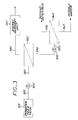
- the seawater may be stored in a seawater feed tank 115 at atmospheric pressure for use in the desalination process.
- the salinity of the seawater may be determined by conductivity testing, real time monitoring, or other methods known in the art.
- the seawater is drawn from the seawater feed tank by a first stage pump 125 connected thereto by a first pump inlet conduit 120.
- Seawater feed flows through the first stage pump which pressurizes and pumps the seawater feed for receipt by a first stage high performance nanofiltration membrane (FSM) 135 via a first stage pump outlet conduit 130 connected therebetween.
- the first stage pump 125 is selected to be capable of providing up to 600 psi or otherwise to sufficiently pressurize and force the seawater feed through the FSM to produce a first permeate.
- this first permeate may of less than 25% of the salinity of the seawater feed.
- Sufficient pressure of the seawater feed to produce the first permeate is between about 400 psi and about 600 psi, preferably between about 500 psi and about 550 psi.
- the first permeate exits the first stage membrane at approximately atmospheric pressure and thus requires additional pressurization to produce potable water forced through the second stage nanofiltration membrane.
- first permeate exit conduit 140 Connected to the FSM 135 for receipt of the first permeate is a first permeate exit conduit 140.
- the first permeate exits the FSM at approximately atmospheric pressure via the first permeate exit conduit.
- Most, if not all, of the salt not passed through the FSM as first permeate, is retained in a first rententate which exits the FSM through a first retentate exit conduit 145 connected to the FSM for receipt of the first retentate.
- the seawater feed is thus fractionated by the FSM into a first permeate of lower salinity than the seawater feed and into a first retentate the salinity of which is greater than the seawater feed.
- SSM high performance nanofiltration membrane
- Connected to the SSM for receipt of the potable water is a potable water exit conduit 165.
- the pressure of the seawater feed sufficient to produce the first permeate must exceed the osmotic pressure across the FSM 135.
- the osmotic pressure across the FSM is at about 270 psi.
- Pressure sufficient to create a first permeate from such a seawater feed must therefore exceed 270 psi.
- substantially more than osmotic pressure needs to be applied to the seawater feed.
- the seawater feed is preferably pressurized by the first stage pump 125 to between about 500 psi and about 550 psi. Substantially exceeding 600 psi, however, is not only unnecessary, application of such pressures drives up energy and material costs.
- Producing potable water from the first permeate of the present invention requires substantially less applied pressure than to produce the first permeate.
- Producing water of slightly lower quality, for example, 1000 mg/l salt requires slightly less applied pressure either to the seawater feed or to the first permeate as desired.
- the first permeate must contain about 8,750 mg/l salt to be of 25% salinity of the seawater feed. Inputting such a first permeate to the SSM and producing potable water, the osmotic pressure differential across the SSM 160 is therefore about 90 psi.
- the salinity of the first permeate is typically less than 25% of the seawater feed. To obtain a substantial flux of potable water from such a first permeate requires that the first permeate be pressurized by the second stage pump 150 to between about 200 psi and about 300 psi before entering the SSM.
- the nanofiltration membranes of the present invention are thin film composite structures that include an ultra-thin polyamide barrier layer, a microporous polysulfone layer interlayer, and a polyester support web.
- each membrane is produced in sheet form, is folded numerous times, and spirally wound into a cylindrical cartridge.
- Each cartridge typically includes an input feed port and two output ports for the separate exits of permeate and retentate. Although size may vary, such cartridges are often made available by suppliers in the art in diameters of approximately 4 and 8 inches and lengths typically of 40 inches.
- Nanofiltration membranes have been known to preferably reject polyvalent ions in favor of monovalent species.
- membranes that allow passage of all monovalent ions do relatively little to reduce salinity in seawater.
- rejection of only polyvalent ions, calcium, magnesium, and sulfate will result in the monovalent ions, sodium, chloride, and potassium passing through to the permeate.
- the salinity of the permeate would be no less than 86% of the salinity of the seawater feed. Should water be retained with the polyvalent ions, the salinity of the permeate will be greater and conceivably even greater than the seawater feed.
- the '556 patent to Uhlinger proposes an NF membrane that rejects at least about 95% of the divalent ions and at least about 50% of the monovalent ions present in seawater containing 35,000 mg/l salt. It is further disclosed therein that the NF permeate therefrom is, after flow interruption, thereafter forced through an RO membrane that rejects at least 98% of the remaining salt to form an RO permeate of potable water.
- the NF permeate yield is proposed therein to be at least 40-45% of the seawater feed and the RO permeate yield is proposed to be, under typical operating conditions, approximately 80-85% of the NF permeate.
- rejection was proposed therein as occurring with applied pressure of 250 psi to 350 psi to each of the two stages, the overall recovery of potable water from seawater to be about 26-30% by volume.
- HPNF high performance nanofiltration
- HPNF membranes are capable of rejecting contaminants based on molecular weight and on an electrical charge basis.
- each of the HPNF membranes utilized in the present invention reject contaminants of between about 140 to 300 Daltons or greater and over 99% divalent ions and up to about 90% of monovalent ions from a seawater feed.
- the high performance membranes utilized in the present invention are available, for example, by Dow Filmtec, Model No. NF90-4040.
- the 8-inch diameter membrane employs a membrane area of roughly 400 square feet spirally wound into a cartridge, while the 4-inch membrane employs a membrane area of roughly 82 square feet similarly wound.
- HPNF membranes are employed in series flow relationship as the FSM and the SSM. Utilizing such membranes, rejection of monovalent ions from seawater has been determined to be greater than 75%. Divalent ions, albeit appearing in much lower concentrations in seawater, have been rejected to a relatively greater degree, on the order of at least 95%.
- HPNF membranes may be employed, the present invention also contemplates preferred use of a single model HPNF membrane as such use presents convenient inventory advantages requiring a lower variety of cartridges, associated fittings and parts. Although only one high performance membrane may be utilized per stage, it is preferable that multiple HPNF membranes be connected together in series to form each stage.
- Flux through the FSM was about 7 gallons/square foot of membrane/day. To provide a practical amount of product, flux through the FSM may vary from about 6-10 gallons/square foot of membrane/day. Flux through the SSM was found to be about 20 gallons/square foot/day, but may vary from about 19-26 gallons/square foot of membrane/day. The disparity in flux through the membranes is accounted for in part by the greatly reduced osmotic pressure of the second stage and in part by the disparity in volume yield.
- the data in Table 1 shows that the salt concentration of the first permeate is less than 25% of the seawater feed.
- the osmotic pressure of the seawater feed vs. first permeate at only about 12% of the salt concentration of the seawater feed, for example, is about 315 psi.
- the osmotic pressure of the first permeate at, for example, about 4,750 mg/l salt vs. potable water is only about 45 psi.
- the lower osmotic pressure across the SSM advantageously requires less applied pressure to force the potable water through the second stage.
- the flux through the SSM was accomplished by temporarily storing a sufficient amount of first permeate from the FSM to provide an adequate amount of first permeate to the SSM.
- Volume yield of the first permeate was measured at about 35% of the seawater feed volume.
- the volume yield of potable water from the first permeate was measured at about 79%. The total yield of potable water was therefore about 28% by volume of the seawater feed to the FSM.
- pressures, yields, and flux may vary depending upon the degree of particular membrane restriction, including but not limited to restriction due to build up of scale and debris.
- multiple HPNF membranes may also be configured together in parallel and/or serial formation depending upon the amount and salinity of product water desired.
- the disclosure thus far provides for first stage and second stage high performance nanofiltration membranes connected to each other in series flow relationship.
- the present invention is not so limited. A greater number of HPNF membranes may be utilized together in series should operation at lower pressures or higher purity water be desired. Additionally, or alternatively, such membranes may be arranged in parallel configuration to provide increased production capacity.
- the second stage pump pressure may be lowered to accommodate the flux of the first permeate.
- a plurality ofFSMs may be utilized, for example, in parallel formation to provide sufficient flux of first permeate to the SSM for continuous production of potable water.
- water of lesser quality such as 1,000 mg/l total dissolved solids, may be produced by the present invention.
- the first stage pump 125 must be capable of providing sufficiently pressurized seawater feed to produce through the FSM 135 a first permeate.
- a pump cabable of operating at about 400psi to about 600psi is suitable.
- the second stage pump 150 must be capable of providing sufficiently pressurized first permeate to produce through the SSM 160 potable water.
- a pump that can pressurize the first permeate to 300psi should be sufficient.
- the first and second stage pumps may each be a single pump or may, if desired, be a plurality of pumps configured, as is known in the art, to provide adequate pressure and flow.
- raw seawater often includes particulate matter that is preferably filtered out through use of a particulate filter such as a standard cartridge filter as, for example, provided by Ametek, Model F-201, standard blue with pleated filter.
- a particulate filter such as a standard cartridge filter as, for example, provided by Ametek, Model F-201, standard blue with pleated filter.
- the particulate filter (not shown in FIG. 1 ) may be interposed between the first stage pump and the seawater feed tank via a conduit connected therebetween.
- an anti-scalant feed system may be utilized to inject anti-scalant solution into the seawater feed to inhibit restrictive and potentially clogging scale build up.
- the anti-scalant feed system (not shown in FIG. 1 ) may be connected to the first pump inlet conduit via an injection port mounted thereon.
- a seawater feed tank 215 for storing seawater.
- the seawater may be drawn from the seawater feed tank by a first stage pump 225 connected thereto by a first pump inlet conduit 220.
- Seawater feed flows through the first stage pump which pressurizes and pumps the seawater feed for receipt by a first stage high performance nanofiltration membrane (FSM) 235 via a first pump outlet conduit 230 connected therebetween.
- the first stage pump is selected to sufficiently pressurize and force the seawater feed through the FSM to produce a first permeate.
- first permeate exit conduit 240 Connected to the FSM 235 for receipt of the first permeate is a first permeate exit conduit 240.
- the first permeate exits the FSM at approximately atmospheric pressure via the first permeate exit conduit.
- Most, if not all, of the salt not passed through the FSM as first permeate, is retained in a first rententate which exits the FSM through a first retentate exit conduit 245 connected to the FSM for receipt of the first retentate.
- the seawater feed is thus fractionated by the FSM into a first permeate having a salt concentration lower than the seawater feed and into a first retentate the salinity of which is greater than the seawater feed.
- SSM nanofiltration membrane
- Connected to the SSM for receipt of the potable water is a potable water exit conduit 265.
- the first permeate is thus fractionated by the SSM into potable water and a second retentate, the salinity of the second retentate being greater than the salinity of the first permeate.
- the second retentate is introduced into the seawater feed for recycling through the FSM 235 and the SSM 260 of the desalination system.
- the second retentate remains pressurized at between about 200 psi to about 300 psi and travels through the second retentate exit conduit 270 into a booster pump 275 connected thereto.
- the booster pump is selected to sufficiently pressurize and pump the second retentate to join the seawater feed in the first stage pump outlet conduit 230 through a booster pump outlet conduit 280 connected therebetween.
- the preferred volume of the second retentate is between 20% and 30% of the volume of the first permeate and is preferably about 7% to about 15% by volume of the seawater feed to the FSMs.
- the salt concentration of the second retentate most often is below that of the seawater feed. Should it be desired, the concentration of the second retentate may be monitored by conductivity testing or the like. Introduction of the second retentate into the pressurized seawater feed may be controlled by valving means, boost pump deactivation, or other control means known in the art.
- Recycling of the second retentate provides advantageous energy savings since it only requires a pressure boost of about 200 psi to 350 psi, depending on its pressure exiting the SSM, to equal the preferred pressure of the pressurized seawater feed of between about 500 psi to about 550 psi. Entry of fully pressurized second retentate into the pressurized seawater feed may displace the same volume of seawater feed that would otherwise require the energy necessary to pressurize it sufficiently from atmospheric. Additionally, should the second retentate be of lower salt concentration than the seawater feed, use of the second retentate for recycling will have a diluting effect thus likely prolonging use and extending maintenance periods of the membranes. The dilution effect also lowers the salt concentration of the pressurized seawater feed thereby providing for the lowering, if desired, of operating pressures and further energy savings.
- a seawater feed tank 315 for storing seawater.
- the seawater may be drawn from the seawater feed tank by a first stage pump 325 connected thereto by a first pump inlet conduit 320.
- Seawater feed flows through the first stage pump which pressurizes and pumps the seawater feed for receipt by a first stage high performance nanofiltration membrane (FSM) 335 via a first pump outlet conduit 330 connected therebetween.
- the first stage pump is selected to sufficiently pressurize and force the seawater feed through the FSM to produce a first permeate of lower salinity than the seawater feed.
- first permeate exit conduit 340 Connected to the FSM 335 for receipt of the first permeate is a first permeate exit conduit 340.
- the first permeate exits the FSM at approximately atmospheric pressure via the first permeate exit conduit.
- Most, if not all, of the salt not passed through the FSM as first permeate, is retained in a first rententate which exits the FSM through a first retentate exit conduit 345 connected to the FSM for receipt of the first retentate.
- the seawater feed is thus fractionated by the FSM into a first permeate having a salt concentration of lower than the seawater feed and into a first retentate the salinity of which is greater than the seawater feed.
- the first retentate remains pressurized from the pressurized seawater feed and enters an energy recovery device 347 via the first retentate exit conduit 345 connected thereto.
- the recovery device depressurizes the first retentate and recovers energy therefrom as is known in the art, as for example, hydroelectric conversion.
- SSM nanofiltration membrane
- Connected to the SSM 360 for receipt of the potable water is a potable water exit conduit 365.
- the first permeate is thus fractionated by the SSM into potable water and a second retentate, the salinity of the second retentate being greater than the salinity of the first permeate.
- raw seawater is drawn through an intake conduit 411 by a seawater intake pump 412 and fed to a seawater feed tank 415 for storage at atmospheric pressure and use in the desalination process.
- the raw seawater feed is drawn from the seawater feed tank through a plurality of first stage pumps, in this embodiment, three first stage pumps connected in consecutive series flow relationship to each other beginning with an initial first stage pump 425A, followed by a secondary first stage pump 425B, and lastly a tertiary first stage pump 425C interconnected therebetween by a first stage pump inlet conduit 420.
- the seawater feed flows through the three first stage pumps which pressurize and pump the seawater feed for receipt by a plurality of first stage high performance nanofiltration membranes (FSM(s)) in parallel flow relationship to each other, in this embodiment, a first FSM 435A, a second FSM 435B, and a third FSM 435C.
- FSM(s) first stage high performance nanofiltration membranes
- Connected to the tertiary first stage pump via a first stage pump outlet conduit 430 is a manifold with three manifold outlets 430A, 430B, and 430C connected respectively to the first FSM, the second FSM, and the third FSM.
- flow to each of the FSMs may be controlled by insertion of a manifold outlet valve (not shown) in each of the manifold outlet conduits as desired.
- three FSMs are selected to receive the pressurized seawater feed to produce a total volume sufficient for continuous supply of first permeate to the second stage nanofiltration membrane.
- the three first stage pumps 425A-C are selected in combination to sufficiently pressurize and force in serial flow relationship the seawater feed through the FSMs to produce a first permeate of lower salinity than the seawater feed.
- the three first stage pumps are arranged in series flow relationship to provide for sequential increase in pressure to the seawater feed and to provide in combination sufficient pressure and flow desired to the FSMs.
- a plurality of first stage pumps provides flexibility for operation of less than all pumps, should a lower flow or pressure be desired. For example, particulate filtration of the seawater feed and addition of anti-scaling solution to the seawater feed may be carried out through operation of a single first stage pump, thus providing for energy savings.
- a particulate filter 417 is interposed between the initial first stage pump 425A and the seawater feed tank 415 via the first stage pump inlet conduit 420 connected therebetween.
- an anti-scalant feed system 418 connected to the first stage pump inlet conduit 420 between the initial first stage pump 425A and the particulate filter 417.
- the anti-scalant feed system provides anti-scalant solution as desired into the seawater feed to inhibit restrictive and potentially clogging scale build up.
- a recirculation conduit 422 Shown connected to the first stage inlet pump conduit 420 between the initial and secondary first stage pumps 425A and 425B is a recirculation conduit 422, the flow through which is controlled by a recirculation valve 423 and terminates into the seawater feed tank 415.
- the recirculation conduit and valve and initial first stage pump 425A may be operated as desired during operation or non-operation of the other pumps in the desalination system. Additionally, the recirculation conduit and the recirculation valve may be used for bleed off of seawater feed in the event adjustment of the flow or pressure of the seawater feed to the membranes is desired.
- first permeate exit conduits emanating from their FSMs 435A, 435B, and 435C:first, second, and third first permeate exit conduits 440A, 440B, and 440C respectively.
- the three first permeate exit conduits join to form a consolidated first permeate exit conduit 440 which terminates at its downstream end into a first permeate holding tank 442.
- First permeate is produced by each FSM, or from as many as desired, and exits the FSMs into the respective first permeate exit conduits at approximately atmospheric pressure to merge into the consolidated first permeate exit conduit.
- first rententate which exits the FSM through first retentate exit conduits 445A, 445B, and 445C connected respectively thereto and merge into a consolidated first retentate conduit 445 connected thereto.
- the seawater feed is thus fractionated by the FSMs into a first permeate having a salt concentration of less than the seawater feed and into a first retentate the salinity of which is greater than the seawater feed.
- the first permeate is drawn from the first permeate holding tank 442 and pressurized to between about 200 psi and about 300 psi and pumped to a second stage high performance nanofiltration membrane (SSM) 460 in series flow relationship to the FSMs by an initial second stage pump 450A and a secondary second stage pump 450B.
- the two second stage pumps are connected in series flow relationship to each other and are interposed between the holding tank and the SSM by a second stage pump inlet conduit 455 therebetween.
- the holding tank stores the first permeate for use when desired for pumping through the SSM. Should sufficient first permeate be produced, the SSM may be operated to produce potable water continuously until cartridge replacement or maintenance is required.
- the holding tank may be eliminated or bypassed by provision of direct conduit connection between the consolidated first permeate exit conduit 440 and the initial second stage pump 450A.
- a potable water exit conduit 365 Connected to the SSM 460 for receipt of potable water is a potable water exit conduit 365.
- the potable water is forced through the SSM at approximately atmospheric pressure via the potable water exit conduit.
- Most, if not all, of the salt not passed through the SSM as potable water, is retained in a second rententate which exits the SSM through a second retentate exit conduit 470 connected to the SSM for receipt of the second retentate.
- the first permeate is thus fractionated by the SSM into potable water and a second retentate, the salinity of the second retentate being greater than the salinity of the first permeate.
- the second retentate exits the SSM 460 in a pressurized state and is forwarded to the seawater feed tank 415 for recycling through the desalination system.
- the salt concentration of the second retentate may be greater than the seawater feed. If desired, an additional pass of the second retentate through any of the membranes or dilution with salt water of lesser concentration may be performed prior to introduction to the seawater feed tank. Alternatively, the retentate may be discarded or transferred to the ocean.
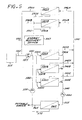
- a seawater feed tank 515 for storing seawater.
- the seawater may be drawn from the seawater feed tank by a first stage pump 525 connected thereto by a first pump inlet conduit 520.
- Seawater feed flows through the first stage pump which pressurizes and pumps the seawater feed for receipt by three first stage high performance nanofiltration membranes, namely, a first FSM 535A, a second FSM 535B, and a third FSM 535C in parallel flow relationship to each other via a first pump outlet conduit 530 formed with manifold outlets 530A, 530B, and 530C respectively to feed the FSMs.
- the first stage pump is selected to sufficiently pressurize and force the seawater feed through the FSM to produce a first permeate of lower salinity than the seawater feed.
- first permeate exit conduits emanating from their FSMs 535A, 535B, and 535C: first, second, and third first permeate exit conduits 540A, 540B, and 540C respectively.
- the three first permeate exit conduits join to form a consolidated first permeate exit conduit 540 which terminates into a second stage pump 550.
- First permeate is produced by each FSM, or from as many as desired, and exits the FSMs into the respective first permeate exit conduits at approximately atmospheric pressure to merge into the consolidated first permeate exit conduit.
- first rententate which exits the FSM through first retentate exit conduits 545A, 545B, and 545C connected respectively thereto and merge into a consolidated first retentate conduit 545 connected thereto.
- the seawater feed is thus fractionated by the FSMs into a first permeate having a salinity of lower than the seawater feed and into a first retentate the salinity of which is greater than the seawater feed.
- SSM nanofiltration membrane
- Connected to the SSM for receipt of the potable water is a potable water exit conduit 565.
- the first permeate is thus fractionated by the SSM into potable water and a second retentate, the salinity of the second retentate being greater than the salinity of the first permeate.
- the three FSMs of this embodiment produce sufficient first permeate to feed the SSM continuously and produce an uninterruptable supply of potable water.
- the first permeate may be collected in a first permeate feed tank (not shown) for withdrawal therefrom by the second stage pump to provide first permeate, as desired, to the SSM.
- the second retentate is introduced into the seawater feed for recycling through the FSMs 535A-C and the SSM 560 of the desalination system.
- the second retentate remains pressurized at between about 200 psi to about 300 psi and travels through the second retentate exit conduit 570 into a booster pump 575 connected thereto.
- the booster pump is selected to sufficiently pressurize and pump the second retentate to join the seawater feed in the first stage pump outlet conduit 530 through a booster pump outlet conduit 580 connected therebetween.
- the preferred volume of the second retentate is between 20% and 30% of the volume of the first permeate and is preferably about 7% to about 15% by volume of the seawater feed.
- Introduction of the second retentate into the pressurized seawater feed may be controlled by valving means, boost pump deactivation, or other control means known in the art.
- the second retentate may be added without boosted pressure to the first stage pump inlet conduit.
- Recycling of the second retentate provides advantageous energy savings since it only requires a pressure boost of about 200 psi to 350 psi, depending on its pressure exiting the SSM, to equal the preferred pressure of the pressurized seawater feed. Entry of fully pressurized second retentate into the pressurized seawater feed may displace the same volume of seawater feed that would otherwise require the energy necessary to pressurize it sufficiently from atmospheric. Additionally, should the second retentate be of lower salt concentration than the seawater feed, use of the second retentate for recycling will have a diluting effect thus likely prolonging use and extending maintenance periods of the membranes. The dilution effect also lowers the salt concentration of the pressurized seawater feed thereby providing for the lowering, if desired, of operating pressures and further energy savings.
- the first retentate is fractionated through a pair of high performance nanofiltration membranes to produce a dilute concentrate and a high concentrate, the dilute concentrate being of lower salinity than the first retentate and the seawater feed.
- the dilute concentrate may be introduced into the seawater feed to additionally dilute the seawater feed.
- Such dilution advantageously causes a reduced osmotic pressure in the FSMs and provides, if desired, for lowering the pressure of the pressurized seawater feed resulting in further energy savings.
- An additional advantage to introducing the dilute concentrate into the seawater feed is apparent when displacement of an equal portion of seawater feed with the dilute concentrate provides a higher yield of potable water from seawater.
- the first retentate maintains most, if not all, of the pressure from the first stage pump 525 upon exit from the FSMs 535A-C into the first retentate exit conduits 545A-C respectively, and into the consolidated first retentate conduit 545 connected thereto.
- the first retentate is split downstream by a pair of concentrate inlets 546A and 546B terminating respectively into a pair of concentrate stage high performance nanofiltration membranes (CSM) 585A and 585B connected thereto.
- CSM concentrate stage high performance nanofiltration membranes
- each of the CSMs is configured the same as the FSM and the SSM.
- the first retentate is fractionated by the CSMs into dilute concentrates, which exit the CSMs at approximately atmospheric pressure through dilute concentrate exit conduits 590A and 590B respectively connected thereto, and pressurized high concentrates which exit the CSMs through high concentrate exit conduits 595A and 595B respectively connected thereto.
- the dilute concentrate outlet is terminally connected to the first pump inlet conduit 520 for receipt of the dilute concentrate into the seawater feed. From the high concentrate outlet conduits the high concentrates are forwarded to the energy recovery device 547 via the consolidated energy recovery device inlet 595 connected therebetween.
- Performance of the present embodiment can be illustrated by way of the following example.
- Seawater at 35,000 mg/l salt is drawn from the seawater feed tank at the rate of about 12.9 gallons per minute and pressurized to about 530 psi via the first stage pump through the FSMs to yield a consolidated first permeate at approximately atmospheric pressure of about 7 gallons per minute at a concentration of about 4,200 mg/l or about 12% of the concentration of the seawater feed.
- the first permeate is then pressurized to about 300 psi and pumped via the second stage pump through the SSM to yield about 4.9 gallons per minute of potable water.
- the second retentate is produced at a rate of about 2.1 gallons per minute at a concentration of about 12,900 mg/l salt.
- the pressure of the second retentate is boosted preferably to between about 500psi to about 550psi and is introduced into the pressurized seawater feed.
- the first retentate is pumped into the CSMs at about 10.5 gallons per minute at a salinity of about 46,000 mg/l.
- a pair of CSMs were provided to sufficiently receive the first retentate being roughly 60% of the volume of the seawater feed introduced into the three FSMs.
- the CSMs operate to fractionate the first rententate into about 8 gallons per minute of high concentrate at about 56,000 mg/l salt and about 2.5 gallons per minute of dilute concentrate at about 14,000 mg/l salt. Except for minor head losses, the high concentrate maintains pressure from the first stage pump and may be depressurized by the energy recovery device for further energy savings.
- Yield of dilute concentrate can be expected to be between about 10% and about 30% of the volume of first retentate input to the CSMs. This yield is due in part to the increase in osmotic pressure due to the relatively higher concentration of the first retentate. By way of illustration, just to neutralize the osmotic pressure between the first retentate and the dilute concentrate requires at least about 330 psi.
- the dilute concentrate For introduction into the seawater feed the dilute concentrate should be of lower salt concentration than the seawater feed. Preferably, the dilute concentrate should be between 30% to 50% of the concentration of the seawater feed.
- added to the seawater feed of 12.9 gallons per minute is about 2.5 gallons per minute of dilute concentrate at about 14,000 mg/l salt and about 2.1 gallons of second retentate at about 12,900 mg/l salt yielding about 4.9 gallons of potable water per minute.
- the addition of the dilute concentrate and the second retentate lowers the concentration of the seawater feed to the FSMs and therefore lowers the osmotic pressure required to be overcome to produce the preferred first retentate.
- the salinity of the diluted seawater feed is 2.9% or 29,000 mg/l, about a 17% reduction in salinity from the undiluted seawater feed at 35,000 mg/l salt. Osmotic pressure at the FSMs is thus correspondingly reduced resulting, if desired, in substantially reduced operating pressure and further energy savings.
- a seawater desalination system comprising:
- the water contains no more than 1,000 mg/l total dissolved solids is of potable quality.
- the potable water produced is a volume of at least one fifth the amount of seawater feed received by the first stage membrane.
- the potable water is produced continuously.
- the second stage membrane also produces a second retentate and the system comprises:
- the present invention provides a seawater desalination system comprising:
- the water contains no more than 1,000 mg/l total dissolved solids is of potable quality.
- the present invention provides a seawater desalination system comprising:
- the desalination system includes an anti-scalant feed system connected between the filter and first stage pump to insert anti-scalant solution into the seawater feed for inhibiting scale build-up.
- the desalination system includes a recirculation conduit configured to recirculate seawater feed before it enters the first stage membrane.
- the desalination system includes a recirculation valve disposed in the recirculation conduit for controlling the flow of the seawater feed through the recirculation conduit.
- the present invention provides a seawater desalination system comprising:
- the present invention provides a method to desalinate seawater comprising:
- the water with no more than 1,000 mg/l total dissolved solids is of potable quality.
- the seawater feed is pressurized to between about 500 psi and about 550 psi.
- the potable water is produced in a volume of at least one fifth the amount of seawater feed received by the first stage membrane.
- the potable water is produced continuously.
- the second stage membrane also produces a second retentate and includes; selecting a booster pump configured to receive, sufficiently pressurize, and pump the second retentate to join the pressurized seawater feed; receiving, sufficiently pressurizing, and pumping the second retentate to join the pressurized seawater feed; and joining the second retentate to the pressurized seawater feed.
- the method includes an anti-scalant feed system having anti-scalant solution and configured for inserting the solution into the seawater feed and inserting the anti-scalant solution into the seawater feed.
- the method includes a seawater feed tank configured to receive and dispense seawater feed, a particulate filter to filter particulates from the seawater feed, the first stage pump configured to draw the seawater feed from the seawater feed tank through the particulate filter interposed therebetween and to draw, pressurize, and pump filtered seawater feed at a pressure between about 400 psi and about 600 psi, a recirculation conduit configured to recirculate seawater feed before it enters the first membrane, a recirculation valve disposed in the recirculation conduit for controlling the flow of the seawater feed through the recirculation conduit; and recirculating through the recirculation conduit the seawater feed.
- a seawater feed tank configured to receive and dispense seawater feed
- a particulate filter to filter particulates from the seawater feed
- the first stage pump configured to draw the seawater feed from the seawater feed tank through the particulate filter interposed therebetween and to draw, pressurize, and pump filtered seawater feed at a
- the recirculation conduit is configured to bleed off at least a portion of the recirculating seawater feed and the method includes bleeding off at least a portion of the seawater feed.
- the present invention provides a method to produce a continuous supply of potable water from seawater, including:
- the present invention provides a method to desalinate seawater comprising:
- the seawater feed is pressurized to between about 500 psi and about 550 psi.
- seawater desalination system comprising:
- the water contains no more than 1,000 mg/ is of potable quality.
- seawater desalination system comprising:
- the desalination system further comprises an energy recovery device configured to receive and depressurize the high concentrate.
- the dilute concentrate is of lower salinity than the seawater feed.
- the dilute concentrate has a salinity of between about 30% and about 50% of the seawater feed.
- the present invention provides a seawater desalination system comprising:
- the yield of potable water produced is at least 30% of the volume drawn from the seawater feed tank.
- the present invention provides a method to desalinate seawater, comprising:
- the method further includes providing a booster pump configured to receive, sufficiently pressurize, and pump the second retentate to join the pressurized seawater feed; pressurizing, and pumping the second retentate to join the seawater feed.
- a booster pump configured to receive, sufficiently pressurize, and pump the second retentate to join the pressurized seawater feed; pressurizing, and pumping the second retentate to join the seawater feed.
- the present invention provides a two-stage water desalination system for uninterrupted production of potable water from seawater comprising:
- the second elevated pressure is approximately one half of the first elevated pressure.
- the second retentate is mixed with the feedwater supplied by the first pressurizing system to dilute the salinity of said feedwater prior to being received by the first high performance nanofiltration unit.
- an osmotic pressure across the first high performance nanofiltration unit is approximately one third an osmotic pressure across the second high performance nanofiltration unit.
- the osmotic pressure across the first high performance nanofiltration unit is approximately 270 psi and the osmotic pressure across the second high performance nanofiltration unit is approximately 90 psi.
- the first elevated pressure is approximately twice the osmotic pressure across the first high performance nanofiltration unit.
- the potable water produced is a volume of at least twenty (20) percent of the volume of feedwater received by the first high performance nanofiltration unit.
- the two-stage water desalination system further comprises an energy recovery means cooperating with the first retentate to recovery energy through depressurization of the first retentate.
Landscapes
- Chemical & Material Sciences (AREA)
- Engineering & Computer Science (AREA)
- Nanotechnology (AREA)
- Water Supply & Treatment (AREA)
- Chemical Kinetics & Catalysis (AREA)
- Life Sciences & Earth Sciences (AREA)
- Hydrology & Water Resources (AREA)
- Environmental & Geological Engineering (AREA)
- Organic Chemistry (AREA)
- Separation Using Semi-Permeable Membranes (AREA)
Applications Claiming Priority (2)
| Application Number | Priority Date | Filing Date | Title |
|---|---|---|---|
| US10/137,072 US7144511B2 (en) | 2002-05-02 | 2002-05-02 | Two stage nanofiltration seawater desalination system |
| EP03728541A EP1499424B1 (de) | 2002-05-02 | 2003-04-25 | Nanofiltrations-meereswasserentsalzungsverfahren |
Related Parent Applications (1)
| Application Number | Title | Priority Date | Filing Date |
|---|---|---|---|
| EP03728541A Division EP1499424B1 (de) | 2002-05-02 | 2003-04-25 | Nanofiltrations-meereswasserentsalzungsverfahren |
Publications (1)
| Publication Number | Publication Date |
|---|---|
| EP1946820A1 true EP1946820A1 (de) | 2008-07-23 |
Family
ID=29269036
Family Applications (2)
| Application Number | Title | Priority Date | Filing Date |
|---|---|---|---|
| EP08004227A Withdrawn EP1946820A1 (de) | 2002-05-02 | 2003-04-25 | Zweistufiges Nanofiltrierungs-Seewasser-Entsalzungsssystem |
| EP03728541A Expired - Lifetime EP1499424B1 (de) | 2002-05-02 | 2003-04-25 | Nanofiltrations-meereswasserentsalzungsverfahren |
Family Applications After (1)
| Application Number | Title | Priority Date | Filing Date |
|---|---|---|---|
| EP03728541A Expired - Lifetime EP1499424B1 (de) | 2002-05-02 | 2003-04-25 | Nanofiltrations-meereswasserentsalzungsverfahren |
Country Status (7)
| Country | Link |
|---|---|
| US (2) | US7144511B2 (de) |
| EP (2) | EP1946820A1 (de) |
| JP (1) | JP4808399B2 (de) |
| AT (1) | ATE496683T1 (de) |
| AU (1) | AU2003234230B2 (de) |
| DE (1) | DE60335871D1 (de) |
| WO (1) | WO2003092870A1 (de) |
Families Citing this family (108)
| Publication number | Priority date | Publication date | Assignee | Title |
|---|---|---|---|---|
| US7128092B2 (en) * | 1999-08-31 | 2006-10-31 | Dct Double-Cone Technology Ag | Separating arrangement for treatment of fluids |
| US20030015470A1 (en) * | 2001-07-20 | 2003-01-23 | Muralidhara Harapanahalli S. | Nanofiltration water-softening apparatus and method |
| US7144511B2 (en) * | 2002-05-02 | 2006-12-05 | City Of Long Beach | Two stage nanofiltration seawater desalination system |
| AU2004212401B2 (en) * | 2003-02-14 | 2007-03-22 | Dainichiseika Color & Chemicals Mfg. Co., Ltd. | Method of desalting |
| US7097852B1 (en) * | 2003-05-09 | 2006-08-29 | Soto Jose A | Solution comprising sea water as expectorant and virucidal for the treatment of respiratory diseases and method to use and develop |
| US20060157409A1 (en) * | 2005-01-14 | 2006-07-20 | Saline Water Conversion Corporation (Swcc) | Optimal high recovery, energy efficient dual fully integrated nanofiltration seawater reverse osmosis desalination process and equipment |
| US20060157410A1 (en) * | 2005-01-14 | 2006-07-20 | Saline Water Conversion Corporation (Swcc) | Fully integrated NF-thermal seawater desalination process and equipment |
| CN101119930B (zh) * | 2005-02-18 | 2010-12-29 | 阿克佐诺贝尔股份有限公司 | 制备盐的方法 |
| PL1848661T3 (pl) * | 2005-02-18 | 2019-01-31 | Akzo Nobel Chemicals International B.V. | Sposób wytwarzania chloru lub chloranu sodu |
| TW200706499A (en) * | 2005-07-12 | 2007-02-16 | Cargill Inc | Extended-life water softening system, apparatus and method |
| US20070119782A1 (en) * | 2005-11-30 | 2007-05-31 | Rawson James Rulon Y | Method and system for controlling corrosivity of purified water |
| WO2007132477A1 (en) * | 2006-05-11 | 2007-11-22 | Raman Ahilan | A pretreatment process for the saline water feeds of desalination plants |
| US10252923B2 (en) | 2006-06-13 | 2019-04-09 | Evoqua Water Technologies Llc | Method and system for water treatment |
| US8114259B2 (en) | 2006-06-13 | 2012-02-14 | Siemens Industry, Inc. | Method and system for providing potable water |
| US8277627B2 (en) * | 2006-06-13 | 2012-10-02 | Siemens Industry, Inc. | Method and system for irrigation |
| US10213744B2 (en) | 2006-06-13 | 2019-02-26 | Evoqua Water Technologies Llc | Method and system for water treatment |
| US20080067069A1 (en) | 2006-06-22 | 2008-03-20 | Siemens Water Technologies Corp. | Low scale potential water treatment |
| US7820024B2 (en) | 2006-06-23 | 2010-10-26 | Siemens Water Technologies Corp. | Electrically-driven separation apparatus |
| US7744760B2 (en) | 2006-09-20 | 2010-06-29 | Siemens Water Technologies Corp. | Method and apparatus for desalination |
| DE102006044497B4 (de) * | 2006-09-21 | 2014-03-27 | Manfred Völker | Vorrichtung zur Wasseraufbereitung nach dem Prinzip der umgekehrten Osmose |
| US20080164206A1 (en) * | 2007-01-10 | 2008-07-10 | Southwest Turf Solutions, Inc. | Method and apparatus for removing minerals from a water source |
| US20080185045A1 (en) * | 2007-02-05 | 2008-08-07 | General Electric Company | Energy recovery apparatus and method |
| GB2447639B (en) * | 2007-03-01 | 2011-07-20 | Anthony Attenborough | Lead element flux control in the purification of water by reverse osmosis |
| US20080277341A1 (en) * | 2007-05-10 | 2008-11-13 | Nai-Jen Huang | Method for Making Reverse Osmosis Permeate Water and Mineral Water From Deep Seawater |
| US7901577B2 (en) * | 2007-05-11 | 2011-03-08 | Arup K. Sengupta | Brackish and sea water desalination using a hybrid ion exchange-nanofiltration process |
| US20140014578A1 (en) * | 2010-01-22 | 2014-01-16 | Rockwater Resource, LLC | Oscillatory crossflow membrane separation |
| US20100192575A1 (en) * | 2007-09-20 | 2010-08-05 | Abdulsalam Al-Mayahi | Process and systems |
| MX2010005876A (es) | 2007-11-30 | 2010-06-15 | Siemens Water Tech Corp | Sistemas y metodos para tratamiento de agua. |
| US7964050B2 (en) * | 2008-06-04 | 2011-06-21 | Barrday, Inc. | Method for processing a composite |
| WO2009156547A1 (es) * | 2008-06-26 | 2009-12-30 | Acciona Agua, S.A.U. | Procedimiento de desalinización y eliminación de boro del agua y equipo para llevar a cabo dicho procedimiento |
| US20120160753A1 (en) * | 2008-12-30 | 2012-06-28 | Nishith Vora | Water desalination plant and system for the production of pure water and salt |
| JP5549591B2 (ja) * | 2009-09-08 | 2014-07-16 | 東レ株式会社 | 淡水製造方法及び淡水製造装置 |
| MY167151A (en) * | 2009-11-02 | 2018-08-13 | Shell Int Research | Water injection systems and methods |
| US8695343B2 (en) * | 2009-12-04 | 2014-04-15 | General Electric Company | Economical and sustainable disposal of zero liquid discharge salt byproduct |
| WO2011097403A1 (en) | 2010-02-04 | 2011-08-11 | Dxv Water Technologies, Llc | Water treatment systems and methods |
| WO2012006362A2 (en) | 2010-07-06 | 2012-01-12 | MegaVessals, Inc. | Vessel desalination system and method |
| KR101200838B1 (ko) | 2010-07-14 | 2012-11-13 | 한국기계연구원 | 염도차를 이용한 삼투발전 및 해수의 담수화를 위한 장치 및 방법 |
| US20120061300A1 (en) * | 2010-09-15 | 2012-03-15 | Takeshi Matsushiro | Membrane filtration system |
| JP5762041B2 (ja) * | 2011-02-17 | 2015-08-12 | 株式会社日立製作所 | 複合淡水化システム |
| US9090491B2 (en) | 2011-09-02 | 2015-07-28 | Saline Water Desalination Research Institute | Removal of boron from saline water using alkalized NF membrane pretreatment |
| US20130056417A1 (en) * | 2011-09-02 | 2013-03-07 | Saline Water Desalination Research Institute | Removal of boron from saline water using alkalized nf membrane pretreatment |
| US9339765B2 (en) | 2011-09-16 | 2016-05-17 | General Electric Company | Electrodialysis method and apparatus for passivating scaling species |
| MY196266A (en) | 2011-12-29 | 2023-03-24 | Shell Int Research | Method and system for enhancing oil recovery (eor) by injecting treated water into an oil bearing formation |
| WO2013130312A1 (en) | 2012-03-02 | 2013-09-06 | Dow Global Technologies Llc | Multi-pass hyperfiltration system |
| WO2013158315A1 (en) * | 2012-04-18 | 2013-10-24 | Hydration Systems, Llc | Method for producing water for enhanced oil recovery |
| US20140054218A1 (en) * | 2012-08-22 | 2014-02-27 | Marcus D. Sprenkel | System to Reduce the Fouling of a Catalytic Seawater Deoxygenation Unit |
| FR2995541B1 (fr) * | 2012-09-20 | 2016-02-05 | Total Sa | Procede et dispositif de test sous-marin de systeme de filtration |
| SG10201707727UA (en) | 2012-12-21 | 2017-10-30 | Porifera Inc | Separation systems, elements, and methods for separation utilizing stacked membranes and spacers |
| US10500544B2 (en) * | 2013-03-15 | 2019-12-10 | Porifera, Inc. | Advancements in osmotically driven membrane systems including multi-stage purification |
| US20140290484A1 (en) * | 2013-03-27 | 2014-10-02 | Cameron Solutions, Inc. | System and Method For Treating A Saline Feed Stream To An Electro-Chlorination Unit |
| US20140299546A1 (en) * | 2013-04-04 | 2014-10-09 | Chemetics Inc. | Nanofiltration process for enhanced brine recovery and sulfate removal |
| US20140326666A1 (en) * | 2013-05-03 | 2014-11-06 | Hyssop Branch, Llc | Apparatus and methods for removing contaminants from wastewater |
| WO2015021062A1 (en) | 2013-08-05 | 2015-02-12 | Gradiant Corporation | Water treatment systems and associated methods |
| KR101389450B1 (ko) | 2013-08-08 | 2014-04-25 | 한국전력공사 | 담수화 장치 및 이를 이용한 담수화 방법 |
| US10308537B2 (en) | 2013-09-23 | 2019-06-04 | Gradiant Corporation | Desalination systems and associated methods |
| JP2015104710A (ja) * | 2013-12-02 | 2015-06-08 | 株式会社日立製作所 | 海水淡水化システム |
| WO2015138898A1 (en) * | 2014-03-13 | 2015-09-17 | General Electric Company | Reverse osmosis system for use with a wellbore and methods of assembling the same |
| SG10201808569UA (en) * | 2014-03-31 | 2018-11-29 | Univ Nanyang Tech | Apparatus and method for reverse osmosis |
| US10324070B2 (en) * | 2014-04-23 | 2019-06-18 | Chromatan Inc. | High efficiency continuous countercurrent tangential chromatography |
| US9725344B1 (en) | 2014-09-24 | 2017-08-08 | Dow Global Technologies Llc | Spiral wound filtration assembly including integral bioreactor |
| US10513446B2 (en) | 2014-10-10 | 2019-12-24 | EcoDesal, LLC | Depth exposed membrane for water extraction |
| US20160228795A1 (en) * | 2015-02-11 | 2016-08-11 | Gradiant Corporation | Methods and systems for producing treated brines |
| US10167218B2 (en) | 2015-02-11 | 2019-01-01 | Gradiant Corporation | Production of ultra-high-density brines |
| US10335737B2 (en) | 2015-04-16 | 2019-07-02 | Dow Global Technologies Llc | Filtration assembly including spiral wound bioreactors and membrane modules positioned in separate pressure vessels |
| CN107531526B (zh) | 2015-04-16 | 2021-04-06 | 陶氏环球技术有限责任公司 | 包含螺旋卷绕生物反应器和超滤膜模块的过滤总成 |
| US9868659B2 (en) * | 2015-04-17 | 2018-01-16 | General Electric Company | Subsurface water purification method |
| IL238644A (en) * | 2015-05-05 | 2016-03-31 | Technion Res & Dev Foundation | Removing water nitrates through nanofiltration and reverse osmosis filtration |
| US10179296B2 (en) | 2015-05-21 | 2019-01-15 | Gradiant Corporation | Transiently-operated desalination systems and associated methods |
| US9266748B1 (en) | 2015-05-21 | 2016-02-23 | Gradiant Corporation | Transiently-operated desalination systems with heat recovery and associated methods |
| WO2016210337A2 (en) | 2015-06-24 | 2016-12-29 | Porifera, Inc. | Methods of dewatering of alcoholic solutions via forward osmosis and related systems |
| AU2016298326B2 (en) | 2015-07-29 | 2022-08-04 | Gradiant Corporation | Osmotic desalination methods and associated systems |
| WO2017030937A1 (en) | 2015-08-14 | 2017-02-23 | Gradiant Corporation | Production of multivalent ion-rich process streams using multi-stage osmotic separation |
| WO2017030932A1 (en) | 2015-08-14 | 2017-02-23 | Gradiant Corporation | Selective retention of multivalent ions |
| CA2997911A1 (en) * | 2015-09-09 | 2017-03-16 | CHENG, XiaoLing | Desalination processes and fertilizer production methods |
| US20170080389A1 (en) | 2015-09-18 | 2017-03-23 | Maher Isaac Kelada | Symbiotic reverse osmosis for maximizing desalinated water recovery from saline waters and brines |
| US11312643B2 (en) | 2015-09-18 | 2022-04-26 | Maher Isaac Kelada | Ecologically sustainable hydraulic fracturing system and method |
| EP3368482A4 (de) | 2015-10-30 | 2019-07-03 | Dow Global Technologies, LLC | Membranbehandlung von ammoniakhaltigem abwasser |
| WO2017127607A1 (en) | 2016-01-22 | 2017-07-27 | Gradiant Corporation | Formation of solid salts using high gas flow velocities in humidifiers, such as multi-stage bubble column humidifiers |
| US10689264B2 (en) | 2016-02-22 | 2020-06-23 | Gradiant Corporation | Hybrid desalination systems and associated methods |
| US10166510B2 (en) | 2016-02-22 | 2019-01-01 | Massachusetts Institute Of Technology | Batch pressure-driven membrane separation with closed-flow loop and reservoir |
| EP3433212A1 (de) | 2016-03-23 | 2019-01-30 | Dow Global Technologies, LLC | Bioreaktoranordnung |
| US10684213B1 (en) * | 2016-04-20 | 2020-06-16 | The United States Of America, As Represented By The Secretary Of The Navy | Measurement of ion transport across a coating membrane |
| WO2017197159A1 (en) * | 2016-05-11 | 2017-11-16 | Pentair Filtration Solutions, Llc | Water ionization system and method |
| JP2018012069A (ja) * | 2016-07-21 | 2018-01-25 | 株式会社日立製作所 | 水処理システム |
| WO2018119139A1 (en) * | 2016-12-21 | 2018-06-28 | Tiffany Henry D Iii | Apparatus and method for potable water extraction from saline aquifers |
| WO2018119460A1 (en) | 2016-12-23 | 2018-06-28 | Porifera, Inc. | Removing components of alcoholic solutions via forward osmosis and related systems |
| US12180103B2 (en) | 2017-08-21 | 2024-12-31 | Evoqua Water Technologies Llc | Treatment of saline water for agricultural and potable use and for generation of disinfectant solution |
| AU2018321819B2 (en) | 2017-08-21 | 2024-04-04 | Evoqua Water Technologies Llc | Treatment of saline water for agricultural and potable use |
| CN107497300A (zh) * | 2017-10-20 | 2017-12-22 | 陕西省石油化工研究设计院 | 一种高浓盐水纳滤膜双向分离装置及方法 |
| WO2020041542A1 (en) | 2018-08-22 | 2020-02-27 | Gradiant Corporation | Liquid solution concentration system comprising isolated subsystem and related methods |
| JP7133429B2 (ja) * | 2018-10-19 | 2022-09-08 | 日東電工株式会社 | 水処理システム及び水処理方法 |
| CN109292913B (zh) * | 2018-10-23 | 2020-10-30 | 山东神邦环保科技有限公司 | 全膜法回收棉染残液中硫酸钠的方法 |
| US10947143B2 (en) | 2019-04-01 | 2021-03-16 | Saline Water Conversion Corporation | Desalination brine concentration system and method |
| US20200398223A1 (en) * | 2019-06-21 | 2020-12-24 | Saline Water Conversion Corporation | Remineralization System and Method |
| US20210053848A1 (en) | 2019-08-22 | 2021-02-25 | Saline Water Conversion Corporation | Multi-Valent Ion Concentration Using Multi-Stage Nanofiltration |
| EP4247522A4 (de) | 2020-11-17 | 2024-10-09 | Gradiant Corporation | Osmotische verfahren und systeme mit energierückgewinnung |
| US20240228352A1 (en) * | 2021-09-10 | 2024-07-11 | Evoqua Water Technologies Llc | Nanofiltration pretreatment of seawater for electrodialysis desalination |
| US11691906B1 (en) | 2021-11-04 | 2023-07-04 | XiaoLing Cheng | Stabilized electromagnetic base liquid, formation thereof and application to high-salt wastewater treatment |
| WO2023114030A2 (en) * | 2021-12-13 | 2023-06-22 | Fluid Equipment Development Company, Llc | A system for processing fluids |
| US11806668B2 (en) | 2021-12-14 | 2023-11-07 | Saline Water Conversion Corporation | Method and system for extraction of minerals based on divalent cations from brine |
| US20250050274A1 (en) * | 2021-12-14 | 2025-02-13 | Evove Ltd | Apparatus and process for monovalent ion extraction |
| US20230191330A1 (en) * | 2021-12-17 | 2023-06-22 | Saline Water Conversion Corporation | System and Method for Monovalent Ion Purification Using Multi-Pass Nanofiltration With Recirculation |
| US12410686B2 (en) | 2022-03-30 | 2025-09-09 | Saudi Arabian Oil Company | Monitoring scale inhibitor treatment |
| US12448307B2 (en) | 2022-04-13 | 2025-10-21 | Saudi Arabian Oil Company | Removal of sulfate from seawater |
| PE20250539A1 (es) * | 2022-07-22 | 2025-02-24 | High Bar Membrane Systems LLC | Metodo y sistema para conseguir altas concentraciones y recuperaciones de los sistemas de membrana utilizando bombas internas de aumento de presion y control de caudal |
| CN116789227A (zh) * | 2023-07-03 | 2023-09-22 | 淄博格瑞水处理工程有限公司 | 一种海水淡化系统及资源化系统 |
| WO2025129489A1 (en) | 2023-12-20 | 2025-06-26 | Ddp Specialty Electronic Materials Us, Llc | Lithium extraction method |
| ES3029835A1 (es) * | 2023-12-22 | 2025-06-25 | Acciona Agua S A | Sistema de desalacion de agua de doble etapa y alta conversion |
Citations (7)
| Publication number | Priority date | Publication date | Assignee | Title |
|---|---|---|---|---|
| US4156645A (en) | 1973-07-26 | 1979-05-29 | Desalination Systems Inc. | Conversion of sea water by reverse osmosis |
| US5458781A (en) | 1991-09-03 | 1995-10-17 | Ethyl Corporation | Bromide separation and concentration using semipermeable membranes |
| US5587083A (en) | 1995-04-17 | 1996-12-24 | Chemetics International Company Ltd. | Nanofiltration of concentrated aqueous salt solutions |
| WO1999016714A1 (en) * | 1997-10-01 | 1999-04-08 | Saline Water Conversion Corporation | Process for desalination of saline water, especially sea water, having increased product yield and quality |
| US6113797A (en) * | 1996-10-01 | 2000-09-05 | Al-Samadi; Riad A. | High water recovery membrane purification process |
| US6190556B1 (en) | 1998-10-12 | 2001-02-20 | Robert A. Uhlinger | Desalination method and apparatus utilizing nanofiltration and reverse osmosis membranes |
| GB2395946A (en) * | 2002-12-05 | 2004-06-09 | Thomas Altmann | Extracting sodium chloride from seawater, using nanofiltration |
Family Cites Families (51)
| Publication number | Priority date | Publication date | Assignee | Title |
|---|---|---|---|---|
| NL271831A (de) * | 1960-11-29 | |||
| US3457170A (en) | 1966-04-14 | 1969-07-22 | Havens Intern | Solvent separation process and apparatus |
| US3442389A (en) * | 1967-04-17 | 1969-05-06 | Morris Mendelson | Desalinization apparatus |
| US3608730A (en) * | 1969-10-02 | 1971-09-28 | Selas Corp Of America | Desalination apparatus |
| NL171535C (nl) * | 1977-10-27 | 1983-04-18 | Wafilin Bv | Inrichting voor membraanfiltratie. |
| JPS5531459A (en) | 1978-08-28 | 1980-03-05 | Futoshi Norimura | Sea water desalination apparatus of two-stage permeation system |
| DE3105550C2 (de) * | 1981-02-16 | 1983-10-20 | Hager & Elsässer GmbH, 7000 Stuttgart | Verfahren zur weitestgehenden Aufbereitung von Süßwasser, Brackwasser, Meerwasser und Abwasser zu Trink- und Brauchwasserzwecken |
| JPS61200813A (ja) | 1985-03-01 | 1986-09-05 | Kurita Water Ind Ltd | 膜分離装置 |
| US4981594A (en) * | 1990-04-26 | 1991-01-01 | Wastewater Resources Inc. | Waste water purification system |
| US5238574A (en) * | 1990-06-25 | 1993-08-24 | Kawasaki Jukogyo Kabushiki Kaisha | Method and apparatus having reverse osmosis membrane for concentrating solution |
| JPH0822434B2 (ja) * | 1990-06-25 | 1996-03-06 | 川崎重工業株式会社 | 含塩分水の処理方法及び装置 |
| US5266203A (en) * | 1992-01-30 | 1993-11-30 | Arrowhead Industrial Water, Inc. | Method for treating process streams containing cyanide and heavy metals |
| JPH05269463A (ja) * | 1992-03-24 | 1993-10-19 | Kurita Water Ind Ltd | 膜分離装置 |
| SE505028C2 (sv) * | 1992-05-13 | 1997-06-16 | Electrolux Ab | Förfarande och anordning för rening av vatten |
| WO1994012268A1 (en) * | 1992-11-27 | 1994-06-09 | Napro Biotherapeutics, Inc. | Processing taxane solutes using membranes |
| US5616249A (en) * | 1993-05-20 | 1997-04-01 | Ionics, Incorporated | Nanofiltration apparatus and processes |
| US5310486A (en) * | 1993-05-25 | 1994-05-10 | Harrison Western Environmental Services, Inc. | Multi-stage water treatment system and method for operating the same |
| US6110375A (en) * | 1994-01-11 | 2000-08-29 | Millipore Corporation | Process for purifying water |
| US5520816A (en) * | 1994-08-18 | 1996-05-28 | Kuepper; Theodore A. | Zero waste effluent desalination system |
| JPH08108048A (ja) * | 1994-10-12 | 1996-04-30 | Toray Ind Inc | 逆浸透分離装置及び逆浸透分離方法 |
| JP3593765B2 (ja) * | 1994-12-02 | 2004-11-24 | 東レ株式会社 | 海水の逆浸透膜分離装置および分離方法 |
| US5614099A (en) * | 1994-12-22 | 1997-03-25 | Nitto Denko Corporation | Highly permeable composite reverse osmosis membrane, method of producing the same, and method of using the same |
| US5635071A (en) * | 1995-01-20 | 1997-06-03 | Zenon Airport Enviromental, Inc. | Recovery of carboxylic acids from chemical plant effluents |
| KR970703805A (ko) * | 1995-05-01 | 1997-08-09 | 유니온 카바이드 케미칼즈 앤드 플라스틱스 테크놀러지 코포레이션 | 막 분리방법(Membrane Separation) |
| US5766479A (en) * | 1995-08-07 | 1998-06-16 | Zenon Environmental Inc. | Production of high purity water using reverse osmosis |
| US5670053A (en) * | 1995-08-07 | 1997-09-23 | Zenon Environmental, Inc. | Purification of gases from water using reverse osmosis |
| JP2920200B2 (ja) * | 1995-11-20 | 1999-07-19 | 工業技術院長 | 海水の淡水化方法 |
| US6171497B1 (en) * | 1996-01-24 | 2001-01-09 | Nitto Denko Corporation | Highly permeable composite reverse osmosis membrane |
| CA2197525A1 (en) * | 1996-02-14 | 1997-08-15 | Mahabala R. Adiga | Plating waste water treatment and metals recovery method |
| EP0888810B1 (de) * | 1996-03-18 | 2006-06-21 | Nitto Denko Corporation | Verbundmembran fur umkehrosmose und methode zur wasserbehandlung mit umkehrosmose mit hilfe derselben |
| US5853593A (en) * | 1996-05-07 | 1998-12-29 | Eaton Corporation | Filtration method for metal working waste water |
| US6537456B2 (en) * | 1996-08-12 | 2003-03-25 | Debasish Mukhopadhyay | Method and apparatus for high efficiency reverse osmosis operation |
| JP3491122B2 (ja) * | 1997-04-18 | 2004-01-26 | 日立造船株式会社 | 浄水処理装置 |
| US5997745A (en) * | 1998-04-08 | 1999-12-07 | Zenon Environmental Inc. | Method for producing high purity water using triple pass reverse osmosis (TPRO) |
| JPH11165192A (ja) * | 1997-12-08 | 1999-06-22 | Asahi Chem Ind Co Ltd | 下水、排水の高度処理方法 |
| US6132618A (en) * | 1998-04-16 | 2000-10-17 | Pq Corporation | System and method for waking a computer having a plurality of power resources from a system state using a data structure |
| JP2000015257A (ja) * | 1998-07-06 | 2000-01-18 | Kurita Water Ind Ltd | 高純度水の製造装置および方法 |
| ES2229664T3 (es) * | 1999-01-14 | 2005-04-16 | Toray Industries, Inc. | Membrana semipermeable composite, procedimiento de produccion de esta, y procedimiento de purificacion de agua con la misma. |
| JP2000288368A (ja) * | 1999-04-06 | 2000-10-17 | Nitto Denko Corp | 複合逆浸透膜 |
| US6464873B1 (en) * | 1999-06-15 | 2002-10-15 | Hydranautics | Interfacially polymerized, bipiperidine-polyamide membranes for reverse osmosis and/or nanofiltration and process for making the same |
| JP2001047045A (ja) * | 1999-08-17 | 2001-02-20 | Japan Organo Co Ltd | 逆浸透膜方式淡水化装置 |
| US6783682B1 (en) * | 1999-08-20 | 2004-08-31 | L.E.T., Leading Edge Technologies Limited | Salt water desalination process using ion selective membranes |
| WO2001016493A1 (en) | 1999-08-31 | 2001-03-08 | Dct Double-Cone Technology Ag | Double cone for generation of a pressure difference |
| IT1316324B1 (it) * | 2000-02-02 | 2003-04-10 | Schenker Italia S R L | Apparecchiatura per la desalinizzazione dell'acqua per osmosi inversacon recupero di energia |
| US6946081B2 (en) * | 2001-12-31 | 2005-09-20 | Poseidon Resources Corporation | Desalination system |
| JP2003245666A (ja) * | 2002-02-25 | 2003-09-02 | Kobe Steel Ltd | 海水の処理法 |
| US7144511B2 (en) * | 2002-05-02 | 2006-12-05 | City Of Long Beach | Two stage nanofiltration seawater desalination system |
| JP2004243262A (ja) * | 2003-02-17 | 2004-09-02 | Toray Ind Inc | 液体の製造方法および製造装置 |
| AU2003294774A1 (en) * | 2003-12-03 | 2005-06-24 | Fresenius Kabi Austria Gmbh | Nanofiltration of dipeptides |
| JP2006021106A (ja) * | 2004-07-07 | 2006-01-26 | Saline Water Conversion Corp | 新規な完全総合nf熱式海水脱塩法及び装置 |
| EP1614661A1 (de) * | 2004-07-09 | 2006-01-11 | Saline Water Conversion Corporation, Riyadh - Olia | Optimiertes, energieeffizientes Verfahren hoher Ausbeute zur dualen, vollintegrierten Nanofiltration / Umkehrosmose für die Entsalzung von Seewasser und zugehörige Vorrichtung |
-
2002
- 2002-05-02 US US10/137,072 patent/US7144511B2/en not_active Expired - Fee Related
-
2003
- 2003-04-25 WO PCT/US2003/012882 patent/WO2003092870A1/en not_active Ceased
- 2003-04-25 AT AT03728541T patent/ATE496683T1/de not_active IP Right Cessation
- 2003-04-25 EP EP08004227A patent/EP1946820A1/de not_active Withdrawn
- 2003-04-25 AU AU2003234230A patent/AU2003234230B2/en not_active Ceased
- 2003-04-25 JP JP2004501047A patent/JP4808399B2/ja not_active Expired - Fee Related
- 2003-04-25 EP EP03728541A patent/EP1499424B1/de not_active Expired - Lifetime
- 2003-04-25 DE DE60335871T patent/DE60335871D1/de not_active Expired - Lifetime
-
2006
- 2006-12-01 US US11/607,158 patent/US8366924B2/en not_active Expired - Fee Related
Patent Citations (7)
| Publication number | Priority date | Publication date | Assignee | Title |
|---|---|---|---|---|
| US4156645A (en) | 1973-07-26 | 1979-05-29 | Desalination Systems Inc. | Conversion of sea water by reverse osmosis |
| US5458781A (en) | 1991-09-03 | 1995-10-17 | Ethyl Corporation | Bromide separation and concentration using semipermeable membranes |
| US5587083A (en) | 1995-04-17 | 1996-12-24 | Chemetics International Company Ltd. | Nanofiltration of concentrated aqueous salt solutions |
| US6113797A (en) * | 1996-10-01 | 2000-09-05 | Al-Samadi; Riad A. | High water recovery membrane purification process |
| WO1999016714A1 (en) * | 1997-10-01 | 1999-04-08 | Saline Water Conversion Corporation | Process for desalination of saline water, especially sea water, having increased product yield and quality |
| US6190556B1 (en) | 1998-10-12 | 2001-02-20 | Robert A. Uhlinger | Desalination method and apparatus utilizing nanofiltration and reverse osmosis membranes |
| GB2395946A (en) * | 2002-12-05 | 2004-06-09 | Thomas Altmann | Extracting sodium chloride from seawater, using nanofiltration |
Non-Patent Citations (1)
| Title |
|---|
| MAVROV V ET AL: "Reduction of water consumption and wastewater quantities in the food industry by water recycling using membrane processes", DESALINATION, ELSEVIER, AMSTERDAM, NL, vol. 131, no. 1-3, 20 December 2000 (2000-12-20), pages 75 - 86, XP004306340, ISSN: 0011-9164 * |
Also Published As
| Publication number | Publication date |
|---|---|
| US20030205526A1 (en) | 2003-11-06 |
| EP1499424A4 (de) | 2005-12-21 |
| US7144511B2 (en) | 2006-12-05 |
| US20070080113A1 (en) | 2007-04-12 |
| JP4808399B2 (ja) | 2011-11-02 |
| AU2003234230B2 (en) | 2006-09-21 |
| AU2003234230A1 (en) | 2003-11-17 |
| EP1499424A1 (de) | 2005-01-26 |
| ATE496683T1 (de) | 2011-02-15 |
| US8366924B2 (en) | 2013-02-05 |
| DE60335871D1 (de) | 2011-03-10 |
| EP1499424B1 (de) | 2011-01-26 |
| WO2003092870A1 (en) | 2003-11-13 |
| JP2005524520A (ja) | 2005-08-18 |
Similar Documents
| Publication | Publication Date | Title |
|---|---|---|
| EP1499424B1 (de) | Nanofiltrations-meereswasserentsalzungsverfahren | |
| US7368058B2 (en) | Method of generating fresh water and fresh-water generator | |
| US6190556B1 (en) | Desalination method and apparatus utilizing nanofiltration and reverse osmosis membranes | |
| CA2812967C (en) | Method and apparatus for dynamic, variable-pressure, customizable, membrane-based water treatment for use in improved hydrocarbon recovery operations | |
| US20060157409A1 (en) | Optimal high recovery, energy efficient dual fully integrated nanofiltration seawater reverse osmosis desalination process and equipment | |
| US20060157410A1 (en) | Fully integrated NF-thermal seawater desalination process and equipment | |
| JP2000167358A (ja) | 膜分離システムおよび膜分離方法 | |
| JP2008100220A (ja) | 造水方法 | |
| JP2003521361A (ja) | 逆浸透用の大型チューブアセンブリ | |
| Pontié et al. | Seawater nanofiltration (NF): fiction or reality? | |
| EP1614661A1 (de) | Optimiertes, energieeffizientes Verfahren hoher Ausbeute zur dualen, vollintegrierten Nanofiltration / Umkehrosmose für die Entsalzung von Seewasser und zugehörige Vorrichtung | |
| JP2002085941A (ja) | 造水方法および造水装置 | |
| AU2006252216B2 (en) | Two stage nanofiltration seawater desalination system | |
| KR101489853B1 (ko) | 초고염도수의 삼투 에너지 회수가 가능한 담수화 시스템 및 방법 | |
| CN110573460A (zh) | 用于供应低盐浓度注射水的过程和系统 | |
| US20250367605A1 (en) | Saline water treatment pre-treatment or treatment system | |
| US20240316498A1 (en) | Systems and methods providing for reducing energy and equipment required in progressive nanofiltration concentration | |
| WO2022059737A1 (ja) | 海水淡水化システム | |
| HK1065994B (en) | Water processing method and apparatus | |
| EA039982B1 (ru) | Способ и система для получения слабоминерализованной нагнетаемой воды | |
| AU2006236026A1 (en) | Fresh water from seawater |
Legal Events
| Date | Code | Title | Description |
|---|---|---|---|
| PUAI | Public reference made under article 153(3) epc to a published international application that has entered the european phase |
Free format text: ORIGINAL CODE: 0009012 |
|
| 17P | Request for examination filed |
Effective date: 20080313 |
|
| AC | Divisional application: reference to earlier application |
Ref document number: 1499424 Country of ref document: EP Kind code of ref document: P |
|
| AK | Designated contracting states |
Kind code of ref document: A1 Designated state(s): AT BE BG CH CY CZ DE DK EE ES FI FR GB GR HU IE IT LI LU MC NL PT RO SE SI SK TR |
|
| 17Q | First examination report despatched |
Effective date: 20090212 |
|
| AKX | Designation fees paid |
Designated state(s): AT BE BG CH CY CZ DE DK EE ES FI FR GB GR HU IE IT LI LU MC NL PT RO SE SI SK TR |
|
| GRAP | Despatch of communication of intention to grant a patent |
Free format text: ORIGINAL CODE: EPIDOSNIGR1 |
|
| STAA | Information on the status of an ep patent application or granted ep patent |
Free format text: STATUS: THE APPLICATION IS DEEMED TO BE WITHDRAWN |
|
| 18D | Application deemed to be withdrawn |
Effective date: 20120424 |