EP1964873A1 - Polypropylen-Filme mit verbesserten optischen Eigenschaften - Google Patents
Polypropylen-Filme mit verbesserten optischen Eigenschaften Download PDFInfo
- Publication number
- EP1964873A1 EP1964873A1 EP07102768A EP07102768A EP1964873A1 EP 1964873 A1 EP1964873 A1 EP 1964873A1 EP 07102768 A EP07102768 A EP 07102768A EP 07102768 A EP07102768 A EP 07102768A EP 1964873 A1 EP1964873 A1 EP 1964873A1
- Authority
- EP
- European Patent Office
- Prior art keywords
- polypropylene
- porous inorganic
- inorganic compound
- film
- polypropylene composition
- Prior art date
- Legal status (The legal status is an assumption and is not a legal conclusion. Google has not performed a legal analysis and makes no representation as to the accuracy of the status listed.)
- Withdrawn
Links
- 229920001155 polypropylene Polymers 0.000 title claims abstract description 84
- -1 Polypropylene Polymers 0.000 title claims abstract description 83
- 239000004743 Polypropylene Substances 0.000 title claims abstract description 83
- 230000003287 optical effect Effects 0.000 title abstract description 8
- 239000003795 chemical substances by application Substances 0.000 claims abstract description 33
- 239000011148 porous material Substances 0.000 claims description 41
- 150000002484 inorganic compounds Chemical class 0.000 claims description 39
- 229910010272 inorganic material Inorganic materials 0.000 claims description 39
- 239000000203 mixture Substances 0.000 claims description 39
- VYPSYNLAJGMNEJ-UHFFFAOYSA-N Silicium dioxide Chemical compound O=[Si]=O VYPSYNLAJGMNEJ-UHFFFAOYSA-N 0.000 claims description 12
- QQONPFPTGQHPMA-UHFFFAOYSA-N propylene Natural products CC=C QQONPFPTGQHPMA-UHFFFAOYSA-N 0.000 claims description 8
- 229920001577 copolymer Polymers 0.000 claims description 5
- HNPSIPDUKPIQMN-UHFFFAOYSA-N dioxosilane;oxo(oxoalumanyloxy)alumane Chemical class O=[Si]=O.O=[Al]O[Al]=O HNPSIPDUKPIQMN-UHFFFAOYSA-N 0.000 claims description 4
- 239000000377 silicon dioxide Substances 0.000 claims description 4
- 229910002029 synthetic silica gel Inorganic materials 0.000 claims description 4
- IDZYHGDLWGVHQM-UHFFFAOYSA-N aluminum;calcium;sodium;silicate Chemical compound [Na+].[Al+3].[Ca+2].[O-][Si]([O-])([O-])[O-] IDZYHGDLWGVHQM-UHFFFAOYSA-N 0.000 claims description 3
- 229920001384 propylene homopolymer Polymers 0.000 claims description 2
- 230000000694 effects Effects 0.000 description 21
- 229920000642 polymer Polymers 0.000 description 16
- VGGSQFUCUMXWEO-UHFFFAOYSA-N Ethene Chemical compound C=C VGGSQFUCUMXWEO-UHFFFAOYSA-N 0.000 description 8
- 239000005977 Ethylene Substances 0.000 description 8
- 230000003993 interaction Effects 0.000 description 6
- 238000005259 measurement Methods 0.000 description 5
- 125000004805 propylene group Chemical group [H]C([H])([H])C([H])([*:1])C([H])([H])[*:2] 0.000 description 5
- IJGRMHOSHXDMSA-UHFFFAOYSA-N Atomic nitrogen Chemical compound N#N IJGRMHOSHXDMSA-UHFFFAOYSA-N 0.000 description 4
- 239000010954 inorganic particle Substances 0.000 description 4
- RKISUIUJZGSLEV-UHFFFAOYSA-N n-[2-(octadecanoylamino)ethyl]octadecanamide Chemical compound CCCCCCCCCCCCCCCCCC(=O)NCCNC(=O)CCCCCCCCCCCCCCCCC RKISUIUJZGSLEV-UHFFFAOYSA-N 0.000 description 4
- 230000035515 penetration Effects 0.000 description 4
- 229920005604 random copolymer Polymers 0.000 description 4
- 239000012748 slip agent Substances 0.000 description 4
- 238000012360 testing method Methods 0.000 description 4
- UAUDZVJPLUQNMU-KTKRTIGZSA-N erucamide Chemical compound CCCCCCCC\C=C/CCCCCCCCCCCC(N)=O UAUDZVJPLUQNMU-KTKRTIGZSA-N 0.000 description 3
- 239000002245 particle Substances 0.000 description 3
- VXNZUUAINFGPBY-UHFFFAOYSA-N 1-Butene Chemical compound CCC=C VXNZUUAINFGPBY-UHFFFAOYSA-N 0.000 description 2
- 238000005033 Fourier transform infrared spectroscopy Methods 0.000 description 2
- 229920006378 biaxially oriented polypropylene Polymers 0.000 description 2
- 239000011127 biaxially oriented polypropylene Substances 0.000 description 2
- 239000003054 catalyst Substances 0.000 description 2
- 150000001875 compounds Chemical class 0.000 description 2
- 239000000155 melt Substances 0.000 description 2
- 229910052757 nitrogen Inorganic materials 0.000 description 2
- 238000012545 processing Methods 0.000 description 2
- 238000001374 small-angle light scattering Methods 0.000 description 2
- 238000001179 sorption measurement Methods 0.000 description 2
- 239000004711 α-olefin Substances 0.000 description 2
- 238000001644 13C nuclear magnetic resonance spectroscopy Methods 0.000 description 1
- CTQNGGLPUBDAKN-UHFFFAOYSA-N O-Xylene Chemical compound CC1=CC=CC=C1C CTQNGGLPUBDAKN-UHFFFAOYSA-N 0.000 description 1
- 239000004793 Polystyrene Substances 0.000 description 1
- 229910021536 Zeolite Inorganic materials 0.000 description 1
- 239000000654 additive Substances 0.000 description 1
- 230000005540 biological transmission Effects 0.000 description 1
- 238000009530 blood pressure measurement Methods 0.000 description 1
- 238000002425 crystallisation Methods 0.000 description 1
- 238000011161 development Methods 0.000 description 1
- 235000014113 dietary fatty acids Nutrition 0.000 description 1
- 238000002845 discoloration Methods 0.000 description 1
- 230000007717 exclusion Effects 0.000 description 1
- 238000001125 extrusion Methods 0.000 description 1
- 239000000194 fatty acid Substances 0.000 description 1
- 229930195729 fatty acid Natural products 0.000 description 1
- 150000004665 fatty acids Chemical class 0.000 description 1
- 239000001307 helium Substances 0.000 description 1
- 229910052734 helium Inorganic materials 0.000 description 1
- SWQJXJOGLNCZEY-UHFFFAOYSA-N helium atom Chemical compound [He] SWQJXJOGLNCZEY-UHFFFAOYSA-N 0.000 description 1
- 229920001519 homopolymer Polymers 0.000 description 1
- 230000001788 irregular Effects 0.000 description 1
- 239000007788 liquid Substances 0.000 description 1
- 238000004519 manufacturing process Methods 0.000 description 1
- 238000000691 measurement method Methods 0.000 description 1
- 238000000034 method Methods 0.000 description 1
- 238000002429 nitrogen sorption measurement Methods 0.000 description 1
- FATBGEAMYMYZAF-KTKRTIGZSA-N oleamide Chemical compound CCCCCCCC\C=C/CCCCCCCC(N)=O FATBGEAMYMYZAF-KTKRTIGZSA-N 0.000 description 1
- 150000002894 organic compounds Chemical class 0.000 description 1
- 238000010525 oxidative degradation reaction Methods 0.000 description 1
- 229920006280 packaging film Polymers 0.000 description 1
- 239000012785 packaging film Substances 0.000 description 1
- 238000004375 physisorption Methods 0.000 description 1
- 229920002223 polystyrene Polymers 0.000 description 1
- 229920005653 propylene-ethylene copolymer Polymers 0.000 description 1
- 239000000779 smoke Substances 0.000 description 1
- 239000002904 solvent Substances 0.000 description 1
- 238000001228 spectrum Methods 0.000 description 1
- 230000003746 surface roughness Effects 0.000 description 1
- 238000011179 visual inspection Methods 0.000 description 1
- 239000003643 water by type Substances 0.000 description 1
- 239000008096 xylene Substances 0.000 description 1
- 239000010457 zeolite Substances 0.000 description 1
Images
Classifications
-
- C—CHEMISTRY; METALLURGY
- C08—ORGANIC MACROMOLECULAR COMPOUNDS; THEIR PREPARATION OR CHEMICAL WORKING-UP; COMPOSITIONS BASED THEREON
- C08J—WORKING-UP; GENERAL PROCESSES OF COMPOUNDING; AFTER-TREATMENT NOT COVERED BY SUBCLASSES C08B, C08C, C08F, C08G or C08H
- C08J5/00—Manufacture of articles or shaped materials containing macromolecular substances
- C08J5/04—Reinforcing macromolecular compounds with loose or coherent fibrous material
- C08J5/10—Reinforcing macromolecular compounds with loose or coherent fibrous material characterised by the additives used in the polymer mixture
-
- C—CHEMISTRY; METALLURGY
- C08—ORGANIC MACROMOLECULAR COMPOUNDS; THEIR PREPARATION OR CHEMICAL WORKING-UP; COMPOSITIONS BASED THEREON
- C08J—WORKING-UP; GENERAL PROCESSES OF COMPOUNDING; AFTER-TREATMENT NOT COVERED BY SUBCLASSES C08B, C08C, C08F, C08G or C08H
- C08J2323/00—Characterised by the use of homopolymers or copolymers of unsaturated aliphatic hydrocarbons having only one carbon-to-carbon double bond; Derivatives of such polymers
- C08J2323/02—Characterised by the use of homopolymers or copolymers of unsaturated aliphatic hydrocarbons having only one carbon-to-carbon double bond; Derivatives of such polymers not modified by chemical after treatment
- C08J2323/10—Homopolymers or copolymers of propene
Definitions
- the invention relates to polypropylene films having improved optical properties, in particular a reduced orange peel.
- polypropylene films For many applications, e.g. packaging films, polypropylene films must have excellent optical properties. The best properties regarding e.g. clarity would be achieved with polypropylene films containing no slip agents and containing no antiblocking agents, because both kinds of additives increase surface roughness. However, for practical purposes and due to processing requirements, polypropylene films very often must contain slip agent as well as antiblocking agent. Antiblocking agents, however, contribute to the so called “orange peel effect", which is an irregular structure within the film, which causes small angle light scattering. "Clarity”, which is also called far distance transparency, is influenced by small angle light scattering. When light is scattered upon transmission through a more or less transparent medium, two different effects may occur:
- a special feature for distinguishing between small and wide angle scattering is the dependency of the focus of an image upon the observation distance.
- the object appears increasingly blurred with increasing distance.
- Antiblocking agents are divided into organic and inorganic antiblocking agents.
- organic antiblocking agents e.g. EBS (ethylene-bis-stearamide)
- EBS ethylene-bis-stearamide
- Films containing organic antiblocking agents do also not show the desired level in mechanic properties, e.g. impact strength.
- Organic antiblocking agents are also susceptible to oxidative degradation (discoloration, odour) and they can cause die lip deposits and smoke development upon extrusion.
- the WO03/95533 discloses polypropylene cast film having little orange peel.
- the composition for the cast film comprises at least two polypropylene components, with specific high and low propylene contents, specific viscosities and xylene solubles. Such films have however only a very limited application spectrum.
- the WO03/95533 does also not disclose how a low level of orange peel can be achieved by other means than a very specific polypropylene composition.
- the aforementioned object is achieved by the use of a polypropylene composition containing a porous inorganic compound for producing polypropylene film having an improved orange peel property, where the polypropylene composition contains a polypropylene with an MFR of 3 - 22 g/10 min (230 °C/2.16 kg), a polydispersity (M w /M n ) ⁇ 7, an XCS content of ⁇ 25 wt% and which polypropylene composition contains an antiblocking agent, the antiblocking agent being the porous inorganic compound, where, when the average pore diameter of the porous inorganic compound is between 15 nm and 6 nm, the pore volume is ⁇ 0.80 cm 3 /g and where a polypropylene cast film produced from the polypropylene composition and having a thickness of 50 ⁇ m has an improved orange peel property, which is measured as clarity (50 ⁇ m/4L) according to ASTM D 1003-00 on 4 stacked layers of the cast film, compared to a poly
- porous inorganic compounds are simultaneously used for achieving the antiblocking effect as well as for reducing the orange peel effect. It was surprisingly observed, that certain porous inorganic compounds which have an antiblocking effect and which have the properties as described above, i.e. the required combination of pore volume and average pore diameter, can be used for producing polypropylene films with no or very little orange peel effect. The contribution of the orange peel property of such films to clarity is therefore almost zero or very small, resulting in films having excellent clarity.
- the orange peel effect can e.g. be observed by visual inspection of a polypropylene film, by trying to focus through the film at e.g. a picture on a distant wall, e.g. a wall being more than 5 m from the observer.
- a film which exhibits a pronounced orange peel effect will not easily allow to focus on the picture on the distant wall.
- the picture will appear blurred.
- the orange peel effect is also easily observable as irregularities in the film and its surface.
- the orange peel property is measured as clarity (50 ⁇ m/4L) according to ASTM D 1003-00, which means that 4 layers of a cast film, having a thickness of 50 ⁇ m each are stacked and clarity is measured on that 4-layered stack.
- the polypropylene which is used according to the present invention has an MFR of 3 - 22 g/10 min (230 °C/2.16 kg), preferably 3 - 19 g/10 min (230 °C/2.16 kg), more preferably 3 - 17 g/10 min (230 °C/2.16 kg), still more preferably 4 - 15 g/10 min (230 °C/2.16 kg), most preferably 5 - 12 g/10 min (230 °C/2.16 kg).
- Films which are produced with polypropylene compositions containing polypropylene which is outside of this range, even if the composition contains porous inorganic compounds as they are used according to the present invention, are not satisfactory, because of insufficient optical or mechanical properties or insufficient processability.
- the polypropylene which is used according to the invention has a polydispersity (M w /M n ) ⁇ 7, preferably ⁇ 6, more preferably ⁇ 5, still more preferably 2 - 5, most preferably 2.5 - 5.
- the polypropylene which is used according to the invention has a XCS content ⁇ 25 wt%, preferably ⁇ 20 wt%, more preferably ⁇ 15, still more preferably 1 - 12 wt%, most preferably 2 - 10 wt%.
- Films which are produced with polypropylene compositions containing polypropylene which is outside of this range, even if the composition contains porous inorganic compounds as they are used according to the present invention, are not satisfactory, because of insufficient optical or mechanical properties.
- the polypropylene composition which is used in accordance with the present invention to produce films usually contains slip agent, preferably in an amount of 0.01 to 2 wt%, more preferably of 0.03 to 1.5 wt% still more preferably of 0.05 to 1.0 wt%, most preferably of 0.05 to 0.5 wt%.
- the used slip agents usually are organic compounds, preferably fatty acid amides, such as erucic acid amide and/or oleic acid amide.
- Film produced in accordance with the present invention by using a polypropylene composition containing a porous inorganic compound according to the invention has a clarity (50 ⁇ m/4L) of ⁇ 88 %, preferably ⁇ 89 %, more preferably ⁇ 90 %, still more preferably ⁇ 91 %, most preferably ⁇ 92 %.
- the used porous inorganic compound has a pore volume of ⁇ 0.80 cm 3 /g, preferably ⁇ 0.50 cm 3 /g, more preferably ⁇ 0.30 cm 3 /g, still more preferably ⁇ 0.10 cm 3 /g, most preferably ⁇ 0.05 cm 3 /g.
- such porous inorganic compounds are used, having an average pore diameter ⁇ 6 nm or > 15 nm, which have a pore volume of ⁇ 1.30 cm 3 /g, more preferably of ⁇ 1.40 cm 3 /g, still more preferably of ⁇ 1.50 cm 3 /g, most preferably of ⁇ 1.60 cm 3 /g.
- Porous inorganic compounds causing little or no orange peel effect, irrespective of the pore volume have an average pore diameter of > 15 nm, preferably of > 17 nm, more preferably of > 19 nm, still more preferably of > 20 nm.
- Porous inorganic compounds which also cause no or only little orange peel effect, irrespective of the pore volume, have an average pore diameter of ⁇ 6 nm, preferably of ⁇ 4 nm, more preferably of ⁇ 3 nm, still more preferably of ⁇ 2 nm.
- the porous inorganic compounds which reduce the orange peel effect are simultaneously used as antiblocking agents. Therefore, they are preferably used in a concentration of from 0.01 to 2.0 wt%, preferably of 0.05 to 1.0 wt%, still more preferably of 0.05 to 0.5 wt% based on the weight of the polypropylene composition.
- the type of polypropylene is not restricted to a specific one. Homopolymers or copolymers of propene can be used. In case a copolymer is used, the comonomer content, however, is preferred to be less than 10 wt%, otherwise some properties of the film may be less than desired, e.g. mechanical properties like stiffness.
- the preferred type of polymer for the films of the present invention is a copolymer.
- the preferred type of copolymer for the films of the present invention is a random copolymer.
- the comonomer is ethylene and/or one or more C 4 -C 8 ⁇ -olefins. Among possible comonomers, ethylene and 1-butene are preferred.
- Suitable polypropylenes are formed by means within the skill in the art, for example, using single site catalysts or Ziegler Natta catalysts.
- the propylene and optionally ethylene and/or alpha-olefins are polymerised under conditions within the skill in the art, for instance as disclosed by Galli, et al., Angew. Macromol. Chem., Vol. 120., 73 (1984 ), or by Nello Pasquini (Ed.), et al. in Polypropylene Handbook, Carl Hanser Verlag, Kunststoff, 2005, particularly pages 359 to 380 , the disclosures of which are incorporated herein by reference.
- the type of film for which the polypropylene composition containing the porous inorganic compounds may be used is not restricted to a specific kind.
- Antiblocking agents are used for all types of polypropylene films, including cast film, blown film and BOPP film (biaxially oriented polypropylene film). Orange peel effects are also observed for all types of film, although they are especially pronounced for cast film. Accordingly, the use of polypropylene compositions, which contain the porous inorganic compound to reducing orange peel effects and as antiblocking agents in polypropylene film is preferred for cast film.
- the porous inorganic compound is selected from any one or mixtures of natural silica, synthetic silica and synthetic zeolites.
- the porous inorganic compound is selected from synthetic amorphous silica and/or sodium calcium aluminosilicate hydrate (a synthetic zeolite).
- a polypropylene composition containing a polypropylene with an MFR of 3 - 22 g/10 min (230 °C/2.16 kg), a polydispersity (M w /M n ) ⁇ 7, an XCS content of ⁇ 25 wt% and which polypropylene composition contains an antiblocking agent, the antiblocking agent being a porous inorganic compound, where, when the average pore diameter of the porous inorganic compound is between 15 nm and 6 nm, the pore volume is ⁇ 0.80 cm 3 /g.
- a polypropylene film which comprises a polypropylene composition, which contains a polypropylene with an MFR of 3 - 22 g/10 min (230 °C/2.16 kg), a polydispersity (M w /M n ) ⁇ 7, an XCS content of ⁇ 25 wt% and which polypropylene composition contains an antiblocking agent, the antiblocking agent being a porous inorganic compound, where a polypropylene cast film produced from the polypropylene composition and having a thickness of 50 ⁇ m has an orange peel property, which is measured as clarity (50 ⁇ m/4L) according to ASTM D 1003-00 on 4 stacked layers of the cast film, the clarity (50 ⁇ m/4L) being ⁇ 88 %.
- the films of the present invention open up application areas for which polypropylene films could not be used before. These areas include high clarity applications like highly clear display film, wrap film or stationery film.
- the melt flow rates were measured with a load of 2.16 kg at 230 °C.
- the melt flow rate is that quantity of polymer in grams which the test apparatus standardised to ISO 1133 extrudes within 10 minutes at a temperature of 230 °C under a load of 2.16 kg.
- Comonomer contents (ethylene) were measured with Fourier transform infrared spectroscopy (FTIR) calibrated with 13 C-NMR.
- FTIR Fourier transform infrared spectroscopy
- Gloss was determined according to DIN 67530 on cast films having a thickness of 50 ⁇ m at an angle of 20°.
- haze is defined as the percentage of transmitted light, which deviates from the incident light beam by more than 2.5°. Clarity was determined according to ASTM D 1003-00 on cast films having a thickness of 50 ⁇ m. For the measurements, four adjacent layers of film were used. Only light, which deviates from the incident light beam by less than 2.5° was measured. Clarity was measured with a haze-gard plus from BYK-Gardner GmbH, Germany
- P2 propylene random copolymer having an ethylene content of 3.5 wt%, a M w /M n of 5.0, an XCS of 7.5 wt% and an MFR of 1.9 g/10 min.
- P3 propylene random copolymer having an ethylene content of 3.5 wt%, a M w /M n of 3.2, an XCS of 9 wt% and an MFR of 26 g/10 min.
- P4 propylene homopolymer having a polydispersity (M w /M n ) of 7.8, an XCS of 1 wt% and an MFR of 6.5 g/10 min.
- P5 heterophasic propylene ethylene copolymer having an ethylene content of 15 wt%, an XCS of 30 wt% and an MFR of 7.5 g/10 min.
- the polymers were mixed with 0.08 wt% erucic acid amide (EA), 0.15 wt% Irganox B215, 0.1 wt% Ca-Stearate and the respective antiblocking agent and were granulated. All samples which contained antiblocking agent contained 0.2 wt% of antiblocking agent.
- Cast films were produced from these compositions on a single screw extruder with a barrel diameter of 52 mm and a slot die of 800 x 0.5 mm in combination with a chill- and a takeup-roll. Melt temperature was 240 °C in the die; the chill-roll was kept at 15 °C and the takeup roll at 20 °C. A film thickness of 50 ⁇ m, respectively, was adjusted through the ratio between extruder output and takeoff speed.
- Gasil AB 725 is a synthetic amorphous silica, commercially available from Ineos Silicas, Great Britain.
- Silton JC-30 and Silton JC-50 are synthetic zeolites, commercially available from Mizusawa Ind. Chem., Japan. Chemically, they are sodium calcium aluminosilicate, hydrate.
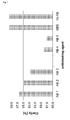
- Fig. 1 The effect of the invention is shown in Fig. 1 .
- Those inorganic compounds which either have a very small pore volume or a combination of very large pore volume and large pore diameter have the effect that the clarity of the produced cast films was remarkably improved compared to inorganic compounds which do not fulfill these parameters.
- the films with best clarity were those containing EBS or no inorganic compound at all.
- CE3 is however insufficient in its impact strength, see Penetration Energy (W s /d) and total Penetration Energy (W tot /d) from the dart drop test in Table 1.
- CE4 cannot be processed under commercial conditions, because it does not contain any antiblocking agent. Table 1 further shows the importance of choosing a suitable propylene polymer.
- the polymer P2 has a too low MFR, resulting in very unsatisfactory gloss and poor impact strength.
- CE6 the polymer P3 has a too high MFR, resulting in very poor impact strength.
- the polymer P4 has a too high M w /M n , resulting in very inferior mechanical and optical properties.
- the polymer P5 has a too high XCS content, resulting in unsatisfactory gloss and clarity.
Landscapes
- Chemical & Material Sciences (AREA)
- Engineering & Computer Science (AREA)
- Manufacturing & Machinery (AREA)
- Materials Engineering (AREA)
- Health & Medical Sciences (AREA)
- Chemical Kinetics & Catalysis (AREA)
- Medicinal Chemistry (AREA)
- Polymers & Plastics (AREA)
- Organic Chemistry (AREA)
- Manufacture Of Macromolecular Shaped Articles (AREA)
- Manufacture Of Porous Articles, And Recovery And Treatment Of Waste Products (AREA)
- Compositions Of Macromolecular Compounds (AREA)
Priority Applications (7)
| Application Number | Priority Date | Filing Date | Title |
|---|---|---|---|
| EP07102768A EP1964873A1 (de) | 2007-02-21 | 2007-02-21 | Polypropylen-Filme mit verbesserten optischen Eigenschaften |
| CN2008800009808A CN101547960B (zh) | 2007-02-21 | 2008-02-20 | 具有改善的光学性能的聚丙烯膜 |
| DE602008005995T DE602008005995D1 (de) | 2007-02-21 | 2008-02-20 | Polypropylen-filme mit verbesserten optischen eigenschaften |
| AT08716962T ATE504623T1 (de) | 2007-02-21 | 2008-02-20 | Polypropylen-filme mit verbesserten optischen eigenschaften |
| PCT/EP2008/052035 WO2008101942A1 (en) | 2007-02-21 | 2008-02-20 | Polypropylene films having improved optical properties |
| EP10151441A EP2172511A1 (de) | 2007-02-21 | 2008-02-20 | Polypropylen-Filme mit verbesserten optischen Eigenschaften |
| EP08716962A EP2069425B1 (de) | 2007-02-21 | 2008-02-20 | Polypropylen-filme mit verbesserten optischen eigenschaften |
Applications Claiming Priority (1)
| Application Number | Priority Date | Filing Date | Title |
|---|---|---|---|
| EP07102768A EP1964873A1 (de) | 2007-02-21 | 2007-02-21 | Polypropylen-Filme mit verbesserten optischen Eigenschaften |
Publications (1)
| Publication Number | Publication Date |
|---|---|
| EP1964873A1 true EP1964873A1 (de) | 2008-09-03 |
Family
ID=38169585
Family Applications (3)
| Application Number | Title | Priority Date | Filing Date |
|---|---|---|---|
| EP07102768A Withdrawn EP1964873A1 (de) | 2007-02-21 | 2007-02-21 | Polypropylen-Filme mit verbesserten optischen Eigenschaften |
| EP08716962A Revoked EP2069425B1 (de) | 2007-02-21 | 2008-02-20 | Polypropylen-filme mit verbesserten optischen eigenschaften |
| EP10151441A Withdrawn EP2172511A1 (de) | 2007-02-21 | 2008-02-20 | Polypropylen-Filme mit verbesserten optischen Eigenschaften |
Family Applications After (2)
| Application Number | Title | Priority Date | Filing Date |
|---|---|---|---|
| EP08716962A Revoked EP2069425B1 (de) | 2007-02-21 | 2008-02-20 | Polypropylen-filme mit verbesserten optischen eigenschaften |
| EP10151441A Withdrawn EP2172511A1 (de) | 2007-02-21 | 2008-02-20 | Polypropylen-Filme mit verbesserten optischen Eigenschaften |
Country Status (5)
| Country | Link |
|---|---|
| EP (3) | EP1964873A1 (de) |
| CN (1) | CN101547960B (de) |
| AT (1) | ATE504623T1 (de) |
| DE (1) | DE602008005995D1 (de) |
| WO (1) | WO2008101942A1 (de) |
Cited By (1)
| Publication number | Priority date | Publication date | Assignee | Title |
|---|---|---|---|---|
| EP2147939A1 (de) * | 2008-07-22 | 2010-01-27 | Borealis AG | Polypropylenzusammensetzung mit verbesserter Optik für Folie und Formanwendungen |
Families Citing this family (1)
| Publication number | Priority date | Publication date | Assignee | Title |
|---|---|---|---|---|
| CN102731911B (zh) * | 2012-07-12 | 2014-03-26 | 苏州康斯坦普工程塑料有限公司 | 一种近球型硅酸钠铝钙防粘连母料的制备方法 |
Citations (13)
| Publication number | Priority date | Publication date | Assignee | Title |
|---|---|---|---|---|
| JPS5661444A (en) * | 1979-10-23 | 1981-05-26 | Sumitomo Chem Co Ltd | Production of blocking-resistant polypropylene film |
| JPH06166775A (ja) * | 1992-12-01 | 1994-06-14 | Mitsubishi Kasei Corp | フィルム用ポリプロピレン組成物 |
| EP0659552A1 (de) * | 1993-12-22 | 1995-06-28 | Sumitomo Chemical Company, Limited | Schichtfilm aus Polypropylen |
| EP0748834A1 (de) * | 1995-06-12 | 1996-12-18 | Wolff Walsrode Ag | Transparente gereckte Polyolefinfolie |
| WO1999062966A1 (en) * | 1998-06-01 | 1999-12-09 | Montell North America Inc. | Propylene polymers suitable for transparent cast film |
| US20020013440A1 (en) * | 1999-12-10 | 2002-01-31 | Agarwal Pawan Kumar | Propylene diene copolymers |
| JP2002363360A (ja) * | 2001-06-01 | 2002-12-18 | Japan Polychem Corp | ポリプロピレン系無延伸フィルム |
| EP1270651A1 (de) * | 2001-06-27 | 2003-01-02 | Borealis Technology Oy | Statistisches Propylencopolymer enthaltende Polymerfolie |
| JP2003012874A (ja) * | 2001-07-03 | 2003-01-15 | Sunallomer Ltd | 押出成形用プロピレン重合体組成物およびそのフィルム |
| JP2003082180A (ja) * | 2001-09-13 | 2003-03-19 | Japan Polychem Corp | 水冷インフレーションフィルム用ポリプロピレン樹脂組成物 |
| US6590021B2 (en) * | 2000-09-29 | 2003-07-08 | Sumitomo Chemical Company, Limited | Polyolefin resin composition and film comprising the same |
| US20040181024A1 (en) * | 2002-07-30 | 2004-09-16 | Yasunori Nakamura | Polypropylene-based resin composition for a metallized film, film using the same to be subject to metallizing and metallized film using the same |
| WO2005035598A1 (en) * | 2003-10-07 | 2005-04-21 | Dow Global Technologies, Inc. | Polypropylene composition for air quenched blown films |
Family Cites Families (1)
| Publication number | Priority date | Publication date | Assignee | Title |
|---|---|---|---|---|
| JP2004027212A (ja) | 2002-05-10 | 2004-01-29 | Sunallomer Ltd | キャストフィルム及びその製造方法並びにキャストフィルムからなる容器 |
-
2007
- 2007-02-21 EP EP07102768A patent/EP1964873A1/de not_active Withdrawn
-
2008
- 2008-02-20 WO PCT/EP2008/052035 patent/WO2008101942A1/en not_active Ceased
- 2008-02-20 AT AT08716962T patent/ATE504623T1/de not_active IP Right Cessation
- 2008-02-20 DE DE602008005995T patent/DE602008005995D1/de active Active
- 2008-02-20 EP EP08716962A patent/EP2069425B1/de not_active Revoked
- 2008-02-20 EP EP10151441A patent/EP2172511A1/de not_active Withdrawn
- 2008-02-20 CN CN2008800009808A patent/CN101547960B/zh not_active Expired - Fee Related
Patent Citations (13)
| Publication number | Priority date | Publication date | Assignee | Title |
|---|---|---|---|---|
| JPS5661444A (en) * | 1979-10-23 | 1981-05-26 | Sumitomo Chem Co Ltd | Production of blocking-resistant polypropylene film |
| JPH06166775A (ja) * | 1992-12-01 | 1994-06-14 | Mitsubishi Kasei Corp | フィルム用ポリプロピレン組成物 |
| EP0659552A1 (de) * | 1993-12-22 | 1995-06-28 | Sumitomo Chemical Company, Limited | Schichtfilm aus Polypropylen |
| EP0748834A1 (de) * | 1995-06-12 | 1996-12-18 | Wolff Walsrode Ag | Transparente gereckte Polyolefinfolie |
| WO1999062966A1 (en) * | 1998-06-01 | 1999-12-09 | Montell North America Inc. | Propylene polymers suitable for transparent cast film |
| US20020013440A1 (en) * | 1999-12-10 | 2002-01-31 | Agarwal Pawan Kumar | Propylene diene copolymers |
| US6590021B2 (en) * | 2000-09-29 | 2003-07-08 | Sumitomo Chemical Company, Limited | Polyolefin resin composition and film comprising the same |
| JP2002363360A (ja) * | 2001-06-01 | 2002-12-18 | Japan Polychem Corp | ポリプロピレン系無延伸フィルム |
| EP1270651A1 (de) * | 2001-06-27 | 2003-01-02 | Borealis Technology Oy | Statistisches Propylencopolymer enthaltende Polymerfolie |
| JP2003012874A (ja) * | 2001-07-03 | 2003-01-15 | Sunallomer Ltd | 押出成形用プロピレン重合体組成物およびそのフィルム |
| JP2003082180A (ja) * | 2001-09-13 | 2003-03-19 | Japan Polychem Corp | 水冷インフレーションフィルム用ポリプロピレン樹脂組成物 |
| US20040181024A1 (en) * | 2002-07-30 | 2004-09-16 | Yasunori Nakamura | Polypropylene-based resin composition for a metallized film, film using the same to be subject to metallizing and metallized film using the same |
| WO2005035598A1 (en) * | 2003-10-07 | 2005-04-21 | Dow Global Technologies, Inc. | Polypropylene composition for air quenched blown films |
Non-Patent Citations (5)
| Title |
|---|
| DATABASE WPI Week 198128, Derwent World Patents Index; AN 1981-50821D, XP002439468 * |
| DATABASE WPI Week 199428, Derwent World Patents Index; AN 1994-230718, XP002439467 * |
| DATABASE WPI Week 200356, Derwent World Patents Index; AN 2003-590561, XP002439466 * |
| DATABASE WPI Week 200357, Derwent World Patents Index; AN 2003-600960, XP002439465 * |
| DATABASE WPI Week 200425, Derwent World Patents Index; AN 2004-259686, XP002439464 * |
Cited By (3)
| Publication number | Priority date | Publication date | Assignee | Title |
|---|---|---|---|---|
| EP2147939A1 (de) * | 2008-07-22 | 2010-01-27 | Borealis AG | Polypropylenzusammensetzung mit verbesserter Optik für Folie und Formanwendungen |
| WO2010009827A1 (en) * | 2008-07-22 | 2010-01-28 | Borealis Ag | Polypropylene composition with improved optics for film and moulding applications |
| US8476395B2 (en) | 2008-07-22 | 2013-07-02 | Borealis Ag | Polypropylene composition with improved optics for film and moulding applications |
Also Published As
| Publication number | Publication date |
|---|---|
| CN101547960A (zh) | 2009-09-30 |
| WO2008101942A1 (en) | 2008-08-28 |
| ATE504623T1 (de) | 2011-04-15 |
| EP2069425B1 (de) | 2011-04-06 |
| EP2069425A1 (de) | 2009-06-17 |
| CN101547960B (zh) | 2012-05-23 |
| DE602008005995D1 (de) | 2011-05-19 |
| EP2172511A1 (de) | 2010-04-07 |
Similar Documents
| Publication | Publication Date | Title |
|---|---|---|
| US20080286547A1 (en) | Polypropylene films with enhanced moisture barrier properties, process for making and composition thereof | |
| KR100845583B1 (ko) | 프로필렌 랜덤 공중합체를 포함하는 중합체 필름 | |
| CN110545995B (zh) | 多层结构,用于制造多层结构的方法,以及相关制品 | |
| JP2019521013A (ja) | 多層フィルム、それを含む物品、多層フィルムの製造方法 | |
| EP2069425B1 (de) | Polypropylen-filme mit verbesserten optischen eigenschaften | |
| JP4187092B2 (ja) | 二軸延伸防湿ポリプロピレンフィルム | |
| US12240968B2 (en) | Proplylene-based copolymer product | |
| RU2736502C1 (ru) | Способ получения неориентированной пленки с улучшенными барьерными свойствами по отношению к кислороду | |
| US5281483A (en) | Metallized films | |
| RU2725892C1 (ru) | Полиолефиновая композиция для неориентированной пленки с улучшенными барьерными свойствами по отношению к кислороду | |
| KR102576446B1 (ko) | 폴리에틸렌 수지 조성물 및 이를 이용하여 제조되는 블로운 필름 | |
| JP6804972B2 (ja) | アンチブロッキング剤マスターバッチ、ポリプロピレン系樹脂組成物およびその製造方法、ならびにフィルムおよびその製造方法 | |
| JP2021091202A (ja) | ガスバリアフィルム | |
| JP2003170555A (ja) | 二軸延伸多層ポリプロピレンフィルム | |
| JP2022150852A (ja) | 多層二軸延伸フィルム | |
| CA2158093C (en) | Method for producing a polyolefin composition and method for producing apolyolefin film | |
| JP2004107554A (ja) | 二軸延伸ポリプロピレンフィルム及び多層フィルム | |
| EP4482898A1 (de) | Verfahren zur herstellung einer polyethylenzusammensetzung für orientierten polyethylenfilm, polyethylenzusammensetzung und film daraus | |
| JP2003276136A (ja) | 二軸延伸積層ポリプロピレンフィルム | |
| BR112019022243B1 (pt) | Estrutura de múltiplas camadas, artigo e processo para fabricar estrutura de múltiplas camadas | |
| TW201945187A (zh) | 多層結構、用於製造多層結構之方法、以及相關製品 |
Legal Events
| Date | Code | Title | Description |
|---|---|---|---|
| PUAI | Public reference made under article 153(3) epc to a published international application that has entered the european phase |
Free format text: ORIGINAL CODE: 0009012 |
|
| AK | Designated contracting states |
Kind code of ref document: A1 Designated state(s): AT BE BG CH CY CZ DE DK EE ES FI FR GB GR HU IE IS IT LI LT LU LV MC NL PL PT RO SE SI SK TR |
|
| AX | Request for extension of the european patent |
Extension state: AL BA HR MK RS |
|
| AKX | Designation fees paid | ||
| REG | Reference to a national code |
Ref country code: DE Ref legal event code: 8566 |
|
| STAA | Information on the status of an ep patent application or granted ep patent |
Free format text: STATUS: THE APPLICATION IS DEEMED TO BE WITHDRAWN |
|
| 18D | Application deemed to be withdrawn |
Effective date: 20090304 |