EP1973008B1 - Bilderzeugungsvorrichtung mit Antriebsvorrichtung für die photoempfindlichen Trommel - Google Patents
Bilderzeugungsvorrichtung mit Antriebsvorrichtung für die photoempfindlichen Trommel Download PDFInfo
- Publication number
- EP1973008B1 EP1973008B1 EP08152262.5A EP08152262A EP1973008B1 EP 1973008 B1 EP1973008 B1 EP 1973008B1 EP 08152262 A EP08152262 A EP 08152262A EP 1973008 B1 EP1973008 B1 EP 1973008B1
- Authority
- EP
- European Patent Office
- Prior art keywords
- photosensitive
- gears
- driving
- gear
- driving source
- Prior art date
- Legal status (The legal status is an assumption and is not a legal conclusion. Google has not performed a legal analysis and makes no representation as to the accuracy of the status listed.)
- Not-in-force
Links
Images




Classifications
-
- G—PHYSICS
- G03—PHOTOGRAPHY; CINEMATOGRAPHY; ANALOGOUS TECHNIQUES USING WAVES OTHER THAN OPTICAL WAVES; ELECTROGRAPHY; HOLOGRAPHY
- G03G—ELECTROGRAPHY; ELECTROPHOTOGRAPHY; MAGNETOGRAPHY
- G03G15/00—Apparatus for electrographic processes using a charge pattern
- G03G15/75—Details relating to xerographic drum, band or plate, e.g. replacing, testing
- G03G15/757—Drive mechanisms for photosensitive medium, e.g. gears
Definitions
- the present invention relates to an image forming apparatus, and more particularly, to an image forming apparatus which performs color printing by use of a plurality of photosensitive bodies.
- US2006/0037501 A1 discusses an image forming apparatus capable of effectively reducing a color displacement among a plurality of tandem image carrying drums includes a transfer belt, first and second image carrying drums, first and second drum gears, a motor gear and an idle gear.
- An image forming apparatus refers to an apparatus that prints an image on a printing medium, e.g., paper, according to an inputted image signal.
- An image forming apparatus is classified as a printer, a copying machine, a fax machine, a multi-function printer which has multiple functions of printing, scanning, copying and faxing, and the like.
- An electrophotographic image forming apparatus is configured such that light is scanned to a photosensitive body charged to a predetermined electric potential to form an electrostatic latent image on a surface of the photosensitive body, the electrostatic latent image is developed into a visible image by supplying a developer to the electrostatic latent image, and the visible image is transferred onto and fused on paper. Through the above processes, the image is printed.
- tandem type image forming apparatus which includes photosensitive bodies and developing devices as many as the number of colors used in printing.
- a tandem type image forming apparatus includes four photosensitive bodies and four developing devices, corresponding to the respective colors.
- electrostatic latent images are formed on the respective photosensitive bodies, corresponding to image information of the respective colors. Toners of respective colors are supplied to the electrostatic latent images formed on the respective photosensitive bodies from the corresponding developing devices. Accordingly, visible images are formed on the surfaces of the respective photosensitive bodies by colors.
- the visible images formed on the photosensitive bodies are sequentially and overlappingly transferred onto an intermediate transfer body (e.g., an intermediate transfer belt or an intermediate transfer drum), and then are finally transferred onto paper.
- an intermediate transfer body e.g., an intermediate transfer belt or an intermediate transfer drum
- the visible images formed on the photosensitive bodies are directly transferred onto paper and overlapped.
- the tandem type image forming apparatus has an advantage of achieving the high-speed printing. However, because the tandem type image forming apparatus performs the color printing by overlapping the images formed on the respective photosensitive bodies by colors, image deterioration due to color mis-registration frequently occurs.
- the color mis-registration occurs by composite action of various factors. Of them, a major cause of the color mis-registration is a change of a linear velocity of the photosensitive body due to runout of gears that transmit driving power between a driving source and the photosensitive body.
- This kind of problem may be solved by using high precision gears.
- this solution is not preferable because there is a limitation in a process of manufacturing gears highly precisely and a great increase in costs is caused.
- an image forming apparatus may be capable of minimizing color mis-registration due to runout of gears when it is constituted such that a single driving source drives at least two photosensitive bodies.
- an image forming apparatus comprising: a plurality of photosensitive bodies having transfer points to transfer images onto a transfer object; a driving source to drive at least two photosensitive bodies of the plurality of photosensitive bodies; and a driving gear train to transmit driving power from the driving source to the at least two photosensitive bodies, the driving gear train including photosensitive body shaft gears respectively connected to the photosensitive bodies driven by the driving source, and connecting gears to transmit the driving power to the photosensitive body shaft gears.
- the number of teeth of the connecting gear which is disposed at a j th position from the reference photosensitive body shaft gear, is determined so that a value calculated from the following equation is substantially an integer: L ⁇ D ⁇ 1 R j here, D refers to a diameter of each of the photosensitive bodies, L refers to a distance between the transfer points of two adjacent photosensitive bodies, and R j refers to a speed reduction ratio from the j th connecting gear to the reference photosensitive body shaft gear.
- the value may have an integer value within an error range of plus or minus 0.1.
- At least a part of the gears arranged in the driving gear train may be adjusted in an initial installation position according to a runout profile of each of the gears.
- At least a part of the gears arranged in the driving gear train may include a datum mark which serves as a reference in determining the runout profile.
- the connecting gears may include a division gear to divide the driving power transmitted from the driving source, and the gears arranged between the division gear and the photosensitive bodies may be adjusted in the initial installation positions according to the runout profiles of the respective gears.
- the plurality of photosensitive bodies may include a first photosensitive body, a second photosensitive body, a third photosensitive body and a fourth photosensitive body.
- the driving source may drive the first photosensitive body, the second photosensitive body, the third photosensitive body and the fourth photosensitive body.
- the driving source may drive the first photosensitive body and the second photosensitive body.
- the driving source may drive the first photosensitive body, the second photosensitive body and the third photosensitive body.
- an image forming apparatus comprising: a plurality of photosensitive bodies having transfer points to transfer images onto a transfer object; at least one driving source provided fewer than the photosensitive bodies, to drive the plurality of photosensitive bodies; and at least one driving gear train to transmit driving power from the driving source to the plurality of photosensitive bodies, the at least one driving gear train including a first gear, and a second gear disposed at a j th position from the first gear.
- the second gear is provided so as to satisfy the following equation: L ⁇ D .
- R j k + ⁇
- D refers to a diameter of each of the photosensitive bodies
- L refers to a distance between the transfer points of two adjacent photosensitive bodies
- R j refers to a speed reduction ratio from the second gear to the first gear serving as a reference gear
- k refers to an integer value
- ⁇ refers to a value satisfying a condition of -0.1 ⁇ ⁇ ⁇ 0.1.
- the at least one driving gear train may include photosensitive body shaft gears respectively connected to the photosensitive bodies, and the first gear may be configured as one of the photosensitive body shaft gears.
- At least a part of the gears arranged in the driving gear train may be adjusted in an initial installation position according to a runout profile of each of the gears.
- Each of the gears arranged in the driving gear train may include a datum mark which serves as a reference in determining the runout profile.
- the at least one driving source may include a first driving source and a second driving source.
- the first driving source may drive one pair of photosensitive bodies of the plurality of photosensitive bodies
- the second driving source may drive another pair of photosensitive bodies of the plurality of photosensitive bodies.
- the at least one driving source may include a first driving source and a second driving source.
- the first driving source may drive three photosensitive bodies of the plurality of photosensitive bodies, and the second driving source may drive the remaining photosensitive bodies.
- the at least one driving source may drive at least four photosensitive bodies of the plurality of photosensitive bodies.
- a method of providing rotational force from at least one driving source to a plurality of photosensitive bodies in an image forming apparatus the at least one driving source being less in number than the plurality of photosensitive bodies
- k may be within ⁇ 0.1 of an integer value.
- FIG. 1 is a view illustrating a constitution of an image forming apparatus according to an exemplary embodiment of the present invention.
- an image forming apparatus 1 includes a main body 10 which forms an exterior appearance.
- the image forming apparatus 1 further includes a paper feeding unit 20, a laser scanning unit 30, a developing unit 40, a transfer unit 50, a fusing unit 60 and a paper discharge unit 70, which are accommodated in the main body 10.
- the paper feeding unit 20 includes a paper cassette 21 which is removably mounted in a lower portion of the main body 10, a paper supporting plate 22 which is up/down pivotably coupled in the paper cassette 21 and on which paper P is loaded, an elastic member 23 which is provided under the paper supporting plate 22 and elastically supports the paper supporting plate 22, and a pickup roller 24 which is provided at a position corresponding to a front end portion of the paper loaded on the paper supporting plate 22 and picks up the paper.
- the developing unit 40 includes four developing devices 40Y, 40M, 40C and 40K, in which toners of different colors, e.g., yellow (Y), magenta (M), cyan (C) and black (K) toners are respectively stored.
- the developing devices 40Y, 40M, 40C and 40K are respectively provided with photosensitive bodies 41Y, 41M, 41C and 41K, on surfaces of which electrostatic latent images are formed by the laser scanning unit 30. Although it is illustrated in FIG.
- the photosensitive bodies 41Y, 41M, 41C and 41K are mounted in the respective developing devices 40Y, 40M, 40C and 40K
- the photosensitive bodies 41Y, 41M, 41C and 41K may be mounted in the main body 10, separately from the developing devices 40Y, 40M, 40C and 40K.
- Respective laser scanning units 30Y, 30M, 30C and 30K irradiate light, corresponding to image information of yellow, magenta, cyan and black, to the respective photosensitive bodies 41Y, 41M, 41C and 41K according to a printing signal.
- Each of the developing devices 40Y, 40M, 40C and 40K includes a toner storage part 42 to store the toner, a charge roller 43 to charge each of the photosensitive bodies 41Y, 41M, 41C and 41K, a developing roller 44 to develop the electrostatic latent image formed on each of the photosensitive bodies 41Y, 41M, 41C and 41K into a toner image, and a supply roller 45 to supply the toner to the developing roller 44.
- the transfer unit 50 serves to transfer the toner images developed on the photosensitive bodies onto the paper.
- the transfer unit 50 includes a transfer belt 51 which circulates in contact with the photosensitive bodies 41Y, 41M, 41C and 41K, a driving roller 52 which drives the transfer belt 51, a tension roller 53 which keeps tension of the transfer belt 51 constant, and four transfer rollers 54 which transfer the toner images formed on the photosensitive bodies 41Y, 41M, 41C and 41K onto the paper.
- the fusing unit 60 serves to fuse the toner images to the paper by applying heat and pressure to the paper.
- the fusing unit 60 includes a heating roller 61 which has a heat source to heat the toner-transferred paper, and a press roller 62 which is mounted while opposing the heating roller 61 and maintains the constant fusing pressure with the heating roller 61.
- the paper discharge unit 70 serves to discharge the printed paper outside the main body 10.
- the paper discharge unit 70 includes a discharge roller 71, and a discharge backup roller 72 which rotates together with the discharge roller 71.
- the image forming apparatus 1 further includes a driving unit to drive the respective photosensitive bodies 41Y, 41M, 41C and 41K.
- the driving unit includes at least one driving source, and at least one driving gear train which is arranged between the driving source and the photosensitive bodies to transmit driving power from the driving source to the photosensitive bodies.
- FIG. 2 is a perspective view illustrating the photosensitive bodies and a driving unit according to a first embodiment of the present invention
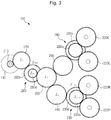
- FIG. 3 is a side view illustrating the driving unit depicted in FIG. 2 .
- a driving unit 100 includes a driving source 110, and a driving gear train 200 which transmits driving power from the driving source 110 to the respective photosensitive bodies 41Y, 41M, 41C and 41K.
- the driving gear train 200 includes a driving shaft gear 210 connected to the driving source 110, photosensitive body shaft gears 220Y, 220M, 220C and 220K connected to the respective photosensitive bodies 41Y, 41M, 41C and 41K, and a series of connecting gears to transmit the driving power from the driving source 110 to the respective photosensitive body shaft gears 220Y, 220M, 220C and 220K at a reduced speed by a predetermined speed reduction ratio.
- the connecting gears include a first connecting gear 230 to transmit the driving power to the two photosensitive bodies 41Y and 41M, second to fifth connecting gears 240, 250, 260 and 270 which are sequentially connected from the first connecting gear 230 to the driving shaft gear 210, a sixth connecting gear 280 to transmit the driving power to the two photosensitive bodies 41C and 41K, and a seventh connecting gear 290 which receives the driving power from the third connecting gear 250 and transmits the driving power to the sixth connecting gear 280.
- the first connecting gear 230, the fourth connecting gear 260 and the sixth connecting gear 280 serve as a speed reduction gear, and respectively include first gear parts 230a, 260a and 280a and second gear parts 230b, 260b and 280b, which have different sizes from each other.
- the driving power of the driving source 110 is transmitted to the third connecting gear 250 via the fifth connecting gear 270 and the fourth connecting gear 260, and is divided at the third connecting gear 250 in two directions, so as to be transmitted to the second connecting gear 240 and the seventh connecting gear 290.
- the driving power transmitted to the second connecting gear 240 rotates the two photosensitive bodies 41Y and 41M via the first connecting gear 230
- the driving power transmitted to the seventh connecting gear 290 rotates the two photosensitive bodies 41C and 41K via the sixth connecting gear 280.
- the gears arranged in the driving gear train 200 have runout, i.e., eccentricity, due to various reasons in a manufacturing process (e.g., an injection molding condition or a gate position).
- the runout of the gears compositely influences the photosensitive body shaft gears 220Y, 220M, 220C and 220K during the power transmitting process, and accordingly color mis-registration may occur due to change of a linear velocity of each of the photosensitive bodies 41Y, 41M, 41C and 41K.
- the present invention determines the number of teeth of each gear so that the gears arranged in the driving gear train 200 are rotated synchronously with each other, and adjusts an initial installation phase of each gear in consideration of the runout profile of each gear, to thereby minimize the color mis-registration due to runout of the gears.
- T j refers to a period of rotation of the gear which is disposed at the j th position from the reference photosensitive body shaft gear.
- ⁇ t refers to a time taken for the paper P to move a distance L from a transfer point F of one photosensitive body to a transfer point F of the next photosensitive body.
- k refers to an arbitrary integer value
- ⁇ refers to a constant value representing an allowable error range.
- ⁇ can be suitably selected so that a value of dividing ⁇ t by T j becomes substantially an integer value, and preferably is determined to a value satisfying a condition of -0.1 ⁇ ⁇ ⁇ 0.1.
- ⁇ t is expressed as follows.
- D refers to a diameter of the photosensitive body
- ⁇ refers to an angular speed of the photosensitive body.
- the number of teeth of the j th -positioned connecting gear from the reference photosensitive body shaft gear is determined so as to satisfy the above equation 2.
- the reference photosensitive body shaft gear may be set by 220Y, the number of teeth of the photosensitive body shaft gear 220Y may be set to 94, a distance L may be set to 54 mm, and the diameter D of the photosensitive body may be set to 24 mm.
- the number of teeth Z 1-1 of the first gear part 230a of the first connecting gear 230 which is disposed at the first position from the photosensitive body shaft gear 220Y, can be determined to about 67 from the following equation 3 of inputting the above values into the above equation 2.
- the second gear part 230b of the first connecting gear 230 is mounted coaxially with the first gear part 230a, and can be suitably selected in consideration of an overall speed reduction ratio which is required in the driving gear train 200.
- the number of teeth Z 1-2 of the second gear part 230b of the first connecting gear 230 is determined to 78.
- the number of teeth Z 2 of the second connecting gear 240, which is disposed at the second position from the photosensitive body shaft gear 220Y, and the number of teeth Z 3 of the third connecting gear 250, which is disposed at the third position from the photosensitive body shaft gear 220Y, can be respectively determined to 78 from the following equations 4 and 5 of inputting the above values into the above equation 2.
- the number of teeth Z 4-1 of the first gear part 260a of the fourth connecting gear 260, which is disposed at the fourth position from the photosensitive body shaft gear 220Y, can be determined to about 39 from the following equation 6 of inputting the above values into the above equation 2.
- the second gear part 260b of the fourth connecting gear 260 is mounted coaxially with the first gear part 260a, and can be suitably selected in consideration of an overall speed reduction ratio which is required in the driving gear train 200.
- the number of teeth Z 4-2 of the second gear part 260b of the fourth connecting gear 260 is determined to 63.
- the number of teeth Z 5 of the fifth connecting gear 270 which is disposed at the fifth position from the photosensitive body shaft gear 220Y, can be determined to 63 from the following equation 7 of inputting the above values into the above equation 2.
- the numbers of teeth of the respective gears were determined under the condition such that the values of k with respect to the first to fifth connecting gears 230, 240, 250, 260 and 270 are set to 1, 1, 1, 2 and 2, respectively, and the value of ⁇ is set to 0.01.
- the value of k+ ⁇ should be suitably selected in consideration of an overall speed reduction ratio which is required in the driving gear train 200.
- the sixth connecting gear 280 may use the same gear as the first connecting gear 230, and the seventh connecting gear 290 may use the same gear as the second connecting gear 240.
- the installation phases of the gears are determined, so as to minimize color mis-registration, in consideration of the runout of each of the gears.
- the installation phases of the gears can be determined through a numerical analysis method using evolutionary algorithms or a trial-and-error method so as to minimize the color mis-registration.
- the installation phases with respect to all gears arranged in the driving gear train 200 may be determined, or the installation phases may be determined in consideration of only some of the gears arranged in the driving gear train 200. However, when considering only some gears, it is preferable to consider the installation phases with respect to the gears arranged between the gear dividing the driving power from the driving source 110 and the photosensitive bodies.
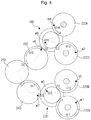
- FIG. 4 illustrates an example of determining the installation phases of the gears arranged in the driving gear train depicted in FIG. 3 .
- the gears 220Y, 220M, 220C, 220K, 230, 280, 240 and 290 which are considered in determining the installation phases, as shown in FIG. 4 , have datum marks m1, m2, m3, m4, m5, m6, m7 and m8 related to the runout.
- the runout profiles of the respective gears 220Y, 220M, 220C, 220K, 230, 280, 240 and 290 can be determined on the basis of the datum marks.
- the installation phases of the datum marks m1, m2, m3, m4, m5, m6, m7 and m8 can be determined through a numerical analysis method using evolutionary algorithms so as to minimize the color mis-registration.
- the gears 220Y, 220M, 220C, 220K, 230, 280, 240 and 290 can be installed in such a manner that the datum marks m1, m2, m3, m4, m5, m6, m7 and m8 with respect to the gears 220Y, 220M, 220C, 220K, 230, 280, 240 and 290 are rotated from reference points S1, S2, S3, S4, S5, S6, S7 and S8 by angles of ⁇ 1, ⁇ 2, ⁇ 3, ⁇ 4, ⁇ 5, ⁇ 6, ⁇ 7 and ⁇ 8, respectively.
- the angles of ⁇ 1, ⁇ 2, ⁇ 3, ⁇ 4, ⁇ 5, ⁇ 6, ⁇ 7 and ⁇ 8 are determined to 4.36 rad., 2.37 rad., 2.14 rad., 0.80 rad., 0.56 rad., 0.91 rad., 2.32 rad. and 2.98 rad., respectively.
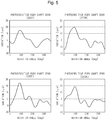
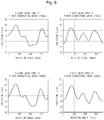
- 5 to 7 are views illustrating examples of the runout profiles related to the photosensitive body shaft gears 220Y, 220M, 220C and 220K, the first connecting gear 230, the sixth connecting gear 280, the second connecting gear 240 and the seventh connecting gear 290.
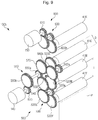
- FIG. 8 is a perspective view illustrating the photosensitive bodies and a driving unit according to a second embodiment of the present invention. This embodiment is configured such that a single driving source drives two photosensitive bodies.
- a driving unit 100a includes a first driving source 120, a second driving source 130, a first driving gear train 300 and a second driving gear train 400.
- the first driving source 120 rotates the photosensitive body 41Y for yellow and the photosensitive body 41M for magenta
- the second driving source 130 rotates the photosensitive body 41C for cyan and the photosensitive body 41K for black.
- the first driving gear train 300 is disposed between the first driving source 120 and the two photosensitive bodies 41Y and 41M, and transmits the driving power from the first driving source 120 to the two photosensitive bodies 41Y and 41M at a reduced speed by a predetermined speed reduction ratio.
- the first driving gear train 300 includes a driving shaft gear 310 connected to the first driving source 120, photosensitive body shaft gears 320Y and 320M respectively connected to the photosensitive bodies 41Y and 41M, and a first connecting gear 330 disposed between the driving shaft gear 310 of the first driving source and the two photosensitive body shaft gears 320Y and 320M.
- the first connecting gear 330 has a first gear part 330a and a second gear part 330b, which are arranged coaxially with each other and have different sizes.
- the second driving gear train 400 is disposed between the second driving source 130 and the two photosensitive bodies 41C and 41K, and transmits the driving power from the second driving source 130 to the two photosensitive bodies 41C and 41K at a reduced speed by a predetermined speed reduction ratio.
- the second driving gear train 400 includes a driving shaft gear 410 connected to the second driving source 130, photosensitive body shaft gears 420C and 420K respectively connected to the photosensitive bodies 41C and 41K, and a second connecting gear 430 disposed between the driving shaft gear 410 of the second driving source and the two photosensitive body shaft gears 420C and 420K.
- the second connecting gear 430 has a first gear part 430a and a second gear part 430b, which are arranged coaxially with each other and have different sizes.
- first driving gear train 300 has the one connecting gear 330 and the second driving gear train 400 has the one connecting gear 430
- a plurality of connecting gears may be installed in the driving gear trains according to a required speed reduction ratio.
- the color mis-registration can be minimized by adequately adjusting the number of teeth and the installation phases of the gears arranged in the first driving gear train 300 and the second driving gear train 400.
- the number of teeth of the gear, which is disposed at the j th position from the reference photosensitive body shaft gear is determined so as to satisfy the above equation 2.
- the number of teeth of the gear, which is disposed at the j th position from the reference photosensitive body shaft gear is determined so as to satisfy the above equation 2.
- FIG. 9 is a perspective view illustrating the photosensitive bodies and a driving unit according to a third embodiment of the present invention. This embodiment is configured such that a single driving source drives three photosensitive bodies.
- a driving unit 100b includes a first driving source 140, a second driving source 150, a first driving gear train 500 and a second driving gear train 600.
- the first driving source 140 rotates the photosensitive body 41Y for yellow, the photosensitive body 41M for magenta and the photosensitive body 41C for cyan, and the second driving source 150 rotates only the photosensitive body 41K for black.
- the first driving gear train 500 is disposed between the first driving source 140 and the three photosensitive bodies 41Y, 41M and 41C, and transmits the driving power from the first driving source 140 to the three photosensitive bodies 41Y, 41M and 41C at a reduced speed by a predetermined speed reduction ratio.
- the first driving gear train 500 includes a driving shaft gear 510 connected to the first driving source 140, photosensitive body shaft gears 520Y, 520M and 520C respectively connected to the photosensitive bodies 41Y, 41M and 41C, and a series of connecting gears which transmit the driving power from the first driving source 140 to the photosensitive body shaft gears 520Y, 520M and 520C at a reduced speed by a predetermined speed reduction ratio.
- the connecting gears include a first connecting gear 530 to transmit the driving power to the two photosensitive bodies 41Y and 41M, a second connecting gear 540 to transmit the driving power to the first connecting gear 530, a third connecting gear 550 to transmit the driving power to the second connecting gear 540, a fourth connecting gear 560 to transmit the driving power to the photosensitive body 41C, and a fifth connecting gear 570 to receive the driving power from the third connecting gear 550 and transmit the driving power to the fourth connecting gear 560.
- the first connecting gear 530, the third connecting gear 550 and the fourth connecting gear 560 serve as a speed reduction gear, and respectively include first gear parts 530a, 550a and 560a and second gear parts 530b, 550b and 560b, which have different sizes from each other.
- the second driving gear train 600 is disposed between the second driving source 150 and the photosensitive body 41K, and transmits the driving power from the second driving source 150 to the photosensitive body 41K at a reduced speed by a predetermined speed reduction ratio.
- the second driving gear train 600 includes a driving shaft gear 610 connected to the second driving source 150, a photosensitive body shaft gear 620K connected to the photosensitive body 41K, and a sixth connecting gear 630 disposed between the driving shaft gear 610 of the second driving source and the photosensitive body shaft gear 620K.
- the photosensitive body 41K is independently controlled through the second driving source 150, although the color mis-registration due to the runout of the gears arranged in the second driving gear train 600 occurs with respect to the black color, this can be easily solved.
- the color mis-registration can be minimized by suitably determining the numbers of teeth and the installation phases of the gears arranged in the first driving gear train 500 and the second driving gear train 600.
- the image forming apparatus can minimize the color mis-registration due to a defect of the gears, by adjusting the numbers of teeth and the initial installation positions of the gears transmitting the driving power to the photosensitive bodies.
- the image forming apparatus can improve image quality while decreasing the number of driving sources to drive the photosensitive bodies and non-using high precision gears.
Landscapes
- Physics & Mathematics (AREA)
- General Physics & Mathematics (AREA)
- Electrophotography Configuration And Component (AREA)
Claims (16)
- Bilderzeugungsvorrichtung, die Folgendes umfasst:mehrere lichtempfindliche Körper (41Y, 41M, 41C, 41K) mit Übertragungspunkten, um Bilder auf ein Übertragungsobjekt zu übertragen;eine Antriebsquelle (110, 120, 130, 140), um wenigstens zwei lichtempfindliche Körper der mehreren lichtempfindlichen Körper anzutreiben;dadurch gekennzeichnet, dass die Vorrichtung ferner Folgendes umfasst:ein Antriebsräderwerk (200, 300, 400, 500), das zwischen der Antriebsquelle und den lichtempfindlichen Körpern angeordnet ist und dazu vorgesehen ist, Antriebskraft von der Antriebsquelle auf die wenigstens zwei lichtempfindlichen Körper zu übertragen, wobei das Antriebsräderwerk Lichtempfindlicher-Körper-Wellengetrieberäder (220Y, 220M, 220C, 220K; 320Y, 320M, 420C, 420K; 520Y, 520M) beinhaltet,die entsprechend mit den lichtempfindlichen Körpern verbunden sind, wobei die Antriebsquelle verbindende Getrieberäder (230, 240, 250, 260, 270; 330a, 430a; 530a, 540, 550a, 560a, 570) antreibt, dieangeordnet sind, um die Antriebskraft auf die Lichtempfindlicher- Körper-Wellengetrieberäder zu übertragen und eine Reduktion der Geschwindigkeit zwischen der Antriebsquelle und den Lichtempfindlicher-Körper-Wellengetrieberädern bereitzustellen, wobei, wenn eines der Lichtempfindlicher-Körper-Wellengetrieberäder auf ein Lichtempfindlicher-Körper-Referenzwellengetrieberad eingestellt ist, die Anzahl der Zähne des verbindenden Getrieberades, das an einer j-ten Position von dem Lichtempfindlicher-Körper-Referenzwellengetrieberad angeordnet ist, derart bestimmt wird, dass ein Wert, der mithilfe der folgenden Gleichung berechnet wird, im Wesentlichen eine ganze Zahl ist:

- Bilderzeugungsvorrichtung nach Anspruch 1,
wobei der Wert einen Ganzzahlwert innerhalb eines Fehlerbereichs von plus oder minus 0,1 aufweist. - Bilderzeugungsvorrichtung nach Anspruch 1 oder 2, wobei wenigstens ein Teil der in dem Antriebsräderwerk angeordneten Getrieberäder in einer anfänglichen Installationsposition gemäß einem Unrundprofil jedes der Getrieberäder eingestellt (θ1-θ8) ist.
- Bilderzeugungsvorrichtung nach Anspruch 3,
wobei wenigstens ein Teil der in dem Antriebsräderwerk angeordneten Getrieberäder eine Datumsmarkierung (m1-m8) beinhaltet, die als Referenz beim Bestimmen des Unrundprofils dient. - Bilderzeugungsvorrichtung nach Anspruch 3 oder 4, wobei die verbindenden Getrieberäder ein Aufteilungsgetrieberad (250; 330b; 430b; 550a, 530b) beinhalten, um die Antriebskraft, die von der Antriebsquelle übertragen wird, zu teilen, und wobei die Getrieberäder (240, 290, 230, 280;330a;430a; 540, 570, 560b, 560a; 540, 530b, 530a), die zwischen dem Aufteilungsgetrieberad und den lichtempfindlichen Körpern angeordnet sind, in den anfänglichen Installationspositionen gemäß dem Unrundprofil der entsprechenden Getrieberäder eingestellt sind.
- Bilderzeugungsvorrichtung nach einem der vorhergehenden Ansprüche, wobei die mehreren lichtempfindlichen Körper einen ersten lichtempfindlichen Körper, einen zweiten lichtempfindlichen Körper, einen dritten lichtempfindlichen Körper und einen vierten lichtempfindlichen Körper beinhalten.
- Bilderzeugungsvorrichtung nach Anspruch 6,
wobei die Antriebsquelle (110) den ersten lichtempfindlichen Körper, den zweiten lichtempfindlichen Körper, den dritten lichtempfindlichen Körper und den vierten lichtempfindlichen Körper antreibt. - Bilderzeugungsvorrichtung nach Anspruch 6, wobei die Antriebsquelle (120, 130) den ersten lichtempfindlichen Körper und den zweiten lichtempfindlichen Körper antreibt.
- Bilderzeugungsvorrichtung nach Anspruch 6,
wobei die Antriebsquelle (140) den ersten lichtempfindlichen Körper, den zweiten lichtempfindlichen Körper und den dritten lichtempfindlichen Körper antreibt. - Bilderzeugungsvorrichtung nach einem der Ansprüche 1 bis 9, eine zweite Antriebsquelle umfassend,
und wobei die erste Antriebsquelle drei lichtempfindliche Körper der mehreren lichtempfindlichen Körper antreibt und die zweite Antriebsquelle die verbleibenden lichtempfindlichen Körper antreibt. - Bilderzeugungsvorrichtung nach einem der Ansprüche 1 bis 9, wobei die Antriebsquelle wenigstens vier lichtempfindliche Körper der mehreren lichtempfindlichen Körper antreibt.
- Verfahren zum Bereitstellen von Drehkraft von wenigstens einer Antriebsquelle (110, 120, 130, 140) an mehrere lichtempfindliche Körper (41Y, 41M, 41C, 41K) in einer Bilderzeugungsvorrichtung, wobei die wenigstens eine Antriebsquelle in geringerer Anzahl als die mehreren lichtempfindlichen Körper vorliegt, wobei das Verfahren gekennzeichnet ist durch:
Bereitstellen eines Antriebsräderwerks (200, 300, 400, 500), das zwischen der Antriebsquelle und den lichtempfindlichen Körpern angeordnet ist, wobei das Antriebsräderwerk mehrere Getrieberäder (230, 240, 250, 260, 270; 330a, 430a; 530a, 540, 550a, 560a, 570) beinhaltet, wobei das Antriebsräderwerk konfiguriert ist, eine Drehgeschwindigkeit der Drehkraft, die durch die wenigstens eine Antriebsquelle bereitgestellt wird, zu reduzieren und die Drehkraft mit der reduzierten Drehgeschwindigkeit von dem Räderwerk an die mehreren lichtempfindlichen Körper zu liefern, wobei für wenigstens eine erste Untergruppe der mehreren Getrieberäder, die die Drehkraft mit der reduzierten Drehgeschwindigkeit an einen ersten der mehreren lichtempfindlichen Körper liefert, die mehreren Getrieberäder (230, 240, 250, 260, 270; 330a, 430a; 530a, 540, 550a, 560a, 570) der ersten Untergruppe angeordnet sind, um eine durch Folgendes definierte Beziehung zu erfüllen:
- Verfahren nach Anspruch 12, wobei k innerhalb ±0,1 eines Ganzzahlwertes liegt.
- Verfahren nach Anspruch 12 oder 13, wobei die erste Untergruppe wenigstens eine n Anzahl von Getrieberädern umfasst, wobei der Schritt des Bereitstellens des Antriebsräderwerks Folgendes umfasst:
Bestimmen einer Anzahl von Zähnen des n-ten Getrieberades der ersten Untergruppe anhand einer Beziehung eines Getrieberadverhältnisses, die durch Folgendes definiert ist:
- Verfahren nach einem der Ansprüche 12 bis 14, ferner umfassend:
Anordnen anderer Untergruppen der mehreren Getrieberäder als der ersten Untergruppe, die jeweils die Drehkraft mit der reduzierten Drehgeschwindigkeit an einen entsprechenden von lichtempfindlichen Körpern, der nicht der erste der mehreren lichtempfindlichen Körper ist, liefern, um eine Beziehung zu erfüllen, die durch Folgendes definiert ist:
- Verfahren nach einem der Ansprüche 12 bis 15,
wobei der Schritt des Bereitstellens des Antriebsräderwerks Folgendes umfasst: Bestimmen von anfänglichen Positionen der mehreren Getrieberäder (230, 240, 250, 260, 270; 330a, 430a; 530a, 540, 550a, 560a, 570) des Antriebsräderwerks, um Rundlaufabweichung eines oder mehrerer der mehreren Getrieberäder auszugleichen.
Applications Claiming Priority (2)
| Application Number | Priority Date | Filing Date | Title |
|---|---|---|---|
| KR20070028896 | 2007-03-23 | ||
| KR1020080005765A KR101222579B1 (ko) | 2007-03-23 | 2008-01-18 | 화상형성장치 |
Publications (3)
| Publication Number | Publication Date |
|---|---|
| EP1973008A2 EP1973008A2 (de) | 2008-09-24 |
| EP1973008A3 EP1973008A3 (de) | 2014-05-21 |
| EP1973008B1 true EP1973008B1 (de) | 2018-10-31 |
Family
ID=39563331
Family Applications (1)
| Application Number | Title | Priority Date | Filing Date |
|---|---|---|---|
| EP08152262.5A Not-in-force EP1973008B1 (de) | 2007-03-23 | 2008-03-04 | Bilderzeugungsvorrichtung mit Antriebsvorrichtung für die photoempfindlichen Trommel |
Country Status (1)
| Country | Link |
|---|---|
| EP (1) | EP1973008B1 (de) |
Family Cites Families (6)
| Publication number | Priority date | Publication date | Assignee | Title |
|---|---|---|---|---|
| US5970286A (en) * | 1997-08-01 | 1999-10-19 | Casio Computerco., Ltd. | Image forming apparatus and image forming unit with an improved phase adjustment means |
| JP2005083392A (ja) * | 2003-09-04 | 2005-03-31 | Konica Minolta Business Technologies Inc | 回転駆動伝達装置及びそれを用いる画像形成装置 |
| JP4559304B2 (ja) * | 2004-08-19 | 2010-10-06 | 株式会社リコー | 画像形成装置 |
| JP4777179B2 (ja) * | 2005-08-03 | 2011-09-21 | キヤノン株式会社 | 画像形成装置 |
| KR100698219B1 (ko) | 2005-09-08 | 2007-03-22 | 엘지전자 주식회사 | 무접점 충전 장치 |
| US7849267B2 (en) | 2006-06-30 | 2010-12-07 | Moka5, Inc. | Network-extended storage |
-
2008
- 2008-03-04 EP EP08152262.5A patent/EP1973008B1/de not_active Not-in-force
Non-Patent Citations (1)
| Title |
|---|
| None * |
Also Published As
| Publication number | Publication date |
|---|---|
| EP1973008A3 (de) | 2014-05-21 |
| EP1973008A2 (de) | 2008-09-24 |
Similar Documents
| Publication | Publication Date | Title |
|---|---|---|
| US7738812B2 (en) | Image forming apparatus | |
| US7970317B2 (en) | Image forming apparatus | |
| US6968144B2 (en) | Photoconductor drum and drive shaft gear portions of an image forming apparatus | |
| US20090297222A1 (en) | Color-image forming apparatus | |
| US7373097B2 (en) | Printer engine and color image forming device using this printer engine for preventing deviation of transfer positions and overlap deviation | |
| US8095028B2 (en) | Image forming apparatus and image forming method | |
| US6654580B2 (en) | Image forming apparatus | |
| EP0751441B1 (de) | Zusammen mit einem Bilderzeugungsgerät verwendetes Entwicklungsgerät | |
| US7272345B2 (en) | Power coupling device and image forming apparatus having the same | |
| US7885577B2 (en) | Rotation transmission device and image forming apparatus | |
| JP2002023561A (ja) | 回転体の駆動装置及びこれを用いた画像形成装置 | |
| US5473421A (en) | Multicolor image forming apparatus for forming a multicolor image on a transfer material | |
| EP1973008B1 (de) | Bilderzeugungsvorrichtung mit Antriebsvorrichtung für die photoempfindlichen Trommel | |
| JP4476751B2 (ja) | 画像記録装置 | |
| JP2002182450A (ja) | 画像形成装置 | |
| JP2006058415A (ja) | プリンタエンジン及びカラー画像形成装置 | |
| JP2005092029A (ja) | ベルトユニットおよび画像形成装置 | |
| CN114460825A (zh) | 成像装置 | |
| JP4794865B2 (ja) | 画像形成装置 | |
| JP2006078850A (ja) | カラー画像形成装置 | |
| JP2002122188A (ja) | ギヤトレインおよび画像形成装置 | |
| JP3376109B2 (ja) | 画像形成装置 | |
| JP4724549B2 (ja) | 画像形成装置 | |
| CN100414455C (zh) | 图像形成装置 | |
| US20080143813A1 (en) | Image forming apparatus and method for setting up laser scanning unit |
Legal Events
| Date | Code | Title | Description |
|---|---|---|---|
| PUAI | Public reference made under article 153(3) epc to a published international application that has entered the european phase |
Free format text: ORIGINAL CODE: 0009012 |
|
| AK | Designated contracting states |
Kind code of ref document: A2 Designated state(s): AT BE BG CH CY CZ DE DK EE ES FI FR GB GR HR HU IE IS IT LI LT LU LV MC MT NL NO PL PT RO SE SI SK TR |
|
| AX | Request for extension of the european patent |
Extension state: AL BA MK RS |
|
| RAP1 | Party data changed (applicant data changed or rights of an application transferred) |
Owner name: SAMSUNG ELECTRONICS CO., LTD. |
|
| PUAL | Search report despatched |
Free format text: ORIGINAL CODE: 0009013 |
|
| AK | Designated contracting states |
Kind code of ref document: A3 Designated state(s): AT BE BG CH CY CZ DE DK EE ES FI FR GB GR HR HU IE IS IT LI LT LU LV MC MT NL NO PL PT RO SE SI SK TR |
|
| AX | Request for extension of the european patent |
Extension state: AL BA MK RS |
|
| RIC1 | Information provided on ipc code assigned before grant |
Ipc: G03G 15/00 20060101AFI20140414BHEP |
|
| 17P | Request for examination filed |
Effective date: 20141119 |
|
| RBV | Designated contracting states (corrected) |
Designated state(s): AT BE BG CH CY CZ DE DK EE ES FI FR GB GR HR HU IE IS IT LI LT LU LV MC MT NL NO PL PT RO SE SI SK TR |
|
| AKX | Designation fees paid |
Designated state(s): DE NL |
|
| AXX | Extension fees paid |
Extension state: BA Extension state: MK Extension state: AL Extension state: RS |
|
| RAP1 | Party data changed (applicant data changed or rights of an application transferred) |
Owner name: SAMSUNG ELECTRONICS CO., LTD. |
|
| RAP1 | Party data changed (applicant data changed or rights of an application transferred) |
Owner name: S-PRINTING SOLUTION CO., LTD. |
|
| GRAP | Despatch of communication of intention to grant a patent |
Free format text: ORIGINAL CODE: EPIDOSNIGR1 |
|
| STAA | Information on the status of an ep patent application or granted ep patent |
Free format text: STATUS: GRANT OF PATENT IS INTENDED |
|
| INTG | Intention to grant announced |
Effective date: 20180403 |
|
| RAP1 | Party data changed (applicant data changed or rights of an application transferred) |
Owner name: HP PRINTING KOREA CO., LTD. |
|
| GRAS | Grant fee paid |
Free format text: ORIGINAL CODE: EPIDOSNIGR3 |
|
| GRAA | (expected) grant |
Free format text: ORIGINAL CODE: 0009210 |
|
| STAA | Information on the status of an ep patent application or granted ep patent |
Free format text: STATUS: THE PATENT HAS BEEN GRANTED |
|
| AK | Designated contracting states |
Kind code of ref document: B1 Designated state(s): DE NL |
|
| REG | Reference to a national code |
Ref country code: DE Ref legal event code: R096 Ref document number: 602008057641 Country of ref document: DE |
|
| REG | Reference to a national code |
Ref country code: NL Ref legal event code: MP Effective date: 20181031 |
|
| PG25 | Lapsed in a contracting state [announced via postgrant information from national office to epo] |
Ref country code: NL Free format text: LAPSE BECAUSE OF FAILURE TO SUBMIT A TRANSLATION OF THE DESCRIPTION OR TO PAY THE FEE WITHIN THE PRESCRIBED TIME-LIMIT Effective date: 20181031 |
|
| REG | Reference to a national code |
Ref country code: DE Ref legal event code: R097 Ref document number: 602008057641 Country of ref document: DE |
|
| PLBE | No opposition filed within time limit |
Free format text: ORIGINAL CODE: 0009261 |
|
| STAA | Information on the status of an ep patent application or granted ep patent |
Free format text: STATUS: NO OPPOSITION FILED WITHIN TIME LIMIT |
|
| 26N | No opposition filed |
Effective date: 20190801 |
|
| REG | Reference to a national code |
Ref country code: DE Ref legal event code: R082 Ref document number: 602008057641 Country of ref document: DE Representative=s name: SCHOPPE, ZIMMERMANN, STOECKELER, ZINKLER, SCHE, DE Ref country code: DE Ref legal event code: R081 Ref document number: 602008057641 Country of ref document: DE Owner name: HEWLETT-PACKARD DEVELOPMENT COMPANY, L.P., SPR, US Free format text: FORMER OWNER: HP PRINTING KOREA CO., LTD., SUWON-SI, GYEONGGI-DO, KR |
|
| PGFP | Annual fee paid to national office [announced via postgrant information from national office to epo] |
Ref country code: DE Payment date: 20210528 Year of fee payment: 15 |
|
| REG | Reference to a national code |
Ref country code: DE Ref legal event code: R119 Ref document number: 602008057641 Country of ref document: DE |
|
| PG25 | Lapsed in a contracting state [announced via postgrant information from national office to epo] |
Ref country code: DE Free format text: LAPSE BECAUSE OF NON-PAYMENT OF DUE FEES Effective date: 20231003 |