EP1973509B1 - Articles absorbants comportant un stratifie etirable et permeable a l'air - Google Patents
Articles absorbants comportant un stratifie etirable et permeable a l'air Download PDFInfo
- Publication number
- EP1973509B1 EP1973509B1 EP07700612A EP07700612A EP1973509B1 EP 1973509 B1 EP1973509 B1 EP 1973509B1 EP 07700612 A EP07700612 A EP 07700612A EP 07700612 A EP07700612 A EP 07700612A EP 1973509 B1 EP1973509 B1 EP 1973509B1
- Authority
- EP
- European Patent Office
- Prior art keywords
- stretch laminate
- substrate
- breathable
- elastic
- elastic member
- Prior art date
- Legal status (The legal status is an assumption and is not a legal conclusion. Google has not performed a legal analysis and makes no representation as to the accuracy of the status listed.)
- Revoked
Links
Images


Classifications
-
- A—HUMAN NECESSITIES
- A61—MEDICAL OR VETERINARY SCIENCE; HYGIENE
- A61F—FILTERS IMPLANTABLE INTO BLOOD VESSELS; PROSTHESES; DEVICES PROVIDING PATENCY TO, OR PREVENTING COLLAPSING OF, TUBULAR STRUCTURES OF THE BODY, e.g. STENTS; ORTHOPAEDIC, NURSING OR CONTRACEPTIVE DEVICES; FOMENTATION; TREATMENT OR PROTECTION OF EYES OR EARS; BANDAGES, DRESSINGS OR ABSORBENT PADS; FIRST-AID KITS
- A61F13/00—Bandages or dressings; Absorbent pads
- A61F13/15—Absorbent pads, e.g. sanitary towels, swabs or tampons for external or internal application to the body; Supporting or fastening means therefor; Tampon applicators
- A61F13/45—Absorbent pads, e.g. sanitary towels, swabs or tampons for external or internal application to the body; Supporting or fastening means therefor; Tampon applicators characterised by the shape
- A61F13/49—Absorbent pads, e.g. sanitary towels, swabs or tampons for external or internal application to the body; Supporting or fastening means therefor; Tampon applicators characterised by the shape specially adapted to be worn around the waist, e.g. diapers, nappies
- A61F13/49007—Form-fitting, self-adjusting disposable diapers
- A61F13/49009—Form-fitting, self-adjusting disposable diapers with elastic means
- A61F13/4902—Form-fitting, self-adjusting disposable diapers with elastic means characterised by the elastic material
-
- B—PERFORMING OPERATIONS; TRANSPORTING
- B32—LAYERED PRODUCTS
- B32B—LAYERED PRODUCTS, i.e. PRODUCTS BUILT-UP OF STRATA OF FLAT OR NON-FLAT, e.g. CELLULAR OR HONEYCOMB, FORM
- B32B27/00—Layered products comprising a layer of synthetic resin
- B32B27/12—Layered products comprising a layer of synthetic resin next to a fibrous or filamentary layer
-
- B—PERFORMING OPERATIONS; TRANSPORTING
- B32—LAYERED PRODUCTS
- B32B—LAYERED PRODUCTS, i.e. PRODUCTS BUILT-UP OF STRATA OF FLAT OR NON-FLAT, e.g. CELLULAR OR HONEYCOMB, FORM
- B32B27/00—Layered products comprising a layer of synthetic resin
- B32B27/28—Layered products comprising a layer of synthetic resin comprising synthetic resins not wholly covered by any one of the sub-groups B32B27/30 - B32B27/42
- B32B27/285—Layered products comprising a layer of synthetic resin comprising synthetic resins not wholly covered by any one of the sub-groups B32B27/30 - B32B27/42 comprising polyethers
-
- B—PERFORMING OPERATIONS; TRANSPORTING
- B32—LAYERED PRODUCTS
- B32B—LAYERED PRODUCTS, i.e. PRODUCTS BUILT-UP OF STRATA OF FLAT OR NON-FLAT, e.g. CELLULAR OR HONEYCOMB, FORM
- B32B27/00—Layered products comprising a layer of synthetic resin
- B32B27/40—Layered products comprising a layer of synthetic resin comprising polyurethanes
-
- B—PERFORMING OPERATIONS; TRANSPORTING
- B32—LAYERED PRODUCTS
- B32B—LAYERED PRODUCTS, i.e. PRODUCTS BUILT-UP OF STRATA OF FLAT OR NON-FLAT, e.g. CELLULAR OR HONEYCOMB, FORM
- B32B5/00—Layered products characterised by the non- homogeneity or physical structure, i.e. comprising a fibrous, filamentary, particulate or foam layer; Layered products characterised by having a layer differing constitutionally or physically in different parts
- B32B5/02—Layered products characterised by the non- homogeneity or physical structure, i.e. comprising a fibrous, filamentary, particulate or foam layer; Layered products characterised by having a layer differing constitutionally or physically in different parts characterised by structural features of a fibrous or filamentary layer
- B32B5/022—Non-woven fabric
-
- B—PERFORMING OPERATIONS; TRANSPORTING
- B32—LAYERED PRODUCTS
- B32B—LAYERED PRODUCTS, i.e. PRODUCTS BUILT-UP OF STRATA OF FLAT OR NON-FLAT, e.g. CELLULAR OR HONEYCOMB, FORM
- B32B5/00—Layered products characterised by the non- homogeneity or physical structure, i.e. comprising a fibrous, filamentary, particulate or foam layer; Layered products characterised by having a layer differing constitutionally or physically in different parts
- B32B5/14—Layered products characterised by the non- homogeneity or physical structure, i.e. comprising a fibrous, filamentary, particulate or foam layer; Layered products characterised by having a layer differing constitutionally or physically in different parts characterised by a layer differing constitutionally or physically in different parts, e.g. denser near its faces
-
- A—HUMAN NECESSITIES
- A61—MEDICAL OR VETERINARY SCIENCE; HYGIENE
- A61F—FILTERS IMPLANTABLE INTO BLOOD VESSELS; PROSTHESES; DEVICES PROVIDING PATENCY TO, OR PREVENTING COLLAPSING OF, TUBULAR STRUCTURES OF THE BODY, e.g. STENTS; ORTHOPAEDIC, NURSING OR CONTRACEPTIVE DEVICES; FOMENTATION; TREATMENT OR PROTECTION OF EYES OR EARS; BANDAGES, DRESSINGS OR ABSORBENT PADS; FIRST-AID KITS
- A61F13/00—Bandages or dressings; Absorbent pads
- A61F13/15—Absorbent pads, e.g. sanitary towels, swabs or tampons for external or internal application to the body; Supporting or fastening means therefor; Tampon applicators
- A61F13/15203—Properties of the article, e.g. stiffness or absorbency
- A61F2013/15284—Properties of the article, e.g. stiffness or absorbency characterized by quantifiable properties
- A61F2013/15544—Permeability
- A61F2013/15552—Air permeability
-
- B—PERFORMING OPERATIONS; TRANSPORTING
- B32—LAYERED PRODUCTS
- B32B—LAYERED PRODUCTS, i.e. PRODUCTS BUILT-UP OF STRATA OF FLAT OR NON-FLAT, e.g. CELLULAR OR HONEYCOMB, FORM
- B32B2307/00—Properties of the layers or laminate
- B32B2307/50—Properties of the layers or laminate having particular mechanical properties
- B32B2307/51—Elastic
-
- B—PERFORMING OPERATIONS; TRANSPORTING
- B32—LAYERED PRODUCTS
- B32B—LAYERED PRODUCTS, i.e. PRODUCTS BUILT-UP OF STRATA OF FLAT OR NON-FLAT, e.g. CELLULAR OR HONEYCOMB, FORM
- B32B2307/00—Properties of the layers or laminate
- B32B2307/70—Other properties
- B32B2307/718—Weight, e.g. weight per square meter
-
- B—PERFORMING OPERATIONS; TRANSPORTING
- B32—LAYERED PRODUCTS
- B32B—LAYERED PRODUCTS, i.e. PRODUCTS BUILT-UP OF STRATA OF FLAT OR NON-FLAT, e.g. CELLULAR OR HONEYCOMB, FORM
- B32B2307/00—Properties of the layers or laminate
- B32B2307/70—Other properties
- B32B2307/724—Permeability to gases, adsorption
-
- B—PERFORMING OPERATIONS; TRANSPORTING
- B32—LAYERED PRODUCTS
- B32B—LAYERED PRODUCTS, i.e. PRODUCTS BUILT-UP OF STRATA OF FLAT OR NON-FLAT, e.g. CELLULAR OR HONEYCOMB, FORM
- B32B2307/00—Properties of the layers or laminate
- B32B2307/70—Other properties
- B32B2307/726—Permeability to liquids, absorption
-
- B—PERFORMING OPERATIONS; TRANSPORTING
- B32—LAYERED PRODUCTS
- B32B—LAYERED PRODUCTS, i.e. PRODUCTS BUILT-UP OF STRATA OF FLAT OR NON-FLAT, e.g. CELLULAR OR HONEYCOMB, FORM
- B32B2307/00—Properties of the layers or laminate
- B32B2307/70—Other properties
- B32B2307/728—Hydrophilic
-
- B—PERFORMING OPERATIONS; TRANSPORTING
- B32—LAYERED PRODUCTS
- B32B—LAYERED PRODUCTS, i.e. PRODUCTS BUILT-UP OF STRATA OF FLAT OR NON-FLAT, e.g. CELLULAR OR HONEYCOMB, FORM
- B32B2555/00—Personal care
- B32B2555/02—Diapers or napkins
Definitions
- This invention is directed to absorbent articles such as diapers, training pants, adult incontinence articles, feminine hygiene articles, and the like comprising a breathable stretch laminate.
- a disposable absorbent article may have stretch laminates in a number of its structures including the waist band, leg cuffs, side panels, elasticized topsheets, backsheet, ears, and fastening system.
- a polymeric film vapor permeable involves mixing a matrix polymer with a quantity (e.g ., 10-70% by weight) of an organic or inorganic particulate filler such as, for example, calcium carbonate, and extruding a film from the blend.
- the matrix polymer may include a polyolefin, such as polyethylene or polypropylene, or various olefin copolymers.
- the film may be a monolayer film, a multilayer film which contains the polymer/filler matrix as a primary layer along with thin breathable skin layers, or a multilayer film having more than one polymer/filler matrix layer.
- the film may be stretched.
- the particulate filler serves as nucleation sites causing the formation of voids in the film.
- films and laminates made from the films generally are not elastic. Even if an elastomer is used in lieu of the polyolefin, the relatively high concentration of particulate filler often degrades the elastic character and tensile properties of the resulting film.
- Aperturing the film during the formation process involves aperturing the film during the formation process.
- needle-punching is a well known process for aperturing films.
- Apertures may also be formed by subjecting the film to fluid pressure such as a water jet or air jet. While these methods may be used to make elastomeric films breathable, the resulting apertured elastomeric film may exhibit reduced tensile properties.
- apertured films often have reduced tensile strengths compared to equivalent non-apertured, monolithic films.
- apertured films are, in general, more susceptible to tear and tear propagation while being held at a constant strain when compared to non-apertured films.
- WO 02/051938 A2 discloses an elastic breathable film.
- the film is formed from a thermoplastic elastomer that contains a filler. Once the film is formed, the film is stretched causing the formation of micropores. The thermoplastic elastomer then undergoes phase separation between hard segment blocks and soft segment blocks which restores elasticity to the film.
- the thermoplastic elastomer is a thermoplastic polyurethane elastomer.
- Stretch laminates (particularly for use in disposable absorbent articles) ideally should exhibit high breathability with a minimal amount of force relaxation.
- Force relaxation quantifies an elastomer's loss of force as a result of a constant strain and hold at a predetermined strain, temperature, and time.
- Many diaper components comprise a stretch laminate.
- the elastic character of the component often improves the fit and function of the diaper.
- elasticized side panels are common on disposable absorbent articles such as pant-type diapers. The elasticized side panels provide a snug, conforming fit that translates to improved containment of exudates. During wear, the elasticized side panels are maintained in an elongated state, and the elasticized side panel may exert an unload force. Over time, the unload force may diminish. If the elasticized side panel loses too much force, the diaper is prone to sagging which can result in increased leakage.
- Another factor to be considered in stretch laminate construction is the hysteresis properties of the elastomeric material.
- the elastomeric material should not exhibit unnecessarily large hysteresis area under the curve since this evidences the presence of lower unload forces at lower strains ( e.g ., lower unload forces near strain exhibited in actual product use and application). Lower unload forces could indirectly effect the product fit.
- One approach to determine the improved properties of stretch laminate is by calculating the load (i.e ., 200% strain) to unload (i.e ., 50% return load strain). It is desirable to provide a stretch laminate with a low load to unload ratio.
- a disposable absorbent article comprising a stretch laminate that exhibits a requisite degree of breathability while maintaining a low degree of force relaxation.
- the breathable stretch laminate may exhibit a high degree of extensibility with a minimal degree of set. It would also be desirable to provide a method for making such a disposable absorbent article. It is also desirable to provide a disposable absorbent article comprising a breathable stretch laminate that exhibits a requisite degree of breathability and requiring low load forces while maintaining a low degree of force relaxation.
- the present invention relates to an absorbent article having a topsheet; a backsheet joined with the topsheet; an absorbent core between the topsheet and backsheet; and an elastic element comprising a breathable stretch laminate wherein said elastic element is a leg cuff.
- the breathable stretch laminate may comprise a first substrate; and an elastic member joined to the first substrate, wherein said elastic member comprises a polyurethane.
- the breathable stretch laminate may exhibit a MVTR greater than about 300 grams per square meter per 24 hours and a force relaxation of less than about 50% after about 10 hours at 100°F and 50% elongation.
- the present invention further relates to an absorbent article having a topsheet; a backsheet joined with the topsheet; an absorbent core between the topsheet and backsheet; and an elastic element comprising a breathable stretch laminate.
- the elastic element includes a breathable zero strain stretch laminate comprising an incrementally stretched first nonwoven; and an elastic member joined to the incrementally stretched first nonwoven.
- the elastic member comprises a phase-separating material having at least a first phase with a first glass transition temperature of less than -40°C and a second phase with a second glass transition temperature of greater than 100°C, and wherein said phase-separating material comprises a polyurethane hard phase.
- the breathable zero strain stretch laminate exhibits a MVTR greater than about 300 grams per square meter per 24 hours, a force relaxation of less than about 50% after about 10 hours at 38°C (100°F) and 50% elongation, and a first cycle 200% load to 50% unload ratio of less than about 16.
- the present invention further relates to methods by which to form the breathable stretch laminate.
- the absorbent articles of the present invention comprise a breathable stretch laminate.
- the breathable stretch laminate may be used within the absorbent article wherever elastic properties are desired.
- the breathable stretch laminate generally comprises an elastic member joined to a substrate.
- the elastic member may be a polyurethane.
- the breathable stretch laminate exhibits a Moisture Vapor Transmission Rate (MVTR) of at least about 300 grams per square meter per 24 hours. In other embodiments, the breathable stretch laminate exhibits a MVTR of at least about 700 grams per square meter per 24 hours or of at least about 1100 grams per square meter per 24 hours.
- the breathable stretch laminate exhibits a force relaxation of less than about 50 percent after about 10 hours at 38°C (100°F) and 50% elongation
- the breathable stretch laminate 10 (BSL) of the present invention comprises an elastic member 12 joined to a first substrate 14. Joining of the elastic member 12 and the substrate 14 may be conducted by a variety of bonding methods such as heat bonds, pressure bonds, ultrasonic bonds, mechanical bonds, adhesive bonds, or any other suitable attachment means or combinations of these attachment means as are known in the art. In certain embodiments, the elastic member 12 may exhibit sufficient tack adhere to the substrate 14. In other embodiments, the elastic member 12 may be applied to the substrate 14 in a molten or softened state such that the elastic member 12 fuses with or physically interlocks the substrate 14. The dimensions of the breathable stretch laminate 10 are generally limited only by the end-use of the breathable elastic laminate 10.
- the elastic member 12 may comprise a variety of forms including, but are not limited to films, bands, strands, individualized fibers, scrims, cross-hatch arrays, foams, or combinations thereof.
- the elastic member 12 is a monolithic film.
- a monolithic film is a non-porous, non-apertured film that can be prepared via typical film-forming methods such as solvent-casting or extrusion.
- Breathable monolithic films generally comprise a continuous hydrophilic moiety for rapid diffusion of water vapor through the film.
- FIGS. 1A-D depict several suitable embodiments of the breathable stretch laminate 10.
- FIG. 1A depicts a breathable stretch laminate 10 having an elastic member 12 in the form of a monolithic film joined with a substrate 14. The elastic member 12 and the substrate 14 are shown as being coterminous; however, either layer may have dimensions differing from the other layer.
- FIG. 1B depicts a BSL 10 having one or more elastic members 12 joined with a substrate 14. The elastic members 12 may take the form a strand, yam, ribbon, or the like.
- FIG. 1C depicts a BSL 10 having one or more elastic members in the form of a cross-hatch array joined with a substrate 14.
- a cross-hatch array may be formed in one instance by joining a plurality of elastic members 12a in parallel to the substrate 14.
- a second plurality of elastic members 12b may be joined in parallel to the substrate 14.
- the second plurality 12b may be joined in a non-parallel configuration to the first plurality 12a.
- a cross-hatch array may also be formed by hot needle punching or other perforation technique of an elastomeric film.
- a cross-hatch array may also be formed from a porous, macroscopically-expanded, three-dimensional elastomeric web as described in U.S. Patent Application Publication No. 2004/0013852 .
- the publication describes how the cross-hatch array can be achieved by forming the film on a porous forming structure and applying a fluid pressure differential across the thickness of the film.
- the fluid pressure differential causes the film to conform to the supporting structure and rupture thereby creating a cross-hatch array.
- FIG. 1D depicts a breathable stretch laminate 10 having one or more elastic members 12 ( FIG. 1D depicts the elastic member 12 as a film) joined to two or more substrates: first substrate 14a and second substrate 14b.
- the particular order of the breathable stretch 10 layers can vary; however, in the embodiment depicted, the elastic members 12 are disposed between the first substrate 14a and the second substrate 14b, and may be bonded to one or both.
- the first and second substrate 14a, 14b may comprise the same or different material.
- stretch laminates are well known in the art, and these techniques may be applicable in the formation of the BSL 10 of the present invention.
- One technique for creating a stretch laminate which is commonly known as "stretch bonding," involves at least one elastic member 12 being joined to a substrate 14 while the elastic member 12 is in an elongated.
- the elastic member 12 may be in any well known form such as a strand, band, ribbon, film, scrim, or the like. Generally, the elastic member may be elongated to at least 25% of its relaxed length.
- An adhesive may be used to improve the attachment between the elastic member 12 and the substrate 14. After joining, the elastic member 12 is allowed to recovery thereby gathering the substrate and creating a stretch laminate.
- neck bonding Another technique for creating a stretch laminate, which is commonly known as "neck bonding,” involves an elastic member 12 being bonded to a substrate 14 while the substrate is extended and necked.
- the resulting laminate is stretchable and generally exhibits elastic character in a direction generally parallel to the direction of necking of the substrate 14.
- the substrate 14 may be a non-elastic substrate.
- neck-bonded laminates are described in U.S. Pat. Nos. 5,226,992 ; 4,981,747 ; 4,965,122 ; and 5,336,545 .
- a variant of "neck bonding” involves bonding an elongated elastic member 12 to a necked substrate 14.
- An adhesive may be used to improve the attachment between the elastic members and the substrate. Examples of such bonded laminates are described in U.S. Pat. Nos. 5,114,781 and 5,116,662 .
- elastic members can be attached to a substrate in either a relaxed configuration or partially stretched configuration.
- An adhesive may be used to improve the attachment between the elastic members and the substrate.
- the resulting laminate can be made stretchable (or more stretchable in the case of partially stretched strands or film) by subjecting the laminate to an elongation process which elongates the substrate permanently, but elongates the elastic members only temporarily.
- Such processes are known in the art as "zero strain" stretch laminate formation.
- a zero strain stretch laminate may be subjected to incremental stretching. Incremental stretching may be performed by a pair of meshing corrugated rolls.
- the corrugated rolls support the laminate during the stretching operation at a plurality of closely spaced locations which correspond to the width of the corrugations. This results in a substantially uniform incremental stretching of each unsupported segment of the laminate between adjacent support points rather than highly localized stretching as often occurs when only the outermost extremities of the web are subjected to tension (e.g ., laminate subjected to tensioning rolls or off-speed rolls).
- tension e.g ., laminate subjected to tensioning rolls or off-speed rolls.
- a suitable zero strain incremental stretching process is described in U.S. Patent Nos. 5,167,897 , 5,156,793 , and 6,843,134 .
- the breathable stretch laminate 10 may be formed by an integrated process.
- the process may involve the elastic member 12 being formed contemporaneously with the formation of the laminate 10.
- the elastic member 12 may be formed as one step in the uninterrupted process of making the laminate 10.
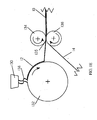
- a cooling drum 132 is provided.
- the cooling drum 132 rotates about an axis and may have a cooled outer surface.
- An extruder 130 is provided that extrudes a molten or softened elastomeric composition 138 onto the cooled outer surface of the cooling drum to form one or more elastic members 12.
- a first roller 134 and a second roller 136 rotating about parallel axes may be provided.
- the first and second rollers 134, 136 may form a nip 135 there between.
- the substrate 14 may be provided and may be conveyed to the second roller 136.
- the elastic members 12 may be conveyed from the cooling drum 132 to the first roller 134. Generally, the distance between the cooling drum 132 and the first roller 134 should be minimized to improve the handling efficiency of the elastic members 12.
- the elastic members 12 and substrate 14 are passed through the nip 135 thereby joining the plurality of elastic members 12 to the substrate 14.
- An adhesive may be used to improve the attachment between the elastic members 12 and the substrate 14. Additional substrates may be joined to the breathable stretch laminate 10.
- the resulting laminate may be subjected to further processing such as incremental stretching by way of corrugated rolls.
- the surface speed of the first roller 134 may be greater than the surface speed of the cooling drum 132.
- the elastic members 12 may be elongated prior to attachment to the substrate 14.
- the elastic member 12 may comprise a polyurethane, optionally at least one modifying resin, and optionally one or more additives.
- polyurethane includes polymers having a urethane and/or urea linkage.
- the polyurethanes useful herein are preferably selected from: polyurethane (co)polyethers, polyurethane (co)polyesters, polyurethane/urea (co)polyethers, or polyurethane/urea (co)polyesters, Preferred are polyurethane-co-poly(ethylene glycol), polyurethane-copoly(tetramethylene glycol), and polyurethane-co-poly(propylene glycol) and mixtures thereof.
- the basis weight of the elastic member 12 may be varied. In certain embodiments, the elastic member 12 may have a basis weight of less than about 100 g/m 2 (e.g., use of the BSL 10 in the front or back ear of a pant as discussed below in reference to FIGS. 3A-B ). In certain embodiments, the elastic member 12 may have a basis weight of less than about 35 g/m 2 (e.g., use of the BSL 10 in the front or back ear of a diaper as discussed below in reference to FIG. 2 ). In certain embodiments, the elastic member 12 may have a basis weight of less than about 10 g/m 2 (e.g., use of the BSL 10 in an elastic backsheet).
- the polyurethanes may be component of a phase separating material having at least one hard phase (also referred to as a hard block or hard segment) and at least one soft phase (also referred to as a soft block or soft segment). Each phase may exhibit a distinct glass transition temperatures.
- the soft phase generally exhibits a sufficiently low glass transition (Tg) temperature and/or melting temperature so as not to form glassy or crystalline regions at the use temperature of the copolymer.
- the use temperature may be between about room temperature (about 22 °C) and about body temperature (about 37 °C). However, other use temperatures are envisioned and within the scope of this invention.
- Such soft phases may exhibit a Tg of less than about -40°C.
- the soft phase may exhibit a Tg of less than about -65°C or about -75°C.
- the hard phase may have a Tg greater than about 65°C.
- the hard phase may exhibit a Tg of greater than about 135°C.
- Glass transition temperatures referred to herein are determined by Differential Scanning Calorimetry (DCS) using a temperature ramp rate of 20 °C/min.
- the calorimeter should be capable of heating/cooling rates of at least 20°C/min over a temperature range, which includes the expected Tg's of the sample that is to be tested, e.g. of from -90° to 250°C, and the calorimeter should have a sensitivity of about 0.2 ⁇ W.
- the Q1000 DSC available from TA Instruments of New Castle, DE is well-suited to determining the Tg's referred to herein.
- the material of interest can be analyzed using a temperature program such as: equilibrate at -90°C, ramp at 20°C/min to 120°C, hold isothermal for 5 minutes, ramp 20°C/min to -90°C, hold isothermal for 5 minutes, ramp 20°C/min to 250°C.
- the data (heat flow versus temperature) from the second heat cycle is used to calculate the Tg via a standard half extrapolated heat capacity temperature algorithm.
- 3-5 g of a sample material is weighed ( ⁇ 0.1 g) into an aluminum DSC pan with crimped lid.
- the hard phase may comprise a polyurethane block meeting the requisite glass transition temperature requirements.
- the soft phase may comprise one or more polyethers. Suitable polyethers include polyethylene glycol, polytetramethylene glycol, polypropylene glycol, and mixture thereof. Polyethylene glycol soft blocks are useful since polyurethanes block copolymers with polyethylene glycol blocks are more breathable than those containing polytetramethylene glycol or polypropylene glycol. Although polyethylene glycol blocks provide ideal breathability, a mixture of polyethylene glycol blocks with other polyethers (e.g., polytetramethylene glycol) blocks is particularly suited to give mechanical properties suitable for use in stretch laminates.
- polyethers e.g., polytetramethylene glycol
- the soft phase polyethers may be provided by polymerization of the hard phase component with a macrodiol.
- Macrodiols may have a base structure of HO-(-R-O-) n -H where R is a repeat unit such as ethylene, butane, hexane, etc. and where n is greater than 1.
- suitable macrodiols include polymers of ethylene glycol, butane diol, hexane diol, dipropylene diol, cyclohexylenediol, and combinations.
- the soft phase may be provided by polymerization of the hard phase component with suitable hydroquinoines including ethoxylated hydroquinone.
- the phase separating material optionally may be grafted and/or be partially modified with chemical substituents (e.g ., hydroxyl groups or carboxylates) to tailor the Tg of the soft block, to affect surface characteristics, or to increase breathability.
- polyurethane may have a weight average molecular weight of at least 40,000g/mol (40 kDa.).
- the molecular weight of the soft phase may be at least 500g/mol (500 Da) at least 1000g/mol (1000Da) or even at least 2000g/mol (2000 Da).
- the polyurethane may be derived from a polymerisation reaction of a diisocyanate with a diol, such as, for example, butane diol, or cyclohexane diol.
- the polyurethane may be derived from a polymerisation reaction of an aromatic diisocyanate and an aliphatic diol such as ethylene glycol, butane diol, propane diol, or mixtures thereof.
- a suitable diisocyanate used to form the polyurethane or the polyurethane segments of the block copolymer is methylene bis (phenyl isocyanate).
- the polyurethane may contain a polyether intermediate derived from tetrahydrofuran monomers so that tetramethylene oxide repeat units are present in the intermediate which also has terminal hydroxyl groups.
- tetramethylene oxide repeat units are present in the intermediate which also has terminal hydroxyl groups.
- selective types of other alkylene oxide monomers such as propylene oxide, ethylene oxide or a mixture of propylene oxide with ethylene oxide can be utilized to produce the polyurethane.
- a suitable phase separating material may be polymerized from the starting monomers of (i) a polyether intermediate having at least a tetramethylene oxide repeat unit and, optionally, a repeat unit derived from propylene oxide and/or ethylene oxide; (ii) a diisocyannate; and (iii) a diol or ethoxylated hydroquinone.
- Suitable diols include ethylene glycol, butane diol, hexane diol, dipropylene diol, cycolhexylenediol, and combinations.
- the elastic member 12 may comprise one or more plasticizers. Suitable plasticizers may associate or phase mix elastomeric polymer to reduce hardness without effecting properties.
- the elastic member 12 may comprise plasticizers in amounts from about 0% to about 60%. Suitable plasticizers include benzyl phthalate, benzyl butyl phthalate, and poly(ethylene glycol) such as PEG-400.
- the elastic member 12 may comprise a variety of additives. Suitable additives include, for example, stabilizers, antiblocking agents, viscosity modifiers, processing aids, slip agents antioxidants, opacifying pigments, colorants, mineral fillers, UV absorbers and bacteriostats may be employed to prevent thermal, oxidative, and bio-chemical degradation of the elastic member 12. Generally, additives may account for about 0.01% to about 60% of the total weight of the elastic member 12. In other embodiments, the composition comprises from about 0.01% to about 25%. In other suitable embodiments, the composition comprises from about 0.01% to about 10% by weight, of additives.
- additives include, for example, stabilizers, antiblocking agents, viscosity modifiers, processing aids, slip agents antioxidants, opacifying pigments, colorants, mineral fillers, UV absorbers and bacteriostats may be employed to prevent thermal, oxidative, and bio-chemical degradation of the elastic member 12. Generally, additives may account for about 0.01% to about 60% of the total weight of
- Colorants can include dyes and pigments such as titanium dioxide. Fillers may include such materials as talc and clay. Other additives may include dyes, UV absorbers, odor control agents, perfumes, fillers, desiccants, and the like.
- Suitable substrates 14 for use include nonwoven webs, woven webs, knitted fabrics, films, film laminates, apertured films, nonwoven laminates, sponges, foams, scrims, and any combinations thereof. Suitable substrates may comprise natural materials, synthetic materials, or any combination thereof. For use in absorbent articles and particularly in diapers and like products, the substrate 14 is generally compliant, soft-feeling, and non-irritating to a wearer's skin. In certain embodiments, substrates 14 may include nonwoven webs such as spunbond webs, meltblown webs, carded webs, and combinations thereof ( e.g ., spunbond-meltblown composites and variants).
- the BSL 10 of the present invention exhibits unique physical characteristics. In certain embodiments, it is important for the BSL 10 to exhibit a requisite degree of breathability as determined by the Moisture Vapor Transmission Rate (MVTR) test described below.
- the BSL 10 may exhibit a MVTR of at least about 300 g/m 2 /24 hours. In alternate embodiments, the BSL 10 may exhibit a MVTR of at least about 500, 750, or 1000 g/m 2 /24 hours.
- the BSL 10 may exhibit a force relaxation of less than about 50% as determined by the Sustained Force Relaxation Test described below. In alternate embodiments, the BSL 10 may exhibit a force relaxation of less than about 40%, 30%, or 25%. Furthermore, the BSL 10 may exhibit a 200% load to 50% unload ratio, as measured in the first cycle according to the 200% 2 Cycle Hysteresis Method described below, of less than about 16. In other embodiments, the 200% load to 50% unload ratio is less than about 13. A smaller value for the load-to-unload ratio correlates to a smaller hysteresis area under the curve which evidences the presence of higher unload forces at lower strains ( i.e ., the unload forces more closely approximate the load forces).
- the BSL 10 may be utilized in a variety of consumer and commercial products. However, the BSL 10 has particular benefit within absorbent articles, particularly disposable absorbent articles such as diapers and the like. The BSL 10 may be used in a variety of regions or in a variety of elements to provide elastic character to the absorbent article.
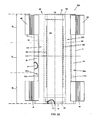
- FIG. 2 is a plan view of an exemplary, non-limiting embodiment of a diaper 20 in a flat, uncontracted state (i.e ., without elastic induced contraction).
- the garment-facing surface 120 of the diaper 20 is facing the viewer and the body-facing surface 122 is opposite the viewer.
- the diaper 20 includes a longitudinal centerline 100 and a lateral centerline 110.
- the diaper 20 may comprise a chassis 22.
- the chassis 22 comprises the main structure of the diaper 20 and other features may be added to form the composite diaper structure.
- the diaper 20 and chassis 22 are shown to have a front waist region 36, a back waist region 38 opposed to the front waist region 36, and a crotch region 37 located between the front waist region 36 and the back waist region 38.
- the waist regions 36 and 38 generally comprise those portions of the diaper 20 which, when worn, encircle the waist of the wearer.
- the waist regions 36 and 38 may include elastic elements such that they gather about the waist of the wearer to provide improved fit and containment.
- the crotch region 37 is that portion of the diaper 20 which, when the diaper 20 is worn, is generally positioned between the legs of the wearer.
- the outer periphery of diaper 20 and/or chassis 22 is defined by longitudinal edges 12 and lateral edges 14.
- the chassis 22 may have opposing longitudinal edges 12 that are oriented generally parallel to the longitudinal centerline 100. However, for better fit, longitudinal edges 12 may be curved or angled to produce, for example, an "hourglass" shape diaper when viewed in a plan view.
- the chassis 22 may have opposing lateral edges 14 that are oriented generally parallel to the lateral centerline 110.
- the chassis 22 may comprises a topsheet 24 having longitudinal edges 25, a backsheet 26, and an absorbent core 28 between the topsheet 24 and the backsheet 26.
- the absorbent core 28 may have a body-facing surface and a garment facing-surface.
- the topsheet 24 may be joined to the core 28 and/or the backsheet 26.
- the backsheet 26 may be joined to the core 28 and/or the topsheet 24. It should be recognized that other structures, elements, or substrates may be positioned between the core 28 and the topsheet 24 and/or backsheet 26.
- the topsheet 24, the backsheet 26, and the absorbent core 28 may be assembled in a variety of well-known configurations as described generally in U.S. Patent Nos. 3,860,003 ; 5,151,092 ; 5,221,274 ; 5,554,145 ; 5,569,234 ; 5,580,411 ; and 6,004,306 .
- the absorbent core 28 may comprise a wide variety of other liquid-absorbent materials commonly used in disposable diapers and other absorbent articles.
- suitable absorbent materials include comminuted wood pulp, which is generally referred to as air felt; chemically stiffened, modified or cross-linked cellulosic fibers; superabsorbent polymers or absorbent gelling materials; melt blown polymers, including co-form, biosoluble vitreous microfibers; tissue, including tissue wraps and tissue laminates; absorbent foams; absorbent sponges; and any other known absorbent material or combinations of materials.
- Exemplary absorbent structures for use as the absorbent core 28 are described in U.S. Patent No.
- Further exemplary absorbent structures may include non-removable absorbent core components and removable absorbent core components. Such structures are described in U.S. Publication 2004/0039361A1 ; 2004/0024379A1 ; 2004/0030314A1 ; 2003/0199844A1 ; and 2005/0228356A1 .
- the absorbent core 28 may comprise a fluid acquisition component, a fluid distribution component, and a fluid storage component.
- a suitable absorbent core 28 comprising an acquisition layer, a distribution layer, and a storage layer is described in U.S. Patent No. 6,590,136 .
- absorbent core construction is described in U.S. Publication No. 2004/0167486 to Busam et al.
- the absorbent core of the aforementioned publication uses no or, in the alternative, minimal amounts of absorbent fibrous material within the core.
- the absorbent core may include no more than about 20% weight percent of absorbent fibrous material (i.e ., [weight of fibrous material / total weight of the absorbent core] x 100).
- the topsheet 24 is generally a portion of the diaper 20 that may be positioned at least in partial contact or close proximity to a wearer.
- Suitable topsheets 24 may be manufactured from a wide range of materials such as woven or nonwoven webs of natural fibers (e.g ., wood or cotton fibers), synthetic fibers ( e.g ., polyester or polypropylene fibers), or a combination of natural and synthetic fibers; apertured plastic films; porous foams or reticulated foams.
- the topsheet 24 is generally supple, soft feeling, and non-irritating to a wearer's skin. Generally, at least a portion of the topsheet 24 is liquid pervious, permitting liquid to readily penetrate through the thickness of the topsheet 24.
- the topsheet 24 comprises a polymer (e.g. polyethylene) derived from a renewable resource.
- a suitable topsheet 24 is available from BBA Fiberweb, Brentwood, TN as supplier code 055SLPV09U.
- the topsheet 24 may be fully or partially elasticized or may be foreshortened so as to provide a void space between the topsheet 24 and the core 28. Exemplary structures including elasticized or foreshortened topsheets are described in more detail in U.S. Patent Nos. 4,892,536 ; 4,990,147 ; 5,037,416 ; and 5,269,775 .
- topsheet 24 may be coated with a lotion as is known in the art.
- suitable lotions include those described in U.S. Patent Nos. 5,607,760 ; 5,609,587 ; 5,635,191 ; and 5,643,588 .
- the topsheet 24 may be fully or partially elasticized or may be foreshortened so as to provide a void space between the topsheet 24 and the core 28. Exemplary structures including elasticized or foreshortened topsheets are described in more detail in U.S. Patent Nos. 4,892,536 ; 4,990,147 ; 5,037,416 ; and 5,269,775 .
- the backsheet 26 is generally positioned such that it may be at least a portion of the garment-facing surface 120 of the diaper 20.
- Backsheet 26 may be designed to prevent the exudates absorbed by and contained within the diaper 20 from soiling articles that may contact the diaper 20, such as bed sheets and undergarments.
- the backsheet 26 is substantially water-impermeable; however, the backsheet 26 may be made breathable so as to permit vapors to escape while preventing liquid exudates from escaping.
- the polyethylene film may be made breathable by inclusion of inorganic particulate material and subsequent tensioning of the film.
- Breathable backsheets may include materials such as woven webs, nonwoven webs, composite materials such as film-coated nonwoven webs, and microporous films.
- the backsheet 26 comprises a polymer such (e.g. polyethylene) derived from a renewable resource as disclosed above.
- Alternative backsheets 26 derived from non-renewable resources include films manufactured by Tredegar Industries Inc. of Terre Haute, IN and sold under the trade names X15306, X10962, and X10964; and microporous films such as manufactured by Mitsui Toatsu Co., of Japan under the designation ESPOIR NO and by EXXON Chemical Co., of Bay City, TX, under the designation EXXAIRE.
- Other alternative breathable backsheets 26 are described in U.S. Patent Nos. 5,865,823 , 5,571,096 , and 6,107,537 .
- Backsheet 26 may also consist of more than one layer.
- the backsheet 26 may comprise an outer cover and an inner layer.
- the outer cover may have longitudinal edges and the inner layer may have longitudinal edges.
- the outer cover may be made of a soft, nonwoven material.
- the inner layer may be made of a substantially water-impermeable film.
- the outer cover and an inner layer may be joined together by adhesive or any other suitable material or method.
- the nonwoven outer cover and the water-impermeable film comprise polymers (e.g ., polyethylene) derived from. renewable resources.
- a suitable outer cover and inner layer derived from non-renewable resources are available, respectively, as supplier code A18AH0 from Corovin GmbH, Peine, Germany and as supplier code PGBR4WPR from RKW Gronau GmbH, Gronau, Germany. While a variety of backsheet configurations are contemplated herein, it would be obvious to those skilled in the art that various other changes and modifications can be made without departing from the spirit and scope of the invention.
- the breathable stretch laminate 10 of the present invention may be joined to the backsheet 26, topsheet 24, or absorbent core 28 or formed from one or more components that form the backsheet 26, topsheet 24, or absorbent core 28.
- the backsheet 26, topsheet 24, or absorbent core 28 may comprise the breathable stretch laminate 10.
- the backsheet 26 may comprise the breathable stretch laminate 10 thereby forming an elastic backsheet 26.
- the breathable stretch laminate 10 may be disposed in any location where elastic character is desired.
- the diaper 20 may include back ears 42 (shown in Fig. 2 ), front ears 40, or both (shown in Fig. 3 ).
- the front and/or back ears 42 may be unitary elements of the diaper 20 ( i.e., they are not separately manipulative elements secured to the diaper 20, but rather are formed from and are extensions of one or more of the various layers of the diaper).
- the ears 40, 42 may be discrete elements that are joined to the chassis 22, as shown in FIG. 2 .
- Discrete ears 40, 42 may be joined to the chassis 22 by any bonding method known in the art such as adhesive bonding, pressure bonding, heat bonding, and the like.
- the ears 40, 42 may comprise a discrete element joined to the chassis 22 with the chassis 22 having a layer, element, or substrate that extends over the ear 40, 42.
- the ears 40, 42 may be extensible, inextensible, elastic, or inelastic.
- the ears 40, 42 may be formed from nonwoven webs, woven webs, knitted fabrics, polymeric and elastomeric films, apertured films, sponges, foams, scrims, and combinations and laminates thereof.
- the front ears and back ears 42 may be formed of the breathable stretch laminate 10 of the present invention.
- the diaper 20 may further include leg cuffs 32a, 32b which provide improved containment of liquids and other body exudates.
- Leg cuffs 32a, 32b may also be referred to as gasketing cuffs, outer leg cuffs, leg bands, side flaps, elastic cuffs, barrier cuffs, second cuffs, inner leg cuffs, or "stand-up" elasticized flaps.
- U.S. Patent 3,860,003 describes a disposable diaper which provides a contractible leg opening having a side flap and one or more elastic members to provide an elasticized leg cuff ( i.e., a gasketing cuff).
- FIG. 2 shows the diaper 20 having dual cuffs, gasketing cuff 32a and barrier cuff 32b.
- the barrier cuff 32b may include one or more barrier elastic members 33b.
- the barrier elastic members 33b may be joined to a barrier cuff substrate 34.
- the barrier cuff substrate 34 may be a polymeric film or nonwoven.
- the barrier cuff 32b may be disposed on the body-facing surface of the chassis 22.
- the barrier cuff 32b may comprise the breathable stretch laminate 10 of the present invention wherein the elastic member 12 and substrate 14 of the BSL 10 correspond to the barrier elastic members 33b and barrier cuff substrate 34 of the barrier cuff 32b.
- the barrier cuff substrate 34 may extend laterally from the longitudinal edge 12 of the chassis 22 to a point inboard of the longitudinal edge 122.
- the barrier cuff 32b generally extends longitudinally at least through the crotch region 37.
- the gasketing cuff 32a may include one or more gasketing elastic members 33a.
- the gasketing elastic member 33a may be joined to one or more of the existing elements or substrates of the diaper 20 (e.g ., topsheet 24, backsheet 26, barrier cuff substrate 34, etc .).
- the gasketing cuff 32a may comprise the breathable stretch laminate 10 of the present invention wherein the elastic member 12 and substrate 14 of the BSL 10 correspond to the gasketing elastic members 33a and any one or more of the existing elements or substrates of the diaper 20.
- the diaper 20 may also comprise an elastic waist feature 60.
- the elastic waist feature 60 is generally intended to elastically expand and contract to dynamically fit the wearer's waist.
- the waist feature 60 may enable the diaper 20 to provide improved fit and containment.
- the diaper may have two elastic waist features 60, one disposed in the front waist region 36 and one disposed in the back waist region 38.
- the elastic waist feature 60 may be a discrete element joined to the diaper 20 or the elastic waist feature 60 may be integral to the diaper 60 ( i.e., the elastic waist feature 60 is not a separate element but is a region of the diaper 20 exhibiting elasticity).
- the waist elastic 62 generally will allow for lateral elongation and recovery.
- the elastic waist feature 60 may comprise the breathable stretch laminate 10 of the present invention.
- the diaper 20 may also include a fastening system 50.
- the fastening system 50 interconnects the front waist region 36 and the back waist region 38 resulting in a waist circumference that may encircle the wearer during wear of the diaper 20.
- the fastening system 50 may include an engaging member 52 and a receiving member 54.
- the engaging member 52 may have an engaging surface 53 that covers a portion or the entire engaging member 52.
- the engaging surface 53 may comprise hooks, loops, an adhesive, a cohesive, a button, or other fastening element.
- the receiving member 54 may comprise a receiving surface 55 accepts engagement of the engaging member 52.
- the receiving surface 55 may cover a portion of the entire receiving member 54.
- the receiving surface 55 is constructed to mate with or engage with the engaging surface 53 of the engaging member 52.
- a receiving surface 55 of looped or nonwoven may be paired with an engaging surface 53 of hooks.
- the fastening system 50 may comprises a fastener such as tape tabs, hook and loop fastening components, interlocking fasteners such as tabs & slots, buckles, buttons, snaps, and/or fastening components, although any other known fastening means are generally acceptable.
- Exemplary surface fastening systems are disclosed in U.S. Patent Nos. 3,848,594 ; 4,662,875 ; 4,846,815 ; 4,894,060 ; 4,946,527 ; 5,151,092 ; and 5,221,274 .
- An exemplary interlocking fastening system is disclosed in U.S. Patent No. 6,432,098 .
- the fastening system 50 may also provide a means for holding the article in a disposal configuration as disclosed in U.S. Pat. No. 4,963,140 .
- the fastening system 50 may also include primary and secondary fastening systems, as disclosed in U.S. Pat. No. 4,699,622 .
- the fastening system 50 may be constructed to reduce shifting of overlapped portions or to improve fit as disclosed in U.S. Patent Nos. 5,242,436 ; 5,499,978 ; 5,507,736 ; and 5,591,152 .
- the diaper may be pre-formed by the manufacturer to create a pant.
- the pant may be pre-formed such that the first waist region 36 is joined to the back waist region 38 thereby forming a waist opening back waist region 38 by a refastenable mechanism such as fastening system or may be joined by a refastenable and/or a non-refastenable bond (e.g ., seam, weld, adhesive, cohesive bond, fastener, etc.).
- a suitable refastenable bond may be provided with the use of a fastening system 50.
- a non-refastenable bond may be formed by common bonding techniques including adhesive bonding, a pressure bonding, a heat bonding, ultrasonic bonding, and the like.
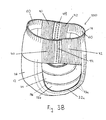
- FIGS. 3A-B An exemplary pant 320 is shown in FIGS. 3A-B .
- FIG. 3A shows the pant 320 in a planar unseamed state with the garment-facing surface 120 facing the viewer.
- FIG. 3B shows the pant 320 of FIG. 3A in a seamed state and from a perspective view. Unless noted otherwise, the callouts of in FIGS. 3A-B refer to the same elements as the diaper 20 of FIG. 2 .
- the pant 320 shown without a fastening system.
- the front ear 40 and back ear 42 are joined at a seam 49 by multiple bonds.
- the pant 320 is also shown having a waist feature 60 in both the front waist region 36 and the back waist region 38.
- Other suitable pants are disclosed in U.S. Patent Nos.
- Sustained Load Force Relaxation Sample laminates are cut using a 1" X 2" die. The weight and the thickness of the laminates are recorded as well as the process direction (MD or CD). Polyester backed high temperature tape (available from McMaster-Carr Catalogue item #7630A42) is applied to the top and bottom 0.5 inches of the cut laminate, leaving a 1 inch gage length. The sample is placed into vertically aligned GF-1 Vise Action Tensile Grips available from Chatillon Force Measurement Systems, Largo, FL, which are within a test chamber (described below) set at 38°C (100°F).
- the test chamber consists of a 25 x 11 x 16 inch (height x width x depth) enclosure surrounding a tubular stand which supports a pair of vertically aligned manually actuated grips.
- the top grip is fixed to a force transducer, Interface Model SMT1-1.1 available from Interface, Inc., Scottsdale, AZ.
- the bottom grip is attached to a manually actuated screw which allows for the grip to raised and lowered.
- the zero position for the grips provides for a 1.0 inch gap between said grips.
- An electronic positioning device, ProScale Model 150 available from Accurate Technology, Inc., of Fletcher, NC, is attached to the bottom grip to monitor the distance between the grips.
- the temperature within the test chamber is maintained using an electronic controller (West 6100+, available from ISE, Inc., Cleveland, OH), resistance heater, and thermocouple positioned near the test sample.
- the output signal from the force transducer is processed using Interface Model SGA Strain Gage Transducer Amplifier available from Interface, Inc. Scottsdale, AZ and captured on a Dell Latitude (available from Dell Inc., Round Rock, TX) computer using Measurement Computing Corporation (Middleboro, MA) PC card DAS16/16.
- the data acquisition software developed in-house, logs time and load at programmed time intervals.
- the grips are vertically aligned with the bottom grip fixed to the frame and the top grip attached to the force transducer, MTS model # 100-090-197 available from MTS Corporation, Cary, NC, which is attached to the machine crosshead.
- the full scale capacity of the load cell must exceed the greatest resistance load from the test film during the test.
- the test consists of two move segments.
- the first move segment consists of the crosshead extending the film to 200% engineering strain (3 inch grip separation) at 250 mm/minute and holding the sample at 200% strain for 30 seconds and then returning the crosshead to the zero position at 250 mm/min. The sample is held at the zero position for 60 seconds.
- the second move segment is a repetition of the first.
- the first move segment is identified as cycle 1, while the second move segment is identified as cycle 2.
- the method reports Load at 200% (peak load at 200% engineering strain), Unload at 50% (load at 50% engineering strain during return movement to zero), and Unload at 30% (load at 50% engineering strain during return movement to zero).
- Moisture Vapor Transmission Rate (MVTR) Method measures the amount of water vapor that is transmitted through a sample under specific temperature and humidity. The transmitted vapor is absorbed by CaCl 2 desiccant and determined gravimetrically. Samples are evaluated in triplicate, along with a reference film sample of established permeability (e.g ., Exxon Exxaire microporous material #XBF-110W) that is used as a positive control.
- MVTR Moisture Vapor Transmission Rate
- the test uses a flanged cup (machined from Delrin (McMaster-Carr Catalog #8572K34) and anhydrous CaCl 2 (Wako Pure Chemical Industries, Richmond, Va.; Catalog #030-00525).
- the height of the cup is 55 mm with an inner diameter of 30 mm and an outer diameter of 45 mm.
- the inner volume of the cup is approximately 38.8 cm 3 .
- the cup is fitted with a silicone gasket and lid containing 3 holes for thumb screws to completely seal the cup.
- Desiccant particles used are sized to pass through a No. 8 sieve but not through a No. 10 sieve. Samples are resized to approximately 1.5" x 2.5" and are substantially free of visible defects such as air bubbles, holes, inclusions, and cuts. Samples are to have sharp and visibly defect-free edges. If the sample is defective, it is to be discarded and replaced. The sample must completely cover the cup opening having a circular area 0.0007065 m 2 .
- the cup is filled with CaCl 2 to within about 1 cm of the top.
- the cup is tapped on the counter 10 times, and the CaCl 2 surface is leveled.
- the amount of CaCl 2 is adjusted until the headspace between the film surface and the top of the CaCl 2 is 1.0 cm.
- the film is placed on top of the cup across the opening (30 mm) and is secured using the silicone gasket, retaining ring, and thumb screws. Properly installed, the specimen should not be wrinkled or stretched.
- the sample assembly is weighed with an analytical balance and recorded to ⁇ 0.001 g.
- the assembly is placed in a constant temperature (40 ⁇ 3°C) and humidity (75 ⁇ 3% RH) chamber for 5.0 hr ⁇ 5 min.
- MVTR M a / A * 0.208 day
- Replicate results are averaged and rounded to the nearest 100 g/m 2 /24hr (e.g ., 2865 g/m 2 /24hr is herein given as 2900 g/m 2 /24hr and 275 g/m 2 /24hr is given as 300 g/m 2 /24hr).
- Glue sheets are prepared ahead of time on an X-Y table (i.e ., a table equipped with a mechanical glue head that can travel in both the x and y directions) by applying adhesive code H2861 available from Bostik Findley, Wauatosa, WI, using a single nozzle head in a spiral pattern with a 5 mm overlap on Silicon coated release paper.
- adhesive code H2861 available from Bostik Findley, Wauatosa, WI
- Predetemined cut pieces of a 27 gsm High Elongation Carded nonwoven (NW) available from BBA Nonwovens, Old Hickory, TN, are cut for laminate making. Two pieces of nonwovens are secured properly to a rubber mat by tape while glue sheets are placed on top of secured nonwovens.
- a roller is used to press/transfer adhesive from the release papers to the nonwoven.
- the release paper is removed from the first nonwoven to expose the adhesive.
- a predetermined length of elastic film (as disclosed in Examples 1-3 below) is placed on top of first nonwoven/adhesive followed by placing a sheet of release paper on the film.
- a roller is used to press the film against the first nonwoven/adhesive.
- the release paper is removed from the film.
- the release paper on second nonwoven/adhesive is removed.
- the second nonwoven/adhesive is placed on top of film so the adhesive from the second nonwoven is in contact with film.
- a roller is used to apply pressure to bond the second nonwoven to the elastomeric film.
- Laminates are cut into a 75 mm (cross machine direction of the film) x 80 mm (machine direction of the film) rectangle using a ruler and rolling blade.
- Elastic laminates are mechanically activated to simulate ring rolling activation process as described in U.S. Patent No. 6,843,134 .
- Manual activation in this instance refers to using aluminum plates with inter-meshing teeth to selectively stretch portions of the laminate such that the nonwoven is broken and/or elongated and the elastic film is able to extend and retract without being unduly encumbered by the nonwoven.
- the laminates are allowed to age for a minimum of 1 day after fabrication and before activation.
- the laminates are activated with the elongation imparted in the cross direction (CD) with a target strain of 260% and a target strain rate of 533 s -1 .
- the pitch between the activation teeth is approximately 3.810 mm.
- Example 1 A 34 gsm thermoplastic polyurethane block copolymer cast film available from Deerfield Urethane, Inc., South Deerfield, MA as Dureflex X2104 (lot # 03162005) was laminated, activated and tested according to the above methods.
- Dureflex X2104 comprises Estane X-1007 from Noveon, Inc., Cleveland, OH. Estante X-1007 is reported as having Tg's of-61°C and 140°C.
- Example 2 A 55 gsm thermoplastic polyurethane block copolymer cast extruded film available from Noveon, Inc., Cleveland, OH, as a 90%/10% admix of Estane X-1007-031 / X-1206 was laminated, activated, and tested according to the above methods.
- Example 3 (comparative) : A 59 gsm thermoplastic coextruded styrenic block copolymer film available from Nordenia USA, Inc., Jackson, MO, under supplier code KG6361.000 (lot NOGG53576) was laminated, activated, and tested according to the above methods.
- the hysteresis data shows that at comparable basis weights (55gsm for Example 2 and 59gsm for Example 3), the unload forces are similar for the polyurethane based laminates and the styrenic block copolymer laminates.
- the basis weight of the polyurethane film is reduced (e.g., 34 gsm for Example 1), the unload force is likewise diminished compared the styrenic block copolymer laminate.
- it is desirable to have high unload forces e.g., unload forces that more closely approximate the load forces).
- it is even more desirable that the force be maintained during strain i.e ., a low force relaxation).
- the polyurethane laminates exhibit a reduced force relaxation as compared to the styrenic block copolymer based laminates.
- the lower basis weight polyurethane laminate is expected to exhibit unload comparable to the higher basis weight styrenic block copolymer based laminate after 10 hours under strain.
Landscapes
- Health & Medical Sciences (AREA)
- Engineering & Computer Science (AREA)
- Vascular Medicine (AREA)
- Epidemiology (AREA)
- Biomedical Technology (AREA)
- Heart & Thoracic Surgery (AREA)
- Textile Engineering (AREA)
- Life Sciences & Earth Sciences (AREA)
- Animal Behavior & Ethology (AREA)
- General Health & Medical Sciences (AREA)
- Public Health (AREA)
- Veterinary Medicine (AREA)
- Absorbent Articles And Supports Therefor (AREA)
- Laminated Bodies (AREA)
- Polyurethanes Or Polyureas (AREA)
Claims (10)
- Article absorbant comprenant :a) une feuille de dessus ;b) une feuille de fond jointe à la feuille de dessus ;c) une âme absorbante entre la feuille de dessus et la feuille de fond ; etd) un élément élastique comprenant un stratifié étirable perméable à l'air, ledit stratifié étirable perméable à l'air comprenanti) un premier substrat ; etii) un élément élastique joint au premier substrat, dans lequel ledit
élément élastique comprend un polyuréthane ;
dans lequel ledit stratifié étirable perméable à l'air présente un TTVE (taux de transfert de vapeur d'eau) supérieur à environ 300 grammes par mètre carré par 24 heures et une relaxation de force de moins d'environ 50 % après environ 10 heures à 38 °C (100 °F) et 50 % d'allongement.
dans lequel l'élément élastique est un revers de jambe. - Article selon la revendication 1, dans lequel le stratifié étirable perméable à l'air présente un TTVE supérieur à environ 500 grammes par mètre carré par 24 heures.
- Article selon la revendication 1, dans lequel le stratifié étirable perméable à l'air présente un TTVE supérieur à environ 1000 grammes par mètre carré par 24 heures.
- Article selon l'une quelconque des revendications précédentes, dans lequel le stratifié étirable perméable à l'air est un stratifié étirable à contrainte zéro et le premier substrat est un non-tissé étiré de manière incrémentielle.
- Article selon l'une quelconque des revendications précédentes, dans lequel le stratifié étirable perméable à l'air dans un test d'hystérésis à 200 % à 2 cycles présente un rapport de charge à 200 % sur décharge à 50 % de premier cycle de moins d'environ 16.
- Article selon l'une quelconque des revendications précédentes, dans lequel le polyuréthane a une masse moléculaire d'au moins 40 000 g/mol (40 kDa).
- Article selon l'une quelconque des revendications précédentes, dans lequel le polyuréthane est un matériau à séparation de phase ayant au moins une première phase avec une première température de transition vitreuse de moins de -40 °C et une deuxième phase avec une deuxième température de transition vitreuse de plus de 100 °C.
- Article selon la revendication 7, dans lequel le matériau à séparation de phase est polymérisé à partir de (i) un intermédiaire polyéther ayant au moins un motif de répétition oxyde de tétraméthylène et, facultativement, un motif de répétition dérivée d'oxyde de propylène et/ou d'oxyde d'éthylène ; (ii) un di-isocyanate ; et (iii) un diol ou une hydroquinone éthoxylée.
- Article selon l'une quelconque des revendications précédentes, dans lequel l'élément élastique est choisi dans le groupe constitué d'un revers de jambe avec un des éléments suivants : un élément de ceinture, un pan latéral, une patte, un revers anal, une feuille de dessus élastifiée, une feuille de fond élastique, un système de fixation, et leurs combinaisons.
- Article selon l'une quelconque des revendications précédentes, dans lequel le stratifié étirable perméable à l'air comprend en outre un deuxième substrat joint à l'élément élastique de telle sorte que l'élément élastique est disposé entre le premier substrat et le deuxième substrat.
Applications Claiming Priority (2)
| Application Number | Priority Date | Filing Date | Title |
|---|---|---|---|
| US11/333,135 US7806883B2 (en) | 2006-01-17 | 2006-01-17 | Absorbent articles having a breathable stretch laminate |
| PCT/IB2007/050145 WO2007083268A1 (fr) | 2006-01-17 | 2007-01-16 | Articles absorbants comportant un stratifie etirable et permeable a l'air |
Publications (2)
| Publication Number | Publication Date |
|---|---|
| EP1973509A1 EP1973509A1 (fr) | 2008-10-01 |
| EP1973509B1 true EP1973509B1 (fr) | 2011-08-31 |
Family
ID=37951780
Family Applications (1)
| Application Number | Title | Priority Date | Filing Date |
|---|---|---|---|
| EP07700612A Revoked EP1973509B1 (fr) | 2006-01-17 | 2007-01-16 | Articles absorbants comportant un stratifie etirable et permeable a l'air |
Country Status (7)
| Country | Link |
|---|---|
| US (2) | US7806883B2 (fr) |
| EP (1) | EP1973509B1 (fr) |
| JP (1) | JP2009523524A (fr) |
| CN (1) | CN101370455A (fr) |
| AT (1) | ATE522195T1 (fr) |
| CA (1) | CA2637633C (fr) |
| WO (1) | WO2007083268A1 (fr) |
Families Citing this family (62)
| Publication number | Priority date | Publication date | Assignee | Title |
|---|---|---|---|---|
| US20070219521A1 (en) * | 2006-03-17 | 2007-09-20 | The Procter & Gamble Company | Absorbent article comprising a synthetic polymer derived from a renewable resource and methods of producing said article |
| CN101460123A (zh) * | 2006-06-07 | 2009-06-17 | 宝洁公司 | 用于吸收制品的可双轴向拉伸的外覆盖件 |
| ES2541151T3 (es) | 2006-10-27 | 2015-07-16 | Paul Hartmann Ag | Artículo de incontinencia absorbente con sistema de cierre mejorado |
| CA2722538C (fr) * | 2008-04-29 | 2014-08-12 | The Procter & Gamble Company | Procede de fabrication d'une partie centrale absorbante avec un revetement central resistant a la deformation |
| TWI501757B (zh) * | 2008-12-24 | 2015-10-01 | Kao Corp | Wearing articles and their manufacturing methods |
| US8171972B2 (en) | 2009-01-30 | 2012-05-08 | The Procter & Gamble Company | Strip guide for high-speed continuous application of a strip material to a moving sheet-like substrate material at laterally shifting locations |
| US8182627B2 (en) | 2009-01-30 | 2012-05-22 | The Procter & Gamble Company | Method for high-speed continuous application of a strip material to a substrate along an application path on the substrate |
| US20100193138A1 (en) * | 2009-01-30 | 2010-08-05 | Joseph Allen Eckstein | System for High-Speed Continuous Application of a Strip Material to a Moving Sheet-Like Substrate Material at Laterally Shifting Locations |
| US20100193135A1 (en) | 2009-01-30 | 2010-08-05 | Joseph Allen Eckstein | System and Method for High-Speed Continuous Application of a Strip Material to a Moving Sheet-Like Substrate Material at Laterally Shifting Locations |
| RU2580990C2 (ru) | 2010-11-30 | 2016-04-10 | Као Корпорейшн | Подгузник одноразового использования и способ его изготовления |
| JP2012125313A (ja) * | 2010-12-14 | 2012-07-05 | Kao Corp | 使い捨ておむつ及びその製造方法 |
| JP5851104B2 (ja) * | 2011-03-11 | 2016-02-03 | スリーエム イノベイティブ プロパティズ カンパニー | 伸縮性積層シート |
| DK2720862T3 (en) | 2011-06-17 | 2016-09-19 | Fiberweb Inc | Vapor permeable, water impervious TOTAL MAJOR MULTI-LAYER ARTICLE |
| ES2643697T3 (es) | 2011-06-23 | 2017-11-23 | Fiberweb, Llc | Artículo multicapa permeable al vapor y prácticamente impermeable al agua |
| US10369769B2 (en) | 2011-06-23 | 2019-08-06 | Fiberweb, Inc. | Vapor-permeable, substantially water-impermeable multilayer article |
| WO2012178011A2 (fr) | 2011-06-24 | 2012-12-27 | Fiberweb, Inc. | Article multicouches perméable à la vapeur d'eau, mais essentiellement imperméable à l'eau |
| BR112014003459A2 (pt) | 2011-08-31 | 2017-03-01 | Procter & Gamble | elemento de fixação tendo camada de reforço ligada |
| WO2014004453A1 (fr) | 2012-06-29 | 2014-01-03 | The Procter & Gamble Company | Système et procédé pour l'application continue à grande vitesse d'un matériau de bande sur un matériau de substrat mobile du type feuille |
| JP2016519581A (ja) | 2013-03-11 | 2016-07-07 | ザ プロクター アンド ギャンブル カンパニー | 多層デュアル積層体を有する吸収性物品 |
| EP2799228B1 (fr) * | 2013-05-03 | 2015-10-14 | Mondi Gronau GmbH | Procédé de fabrication d'un stratifié élastique imprimé |
| US9533067B2 (en) * | 2013-05-03 | 2017-01-03 | The Procter & Gamble Company | Absorbent articles comprising stretch laminates |
| EP3143073B1 (fr) | 2014-05-12 | 2019-02-27 | The Procter and Gamble Company | Films microtexturés présentant une impression tactile améliorée et/ou une perception du bruit réduite |
| BR112017005934B1 (pt) | 2014-09-25 | 2022-03-22 | Dow Global Technologies Llc | Película de múltiplas camadas elastomérica modificada para esticamento e processo para fabricação de uma película de múltiplas camadas elastomérica modificada por esticamento |
| CN106794096A (zh) | 2014-09-26 | 2017-05-31 | 金伯利-克拉克环球有限公司 | 用于吸收制品的具有开孔层和非开孔层的腰部组件 |
| US11311427B2 (en) | 2016-04-18 | 2022-04-26 | The Procter & Gamble Company | Elastomeric laminate with activation thickness |
| US10137674B2 (en) | 2016-04-18 | 2018-11-27 | The Procter & Gamble Company | Elastomeric laminate with activation thickness |
| WO2017214924A1 (fr) | 2016-06-16 | 2017-12-21 | The Procter & Gamble Company | Article absorbant comportant un matériau absorbant les odeurs |
| US11642248B2 (en) | 2016-08-12 | 2023-05-09 | The Procter & Gamble Company | Absorbent article with an ear portion |
| WO2018031837A1 (fr) | 2016-08-12 | 2018-02-15 | The Procter & Gamble Company | Laminés élastiques et procédés d'assemblage de laminés élastiques pour articles absorbants. |
| US11446186B2 (en) | 2016-08-12 | 2022-09-20 | The Procter & Gamble Company | Absorbent article with ear portion |
| EP3538046B1 (fr) | 2016-11-09 | 2020-12-02 | The Procter and Gamble Company | Ensemble d'articles absorbants munis de parties de languette |
| CN110381901A (zh) | 2017-03-27 | 2019-10-25 | 宝洁公司 | 具有卷曲纺粘纤维网的弹性体层合体 |
| CN115257121B (zh) | 2017-03-27 | 2025-06-13 | 宝洁公司 | 具有柔软非卷曲纺粘纤维网的弹性体层合体 |
| USD841773S1 (en) * | 2017-05-09 | 2019-02-26 | Petro Shield LLC | Containment mat |
| US11596562B2 (en) * | 2017-10-31 | 2023-03-07 | The Procter & Gamble Company | Absorbent article with extensible ears |
| EP3703638B1 (fr) | 2017-10-31 | 2024-10-30 | The Procter & Gamble Company | Article absorbant à languettes extensibles |
| US11547613B2 (en) * | 2017-12-05 | 2023-01-10 | The Procter & Gamble Company | Stretch laminate with beamed elastics and formed nonwoven layer |
| CN112175167B (zh) * | 2017-12-25 | 2022-03-25 | 福建恒安卫生材料有限公司 | 基于硅磷铝沸石分子筛的抑味亲水性柔软海绵及其制备方法 |
| US11969325B2 (en) | 2018-01-25 | 2024-04-30 | The Procter & Gamble Company | Absorbent article with function-formed topsheet, and method for manufacturing |
| US10765565B2 (en) | 2018-01-25 | 2020-09-08 | The Procter & Gamble Company | Method for manufacturing topsheets for absorbent articles |
| WO2019183041A1 (fr) | 2018-03-20 | 2019-09-26 | The Procter & Gamble Company | Motif de liaison dans un article absorbant |
| EP3773399B1 (fr) | 2018-03-27 | 2024-01-17 | The Procter & Gamble Company | Stratifiés élastomères ayant des bandes de fibres filées-liées sans ondulations |
| EP3836876B1 (fr) | 2018-08-14 | 2023-11-29 | The Procter & Gamble Company | Éléments de fixation profilés et articles absorbants équipés de ceux-ci |
| WO2020041061A1 (fr) * | 2018-08-21 | 2020-02-27 | The Procter & Gamble Company | Articles absorbants dotés de composants pour un aspect uniforme |
| US12053357B2 (en) | 2019-06-19 | 2024-08-06 | The Procter & Gamble Company | Absorbent article with function-formed topsheet, and method for manufacturing |
| US11819393B2 (en) | 2019-06-19 | 2023-11-21 | The Procter & Gamble Company | Absorbent article with function-formed topsheet, and method for manufacturing |
| US11944522B2 (en) | 2019-07-01 | 2024-04-02 | The Procter & Gamble Company | Absorbent article with ear portion |
| US11793685B2 (en) | 2019-11-15 | 2023-10-24 | The Procter And Gamble Company | Absorbent article having fastening system |
| US11801168B2 (en) | 2019-11-15 | 2023-10-31 | The Procter And Gamble Company | Tape-type absorbent article with belt structure |
| CN110946711B (zh) * | 2019-11-25 | 2021-05-04 | 福建恒安集团有限公司 | 一种一次性裤型卫生用品的制备方法 |
| US20210251824A1 (en) | 2020-02-13 | 2021-08-19 | The Procter & Gamble Company | Absorbent article with fastening system |
| CN115103658B (zh) | 2020-02-13 | 2023-10-10 | 宝洁公司 | 具有扣紧系统的吸收制品 |
| US12605290B2 (en) | 2020-06-09 | 2026-04-21 | The Procter & Gamble Company | Article having a bond pattern |
| WO2021252825A1 (fr) | 2020-06-12 | 2021-12-16 | The Procter & Gamble Company | Article absorbant avec système de fixation |
| EP4470516A3 (fr) | 2020-06-25 | 2025-02-26 | The Procter & Gamble Company | Article absorbant avec stratifié élastique |
| US20220395409A1 (en) * | 2021-06-14 | 2022-12-15 | Chelsea Marian McAmis | Belt Suspended Fully Detachable Cloth Diaper with Compatible Belted Garments |
| CN117979933A (zh) | 2021-09-30 | 2024-05-03 | 宝洁公司 | 具有层合粘结图案的吸收制品 |
| CN119173235A (zh) | 2022-05-20 | 2024-12-20 | 宝洁公司 | 具有层合粘结图案的吸收制品 |
| JP2026503125A (ja) | 2023-01-27 | 2026-01-27 | ザ プロクター アンド ギャンブル カンパニー | 結合された伸張性積層体を有する吸収性物品 |
| CN120500315A (zh) | 2023-01-27 | 2025-08-15 | 宝洁公司 | 具有粘结拉伸层合体的吸收制品 |
| WO2024233851A1 (fr) | 2023-05-11 | 2024-11-14 | The Procter & Gamble Company | Articles absorbants avec stratifiés extensibles liés |
| US20250352409A1 (en) * | 2024-05-14 | 2025-11-20 | The Procter & Gamble Company | Body-conformable absorbent articles with an elastic backsheet |
Family Cites Families (87)
| Publication number | Priority date | Publication date | Assignee | Title |
|---|---|---|---|---|
| US3848594A (en) * | 1973-06-27 | 1974-11-19 | Procter & Gamble | Tape fastening system for disposable diaper |
| US3860003B2 (en) * | 1973-11-21 | 1990-06-19 | Contractable side portions for disposable diaper | |
| US4808178A (en) * | 1981-07-17 | 1989-02-28 | The Proctor & Gamble Company | Disposable absorbent article having elasticized flaps provided with leakage resistant portions |
| US4909803A (en) * | 1983-06-30 | 1990-03-20 | The Procter And Gamble Company | Disposable absorbent article having elasticized flaps provided with leakage resistant portions |
| US4525407A (en) * | 1982-08-27 | 1985-06-25 | Chicopee | Elastic composites |
| US4610678A (en) * | 1983-06-24 | 1986-09-09 | Weisman Paul T | High-density absorbent structures |
| US4532316A (en) * | 1984-05-29 | 1985-07-30 | W. L. Gore & Assoc., Inc. | Phase separating polyurethane prepolymers and elastomers prepared by reacting a polyol having a molecular weight of 600-3500 and isocyanate and a low molecular weight chain extender in which the ratios of reactants have a limited range |
| PH23956A (en) * | 1985-05-15 | 1990-01-23 | Procter & Gamble | Absorbent articles with dual layered cores |
| US4695278A (en) * | 1985-10-11 | 1987-09-22 | The Procter & Gamble Company | Absorbent article having dual cuffs |
| US4662875A (en) * | 1985-11-27 | 1987-05-05 | The Procter & Gamble Company | Absorbent article |
| US4699622A (en) * | 1986-03-21 | 1987-10-13 | The Procter & Gamble Company | Disposable diaper having an improved side closure |
| IL82511A (en) * | 1986-05-28 | 1992-09-06 | Procter & Gamble | Apparatus for and methods of airlaying fibrous webs having discrete particles therein |
| US4834735A (en) * | 1986-07-18 | 1989-05-30 | The Proctor & Gamble Company | High density absorbent members having lower density and lower basis weight acquisition zones |
| CA1290501C (fr) * | 1986-10-10 | 1991-10-15 | Jerry Layne Dragoo | Article absorbant ayant deux revers pare-fuite |
| US4846815A (en) * | 1987-01-26 | 1989-07-11 | The Procter & Gamble Company | Disposable diaper having an improved fastening device |
| US4940464A (en) * | 1987-12-16 | 1990-07-10 | Kimberly-Clark Corporation | Disposable incontinence garment or training pant |
| US4963140A (en) * | 1987-12-17 | 1990-10-16 | The Procter & Gamble Company | Mechanical fastening systems with disposal means for disposable absorbent articles |
| US4894060A (en) * | 1988-01-11 | 1990-01-16 | Minnesota Mining And Manufacturing Company | Disposable diaper with improved hook fastener portion |
| US4892536A (en) * | 1988-09-02 | 1990-01-09 | The Procter & Gamble Company | Absorbent article having elastic strands |
| US4990147A (en) * | 1988-09-02 | 1991-02-05 | The Procter & Gamble Company | Absorbent article with elastic liner for waste material isolation |
| US5226992A (en) * | 1988-09-23 | 1993-07-13 | Kimberly-Clark Corporation | Process for forming a composite elastic necked-bonded material |
| US4965122A (en) * | 1988-09-23 | 1990-10-23 | Kimberly-Clark Corporation | Reversibly necked material |
| US4981747A (en) * | 1988-09-23 | 1991-01-01 | Kimberly-Clark Corporation | Composite elastic material including a reversibly necked material |
| JPH0744944B2 (ja) * | 1988-12-17 | 1995-05-17 | 株式会社瑞光 | 使い捨ておむつおよびその製造方法 |
| US5037416A (en) * | 1989-03-09 | 1991-08-06 | The Procter & Gamble Company | Disposable absorbent article having elastically extensible topsheet |
| US4946527A (en) * | 1989-09-19 | 1990-08-07 | The Procter & Gamble Company | Pressure-sensitive adhesive fastener and method of making same |
| US5137537A (en) * | 1989-11-07 | 1992-08-11 | The Procter & Gamble Cellulose Company | Absorbent structure containing individualized, polycarboxylic acid crosslinked wood pulp cellulose fibers |
| US5116662A (en) * | 1989-12-15 | 1992-05-26 | Kimberly-Clark Corporation | Multi-direction stretch composite elastic material |
| US5114781A (en) * | 1989-12-15 | 1992-05-19 | Kimberly-Clark Corporation | Multi-direction stretch composite elastic material including a reversibly necked material |
| JP2664501B2 (ja) * | 1989-12-22 | 1997-10-15 | ユニ・チャーム株式会社 | 使い捨て着用物品 |
| US5151092A (en) * | 1991-06-13 | 1992-09-29 | The Procter & Gamble Company | Absorbent article with dynamic elastic waist feature having a predisposed resilient flexural hinge |
| US5221274A (en) * | 1991-06-13 | 1993-06-22 | The Procter & Gamble Company | Absorbent article with dynamic elastic waist feature having a predisposed resilient flexural hinge |
| US5156793A (en) * | 1991-02-28 | 1992-10-20 | The Procter & Gamble Company | Method for incrementally stretching zero strain stretch laminate web in a non-uniform manner to impart a varying degree of elasticity thereto |
| US5167897A (en) * | 1991-02-28 | 1992-12-01 | The Procter & Gamble Company | Method for incrementally stretching a zero strain stretch laminate web to impart elasticity thereto |
| US5196000A (en) * | 1991-06-13 | 1993-03-23 | The Proctor & Gamble Company | Absorbent article with dynamic elastic waist feature comprising an expansive tummy panel |
| CZ281985B6 (cs) * | 1991-06-13 | 1997-04-16 | The Procter And Gamble Company | Absorpční výrobek s upevňovacím ústrojím pro dynamické uložení elastikovaného pásu |
| US5147345A (en) * | 1991-08-12 | 1992-09-15 | The Procter & Gamble Company | High efficiency absorbent articles for incontinence management |
| US5260345A (en) * | 1991-08-12 | 1993-11-09 | The Procter & Gamble Company | Absorbent foam materials for aqueous body fluids and absorbent articles containing such materials |
| US5387207A (en) * | 1991-08-12 | 1995-02-07 | The Procter & Gamble Company | Thin-unit-wet absorbent foam materials for aqueous body fluids and process for making same |
| US5246433A (en) * | 1991-11-21 | 1993-09-21 | The Procter & Gamble Company | Elasticized disposable training pant and method of making the same |
| US5269775A (en) * | 1992-06-12 | 1993-12-14 | The Procter & Gamble Company | Trisection topsheets for disposable absorbent articles and disposable absorbent articles having such trisection topsheets |
| US5342338A (en) * | 1993-06-11 | 1994-08-30 | The Procter & Gamble Company | Disposable absorbent article for low-viscosity fecal material |
| US5397316A (en) * | 1993-06-25 | 1995-03-14 | The Procter & Gamble Company | Slitted absorbent members for aqueous body fluids formed of expandable absorbent materials |
| JPH07142627A (ja) * | 1993-11-18 | 1995-06-02 | Fujitsu Ltd | 半導体装置及びその製造方法 |
| DK0729332T3 (da) * | 1993-11-19 | 1999-09-27 | Procter & Gamble | Absorberende artikel med strækbare sidefelter i multiple retninger |
| US5643588A (en) * | 1994-11-28 | 1997-07-01 | The Procter & Gamble Company | Diaper having a lotioned topsheet |
| US5554145A (en) * | 1994-02-28 | 1996-09-10 | The Procter & Gamble Company | Absorbent article with multiple zone structural elastic-like film web extensible waist feature |
| US5635191A (en) * | 1994-11-28 | 1997-06-03 | The Procter & Gamble Company | Diaper having a lotioned topsheet containing a polysiloxane emollient |
| US6107538A (en) * | 1995-01-10 | 2000-08-22 | The Procter & Gamble Company | Absorbent members for absorbing body liquids |
| US5649918A (en) * | 1995-02-10 | 1997-07-22 | Kimberly-Clark Corporation | Absorbent article having containment gaskets |
| US5580411A (en) * | 1995-02-10 | 1996-12-03 | The Procter & Gamble Company | Zero scrap method for manufacturing side panels for absorbent articles |
| US5569234A (en) * | 1995-04-03 | 1996-10-29 | The Procter & Gamble Company | Disposable pull-on pant |
| US5607760A (en) * | 1995-08-03 | 1997-03-04 | The Procter & Gamble Company | Disposable absorbent article having a lotioned topsheet containing an emollient and a polyol polyester immobilizing agent |
| US5609587A (en) * | 1995-08-03 | 1997-03-11 | The Procter & Gamble Company | Diaper having a lotioned topsheet comprising a liquid polyol polyester emollient and an immobilizing agent |
| US5571096A (en) * | 1995-09-19 | 1996-11-05 | The Procter & Gamble Company | Absorbent article having breathable side panels |
| US6120489A (en) * | 1995-10-10 | 2000-09-19 | The Procter & Gamble Company | Flangeless seam for use in disposable articles |
| US5897545A (en) * | 1996-04-02 | 1999-04-27 | The Procter & Gamble Company | Elastomeric side panel for use with convertible absorbent articles |
| US6120487A (en) * | 1996-04-03 | 2000-09-19 | The Procter & Gamble Company | Disposable pull-on pant |
| US5865823A (en) * | 1996-11-06 | 1999-02-02 | The Procter & Gamble Company | Absorbent article having a breathable, fluid impervious backsheet |
| US6677258B2 (en) * | 1996-05-29 | 2004-01-13 | E. I. Du Pont De Nemours And Company | Breathable composite sheet structure and absorbent articles utilizing same |
| US6001460A (en) | 1996-12-30 | 1999-12-14 | Kimberly-Clark Worldwide, Inc. | Elastic laminated fabric material and method of making same |
| US7087287B2 (en) * | 1997-02-21 | 2006-08-08 | The Procter & Gamble Company | Tear resistant porous extensible web |
| US7291137B2 (en) * | 1997-03-27 | 2007-11-06 | The Procter & Gamble Company | Disposable absorbent articles having multiple absorbent core components including replaceable components |
| US6932800B2 (en) * | 1997-03-27 | 2005-08-23 | The Procter & Gamble Company | Absorbent articles comprising a material having a high vertical wicking capacity |
| US7601145B2 (en) * | 1997-03-27 | 2009-10-13 | The Procter & Gamble Company | Disposable absorbent articles having multiple absorbent core components including replaceable components |
| US6989005B1 (en) * | 1997-03-27 | 2006-01-24 | The Procter & Gamble Company | Absorbent articles having removable components |
| US7670324B2 (en) * | 1997-03-27 | 2010-03-02 | The Procter And Gamble Company | Disposable absorbent articles with replaceable absorbent core components having regions of permeability and impermeability on same surface |
| US5959059A (en) * | 1997-06-10 | 1999-09-28 | The B.F. Goodrich Company | Thermoplastic polyether urethane |
| US6432098B1 (en) * | 1997-09-04 | 2002-08-13 | The Procter & Gamble Company | Absorbent article fastening device |
| US6107537A (en) * | 1997-09-10 | 2000-08-22 | The Procter & Gamble Company | Disposable absorbent articles providing a skin condition benefit |
| EP0963760A1 (fr) | 1998-06-09 | 1999-12-15 | The Procter & Gamble Company | Compositions thermoplastiques à basse viscosité pour structures perméables à la vapeur d'eau |
| USH2011H1 (en) * | 1999-05-14 | 2002-01-01 | Kimberly-Clark Worldwide, Inc. | Absorbent garments with monolithic films having zoned breathability |
| US6443936B1 (en) | 1999-08-06 | 2002-09-03 | The Procter & Gamble Company | Absorbent article having improved adhesive system to provide flexibility and breathability |
| US6605172B1 (en) * | 1999-09-30 | 2003-08-12 | The Procter & Gamble Company | Method of making a breathable and liquid impermeable web |
| BR0015609A (pt) | 1999-11-19 | 2003-06-24 | Kimberly Clark Co | Método para aperfeiçoar a resistência à deformação de um compósito de substrato |
| US6914018B1 (en) | 2000-10-27 | 2005-07-05 | Kimberly-Clark Worldwide, Inc. | Biaxial stretch, breathable laminate with cloth-like aesthetics and method for making same |
| US20020119300A1 (en) * | 2000-12-22 | 2002-08-29 | Taylor Jack D. | Breathable and elastic polyurethane films and laminates containing same |
| US7727211B2 (en) * | 2001-07-23 | 2010-06-01 | The Procter & Gamble Company | Absorbent article having a replaceable absorbent core component having an insertion pocket |
| WO2003039421A2 (fr) * | 2001-11-05 | 2003-05-15 | The Procter & Gamble Company | Composites extensibles et procedes de fabrication associes |
| ATE336979T1 (de) * | 2001-11-05 | 2006-09-15 | Procter & Gamble | Verbundmaterial mit variabeler dehnbarkeit und sein herstellungsverfahren |
| BR0213892A (pt) * | 2001-11-05 | 2004-08-31 | Procter & Gamble | Artigos que compreendem elementos termoplásticos impregnados e método de fabricação dos artigos |
| US20030233082A1 (en) | 2002-06-13 | 2003-12-18 | The Procter & Gamble Company | Highly flexible and low deformation fastening device |
| US6843134B2 (en) * | 2002-11-27 | 2005-01-18 | The Procter & Gamble Company | Ring rolling simulation press |
| ATE455528T1 (de) * | 2003-02-12 | 2010-02-15 | Procter & Gamble | Saugfähiger kern für einen saugfähigen artikel |
| US20040222553A1 (en) * | 2003-05-05 | 2004-11-11 | The Procter & Gamble Company | Method for making a stretch composite |
| CA2569305A1 (fr) * | 2004-06-22 | 2005-12-29 | Sca Hygiene Products Ab | Article absorbant comprenant un stratifie elastique |
| JP4629411B2 (ja) * | 2004-11-15 | 2011-02-09 | 大王製紙株式会社 | 使い捨て吸収性物品 |
-
2006
- 2006-01-17 US US11/333,135 patent/US7806883B2/en not_active Expired - Fee Related
-
2007
- 2007-01-16 CN CN200780002433.9A patent/CN101370455A/zh active Pending
- 2007-01-16 AT AT07700612T patent/ATE522195T1/de not_active IP Right Cessation
- 2007-01-16 CA CA2637633A patent/CA2637633C/fr not_active Expired - Fee Related
- 2007-01-16 WO PCT/IB2007/050145 patent/WO2007083268A1/fr not_active Ceased
- 2007-01-16 JP JP2008550890A patent/JP2009523524A/ja active Pending
- 2007-01-16 EP EP07700612A patent/EP1973509B1/fr not_active Revoked
-
2010
- 2010-09-09 US US12/878,264 patent/US20110004180A1/en not_active Abandoned
Also Published As
| Publication number | Publication date |
|---|---|
| ATE522195T1 (de) | 2011-09-15 |
| CA2637633C (fr) | 2010-12-07 |
| CN101370455A (zh) | 2009-02-18 |
| US20070167929A1 (en) | 2007-07-19 |
| CA2637633A1 (fr) | 2007-07-26 |
| US20110004180A1 (en) | 2011-01-06 |
| EP1973509A1 (fr) | 2008-10-01 |
| JP2009523524A (ja) | 2009-06-25 |
| WO2007083268A1 (fr) | 2007-07-26 |
| US7806883B2 (en) | 2010-10-05 |
Similar Documents
| Publication | Publication Date | Title |
|---|---|---|
| EP1973509B1 (fr) | Articles absorbants comportant un stratifie etirable et permeable a l'air | |
| US20230172763A1 (en) | Absorbent article with a waistband and leg cuffs having gathers | |
| US12268582B2 (en) | Absorbent article having waist gasketing element | |
| EP1758535B1 (fr) | Article absorbant comprenant un stratifie elastique | |
| US9566195B2 (en) | Absorbent article with waistband having contraction | |
| EP2202062B1 (fr) | Elastisches Laminat, Herstellungsverfahren und saugfähiger Artikel | |
| CA2840188C (fr) | Article absorbant muni d'une ceinture montee presentant une consolidation | |
| EP3065682B1 (fr) | Article absorbant ayant ceinture | |
| EP3065683B1 (fr) | Article absorbant ayant une ceinture | |
| CN107427395A (zh) | 带有腰衬圈元件和腿箍的吸收制品 | |
| US11986379B2 (en) | Bond pattern | |
| US20210251824A1 (en) | Absorbent article with fastening system | |
| EP3065681B1 (fr) | Article absorbant avec une ceinture | |
| US20210251825A1 (en) | Absorbent article with fastening system |
Legal Events
| Date | Code | Title | Description |
|---|---|---|---|
| PUAI | Public reference made under article 153(3) epc to a published international application that has entered the european phase |
Free format text: ORIGINAL CODE: 0009012 |
|
| 17P | Request for examination filed |
Effective date: 20080603 |
|
| AK | Designated contracting states |
Kind code of ref document: A1 Designated state(s): AT BE BG CH CY CZ DE DK EE ES FI FR GB GR HU IE IS IT LI LT LU LV MC NL PL PT RO SE SI SK TR |
|
| 17Q | First examination report despatched |
Effective date: 20081105 |
|
| GRAP | Despatch of communication of intention to grant a patent |
Free format text: ORIGINAL CODE: EPIDOSNIGR1 |
|
| DAX | Request for extension of the european patent (deleted) | ||
| GRAS | Grant fee paid |
Free format text: ORIGINAL CODE: EPIDOSNIGR3 |
|
| GRAA | (expected) grant |
Free format text: ORIGINAL CODE: 0009210 |
|
| AK | Designated contracting states |
Kind code of ref document: B1 Designated state(s): AT BE BG CH CY CZ DE DK EE ES FI FR GB GR HU IE IS IT LI LT LU LV MC NL PL PT RO SE SI SK TR |
|
| REG | Reference to a national code |
Ref country code: GB Ref legal event code: FG4D Ref country code: CH Ref legal event code: EP |
|
| REG | Reference to a national code |
Ref country code: IE Ref legal event code: FG4D |
|
| REG | Reference to a national code |
Ref country code: DE Ref legal event code: R096 Ref document number: 602007016748 Country of ref document: DE Effective date: 20111110 |
|
| REG | Reference to a national code |
Ref country code: NL Ref legal event code: VDEP Effective date: 20110831 |
|
| LTIE | Lt: invalidation of european patent or patent extension |
Effective date: 20110831 |
|
| PG25 | Lapsed in a contracting state [announced via postgrant information from national office to epo] |
Ref country code: LT Free format text: LAPSE BECAUSE OF FAILURE TO SUBMIT A TRANSLATION OF THE DESCRIPTION OR TO PAY THE FEE WITHIN THE PRESCRIBED TIME-LIMIT Effective date: 20110831 Ref country code: IS Free format text: LAPSE BECAUSE OF FAILURE TO SUBMIT A TRANSLATION OF THE DESCRIPTION OR TO PAY THE FEE WITHIN THE PRESCRIBED TIME-LIMIT Effective date: 20111231 Ref country code: NL Free format text: LAPSE BECAUSE OF FAILURE TO SUBMIT A TRANSLATION OF THE DESCRIPTION OR TO PAY THE FEE WITHIN THE PRESCRIBED TIME-LIMIT Effective date: 20110831 Ref country code: FI Free format text: LAPSE BECAUSE OF FAILURE TO SUBMIT A TRANSLATION OF THE DESCRIPTION OR TO PAY THE FEE WITHIN THE PRESCRIBED TIME-LIMIT Effective date: 20110831 Ref country code: SE Free format text: LAPSE BECAUSE OF FAILURE TO SUBMIT A TRANSLATION OF THE DESCRIPTION OR TO PAY THE FEE WITHIN THE PRESCRIBED TIME-LIMIT Effective date: 20110831 |
|
| REG | Reference to a national code |
Ref country code: AT Ref legal event code: MK05 Ref document number: 522195 Country of ref document: AT Kind code of ref document: T Effective date: 20110831 |
|
| PG25 | Lapsed in a contracting state [announced via postgrant information from national office to epo] |
Ref country code: CY Free format text: LAPSE BECAUSE OF FAILURE TO SUBMIT A TRANSLATION OF THE DESCRIPTION OR TO PAY THE FEE WITHIN THE PRESCRIBED TIME-LIMIT Effective date: 20110831 Ref country code: GR Free format text: LAPSE BECAUSE OF FAILURE TO SUBMIT A TRANSLATION OF THE DESCRIPTION OR TO PAY THE FEE WITHIN THE PRESCRIBED TIME-LIMIT Effective date: 20111201 Ref country code: LV Free format text: LAPSE BECAUSE OF FAILURE TO SUBMIT A TRANSLATION OF THE DESCRIPTION OR TO PAY THE FEE WITHIN THE PRESCRIBED TIME-LIMIT Effective date: 20110831 Ref country code: SI Free format text: LAPSE BECAUSE OF FAILURE TO SUBMIT A TRANSLATION OF THE DESCRIPTION OR TO PAY THE FEE WITHIN THE PRESCRIBED TIME-LIMIT Effective date: 20110831 Ref country code: AT Free format text: LAPSE BECAUSE OF FAILURE TO SUBMIT A TRANSLATION OF THE DESCRIPTION OR TO PAY THE FEE WITHIN THE PRESCRIBED TIME-LIMIT Effective date: 20110831 |
|
| PG25 | Lapsed in a contracting state [announced via postgrant information from national office to epo] |
Ref country code: BE Free format text: LAPSE BECAUSE OF FAILURE TO SUBMIT A TRANSLATION OF THE DESCRIPTION OR TO PAY THE FEE WITHIN THE PRESCRIBED TIME-LIMIT Effective date: 20110831 |
|
| PG25 | Lapsed in a contracting state [announced via postgrant information from national office to epo] |
Ref country code: CZ Free format text: LAPSE BECAUSE OF FAILURE TO SUBMIT A TRANSLATION OF THE DESCRIPTION OR TO PAY THE FEE WITHIN THE PRESCRIBED TIME-LIMIT Effective date: 20110831 Ref country code: SK Free format text: LAPSE BECAUSE OF FAILURE TO SUBMIT A TRANSLATION OF THE DESCRIPTION OR TO PAY THE FEE WITHIN THE PRESCRIBED TIME-LIMIT Effective date: 20110831 |
|
| PG25 | Lapsed in a contracting state [announced via postgrant information from national office to epo] |
Ref country code: RO Free format text: LAPSE BECAUSE OF FAILURE TO SUBMIT A TRANSLATION OF THE DESCRIPTION OR TO PAY THE FEE WITHIN THE PRESCRIBED TIME-LIMIT Effective date: 20110831 Ref country code: EE Free format text: LAPSE BECAUSE OF FAILURE TO SUBMIT A TRANSLATION OF THE DESCRIPTION OR TO PAY THE FEE WITHIN THE PRESCRIBED TIME-LIMIT Effective date: 20110831 Ref country code: PL Free format text: LAPSE BECAUSE OF FAILURE TO SUBMIT A TRANSLATION OF THE DESCRIPTION OR TO PAY THE FEE WITHIN THE PRESCRIBED TIME-LIMIT Effective date: 20110831 Ref country code: PT Free format text: LAPSE BECAUSE OF FAILURE TO SUBMIT A TRANSLATION OF THE DESCRIPTION OR TO PAY THE FEE WITHIN THE PRESCRIBED TIME-LIMIT Effective date: 20120102 Ref country code: IT Free format text: LAPSE BECAUSE OF FAILURE TO SUBMIT A TRANSLATION OF THE DESCRIPTION OR TO PAY THE FEE WITHIN THE PRESCRIBED TIME-LIMIT Effective date: 20110831 |
|
| PLBI | Opposition filed |
Free format text: ORIGINAL CODE: 0009260 |
|
| PG25 | Lapsed in a contracting state [announced via postgrant information from national office to epo] |
Ref country code: DK Free format text: LAPSE BECAUSE OF FAILURE TO SUBMIT A TRANSLATION OF THE DESCRIPTION OR TO PAY THE FEE WITHIN THE PRESCRIBED TIME-LIMIT Effective date: 20110831 |
|
| PLAX | Notice of opposition and request to file observation + time limit sent |
Free format text: ORIGINAL CODE: EPIDOSNOBS2 |
|
| 26 | Opposition filed |
Opponent name: PAUL HARTMANN AG Effective date: 20120531 |
|
| REG | Reference to a national code |
Ref country code: DE Ref legal event code: R026 Ref document number: 602007016748 Country of ref document: DE Effective date: 20120531 |
|
| PG25 | Lapsed in a contracting state [announced via postgrant information from national office to epo] |
Ref country code: MC Free format text: LAPSE BECAUSE OF NON-PAYMENT OF DUE FEES Effective date: 20120131 |
|
| REG | Reference to a national code |
Ref country code: CH Ref legal event code: PL |
|
| REG | Reference to a national code |
Ref country code: IE Ref legal event code: MM4A |
|
| PG25 | Lapsed in a contracting state [announced via postgrant information from national office to epo] |
Ref country code: LI Free format text: LAPSE BECAUSE OF NON-PAYMENT OF DUE FEES Effective date: 20120131 Ref country code: CH Free format text: LAPSE BECAUSE OF NON-PAYMENT OF DUE FEES Effective date: 20120131 |
|
| PLAF | Information modified related to communication of a notice of opposition and request to file observations + time limit |
Free format text: ORIGINAL CODE: EPIDOSCOBS2 |
|
| PG25 | Lapsed in a contracting state [announced via postgrant information from national office to epo] |
Ref country code: IE Free format text: LAPSE BECAUSE OF NON-PAYMENT OF DUE FEES Effective date: 20120116 |
|
| PG25 | Lapsed in a contracting state [announced via postgrant information from national office to epo] |
Ref country code: ES Free format text: LAPSE BECAUSE OF FAILURE TO SUBMIT A TRANSLATION OF THE DESCRIPTION OR TO PAY THE FEE WITHIN THE PRESCRIBED TIME-LIMIT Effective date: 20111211 |
|
| PLBB | Reply of patent proprietor to notice(s) of opposition received |
Free format text: ORIGINAL CODE: EPIDOSNOBS3 |
|
| PLBP | Opposition withdrawn |
Free format text: ORIGINAL CODE: 0009264 |
|
| PG25 | Lapsed in a contracting state [announced via postgrant information from national office to epo] |
Ref country code: BG Free format text: LAPSE BECAUSE OF FAILURE TO SUBMIT A TRANSLATION OF THE DESCRIPTION OR TO PAY THE FEE WITHIN THE PRESCRIBED TIME-LIMIT Effective date: 20111130 |
|
| PLAB | Opposition data, opponent's data or that of the opponent's representative modified |
Free format text: ORIGINAL CODE: 0009299OPPO |
|
| PLBD | Termination of opposition procedure: decision despatched |
Free format text: ORIGINAL CODE: EPIDOSNOPC1 |
|
| PGFP | Annual fee paid to national office [announced via postgrant information from national office to epo] |
Ref country code: GB Payment date: 20131227 Year of fee payment: 8 |
|
| PLAU | Termination of opposition procedure: information related to despatch of decision deleted |
Free format text: ORIGINAL CODE: EPIDOSDOPC1 |
|
| RDAF | Communication despatched that patent is revoked |
Free format text: ORIGINAL CODE: EPIDOSNREV1 |
|
| REG | Reference to a national code |
Ref country code: DE Ref legal event code: R103 Ref document number: 602007016748 Country of ref document: DE Ref country code: DE Ref legal event code: R064 Ref document number: 602007016748 Country of ref document: DE |
|
| PG25 | Lapsed in a contracting state [announced via postgrant information from national office to epo] |
Ref country code: TR Free format text: LAPSE BECAUSE OF FAILURE TO SUBMIT A TRANSLATION OF THE DESCRIPTION OR TO PAY THE FEE WITHIN THE PRESCRIBED TIME-LIMIT Effective date: 20110831 |
|
| PGFP | Annual fee paid to national office [announced via postgrant information from national office to epo] |
Ref country code: DE Payment date: 20140131 Year of fee payment: 8 |
|
| RDAG | Patent revoked |
Free format text: ORIGINAL CODE: 0009271 |
|
| STAA | Information on the status of an ep patent application or granted ep patent |
Free format text: STATUS: PATENT REVOKED |
|
| PG25 | Lapsed in a contracting state [announced via postgrant information from national office to epo] |
Ref country code: LU Free format text: LAPSE BECAUSE OF NON-PAYMENT OF DUE FEES Effective date: 20120116 |
|
| PGFP | Annual fee paid to national office [announced via postgrant information from national office to epo] |
Ref country code: FR Payment date: 20131223 Year of fee payment: 8 |
|
| 27W | Patent revoked |
Effective date: 20140214 |
|
| GBPR | Gb: patent revoked under art. 102 of the ep convention designating the uk as contracting state |
Effective date: 20140214 |
|
| REG | Reference to a national code |
Ref country code: DE Ref legal event code: R107 Ref document number: 602007016748 Country of ref document: DE Effective date: 20140724 |
|
| PG25 | Lapsed in a contracting state [announced via postgrant information from national office to epo] |
Ref country code: HU Free format text: LAPSE BECAUSE OF FAILURE TO SUBMIT A TRANSLATION OF THE DESCRIPTION OR TO PAY THE FEE WITHIN THE PRESCRIBED TIME-LIMIT Effective date: 20070116 |