EP1983207A2 - Mitnehmereinheit für eine Kupplungsanordnung, insbesondere eine nasslaufende Doppelkupplungsanordnung - Google Patents
Mitnehmereinheit für eine Kupplungsanordnung, insbesondere eine nasslaufende Doppelkupplungsanordnung Download PDFInfo
- Publication number
- EP1983207A2 EP1983207A2 EP08006769A EP08006769A EP1983207A2 EP 1983207 A2 EP1983207 A2 EP 1983207A2 EP 08006769 A EP08006769 A EP 08006769A EP 08006769 A EP08006769 A EP 08006769A EP 1983207 A2 EP1983207 A2 EP 1983207A2
- Authority
- EP
- European Patent Office
- Prior art keywords
- cover
- circumferential direction
- mitnehmerbaueinheit
- connecting ring
- elements
- Prior art date
- Legal status (The legal status is an assumption and is not a legal conclusion. Google has not performed a legal analysis and makes no representation as to the accuracy of the status listed.)
- Granted
Links
Images



Classifications
-
- F—MECHANICAL ENGINEERING; LIGHTING; HEATING; WEAPONS; BLASTING
- F16—ENGINEERING ELEMENTS AND UNITS; GENERAL MEASURES FOR PRODUCING AND MAINTAINING EFFECTIVE FUNCTIONING OF MACHINES OR INSTALLATIONS; THERMAL INSULATION IN GENERAL
- F16D—COUPLINGS FOR TRANSMITTING ROTATION; CLUTCHES; BRAKES
- F16D13/00—Friction clutches
- F16D13/58—Details
- F16D13/60—Clutching elements
- F16D13/64—Clutch-plates; Clutch-lamellae
- F16D13/68—Attachments of plates or lamellae to their supports
- F16D13/683—Attachments of plates or lamellae to their supports for clutches with multiple lamellae
-
- F—MECHANICAL ENGINEERING; LIGHTING; HEATING; WEAPONS; BLASTING
- F16—ENGINEERING ELEMENTS AND UNITS; GENERAL MEASURES FOR PRODUCING AND MAINTAINING EFFECTIVE FUNCTIONING OF MACHINES OR INSTALLATIONS; THERMAL INSULATION IN GENERAL
- F16D—COUPLINGS FOR TRANSMITTING ROTATION; CLUTCHES; BRAKES
- F16D13/00—Friction clutches
- F16D13/58—Details
-
- Y—GENERAL TAGGING OF NEW TECHNOLOGICAL DEVELOPMENTS; GENERAL TAGGING OF CROSS-SECTIONAL TECHNOLOGIES SPANNING OVER SEVERAL SECTIONS OF THE IPC; TECHNICAL SUBJECTS COVERED BY FORMER USPC CROSS-REFERENCE ART COLLECTIONS [XRACs] AND DIGESTS
- Y10—TECHNICAL SUBJECTS COVERED BY FORMER USPC
- Y10T—TECHNICAL SUBJECTS COVERED BY FORMER US CLASSIFICATION
- Y10T403/00—Joints and connections
- Y10T403/70—Interfitted members
- Y10T403/7005—Lugged member, rotary engagement
- Y10T403/7007—Bayonet joint
Definitions
- the invention relates to a Mit psychology for a clutch assembly, in particular a wet-running dual clutch assembly having a clutch housing and a lid, which are connected to each other while enclosing an inner space for receiving the clutch assembly.
- a Mitauerbautician for a multi-plate clutch system is from the document US Pat. No. 6,883,656 B2 previously known.
- the Mitzigtician comprises a coupling housing and a lid which are rotatably coupled to each other.
- the coupling takes place to form an interior space for receiving the clutch assembly.
- Clutch housing and clutch cover are arranged coaxially with each other and have a common axis of rotation.
- the rotationally fixed connection via mutually complementary teeth, which are engaged with each other in the radial direction.
- the lid expands substantially radially relative to the clutch housing. As a result, this leads at high speeds to play between the inner and outer teeth, which increases with increasing speed further. This leads to a disturbing rattle noise.
- the invention is therefore based on the object, a Mitschbautician for a clutch assembly, in particular for wet-running dual clutches of the type mentioned in such a way that it is subject to lower manufacturing requirements in terms of manufacturing accuracy, a strong noise reduction, especially in idle is present, and also easy to assemble and disassemble is.
- the coupling between the cover and the coupling housing is rotationally fixed and is secured by a connecting ring.
- the rotationally fixed connection between the cover and the coupling housing is preferably completely free of play in the axial direction, so that there is no play between the elements even in the event that the coupling is not actuated and thus no support against the cover or the housing occurs.
- the rotationally fixed connection takes place in the circumferential direction with limited rotatability between the cover and coupling housing, preferably via an elastic damping member and with a torque limiter, so that to some extent a relative movement in the circumferential direction is allowed, which is limited by a fixed stop.
- said bayonet connection between the coupling housing, cover and connecting ring is formed in the axial direction and this positive connection is fixed or secured via a snap connection in the circumferential direction.
- This snap connection allows easy assembly and disassembly of the entire unit by removing the connecting ring.
- means for realizing a form fit in the axial direction or circumferential direction are provided between the cover and the housing, via the connecting ring via Means for realizing a snap connection and a positive connection between the cover and housing and connecting ring in the axial direction, preferably in the form of a bayonet connection is secured.
- the individual options can be performed arbitrarily, but are to be matched in terms of their function during assembly in terms of their dimensions to each other.
- the coupling housing driving elements which are arranged in the circumferential direction at a uniform distance from each other and interact with complementarily executed recesses in the lid.
- the recesses in the cover extend in the circumferential direction and are larger in size than the extension of the driving elements in the end region in the circumferential direction, but smaller than the total distance between a circumferentially oriented side surface to the same circumferentially oriented side surface of the adjacent driving element. Due to the different end portions first driving elements and second driving elements are formed. All entrainment elements have arranged on an aligned in the same direction in the circumferential direction side surface open-edged recesses to form a stop acting in the axial direction of the cover.
- the first and the second driving elements differ with regard to the formation of the respective second opposing side surface.
- the first driving elements are characterized by the formation of a circumferentially facing stop surface for the recess on the lid, while the second driving elements have an open-edged recess to form again an axial stop surface for the lid.
- the width of the open-edged recess on the first side surface corresponds at least to the thickness of the lid.
- the width of the recess on the second side surface corresponds at least to the thickness of the connecting ring.
- the connecting ring has in the first embodiment in the circumferential direction in the region of the outer circumference arranged recesses, which are arranged at regular intervals from each other and are complementary to the recesses on the cover and the driving elements are executed on.
- the driving elements can extend through the recesses and the connecting ring.
- the size of the extension in the circumferential direction of the recesses on the connecting ring is smaller than the sum of the distance between the driving element and the distance to the next driving element, but larger than the extent in the circumferential direction of a driving element.
- different types of recesses are provided at the connecting ring.
- a first type of recess means for realizing a snap connection are provided, which engage in the recess on the cover between the cover and driving element of the housing.
- the second embodiment of the recess is characterized by that it is free of additional elements and only forms a stop for the driving elements and thus braces the lid with the coupling housing in the axial direction.
- the third embodiment of the recesses is characterized in that it is provided with a torque limiter.
- the torque limiting is formed in the simplest case of a projection oriented in the axial direction, which also extends into the recess in the lid and forms a stop surface formed in the circumferential direction, which can come into operative connection with the lid.
- the arrangement of the means for implementing the snap connection and the torque limiter at the corresponding recesses is spaced differently with respect to the position of the recess on the cover opposite the driving elements, so that the stop surface of the torque limiter at the realization of the snap connection spaced from the corresponding stop surface on the lid is arranged and only under increased load in idle mode, canceling the spring preload in the snap connection in the recess of the lid is effective.
- the recesses on the cover element form a stop in the circumferential direction.
- all are arranged on a common diameter.
- the first embodiment is characterized by securing two bayonet connections, a first bayonet connection acting in the circumferential direction between the cover and the coupling housing and a second bayonet connection produced in the axial direction between cover, coupling housing and connecting ring by means of a snap connection in the circumferential direction between cover and coupling housing and connecting ring.
- the means for the realization of the snap connection are an integral part of the connecting ring and also serve to dampen vibrations between the clutch housing and cover during idling operation.
- the end regions each extend in the axial direction.
- a particularly simple embodiment is possible.
- the assembly and disassembly in the axial direction is much easier.
- the driving elements extend in the same way as in the first embodiment in the axial direction.
- the lid has recesses in the circumferential direction.
- the driving elements are designed differently.
- a first type of entrainment elements is characterized in that they each have on their two side surfaces a stop in combination with the circumferentially aligned surface areas form the recesses on the lid and thus form virtually a positive connection in the circumferential direction and in the radial direction.
- the second driving elements are characterized on one side by a stop surface and on the other by a recess in which radially oriented projections of the connecting ring are inserted, so that a tension in the axial direction between the cover and the coupling housing is realized.
- the connecting ring On a same diameter or a different diameter means for realizing a snap connection are provided on the connecting ring, in particular at least one elastically resilient projection which can engage in a slot on the lid, wherein the engagement in the slot on the cover, the fixation is realized in the circumferential direction and simultaneously at least one projection in the radial direction is brought to the connecting ring in a position in which this partially engages in the recess on the second driving elements and thereby clamps the coupling housing with the lid.
- the snap connection secures the positive connection in the circumferential direction between the cover and the coupling housing and the bayonet connection for realizing a positive connection in the axial direction between the coupling housing and cover.
- a damping of vibrations between the clutch housing and cover can be achieved via the snap connection, in particular the elastic elements of the snap connection.
- the solution according to the invention is suitable for coupling arrangements of various kinds. These may be clutch arrangements with a clutch or a particularly preferred embodiment in the form of double clutches.
- FIG. 1a illustrates an exploded view of an embodiment of an inventively designed Mitschaubautician 1 for clutch assemblies, in particular wet-running dual clutch assemblies, according to a first embodiment of the inventive solution.
- the Mitzigbautician 1 is designed in three parts. This comprises a clutch housing 2, which is also referred to as a clutch cage, and a cover 3, which enclose an interior I for receiving the clutch assembly in the mounted state. Further, a connecting ring 4 is provided, which is involved in the coupling between the coupling housing 2 and the lid 3 and serves to secure the lid 3 on the coupling housing 2 in the axial direction and in the circumferential direction.
- the coupling housing 2 and the lid 3 carried out such that when connecting them free from the connecting ring 4 is a fixation in the axial direction with clearance and under load conditions, especially when supporting a pressure fluid-actuated piston assembly on the cover 3 free of play by a positive connection between the clutch housing 2 and the in the axial direction Cover 3 is generated with play, and a driving of the lid in the load direction, ie when actuated clutch about the axis of rotation R, which corresponds to the center axis M of the individual components clutch housing 2, cover 3 and connecting ring 4, while after assembly of the connecting ring 4 of this the fuse between the clutch housing 2 and the cover 3 takes over in the circumferential direction and in the axial direction.
- connection between the cover 3 and the coupling housing 2 in the secured state via the connecting ring 4 is rotationally fixed in both directions, wherein the rotationally fixed connection in the axial direction without play and preferably also in the circumferential direction is free of play.
- the cover 3 and the housing 2 are positively coupled by a bayonet connection 52, while the connecting ring 4 via a bayonet connection 5 and a snap mechanism 53 secures the connection between the cover 3 and housing 2 in the circumferential direction and at least indirectly fixed in the axial direction.
- FIGS. 1a to 1g illustrate a particularly advantageous embodiment.
- the individual components cover 3, coupling housing 2 and connecting ring 4 are arranged coaxially with each other.
- the directions, in particular with regard to the circumferential direction, relate to the axis of rotation R, which corresponds to the center axis M of these components in the installed position.
- the clutch housing 2 is designed shell-shaped and encloses a possible Clutch assembly in the radial and at least partially axial direction to form the inner space I.
- the clutch housing 2 is essentially formed by a disc-shaped or cup-shaped element on the outer circumference d
- a circumferentially distributed driving elements 11 are arranged in the axial direction, that is parallel to the rotation axis R, and are preferably arranged in the circumferential direction at a uniform distance from each other.
- the uniform arrangement has the advantage that no special positional relationships between the clutch housing 2 and the cover 3 must be made, since uniform configurations can be used to make the connection.
- the entrainment elements 11 are also referred to as fingers.
- the coupling housing at least two types of different driving elements 11.1 and 11.2.
- the driving elements 11.1 and 11.2 form in their arrangement to each other in the circumferential direction spaced intermediate spaces 12, which are aligned in the axial direction relative to the rotation axis R and the center axis M parallel thereto.
- the configuration of the driving elements 11.1 and 11.2 differs in the formation of their end portions 13.1 and 13.2.
- driving elements 11.1 and 11.2 can be arranged alternately in the circumferential direction or driving elements 11.1 are provided in larger numbers than the driving elements 11.2, wherein the arrangement is preferably symmetrical.
- the carrier elements 11.1 and 11.2 form hook-shaped ends in their end regions 13.1 and 13.2. These hook-shaped ends allow the formation of the stops 6 in the circumferential direction.
- the stop 6 is in one direction in the circumferential direction, that is, based on the axis of rotation R, which corresponds to the center axis M of the elements, effective in one direction.
- the individual entrainment elements 11.1 and 11.2 at their in the same direction in the circumferential direction-oriented side surface 14.11 and 14.21 open-edged recesses 15.1 and 15.2.
- the open-edged recesses 15.1 and 15.2 extend in the circumferential direction and form with their pointing in the circumferential direction of the inner surface of the stop 6 in the circumferential direction for a direction of rotation.
- At each of the driving elements 11.1 and 11.2 such recesses 15.1 and 15.2 are preferably provided.
- the end region 13.1 of the entraining elements 11.1 on the side surface 14.12 is characterized by a circumferentially aligned surface in the end region of the entrainment element 11.2, which can also act as a stop surface 54 in the circumferential direction.
- On the side surface 4.22 of the driving elements 11.2 also open-edged recesses 16 are provided, which are aligned in the circumferential direction, but opposite to the recesses 15.2. These second open-edge recesses 16 serve for Cooperation with the connecting ring 4, while the first edge-open recesses 15.1 and 15.2 of the coupling between the cover 3 and the coupling housing 2 are used.
- the cover 3 has passage openings 17, which extend in the circumferential direction over a portion of the arcuate extent, wherein a plurality of such passage openings 17 is provided.
- the passage openings 17 are arranged on a diameter corresponding to the diameter of the arrangement of the driving elements 11.1 and 11.2, wherein preferably the driving elements 11.1 and 11.2 are arranged on a diameter and Accordingly, all through holes 17.
- the driving elements 11.1 and 11.2 are passed through the through holes 17 ,
- the extent of the passage openings 17 in the circumferential direction is chosen such that it is in any case greater than the extension of the driving elements 11.1, 11.2 in the circumferential direction.
- the entrainment elements 11.1, 11.2 with the recesses 15.1, 15.2 and the through holes 17 on the cover thereby form the means 7 for realizing a positive connection in the axial direction between the cover 3 and the coupling housing 2 with a game.
- the width b of the open-edged recess 15.1 or 15.2 is greater than the thickness d of the lid 3 in the connection area.
- the cover 3 and the coupling housing 2 are arranged coaxially with each other and pushed into each other, so that the driving elements 11.1 and 11.2 extend through the through holes 17.
- the displacement in each other in the axial direction from the outset be limited by the fact that the design of the driving elements 11.1 and 11.2 before the end portion 13.1, 13.2 with correspondingly greater extent in the circumferential direction to form stops in the axial direction, which prevent further pushing the lid 3 ,
- the cover 3 is inserted so far that it lies in the circumferential direction with the open-edged recesses 15.1 and 15.2 on the driving elements 11.1 and 11.2 in a plane.
- the cover 3 is then rotated relative to the coupling housing 2 or the coupling housing 2 relative to the cover 3, so that the cover 3 is inserted with the space between the through holes 17 in the open-edge recesses 15.1 and 15.2 and with a circumferential direction of the through hole 17th trained stop surface 18, which is opposite to the stop 6 in the open-edge recess 15.1 and 15.2 executed, comes to rest.
- the stop in a rotational direction is ensured in the circumferential direction, while due to the inclusion of the lid 3 in the open-edge Recess 15.1 and 15.2 a fixation in the axial direction is possible and depending on the width of the recess with respect to the thickness d of the lid 3 here is a game exists.
- the stop 6 forming surface 19 is designed as a flat surface that should always be in contact with the stop surface 18 in order to reduce the surface contact pressure due to the introduced engine torque. Furthermore, the contact between the cover 3 and the coupling housing 2 in the region of the abutment surfaces 18 and 6 reduces the axial mobility between them. That is, between these quasi a frictional connection is generated.
- the stop surface 18 opposite to the passage opening 17, the stop surface 19 is formed. If the clutch is actuated within the Mit Siemens 1, the actuating force acts against the clutch cover 3, which in turn acts against the aligned in the axial direction surface 20 of the open-edge recess 15.1 and 15.2, that is, the surface 20 which is directed to the cover 3 and of the Coupling housing 2 is directed away.
- the connecting ring 4 is additionally provided, the mobility in the opposite direction, that is opposite to the output from the engine torque, ie in the idle direction, reduced or completely stopped.
- This is an annular element with recesses 21, which are provided in the circumferential direction, preferably at uniform intervals on the lid 3.
- the recesses 21 are passage openings 21, which extend in the circumferential direction over part of the circumference and are complementary to passage openings 21 or to the carrier elements 11.1 and 11.2.
- the connecting ring 4 connects in the axial direction of the lid 3, which the cover 3 with respect to the coupling housing 2 in the other second direction of rotation in the circumferential direction, which is aligned opposite to the first, ensures.
- the passage openings 21 are part of the means 10 for realizing an axial securing between the cover 3 and the housing 2, in particular by positive locking, which is produced by a bayonet connection 5 between the cover 3, connecting ring 4 and coupling housing 2.
- means 22 for realizing a snap connection are provided. These comprise at least a first spring element 23, which is arranged on the facing in the installed position to the cover 3 end face 24 of the connecting ring 4.
- means 25 are provided for limiting the torque.
- the spring element 23 and the means 25 are preferably an integral part of the connecting ring 4. If the connecting ring 4 is pressed against the clutch cover 3, the connecting ring 4 is guided between the driving elements 11.1 and 11.2 on the clutch housing 2.
- the driving elements 11.1 and 11.2 enforce quasi also with their end portions 13.1 and 13.2, the recesses or through holes 21.
- the spring element 23 acts against the surface 26 and slides into the recess or through hole 17 on the lid 3 and acts against the circumferentially facing surface 19 of the through hole 17th which is opposite to the abutment surface 18.
- the connecting ring 4 If the connecting ring 4 is pushed further in and reaches the bottom of the lid 3, the force generated by the spring bias causes the adjacent passage opening 21, viewed in the circumferential direction, to slide into the recess 16 on the entrainment element 11.2 and, as it were, to provide a locking between the lid 3 and the housing 2 makes in the axial direction.
- the connecting ring 4 thus causes via the bayonet connection 52 between the connecting ring 4 and the cover 3 of the resulting position assignment in the circumferential direction between the adjacent recesses or through holes 21 against the driving elements, in particular the driving elements 11.2, a backup in the axial direction.
- the individual driving elements 11.1 and 11.2 are to be matched in width to this type of connection.
- FIG. 1a the design of the individual elements in exploded view.
- FIG. 1b illustrates a section of a connecting ring 4. It can be seen here in the circumferential direction of the ring passing through recesses 21 and through holes.
- through holes 21.1 with the means 22, through holes 21.2, which are provided with means 25, and further a further type of through holes 21.3, which is preferably carried out with respect to the other through holes 21.2 and 21.1 with lesser extent in the circumferential direction and for receiving the Carrier elements 11.2 is designed in terms of design.
- the arrangement takes place across the entire circumference between the different types according to symmetrical.
- the passage openings 21.3 cooperate only with the entrainment elements 11.2, while the passage openings 21.1 and 21.2 interact with the entrainment elements 11.1. It is important to ensure that the design of the coupling housing 2 with driving elements 11.1 and 11.2 is matched to the configuration of the connecting ring 4, that here the individual driving elements 11.1 and the corresponding through holes 21.1 and 21.2 and the driving element 11.2 a corresponding through hole 21.3 on Ring 4 is opposite.
- a single spring element 23 may be provided, wherein preferably a symmetrical design is distributed over the circumference and at least two spring elements 23 are provided as a means for realizing a bayonet connection, which are arranged symmetrically on the connecting ring 4.
- the means 25 for limiting the torque in the form of a ramp 28 can be assigned to a plurality of driving elements 11.1.
- the ramp on the connecting ring 4 is formed such that it extends to the through hole 21.2 in the axial direction of this as a projection and a stop surface 29 in the circumferential direction, which upon rotation of the connecting ring 4 in the circumferential direction or an element of the coupling between the lid 3 and Clutch housing 2 is effective or is effective on the cover 3 on the stop surfaces 19.
- the ramp 28 may, but does not necessarily have to be provided. However, this has the advantage that it comes to bear at elevated idle moments and here a relative movement between the individual elements cover 3 and coupling housing 2 avoids it.
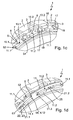
- the Figure 1c illustrated by a section of a perspective view of the connection between the cover 3 and the coupling housing 2, the positive connection between them. Visible are the two different driving elements 11.1 and 11.2 with different end portions 13.1 and 13.2, which extend through the through holes 17 and secure after rotation of the lid 3 against the edge-open in the circumferential direction recesses 15.1 and 15.2 the cover 3 in the circumferential direction in one direction by the abutment surface 6 comes into operative connection with the surface 18 or the abutment surface 18 makes contact with the abutment surface 6 on the respective carrier element 11.1, 11.2. Furthermore, the driving element 11.1 or 11.2 surrounds with its end portion 13.1 and 13.2 hook-shaped, or in full view the pliers 3 in the area between the passage openings 17.
- a torque transmission is possible here only in one direction, that is in the direction of rotation of the housing 2 in the direction of Alignment of the stop surface 6.
- axial securing between the cover 3 and housing 2 would no longer be given.
- This axial securing is preferably realized with play, but also conceivable without clearance or only with a clearance fit for assembly purposes between the cover 3 and the coupling housing 2 over the different widths of the recess 15.1 and 15.2 in the axial direction and the thickness d of the lid 3.
- the Figure 1c illustrates the view after merging of the cover 3 and coupling housing 2, in which a rotation in the stop position in the circumferential direction has already taken place.
- the Figure 1d clarified by means of a perspective intention a section of an assembly of coupling housing 2, cover 3 and connecting ring 4 the assembled state.
- the Figure 1e illustrates a representation of a view from above according to Figure 1d
- FIG. 1f illustrates a section A in an enlarged view Figure 1e the Mit Sprint 11 in the assembled state.
- Recognizable here are the driving elements 11. 1 and 11.2, which enforce the corresponding through holes 21.1 to 21.3.
- the entrainment element 11.1 is located with its side facing away from the open-edge recess 15.1 side surface 4.12 as a stop surface 54 on the surface 27 of the passage opening 21.1, which points in the circumferential direction and is aligned to.
- the spring element 23 is supported in the axial direction in an aligned in the circumferential direction surface of the recess 17 on the lid 3.
- the ramps 28 extending in the installed position in the axial direction can be seen.
- these have with their stop surface 29 at a distance from the recess 17 and the corresponding circumferentially oriented surface 19 on the lid 3.
- the ramp 28 becomes effective by acting against the cover 3 or forms a stop for this.
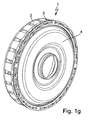
- the Figure 1g illustrates an assembly diagram of the entire Mitschbautician. 1
- FIGS. 2a to 2d illustrate a further second embodiment of a Mitauerbauech 1.2 according to the invention for the realization of a connection between a cover 3.2 and a coupling housing 2.2 via a connecting ring 4.2. Also in this a positive connection between the clutch housing 2.2 and the lid 3.2 is realized, which is secured via a connecting ring 4.2 in the axial and circumferential direction. Again, means 30 for realizing a positive connection in the circumferential direction between the cover 3.2 and coupling housing 2.2 are provided. The fixation in the axial direction is realized essentially via a bayonet connection 31 between coupling housing 2.2, cover 3.2 and the connecting ring 4.4. The fixation in circumferential and axial direction via the snap connection 32nd
- FIG. 2a illustrates the execution of the individual components in an exploded view.
- the coupling housing 2.2 which essentially as a disk-shaped Element arranged with the region of the outer periphery and extending in the axial direction driving elements.
- the driving elements are formed by protruding projections in the axial direction, which are arranged spaced from each other in the circumferential direction.
- the driving elements have an end portion which serves to realize the positive connection with the lid 3.2.
- the coupling housing 2.2 has two different types of driving elements 33.1 and 33.2, which differ substantially by the configuration of their end portions 34.1 and 34.2.
- a first end portion 34.1 of the entrainment elements 33.1 is designed such that this analogous as in FIG.
- edge-open recesses 36 are provided on a side surface 35.12 which extend in the circumferential direction and only one abutment surface 37 is provided on the opposite side surface 35.11 of the entrainment element 33.1.
- the second driving element 33.2 is characterized in that it has a preferably symmetrical projection 38 at the end portion 34.2, that is quasi two stop surfaces 39 and 40 viewed in the circumferential direction, which are aligned in the circumferential direction opposite to each other on the side surfaces 35.21 and 35.22.
- the lid 3.2 has a complementary number of recesses 41 through which the end portions 34.1 and 34.2 of the driving elements 33.1 and 33.2 can be passed through. Unlike in FIG.
- the width of the end portion 34.2 corresponds to the width of the recess 41 viewed in the circumferential direction, so that a flat application, if possible with a fit accuracy in the range of a maximum clearance fit .
- the stop surface 37 on the driving element 33.1 acts only in one direction of rotation.
- the drive torque is introduced via the driving elements 33.1 and 33.2 for the abutment surfaces 37 and 39 in the contact surfaces 42 on the cover 3.2, while the idling torque is registered via the driving elements 33.2 on the abutment surface 40 in cooperation with the contact surface 43 in the lid 3.2 and reverses.
- the fixation of the positive connection 30 in the circumferential direction takes place in the axial direction via the connecting ring 4.2.
- This has radially oriented projections 44, which are arranged at a uniform distance from each other in the circumferential direction and are smaller in width than the distances in the circumferential direction between two consecutive recesses 41 on the lid 4.2.
- the recesses 36 on the driving elements 33.1 which extend on the side surface 35.12 of these in the circumferential direction, with respect to their dimensions in the axial direction relative to the axis of rotation R dimensioned such that it corresponds at least to the width of the lid 3.2 and the connecting ring 4.2 in the axial direction , so that the connecting ring 4.2 can be rotated into the recess 36 and thus allows a fixation in the axial direction between the cover and housing 3.2 and 2.2 by a bayonet connection 31.
- a spring element 45 is provided in the region of such a projection, which serves to realize a snap connection 55.
- the slot 46 is characterized by two regions, a first region 47 and a second region 48, wherein the second region 48 forms a stop 49 in the circumferential direction for the spring element 45.
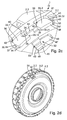
- FIG. 2b illustrates a perspective view in the assembled state of Mitschbautechnik 1 reference to a section of this. Further, further spring elements 50 are provided on the ring 4.4, which serve to eliminate noise during operation, especially at idle.
- the arrangement of the spring elements 45 and the associated slots 46 is preferably symmetrical with respect to the connecting ring 4.2.
- at least two such spring elements 45 and two such slots 46 are provided in the lid 3.2.
- a plurality of such spring elements would also be conceivable, but in particular they are limited in number for easy disassembly.
- these statements also apply to the other spring elements 50.
- These are also arranged on the outer circumference of the connecting ring 4.2, wherein the arrangement is such that they form a stop surface 51 in the circumferential direction for the driving element 33.2 with the stop surface 40, that is in the idle direction.
- the Figure 2d illustrates a Mitauerbauech 1.2 according to the second embodiment in the assembled state.
- the number of entrainment elements 33.1 and 33.2 with corresponding recesses 36 or free from them for realizing one-sided contact or circumferential contact with the cover 3.2 is preferably determined on the basis of the required surface pressures and torque calculations to determine the performance and availability requirements to fulfill.
- the connecting ring 4.2 is used to fix the components in the axial direction to apply a counterforce to the clutch actuation force and to avoid noise and rattling between the clutch housing 2.2 and the lid 3.2.
- this connecting ring has a plurality of features that help to achieve this function.
- the cover is brought into connection with the coupling housing 2.2, in which case the connecting ring 4.2 is then added in the axial direction.
- the projections 44 in the radial direction are spent between the individual coupling housing and driving elements and the spring element 45 is inserted into the slot, which is arranged in the cover element 3.2.
- the connecting ring 4.2 is then pressed against the front side facing away from the coupling housing 2.2 and twisted, so that the projections 44 move into the recesses 36 between the cover 3.2 and the coupling housing 2.2.
- the spring element 45 widens into the larger area 48 of the slot 46 on the clutch cover 3.2. This locks the connecting ring 4.2 in its position and prevents further rotation. If the clutch is actuated, the actuation force acts against the cover 3.2, then through the connecting ring contact surface to the coupling housing capturing elements 33.1.
- Another spring element 50 eliminates the noise between the lid 3.2 and the clutch housing 2.2 by generating a counterforce against the driving elements 33.2 between the lid 3.2 and the clutch housing 2.2, as soon as the ring is 4.2 locked in the slot and thereby a bias between the clutch housing 2.2 and the Lid 3.2 realized.
Landscapes
- Engineering & Computer Science (AREA)
- General Engineering & Computer Science (AREA)
- Mechanical Engineering (AREA)
- Mechanical Operated Clutches (AREA)
- Hydraulic Clutches, Magnetic Clutches, Fluid Clutches, And Fluid Joints (AREA)
Abstract
Description
- Die Erfindung betrifft eine Mitnehmerbaueinheit für eine Kupplungsanordnung, insbesondere eine nasslaufende Doppelkupplungsanordnung, mit einem Kupplungsgehäuse und einem Deckel, die unter Umschließung eines Innenraumes zur Aufnahme der Kupplungsanordnung miteinander verbunden sind.
- Eine Mitnehmerbaueinheit für ein Mehrscheibenkupplungssystem ist aus der Druckschrift
US 6,883,656 B2 vorbekannt. Die Mitnehmerbaueinheit umfasst ein Kupplungsgehäuse und einen Deckel, die drehfest miteinander koppelbar sind. Die Kopplung erfolgt unter Ausbildung eines Innenraumes zur Aufnahme der Kupplungsanordnung. Kupplungsgehäuse und Kupplungsdeckel sind koaxial zueinander angeordnet und weisen eine gemeinsame Rotationsachse auf. Die drehfeste Verbindung erfolgt über zueinander komplementäre Verzahnungen, die in radialer Richtung miteinander in Eingriff stehen. Während des Betriebes erweitert sich jedoch mit Zunahme der Drehzahl der Mitnehmerbaueinheit der Deckel im Wesentlichen in radialer Richtung in Bezug auf das Kupplungsgehäuse. Im Ergebnis führt dies bei hohen Drehzahlen zum Spiel zwischen der Innen- und Außenverzahnung, das sich mit zunehmender Drehzahl weiter vergrößert. Dies führt zu einem störenden Rasselgeräusch. Zur Vermeidung derartiger Geräusche ist es bekannt, das Kupplungsgehäuse mit einer Mehrzahl von inneren Verzahnungen zu versehen, die geeignet sind, in kämmendem Eingriff mit einer Mehrzahl von äußeren Zähnen elastisch unter Eigenspannung eingebracht zu werden. Diese Lösung führt zu einer Elimination der Geräusche, setzt jedoch eine hohe Fertigungsgenauigkeit voraus, da insbesondere auch die Sicherung in axialer Richtung über miteinander in Eingriff stehende Verzahnungen vorgenommen wird und daher auch die einzelnen Verzahnungsflächen entsprechend der dabei auftretenden Belastungen auszulegen sind, um die nötigen Flächendrücke zu erzeugen. - Der Erfindung liegt daher die Aufgabe zugrunde, eine Mitnehmerbaueinheit für eine Kupplungsanordnung, insbesondere für nasslaufende Doppelkupplungen der eingangs genannten Art derart weiterzuentwickeln, dass diese hinsichtlich der Fertigungsgenauigkeit geringeren Anforderungen unterworfen ist, eine starke Geräuschdämpfung, insbesondere im Leerlauf vorhanden ist, und ferner leicht zu montieren und demontieren ist.
- Die erfindungsgemäße Lösung ist durch die Merkmale des Anspruchs 1 charakterisiert ist. Vorteilhafte Ausgestaltungen sind in den Unteransprüchen beschrieben.
- Eine Mitnehmerbaueinheit für eine Kupplungsanordnung, insbesondere eine nasslaufende Doppelkupplungsanordnung, umfasst ein Kupplungsgehäuse und einen Deckel, die unter Umschließung eines die Kupplungsanordnung aufnehmenden Innenraumes miteinander gekoppelt sind. Erfindungsgemäß erfolgt die Kopplung zwischen dem Deckel und dem Kupplungsgehäuse drehfest und wird über einen Verbindungsring gesichert. Diese Lösung ermöglicht es zum einen, die Fixierung in axialer und in Umfangsrichtung allein über den Verbindungsring zu realisieren sowie ferner, je nach Ausführung, eine frei von Vorspannungen der einzelnen Elemente realisierbare Mitnehmerbaueinheit zu schaffen, die leicht montierbar und auch demontierbar ist und trotzdem im Hinblick auf die Geräuschentwicklung, insbesondere im Leerlaufbetrieb, geräuscharm ist.
- Die drehfeste Verbindung zwischen dem Deckel und dem Kupplungsgehäuse erfolgt vorzugsweise in axialer Richtung vollständig spielfrei, so dass hier auch im Fall, dass die Kupplung nicht betätigt ist und damit keine Abstützung gegenüber dem Deckel beziehungsweise der Gehäusewandung eintritt, kein Spiel zwischen den Elementen vorliegt.
- Gemäß einer weiteren vorteilhaften Ausführung erfolgt die drehfeste Verbindung in Umfangsrichtung mit begrenzter Verdrehbarkeit zwischen Deckel und Kupplungsgehäuse, vorzugsweise über ein elastisches Dämpfungsglied und mit einer Drehmomentbegrenzung, so dass in gewissem Maße eine Relativbewegung in Umfangsrichtung zugelassen wird, die jedoch durch einen festen Anschlag begrenzt wird. Mit dieser Lösung ist es möglich, Schwingungen auch zu dämpfen, insbesondere im Leerlaufbetrieb, was zu einer erheblichen Reduzierung der Geräuschentwicklung beiträgt.
- Vorzugsweise wird der Verbindungsring mit den Anschlusselementen - Gehäuse und Deckel - über eine Bajonettverbindung in axialer Richtung fixiert, wobei diese Bajonettverbindung zwischen Kupplungsgehäuse, Deckel und Verbindungsring in axialer Richtung ausgebildet wird und dieser Formschluss über eine Schnappverbindung in Umfangsrichtung fixiert beziehungsweise gesichert wird. Diese Schnappverbindung ermöglicht eine leichte Montage und Demontage der gesamten Einheit, indem der Verbindungsring entfernt wird. Bezüglich der konkreten Ausführungen werden unterschiedliche Varianten unterschieden. Bei diesen sind jedoch zwischen dem Deckel und dem Gehäuse Mittel zur Realisierung eines Formschlusses in axialer Richtung oder Umfangsrichtung vorgesehen, der über den Verbindungsring über Mittel zur Realisierung einer Schnappverbindung und einen Formschluss zwischen Deckel und Gehäuse und Verbindungsring in axialer Richtung, vorzugsweise in Form einer Bajonettverbindung gesichert wird. Die einzelnen Möglichkeiten können beliebig ausgeführt sein, sind jedoch hinsichtlich der Funktion bei der Montage hinsichtlich ihrer Abmessungen aufeinander abzustimmen.
- Gemäß der ersten Ausführungsform weist das Kupplungsgehäuse Mitnahmeelemente auf, die in Umfangsrichtung in gleichmäßigem Abstand zueinander angeordnet sind und mit dazu komplementär ausgeführten Ausnehmungen im Deckel zusammenwirken. Die Ausnehmungen im Deckel erstrecken sich in Umfangsrichtung und sind hinsichtlich ihrer Größe größer als die Erstreckung der Mitnahmeelemente im Endbereich in Umfangsrichtung, jedoch kleiner als der Gesamtabstand zwischen einer in Umfangsrichtung ausgerichteten Seitenfläche zur gleichen in Umfangsrichtung ausgerichteten Seitenfläche des benachbarten Mitnahmeelementes. Durch die unterschiedlichen Endbereiche sind erste Mitnahmeelemente und zweite Mitnahmeelemente ausgebildet. Alle Mitnahmeelemente weisen an einer in gleicher Richtung in Umfangsrichtung ausgerichteten Seitenfläche angeordnete randoffene Aussparungen unter Ausbildung eines in axialer Richtung wirkenden Anschlages für den Deckel auf. Die ersten und die zweiten Mitnahmeelemente unterscheiden sich im Hinblick auf die Ausbildung der jeweils zweiten gegenüberliegenden Seitenfläche. Die ersten Mitnahmeelemente sind durch die Ausbildung einer in Umfangsrichtung weisenden Anschlagfläche für die Aussparung am Deckel charakterisiert, während die zweiten Mitnahmeelemente eine randoffene Aussparung unter Ausbildung wiederum einer axialen Anschlagsfläche für den Deckel aufweisen. Die Breite der randoffenen Aussparung an der ersten Seitenfläche entspricht zumindest der Dicke des Deckels. Die Breite der Aussparung an der zweiten Seitenfläche entspricht zumindest der Dicke des Verbindungsringes. Der Verbindungsring weist in der ersten Ausführungsform in Umfangsrichtung im Bereich des Außenumfanges angeordnete Aussparungen, die in gleichmäßigen Abständen zueinander angeordnet sind und komplementär zu den Aussparungen am Deckel sowie den Mitnahmeelementen ausgeführt sind, auf. Entscheidend ist, dass die Mitnahmeelemente sich durch die Aussparungen auch des Verbindungsringes erstrecken können. Die Größe der Erstreckung in Umfangsrichtung der Aussparungen am Verbindungsring ist kleiner als die Summe des Abstandes von Mitnahmeelement und des Abstandes zum nächsten Mitnahmeelement, jedoch größer als die Erstreckung in Umfangsrichtung eines Mitnahmeelementes. Am Verbindungsring sind unterschiedliche Typen von Aussparungen vorgesehen. Bei einem ersten Typ der Aussparung sind Mittel zur Realisierung einer Schnappverbindung vorgesehen, die in die Aussparung am Deckel zwischen Deckel und Mitnahmeelement des Gehäuses eingreifen. Die zweite Ausführung der Aussparung ist dadurch charakterisiert, dass diese frei von Zusatzelementen ist und lediglich einen Anschlag für die Mitnahmeelemente bildet und somit den Deckel mit dem Kupplungsgehäuse in axialer Richtung verspannt. Die dritte Ausführungsform der Aussparungen ist dadurch charakterisiert, dass diese mit einer Drehmomentbegrenzung versehen ist. Dabei wird die Drehmomentbegrenzung im einfachsten Fall von einem in axialer Richtung ausgerichteten Vorsprung gebildet, der sich ebenfalls in die Aussparung im Deckel erstreckt und eine in Umfangsrichtung ausgebildete Anschlagsfläche bildet, die mit dem Deckel in Wirkverbindung treten kann. Die Anordnung der Mittel zur Realisierung der Schnappverbindung und der Drehmomentbegrenzung an den entsprechenden Aussparungen erfolgt unterschiedlich beabstandet bezogen auf die Lage der der Aussparung am Deckel gegenüber den Mitnahmeelementen, so dass die Anschlagfläche der Drehmomentbegrenzung bei Realisierung der Schnappverbindung beabstandet zur entsprechenden Anschlagsfläche am Deckel angeordnet ist und erst unter erhöhter Belastung im Leerlaufbetrieb unter Aufhebung der Federvorspannung in der Schnappverbindung in der Aussparung des Deckels wirksam wird.
- Die Aussparungen am Deckelelement bilden dabei einen Anschlag in Umfangsrichtung. Vorzugsweise sind alle auf einem gemeinsamen Durchmesser angeordnet.
- Die erste Ausführung ist durch die Sicherung zweier Bajonettverbindungen, einer ersten in Umfangsrichtung wirkenden Bajonettverbindung zwischen Deckel und Kupplungsgehäuse und einer zweiten in axialer Richtung zwischen Deckel, Kupplungsgehäuse und Verbindungsring erzeugten Bajonettverbindung mittels einer Schnappverbindung in Umfangsrichtung zwischen Deckel und Kupplungsgehäuse und Verbindungsring charakterisiert. Die Mittel zur Realisierung der Schnappverbindung sind dabei integraler Bestandteil des Verbindungsringes und dienen ferner der Dämpfung von Schwingungen zwischen Kupplungsgehäuse und Deckel im Leerlaufbetrieb.
- Gemäß einer besonders vorteilhaften Ausführung erstrecken sich die Endbereiche jeweils in axialer Richtung. In diesem Fall ist eine besonders einfache Ausgestaltung möglich. Die Montage und Demontage in axialer Richtung ist wesentlich vereinfacht.
- Gemäß einer zweiten Ausführungsform erstrecken sich die Mitnahmeelemente in Analogie zur ersten Ausführungsform in axialer Richtung. Der Deckel weist Ausnehmungen in Umfangsrichtung auf. Dabei sind die Mitnahmeelemente unterschiedlich ausgeführt. Ein erster Typ Mitnahmeelemente ist dadurch charakterisiert, dass diese jeweils an ihren beiden Seitenflächen einen Anschlag in Kombination mit den in Umfangsrichtung ausgerichteten Flächenbereichen der Aussparungen am Deckel bilden und somit quasi einen Formschluss in Umfangsrichtung als auch in radialer Richtung bilden. Die zweiten Mitnahmeelemente sind an der einen Seite durch eine Anschlagsfläche charakterisiert und auf der anderen durch eine Aussparung, in welche in radialer Richtung ausgerichtete Vorsprünge des Verbindungsringes einschiebbar sind, so dass eine Verspannung in axialer Richtung zwischen dem Deckel und dem Kupplungsgehäuse realisiert wird.
- Auf einem gleichen Durchmesser oder einem unterschiedlichen Durchmesser sind am Verbindungsring Mittel zur Realisierung einer Schnappverbindung vorgesehen, insbesondere wenigstens ein elastisch federnder Vorsprung, der in einen Schlitz am Deckel eingreifen kann, wobei durch den Eingriff im Schlitz am Deckel die Fixierung in Umfangsrichtung realisiert wird und gleichzeitig wenigstens ein Vorsprung in radialer Richtung am Verbindungsring in eine Position gebracht wird, in der dieser in die Ausnehmung an den zweiten Mitnahmeelementen zum Teil eingreift und dadurch das Kupplungsgehäuse mit dem Deckel verspannt. Bei der zweiten Ausführung sichert die Schnappverbindung den Formschluss in Umfangsrichtung zwischen Deckel und Kupplungsgehäuse und die Bajonettverbindung zur Realisierung eines Formschlusses in axialer Richtung zwischen Kupplungsgehäuse und Deckel.
- In beiden Fällen kann über die Schnappverbindung, insbesondere die elastischen Elemente der Schnappverbindung eine Dämpfung von Schwingungen zwischen Kupplungsgehäuse und Deckel erzielt werden.
- Die erfindungsgemäße Lösung ist für Kupplungsanordnungen unterschiedlichster Art geeignet. Dabei kann es sich hier um Kupplungsanordnungen mit einer Kupplung handeln oder aber um eine besonders bevorzugte Ausführung in Form von Doppelkupplungen.
- Die erfindungsgemäße Lösung wird nachfolgend anhand von Figuren erläutert. Darin ist im Einzelnen folgendes dargestellt:
- Figur 1a
- verdeutlicht anhand einer Explosionsdarstellung die einzelnen Elemente einer erfindungsgemäßen Mitnehmerbaueinheit;
- Figur 1 b
- verdeutlicht einen Ausschnitt aus einer Perspektivansicht eines Verbindungsrings;
- Figur 1 c
- verdeutlicht anhand eines Ausschnittes aus einer Perspektivansicht den Zustand der Verbindung des Kupplungsgehäuses mit dem Deckel;
- Figur 1d
- verdeutlicht anhand einer Perspektivansicht gemäß
Figur 1c einen Ausschnitt aus der Mitnehmerbaueinheit nach Montage des Verbindungsringes; - Figur 1 e
- verdeutlicht eine Ansicht von oben auf die montierte Mitnehmerbaueinheit;
- Figur 1 f
- verdeutlicht einen vergrößerten Ausschnitt aus einer Ansicht von oben gemäß
Figur 1e ; - Figur 1 g
- verdeutlicht eine Perspektivansicht einer zusammengebauten Mitnehmerbaueinheit;
- Figur 2a
- verdeutlicht anhand einer Explosionsdarstellung eine mögliche zweite Ausführungsform einer erfindungsgemäßen Mitnehmerbaueinheit;
- Figur 2b
- verdeutlicht eine Ansicht von oben auf eine Mitnehmerbaueinheit gemäß
Figur 2a im montierten Zustand; - Figur 2c
- verdeutlicht einen Ausschnitt aus einer Perspektivansicht einer Mitnehmerbaueinheit gemäß
Figur 2a ; - Figur 2d
- verdeutlicht die montierte Mitnehmerbaueinheit in Perspektivansicht.
- Die
Figur 1a verdeutlicht anhand einer Explosionsdarstellung eine Ausführung einer erfindungsgemäß ausgestalteten Mitnehmerbaueinheit 1 für Kupplungsanordnungen, insbesondere nasslaufende Doppelkupplungsanordnungen, gemäß einer ersten Ausführungsform der erfindungsgemäßen Lösung. Die Mitnehmerbaueinheit 1 ist dreiteilig ausgeführt. Diese umfasst ein Kupplungsgehäuse 2, welches auch als Kupplungskäfig bezeichnet wird, und einen Deckel 3, die im montierten Zustand einen Innenraum I zur Aufnahme der Kupplungsanordnung umschließen. Ferner ist ein Verbindungsring 4 vorgesehen, der an der Kopplung zwischen dem Kupplungsgehäuse 2 und dem Deckel 3 beteiligt ist und der Sicherung des Deckels 3 am Kupplungsgehäuse 2 in axialer Richtung und in Umfangsrichtung dient. Gemäß der ersten Ausführungsform der erfindungsgemäßen Lösung sind das Kupplungsgehäuse 2 und der Deckel 3 derart ausgeführt, dass bei Verbindung dieser frei vom Verbindungsring 4 eine Fixierung in axialer Richtung mit Spiel und unter Lastbedingungen, insbesondere bei Abstützung einer druckmittelbetätigten Kolbenanordnung am Deckel 3 frei von Spiel gegeben ist, indem in axialer Richtung ein Formschluss zwischen dem Kupplungsgehäuse 2 und dem Deckel 3 mit Spiel erzeugt wird, und eine Mitnahme des Deckels in Lastrichtung, d.h. bei betätigter Kupplung um die Rotationsachse R, die der Mittenachse M der einzelnen Bauteile Kupplungsgehäuse 2, Deckel 3 und Verbindungsring 4 entspricht, erfolgt, während nach Montage des Verbindungsringes 4 dieser die Sicherung zwischen dem Kupplungsgehäuse 2 und dem Deckel 3 in Umfangsrichtung und in axialer Richtung übernimmt. Die Verbindung zwischen dem Deckel 3 und dem Kupplungsgehäuse 2 im über den Verbindungsring 4 gesicherten Zustand ist drehfest in beide Richtungen, wobei die drehfeste Verbindung in axialer Richtung spielfrei und vorzugsweise auch in Umfangsrichtung spielfrei ist. Der Deckel 3 und das Gehäuse 2 sind dazu formschlüssig durch eine Bajonettverbindung 52 gekoppelt, während der Verbindungsring 4 über eine Bajonettverbindung 5 und einen Schnappmechanismus 53 die Verbindung zwischen Deckel 3 und Gehäuse 2 in Umfangsrichtung sichert und wenigstens mittelbar in axialer Richtung fixiert. - Nach Montage des Deckels 3 am Kupplungsgehäuse 2 sind diese gemäß
Figur 1c formschlüssig mit Spiel in axialer Richtung und unter Ausbildung wenigstens eines Anschlages 6 in Umfangsrichtung miteinander verbunden. Der Verbindungsring 4 wird mit dem Deckel 3 formschlüssig in Umfangsrichtung und in axialer Richtung formschlüssig mit dem Kupplungsgehäuse 2 gekoppelt. Die einzelnen Verbindungen werden über entsprechende Mittel an den einzelnen Elementen Deckel 3, Verbindungsring 4 und Kupplungsgehäuse 2 realisiert. Zwischen dem Deckel 3 und dem Kupplungsgehäuse 2 sind Mittel 7 zur Realisierung eines Formschlusses in axialer Richtung mit Spiel vorgesehen. Ferner sind Mittel 8 zur Erzeugung eines Anschlages 6 in einer Richtung in Umfangsrichtung zwischen Deckel 3 und Kupplungsgehäuse 2 vorgesehen. Diese Mittel 7 und 8 dienen der Realisierung der in denFiguren 1c und 1d dargestellten Bajonettverbindung 52. Am Verbindungsring 4 sind ferner Mittel 9 zur Realisierung eines Formschlusses in Umfangsrichtung zwischen dem Verbindungsring 4 und dem Deckel 3 vorgesehen, ferner Mittel 10 zur Realisierung einer axialen Sicherung zwischen Deckel 3 und Kupplungsgehäuse 2. Diese Mittel können unterschiedlich ausgeführt sein. DieFiguren 1a bis 1g verdeutlichen eine besonders vorteilhafte Ausgestaltung. Die einzelnen Bauteile Deckel 3, Kupplungsgehäuse 2 sowie Verbindungsring 4 sind koaxial zueinander angeordnet. Die Richtungsangaben, insbesondere im Hinblick auf die Umfangsrichtung, beziehen sich auf die Rotationsachse R, welche der Mittenachse M dieser Bauteile in Einbaulage entspricht. Das Kupplungsgehäuse 2 ist schalenförmig ausgeführt und umschließt eine mögliche Kupplungsanordnung in radialer und wenigstens teilweise axialer Richtung unter Ausbildung des Innenraumes I. Das Kupplungsgehäuse 2 wird dabei im Wesentlichen von einem scheibenförmigen oder schalenförmigen Element gebildet, an dessen Außenumfang dA in Umfangsrichtung verteilt Mitnahmeelemente 11 angeordnet sind, die in axialer Richtung, das heißt parallel zur Rotationsachse R, und vorzugsweise in Umfangsrichtung mit gleichmäßigem Abstand zueinander angeordnet sind. Die gleichmäßige Anordnung bietet den Vorteil, dass keine speziellen Lagezuordnungen zwischen dem Kupplungsgehäuse 2 und dem Deckel 3 vorgenommen werden müssen, da hier einheitliche Konfigurationen zur Herstellung der Verbindung verwendet werden können. Die Mitnahmeelemente 11 werden auch als Finger bezeichnet. Dabei weist das Kupplungsgehäuse zumindest zwei Typen unterschiedlicher Mitnahmeelemente 11.1 und 11.2 auf. Die Mitnahmeelemente 11.1 und 11.2 bilden in ihrer Anordnung zueinander in Umfangsrichtung beabstandete Zwischenräume 12, die in axialer Richtung bezogen zur Rotationsachse R beziehungsweise zur Mittenachse M parallel zu dieser ausgerichtet sind. Die Ausgestaltung der Mitnahmeelemente 11.1 und 11.2 unterscheidet sich in der Ausbildung ihrer Endbereiche 13.1 und 13.2. Dabei können Mitnahmeelemente 11.1 und 11.2 alternierend in Umfangsrichtung angeordnet werden oder aber Mitnahmeelemente 11.1 in größerer Anzahl als die Mitnahmeelemente 11.2 vorgesehen werden, wobei die Anordnung vorzugsweise symmetrisch erfolgt. Dabei bilden die Mitnahmeelemente 11.1 und 11.2 in ihren Endbereichen 13.1 und 13.2 hakenförmige Enden aus. Diese hakenförmigen Enden ermöglichen die Ausbildung der Anschläge 6 in Umfangsrichtung. Der Anschlag 6 ist dabei in einer Richtung in Umfangsrichtung, das heißt bezogen auf die Rotationsachse R, welche der Mittenachse M der Elemente entspricht, in einer Drehrichtung wirksam. Dazu weisen die einzelnen Mitnahmeelemente 11.1 und 11.2 an ihrer in gleicher Richtung in Umfangsrichtung ausgerichteten Seitenfläche 14.11 beziehungsweise 14.21 randoffene Aussparungen 15.1 beziehungsweise 15.2 auf. Die randoffenen Aussparungen 15.1 und 15.2 erstrecken sich dabei in Umfangsrichtung und bilden mit ihrer in Umfangsrichtung weisenden Innenfläche den Anschlag 6 in Umfangsrichtung für eine Drehrichtung aus. An jedem der Mitnahmeelemente 11.1 und 11.2 sind vorzugsweise derartige Aussparungen 15.1 und 15.2 vorgesehen. An der in entgegen gesetzter Drehrichtung weisenden Seitenfläche 14.12 und 14.22 des jeweiligen Mitnahmeelementes 11.1 und 11.2 werden zu 14.11, 14.12 unterschiedliche Flächenbereiche realisiert. Der Endbereich 13.1 der Mitnahmeelemente 11.1 an der Seitenfläche 14.12 ist dabei durch eine in Umfangsrichtung ausgerichtete Fläche im Endbereich des Mitnahmeelementes 11.2 charakterisiert, welche auch als Anschlagfläche 54 in Umfangsrichtung fungieren kann. An der Seitenfläche 4.22 der Mitnahmeelemente 11.2 sind ebenfalls randoffene Aussparungen 16 vorgesehen, die in Umfangsrichtung ausgerichtet sind, jedoch entgegengesetzt zu den Aussparungen 15.2. Diese zweiten randoffenen Aussparungen 16 dienen dabei zum Zusammenwirken mit dem Verbindungsring 4, während die ersten randoffenen Aussparungen 15.1 und 15.2 der Kopplung zwischen dem Deckel 3 und dem Kupplungsgehäuse 2 dienen. - Der Deckel 3 weist Durchgangsöffnungen 17 auf, die sich in Umfangsrichtung über einen Teilbereich dessen bogenförmig der Erstreckung erstrecken, wobei eine Mehrzahl derartiger Durchgangsöffnungen 17 vorgesehen ist. Die einzelne Durchgangsöffnung 17 dient dabei der Realisierung des Formschlusses mit dem Kupplungsgehäuse 2. Dazu sind die Durchgangsöffnungen 17 auf einem Durchmesser angeordnet, der dem Durchmesser der Anordnung der Mitnahmeelemente 11.1 und 11.2 entspricht, wobei vorzugsweise die Mitnahmeelemente 11.1 und 11.2 auf einem Durchmesser angeordnet sind und dementsprechend auch alle Durchgangsöffnungen 17. Die formschlüssige Verbindung zwischen dem Kupplungsgehäuse 2 und dem Deckel 3 erfolgt über die Kopplung in den Mitnahmeelementen 11.1 und 11.2 mit dem Deckel 3, insbesondere über die Durchgangsöffnungen 17. Dazu werden die Mitnahmeelemente 11.1 und 11.2 durch die Durchgangsöffnungen 17 hindurchgeführt. Die Erstreckung der Durchgangsöffnungen 17 in Umfangsrichtung ist derart gewählt, dass diese auf jeden Fall größer als die Erstreckung der Mitnahmeelemente 11.1, 11.2 in Umfangsrichtung ist. Die Mitnahmeelemente 11.1, 11.2 mit den Aussparungen 15.1, 15.2 sowie die Durchgangsöffnungen 17 am Deckel bilden dabei die Mittel 7 zur Realisierung eines Formschlusses in axialer Richtung zwischen Deckel 3 und Kupplungsgehäuse 2 mit einem Spiel. Dazu ist die Breite b der randoffenen Aussparung 15.1 beziehungsweise 15.2 größer als die Dicke d des Deckels 3 im Verbindungsbereich. Zur Montage werden der Deckel 3 und das Kupplungsgehäuse 2 koaxial zueinander angeordnet und ineinander geschoben, so dass die Mitnahmeelemente 11.1 und 11.2 sich durch die Durchgangsöffnungen 17 erstrecken. Dabei kann die Verschiebung ineinander in axialer Richtung von vornherein dadurch begrenzt werden, dass die Ausgestaltung der Mitnahmeelemente 11.1 und 11.2 vor dem Endbereich 13.1, 13.2 mit entsprechend größerer Erstreckung in Umfangsrichtung unter Ausbildung von Anschlägen in axialer Richtung erfolgt, die ein Weiterschieben des Deckels 3 verhindern. Der Deckel 3 wird dabei so weit eingeschoben, dass dieser in Umfangsrichtung mit den randoffenen Aussparungen 15.1 und 15.2 an den Mitnahmeelementen 11.1 und 11.2 in einer Ebene liegt. Der Deckel 3 wird dann gegenüber dem Kupplungsgehäuse 2 verdreht oder aber das Kupplungsgehäuse 2 gegenüber dem Deckel 3, so dass der Deckel 3 mit dem Zwischenraum zwischen den Durchgangsöffnungen 17 in die randoffenen Aussparungen 15.1 und 15.2 eingeschoben wird und mit einer in Umfangsrichtung an der Durchgangsöffnung 17 ausgebildeten Anschlagfläche 18, die entgegengesetzt zum Anschlag 6 in der randoffenen Aussparung 15.1 beziehungsweise 15.2 ausgeführt ist, zum Anliegen kommt. Dadurch wird in Umfangsrichtung der Anschlag in einer Rotationsrichtung gewährleistet, während aufgrund der Aufnahme des Deckels 3 in der randoffenen Aussparung 15.1 und 15.2 eine Fixierung in axialer Richtung möglich ist und je nach Breite der Aussparung gegenüber der Dicke d des Deckels 3 hier ein Spiel vorhanden ist. Dazu wird die den Anschlag 6 bildende Fläche 19 als ebene Fläche ausgeführt, die immer in Kontakt mit der Anschlagsfläche 18 stehen sollte, um den Oberflächenkontaktdruck infolge des eingeleiteten Maschinenmomentes zu reduzieren. Ferner verringert der Kontakt zwischen dem Deckel 3 und dem Kupplungsgehäuse 2 im Bereich der Anschlagsflächen 18 und 6 die axiale Bewegbarkeit zwischen diesen. Das heißt, zwischen diesen wird quasi ein Reibschluss erzeugt. Der Anschlagfläche 18 an der Durchgangsöffnung 17 gegenüberliegend ist die Anschlagfläche 19 ausgebildet. Ist die Kupplung innerhalb der Mitnehmerbaueinheit 1 betätigt, wirkt die Betätigungskraft gegen den Kupplungsdeckel 3, welcher wiederum gegen die in axialer Richtung ausgerichtete Fläche 20 der randoffenen Aussparung 15.1 beziehungsweise 15.2 wirkt, das heißt der Fläche 20, die zum Deckel 3 gerichtet ist und von dem Kupplungsgehäuse 2 weggerichtet ist.
- Um jedoch auch im Leerlauf eine möglichst drehfeste Verbindung mit geringer Lärm- und Geräuschentwicklung zu realisieren, ist zusätzlich der Verbindungsring 4 vorgesehen, der die Bewegbarkeit in entgegen gesetzter Richtung, das heißt entgegengesetzt zum von der Antriebsmaschine abgegebenen Drehmoment, das heißt in Leerlaufrichtung, verringert oder ganz unterbindet. Bei diesem handelt es sich um ein ringförmiges Element mit Ausnehmungen 21, die in Umfangsrichtung vorzugsweise in gleichmäßigen Abständen an dem Deckel 3 vorgesehen sind. Bei den Ausnehmungen 21 handelt es sich um Durchgangsöffnungen 21, die sich in Umfangsrichtung über einen Teil des Umfanges erstrecken und komplementär zu Durchgangsöffnungen 21 beziehungsweise zu den Mitnahmeelementen 11.1 und 11.2 ausgebildet sind. Der Verbindungsring 4 schließt sich in axialer Richtung an den Deckel 3 an, wobei dieser den Deckel 3 gegenüber dem Kupplungsgehäuse 2 in der anderen zweiten Verdrehrichtung in Umfangsrichtung, die zu der ersten entgegengesetzt ausgerichtet ist, sichert. Die Durchgangsöffnungen 21 sind Bestandteil der Mittel 10 zur Realisierung einer axialen Sicherung zwischen Deckel 3 und Gehäuse 2, insbesondere durch Formschluss, der durch eine Bajonettverbindung 5 zwischen Deckel 3, Verbindungsring 4 und Kupplungsgehäuse 2 erzeugt wird. Ferner sind Mittel 22 zur Realisierung einer Schnappverbindung vorgesehen. Diese umfassen zumindest ein erstes Federelement 23, das an der in der Einbaulage zum Deckel 3 gewandten Stirnseite 24 des Verbindungsringes 4 angeordnet ist. Ferner sind Mittel 25 zur Begrenzung des Drehmomentes vorgesehen. Das Federelement 23 und die Mittel 25 sind dabei vorzugsweise integraler Bestandteil des Verbindungsringes 4. Wird der Verbindungsring 4 gegen den Kupplungsdeckel 3 gedrückt, wird der Verbindungsring 4 zwischen den Mitnahmeelementen 11.1 und 11.2 am Kupplungsgehäuse 2 geführt. Die Mitnahmeelemente 11.1 und 11.2 durchsetzen quasi ebenfalls mit ihren Endbereichen 13.1 und 13.2 die Ausnehmungen beziehungsweise Durchgangsöffnungen 21. Dabei wirkt das Federelement 23 gegen die Oberfläche 26 und gleitet in die Aussparung beziehungsweise Durchgangsöffnung 17 am Deckel 3 hinein und wirkt gegen die in Umfangsrichtung weisende Fläche 19 der Durchgangsöffnung 17, welche der Anschlagsfläche 18 gegenüberliegt. Wird der Verbindungsring 4 weiter hinein geschoben und erreicht den Boden des Deckels 3, bewirkt die Kraft, die durch die Federvorspannung erzeugt wird, dass die benachbarte Durchgangsöffnung 21 in Umfangsrichtung betrachtet in die Aussparung 16 am Mitnahmeelement 11.2 hinein gleitet und mit dieser quasi eine Verriegelung zwischen dem Deckel 3 und dem Gehäuse 2 in axialer Richtung vornimmt. Der Verbindungsring 4 bewirkt somit über die Bajonettverbindung 52 zwischen dem Verbindungsring 4 und dem Deckel 3 der damit erfolgenden Lagezuordnung in Umfangsrichtung zwischen den benachbarten Ausnehmungen beziehungsweise Durchgangsöffnungen 21 gegenüber den Mitnahmeelementen, insbesondere den Mitnahmeelementen 11.2, eine Sicherung in axialer Richtung. Dabei ist zu beachten, dass die einzelnen Mitnahmeelemente 11.1 und 11.2 in ihrer Breite auf diese Art der Verbindung abzustimmen sind. Das gilt ferner auch für die Ausgestaltung der Ausnehmungen und Durchgangsöffnungen 21 beziehungsweise 17 und 15.1 und 15.2, um hier eine spielfreie Mitnehmerbaueinheit 1 zu realisieren. Wie bereits ausgeführt, zeigt die
Figur 1a die Ausgestaltung der einzelnen Elemente in Explosionsdarstellung.Figur 1b verdeutlicht einen Ausschnitt aus einem Verbindungsring 4. Erkennbar sind hier die in Umfangsrichtung den Ring durchsetzenden Ausnehmungen 21 beziehungsweise Durchgangsöffnungen. Dabei wird zwischen Durchgangsöffnungen 21.1 mit den Mitteln 22, Durchgangsöffnungen 21.2, die mit Mitteln 25 versehen sind, unterschieden und ferner eine weitere Art von Durchgangsöffnungen 21.3, die gegenüber den anderen Durchgangsöffnungen 21.2 und 21.1 vorzugsweise mit geringerer Erstreckung in Umfangsrichtung ausgeführt ist und zur Aufnahme der Mitnahmeelemente 11.2 hinsichtlich der Ausgestaltung ausgelegt ist. Vorzugsweise erfolgt die Anordnung über den Gesamtumfang betrachtet zwischen den unterschiedlichen Typen entsprechend symmetrisch. Die Durchgangsöffnungen 21.3 wirken dabei nur mit den Mitnahmeelementen 11.2 zusammen, während die Durchgangsöffnungen 21.1 und 21.2 mit den Mitnahmeelementen 11.1 zusammenwirken. Es ist dabei darauf zu achten, dass die Ausgestaltung des Kupplungsgehäuses 2 mit Mitnahmeelementen 11.1 und 11.2 derart auf die Ausgestaltung des Verbindungsringes 4 abgestimmt ist, dass hier den einzelnen Mitnahmeelementen 11.1 auch die entsprechenden Durchgangsöffnungen 21.1 beziehungsweise 21.2 und dem Mitnahmeelement 11.2 eine entsprechende Durchgangsöffnung 21.3 am Ring 4 gegenüberliegt. Dabei kann lediglich ein einziges Federelement 23 vorgesehen werden, wobei vorzugsweise eine symmetrische Ausführung über den Umfang verteilt gewählt wird und zumindest zwei Federelemente 23 als Mittel zur Realisierung einer Bajonettverbindung vorgesehen werden, die symmetrisch am Verbindungsring 4 angeordnet sind. Dies gilt in Analogie für die Mitnahmeelemente 11.2 am Kupplungsgehäuse 2 und die Durchgangsöffnungen 21.3 am Verbindungsring 4. Die Mittel 25 zur Begrenzung des Drehmomentes in Form einer Rampe 28 können einer Mehrzahl von Mitnahmeelementen 11.1 zugeordnet werden. Dabei ist die Rampe am Verbindungsring 4 derart ausgebildet, dass diese sich an der Durchgangsöffnung 21.2 in axialer Richtung von dieser als Vorsprung erstreckt und eine Anschlagsfläche 29 in Umfangsrichtung bildet, die bei Verdrehung des Verbindungsringes 4 in Umfangsrichtung beziehungsweise eines Elementes der Kopplung zwischen Deckel 3 und Kupplungsgehäuse 2 wirksam wird beziehungsweise am Deckel 3 an den Anschlagflächen 19 wirksam wird. Die Rampe 28 kann, muss jedoch nicht zwingend vorgesehen werden. Diese bietet jedoch den Vorteil, dass diese bei erhöhten Leerlaufmomenten zum Tragen gelangt und hier eine Relativbewegung zwischen den einzelnen Elementen Deckel 3 und Kupplungsgehäuse 2 dadurch vermeidet. - Die
Figur 1c verdeutlicht anhand eines Ausschnittes aus einer Perspektivdarstellung der Verbindung zwischen Deckel 3 und Kupplungsgehäuse 2 die formschlüssige Verbindung zwischen diesen. Erkennbar sind die beiden unterschiedlichen Mitnahmeelemente 11.1 und 11.2 mit unterschiedlichen Endbereichen 13.1 und 13.2, die sich durch die Durchgangsöffnungen 17 hindurch erstrecken und nach Verdrehung des Deckels 3 gegenüber den in Umfangsrichtung randoffenen Aussparungen 15.1 und 15.2 den Deckel 3 in Umfangsrichtung in einer Richtung sichern, indem die Anschlagsfläche 6 mit der Fläche 18 in Wirkverbindung tritt beziehungsweise die Anschlagsfläche 18 die Anschlagsfläche 6 am jeweiligen Mitnahmeelement 11.1, 11.2 kontaktiert. Ferner umgreift das Mitnahmeelement 11.1 beziehungsweise 11.2 mit seinem Endbereich 13.1 beziehungsweise 13.2 hakenförmig, beziehungsweise bei vollständiger Betrachtung zangenförmig den Deckel 3 im Bereich zwischen den Durchgangsöffnungen 17. Eine Drehmomentenübertragung ist hier nur in einer Richtung möglich, das heißt bei Rotationsrichtung des Gehäuses 2 in Richtung der Ausrichtung der Anschlagsfläche 6. Bei entgegen gesetzter Drehbewegung wäre eine axiale Sicherung zwischen Deckel 3 und Gehäuse 2 nicht mehr gegeben. Diese axiale Sicherung wird dabei vorzugsweise mit Spiel, denkbar jedoch auch ohne Spiel beziehungsweise lediglich mit einer Spielpassung zu Montagezwecken zwischen dem Deckel 3 und dem Kupplungsgehäuse 2 über die unterschiedlichen Breiten der Aussparung 15.1 beziehungsweise 15.2 in axialer Richtung und der Dicke d des Deckels 3 realisiert. DieFigur 1c verdeutlicht dabei die Ansicht nach Zusammenführung von Deckel 3 und Kupplungsgehäuse 2, bei welcher eine Verdrehung in die Anschlagsposition in Umfangsrichtung bereits erfolgt ist. - Die
Figur 1d verdeutlicht anhand einer Perspektivabsicht einen Ausschnittes aus einer Zusammenbaudarstellung von Kupplungsgehäuse 2, Deckel 3 und Verbindungsring 4 den montierten Zustand. DieFigur 1e verdeutlicht eine Darstellung einer Ansicht von oben gemäßFigur 1d undFigur 1f verdeutlicht einen Ausschnitt A in vergrößerter Darstellung ausFigur 1e der Mitnehmerbaueinheit 1 im montierten Zustand. Erkennbar sind hier die Mitnahmeelemente 11. 1 und 11.2, die die entsprechenden Durchgangsöffnungen 21.1 bis 21.3 durchsetzen. Dabei liegt das Mitnahmeelement 11.1 mit seiner von der randoffenen Aussparung 15.1 weggerichteten Seitenfläche 4.12 als Anschlagsfläche 54 an der Fläche 27 der Durchgangsöffnung 21.1, die in Umfangsrichtung zu dieser weist und ausgerichtet ist, an. Das Federelement 23, welches im Bereich der Ausnehmung beziehungsweise Durchgangsöffnung 21.1 angeordnet ist, erstreckt sich in den Deckel 3 hinein. In dieser Lage ist ersichtlich, dass sich das Federelement 23 in axialer Richtung in einer in Unfangsrichtung ausgerichteten Fläche der Ausnehmung 17 am Deckel 3 abstützt. In dieser Lage sind ferner die in axialer Richtung in Einbaulage sich erstreckenden Rampen 28 zu sehen. Diese weisen jedoch mit ihrer Anschlagsfläche 29 einen Abstand zur Ausnehmung 17 beziehungsweise zur entsprechenden in Umfangsrichtung ausgerichteten Fläche 19 am Deckel 3 auf. Diese Montagesituation stellt den Normalfall während des normalen Betriebes bei Drehmomentübertragung dar. Wird jedoch ein Leerlaufmoment in die Mitnehmerbaueinheit 1 eingetragen, wird die Rampe 28 wirksam, indem diese gegen den Deckel 3 wirkt beziehungsweise für diesen einen Anschlag bildet. - Die
Figur 1g verdeutlicht eine Zusammenbaudarstellung der gesamten Mitnehmerbaueinheit 1. - Die
Figuren 2a bis 2d verdeutlichen eine weitere zweite Ausführungsform einer erfindungsgemäßen Mitnehmerbaueinheit 1.2 zur Realisierung einer Verbindung zwischen einem Deckel 3.2 und einem Kupplungsgehäuse 2.2 über einen Verbindungsring 4.2. Auch bei dieser wird ein Formschluss zwischen dem Kupplungsgehäuse 2.2 und dem Deckel 3.2 realisiert, der über einen Verbindungsring 4.2 in axialer und in Umfangsrichtung gesichert wird. Auch hier sind Mittel 30 zur Realisierung eines Formschlusses in Umfangsrichtung zwischen Deckel 3.2 und Kupplungsgehäuse 2.2 vorgesehen. Die Fixierung in axialer Richtung wird im Wesentlichen über eine Bajonettverbindung 31 zwischen Kupplungsgehäuse 2.2, Deckel 3.2 und den Verbindungsring 4.4 realisiert. Die Fixierung in Umfangs- und axialer Richtung erfolgt über die Schnappverbindung 32. -
Figur 2a verdeutlicht dabei die Ausführung der einzelnen Bauteile in Explosionsdarstellung. Erkennbar ist hier das Kupplungsgehäuse 2.2, welches im Wesentlichen als scheibenförmiges Element mit dem Bereich des Außenumfanges angeordneten und sich in axialer Richtung erstreckenden Mitnahmeelementen. Die Mitnahmeelemente sind dabei von in axialer Richtung hervorstehenden Vorsprüngen gebildet, die in Umfangsrichtung beabstandet zueinander angeordnet sind. Die Mitnahmeelemente weisen einen Endbereich auf, der der Realisierung des Formschlusses mit dem Deckel 3.2 dient. Das Kupplungsgehäuse 2.2 weist zwei unterschiedliche Arten von Mitnahmeelementen 33.1 und 33.2 auf, die sich im Wesentlichen durch die Ausgestaltung ihrer Endbereiche 34.1 und 34.2 unterscheiden. Ein erster Endbereich 34.1 der Mitnahmeelemente 33.1 ist derart ausgeführt, dass dieser analog wie inFigur 1a für das Mitnahmeelement 11.1 beschrieben, eine hakenförmige Ausgestaltung aufweist. Dies bedeutet, dass an einer Seitenfläche 35.12 randoffene Aussparungen 36 vorgesehen sind, die sich in Umfangsrichtung erstrecken und an der gegenüberliegenden Seitenfläche 35.11 des Mitnahmeelementes 33.1 lediglich eine Anschlagfläche 37 vorgesehen ist. Das zweite Mitnahmeelement 33.2 ist dadurch charakterisiert, dass dieses einen vorzugsweise symmetrischen Vorsprung 38 am Endbereich 34.2 aufweist, das heißt quasi zwei Anschlagflächen 39 und 40 in Umfangsrichtung betrachtet bildet, die in Umfangsrichtung einander entgegengesetzt an den Seitenflächen 35.21 und 35.22 ausgerichtet sind. Der Deckel 3.2 weist eine dazu komplementäre Anzahl an Aussparungen 41 auf, durch die die Endbereiche 34.1 und 34.2 der Mitnahmeelemente 33.1 und 33.2 hindurch geleitet werden können. Im Unterschied zur inFigur 1 dargestellten Lösung wird das über die Antriebsmaschine eingeleitete Moment und das Leerlaufmoment durch die Kontaktfläche 42 zwischen den Kupplungsgehäusemitnahmeelementen 33.1, 33.2 und dem Deckel 3.2 realisiert. Dabei treten die Anschlagflächen 37 sowie 39 mit den jeweiligen Kontaktflächen 42 der Aussparungen 41 und für die Mitnahmeelemente 33.2 die Anschlagfläche 40 mit der Kontaktfläche 43 an der Aussparung 41 in Wirkverbindung. Insbesondere über die Mitnahmeelemente 33.2 wird eine drehfeste Verbindung in Umfangsrichtung in beiden Richtungen realisiert, wobei vorzugsweise die Breite des Endbereiches 34.2 der Breite der Aussparung 41 in Umfangsrichtung betrachtet entspricht, so dass ein flächiges Anlegen, nach Möglichkeit mit einer Passgenauigkeit im Bereich maximal einer Spielpassung liegt. Die Anschlagfläche 37 am Mitnahmeelement 33.1 wirkt dabei nur in einer Drehrichtung. Dabei wird das Antriebsmoment über die Mitnahmeelemente 33.1 und 33.2 für die Anschlagsflächen 37 beziehungsweise 39 in den Kontaktflächen 42 am Deckel 3.2 eingebracht, während das Leerlaufmoment über die Mitnahmeelemente 33.2 an der Anschlagsfläche 40 im Zusammenwirken mir der Kontaktfläche 43 im Deckel 3.2 eingetragen wird und umkehrt. Die Fixierung des Formschlusses 30 in Umfangsrichtung erfolgt in axialer Richtung über den Verbindungsring 4.2. Dieser weist in radialer Richtung ausgerichtete Vorsprünge 44 auf, die im gleichmäßigen Abstand zueinander in Umfangsrichtung angeordnet sind und hinsichtlich ihrer Breite kleiner als die Abstände in Umfangsrichtung zwischen zwei aufeinander folgenden Aussparungen 41 am Deckel 4.2 sind. - Die Aussparungen 36 an den Mitnahmeelementen 33.1, die sich an der Seitenfläche 35.12 dieser in Umfangsrichtung erstrecken, ist hinsichtlich ihrer Abmessungen in axialer Richtung bezogen auf die Rotationsachse R derart bemessen, dass diese zumindest der Breite des Deckels 3.2 und des Verbindungsringes 4.2 in axialer Richtung entspricht, so dass der Verbindungsring 4.2 in die Aussparung 36 hinein verdreht werden kann und somit eine Fixierung in axialer Richtung zwischen Deckel und Gehäuse 3.2 und 2.2 durch eine Bajonettverbindung 31 ermöglicht. Ferner ist im Bereich eines derartigen Vorsprunges ein Federelement 45 vorgesehen, das der Realisierung einer Schnappverbindung 55 dient. Dieses wirkt mit einem in Umfangsrichtung ausgebildeten Schlitz 46 im Deckel 3.2 zusammen, so dass hier eine Fixierung in Umfangsrichtung möglich ist. Der Schlitz 46 ist durch zwei Bereiche charakterisiert, einen ersten Bereich 47 und einen zweiten Bereich 48, wobei der zweite Bereich 48 einen Anschlag 49 in Umfangsrichtung für das Federelement 45 bildet.
- Die
Figur 2b verdeutlicht dabei eine Perspektivansicht im bereits montierten Zustand der Mitnehmerbaueinheit 1 anhand eines Ausschnittes aus dieser. Ferner sind weitere Federelemente 50 am Ring 4.4 vorgesehen, die der Eliminierung von Geräuschen während des Betriebs dienen, insbesondere im Leerlauf. - Die Anordnung der Federelemente 45 und der dazu gehörenden Schlitze 46 erfolgt vorzugsweise symmetrisch bezogen auf den Verbindungsring 4.2. Vorzugsweise sind zumindest zwei derartige Federelemente 45 und zwei derartige Schlitze 46 im Deckel 3.2 vorgesehen. Denkbar wäre auch eine Mehrzahl derartiger Federelemente, insbesondere jedoch zur leichten Demontage in der Anzahl begrenzt. In Analogie gelten diese Aussagen auch für die weiteren Federelemente 50. Diese sind ebenfalls am Außenumfang des Verbindungsringes 4.2 angeordnet, wobei die Anordnung derart erfolgt, dass diese eine Anschlagfläche 51 in Umfangsrichtung für das Mitnahmeelement 33.2 mit der Anschlagsfläche 40 bilden, das heißt in Leerlaufrichtung.
- Die
Figur 2d verdeutlicht eine Mitnehmerbaueinheit 1.2 gemäß der zweiten Ausführungsform im zusammengebauten Zustand. Bei allen Ausführungen ist jedoch entscheidend, dass eine entsprechende Abstimmung zwischen den einzelnen Mitnahmeelementen, Ausnehmungen und Anschlagflächen erfolgt, um den gewünschten Effekt zu erzielen. Die Anzahl der Mitnahmeelemente 33.1 und 33.2 mit entsprechenden Aussparungen 36 oder frei von diesen zur Realisierung eines einseitigen Kontaktes oder eines beidseitigen Kontaktes in Umfangsrichtung mit dem Deckel 3.2 wird vorzugsweise auf der Grundlage der erforderlichen Flächendrücke sowie der Drehmomentberechnungen bestimmt, um die Leistung und die Verfügbarkeitserfordernisse zu erfüllen. Ähnlich zur inFigur 1 beschriebenen Lösung wird der Verbindungsring 4.2 genutzt, um die Komponenten in axialer Richtung zu fixieren, um eine Gegenkraft zur Kupplungsbetätigungskraft aufzubringen und Lärm und ein Rasseln zwischen dem Kupplungsgehäuse 2.2 und dem Deckel 3.2 zu vermeiden. Dazu weist dieser Verbindungsring eine Mehrzahl von Merkmalen auf, die helfen, diese Funktion zu erzielen. Zuerst wird der Deckel mit dem Kupplungsgehäuse 2.2 in Verbindung gebracht, wobei dann in axialer Richtung der Verbindungsring 4.2 hinzugefügt wird. Die Vorsprünge 44 in radialer Richtung werden zwischen die einzelnen Kupplungsgehäuse und Mitnahmeelemente verbracht und das Federelement 45 in den Schlitz eingebracht, das im Deckelelement 3.2 angeordnet ist. Der Verbindungsring 4.2 wird dann gegen die vom Kupplungsgehäuse 2.2 abgewandte Deckelstirnseite gedrückt und verdreht, so dass die Vorsprünge 44 sich in die Aussparungen 36 zwischen Deckel 3.2 und Kupplungsgehäuse 2.2 bewegen. Sowie der Verbindungsring in eine Position, in welcher die Aussparungen von den Vorsprüngen 44 erreicht werden, verdreht wird, erweitert sich das Federelement 45 in den größeren Bereich 48 des Schlitzes 46 am Kupplungsdeckel 3.2. Dieses verriegelt den Verbindungsring 4.2 in seiner Position und verhindert eine weitere Verdrehung. Wird die Kupplung betätigt, wirkt die Betätigungskraft gegen den Deckel 3.2, dann durch die Verbindungsringkontaktfläche zu den Kupplungsgehäusemitnahmeelementen 33.1. Ein weiteres Federelement 50 eliminiert den Lärm zwischen dem Deckel 3.2 und dem Kupplungsgehäuse 2.2 durch Erzeugung einer Gegenkraft gegen die Mitnahmeelemente 33.2 zwischen dem Deckel 3.2 und dem Kupplungsgehäuse 2.2, sobald der Ring 4.2 im Schlitz verriegelt wird und dabei eine Vorspannung zwischen dem Kupplungsgehäuse 2.2 und dem Deckel 3.2 realisiert. -
- 1
- Mitnehmerbaueinheit
- 2
- Kupplungsgehäuse
- 3
- Deckel
- 4
- Verbindungsring
- 5
- Bajonettverbindung
- 6
- Anschlag
- 7
- Mittel zur Realisierung eines Formschlusses in axialer Richtung zwischen Deckel und Gehäuse mit Spiel
- 8
- Mittel zur Erzeugung eines Anschlages in Umfangsrichtung
- 9
- Mittel zur Realisierung eines Formschlusses in Umfangsrichtung
- 10
- Mittel zur Realisierung einer axialen Sicherung zwischen Deckel und Gehäuse
- 11
- Mitnahmeelemente
- 11.1, 11.2
- Mitnahmeelement
- 12
- Zwischenraum
- 13.1,13.2
- Endbereich
- 14.11, 14.12
- Seitenfläche
- 14.21, 14.22
- Seitenfläche
- 15.1, 15.2
- Aussparung
- 16
- randoffene Aussparung
- 17
- Durchgangsöffnung
- 18
- Anschlagfläche
- 19
- Anschlagfläche
- 20
- Fläche
- 21
- Ausnehmung/Durchgangsöffnung
- 21.1, 21.2, 21.3
- Durchgangsöffnung
- 22
- Mittel zur Realisierung einer Schnappverbindung
- 23
- Federelement
- 24
- Stirnseite
- 25
- Mittel zur Begrenzung des Drehmomentes
- 26
- Oberfläche
- 28
- Rampe
- 29
- Anschlagsfläche
- 30
- Mittel zur Realisierung eines Formschlusses in Umfangsrichtung zwischen Deckel und Kupplungsgehäuse
- 31
- Bajonettverbindung
- 33.1, 33.2
- Mitnahmeelement
- 34.1, 34.2
- Endbereich
- 35.1, 35.2
- Seitenfläche
- 36
- randoffene Aussparung
- 37
- Anschlagfläche
- 38
- Vorsprung
- 39
- Anschlagfläche
- 40
- Anschlagfläche
- 41
- Aussparungen
- 42
- Kontaktfläche
- 43
- Kontaktfläche
- 44
- Vorsprung
- 45
- Federelement
- 46
- Schlitz
- 47
- erster Bereich
- 48
- zweiter Bereich
- 49
- Anschlag
- 50
- Federelement
- 51
- Anschlagfläche
- 52
- Bajonettverbindung
- 53
- Schnappmechanismus
- 54
- Anschlagfläche
- 55
- Schnappverbindung
- b
- Breite
- d
- Dicke
- R
- Rotationsachse
- M
- Mittenachse
Claims (22)
Applications Claiming Priority (1)
| Application Number | Priority Date | Filing Date | Title |
|---|---|---|---|
| US92381207P | 2007-04-16 | 2007-04-16 |
Publications (3)
| Publication Number | Publication Date |
|---|---|
| EP1983207A2 true EP1983207A2 (de) | 2008-10-22 |
| EP1983207A3 EP1983207A3 (de) | 2010-09-01 |
| EP1983207B1 EP1983207B1 (de) | 2012-06-20 |
Family
ID=39627403
Family Applications (1)
| Application Number | Title | Priority Date | Filing Date |
|---|---|---|---|
| EP08006769A Not-in-force EP1983207B1 (de) | 2007-04-16 | 2008-04-03 | Mitnehmereinheit für eine Kupplungsanordnung, insbesondere eine nasslaufende Doppelkupplungsanordnung |
Country Status (3)
| Country | Link |
|---|---|
| US (1) | US8091697B2 (de) |
| EP (1) | EP1983207B1 (de) |
| DE (1) | DE102008017143A1 (de) |
Cited By (3)
| Publication number | Priority date | Publication date | Assignee | Title |
|---|---|---|---|---|
| CN102003528A (zh) * | 2009-08-26 | 2011-04-06 | 通用汽车环球科技运作公司 | 用于具有多个输入轴的变速器的双离合器 |
| WO2014090250A1 (de) * | 2012-12-14 | 2014-06-19 | Schaeffler Technologies AG & Co. KG | Innenkorb für eine lamellenkupplung |
| WO2015139697A3 (de) * | 2014-03-17 | 2016-01-14 | Schaeffler Technologies AG & Co. KG | Lamellenträger und kupplungseinrichtung mit solch einem lamellenträger |
Families Citing this family (18)
| Publication number | Priority date | Publication date | Assignee | Title |
|---|---|---|---|---|
| ATE482345T1 (de) * | 2006-07-28 | 2010-10-15 | Hoerbiger & Co | Lamellenträger einer reibkupplung |
| EP2019224B1 (de) * | 2007-07-26 | 2012-06-13 | Hoerbiger Antriebstechnik GmbH | Lammellenträger einer Reibkupplung |
| DE102009047165A1 (de) * | 2009-11-26 | 2011-06-01 | Zf Friedrichshafen Ag | Axiale Abstützung für ein Lamellenpaket in einer Kupplungsanordnung und Kupplungsanordnung |
| DE102009060351A1 (de) | 2009-12-24 | 2011-06-30 | Volkswagen AG, 38440 | Kupplung |
| US8757344B2 (en) * | 2010-02-25 | 2014-06-24 | Borgwarner Inc. | Corrugated strip for splined clutch housing and hub |
| DE102011003824A1 (de) * | 2010-02-25 | 2011-08-25 | BorgWarner Inc., Mich. | Wellband für Kupplungsgehäuse und -nabe mit Keilverzahnung |
| DE102012011819A1 (de) * | 2012-06-14 | 2013-12-19 | Hoerbiger Antriebstechnik Holding Gmbh | Baugruppe aus einem Lamellenträger-Zahnkranz und einem Anschlussteil sowie Verfahren zur Befestigung des Zahnkranzes am Anschlussteil |
| DE102013008954A1 (de) * | 2013-05-27 | 2014-11-27 | Volkswagen Aktiengesellschaft | Lamellenträgeranordnung für eine Lamellenkupplung |
| CN106062401B (zh) * | 2014-02-24 | 2019-04-12 | 舍弗勒技术股份两合公司 | 具有法兰连接结构的离合器 |
| DE102015204822A1 (de) * | 2014-03-27 | 2015-10-01 | Schaeffler Technologies AG & Co. KG | Rotationsbaugruppe mit mechanischer Steckverbindung sowie Drehmomentübertragungseinrichtung |
| US20150362021A1 (en) * | 2014-06-13 | 2015-12-17 | GM Global Technology Operations LLC | Aluminum clutch components with ferrous surface |
| DE102014224011B4 (de) * | 2014-11-25 | 2026-06-18 | Volkswagen Aktiengesellschaft | Kupplung |
| CN105889351B (zh) * | 2015-02-12 | 2020-05-19 | 舍弗勒技术股份两合公司 | 离合器装置 |
| DE102015215817B4 (de) | 2015-08-19 | 2024-06-13 | Schaeffler Technologies AG & Co. KG | Mitnehmereinheit für eine Kupplungseinrichtung |
| DE102015225479A1 (de) * | 2015-12-16 | 2017-06-22 | Zf Friedrichshafen Ag | Anordnung zum axialen und drehfesten Fixieren von Bauteilen |
| WO2019143490A1 (en) * | 2018-01-16 | 2019-07-25 | Schaeffler Technologies AG & Co. KG | Clutch carrier for a transmission |
| US10989252B2 (en) * | 2019-03-29 | 2021-04-27 | Schaeffler Technologies AG & Co. KG | Clutch carrier assembly for a transmission |
| DE102021205555A1 (de) | 2021-06-01 | 2022-12-01 | Zf Friedrichshafen Ag | Verbindungsanordnung und Verfahren zum Herstellen derselben |
Citations (1)
| Publication number | Priority date | Publication date | Assignee | Title |
|---|---|---|---|---|
| US6883656B2 (en) | 2002-07-16 | 2005-04-26 | Borgwarner, Inc. | Driver unit for multi-disk clutch systems |
Family Cites Families (9)
| Publication number | Priority date | Publication date | Assignee | Title |
|---|---|---|---|---|
| DE10004190B4 (de) * | 1999-09-30 | 2013-02-07 | Volkswagen Ag | Mehrfach-Kupplungseinrichtung |
| DE50213480D1 (de) * | 2002-06-15 | 2009-06-04 | Borgwarner Inc | Mitnehmerscheibe für Lamellenkupplungssysteme |
| ATE311550T1 (de) * | 2002-11-19 | 2005-12-15 | Volkswagen Ag | Kfz-getriebe mit lamellenkupplung |
| FR2875873B1 (fr) * | 2004-09-29 | 2006-12-15 | Renault Sas | Double embrayage humide pour moteur de vehicule automobile |
| US7188467B2 (en) | 2004-09-30 | 2007-03-13 | General Electric Company | Methods and apparatus for assembling a gas turbine engine |
| EP1645765B1 (de) * | 2004-10-06 | 2018-09-12 | BorgWarner, Inc. | Kraftübertragungsaggregat |
| DE102005025979A1 (de) * | 2005-06-03 | 2006-12-14 | Zf Friedrichshafen Ag | Doppelkupplungseinrichtung und Radiallagerungskonzept hierfür |
| US7854306B2 (en) * | 2006-02-22 | 2010-12-21 | Schaeffler Technologies Gmbh & Co. Kg | Clutch assembly with an oil pump clutch housing and a carrier engaged with a clutch pack outer circumference |
| DE102007009964A1 (de) * | 2006-03-22 | 2007-09-27 | Luk Lamellen Und Kupplungsbau Beteiligungs Kg | Hydraulische betätigte Doppelkupplung |
-
2008
- 2008-04-03 EP EP08006769A patent/EP1983207B1/de not_active Not-in-force
- 2008-04-03 DE DE102008017143A patent/DE102008017143A1/de not_active Withdrawn
- 2008-04-11 US US12/082,466 patent/US8091697B2/en not_active Expired - Fee Related
Patent Citations (1)
| Publication number | Priority date | Publication date | Assignee | Title |
|---|---|---|---|---|
| US6883656B2 (en) | 2002-07-16 | 2005-04-26 | Borgwarner, Inc. | Driver unit for multi-disk clutch systems |
Cited By (4)
| Publication number | Priority date | Publication date | Assignee | Title |
|---|---|---|---|---|
| CN102003528A (zh) * | 2009-08-26 | 2011-04-06 | 通用汽车环球科技运作公司 | 用于具有多个输入轴的变速器的双离合器 |
| CN102003528B (zh) * | 2009-08-26 | 2013-09-25 | 通用汽车环球科技运作公司 | 用于具有多个输入轴的变速器的双离合器 |
| WO2014090250A1 (de) * | 2012-12-14 | 2014-06-19 | Schaeffler Technologies AG & Co. KG | Innenkorb für eine lamellenkupplung |
| WO2015139697A3 (de) * | 2014-03-17 | 2016-01-14 | Schaeffler Technologies AG & Co. KG | Lamellenträger und kupplungseinrichtung mit solch einem lamellenträger |
Also Published As
| Publication number | Publication date |
|---|---|
| EP1983207A3 (de) | 2010-09-01 |
| US8091697B2 (en) | 2012-01-10 |
| DE102008017143A1 (de) | 2008-10-23 |
| EP1983207B1 (de) | 2012-06-20 |
| US20080257678A1 (en) | 2008-10-23 |
Similar Documents
| Publication | Publication Date | Title |
|---|---|---|
| EP1983207B1 (de) | Mitnehmereinheit für eine Kupplungsanordnung, insbesondere eine nasslaufende Doppelkupplungsanordnung | |
| EP1645765B1 (de) | Kraftübertragungsaggregat | |
| EP2268939B1 (de) | Spielfreies planetengetriebe mit geteilten planetenrädern, die durch parallel zur planetenrotationsachse angeordnete federstäbe vorgespannt sind | |
| EP2076682B1 (de) | Kupplungsvorrichtung | |
| EP2015958B1 (de) | Verstellbeschlag für eine kraftfahrzeugkomponente und verfahren zur sicherung der arretierung eines verstellbeschlags | |
| EP2012036A2 (de) | Arretierung | |
| EP0502527A2 (de) | Kupplungsscheibe für eine Kraftfahrzeug-Reibungskupplung | |
| DE102008000263B4 (de) | Parksperrenrad für eine Parksperrenanordnung | |
| EP2097657A1 (de) | Torsionsschwingungsdämpfer mit mehrteiligem primärelement | |
| WO2007022745A1 (de) | Verbesserte keilnutverbindung | |
| EP1381788A1 (de) | Getriebe mit rasselfreier verbindung zwischen kupplungskorb und mitnehmerscheibe | |
| DE3142107A1 (de) | "vorrichtung fuer eine kupplung" | |
| EP1371867B1 (de) | Mitnehmerscheibe für Lamellenkupplungssysteme | |
| DE102008028371A1 (de) | Toleranzring | |
| EP3181932B1 (de) | Kupplungsanordnung mit verbesserter montage | |
| WO2014037370A1 (de) | Drehelastische kupplungsvorrichtung zur drehmomentübertragung sowie verfahren zur montage der kupplungsvorrichtung | |
| DE102014102008B4 (de) | Schaltbaugruppe für ein Schaltgetriebe eines Kraftfahrzeugs | |
| WO2005103519A1 (de) | Kraftübertragungsaggregat mit gewelltem sicherungsring | |
| WO2016096909A1 (de) | Vorrichtung zur übertragung eines drehmomentes von einem verbrennungsmotor zu einem nebenaggregat | |
| EP2886402B1 (de) | Antriebsträger für eine Antriebseinheit und elektrische Lenkverriegelung mit einem solchen Antriebsträger | |
| DE102021213313A1 (de) | Welle-Nabe-Verbindung | |
| EP1657472B1 (de) | Axiale Steckverbindungsanordnung | |
| DE102005049433A1 (de) | Axiale Steckverbindungsanordnung | |
| DE102019118319A1 (de) | Nachstelleinheit für ein axial betätigbares Kupplungssystem, Betätigungsvorrichtung sowie Verfahren zum Betrieb einer Betätigungsvorrichtung | |
| DE102019101958A1 (de) | Kupplungsbetätigungseinrichtung und Kupplungseinrichtung |
Legal Events
| Date | Code | Title | Description |
|---|---|---|---|
| PUAI | Public reference made under article 153(3) epc to a published international application that has entered the european phase |
Free format text: ORIGINAL CODE: 0009012 |
|
| AK | Designated contracting states |
Kind code of ref document: A2 Designated state(s): AT BE BG CH CY CZ DE DK EE ES FI FR GB GR HR HU IE IS IT LI LT LU LV MC MT NL NO PL PT RO SE SI SK TR |
|
| AX | Request for extension of the european patent |
Extension state: AL BA MK RS |
|
| PUAL | Search report despatched |
Free format text: ORIGINAL CODE: 0009013 |
|
| AK | Designated contracting states |
Kind code of ref document: A3 Designated state(s): AT BE BG CH CY CZ DE DK EE ES FI FR GB GR HR HU IE IS IT LI LT LU LV MC MT NL NO PL PT RO SE SI SK TR |
|
| AX | Request for extension of the european patent |
Extension state: AL BA MK RS |
|
| 17P | Request for examination filed |
Effective date: 20110301 |
|
| RAP1 | Party data changed (applicant data changed or rights of an application transferred) |
Owner name: SCHAEFFLER TECHNOLOGIES GMBH & CO. KG |
|
| AKX | Designation fees paid |
Designated state(s): AT BE BG CH CY CZ DE DK EE ES FI FR GB GR HR HU IE IS IT LI LT LU LV MC MT NL NO PL PT RO SE SI SK TR |
|
| GRAP | Despatch of communication of intention to grant a patent |
Free format text: ORIGINAL CODE: EPIDOSNIGR1 |
|
| RAP1 | Party data changed (applicant data changed or rights of an application transferred) |
Owner name: SCHAEFFLER TECHNOLOGIES AG & CO. KG |
|
| GRAS | Grant fee paid |
Free format text: ORIGINAL CODE: EPIDOSNIGR3 |
|
| GRAA | (expected) grant |
Free format text: ORIGINAL CODE: 0009210 |
|
| AK | Designated contracting states |
Kind code of ref document: B1 Designated state(s): AT BE BG CH CY CZ DE DK EE ES FI FR GB GR HR HU IE IS IT LI LT LU LV MC MT NL NO PL PT RO SE SI SK TR |
|
| REG | Reference to a national code |
Ref country code: GB Ref legal event code: FG4D Free format text: NOT ENGLISH |
|
| REG | Reference to a national code |
Ref country code: CH Ref legal event code: EP |
|
| REG | Reference to a national code |
Ref country code: AT Ref legal event code: REF Ref document number: 563242 Country of ref document: AT Kind code of ref document: T Effective date: 20120715 |
|
| REG | Reference to a national code |
Ref country code: IE Ref legal event code: FG4D Free format text: LANGUAGE OF EP DOCUMENT: GERMAN |
|
| REG | Reference to a national code |
Ref country code: DE Ref legal event code: R096 Ref document number: 502008007438 Country of ref document: DE Effective date: 20120816 |
|
| PG25 | Lapsed in a contracting state [announced via postgrant information from national office to epo] |
Ref country code: SE Free format text: LAPSE BECAUSE OF FAILURE TO SUBMIT A TRANSLATION OF THE DESCRIPTION OR TO PAY THE FEE WITHIN THE PRESCRIBED TIME-LIMIT Effective date: 20120620 Ref country code: FI Free format text: LAPSE BECAUSE OF FAILURE TO SUBMIT A TRANSLATION OF THE DESCRIPTION OR TO PAY THE FEE WITHIN THE PRESCRIBED TIME-LIMIT Effective date: 20120620 Ref country code: LT Free format text: LAPSE BECAUSE OF FAILURE TO SUBMIT A TRANSLATION OF THE DESCRIPTION OR TO PAY THE FEE WITHIN THE PRESCRIBED TIME-LIMIT Effective date: 20120620 Ref country code: NO Free format text: LAPSE BECAUSE OF FAILURE TO SUBMIT A TRANSLATION OF THE DESCRIPTION OR TO PAY THE FEE WITHIN THE PRESCRIBED TIME-LIMIT Effective date: 20120920 |
|
| REG | Reference to a national code |
Ref country code: NL Ref legal event code: VDEP Effective date: 20120620 |
|
| REG | Reference to a national code |
Ref country code: LT Ref legal event code: MG4D Effective date: 20120606 |
|
| PG25 | Lapsed in a contracting state [announced via postgrant information from national office to epo] |
Ref country code: GR Free format text: LAPSE BECAUSE OF FAILURE TO SUBMIT A TRANSLATION OF THE DESCRIPTION OR TO PAY THE FEE WITHIN THE PRESCRIBED TIME-LIMIT Effective date: 20120921 Ref country code: HR Free format text: LAPSE BECAUSE OF FAILURE TO SUBMIT A TRANSLATION OF THE DESCRIPTION OR TO PAY THE FEE WITHIN THE PRESCRIBED TIME-LIMIT Effective date: 20120620 Ref country code: SI Free format text: LAPSE BECAUSE OF FAILURE TO SUBMIT A TRANSLATION OF THE DESCRIPTION OR TO PAY THE FEE WITHIN THE PRESCRIBED TIME-LIMIT Effective date: 20120620 Ref country code: LV Free format text: LAPSE BECAUSE OF FAILURE TO SUBMIT A TRANSLATION OF THE DESCRIPTION OR TO PAY THE FEE WITHIN THE PRESCRIBED TIME-LIMIT Effective date: 20120620 |
|
| PG25 | Lapsed in a contracting state [announced via postgrant information from national office to epo] |
Ref country code: SK Free format text: LAPSE BECAUSE OF FAILURE TO SUBMIT A TRANSLATION OF THE DESCRIPTION OR TO PAY THE FEE WITHIN THE PRESCRIBED TIME-LIMIT Effective date: 20120620 Ref country code: CY Free format text: LAPSE BECAUSE OF FAILURE TO SUBMIT A TRANSLATION OF THE DESCRIPTION OR TO PAY THE FEE WITHIN THE PRESCRIBED TIME-LIMIT Effective date: 20120620 Ref country code: EE Free format text: LAPSE BECAUSE OF FAILURE TO SUBMIT A TRANSLATION OF THE DESCRIPTION OR TO PAY THE FEE WITHIN THE PRESCRIBED TIME-LIMIT Effective date: 20120620 Ref country code: CZ Free format text: LAPSE BECAUSE OF FAILURE TO SUBMIT A TRANSLATION OF THE DESCRIPTION OR TO PAY THE FEE WITHIN THE PRESCRIBED TIME-LIMIT Effective date: 20120620 Ref country code: RO Free format text: LAPSE BECAUSE OF FAILURE TO SUBMIT A TRANSLATION OF THE DESCRIPTION OR TO PAY THE FEE WITHIN THE PRESCRIBED TIME-LIMIT Effective date: 20120620 Ref country code: IS Free format text: LAPSE BECAUSE OF FAILURE TO SUBMIT A TRANSLATION OF THE DESCRIPTION OR TO PAY THE FEE WITHIN THE PRESCRIBED TIME-LIMIT Effective date: 20121020 |
|
| PG25 | Lapsed in a contracting state [announced via postgrant information from national office to epo] |
Ref country code: IT Free format text: LAPSE BECAUSE OF FAILURE TO SUBMIT A TRANSLATION OF THE DESCRIPTION OR TO PAY THE FEE WITHIN THE PRESCRIBED TIME-LIMIT Effective date: 20120620 Ref country code: PL Free format text: LAPSE BECAUSE OF FAILURE TO SUBMIT A TRANSLATION OF THE DESCRIPTION OR TO PAY THE FEE WITHIN THE PRESCRIBED TIME-LIMIT Effective date: 20120620 Ref country code: PT Free format text: LAPSE BECAUSE OF FAILURE TO SUBMIT A TRANSLATION OF THE DESCRIPTION OR TO PAY THE FEE WITHIN THE PRESCRIBED TIME-LIMIT Effective date: 20121022 |
|
| PG25 | Lapsed in a contracting state [announced via postgrant information from national office to epo] |
Ref country code: NL Free format text: LAPSE BECAUSE OF FAILURE TO SUBMIT A TRANSLATION OF THE DESCRIPTION OR TO PAY THE FEE WITHIN THE PRESCRIBED TIME-LIMIT Effective date: 20120620 |
|
| PLBE | No opposition filed within time limit |
Free format text: ORIGINAL CODE: 0009261 |
|
| STAA | Information on the status of an ep patent application or granted ep patent |
Free format text: STATUS: NO OPPOSITION FILED WITHIN TIME LIMIT |
|
| PG25 | Lapsed in a contracting state [announced via postgrant information from national office to epo] |
Ref country code: ES Free format text: LAPSE BECAUSE OF FAILURE TO SUBMIT A TRANSLATION OF THE DESCRIPTION OR TO PAY THE FEE WITHIN THE PRESCRIBED TIME-LIMIT Effective date: 20121001 Ref country code: DK Free format text: LAPSE BECAUSE OF FAILURE TO SUBMIT A TRANSLATION OF THE DESCRIPTION OR TO PAY THE FEE WITHIN THE PRESCRIBED TIME-LIMIT Effective date: 20120620 |
|
| 26N | No opposition filed |
Effective date: 20130321 |
|
| REG | Reference to a national code |
Ref country code: DE Ref legal event code: R097 Ref document number: 502008007438 Country of ref document: DE Effective date: 20130321 |
|
| PG25 | Lapsed in a contracting state [announced via postgrant information from national office to epo] |
Ref country code: BG Free format text: LAPSE BECAUSE OF FAILURE TO SUBMIT A TRANSLATION OF THE DESCRIPTION OR TO PAY THE FEE WITHIN THE PRESCRIBED TIME-LIMIT Effective date: 20120920 |
|
| BERE | Be: lapsed |
Owner name: SCHAEFFLER TECHNOLOGIES A.G. & CO. KG Effective date: 20130430 |
|
| PG25 | Lapsed in a contracting state [announced via postgrant information from national office to epo] |
Ref country code: MC Free format text: LAPSE BECAUSE OF FAILURE TO SUBMIT A TRANSLATION OF THE DESCRIPTION OR TO PAY THE FEE WITHIN THE PRESCRIBED TIME-LIMIT Effective date: 20120620 |
|
| REG | Reference to a national code |
Ref country code: CH Ref legal event code: PL |
|
| GBPC | Gb: european patent ceased through non-payment of renewal fee |
Effective date: 20130403 |
|
| REG | Reference to a national code |
Ref country code: IE Ref legal event code: MM4A |
|
| PG25 | Lapsed in a contracting state [announced via postgrant information from national office to epo] |
Ref country code: CH Free format text: LAPSE BECAUSE OF NON-PAYMENT OF DUE FEES Effective date: 20130430 Ref country code: GB Free format text: LAPSE BECAUSE OF NON-PAYMENT OF DUE FEES Effective date: 20130403 Ref country code: LI Free format text: LAPSE BECAUSE OF NON-PAYMENT OF DUE FEES Effective date: 20130430 Ref country code: BE Free format text: LAPSE BECAUSE OF NON-PAYMENT OF DUE FEES Effective date: 20130430 |
|
| REG | Reference to a national code |
Ref country code: DE Ref legal event code: R081 Ref document number: 502008007438 Country of ref document: DE Owner name: SCHAEFFLER TECHNOLOGIES GMBH & CO. KG, DE Free format text: FORMER OWNER: SCHAEFFLER TECHNOLOGIES AG & CO. KG, 91074 HERZOGENAURACH, DE Effective date: 20140218 Ref country code: DE Ref legal event code: R081 Ref document number: 502008007438 Country of ref document: DE Owner name: SCHAEFFLER TECHNOLOGIES AG & CO. KG, DE Free format text: FORMER OWNER: SCHAEFFLER TECHNOLOGIES AG & CO. KG, 91074 HERZOGENAURACH, DE Effective date: 20140218 |
|
| PG25 | Lapsed in a contracting state [announced via postgrant information from national office to epo] |
Ref country code: IE Free format text: LAPSE BECAUSE OF NON-PAYMENT OF DUE FEES Effective date: 20130403 |
|
| REG | Reference to a national code |
Ref country code: AT Ref legal event code: MM01 Ref document number: 563242 Country of ref document: AT Kind code of ref document: T Effective date: 20130403 |
|
| PG25 | Lapsed in a contracting state [announced via postgrant information from national office to epo] |
Ref country code: AT Free format text: LAPSE BECAUSE OF NON-PAYMENT OF DUE FEES Effective date: 20130403 |
|
| PG25 | Lapsed in a contracting state [announced via postgrant information from national office to epo] |
Ref country code: MT Free format text: LAPSE BECAUSE OF FAILURE TO SUBMIT A TRANSLATION OF THE DESCRIPTION OR TO PAY THE FEE WITHIN THE PRESCRIBED TIME-LIMIT Effective date: 20120620 |
|
| REG | Reference to a national code |
Ref country code: DE Ref legal event code: R081 Ref document number: 502008007438 Country of ref document: DE Owner name: SCHAEFFLER TECHNOLOGIES AG & CO. KG, DE Free format text: FORMER OWNER: SCHAEFFLER TECHNOLOGIES GMBH & CO. KG, 91074 HERZOGENAURACH, DE Effective date: 20150223 |
|
| PG25 | Lapsed in a contracting state [announced via postgrant information from national office to epo] |
Ref country code: TR Free format text: LAPSE BECAUSE OF FAILURE TO SUBMIT A TRANSLATION OF THE DESCRIPTION OR TO PAY THE FEE WITHIN THE PRESCRIBED TIME-LIMIT Effective date: 20120620 |
|
| PG25 | Lapsed in a contracting state [announced via postgrant information from national office to epo] |
Ref country code: LU Free format text: LAPSE BECAUSE OF NON-PAYMENT OF DUE FEES Effective date: 20130403 Ref country code: HU Free format text: LAPSE BECAUSE OF FAILURE TO SUBMIT A TRANSLATION OF THE DESCRIPTION OR TO PAY THE FEE WITHIN THE PRESCRIBED TIME-LIMIT; INVALID AB INITIO Effective date: 20080403 |
|
| REG | Reference to a national code |
Ref country code: FR Ref legal event code: PLFP Year of fee payment: 9 |
|
| REG | Reference to a national code |
Ref country code: FR Ref legal event code: PLFP Year of fee payment: 10 |
|
| REG | Reference to a national code |
Ref country code: FR Ref legal event code: PLFP Year of fee payment: 11 |
|
| PGFP | Annual fee paid to national office [announced via postgrant information from national office to epo] |
Ref country code: FR Payment date: 20210423 Year of fee payment: 14 Ref country code: DE Payment date: 20210618 Year of fee payment: 14 |
|
| REG | Reference to a national code |
Ref country code: DE Ref legal event code: R119 Ref document number: 502008007438 Country of ref document: DE |
|
| PG25 | Lapsed in a contracting state [announced via postgrant information from national office to epo] |
Ref country code: FR Free format text: LAPSE BECAUSE OF NON-PAYMENT OF DUE FEES Effective date: 20220430 Ref country code: DE Free format text: LAPSE BECAUSE OF NON-PAYMENT OF DUE FEES Effective date: 20221103 |
|
| P01 | Opt-out of the competence of the unified patent court (upc) registered |
Effective date: 20230522 |