EP1994048B1 - Toxine mutée et pégylée de clostridium botulinum - Google Patents
Toxine mutée et pégylée de clostridium botulinum Download PDFInfo
- Publication number
- EP1994048B1 EP1994048B1 EP07723281A EP07723281A EP1994048B1 EP 1994048 B1 EP1994048 B1 EP 1994048B1 EP 07723281 A EP07723281 A EP 07723281A EP 07723281 A EP07723281 A EP 07723281A EP 1994048 B1 EP1994048 B1 EP 1994048B1
- Authority
- EP
- European Patent Office
- Prior art keywords
- tag
- bont
- botulinum toxin
- chain
- residues
- Prior art date
- Legal status (The legal status is an assumption and is not a legal conclusion. Google has not performed a legal analysis and makes no representation as to the accuracy of the status listed.)
- Active
Links
- 108030001720 Bontoxilysin Proteins 0.000 title claims abstract description 118
- 229940053031 botulinum toxin Drugs 0.000 title claims abstract description 76
- 241000193155 Clostridium botulinum Species 0.000 title description 7
- 125000000151 cysteine group Chemical group N[C@@H](CS)C(=O)* 0.000 claims abstract description 70
- 210000004899 c-terminal region Anatomy 0.000 claims abstract description 9
- 150000001413 amino acids Chemical class 0.000 claims abstract description 8
- 239000000203 mixture Substances 0.000 claims abstract description 8
- 235000001014 amino acid Nutrition 0.000 claims abstract description 6
- 239000003053 toxin Substances 0.000 claims description 25
- 231100000765 toxin Toxicity 0.000 claims description 25
- 108700012359 toxins Proteins 0.000 claims description 25
- 125000000729 N-terminal amino-acid group Chemical group 0.000 claims description 23
- 125000000539 amino acid group Chemical group 0.000 claims description 18
- 230000004071 biological effect Effects 0.000 claims description 16
- 210000000172 cytosol Anatomy 0.000 claims description 9
- 238000001727 in vivo Methods 0.000 claims description 8
- 210000002161 motor neuron Anatomy 0.000 claims description 8
- 102000008100 Human Serum Albumin Human genes 0.000 claims description 7
- 108091006905 Human Serum Albumin Proteins 0.000 claims description 7
- 230000004048 modification Effects 0.000 claims description 7
- 238000012986 modification Methods 0.000 claims description 7
- 239000008194 pharmaceutical composition Substances 0.000 claims description 7
- 208000010118 dystonia Diseases 0.000 claims description 6
- 108010011170 Ala-Trp-Arg-His-Pro-Gln-Phe-Gly-Gly Proteins 0.000 claims description 4
- 230000037303 wrinkles Effects 0.000 claims description 4
- 238000002560 therapeutic procedure Methods 0.000 claims description 3
- 239000007788 liquid Substances 0.000 claims description 2
- 239000002904 solvent Substances 0.000 claims description 2
- 230000001747 exhibiting effect Effects 0.000 claims 1
- 238000010255 intramuscular injection Methods 0.000 claims 1
- 229920001223 polyethylene glycol Polymers 0.000 abstract description 41
- 239000002202 Polyethylene glycol Substances 0.000 abstract description 39
- 230000000694 effects Effects 0.000 abstract description 31
- 210000004027 cell Anatomy 0.000 abstract description 14
- 239000003814 drug Substances 0.000 abstract description 14
- HNDVDQJCIGZPNO-UHFFFAOYSA-N histidine Natural products OC(=O)C(N)CC1=CN=CN1 HNDVDQJCIGZPNO-UHFFFAOYSA-N 0.000 abstract description 5
- 108020004707 nucleic acids Proteins 0.000 abstract description 3
- 102000039446 nucleic acids Human genes 0.000 abstract description 3
- 150000007523 nucleic acids Chemical class 0.000 abstract description 3
- 230000010534 mechanism of action Effects 0.000 abstract description 2
- 108010090804 Streptavidin Proteins 0.000 abstract 1
- 230000003110 anti-inflammatory effect Effects 0.000 abstract 1
- 230000000297 inotrophic effect Effects 0.000 abstract 1
- 239000003158 myorelaxant agent Substances 0.000 abstract 1
- 230000000324 neuroprotective effect Effects 0.000 abstract 1
- 239000002581 neurotoxin Substances 0.000 description 43
- 231100000618 neurotoxin Toxicity 0.000 description 43
- 101710138657 Neurotoxin Proteins 0.000 description 37
- 108090000623 proteins and genes Proteins 0.000 description 36
- 235000018102 proteins Nutrition 0.000 description 34
- 102000004169 proteins and genes Human genes 0.000 description 34
- 230000006320 pegylation Effects 0.000 description 20
- 108020004414 DNA Proteins 0.000 description 17
- 108010057266 Type A Botulinum Toxins Proteins 0.000 description 17
- 230000027455 binding Effects 0.000 description 15
- 210000003205 muscle Anatomy 0.000 description 15
- 230000009471 action Effects 0.000 description 14
- 102000000583 SNARE Proteins Human genes 0.000 description 12
- 108010041948 SNARE Proteins Proteins 0.000 description 12
- 206010033799 Paralysis Diseases 0.000 description 10
- 108091005804 Peptidases Proteins 0.000 description 10
- 239000004365 Protease Substances 0.000 description 10
- 230000003197 catalytic effect Effects 0.000 description 10
- 238000010367 cloning Methods 0.000 description 10
- 229940079593 drug Drugs 0.000 description 10
- 230000002829 reductive effect Effects 0.000 description 10
- 229940094657 botulinum toxin type a Drugs 0.000 description 9
- 230000008878 coupling Effects 0.000 description 9
- 238000010168 coupling process Methods 0.000 description 9
- 238000005859 coupling reaction Methods 0.000 description 9
- 230000002255 enzymatic effect Effects 0.000 description 9
- 239000000758 substrate Substances 0.000 description 9
- 230000005945 translocation Effects 0.000 description 9
- 102100037486 Reverse transcriptase/ribonuclease H Human genes 0.000 description 8
- 108090000765 processed proteins & peptides Proteins 0.000 description 8
- 108010057722 Synaptosomal-Associated Protein 25 Proteins 0.000 description 7
- OIPILFWXSMYKGL-UHFFFAOYSA-N acetylcholine Chemical compound CC(=O)OCC[N+](C)(C)C OIPILFWXSMYKGL-UHFFFAOYSA-N 0.000 description 7
- 229960004373 acetylcholine Drugs 0.000 description 7
- 108010074523 rimabotulinumtoxinB Proteins 0.000 description 7
- XUJNEKJLAYXESH-REOHCLBHSA-N L-Cysteine Chemical group SC[C@H](N)C(O)=O XUJNEKJLAYXESH-REOHCLBHSA-N 0.000 description 6
- FAPWRFPIFSIZLT-UHFFFAOYSA-M Sodium chloride Chemical compound [Na+].[Cl-] FAPWRFPIFSIZLT-UHFFFAOYSA-M 0.000 description 6
- 238000002347 injection Methods 0.000 description 6
- 239000007924 injection Substances 0.000 description 6
- 241000699666 Mus <mouse, genus> Species 0.000 description 5
- 102000004183 Synaptosomal-Associated Protein 25 Human genes 0.000 description 5
- 102000003786 Vesicle-associated membrane protein 2 Human genes 0.000 description 5
- 108090000169 Vesicle-associated membrane protein 2 Proteins 0.000 description 5
- 238000003776 cleavage reaction Methods 0.000 description 5
- 125000000487 histidyl group Chemical group [H]N([H])C(C(=O)O*)C([H])([H])C1=C([H])N([H])C([H])=N1 0.000 description 5
- 125000003588 lysine group Chemical group [H]N([H])C([H])([H])C([H])([H])C([H])([H])C([H])([H])C([H])(N([H])[H])C(*)=O 0.000 description 5
- 210000002569 neuron Anatomy 0.000 description 5
- 102000004196 processed proteins & peptides Human genes 0.000 description 5
- 230000002035 prolonged effect Effects 0.000 description 5
- 230000007017 scission Effects 0.000 description 5
- 210000002966 serum Anatomy 0.000 description 5
- 208000014094 Dystonic disease Diseases 0.000 description 4
- 241000588724 Escherichia coli Species 0.000 description 4
- 108010047761 Interferon-alpha Proteins 0.000 description 4
- 102000006992 Interferon-alpha Human genes 0.000 description 4
- 238000003556 assay Methods 0.000 description 4
- XUJNEKJLAYXESH-UHFFFAOYSA-N cysteine Natural products SCC(N)C(O)=O XUJNEKJLAYXESH-UHFFFAOYSA-N 0.000 description 4
- 235000018417 cysteine Nutrition 0.000 description 4
- 230000004927 fusion Effects 0.000 description 4
- 238000002955 isolation Methods 0.000 description 4
- 238000002360 preparation method Methods 0.000 description 4
- 239000013074 reference sample Substances 0.000 description 4
- 239000011780 sodium chloride Substances 0.000 description 4
- 230000001225 therapeutic effect Effects 0.000 description 4
- 108010024976 Asparaginase Proteins 0.000 description 3
- 102000015790 Asparaginase Human genes 0.000 description 3
- 102100040018 Interferon alpha-2 Human genes 0.000 description 3
- 108010079944 Interferon-alpha2b Proteins 0.000 description 3
- 241000699670 Mus sp. Species 0.000 description 3
- 108010079650 abobotulinumtoxinA Proteins 0.000 description 3
- 238000013459 approach Methods 0.000 description 3
- 229960003272 asparaginase Drugs 0.000 description 3
- DCXYFEDJOCDNAF-UHFFFAOYSA-M asparaginate Chemical compound [O-]C(=O)C(N)CC(N)=O DCXYFEDJOCDNAF-UHFFFAOYSA-M 0.000 description 3
- 229940089093 botox Drugs 0.000 description 3
- 239000013611 chromosomal DNA Substances 0.000 description 3
- 229940098753 dysport Drugs 0.000 description 3
- 210000001163 endosome Anatomy 0.000 description 3
- 239000012634 fragment Substances 0.000 description 3
- 108010024001 incobotulinumtoxinA Proteins 0.000 description 3
- 230000003993 interaction Effects 0.000 description 3
- 238000004519 manufacturing process Methods 0.000 description 3
- 238000000034 method Methods 0.000 description 3
- 102000035118 modified proteins Human genes 0.000 description 3
- 108091005573 modified proteins Proteins 0.000 description 3
- 230000002688 persistence Effects 0.000 description 3
- 239000013612 plasmid Substances 0.000 description 3
- 102000005962 receptors Human genes 0.000 description 3
- 229940018272 xeomin Drugs 0.000 description 3
- 241000894006 Bacteria Species 0.000 description 2
- 101710117524 Botulinum neurotoxin type B Proteins 0.000 description 2
- 208000003508 Botulism Diseases 0.000 description 2
- 241001112695 Clostridiales Species 0.000 description 2
- 101000985023 Clostridium botulinum C phage Botulinum neurotoxin type C Proteins 0.000 description 2
- 108091026890 Coding region Proteins 0.000 description 2
- 206010013710 Drug interaction Diseases 0.000 description 2
- 102000005720 Glutathione transferase Human genes 0.000 description 2
- 108010070675 Glutathione transferase Proteins 0.000 description 2
- 108010050904 Interferons Proteins 0.000 description 2
- 102000014150 Interferons Human genes 0.000 description 2
- 241001465754 Metazoa Species 0.000 description 2
- 208000008238 Muscle Spasticity Diseases 0.000 description 2
- 108091028043 Nucleic acid sequence Proteins 0.000 description 2
- 238000012408 PCR amplification Methods 0.000 description 2
- 102000035195 Peptidases Human genes 0.000 description 2
- 206010067672 Spasmodic dysphonia Diseases 0.000 description 2
- 102100030552 Synaptosomal-associated protein 25 Human genes 0.000 description 2
- 206010044074 Torticollis Diseases 0.000 description 2
- 238000010521 absorption reaction Methods 0.000 description 2
- 239000004480 active ingredient Substances 0.000 description 2
- 125000003277 amino group Chemical group 0.000 description 2
- 230000003321 amplification Effects 0.000 description 2
- 238000004458 analytical method Methods 0.000 description 2
- 230000000890 antigenic effect Effects 0.000 description 2
- 206010005159 blepharospasm Diseases 0.000 description 2
- 230000000744 blepharospasm Effects 0.000 description 2
- 239000000872 buffer Substances 0.000 description 2
- 125000000837 carbohydrate group Chemical group 0.000 description 2
- 210000000170 cell membrane Anatomy 0.000 description 2
- 238000006243 chemical reaction Methods 0.000 description 2
- 238000009792 diffusion process Methods 0.000 description 2
- 230000001815 facial effect Effects 0.000 description 2
- 230000013595 glycosylation Effects 0.000 description 2
- 238000006206 glycosylation reaction Methods 0.000 description 2
- 210000000548 hind-foot Anatomy 0.000 description 2
- 230000005847 immunogenicity Effects 0.000 description 2
- 229940079322 interferon Drugs 0.000 description 2
- 125000001909 leucine group Chemical group [H]N(*)C(C(*)=O)C([H])([H])C(C([H])([H])[H])C([H])([H])[H] 0.000 description 2
- 239000006166 lysate Substances 0.000 description 2
- 239000012528 membrane Substances 0.000 description 2
- 229930182817 methionine Natural products 0.000 description 2
- 210000001611 motor endplate Anatomy 0.000 description 2
- 210000000715 neuromuscular junction Anatomy 0.000 description 2
- 238000003199 nucleic acid amplification method Methods 0.000 description 2
- 230000000144 pharmacologic effect Effects 0.000 description 2
- 229920002401 polyacrylamide Polymers 0.000 description 2
- 229920001184 polypeptide Polymers 0.000 description 2
- 230000008569 process Effects 0.000 description 2
- 230000017854 proteolysis Effects 0.000 description 2
- 230000006337 proteolytic cleavage Effects 0.000 description 2
- 238000000746 purification Methods 0.000 description 2
- 102200119069 rs137852869 Human genes 0.000 description 2
- 102200107778 rs140148105 Human genes 0.000 description 2
- 102200088128 rs3213422 Human genes 0.000 description 2
- 210000004739 secretory vesicle Anatomy 0.000 description 2
- 210000002027 skeletal muscle Anatomy 0.000 description 2
- 239000000243 solution Substances 0.000 description 2
- 201000002849 spasmodic dystonia Diseases 0.000 description 2
- 208000018198 spasticity Diseases 0.000 description 2
- 230000006641 stabilisation Effects 0.000 description 2
- 238000011105 stabilization Methods 0.000 description 2
- OUYCCCASQSFEME-UHFFFAOYSA-N tyrosine Natural products OC(=O)C(N)CC1=CC=C(O)C=C1 OUYCCCASQSFEME-UHFFFAOYSA-N 0.000 description 2
- FWMNVWWHGCHHJJ-SKKKGAJSSA-N 4-amino-1-[(2r)-6-amino-2-[[(2r)-2-[[(2r)-2-[[(2r)-2-amino-3-phenylpropanoyl]amino]-3-phenylpropanoyl]amino]-4-methylpentanoyl]amino]hexanoyl]piperidine-4-carboxylic acid Chemical compound C([C@H](C(=O)N[C@H](CC(C)C)C(=O)N[C@H](CCCCN)C(=O)N1CCC(N)(CC1)C(O)=O)NC(=O)[C@H](N)CC=1C=CC=CC=1)C1=CC=CC=C1 FWMNVWWHGCHHJJ-SKKKGAJSSA-N 0.000 description 1
- 125000004042 4-aminobutyl group Chemical group [H]C([*])([H])C([H])([H])C([H])([H])C([H])([H])N([H])[H] 0.000 description 1
- 240000004507 Abelmoschus esculentus Species 0.000 description 1
- 229920000936 Agarose Polymers 0.000 description 1
- 108091093088 Amplicon Proteins 0.000 description 1
- 206010002153 Anal fissure Diseases 0.000 description 1
- 208000016583 Anus disease Diseases 0.000 description 1
- 101800001415 Bri23 peptide Proteins 0.000 description 1
- 102400000107 C-terminal peptide Human genes 0.000 description 1
- 101800000655 C-terminal peptide Proteins 0.000 description 1
- 241001112696 Clostridia Species 0.000 description 1
- 238000001712 DNA sequencing Methods 0.000 description 1
- 208000019505 Deglutition disease Diseases 0.000 description 1
- KCXVZYZYPLLWCC-UHFFFAOYSA-N EDTA Chemical compound OC(=O)CN(CC(O)=O)CCN(CC(O)=O)CC(O)=O KCXVZYZYPLLWCC-UHFFFAOYSA-N 0.000 description 1
- 238000002965 ELISA Methods 0.000 description 1
- 102000004190 Enzymes Human genes 0.000 description 1
- 108090000790 Enzymes Proteins 0.000 description 1
- 208000000289 Esophageal Achalasia Diseases 0.000 description 1
- 206010063006 Facial spasm Diseases 0.000 description 1
- 208000009531 Fissure in Ano Diseases 0.000 description 1
- 206010016952 Food poisoning Diseases 0.000 description 1
- 208000019331 Foodborne disease Diseases 0.000 description 1
- 102000003886 Glycoproteins Human genes 0.000 description 1
- 108090000288 Glycoproteins Proteins 0.000 description 1
- 229940122853 Growth hormone antagonist Drugs 0.000 description 1
- 208000004095 Hemifacial Spasm Diseases 0.000 description 1
- 241000282412 Homo Species 0.000 description 1
- 208000008454 Hyperhidrosis Diseases 0.000 description 1
- XQFRJNBWHJMXHO-RRKCRQDMSA-N IDUR Chemical compound C1[C@H](O)[C@@H](CO)O[C@H]1N1C(=O)NC(=O)C(I)=C1 XQFRJNBWHJMXHO-RRKCRQDMSA-N 0.000 description 1
- QNAYBMKLOCPYGJ-REOHCLBHSA-N L-alanine Chemical compound C[C@H](N)C(O)=O QNAYBMKLOCPYGJ-REOHCLBHSA-N 0.000 description 1
- 235000013878 L-cysteine Nutrition 0.000 description 1
- 239000004201 L-cysteine Substances 0.000 description 1
- HNDVDQJCIGZPNO-YFKPBYRVSA-N L-histidine Chemical compound OC(=O)[C@@H](N)CC1=CN=CN1 HNDVDQJCIGZPNO-YFKPBYRVSA-N 0.000 description 1
- FFEARJCKVFRZRR-BYPYZUCNSA-N L-methionine Chemical compound CSCC[C@H](N)C(O)=O FFEARJCKVFRZRR-BYPYZUCNSA-N 0.000 description 1
- OUYCCCASQSFEME-QMMMGPOBSA-N L-tyrosine Chemical compound OC(=O)[C@@H](N)CC1=CC=C(O)C=C1 OUYCCCASQSFEME-QMMMGPOBSA-N 0.000 description 1
- ROHFNLRQFUQHCH-UHFFFAOYSA-N Leucine Natural products CC(C)CC(N)C(O)=O ROHFNLRQFUQHCH-UHFFFAOYSA-N 0.000 description 1
- KDXKERNSBIXSRK-UHFFFAOYSA-N Lysine Natural products NCCCCC(N)C(O)=O KDXKERNSBIXSRK-UHFFFAOYSA-N 0.000 description 1
- 239000004472 Lysine Substances 0.000 description 1
- 102000016943 Muramidase Human genes 0.000 description 1
- 108010014251 Muramidase Proteins 0.000 description 1
- 108010062010 N-Acetylmuramoyl-L-alanine Amidase Proteins 0.000 description 1
- NQTADLQHYWFPDB-UHFFFAOYSA-N N-Hydroxysuccinimide Chemical compound ON1C(=O)CCC1=O NQTADLQHYWFPDB-UHFFFAOYSA-N 0.000 description 1
- 206010030136 Oesophageal achalasia Diseases 0.000 description 1
- 108091034117 Oligonucleotide Proteins 0.000 description 1
- 108091006006 PEGylated Proteins Proteins 0.000 description 1
- 229910019142 PO4 Inorganic materials 0.000 description 1
- 208000036496 Pelvic floor dyssynergia Diseases 0.000 description 1
- 108010010469 Qa-SNARE Proteins Proteins 0.000 description 1
- 229920002684 Sepharose Polymers 0.000 description 1
- 208000005392 Spasm Diseases 0.000 description 1
- 208000004350 Strabismus Diseases 0.000 description 1
- 102000050389 Syntaxin Human genes 0.000 description 1
- 206010044565 Tremor Diseases 0.000 description 1
- 102000004142 Trypsin Human genes 0.000 description 1
- 108090000631 Trypsin Proteins 0.000 description 1
- 208000013142 Writer cramp Diseases 0.000 description 1
- JLCPHMBAVCMARE-UHFFFAOYSA-N [3-[[3-[[3-[[3-[[3-[[3-[[3-[[3-[[3-[[3-[[3-[[5-(2-amino-6-oxo-1H-purin-9-yl)-3-[[3-[[3-[[3-[[3-[[3-[[5-(2-amino-6-oxo-1H-purin-9-yl)-3-[[5-(2-amino-6-oxo-1H-purin-9-yl)-3-hydroxyoxolan-2-yl]methoxy-hydroxyphosphoryl]oxyoxolan-2-yl]methoxy-hydroxyphosphoryl]oxy-5-(5-methyl-2,4-dioxopyrimidin-1-yl)oxolan-2-yl]methoxy-hydroxyphosphoryl]oxy-5-(6-aminopurin-9-yl)oxolan-2-yl]methoxy-hydroxyphosphoryl]oxy-5-(6-aminopurin-9-yl)oxolan-2-yl]methoxy-hydroxyphosphoryl]oxy-5-(6-aminopurin-9-yl)oxolan-2-yl]methoxy-hydroxyphosphoryl]oxy-5-(6-aminopurin-9-yl)oxolan-2-yl]methoxy-hydroxyphosphoryl]oxyoxolan-2-yl]methoxy-hydroxyphosphoryl]oxy-5-(5-methyl-2,4-dioxopyrimidin-1-yl)oxolan-2-yl]methoxy-hydroxyphosphoryl]oxy-5-(4-amino-2-oxopyrimidin-1-yl)oxolan-2-yl]methoxy-hydroxyphosphoryl]oxy-5-(5-methyl-2,4-dioxopyrimidin-1-yl)oxolan-2-yl]methoxy-hydroxyphosphoryl]oxy-5-(5-methyl-2,4-dioxopyrimidin-1-yl)oxolan-2-yl]methoxy-hydroxyphosphoryl]oxy-5-(6-aminopurin-9-yl)oxolan-2-yl]methoxy-hydroxyphosphoryl]oxy-5-(6-aminopurin-9-yl)oxolan-2-yl]methoxy-hydroxyphosphoryl]oxy-5-(4-amino-2-oxopyrimidin-1-yl)oxolan-2-yl]methoxy-hydroxyphosphoryl]oxy-5-(4-amino-2-oxopyrimidin-1-yl)oxolan-2-yl]methoxy-hydroxyphosphoryl]oxy-5-(4-amino-2-oxopyrimidin-1-yl)oxolan-2-yl]methoxy-hydroxyphosphoryl]oxy-5-(6-aminopurin-9-yl)oxolan-2-yl]methoxy-hydroxyphosphoryl]oxy-5-(4-amino-2-oxopyrimidin-1-yl)oxolan-2-yl]methyl [5-(6-aminopurin-9-yl)-2-(hydroxymethyl)oxolan-3-yl] hydrogen phosphate Polymers Cc1cn(C2CC(OP(O)(=O)OCC3OC(CC3OP(O)(=O)OCC3OC(CC3O)n3cnc4c3nc(N)[nH]c4=O)n3cnc4c3nc(N)[nH]c4=O)C(COP(O)(=O)OC3CC(OC3COP(O)(=O)OC3CC(OC3COP(O)(=O)OC3CC(OC3COP(O)(=O)OC3CC(OC3COP(O)(=O)OC3CC(OC3COP(O)(=O)OC3CC(OC3COP(O)(=O)OC3CC(OC3COP(O)(=O)OC3CC(OC3COP(O)(=O)OC3CC(OC3COP(O)(=O)OC3CC(OC3COP(O)(=O)OC3CC(OC3COP(O)(=O)OC3CC(OC3COP(O)(=O)OC3CC(OC3COP(O)(=O)OC3CC(OC3COP(O)(=O)OC3CC(OC3COP(O)(=O)OC3CC(OC3COP(O)(=O)OC3CC(OC3CO)n3cnc4c(N)ncnc34)n3ccc(N)nc3=O)n3cnc4c(N)ncnc34)n3ccc(N)nc3=O)n3ccc(N)nc3=O)n3ccc(N)nc3=O)n3cnc4c(N)ncnc34)n3cnc4c(N)ncnc34)n3cc(C)c(=O)[nH]c3=O)n3cc(C)c(=O)[nH]c3=O)n3ccc(N)nc3=O)n3cc(C)c(=O)[nH]c3=O)n3cnc4c3nc(N)[nH]c4=O)n3cnc4c(N)ncnc34)n3cnc4c(N)ncnc34)n3cnc4c(N)ncnc34)n3cnc4c(N)ncnc34)O2)c(=O)[nH]c1=O JLCPHMBAVCMARE-UHFFFAOYSA-N 0.000 description 1
- 201000000621 achalasia Diseases 0.000 description 1
- 230000002378 acidificating effect Effects 0.000 description 1
- 239000013543 active substance Substances 0.000 description 1
- 238000001042 affinity chromatography Methods 0.000 description 1
- 235000004279 alanine Nutrition 0.000 description 1
- 125000003295 alanine group Chemical group N[C@@H](C)C(=O)* 0.000 description 1
- 201000002898 anismus Diseases 0.000 description 1
- 230000000840 anti-viral effect Effects 0.000 description 1
- 230000005875 antibody response Effects 0.000 description 1
- 230000001580 bacterial effect Effects 0.000 description 1
- 230000015572 biosynthetic process Effects 0.000 description 1
- 230000017531 blood circulation Effects 0.000 description 1
- 108700017751 botulinum toxin type C Proteins 0.000 description 1
- 108010069023 botulinum toxin type E Proteins 0.000 description 1
- 108010069038 botulinum toxin type F Proteins 0.000 description 1
- 206010006514 bruxism Diseases 0.000 description 1
- 150000001720 carbohydrates Chemical group 0.000 description 1
- 125000003178 carboxy group Chemical group [H]OC(*)=O 0.000 description 1
- 230000015556 catabolic process Effects 0.000 description 1
- 230000001413 cellular effect Effects 0.000 description 1
- 206010008129 cerebral palsy Diseases 0.000 description 1
- 201000002866 cervical dystonia Diseases 0.000 description 1
- 230000008859 change Effects 0.000 description 1
- 239000003153 chemical reaction reagent Substances 0.000 description 1
- 239000003638 chemical reducing agent Substances 0.000 description 1
- 239000003795 chemical substances by application Substances 0.000 description 1
- 239000011248 coating agent Substances 0.000 description 1
- 238000000576 coating method Methods 0.000 description 1
- 206010009887 colitis Diseases 0.000 description 1
- 230000000536 complexating effect Effects 0.000 description 1
- 230000001010 compromised effect Effects 0.000 description 1
- 230000021615 conjugation Effects 0.000 description 1
- 239000002537 cosmetic Substances 0.000 description 1
- 238000006731 degradation reaction Methods 0.000 description 1
- 238000001212 derivatisation Methods 0.000 description 1
- 238000001514 detection method Methods 0.000 description 1
- 238000000502 dialysis Methods 0.000 description 1
- 239000000539 dimer Substances 0.000 description 1
- 238000003379 elimination reaction Methods 0.000 description 1
- 238000010828 elution Methods 0.000 description 1
- 229940088598 enzyme Drugs 0.000 description 1
- QQFBQBDINHJDMN-UHFFFAOYSA-N ethyl 2-trimethylsilylacetate Chemical compound CCOC(=O)C[Si](C)(C)C QQFBQBDINHJDMN-UHFFFAOYSA-N 0.000 description 1
- 239000013613 expression plasmid Substances 0.000 description 1
- 201000002865 focal hand dystonia Diseases 0.000 description 1
- 235000013305 food Nutrition 0.000 description 1
- 238000009472 formulation Methods 0.000 description 1
- 108020001507 fusion proteins Proteins 0.000 description 1
- 102000037865 fusion proteins Human genes 0.000 description 1
- 230000002496 gastric effect Effects 0.000 description 1
- 210000001035 gastrointestinal tract Anatomy 0.000 description 1
- 230000003067 hemagglutinative effect Effects 0.000 description 1
- 230000002209 hydrophobic effect Effects 0.000 description 1
- 230000037315 hyperhidrosis Effects 0.000 description 1
- 229960004716 idoxuridine Drugs 0.000 description 1
- 230000002163 immunogen Effects 0.000 description 1
- 238000000338 in vitro Methods 0.000 description 1
- 230000002779 inactivation Effects 0.000 description 1
- 230000006698 induction Effects 0.000 description 1
- 208000018197 inherited torticollis Diseases 0.000 description 1
- 230000002401 inhibitory effect Effects 0.000 description 1
- 238000003780 insertion Methods 0.000 description 1
- 230000037431 insertion Effects 0.000 description 1
- 230000010354 integration Effects 0.000 description 1
- 231100000566 intoxication Toxicity 0.000 description 1
- 230000035987 intoxication Effects 0.000 description 1
- BPHPUYQFMNQIOC-NXRLNHOXSA-N isopropyl beta-D-thiogalactopyranoside Chemical compound CC(C)S[C@@H]1O[C@H](CO)[C@H](O)[C@H](O)[C@H]1O BPHPUYQFMNQIOC-NXRLNHOXSA-N 0.000 description 1
- 231100000518 lethal Toxicity 0.000 description 1
- 230000001665 lethal effect Effects 0.000 description 1
- 230000000670 limiting effect Effects 0.000 description 1
- 239000012669 liquid formulation Substances 0.000 description 1
- 229960000274 lysozyme Drugs 0.000 description 1
- 239000004325 lysozyme Substances 0.000 description 1
- 235000010335 lysozyme Nutrition 0.000 description 1
- 230000007246 mechanism Effects 0.000 description 1
- 230000001404 mediated effect Effects 0.000 description 1
- 125000001360 methionine group Chemical group N[C@@H](CCSC)C(=O)* 0.000 description 1
- 229910000403 monosodium phosphate Inorganic materials 0.000 description 1
- 235000019799 monosodium phosphate Nutrition 0.000 description 1
- 238000002703 mutagenesis Methods 0.000 description 1
- 231100000350 mutagenesis Toxicity 0.000 description 1
- 230000035772 mutation Effects 0.000 description 1
- 210000004897 n-terminal region Anatomy 0.000 description 1
- 210000005036 nerve Anatomy 0.000 description 1
- 230000003472 neutralizing effect Effects 0.000 description 1
- 239000002773 nucleotide Substances 0.000 description 1
- 125000003729 nucleotide group Chemical group 0.000 description 1
- 229940099216 oncaspar Drugs 0.000 description 1
- 230000008520 organization Effects 0.000 description 1
- 108010001564 pegaspargase Proteins 0.000 description 1
- 108010044644 pegfilgrastim Proteins 0.000 description 1
- 108010092853 peginterferon alfa-2a Proteins 0.000 description 1
- NBIIXXVUZAFLBC-UHFFFAOYSA-K phosphate Chemical compound [O-]P([O-])([O-])=O NBIIXXVUZAFLBC-UHFFFAOYSA-K 0.000 description 1
- 239000010452 phosphate Substances 0.000 description 1
- 239000008363 phosphate buffer Substances 0.000 description 1
- 230000026731 phosphorylation Effects 0.000 description 1
- 238000006366 phosphorylation reaction Methods 0.000 description 1
- 231100000614 poison Toxicity 0.000 description 1
- 239000002574 poison Substances 0.000 description 1
- 239000011148 porous material Substances 0.000 description 1
- 239000002243 precursor Substances 0.000 description 1
- 125000002924 primary amino group Chemical group [H]N([H])* 0.000 description 1
- 125000001500 prolyl group Chemical group [H]N1C([H])(C(=O)[*])C([H])([H])C([H])([H])C1([H])[H] 0.000 description 1
- 230000002797 proteolythic effect Effects 0.000 description 1
- 108091008146 restriction endonucleases Proteins 0.000 description 1
- 239000000523 sample Substances 0.000 description 1
- 229920006395 saturated elastomer Polymers 0.000 description 1
- 238000002741 site-directed mutagenesis Methods 0.000 description 1
- AJPJDKMHJJGVTQ-UHFFFAOYSA-M sodium dihydrogen phosphate Chemical compound [Na+].OP(O)([O-])=O AJPJDKMHJJGVTQ-UHFFFAOYSA-M 0.000 description 1
- 238000002415 sodium dodecyl sulfate polyacrylamide gel electrophoresis Methods 0.000 description 1
- 210000002023 somite Anatomy 0.000 description 1
- 238000000527 sonication Methods 0.000 description 1
- 238000003860 storage Methods 0.000 description 1
- 238000012360 testing method Methods 0.000 description 1
- 238000011287 therapeutic dose Methods 0.000 description 1
- 231100000331 toxic Toxicity 0.000 description 1
- 230000002588 toxic effect Effects 0.000 description 1
- 231100000419 toxicity Toxicity 0.000 description 1
- 230000001988 toxicity Effects 0.000 description 1
- 239000012588 trypsin Substances 0.000 description 1
- 125000001493 tyrosinyl group Chemical group [H]OC1=C([H])C([H])=C(C([H])=C1[H])C([H])([H])C([H])(N([H])[H])C(*)=O 0.000 description 1
- 238000000108 ultra-filtration Methods 0.000 description 1
- 229960005486 vaccine Drugs 0.000 description 1
Images
Classifications
-
- A—HUMAN NECESSITIES
- A61—MEDICAL OR VETERINARY SCIENCE; HYGIENE
- A61K—PREPARATIONS FOR MEDICAL, DENTAL OR TOILETRY PURPOSES
- A61K39/00—Medicinal preparations containing antigens or antibodies
- A61K39/02—Bacterial antigens
- A61K39/08—Clostridium, e.g. Clostridium tetani
-
- A—HUMAN NECESSITIES
- A61—MEDICAL OR VETERINARY SCIENCE; HYGIENE
- A61K—PREPARATIONS FOR MEDICAL, DENTAL OR TOILETRY PURPOSES
- A61K38/00—Medicinal preparations containing peptides
- A61K38/16—Peptides having more than 20 amino acids; Gastrins; Somatostatins; Melanotropins; Derivatives thereof
-
- A—HUMAN NECESSITIES
- A61—MEDICAL OR VETERINARY SCIENCE; HYGIENE
- A61P—SPECIFIC THERAPEUTIC ACTIVITY OF CHEMICAL COMPOUNDS OR MEDICINAL PREPARATIONS
- A61P1/00—Drugs for disorders of the alimentary tract or the digestive system
-
- A—HUMAN NECESSITIES
- A61—MEDICAL OR VETERINARY SCIENCE; HYGIENE
- A61P—SPECIFIC THERAPEUTIC ACTIVITY OF CHEMICAL COMPOUNDS OR MEDICINAL PREPARATIONS
- A61P1/00—Drugs for disorders of the alimentary tract or the digestive system
- A61P1/02—Stomatological preparations, e.g. drugs for caries, aphtae, periodontitis
-
- A—HUMAN NECESSITIES
- A61—MEDICAL OR VETERINARY SCIENCE; HYGIENE
- A61P—SPECIFIC THERAPEUTIC ACTIVITY OF CHEMICAL COMPOUNDS OR MEDICINAL PREPARATIONS
- A61P1/00—Drugs for disorders of the alimentary tract or the digestive system
- A61P1/06—Anti-spasmodics, e.g. drugs for colics, esophagic dyskinesia
-
- A—HUMAN NECESSITIES
- A61—MEDICAL OR VETERINARY SCIENCE; HYGIENE
- A61P—SPECIFIC THERAPEUTIC ACTIVITY OF CHEMICAL COMPOUNDS OR MEDICINAL PREPARATIONS
- A61P17/00—Drugs for dermatological disorders
-
- A—HUMAN NECESSITIES
- A61—MEDICAL OR VETERINARY SCIENCE; HYGIENE
- A61P—SPECIFIC THERAPEUTIC ACTIVITY OF CHEMICAL COMPOUNDS OR MEDICINAL PREPARATIONS
- A61P21/00—Drugs for disorders of the muscular or neuromuscular system
-
- A—HUMAN NECESSITIES
- A61—MEDICAL OR VETERINARY SCIENCE; HYGIENE
- A61P—SPECIFIC THERAPEUTIC ACTIVITY OF CHEMICAL COMPOUNDS OR MEDICINAL PREPARATIONS
- A61P25/00—Drugs for disorders of the nervous system
-
- A—HUMAN NECESSITIES
- A61—MEDICAL OR VETERINARY SCIENCE; HYGIENE
- A61P—SPECIFIC THERAPEUTIC ACTIVITY OF CHEMICAL COMPOUNDS OR MEDICINAL PREPARATIONS
- A61P25/00—Drugs for disorders of the nervous system
- A61P25/14—Drugs for disorders of the nervous system for treating abnormal movements, e.g. chorea, dyskinesia
-
- A—HUMAN NECESSITIES
- A61—MEDICAL OR VETERINARY SCIENCE; HYGIENE
- A61P—SPECIFIC THERAPEUTIC ACTIVITY OF CHEMICAL COMPOUNDS OR MEDICINAL PREPARATIONS
- A61P27/00—Drugs for disorders of the senses
- A61P27/02—Ophthalmic agents
-
- C—CHEMISTRY; METALLURGY
- C07—ORGANIC CHEMISTRY
- C07K—PEPTIDES
- C07K14/00—Peptides having more than 20 amino acids; Gastrins; Somatostatins; Melanotropins; Derivatives thereof
-
- C—CHEMISTRY; METALLURGY
- C07—ORGANIC CHEMISTRY
- C07K—PEPTIDES
- C07K14/00—Peptides having more than 20 amino acids; Gastrins; Somatostatins; Melanotropins; Derivatives thereof
- C07K14/195—Peptides having more than 20 amino acids; Gastrins; Somatostatins; Melanotropins; Derivatives thereof from bacteria
- C07K14/33—Peptides having more than 20 amino acids; Gastrins; Somatostatins; Melanotropins; Derivatives thereof from bacteria from Clostridium (G)
-
- C—CHEMISTRY; METALLURGY
- C12—BIOCHEMISTRY; BEER; SPIRITS; WINE; VINEGAR; MICROBIOLOGY; ENZYMOLOGY; MUTATION OR GENETIC ENGINEERING
- C12N—MICROORGANISMS OR ENZYMES; COMPOSITIONS THEREOF; PROPAGATING, PRESERVING, OR MAINTAINING MICROORGANISMS; MUTATION OR GENETIC ENGINEERING; CULTURE MEDIA
- C12N9/00—Enzymes; Proenzymes; Compositions thereof; Processes for preparing, activating, inhibiting, separating or purifying enzymes
- C12N9/96—Stabilising an enzyme by forming an adduct or a composition; Forming enzyme conjugates
Definitions
- the present invention relates to modified botulinum toxins (BoNT) which have greater stability and thus prolonged therapeutic duration compared to the corresponding native botulinum toxins.
- the present invention further relates to pharmaceutical compositions containing these modified botulinum toxins.
- the present invention relates to nucleic acids encoding these modified botulinum toxins.
- Clostridium botulinum is an anaerobic spore-forming bacterium that forms a highly toxic protein. This so-called botulinum toxin is the cause of botulism, a food poisoning that can lead to the death of the botulism patient without the use of intensive care measures.
- the toxins (hereafter referred to as neurotoxins and botulinum toxins) consist of two functional chains, the light ( ⁇ 50 kD) and the heavy chain ( ⁇ 100 kD), which are produced in some clostridia strains by proteolytic cleavage of the single-chain precursor protein. Other strains have no corresponding protease, the cleavage into the chains therefore takes place only in the gastrointestinal tract of the patient (eg by trypsin).
- the subunits that is, the heavy and the light chain
- a disulfide bridge intramolecularly in BoNT / A, ie between two cysteine residues of the heavy chain
- the pure neurotoxins are not free in vivo under acidic conditions, but form complexes with other clostridial proteins, the so-called (Clostridium botulinum) toxin complexes.
- clostridial proteins the so-called (Clostridium botulinum) toxin complexes.
- Various proteins, including hemagglutinating properties, are involved in these complexes.
- the composition of the complexes differs from serotype to serotype. Integration into a complex protects the neurotoxin during gastrointestinal passage.
- Complex proteins also play a role in the absorption of the neurotoxin.
- the involvement in the complex thus causes the neurotoxin orally bioavailable and thus a food poison.
- the site of action of the neurotoxin lies at the motor end plate, where the muscle is activated by the nerve.
- the motor neuron pours acetylcholine to activate the muscle. This release is prevented by botulinum toxin.
- the inhibitory effect takes place in 3 sequential steps: binding, translocation, proteolysis.
- the heavy chain of botulinum toxin binds highly specifically to the motor neuron and is subsequently taken up by the nerve cell in endosomes.
- the translocation domain which promotes via a previously unknown mechanism, the light chain in the cytosol of the nerve cell or allows the translocation .
- the light chain acts as a protease, splitting highly specific so-called SNARE proteins.
- the proteolytic specificity of the individual botulinum toxin types is summarized in Table 1. These SNARE proteins are responsible for the fusion of the acetylcholine-loaded secretory vesicles with the motoneuron cell membrane.
- This mechanism of action is used in the treatment of a variety of dystonia or spasm, which are characterized by an uncontrolled release of acetylcholine (eg blepharospasm, torticollis, spasticity).
- acetylcholine eg blepharospasm, torticollis, spasticity.
- To therapy of dystonia become extreme injected small amounts of the neurotoxin (in the pg to ng range) into the hyperactive muscle.
- the neurotoxin diffuses to the motor end plate and enters the cytosol of the neuron, there to prevent the acetylcholine release. After 1-2 days the muscle is paralyzed.
- botulinum toxins find their cosmetic application: by injecting extremely small amounts of botulinum toxin, the wrinkles can be eliminated for about 3 months.
- Botox ® (Allergan), Xeomin ® (Merz), Dysport ® (Ipsen) and NeuroBloc ® (Solstice Neurosciences).
- Botox ®, Xeomin ® and Dysport ® are lyophilizates of botulinum toxin type A (as a complex, or neurotoxin complex), Botox ® and Xeomin ® with 100 units per injection vials, Dysport ® with 500 units.
- NeuroBloc ® contains botulinum toxin type B (as complex) with 5,000 and 10,000 units in liquid formulation.
- NeuroBloc as lyophilisates, which are reconstituted with saline and injected into the respective muscles in doses depending on the preparation and indication.
- the treated muscle is paralyzed.
- the effect lasts about 3 months, after which another injection must be made if the muscle continues to be paralyzed, so the dystonia should be treated. So far, it is not clear which processes control the decrease of the effect.
- the corresponding SNARE protein is cleaved (e.g., SNAP 25 from the light chain of neurotoxin type A).
- HWZ half-life
- PEG polyethylene glycol
- PEG can be covalently bound to the residues of various amino acids, eg to lysine (amino function) or cysteine residues (SH function).
- PEG increases the molecular weight of the protein without producing immunogenic structures that induce the production of antibodies to the drug. On the contrary, the PEGylation reduces the immunogenicity of the drug. By increasing the molecular weight, the protein is eliminated more slowly and a significant increase in serum HWZ is achieved. In order to maintain a certain required serum level, the drug must be injected less frequently.
- PEGylated protein drugs are already being processed in some approved drugs (see Table 2).
- the use of the partially small proteins (eg interferon ⁇ 2a: Mr 19.3 kD) in the original form, ie not modified, had shown that the proteins are very quickly eliminated from the serum.
- the serum half-life is 9 h
- the PEGylation with a 40 kD PEG chain drastically increases the molecular weight and extends the half-life from 9 to 72 h.
- the PEGylation of botulinum toxin preferably fulfills these three criteria.
- the modification of the botulinum toxin with PEG preferably does not affect either (a) the heavy chain binding domain nor (b) the light chain enzymatic activity, ie the PEG chain inhibits the interaction of the catalytic domain on the light chain with the substrate (SNARE chain). Protein) preferably not.
- SNARE chain the substrate
- botulinum toxins require longer peptides than substrates.
- a peptide which serves as botulinum toxin type B substrate preferably has a sequence of about 40 amino acid residues from the SNARE protein VAMP2.
- the cleavage domain on the botulinum toxin light chain which has a length comparable to the recognition sequence of about 40 amino acid residues, is preferably unaffected by the PEG chain. It should also be noted that apart from the cleavage domain, which is responsible for the direct contact of the substrate (SNARE protein or peptide with the SNARE sequence of about 40 amino acid residues) with the light chain, other contact points away from the catalytic domain on the light chain sequences are required for the optimal activity of botulinum toxin.
- This transport-essential transport process may also be inhibited by steric hindrance of a PEGylated light chain, particularly as the translocation domain may form a pore in the endosome membrane that would not allow a "bulky” PEGylated light chain to pass therethrough.
- the said patent application merely states that (1) the PEGylation should occur at or near a site or at or near the sites which acts as an important epitope (s) but away from the catalytic domain (ie away from the light chain), and (2) PEG can be conjugated to the free terminal carboxy or amino groups or to the amino groups of lysine side chains.
- a peptide residue with a so-called leucine motif (eg XEXXXLL) is inserted into the neurotoxin or into the light chain in order to increase the persistence of the light chain in the nerve cell.
- this application proposes a modified botulinum toxin type A in which the light chain is mutated (from alanine to leucine at positions 427 and 428, respectively).
- the biological activity (according to the invention, biological activity is defined as total activity, including the enzymatic / catalytic activity of the light chain and the required binding of the neurotoxin to the target cell and the translocation of the light chain into the target cell) of the botulinum toxin Variant / analog should be minimally (as defined above) and preferably not at all reduced, and secondly, that the light chain, despite its modification, being translocated to its site of action, into the motoneuron cytosol.
- the object underlying the present patent application is not to block antigenic determinants, to reduce the antigenicity of the toxins, or to restrict their diffusion away from the site of injection.
- the botulinum toxin light chain at its N-terminus can be specifically PEGylated by introduction of at least one cysteine residue without simultaneously affecting or even affecting the biological activity (as defined above) of the botulinum toxins is inhibited.
- a PEGylated botulinum toxin is characterized by a surprisingly higher in vivo stability (marked increase in HWZ and thus a prolonged (pharmacological) duration of action.
- Botulinum toxin type A is characterized by the longest duration of action of about 3 months.
- Botulinum toxin type C acts about the same length as type A, while botulinum toxin type B works a little shorter.
- the effect of botulinum toxin type E and F is only about 2 weeks each.
- the short duration of action of these two types does not allow their clinical use for the treatment of dystonia.
- the present invention makes possible (1) the clinical use of all botulinum toxins, even those with only a short-term effect, and (2) a more advantageous therapy with the already therapeutically used toxins of types A and B, since these are no longer quarterly, but e.g. only have to be applied every six months.
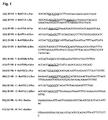
- Fig. 1 Compilation of oligonucleotides (SEQ ID NOS: 1 to 14) used in the cloning of recombinant toxins and toxin fragments. Recognition sequences for restriction endonucleases are underlined.
- the long sequences with SEQ ID NOS: 16 and 15 represent examples of a recombinant botulinum neurotoxin type A with added cysteine residue N-terminal from a histidine tag (consisting of 10 histidine residues) or a DNA
- the proline residue at the N-terminus of the monocistronally expressed and translated native toxin (position 1) was replaced with an alanine residue to provide an interface in the multi-cloning site (MCS) of the vector create.
- MCS multi-cloning site
- the vector comprises the His-tag coding sequence exactly 5 'to this MCS.
- the native loop between the light and heavy chain instead of the native loop between the light and heavy chain, a sequence has already been introduced that is recognized by E. coli cells, whereupon the native prepeptide (N-chain light chain-heavy chain-C) is already involved in recombinant production of the neurotoxin and without the addition of exogenous proteases is cleaved into the active two-chain neurotoxin and obtained as such.
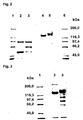
- Fig. 2 Analysis of the PEGylation and Control Approach of CH 10 -BoNT / A (Example 5) in SDS-polyacrylamide gel under non-reducing conditions. Lane 1: molecular weight markers; Lane 2: control batch; Lane 3: PEGylation approach.
- the extended chain one of the following sequences has: - (C) 1 - (day) 1 - (X) 0 -, - (C) 2- (day) 1 - (X) 0 -, - (C) 3 - (day) 1 - (X) 0 - , - (C) 4 - (day) 1 - (X) 0 -, - (C) 5 - (day) 1 - (X) 0 -, - (C) 1 - (day) 1 - (X) 1 -, - (C) 2 - (day) 1 - (X) 1 -, - (C) 3 - (day) 1 - (X) 1 -, - (C) 4 - (day) 1 - (X)
- k is also any integer from 11 to 50, or even more than 50, in particular more than 100 or more than 250.
- an upper limit for k of 10-20 is suitable, so that preferred values for k are in the range of 1-10, if k is not, particularly preferably 0.
- n the upper limit of which, according to the invention, has been set at 50 for practical and economic reasons alone.
- n is in the range of 1-10, more preferably 1-5, in order not to introduce too many PEG molecules (since preferably all introduced cysteine residues are also PEGylated) and the resulting PEGylated mutated botulinum / neurotoxin not to deprive of its biological activity as defined above. This can be done easily if too many cysteine and PEG residues or too many cysteine and PEG residues are introduced at wrong positions, since the light chain, possibly despite binding of the toxin to the target cell, not in the target cell is translocated.
- botulinum toxin type A was published by Lacy & Stevens in 1998 (Nat. Struct. Biol. 5, 898-902 ), the structure of botulinum toxin type B by Swaninathan & Eswaramoorthy (Nat. Struct. Biol. 7, 693-699 (2000 )).
- the structure of the light chains is known, and it can be determined which regions of the heavy or light chain are located on the protein surface and therefore may be suitable for a linkage with PEG.
- a suitably activated PEG eg PEG-succinimidyl propionate
- An activated PEG can attack numerous lysine residues - even in the heavy chain binding region, leading experimentally to a dramatic inactivation.
- modified botulinum toxins that are capable of being first exchanged for at least one cysteine residue and then PEGylated on the at least one introduced cysteine residue.
- modified botulinum toxins to be further described below, are also a preferred embodiment of the present invention, have sufficient biological (including enzymatic / catalytic) activity as conjugates with PEG (which by definition is at least 20%, preferably 30-40%, 50-70 % or even 75-95% of the biological activity of the unmodified protein) with simultaneously increased stability (as compared to the corresponding native neurotoxins) and are also referred to below as PEGylated mutated botulinum or neurotoxins of the present invention.
- botulinum toxins of the present invention preferably those botulinum toxins (particularly types A, B and C1) whose light chain is modified to have extension of the chain at its N-terminus, wherein the N-terminus the extended light chain has one of the following sequences: - (tag) 1 - (X) 0 -BoNT (P1C), - (tag) 1 - (X) 0 -BoNT (F2C), - (tag) 1 - (X) 0 -BoNT (V3C), - ( tag) 1 - (X) 0 -BoNT (N4C), (tag) 1 - (X) 0 -BoNT (K5C), - (tag) 1 - (X) 1 -BoNT (P1C), - (tag) 1 - (X) 1 -BoNT (F 2 C), - (day) 1 - (X) 1 -BoNT (V 3 C), - (
- k is also any integer from 11 to 50, or even over 50, in particular over 100 or over 250.
- an upper limit for k of 10-20 is suitable, so that preferred values for k are in the range of 1-10, if k is not, particularly preferably 0.
- modified botulinum toxins of the present invention irrespective of whether it is the variant with introduced cysteine residue (s) in the N-terminal extension of the light chain or the variant with introduced cysteine residue (s) at the N-terminal end of the light chain.
- the modified botulinum toxin is a modified botulinum toxin derived from BoNT / A, BoNT / B or BoNT / C1, but it may also be a botulinum toxin of types D, E, F or G. It is likewise preferred if, on the one hand, all artificially introduced cysteine residues (preferably 1-10 cysteine residues are introduced) have at least one PEG chain, but on the other hand none of the cysteine residues naturally occurring in the heavy and light chain of the botulinum toxin is PEGylated.
- the tag is not needed to increase the stability of the neurotoxin or its biological activity but allows the simplified and near-quantitative isolation of the modified botulinum toxin from the bacterial culture.
- n in the case of the variant with introduced cysteine residue (s) in the N-terminal extension of the light chain
- n in the case of the variant with introduced cysteine residue (s) in the N-terminal extension of the light chain
- n in the case of the variant with introduced cysteine residue (s) at the N-terminal end of the light chain
- PEGylations the same applies in the case where k ⁇ .0 and at least one amino acid residue X is a cysteine residue.
- cysteine residues can be preferably all, and completely, PEGylation, without that, and this is the surprising finding of the inventors, even one of the naturally occurring in Botulinumtoxin cysteine residues, neither on the heavy nor on the light chain, PEGylated (in addition each one intra- and intermolecular disulfide bridge, botulinum toxin type A, for example, has three other heavy chain cysteine residues (C 791 , C 967 , C 1060 ) and two other cysteine residues in the light chain (C 134 and C 165 )). In this way a uniform (homogeneous) product in the form of a PEGylated mutant botulinum toxin can be obtained.
- the PEGylated mutant botulinum / neurotoxins according to the present invention are consequently biologically and enzymatically (ie catalytically) active like the corresponding natural botulinum / neurotoxins or have at most slightly reduced biological and enzymatic / catalytic activity as defined above , but are more stable, partly even considerably more stable than their natural predecessor toxins from which they were derived.
- a PEGylated mutated botulinum toxin is more preferred whose PEGylated mutated (modified) light chain in the cytosol of motor neurons has a higher stability than the unmodified light chain of the corresponding native botulinum toxin.
- PEGylation of the light chain as described above results in increased stability compared to the unmodified light chain.
- the PEG chain according to the invention is thus attached to the light chain in such a way that (1) its enzymatic activity is unchanged or at most slightly reduced (according to the definition given above), and (2) the modified light chain, as well as the unmodified chain, into the Cytosol of motor neurons is translocated.
- His tag as well as other tags such as the Strep tag, allow easy isolation of the mutated neurotoxin from the lysate of transformed bacteria (eg E. coli ). He will be on most conveniently attached at the DNA level in the 5 'direction of the coding region of the neurotoxin gene. In the case of His tag, isolation is by affinity chromatography over Ni-NTA-Sepharose. Thus isolated mutant neurotoxin is coupled in the next step with activated PEG.
- transformed bacteria eg E. coli
- Nektar Therapeutics provides a range of activated PEG derivatives, including PEG-maleimide, PEG-vinylsulfone, PEG-iodoacetamide, and PEG-orthopyridyl disulfide, and provides instructions for PEGylation.
- these PEG derivatives can have different chain lengths: for example, PEG derivatives with molecular weights of 5,000 daltons, 10,000 daltons, 20,000 daltons and 30,000 daltons are commercially available and can be used according to the invention.
- the cleavage of the SNARE protein corresponding to the serotype is quantified.
- the activity is then optionally compared to the activity of (i) the native neurotoxin (the corresponding serotype), (ii) the tagged neurotoxin tagged for simplified isolation and / or (iii) the mutant neurotoxin without tag.
- the activity of the mutant and PEGylated mutant neurotoxin of the present invention is similar to the activity of the native (non-mutant) neurotoxin (that is, the biological activity, as defined above, of the mutant neurotoxin and modified neurotoxin of the invention is as compared to the biological activity of the native neurotoxin at best slightly reduced in the sense of the definition given above).
- the total activity of the PEGylated mutant neurotoxin is first determined in an ex vivo model, the so-called diaphragmatic or hemi-diaphragmatic assay.
- the paralyzing activity on a nerve-muscle preparation is determined.
- the biological activity of the modified, ie the mutated and subsequently PEGylated neurotoxin is at least 20%, preferably 30-40% or 50-70% or even 75-95%, of the biological activity of the unmodified (native) protein (biological activity as well to be understood here according to the above definition).
- the toxicity of the PEGylated mutant neurotoxin according to the invention can be tested in the mouse LD 50 assay, whereby the dose is determined which, after ip administration, is lethal in half of a group of mice:
- the duration of action of the PEGylated mutated neurotoxin according to the invention is determined in vivo, also on the mouse. After injection of a sub-lethal dose of a mutant type A botulinum toxin of the present invention or the corresponding native botulinum toxin into the gastrocnemius muscle of the hind paw, the time in which the muscle remains paralyzed is determined. The paralyzing strength is classified by means of a scale. The duration of action, which is shorter in the mouse than in humans, increased by 30-150% (measured in comparison to the un-PEGylated and unmutated botulinum toxin type A), depending on the modified botulinum toxin type A used.
- the PEGylated mutant botulinum toxin of the present invention can be formulated in a suitable formulation into a finished drug containing a dose (or an integer multiple of the dose) in the therapeutic dose range (eg, 100 LD 50 units per injection vial).
- the pharmaceutical composition is stabilized without the addition of human serum albumin (HSA). It can also be stabilized with human serum albumin (HSA).
- HSA human serum albumin
- Particularly preferred in this regard is the use of an HSA-free composition for the stabilization of protein drugs, as described in US Pat WO 2005/007185 is described.
- the pharmaceutical composition of the present invention is in lyophilized form or liquid. Both forms are suitable, if appropriate after absorption in a suitable solvent, for injection into the muscle to be treated.
- the greater stability and half-life of the mutated botulinum toxin or the pharmaceutical containing it can be used to treat various dystonias such as spasmodic dysphonia, laryngeal dystonia, cervical dystonia, focal hand dystonia, blepharospasm, strabismus, cerebral palsy, hemifacial spasm, spasticity, spasmodic colitis, anismus , TICS, tremors, bruxism, anal fissure, achalasia, dysphagia, hyperhidrosis, facial wrinkles.
- various dystonias such as spasmodic dysphonia, laryngeal dystonia, cervical dystonia, focal hand dystonia, blepharospasm, strabismus, cerebral palsy, hemifacial spasm, spasticity, spasmodic colitis, anismus , TICS, tremors, bruxism, anal fissure, achalasia, dysphagia
- chromosomal DNA was isolated from a culture of Clostridium botulinum type A (strain ATCC 3502).
- SEQ ID NO: 1 and SEQ ID NO: 2 a gene fragment coding for the light chain of BoNT / A with modified loop sequence was obtained.
- the PCR amplicon was cloned via the restriction sites for Nco I and Bgl II into the expression plasmid pQE-H 10 derived from pQE-60 and for a His tag (consisting of 10 histidine residues) on the 5 'side encoded the cloning site.
- the plasmid pQE-H 10 -BoNT / AL was generated.
- the gene fragment coding for the heavy chain of BoNT / A was obtained.
- Via the restriction sites for Stu I and Bgl II it was cloned to the 3 'end of the light chain loop sequence in pQE-H 10 -BONNT / AL (plasmid pQE-H 10 -BoNT / A).
- the E. coli expression strain M15 [pREP4] (Qiagen) was transformed with the plasmid pQE-H 10 -BoNT / A.
- Cloning and expression of a botulinum neurotoxin type B N-terminally provided with a histidine tag (consisting of 10 histidine residues) took place analogously to the type A toxin.
- chromosomal DNA from Clostridium botulinum type B (strain Okra) as well as the primers SEQ ID NO: 5 and SEQ ID NO: 6 or SEQ ID NO: 7 and SEQ ID NO: 8 were used.
- Cloning and expression of a Botulinum neurotoxin type C1 provided N-terminally with a His tag (consisting of 10 histidine residues) was carried out analogously to the type A toxin.
- a cysteine residue was added to the amino acid sequence N-terminal to the histidine tag (consisting of 10 histidine residues). This was achieved by site-directed mutagenesis in the sequence region of pQE-H 10 -BoNT / A encoding the His tag.
- the QuickChange Site Directed Mugenesis kit from Stratagene was used. The mutagenesis reaction was performed with primers SEQ ID NO: 13 and SEQ ID NO: 14. The nucleotide exchange in the DNA sequence was verified by DNA sequencing of the isolated clones. The expression and purification of the mutated toxin were carried out analogously to Example 1.
- the determination of the specific protease activity (that is, the catalytic activity without binding or translocation) of the PEGylated mutant BoNT / A derivatives was carried out in ELISA format.
- a recombinant polypeptide was cloned, which is composed in the N-terminal region of the conventional fusion partner glutathione S-transferase (GST) and a C-terminal peptide sequence comprising the C-terminal 17 amino acid residues of SNAP-25. These 17 amino acid residues represent the region of the substrate protein SNAP-25 in which BoNT / A specifically cleaves.
- the specific activity was determined in protease units / ng of protein.
- Example 7 Determination of the activity ex vivo in the hemidiaphragm assay
- Example 8 Duration of Action of PEGylated Botulinum Toxin Type A
- mice were injected (2 x 0.05 mL) of (i) mutant, (ii) mutant PEGylated or (iii) native botulinum toxin in a dosage of 0.4 or 0.6 LD 50 units / mouse (in saline + 1 mg / mL HSA) into the gastrocnemius muscle of the hind paw. Subsequently, the paralysis of the muscle was assessed daily on the basis of a scale (minimal, slight, severe paralysis). After 25 days no paralysis of the muscle was observed in the animals treated with native neurotoxin. In the animals treated with mutant or PEGylated mutant botulinum toxin, the duration of action was prolonged by 7-20 days.
Landscapes
- Health & Medical Sciences (AREA)
- Chemical & Material Sciences (AREA)
- Life Sciences & Earth Sciences (AREA)
- Organic Chemistry (AREA)
- Medicinal Chemistry (AREA)
- General Health & Medical Sciences (AREA)
- Bioinformatics & Cheminformatics (AREA)
- Engineering & Computer Science (AREA)
- Veterinary Medicine (AREA)
- Public Health (AREA)
- Pharmacology & Pharmacy (AREA)
- Animal Behavior & Ethology (AREA)
- Genetics & Genomics (AREA)
- General Chemical & Material Sciences (AREA)
- Nuclear Medicine, Radiotherapy & Molecular Imaging (AREA)
- Chemical Kinetics & Catalysis (AREA)
- Molecular Biology (AREA)
- Biochemistry (AREA)
- Gastroenterology & Hepatology (AREA)
- Proteomics, Peptides & Aminoacids (AREA)
- Zoology (AREA)
- Wood Science & Technology (AREA)
- Microbiology (AREA)
- Biomedical Technology (AREA)
- Biophysics (AREA)
- Immunology (AREA)
- Epidemiology (AREA)
- Neurology (AREA)
- General Engineering & Computer Science (AREA)
- Biotechnology (AREA)
- Mycology (AREA)
- Neurosurgery (AREA)
- Orthopedic Medicine & Surgery (AREA)
- Dermatology (AREA)
- Physical Education & Sports Medicine (AREA)
- Psychology (AREA)
- Ophthalmology & Optometry (AREA)
- Medicines That Contain Protein Lipid Enzymes And Other Medicines (AREA)
- Peptides Or Proteins (AREA)
- Micro-Organisms Or Cultivation Processes Thereof (AREA)
Claims (15)
- Toxine botulique modifiée, comprenant une chaîne lourde naturelle et une chaîne légère modifiée, caractérisée en ce que la modification de la chaîne légère consiste en ce que :(a) (i) elle présente en position N-terminale un prolongement de chaîne qui a la structure -(C)n-(tag)m-(X)k- dans la direction allant de son extrémité N-terminale à son extrémité C-terminale, et (ii) au moins un des résidus de cystéine dans le prolongement de la chaîne est couplé à au moins une chaîne PEG, ou que(b) au moins un résidu d'acide aminé, et au maximum 20 résidus d'acides aminés, des résidus d'acides aminés se trouvant naturellement sur l'extrémité N-terminale est/sont mutés en un résidu de cystéine, où au moins un des au maximum 20 résidus de cystéine sur l'extrémité N-terminale est couplé à au moins une chaîne PEG, et la chaîne légère présente le cas échéant en plus un prolongement N-terminal tel que la séquence de la chaîne légère a la structure -(tag)m-(X)k-BoNT(Xl-20C) dans la direction allant de son extrémité N-terminale à son extrémité C-terminale,oùC représente un résidu de cystéine,tag représente un tag quelconque etX représente le résidu d'un acide aminé quelconque existant naturellement ;oùn représente un nombre entier entre 1 et 50 ;oùm=0 ou m=1 etk =0 ou k représente un nombre entier de 1 à 50.
- Toxine botulique selon la revendication 1, caractérisée en ce qu'aucun des résidus de cystéine existant naturellement dans les chaînes lourde et légère de la toxine botulique n'est PEGylé.
- Toxine botulique selon la revendication 1 ou 2, caractérisée en ce que le tag est un tag His ou un tag Strep.
- Toxine botulique selon l'une des revendications 1 à 3, caractérisée en ce que la toxine botulique est une toxine botulique de type A, B, C1, D, E, F ou G et l'une des conditions suivantes est remplie :(a)n=1,2 ou 3,m=0 ou 1,k=0 ou k≠0,(b1)n=1,m=1,k=0; (b2)n=2,m=1,k=0; (b3)n=3,m=1,k=0;(c1)n=1,m=0,k=0; (c2)n=2,m=0,k=0; (c3)n=3,m=0,k=0;(d1)n=1,m=1,k≠0; (d2)n=2,m=1,k≠0; (d3)n=3,m=1,k≠0;(e1)n=1,m=0,k≠0; (e2)n=2,m=0,k≠0; (e3)n=3,m=0,k≠0;où les toxines sont couplées à une, à deux ou à trois molécules de PEG par molécule, selon que n=1,2 ou 3.
- Toxine botulique selon l'une des revendications 1 à 4, caractérisée en ce que le prolongement de la chaîne légère a l'une des séquences suivantes :
-(C)1-(tag)1-(X)0-, -(C)2-(tag)1-(X)0-, -(C)3-(tag)1-(X)0-, -(C)4-(tag)1-(X)0-, -(C)5-(tag)1-(X)0-, -(C)1-(tag)1-(X)1-, -(C)2-(tag)1-(X)1-, -(C)3-(tag)-(X)1-, -(C)4-(tag)1-(X)1-, -(C)5-(tag)1-(X)1-, -(C)1-(tag)1-(X)2-, -(C)2-(tag)1-(X)2-, -(C)3-(tag)1-(X)2-, -(C)4-(tag)1-(X)2-, -(C)5-(tag)1-(X)2-, -(C)1-(tag)1-(X)3-, -(C)2-(tag)1-(X)3-, -(C)3-(tag)1-(X)3-, -(C)4-(tag)1-(X)3-, -(C)5-(tag)1-(X)3-, -(C)1-(tag)1-(X)4-, -(C)2-(tag)1-(X)4-, -(C)3-(tag)1-(X)4-, -(C)4-(tag)1-(X)4-, -(C)5-(tag)1-(X)4-,
où, pour chacune de ces 25 séquences, m peut être aussi égal à 0, et/ou en ce que respectivement tous les résidus de cystéine existant dans le prolongement de la chaîne légère sont aussi PEGylés. - Toxine botulique selon l'une des revendications 1 à 3, caractérisée en ce que la toxine botulique est une toxine botulique de type A, B, C1, D, E, F ou G et l'une des conditions suivantes est remplie :(a) m = 1, k = 0, seulement un des 20 résidus d'acides aminés N-terminaux est remplacé par un résidu de cystéine, en particulier seulement le résidu en position 1, 2, 3, 4, 5, 6, 7, 8, 9 ou 10;(b) m = 0, k = 0, seulement un des 20 résidus d'acides aminés N-terminaux est remplacé par un résidu de cystéine, en particulier seulement le résidu en position 1, 2, 3, 4, 5, 6, 7, 8, 9 ou 10 ;(c) m = 1, k≠0, seulement un des 20 résidus d'acides aminés N-terminaux est remplacé par un résidu de cystéine, en particulier seulement le résidu en position 1, 2, 3, 4, 5, 6, 7, 8, 9 ou 10;(d) m = 0, k≠0, seulement un des 20 résidus d'acides aminés N-terminaux est remplacé par un résidu de cystéine, en particulier seulement le résidu en position 1, 2, 3, 4, 5, 6, 7, 8, 9 ou 10;(e) m = 1, k = 0, seulement deux des 20 résidus d'acides aminés N-terminaux sont remplacés par un résidu de cystéine, en particulier seulement les résidus aux positions 1 et 3, 1 et 4, 2 et 4, 1 et 5,2 et 5,3 et 5,1 et 6,2 et 6,3 et 6 ou 4 et 6;(f) m = 0, k = 0, seulement deux des 20 résidus d'acides aminés N-terminaux sont remplacés par un résidu de cystéine, en particulier seulement les résidus aux positions 1 et 3,1 et 4,2 et 4,1 et 5,2 et 5,3 et 5,1 et 6,2 et 6,3 et 6 ou 4 et 6;(g) m = 1, k≠ 0, seulement deux des 20 résidus d'acides aminés N-terminaux sont remplacés par un résidu de cystéine, en particulier seulement les résidus aux positions 1 et 3,1 et 4,2 et 4,1 et 5,2 et 5,3 et 5,1 et 6,2 et 6,3 et 6 ou 4 et 6;(h) m = 0, k ≠ 0, seulement deux des 20 résidus d'acides aminés N-terminaux sont remplacés par un résidu de cystéine, en particulier seulement les résidus aux positions 1 et 3,1 et 4,2 et 4,1 et 5,2 et 5,3 et 5,1 et 6,2 et 6,3 et 6 ou 4 et 6;(i) m = 1, k = 0, seulement deux des 20 résidus d'acides aminés N-terminaux sont remplacés par un résidu de cystéine, en particulier seulement les résidus aux positions 1 et 2,2 et 3,3 et 4,4 et 5 ou 5 et 6;(j) m = 0, k = 0, seulement deux des 20 résidus d'acides aminés N-terminaux sont remplacés par un résidu de cystéine, en particulier seulement les résidus aux positions 1 et 2,2 et 3,3 et 4,4 et 5 ou 5 et 6;(k) m = 1, k ≠ 0, seulement deux des 20 résidus d'acides aminés N-terminaux sont remplacés par un résidu de cystéine, en particulier seulement les résidus aux positions 1 et 2,2 et 3,3 et 4,4 et 5 ou 5 et 6;(l) m = 0, k ≠ 0, seulement deux des 20 résidus d'acides aminés N-terminaux sont remplacés par un résidu de cystéine, en particulier seulement les résidus aux positions 1 et 2,2 et 3,3 et 4,4 et 5 ou 5 et 6;où les toxines sont couplées à une ou à deux molécules de PEG par molécule, selon que seulement un ou deux résidus de cystéine ont été introduits sur l'extrémité N-terminale.
- Toxine botulique selon l'une des revendications 1 à 3 et 6, caractérisée en ce que la toxine botulique modifiée est une toxine botulique, dont la chaîne légère est modifiée afin que celle-ci présente en position N-terminale un prolongement de chaîne, où l'extrémité N-terminale de la chaîne prolongée présente une des séquences suivantes :(a) -(tag)1-(X)0-BoNT(P1C), -(tag)1-(X)0-BoNT(F2C), -(tag)1-(X)0-BoNT(V3C), -(tag)1-(X)0-BoNT(N4C), -(tag)1-(X)0-BoNT(K5C),(b) -(tag)1-(X)1-BoNT(P1C), -(tag)-(X)1-BoNT(F2C), -(tag)1-(X)1-BoNT(V3C), -(tag)1-(X)1-BoNT(N4C), -(tag)1-(X)1-BoNT(K5C),(c) -(tag)1-(X)2-BoNT(P1C), -(tag)1-(X)2-BoNT(F2C), -(tag)1-(X)2-BoNT(V3C), -(tag)1-(X)2-BoNT(N4C), -(tag)1-(X)2-BoNT(K5C),(d) -(tag)1-(X)3-BoNT(P1C), -(tag)1-(X)3-BoNT(F2C), -(tag)1-(X)3-BoNT(V3C), -(tag)1-(X)3-BoNT(N4C), -(tag)1-(X)3-BoNT(K5C),(e) -(tag)1-(X)4-BoNT(P1C), -(tag)1-(X)4-BoNT(F2C), -(tag)1-(X)4-BoNT(V3C), -(tag)1-(X)4-BoNT(N4C), -(tag)1-(X)4-BoNT(K5C),où, pour chacun des 25 modes de réalisation préférés énumérés ci-dessus, -(tag)1 peut être aussi -(tag)0, et/ou respectivement tous les résidus de cystéine introduits sur l'extrémité N-terminale sont aussi PEGylés.
- Toxine botulique selon l'une des revendications précédentes, caractérisée en ce que la toxine botulique est une toxine botulique de type A, B ou C1.
- Toxine botulique selon l'une des revendications précédentes, caractérisée en ce que la toxine botulique modifiée comprend au moins 20 %, de préférence 30 à 40 %, 50 à 70 % ou 75 à 95 % de l'activité biologique de la toxine botulique naturelle correspondante (non modifiée, native) et une stabilité accrue par rapport à cette dernière.
- Toxine botulique selon l'une des revendications précédentes, caractérisée en ce que la chaîne légère modifiée est transloquée in vivo dans le cytosol des neurones moteurs.
- Toxine botulique selon l'une des revendications précédentes, caractérisée en ce que la chaîne légère modifiée présente dans le cytosol des neurones moteurs une stabilité supérieure à celle de la toxine botulique native correspondante.
- Composition pharmaceutique, la composition comprenant la toxine botulique modifiée selon l'une des revendications précédentes.
- Composition pharmaceutique selon la revendication 12, la composition étant stabilisée sans addition d'albumine sérique humaine (HSA).
- Composition pharmaceutique selon la revendication 12 ou 13, la composition se présentant sous une forme lyophilisée ou liquide et les deux formes étant appropriées, le cas échéant après dilution dans un solvant approprié, pour une injection IM.
- Composition pharmaceutique selon la revendication 12, la composition étant destiné pour la thérapie des dystonies ainsi qu'à la suppression des rides du visage.
Priority Applications (1)
| Application Number | Priority Date | Filing Date | Title |
|---|---|---|---|
| EP07723281A EP1994048B1 (fr) | 2006-03-15 | 2007-03-15 | Toxine mutée et pégylée de clostridium botulinum |
Applications Claiming Priority (3)
| Application Number | Priority Date | Filing Date | Title |
|---|---|---|---|
| EP06005300A EP1834962A1 (fr) | 2006-03-15 | 2006-03-15 | Toxine botulinique pegylée |
| PCT/EP2007/002296 WO2007104567A2 (fr) | 2006-03-15 | 2007-03-15 | Toxine mutée et pégylée de clostridium botulinum |
| EP07723281A EP1994048B1 (fr) | 2006-03-15 | 2007-03-15 | Toxine mutée et pégylée de clostridium botulinum |
Publications (2)
| Publication Number | Publication Date |
|---|---|
| EP1994048A2 EP1994048A2 (fr) | 2008-11-26 |
| EP1994048B1 true EP1994048B1 (fr) | 2009-09-16 |
Family
ID=36603470
Family Applications (2)
| Application Number | Title | Priority Date | Filing Date |
|---|---|---|---|
| EP06005300A Withdrawn EP1834962A1 (fr) | 2006-03-15 | 2006-03-15 | Toxine botulinique pegylée |
| EP07723281A Active EP1994048B1 (fr) | 2006-03-15 | 2007-03-15 | Toxine mutée et pégylée de clostridium botulinum |
Family Applications Before (1)
| Application Number | Title | Priority Date | Filing Date |
|---|---|---|---|
| EP06005300A Withdrawn EP1834962A1 (fr) | 2006-03-15 | 2006-03-15 | Toxine botulinique pegylée |
Country Status (16)
| Country | Link |
|---|---|
| US (4) | US8003601B2 (fr) |
| EP (2) | EP1834962A1 (fr) |
| JP (1) | JP5232021B2 (fr) |
| KR (1) | KR101454273B1 (fr) |
| CN (1) | CN101432296B (fr) |
| AT (1) | ATE443078T1 (fr) |
| AU (1) | AU2007224669B2 (fr) |
| BR (1) | BRPI0708907A2 (fr) |
| CA (1) | CA2638862A1 (fr) |
| DE (1) | DE502007001546D1 (fr) |
| ES (1) | ES2334283T3 (fr) |
| IL (1) | IL193777A (fr) |
| MX (1) | MX2008011495A (fr) |
| RU (1) | RU2426739C2 (fr) |
| WO (1) | WO2007104567A2 (fr) |
| ZA (1) | ZA200807284B (fr) |
Families Citing this family (39)
| Publication number | Priority date | Publication date | Assignee | Title |
|---|---|---|---|---|
| GB9617671D0 (en) * | 1996-08-23 | 1996-10-02 | Microbiological Res Authority | Recombinant toxin fragments |
| EP1834962A1 (fr) | 2006-03-15 | 2007-09-19 | Biotecon Therapeutics GmbH | Toxine botulinique pegylée |
| WO2009014835A2 (fr) * | 2007-06-21 | 2009-01-29 | Angelica Therapeutics, Inc. | Toxines modifiées |
| EP2268297A4 (fr) * | 2008-02-29 | 2011-11-16 | Angelica Therapeutics Inc | Toxines modifiées |
| EP2310028B1 (fr) | 2008-06-12 | 2016-11-16 | Ipsen Bioinnovation Limited | Protéines de fusion pour leur utilisation dans le traitement de l'acromégalie |
| WO2009150470A2 (fr) | 2008-06-12 | 2009-12-17 | Syntaxin Limited | Suppression de cancers |
| ES2592314T3 (es) | 2008-08-29 | 2016-11-29 | Merz Pharma Gmbh & Co. Kgaa | Neurotoxinas clostridiales con persistencia modificada |
| GB0820970D0 (en) | 2008-11-17 | 2008-12-24 | Syntaxin Ltd | Suppression of cancer |
| US8993715B2 (en) * | 2009-07-06 | 2015-03-31 | Canon Kabushiki Kaisha | Labeled protein and method for obtaining the same |
| WO2011023213A1 (fr) * | 2009-08-28 | 2011-03-03 | Merz Pharma Gmbh & Co. Kgaa | Agents de chimiodénervation modifiés |
| MX369263B (es) * | 2010-05-20 | 2019-11-04 | Allergan Inc | Toxinas de clostridium degradables. |
| GB201108108D0 (en) | 2011-05-16 | 2011-06-29 | Syntaxin Ltd | Therapeutic fusion proteins |
| HK1220376A1 (zh) | 2013-03-15 | 2017-05-05 | Angelica Therapeutics, Inc. | 修饰的毒素 |
| GB201312317D0 (en) | 2013-07-09 | 2013-08-21 | Syntaxin Ltd | Cationic neurotoxins |
| ES2642916T3 (es) | 2014-06-06 | 2017-11-20 | Galit KLEINER-FISMAN | Toxina botulínica para su uso en el tratamiento de la paratonia |
| JP6798998B2 (ja) | 2014-11-07 | 2020-12-09 | キネタ・クロニック・ペイン・リミテッド・ライアビリティ・カンパニーKineta Chronic Pain, LLC | コノトキシンペプチドの修飾および使用 |
| RU2694820C9 (ru) | 2014-12-23 | 2019-08-12 | Мерц Фарма Гмбх Унд Ко. Кгаа | Контейнер, предварительно заполненный ботулиновым токсином |
| WO2016110662A1 (fr) | 2015-01-09 | 2016-07-14 | Ipsen Bioinnovation Limited | Neurotoxines cationiques |
| GB201517450D0 (en) | 2015-10-02 | 2015-11-18 | Ipsen Biopharm Ltd | Method |
| WO2017063743A1 (fr) | 2015-10-14 | 2017-04-20 | Merz Pharma Gmbh & Co. Kgaa | Améliorations apportées à la thérapie par ultrasons de tissu atteint de photovieillissement |
| CA3021231A1 (fr) | 2016-04-19 | 2017-10-26 | Griffon Pharmaceuticals Inc. | Peptides pegyles bioactifs et utilisations correspondantes |
| TWI737742B (zh) | 2016-06-22 | 2021-09-01 | 德商梅茲製藥有限兩合公司 | 肉毒桿菌毒素的預填充式注射器系統、具有其之套組以及其之使用 |
| US11400136B2 (en) | 2017-06-19 | 2022-08-02 | President And Fellows Of Harvard College | Methods and compositions for treating a microbial infection |
| MX2020003742A (es) * | 2017-10-11 | 2020-10-28 | Elanco Us Inc | Variantes del factor estimulador de colonias de granulocitos de porcino y sus usos. |
| CA3083083A1 (fr) | 2018-01-29 | 2019-08-01 | Ipsen Biopharm Limited | Neurotoxines botuliques de clivage de snare non neuronales |
| WO2019158745A1 (fr) * | 2018-02-16 | 2019-08-22 | Bontana Therapies Gmbh | Neurotoxine botulique reposant sur un acide nucléique, pour application thérapeutique |
| CN112165955A (zh) | 2018-05-21 | 2021-01-01 | 益普生生物制药有限公司 | 抑制骨癌引起的异常性疼痛 |
| GB201815817D0 (en) | 2018-09-28 | 2018-11-14 | Ispen Biopharm Ltd | Clostridial neurotoxins comprising and exogenous activation loop |
| GB201815844D0 (en) | 2018-09-28 | 2018-11-14 | Ipsen Biopharm Ltd | Therapeutic & comestic uses of botulinum neurotoxin serotype e |
| US20220016221A1 (en) | 2018-12-05 | 2022-01-20 | Ipsen Biopharm Limited | Treatment of symptoms of traumatic brain injury |
| GB201900621D0 (en) | 2019-01-16 | 2019-03-06 | Ipsen Biopharm Ltd | Labelled polypeptides |
| WO2021150581A2 (fr) * | 2020-01-21 | 2021-07-29 | Trustees Of Dartmouth College | Variants de chaîne légère de toxine botulique à optimisation immunologique |
| GB202103372D0 (en) | 2021-03-11 | 2021-04-28 | Ipsen Biopharm Ltd | Modified clostridial neurotoxins |
| GB202104294D0 (en) | 2021-03-26 | 2021-05-12 | Ipsen Biopharm Ltd | Clostridial neurotoxins comprising an exogenous activation loop |
| GB202214232D0 (en) | 2022-09-28 | 2022-11-09 | Ispen Biopharm Ltd | Clostridial neurotoxins comprising an activating exogenous protease cleavage site |
| GB202214229D0 (en) | 2022-09-28 | 2022-11-09 | Ipsen Biopharm Ltd | Clostridial neurotoxins comprising an activating endosomal protease cleavage site |
| JP2025534349A (ja) | 2022-09-30 | 2025-10-15 | イプセン バイオファーム リミテッド | 膀胱痛症候群の治療 |
| CN116813727B (zh) * | 2023-06-08 | 2025-06-06 | 苏州德进生物制药有限公司 | 一种a型肉毒毒素的制备方法及其应用 |
| GB202318884D0 (en) | 2023-12-11 | 2024-01-24 | Ipsen Biopharm Ltd | Formulation |
Family Cites Families (5)
| Publication number | Priority date | Publication date | Assignee | Title |
|---|---|---|---|---|
| DE19925739A1 (de) * | 1999-06-07 | 2000-12-21 | Biotecon Ges Fuer Biotechnologische Entwicklung & Consulting Mbh | Therapeutikum mit einem Botulinum-Neurotoxin |
| US6903187B1 (en) | 2000-07-21 | 2005-06-07 | Allergan, Inc. | Leucine-based motif and clostridial neurotoxins |
| AU2002320127A1 (en) | 2001-06-21 | 2003-01-08 | Surromed, Inc. | Covalent coupling of botulinum toxin with polyethylene glycol |
| DE602005011458D1 (de) * | 2004-09-01 | 2009-01-15 | Allergan Inc | Abbaubare clostridientoxine |
| EP1834962A1 (fr) * | 2006-03-15 | 2007-09-19 | Biotecon Therapeutics GmbH | Toxine botulinique pegylée |
-
2006
- 2006-03-15 EP EP06005300A patent/EP1834962A1/fr not_active Withdrawn
-
2007
- 2007-03-15 ES ES07723281T patent/ES2334283T3/es active Active
- 2007-03-15 BR BRPI0708907-4A patent/BRPI0708907A2/pt not_active IP Right Cessation
- 2007-03-15 CN CN200780015607.5A patent/CN101432296B/zh not_active Expired - Fee Related
- 2007-03-15 RU RU2008140368/10A patent/RU2426739C2/ru not_active IP Right Cessation
- 2007-03-15 AU AU2007224669A patent/AU2007224669B2/en not_active Ceased
- 2007-03-15 AT AT07723281T patent/ATE443078T1/de active
- 2007-03-15 KR KR1020087023540A patent/KR101454273B1/ko not_active Expired - Fee Related
- 2007-03-15 DE DE502007001546T patent/DE502007001546D1/de active Active
- 2007-03-15 EP EP07723281A patent/EP1994048B1/fr active Active
- 2007-03-15 WO PCT/EP2007/002296 patent/WO2007104567A2/fr not_active Ceased
- 2007-03-15 JP JP2008558725A patent/JP5232021B2/ja not_active Expired - Fee Related
- 2007-03-15 US US12/282,601 patent/US8003601B2/en not_active Expired - Fee Related
- 2007-03-15 MX MX2008011495A patent/MX2008011495A/es active IP Right Grant
- 2007-03-15 CA CA002638862A patent/CA2638862A1/fr not_active Abandoned
-
2008
- 2008-08-22 ZA ZA200807284A patent/ZA200807284B/xx unknown
- 2008-08-31 IL IL193777A patent/IL193777A/en not_active IP Right Cessation
-
2011
- 2011-07-19 US US13/185,925 patent/US8298550B2/en not_active Expired - Fee Related
-
2012
- 2012-09-21 US US13/624,493 patent/US8912140B2/en not_active Expired - Fee Related
-
2014
- 2014-11-11 US US14/538,132 patent/US9186396B2/en not_active Expired - Fee Related
Also Published As
| Publication number | Publication date |
|---|---|
| ZA200807284B (en) | 2009-04-29 |
| ES2334283T3 (es) | 2010-03-08 |
| AU2007224669B2 (en) | 2010-05-13 |
| AU2007224669A1 (en) | 2007-09-20 |
| BRPI0708907A2 (pt) | 2011-06-21 |
| WO2007104567A3 (fr) | 2007-11-01 |
| US8912140B2 (en) | 2014-12-16 |
| DE502007001546D1 (de) | 2009-10-29 |
| MX2008011495A (es) | 2008-09-24 |
| HK1128929A1 (en) | 2009-11-13 |
| US20130156747A1 (en) | 2013-06-20 |
| JP5232021B2 (ja) | 2013-07-10 |
| JP2009531026A (ja) | 2009-09-03 |
| IL193777A (en) | 2011-09-27 |
| WO2007104567A2 (fr) | 2007-09-20 |
| US8003601B2 (en) | 2011-08-23 |
| CN101432296B (zh) | 2014-07-02 |
| US8298550B2 (en) | 2012-10-30 |
| US20110294747A1 (en) | 2011-12-01 |
| CN101432296A (zh) | 2009-05-13 |
| RU2426739C2 (ru) | 2011-08-20 |
| US9186396B2 (en) | 2015-11-17 |
| RU2008140368A (ru) | 2010-04-20 |
| EP1994048A2 (fr) | 2008-11-26 |
| CA2638862A1 (fr) | 2007-09-20 |
| IL193777A0 (en) | 2011-08-01 |
| US20150166977A1 (en) | 2015-06-18 |
| KR20080106451A (ko) | 2008-12-05 |
| EP1834962A1 (fr) | 2007-09-19 |
| US20090118193A1 (en) | 2009-05-07 |
| KR101454273B1 (ko) | 2014-10-28 |
| ATE443078T1 (de) | 2009-10-15 |
Similar Documents
| Publication | Publication Date | Title |
|---|---|---|
| EP1834962A1 (fr) | Toxine botulinique pegylée | |
| EP3181578B1 (fr) | Porteur distine a cible des cellules nerveuses | |
| EP1786832B1 (fr) | Proteine de transport pour l'introduction de composes chimiques dans des cellules nerveuses | |
| EP1844150B1 (fr) | Expression recombinee de proteines a forme bicatenaire a pont disulfure | |
| DE69511860T2 (de) | Modifizierung von clostridium-toxinen und ihre anwendung als transport proteine | |
| DE69733146T2 (de) | Rekombinante toxinfragmente | |
| DE60032367T2 (de) | Aktivierbare rekombinante neurotoxine | |
| EP2337790B1 (fr) | Neurotoxines clostridiennes ayant une persistence changée | |
| HK1128929B (en) | Pegylated mutated clostridium botulinum toxin |
Legal Events
| Date | Code | Title | Description |
|---|---|---|---|
| PUAI | Public reference made under article 153(3) epc to a published international application that has entered the european phase |
Free format text: ORIGINAL CODE: 0009012 |
|
| 17P | Request for examination filed |
Effective date: 20081014 |
|
| AK | Designated contracting states |
Kind code of ref document: A2 Designated state(s): AT BE BG CH CY CZ DE DK EE ES FI FR GB GR HU IE IS IT LI LT LU LV MC MT NL PL PT RO SE SI SK TR |
|
| AX | Request for extension of the european patent |
Extension state: AL BA HR MK RS |
|
| 17Q | First examination report despatched |
Effective date: 20090304 |
|
| GRAP | Despatch of communication of intention to grant a patent |
Free format text: ORIGINAL CODE: EPIDOSNIGR1 |
|
| GRAS | Grant fee paid |
Free format text: ORIGINAL CODE: EPIDOSNIGR3 |
|
| GRAA | (expected) grant |
Free format text: ORIGINAL CODE: 0009210 |
|
| AK | Designated contracting states |
Kind code of ref document: B1 Designated state(s): AT BE BG CH CY CZ DE DK EE ES FI FR GB GR HU IE IS IT LI LT LU LV MC MT NL PL PT RO SE SI SK TR |
|
| AX | Request for extension of the european patent |
Extension state: AL BA HR MK RS |
|
| REG | Reference to a national code |
Ref country code: GB Ref legal event code: FG4D Free format text: NOT ENGLISH |
|
| REG | Reference to a national code |
Ref country code: CH Ref legal event code: EP |
|
| REG | Reference to a national code |
Ref country code: IE Ref legal event code: FG4D |
|
| REG | Reference to a national code |
Ref country code: CH Ref legal event code: NV Representative=s name: ALDO ROEMPLER PATENTANWALT |
|
| RAP2 | Party data changed (patent owner data changed or rights of a patent transferred) |
Owner name: MERZ PHARMA GMBH & CO. KGAA |
|
| REF | Corresponds to: |
Ref document number: 502007001546 Country of ref document: DE Date of ref document: 20091029 Kind code of ref document: P |
|
| NLT2 | Nl: modifications (of names), taken from the european patent patent bulletin |
Owner name: MERZ PHARMA GMBH & CO. KGAA Effective date: 20091021 |
|
| PG25 | Lapsed in a contracting state [announced via postgrant information from national office to epo] |
Ref country code: LT Free format text: LAPSE BECAUSE OF FAILURE TO SUBMIT A TRANSLATION OF THE DESCRIPTION OR TO PAY THE FEE WITHIN THE PRESCRIBED TIME-LIMIT Effective date: 20090916 Ref country code: SE Free format text: LAPSE BECAUSE OF FAILURE TO SUBMIT A TRANSLATION OF THE DESCRIPTION OR TO PAY THE FEE WITHIN THE PRESCRIBED TIME-LIMIT Effective date: 20090916 Ref country code: FI Free format text: LAPSE BECAUSE OF FAILURE TO SUBMIT A TRANSLATION OF THE DESCRIPTION OR TO PAY THE FEE WITHIN THE PRESCRIBED TIME-LIMIT Effective date: 20090916 |
|
| LTIE | Lt: invalidation of european patent or patent extension |
Effective date: 20090916 |
|
| PG25 | Lapsed in a contracting state [announced via postgrant information from national office to epo] |
Ref country code: PL Free format text: LAPSE BECAUSE OF FAILURE TO SUBMIT A TRANSLATION OF THE DESCRIPTION OR TO PAY THE FEE WITHIN THE PRESCRIBED TIME-LIMIT Effective date: 20090916 Ref country code: NL Free format text: LAPSE BECAUSE OF FAILURE TO SUBMIT A TRANSLATION OF THE DESCRIPTION OR TO PAY THE FEE WITHIN THE PRESCRIBED TIME-LIMIT Effective date: 20090916 Ref country code: LV Free format text: LAPSE BECAUSE OF FAILURE TO SUBMIT A TRANSLATION OF THE DESCRIPTION OR TO PAY THE FEE WITHIN THE PRESCRIBED TIME-LIMIT Effective date: 20090916 Ref country code: SI Free format text: LAPSE BECAUSE OF FAILURE TO SUBMIT A TRANSLATION OF THE DESCRIPTION OR TO PAY THE FEE WITHIN THE PRESCRIBED TIME-LIMIT Effective date: 20090916 |
|
| NLV1 | Nl: lapsed or annulled due to failure to fulfill the requirements of art. 29p and 29m of the patents act | ||
| REG | Reference to a national code |
Ref country code: ES Ref legal event code: FG2A Ref document number: 2334283 Country of ref document: ES Kind code of ref document: T3 |
|
| PG25 | Lapsed in a contracting state [announced via postgrant information from national office to epo] |
Ref country code: CY Free format text: LAPSE BECAUSE OF FAILURE TO SUBMIT A TRANSLATION OF THE DESCRIPTION OR TO PAY THE FEE WITHIN THE PRESCRIBED TIME-LIMIT Effective date: 20090916 |
|
| PG25 | Lapsed in a contracting state [announced via postgrant information from national office to epo] |
Ref country code: IS Free format text: LAPSE BECAUSE OF FAILURE TO SUBMIT A TRANSLATION OF THE DESCRIPTION OR TO PAY THE FEE WITHIN THE PRESCRIBED TIME-LIMIT Effective date: 20100116 Ref country code: CZ Free format text: LAPSE BECAUSE OF FAILURE TO SUBMIT A TRANSLATION OF THE DESCRIPTION OR TO PAY THE FEE WITHIN THE PRESCRIBED TIME-LIMIT Effective date: 20090916 Ref country code: EE Free format text: LAPSE BECAUSE OF FAILURE TO SUBMIT A TRANSLATION OF THE DESCRIPTION OR TO PAY THE FEE WITHIN THE PRESCRIBED TIME-LIMIT Effective date: 20090916 Ref country code: PT Free format text: LAPSE BECAUSE OF FAILURE TO SUBMIT A TRANSLATION OF THE DESCRIPTION OR TO PAY THE FEE WITHIN THE PRESCRIBED TIME-LIMIT Effective date: 20100118 Ref country code: RO Free format text: LAPSE BECAUSE OF FAILURE TO SUBMIT A TRANSLATION OF THE DESCRIPTION OR TO PAY THE FEE WITHIN THE PRESCRIBED TIME-LIMIT Effective date: 20090916 |
|
| PG25 | Lapsed in a contracting state [announced via postgrant information from national office to epo] |
Ref country code: SK Free format text: LAPSE BECAUSE OF FAILURE TO SUBMIT A TRANSLATION OF THE DESCRIPTION OR TO PAY THE FEE WITHIN THE PRESCRIBED TIME-LIMIT Effective date: 20090916 |
|
| PLBE | No opposition filed within time limit |
Free format text: ORIGINAL CODE: 0009261 |
|
| STAA | Information on the status of an ep patent application or granted ep patent |
Free format text: STATUS: NO OPPOSITION FILED WITHIN TIME LIMIT |
|
| PG25 | Lapsed in a contracting state [announced via postgrant information from national office to epo] |
Ref country code: DK Free format text: LAPSE BECAUSE OF FAILURE TO SUBMIT A TRANSLATION OF THE DESCRIPTION OR TO PAY THE FEE WITHIN THE PRESCRIBED TIME-LIMIT Effective date: 20090916 |
|
| 26N | No opposition filed |
Effective date: 20100617 |
|
| BERE | Be: lapsed |
Owner name: BIOTECON THERAPEUTICS G.M.B.H. Effective date: 20100331 |
|
| PG25 | Lapsed in a contracting state [announced via postgrant information from national office to epo] |
Ref country code: GR Free format text: LAPSE BECAUSE OF FAILURE TO SUBMIT A TRANSLATION OF THE DESCRIPTION OR TO PAY THE FEE WITHIN THE PRESCRIBED TIME-LIMIT Effective date: 20091217 Ref country code: MC Free format text: LAPSE BECAUSE OF NON-PAYMENT OF DUE FEES Effective date: 20100331 |
|
| PG25 | Lapsed in a contracting state [announced via postgrant information from national office to epo] |
Ref country code: BE Free format text: LAPSE BECAUSE OF NON-PAYMENT OF DUE FEES Effective date: 20100331 |
|
| PG25 | Lapsed in a contracting state [announced via postgrant information from national office to epo] |
Ref country code: IT Free format text: LAPSE BECAUSE OF NON-PAYMENT OF DUE FEES Effective date: 20100315 |
|
| PG25 | Lapsed in a contracting state [announced via postgrant information from national office to epo] |
Ref country code: MT Free format text: LAPSE BECAUSE OF FAILURE TO SUBMIT A TRANSLATION OF THE DESCRIPTION OR TO PAY THE FEE WITHIN THE PRESCRIBED TIME-LIMIT Effective date: 20090916 |
|
| PG25 | Lapsed in a contracting state [announced via postgrant information from national office to epo] |
Ref country code: BG Free format text: LAPSE BECAUSE OF FAILURE TO SUBMIT A TRANSLATION OF THE DESCRIPTION OR TO PAY THE FEE WITHIN THE PRESCRIBED TIME-LIMIT Effective date: 20090916 Ref country code: LU Free format text: LAPSE BECAUSE OF NON-PAYMENT OF DUE FEES Effective date: 20100315 Ref country code: HU Free format text: LAPSE BECAUSE OF FAILURE TO SUBMIT A TRANSLATION OF THE DESCRIPTION OR TO PAY THE FEE WITHIN THE PRESCRIBED TIME-LIMIT Effective date: 20100317 |
|
| PG25 | Lapsed in a contracting state [announced via postgrant information from national office to epo] |
Ref country code: TR Free format text: LAPSE BECAUSE OF FAILURE TO SUBMIT A TRANSLATION OF THE DESCRIPTION OR TO PAY THE FEE WITHIN THE PRESCRIBED TIME-LIMIT Effective date: 20090916 |
|
| REG | Reference to a national code |
Ref country code: FR Ref legal event code: PLFP Year of fee payment: 10 |
|
| PGFP | Annual fee paid to national office [announced via postgrant information from national office to epo] |
Ref country code: IE Payment date: 20160322 Year of fee payment: 10 Ref country code: ES Payment date: 20160322 Year of fee payment: 10 Ref country code: DE Payment date: 20160322 Year of fee payment: 10 Ref country code: CH Payment date: 20160322 Year of fee payment: 10 |
|
| PGFP | Annual fee paid to national office [announced via postgrant information from national office to epo] |
Ref country code: GB Payment date: 20160322 Year of fee payment: 10 Ref country code: AT Payment date: 20160318 Year of fee payment: 10 Ref country code: FR Payment date: 20160322 Year of fee payment: 10 |
|
| PGFP | Annual fee paid to national office [announced via postgrant information from national office to epo] |
Ref country code: IT Payment date: 20160318 Year of fee payment: 10 |
|
| REG | Reference to a national code |
Ref country code: DE Ref legal event code: R119 Ref document number: 502007001546 Country of ref document: DE |
|
| REG | Reference to a national code |
Ref country code: CH Ref legal event code: PL |
|
| REG | Reference to a national code |
Ref country code: AT Ref legal event code: MM01 Ref document number: 443078 Country of ref document: AT Kind code of ref document: T Effective date: 20170315 |
|
| GBPC | Gb: european patent ceased through non-payment of renewal fee |
Effective date: 20170315 |
|
| REG | Reference to a national code |
Ref country code: IE Ref legal event code: MM4A |
|
| REG | Reference to a national code |
Ref country code: FR Ref legal event code: ST Effective date: 20171130 |
|
| PG25 | Lapsed in a contracting state [announced via postgrant information from national office to epo] |
Ref country code: AT Free format text: LAPSE BECAUSE OF NON-PAYMENT OF DUE FEES Effective date: 20170315 Ref country code: FR Free format text: LAPSE BECAUSE OF NON-PAYMENT OF DUE FEES Effective date: 20170331 Ref country code: DE Free format text: LAPSE BECAUSE OF NON-PAYMENT OF DUE FEES Effective date: 20171003 |
|
| PG25 | Lapsed in a contracting state [announced via postgrant information from national office to epo] |
Ref country code: IT Free format text: LAPSE BECAUSE OF NON-PAYMENT OF DUE FEES Effective date: 20170315 Ref country code: GB Free format text: LAPSE BECAUSE OF NON-PAYMENT OF DUE FEES Effective date: 20170315 Ref country code: IE Free format text: LAPSE BECAUSE OF NON-PAYMENT OF DUE FEES Effective date: 20170315 Ref country code: LI Free format text: LAPSE BECAUSE OF NON-PAYMENT OF DUE FEES Effective date: 20170331 Ref country code: CH Free format text: LAPSE BECAUSE OF NON-PAYMENT OF DUE FEES Effective date: 20170331 |
|
| REG | Reference to a national code |
Ref country code: ES Ref legal event code: FD2A Effective date: 20180703 |
|
| PG25 | Lapsed in a contracting state [announced via postgrant information from national office to epo] |
Ref country code: ES Free format text: LAPSE BECAUSE OF NON-PAYMENT OF DUE FEES Effective date: 20170316 |