EP1994672B1 - Procédé et appareil de chiffrement de flux synchrone à l'aide de codes réservés - Google Patents
Procédé et appareil de chiffrement de flux synchrone à l'aide de codes réservés Download PDFInfo
- Publication number
- EP1994672B1 EP1994672B1 EP07757380.6A EP07757380A EP1994672B1 EP 1994672 B1 EP1994672 B1 EP 1994672B1 EP 07757380 A EP07757380 A EP 07757380A EP 1994672 B1 EP1994672 B1 EP 1994672B1
- Authority
- EP
- European Patent Office
- Prior art keywords
- word
- key
- encrypted
- pseudorandom
- produce
- Prior art date
- Legal status (The legal status is an assumption and is not a legal conclusion. Google has not performed a legal analysis and makes no representation as to the accuracy of the status listed.)
- Not-in-force
Links
- 238000000034 method Methods 0.000 title claims description 59
- 230000001360 synchronised effect Effects 0.000 title claims description 10
- 230000008569 process Effects 0.000 description 30
- 238000013507 mapping Methods 0.000 description 6
- 230000000295 complement effect Effects 0.000 description 5
- 238000010586 diagram Methods 0.000 description 4
- 230000006870 function Effects 0.000 description 3
- 238000004519 manufacturing process Methods 0.000 description 3
- 239000000203 mixture Substances 0.000 description 3
- 238000004891 communication Methods 0.000 description 2
- GKSPIZSKQWTXQG-UHFFFAOYSA-N (2,5-dioxopyrrolidin-1-yl) 4-[1-(pyridin-2-yldisulfanyl)ethyl]benzoate Chemical compound C=1C=C(C(=O)ON2C(CCC2=O)=O)C=CC=1C(C)SSC1=CC=CC=N1 GKSPIZSKQWTXQG-UHFFFAOYSA-N 0.000 description 1
- 230000004308 accommodation Effects 0.000 description 1
- 230000004075 alteration Effects 0.000 description 1
- 238000003491 array Methods 0.000 description 1
- 230000005540 biological transmission Effects 0.000 description 1
- 238000013506 data mapping Methods 0.000 description 1
- 230000007717 exclusion Effects 0.000 description 1
- 230000006872 improvement Effects 0.000 description 1
- WABPQHHGFIMREM-AHCXROLUSA-N lead-203 Chemical compound [203Pb] WABPQHHGFIMREM-AHCXROLUSA-N 0.000 description 1
- WABPQHHGFIMREM-OUBTZVSYSA-N lead-208 Chemical compound [208Pb] WABPQHHGFIMREM-OUBTZVSYSA-N 0.000 description 1
- 238000006467 substitution reaction Methods 0.000 description 1
- 230000007704 transition Effects 0.000 description 1
Images
Classifications
-
- H—ELECTRICITY
- H04—ELECTRIC COMMUNICATION TECHNIQUE
- H04L—TRANSMISSION OF DIGITAL INFORMATION, e.g. TELEGRAPHIC COMMUNICATION
- H04L9/00—Cryptographic mechanisms or cryptographic arrangements for secret or secure communications; Network security protocols
- H04L9/06—Cryptographic mechanisms or cryptographic arrangements for secret or secure communications; Network security protocols the encryption apparatus using shift registers or memories for block-wise or stream coding, e.g. DES systems or RC4; Hash functions; Pseudorandom sequence generators
- H04L9/065—Encryption by serially and continuously modifying data stream elements, e.g. stream cipher systems, RC4, SEAL or A5/3
- H04L9/0656—Pseudorandom key sequence combined element-for-element with data sequence, e.g. one-time-pad [OTP] or Vernam's cipher
- H04L9/0662—Pseudorandom key sequence combined element-for-element with data sequence, e.g. one-time-pad [OTP] or Vernam's cipher with particular pseudorandom sequence generator
-
- H—ELECTRICITY
- H04—ELECTRIC COMMUNICATION TECHNIQUE
- H04L—TRANSMISSION OF DIGITAL INFORMATION, e.g. TELEGRAPHIC COMMUNICATION
- H04L65/00—Network arrangements, protocols or services for supporting real-time applications in data packet communication
- H04L65/60—Network streaming of media packets
- H04L65/70—Media network packetisation
-
- H—ELECTRICITY
- H04—ELECTRIC COMMUNICATION TECHNIQUE
- H04L—TRANSMISSION OF DIGITAL INFORMATION, e.g. TELEGRAPHIC COMMUNICATION
- H04L2209/00—Additional information or applications relating to cryptographic mechanisms or cryptographic arrangements for secret or secure communication H04L9/00
- H04L2209/34—Encoding or coding, e.g. Huffman coding or error correction
Definitions
- This invention relates generally to digital encryption devices, and in particular, to a method and implementation for synchronous stream cipher encryption of digital data with reserved codes.
- Stream ciphers are a frequently preferred encryption process because the amount of digital computation is substantially reduced compared to alternative encryption processes that encode large blocks of input data. Symmetric encryption processes are also preferred due to the resulting simplicity for a user to manage keys.
- An example of the state of the art in present technical field is disclosed in document EP 0 448 534 A2 .
- Encoding with a key invariably results in an encoding period over which the encryption process repeats.
- a substantially complex keystream generator such as a 128-bit AES (Advanced Encryption Standard, also called "Rijndael," a widely used block cipher created by Joan Daemen and Vincent Rijmen) core
- the length of encoding period repetition is sufficiently long to render the encryption substantially unbreakable.
- the key can be changed before the encoding period repeats.
- Synchronous stream cipher encryption refers to a process operating on a stream of input words wherein word-by-word encryption is performed independently of the input data stream.
- a commercial application frequently relying on synchronous stream cipher encryption is projection of digital video images in movie theaters.
- a typical digital cinema projection system includes a playback server that produces a digital video signal for a coaxial link to a digital video projector, such as a DLP® projector. Strong signal encryption is necessary for the coaxial link, because the video data produced by the server generally contains substantially higher video resolution than commonly available DVD video discs, which produces high value in alternative markets.
- Video data contained in server memory is already strongly encrypted to prevent reproduction. Unencrypted video data openly transmitted over a coaxial link can easily be diverted to an unintended receiver for easy unencrypted capture.
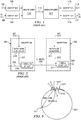
- FIG. 1 illustrates a digital channel typically used in cinemas to couple a video source (not shown) to a projector (not shown).
- Input video signals 105 and 106 containing luminance and chrominance video data, respectively, usually with 10-bit precision, are encrypted in blocks 108 and 109.
- the digital encrypted signals from these blocks are multiplexed by multiplexer 110 over coaxial link 112 that transmits binary data to demultiplexer 114.
- decryption of the demultiplexed signals in blocks 115 and 116 plaintext luminance and chrominance signals are reproduced on output leads 117 and 118.
- a typical coaxial link between a server and a projector used in commercial cinemas is a 1.45 Gb/s HD-SDI (high definition, serial digital interface) link.
- An HD-SDI link is a 10-bit link with 1024 possible data codes.
- the eight restricted codes in the SMPTE-292 specification are the first four and last four 10-bit binary codes of the 1024 possible codes in a 10-bit signal, i.e., the codes are 0000, ..., 0003 and 1020,..., 1023 (represented here using decimal notation).
- these eight restricted codes cannot be encrypted without disabling operation of the projector.
- a modulator/demodulator pair in such systems is not permitted to generate or operate on these restricted codes.
- FIG. 2 shows a digital signal encryption process of the prior art often used for video signals. Encryption is accomplished by modulating the plaintext input with a pseudorandom keystream in the server, and decryption is accomplished by demodulating the resulting ciphertext with the same pseudorandom keystream in the projector. Using lookup tables ("LUTs") and an AES core running in counter mode as the keystream generator, strong, efficient encryption and decryption engines can be realized. Encryption/decryption arrangements that use substantially identical processes for encryption and decryption are called “complementary.”
- a plaintext data stream is supplied as signal 202 from a video source to encryption block 205.
- keystream generator 210 uses a key 213 inputted to encryption block 205 to produce a stream of pseudorandom, 10-bit words on lead 231.
- Encoding is performed using lookup table 216 that contains possible combinations of 10-bit input words and 10-bit pseudorandom words from the keystream generator 210.
- the resulting 10-bit ciphertext data stream produced by the lookup table and transmitted on lead 208 is inputted to decryption block 206.
- keystream generator 211 using key 214, produces a stream of pseudorandom 10-bit words on lead 232.
- Decoding is performed using lookup table 217 that again contains possible combinations of 10-bit input words and 10-bit words from the key-stream generator 211.
- Plaintext output data is provided on lead 203.
- This encryption/decryption arrangement can be constructed to be symmetric and complementary.
- the arrangement illustrated in FIG. 2 can be used to produce ciphertext excluding the eight restricted words, and is operable with a wide range of encoding maps. It can implement nearly any other coding scheme by appropriately defining the lookup table mapping data.
- a significant disadvantage of this scheme is the large amount of memory that is required for the lookup table, which renders it impractical to implement using, for example, presently produced FPGAs (field-programmable gate arrays).
- FPGAs field-programmable gate arrays
- FIG. 3 A second modulator/demodulator arrangement of the prior art that can be used to produce ciphertext excluding the eight restricted words is illustrated in FIG. 3 .
- a plaintext 10-bit data stream 302 is inputted to encryption block 305. Encryption is performed by inputting a key 313 to keystream generator 310, which produces a pseudorandom stream of 10-bit words on lead 331.
- the plaintext input 302 is coupled to adder 321, which subtracts the number 4 from the input data.
- the output from adder 321 and the output of keystream generator 310 are coupled to adder 322, producing an 11-bit summed output, supplied to block 316.
- Block 316 performs a modulo-1016 operation on its input, and its output is coupled to adder 323, which adds the number 4 to the input data to produce the 10-bit ciphertext output on lead 308, which is transmitted over a communication channel such as coaxial line.
- adder 323 which adds the number 4 to the input data to produce the 10-bit ciphertext output on lead 308, which is transmitted over a communication channel such as coaxial line.
- a modulo operation such as encountered with a summing operation, a summed result that exceeds the modulo index is altered by subtracting the modulo index from the summed result, eliminating thereby the possible need for an additional bit to represent the summed result.
- the decryption process performed in block 306 uses key 314 supplied to keystream generator 311, which produces a pseudorandom stream of 10-bit words represented by 332.
- Three adders, 324, 325, and 326, are also used in the decryption process, subtracting and then adding the number 4 to the data stream to produce 10-bit plaintext output 303.
- Block 317 performs a further modulo-1016 operation.
- the process illustrated in FIG. 3 is used in movie theaters to provide video data protection for projection arrangements requiring exclusion of the eight restricted binary codes.
- This scheme requires no memory for lookup tables, but requires six to eight 10-bit adders (possibly including two for the two modulo functions).
- This scheme is the most restrictive in terms of selecting an encryption mapping, and is inefficient in terms of the amount of digital processing that must be performed for each input data word, requiring six to eight independent addition operations.
- modulator/demodulator pairs particularly pairs based on addition or modulo addition for synchronous stream cipher encryption, with and without restricted words
- limitations of prior art processes in arrangements that exclude encoding of restricted words from the data stream and maintaining a high level of data security are a need for large lookup tables or extensive digital computation for encryption/decryption for each input word.
- Prior art schemes are also hampered by inflexibility in selection of data mappings. A need thus exists for an apparatus and method to perform highly secure encryption and decryption that is not encumbered by these limitations, particularly for systems communicating high data rate signals.
- Embodiments of the present invention achieve technical advantages as a signal encryption device that performs synchronous stream cipher encryption for a sequence of input words with restricted codes.
- the signal encryption device receives a key and a stream of input words.
- the signal encryption device includes a keystream generator producing a stream of pseudorandom words from the key, and an adder coupled to the keystream generator and to the input words, producing a summed signal stream therefrom.
- a lookup table using the summed signal stream produces encrypted codes for the input words excluding the restricted codes.
- a signal decryption device receives a key and a stream of encrypted words with restricted codes.
- the signal decryption device includes a keystream generator for producing a stream of pseudorandom words from the key, and an adder coupled to the keystream generator and to the stream of encrypted words, producing a summed signal stream therefrom.
- a lookup table using the summed signal stream produces decrypted codes excluding the restricted codes for the input words.
- a signal encryption and decryption system performs synchronous stream cipher encryption and decryption for a sequence of input words.
- the system receives a key and a stream of input words with restricted codes.
- the system includes a keystream generator for producing a stream of pseudorandom words from the key, and an adder coupled to the keystream generator and to the input words, producing a summed signal stream therefrom.
- a lookup table using the summed signal stream produces encrypted codes for the input words excluding the restricted codes.
- the system further includes a second keystream generator for producing a second stream of pseudorandom words from the key, and a second adder coupled to the second keystream generator and to the stream of encrypted words, producing a second summed signal stream therefrom.
- a second lookup table using the second summed signal stream produces decrypted codes for the input words excluding the restricted codes.
- Another embodiment of the present invention is a method of performing synchronous stream cipher encryption for a sequence of input words with restricted codes.
- the method includes receiving a key and a stream of input words.
- the method further includes producing a stream of pseudorandom words from the key using a keystream generator, and producing a summed signal from the output of keystream generator and the stream of input words.
- the method further includes using a lookup table accessed by the summed signal to produce encrypted codes for the stream of input words excluding the restricted codes.
- the method includes performing synchronous stream cipher decryption for a sequence of encrypted words with restricted codes.
- the method includes receiving a key and a stream of encrypted words.
- the method further includes producing a stream of pseudorandom words from the key using a keystream generator, and producing a summed signal stream from the output of keystream generator and the encrypted words.
- the method further includes using a lookup table accessed by the summed signal stream to produce decrypted codes for the encrypted words excluding the restricted codes.
- the invention solves the problem of encrypting an input sequence of words with restricted codes without the need for substantial memory, or the need for substantial digital processing.
- Embodiments of the present invention advantageously provide a signal encryption device and a signal decryption device and method that can encrypt input words with restricted codes using minimal memory while using minimal digital computation to perform encryption and decryption processes.
- Embodiments of the invention will be described with respect to preferred embodiments in a specific context, namely an apparatus and method for encoding a digital data stream containing reserved data codes in both the unencoded and encoded data streams.
- Embodiments comprise processes that can be symmetric and complementary to perform signal encryption and decryption.
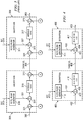
- FIG. 4 illustrates an exemplary embodiment of an encryption and decryption process and method of the present invention that can perform encryption and decryption excluding restricted codes such as the eight restricted codes in an HD-DSI link operating with the SMPT E-292 specification.
- Input plaintext data stream 402 typically but not necessarily 10-bit words representing a video signal
- Encryption block 405 includes keystream generator 410 that receives key 413 and produces bit stream 431 of pseudorandom, 10-bit words for encoding input data. This pseudorandom bit stream and plaintext input data are added word by word in adder 422 to produce an 11-bit result on line 432.
- a lookup table, 416 a ciphertext stream of 10-bit words is produced and coupled to channel 408.
- the channel 408 may transmit the data bit by bit such as described by video specification SMPTE-292.
- the input data for the eight restricted codes are not encrypted.
- lookup table 416 The mapping contained in lookup table 416 is arranged so that no restricted code is generated by the encryption process.
- the lookup table mapping is complementary so that the modulation result produced by adder 422 can be demodulated by second adder 425.
- the lookup table mapping is substantially the same for both the encryption and decryption processes. The same key can be used for both processes, and can be changed from time to time for improved security.
- the decryption block 406 operates in a similar manner.
- Decryption block 406 includes keystream generator 411 that receives key 414, and produces bit stream 432 of pseudorandom, 10-bit words for decoding the ciphertext data supplied on line 408.
- the keys 413 and 414 are the same key, i.e., the system can be symmetric.
- the bit stream 433 and ciphertext input data are added word by word in adder 425 to produce an 11-bit result as signal 434.
- lookup table 417 a plaintext stream of 10-bit words is produced and coupled to the output, 403.
- the decryption process can be thought of as "flipping over" the table used for encryption.
- the value for A can be chosen to be 917.
- the following lookup table is produced for 2032 input entries representing 11-bit words, with inputs and outputs as indicated below: Input Output 0 917 1 916 2 915 ... ... 912 5 913 4 914 1019 915 1019 ... ... 1928 5 1929 4 1930 1019 1931 1018 ... ... 2046 903 2047 902
- FIG. 5 An encryption/decryption process in an embodiment of the invention can be further described with reference to FIG. 5 .
- Illustrated is a circle 501 that represents a circular table containing labeled entries for a 10-bit input word, with 1016 possible values that are to be encrypted, which excepts the eight restricted codes in the SMPTE-292 specification.
- the cells in the table are labeled 4, 5,..., 1018, 1019.
- the table contains 1016 entries, with no positions for the eight restricted codes.
- encoding of a plaintext input word is performed by selecting a table entry indexed "D" entries counterclockwise from the input word to produce a ciphertext word.
- Decoding of the ciphertext word is then performed by selecting a table entry indexed "D" entries clockwise from the ciphertext word.
- Such reverse operation can be performed by operating an "adder” in a subtraction mode.
- the table entry index "D" is a pseudorandom number that may be derived from an input key, which may be altered from time to time to provide a high level of security for encryption of the input data stream.
- the digital arithmetic that must be performed on each input word is merely indexing in a circular table, which can be performed with minimal digital computation, and is readily amenable to operation with a high data rate stream, for example to encrypt a 1.45 Gb/s data link.
- the more extensive computation necessary to compute a pseudorandom index "D" to select an encrypted or decrypted word can be performed at a substantially slower rate without substantially compromising encryption security.
- the 10-bit word size may be altered in the broad scope of the invention in other applications, including other video systems.
- the method and apparatus also may be used on data other than video data.
- the scope of the present application is not intended to be limited to the particular embodiments of the process, machine, manufacture, composition of matter, means, methods and steps described in the specification.
- processes, machines, manufacture, compositions of matter, means, methods, or steps, presently existing or later to be developed, that perform substantially the same function or achieve substantially the same result as the corresponding embodiments described herein may be utilized according to the present invention. Accordingly, the appended claims are intended to include within their scope such processes, machines, manufacture, compositions of matter, means, methods, or steps.
Landscapes
- Engineering & Computer Science (AREA)
- Computer Networks & Wireless Communication (AREA)
- Signal Processing (AREA)
- Multimedia (AREA)
- Computer Security & Cryptography (AREA)
- Two-Way Televisions, Distribution Of Moving Picture Or The Like (AREA)
Claims (9)
- Procédé de production d'un code chiffré relatif à un mot d'entrée à l'aide de codes réservés à partir d'une clé, le procédé comportant les étapes consistant à :générer un mot pseudo-aléatoire à partir de la clé à l'aide d'un générateur de séquences de clés ;sommer le mot d'entrée et le mot pseudo-aléatoire pour produire un signal sommé à partir de ceux-ci ; etappliquer une table de recherche circulaire sans aucune position pour les codes réservés au signal sommé pour produire le code chiffré relatif au mot d'entrée.
- Procédé selon la revendication 1, comportant en outre l'étape consistant à utiliser la table de recherche pour produire le code chiffré relatif au mot d'entrée excluant les codes réservés.
- Procédé selon la revendication 1 ou 2, comportant en outre l'étape consistant à effectuer un chiffrement de cryptogramme en flux synchrone pour une suite de mots d'entrée.
- Procédé selon la revendication 3, comportant en outre les étapes consistant à générer une suite de mots pseudo-aléatoires présentant une période de répétition en réponse à la clé à l'aide du générateur de séquences de clés, et à modifier la clé avant que la période de répétition se répète.
- Procédé de production d'un code déchiffré relatif à un mot d'entrée chiffré à l'aide de codes réservés à partir d'une clé, le procédé comportant les étapes consistant à :générer un mot pseudo-aléatoire à partir de la clé à l'aide d'un générateur de séquences de clés ;sommer le mot d'entrée chiffré et le mot pseudo-aléatoire pour produire un signal sommé à partir de ceux-ci ; etappliquer une table de recherche circulaire sans aucune position pour les codes réservés au signal sommé pour produire un mot déchiffré relatif au mot d'entrée chiffré.
- Procédé de chiffrement et de déchiffrement d'un mot d'entrée à l'aide de codes réservés à partir d'une clé, le procédé comportant les étapes consistant à :produire un mot pseudo-aléatoire à partir de la clé à l'aide d'un générateur de séquences de clés ;sommer le mot d'entrée et le mot pseudo-aléatoire pour produire un signal sommé à partir de ceux-ci ;appliquer une table de recherche circulaire sans aucune position pour les codes réservés au signal sommé pour produire un code chiffré relatif au mot d'entrée ;produire un deuxième mot pseudo-aléatoire à partir de la clé à l'aide d'un deuxième générateur de séquences de clés ;sommer le code chiffré et le deuxième mot pseudo-aléatoire pour produire un deuxième signal sommé à partir de ceux-ci ; etappliquer une table de recherche circulaire sans aucune position pour les codes réservés au deuxième signal sommé pour produire un code déchiffré relatif au code chiffré.
- Dispositif de chiffrement de signaux construit pour recevoir une clé et un mot d'entrée avec des codes réservés, le dispositif comportant :un générateur de séquences de clés servant à produire un mot pseudo-aléatoire à partir de la clé ;un additionneur couplé au générateur de séquences de clés et au mot d'entrée, et produisant un signal sommé à partir de ceux-ci ; etune table de recherche circulaire sans aucune position pour les codes réservés utilisant le signal sommé pour produire un code chiffré relatif au mot d'entrée.
- Dispositif de déchiffrement de signaux construit pour recevoir une clé et un mot d'entrée chiffré avec des codes réservés, le dispositif comportant :un générateur de séquences de clés servant à produire un mot pseudo-aléatoire à partir de la clé ;un additionneur couplé au générateur de séquences de clés et au mot d'entrée chiffré et produisant un signal sommé à partir de ceux-ci ; etune table de recherche circulaire sans aucune position pour les codes réservés utilisant le signal sommé pour produire un code déchiffré excluant des codes réservés relatif au mot d'entrée chiffré.
- Système de chiffrement et de déchiffrement de signaux, comportant :un premier générateur de séquences de clés servant à produire un premier mot pseudo-aléatoire à partir d'une clé reçue ;un premier additionneur couplé au premier générateur de séquences de clés et recevant un mot d'entrée avec des codes réservés, et produisant un premier signal sommé à partir de la clé et du mot d'entrée ;une table de recherche circulaire sans aucune position pour les codes réservés utilisant le premier signal sommé pour produire un mot chiffré excluant les codes réservés ;un deuxième générateur de séquences de clés servant à produire un deuxième mot pseudo-aléatoire à partir de la clé ;un deuxième additionneur couplé au deuxième générateur de séquences de clés et recevant le mot chiffré pour produire un deuxième signal sommé à partir de ceux-ci ; etune table de recherche circulaire sans aucune position pour les codes réservés utilisant le deuxième signal sommé pour produire un code déchiffré excluant des codes réservés relatif au mot chiffré, le code déchiffré étant sensiblement le même que le mot d'entrée.
Applications Claiming Priority (2)
| Application Number | Priority Date | Filing Date | Title |
|---|---|---|---|
| US11/360,138 US7734044B2 (en) | 2006-02-23 | 2006-02-23 | Method and apparatus for synchronous stream cipher encryption with reserved codes |
| PCT/US2007/062647 WO2007101085A2 (fr) | 2006-02-23 | 2007-02-23 | Procédé et appareil de chiffrement de flux synchrone à l'aide de codes réservés |
Publications (3)
| Publication Number | Publication Date |
|---|---|
| EP1994672A2 EP1994672A2 (fr) | 2008-11-26 |
| EP1994672A4 EP1994672A4 (fr) | 2011-06-15 |
| EP1994672B1 true EP1994672B1 (fr) | 2017-10-25 |
Family
ID=38459743
Family Applications (1)
| Application Number | Title | Priority Date | Filing Date |
|---|---|---|---|
| EP07757380.6A Not-in-force EP1994672B1 (fr) | 2006-02-23 | 2007-02-23 | Procédé et appareil de chiffrement de flux synchrone à l'aide de codes réservés |
Country Status (5)
| Country | Link |
|---|---|
| US (1) | US7734044B2 (fr) |
| EP (1) | EP1994672B1 (fr) |
| JP (1) | JP2009528006A (fr) |
| CN (1) | CN101390332B (fr) |
| WO (1) | WO2007101085A2 (fr) |
Families Citing this family (5)
| Publication number | Priority date | Publication date | Assignee | Title |
|---|---|---|---|---|
| US8889235B2 (en) * | 2009-05-13 | 2014-11-18 | Air Products And Chemicals, Inc. | Dielectric barrier deposition using nitrogen containing precursor |
| US9680806B2 (en) * | 2014-06-11 | 2017-06-13 | New York University | Secure transactions using alphacodes |
| KR102314917B1 (ko) * | 2015-03-19 | 2021-10-21 | 삼성전자주식회사 | 통신 시스템에서 디바이스들 간의 연결 설정 방법 및 장치 |
| US11533170B2 (en) * | 2018-12-17 | 2022-12-20 | Intel Corporation | Hardware mechanisms for link encryption |
| CN114827672B (zh) * | 2022-04-29 | 2024-03-15 | 武汉船舶通信研究所(中国船舶重工集团公司第七二二研究所) | 一种hd-sdi接口的传输加密方法及装置 |
Family Cites Families (15)
| Publication number | Priority date | Publication date | Assignee | Title |
|---|---|---|---|---|
| SE464271B (sv) * | 1990-03-23 | 1991-03-25 | Televerket | Foerfarande och anordning foer kryptering/dekryptering av digitalt flerljud i teve |
| US6009135A (en) * | 1997-10-10 | 1999-12-28 | Interdigtal Technology Corporation | Method and apparatus for generating a stream cipher |
| JP4460772B2 (ja) * | 1998-06-25 | 2010-05-12 | コーニンクレッカ フィリップス エレクトロニクス エヌ ヴィ | 同期ストリーム暗号 |
| US6490357B1 (en) * | 1998-08-28 | 2002-12-03 | Qualcomm Incorporated | Method and apparatus for generating encryption stream ciphers |
| US6909785B1 (en) * | 1999-11-11 | 2005-06-21 | Qualcomm, Inc. | Method and apparatus for efficient irregular synchronization of a stream cipher |
| US7190787B1 (en) * | 1999-11-30 | 2007-03-13 | Intel Corporation | Stream cipher having a combiner function with storage based shuffle unit |
| JP2001274786A (ja) * | 2000-01-21 | 2001-10-05 | Victor Co Of Japan Ltd | コンテンツ情報伝送方法、コンテンツ情報記録方法、コンテンツ情報伝送装置、コンテンツ情報記録装置、伝送媒体、及び記録媒体 |
| US20010031050A1 (en) * | 2000-02-14 | 2001-10-18 | Lateca Computer Inc. N.V. | Key generator |
| AU2001259674A1 (en) * | 2000-05-08 | 2001-11-20 | Broadcom Corporation | System and method for supporting multiple voice channels |
| US7003109B2 (en) * | 2001-04-19 | 2006-02-21 | City University Of Hong Kong | Compact crypto-engine for random number and stream cipher generation |
| US7072488B2 (en) * | 2001-07-11 | 2006-07-04 | Canon Kabushiki Kaisha | Data processing method and apparatus |
| US20040086117A1 (en) * | 2002-06-06 | 2004-05-06 | Petersen Mette Vesterager | Methods for improving unpredictability of output of pseudo-random number generators |
| US7206940B2 (en) * | 2002-06-24 | 2007-04-17 | Microsoft Corporation | Methods and systems providing per pixel security and functionality |
| US7221757B2 (en) * | 2002-08-15 | 2007-05-22 | Opentv, Inc. | Method and system for accelerated data encryption |
| US7751565B2 (en) * | 2005-01-25 | 2010-07-06 | Pak Kay Yuen | Secure encryption system, device and method |
-
2006
- 2006-02-23 US US11/360,138 patent/US7734044B2/en active Active
-
2007
- 2007-02-23 WO PCT/US2007/062647 patent/WO2007101085A2/fr not_active Ceased
- 2007-02-23 CN CN2007800063795A patent/CN101390332B/zh active Active
- 2007-02-23 EP EP07757380.6A patent/EP1994672B1/fr not_active Not-in-force
- 2007-02-23 JP JP2008556555A patent/JP2009528006A/ja not_active Abandoned
Non-Patent Citations (1)
| Title |
|---|
| None * |
Also Published As
| Publication number | Publication date |
|---|---|
| CN101390332A (zh) | 2009-03-18 |
| WO2007101085A2 (fr) | 2007-09-07 |
| US7734044B2 (en) | 2010-06-08 |
| WO2007101085A3 (fr) | 2008-02-14 |
| JP2009528006A (ja) | 2009-07-30 |
| EP1994672A2 (fr) | 2008-11-26 |
| US20080019513A1 (en) | 2008-01-24 |
| CN101390332B (zh) | 2012-09-05 |
| EP1994672A4 (fr) | 2011-06-15 |
Similar Documents
| Publication | Publication Date | Title |
|---|---|---|
| US6570989B1 (en) | Cryptographic processing apparatus, cryptographic processing method, and storage medium storing cryptographic processing program for realizing high-speed cryptographic processing without impairing security | |
| US6246768B1 (en) | Data encryption system for encrypting plaintext data | |
| US20100284537A1 (en) | Method for efficiently decoding a number of data channels | |
| US20080095370A1 (en) | Method for securely extending key stream to encrypt high-entropy data | |
| JPH09501288A (ja) | 伝送地点において複数のサービスを一意的に暗号化するための方法及び装置 | |
| CN1938980A (zh) | 用于密码加密处理数据的方法和设备 | |
| WO2004015916A1 (fr) | Dispositif et procede de cryptage/decryptage, dispositif et procede de cryptage, dispositif et procede de cryptage/decryptage et dispositif de transmission/reception | |
| KR20060083419A (ko) | 송신 장치 및 수신 장치, 및, 데이터 전송 시스템 | |
| EP1994672B1 (fr) | Procédé et appareil de chiffrement de flux synchrone à l'aide de codes réservés | |
| US20150215112A1 (en) | User terminal device and secured communication method thereof | |
| IL159458A (en) | Method and apparatus for data encryption | |
| WO2007094631A1 (fr) | Procede et systeme de transmission de video decompressee sur des canaux sans fil | |
| JP2003516659A (ja) | 1の補数暗号コンバイナ | |
| US6990198B2 (en) | Apparatus and method for securing communication information in CDMA communication system | |
| JPS59107658A (ja) | 秘話送受信装置 | |
| CN1328874C (zh) | 用于传输数据的方法和装置 | |
| AU2003257891A1 (en) | Data Encryption Method | |
| Manz | Encrypt, Sign, Attack | |
| US7583800B2 (en) | Encryption apparatus and method in a wireless communications system | |
| CN114070467A (zh) | 一种面向深度联合信源信道编码的信源加密隐私保护方法 | |
| JP7719995B2 (ja) | 準同型演算・復号システム、復号装置、復号方法及びプログラム | |
| JP2001285281A (ja) | 暗号方式 | |
| JP2009124456A (ja) | 情報処理装置と情報処理方法と情報処理プログラム及び情報記録媒体 | |
| JP2000019958A (ja) | 暗号処理装置、暗号処理方法、及び、暗号処理プログラムを記憶した記憶媒体 | |
| JP3079032B2 (ja) | データ暗号化装置及びデータ復号化装置 |
Legal Events
| Date | Code | Title | Description |
|---|---|---|---|
| PUAI | Public reference made under article 153(3) epc to a published international application that has entered the european phase |
Free format text: ORIGINAL CODE: 0009012 |
|
| 17P | Request for examination filed |
Effective date: 20080923 |
|
| AK | Designated contracting states |
Kind code of ref document: A2 Designated state(s): DE FR GB NL |
|
| RBV | Designated contracting states (corrected) |
Designated state(s): DE FR GB NL |
|
| A4 | Supplementary search report drawn up and despatched |
Effective date: 20110518 |
|
| RIC1 | Information provided on ipc code assigned before grant |
Ipc: H04L 9/00 20060101AFI20081020BHEP Ipc: H04L 9/26 20060101ALI20110512BHEP Ipc: H04L 1/00 20060101ALI20110512BHEP |
|
| DAX | Request for extension of the european patent (deleted) | ||
| REG | Reference to a national code |
Ref country code: DE Ref legal event code: R079 Ref document number: 602007052800 Country of ref document: DE Free format text: PREVIOUS MAIN CLASS: H04L0009000000 Ipc: H04L0009060000 |
|
| GRAP | Despatch of communication of intention to grant a patent |
Free format text: ORIGINAL CODE: EPIDOSNIGR1 |
|
| RIC1 | Information provided on ipc code assigned before grant |
Ipc: H04L 9/06 20060101AFI20170526BHEP Ipc: H04L 29/06 20060101ALI20170526BHEP |
|
| INTG | Intention to grant announced |
Effective date: 20170616 |
|
| GRAS | Grant fee paid |
Free format text: ORIGINAL CODE: EPIDOSNIGR3 |
|
| GRAA | (expected) grant |
Free format text: ORIGINAL CODE: 0009210 |
|
| AK | Designated contracting states |
Kind code of ref document: B1 Designated state(s): DE FR GB NL |
|
| REG | Reference to a national code |
Ref country code: GB Ref legal event code: FG4D |
|
| REG | Reference to a national code |
Ref country code: DE Ref legal event code: R096 Ref document number: 602007052800 Country of ref document: DE |
|
| REG | Reference to a national code |
Ref country code: FR Ref legal event code: PLFP Year of fee payment: 12 |
|
| REG | Reference to a national code |
Ref country code: NL Ref legal event code: MP Effective date: 20171025 |
|
| PG25 | Lapsed in a contracting state [announced via postgrant information from national office to epo] |
Ref country code: NL Free format text: LAPSE BECAUSE OF FAILURE TO SUBMIT A TRANSLATION OF THE DESCRIPTION OR TO PAY THE FEE WITHIN THE PRESCRIBED TIME-LIMIT Effective date: 20171025 |
|
| REG | Reference to a national code |
Ref country code: DE Ref legal event code: R097 Ref document number: 602007052800 Country of ref document: DE |
|
| PLBE | No opposition filed within time limit |
Free format text: ORIGINAL CODE: 0009261 |
|
| STAA | Information on the status of an ep patent application or granted ep patent |
Free format text: STATUS: NO OPPOSITION FILED WITHIN TIME LIMIT |
|
| 26N | No opposition filed |
Effective date: 20180726 |
|
| PGFP | Annual fee paid to national office [announced via postgrant information from national office to epo] |
Ref country code: GB Payment date: 20220125 Year of fee payment: 16 Ref country code: DE Payment date: 20220119 Year of fee payment: 16 |
|
| PGFP | Annual fee paid to national office [announced via postgrant information from national office to epo] |
Ref country code: FR Payment date: 20220120 Year of fee payment: 16 |
|
| REG | Reference to a national code |
Ref country code: DE Ref legal event code: R119 Ref document number: 602007052800 Country of ref document: DE |
|
| GBPC | Gb: european patent ceased through non-payment of renewal fee |
Effective date: 20230223 |
|
| PG25 | Lapsed in a contracting state [announced via postgrant information from national office to epo] |
Ref country code: GB Free format text: LAPSE BECAUSE OF NON-PAYMENT OF DUE FEES Effective date: 20230223 |
|
| PG25 | Lapsed in a contracting state [announced via postgrant information from national office to epo] |
Ref country code: GB Free format text: LAPSE BECAUSE OF NON-PAYMENT OF DUE FEES Effective date: 20230223 Ref country code: FR Free format text: LAPSE BECAUSE OF NON-PAYMENT OF DUE FEES Effective date: 20230228 Ref country code: DE Free format text: LAPSE BECAUSE OF NON-PAYMENT OF DUE FEES Effective date: 20230901 |