EP1996980B1 - Module de base pour piece d'horlogerie, notamment montre-bracelet - Google Patents
Module de base pour piece d'horlogerie, notamment montre-bracelet Download PDFInfo
- Publication number
- EP1996980B1 EP1996980B1 EP07703249.8A EP07703249A EP1996980B1 EP 1996980 B1 EP1996980 B1 EP 1996980B1 EP 07703249 A EP07703249 A EP 07703249A EP 1996980 B1 EP1996980 B1 EP 1996980B1
- Authority
- EP
- European Patent Office
- Prior art keywords
- module
- barrel
- module according
- case
- indication
- Prior art date
- Legal status (The legal status is an assumption and is not a legal conclusion. Google has not performed a legal analysis and makes no representation as to the accuracy of the status listed.)
- Active
Links
- 230000001105 regulatory effect Effects 0.000 claims description 12
- 238000004804 winding Methods 0.000 claims description 8
- 210000000056 organ Anatomy 0.000 claims description 6
- PEDCQBHIVMGVHV-UHFFFAOYSA-N Glycerine Chemical compound OCC(O)CO PEDCQBHIVMGVHV-UHFFFAOYSA-N 0.000 claims description 4
- 241001417494 Sciaenidae Species 0.000 description 2
- 230000000295 complement effect Effects 0.000 description 2
- 238000009825 accumulation Methods 0.000 description 1
- 230000003245 working effect Effects 0.000 description 1
Images



Classifications
-
- G—PHYSICS
- G04—HOROLOGY
- G04B—MECHANICALLY-DRIVEN CLOCKS OR WATCHES; MECHANICAL PARTS OF CLOCKS OR WATCHES IN GENERAL; TIME PIECES USING THE POSITION OF THE SUN, MOON OR STARS
- G04B17/00—Mechanisms for stabilising frequency
- G04B17/20—Compensation of mechanisms for stabilising frequency
- G04B17/28—Compensation of mechanisms for stabilising frequency for the effect of imbalance of the weights, e.g. tourbillon
- G04B17/285—Tourbillons or carrousels
-
- G—PHYSICS
- G04—HOROLOGY
- G04B—MECHANICALLY-DRIVEN CLOCKS OR WATCHES; MECHANICAL PARTS OF CLOCKS OR WATCHES IN GENERAL; TIME PIECES USING THE POSITION OF THE SUN, MOON OR STARS
- G04B1/00—Driving mechanisms
- G04B1/10—Driving mechanisms with mainspring
- G04B1/12—Driving mechanisms with mainspring with several mainsprings
-
- G—PHYSICS
- G04—HOROLOGY
- G04B—MECHANICALLY-DRIVEN CLOCKS OR WATCHES; MECHANICAL PARTS OF CLOCKS OR WATCHES IN GENERAL; TIME PIECES USING THE POSITION OF THE SUN, MOON OR STARS
- G04B19/00—Indicating the time by visual means
- G04B19/20—Indicating by numbered bands, drums, discs, or sheets
- G04B19/21—Drums
-
- G—PHYSICS
- G04—HOROLOGY
- G04B—MECHANICALLY-DRIVEN CLOCKS OR WATCHES; MECHANICAL PARTS OF CLOCKS OR WATCHES IN GENERAL; TIME PIECES USING THE POSITION OF THE SUN, MOON OR STARS
- G04B33/00—Calibers
- G04B33/12—Calibers for extremely long running times
-
- G—PHYSICS
- G04—HOROLOGY
- G04B—MECHANICALLY-DRIVEN CLOCKS OR WATCHES; MECHANICAL PARTS OF CLOCKS OR WATCHES IN GENERAL; TIME PIECES USING THE POSITION OF THE SUN, MOON OR STARS
- G04B45/00—Time pieces of which the indicating means or cases provoke special effects, e.g. aesthetic effects
- G04B45/02—Time pieces of which the clockwork is visible partly or wholly
-
- G—PHYSICS
- G04—HOROLOGY
- G04B—MECHANICALLY-DRIVEN CLOCKS OR WATCHES; MECHANICAL PARTS OF CLOCKS OR WATCHES IN GENERAL; TIME PIECES USING THE POSITION OF THE SUN, MOON OR STARS
- G04B9/00—Supervision of the state of winding, e.g. indicating the amount of winding
- G04B9/005—Supervision of the state of winding, e.g. indicating the amount of winding by optical indication of the amount of winding
-
- G—PHYSICS
- G04—HOROLOGY
- G04B—MECHANICALLY-DRIVEN CLOCKS OR WATCHES; MECHANICAL PARTS OF CLOCKS OR WATCHES IN GENERAL; TIME PIECES USING THE POSITION OF THE SUN, MOON OR STARS
- G04B33/00—Calibers
- G04B33/08—Calibers in which the gear train is arranged in different planes, e.g. parallel or inclined to each other
Definitions
- Complicated watches found on the market in watchmaking include a base movement on which are attached complementary modules arranged horizontally above or below the base movement. These add-ons are used to indicate data such as calendar, date, day of the week, day of the month, date, etc. These complementary modules which are arranged horizontally considerably increase the thickness of the watch.
- Document is known FR 2.176.161 an electric timepiece comprising a housing, a regulating member placed on a sidewall of said housing, and a display device, all the wheels of this timepiece being placed vertically in the housing.
- the invention consists in proposing a module for a timepiece, in particular a wristwatch, and not a timepiece as such, this module being mechanical and comprising a motor formed of a barrel mechanism.
- This mechanical module must also allow the addition of one or more additional modules placed next to each other. This arrangement makes it possible to limit the height of the watch and to use a good part of the arm of the user.
- the basic module can then have cogs not horizontal compared to the watch case but developing vertically in said box.
- Such a watch will then be of a completely new configuration and have side sides or flanks on which we can place the winding and display members, and the regulating member, all the workings of the watch thus realized being then placed vertically in the case.
- Another object of the invention and to provide a basic module for a timepiece whose regulating member is accessible and visible to allow easy adjustment thereof.
- the present invention relates to a basic module according to claim 1.
- the module may have a winding handle coaxial with the barrel device and placed on one of the sidewalls of the housing.
- the barrel device comprises several barrels connected two by two by referrals.
- the barrel device can be connected directly to a power reserve indicator.
- the regulating organ may be in the form of a vortex.
- the barrel device may in a preferred embodiment have seven barrels arranged to provide a power reserve of thirty-one days.
- the elements of the time display device, as well as the display elements of the module such as the power reserve or other display elements may be in the form of cylindrical rollers actuated by the device barrel.
- winding crank may be a folding crank.
- the basic module that is the subject of the present invention may receive additional modules for any usual horological indication, moon phases, indication of the day and date, etc. which will be placed next to the basic module, each module having its own drive axis to be connected to the basic module or the following additional model.
- the drawing represents, by way of example, an embodiment of a basic module for a timepiece, particularly for a wristwatch, according to the invention.
- the module shown in the drawing is intended to equip a wristwatch and allows the addition of one or more additional modules placed side by side. This arrangement makes it possible to limit the height of the watch and use up the entire length of the user's arm for additional modules.
- This watch has the particularity of having a power reserve of thirty-one days (until now the largest power reserve obtained in a mechanical watch was fifteen days); and to have all its wheels arranged vertically in the case of the watch.
- the watch is provided with a crank (1) which actuates a device or barrel mechanism (2).
- This barrel device (2) is connected by means of a gear train to a power reserve indicator on a roller (3).
- the barrel device (2) is connected, on the other hand, by means of another gear to a regulating member, here a vortex (5).
- the hour-minute display (4) is also actuated by the barrel device (2).
- the regulating member (5) for example a tourbillon cage, a carousel or a balance wheel, is positioned on one of the flanks of the shows, thus facilitating access for fine adjustments. It is no longer necessary to disassemble the watch to be able to access the regulating organ, which represents an undeniable advantage of the module. On the other hand, the regulating member (5) is thus directly visible on the side of the watch.
- the crank (1) is coaxial with the barrel device; it can be folding as shown in the Fig. 2 in open position.
- the power reserve is defined by the multiplication of the number of turns of development of the mainspring, the number of barrels and the ratio of the number of teeth of the barrel / number of teeth of the center wheel.
- the barrel device of the module includes seven power reserve barrels.
- the module shown in the drawing thus allows an easy “accumulation” of the energy provided by the barrels thanks to the particular assembly represented in the drawings. Fig. 3 and 4 .
- the basic module has a display and a provision of the power reserve indication (10), hours (11) and minutes (12) coaxial.
- the display and power reserve indication may also not be coaxial with hours and minutes.
- a star of twenty four teeth which causes a needle (32), a jumper (30) and a star corrector (31) for adjustment ( Fig. 5 ).
- a star of twelve teeth may be used instead of the twenty-four-star (33) to obtain a twelve-hour time zone.
- the basic module that has just been described is provided with a device for performing either the winding of the barrels or setting time.
- the crank drives the ratchet (17) which drives the wheel (35) which engages the wheel (16).
- the sliding pinion which is integral with the wheel (16) is in constant contact with the flat inclined plane (9) by the action of the spring blade (15). As the wheel (13) rotates in a vacuum, the minute roll (12) is not driven. Therefore the winding barrels is done without the setting time is engaged and without disruption thereof.
- one or more additional modules can be added to the basic module (36). These modules are boxes that can display indications of date, moon phase indications, images, and / or any other indication or displayable element desired.
- the additional modules are connected to the base watch by the pinion of the hour wheel (41). Each module has its own axis (40) for adding other modules.
- the additional modules may or may not have a wristwatch (39).
- the example of Fig. 10 comprises a base module (36), a module indicating the phases of the moon (37) and a module displaying the day and the date (38).
- the use of the basic module just described is not limited to use in a wristwatch, but can also be used to train a pocket watch or a pendulum.
Landscapes
- Physics & Mathematics (AREA)
- General Physics & Mathematics (AREA)
- Electric Clocks (AREA)
- Measurement Of Unknown Time Intervals (AREA)
- Electromechanical Clocks (AREA)
- Toys (AREA)
Description
- Les montres à complication que l'on trouve sur le marché dans l'horlogerie comprennent un mouvement de base sur lequel sont fixés des modules complémentaires disposés horizontalement au dessus ou au dessous du mouvement de base. Ces modules complémentaires servent à indiquer des données telles que calendrier, date, jour de la semaine, jour du mois, quantième, etc. Ces modules complémentaires qui sont disposés horizontalement augmentent considérablement l'épaisseur de la montre.
- On connaît du document
FR 2.176.161 - L'invention consiste à proposer un module pour pièce d'horlogerie, notamment montre-bracelet, et non pas une pièce d'horlogerie en tant que telle, ce module étant mécanique et comportant un moteur formé d'un mécanisme à barillet. Ce module mécanique doit de plus permettre l'adjonction d'un ou plusieurs modules additionnels placés les uns à côté des autres. Cet agencement permet de limiter la hauteur de la montre et d'utiliser une bonne partie du bras de l'utilisateur.
- Le module de base pourra alors présenter des rouages non plus horizontaux par rapport à la boîte de montre mais se développant verticalement dans ladite boîte. Une telle montre sera alors d'une configuration tout à fait nouvelle et présentera des côtés latéraux ou flancs sur lesquels on pourra placer le remontoir et des organes d'affichage, ainsi que l'organe réglant, tous les rouages de la montre ainsi réalisée étant alors placés verticalement dans le boîtier.
- Un autre but de l'invention et de réaliser un module de base pour pièce d'horlogerie dont l'organe réglant est accessible et visible pour permettre un réglage facile de celui-ci.
- La présente invention a pour objet un module de base selon la revendication 1.
- Le module pourra présenter une manivelle de remontage coaxiale au dispositif à barillet et placé sur un des flancs du boîtier.
- Selon un mode d'exécution préféré, le dispositif à barillets comprend plusieurs barillets reliés deux à deux par des renvois.
- Le dispositif à barillets pourra être relié directement à un indicateur de réserve de marche.
- L'organe réglant pourra se présenter sous la forme d'un tourbillon.
- Le dispositif à barillets pourra dans un mode d'exécution préféré présenter sept barillets agencés pour assurer une réserve de marche de trente et un jours.
- Les éléments du dispositif d'affichage de l'heure, de même que les éléments d'affichage du module telle que la réserve de marche ou encore d'autres éléments d'affichage pourront se présenter sous la forme de rouleaux cylindriques actionnés par le dispositif à barillet.
- Finalement la manivelle de remontage pourra être une manivelle déployante.
- Le module de base faisant l'objet de la présente invention pourra recevoir des modules additionnels pour toute indication horlogère habituelle, phases de lune, indication du jour et de la date, etc. qui seront placés à côté du module de base, chaque module présentant son axe propre d'entraînement permettant d'être relié au module de base ou au modèle additionnel suivant.
- Le dessin représente, à titre d'exemple, un mode de réalisation d'un module de base pour pièce d'horlogerie, notamment pour montre-bracelet, selon l'invention.
- Dans le dessin :
- la
fig. 1 est une vue de dessus d'un module de base pour pièce d'horlogerie, - la
fig. 2 est une vue du flanc droit du module de lafig. 1 , - la
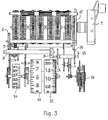
fig. 3 est une vue d'un mécanisme à barillets du module de lafig. 1 , - la
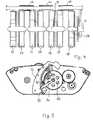
fig. 4 est une vue de détail du mécanisme à barillets de lafig. 3 expliquant le montage de sept barillets contenu dans le mécanisme, - la
fig. 5 est une vue de côté du flanc gauche du module de lafig. 1 , - la
fig. 6 et lafig. 7 sont des vues de dessus et de côté de la partie centrale du module montrant le fonctionnement du module lors du remontage, - la
fig. 8 et lafig. 9 sont des vues de dessus et de côté de la partie centrale du module montrant le fonctionnement du module lors de la mise à l'heure , et - la
fig. 10 est une vue du module de base de lafig. 1 muni d'un boîtier représenté sur le bras d'un utilisateur en liaison avec deux modules additionnels. - Le module représenté dans le dessin est destiné à équiper une montre-bracelet et permet l'adjonction d'un ou plusieurs modules additionnels placés côte-à-côte. Cet agencement permet de limiter la hauteur de la montre et d'utiliser jusqu'à toute la longueur du bras de l'utilisateur pour des modules supplémentaires.
- Cette montre a la particularité de posséder une réserve de marche de trente et un jours (jusqu'à présent la plus grande réserve de marche obtenue dans une montre mécanique était de quinze jours) ; et d'avoir tous ses rouages disposés verticalement dans le boîtier de la montre.
- Comme représenté dans les
fig. 1 et 2 , la montre est munie d'une manivelle (1) qui actionne un dispositif ou mécanisme à barillet (2). Ce dispositif à barillet (2) est relié au moyen d'un train de renvoi à un indicateur de réserve de marche sur un rouleau (3). Le dispositif de barillets (2) est relié, d'autre part, au moyen d'un autre train de renvoi à un organe réglant, ici un tourbillon (5). L'affichage heure-minute (4) est, lui aussi, actionné par le dispositif de barillet (2). - L'organe réglant (5), par exemple, une cage tourbillon, un carrousel ou un balancier, est positionné sur un des flancs de la montre, facilitant ainsi l'accès pour les réglages fins. Il n'est plus besoin de démonter la montre pour pouvoir accéder à l'organe réglant, ce qui représente un avantage incontestable du module. D'autre part, l'organe réglant (5) est ainsi directement visible sur le flanc de la montre.
- La manivelle (1) est coaxiale au dispositif à barillets ; elle peut être déployante comme représenté dans la
fig. 2 en position ouverte. - La réserve de marche est définie par la multiplication du nombre de tours de développement du ressort de barillet, du nombre de barillets et du rapport du nombre de dents du barillet/nombre de dents de la roue de centre.
- Le dispositif à barillets du module comprend sept barillets de réserve de marche.
- Le module représenté dans le dessin permet ainsi une « accumulation » aisée de l'énergie fournie par les barillets grâce à l'assemblage particulier représenté dans les
fig. 3 et4 . - En fonctionnement, le dispositif ou mécanisme à barillet des
fig. 3 et4 est le suivant : - Lors du remontage, quand la manivelle (1) (
fig.3 ) est actionnée, le rochet (17) qui lui est solidaire, charge le barillet (28) au moyen de son arbre (29) (fig.4 ). Lorsque le ressort du barillet 28 a accumulé assez d'énergie, il entraîne le tambour du barillet (27) au moyen du renvoi de barillet 18. Le tambour du barillet (27) entraîne via le ressort du barillet (27), l'arbre double de barillet (19). Cet arbre (19) qui est commun aux deux barillets (26) et (27), entraîne le ressort du barillet (26). Selon le même principe, le barillet (26) entraîne le barillet (25) via le renvoi (20). - Et ainsi de suite, jusqu'au chargement complet du barillet (22). Lorsque le barillet (22) se décharge, en plus de fournir l'énergie nécessaire au fonctionnement de la montre, le barillet (22) décrémente l'indicateur de réserve de marche via un train de renvoi et un différentiel.
- Lorsque le barillet (22) se décharge, le barillet (23) le charge aussitôt. Lorsque le barillet (23) se décharge le barillet (24) le charge, gardant ainsi une charge constante entre chaque barillet. Il en est ainsi pour les autres barillets à l'exception du barillet (28) qui ne peut être chargé que par l'actionnement de la manivelle. Cette configuration assure au barillet (22) un chargement d'une très grande durée, soit l'équivalent de trente et un jours. Tous les barillets sont remontés lorsque le rouleau indicateur de réserve de marche (10) affiche le numéro 31.
- Selon une variante non représentée, il est envisageable de rajouter un module contenant d'autres barillets afin d'augmenter encore la réserve de marche de la montre.
- Comme représenté dans le dessin, le module de base présente un affichage et une disposition de l'indication de réserve de marche (10), des heures (11) et des minutes (12) coaxiaux. Cependant, l'affichage et l'indication de réserve de marche peuvent aussi ne pas être coaxiaux avec les heures et les minutes.
- Selon une variante, il est possible d'insérer sur le flanc du module un autre fuseau horaire.
Dans le prolongement du rouage de minuterie, grâce à une étoile de vingt quatre dents (33), qui entraîne une aiguille (32), d'un sautoir (30) et d'un correcteur de l'étoile (31) permettant le réglage (fig. 5 ). Une étoile de douze dents peut être employée à la place de l'étoile de vingt quatre dents (33) afin d'obtenir un fuseau horaire sur douze heures. - Le module de base qui vient d'être décrit est muni d'un dispositif permettant d'effectuer soit le remontage des barillets, soit la mise à l'heure.
- Le remontage, comme représenté dans les
fig. 6 et 7 s'effectue comme suit : - Sur le flanc de la montre, lorsque le levier (34), qui peut prendre deux positions, est en position de remontage, le plan incliné (9) qui lui est solidaire au moyen de l'axe (8) est en position haute.
- La manivelle entraîne le rochet (17) qui entraîne la roue (35) qui engraine la roue (16).
- Le pignon coulant qui est solidaire à la roue (16) est en contact constant avec le plat du plan incliné (9) grâce à l'action de la lame ressort (15). Comme la roue (13) tourne dans le vide, le rouleau des minutes (12) n'est pas entraîné. Donc le remontage des barillets se fait sans que la mise à l'heure ne soit enclenchée et sans perturbation celle-ci.
- La mise à l'heure du module de base qui vient d'être décrit, s'effectue comme suit en regard des
fig. 8 et 9 : - Sur le flanc de la montre, lorsque le levier (34) est en position de mise à l'heure, l'axe (8) effectue une rotation qui amène le plan incliné (9) qui lui est solidaire en position basse. La manivelle entraîne le rochet (17) qui entraîne la roue (35) qui engraine la roue (16). Le pignon coulant qui est solidaire à la roue (16) est en contact constant avec le plan incliné (9) grâce à l'action de la lame ressort (15). Comme la roue (13) ne tourne plus dans le vide, le rouleau des minutes (12) est entraîné ainsi que le rouleau des heures (11).
- Comme représenté dans la
fig. 10 , un ou plusieurs modules additionnels peuvent être ajoutés au module de base (36). Ces modules sont des boîtiers qui peuvent afficher des indications de quantième, des indications de phase de lune, des images, et/ou tout autre indication ou élément affichable souhaités. Les modules additionnels sont connectés à la montre de base grâce au pignon de la roue des heures (41). Chaque module possède son propre axe (40) pour l'ajout d'autres modules. - Cet axe peut être rétractable ou pas. Les modules supplémentaires peuvent être dotés ou non d'un bracelet-montre (39). L'exemple de la
fig. 10 comporte un module de base (36), un module indiquant les phases de la lune (37) et un module affichant le jour et la date (38). - L'utilisation du module de base qui vient d'être décrit n'est pas limité à une utilisation dans une montre-bracelet, mais peut également servir à entraîner une montre de poche ou une pendule.
Claims (9)
- Module de base (36) pour pièce d'horlogerie, notamment montre bracelet, comportant un boîtier présentant deux côtés latéraux ou flancs parallèles placés verticalement, un organe réglant (5) placé sur un desdits flancs et un dispositif d'affichage ; tous les rouages constituant le module étant placés verticalement dans le boîtier du module, leurs axes s'étendant alors horizontalement, caractérisé par le fait qu'il comporte un mécanisme à barillets (2) relié à l'organe réglant et au dispositif d'affichage et par le fait que l'organe réglant est placé de manière visible sur le flanc du boîtier, de manière à permettre un accès direct permettant son réglage.
- Module selon la revendication 1, caractérisé en ce qu'une manivelle de remontage (1) coaxiale au dispositif à barillets est placée sur un flanc du boîtier.
- Module selon la revendication 1, caractérisé en ce que le dispositif à barillets comprend plusieurs barillets (22, 23, 24, 25, 26, 27, 28 ; fig. 4) reliés deux à deux par des renvois (18), (20), (21).
- Module selon la revendication 1, caractérisé en ce que le dispositif à barillets est relié directement à un indicateur de réserve de marche (3).
- Module selon la revendication 1, caractérisé en ce que l'organe réglant est un tourbillon.
- Module selon la revendication 3, caractérisé en ce que le dispositif à barillets présente sept barillets agencés pour assurer une réserve de marche de trente et un jours.
- Module selon la revendication 1, caractérisé en ce que les éléments du dispositif d'affichage sont des rouleaux cylindriques actionnés par le dispositif à barillet.
- Module selon la revendication 2, caractérisé en ce que la manivelle de remontage est une manivelle déployante.
- Module selon la revendication 1, caractérisé en ce que le module de base (36) présente des modules additionnels (37, 38, 39) pour toute indication horlogère habituelle telle que indication des phases de lune, indication du jour et de la date, etc., chaque module présentant son axe propre d'entraînement (40).
Applications Claiming Priority (2)
| Application Number | Priority Date | Filing Date | Title |
|---|---|---|---|
| CH00414/06A CH699021B1 (fr) | 2006-03-17 | 2006-03-17 | Module de base pour pièce d'horlogerie, notamment montre-bracelet. |
| PCT/EP2007/000938 WO2007107204A2 (fr) | 2006-03-17 | 2007-02-03 | Module de base pour piece d'horlogerie, notamment montre-bracelet |
Publications (2)
| Publication Number | Publication Date |
|---|---|
| EP1996980A2 EP1996980A2 (fr) | 2008-12-03 |
| EP1996980B1 true EP1996980B1 (fr) | 2016-10-12 |
Family
ID=38434712
Family Applications (1)
| Application Number | Title | Priority Date | Filing Date |
|---|---|---|---|
| EP07703249.8A Active EP1996980B1 (fr) | 2006-03-17 | 2007-02-03 | Module de base pour piece d'horlogerie, notamment montre-bracelet |
Country Status (5)
| Country | Link |
|---|---|
| US (1) | US7946757B2 (fr) |
| EP (1) | EP1996980B1 (fr) |
| CH (1) | CH699021B1 (fr) |
| ES (1) | ES2610426T3 (fr) |
| WO (1) | WO2007107204A2 (fr) |
Families Citing this family (8)
| Publication number | Priority date | Publication date | Assignee | Title |
|---|---|---|---|---|
| CH706186B1 (fr) * | 2007-04-12 | 2013-09-13 | Hautlence Sa | Mouvement de montre avec un affichage à tambours pour montre-bracelet. |
| CH707136B1 (fr) * | 2012-10-30 | 2016-12-30 | Parmigiani Fleurier S A | Pièce d'horlogerie destinée à indiquer la réserve de marche. |
| EP2741150B1 (fr) * | 2012-12-06 | 2020-07-29 | Richemont International S.A. | Tourbillon multicage, mouvement d'horlogerie et pièce d'horlogerie comportant ce tourbillon multicage. |
| CH713484A1 (fr) * | 2017-02-24 | 2018-08-31 | Officine Panerai Ag | Dispositif d'affichage pour un mouvement de montre, notamment d'affichage de réserve de marche. |
| EP3501842B1 (fr) * | 2017-12-22 | 2020-09-30 | Montres Breguet S.A. | Dispositif d'affichage à rouleaux |
| US20190219971A1 (en) * | 2018-01-15 | 2019-07-18 | Cai Fang LUO | Roller-type electronic watch |
| NO20211096A1 (fr) | 2021-09-13 | 2023-03-14 | ||
| WO2023036977A1 (fr) | 2021-09-13 | 2023-03-16 | Maturitas As | Système d'aiguilles de montre amélioré offrant une meilleure lisibilité d'informations affichées sur différents emplacements d'un cadran de montre |
Family Cites Families (15)
| Publication number | Priority date | Publication date | Assignee | Title |
|---|---|---|---|---|
| US1981997A (en) * | 1930-08-07 | 1934-11-27 | Albert E Freel | Time indicating device |
| US2604940A (en) * | 1949-09-15 | 1952-07-29 | Heptinstall John | Time and period indicating device |
| FR1195976A (fr) * | 1957-06-25 | 1959-11-20 | M Le Directeur Du Service Des | Installation de ressorts en spirale |
| US3574995A (en) * | 1969-10-08 | 1971-04-13 | Gen Time Corp | Digital timekeeping device with improved indexing mechanism |
| GB1411453A (en) * | 1972-03-15 | 1975-10-22 | Ebauches Sa | Timepiece with digital time display |
| US3903687A (en) * | 1974-01-30 | 1975-09-09 | Robertshaw Controls Co | Digital clock or the like and drive unit therefor |
| US3898792A (en) * | 1974-04-25 | 1975-08-12 | Gen Electric | Digital timer |
| US4057959A (en) * | 1974-04-25 | 1977-11-15 | General Electric Company | Digital timer and method of operating such |
| US4060972A (en) * | 1976-04-08 | 1977-12-06 | Matsushita Electric Works, Ltd. | Digital clock |
| US6863435B2 (en) * | 1997-08-11 | 2005-03-08 | Seiko Epson Corporation | Spring, mainspring, hairspring, and driving mechanism and timepiece based thereon |
| ES2325232T3 (es) * | 1999-08-04 | 2009-08-28 | Frederic Piguet S.A. | Dispositivo indicador de reserva de marcha para una pieza de relojeria. |
| EP1103871A1 (fr) * | 1999-09-02 | 2001-05-30 | Creaholic S.A. | Indicateur de temps à régulation mécanique |
| US6914340B2 (en) * | 2000-12-22 | 2005-07-05 | Freeplay Market Development | Handheld generator |
| DE10160287A1 (de) * | 2001-12-07 | 2003-06-26 | Lange Uhren Gmbh | Tourbillon |
| DE10326198A1 (de) * | 2003-06-07 | 2004-12-30 | Mühle-Glashütte GmbH | Feinreguliervorrichtung |
-
2006
- 2006-03-17 CH CH00414/06A patent/CH699021B1/fr unknown
-
2007
- 2007-02-03 EP EP07703249.8A patent/EP1996980B1/fr active Active
- 2007-02-03 US US12/293,154 patent/US7946757B2/en active Active
- 2007-02-03 ES ES07703249.8T patent/ES2610426T3/es active Active
- 2007-02-03 WO PCT/EP2007/000938 patent/WO2007107204A2/fr not_active Ceased
Also Published As
| Publication number | Publication date |
|---|---|
| WO2007107204A3 (fr) | 2007-11-08 |
| US7946757B2 (en) | 2011-05-24 |
| ES2610426T3 (es) | 2017-04-27 |
| WO2007107204A2 (fr) | 2007-09-27 |
| EP1996980A2 (fr) | 2008-12-03 |
| US20090103399A1 (en) | 2009-04-23 |
| CH699021B1 (fr) | 2010-01-15 |
Similar Documents
| Publication | Publication Date | Title |
|---|---|---|
| EP1333345B1 (fr) | Dispositif comportant un mouvement horaire et un module chronographe | |
| EP1546818B1 (fr) | Dispositif mecanique d affichage des heures et des minutes | |
| EP1996980A2 (fr) | Module de base pour piece d'horlogerie, notamment montre-bracelet | |
| EP3627239B1 (fr) | Mécanisme d'affichage à rouleau pour montre | |
| EP2515186B1 (fr) | Rouage de finissage pour pièce d'horlogerie | |
| WO2008046917A2 (fr) | Aiguille indicatrice pour piece d'horlogerie, mouvement pour entraîner une telle aiguille indicatrice et piece d'horlogerie correspondante | |
| EP1524564B1 (fr) | Pièce d'horlogerie à calendrier annuel ou perpétuel comprenant un mécanisme d'affichage du nombre de jours du mois courant | |
| EP3477402B1 (fr) | Dispositif d'affichage des phases de lune | |
| EP2813902A1 (fr) | Mécanisme de calendrier pour mouvement horloger | |
| EP3040786B1 (fr) | Quantième perpétuel vrai | |
| EP2622416A1 (fr) | Piece d'horlogerie | |
| WO2014177290A1 (fr) | Piece d'horlogerie comprenant un dispositif d'affichage de quantieme | |
| EP2721449B1 (fr) | Dispositif d'affichage | |
| EP4113218B1 (fr) | Mécanisme d'affichage combiné d'un quantième lunaire et des phases de la lune pour mouvement horloger | |
| EP1734419B1 (fr) | Pièce d'horlogerie avec un mécanisme de calendrier | |
| EP3501842B1 (fr) | Dispositif d'affichage à rouleaux | |
| EP3460588B1 (fr) | Mecanisme de quantieme | |
| CH713226B1 (fr) | Dispositif d'affichage horloger. | |
| EP4361738A1 (fr) | Mécanisme d'affichage pour montre à fuseaux horaires | |
| CH720642A1 (fr) | Mécanisme d'horlogerie de quantième de célébration | |
| EP4068010A1 (fr) | Montre mecanique a dispositif de reglage de son fonctionnement par inhibition | |
| CH710811B1 (fr) | Pièce d'horlogerie. | |
| CH718801A2 (fr) | Mecanisme d'affichage combine d'un quantieme lunaire et des phases de la lune pour mouvement horloger. | |
| CH718479A2 (fr) | Montre mécanique à dispositif de réglage de son fonctionnement par inhibition. | |
| EP3588201A1 (fr) | Mecanisme de quantieme pour piece d'horlogerie |
Legal Events
| Date | Code | Title | Description |
|---|---|---|---|
| PUAI | Public reference made under article 153(3) epc to a published international application that has entered the european phase |
Free format text: ORIGINAL CODE: 0009012 |
|
| 17P | Request for examination filed |
Effective date: 20080826 |
|
| AK | Designated contracting states |
Kind code of ref document: A2 Designated state(s): AT BE BG CH CY CZ DE DK EE ES FI FR GB GR HU IE IS IT LI LT LU LV MC NL PL PT RO SE SI SK TR |
|
| RAP1 | Party data changed (applicant data changed or rights of an application transferred) |
Owner name: BNB CONCEPT SA |
|
| 17Q | First examination report despatched |
Effective date: 20100205 |
|
| DAX | Request for extension of the european patent (deleted) | ||
| REG | Reference to a national code |
Ref country code: DE Ref legal event code: R079 Ref document number: 602007048267 Country of ref document: DE Free format text: PREVIOUS MAIN CLASS: G04B0017280000 Ipc: G04B0009000000 |
|
| GRAP | Despatch of communication of intention to grant a patent |
Free format text: ORIGINAL CODE: EPIDOSNIGR1 |
|
| RIC1 | Information provided on ipc code assigned before grant |
Ipc: G04B 9/00 20060101AFI20160525BHEP Ipc: G04B 45/02 20060101ALI20160525BHEP Ipc: G04B 17/28 20060101ALI20160525BHEP Ipc: G04B 19/21 20060101ALI20160525BHEP |
|
| INTG | Intention to grant announced |
Effective date: 20160623 |
|
| GRAS | Grant fee paid |
Free format text: ORIGINAL CODE: EPIDOSNIGR3 |
|
| GRAA | (expected) grant |
Free format text: ORIGINAL CODE: 0009210 |
|
| AK | Designated contracting states |
Kind code of ref document: B1 Designated state(s): AT BE BG CH CY CZ DE DK EE ES FI FR GB GR HU IE IS IT LI LT LU LV MC NL PL PT RO SE SI SK TR |
|
| REG | Reference to a national code |
Ref country code: GB Ref legal event code: FG4D Free format text: NOT ENGLISH |
|
| REG | Reference to a national code |
Ref country code: CH Ref legal event code: EP |
|
| REG | Reference to a national code |
Ref country code: AT Ref legal event code: REF Ref document number: 837046 Country of ref document: AT Kind code of ref document: T Effective date: 20161015 |
|
| REG | Reference to a national code |
Ref country code: IE Ref legal event code: FG4D Free format text: LANGUAGE OF EP DOCUMENT: FRENCH |
|
| REG | Reference to a national code |
Ref country code: DE Ref legal event code: R096 Ref document number: 602007048267 Country of ref document: DE |
|
| REG | Reference to a national code |
Ref country code: CH Ref legal event code: NV Representative=s name: MICHELI AND CIE SA, CH Ref country code: CH Ref legal event code: PUE Owner name: HUBLOT SA, CH Free format text: FORMER OWNER: BNB CONCEPT SA, CH |
|
| REG | Reference to a national code |
Ref country code: LT Ref legal event code: MG4D |
|
| RAP2 | Party data changed (patent owner data changed or rights of a patent transferred) |
Owner name: HUBLOT SA |
|
| REG | Reference to a national code |
Ref country code: NL Ref legal event code: MP Effective date: 20161012 |
|
| REG | Reference to a national code |
Ref country code: FR Ref legal event code: PLFP Year of fee payment: 11 |
|
| REG | Reference to a national code |
Ref country code: DE Ref legal event code: R082 Ref document number: 602007048267 Country of ref document: DE Representative=s name: FREISCHEM & PARTNER PATENTANWAELTE MBB, DE Ref country code: DE Ref legal event code: R081 Ref document number: 602007048267 Country of ref document: DE Owner name: HUBLOT SA, CH Free format text: FORMER OWNER: BNB CONCEPT SA, CRANS-PRES-CELIGNY, CH |
|
| PG25 | Lapsed in a contracting state [announced via postgrant information from national office to epo] |
Ref country code: LV Free format text: LAPSE BECAUSE OF FAILURE TO SUBMIT A TRANSLATION OF THE DESCRIPTION OR TO PAY THE FEE WITHIN THE PRESCRIBED TIME-LIMIT Effective date: 20161012 |
|
| REG | Reference to a national code |
Ref country code: AT Ref legal event code: MK05 Ref document number: 837046 Country of ref document: AT Kind code of ref document: T Effective date: 20161012 |
|
| REG | Reference to a national code |
Ref country code: GB Ref legal event code: 732E Free format text: REGISTERED BETWEEN 20170309 AND 20170315 |
|
| REG | Reference to a national code |
Ref country code: ES Ref legal event code: FG2A Ref document number: 2610426 Country of ref document: ES Kind code of ref document: T3 Effective date: 20170427 |
|
| PG25 | Lapsed in a contracting state [announced via postgrant information from national office to epo] |
Ref country code: LT Free format text: LAPSE BECAUSE OF FAILURE TO SUBMIT A TRANSLATION OF THE DESCRIPTION OR TO PAY THE FEE WITHIN THE PRESCRIBED TIME-LIMIT Effective date: 20161012 Ref country code: SE Free format text: LAPSE BECAUSE OF FAILURE TO SUBMIT A TRANSLATION OF THE DESCRIPTION OR TO PAY THE FEE WITHIN THE PRESCRIBED TIME-LIMIT Effective date: 20161012 Ref country code: GR Free format text: LAPSE BECAUSE OF FAILURE TO SUBMIT A TRANSLATION OF THE DESCRIPTION OR TO PAY THE FEE WITHIN THE PRESCRIBED TIME-LIMIT Effective date: 20170113 |
|
| PG25 | Lapsed in a contracting state [announced via postgrant information from national office to epo] |
Ref country code: NL Free format text: LAPSE BECAUSE OF FAILURE TO SUBMIT A TRANSLATION OF THE DESCRIPTION OR TO PAY THE FEE WITHIN THE PRESCRIBED TIME-LIMIT Effective date: 20161012 Ref country code: IS Free format text: LAPSE BECAUSE OF FAILURE TO SUBMIT A TRANSLATION OF THE DESCRIPTION OR TO PAY THE FEE WITHIN THE PRESCRIBED TIME-LIMIT Effective date: 20170212 Ref country code: PT Free format text: LAPSE BECAUSE OF FAILURE TO SUBMIT A TRANSLATION OF THE DESCRIPTION OR TO PAY THE FEE WITHIN THE PRESCRIBED TIME-LIMIT Effective date: 20170213 Ref country code: FI Free format text: LAPSE BECAUSE OF FAILURE TO SUBMIT A TRANSLATION OF THE DESCRIPTION OR TO PAY THE FEE WITHIN THE PRESCRIBED TIME-LIMIT Effective date: 20161012 Ref country code: AT Free format text: LAPSE BECAUSE OF FAILURE TO SUBMIT A TRANSLATION OF THE DESCRIPTION OR TO PAY THE FEE WITHIN THE PRESCRIBED TIME-LIMIT Effective date: 20161012 Ref country code: BE Free format text: LAPSE BECAUSE OF NON-PAYMENT OF DUE FEES Effective date: 20170228 Ref country code: PL Free format text: LAPSE BECAUSE OF FAILURE TO SUBMIT A TRANSLATION OF THE DESCRIPTION OR TO PAY THE FEE WITHIN THE PRESCRIBED TIME-LIMIT Effective date: 20161012 |
|
| REG | Reference to a national code |
Ref country code: DE Ref legal event code: R097 Ref document number: 602007048267 Country of ref document: DE |
|
| PG25 | Lapsed in a contracting state [announced via postgrant information from national office to epo] |
Ref country code: DK Free format text: LAPSE BECAUSE OF FAILURE TO SUBMIT A TRANSLATION OF THE DESCRIPTION OR TO PAY THE FEE WITHIN THE PRESCRIBED TIME-LIMIT Effective date: 20161012 Ref country code: SK Free format text: LAPSE BECAUSE OF FAILURE TO SUBMIT A TRANSLATION OF THE DESCRIPTION OR TO PAY THE FEE WITHIN THE PRESCRIBED TIME-LIMIT Effective date: 20161012 Ref country code: RO Free format text: LAPSE BECAUSE OF FAILURE TO SUBMIT A TRANSLATION OF THE DESCRIPTION OR TO PAY THE FEE WITHIN THE PRESCRIBED TIME-LIMIT Effective date: 20161012 Ref country code: CZ Free format text: LAPSE BECAUSE OF FAILURE TO SUBMIT A TRANSLATION OF THE DESCRIPTION OR TO PAY THE FEE WITHIN THE PRESCRIBED TIME-LIMIT Effective date: 20161012 Ref country code: EE Free format text: LAPSE BECAUSE OF FAILURE TO SUBMIT A TRANSLATION OF THE DESCRIPTION OR TO PAY THE FEE WITHIN THE PRESCRIBED TIME-LIMIT Effective date: 20161012 |
|
| PLBE | No opposition filed within time limit |
Free format text: ORIGINAL CODE: 0009261 |
|
| STAA | Information on the status of an ep patent application or granted ep patent |
Free format text: STATUS: NO OPPOSITION FILED WITHIN TIME LIMIT |
|
| PG25 | Lapsed in a contracting state [announced via postgrant information from national office to epo] |
Ref country code: BG Free format text: LAPSE BECAUSE OF FAILURE TO SUBMIT A TRANSLATION OF THE DESCRIPTION OR TO PAY THE FEE WITHIN THE PRESCRIBED TIME-LIMIT Effective date: 20170112 |
|
| 26N | No opposition filed |
Effective date: 20170713 |
|
| PG25 | Lapsed in a contracting state [announced via postgrant information from national office to epo] |
Ref country code: MC Free format text: LAPSE BECAUSE OF FAILURE TO SUBMIT A TRANSLATION OF THE DESCRIPTION OR TO PAY THE FEE WITHIN THE PRESCRIBED TIME-LIMIT Effective date: 20161012 |
|
| REG | Reference to a national code |
Ref country code: IE Ref legal event code: MM4A |
|
| PG25 | Lapsed in a contracting state [announced via postgrant information from national office to epo] |
Ref country code: SI Free format text: LAPSE BECAUSE OF FAILURE TO SUBMIT A TRANSLATION OF THE DESCRIPTION OR TO PAY THE FEE WITHIN THE PRESCRIBED TIME-LIMIT Effective date: 20161012 |
|
| PG25 | Lapsed in a contracting state [announced via postgrant information from national office to epo] |
Ref country code: LU Free format text: LAPSE BECAUSE OF NON-PAYMENT OF DUE FEES Effective date: 20170203 |
|
| REG | Reference to a national code |
Ref country code: BE Ref legal event code: MM Effective date: 20170228 |
|
| REG | Reference to a national code |
Ref country code: FR Ref legal event code: PLFP Year of fee payment: 12 |
|
| PG25 | Lapsed in a contracting state [announced via postgrant information from national office to epo] |
Ref country code: IE Free format text: LAPSE BECAUSE OF NON-PAYMENT OF DUE FEES Effective date: 20170203 |
|
| PG25 | Lapsed in a contracting state [announced via postgrant information from national office to epo] |
Ref country code: HU Free format text: LAPSE BECAUSE OF FAILURE TO SUBMIT A TRANSLATION OF THE DESCRIPTION OR TO PAY THE FEE WITHIN THE PRESCRIBED TIME-LIMIT; INVALID AB INITIO Effective date: 20070203 |
|
| PG25 | Lapsed in a contracting state [announced via postgrant information from national office to epo] |
Ref country code: CY Free format text: LAPSE BECAUSE OF NON-PAYMENT OF DUE FEES Effective date: 20161012 |
|
| PG25 | Lapsed in a contracting state [announced via postgrant information from national office to epo] |
Ref country code: TR Free format text: LAPSE BECAUSE OF FAILURE TO SUBMIT A TRANSLATION OF THE DESCRIPTION OR TO PAY THE FEE WITHIN THE PRESCRIBED TIME-LIMIT Effective date: 20161012 |
|
| PGFP | Annual fee paid to national office [announced via postgrant information from national office to epo] |
Ref country code: DE Payment date: 20250218 Year of fee payment: 19 |
|
| PGFP | Annual fee paid to national office [announced via postgrant information from national office to epo] |
Ref country code: ES Payment date: 20250328 Year of fee payment: 19 |
|
| PGFP | Annual fee paid to national office [announced via postgrant information from national office to epo] |
Ref country code: CH Payment date: 20250301 Year of fee payment: 19 |
|
| PGFP | Annual fee paid to national office [announced via postgrant information from national office to epo] |
Ref country code: FR Payment date: 20250221 Year of fee payment: 19 |
|
| PGFP | Annual fee paid to national office [announced via postgrant information from national office to epo] |
Ref country code: IT Payment date: 20250224 Year of fee payment: 19 Ref country code: GB Payment date: 20250219 Year of fee payment: 19 |