EP2000032B1 - Baked composition - Google Patents
Baked composition Download PDFInfo
- Publication number
- EP2000032B1 EP2000032B1 EP07109495.7A EP07109495A EP2000032B1 EP 2000032 B1 EP2000032 B1 EP 2000032B1 EP 07109495 A EP07109495 A EP 07109495A EP 2000032 B1 EP2000032 B1 EP 2000032B1
- Authority
- EP
- European Patent Office
- Prior art keywords
- minimum level
- peak
- wafer
- pyrazine
- baked
- Prior art date
- Legal status (The legal status is an assumption and is not a legal conclusion. Google has not performed a legal analysis and makes no representation as to the accuracy of the status listed.)
- Active
Links
Images


Classifications
-
- A—HUMAN NECESSITIES
- A21—BAKING; EDIBLE DOUGHS
- A21D—TREATMENT OF FLOUR OR DOUGH FOR BAKING, e.g. BY ADDITION OF MATERIALS; BAKING; BAKERY PRODUCTS
- A21D13/00—Finished or partly finished bakery products
- A21D13/40—Products characterised by the type, form or use
- A21D13/45—Wafers
-
- A—HUMAN NECESSITIES
- A21—BAKING; EDIBLE DOUGHS
- A21D—TREATMENT OF FLOUR OR DOUGH FOR BAKING, e.g. BY ADDITION OF MATERIALS; BAKING; BAKERY PRODUCTS
- A21D10/00—Batters, dough or mixtures before baking
-
- A—HUMAN NECESSITIES
- A21—BAKING; EDIBLE DOUGHS
- A21D—TREATMENT OF FLOUR OR DOUGH FOR BAKING, e.g. BY ADDITION OF MATERIALS; BAKING; BAKERY PRODUCTS
- A21D10/00—Batters, dough or mixtures before baking
- A21D10/04—Batters
-
- A—HUMAN NECESSITIES
- A21—BAKING; EDIBLE DOUGHS
- A21D—TREATMENT OF FLOUR OR DOUGH FOR BAKING, e.g. BY ADDITION OF MATERIALS; BAKING; BAKERY PRODUCTS
- A21D2/00—Treatment of flour or dough by adding materials thereto before or during baking
- A21D2/08—Treatment of flour or dough by adding materials thereto before or during baking by adding organic substances
- A21D2/14—Organic oxygen compounds
- A21D2/18—Carbohydrates
- A21D2/181—Sugars or sugar alcohols
-
- A—HUMAN NECESSITIES
- A21—BAKING; EDIBLE DOUGHS
- A21D—TREATMENT OF FLOUR OR DOUGH FOR BAKING, e.g. BY ADDITION OF MATERIALS; BAKING; BAKERY PRODUCTS
- A21D2/00—Treatment of flour or dough by adding materials thereto before or during baking
- A21D2/08—Treatment of flour or dough by adding materials thereto before or during baking by adding organic substances
- A21D2/24—Organic nitrogen compounds
- A21D2/245—Amino acids, nucleic acids
-
- A—HUMAN NECESSITIES
- A23—FOODS OR FOODSTUFFS; TREATMENT THEREOF, NOT COVERED BY OTHER CLASSES
- A23L—FOODS, FOODSTUFFS OR NON-ALCOHOLIC BEVERAGES, NOT OTHERWISE PROVIDED FOR; PREPARATION OR TREATMENT THEREOF
- A23L27/00—Spices; Flavouring agents or condiments; Artificial sweetening agents; Table salts; Dietetic salt substitutes; Preparation or treatment thereof
- A23L27/20—Synthetic spices, flavouring agents or condiments
- A23L27/202—Aliphatic compounds
- A23L27/2024—Aliphatic compounds having oxygen as the only hetero atom
-
- A—HUMAN NECESSITIES
- A23—FOODS OR FOODSTUFFS; TREATMENT THEREOF, NOT COVERED BY OTHER CLASSES
- A23L—FOODS, FOODSTUFFS OR NON-ALCOHOLIC BEVERAGES, NOT OTHERWISE PROVIDED FOR; PREPARATION OR TREATMENT THEREOF
- A23L27/00—Spices; Flavouring agents or condiments; Artificial sweetening agents; Table salts; Dietetic salt substitutes; Preparation or treatment thereof
- A23L27/20—Synthetic spices, flavouring agents or condiments
- A23L27/205—Heterocyclic compounds
- A23L27/2052—Heterocyclic compounds having oxygen or sulfur as the only hetero atoms
-
- A—HUMAN NECESSITIES
- A23—FOODS OR FOODSTUFFS; TREATMENT THEREOF, NOT COVERED BY OTHER CLASSES
- A23L—FOODS, FOODSTUFFS OR NON-ALCOHOLIC BEVERAGES, NOT OTHERWISE PROVIDED FOR; PREPARATION OR TREATMENT THEREOF
- A23L27/00—Spices; Flavouring agents or condiments; Artificial sweetening agents; Table salts; Dietetic salt substitutes; Preparation or treatment thereof
- A23L27/20—Synthetic spices, flavouring agents or condiments
- A23L27/205—Heterocyclic compounds
- A23L27/2054—Heterocyclic compounds having nitrogen as the only hetero atom
-
- A—HUMAN NECESSITIES
- A23—FOODS OR FOODSTUFFS; TREATMENT THEREOF, NOT COVERED BY OTHER CLASSES
- A23L—FOODS, FOODSTUFFS OR NON-ALCOHOLIC BEVERAGES, NOT OTHERWISE PROVIDED FOR; PREPARATION OR TREATMENT THEREOF
- A23L27/00—Spices; Flavouring agents or condiments; Artificial sweetening agents; Table salts; Dietetic salt substitutes; Preparation or treatment thereof
- A23L27/20—Synthetic spices, flavouring agents or condiments
- A23L27/21—Synthetic spices, flavouring agents or condiments containing amino acids
- A23L27/215—Synthetic spices, flavouring agents or condiments containing amino acids heated in the presence of reducing sugars, e.g. Maillard's non-enzymatic browning
Definitions
- the present invention relates to a baked wafer with an improved flavour and an improved.
- the present invention relates to baked wafer components of confectionery with improved biscuit, buttery, fruity, nutty, caramel, golden syrup, honey, toasted, roasted bread-like and baked flavours.
- Maillard reaction and “Maillard reactants/products” are terms of art which define the complex series of chemical reactions between carbonyl and amino components derived from biological systems and the associated reactants and products, respectively.
- Maillard reaction is used herein in the established broad sense to refer to these reactions, and includes the closely associated reactions which are usually coupled with the Maillard reaction sensu stricto (such as Strecker degradation).
- the Maillard reaction can be broken down into four stages.
- the first stage involves the formation of glycosylamines.
- the second stage involves rearrangement of the glycosylamines to form Amadori and Heyns rearrangement products (often abbreviated in the literature to "ARPs” and “HRPs", respectively).
- the third stage involves dehydration and or fission of the Amadori and Heyns rearrangement products to furan derivatives, reductones and other carbonyl compounds (which may have significant organoleptic qualities). (These "third stage products” may also be produced without the formation of ARP's or HRP's.
- the fourth stage involves the conversion of these furan derivatives, reductones and other carbonyl compounds into coloured and aroma/flavour compounds.
- products and reactants present in both the third and fourth stage of the Maillard reaction contribute towards aroma and or flavour.
- Maillard reactions occur naturally in food, but it is also known to use Maillard reaction products to improve the flavour of foodstuffs.
- 4-hydroxy-2,5-dimethyl-3 (2H)-furanone (corresponding to FuraneolTM a registered trademark of Firmenich Inc.) is one compound associated with caramel flavour.
- 4-hydroxy-2,5-dimethyl-3 (2H)-furanone can be produced in high levels from 6-deoxy-hexoses such as rhamnose (6deoxy-L-mannose), fucose (6-deoxy-L-galactose) and 6-deoxy-fructose by reaction with an amine ( Wong et al. 1983, J Org Chem 48: 3493-3497 ; Whitehead 1998, Food Technology Feb 52: 40-46 ).
- 4-hydroxy-2,5-dimethyl-3 (2H)-furanone can be generated from a rhamnose and amine interaction by Amadori formation via the loss of an amine group, forming 2,3-enolization leading to a diketone, which leads to 4-hydroxy-2,5-dimethyl-3 (2H)furanone after dehydration and cyclization ( Pisarnitskii et al. 1992, Appl Biochem Microbiol28 : 97-100 ).
- 4-hydroxy-2,5-dimethyl-3 (2H)-furanone can be generated from rhamnose alone, whereas under acidic conditions formation is only found in presence of an amino acid (e. g. arginine).
- Amino acids as flavour precursors have been extensively studied in combination with reducing sugars in water or ethanol model Maillard reaction systems.
- the compounds known to be generated from proline and rhamnose are 4-hydroxy-2,5-dimethyl-3 (2H)-furanone and several 2,3-dihydr(1H)-pyrrolizines ( Shaw and Ho 1989, Thermal generation of aromas, eds. Parliament TH, McGorrin RJ, Ho C-T, American Chemical Society, Washington, DC .; Shaw et al. 1990, Perfumer & Flavorist 15: 60-66 ; Tressl et al. 1985, J Agric Food Chem 33: 919-923 and J Agric Food Chem 33: 934-928 ).
- US 4,940,592 is directed to a process wherein rhamnose is mixed with amino acids such as leucine, alanine, and phenylalanine in water or propylene glycol, coated onto uncooked foodstuff followed by microwave radiation.
- US 5,041,296 also disclosed flavour precursors treated by microwave radiation before mixing with a foodstuff.
- EP 0 398 417B1 also disclosed reactions between rhamnose and proline in other non-fat systems such as water, ethanol, propylene glycol and glycerol.
- WO0249452 discloses a process for the production of flavour concentrates comprising the addition of a mixture of flavour precursors comprising proline, ornithine or protein hydrolysate, and rhamnose, fructose or fucose, to a fat-based medium and heating the mixture to about 100-140 C for about 10-120 minutes.
- flavour active materials for example by reacting amino acids and reducing sugars
- time taken to generate appreciable quantities of flavour active materials is long relative to the baking times of many baked products.
- example 1 6-deoxy-D-galactose and L-proline are refluxed in ethanol for 3 hours to generate flavourants.
- the flavour active reaction products, extracted into fat, are added to a shortcake dough and baked in example 9 of US 4,022,920 rather than the un-reacted amino acid and reducing sugar.
- flavour active molecules are added to ingredients which are then baked (e.g. in the production of wafer or extruded cereals), many desirable volatile flavour components are lost.
- the desirable aromas/flavours associated with volatile compounds are only found in low levels in the finished product (having been lost during the preparation process).
- many components of the finished flavour may be flashed off during cooking (so leading to loss from the flavour profile of important aroma volatiles). This is a particular problem in wafer baking as large volumes of steam are vented during the baking process which will carry away volatile and water soluble flavour active molecules. This has two major disadvantages as it removes flavour from the final product and leads to an unpleasant working environment around the ovens.
- WO9962357 discloses flavour releasing compositions using micro emulsions where a flavour precursor is converted into an active flavour in the mouth.
- the increase in water activity activates an enzyme to convert the flavour precursor into a flavour.
- Such compositions are not readily applied to ingredients which are baked to form baked foodstuffs. During baking the micro emulsions will be dehydrated and break down, and any enzymes will be denatured by the heat.
- GB-A-1401096 discloses a meat aroma composition which can be used for the aromatising of many different kinds of foodstuffs.
- EP-A-1266581 discloses the preparation of an aromatising composition, which comprises the bioconversion of at least two amino compounds and at least one reducing sugar in the presence of a micro-organism selected in the group consisting of yeasts.
- the bioconversion is carried out during 2 to 48 hours, at a pH of 5 to 8 and at a temperature of from 20 to 50°C.
- JP 2006/271276 A discloses an emulsified oil and fat composition such that water phases or oil-in-water emulsified substances containing saccharides, and water phases or oil-in-water emulsified substances containing amino acid each exist substantially independently in continuous oil phases.
- GB-A-1421397 discloses products prepared from a dough and a meaty flavour.
- JP 2005/304377 A discloses a dough for preparing bread.
- EP-A-0303511 discloses a pie product having a bottom crust dough which is suitable for baking and browning in a microwave oven.
- JP 61/239834 A discloses cookies prepared by baking a dough.
- US-A-4448791 discloses a reactive dough composition which undergoes chemical surface browning upon exposure to microwave energy.
- flavour active molecules generated by reacting flavour precursors into the non baked component.
- consumers expect the desirable baked flavours to come from the baked component, and tasting these flavours in a different component such as the chocolate coating is undesirable as it can seem artificial to the consumer.
- flavour precursors amino acids and reducing sugars
- flavour active molecules become trapped within the food matrix.
- Claim 1 deals with a baked wafer characterised in that it contains flavour active molecules comprising 2,5-di-methyl-4-hydroxy-3[2H]-furanone, 5-methylfurfural, diacetyl, and 2-acetyl-1-pyroline.
- the invention deals with the baked wafer of claim 1 wherein the measurement of peak areas by GC-MS gives a minimum level of 50000 for the peak corresponding to 2,5-di-methyl-4-hydroxy-3 [2H]-furanone and/or a minimum level of 10000 for the peak corresponding to 5-methylfurfural and/or a minimum level of 55000 for the peak corresponding to diacetyl and/or a minimum level of 1000 for the peak corresponding to 2-acetyl-1-pyroline.
- the invention deals with the baked wafer of claim 1 wherein the measurement of peak areas by GC-MS gives a minimum level of 50000 for the peak corresponding to 2,5-di-methyl-4-hydroxy-3[2H]-furanone, a minimum level of 10000 for the peak corresponding to 5-methylfurfural, a minimum level of 55000 for the peak corresponding to diacetyl and a minimum level of 1000 for the peak corresponding to 2-acetyl-1-pyroline.
- a baked wafer is disclosed with an improved flavour characterised in that the flavour active molecules in the baked wafer comprise
- a baked wafer wherein a measurement of peak areas by GC-MS gives a level of b) 1,2 Diacetylethylene, with a peak at a minimum level of 327000, Ethylpyrazine, with a peak at a minimum level of 933000, 2-ethyl-6-methyl pyrazine with a peak at a minimum level of 236000, 2-ethyl-5-methyl pyrazine with a peak at a minimum level of 598000, 2,3-diethyl- pyrazine with a peak at a minimum level of 49000, 2,5-diethyl- pyrazine with a peak at a minimum level of 148000, 2,6-diethyl- pyrazine with a peak at a minimum level of 241000, 5-ethyl-2,3-dimethyl pyrazine with a peak at a minimum level of 175000, 2-methyl-3,5-diethyl pyrazine with a peak at a peak
- a baked wafer wherein a measurement of peak areas by GC-MS gives a level of b) 1,2 Diacetylethylene, with a peak at a minimum level of 54000, Ethylpyrazine, with a peak at a minimum level of 148000, 2-ethyl-6-methyl pyrazine with a peak at a minimum level of 146000, 2-ethyl-5-methyl pyrazine with a peak at a minimum level of 141000, 2,3-diethyl- pyrazine with a peak at a minimum level of 4000, 2,5-diethyl- pyrazine with a peak at a minimum level of 4000, 2,6-diethyl- pyrazine with a peak at a minimum level of 14000, 5-ethyl-2,3-dimethyl pyrazine with a peak at a minimum level of 46000, 2-methyl-3,5-diethyl pyrazine with a peak at a minimum minimum
- a baked wafer wherein a measurement of peak areas by GC-MS gives a minimum level of b) 1,2 Diacetylethylene, with a peak at a minimum level of 7000, Ethylpyrazine, with a peak at a minimum level of 20000, 2-ethyl-6-methyl pyrazine with a peak at a minimum level of 24000, 2-ethyl-5-methyl pyrazine with a peak at a minimum level of 12000, 2,3-diethyl- pyrazine with a peak at a minimum level of 800, 2,5-diethyl- pyrazine with a peak at a minimum level of 200, 2,6-diethyl- pyrazine with a peak at a minimum level of 1600, 5-ethyl-2,3-dimethyl pyrazine with a peak at a minimum level of 5500, 2-methyl-3,5-diethyl pyrazine with a peak at a minimum level of 5500
- a baked wafer wherein a measurement of peak areas by GC-MS gives a level of b) 1,2 Diacetylethylene, with a peak at a minimum level of 110000, Ethylpyrazine, with a peak at a minimum level of 415000, 2-ethyl-6-methyl pyrazine with a peak at a minimum level of 201000, 2-ethyl-5-methyl pyrazine with a peak at a minimum level of 514000, 2,3-diethyl- pyrazine with a peak at a minimum level of 78000, 2,5-diethyl- pyrazine with a peak at a minimum level of 148000, 2,6-diethyl- pyrazine with a peak at a minimum level of 127000, 5-ethyl-2,3-dimethyl pyrazine with a peak at a minimum level of 122000, 2-methyl-3,5-diethyl pyrazine with a peak at a peak at
- a baked wafer wherein a measurement of peak areas by GC-MS gives a minimum level of b) 1,2 Diacetylethylene, with a peak at a minimum level of 7000, Ethylpyrazine, with a peak at a minimum level of 58000, 2-ethyl-6-methyl pyrazine with a peak at a minimum level of 106000, 2-ethyl-5-methyl pyrazine with a peak at a minimum level of 50000, 2,3-diethyl- pyrazine with a peak at a minimum level of 1000, 2,5-diethyl- pyrazine with a peak at a minimum level of 900, 2,6-diethyl- pyrazine with a peak at a minimum level of 4400, 5-ethyl-2,3-dimethyl pyrazine with a peak at a minimum level of 21000, 2-methyl-3,5-diethyl pyrazine with a peak at a minimum minimum
- a baked wafer wherein a measurement of peak areas by GC-MS gives a minimum level of b) 1,2 Diacetylethylene, with a peak at a minimum level of 8000, Ethylpyrazine, with a peak at a minimum level of 80000, 2-ethyl-6-methyl pyrazine with a peak at a minimum level of 117000, 2-ethyl-5-methyl pyrazine with a peak at a minimum level of 50000, 2,3-diethyl- pyrazine with a peak at a minimum level of 1000, 2,5-diethyl- pyrazine with a peak at a minimum level of 1000, 2,6-diethyl- pyrazine with a peak at a minimum level of 10000, 5-ethyl-2,3-dimethyl pyrazine with a peak at a minimum level of 12000, 2-methyl-3,5-diethyl pyrazine with a peak at a minimum level of
- a baked wafer wherein a measurement of peak areas by GC-MS gives a minimum level of b) 1,2 Diacetylethylene, with a peak at a minimum level of 275000, Ethylpyrazine, with a peak at a minimum level of 1428000, 2-ethyl-6-methyl pyrazine with a peak at a minimum level of 1818000, 2-ethyl-5-methyl pyrazine with a peak at a minimum level of 845000, 2,3-diethyl- pyrazine with a peak at a minimum level of 144000, 2,5-diethyl- pyrazine with a peak at a minimum level of 159000, 2,6-diethyl- pyrazine with a peak at a minimum level of 1084647, 5-ethyl-2,3-dimethyl pyrazine with a peak at a minimum level of 359000, 2-methyl-3,5-diethyl pyrazine with
- flavour active molecules in the baked foodstuff comprise 2,5-di-methyl-4-hydroxy-3[2H]-furanone, 5-methylfurfural, 1,2-diacetyl-ethylene, ethyl-pyrazine, 2-ethyl-6-methyl pyrazine, 2-ethyl-5-methyl pyrazine, 2,3-diethyl-pyrazine, 2,5-diethyl-pyrazine, 2,6-diethyl-pyrazine, 5-ethyl-2,3-dimethyl pyrazine, 2-methyl-3,5-diethyl pyrazine, diacetyl, and 2-acetyl-1-pyroline.
- a baked wafer wherein the measurement of peak areas by GC-MS gives a minimum level of 50000 for the peak corresponding to 2,5-di-methyl-4-hydroxy-3[2H]-furanone and/or a minimum level of 10000 for the peak corresponding to 5-methylfurfural and/or a minimum level of 1000 for the peak corresponding to 1,2-diacetyl-ethylene and/or a minimum level of 90000 for the peak corresponding to ethyl-pyrazine and/or a minimum level of 50000 for the peak corresponding to 2-ethyl-6-methyl pyrazine and/or a minimum level of 35000 for the peak corresponding to 2-ethyl-5-methyl pyrazine and/or a minimum level of 5000 for the peak corresponding to 2,3-diethyl-pyrazine and/or a minimum level of 3000 for the peak corresponding to 2,5-diethyl-pyrazine and/or a minimum level of 11000 for the peak corresponding to
- a baked wafer wherein the measurement of peak areas by GC-MS gives a minimum level of 50000 for the peak corresponding to 2,5-di-methyl-4-hydroxy-3[2H]-furanone, a minimum level of 10000 for the peak corresponding to 5-methylfurfural, a minimum level of 1000 for the peak corresponding to 1,2-diacetyl-ethylene, a minimum level of 90000 for the peak corresponding to ethyl-pyrazine, a minimum level of 50000 for the peak corresponding to 2-ethyl-6-methyl pyrazine, a minimum level of 35000 for the peak corresponding to 2-ethyl-5-methyl pyrazine, a minimum level of 5000 for the peak corresponding to 2,3-diethyl-pyrazine, a minimum level of 3000 for the peak corresponding to 2,5-diethyl-pyrazine, a minimum level of 11000 for the peak corresponding to 2,6-diethyl-pyrazine, a minimum
- the invention deals with a baked wafer according to any of claims 1 to 3 wherein the improved flavour comprises at least of the of the flavour characteristics: biscuit, buttery, fruity, nutty, caramel, golden syrup, honey, toasted, roasted bread-like and baked. Further the baked wafer disclosed exhibits improved texture.
- the invention deals with a baked wafer according to any of claims 1 to 4 wherein the baked wafer comprises cereal flour.
- the invention deals with a baked wafer according to claim 5 wherein the cereal flour is wheat flour.
- the invention deals with a baked wafer of any of claims 1 to 6 wherein the cooking time of the wafer is shorter than 5 minutes, preferably less than 3 minutes.
- the invention deals with a baked wafer according to any of claims 1 to 7, wherein the flavour is generated by heating using a wafer baking oven or extruder.
- the invention deals with a Confectionery product comprising the baked foodstuff according to any of claims 1 to 8.
- compositions for generating a baked wafer with an improved flavour comprising non pre-reacted flavour precursors which react on heating to generate the flavours
- said composition comprises: Flour 100 parts Water from 5 to 200 parts Amino acid 0.3 parts (preferably a range: from 0.03 to 0.66 %) Reducing sugar 0.9 parts (preferably a range: from 0.09 to 2 %)
- the amino acid is selected from the group of ornithine, glycine, glutamine, citrulline, arginine, proline, histidine and mixtures thereof and the reducing sugar is selected from the group of fructose, glucose, xylose, tagatose, rhamnose, maltose, lactose, fucose, arabinose, galactose and mixtures thereof.
- the baked wafer with an improved flavour according to the invention comprises 2,5-dimethyl-4-hydroxy-3[2H]-furanone, 5-methylfurfural, diacetyl, and 2-acetyl-1-pyroline.
- These aroma compounds impart desirable flavour attributes to the baked wafer, particularly in combination where they provide a balanced flavour to the baked wafer.
- the exact nature of the flavour notes they provide depends on the relative concentrations, but examples of the desirable flavour attributes are biscuit, buttery, fruity, nutty, caramel, golden syrup, honey, toasted, roasted bread-like and baked.
- the aroma compounds serve to add organoleptic interest to the baked wafer, and provide a particularly desirable flavour for baked wafers which are used as components of confectionery products.
- the baked wafer may valuably additionally comprise 1,2-diacetyl-ethylene, ethyl-pyrazine, 2-ethyl-6-methyl pyrazine, 2-ethyl-5-methyl pyrazine, 2,3-diethyl-pyrazine, 2,5-diethyl-pyrazine, 2,6-diethyl-pyrazine, 5-ethyl-2,3-dimethyl pyrazine and 2-methyl-3,5-diethyl pyrazine.
- These aroma compounds also impart desirable flavour attributes to the baked wafer, particularly in combination where they provide a balanced flavour to the baked wafer.
- the baked wafer comprises 5-methylfurfural, diacetyl, 2,5-di-methyl-4-hydroxy-3[2H]-furanone and 2-acetyl-1-pyroline such that when the aroma compounds are measured by GC-MS there is a minimum level of 10000 for the peak corresponding to 5-methylfurfural, and/or a minimum level of 55000 for the peak corresponding to diacetyl, and/or a minimum level of 50000 for the peak corresponding to 2,5-di-methyl-4-hydroxy-3[2H]-furanone and/or a minimum level of 1000 for the peak corresponding to 2-acetyl-1-pyrroline.
- measurement by GC-MS refers to the method of sample preparation, solid phase microextraction and GC-MS analysis described in example 2. Further the baked wafer may be baked components of confectionery.
- the baked wafer may be produced by adding the composition of the invention to other ingredients and then heating e.g. by wafer baking or extrusion cooking. Particularly good results are obtained on improved delivery of the flavours for confectionery products , and specially when the baked wafer has a cooking time below 5 minutes, preferably below 3 minutes.
- Wafers are baked products which are made from wafer batter and have crisp, brittle and fragile consistency. They are thin, with an overall thickness usually between ⁇ 1 and 4 mm and typical product densities range from 0.1 to 0.3 g/cm3. The surfaces are precisely formed, following the surface shape of the plates between which they were baked. They often carry a pattern on one surface or on both. Wafers may also be produced by extrusion, according to our European co-pending patent application No. 06018976.8 .
- flavour precursor is intended to define compounds or chemical moieties which can take part in one or more reactions which yield products which contribute to the generation of flavour in a food. Such flavour precursors therefore need not be flavouring compounds per se.
- compositions disclosed are activated within the wafer, and so generate flavour compounds in situ. This improves the distribution of the flavour/aroma compounds throughout the wafer and ensures that volatiles (and other "top notes") are more effectively introduced into the flavour profile.
- the precursors selected for use in this disclosure are such that they give rise to a satisfactorily broad range of products after entry into the Maillard reaction. This leads to a particularly rich flavour profile in the wafer.
- the precursors for use in the disclosure may be in powder form, but preferably the precursors are dissolved/dispersed in water and mixed into the ingredients of the wafers.
- the composition disclosed comprises a combination of at least one amino acid with at least one sugar or sugar alcohol.
- the composition comprises a combination of at least one amino acid with at least one reducing sugar.
- suitable amino acids are ornithine, glycine, glutamine, citrulline, arginine, proline, histidine or mixtures thereof.
- Suitable reducing sugars are fructose, glucose, xylose, tagatose, rhamnose, maltose, lactose, fucose, arabinose, galactose or mixtures thereof.
- the amino acid is ornithine and the reducing sugar is xylose.
- the amino acid is ornithine and the reducing sugars is rhamnose.
- the amino acid is proline and the reducing sugars is rhamnose.
- the amino acid is histidine and_the reducing sugar is rhamnose.
- the amino acid is glutamine and the reducing sugars is rhamnose.
- the flavour generated by the compositions disclosed may be biscuit, buttery, fruity, nutty, caramel, bread-like, golden syrup, honey, toasted, roasted and baked.
- composition disclosed is typically prepared by mixing the at least one amino acid with the at least one reducing sugar.
- These can be dry powders, or dissolved/dispersed in water.
- the at least one amino acid and the at least one reducing sugar are mixed together with the ingredients of the wafer before the ingredients are baked.
- a typical composition comprises: Flour 100 parts Water from 5 to 200 parts Amino acid from 0.03 to 0.80%, more preferably from 0.03 to 0.70%, most preferably from 0.03 to 0.66 % Reducing sugar from 0.09 to 5 %, more preferably from 0.09 to 3 %, most preferably from 0.09 to 2 %
- the at least one amino acid and the at least one reducing sugar are mixed with the ingredients of a ready to bake wafer which may be then frozen to be baked at a later time. Further the baked wafer also exhibits improved texture, especially increased crispness.
- Crispness is an attribute that relates to the number of mechanical fractures that occur upon application of a certain force and to the magnitude of the force needed to cause a fracture. Ways to quantify crispness are known in the art, notably from Mitchell, J.R. et al. in Journal of the Science of Food and Agriculture, 80, 1679-1685, 2000 . Thus, crispness can be quantified by a number of parameters.
- a crush test (described in example 2). This measures the force needed to fracture a wafer.
- the test uses a cylindrical probe having a 4mm diameter and a flat face for penetrating the wafer.
- microfractures occur until the wafer can no longer be crushed. These fractures are related to the crispness perception when eating the product.
- force drops greater than or equal to 0.6N in magnitude are especially relevant to the assessment of crispness as they provide a good correlation to the sensory perception of crispness, notably to the acoustics associated with crispness.
- FIG 4 This is illustrated in Figure 4 , wherein several wafers are compared.
- a wafer formulated without an amino acid and a reducing sugar (wafer A) exhibit fewer force drops per mm than the same recipe but with added amine and reducing sugar (wafers C-I). That is to say wafer A is less crisp.
- the effect is an additional benefit to the flavour impact and is equivalent to adding extra sugar into the wafer batter (wafer B), but without the effect of extra sweetness which can be undesirable.
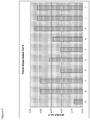
- Figure 1 illustrates gas chromatography - olfactometry (GC-O) of a wafer not of the invention (Wafer A).
- the figure shows a gas chromatography - mass spectrometry (GC-MS) trace (mass spectrometer total ion response plotted against time in minutes) annotated at the corresponding time with descriptions of aroma recorded by human sniffers.
- the descriptions are numbered as follows N° Odour description 1 green, earthy 2 biscuit 4 floral, fresh 4 chemical, solvent
- Figure 2 illustrates gas chromatography - olfactometry (GC-O) of a wafer of the invention (Wafer D).
- FIG. 3 is a graph illustrating a typical force variation during a crush test. Such a test is described in detail herein.
- Figure 4 illustrates the crush test measurements of force drops per mm for a variety of wafers including the wafers of the invention (C-J). Measurements of force drops greater than or equal to 0.6N are considered representative for crispness.
- a batter was prepared having the following formulation: Flour 100.0 parts Water 160.0 parts Sucrose 2.0 parts Fat 1.0 parts Lecithin 0.2 parts Sodium bicarbonate 0.2 parts
- the batter composition was: Flour 100.0 parts Water 160.0 parts Sucrose 5.0 parts Fat 1.0 parts Lecithin 0.2 parts Sodium bicarbonate 0.2 parts
- the batter composition was: Flour 100.0 parts Water 160.0 parts Sucrose 2.0 parts Fat 1.0 parts Lecithin 0.2 parts Sodium bicarbonate 0.2 parts Amino acid 0.3 parts Reducing sugar 0.9 parts
- the amino acids and reducing sugars were added as powders and mixed with the other batter ingredients.
- the specific amino acids and reducing sugars used for wafers C-J were as follows: Wafer recipe Amino acid Reducing Sugar c proline Rhamnose D histidine Rhamnose E histidine xylose F proline xylose G ornithine rhamnose H ornithine xylose I glutamine xylose J glutamine rhamnose
- Wafers were prepared by baking the batters for 2 minutes in an oven (25-plate wafer oven, Hebenrete Moerfelded, West Germany) between two metal plates heated to 160°C.
- Wafers A-J produced in example 1 were analysed by gas chromatography coupled with mass spectrometry detection (GC_MS).
- GC_MS mass spectrometry detection
- KNISTERBROT® 3 Pauly®
- HANUTA® Ferero®
- Aqueous solutions were prepared according to the following table: Dilutions [ ⁇ g/ml] 1 2 3 4 5 Diacetyl, Aldrich B85307 10 20 30 40 50 Ethyl-pyrazine, Aldrich 250384 3 6 9 12 15 2,3-diethyl-pyrazine, Aldrich 292982 0.12 0.24 0.36 0.48 0.60 5-methyl-furfural Aldrich 13,731-6 2 4 6 8 10
- SPME Solid phase microextraction
- Wafer sample was crushed with pestle and mortar just before analysis. 200 mg of the powdered wafer were introduced into a 20 mL vial and suspended into 5 mL of 25% NaCl. A stirring magnet was added and the vial was immediately sealed by a septum. The slurry was stirred at 500 rpm and at room temperature. After equilibration for 1 hour, the SPME fibre was exposed to the headspace, for again 1 hour while temperature and stirring were maintained, before injection into the GC system. External standard calibration was performed using the same procedure, but adding 50 ⁇ l of each standard dilution to the suspension of wafer A.
- Wafers A and D of example 1 were also analysed by Gas Chromatography - Olfactometry (GC-O).
- GC-O Gas Chromatography - Olfactometry
- the analysis was carried out in a similar manner to the GC-MS, except that an odour port supplied with humidified air (SGE, ODO-1) was substituted for the Agilent 5973N mass spectrometer and extra wafer was used to ease detection by human sniffers.
- Wafer was ground to a powder using a mechanical grinder. In this case, wafer powder (2g) was weighed into a 20ml crimp-top headspace vial and 1g of saturated sodium chloride solution was added.
- Each vial was equilibrated for 60min at 55 °C and the headspace volatiles adsorbed onto a PDMS-DVB SPME fibre (Supelco) for 30min, again at 55 °C.
- the volatiles were desobed for 5min at 220 °C in the injector of an Agilent 6890 GC in splitless mode, and separated on a 60m x 0.25mm i.d DB-Wax column (J&W) using the following conditions: 40 °C (5min) - 230 °C (10min) at 3 °C min-1.
- Trained subjects sniffed compounds eluting from the end of the GC-column and recorded their comments together with the time at which the odours were perceived.
- CTC Analytics A CombiPal (CTC Analytics) was used to automate the equilibration, adsorption and desorption processes.
- Figures 1 and 2 shows the GC-MS trace (mass spectrometer total ion response plotted against time in minutes) annotated at the corresponding time with the descriptions of aroma recorded by the Sniffers.
- Figure 1 is the result for Wafer A and Figure 2 for Wafer D. It is worth noting that the proximity of a description to a prominent peak does not necessarily mean that the aroma being described comes from that peak.
- the sensitivity of the human nose is different to the sensitivity of the mass spectrometer and so very small peaks on the GC-MS trace may provide a strong aroma and conversely large peaks on the GC-MS trace may not have a discernable aroma.
- the retention times for the peaks in Figure 1 are not directly comparable with those in example 2 (Table 1) as a different length column and GC oven temperature conditions have been used.
- Sample wafer of at least 2cm 2 . Measurements were repeated for 10 samples of each product type and an average was taken.
- Instrument Stable Micro Systems TA-XTplus Penetration probe: 4mm diameter cylinder (Stable Micro Systems P/4)
- Figure 4 shows the data obtained for the wafers. It can be seen that the wafer with no amino acid or reducing sugar (Wafer A) has a lower crispness than the other samples.
Landscapes
- Life Sciences & Earth Sciences (AREA)
- Engineering & Computer Science (AREA)
- Food Science & Technology (AREA)
- Health & Medical Sciences (AREA)
- Chemical & Material Sciences (AREA)
- Polymers & Plastics (AREA)
- Nutrition Science (AREA)
- Molecular Biology (AREA)
- Proteomics, Peptides & Aminoacids (AREA)
- Biochemistry (AREA)
- Bakery Products And Manufacturing Methods Therefor (AREA)
- Seasonings (AREA)
- General Preparation And Processing Of Foods (AREA)
- Coloring Foods And Improving Nutritive Qualities (AREA)
- Seeds, Soups, And Other Foods (AREA)
Priority Applications (20)
| Application Number | Priority Date | Filing Date | Title |
|---|---|---|---|
| EP07109495.7A EP2000032B1 (en) | 2007-06-04 | 2007-06-04 | Baked composition |
| ES07109495.7T ES2668553T3 (es) | 2007-06-04 | 2007-06-04 | Composición al horno |
| PL07109495T PL2000032T3 (pl) | 2007-06-04 | 2007-06-04 | Pieczona kompozycja |
| US12/602,969 US8840946B2 (en) | 2007-06-04 | 2008-06-02 | Baked composition |
| PCT/EP2008/056788 WO2008148737A2 (en) | 2007-06-04 | 2008-06-02 | Baked composition |
| PL08760374T PL2164335T3 (pl) | 2007-06-04 | 2008-06-02 | Pieczona kompozycja |
| BRPI0812592-9A BRPI0812592B1 (pt) | 2007-06-04 | 2008-06-02 | processo para produção de um produto de panificação assado, seu produto, e produto de confeitaria |
| MX2009013148A MX2009013148A (es) | 2007-06-04 | 2008-06-02 | Composicion horneada. |
| CA2684698A CA2684698C (en) | 2007-06-04 | 2008-06-02 | Baked composition |
| ES08760374.2T ES2670746T3 (es) | 2007-06-04 | 2008-06-02 | Composición al horno |
| CN2008800189482A CN101677582B (zh) | 2007-06-04 | 2008-06-02 | 焙烤组合物 |
| AU2008258622A AU2008258622C1 (en) | 2007-06-04 | 2008-06-02 | Baked composition |
| EP08760374.2A EP2164335B1 (en) | 2007-06-04 | 2008-06-02 | Baked composition |
| CL2008001637A CL2008001637A1 (es) | 2007-06-04 | 2008-06-04 | Composicion horneada con un sabor mejorado que comprende moleculas activas del sabor: 2,5-di-metil-4-hidroxi-3-(2h)-furanona, 5-metilfurfural, diacetilo y 2-acetil-1-pirolina; y su proceso de produccion. |
| ARP080102373A AR066857A1 (es) | 2007-06-04 | 2008-06-04 | Producto alimenticio horneado |
| PE2008000945A PE20090345A1 (es) | 2007-06-04 | 2008-06-04 | Composicion horneada |
| ZA2009/09057A ZA200909057B (en) | 2007-06-04 | 2009-12-18 | Baked composition |
| AU2014210632A AU2014210632A1 (en) | 2007-06-04 | 2014-08-08 | Baked composition |
| AU2016256715A AU2016256715A1 (en) | 2007-06-04 | 2016-11-09 | Baked composition |
| AU2018203079A AU2018203079B2 (en) | 2007-06-04 | 2018-05-03 | Baked composition |
Applications Claiming Priority (1)
| Application Number | Priority Date | Filing Date | Title |
|---|---|---|---|
| EP07109495.7A EP2000032B1 (en) | 2007-06-04 | 2007-06-04 | Baked composition |
Publications (2)
| Publication Number | Publication Date |
|---|---|
| EP2000032A1 EP2000032A1 (en) | 2008-12-10 |
| EP2000032B1 true EP2000032B1 (en) | 2018-03-07 |
Family
ID=39126186
Family Applications (2)
| Application Number | Title | Priority Date | Filing Date |
|---|---|---|---|
| EP07109495.7A Active EP2000032B1 (en) | 2007-06-04 | 2007-06-04 | Baked composition |
| EP08760374.2A Active EP2164335B1 (en) | 2007-06-04 | 2008-06-02 | Baked composition |
Family Applications After (1)
| Application Number | Title | Priority Date | Filing Date |
|---|---|---|---|
| EP08760374.2A Active EP2164335B1 (en) | 2007-06-04 | 2008-06-02 | Baked composition |
Country Status (14)
| Country | Link |
|---|---|
| US (1) | US8840946B2 (es) |
| EP (2) | EP2000032B1 (es) |
| CN (1) | CN101677582B (es) |
| AR (1) | AR066857A1 (es) |
| AU (4) | AU2008258622C1 (es) |
| BR (1) | BRPI0812592B1 (es) |
| CA (1) | CA2684698C (es) |
| CL (1) | CL2008001637A1 (es) |
| ES (2) | ES2668553T3 (es) |
| MX (1) | MX2009013148A (es) |
| PE (1) | PE20090345A1 (es) |
| PL (2) | PL2000032T3 (es) |
| WO (1) | WO2008148737A2 (es) |
| ZA (1) | ZA200909057B (es) |
Families Citing this family (16)
| Publication number | Priority date | Publication date | Assignee | Title |
|---|---|---|---|---|
| JP5731784B2 (ja) * | 2010-09-29 | 2015-06-10 | 松谷化学工業株式会社 | 食感食味の優れたベーカリー製品及びその製造法 |
| EP3091856B1 (en) * | 2013-09-24 | 2019-10-30 | Société des Produits Nestlé S.A. | Deep eutectic solvents and flavour generation |
| CN103519191B (zh) * | 2013-10-28 | 2015-01-14 | 何天富 | 胆碱酵母片 |
| WO2015177006A1 (en) * | 2014-05-19 | 2015-11-26 | Nestec S.A. | Mechanical generation of flavour compositions |
| US9783358B2 (en) | 2015-01-08 | 2017-10-10 | Rajiv Dhand | Segmented yogurt container |
| US20160331001A1 (en) * | 2015-05-13 | 2016-11-17 | Evans Food Products Company | Snack of Animal Origin and Production Method |
| CN109007745A (zh) * | 2015-08-24 | 2018-12-18 | 施淑琴 | 一种可可香精、蛋糕香精以及核桃香精 |
| JP2019520798A (ja) | 2016-05-19 | 2019-07-25 | ネステク ソシエテ アノニム | 食品におけるフレーバー生成 |
| US11484036B2 (en) * | 2016-05-19 | 2022-11-01 | Societe Des Produits Nestle S.A. | Flavour generation in food |
| WO2018109074A1 (en) | 2016-12-16 | 2018-06-21 | Nestec Sa | Oligosaccharides for flavour generation |
| MX2019010826A (es) * | 2017-05-05 | 2019-12-16 | Nestle Sa | Proceso para la preparacion de productos alimenticios a base de cereal tratados termicamente. |
| CN109161441A (zh) * | 2018-08-29 | 2019-01-08 | 上海烟草集团有限责任公司 | 一种果葡糖浆的美拉德反应产物及其制备方法和应用 |
| CN108902263A (zh) * | 2018-08-29 | 2018-11-30 | 遵义医学院 | 花香型蛋糕调配组合料及其用于制备花香型蛋糕的方法 |
| JP7134080B2 (ja) * | 2018-12-05 | 2022-09-09 | 日清食品ホールディングス株式会社 | 風味付与剤の製造方法 |
| CN109362845A (zh) * | 2018-12-25 | 2019-02-22 | 襄阳农博源农业有限公司 | 一种低丙烯酰胺含量的山药麻花 |
| CN112047911B (zh) * | 2020-09-18 | 2023-01-13 | 厦门欧米克生物科技有限公司 | 一种呋喃酮的催化合成方法 |
Family Cites Families (13)
| Publication number | Priority date | Publication date | Assignee | Title |
|---|---|---|---|---|
| US3060031A (en) * | 1960-08-01 | 1962-10-23 | Little Inc A | Chemically leavened bread process |
| CH575402A5 (es) | 1972-09-08 | 1976-05-14 | Givaudan & Cie Sa | |
| CH558148A (fr) | 1972-11-21 | 1975-01-31 | Nestle Sa | Procede de fabrication d'un produit alimentaire poreux expanse possedant un arome de viande. |
| GB1514910A (en) * | 1974-07-02 | 1978-06-21 | Unilever Ltd | Amadori compounds and their use to flavour foods |
| US4448791A (en) | 1981-11-19 | 1984-05-15 | Campbell Soup Company | Brownable dough for microwave cooking |
| JPS61239834A (ja) | 1985-04-16 | 1986-10-25 | 昭和電工株式会社 | クツキ−類の製造方法 |
| US4917907A (en) | 1987-08-14 | 1990-04-17 | Campbell Soup Company | Pie having a microwave brownable crust and method of baking same |
| GB9706235D0 (en) * | 1997-03-26 | 1997-05-14 | Dalgety Plc | Flavouring agents |
| GB9811691D0 (en) | 1998-06-01 | 1998-07-29 | Kerry Ingredients Uk Limited | Flavour delivery systems |
| EP1266581B1 (en) | 2001-06-15 | 2015-04-01 | Societe Des Produits Nestle S.A. | Baked type aromatising compositions |
| JP2005304377A (ja) | 2004-04-21 | 2005-11-04 | Ajinomoto Co Inc | パン類の風味付与方法。 |
| US20060045954A1 (en) * | 2004-09-01 | 2006-03-02 | Douglas Young | Vanilla flavoring compositions |
| JP4562571B2 (ja) | 2005-03-29 | 2010-10-13 | 株式会社Adeka | 乳化油脂組成物の製造方法 |
-
2007
- 2007-06-04 EP EP07109495.7A patent/EP2000032B1/en active Active
- 2007-06-04 PL PL07109495T patent/PL2000032T3/pl unknown
- 2007-06-04 ES ES07109495.7T patent/ES2668553T3/es active Active
-
2008
- 2008-06-02 CA CA2684698A patent/CA2684698C/en active Active
- 2008-06-02 MX MX2009013148A patent/MX2009013148A/es active IP Right Grant
- 2008-06-02 US US12/602,969 patent/US8840946B2/en not_active Expired - Fee Related
- 2008-06-02 PL PL08760374T patent/PL2164335T3/pl unknown
- 2008-06-02 ES ES08760374.2T patent/ES2670746T3/es active Active
- 2008-06-02 CN CN2008800189482A patent/CN101677582B/zh active Active
- 2008-06-02 BR BRPI0812592-9A patent/BRPI0812592B1/pt active IP Right Grant
- 2008-06-02 EP EP08760374.2A patent/EP2164335B1/en active Active
- 2008-06-02 WO PCT/EP2008/056788 patent/WO2008148737A2/en not_active Ceased
- 2008-06-02 AU AU2008258622A patent/AU2008258622C1/en active Active
- 2008-06-04 AR ARP080102373A patent/AR066857A1/es unknown
- 2008-06-04 PE PE2008000945A patent/PE20090345A1/es not_active Application Discontinuation
- 2008-06-04 CL CL2008001637A patent/CL2008001637A1/es unknown
-
2009
- 2009-12-18 ZA ZA2009/09057A patent/ZA200909057B/en unknown
-
2014
- 2014-08-08 AU AU2014210632A patent/AU2014210632A1/en not_active Abandoned
-
2016
- 2016-11-09 AU AU2016256715A patent/AU2016256715A1/en not_active Abandoned
-
2018
- 2018-05-03 AU AU2018203079A patent/AU2018203079B2/en active Active
Non-Patent Citations (1)
| Title |
|---|
| None * |
Also Published As
| Publication number | Publication date |
|---|---|
| MX2009013148A (es) | 2010-01-15 |
| AU2008258622B2 (en) | 2014-09-04 |
| BRPI0812592B1 (pt) | 2020-12-22 |
| CA2684698C (en) | 2018-01-23 |
| ES2668553T3 (es) | 2018-05-18 |
| EP2164335A2 (en) | 2010-03-24 |
| AU2016256715A1 (en) | 2016-11-24 |
| CA2684698A1 (en) | 2008-12-11 |
| PL2164335T3 (pl) | 2018-08-31 |
| ES2670746T3 (es) | 2018-05-31 |
| PE20090345A1 (es) | 2009-04-27 |
| AU2008258622A1 (en) | 2008-12-11 |
| US8840946B2 (en) | 2014-09-23 |
| CL2008001637A1 (es) | 2009-09-25 |
| US20100233330A1 (en) | 2010-09-16 |
| BRPI0812592A2 (pt) | 2014-11-18 |
| WO2008148737A2 (en) | 2008-12-11 |
| CN101677582B (zh) | 2012-10-03 |
| AU2014210632A1 (en) | 2014-08-28 |
| AR066857A1 (es) | 2009-09-16 |
| EP2164335B1 (en) | 2018-03-07 |
| CN101677582A (zh) | 2010-03-24 |
| AU2018203079B2 (en) | 2020-06-25 |
| AU2018203079A1 (en) | 2018-05-24 |
| ZA200909057B (en) | 2011-03-30 |
| PL2000032T3 (pl) | 2018-08-31 |
| AU2008258622C1 (en) | 2018-08-09 |
| EP2000032A1 (en) | 2008-12-10 |
| WO2008148737A3 (en) | 2009-02-19 |
Similar Documents
| Publication | Publication Date | Title |
|---|---|---|
| EP2000032B1 (en) | Baked composition | |
| Dong et al. | A review of bread qualities and current strategies for bread bioprotection: Flavor, sensory, rheological, and textural attributes | |
| Pico et al. | Analysis of volatile organic compounds in crumb and crust of different baked and toasted gluten‐free breads by direct PTR‐ToF‐MS and fast‐GC‐PTR‐ToF‐MS | |
| MX2013012890A (es) | Producto de panaderia con propiedades de sabor mejoradas. | |
| EP2895011A1 (en) | Novel flavour compositions with improved flavour and/or flavour shelf-life | |
| Pico et al. | Influence of different flours and starches on gluten-free bread aroma | |
| Majcher et al. | Formation of key aroma compounds during preparation of pumpernickel bread | |
| Yang et al. | Research progress on the formation mechanism and detection technology of bread flavor | |
| Sahin et al. | Characterization of the key aroma compounds in yeast dumplings by means of the sensomics concept | |
| Pico et al. | Selection of the most suitable mixture of flours and starches for the improvement of gluten-free breads through their volatile profiles | |
| CN115047091A (zh) | 一种干制红枣片中呈香组分的分析方法 | |
| Nishibori et al. | Effect of various sugars on the quality of baked cookies | |
| US6432459B1 (en) | Process for the preparation of flavoring compositions and use of these compositions in bakery products | |
| JP2008048685A (ja) | 食品または医薬品の芳香を改善する方法 | |
| CA2449905C (en) | Bake type aromatising compositions | |
| AU2002319184A1 (en) | Bake type aromatising compositions | |
| TW202406463A (zh) | 利用麴之食品之製造方法及利用麴之食品 | |
| KR20210025555A (ko) | 알룰로스를 포함하는 반응 향미제 및 이의 제조방법 | |
| Heiderich et al. | The loss of volatile esters from cookies | |
| Nishibori et al. | Effect of Microwave Irradiation and Conventional Heating on Cookie Quality |
Legal Events
| Date | Code | Title | Description |
|---|---|---|---|
| PUAI | Public reference made under article 153(3) epc to a published international application that has entered the european phase |
Free format text: ORIGINAL CODE: 0009012 |
|
| AK | Designated contracting states |
Kind code of ref document: A1 Designated state(s): AT BE BG CH CY CZ DE DK EE ES FI FR GB GR HU IE IS IT LI LT LU LV MC MT NL PL PT RO SE SI SK TR |
|
| AX | Request for extension of the european patent |
Extension state: AL BA HR MK RS |
|
| 17P | Request for examination filed |
Effective date: 20090610 |
|
| AKX | Designation fees paid |
Designated state(s): AT BE BG CH CY CZ DE DK EE ES FI FR GB GR HU IE IS IT LI LT LU LV MC MT NL PL PT RO SE SI SK TR |
|
| 17Q | First examination report despatched |
Effective date: 20090805 |
|
| REG | Reference to a national code |
Ref country code: DE Ref legal event code: R079 Ref document number: 602007054122 Country of ref document: DE Free format text: PREVIOUS MAIN CLASS: A21D0002180000 Ipc: A23L0027200000 |
|
| GRAP | Despatch of communication of intention to grant a patent |
Free format text: ORIGINAL CODE: EPIDOSNIGR1 |
|
| RAP1 | Party data changed (applicant data changed or rights of an application transferred) |
Owner name: NESTEC S.A. |
|
| RIC1 | Information provided on ipc code assigned before grant |
Ipc: A21D 13/45 20170101ALI20170919BHEP Ipc: A21D 10/00 20060101ALI20170919BHEP Ipc: A21D 2/24 20060101ALI20170919BHEP Ipc: A21D 2/18 20060101ALI20170919BHEP Ipc: A21D 10/04 20060101ALI20170919BHEP Ipc: A23L 27/21 20160101ALI20170919BHEP Ipc: A23L 27/20 20160101AFI20170919BHEP |
|
| INTG | Intention to grant announced |
Effective date: 20171018 |
|
| GRAS | Grant fee paid |
Free format text: ORIGINAL CODE: EPIDOSNIGR3 |
|
| GRAA | (expected) grant |
Free format text: ORIGINAL CODE: 0009210 |
|
| AK | Designated contracting states |
Kind code of ref document: B1 Designated state(s): AT BE BG CH CY CZ DE DK EE ES FI FR GB GR HU IE IS IT LI LT LU LV MC MT NL PL PT RO SE SI SK TR |
|
| REG | Reference to a national code |
Ref country code: GB Ref legal event code: FG4D |
|
| REG | Reference to a national code |
Ref country code: CH Ref legal event code: EP Ref country code: AT Ref legal event code: REF Ref document number: 975558 Country of ref document: AT Kind code of ref document: T Effective date: 20180315 |
|
| REG | Reference to a national code |
Ref country code: IE Ref legal event code: FG4D |
|
| REG | Reference to a national code |
Ref country code: DE Ref legal event code: R096 Ref document number: 602007054122 Country of ref document: DE |
|
| REG | Reference to a national code |
Ref country code: RO Ref legal event code: EPE |
|
| REG | Reference to a national code |
Ref country code: FR Ref legal event code: PLFP Year of fee payment: 12 |
|
| REG | Reference to a national code |
Ref country code: ES Ref legal event code: FG2A Ref document number: 2668553 Country of ref document: ES Kind code of ref document: T3 Effective date: 20180518 |
|
| REG | Reference to a national code |
Ref country code: NL Ref legal event code: MP Effective date: 20180307 |
|
| REG | Reference to a national code |
Ref country code: LT Ref legal event code: MG4D |
|
| PG25 | Lapsed in a contracting state [announced via postgrant information from national office to epo] |
Ref country code: LT Free format text: LAPSE BECAUSE OF FAILURE TO SUBMIT A TRANSLATION OF THE DESCRIPTION OR TO PAY THE FEE WITHIN THE PRESCRIBED TIME-LIMIT Effective date: 20180307 Ref country code: FI Free format text: LAPSE BECAUSE OF FAILURE TO SUBMIT A TRANSLATION OF THE DESCRIPTION OR TO PAY THE FEE WITHIN THE PRESCRIBED TIME-LIMIT Effective date: 20180307 Ref country code: CY Free format text: LAPSE BECAUSE OF FAILURE TO SUBMIT A TRANSLATION OF THE DESCRIPTION OR TO PAY THE FEE WITHIN THE PRESCRIBED TIME-LIMIT Effective date: 20180307 |
|
| REG | Reference to a national code |
Ref country code: AT Ref legal event code: MK05 Ref document number: 975558 Country of ref document: AT Kind code of ref document: T Effective date: 20180307 |
|
| PG25 | Lapsed in a contracting state [announced via postgrant information from national office to epo] |
Ref country code: SE Free format text: LAPSE BECAUSE OF FAILURE TO SUBMIT A TRANSLATION OF THE DESCRIPTION OR TO PAY THE FEE WITHIN THE PRESCRIBED TIME-LIMIT Effective date: 20180307 Ref country code: LV Free format text: LAPSE BECAUSE OF FAILURE TO SUBMIT A TRANSLATION OF THE DESCRIPTION OR TO PAY THE FEE WITHIN THE PRESCRIBED TIME-LIMIT Effective date: 20180307 Ref country code: GR Free format text: LAPSE BECAUSE OF FAILURE TO SUBMIT A TRANSLATION OF THE DESCRIPTION OR TO PAY THE FEE WITHIN THE PRESCRIBED TIME-LIMIT Effective date: 20180608 |
|
| PG25 | Lapsed in a contracting state [announced via postgrant information from national office to epo] |
Ref country code: EE Free format text: LAPSE BECAUSE OF FAILURE TO SUBMIT A TRANSLATION OF THE DESCRIPTION OR TO PAY THE FEE WITHIN THE PRESCRIBED TIME-LIMIT Effective date: 20180307 Ref country code: NL Free format text: LAPSE BECAUSE OF FAILURE TO SUBMIT A TRANSLATION OF THE DESCRIPTION OR TO PAY THE FEE WITHIN THE PRESCRIBED TIME-LIMIT Effective date: 20180307 |
|
| PG25 | Lapsed in a contracting state [announced via postgrant information from national office to epo] |
Ref country code: SK Free format text: LAPSE BECAUSE OF FAILURE TO SUBMIT A TRANSLATION OF THE DESCRIPTION OR TO PAY THE FEE WITHIN THE PRESCRIBED TIME-LIMIT Effective date: 20180307 Ref country code: AT Free format text: LAPSE BECAUSE OF FAILURE TO SUBMIT A TRANSLATION OF THE DESCRIPTION OR TO PAY THE FEE WITHIN THE PRESCRIBED TIME-LIMIT Effective date: 20180307 |
|
| REG | Reference to a national code |
Ref country code: DE Ref legal event code: R097 Ref document number: 602007054122 Country of ref document: DE |
|
| PG25 | Lapsed in a contracting state [announced via postgrant information from national office to epo] |
Ref country code: PT Free format text: LAPSE BECAUSE OF FAILURE TO SUBMIT A TRANSLATION OF THE DESCRIPTION OR TO PAY THE FEE WITHIN THE PRESCRIBED TIME-LIMIT Effective date: 20180709 |
|
| PLBE | No opposition filed within time limit |
Free format text: ORIGINAL CODE: 0009261 |
|
| STAA | Information on the status of an ep patent application or granted ep patent |
Free format text: STATUS: NO OPPOSITION FILED WITHIN TIME LIMIT |
|
| PG25 | Lapsed in a contracting state [announced via postgrant information from national office to epo] |
Ref country code: DK Free format text: LAPSE BECAUSE OF FAILURE TO SUBMIT A TRANSLATION OF THE DESCRIPTION OR TO PAY THE FEE WITHIN THE PRESCRIBED TIME-LIMIT Effective date: 20180307 |
|
| 26N | No opposition filed |
Effective date: 20181210 |
|
| PG25 | Lapsed in a contracting state [announced via postgrant information from national office to epo] |
Ref country code: SI Free format text: LAPSE BECAUSE OF FAILURE TO SUBMIT A TRANSLATION OF THE DESCRIPTION OR TO PAY THE FEE WITHIN THE PRESCRIBED TIME-LIMIT Effective date: 20180307 |
|
| REG | Reference to a national code |
Ref country code: BE Ref legal event code: MM Effective date: 20180630 |
|
| REG | Reference to a national code |
Ref country code: IE Ref legal event code: MM4A |
|
| PG25 | Lapsed in a contracting state [announced via postgrant information from national office to epo] |
Ref country code: MC Free format text: LAPSE BECAUSE OF FAILURE TO SUBMIT A TRANSLATION OF THE DESCRIPTION OR TO PAY THE FEE WITHIN THE PRESCRIBED TIME-LIMIT Effective date: 20180307 Ref country code: LU Free format text: LAPSE BECAUSE OF NON-PAYMENT OF DUE FEES Effective date: 20180604 |
|
| PG25 | Lapsed in a contracting state [announced via postgrant information from national office to epo] |
Ref country code: IE Free format text: LAPSE BECAUSE OF NON-PAYMENT OF DUE FEES Effective date: 20180604 |
|
| PG25 | Lapsed in a contracting state [announced via postgrant information from national office to epo] |
Ref country code: BE Free format text: LAPSE BECAUSE OF NON-PAYMENT OF DUE FEES Effective date: 20180630 |
|
| REG | Reference to a national code |
Ref country code: CH Ref legal event code: PFUS Owner name: SOCIETE DES PRODUITS NESTLE S.A., CH Free format text: FORMER OWNER: NESTEC S.A., CH |
|
| PGFP | Annual fee paid to national office [announced via postgrant information from national office to epo] |
Ref country code: FI Payment date: 20190409 Year of fee payment: 9 |
|
| REG | Reference to a national code |
Ref country code: GB Ref legal event code: 732E Free format text: REGISTERED BETWEEN 20190801 AND 20190807 |
|
| REG | Reference to a national code |
Ref country code: ES Ref legal event code: PC2A Owner name: SOCIETE DES PRODUITS NESTLE S.A. Effective date: 20191205 |
|
| PG25 | Lapsed in a contracting state [announced via postgrant information from national office to epo] |
Ref country code: MT Free format text: LAPSE BECAUSE OF NON-PAYMENT OF DUE FEES Effective date: 20180604 |
|
| REG | Reference to a national code |
Ref country code: DE Ref legal event code: R082 Ref document number: 602007054122 Country of ref document: DE Representative=s name: MITSCHERLICH, PATENT- UND RECHTSANWAELTE PARTM, DE Ref country code: DE Ref legal event code: R081 Ref document number: 602007054122 Country of ref document: DE Owner name: SOCIETE DES PRODUITS NESTLE S.A., CH Free format text: FORMER OWNER: NESTEC S.A., VEVEY, CH |
|
| PG25 | Lapsed in a contracting state [announced via postgrant information from national office to epo] |
Ref country code: TR Free format text: LAPSE BECAUSE OF FAILURE TO SUBMIT A TRANSLATION OF THE DESCRIPTION OR TO PAY THE FEE WITHIN THE PRESCRIBED TIME-LIMIT Effective date: 20180307 |
|
| PG25 | Lapsed in a contracting state [announced via postgrant information from national office to epo] |
Ref country code: HU Free format text: LAPSE BECAUSE OF FAILURE TO SUBMIT A TRANSLATION OF THE DESCRIPTION OR TO PAY THE FEE WITHIN THE PRESCRIBED TIME-LIMIT; INVALID AB INITIO Effective date: 20070604 |
|
| PG25 | Lapsed in a contracting state [announced via postgrant information from national office to epo] |
Ref country code: IS Free format text: LAPSE BECAUSE OF FAILURE TO SUBMIT A TRANSLATION OF THE DESCRIPTION OR TO PAY THE FEE WITHIN THE PRESCRIBED TIME-LIMIT Effective date: 20180707 |
|
| REG | Reference to a national code |
Ref country code: FR Ref legal event code: PLFP Year of fee payment: 17 |
|
| P01 | Opt-out of the competence of the unified patent court (upc) registered |
Effective date: 20230527 |
|
| PGFP | Annual fee paid to national office [announced via postgrant information from national office to epo] |
Ref country code: DE Payment date: 20250429 Year of fee payment: 19 Ref country code: PL Payment date: 20250515 Year of fee payment: 19 |
|
| PGFP | Annual fee paid to national office [announced via postgrant information from national office to epo] |
Ref country code: GB Payment date: 20250501 Year of fee payment: 19 |
|
| PGFP | Annual fee paid to national office [announced via postgrant information from national office to epo] |
Ref country code: IT Payment date: 20250522 Year of fee payment: 19 |
|
| PGFP | Annual fee paid to national office [announced via postgrant information from national office to epo] |
Ref country code: FR Payment date: 20250508 Year of fee payment: 19 |
|
| PGFP | Annual fee paid to national office [announced via postgrant information from national office to epo] |
Ref country code: BG Payment date: 20250521 Year of fee payment: 19 |
|
| PGFP | Annual fee paid to national office [announced via postgrant information from national office to epo] |
Ref country code: RO Payment date: 20250527 Year of fee payment: 19 |
|
| PGFP | Annual fee paid to national office [announced via postgrant information from national office to epo] |
Ref country code: CZ Payment date: 20250521 Year of fee payment: 19 |
|
| PGFP | Annual fee paid to national office [announced via postgrant information from national office to epo] |
Ref country code: ES Payment date: 20250707 Year of fee payment: 19 |
|
| PGFP | Annual fee paid to national office [announced via postgrant information from national office to epo] |
Ref country code: CH Payment date: 20250701 Year of fee payment: 19 |