EP2006296A1 - Von schalentieren gewonnenes protein mit frostschutzwirkung - Google Patents
Von schalentieren gewonnenes protein mit frostschutzwirkung Download PDFInfo
- Publication number
- EP2006296A1 EP2006296A1 EP07738461A EP07738461A EP2006296A1 EP 2006296 A1 EP2006296 A1 EP 2006296A1 EP 07738461 A EP07738461 A EP 07738461A EP 07738461 A EP07738461 A EP 07738461A EP 2006296 A1 EP2006296 A1 EP 2006296A1
- Authority
- EP
- European Patent Office
- Prior art keywords
- crustacean
- protein
- extract
- antifreeze activity
- antifreeze
- Prior art date
- Legal status (The legal status is an assumption and is not a legal conclusion. Google has not performed a legal analysis and makes no representation as to the accuracy of the status listed.)
- Withdrawn
Links
Images





Classifications
-
- C—CHEMISTRY; METALLURGY
- C07—ORGANIC CHEMISTRY
- C07K—PEPTIDES
- C07K14/00—Peptides having more than 20 amino acids; Gastrins; Somatostatins; Melanotropins; Derivatives thereof
- C07K14/435—Peptides having more than 20 amino acids; Gastrins; Somatostatins; Melanotropins; Derivatives thereof from animals; from humans
- C07K14/43504—Peptides having more than 20 amino acids; Gastrins; Somatostatins; Melanotropins; Derivatives thereof from animals; from humans from invertebrates
- C07K14/43509—Peptides having more than 20 amino acids; Gastrins; Somatostatins; Melanotropins; Derivatives thereof from animals; from humans from invertebrates from crustaceans
-
- A—HUMAN NECESSITIES
- A23—FOODS OR FOODSTUFFS; TREATMENT THEREOF, NOT COVERED BY OTHER CLASSES
- A23B—PRESERVATION OF FOODS, FOODSTUFFS OR NON-ALCOHOLIC BEVERAGES; CHEMICAL RIPENING OF FRUIT OR VEGETABLES
- A23B2/00—Preservation of foods or foodstuffs, in general
- A23B2/70—Preservation of foods or foodstuffs, in general by treatment with chemicals
- A23B2/725—Preservation of foods or foodstuffs, in general by treatment with chemicals in the form of liquids or solids
- A23B2/729—Organic compounds; Microorganisms; Enzymes
- A23B2/762—Organic compounds containing nitrogen
-
- A—HUMAN NECESSITIES
- A23—FOODS OR FOODSTUFFS; TREATMENT THEREOF, NOT COVERED BY OTHER CLASSES
- A23B—PRESERVATION OF FOODS, FOODSTUFFS OR NON-ALCOHOLIC BEVERAGES; CHEMICAL RIPENING OF FRUIT OR VEGETABLES
- A23B2/00—Preservation of foods or foodstuffs, in general
- A23B2/80—Freezing; Subsequent thawing; Cooling
- A23B2/85—Freezing; Subsequent thawing; Cooling with addition of or treatment with chemicals
-
- A—HUMAN NECESSITIES
- A23—FOODS OR FOODSTUFFS; TREATMENT THEREOF, NOT COVERED BY OTHER CLASSES
- A23J—PROTEIN COMPOSITIONS FOR FOODSTUFFS; WORKING-UP PROTEINS FOR FOODSTUFFS; PHOSPHATIDE COMPOSITIONS FOR FOODSTUFFS
- A23J1/00—Obtaining protein compositions for foodstuffs; Bulk opening of eggs and separation of yolks from whites
- A23J1/04—Obtaining protein compositions for foodstuffs; Bulk opening of eggs and separation of yolks from whites from fish or other sea animals
-
- A—HUMAN NECESSITIES
- A23—FOODS OR FOODSTUFFS; TREATMENT THEREOF, NOT COVERED BY OTHER CLASSES
- A23L—FOODS, FOODSTUFFS OR NON-ALCOHOLIC BEVERAGES, NOT OTHERWISE PROVIDED FOR; PREPARATION OR TREATMENT THEREOF
- A23L7/00—Cereal-derived products; Malt products; Preparation or treatment thereof
- A23L7/10—Cereal-derived products
- A23L7/109—Types of pasta, e.g. macaroni or noodles
-
- A—HUMAN NECESSITIES
- A23—FOODS OR FOODSTUFFS; TREATMENT THEREOF, NOT COVERED BY OTHER CLASSES
- A23V—INDEXING SCHEME RELATING TO FOODS, FOODSTUFFS OR NON-ALCOHOLIC BEVERAGES AND LACTIC OR PROPIONIC ACID BACTERIA USED IN FOODSTUFFS OR FOOD PREPARATION
- A23V2002/00—Food compositions, function of food ingredients or processes for food or foodstuffs
Definitions
- the present invention relates to a protein that has antifreeze activity, a production method for the protein, and a use of the protein.
- proteins as substances related to freezing of water, and such proteins are ice nucleation proteins (INP) and antifreeze proteins (AFP).
- INP ice nucleation proteins
- AFP antifreeze proteins
- Ice nucleation activity bacteria are bacteria that have the ability to cause pure water, which does not freeze even at -20°C, to freeze at -2°C to -4°C, and thus ice nucleation activity bacteria clearly act as nuclei during the start of freezing of water. Such bacteria are known to cause frost damage in plants. Bacteria known to be such ice nucleating bacteria belong to the genus Pseudomonas and the genus Erwinia (Non-Patent Documents 1 and 2). An ice nucleation protein is a protein having ice nucleation activity that is obtained from these ice nucleating bacteria. The majority of ice nucleation proteins are derived from microorganisms and, although their utilization has been proposed in the field of foods (Patent Documents 1 - 4), these ice nucleation proteins have actually not been put into much practical use.
- An antifreeze protein is a protein that displays activity that blocks the growth of ice crystals, and these proteins are produced by most species of living things living in low temperature environments. Such species of living things include fish living in the Antarctic Ocean or in low temperature environments, plants living in cold regions, larvae of beetles that overwinter in cold regions, microorganisms that adapt to low temperature, and the like. Plant-derived antifreeze proteins (Patent Documents 1 and 2), lichen-derived antifreeze proteins (Patent Document 2), fish-derived antifreeze proteins (Patent Documents 3 and 4), insect-derived antifreeze proteins (Patent Document 5), and the like have been previously reported. Even though antifreeze proteins have been obtained from such a wide range of species of living things, crustacean-derived antifreeze proteins have not been reported.
- the problem for the present invention is to provide a substance having antifreeze activity that is capable of use in a wide range of fields, beginning with foods, from the standpoints of safety, activity, production rate, cost, and the like.
- antifreeze protein might be contained in krill which inhabit the Antarctic ocean since such antifreeze proteins have been known from many types of organisms, a substance having antifreeze activity could not be obtained by methods such as those mentioned in commonly known references.
- an extraction method a protein was discovered that had antifreeze activity and a protein was also discovered that had ice nucleation activity.
- the inventors of the present invention succeeded in obtaining similar substances by adoption of the same extraction method.
- the present invention provides proteins (1) through (3) having antifreeze ability:
- the present invention provides a crustacean extract having antifreeze activity according to (4) - (6):
- the present invention provides a production method for a crustacean extract having antifreeze activity according to (7) - (13):
- the present invention provides a food quality improvement agent that contains the protein having antifreeze activity or the crustacean extract having antifreeze activity and provides a food to which this quality improvement agent has been added, (14) through (17):
- the protein having antifreeze activity of the present invention is a protein derived from crustaceans that are suitable for addition to food.
- addition is possible to various types of food.
- deterioration of quality due to freezing of the frozen food can be suppressed.
- the present invention makes use of a waste product and the protein can be produced inexpensively.
- the term "crustacean” indicates the Crustacea class of the Pancrustacea subphylum of the Arthropoda phylum, and this term further indicates an animal classified as belonging to the Cepharocarida subclass, Remipedia subclass, Branchiopoda subclass, Maxillopoda subclass, or Malacostraca subclass. Examples that can be cited are: shrimps, crayfishes, and crabs included in the order Decapoda; northern krill and Antarctic krill of the order Euphausiacea; mantis shrimps of the order Stomatopoda; and the like, which are frequently used as food in the seafood industry.
- antifreeze activity is evaluated by thermal hysteresis.
- the freezing temperature of water and the solidification point are normally identical, in the presence of a substance such as an antifreeze protein, the protein binds to the surface of ice crystals, blocks growth of the crystals, lowers the solidification point, and then results in a difference (i.e. thermal hysteresis) between the freezing temperature and the melting temperature.
- antifreeze ability has been evaluated by thermal hysteresis by finding the solidification point of a solution using an osmometer (e.g., osmometer OM 801, manufactured by Vogel Corp.).
- the antifreeze protein of the present invention has this recrystallization inhibition activity for ice crystals, and this antifreeze protein of the present invention is capable of suppressing deterioration of quality of foods due to temperature changes during frozen storage, not just during freezing of the frozen food and the like.
- the presence or absence of recrystallization inhibition activity for ice crystals was determined by observation of ice crystals using a microscope and observing the count of fine ice crystals. That is to say, 2 ⁇ L of a protein sample having recrystallization inhibition activity for ice crystals dissolved in a 30% sucrose solution is placed drop-wise on a cover glass, and another cover glass is placed thereon to sandwich the solution therebetween.
- the cover glass assembly is placed on the stage of an optical microscope (model BH2 microscope, produced by Olympus Corp.; and LK600 temperature controller, produced by Linkam Scientific Instruments Ltd.) that is capable of temperature control, and heating and cooling are performed repeatedly at a rate of 0.1°C/second, in order, to temperatures of 20°C, -30°C, 20°C, -30°C, 20°C, -30°C, and -10°C. Then temperature is held at -10°C for 30 minutes, and the count is determined of fine ice crystals having a surface area of 10.01 to 35 ⁇ m 2 .
- an optical microscope model BH2 microscope, produced by Olympus Corp.
- LK600 temperature controller produced by Linkam Scientific Instruments Ltd.
- the protein is firstly extracted from crustaceans.
- General methods can be used for extraction, separation, and concentration of the protein. That is to say, all the tissue present in the crustacean is crushed, the obtained suspension liquid is subjected to centrifugal separation, and insoluble substances are removed. At this time, solubilization is accelerated and extraction ability is increased by use of a surfactant (cationic type, non-ionic type, amphoteric type, anionic type, high molecular weight surfactant and the like).
- a non-ionic surfactant is particularly suitable.
- Protein can be separated and concentrated from the obtained supernatant by the following indicated general methods: separation and concentration methods using ammonium sulfate fractionation as a salting-out method; methods using acetone, ethanol, propanol, or methanol for separation and concentration by an organic solvent; acidic precipitation methods using hydrochloric acid, sulfuric acid, or trichloroacetic acid; separation and concentration methods utilizing a water soluble polymer (polyethylene glycol or dextran); separation and concentration methods using ultrafiltration (membrane concentration); and adsorption and separation on an ion exchange chromatography, hydrophobic interaction chromatography, hydroxyapatite chromatography, reversed phase chromatography, or gel filtration chromatography.
- the supernatant can also be subjected to heat treatment to cause denaturation and precipitation of other proteins.
- the obtained isolate can be made into a powder by freeze drying, spray drying, and the like.
- the protein having antifreeze activity can be separated out using the property of absorption on the surface of ice crystals by using ice crystals to separate the protein from an aqueous solution containing the protein.
- the protein displaying antifreeze ability is generated by subjecting the protein obtained by the above mentioned methods to heat treatment, reduction treatment, or thermal reduction treatment. Antifreeze ability is displayed by adding a reducing agent (e.g. 2-mercaptoethanol, dithiothreitol, ascorbic acid, and the like) and then heating.
- a reducing agent e.g. 2-mercaptoethanol, dithiothreitol, ascorbic acid, and the like
- the protein having antifreeze ability can be obtained simply by performance of heat treatment without addition of the reducing agent.
- a specific example of production includes crushing meat, internal organs, and/or shells of crustaceans (frozen, raw, or dry) to produce a suspension liquid. If this suspension liquid is then extracted using hot water, the antifreeze protein of the present invention can be obtained directly. Moreover, the antifreeze protein of the present invention can also be obtained by heat treatment or reduction treatment to cause decomposition of protein extracted at low temperature. At this time, the extraction temperature is preferably greater than or equal to 60°C and particularly preferably is greater than or equal to 80°C. Moreover, if extraction is performed at a low temperature of 0°C to 60°C, by subjecting the extraction liquid to heat treatment (greater than or equal to 60°C) or by treatment using a reducing agent (e.g. 2-mercaptoethanol, dithiothreitol, ascorbic acid, and the like), the antifreeze protein can be obtained by decomposition of the extracted protein.
- a reducing agent e.g. 2-mercaptoethanol, dithiothreitol,
- the protein having antifreeze activity of the present invention includes proteins, as measured by molecular weight measurement using sodium dodecyl sulfate (SDS) - polyacrylamide gel electrophoresis, that display a reduced-form molecular weight of about 37,000, about 16,000, and/or about 15,400 and that display the N-terminal amino acids as indicated by SEQ ID No. 1 or SEQ ID No. 2.
- SDS sodium dodecyl sulfate
- polyacrylamide gel electrophoresis that display a reduced-form molecular weight of about 37,000, about 16,000, and/or about 15,400 and that display the N-terminal amino acids as indicated by SEQ ID No. 1 or SEQ ID No. 2.
- the protein of the present invention Since the protein of the present invention has antifreeze ability and has recrystallization blocking ability for ice crystals, deterioration of food due to freezing can be suppressed by addition of the protein of the present invention to foods.
- the concentration during addition to food depends on the type of food and the object of use, the concentration added to the total food (at a degree of purity such as that of the present invention protein sample 2 of Working Example 1 and the various extract powders of Working Example 8) is about 0.00001% to 10% and preferably is about 0.0001% to 0.1%.
- solution A A solution containing 1 M ammonium sulfate and 50 mM ammonium hydrogen carbonate (pH 7.9) (solution A) was added to this precipitate to form a suspension liquid.
- the supernatant obtained by 20 minutes of centrifuging this suspension liquid at 10,000 G was applied for chromatography using a hydrophobic interaction column (TOYOPEARL Phenyl 650M, Tosoh Bioscience, Inc.; 2.6 cm ⁇ 20 cm (106 mL)) equilibrated with the solution A buffer solution, and protein was eluted by a linear gradient using 50 mM ammonium hydrogen carbonate (pH 7.9) (solution B).
- TOYOPEARL Phenyl 650M Tosoh Bioscience, Inc.
- This fraction was placed in a dialysis membrane, the periphery was coated with polyethylene glycol 6000 (produced by Wako Pure Chemical Industries, Ltd.), the fraction was left for about 3 h at 4°C, and the fraction was concentrated roughly 10 fold. Then the resultant fraction was dialyzed against 10 mM ammonium hydrogen carbonate (pH 7.9) overnight at 4°C. After dialysis, the sample was applied for 1.6 cm ⁇ 60 cm SEPHACRYL S-200 HR gel filtration column chromatography (equilibrated beforehand with the same solution). The fraction of the peak indicated by the arrow in the chromatograph shown in FIG. 2 was obtained. This fraction was dialyzed against distilled water. Thereafter, the fraction was subjected to freeze drying. By use of this purification method, 80 mg of protein (present protein sample 1) was obtained from 80 g of frozen Antarctic krill.
- Nile Blue A was used to check for fats. 0.25 g of Nile Blue A was dissolved in 100 mL of distilled water. Then 1 mL of concentrated sulfuric acid was added, and the mixture was boiled for 2 h. The mixture was filtered through a filter to produce the Nile Blue A solution. The post-electrophoresis gel was transferred to this solution, and the gel was incubated for 30 minutes at 50°C. Thereafter, the gel was transferred to a 5% acetic acid solution, and the gel was incubated for 2 days at 50°C.
- the present protein sample 2 was confirmed to have bands at 37 kDa, 16 kDa, and 15.4 kDa by 15 - 25% acrylamide gel electrophoresis ( FIG. 5 ).
- the N-terminal amino acid sequence of the present protein sample 1 was analyzed. That is to say, after SDS-polyacrylamide gel electrophoresis was performed in the same manner as Working Example 2, a semi-dry type transfer apparatus was used for transfer to a polyvinylidene fluoride membrane. The bands of the present protein sample 1 were cut out, and the N-terminal amino acid sequences were analyzed using a protein sequencer (model 473A protein sequencer, produced by Applied Biosystems). As a result, the N-terminal amino acid sequences of the present protein sample were found to be those indicated by Protein SEQ ID Nos. 3 and 4 of the Sequence Listing. From this fact, isoforms having similar amino acid sequences are shown to be present in the present protein sample 1.
- N-terminal amino acid sequences were analyzed for the protein at 37 kDa of the present protein sample 2 in the same way.
- the N-terminal amino acid sequences of the present protein sample 2 were found to be those indicated by SEQ ID Nos. 1 and 2 of the Sequence Listing. From this fact, isoforms having similar amino acid sequences are shown to be present in the present protein sample 2.
- Antifreeze activity is evaluated by thermal hysteresis for the above mentioned present protein sample 1 and present protein sample 2.
- the solidification point of a solution were found using an osmometer OM 801 manufactured by Vogel Corp, then thermal hysteresis were found.
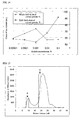
- the present protein sample 2 was found to raise thermal hysteresis in a concentration dependent manner over a protein concentration range of 0 to 10 mg/mL and was found to display thermal hysteresis of 0.42°C at a concentration of 10 mg/mL ( FIG.6 ).
- increase of thermal hysteresis was not found for the present protein sample 1. This result shows that the low molecular weight protein generated by reduction has antifreeze activity.
- ice crystals were observed directly by microscope, and the presence or absence of antifreeze activity was determined based on whether or not there were characteristic changes of morphology (bi-pyramidal, hexagonal, and the like).
- 1 ⁇ L of the purified protein solution 1 was placed drop-wise on a cover glass, and another cover glass was placed thereon to sandwich the solution therebetween.
- the cover glass assembly was placed on the stage of an optical microscope (model BH2 microscope, produced by Olympus Corp.), an LK600 temperature controller produced by Linkam Scientific Instruments Ltd. was used to cool the interior of the stage at a rate of 0.1°C/second, and ice crystals were observed.
- an optical microscope model BH2 microscope, produced by Olympus Corp.
- an LK600 temperature controller produced by Linkam Scientific Instruments Ltd.
- Ice crystals were observed by microscope, and the count of fine ice crystals was observed to determine recrystallization inhibition activity for ice crystals. That is to say, 2 ⁇ L of the present protein sample 1 dissolved in a 30% sucrose solution was placed drop-wise on a cover glass, and another cover glass was placed thereon to sandwich the solution therebetween.
- the cover glass assembly was placed on the stage of an optical microscope (model BH2 microscope, produced by Olympus Corp.) and a temperature controller (LK600 temperature controller, produced by Linkam Scientific Instruments Ltd.) was used to perform heating and cooling repeatedly at a rate of 0.1°C/second, in order, to temperatures of 20°C, -30°C, 20°C, -30°C, 20°C, -30°C, and -10°C.
- extract powders A and B were analyzed by SDS-polyacrylamide gel electrophoresis.
- the protein of 37 kDa molecular weight was found to be contained in extract powder A, and the proteins at 16 kDa and 15.4 kDa were found to be contained in extract powder B ( FIG. 10 ).
- Ice crystal recrystallization inhibition effect due to the krill-derived extract powders was observed. That is to say, 2 ⁇ L of the present protein sample dissolved in 30% sucrose solution was placed drop-wise on a cover glass, and another cover glass was placed thereon to sandwich the solution therebetween.
- the cover glass assembly was placed on the stage of an optical microscope (model BH2 microscope, produced by Olympus Corp.) and a temperature controller (LK600 temperature controller, produced by Linkam Scientific Instruments Ltd.) was used for heating and cooling repeatedly at a rate of 0.1°C/second, in order, to temperatures of 20°C, -30°C, 20°C, -30°C, 20°C, -30°C, and -10°C.
- the starch gel syneresis prevention effect due to addition of krill-derived extract powder was observed.
- Potato starch was used as a raw material with a RVA (Rapid Visco Analyzer) to produce a starch gel.
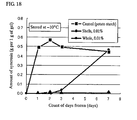
- the starch gel was frozen at -20°C, stored at -10°C, and the appearance of syneresis was observed after thawing.
- addition of the krill-derived extract powder was confirmed to suppress an increase of the amount of syneresis ( FIG. 18 ).
- the starch gel after 7 days of frozen storage was freeze dried, and structure was observed using an electron microscope.
- the starch gel containing added extract powder was confirmed to have a fine structure in comparison to a gel without extract powder addition ( FIGS. 19 and 20 ). This is thought to occur since the krill-derived extract powder suppresses growth of ice crystals during frozen storage of the starch gel and since the krill-derived extract powder suppresses deterioration of the starch gel during frozen storage.
- Meat was collected from Alaska pollock, which is a fresh fish caught off of the Sanriku Coast, and a 3 mm mesh mincer was used to form minced meat. Then 500 g of this minced meat was sampled, and 50 g of water and 50 g of sugar were added. The extract powder B was further added to give concentrations ranging from 0 to 0.1%. The mixture was stirred for 25 seconds using a tabletop mixer. This mixture was then used as the minced meat sample. Then, the respective samples were frozen overnight at -25°C and were stored thereafter for 2 weeks at -10°C. These samples were used for measurement of salt-induced solubility and degree of TMAO decomposition as indicators for evaluation of preservation ability.
- Centrifugal separation was performed again (5,000 rpm ⁇ 10 minutes), and 27 mL of 0.5 M KCl 20 mM Tris-HCl (pH 7.5) solution was added to the obtained precipitate.
- the mixture was stirred, 30 ⁇ L of 1 M ATP was added, and the mixture was stored overnight on ice.
- the mixture thereafter was stirred, volume of the suspension solution was measured, and protein concentration of the suspension solution was measured by the biuret method.
- the suspension solution was subjected to further centrifugal separation (7,000 rpm ⁇ 15 minutes), and protein concentration of the obtained supernatant was measured by the biuret method. Volume was also measured.
- salt-induced solubility was calculated from the ratio of the protein concentration in the previous supernatant over the protein concentration in the suspension liquid. As a result, as shown in FIG. 21 , salt-induced solubility increased with increases in the added amount of the extract powder B, and due to addition of the extract powder B, a trend was shown for suppression of quality deterioration of minced meat of Alaska pollock during frozen storage.
- TCA trichloroacetic acid
- the generated concentration of DMA due to decomposition of TMAO was shown to decline according to the added concentration of the extract powder B. Due to addition of the extract powder B, formaldehyde is generated at the same amount as DMS due to decomposition of TMAO. Suppression of the generated amount of DMA means suppression formaldehyde generation, and this indicates that freezing denaturation of Alaska pollock minced meat by formaldehyde was suppressed during frozen storage.
- Japanese wheat noodles were made by mixing together and kneading the blend indicated in Table 3 (according to this blend, enriched product contained the present protein sample 2 in the Japanese wheat noodles at 0.00036% concentration). After rolling, the noodle strips were wrapped in vinyl and were aged for 1 h at room temperature. Thereafter, the noodle strips were subjected to further rolling, and were cut to form noodles. The noodles were boiled for 10 minutes in boiling water. Thereafter, the noodles were cooled for 5 minutes in flowing water. The noodles were transferred to a colander and were dewatered for 5 minutes. Thereafter, the noodles were frozen overnight at -20°C. Thereafter, the noodles were transferred to -10°C storage and were stored frozen for 2 weeks.
- the noodles were thawed naturally for about 2 h at room temperature, and food texture of the noodles was evaluated.
- Japanese wheat noodles were also prepared that did not contain the protein of the present invention and a comparison was performed.
- the Japanese wheat noodles containing the present protein sample 2 had a smooth noodle surface, and food texture was springy and elastic.
- Cooked rice was prepared from the blend indicated in Table 4 (according to this blend, the enriched product contained the present protein sample 2 in the cooked rice at a concentration of 0.00036%).
- To polished white rice (Kirara 397, rice produced in 2005), water (1.35-fold amount) was added, and the rice was cooked using a domestic rice cooker. Then after cooking, the rice was left to rest for 30 minutes and was molded into 10 pieces (20 g each) of sushi. Thereafter, the cooked rice was frozen for 3 days at -20°C, was then transferred to -10°C storage, and was stored frozen for 5 days.
- the cooked rice was thawed naturally for about 2 h at room temperature, and food texture of the cooked rice was evaluated. As a result, in comparison to the control, as shown in Table 4, the enriched product had adhesion and good food texture.
- Steamed egg custard-stew was prepared from the blend indicated in Table 5 (according to this blend, the enriched product contained the present protein sample 2 in the steamed egg custard-stew at a concentration of 0.00033%). After the materials were blended, 60 g portions were placed in heat resistance containers, were placed in a steamer, and were steamed. After crude heat removal at room temperature, the steamed egg custard-stew was frozen for 3 days at -20°C and was then stored frozen for 5 days at -10°C. For evaluation, the steamed egg custard-stew was steamed for 10 minutes using a steamer, and food texture was evaluated. As a result, in comparison to the control, the enriched product had smooth food texture without incorporation of voids, the enriched product was free of dripping, and flavor of the enriched product was good.
- the protein of the present invention is contained in large amounts in shells of crustaceans which are mostly discarded except for use as meal, chitin, and chitosan raw material. Thus, large volume preparation and inexpensive production is possible. Moreover, application by addition to foods is easy since this is a food-derived protein. Since the protein of the present invention has antifreeze activity and recrystallization inhibition activity for ice crystals, wide use is possible with the object of quality maintenance and the like of frozen food and the like.
Landscapes
- Life Sciences & Earth Sciences (AREA)
- Chemical & Material Sciences (AREA)
- Engineering & Computer Science (AREA)
- Health & Medical Sciences (AREA)
- Polymers & Plastics (AREA)
- Food Science & Technology (AREA)
- Zoology (AREA)
- Wood Science & Technology (AREA)
- Organic Chemistry (AREA)
- Biochemistry (AREA)
- Toxicology (AREA)
- Tropical Medicine & Parasitology (AREA)
- Medicinal Chemistry (AREA)
- Molecular Biology (AREA)
- Proteomics, Peptides & Aminoacids (AREA)
- General Health & Medical Sciences (AREA)
- Marine Sciences & Fisheries (AREA)
- Gastroenterology & Hepatology (AREA)
- Biophysics (AREA)
- Genetics & Genomics (AREA)
- Nutrition Science (AREA)
- Insects & Arthropods (AREA)
- Peptides Or Proteins (AREA)
- Meat, Egg Or Seafood Products (AREA)
- Freezing, Cooling And Drying Of Foods (AREA)
- Cereal-Derived Products (AREA)
- General Preparation And Processing Of Foods (AREA)
- Noodles (AREA)
- Fish Paste Products (AREA)
Applications Claiming Priority (2)
| Application Number | Priority Date | Filing Date | Title |
|---|---|---|---|
| JP2006067758 | 2006-03-13 | ||
| PCT/JP2007/054989 WO2007105734A1 (ja) | 2006-03-13 | 2007-03-13 | 不凍活性を有する甲殻類由来タンパク質 |
Publications (2)
| Publication Number | Publication Date |
|---|---|
| EP2006296A1 true EP2006296A1 (de) | 2008-12-24 |
| EP2006296A4 EP2006296A4 (de) | 2010-03-31 |
Family
ID=38509551
Family Applications (2)
| Application Number | Title | Priority Date | Filing Date |
|---|---|---|---|
| EP07738454A Withdrawn EP2006295A4 (de) | 2006-03-13 | 2007-03-13 | Protein mit ice-nukleierender wirkung |
| EP07738461A Withdrawn EP2006296A4 (de) | 2006-03-13 | 2007-03-13 | Von schalentieren gewonnenes protein mit frostschutzwirkung |
Family Applications Before (1)
| Application Number | Title | Priority Date | Filing Date |
|---|---|---|---|
| EP07738454A Withdrawn EP2006295A4 (de) | 2006-03-13 | 2007-03-13 | Protein mit ice-nukleierender wirkung |
Country Status (6)
| Country | Link |
|---|---|
| US (2) | US20090136649A1 (de) |
| EP (2) | EP2006295A4 (de) |
| JP (2) | JPWO2007105734A1 (de) |
| CN (2) | CN101400695A (de) |
| AU (2) | AU2007225747A1 (de) |
| WO (2) | WO2007105734A1 (de) |
Cited By (5)
| Publication number | Priority date | Publication date | Assignee | Title |
|---|---|---|---|---|
| EP2433503A4 (de) * | 2009-05-18 | 2013-03-20 | Kaneka Corp | Verfahren zur herstellung von verarbeiteten lebensmitteln zum aufwärmen |
| US8568819B2 (en) | 2008-09-26 | 2013-10-29 | Nippon Suisan Kaisha, Ltd. | Solid composition containing lipids from crustaceans |
| EP2596706A4 (de) * | 2010-08-26 | 2015-01-28 | Nichirei Foods Inc | Verfahren zur erhöhung einer wärmehysterese-aktivität, verfahren zur verminderung der thermischen inaktivierung einer wärmehysterese-aktivität und zusammensetzung zur erhöhung einer wärmehysterese-aktivität |
| WO2016193292A1 (en) * | 2015-06-02 | 2016-12-08 | Dsm Ip Assets B.V. | Use of ice structuring protein afp19 expressed in filamentous fungal strains for preparing food |
| US11477981B2 (en) | 2016-06-29 | 2022-10-25 | The General Hospital Corporation | Ice nucleation formulations for cryopreservation and stabilization of biologics |
Families Citing this family (15)
| Publication number | Priority date | Publication date | Assignee | Title |
|---|---|---|---|---|
| JP4968772B2 (ja) * | 2006-07-27 | 2012-07-04 | ミヨシ油脂株式会社 | 不凍活性剤の製造方法、不凍活性剤およびその不凍活性剤を含む冷凍食品 |
| JP2009296902A (ja) * | 2008-06-10 | 2009-12-24 | Kaneka Corp | 品質改良剤 |
| CN102204686A (zh) * | 2010-03-30 | 2011-10-05 | 河南众品食业股份有限公司 | 一种速冻生鲜调理肉制品抗冻方法 |
| JP2012016295A (ja) * | 2010-07-06 | 2012-01-26 | Kaneka Corp | 麺食品 |
| CN101921328B (zh) * | 2010-09-10 | 2011-10-12 | 福州大学 | 利用碱性蛋白酶酶解牛皮胶原蛋白制备抗冻多肽 |
| CN101921311B (zh) * | 2010-09-10 | 2011-10-12 | 福州大学 | 利用木瓜蛋白酶酶解牛皮胶原蛋白制备抗冻多肽 |
| DE102011108251A1 (de) | 2011-07-22 | 2013-01-24 | Gottfried Wilhelm Leibniz Universität Hannover, Körperschaft des öffentlichen Rechts | Verfahren zum Induzieren der Nukleation in einer Probe und System hierfür |
| JP6351936B2 (ja) * | 2013-07-19 | 2018-07-04 | 理研ビタミン株式会社 | 麺用冷凍耐性付与剤 |
| CN105747236A (zh) * | 2016-03-30 | 2016-07-13 | 北京市绿友食品有限公司 | 一种果蔬药食同源食品提取物冻干粉及其制备方法 |
| JP6963225B2 (ja) * | 2017-06-23 | 2021-11-05 | 学校法人 関西大学 | 過冷却促進剤 |
| CN107361122A (zh) * | 2017-06-27 | 2017-11-21 | 江苏华友装饰工程有限公司 | 一种水产品抗冻剂的制备方法 |
| CN108910010A (zh) * | 2018-06-25 | 2018-11-30 | 浙江工业大学 | 一种海上绿色安全保藏水产品的方法 |
| CN108795392B (zh) * | 2018-06-25 | 2020-10-02 | 浙江工业大学 | 一种用于食品保鲜的不冻液 |
| CN112717909B (zh) * | 2020-12-11 | 2022-12-27 | 青岛军融创新工程研究院有限公司 | 一种光催化剂 |
| CN119662758A (zh) * | 2024-12-19 | 2025-03-21 | 湖北省农业科学院农产品加工与核农技术研究所 | 一种抗冻糖肽及其制备方法与应用 |
Family Cites Families (18)
| Publication number | Priority date | Publication date | Assignee | Title |
|---|---|---|---|---|
| JPS619926A (ja) | 1984-06-26 | 1986-01-17 | Sumitomo Metal Mining Co Ltd | 電解カソ−ドの歪矯正装置 |
| US5194269A (en) * | 1988-01-20 | 1993-03-16 | Lee Tung Ching | Production of frozen foods and other products |
| US4978540A (en) * | 1988-01-20 | 1990-12-18 | Lee Tung Ching | Production of frozen foods and other products |
| AU648028B2 (en) | 1989-05-10 | 1994-04-14 | Dna Plant Technology Corporation | Antifreeze polypeptides |
| US5118792A (en) * | 1989-05-10 | 1992-06-02 | Dna Plant Technology Corporation | Ice crystal growth suppression polypeptides and method of making |
| JPH06113712A (ja) | 1992-10-06 | 1994-04-26 | Kanegafuchi Chem Ind Co Ltd | 冷凍生地 |
| JPH06181729A (ja) | 1992-12-19 | 1994-07-05 | Nagano Pref Gov Nokyo Chiiki Kaihatsu Kiko | 自然凍結加工食品の製造方法 |
| US5676985A (en) | 1994-10-12 | 1997-10-14 | Hsc Research And Development Limited Partnership | Antifreeze polypeptide-expressing microorganisms useful in fermentation and freezing of foods |
| DK0836646T3 (da) | 1995-07-05 | 2005-12-19 | Unilever Nv | Anti-frysepeptider fra havfisk som additiver til födevareprodukter |
| IL127652A0 (en) * | 1996-07-26 | 1999-10-28 | Unilever Plc | Frozen food product containing heat stable antifreeze protein |
| AU719506B2 (en) | 1996-07-26 | 2000-05-11 | Unilever Plc | Frozen food product |
| US6392024B1 (en) * | 1997-06-26 | 2002-05-21 | Queen's University At Kingston | Tenebrio antifreeze proteins |
| GB9801420D0 (en) | 1998-01-22 | 1998-03-18 | Unilever Plc | Frozen food product |
| JP2001245659A (ja) * | 2000-03-03 | 2001-09-11 | Hitoshi Obata | 野菜由来の不凍活性物質 |
| JP2004000019A (ja) * | 2002-03-27 | 2004-01-08 | Ikeda Shokken Kk | 変性防止剤および液体組成物 |
| WO2004072283A1 (ja) * | 2003-02-17 | 2004-08-26 | National Institute Of Advanced Industrial Science And Technology | 氷核蛋白質の配列を含む不凍蛋白質 |
| JP2004344033A (ja) * | 2003-05-21 | 2004-12-09 | National Institute Of Advanced Industrial & Technology | 魚類が有する不凍タンパク質 |
| JP2006067758A (ja) | 2004-08-30 | 2006-03-09 | Kawamura Electric Inc | 電線保持具 |
-
2007
- 2007-03-13 CN CNA2007800087268A patent/CN101400695A/zh active Pending
- 2007-03-13 US US12/282,789 patent/US20090136649A1/en not_active Abandoned
- 2007-03-13 AU AU2007225747A patent/AU2007225747A1/en not_active Abandoned
- 2007-03-13 CN CNA2007800087357A patent/CN101400696A/zh active Pending
- 2007-03-13 WO PCT/JP2007/054989 patent/WO2007105734A1/ja not_active Ceased
- 2007-03-13 JP JP2008505169A patent/JPWO2007105734A1/ja active Pending
- 2007-03-13 US US12/282,761 patent/US20090054626A1/en not_active Abandoned
- 2007-03-13 AU AU2007225750A patent/AU2007225750A1/en not_active Abandoned
- 2007-03-13 JP JP2008505167A patent/JPWO2007105731A1/ja active Pending
- 2007-03-13 EP EP07738454A patent/EP2006295A4/de not_active Withdrawn
- 2007-03-13 WO PCT/JP2007/054982 patent/WO2007105731A1/ja not_active Ceased
- 2007-03-13 EP EP07738461A patent/EP2006296A4/de not_active Withdrawn
Cited By (8)
| Publication number | Priority date | Publication date | Assignee | Title |
|---|---|---|---|---|
| US8568819B2 (en) | 2008-09-26 | 2013-10-29 | Nippon Suisan Kaisha, Ltd. | Solid composition containing lipids from crustaceans |
| US8784921B2 (en) | 2008-09-26 | 2014-07-22 | Nippon Suisan Kaisha, Ltd. | Method for concentrating lipids |
| EP2433503A4 (de) * | 2009-05-18 | 2013-03-20 | Kaneka Corp | Verfahren zur herstellung von verarbeiteten lebensmitteln zum aufwärmen |
| EP2596706A4 (de) * | 2010-08-26 | 2015-01-28 | Nichirei Foods Inc | Verfahren zur erhöhung einer wärmehysterese-aktivität, verfahren zur verminderung der thermischen inaktivierung einer wärmehysterese-aktivität und zusammensetzung zur erhöhung einer wärmehysterese-aktivität |
| WO2016193292A1 (en) * | 2015-06-02 | 2016-12-08 | Dsm Ip Assets B.V. | Use of ice structuring protein afp19 expressed in filamentous fungal strains for preparing food |
| US20180160695A1 (en) * | 2015-06-02 | 2018-06-14 | Dsm Ip Assets B.V. | Use of ice structuring protein afp19 expressed in filamentous fungal strains for preparing food |
| AU2016273208B2 (en) * | 2015-06-02 | 2021-01-21 | Dsm Ip Assets B.V. | Use of ice structuring protein AFP19 expressed in filamentous fungal strains for preparing food |
| US11477981B2 (en) | 2016-06-29 | 2022-10-25 | The General Hospital Corporation | Ice nucleation formulations for cryopreservation and stabilization of biologics |
Also Published As
| Publication number | Publication date |
|---|---|
| WO2007105731A1 (ja) | 2007-09-20 |
| EP2006296A4 (de) | 2010-03-31 |
| AU2007225747A1 (en) | 2007-09-20 |
| JPWO2007105731A1 (ja) | 2009-07-30 |
| WO2007105734A1 (ja) | 2007-09-20 |
| CN101400696A (zh) | 2009-04-01 |
| EP2006295A2 (de) | 2008-12-24 |
| EP2006295A9 (de) | 2009-04-08 |
| AU2007225750A1 (en) | 2007-09-20 |
| JPWO2007105734A1 (ja) | 2009-07-30 |
| EP2006295A4 (de) | 2010-03-24 |
| US20090054626A1 (en) | 2009-02-26 |
| CN101400695A (zh) | 2009-04-01 |
| US20090136649A1 (en) | 2009-05-28 |
Similar Documents
| Publication | Publication Date | Title |
|---|---|---|
| US20090054626A1 (en) | Crustacean-derived protein having antifreeze activity | |
| Zou et al. | Combined effect of ultrasound and sodium bicarbonate marination on chicken breast tenderness and its molecular mechanism | |
| Walayat et al. | Cryoprotective effect of egg white proteins and xylooligosaccharides mixture on oxidative and structural changes in myofibrillar proteins of Culter alburnus during frozen storage | |
| Xiong et al. | Effects of konjac glucomannan on physicochemical properties of myofibrillar protein and surimi gels from grass carp (Ctenopharyngodon idella) | |
| Sultanbawa et al. | Structural changes in natural actomyosin and surimi from ling cod (Ophiodon elongatus) during frozen storage in the absence or presence of cryoprotectants | |
| Zhang et al. | Study on the mechanism of protein hydrolysate delaying quality deterioration of frozen surimi | |
| Zhuang et al. | Optimization of antioxidant activity by response surface methodology in hydrolysates of jellyfish (Rhopilema esculentum) umbrella collagen | |
| Mi et al. | Cryoprotective effect of soluble soybean polysaccharides and enzymatic hydrolysates on the myofibrillar protein of Nemipterus virgatus surimi | |
| Zhang et al. | Cryoprotective effect of trehalose on myofibrillar protein of snakehead fish (Channa argus) during freeze–thaw cycles | |
| Sharma et al. | Effects of partial and complete replacement of synthetic cryoprotectant with carrot (Daucus carota) concentrated protein on stability of frozen surimi | |
| Michalczyk et al. | Changes in protein fractions of rainbow trout (Oncorhynchus mykiss) gravads during production and storage | |
| CN111937952A (zh) | 一种基于鱼鳞蛋白酶解物的冷冻保鲜剂及制备方法和应用 | |
| JP2004083546A (ja) | 魚類由来の不凍タンパク質 | |
| Pan | Minced fish technology | |
| CN115349610B (zh) | 一种南美白对虾虾糜的加工方法 | |
| Schubring | Characterizing protein changes caused by application of high hydrostatic pressure on muscle food by means of DSC | |
| Yetim et al. | The influence of egg white and tumbling on proximate composition and protein fractions of fresh catfish muscle | |
| JP4332646B2 (ja) | 魚類由来の不凍タンパク質 | |
| Usman et al. | Introduction to world production of fish roe and processing | |
| CN114807280A (zh) | 一种植物肽抗冻剂的制备方法及其应用 | |
| Xia et al. | Effects of high hydrostatic pressure treatment on physicochemical characteristics of Sea cucumber | |
| Sankar | BIOCHEMICAL AND STORAGE CHARACTERISTICS OF MYOFIBRILLAR PROTEIN (SUR/M/) FROM FRESHWATER MAJOR CARPS | |
| Haard | Plant protease inhibitors as food processing aids | |
| JP2006124295A (ja) | 不凍タンパク質混合物 | |
| QU et al. | Effect of food additives on texture and smell of silver carp (Hypophthalmichthys molitrix) mince |
Legal Events
| Date | Code | Title | Description |
|---|---|---|---|
| PUAI | Public reference made under article 153(3) epc to a published international application that has entered the european phase |
Free format text: ORIGINAL CODE: 0009012 |
|
| 17P | Request for examination filed |
Effective date: 20081013 |
|
| AK | Designated contracting states |
Kind code of ref document: A1 Designated state(s): AT BE BG CH CY CZ DE DK EE ES FI FR GB GR HU IE IS IT LI LT LU LV MC MT NL PL PT RO SE SI SK TR |
|
| A4 | Supplementary search report drawn up and despatched |
Effective date: 20100225 |
|
| STAA | Information on the status of an ep patent application or granted ep patent |
Free format text: STATUS: THE APPLICATION IS DEEMED TO BE WITHDRAWN |
|
| 18D | Application deemed to be withdrawn |
Effective date: 20100517 |