EP2012218A2 - Procédé d'influence de l'interprétation d'entrées multimodales - Google Patents
Procédé d'influence de l'interprétation d'entrées multimodales Download PDFInfo
- Publication number
- EP2012218A2 EP2012218A2 EP08103835A EP08103835A EP2012218A2 EP 2012218 A2 EP2012218 A2 EP 2012218A2 EP 08103835 A EP08103835 A EP 08103835A EP 08103835 A EP08103835 A EP 08103835A EP 2012218 A2 EP2012218 A2 EP 2012218A2
- Authority
- EP
- European Patent Office
- Prior art keywords
- input
- model
- alternative
- models
- meaning
- Prior art date
- Legal status (The legal status is an assumption and is not a legal conclusion. Google has not performed a legal analysis and makes no representation as to the accuracy of the status listed.)
- Granted
Links
Images

Classifications
-
- G—PHYSICS
- G06—COMPUTING OR CALCULATING; COUNTING
- G06F—ELECTRIC DIGITAL DATA PROCESSING
- G06F3/00—Input arrangements for transferring data to be processed into a form capable of being handled by the computer; Output arrangements for transferring data from processing unit to output unit, e.g. interface arrangements
- G06F3/01—Input arrangements or combined input and output arrangements for interaction between user and computer
- G06F3/03—Arrangements for converting the position or the displacement of a member into a coded form
- G06F3/033—Pointing devices displaced or positioned by the user, e.g. mice, trackballs, pens or joysticks; Accessories therefor
- G06F3/038—Control and interface arrangements therefor, e.g. drivers or device-embedded control circuitry
-
- G—PHYSICS
- G06—COMPUTING OR CALCULATING; COUNTING
- G06F—ELECTRIC DIGITAL DATA PROCESSING
- G06F3/00—Input arrangements for transferring data to be processed into a form capable of being handled by the computer; Output arrangements for transferring data from processing unit to output unit, e.g. interface arrangements
- G06F3/01—Input arrangements or combined input and output arrangements for interaction between user and computer
- G06F3/017—Gesture based interaction, e.g. based on a set of recognized hand gestures
-
- G—PHYSICS
- G10—MUSICAL INSTRUMENTS; ACOUSTICS
- G10L—SPEECH ANALYSIS TECHNIQUES OR SPEECH SYNTHESIS; SPEECH RECOGNITION; SPEECH OR VOICE PROCESSING TECHNIQUES; SPEECH OR AUDIO CODING OR DECODING
- G10L15/00—Speech recognition
- G10L15/08—Speech classification or search
- G10L15/18—Speech classification or search using natural language modelling
- G10L15/183—Speech classification or search using natural language modelling using context dependencies, e.g. language models
-
- G—PHYSICS
- G10—MUSICAL INSTRUMENTS; ACOUSTICS
- G10L—SPEECH ANALYSIS TECHNIQUES OR SPEECH SYNTHESIS; SPEECH RECOGNITION; SPEECH OR VOICE PROCESSING TECHNIQUES; SPEECH OR AUDIO CODING OR DECODING
- G10L15/00—Speech recognition
- G10L15/22—Procedures used during a speech recognition process, e.g. man-machine dialogue
-
- G—PHYSICS
- G10—MUSICAL INSTRUMENTS; ACOUSTICS
- G10L—SPEECH ANALYSIS TECHNIQUES OR SPEECH SYNTHESIS; SPEECH RECOGNITION; SPEECH OR VOICE PROCESSING TECHNIQUES; SPEECH OR AUDIO CODING OR DECODING
- G10L17/00—Speaker identification or verification techniques
- G10L17/22—Interactive procedures; Man-machine interfaces
-
- G—PHYSICS
- G06—COMPUTING OR CALCULATING; COUNTING
- G06F—ELECTRIC DIGITAL DATA PROCESSING
- G06F2203/00—Indexing scheme relating to G06F3/00 - G06F3/048
- G06F2203/038—Indexing scheme relating to G06F3/038
- G06F2203/0381—Multimodal input, i.e. interface arrangements enabling the user to issue commands by simultaneous use of input devices of different nature, e.g. voice plus gesture on digitizer
-
- H—ELECTRICITY
- H04—ELECTRIC COMMUNICATION TECHNIQUE
- H04M—TELEPHONIC COMMUNICATION
- H04M2250/00—Details of telephonic subscriber devices
- H04M2250/74—Details of telephonic subscriber devices with voice recognition means
-
- H—ELECTRICITY
- H04—ELECTRIC COMMUNICATION TECHNIQUE
- H04M—TELEPHONIC COMMUNICATION
- H04M3/00—Automatic or semi-automatic exchanges
- H04M3/42—Systems providing special services or facilities to subscribers
- H04M3/487—Arrangements for providing information services, e.g. recorded voice services or time announcements
- H04M3/493—Interactive information services, e.g. directory enquiries ; Arrangements therefor, e.g. interactive voice response [IVR] systems or voice portals
- H04M3/4938—Interactive information services, e.g. directory enquiries ; Arrangements therefor, e.g. interactive voice response [IVR] systems or voice portals comprising a voice browser which renders and interprets, e.g. VoiceXML
Definitions
- the invention relates to a method and a device which make it possible to define the semantic interpretation of the inputs in individual and / or combined modes for a multimodal dialog system by the user of a telecommunication terminal.
- Multimodal dialog systems are known (see http://www.w3.org/TR/mmi-framework/) for a variety of multimodal input options, such as language, keyboard, stylus, touch screen, GPS are provided.
- the meanings of the user inputs are to be defined in such a system.
- Identical inputs can have the same as well as different meanings for different applications.
- similar for different applications are z.
- input concepts for approval or rejection to a system output are defined.
- a task therefore consists in finding possibilities in a multimodal dialogue system to either adapt existing input models (eg movement models) describing average reactions to the user-specific interpretation or to define user-defined new input models for intended user actions without a large number of user-defined input models
- User responses eg, device movements and / or combinations thereof with responses in other modes
- dialog systems which serve the linguistic and analogous multimodal interaction with at least one user (see also http://www.w3.org/TR/2000/WD-voice-intro- 20001204 /).
- dictation systems Specially for speaker-dependent speech recognition systems (eg dictation systems), methods for training the acoustic models for individual words and / or word sequences are known in which the user of the system receives the words, word sequences and / or texts provided for the training on a screen and this, possibly several times, has to be repeated via a microphone, ie the language models to be recognized later are trained by inputs via the same medium (language), whereby the meaning of the utterance to be trained is predetermined and optionally displayed on the screen or output via a voice output system.
- terminals are also known, which are equipped with sensors for determining the position or orientation and with motion sensors, which, for. B.
- the object of the present invention is to provide a method and corresponding device which allow the semantic interpretation of the inputs in individual and / or combined modes for a multimodal dialog system to be defined by the user of a telecommunication terminal.
- a multimodal dialog system is additionally equipped with means that allow meaningful and user-defined input models to generate models for other media, the meaning of which is defined by input models already defined, possibly administratively and / or application developers to be discribed.
- This can be z. B. by using at least one additional application or a part of another dialog application, which feedback after recognition of a particular movement pattern, the user to define the meaning of this movement pattern via another input mode (eg., Speech and / or stylus and / or keyboard and / or touchscreen and / or camera (gesture) and / or motion) for which the meanings of certain input models are already defined.
- another input mode eg., Speech and / or stylus and / or keyboard and / or touchscreen and / or camera (gesture) and / or motion
- different meanings can be assigned to an input model or a combination of input models for the same user reaction as a function of the respective target application and / or context.
- a method for user-individual definition of the interpretation of input into a multimodal, multiple input devices comprehensive, dialogue system of a telecommunications terminal This may preferably be a PDA, a mobile phone or a smartphone.
- the input devices include contexts connoisseurs, which can determine eg with the help of a positioning system the local context or eg via certain movement patterns the environment situation (eg vibrations in the vehicle); Stylus, touchscreen, keyboard, keyboard input; Movement, inclination, position detection; Speaker recognition; Spokesman classification; Voice recognition. Since the connoisseur can logically also be interpreted interpretatively by evaluating other inputs, it can also be considered as part of an evaluation and interpretation module.
- an assignment attempt of the input to one or more input models is attempted in accordance with the input device and the input model assigned to it.
- the meaning of the input in relation to the application is now determined and passed to an interaction / application manager. This now passes on the input to the application. If, on the other hand, no input model is found or a sufficiently secure assignment to an input model can not be made, then the method switches to an alternative input method or input device whose input model is sufficiently defined and then prompts the user for re-input via the alternative input method or the alternative input device on.
- Selection of the alternative input method or alternative output device also refers to the input model present for the alternative input relative to the currently running application. So it can be that many things Input device is more appropriate for one application than another because the input model is defined differently in relation to the applications. It may also happen that the same input has a different meaning in different applications.
- the re-entry via the alternative input method or the input device replaces the original input and thus the meaning of the input is determined by its input model.
- the meaning thus determined is passed to the application, the original input being buffered being assigned the meaning thus determined, and then stored in the input model.
- an interactive dialog is used to query whether the input should actually be stored in the input model.
- Such training is called interactive training. This ensures that only intentional training results are incorporated into the model.
- the dialogue can be used to avoid storing an undesired result.
- there is an explicit training in which the user is preferably asked several times to make the input to an example given in the language model meaning a voice input, the confirmation by an alternative input method or input device whose input model is sufficiently defined, takes place.
- the input sequences are synchronized by vector definitions.
- the input sequences are preferably time-discrete.
- the use of modes with existing meaning definitions of the inputs in corresponding input models can thus be used to define the meaning of inputs for which no meaning definitions are yet available.
- Forming combined input models and / or determining the input type increases the likelihood of successful evaluation of multimodal user input.
- the implicit training during guided dialogues in the primary mode, with the formation of combined input models, provides the basis for a transition to free dialogues of the user with the system.
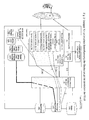
- the terminal 1 serves over a network 2 for data, voice and / or transmission of multimodal inputs and outputs.
- a dialogue system 2 comprises an input recognition 3 comprising further submodules, such as speech recognition, for recognition of DTMF tones 3a, language identification (language detection) 3b, speech classification (speech-based classification) 3c, speaker recognition (speaker verification and / or speaker identification) 3d , Emotion recognition 3e, determination of the connection / terminal identification 3f, detection of other multimodal inputs (stylus, keyboard, camera, touch screen, ...) 3g
- An evaluation / interpretation module 4 serves for the combined interpretation of the inputs using the input models or grammars 7. Here, the meaning of individual or combined multimodal inputs is ultimately determined and passed on with their help.
- An information output module 5 serves to output recorded speech, speech synthesis, display indications, audio signals, device vibration, etc.
- the output scheduler 6 defines the order and type of modes for outputting information contents based on rules set in output models (8).
- the input models 7 store the grammar and the context of the individual models of the input modules.
- Output grammar, output model 8 determines the behavior of the devices and applications to an input.
- the interaction / application management 9 finally executes the application in accordance with the specifications of the application data (16). It provides an intermediate layer between input devices and applications that link the grammars or input models 7 together.
- the application data 15 are used by the dialog applications 16 and thus influence the execution of the applications.
- the training application 17 is also the interpretable by the application manager description of an application that trains special input models.
- the FIG. 2 shows a form of training.
- the information input (eg, confirmation) system for an input made by the user with the terminal in at least one of several possible modes (eg, a movement / gesture) no defined input model (e.g. Movement model) are found in Fig. 7e (1) or if the similarity between the input and an existing movement pattern falls below a predetermined limit, then by a corresponding active dialog application for the training 17 and / or part of another dialog application in Fig. 16 the user 1 causes the meaning of the movement to be defined via language 3a and / or via any other medium (eg 3f) (2), (9-6).
- the user is prompted by corresponding outputs of the training application 17 (9-6) to execute the respective movements for the expected meanings of the possible entries in the current dialog step.
- the individual movement pattern is assigned the meaning proposed to the user on the basis of the language model (eg rejection / approval).
- the user is given in a separate training application all the meanings of possible inputs contained in other input models for one or more applications for which he is requested to perform corresponding movements with the terminal. Implied training is a bit different.
- the system now recognizes a linguistic utterance for the original system output (eg "yes"), which is assigned the meaning "consent” for the given example, the same meaning is also assigned to the input motion pattern in the input model 7e, whereby the user can receive an indication via the information output that its meaning has been assigned to its last movement.
- a linguistic utterance for the original system output eg "yes”
- the same meaning is also assigned to the input motion pattern in the input model 7e, whereby the user can receive an indication via the information output that its meaning has been assigned to its last movement.
- each defined input sequence is assigned a meaning separately in an input model, ie for each input mode, a corresponding meaning can be assigned independently of other input modes separately on the basis of an operator action defined in the corresponding input model.
- a user reaction can only be regarded as secure if suitably set threshold values for recognizing the user reactions of at least two input media have been exceeded and the interpreted meanings (eg approval or rejection) match.
- a possible synchronous execution of specific input sequences in different modes has only a minor significance.
- Another possibility for further improving the security of the recognition of the meaning of input sequences of a user is the synchronous evaluation of combined feature vectors and / or input models of different input modes.
- resulting time-discrete vector sequences can be supplemented time-discretely by the data of the additionally trained mode on the basis of the vector sequences for the operating action of an input mode.
- common vector sequences and corresponding reference patterns can be evaluated for detecting the meaning of synchronous operator actions for at least two defined input modes.
- training combined reference patterns the assignment of a meaning to a reference pattern is considered with simultaneous inputs in several modes.
- the dialog sequence for supplementing an existing language model with the meaning "consent” is considered by at least one synchronous operation in which the movement of a terminal by the user is evaluated via acceleration and / or inclination sensors and / or camera signals.
- the training-enhanced, combined multimodal reference model provides greater reliability in detecting the importance of operator actions. If an approval of the user for a system output in addition to the speech input with a user-selected and trained movement of the terminal is underlined, then the result can be assigned a higher reliability than when input solely via speech. In the following it is assumed for the speech input that the meanings of the speech inputs described in the language models have already been defined administratively or via a previous training.
- a primary input mode For the implicit training of combined multimodal input models, it is also assumed that for a primary input mode the meanings of specific operator actions are defined in the corresponding input model.
- voice input is considered the primary input mode.
- a primary input modes with predefined models are also movement, keyboard, stylus input, inputs using a camera and other modes conceivable with the aid of z. B. then the meanings of voice inputs can be defined.
- a different primary mode can also be defined for different dialog steps in an application.
- existing applications can be operated in primary mode.
- the voice input is again used as the primary mode and the detection of terminal device movements as the secondary mode.
- the inclination and movement paths of the terminal are simultaneously recorded in the background and added to the multimodal input models described under explicit training.
- the moving parts of the reference pattern receive a greater weight in the evaluation of the inputs.
- the multimodal input model can also be trained on movement inputs in secondary mode and constantly adapted.
- the determination of the meaning of inputs alone is only a partial aspect of the interpretation of motion inputs.
- User input during a discourse or dialogue with a system does not just contain content information that can be interpreted semantically according to the defined meaning, but also information of a pragmatic nature on the type of inputs, such.
- the detection of the type of input can also be done via the movement of the mobile terminal. Since, after a successful dialog step in a guided dialog, when inputting user information via the primary mode, the type of input may be assumed to be known, the recorded motion may contain meaningful as well as pragmatic information reflecting the type of input. In this case, it may be administratively determined whether content information for a particular input type of input or part of an input is possible and / or permitted for a secondary mode (eg inputs about the movement of the terminal), so that in the negative case only it is possible to determine the input type via the secondary mode.
- a secondary mode eg inputs about the movement of the terminal
Landscapes
- Engineering & Computer Science (AREA)
- Human Computer Interaction (AREA)
- Physics & Mathematics (AREA)
- Theoretical Computer Science (AREA)
- General Engineering & Computer Science (AREA)
- Audiology, Speech & Language Pathology (AREA)
- Health & Medical Sciences (AREA)
- Acoustics & Sound (AREA)
- Multimedia (AREA)
- Computational Linguistics (AREA)
- General Physics & Mathematics (AREA)
- Artificial Intelligence (AREA)
- User Interface Of Digital Computer (AREA)
- Input From Keyboards Or The Like (AREA)
Applications Claiming Priority (1)
| Application Number | Priority Date | Filing Date | Title |
|---|---|---|---|
| DE102007024110A DE102007024110A1 (de) | 2007-05-22 | 2007-05-22 | Verfahren zur Beeinflussung der Interpretation multimodaler Eingaben |
Publications (3)
| Publication Number | Publication Date |
|---|---|
| EP2012218A2 true EP2012218A2 (fr) | 2009-01-07 |
| EP2012218A3 EP2012218A3 (fr) | 2013-03-06 |
| EP2012218B1 EP2012218B1 (fr) | 2017-10-11 |
Family
ID=39760940
Family Applications (1)
| Application Number | Title | Priority Date | Filing Date |
|---|---|---|---|
| EP08103835.8A Not-in-force EP2012218B1 (fr) | 2007-05-22 | 2008-05-06 | Procédé pour influencer l'interprétation d'entrées multimodales |
Country Status (2)
| Country | Link |
|---|---|
| EP (1) | EP2012218B1 (fr) |
| DE (1) | DE102007024110A1 (fr) |
Cited By (3)
| Publication number | Priority date | Publication date | Assignee | Title |
|---|---|---|---|---|
| CN103456298A (zh) * | 2012-06-04 | 2013-12-18 | 三星电子株式会社 | 提供语音识别服务的方法及其电子装置 |
| CN104536677A (zh) * | 2015-01-20 | 2015-04-22 | 湖南化身科技有限公司 | 具有智能语音交互功能的三维数字人像 |
| CN118468957A (zh) * | 2023-05-09 | 2024-08-09 | 京东城市(北京)数字科技有限公司 | 多模态敏感信息识别模型的训练方法、装置和电子设备 |
Citations (4)
| Publication number | Priority date | Publication date | Assignee | Title |
|---|---|---|---|---|
| JP2001272413A (ja) | 2000-03-27 | 2001-10-05 | Microstone Corp | 運動センサ付き携帯電話機 |
| JP2002169645A (ja) | 2000-12-01 | 2002-06-14 | Toshiba Corp | 移動通信端末 |
| JP2003111142A (ja) | 2001-09-28 | 2003-04-11 | Yamaha Corp | 携帯電話装置及びその制御方法 |
| EP1617629A1 (fr) | 2003-10-16 | 2006-01-18 | Vodafone K.K. | Dispositif externe pour terminal de communication mobile, terminal de communication mobile, et systeme d'affichage externe pour terminal de communication mobile |
Family Cites Families (9)
| Publication number | Priority date | Publication date | Assignee | Title |
|---|---|---|---|---|
| US5664058A (en) * | 1993-05-12 | 1997-09-02 | Nynex Science & Technology | Method of training a speaker-dependent speech recognizer with automated supervision of training sufficiency |
| JP3267047B2 (ja) * | 1994-04-25 | 2002-03-18 | 株式会社日立製作所 | 音声による情報処理装置 |
| EP1102241A1 (fr) * | 1999-11-19 | 2001-05-23 | Medical Development & Technology Information Division B.V. | Système de dialogue adaptatif à commande vocale |
| US7143043B1 (en) * | 2000-04-26 | 2006-11-28 | Openwave Systems Inc. | Constrained keyboard disambiguation using voice recognition |
| US6791529B2 (en) * | 2001-12-13 | 2004-09-14 | Koninklijke Philips Electronics N.V. | UI with graphics-assisted voice control system |
| US7890324B2 (en) * | 2002-12-19 | 2011-02-15 | At&T Intellectual Property Ii, L.P. | Context-sensitive interface widgets for multi-modal dialog systems |
| EP1705554A3 (fr) * | 2005-03-25 | 2008-12-03 | AT&T Corp. | Système et procédé pour adapter dynamiquement la performance d'un système de dialogue interactif basé sur une confirmation multimodale |
| EP1761015B1 (fr) * | 2005-09-02 | 2017-11-08 | Swisscom AG | Interface utilisateur auto-adaptatif pour systèmes de dialogue |
| US20070124507A1 (en) * | 2005-11-28 | 2007-05-31 | Sap Ag | Systems and methods of processing annotations and multimodal user inputs |
-
2007
- 2007-05-22 DE DE102007024110A patent/DE102007024110A1/de not_active Withdrawn
-
2008
- 2008-05-06 EP EP08103835.8A patent/EP2012218B1/fr not_active Not-in-force
Patent Citations (4)
| Publication number | Priority date | Publication date | Assignee | Title |
|---|---|---|---|---|
| JP2001272413A (ja) | 2000-03-27 | 2001-10-05 | Microstone Corp | 運動センサ付き携帯電話機 |
| JP2002169645A (ja) | 2000-12-01 | 2002-06-14 | Toshiba Corp | 移動通信端末 |
| JP2003111142A (ja) | 2001-09-28 | 2003-04-11 | Yamaha Corp | 携帯電話装置及びその制御方法 |
| EP1617629A1 (fr) | 2003-10-16 | 2006-01-18 | Vodafone K.K. | Dispositif externe pour terminal de communication mobile, terminal de communication mobile, et systeme d'affichage externe pour terminal de communication mobile |
Non-Patent Citations (2)
| Title |
|---|
| HJALMARSSON, A.: "Adaptive Spoken Dialogue Systems", CENTRE FOR SPEECH TECHNOLOGY, KTH, January 2005 (2005-01-01) |
| QUEK, F. ET AL.: "Multimodal Human Discourse: Gesture and Speech", ACM TRANSACTIONS ON COMPUTER-HUMAN INTERACTION, vol. 9, no. 3, September 2002 (2002-09-01), XP001125795, DOI: doi:10.1145/568513.568514 |
Cited By (3)
| Publication number | Priority date | Publication date | Assignee | Title |
|---|---|---|---|---|
| CN103456298A (zh) * | 2012-06-04 | 2013-12-18 | 三星电子株式会社 | 提供语音识别服务的方法及其电子装置 |
| CN104536677A (zh) * | 2015-01-20 | 2015-04-22 | 湖南化身科技有限公司 | 具有智能语音交互功能的三维数字人像 |
| CN118468957A (zh) * | 2023-05-09 | 2024-08-09 | 京东城市(北京)数字科技有限公司 | 多模态敏感信息识别模型的训练方法、装置和电子设备 |
Also Published As
| Publication number | Publication date |
|---|---|
| DE102007024110A1 (de) | 2008-12-11 |
| EP2012218B1 (fr) | 2017-10-11 |
| EP2012218A3 (fr) | 2013-03-06 |
Similar Documents
| Publication | Publication Date | Title |
|---|---|---|
| EP1927980B1 (fr) | Procédé de classification de la langue parlée dans des systèmes de dialogue vocal | |
| DE60215272T2 (de) | Verfahren und Vorrichtung zur sprachlichen Dateneingabe bei ungünstigen Bedingungen | |
| DE60026637T2 (de) | Verfahren zur Erweiterung des Wortschatzes eines Spracherkennungssystems | |
| DE10220524B4 (de) | Verfahren und System zur Verarbeitung von Sprachdaten und zur Erkennung einer Sprache | |
| DE102019217751B4 (de) | Verfahren zum Betreiben eines Sprachdialogsystems und Sprachdialogsystem | |
| DE60128372T2 (de) | Verfahren und system zur verbesserung der genauigkeit in einem spracherkennungssystem | |
| DE60214850T2 (de) | Für eine benutzergruppe spezifisches musterverarbeitungssystem | |
| EP1249016B1 (fr) | Procede d'identification commandee par la parole de l'utilisateur d'une connexion de telecommunication dans un reseau de telecommunication lors d'un dialogue avec un systeme de dialogue commande par la parole | |
| EP2012218B1 (fr) | Procédé pour influencer l'interprétation d'entrées multimodales | |
| EP1097447A1 (fr) | Procede et dispositif pour reconnaitre des mots-cles predetermines dans un enonce verbal | |
| EP1282897B1 (fr) | Procede pour produire une banque de donnees vocales pour un lexique cible pour l'apprentissage d'un systeme de reconnaissance vocale | |
| DE102016204315A1 (de) | Fortbewegungsmittel, System und Verfahren zur Anpassung einer Länge einer erlaubten Sprechpause im Rahmen einer Spracheingabe | |
| WO2014131763A2 (fr) | Analyse vocale sur la base d'une sélection de mots et dispositif d'analyse vocale | |
| DE60014583T2 (de) | Verfahren und vorrichtung zur integritätsprüfung von benutzeroberflächen sprachgesteuerter geräte | |
| WO2001067435A9 (fr) | Procede d'initiation commandee vocalement par un cercle d'utilisateurs limite d'actions executables dans un appareil | |
| DE19851287A1 (de) | Datenverarbeitungssystem oder Kommunikationsendgerät mit einer Einrichtung zur Erkennugn gesprochener Sprache und Verfahren zur Erkennung bestimmter akustischer Objekte | |
| DE102005018174A1 (de) | Verfahren zur gezielten Ermittlung eines vollständigen Eingabedatensatzes in einem Sprachdialog 11 | |
| WO2015044097A1 (fr) | Procédé et système pour créer ou ajouter un modèle de langue spécifique à l'utilisateur dans une mémoire de données locale pouvant être reliée à un appareil terminal | |
| EP3989218A1 (fr) | Assistant vocal virtuel facile à utiliser | |
| EP1224661B1 (fr) | Procede et dispositif pour la verification d'un locuteur a l'aide d'un ordinateur | |
| EP3115886A1 (fr) | Procede de fonctionnement d'un systeme de commande vocale et systeme de commande vocale | |
| EP1457966A1 (fr) | Méthode de détermination d'un risque de confusion d'entrées de vocabulaire pour la reconnaissance de la parole à partir de phonèmes | |
| DE69814442T2 (de) | Strukturerkennung | |
| DE102004011426B3 (de) | Vorrichtung zum Erkennen einer in einem Sprachsignal enthaltenen Emotion und Verfahren zum Erkennen einer in einem Sprachsignal enthaltenen Emotion | |
| EP4040433A1 (fr) | Génération dynamique d'une chaîne de modules fonctionnels d'un assistant virtuel |
Legal Events
| Date | Code | Title | Description |
|---|---|---|---|
| PUAI | Public reference made under article 153(3) epc to a published international application that has entered the european phase |
Free format text: ORIGINAL CODE: 0009012 |
|
| AK | Designated contracting states |
Kind code of ref document: A2 Designated state(s): AT BE BG CH CY CZ DE DK EE ES FI FR GB GR HR HU IE IS IT LI LT LU LV MC MT NL NO PL PT RO SE SI SK TR |
|
| AX | Request for extension of the european patent |
Extension state: AL BA MK RS |
|
| RTI1 | Title (correction) |
Free format text: METHOD FOR INFLUENCING THE INTERPRETATION OF MULTIMODAL INPUTS |
|
| PUAL | Search report despatched |
Free format text: ORIGINAL CODE: 0009013 |
|
| AK | Designated contracting states |
Kind code of ref document: A3 Designated state(s): AT BE BG CH CY CZ DE DK EE ES FI FR GB GR HR HU IE IS IT LI LT LU LV MC MT NL NO PL PT RO SE SI SK TR |
|
| AX | Request for extension of the european patent |
Extension state: AL BA MK RS |
|
| RIC1 | Information provided on ipc code assigned before grant |
Ipc: H04M 3/493 20060101ALI20130125BHEP Ipc: G06F 3/01 20060101AFI20130125BHEP Ipc: G10L 15/22 20060101ALI20130125BHEP Ipc: G06F 3/038 20130101ALI20130125BHEP |
|
| 17P | Request for examination filed |
Effective date: 20130829 |
|
| RBV | Designated contracting states (corrected) |
Designated state(s): AT BE BG CH CY CZ DE DK EE ES FI FR GB GR HR HU IE IS IT LI LT LU LV MC MT NL NO PL PT RO SE SI SK TR |
|
| RBV | Designated contracting states (corrected) |
Designated state(s): AT BE BG CH CY CZ DE DK EE ES FI FR GB GR HR HU IE IS IT LI LT LU LV MC MT NL NO PL PT RO SE SI SK TR |
|
| 17Q | First examination report despatched |
Effective date: 20160729 |
|
| STAA | Information on the status of an ep patent application or granted ep patent |
Free format text: STATUS: EXAMINATION IS IN PROGRESS |
|
| REG | Reference to a national code |
Ref country code: DE Ref legal event code: R079 Ref document number: 502008015667 Country of ref document: DE Free format text: PREVIOUS MAIN CLASS: G06F0003010000 Ipc: G06F0003038000 |
|
| GRAP | Despatch of communication of intention to grant a patent |
Free format text: ORIGINAL CODE: EPIDOSNIGR1 |
|
| STAA | Information on the status of an ep patent application or granted ep patent |
Free format text: STATUS: GRANT OF PATENT IS INTENDED |
|
| RIC1 | Information provided on ipc code assigned before grant |
Ipc: G06F 3/01 20060101ALI20170328BHEP Ipc: G10L 15/183 20130101ALI20170328BHEP Ipc: G06F 3/038 20130101AFI20170328BHEP Ipc: G10L 15/22 20060101ALI20170328BHEP Ipc: H04M 3/493 20060101ALI20170328BHEP Ipc: G10L 17/22 20130101ALI20170328BHEP |
|
| INTG | Intention to grant announced |
Effective date: 20170413 |
|
| GRAS | Grant fee paid |
Free format text: ORIGINAL CODE: EPIDOSNIGR3 |
|
| GRAA | (expected) grant |
Free format text: ORIGINAL CODE: 0009210 |
|
| STAA | Information on the status of an ep patent application or granted ep patent |
Free format text: STATUS: THE PATENT HAS BEEN GRANTED |
|
| AK | Designated contracting states |
Kind code of ref document: B1 Designated state(s): AT BE BG CH CY CZ DE DK EE ES FI FR GB GR HR HU IE IS IT LI LT LU LV MC MT NL NO PL PT RO SE SI SK TR |
|
| REG | Reference to a national code |
Ref country code: GB Ref legal event code: FG4D Free format text: NOT ENGLISH |
|
| REG | Reference to a national code |
Ref country code: CH Ref legal event code: EP |
|
| REG | Reference to a national code |
Ref country code: IE Ref legal event code: FG4D Free format text: LANGUAGE OF EP DOCUMENT: GERMAN |
|
| REG | Reference to a national code |
Ref country code: AT Ref legal event code: REF Ref document number: 936598 Country of ref document: AT Kind code of ref document: T Effective date: 20171115 |
|
| REG | Reference to a national code |
Ref country code: DE Ref legal event code: R096 Ref document number: 502008015667 Country of ref document: DE |
|
| REG | Reference to a national code |
Ref country code: NL Ref legal event code: MP Effective date: 20171011 |
|
| REG | Reference to a national code |
Ref country code: LT Ref legal event code: MG4D |
|
| PG25 | Lapsed in a contracting state [announced via postgrant information from national office to epo] |
Ref country code: NL Free format text: LAPSE BECAUSE OF FAILURE TO SUBMIT A TRANSLATION OF THE DESCRIPTION OR TO PAY THE FEE WITHIN THE PRESCRIBED TIME-LIMIT Effective date: 20171011 |
|
| PG25 | Lapsed in a contracting state [announced via postgrant information from national office to epo] |
Ref country code: LT Free format text: LAPSE BECAUSE OF FAILURE TO SUBMIT A TRANSLATION OF THE DESCRIPTION OR TO PAY THE FEE WITHIN THE PRESCRIBED TIME-LIMIT Effective date: 20171011 Ref country code: SE Free format text: LAPSE BECAUSE OF FAILURE TO SUBMIT A TRANSLATION OF THE DESCRIPTION OR TO PAY THE FEE WITHIN THE PRESCRIBED TIME-LIMIT Effective date: 20171011 Ref country code: NO Free format text: LAPSE BECAUSE OF FAILURE TO SUBMIT A TRANSLATION OF THE DESCRIPTION OR TO PAY THE FEE WITHIN THE PRESCRIBED TIME-LIMIT Effective date: 20180111 Ref country code: FI Free format text: LAPSE BECAUSE OF FAILURE TO SUBMIT A TRANSLATION OF THE DESCRIPTION OR TO PAY THE FEE WITHIN THE PRESCRIBED TIME-LIMIT Effective date: 20171011 Ref country code: ES Free format text: LAPSE BECAUSE OF FAILURE TO SUBMIT A TRANSLATION OF THE DESCRIPTION OR TO PAY THE FEE WITHIN THE PRESCRIBED TIME-LIMIT Effective date: 20171011 |
|
| REG | Reference to a national code |
Ref country code: FR Ref legal event code: PLFP Year of fee payment: 11 |
|
| PG25 | Lapsed in a contracting state [announced via postgrant information from national office to epo] |
Ref country code: LV Free format text: LAPSE BECAUSE OF FAILURE TO SUBMIT A TRANSLATION OF THE DESCRIPTION OR TO PAY THE FEE WITHIN THE PRESCRIBED TIME-LIMIT Effective date: 20171011 Ref country code: IS Free format text: LAPSE BECAUSE OF FAILURE TO SUBMIT A TRANSLATION OF THE DESCRIPTION OR TO PAY THE FEE WITHIN THE PRESCRIBED TIME-LIMIT Effective date: 20180211 Ref country code: BG Free format text: LAPSE BECAUSE OF FAILURE TO SUBMIT A TRANSLATION OF THE DESCRIPTION OR TO PAY THE FEE WITHIN THE PRESCRIBED TIME-LIMIT Effective date: 20180111 Ref country code: HR Free format text: LAPSE BECAUSE OF FAILURE TO SUBMIT A TRANSLATION OF THE DESCRIPTION OR TO PAY THE FEE WITHIN THE PRESCRIBED TIME-LIMIT Effective date: 20171011 Ref country code: GR Free format text: LAPSE BECAUSE OF FAILURE TO SUBMIT A TRANSLATION OF THE DESCRIPTION OR TO PAY THE FEE WITHIN THE PRESCRIBED TIME-LIMIT Effective date: 20180112 |
|
| REG | Reference to a national code |
Ref country code: DE Ref legal event code: R097 Ref document number: 502008015667 Country of ref document: DE |
|
| PG25 | Lapsed in a contracting state [announced via postgrant information from national office to epo] |
Ref country code: SK Free format text: LAPSE BECAUSE OF FAILURE TO SUBMIT A TRANSLATION OF THE DESCRIPTION OR TO PAY THE FEE WITHIN THE PRESCRIBED TIME-LIMIT Effective date: 20171011 Ref country code: CZ Free format text: LAPSE BECAUSE OF FAILURE TO SUBMIT A TRANSLATION OF THE DESCRIPTION OR TO PAY THE FEE WITHIN THE PRESCRIBED TIME-LIMIT Effective date: 20171011 Ref country code: EE Free format text: LAPSE BECAUSE OF FAILURE TO SUBMIT A TRANSLATION OF THE DESCRIPTION OR TO PAY THE FEE WITHIN THE PRESCRIBED TIME-LIMIT Effective date: 20171011 Ref country code: DK Free format text: LAPSE BECAUSE OF FAILURE TO SUBMIT A TRANSLATION OF THE DESCRIPTION OR TO PAY THE FEE WITHIN THE PRESCRIBED TIME-LIMIT Effective date: 20171011 |
|
| PLBE | No opposition filed within time limit |
Free format text: ORIGINAL CODE: 0009261 |
|
| STAA | Information on the status of an ep patent application or granted ep patent |
Free format text: STATUS: NO OPPOSITION FILED WITHIN TIME LIMIT |
|
| PG25 | Lapsed in a contracting state [announced via postgrant information from national office to epo] |
Ref country code: RO Free format text: LAPSE BECAUSE OF FAILURE TO SUBMIT A TRANSLATION OF THE DESCRIPTION OR TO PAY THE FEE WITHIN THE PRESCRIBED TIME-LIMIT Effective date: 20171011 Ref country code: IT Free format text: LAPSE BECAUSE OF FAILURE TO SUBMIT A TRANSLATION OF THE DESCRIPTION OR TO PAY THE FEE WITHIN THE PRESCRIBED TIME-LIMIT Effective date: 20171011 Ref country code: PL Free format text: LAPSE BECAUSE OF FAILURE TO SUBMIT A TRANSLATION OF THE DESCRIPTION OR TO PAY THE FEE WITHIN THE PRESCRIBED TIME-LIMIT Effective date: 20171011 |
|
| 26N | No opposition filed |
Effective date: 20180712 |
|
| PG25 | Lapsed in a contracting state [announced via postgrant information from national office to epo] |
Ref country code: MT Free format text: LAPSE BECAUSE OF FAILURE TO SUBMIT A TRANSLATION OF THE DESCRIPTION OR TO PAY THE FEE WITHIN THE PRESCRIBED TIME-LIMIT Effective date: 20171011 |
|
| PG25 | Lapsed in a contracting state [announced via postgrant information from national office to epo] |
Ref country code: SI Free format text: LAPSE BECAUSE OF FAILURE TO SUBMIT A TRANSLATION OF THE DESCRIPTION OR TO PAY THE FEE WITHIN THE PRESCRIBED TIME-LIMIT Effective date: 20171011 |
|
| REG | Reference to a national code |
Ref country code: CH Ref legal event code: PL |
|
| REG | Reference to a national code |
Ref country code: BE Ref legal event code: MM Effective date: 20180531 |
|
| PG25 | Lapsed in a contracting state [announced via postgrant information from national office to epo] |
Ref country code: MC Free format text: LAPSE BECAUSE OF FAILURE TO SUBMIT A TRANSLATION OF THE DESCRIPTION OR TO PAY THE FEE WITHIN THE PRESCRIBED TIME-LIMIT Effective date: 20171011 |
|
| REG | Reference to a national code |
Ref country code: IE Ref legal event code: MM4A |
|
| PG25 | Lapsed in a contracting state [announced via postgrant information from national office to epo] |
Ref country code: LI Free format text: LAPSE BECAUSE OF NON-PAYMENT OF DUE FEES Effective date: 20180531 Ref country code: CH Free format text: LAPSE BECAUSE OF NON-PAYMENT OF DUE FEES Effective date: 20180531 |
|
| PG25 | Lapsed in a contracting state [announced via postgrant information from national office to epo] |
Ref country code: LU Free format text: LAPSE BECAUSE OF NON-PAYMENT OF DUE FEES Effective date: 20180506 |
|
| PG25 | Lapsed in a contracting state [announced via postgrant information from national office to epo] |
Ref country code: IE Free format text: LAPSE BECAUSE OF NON-PAYMENT OF DUE FEES Effective date: 20180506 |
|
| PG25 | Lapsed in a contracting state [announced via postgrant information from national office to epo] |
Ref country code: BE Free format text: LAPSE BECAUSE OF NON-PAYMENT OF DUE FEES Effective date: 20180531 |
|
| REG | Reference to a national code |
Ref country code: AT Ref legal event code: MM01 Ref document number: 936598 Country of ref document: AT Kind code of ref document: T Effective date: 20180506 |
|
| PG25 | Lapsed in a contracting state [announced via postgrant information from national office to epo] |
Ref country code: AT Free format text: LAPSE BECAUSE OF NON-PAYMENT OF DUE FEES Effective date: 20180506 |
|
| PG25 | Lapsed in a contracting state [announced via postgrant information from national office to epo] |
Ref country code: TR Free format text: LAPSE BECAUSE OF FAILURE TO SUBMIT A TRANSLATION OF THE DESCRIPTION OR TO PAY THE FEE WITHIN THE PRESCRIBED TIME-LIMIT Effective date: 20171011 |
|
| PG25 | Lapsed in a contracting state [announced via postgrant information from national office to epo] |
Ref country code: PT Free format text: LAPSE BECAUSE OF FAILURE TO SUBMIT A TRANSLATION OF THE DESCRIPTION OR TO PAY THE FEE WITHIN THE PRESCRIBED TIME-LIMIT Effective date: 20171011 Ref country code: HU Free format text: LAPSE BECAUSE OF FAILURE TO SUBMIT A TRANSLATION OF THE DESCRIPTION OR TO PAY THE FEE WITHIN THE PRESCRIBED TIME-LIMIT; INVALID AB INITIO Effective date: 20080506 |
|
| PG25 | Lapsed in a contracting state [announced via postgrant information from national office to epo] |
Ref country code: CY Free format text: LAPSE BECAUSE OF FAILURE TO SUBMIT A TRANSLATION OF THE DESCRIPTION OR TO PAY THE FEE WITHIN THE PRESCRIBED TIME-LIMIT Effective date: 20171011 |
|
| PGFP | Annual fee paid to national office [announced via postgrant information from national office to epo] |
Ref country code: GB Payment date: 20220523 Year of fee payment: 15 Ref country code: FR Payment date: 20220523 Year of fee payment: 15 Ref country code: DE Payment date: 20220519 Year of fee payment: 15 |
|
| REG | Reference to a national code |
Ref country code: DE Ref legal event code: R119 Ref document number: 502008015667 Country of ref document: DE |
|
| GBPC | Gb: european patent ceased through non-payment of renewal fee |
Effective date: 20230506 |
|
| PG25 | Lapsed in a contracting state [announced via postgrant information from national office to epo] |
Ref country code: DE Free format text: LAPSE BECAUSE OF NON-PAYMENT OF DUE FEES Effective date: 20231201 Ref country code: GB Free format text: LAPSE BECAUSE OF NON-PAYMENT OF DUE FEES Effective date: 20230506 |
|
| PG25 | Lapsed in a contracting state [announced via postgrant information from national office to epo] |
Ref country code: FR Free format text: LAPSE BECAUSE OF NON-PAYMENT OF DUE FEES Effective date: 20230531 |