EP2014798B1 - Solution et processus pour augmenter la soudabilité et la résistance à la corrosion du métal ou de la surface d'un alliage métallique - Google Patents
Solution et processus pour augmenter la soudabilité et la résistance à la corrosion du métal ou de la surface d'un alliage métallique Download PDFInfo
- Publication number
- EP2014798B1 EP2014798B1 EP07013447.3A EP07013447A EP2014798B1 EP 2014798 B1 EP2014798 B1 EP 2014798B1 EP 07013447 A EP07013447 A EP 07013447A EP 2014798 B1 EP2014798 B1 EP 2014798B1
- Authority
- EP
- European Patent Office
- Prior art keywords
- tin
- aqueous solution
- solderability
- substrate
- solution according
- Prior art date
- Legal status (The legal status is an assumption and is not a legal conclusion. Google has not performed a legal analysis and makes no representation as to the accuracy of the status listed.)
- Active
Links
- 0 CC[C@]1C(CC)=*CC1 Chemical compound CC[C@]1C(CC)=*CC1 0.000 description 3
Images





Classifications
-
- C—CHEMISTRY; METALLURGY
- C23—COATING METALLIC MATERIAL; COATING MATERIAL WITH METALLIC MATERIAL; CHEMICAL SURFACE TREATMENT; DIFFUSION TREATMENT OF METALLIC MATERIAL; COATING BY VACUUM EVAPORATION, BY SPUTTERING, BY ION IMPLANTATION OR BY CHEMICAL VAPOUR DEPOSITION, IN GENERAL; INHIBITING CORROSION OF METALLIC MATERIAL OR INCRUSTATION IN GENERAL
- C23F—NON-MECHANICAL REMOVAL OF METALLIC MATERIAL FROM SURFACE; INHIBITING CORROSION OF METALLIC MATERIAL OR INCRUSTATION IN GENERAL; MULTI-STEP PROCESSES FOR SURFACE TREATMENT OF METALLIC MATERIAL INVOLVING AT LEAST ONE PROCESS PROVIDED FOR IN CLASS C23 AND AT LEAST ONE PROCESS COVERED BY SUBCLASS C21D OR C22F OR CLASS C25
- C23F11/00—Inhibiting corrosion of metallic material by applying inhibitors to the surface in danger of corrosion or adding them to the corrosive agent
- C23F11/08—Inhibiting corrosion of metallic material by applying inhibitors to the surface in danger of corrosion or adding them to the corrosive agent in other liquids
- C23F11/10—Inhibiting corrosion of metallic material by applying inhibitors to the surface in danger of corrosion or adding them to the corrosive agent in other liquids using organic inhibitors
- C23F11/167—Phosphorus-containing compounds
- C23F11/1676—Phosphonic acids
-
- C—CHEMISTRY; METALLURGY
- C23—COATING METALLIC MATERIAL; COATING MATERIAL WITH METALLIC MATERIAL; CHEMICAL SURFACE TREATMENT; DIFFUSION TREATMENT OF METALLIC MATERIAL; COATING BY VACUUM EVAPORATION, BY SPUTTERING, BY ION IMPLANTATION OR BY CHEMICAL VAPOUR DEPOSITION, IN GENERAL; INHIBITING CORROSION OF METALLIC MATERIAL OR INCRUSTATION IN GENERAL
- C23C—COATING METALLIC MATERIAL; COATING MATERIAL WITH METALLIC MATERIAL; SURFACE TREATMENT OF METALLIC MATERIAL BY DIFFUSION INTO THE SURFACE, BY CHEMICAL CONVERSION OR SUBSTITUTION; COATING BY VACUUM EVAPORATION, BY SPUTTERING, BY ION IMPLANTATION OR BY CHEMICAL VAPOUR DEPOSITION, IN GENERAL
- C23C22/00—Chemical surface treatment of metallic material by reaction of the surface with a reactive liquid, leaving reaction products of surface material in the coating, e.g. conversion coatings, passivation of metals
- C23C22/73—Chemical surface treatment of metallic material by reaction of the surface with a reactive liquid, leaving reaction products of surface material in the coating, e.g. conversion coatings, passivation of metals characterised by the process
- C23C22/74—Chemical surface treatment of metallic material by reaction of the surface with a reactive liquid, leaving reaction products of surface material in the coating, e.g. conversion coatings, passivation of metals characterised by the process for obtaining burned-in conversion coatings
-
- C—CHEMISTRY; METALLURGY
- C23—COATING METALLIC MATERIAL; COATING MATERIAL WITH METALLIC MATERIAL; CHEMICAL SURFACE TREATMENT; DIFFUSION TREATMENT OF METALLIC MATERIAL; COATING BY VACUUM EVAPORATION, BY SPUTTERING, BY ION IMPLANTATION OR BY CHEMICAL VAPOUR DEPOSITION, IN GENERAL; INHIBITING CORROSION OF METALLIC MATERIAL OR INCRUSTATION IN GENERAL
- C23C—COATING METALLIC MATERIAL; COATING MATERIAL WITH METALLIC MATERIAL; SURFACE TREATMENT OF METALLIC MATERIAL BY DIFFUSION INTO THE SURFACE, BY CHEMICAL CONVERSION OR SUBSTITUTION; COATING BY VACUUM EVAPORATION, BY SPUTTERING, BY ION IMPLANTATION OR BY CHEMICAL VAPOUR DEPOSITION, IN GENERAL
- C23C22/00—Chemical surface treatment of metallic material by reaction of the surface with a reactive liquid, leaving reaction products of surface material in the coating, e.g. conversion coatings, passivation of metals
- C23C22/78—Pretreatment of the material to be coated
-
- C—CHEMISTRY; METALLURGY
- C23—COATING METALLIC MATERIAL; COATING MATERIAL WITH METALLIC MATERIAL; CHEMICAL SURFACE TREATMENT; DIFFUSION TREATMENT OF METALLIC MATERIAL; COATING BY VACUUM EVAPORATION, BY SPUTTERING, BY ION IMPLANTATION OR BY CHEMICAL VAPOUR DEPOSITION, IN GENERAL; INHIBITING CORROSION OF METALLIC MATERIAL OR INCRUSTATION IN GENERAL
- C23F—NON-MECHANICAL REMOVAL OF METALLIC MATERIAL FROM SURFACE; INHIBITING CORROSION OF METALLIC MATERIAL OR INCRUSTATION IN GENERAL; MULTI-STEP PROCESSES FOR SURFACE TREATMENT OF METALLIC MATERIAL INVOLVING AT LEAST ONE PROCESS PROVIDED FOR IN CLASS C23 AND AT LEAST ONE PROCESS COVERED BY SUBCLASS C21D OR C22F OR CLASS C25
- C23F11/00—Inhibiting corrosion of metallic material by applying inhibitors to the surface in danger of corrosion or adding them to the corrosive agent
- C23F11/04—Inhibiting corrosion of metallic material by applying inhibitors to the surface in danger of corrosion or adding them to the corrosive agent in markedly acid liquids
-
- H—ELECTRICITY
- H05—ELECTRIC TECHNIQUES NOT OTHERWISE PROVIDED FOR
- H05K—PRINTED CIRCUITS; CASINGS OR CONSTRUCTIONAL DETAILS OF ELECTRIC APPARATUS; MANUFACTURE OF ASSEMBLAGES OF ELECTRICAL COMPONENTS
- H05K2201/00—Indexing scheme relating to printed circuits covered by H05K1/00
- H05K2201/07—Electric details
- H05K2201/0753—Insulation
- H05K2201/0769—Anti metal-migration, e.g. avoiding tin whisker growth
-
- H—ELECTRICITY
- H05—ELECTRIC TECHNIQUES NOT OTHERWISE PROVIDED FOR
- H05K—PRINTED CIRCUITS; CASINGS OR CONSTRUCTIONAL DETAILS OF ELECTRIC APPARATUS; MANUFACTURE OF ASSEMBLAGES OF ELECTRICAL COMPONENTS
- H05K3/00—Apparatus or processes for manufacturing printed circuits
- H05K3/22—Secondary treatment of printed circuits
- H05K3/24—Reinforcing of the conductive pattern
- H05K3/244—Finish plating of conductors, especially of copper conductors, e.g. for pads or lands
-
- H—ELECTRICITY
- H05—ELECTRIC TECHNIQUES NOT OTHERWISE PROVIDED FOR
- H05K—PRINTED CIRCUITS; CASINGS OR CONSTRUCTIONAL DETAILS OF ELECTRIC APPARATUS; MANUFACTURE OF ASSEMBLAGES OF ELECTRICAL COMPONENTS
- H05K3/00—Apparatus or processes for manufacturing printed circuits
- H05K3/22—Secondary treatment of printed circuits
- H05K3/28—Applying non-metallic protective coatings
- H05K3/282—Applying non-metallic protective coatings for inhibiting the corrosion of the circuit, e.g. for preserving the solderability
-
- Y—GENERAL TAGGING OF NEW TECHNOLOGICAL DEVELOPMENTS; GENERAL TAGGING OF CROSS-SECTIONAL TECHNOLOGIES SPANNING OVER SEVERAL SECTIONS OF THE IPC; TECHNICAL SUBJECTS COVERED BY FORMER USPC CROSS-REFERENCE ART COLLECTIONS [XRACs] AND DIGESTS
- Y10—TECHNICAL SUBJECTS COVERED BY FORMER USPC
- Y10T—TECHNICAL SUBJECTS COVERED BY FORMER US CLASSIFICATION
- Y10T428/00—Stock material or miscellaneous articles
- Y10T428/31504—Composite [nonstructural laminate]
- Y10T428/31678—Of metal
Definitions
- the invention relates to a solution comprising a phosphorous compound and a solderability-enhancing compound and its use in a process for increasing the solderability and corrosion resistance of a metal or metal alloy surface, preferably a tin or tin alloy surface.
- Metal coatings particularly of tin or its alloys are frequently deposited onto surfaces of copper- and nickel-based workpieces in order to prevent the copper or nickel-based surface from oxidizing or tarnishing and to enhance solderability.
- tin-coated surfaces of electronic lead frames and electrical connectors have a tendency to form oxide films during periods of shipment and storage between manufacture and assembly into electronic devices.
- the oxide coats discolor the surface of the tin-coated surface and impart a yellowish color which many consumers consider unacceptable.
- the oxide may degrade the contact resistance of a coated electrical terminal.
- a tarnish-free surface has lower electrical contact resistance and better solderability than an oxide coated surface.
- Tin-based layers are also used in lead finishes for integrated circuit ("IC") fabrication.
- a thin layer of tin or tin alloy is applied as the final step for passive components such as capacitors and transistors.
- Fan, et al., in U.S. Pat. Appl. No. 2005/0268991 A1 disclose a method for enhancing corrosion resistance of a tin-based surface on a workpiece involving contacting the tin-based surface with a composition comprising a phosphonic acid compound and water to form a phosphorus-based film over the tin-based coating thereby inhibiting corrosion of the tin-based surface.
- Phosphonic acid containing compositions having a concentration up to about 30 vol. % of an organic solvent, and water.
- organic solvents is disadvantageous since they are volatile under process conditions and often hazardous.
- Lau, et al., in U.S. Pat. Appl. No. 2006/0237097 A1 disclose a method for inhibiting corrosion of metals and metal alloys by treating them with compositions containing inorganic and organic phosphoric acids like alkylphosphoric acids that prevent oxide formation on the metals and metal alloys.
- EP 0009247 discloses the use of alkyl monophosphonic acids containing from 8 to 10 carbon atoms in admixture with surfactants as corrosion inhibitors against metals in acid solutions.
- EP 1221497 (A2 ) relates to a method for inhibiting the formation of stains, expecially water stains, on the exterior surfaces of aluminum alloy products.
- the method entails contacting the exterior surfaces of these products, particularly sheet or plate products, extrusions and/or forgings made from 5000 or 6000 Series aluminum alloys, with an organophosphonic or organophosphinic acid-derived material.
- liquid forms of this material are added to an alcohol or water-based carrier solution, then sprayed, dipped, painted or rolled onto the surfaces of flat sheet or plate products to enhance their brightness. Other more complex shapes may be dipped into material baths.
- US 3 630 790 B1 is concerned with a method of protecting metal surfaces from corrosion which comprises contacting the metal with an organo phosphonic, phosphonous or phosphinic acid.
- This object is achieved by a process for applying a solution to a substrate having a metal or metal alloy surface, particularly a tin or tin alloy surface according to claim 1, which comprises a phosphorous compound and a solderability-enhancing compound.
- the invention is directed to a method for enhancing corrosion resistance of metal or metal alloy surfaces, preferably of a tin or tin alloy surface of a workpiece.
- a workpiece is an electronic component such as an electronic lead frame, a passive component, a bump on a wafer or is an electrical connector.
- Other suitable metal surfaces comprise zinc, aluminum, iron or copper or their alloy based surfaces.
- the invention is applicable to any metal surface, preferably a tin or tin alloy surface, whether part of an electronic device, engineering, functional, decorative, or otherwise.
- a tin or tin alloy surface preferably a tin or tin alloy surface, whether part of an electronic device, engineering, functional, decorative, or otherwise.
- the method enhances corrosion resistance and also preserves solderability of a tin or tin alloy surface during storage prior to a soldering operation involving reflow of a portion of the tin-based surface.
- the tin-based surface is immersed or otherwise contacted with a composition comprising a phosphorous compound, a solderability-enhancing compound and water to form a phosphorus-based film over the tin-based surface.
- a composition comprising a phosphorous compound, a solderability-enhancing compound and water to form a phosphorus-based film over the tin-based surface.
- the aqueous solution for treating a metal surface comprises
- the aqueous compositions according to the present invention usually have a pH of 1 - 8, preferably of 2 - 5.
- a buffer system is applied to the solution.
- Suitable buffer systems comprise formic acid / formiate, tartaric acid / tartrate, citric acid / citrate, acetic acid / acetate and oxalic acid / oxalate.
- the sodium or potassium salt of the aforementioned acid salts are used.
- all buffer systems can be applied which result in a pH value of the aqueous compositions of 1 - 8, preferably of 2 - 5.
- the buffer concentration is in the range of 5 - 200 g/l for the acid and of 1 - 200 g/l for its corresponding salt.
- the at least one phosphor compound a) represented by the formulas I. - VI. of the aqueous solutions is preferably used in an amount of 0.0001 to 0.05 mol/l, more preferably 0.001 to 0.01 mol/l.
- the at least one solderability-enhancing compound (b) represented by the formula VII. is generally used in an amount of 0.0001 to 0.1 mol/l, preferably 0.001 to 0.005 mol/l.
- the solution may additionally contain an anti-foaming agent which is commercially available.
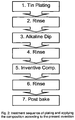
- aqueous compositions according to the present invention are usually applied during a process sequence as shown in Figure 2 .
- Plating preferably with tin or a tin alloy is by standard methods known in the art and for example described in Metal Finishing, Guidebook & Directory, 2006, p. 266 - 277 .
- metal plating can be both by electrolytic as well as electroless plating methods.
- Tin or tin alloy plating is preferred, but also zinc, aluminium, iron or copper plating may be employed.
- a typical tin plating bath may include one or more water soluble tin salts such as tin sulfate, tin alkyl sulfonates such as tin sulfonate, tin alkanol sulfonic acid, and tin halides such as tin chloride and tin fluoroborate.
- the bath also includes electrolytes such as sulfuric acid, alkyl sulfonates, alkanol sulfonates and halide salts to provide an electro-conductive matrix.
- Surfactants also may be included as well as other conventional additives to provide a desirable tin layer.
- the amounts of the components are conventional and are well known in the art and may be obtained from the literature.
- the plating step 1. often is in an acidic plating bath followed by a rinse step 2. with demineralised water and neutralisation step 3. applying an alkaline solution in case the plating bath is acidic and vice versa.
- the plated surface is again rinsed with demineralised water and then treated in step 5. with a solution according to the present invention.
- the substrate is immersed into the solution.
- spraying or dipping is also possible.
- the treatment time can vary between 1 s and 10 minutes, preferably the contact time is at least 5 s and does not exceed 60 s.
- the solutions are at temperatures of 15°C to 60°C, preferably from 20°C to 40°C.
- the metals and metal alloys may then be optionally rinsed with water to remove any excess oxide inhibiting composition.
- a post bake step may follow the treatment and rinse step by heating the substrate to a temperature between 100 and 200°C and a time of 30 and 120 minutes. This step is particularly preferred if the substrate is a lead frame.
- the post baking further reduces the whisker formation.
- a reflow process may follow the treatment and rinse step. Any suitable reflow process may be used. Reflow may be by heating by vapor phase reflow, laser reflow, plasma, oven melting, and passing an electrical current through the metals and metal alloys, or by any other method of heating the metals and metal alloys above their melting temperature.
- solderability of surfaces treated with solutions according to the present invention have been tested in accordance with the International Standard IEC 68-2-20 (edition 1979).
- three multi rectangular leads (width: 0.62 mm, thickness 0.62 mm) are being used.
- the leads are suspended from a sensitive balance.
- the termination is brought into contact with the cleaned surface of a solder bath and immersed to the prescribed depth.
- the flux applied is non-activated R-type (Rosin) from Multicore based on 25% colophonium in isopropanol and in accordance with the Standard. The tests are performed after 8 and 16 hours. Additionally to the test described in the Standard IEC 68-2-20 the leads are treated in a pressure cooker at a temperature of 105°C at high humidity (100%) and a pressure of 1.192 atm for 8, 16 and 24 hours to simulate very harsh aging conditions.
- the substrate to be plated is a lead, (width: 0.62 mm, thickness 0.62 mm), having a copper surface.
- the copper surface is plated with tin using a commercially available immersion tin plating bath (Stannopure HSM-HT, Atotech GmbH) consisting of tin methanesulfonic acid (70 g/l tin), 200 g/l methanesulfonic acid, wetting agent and grain refiner.
- the bath temperature is 40°C, the current density 10 A/dm 2 , the plating time 2.0 min and the coat thickness (Sn) 10 ⁇ m.
- step 5 is omitted.
- the alkaline dip (step 4) is carried out in a solution containing 10 g/l potassium phosphate, K 3 PO 4 , at room temperature for 15 s. Post baking is at 150°C for 1 hour.
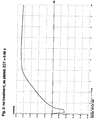
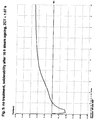
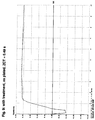
- solderability test results according to IEC 68-2-20 after 8 and 16 hours as well as the test in a pressure cooker at a temperature of 105°C at high humidity (100%) and a pressure of 1.192 atm for 8, 16 and 24 hours to simulate very harsh aging conditions are shown in Table 1 and in the figures 3 - 8 .
- the graphs represent an average value obtained from ten measurements for each test.
- the alkaline dip (step 4) is carried out in a solution containing 10 g/l potassium phosphate, K 3 PO 4 , at room temperature for 15 s.
- the inventive composition according to step 5 of Figure 2 is an aqueous solution containing 5 g/l ⁇ , ⁇ ', ⁇ "-1,2,3,-Propanetriyltris[ ⁇ -hydroxypoly(oxy-1,2-ethandiyl)], CAS No. 31694-55-0 and 1 g/l n-octylphosphonic acid at room temperature for 15 s.
- Post baking is at 150°C for 1 hour.
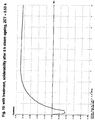
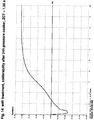
- solderability test results according to IEC 68-2-20 after 8 and 16 hours as well as the test in a pressure cooker at a temperature of 105°C at high humidity (100%) and a pressure of 1.192 atm for 8, 16 and 24 hours to simulate very harsh aging conditions are shown in Table 1 and in the figures 9 - 13 .
- the graphs represent an average value obtained from ten measurements for each test.
- the resulting Wetting Force value also is an indicator for the properties of a solderable surface. Generally, the higher the Wetting Force the better the solderability of a surface. Ideally, the Wetting Force remains constant for all test performed. A Wetting Force of 0 indicates that no wetting occurs.
- Table 1 Zero Crossing Time (ZCR) and Wetting Force values in mN/mm for the steam test performed on tin surfaces according to Examples 1 (comparative) and Example 2. Aging Test ZCT / s Wetting Force / N/mm Example 1
- Example 2 Example 1
- Example 2 As plated 0.7 0.5 0.44 0.42 8 steam 0.8 0.5 0.53 0.44 16 steam 1.1 0.7 0.21 0.44 8 pressure 4.0 1.3 0.02 0.43 16 pressure 6.2 1.3 0 0.40 24 pressure ⁇ 1.4 0 0.39
- tin surfaces treated with a composition of the present invention show Zero Crossing Times of less than 1.5 seconds after all tests. Also the Wetting Force remains almost the same and constantly high even after severe treatment conditions. The Wetting Force is measured after 5 seconds to be able to compare the forces. Particularly the pressure cooker test for 24 hours represents very harsh conditions. According to comparative Example 1 no treatment of the tin plated surface is performed. The Zero Crossing Time exceeds the critical value of 3 seconds in the pressure cooker even with the lowest time already (4.0 s). The Wetting Force drops to less than half of the original value after 16 hours of steam treatment already and is almost zero after steam cooker treatment.
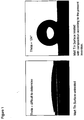
- Figure 1 shows the water repellent effect of a solution according to Example 2 on a lead frame compared to an untreated sample.
- the contact angle theta of water on freshly plated matt tin deposits, non treated and treated with the composition according to the present invention had been determined by Drop Shape Analysis (DSA) with a Krüss DSA10 Mk2.
- DSA Drop Shape Analysis
- the contact angle for the lead treated according to example 1 of 124° indicates an excellent wettability.
- leads of Example 1 show almost no wettability.
Landscapes
- Chemical & Material Sciences (AREA)
- Engineering & Computer Science (AREA)
- Materials Engineering (AREA)
- Mechanical Engineering (AREA)
- Metallurgy (AREA)
- Organic Chemistry (AREA)
- General Chemical & Material Sciences (AREA)
- Chemical Kinetics & Catalysis (AREA)
- Manufacturing & Machinery (AREA)
- Microelectronics & Electronic Packaging (AREA)
- Chemical Treatment Of Metals (AREA)
- Preventing Corrosion Or Incrustation Of Metals (AREA)
- Electroplating Methods And Accessories (AREA)
- Non-Metallic Protective Coatings For Printed Circuits (AREA)
- Electric Connection Of Electric Components To Printed Circuits (AREA)
- Other Surface Treatments For Metallic Materials (AREA)
Claims (9)
- Solution aqueuse destinée au traitement d'une surface métallique comprenant(a) au moins un composé phosphoré ou son sel répondant à la formule suivante
 (b) au moins un composé améliorant l'aptitude au soudage ou son sel répondant aux formules suivantes


- Solution aqueuse selon l'une quelconque des revendications précédentes, où l'au moins un compose phosphoré (a) répondant à la formule I. est utilisé à une teneur comprise entre 0,0001 et 0,05 mol/l.
- Solution aqueuse selon l'une quelconque des revendications précédentes, où l'au moins un composé améliorant l'aptitude au soudage (b) est utilisé à une teneur comprise entre 0,0001 et 0,1 mol/l.
- Solution aqueuse selon l'une quelconque des revendications précédentes, où la valeur du pH est comprise entre 2 et 5.
- Solution aqueuse selon l'une quelconque des revendications précédentes, contenant un système tampon choisi dans le groupe constitué par les suivants : acide formique/formiate, acide tartrique/tartrate, acide citrique/citrate, acide acétique/acétate et acide oxalique/oxalate.
- Procédé d'amélioration de l'aptitude au soudage et de la résistance à la corrosion d'un substrat comportant une surface en étain ou en alliage d'étain par mise en contact de la surface avec une solution aqueuse selon l'une quelconque des revendications précédentes.
- Procédé selon la revendication 6, comprenant en outre la refusion de la surface d'étain ou d'alliage d'étain du substrat après traitement par la solution aqueuse.
- Substrat comportant une surface d'étain ou d'alliage d'étain traitée par la solution aqueuse selon l'une quelconque des revendications 1 à 7.
- Substrat selon la revendication 8, où le substrat est une marchandise semi-finie plaquée étain telle qu'une plaque d'étain, un fil d'étain ou une grille de connexion, un connecteur ou un circuit imprimé.
Priority Applications (8)
| Application Number | Priority Date | Filing Date | Title |
|---|---|---|---|
| EP07013447.3A EP2014798B1 (fr) | 2007-07-10 | 2007-07-10 | Solution et processus pour augmenter la soudabilité et la résistance à la corrosion du métal ou de la surface d'un alliage métallique |
| ES07013447.3T ES2574561T3 (es) | 2007-07-10 | 2007-07-10 | Solución y proceso para incrementar la capacidad de soldadura y la resistencia a la corrosión de la superficie de un metal o de una aleación metálica |
| KR1020097027312A KR101652520B1 (ko) | 2007-07-10 | 2008-07-10 | 금속 또는 금속 합금 표면의 납땜성 및 부식방지 향상을 위한 용액 및 향상 방법 |
| PCT/EP2008/005650 WO2009007122A1 (fr) | 2007-07-10 | 2008-07-10 | Solution et procédé permettant d'augmenter l'aptitude au brasage et la résistance à la corrosion de surface en métal ou en alliage de métaux |
| MYPI20095629A MY151123A (en) | 2007-07-10 | 2008-07-10 | Solution and process for increasing the solderability and corrosion resistance of metal or metal alloy surface |
| JP2010515418A JP5422558B2 (ja) | 2007-07-10 | 2008-07-10 | 金属又は金属合金表面のはんだ付け性及び耐食性強化溶液および方法 |
| US12/668,127 US8337606B2 (en) | 2007-07-10 | 2008-07-10 | Solution and process for increasing the solderability and corrosion resistance of metal or metal alloy surface |
| CN2008800206401A CN101715494B (zh) | 2007-07-10 | 2008-07-10 | 用于提高金属或金属合金表面可焊性和耐腐蚀性的溶液和方法 |
Applications Claiming Priority (1)
| Application Number | Priority Date | Filing Date | Title |
|---|---|---|---|
| EP07013447.3A EP2014798B1 (fr) | 2007-07-10 | 2007-07-10 | Solution et processus pour augmenter la soudabilité et la résistance à la corrosion du métal ou de la surface d'un alliage métallique |
Publications (2)
| Publication Number | Publication Date |
|---|---|
| EP2014798A1 EP2014798A1 (fr) | 2009-01-14 |
| EP2014798B1 true EP2014798B1 (fr) | 2016-04-13 |
Family
ID=38779914
Family Applications (1)
| Application Number | Title | Priority Date | Filing Date |
|---|---|---|---|
| EP07013447.3A Active EP2014798B1 (fr) | 2007-07-10 | 2007-07-10 | Solution et processus pour augmenter la soudabilité et la résistance à la corrosion du métal ou de la surface d'un alliage métallique |
Country Status (8)
| Country | Link |
|---|---|
| US (1) | US8337606B2 (fr) |
| EP (1) | EP2014798B1 (fr) |
| JP (1) | JP5422558B2 (fr) |
| KR (1) | KR101652520B1 (fr) |
| CN (1) | CN101715494B (fr) |
| ES (1) | ES2574561T3 (fr) |
| MY (1) | MY151123A (fr) |
| WO (1) | WO2009007122A1 (fr) |
Families Citing this family (10)
| Publication number | Priority date | Publication date | Assignee | Title |
|---|---|---|---|---|
| EP2103712B1 (fr) | 2008-03-20 | 2019-02-13 | ATOTECH Deutschland GmbH | Système de couche Ni-P et son processus de préparation |
| KR101650601B1 (ko) * | 2009-01-14 | 2016-08-23 | 아토테크더치랜드게엠베하 | 금속 또는 금속 합금 표면의 납땜성 및 내식성을 증가시키기 위한 용액 및 방법 |
| EP2405469B1 (fr) | 2010-07-05 | 2016-09-21 | ATOTECH Deutschland GmbH | Procédé pour la formation de dépôts d'alliage de soudure sur des substrats |
| CN102168272B (zh) * | 2011-03-22 | 2012-12-26 | 中国石油集团工程设计有限责任公司 | 一种用于酸性油气田的缓蚀剂 |
| JP6063644B2 (ja) * | 2012-05-24 | 2017-01-18 | 昭和電工株式会社 | ろう付け用アルミニウム材の製造方法 |
| CN103668147B (zh) * | 2012-09-26 | 2018-03-23 | 广州天至环保科技有限公司 | 一种能提高锡及其合金镀层综合性能的无铬水性保护剂 |
| EP2784180B1 (fr) * | 2013-03-25 | 2015-12-30 | ATOTECH Deutschland GmbH | Procédé d'activation d'une surface de cuivre pour dépôt anélectrolytique |
| MY192687A (en) | 2016-10-24 | 2022-09-01 | Atotech Deutschland Gmbh | A method of depositing a tin layer on a metal substrate and a use of a structure comprising a nickel/phosphorous alloy underlayer and said tin layer with said method |
| JP7270968B2 (ja) * | 2019-05-21 | 2023-05-11 | オリエンタル鍍金株式会社 | めっき積層体の製造方法及びめっき積層体 |
| US20250207265A1 (en) * | 2022-03-24 | 2025-06-26 | Mitsubishi Gas Chemical Company, Inc. | Composition for protecting copper surface, and method for producing semiconductor intermediate and semiconductor using same |
Family Cites Families (23)
| Publication number | Priority date | Publication date | Assignee | Title |
|---|---|---|---|---|
| DK130747A (fr) * | 1968-08-08 | |||
| US3630790A (en) * | 1969-05-13 | 1971-12-28 | Dow Chemical Co | Method of protection of metal surfaces from corrosion |
| DE2217692C3 (de) * | 1972-04-13 | 1984-10-18 | Henkel KGaA, 4000 Düsseldorf | Komplexbildner mit mehrwertigen Metallionen |
| JPS51101098A (ja) * | 1975-03-04 | 1976-09-07 | Asahi Denka Kogyo Kk | Horiokishiarukirenhoriooruno seiseiho |
| DE2841641C2 (de) * | 1978-09-25 | 1986-07-03 | Henkel KGaA, 4000 Düsseldorf | Verwendung von Alkylmonophosphonsäuren als Korrosionsinhibitoren |
| JPS57123997A (en) * | 1981-01-26 | 1982-08-02 | Furukawa Electric Co Ltd:The | Surface treatment of tin or tin alloy plated material |
| DE3139072A1 (de) * | 1981-10-01 | 1983-04-14 | Hoechst Ag, 6230 Frankfurt | Verfahren zur stabilisierung von ethylenoxidpolyethern |
| US4405663A (en) * | 1982-03-29 | 1983-09-20 | Republic Steel Corporation | Tin plating bath composition and process |
| DE3340033A1 (de) * | 1983-11-05 | 1985-05-15 | Henkel KGaA, 4000 Düsseldorf | Verfahren zur herstellung eines waeschebehandlungsmittels |
| CN87103732A (zh) * | 1987-05-25 | 1988-12-14 | 北京无线电仪器二厂 | 锡铈钴电镀液及其配制方法 |
| JP2667052B2 (ja) * | 1990-07-02 | 1997-10-22 | オリン コーポレイション | 耐変色処理後の銅箔の洗浄 |
| NZ239522A (en) * | 1990-09-04 | 1993-10-26 | Chapman Chem Co | Pesticidal compositions containing an amine salt of a phosphonic or orthophosphoric acid |
| US5106454A (en) | 1990-11-01 | 1992-04-21 | Shipley Company Inc. | Process for multilayer printed circuit board manufacture |
| CN2155126Y (zh) * | 1993-03-13 | 1994-02-02 | 张鹏志 | 一种新型印制电路板 |
| DE4441710A1 (de) * | 1994-11-23 | 1996-05-30 | Henkel Kgaa | Korrosionsschutz und Reibungsverminderung von Metalloberflächen |
| WO1997018905A1 (fr) | 1995-11-20 | 1997-05-29 | Berg Technology, Inc. | Procede permettant de conferer une protection anticorrosion |
| GB9725898D0 (en) * | 1997-12-08 | 1998-02-04 | Albright & Wilson | Process for treating metal surfaces |
| EP1221497A3 (fr) * | 1998-06-19 | 2003-12-03 | Alcoa Inc. | Procédé d'inhibition de tâches à la surface de produits en aluminium |
| JP4609607B2 (ja) * | 1999-09-06 | 2011-01-12 | 日本ケミコン株式会社 | 電解コンデンサ用電解液 |
| US20060289833A1 (en) * | 2004-05-03 | 2006-12-28 | Basf Atkiengesellschaft | Esters of phosphorus-oxygen acids, these esters comprising alkoxy groups, and their use as corrosion inhibitors and flameproofing agents |
| KR20070030845A (ko) * | 2004-06-03 | 2007-03-16 | 엔쏜 인코포레이티드 | 주석 표면의 내부식성 증강 방법 |
| US20050268991A1 (en) | 2004-06-03 | 2005-12-08 | Enthone Inc. | Corrosion resistance enhancement of tin surfaces |
| GB0507887D0 (en) | 2005-04-20 | 2005-05-25 | Rohm & Haas Elect Mat | Immersion method |
-
2007
- 2007-07-10 EP EP07013447.3A patent/EP2014798B1/fr active Active
- 2007-07-10 ES ES07013447.3T patent/ES2574561T3/es active Active
-
2008
- 2008-07-10 US US12/668,127 patent/US8337606B2/en active Active
- 2008-07-10 KR KR1020097027312A patent/KR101652520B1/ko active Active
- 2008-07-10 MY MYPI20095629A patent/MY151123A/en unknown
- 2008-07-10 JP JP2010515418A patent/JP5422558B2/ja active Active
- 2008-07-10 WO PCT/EP2008/005650 patent/WO2009007122A1/fr not_active Ceased
- 2008-07-10 CN CN2008800206401A patent/CN101715494B/zh active Active
Non-Patent Citations (1)
| Title |
|---|
| None * |
Also Published As
| Publication number | Publication date |
|---|---|
| US8337606B2 (en) | 2012-12-25 |
| CN101715494A (zh) | 2010-05-26 |
| KR20100038318A (ko) | 2010-04-14 |
| US20100196727A1 (en) | 2010-08-05 |
| CN101715494B (zh) | 2012-10-17 |
| MY151123A (en) | 2014-04-30 |
| JP5422558B2 (ja) | 2014-02-19 |
| KR101652520B1 (ko) | 2016-08-30 |
| EP2014798A1 (fr) | 2009-01-14 |
| JP2010532824A (ja) | 2010-10-14 |
| WO2009007122A1 (fr) | 2009-01-15 |
| ES2574561T3 (es) | 2016-06-20 |
Similar Documents
| Publication | Publication Date | Title |
|---|---|---|
| US8337606B2 (en) | Solution and process for increasing the solderability and corrosion resistance of metal or metal alloy surface | |
| KR100556679B1 (ko) | 구리 기판의 선택적 침착방법 | |
| KR101298780B1 (ko) | 전자제품에 은도금 | |
| JPH08255968A (ja) | プリント回路板の製造 | |
| KR100964063B1 (ko) | 주석 및 주석 합금의 수계 산화 방지제 | |
| JPH08232072A (ja) | 銀めっき | |
| US6200451B1 (en) | Method for enhancing the solderability of a surface | |
| EP2376678B1 (fr) | Solution et procédé permettant d'améliorer la soudabilité et la résistance à la corrosion d'une surface en métal ou en alliage métallique | |
| US20050268991A1 (en) | Corrosion resistance enhancement of tin surfaces | |
| EP2411559B1 (fr) | Revêtements polymères organiques pour une protection contre le fluage et la corrosion | |
| JPH09293954A (ja) | 銅または銅合金表面の処理剤 | |
| KR100802878B1 (ko) | 금속의 표면처리제, 표면처리방법 및 그 이용 | |
| CN101405363B (zh) | 用于有机可焊性保护剂的预涂层组合物 | |
| US7267259B2 (en) | Method for enhancing the solderability of a surface | |
| EP1029944B1 (fr) | Procédé pour améliorer la soudabilité d'une surface | |
| US6090493A (en) | Bismuth coating protection for copper | |
| JPH07188942A (ja) | 耐酸化性に優れたすずまたはすず合金めっき材およびその製造方法 | |
| JP5697641B2 (ja) | SnおよびSn合金に対する表面処理剤 |
Legal Events
| Date | Code | Title | Description |
|---|---|---|---|
| PUAI | Public reference made under article 153(3) epc to a published international application that has entered the european phase |
Free format text: ORIGINAL CODE: 0009012 |
|
| AK | Designated contracting states |
Kind code of ref document: A1 Designated state(s): AT BE BG CH CY CZ DE DK EE ES FI FR GB GR HU IE IS IT LI LT LU LV MC MT NL PL PT RO SE SI SK TR |
|
| AX | Request for extension of the european patent |
Extension state: AL BA HR MK RS |
|
| 17P | Request for examination filed |
Effective date: 20090706 |
|
| AKX | Designation fees paid | ||
| RBV | Designated contracting states (corrected) |
Designated state(s): AT BE BG CH CY CZ DE DK EE ES FI FR GB GR HU IE IS IT LI LT LU LV MC MT NL PL PT RO SE SI SK TR |
|
| 17Q | First examination report despatched |
Effective date: 20100225 |
|
| RAP1 | Party data changed (applicant data changed or rights of an application transferred) |
Owner name: ATOTECH DEUTSCHLAND GMBH |
|
| GRAP | Despatch of communication of intention to grant a patent |
Free format text: ORIGINAL CODE: EPIDOSNIGR1 |
|
| INTG | Intention to grant announced |
Effective date: 20151015 |
|
| GRAS | Grant fee paid |
Free format text: ORIGINAL CODE: EPIDOSNIGR3 |
|
| GRAA | (expected) grant |
Free format text: ORIGINAL CODE: 0009210 |
|
| INTG | Intention to grant announced |
Effective date: 20160216 |
|
| AK | Designated contracting states |
Kind code of ref document: B1 Designated state(s): AT BE BG CH CY CZ DE DK EE ES FI FR GB GR HU IE IS IT LI LT LU LV MC MT NL PL PT RO SE SI SK TR |
|
| REG | Reference to a national code |
Ref country code: GB Ref legal event code: FG4D |
|
| REG | Reference to a national code |
Ref country code: AT Ref legal event code: REF Ref document number: 790260 Country of ref document: AT Kind code of ref document: T Effective date: 20160415 Ref country code: CH Ref legal event code: EP |
|
| REG | Reference to a national code |
Ref country code: IE Ref legal event code: FG4D |
|
| REG | Reference to a national code |
Ref country code: DE Ref legal event code: R096 Ref document number: 602007045731 Country of ref document: DE |
|
| REG | Reference to a national code |
Ref country code: ES Ref legal event code: FG2A Ref document number: 2574561 Country of ref document: ES Kind code of ref document: T3 Effective date: 20160620 |
|
| REG | Reference to a national code |
Ref country code: FR Ref legal event code: PLFP Year of fee payment: 10 |
|
| REG | Reference to a national code |
Ref country code: LT Ref legal event code: MG4D |
|
| REG | Reference to a national code |
Ref country code: AT Ref legal event code: MK05 Ref document number: 790260 Country of ref document: AT Kind code of ref document: T Effective date: 20160413 |
|
| REG | Reference to a national code |
Ref country code: NL Ref legal event code: MP Effective date: 20160413 |
|
| PG25 | Lapsed in a contracting state [announced via postgrant information from national office to epo] |
Ref country code: NL Free format text: LAPSE BECAUSE OF FAILURE TO SUBMIT A TRANSLATION OF THE DESCRIPTION OR TO PAY THE FEE WITHIN THE PRESCRIBED TIME-LIMIT Effective date: 20160413 Ref country code: LT Free format text: LAPSE BECAUSE OF FAILURE TO SUBMIT A TRANSLATION OF THE DESCRIPTION OR TO PAY THE FEE WITHIN THE PRESCRIBED TIME-LIMIT Effective date: 20160413 Ref country code: FI Free format text: LAPSE BECAUSE OF FAILURE TO SUBMIT A TRANSLATION OF THE DESCRIPTION OR TO PAY THE FEE WITHIN THE PRESCRIBED TIME-LIMIT Effective date: 20160413 Ref country code: PL Free format text: LAPSE BECAUSE OF FAILURE TO SUBMIT A TRANSLATION OF THE DESCRIPTION OR TO PAY THE FEE WITHIN THE PRESCRIBED TIME-LIMIT Effective date: 20160413 |
|
| PG25 | Lapsed in a contracting state [announced via postgrant information from national office to epo] |
Ref country code: LV Free format text: LAPSE BECAUSE OF FAILURE TO SUBMIT A TRANSLATION OF THE DESCRIPTION OR TO PAY THE FEE WITHIN THE PRESCRIBED TIME-LIMIT Effective date: 20160413 Ref country code: GR Free format text: LAPSE BECAUSE OF FAILURE TO SUBMIT A TRANSLATION OF THE DESCRIPTION OR TO PAY THE FEE WITHIN THE PRESCRIBED TIME-LIMIT Effective date: 20160714 Ref country code: SE Free format text: LAPSE BECAUSE OF FAILURE TO SUBMIT A TRANSLATION OF THE DESCRIPTION OR TO PAY THE FEE WITHIN THE PRESCRIBED TIME-LIMIT Effective date: 20160413 Ref country code: AT Free format text: LAPSE BECAUSE OF FAILURE TO SUBMIT A TRANSLATION OF THE DESCRIPTION OR TO PAY THE FEE WITHIN THE PRESCRIBED TIME-LIMIT Effective date: 20160413 Ref country code: PT Free format text: LAPSE BECAUSE OF FAILURE TO SUBMIT A TRANSLATION OF THE DESCRIPTION OR TO PAY THE FEE WITHIN THE PRESCRIBED TIME-LIMIT Effective date: 20160816 |
|
| PG25 | Lapsed in a contracting state [announced via postgrant information from national office to epo] |
Ref country code: BE Free format text: LAPSE BECAUSE OF FAILURE TO SUBMIT A TRANSLATION OF THE DESCRIPTION OR TO PAY THE FEE WITHIN THE PRESCRIBED TIME-LIMIT Effective date: 20160413 |
|
| REG | Reference to a national code |
Ref country code: DE Ref legal event code: R097 Ref document number: 602007045731 Country of ref document: DE |
|
| PG25 | Lapsed in a contracting state [announced via postgrant information from national office to epo] |
Ref country code: DK Free format text: LAPSE BECAUSE OF FAILURE TO SUBMIT A TRANSLATION OF THE DESCRIPTION OR TO PAY THE FEE WITHIN THE PRESCRIBED TIME-LIMIT Effective date: 20160413 Ref country code: CZ Free format text: LAPSE BECAUSE OF FAILURE TO SUBMIT A TRANSLATION OF THE DESCRIPTION OR TO PAY THE FEE WITHIN THE PRESCRIBED TIME-LIMIT Effective date: 20160413 Ref country code: EE Free format text: LAPSE BECAUSE OF FAILURE TO SUBMIT A TRANSLATION OF THE DESCRIPTION OR TO PAY THE FEE WITHIN THE PRESCRIBED TIME-LIMIT Effective date: 20160413 Ref country code: SK Free format text: LAPSE BECAUSE OF FAILURE TO SUBMIT A TRANSLATION OF THE DESCRIPTION OR TO PAY THE FEE WITHIN THE PRESCRIBED TIME-LIMIT Effective date: 20160413 Ref country code: RO Free format text: LAPSE BECAUSE OF FAILURE TO SUBMIT A TRANSLATION OF THE DESCRIPTION OR TO PAY THE FEE WITHIN THE PRESCRIBED TIME-LIMIT Effective date: 20160413 |
|
| PLBE | No opposition filed within time limit |
Free format text: ORIGINAL CODE: 0009261 |
|
| STAA | Information on the status of an ep patent application or granted ep patent |
Free format text: STATUS: NO OPPOSITION FILED WITHIN TIME LIMIT |
|
| REG | Reference to a national code |
Ref country code: CH Ref legal event code: PL |
|
| 26N | No opposition filed |
Effective date: 20170116 |
|
| GBPC | Gb: european patent ceased through non-payment of renewal fee |
Effective date: 20160713 |
|
| PG25 | Lapsed in a contracting state [announced via postgrant information from national office to epo] |
Ref country code: MC Free format text: LAPSE BECAUSE OF FAILURE TO SUBMIT A TRANSLATION OF THE DESCRIPTION OR TO PAY THE FEE WITHIN THE PRESCRIBED TIME-LIMIT Effective date: 20160413 |
|
| PG25 | Lapsed in a contracting state [announced via postgrant information from national office to epo] |
Ref country code: CH Free format text: LAPSE BECAUSE OF NON-PAYMENT OF DUE FEES Effective date: 20160731 Ref country code: LI Free format text: LAPSE BECAUSE OF NON-PAYMENT OF DUE FEES Effective date: 20160731 |
|
| REG | Reference to a national code |
Ref country code: IE Ref legal event code: MM4A |
|
| PG25 | Lapsed in a contracting state [announced via postgrant information from national office to epo] |
Ref country code: SI Free format text: LAPSE BECAUSE OF FAILURE TO SUBMIT A TRANSLATION OF THE DESCRIPTION OR TO PAY THE FEE WITHIN THE PRESCRIBED TIME-LIMIT Effective date: 20160413 Ref country code: GB Free format text: LAPSE BECAUSE OF NON-PAYMENT OF DUE FEES Effective date: 20160713 |
|
| REG | Reference to a national code |
Ref country code: FR Ref legal event code: PLFP Year of fee payment: 11 |
|
| PG25 | Lapsed in a contracting state [announced via postgrant information from national office to epo] |
Ref country code: IE Free format text: LAPSE BECAUSE OF NON-PAYMENT OF DUE FEES Effective date: 20160710 |
|
| PG25 | Lapsed in a contracting state [announced via postgrant information from national office to epo] |
Ref country code: LU Free format text: LAPSE BECAUSE OF NON-PAYMENT OF DUE FEES Effective date: 20160710 |
|
| PG25 | Lapsed in a contracting state [announced via postgrant information from national office to epo] |
Ref country code: HU Free format text: LAPSE BECAUSE OF FAILURE TO SUBMIT A TRANSLATION OF THE DESCRIPTION OR TO PAY THE FEE WITHIN THE PRESCRIBED TIME-LIMIT; INVALID AB INITIO Effective date: 20070710 Ref country code: CY Free format text: LAPSE BECAUSE OF FAILURE TO SUBMIT A TRANSLATION OF THE DESCRIPTION OR TO PAY THE FEE WITHIN THE PRESCRIBED TIME-LIMIT Effective date: 20160413 |
|
| PG25 | Lapsed in a contracting state [announced via postgrant information from national office to epo] |
Ref country code: TR Free format text: LAPSE BECAUSE OF FAILURE TO SUBMIT A TRANSLATION OF THE DESCRIPTION OR TO PAY THE FEE WITHIN THE PRESCRIBED TIME-LIMIT Effective date: 20160413 Ref country code: MT Free format text: LAPSE BECAUSE OF NON-PAYMENT OF DUE FEES Effective date: 20160731 Ref country code: IS Free format text: LAPSE BECAUSE OF FAILURE TO SUBMIT A TRANSLATION OF THE DESCRIPTION OR TO PAY THE FEE WITHIN THE PRESCRIBED TIME-LIMIT Effective date: 20160413 |
|
| REG | Reference to a national code |
Ref country code: FR Ref legal event code: PLFP Year of fee payment: 12 |
|
| PG25 | Lapsed in a contracting state [announced via postgrant information from national office to epo] |
Ref country code: BG Free format text: LAPSE BECAUSE OF FAILURE TO SUBMIT A TRANSLATION OF THE DESCRIPTION OR TO PAY THE FEE WITHIN THE PRESCRIBED TIME-LIMIT Effective date: 20160413 |
|
| PGFP | Annual fee paid to national office [announced via postgrant information from national office to epo] |
Ref country code: ES Payment date: 20250812 Year of fee payment: 19 |
|
| PGFP | Annual fee paid to national office [announced via postgrant information from national office to epo] |
Ref country code: DE Payment date: 20250728 Year of fee payment: 19 |
|
| PGFP | Annual fee paid to national office [announced via postgrant information from national office to epo] |
Ref country code: IT Payment date: 20250721 Year of fee payment: 19 |
|
| PGFP | Annual fee paid to national office [announced via postgrant information from national office to epo] |
Ref country code: FR Payment date: 20250725 Year of fee payment: 19 |