EP2016952A2 - Procédé de traitement d'une tumeur chez un sujet et composition pharmaceutique l'utilisant - Google Patents
Procédé de traitement d'une tumeur chez un sujet et composition pharmaceutique l'utilisant Download PDFInfo
- Publication number
- EP2016952A2 EP2016952A2 EP08018165A EP08018165A EP2016952A2 EP 2016952 A2 EP2016952 A2 EP 2016952A2 EP 08018165 A EP08018165 A EP 08018165A EP 08018165 A EP08018165 A EP 08018165A EP 2016952 A2 EP2016952 A2 EP 2016952A2
- Authority
- EP
- European Patent Office
- Prior art keywords
- cells
- virus
- abnormal
- melanoma
- adhesion molecule
- Prior art date
- Legal status (The legal status is an assumption and is not a legal conclusion. Google has not performed a legal analysis and makes no representation as to the accuracy of the status listed.)
- Granted
Links
Images




Classifications
-
- A—HUMAN NECESSITIES
- A61—MEDICAL OR VETERINARY SCIENCE; HYGIENE
- A61K—PREPARATIONS FOR MEDICAL, DENTAL OR TOILETRY PURPOSES
- A61K35/00—Medicinal preparations containing materials or reaction products thereof with undetermined constitution
- A61K35/66—Microorganisms or materials therefrom
- A61K35/76—Viruses; Subviral particles; Bacteriophages
- A61K35/768—Oncolytic viruses not provided for in groups A61K35/761 - A61K35/766
-
- A—HUMAN NECESSITIES
- A61—MEDICAL OR VETERINARY SCIENCE; HYGIENE
- A61K—PREPARATIONS FOR MEDICAL, DENTAL OR TOILETRY PURPOSES
- A61K9/00—Medicinal preparations characterised by special physical form
- A61K9/0012—Galenical forms characterised by the site of application
- A61K9/0019—Injectable compositions; Intramuscular, intravenous, arterial, subcutaneous administration; Compositions to be administered through the skin in an invasive manner
-
- A—HUMAN NECESSITIES
- A61—MEDICAL OR VETERINARY SCIENCE; HYGIENE
- A61P—SPECIFIC THERAPEUTIC ACTIVITY OF CHEMICAL COMPOUNDS OR MEDICINAL PREPARATIONS
- A61P35/00—Antineoplastic agents
-
- A—HUMAN NECESSITIES
- A61—MEDICAL OR VETERINARY SCIENCE; HYGIENE
- A61P—SPECIFIC THERAPEUTIC ACTIVITY OF CHEMICAL COMPOUNDS OR MEDICINAL PREPARATIONS
- A61P35/00—Antineoplastic agents
- A61P35/04—Antineoplastic agents specific for metastasis
-
- C—CHEMISTRY; METALLURGY
- C12—BIOCHEMISTRY; BEER; SPIRITS; WINE; VINEGAR; MICROBIOLOGY; ENZYMOLOGY; MUTATION OR GENETIC ENGINEERING
- C12N—MICROORGANISMS OR ENZYMES; COMPOSITIONS THEREOF; PROPAGATING, PRESERVING, OR MAINTAINING MICROORGANISMS; MUTATION OR GENETIC ENGINEERING; CULTURE MEDIA
- C12N7/00—Viruses; Bacteriophages; Compositions thereof; Preparation or purification thereof
-
- C—CHEMISTRY; METALLURGY
- C12—BIOCHEMISTRY; BEER; SPIRITS; WINE; VINEGAR; MICROBIOLOGY; ENZYMOLOGY; MUTATION OR GENETIC ENGINEERING
- C12Q—MEASURING OR TESTING PROCESSES INVOLVING ENZYMES, NUCLEIC ACIDS OR MICROORGANISMS; COMPOSITIONS OR TEST PAPERS THEREFOR; PROCESSES OF PREPARING SUCH COMPOSITIONS; CONDITION-RESPONSIVE CONTROL IN MICROBIOLOGICAL OR ENZYMOLOGICAL PROCESSES
- C12Q1/00—Measuring or testing processes involving enzymes, nucleic acids or microorganisms; Compositions therefor; Processes of preparing such compositions
- C12Q1/02—Measuring or testing processes involving enzymes, nucleic acids or microorganisms; Compositions therefor; Processes of preparing such compositions involving viable microorganisms
- C12Q1/025—Measuring or testing processes involving enzymes, nucleic acids or microorganisms; Compositions therefor; Processes of preparing such compositions involving viable microorganisms for testing or evaluating the effect of chemical or biological compounds, e.g. drugs, cosmetics
-
- G—PHYSICS
- G01—MEASURING; TESTING
- G01N—INVESTIGATING OR ANALYSING MATERIALS BY DETERMINING THEIR CHEMICAL OR PHYSICAL PROPERTIES
- G01N33/00—Investigating or analysing materials by specific methods not covered by groups G01N1/00 - G01N31/00
- G01N33/48—Biological material, e.g. blood, urine; Haemocytometers
- G01N33/50—Chemical analysis of biological material, e.g. blood, urine; Testing involving biospecific ligand binding methods; Immunological testing
- G01N33/5005—Chemical analysis of biological material, e.g. blood, urine; Testing involving biospecific ligand binding methods; Immunological testing involving human or animal cells
- G01N33/5008—Chemical analysis of biological material, e.g. blood, urine; Testing involving biospecific ligand binding methods; Immunological testing involving human or animal cells for testing or evaluating the effect of chemical or biological compounds, e.g. drugs, cosmetics
- G01N33/5011—Chemical analysis of biological material, e.g. blood, urine; Testing involving biospecific ligand binding methods; Immunological testing involving human or animal cells for testing or evaluating the effect of chemical or biological compounds, e.g. drugs, cosmetics for testing antineoplastic activity
-
- C—CHEMISTRY; METALLURGY
- C12—BIOCHEMISTRY; BEER; SPIRITS; WINE; VINEGAR; MICROBIOLOGY; ENZYMOLOGY; MUTATION OR GENETIC ENGINEERING
- C12N—MICROORGANISMS OR ENZYMES; COMPOSITIONS THEREOF; PROPAGATING, PRESERVING, OR MAINTAINING MICROORGANISMS; MUTATION OR GENETIC ENGINEERING; CULTURE MEDIA
- C12N2770/00—MICROORGANISMS OR ENZYMES; COMPOSITIONS THEREOF; PROPAGATING, PRESERVING, OR MAINTAINING MICROORGANISMS; MUTATION OR GENETIC ENGINEERING; CULTURE MEDIA ssRNA viruses positive-sense
- C12N2770/00011—Details
- C12N2770/32011—Picornaviridae
- C12N2770/32311—Enterovirus
- C12N2770/32332—Use of virus as therapeutic agent, other than vaccine, e.g. as cytolytic agent
-
- C—CHEMISTRY; METALLURGY
- C12—BIOCHEMISTRY; BEER; SPIRITS; WINE; VINEGAR; MICROBIOLOGY; ENZYMOLOGY; MUTATION OR GENETIC ENGINEERING
- C12N—MICROORGANISMS OR ENZYMES; COMPOSITIONS THEREOF; PROPAGATING, PRESERVING, OR MAINTAINING MICROORGANISMS; MUTATION OR GENETIC ENGINEERING; CULTURE MEDIA
- C12N2770/00—MICROORGANISMS OR ENZYMES; COMPOSITIONS THEREOF; PROPAGATING, PRESERVING, OR MAINTAINING MICROORGANISMS; MUTATION OR GENETIC ENGINEERING; CULTURE MEDIA ssRNA viruses positive-sense
- C12N2770/00011—Details
- C12N2770/32011—Picornaviridae
- C12N2770/32311—Enterovirus
- C12N2770/32333—Use of viral protein as therapeutic agent other than vaccine, e.g. apoptosis inducing or anti-inflammatory
-
- C—CHEMISTRY; METALLURGY
- C12—BIOCHEMISTRY; BEER; SPIRITS; WINE; VINEGAR; MICROBIOLOGY; ENZYMOLOGY; MUTATION OR GENETIC ENGINEERING
- C12N—MICROORGANISMS OR ENZYMES; COMPOSITIONS THEREOF; PROPAGATING, PRESERVING, OR MAINTAINING MICROORGANISMS; MUTATION OR GENETIC ENGINEERING; CULTURE MEDIA
- C12N2770/00—MICROORGANISMS OR ENZYMES; COMPOSITIONS THEREOF; PROPAGATING, PRESERVING, OR MAINTAINING MICROORGANISMS; MUTATION OR GENETIC ENGINEERING; CULTURE MEDIA ssRNA viruses positive-sense
- C12N2770/00011—Details
- C12N2770/32011—Picornaviridae
- C12N2770/32311—Enterovirus
- C12N2770/32371—Demonstrated in vivo effect
Definitions
- the present invention relates to the killing of abnormal cells utilising a virus. There is also described a method of screening cells to ascertain whether they are susceptible to treatment with the virus, as well as pharmaceutical compositions incorporating the virus.
- the invention finds veterinary use as well as broad application in the human medical field.
- Melanoma is a leading cause of morbidity in the human population. Australia has the highest rate of melanoma in the world. Melanoma is an aggressive skin cancer and is the third most common cancer in Australia for both men and women. It is predicted that one in thirty Australians have a form of melanoma resulting in the death of more than one thousand people per year in that country alone. When detected early most forms of melanoma can be effectively treated. However, the control of more advanced forms is less successful and an area of intensive research. A major goal in this area of research is the identification of molecules that are differentially expressed in benign and malignant melanocytic tumours that can be used for diagnosis and as targets for anti-cancer therapies (Kageshita T. et al; 1993).
- Intercellular adhesion molecule-1 (ICAM-1), a crucial molecule in cellular inflammatory interactions, is an accepted melanoma progression antigen.
- ICAM-1 Intercellular adhesion molecule-1
- Surface-expression of ICAM-1 on melanomas has been highly correlated with malignant melanoma progression (Kraus A. et al; 1997 and Morandini R. et al; 1998).
- ICAM-1 is a member of the immunoglobulin (Ig) superfamily and a counter receptor for the integrin leucocyte function antigen-1 (LFA-1/CD11a) and Mac-(CD11b), and is a cellular attachment molecule for 90% of human rhinoviruses (Stuanton D.E., et al; 1989).
- ICAM-1 plays an important role in the pathogenesis of not only rhinovirus infection, but also in Plasmodium falciparum infection and in the exacerbations of asthma, chronic bronchitis and cystic fibrosis.
- complement regulatory proteins have been reported to be up-regulated on the surface of malignant melanomas, in particular decay-accelerating factor known as DAF (Cheung NK et al; 1998).
- Viruses capable of inducing lysis of malignant cells through their replication process are known as oncolytic viruses and trials using oncolytic viruses to treat malignancies have been performed (Nemunaitis J; 1999). Most oncolytic viruses require proliferation in the same species or cell lineage. Infection of a cell by a virus involves attachment and uptake into the cell which leads to or is coincidental with uncoating of the viral capsid, and subsequently replication within the cell ( Fenner F., et al. The Biology of Animal Viruses. Academic Press. New York, 1974 Second Ed .)
- Oncolytic viruses assessed for capacity to kill cancer cells have included the adenovirus subtype Egypt 101 virus which showed oncolytic activity in the HeLa uterine/cervix cancer cell line, mumps virus for treatment of gastric carcinoma, uterine carcinoma and cutaneous carcinoma, Newcastle Disease Virus (NDV), influenza virus for treatment of ovarian cancer, and adenovirus for treatment of for instance, cervical carcinoma (Nemunaitis J; 1999).
- adenoviruses and attenuated poliovirus recombinants may have use in the treatment of malignant glioma cells (Alemany R., et al 1999; Andreansky S.S., 1996), and that reovirus shows lytic capability in human U87 glioblastoma cells and NIH-3T3 cells with an activated Ras signalling pathway (Coffey M.C, et al, 1998; Strong J.E. et al, 1998).
- HSV Herpes simplex viruses
- the receptor on target cells recognised by adenovirus differs for different adenovirus types. That is, adenovirus subgroups A, C, D, E and F for instance recognise the CAR receptor while Adenovirus type 5 (subgroup C), Adenovirus type 2 (subgroup C) and Adenovirus type 9 (subgroup D) recognise major histocompatibility class II molecule, ⁇ m ⁇ 2 and ⁇ v integrins, respectively.
- the CAR receptor is known to be expressed on melanoma cell lines (Hemmi S., et al, 1998). Heparan sulfate is recognised by Herpes simplex types 1 and 2 and human herpes virus 7, Adeno-associated virus type 2.
- the receptor for human Herpesvirus 7 is CD4 while Epstein-Barr virus recognises complement receptor Cr2 (CD21).
- Poliovirus type 1 and 2 recognise poliovirus receptor (Pvr) for cell adhesion while reovirus recognises sialic acid.
- Influenza A and B virus recognise the sialic acid N-acetyl neuraminic acid for cell adhesion.
- influenza type C virus recognises the sialic acid 9-O-acetyl neuraminic acid.
- Vaccina virus recognises both epidermal growth factor receptor and heparan sulfate.
- Coxsackievirus A13, A15, A18 and A21 recognise ICAM-1 and the complement regulatory protein DAF (CD55) (see eg. Shafren D.R., et al 1997). DAF is also recognised by Enterovirus 70. See for instance Flint SJ, et al (2000) Principles of Virology:molecular biology, pathogenesis and control. ASM Press, Washington.
- Metastatic tumour spread is a pathological process associated with a series of adhesion/de-adhesion events coupled with regulated tissue degradation. It is known that adhesion to and migration through the extracellular matrix is essential for tumour invasion.
- the largest family of extracellular adhesion molecules is the integrin family (Marshall J.F. and Hart I.R., 1996) and members of the ⁇ v ⁇ group of integrins have been shown to be expressed on a variety of cell types.
- ⁇ v ⁇ 1 is expressed on neuroblastoma, melanoma and osteosarcoma cells
- ⁇ v ⁇ 3 is expressed on melanoma
- ⁇ v ⁇ 5 is expressed on melanoma cells as is ⁇ v ⁇ 8 (Marshall J.F. and Hart I.R., 1996).
- the present invention stems from the surprising finding of significant killing of abnormal cells can be achieved with the use of a virus and the recognition/interaction of cell expressed markers utilised by the virus for infectivity of the cells.
- a method of treating abnormal cells in a mammal comprising administering to the mammal an effective amount of a virus capable of infecting the abnormal cells whereby death of the cells is caused and which recognises at least one of a cell adhesion molecule of the immunoglobulin (Ig) superfamily and a complement regulatory protein for infectivity of the abnormal cells.
- a virus capable of infecting the abnormal cells whereby death of the cells is caused and which recognises at least one of a cell adhesion molecule of the immunoglobulin (Ig) superfamily and a complement regulatory protein for infectivity of the abnormal cells.
- abnormal cells for the purpose of the present invention is to be taken in a broadest sense to include malignant cells, the cells of any abnormal growth and any cells having abnormal upregulated expression of at least one of the cell adhesion molecule and the complement regulatory protein relative to corresponding normal cells of the same cell type expressing their normal phenotype, whether the cells are cancer cells or not and whether the cells proliferate at an abnormal rate or not. Accordingly, the term encompasses pre-neoplastic and neoplastic cells, and non-cancer cells that may or may not ultimately develop into cancer cells.
- An abnormal growth may for instance be a benign or malignant tumour.
- the abnormal cells will be malignant cells and usually melanoma cells.
- the expression of at least one of the cell adhesion molecule and the complement regulatory protein will be upregulated compared to surrounding tissue in which the abnormal cells are found.
- the virus will typically preferentially infect the abnormal cells due to the greater likelihood of contacting at least one of the cell adhesion molecule and complement regulatory protein on those cells.
- the virus may be used to effectively target the abnormal cells.
- a method of treating melanoma in a mammal comprising administering to the mammal an effective amount of a virus capable of infecting melanoma cells whereby death of the cells is caused and wherein the virus recognises at least one of a cell adhesion molecule and a complement regulatory protein for infectivity of the melanoma cells.
- the virus may also be used to screen cells to ascertain for instance whether the virus may be suitable for treating the patient from which the cells were obtained or whether a different treatment protocol not involving the virus may be more beneficial to the mammal. Conversely, different viruses may be screened using samples of cells taken from the patient in order to select the most appropriate virus for treating the mammal.
- a method of screening abnormal cells for determining whether the cells are susceptible to viral induced cell death comprising the steps of:
- a method of screening melanoma cells for determining whether the cells are susceptible to viral induced cell death comprising the steps of:
- a virus may be selected for use in a method of the invention by testing whether a given virus is capable of infecting and causing the death of abnormal cells expressing at least one of the cell adhesion molecule and the complement regulatory protein.
- the testing may involve screening a number of different viruses by incubating each virus with a sample of the abnormal cells respectively, and determining whether the cells are killed as a result of infection.
- a method of testing whether a virus is capable of infecting abnormal cells whereby death of the cells is caused and which recognises at least one of a cell adhesion molecule of the immunoglobulin (Ig) superfamily and a complement regulatory protein for infectivity of the abnormal cells.
- Ig immunoglobulin
- a method of testing whether a virus is capable of infecting melanoma cells whereby death of the cells is caused and which recognises at least one of a cell adhesion molecule and a complement regulatory protein for infectivity of the melanoma cells.
- a method of screening a virus for ability to infect and cause death of melanoma cells comprising the steps of:
- the method may also comprise the step of comparing the ability of the selected virus to infect and cause the death of the cells with that of another virus subjected to steps (b) and (c) utilising another sample of the cells.
- Death of the cells following infection with the virus may result from either lysis of the cells due to intracellular replication of the virus or due to the infection triggering apoptosis most likely as a result of the activation of cellular caspases.
- treatment of abnormal cells in a mammal in accordance with a method of the invention may provide a boost to the immunity of the mammal against the abnormal cells.
- a method of inducing an immune response in a mammal comprising infecting abnormal cells in the mammal with a virus whereby death and lysis of the cells is caused with release of antigens therefrom for generation of said immune response, wherein the virus recognises at least one of a cell adhesion molecule of the immunoglobulin (Ig) superfamily and a complement regulatory protein for infectivity of the abnormal cells.
- Ig immunoglobulin
- a method of inducing an immune response in a mammal against melanoma cells comprising infecting the melanoma cells in the mammal with a virus whereby death and lysis of the cells is caused with release of antigens therefrom for generation of said immune response, wherein the virus recognises at least one of a cell adhesion molecule and a complement regulatory protein for infectivity of the melanoma cells.
- the virus will be provided in the form of a pharmaceutical composition for use in a method of the invention.
- a pharmaceutical composition comprising a pharmaceutically acceptable carrier together with a virus capable of infecting abnormal cells whereby death of the cells is caused and which recognises at least one of a cell adhesion molecule of the immunoglobulin (Ig) superfamily and a complement regulatory protein for infectivity of the abnormal cells.
- Ig immunoglobulin
- a pharmaceutical composition comprising a pharmaceutically acceptable carrier together with a virus capable of infecting melanoma cells whereby death of the cells is caused and which recognises at least one of a cell adhesion molecule and a complement regulatory protein for infectivity of the melanoma cells.
- a virus in the manufacture of a medicament for treating malignant cells, wherein the virus is capable of infecting the abnormal cells whereby death of the cells is caused and which recognises a cell adhesion molecule of the immunogolbulin (Ig) superfamily for infectivity of said abnormal cells.
- Ig immunogolbulin
- a virus in the manufacture of a medicament for treating melanoma wherein the virus is capable of infecting melanoma cells whereby death of the cells is caused and which recognises at least one of a cell adhesion molecule and a complement regulatory protein for infectivity of the melanoma cells.
- delivery means for being held against the skin of a mammal for facilitating delivery of the virus to the mammal, and which is impregnated with a pharmaceutical composition of the invention for contact with the skin, when the delivery means is held against said skin of the mammal in use.
- the delivery means will be adapted to enable it to hold in position over the skin at the desired site of treatment.
- the virus will be capable of binding to or otherwise associating with both the cell adhesion molecule and the complement regulatory protein.
- the complement regulatory protein will usually form a complex with the cell adhesion molecule or have a close spatial association with the cell adhesion molecule, and enhance the ability of the virus to infect the abnormal cells.
- the complement regulatory protein will be decay-accelerating factor (DAF).
- the cell adhesion molecule is a member of the immunoglobulin (Ig) superfamily which includes V-CAM-1 and the intercellular adhesion molecules ICAM-1, ICAM-2 and ICAM-3.
- the cell adhsion molecule is ICAM-1.
- the virus will be an animal RNA virus and typically, a non-enveloped RNA virus with an icosohedral capsid and a single RNA strand genome.
- the virus will be a member of the Picornaviridae family.
- Members of the immunoglobulin (Ig) superfamily have a plurality of extracellular domains and the virus will desirably interact with the outermost domain closest to the N-terminus of the immunoglobulin (Ig) superfamily molecule.
- the virus will be from the genus Enterovirus and most preferably, the virus will be a Coxsackievirus.
- Coxsackievirus is a human enterovirus and most enteroviral infections, even with the more virulent members of the group, cause few or no clinical symptoms. CAV21 infection for instance is associated with development of common colds and infantile diarrhoea.
- a method of treating abnormal cells in a mammal comprising administering to the mammal an effective amount of a Coxsackievirus.
- a method of treating melanoma in a mammal comprising administering to the mammal an effective amount of a Coxsackievirus.
- the Coxsackievirus will be a Coxsackie A-group virus, and will normally be selected from the group consisting of Coxsackieviruses serotypes 1 to 24 (CAV1-24), and most preferably from CAV 13, CAV15, CAV18 and CAV21.
- CAV1-24 Coxsackieviruses serotypes 1 to 24
- the virus will usually be a common animal virus the invention is not limited thereto and a recombinant virus engineered to be capable of infecting and causing the death of the abnormal cells, or a virus that has otherwise been modified to enhance its ability to infect the cells and cause the death of the cells post infection, may be utilised.
- the virus may be modified to recognise additional cell adhesion molecules such as ⁇ v ⁇ 3 , ⁇ v ⁇ 5 or ⁇ v ⁇ 6 .
- the same virus may be administered to the mammal during different treatment courses.
- different viruses are used for different treatment courses to avoid or lessen the potential effect of any immune response to the previous virus administered.
- the virus may for instance be administered topically, intratumourally or systemically to the patient.
- the mammal may be any mammal suffering from a malignancy and in need of treatment.
- the mammal will be a human being.
- a method of the invention may be used as an adjunct to conventional cancer treatment or as a treatment in the absence of other therapeutic treatments.
- a method of the invention may be utilised where conventional treatment is not suitable or practical, or in the instance where excision of abnormal cells may leave scaring or disfigurement which is unacceptable to the patient, particularly the patient's face such as from their nose or lip.
- the virus may be administered to the patient prior to and/or immediately after excision of abnormal cells.
- the instant methods provide an alternative therapeutic treatment which may be used both following diagnosis of early stage and latter stage malignancy, and which further finds application for killing cells prior to and remaining after surgery.
- the abnormal cells may for instance be prostate cancer cells, breast cancer cells, stomach cancer cells, gastric carcinoma cells, colon cancer cells, colorectal cancer cells, glioma cancer cells, skin cancer cells or other malignant cells.
- a method of the invention is particularly suitable for treating a malignancy of the skin or a malignancy that has spread from the skin such as melanoma.
- a biopsy may be taken from the tumour and a preparation of cells prepared using conventional techniques prior to: (i) confirming virus receptor cell surface expression and (ii) challenging the cells with the virus and monitoring the cells for infection and cell death over a predetermined incubation period, typically about 2 days although this may vary depending on the virus used.
- a number of viruses may be screened in this way simultaneously utilising different aliquot's of the prepared malignant cells, the virus showing the greater degree of infectivity and cell death may then be selected for administration to the subject from whom the biopsy was taken.
- different malignant cell preparations from biopsies taken from different sources may be employed in an assay using a specific virus. The biopsies may be taken from different sites of a single individual or from a number of individuals.
- a virus used in a method as described herein will desirably cause few or only minor clinical symptoms in the recipient.
- viruses are readily obtainable from commercial sources well known to the skilled addressee and can be screened for their effectiveness in the instant methods in the manner described above.
- the virus will normally be selected from Coxsackie A-group viruses.
- CAV21 is preferred and in particular CAV21 (Kuykendall) ( Sickles G.M., Proc. Soc. Exp. Biol. Med. 102:742 ; Shafren D. et al J. Virol 1997, 71:4736 ; Hughes et al, J. Gen Virol. 1989, 70:2943 ; Schmidt, N.J., et al, Proc. Soc.
- CAV21 (Kuykendall) is available from the American Type Culture Collection (ATCC) 10801 University Boulevard, Manassas, Virginia 20110-2209, United States of America under Accession No. VR-850.
- malignant cell lines may be used for this purpose rather than primary malignant cells isolated from a biopsy.
- Virus that recognises at least one of ICAM-1 and the complement regulatory protein DAF will typically be used. Besides being expressed on melanoma cells (Cheung N.K. et al 1998), DAF has also been shown to have upregulated expression on colonic adenocarcinoma cells in situ and on the human colonic adenocarcinoma cell line HT29. The expression of DAF has been postulated to promote resistance of the cells to complement mediated damage and so represents a possible mechanism of tumour escape (Bj ⁇ rge L., et al; 1996).
- ICAM-1 Upregulated expression of ICAM-1 has been reported in a variety of malignant cell types including gastric carcinoma and adenoma cells (Nasu R., 1996; and Koyama S., 1992), prostrate cancer cells (Rokhlin O.W., and Cohen M.B., 1995), and human breast cancer cells (Sgagius M.K., 1996). Studies have also shown that V-CAM1 is expressed with ICAM-1 on beast cancer cells (Regidor P.A., et al; 1998). In addition, ICAM-1 is known to be expressed on medullary carcinoma cells (Bacuss S.S. et al; 1994), myeloma cells (Maloney D.G. et al; 1999) and thyroid carcinoma cells. ICAM-1 positive staining has also been reported in primary tumours such as papillary adenocarcinoma, and metastatic tumours from brain, liver and the adrenal gland (Fernandez-Real J.M; 1996).
- Tumours occurring on the skin such as melanoma are particularly suitable candidates for treatment with the virus.
- the virus may be administered to those sites and/or the surrounding tissue as described above during a surgical procedure to expose such sites for treatment.
- the selected virus will preferably be injected directly into a number of sites on a malignant tumour in order to maximise the area for potential infection of the tumour by the virus.
- tissue surrounding the tumour will be injected or otherwise treated with the virus given the possibility of malignant cells being present in the tissue. If the tumour is not detected until it is relativity advanced, surrounding tissue may be injected with the virus following surgical excision of the tumour itself.
- the virus may be administered systemically by intravenous injection into the blood stream of the recipient at a location adjacent to the tumour site for delivery to the tumour.
- the virus may be administered subcutaneously, intraperitoneally or for instance, intramuscularly if deemed appropriate.
- direct injection into the tumour is preferred given the possibility of the existence of antibodies specific for the virus and thereby the potential decreased efficacy of alternate such modes of virus delivery.
- the virus may also be applied topically to tumours either alone or in combination with direct injection of the virus into the tumour.
- the virus may be applied by way of delivery means for being pressed against the malignant site on the skin to be treated and which is impregnated with a suitable pharmaceutically acceptable carrier for maintaining the integrity of the virus to allow for infection of the malignant cells by the virus.
- the delivery means may be in the form of for instance, a patch, a pad, a wad, bandaging or the like suitable for localising the virus in the area to be treated.
- the delivery means will be a patch provided with an adhesive around an underside perimeter thereof for sticking the patch on the skin and thereby holding the patch in the desired position and the inoculant in contact with the patients skin.
- one or more small incisions will be made into the malignancy and/or surrounding tissue to provide a site of entry for the virus into same.
- the carrier medium used for inoculating the recipient with the virus may be a fluid such as physiological saline, or any other conventionally known medium deemed appropriate such as commercially available gels suitable for pharmaceutical use and for administering the virus to the site of treatment.
- the inoculant will generally contain from about 1 x 10 2 to about 1 x 10 10 plaque forming units per ml of the inoculant. Preferably, the inoculant will contain greater than about 1 x 10 5 plaque forming units per ml of inoculant.
- the amount of inoculant administered to the patient may be readily determined by the attending physician or surgeon in accordance with accepted medical practice taking into account the general condition of the patient, the stage and location of the malignancy together with the overall size and distribution of the area to be treated with the virus.
- the patient will be treated with an initial dose of the virus and subsequently monitored for a suitable period of time before a decision is made to administer further virus to the patient pending factors such as the response of the patient to the initial administration of the virus and the degree of viral infection and malignant cell death resulting from the initial treatment.
- an individual will be treated with the virus over a period of time at predetermined intervals.
- the intervals may be daily or range from 24 hours up to 72 hours or more as determined appropriate in each circumstance.
- the same or a different virus may be administered each time to avoid or minimise the effect of any immune response to a previously administered virus, and a course of treatment may extend for one to two weeks or more as may be determined by the attending physician.
- virus to which the mammal has not previously been exposed or to which the mammal generates a relatively minor immune response as may be determined by standard techniques will be administered.
- a virus modified or engineered using conventional techniques may also be utilised.
- a virus may be modified to employ additional cell adhesion molecules as cell receptors.
- Coxsackievirus A21 may be modified using site-directed mutagenesis so that the peptide motif "RGD" is expressed on the viral caspid surface as is the case with Coxsackievirus A9 (CAV-9).
- the RGD motif is recognised by all the ⁇ v integrin heterodimers and this capsid modification may for instance allow the virus to bind the integrin ⁇ v ⁇ 3 , a cell adhesion molecule which has been shown to be up-regulated in combination with ICAM-1 on the surface of malignant melanoma lesions (Natali P.G.; 1997) leading to enhanced uptake of the virus via interaction with the integrin molecule or subsequent interaction with ICAM-1.
- the virus may be modified to recognise a selectin such as E-selectin.
- the melanoma cell culture ME4405 was established from specimens of primary melanoma lesions (69). The two melanoma cell lines were maintained in DMEM containing 10% FCS.
- Rhabdomyosarcoma cells (RD) a heteroploid human embryonal cell line, and HeLa-B cells an aneuploid cell clone derived from human squamous epithelial cells, were obtained from the Entero-respiratory Laboratory, Fairfield Hospital, Melbourne, Victoria, Australia.
- RD cells stably transfected with cDNA encoding the immunoglobulin superfamily molecule ICAM-1 providing the RD-ICAM-1 cell line have been described elsewhere (Shafren DR, et al; 1997).
- MRC5 cells derived from human lung fibroblasts were obtained from Bio-Whittaker, USA.
- RD-ICAM-1 cultures (80-95% confluent) were infected with 10 4 TCID 50 (50% tissue culture infectious dose) of Coxsackievirus A strains according to standard procedures. Infected cells were incubated at 37°C until complete cytopathic effect was observed (within 2 days). Cells were then frozen at -80°C and thawed to release the remaining intracellular virus particles. The virus-containing medium was clarified of cellular debris by centrifugation for 5 min at 1000 x g and stored as 500 ⁇ l aliquots at -80°C. CVB3 was propagated in HeLa-B cells in the same manner as described above.
- MAb IH4 which recognises the third SCR of DAF (24) was a gift from Dr. B. Loveland, Austin Research Institute, Melbourne, Victoria, Australia.
- MAb WEHI-CAM recognises the first domain of ICAM-1 (Berendt AR, et al; 1992) and was provided by Dr. A. Boyd, Walter and Eliza Hall Institute, Melbourne, Victoria, Australia.
- the stock virus solutions of CAV21 and CAV15 were serially diluted 10-fold in DMEM containing 1% foetal calf serum (FCS).
- FCS foetal calf serum
- RD-ICAM-1 cell monolayers in 96-well plates were inoculated with 100 ⁇ l of serial dilutions of the viruses for 48h at 37°C.
- monolayers were incubated with 100 ⁇ l of a crystal violetmethanol solution (5% w/v crystal violet, 10% v/v methanol, 10% v/v formaldehyde solution in PBS) and washed with distilled water.
- the plates were read on a multiscan enzyme-linked immunosorbent assay plate reader at a wavelength of 540 nm.
- TCID 50 tissue culture infectious dose
- the relative levels of ICAM-1 and DAF expression on the surface of the melanoma cell lines SK-Mel-28 and ME4405 was determined by flow cytometric analysis. The results are shown in Fig 2 .
- Melanoma cells were isolated from fresh biopsy of a primary chest wall melanoma by the "spilling" technique and by digestion in collagen-trypsin and DNAase. Briefly, cells were released from the melanoma biopsy by macerating the biopsy with the plunger of a 10ml syringe. The resulting melanoma cell suspension was purified on a Ficol-Hypaque (Amersham Pharmacia, Uppsala, Sweden) gradient.
- Contaminating fibroblasts and leucocytes were removed by mixing with Dynal beads coated with monoclonal antibodies (Mab's) to human fibroblasts (Cat#; MAS516X, SeraLab) and to the leucocyte common antigen (CD45, Cat# 17-0804-3, Amrad Biotech, Victoria, Australia).
- Fig. 5 shows that both adherent and suspension primary melanoma cells were efficiently killed as a result of CAV21 infection during the 20 hour incubation period.
- Fig. 6(A) indicates that all melanoma cell lines except one (ME 105) were killed as a result of CAV21 infection during a 23 hour incubation period.
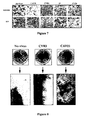
- monolayers of melanoma cell line MM 200 were inoculated with approximately 1 x 10 5 plaque forming units of CAV21, Coxsackievirus B3 (CVB3), Echovirus type 7 (E7) or Coxsackievirus B1 (CVB1) in wells of a 24-well tissue culture plate for one hour at 37°C, respectively.
- the viral inoculate was subsequently removed and the cell monolayers then washed with phosphate buffered saline (PBS), and 1.0 ml of DMEM containing 1.0% foetal calf serum was addded to each well and the cells incubated at 37°C for 48 hours.
- PBS phosphate buffered saline
- DMEM containing 1.0% foetal calf serum
- Fig. 7 shows that following the 48 hour incubation period only CAV21 infected the MM 200 melanoma cells while the reverse occurred in the rhabdomyosarcoma cells (RD) where CVB1, CVB3 and E7 infection and killing is evident.
- RD cells express DAF but no ICAM-1. However, when ICAM-1 is expressed on the surface of RD cells they are highly susceptible to CAV21 induced infection and killing.
- Sections of solid human melanoma lymph node biopsies were placed in wells of a 24-well tissue culture plate and mock infected or challenged with approximately 1 x 10 5 plaque forming units of CAV21 or CVB3.
- Fig. 8 The results shown in Fig. 8 indicate that CAV21 infection resulted in severe tissue destruction around the perimeter of the melanoma biopsy treated with that virus while no detectable viral membrane destruction was observed in the mock and CVB3 infected biopsies.
- Sk-Mel-28 and ME4405 cells were seeded into flat-bottom 96-well microtiter plates (Becton Dickinson) at 3 x 10 4 cells per well. Following incubation for 24 h at 37°C, culture medium was removed and replaced with fresh medium containing the appropriate viral serial dilution in a final volume of 100 ⁇ l. Stock viral preparations were serially diluted 10 -1 through to 10 -7 . Following viral inoculation, the plates were incubated at 37°C for 48 h and cell survival was detected by crystal violet staining as described above.
- the overall oncolytic potential of CAV21 and CAV15 was higher in the melanoma cell lines, compared to the control RD-ICAM-1 cells. While all cell types express similar levels of ICAM-1, DAF expression in RD-ICAM-1 cells is significantly lower than on melanoma cells (see Fig. 2 ) accounting for lower viral attachment via DAF to RD-ICAM-1 cells. DAF has previously been shown to be a low affinity sequestration molecule for many Coxsackieviruses, assisting the capture of virus particles and hence infectivity of the cells(Lea SM, et al; 1998). The presence of higher levels of DAF expression on the melanoma cell lines compared to the RD-ICAM-1 cells increases the probability of viral access to ICAM-1 receptors, thus leading to an increased level of infection and cell lysis.
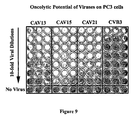
- PC3 Cells from the human prostate cancer cell line CP3 (which expresses ICAM-1) were seeded into a flat-bottom 96-well microtitre plate (Becton Dickenson) at 3 x 10 4 cells per well and treated with serial dilutions of CAV 13, CAV 15, CAV21 and the Coxsackievirus B-group virus CVB3 following incubation of the cells, as described in Example 8.1 above.
- PC3 cells are available from the American Type Culture Collection (ATCC) Manassas, Virginia, USA under Accession No. CRL-1435.
- Sterile cell culture inserts were used to divide the wells of a standard six well plate tissue culture plate. Inside the cell culture insert, either Sk-Mel-28 cells or ME4405 cells were grown, with MRC5 or RD cells grown around the cell culture insert. Once the cells had adhered, the cell culture inserts were removed from each of the well allowing the cell culture media to evenly cover the co-culture. When the perimeters of both cell populations had fused, the co-cultures were washed twice with PBS and then inoculated with 500 ⁇ l of either PBS or stock virus (10 5 TCID 50 ) for 1 h at 37°C.
- MRC5 cells appeared to be refractory to lytic infection by both CAV21 and CAV15. These cells are derived from a human lung fibroblast culture and only express low levels of ICAM-1 (unpublished data). The present data shows that rapid and effective lytic infection of target cells facilitated high level ICAM-1 and DAF expression.
- RD cells which do not express ICAM-1, were not destroyed by either CAV21 or CAV15 infection. Furthermore, the results show little if any spread of CAV21 and CAV15 to receptor negative cells that are in direct contact with virally infected receptor-bearing cells.
- the lytic infection of preformed melanoma tumours in vivo was evaluated by a series of animal challenge experiments using NOD-SCID mice.
- NOD-SCID mice were housed in pathogen-free quarters in the animal handling facility located at the David Maddison Building, Level 5, Newcastle, NSW, Australia.
- Sk-Mel-28 and ME4405 cells were grown in DMEM containing 10% FCS. The cells were harvested and washed twice with DMEM, and resuspended in sterile PBS. The cell concentration of the suspension was determined with a haemocytometer and cell viability was assessed by trypan blue staining. Only cell preparations with >95% viability were used for xenotransplantation. Prior to xenotransplantation, animals were anaesthetised with intraperitoneal (i.p) injections of Rompun/Ketamine (50 mg/kg). For the monitoring of animals and measurement of tumour growth, animals were anaesthetised with 3% isofluorane.
- i.p intraperitoneal injections of Rompun/Ketamine
- tumour cells were xenografted into the flank of anaesthetised 4-6 week old female NOD-SCID mice. Xenograft tumour growth was observed daily and measured with callipers at various intervals with all measurements recorded in millimetres over the course of 5 weeks. Estimates of tumour volumes were calculated using known methods (Davies CD, et al; 1997).
- mice in the control group were injected subcutaneously with Sk-Mel-28 cells (1x10 7 ) cells at individual sites in both the upper and lower flank.
- a representative of the control group was sacrificed and shown to bear two individual tumour masses corresponding to the two injections sites of the Sk-Mel-28 (1x10 7 ) cells.
- mice Twenty NOD-SCID mice were injected with Sk-Mel 28 cells (1 x 10 7 ) in the upper flank. When the tumour volume reached ⁇ 50-100 mm 3 the animals were randomly divided into groups of five and housed in separate cages. Groups of mice were injected intratumourally with 100 ⁇ l of active CAV21 or CAV15 containing 10 3.2 or 10 4.2 TCID 50 doses, respectively. The remaining animals received 100 ⁇ l of PBS injected directly into the xenografts. The different treatment groups were housed in individually vented cages maintained under negative pressure, ensuring that virus and other pathogens were contained within the individual cages.
- the capacity of CAV15 to drastically reduce melanoma tumour burden is shown in Figure 14 .
- the CAV15 treated tumour shown comprises mostly residual connective tissue.
- mice Fifteen NOD-SCID mice were injected with ME4405 cells (5x10 6 ) subcutaneously in a single site on the flank. When tumour volumes had reached approximately 500 mm 3 , the animals were randomly divided into groups of five and housed in separate cages. Five animals were injected intratumourally with 100 ⁇ l of active CAV21 containing 10 3.2 TCID 50 doses, while five mice received 100 ⁇ l of PBS injected directly into the xenografts and the remaining five mice were left untreated. As shown in Fig.
- intratumoural administration of CAV21 was able to markedly reduce tumour development of ME4405 cells within 25 days post-injection even though the initial pre-injection tumour volume was 5-fold greater than those utilised above.
- the ME4405 xenografts were observed to be more aggressive than the Sk-Mel-28 tumours as assessed by significantly faster growth rates of tumours in the control groups.
- the ME4405 cell line generated highly vascular aggressive tumours compared to Sk-Mel-28 tumours which grew at a slower rate and were not as vascular as the ME4405 tumours.
- CAV21 and CAV15 infection of melanoma cells show that these two viruses are able to selectively infect Sk-Mel-28 and ME4405 cell lines as a result of the expression of ICAM-1 and DAF while each of the Coxsackieviruses mentioned above were able to infect and cause the death of cells of the prostate cancer line PC3.
- intratumoural injection of CAV21 and CAV15 into xenografts of human melanoma cell lines grown in the flanks of NOD-SCID mice show that CAV21 and CAV15 possess therapeutic applications against malignant melanoma.
- CAV21 and CAV15 infections are mainly asymptomatic or manifest by no more than minor malaise.
- the Coe strain of CAV21 has recently been approved for live administration by the Food and Drug Administration (FDA) of the United States of America for the clinical assessment of specific anti-viral agents against CAV21 (90).
- FDA Food and Drug Administration
- the recent development of specific antiviral agents against CAV21 and CAV15 provides the added safety precaution of drug intervention to control viral infection.
Landscapes
- Health & Medical Sciences (AREA)
- Life Sciences & Earth Sciences (AREA)
- Chemical & Material Sciences (AREA)
- Engineering & Computer Science (AREA)
- General Health & Medical Sciences (AREA)
- Medicinal Chemistry (AREA)
- Immunology (AREA)
- Organic Chemistry (AREA)
- Biomedical Technology (AREA)
- Bioinformatics & Cheminformatics (AREA)
- Microbiology (AREA)
- Virology (AREA)
- Animal Behavior & Ethology (AREA)
- Public Health (AREA)
- Veterinary Medicine (AREA)
- Pharmacology & Pharmacy (AREA)
- Molecular Biology (AREA)
- Wood Science & Technology (AREA)
- Zoology (AREA)
- Biotechnology (AREA)
- Biochemistry (AREA)
- Hematology (AREA)
- Urology & Nephrology (AREA)
- Genetics & Genomics (AREA)
- Epidemiology (AREA)
- Physics & Mathematics (AREA)
- Toxicology (AREA)
- Oncology (AREA)
- Analytical Chemistry (AREA)
- General Engineering & Computer Science (AREA)
- Proteomics, Peptides & Aminoacids (AREA)
- Mycology (AREA)
- Tropical Medicine & Parasitology (AREA)
- Pathology (AREA)
- Cell Biology (AREA)
- Food Science & Technology (AREA)
- General Physics & Mathematics (AREA)
- General Chemical & Material Sciences (AREA)
- Nuclear Medicine, Radiotherapy & Molecular Imaging (AREA)
- Chemical Kinetics & Catalysis (AREA)
Applications Claiming Priority (2)
| Application Number | Priority Date | Filing Date | Title |
|---|---|---|---|
| AUPQ4256A AUPQ425699A0 (en) | 1999-11-25 | 1999-11-25 | A method of treating a malignancy in a subject and a pharmaceutical composition for use in same |
| EP00979268A EP1235590B1 (fr) | 1999-11-25 | 2000-11-27 | Methode de traitement de cellules malignes chez un sujet et composition pharmaceutique a utiliser |
Related Parent Applications (2)
| Application Number | Title | Priority Date | Filing Date |
|---|---|---|---|
| EP00979268.0 Division | 2000-11-27 | ||
| EP00979268A Division EP1235590B1 (fr) | 1999-11-25 | 2000-11-27 | Methode de traitement de cellules malignes chez un sujet et composition pharmaceutique a utiliser |
Publications (3)
| Publication Number | Publication Date |
|---|---|
| EP2016952A2 true EP2016952A2 (fr) | 2009-01-21 |
| EP2016952A3 EP2016952A3 (fr) | 2010-05-19 |
| EP2016952B1 EP2016952B1 (fr) | 2013-12-25 |
Family
ID=3818400
Family Applications (2)
| Application Number | Title | Priority Date | Filing Date |
|---|---|---|---|
| EP08018165.4A Expired - Lifetime EP2016952B1 (fr) | 1999-11-25 | 2000-11-27 | Procédé de traitement d'une tumeur chez un sujet et composition pharmaceutique l'utilisant |
| EP00979268A Expired - Lifetime EP1235590B1 (fr) | 1999-11-25 | 2000-11-27 | Methode de traitement de cellules malignes chez un sujet et composition pharmaceutique a utiliser |
Family Applications After (1)
| Application Number | Title | Priority Date | Filing Date |
|---|---|---|---|
| EP00979268A Expired - Lifetime EP1235590B1 (fr) | 1999-11-25 | 2000-11-27 | Methode de traitement de cellules malignes chez un sujet et composition pharmaceutique a utiliser |
Country Status (12)
| Country | Link |
|---|---|
| US (5) | US7361354B1 (fr) |
| EP (2) | EP2016952B1 (fr) |
| JP (2) | JP5085825B2 (fr) |
| AT (1) | ATE411814T1 (fr) |
| AU (1) | AUPQ425699A0 (fr) |
| CA (1) | CA2422429C (fr) |
| CY (1) | CY1108692T1 (fr) |
| DE (1) | DE60040616D1 (fr) |
| DK (1) | DK1235590T3 (fr) |
| ES (2) | ES2442000T3 (fr) |
| PT (1) | PT1235590E (fr) |
| WO (1) | WO2001037866A1 (fr) |
Families Citing this family (15)
| Publication number | Priority date | Publication date | Assignee | Title |
|---|---|---|---|---|
| US20030035798A1 (en) * | 2000-08-16 | 2003-02-20 | Fang Fang | Humanized antibodies |
| US8491884B2 (en) | 2000-05-03 | 2013-07-23 | Oncolytics Biotech Inc. | Virus clearance of neoplastic cells from mixed cellular compositions |
| US7306902B2 (en) | 2002-06-28 | 2007-12-11 | Oncolyties Biotech Inc. | Oncolytic viruses as phenotyping agents for neoplasms |
| LV12861B (lv) * | 2002-06-14 | 2002-10-20 | Aina Muceniece | Imūnstimulators ar pretaudzēja aktivitāti un tā iegūšanas paņēmiens |
| AU2002953436A0 (en) | 2002-12-18 | 2003-01-09 | The University Of Newcastle Research Associates Limited | A method of treating a malignancy in a subject via direct picornaviral-mediated oncolysis |
| US8114416B2 (en) | 2004-03-11 | 2012-02-14 | Viralytics Limited | Modified oncolytic viruses |
| CN101065144B (zh) * | 2004-08-20 | 2012-06-13 | 溶瘤病毒有限公司 | 治疗血液癌症的方法和组合物 |
| KR101295733B1 (ko) | 2004-08-20 | 2013-08-13 | 비랄리틱스 리미티드 | 혈액암의 치료방법 및 조성물 |
| EP1843773A4 (fr) * | 2005-01-17 | 2008-07-30 | Viralytics Ltd | Procede et composition pour le traitement des neoplasmes |
| PL2826856T3 (pl) * | 2013-07-16 | 2016-06-30 | Sia Latima | Genetycznie stabilny onkolityczny wirus RNA, sposób jego wytwarzania i zastosowanie |
| EP3110443A4 (fr) | 2014-02-27 | 2017-11-15 | Viralytics Limited | Thérapie combinée pour le traitement du cancer |
| US10639337B2 (en) * | 2017-09-29 | 2020-05-05 | Technische Universität Berlin | Method for treating cancer with a Coxsackievirus B3 (CVB3) variant |
| CN112641811B (zh) * | 2020-01-20 | 2024-12-10 | 山西高等创新研究院 | 一种抗肿瘤病毒 |
| CA3207359A1 (fr) | 2021-02-05 | 2022-08-11 | Cecile Chartier-Courtaud | Traitement adjuvant du cancer |
| CN118086228A (zh) * | 2022-11-28 | 2024-05-28 | 厦门大学 | 用于治疗肿瘤的柯萨奇b组1型病毒 |
Family Cites Families (57)
| Publication number | Priority date | Publication date | Assignee | Title |
|---|---|---|---|---|
| US5585254A (en) | 1987-08-21 | 1996-12-17 | University Of Colorado Foundation, Inc. | Autonomous parvovirus gene delivery vehicles and expression vectors |
| JPH04504361A (ja) | 1989-04-05 | 1992-08-06 | ノバセル コーポレイション | 感染性標的化複製―欠陥ビリオン |
| US5714374A (en) * | 1990-09-12 | 1998-02-03 | Rutgers University | Chimeric rhinoviruses |
| CA2051289C (fr) | 1990-09-14 | 2002-11-26 | Robert L. Martuza | Destruction de cellules neoplasiques a l'aide d'un virus |
| US5173414A (en) | 1990-10-30 | 1992-12-22 | Applied Immune Sciences, Inc. | Production of recombinant adeno-associated virus vectors |
| EP0591382A4 (fr) | 1991-06-24 | 1995-01-18 | Univ New York | Procede de synthese de novo acellulaire de picornavirus. |
| CA2113990A1 (fr) | 1991-07-26 | 1993-02-18 | Frederick L. Moolten | Traitement anticancereux utilisant des cellules malignes |
| US5529774A (en) | 1991-08-13 | 1996-06-25 | The Regents Of The University Of California | In vivo transfer of the HSV-TK gene implanted retroviral producer cells |
| SE503225C2 (sv) | 1991-10-30 | 1996-04-22 | Leif Lindholm Konsult Ab | Virus-antikroppskomplex för införing av virus i mammalieceller |
| ATE178490T1 (de) | 1993-02-16 | 1999-04-15 | Onyx Pharmaceuticals | Cytopathische viren zur therapie und prophylaxe der neoplasie |
| US5801029A (en) | 1993-02-16 | 1998-09-01 | Onyx Pharmaceuticals, Inc. | Cytopathic viruses for therapy and prophylaxis of neoplasia |
| CA2161671A1 (fr) | 1993-04-30 | 1994-11-10 | Robert M. Lorence | Methodes pour le traitement et la detection de cancers a l'aide de virus |
| US5728379A (en) | 1994-06-23 | 1998-03-17 | Georgetown University | Tumor- or cell-specific herpes simplex virus replication |
| US5585096A (en) | 1994-06-23 | 1996-12-17 | Georgetown University | Replication-competent herpes simplex virus mediates destruction of neoplastic cells |
| US5688773A (en) | 1994-08-17 | 1997-11-18 | The General Hospital Corporation | Method of selectively destroying neoplastic cells |
| NZ316689A (en) * | 1995-12-22 | 1999-04-29 | Minnesota Mining & Mfg | Blended pressure-sensitive adhesives comprising two components, one being pressure sensitive and the other being a thermoplastic material |
| US6071742A (en) | 1997-03-05 | 2000-06-06 | Board Of Regents Of The University Of Nebraska | Coxsackie virus as a vector for delivery of anti-inflammatory cytokines |
| US6110461A (en) | 1997-08-13 | 2000-08-29 | Oncolytics Biotech Inc. | Reovirus for the treatment of neoplasia |
| US6136307A (en) | 1997-08-13 | 2000-10-24 | Oncolytics Biotech Inc. | Reovirus for the treatment of cellular proliferative disorders |
| CN101618049A (zh) | 1997-10-09 | 2010-01-06 | 威尔斯塔特生物公司 | 使用病毒来治疗赘生物 |
| FR2769505B1 (fr) | 1997-10-10 | 2000-06-30 | Michael Gerard Tovey | Compositions de cytokines a administrer a la muqueuse buccale, et leurs utilisations |
| US20010055585A1 (en) | 1997-12-03 | 2001-12-27 | William G. Cance | Frnk proteins in the treatment of tumor cells |
| EP1061806A4 (fr) | 1998-03-12 | 2001-09-12 | Univ Pennsylvania | Cellules productrices pour virus aptes a la replication utilisees dans le traitement de la malignite |
| US6060316A (en) | 1998-06-09 | 2000-05-09 | President And Fellows Of Harvard College | Methods of targeting of viral entry |
| US6264940B1 (en) | 1998-08-05 | 2001-07-24 | The Research Foundation Of State University Of New York | Recombinant poliovirus for the treatment of cancer |
| ATE402713T1 (de) | 1999-02-05 | 2008-08-15 | Arch Dev Corp | Genetisch manipulierte herpesviren zur behandlung von tumoren |
| JP2000279178A (ja) | 1999-02-24 | 2000-10-10 | Japan Found Cancer Res | ウイルスベクター |
| AU2005201079C1 (en) | 1999-04-15 | 2008-11-06 | Wellstat Biologics Corporation | Treatment of neoplasms with viruses |
| IL145899A0 (en) | 1999-04-15 | 2002-07-25 | Pro Virus Inc | Treatment of neoplasms with viruses |
| EP1067188A1 (fr) | 1999-07-08 | 2001-01-10 | Introgene B.V. | Infection avec les adenovirus chimères des cellules qui sont negative pour le recepteur du serotype 5 d'adenovirus coxsackie adenovirus (CAR) |
| DE19939095A1 (de) | 1999-08-18 | 2001-02-22 | Univ Eberhard Karls | Von Coxsackieviren abgeleitetes Vektorsystem für Gentransfer |
| IL148621A0 (en) | 1999-09-17 | 2002-09-12 | Pro Virus Inc | Oncolytic virus |
| BR0015491A (pt) | 1999-11-12 | 2002-10-15 | Oncolytics Biotech Inc | Métodos para tratar um distúrbio proliferativo celular mediado por ras em um mamìfero, para tratar um neoplasma tendo uma via-ras ativada em um humano, para inibir metástase de um neoplasma tendo uma via-ras ativada em um mamìfero, e para tratar um neoplasma suspeito de ter uma via-ras ativada em um mamìfero, composição farmacêutica, kit, e, método para tratar uma população de células compreendendo um neoplasma suspeito de ter uma via-ras ativada in vitro |
| CN1382218A (zh) | 1999-11-15 | 2002-11-27 | 昂尼克斯药物公司 | 溶瘤腺病毒 |
| AU770517B2 (en) | 1999-11-25 | 2004-02-26 | Viralytics Limited | A method of treating a malignancy in a subject and a pharmaceutical composition for use in same |
| AU2004202292B2 (en) | 1999-11-25 | 2007-06-14 | Viralytics Limited | Method of Treating a Malignancy in a Subject |
| GB2375113B (en) | 2000-01-21 | 2004-10-20 | Biovex Ltd | A modified, oncolytic, non-laboratory HSV strain and its use in treating cancer |
| CA2341356C (fr) | 2000-04-14 | 2011-10-11 | Transgene S.A. | Poxvirus specifique d'une infection ciblee |
| US7306902B2 (en) | 2002-06-28 | 2007-12-11 | Oncolyties Biotech Inc. | Oncolytic viruses as phenotyping agents for neoplasms |
| JP2004519431A (ja) | 2000-12-01 | 2004-07-02 | ユニバーシティ・オブ・オタワ | 腫瘍溶解性ウイルス |
| EP1406668A1 (fr) | 2001-05-02 | 2004-04-14 | Ramot at Tel-Aviv University Ltd. | Vecteurs du virus de l'herpes oncolytique composite |
| EP2213300B1 (fr) | 2001-05-09 | 2015-03-25 | Takara Bio, Inc. | Composition et procédé de traitement de cancer utilisant un virus herpétique |
| HUP0400882A3 (en) | 2001-05-11 | 2011-01-28 | Wellstat Biologics Corp | Oncolytic virus therapy |
| CA2352439A1 (fr) | 2001-07-17 | 2003-01-17 | Patrick W. K. Lee | Fabrication de virus oncolytiques |
| WO2003010306A1 (fr) | 2001-07-23 | 2003-02-06 | Onyx Pharmaceuticals, Inc. | Mutants viraux qui se repliquent de maniere selective dans les cellules cancereuses humaines cibles |
| CA2476724A1 (fr) | 2002-03-01 | 2003-09-12 | Sloan-Kettering Institute For Cancer Research | Prevention de recurrence et de metastase cancereuses |
| AU2003258060B2 (en) | 2002-03-27 | 2007-07-12 | Baylor College Of Medicine | Potent oncolytic herpes simplex virus for cancer therapy |
| AU2003223089A1 (en) | 2002-04-29 | 2003-11-17 | Hadasit Medical Research Services And Development Company Ltd. | Compositions and methods for treating cancer with an oncolytic viral agent |
| JP5241059B2 (ja) | 2002-05-09 | 2013-07-17 | オンコリティクス バイオテク,インコーポレーテッド | 腫瘍崩壊ウイルスを使用して疼痛を軽減するための方法 |
| AU2002953436A0 (en) | 2002-12-18 | 2003-01-09 | The University Of Newcastle Research Associates Limited | A method of treating a malignancy in a subject via direct picornaviral-mediated oncolysis |
| WO2005002607A2 (fr) | 2003-07-07 | 2005-01-13 | Oncolytics Biotech Inc. | Virus oncolytiques pour le traitement de neoplasmes a pp2a et rac activees |
| WO2005007824A2 (fr) | 2003-07-08 | 2005-01-27 | Arizona Board Of Regents | Mutants du virus vaccine tenant lieu d'agents oncolytiques |
| MXPA06003318A (es) | 2003-09-26 | 2006-06-08 | Novartis Ag | Composiciones a base de virus de seneca valley y metodos para tratar la enfermedad. |
| US8114416B2 (en) | 2004-03-11 | 2012-02-14 | Viralytics Limited | Modified oncolytic viruses |
| US20080292592A1 (en) | 2004-04-30 | 2008-11-27 | Sunil Chada | Oncolytic Adenovirus Armed with Therapeutic Genes |
| WO2006002394A2 (fr) | 2004-06-24 | 2006-01-05 | New York University | Souches de virus d'herpes simplex oncolytique non virulent modifiees pour bloquer la reponse hote innee |
| US8080240B2 (en) | 2004-10-21 | 2011-12-20 | The Penn State Research Foundation | Parvovirus methods and compositions for killing neoplastic cells |
-
1999
- 1999-11-25 AU AUPQ4256A patent/AUPQ425699A0/en not_active Abandoned
-
2000
- 2000-11-27 AT AT00979268T patent/ATE411814T1/de active
- 2000-11-27 ES ES08018165.4T patent/ES2442000T3/es not_active Expired - Lifetime
- 2000-11-27 PT PT00979268T patent/PT1235590E/pt unknown
- 2000-11-27 DK DK00979268T patent/DK1235590T3/da active
- 2000-11-27 CA CA2422429A patent/CA2422429C/fr not_active Expired - Lifetime
- 2000-11-27 EP EP08018165.4A patent/EP2016952B1/fr not_active Expired - Lifetime
- 2000-11-27 EP EP00979268A patent/EP1235590B1/fr not_active Expired - Lifetime
- 2000-11-27 JP JP2001539480A patent/JP5085825B2/ja not_active Expired - Fee Related
- 2000-11-27 WO PCT/AU2000/001461 patent/WO2001037866A1/fr not_active Ceased
- 2000-11-27 US US10/148,008 patent/US7361354B1/en not_active Expired - Lifetime
- 2000-11-27 DE DE60040616T patent/DE60040616D1/de not_active Expired - Lifetime
- 2000-11-27 ES ES00979268T patent/ES2316394T3/es not_active Expired - Lifetime
-
2008
- 2008-02-29 US US12/040,813 patent/US8722036B2/en not_active Expired - Fee Related
-
2009
- 2009-01-12 CY CY20091100019T patent/CY1108692T1/el unknown
-
2011
- 2011-05-02 JP JP2011102853A patent/JP2011190266A/ja active Pending
-
2014
- 2014-03-31 US US14/231,528 patent/US20150037287A1/en not_active Abandoned
-
2015
- 2015-09-29 US US14/869,440 patent/US20160250268A1/en not_active Abandoned
-
2017
- 2017-01-13 US US15/406,459 patent/US20170348366A1/en not_active Abandoned
Non-Patent Citations (38)
Also Published As
| Publication number | Publication date |
|---|---|
| EP2016952B1 (fr) | 2013-12-25 |
| EP1235590A4 (fr) | 2004-12-29 |
| US20090123427A1 (en) | 2009-05-14 |
| DK1235590T3 (da) | 2009-02-23 |
| EP1235590B1 (fr) | 2008-10-22 |
| US8722036B2 (en) | 2014-05-13 |
| CA2422429A1 (fr) | 2001-05-31 |
| AUPQ425699A0 (en) | 1999-12-23 |
| WO2001037866A1 (fr) | 2001-05-31 |
| PT1235590E (pt) | 2009-02-02 |
| ES2442000T3 (es) | 2014-02-07 |
| JP5085825B2 (ja) | 2012-11-28 |
| CA2422429C (fr) | 2014-03-11 |
| CY1108692T1 (el) | 2014-04-09 |
| JP2003514870A (ja) | 2003-04-22 |
| JP2011190266A (ja) | 2011-09-29 |
| US20150037287A1 (en) | 2015-02-05 |
| DE60040616D1 (de) | 2008-12-04 |
| US7361354B1 (en) | 2008-04-22 |
| ES2316394T3 (es) | 2009-04-16 |
| US20170348366A1 (en) | 2017-12-07 |
| EP2016952A3 (fr) | 2010-05-19 |
| US20160250268A1 (en) | 2016-09-01 |
| ATE411814T1 (de) | 2008-11-15 |
| EP1235590A1 (fr) | 2002-09-04 |
Similar Documents
| Publication | Publication Date | Title |
|---|---|---|
| US8722036B2 (en) | Methods for treating malignancies using coxsackieviruses | |
| US20150273002A1 (en) | Methods and compositions for treatment of hematologic cancers | |
| US20100062020A1 (en) | Method of Treating a Malignancy in a Subject Via Direct Picornaviral-Mediated Oncolysis | |
| US20080057036A1 (en) | Modified Oncolytic Viruses | |
| AU770517B2 (en) | A method of treating a malignancy in a subject and a pharmaceutical composition for use in same | |
| AU2004202292B2 (en) | Method of Treating a Malignancy in a Subject | |
| AU2007211890A1 (en) | A method of treating a malignancy in a subject and a pharmaceutical composition for use in same | |
| AU2011204997A1 (en) | A method of treating a malignancy in a subject and a pharmaceutical composition for use in same | |
| AU2005274617B2 (en) | Methods and compositions for treatment of hematologic cancers | |
| AU2003287773B2 (en) | A method of treating a malignancy in a subject via direct picornaviral-mediated oncolysis | |
| HK1100356B (en) | Methods and compositions for treatment of hematologic cancers |
Legal Events
| Date | Code | Title | Description |
|---|---|---|---|
| PUAI | Public reference made under article 153(3) epc to a published international application that has entered the european phase |
Free format text: ORIGINAL CODE: 0009012 |
|
| 17P | Request for examination filed |
Effective date: 20081113 |
|
| AC | Divisional application: reference to earlier application |
Ref document number: 1235590 Country of ref document: EP Kind code of ref document: P |
|
| AK | Designated contracting states |
Kind code of ref document: A2 Designated state(s): AT BE CH CY DE DK ES FI FR GB GR IE IT LI LU MC NL PT SE TR |
|
| RIN1 | Information on inventor provided before grant (corrected) |
Inventor name: SHAFREN, DARREN |
|
| PUAL | Search report despatched |
Free format text: ORIGINAL CODE: 0009013 |
|
| AK | Designated contracting states |
Kind code of ref document: A3 Designated state(s): AT BE CH CY DE DK ES FI FR GB GR IE IT LI LU MC NL PT SE TR |
|
| AKX | Designation fees paid |
Designated state(s): AT BE CH CY DE DK ES FI FR GB GR IE IT LI LU MC NL PT SE TR |
|
| 17Q | First examination report despatched |
Effective date: 20110627 |
|
| GRAP | Despatch of communication of intention to grant a patent |
Free format text: ORIGINAL CODE: EPIDOSNIGR1 |
|
| INTG | Intention to grant announced |
Effective date: 20130709 |
|
| RAP1 | Party data changed (applicant data changed or rights of an application transferred) |
Owner name: VIRALYTICS LIMITED |
|
| GRAS | Grant fee paid |
Free format text: ORIGINAL CODE: EPIDOSNIGR3 |
|
| GRAA | (expected) grant |
Free format text: ORIGINAL CODE: 0009210 |
|
| AC | Divisional application: reference to earlier application |
Ref document number: 1235590 Country of ref document: EP Kind code of ref document: P |
|
| AK | Designated contracting states |
Kind code of ref document: B1 Designated state(s): AT BE CH CY DE DK ES FI FR GB GR IE IT LI LU MC NL PT SE TR |
|
| REG | Reference to a national code |
Ref country code: GB Ref legal event code: FG4D |
|
| REG | Reference to a national code |
Ref country code: CH Ref legal event code: EP |
|
| REG | Reference to a national code |
Ref country code: AT Ref legal event code: REF Ref document number: 646193 Country of ref document: AT Kind code of ref document: T Effective date: 20140115 |
|
| REG | Reference to a national code |
Ref country code: IE Ref legal event code: FG4D |
|
| REG | Reference to a national code |
Ref country code: ES Ref legal event code: FG2A Ref document number: 2442000 Country of ref document: ES Kind code of ref document: T3 Effective date: 20140207 |
|
| REG | Reference to a national code |
Ref country code: DE Ref legal event code: R096 Ref document number: 60048383 Country of ref document: DE Effective date: 20140213 |
|
| PG25 | Lapsed in a contracting state [announced via postgrant information from national office to epo] |
Ref country code: FI Free format text: LAPSE BECAUSE OF FAILURE TO SUBMIT A TRANSLATION OF THE DESCRIPTION OR TO PAY THE FEE WITHIN THE PRESCRIBED TIME-LIMIT Effective date: 20131225 Ref country code: SE Free format text: LAPSE BECAUSE OF FAILURE TO SUBMIT A TRANSLATION OF THE DESCRIPTION OR TO PAY THE FEE WITHIN THE PRESCRIBED TIME-LIMIT Effective date: 20131225 |
|
| REG | Reference to a national code |
Ref country code: NL Ref legal event code: VDEP Effective date: 20131225 |
|
| REG | Reference to a national code |
Ref country code: AT Ref legal event code: MK05 Ref document number: 646193 Country of ref document: AT Kind code of ref document: T Effective date: 20131225 |
|
| PG25 | Lapsed in a contracting state [announced via postgrant information from national office to epo] |
Ref country code: BE Free format text: LAPSE BECAUSE OF FAILURE TO SUBMIT A TRANSLATION OF THE DESCRIPTION OR TO PAY THE FEE WITHIN THE PRESCRIBED TIME-LIMIT Effective date: 20131225 |
|
| PG25 | Lapsed in a contracting state [announced via postgrant information from national office to epo] |
Ref country code: CY Free format text: LAPSE BECAUSE OF FAILURE TO SUBMIT A TRANSLATION OF THE DESCRIPTION OR TO PAY THE FEE WITHIN THE PRESCRIBED TIME-LIMIT Effective date: 20131225 Ref country code: NL Free format text: LAPSE BECAUSE OF FAILURE TO SUBMIT A TRANSLATION OF THE DESCRIPTION OR TO PAY THE FEE WITHIN THE PRESCRIBED TIME-LIMIT Effective date: 20131225 Ref country code: PT Free format text: LAPSE BECAUSE OF FAILURE TO SUBMIT A TRANSLATION OF THE DESCRIPTION OR TO PAY THE FEE WITHIN THE PRESCRIBED TIME-LIMIT Effective date: 20140428 Ref country code: AT Free format text: LAPSE BECAUSE OF FAILURE TO SUBMIT A TRANSLATION OF THE DESCRIPTION OR TO PAY THE FEE WITHIN THE PRESCRIBED TIME-LIMIT Effective date: 20131225 |
|
| REG | Reference to a national code |
Ref country code: DE Ref legal event code: R097 Ref document number: 60048383 Country of ref document: DE |
|
| PG25 | Lapsed in a contracting state [announced via postgrant information from national office to epo] |
Ref country code: DK Free format text: LAPSE BECAUSE OF FAILURE TO SUBMIT A TRANSLATION OF THE DESCRIPTION OR TO PAY THE FEE WITHIN THE PRESCRIBED TIME-LIMIT Effective date: 20131225 |
|
| PGFP | Annual fee paid to national office [announced via postgrant information from national office to epo] |
Ref country code: MC Payment date: 20140926 Year of fee payment: 15 |
|
| PLBE | No opposition filed within time limit |
Free format text: ORIGINAL CODE: 0009261 |
|
| STAA | Information on the status of an ep patent application or granted ep patent |
Free format text: STATUS: NO OPPOSITION FILED WITHIN TIME LIMIT |
|
| 26N | No opposition filed |
Effective date: 20140926 |
|
| REG | Reference to a national code |
Ref country code: DE Ref legal event code: R097 Ref document number: 60048383 Country of ref document: DE Effective date: 20140926 |
|
| PG25 | Lapsed in a contracting state [announced via postgrant information from national office to epo] |
Ref country code: LU Free format text: LAPSE BECAUSE OF FAILURE TO SUBMIT A TRANSLATION OF THE DESCRIPTION OR TO PAY THE FEE WITHIN THE PRESCRIBED TIME-LIMIT Effective date: 20141127 |
|
| REG | Reference to a national code |
Ref country code: CH Ref legal event code: PL |
|
| PG25 | Lapsed in a contracting state [announced via postgrant information from national office to epo] |
Ref country code: CH Free format text: LAPSE BECAUSE OF NON-PAYMENT OF DUE FEES Effective date: 20141130 Ref country code: LI Free format text: LAPSE BECAUSE OF NON-PAYMENT OF DUE FEES Effective date: 20141130 |
|
| REG | Reference to a national code |
Ref country code: IE Ref legal event code: MM4A |
|
| REG | Reference to a national code |
Ref country code: FR Ref legal event code: PLFP Year of fee payment: 16 |
|
| PG25 | Lapsed in a contracting state [announced via postgrant information from national office to epo] |
Ref country code: IE Free format text: LAPSE BECAUSE OF NON-PAYMENT OF DUE FEES Effective date: 20141127 |
|
| PG25 | Lapsed in a contracting state [announced via postgrant information from national office to epo] |
Ref country code: GR Free format text: LAPSE BECAUSE OF FAILURE TO SUBMIT A TRANSLATION OF THE DESCRIPTION OR TO PAY THE FEE WITHIN THE PRESCRIBED TIME-LIMIT Effective date: 20140326 Ref country code: MC Free format text: LAPSE BECAUSE OF NON-PAYMENT OF DUE FEES Effective date: 20151130 |
|
| PG25 | Lapsed in a contracting state [announced via postgrant information from national office to epo] |
Ref country code: TR Free format text: LAPSE BECAUSE OF FAILURE TO SUBMIT A TRANSLATION OF THE DESCRIPTION OR TO PAY THE FEE WITHIN THE PRESCRIBED TIME-LIMIT Effective date: 20131225 |
|
| REG | Reference to a national code |
Ref country code: FR Ref legal event code: PLFP Year of fee payment: 17 |
|
| REG | Reference to a national code |
Ref country code: FR Ref legal event code: PLFP Year of fee payment: 18 |
|
| REG | Reference to a national code |
Ref country code: FR Ref legal event code: PLFP Year of fee payment: 19 |
|
| PGFP | Annual fee paid to national office [announced via postgrant information from national office to epo] |
Ref country code: DE Payment date: 20191017 Year of fee payment: 20 |
|
| PGFP | Annual fee paid to national office [announced via postgrant information from national office to epo] |
Ref country code: IT Payment date: 20191120 Year of fee payment: 20 Ref country code: FR Payment date: 20191029 Year of fee payment: 20 Ref country code: ES Payment date: 20191202 Year of fee payment: 20 |
|
| PGFP | Annual fee paid to national office [announced via postgrant information from national office to epo] |
Ref country code: GB Payment date: 20191029 Year of fee payment: 20 |
|
| REG | Reference to a national code |
Ref country code: DE Ref legal event code: R071 Ref document number: 60048383 Country of ref document: DE |
|
| REG | Reference to a national code |
Ref country code: GB Ref legal event code: PE20 Expiry date: 20201126 |
|
| PG25 | Lapsed in a contracting state [announced via postgrant information from national office to epo] |
Ref country code: GB Free format text: LAPSE BECAUSE OF EXPIRATION OF PROTECTION Effective date: 20201126 |
|
| REG | Reference to a national code |
Ref country code: ES Ref legal event code: FD2A Effective date: 20220127 |
|
| PG25 | Lapsed in a contracting state [announced via postgrant information from national office to epo] |
Ref country code: ES Free format text: LAPSE BECAUSE OF EXPIRATION OF PROTECTION Effective date: 20201128 |