EP2017742A2 - Génération informatique de documents utilisant des éléments de format et éléments de contenu - Google Patents
Génération informatique de documents utilisant des éléments de format et éléments de contenu Download PDFInfo
- Publication number
- EP2017742A2 EP2017742A2 EP08015867A EP08015867A EP2017742A2 EP 2017742 A2 EP2017742 A2 EP 2017742A2 EP 08015867 A EP08015867 A EP 08015867A EP 08015867 A EP08015867 A EP 08015867A EP 2017742 A2 EP2017742 A2 EP 2017742A2
- Authority
- EP
- European Patent Office
- Prior art keywords
- elements
- content
- layout
- type
- portfolio
- Prior art date
- Legal status (The legal status is an assumption and is not a legal conclusion. Google has not performed a legal analysis and makes no representation as to the accuracy of the status listed.)
- Withdrawn
Links
Images



Classifications
-
- G—PHYSICS
- G06—COMPUTING OR CALCULATING; COUNTING
- G06F—ELECTRIC DIGITAL DATA PROCESSING
- G06F40/00—Handling natural language data
- G06F40/10—Text processing
- G06F40/166—Editing, e.g. inserting or deleting
- G06F40/186—Templates
-
- G—PHYSICS
- G06—COMPUTING OR CALCULATING; COUNTING
- G06F—ELECTRIC DIGITAL DATA PROCESSING
- G06F40/00—Handling natural language data
- G06F40/10—Text processing
Definitions
- This invention relates to computer generation of documents using layout elements and content elements.
- Computer generated human-readable documents exhibit a wide range of forms including those appearing on paper or other "tangible” media and others that are only temporarily displayed on “intangible” media like the display surfaces of computer monitors.
- Tangible documents range from full-color press-printed high-volume books, magazines, and commercial literature to multiple-color laser-printed medium-volume items to one-of-a-kind black-and-white pages printed on personal computer printers.
- Intangible documents include web pages that are received by telecommunication from a central source, screen displays that are generated by software running on local networks or individual workstations, and digitally-generated video frames.
- Human-readable documents include content such as words, numbers, pictures, animations, and video.
- the content is presented in a way that reflects layout features.
- Layout features can include the styles in which content is presented (e.g., font, size, shape, color) and the locations and arrangements of elements on pages of a document.
- a document that is created in software typically is stored in a file that captures the layout and content of the document.
- a formatter uses the information contained in the document description file to generate the document in a format suitable for the target medium.
- a box containing an image may contain another image box.
- the layout may require that two text boxes appear side by side on the page.
- Text has structure that, for example, defines the order of letters or words, or the grouping of sentences in paragraphs.
- the document description files provide a sharper separation between content and layout features. This separation enables a user to make changes to layout without affecting the content (e.g., to change all uses of Times-Bold font in a document to Helvetica-Bold) or to work with the content without changing the layout (e.g., to search the text for a particular string).
- These recent software products are either content-centric or layout-concentric.
- Content-centric software such as Microsoft Word, emphasizes content in the description files and supplements the content with layout features as needed.
- the user creates and manipulates text largely independently of the layout. Layout features are added to the text either manually by the user or automatically by the program.
- Layout-centric software such as Adobe's PageMaker7 emphasizes layout features, such as placement of content elements on a page, in the document description files.
- the user creates and manipulates layout elements. Content is added to the layout-structured document as needed.
- the creation of some documents is strongly content-oriented (e.g., a legal brief) or strongly layout oriented (e.g., an advertisement).
- the creation process is a hybrid effort combining both content-centric and layout-centric tasks.
- the content may be the focus in creating the article while the layout may be the focus in creating the advertisement.
- the invention features enabling storage of bindings that describe a document by associating content elements with layout elements, the layout elements defining layout features or placement information to be applied to the associated content elements in the document, the bindings being stored separately from both the content and layout elements.
- Implementations may include one or more of the following features.
- bindings may describe another, different document by associating at least one of the content elements with at least one of the layout elements, at least one layout element defining layout features or placement information to be applied to at least one corresponding content element in the different document.
- the bindings for the different document may be stored separately from the bindings for the document and separately from the content and layout elements.
- document in a broad sense to include not only human readable documents but also a wide variety of other kinds of presentations, including audio and video productions, multimedia, graphics, and synthesized speech (in which, for example, the words comprise the "content” and the intonation the "layout”).
- the term “document” also includes sets of information that relate to documents, such as job tickets, database tables that define documents, tables of contents, indexes, and summaries.
- the bindings may provide a primary control for the generation of the document and the different document.
- the document and the different document are generated using the elements and bindings.
- At least some of the layout elements and at least some of the content elements are identified by uniquely named binding sites.
- the content elements and the layout elements are stored separately in portfolios.
- Some of the bindings are layout-centric and some of the bindings are content-centric.
- the bindings for the document and the different document may be the same and at least one of the content elements and layout elements associated with the binding sites may be different for the document and the different document.
- the bindings may be different and at least some of the content elements and the layout elements are the same.
- an application program is used to create content elements (or layout elements) for use in documents.
- the content elements (layout elements) are stored in a format native to the application program.
- a content portfolio is formed by storing unique binding site names associated with respective content elements (layout elements) and information that aids a formatter in generating documents based on the content elements (layout elements) and on layout elements (content elements) stored in a layout portfolio (content portfolio).
- Implementations of the invention may include one or more of the following features.
- the information that aids the formatter includes attributes associated with the content elements.
- a binding specification, which refers to the content elements, is also stored.
- the content portfolio (layout portfolio) also includes a list of binding sites of elements belonging to the content portfolio (layout portfolio) and a list of groups of content elements (layout elements) belonging to the content portfolio (layout portfolio).
- a binding specification is created for use in formatting documents based on the binding specification, content elements referenced by the binding specification, and layout elements referenced by the binding specification.
- the binding specification includes composition sequences that aid the formatter in formatting documents, the composition sequences defining the order in which formatting is to proceed using bindings between content elements and layout elements.
- the binding specification stores global bindings and direct bindings that aid the formatter in formatting documents.
- the global bindings may include a list of element bindings that define a default binding for elements of a specified type.
- the global bindings include a list of model bindings that define a default model for a specified binding site.
- the binding specification contains composition sequences that aid the formatter in formatting documents, the composition sequences defining the order in which formatting is to proceed using bindings between content elements and layout elements.
- Each of the composition sequences includes composition blocks containing ordered lists of direct bindings.
- Each of the direct bindings comprises a placement binding or a style binding.
- the invention also includes a medium storing a content portfolio or a layout portfolio or a binding specification.
- the invention features processing binding elements that comprise placement bindings before binding elements that comprise style bindings.
- the invention features determining whether the layout should be dominated by the layout components or the layout aspects of the content components.
- the invention enables document design that efficiently handles both content-centric and layout-centric composition. Content elements and layout elements may be reused. Different application file formats may be accommodated.
- a layout portfolio 14 and a content portfolio 16 are stored separately.
- the portfolios are generated by a user 17 interacting with, respectively, a layout application 18 and a content application 20.
- Content includes text, images, figures, tables, and layout information that is intrinsic to the content (such as the order of words in a paragraph).
- Layout includes fonts, paragraph styles, page layout, formatting, kerning, and placement, and content that is intrinsic to the layout information.
- An example of content that is intrinsic to layout would be text used for decoration, for which the shapes of the letters are more important than what the words spell.
- Another example is a graphic used as a border or frame around a page.
- the content application may be an existing word processor or illustration program or any other application that is used to generate content for documents.
- the layout application could be an existing page layout program or any other application that is used to generate layouts for documents.
- the layout and content applications could be written for the specific purpose of creating content and layout portfolios.
- the layout and content applications could be combined as a single application and the layout and content portfolios could be parts of a single stored file provided that the elements of the portfolios are separately accessible in a manner described later.
- the information stored in the content portfolio does not need to describe the relationship of that information to the information stored in the layout portfolio nor vice versa. Rather, the interrelationship of the content and layout information is defined by a stored binding specification 22.
- the binding specification is generated by a user interacting with a binding application 26.
- the user Just as a user authors a content portfolio 16 using a content application 20 and authors a layout portfolio 14 using a layout application 18, the user also authors a binding specification 22 using a binding application 26. While working with the binding application, the user is able to identify content elements and layout elements and to specify the interrelationships between them.
- binding specification contains a list of binding operations.
- Each binding operation refers to one or more content elements stored in the content portfolio and to one or more layout elements stored in the layout portfolio and specifies an operation that relates the content to the layout.
- the references are made by identifying binding sites associated with the respective layout and content elements.
- Each element of content e.g., a paragraph of text
- layout e.g., a style sheet
- the content elements and layout elements required by a binding specification may be contained in more than one portfolio if the binding site names can be uniquely addressed by the binding specification.
- the information contained in the content portfolio may be stored in a file format that is typical of the file format of the application used to generate it.
- the information contained in the layout portfolio may be stored in a file format that is typical of the file format of the application used to generate it.
- software APIs are used to present the application file format data as standard portfolio data to formatting and binding applications.
- one or more documents can be generated for an output device 28 such as a printer, a monitor, or a video storage element.
- the documents are generated by a formatter 30 that processes the binding operations of the binding specification using the stored content and layout elements cited in the binding operations.
- APIs 40, 42, 44 for the layout portfolio, content portfolio, and binding specification.
- the purpose of the APIs is to enable a single formatter to use a common protocol to handle possibly different formats of the layout portfolio, the content portfolio, and the binding specification.
- the output of the formatter is a data stream appropriate to drive the printer, monitor, or other output device.
- the binding specification contains information that tells the formatter how to resolve conflicts between layout features that may be present in content elements and content features that may be present in layout elements.
- a layout feature present in a content element and how it may be resolved, suppose an image box is 2" x 2" and the content bound to that layout element by the binding specification is 3" x 3".
- the binding specification can specify that the size dictated by the layout element should take precedence, and the content changed (scaled down) accordingly.
- the binding specification operations include placement directives that indicate where content is to be placed and style directives that tell how content is to appear. Because the binding specification can draw from independently available content and layout elements, the specification can be partially layout-centric and partially content-centric under the control of the user who generates the binding specification. Consequently, the user can generate documents that have both content-centric and layout-centric portions.
- a single binding specification can be used to create more than one different document by simply changing one or more of the content or layout elements that are associated with the binding sites named in the specification.
- the binding specification defines a logical document rather than an actual document with the actual content and layout determined by the underlying material that is referred to by the binding site names.
- different documents can be created from a given binding specification by substituting different entire portfolios of layout and content provided that the content and layout elements that they contain have the binding site names referred to in the binding specification.
- content and layout elements can be used to generate different documents by creating different binding specifications that refer to those same elements.
- the same layout elements can be bound in a single way, represented by a single binding specification, to create different documents based on different contents.
- the same content can be bound in different ways to different layout elements using different bindings to create different documents.
- the same content can be bound to many different layouts using a single binding.
- Content and layout elements have a recursive structure as do binding sites and binding operations.
- a content portfolio cannot refer to a layout portfolio or vice versa.
- Content portfolios may have internal links to other content portfolios and layout portfolios may have internal links to other layout portfolios.
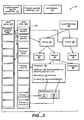
- the content of a content portfolio 97 is expressed in a tree of portfolio element objects beginning at a root element called Root portfolio (PF) element 80.
- the tree elements include the texts of articles 82, 84, sections of the articles 86 and paragraphs of sections 88.
- a paragraph element 88 could contain attribute information 90 (e.g., the fact that the language of the text is French), a nickname 92, and content information 94, such as the sentence "Mary had a little lamb.”
- the content information could be further specified as a list 95 of sub-content element pointers, 97, 99, which point to pieces of the content of a paragraph element.
- the purpose of the nickname is to allow users to optionally include an informal description of a portfolio element. This can help at binding time. When confronted with an element name such as "mi38798-2383", a human might find it convenient to have an informal description to understand what the element is, so that a correct binding can be made, for example, "A line from a nursery rhyme".
- the portfolio includes a list 100 of binding sites 102 each of which contains a pointer that associates the binding site with one of the elements in the tree.
- a site could point to an article, a paragraph, an item of subcontent, or to a group of elements.
- a list of groups 110 can be provided.
- Each group defines a group of binding sites of content elements that may go together.
- Groups allow collections of elements to be formed regardless of their positions in the hierarchical structure of the portfolio. For example, suppose Article1 contains a heading and three paragraphs while Article2 contains a heading and four paragraphs. In a table of contents, the headings may be listed using a single reference by forming a group of the binding sites for the headings in Article1 and Article2.
- the content portfolio also stores implementation-specific properties 111 that are pertinent to a class or kind of portfolio rather to an individual specific portfolio. For example, portfolios of a particular kind may have a maximum nickname length of 16 characters and a maximum length for names of attributes of 32 characters.
- the content portfolio also stores portfolio specific attributes 113 that are peculiar to a given portfolio.
- a list of referers 115 contains a list of the globally unique IDs of every object (such as a binding specification) that refers to this portfolio.
- globally unique means unique within the scope specified in a given implementation.
- Each content element is characterized by an attribute (for example, whether there is an external reference cr whether the element is in AllOneLanguage), a nickname ;such as "Hamlet's Query"), and the content of the element, such as the text "To be or not to be?"
- Figure 2 illustrates the logical structure of the content portfolio.
- the actual data structures and file formats could vary.
- the data structures and logical organization should be used consistently in all of the portfolios.
- a similar logical structure is used for layout portfolios as described below.
- the content application must be able to create a hierarchy of content elements of the kind suggested in figure 2 , the list of sites, and the list of groups based on information provided by the user.
- a conventional content application such as a word processor
- the tree, list of sites, list of groups, implementation-specific properties, portfolio-specific attributes, and list of referers are created by including the additional data in the existing application file format. This is achieved with software that implements the API mentioned earlier.
- the API can implement exactly the list of required data structures and operations (such as getting and setting properties and attributes) implied by those structures.
- An example of a content portfolio for a brochure is set forth below as an XML document consisting of articles, headings, sections, paragraphs, and image references. Some of these have binding sites that are referenced in the binding specification that is set forth below. The binding site identifiers appear after the letters BS in certain sections of the portfolio.
- the layout portfolio 302 includes a list of groups 110 and a list of binding sites 100 that are like the ones in the content portfolio.
- the information in the layout portfolio is expressed, as in the content portfolio, as a tree of portfolio elements beginning at a Root portfolio (PF) element 304. As in the case of the content portfolio, the entire tree is accessible through the root element. As shown, some elements are also the targets of pointers in binding sites. Examples of layout elements include paragraph styles 306, font styles 308, text flows 310, and master pages 312.
- Layout portfolios also contain implementation-specific properties 111, portfolio-specific attributes 113, and a list of referers 115, that are similar to the ones in the content portfolios discussed above.
- the implementation-specific properties may specify which version of the layout application was used to generate this layout portfolio
- the portfolio-specific attributes may specify where font files are located.
- the layout application must be able to create a hierarchy of layout elements of the kind suggested in figure 3 , the list of sites, and the list of groups based on information provided by the user.
- a conventional layout application such as a page layout program
- the tree, list of sites, list of groups, implementation-specific properties, portfolio-specific attributes, and list of referers are created by including the additional data in the existing application file format. This is achieved with software that implements the APIs mentioned earlier.
- the APIs may implement exactly the list of required data structures and operations (such as getting and setting properties and attributes) implied by those structures.
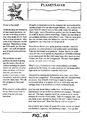
- FIG. 5A and 5B An example of a layout portfolio (for the brochure associated with the content portfolio set forth above and the binding specification set forth below) is shown in figures 5A and 5B .
- the brochure covers a two-page spread.
- An alternative layout portfolio could arrange the brochure onto one portrait page.
- This layout portfolio is shown as it would appear on screen and is based on the FrameMaker7 file format, although other file formats could be used.
- the outlined areas are specifications of the layout geometry.
- the style specifications like paragraph and character styles, are carried in standard FrameMaker style elements. All of the geometry and style elements are referenced in an index section. This index describes the binding sites that are visible to the clients (e.g., the formatter) and how they relate to internal FrameMaker elements.
- the index for the layout portfolio is set forth below. Each of the elements in the index assigns a binding site and in some cases additional parameters to an internal FrameMaker object like a Frame (which provides geometry information) or a style (which says how something should look--e.g.
- a binding specification 200 contains associations between binding sites in a content portfolio and binding sites in a layout portfolio.
- the main components of a binding specification are a list of element bindings 199, a list of model bindings 201, a referer ID 202, and a list of composition sequences 210.
- the referer ID 202 is a globally unique ID of the binding specification. When the formatter is to look up a site in a content or layout portfolio, the formatter uses the ID of the portfolio.
- the list of model bindings contains model bindings, each of which restricts a site to a given content or layout model, thus guaranteeing that a certain type of data will be found at the site.
- the formatter can ask the portfolio what the model of a specified element is. If the model does not match what the model binding says, the formatter can display an error message to the user. For example, a model binding could provide that sites 12, 34, and 387 in a layout portfolio must be FontStyles.
- the model binding also specifies whether the site is in a content or layout portfolio.
- the list of element bindings contains element bindings each of which maps content elements of a given type to one or more layout elements, styles in particular. For example, an element binding could map all content elements of the type PARAGRAPH to a layout element representing a particular paragraph style.
- a binding specification contains an ordered list of composition sequences 212.
- Each composition sequence contains an ordered list of composition blocks 214.
- Each composition block contains an ordered list of bindings 216.
- a direct binding 216 associates one or more sites of source elements with one or more sites of destination elements.
- the binding could list source sites (10, 9123, and 45) and destination sites (6719, 893, and 6594).
- the source elements could be content elements and the destination elements could be a layout elements or vice versa.
- a direct binding could indicate "place this content element (a picture) in this layout element (an image frame)".
- Placement bindings "place" one or more content elements into one or more layout elements, such as placing text on a page.
- Style bindings assign one or more styles either to one or more content elements (font styles to text), or to one or more layout elements (new paragraph styles for page 3 and 4).
- a template 220 associates a type of layout container (e.g., a specific master page of a layout portfolio) with information about when the container should be used (e.g., for first pages that appear on the right side of two page spreads).
- the syntax may be "Site (always in Layout): 6719; Usages: (FIRST, RIGHT)"
- One implementation may store the binding specification structures in XML format but other formats could also be used.
- the place elements describe where content elements should go.
- the style elements describe how the content should look.
- the global element specifies that all elements in the content whose Model is "FlowTxtCModel.PARA" should have the style "Body” applied to them. In other words, all paragraphs should use the Body style unless explicitly overridden by a more specific binding.
- binding specification is layout-oriented. It takes content and content elements and places them in predefined layout locations. Binding specifications can also be content-oriented or a mixture of both. A content-oriented binding specification would not specify the placement of each content element. Instead it would "pour" the content into layout templates that would grow as necessary (e.g. adding new pages) to accommodate the content.
- the formatter generates document pages by processing the binding specification.
- the formatter first extracts and stores any global bindings for later reference. These bindings only provide style information.
- the formatter then process the binding specification a composition sequence at a time in the order in which they appear in the binding specification. For each composition sequence, the formatter retrieves all contained composition blocks. If a given composition sequence contains more than one composition block with a placement binding, then those placements are processed in parallel. For example, a single composition sequence might contain two composition blocks each of which places an article in a separate column on the same page.
- placement bindings are processed before any style bindings are processed. Placement bindings are processed in the order in which they appear in the block.
- a placement binding can either refer to a fixed layout element, like a text frame in a particular location on a particular page, or a location in a template (e.g. master page).
- the content element is poured into the fixed container. New pages will not be added to accommodate the content. The content must fit in the container provided. In the latter case, a new page is created based on the template given in the binding specification and the content flows into the given container on the new page. Pages are added as necessary to accommodate the content.
- style bindings are applied to the content that was just placed.
- the style bindings of a given composition block can be processed in any order with the exception of styles applied to subcontent. Since subcontent ranges can overlap, the order in which these styles are applied is important. For example, a paragraph might contain the words "Mary had a little lamb”. One subcontent element might refer to the words “had a little” while another refers to the words “little lamb”. When styles are applied to these overlapping areas (e.g. 'make "had a little” blue' and 'make "little lamb” red'), the order of application is given in the binding spec and adhered to by the formatter.
- a given paragraph might have a paragraph format, P1, bound to it directly. It may also have a different paragraph format, P2, indirectly bound to it by virtue of being part of a container that had P2 bound to it (e.g. the paragraph is part of a section that had P2 bound to it). It may also have another paragraph style, P3, bound to it with a global binding.
- P1 paragraph format
- P2 indirectly bound to it by virtue of being part of a container that had P2 bound to it (e.g. the paragraph is part of a section that had P2 bound to it).
- P3 bound to it with a global binding.
- the formatter maintains enough context to always be able to determine the closest binding.
- the formatter Whenever the formatter processes a placement binding, it must examine the content object being placed, C, and determine whether there are placement bindings that refer to any of C's children. For example, a placement binding might tell the formatter to put a given article into a particular layout element (like a text box) and another placement binding in the same composition block might tell the formatter to put a particular paragraph, P, of C into a side bar text block. The formatter must recognize these situations and remove P from C while C is being placed. It places P when .it.gets around to processing the placement binding that refers to it. This is also true for explicitly placed subcontent as well.
- a given piece of content can be placed both as part of it's parent and on its own by specifying placement bindings in different composition blocks.
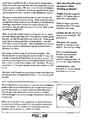
- Figures 6A and 6B show the output of the formatter using the binding specification and content and layout portfolio examples given above.
- a graphic was pulled into the background and a heading was laid over it.
- Each of the elements in the content and layout portfolios may comply with a native format that is peculiar to the application that generated it and that is different from the native format of other layout and content applications.
- the API of figure 1 enables the formatter to make use of the content and layout elements and the binding specification.
- the methods that may be implemented by each API are setting binding sites on content or layout elements, getting binding sites on content or layout elements, maintaining referential integrity of binding sites, instantiating a binding, enumerating the binding operations in a binding specification, editing content or layout elements or binding specifications, composing a document from a binding specification.
- the content in content elements that are included in a content portfolio must all comply with predefined content models.
- all content elements must be one of the following:
- the class hierarchy defines the scope of expression and constraints that apply to all elements.
- the base classes are predefined. New features can be defined by sub-classing. New base classes can be added although older formatters will not able to handle the new base classes until the formatters are upgraded.
- a content creator wishes to express traditionally structured text (sections, paragraphs, quotes), he uses the flow text model or a subclass of it. If the content creator wishes to express multi-layered 2D graphics, he uses the layered graphic model.
- the content element implementation for a specific content native format e.g., a text string in Microsoft Word file format
- Elements may implement more than one model at a time.
- a content element of a native Adobe Illustrator7 file may express itself as a vector or layered graphic or placed text.
- This content element may be easily used by a formatter that is designed to produce HTML output by treating the element as a Graphic super-class.
- the same element may be used by a formatter designed to generate FrameMaker files for printing by treating it as either a Graphic or Placed Text.
- the same element may be used by a full text indexer by treating it as Placed Text.
- One arrangement of high level layout models includes:
- Layout defines basic containers for contents and explicit placement directives (such as character by character adjustments, text on a curve).
- Presentation describes basic presentation attributes (styles) for content, such as font, color, and size.
- Dynamics describes how time or events affect the presentation, including animation, synchronization, triggers, and transitions.
- a layout element that does not implement the dynamics model has a static presentation in the sense that the document does not change over time.
- Each layout element implementation maps layout elements to corresponding content models.
- the content flow text model needs placement, so a layout element maps appropriate placement containers to content flow texts (e.g., frames in FrameMaker).
- the content Flow Text model needs presentation styles, so the layout presentation model maps appropriate styles to the content flow Texts (paragraph and character styles in FrameMaker).
- the content Flow Text model also needs explicit placement information, so the layout model called layout maps appropriate placement information to content Flow Texts
- Clients of the APIs (e.g., the formatter) take an active role while content and layout elements provide services to support the features of the clients.
- the content and layout elements do not implement features directly (for example, a content element does not implement "formatSelf” or “drawSelf” methods).
- Clients ask elements for information as needed.
- the content and layout elements must provide information in accordance with the models they claim to implement.
- Clients rely on the component implementations to do any mapping necessary to supply the information.
- an application could be provided that would enable a user to create new content to match aspects of an existing binding specification.
- Appendix A contains a description of a class hierarchy for an implementation of the invention.
- a machine-implemented method may be characterised in storing bindings that describe a first document by associating content elements with layout elements, the layout elements defining layout features or placement information to be applied to the associated content elements in the first document; the bindings being stored separately from both the content and the layout elements.
- the bindings may provide a primary control for the generation of the first document.
- one or more of the layout elements and one or more of the content elements may be identified by uniquely-named binding sites.
- one or more of the bindings may be layout-centric and one or more of the bindings are content-centric.
- the method may be further characterised in storing bindings that describe a second, different document by associating at least one of the content elements with at least one of the layout elements, the bindings for the second document being stored separately from the bindings for the first document and separately from the content and layout elements, wherein either (a) the bindings for the first document and the second document are the same, or (b) at least some of the content elements and layout elements for the first document and the second document are the same.
- the method may be further characterised in: creating a binding specification comprising the bindings for use in formatting the document based on the binding specification, content elements referenced by the binding specification, and layout elements referenced by the binding specification, and storing in the binding specification global bindings and direct bindings that aid a formatter in formatting documents.
- the global bindings may include a list of element bindings that define a default binding for elements of a specified type and the global bindings include a list of model bindings that define a default model for a specified binding site.
- the binding specification may contain composition sequences that aid the formatter in formatting documents, the composition sequences defining the order in which formatting is to proceed using bindings between content elements and layout elements, each of the composition sequences including composition blocks containing ordered lists of direct bindings.
- each of the direct bindings may comprise a placement binding or a style binding.
- the method may be further characterised in formatting the document based on the bindings, content elements, and layout elements, by processing bindings that comprise placement bindings before processing bindings that comprise style bindings.
- the method may be characterised in reading separately stored bindings, content elements, and layout elements, the bindings defining relationships between the content elements and the layout elements, and formatting content elements and layout elements in accordance with the bindings.
- the method may be further characterised in processing bindings that comprise placement bindings before processing bindings that comprise style bindings.
- the method being further characterised in determining whether the layout should be dominated by the layout components or the layout aspects of the content components.
- a computer program product stored on a machine-readable medium may be operable to perform any one of the above methods.
Landscapes
- Engineering & Computer Science (AREA)
- Theoretical Computer Science (AREA)
- Health & Medical Sciences (AREA)
- Artificial Intelligence (AREA)
- Audiology, Speech & Language Pathology (AREA)
- Computational Linguistics (AREA)
- General Health & Medical Sciences (AREA)
- Physics & Mathematics (AREA)
- General Engineering & Computer Science (AREA)
- General Physics & Mathematics (AREA)
- Document Processing Apparatus (AREA)
- Processing Or Creating Images (AREA)
Applications Claiming Priority (2)
| Application Number | Priority Date | Filing Date | Title |
|---|---|---|---|
| US09/360,399 US7039863B1 (en) | 1999-07-23 | 1999-07-23 | Computer generation of documents using layout elements and content elements |
| EP00948937A EP1232447B1 (fr) | 1999-07-23 | 2000-07-24 | Production informatique de documents au moyen d'elements de presentation et d'elements de contenu |
Related Parent Applications (1)
| Application Number | Title | Priority Date | Filing Date |
|---|---|---|---|
| EP00948937A Division EP1232447B1 (fr) | 1999-07-23 | 2000-07-24 | Production informatique de documents au moyen d'elements de presentation et d'elements de contenu |
Publications (2)
| Publication Number | Publication Date |
|---|---|
| EP2017742A2 true EP2017742A2 (fr) | 2009-01-21 |
| EP2017742A3 EP2017742A3 (fr) | 2009-02-25 |
Family
ID=23417811
Family Applications (2)
| Application Number | Title | Priority Date | Filing Date |
|---|---|---|---|
| EP00948937A Expired - Lifetime EP1232447B1 (fr) | 1999-07-23 | 2000-07-24 | Production informatique de documents au moyen d'elements de presentation et d'elements de contenu |
| EP08015867A Withdrawn EP2017742A3 (fr) | 1999-07-23 | 2000-07-24 | Génération informatique de documents utilisant des éléments de format et éléments de contenu |
Family Applications Before (1)
| Application Number | Title | Priority Date | Filing Date |
|---|---|---|---|
| EP00948937A Expired - Lifetime EP1232447B1 (fr) | 1999-07-23 | 2000-07-24 | Production informatique de documents au moyen d'elements de presentation et d'elements de contenu |
Country Status (4)
| Country | Link |
|---|---|
| US (3) | US7039863B1 (fr) |
| EP (2) | EP1232447B1 (fr) |
| DE (1) | DE60040234D1 (fr) |
| WO (1) | WO2001008033A2 (fr) |
Families Citing this family (186)
| Publication number | Priority date | Publication date | Assignee | Title |
|---|---|---|---|---|
| US7039863B1 (en) | 1999-07-23 | 2006-05-02 | Adobe Systems Incorporated | Computer generation of documents using layout elements and content elements |
| EP1281116A4 (fr) * | 2000-02-03 | 2009-04-29 | Xmpie Inc | Systeme et procede de production efficace de documents dynamiques |
| CA2452132C (fr) * | 2001-07-05 | 2010-11-16 | Sap Aktiengesellschaft | Definition de fichiers de mise en page par documents de langage de balisage |
| EP1280054A1 (fr) * | 2001-07-27 | 2003-01-29 | Sap Ag | Méthode et système informatique pour séparer et traiter de l'information de mise en page et des données d'un document |
| ATE464601T1 (de) * | 2001-07-27 | 2010-04-15 | Sap Ag | Verfahren und rechnersystem zum herstellen und verarbeiten einer browser-angepassten benutzerschnitstelle |
| ATE459043T1 (de) * | 2001-07-27 | 2010-03-15 | Sap Ag | Verfahren und rechnersystem zum bereitstellen und verarbeiten einer beschreibung einer menschschnittstelle |
| US20070157079A1 (en) * | 2001-08-31 | 2007-07-05 | Baker Jeffrey T | Apparatus and method for negotiating and generating contract documents on-line |
| US20040003349A1 (en) * | 2002-06-28 | 2004-01-01 | Microsoft Corporation | Content segments |
| AU2002950122A0 (en) * | 2002-07-11 | 2002-09-12 | Webnd Technologies | Software process for management of electronic pages in a distributed environment |
| US7337401B2 (en) * | 2002-12-18 | 2008-02-26 | Microsoft Corporation | User interface element representation with simplified view |
| US7707255B2 (en) | 2003-07-01 | 2010-04-27 | Microsoft Corporation | Automatic grouping of electronic mail |
| US20050114765A1 (en) * | 2003-11-25 | 2005-05-26 | Gudenkauf John C. | Producing a page of information based on a dynamic edit form and one or more transforms |
| US20050114764A1 (en) * | 2003-11-25 | 2005-05-26 | Gudenkauf John C. | Producing a page of information based on a dynamic edit form and one or more transforms |
| US7856596B2 (en) * | 2004-02-17 | 2010-12-21 | Microsoft Corporation | Method and system for separation of content and layout definitions in a display description |
| EP1603072A1 (fr) * | 2004-06-02 | 2005-12-07 | CCS Content Conversion Specialists GmbH | Procédé et dispositif pour analyser la structure d'un document |
| US7703036B2 (en) | 2004-08-16 | 2010-04-20 | Microsoft Corporation | User interface for displaying selectable software functionality controls that are relevant to a selected object |
| US8146016B2 (en) | 2004-08-16 | 2012-03-27 | Microsoft Corporation | User interface for displaying a gallery of formatting options applicable to a selected object |
| US8255828B2 (en) | 2004-08-16 | 2012-08-28 | Microsoft Corporation | Command user interface for displaying selectable software functionality controls |
| US9015621B2 (en) | 2004-08-16 | 2015-04-21 | Microsoft Technology Licensing, Llc | Command user interface for displaying multiple sections of software functionality controls |
| WO2006031049A2 (fr) * | 2004-09-13 | 2006-03-23 | Lg Electronics Inc. | Procede et appareil de reproduction de donnees a partir d'un support d'enregistrement au moyen d'un bloc memoire local |
| WO2006031048A2 (fr) * | 2004-09-13 | 2006-03-23 | Lg Electronics Inc. | Procede et appareil permettant la lecture de donnees enregistrees sur un support d'enregistrement faisant appel a une memoire locale |
| US20060077817A1 (en) * | 2004-09-13 | 2006-04-13 | Seo Kang S | Method and apparatus for reproducing data from recording medium using local storage |
| GB2418280A (en) * | 2004-09-18 | 2006-03-22 | Hewlett Packard Development Co | Document creation system |
| US7707498B2 (en) * | 2004-09-30 | 2010-04-27 | Microsoft Corporation | Specific type content manager in an electronic document |
| KR20060047549A (ko) * | 2004-10-12 | 2006-05-18 | 엘지전자 주식회사 | 로컬 스토리지를 이용한 기록매체 재생방법 및 재생장치 |
| US7783161B2 (en) * | 2004-11-08 | 2010-08-24 | Lg Electronics Inc. | Method and apparatus for reproducing data from recording medium using local storage |
| EP1836584A4 (fr) * | 2004-11-16 | 2009-05-06 | Zalag Corp | Procedes d'affichage/de presentation et dispositifs correspondants a elements de contenu et contenants d'affichage |
| KR20060063602A (ko) * | 2004-12-03 | 2006-06-12 | 엘지전자 주식회사 | 로컬 스토리지 데이터를 삭제하는 방법 및 장치 |
| US7730394B2 (en) * | 2005-01-06 | 2010-06-01 | Microsoft Corporation | Data binding in a word-processing application |
| US7617234B2 (en) * | 2005-01-06 | 2009-11-10 | Microsoft Corporation | XML schema for binding data |
| US7945590B2 (en) * | 2005-01-06 | 2011-05-17 | Microsoft Corporation | Programmability for binding data |
| KR20060081323A (ko) * | 2005-01-07 | 2006-07-12 | 엘지전자 주식회사 | 로컬 스토리지를 이용한 기록매체 재생방법 및 재생장치 |
| GB2422702A (en) * | 2005-01-31 | 2006-08-02 | Hewlett Packard Development Co | Preparing a document for display or printing |
| JP2006221582A (ja) * | 2005-02-14 | 2006-08-24 | Canon Inc | 情報処理装置及びその制御方法、プログラム |
| US7752224B2 (en) | 2005-02-25 | 2010-07-06 | Microsoft Corporation | Programmability for XML data store for documents |
| US7668873B2 (en) | 2005-02-25 | 2010-02-23 | Microsoft Corporation | Data store for software application documents |
| JP4095617B2 (ja) * | 2005-02-28 | 2008-06-04 | キヤノン株式会社 | 文書処理装置及び文書処理方法及びコンピュータプログラム |
| US8086963B2 (en) * | 2005-05-19 | 2011-12-27 | Microsoft Corporation | Inheritance model between masters, layouts and slides |
| US7268896B2 (en) * | 2005-06-04 | 2007-09-11 | Bell Litho, Inc. | Method for controlling brand integrity in a network environment |
| US7630784B2 (en) | 2005-07-22 | 2009-12-08 | International Business Machines Corporation | Method and apparatus for independent deployment of roles |
| US20070055685A1 (en) * | 2005-08-18 | 2007-03-08 | Avaya Technology Corp. | Telecommunications terminal with multiple display modes |
| US7953696B2 (en) * | 2005-09-09 | 2011-05-31 | Microsoft Corporation | Real-time synchronization of XML data between applications |
| US8627222B2 (en) | 2005-09-12 | 2014-01-07 | Microsoft Corporation | Expanded search and find user interface |
| JP4321549B2 (ja) * | 2005-09-28 | 2009-08-26 | セイコーエプソン株式会社 | 文書作成システム、文書作成方法、プログラムおよび記憶媒体 |
| JP4328762B2 (ja) * | 2005-12-06 | 2009-09-09 | キヤノン株式会社 | 情報処理装置、情報処理方法、プログラム及び記憶媒体 |
| US9348799B2 (en) * | 2005-12-09 | 2016-05-24 | Adobe Systems Incorporated | Forming a master page for an electronic document |
| US9727989B2 (en) | 2006-06-01 | 2017-08-08 | Microsoft Technology Licensing, Llc | Modifying and formatting a chart using pictorially provided chart elements |
| US7954048B2 (en) * | 2006-09-21 | 2011-05-31 | International Business Machines Corporation | Content management via configuration set relationships in a content management system |
| US9201854B1 (en) * | 2006-10-25 | 2015-12-01 | Hewlett-Packard Development Company, L.P. | Methods and systems for creating, interacting with, and utilizing a superactive document |
| US8930331B2 (en) | 2007-02-21 | 2015-01-06 | Palantir Technologies | Providing unique views of data based on changes or rules |
| US20080215966A1 (en) * | 2007-03-01 | 2008-09-04 | Microsoft Corporation | Adaptive server-based layout of web documents |
| AU2007201627B2 (en) * | 2007-04-13 | 2010-11-25 | Canon Kabushiki Kaisha | Gluing layout containers |
| US8516365B2 (en) * | 2007-06-15 | 2013-08-20 | Microsoft Corporation | Dynamically laying out images and associated text using pre-defined layouts |
| US8762880B2 (en) | 2007-06-29 | 2014-06-24 | Microsoft Corporation | Exposing non-authoring features through document status information in an out-space user interface |
| US8484578B2 (en) | 2007-06-29 | 2013-07-09 | Microsoft Corporation | Communication between a document editor in-space user interface and a document editor out-space user interface |
| US9588781B2 (en) | 2008-03-31 | 2017-03-07 | Microsoft Technology Licensing, Llc | Associating command surfaces with multiple active components |
| US9665850B2 (en) | 2008-06-20 | 2017-05-30 | Microsoft Technology Licensing, Llc | Synchronized conversation-centric message list and message reading pane |
| US8984390B2 (en) | 2008-09-15 | 2015-03-17 | Palantir Technologies, Inc. | One-click sharing for screenshots and related documents |
| US8321435B2 (en) * | 2009-08-12 | 2012-11-27 | Apple Inc. | Quick find for data fields |
| US8700646B2 (en) * | 2009-08-12 | 2014-04-15 | Apple Inc. | Reference file for formatted views |
| US8176412B2 (en) * | 2009-08-25 | 2012-05-08 | International Business Machines Corporation | Generating formatted documents |
| US8468448B2 (en) * | 2009-10-28 | 2013-06-18 | Hewlett-Packard Development Company, L.P. | Methods and systems for preparing mixed-content documents |
| US20110221764A1 (en) * | 2010-03-12 | 2011-09-15 | Microsoft Corporation | Laying out and cropping images in pre-defined layouts |
| US20120084640A1 (en) * | 2010-09-30 | 2012-04-05 | Konica Minolta Systems Laboratory Inc. | Resolving page references in layout dependent documents |
| US20130298012A1 (en) * | 2011-01-25 | 2013-11-07 | David Neil Slatter | Document Design Capture and Reuse System |
| US8756494B2 (en) * | 2011-02-15 | 2014-06-17 | Adobe Systems Incorporated | Methods and systems for designing documents with inline scrollable elements |
| US9015577B2 (en) | 2011-05-06 | 2015-04-21 | Microsoft Technology Licensing, Llc | Content flow through containers |
| US8799240B2 (en) | 2011-06-23 | 2014-08-05 | Palantir Technologies, Inc. | System and method for investigating large amounts of data |
| US9092482B2 (en) | 2013-03-14 | 2015-07-28 | Palantir Technologies, Inc. | Fair scheduling for mixed-query loads |
| US9547693B1 (en) | 2011-06-23 | 2017-01-17 | Palantir Technologies Inc. | Periodic database search manager for multiple data sources |
| US9280532B2 (en) | 2011-08-02 | 2016-03-08 | Palantir Technologies, Inc. | System and method for accessing rich objects via spreadsheets |
| US8732574B2 (en) | 2011-08-25 | 2014-05-20 | Palantir Technologies, Inc. | System and method for parameterizing documents for automatic workflow generation |
| US8504542B2 (en) | 2011-09-02 | 2013-08-06 | Palantir Technologies, Inc. | Multi-row transactions |
| US20140108922A1 (en) * | 2012-10-16 | 2014-04-17 | Theo Gravity | Content layout determination |
| US9348677B2 (en) | 2012-10-22 | 2016-05-24 | Palantir Technologies Inc. | System and method for batch evaluation programs |
| US10410257B1 (en) * | 2012-12-18 | 2019-09-10 | Nativo, Inc. | Native online ad creation |
| US9380431B1 (en) | 2013-01-31 | 2016-06-28 | Palantir Technologies, Inc. | Use of teams in a mobile application |
| US20140258003A1 (en) * | 2013-03-07 | 2014-09-11 | Microsoft Corporation | Online advertising with integrated interfaces |
| US10037314B2 (en) | 2013-03-14 | 2018-07-31 | Palantir Technologies, Inc. | Mobile reports |
| US8909656B2 (en) | 2013-03-15 | 2014-12-09 | Palantir Technologies Inc. | Filter chains with associated multipath views for exploring large data sets |
| US8818892B1 (en) | 2013-03-15 | 2014-08-26 | Palantir Technologies, Inc. | Prioritizing data clusters with customizable scoring strategies |
| US10275778B1 (en) | 2013-03-15 | 2019-04-30 | Palantir Technologies Inc. | Systems and user interfaces for dynamic and interactive investigation based on automatic malfeasance clustering of related data in various data structures |
| US8868486B2 (en) | 2013-03-15 | 2014-10-21 | Palantir Technologies Inc. | Time-sensitive cube |
| US9965937B2 (en) | 2013-03-15 | 2018-05-08 | Palantir Technologies Inc. | External malware data item clustering and analysis |
| US8937619B2 (en) | 2013-03-15 | 2015-01-20 | Palantir Technologies Inc. | Generating an object time series from data objects |
| US8917274B2 (en) | 2013-03-15 | 2014-12-23 | Palantir Technologies Inc. | Event matrix based on integrated data |
| US8799799B1 (en) | 2013-05-07 | 2014-08-05 | Palantir Technologies Inc. | Interactive geospatial map |
| US9223773B2 (en) | 2013-08-08 | 2015-12-29 | Palatir Technologies Inc. | Template system for custom document generation |
| US8713467B1 (en) | 2013-08-09 | 2014-04-29 | Palantir Technologies, Inc. | Context-sensitive views |
| US9785317B2 (en) | 2013-09-24 | 2017-10-10 | Palantir Technologies Inc. | Presentation and analysis of user interaction data |
| US8938686B1 (en) | 2013-10-03 | 2015-01-20 | Palantir Technologies Inc. | Systems and methods for analyzing performance of an entity |
| US8812960B1 (en) | 2013-10-07 | 2014-08-19 | Palantir Technologies Inc. | Cohort-based presentation of user interaction data |
| EP2863321A1 (fr) * | 2013-10-16 | 2015-04-22 | Valipat S.A. | Procédé et système de génération automatique de documents à partir d'un index |
| US9116975B2 (en) | 2013-10-18 | 2015-08-25 | Palantir Technologies Inc. | Systems and user interfaces for dynamic and interactive simultaneous querying of multiple data stores |
| US8924872B1 (en) | 2013-10-18 | 2014-12-30 | Palantir Technologies Inc. | Overview user interface of emergency call data of a law enforcement agency |
| US9021384B1 (en) | 2013-11-04 | 2015-04-28 | Palantir Technologies Inc. | Interactive vehicle information map |
| US8868537B1 (en) | 2013-11-11 | 2014-10-21 | Palantir Technologies, Inc. | Simple web search |
| US9105000B1 (en) | 2013-12-10 | 2015-08-11 | Palantir Technologies Inc. | Aggregating data from a plurality of data sources |
| US9727622B2 (en) | 2013-12-16 | 2017-08-08 | Palantir Technologies, Inc. | Methods and systems for analyzing entity performance |
| US9552615B2 (en) | 2013-12-20 | 2017-01-24 | Palantir Technologies Inc. | Automated database analysis to detect malfeasance |
| US10356032B2 (en) | 2013-12-26 | 2019-07-16 | Palantir Technologies Inc. | System and method for detecting confidential information emails |
| US9043696B1 (en) * | 2014-01-03 | 2015-05-26 | Palantir Technologies Inc. | Systems and methods for visual definition of data associations |
| US8832832B1 (en) | 2014-01-03 | 2014-09-09 | Palantir Technologies Inc. | IP reputation |
| US9483162B2 (en) | 2014-02-20 | 2016-11-01 | Palantir Technologies Inc. | Relationship visualizations |
| US9727376B1 (en) | 2014-03-04 | 2017-08-08 | Palantir Technologies, Inc. | Mobile tasks |
| US8924429B1 (en) | 2014-03-18 | 2014-12-30 | Palantir Technologies Inc. | Determining and extracting changed data from a data source |
| US9857958B2 (en) | 2014-04-28 | 2018-01-02 | Palantir Technologies Inc. | Systems and user interfaces for dynamic and interactive access of, investigation of, and analysis of data objects stored in one or more databases |
| US9009171B1 (en) | 2014-05-02 | 2015-04-14 | Palantir Technologies Inc. | Systems and methods for active column filtering |
| US9619557B2 (en) | 2014-06-30 | 2017-04-11 | Palantir Technologies, Inc. | Systems and methods for key phrase characterization of documents |
| US9535974B1 (en) | 2014-06-30 | 2017-01-03 | Palantir Technologies Inc. | Systems and methods for identifying key phrase clusters within documents |
| US9202249B1 (en) | 2014-07-03 | 2015-12-01 | Palantir Technologies Inc. | Data item clustering and analysis |
| US9785773B2 (en) | 2014-07-03 | 2017-10-10 | Palantir Technologies Inc. | Malware data item analysis |
| US9256664B2 (en) | 2014-07-03 | 2016-02-09 | Palantir Technologies Inc. | System and method for news events detection and visualization |
| US9454281B2 (en) | 2014-09-03 | 2016-09-27 | Palantir Technologies Inc. | System for providing dynamic linked panels in user interface |
| US9767172B2 (en) | 2014-10-03 | 2017-09-19 | Palantir Technologies Inc. | Data aggregation and analysis system |
| US9501851B2 (en) | 2014-10-03 | 2016-11-22 | Palantir Technologies Inc. | Time-series analysis system |
| US9984133B2 (en) | 2014-10-16 | 2018-05-29 | Palantir Technologies Inc. | Schematic and database linking system |
| US20160110321A1 (en) * | 2014-10-17 | 2016-04-21 | Karol Kalisz | Application customization through linked embedded areas |
| US9229952B1 (en) | 2014-11-05 | 2016-01-05 | Palantir Technologies, Inc. | History preserving data pipeline system and method |
| US9043894B1 (en) | 2014-11-06 | 2015-05-26 | Palantir Technologies Inc. | Malicious software detection in a computing system |
| US10552994B2 (en) | 2014-12-22 | 2020-02-04 | Palantir Technologies Inc. | Systems and interactive user interfaces for dynamic retrieval, analysis, and triage of data items |
| US9348920B1 (en) | 2014-12-22 | 2016-05-24 | Palantir Technologies Inc. | Concept indexing among database of documents using machine learning techniques |
| US10362133B1 (en) | 2014-12-22 | 2019-07-23 | Palantir Technologies Inc. | Communication data processing architecture |
| US9367872B1 (en) | 2014-12-22 | 2016-06-14 | Palantir Technologies Inc. | Systems and user interfaces for dynamic and interactive investigation of bad actor behavior based on automatic clustering of related data in various data structures |
| US20160179768A1 (en) * | 2014-12-23 | 2016-06-23 | Constant Contact | Multichannel authoring and content management system |
| US10452651B1 (en) | 2014-12-23 | 2019-10-22 | Palantir Technologies Inc. | Searching charts |
| US12443336B2 (en) | 2014-12-29 | 2025-10-14 | Palantir Technologies Inc. | Interactive user interface for dynamically updating data and data analysis and query processing |
| US9335911B1 (en) | 2014-12-29 | 2016-05-10 | Palantir Technologies Inc. | Interactive user interface for dynamic data analysis exploration and query processing |
| US9817563B1 (en) | 2014-12-29 | 2017-11-14 | Palantir Technologies Inc. | System and method of generating data points from one or more data stores of data items for chart creation and manipulation |
| US9870205B1 (en) | 2014-12-29 | 2018-01-16 | Palantir Technologies Inc. | Storing logical units of program code generated using a dynamic programming notebook user interface |
| US10372879B2 (en) | 2014-12-31 | 2019-08-06 | Palantir Technologies Inc. | Medical claims lead summary report generation |
| US10387834B2 (en) | 2015-01-21 | 2019-08-20 | Palantir Technologies Inc. | Systems and methods for accessing and storing snapshots of a remote application in a document |
| BE1021629B1 (fr) * | 2015-02-13 | 2015-12-21 | Valipat Sa | Procede et systeme de generation automatique de documents a partir d'un index |
| US9727560B2 (en) | 2015-02-25 | 2017-08-08 | Palantir Technologies Inc. | Systems and methods for organizing and identifying documents via hierarchies and dimensions of tags |
| EP3611632A1 (fr) | 2015-03-16 | 2020-02-19 | Palantir Technologies Inc. | Affichage de données d'attribut et d'événement le long de chemins |
| US9886467B2 (en) | 2015-03-19 | 2018-02-06 | Plantir Technologies Inc. | System and method for comparing and visualizing data entities and data entity series |
| US9672257B2 (en) | 2015-06-05 | 2017-06-06 | Palantir Technologies Inc. | Time-series data storage and processing database system |
| US9454785B1 (en) | 2015-07-30 | 2016-09-27 | Palantir Technologies Inc. | Systems and user interfaces for holistic, data-driven investigation of bad actor behavior based on clustering and scoring of related data |
| US9996595B2 (en) | 2015-08-03 | 2018-06-12 | Palantir Technologies, Inc. | Providing full data provenance visualization for versioned datasets |
| US9456000B1 (en) | 2015-08-06 | 2016-09-27 | Palantir Technologies Inc. | Systems, methods, user interfaces, and computer-readable media for investigating potential malicious communications |
| US9600146B2 (en) | 2015-08-17 | 2017-03-21 | Palantir Technologies Inc. | Interactive geospatial map |
| US10489391B1 (en) | 2015-08-17 | 2019-11-26 | Palantir Technologies Inc. | Systems and methods for grouping and enriching data items accessed from one or more databases for presentation in a user interface |
| US10102369B2 (en) | 2015-08-19 | 2018-10-16 | Palantir Technologies Inc. | Checkout system executable code monitoring, and user account compromise determination system |
| US10853378B1 (en) | 2015-08-25 | 2020-12-01 | Palantir Technologies Inc. | Electronic note management via a connected entity graph |
| US11150917B2 (en) | 2015-08-26 | 2021-10-19 | Palantir Technologies Inc. | System for data aggregation and analysis of data from a plurality of data sources |
| US9485265B1 (en) | 2015-08-28 | 2016-11-01 | Palantir Technologies Inc. | Malicious activity detection system capable of efficiently processing data accessed from databases and generating alerts for display in interactive user interfaces |
| US10706434B1 (en) | 2015-09-01 | 2020-07-07 | Palantir Technologies Inc. | Methods and systems for determining location information |
| US9454564B1 (en) | 2015-09-09 | 2016-09-27 | Palantir Technologies Inc. | Data integrity checks |
| US9576015B1 (en) | 2015-09-09 | 2017-02-21 | Palantir Technologies, Inc. | Domain-specific language for dataset transformations |
| US20170344205A1 (en) * | 2015-09-10 | 2017-11-30 | Apple Inc. | Systems and methods for displaying and navigating content in digital media |
| US10296617B1 (en) | 2015-10-05 | 2019-05-21 | Palantir Technologies Inc. | Searches of highly structured data |
| US9542446B1 (en) | 2015-12-17 | 2017-01-10 | Palantir Technologies, Inc. | Automatic generation of composite datasets based on hierarchical fields |
| US10089289B2 (en) | 2015-12-29 | 2018-10-02 | Palantir Technologies Inc. | Real-time document annotation |
| US9823818B1 (en) | 2015-12-29 | 2017-11-21 | Palantir Technologies Inc. | Systems and interactive user interfaces for automatic generation of temporal representation of data objects |
| US9612723B1 (en) | 2015-12-30 | 2017-04-04 | Palantir Technologies Inc. | Composite graphical interface with shareable data-objects |
| US10521494B2 (en) * | 2016-02-02 | 2019-12-31 | Adobe Inc. | Content to layout template mapping and transformation |
| US10698938B2 (en) | 2016-03-18 | 2020-06-30 | Palantir Technologies Inc. | Systems and methods for organizing and identifying documents via hierarchies and dimensions of tags |
| JP6818050B2 (ja) | 2016-05-29 | 2021-01-20 | ウィックス.コム リミテッド. | ウェブサイト構築システムおよび方法 |
| US10007674B2 (en) | 2016-06-13 | 2018-06-26 | Palantir Technologies Inc. | Data revision control in large-scale data analytic systems |
| US10324609B2 (en) | 2016-07-21 | 2019-06-18 | Palantir Technologies Inc. | System for providing dynamic linked panels in user interface |
| US10719188B2 (en) | 2016-07-21 | 2020-07-21 | Palantir Technologies Inc. | Cached database and synchronization system for providing dynamic linked panels in user interface |
| US12204845B2 (en) | 2016-07-21 | 2025-01-21 | Palantir Technologies Inc. | Cached database and synchronization system for providing dynamic linked panels in user interface |
| US9753935B1 (en) | 2016-08-02 | 2017-09-05 | Palantir Technologies Inc. | Time-series data storage and processing database system |
| US10437840B1 (en) | 2016-08-19 | 2019-10-08 | Palantir Technologies Inc. | Focused probabilistic entity resolution from multiple data sources |
| US10133588B1 (en) | 2016-10-20 | 2018-11-20 | Palantir Technologies Inc. | Transforming instructions for collaborative updates |
| US10318630B1 (en) | 2016-11-21 | 2019-06-11 | Palantir Technologies Inc. | Analysis of large bodies of textual data |
| US10884875B2 (en) | 2016-12-15 | 2021-01-05 | Palantir Technologies Inc. | Incremental backup of computer data files |
| US10223099B2 (en) | 2016-12-21 | 2019-03-05 | Palantir Technologies Inc. | Systems and methods for peer-to-peer build sharing |
| US10460602B1 (en) | 2016-12-28 | 2019-10-29 | Palantir Technologies Inc. | Interactive vehicle information mapping system |
| US10896097B1 (en) | 2017-05-25 | 2021-01-19 | Palantir Technologies Inc. | Approaches for backup and restoration of integrated databases |
| GB201708818D0 (en) | 2017-06-02 | 2017-07-19 | Palantir Technologies Inc | Systems and methods for retrieving and processing data |
| US10956406B2 (en) | 2017-06-12 | 2021-03-23 | Palantir Technologies Inc. | Propagated deletion of database records and derived data |
| US10403011B1 (en) | 2017-07-18 | 2019-09-03 | Palantir Technologies Inc. | Passing system with an interactive user interface |
| US11334552B2 (en) | 2017-07-31 | 2022-05-17 | Palantir Technologies Inc. | Lightweight redundancy tool for performing transactions |
| US10417224B2 (en) | 2017-08-14 | 2019-09-17 | Palantir Technologies Inc. | Time series database processing system |
| US10216695B1 (en) | 2017-09-21 | 2019-02-26 | Palantir Technologies Inc. | Database system for time series data storage, processing, and analysis |
| US11281726B2 (en) | 2017-12-01 | 2022-03-22 | Palantir Technologies Inc. | System and methods for faster processor comparisons of visual graph features |
| US10614069B2 (en) | 2017-12-01 | 2020-04-07 | Palantir Technologies Inc. | Workflow driven database partitioning |
| US11016986B2 (en) | 2017-12-04 | 2021-05-25 | Palantir Technologies Inc. | Query-based time-series data display and processing system |
| US11599369B1 (en) | 2018-03-08 | 2023-03-07 | Palantir Technologies Inc. | Graphical user interface configuration system |
| US10754822B1 (en) | 2018-04-18 | 2020-08-25 | Palantir Technologies Inc. | Systems and methods for ontology migration |
| US10885021B1 (en) | 2018-05-02 | 2021-01-05 | Palantir Technologies Inc. | Interactive interpreter and graphical user interface |
| GB201807534D0 (en) | 2018-05-09 | 2018-06-20 | Palantir Technologies Inc | Systems and methods for indexing and searching |
| US11119630B1 (en) | 2018-06-19 | 2021-09-14 | Palantir Technologies Inc. | Artificial intelligence assisted evaluations and user interface for same |
| GB201908091D0 (en) | 2019-06-06 | 2019-07-24 | Palantir Technologies Inc | Time series databases |
| US12353678B2 (en) | 2019-10-17 | 2025-07-08 | Palantir Technologies Inc. | Object-centric data analysis system and associated graphical user interfaces |
Citations (1)
| Publication number | Priority date | Publication date | Assignee | Title |
|---|---|---|---|---|
| WO1998010356A1 (fr) | 1996-09-09 | 1998-03-12 | Design Intelligence, Inc. | Mise en page et mise en forme automatiques d'un contenu avec une presentation dans un support |
Family Cites Families (79)
| Publication number | Priority date | Publication date | Assignee | Title |
|---|---|---|---|---|
| US5181162A (en) * | 1989-12-06 | 1993-01-19 | Eastman Kodak Company | Document management and production system |
| JP3023690B2 (ja) * | 1990-06-15 | 2000-03-21 | 富士ゼロックス株式会社 | 文書処理装置及び方法 |
| US5326568A (en) * | 1991-05-03 | 1994-07-05 | Giampapa Vincent C | Method of tissue-specific delivery |
| FR2679353B1 (fr) * | 1991-07-17 | 1997-01-03 | Bull Sa | Procede de mise en page de documents structures. |
| CA2048039A1 (fr) | 1991-07-19 | 1993-01-20 | Steven Derose | Systeme et methode de traitement de donnees pour produire une representation de documents electroniques et consulter ces derniers |
| ATE187268T1 (de) | 1992-07-06 | 1999-12-15 | Microsoft Corp | Verfahren zur namensgebung und zur bindung von objekten |
| JPH08212205A (ja) * | 1995-02-07 | 1996-08-20 | Nec Corp | 複合文書管理システム |
| JP3684554B2 (ja) * | 1995-04-20 | 2005-08-17 | 富士ゼロックス株式会社 | 文書処理装置 |
| AUPN374295A0 (en) | 1995-06-22 | 1995-07-13 | Cybergraphic Systems Pty. Ltd. | Electronic publishing system |
| US6016520A (en) * | 1995-07-14 | 2000-01-18 | Microsoft Corporation | Method of viewing at a client viewing station a multiple media title stored at a server and containing a plurality of topics utilizing anticipatory caching |
| US5878421A (en) * | 1995-07-17 | 1999-03-02 | Microsoft Corporation | Information map |
| US5907837A (en) * | 1995-07-17 | 1999-05-25 | Microsoft Corporation | Information retrieval system in an on-line network including separate content and layout of published titles |
| US6230173B1 (en) * | 1995-07-17 | 2001-05-08 | Microsoft Corporation | Method for creating structured documents in a publishing system |
| US6199082B1 (en) * | 1995-07-17 | 2001-03-06 | Microsoft Corporation | Method for delivering separate design and content in a multimedia publishing system |
| JPH0969101A (ja) * | 1995-08-31 | 1997-03-11 | Hitachi Ltd | 構造化文書生成方法および装置 |
| JP2994996B2 (ja) * | 1995-12-01 | 1999-12-27 | 松下電器産業株式会社 | マルチメディア編集装置 |
| US6012071A (en) * | 1996-01-29 | 2000-01-04 | Futuretense, Inc. | Distributed electronic publishing system |
| US6026416A (en) * | 1996-05-30 | 2000-02-15 | Microsoft Corp. | System and method for storing, viewing, editing, and processing ordered sections having different file formats |
| US6101513A (en) * | 1996-05-31 | 2000-08-08 | Microsoft Corporation | Method and apparatus for displaying database information according to a specified print layout and page format |
| GB2313933B (en) * | 1996-06-07 | 2000-06-28 | Edward Henry Mathews | A method of assisting the conducting of a research project |
| EP0814425A3 (fr) | 1996-06-18 | 1999-08-18 | SCITEX DIGITAL PRINTING, Inc. | Méthode de création de mise en page complexe avec des données variables pour des systèmes d'impression à grande vitesse |
| US6434578B1 (en) * | 1996-06-26 | 2002-08-13 | Microsoft Corporation | Generating instruction sequences using independently executable pane renderers |
| US5895476A (en) * | 1996-09-09 | 1999-04-20 | Design Intelligence, Inc. | Design engine for automatic reformatting for design and media |
| US6314213B1 (en) * | 1996-09-19 | 2001-11-06 | Canon Kabushiki Kaisha | Image processing apparatus and method which process image on the basis of direction of document |
| US6029182A (en) * | 1996-10-04 | 2000-02-22 | Canon Information Systems, Inc. | System for generating a custom formatted hypertext document by using a personal profile to retrieve hierarchical documents |
| US6596032B2 (en) * | 1996-10-15 | 2003-07-22 | Fujitsu Limited | Document processing apparatus storing and modifying data using effect data |
| US6023714A (en) * | 1997-04-24 | 2000-02-08 | Microsoft Corporation | Method and system for dynamically adapting the layout of a document to an output device |
| US6026417A (en) * | 1997-05-02 | 2000-02-15 | Microsoft Corporation | Desktop publishing software for automatically changing the layout of content-filled documents |
| US6046818A (en) * | 1997-06-03 | 2000-04-04 | Adobe Systems Incorporated | Imposition in a raster image processor |
| US6374271B1 (en) * | 1997-09-26 | 2002-04-16 | Fuji Xerox Co., Ltd. | Hypermedia document authoring using a goals outline and a presentation outline |
| JPH11143874A (ja) * | 1997-11-11 | 1999-05-28 | Fujitsu Ltd | 構造化文書の体裁定義支援装置 |
| US7069453B1 (en) * | 1997-11-24 | 2006-06-27 | Xerox Corporation | Paper document satchels |
| US6177933B1 (en) * | 1997-11-26 | 2001-01-23 | Adobe Systems, Inc. | Providing visual continuity when displaying related information |
| US6424978B1 (en) * | 1997-12-05 | 2002-07-23 | Siemens Corporate Research, Inc. | Formatting card-based hypermedia documents by automatic scripting |
| US6192362B1 (en) * | 1997-12-15 | 2001-02-20 | International Business Machines Corporation | System and method for creating a search form for accessing directory information |
| JP3773642B2 (ja) * | 1997-12-18 | 2006-05-10 | 株式会社東芝 | 画像処理装置および画像形成装置 |
| JPH11250272A (ja) * | 1998-01-08 | 1999-09-17 | Xerox Corp | 自動イメ―ジレイアウト方法及びシステム |
| US6401097B1 (en) * | 1998-01-23 | 2002-06-04 | Mccotter Thomas M. | System and method for integrated document management and related transmission and access |
| US6038567A (en) * | 1998-02-19 | 2000-03-14 | Microsoft Corporation | Method and system for propagating object properties in a desktop publishing program |
| US6065012A (en) * | 1998-02-27 | 2000-05-16 | Microsoft Corporation | System and method for displaying and manipulating user-relevant data |
| JP3597697B2 (ja) * | 1998-03-20 | 2004-12-08 | 富士通株式会社 | 文書要約装置およびその方法 |
| JPH11272871A (ja) * | 1998-03-20 | 1999-10-08 | Toshiba Corp | 文書画像処理装置、文書画像処理方法、及び記録媒体 |
| US20020091725A1 (en) * | 1998-05-12 | 2002-07-11 | David Skok | Method and apparatus for providing client-based web page content creation and management |
| US6480866B2 (en) * | 1998-06-30 | 2002-11-12 | International Business Machines Corporation | Method and apparatus to facilitate creation of documents from individual pages |
| JP2000035959A (ja) * | 1998-07-17 | 2000-02-02 | Matsushita Electric Ind Co Ltd | ワードプロセッサの文書管理方法とその装置 |
| US6279013B1 (en) * | 1998-07-20 | 2001-08-21 | Xerox Corporation | Interactive newspaper |
| AU6258499A (en) * | 1998-09-22 | 2000-04-10 | Science Applications International Corporation | User-defined dynamic collaborative environments |
| EP1198765B1 (fr) * | 1998-10-28 | 2004-08-11 | Verticalone Corporation | Appareil et procede de regroupement et de mise a disposition automatises de donnees ou informations personnelles electroniques |
| US7131062B2 (en) * | 1998-12-09 | 2006-10-31 | International Business Machines Corporation | Systems, methods and computer program products for associating dynamically generated web page content with web site visitors |
| US7428701B1 (en) * | 1998-12-18 | 2008-09-23 | Appligent Inc. | Method, system and computer program for redaction of material from documents |
| US6377956B1 (en) * | 1999-02-22 | 2002-04-23 | Siemens Corporate Research, Inc. | Automatically configuring product manual by binding document objects in logical structure to proper versions of component documents in a document database |
| US6708309B1 (en) * | 1999-03-11 | 2004-03-16 | Roxio, Inc. | Method and system for viewing scalable documents |
| US6507848B1 (en) * | 1999-03-30 | 2003-01-14 | Adobe Systems Incorporated | Embedded dynamic content in a static file format |
| US6212534B1 (en) * | 1999-05-13 | 2001-04-03 | X-Collaboration Software Corp. | System and method for facilitating collaboration in connection with generating documents among a plurality of operators using networked computer systems |
| AUPQ291299A0 (en) * | 1999-09-17 | 1999-10-07 | Silverbrook Research Pty Ltd | A self mapping surface and related applications |
| US6547831B1 (en) * | 1999-05-26 | 2003-04-15 | Todd Kueny | Method of generating documents having variable data fields |
| US7065497B1 (en) * | 1999-06-07 | 2006-06-20 | Hewlett-Packard Development Company, L.P. | Document delivery system for automatically printing a document on a printing device |
| US7039863B1 (en) | 1999-07-23 | 2006-05-02 | Adobe Systems Incorporated | Computer generation of documents using layout elements and content elements |
| US6738155B1 (en) * | 1999-07-30 | 2004-05-18 | Banta Corporation | System and method of providing publishing and printing services via a communications network |
| US6976210B1 (en) * | 1999-08-31 | 2005-12-13 | Lucent Technologies Inc. | Method and apparatus for web-site-independent personalization from multiple sites having user-determined extraction functionality |
| US6865714B1 (en) * | 1999-09-22 | 2005-03-08 | Siemens Corporate Research, Inc. | Automatic generation of card-based presentation documents from multimedia data |
| JP2001101435A (ja) * | 1999-09-27 | 2001-04-13 | Toshiba Corp | 文書画像処理装置文書画像処理方法 |
| US6931591B1 (en) * | 1999-10-15 | 2005-08-16 | Saepio Technologies, Inc. | Publishing layout wizard |
| US6919967B1 (en) * | 1999-11-18 | 2005-07-19 | Hewlett-Packard Development Company, L.P. | Printing performance enhancements for variable data publishing |
| US6826727B1 (en) * | 1999-11-24 | 2004-11-30 | Bitstream Inc. | Apparatus, methods, programming for automatically laying out documents |
| JP2001184344A (ja) * | 1999-12-21 | 2001-07-06 | Internatl Business Mach Corp <Ibm> | 情報処理システム、プロキシサーバ、ウェブページ表示制御方法、記憶媒体、及びプログラム伝送装置 |
| US6957383B1 (en) * | 1999-12-27 | 2005-10-18 | International Business Machines Corporation | System and method for dynamically updating a site map and table of contents for site content changes |
| US7050079B1 (en) * | 2000-01-04 | 2006-05-23 | International Business Machines Corporation | System and method for dynamically generating viewable graphics |
| EP1281116A4 (fr) * | 2000-02-03 | 2009-04-29 | Xmpie Inc | Systeme et procede de production efficace de documents dynamiques |
| US20020013789A1 (en) * | 2000-03-09 | 2002-01-31 | Maki Okuno | Transmission terminal device, data distribution system, and reception terminal device |
| US7450114B2 (en) * | 2000-04-14 | 2008-11-11 | Picsel (Research) Limited | User interface systems and methods for manipulating and viewing digital documents |
| US6453329B1 (en) * | 2000-08-08 | 2002-09-17 | Stephen Dodgen | Method for translating distilled filed for handling of large data files and programs by computing devices with limited processing capability |
| US7051276B1 (en) * | 2000-09-27 | 2006-05-23 | Microsoft Corporation | View templates for HTML source documents |
| US9965233B2 (en) * | 2000-11-20 | 2018-05-08 | Flexiworld Technologies, Inc. | Digital content services or stores over the internet that transmit or stream protected or encrypted digital content to connected devices and applications that access the digital content services or stores |
| US7013289B2 (en) * | 2001-02-21 | 2006-03-14 | Michel Horn | Global electronic commerce system |
| US8131815B1 (en) * | 2001-11-02 | 2012-03-06 | Adobe Systems Incorporated | Client-side modification of electronic documents in a client-server environment |
| US7246311B2 (en) * | 2003-07-17 | 2007-07-17 | Microsoft Corporation | System and methods for facilitating adaptive grid-based document layout |
| US7236982B2 (en) * | 2003-09-15 | 2007-06-26 | Pic Web Services, Inc. | Computer systems and methods for platform independent presentation design |
| US7395510B2 (en) * | 2003-12-16 | 2008-07-01 | Hewlett-Packard Development Company, L.P. | Method of, and system for, adjusting a document configuration |
-
1999
- 1999-07-23 US US09/360,399 patent/US7039863B1/en not_active Expired - Lifetime
-
2000
- 2000-07-24 EP EP00948937A patent/EP1232447B1/fr not_active Expired - Lifetime
- 2000-07-24 WO PCT/US2000/020161 patent/WO2001008033A2/fr not_active Ceased
- 2000-07-24 DE DE60040234T patent/DE60040234D1/de not_active Expired - Lifetime
- 2000-07-24 EP EP08015867A patent/EP2017742A3/fr not_active Withdrawn
-
2006
- 2006-03-28 US US11/392,046 patent/US7984374B2/en not_active Expired - Fee Related
-
2011
- 2011-07-18 US US13/185,120 patent/US8990683B2/en not_active Expired - Fee Related
Patent Citations (1)
| Publication number | Priority date | Publication date | Assignee | Title |
|---|---|---|---|---|
| WO1998010356A1 (fr) | 1996-09-09 | 1998-03-12 | Design Intelligence, Inc. | Mise en page et mise en forme automatiques d'un contenu avec une presentation dans un support |
Also Published As
| Publication number | Publication date |
|---|---|
| EP1232447A2 (fr) | 2002-08-21 |
| WO2001008033A2 (fr) | 2001-02-01 |
| US8990683B2 (en) | 2015-03-24 |
| US20060174186A1 (en) | 2006-08-03 |
| DE60040234D1 (de) | 2008-10-23 |
| US7984374B2 (en) | 2011-07-19 |
| US20110283186A1 (en) | 2011-11-17 |
| EP1232447B1 (fr) | 2008-09-10 |
| EP2017742A3 (fr) | 2009-02-25 |
| US7039863B1 (en) | 2006-05-02 |
| WO2001008033A3 (fr) | 2002-06-27 |
Similar Documents
| Publication | Publication Date | Title |
|---|---|---|
| EP1232447B1 (fr) | Production informatique de documents au moyen d'elements de presentation et d'elements de contenu | |
| US20050063010A1 (en) | Multiple flow rendering using dynamic content | |
| CN1809825B (zh) | 定义具有可选择和/或可定序部件的文档的方法和系统 | |
| US7461332B2 (en) | Automatic layout of content in a design for a medium | |
| US5860073A (en) | Style sheets for publishing system | |
| US6567830B1 (en) | Method, system, and program for displaying added text to an electronic media file | |
| US20020095443A1 (en) | Method for automated generation of interactive enhanced electronic newspaper | |
| CN1954314A (zh) | 文档标记方法和系统 | |
| EP1126380A1 (fr) | Conversion d'un document formaté dans un document XML | |
| WO2001057689A9 (fr) | Systeme et procede permettant de creer des documents personnalises destines a une publication multimedia | |
| WO1991008538A1 (fr) | Systeme de gestion et de production de documents | |
| US20060005126A1 (en) | Method for manipulation of objects within electronic graphic documents | |
| US20070266309A1 (en) | Document transfer between document editing software applications | |
| JPH05101052A (ja) | 文書作成支援装置 | |
| US20080155394A1 (en) | Variable data printing | |
| Roisin et al. | Merging logical and physical structures in documents | |
| US20070180359A1 (en) | Method of and apparatus for preparing a document for display or printing | |
| EP1079311A2 (fr) | Méthode et système pour la création de documentation en ligne en qualité Internet à partir du fichier source de la documentation imprimée | |
| Lipkin | LATEX for Linux: a vade mecum | |
| Birnbaum | Standardizing characters, glyphs, and SGML entities for encoding early Cyrillic writing | |
| JP3997562B2 (ja) | 電子付箋紙貼付装置 | |
| JP3275629B2 (ja) | レイアウト修正装置 | |
| JP2001519061A (ja) | データオブジェクトのタイプに基づいてドキュメントを自動フォーマットする方法 | |
| JP2905527B2 (ja) | 電子媒体による出願依頼受付システム | |
| Hoppe et al. | Document Processing |
Legal Events
| Date | Code | Title | Description |
|---|---|---|---|
| PUAI | Public reference made under article 153(3) epc to a published international application that has entered the european phase |
Free format text: ORIGINAL CODE: 0009012 |
|
| AC | Divisional application: reference to earlier application |
Ref document number: 1232447 Country of ref document: EP Kind code of ref document: P |
|
| AK | Designated contracting states |
Kind code of ref document: A2 Designated state(s): DE GB |
|
| PUAL | Search report despatched |
Free format text: ORIGINAL CODE: 0009013 |
|
| AK | Designated contracting states |
Kind code of ref document: A3 Designated state(s): DE GB |
|
| RIC1 | Information provided on ipc code assigned before grant |
Ipc: G06F 17/21 20060101AFI20090121BHEP |
|
| 17Q | First examination report despatched |
Effective date: 20090929 |
|
| AKX | Designation fees paid |
Designated state(s): DE GB |
|
| 17P | Request for examination filed |
Effective date: 20090824 |
|
| STAA | Information on the status of an ep patent application or granted ep patent |
Free format text: STATUS: THE APPLICATION IS DEEMED TO BE WITHDRAWN |
|
| 18D | Application deemed to be withdrawn |
Effective date: 20150203 |