EP2020248B1 - System zur behandlung von herzkrankheiten - Google Patents
System zur behandlung von herzkrankheiten Download PDFInfo
- Publication number
- EP2020248B1 EP2020248B1 EP04822649A EP04822649A EP2020248B1 EP 2020248 B1 EP2020248 B1 EP 2020248B1 EP 04822649 A EP04822649 A EP 04822649A EP 04822649 A EP04822649 A EP 04822649A EP 2020248 B1 EP2020248 B1 EP 2020248B1
- Authority
- EP
- European Patent Office
- Prior art keywords
- value
- target
- atrial pressure
- pressure value
- pumping ability
- Prior art date
- Legal status (The legal status is an assumption and is not a legal conclusion. Google has not performed a legal analysis and makes no representation as to the accuracy of the status listed.)
- Expired - Lifetime
Links
Images



Classifications
-
- A—HUMAN NECESSITIES
- A61—MEDICAL OR VETERINARY SCIENCE; HYGIENE
- A61M—DEVICES FOR INTRODUCING MEDIA INTO, OR ONTO, THE BODY; DEVICES FOR TRANSDUCING BODY MEDIA OR FOR TAKING MEDIA FROM THE BODY; DEVICES FOR PRODUCING OR ENDING SLEEP OR STUPOR
- A61M5/00—Devices for bringing media into the body in a subcutaneous, intra-vascular or intramuscular way; Accessories therefor, e.g. filling or cleaning devices, arm rests
- A61M5/14—Infusion devices, e.g. infusing by gravity; Blood infusion; Accessories therefor
- A61M5/168—Means for controlling media flow to the body or for metering media to the body, e.g. drip meters, counters
- A61M5/172—Means for controlling media flow to the body or for metering media to the body, e.g. drip meters, counters electrical or electronic
- A61M5/1723—Means for controlling media flow to the body or for metering media to the body, e.g. drip meters, counters electrical or electronic using feedback of body parameters, e.g. blood sugar or pressure
-
- A—HUMAN NECESSITIES
- A61—MEDICAL OR VETERINARY SCIENCE; HYGIENE
- A61B—DIAGNOSIS; SURGERY; IDENTIFICATION
- A61B5/00—Measuring for diagnostic purposes; Identification of persons
- A61B5/02—Detecting, measuring or recording for evaluating the cardiovascular system, e.g. pulse, heart rate, blood pressure or blood flow
- A61B5/02028—Determining haemodynamic parameters not otherwise provided for, e.g. cardiac contractility or left ventricular ejection fraction
-
- A—HUMAN NECESSITIES
- A61—MEDICAL OR VETERINARY SCIENCE; HYGIENE
- A61B—DIAGNOSIS; SURGERY; IDENTIFICATION
- A61B5/00—Measuring for diagnostic purposes; Identification of persons
- A61B5/02—Detecting, measuring or recording for evaluating the cardiovascular system, e.g. pulse, heart rate, blood pressure or blood flow
- A61B5/021—Measuring pressure in heart or blood vessels
- A61B5/0215—Measuring pressure in heart or blood vessels by means inserted into the body
- A61B5/02158—Measuring pressure in heart or blood vessels by means inserted into the body provided with two or more sensor elements
-
- A—HUMAN NECESSITIES
- A61—MEDICAL OR VETERINARY SCIENCE; HYGIENE
- A61B—DIAGNOSIS; SURGERY; IDENTIFICATION
- A61B5/00—Measuring for diagnostic purposes; Identification of persons
- A61B5/02—Detecting, measuring or recording for evaluating the cardiovascular system, e.g. pulse, heart rate, blood pressure or blood flow
- A61B5/026—Measuring blood flow
- A61B5/029—Measuring blood output from the heart, e.g. minute volume
-
- A—HUMAN NECESSITIES
- A61—MEDICAL OR VETERINARY SCIENCE; HYGIENE
- A61M—DEVICES FOR INTRODUCING MEDIA INTO, OR ONTO, THE BODY; DEVICES FOR TRANSDUCING BODY MEDIA OR FOR TAKING MEDIA FROM THE BODY; DEVICES FOR PRODUCING OR ENDING SLEEP OR STUPOR
- A61M2230/00—Measuring parameters of the user
- A61M2230/30—Blood pressure
-
- A—HUMAN NECESSITIES
- A61—MEDICAL OR VETERINARY SCIENCE; HYGIENE
- A61M—DEVICES FOR INTRODUCING MEDIA INTO, OR ONTO, THE BODY; DEVICES FOR TRANSDUCING BODY MEDIA OR FOR TAKING MEDIA FROM THE BODY; DEVICES FOR PRODUCING OR ENDING SLEEP OR STUPOR
- A61M5/00—Devices for bringing media into the body in a subcutaneous, intra-vascular or intramuscular way; Accessories therefor, e.g. filling or cleaning devices, arm rests
- A61M5/14—Infusion devices, e.g. infusing by gravity; Blood infusion; Accessories therefor
- A61M5/142—Pressure infusion, e.g. using pumps
- A61M5/14244—Pressure infusion, e.g. using pumps adapted to be carried by the patient, e.g. portable on the body
Definitions
- the present invention relates to a cardiac disease treatment system. More particularly, the present invention provides a system for treating cardiac diseases by accurately diagnosing the functional causes of abnormalities related to cardiac diseases and then automatically administering drugs according to the diagnosis.
- Cardiac diseases are effectively treated by an emergency care by specialized cardiologists during the acute phase. However, only 3% of all physicians are specialized in treating cardiac diseases, which is not sufficient.
- a cardiac disease treatment system disclosed in Tokuhyou 2000-507129 that automatically adjusts the intravenous administration of cardiovascular drugs.
- the system disclosed in Tokuhyou 2000-507129 is used to automatically control the intravenous administration of cardiovascular drugs (e.g., vasodilators) to a patient for stabilization of drug concentration in blood, for example, during anesthesia.
- cardiovascular drugs e.g., vasodilators
- the system described in Tokuhyou 2000-507129 aims at control of drug concentration in blood or the pharmacokinetics of drugs in patients, but not at improvement of the hemodynamic parameters or the organ systems of patients. Also, the system is applicable only to patients under anesthesia. Therefore the system does not solve the above problems.
- US2003/0199813 and US2003/0149450 are prior art publications which disclose closed-loop drug administration systems for treatment of cardiac disease, taking into account blood pressure, heart rate and cardiac output.
- a novel frame work of circulatory equilibrium (Am) Physiol Heart Circ Physiol, vol.286(6), H2376-H2385, Feb 5 2004 ) discusses basic considerations about cardiac output, atrial pressure, blood volume and vascular resistance.
- one object of the present invention is to provide a cardiac disease treatment system that analyzes the hemodynamics of a patient, specifies the functional cause of abnormalities related to cardiac diseases, and automatically administers drugs for treating cardiac diseases according to the diagnosis.
- the invention defined in Claim 1 relates to a cardiac disease treatment system comprising: an input means inputting a cardiac output value, a left atrial pressure value, a right atrial pressure value, and arterial blood pressure value of a patient; a first calculation means calculating a pumping ability value of the left heart or a pumping ability value of the right heart from the cardiac output value, the left atrial pressure value, and the right atrial pressure value which are input from the input means; a first comparison means comparing calculated values of the pumping ability value of the left heart and/or the pumping ability value of the right heart and target pumping ability values; and a first dosing device administering drugs to the patient according to comparison results in the first comparison means; a second calculation means calculating an effective circulating blood volume value from the cardiac output value, the left atrial pressure value, and the right atrial pressure value which are input from the input means; a second comparison means comparing the effective circulating blood volume value calculated by the second calculation means and a target effective circulating blood volume value; a second dosing device
- Claim 2 relates to the cardiac disease treatment system wherein the first calculation means uses equation 1 and/or equation 2 to calculate the pumping ability value of the left heart and/or the pumping ability value of the right heart from the cardiac output value, the left atrial pressure value, and/or the right atrial pressure value input by the input means; the second calculation means uses equation 5 to calculate the effective circulating blood volume value from the cardiac output value, the left atrial pressure value, and the right atrial pressure value input by the input means; and the third calculation means uses equation 7 to calculate the vascular resistance value from the cardiac output value, the right atrial pressure value, and the arterial blood pressure value input by the input means.
- Claim 3 relates to the cardiac disease treatment system further comprising: a first target decision means calculating a target pumping ability value of the left heart and/or a target pumping ability value of the right heart from the target cardiac output value, the target left atrial pressure value, and/or the target right atrial pressure value; a second target decision means calculating a target effective circulating blood volume value from the target cardiac output value, the target left atrial pressure value, and the target right atrial pressure value; and a third target decision means calculating a target vascular resistance value from the target cardiac output value, the target right atrial pressure value, and the target arterial blood pressure value.
- Claim 5 relates to the cardiac disease treatment system further comprising: a display means continuously displaying each of the calculated values calculated by the calculation means in chronological order.
- Claim 6 relates to the cardiac disease treatment system wherein the cardiac output value is measured by a Swan-Ganz catheter or calculated from a diastolic time constant of arterial blood pressure waveform.
- Claim 7 relates to the cardiac disease treatment system wherein the left atrial pressure value is directly measured by a catheter or continuously estimated from diastolic pressure values of pulmonary capillary wedge pressure or pulmonary arterial pressure which are measured by a Swan-Ganz catheter.
- a cardiac disease treatment system calculates a pumping ability value of the left heart or the right heart from cardiac output and left atrial pressure and/or right atrial pressure. The cardiac disease treatment system then compares, the calculated pumping ability value of the left heart and/or the right heart with target pumping ability values and diagnoses the abnormalities in pumping ability to administer drugs according to the diagnosis.
- the cardiac treatment system also calculates an effective circulating blood volume value of the patient from cardiac output, left atrial pressure, and right atrial pressure of a patient. The cardiac treatment system then compares the calculated effective circulating blood volume value with the target effective circulating blood volume value to administer drugs according to the comparison result.
- the administration according to the comparison between the calculated effective circulating blood volume value and the target effective circulating blood volume value secures that the abnormal effective circulating blood volume is corrected to be in a normal state during a treatment to the patient.
- the cardiac disease treatment system further calculates a vascular resistance value from input values of cardiac output, right atrial pressure, and arterial blood pressure of a patient and compares the calculated vascular resistance value and the target vascular resistance value to administer drugs according to the comparison result.
- the administration of drugs according to the comparison result between the calculated vascular resistance value and the target vascular resistance value secures that the abnormal vascular resistance value is accurately corrected to be in a normal range.
- the cardiac treatment system uses Equation 1 and Equation 2 in order to calculate pumping ability more minutely and clearly Adjustment of constants A to D allows the pumping ability values calculated for various patients to be corrected.
- Correction of the calculated pumping ability values for each patient enables more accurate calculation of the pumping ability for more accurate treatment to each patient.
- the cardiac disease treatment system also uses Equation 5 to calculate the effective circulating blood volume more minutely and clearly. Adjustment of constants E to G allows the effective circulating blood volume values calculated for various patients to be corrected.
- Correction of the calculated effective circulating blood volume value for each patient enables more accurate calculation of the effective circulating blood volume for more accurate treatment to each patient.
- the cardiac disease treatment system uses Equation 7 to calculate the vascular resistance value more minutely and clearly Constant H in equation 7 is employed for correcting the non-linearity of vascular resistance. Adjustment of constant H enables normal operation of the system to be maintained even in a subject with a highly non-linear vascular resistance.
- the cardiac treatment system uses a target cardiac output value, a target left atrial pressure value and/or a target right atrial pressure value to calculate target pumping ability values including a target pumping ability value of the left heart and/or a target pumping ability value of the right heart in a simple way.
- the cardiac disease treatment system calculates the target effective circulating blood volume value from the target cardiac output value, the target left atrial pressure value, and the target right atrial pressure value in a simple way.
- the cardiac disease treatment system calculates the target vascular resistance value from the target cardiac output value, the target right atrial pressure value, the target arterial blood pressure value in a simple way.
- the cardiac treatment system uses Equation 3 and Equation 4 to more appropriately calculate the target pumping ability values.
- the cardiac disease treatment system uses Equation 6 to more appropriately calculate the target effective circulating blood volume value, and the cardiac disease treatment system uses Equation 8 to more appropriately calculate the target vascular resistance value.
- the cardiac disease treatment system continuously displays each value of pumping ability of the left heart and/or the right heart, effective circulating blood volume, and vascular resistance. This prevents a chronological change in patient conditions from being ignored and enables reliable diagnosis on a patient.
- the cardiac disease treatment system also displays the effect of drug administration on patient conditions.
- cardiac output is measured by a Swan-Ganz catheter or calculated from a diastolic time constant of arterial blood pressure waveform whereas left atrial pressure is directly measured by a catheter or continuously estimated from diastolic pressure values of pulmonary capillary wedge pressure or pulmonary arterial pressure which are measured by a Swan-Ganz catheter. This results in a highly accurate cardiac disease treatment system.
- Fig. 1 is a block diagram schematically showing a cardiac disease treatment system according to the present invention.
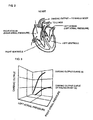
- Fig. 2 is a schematic view of a heart.
- Cardiac disease treatment system (1) in the present invention utilizes cardiac output (CO) values, left atrial pressure (Pla) values, and right atrial pressure (Pra) values shown in Fig. 2 , as well as arterial blood pressure (AP) values (not shown).
- CO cardiac output
- Pr left atrial pressure
- Pra right atrial pressure
- AP arterial blood pressure
- Cardiac disease treatment system (1) is used to determine the functional cause of abnormality in the cardiovascular system based on a hemodynamic abnormality (e.g., reduction in CO (peripheral circulatory failure), elevation in Pla (pulmonary congestion), and arterial blood pressure (increase and decrease)) to administer appropriate therapeutic agents.
- a hemodynamic abnormality e.g., reduction in CO (peripheral circulatory failure), elevation in Pla (pulmonary congestion), and arterial blood pressure (increase and decrease)
- Cardiac disease treatment system (1) includes an input means (2), a calculation means (3), a comparison means (4), a dosing means (5), a display means (6), and a target decision means (7).
- Input means (2) inputs measurement values (numeric data) of the hemodynamics in a patient to calculation means (3) (described below). Input means (2) is configured to input measurement values of AP, CO, Pra, and Pla.
- Input means (2) may be any configuration that is capable of inputting numeral data to calculation means (3).
- Input means (2) may be an input device (e.g., keyboard) that allows a person using cardiac disease treatment system (1) to input actual measurement values, or a measurement device that measures the hemodynamics in a patient and inputs the values directly to calculation means (3), though not limited to these. If cardiac disease treatment system (1) is constantly connected to a patient for drug administration in order to diagnose abnormalities related to cardiac diseases, cardiac disease treatment system (1) is preferably configured to allow the measurement values of the hemodynamics in a patient to be directly input to calculation means (3).
- the hemodynamics numeric data (AP value and CO value, as well as Pra and Pla values) input by input means (2) are respectively obtained using a conventional measurement device.
- the measurement device may be a catheter placed in a peripheral artery (e.g., radial artery) for measuring AP and a Swan-Ganz catheter for measuring CO, Pla, and Pra, though not limited to these.
- Cardiac disease treatment system (1) continuously obtains these measurement values and uses them for a continuous diagnosis of a patient.
- it is known to be impossible to continuously measure Pla and CO, although continuous measurement of AP and Pra is possible.
- Diastolic pulmonary arterial pressure is used for continuously estimating Pla to obtain a continuous value.
- Pla may be calculated from diastolic pulmonary arterial pressure based on an average correlation for multiple subjects. It is preferable to allow the average correlation (linear relationship) between diastolic pulmonary arterial pressure and Pla to be corrected according to heart rate, which causes a change in the correlation.
- Diastolic time constant of peripheral arterial blood pressure waveform is used for estimating CO to obtain a continuous value.
- CO may be, for example, calculated from diastolic time constant of peripheral arterial blood pressure waveform using a conventional method.
- Target decision means (7) calculates target values of pumping ability (pumping ability of the left heart and/or the right heart), effective circulating blood volume, and vascular resistance. These target values are used as reference values by first to third comparison means (described below). Once target values of CO, Pla, Pra, and AP are input, target decision means (7) automatically figures out the target values of pumping ability (pumping ability of the left heart and/or the right heart), effective circulating blood volume, and vascular resistance. It is also possible for a user to input in advance these target values of pumping ability (pumping ability of the left heart and/or the right heart), effective circulating blood volume, and vascular resistance to the respective comparison means.
- Target decision means (7) includes a first target decision means (71), a second target decision means (72), and a third target decision means (73).
- First to third target decision means (71-73) are processing units configured to calculate output values according to input values.
- Target decision means (7) may be a single processing unit that plays roles of first to third target decision means (71-73) in performing computations.
- target decision means (7) may include three processing units respectively play roles of first to third target decision means (71-73) in performing computations.
- First target decision means (71) calculates a target pumping ability value of the left heart from the target values of CO and Pla, and/or calculates a target pumping ability value of the right heart from the target values of CO and Pra.
- First target decision means (71) may be configured to calculate both or either of the above-mentioned target pumping ability value of the left heart and/or the right heart.
- a target CO value and a target Pla value are substituted in the following Equation 9 to figure out the target pumping ability value of the .left heart value.
- constants A and B are user preset values that are adjustable for each patient. Adjustment of these values for each patient allows the calculated pumping ability value of the left heart to be corrected.
- target pumping ability value of the left heart / target CO value Log ⁇ target Pla value - A + B (where both A and Bare constants)
- First target decision means (71) calculates a target pumping ability value of the right heart using the following Equation 10 by a similar calculation to the above-described calculation of the target pumping ability value of the left heart.
- the target pumping ability value of the right heart is calculated by substituting the target CO value and the target Pra value in Equation 10.
- Equation 10 constants C and D are user preset values that are adjustable for each patient. Adjustment of these values for each patient allows the calculated pumping ability value of the right heart to be corrected.
- target pumping ability value of the right heart / target CO value Log ⁇ target Pra value - C + D (where both C and D are constants)
- Target decision means (7) includes second target decision means (72), as described above.
- Second target decision means (72) calculates a target effective circulating blood volume value from the target CO value, the target Pla value, and the target Pra value.
- the target CO value, the target Pla value, and the target Pra value are substituted in the following Equation 11 to figure out the target effective circulating blood volume value.
- Equation 11 constants E, F, and G are user preset values that are adjustable for each patient. Adjustment of these values for each patient allows the calculated effective circulating blood volume value to be corrected.
- target effective circulating blood volume value target CO value + F target Pra value + G target Pla value ⁇ E (where all of E, F, and G are constants)
- Target decision means (7) includes third target decision means (73), as described above.
- Third target decision means (73) calculates a target vascular resistance value from the target CO value, the target Pra value, and the target AP value.
- the target CO value, the target Pra value, and the target AP value are substituted in the following Equation 12 to figure out the target vascular resistance value.
- Constant H in Equation 12 is used to correct the non-linearity of vascular resistance. Adjustment of constant H helps to maintain the normal operation of the system even in a subject with a highly non-linear vascular resistance.
- target vascular resistance value / targert arterial blood pressure value - target Pra value - H target CO value (where H is a constant)
- target values of CO, Pla, Pra, and AP are input to target decision means (7) by a user to obtain a desired patient condition.
- Calculation means (3) carries out computation using the hemodynamic values input from input means (2).
- Calculation means (3) includes a first calculation means (31), a second calculation means (32), and a third calculation means (33).
- Calculation means (3) may be a single processing unit that plays roles of first to third calculation means (31-33) in performing computations.
- calculation means (3) may include three processing units that respectively play roles of first to third calculation means (31-33) in performing computation.
- First calculation means (31) calculates a pumping ability value of the left heart from the CO value and the Pla value input from input means (2). Alternatively, first calculation means calculates a target pumping ability value of the right heart from the CO value and the Pra value input from input means (2). First calculation means (31) may be configured to calculate both or either of the above-mentioned pumping ability value of the left heart and/or the right heart.
- Equation 13 constants A and B are user preset values that are adjustable for each patient. Adjustment of these values for each patient allows the calculated pumping ability value of the left heart to be corrected.
- CO value pumping ability value of the left heart ⁇ Log ⁇ Pla value - A + B (where both A and B are constants)
- Equation 14 the equation is converted into an equation such as Equation 14 shown below to allow the pumping ability value of the left heart to be calculated from the input values sent from input means (2).
- Pumping ability value of the left heart / CO value Log ⁇ Pla value - A + B (where both A and B are constants)
- First calculation means (31) calculates a pumping ability value of the right heart using the following Equation 15 by a similar calculation to the above-described calculation of the pumping ability value of the left heart.
- the pumping ability value of the right heart is calculated by substituting the CO value and the Pra value in Equation 15.
- First calculation means 31 is provided with Equation 16 converted from Equation 16 to allow the pumping ability value of the right heart to be calculated from the values input from input means (2).
- C and D are user preset values that are adjustable for each patient. Adjustment of these values for each patient allows the calculated pumping ability value of the right heart to be corrected.
- CO value pumping ability value of the right heart ⁇ Log ⁇ Pra value - C + D (where both C and D are constants)
- pumping ability value of the right heart / CO value Log ⁇ Pra value - C + D (where both C and D are constants)
- the pumping ability value of the left heart and the pumping ability value of the right heart are both calculated by first calculation means (31) using the CO value, Pla value and Pra value, it is possible to show the pumping ability value of the left heart and the pumping ability value of the right heart by plotting the relationship among CO value, Pla value and Pra value using three axes for these, as shown in Fig. 3 .
- the change in CO is represented as CO curve in the three dimensional coordinate.
- the CO curve visualizes the integrated pumping ability of the left heart and the right heart so as to significantly facilitate the diagnosis on a patient.
- Fig. 3 shows CO curve (a) of a normal heart and CO curve (b) of a failing heart.
- the representation of a normal CO curve and a measured CO curve in one space facilitates the diagnosis.
- Calculation means (3) includes second calculation means (32).
- Second calculation means (32) calculates an effective circulating blood volume value from the CO value, the Pla value, and the Pra value.
- Equation 17 constants E, F and G are user preset values that are adjustable for each patient. Adjustment of these values for each patient allows the calculated effective circulating blood volume value to be corrected.
- CO value 1 E effective circulating blood volume value - F Pra value - G Pla value (where all of E, F, and G are constants)
- Equation 18 the equation is converted into an equation such as Equation 18 shown below to allow the effective circulating blood volume value to be calculated from the input values from input means (2).
- Effective circulating blood volume value CO value + F Pra value + G Pla value ⁇ E (where all of E, F, and G are constants)
- the CO value, the Pra value, and the Pla value used for calculation by second calculation means (32) can be plotted on three axes of a three dimensional coordinate.
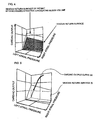
- the CO value, the Pla value, and the Pra value as three variables form a plane (venous return surface) as shown in Fig. 4 ..
- the venous return surface is defined by the three variables (CO value, Pla value, and Pra value) and constants E, F, and G.
- the slope of the surface may be considered to be constant between different subjects or within a single subject. It is also possible to correct the slope for a particular group of patients.
- the height of the venous return surface is determined by the calculated effective circulating blood volume value, where the slope is considered to be constant.
- the effective circulating blood volume is represented in the venous return surface. This visualizes the effective circulating blood volume so as to significantly facilitate the diagnosis of a patient.
- Fig. 4 shows venous return surface (c) of a normal subject and venous return surface (d) of a congestive patient where the effective circulating blood volume is increased.
- Venous return surface (d) is upwardly shifted from venous return surface (c).
- the representation of a normal venous surface and a measured venous surface in one space facilitates the diagnosis.
- Calculation means (3) includes third calculation means (33).
- Third calculation means (33) calculates a vascular resistance value from the CO value, the Pra value, and the AP value.
- Constant H in Equation 19 is used to correct the non-linearity of vascular resistance. Adjustment of constant H helps to maintain the normal operation of the system even in a subject with a highly non-linear vascular resistance.
- vascular resistance value / arterial blood pressure value - Pra value - H CO value (where H is a constant)
- Fig. 5 shows one embodiment of simultaneous representation of CO curve (e) and venous return surface (f) in a three dimensional coordinate diagram with three axes respectively plotting the CO value, the Pla value, and the Pra value.
- a target point corresponding to the target value is defined in the three dimensional coordinate diagram. Until the target point coincides with the intersection point of CO curve (e) and venous return surface (f), the pumping abilities of the left heart and the right heart as represented in CO curve (e) and the effective circulating blood volume as represented in venous return surface are controlled by drug administration to the subject. This enables the CO value, the Pla value, and the Pra value to achieve the normal target values.
- Comparison means (4) compares the values calculated in calculation means (3) and the target values of pumping ability (pumping ability of the left heart and/or the right heart), effective circulating blood volume, and vascular resistance calculated in target decision means (7).
- Comparison means (4) includes a first comparison means (41), a second comparison means (42), and a third comparison means (43).
- First comparison means (41) compares the pumping ability value of the left heart and /or the pumping ability value of the right heart calculated in first calculation means (31) and the target pumping ability value of the left heart value and/or the target pumping ability value of the right heart calculated in first target decision means (71). More specifically, after first calculation means (31) calculates the pumping ability value of the left heart, first comparison means (41) compares the calculated pumping ability value of the left heart and the target pumping ability value of the left heart calculated in first target decision means (71), and then sends dosing means (5) a signal indicating the result of the comparison.
- first comparison means (41) finds out that the calculated pumping ability value of the left heart is larger than, equal to, or smaller than the target pumping ability value of the left heart. According to this comparison result, first comparison means (41) sends the dosing means (first dosing means (51)) described below a signal indicating that the calculated pumping ability value of the left heart is larger than (signal "large”), equal to (signal "equal”), or smaller than (signal "small”) the target pumping ability value of the left heart. In addition to one of signal "large”, signal “equal”, and signal “small”, first comparison means (41) may send the dosing means a signal indicating the quantified difference between the calculated pumping ability value of the left heart and the target pumping ability value of the left heart.
- the target pumping ability value of the left heart may be set by a user as a default value, as described above.
- the pumping ability value of the left heart has been described above, the pumping ability value of the right heart may be set in a similar way to the pumping ability value of the left heart. It is possible to use the pumping ability value of either the left heart or the right heart because they may exhibit an identical change (behavior).
- Second comparison means (42) compares the effective circulating blood volume value calculated in second calculation means (32) and the target effective circulating blood volume value calculated in second target decision means (72). More specifically, after second calculation means (32) calculates the effective circulating blood volume value, second comparison means (42) compares the calculated effective circulating blood volume value and the target effective circulating blood volume value calculated in second target decision means (72), and then sends dosing means (5) a signal indicating the result of the comparison.
- second comparison means (42) finds out that the calculated effective circulating blood volume value is larger than, equal to, or smaller than the target effective circulating blood volume value. According to this comparison result, second comparison means (42) sends the dosing means (second dosing means (52)) described below a signal indicating that the calculated effective circulating blood volume value is larger than (signal "large”), equal to (signal "equal”), or smaller than (signal "small”) the target effective circulating blood volume value. In addition to one of signal "large”, signal “equal”, and signal “small”, second comparison means (42) may send the dosing means a signal indicating the quantified difference between the calculated effective circulating blood volume value and the target effective circulating blood volume value.
- the target effective circulating blood volume value may be set by a user as a default value, as described above.
- Third comparison means (43) compares the vascular resistance value calculated in third calculation means (33) and the target vascular resistance value calculated in third target decision means (73). More specifically, after third calculation means (33) calculates the vascular resistance value, third comparison means (43) compares the calculated vascular resistance value and the target vascular resistance value calculate in third target decision means (73), and then sends dosing means (5) a signal indicating the result of the comparison.
- third comparison means (43) finds out that the calculated vascular resistance value is larger than, equal to, or smaller than the target vascular resistance value. According to this comparison result, third comparison means (43) sends the dosing means (third dosing means (53)) described below a signal indicating that the calculated vascular resistance value is larger than (signal "large”), equal to (signal "equal”), or smaller than (signal "small”) the target vascular resistance value. In addition to one of signal “large”, signal “equal”, and signal “small”, third comparison means (43) may send the dosing means a signal indicating the quantified difference between the calculated vascular resistance value and the target vascular resistance value.
- the target vascular resistance value may be set by a user as a default value, as described above.
- Dosing means (5) receives the comparison results from comparison means (4) to start and/or stop drug administration to a patient according to the comparison results.
- Dosing means (5) includes a first dosing means (51), a second dosing means (52), and a third dosing means (53).
- First to third dosing means (51-53) are configured to administer drugs to a patient, as described below, and to control the drug administration (adjust the amount of drugs to be administered) to a patient using the signals sent by comparison means (4) according to the comparison results.
- Dosing means (5) may be, for example, a multilumen type catheter for simultaneous infusion of multiple drugs that is connected to multiple automatic infusion pumps.
- the catheter is placed in the vein of a patient for intravenous administration of drugs.
- First dosing means (51) administers a certain drug into the body of the patient according to the signal of the comparison results sent from first comparison means (41).
- the drug administration according to the signal of the comparison results from first comparison means (41) allows first dosing means (51) to start drug administration when abnormal pumping ability is detected.
- first dosing means (51) receives a signal "small” (a signal sent when the calculated pumping ability value of the left heart is smaller than the target pumping ability value) from first comparison means (41). Since the signal indicates abnormal pumping ability, first dosing means (51) starts drug administration to improve pumping ability Inotropic agent such as dobutamine and dopamine is administered in this drug administration.
- first dosing means (51) receives a signal "equal" (a signal sent when the calculated pumping ability value of the left heart is equal to the target pumping ability value) from first comparison means (41). Since the signal indicates normal pumping ability, first dosing means (51) responds by not increasing the dose of the drug, by administering no drug, or by stopping administration of the drug.
- first dosing means (51) receives a signal "large” (a signal sent when the calculated pumping ability value of the left heart is larger than the target pumping ability value) from first comparison means (41). Since the signal indicates better pumping ability than targeted, first dosing means (51) responds by reducing the dose of the inotropic agent, or by not administering the inotropic agent, or by stopping administration of the inotropic agent.
- the dose of the drugs administered by first dosing means (51) is not particularly limited but an appropriate dose for a patient is primarily selected. It is possible to vary the dose based on the difference between the calculated pumping ability value and the target pumping ability value, which are compared by first comparison means (41). Although, in the above description, the operation of first dosing means (51) is controlled by the signals obtained by dividing calculated pumping ability values into three levels according to whether the calculated pumping ability value is larger than, equal to, smaller than the target pumping ability value, it is also possible to divide the calculated pumping ability values into multiple levels according to the deviation from the target pumping ability value and then to vary the dose of drugs. The variation of dose according to the multiple levels results in highly accurate administration of the drugs.
- Second dosing means (52) administers a certain drug into the body of the patient according to the signal of the comparison results sent from second comparison means (42).
- the drug administration according to the signal of the comparison results from second comparison means (42) allows second dosing means (52) to start drug administration when abnormal effective circulating blood volume is detected.
- second dosing means (52) receives a signal "large” (a signal sent when the calculated effective circulating blood volume value is larger than the target effective circulating blood volume value) from second comparison means (42). Since the signal indicates abnormal effective circulating blood volume, second dosing means (52) starts drug administration to reduce effective circulating blood volume. Diuretic such as furosemide is administered in this drug administration.
- second dosing means (52) receives a signal "equal" (a signal sent when the calculated effective circulating blood volume value is equal to the target effective circulating blood volume value) from second comparison means (42). Since the signal indicates normal effective circulating blood volume, second dosing means (52) responds by administering no drug or by stopping administration of the drug.
- a signal "equal" a signal sent when the calculated effective circulating blood volume value is equal to the target effective circulating blood volume value
- second dosing means (52) receives a signal "small” (a signal sent when the calculated effective circulating blood volume value is smaller than the target effective circulating blood volume value) from second comparison means (42). Since the signal indicates abnormal effective circulating blood volume, second dosing means (52) starts drug administration to increase effective circulating blood volume. Infusion of a drug for increasing effective circulating blood volume such as low molecular dextran or albumin preparation is administered in this drug administration.
- the dose of the drugs administered by second dosing means (52) is not particularly limited but an appropriate dose for a patient is primarily selected, as described for first dosing means (51). It is possible to vary the dose based on the difference between the calculated effective circulating blood volume value and the target effective circulating blood volume value, which are compared by second comparison means (42). Specifically, the calculated effective circulating blood volume values are divided into multiple levels according to the deviation from the target effective circulating blood volume value and then the dose of drugs is varied according to the levels. The variation of dose according to the multiple levels results in highly accurate administration of the drugs.
- Third dosing means (53) administers a certain drug into the body of the patient according to the signal of the comparison results sent from third comparison means (43).
- third comparison means (43) allows third dosing means (53) to start drug administration when abnormal vascular resistance is detected.
- third dosing means (53) receives a signal "large” (a signal sent when the calculated vascular resistance value is larger than the target vascular resistance value) from third comparison means (43). Since the signal indicates abnormal vascular resistance, third dosing means (53) starts drug administration to reduce vascular resistance.
- Vasodilator such as nitroprusside, nitroglycerin, and phentolamine is administered in this drug administration. If vasoconstrictor such as norepinephrine has been already administered, the dose of the vasoconstrictor is reduced.
- third dosing means (53) receives a signal "equal" (a signal sent when the calculated vascular resistance value is equal to the target vascular resistance value) from third comparison means (43). Since the signal indicates normal vascular resistance, third dosing means (53) responds by administering no drug or by stopping administration of the drug.
- third dosing means (53) receives a signal "small” (a signal sent when the calculated vascular resistance value is smaller than the target vascular resistance value) from third comparison means (43). Since the signal indicates abnormal vascular resistance value, third dosing means (53) starts drug administration to increase vascular resistance. Vasoconstrictor such as norepinephrine is administered in this drug administration. If vasodilator such as nitroprusside, nitroglycerin, and phentolamine has been already administered, the dose of the vasodilator is reduced.
- the dose of the drugs administered by third dosing means (53) is not particularly limited but an appropriate dose for a patient is primarily selected, as described for the first dosing means (51). It is possible to vary the dose based on the difference between the calculated vascular resistance value and the target vascular resistance value, which are compared by third comparison means (43). Specifically, the calculated vascular resistance values are divided into multiple levels according to the deviation from the target vascular resistance value and then the dose of drugs is varied according to the levels. The variation of dose according to the multiple levels results in highly accurate administration of the drugs.
- first to third dosing means may be configured to use time-based control to achieve the target values of pumping ability, effective circulating blood volume, and vascular resistance, which are determined by first to third comparison means (41-43).
- PI Proportional Integral
- PID Propotional Integral Derivative
- the PI control and PID control on the dose of drugs results in highly accurate administration.
- adaptive control is used in adjusting the dose of drugs.
- Display means (6) is an output device that displays the input values of CO, Pla, Pra, and AP input by input means (2) as well as the calculated values obtained by the above-described first to third calculation means (31-33).
- Display means (6) displays the calculated values of pumping ability, effective circulating blood volume, and vascular resistance, which are calculated in each calculation means (31-33), preferably in a continuous time-series line plot because each calculation means (31-33) continuously obtains calculated values from the input values obtained in the above-described continuous measurement of patient conditions by cardiac disease treatment system (1).
- the continuous time-series line plot visualizes a time-series change and makes the change easily noticed.
- Display means (6) is preferably configured to display the dose of drugs administered by first to third dosing means (51-53).
- the additional display of the drug dose effectively allows a user to observe the change (transition) in pumping ability, effective circulating blood volume, and vascular resistance of a patient simultaneously with the dose of drugs.
- cardiac disease treatment system (1) The configurations of cardiac disease treatment system (1) according to the present invention have been described thus far.
- Cardiac disease treatment system (1) The operation of Cardiac disease treatment system (1) according to the present invention will be described below.
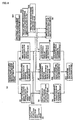
- Fig. 6 is a flow chart illustrating the use of the cardiac disease treatment system according to the present invention.
- cardiac disease treatment system (1) needs preset constants A to H in a practical use, description of these constants is omitted here.
- Target values of CO, Pra, Pla, and AP used by first to third target decision means (71-73) of target decision means (7) are set by a user to a certain value in the following example.
- a user inputs target values of CO, Pra, Pla, and AP which represent desired patient conditions.
- target decision means (7) calculates target values of pumping ability of the left heart, pumping ability of the right heart, effective circulating blood value, and vascular resistance.
- first decision means (71) calculates a target pumping ability value of the left heart.
- target CO value and the target Pra value are input to first target decision means (71)
- target CO value, the target Pla value, and the target Pra value are input to second target decision means (72), it calculates a target affective circulating blood volume value (S02).
- target CO value, the target Pra value, and the target AP value are input to third target decision means (73), it calculates a target vascular resistance value (S03).
- target decision means (7) After respective target values of pumping ability of the left heart, pumping ability of the right heart, effective circulating blood volume, and vascular resistance are calculated by target decision means (7), these target values are sent to display means (6).
- the target values sent to display means (6) are respectively displayed in continuous time-series line plot (see S5 described below).
- a Swan-Ganz catheter is connected to a patient in this measurement, although other apparatus may be used.
- the measurement values of AP, CO, Pra, and Pla are input by input means (2) to calculation means (3).
- calculation means (3) calculates a pumping ability value of the left heart, a pumping ability value of the right heart, an effective circulating blood volume value, and a vascular resistance value. Specifically, once the CO value and the Pla value are input to first calculation means, it calculates as pumping ability value of the left heart. In addition, once CO value and Pra value are input to first calculation means (31), it calculates a pumping ability value of the right heart (S2).
- first to third calculation means respectively calculate a pumping ability value of the left heart, a pumping ability value of the right heart, an effective circulating blood volume value, and a vascular resistance value.
- first comparison means (41) receives the target pumping ability value of the left heart calculated in first target decision means (71).
- First comparison means (41) compares the pumping ability value of the left heart (or the pumping ability value of the right heart) with the target pumping ability value of the left heart (or the target pumping ability value of the right heart) (S6).
- First comparison means (41) sends first dosing means (51) the results of comparison between the calculated pumping ability value of the left heart and the target pumping ability value of the left heart.
- the effective circulating blood volume value calculated in second calculation means (32) is sent to second comparison means (42).
- second comparison means (42) receives the target effective circulating blood volume value calculated in second target decision means (72).
- Second comparison means (42) compares the effective circulating blood volume value with the target effective circulating blood volume value (S7).
- Second comparison means (42) sends second dosing means (52) the results of comparison between the calculated effective circulating blood volume value and the target effective circulating blood volume value.
- third comparison means (43) receives the target vascular resistance value calculated in third target decision means (73). Third comparison means (43) compares the vascular resistance value and the target vascular resistance value (S8).
- Third comparison means (43) sends third dosing means (53) the results of comparison between the calculated vascular resistance value and the target vascular resistance value.
- First dosing means (51) receives the comparison result obtained in first comparison means (41) and then administers drugs according to this comparison result (S9).
- first dosing means (51) administers inotropic agent to a patient to increase the pumping ability value of the patient.
- first comparison means (41) If the comparison result from first comparison means (41) shows that first dosing means (51) should stop drug administration or should administer no drug (if the calculated pumping ability value is equal to the target pumping ability value), first dosing means (51) stops drug administration or continues with no drug administration.
- first dosing means (51) If the comparison result from first comparison means (41) shows that first dosing means (51) should administer no drug (if the calculated pumping ability value is larger than the target pumping ability value), first dosing means (51) reduces the dose of inotropic agent, or stops administration of inotropic agent, or continues with no administration of inotropic agent.
- Second dosing means (52) receives the comparison result obtained in second comparison means (42) and then administers drugs according to this comparison result (S10).
- second dosing means (51) If the comparison result from second comparison means (42) shows that second dosing means (51) should promote drug administration (if the calculated effective circulating blood volume value is smaller than the target effective circulating blood volume value), second dosing means (52) responds by administering an appropriate infusion of drugs such as low molecular dextran and albumin preparation to a patient to increase the effective circulating blood volume value of the patient.
- drugs such as low molecular dextran and albumin preparation
- second dosing means (52) If the comparison result from second comparison means (42) shows that second dosing means (52) should stop drug administration or should administer no drug (if the calculated effective circulating blood volume value is equal to the target effective circulating blood volume value), second dosing means (52) stops drug administration or continues with no drug administration.
- second dosing means (52) administers diuretic to a patient to reduce effective circulating blood volume of the patient.
- Third dosing means (53) receives the comparison result obtained in third comparison means (43) and then administers drugs according to this comparison result (S11).
- third dosing means (53) administers vasoconstrictor to a patient to increase the vascular resistance value of the patient.
- third dosing means (53) stops drug administration or continues with no drug administration.
- third dosing means (53) administers vasodilator to a patient to reduce the vascular resistance of the patient.
- first to third dosing means (51-53) may use a multi-level control or a real time control (PI control, PID control, or the like) on the dose.
- First to third dosing means (51-53) may use an adaptive control on the dose for patients who manifest an idiosyncratic response to drugs.
- Display means (6) displays the time sequence of the pumping ability values (pumping ability value of the left heart and pumping ability value of the right heart), the effective circulating blood volume value, and the vascular resistance value, each calculated by first to third calculation means (31-33); the target values of pumping ability (pumping ability of the left heart and pumping ability of the right heart), effective circulating blood volume, and vascular resistance, each calculated by first to third target decision means (71-73); and the dose of drugs administered according to these calculated values (S12).
- the display of these calculated values, target values, and the dose of drugs by display means (6) allows a user of cardiac disease treatment system (1) to carry out real time diagnosis on patient conditions.
- Constants C and D are obtained by linear regression to the measurement values listed in table 2 and a modification for the practical use.
- Table 2 Dog Pumping ability of the right heart C D Coefficient of determination Standard error of estimate 1 46.7 2.12 2.34 0.98 4.7 2 33.9 1.50 2.50 0.96 3.3 3 64.1 2.10 2.10 0.90 8.2 4 112.7 1.39 0.19 0.98 5.5 5 101.8 1.39 0.92 0.99 4.6 6 80.6 3.07 1.59 0.99 2.8 7 37.1 3.33 3.69 0.94 6.8 Average 68.1 2.13 1.90 0.96 5.1 Standard Deviation 31.3 0.80 1.14 1.9
- constants E, F, and G in equations 17 and 18 are examined. These constants E, F, and G are employed in calculating the effective circulating blood volume of the dogs.
- cardiac disease treatment system (1) in the present invention was operated.
- Figs. 7 and 8 show one example of the use of the cardiac disease treatment system according to the present invention.
- Fig. 7 shows the chronological change in AP, right atrial pressure (Pra), left atrial pressure (Pla), and cardiac output (CO).
- AP, Pra, Pla, and CO achieve target values within 20 minutes from the onset of treatment.
- Fig. 8 shows a chronological change in effective circulating blood volume, pumping ability of the left heart, pumping ability of the right heart, vascular resistance, the dose of inotropic agent and vasodilator, and infusion amount.
- inotropic agent and vasodilator dobutamine and nitroprusside are used respectively.
- Low molecular dextran infusion is used.
- PI control is used in determining the dose of inotropic agent and vasodilator while multi-level control is used in determining the infusion amount.
- the effective circulating blood volume value is in excess of the target effective circulating blood volume value; the pumping ability value of the left heart and the pumping ability value of the right heart are lower than the target pumping ability value of the left heart and the target pumping ability value of the right heart; and the vascular resistance value is higher than the target vascular resistance value, as shown in Fig. 8 . All of these values are significantly different from the target values to be in an abnormal range (calculation means (3) calculates each of the effective circulating blood volume value, the left pumping ability value of the left heart, the pumping ability value of the right heart, and the vascular resistance value. Comparison means (4) determines the condition of these parameters (whether they are in a normal or abnormal range)).
- dosing means (5) starts administering drugs to allow each calculated value to achieve each target value, according to the conditions (dosing means (5) administers an appropriate dose of drugs). The above-described processes are repeated until the respective calculated values achieve the target values.
Landscapes
- Health & Medical Sciences (AREA)
- Life Sciences & Earth Sciences (AREA)
- Cardiology (AREA)
- Veterinary Medicine (AREA)
- General Health & Medical Sciences (AREA)
- Biomedical Technology (AREA)
- Heart & Thoracic Surgery (AREA)
- Engineering & Computer Science (AREA)
- Public Health (AREA)
- Animal Behavior & Ethology (AREA)
- Molecular Biology (AREA)
- Vascular Medicine (AREA)
- Medical Informatics (AREA)
- Surgery (AREA)
- Physiology (AREA)
- Physics & Mathematics (AREA)
- Biophysics (AREA)
- Pathology (AREA)
- Hematology (AREA)
- Anesthesiology (AREA)
- Diabetes (AREA)
- Measuring Pulse, Heart Rate, Blood Pressure Or Blood Flow (AREA)
- External Artificial Organs (AREA)
- Electrotherapy Devices (AREA)
- Infusion, Injection, And Reservoir Apparatuses (AREA)
- Medicines Containing Material From Animals Or Micro-Organisms (AREA)
- Medicines That Contain Protein Lipid Enzymes And Other Medicines (AREA)
- Surgical Instruments (AREA)
Claims (7)
- System zur Behandlung von Herzkrankheiten, umfassend:eine Eingabeeinrichtung (2) zur Eingabe eines Werts für das Herzzeitvolumen, eines Werts für den linksatrialen Druck, eines Werts für den rechtsatrialen Druck und eines Werts für den arteriellen Blutdruck eines Patienten;eine erste Berechnungseinrichtung (31) zum Berechnen eines Werts für die Pumpfähigkeit des linken Herzens und/oder eines Werts für die Pumpfähigkeit des rechten Herzens aus dem Wert für das Herzzeitvolumen, dem Wert für den linksatrialen Druck und dem Wert für den rechtsatrialen Druck, die über die Eingabeeinrichtung (2) eingegeben werden;eine erste Vergleichseinrichtung (41) zum Vergleichen der berechneten Werte des Werts für die Pumpfähigkeit des linken Herzens und/oder des Werts für die Pumpfähigkeit des rechten Herzens und der Zielwerte für die Pumpfähigkeit; undeine erste Dosiervorrichtung (51), die dazu ausgelegt ist, dem Patienten Arzneimittel gemäß den Vergleichsergebnissen der ersten Vergleichseinrichtung (41) zu verabreichen;eine zweite Berechnungseinrichtung (32) zum Berechnen eines Werts für das effektiv zirkulierende Blutvolumen aus dem Wert für das Herzzeitvolumen, dem Wert für den linksatrialen Druck und dem Wert für den rechtsatrialen Druck, die über die Eingabeeinrichtung (2) eingegeben werden;eine zweite Vergleichseinrichtung (42) zum Vergleichen des von der zweiten Berechnungseinrichtung (32) berechneten Werts für das effektiv zirkulierende Blutvolumen und eines Zielwerts für das effektiv zirkulierende Blutvolumen;eine zweite Dosiereinrichtung (52), die dazu ausgelegt ist, dem Patienten Arzneimittel gemäß dem Vergleichsergebnis der zweiten Vergleichseinrichtung (42) zu verabreichen;eine dritte Berechnungseinrichtung (33) zum Berechnen eines Werts für den vaskulären Widerstand aus dem Wert für das Herzzeitvolumen, dem Wert für den rechtsatrialen Druck und dem Wert für den arteriellen Blutdruck, die über die Eingabeeinrichtung (2) eingegeben werden;eine dritte Vergleichseinrichtung (43) zum Vergleichen des von der dritten Berechnungseinrichtung (33) berechneten Werts für den vaskulären Widerstand und eines Zielwerts für den vaskulären Widerstand; undeine dritte Dosiervorrichtung (53), die dazu ausgelegt ist, dem Patienten Arzneimittel gemäß dem Vergleichsergebnis der dritten Vergleichseinrichtung (43) zu verabreichen.
- System zur Behandlung von Herzkrankheiten nach Anspruch 1, wobei die erste Berechnungseinrichtung (31) Gleichung 1 und/oder Gleichung 2 verwendet, um den Wert für die Pumpfähigkeit des linken Herzens und/oder den Wert für die Pumpfähigkeit des rechten Herzens aus dem über die Eingabeeinrichtung (2) eingegebenen Wert für das Herzzeitvolumen, dem Wert für den linskatrialen Druck und/oder dem Wert für den rechtsatrialen Druck zu berechnen;
wobei die zweite Berechnungseinrichtung (32) Gleichung 5 verwendet, um den Wert für das effektiv zirkulierende Blutvolumen aus dem über die Eingabeeinrichtung (2) eingegebenen Wert für das Herzzeitvolumen, dem Wert für den linksatrialen Druck und dem Wert für den rechtsatrialen Druck zu berechnen; und
wobei die dritte Berechnungseinrichtung (33) Gleichung 7 verwendet, um den Wert für den vaskulären Widerstand aus dem über die Eingabeeinrichtung (2) eingegebenen Wert für das Herzzeitvolumen, dem Wert für den rechtsatrialen Druck und dem Wert für den arteriellen Blutdruck zu berechnen.
wobei A und B Konstanten sind;
wobei C und D Konstanten sind;
wobei E, F und G Konstanten sind;
wobei H eine Konstante ist. - System zur Behandlung von Herzkrankheiten nach Anspruch 1 oder Anspruch 2, ferner umfassend:eine erste Zielentscheidungseinrichtung (71) zur Berechnung eines Zielwerts für die Pumpfähigkeit des linken Herzens und/oder eines Zielwerts für die Pumpfähigkeit des rechten Herzens aus einem Zielwert für das Herzzeitvolumen, einem Zielwert für den linksatrialen Druck und/oder einem Zielwert für den rechtsatrialen Druck;eine zweite Zielentscheidungseinrichtung (72) zur Berechnung eines Zielwerts für das effektiv zirkulierende Blutvolumen aus einem Zielwert für das Herzzeitvolumen, einem Zielwert für den linksatrialen Druck und einem Zielwert für den rechtsatrialen Druck; undeine dritte Zielentscheidungseinrichtung (73) zur Berechnung eines Zielwerts für den vaskulären Widerstand aus einem Zielwert für das Herzzeitvolumen, einem Zielwert für den rechtsatrialen Druck und einem Zielwert für den arteriellen Blutdruck.
- System zur Behandlung von Herzkrankheiten nach Anspruch 3, wobei die erste Zielentscheidungseinrichtung (71) Gleichung 3 und Gleichung 4 verwendet, um den Zielwert für die Pumpfähigkeit des linken Herzens und/oder den Zielwert für die Pumpfähigkeit des rechten Herzens aus dem Zielwert für das Herzzeitvolumen, dem Zielwert für den linksatrialen Druck und/oder dem Zielwert für den rechtsatrialen Druck zu berechnen;
wobei die zweite Zielentscheidungseinrichtung (72) Gleichung 6 verwendet, um den Zielwert für das effektiv zirkulierende Blutvolumen aus dem Zielwert für das Herzzeitvolumen, dem Zielwert für den linksatrialen Druck und dem Zielwert für den rechtsatrialen Druck zu berechnen; und
wobei die dritte Zieleintscheidungseinrichtung (73) Gleichung 8 verwendet, um den Zielwert für den vaskulären Widerstand aus dem Zielwert für das Herzzeitvolumen, dem Zielwert für den rechtsatrialen Druck und dem Zielwert für den arteriellen Blutdruck zu berechnen:
wobei A und B Konstanten sind;
wobei C und D Konstanten sind;
wobei E, F und G Konstanten sind;
wobei H eine Konstante ist. - System zur Behandlung von Herzkrankheiten nach einem der Ansprüche 1 bis 4, ferner umfassend:eine Anzeigeeinrichtung (6) zur kontinuierlichen Anzeige jedes der durch die Berechnungseinrichtung (31), (32) und (33) berechneten Werte in chronologischer Reihenfolge.
- System zur Behandlung von Herzkrankheiten nach einem der Ansprüche 1 bis 5, wobei der Wert für das Herzzeitvolumen mit einem Swan-Ganz-Katheter gemessen wird oder aus einer diastolischen Zeitkonstante der Wellenform des arteriellen Blutdrucks berechnet wird.
- System zur Behandlung von Herzkrankheiten nach einem der Ansprüche 1 bis 6, wobei der Wert für den linksatrialen Druck direkt mit einem Katheter gemessen wird oder kontinuierlich aus den mit einem Swan-Ganz-Katheter gemessenen diastolischen Druckwerten des Drucks der Lungenkapillarweiche oder des pulmonalarteriellen Drucks geschätzt wird.
Applications Claiming Priority (1)
| Application Number | Priority Date | Filing Date | Title |
|---|---|---|---|
| PCT/JP2004/017154 WO2006054343A1 (ja) | 2004-11-18 | 2004-11-18 | 心疾患治療システム |
Publications (3)
| Publication Number | Publication Date |
|---|---|
| EP2020248A1 EP2020248A1 (de) | 2009-02-04 |
| EP2020248A4 EP2020248A4 (de) | 2009-02-11 |
| EP2020248B1 true EP2020248B1 (de) | 2011-03-30 |
Family
ID=36406891
Family Applications (1)
| Application Number | Title | Priority Date | Filing Date |
|---|---|---|---|
| EP04822649A Expired - Lifetime EP2020248B1 (de) | 2004-11-18 | 2004-11-18 | System zur behandlung von herzkrankheiten |
Country Status (7)
| Country | Link |
|---|---|
| US (1) | US8282563B2 (de) |
| EP (1) | EP2020248B1 (de) |
| JP (1) | JP4892667B2 (de) |
| CN (1) | CN101107024B (de) |
| AT (1) | ATE503510T1 (de) |
| DE (1) | DE602004032070D1 (de) |
| WO (1) | WO2006054343A1 (de) |
Families Citing this family (12)
| Publication number | Priority date | Publication date | Assignee | Title |
|---|---|---|---|---|
| EP2020248B1 (de) | 2004-11-18 | 2011-03-30 | Japan Health Sciences Foundation | System zur behandlung von herzkrankheiten |
| EP2442711B1 (de) | 2009-06-17 | 2024-02-21 | Human Chimp Pty Ltd | Bestimmung der hämodynamischen leistung |
| DE102014010406B3 (de) * | 2014-07-15 | 2015-01-08 | Tricumed Medizintechnik Gmbh | Defibrillationsinfusionspumpe |
| EP3478333B1 (de) * | 2016-07-01 | 2024-09-25 | Heartware, Inc. | Signalverarbeitungsschaltung zur bewahrung des flüssigkeitshaushalts |
| FR3070250B1 (fr) * | 2017-08-30 | 2022-04-22 | Inria Inst Nat Rech Informatique & Automatique | Dispositif cardiaque |
| CA3105224A1 (en) | 2018-07-18 | 2020-01-23 | W. L. Gore & Associates, Inc. | Implantable medical device deployment system |
| US12691264B2 (en) | 2018-12-11 | 2026-07-28 | W. L. Gore & Associates, Inc. | Medical devices for shunts, occluders, fenestrations and related systems and methods |
| US11540731B2 (en) * | 2018-12-21 | 2023-01-03 | W. L. Gore & Associates, Inc. | Medical treatment system using measurement data from multiple sensors |
| US12514707B2 (en) | 2020-01-17 | 2026-01-06 | W. L. Gore & Associates, Inc. | Medical devices for shunts, occluders, fenestrations and related systems and methods |
| EP4114255B1 (de) * | 2020-03-06 | 2024-09-04 | W. L. Gore & Associates, Inc. | Drahtloses herzdrucksensorsystem |
| JP7461805B2 (ja) * | 2020-06-15 | 2024-04-04 | 日本光電工業株式会社 | 循環動態解析装置、および循環動態解析プログラム |
| JP2022097045A (ja) * | 2020-12-18 | 2022-06-30 | 日本光電工業株式会社 | 生体情報処理装置、生体情報処理方法、プログラム及び記憶媒体 |
Family Cites Families (31)
| Publication number | Priority date | Publication date | Assignee | Title |
|---|---|---|---|---|
| US4269193A (en) * | 1977-11-04 | 1981-05-26 | Sri International | Noninvasive blood pressure monitoring transducer |
| NL8701536A (nl) * | 1987-06-30 | 1989-01-16 | Joannes Hendricus Aloys Heuvel | Werkwijze voor het uitvoeren van haemodynamische metingen bij een patient en daarbij toegepaste strominggeleide balloncatheter. |
| JPH01305962A (ja) | 1988-06-03 | 1989-12-11 | Nec Corp | 点滴制御装置 |
| US4943279A (en) * | 1988-09-30 | 1990-07-24 | C. R. Bard, Inc. | Medical pump with infusion controlled by a detachable coded label |
| DE69124083T2 (de) * | 1991-01-31 | 1997-05-15 | Baxter Int | Automatische Infusionspumpe mit austauschbarem Datenmodul |
| US5289823A (en) * | 1992-05-12 | 1994-03-01 | Colin Electronics Co., Ltd. | Non-invasive aortic blood flow sensor and method for non-invasively measuring aortic blood flow |
| DE4320365C2 (de) * | 1993-06-19 | 2000-07-13 | Uvo Hoelscher | Mehrkanal-Dosiersystem |
| US5368040A (en) * | 1993-08-02 | 1994-11-29 | Medtronic, Inc. | Apparatus and method for determining a plurality of hemodynamic variables from a single, chroniclaly implanted absolute pressure sensor |
| US5687733A (en) * | 1995-10-26 | 1997-11-18 | Baxter International Inc. | System and method for estimating cardiac output |
| BE1010264A5 (nl) | 1996-03-18 | 1998-04-07 | Struys Michel | Inrichting voor het controleren van een intraveneuze injectie. |
| US6292689B1 (en) * | 1996-04-17 | 2001-09-18 | Imagyn Medical Technologies California, Inc. | Apparatus and methods of bioelectrical impedance analysis of blood flow |
| AU5427098A (en) * | 1996-11-04 | 1998-05-29 | Johns Hopkins University, The | Assessing cardiac contractility and cardiovascular interaction |
| US6149595A (en) * | 1998-07-02 | 2000-11-21 | Seitz; Walter S. | Noninvasive apparatus and method for the determination of cardiac valve function |
| US6371923B1 (en) * | 1999-12-07 | 2002-04-16 | Edwards Lifesciences Corporation | Time-domain system and method for relaxation measurement and estimation of indicator dilution for continuous estimation and display of cardiac ejection fraction and end diastolic volume |
| EP1265525A2 (de) * | 2000-03-17 | 2002-12-18 | Medtronic Inc. | Herzfehlerüberwachungssystem mit kurzer zusammenfassungsdarstellung für patientenverwaltungssysteme |
| US6527698B1 (en) * | 2000-05-30 | 2003-03-04 | Abiomed, Inc. | Active left-right flow control in a two chamber cardiac prosthesis |
| US6540658B1 (en) * | 2000-05-30 | 2003-04-01 | Abiomed, Inc. | Left-right flow control algorithm in a two chamber cardiac prosthesis |
| JP3400417B2 (ja) * | 2000-08-11 | 2003-04-28 | 日本コーリン株式会社 | 中枢動脈圧波形推定装置 |
| WO2002078539A1 (en) * | 2001-04-02 | 2002-10-10 | N.I. Medical Ltd. | Device for determining hemodynamic state |
| US20020161304A1 (en) * | 2001-04-30 | 2002-10-31 | Eide Per Kristian | Monitoring pressure in a body cavity |
| GB0121054D0 (en) * | 2001-08-30 | 2001-10-24 | Monitoring Tech Ltd | A method for the measurement of post arteriolar pressure |
| US20030149450A1 (en) * | 2002-02-01 | 2003-08-07 | Mayberg Marc R. | Brainstem and cerebellar modulation of cardiovascular response and disease |
| US7500949B2 (en) * | 2002-03-01 | 2009-03-10 | Medtronic Minimed, Inc. | Multilumen catheter |
| US6969369B2 (en) * | 2002-04-22 | 2005-11-29 | Medtronic, Inc. | Implantable drug delivery system responsive to intra-cardiac pressure |
| US7024244B2 (en) * | 2002-04-22 | 2006-04-04 | Medtronic, Inc. | Estimation of stroke volume cardiac output using an intracardiac pressure sensor |
| US7862513B2 (en) * | 2002-05-14 | 2011-01-04 | Pacesetter, Inc. | Apparatus for minimally invasive calibration of implanted pressure transducers |
| US7494459B2 (en) * | 2003-06-26 | 2009-02-24 | Biophan Technologies, Inc. | Sensor-equipped and algorithm-controlled direct mechanical ventricular assist device |
| US7220230B2 (en) * | 2003-12-05 | 2007-05-22 | Edwards Lifesciences Corporation | Pressure-based system and method for determining cardiac stroke volume |
| US7452333B2 (en) * | 2003-12-05 | 2008-11-18 | Edwards Lifesciences Corporation | Arterial pressure-based, automatic determination of a cardiovascular parameter |
| EP2020248B1 (de) | 2004-11-18 | 2011-03-30 | Japan Health Sciences Foundation | System zur behandlung von herzkrankheiten |
| US7666144B2 (en) * | 2006-02-21 | 2010-02-23 | Board Of Trustees Operating Michigan State University | Methods and apparatus for determining cardiac output and left atrial pressure |
-
2004
- 2004-11-18 EP EP04822649A patent/EP2020248B1/de not_active Expired - Lifetime
- 2004-11-18 CN CN2004800448351A patent/CN101107024B/zh not_active Expired - Fee Related
- 2004-11-18 US US11/719,400 patent/US8282563B2/en not_active Expired - Fee Related
- 2004-11-18 WO PCT/JP2004/017154 patent/WO2006054343A1/ja not_active Ceased
- 2004-11-18 AT AT04822649T patent/ATE503510T1/de not_active IP Right Cessation
- 2004-11-18 JP JP2006544733A patent/JP4892667B2/ja not_active Expired - Fee Related
- 2004-11-18 DE DE602004032070T patent/DE602004032070D1/de not_active Expired - Lifetime
Also Published As
| Publication number | Publication date |
|---|---|
| CN101107024A (zh) | 2008-01-16 |
| WO2006054343A1 (ja) | 2006-05-26 |
| CN101107024B (zh) | 2010-08-11 |
| DE602004032070D1 (de) | 2011-05-12 |
| ATE503510T1 (de) | 2011-04-15 |
| EP2020248A4 (de) | 2009-02-11 |
| EP2020248A1 (de) | 2009-02-04 |
| US8282563B2 (en) | 2012-10-09 |
| JPWO2006054343A1 (ja) | 2008-05-29 |
| JP4892667B2 (ja) | 2012-03-07 |
| US20090221923A1 (en) | 2009-09-03 |
Similar Documents
| Publication | Publication Date | Title |
|---|---|---|
| EP2197521B1 (de) | Computergesteuertes system zur regelung des blutglucosespiegels | |
| JP3594897B2 (ja) | グルコース濃度の外挿システム | |
| EP1255578B1 (de) | Anordnung zur dosierung eines die blutglukose eines patienten regulierenden hormons | |
| US11167084B2 (en) | Control device for controlling the administration of propofol to a patient | |
| US8340749B2 (en) | System for automatically minimizing cardiac oxygen consumption and cardiac disease treating system using the same | |
| US20120130697A1 (en) | Determining hemodynamic performance | |
| EP2020248A1 (de) | System zur behandlung von herzkrankheiten | |
| JP2007014751A (ja) | インスリン投与量調節のために糖尿病患者の体液について一連のグルコース濃度を評価する方法と装置 | |
| EP2129277A2 (de) | Basalraten-untersuchung mit blutzucker-eingabe | |
| US20140046153A1 (en) | Monitoring volaemic condition in a human or animal subject | |
| US20250268490A1 (en) | Assessment of fluid responsiveness | |
| JP2007215724A5 (de) | ||
| Chen et al. | Comparison of arterial pressure waveform analysis with the lithium dilution technique to monitor cardiac output in anesthetized dogs | |
| EP3116383B1 (de) | Verfahren und vorrichtung zur erkennung und bewertung reaktiver hyperämie über segmentplethysmographie | |
| RU2373960C2 (ru) | Система для лечения заболеваний сердца | |
| US20250177648A1 (en) | Management of fluid administration | |
| EP4491132A1 (de) | Programm, informationsverarbeitungsverfahren und informationsverarbeitungsvorrichtung | |
| EP4335360A1 (de) | Nichtinvasive blutdruckmessung | |
| AU2014250646B2 (en) | Determining haemodynamic performance | |
| JP2025541932A (ja) | 患者の薬物化合物のニーズを評価するための改良された方法及び装置、並びに関連する送達装置 | |
| JPH08227312A (ja) | 測定間隔自動制御装置 | |
| JP2025101654A (ja) | 循環系推定プログラム、循環系推定装置、血圧輸液制御補助プログラム、血圧輸液制御補助装置及び血圧輸液制御補助システム | |
| Wakeland et al. | Estimation of subject-specific ICP dynamics models using prospective clinical data | |
| Gupta-Malhotra et al. | Ambulatory Blood Pressure in Children and Adolescents |
Legal Events
| Date | Code | Title | Description |
|---|---|---|---|
| PUAI | Public reference made under article 153(3) epc to a published international application that has entered the european phase |
Free format text: ORIGINAL CODE: 0009012 |
|
| 17P | Request for examination filed |
Effective date: 20070618 |
|
| AK | Designated contracting states |
Kind code of ref document: A1 Designated state(s): AT BE BG CH CY CZ DE DK EE ES FI FR GB GR HU IE IS IT LI LU MC NL PL PT RO SE SI SK TR |
|
| A4 | Supplementary search report drawn up and despatched |
Effective date: 20090112 |
|
| R17P | Request for examination filed (corrected) |
Effective date: 20070618 |
|
| 17Q | First examination report despatched |
Effective date: 20091222 |
|
| GRAP | Despatch of communication of intention to grant a patent |
Free format text: ORIGINAL CODE: EPIDOSNIGR1 |
|
| GRAS | Grant fee paid |
Free format text: ORIGINAL CODE: EPIDOSNIGR3 |
|
| GRAA | (expected) grant |
Free format text: ORIGINAL CODE: 0009210 |
|
| AK | Designated contracting states |
Kind code of ref document: B1 Designated state(s): AT BE BG CH CY CZ DE DK EE ES FI FR GB GR HU IE IS IT LI LU MC NL PL PT RO SE SI SK TR |
|
| REG | Reference to a national code |
Ref country code: GB Ref legal event code: FG4D |
|
| REG | Reference to a national code |
Ref country code: CH Ref legal event code: EP |
|
| REG | Reference to a national code |
Ref country code: IE Ref legal event code: FG4D |
|
| REF | Corresponds to: |
Ref document number: 602004032070 Country of ref document: DE Date of ref document: 20110512 Kind code of ref document: P |
|
| REG | Reference to a national code |
Ref country code: DE Ref legal event code: R096 Ref document number: 602004032070 Country of ref document: DE Effective date: 20110512 |
|
| REG | Reference to a national code |
Ref country code: NL Ref legal event code: VDEP Effective date: 20110330 |
|
| PG25 | Lapsed in a contracting state [announced via postgrant information from national office to epo] |
Ref country code: GR Free format text: LAPSE BECAUSE OF FAILURE TO SUBMIT A TRANSLATION OF THE DESCRIPTION OR TO PAY THE FEE WITHIN THE PRESCRIBED TIME-LIMIT Effective date: 20110701 Ref country code: SE Free format text: LAPSE BECAUSE OF FAILURE TO SUBMIT A TRANSLATION OF THE DESCRIPTION OR TO PAY THE FEE WITHIN THE PRESCRIBED TIME-LIMIT Effective date: 20110330 |
|
| PG25 | Lapsed in a contracting state [announced via postgrant information from national office to epo] |
Ref country code: CY Free format text: LAPSE BECAUSE OF FAILURE TO SUBMIT A TRANSLATION OF THE DESCRIPTION OR TO PAY THE FEE WITHIN THE PRESCRIBED TIME-LIMIT Effective date: 20110330 Ref country code: AT Free format text: LAPSE BECAUSE OF FAILURE TO SUBMIT A TRANSLATION OF THE DESCRIPTION OR TO PAY THE FEE WITHIN THE PRESCRIBED TIME-LIMIT Effective date: 20110330 Ref country code: FI Free format text: LAPSE BECAUSE OF FAILURE TO SUBMIT A TRANSLATION OF THE DESCRIPTION OR TO PAY THE FEE WITHIN THE PRESCRIBED TIME-LIMIT Effective date: 20110330 Ref country code: SI Free format text: LAPSE BECAUSE OF FAILURE TO SUBMIT A TRANSLATION OF THE DESCRIPTION OR TO PAY THE FEE WITHIN THE PRESCRIBED TIME-LIMIT Effective date: 20110330 |
|
| PG25 | Lapsed in a contracting state [announced via postgrant information from national office to epo] |
Ref country code: BE Free format text: LAPSE BECAUSE OF FAILURE TO SUBMIT A TRANSLATION OF THE DESCRIPTION OR TO PAY THE FEE WITHIN THE PRESCRIBED TIME-LIMIT Effective date: 20110330 |
|
| PG25 | Lapsed in a contracting state [announced via postgrant information from national office to epo] |
Ref country code: EE Free format text: LAPSE BECAUSE OF FAILURE TO SUBMIT A TRANSLATION OF THE DESCRIPTION OR TO PAY THE FEE WITHIN THE PRESCRIBED TIME-LIMIT Effective date: 20110330 Ref country code: PT Free format text: LAPSE BECAUSE OF FAILURE TO SUBMIT A TRANSLATION OF THE DESCRIPTION OR TO PAY THE FEE WITHIN THE PRESCRIBED TIME-LIMIT Effective date: 20110801 |
|
| PG25 | Lapsed in a contracting state [announced via postgrant information from national office to epo] |
Ref country code: RO Free format text: LAPSE BECAUSE OF FAILURE TO SUBMIT A TRANSLATION OF THE DESCRIPTION OR TO PAY THE FEE WITHIN THE PRESCRIBED TIME-LIMIT Effective date: 20110330 Ref country code: ES Free format text: LAPSE BECAUSE OF FAILURE TO SUBMIT A TRANSLATION OF THE DESCRIPTION OR TO PAY THE FEE WITHIN THE PRESCRIBED TIME-LIMIT Effective date: 20110711 Ref country code: SK Free format text: LAPSE BECAUSE OF FAILURE TO SUBMIT A TRANSLATION OF THE DESCRIPTION OR TO PAY THE FEE WITHIN THE PRESCRIBED TIME-LIMIT Effective date: 20110330 Ref country code: CZ Free format text: LAPSE BECAUSE OF FAILURE TO SUBMIT A TRANSLATION OF THE DESCRIPTION OR TO PAY THE FEE WITHIN THE PRESCRIBED TIME-LIMIT Effective date: 20110330 Ref country code: IS Free format text: LAPSE BECAUSE OF FAILURE TO SUBMIT A TRANSLATION OF THE DESCRIPTION OR TO PAY THE FEE WITHIN THE PRESCRIBED TIME-LIMIT Effective date: 20110730 |
|
| PG25 | Lapsed in a contracting state [announced via postgrant information from national office to epo] |
Ref country code: NL Free format text: LAPSE BECAUSE OF FAILURE TO SUBMIT A TRANSLATION OF THE DESCRIPTION OR TO PAY THE FEE WITHIN THE PRESCRIBED TIME-LIMIT Effective date: 20110330 |
|
| PLBE | No opposition filed within time limit |
Free format text: ORIGINAL CODE: 0009261 |
|
| STAA | Information on the status of an ep patent application or granted ep patent |
Free format text: STATUS: NO OPPOSITION FILED WITHIN TIME LIMIT |
|
| PG25 | Lapsed in a contracting state [announced via postgrant information from national office to epo] |
Ref country code: DK Free format text: LAPSE BECAUSE OF FAILURE TO SUBMIT A TRANSLATION OF THE DESCRIPTION OR TO PAY THE FEE WITHIN THE PRESCRIBED TIME-LIMIT Effective date: 20110330 Ref country code: PL Free format text: LAPSE BECAUSE OF FAILURE TO SUBMIT A TRANSLATION OF THE DESCRIPTION OR TO PAY THE FEE WITHIN THE PRESCRIBED TIME-LIMIT Effective date: 20110330 |
|
| 26N | No opposition filed |
Effective date: 20120102 |
|
| REG | Reference to a national code |
Ref country code: DE Ref legal event code: R097 Ref document number: 602004032070 Country of ref document: DE Effective date: 20120102 |
|
| PG25 | Lapsed in a contracting state [announced via postgrant information from national office to epo] |
Ref country code: MC Free format text: LAPSE BECAUSE OF NON-PAYMENT OF DUE FEES Effective date: 20111130 |
|
| REG | Reference to a national code |
Ref country code: CH Ref legal event code: PL |
|
| PG25 | Lapsed in a contracting state [announced via postgrant information from national office to epo] |
Ref country code: CH Free format text: LAPSE BECAUSE OF NON-PAYMENT OF DUE FEES Effective date: 20111130 Ref country code: LI Free format text: LAPSE BECAUSE OF NON-PAYMENT OF DUE FEES Effective date: 20111130 |
|
| REG | Reference to a national code |
Ref country code: IE Ref legal event code: MM4A |
|
| PG25 | Lapsed in a contracting state [announced via postgrant information from national office to epo] |
Ref country code: IE Free format text: LAPSE BECAUSE OF NON-PAYMENT OF DUE FEES Effective date: 20111118 |
|
| PG25 | Lapsed in a contracting state [announced via postgrant information from national office to epo] |
Ref country code: LU Free format text: LAPSE BECAUSE OF NON-PAYMENT OF DUE FEES Effective date: 20111118 |
|
| PG25 | Lapsed in a contracting state [announced via postgrant information from national office to epo] |
Ref country code: BG Free format text: LAPSE BECAUSE OF FAILURE TO SUBMIT A TRANSLATION OF THE DESCRIPTION OR TO PAY THE FEE WITHIN THE PRESCRIBED TIME-LIMIT Effective date: 20110630 |
|
| PG25 | Lapsed in a contracting state [announced via postgrant information from national office to epo] |
Ref country code: TR Free format text: LAPSE BECAUSE OF FAILURE TO SUBMIT A TRANSLATION OF THE DESCRIPTION OR TO PAY THE FEE WITHIN THE PRESCRIBED TIME-LIMIT Effective date: 20110330 |
|
| PG25 | Lapsed in a contracting state [announced via postgrant information from national office to epo] |
Ref country code: HU Free format text: LAPSE BECAUSE OF FAILURE TO SUBMIT A TRANSLATION OF THE DESCRIPTION OR TO PAY THE FEE WITHIN THE PRESCRIBED TIME-LIMIT Effective date: 20110330 |
|
| REG | Reference to a national code |
Ref country code: FR Ref legal event code: PLFP Year of fee payment: 12 |
|
| REG | Reference to a national code |
Ref country code: FR Ref legal event code: PLFP Year of fee payment: 13 |
|
| REG | Reference to a national code |
Ref country code: FR Ref legal event code: PLFP Year of fee payment: 14 |
|
| REG | Reference to a national code |
Ref country code: FR Ref legal event code: PLFP Year of fee payment: 15 |
|
| PGFP | Annual fee paid to national office [announced via postgrant information from national office to epo] |
Ref country code: DE Payment date: 20191023 Year of fee payment: 16 |
|
| PGFP | Annual fee paid to national office [announced via postgrant information from national office to epo] |
Ref country code: IT Payment date: 20191104 Year of fee payment: 16 Ref country code: FR Payment date: 20191028 Year of fee payment: 16 |
|
| PGFP | Annual fee paid to national office [announced via postgrant information from national office to epo] |
Ref country code: GB Payment date: 20191004 Year of fee payment: 16 |
|
| REG | Reference to a national code |
Ref country code: DE Ref legal event code: R119 Ref document number: 602004032070 Country of ref document: DE |
|
| GBPC | Gb: european patent ceased through non-payment of renewal fee |
Effective date: 20201118 |
|
| PG25 | Lapsed in a contracting state [announced via postgrant information from national office to epo] |
Ref country code: FR Free format text: LAPSE BECAUSE OF NON-PAYMENT OF DUE FEES Effective date: 20201130 Ref country code: IT Free format text: LAPSE BECAUSE OF NON-PAYMENT OF DUE FEES Effective date: 20201118 |
|
| PG25 | Lapsed in a contracting state [announced via postgrant information from national office to epo] |
Ref country code: GB Free format text: LAPSE BECAUSE OF NON-PAYMENT OF DUE FEES Effective date: 20201118 Ref country code: DE Free format text: LAPSE BECAUSE OF NON-PAYMENT OF DUE FEES Effective date: 20210601 |