EP2021400B1 - Utilisation de siloxanes modifiés par une amine comme agents protecteurs dans des revêtements et des pièces - Google Patents
Utilisation de siloxanes modifiés par une amine comme agents protecteurs dans des revêtements et des pièces Download PDFInfo
- Publication number
- EP2021400B1 EP2021400B1 EP07722426A EP07722426A EP2021400B1 EP 2021400 B1 EP2021400 B1 EP 2021400B1 EP 07722426 A EP07722426 A EP 07722426A EP 07722426 A EP07722426 A EP 07722426A EP 2021400 B1 EP2021400 B1 EP 2021400B1
- Authority
- EP
- European Patent Office
- Prior art keywords
- amine
- modified
- radical
- group
- independently
- Prior art date
- Legal status (The legal status is an assumption and is not a legal conclusion. Google has not performed a legal analysis and makes no representation as to the accuracy of the status listed.)
- Not-in-force
Links
Images


Classifications
-
- C—CHEMISTRY; METALLURGY
- C08—ORGANIC MACROMOLECULAR COMPOUNDS; THEIR PREPARATION OR CHEMICAL WORKING-UP; COMPOSITIONS BASED THEREON
- C08G—MACROMOLECULAR COMPOUNDS OBTAINED OTHERWISE THAN BY REACTIONS ONLY INVOLVING UNSATURATED CARBON-TO-CARBON BONDS
- C08G77/00—Macromolecular compounds obtained by reactions forming a linkage containing silicon with or without sulfur, nitrogen, oxygen or carbon in the main chain of the macromolecule
- C08G77/42—Block-or graft-polymers containing polysiloxane sequences
- C08G77/46—Block-or graft-polymers containing polysiloxane sequences containing polyether sequences
-
- A—HUMAN NECESSITIES
- A01—AGRICULTURE; FORESTRY; ANIMAL HUSBANDRY; HUNTING; TRAPPING; FISHING
- A01N—PRESERVATION OF BODIES OF HUMANS OR ANIMALS OR PLANTS OR PARTS THEREOF; BIOCIDES, e.g. AS DISINFECTANTS, AS PESTICIDES OR AS HERBICIDES; PEST REPELLANTS OR ATTRACTANTS; PLANT GROWTH REGULATORS
- A01N55/00—Biocides, pest repellants or attractants, or plant growth regulators, containing organic compounds containing elements other than carbon, hydrogen, halogen, oxygen, nitrogen and sulfur
-
- C—CHEMISTRY; METALLURGY
- C08—ORGANIC MACROMOLECULAR COMPOUNDS; THEIR PREPARATION OR CHEMICAL WORKING-UP; COMPOSITIONS BASED THEREON
- C08G—MACROMOLECULAR COMPOUNDS OBTAINED OTHERWISE THAN BY REACTIONS ONLY INVOLVING UNSATURATED CARBON-TO-CARBON BONDS
- C08G77/00—Macromolecular compounds obtained by reactions forming a linkage containing silicon with or without sulfur, nitrogen, oxygen or carbon in the main chain of the macromolecule
- C08G77/04—Polysiloxanes
- C08G77/38—Polysiloxanes modified by chemical after-treatment
- C08G77/382—Polysiloxanes modified by chemical after-treatment containing atoms other than carbon, hydrogen, oxygen or silicon
- C08G77/388—Polysiloxanes modified by chemical after-treatment containing atoms other than carbon, hydrogen, oxygen or silicon containing nitrogen
-
- C—CHEMISTRY; METALLURGY
- C09—DYES; PAINTS; POLISHES; NATURAL RESINS; ADHESIVES; COMPOSITIONS NOT OTHERWISE PROVIDED FOR; APPLICATIONS OF MATERIALS NOT OTHERWISE PROVIDED FOR
- C09D—COATING COMPOSITIONS, e.g. PAINTS, VARNISHES OR LACQUERS; FILLING PASTES; CHEMICAL PAINT OR INK REMOVERS; INKS; CORRECTING FLUIDS; WOODSTAINS; PASTES OR SOLIDS FOR COLOURING OR PRINTING; USE OF MATERIALS THEREFOR
- C09D183/00—Coating compositions based on macromolecular compounds obtained by reactions forming in the main chain of the macromolecule a linkage containing silicon, with or without sulfur, nitrogen, oxygen, or carbon only; Coating compositions based on derivatives of such polymers
- C09D183/10—Block or graft copolymers containing polysiloxane sequences
- C09D183/12—Block or graft copolymers containing polysiloxane sequences containing polyether sequences
Definitions
- the present invention relates to the use of certain amine-modified polysiloxanes which comprise at least one molecular unit having an amine-modified radical and at least one molecular unit having a hydrophilic radical as microbicidal protective agents.
- These protective agents are suitable for protecting materials such as wood and other substances based on cellulose and / or lignin, but also other materials such as plastics, mineral substances and metals, against infestation and the spread of harmful microorganisms such as fungi.
- the present invention relates to a method for the treatment of workpieces and surfaces of workpieces against infestation with microorganisms comprising the application or the introduction of the protective agent according to the invention on the surfaces or in the workpieces.
- Microorganisms such as fungi or bacteria
- the fungi or bacteria present on the surfaces are usually harmless to humans, high standards of hygiene exist in sensitive areas, such as in the food industry and medicine, which provide for a very low bacterial count.
- germ-free surfaces are required, which can be realized only by the use of germicidal chemicals. Therefore, corresponding surfaces are provided with biocides to prevent an uncontrolled proliferation of microorganisms.
- Microorganisms require only minimal amounts of nutrients, for example, often only a few dust particles may be sufficient for their growth with appropriate humidity.
- many building materials such as wood, gypsum, stone, metals and their coatings constitute a nutrient substrate for microorganisms.
- the microorganisms present are harmful not only to the persons associated with the surfaces of these building materials, but also can also contribute to the destruction of the building materials and thus the structures themselves, in which they attack and destroy the components and / or their protective layers.
- the growth of the microorganisms is further promoted by external circumstances, e.g. high humidity in particular in kitchens and bathrooms, little or no ventilation of the rooms and structural conditions, e.g. Cabinets that stand close to the wall, etc.
- Another factor contributing to increased indoor microorganisms is the improved insulation of the exterior walls and windows. This leads to an increased infestation of algae and fungi on facades and inner walls. The humidity condenses on the cold walls and forms the necessary conditions for growth.
- microbicidal substances are able to kill the microorganisms or to inhibit the growth or multiplication of the microorganisms as microbiostatic substances without killing the microorganisms themselves.
- Microbicidal substances include algicides, bactericides, fungicides, etc.
- microbicidal substances which only come into contact with the cell membrane of the microorganisms and there the growth and the Affect the spread of microorganisms.
- microbicides usually consume in the surfaces over time and therefore do not provide lasting protection.
- Amine-containing biocidal active substances are known, for example, in the form of quaternary ammonium compounds (QUATS) from the literature. They have a broad spectrum of activity compared to mushrooms. The effectiveness is due to the presence of at least one long alkyl chain on the nitrogen atom. This interacts with the cell surface of the microorganisms and thereby prevents them from growing.
- QUATS are mostly water-soluble and are used in aqueous solutions. However, it is also conceivable to functionalize QUATS and covalently bond into a polymer, for example as proposed in US Pat EP 1 194 434 B1 ,
- Amine-modified siloxanes are known as plasticizers in the textile industry.
- the compounds are described as wetting and dispersing agents, additives in fabric softeners or as antifoam powders.
- the functional groups of the polymers described there are bonded via Si-C and via Si-O-C bonds.
- the process for preparing the aminosiloxane-polyether polymers described therein is carried out by condensation reactions of various silane or siloxane starting materials and polyether glycols with elimination of low molecular weight constituents.
- the DE 3928867 describes aminofunctional polysiloxane-polyoxyalkylene block copolymers for the cell opening of rigid polyurethane foams.
- the US 3,389,160 discloses organomodified siloxanes having dialkylamino and hydroxy functional groups. In contrast to the modified siloxanes described here, they contain no hydrophilic, eg polyether-functional, groups. The scope of application of these molecules is in corrosion protection or as surfactants for aqueous systems. None of these documents describes an antimicrobial effect of these amine-modified polysiloxanes.
- the US 5,075,403 discloses polydiorganosiloxanes containing amino groups and polyoxyalkyl groups, their preparation and their use as additives to softener fabrics for textiles or as antifoams for washing powder.
- compositions for treating fibers comprising two organofunctional polysiloxanes, in particular for preventing electrostatic charging, for absorbing moisture, etc.
- the present invention relates to the use of amine-modified polysiloxanes in protectants having microbicidal activities, such as surface protection paint systems. More particularly, the present invention relates to the use of the amine-modified polysiloxanes as microbiocidal protectants in coating systems and workpieces, such as wood, with which resistance to microbial attack can be improved.
- the antimicrobial protective agent used according to the invention is in particular for wood and wood-based materials, chipboard, medium-density fiberboard, OSB boards, paper, cardboard, lignocellulose-based insulation boards, plywood and Funiere, hereinafter referred to collectively as lignocellulosic materials addressed.
- other workpieces such as those made of metals, plastics, mineral substances, etc.
- the amine-modified polysiloxanes which can be used according to the invention can also be used in polymer systems or in binders for the production of workpieces in order to prevent or stop microbial attack. Due to the functional residues of the amine-modified polysiloxanes which can be used according to the invention, these accumulate in the surface areas of the workpieces.
- the amine-modified polysiloxanes which can be used according to the invention which are also referred to below as amine-modified polysiloxanes or else as aminosilicones, have a microbicidal, such as a fungicidal or microbiostatic, such as a fungistatic action.
- These amine-modified polysiloxanes have at least one molecular unit with an amine-modified radical and at least one molecular unit with a hydrophilic radical, these two radicals optionally may be present on a molecular unit.
- polysiloxanes which have been modified with these two radicals, the amine-modified radical and the hydrophilic radical, such as a polyether radical in addition to antimicrobial, especially fungistatic properties, also due to their "surfactant" structure distributed in the workpiece or coating be present that at the surface of the treated workpiece or coating, the amine-modified polysiloxanes according to the invention are present in higher concentration than in the remaining region of the workpiece or the coating.
- these compounds do not contain low molecular weight substances that represent ecologically problematic substances by migration.
- the compounds according to the invention are not present homogeneously distributed in the coating or the treated workpiece.
- biocides are usually homogeneously mixed with coating materials in liquid dosage form. With this technology, much of the drug remains unused inside the polymer. In addition, part of the biocide is washed out and degenerated by weathering. Here, there are additional costs in the production and an increased burden on the environment by the biocides.
- the amine-modified siloxanes according to the invention which comprise at least one molecular unit having an amine-modified radical and at least one molecular unit having a hydrophilic radical, such as a polyether radical, it is possible to position the biocidal structures optimally on the surface, the site of action of the antimicrobial function Coating materials or the parts of the work, such as plastics to enrich to maximum microbicidal effectiveness achieve.
- the migration of the connection (eg washing out) should be as low as possible.
- the amine-modified siloxanes have at least two molecular units with functionally modified radicals, namely at least one siloxane unit which has been modified with an amine and at least one siloxane unit which has been modified with a hydrophilic radical such as a polyether.
- the two radicals, the hydrophilic radical and the amine-modified radical may be present on a siloxane unit.
- the amine-modified polysiloxane which can be used according to the invention is a polysiloxane having the following composition, where the amine-modified polysiloxane has at least one molecular unit I R a ⁇ X b ⁇ SiO ⁇ 4 - a - b 2 and a Mololkülillon II R c ⁇ SiO ⁇ 4 - c 2 has, being
- Each X independently represents an amine-modified radical X 1 or a hydrophilic radical X 2 and X 1 and X 2 are present at least once in the amine-modified polysiloxane.
- Each R is independently a saturated, unsaturated, straight-chain, branched or cyclic alkyl, alkenyl or alkoxy group having C 1 to C 18 carbon atoms which may be optionally substituted; a is an integer of 0, 1 or 2; b is an integer of 1, 2 or 3, wherein the sum of a and b is 1, 2 or 3; c is an integer of 0, 1, 2 or 3.
- the compound is one in which the radical X 1 is an amino-functional group of the following general formula: -R 1 -OR 2 -C (OH) H-CH 2 -N (R 4 ) 2. wherein R 1 and R 2 each independently represent a saturated or unsaturated, straight-branched or cyclic alkylene, or alkenylene group having C 1 to C 18 hydrocarbons, which may optionally be substituted.
- R 1 and R 2 those having C 1 to C 6 hydrocarbons, in particular R 1 and R 2 are each independently a methylene, ethylene, propylene, butylene, pentylene or hexylene group.
- R 4 may be the same or different and each independently represents hydrogen or a straight-chain, branched or cyclic C 1 to C 18 hydrocarbon group which may optionally be substituted.
- R 4 is an alkyl or alkenyl group.
- R 4 is independently a C 4 to C 12 hydrocarbon group, in particular a butyl, pentyl, hexyl, heptyl, octyl, nonyl, decyl, undecyl and dodecyl group.
- the amine-modified polysiloxane may be one in which at least one R 4 is not hydrogen, ie, the amine group -N (R 4 ) 2 is a secondary or tertiary amine.
- the amine group may be a quaternary amine.
- Quaternary amine groups (N (R 4 ) + ) are well known to those skilled in the art together with corresponding counterions, such as halide ions.
- the hydrophilic radical X 2 of the molecular unit (I) is a hydrophilic polyether group having the following general formula: -R 1 - (OR 2 -) n OR 3 wherein R 1 and R 2 are as defined above, R 3 is a hydrogen atom or a C 1 to C 18 straight-chain, branched or cyclic alkyl or alkenyl group which may optionally be substituted; n is an integer from 1 to 200, such as 1 to 50.
- R 3 is preferably a group selected from methyl, ethyl, propyl, isopropyl, butyl, isobutyl, pentyl and hexyl.
- R, R 3 and R 4 are each independently a radical selected from the group consisting of methyl, ethyl, propyl, isopropyl, butyl, isobutyl, pentyl, hexyl, methoxy, ethoxy, propoxy, isopropoxy, butoxy, isobutoxy, Pentoxy and / or hexoxy.
- substituents independently of one another are one or more of C1 to C6 alkyl, C1 to C6 alkenyl, C1 to C6 alkoxy, OH, halogen, amino, nitro, substituted or unsubstituted Acyl, substituted or unsubstituted aryl or heteroaryl and the like are suitable, these may optionally be substituted again.
- the amine-modified polysiloxane has at least one molecular unit of the general formula (I) in which the radical X represents a radical X 3 .
- This radical X 3 is a crosslinkable group.
- this crosslinkable group X 3 represents a functional group which interacts with the coating system or when adding the amine-modified polysiloxane according to the invention as a microbicidal protective agent to the material compositions, with components of these materials or the coating system interactions.
- X 3 is an acryloyl group that can be reacted with radiation-curable UV coating systems, a hydroxyl group that can react with the isocyanate groups in 2-component polyurethane coating materials (2-K PU), an isocyanate group for hydroxyl-containing coating materials (such as 2-component PU or acrylate systems), a polyunsaturated monocarboxylic acid for alkyd systems or an epoxy group for epoxy paints.
- the coating systems or polymer systems are conventional coating systems and polymer systems, as are well known to those skilled in the art.
- Examples of coating systems which may be mentioned here are coating systems, systems based on polyurethanes, polyesters, alkyds, acrylates, epoxies, UV-crosslinkable systems, stoving lacquers.
- the amine-modified polysiloxanes according to the invention are preferably used in a concentration range of 0.05% to 20% w / w, preferably 0.2% to 8% w / w in the coating systems or the polymer systems in order to achieve the fungicidal or fungistatic effects.
- the coating system according to the invention with microbiocidal protection agent for surfaces of workpieces based on a microbicidal coating system comprises an amine-modified, ie a polysiloxane, which has a radical X 1 with an amino-functional group of the following general formula: -R 1 -OR 2 -C (OH) H-CH 2 -N (R 4 ) 2 wherein R 1 and R 2 each independently represent a saturated or unsaturated, straight, branched or cyclic alkylene, or alkenylene group having C 1 to C 18 carbon atoms which may be optionally substituted; Each R 4 is independently hydrogen, a straight, branched or cyclic C 1 to C 18 alkyl or alkenyl group which may optionally be substituted.
- the amine-modified polysiloxane according to the invention can have the same embodiments as the amine-modified polysiloxane which can be used according to the invention whose radical X 1 is an amino-functional group of the above-described general formula: -R 1 -OR 2 -C (OH) H-CH 2 -N (R 4 ) 2 having.
- the coating system with the protective agents according to the invention, the amine-modified polysiloxanes according to the invention can be applied to the workpieces by known methods. These include methods such as painting, spraying, impregnation or dipping. When the amine-modified polysiloxanes are used in polymer systems, binder systems or other systems for Production of workpieces are introduced, this can be done by conventional methods such as mixing, stirring, kneading etc.
- amine-modified polysiloxanes according to the invention can also be used in conjunction with other known microbicides. Of course, mixtures of two or more different amine-modified polysiloxanes may also be used.
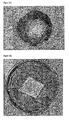
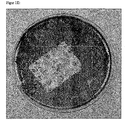
- FIG. 1 shows the results of the culture plates inoculated in Example 8.
- FIG. 2 shows the results of the ATR-FTIR analysis of a paint system according to Example 5. Shown is the percentage peak area of the additive based on the pure substance. An enrichment of the amine-modified polysiloxanes on the surface of the cured coating films is clearly recognizable.
- the representation of the described polysiloxane takes place in two reaction steps.
- the starting materials are unbranched hydrogenmethyl-co-dimethyl-siloxanes with different content of Si-H-functional groups.
- the hydrophilic group such as polyethers and epoxy compounds, with allyl function is added to the Si-H groups.
- the reaction is under Nitrogen performed and hexachloroplatinic acid used as a catalyst. The reaction is carried out at 90-110 ° C for 4 hours and proceeds quantitatively. It is over when no Si-H bonds are detectable by FTIR spectroscopy.
- the epoxy ring is opened by means of the amine. For this, temperatures around 70-90 ° C are needed. The reaction can be monitored by decreasing the epoxide number. In the product, no free amine is detectable by thin layer chromatography.
- the molecular weight of the amine-modified polysiloxanes is preferably in the order of 500-100,000 g / mol, preferably 500-10,000 g / mol.
- the chain length of the polysiloxane is not changed in this reaction, since the modifications of the hydrogenmethyl-co-dimethyl-siloxane take place in the side chains and terminal.
- the construction of a new polysiloxane backbone of silane monomers (such as amino-functional or polyether-functional chlorosilanes, methoxysiloxanes and silanols) is unsuitable.
- silane monomers such as amino-functional or polyether-functional chlorosilanes, methoxysiloxanes and silanols
- low molecular weight cleavage products such as hydrogen chloride, water or methanol must be removed from the system, on the other unwanted side reactions of the epoxide group can be expected.
- allyl polyether molecular weight 350 g / mol
- 0.456 g of allyl glycidyl ether are introduced.
- the mixture is mixed with 60 mg of platinum catalyst solution (hexachloroplatinic acid in isopropanol, 1.27% pure) and heated to 40-60 ° C.
- platinum catalyst solution hexachloroplatinic acid in isopropanol, 1.27% pure
- 4.324 g of hydrogenmethyl-co-dimethylsiloxane (3.7 mmol Si-H / g) are added dropwise with stirring.
- the reaction solution is stirred at 90-100 ° C for 4 h.
- Bisphenol A epoxy acrylate 65.9% by weight Tripropylene diacrylate 25.6% by weight
- Polyether-modified dimethylpolysiloxane copolymer 1.5% by weight benzophenone 2.0% by weight -phenylketon (1-hydroxycyclohexyl) 2.0% by weight Amine-modified polyethersiloxane according to Ex. 2 3.0% by weight
- the product from Examples 1 to 3 is used as pure substance, the product from Example 4 as 5% additive in a paint system according to Example 6.
- the samples are dropped into Petri dishes on an agar (2%) Blomalz (2%) - medium , inoculated with a mushroom spore suspension (Aspergillus versicolor, Cladossporium cladosporoides, Alternaria alternata) and at 23 ° C and a relative humidity ⁇ 90% incubated. While on the reference system (coating system according to Example 6 without additive) without amine-modified additive already after a week fungal colonies are visible, the sample is not affected with the amine-modified polyethersiloxane even after 4 weeks.
- Example 1 The product of Example 1 is incorporated in a paint system according to Example 5 omitting other siloxane additives) to 1%, 2% and 5 wt .-%.
- a reference varnish is made without additive.
- the surfaces of the cured coating films are examined by ATR-FTIR spectroscopy. In this method, only a few microns of the paint surface are considered. The surfaces differ exactly with the signals attributable to the amine-modified additive.
- the peak areas of the difference spectrum (paint with additive minus Reference varnish) in relation to peak areas of the additive as a pure substance with the amount used in each case. It becomes clear that the use of 1% additive in the paint accounts for more than 4% of the peak area of the pure substance.
- the fabric is thus not evenly distributed, but enriched on the surface of the paint layer. The effect increases with increasing use amount.
Landscapes
- Chemical & Material Sciences (AREA)
- Life Sciences & Earth Sciences (AREA)
- Organic Chemistry (AREA)
- Chemical Kinetics & Catalysis (AREA)
- Health & Medical Sciences (AREA)
- Polymers & Plastics (AREA)
- Medicinal Chemistry (AREA)
- Wood Science & Technology (AREA)
- Engineering & Computer Science (AREA)
- Pest Control & Pesticides (AREA)
- Materials Engineering (AREA)
- Agronomy & Crop Science (AREA)
- General Chemical & Material Sciences (AREA)
- Plant Pathology (AREA)
- Dentistry (AREA)
- General Health & Medical Sciences (AREA)
- Zoology (AREA)
- Environmental Sciences (AREA)
- Paints Or Removers (AREA)
- Chemical And Physical Treatments For Wood And The Like (AREA)
Claims (18)
- Utilisation de polysiloxanes modifiés par amino comme agent de protection microbicide dans des systèmes de revêtement et des pièces, les polysiloxanes modifiés par amino présentant au moins une unité moléculaire (I)

et une unité moléculaire (II)
oùX représente, à chaque fois indépendamment l'un de l'autre, un radical modifié par amino X1 ou un radical hydrophile X2, et X1 et X2 se trouvent au moins une fois dans le polysiloxane modifié par amino ;R représente, à chaque fois indépendamment l'un de l'autre, un groupe alkyle, alcényle ou alcoxy saturé, insaturé, linéaire, ramifié ou cyclique comprenant 1 à 18 atomes de carbone, qui peut le cas échéant être substitué ;a vaut un nombre entier entre 0, 1 ou 2 ;b vaut un nombre entier entre 1, 2 ou 3, la somme de a et b valant 1, 2 ou 3 ;c vaut un nombre entier 0, 1, 2 ou 3. - Utilisation selon la revendication 1, caractérisée en ce que le radical X1 est un groupe à fonctionnalité amino de la formule générale suivante ;
-R1-O-R2-C(OH)H-CH2-N(R4)2,
où R1 et R2 signifient, à chaque fois indépendamment l'un de l'autre, un groupe alkylène ou alcénylène saturé ou insaturé, linéaire, ramifié ou cyclique comprenant C1 à C18 atomes de carbone, qui peut le cas échéant être substitué ; R4 représente, à chaque fois indépendamment l'un de l'autre, hydrogène, un groupe alkyle ou alcényle linéaire, ramifié ou cyclique en C1 à C18, qui peut le cas échéant être substitué. - Utilisation selon la revendication 2, au moins un R4 n'étant pas de l'hydrogène.
- Utilisation selon la revendication 2 ou 3, R4 représentant, à chaque fois indépendamment l'un de l'autre, un groupe alkyle ou alcényle linéaire, ramifié ou cyclique en C1 à C18.
- Utilisation selon la revendication 1, le radical modifié par amino X1 comprenant un atome d'azote quaternaire, ensemble avec un contre-ion, de préférence un ion halogénure.
- Utilisation selon l'une quelconque des revendications 1 à 5, caractérisée en ce que X2 représente un groupe polyéther hydrophile présentant la formule générale suivante
R1-(O-R21)n-O-R3 où
R1 et R2 représentent, indépendamment l'un de l'autre, un groupe alkyléne ou alcénylène comprenant 1 à 18 atomes de carbone,R3 représente un atome d'hydrogène ou un groupe alkyle ou alcényle linéaire, ramifié ou cyclique en C1 à C18, qui peut le cas échéant être substitué ;n vaut un nombre entier de 1 à 200. - Utilisation selon l'une quelconque des revendications précédentes, caractérisée en ce que R, R1, R2 et R3 présentent, à chaque fois indépendamment l'un de l'autre, 1 à 6 atomes de carbone.
- Utilisation selon l'une quelconque des revendications précédentes, caractérisée en ce que le polysiloxane modifié par amino présente une masse molaire entre 500 et 100 000 g/mole, de préférence entre 500 et 10 000 g/mole.
- Utilisation selon l'une quelconque des revendications précédentes, caractérisée en ce que le rapport des unités moléculaires des formules générales (I) et (II) se situe entre 1:200 à 20:1.
- Utilisation selon l'une quelconque des revendications précédentes, caractérisée en ce que le rapport de la proportion modifiée par amino X1 à la proportion hydrophile X2 vaut 1:10 à 10:1.
- Utilisation selon l'une quelconque des revendications précédentes, caractérisée en ce que le polysiloxane modifié par amino présente au moins une unité moléculaire (I) dans laquelle le radical X représente un radical X3, X3 représentant un groupe réticulable.
- Utilisation selon l'une quelconque des revendications précédentes, caractérisée en ce que les unités moléculaires I et II sont disposées de manière linéaire et c = 2 ou 3 et a + b vaut 2 ou 3.
- Utilisation selon l'une quelconque des revendications précédentes, caractérisée en ce que l'agent de protection contient d'autres microbicides, en particulier des fongicides.
- Utilisation selon l'une quelconque des revendications précédentes, caractérisée en ce que l'agent de protection est une composition de revêtement pour le revêtement de surfaces.
- Utilisation selon la revendication 12, caractérisée en ce que le système de revêtement est une composition de laque pour des matériaux contenant de la lignocellulose.
- Procédé pour le traitement de pièces et de surfaces de pièces contre l'attaque par des microorganismes, en particulier des champignons, caractérisé en ce qu'un polysiloxane modifié par amino selon l'une quelconque des revendications 2 à 13 est introduit dans les matériaux de la pièce, en particulier dans un système de polymère ou un système de liant, ou un agent de protection selon l'une quelconque des revendications 2 à 13 est appliqué sur la surface des matériaux, de préférence par un système de revêtement usuel.
- Système de revêtement comprenant un agent de protection microbicide pour surfaces de pièces à base d'un système de revêtement microbicide, caractérisé en ce qu'il contient un polysiloxane modifié par amino tel que défini dans l'une quelconque des revendications 2 à 4.
- Polysiloxane modifié par amino tel que défini dans l'une quelconque des revendications 2 à 4.
Applications Claiming Priority (2)
| Application Number | Priority Date | Filing Date | Title |
|---|---|---|---|
| DE102006023415A DE102006023415A1 (de) | 2006-05-17 | 2006-05-17 | Verwendung von aminmodifizierten Siloxanen als Schutzmittel in Beschichtungen und Werkstücken |
| PCT/DE2007/000878 WO2007131487A1 (fr) | 2006-05-17 | 2007-05-15 | Utilisation de siloxanes modifiés par une amine comme agents protecteurs dans des revêtements et des pièces |
Publications (2)
| Publication Number | Publication Date |
|---|---|
| EP2021400A1 EP2021400A1 (fr) | 2009-02-11 |
| EP2021400B1 true EP2021400B1 (fr) | 2012-01-11 |
Family
ID=38476840
Family Applications (1)
| Application Number | Title | Priority Date | Filing Date |
|---|---|---|---|
| EP07722426A Not-in-force EP2021400B1 (fr) | 2006-05-17 | 2007-05-15 | Utilisation de siloxanes modifiés par une amine comme agents protecteurs dans des revêtements et des pièces |
Country Status (5)
| Country | Link |
|---|---|
| US (1) | US8357431B2 (fr) |
| EP (1) | EP2021400B1 (fr) |
| AT (1) | ATE540999T1 (fr) |
| DE (1) | DE102006023415A1 (fr) |
| WO (1) | WO2007131487A1 (fr) |
Families Citing this family (1)
| Publication number | Priority date | Publication date | Assignee | Title |
|---|---|---|---|---|
| WO2017194099A1 (fr) * | 2016-05-11 | 2017-11-16 | Wacker Chemie Ag | Polymère de silicone réticulé antimicrobien |
Family Cites Families (24)
| Publication number | Priority date | Publication date | Assignee | Title |
|---|---|---|---|---|
| US2930809A (en) * | 1956-10-12 | 1960-03-29 | Union Carbide Corp | Aminoalkylsilicon compounds and process for producing same |
| GB882062A (en) * | 1956-10-12 | 1961-11-08 | Union Carbide Corp | Organopolysiloxanes and process for producing same |
| BE666745A (fr) | 1964-07-14 | 1966-01-12 | ||
| US3560546A (en) * | 1969-02-05 | 1971-02-02 | Dow Corning | Pentacoordinate endblocked siloxanes |
| JPS6036513B2 (ja) | 1981-02-05 | 1985-08-21 | ト−レ・シリコ−ン株式会社 | 繊維用処理剤 |
| US4615706A (en) * | 1982-05-21 | 1986-10-07 | Stauffer-Wacker Silicones Corporation | Quaternary ammonium-functional silicon compounds |
| JPS6065182A (ja) * | 1983-09-16 | 1985-04-13 | 東レ・ダウコーニング・シリコーン株式会社 | 繊維処理剤組成物 |
| US4866192A (en) | 1988-04-18 | 1989-09-12 | Dow Corning Corporation | Organosilicon quaternary ammonium antimicrobial compounds |
| FR2648821A1 (fr) * | 1989-06-22 | 1990-12-28 | Rhone Poulenc Chimie | |
| DE3928867C1 (fr) * | 1989-08-31 | 1990-10-11 | Th. Goldschmidt Ag, 4300 Essen, De | |
| DE4243399C2 (de) | 1991-12-28 | 2003-07-17 | Mitsubishi Materials Corp | Eine Guanidylgruppe enthaltende antibakterielle Verbindungen |
| DE19709075A1 (de) | 1997-03-06 | 1998-09-10 | Huels Chemische Werke Ag | Verfahren zur Herstellung antimikrobieller Kunststoffe |
| US5464900A (en) * | 1993-10-19 | 1995-11-07 | Minnesota Mining And Manufacturing Company | Water soluble organosiloxane compounds |
| DE19739991A1 (de) * | 1997-09-11 | 1999-03-18 | Wacker Chemie Gmbh | Aminosiloxan-Polyether-Polymere |
| DE19928127C1 (de) | 1999-06-19 | 2000-05-31 | Clariant Gmbh | Antimikrobielle Siloxanquat-Formulierungen, deren Herstellung und Verwendung |
| DE19939866A1 (de) | 1999-08-23 | 2001-03-01 | Wacker Chemie Gmbh | Zusammensetzung zur Erhöhung der Massenaufnahme von polaren Systemen in hydrophob-hydrophilen Hybridmaterialien |
| DE10024270A1 (de) | 2000-05-17 | 2001-11-22 | Creavis Tech & Innovation Gmbh | Antimikrobielle Polymere und Polymerblends aus polymeren Alkylacrylamiden |
| JP3829918B2 (ja) * | 2001-05-29 | 2006-10-04 | 信越化学工業株式会社 | 防菌・防黴・防蟻性木材用水系撥水剤及びその製造方法 |
| US20030175438A1 (en) * | 2002-01-17 | 2003-09-18 | Reeve John A. | Treatments of solid substrates to enhance durability of treatments placed thereon |
| US6977026B2 (en) * | 2002-10-16 | 2005-12-20 | Kimberly-Clark Worldwide, Inc. | Method for applying softening compositions to a tissue product |
| US6896766B2 (en) * | 2002-12-20 | 2005-05-24 | Kimberly-Clark Worldwide, Inc. | Paper wiping products treated with a hydrophobic additive |
| JP4852817B2 (ja) * | 2003-05-15 | 2012-01-11 | Jnc株式会社 | シリコーン変性された抗菌剤及び抗菌性樹脂組成物 |
| DE102004036717A1 (de) * | 2004-07-29 | 2006-03-23 | Wacker Chemie Ag | Polyquaternäre Organosiliciumverbindungen enthaltende Zusammensetzungen |
| DE102004049427A1 (de) * | 2004-10-08 | 2006-04-13 | Degussa Ag | Polyetherfunktionelle Siloxane, polyethersiloxanhaltige Zusammensetzungen, Verfahren zu deren Herstellung und deren Verwendung |
-
2006
- 2006-05-17 DE DE102006023415A patent/DE102006023415A1/de not_active Withdrawn
-
2007
- 2007-05-15 EP EP07722426A patent/EP2021400B1/fr not_active Not-in-force
- 2007-05-15 AT AT07722426T patent/ATE540999T1/de active
- 2007-05-15 US US12/299,062 patent/US8357431B2/en active Active
- 2007-05-15 WO PCT/DE2007/000878 patent/WO2007131487A1/fr not_active Ceased
Also Published As
| Publication number | Publication date |
|---|---|
| EP2021400A1 (fr) | 2009-02-11 |
| WO2007131487A8 (fr) | 2008-01-10 |
| DE102006023415A1 (de) | 2007-11-22 |
| US8357431B2 (en) | 2013-01-22 |
| WO2007131487A1 (fr) | 2007-11-22 |
| US20090304932A1 (en) | 2009-12-10 |
| ATE540999T1 (de) | 2012-01-15 |
Similar Documents
| Publication | Publication Date | Title |
|---|---|---|
| EP3744761B1 (fr) | Polyethérsiloxanes à base de sioc | |
| EP2099811B1 (fr) | Siloxanes cycliques et leur utilisation | |
| EP2699623B1 (fr) | Polyorganosiloxanes ou silanes fonctionnalisés pour traiter des matériaux lignocellulosiques | |
| EP1632521B1 (fr) | Emulsions des aminosiloxanes du type huile-dans-eau | |
| DE69829951T2 (de) | Verfahren zur verhinderung der entfärbung von pyrithion enthaltenden beschichtungszusammensetzungen | |
| EP3106033B1 (fr) | Trisiloxane organomodifié bodégradable à effet super étalant | |
| DE2408192A1 (de) | Verbundstoff mit antimikrobieller wirkung | |
| DE102006061890A1 (de) | Kleb- und Dichtungsmassen mit antimikrobieller Ausrüstung | |
| EP1924145A2 (fr) | Composition biocide synergique contenant de l'argent | |
| DE102004036717A1 (de) | Polyquaternäre Organosiliciumverbindungen enthaltende Zusammensetzungen | |
| DE602004007717T2 (de) | Silikon-modifiziertes antimikrobielles Polymer, antimikrobielles Mittel und antimikrobielle Harzzusammensetzung | |
| DE69810762T2 (de) | Algizides und fungizides konservierungsmittel mit alternaria-aktivität | |
| EP2021400B1 (fr) | Utilisation de siloxanes modifiés par une amine comme agents protecteurs dans des revêtements et des pièces | |
| EP3965545B1 (fr) | Siloxane modifié par polyéther en tant qu'agent liant la poussière pour semences | |
| EP2024408B1 (fr) | Polymère de silicone réticulable au niveau de groupements methylol | |
| EP3778160B1 (fr) | Composition de résine, revêtement de résine, stratifiés et impregnés les contenant, ainsi que leur procédé de fabrication | |
| EP1445273B1 (fr) | Dérivés d'Organosiloxanes linéaires présentant une fonction carboxy et leur utilisation dans le traitement de surfaces en cuir | |
| EP3455042B1 (fr) | Panneau de fibres à résistance accrue contre toute attaque fongique et son procédé de fabrication | |
| WO2006013146A1 (fr) | Produit de protection et de traitement du bois | |
| DE102014216380A1 (de) | Emulsionen von Aminosiloxanen und Silicaten | |
| DE4243399C2 (de) | Eine Guanidylgruppe enthaltende antibakterielle Verbindungen | |
| EP3758482A1 (fr) | Compositions à base de siloxanes cycliques utilisées en tant qu'agents mouillants à diffusion étendue et lente pour la protection phytosanitaire | |
| AT511235A1 (de) | Antimikrobielle ausrüstung von kunststoffen und textilen oberflächen | |
| DE2610931A1 (de) | Mittel mit bactericider und fungicider wirkung | |
| DE2526711B2 (de) | Mittel mit bactericider und fungicider wirkung |
Legal Events
| Date | Code | Title | Description |
|---|---|---|---|
| PUAI | Public reference made under article 153(3) epc to a published international application that has entered the european phase |
Free format text: ORIGINAL CODE: 0009012 |
|
| 17P | Request for examination filed |
Effective date: 20081217 |
|
| AK | Designated contracting states |
Kind code of ref document: A1 Designated state(s): AT BE BG CH CY CZ DE DK EE ES FI FR GB GR HU IE IS IT LI LT LU LV MC MT NL PL PT RO SE SI SK TR |
|
| AX | Request for extension of the european patent |
Extension state: AL BA HR MK RS |
|
| RIN1 | Information on inventor provided before grant (corrected) |
Inventor name: FRIEBEL, STEFAN Inventor name: PHILIPP, CLAUDIA |
|
| 17Q | First examination report despatched |
Effective date: 20090409 |
|
| GRAP | Despatch of communication of intention to grant a patent |
Free format text: ORIGINAL CODE: EPIDOSNIGR1 |
|
| DAX | Request for extension of the european patent (deleted) | ||
| GRAS | Grant fee paid |
Free format text: ORIGINAL CODE: EPIDOSNIGR3 |
|
| GRAA | (expected) grant |
Free format text: ORIGINAL CODE: 0009210 |
|
| AK | Designated contracting states |
Kind code of ref document: B1 Designated state(s): AT BE BG CH CY CZ DE DK EE ES FI FR GB GR HU IE IS IT LI LT LU LV MC MT NL PL PT RO SE SI SK TR |
|
| REG | Reference to a national code |
Ref country code: GB Ref legal event code: FG4D Free format text: NOT ENGLISH |
|
| REG | Reference to a national code |
Ref country code: CH Ref legal event code: EP |
|
| REG | Reference to a national code |
Ref country code: AT Ref legal event code: REF Ref document number: 540999 Country of ref document: AT Kind code of ref document: T Effective date: 20120115 |
|
| REG | Reference to a national code |
Ref country code: IE Ref legal event code: FG4D |
|
| REG | Reference to a national code |
Ref country code: CH Ref legal event code: NV Representative=s name: BRAUNPAT BRAUN EDER AG |
|
| REG | Reference to a national code |
Ref country code: DE Ref legal event code: R096 Ref document number: 502007009056 Country of ref document: DE Effective date: 20120308 |
|
| REG | Reference to a national code |
Ref country code: NL Ref legal event code: T3 |
|
| PG25 | Lapsed in a contracting state [announced via postgrant information from national office to epo] |
Ref country code: SI Free format text: LAPSE BECAUSE OF FAILURE TO SUBMIT A TRANSLATION OF THE DESCRIPTION OR TO PAY THE FEE WITHIN THE PRESCRIBED TIME-LIMIT Effective date: 20120111 |
|
| LTIE | Lt: invalidation of european patent or patent extension |
Effective date: 20120111 |
|
| PG25 | Lapsed in a contracting state [announced via postgrant information from national office to epo] |
Ref country code: LT Free format text: LAPSE BECAUSE OF FAILURE TO SUBMIT A TRANSLATION OF THE DESCRIPTION OR TO PAY THE FEE WITHIN THE PRESCRIBED TIME-LIMIT Effective date: 20120111 Ref country code: BG Free format text: LAPSE BECAUSE OF FAILURE TO SUBMIT A TRANSLATION OF THE DESCRIPTION OR TO PAY THE FEE WITHIN THE PRESCRIBED TIME-LIMIT Effective date: 20120411 Ref country code: IS Free format text: LAPSE BECAUSE OF FAILURE TO SUBMIT A TRANSLATION OF THE DESCRIPTION OR TO PAY THE FEE WITHIN THE PRESCRIBED TIME-LIMIT Effective date: 20120511 |
|
| REG | Reference to a national code |
Ref country code: IE Ref legal event code: FD4D |
|
| PG25 | Lapsed in a contracting state [announced via postgrant information from national office to epo] |
Ref country code: LV Free format text: LAPSE BECAUSE OF FAILURE TO SUBMIT A TRANSLATION OF THE DESCRIPTION OR TO PAY THE FEE WITHIN THE PRESCRIBED TIME-LIMIT Effective date: 20120111 Ref country code: FI Free format text: LAPSE BECAUSE OF FAILURE TO SUBMIT A TRANSLATION OF THE DESCRIPTION OR TO PAY THE FEE WITHIN THE PRESCRIBED TIME-LIMIT Effective date: 20120111 Ref country code: PL Free format text: LAPSE BECAUSE OF FAILURE TO SUBMIT A TRANSLATION OF THE DESCRIPTION OR TO PAY THE FEE WITHIN THE PRESCRIBED TIME-LIMIT Effective date: 20120111 Ref country code: GR Free format text: LAPSE BECAUSE OF FAILURE TO SUBMIT A TRANSLATION OF THE DESCRIPTION OR TO PAY THE FEE WITHIN THE PRESCRIBED TIME-LIMIT Effective date: 20120412 Ref country code: PT Free format text: LAPSE BECAUSE OF FAILURE TO SUBMIT A TRANSLATION OF THE DESCRIPTION OR TO PAY THE FEE WITHIN THE PRESCRIBED TIME-LIMIT Effective date: 20120511 |
|
| PG25 | Lapsed in a contracting state [announced via postgrant information from national office to epo] |
Ref country code: CY Free format text: LAPSE BECAUSE OF FAILURE TO SUBMIT A TRANSLATION OF THE DESCRIPTION OR TO PAY THE FEE WITHIN THE PRESCRIBED TIME-LIMIT Effective date: 20120111 |
|
| PG25 | Lapsed in a contracting state [announced via postgrant information from national office to epo] |
Ref country code: IE Free format text: LAPSE BECAUSE OF FAILURE TO SUBMIT A TRANSLATION OF THE DESCRIPTION OR TO PAY THE FEE WITHIN THE PRESCRIBED TIME-LIMIT Effective date: 20120111 Ref country code: CZ Free format text: LAPSE BECAUSE OF FAILURE TO SUBMIT A TRANSLATION OF THE DESCRIPTION OR TO PAY THE FEE WITHIN THE PRESCRIBED TIME-LIMIT Effective date: 20120111 Ref country code: EE Free format text: LAPSE BECAUSE OF FAILURE TO SUBMIT A TRANSLATION OF THE DESCRIPTION OR TO PAY THE FEE WITHIN THE PRESCRIBED TIME-LIMIT Effective date: 20120111 Ref country code: SE Free format text: LAPSE BECAUSE OF FAILURE TO SUBMIT A TRANSLATION OF THE DESCRIPTION OR TO PAY THE FEE WITHIN THE PRESCRIBED TIME-LIMIT Effective date: 20120111 Ref country code: RO Free format text: LAPSE BECAUSE OF FAILURE TO SUBMIT A TRANSLATION OF THE DESCRIPTION OR TO PAY THE FEE WITHIN THE PRESCRIBED TIME-LIMIT Effective date: 20120111 Ref country code: DK Free format text: LAPSE BECAUSE OF FAILURE TO SUBMIT A TRANSLATION OF THE DESCRIPTION OR TO PAY THE FEE WITHIN THE PRESCRIBED TIME-LIMIT Effective date: 20120111 |
|
| PLBE | No opposition filed within time limit |
Free format text: ORIGINAL CODE: 0009261 |
|
| STAA | Information on the status of an ep patent application or granted ep patent |
Free format text: STATUS: NO OPPOSITION FILED WITHIN TIME LIMIT |
|
| BERE | Be: lapsed |
Owner name: FRAUNHOFER-GESELLSCHAFT ZUR FORDERUNG DER ANGEWAN Effective date: 20120531 |
|
| PG25 | Lapsed in a contracting state [announced via postgrant information from national office to epo] |
Ref country code: SK Free format text: LAPSE BECAUSE OF FAILURE TO SUBMIT A TRANSLATION OF THE DESCRIPTION OR TO PAY THE FEE WITHIN THE PRESCRIBED TIME-LIMIT Effective date: 20120111 |
|
| 26N | No opposition filed |
Effective date: 20121012 |
|
| PG25 | Lapsed in a contracting state [announced via postgrant information from national office to epo] |
Ref country code: MC Free format text: LAPSE BECAUSE OF NON-PAYMENT OF DUE FEES Effective date: 20120531 |
|
| REG | Reference to a national code |
Ref country code: DE Ref legal event code: R097 Ref document number: 502007009056 Country of ref document: DE Effective date: 20121012 |
|
| PG25 | Lapsed in a contracting state [announced via postgrant information from national office to epo] |
Ref country code: BE Free format text: LAPSE BECAUSE OF NON-PAYMENT OF DUE FEES Effective date: 20120531 |
|
| PG25 | Lapsed in a contracting state [announced via postgrant information from national office to epo] |
Ref country code: ES Free format text: LAPSE BECAUSE OF FAILURE TO SUBMIT A TRANSLATION OF THE DESCRIPTION OR TO PAY THE FEE WITHIN THE PRESCRIBED TIME-LIMIT Effective date: 20120422 |
|
| PG25 | Lapsed in a contracting state [announced via postgrant information from national office to epo] |
Ref country code: MT Free format text: LAPSE BECAUSE OF FAILURE TO SUBMIT A TRANSLATION OF THE DESCRIPTION OR TO PAY THE FEE WITHIN THE PRESCRIBED TIME-LIMIT Effective date: 20120111 |
|
| PG25 | Lapsed in a contracting state [announced via postgrant information from national office to epo] |
Ref country code: TR Free format text: LAPSE BECAUSE OF FAILURE TO SUBMIT A TRANSLATION OF THE DESCRIPTION OR TO PAY THE FEE WITHIN THE PRESCRIBED TIME-LIMIT Effective date: 20120111 |
|
| PG25 | Lapsed in a contracting state [announced via postgrant information from national office to epo] |
Ref country code: LU Free format text: LAPSE BECAUSE OF NON-PAYMENT OF DUE FEES Effective date: 20120515 |
|
| PG25 | Lapsed in a contracting state [announced via postgrant information from national office to epo] |
Ref country code: HU Free format text: LAPSE BECAUSE OF FAILURE TO SUBMIT A TRANSLATION OF THE DESCRIPTION OR TO PAY THE FEE WITHIN THE PRESCRIBED TIME-LIMIT Effective date: 20070515 |
|
| PGFP | Annual fee paid to national office [announced via postgrant information from national office to epo] |
Ref country code: GB Payment date: 20140520 Year of fee payment: 8 |
|
| PGFP | Annual fee paid to national office [announced via postgrant information from national office to epo] |
Ref country code: FR Payment date: 20140516 Year of fee payment: 8 Ref country code: IT Payment date: 20140526 Year of fee payment: 8 Ref country code: CH Payment date: 20140522 Year of fee payment: 8 Ref country code: AT Payment date: 20140519 Year of fee payment: 8 Ref country code: NL Payment date: 20140520 Year of fee payment: 8 |
|
| REG | Reference to a national code |
Ref country code: DE Ref legal event code: R082 Ref document number: 502007009056 Country of ref document: DE Representative=s name: GRAMM, LINS & PARTNER PATENT- UND RECHTSANWAEL, DE |
|
| REG | Reference to a national code |
Ref country code: CH Ref legal event code: PL |
|
| REG | Reference to a national code |
Ref country code: AT Ref legal event code: MM01 Ref document number: 540999 Country of ref document: AT Kind code of ref document: T Effective date: 20150515 |
|
| GBPC | Gb: european patent ceased through non-payment of renewal fee |
Effective date: 20150515 |
|
| PG25 | Lapsed in a contracting state [announced via postgrant information from national office to epo] |
Ref country code: CH Free format text: LAPSE BECAUSE OF NON-PAYMENT OF DUE FEES Effective date: 20150531 Ref country code: LI Free format text: LAPSE BECAUSE OF NON-PAYMENT OF DUE FEES Effective date: 20150531 Ref country code: IT Free format text: LAPSE BECAUSE OF NON-PAYMENT OF DUE FEES Effective date: 20150515 |
|
| REG | Reference to a national code |
Ref country code: NL Ref legal event code: MM Effective date: 20150601 |
|
| REG | Reference to a national code |
Ref country code: FR Ref legal event code: ST Effective date: 20160129 |
|
| PG25 | Lapsed in a contracting state [announced via postgrant information from national office to epo] |
Ref country code: AT Free format text: LAPSE BECAUSE OF NON-PAYMENT OF DUE FEES Effective date: 20150515 |
|
| PG25 | Lapsed in a contracting state [announced via postgrant information from national office to epo] |
Ref country code: GB Free format text: LAPSE BECAUSE OF NON-PAYMENT OF DUE FEES Effective date: 20150515 Ref country code: NL Free format text: LAPSE BECAUSE OF NON-PAYMENT OF DUE FEES Effective date: 20150601 |
|
| PG25 | Lapsed in a contracting state [announced via postgrant information from national office to epo] |
Ref country code: FR Free format text: LAPSE BECAUSE OF NON-PAYMENT OF DUE FEES Effective date: 20150601 |
|
| REG | Reference to a national code |
Ref country code: DE Ref legal event code: R084 Ref document number: 502007009056 Country of ref document: DE |
|
| PGFP | Annual fee paid to national office [announced via postgrant information from national office to epo] |
Ref country code: DE Payment date: 20190522 Year of fee payment: 13 |
|
| REG | Reference to a national code |
Ref country code: DE Ref legal event code: R119 Ref document number: 502007009056 Country of ref document: DE |
|
| PG25 | Lapsed in a contracting state [announced via postgrant information from national office to epo] |
Ref country code: DE Free format text: LAPSE BECAUSE OF NON-PAYMENT OF DUE FEES Effective date: 20201201 |