EP2022792B1 - Neue verbindung mit affinität zu amyloid - Google Patents
Neue verbindung mit affinität zu amyloid Download PDFInfo
- Publication number
- EP2022792B1 EP2022792B1 EP07742483A EP07742483A EP2022792B1 EP 2022792 B1 EP2022792 B1 EP 2022792B1 EP 07742483 A EP07742483 A EP 07742483A EP 07742483 A EP07742483 A EP 07742483A EP 2022792 B1 EP2022792 B1 EP 2022792B1
- Authority
- EP
- European Patent Office
- Prior art keywords
- compound
- solution
- hydroxyphenyl
- mmol
- amyloid
- Prior art date
- Legal status (The legal status is an assumption and is not a legal conclusion. Google has not performed a legal analysis and makes no representation as to the accuracy of the status listed.)
- Not-in-force
Links
- 0 *1C(c2ccccc2)=C*2C1=N***2 Chemical compound *1C(c2ccccc2)=C*2C1=N***2 0.000 description 1
Images


Classifications
-
- C—CHEMISTRY; METALLURGY
- C07—ORGANIC CHEMISTRY
- C07D—HETEROCYCLIC COMPOUNDS
- C07D487/00—Heterocyclic compounds containing nitrogen atoms as the only ring hetero atoms in the condensed system, not provided for by groups C07D451/00 - C07D477/00
- C07D487/02—Heterocyclic compounds containing nitrogen atoms as the only ring hetero atoms in the condensed system, not provided for by groups C07D451/00 - C07D477/00 in which the condensed system contains two hetero rings
- C07D487/04—Ortho-condensed systems
-
- C—CHEMISTRY; METALLURGY
- C07—ORGANIC CHEMISTRY
- C07D—HETEROCYCLIC COMPOUNDS
- C07D471/00—Heterocyclic compounds containing nitrogen atoms as the only ring hetero atoms in the condensed system, at least one ring being a six-membered ring with one nitrogen atom, not provided for by groups C07D451/00 - C07D463/00
- C07D471/02—Heterocyclic compounds containing nitrogen atoms as the only ring hetero atoms in the condensed system, at least one ring being a six-membered ring with one nitrogen atom, not provided for by groups C07D451/00 - C07D463/00 in which the condensed system contains two hetero rings
- C07D471/04—Ortho-condensed systems
-
- A—HUMAN NECESSITIES
- A61—MEDICAL OR VETERINARY SCIENCE; HYGIENE
- A61K—PREPARATIONS FOR MEDICAL, DENTAL OR TOILETRY PURPOSES
- A61K51/00—Preparations containing radioactive substances for use in therapy or testing in vivo
-
- A—HUMAN NECESSITIES
- A61—MEDICAL OR VETERINARY SCIENCE; HYGIENE
- A61K—PREPARATIONS FOR MEDICAL, DENTAL OR TOILETRY PURPOSES
- A61K51/00—Preparations containing radioactive substances for use in therapy or testing in vivo
- A61K51/02—Preparations containing radioactive substances for use in therapy or testing in vivo characterised by the carrier, i.e. characterised by the agent or material covalently linked or complexing the radioactive nucleus
- A61K51/04—Organic compounds
- A61K51/041—Heterocyclic compounds
- A61K51/044—Heterocyclic compounds having nitrogen as a ring hetero atom, e.g. guanethidine, rifamycins
- A61K51/0455—Heterocyclic compounds having nitrogen as a ring hetero atom, e.g. guanethidine, rifamycins having six-membered rings with one nitrogen as the only ring hetero atom
-
- A—HUMAN NECESSITIES
- A61—MEDICAL OR VETERINARY SCIENCE; HYGIENE
- A61K—PREPARATIONS FOR MEDICAL, DENTAL OR TOILETRY PURPOSES
- A61K51/00—Preparations containing radioactive substances for use in therapy or testing in vivo
- A61K51/02—Preparations containing radioactive substances for use in therapy or testing in vivo characterised by the carrier, i.e. characterised by the agent or material covalently linked or complexing the radioactive nucleus
- A61K51/04—Organic compounds
- A61K51/041—Heterocyclic compounds
- A61K51/044—Heterocyclic compounds having nitrogen as a ring hetero atom, e.g. guanethidine, rifamycins
- A61K51/0459—Heterocyclic compounds having nitrogen as a ring hetero atom, e.g. guanethidine, rifamycins having six-membered rings with two nitrogen atoms as the only ring hetero atoms, e.g. piperazine
-
- C—CHEMISTRY; METALLURGY
- C07—ORGANIC CHEMISTRY
- C07F—ACYCLIC, CARBOCYCLIC OR HETEROCYCLIC COMPOUNDS CONTAINING ELEMENTS OTHER THAN CARBON, HYDROGEN, HALOGEN, OXYGEN, NITROGEN, SULFUR, SELENIUM OR TELLURIUM
- C07F7/00—Compounds containing elements of Groups 4 or 14 of the Periodic Table
- C07F7/22—Tin compounds
-
- C—CHEMISTRY; METALLURGY
- C07—ORGANIC CHEMISTRY
- C07F—ACYCLIC, CARBOCYCLIC OR HETEROCYCLIC COMPOUNDS CONTAINING ELEMENTS OTHER THAN CARBON, HYDROGEN, HALOGEN, OXYGEN, NITROGEN, SULFUR, SELENIUM OR TELLURIUM
- C07F7/00—Compounds containing elements of Groups 4 or 14 of the Periodic Table
- C07F7/22—Tin compounds
- C07F7/2208—Compounds having tin linked only to carbon, hydrogen and/or halogen
Definitions
- the present invention relates to a compound for use in diagnosis of cerebral degenerative disease. More specifically, the invention relates to a compound useful for amyloid detection at lesion sites in diagnosis of Alzheimer's disease and other diseases with amyloid accumulation.
- amyloidosis Diseases with the onset of deposition of a fibrous protein called amyloid in various organs or tissues in bodies are generally referred to as amyloidosis.
- a feature common to amyloidosis is that the fibrous protein called amyloid which is enriched with the ⁇ -sheet structure is deposited at various organs systemically or at sites topically so that functional abnormalities are triggered in the organs or tissues.
- AD Alzheimer's disease
- AD Alzheimer's disease
- This disease is lethal with progressive deposition of amyloid in brain, and thus is said to be a disease that causes concern in society compared with other amyloidosis diseases.
- the number of AD patients is rapidly increasing in developed countries with aging societies, thereby causing a social problem.
- AD is characterized by three pathological findings in brain, namely development of senile plaques, formation of neurofibrillary tangles, and extensive neuronal loss.
- the senile plaque has a structure composed mainly of amyloid, and is said to appear at the earliest stage of AD onset and thus is pathologically found in brain about 10 or more years before appearance of clinical symptoms.
- AD is diagnosed by carrying out various evaluations of cognitive functions (for example, Hasegawa scale, ADAS-JCog and MMSE) in auxiliary combination with imaging diagnosis such as CT and MRI.
- cognitive functions for example, Hasegawa scale, ADAS-JCog and MMSE
- the method based on such evaluations of cognitive functions is low in diagnostic sensitivity at the early stage of the onset, and is furthermore problematic in that diagnostic results are susceptible to inborn cognitive functions of individuals.
- a ⁇ amyloid constituting senile plaques
- numerous reports tell that the A ⁇ aggregate forms a ⁇ -sheet structure that causes nerve cell toxicity.
- a ⁇ amyloid ⁇ protein
- [ 11 C]-labeled SB-13 shows a clearance from normal tissues in experiments in rats, however, it cannot be said that the clearance is sufficiently fast ( Masahiro Ono et al., Nuclear Medicine and Biology, 2003, 30, p.565-571 ).
- a preferable probe targeting amyloid for imaging diagnosis would be a compound that is excellent in affinity with amyloid and sufficiently rapid in clearance from normal tissues like IMPY but is suppressed in toxicity such as mutagenicity. However, no compound with such properties has been disclosed.
- the present invention has been made under such circumstances, and aims at providing a compound that has affinity with amyloid, exhibits sufficiently rapid clearance from normal tissues and is suppressed in toxicity such as mutagenicity, and also providing a diagnostic agent for Alzheimer's disease.
- the inventors have found that a group of compounds satisfying the above-described requirements can be obtained from a compound with an imidazopyridine-phenyl skeleton having a carbon atom to which hydroxyl group is attached, and thus have completed the present invention.
- the present invention relates to a compound represented by the following formula (1): or a salt thereof, and a low-toxic diagnostic agent for Alzheimer's disease comprising a compound represented by the above formula (1) or a salt thereof.
- R 3 is a group represented by R 1 is a radioactive halogen substituent, m is an integer of 0 to 4 and n is 0 or 1.
- the radioactive halogen various elements can be used, preferably a halogen selected from the group consisting of 18 F, 76 Br, 123 I, 124 I, 125 I and 131 I, and more preferably a halogen selected from the group consisting of 18 F, 123 I and 125 I.
- a 1 , A 2 , A 3 and A 4 independently represent a carbon or nitrogen, and it is necessary that at least one of these represents a carbon. Preferably, 3 or more of A 1 , A 2 , A 3 and A 4 represent carbons, and more preferably, all of them represent carbons.
- R 3 binds to a carbon represented by A 1 , A 2 , A 3 or A 4 .
- a 1 , A 2 , A 3 and A 4 respectively represent a carbon which is not bound to R 3 , a hydrogen atom binding thereto is to be unsubstituted.
- a hydroxyl group indicated in the formula (1) may bind to any of the carbons constituting the phenyl skeleton thereof, but it is preferable that the hydroxyl group binds to a carbon at 4'-position of the phenyl skeleton.
- a binding site for R 3 may be any of A 1 , A , A 3 and A 4 as long as it is a carbon, but is preferably a carbon represented by A 3 , that is, a carbon at 6-position.
- non-radioactive halogen substituent a halogen capable of being a target of nucleophilic substitution reactions using a radioactive fluorine or a halogen capable of being a target of isotope exchange reactions with a radioactive iodine can be used, and preferably iodine, bromine or chlorine can be used.
- a 5 , A 6 , A 7 and A 8 independently represent a carbon or nitrogen, and it is necessary that at least one of these represents a carbon. Preferably, 3 or more of A 5 , A 6 , A 7 and A 8 represent carbons, and more preferably, all of them represent carbons.
- R 4 binds to a carbon represented by A 5 , A 6 , A 7 or A 8 .
- a 5 , A 6 , A 7 and A 8 respectively represent a carbon which is not bound to R 4 , a hydrogen atom binding thereto is to be unsubstituted.
- a hydroxyl group indicated in the formula (2) may bind to any of the carbons constituting the phenyl skeleton thereof, but it is preferable that the hydroxyl group binds to a carbon at 4'-position of the phenyl skeleton.
- a binding site for R 4 may be any of A 5 , A 6 , A 7 and A 8 as long as it is a carbon, but is preferably a carbon represented by A 7 , that is, a carbon at 6-position.
- a compound that has affinity with amyloid and is sufficiently fast in clearance from normal tissues and suppressed in toxicity such as mutagenicity can be obtained as well as a diagnostic agent for Alzheimer's disease with low toxicity.
- 2-bromo-4'-hydroxyacetophenone and 2-amino-5-bromopyridine are dissolved in an inactive solvent such as acetonitrile, and are allowed to react with each other at a reflux temperature for 2 to 6 hours to produce 6-bromo-2-(4'-hydroxyphenyl)imidazo[1,2-a]pyridine hydrobromide salt as white precipitates.
- the solvent used in this instance may be acetonitrile or another solvent that is usually employed in a similar reaction, for example, methanol and acetone.
- the reaction temperature may be a temperature allowing refluxing, for example, 90°C when the solvent is acetonitrile.
- the amount of the solvent to be used may be an amount sufficient to effect the reaction, however, it should be noted that if the solvent is too much, it will become difficult to obtain precipitates of reaction products.
- the amount of a solvent to be used can be about 40 to 50 mL.
- the reaction solution is filtered to recover the precipitates.
- the white precipitates are suspended in a mixed solution of methanol/water (1:1).
- an aqueous saturated solution of sodium hydrogencarbonate is added thereto in a very excessive amount relative to the suspended precipitates to release 6-bromo-2-(4'-hydroxyphenyl)imidazo[1,2-a]pyridine as precipitates.
- the newly generated precipitates are filtered to recover 6-bromo-2-(4'-hydroxyphenyl)imidazo[1,2-a]pyridine as the target compound in this step ( Fig. 1 , Step 2).
- the amount of the mixed solution of water/methanol is not specifically limited as long as it is sufficient to effect the reaction.
- the amount of the mixed solution is too much, precipitation of products will be hindered.
- the mixed solution of water/methanol may be used in an amount of about 40 to 100 mL.
- the amount of sodium hydrogencarbonate is not specifically limited as long as it is very excessive relative to the above-described precipitates as reaction substrates.
- the amount of an aqueous saturated solution of sodium hydrogencarbonate to be added to the reaction solution can be about 25mL.
- 6-bromo-2-(4'-hydroxyphenyl)imidazo[1,2-a]pyridine prepared above is sufficiently dried, dissolved in dioxane, and after triethylamine is added, bis(tributyltin) and a catalytic amount of tetrakis-triphenylphosphine palladium are added.
- This reaction mixture is heated at about 90°C and reacted for about 24 hours, and then a solvent is distilled off and a chromatographic purification is performed to obtain 6-tributylstannyl-2-[4'-hydroxyphenyl]imidazo[1,2-a]pyridine as the target compound ( Fig. 1 , Step 3).
- the amount of bis(tributyltin) to be used is an amount satisfying a condition where it is excessive relative to the reaction substrate, specifically, it is preferably about 1.5 times in molar ratio relative to the 6-bromo-2-(4'-hydroxyphenyl)imidazo[1,2-a]pyridine as the reaction substrate.
- the compound obtained in Step 2 per se may be used as a compound having bromine as the halogen substituent, and for compounds having fluorine, chlorine and iodine as the halogen substituent at the 6-position, the same reaction as in Step 2 may be performed except using 2-amino-5-fluoropyridine, 2-amino-5-chloropyridine and 2-amino-5-iodopyridine respectively instead of 2-amino-5-bromopyridine in Step 2.
- 2-amino-5-hydroxypyridine instead of 2-amino-5-bromopyridine may be reacted to synthesize 2-(4'-hydroxyphenyl)-6-hydroxyimidazo[1,2-a]pyridine, and a bromide compound having a substituent desired to be introduced may be reacted therewith in the presence of a base.
- 2-(4'-hydroxyphenyl)-6-hydroxyimidazo[1,2-a]pyridine can be reacted with 1-bromo-3-fluoropropane in the presence of potassium carbonate.
- Step 2 2-(4'-hydroxyphenyl)-6-bromoimidazo[1,2-a]pyridine obtained in Step 2 may be reacted with allyltributyltin, and converted to 6-allyl-2-(4'-hydroxyphenyl)imidazo[1,2-a]pyridine.
- a [ 123 I]sodium iodide solution to be served for labeling is first obtained.
- a [ 123 I]radioactive iodine can be obtained by, for example, a known method in which a xenon gas is used as a target and exposed to proton bombardment. This [ 123 I]radioactive iodine is made into [ 123 I]sodium iodide solution by using known methods, and used for the labeling.
- the labeling precursor 6-tributylstannyl-2-[4'-hydroxyphenyl]imidazo[1,2-a]pyridine is dissolved in an inert organic solvent, and the [ 123 I]sodium iodine solution, an acid and an oxidizing agent are added thereto and allowed to react to obtain 2-[4'-hydroxyphenyl]-6-[ 123 I]iodoimidazo[1,2-a]pyridine as a target compound.
- the inert organic solvent dissolving the precursor compound various solvents having no reactivity with the labeling precursor and the [ 123 I]sodium iodide can be used, and preferably methanol can be used.
- the acid may be used various ones, and preferably hydrochloric acid.
- the oxidizing agent is not particularly limited as long as it can effect the oxidation of iodine in the reaction solution, and is preferably hydrogen peroxide or peracetic acid.
- the amount of the oxidizing agent to be added may be an amount sufficient to oxidize iodine in the reaction solution.
- a compound labeled with a radioactive halogen other than iodine can be synthesized by labeling a labeling precursor that fits a purpose of synthesis with a radioactive halogen that fits the purpose.
- a labeling precursor that fits a purpose of synthesis with a radioactive halogen that fits the purpose.
- the labeling precursor 2-(4'-hydroxyphenyl)-6-(3'- p- toluenesulfonyloxypropoxy)imidazo[1,2-a]pyridine can be reacted with [ 18 F]fluoride ion in the presence of a phase transfer catalyst and potassium carbonate.
- the diagnostic agent according to the present invention can be prepared as a solution which comprises the present radioactive halogen-labeled compound blended in water, a physiological saline solution or a Ringer's solution optionally adjusted to an appropriate pH, like other commonly-known radioactive diagnostic agents.
- concentration of the present compound should be adjusted to not more than the concentration at which stability of the present compound is ensured.
- Dosage of the present compound is not specifically limited as long as it is sufficient to obtain an image of distribution of an administered agent.
- iodine-123-labeled compounds and fluorine-18-labeled compounds about 50 to 600 MBq per adult body of 60 kg weight can be administered intravenously or locally. Distribution of administered agents can be imaged by known methods.
- iodine-123-labeled compounds can be imaged by a SPECT apparatus while fluorine-18-labeled compounds can be imaged by a PET apparatus.
- Table 1 Names of compounds used for evaluation in Examples Compound name Common name Compound 1 6-bromo-2-(4'-hydroxyphenyl)imidazo[1,2-a]pyridine Compound 2 2-(4'-hydroxyphenyl)-6-iodoimidazo[1,2-alpyridine Compound 3 6-(3'-fluoropropoxy)-2-(4'-hydroxyphenyl)imidazo[1,2-a]pyridine Compound 4 2-(4'-hydroxyphenyl)-6-iodoimidazo[1,2-a]pyrimidine Compound 5 [ 125 I]-2-(4'-hydroxyphenyl)-6-iodoimidazo[1,2-a]pyridine Compound 6 [ 123 I]-2-(4'-hydroxyphenyl)-6-iodoimidazo[1,2-a]pyridine Compound 7 6-bromo-2-(4'-hydroxyphenyl)imidazo[1,2-a]pyrazine Compound 8 2-(4'-hydroxyphenyl)-6-iodoimidazo[1,2-a]
- Detector Ultraviolet visible absorptiometer (Detection wavelength: 282 nm) and radioactivity counter (manufactured by raytest: type STEFFI)
- NMR apparatus employed: JNM-ECP-500 (manufactured by Japan Electron Optics Laboratory Co., Ltd. (JEOL)) 1 H-NMR (solvent: dimethylsulfoxide-d6, resonance frequency: 500 MHz): ⁇ 8.86-8.84 (m, 1H), 8.14 (s, 1H), 7.78-7.74 (m, 2H), 7.40-7.35 (m, 2H), 6.86-6.82 (m, 2H).
- NMR apparatus employed: JNM-GSX-270 (manufactured by Japan Electron Optics Laboratory Co., Ltd. (JEOL)) 1 H-NMR (solvent: dimethylsulfoxide-d6; resonance frequency: 270 MHz):.
- Example II-6 Synthesis of [ 123 I]-2-(4'-hydroxyphenyl)-6-iodoimidazo[1,3]pyrazine
- Example II-7 Synthesis of [ 123 I]-2-(4'-hydroxyphenyl)-8-iodoimidazo[1,2-a]pyridine
- [ 125 I]-IMPY was prepared in accordance with the following steps for use in Comparative Example (Comparative Example I-6) for evaluation on logP octanol .
- [ 123 I]-IMPY was prepared in accordance with the following steps for use in Comparative Examples (Comparative Example I-7) for evaluations on accumulation in brain.
- Affinity of the present compounds with amyloid was examined by the following in vitro binding tests.
- a graph in which values converted by probit transformation from the obtained inhibition ratios were plotted relative to logarithms of concentrations of compounds for evaluation was prepared to obtain an approximate straight line by the least square method. Using the line, the concentration of each compound for evaluation was determined, at which the radioactivity level is half of the level of the sample free from each compound for evaluation, and was defined as a 50 % inhibition concentration of each compound (hereinafter referred to as IC 50% value). Using the value as an indicator, affinity of each compound for evaluation with amyloid (aggregated A ⁇ 1-40 ) was evaluated.
- IC 50% value of each compound for evaluation is shown in Table 3.
- Compounds 1 to 4 all showed IC 50% values of less than 100 and had higher affinity with amyloid (aggregated A ⁇ 1-40 ) than Congo Red and Thioflavin T.
- the results show that Compounds 1 to 4 have good affinity with amyloid (aggregated A ⁇ 1-40 ).
- Compound 1 had higher affinity with amyloid (aggregated A ⁇ 1-40 ) than 3'-I-BTA-0 and 6-Me-BTA-2 and had the affinity comparable to IMPY.
- Example I-15 Example II-8 to II-10, Comparative Example 1-6: Measurement of partition coefficient based on the octanol extraction method
- Partition coefficients based on the octanol extraction method (hereinafter referred to as logP octanol ) were measured, which are generally known as an indicator of permeability of compounds through the blood-brain barrier (hereinafter referred to as BBB).
- Example I-16 Comparative Example I-7: Measurement of transferability into brain and clearance
- the rats were sacrificed by bleeding from abdominal artery, and brains were removed and subjected to measurement of radioactivity (hereinafter referred to as A in this Example) with an autowell gamma system (Type: ARC-301B, manufactured by Aloka) and further subjected to measurement of mass of brains 2, 5, 30 and 60 minutes after the injection. Also, radioactivity (hereinafter referred to as B in this Example) of 0.05 mL of a 1000-fold diluted solution of the injected solution was measured in the same manner as above. Using these measurement results, radioactive accumulation per unit weight of brain (%ID/g) at the respective time points was calculated in accordance with the following formula (5).
- Example I-16 Two animals were used for both Example I-16 and Comparative Example I-7 at the respective time points.
- % ID / g A B ⁇ 1000 ⁇ brain weight ⁇ 100
- Fig. 9 shows images by autoradiogram and Thioflavin T staining of the brain slice of the rat to which amyloid was injected intracerebrally.
- a marked accumulation of radioactivity was observed in the amygdaloid nucleus on the side to which the amyloid suspension was injected. From the result of Thioflavin T staining in the site where radioactivity accumulated, it was confirmed that amyloid was present in the accumulation site. On the other hand, no significant accumulation of radioactivity was observed in the amygdaloid nucleus on the side to which the physiological saline solution was injected, compared with the other sites.
- Ames test In order to examine mutagenicity of Compounds 1, 2 and 4, reverse mutation test using Salmonella typhimurium TA98 and TA100 (hereinafter referred to as Ames test) was conducted.
- test was conducted without addition of S9mix and with addition of S9mix.
- Dimethylsulfoxide was used as a negative control.
- a positive control was 2-(2-furyl)-3-(5-nitro-2-furyl)acrylamide in case S9mix was not added, and 2-aminoanthracene in case S9 mix was added.
- the amount of each sample to be added to the test plate was 7 dosages (geometric ratio 4) with the maximum dose being 5000 ⁇ g/plate.
- a sample to be examined and a strain (TA98 or TA100), or a sample to be examined S9mix and the strain were mixed together, the mixture was multilayered using soft agar on a medium of a test plate, and then incubated at 37°C for 48 hours. Judgment was made by counting the number of reverse mutation colonies on the plate after the incubation, and when the number of reverse mutation colonies was not less than two times the number in negative control and showed concentration-dependent increase, mutagenicity was determined to be positive.
- Example II-11, II-12, Comparative Example II-1 Measurement of transferability into brain and clearance
- the rats were sacrificed by bleeding from abdominal artery, and brains were removed and subjected to measurement of mass of brains and further subjected to measurement of radioactivity (hereinafter referred to as A in this Example) with a single channel analyzer (detector type: SP-20 manufactured by OHYO KOKEN KOGYO Co., Ltd.) 2, 5, 30 and 60 minutes after the injection. Also, radioactivity (hereinafter referred to as B in this Example) of the rest of the whole body was measured in the same manner as above. Using these measurement results, radioactive accumulation per unit weight of brain (%ID/g) at the respective time points were calculated in accordance with the following formula (6).
- % ID / g A B ⁇ brain weight ⁇ 100
- Table 7 Radioactive accumulation in brain of the present compound after intravenous injection (rats) Compound Radioactive accumulation per unit weight (%ID/g) After 2 min. After 5 min. After 30 min. After 60 min.
- Example II-11 Compound 10 0.62 0.33 0.08 0.02
- Example II-12 Compound 11 0.65 0.43 0.09 0.03 Comparative Example II-1 123 I-IMPY 1.19 0.97 0.23 0.09
- Example II-13 ex vivo autoradiogram of Compound 10 using rats of amyloid injected model
- Fig. 14 shows images by autoradiogram and Thioflavin T staining of the brain slice of the rat to which amyloid was injected intracerebrally.
- a marked accumulation of radioactivity was observed in the amygdaloid nucleus on the side to which the amyloid suspension was injected.
- no significant accumulation of radioactivity was observed in the amygdaloid nucleus on the side to which the physiological saline solution was injected, compared with the other sites.
- little accumulation of radioactivity was observed at sites other than the site to which amyloid was injected.
- Example II-14 ex vivo autoradiogram of Compound 11 using rats of amyloid injected model
- Example II-13 The same operation as in Example II-13 was conducted except using a solution (radioactive concentration of 30 MBq/mL in a sample solution) of Compound 11 in a 10 mg/mL ascorbic acid solution as a sample solution.
- Fig. 15 shows images by autoradiogram and Thioflavin T staining of the brain slice of the rat to which amyloid was injected intracerebrally.
- a marked accumulation of radioactivity was observed in the amygdaloid nucleus on the side to which the amyloid suspension was injected. From the result of Thioflavin T staining, it was confirmed that amyloid was present in the site where radioactivity accumulated ( Fig. 15b ).
- no significant accumulation of radioactivity was observed in the amygdaloid nucleus on the side to which the physiological saline solution was injected, compared with the other sites.
- Ames test In order to examine mutagenicity of Compound 8, reverse mutation test using Salmonella typhimurium TA98 and TA100 (hereinafter referred to as Ames test) was conducted.
- test was conducted without addition of S9mix and with addition of S9mix.
- Dimethylsulfoxide was used as a negative control.
- a positive control was 2-(2-furyl)-3-(5-nitro-2-furyl)acrylamide in case S9mix was not added, and 2-aminoanthracene in case S9mix was added.
- the amount of Compound 8 to be added to the test plate was 7 dosages (geometric ratio 3) with the maximum dose being 5000 ⁇ g/plate.
- Compound 8 and a strain (TA98 or TA100), or Compound 8, S9mix and the strain were mixed together, the mixture was multilayered using soft agar on a medium of a test plate, and then incubated at 37°C for 48 hours. Judgment was made by counting the number of reverse mutation colonies on the plate after the incubation, and when the number of reverse mutation colonies was not less than two times the number in negative control and showed concentration-dependent increase, mutagenicity was determined to be positive.
- the compounds and diagnostic agents of the present invention can be utilized in the field of diagnostics.
Landscapes
- Chemical & Material Sciences (AREA)
- Organic Chemistry (AREA)
- Health & Medical Sciences (AREA)
- Life Sciences & Earth Sciences (AREA)
- General Health & Medical Sciences (AREA)
- Public Health (AREA)
- Pharmacology & Pharmacy (AREA)
- Epidemiology (AREA)
- Medicinal Chemistry (AREA)
- Animal Behavior & Ethology (AREA)
- Physics & Mathematics (AREA)
- Optics & Photonics (AREA)
- Veterinary Medicine (AREA)
- Proteomics, Peptides & Aminoacids (AREA)
- Nitrogen Condensed Heterocyclic Rings (AREA)
- Medicines Containing Antibodies Or Antigens For Use As Internal Diagnostic Agents (AREA)
- Pharmaceuticals Containing Other Organic And Inorganic Compounds (AREA)
- Medicines Containing Material From Animals Or Micro-Organisms (AREA)
- Carbon And Carbon Compounds (AREA)
- Organic Low-Molecular-Weight Compounds And Preparation Thereof (AREA)
Claims (12)
- Verbindung gemäß folgender Formel (1) oder deren Salz:

R3 eine Gruppe gemäß folgende Formel ist:
m eine ganze Zahl von 0 bis 4 ist; und
n eine ganze Zahl von 0 oder 1 ist,
unter der Voraussetzung, dass weinigstens eines von A1 , A2, A3 und A4 Kohlenstoff darstellt und R3 an eines der durch A1, A2, A3 oder A4 dargestellten Kohlenstoffatome bindet. - Verbindung oder deren Salz gemäß Anspruch 1, wobei wenigstens drei von A1, A2, A3 und A4 Kohlenstoff darstellen.
- Verbindung oder deren Salz gemäß Anspruch 2, wobei alle von A1, A2, A3 und A4 Kohlenstoff darstellen.
- Verbindung oder deren Salz gemäß irgendeinem der Ansprüche 1 bis 3, wobei R1 ausgewählt ist aus der Gruppe bestehend aus 18F, 76Br, 123I, 124I, 125I und 131I.
- Verbindung gemäß folgender Formel (2) oder deren Salz:

R4 eine Gruppe gemäß folgender Formel ist: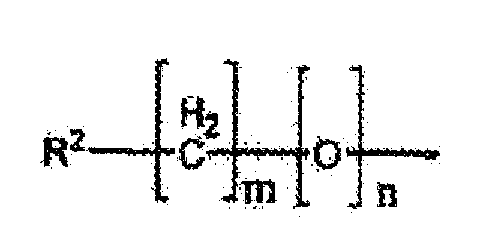
n eine ganze Zahl von 0 oder 1 ist; und,
wenn m = n = 0 ist, R2 ein nicht-radioaktiver Halogensubstituent, Nitrosubstituent, Trialkylstannylsubstituent mit 3 bis 12 Kohlenstoffatomen oder Triphenylstannylsubstituent ist, und, wenn m≠0 und/oder n≠0 ist, R2 ein nicht-radioaktiver Halogensubstituent, Methansulfonyloxysubstituent, Trifluormethansulfonyloxysubstituent oder aromatischer Sulfonyloxysubstituent ist,
unter der Voraussetzung, dass wenigstens eines von A5, A6, A7 und A8 Kohlenstoff darstellt, und R4 an eines der durch A5, A6, A7 oder A8 dargestellten Kohlenstoffatome bindet. - Verbindung oder deren Salz gemäß Anspruch 5, wobei wenigstens drei von A5, A6, A7 und A8 Kohlenstoff sind.
- Verbindung oder deren Salz gemäß Anspruch 6, wobei alle von A1, A2, A3 und A4 Kohfenstoff darstellen.
- Verbindung oder deren Salz gemäß irgendeinem der Ansprüche 5 bis 7, wobei R2 ausgewählt ist aus der Gruppe bestehend aus Iod, Brom, Trimethylstannylsubstituent, Tributylstannylsubstituent, Trifluormethansulfonyloxysubstituent und Triphenylstannylsubstituent.
- Niedrig-toxisches diagnostisches Agens für die Alzheimer-Krankheit, umfassend eine Verbindung gemäß folgender Formel (1) oder deren Salz:

R3 eine Gruppe gemäß folgender Formel ist:
mein ganze Zahl von 0 bis 4 ist; und
n eine ganze Zahl von 0 oder 1 ist,
unter der Voraussetzung, dass wenigstens eines von A1, A2, A3 und A4 Kohlenstoff darstellt und R3 an eines der durch A1, A2, A3 oder A4 dargestellten Kohlenstoffatome bindet. - Niedrig-toxisches diagnostisches Agens für die Alzheimer-Krankheit gemäß Anspruch 9, wobei wenigstens drei von A1, A2, A3 und A4 Kohlenstoff darstellen.
- Niedrig-toxisches diagnostisches Agens für die Alzheimer-Krankheit gemäß Anspruch 10, wobei alle von A1, A2, A3 und A4 Kohlenstoff darstellen.
- Niedrig-toxisches diagnostisches Agens für die Alzheimer-Krankheit gemäß irgendeinem der Ansprüche 9 bis 11, wobei R1 ausgewählt ist aus der Gruppe betstehend aus 18F, 76Br, 123I, 124I, 125I und 131I.
Applications Claiming Priority (2)
| Application Number | Priority Date | Filing Date | Title |
|---|---|---|---|
| JP2006124811 | 2006-04-28 | ||
| PCT/JP2007/059048 WO2007125988A1 (ja) | 2006-04-28 | 2007-04-26 | 新規アミロイド親和性化合物 |
Publications (4)
| Publication Number | Publication Date |
|---|---|
| EP2022792A1 EP2022792A1 (de) | 2009-02-11 |
| EP2022792A8 EP2022792A8 (de) | 2009-04-29 |
| EP2022792A4 EP2022792A4 (de) | 2009-11-11 |
| EP2022792B1 true EP2022792B1 (de) | 2010-12-29 |
Family
ID=38655513
Family Applications (1)
| Application Number | Title | Priority Date | Filing Date |
|---|---|---|---|
| EP07742483A Not-in-force EP2022792B1 (de) | 2006-04-28 | 2007-04-26 | Neue verbindung mit affinität zu amyloid |
Country Status (16)
| Country | Link |
|---|---|
| US (2) | US8022207B2 (de) |
| EP (1) | EP2022792B1 (de) |
| JP (1) | JP5048655B2 (de) |
| KR (1) | KR20080112343A (de) |
| CN (1) | CN101472923A (de) |
| AT (1) | ATE493410T1 (de) |
| AU (1) | AU2007244313B2 (de) |
| CA (1) | CA2657312A1 (de) |
| DE (1) | DE602007011601D1 (de) |
| ES (1) | ES2355079T3 (de) |
| IL (1) | IL194889A0 (de) |
| NO (1) | NO20084897L (de) |
| NZ (1) | NZ572741A (de) |
| RU (1) | RU2008147002A (de) |
| TW (1) | TW200803903A (de) |
| WO (1) | WO2007125988A1 (de) |
Families Citing this family (10)
| Publication number | Priority date | Publication date | Assignee | Title |
|---|---|---|---|---|
| RU2008150377A (ru) | 2006-05-19 | 2010-06-27 | Нихон Меди-Физикс Ко., Лтд. (Jp) | Новое соединение, обладающее сродством к амилоиду |
| EP2098523A4 (de) * | 2006-11-17 | 2011-09-21 | Nihon Mediphysics Co Ltd | Neue, amyloid-affine verbindungen |
| AU2007326707A1 (en) | 2006-11-30 | 2008-06-05 | Nihon Medi-Physics Co., Ltd. | Novel compound having affinity for amyloid |
| EP2213672A4 (de) * | 2007-10-24 | 2012-05-02 | Nihon Mediphysics Co Ltd | Neue verbindung mit affinität zu amyloid |
| EP2213671A4 (de) * | 2007-10-26 | 2012-02-22 | Nihon Mediphysics Co Ltd | Neue verbindung mit affinität zu amyloid |
| JPWO2009057575A1 (ja) * | 2007-10-30 | 2011-03-10 | 日本メジフィジックス株式会社 | 新規アミロイド親和性化合物の使用及び製造方法 |
| EP2218464A1 (de) * | 2009-02-11 | 2010-08-18 | Technische Universität München | Verbindungen zur nichtinvasiven Messung von Aggregaten von Amyloidpeptiden |
| US9926316B2 (en) * | 2016-03-03 | 2018-03-27 | The Cleveland Clinic Foundation | Antitumor derivatives for differentiation therapy |
| CN108822105A (zh) * | 2018-08-14 | 2018-11-16 | 河南师范大学 | 一种由乙苯类化合物合成2-芳基咪唑并[1,2-a]吡啶类化合物的方法 |
| US12551576B2 (en) | 2020-01-31 | 2026-02-17 | The General Hospital Corporation | Chemiluminescent probes |
Family Cites Families (28)
| Publication number | Priority date | Publication date | Assignee | Title |
|---|---|---|---|---|
| US4871745A (en) * | 1986-09-22 | 1989-10-03 | Ortho Pharmaceutical Corporation | 2- or 3-aryl substituted imidazo(1,2-A)pyridines and their use as antisecretory agents |
| US4727145A (en) * | 1986-09-22 | 1988-02-23 | Ortho Pharmaceutical Corporation | 2- Or 3- aryl substituted imidazo [1,2-a]pyridines |
| US4791117A (en) * | 1986-09-22 | 1988-12-13 | Ortho Pharmaceutical Corporation | 2- or 3-aryl substituted imidazo[1,2-a]pyridines and their use as calcium channel blockers |
| US4833149A (en) * | 1986-09-22 | 1989-05-23 | Ortho Pharmaceutical Corporation | 2- or 3-aryl substituted imidazo[1,2-a]pyridines |
| KR19990064310A (ko) * | 1995-10-17 | 1999-07-26 | 윌리암스 로저 에이 | 시클로옥시게나제-2의 검출방법 |
| US6812327B1 (en) * | 1996-10-25 | 2004-11-02 | Human Genome Sciences, Inc. | Neutrokine-alpha polypeptides |
| JP3980833B2 (ja) * | 1998-08-20 | 2007-09-26 | リージェンツ オブ ザ ユニバーシティー オブ カリフォルニア | βアミロイド斑及び神経原線維変化の標識方法 |
| US20010051632A1 (en) * | 2000-03-31 | 2001-12-13 | Wenying Chai | Phenyl-substituted indolizines and tetrahydroindolizines |
| US6514969B2 (en) * | 2000-08-16 | 2003-02-04 | Boehringer Ingelheim Pharma Kg | β-amyloid inhibitors, processes for preparing them, and their use in pharmaceutical compositions |
| DE10040016A1 (de) | 2000-08-16 | 2002-02-28 | Boehringer Ingelheim Pharma | Neue beta-Amyloid Inhibitoren, Verfahren zu deren Herstellung und deren Verwendung als Arzneimittel |
| DK1334091T3 (da) | 2000-08-24 | 2012-10-15 | Univ Pittsburgh | Thioflavinderivater og deres anvendelse til diagnose og terapi af Alzheimer's sygdom |
| CZ20032597A3 (cs) * | 2001-02-26 | 2004-12-15 | Bristol-Myers Squibb Pharma Company | Analogy kyseliny askorbové pro metaloradiofarmaceutika |
| US6596731B2 (en) * | 2001-03-27 | 2003-07-22 | Hoffmann-La Roche Inc. | Substituted imidazo[1,2-A] pyridine derivatives |
| ES2274973T3 (es) * | 2001-04-23 | 2007-06-01 | The Trustees Of The University Of Pennsylvania | Inhibidores de la agregacion de placas amiloides y agentes de obtencion de imagenes diagnosticas. |
| CN101003526B (zh) * | 2001-08-27 | 2012-02-22 | 宾夕法尼亚州大学理事会 | 茋衍生物及其用于结合和成像淀粉样蛋白斑的用途 |
| GB0205281D0 (en) * | 2002-03-06 | 2002-04-17 | Novartis Ag | Organic compounds |
| EP1356827A1 (de) * | 2002-04-24 | 2003-10-29 | Mallinckrodt Inc. | Verfahren zur Herstellung von einer 2-18F-Fluor-2-Deoxy-D-Glucose (18F-FDG)-Lösung |
| AU2003242233A1 (en) | 2002-06-12 | 2003-12-31 | Bf Research Institute, Inc. | Probe compound for image diagnosis of disease with amyloid accumulation, compound for staining age spots/diffuse age spots, and remedy for disease with amyloid accumulation |
| US20050260126A1 (en) * | 2002-08-30 | 2005-11-24 | Yukitsuka Kudo | Diagnostic probes and remedies for diseases with accumulation of prion protein, and stains for prion protein |
| GB0229695D0 (en) * | 2002-12-20 | 2003-01-29 | Amersham Plc | Solid-phase preparation of 18F-labelled amino acids |
| PL380764A1 (pl) * | 2003-12-31 | 2007-03-19 | Schering-Plough Ltd. | Kontrolowanie pasożytów u zwierząt za pomocą stosowania imidazo [1,2-b] pirydazynowych pochodnych |
| RU2008150377A (ru) | 2006-05-19 | 2010-06-27 | Нихон Меди-Физикс Ко., Лтд. (Jp) | Новое соединение, обладающее сродством к амилоиду |
| AU2007261985B2 (en) | 2006-06-21 | 2012-04-19 | Nihon Medi-Physics Co., Ltd. | Novel compound having affinity for amyloid |
| EP2098523A4 (de) | 2006-11-17 | 2011-09-21 | Nihon Mediphysics Co Ltd | Neue, amyloid-affine verbindungen |
| AU2007326707A1 (en) * | 2006-11-30 | 2008-06-05 | Nihon Medi-Physics Co., Ltd. | Novel compound having affinity for amyloid |
| EP2213672A4 (de) * | 2007-10-24 | 2012-05-02 | Nihon Mediphysics Co Ltd | Neue verbindung mit affinität zu amyloid |
| EP2213671A4 (de) * | 2007-10-26 | 2012-02-22 | Nihon Mediphysics Co Ltd | Neue verbindung mit affinität zu amyloid |
| KR20100101577A (ko) * | 2007-10-30 | 2010-09-17 | 니혼 메디피직스 가부시키가이샤 | 신규 아밀로이드 친화성 화합물의 사용 및 제조 방법 |
-
2007
- 2007-04-24 TW TW096114488A patent/TW200803903A/zh unknown
- 2007-04-26 NZ NZ572741A patent/NZ572741A/en not_active IP Right Cessation
- 2007-04-26 AT AT07742483T patent/ATE493410T1/de not_active IP Right Cessation
- 2007-04-26 JP JP2008513252A patent/JP5048655B2/ja not_active Expired - Fee Related
- 2007-04-26 CA CA002657312A patent/CA2657312A1/en not_active Abandoned
- 2007-04-26 CN CNA2007800231536A patent/CN101472923A/zh active Pending
- 2007-04-26 ES ES07742483T patent/ES2355079T3/es active Active
- 2007-04-26 WO PCT/JP2007/059048 patent/WO2007125988A1/ja not_active Ceased
- 2007-04-26 EP EP07742483A patent/EP2022792B1/de not_active Not-in-force
- 2007-04-26 DE DE602007011601T patent/DE602007011601D1/de active Active
- 2007-04-26 RU RU2008147002/04A patent/RU2008147002A/ru not_active Application Discontinuation
- 2007-04-26 KR KR1020087026312A patent/KR20080112343A/ko not_active Withdrawn
- 2007-04-26 US US12/226,561 patent/US8022207B2/en not_active Expired - Fee Related
- 2007-04-26 AU AU2007244313A patent/AU2007244313B2/en not_active Ceased
-
2008
- 2008-10-23 IL IL194889A patent/IL194889A0/en unknown
- 2008-11-20 NO NO20084897A patent/NO20084897L/no not_active Application Discontinuation
-
2011
- 2011-04-28 US US13/096,159 patent/US20110201808A1/en not_active Abandoned
Also Published As
| Publication number | Publication date |
|---|---|
| TW200803903A (en) | 2008-01-16 |
| EP2022792A8 (de) | 2009-04-29 |
| ATE493410T1 (de) | 2011-01-15 |
| WO2007125988A1 (ja) | 2007-11-08 |
| JPWO2007125988A1 (ja) | 2009-09-10 |
| US20110201808A1 (en) | 2011-08-18 |
| IL194889A0 (en) | 2011-08-01 |
| NZ572741A (en) | 2010-07-30 |
| US20100249407A1 (en) | 2010-09-30 |
| AU2007244313B2 (en) | 2011-09-08 |
| DE602007011601D1 (de) | 2011-02-10 |
| US8022207B2 (en) | 2011-09-20 |
| CA2657312A1 (en) | 2007-11-08 |
| KR20080112343A (ko) | 2008-12-24 |
| RU2008147002A (ru) | 2010-06-10 |
| ES2355079T3 (es) | 2011-03-22 |
| JP5048655B2 (ja) | 2012-10-17 |
| NO20084897L (no) | 2009-01-15 |
| EP2022792A1 (de) | 2009-02-11 |
| EP2022792A4 (de) | 2009-11-11 |
| AU2007244313A1 (en) | 2007-11-08 |
| CN101472923A (zh) | 2009-07-01 |
Similar Documents
| Publication | Publication Date | Title |
|---|---|---|
| EP2019103B1 (de) | Verbindung mit affinität zu amyloid | |
| EP2042501B1 (de) | Verbindung mit affinität zu amyloid | |
| US8022207B2 (en) | Compound having affinity to amyloid | |
| US8399672B2 (en) | Compound having affinity for amyloid | |
| EP2716641B1 (de) | Mit radioaktivem jod markierte verbindung mit amyloid-affinität | |
| EP2213672A1 (de) | Neue verbindung mit affinität zu amyloid | |
| EP2216050A1 (de) | Verwendung von neuen verbindungen mit amyloid-affinität und herstellungsverfahren dafür | |
| EP2098522B1 (de) | Verbindungen mit affinität zu amyloid | |
| EP2218463A1 (de) | Verwendung einer neuen verbindung mit affinität für amyloid und herstellungsverfahren dafür | |
| EP2098523A1 (de) | Neue, amyloid-affine verbindungen | |
| EP2216051A1 (de) | Verwendung einer neuen verbindung mit affinität für amyloid und verfahren zu ihrer herstellung | |
| CN101466711A (zh) | 对淀粉状蛋白具有亲和性的新化合物 | |
| NZ574164A (en) | Novel compound having affinity for amyloid |
Legal Events
| Date | Code | Title | Description |
|---|---|---|---|
| PUAI | Public reference made under article 153(3) epc to a published international application that has entered the european phase |
Free format text: ORIGINAL CODE: 0009012 |
|
| 17P | Request for examination filed |
Effective date: 20081118 |
|
| AK | Designated contracting states |
Kind code of ref document: A1 Designated state(s): AT BE BG CH CY CZ DE DK EE ES FI FR GB GR HU IE IS IT LI LT LU LV MC MT NL PL PT RO SE SI SK TR |
|
| AX | Request for extension of the european patent |
Extension state: AL BA HR MK RS |
|
| RIN1 | Information on inventor provided before grant (corrected) |
Inventor name: TANIFUJI, SHIGEYUKI,C/O NIHON MEDI-PHYSICS CO., LT Inventor name: TAKASAKI, SHINYA,C/O NIHON MEDI-PHYSICS CO., LTD. Inventor name: NAKAMURA, DAISAKU,C/O NIHON MEDI-PHYSICS CO., LTD. |
|
| RIC1 | Information provided on ipc code assigned before grant |
Ipc: C07F 7/22 20060101ALI20090828BHEP Ipc: A61K 51/00 20060101ALI20090828BHEP Ipc: C07D 471/04 20060101AFI20080207BHEP Ipc: C07D 487/04 20060101ALI20090828BHEP |
|
| A4 | Supplementary search report drawn up and despatched |
Effective date: 20090908 |
|
| 17Q | First examination report despatched |
Effective date: 20091112 |
|
| GRAP | Despatch of communication of intention to grant a patent |
Free format text: ORIGINAL CODE: EPIDOSNIGR1 |
|
| DAX | Request for extension of the european patent (deleted) | ||
| GRAS | Grant fee paid |
Free format text: ORIGINAL CODE: EPIDOSNIGR3 |
|
| GRAA | (expected) grant |
Free format text: ORIGINAL CODE: 0009210 |
|
| AK | Designated contracting states |
Kind code of ref document: B1 Designated state(s): AT BE BG CH CY CZ DE DK EE ES FI FR GB GR HU IE IS IT LI LT LU LV MC MT NL PL PT RO SE SI SK TR |
|
| REG | Reference to a national code |
Ref country code: GB Ref legal event code: FG4D |
|
| REG | Reference to a national code |
Ref country code: CH Ref legal event code: EP |
|
| REG | Reference to a national code |
Ref country code: IE Ref legal event code: FG4D |
|
| REF | Corresponds to: |
Ref document number: 602007011601 Country of ref document: DE Date of ref document: 20110210 Kind code of ref document: P |
|
| REG | Reference to a national code |
Ref country code: DE Ref legal event code: R096 Ref document number: 602007011601 Country of ref document: DE Effective date: 20110210 |
|
| REG | Reference to a national code |
Ref country code: NL Ref legal event code: T3 |
|
| REG | Reference to a national code |
Ref country code: ES Ref legal event code: FG2A Effective date: 20110310 |
|
| PG25 | Lapsed in a contracting state [announced via postgrant information from national office to epo] |
Ref country code: LT Free format text: LAPSE BECAUSE OF FAILURE TO SUBMIT A TRANSLATION OF THE DESCRIPTION OR TO PAY THE FEE WITHIN THE PRESCRIBED TIME-LIMIT Effective date: 20101229 |
|
| LTIE | Lt: invalidation of european patent or patent extension |
Effective date: 20101229 |
|
| PG25 | Lapsed in a contracting state [announced via postgrant information from national office to epo] |
Ref country code: LV Free format text: LAPSE BECAUSE OF FAILURE TO SUBMIT A TRANSLATION OF THE DESCRIPTION OR TO PAY THE FEE WITHIN THE PRESCRIBED TIME-LIMIT Effective date: 20101229 Ref country code: SI Free format text: LAPSE BECAUSE OF FAILURE TO SUBMIT A TRANSLATION OF THE DESCRIPTION OR TO PAY THE FEE WITHIN THE PRESCRIBED TIME-LIMIT Effective date: 20101229 Ref country code: SE Free format text: LAPSE BECAUSE OF FAILURE TO SUBMIT A TRANSLATION OF THE DESCRIPTION OR TO PAY THE FEE WITHIN THE PRESCRIBED TIME-LIMIT Effective date: 20101229 Ref country code: AT Free format text: LAPSE BECAUSE OF FAILURE TO SUBMIT A TRANSLATION OF THE DESCRIPTION OR TO PAY THE FEE WITHIN THE PRESCRIBED TIME-LIMIT Effective date: 20101229 Ref country code: CY Free format text: LAPSE BECAUSE OF FAILURE TO SUBMIT A TRANSLATION OF THE DESCRIPTION OR TO PAY THE FEE WITHIN THE PRESCRIBED TIME-LIMIT Effective date: 20101229 Ref country code: BG Free format text: LAPSE BECAUSE OF FAILURE TO SUBMIT A TRANSLATION OF THE DESCRIPTION OR TO PAY THE FEE WITHIN THE PRESCRIBED TIME-LIMIT Effective date: 20110329 Ref country code: FI Free format text: LAPSE BECAUSE OF FAILURE TO SUBMIT A TRANSLATION OF THE DESCRIPTION OR TO PAY THE FEE WITHIN THE PRESCRIBED TIME-LIMIT Effective date: 20101229 |
|
| PG25 | Lapsed in a contracting state [announced via postgrant information from national office to epo] |
Ref country code: PT Free format text: LAPSE BECAUSE OF FAILURE TO SUBMIT A TRANSLATION OF THE DESCRIPTION OR TO PAY THE FEE WITHIN THE PRESCRIBED TIME-LIMIT Effective date: 20110429 Ref country code: GR Free format text: LAPSE BECAUSE OF FAILURE TO SUBMIT A TRANSLATION OF THE DESCRIPTION OR TO PAY THE FEE WITHIN THE PRESCRIBED TIME-LIMIT Effective date: 20110330 Ref country code: CZ Free format text: LAPSE BECAUSE OF FAILURE TO SUBMIT A TRANSLATION OF THE DESCRIPTION OR TO PAY THE FEE WITHIN THE PRESCRIBED TIME-LIMIT Effective date: 20101229 Ref country code: EE Free format text: LAPSE BECAUSE OF FAILURE TO SUBMIT A TRANSLATION OF THE DESCRIPTION OR TO PAY THE FEE WITHIN THE PRESCRIBED TIME-LIMIT Effective date: 20101229 Ref country code: IS Free format text: LAPSE BECAUSE OF FAILURE TO SUBMIT A TRANSLATION OF THE DESCRIPTION OR TO PAY THE FEE WITHIN THE PRESCRIBED TIME-LIMIT Effective date: 20110429 |
|
| PG25 | Lapsed in a contracting state [announced via postgrant information from national office to epo] |
Ref country code: SK Free format text: LAPSE BECAUSE OF FAILURE TO SUBMIT A TRANSLATION OF THE DESCRIPTION OR TO PAY THE FEE WITHIN THE PRESCRIBED TIME-LIMIT Effective date: 20101229 Ref country code: PL Free format text: LAPSE BECAUSE OF FAILURE TO SUBMIT A TRANSLATION OF THE DESCRIPTION OR TO PAY THE FEE WITHIN THE PRESCRIBED TIME-LIMIT Effective date: 20101229 Ref country code: RO Free format text: LAPSE BECAUSE OF FAILURE TO SUBMIT A TRANSLATION OF THE DESCRIPTION OR TO PAY THE FEE WITHIN THE PRESCRIBED TIME-LIMIT Effective date: 20101229 |
|
| PG25 | Lapsed in a contracting state [announced via postgrant information from national office to epo] |
Ref country code: DK Free format text: LAPSE BECAUSE OF FAILURE TO SUBMIT A TRANSLATION OF THE DESCRIPTION OR TO PAY THE FEE WITHIN THE PRESCRIBED TIME-LIMIT Effective date: 20101229 |
|
| PLBE | No opposition filed within time limit |
Free format text: ORIGINAL CODE: 0009261 |
|
| STAA | Information on the status of an ep patent application or granted ep patent |
Free format text: STATUS: NO OPPOSITION FILED WITHIN TIME LIMIT |
|
| PG25 | Lapsed in a contracting state [announced via postgrant information from national office to epo] |
Ref country code: MC Free format text: LAPSE BECAUSE OF NON-PAYMENT OF DUE FEES Effective date: 20110430 |
|
| REG | Reference to a national code |
Ref country code: CH Ref legal event code: PL |
|
| 26N | No opposition filed |
Effective date: 20110930 |
|
| PG25 | Lapsed in a contracting state [announced via postgrant information from national office to epo] |
Ref country code: MT Free format text: LAPSE BECAUSE OF FAILURE TO SUBMIT A TRANSLATION OF THE DESCRIPTION OR TO PAY THE FEE WITHIN THE PRESCRIBED TIME-LIMIT Effective date: 20101229 |
|
| REG | Reference to a national code |
Ref country code: DE Ref legal event code: R097 Ref document number: 602007011601 Country of ref document: DE Effective date: 20110930 |
|
| PG25 | Lapsed in a contracting state [announced via postgrant information from national office to epo] |
Ref country code: CH Free format text: LAPSE BECAUSE OF NON-PAYMENT OF DUE FEES Effective date: 20110430 Ref country code: LI Free format text: LAPSE BECAUSE OF NON-PAYMENT OF DUE FEES Effective date: 20110430 |
|
| REG | Reference to a national code |
Ref country code: IE Ref legal event code: MM4A |
|
| PG25 | Lapsed in a contracting state [announced via postgrant information from national office to epo] |
Ref country code: IE Free format text: LAPSE BECAUSE OF NON-PAYMENT OF DUE FEES Effective date: 20110426 |
|
| PGFP | Annual fee paid to national office [announced via postgrant information from national office to epo] |
Ref country code: NL Payment date: 20120425 Year of fee payment: 6 Ref country code: BE Payment date: 20120412 Year of fee payment: 6 |
|
| PGFP | Annual fee paid to national office [announced via postgrant information from national office to epo] |
Ref country code: ES Payment date: 20120424 Year of fee payment: 6 |
|
| PG25 | Lapsed in a contracting state [announced via postgrant information from national office to epo] |
Ref country code: LU Free format text: LAPSE BECAUSE OF NON-PAYMENT OF DUE FEES Effective date: 20110426 |
|
| PGFP | Annual fee paid to national office [announced via postgrant information from national office to epo] |
Ref country code: GB Payment date: 20130424 Year of fee payment: 7 Ref country code: DE Payment date: 20130508 Year of fee payment: 7 |
|
| PGFP | Annual fee paid to national office [announced via postgrant information from national office to epo] |
Ref country code: IT Payment date: 20130420 Year of fee payment: 7 Ref country code: FR Payment date: 20130625 Year of fee payment: 7 |
|
| PG25 | Lapsed in a contracting state [announced via postgrant information from national office to epo] |
Ref country code: TR Free format text: LAPSE BECAUSE OF FAILURE TO SUBMIT A TRANSLATION OF THE DESCRIPTION OR TO PAY THE FEE WITHIN THE PRESCRIBED TIME-LIMIT Effective date: 20101229 |
|
| BERE | Be: lapsed |
Owner name: NIHON MEDI-PHYSICS CO., LTD. Effective date: 20130430 |
|
| PG25 | Lapsed in a contracting state [announced via postgrant information from national office to epo] |
Ref country code: HU Free format text: LAPSE BECAUSE OF FAILURE TO SUBMIT A TRANSLATION OF THE DESCRIPTION OR TO PAY THE FEE WITHIN THE PRESCRIBED TIME-LIMIT Effective date: 20101229 |
|
| REG | Reference to a national code |
Ref country code: NL Ref legal event code: V1 Effective date: 20131101 |
|
| REG | Reference to a national code |
Ref country code: DE Ref legal event code: R082 Ref document number: 602007011601 Country of ref document: DE Representative=s name: KOTITSCHKE & HEURUNG PARTNERSCHAFT MBB PATENT-, DE Ref country code: DE Ref legal event code: R082 Ref document number: 602007011601 Country of ref document: DE Representative=s name: DR. RALF KOTITSCHKE, DE |
|
| PG25 | Lapsed in a contracting state [announced via postgrant information from national office to epo] |
Ref country code: BE Free format text: LAPSE BECAUSE OF NON-PAYMENT OF DUE FEES Effective date: 20130430 |
|
| PG25 | Lapsed in a contracting state [announced via postgrant information from national office to epo] |
Ref country code: NL Free format text: LAPSE BECAUSE OF NON-PAYMENT OF DUE FEES Effective date: 20131101 |
|
| REG | Reference to a national code |
Ref country code: DE Ref legal event code: R119 Ref document number: 602007011601 Country of ref document: DE |
|
| GBPC | Gb: european patent ceased through non-payment of renewal fee |
Effective date: 20140426 |
|
| REG | Reference to a national code |
Ref country code: DE Ref legal event code: R119 Ref document number: 602007011601 Country of ref document: DE Effective date: 20141101 |
|
| REG | Reference to a national code |
Ref country code: FR Ref legal event code: ST Effective date: 20141231 |
|
| PG25 | Lapsed in a contracting state [announced via postgrant information from national office to epo] |
Ref country code: DE Free format text: LAPSE BECAUSE OF NON-PAYMENT OF DUE FEES Effective date: 20141101 Ref country code: GB Free format text: LAPSE BECAUSE OF NON-PAYMENT OF DUE FEES Effective date: 20140426 |
|
| PG25 | Lapsed in a contracting state [announced via postgrant information from national office to epo] |
Ref country code: FR Free format text: LAPSE BECAUSE OF NON-PAYMENT OF DUE FEES Effective date: 20140430 |
|
| PG25 | Lapsed in a contracting state [announced via postgrant information from national office to epo] |
Ref country code: IT Free format text: LAPSE BECAUSE OF NON-PAYMENT OF DUE FEES Effective date: 20140426 |
|
| PG25 | Lapsed in a contracting state [announced via postgrant information from national office to epo] |
Ref country code: ES Free format text: LAPSE BECAUSE OF NON-PAYMENT OF DUE FEES Effective date: 20140427 |