EP2023218B1 - Dispositif de réglage du temps, dispositif de compteur du temps avec un dispositif de réglage du temps et un procédé de réglage du temps - Google Patents
Dispositif de réglage du temps, dispositif de compteur du temps avec un dispositif de réglage du temps et un procédé de réglage du temps Download PDFInfo
- Publication number
- EP2023218B1 EP2023218B1 EP08161642A EP08161642A EP2023218B1 EP 2023218 B1 EP2023218 B1 EP 2023218B1 EP 08161642 A EP08161642 A EP 08161642A EP 08161642 A EP08161642 A EP 08161642A EP 2023218 B1 EP2023218 B1 EP 2023218B1
- Authority
- EP
- European Patent Office
- Prior art keywords
- time
- information
- satellite
- reception
- subframe
- Prior art date
- Legal status (The legal status is an assumption and is not a legal conclusion. Google has not performed a legal analysis and makes no representation as to the accuracy of the status listed.)
- Ceased
Links
- 238000000034 method Methods 0.000 title claims description 14
- 230000036541 health Effects 0.000 claims description 66
- 238000011156 evaluation Methods 0.000 claims description 7
- 230000004044 response Effects 0.000 claims description 7
- 230000008054 signal transmission Effects 0.000 claims description 3
- 101000911772 Homo sapiens Hsc70-interacting protein Proteins 0.000 claims 1
- 101001139126 Homo sapiens Krueppel-like factor 6 Proteins 0.000 claims 1
- 238000013500 data storage Methods 0.000 description 20
- 238000012937 correction Methods 0.000 description 6
- 239000013078 crystal Substances 0.000 description 6
- 102100029860 Suppressor of tumorigenicity 20 protein Human genes 0.000 description 5
- 238000010586 diagram Methods 0.000 description 5
- 230000005540 biological transmission Effects 0.000 description 4
- 238000012795 verification Methods 0.000 description 4
- 101000661816 Homo sapiens Suppression of tumorigenicity 18 protein Proteins 0.000 description 3
- 102100035353 Cyclin-dependent kinase 2-associated protein 1 Human genes 0.000 description 2
- 230000008859 change Effects 0.000 description 2
- 239000011521 glass Substances 0.000 description 2
- 230000008569 process Effects 0.000 description 2
- 238000012545 processing Methods 0.000 description 2
- 101000760620 Homo sapiens Cell adhesion molecule 1 Proteins 0.000 description 1
- 101000737813 Homo sapiens Cyclin-dependent kinase 2-associated protein 1 Proteins 0.000 description 1
- 101000710013 Homo sapiens Reversion-inducing cysteine-rich protein with Kazal motifs Proteins 0.000 description 1
- 101000661807 Homo sapiens Suppressor of tumorigenicity 14 protein Proteins 0.000 description 1
- 101000585359 Homo sapiens Suppressor of tumorigenicity 20 protein Proteins 0.000 description 1
- HBBGRARXTFLTSG-UHFFFAOYSA-N Lithium ion Chemical compound [Li+] HBBGRARXTFLTSG-UHFFFAOYSA-N 0.000 description 1
- RTAQQCXQSZGOHL-UHFFFAOYSA-N Titanium Chemical compound [Ti] RTAQQCXQSZGOHL-UHFFFAOYSA-N 0.000 description 1
- 239000000919 ceramic Substances 0.000 description 1
- 230000001419 dependent effect Effects 0.000 description 1
- 230000000694 effects Effects 0.000 description 1
- 230000005674 electromagnetic induction Effects 0.000 description 1
- 238000005516 engineering process Methods 0.000 description 1
- 239000000284 extract Substances 0.000 description 1
- 230000006870 function Effects 0.000 description 1
- 229910001416 lithium ion Inorganic materials 0.000 description 1
- 239000000463 material Substances 0.000 description 1
- 229910052751 metal Inorganic materials 0.000 description 1
- 239000002184 metal Substances 0.000 description 1
- 238000012986 modification Methods 0.000 description 1
- 230000004048 modification Effects 0.000 description 1
- 238000004904 shortening Methods 0.000 description 1
- 229910001220 stainless steel Inorganic materials 0.000 description 1
- 239000010935 stainless steel Substances 0.000 description 1
- 230000003068 static effect Effects 0.000 description 1
- 230000001360 synchronised effect Effects 0.000 description 1
- 238000012360 testing method Methods 0.000 description 1
- 239000010936 titanium Substances 0.000 description 1
- 229910052719 titanium Inorganic materials 0.000 description 1
Images







Classifications
-
- G—PHYSICS
- G04—HOROLOGY
- G04R—RADIO-CONTROLLED TIME-PIECES
- G04R20/00—Setting the time according to the time information carried or implied by the radio signal
- G04R20/02—Setting the time according to the time information carried or implied by the radio signal the radio signal being sent by a satellite, e.g. GPS
- G04R20/06—Decoding time data; Circuits therefor
-
- G—PHYSICS
- G04—HOROLOGY
- G04R—RADIO-CONTROLLED TIME-PIECES
- G04R20/00—Setting the time according to the time information carried or implied by the radio signal
- G04R20/02—Setting the time according to the time information carried or implied by the radio signal the radio signal being sent by a satellite, e.g. GPS
- G04R20/04—Tuning or receiving; Circuits therefor
-
- G—PHYSICS
- G04—HOROLOGY
- G04R—RADIO-CONTROLLED TIME-PIECES
- G04R60/00—Constructional details
- G04R60/06—Antennas attached to or integrated in clock or watch bodies
- G04R60/10—Antennas attached to or integrated in clock or watch bodies inside cases
- G04R60/12—Antennas attached to or integrated in clock or watch bodies inside cases inside metal cases
Definitions
- the reception unit receives the satellite-time-related information in a plural number of following subframe information units, and stores the received satellite-time-related information as the satellite time information for the respective subframe information units if the amount the generated time information was corrected based on the time adjustment information exceeds a threshold value offset.
- the time adjustment device selects any one of at least two satellite time information values for which the difference therebetween matches the difference between the subframe information units containing the at least two satellite time information values, and corrects the generated time information based on the selected satellite time information.
- the time adjustment device in this example of the invention receives the satellite signal from a different positioning information satellite, and can thereby accurately correct the time.
- Another example of the invention is a timekeeping device with a time adjustment device having a time information generating unit that produces time information and outputs the generated time information; a reception unit that receives satellite signals transmitted sequentially from a positioning information satellite in subframe information units where a plurality of subframe information units each containing satellite-time-related information and at least one subframe information unit containing satellite health information is a unit, the satellite-time-related information is the time-related information of the positioning information satellite, and the satellite health information denotes an operating condition of the positioning information satellite; an external input unit that outputs command information instructing the reception unit to receive in response to external input; a reception timing configuration unit that sets the start time of reception by the reception unit so that the satellite signal is received immediately or at a predetermined timing based on command information from the external input unit; and a time adjustment information storage unit that stores the satellite-time-related information of the satellite signal received by the reception unit as time adjustment information.
- the generated time information is corrected based on the time adjustment information, and reception by the reception unit starts when the
- FIG. 1 is a schematic diagram showing a GPS wristwatch according to a first embodiment of the invention.
- FIG. 7 shows data stored in the second data storage unit shown in FIG. 4 .
- FIG. 8 is a flow chart describing the main steps in the operation of the GPS wristwatch according to the first embodiment of the invention.
- FIG. 9 is a flow chart describing the main steps in the operation of the GPS wristwatch according to the first embodiment of the invention.
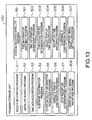
- FIG. 13 shows data stored in the program storage unit of a GPS wristwatch according to a second embodiment of the invention.
- FIG. 15 is a flow chart describing the main steps in the operation of the GPS wristwatch according to the second embodiment of the invention.
- FIG. 16 is a flow chart describing the main steps in the operation of the GPS wristwatch according to the second embodiment of the invention.
- FIG. 17 describes the time sequence of the navigation message reception period of the GPS wristwatch according to the second embodiment of the invention.
- FIG. 18 is a flow chart describing the main steps in the operation of the GPS wristwatch according to a third embodiment of the invention.
- FIG. 1 is a schematic diagram showing a wristwatch with a GPS time adjustment device 10 (referred to below as a GPS wristwatch 10) as an example of a timekeeping device with a time adjustment device according to a first embodiment of the present invention.
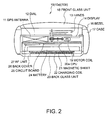
- FIG. 2 is a section view of the GPS wristwatch 10 shown in FIG. 1 .
- FIG. 3 is a block diagram showing the main internal hardware configuration of the GPS wristwatch 10 shown in FIG. 1 and FIG. 2 .
- the GPS wristwatch 10 has a GPS antenna 11.
- the GPS antenna 11 is a part of the receiver device 40 (see FIG. 3 ).
- This GPS antenna 11 is a patch antenna for receiving satellite signals from a plurality of GPS satellites 15a to 15d orbiting the Earth on fixed orbits in space.
- This GPS antenna 11 is located on the opposite side of the dial 12 as the side on which the time is displayed.
- the dial 12 is made of plastic or other material that passes RF signals such as the signals transmitted from the GPS satellites 15a to 15d.
- the GPS satellites 15a to 15d are an example of a positioning information satellite, and a plurality of GPS satellites 15a to 15d orbit the Earth in space.
- satellite signals are received from the GPS satellite 15a (or 15d to 15d) located where signals can currently be most easily received. Note that four GPS satellites 15a to 15d are shown in FIG. 1 by way of example, and the number of GPS satellites is not so limited.
- the outside case 17 is made of stainless steel, titanium, or other metal.
- the bezel 16 is preferably ceramic in order to improve the reception performance of the GPS antenna 11 that receives satellite signals from the GPS satellites 15a (15b to 15d).
- the crystal 18 front glass unit is fit into the bezel 16.
- the battery 24 is a lithium-ion battery or other type of storage battery.
- a magnetic sheet 21 is disposed below the battery 24, and a charging coil 22 is disposed with the magnetic sheet 21 between it and the battery 24.
- the battery 24 can therefore be charged by the charging coil 22 by means of electromagnetic induction from an external charger.
- the magnetic sheet 21 can also divert the magnetic field.
- the magnetic sheet 21 therefore reduces the effect of the battery 24 and enables the efficient transmission of energy.
- a back glass unit 23 is also disposed in the center part of the back cover 26 to facilitate power transmission.
- the GPS wristwatch 10 is arranged as described above.
- the GPS wristwatch 10 also has a time display device 45, a receiver device 40, and a time adjustment device 44, and functions as a computer.
- the configuration shown in FIG. 3 is further described below.
- the GPS wristwatch 10 has a receiver device 40 and passes satellite signals received from a GPS satellite 15a (15b to 15d) in FIG. 1 from the GPS antenna 11 through a filter (SAW) 31 and RF (radio frequency) unit 27 to extract the signal by means of the baseband unit 30.
- SAW filter
- RF radio frequency
- the satellite signal passes the IF filter 35 and IF amplifier, and is converted to a digital signal by the A/D converter 42.
- the baseband unit 30 then processes the satellite signal based on a control signal.
- the time data output by the baseband unit 30 is stored in a storage unit, and the corrected time information is displayed by means of a drive circuit 43.
- the receiver device 40 includes an RF unit 27 and baseband unit 30.
- the RF unit 27 includes a PLL 34, IF filter 35, VCO 41, A/D converter 42 and LNA 47.
- the receiver device 40 that includes the GPS antenna 11 and filter (SAW) 31 is an example of a reception unit, and is also referred to an a GPS device.
- the receiver device 40 including the GPS antenna 11 and filter (SAW) 31 is referred to below as simply the receiver device 40.
- the baseband unit 30 also includes a digital signal processor (DSP) 39, a CPU (central processing unit) 36, and SRAM (static random access memory) 37, and is connected to the temperature-compensated crystal oscillator (TCXO) 32 and flash memory 33.
- DSP digital signal processor
- CPU central processing unit
- SRAM static random access memory
- a real-time clock (RTC) 38 is disposed to the control unit 20.
- the real-time clock 38 counts up at a reference clock that is determined by a crystal oscillator connected to the control unit 20.
- the control unit 20 includes a CPU 20a.
- the charging coil 22 charges the battery 24, which is a storage battery, with power through a charging control circuit 28, and supplies drive power from the battery 24 to the time adjustment device 44 and other parts through a regulator 29.
- the control unit 20 also outputs a control signal to the receiver device 40.
- the GPS wristwatch 10 controls the reception operation of the receiver device 40 by means of the control unit 20.
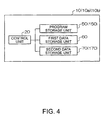
- FIG. 4 to FIG. 7 schematically describe the main software structure of the GPS wristwatch 10, FIG. 4 being an overview.
- FIG. 5 shows the data stored in the program storage unit 50 in FIG. 4 .
- FIG. 6 shows the data stored in the first data storage unit 60 in FIG. 4 .
- FIG. 7 shows the data stored in the second data storage unit 70 in FIG. 4 .
- the first data storage unit 60 in FIG. 6 stores primarily previously stored data
- the second data storage unit 70 in FIG. 7 stores primarily data resulting from processing the data in the first data storage unit 60 by means of a program stored in the program storage unit 50.
- FIG. 8 and FIG. 9 are flow charts describing the main steps in the operation of the GPS wristwatch 10 according to this embodiment of the invention.
- step ST10 whether the external operating unit 5 (an example of an external input unit) was operated and a reception command was asserted is determined in step ST10. More specifically, if the user wants to receive the satellite signal from the GPS satellites 15a (15b to 15d) to adjust the time displayed by the hands 13, for example, the user operates the external operating unit 5 and inputs a command to receive a GPS satellite 15a (15b to 15d) signal.
- the reception command input from the external operating unit 5 is stored as the reception instruction data 75a in the reception instruction data storage unit 75 shown in FIG. 7 .
- the operating signal confirmation program 54 in FIG. 5 checks the reception instruction data storage unit 75 in FIG. 7 and determines if the reception instruction data 75a is stored.
- step ST10 If it is confirmed in step ST10 that the reception instruction data 75a is stored in the reception instruction data storage unit 75 in FIG. 7 , control goes to step ST11.
- the timing for starting to receive signals from a GPS satellite 15a (15b to 15d) is set in step ST11 based on the reception instruction data 75a, and is stored as the time-to-start-reception data. More specifically, the start-reception data configuration program 58 in FIG. 5 (an example of a start-reception data configuration unit) confirms the time that the reception instruction data 75a in FIG. 7 was stored based on the internal time data 73b in FIG. 7 . The start-reception data configuration program 58 then generates the start reception data 76a based on the reception timing data 61a stored in the reception timing data storage unit 61 in FIG. 6 .
- the start-reception data configuration program 58 in FIG. 5 generates and stores the start reception data 76a in the start reception data storage unit 76 so that the internal time data 73b in FIG. 7 is corrected at the 0 second or 30 second of the minute closest to the time of the reception instruction data 75a.
- the time when the user operates the external operating unit 5 to input the GPS satellite 15a (15b to 15d) signal reception command and the reception instruction data 75a is stored is between 07:00:21 and 07:00:49
- a time between 07:00:50 to 07:00:58 is stored as the start reception data 76a depending on the GPS satellite 15a (15b to 15d) search time.
- Signal reception is then set to start when the internal time data 73b goes to 07:01:00.
- time of the reception instruction data 75a is between 07:00:51 and 07:01:19, a time between 07:01:20 to 07:01:28 is stored as the start reception data 76a. Signal reception is then set to start when the internal time data 73b goes to 07:01:30.
- the reception instruction data 75a is thus set so that the internal time data 73b is corrected at a predetermined time at the 0 second or 30 second of the minute.
- the start reception data 76a is thus set to a time before transmission of subframe 1 (an example of a subframe information unit) of the GPS satellite 15a (15b to 15d) signal starts as further described below.
- the start reception data 76a is also set with consideration for the startup time of the RF unit 27 of the receiver device 40. As a result, the start reception data 76a is set to start searching for a GPS satellite 15a (15b to 15d) approximately 2 - 10 seconds before transmission of subframe 1 starts.
- step ST12 the internal time data 73b in FIG. 7 is referenced to determine if it is the time indicated by the start reception data 76a. More specifically, the reception timing determination program 51 in FIG. 5 reads and determines if the internal time data 73b in FIG. 7 equals the start reception data 76a in FIG. 7 . For example, because the start reception data 76a in this example is a time from 07:01:20 - 07:01:28, whether the time denoted by the internal time data 73b has reached 07:01:20 - 07:01:28 is confirmed.
- the start of reception waits until the time based on the internal time data 73b reaches the start reception data 76a.
- step ST13 When time based on the internal time data 73b reaches the start reception data 76a, control goes to step ST13. Receiving signals from the GPS satellite 15a (15b to 15d) then starts in step ST13. The receiver device 40 therefore starts to prepare for searching for a GPS satellite 15a (15b to 15d).
- the receiver device 40 starts operating and generates the C/A code pattern for a particular GPS satellite 15a (15b to 15d) in order to receive the satellite signal through the GPS antenna 11.
- Control then goes to step ST14 and the GPS satellite search starts. More particularly, the satellite search program 52 in FIG. 5 causes the receiver device 40 to adjust the output timing of the C/A code pattern for a particular GPS satellite 15a (15b to 15d) and searches for a GPS satellite 15a (15b to 15d) signal with which the receiver device 40 can synchronize.
- the amount of time needed to locate a GPS satellite 15a depends partly upon whether or not orbit information for the GPS satellites 15a to 15d is stored locally. Searching requires several seconds if operating from a cold start with no locally stored orbit information.
- the GPS wristwatch 10 determines the time when the satellite search starts according to whether or not there is locally stored orbit information so that the subframe 1 data can be reliably received.
- the receiver device 40 adjusts the timing at which the receiver device 40 generates the C/A code of the GPS satellite 15a (15b to 15d), and determines if the time until synchronization is possible is greater than or equal to a prescribed time.
- the stop reception determination program 57 in FIG. 5 counts the time from the start of reception, and determines if the time required to find a GPS satellite 15a (15b to 15d) exceeds a predetermined time. If this predetermined time or longer has passed, operation times out, control goes to step ST16, and reception ends.
- the GPS wristwatch 10 terminates reception when a predetermined time has passed in order to avoid needlessly consuming power.
- step ST15 If operation has not timed out in step ST15, control goes to step ST17.
- Step ST17 determines if a GPS satellite 15a (15b to 15d) was captured. More specifically, the satellite search program 52 in FIG. 5 causes the receiver device 40 to search for and synchronize with a GPS satellite 15a (15b to 15d). The satellite search program 52 then determines of the navigation message that is an example of a satellite signal from the GPS satellite 15a (15b to 15d) as described below can be decoded.
- step ST14 If a GPS satellite 15a (15b to 15d) cannot be captured, the procedure loops to step ST14 and the GPS satellite 15a (15b to 15d) search repeats to find a different GPS satellite 15a (15b to 15d).
- step ST18 in FIG. 9 If a GPS satellite 15a (15b to 15d) is captured, control goes to step ST18 in FIG. 9 to acquire the navigation message from the satellite signal.
- step ST18 the navigation message carried by the signal (satellite signal) transmitted from the GPS satellite 15a (15b to 15d) is described below.
- the TLM word is followed by a handover word HOW storing the HOW (handover) data, and each HOW starts with the time of week (TOW) (also called the Z count) indicating the GPS time information of the GPS satellite.
- TOW time of week
- the same GPS week number is added to the GPS time throughout the week, and is contained as the week number data in the navigation message or satellite signal from the GPS satellite.
- the starting point for the GPS time information is 00:00:00 of January 6, 1980 referenced to the Coordinated Universal Time (UTC), and the week that started on that day is week 0.
- the GPS receiver can therefore get the precise GPS time from the week number and the elapsed time (number of seconds) (Z count data).
- the week number is updated once a week.
- the receiver device 40 has already acquired the week number and has counted the time passed since the week number data was acquired, the current week number of the GPS satellite 15a (15b to 15d) can be known from the acquired week number and the Z count data without acquiring the week number data again. By therefore normally acquiring only the Z count data, the reception operation of the GPS wristwatch 10 can be completed in a short time and power consumption can be reduced.
- the subframe ID data which is the subframe number, is contained in the word following the Z count data in the HOW word.
- the subframe ID data enables the GPS wristwatch 10 to know from which of subframes 1 to 5 the received subframe data was read.
- the main frame of the navigation message contained in the signal from the GPS satellite 15 contains 1500 bits and is transmitted at 50 bps.
- Subframe 1 to subframe 5 therefore contain the TLM word and the Z count (TOW) data in the HOW word.
- the navigation message also includes the ephemeris (detailed orbit information for the transmitting GPS satellite 15a (15b to 15d)), almanac (orbit information for all GPS satellites 15a to 15d), and the UTC data (universal time, coordinated) not shown.
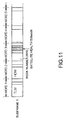
- FIG. 11 schematically describes part of the word data (WORD 1 to WORD 5) in subframe 1.
- word 3 in subframe 1 contains the week number (WN) data and satellite health (SVhealth) data, which is a signal describing the operating condition of the GPS satellite 15a (15b to 15d).
- WN week number
- SVhealth satellite health
- receiving signals from the GPS satellite 15a (15b to 15d) in this embodiment of the invention means phase synchronization with the C/A code from the GPS satellite 15a (15b to 15d) affording the best reception conditions from among all of the GPS satellites 15a to 15d.
- the C/A code (a 1023-chip pseudo random noise code that repeats every 1 ms) is used for synchronizing with 1 ms precision.
- the C/A code (1023 chip (1 ms) code) is different for each of the GPS satellites 15a (15b to 15d) orbiting the Earth, and is unique to a particular satellite.
- the receiver device 40 (reception unit) generates and phase synchronizes with the unique C/A code for the particular GPS satellite 15a (15b to 15d) in order to receive the satellite signal.
- the satellite health data SVhealth enables determining the operating condition of the GPS satellite 15a (15b to 15d) being received as well as the other GPS satellites 15a (15b to 15d). Whether some problem has developed with the GPS satellite 15 or whether the satellite is a test satellite can be determined from this satellite health data SVhealth.
- the time information matching program 501 in FIG. 5 verifies whether the received data is correct based on the parity data following the Z count data in the HOW word. If an error is detected by the parity check, there is some sort of problem with the acquired Z count data and the Z count data is therefore not used to correct the internal clock.
- time data acquisition program 53 in FIG. 5 determines that the Z count data was not acquired and control goes to step ST14 in FIG. 8 .
- the other satellite information acquisition program 55 in FIG. 5 gets the satellite health data SVhealth contained in word 3 of subframe 1.
- the other satellite information acquisition program 55 in FIG. 5 then stores the acquired satellite health data as the satellite health information 72a (an example of satellite health information) in the satellite health information storage unit 72 in FIG. 7 .
- Control then goes to step ST20 to determine if the satellite health information 72a in FIG. 7 indicates that the GPS satellite 15a (15b to 15d) is functioning correctly. More specifically, the satellite health confirmation program 56 (an example of a condition evaluation unit) evaluates the operating condition of the GPS satellite 15a (15b to 15d) based on the satellite health information 72a.
- step ST20 If in step ST20 the satellite health information 72a in FIG. 7 indicates a problem with the GPS satellite 15a (15b to 15d), control goes to step ST21.
- step ST21 the stop reception determination program 57 in FIG. 5 pauses reception by the receiver device 40.
- the change-received-satellite program 59 in FIG. 5 then stores the change-received-satellite synchronization information 74a in the change-received-satellite synchronization information storage unit 74 in FIG. 7 to change the GPS satellite 15a (15b to 15d) from which signals are received.
- Control then returns to step ST13, and reception of signals from another GPS satellite 15a (15b to 15d) starts based on this change-received-satellite synchronization information 74a.
- the GPS wristwatch 10 can receive the navigation message from a different GPS satellite 15a (15b to 15d) from which the signals can be received normally, and the time can be reliably corrected with high precision.
- the threshold offset determination program 503 in FIG. 5 determines if the offset between the internal time data 73b in FIG. 7 , which is the current time, and the first reception time data 73a1 of the reception time data 73a is equal to the match verification threshold value 62a (an example of a threshold value offset) of the match verification threshold value storage unit 62 in FIG. 6 .
- the match verification threshold value 62a is approximately 0.5 second per day in this embodiment of the invention.
- step ST22 If a match is not confirmed in step ST22, control goes to step ST23.
- the internal time data 73b in FIG. 7 depends upon the performance of the real-time clock 38 that generates the internal time data 73b.
- the internal time data 73b is affected by the frequency shift (also referred to below as the frequency shift of the real-time clock 38) of the crystal oscillator connected to the control unit 20 that provides the reference clock of the real-time clock 38.
- step ST23 the time data acquisition program 53 in FIG. 5 gets the Z count data from subframe 2 and subframe 3, which are the next subframes received from the GPS satellite 15a (15b to 15d) after the Z count data from subframe 1 is acquired.
- the Z count data from subframe 2 and the Z count data from subframe 3 are then stored to the second reception time data 73a2 (an example of correction time information) and third reception time data 73a3 (an example of correction time information), respectively, of the reception time data 73a in the time data storage unit 73 in FIG. 7 .
- the time information matching program 501 in FIG. 5 described above of the GPS wristwatch 10 runs a parity check to determine if the acquired Z count data is correct.
- Step ST24 selects the Z count data for which two or more matches were confirmed from among the Z count data acquired from subframe 1, subframe 2, and subframe 3. That is, the reception time matching program 505 in FIG. 5 compares the first reception time data 73a1, the second reception time data 73a2, and the third reception time data 73a3 constituting the reception time data 73a in the time data storage unit 73 in FIG. 7 .
- the data is determined to match, and the reception time data 73a for which the match was confirmed is used. More specifically, the subframe data is transmitted in 6-second units, and the Z count data therefore normally differs by 6 seconds from one subframe to the next.
- the reception time matching program 505 therefore determines if the difference between the first reception time data 73a1 and the second reception time data 73a2 is 6 seconds, if the difference between the second reception time data 73a2 and the third reception time data 73a3 is 6 seconds, and if the difference between the first reception time data 73a1 and the third reception time data 73a3 is 12 seconds.
- Step ST23 therefore does not determine if the reception time data 73a and the internal time data 73b match.
- step ST25 the stop reception determination program 57 in FIG. 5 stops the reception operation of the receiver device 40, and ends receiving the navigation message from the GPS satellite 15a (15b to 15d).
- Control then goes to step ST26 where the time information adjustment program 502 in FIG. 5 adjusts the internal time data 73b in FIG. 7 based on the reception time data 73a.
- the start-reception data configuration program 58 of the GPS wristwatch 10 tells the receiver device 40 when to receive the satellite signal in order to correct the internal time data 73b at a specific time based on the internal time data 73b. Based on the start reception data 76a, the reception timing determination program 51 of the GPS wristwatch 10 then determines the timing when reception starts. It is therefore easy to adjust the time kept by the GPS wristwatch 10 because the timing when the time is adjusted is predetermined to, for example, the timing of the 0 or 30 second of the minute.
- the GPS wristwatch 10a has the same configuration as the first embodiment described above and shown in FIG. 1 to FIG. 4 and FIG. 6 .
- FIG. 15 and FIG. 16 are flow charts describing the main steps in the operation of the GPS wristwatch 10a according to this second embodiment of the invention.
- FIG. 13 shows the programs stored in the program storage unit 150 of the GPS wristwatch 10a
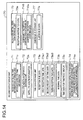
- FIG. 14 shows the data stored in the second data storage unit 170.
- FIG. 17 is a timing chart describing the reception period when the receiver device 40 of the GPS wristwatch 10a according to the second embodiment of the invention receives a navigation message from the GPS satellite 15a (15b to 15d).
- this embodiment of the invention immediately starts the GPS satellite 15a (15b to 15d) search when a receive command is asserted from the external operating unit 5 to receive the satellite signal.
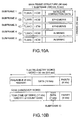
- the Z count data and subframe ID are acquired from the subframe data that is received first (see FIG. 10B ).
- the subframe ID is information identifying the subframe from which the subframe data was received.
- the GPS wristwatch 10a knows from the subframe ID that the first received subframe data was from subframe 3. Because each subframe contains 10 words and each word is 0.6 second long, the GPS wristwatch 10a knows the timing when the Z count data from the next subframe 1 is transmitted once the subframe ID of the received subframe is known.
- the GPS wristwatch 10a initiates a reception pause starting 1.2 seconds (2 words) after starting to receive the TLM word in subframe 3.
- the GPS wristwatch 10a therefore reduces the amount of power supplied to the receiver device 40 during this reception pause and stops reception for the approximately 16.8 seconds of the remaining 8 words in subframe 3, and all of subframe 4 and subframe 5.
- the GPS wristwatch 10a then resumes reception after the reception pause ends, therefore increases the power supply to the receiver device 40, and acquires the TLM word, the Z count data of the HOW word, and the satellite health information in word 3 of the following subframe 1.
- the GPS wristwatch 10a then ends reception 1.8 seconds (3 words) after starting to receive the TLM word from subframe 1.
- This method enables the GPS wristwatch 10a to receive the Z count data twice, and thereby adjust the time more accurately.
- step ST18 determines the Z count data was acquired, control goes to step ST202.
- step ST202 the subframe ID confirmation program 506 in FIG. 13 acquires and stores the subframe ID following the Z count data as the subframe ID data 77a in FIG. 14 to the subframe ID storage unit 77. This enables knowing as described above that the acquired subframe data was from subframe 3.
- step ST203 the reception timing setting program 507 in FIG. 13 (an example of a reception timing configuration unit) sets the timing for starting to receive the next subframe 1 based on the subframe ID data 77a, and stores the subframe 1 reception starting data 716a in the subframe 1 reception starting data storage unit 716.
- step ST204 the reception starting program 511 determines if the internal time data 73b in FIG. 14 equals the subframe 1 reception starting data 716a.
- Step ST20 Steps ST20 to ST26 are the same as described in the first embodiment, and further description thereof is thus omitted here.
- the GPS wristwatch 10a of this second embodiment of the invention can thus adjust the time more accurately because the Z count data is acquired twice.
- the GPS wristwatch 10a can thus adjust the time more efficiently under circumstances such as described below.
- the time should be adjusted as described above if the signal has not been received for one month or more.
- a GPS wristwatch 10b according to a third embodiment of the invention is substantially identical to the first embodiment described above, like parts are therefore identified by the same reference numerals and the following description focuses on the differences between the embodiments.
- the GPS wristwatch 10b has the same configuration as the first embodiment as described above and shown in FIG. 1 to FIG. 4 .
- FIG. 18 is a flow chart describing the main steps in the operation of the GPS wristwatch 10b.
- the GPS wristwatch 10b When the time passed from when the previous navigation message was received and the satellite health information was acquired to the current time is greater than or equal to a predetermined time threshold, the GPS wristwatch 10b receives subframe 1 and acquires the Z count data and satellite health information.
- the GPS wristwatch 10b receives the subframe data and acquires the Z count data regardless of the subframe ID number.
- the GPS wristwatch 10b receives the closest subframe data and acquires the Z count data regardless of the subframe ID number, thereby shortening the reception time and adjusting the time quickly.
- the GPS wristwatch 10b can thereby suppress the increase in power consumption when adjusting the time.
- step ST300 the validity of the stored satellite health information is determined. More particularly, the satellite health confirmation program 56 in FIG. 5 determines if the time from when the previous satellite health information was acquired and stored in the satellite health information storage unit 72 as the satellite health information 72a in FIG. 7 to the present time is greater than or equal to a predetermined time. This predetermined time is preferably approximately 24 hours if the accuracy of the GPS wristwatch 10b is ⁇ 15 seconds/month when the satellite signal is not received.
- step ST300 If the stored satellite health information is not valid in step ST300, control goes to step ST11 and operation continues therefrom as described in the first embodiment.
- step ST301 the subframe data in the two subframes following the subframe containing the Z count data acquired in step ST18 is received, and the Z count data is acquired from each of these two subframes.
- Step ST302 determines if there are two or more matches with the Z counts acquired in step ST18 and step ST301. This match is decided in the same way as in step ST24 in the first embodiment, and further description is therefore omitted here.
- step ST302 If two or more matches with the Z counts are not confirmed in step ST302, control returns to step ST13 and the above operation repeats.
- the GPS wristwatch 10b thus accurately and quickly adjusts the time by appropriately selecting the subframe data to be received based on whether the time passed from when the previous satellite health information was received to the present time is greater than or equal to a predetermined time.
- the GPS wristwatch 10b can adjust the time in a short time, the increase in power consumption when adjusting the time can be suppressed.
- step ST10 determines in step ST10 whether a command was asserted by the external operating unit 5, but the invention is not so limited.
- a tilt switch or gyrosensor can be built in to the GPS wristwatch, and whether a receive command has been asserted can be determined by sensing the amount of incline or the speed of the incline of the GPS wristwatch.
Landscapes
- Physics & Mathematics (AREA)
- General Physics & Mathematics (AREA)
- Engineering & Computer Science (AREA)
- Radar, Positioning & Navigation (AREA)
- Remote Sensing (AREA)
- Electric Clocks (AREA)
- Position Fixing By Use Of Radio Waves (AREA)
- Electromechanical Clocks (AREA)
Claims (7)
- Dispositif de réglage d'horaire (44) comprenant :une unité (38) de génération d'informations d'horaire adaptée pour produire des informations d'horaire et pour délivrer en sortie les informations d'horaire générées ;une unité de réception (40) adaptée pour recevoir des signaux satellite séquentiellement transmis à partir d'un satellite d'informations de positionnement en unités d'informations en sous-trames, où :une pluralité d'unités d'informations en sous-trames (1-5) contenant chacune des informations relatives à l'horaire d'un satellite et au moins une unité d'informations en sous-trame contenant des informations sur l'état du satellite forment une unité,les informations relatives à l'horaire d'un satellite sont les informations relatives à l'horaire du satellite d'informations de positionnement, etles informations sur l'état du satellite indiquent une condition de fonctionnement du satellite d'informations de positionnement ;une unité d'entrée externe (5) adaptée pour délivrer en sortie des informations de commande ordonnant à l'unité de réception (40) d'effectuer la réception en réponse à une entrée externe ;une unité (150) de configuration du minutage de réception adaptée pour régler le temps de démarrage de la réception par l'unité de réception (40) de sorte que le signal satellite soit reçu immédiatement ou à un temps prédéterminé sur la base d'informations de commande provenant de l'unité d'entrée externe ; etune unité (71) de stockage d'informations de réglage d'horaire adaptée pour stocker les informations relatives à l'horaire du satellite du signal satellite reçu par l'unité de réception (40) en tant qu'informations de réglage d'horaire ;où les informations d'horaire générées sont corrigées sur la base des informations de réglage d'horaire ; etla réception par l'unité de réception (40) commence lorsqu'arrive le moment de démarrage de la réception, où :l'unité de réception (40) a une unité de décision adaptée pour déterminer si les informations reçues relatives à l'horaire du satellite sont correctes ; etles informations de réglage d'horaire sont des informations relatives à l'horaire du satellite déterminées par l'unité de décision comme étant justes, et où :si le réglage de l'horaire actuel, qui est la quantité par laquelle les informations d'horaire générées ont été corrigées sur la base des informations de réglage d'horaire, dépasse un décalage de valeur seuil, qui est un temps de décalage correspondant au temps qui s'est écoulé depuis la dernière fois où les informations d'horaire générées ont été corrigées,l'unité de réception (40) est adaptée pour recevoir les informations relatives à l'horaire du satellite en un grand nombre d'unités d'informations en sous-trames suivantes, et pour stocker les informations relatives à l'horaire du satellite en un grand nombre d'unités d'informations en sous-trames suivantes reçues en tant qu'informations d'horaire du satellite pour les unités d'informations en sous-trames respectives ;le dispositif de réglage d'horaire (44) est en outre adapté :pour sélectionner l'une quelconque d'au moins deux valeurs d'informations d'horaire de satellite dont la différence entre elles concorde avec la différence entre les unités d'informations en sous-trames contenant les au moins deux valeurs d'informations d'horaire du satellite ; etpour corriger les informations d'horaire générées sur la base des informations d'horaire de satellite sélectionnées.
- Dispositif de réglage d'horaire (44) selon la revendication 1, dans lequel :le satellite d'informations de positionnement est un satellite GPS ;une unité de transmission de signaux satellite est constituée par les unités d'informations des cinq sous-trames de la sous-trame 1 à la sous-trame 5 ;les informations sur l'état du satellite sont contenues dans la sous-trame 1 ; etl'unité de réception (40) reçoit les informations relatives à l'horaire du satellite et les informations sur l'état du satellite dans la sous-trame 1.
- Dispositif de réglage d'horaire (44) selon la revendication 2, dans lequel :chacune de la sous-trame 1 à la sous-trame 5 contient un numéro d'ID de sous-trame ;l'unité de réception (40) commence la réception immédiatement lorsqu'une commande reçue est confirmée par l'unité d'entrée externe si le minutage de démarrage de la réception par l'unité de réception (40) est réglé pour commencer immédiatement la réception ;l'unité de configuration du minutage de réception règle le minutage de démarrage pour recevoir la sous-trame 1 suivante sur la base du numéro d'ID de sous-trame de la première sous-trame reçue par l'unité de réception (40), arrête la réception par l'unité de réception (40) jusqu'à ce que le minutage de démarrage pour la réception de la sous-trame 1 suivante arrive ; et reprend la réception par l'unité de réception (40) lorsque le minutage de démarrage pour la réception de la sous-trame 1 suivante arrive ; etl'unité de réception (40) reçoit ainsi les informations relatives à l'horaire du satellite et les informations sur l'état du satellite de la sous-trame 1 suivante.
- Dispositif de réglage d'horaire (44) selon l'une quelconque des revendications 1 à 3, dans lequel :il y a plusieurs satellites d'informations de positionnement ;l'unité de réception (40) a une unité d'évaluation de condition qui détermine la condition de fonctionnement du satellite d'informations de positionnement sur la base des informations sur l'état du satellite ; etl'unité de réception (40) reçoit le signal satellite d'un satellite d'informations de positionnement différent sur la base du résultat délivré en sortie par l'unité d'évaluation de condition.
- Dispositif de réglage d'horaire (44) selon l'une quelconque des revendications 1 à 4, dans lequel :si le temps qui s'est écoulé depuis la dernière fois où les informations sur l'état du satellite ont été reçues jusqu'à présent est supérieur ou égal à un temps prédéterminé,l'unité de réception (40) reçoit une sous-trame 1 en tant qu'unité d'informations en sous-trames contenant les informations relatives à l'horaire du satellite et les informations sur l'état du satellite.
- Dispositif de chronométrage (10) avec un dispositif de réglage d'horaire (44) selon la revendication 1.
- Procédé de réglage d'horaire comprenant le fait :de produire des informations d'horaire dans une unité (38) de génération d'informations d'horaire et de délivrer en sortie les informations d'horaire générées ;de recevoir à l'unité de réception (40) des signaux satellite séquentiellement transmis par un satellite d'informations de positionnement en unités d'informations en sous-trames, oùune pluralité d'unités d'informations en sous-trames (1-5) contenant chacune des informations relatives à l'horaire du satellite et au moins une unité d'informations en sous-trame contenant des informations sur l'état du satellite forment une unité,les informations relatives à l'horaire du satellite sont les informations relatives à l'horaire du satellite d'informations de positionnement, etles informations sur l'état du satellite indiquent une condition de fonctionnement du satellite d'informations de positionnement ;une étape d'entrée externe qui délivre en sortie des informations de commande ordonnant à l'unité de réception (40) d'effectuer la réception en réponse à l'entrée externe ;une étape de configuration du minutage de réception qui règle le moment de démarrage de la réception par l'unité de réception (40) de sorte que le signal satellite soit immédiatement reçu ou à un minutage prédéterminé sur la base des informations de commande provenant de l'unité d'entrée externe ;une étape qui commence la réception (ST12, ST13 ; ST204, ST205) par l'unité de réception (40) à partir du moment où le temps de démarrage de la réception arrive ;une étape (ST19) de stockage des informations de réglage d'horaire qui stocke les informations relatives à l'horaire du satellite du signal satellite reçu par l'unité de réception (40) comme étant les informations de réglage d'horaire ; etune étape qui corrige (ST26) les informations d'horaire générées sur la base des informations de réglage d'horaire,une étape qui détermine, au niveau d'une unité de décision comprise dans l'unité de réception (40), si les informations relatives à l'horaire du satellite sont correctes (ST20) ; oùles informations de réglage d'horaire sont les informations relatives à l'horaire du satellite déterminées par l'unité de décision comme étant correctes, et où :si le réglage de l'horaire actuel, qui est la quantité par laquelle les informations d'horaire générées ont été corrigées sur la base des informations de réglage d'horaire, dépasse un décalage de valeur seuil, qui est un temps de décalage correspondant au temps qui s'est écoulé depuis la dernière fois où les informations d'horaire générées ont été corrigées,l'unité de réception (40) reçoit les informations relatives à l'horaire du satellite en un grand nombre d'unités d'informations en sous-trames suivantes, et stocke les informations relatives à l'horaire du satellite en un grand nombre d'unités d'informations en sous-trames suivantes reçues comme étant les informations d'horaire du satellite pour les unités d'informations en sous-trames respectives (ST23) ;l'une quelconque d'au moins deux valeurs d'informations d'horaire du satellite dont la différence entre elles concorde avec la différence entre les unités d'informations en sous-trames contenant les au moins deux valeurs d'informations d'horaire du satellite est sélectionnée (ST24) ; etles informations d'horaire générées sont corrigées sur la base des informations d'horaire du satellite sélectionnées.
Applications Claiming Priority (2)
| Application Number | Priority Date | Filing Date | Title |
|---|---|---|---|
| JP2007202085 | 2007-08-02 | ||
| JP2008108618A JP5374912B2 (ja) | 2007-08-02 | 2008-04-18 | 時刻修正装置、時刻修正装置付き計時装置及び時刻修正方法 |
Publications (3)
| Publication Number | Publication Date |
|---|---|
| EP2023218A2 EP2023218A2 (fr) | 2009-02-11 |
| EP2023218A3 EP2023218A3 (fr) | 2010-01-06 |
| EP2023218B1 true EP2023218B1 (fr) | 2012-01-25 |
Family
ID=40090091
Family Applications (1)
| Application Number | Title | Priority Date | Filing Date |
|---|---|---|---|
| EP08161642A Ceased EP2023218B1 (fr) | 2007-08-02 | 2008-08-01 | Dispositif de réglage du temps, dispositif de compteur du temps avec un dispositif de réglage du temps et un procédé de réglage du temps |
Country Status (2)
| Country | Link |
|---|---|
| US (2) | US8077551B2 (fr) |
| EP (1) | EP2023218B1 (fr) |
Families Citing this family (20)
| Publication number | Priority date | Publication date | Assignee | Title |
|---|---|---|---|---|
| JP4760532B2 (ja) * | 2006-05-26 | 2011-08-31 | 株式会社デンソー | ナビゲーション装置 |
| US8116170B2 (en) * | 2007-12-19 | 2012-02-14 | Seiko Epson Corporation | Timekeeping device and satellite signal reception method for a timekeeping device |
| JP5251372B2 (ja) | 2008-09-04 | 2013-07-31 | セイコーエプソン株式会社 | 電子時計 |
| JP5753647B2 (ja) * | 2008-10-09 | 2015-07-22 | セイコーエプソン株式会社 | 電子時計及び衛星信号受信方法 |
| US8547950B2 (en) * | 2009-05-04 | 2013-10-01 | Infineon Technologies Ag | Squaring loss inhibition for low signal levels in positioning systems |
| JP5272964B2 (ja) * | 2009-08-18 | 2013-08-28 | セイコーエプソン株式会社 | 電子時計 |
| JP5458786B2 (ja) * | 2009-10-13 | 2014-04-02 | セイコーエプソン株式会社 | 電子機器 |
| JP5747630B2 (ja) * | 2011-04-21 | 2015-07-15 | セイコーエプソン株式会社 | 電子時計および時刻修正方法 |
| JP6009444B2 (ja) | 2011-08-11 | 2016-10-19 | シチズンホールディングス株式会社 | 電波腕時計 |
| JP5796415B2 (ja) | 2011-08-30 | 2015-10-21 | セイコーエプソン株式会社 | 衛星信号受信装置および電子機器 |
| CN103488075A (zh) * | 2012-06-11 | 2014-01-01 | 禾邦电子(苏州)有限公司 | Gps校时手表及其校时方法 |
| CN104428725B (zh) * | 2012-07-11 | 2017-08-08 | 西铁城时计株式会社 | 卫星电波手表 |
| US9170567B2 (en) * | 2012-07-11 | 2015-10-27 | Citizen Holdings Co., Ltd. | Satellite radio-controlled wristwatch |
| CN103901771A (zh) * | 2014-04-17 | 2014-07-02 | 上海电机学院 | 一种基于fpga提取北斗卫星时间信息的系统及方法 |
| JP2016008911A (ja) * | 2014-06-25 | 2016-01-18 | アズビル株式会社 | 時刻同期方法、時刻同期システム、時刻マスタ機器及び時刻スレーブ機器 |
| JP6115589B2 (ja) * | 2015-06-18 | 2017-04-19 | カシオ計算機株式会社 | 衛星電波受信装置、電子時計、日時情報取得方法及びプログラム |
| JP6645358B2 (ja) * | 2016-05-27 | 2020-02-14 | カシオ計算機株式会社 | 通信装置、電子時計、時刻補正方法、及びプログラム |
| US9705549B1 (en) * | 2016-06-27 | 2017-07-11 | Intel Corporation | Antenna for wearable electronic devices |
| CN106527110B (zh) * | 2016-10-20 | 2019-10-01 | 广西大学 | 一种基于核密度估计法的bds与gps双源秒脉冲无缝切换方法 |
| US10075206B1 (en) | 2017-03-13 | 2018-09-11 | Intel Corporation | Customizable wearable electronic devices and methods of assembling the same |
Family Cites Families (19)
| Publication number | Priority date | Publication date | Assignee | Title |
|---|---|---|---|---|
| JPH1082875A (ja) | 1996-09-09 | 1998-03-31 | Furuno Electric Co Ltd | 電子時計および計時内容補正方法 |
| US5883594A (en) * | 1997-02-20 | 1999-03-16 | Trimble Navigation Limited | GPS receiver using a message system for reducing power consumption |
| JP3223351B2 (ja) | 1997-10-22 | 2001-10-29 | 日本無線株式会社 | Gps受信機 |
| JP3698882B2 (ja) | 1998-01-28 | 2005-09-21 | リズム時計工業株式会社 | 電波修正時計における時刻コードの解析方法 |
| JP2000075070A (ja) | 1998-08-31 | 2000-03-14 | Sony Computer Entertainment Inc | 時刻出力装置及び時刻修正方法 |
| US6212133B1 (en) * | 1999-07-26 | 2001-04-03 | Mccoy Kim | Low power GPS receiver system and method of using same |
| US6611756B1 (en) * | 2000-08-10 | 2003-08-26 | Lucent Technologies Inc. | Method for predicting navigation information in a global positioning system |
| KR100416990B1 (ko) * | 2000-11-03 | 2004-02-05 | 삼성전자주식회사 | 네트워크 에이디드 글로벌 포지셔닝 시스템 수신기의수신성능 향상 방법 |
| JP2003194910A (ja) | 2001-12-26 | 2003-07-09 | Matsushita Electric Ind Co Ltd | 位置検出装置 |
| JP3454269B1 (ja) * | 2002-03-26 | 2003-10-06 | セイコーエプソン株式会社 | 電波修正時計および電波修正時計の制御方法 |
| KR100594123B1 (ko) * | 2005-05-03 | 2006-06-28 | 삼성전자주식회사 | 이동통신 단말에서 전세계 위치확인 신호의 수신 장치 및방법 |
| US7365681B2 (en) * | 2005-09-19 | 2008-04-29 | Trimble Navigation Limited | GPS receiver having a prescribed time-of-entry into an operation mode |
| US7920441B2 (en) * | 2006-09-21 | 2011-04-05 | Atheros Communications, Inc. | Optimized time acquisition algorithm for low-power GPS-based watch applications |
| JP2007271543A (ja) * | 2006-03-31 | 2007-10-18 | Casio Comput Co Ltd | 時刻修正制御装置及び時刻修正制御方法 |
| JP4957049B2 (ja) * | 2006-03-31 | 2012-06-20 | カシオ計算機株式会社 | 時計装置及び時刻修正方法 |
| JP2008032637A (ja) * | 2006-07-31 | 2008-02-14 | Seiko Epson Corp | 時刻修正装置、時刻修正装置付き計時装置及び時刻修正方法 |
| JP2008032638A (ja) * | 2006-07-31 | 2008-02-14 | Seiko Epson Corp | 測位装置、測位方法及び測位装置を有する時計 |
| JP2008032636A (ja) * | 2006-07-31 | 2008-02-14 | Seiko Epson Corp | 時刻修正装置、時刻修正装置付き計時装置及び時刻修正方法 |
| US7616153B2 (en) * | 2006-08-04 | 2009-11-10 | Seiko Epson Corporation | Electronic device and time adjustment method |
-
2008
- 2008-07-18 US US12/176,037 patent/US8077551B2/en not_active Expired - Fee Related
- 2008-08-01 EP EP08161642A patent/EP2023218B1/fr not_active Ceased
-
2011
- 2011-11-08 US US13/291,506 patent/US8488417B2/en not_active Expired - Fee Related
Also Published As
| Publication number | Publication date |
|---|---|
| US8488417B2 (en) | 2013-07-16 |
| EP2023218A2 (fr) | 2009-02-11 |
| US8077551B2 (en) | 2011-12-13 |
| US20120051191A1 (en) | 2012-03-01 |
| US20090034372A1 (en) | 2009-02-05 |
| EP2023218A3 (fr) | 2010-01-06 |
Similar Documents
| Publication | Publication Date | Title |
|---|---|---|
| US8488417B2 (en) | Time adjustment device, timekeeping device with a time adjustment device, and a time adjustment method | |
| JP5374912B2 (ja) | 時刻修正装置、時刻修正装置付き計時装置及び時刻修正方法 | |
| US8223593B2 (en) | Electronic timepiece and control method for an electronic timepiece | |
| EP2063330B1 (fr) | Dispositif de réglage du temps, horloge dotée d'un dispositif de réglage du temps et procédé de réglage du temps | |
| JP5428167B2 (ja) | 時刻修正装置、時刻修正装置付き計時装置及び時刻修正方法 | |
| CN101498780B (zh) | 卫星信号接收装置及卫星信号接收装置的控制方法 | |
| US7701390B2 (en) | Time adjustment device, timekeeping device with a time adjustment device, and a time adjustment method | |
| JP4650467B2 (ja) | 時刻修正装置および時刻修正装置付き計時装置 | |
| EP2175292B1 (fr) | Dispositif de réception de signaux satellites, dispositif de chronométrage et procédé de réception de signaux satellites | |
| JP5435167B2 (ja) | 衛星信号受信装置および衛星信号受信装置の制御方法 |
Legal Events
| Date | Code | Title | Description |
|---|---|---|---|
| PUAI | Public reference made under article 153(3) epc to a published international application that has entered the european phase |
Free format text: ORIGINAL CODE: 0009012 |
|
| 17P | Request for examination filed |
Effective date: 20080801 |
|
| AK | Designated contracting states |
Kind code of ref document: A2 Designated state(s): AT BE BG CH CY CZ DE DK EE ES FI FR GB GR HR HU IE IS IT LI LT LU LV MC MT NL NO PL PT RO SE SI SK TR |
|
| AX | Request for extension of the european patent |
Extension state: AL BA MK RS |
|
| PUAL | Search report despatched |
Free format text: ORIGINAL CODE: 0009013 |
|
| AK | Designated contracting states |
Kind code of ref document: A3 Designated state(s): AT BE BG CH CY CZ DE DK EE ES FI FR GB GR HR HU IE IS IT LI LT LU LV MC MT NL NO PL PT RO SE SI SK TR |
|
| AX | Request for extension of the european patent |
Extension state: AL BA MK RS |
|
| 17Q | First examination report despatched |
Effective date: 20100802 |
|
| AKX | Designation fees paid |
Designated state(s): DE FR GB |
|
| REG | Reference to a national code |
Ref country code: DE Ref legal event code: R079 Ref document number: 602008012826 Country of ref document: DE Free format text: PREVIOUS MAIN CLASS: G04G0005000000 Ipc: G04G0021040000 |
|
| GRAP | Despatch of communication of intention to grant a patent |
Free format text: ORIGINAL CODE: EPIDOSNIGR1 |
|
| RIC1 | Information provided on ipc code assigned before grant |
Ipc: G04G 5/00 20060101ALI20110815BHEP Ipc: G04G 21/04 20100101AFI20110815BHEP Ipc: G04C 9/02 20060101ALI20110815BHEP |
|
| GRAS | Grant fee paid |
Free format text: ORIGINAL CODE: EPIDOSNIGR3 |
|
| GRAA | (expected) grant |
Free format text: ORIGINAL CODE: 0009210 |
|
| AK | Designated contracting states |
Kind code of ref document: B1 Designated state(s): DE FR GB |
|
| REG | Reference to a national code |
Ref country code: GB Ref legal event code: FG4D |
|
| REG | Reference to a national code |
Ref country code: DE Ref legal event code: R096 Ref document number: 602008012826 Country of ref document: DE Effective date: 20120322 |
|
| PLBE | No opposition filed within time limit |
Free format text: ORIGINAL CODE: 0009261 |
|
| STAA | Information on the status of an ep patent application or granted ep patent |
Free format text: STATUS: NO OPPOSITION FILED WITHIN TIME LIMIT |
|
| 26N | No opposition filed |
Effective date: 20121026 |
|
| REG | Reference to a national code |
Ref country code: DE Ref legal event code: R097 Ref document number: 602008012826 Country of ref document: DE Effective date: 20121026 |
|
| REG | Reference to a national code |
Ref country code: FR Ref legal event code: PLFP Year of fee payment: 9 |
|
| REG | Reference to a national code |
Ref country code: FR Ref legal event code: PLFP Year of fee payment: 10 |
|
| REG | Reference to a national code |
Ref country code: FR Ref legal event code: PLFP Year of fee payment: 11 |
|
| PGFP | Annual fee paid to national office [announced via postgrant information from national office to epo] |
Ref country code: GB Payment date: 20200722 Year of fee payment: 13 Ref country code: FR Payment date: 20200715 Year of fee payment: 13 Ref country code: DE Payment date: 20200722 Year of fee payment: 13 |
|
| REG | Reference to a national code |
Ref country code: DE Ref legal event code: R119 Ref document number: 602008012826 Country of ref document: DE |
|
| GBPC | Gb: european patent ceased through non-payment of renewal fee |
Effective date: 20210801 |
|
| PG25 | Lapsed in a contracting state [announced via postgrant information from national office to epo] |
Ref country code: GB Free format text: LAPSE BECAUSE OF NON-PAYMENT OF DUE FEES Effective date: 20210801 Ref country code: FR Free format text: LAPSE BECAUSE OF NON-PAYMENT OF DUE FEES Effective date: 20210831 Ref country code: DE Free format text: LAPSE BECAUSE OF NON-PAYMENT OF DUE FEES Effective date: 20220301 |