EP2025721A2 - Fällungscalciumkarbonatprodukt mit verbesserter Helligkeit und Verfahren zu seiner Herstellung - Google Patents
Fällungscalciumkarbonatprodukt mit verbesserter Helligkeit und Verfahren zu seiner Herstellung Download PDFInfo
- Publication number
- EP2025721A2 EP2025721A2 EP08015376A EP08015376A EP2025721A2 EP 2025721 A2 EP2025721 A2 EP 2025721A2 EP 08015376 A EP08015376 A EP 08015376A EP 08015376 A EP08015376 A EP 08015376A EP 2025721 A2 EP2025721 A2 EP 2025721A2
- Authority
- EP
- European Patent Office
- Prior art keywords
- slurry
- calcium carbonate
- pcc
- brightness
- particle size
- Prior art date
- Legal status (The legal status is an assumption and is not a legal conclusion. Google has not performed a legal analysis and makes no representation as to the accuracy of the status listed.)
- Withdrawn
Links
- VTYYLEPIZMXCLO-UHFFFAOYSA-L Calcium carbonate Chemical compound [Ca+2].[O-]C([O-])=O VTYYLEPIZMXCLO-UHFFFAOYSA-L 0.000 title claims abstract description 203
- 238000000034 method Methods 0.000 title claims abstract description 38
- 229940088417 precipitated calcium carbonate Drugs 0.000 title claims description 127
- 239000002002 slurry Substances 0.000 claims abstract description 99
- 239000002245 particle Substances 0.000 claims abstract description 55
- 229910000019 calcium carbonate Inorganic materials 0.000 claims abstract description 37
- 238000007885 magnetic separation Methods 0.000 claims abstract description 34
- 239000012535 impurity Substances 0.000 claims abstract description 29
- 230000005291 magnetic effect Effects 0.000 claims abstract description 16
- ODINCKMPIJJUCX-UHFFFAOYSA-N calcium oxide Inorganic materials [Ca]=O ODINCKMPIJJUCX-UHFFFAOYSA-N 0.000 claims description 59
- 239000000920 calcium hydroxide Substances 0.000 claims description 38
- 239000000292 calcium oxide Substances 0.000 claims description 33
- AXCZMVOFGPJBDE-UHFFFAOYSA-L calcium dihydroxide Chemical compound [OH-].[OH-].[Ca+2] AXCZMVOFGPJBDE-UHFFFAOYSA-L 0.000 claims description 19
- 229910001861 calcium hydroxide Inorganic materials 0.000 claims description 19
- 238000012216 screening Methods 0.000 claims description 12
- 239000002270 dispersing agent Substances 0.000 claims description 9
- BRPQOXSCLDDYGP-UHFFFAOYSA-N calcium oxide Chemical compound [O-2].[Ca+2] BRPQOXSCLDDYGP-UHFFFAOYSA-N 0.000 claims 6
- 238000004519 manufacturing process Methods 0.000 claims 1
- 239000000945 filler Substances 0.000 abstract description 54
- OYPRJOBELJOOCE-UHFFFAOYSA-N Calcium Chemical compound [Ca] OYPRJOBELJOOCE-UHFFFAOYSA-N 0.000 abstract description 9
- 239000011575 calcium Substances 0.000 abstract description 9
- 229910052791 calcium Inorganic materials 0.000 abstract description 9
- 239000000843 powder Substances 0.000 abstract description 3
- 230000000717 retained effect Effects 0.000 abstract description 3
- 239000000047 product Substances 0.000 description 68
- 239000011248 coating agent Substances 0.000 description 44
- 238000000576 coating method Methods 0.000 description 44
- 239000007787 solid Substances 0.000 description 39
- 235000012255 calcium oxide Nutrition 0.000 description 28
- 235000011116 calcium hydroxide Nutrition 0.000 description 26
- 230000000694 effects Effects 0.000 description 10
- 239000006148 magnetic separator Substances 0.000 description 10
- 230000014759 maintenance of location Effects 0.000 description 10
- 238000001238 wet grinding Methods 0.000 description 10
- 235000008733 Citrus aurantifolia Nutrition 0.000 description 7
- 235000011941 Tilia x europaea Nutrition 0.000 description 7
- 238000000227 grinding Methods 0.000 description 7
- 239000004571 lime Substances 0.000 description 7
- 239000000049 pigment Substances 0.000 description 7
- 238000012545 processing Methods 0.000 description 7
- VYPSYNLAJGMNEJ-UHFFFAOYSA-N Silicium dioxide Chemical compound O=[Si]=O VYPSYNLAJGMNEJ-UHFFFAOYSA-N 0.000 description 5
- 240000006909 Tilia x europaea Species 0.000 description 5
- 239000000463 material Substances 0.000 description 5
- 239000000123 paper Substances 0.000 description 5
- XEEYBQQBJWHFJM-UHFFFAOYSA-N Iron Chemical compound [Fe] XEEYBQQBJWHFJM-UHFFFAOYSA-N 0.000 description 4
- 238000002474 experimental method Methods 0.000 description 4
- 235000019738 Limestone Nutrition 0.000 description 3
- 229910000831 Steel Inorganic materials 0.000 description 3
- 238000006243 chemical reaction Methods 0.000 description 3
- KRKNYBCHXYNGOX-UHFFFAOYSA-N citric acid Chemical compound OC(=O)CC(O)(C(O)=O)CC(O)=O KRKNYBCHXYNGOX-UHFFFAOYSA-N 0.000 description 3
- 239000013078 crystal Substances 0.000 description 3
- JEIPFZHSYJVQDO-UHFFFAOYSA-N iron(III) oxide Inorganic materials O=[Fe]O[Fe]=O JEIPFZHSYJVQDO-UHFFFAOYSA-N 0.000 description 3
- 239000006028 limestone Substances 0.000 description 3
- 239000011159 matrix material Substances 0.000 description 3
- 238000003801 milling Methods 0.000 description 3
- 239000000203 mixture Substances 0.000 description 3
- 238000001556 precipitation Methods 0.000 description 3
- 239000010959 steel Substances 0.000 description 3
- 210000002268 wool Anatomy 0.000 description 3
- RZVAJINKPMORJF-UHFFFAOYSA-N Acetaminophen Chemical compound CC(=O)NC1=CC=C(O)C=C1 RZVAJINKPMORJF-UHFFFAOYSA-N 0.000 description 2
- 244000132059 Carica parviflora Species 0.000 description 2
- 235000014653 Carica parviflora Nutrition 0.000 description 2
- 240000007313 Tilia cordata Species 0.000 description 2
- BVJRIMBTLVPCFB-UHFFFAOYSA-N [Fe+2].[O-2].[Ca+2].[O-2] Chemical class [Fe+2].[O-2].[Ca+2].[O-2] BVJRIMBTLVPCFB-UHFFFAOYSA-N 0.000 description 2
- 125000000129 anionic group Chemical group 0.000 description 2
- 238000005282 brightening Methods 0.000 description 2
- 239000007795 chemical reaction product Substances 0.000 description 2
- 229910052681 coesite Inorganic materials 0.000 description 2
- 239000002131 composite material Substances 0.000 description 2
- 229910052906 cristobalite Inorganic materials 0.000 description 2
- 239000010419 fine particle Substances 0.000 description 2
- 239000006246 high-intensity magnetic separator Substances 0.000 description 2
- 229910052742 iron Inorganic materials 0.000 description 2
- 239000004579 marble Substances 0.000 description 2
- 230000000704 physical effect Effects 0.000 description 2
- 229920001495 poly(sodium acrylate) polymer Polymers 0.000 description 2
- 239000000377 silicon dioxide Substances 0.000 description 2
- NNMHYFLPFNGQFZ-UHFFFAOYSA-M sodium polyacrylate Chemical compound [Na+].[O-]C(=O)C=C NNMHYFLPFNGQFZ-UHFFFAOYSA-M 0.000 description 2
- 229910052682 stishovite Inorganic materials 0.000 description 2
- 239000000126 substance Substances 0.000 description 2
- 229910052905 tridymite Inorganic materials 0.000 description 2
- 229910021532 Calcite Inorganic materials 0.000 description 1
- MBMLMWLHJBBADN-UHFFFAOYSA-N Ferrous sulfide Chemical compound [Fe]=S MBMLMWLHJBBADN-UHFFFAOYSA-N 0.000 description 1
- PWHULOQIROXLJO-UHFFFAOYSA-N Manganese Chemical compound [Mn] PWHULOQIROXLJO-UHFFFAOYSA-N 0.000 description 1
- 229920001410 Microfiber Polymers 0.000 description 1
- 230000032683 aging Effects 0.000 description 1
- 230000015572 biosynthetic process Effects 0.000 description 1
- 238000001354 calcination Methods 0.000 description 1
- JGIATAMCQXIDNZ-UHFFFAOYSA-N calcium sulfide Chemical compound [Ca]=S JGIATAMCQXIDNZ-UHFFFAOYSA-N 0.000 description 1
- 239000004927 clay Substances 0.000 description 1
- 239000011362 coarse particle Substances 0.000 description 1
- 239000006255 coating slurry Substances 0.000 description 1
- 239000000084 colloidal system Substances 0.000 description 1
- 150000001875 compounds Chemical class 0.000 description 1
- 239000000356 contaminant Substances 0.000 description 1
- 230000003247 decreasing effect Effects 0.000 description 1
- 230000007812 deficiency Effects 0.000 description 1
- 239000006185 dispersion Substances 0.000 description 1
- 230000005294 ferromagnetic effect Effects 0.000 description 1
- 238000011049 filling Methods 0.000 description 1
- 238000001914 filtration Methods 0.000 description 1
- 239000012467 final product Substances 0.000 description 1
- 238000003837 high-temperature calcination Methods 0.000 description 1
- 230000036571 hydration Effects 0.000 description 1
- 238000006703 hydration reaction Methods 0.000 description 1
- 239000000976 ink Substances 0.000 description 1
- 229910052500 inorganic mineral Inorganic materials 0.000 description 1
- 239000007788 liquid Substances 0.000 description 1
- ZTERWYZERRBKHF-UHFFFAOYSA-N magnesium iron(2+) oxygen(2-) Chemical class [Mg+2].[O-2].[Fe+2].[O-2] ZTERWYZERRBKHF-UHFFFAOYSA-N 0.000 description 1
- 239000006249 magnetic particle Substances 0.000 description 1
- 229910052748 manganese Inorganic materials 0.000 description 1
- 239000011572 manganese Substances 0.000 description 1
- 238000005259 measurement Methods 0.000 description 1
- 235000010755 mineral Nutrition 0.000 description 1
- 239000011707 mineral Substances 0.000 description 1
- 239000003973 paint Substances 0.000 description 1
- 230000005298 paramagnetic effect Effects 0.000 description 1
- 239000013618 particulate matter Substances 0.000 description 1
- 239000004033 plastic Substances 0.000 description 1
- 229920003023 plastic Polymers 0.000 description 1
- 238000000746 purification Methods 0.000 description 1
- NIFIFKQPDTWWGU-UHFFFAOYSA-N pyrite Chemical compound [Fe+2].[S-][S-] NIFIFKQPDTWWGU-UHFFFAOYSA-N 0.000 description 1
- 229910052683 pyrite Inorganic materials 0.000 description 1
- 239000011028 pyrite Substances 0.000 description 1
- 239000002994 raw material Substances 0.000 description 1
- 239000005060 rubber Substances 0.000 description 1
- 239000004576 sand Substances 0.000 description 1
- 238000004062 sedimentation Methods 0.000 description 1
- 235000012239 silicon dioxide Nutrition 0.000 description 1
- 239000007858 starting material Substances 0.000 description 1
- 238000012360 testing method Methods 0.000 description 1
- 239000004753 textile Substances 0.000 description 1
- XLYOFNOQVPJJNP-UHFFFAOYSA-N water Substances O XLYOFNOQVPJJNP-UHFFFAOYSA-N 0.000 description 1
- 238000004383 yellowing Methods 0.000 description 1
Images

Classifications
-
- C—CHEMISTRY; METALLURGY
- C09—DYES; PAINTS; POLISHES; NATURAL RESINS; ADHESIVES; COMPOSITIONS NOT OTHERWISE PROVIDED FOR; APPLICATIONS OF MATERIALS NOT OTHERWISE PROVIDED FOR
- C09C—TREATMENT OF INORGANIC MATERIALS, OTHER THAN FIBROUS FILLERS, TO ENHANCE THEIR PIGMENTING OR FILLING PROPERTIES ; PREPARATION OF CARBON BLACK ; PREPARATION OF INORGANIC MATERIALS WHICH ARE NO SINGLE CHEMICAL COMPOUNDS AND WHICH ARE MAINLY USED AS PIGMENTS OR FILLERS
- C09C1/00—Treatment of specific inorganic materials other than fibrous fillers; Preparation of carbon black
- C09C1/02—Compounds of alkaline earth metals or magnesium
- C09C1/021—Calcium carbonates
-
- C—CHEMISTRY; METALLURGY
- C01—INORGANIC CHEMISTRY
- C01F—COMPOUNDS OF THE METALS BERYLLIUM, MAGNESIUM, ALUMINIUM, CALCIUM, STRONTIUM, BARIUM, RADIUM, THORIUM, OR OF THE RARE-EARTH METALS
- C01F11/00—Compounds of calcium, strontium, or barium
- C01F11/18—Carbonates
-
- C—CHEMISTRY; METALLURGY
- C01—INORGANIC CHEMISTRY
- C01F—COMPOUNDS OF THE METALS BERYLLIUM, MAGNESIUM, ALUMINIUM, CALCIUM, STRONTIUM, BARIUM, RADIUM, THORIUM, OR OF THE RARE-EARTH METALS
- C01F11/00—Compounds of calcium, strontium, or barium
- C01F11/18—Carbonates
- C01F11/185—After-treatment, e.g. grinding, purification, conversion of crystal morphology
-
- C—CHEMISTRY; METALLURGY
- C01—INORGANIC CHEMISTRY
- C01P—INDEXING SCHEME RELATING TO STRUCTURAL AND PHYSICAL ASPECTS OF SOLID INORGANIC COMPOUNDS
- C01P2004/00—Particle morphology
- C01P2004/60—Particles characterised by their size
- C01P2004/61—Micrometer sized, i.e. from 1-100 micrometer
-
- C—CHEMISTRY; METALLURGY
- C01—INORGANIC CHEMISTRY
- C01P—INDEXING SCHEME RELATING TO STRUCTURAL AND PHYSICAL ASPECTS OF SOLID INORGANIC COMPOUNDS
- C01P2004/00—Particle morphology
- C01P2004/60—Particles characterised by their size
- C01P2004/62—Submicrometer sized, i.e. from 0.1-1 micrometer
-
- C—CHEMISTRY; METALLURGY
- C01—INORGANIC CHEMISTRY
- C01P—INDEXING SCHEME RELATING TO STRUCTURAL AND PHYSICAL ASPECTS OF SOLID INORGANIC COMPOUNDS
- C01P2006/00—Physical properties of inorganic compounds
- C01P2006/22—Rheological behaviour as dispersion, e.g. viscosity, sedimentation stability
-
- C—CHEMISTRY; METALLURGY
- C01—INORGANIC CHEMISTRY
- C01P—INDEXING SCHEME RELATING TO STRUCTURAL AND PHYSICAL ASPECTS OF SOLID INORGANIC COMPOUNDS
- C01P2006/00—Physical properties of inorganic compounds
- C01P2006/60—Optical properties, e.g. expressed in CIELAB-values
-
- C—CHEMISTRY; METALLURGY
- C01—INORGANIC CHEMISTRY
- C01P—INDEXING SCHEME RELATING TO STRUCTURAL AND PHYSICAL ASPECTS OF SOLID INORGANIC COMPOUNDS
- C01P2006/00—Physical properties of inorganic compounds
- C01P2006/60—Optical properties, e.g. expressed in CIELAB-values
- C01P2006/62—L* (lightness axis)
-
- C—CHEMISTRY; METALLURGY
- C01—INORGANIC CHEMISTRY
- C01P—INDEXING SCHEME RELATING TO STRUCTURAL AND PHYSICAL ASPECTS OF SOLID INORGANIC COMPOUNDS
- C01P2006/00—Physical properties of inorganic compounds
- C01P2006/60—Optical properties, e.g. expressed in CIELAB-values
- C01P2006/63—Optical properties, e.g. expressed in CIELAB-values a* (red-green axis)
-
- C—CHEMISTRY; METALLURGY
- C01—INORGANIC CHEMISTRY
- C01P—INDEXING SCHEME RELATING TO STRUCTURAL AND PHYSICAL ASPECTS OF SOLID INORGANIC COMPOUNDS
- C01P2006/00—Physical properties of inorganic compounds
- C01P2006/60—Optical properties, e.g. expressed in CIELAB-values
- C01P2006/64—Optical properties, e.g. expressed in CIELAB-values b* (yellow-blue axis)
-
- D—TEXTILES; PAPER
- D21—PAPER-MAKING; PRODUCTION OF CELLULOSE
- D21H—PULP COMPOSITIONS; PREPARATION THEREOF NOT COVERED BY SUBCLASSES D21C OR D21D; IMPREGNATING OR COATING OF PAPER; TREATMENT OF FINISHED PAPER NOT COVERED BY CLASS B31 OR SUBCLASS D21G; PAPER NOT OTHERWISE PROVIDED FOR
- D21H17/00—Non-fibrous material added to the pulp, characterised by its constitution; Paper-impregnating material characterised by its constitution
- D21H17/63—Inorganic compounds
- D21H17/67—Water-insoluble compounds, e.g. fillers, pigments
- D21H17/675—Oxides, hydroxides or carbonates
Definitions
- This invention relates to a calcium carbonate product having improved brightness and, more particularly, to a coating grade, precipitated calcium carbonate product that has a median particle size of less than 2 microns ( ⁇ m) and a TAPPI Brightness of greater than 96.
- the invention also relates to a process of brightening a precipitated calcium carbonate product by removing dark colored impurities through the steps fine screening and magnetic separation.
- Calcium carbonate occurs naturally in the form of limestone, marble, chalk and coral. Powdered calcium carbonate is produced by either chemical methods or by the mechanical treatment of the natural materials.
- precipitated calcium carbonate applies to the commercial types of the compound produced chemically in a precipitation process. The precipitated products are generally finer in particle size, have a more uniform particle size distribution and a higher degree of chemical purity.
- a wide variety of calcium carbonate particle sizes and particle shapes can be chemically produced via the precipitation processes.
- Calcium carbonate is commonly precipitated in the form of calcite, in which the crystals are typically either rhombohedral, cubic or scalenohedral in shape, or in the form of aragonite, which is acicular.
- Vaterite is another precipitated form of calcium carbonate known in the art that is metastable.
- Precipitated calcium carbonate is an extremely versatile tiller and pigment that is utilized in a wide variety of manufactured products including paper, paint, plastics, rubber, textiles and printing inks.
- Precipitated calcium carbonate is used on a large scale in paper filling and coating applications.
- PCC is utilized to increase the opacity and brightness of paper.
- PCC provides a high resistance to yellowing and aging of paper.
- a fine particle size calcium carbonate is required (median particle size ⁇ 2 microns). It is typically desirable for the calcium carbonate to he as bright as possible in these high grade coating applications.
- wet media milling is a common step in the processing of coating grade PCC. It has been found that wet media milling precipitated calcium carbonate generally results in significant loses in pigment brightness due to the grinding of the dark colored impurities present therein.
- a burnt lime is principally CaO, but examples of the impurities commonly found in the burnt lime source include pyrite (iron sulfide), magnesium iron oxides, calcium iron oxides, calcium sulfide and crystalline silicas.
- the loss of PCC pigment brightness from grinding can be on the order of 1.5 to 2.5 points depending on the initial burnt lime source and degree of grinding.
- the CaO starting material that is utilized must be of a high quality, i.e. low levels of impurities. If a high quality burnt lime source is not readily accessible, significant logistics costs, about 10%, are added to the cost of the PCC product. Accordingly, the resultant PCC product is relatively expensive.
- the present invention is designed to overcome the deficiencies discussed above. It is an object of the invention to provide a high grade, precipitated calcium carbonate product that has a median particle size of less than 2 microns and a TAPPI brightness of greater than 96.
- a lower quality CaO feed material e.g., burnt lime
- a method of significantly improving the brightness and shade properties of a high quality PCC product includes providing a calcium containing feed source that contains discoloring impurities.
- the feed source is either a hydrated lime slurry (produced from the slaking of CaO) or an aqueous slurry of calcium carbonate product.
- the hydrated lime slurry is subjected to magnetic separation using a high gradient magnetic field in order to remove the discoloring impurities. After this purification, the hydrated lime slurry is then carbonated in a reactor to yield a resultant PCC product of high brightness.
- Hydrated lime slurries arc also commonly referred to in the literature as milk of lime (MOL).
- the preferred calcium containing feed source is a PCC reactor product delivered in a slurry form from a carbonation reactor. Thereafter, the PCC slurry is fine screened through a 325 mesh screen (45 ⁇ m) in order to yield a filler grade calcium carbonate slurry.
- the filler grade calcium carbonate slurry is wet milled in order to reduce the median particle size of the calcium carbonate to less than 2 microns and thereby liberates the discoloring impurities that were entrained therein.
- the discoloring impurities are then magnetically separated from the deagglomerated calcium carbonate slurry by subjecting the slurry to a high intensity magnetic field.
- the purified slurry may be de-watered to yield a dry powder; or alternatively, the PCC slurry may be retained in aqueous form and concentrated as desired.
- the resultant calcium carbonate product preferably has a median particle size of less than 2 microns and a TAPPI brightness of greater than 96.
- the present invention is directed toward a method of obtaining high grade, precipitated calcium carbonate products having a median particle size of less than 2 microns and a TAPPI brightness of greater than 96, and more preferably, a particle size of less than 1 micron and a TAPPI brightness of greater than 97.
- the precipitated calcium carbonate products of the present invention are obtained through a combination of magnetic separation and fine screening. More specifically, the present inventive process includes providing a calcium containing feed source for magnetic separation that contains discoloring impurities.
- the calcium feed source used for making PCC products is typically burnt lime (CaO). Burnt lime is also commonly referred to as quick lime or calcined limestone.
- the discoloring particulates in the burnt lime appear to principally consist of calcium iron oxide that is likely produced during the high temperature calcination of natural limestone as a result of the presence of pyritic impurities.
- Other feed sources for calcination into burnt lime include: chalk, coral and marble.
- the CaO feed source can be purified by magnetic separation once it has been slaked into a milk of lime slurry. The purified milk of lime slurry is then subsequently used to produce a high quality PCC product of high brightness.
- the initial calcium containing feed source for magnetic separation can be a precipitated calcium carbonate as more fully described below.
- the entire inventive process includes the step of adding burnt lime to a slaker where the CaO is hydrated to yield milk of lime (also known as calcium hydroxide or Ca(OH) 2 ).
- the milk of lime slurry is preferably hydrated to about 20% solids by weight, however hydration can take place to varying ranges of percent solids.
- the milk of lime is then coarse screened through about a 140 to about 50 mesh screen, and more preferably through a 100 mesh screen.
- the Ca(OH) 2 is then fine screened through about a 200 mesh to about 500 mesh screen and, even more preferably, through a 325 mesh screen to remove sand and other dark particulate matter.
- the step of fine screening can take place at other stages of the inventive process as more fully described below.
- the % solids of the fine screened slurry of Ca(OH) 2 is then preferably reduced to about 12 to 15% by weight, Thereafter, the calcium hydroxide slurry is introduced into a PCC reactor where it is carbonated to yield a slurry of precipitated calcium carbonate.
- the product that comes out of the PCC reactor is referred to herein as a filler grade precipitated calcium carbonate slurry.
- the filler grade PCC slurry can be fine screened after it comes out of the PCC reactor. This filler grade precipitated calcium carbonate slurry, after dispersion with an anionic dispersant to reduce its viscosity, can serve as a calcium feed source for magnetic separation.
- the filler grade precipitated calcium carbonate slurry delivered by the PCC reactor is typically from about 15 to about 20% solids.
- this PCC slurry is decanted to a filler grade PCC containing about 50% solids by weight.
- the decanting is preferably accomplished by means of mechanical de-watering with a centrifuge.
- the PCC product can be filtered by means of a filter press or similar filtering devices.
- the filler grade PCC is placed into a high speed mixer of a type known in the art and dispersed into a low viscosity slurry, preferably with an anionic dispersant such as a sodium polyacrylate (NaPA).
- NaPA sodium polyacrylate
- the dispersant is added at this point to improve distribution of the solids within the liquids and allow efficient, subsequent wet grinding.
- the dispersant is added in an amount sufficient to reduce and keep the Brookfield viscosity of the slurry to less than about 100 cps (at 20 rpm). It is noted that upon wet grinding, the slurry viscosity will increase.
- the mixture which is preferably at about 50% solids by weight, is then transferred to a wet grinding media mill.
- a wet grinding mill is a Drais Mill manufactured by Draiswerke, Inc., Mahway, NJ.
- the Drais mill is a horizontal style media mill.
- the dispersed, filler grade PCC slurry is then wet milled in order to deagglomerate the PCC into smaller aggregates or its individual crystals. Alternatively, deagglomeration can be achieved by use of a high shear, rotor-stator type mixer.
- the rhombohedral particle form is the preferred particle form for PCC which is used in high grade coating applications. It should be noted that the inventive process set forth herein can also be applied to obtain other fine particle size, coating grade PCC products of various morphologies and crystal structures.
- the present inventors have discovered that by subjecting the media milled PCC slurry to a high intensity magnetic field, the "magnetic" dark particulates can be separated out and a high purity, coating grade PCC slurry can be obtained.
- Factors affecting magnetic separation include the intensity of the magnetic field, the fineness of the steel wool matrix employed in the magnet's canister, the % solids of the PCC slurry, the viscosity of the slurry and the residence time in the magnetic separator.
- the present inventive method includes the step of passing the wet milled, PCC slurry through a wet, high intensity magnetic separator.
- a wet, high intensity magnetic separator is a continuous flow magnetic particle separator of the type described in U.S. Patent No. 3,983,309 to Allen et al ., the contents of which are incorporated herein by reference.
- a preferred magnetic separator is the High Gradient Magnetic Separator (HGMS) available from Eriez Magnetics, Inc., Erie, PA; Pacific Electric Motors, Inc. (PEM), Oakland, CA; Carpco, Jacksonville, FL; and others).
- HGMS High Gradient Magnetic Separator
- This high intensity magnetic separator is effective in separating fine, submicron sized impurities of a paramagnetic nature as well as the more strongly magnetic ferromagnetic particles.
- the step of magnetic separation can take place at other stages of the inventive process.
- the discoloring impurities can be magnetically removed from the calcium hydroxide slurry prior to its carbonation into precipitated calcium carbonate.
- the magnetic separation can take place prior to or immediately following the stage where the PCC filler grade slurry is fine screened.
- the final brightness benefits obtained are the highest when the dispersed, milled PCC slurry is subjected to magnetic separation.
- the purified slurry may be de-watered to yield a dry powder; or alternatively, the slurry may be retained in aqueous form and concentrated as desired.
- the de-watering step typically is effected via an evaporator in a manner known in the art.
- the purified slurry may also be fine screened at this stage.
- the resultant PCC product preferably has a median particle size of about less than 2 microns and a TAPPI brightness of at greater than 96.
- TAPPI brightness method used herein is T646 om-86 "Brightness of clay and other minerals.” Brightness is measured utilizing a Technibrite Model TB-1C brightness meter available from Technidyne Corporation, New Albany, Indiana.
- Examples I and II show the effect of magnetic separation on brightness and shade characteristics of samples of rhombohedral PCC products prepared from Bedford and Marbleton, Quebec, Canada burnt lime referred to herein as Bedford PCC or Marbleton PCC, respectively.
- the CaO feed sources in Examples 1 and II were PCC quality burnt limes having a Fe 2 O 3 content of less than 0.2% and a MnO content of less than 0.007%.
- the iron and manganese content present in the burnt lime feed is well known to have a direct bearing on the resultant PCC brightness values obtained.
- the burnt lime utilized in Examples 1 and II was hydrated in a slaker and then converted into a filler grade PCC product in the manner described above.
- the magnetic separator utilized in Examples I and II was a 2 Tesla Field Strength, lab-scale magnet unit equipped with a 25-30 micron ultrafine fiber steel wool matrix utilizing a 4 minute retention time with 4 canisters. The field intensity of the magnet was 20 kilogauss.
- the PCC filler or coating products fed into the magnetic separator were of about 20% solids.
- Accumer 9300 sodium polyacrylate dispersant available from Rohm & Haas, Philadelphia, Pennsylvania was added to the "magnet feed" slurry to reduce the viscosity to ⁇ 50 cps at 20 rpm.
- PCC gravel grade
- the PCC pigment had a TAPPI brightness of 97.23, a median particle size of 1.23 microns (Sedigraph) and a 75/25 slope value of 1.76.
- the particle size "75/25 slope" values herein is a measure of a product's particle size distribution. The lower the 75/25 slope value the more narrow the particle size distribution. Conversely, the higher the 75/25 slope value the broader the particle size distribution.
- the PCC filler slurry was then processed in one of the following ways:
- Example I the best results, 2.2 point improvement, were obtained by first wet grinding the filler grade PCC slurry, then magnetically separating the discoloring impurities and finally fine screening the resultant magnetically separated product. It is also noted that when the filler grade PCC is subjected to magnetic separation prior to wet grinding, brightness values decrease only 0.3 points upon grinding as compared to a 1.6 point decrease upon grinding without prior magnetic separation.
- a 20% solids slurry of Marbleton PCC (filler grade) was provided.
- the PCC pigment had a TAPPI brightness of 97.23, a median particle size of 1.07 microns (Sedigraph) and a 75/25 slope value of 1.85. This slurry was then processed in one of the following ways:
- Example II demonstrated that the best results, a 2.0 point improvement, were obtained by first wet grinding the filler grade PCC slurry, then magnetically separating the discoloring impurities and finally fine screening the resultant magnetically separated product.
- PCC coating products Two rhombohedral PCC coating products (derived from Bedford and Marbleton limes, respectively) were produced in order to determine the effect of field strength and residence time on the final brightness of the magnetically separated PCC products.
- the PCC coating products in Example III were produced at 20% solids by wet-grinding the PCC filler slurries in non-dispersed form to a median particle size of 0.52 microns. Thereafter, the products were each dispersed with Accumer 9300 NaPA and then subjected to magnetic separation under varying magnet conditions to ascertain the net effects on final product brightness.
- a PEM Magnet, Laboratory Model, 1"D x 20" bore was utilized.
- the number of canisters refers to the unit volume of material passing through the magnet and is related to cycle time in the magnet. The more "cans", the more efficient the process. As can be seen from Table I, the brightness of a composite sample of canisters 8-12 was 97.59, dropping only 0.27 points from the 0-4 canister composite.
- Tables I and II demonstrates that in processing low solids, PCC coating slurries, in dispersed form, effective magnetic separation results as based on TAPPI brightness response can be achieved with a 4 minute retention time while utilizing magnet field strengths as low as a 5 KG. Additionally, when utilizing a magnetic separator at a filed strength of 20KG, a retention time as low as one minute was successfully utilized with minimal negative affect on the resultant PCC brightness values, for the Bedford based PCC coating product, TAPPI brightness decreased less than 0.2 points when using retention times of 2 minutes and 1 minute, while the corresponding brightness decrease for Marbleton based PCC coating products was essentially zero.
- a filler grade PCC slurry at 50% and 20% solids (produced from Bedford lime) was provided to which Dispex 2695 dispersant available from Allied Colloids, Suffolk, Virginia was added on a 0.8% active weight basis.
- the Bedford burnt lime used in making the filler grade PCC had the following trace contaminant composition:
- R.T. 8 Canisters 50% Solids Magnet 98.38 95.42 0.86 99.42 0.49 0.50 Wet-Ground 98.05 94.85 0.95 99.30 0.46 0.56 0.59 1.77 16 kG's 4 Min. R.T. 16 Canisters 50% Solids Magnet 98.19 95.07 0.92 99.35 0.46 0.54 Wet-Ground 97.96 94.61 1.01 99.29 0.40 0.67 0.59 1.79 EXPT. #3 16 kG's 1 Min. R.T. 4 Canisters 50% Solids Magnet 98.32 94.97 0.98 99.42 0.46 0.58 Wet-Ground 98.21 95.02 0.94 99.36 0.51 0.56 0.60 1.80 EXPT.
- a standard Bedford burnt lime was provided having the following impurities:
- Table V demonstrates the effect of screen size on MOL used to make filler grade PCC and coating grade PCC.
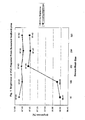
- FIG. 1 is a graphical representation showing the effect screen size has on the brightness of both filler grade and coating grade PCC.
- Table VI demonstrates the effect of various magnet retention times on 100 mesh screened MOL used to make filler grade and coating grade PCC.
- FIG. 2 is a graphical representation showing the effect of magnet residence time on filler grade PCC and coating grade PCC prepared from magnetically separated, -100 mesh MOL.
- Table V Physical Properties of PCC Prepared From Screened Bedford Lime Sample ID Sample Desc.
- the present invention is an economic alternative to securing high quality lime sources.
- the inventive process adds less than 2% to processing costs of coating grade PCC, while shipping costs for high quality a lime source can typically add 10%.
Landscapes
- Chemical & Material Sciences (AREA)
- Organic Chemistry (AREA)
- Life Sciences & Earth Sciences (AREA)
- Geology (AREA)
- Inorganic Chemistry (AREA)
- Compounds Of Alkaline-Earth Elements, Aluminum Or Rare-Earth Metals (AREA)
- Pigments, Carbon Blacks, Or Wood Stains (AREA)
- Paints Or Removers (AREA)
- Coloring Foods And Improving Nutritive Qualities (AREA)
- Hard Magnetic Materials (AREA)
Applications Claiming Priority (2)
| Application Number | Priority Date | Filing Date | Title |
|---|---|---|---|
| US09/351,473 US6143065A (en) | 1999-07-12 | 1999-07-12 | Precipitated calcium carbonate product having improved brightness and method of preparing the same |
| EP00947285A EP1114105B1 (de) | 1999-07-12 | 2000-07-11 | Produkte auf der basis von gefälltem kalziumkarbonat mit verbessertem glanz und verfahren zur herstellung derselben |
Related Parent Applications (1)
| Application Number | Title | Priority Date | Filing Date |
|---|---|---|---|
| EP00947285A Division EP1114105B1 (de) | 1999-07-12 | 2000-07-11 | Produkte auf der basis von gefälltem kalziumkarbonat mit verbessertem glanz und verfahren zur herstellung derselben |
Publications (2)
| Publication Number | Publication Date |
|---|---|
| EP2025721A2 true EP2025721A2 (de) | 2009-02-18 |
| EP2025721A3 EP2025721A3 (de) | 2009-03-11 |
Family
ID=23381080
Family Applications (2)
| Application Number | Title | Priority Date | Filing Date |
|---|---|---|---|
| EP00947285A Expired - Lifetime EP1114105B1 (de) | 1999-07-12 | 2000-07-11 | Produkte auf der basis von gefälltem kalziumkarbonat mit verbessertem glanz und verfahren zur herstellung derselben |
| EP08015376A Withdrawn EP2025721A3 (de) | 1999-07-12 | 2000-07-11 | Fällungscalciumkarbonatprodukt mit verbesserter Helligkeit und Verfahren zu seiner Herstellung |
Family Applications Before (1)
| Application Number | Title | Priority Date | Filing Date |
|---|---|---|---|
| EP00947285A Expired - Lifetime EP1114105B1 (de) | 1999-07-12 | 2000-07-11 | Produkte auf der basis von gefälltem kalziumkarbonat mit verbessertem glanz und verfahren zur herstellung derselben |
Country Status (11)
| Country | Link |
|---|---|
| US (1) | US6143065A (de) |
| EP (2) | EP1114105B1 (de) |
| AR (2) | AR025202A1 (de) |
| AT (1) | ATE419310T1 (de) |
| BR (1) | BR0006911B1 (de) |
| CA (1) | CA2343328C (de) |
| DE (1) | DE60041239D1 (de) |
| DK (1) | DK1114105T3 (de) |
| ES (1) | ES2320623T3 (de) |
| PT (1) | PT1114105E (de) |
| WO (1) | WO2001004218A1 (de) |
Families Citing this family (33)
| Publication number | Priority date | Publication date | Assignee | Title |
|---|---|---|---|---|
| US6402824B1 (en) * | 2000-05-26 | 2002-06-11 | J. M. Huber Corporation | Processes for preparing precipitated calcium carbonate compositions and the products thereof |
| US20040109811A1 (en) * | 2001-02-13 | 2004-06-10 | Mortimer Mark Daniel | Process for reductive bleaching of alkaline earth metal carbonates |
| FI116573B (fi) * | 2001-11-28 | 2005-12-30 | M Real Oyj | Täyteaine ohuiden pohjapaperien valmistukseen ja menetelmä pohjapaperin valmistamiseksi |
| US7105139B2 (en) * | 2002-04-25 | 2006-09-12 | Imerys Pigments, Inc. | Stabilization of the viscosity of formamidine sulfinic acid bleached calcium carbonate slurries |
| KR100484403B1 (ko) * | 2002-06-11 | 2005-04-20 | 이대생 | 습식분쇄 및 분급에 의한 탄산칼슘의 제조 방법 |
| GB0221632D0 (en) * | 2002-09-17 | 2002-10-30 | Imerys Minerals Ltd | Grinding method |
| US7172651B2 (en) * | 2003-06-17 | 2007-02-06 | J.M. Huber Corporation | Pigment for use in inkjet recording medium coatings and methods |
| US20050089466A1 (en) * | 2003-10-27 | 2005-04-28 | Degenova Mark G. | Methods and apparatus for producing precipitated calcium carbonate |
| EP1712597A1 (de) * | 2005-04-11 | 2006-10-18 | Omya Development AG | Verfahren zur Herstellung von Gefälltem Calcium Carbonat, insbesondere zur Verwendung als Beschichtung für Tintenstrahldruckerpapier und das gefällte Calcium Carbonate |
| US8033398B2 (en) * | 2005-07-06 | 2011-10-11 | Cytec Technology Corp. | Process and magnetic reagent for the removal of impurities from minerals |
| EP1764345A1 (de) | 2005-09-16 | 2007-03-21 | Omya Development AG | Verfahren zur Herstellung von feinem Calciumcarbonatmaterial aus co-gemahlenem GCC und PCC, erzeugte Calciumcarbonatmaterialien und deren Anwendungen |
| EP1764347A1 (de) | 2005-09-16 | 2007-03-21 | Omya Development Ag | Verfahren zur Herstellung von Calciumcarbonatmaterial mit bestimmtem Steilheitsfaktor aus co-gemahlenem GCC und PCC, erzeugte Calciumcarbonatmaterialien und deren Verwendung |
| US7468101B2 (en) * | 2006-08-17 | 2008-12-23 | Specialty Minerals (Michigan) Inc. | UV varnish gloss performance using novel pigment and process for making same |
| US20080053337A1 (en) * | 2006-09-01 | 2008-03-06 | Joseph Andrew Sohara | Precipitated calcium carbonate from kraft pulp lime mud for use in filled and coated paper |
| WO2008085626A1 (en) * | 2007-01-05 | 2008-07-17 | Cytec Technology Corp. | Process for the removal of impurities from carbonate minerals |
| EP2144851B1 (de) * | 2007-04-20 | 2016-04-13 | Omya International AG | Verfahren zur herstellung von pcc |
| DK2070991T3 (da) * | 2007-12-12 | 2010-12-20 | Omya Development Ag | Fremgangsmåde til frembringelse af overflademodificeret, udfældet calciumcarbonat |
| TW201138843A (en) | 2009-12-18 | 2011-11-16 | Colgate Palmolive Co | Biguanide preservation of precipitated calcium carbonate |
| PT2402167E (pt) | 2010-07-02 | 2013-12-11 | Omya Int Ag | Papel para gravação a jato de tinta |
| ES2540248T3 (es) * | 2010-10-26 | 2015-07-09 | Omya Development Ag | Producción de carbonato de calcio precipitado de alta pureza |
| US20120219484A1 (en) * | 2011-02-25 | 2012-08-30 | Clark Tyler A | Method and apparatus for sequestering carbon from atmospheric air using hydroxide compound |
| TWI551546B (zh) * | 2011-05-16 | 2016-10-01 | 歐米亞國際公司 | 具有改善之亮度的自紙漿研磨廢料沈澱的碳酸鈣,其製造方法及其應用 |
| CN102912672B (zh) * | 2011-08-01 | 2016-05-11 | 池州学院 | 一种高档纸页用高固含量流体碳酸钙的制备方法 |
| KR101600409B1 (ko) * | 2011-12-21 | 2016-03-21 | 코렉스 머티리얼즈 인코포레이티드 | 연속적 칼슘 추출 및 pcc 제조를 위한 회수 방법 |
| SI2626388T1 (sl) * | 2012-02-09 | 2016-08-31 | Omya International Ag | Sestavek in metoda za nadzor omočljivosti površin |
| US9410065B2 (en) * | 2013-01-29 | 2016-08-09 | Halliburton Energy Services, Inc. | Precipitated particles and wellbore fluids and methods relating thereto |
| US20140209393A1 (en) * | 2013-01-29 | 2014-07-31 | Halliburton Energy Services, Inc. | Precipitated Particles and Wellbore Fluids and Methods Relating Thereto |
| US9322231B2 (en) * | 2013-01-29 | 2016-04-26 | Halliburton Energy Services, Inc. | Wellbore fluids comprising mineral particles and methods relating thereto |
| JP6474137B2 (ja) * | 2014-02-28 | 2019-02-27 | 丸尾カルシウム株式会社 | 樹脂用炭酸カルシウム填料及び該填料を含む樹脂組成物 |
| FR3037801B1 (fr) * | 2015-06-23 | 2017-08-11 | Jd Invest | Materiau semi-synthetique pulverulent, obtenu par modification de la composition d'un biomateriau naturel marin, son procede de fabrication, ses applications |
| US10549232B1 (en) * | 2019-01-31 | 2020-02-04 | The Florida International University Board Of Trustees | Methods for carbon dioxide capture |
| CN110697753A (zh) * | 2019-10-23 | 2020-01-17 | 王亚双 | 碱回收白泥制备高浓度碳酸钙浆料及再利用的方法 |
| CN115806303A (zh) * | 2021-09-13 | 2023-03-17 | 中国科学院过程工程研究所 | 一种利用大理石废渣制备超细重质碳酸钙联产活性氧化钙的方法 |
Citations (1)
| Publication number | Priority date | Publication date | Assignee | Title |
|---|---|---|---|---|
| US3983309A (en) | 1975-05-16 | 1976-09-28 | Johns-Manville Corporation | Primary electrode arrangement for high temperature melting furnace |
Family Cites Families (14)
| Publication number | Priority date | Publication date | Assignee | Title |
|---|---|---|---|---|
| US3961971A (en) * | 1973-05-21 | 1976-06-08 | J. M. Huber Corporation | Method for improving brightness of kaolinite clays including iron pyrites |
| US3920800A (en) * | 1973-10-12 | 1975-11-18 | Cyprus Mines Corp | Production of purified calcium carbonate |
| US3984309A (en) * | 1974-09-27 | 1976-10-05 | Allen James W | Magnetic separator |
| US3980240A (en) * | 1975-04-11 | 1976-09-14 | Anglo-American Clays Corporation | Brightening of natural calcitic ores |
| US3990642A (en) * | 1975-04-11 | 1976-11-09 | Anglo-American Clays Corporation | Brightening of natural dolomitic ores |
| US4293097A (en) * | 1978-01-10 | 1981-10-06 | Anglo-American Clays Corporation | Method for brightening natural calcitic ores |
| US4165840A (en) * | 1978-01-10 | 1979-08-28 | Anglo-American Clays Corporation | Method for brightening natural calcitic ores |
| SU1416441A1 (ru) * | 1987-01-28 | 1988-08-15 | Предприятие П/Я А-3732 | Способ получени карбоната кальци |
| GB8711094D0 (en) * | 1987-05-11 | 1987-06-17 | Ecc Int Ltd | Natural calcium carbonate ores |
| DE4128570A1 (de) * | 1991-08-28 | 1993-03-04 | Pluss Stauffer Ag | Carbonat-haltige mineralische fuellstoffe und pigmente |
| US5846500A (en) * | 1995-10-10 | 1998-12-08 | James W. Bunger And Associates, Inc. | Process for purifying highly impure calcium hydroxide and for producing high-value precipitated calcium carbonate and other calcium products |
| JP3995745B2 (ja) * | 1996-12-27 | 2007-10-24 | 奥多摩工業株式会社 | 軽質炭酸カルシウム・重質炭酸カルシウム混合水性スラリーの製造方法 |
| CA2203210C (en) * | 1997-04-21 | 2005-11-15 | Goldcorp Inc. | Manufacture of precipitated calcium carbonate |
| CA2364743A1 (en) * | 1999-03-02 | 2000-09-08 | Michael W. Ginn | A composition of matter comprising high brightness calcium carbonate pigments and processes for making same |
-
1999
- 1999-07-12 US US09/351,473 patent/US6143065A/en not_active Expired - Fee Related
-
2000
- 2000-07-11 DE DE60041239T patent/DE60041239D1/de not_active Expired - Lifetime
- 2000-07-11 CA CA002343328A patent/CA2343328C/en not_active Expired - Lifetime
- 2000-07-11 PT PT00947285T patent/PT1114105E/pt unknown
- 2000-07-11 EP EP00947285A patent/EP1114105B1/de not_active Expired - Lifetime
- 2000-07-11 DK DK00947285T patent/DK1114105T3/da active
- 2000-07-11 EP EP08015376A patent/EP2025721A3/de not_active Withdrawn
- 2000-07-11 BR BRPI0006911-6A patent/BR0006911B1/pt not_active IP Right Cessation
- 2000-07-11 ES ES00947285T patent/ES2320623T3/es not_active Expired - Lifetime
- 2000-07-11 WO PCT/US2000/019022 patent/WO2001004218A1/en not_active Ceased
- 2000-07-11 AT AT00947285T patent/ATE419310T1/de active
- 2000-07-12 AR ARP000103583A patent/AR025202A1/es active IP Right Grant
-
2007
- 2007-10-04 AR ARP070104418A patent/AR063146A2/es not_active Application Discontinuation
Patent Citations (1)
| Publication number | Priority date | Publication date | Assignee | Title |
|---|---|---|---|---|
| US3983309A (en) | 1975-05-16 | 1976-09-28 | Johns-Manville Corporation | Primary electrode arrangement for high temperature melting furnace |
Also Published As
| Publication number | Publication date |
|---|---|
| ES2320623T3 (es) | 2009-05-27 |
| EP1114105B1 (de) | 2008-12-31 |
| WO2001004218A1 (en) | 2001-01-18 |
| BR0006911B1 (pt) | 2011-08-23 |
| CA2343328A1 (en) | 2001-01-18 |
| US6143065A (en) | 2000-11-07 |
| AR063146A2 (es) | 2008-12-30 |
| DK1114105T3 (da) | 2009-03-09 |
| AR025202A1 (es) | 2002-11-13 |
| PT1114105E (pt) | 2009-02-27 |
| BR0006911A (pt) | 2001-06-12 |
| DE60041239D1 (de) | 2009-02-12 |
| EP1114105A4 (de) | 2002-10-09 |
| EP1114105A1 (de) | 2001-07-11 |
| EP2025721A3 (de) | 2009-03-11 |
| CA2343328C (en) | 2007-04-10 |
| ATE419310T1 (de) | 2009-01-15 |
Similar Documents
| Publication | Publication Date | Title |
|---|---|---|
| EP1114105B1 (de) | Produkte auf der basis von gefälltem kalziumkarbonat mit verbessertem glanz und verfahren zur herstellung derselben | |
| CN103534207B (zh) | 具有改善的白度的来自纸浆研磨废料的沉淀碳酸钙,其制造方法及其用途 | |
| US5112782A (en) | Cationically processed calcined kaolin clay | |
| AU704726B2 (en) | Method for separating mixture of finely divided minerals | |
| AU684646B2 (en) | Method for separating mixture of finely divided minerals | |
| US5454865A (en) | Method for preparing refined kaolin in clay products | |
| FI105545B (fi) | Saostettu kalsiumkarbonaatti | |
| US6514333B1 (en) | Preparation and use of high brightness kaolin pigments | |
| US5061461A (en) | Cationic processing of kaolin ores | |
| US5584394A (en) | Colored titaniferous coating pigment obtained as a flocculated by-product in a kaolin purification process | |
| US3990642A (en) | Brightening of natural dolomitic ores | |
| EP3031778B1 (de) | Verbessertes Verfahren zur Herstellung von gefälltem Calciumcarbonat | |
| EP0396419B1 (de) | Kationische Behandlung von Erzen | |
| EP3443038B1 (de) | Verfahren zur herstellung von wasserhaltigem kaolinton und daraus hergestellte produkte | |
| TWI551546B (zh) | 具有改善之亮度的自紙漿研磨廢料沈澱的碳酸鈣,其製造方法及其應用 | |
| CA2013623A1 (en) | Cationically process calcined kaolin clay |
Legal Events
| Date | Code | Title | Description |
|---|---|---|---|
| PUAI | Public reference made under article 153(3) epc to a published international application that has entered the european phase |
Free format text: ORIGINAL CODE: 0009012 |
|
| PUAL | Search report despatched |
Free format text: ORIGINAL CODE: 0009013 |
|
| AC | Divisional application: reference to earlier application |
Ref document number: 1114105 Country of ref document: EP Kind code of ref document: P |
|
| AK | Designated contracting states |
Kind code of ref document: A2 Designated state(s): AT BE CH CY DE DK ES FI FR GB GR IE IT LI LU MC NL PT SE |
|
| AK | Designated contracting states |
Kind code of ref document: A3 Designated state(s): AT BE CH CY DE DK ES FI FR GB GR IE IT LI LU MC NL PT SE |
|
| RIN1 | Information on inventor provided before grant (corrected) |
Inventor name: LUNDEN, KLAUS A. Inventor name: FREEMAN, GARY MICHAEL Inventor name: HARRISON, JOHN MESCALIN, MACGEOGHEGAN |
|
| 17P | Request for examination filed |
Effective date: 20090911 |
|
| 17Q | First examination report despatched |
Effective date: 20091014 |
|
| AKX | Designation fees paid |
Designated state(s): AT BE CH CY DE DK ES FI FR GB GR IE IT LI LU MC NL PT SE |
|
| RAP1 | Party data changed (applicant data changed or rights of an application transferred) |
Owner name: OMYA DEVELOPMENT AG |
|
| RAP1 | Party data changed (applicant data changed or rights of an application transferred) |
Owner name: OMYA INTERNATIONAL AG |
|
| STAA | Information on the status of an ep patent application or granted ep patent |
Free format text: STATUS: THE APPLICATION IS DEEMED TO BE WITHDRAWN |
|
| 18D | Application deemed to be withdrawn |
Effective date: 20150429 |