EP2026148A2 - Procédé de changement de programmation sécurisée de paramètres cliniquement pertinents dans le cadre de la programmation à distance d'un implant électronique - Google Patents
Procédé de changement de programmation sécurisée de paramètres cliniquement pertinents dans le cadre de la programmation à distance d'un implant électronique Download PDFInfo
- Publication number
- EP2026148A2 EP2026148A2 EP08075268A EP08075268A EP2026148A2 EP 2026148 A2 EP2026148 A2 EP 2026148A2 EP 08075268 A EP08075268 A EP 08075268A EP 08075268 A EP08075268 A EP 08075268A EP 2026148 A2 EP2026148 A2 EP 2026148A2
- Authority
- EP
- European Patent Office
- Prior art keywords
- parameter values
- personal device
- programming
- category
- programmable
- Prior art date
- Legal status (The legal status is an assumption and is not a legal conclusion. Google has not performed a legal analysis and makes no representation as to the accuracy of the status listed.)
- Withdrawn
Links
Images


Classifications
-
- A—HUMAN NECESSITIES
- A61—MEDICAL OR VETERINARY SCIENCE; HYGIENE
- A61N—ELECTROTHERAPY; MAGNETOTHERAPY; RADIATION THERAPY; ULTRASOUND THERAPY
- A61N1/00—Electrotherapy; Circuits therefor
- A61N1/18—Applying electric currents by contact electrodes
- A61N1/32—Applying electric currents by contact electrodes alternating or intermittent currents
- A61N1/36—Applying electric currents by contact electrodes alternating or intermittent currents for stimulation
- A61N1/372—Arrangements in connection with the implantation of stimulators
- A61N1/37211—Means for communicating with stimulators
- A61N1/37252—Details of algorithms or data aspects of communication system, e.g. handshaking, transmitting specific data or segmenting data
- A61N1/37264—Changing the program; Upgrading firmware
-
- G—PHYSICS
- G16—INFORMATION AND COMMUNICATION TECHNOLOGY [ICT] SPECIALLY ADAPTED FOR SPECIFIC APPLICATION FIELDS
- G16H—HEALTHCARE INFORMATICS, i.e. INFORMATION AND COMMUNICATION TECHNOLOGY [ICT] SPECIALLY ADAPTED FOR THE HANDLING OR PROCESSING OF MEDICAL OR HEALTHCARE DATA
- G16H40/00—ICT specially adapted for the management or administration of healthcare resources or facilities; ICT specially adapted for the management or operation of medical equipment or devices
- G16H40/40—ICT specially adapted for the management or administration of healthcare resources or facilities; ICT specially adapted for the management or operation of medical equipment or devices for the management of medical equipment or devices, e.g. scheduling maintenance or upgrades
-
- G—PHYSICS
- G16—INFORMATION AND COMMUNICATION TECHNOLOGY [ICT] SPECIALLY ADAPTED FOR SPECIFIC APPLICATION FIELDS
- G16H—HEALTHCARE INFORMATICS, i.e. INFORMATION AND COMMUNICATION TECHNOLOGY [ICT] SPECIALLY ADAPTED FOR THE HANDLING OR PROCESSING OF MEDICAL OR HEALTHCARE DATA
- G16H40/00—ICT specially adapted for the management or administration of healthcare resources or facilities; ICT specially adapted for the management or operation of medical equipment or devices
- G16H40/60—ICT specially adapted for the management or administration of healthcare resources or facilities; ICT specially adapted for the management or operation of medical equipment or devices for the operation of medical equipment or devices
- G16H40/67—ICT specially adapted for the management or administration of healthcare resources or facilities; ICT specially adapted for the management or operation of medical equipment or devices for the operation of medical equipment or devices for remote operation
-
- G—PHYSICS
- G16—INFORMATION AND COMMUNICATION TECHNOLOGY [ICT] SPECIALLY ADAPTED FOR SPECIFIC APPLICATION FIELDS
- G16H—HEALTHCARE INFORMATICS, i.e. INFORMATION AND COMMUNICATION TECHNOLOGY [ICT] SPECIALLY ADAPTED FOR THE HANDLING OR PROCESSING OF MEDICAL OR HEALTHCARE DATA
- G16H50/00—ICT specially adapted for medical diagnosis, medical simulation or medical data mining; ICT specially adapted for detecting, monitoring or modelling epidemics or pandemics
- G16H50/20—ICT specially adapted for medical diagnosis, medical simulation or medical data mining; ICT specially adapted for detecting, monitoring or modelling epidemics or pandemics for computer-aided diagnosis, e.g. based on medical expert systems
Definitions
- the invention relates to a remotely programmable personal device, in particular a programmable implantable medical device, such as a pacemaker, a defibrillator, a cardioverter or the like. Moreover, the invention relates to an arrangement for the remote programming of such a personal medical device and a method for the remote programming of a programmable personal device.
- a remotely programmable personal device in particular a programmable implantable medical device, such as a pacemaker, a defibrillator, a cardioverter or the like.
- implants Some functions of such implants are software or firmware controlled and therefore programmable.
- the implants have a programmable controller for controlling these functions.
- a programming or reprogramming of the implant can in principle also be done remotely, for example via the central service center.
- a data connection between the service center and a patient device can be established.
- the patient device is usually located near the patient and serves as a relay station between the implant and the service center.
- the patient device has two different, bidirectional data communication interfaces, on the one hand to enable bi-directional data communication with the implant and, on the other hand, bidirectional data communication with the service center.
- the data communication interface for the connection between the patient device and the service center can be designed for a wireless or wired connection, for example via a mobile telephone network or via a landline network.
- a programmable personal device of the aforementioned type which has two data communication interfaces for a wireless data transmission of data to and from the programmable personal device.
- programming requests can be sent to the personal device via both data communication interfaces.
- Programming jobs are data packets containing values for control parameters that determine the operation of a programmable controller of the personal device and thus the operational behavior of the personal device itself.
- the first data communication interface serves the Nahprogrammtechnik the personal device from close proximity, for example, with a conventional programming device. If the personal device is an implant, programming happens of the personal device via the first data communication interface in the face of the patient.
- the second data communication interface is used for remote programming of the personal device.
- the first and the second data communication interface differ, for example, with regard to the transmission technology required for the data transmission, for example modulation or corresponding electromagnetic signals, or through the data format.
- An already mentioned programmable controller of the programmable device is designed to perform a control of functions of the personal device based on control parameters.
- the control parameters can assume different parameter values, which lead to different functions.
- the strength of, for example, a ventricular pacing pulse - expressed in volts or milliamps - is a control parameter that can take on various parameter values.
- a suitable parameter value for the strength of a ventricular pacing pulse is usually determined by pacemaker test by the physician or the device itself.
- Other parameter values are given to the personal device by programming without prior testing.
- the programmable controller is connected to both the first and second data communication interfaces and can receive, via these programming jobs, the parameter values for the personal control parameters.
- the personal device has a memory connected to the programmable controller.
- the programmable controller and the memory are configured in conjunction with one another such that at least some of the externally programmable control parameters of the personal device can be stored in addition to a respective current parameter value at least one category designation.
- the category identifier identifies the affiliation of the corresponding control parameter to at least one of at least two categories.
- a category of control parameters is provided whose parameter values are not initially set for a short time before they are then permanently confirmed, but the from the outset and without having to wait for the patient to respond to the change in control parameters.
- the second category identifies those control parameters that are not to be permanently programmed immediately, but are first tested for a short time to check the effect of the reprogramming before these control parameters are either subsequently reset or permanently reprogrammed.
- the first category of control parameters includes those control parameters that can be reprogrammed even during follow-up with direct patient contact without control or adjustment of the new parameter settings being possible or usual during follow-up.
- the second category of control parameters summarizes all the control parameters that need to be checked by the physician after reprogramming within a patient safety aftercare, or are first tested using a temporary program.
- the respective control parameters associated with stored category identifiers determine the behavior of the programmable controller upon receipt of a programming job via the second data communications interface such that after executing a programming job containing only allowable parameter values for control parameters of a first category, these parameters are permanently stored as current parameter values in the memory, so that henceforth the function of the programmable controller is determined until receiving another programming job by these parameter values; and after executing a programming job containing only allowable parameter values for control parameters of the second category, these parameter values are stored as current parameter values in the memory for a given, limited amount of time such that the function of the programmable controller and thus of the personal device until the end of this predetermined period of time is determined by these parameters and then again determined by the originally set parameter values.
- the personal device is designed by appropriate interaction of programmable controller and memory to receive programming jobs that contain both allowable parameters for control parameters of a first and a second category.
- the programmable controller is designed for this purpose in such a way that all parameters are stored as current parameter values in the memory for a predetermined, limited period of time, so that the function of the programmable controller is determined by these parameter values until the end of the predetermined period of time and subsequently again through the previously set parameter values.
- the control parameters provided in principle for permanent reprogramming are initially only temporarily reprogrammed if they are reprogrammed together with control parameters of the second category. This ensures that all simultaneously reprogrammed control parameters are consistent with each other. Because it is possible that the specific choice of the first control parameter is tuned to the simultaneously reprogrammed second control parameters.
- the programmable controller could be arranged to permanently store as parameter values of the control parameters of the first category, after receiving a programming job containing both parameter values for first-category and second-category control parameters, as current parameter values in the memory Parameter values of the control parameters of the second category are initially stored in the memory as current parameter values only for a predetermined, limited period of time.
- the personal device offers the possibility of being in a certain operating mode after receiving such a programming job.
- This may be, for example, a per se known VVI mode, an AAI mode or a DDD mode or the like in a personal device in the form of a pacemaker, cardioverter or defibrillator.
- the operating state (operating mode) is in each case selected such that it allows safe, in particular patient-safe operation of the personal device with the corresponding parameter values.
- the programmable controller is designed, after the predetermined period of time has passed - that is to say after the control parameters in particular of the second category have been tested - to receive a data packet with physiological or operating data acquired during the predetermined period of time via the first or the second data communication interface to ship.
- a data packet can then be received, for example, from a service center.
- the data packet may, for example, contain data representing an intracardiac electrocardiogram which was recorded during the predetermined period of time, ie during the temporary reprogramming of the personal device, and which can then be analyzed remotely by a physician.
- the programmable controller is furthermore designed to receive and execute a programming task after the predetermined time has elapsed, which contains a control command which also permanently stores the parameter values for the control parameters second category in the memory causes.
- a physician who, for example, has evaluated an intracardiac electrocardiogram received by the personal device and determined that the selected parameter values of the control parameters, in particular the second category, are suitable, permanently activate these parameter values with a simple programming task that contains a corresponding control command.
- the personal device is preferably designed such that the values which determine the behavior of the personal device after receiving a programming job, in particular the length of the predetermined time period for the temporary reprogramming of the personal device and the category identifications, are likewise programmable from outside the personal device, namely specifically about the first data communication interface for programming from nearby.
- the predetermined period of time may also be part of a respective programming order
- the parameter values for control parameters of the second category contains. Then the duration of the respective activation of a parameter value of the second category can be determined with the same programming job, which also contains the corresponding parameter value to be tested.
- the personal device is preferably an active medical implant such as a pacemaker or defibrillator / cardioverter.
- the second data communication interface for the remote programming of the personal device allows wireless communication with a range in the range up to 5 m and is designed according to the Medical Implant Communications Service Standard (MICS).
- MIMS Medical Implant Communications Service Standard
- a control parameter of the first category is preferably the sensitivity of a ventricular input amplifier, while a preferred control parameter of the second category is a VT zone boundary.
- VT refers to a heart rate at which the personal device begins to treat ventricular tachycardia (VT).
- the object mentioned at the outset is also achieved by an arrangement for remote programming of a programmable personal device that, in addition to a personal device of the type described above, also has at least one service center for programming the personal device from a distance.
- the service center has at least one data communication interface for at least indirectly connecting the service center to the personal device.
- the service center has a memory and a programming unit.
- the programming unit is adapted to generate, in combination with the memory, a user interface for remote programming of the personal device configured to allow the compilation of a programming job for the personal device.
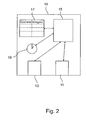
- the remote-programmable control parameters and their affiliation with one of the two categories are preferably displayed on the user interface.
- This user interface is accessible for example via a computer connected to the service center or also via a programming device of the conventional type connected to the service center.
- the service center is designed to receive data packets sent by the personal device with physiological data and / or operating data can.
- the programming unit is preferably designed such that it stores this data in the memory of the service center.
- the programming unit of the service center is designed to generate a user interface on which the physiological data or operating data stored in the memory of the service center are displayed.
- the programming unit is particularly preferably designed to generate a user interface, which allows such a user task Confirm programming order.
- the programming unit is designed to then generate a corresponding programming job and then send the personal device.
- the preferred version of the service center makes it easy to put together programming jobs, check temporary programming jobs based on the data received from the personal device, and finally confirm (or not) a temporary programming job to become permanent.
- a further contribution to achieving the above-mentioned goal is a method for remote programming of a personal device of the type described above with a previously described arrangement.
- This method comprises at least the steps of sending a programming job from the service center to the personal device and then, as a further method step, either permanently reprogramming the personal device if the programming job contains only parameter values for control parameters of the first category, or temporarily reprogramming the personal device for a given one Time when the programming job contains parameter values for control parameters of the second category, and then returning to the initial values of the temporarily reprogrammed parameter values.
- FIG. 1 illustrated arrangement for remote programming of a personal device 10 includes in addition to the personal device 10 in the form of a pacemaker, a patient device 30, a service center 40 and a programmer 20.
- the implant 10 can be directly programmed via a very short-range, wireless data connection.
- the implant 10 can also be programmed remotely.
- the patient device 20 may also be connected to the service center 40 in order, for example, to display a user interface for remote programming of the implant 10 generated with the aid of the service center 40.
- the patient device In order to be able to exchange data bidirectionally both directly with the programming device 20 and also remotely with the service center 40, the patient device has two data communication interfaces 11 and 13, from which a first data communication interface 11 permits short-range data communication directly with the programming device 20 ,
- the second data communication interface 13 of the implant 10 serves to establish a wireless data connection between the implant 10 and the patient device 30. Even this data connection is not particularly long range. Usually, the patient device 30 will always be in the vicinity of the implant 10 and then serves as a station for further data transmission from and to the service center 40.
- Both data communication interface 11 and 13 are connected to a programmable controller 15 of the implant, which in turn is connected to a memory 17.
- the patient device 30 likewise has a first data communication interface 31 for a wireless data exchange with the implant 10 via its second data communication interface 13.
- the patient device 30 also has a second data communication interface 33, which is designed to establish a data connection with the service center 40.
- the first and the second data communication interface 31 and 33 of the patient device 30 are connected to one another at least indirectly via a control unit 35 of the patient device 30.
- the patient device 30 has its own memory 37 in which data - eg programming jobs 60 - can be cached if they were received, for example, by the service center 40 and could not be transferred to the implant 10 on.
- the service center 40 also has a first data communication interface 43, which serves for data communication with the patient 30.
- the data connection between the second data communication interface 33 of the patient device 30 and the first data communication interface 43 of the service center 40 can be wired, for example via the telephone landline.
- the service center 40 also has a control unit 45 and a memory 47 connected to it.
- the control unit 45 and the memories 47 represent a programming unit for remote programming of the implant 10.
- the control unit 45 and the memory 47 of the Service Centers 40 are adapted to generate a user interface for remote programming of the implant 10 that allows a user to assemble a programming job for the implant.
- the service center 40 may be connected, for example via the Internet, to a computer of a physician, on whose screen surface the user interface for remote programming of the implant is then displayed.
- the memory of the implant 17 in combination with the controller 15 is organized such that, in addition to the values of control parameters currently required for the control of the implant, it also stores category identifiers associated with these control parameters.
- the parameter values of the control parameters themselves stored in the memory 17 thereby determine the mode of operation of the controller 15 and thus of the implant 10.
- the category identifiers determine the behavior of the implant in a remote programming in which the implant 10 receives a programming job 60 via the second data communication interface 13.
- the category identifiers stored in the memory 17 can only be changed in the case of a direct data connection between the implant 10 'and the programming device 20, as shown in FIG Fig. 1 shown at the bottom right. By remote programming, the category labels can not be changed.
- the implant 10 also has a timer 19 connected to the programmable controller 15 that allows it to change control parameter values for a time period specified by the timer in the sense of a received programming job and after the predetermined period of time has elapsed to return to prevailing parameter values.
- a programming task 60 which contains only those parameter values which belong to control parameters of a first category, which is referred to below as class 1, these parameter values are immediately stored in the corresponding location in the memory 17 permanently stored, so that they determine from then on the functioning of the implant 10. Whether a respective parameter value counts for a control parameter of the first or the second category results for the implant 10 from the corresponding category identifier which is stored in the memory 17 for a respective control parameter.
- a programming job includes parameter values of such control parameters that count toward a second category designated Class 2, at least these parameter values are activated only for a limited, predetermined amount of time determined by the timer 19 in the sense that they are stored as those parameter values which determine the function of the implant for the duration of the predetermined period of time.
- FIGS. 3 to 5 Concrete examples are in FIGS. 3 to 5 shown.
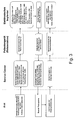
- FIG. 3 shows an example in which a programming job contains only parameters for control parameters of the second category (class 2). Concretely, this is a parameter value for the "ventricular sensitivity" control parameter that defines the sensitivity of a pacemaker ventricular input amplifier.
- the sensitivity (threshold) before programming is 0.8 mV.
- the programming task is designed to increase the sensitivity so that the response threshold is 0.6 mV.
- the clinician Using a service interface generated by the service center, the clinician enters the desired ventricular sensitivity and the service center generates a programming job that contains the new value for ventricular sensitivity and, in addition, the duration of the specified time, namely 10 seconds.
- the programming task includes control commands that cause the implant to record an intracardiac electrocardiogram (IEGM) during the 10 seconds, as well as mark signals.
- IEGM intracardiac electrocardiogram
- a marker signal indicates with temporal reference to the intracardiac electrocardiogram when, for example, a ventricular contraction has been detected, that is, when the signal applied to the input of the ventricular input amplifier has exceeded the threshold of 0.6 mV.
- the increased sensitivity of the ventricular input amplifier may cause the ventricular sense channel to respond not only to original ventricular events, ventricular contractions presented by an R-wave in the intracardiac electrocardiogram, but also, for example, to T-waves. It then happens that the increase in ventricular sensitivity causes the implant to detect an apparent heart rate, which is detected as ventricular tachycardia (VT) or ventricular fibrillation (VF). To avoid this, the detection of such tachycardia is turned off by the programming job.
- VT ventricular tachycardia
- VF ventricular fibrillation
- the service center sends the corresponding programming job to the implant via the patient device.
- the parameter values and control commands received with the programming job are activated for the specified duration (10 seconds).
- the implant detects ventricular events at a response threshold of 0.6 mV and simultaneously generates an intracardiac electrocardiogram (IEGM) with mark signals indicating when the threshold of 0.6 mV has been exceeded.
- IEGM intracardiac electrocardiogram
- the implant sends the acquired intracardiac electrocardiogram (IEGM) and marker signals in the form of a data packet to the service center via the patient device.
- the implant returns to the parameter values and control commands that preceded the temporary reprogramming.
- the service center with its control unit and its memory, is designed to generate a user interface from the data packet received by the implant, on which the received intracardiac electrocardiogram and the marker signals for the physician are displayed. After considering this data, the physician can decide whether to make the reduction of the response wave for the ventricular sensitivity permanent or whether it should remain that the implant continues to work on the basis of the originally existing parameters.
- the physician decides to make changes to the threshold permanently, he can notify the service center through a talking control on the user interface.
- the service center then generates a programming job with a control command to enable reprogramming. This programming job is transmitted to the implant via the patient device.
- the implant is designed to permanently re-program the parameter value for the ventricular sensitivity in response to such a programming command. Only this parameter value is changed.
- the setting for the detection of ventricular tachycardia or ventricular fibrillation as well as the recording of an intracardiac electrocardiogram (IEGM) remain at their original value, that is, the detection of ventricular tachycardia or fibrillation is turned on and the recording of intracardiac electrocardiograms is turned off after the lapse of 10 seconds.
- IEGM intracardiac electrocardiogram
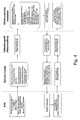
- FIG. 4 shows an embodiment in which, in addition to the previously described reprogramming of the ventricular sensitivity and a zone boundary for the detection of a first-order ventricular tachycardia to be changed. This should be increased from 160 beats per minute to 170 beats per minute.
- the VT1 zone boundary is a parameter of the first category (class 1) that can be fundamentally reprogrammed without the need for feedback to the physician, so that the reprogramming could immediately be permanently effective.
- the service center After entering the corresponding values via the user interface, the service center generates a corresponding programming job and sends it to the electronic implant via the patient device. In this, the reprogramming of the ventricular sensitivity is temporarily made. This parameter value is activated for 10 seconds and then reset to the original sensitivity. As in the previous example, the implant generates an intracardiac electrocardiogram and marker signals during the 10 seconds and then sends a corresponding data packet to the service center. The service center initiates the automatic presentation of this data in a user interface that allows the physician to review this data. As described above, the physician can then initiate the generation of a programming job by means of a corresponding input via the user interface, which has the effect that both stored changes in the parameter values, namely for the ventricular sensitivity and for the VT1 zone boundary, become permanently effective.
- the implant Upon receipt of this programming job, the implant sets these parameter values as the now permanently valid parameter values.
- FIG. 5 finally shows an embodiment of which from FIG. 4 is very similar.
- control parameter category 1 in this case VT-1 zone boundary
- a corresponding programming job to be generated by the service center therefore contains a control command which effects the permanent reprogramming of the ventricular sensitivity.
- the permanent reprogramming of the VT zone boundary has already been effected by the first, previously sent programming job.
Landscapes
- Health & Medical Sciences (AREA)
- Engineering & Computer Science (AREA)
- Biomedical Technology (AREA)
- Public Health (AREA)
- General Health & Medical Sciences (AREA)
- Medical Informatics (AREA)
- General Business, Economics & Management (AREA)
- Epidemiology (AREA)
- Primary Health Care (AREA)
- Business, Economics & Management (AREA)
- Nuclear Medicine, Radiotherapy & Molecular Imaging (AREA)
- Radiology & Medical Imaging (AREA)
- Life Sciences & Earth Sciences (AREA)
- Animal Behavior & Ethology (AREA)
- Veterinary Medicine (AREA)
- Pathology (AREA)
- Databases & Information Systems (AREA)
- Data Mining & Analysis (AREA)
- Electrotherapy Devices (AREA)
Applications Claiming Priority (1)
| Application Number | Priority Date | Filing Date | Title |
|---|---|---|---|
| DE102007037948A DE102007037948A1 (de) | 2007-08-11 | 2007-08-11 | Verfahren zur sicheren Umprogrammierung klinisch relevanter Parameter im Rahmen der Fernprogrammierung eines elektronischen Implantates |
Publications (2)
| Publication Number | Publication Date |
|---|---|
| EP2026148A2 true EP2026148A2 (fr) | 2009-02-18 |
| EP2026148A3 EP2026148A3 (fr) | 2010-06-30 |
Family
ID=39987484
Family Applications (1)
| Application Number | Title | Priority Date | Filing Date |
|---|---|---|---|
| EP08075268A Withdrawn EP2026148A3 (fr) | 2007-08-11 | 2008-03-31 | Procédé de changement de programmation sécurisée de paramètres cliniquement pertinents dans le cadre de la programmation à distance d'un implant électronique |
Country Status (3)
| Country | Link |
|---|---|
| US (1) | US8073542B2 (fr) |
| EP (1) | EP2026148A3 (fr) |
| DE (1) | DE102007037948A1 (fr) |
Families Citing this family (97)
| Publication number | Priority date | Publication date | Assignee | Title |
|---|---|---|---|---|
| US8301236B2 (en) * | 2009-05-22 | 2012-10-30 | Biomedical Systems Corporation | System and method for high resolution wireless full disclosure ECG episode monitoring and analysis |
| US9238143B2 (en) | 2011-05-10 | 2016-01-19 | Biotronik Se & Co. Kg | Implantable medical device with electrode fault detection |
| US9887574B2 (en) | 2013-03-15 | 2018-02-06 | Globus Medical, Inc. | Spinal cord stimulator system |
| US9872997B2 (en) | 2013-03-15 | 2018-01-23 | Globus Medical, Inc. | Spinal cord stimulator system |
| US9878170B2 (en) | 2013-03-15 | 2018-01-30 | Globus Medical, Inc. | Spinal cord stimulator system |
| US9440076B2 (en) | 2013-03-15 | 2016-09-13 | Globus Medical, Inc. | Spinal cord stimulator system |
| US20150196769A1 (en) | 2014-01-10 | 2015-07-16 | Cardiac Pacemakers, Inc. | Methods and systems for improved communication between medical devices |
| AU2015204701B2 (en) | 2014-01-10 | 2018-03-15 | Cardiac Pacemakers, Inc. | Systems and methods for detecting cardiac arrhythmias |
| US9694189B2 (en) | 2014-08-06 | 2017-07-04 | Cardiac Pacemakers, Inc. | Method and apparatus for communicating between medical devices |
| US9808631B2 (en) | 2014-08-06 | 2017-11-07 | Cardiac Pacemakers, Inc. | Communication between a plurality of medical devices using time delays between communication pulses to distinguish between symbols |
| US9757570B2 (en) | 2014-08-06 | 2017-09-12 | Cardiac Pacemakers, Inc. | Communications in a medical device system |
| US9526909B2 (en) | 2014-08-28 | 2016-12-27 | Cardiac Pacemakers, Inc. | Medical device with triggered blanking period |
| ES2713231T3 (es) | 2015-02-06 | 2019-05-20 | Cardiac Pacemakers Inc | Sistemas para el suministro seguro de una terapia de estimulación eléctrica |
| EP3827877B1 (fr) | 2015-02-06 | 2024-06-19 | Cardiac Pacemakers, Inc. | Systèmes de traitement d'arythmies cardiaques |
| WO2016130477A2 (fr) | 2015-02-09 | 2016-08-18 | Cardiac Pacemakers, Inc. | Dispositif médical implantable comportant une étiquette d'identification radio-opaque |
| EP3265172B1 (fr) | 2015-03-04 | 2018-12-19 | Cardiac Pacemakers, Inc. | Systèmes de traitement d'arythmies cardiaques |
| CN107427222B (zh) | 2015-03-18 | 2021-02-09 | 心脏起搏器股份公司 | 使用链路质量评估的医疗设备系统中的通信 |
| US10050700B2 (en) | 2015-03-18 | 2018-08-14 | Cardiac Pacemakers, Inc. | Communications in a medical device system with temporal optimization |
| US9853743B2 (en) | 2015-08-20 | 2017-12-26 | Cardiac Pacemakers, Inc. | Systems and methods for communication between medical devices |
| WO2017031347A1 (fr) | 2015-08-20 | 2017-02-23 | Cardiac Pacemakers, Inc. | Systèmes et procédés de communication entre des dispositifs médicaux |
| US9956414B2 (en) | 2015-08-27 | 2018-05-01 | Cardiac Pacemakers, Inc. | Temporal configuration of a motion sensor in an implantable medical device |
| US9968787B2 (en) | 2015-08-27 | 2018-05-15 | Cardiac Pacemakers, Inc. | Spatial configuration of a motion sensor in an implantable medical device |
| WO2017040115A1 (fr) | 2015-08-28 | 2017-03-09 | Cardiac Pacemakers, Inc. | Système de détection de tamponnade |
| US10226631B2 (en) | 2015-08-28 | 2019-03-12 | Cardiac Pacemakers, Inc. | Systems and methods for infarct detection |
| US10137305B2 (en) | 2015-08-28 | 2018-11-27 | Cardiac Pacemakers, Inc. | Systems and methods for behaviorally responsive signal detection and therapy delivery |
| WO2017044389A1 (fr) | 2015-09-11 | 2017-03-16 | Cardiac Pacemakers, Inc. | Détection et confirmation d'arythmie |
| US10065041B2 (en) | 2015-10-08 | 2018-09-04 | Cardiac Pacemakers, Inc. | Devices and methods for adjusting pacing rates in an implantable medical device |
| JP6608063B2 (ja) | 2015-12-17 | 2019-11-20 | カーディアック ペースメイカーズ, インコーポレイテッド | 植込み型医療装置 |
| US10905886B2 (en) | 2015-12-28 | 2021-02-02 | Cardiac Pacemakers, Inc. | Implantable medical device for deployment across the atrioventricular septum |
| CN108472489B (zh) * | 2016-01-08 | 2022-04-01 | 心脏起搏器股份公司 | 使生理数据的多个源同步 |
| WO2017127548A1 (fr) | 2016-01-19 | 2017-07-27 | Cardiac Pacemakers, Inc. | Dispositifs permettant de recharger sans fil une batterie rechargeable d'un dispositif médical implantable |
| WO2017136548A1 (fr) | 2016-02-04 | 2017-08-10 | Cardiac Pacemakers, Inc. | Système de pose avec capteur de force pour dispositif cardiaque sans fil |
| US11116988B2 (en) | 2016-03-31 | 2021-09-14 | Cardiac Pacemakers, Inc. | Implantable medical device with rechargeable battery |
| US10668294B2 (en) | 2016-05-10 | 2020-06-02 | Cardiac Pacemakers, Inc. | Leadless cardiac pacemaker configured for over the wire delivery |
| US10328272B2 (en) | 2016-05-10 | 2019-06-25 | Cardiac Pacemakers, Inc. | Retrievability for implantable medical devices |
| JP6764956B2 (ja) | 2016-06-27 | 2020-10-07 | カーディアック ペースメイカーズ, インコーポレイテッド | 再同期ペーシング管理に皮下で感知されたp波を使用する心臓治療法システム |
| US11207527B2 (en) | 2016-07-06 | 2021-12-28 | Cardiac Pacemakers, Inc. | Method and system for determining an atrial contraction timing fiducial in a leadless cardiac pacemaker system |
| WO2018009392A1 (fr) | 2016-07-07 | 2018-01-11 | Cardiac Pacemakers, Inc. | Stimulateur cardiaque sans fil utilisant des mesures de pression pour la vérification de la capture de stimulation |
| CN109475743B (zh) | 2016-07-20 | 2022-09-02 | 心脏起搏器股份公司 | 在无引线心脏起搏器系统中利用心房收缩定时基准的系统 |
| WO2018035343A1 (fr) | 2016-08-19 | 2018-02-22 | Cardiac Pacemakers, Inc. | Dispositif médical implantable trans-septal |
| EP3503970B1 (fr) | 2016-08-24 | 2023-01-04 | Cardiac Pacemakers, Inc. | Resynchronisation cardiaque utilisant l'encouragement de la fusion pour la gestion de la synchronisation |
| CN109640809B (zh) | 2016-08-24 | 2021-08-17 | 心脏起搏器股份公司 | 使用p波到起搏定时的集成式多装置心脏再同步治疗 |
| WO2018057318A1 (fr) | 2016-09-21 | 2018-03-29 | Cardiac Pacemakers, Inc. | Dispositif de stimulation sans fil muni d'un boîtier qui abrite des composants interne du dispositif de stimulation sans fil et fonctionne comme boîtier de batterie et borne d'une batterie interne |
| US10758737B2 (en) | 2016-09-21 | 2020-09-01 | Cardiac Pacemakers, Inc. | Using sensor data from an intracardially implanted medical device to influence operation of an extracardially implantable cardioverter |
| WO2018057626A1 (fr) | 2016-09-21 | 2018-03-29 | Cardiac Pacemakers, Inc. | Moniteur cardiaque implantable |
| WO2018081237A1 (fr) | 2016-10-27 | 2018-05-03 | Cardiac Pacemakers, Inc. | Utilisation d'un dispositif séparé pour gérer l'énergie d'impulsion de stimulation d'un stimulateur cardiaque |
| WO2018081133A1 (fr) | 2016-10-27 | 2018-05-03 | Cardiac Pacemakers, Inc. | Dispositif médical implantable présentant un canal d'écoute à réglage de rendement |
| AU2017350759B2 (en) | 2016-10-27 | 2019-10-17 | Cardiac Pacemakers, Inc. | Implantable medical device with pressure sensor |
| US10758724B2 (en) | 2016-10-27 | 2020-09-01 | Cardiac Pacemakers, Inc. | Implantable medical device delivery system with integrated sensor |
| US10413733B2 (en) | 2016-10-27 | 2019-09-17 | Cardiac Pacemakers, Inc. | Implantable medical device with gyroscope |
| WO2018081275A1 (fr) | 2016-10-27 | 2018-05-03 | Cardiac Pacemakers, Inc. | Thérapie de resynchronisation cardiaque à dispositifs multiples avec des améliorations de synchronisation |
| US10434317B2 (en) | 2016-10-31 | 2019-10-08 | Cardiac Pacemakers, Inc. | Systems and methods for activity level pacing |
| EP3532157B1 (fr) | 2016-10-31 | 2020-08-26 | Cardiac Pacemakers, Inc. | Systèmes de stimulation de niveau d'activité |
| WO2018089311A1 (fr) | 2016-11-08 | 2018-05-17 | Cardiac Pacemakers, Inc | Dispositif médical implantable pour déploiement auriculaire |
| WO2018089308A1 (fr) | 2016-11-09 | 2018-05-17 | Cardiac Pacemakers, Inc. | Systèmes, dispositifs et procédés pour régler des paramètres d'impulsion de stimulation cardiaque pour un dispositif de stimulation cardiaque |
| EP3541473B1 (fr) | 2016-11-21 | 2020-11-11 | Cardiac Pacemakers, Inc. | Stimulateur cardiaque sans sonde à communication multimodale |
| US10881869B2 (en) | 2016-11-21 | 2021-01-05 | Cardiac Pacemakers, Inc. | Wireless re-charge of an implantable medical device |
| CN109982746B (zh) | 2016-11-21 | 2023-04-04 | 心脏起搏器股份公司 | 提供心脏再同步治疗的无引线心脏起搏器 |
| EP3541472B1 (fr) | 2016-11-21 | 2023-06-07 | Cardiac Pacemakers, Inc. | Dispositif médical implantable comportant un boîtier magnétiquement perméable et une bobine inductive placée autour du boîtier |
| US10639486B2 (en) | 2016-11-21 | 2020-05-05 | Cardiac Pacemakers, Inc. | Implantable medical device with recharge coil |
| US11207532B2 (en) | 2017-01-04 | 2021-12-28 | Cardiac Pacemakers, Inc. | Dynamic sensing updates using postural input in a multiple device cardiac rhythm management system |
| CN110198759B (zh) | 2017-01-26 | 2023-08-11 | 心脏起搏器股份公司 | 具有可拆卸固定件的无引线可植入装置 |
| CN110234392B (zh) | 2017-01-26 | 2023-08-11 | 心脏起搏器股份公司 | 具有被包覆模制的组件的无引线装置 |
| JP7000438B2 (ja) | 2017-01-26 | 2022-01-19 | カーディアック ペースメイカーズ, インコーポレイテッド | 冗長メッセージ送信を伴う人体デバイス通信 |
| US10821288B2 (en) | 2017-04-03 | 2020-11-03 | Cardiac Pacemakers, Inc. | Cardiac pacemaker with pacing pulse energy adjustment based on sensed heart rate |
| US10905872B2 (en) | 2017-04-03 | 2021-02-02 | Cardiac Pacemakers, Inc. | Implantable medical device with a movable electrode biased toward an extended position |
| WO2019036568A1 (fr) | 2017-08-18 | 2019-02-21 | Cardiac Pacemakers, Inc. | Dispositif médical implantable comprenant un concentrateur de flux et une bobine de réception disposée autour du concentrateur de flux |
| EP3668592B1 (fr) | 2017-08-18 | 2021-11-17 | Cardiac Pacemakers, Inc. | Dispositif médical implantable avec capteur de pression |
| JP6938778B2 (ja) | 2017-09-20 | 2021-09-22 | カーディアック ペースメイカーズ, インコーポレイテッド | 複数の作動モードを備えた移植式医療用装置 |
| US11185703B2 (en) | 2017-11-07 | 2021-11-30 | Cardiac Pacemakers, Inc. | Leadless cardiac pacemaker for bundle of his pacing |
| EP3717059B1 (fr) | 2017-12-01 | 2024-11-20 | Cardiac Pacemakers, Inc. | Systèmes pour détecter des repères de synchronisation de contraction auriculaire dans une fenêtre de recherche à partir d'un stimulateur cardiaque sans fil implanté de manière ventriculaire |
| WO2019108545A1 (fr) | 2017-12-01 | 2019-06-06 | Cardiac Pacemakers, Inc. | Procédés et systèmes pour détecter des repères de synchronisation de contraction auriculaire pendant un remplissage ventriculaire à partir d'un stimulateur cardiaque sans fil implanté de manière ventriculaire |
| EP3717063B1 (fr) | 2017-12-01 | 2023-12-27 | Cardiac Pacemakers, Inc. | Systèmes pour détecter des repères de synchronisation de contraction auriculaire et pour déterminer un intervalle cardiaque à partir d'un stimulateur cardiaque sans fil implanté de manière ventriculaire |
| EP3717060B1 (fr) | 2017-12-01 | 2022-10-05 | Cardiac Pacemakers, Inc. | Stimulateur cardiaque sans fil à comportement réversible |
| US11529523B2 (en) | 2018-01-04 | 2022-12-20 | Cardiac Pacemakers, Inc. | Handheld bridge device for providing a communication bridge between an implanted medical device and a smartphone |
| EP3735293B1 (fr) | 2018-01-04 | 2022-03-09 | Cardiac Pacemakers, Inc. | Stimulation double chambre sans communication battement à battement |
| US11058880B2 (en) | 2018-03-23 | 2021-07-13 | Medtronic, Inc. | VFA cardiac therapy for tachycardia |
| JP2021518192A (ja) | 2018-03-23 | 2021-08-02 | メドトロニック,インコーポレイテッド | VfA心臓再同期治療 |
| EP3768369A1 (fr) | 2018-03-23 | 2021-01-27 | Medtronic, Inc. | Thérapie cardiaque du ventricule vers l'atrium (vfa) synchrone atrioventriculaire (av) |
| EP3856331A1 (fr) | 2018-09-26 | 2021-08-04 | Medtronic, Inc. | Capture dans une thérapie cardiaque du ventricule à partir de l'oreillette |
| US11951313B2 (en) | 2018-11-17 | 2024-04-09 | Medtronic, Inc. | VFA delivery systems and methods |
| EP3897816B1 (fr) | 2018-12-21 | 2024-03-27 | Medtronic, Inc. | Systèmes de pose pour stimulation ventriculaire gauche |
| US11679265B2 (en) | 2019-02-14 | 2023-06-20 | Medtronic, Inc. | Lead-in-lead systems and methods for cardiac therapy |
| US11697025B2 (en) | 2019-03-29 | 2023-07-11 | Medtronic, Inc. | Cardiac conduction system capture |
| US11213676B2 (en) | 2019-04-01 | 2022-01-04 | Medtronic, Inc. | Delivery systems for VfA cardiac therapy |
| US11712188B2 (en) | 2019-05-07 | 2023-08-01 | Medtronic, Inc. | Posterior left bundle branch engagement |
| US11305127B2 (en) | 2019-08-26 | 2022-04-19 | Medtronic Inc. | VfA delivery and implant region detection |
| US11813466B2 (en) | 2020-01-27 | 2023-11-14 | Medtronic, Inc. | Atrioventricular nodal stimulation |
| US12543992B2 (en) | 2020-03-30 | 2026-02-10 | Medtronic, Inc. | Pacing efficacy determination using a representative morphology of external cardiac signals |
| US11911168B2 (en) | 2020-04-03 | 2024-02-27 | Medtronic, Inc. | Cardiac conduction system therapy benefit determination |
| US12605103B2 (en) | 2020-05-21 | 2026-04-21 | Medtronic, Inc. | QRS detection and bracketing |
| US12465770B2 (en) | 2020-07-31 | 2025-11-11 | Medtronic, Inc. | Coronary sinus conduction system pacing and delivery |
| US11813464B2 (en) | 2020-07-31 | 2023-11-14 | Medtronic, Inc. | Cardiac conduction system evaluation |
| US12021555B2 (en) * | 2020-10-30 | 2024-06-25 | Pacesetter, Inc. | Implantable medical device and method for managing a physical layer utilized during a wireless connection |
| US12192285B2 (en) | 2020-10-30 | 2025-01-07 | Abbott Diabetes Care Inc. | Method for managing a physical layer utilized during a wireless connection with medical devices |
| EP4140534B1 (fr) | 2021-08-23 | 2025-06-25 | Pacesetter, Inc. | Système et procédé de programmation à distance d'un dispositif médical implantable |
| CN116212233A (zh) * | 2022-12-29 | 2023-06-06 | 北京品驰医疗设备有限公司 | 植入式神经刺激设备及其刺激参数备份、恢复方法 |
Family Cites Families (10)
| Publication number | Priority date | Publication date | Assignee | Title |
|---|---|---|---|---|
| US4253466A (en) * | 1978-11-06 | 1981-03-03 | Medtronic, Inc. | Temporary and permanent programmable digital cardiac pacemaker |
| US6282450B1 (en) * | 1999-04-30 | 2001-08-28 | Medtronic, Inc. | System and method for storing firmware in a human-implantable medical treatment device |
| US6363282B1 (en) * | 1999-10-29 | 2002-03-26 | Medtronic, Inc. | Apparatus and method to automatic remote software updates of medical device systems |
| US6535766B1 (en) * | 2000-08-26 | 2003-03-18 | Medtronic, Inc. | Implanted medical device telemetry using integrated microelectromechanical filtering |
| US7729776B2 (en) * | 2001-12-19 | 2010-06-01 | Cardiac Pacemakers, Inc. | Implantable medical device with two or more telemetry systems |
| US7324850B2 (en) * | 2004-04-29 | 2008-01-29 | Cardiac Pacemakers, Inc. | Method and apparatus for communication between a handheld programmer and an implantable medical device |
| US20050251227A1 (en) * | 2004-05-04 | 2005-11-10 | Cardiac Pacemakers, Inc. | Transferring software over a wireless radio frequency link onto external programmers for implantable medical devices |
| US7460912B2 (en) | 2004-11-19 | 2008-12-02 | Cardiac Pacemakers, Inc. | System and method for temporary programming for implanted medical devices |
| US20060161222A1 (en) * | 2005-01-15 | 2006-07-20 | Haubrich Gregory J | Multiple band communications for an implantable medical device |
| EP1901643B1 (fr) * | 2005-06-03 | 2016-02-03 | St. Jude Medical AB | Appareil et systeme medical |
-
2007
- 2007-08-11 DE DE102007037948A patent/DE102007037948A1/de not_active Withdrawn
-
2008
- 2008-03-31 EP EP08075268A patent/EP2026148A3/fr not_active Withdrawn
- 2008-06-06 US US12/134,519 patent/US8073542B2/en not_active Expired - Fee Related
Also Published As
| Publication number | Publication date |
|---|---|
| US8073542B2 (en) | 2011-12-06 |
| EP2026148A3 (fr) | 2010-06-30 |
| US20090043360A1 (en) | 2009-02-12 |
| DE102007037948A1 (de) | 2009-02-12 |
Similar Documents
| Publication | Publication Date | Title |
|---|---|---|
| EP2026148A2 (fr) | Procédé de changement de programmation sécurisée de paramètres cliniquement pertinents dans le cadre de la programmation à distance d'un implant électronique | |
| EP2033685B1 (fr) | Appareil personnel télécommandé ainsi qu'agencement et procédé de programmation à distance d'un appareil personnel | |
| EP2060299B1 (fr) | Stimulateur cardiaque bi-ventriculaire | |
| DE69725758T2 (de) | Vorrichtung zur zeitabhängigen steuerung eines implantierbaren medizinischen geräts | |
| DE60212040T2 (de) | Telemetriesystem im Frequenzsprungbetrieb für eine implantierbare medizinische Vorrichtung | |
| DE69619190T2 (de) | Implantierbarer Vorhof-Defibrillator und System mit mehrkanaliger Telemetrie von Elektrogrammen | |
| EP2146296A2 (fr) | Implant médical doté d'au moins deux canaux de communication de données | |
| DE69633954T2 (de) | Bestimmung einer Tachyarrhytmie in einem Herzschrittmacher auf der Basis einer blockierten 2:1 Abtastung | |
| DE3831809A1 (de) | Zur mindestens teilweisen implantation im lebenden koerper bestimmtes geraet | |
| DE69917629T2 (de) | Vorrichtung zum speichern von physiologischen signalen | |
| EP0416138A1 (fr) | Appareil médical coopérant avec le corps d'un être vivant pour la stimulation et/ou la surveillance d'une fonction physiologique | |
| EP3106203A1 (fr) | Appareil medical implantable et procede d'appariement d'un appareil medical implantable et d'un appareil externe | |
| DE2944542C2 (fr) | ||
| DE60306149T2 (de) | Aufgabenorientierte induktionsfähigkeiten für icds und programmierer | |
| DE102007032469A1 (de) | Anordnung für die Fernprogrammierung eines persönlichen medizinischen Gerätes | |
| EP1277492B1 (fr) | Stimulateur cardiaque double chambre | |
| EP2026228B1 (fr) | Appareil personnel télécommandé ainsi qu'agencement et procédé de programmation à distance d'un appareil personnel | |
| EP1279414B1 (fr) | Appareil de thérapie cardiaque | |
| EP3725368B1 (fr) | Dispositif pouvant être implanté destiné à la stimulation d'un coeur humain ou animal | |
| DE3722829C2 (de) | Verfahren und Anordnung zur Steuerung der Impulsabgabe eines implantierbaren elektromedizinischen Gerätes | |
| EP1944060A1 (fr) | Appareil de patient pour la communication de données sans fil avec un implant | |
| EP3733240B1 (fr) | Dispositif pouvant être implanté destiné à la stimulation d'un c ur humain ou animal | |
| DE60032809T2 (de) | Programmiersystem für medizinische geräte | |
| DE102007018982A1 (de) | Eine Follow-Up Untersuchung unterstützende Therapieeinheit sowie Therapiesystem | |
| DE69919396T2 (de) | Regulierung der ventrikulären herzrate während atrialer tachyarrhythmie |
Legal Events
| Date | Code | Title | Description |
|---|---|---|---|
| PUAI | Public reference made under article 153(3) epc to a published international application that has entered the european phase |
Free format text: ORIGINAL CODE: 0009012 |
|
| AK | Designated contracting states |
Kind code of ref document: A2 Designated state(s): AT BE BG CH CY CZ DE DK EE ES FI FR GB GR HR HU IE IS IT LI LT LU LV MC MT NL NO PL PT RO SE SI SK TR |
|
| AX | Request for extension of the european patent |
Extension state: AL BA MK RS |
|
| PUAL | Search report despatched |
Free format text: ORIGINAL CODE: 0009013 |
|
| AK | Designated contracting states |
Kind code of ref document: A3 Designated state(s): AT BE BG CH CY CZ DE DK EE ES FI FR GB GR HR HU IE IS IT LI LT LU LV MC MT NL NO PL PT RO SE SI SK TR |
|
| AX | Request for extension of the european patent |
Extension state: AL BA MK RS |
|
| AKY | No designation fees paid | ||
| STAA | Information on the status of an ep patent application or granted ep patent |
Free format text: STATUS: THE APPLICATION IS DEEMED TO BE WITHDRAWN |
|
| 18D | Application deemed to be withdrawn |
Effective date: 20101231 |