EP2028667A2 - Cellule solaire sensibilisée aux colorants et son procédé de fabrication - Google Patents
Cellule solaire sensibilisée aux colorants et son procédé de fabrication Download PDFInfo
- Publication number
- EP2028667A2 EP2028667A2 EP08154241A EP08154241A EP2028667A2 EP 2028667 A2 EP2028667 A2 EP 2028667A2 EP 08154241 A EP08154241 A EP 08154241A EP 08154241 A EP08154241 A EP 08154241A EP 2028667 A2 EP2028667 A2 EP 2028667A2
- Authority
- EP
- European Patent Office
- Prior art keywords
- dye
- metal oxide
- layer
- sensitized solar
- solar cell
- Prior art date
- Legal status (The legal status is an assumption and is not a legal conclusion. Google has not performed a legal analysis and makes no representation as to the accuracy of the status listed.)
- Withdrawn
Links
- 238000004519 manufacturing process Methods 0.000 title claims abstract description 14
- 239000010410 layer Substances 0.000 claims abstract description 125
- 229910044991 metal oxide Inorganic materials 0.000 claims abstract description 71
- 150000004706 metal oxides Chemical class 0.000 claims abstract description 71
- 239000000758 substrate Substances 0.000 claims abstract description 70
- 239000008151 electrolyte solution Substances 0.000 claims abstract description 55
- 239000004065 semiconductor Substances 0.000 claims abstract description 43
- 239000011241 protective layer Substances 0.000 claims abstract description 27
- 125000000524 functional group Chemical group 0.000 claims abstract description 13
- 239000000126 substance Substances 0.000 claims abstract description 12
- -1 silane compound Chemical class 0.000 claims description 62
- GWEVSGVZZGPLCZ-UHFFFAOYSA-N Titan oxide Chemical compound O=[Ti]=O GWEVSGVZZGPLCZ-UHFFFAOYSA-N 0.000 claims description 37
- QAOWNCQODCNURD-UHFFFAOYSA-N sulfuric acid Substances OS(O)(=O)=O QAOWNCQODCNURD-UHFFFAOYSA-N 0.000 claims description 16
- XOLBLPGZBRYERU-UHFFFAOYSA-N tin dioxide Chemical compound O=[Sn]=O XOLBLPGZBRYERU-UHFFFAOYSA-N 0.000 claims description 16
- 229910019142 PO4 Inorganic materials 0.000 claims description 15
- 239000010452 phosphate Substances 0.000 claims description 14
- 229910000077 silane Inorganic materials 0.000 claims description 12
- 229910052731 fluorine Inorganic materials 0.000 claims description 9
- 239000011737 fluorine Substances 0.000 claims description 9
- 125000001153 fluoro group Chemical group F* 0.000 claims description 9
- 150000001336 alkenes Chemical class 0.000 claims description 8
- 150000001345 alkine derivatives Chemical class 0.000 claims description 8
- 229910052751 metal Inorganic materials 0.000 claims description 6
- 239000002184 metal Substances 0.000 claims description 6
- 239000011521 glass Substances 0.000 claims description 5
- 238000000034 method Methods 0.000 claims description 5
- 239000011368 organic material Substances 0.000 claims description 5
- 150000001875 compounds Chemical class 0.000 claims description 4
- 239000012327 Ruthenium complex Substances 0.000 claims description 3
- XLOMVQKBTHCTTD-UHFFFAOYSA-N Zinc monoxide Chemical compound [Zn]=O XLOMVQKBTHCTTD-UHFFFAOYSA-N 0.000 claims description 2
- AMGQUBHHOARCQH-UHFFFAOYSA-N indium;oxotin Chemical compound [In].[Sn]=O AMGQUBHHOARCQH-UHFFFAOYSA-N 0.000 claims description 2
- 229910001887 tin oxide Inorganic materials 0.000 claims description 2
- 229940021013 electrolyte solution Drugs 0.000 description 41
- 239000000975 dye Substances 0.000 description 30
- 239000004408 titanium dioxide Substances 0.000 description 17
- 239000002105 nanoparticle Substances 0.000 description 11
- 239000003792 electrolyte Substances 0.000 description 6
- 239000000463 material Substances 0.000 description 6
- 230000003647 oxidation Effects 0.000 description 6
- 238000007254 oxidation reaction Methods 0.000 description 6
- BASFCYQUMIYNBI-UHFFFAOYSA-N platinum Chemical compound [Pt] BASFCYQUMIYNBI-UHFFFAOYSA-N 0.000 description 6
- 230000009467 reduction Effects 0.000 description 6
- 239000010409 thin film Substances 0.000 description 6
- 238000006243 chemical reaction Methods 0.000 description 5
- ZJYYHGLJYGJLLN-UHFFFAOYSA-N guanidinium thiocyanate Chemical compound SC#N.NC(N)=N ZJYYHGLJYGJLLN-UHFFFAOYSA-N 0.000 description 5
- 230000003993 interaction Effects 0.000 description 4
- 229910052740 iodine Inorganic materials 0.000 description 4
- 239000011630 iodine Substances 0.000 description 4
- 229920000642 polymer Polymers 0.000 description 4
- QTBSBXVTEAMEQO-UHFFFAOYSA-N Acetic acid Chemical compound CC(O)=O QTBSBXVTEAMEQO-UHFFFAOYSA-N 0.000 description 3
- LFQSCWFLJHTTHZ-UHFFFAOYSA-N Ethanol Chemical compound CCO LFQSCWFLJHTTHZ-UHFFFAOYSA-N 0.000 description 3
- MUBZPKHOEPUJKR-UHFFFAOYSA-N Oxalic acid Chemical compound OC(=O)C(O)=O MUBZPKHOEPUJKR-UHFFFAOYSA-N 0.000 description 3
- 229920003182 Surlyn® Polymers 0.000 description 3
- RAXXELZNTBOGNW-UHFFFAOYSA-N imidazole Natural products C1=CNC=N1 RAXXELZNTBOGNW-UHFFFAOYSA-N 0.000 description 3
- 229910021645 metal ion Inorganic materials 0.000 description 3
- 229910052697 platinum Inorganic materials 0.000 description 3
- 239000000243 solution Substances 0.000 description 3
- 125000006686 (C1-C24) alkyl group Chemical group 0.000 description 2
- ZCYVEMRRCGMTRW-UHFFFAOYSA-N 7553-56-2 Chemical compound [I] ZCYVEMRRCGMTRW-UHFFFAOYSA-N 0.000 description 2
- FERIUCNNQQJTOY-UHFFFAOYSA-N Butyric acid Chemical compound CCCC(O)=O FERIUCNNQQJTOY-UHFFFAOYSA-N 0.000 description 2
- BDAGIHXWWSANSR-UHFFFAOYSA-N Formic acid Chemical compound OC=O BDAGIHXWWSANSR-UHFFFAOYSA-N 0.000 description 2
- OFOBLEOULBTSOW-UHFFFAOYSA-N Malonic acid Chemical compound OC(=O)CC(O)=O OFOBLEOULBTSOW-UHFFFAOYSA-N 0.000 description 2
- XUIMIQQOPSSXEZ-UHFFFAOYSA-N Silicon Chemical compound [Si] XUIMIQQOPSSXEZ-UHFFFAOYSA-N 0.000 description 2
- WNLRTRBMVRJNCN-UHFFFAOYSA-N adipic acid Chemical compound OC(=O)CCCCC(O)=O WNLRTRBMVRJNCN-UHFFFAOYSA-N 0.000 description 2
- 150000001343 alkyl silanes Chemical class 0.000 description 2
- 230000008901 benefit Effects 0.000 description 2
- WPYMKLBDIGXBTP-UHFFFAOYSA-N benzoic acid Chemical compound OC(=O)C1=CC=CC=C1 WPYMKLBDIGXBTP-UHFFFAOYSA-N 0.000 description 2
- XMBWDFGMSWQBCA-UHFFFAOYSA-N hydrogen iodide Chemical compound I XMBWDFGMSWQBCA-UHFFFAOYSA-N 0.000 description 2
- 239000000203 mixture Substances 0.000 description 2
- XNGIFLGASWRNHJ-UHFFFAOYSA-N phthalic acid Chemical compound OC(=O)C1=CC=CC=C1C(O)=O XNGIFLGASWRNHJ-UHFFFAOYSA-N 0.000 description 2
- 238000007650 screen-printing Methods 0.000 description 2
- 229910052710 silicon Inorganic materials 0.000 description 2
- 239000010703 silicon Substances 0.000 description 2
- RTBFRGCFXZNCOE-UHFFFAOYSA-N 1-methylsulfonylpiperidin-4-one Chemical compound CS(=O)(=O)N1CCC(=O)CC1 RTBFRGCFXZNCOE-UHFFFAOYSA-N 0.000 description 1
- OOWFYDWAMOKVSF-UHFFFAOYSA-N 3-methoxypropanenitrile Chemical compound COCCC#N OOWFYDWAMOKVSF-UHFFFAOYSA-N 0.000 description 1
- YSHMQTRICHYLGF-UHFFFAOYSA-N 4-tert-butylpyridine Chemical compound CC(C)(C)C1=CC=NC=C1 YSHMQTRICHYLGF-UHFFFAOYSA-N 0.000 description 1
- 239000005711 Benzoic acid Substances 0.000 description 1
- OKTJSMMVPCPJKN-UHFFFAOYSA-N Carbon Chemical compound [C] OKTJSMMVPCPJKN-UHFFFAOYSA-N 0.000 description 1
- 229910002621 H2PtCl6 Inorganic materials 0.000 description 1
- KJTLSVCANCCWHF-UHFFFAOYSA-N Ruthenium Chemical compound [Ru] KJTLSVCANCCWHF-UHFFFAOYSA-N 0.000 description 1
- PMZURENOXWZQFD-UHFFFAOYSA-L Sodium Sulfate Chemical compound [Na+].[Na+].[O-]S([O-])(=O)=O PMZURENOXWZQFD-UHFFFAOYSA-L 0.000 description 1
- KDYFGRWQOYBRFD-UHFFFAOYSA-N Succinic acid Natural products OC(=O)CCC(O)=O KDYFGRWQOYBRFD-UHFFFAOYSA-N 0.000 description 1
- LSNNMFCWUKXFEE-UHFFFAOYSA-N Sulfurous acid Chemical compound OS(O)=O LSNNMFCWUKXFEE-UHFFFAOYSA-N 0.000 description 1
- 235000011054 acetic acid Nutrition 0.000 description 1
- 229960000583 acetic acid Drugs 0.000 description 1
- 239000002253 acid Substances 0.000 description 1
- 230000009471 action Effects 0.000 description 1
- 239000001361 adipic acid Substances 0.000 description 1
- 235000011037 adipic acid Nutrition 0.000 description 1
- 230000001476 alcoholic effect Effects 0.000 description 1
- 125000003545 alkoxy group Chemical group 0.000 description 1
- 125000000217 alkyl group Chemical group 0.000 description 1
- 229910000147 aluminium phosphate Inorganic materials 0.000 description 1
- JFCQEDHGNNZCLN-UHFFFAOYSA-N anhydrous glutaric acid Natural products OC(=O)CCCC(O)=O JFCQEDHGNNZCLN-UHFFFAOYSA-N 0.000 description 1
- 238000000149 argon plasma sintering Methods 0.000 description 1
- 235000010233 benzoic acid Nutrition 0.000 description 1
- KDYFGRWQOYBRFD-NUQCWPJISA-N butanedioic acid Chemical compound O[14C](=O)CC[14C](O)=O KDYFGRWQOYBRFD-NUQCWPJISA-N 0.000 description 1
- 229910052799 carbon Inorganic materials 0.000 description 1
- 125000003178 carboxy group Chemical group [H]OC(*)=O 0.000 description 1
- 239000000470 constituent Substances 0.000 description 1
- 230000003247 decreasing effect Effects 0.000 description 1
- 150000001354 dialkyl silanes Chemical class 0.000 description 1
- XBDQKXXYIPTUBI-UHFFFAOYSA-N dimethylselenoniopropionate Natural products CCC(O)=O XBDQKXXYIPTUBI-UHFFFAOYSA-N 0.000 description 1
- 230000000694 effects Effects 0.000 description 1
- 238000005516 engineering process Methods 0.000 description 1
- 238000011156 evaluation Methods 0.000 description 1
- 239000010419 fine particle Substances 0.000 description 1
- 235000019253 formic acid Nutrition 0.000 description 1
- 238000010438 heat treatment Methods 0.000 description 1
- 238000002347 injection Methods 0.000 description 1
- 239000007924 injection Substances 0.000 description 1
- 239000002052 molecular layer Substances 0.000 description 1
- DUWWHGPELOTTOE-UHFFFAOYSA-N n-(5-chloro-2,4-dimethoxyphenyl)-3-oxobutanamide Chemical compound COC1=CC(OC)=C(NC(=O)CC(C)=O)C=C1Cl DUWWHGPELOTTOE-UHFFFAOYSA-N 0.000 description 1
- 239000012299 nitrogen atmosphere Substances 0.000 description 1
- 239000012044 organic layer Substances 0.000 description 1
- 239000003960 organic solvent Substances 0.000 description 1
- 235000006408 oxalic acid Nutrition 0.000 description 1
- 230000033116 oxidation-reduction process Effects 0.000 description 1
- 239000002245 particle Substances 0.000 description 1
- NBIIXXVUZAFLBC-UHFFFAOYSA-N phosphoric acid Substances OP(O)(O)=O NBIIXXVUZAFLBC-UHFFFAOYSA-N 0.000 description 1
- BHZRJJOHZFYXTO-UHFFFAOYSA-L potassium sulfite Chemical compound [K+].[K+].[O-]S([O-])=O BHZRJJOHZFYXTO-UHFFFAOYSA-L 0.000 description 1
- 235000019252 potassium sulphite Nutrition 0.000 description 1
- 230000008569 process Effects 0.000 description 1
- 235000019260 propionic acid Nutrition 0.000 description 1
- 229910052707 ruthenium Inorganic materials 0.000 description 1
- YAYGSLOSTXKUBW-UHFFFAOYSA-N ruthenium(2+) Chemical compound [Ru+2] YAYGSLOSTXKUBW-UHFFFAOYSA-N 0.000 description 1
- 229910052938 sodium sulfate Inorganic materials 0.000 description 1
- 235000011152 sodium sulphate Nutrition 0.000 description 1
- 238000001179 sorption measurement Methods 0.000 description 1
- ISIJQEHRDSCQIU-UHFFFAOYSA-N tert-butyl 2,7-diazaspiro[4.5]decane-7-carboxylate Chemical compound C1N(C(=O)OC(C)(C)C)CCCC11CNCC1 ISIJQEHRDSCQIU-UHFFFAOYSA-N 0.000 description 1
- 230000007704 transition Effects 0.000 description 1
- 229910000314 transition metal oxide Inorganic materials 0.000 description 1
- 229910052724 xenon Inorganic materials 0.000 description 1
- FHNFHKCVQCLJFQ-UHFFFAOYSA-N xenon atom Chemical compound [Xe] FHNFHKCVQCLJFQ-UHFFFAOYSA-N 0.000 description 1
Images

Classifications
-
- H—ELECTRICITY
- H01—ELECTRIC ELEMENTS
- H01G—CAPACITORS; CAPACITORS, RECTIFIERS, DETECTORS, SWITCHING DEVICES, LIGHT-SENSITIVE OR TEMPERATURE-SENSITIVE DEVICES OF THE ELECTROLYTIC TYPE
- H01G9/00—Electrolytic capacitors, rectifiers, detectors, switching devices, light-sensitive or temperature-sensitive devices; Processes of their manufacture
- H01G9/20—Light-sensitive devices
- H01G9/2027—Light-sensitive devices comprising an oxide semiconductor electrode
- H01G9/2031—Light-sensitive devices comprising an oxide semiconductor electrode comprising titanium oxide, e.g. TiO2
-
- H—ELECTRICITY
- H10—SEMICONDUCTOR DEVICES; ELECTRIC SOLID-STATE DEVICES NOT OTHERWISE PROVIDED FOR
- H10F—INORGANIC SEMICONDUCTOR DEVICES SENSITIVE TO INFRARED RADIATION, LIGHT, ELECTROMAGNETIC RADIATION OF SHORTER WAVELENGTH OR CORPUSCULAR RADIATION
- H10F10/00—Individual photovoltaic cells, e.g. solar cells
-
- H—ELECTRICITY
- H01—ELECTRIC ELEMENTS
- H01G—CAPACITORS; CAPACITORS, RECTIFIERS, DETECTORS, SWITCHING DEVICES, LIGHT-SENSITIVE OR TEMPERATURE-SENSITIVE DEVICES OF THE ELECTROLYTIC TYPE
- H01G9/00—Electrolytic capacitors, rectifiers, detectors, switching devices, light-sensitive or temperature-sensitive devices; Processes of their manufacture
- H01G9/20—Light-sensitive devices
- H01G9/2027—Light-sensitive devices comprising an oxide semiconductor electrode
- H01G9/2036—Light-sensitive devices comprising an oxide semiconductor electrode comprising mixed oxides, e.g. ZnO covered TiO2 particles
-
- H—ELECTRICITY
- H10—SEMICONDUCTOR DEVICES; ELECTRIC SOLID-STATE DEVICES NOT OTHERWISE PROVIDED FOR
- H10F—INORGANIC SEMICONDUCTOR DEVICES SENSITIVE TO INFRARED RADIATION, LIGHT, ELECTROMAGNETIC RADIATION OF SHORTER WAVELENGTH OR CORPUSCULAR RADIATION
- H10F71/00—Manufacture or treatment of devices covered by this subclass
-
- H—ELECTRICITY
- H01—ELECTRIC ELEMENTS
- H01G—CAPACITORS; CAPACITORS, RECTIFIERS, DETECTORS, SWITCHING DEVICES, LIGHT-SENSITIVE OR TEMPERATURE-SENSITIVE DEVICES OF THE ELECTROLYTIC TYPE
- H01G9/00—Electrolytic capacitors, rectifiers, detectors, switching devices, light-sensitive or temperature-sensitive devices; Processes of their manufacture
- H01G9/20—Light-sensitive devices
- H01G9/2059—Light-sensitive devices comprising an organic dye as the active light absorbing material, e.g. adsorbed on an electrode or dissolved in solution
-
- H—ELECTRICITY
- H10—SEMICONDUCTOR DEVICES; ELECTRIC SOLID-STATE DEVICES NOT OTHERWISE PROVIDED FOR
- H10K—ORGANIC ELECTRIC SOLID-STATE DEVICES
- H10K85/00—Organic materials used in the body or electrodes of devices covered by this subclass
- H10K85/30—Coordination compounds
- H10K85/341—Transition metal complexes, e.g. Ru(II)polypyridine complexes
- H10K85/344—Transition metal complexes, e.g. Ru(II)polypyridine complexes comprising ruthenium
-
- Y—GENERAL TAGGING OF NEW TECHNOLOGICAL DEVELOPMENTS; GENERAL TAGGING OF CROSS-SECTIONAL TECHNOLOGIES SPANNING OVER SEVERAL SECTIONS OF THE IPC; TECHNICAL SUBJECTS COVERED BY FORMER USPC CROSS-REFERENCE ART COLLECTIONS [XRACs] AND DIGESTS
- Y02—TECHNOLOGIES OR APPLICATIONS FOR MITIGATION OR ADAPTATION AGAINST CLIMATE CHANGE
- Y02E—REDUCTION OF GREENHOUSE GAS [GHG] EMISSIONS, RELATED TO ENERGY GENERATION, TRANSMISSION OR DISTRIBUTION
- Y02E10/00—Energy generation through renewable energy sources
- Y02E10/50—Photovoltaic [PV] energy
- Y02E10/542—Dye sensitized solar cells
-
- Y—GENERAL TAGGING OF NEW TECHNOLOGICAL DEVELOPMENTS; GENERAL TAGGING OF CROSS-SECTIONAL TECHNOLOGIES SPANNING OVER SEVERAL SECTIONS OF THE IPC; TECHNICAL SUBJECTS COVERED BY FORMER USPC CROSS-REFERENCE ART COLLECTIONS [XRACs] AND DIGESTS
- Y02—TECHNOLOGIES OR APPLICATIONS FOR MITIGATION OR ADAPTATION AGAINST CLIMATE CHANGE
- Y02P—CLIMATE CHANGE MITIGATION TECHNOLOGIES IN THE PRODUCTION OR PROCESSING OF GOODS
- Y02P70/00—Climate change mitigation technologies in the production process for final industrial or consumer products
- Y02P70/50—Manufacturing or production processes characterised by the final manufactured product
Definitions
- the present invention relates to a solar cell and a method of manufacturing the same, and more particularly, to a dye-sensitized solar cell including a metal oxide layer on which dye molecules are coated and a method of manufacturing the dye-sensitized solar cell.
- This work was supported by the IT R&D program of MIC/IITA. [2006-S-006-02, Components/Module technology for Ubiquitous Terminals]
- dye-sensitized solar cells are photo-electrochemical solar cells that primarily use photosensitive dye molecules capable of generating electron-hole pairs by absorbing visible light, and a transition metal oxide transporting the generated electrons.
- Graetzel cells disclosed in U.S. Patent Nos. 4,927,721 and 5,350,644, issued to Graetzel et al . (Switzerland) are representative dye-sensitized solar cells.
- These dye-sensitized solar cells are photo-electrochemical solar cells that include a semiconductor electrode formed of a nanoparticle titanium dioxide (TiO 2 ) layer onto which dye molecules are adsorbed, an opposite electrode coated with platinum or carbon, and an electrolyte solution filled between the semiconductor electrode and the opposite electrode.
- the dye-sensitized solar cells can offer lower manufacturing costs per unit of power than conventional silicon solar cells and thus have attracted widespread interest as promising substitutes for conventional solar cells.
- Electrons are injected into a conduction band of the nanoparticle TiO 2 layer from photosensitive dyes excited by sunlight.
- the injected electrons pass through the nanoparticle TiO 2 layer to reach a conductive substrate and are transported to an external circuit.
- the electrons are transported back into the nanoparticle TiO 2 layer through the opposite electrode by an oxidation/reduction electrolyte so as to reduce photosensitive dyes having insufficient electrons, thereby completing the operation of the dye-sensitized solar cells.
- the electrons injected from the photosensitive dyes pass through the nanoparticle TiO 2 layer and the conductive substrate before reaching the external circuit, some of the injected electrons may remain in an empty surface energy level on the surface of the nanoparticle TiO 2 layer. If there is a portion of the surface of the nanoparticle TiO 2 layer onto which the photosensitive dyes are not adsorbed and thus which is exposed to the electrolyte solution, or if there is a portion of the surface of the conductive substrate constituting the semiconductor electrode which does not contact the nanoparticle TiO 2 layer and thus is exposed to the electrolyte solution, the electrons remaining in the empty surface energy level react with the oxidation/reduction electrolyte, and are removed inefficiently instead of moving through the circuit. In addition, the electrons generated by light may also react with the oxidation/reduction electrolyte and may be removed on the surface of the conductive substrate, thereby decreasing energy conversion efficiency.
- the present invention provides a dye-sensitized solar cell that can prevent electron loss due to an interaction between an oxidation/reduction electrolyte and electrons injected from photosensitive dyes on a surface of a metal oxide layer or on a surface of a conductive substrate.
- the present invention also provides a method of manufacturing a dye-sensitized solar cell which can prevent electron loss due to an interaction between an oxidation/reduction electrolyte and electrons injected from photosensitive dyes on a surface of a metal oxide layer or on a surface of a conductive substrate.
- a dye-sensitized solar cell comprising: a semiconductor electrode comprising: a metal oxide layer formed on a first conductive substrate; a dye molecule layer absorbed onto a surface of the metal oxide layer; and an insulating protective layer formed on at least one of a first portion of the surface of the metal oxide layer which is not covered by the dye molecule layer and a second portion of a surface of the first conductive substrate which does not contact the metal oxide layer; an opposite electrode disposed on a second conductive substrate and facing the semiconductor electrode; and an electrolyte solution filled in a space between the semiconductor electrode and the opposite electrode and including organic molecules having a functional group, which can be selectively self-assembled by a chemical bond with a metal oxide on the metal oxide, dissolved therein.
- the insulating protective layer may comprise a self-assembled molecule layer formed of an insulating organic material which is self-assembled by a chemical bond on at least one of the first portion and the second portion.
- a method of manufacturing a dye-sensitized solar cell comprising: forming a semiconductor electrode comprising an electron transport layer that comprises a metal oxide layer disposed on a first conductive substrate and a dye molecule layer absorbed onto a surface of the metal oxide layer; forming an opposite electrode on a second conductive substrate; aligning the semiconductor electrode and the opposite electrode to face each other; and injecting an electrolyte solution in which organic molecules having a functional group which can be selectively self-assembled by a chemical bond with a metal oxide on the metal oxide are dissolved into a space between the semiconductor electrode and the opposite electrode and contacting the electrolyte solution with the electron transport layer.
- the semiconductor electrode may comprise a first portion of the surface of the metal oxide layer which is not covered by the dye molecule layer and a second portion of a surface of the first conductive substrate which does not contact the metal oxide layer, wherein the contacting of the electrolyte solution with the electron transport layer comprises self-assembling the organic molecules dissolved in the electrolyte solution on at least one of the first portion and the second portion so that an insulating protective layer can be formed on at least one of the first portion and the second portion.
- the organic molecules may comprise at least one selected from the group consisting of a silane compound, a phosphate compound, a sulfuric acid compound, and a carboxylic acid compound.
- FIG. 1 is a cross-sectional view of a dye-sensitized solar cell 100 according to an embodiment of the present invention.
- the dye-sensitized solar cell 100 includes a semiconductor electrode 10, an opposite electrode 20 facing the semiconductor electrode 10, and an electrolyte solution 30 filled between the semiconductor electrode 10 and the opposite electrode 20.
- Organic molecules having a functional group which can be selectively self-assembled by a chemical bond with a metal oxide on the metal oxide are dissolved in the electrolyte solution 30.
- the organic molecules dissolved in the electrolyte solution 30 may be formed of a silane compound, a phosphate compound, a sulfuric acid compound, or a carboxylic acid compound. This will be explained later in detail.
- FIG. 2 is an enlarged cross-sectional view of the semiconductor electrode 10 of the dye-sensitized solar cell 100 of FIG. 1 , according to an embodiment of the present invention.
- the semiconductor electrode 10 includes a transparent first conductive substrate 12, and an electron transport layer 13 formed on the first conductive substrate 12 to transport electrons to the first conductive substrate 12.
- the electron transport layer 13 includes a metal oxide layer 14 formed on the first conductive substrate 12, and a dye molecule layer 16 adsorbed onto a surface of the metal oxide layer 14.
- An insulating protective layer 18 for preventing inefficient electron loss due to an interaction with the electrolyte solution 30 is formed on a portion of the surface of the metal oxide layer 14 which is not covered by the dye molecule layer 16 and on a portion of a surface of the first conductive substrate 12 which does not contact the metal oxide layer 14.
- the insulating protective layer 18 is formed of an insulating organic material having no capacity to transport electrons or holes.
- the insulating protective layer 18 may be formed of an organic material self-assembled on the surface of the metal oxide layer 14 and on the surface of the first conductive substrate 12.
- the insulating protective layer 18 may include a self-assembled molecule layer formed by self-assembling the organic molecules dissolved in the electrolyte solution 30 on the surface of the metal oxide layer 14 and on the surface of the first conductive substrate 12.
- the insulating protective layer 18 may be formed of a silane compound, a phosphate compound, a sulfuric acid compound, or a carboxylic acid compound. This will be explained later in detail.
- the first conductive substrate 12 may be formed of indium tin oxide (ITO), fluorine-doped tin oxide (FTO), or a glass substrate on which SnO 2 is coated.
- ITO indium tin oxide
- FTO fluorine-doped tin oxide
- SnO 2 glass substrate on which SnO 2 is coated.
- the metal oxide layer 14 may be formed of titanium dioxide (TiO 2 ), tin-dioxide (SnO 2 ), zinc oxide (ZnO), or a combination thereof.
- the metal oxide layer 14 may have a thickness of about 5 to 15 ⁇ m.
- the dye molecule layer 16 may be formed of a ruthenium complex.
- the insulating protective layer 18 including a self-assembled molecule layer formed by self-assembling the organic molecules dissolved in the electrolyte solution 30 on the surface of the metal oxide layer 14 and on the surface of the first conductive substrate 12 may be a one-molecule layer.
- the thickness of the insulating protective layer 18 may be adjusted according to the molecular length of materials forming the one-molecular layer.
- the source compound of the self-assembled molecule layer may be selected from organic molecules having a functional group which can be selectively self-assembled by a chemical bond on a metal oxide.
- the organic molecules may include a silane compound, a phosphate compound, a sulfuric acid compound, or a carboxylic acid compound.
- the self-assembled molecule layer may be formed of the organic molecules dissolved in the electrolyte solution 30.
- the insulating protective layer 18 may be formed when the electrolyte solution 30 in which the organic molecules are dissolved contacts at least one of the surface of the metal oxide layer 14 and the surface of the first conductive substrate 12 and the organic molecules dissolved in the electrolyte solution 30 are self-assembled on at least one of the surface of the metal oxide layer 14 and the surface of the first conductive substrate 12.
- the organic molecules constituting the self-assembled molecule layer will be explained later in detail.
- the opposite electrode 20 includes a second conductive substrate 22 and a metal layer 24 coated on the second conductive substrate 22.
- the metal layer 24 may be a platinum layer.
- the conductive substrate 22 may be formed of ITO, FTO, or a glass substrate on which SnO 2 is coated.
- the metal layer 24 of the opposite electrode 20 is disposed to face the electron transport layer 13 of the semiconductor electrode 10.
- the electrolyte solution 30 filled in a space between the semiconductor electrode 10 and the opposite electrode 20 may include an imidazole-based compound and iodine.
- the electrolyte solution 30 may include a I 3 - /I - electrolyte solution composed of 0.70 M 1-vinyl-3-methyl-immidazolium iodide, 0.10 M Lil, 40 mM iodine (I 2 ), and 0.125 M 4-tert-butylpyridine in 3-methoxypropionitrile.
- the organic molecules having a functional group which can be selectively self-assembled on the metal oxide layer 14 by a chemical bond with the metal oxide are dissolved in the electrolyte solution 30 as described above.
- the organic molecules dissolved in the electrolyte solution 30 may be formed of a silane compound, a phosphate compound, a sulfuric acid compound, or a carboxylic acid compound.
- the concentration of the organic molecules in the total amount of the electrolyte solution 30 may be about 0.001 to 1 M.
- the electrolyte solution 30 is injected through a micro hole 26 formed in the second conductive substrate 22 of the opposite electrode 20 into the space defined by a polymer layer 40 between the semiconductor electrode 10 and the opposite electrode 20.
- the dye molecule layer 16 which is oxidized as a result of an electron transition, receives electrons provided by an oxidation-reduction action (3I - ⁇ I 3 - + 2e - ) of iodine ions disposed in the electrolyte solution 30 and the electrons are reduced again.
- the oxidized iodine ions (I 3 - ) are reduced again by the electrons reaching the opposite electrode 20, thereby completing the operation of the dye-sensitized solar cell 100.
- the portion of the first conductive substrate 12 of the semiconductor electrode 10 which does not contact the metal oxide layer 14 and the portion of the metal oxide layer 14 of the semiconductor electrode 10 which is not covered by the dye molecule layer 16 are covered by the insulating protective layer 18, a path through which electron loss easily occurs cannot be formed due to the insulating protective layer 18 and thus energy conversion efficiency can be improved significantly.
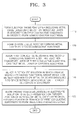
- FIG.. 3 is a flowchart illustrating a method of manufacturing the dye-sensitized solar cell 100 of FIG.. 1 , according to an embodiment of the present invention.
- a metal oxide layer 14 onto which a dye molecule layer 16 is adsorbed is formed on a first conductive substrate 12.
- the first conductive substrate 12 on which the metal oxide layer 14 is formed is prepared.
- the metal oxide layer 14 may be formed to a thickness of 5 to 15 ⁇ m.
- the dye molecule layer 16 is coated on a surface of the metal oxide layer 14 by immersing the first conductive substrate 12 on which the metal oxide layer 14 is formed in a dye solution composed of a ruthenium complex for 24 hours or more.
- the resultant structure on which the dye molecule layer 16 is formed is dried in an N 2 atmosphere to remove an alcohol-based organic solvent from a surface of the resultant structure.
- a portion of the surface of the metal oxide layer 14 onto which the dye molecule layer 16 is not adsorbed may be exposed. Also, a portion of a surface of the first conductive substrate 12 which does not contact the metal oxide layer 14 may be exposed.
- the first conductive substrate 12 and the second conductive substrate 22 are aligned with each other so that the electron transport layer 13 formed on the first conductive substrate 12 can face the metal layer 24 of the opposite electrode 20 formed on the second conductive substrate 22.
- a polymer layer 40 which may have a thickness of about 30 to 50 ⁇ m and may be formed of SURLYN (manufactured by Du Pont), is interposed between the first conductive substrate 12 and the second conductive substrate 22, and the first conductive substrate 12 and the second conductive substrate 22 are attached to each other on a heating plate at a temperature of 100 to 140°C under an atmospheric pressure of 1 to 3 such that a relatively small gap is formed between the first conductive substrate 12 and the second conductive substrate 22. Due to heat and pressure, the polymer layer 40 is strongly attached onto surfaces of both the semiconductor electrode 10 and the opposite electrode 20.
- an electrolyte solution 30 is injected through a micro hole 26 formed in the second conductive substrate 22 into a space between the semiconductor electrode 10 and the opposite electrode 20.
- Organic molecules having a functional group which can be selectively self-assembled on a metal oxide by a chemical bond with the metal oxide are dissolved in the electrolyte solution 30.
- the organic molecules dissolved in the electrolyte solution 30 are self-assembled on at least one of the exposed portion of the surface of the metal oxide layer 14 and on the exposed portion of the surface of the first conductive substrate12 to form an insulating protective layer 18.
- the organic molecules dissolved in the electrolyte solution 30 may be selected from insulating organic materials that cannot transport electrons or holes.
- the organic molecules may be selected from organic molecules having a functional group which can be selectively self-assembled by a chemical bond only on a surface of a metal oxide.
- the organic molecules may include a silane compound, a phosphate compound, a sulfuric acid compound, or a carboxylic acid compound.
- the silane compound When a silane compound is used as the source material of the organic molecules, the silane compound may have a structure selected from the group consisting of R 1 SiHR 2 R 3 , R 1 SiXR 2 R 3 (X is Cl, Br, or I), and R 1 SiRR 2 R 3 (R is methoxy, ethoxy, or t- butoxy), where R 1 , R 2 , and R 3 are a C 1 -C 24 alkane, an alkene, or alkynes, and each of R 1 , R 2 , and R 3 is substituted or unsubstituted with fluorine.
- the silane compound may be alkylsilane, alkyltrichlorosilane, alkoxy alkylsilane, trialkoxy alkylsilane, or dialkoxy dialkylsilane including a C 1 -C 24 alkyl group or alkoxy group.
- the phosphate compound may have a functional group selected from -PO 4 , -PO 3 , -PO 2 , and - PO.
- the phosphate compound may have a structure of PR 1 R 2 R 3 R 4 , where R 1 , R 2 , R 3 , and R 4 are C 1 -C 24 alkane, alkene, or alkynes, each of R 1 , R 2 , R 3 and R 4 is substituted or unsubstituted with fluorine, and at least one of R 1 , R 2 , R 3 , and R 4 is -OH or -O.
- the phosphate compound may exist in the form of a complex having a metal ion.
- the phosphate compound may be an alkyl phosphoric acid, alkyl hyposphorous acid, or phosphorous acid having a C 1 -C 24 alkyl group substituted or unsubstituted with fluorine.
- the sulfuric acid compound may have a functional group selected from -SO 4 , -SO 3 , -SO 2 , and -SO.
- the sulfuric acid compound may have a structure of SR 1 R 2 R 3 R 4 , where R 1 , R 2 , R 3 , and R 4 are C 1 -C 24 alkane, alkene, or alkynes, each of R 1 , R 2 , R 3 and R 4 is substituted or unsubstituted with fluorine, and at least one of R 1 , R 2 , R 3 , and R 4 is -OH or -O.
- the sulfuric acid compound may exist in forms of a complex having a metal ion.
- the sulfuric acid compound may be sulfuric acid, sulfurous acid, or a metal-ion complex thereof, i.e., sodium sulfate and potassium sulfite.
- the carboxylic acid compound When a carboxylic acid compound is used as the source material of the organic molecules, the carboxylic acid compound may have a functional group of -COOH or -COO - .
- the carboxylic acid compound may have a structure of R 1 COOH or R 2 COO - , where R 1 and R 2 are C 1 -C 24 alkane, alkene, or alkynes, and each of R 1 and R 2 is substituted or unsubstituted with fluorine.
- the carboxylic acid compound may be methanoic acid, ethanoic acid, propanoic acid, butanoic acid, malonic acid, oxalic acid, succinic acid, phthalic acid, glutaric acid, adipic acid, or benzoic acid.
- the electrolyte solution 30 contacts the electron transport layer 13 of the first conductive substrate 12 such that the organic molecules dissolved in the electrolyte solution 30 are self-assembled on the portion of the surface of the metal oxide layer 14 which is not covered by the dye molecule layer 16 and the portion of the surface of the first conductive substrate 12 which does not contact the metal oxide layer 14 to form the insulating protective layer 18. Due to the insulating protective layer 18, inefficient electron loss due to an interaction with the electrolyte solution 30 can be prevented when the electrons injected into the metal oxide layer 14 from the electron transport layer 13 are transported to the external circuit through the first conductive substrate 12.
- a first TiO 2 nano-particle layer was formed on a FTO substrate by screen printing using synthesized TiO 2 paste, and then was dried and sintered at a temperature of 500 °C.
- a second TiO 2 nano-particle layer including light scattering particles having a diameter of 200 to 400 nm was formed on the first TiO 2 nano-particle layer by screen printing ,and then was dried and sintered to manufacture a TiO 2 thin film in the form of a double-layered structure having a thickness of 20 ⁇ m.
- the resultant structure on which the TiO 2 thin film was formed was added to an alcoholic solution in which ruthenium dye (4,4'-dicarboxy-2,2-bupyridine)bis(thiocyanato)ruthenium(II): N3) was dissolved, and the dye was adsorbed onto a surface of the TiO 2 thin film.
- the resultant structure onto which the dye was adsorbed was washed using ethanol and dried to form a semiconductor electrode.
- a conductive glass substrate on which a H 2 PtCl 6 solution was coated was heated for 30 minutes at a temperature 450 °C to prepare counter electrodes.
- the semiconductor electrodes and the counter electrodes were aligned so their respective conductive surfaces faced each other. Then, a polymer layer formed of SURLYN (manufactured by Du Pont) was interposed between the semiconductor electrodes and the counter electrodes to adhere the semiconductor electrodes and the counter electrodes together so that a relatively small gap was formed therebetween. Samples prepared after performing such a process were divided into three groups.
- I 3 - /I - electrolyte solutions having different compositions were injected into spaces between the semiconductor electrodes and the counter electrodes in the prepared three groups of samples to complete the manufacture of dye-sensitized solar cells.
- the compositions of the electrolyte solutions injected into the samples are shown in Table 1 below.
- Table 1 Constituent Lil (M) MBII (M) I 2 (M) t-bPyridine (M) guanidinium thiocyanate (M) Sample 1 0.02 0.6 0.04 0.28 0.05 Sample 2 - 0.6 0.03 0.5 0.1 Sample 3 0.04 0.005 0.02 0.5 -
- MBII denotes methylbuthylimidazolium iodide
- t-bPyridine denotes tertiary buthylpyridine.
- guanidinium thiocyanate As shown in Table 1, 0.05 M guanidinium thiocyanate and 0.1 M guanidinium thiocyanate were added as organic molecules respectively to the electrolyte solutions injected into Sample 1 and Sample 2.
- the guanidinium thiocyanate was self-assembled on a portion of the TiO 2 thin film which does not allow dye adsorption and thus contacts the electrolyte solution and on a portion of the FTO substrate which does not contact the TiO 2 thin film and thus contacts the electrolyte solution to form an insulating protective layer.
- V oc denotes an open-circuit voltage
- J sc denotes a short-circuit current
- FF denotes a fill factor
- Eff denotes efficiency.
- Samples 1 and 2 into which the electrolyte solutions including the organic molecules which are self-assembled on the surface of the TiO 2 thin film and on the surface of the FTO substrate to form the insulating protective layers are injected have higher open-circuit voltages and higher efficiency than Sample 3 into which the electrolyte solution not including the organic molecules is injected.
- an insulating protective layer is formed on a surface of a metal oxide layer which can contact an oxidation/reduction electrolyte, and on a surface of a conductive substrate, electron loss easily occurring when electrons generated by the photovoltaic effect are transported to an external circuit can be prevented, thereby significantly improving energy conversion efficiency.
Landscapes
- Engineering & Computer Science (AREA)
- Power Engineering (AREA)
- Microelectronics & Electronic Packaging (AREA)
- Hybrid Cells (AREA)
- Photovoltaic Devices (AREA)
Applications Claiming Priority (1)
| Application Number | Priority Date | Filing Date | Title |
|---|---|---|---|
| KR1020070083952A KR100932901B1 (ko) | 2007-08-21 | 2007-08-21 | 염료감응 태양전지 및 그 제조 방법 |
Publications (2)
| Publication Number | Publication Date |
|---|---|
| EP2028667A2 true EP2028667A2 (fr) | 2009-02-25 |
| EP2028667A3 EP2028667A3 (fr) | 2011-11-02 |
Family
ID=39512840
Family Applications (1)
| Application Number | Title | Priority Date | Filing Date |
|---|---|---|---|
| EP08154241A Withdrawn EP2028667A3 (fr) | 2007-08-21 | 2008-04-09 | Cellule solaire sensibilisée aux colorants et son procédé de fabrication |
Country Status (2)
| Country | Link |
|---|---|
| EP (1) | EP2028667A3 (fr) |
| KR (1) | KR100932901B1 (fr) |
Cited By (7)
| Publication number | Priority date | Publication date | Assignee | Title |
|---|---|---|---|---|
| CN101901845A (zh) * | 2009-05-27 | 2010-12-01 | Tdk株式会社 | 金属氧化物电极及其制造方法以及色素增感型太阳能电池 |
| ES2370856A1 (es) * | 2009-10-30 | 2011-12-23 | Everlight Usa, Inc. | Composición electrolítica y célula solar sensibilizada por colorante usando la misma. |
| ES2376325A1 (es) * | 2009-11-05 | 2012-03-13 | Everlight Usa, Inc. | Composición de electrolito y célula solar sensibilizada con colorante que contiene la misma. |
| EP2230677A3 (fr) * | 2009-03-13 | 2012-08-29 | DMS Co., Ltd. | Procédé et appareil de production des cellules solaires sensibilisées aux colorants (DSSC) |
| CN103779101A (zh) * | 2014-01-07 | 2014-05-07 | 浙江大学 | 一种杂化固体太阳能电池及其制备方法 |
| CN107068407A (zh) * | 2017-01-03 | 2017-08-18 | 武汉市三选科技有限公司 | 染料敏化太阳能电池及其制造方法 |
| JP2019149583A (ja) * | 2019-06-12 | 2019-09-05 | シャープ株式会社 | 色素増感太陽電池および色素増感太陽電池を備える電子機器 |
Families Citing this family (3)
| Publication number | Priority date | Publication date | Assignee | Title |
|---|---|---|---|---|
| KR101286075B1 (ko) * | 2011-04-04 | 2013-07-15 | 포항공과대학교 산학협력단 | 이온층을 포함하는 염료 감응형 태양전지 및 그 제조 방법 |
| KR101225901B1 (ko) * | 2011-05-31 | 2013-01-24 | 단국대학교 산학협력단 | 유기태양전지 및 유기태양전지의 전극 제조방법 및 그 제조방법에 의해 제조된 유기태양전지 및 유기태양전지의 전극 |
| KR101531545B1 (ko) * | 2012-09-12 | 2015-06-25 | 한국화학연구원 | 상부 광활성층의 형상 및 다공성이 제어된 무/유기 하이브리드 태양전지 제조방법 |
Citations (2)
| Publication number | Priority date | Publication date | Assignee | Title |
|---|---|---|---|---|
| US4927721A (en) | 1988-02-12 | 1990-05-22 | Michael Gratzel | Photo-electrochemical cell |
| US5350644A (en) | 1990-04-17 | 1994-09-27 | Ecole Polytechnique, Federale De Lausanne | Photovoltaic cells |
Family Cites Families (7)
| Publication number | Priority date | Publication date | Assignee | Title |
|---|---|---|---|---|
| JP2000323192A (ja) * | 1999-03-10 | 2000-11-24 | Fuji Xerox Co Ltd | 半導体電極及びそれを用いた光電変換素子 |
| KR20040093515A (ko) * | 2003-04-30 | 2004-11-06 | 기산비티시(주) | 코팅된 부가적인 산화물 층을 갖는 염료감응형 태양전지 |
| EP1473745A1 (fr) * | 2003-04-30 | 2004-11-03 | Ecole Polytechnique Federale De Lausanne (Epfl) | Cellule solaire sensibilisée par colorant |
| EP1622178A1 (fr) * | 2004-07-29 | 2006-02-01 | Ecole Polytechnique Federale De Lausanne (Epfl) | Ligands 2,2 -bipyridine, colorant sensibilisateur et pile solaire sensibilisee par un colorant |
| US8044219B2 (en) * | 2005-05-13 | 2011-10-25 | Agc Seimi Chemical., Ltd. | Amino group-containing heterocyclic derivatives and sensitizing dyes for photoelectric conversion containing the heterocyclic derivatives |
| JP4509066B2 (ja) * | 2005-07-08 | 2010-07-21 | シャープ株式会社 | 光増感剤、半導体電極および光電変換素子 |
| JP2007066526A (ja) | 2005-08-29 | 2007-03-15 | Hitachi Ltd | 半導体電極,色素増感太陽電池およびその製造方法 |
-
2007
- 2007-08-21 KR KR1020070083952A patent/KR100932901B1/ko not_active Expired - Fee Related
-
2008
- 2008-04-09 EP EP08154241A patent/EP2028667A3/fr not_active Withdrawn
Patent Citations (2)
| Publication number | Priority date | Publication date | Assignee | Title |
|---|---|---|---|---|
| US4927721A (en) | 1988-02-12 | 1990-05-22 | Michael Gratzel | Photo-electrochemical cell |
| US5350644A (en) | 1990-04-17 | 1994-09-27 | Ecole Polytechnique, Federale De Lausanne | Photovoltaic cells |
Cited By (8)
| Publication number | Priority date | Publication date | Assignee | Title |
|---|---|---|---|---|
| EP2230677A3 (fr) * | 2009-03-13 | 2012-08-29 | DMS Co., Ltd. | Procédé et appareil de production des cellules solaires sensibilisées aux colorants (DSSC) |
| CN101901845A (zh) * | 2009-05-27 | 2010-12-01 | Tdk株式会社 | 金属氧化物电极及其制造方法以及色素增感型太阳能电池 |
| EP2256763A3 (fr) * | 2009-05-27 | 2012-01-11 | TDK Corporation | Électrode en oxyde métallique pour cellule solaire sensibilisée aux colorants, cellule solaire sensibilisée aux colorants et procédé de fabrication d'électrode en oxyde métallique |
| ES2370856A1 (es) * | 2009-10-30 | 2011-12-23 | Everlight Usa, Inc. | Composición electrolítica y célula solar sensibilizada por colorante usando la misma. |
| ES2376325A1 (es) * | 2009-11-05 | 2012-03-13 | Everlight Usa, Inc. | Composición de electrolito y célula solar sensibilizada con colorante que contiene la misma. |
| CN103779101A (zh) * | 2014-01-07 | 2014-05-07 | 浙江大学 | 一种杂化固体太阳能电池及其制备方法 |
| CN107068407A (zh) * | 2017-01-03 | 2017-08-18 | 武汉市三选科技有限公司 | 染料敏化太阳能电池及其制造方法 |
| JP2019149583A (ja) * | 2019-06-12 | 2019-09-05 | シャープ株式会社 | 色素増感太陽電池および色素増感太陽電池を備える電子機器 |
Also Published As
| Publication number | Publication date |
|---|---|
| EP2028667A3 (fr) | 2011-11-02 |
| KR100932901B1 (ko) | 2009-12-22 |
| KR20090019485A (ko) | 2009-02-25 |
Similar Documents
| Publication | Publication Date | Title |
|---|---|---|
| EP1906417A2 (fr) | Cellule solaire sensibilisée aux colorants et son procédé de fabrication | |
| EP2028667A2 (fr) | Cellule solaire sensibilisée aux colorants et son procédé de fabrication | |
| EP2234133B1 (fr) | Élément de conversion photoélectrique comportant des particules d'oxydes semi-conducteurs | |
| JP5300735B2 (ja) | 色素増感太陽電池モジュール | |
| KR100947371B1 (ko) | 다파장 흡수 나노 구조 염료감응 태양전지 및 그 제조방법 | |
| EP1605479A2 (fr) | Cellules solaires flexibles sensibilisées par un colorant à substrat métallique | |
| Kang et al. | Dye-sensitized TiO2 solar cells using polymer gel electrolytes based on PVdF-HFP | |
| JP2003264011A (ja) | 染料感応太陽電池 | |
| JPWO2008004556A1 (ja) | 色素増感型太陽電池モジュールおよびその製造方法 | |
| EP2073226A2 (fr) | Cellule solaire sensibiliée au colorant et méthode pour sa fabrication | |
| US20110174368A1 (en) | Composite electrolyte and the preparation method thereof, and dye-sensitized solar cell using the same | |
| KR101190002B1 (ko) | 염료감응 태양전지용 반도체 전극, 이의 제조방법 및 이를 포함하는 염료감응 태양전지 | |
| JP5114499B2 (ja) | 光電変換素子 | |
| KR100908243B1 (ko) | 전자 재결합 차단층을 포함하는 염료감응 태양전지 및 그제조 방법 | |
| JP4772311B2 (ja) | 電解質組成物、これを用いた光電変換素子及び色素増感太陽電池、並びにイオン性液体の評価方法 | |
| KR101006078B1 (ko) | 고체형 나노복합 전해질 및 이를 이용한 태양전지 | |
| WO2012086377A1 (fr) | Cellule solaire à colorant et module de cellules solaires à colorant, ainsi que procédés pour leur production | |
| WO2012053327A1 (fr) | Module de cellules solaires à colorant, et procédé de fabrication correspondant | |
| Maharjan | Comparative study of characteristics of dye sensitized solar cells fabricated using substrates coated with fluorine doped tin oxide and titanium | |
| EP3220399A1 (fr) | Électrolyte pour éléments de conversion photoélectrique sensibilisés par colorant pour luminance faible, et élément de conversion photoélectrique sensibilisé par colorant pour luminance faible utilisant ledit électrolyte | |
| AU2007202986B2 (en) | Electrolyte composition, and photoelectric converter and dye-sensitized solar cell using same | |
| KR100967090B1 (ko) | 탄소나노튜브 전극을 이용한 염료감응 태양전지 및 그 제조방법 | |
| JP5005177B2 (ja) | 色素増感太陽電池 | |
| Syrový et al. | Printed DSSC Solar Cell with UV Cured Barrier Layer | |
| JP2006147155A (ja) | 光電変換素子及びその製法、並びに色素増感型太陽電池 |
Legal Events
| Date | Code | Title | Description |
|---|---|---|---|
| PUAI | Public reference made under article 153(3) epc to a published international application that has entered the european phase |
Free format text: ORIGINAL CODE: 0009012 |
|
| AK | Designated contracting states |
Kind code of ref document: A2 Designated state(s): AT BE BG CH CY CZ DE DK EE ES FI FR GB GR HR HU IE IS IT LI LT LU LV MC MT NL NO PL PT RO SE SI SK TR |
|
| AX | Request for extension of the european patent |
Extension state: AL BA MK RS |
|
| PUAL | Search report despatched |
Free format text: ORIGINAL CODE: 0009013 |
|
| AK | Designated contracting states |
Kind code of ref document: A3 Designated state(s): AT BE BG CH CY CZ DE DK EE ES FI FR GB GR HR HU IE IS IT LI LT LU LV MC MT NL NO PL PT RO SE SI SK TR |
|
| AX | Request for extension of the european patent |
Extension state: AL BA MK RS |
|
| RIC1 | Information provided on ipc code assigned before grant |
Ipc: H01L 31/00 20060101ALI20110926BHEP Ipc: H01G 9/20 20060101AFI20110926BHEP |
|
| 17P | Request for examination filed |
Effective date: 20120308 |
|
| AKX | Designation fees paid |
Designated state(s): AT BE BG CH CY CZ DE DK EE ES FI FR GB GR HR HU IE IS IT LI LT LU LV MC MT NL NO PL PT RO SE SI SK TR |
|
| 17Q | First examination report despatched |
Effective date: 20121109 |
|
| STAA | Information on the status of an ep patent application or granted ep patent |
Free format text: STATUS: THE APPLICATION IS DEEMED TO BE WITHDRAWN |
|
| 18D | Application deemed to be withdrawn |
Effective date: 20130320 |