EP2037710A2 - Système de communication mobile, appareil de contrôle de station de base, terminal mobile, procédé de contrôle de transfert - Google Patents
Système de communication mobile, appareil de contrôle de station de base, terminal mobile, procédé de contrôle de transfert Download PDFInfo
- Publication number
- EP2037710A2 EP2037710A2 EP08015324A EP08015324A EP2037710A2 EP 2037710 A2 EP2037710 A2 EP 2037710A2 EP 08015324 A EP08015324 A EP 08015324A EP 08015324 A EP08015324 A EP 08015324A EP 2037710 A2 EP2037710 A2 EP 2037710A2
- Authority
- EP
- European Patent Office
- Prior art keywords
- base station
- handover
- mobile terminal
- control apparatus
- timing
- Prior art date
- Legal status (The legal status is an assumption and is not a legal conclusion. Google has not performed a legal analysis and makes no representation as to the accuracy of the status listed.)
- Granted
Links
Images







Classifications
-
- H—ELECTRICITY
- H04—ELECTRIC COMMUNICATION TECHNIQUE
- H04W—WIRELESS COMMUNICATION NETWORKS
- H04W36/00—Hand-off or reselection arrangements
- H04W36/08—Reselecting an access point
-
- H—ELECTRICITY
- H04—ELECTRIC COMMUNICATION TECHNIQUE
- H04W—WIRELESS COMMUNICATION NETWORKS
- H04W36/00—Hand-off or reselection arrangements
- H04W36/24—Reselection being triggered by specific parameters
- H04W36/30—Reselection being triggered by specific parameters by measured or perceived connection quality data
- H04W36/302—Reselection being triggered by specific parameters by measured or perceived connection quality data due to low signal strength
-
- H—ELECTRICITY
- H04—ELECTRIC COMMUNICATION TECHNIQUE
- H04W—WIRELESS COMMUNICATION NETWORKS
- H04W88/00—Devices specially adapted for wireless communication networks, e.g. terminals, base stations or access point devices
- H04W88/12—Access point controller devices
-
- H—ELECTRICITY
- H04—ELECTRIC COMMUNICATION TECHNIQUE
- H04W—WIRELESS COMMUNICATION NETWORKS
- H04W36/00—Hand-off or reselection arrangements
- H04W36/34—Reselection control
- H04W36/38—Reselection control by fixed network equipment
Definitions
- This invention relates to a mobile communication system which has a base station and a base station control apparatus, and more particularly to a mobile communication system that improves handover.
- a present mobile communication system has a plurality of base stations, and each base station has an area in which the base station can communicate with a mobile terminal.
- each base station has an area in which the base station can communicate with a mobile terminal.
- the mobile terminal changes the base station to other base station which has an area in which the base station can communicate with the mobile terminal. This is called handover or handoff.
- a mobile communication system such as the PHS (Personal Handy-phone System)
- PHS Personal Handy-phone System
- a system in which the base station avoids interference autonomously and communicates is adopted.
- neither the base station nor a base station control apparatus grasps an absolute position of the mobile terminal because of its property. Therefore, with respect to the handover, the Japanese Laid-Open Patent Application No. Hei 5-14265 describes that a mobile terminal judges communication degradation with movement of the mobile terminal and then sends a connection call to other base station. That is, a mobile terminal initiative handover is adopted. The mobile terminal looks for a surrounding base station, and sends a handover request to other base station based on the search result.
- the handover depends greatly on performance of each mobile terminal, such as a receiving sensitivity and a function to look for the handover base station and to require the handover. For this reason, when the radio terminal moves at high-speed, a problem that the handover is overdue and the communication goes out occurs.
- a mobile communication system includes a plurality of base stations configured to make wireless communication with a mobile terminal, and a base station control apparatus connected to the base stations.
- the base station control apparatus includes a handover control section determines a handover base station to be handed over by the mobile terminal from the base stations, and directs the mobile terminal to hand over to the handover base station.
- a mobile communication system includes a plurality of base stations configured to make wireless communication with a mobile terminal, and a base station control apparatus connected to the base stations.
- the base station control apparatus includes a handover control section determines a handover base station to be handed over by the mobile terminal from the base stations, and directs the mobile terminal to hand over to the handover base station.
- the mobile terminal is called a personal station in the PHS, and it is also called a mobile station in a cellular phone system.
- the base station is called a cell station in the PHS.
- Fig. 1 shows a whole mobile communication system according to the first embodiment.
- Mobile communication system S has base station control apparatus 1 connected to IP network 2 and public network 3, and a plurality of base stations CS1-CSn connected to base station control apparatus 1.
- Base station control apparatus 1 controls base stations CS1-CSn.
- Mobile terminal PS connects with base station CS using a radio protocol, and makes communication with other mobile terminals, such as a cellular phone and a PHS terminal, fixed-line telephone 5, and makes connection with Internet 4 through base station control apparatus 1.
- This mobile terminal PS may be connected to various computers, such as a personal computer and a PDA.
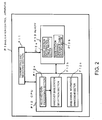
- Fig. 2 is a functional block diagram of the base station control apparatus formed in mobile communication system S.
- Base station control apparatus 1 has transmitting and receiving section P11, CPU (Central Processing Unit) P12 and memory P13.
- CPU P12 has receiving data processing section P12a, handover base station selection section P12b and base station information management section P12c.
- Receiving data processing section P12a processes a received data received with transmitting and receiving section P11, and handover base station selection section P12b selects a handover base station to be handed over by the mobile terminal from the base stations.
- Memory P13 has base station information table record section P13a and base station remaining resource table record section P13b.
- Base station information table record section P13a records base station information table 10 which describes information related to the positional relationship of base stations CS.
- Base station information table 10 is referred by handover base station selection section P12b when handover base station selection section P12b selects the handover base station to be handed over by the mobile terminal.
- Base station remaining resource table record section P13b records base station remaining resource table describes remaining radio resources (base station remaining resources) in each base station CS.
- the received data is transferred to receiving data processing section P12a and is processed. If the received data includes the information meaning operation of the handover, handover base station selection section P12b determines the handover base station for mobile terminal PS with reference to base station information table 10 record on base station information table record section P13a.
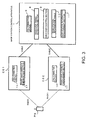
- Fig. 3 shows a system configuration according to the first embodiment.
- base station control apparatus 1 detects handover timing.
- Base station control apparatus 1 includes call connection section 6 for connecting a call, handover timing detecting section 8 for detecting the handover timing, handover control section 9 for determining the handover base station to be handed over by mobile terminal PS from the base stations and directs mobile terminal PS to hand over, base station information table 10 for storing information on adjacent base stations to the base station, and base station information management section 11.
- Each base station CS has call connection section 16 for connecting a call and radio wave strength measurement section 17 which measures strength of radio wave from mobile terminal PS.
- Mobile terminal PS has a call connection section for connecting a call with base station CS and a receiving section which receives a notice of directions from base station control apparatus 1.
- radio wave strength measurement section 17 is provided in order to measure communication quality between mobile terminal PS and base station CS, and it works as a communication quality measuring section.
- handover timing detection section 8 and handover control section 9 are provided in base station control apparatus 1, the handover of mobile terminal PS is realized by the initiative of base station control apparatus 1. Between base station control apparatus 1 and base station CS, it is connected with a cable. This may be connected by radio. Base station control apparatus 1 according to this embodiment may be constituted using a gateway apparatus. Between mobile terminal PS and base station CS, it is connected by radio.
- Base station information table 14 will be explained with reference to Fig. 4 and Fig. 5 .
- base station information table 10 shown in Fig. 4 base station information is a selection rate of base station CS selected as the handover base station.
- base station CS of handover origin is indicated.
- base stations selected as the handover base station which mobile terminal PS hands over from base station CS of handover origin and their selection rates are indicated.
- This base station information is sorted as a handover candidate in order of high selection rate of base station CS.
- the base station which is the first candidate of the handover base station is base station CS2. It is shown that the selection rate that base station CS2 was chosen as the handover base station when mobile terminal PS hands over from base station CS1 to other base station CS is 40%. Base station CS3 of which selection rate is 33% is shown as a second candidate. A third candidate is indicated to be base station CS4 of 20% selection rate, and a fourth candidate is indicated to be base station CS5 of 7% selection rate.
- the handover origin base stations are base station CS2, ⁇ , CSn, the handover candidate base stations are also shown with the selection rate like the case where the handover origin base station is base station CS1. This base station information table will be updated whenever the handover is completed.
- base station information table 10 shown in Fig. 5 base station information is a number of times of selection of base station CS selected as the handover base station.
- base station CS of handover origin is indicated.
- base stations selected as the handover base station when mobile terminal PS hands over from base station CS of the handover origin to other base station CS and their numbers of times of selection are indicated.
- the base station which is a first candidate of the handover base station is base station CS2. It is shown that the number of times of selection that base station CS2 was chosen as the handover base station when mobile terminal PS hands over from base station CS1 to other base station CS is 96 times. Base station CS3 of which the number of times of selection is 71 is shown as a second candidate. A third candidate is indicated to be base station CS4 of the 28 times of selection, and a fourth candidate is indicated to be base station CS5 of the 11 times of selection.
- the handover candidate base stations are shown with the number of times of selection like the case where the handover origin base station is base station CS1. Like Fig. 4 , this base station information table will be updated whenever the handover is completed.
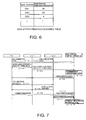
- Fig. 6 shows an example of the base station remaining resource table memorized in base station remaining resource table record section P13b.
- Remaining resources are radio resources which base station CS can assign to the mobile terminals.
- the remaining resources are memorized on the base station remaining resource table for every base station CS which base station control apparatus 1 controls.
- the remaining resources of base station CS1 are indicated as 30. This shows that there are radio resources which can be assigned to 30 sets of the mobile terminals.
- base station CS2 has resources for 25 sets of the mobile terminals and base station CS3 has resources for 4 sets of the mobile terminals.
- the remaining resources are indicated similarly.
- the notation of remaining resources is not limited only to the number of the assignable mobile terminal, but the radio resources may be written in units Mbps, for example.
- FIG. 7 is a sequence diagram showing the processing in which base station control apparatus 1 detects the handover timing and determines the handover base station.
- base station CS1 measures the strength of the radio wave frommobile terminal PS which base station CS1 receives.
- the radio wave strength measured by radio wave strength measurement section 17 is sent to base station control apparatus 1 (S104).
- Handover timing detecting section 8 provided in base station control apparatus 1 detects the handover timing. Handover timing detecting section 8 judges whether the radio wave strength is less than a predetermined threshold which corresponds to the handover timing. If the radio wave strength is less than the threshold, handover timing detecting section 8 will detect the handover timing.
- the threshold it may be equal to or less than the threshold or may be less than the threshold.
- the threshold is used similarly.
- handover control section 9 will select the first candidate's base station as the handover base station with reference to base station information table 10. That is, handover control section 9 selects the base station with the highest selection rate or the largest number of times of selection as the handover base station. Furthermore, handover control section 9 confirms with reference to the base station remaining resource table that selected base station CShasremaining resources, and handover control section 9 determines handover base station CS (S105).
- base station CS2 with the highest selection rate (or the largest number of times of selection) is selected with reference to base station information table 10 as the handover base station. Furthermore, it is confirmed with reference to the base station remaining resource table that base station CS2 has the remaining resources, and base station CS2 is decided as the handover base station.
- base station CS3 with next higher selection rate (or next larger number of times of selection) is selected with reference to base station information table 10. And it is also confirmed with reference to the base station remaining resource table that base station CS3 has the remaining resources. And then base station CS3 is decided as the handover base station.
- Base station control apparatus 1 requires mobile terminal PS to hand over to base station CS2 via base station CS1 (S106).
- Mobile terminal PS receives a notice of handover directions which includes information about the base station determined as the handover base station with the receiving section. Then mobile terminal PS sends a connection request to base station CS2 (S107) base on the information contained in the notice of the directions.
- Base station CS2 which received this connection request sends a connection response to mobile terminal PS (S108), and a call between mobile terminal PS and base station CS2 is connected (109).
- a call connection between base station control apparatus 1 and base station CS2 is also established (S110), and base station CS2 sends a notice of handover completion to base station control apparatus 1 (S111).
- base station information management section 11 updates base station information table 10 (S112). If the base station information about the handover from base station CS1 to base station CS2 is indicated on base station information table 10, numerical value of base station information on base station information table 10 ( selection rate or number of times of selection) is updated , and base station information table 10 will be sorted in numerical high order. Moreover, since the remaining resources of base station CS1 and the remaining resources of base station CS2 change before and after the handover in accordance with this handover, base station information management section 11 update the numerical value of base station remaining resource table.
- the base station control apparatus 1 takes initiative, and determines the handover base station.
- the handoverperformedby initiative of mobile terminal PS which is currently performed by the existing mobile communications system, may be used together. That is, it may be used together that mobile terminal PS sends a handover request to base station CS with the strongest strength of the radio wave which mobile terminal PS receives.
- mobile terminal PS may hand over to base station CS which is not indicated on base station information table 10.
- base station information table 10 is updated by adding the base station information about the handover base station to the last of the candidate of base station information table 10.
- Fig. 8 is a flow chart which shows the processing in which base station control apparatus 1 determines the handover base station.
- Transmitting and receiving section P11 of base station control apparatus 1 receives the data showing the strength of the radio wave of mobile terminal PS of which the radio wave connects the call between mobile terminal PS and base station CS1 (F100A).
- the data is sent to receiving processing section P12a, and receiving processing section P12a judges whether the radio wave strength is less than the threshold (F100B). If the radio wave strength is less than the threshold, the handover timing will be detected (F101). When the radio wave strength is not less than the threshold, receiving of the data showing the radio wave strength is.continued.
- handover base station selecting section P12b determines the handover base station for mobile terminal PS with reference to base station information table 10 stored in base station information table record section P13a of memory P13 (F102).
- the determination of the handover base station may bemade as follows. First, two or more base stations with high selection rate or large number of times of selection are selected using base station information table 10 shown in Fig. 4 or Fig. 5 . Next, with reference to the base station remaining resource table, base station CS with most remaining resources is selected among the selected base stations, and the handover base station is determined.
- base station control apparatus 1 When base station CS is selected as the handover base station for mobile terminal PS (for example, the handover base station is supposed as base station CS2 ) , base station control apparatus 1 requires mobile terminal PS to hand over to base station CS2 via transmitting and receiving section P11 (F103). Then, a process for the call connection between handover base station CS2 and base station control apparatus 1 is performed (F104). If the call between mobile terminal PS and base station CS2 is connected, transmitting and receiving section P11 will receive a notice of the handover completion from base station CS2 (F105).
- Base station control apparatus 1 judges whether handover base station CS2 is indicated on base station information table 10 (F106). If indicated, the number of times of selection or the selection rate of applicable base station information (in this embodiment, the information on base station CS2) of base station information table 10 will be updated, and the figure will be sorted inhighorder (F108). If not indicated, the information onbase station CS2 is added to the end of base station information table 10 (F107). The addition of the information on base station CS2 may not be at the end of the table. In that case, after adding the information, the table is sorted in high order of the numerical value of the number of times of selection, or the selection rate. After renewal of base station information table 10, base station control apparatus 1 will be in a state waiting for the handover.
- base station control apparatus 1 After renewal of base station information table 10, base station control apparatus 1 will be in a state waiting for the handover.
- base station control apparatus 1 determines the handover base station from the base stations, and directs mobile terminal PS to hand over to base station CS determined as the handover base station. Thereby, high-speed handover becomes possible. Furthermore, since handover base station CS is selected and determined from the base station information table which accumulates a history of the handover, the predictive accuracy of the handover base station increases and the success rate of the handover increases.
- base station control apparatus 1 determines the handover base station
- base station control apparatus 1 selects base station CS with larger remaining resources with reference to the base station remaining resource table. Thereby, it also becomes possible to prevent traffic increase of base station CS, or to prevent handover incompletion by a shortage of resources. As a result, a success percentage of the handover can be raised.
- base station CS measures the strength of the radio wave from mobile terminal PS.
- degradation of the communication quality can be measured by not only the radio wave strength but a bit error rate for example.
- base station CS measures the strength of the radio wave of mobile terminal PS, and sends the measured radio wave strength to base station control apparatus 1. Then, base station control apparatus 1 detects the handover timing, and determines the handover base station.
- base station CS may detect the handover timing. Therefore, an embodiment in which base station CS measures the strength of the radio wave of mobile terminal PS and detects the handover timing based on the radio wave strength is explained.
- Whole system drawing of mobile communication system S, a structure of base station control apparatus 1, base station information table 10 and base station remaining resource table are the same as those of embodiment 1.
- the same numerals denote the same portions and the explanation is omitted.
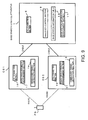
- Fig. 9 shows a functional block diagram showing a structure of mobile communication system S according to the second embodiment.
- base station control apparatus 1 has call connection section 6 for making a call connection, handover control section 9 for determining a handover base station from the base stations and directing a handover, base station information table 10 and base station information management section 11.
- Base station CS has call connection section 16 for making a call connection, radio wave strength measurement section 17 for measuring strength of a radio wave from mobile terminal PS and handover timing detecting section 18 for detecting handover timing.
- Mobile terminal PS has a call connection section for connecting a call with base station CS and a receiving section which receives a notice of directions frombase station control apparatus 1. The handover of mobile terminal PS is realized by initiative of base station CS. Between base station control apparatus 1 and base station CS, it is connected with a cable. It may be connected by radio. Between mobile terminal PS and base station CS, it is connected by radio.
- Base station control apparatus 1 can be constituted using a gateway apparatus.
- radio wave strength measurement section 17 measures the strength of the radio wave of mobile terminal PS which base station CS1 receives.
- Handover timing detecting section 18 judges whether the radio wave strength measured by radio wave strength measurement section 17 is less than a predetermined threshold. If the radio wave strength is less than the threshold, handover timing detecting section 18 detects the handover timing.
- base station CS1 sends data indicating a detection of the handover timing to base station control apparatus 1 (S204). After base station control apparatus 1 receives the data showing the detection of the handover timing, processing from S205 to S212 same as the processing from S105 to S112 is performed.
- base station control apparatus 1 determines the handover base station from the base stations, and directs mobile terminal PS to hand over. Thereby, high-speed handover becomes possible like embodiment 1. And base station control apparatus 1 selects and determines the handover base station from base station information table 10 which accumulates a handover history. Thereby, a predictive accuracy of the handover base station increases and the success rate of the handover increases.
- base station CS with much remaining resources is selected with reference to the base station remaining resources table when base station control apparatus 1 selects and determines the handover base station like embodiment 1, it is also possible to prevent traffic increase of base station CS, or to prevent handover incompletion by a shortage of resources. As a result, the success rate of the handover can be raised.
- base station CS measures the strength of the radio wave of mobile terminal PS, and detects the handover timing based on the radio wave strength.
- mobile terminal PS may detect the handover timing. Therefore, in this embodiment, mobile terminal PS measure the strength of the radio wave of base station apparatus CS, detects the handover timing based on the strength of the radio wave, and sends having detected the handover timing to base station control apparatus 1 through base station CS.
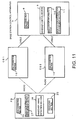
- Fig. 11 shows the functional block diagram of mobile communication system S according to the embodiment 3.
- mobile terminal PS has call connection section 26 for connecting a call, radio wave strength measurement section 27 for measuring the strength of the radio wave of base station CS, handover timing detecting section 28 for judging a handover timing, and receiving section 29 for receiving a notice of directions from base station control apparatus 1.
- Base station control apparatus 1 has call connection section 6 for connecting a call, handover control section 9 for selecting a handover base station and directing a handover, base station information table 10 and base station information management section 11.
- Base station CS has call connection section 16 for connecting a call.
- mobile terminal PS By initiative of mobile terminal PS, mobile terminal PS detects the handover timing, and base station control apparatus 1 determines the handover base station from the base stations and directs mobile terminal PS to hand over to the determined base station. And thereby the handover is performed. Between base station control apparatus 1 and base station CS, it is connected with a cable. This connection may be connected by radio. Between mobile terminal PS and base station CS, it is connected with radio.
- Base station control apparatus 1 of this embodiment can be constituted by a gateway apparatus.
- Radio wave strength measurement section 27 of mobile terminal PS measures the strength of the radio wave of base station CS which by mobile terminal PS receives.
- Handover timing detecting section 28 judges whether the radio wave strength measured by radio wave strength measurement section 27 is less than a predetermined threshold. If the radio wave strength is less than the threshold, handover timing detecting section 28 detects the handover timing. If the handover timing is detected, mobile terminal PS sends data indicating that the handover timing was detected to base station control apparatus 1 (S304). After base station control apparatus 1 receives the data showing the detection of the handover timing, processing from S305 to S312 same as the processing from S105 to S112 is performed.
- base station control apparatus 1 selects and determines the handover base station, and directs mobile terminal PS to hand over to determined base station CS. Thereby, high-speed handover can be realized, like the first embodiment.
- base station CS measures the strength of the radio wave of mobile terminal PS, and sends the measured radio wave strength to base station control apparatus 1. And when the radio wave strength falls rather than the strength which the handover is performed, base station control apparatus 1 detects the handover timing and determines the handover base station.
- base station control apparatus 1 prepares for the handover, when the radio wave strength falls to the strength which is a little higher than the strength at which the handover is operated.
- FIG. 13 The relationship between the strength of the radio wave of mobile terminal PS received by base station CS and the handover is shown in Fig. 13 .
- a vertical axis shows the strength of the radio wave from mobile terminal PS which is received by base station CS, and a horizontal axis shows time. While mobile terminal PS moves away from base station CS, the strength of the radio wave of mobile terminal PS which base station CS receives alls as line 30 shown in Fig. 13 .
- First threshold 32 is the strength at which the handover is required.
- Second threshold 34 is the strength which is a little stronger than first threshold 32, and is the strength at which the handover is prepared.
- base station CS If the radiowave strength falls to the strength (second threshold 34) which is a little higher than the strength at which the handover is performed, base station CS will detect handover preparation timing. If the strength of the radio wave from mobile terminal PS which base station CS receives falls to the strength (first threshold 32) which needs to hand over, base station CS will detects the handover timing. When base station CS detects the handover preparation timing, base station control apparatus 1 selects the handover base station and begins to connect a call between the handover base station and base station control apparatus 1.
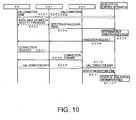
- Fig. 14 shows the case where base station control apparatus 1 detects the handover preparation timing and the handover timing.
- radio wave strength measurement section 17 provided in base station CS1 measures the strength of the radio wave frommobile terminal PS. If the strength of the radio wave is less than the second threshold 34, base station CS1 detects the handover preparation timing by handover timing detecting section 18. And base station CS1 sends a notice of having detected the handover preparation timing to base station control apparatus 1 (S404). When base station control apparatus 1 receives the notice, base station control apparatus 1 selects and determines handover base station CS (S405) with reference to base station information table 10. In this embodiment, the handover base station is supposed base station CS2.
- Base station control apparatus 1 sends a request which makes a call connection between selected handover base station CS2 and base station control apparatus 1 start to base station CS2 (S406).
- Base station CS2 sends a notice of having accepted the request to base station control apparatus 1 (S407), and a call between base station CS2 and base station control apparatus 1 is connected (S408).
- handover detecting section 18 detects the handover timing. Then, base station CS1 sends a notice of having detected the handover timing to base station control apparatus 1 (S410).
- base station control apparatus 1 receives the notice of having detected the handover timing (S410)
- handover control section 9 requires mobile terminal PS to hand over to base station CS2 (S411).
- Mobile terminal PS receives a notice of handover directions which includes information about the handover base station with receiving section 29.
- Mobile terminal PS which is requested the handover sends a connection request to base station CS2 which is identified by the notice of the handover directions (S412).
- Base station CS2 which received the connection request sends a connection answer to mobile terminal PS (S413) and a call between mobile terminal PS and base station CS2 is connected. Then, base station CS2 sends a notice of the handover completion to base station control apparatus 1 (S415).
- a method for determining the handover base station is the same as that of first to third embodiments.
- the base station information table is updated like first to third embodiments (S416).
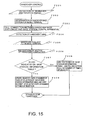
- Fig. 15 is a flow chart which shows a processing in which base station control apparatus determines the handover base station.
- base station control apparatus determines the handover base station.
- the strength of the radio wave of mobile terminal PS which makes a call connection between mobile terminal PS and base station CS1 becomes less than second threshold 34
- handover timing detecting section 18 of base station CS1 will detect the handover preparation timing.
- base station CS1 sends the data showing having detected the handover preparation timing to base station control apparatus 1. If the data showing that the handover timing was detected is received by transmitting and receiving section P11 of base station control apparatus 1 (F201), the data will be transferred to receiving data processing part P12a.
- Handover base station selection section P12b determines the handover base station for mobile terminal PS with reference to base station information table 10 recorded on memory P13 (F202). For example, supposing base station CS2 is selected as the handover base station, a call between base station CS2 and base station control apparatus 1 will be connected (F203).
- base station CS1 After that, if the strength of the radio wave from mobile terminal PS which base station CS1 receives becomes less than the first threshold and handover detecting section 18 detects the handover timing, base station CS1 will send the data showing the detection of the handover timing to base station control apparatus 1.
- base station control apparatus 1 receives the data showing the detection of the handover timing (F204)
- base station control apparatus 1 requires mobile terminal PS to hand over to base station CS2 via transmitting and receiving section P11 (F205).
- base station control apparatus 1 If base station control apparatus 1 receives the handover completion from base station CS2 via transmitting and receiving section P11 (F206), base station control apparatus 1 judges whether the base station information on base station CS2 is indicated on base station information table 10 (F207). Subsequent procedures are the same in the procedure after processing F108 shown in Fig. 8 explained in the first embodiment.
- base station control apparatus 1 determines the handover base station with reference to the base station information table, a high-speed handover becomes possible. Furthermore, since the handover preparation is prepared, the call connection between base station control apparatus 1 and hand over base station CS2 has been established before hand when handover operation is made. For this reason, as compared with the conventional technology and the systems according to the embodiments 1 to 3, the handover is realizable with less procedures from the handover request to the handover completion.
- base station CS detects the handover preparation timing and detects the handover timing in the system configuration shown in Fig. 9 . And base station CS sends the data showing that the handover preparation timing was detected and the data showing that the handover timing was detected to base station control apparatus 1.
- base station CS may send the data in which the strength of the radio wave frommobile terminal PS is shown tobase station control apparatus 1, and base station control apparatus 1 may detects both the handover preparation timing detection and the handover timing detection.
- Embodiment 4 shows the case that base station CS or base station control apparatus 1 detects both the handover timing and the handover preparation timing.
- mobile terminal PS can detect those timing.
- mobile terminal PS detects both the handover timing and the handover preparation timing.
- the mobile communication system of this embodiment is explained. The whole system of the mobile communication system and the base station control apparatus are the same as those of embodiment 3, and illustration and explanation are omitted.
- a sequence from call connections among mobile terminal PS, base station control apparatus 1 and base station CS2 until the handover completion is shown in Fig. 16 .
- Base station control apparatus 1 sends a request which makes a call connection between base station CS2 selected as the handover base station and base station control apparatus 1 start to base station CS2 (S506).
- Base station CS2 sends a notice of having accepted the request to base station control apparatus 1 (S507), and a call between base station CS2 and base station control apparatus 1 is connected (S508).
- mobile terminal PS If the strength of the radio wave from base station CS1 which mobile terminal PS receives becomes less than first threshold 32, mobile terminal PS detects the handover timing by handover detecting section 28. And mobile terminal PS sends a notice showing that the handover timing was detected to base station control apparatus 1 (S510). When base station control apparatus 1 receives the notice which shows that the handover timing was detected (S510), base station control apparatus 1 requires mobile terminal PS to hand over to base station CS2 (S511). Since subsequent processing is the same as processing after S412 of embodiment 4, explanation is omitted.
- base station control apparatus 1 selects and determines the handover base station with reference to the base station information table, a high-speed handover becomes possible.
- handover preparations a call between the handover base station and base station control apparatus 1 has been connected beforehand when handover is performed. For this reason, as compared with the conventional technology and the systems according to embodiment 1 through embodiment 3, the handover is realizable with less procedure from the handover request to the handover operation.
- the handover base station is determined with reference to the base station information table, a high-speed handover is possible. And a seamless handover is realizable.
Landscapes
- Engineering & Computer Science (AREA)
- Computer Networks & Wireless Communication (AREA)
- Signal Processing (AREA)
- Mobile Radio Communication Systems (AREA)
Applications Claiming Priority (1)
| Application Number | Priority Date | Filing Date | Title |
|---|---|---|---|
| JP2007236602 | 2007-09-12 |
Publications (3)
| Publication Number | Publication Date |
|---|---|
| EP2037710A2 true EP2037710A2 (fr) | 2009-03-18 |
| EP2037710A3 EP2037710A3 (fr) | 2011-04-27 |
| EP2037710B1 EP2037710B1 (fr) | 2015-12-09 |
Family
ID=40257031
Family Applications (1)
| Application Number | Title | Priority Date | Filing Date |
|---|---|---|---|
| EP08015324.0A Ceased EP2037710B1 (fr) | 2007-09-12 | 2008-08-29 | Système de communication mobile, appareil de contrôle de station de base, terminal mobile, procédé de contrôle de transfert |
Country Status (4)
| Country | Link |
|---|---|
| US (1) | US8126463B2 (fr) |
| EP (1) | EP2037710B1 (fr) |
| JP (1) | JP4891959B2 (fr) |
| CN (2) | CN101389143A (fr) |
Families Citing this family (14)
| Publication number | Priority date | Publication date | Assignee | Title |
|---|---|---|---|---|
| JP4940117B2 (ja) * | 2007-12-06 | 2012-05-30 | 株式会社東芝 | 移動通信システムとそのゲートウェイ装置、集線装置およびハンドオーバ制御方法 |
| JP4843625B2 (ja) * | 2008-01-24 | 2011-12-21 | 株式会社東芝 | 無線通信システム、無線基地局制御装置、および無線基地局制御装置用プログラム |
| JP5021844B2 (ja) * | 2008-03-21 | 2012-09-12 | インターデイジタル パテント ホールディングス インコーポレイテッド | パケット交換ドメインから回線交換ドメインへのフォールバックを可能にする方法および装置 |
| JP4910014B2 (ja) * | 2008-05-22 | 2012-04-04 | 株式会社東芝 | 無線基地局制御装置、無線通信システム、及び無線基地局制御装置用プログラム |
| JP4560107B2 (ja) * | 2008-07-28 | 2010-10-13 | 株式会社東芝 | 移動通信システムとその制御装置、ハンドオーバ制御方法、および移動端末 |
| JP2010074372A (ja) * | 2008-09-17 | 2010-04-02 | Fujitsu Ltd | 基地局装置、移動局装置、および報知情報の送受信方法 |
| US8805372B2 (en) * | 2009-03-20 | 2014-08-12 | Qualcomm Incorporated | Systems and methods for reselecting cells in a cellular wireless communication system |
| JP5236577B2 (ja) * | 2009-06-10 | 2013-07-17 | 株式会社Kddi研究所 | サービス状態管理サーバおよび無線通信システム |
| KR101650608B1 (ko) | 2009-10-30 | 2016-08-23 | 인터디지탈 패튼 홀딩스, 인크 | 무선 통신을 위한 시그널링 |
| US20110256871A1 (en) * | 2010-04-19 | 2011-10-20 | Motorola, Inc. | Mobility Influenced by Radio Uplink Failure |
| JP5784029B2 (ja) | 2010-10-01 | 2015-09-24 | 三菱電機株式会社 | 通信システム |
| US9357456B2 (en) * | 2013-06-03 | 2016-05-31 | Telefonaktiebolaget Lm Ericsson (Publ) | Handover control method and apparatus for high speed mobility user equipment |
| JP6655508B2 (ja) * | 2016-09-05 | 2020-02-26 | 日本電信電話株式会社 | 無線端末接続管理装置、無線端末接続管理方法、およびプログラム |
| JP2018139339A (ja) * | 2017-02-24 | 2018-09-06 | 日本電信電話株式会社 | 無線通信システムとそのハンドオーバ制御方法およびプログラム |
Citations (2)
| Publication number | Priority date | Publication date | Assignee | Title |
|---|---|---|---|---|
| JPH0514265A (ja) | 1991-07-05 | 1993-01-22 | Toshiba Corp | 移動通信装置 |
| JP2007236602A (ja) | 2006-03-08 | 2007-09-20 | Akita Univ | 磁気式位置姿勢センサを用いた手指用モーションキャプチャ装置 |
Family Cites Families (28)
| Publication number | Priority date | Publication date | Assignee | Title |
|---|---|---|---|---|
| FI941779L (fi) * | 1994-04-15 | 1995-10-16 | Nokia Telecommunications Oy | Kanavanvaihtomenetelmä ja -järjestely |
| US5649290A (en) * | 1994-12-14 | 1997-07-15 | Lucent Technologies Inc. | Handover method based upon channel quality |
| WO1998025429A1 (fr) | 1996-12-04 | 1998-06-11 | Nokia Telecommunications Oy | Controle des transferts dans un reseau de communication mobile |
| EP1758410B1 (fr) * | 1996-12-26 | 2010-02-24 | Ntt Mobile Communications Network Inc. | Procédé de transfert intercellulaire |
| FI109513B (fi) | 1997-05-13 | 2002-08-15 | Nokia Corp | Solun kuormitukseen perustuva kanavanvaihto matkaviestinjärjestelmässä |
| JP3344472B2 (ja) * | 1999-05-20 | 2002-11-11 | 日本電気株式会社 | 移動通信方法 |
| US6654362B1 (en) * | 1999-11-24 | 2003-11-25 | Lucent Technologies, Inc. | Use of location in handoff in wireless communication systems |
| US6721567B1 (en) | 2000-03-30 | 2004-04-13 | Nokia Corporation | Apparatus, and an associated method, for selecting a likely target cell in a cellular communication system |
| JP2002232929A (ja) * | 2001-02-01 | 2002-08-16 | Ntt Docomo Inc | ハンドオーバ制御方法、移動局及び通信制御装置 |
| WO2002089514A1 (fr) | 2001-04-26 | 2002-11-07 | Nokia Corporation | Procede et element de reseau pour commander une commutation |
| CN1146270C (zh) * | 2001-06-27 | 2004-04-14 | 华为技术有限公司 | 一种装置自动获取ip地址的方法 |
| DE60139902D1 (de) | 2001-07-03 | 2009-10-22 | Ericsson Telefon Ab L M | Verfahren zum einstufen von nachbarzellen als kandidaten für eine weiterreichung |
| JP2003032725A (ja) | 2001-07-18 | 2003-01-31 | Ntt Docomo Inc | 移動通信システムにおける無線基地局選択方法及びシステム並びに無線基地局 |
| US6993335B2 (en) | 2002-11-15 | 2006-01-31 | Motorola, Inc. | Apparatus and method for mobile/IP handoff between a plurality of access technologies |
| JP2004235800A (ja) | 2003-01-29 | 2004-08-19 | Evolium Sas | 移動無線機のハンドオーバー制御方法、基地局制御装置、及び移動無線機 |
| CN1802862A (zh) | 2003-08-27 | 2006-07-12 | 富士通株式会社 | 切换方法以及基站控制装置 |
| KR100557125B1 (ko) * | 2003-09-01 | 2006-03-03 | 삼성전자주식회사 | 셀룰러 이동통신 시스템에서 핸드오버 네이버 리스트 생성방법 및 장치 |
| US20050237932A1 (en) * | 2004-04-23 | 2005-10-27 | Jung-Tao Liu | Method and system for rate-controlled mode wireless communications |
| JP2006020270A (ja) * | 2004-06-04 | 2006-01-19 | Ntt Docomo Inc | ハンドオーバー制御装置、無線リソース管理装置、ネットワークリソース管理装置、移動通信システム及びハンドオーバー制御方法 |
| US7319868B2 (en) * | 2004-09-27 | 2008-01-15 | Telefonktiebolaget Lm Ericsson (Publ) | Derivation of optimal antenna weights during soft handover |
| US7711367B2 (en) | 2004-10-29 | 2010-05-04 | Alcatel-Lucent Usa Inc. | Fast handover with reduced service interruption for high speed data channels in a wireless system |
| JP2006165972A (ja) | 2004-12-07 | 2006-06-22 | Nec Access Technica Ltd | 電波状態モニター方法及びその装置、これを用いたセルリセル方法及びその装置並びに移動無線装置 |
| KR101080965B1 (ko) * | 2005-04-09 | 2011-11-08 | 엘지전자 주식회사 | 매개체 무관 핸드오버를 위한 정보 서비스 송수신 방법 |
| JP4197692B2 (ja) | 2005-07-07 | 2008-12-17 | 株式会社東芝 | 移動通信システムのハンドオーバ処理方式 |
| JP4708274B2 (ja) | 2006-07-03 | 2011-06-22 | 富士通株式会社 | ハンドオーバ制御方法及び装置 |
| JP4809148B2 (ja) * | 2006-07-10 | 2011-11-09 | 富士通株式会社 | 無線ネットワーク制御装置及び移動端末のハンドオーバー方法 |
| EP2266349B1 (fr) * | 2008-04-01 | 2016-11-23 | Telefonaktiebolaget LM Ericsson (publ) | Temps d'activation pour changement de cellule de desserte à grande vitesse basé sur la cible |
| JP4560107B2 (ja) * | 2008-07-28 | 2010-10-13 | 株式会社東芝 | 移動通信システムとその制御装置、ハンドオーバ制御方法、および移動端末 |
-
2008
- 2008-08-28 US US12/199,970 patent/US8126463B2/en not_active Expired - Fee Related
- 2008-08-29 JP JP2008222706A patent/JP4891959B2/ja not_active Expired - Fee Related
- 2008-08-29 EP EP08015324.0A patent/EP2037710B1/fr not_active Ceased
- 2008-09-12 CN CNA2008102159746A patent/CN101389143A/zh active Pending
- 2008-09-12 CN CN201510163514.3A patent/CN104902523A/zh active Pending
Patent Citations (2)
| Publication number | Priority date | Publication date | Assignee | Title |
|---|---|---|---|---|
| JPH0514265A (ja) | 1991-07-05 | 1993-01-22 | Toshiba Corp | 移動通信装置 |
| JP2007236602A (ja) | 2006-03-08 | 2007-09-20 | Akita Univ | 磁気式位置姿勢センサを用いた手指用モーションキャプチャ装置 |
Also Published As
| Publication number | Publication date |
|---|---|
| CN104902523A (zh) | 2015-09-09 |
| EP2037710B1 (fr) | 2015-12-09 |
| EP2037710A3 (fr) | 2011-04-27 |
| CN101389143A (zh) | 2009-03-18 |
| US20090069015A1 (en) | 2009-03-12 |
| JP4891959B2 (ja) | 2012-03-07 |
| US8126463B2 (en) | 2012-02-28 |
| JP2009089372A (ja) | 2009-04-23 |
Similar Documents
| Publication | Publication Date | Title |
|---|---|---|
| EP2037710B1 (fr) | Système de communication mobile, appareil de contrôle de station de base, terminal mobile, procédé de contrôle de transfert | |
| EP1700510B1 (fr) | Dispositif et procedé pour le transfert basé sur la qualité de service | |
| EP2241131B1 (fr) | Gestion de transfert de connexion | |
| AU698013B2 (en) | Improved mobile assisted handoff | |
| JP4463038B2 (ja) | ハンドオーバ制御方法、ユーザ装置および移動通信ネットワーク | |
| US20080311914A1 (en) | Methods and apparatus for neighbor discovery of base stations in a communication system | |
| JP4310659B2 (ja) | 移動体通信システムとその小型無線基地局へのハンドオーバー方法 | |
| GB2322051A (en) | Inter-system handover in a multisystem mobile radio environment | |
| US6148210A (en) | Personal communication system and technique with zone report feature | |
| US20070032236A1 (en) | Performing mobile terminal handover in response to user input | |
| EP1060627B1 (fr) | Systeme et procede pour detecter et gerer des changements de systeme et de capacite dans des transferts d'appels cellulaires | |
| KR100266758B1 (ko) | 이동 통신 시스템 및 통신 회선 설정 방법 | |
| CN101193387B (zh) | 用于在移动通信终端中的空闲时的节省电流的装置和方法 | |
| CN100369506C (zh) | 用于连接到多个通信系统中的优选系统的移动电话和方法 | |
| US20080102886A1 (en) | Wireless Mobile Station Apparatus and Communication Switching Deciding Method | |
| KR100492414B1 (ko) | Cdma 시스템의 인접기지국 정보 관리방법 | |
| US7974625B2 (en) | Method, communication system, central interface device and mobile terminal for operating a wireless communication connection | |
| KR20050016603A (ko) | 무선 통신 네트워크에서의 부하 밸런싱 | |
| CN114980240B (zh) | 一种多运营商共建基站的共享通信方法、装置及系统 | |
| JP2006101342A (ja) | 移動通信端末および移動通信端末の基地局接続先の切替判定方法 | |
| JP2001308776A (ja) | 移動通信方法及び移動局 | |
| CN101098548A (zh) | 移动台使用低限度服务的方法与移动台 | |
| JPH0759147A (ja) | コードレス・ボタン電話装置 | |
| HK1079632A1 (en) | Method and system for load balancing, load control device, accesss piont and subscriber terminal | |
| HK1079632B (en) | Method and system for load balancing, load control device, accesss piont and subscriber terminal |
Legal Events
| Date | Code | Title | Description |
|---|---|---|---|
| PUAI | Public reference made under article 153(3) epc to a published international application that has entered the european phase |
Free format text: ORIGINAL CODE: 0009012 |
|
| AK | Designated contracting states |
Kind code of ref document: A2 Designated state(s): AT BE BG CH CY CZ DE DK EE ES FI FR GB GR HR HU IE IS IT LI LT LU LV MC MT NL NO PL PT RO SE SI SK TR |
|
| AX | Request for extension of the european patent |
Extension state: AL BA MK RS |
|
| PUAL | Search report despatched |
Free format text: ORIGINAL CODE: 0009013 |
|
| AK | Designated contracting states |
Kind code of ref document: A3 Designated state(s): AT BE BG CH CY CZ DE DK EE ES FI FR GB GR HR HU IE IS IT LI LT LU LV MC MT NL NO PL PT RO SE SI SK TR |
|
| AX | Request for extension of the european patent |
Extension state: AL BA MK RS |
|
| 17P | Request for examination filed |
Effective date: 20111026 |
|
| AKX | Designation fees paid |
Designated state(s): DE FR GB |
|
| 17Q | First examination report despatched |
Effective date: 20140224 |
|
| GRAP | Despatch of communication of intention to grant a patent |
Free format text: ORIGINAL CODE: EPIDOSNIGR1 |
|
| INTG | Intention to grant announced |
Effective date: 20150708 |
|
| GRAS | Grant fee paid |
Free format text: ORIGINAL CODE: EPIDOSNIGR3 |
|
| GRAA | (expected) grant |
Free format text: ORIGINAL CODE: 0009210 |
|
| AK | Designated contracting states |
Kind code of ref document: B1 Designated state(s): DE FR GB |
|
| REG | Reference to a national code |
Ref country code: GB Ref legal event code: FG4D |
|
| REG | Reference to a national code |
Ref country code: DE Ref legal event code: R096 Ref document number: 602008041496 Country of ref document: DE |
|
| REG | Reference to a national code |
Ref country code: FR Ref legal event code: PLFP Year of fee payment: 9 |
|
| REG | Reference to a national code |
Ref country code: DE Ref legal event code: R097 Ref document number: 602008041496 Country of ref document: DE |
|
| PLBE | No opposition filed within time limit |
Free format text: ORIGINAL CODE: 0009261 |
|
| STAA | Information on the status of an ep patent application or granted ep patent |
Free format text: STATUS: NO OPPOSITION FILED WITHIN TIME LIMIT |
|
| 26N | No opposition filed |
Effective date: 20160912 |
|
| REG | Reference to a national code |
Ref country code: FR Ref legal event code: PLFP Year of fee payment: 10 |
|
| PGFP | Annual fee paid to national office [announced via postgrant information from national office to epo] |
Ref country code: DE Payment date: 20170822 Year of fee payment: 10 Ref country code: FR Payment date: 20170714 Year of fee payment: 10 Ref country code: GB Payment date: 20170823 Year of fee payment: 10 |
|
| REG | Reference to a national code |
Ref country code: DE Ref legal event code: R119 Ref document number: 602008041496 Country of ref document: DE |
|
| GBPC | Gb: european patent ceased through non-payment of renewal fee |
Effective date: 20180829 |
|
| PG25 | Lapsed in a contracting state [announced via postgrant information from national office to epo] |
Ref country code: DE Free format text: LAPSE BECAUSE OF NON-PAYMENT OF DUE FEES Effective date: 20190301 |
|
| PG25 | Lapsed in a contracting state [announced via postgrant information from national office to epo] |
Ref country code: FR Free format text: LAPSE BECAUSE OF NON-PAYMENT OF DUE FEES Effective date: 20180831 |
|
| PG25 | Lapsed in a contracting state [announced via postgrant information from national office to epo] |
Ref country code: GB Free format text: LAPSE BECAUSE OF NON-PAYMENT OF DUE FEES Effective date: 20180829 |