EP2041276B1 - Verfahren zur herstellung von l-aminosäuren mittels mutanten des glta-gens kodierend für citratsynthase - Google Patents
Verfahren zur herstellung von l-aminosäuren mittels mutanten des glta-gens kodierend für citratsynthase Download PDFInfo
- Publication number
- EP2041276B1 EP2041276B1 EP07786778A EP07786778A EP2041276B1 EP 2041276 B1 EP2041276 B1 EP 2041276B1 EP 07786778 A EP07786778 A EP 07786778A EP 07786778 A EP07786778 A EP 07786778A EP 2041276 B1 EP2041276 B1 EP 2041276B1
- Authority
- EP
- European Patent Office
- Prior art keywords
- seq
- amino acid
- polynucleotide
- lysc
- lysine
- Prior art date
- Legal status (The legal status is an assumption and is not a legal conclusion. Google has not performed a legal analysis and makes no representation as to the accuracy of the status listed.)
- Active
Links
Images
Classifications
-
- C—CHEMISTRY; METALLURGY
- C12—BIOCHEMISTRY; BEER; SPIRITS; WINE; VINEGAR; MICROBIOLOGY; ENZYMOLOGY; MUTATION OR GENETIC ENGINEERING
- C12N—MICROORGANISMS OR ENZYMES; COMPOSITIONS THEREOF; PROPAGATING, PRESERVING, OR MAINTAINING MICROORGANISMS; MUTATION OR GENETIC ENGINEERING; CULTURE MEDIA
- C12N9/00—Enzymes; Proenzymes; Compositions thereof; Processes for preparing, activating, inhibiting, separating or purifying enzymes
- C12N9/88—Lyases (4.)
-
- C—CHEMISTRY; METALLURGY
- C12—BIOCHEMISTRY; BEER; SPIRITS; WINE; VINEGAR; MICROBIOLOGY; ENZYMOLOGY; MUTATION OR GENETIC ENGINEERING
- C12N—MICROORGANISMS OR ENZYMES; COMPOSITIONS THEREOF; PROPAGATING, PRESERVING, OR MAINTAINING MICROORGANISMS; MUTATION OR GENETIC ENGINEERING; CULTURE MEDIA
- C12N9/00—Enzymes; Proenzymes; Compositions thereof; Processes for preparing, activating, inhibiting, separating or purifying enzymes
- C12N9/10—Transferases (2.)
- C12N9/12—Transferases (2.) transferring phosphorus containing groups, e.g. kinases (2.7)
- C12N9/1217—Phosphotransferases with a carboxyl group as acceptor (2.7.2)
-
- C—CHEMISTRY; METALLURGY
- C12—BIOCHEMISTRY; BEER; SPIRITS; WINE; VINEGAR; MICROBIOLOGY; ENZYMOLOGY; MUTATION OR GENETIC ENGINEERING
- C12P—FERMENTATION OR ENZYME-USING PROCESSES TO SYNTHESISE A DESIRED CHEMICAL COMPOUND OR COMPOSITION OR TO SEPARATE OPTICAL ISOMERS FROM A RACEMIC MIXTURE
- C12P13/00—Preparation of nitrogen-containing organic compounds
- C12P13/04—Alpha- or beta- amino acids
- C12P13/06—Alanine; Leucine; Isoleucine; Serine; Homoserine
-
- C—CHEMISTRY; METALLURGY
- C12—BIOCHEMISTRY; BEER; SPIRITS; WINE; VINEGAR; MICROBIOLOGY; ENZYMOLOGY; MUTATION OR GENETIC ENGINEERING
- C12P—FERMENTATION OR ENZYME-USING PROCESSES TO SYNTHESISE A DESIRED CHEMICAL COMPOUND OR COMPOSITION OR TO SEPARATE OPTICAL ISOMERS FROM A RACEMIC MIXTURE
- C12P13/00—Preparation of nitrogen-containing organic compounds
- C12P13/04—Alpha- or beta- amino acids
- C12P13/08—Lysine; Diaminopimelic acid; Threonine; Valine
-
- C—CHEMISTRY; METALLURGY
- C12—BIOCHEMISTRY; BEER; SPIRITS; WINE; VINEGAR; MICROBIOLOGY; ENZYMOLOGY; MUTATION OR GENETIC ENGINEERING
- C12Y—ENZYMES
- C12Y203/00—Acyltransferases (2.3)
- C12Y203/03—Acyl groups converted into alkyl on transfer (2.3.3)
- C12Y203/03001—Citrate (Si)-synthase (2.3.3.1)
-
- C—CHEMISTRY; METALLURGY
- C12—BIOCHEMISTRY; BEER; SPIRITS; WINE; VINEGAR; MICROBIOLOGY; ENZYMOLOGY; MUTATION OR GENETIC ENGINEERING
- C12Y—ENZYMES
- C12Y207/00—Transferases transferring phosphorus-containing groups (2.7)
- C12Y207/02—Phosphotransferases with a carboxy group as acceptor (2.7.2)
- C12Y207/02004—Aspartate kinase (2.7.2.4)
Definitions
- the invention relates to novel, for a polypeptide with citrate synthase activity encoding polynucleotides, bacteria containing them, and methods for producing amino acids using these bacteria.
- Amino acids are used in human medicine, in the pharmaceutical industry, in the food industry and especially in animal nutrition.
- Process improvements may include fermentation measures such as stirring and oxygen supply, or nutrient media composition, such as sugar concentration during fermentation, or product form processing by, for example, ion exchange chromatography or the intrinsic performance characteristics of the microorganism itself.
- AEC lysine analog S- (2-aminoethyl) -L-cysteine
- the nucleotide sequence of the genome of Corynebacterium glutamicum is included Ikeda and Nakagawa (Applied Microbiology and Biotechnology 62, 99-109 (2003 )), in the EP 1 108 790 and at Kalinowski et al. (Journal of Biotechnolgy 104 / 1-3, (2003 )).
- nucleotide sequences of the genome of Corynebacterium glutamicum and Corynebacterium efficiens are also in the National Library of Biotechnology Information (NCBI) database of the National Library of Medicine (Bethesda, MD), in the DNA Data Bank of Japan (DDBJ, Mishima, Japan ) or in the nucleotide sequence database of European Molecular Biology Laboratories (EMBL, Heidelberg, Germany and Cambridge, UK, respectively).
- NCBI National Library of Biotechnology Information
- MD National Library of Medicine
- DDBJ DNA Data Bank of Japan
- EMBL European Molecular Biology Laboratories
- SEQ ID NO: 1 The wild-type sequence of the coding region of the gltA gene of Corynebacterium glutamicum known from the prior art is shown in SEQ ID NO: 1 in the description part of the present application. Moreover, in SEQ ID NOs: 3 and 25, those are upstream and downstream the coding region located sequences.
- the amino acid sequence of the encoded GltA polypeptide (citrate synthase) is accordingly represented in SEQ ID NOs: 2, 4 and 26.
- L-amino acids preferably L-lysine, L-valine and L-isoleucine, more preferably L-lysine.
- the invention relates to an isolated polynucleotide encoding a polypeptide comprising the amino acid sequence of SEQ ID NO: 2, wherein the L-aspartic acid at position 5 of the amino acid sequence is replaced by L-valine and wherein the polypeptide citrate synthase activity (EC no 4.1.3.7).
- the polypeptide contains one or more conservative amino acid substitutions, the conserved amino acid substitutions leaving the citrate synthase activity of the polypeptide substantially unchanged.
- Proteinogenic amino acids are the amino acids found in natural proteins, ie proteins of microorganisms, plants, animals and humans. These include in particular L-amino acids selected from the group L-aspartic acid, L-asparagine, L-threonine, L-serine, L-glutamic acid, L-glutamine, glycine, L-alanine, L-cysteine, L-valine, L Methionine, L-isoleucine, L-leucine, L-tyrosine, L-phenylalanine, L-histidine, L-lysine, L-tryptophan, L-proline and L-arginine.
- L-amino acids selected from the group L-aspartic acid, L-asparagine, L-threonine, L-serine, L-glutamic acid, L-glutamine, glycine, L-alanine, L-cysteine, L-valine, L Methion
- polypeptide and protein are used as synonyms.
- the invention furthermore relates to vectors and bacteria, preferably of the genus Corynebacterium and Escherichia, particularly preferably of the species Corynebacterium glutamicum and Escherichia coli, which contain said polynucleotide or have been prepared using said polynucleotide.
- the invention finally bacteria preferred species of Corynebacterium and Escherichia, particularly preferably the species Corynebacterium glutamicum and Escherichia coli, which have been transformed with said vector.
- transformation encompasses all methods for the transfer of polynucleotides, in particular DNA, into a desired bacterium. These include, but are not limited to, the use of isolated DNA in transformation, electro-transformation or electroporation, cell-delivery transmission as in conjugation, or transfer of DNA by particle bombardment.
- Another aspect of the invention relates to a bacterium, in particular a recombinant bacterium, of the genus Corynebacterium, which contains a polynucleotide encoding a polypeptide having citrate synthase activity comprising the amino acid sequence of SEQ ID NO: 2, wherein at position 5 of the amino acid sequence L -Valal, is included.
- the polypeptide contains one or more conservative amino acid substitutions, the conserved amino acid substitutions leaving the citrate synthase activity of the polypeptide substantially unchanged.
- L-amino acids is meant the proteinogenic amino acids.
- L-lysine or lysine is mentioned below, not only the bases but also the salts, e.g. Meant L-lysine monohydrochloride or L-lysine sulfate.
- Strains designated "ATCC” can be obtained from the American Type Culture Collection (Manassas, Va, USA). Strains designated “DSM” can be obtained from the German Collection of Microorganisms and Cell Cultures (DSMZ, Braunschweig, Germany). Strains named “FERM” can be purchased from the National Institute of Advanced Industrial Science and Technology (AIST Tsukuba Central 6, 1-1-1 Higashi, Tsukuba Ibaraki, Japan). The strain Corynebacterium thermoaminogenes (FERM BP-1539, is in the US 5,250,434 described.
- DNA is then provided from the mutants or isolated and polymerized using the polymerase chain reaction (PCR) using primer pairs that allow the amplification of the gltA gene or gltA allele, the corresponding polynucleotide and isolated.
- PCR polymerase chain reaction
- any primer pairs can be selected from the nucleotide sequence located upstream and downstream of the coding region and the complementary nucleotide sequence (see SEQ ID NOS: 3 and 25).
- a primer of a primer pair preferably comprises at least 15, at least 18, at least 20, at least 21 or at least 24 consecutive nucleotides selected from the nucleotide sequence between position 1 and 1000 of SEQ ID NO: 25.
- the associated second primer of a primer pair comprises at least 15, at least 18, at least 20, at least 21 or at least 24 consecutive nucleotides selected from complementary nucleotide sequence between position 3314 and 2312 of SEQ ID NO: 25.
- the nucleotide sequence of the polynucleotide is then determined. This can, for example, after the chain termination process by Sanger et al. (Proceedings of the National Academys of Sciences, USA, 74, 5463-5467 (1977 )) with the by Zimmermann et al. (Nucleic Acids Research 18, 1067pp (1990 )) are determined.
- the polypeptide encoded by this nucleotide sequence can then be analyzed for amino acid sequence.
- the nucleotide sequence is entered into a program for the translation of DNA sequence into an amino acid sequence.
- Suitable programs include, for example, the patent program available from patent offices, such as the United States Patent Office (USPTO), or the Translate Tool available on the ExPASy Proteomics Server on the World Wide Web (US Pat. Gasteiger et al., Nucleic Acids Research 31, 3784-3788 (2003 )) is available.
- polynucleotide according to the invention which is also referred to below as the gltA allele according to the invention, by methods of in vitro genetics.
- Suitable methods for in-vitro mutagenesis include the treatment with hydroxylamine Miller ( Miller, JH: A Short Course in Bacterial Genetics. A Laboratory Manual and Handbook for Escherichia coli and Related Bacteria, Cold Spring Harbor Laboratory Press, Cold Spring Harbor, 1992 ) or the use of a polymerase chain reaction using a DNA polymerase which has a high error rate.
- a DNA polymerase is, for example, Mütazyme DNA Polymerase (GeneMorph PCR Mutagenesis Kit, No. 600550) from Stratagene (LaJolla, CA, USA).
- mutagenic oligonucleotides as in TA Brown (Genetic Engineering for Beginners, Spektrum Akademischer Verlag, Heidelberg, 1993 ) and RM Horton (PCR-Mediated Recombination and Mutagenesis, Molecular Biotechnology 3, 93-99 (1995 )) can be used.
- the by Papworth et al. (Strategies 9 (3), 3-4 (1996 )) using the "Quik Change Site-directed Mutagenesis Kit” from Stratagene (La Jolla, California, USA) can also be used.
- citrate synthase allele according to the invention in Corynebacterium glutamicum or Escherichia coli, in order to subsequently represent it, for example, in purified or isolated form.
- polynucleotide which has the nucleotide sequence shown in SEQ ID NO: 5.
- the polypeptide encoded by this polynucleotide is shown in SEQ ID NOS: 6 and 8. It contains at position 5 of the amino acid sequence L-valine instead of L-aspartic acid.
- the strain ATCC13032 when he instead of the wild-type gltA gene with the inventive gltA allele, which codes for the citrate synthase according to SEQ ID NO: 6 (ATCC13032 :: gltA D5V), in comparison to the wild-type strain ATCC13032, which contains the citrate synthase according to SEQ ID NO: 2, a by about 40% has a maximum of about 90% reduced enzyme activity, preferably a by about 70% to a maximum of about 90% reduced enzyme activity.
- the invention also relates to polynucleotides which code for polypeptides having citrate synthase activity which, in addition to the amino acid substitutions according to the invention at position 5 of the amino acid sequence, contain one (1) or more conservative amino acid substitutions which determine the enzymatic activity essentially does not change. This means that it remains essentially unchanged.
- substantially unchanged or “essentially unchanged” in this context means that the citrate synthase activity of the polypeptide is changed by a maximum of 20%, preferably not more than 10% and more preferably by a maximum of 5% to a maximum of 2% in comparison for the citrate synthase activity of the polypeptide according to SEQ ID NO: 10 or SEQ ID NO: 6, preferably SEQ ID NO: 6.
- the gltA gene of strain ATCC 13032 is replaced with the gltA allele, which encodes a polypeptide containing the amino acid replacement at position 5 and one or more conservative amino acid substitutions (e) according to the invention. Subsequently, the strain is cultured, a cell extract is produced and the citrate synthase activity is determined. As a reference, the citrate synthase activity is determined in strain ATCC13032 :: gltA D5V.
- L-lysine-secreting strains of Corynebacterium glutamicum can also be used which comprise the coding region of the wild-type gltA gene, including the upstream one Nucleotide sequences, corresponding to the nucleotide sequence between position 1 and 2064 of SEQ ID NO: 3, preferably SEQ ID NO: 3, included.
- Suitable strains are described, for example, in DSM16833 PCT / EP2005 / 012417 , DSM13994 described in EP 1 239 040 A2 or DSM17576 described in DE 102005045301 , In these strains, the corresponding mutation (s) can be introduced into the coding region of the gltA gene by allele exchange.
- citrate synthase (EC No. 4.1.3.7) catalyzes the condensation reaction of oxaloacetate and acetyl-CoA, with citric acid and coenzyme A (CoA) as reaction products.
- the enzyme is assigned the number EC 2.3.3.1.
- the aromatic L-amino acids are called conservative exchanges when L-phenylalanine, L-tryptophan and L-tyrosine are interchanged.
- the hydrophobic L-amino acids are called conservative exchanges when L-leucine, L-isoleucine and L-valine are interchanged.
- the polar L-amino acids are called conservative exchanges when L-glutamine and L-asparagine are interchanged.
- the basic L-amino acids are called conservative exchanges when L-arginine, L-lysine and L-histidine are interchanged.
- the acidic L-amino acids are called conservative exchanges when L-aspartic acid and L-glutamic acid are exchanged.
- the hydroxyl group-containing L-amino acids are called conservative exchanges when L-serine and L-threonine are interchanged.
- the polypeptide preferably contains at most two (2), at most three (3), at most four (4) or at most five (5) conservative amino acid substitutions in addition to the inventive exchange at position 5 of SEQ ID NO: 2.
- aminopeptidases the terminal methionine is removed during protein synthesis.
- the isolated polynucleotides encoding the citrate synthase variant of the present invention, or portions thereof, may be used to produce recombinant strains of the genus Corynebacterium, preferably Corynebacterium glutamicum, which contain the amino acid sequence of the invention at position 5 of the amino acid sequence of the citrate synthase polypeptide and which are described in U.S. Pat Compared to the parent or parent strain in an improved way L-amino acids release into the surrounding medium or accumulate in the cell interior.
- a common method for incorporation of mutations into genes of bacteria of the genus Corynebacterium, in particular of the species Corynebacterium glutamicum, is that of allele exchange, also known as "gene replacement".
- allele exchange also known as "gene replacement”.
- a DNA fragment containing the mutation of interest is transferred to the desired strain and the mutation is incorporated by at least two recombination events or "cross over" events into the chromosome of the desired strain or present in the relevant strain sequence of a gene exchanged for the mutated sequence.
- the DNA fragment containing the mutation of interest in this method is typically present in a vector, in particular a plasmid, which is preferably unrestricted or limited by the strain to be mutated, i. H. under selected culture conditions.
- a bacterium of the genus Escherichia preferably the species Escherichia coli is generally used.
- plasmid vectors examples include those of Shufer et al. (Gene 145, 69-73 (1994 ) described pK * mob and pK * mobsacB vectors, such as pK18mobsacB, and those described in the WO 02/070685 and WO 03/014362 described vectors. These are replicative in Escherichia coli but not in Corynebacterium.
- Particularly suitable vectors are those which contain a conditionally negatively dominant gene such as the sacB gene (levansucrase gene) of, for example, Bacillus or the galK gene (galactose kinase gene) of, for example, Escherichia coli.
- a conditionally negatively dominant gene is understood as meaning a gene which, under certain conditions, is disadvantageous, for example, toxic to the host, but has no adverse effects on the host carrying the gene under other conditions. These allow selection for recombination events in which the vector is eliminated from the chromosome.
- Nakamura et al. ( US 6,303,383 ) describes a temperature-sensitive plasmid for Corynebacterium that can only replicate at temperatures below 31 ° C. It can also be used for the measures of the invention.
- the vector is then by conjugation, for example, by the method Schfer (Journal of Bacteriology 172, 1663-1666 (1990 )) or transformation, for example, by the method from Dunican and Shivnan (Bio / Technology 7, 1067-1070 (1989 )) or the method by Thierbach et al. (Applied Microbiology and Biotechnology 29, 356-362 (1988 )) into the Corynebacterium.
- the transfer of the DNA can also be achieved by ballistic methods (eg particle bombardment).
- Target gene is the gene in which the desired exchange is to take place.
- nucleotide sequence of at least about 51 each (see also SEQ ID NOS: 11 and 12), preferably at least about 101 and 102, respectively (see also SEQ ID NOS: 13 and 14) preferably in each case at least about 201 nucleobases (see also SEQ ID NO: 15 and 16) and very particularly preferably in each case at least about 500 or 498 nucleobases (see also SEQ ID NO: 17 and 18) selected from SEQ ID NO: 9 has ,
- the maximum length of the nucleotide sequence upstream and downstream of the mutation is generally about 500, about 750, about 1000, about 1500, about 2000 to 2100 nucleobases.
- the nucleotide sequence upstream of the mutation includes, for example, the sequence between position 1 to 762 of SEQ ID NO: 9 or the sequence between position 1 to 1012 of SEQ ID NO: 25.
- the nucleotide sequence downstream of the mutation comprises, for example, the sequence between position 766 to 2814 of SEQ ID NO: 9 or the sequence between position 1016 to 3314 of SEQ ID NO: 25. Accordingly, the total length of the polynucleotide used for the allele exchange is a maximum of about 1000, a maximum of about 1500, a maximum of about 2000, a maximum of about 3000 or a maximum of about 4000 to 4200 nucleobases.
- the invention accordingly relates to a polynucleotide which comprises a nucleotide sequence which, from position 1 to 39, contains the nucleotide sequence corresponding to positions 1 to 39 of SEQ ID NO: 11 and from positions 40 to 105 a nucleotide sequence which corresponds to the amino acid sequence according to SEQ ID NO : 12 encoded, with an Position 5 L-valine is included.
- the position data 1 to 39 of SEQ ID NO: 11 correspond to the position data 712 to 750 of SEQ ID NO: 9.
- the position data 40 to 105 of SEQ ID NO: 11 correspond to the position data 751 to 816 of SEQ ID NO: 9.
- the polynucleotide comprises the nucleotide sequence of SEQ ID NO: 11, wherein the codon corresponding to positions 52 to 54 encodes L-valine.
- the polynucleotide comprises the nucleotide sequence from position 712 to 816 of SEQ ID NO: 7.
- the invention accordingly further provides a polynucleotide which comprises a nucleotide sequence which, from position 1 to 89, contains the nucleotide sequence corresponding to position 1 to 89 of SEQ ID NO: 13 and from position 90 to 206 a nucleotide sequence which corresponds to the amino acid sequence according to SEQ ID NO : 14 coded, wherein at position 5 L-valine is included.
- the position data 1 to 89 of SEQ ID NO: 13 correspond to the position data 662 to 750 of SEQ ID NO: 9.
- the position indications 90 to 206 of SEQ ID NO: 13 correspond to the position indications 751 to 867 of SEQ ID NO: 9.
- the polynucleotide comprises the nucleotide sequence of SEQ ID NO: 13, wherein the codon corresponding to position 102 to 104 encodes L-valine.
- the polynucleotide comprises the nucleotide sequence from position 662 to 867 of SEQ ID NO: 7.
- the invention accordingly accordingly provides a polynucleotide which comprises a nucleotide sequence which, from position 1 to 189, contains the nucleotide sequence corresponding to position 1 to 189 of SEQ ID NO: 15 and from position 190 to 405 a nucleotide sequence which is suitable for the amino acid sequence according to SEQ ID NO : 16 coded, wherein at position 5 L-valine is included.
- the position data 1 to 189 of SEQ ID NO: 15 correspond to the position data 562 to 750 of SEQ ID NO: 9.
- the position data 190 to 405 of SEQ ID NO: 15 correspond to the position data 751 to 966 of SEQ ID NO: 9.
- the polynucleotide comprises the nucleotide sequence of SEQ ID NO: 15, wherein the codon corresponding to position 202 to 204 encodes L-valine.
- the polynucleotide comprises the nucleotide sequence from position 562 to 966 of SEQ ID NO: 7.
- the invention accordingly accordingly also provides a polynucleotide which comprises a nucleotide sequence which, from position 1 to 488, contains the nucleotide sequence corresponding to position 1 to 488 of SEQ ID NO: 17 and from position 489 to 1001 a nucleotide sequence which corresponds to the amino acid sequence according to SEQ ID NO: 18 encoded, wherein at position 5 L-valine is included.
- the position data 1 to 488 of SEQ ID NO: 17 correspond to the position data 263 to 750 of SEQ ID NO: 9.
- the position data 489 to 1001 of SEQ ID NO: 15 correspond to the position data 751 to 1263 of SEQ ID NO: 9.
- the polynucleotide comprises the nucleotide sequence of SEQ ID NO: 17, wherein the codon corresponding to positions 501 to 503 encodes L-valine.
- the polynucleotide comprises the nucleotide sequence from position 263 to 1263 of SEQ ID NO: 7.
- the polynucleotide comprises the nucleotide sequence from position 9 to 1687 of SEQ ID NO: 31.
- the invention also relates to vectors, preferably plasmids, containing said polynucleotides.
- the invention likewise provides bacteria of the genus Escherichia, more preferably of the species Escherichia coli, and Corynebacterium, particularly preferably of the species Corynebacterium glutamicum, which contain the said vectors.
- the invention also relates to strains of the genus Corynebacterium, preferably of the species Corynebacterium glutamicum, which have been produced using the polynucleotides according to the invention or using vectors which contain the polynucleotides according to the invention.
- gltA allele of the invention into another location in the chromosome of Corynebacterium glutamicum.
- These may, for example, be the loci or genes aecD, ccpA1 ccpA2, citA, citB, citE, fda, gluA, gluB, gluC, gluD, luxR, luxS, lysR1, lysR2, lysR3, menE, mqo, pck, pgi and poxB act as in the WO 03/04037 described.
- These may also be, for example, intergenic regions, DNA of prophages, defective phages and phage components, as in US Pat WO 04/069996 described.
- the recombinant strains obtained according to the invention show an increased excretion or production of the desired amino acid in a fermentation process compared to the starting strain or parent strain used.
- the starting strains which excrete L-lysine for the purposes of the invention have, in particular, a lysine-insensitive aspartate kinase, among other properties.
- a lysine-insensitive aspartate kinase is understood as meaning a polypeptide or protein having aspartate kinase activity (EC No. 2.7.2.4), which has a lower sensitivity to inhibition by mixtures of lysine and threonine or mixtures of AEC (aminoethylcysteine) and Threonine or lysine alone or AEC alone.
- Such aspartate kinases are also referred to as "feed back" resistant or desensitized aspartate kinases.
- the nucleotide sequences encoding these desensitized aspartate kinases and aspartate kinase variants are also referred to as lysC FBR alleles. Information on numerous lysC FBR alleles is available in public databases. Some authors also refer to the lysC gene as an ask gene.
- SEQ ID NO: 19 The coding region of the wild-type lysC gene of Corynebacterium glutamicum corresponding to accession number AX756575 of the NCBI database is shown in SEQ ID NO: 19 and the polypeptide encoded by this gene is shown in SEQ ID NO: 20. Also shown in SEQ ID NO: 21 are the nucleotide sequences upstream of the 5 'end and downstream of the 3' end of the coding region. SEQ ID NO: 20 corresponds to SEQ ID NO: 22.
- strains whose aspartate kinase variants contain the amino acid substitution LysC T311I or one or more of the amino acid substitutions selected from the group LysC A279T, LysC L297Q, LysC S317A, LysC T380I and LysC S381F.
- the aspartate kinases described are present in the Corynebacterium, which contains the amino acid exchange according to the invention in the gltA gene, overexpressed.
- Overexpression is generally understood to mean an increase in the intracellular concentration or activity of a ribonucleic acid, a protein or an enzyme compared to the parent strain or wild-type strain.
- a parent strain is the strain on which the overexpression was performed.
- the increase in concentration or activity can be achieved, for example, by increasing the copy number of the corresponding polynucleotides chromosomally or extrachromosomally by at least one copy.
- a widely used method for increasing the copy number consists of incorporating the corresponding polynucleotide into a vector, preferably a plasmid, which is replicated by a coryneform bacterium.
- Suitable plasmid vectors are, for example, pZ1 ( Menkel et al., Applied and Environmental Microbiology (1989) 64: 549-554 ) or the by Tauch et al. (Journal of Biotechnology 99, 79-91 (2002 )) described pSELF vectors.
- pZ1 Menkel et al., Applied and Environmental Microbiology (1989) 64: 549-554
- Tauch et al. Journal of Biotechnology 99, 79-91 (2002 )
- a review article on plasmids in Corynebacterium glutamicum is found Tauch et al. (Journal of Biotechnology 104, 27-40 (2003 )).
- transposons insertion elements (IS elements) or phages
- IS elements insertion elements
- phages phages
- Such genetic systems are for example in the patents US 4,822,738 . US 5,804,414 and US 5,804414 , In the same way that can be done in the WO 92/02627 described IS element ISaB1 or the transposon Tn 45 of the plasmid pXZ10142 (cited in " Handbook of Corynebacterium glutamicum "(Editor: L. Eggeling and M. Bott )) be used.
- Another common method of overexpression is chromosomal gene amplification.
- at least one additional copy of the polynucleotide of interest is inserted into the chromosome of a coryneform bacterium.
- Such amplification methods are for example in the WO 03/014330 or WO 03/040373 described.
- Another method for achieving overexpression is to link the corresponding gene or allele in a functional manner (operably linked) with a promoter or an expression cassette.
- Suitable promoters for Corynebacterium glutamicum are described, for example, in US Pat Fig. 1 of the review article by Patek et al. (Journal of Biotechnology 104 (1-3), 311-323 (2003 )).
- the Vasicova et al Journal of Bacteriology 181, 6188-6191 (1999 ) described variants of the dapA promoter, for example, the promoter A25 can be used.
- the gap promoter of Corynebacterium glutamicum EP 06007373 ) be used.
- promoters T3, T7, SP6, M13, lac, tac and trc may be inserted upstream of the subject gene, typically at a distance of about 1-500 nucleobases from the start codon.
- the activity or concentration of the corresponding polypeptide is generally increased by at least 10%, 25%, 50%, 75%, 100%, 150%, 200%, 300%, 400% or 500%, maximum 1000% or 2000% based on the activity or concentration of the polypeptide in the strain prior to the overexpression-leading action.
- the genes known in the art for example the so-called wild-type genes, of Escherichia coli ( Blattner et al., Science 277 (5), 1453-1462 (1997 )), Bacillus subtilis ( Kunststoff et al, Nature 390 (6657), 249-256 (1997 )), Bacillus licheniformis ( Veith et al, Journal of Molecular Microbiology and Biotechnology 7 (4), 204-211 (2004 )), Mycobacterium tuberculosis ( Fleischmann et al, Journal of Bacteriology 1841, 5479-5490 (2004 )), Mycobacterium bovis ( Garnier et al, Proceedings of the National Academy of Sciences USA 100 (13), 7877-7882 (2003 )), Streptomyces coeliclor ( Redenbach et al, Molecular Microbiology 21 (1), 77-96 (1996 )), Lactobacillus acidophilus ( Altermann et
- the genomes of the wild-type forms of these bacteria are in sequenced and annotated form.
- the endogenous genes or polynucleotides of the genus Corynebacterium, particularly preferably of the species Corynebacterium glutamicum, are preferably used.
- Endogenous genes or polynucleotides are understood as meaning the open reading frame (ORF), genes or alleles or their polynucleotides present in the population of a species.
- the dapA gene of Corynebacterium glutamicum strain ATCC13032 is described, for example, in US Pat EP 0 197 335 described.
- the mutations MC20 and MA16 of the dapA promoter as described in the US 6,861,246 described, are used.
- the lysA gene of Corynebacterium glutamicum ATCC13869 (Brevibacterium lactofermentum) is described, for example, in US Pat US 6,090,597 described.
- the aat gene of Corynebacterium glutamicum ATCC13032 is included, for example Kalinowski et al (Journal of Biotechnology 104 (1-3), 5-25 (2003 ); see also accession number NC_006958). It is referred to there as the aspB gene.
- a gene coding for an aspartate aminotransferase is referred to as aspC.
- Marienhagen et al Journal of Bacteriology 187 (22), 7639-7646 (2005 ) designate the aat gene as the aspT gene.
- the lysE gene of Corynebacterium glutamicum R127 is described, for example, in US Pat US 6,858,406 described.
- Strain R127 is a restriction-defective mutant of ATCC13032 ( Liebl et al, FEMS Microbiology Letters 65, 299-304 (1989 )). In the same way that can be done in the US 6,861,246 used lysE gene of strain ATCC13032 can be used.
- the pyc gene of Corynebacterium glutamicum of strain ATCC 13032 is described, for example, in US Pat WO 99/18228 and WO 00/39305 described. Furthermore, alleles of the pyc gene can be used as described for example in the US 6,965,021 are described.
- the pyruvate carboxylases described in this patent have one or more of the amino acid substitutions selected from the group: Pyc E153D (replacement of L-glutamic acid at position 153 with L-aspartic acid), Pyc A182S (replacement of L-alanine at position 182 with L-aspartic acid).
- off or weakened activity is meant the reduction or elimination of intracellular activity or concentration of one or more enzymes or proteins in a microorganism which be encoded by the corresponding polynucleotide or DNA.
- the said measures are preferably carried out in the region between the start codon and the penultimate coding codon, particularly preferably in the 5'-terminal part of the coding region, which code for the N-terminus of the polypeptide. If the total length of a polypeptide (measured as the number of chemically linked L-amino acids) is 100%, then part of the amino acid sequence belonging to the N-terminus of the polypeptide, calculated from the starting amino acid L, belongs within the scope of the present invention -Formyl-methionine contains 80% of the subsequent L-amino acids.
- the activity or concentration of the corresponding protein is generally 0 to 75%, 0 to 50%, 0 to 25%, 0 to 10% or 0 to 5% of the activity or concentration of the wild-type protein , or the activity or concentration of the protein in the parent strain or parent decreased.
- the bacteria according to the invention of the genus Corynebacterium can continuously - as in the PCT / EP2004 / 008882 described or batchwise in the batch process (sentence cultivation or set method) or in the fed batch (feed process) or repeated fed batch process (repetitive feed process) are cultured for the purpose of producing the desired L-amino acids.
- a general summary of known cultivation methods is in the textbook by Chmiel (Bioprocessing Technology 1. Introduction to Bioprocess Engineering (Gustav Fischer Verlag, Stuttgart, 1991 )) or in the textbook von Storhas (bioreactors and peripheral facilities (Vieweg Verlag, Braunschweig / Wiesbaden, 1994 )) available.
- the culture medium or fermentation medium to be used must suitably satisfy the requirements of the respective strains. Descriptions of culture media of various microorganisms are in the handbook " Manual of Methods for General Bacteriology of the American Society for Bacteriology (Washington DC, USA, 1981 ) contain. The terms culture medium and fermentation medium or medium are mutually exchangeable.
- sugars and carbohydrates such as e.g. Glucose, sucrose, lactose, fructose, maltose, molasses, sucrose-containing solutions from sugar beet or sugar cane production, starch, starch hydrolyzate and cellulose, oils and fats such as soybean oil, sunflower oil, peanut oil and coconut fat, fatty acids such as palmitic acid , Stearic acid and linoleic acid, alcohols such as glycerin, methanol and ethanol, and organic acids such as acetic acid or lactic acid. These substances can be used individually or as a mixture.
- sugars and carbohydrates such as e.g. Glucose, sucrose, lactose, fructose, maltose, molasses, sucrose-containing solutions from sugar beet or sugar cane production, starch, starch hydrolyzate and cellulose, oils and fats such as soybean oil, sunflower oil, peanut oil and coconut fat, fatty acids such as palmitic acid ,
- organic nitrogen-containing compounds such as peptones, yeast extract, meat extract, malt extract, corn steep liquor, soybean meal and urea or inorganic compounds such as ammonium sulfate, ammonium chloride, ammonium phosphate, ammonium carbonate and ammonium nitrate may be used.
- the nitrogen sources can be used singly or as a mixture.
- Phosphoric acid potassium dihydrogen phosphate or dipotassium hydrogen phosphate or the corresponding sodium-containing salts can be used as the phosphorus source.
- the culture medium must further contain salts, for example, in the form of chlorides or sulfates of metals such as sodium, potassium, magnesium, calcium and iron, such as magnesium sulfate or ferric sulfate, necessary for growth.
- salts for example, in the form of chlorides or sulfates of metals such as sodium, potassium, magnesium, calcium and iron, such as magnesium sulfate or ferric sulfate, necessary for growth.
- essential growth substances such as amino acids such as homoserine and vitamins such as thiamine, biotin or pantothenic acid in addition to the above substances can be used.
- the said feedstocks may be added to the culture in the form of a one-time batch or fed in a suitable manner during the cultivation.
- pH control of the culture are basic compounds such as sodium hydroxide, potassium hydroxide, ammonia or ammonia water or acidic compounds such Phosphoric acid or sulfuric acid used in a suitable manner.
- the pH is generally adjusted to a value of 6.0 to 9.0, preferably 6.5 to 8.
- antifoams such as, for example, fatty acid polyglycol esters
- suitable, selectively acting substances such as antibiotics, may be added to the medium.
- oxygen or oxygen-containing gas mixtures such as air, are introduced into the culture.
- liquids enriched with hydrogen peroxide is also possible.
- the fermentation at elevated pressure, for example at a pressure of 0.03 to 0.2 MPa, driven.
- the temperature of the culture is usually 20 ° C to 45 ° C, and preferably 25 ° C to 40 ° C.
- the cultivation is continued until a maximum of the desired L-amino acid, has formed. This goal is usually reached within 10 hours to 160 hours. In continuous processes longer cultivation times are possible.
- the activity of the bacteria leads to an accumulation (accumulation) of the L-amino acid in the fermentation medium and / or in the bacterial cells.
- L-amino acids Methods for the determination of L-amino acids are known from the prior art.
- the analysis can be as for example as Spackman et al. (Analytical Chemistry, 30, (1958), 1190 ) described by anion exchange chromatography followed by ninhydrin derivatization, or it can be done by reversed phase HPLC, as in Lindroth et al. (Analytical Chemistry (1979) 51: 1167-1174 ).
- a fermentation broth is understood as meaning a fermentation medium or nutrient medium in which a microorganism has been cultivated for a certain time and at a certain temperature.
- the fermentation medium or the media used during the fermentation contains / contain all substances or components which ensure an increase of the microorganism and a formation of the desired amino acid.
- the resulting fermentation broth accordingly contains a) the biomass (cell mass) of the microorganism resulting from the multiplication of the cells of the microorganism, b) the desired L-amino acid formed during the fermentation, such as L-lysine, L-valine or L-lysine.
- the desired L-amino acid formed during the fermentation such as L-lysine, L-valine or L-lysine.
- Isoleucine c) the organic by-products formed during the fermentation and d) the components of the fermentation medium used or of the starting materials not consumed by the fermentation, for example vitamins such as biotin, amino acids such as homoserine or salts such as magnesium sulfate.
- the organic by-products include substances selected from the microorganisms used in the fermentation, where appropriate, in addition to the respective desired organic chemical Compound generated and optionally excreted. These include sugars such as trehalose.
- isolation and purification for example using one or more methods selected from the group of chromatographic methods, crystallization methods and use of activated carbon, is preferred so that substantially pure products, for example those having a purity of ⁇ 90 wt% or ⁇ 95 wt%.
- a group of L-lysine containing products comprises concentrated, aqueous, alkaline solutions of purified L-lysine ( EP-B-0534865 ).
- Another group such as in the US 6,340,486 and US 6,465,025 describes aqueous, acidic, biomass-containing concentrates of L-lysine-containing fermentation broths.
- the most common group of solid products comprises powdered or crystalline forms of purified or pure L-lysine, which is typically in the form of a salt such as L-lysine monohydrochloride.
- Another group of solid product forms is for example in the EP-B-0533039 described.
- the product form described therein contains, in addition to L-lysine, the major part of the starting materials used during the fermentative production and not consumed and optionally the biomass of the microorganism used with a proportion of> 0% - 100%.
- L-lysine is collected from the fermentation broth, isolated or purified to produce the L-lysine-containing product or the purified L-lysine.
- the biomass may be wholly or partially separated by separation methods such as e.g. centrifugation, filtration, decantation, or a combination thereof, from the fermentation broth or left completely in it.
- separation methods such as e.g. centrifugation, filtration, decantation, or a combination thereof, from the fermentation broth or left completely in it.
- the biomass or the biomass-containing fermentation broth is inactivated during a suitable process step, for example by thermal treatment (heating) or by acid addition.
- the biomass is completely or almost completely removed so that no (0%) or at most 30%, at most 20%, at most 10%, at most 5%, at most 1% or at most 0.1% biomass is produced in the Product remains.
- the biomass is not removed or only in minor proportions, so that all (100%) or more than 70%, 80%, 90%, 95%, 99% or 99.9% biomass remains in the product produced. Accordingly, in a method according to the invention, the biomass is removed in proportions of ⁇ 0% to ⁇ 100%.
- the fermentation broth obtained after the fermentation can be adjusted to an acidic pH before or after complete or partial removal of the biomass with an inorganic acid such as hydrochloric acid, sulfuric acid or phosphoric acid or organic acid such as propionic acid ( GB 1,439,728 or EP 1 331 220 ). It is also possible to acidify the fermentation broth with the completely contained biomass.
- the broth can also be prepared by addition of sodium bisulfite (NaHSO 3 , GB 1,439,728 ) or another salt, for example ammonium, alkali metal or alkaline earth metal salt of sulfurous acid.
- organic or inorganic solids are partially or completely removed.
- the organic by-products dissolved in the fermentation broth and the dissolved non-consumed constituents of the fermentation medium (starting materials) remain at least partially (> 0%), preferably at least 25%, more preferably at least 50% and most preferably at least 75% in the product.
- these also remain complete (100%) or nearly complete, that is> 95% or> 98% or greater than 99%, in the product. If a product in this sense contains at least part of the constituents of the fermentation broth, this is also described by the term "product based on fermentation broth".
- the broth is then treated by known methods, for example by means of a rotary evaporator, Dünn Anlagenverdampfers, falling film evaporator, by reverse osmosis or by nanofiltration water extracted or thickened or concentrated.
- This concentrated fermentation broth can then be purified by freeze-drying, spray-drying, spray granulation or other methods such as in the circulating fluidized bed PCT / EP2004 / 006655 described, be worked up into free-flowing products, in particular to a finely divided powder or preferably coarse-grained granules.
- a desired product is isolated from the resulting granules by sieving or dust separation.
- the fermentation broth directly d. H. without prior concentration by spray drying or spray granulation to dry.
- Free-flowing refers to powders that flow out of a series of glass outlet vessels with differently sized outlet openings at least from the vessel with the opening 5 mm (millimeters) unhindered ( Klein: soaps, oils, fats, waxes 94, 12 (1968 )).
- finely divided is meant a powder with a predominant proportion (> 50%) of a particle size of 20 to 200 ⁇ m in diameter.
- coarse-grained is meant a product having a predominant proportion (> 50%) of a particle size of 200 to 2000 ⁇ m in diameter.
- the particle size determination can be carried out using methods of laser diffraction spectrometry. The corresponding methods are described in the textbook “ Particle Size Measurement in Laboratory Practice “by RH Müller and R. Schuhmann,ticianliche Verlagsgesellschaft Stuttgart (1996 ) or in the textbook “ Introduction to Particle Technology “by M. Rhodes, published by Wiley & Sons (1998 ).
- the free-flowing, finely divided powder can in turn be converted by suitable compacting or granulating process into a coarse-grained, free-flowing, storable and substantially dust-free product.
- dust-free means that the product contains only small amounts ( ⁇ 5%) of particle sizes smaller than 100 ⁇ m in diameter.
- "storable” means a product which can be stored for at least one (1) year or more, preferably at least 1.5 years or longer, more preferably two (2) years or more, in a dry and cool environment, without a significant loss (maximum 5%) of the respective amino acid occurs.
- a salt of the sulfurous acid preferably alkali metal hydrogen sulfite, particularly preferably sodium hydrogen sulfite in a concentration of 0.01 to 0.5 wt .-%, preferably 0.1 to 0.3 wt .-%, particularly preferred 0.1 to 0.2 wt .-% based on the fermentation broth added.
- Ammonium sulphate and / or ammonium hydrogen sulphate or corresponding mixtures of ammonia and sulfuric acid and sulfuric acid themselves may be mentioned as preferred sulphate-containing compounds in the sense of the abovementioned process steps.
- auxiliaries such as starch, gelatin, cellulose derivatives or similar substances, such as are commonly used in food or feed processing as binders, gelling or thickening agents, or of other substances such as silicas, silicates ( EP0743016A ) Stearates.
- oils mineral oils vegetable oils or mixtures of vegetable oils can be used. Examples of such oils are soybean oil, olive oil, Soybean oil / lecithin mixtures. In the same way, silicone oils, polyethylene glycols or hydroxyethyl cellulose are suitable.
- the treatment of the surfaces with the oils mentioned achieves an increased abrasion resistance of the product and a reduction in the dust content.
- the content of oil in the product is 0.02 to 2.0 wt .-%, preferably 0.02 to 1.0 wt .-%, and most preferably 0.2 to 1.0 wt .-% based on the Total amount of feed additive.
- the proportion of dust d. H. Particles with a particle size ⁇ 100 microns is preferably> 0 to 1 wt .-%, more preferably at most 0.5 wt .-%.
- the product can also be applied to a known and customary in feed processing organic or inorganic carrier such as silicas, silicates, shot, brans, flours, sugars or others and / or mixed with conventional thickening or binding agents and stabilized , Application examples and methods for this are in the literature ( Mühle + Mischfutterertechnik 132 (1995) 49, page 817 ).
- the product can also be obtained by coating processes with film formers, such as, for example, metal carbonates, silicas, silicates, alginates, stearates, starches, gums and cellulose ethers, as described in US Pat DE-C-4100920 be brought into a state in which it is stable to the digestion by animal stomachs in particular the stomach of ruminants.
- film formers such as, for example, metal carbonates, silicas, silicates, alginates, stearates, starches, gums and cellulose ethers
- the L-lysine may be added during the process in the form of a concentrate or optionally a substantially pure substance or its salt in liquid or solid form. These can be added individually or as mixtures to the obtained or concentrated fermentation broth, or also during the drying or granulation process.
- the content of L-lysine is adjusted to a desired value.
- the ratio of the ions is preferably adjusted so that the molar ion ratio according to the following formula 2x [SO 4 2- ] + [Cl - ] - [NH 4 + ] - [Na + ] - [ K + ] -2x [Mg 2+ ] -2x [Ca 2+ ] / [L-Lys] yields 0.68 to 0.95, preferably 0.68 to 0.90, as described by Kushiki et al. in the US 20030152633 described.
- the fermentation broth-based solid product thus prepared has a lysine content (as lysine base) of from 10% to 70% or 20% to 70%, preferably 30% by weight. % to 70 wt .-% and most preferably from 40 wt .-% to 70 wt .-% based on the dry weight of the product. Maximum levels of lysine base of 71% by weight, 72% by weight, 73% by weight are also possible.
- the water content of the L-lysine-containing solid product is up to 5 wt .-%, preferably up to 4 wt .-%, and particularly preferably less than 3 wt .-%.
- the strain Corynebacterium glutamicum DM678 ( US 6,861,246 ) is a lysine production strain that has been developed by mutagenesis and screening. It is auxotrophic for L-threonine and L-methionine sensitive. The strain was deposited with the German Collection of Microorganisms and Cell Cultures (DSMZ, Braunschweig, Germany) as DSM12866.
- the primers shown were synthesized by the company MWG Biotech (Ebersberg, Germany). They allow the amplification of a ca. 1.8 kb DNA segment carrying the gltA gene.
- the primer gltA_XL-A1 binds to the region corresponding to position 490 to 509 of the strand complementary to SEQ ID NO: 3 (and SEQ ID NO: 7).
- the primer gltA_XL-E1 binds to the region corresponding to position 2266 to 2247 of the strand according to SEQ ID NO: 3 (and SEQ ID NO: 7).
- the PCR reaction was carried out with the Phusion High Fidelity DNA Polymerase (New England Biolabs, Frankfurt, Germany).
- the reaction mixture was prepared according to the manufacturer's instructions and contained at 50 ⁇ l total volume 10 ⁇ l of the supplied 5 ⁇ Phusion HF buffer, deoxynucleoside triphosphates in a concentration of 200 ⁇ M each, primer in a concentration of 0.5 ⁇ M, about 50 ng of template DNA and 2 units of phage polymerase. By adding H 2 O, the volume was adjusted to 50 ⁇ l.
- the PCR approach was first subjected to preliminary denaturation at 98 ° C for 30 seconds. This was followed 35x repetitively by a denaturation step at 98 ° C for 20 seconds, a step of binding the primers to the delivered DNA at 60 ° C for 20 seconds, and the extension step of extending the primers at 72 ° C for 60 seconds. After the final extension step for 5 minutes at 72 ° C, the PCR was subjected to agarose gel electrophoresis (0.8% agarose). A DNA fragment of about 1.8 kb in length was identified, isolated from the gel and purified using the QIAquick Gel Extraction Kit from Qiagen, (Hilden, Germany).
- the nucleotide sequence of the amplified DNA fragment or PCR product was determined by Agowa (Berlin, Germany).
- the nucleotide sequence of the coding region of the gltA allele from strain DM678 contains at position 14 the nucleobase thymine.
- the wild-type gene (see SEQ ID NO: 1) contains the nucleobase adenine at this position. This adenine-thymine transversion results in an amino acid substitution of aspartate to valine at position 5 of the resulting amino acid sequence.
- This mutation is referred to below as gltAD5V.
- the allele gltAD5V is shown in SEQ ID NO: 5
- the amino acid sequence of the protein resulting from the program Patentin is shown in SEQ ID NO: 6.
- the primer gltA_1.p binds to the region corresponding to position 169 to 187 of the strand complementary to SEQ ID NO: 25.
- Nucleotides 9 to 26 of the primer gltA_2.p bind to the region corresponding to positions 1855 to 1838 of the strand according to SEQ ID NO: 25.
- the primer gltA_1.p contains the native cleavage site of the restriction enzyme SalI and the primer gltA_2.p the sequence of Interface of the restriction enzyme EcoRI, which are each marked by underlining in the above nucleotide sequence.
- the PCR reaction was performed with Phusion High-Fidelity DNA Polymerase (New England Biolabs, Frankfurt, Germany). The reaction had the composition described above. The PCR was performed as described above. The nucleotide sequence of the approximately 1.7 kb amplicon is shown in SEQ ID NO: 31.
- the amplificate was treated with the restriction endonucleases SalI and EcoRI and identified by electrophoresis in a 0.8% agarose gel. It was then isolated from the gel and purified with the QIAquick Gel Extraction Kit from Qiagen.
- the thus purified DNA fragment contains the described gltAD5V mutation and has compatible ends to SalI or EcoRI cut DNA (gltAD5V fragment or gltA in FIG. 1 ). It was then in the Schfer et al. (Gene, 145, 69-73 (1994 )), mobilizable vector pK18mobsacB cloned to allow an allele or mutation exchange.
- pK18mobsacB was digested with the restriction enzymes EcoRI and SalI and the ends were dephosphorylated with alkaline phosphatase (alkaline phosphatase, Boehringer Mannheim, Germany).
- the prepared vector was mixed with the gltAD5V fragment and the batch was treated with the Ready-To-Go T4 DNA ligase kit (Amersham-Pharmacia, Freiburg, Germany).
- Plasmid DNA was isolated from a transformant using the QIAprep Spin Miniprep Kit from Qiagen and checked by restriction cleavage with the enzymes SalI and EcoRI and subsequent agarose gel electrophoresis.
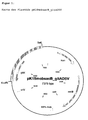
- the plasmid was named pK18mobsacB_gltAD5V and is in FIG. 1 shown.
- the mutation gltAD5V is to be introduced into the strain Corynebacterium glutamicum DM1797.
- Strain DM1797 is an aminoethylcysteine-resistant mutant of Corynebacterium glutamicum ATCC13032 and in the PCT / EP / 2005/012417 described. It is under the name DSM16833 deposited with the German Collection of Microorganisms and Cell Cultures (DSMZ, Braunschweig, Germany).
- the vector pK18mobsacB_gltAD5V described in Example 2 was constructed according to the protocol Schfer et al. (Journal of Microbiology 172: 1663-1666 (1990 )) were transferred into the C. glutamicum strain DM1797 by conjugation.
- the vector can not self-replicate in DM1797 and will only be retained in the cell if it is integrated into the chromosome as a consequence of a recombination event.
- transconjugants ie clones with integrated pK18mobsacB_gltAD5V. The selection of transconjugants, ie clones with integrated pK18mobsacB_gltAD5V, was carried out by plating out the conjugation mixture on LB agar supplemented with 25 mg / l kanamycin and 50 mg / l nalidixic acid. Kanamycin-resistant transconjugants were then streaked on kanamycin (25 mg / L) supplemented LB agar plates and incubated for 24 hours at 33 ° C.
- the clones were cultured unsupported in LB liquid medium for 30 hours, then streaked on LB agar supplemented with 10% sucrose for 24 hours Incubated at 33 ° C.
- the plasmid pK18mobsacB_gltAD5V contains, in addition to the kanamycin resistance gene, a copy of the sacB gene coding for the Levan sucrase from Bacillus subtilis.
- the sucrose-inducible expression of the sacB gene results in the formation of levan sucrase, which catalyzes the synthesis of the C. glutamicum toxic product levan.
- On sucrose-supplemented LB agar therefore, only those clones grow in which the integrated pK18mobsacB_gltAD5V was excised as a result of a second recombination event.
- the allelic exchange or the incorporation of the mutation takes place or the original copy remains in the chromosome of the host.
- a clone was sought in which the desired exchange, i. H. the incorporation of the gltAD5V mutation had occurred.
- the sequence of the gltA gene was determined from 10 clones with the phenotype "growth in the presence of sucrose” and "non-growth in the presence of kanamycin". In this way, a clone was identified that carries the mutation gltAD5V. This strain was designated as C. glutamicum DM1797_gltAD5V.
- the strain DM1797_gltAD5V obtained in Example 3 and the starting strain DM1797 were cultured in a nutrient medium suitable for the production of lysine and the lysine content in the culture supernatant was determined.
- the clones were initially propagated on brain-heart agar plates (Merck, Darmstadt, Germany) for 24 hours at 33 ° C. Starting from these agar plate cultures, one preculture was in each case inoculated (10 ml of medium in the 100 ml Erlenmeyer flask). The medium MM was used as the medium for the precultures. The precultures were incubated for 24 hours at 33 ° C and 240 rpm on a shaker. Of these precultures, one main culture each was inoculated so that the initial OD (660 nm) of the main culture was 0.1 OD. The medium MM was also used for the main cultures.
- CSL Corn Steep Liquor
- MOPS morpholinopropanesulfonic acid
- saline solution was adjusted to pH 7 with ammonia water and autoclaved. Subsequently, the sterile substrate and vitamin solutions as well as the dry autoclaved CaCO 3 were added.
- Culturing was done in volumes of 10 ml contained in 100 ml baffled Erlenmeyer flasks. The temperature was 33 ° C, the number of revolutions was 250 rpm and the humidity was 80%.
- the optical density (OD) at a measuring wavelength of 660 nm was determined with the Biomek 1000 (Beckmann Instruments GmbH, Kunststoff). The amount of lysine formed was determined using an amino acid analyzer from Eppendorf-BioTronik (Hamburg, Germany) by ion exchange chromatography and post-column derivatization with ninhydrin detection. Table 1 tribe OD (660) Lysine HCl (g / l) DM1797 11.9 4.8 DM1797_gltAD5V 11.2 5.3
- the mutation gltAD5V is to be introduced into the strain Brevibacterium lactofermentum FERM BP-1763.
- Strain FERM BP-1763 is a mycophenolic acid-resistant valine producer ( US-A-5,188,948 ). He is auxotrophic for L-isoleucine and L-methionine.
- the vector pK18mobsacB_gltAD5V described in Example 2 was constructed according to the protocol Schfer et al. (Journal of Microbiology 172: 1663-1666 (1990 )) are transferred into strain FERM-BP-1763 by conjugation.
- the vector can not self-replicate in FERM BP-1763 and will only be retained in the cell if it is integrated into the chromosome as a result of a recombination event.
- transconjugants ie clones with integrated pK18mobsacB gltAD5V. The selection of transconjugants, ie clones with integrated pK18mobsacB gltAD5V, was carried out by plating out the conjugation mixture on LB agar supplemented with 25 mg / l kanamycin and 50 mg / l nalidixic acid. Kanamycin-resistant transconjugants were then streaked on kanamycin (25 mg / L) supplemented LB agar plates and incubated for 24 hours at 33 ° C.
- the clones were cultured unsupported in LB liquid medium for 30 hours, then on LB agar supplemented with 10% sucrose was streaked and incubated at 33 ° C for 24 hours.
- the plasmid pK18mobsacB_gltAD5V contains, in addition to the kanamycin resistance gene, a copy of the sacB gene coding for the Levan sucrase from Bacillus subtilis.
- the sucrose inducible expression of the sacB gene results in the formation of levan sucrase, which catalyzes the synthesis of the C. glutamicum toxic product Levan.
- On sucrose-supplemented LB agar therefore, only those clones grow in which the integrated pK18mobsacB_gltAD5V was excised as a result of a second recombination event.
- the excision involves allelic replacement or incorporation of the mutation, or the original copy remains in the chromosome of the host.
- a clone was sought in which the desired exchange, i. H. the incorporation of the gltAD5V mutation had occurred.
- the sequence of the gltA gene was determined from 10 clones with the phenotype "growth in the presence of sucrose” and "non-growth in the presence of kanamycin". In this way, a clone was identified that carries the mutation gltAD5V. This strain was designated as C. glutamicum FERM BP-1763_gltAD5V.
- the strain FERM BP-1763_gltAD5V obtained in Example 5 and the starting strain FERM BP-1763 were cultured in a nutrient medium suitable for the production of valine, and the valine content in the culture supernatant was determined.
- the clones were initially propagated on brain-heart agar plates (Merck, Darmstadt, Germany) for 24 hours at 33 ° C. Based on these agar plate cultures was ever a preculture inoculated (10 ml of medium in 100 ml Erlenmeyer flask).
- the medium CgIII (2.5 g / l NaCl, 10 g / l bacto-peptone, 10 g / l bacto-yeast extract, pH 7.4, 20 g / l glucose (separately autoclaved) was used for the precultures
- the precultures were 24 hours incubated at 33 ° C. and 240 rpm on a shaker, one of which was inoculated into each of the precultures so that the initial OD (660 nm) of the main culture was 0.1 OD.
- Medium MM was also used for the main cultures.
- CSL Corn Steep Liquor
- MOPS morpholinopropanesulfonic acid
- saline solution was adjusted to pH 7 with ammonia water and autoclaved. Subsequently, the sterile substrate and vitamin solutions as well as the dry autoclaved CaCO 3 were added.
- Culturing was done in volumes of 10 ml contained in 100 ml baffled Erlenmeyer flasks. The temperature was 33 ° C, the number of revolutions was 250 rpm and the humidity was 80%.
- the optical density (OD) at a measuring wavelength of 660 nm was determined with the Biomek 1000 (Beckmann Instruments GmbH, Kunststoff). The amount of valine formed was determined using an amino acid analyzer from Eppendorf-BioTronik (Hamburg, Germany) by ion exchange chromatography and post-column derivatization with ninhydrin detection. Table 2 tribe OD (660) Valine (g / l) FERM BP-1763 8.4 11.9 FERM BP-1763_dltAD5V 7.8 12.6
- FIG. 1 Map of the plasmid pK18mobsacB_gltAD5V
Landscapes
- Chemical & Material Sciences (AREA)
- Organic Chemistry (AREA)
- Life Sciences & Earth Sciences (AREA)
- Engineering & Computer Science (AREA)
- Zoology (AREA)
- Health & Medical Sciences (AREA)
- Wood Science & Technology (AREA)
- Bioinformatics & Cheminformatics (AREA)
- Genetics & Genomics (AREA)
- General Health & Medical Sciences (AREA)
- General Engineering & Computer Science (AREA)
- Biochemistry (AREA)
- Microbiology (AREA)
- Biotechnology (AREA)
- Biomedical Technology (AREA)
- Molecular Biology (AREA)
- Medicinal Chemistry (AREA)
- Chemical Kinetics & Catalysis (AREA)
- General Chemical & Material Sciences (AREA)
- Preparation Of Compounds By Using Micro-Organisms (AREA)
- Micro-Organisms Or Cultivation Processes Thereof (AREA)
- Enzymes And Modification Thereof (AREA)
Priority Applications (1)
| Application Number | Priority Date | Filing Date | Title |
|---|---|---|---|
| PL07786778T PL2041276T3 (pl) | 2006-07-13 | 2007-06-20 | Sposób wytwarzania L-aminokwasów za pomocą mutantów genu gltA kodującego syntazę cytranianową |
Applications Claiming Priority (2)
| Application Number | Priority Date | Filing Date | Title |
|---|---|---|---|
| DE102006032634A DE102006032634A1 (de) | 2006-07-13 | 2006-07-13 | Verfahren zur Herstellung von L-Aminosäuren |
| PCT/EP2007/056153 WO2008006680A2 (de) | 2006-07-13 | 2007-06-20 | Verfahren zur herstellung von l-aminosäuren mittels mutanten des glta-gens kodierend für citratsynthase |
Publications (2)
| Publication Number | Publication Date |
|---|---|
| EP2041276A2 EP2041276A2 (de) | 2009-04-01 |
| EP2041276B1 true EP2041276B1 (de) | 2012-02-29 |
Family
ID=38825283
Family Applications (1)
| Application Number | Title | Priority Date | Filing Date |
|---|---|---|---|
| EP07786778A Active EP2041276B1 (de) | 2006-07-13 | 2007-06-20 | Verfahren zur herstellung von l-aminosäuren mittels mutanten des glta-gens kodierend für citratsynthase |
Country Status (8)
| Country | Link |
|---|---|
| US (3) | US7785840B2 (da) |
| EP (1) | EP2041276B1 (da) |
| AT (1) | ATE547516T1 (da) |
| DE (1) | DE102006032634A1 (da) |
| DK (1) | DK2041276T3 (da) |
| ES (1) | ES2382363T3 (da) |
| PL (1) | PL2041276T3 (da) |
| WO (1) | WO2008006680A2 (da) |
Cited By (1)
| Publication number | Priority date | Publication date | Assignee | Title |
|---|---|---|---|---|
| RU2805253C1 (ru) * | 2020-01-30 | 2023-10-13 | СиДжей ЧеилДжеданг Корпорейшн | Новый модифицированный полипептид с ослабленной активностью цитратсинтазы и способ получения L-аминокислоты с его использованием |
Families Citing this family (36)
| Publication number | Priority date | Publication date | Assignee | Title |
|---|---|---|---|---|
| US9289253B2 (en) | 2006-02-27 | 2016-03-22 | Biomet Manufacturing, Llc | Patient-specific shoulder guide |
| US20150335438A1 (en) | 2006-02-27 | 2015-11-26 | Biomet Manufacturing, Llc. | Patient-specific augments |
| US8407067B2 (en) | 2007-04-17 | 2013-03-26 | Biomet Manufacturing Corp. | Method and apparatus for manufacturing an implant |
| US9113971B2 (en) | 2006-02-27 | 2015-08-25 | Biomet Manufacturing, Llc | Femoral acetabular impingement guide |
| US9907659B2 (en) | 2007-04-17 | 2018-03-06 | Biomet Manufacturing, Llc | Method and apparatus for manufacturing an implant |
| US9173661B2 (en) | 2006-02-27 | 2015-11-03 | Biomet Manufacturing, Llc | Patient specific alignment guide with cutting surface and laser indicator |
| US9795399B2 (en) | 2006-06-09 | 2017-10-24 | Biomet Manufacturing, Llc | Patient-specific knee alignment guide and associated method |
| KR100930203B1 (ko) * | 2008-01-28 | 2009-12-07 | 씨제이제일제당 (주) | 개량된 프로모터 및 이를 이용한 l-라이신의 생산 방법 |
| US8647642B2 (en) | 2008-09-18 | 2014-02-11 | Aviex Technologies, Llc | Live bacterial vaccines resistant to carbon dioxide (CO2), acidic PH and/or osmolarity for viral infection prophylaxis or treatment |
| CN101899483B (zh) * | 2010-07-28 | 2011-07-27 | 无锡晶海氨基酸有限公司 | 一种降低l-缬氨酸发酵废液中铵氮含量的方法 |
| US9968376B2 (en) | 2010-11-29 | 2018-05-15 | Biomet Manufacturing, Llc | Patient-specific orthopedic instruments |
| JP2015013812A (ja) * | 2011-11-01 | 2015-01-22 | 味の素株式会社 | 植物ウイルスの感染抑制剤およびそれを用いた植物ウイルス感染抑制方法 |
| DE102012024435A1 (de) | 2012-12-14 | 2014-07-10 | Forschungszentrum Jülich GmbH | Verfahren zur Identifizierung einer Zelle mit gegenüber ihrem Wildtyp erhöhten intrazellulären Konzentration eines bestimmten Metaboliten, wobei die Veränderung der Zelle durch Rekombi-neering erreicht wird, sowie ein Verfahren zur Herstellung einer gegenüber ihrem Wildtyp genetisch veränderten Produktionszelle mit optimierter Produktion eines bestimmten Metaboliten, ein Verfahren zur Herstellung dieses Metaboliten, sowie dafür geeignete Nukleinsäuren |
| US9839438B2 (en) | 2013-03-11 | 2017-12-12 | Biomet Manufacturing, Llc | Patient-specific glenoid guide with a reusable guide holder |
| DK2865275T3 (da) | 2013-10-24 | 2020-05-18 | Evonik Operations Gmbh | Foderstofadditiv indeholdende L-aminosyre |
| ES2786108T3 (es) * | 2013-10-24 | 2020-10-08 | Evonik Degussa Gmbh | Aditivo para piensos para animales que contiene L-aminoácido |
| KR101776375B1 (ko) | 2015-03-18 | 2017-09-08 | 씨제이제일제당 (주) | 피루브산 디하이드로게나아제 변이체, 이를 포함하는 미생물 및 이를 이용한 l-아미노산 생산 방법 |
| US10676723B2 (en) | 2015-05-11 | 2020-06-09 | David Gordon Bermudes | Chimeric protein toxins for expression by therapeutic bacteria |
| US11129906B1 (en) | 2016-12-07 | 2021-09-28 | David Gordon Bermudes | Chimeric protein toxins for expression by therapeutic bacteria |
| US11180535B1 (en) | 2016-12-07 | 2021-11-23 | David Gordon Bermudes | Saccharide binding, tumor penetration, and cytotoxic antitumor chimeric peptides from therapeutic bacteria |
| DE102017004751A1 (de) | 2017-05-18 | 2018-11-22 | Forschungszentrum Jülich GmbH | Pyruvatcarboxylase und für die Pyruvatcarboxylase kodierende DNA, Plasmid enthaltend die DNA, sowie Mikroorganismus zur Produktion und verfahren zur Herstellung von Produkten, deren Bioynthese Oxalacetat als Vorstufe beeinhaltet und Chromosom |
| US11634736B2 (en) | 2018-02-01 | 2023-04-25 | Inv Nylon Chemicals Americas, Llc | Methods and materials for the biosynthesis of compounds involved in the tricarboxylic acid cycle and derivatives and compounds related thereto |
| KR101915433B1 (ko) * | 2018-02-13 | 2018-11-05 | 씨제이제일제당 (주) | 시트레이트 신타아제 (Citrate synthase)의 활성이 약화된 변이형 폴리펩타이드 및 이를 이용한 L-아미노산 생산방법 |
| KR102205717B1 (ko) * | 2019-04-05 | 2021-01-22 | 씨제이제일제당 주식회사 | 신규 l-트립토판 배출 단백질 변이체 및 이를 이용한 l-트립토판을 생산하는 방법 |
| KR102285951B1 (ko) | 2020-01-30 | 2021-08-04 | 씨제이제일제당 주식회사 | 시트레이트 신타아제의 활성이 약화된 신규한 변이형 폴리펩티드 및 이를 이용한 l-아미노산 생산 방법 |
| WO2022050527A1 (ko) * | 2020-09-03 | 2022-03-10 | 대상 주식회사 | L-라이신 생산능이 향상된 코리네박테리움 글루타미쿰 변이주 및 이를 이용한 l-라이신의 생산 방법 |
| WO2022050524A1 (ko) * | 2020-09-03 | 2022-03-10 | 대상 주식회사 | L-라이신 생산능이 향상된 코리네박테리움 글루타미쿰 변이주 및 이를 이용한 l-라이신의 생산 방법 |
| KR102277034B1 (ko) * | 2021-01-29 | 2021-07-13 | 씨제이제일제당 (주) | 신규한 dahp 신타아제 변이체 및 이를 이용한 l-라이신 생산 방법 |
| KR102525074B1 (ko) * | 2021-03-10 | 2023-04-24 | 씨제이제일제당 주식회사 | 신규한 시트레이트 신타아제 변이체 및 이를 이용한 o-아세틸-l-호모세린 또는 l-메티오닌 생산 방법 |
| KR102525072B1 (ko) * | 2021-03-10 | 2023-04-24 | 씨제이제일제당 주식회사 | 신규한 시트레이트 신타아제 변이체 및 이를 이용한 l-아미노산 생산 방법 |
| KR102525073B1 (ko) * | 2021-03-10 | 2023-04-24 | 씨제이제일제당 주식회사 | 신규한 시트레이트 신타아제 변이체 및 이를 이용한 l-발린 생산 방법 |
| CA3217149A1 (en) * | 2021-04-29 | 2022-11-03 | Young Ju Lee | Corynebacterium glutamicum variant having improved l-lysine production ability, and method for producing l-lysine using same |
| CN113249347B (zh) * | 2021-07-14 | 2021-11-12 | 中国科学院天津工业生物技术研究所 | 丙酮酸脱氢酶的突变体及其用于生产l-氨基酸的方法 |
| KR102878842B1 (ko) * | 2022-10-19 | 2025-10-31 | 씨제이제일제당 주식회사 | 변이형 리보뉴클레아제 활성 조절 단백질 및 이를 이용한 l-발린 생산 방법 |
| KR20240152455A (ko) * | 2023-04-12 | 2024-10-22 | 씨제이제일제당 (주) | 피루브산 탈수소효소 복합체 디히드로리포일리신-잔기 아세틸트랜스퍼라제의 활성이 증가된 미생물 및 이를 이용한 l-아미노산 생산 방법 |
| CN117327677B (zh) * | 2023-09-26 | 2024-09-20 | 江南大学 | 天冬氨酸激酶突变体及其应用 |
Family Cites Families (51)
| Publication number | Priority date | Publication date | Assignee | Title |
|---|---|---|---|---|
| CH286123A (fr) | 1952-05-08 | 1952-10-15 | Spreter Victor | Bain pour le dépôt par voie galvanique d'alliages d'or. |
| DE3584848D1 (de) | 1984-04-04 | 1992-01-23 | Ajinomoto Kk | Zusammengesetztes transduzierbares plasmid. |
| EP0167132B1 (en) | 1984-06-29 | 1992-01-02 | Ajinomoto Co., Inc. | Process for producing l-isoleucine by fermentation |
| JPH0655149B2 (ja) | 1985-03-12 | 1994-07-27 | 協和醗酵工業株式会社 | L―リジンの製造法 |
| US5250434A (en) | 1987-03-27 | 1993-10-05 | Ajinomoto Co., Inc. | Microorganisms for production of glutamic acid |
| US5188948A (en) | 1987-04-16 | 1993-02-23 | Ajinomoto Co., Inc. | Process for producing L-valine by fermentation |
| GB2223754B (en) | 1988-09-12 | 1992-07-22 | Degussa | Dna encoding phosphoenolpyruvate carboxylase |
| JP2817157B2 (ja) | 1989-01-13 | 1998-10-27 | 味の素株式会社 | 発酵法によるl‐アミノ酸の製造法 |
| DE3943117A1 (de) | 1989-12-27 | 1991-07-04 | Forschungszentrum Juelich Gmbh | Verfahren zur fermentativen herstellung von aminosaeure, insbesondere l-lysin, dafuer geeignete mikroorganismen und rekombinante dna |
| JP2990735B2 (ja) | 1990-04-20 | 1999-12-13 | 味の素株式会社 | L―リジンの発酵的製造法 |
| FR2665711B1 (fr) | 1990-08-08 | 1993-08-13 | Centre Nat Rech Scient | Integron de corynebacterie, procede de transformation d'une corynebacterie par ledit integron et corynebacterie obtenue. |
| JP3023615B2 (ja) | 1990-08-30 | 2000-03-21 | 協和醗酵工業株式会社 | 発酵法によるl―トリプトファンの製造法 |
| EP0477000B1 (en) | 1990-09-18 | 1996-02-07 | Kyowa Hakko Kogyo Co., Ltd. | Process for producing L-valine |
| DE4100920A1 (de) | 1991-01-15 | 1992-07-16 | Degussa | Wirkstoffzubereitung zur oralen verabreichung an wiederkaeuer |
| FR2679569B1 (fr) | 1991-07-26 | 1995-05-19 | Eurolysine | Procede de separation de la lysine sous la forme de solutions aqueuses et utilisation de ces solutions pour l'alimentation animale. |
| DE4130867A1 (de) | 1991-09-17 | 1993-03-18 | Degussa | Verfahren zur fermentativen herstellung von aminosaeuren |
| DE4130868C2 (de) | 1991-09-17 | 1994-10-13 | Degussa | Tierfuttermittelsupplement auf der Basis einer Aminosäure und Verfahren zu dessen Herstellung |
| DE4201085A1 (de) * | 1992-01-17 | 1993-07-22 | Degussa | Verfahren zur erhoehung der leistungsfaehigkeit l-lysin ausscheidender coryneformer bakterien |
| DE19547361A1 (de) | 1995-12-19 | 1997-06-26 | Degussa | Verfahren zur Herstellung von L-Aminosäuren durch Fermentation |
| JP4035855B2 (ja) | 1996-06-05 | 2008-01-23 | 味の素株式会社 | L−リジンの製造法 |
| SK285201B6 (sk) | 1996-12-05 | 2006-08-03 | Ajinomoto Co., Inc. | Rekombinantná DNA, autonómne reprodukovaná v bunkách koryneformnej baktérie, koryneformná baktéria a spôsob výroby L-lyzínu, vektor pVK7 |
| RU2231552C2 (ru) | 1997-10-04 | 2004-06-27 | Форшунгсцентрум Юлих Гмбх | Способ микробиологического получения аминокислот семейства аспартатов и/или глутаматов и используемые в способе средства |
| US5990350A (en) | 1997-12-16 | 1999-11-23 | Archer Midland Company | Process for making granular L-lysine |
| CN1336958A (zh) | 1998-12-23 | 2002-02-20 | 麻省理工学院 | 来自谷氨酸棒杆菌的丙酮酸羧化酶 |
| JP2000262288A (ja) | 1999-03-16 | 2000-09-26 | Ajinomoto Co Inc | コリネ型細菌の温度感受性プラスミド |
| EP1172437B1 (en) | 1999-04-19 | 2011-05-25 | Kyowa Hakko Bio Co., Ltd. | Novel desensitized aspartokinase |
| CN1236690C (zh) | 1999-06-23 | 2006-01-18 | 德古萨股份公司 | 含有赖氨酸的含水动物饲料添加剂及其生产方法 |
| US6861246B2 (en) | 1999-07-07 | 2005-03-01 | Degussa Ag | L-lysine-producing corynebacteria and process for the preparation of lysine |
| JP4623825B2 (ja) | 1999-12-16 | 2011-02-02 | 協和発酵バイオ株式会社 | 新規ポリヌクレオチド |
| US6927046B1 (en) | 1999-12-30 | 2005-08-09 | Archer-Daniels-Midland Company | Increased lysine production by gene amplification using coryneform bacteria |
| DE10032350A1 (de) | 2000-07-04 | 2002-01-24 | Degussa | Neue für das mdhA-Gen kodierende Nukleotidsequenzen |
| US6965021B2 (en) | 2000-10-13 | 2005-11-15 | Archer-Daniels-Midland Company | Feedback-resistant pyruvate carboxylase gene from corynebacterium |
| EP1239040A3 (de) | 2001-02-16 | 2003-01-08 | Degussa AG | Mutationen im rpoB-Gen L-Lysin produzierender Corynebacterium glutamicum-Stämme und Verfahren zur Herstellung von L-Lysin |
| DE10109996A1 (de) | 2001-03-01 | 2002-09-05 | Basf Ag | Verfahren zur Veränderung des Genoms von gram-positiven Bakterien mit einem neuen konditional negativ dominanten Markergen |
| DE10131148A1 (de) | 2001-06-28 | 2003-01-16 | I P L Internat Pharmaceutics L | Xenogene Oligo- oder/und Polyribonukleotide als Mittel zur Behandlung von malignen Tumoren |
| DE10137815A1 (de) | 2001-08-06 | 2003-02-27 | Basf Ag | Verfahren zur Herstellung eines marker-freien mutierten Zielorganismus sowie dafür geeignete Plasmidvektoren |
| US7160711B2 (en) | 2001-08-06 | 2007-01-09 | Degussa Ag | Coryneform bacteria which produce chemical compounds I |
| CA2456416A1 (en) | 2001-08-06 | 2003-02-20 | Degussa Ag | Coryneform bacteria which produce chemical compounds ii |
| US6844176B1 (en) | 2001-10-16 | 2005-01-18 | Degussa Ag | Alleles of the lysC gene from corynebacteria |
| JP2003219807A (ja) | 2002-01-25 | 2003-08-05 | Ajinomoto Co Inc | L−リジンを主成分とする造粒乾燥物 |
| US20040115304A1 (en) | 2002-12-16 | 2004-06-17 | Frank Dubner | Feesdstuffs additives containing L-lysine with improved abrasion resistance, and process for their production |
| US7094106B2 (en) | 2003-03-10 | 2006-08-22 | Matsushita Electric Works, Ltd. | Adaptor for memory card |
| DE10339847A1 (de) | 2003-08-29 | 2005-03-24 | Degussa Ag | Verfahren zur Herstellung von L-Lysin |
| WO2005021772A1 (en) | 2003-08-29 | 2005-03-10 | Degussa Ag | Process for the preparation of l-lysine |
| KR101052573B1 (ko) | 2004-04-02 | 2011-07-29 | 씨제이제일제당 (주) | 균일한 함량을 갖는 과립형 동물 사료 첨가제를 제조하는 방법 및 그에 의하여 제조되는 과립형 동물 사료 첨가제 |
| DE102005032429A1 (de) | 2005-01-19 | 2006-07-20 | Degussa Ag | Allele des mqo-Gens aus coryneformen Bakterien |
| US7214526B2 (en) | 2005-01-19 | 2007-05-08 | Degussa Ag | Alleles of the mqo gene from coryneform bacteria |
| DE102005013676A1 (de) | 2005-03-24 | 2006-09-28 | Degussa Ag | Allele des zwf-Gens aus coryneformen Bakterien |
| DE102005045301A1 (de) | 2005-09-22 | 2007-04-05 | Degussa Ag | Verfahren zur Herstellung von organisch-chemischen Verbindungen unter Verwendung coryneformer Bakterien |
| DE102006016158A1 (de) | 2005-10-08 | 2007-04-12 | Degussa Ag | L-Lysin enthaltende Futtermitteladditive |
| US20070082031A1 (en) | 2005-10-08 | 2007-04-12 | Hermann Lotter | L-lysine-containing feed additives |
-
2006
- 2006-07-13 DE DE102006032634A patent/DE102006032634A1/de not_active Withdrawn
-
2007
- 2007-06-20 ES ES07786778T patent/ES2382363T3/es active Active
- 2007-06-20 DK DK07786778.6T patent/DK2041276T3/da active
- 2007-06-20 PL PL07786778T patent/PL2041276T3/pl unknown
- 2007-06-20 EP EP07786778A patent/EP2041276B1/de active Active
- 2007-06-20 AT AT07786778T patent/ATE547516T1/de active
- 2007-06-20 WO PCT/EP2007/056153 patent/WO2008006680A2/de not_active Ceased
- 2007-07-13 US US11/777,423 patent/US7785840B2/en not_active Expired - Fee Related
-
2009
- 2009-05-15 US US12/466,466 patent/US8119372B2/en active Active
-
2010
- 2010-03-31 US US12/750,968 patent/US8202706B2/en not_active Expired - Fee Related
Cited By (1)
| Publication number | Priority date | Publication date | Assignee | Title |
|---|---|---|---|---|
| RU2805253C1 (ru) * | 2020-01-30 | 2023-10-13 | СиДжей ЧеилДжеданг Корпорейшн | Новый модифицированный полипептид с ослабленной активностью цитратсинтазы и способ получения L-аминокислоты с его использованием |
Also Published As
| Publication number | Publication date |
|---|---|
| WO2008006680A8 (de) | 2008-09-25 |
| US20100261257A1 (en) | 2010-10-14 |
| EP2041276A2 (de) | 2009-04-01 |
| WO2008006680A3 (de) | 2008-07-03 |
| PL2041276T3 (pl) | 2012-07-31 |
| US8202706B2 (en) | 2012-06-19 |
| WO2008006680A2 (de) | 2008-01-17 |
| US7785840B2 (en) | 2010-08-31 |
| DK2041276T3 (da) | 2012-05-29 |
| US20090280542A1 (en) | 2009-11-12 |
| DE102006032634A1 (de) | 2008-01-17 |
| ATE547516T1 (de) | 2012-03-15 |
| ES2382363T3 (es) | 2012-06-07 |
| US20080014618A1 (en) | 2008-01-17 |
| US8119372B2 (en) | 2012-02-21 |
Similar Documents
| Publication | Publication Date | Title |
|---|---|---|
| EP2041276B1 (de) | Verfahren zur herstellung von l-aminosäuren mittels mutanten des glta-gens kodierend für citratsynthase | |
| EP2276845B1 (de) | Verfahren zur herstellung von l-aminosäuren | |
| EP2726615B1 (de) | Varianten des promotors des für die glyzerinaldehyd-3-phosphat-dehydrogenase kodierenden gap-gens | |
| EP2061881B1 (de) | Allele des rel-gens aus coryneformen bakterien | |
| EP1824968B1 (de) | Allele des gnd-gens aus coryneformen bakterien | |
| EP2026662A2 (de) | Verfahren zur herstellung eines l-lysin enthaltende futtermitteladditives | |
| EP2078085B1 (de) | Allele des prpd1-gens aus coryneformen bakterien | |
| DE102004013503A1 (de) | Verfahren zur Herstellung von L-Aminosäuren unter Verwendung coryneformer Bakterien | |
| EP2089525B1 (de) | Allele des oxyr-gens aus coryneformen bakterien | |
| DE102004009454A1 (de) | Verfahren zur fermentativen Herstellung von L-Aminosäuren unter Verwendung von rekombinanten Mikroorganismen | |
| WO2006100177A1 (de) | Mutierte allele des zwg-gens (g6pdh) aus coryneformen bakterien zur gesteigerten lysin produktion | |
| EP1902067B1 (de) | Allele des opca-gens aus coryneformen bakterien | |
| DE10144493A1 (de) | Verfahren zur fermentativen Herstellung von L-Aminosäuren unter Verwendung coyneformer Bakterien | |
| EP2694536B1 (de) | Mikroorganismus und verfahren zur fermentativen herstellung einer organisch-chemischen verbindung | |
| EP1767616A2 (de) | Verfahren zur Herstellung von L-Aminosäuren oder Ketosäuren unter Verwendung coryneformer Bakterien mit abgeschwächter aceE (pdhA) Expression | |
| EP1841859B1 (de) | Allele des mqo-gens aus coryneformen bakterien | |
| EP1861493B1 (de) | Mutierte allele des zwg-gens (g6pdh) aus coryneformen bakterien zur gesteigerten lysin produktion | |
| WO2015165743A1 (de) | Verfahren zur produktion von l-lysin unter verwendung eines alkaliphilen bakteriums |
Legal Events
| Date | Code | Title | Description |
|---|---|---|---|
| PUAI | Public reference made under article 153(3) epc to a published international application that has entered the european phase |
Free format text: ORIGINAL CODE: 0009012 |
|
| 17P | Request for examination filed |
Effective date: 20081223 |
|
| AK | Designated contracting states |
Kind code of ref document: A2 Designated state(s): AT BE BG CH CY CZ DE DK EE ES FI FR GB GR HU IE IS IT LI LT LU LV MC MT NL PL PT RO SE SI SK TR |
|
| AX | Request for extension of the european patent |
Extension state: AL BA HR MK RS |
|
| 17Q | First examination report despatched |
Effective date: 20090813 |
|
| DAX | Request for extension of the european patent (deleted) | ||
| GRAP | Despatch of communication of intention to grant a patent |
Free format text: ORIGINAL CODE: EPIDOSNIGR1 |
|
| GRAJ | Information related to disapproval of communication of intention to grant by the applicant or resumption of examination proceedings by the epo deleted |
Free format text: ORIGINAL CODE: EPIDOSDIGR1 |
|
| GRAP | Despatch of communication of intention to grant a patent |
Free format text: ORIGINAL CODE: EPIDOSNIGR1 |
|
| GRAS | Grant fee paid |
Free format text: ORIGINAL CODE: EPIDOSNIGR3 |
|
| GRAA | (expected) grant |
Free format text: ORIGINAL CODE: 0009210 |
|
| AK | Designated contracting states |
Kind code of ref document: B1 Designated state(s): AT BE BG CH CY CZ DE DK EE ES FI FR GB GR HU IE IS IT LI LT LU LV MC MT NL PL PT RO SE SI SK TR |
|
| REG | Reference to a national code |
Ref country code: GB Ref legal event code: FG4D Free format text: NOT ENGLISH Ref country code: CH Ref legal event code: EP |
|
| REG | Reference to a national code |
Ref country code: AT Ref legal event code: REF Ref document number: 547516 Country of ref document: AT Kind code of ref document: T Effective date: 20120315 |
|
| REG | Reference to a national code |
Ref country code: IE Ref legal event code: FG4D Free format text: LANGUAGE OF EP DOCUMENT: GERMAN |
|
| REG | Reference to a national code |
Ref country code: DE Ref legal event code: R096 Ref document number: 502007009385 Country of ref document: DE Effective date: 20120426 |
|
| REG | Reference to a national code |
Ref country code: NL Ref legal event code: T3 |
|
| REG | Reference to a national code |
Ref country code: DK Ref legal event code: T3 |
|
| REG | Reference to a national code |
Ref country code: ES Ref legal event code: FG2A Ref document number: 2382363 Country of ref document: ES Kind code of ref document: T3 Effective date: 20120607 |
|
| REG | Reference to a national code |
Ref country code: GR Ref legal event code: EP Ref document number: 20120401231 Country of ref document: GR Effective date: 20120614 |
|
| LTIE | Lt: invalidation of european patent or patent extension |
Effective date: 20120229 |
|
| PG25 | Lapsed in a contracting state [announced via postgrant information from national office to epo] |
Ref country code: IS Free format text: LAPSE BECAUSE OF FAILURE TO SUBMIT A TRANSLATION OF THE DESCRIPTION OR TO PAY THE FEE WITHIN THE PRESCRIBED TIME-LIMIT Effective date: 20120629 Ref country code: LT Free format text: LAPSE BECAUSE OF FAILURE TO SUBMIT A TRANSLATION OF THE DESCRIPTION OR TO PAY THE FEE WITHIN THE PRESCRIBED TIME-LIMIT Effective date: 20120229 |
|
| REG | Reference to a national code |
Ref country code: PL Ref legal event code: T3 |
|
| PG25 | Lapsed in a contracting state [announced via postgrant information from national office to epo] |
Ref country code: LV Free format text: LAPSE BECAUSE OF FAILURE TO SUBMIT A TRANSLATION OF THE DESCRIPTION OR TO PAY THE FEE WITHIN THE PRESCRIBED TIME-LIMIT Effective date: 20120229 Ref country code: FI Free format text: LAPSE BECAUSE OF FAILURE TO SUBMIT A TRANSLATION OF THE DESCRIPTION OR TO PAY THE FEE WITHIN THE PRESCRIBED TIME-LIMIT Effective date: 20120229 Ref country code: PT Free format text: LAPSE BECAUSE OF FAILURE TO SUBMIT A TRANSLATION OF THE DESCRIPTION OR TO PAY THE FEE WITHIN THE PRESCRIBED TIME-LIMIT Effective date: 20120629 |
|
| REG | Reference to a national code |
Ref country code: IE Ref legal event code: FD4D |
|
| PG25 | Lapsed in a contracting state [announced via postgrant information from national office to epo] |
Ref country code: CY Free format text: LAPSE BECAUSE OF FAILURE TO SUBMIT A TRANSLATION OF THE DESCRIPTION OR TO PAY THE FEE WITHIN THE PRESCRIBED TIME-LIMIT Effective date: 20120229 |
|
| PG25 | Lapsed in a contracting state [announced via postgrant information from national office to epo] |
Ref country code: CZ Free format text: LAPSE BECAUSE OF FAILURE TO SUBMIT A TRANSLATION OF THE DESCRIPTION OR TO PAY THE FEE WITHIN THE PRESCRIBED TIME-LIMIT Effective date: 20120229 Ref country code: SI Free format text: LAPSE BECAUSE OF FAILURE TO SUBMIT A TRANSLATION OF THE DESCRIPTION OR TO PAY THE FEE WITHIN THE PRESCRIBED TIME-LIMIT Effective date: 20120229 Ref country code: RO Free format text: LAPSE BECAUSE OF FAILURE TO SUBMIT A TRANSLATION OF THE DESCRIPTION OR TO PAY THE FEE WITHIN THE PRESCRIBED TIME-LIMIT Effective date: 20120229 Ref country code: EE Free format text: LAPSE BECAUSE OF FAILURE TO SUBMIT A TRANSLATION OF THE DESCRIPTION OR TO PAY THE FEE WITHIN THE PRESCRIBED TIME-LIMIT Effective date: 20120229 Ref country code: IE Free format text: LAPSE BECAUSE OF FAILURE TO SUBMIT A TRANSLATION OF THE DESCRIPTION OR TO PAY THE FEE WITHIN THE PRESCRIBED TIME-LIMIT Effective date: 20120229 Ref country code: SE Free format text: LAPSE BECAUSE OF FAILURE TO SUBMIT A TRANSLATION OF THE DESCRIPTION OR TO PAY THE FEE WITHIN THE PRESCRIBED TIME-LIMIT Effective date: 20120229 |
|
| PG25 | Lapsed in a contracting state [announced via postgrant information from national office to epo] |
Ref country code: SK Free format text: LAPSE BECAUSE OF FAILURE TO SUBMIT A TRANSLATION OF THE DESCRIPTION OR TO PAY THE FEE WITHIN THE PRESCRIBED TIME-LIMIT Effective date: 20120229 |
|
| PLBE | No opposition filed within time limit |
Free format text: ORIGINAL CODE: 0009261 |
|
| STAA | Information on the status of an ep patent application or granted ep patent |
Free format text: STATUS: NO OPPOSITION FILED WITHIN TIME LIMIT |
|
| PG25 | Lapsed in a contracting state [announced via postgrant information from national office to epo] |
Ref country code: MC Free format text: LAPSE BECAUSE OF NON-PAYMENT OF DUE FEES Effective date: 20120630 |
|
| REG | Reference to a national code |
Ref country code: CH Ref legal event code: PL |
|
| 26N | No opposition filed |
Effective date: 20121130 |
|
| REG | Reference to a national code |
Ref country code: CH Ref legal event code: PL |
|
| REG | Reference to a national code |
Ref country code: DE Ref legal event code: R097 Ref document number: 502007009385 Country of ref document: DE Effective date: 20121130 |
|
| PG25 | Lapsed in a contracting state [announced via postgrant information from national office to epo] |
Ref country code: LI Free format text: LAPSE BECAUSE OF NON-PAYMENT OF DUE FEES Effective date: 20120630 Ref country code: CH Free format text: LAPSE BECAUSE OF NON-PAYMENT OF DUE FEES Effective date: 20120630 |
|
| PG25 | Lapsed in a contracting state [announced via postgrant information from national office to epo] |
Ref country code: BG Free format text: LAPSE BECAUSE OF FAILURE TO SUBMIT A TRANSLATION OF THE DESCRIPTION OR TO PAY THE FEE WITHIN THE PRESCRIBED TIME-LIMIT Effective date: 20120529 Ref country code: MT Free format text: LAPSE BECAUSE OF FAILURE TO SUBMIT A TRANSLATION OF THE DESCRIPTION OR TO PAY THE FEE WITHIN THE PRESCRIBED TIME-LIMIT Effective date: 20120229 |
|
| PG25 | Lapsed in a contracting state [announced via postgrant information from national office to epo] |
Ref country code: LU Free format text: LAPSE BECAUSE OF NON-PAYMENT OF DUE FEES Effective date: 20120620 |
|
| PG25 | Lapsed in a contracting state [announced via postgrant information from national office to epo] |
Ref country code: HU Free format text: LAPSE BECAUSE OF FAILURE TO SUBMIT A TRANSLATION OF THE DESCRIPTION OR TO PAY THE FEE WITHIN THE PRESCRIBED TIME-LIMIT Effective date: 20070620 |
|
| REG | Reference to a national code |
Ref country code: FR Ref legal event code: PLFP Year of fee payment: 10 |
|
| PGFP | Annual fee paid to national office [announced via postgrant information from national office to epo] |
Ref country code: GB Payment date: 20160621 Year of fee payment: 10 Ref country code: GR Payment date: 20160615 Year of fee payment: 10 |
|
| PGFP | Annual fee paid to national office [announced via postgrant information from national office to epo] |
Ref country code: AT Payment date: 20160621 Year of fee payment: 10 Ref country code: TR Payment date: 20160527 Year of fee payment: 10 |
|
| PGFP | Annual fee paid to national office [announced via postgrant information from national office to epo] |
Ref country code: IT Payment date: 20160628 Year of fee payment: 10 |
|
| REG | Reference to a national code |
Ref country code: FR Ref legal event code: PLFP Year of fee payment: 11 |
|
| PGFP | Annual fee paid to national office [announced via postgrant information from national office to epo] |
Ref country code: FR Payment date: 20170621 Year of fee payment: 11 |
|
| PGFP | Annual fee paid to national office [announced via postgrant information from national office to epo] |
Ref country code: PL Payment date: 20170523 Year of fee payment: 11 |
|
| REG | Reference to a national code |
Ref country code: AT Ref legal event code: MM01 Ref document number: 547516 Country of ref document: AT Kind code of ref document: T Effective date: 20170620 |
|
| GBPC | Gb: european patent ceased through non-payment of renewal fee |
Effective date: 20170620 |
|
| PG25 | Lapsed in a contracting state [announced via postgrant information from national office to epo] |
Ref country code: GB Free format text: LAPSE BECAUSE OF NON-PAYMENT OF DUE FEES Effective date: 20170620 |
|
| PG25 | Lapsed in a contracting state [announced via postgrant information from national office to epo] |
Ref country code: GR Free format text: LAPSE BECAUSE OF NON-PAYMENT OF DUE FEES Effective date: 20180111 Ref country code: IT Free format text: LAPSE BECAUSE OF NON-PAYMENT OF DUE FEES Effective date: 20170620 Ref country code: AT Free format text: LAPSE BECAUSE OF NON-PAYMENT OF DUE FEES Effective date: 20170620 |
|
| PG25 | Lapsed in a contracting state [announced via postgrant information from national office to epo] |
Ref country code: FR Free format text: LAPSE BECAUSE OF NON-PAYMENT OF DUE FEES Effective date: 20180630 |
|
| PGFP | Annual fee paid to national office [announced via postgrant information from national office to epo] |
Ref country code: DK Payment date: 20190621 Year of fee payment: 13 |
|
| PGFP | Annual fee paid to national office [announced via postgrant information from national office to epo] |
Ref country code: BE Payment date: 20190619 Year of fee payment: 13 |
|
| PGFP | Annual fee paid to national office [announced via postgrant information from national office to epo] |
Ref country code: ES Payment date: 20190719 Year of fee payment: 13 |
|
| PG25 | Lapsed in a contracting state [announced via postgrant information from national office to epo] |
Ref country code: PL Free format text: LAPSE BECAUSE OF NON-PAYMENT OF DUE FEES Effective date: 20180620 |
|
| REG | Reference to a national code |
Ref country code: DE Ref legal event code: R081 Ref document number: 502007009385 Country of ref document: DE Owner name: EVONIK OPERATIONS GMBH, DE Free format text: FORMER OWNER: EVONIK DEGUSSA GMBH, 45128 ESSEN, DE |
|
| REG | Reference to a national code |
Ref country code: BE Ref legal event code: HC Owner name: EVONIK OPERATIONS GMBH; DE Free format text: DETAILS ASSIGNMENT: CHANGE OF OWNER(S), CHANGEMENT DE NOM DU PROPRIETAIRE; FORMER OWNER NAME: EVONIK DEGUSSA GMBH Effective date: 20191122 |
|
| REG | Reference to a national code |
Ref country code: ES Ref legal event code: PC2A Owner name: EVONIK OPERATIONS GMBH Effective date: 20200623 |
|
| REG | Reference to a national code |
Ref country code: NL Ref legal event code: HC Owner name: EVONIK OPERATIONS GMBH; DE Free format text: DETAILS ASSIGNMENT: CHANGE OF OWNER(S), CHANGE OF OWNER(S) NAME Effective date: 20200928 |
|
| REG | Reference to a national code |
Ref country code: DK Ref legal event code: EBP Effective date: 20200630 |
|
| REG | Reference to a national code |
Ref country code: BE Ref legal event code: MM Effective date: 20200630 |
|
| PG25 | Lapsed in a contracting state [announced via postgrant information from national office to epo] |
Ref country code: BE Free format text: LAPSE BECAUSE OF NON-PAYMENT OF DUE FEES Effective date: 20200630 |
|
| PGFP | Annual fee paid to national office [announced via postgrant information from national office to epo] |
Ref country code: DE Payment date: 20210618 Year of fee payment: 15 |
|
| PG25 | Lapsed in a contracting state [announced via postgrant information from national office to epo] |
Ref country code: DK Free format text: LAPSE BECAUSE OF NON-PAYMENT OF DUE FEES Effective date: 20200630 |
|
| PG25 | Lapsed in a contracting state [announced via postgrant information from national office to epo] |
Ref country code: ES Free format text: LAPSE BECAUSE OF NON-PAYMENT OF DUE FEES Effective date: 20200621 |
|
| PG25 | Lapsed in a contracting state [announced via postgrant information from national office to epo] |
Ref country code: TR Free format text: LAPSE BECAUSE OF NON-PAYMENT OF DUE FEES Effective date: 20170620 |
|
| REG | Reference to a national code |
Ref country code: DE Ref legal event code: R119 Ref document number: 502007009385 Country of ref document: DE |
|
| PG25 | Lapsed in a contracting state [announced via postgrant information from national office to epo] |
Ref country code: DE Free format text: LAPSE BECAUSE OF NON-PAYMENT OF DUE FEES Effective date: 20230103 |
|
| P01 | Opt-out of the competence of the unified patent court (upc) registered |
Effective date: 20230526 |
|
| PGFP | Annual fee paid to national office [announced via postgrant information from national office to epo] |
Ref country code: NL Payment date: 20250618 Year of fee payment: 19 |