EP2044034B1 - Dérivés d'alkyl-pyridazine en tant qu'inhibiteurs de la 11 bêta hydroxystéroïde déshydrogénase de type 1(11b-hsd 1) - Google Patents
Dérivés d'alkyl-pyridazine en tant qu'inhibiteurs de la 11 bêta hydroxystéroïde déshydrogénase de type 1(11b-hsd 1) Download PDFInfo
- Publication number
- EP2044034B1 EP2044034B1 EP07765621A EP07765621A EP2044034B1 EP 2044034 B1 EP2044034 B1 EP 2044034B1 EP 07765621 A EP07765621 A EP 07765621A EP 07765621 A EP07765621 A EP 07765621A EP 2044034 B1 EP2044034 B1 EP 2044034B1
- Authority
- EP
- European Patent Office
- Prior art keywords
- dimethyl
- triene
- undeca
- diaza
- tricyclo
- Prior art date
- Legal status (The legal status is an assumption and is not a legal conclusion. Google has not performed a legal analysis and makes no representation as to the accuracy of the status listed.)
- Not-in-force
Links
- PWHOCEZDDSHQTI-UHFFFAOYSA-N C(C1)C2NNC1C2 Chemical compound C(C1)C2NNC1C2 PWHOCEZDDSHQTI-UHFFFAOYSA-N 0.000 description 1
- BJJHJMAPLPJMAY-UHFFFAOYSA-N C(C1)C2OC1NN2 Chemical compound C(C1)C2OC1NN2 BJJHJMAPLPJMAY-UHFFFAOYSA-N 0.000 description 1
Classifications
-
- C—CHEMISTRY; METALLURGY
- C07—ORGANIC CHEMISTRY
- C07D—HETEROCYCLIC COMPOUNDS
- C07D237/00—Heterocyclic compounds containing 1,2-diazine or hydrogenated 1,2-diazine rings
- C07D237/02—Heterocyclic compounds containing 1,2-diazine or hydrogenated 1,2-diazine rings not condensed with other rings
- C07D237/06—Heterocyclic compounds containing 1,2-diazine or hydrogenated 1,2-diazine rings not condensed with other rings having three double bonds between ring members or between ring members and non-ring members
- C07D237/08—Heterocyclic compounds containing 1,2-diazine or hydrogenated 1,2-diazine rings not condensed with other rings having three double bonds between ring members or between ring members and non-ring members with only hydrogen atoms, hydrocarbon or substituted hydrocarbon radicals, directly attached to ring carbon atoms
-
- A—HUMAN NECESSITIES
- A61—MEDICAL OR VETERINARY SCIENCE; HYGIENE
- A61K—PREPARATIONS FOR MEDICAL, DENTAL OR TOILETRY PURPOSES
- A61K31/00—Medicinal preparations containing organic active ingredients
- A61K31/33—Heterocyclic compounds
- A61K31/395—Heterocyclic compounds having nitrogen as a ring hetero atom, e.g. guanethidine or rifamycins
- A61K31/495—Heterocyclic compounds having nitrogen as a ring hetero atom, e.g. guanethidine or rifamycins having six-membered rings with two or more nitrogen atoms as the only ring heteroatoms, e.g. piperazine or tetrazines
-
- A—HUMAN NECESSITIES
- A61—MEDICAL OR VETERINARY SCIENCE; HYGIENE
- A61P—SPECIFIC THERAPEUTIC ACTIVITY OF CHEMICAL COMPOUNDS OR MEDICINAL PREPARATIONS
- A61P25/00—Drugs for disorders of the nervous system
- A61P25/02—Drugs for disorders of the nervous system for peripheral neuropathies
-
- A—HUMAN NECESSITIES
- A61—MEDICAL OR VETERINARY SCIENCE; HYGIENE
- A61P—SPECIFIC THERAPEUTIC ACTIVITY OF CHEMICAL COMPOUNDS OR MEDICINAL PREPARATIONS
- A61P3/00—Drugs for disorders of the metabolism
- A61P3/04—Anorexiants; Antiobesity agents
-
- A—HUMAN NECESSITIES
- A61—MEDICAL OR VETERINARY SCIENCE; HYGIENE
- A61P—SPECIFIC THERAPEUTIC ACTIVITY OF CHEMICAL COMPOUNDS OR MEDICINAL PREPARATIONS
- A61P3/00—Drugs for disorders of the metabolism
- A61P3/06—Antihyperlipidemics
-
- A—HUMAN NECESSITIES
- A61—MEDICAL OR VETERINARY SCIENCE; HYGIENE
- A61P—SPECIFIC THERAPEUTIC ACTIVITY OF CHEMICAL COMPOUNDS OR MEDICINAL PREPARATIONS
- A61P3/00—Drugs for disorders of the metabolism
- A61P3/08—Drugs for disorders of the metabolism for glucose homeostasis
- A61P3/10—Drugs for disorders of the metabolism for glucose homeostasis for hyperglycaemia, e.g. antidiabetics
-
- A—HUMAN NECESSITIES
- A61—MEDICAL OR VETERINARY SCIENCE; HYGIENE
- A61P—SPECIFIC THERAPEUTIC ACTIVITY OF CHEMICAL COMPOUNDS OR MEDICINAL PREPARATIONS
- A61P43/00—Drugs for specific purposes, not provided for in groups A61P1/00-A61P41/00
-
- A—HUMAN NECESSITIES
- A61—MEDICAL OR VETERINARY SCIENCE; HYGIENE
- A61P—SPECIFIC THERAPEUTIC ACTIVITY OF CHEMICAL COMPOUNDS OR MEDICINAL PREPARATIONS
- A61P5/00—Drugs for disorders of the endocrine system
-
- A—HUMAN NECESSITIES
- A61—MEDICAL OR VETERINARY SCIENCE; HYGIENE
- A61P—SPECIFIC THERAPEUTIC ACTIVITY OF CHEMICAL COMPOUNDS OR MEDICINAL PREPARATIONS
- A61P9/00—Drugs for disorders of the cardiovascular system
- A61P9/12—Antihypertensives
Definitions
- the present invention is concerned with novel pyridazine derivatives useful as 11b-HSD1 inhibitors (T2D).
- R 1 is cycloalkyl, arylalkyl or aryloxyalkyl
- R 2 is cyclalkyl, arylalkyl or aryloxyalkyl
- R 1 and R 2 together with the carbon atoms C a and C b to which they are attached form
- R 3 is hydrogen, alkyl, cycloalkyl or trifluoromethyl
- R 4 is 2,2-dimethyl-propyl, 3-methyl-butyl, iso-propyl, tert-butyl, cyclopropylmethyl, cyclopentylmethyl, 3,3-dimethyl-butyl or 1-cyclopropyl-1-methyl-ethyl
- R 5 is hydrogen, alkyl, cycloalkyl or alkoxy
- R 6 is hydrogen, alkyl, cycloalkyl or alkoxy
- R 7 is hydrogen, alkyl, cycloalkyl or alkoxy
- Glucocorticoids cortisol in humans, corticosterone in mice and rats
- Glucocorticoids are an important class of adrenocorticosteroids that regulate many metabolic and homeostatic processes and form a key component of the response to stress.
- Glucocorticoids act via intracellular glucocorticoid receptors and, in some tissues, mineralocorticoid receptors; both being nuclear transcription factors.
- Glucocorticoid action on target tissues depends not only on circulating steroid concentrations and the cellular expression of receptors, but also on intracellular enzymes that critically determine to which extent glucocorticoids gain access to receptors in an active forms.
- 11 beta-hydroxysteroid dehydrogenases catalyze the interconversion of the principal active 11-hydroxy-glucocorticoid (Cortisol in men) and their inactive 11-keto metabolites (cortisone in men).
- 11beta-hydroxysteroid dehydrogenase type 1 (11 beta-HSD 1) interconverts inactive into active glucocorticoids, thereby playing a major role in local modulation of cellular agonist concentration and thus activation of corticosteroid receptors in target tissues.
- 11beta-HSD1 The enzyme 11beta-hydroxysteroid dehydrogenase type 1 (11 beta-HSD 1) interconverts inactive into active glucocorticoids, thereby playing a major role in local modulation of cellular agonist concentration and thus activation of corticosteroid receptors in target tissues.
- F. Hoffmann-La Roche differences in gene expression in lean and obese men were analyzed using gene array technology in order to identify specific changes in gene expression that might be associated with insulin resistance or altered metabolism. This study revealed that the mRNA for 11beta-HSD1 is approximately two-fold up regulated in adipose tissue in obese individuals.
- the first pharmacological indication that 11beta-HSD1 inhibition in men might have beneficial effects were obtained by using carbenoxolone, an anti-ulcer drug which inhibits both 11beta-HSD1 and the related enzyme 11beta-HSD2.
- carbenoxolone an anti-ulcer drug which inhibits both 11beta-HSD1 and the related enzyme 11beta-HSD2.
- Treatment with carbenoxolone led to an increase in insulin sensitivity indicating that that inhibition of 11beta-HSD1 may reduce cellular cortisol levels and therefore minimizing some of its deleterious effects. ( Walker et al. 1995; J. Clin. Endocrinol. Metab. 80, 31155-3159 ).
- 11beta-HSD1 is expressed in many tissues including liver, adipose tissue, vascular smooth muscles, pancreas and brain. Its activity is dependent on NADP(H) and it has a relatively low affinity for its substrate (compared to 11beta-HSD2).
- 11 beta-HSD1 in tissue homogenates and when purified is bidirectional, exhibiting both 11beta-dehydrogenase and 11beta-reductase reactions, with greater stability of the dehydrogenase activity ( P.M. Stewart and Z.S. Krozowski, Vitam. Horm. 57 (1999), pp. 249-324 ).
- the 11beta-reductase activity predominates, which regenerates active glucocorticoids from inert 11-keto forms.
- Such glucocorticoid regeneration will increase effective intracellular glucocorticoid levels and thereby amplifying glucocorticoid activity. It is this elevated cellular cortisol concentration that might lead to increased hepatic glucose production, adipocyte differentiation and insulin resistance.
- 11beta-HSD1 should not only reduce the typical Syndrome-X / Diabetes associated symptoms, but it should also be save and without major side effect.
- Studies with the unspecific inhibitor carbenoxolone highlight the importance of developing specific 11beta-HSD1 inhibitors.
- the inhibition of the 11beta-HSD2 enzyme is badly tolerated and results in increased blood pressure.
- inhibition of 11beta-HSD1 should be well tolerated since 11beta-HSD1 knockout mice were found be healthy and to resist hyperglycemia provoked by obesity or stress ( Kotelevtsev Y. et al., Proc Natl Acad Sci USA. 1997 Dec 23;94(26):14924-9 ).
- mice Similar upon starvation these mice had attenuated activation of key hepatic enzymes that are involved in gluconeogenesis. In addition, these mice had improved lipid and lipoprotein profiles suggesting that inhibition of HSD1 might be highly efficacious and safe.
- 11beta-HSD1 inhibitors might also be beneficial to reduce high blood pressure ( Masuzaki H. et al., J Clin Invest. 2003 July;112(1):83-90 ; Rauz S. et al., QJM. 2003 July;96(7):481-90 ) to improve cognition ( Sandeep TC. et al., Proc Natl Acad Sci USA. 2004 Apr. 27;101(17):6734-9 ) or to improve Alzheimer associated deficits. Taken together 11beta-HSD1 inhibition might be a save and efficacious approach to treat symptoms of diabetes, obesity and other diseases.
- the compounds of formula I and their pharmaceutically acceptable salts and esters are novel and have valuable pharmacological properties.
- they are 11b-HSD1 inhibitors (T2D) and they display selectivity against the related 11beta-HSD2 enzyme. Therefore the compounds which are specific 11beta-HSD1 inhibitors (T2D) represent an approach to e.g. lower blood glucose levels and normalize lipid parameters in Type 2 diabetic patients by modulating the local concentration of the active glucocorticoid cortisol in target tissue (liver, adipose tissue).
- the compounds of the present invention can be used in the prophylaxis and/or treatment of metabolic disorders, obesity, dyslipidemiae, hypertension and/or diabetes, particularly diabetes Type II.
- the compounds of this invention can further be used in the prophylaxis and/or treatment of high ocular eye pressure, cognition, Alzheimer and/or neurodegeneration.
- the compounds of this invention can be used for promoting wound healing, particularly by topical application.
- the compounds of the present invention can be used to improve cognitive impairement, particularly impairement developed with age, and improvement of memory.
- Objects of the present invention are the compounds of formula I and their aforementioned salts and esters per se and their use as therapeutically active substances, a process for the manufacture of the said compounds, intermediates, pharmaceutical compositions, medicaments containing the said compounds, their pharmaceutically acceptable salts and esters, the use of the said compounds, esters and salts for the prophylaxis and/or therapy of illnesses, especially in the treatment or prophylaxis of eating disorders, obesity, dyslipidemiae, hypertension and/or diabetes, particularly diabetes Type II, and the use of the said compounds, salts and esters for the production of medicaments for the treatment or prophylaxis of metabolic disorders, obesity, dyslipidemiae, hypertension and/or diabetes, particularly diabetes Type II.
- the compounds of the present invention can further be combined with PPAR (alpha, gamma, delta) agonists, DHEA (dehydroepiandrosterone), DPPIV inhibitors, insulin and/or lipase inhibitors, particularly orlistat.
- PPAR alpha, gamma, delta
- DHEA dehydroepiandrosterone
- DPPIV inhibitors insulin and/or lipase inhibitors, particularly orlistat.
- alkyl signifies a straight-chain or branched-chain alkyl group with 1 to 8 carbon atoms, preferably a straight or branched-chain alkyl group with 1 to 6 carbon atoms and particularly preferred a straight or branched-chain alkyl group with 1 to 4 carbon atoms
- straight-chain and branched C 1 -C 8 alkyl groups are methyl, ethyl, propyl, isopropyl, butyl, isobutyl, tert.-butyl, the isomeric pentyls, the isomeric hexyls, the isomeric heptyls and the isomeric octyls, preferably methyl and ethyl and most preferred methyl.
- cycloalkyl signifies a cycloalkyl ring with 3 to 8 carbon atoms and preferably a cycloalkyl ring with 3 to 6 carbon atoms.
- Examples of C 3 -C 8 cycloalkyl are cyclopropyl, methyl-cyclopropyl, dimethylcyclopropyl, cyclobutyl, methylcyclobutyl, cyclopentyl, methyl-cyclopentyl, cyclohexyl, methyl-cyclohexyl, dimethylcyclohexyl, cycloheptyl and cyclooctyl.
- Preferred cycloalkyl are methyl-cyclopropyl and particularly 1-methyl-cyclopropyl. Particularly preferred is cyclopropyl.
- alkoxy signifies a group of the formula alkyl-O-in which the term “alkyl” has the previously given significance, such as methoxy, ethoxy, n-propoxy, isopropoxy, n-butoxy, isobutoxy, sec. butoxy and tert.butoxy, preferably methoxy and ethoxy and most preferred methoxy.
- hydroxyalkyl signifies an alkyl group as defined before, wherein one or more hydrogen atoms, preferably one hydrogen atom is replaced by a hydroxy group.
- hydroxyalkyl are hydroxymethyl and hydroxyethyl.
- aryl signifies a phenyl or naphthyl group, preferably a phenyl group which optionally carries one or more substituents, preferably one to three, each independently selected from halogen, trifluoromethyl, trifluoromethoxy, amino, alkyl, alkoxy, alkylcarbonyl, cyano, carbamoyl, alkoxycarbamoyl, methylendioxy, carboxy, alkoxycarbonyl, aminocarbonyl, alkyaminocarbonyl, dialkylaminocarbonyl, hydroxy, nitro, alkyl-SO 2 -, amino-SO 2 -, cycloalkyl and the like.
- Examples are phenyl or naphthyl, particularly phenyl optionally substituted with one to three, preferably one or two substituents independently selected from alkyl, halogen, alkoxy, trifluoromethoxy, nitro and trifluoromethyl.
- aryloxy alone or in combination, signifies a aryl-O- group in which the term “aryl” has the previously given significance.
- amino signifies a primary, secondary or tertiary amino group bonded via the nitrogen atom, with the secondary amino group carrying an alkyl or cycloalkyl substituent and the tertiary amino group carrying two similar or different alkyl or cycloalkyl substituents or the two nitrogen substitutents together forming a ring, such as, for example, -NH 2 , methylamino, ethylamino, dimethylamino, diethylamino, methyl-ethylamino, pyrrolidin-1-yl or piperidino etc., preferably primary amino, dimethylamino and diethylamino and particularly dimethylamino.
- halogen alone or in combination, signifies fluorine, chlorine, bromine or iodine and preferably fluorine, chlorine or bromine.
- carbonyl alone or in combination, signifies the -C(O)- group.
- nitro alone or in combination signifies the -NO 2 group.
- salts refers to those salts which retain the biological effectiveness and properties of the free bases or free acids, which are not biologically or otherwise undesirable.
- the salts are formed with inorganic acids such as hydrochloric acid, hydrobromic acid, sulfuric acid, nitric acid, phosphoric acid and the like, preferably hydrochloric acid, and organic acids such as acetic acid, propionic acid, glycolic acid, pyruvic acid, oxylic acid, maleic acid, malonic acid, succinic acid, fumaric acid, tartaric acid, citric acid, benzoic acid, cinnamic acid, mandelic acid, methanesulfonic acid, ethanesulfonic acid, p-toluenesulfonic acid, salicylic acid, N-acetylcystein and the like.
- salts derived from an inorganic base include, but are not limited to, the sodium, potassium, lithium, ammonium, calcium, magnesium salts and the like.
- Salts derived from organic bases include, but are not limited to salts of primary, secondary, and tertiary amines, substituted amines including naturally occurring substituted amines, cyclic amines and basic ion exchange resins, such as isopropylamine, trimethylamine, diethylamine, triethylamine, tripropylamine, ethanolamine, lysine, arginine, N-ethylpiperidine, piperidine, polymine resins and the like.
- the compound of formula I can also be present in the form of zwitterions. Particularly preferred pharmaceutically acceptable salts of compounds of formula I are the hydrochloride salts.
- the compounds of formula I can also be solvated, e.g. hydrated.
- the solvation can be effected in the course of the manufacturing process or can take place e.g. as a consequence of hygroscopic properties of an initially anhydrous compound of formula I (hydration).
- pharmaceutically acceptable salts also includes physiologically acceptable solvates.
- “Pharmaceutically acceptable esters” means that compounds of general formula (I) may be derivatised at functional groups to provide derivatives which are capable of conversion back to the parent compounds in vivo. Examples of such compounds include physiologically acceptable and metabolically labile ester derivatives, such as methoxymethyl esters, methylthiomethyl esters and pivaloyloxymethyl esters. Additionally, any physiologically acceptable equivalents of the compounds of general formula (I), similar to the metabolically labile esters, which are capable of producing the parent compounds of general formula (I) in vivo, are within the scope of this invention.
- the compounds of formula I can contain several asymmetric centers and can be present in the form of optically pure enantiomers, mixtures of enantiomers such as, for example, racemates, optically pure diastereioisomers, mixtures of diastereoisomers, diastereoisomeric racemates or mixtures of diastereoisomeric racemates.
- asymmetric carbon atom means a carbon atom with four different substituents. According to the Cahn-Ingold-Prelog Convention the asymmetric carbon atom can be of the "R” or "S" configuration.
- R 4 is 2,2-dimethyl-propyl, 3-methyl-butyl, iso-propyl, tert-butyl, cyclopropylmethyl or cyclopentylmethyl.
- a further preferred aspect of the present invention are the compounds of formula I, wherein R 5 , R 6 and R 7 are independently selected from hydrogen and methyl. Particularly preferred are those compounds of formula I, wherin R 5 , R 6 and R 7 are hydrogen.
- the carbon atom of the 1 position is of the S configuration and the carbon atom of the 8 position is of the R configuration.
- reaction conditions can be used to perform the condensation reaction, e.g.: heating II with hydrazine monohydrate in toluene in the presence of an acid such as p-toluene sulfonic acid, (ii) heating II and hydrazine monohydrate in a mixture of water / acetic acid at reflux temperature, (iii) heating II and hydrazine monohydrate in a mixture of water / acetic acid at reflux temperature which is then followed, after work-up, by a basic treatment with NaOMe in n-butanol at reflux temperature to complete the ring closing reaction to pyridazine.
- the application of the different conditions depends on the respective starting materials used and is outlined in the experimental part.
- the geometries of the double bond of compounds of type II can be E or Z, or mixtures of E and Z. Independent of the double bond geometry, they can be converted to I by choosing the most appropriate reaction conditions outlined above, and as exemplified in the experimental part.
- the double bond geometries of the compounds of formula II can be E, Z or a mixture of E and Z depending on the R1, R2; R3, R4 groups. In many cases only one isomer (the thermodynamically more stable E isomer) is predominantly formed. In cases were mixtures are obtained these can be separated by chromatography or used as mixtures in the ring forming reaction.
- the stereochemistry of the double bond can be assigned by NMR for the compounds of formula II (experimental part).
- a phophonate of type IV it is also possible to use a corresponding alpha-halo ketone analogue and performing a Reformatsky reaction followed by water elimination (for an example of this type of reaction: Huang, J. Chem. Soc., Perkin Trans. 1, 1989, 2397 ).
- the 1,2-diketones III used in scheme II are either commercial, known in the literature or can be prepared by combination of methods known in the art.
- the phophonates of formula IV are either known in the literature ore can be prepared by standard procedures.
- An example of preparing compounds IV consists of treatment of an alkyl-phosponic acid dimethyl ester with a base such as N-butyllithium, in THF as solvent at -78°C and subsequent reaction with an alkyl carboxylate to give IV.
- a base such as N-butyllithium
- R3-hal akylating reagent
- a base such as potassium t-butoxide or N-butyllithium or potassium carbonate
- Alternative ways to prepare compounds of formula II consists of reaction a ketone of formula V with compounds of formula VI according to Scheme 3.
- the reaction can be achieved in analogy to a method described by Mukaiyama (J. Am. Chem. Soc., 1974, 96, 7503 ) via a cross aldol reaction, reacting V, via its pre-formed silyl enol-ether, with a formyl carbonyl of formula IV, in the presence of titanium tetrachloride, to give II after dehydration of the primary coupling product.
- Compounds VI are either commercial available ore prepared in analogy to methods described in the literature, e.g. from corresponding methyl ketones and SeO 2 oxidation (for a literature example: K.C. Joshi, Heterocycles, 1981, 16, 1545 ), or from alpha-halo ketones and Swern oxidation (for an example; D. Swern, Synthesis, 1981, 165 ).
- the compounds of formula V are either commercial, described in the literature or can be prepared by applying known procedures.
- a preferred process for the preparation of a compound of formula comprises the reaction of a compound according to formula with hydrazine in order to obtain a compound according to formula I; wherein R 1 to R 4 are defined as before.
- an object of the present invention are compounds as described above for the preparation of medicaments for the prophylaxis and therapy of illnesses which are caused by disorders associated with the enzyme 11 beta-hydroxysteroid dehydrogenase 1 (11bHSD1).
- compositions comprising a compound of the formula I as described above and a therapeutically inert carrier.
- a further preferred embodiment of the present invention is the use of a compound of the formula I as described above for the preparation of medicaments for the treatment and prophylaxis of diabetes, obesity, eating disorders, dyslipidemiae and hypertension.
- a further object of the present invention comprises a compound according to formula I as described above, when manufactured according to any one of the described processes.
- an object of the invention is a method for the treatment and prophylaxis of diabetes, obesity, eating disorders, dyslipidemiae and hypertension, which method comprises administering an effective amount of a compound of formula I as described above.
- Particularly preferred is a method for the treatment and prophylaxis of diabetes Type II, which method comprises administering an effective amount of a compound according to formula I as described above.
- the cDNA encoding the human 11beta-HSD1 protein was cloned into the expression vector pcDNA3 (Stratagene). This construct (for details see Alex Odermatt et al.; J Biol Chem.,1999, Vol. 274, Issue 40, 28762-28770 ) was used to transiently express the protein in HEK293 cells (ATCC number: CRL-1573, described in Graham, F.L., Smiley, J., Russell, W.C., Nairn, R.; (1977)) using lipofectamine. 48h after transfection cells were washed twice with ice-cold PBS (Phsophate buffered Saline).
- the same construct used for transient expression of human 11beta-HSD1 was also used to establish cell lines stably expressing the protein. Briefly, (HEK293) cells were transfected with 11beta-HSD1 construct using the lipofectamine reagent (Gibco BRL) according to the manufacturer's instruction. Two days after transfection, geneticin selection (0.8 mg/ml) was initiated and several stable clones were isolated. One clone was further used for pharmacological characterization.
- Microsomes isolated from HEK293 cells transiently expressing human 11beta-HSD1 were incubated in assay buffer (100 mM NaCl; 1mM EDTA; 1mM EGTA; 1mM MgCl; 250 mM Sucrose; 20 mM Tris pH 7.4; Cortisone 50-200nM and NADPH 1mM) together with different concentrations of test substances. After 60 min. of incubation at 37°C the assay was stopped by heating to 80°C (5 min.) and by addition of the inhibitor Carbenoxolone (1 uM).
- Cortisol produced in this assay was determined using a commercially available, ELISA-based Cortisol-detection kit (Distributed by Assay Design, Inc.). Inhibitors were characterized by there IC50 values, e.g. the concentration at which the production of cortisol was 50% reduced.
- preferred compounds as described above have IC50 values below 1000 nM; more preferred compounds have IC50 values below 100 nM. Most preferred compounds have IC50 values below 10nM.
- HEK293 cells stably expressing human 11beta-HSD1 were cultivated in 96 well plates in DMEM. First inhibitors and 60 min later Cortisone was added to the cells. After 60 min of incubation at 37°C in a 5% CO2 atmosphere part of the medium was removed and the conversion from Cortisone to Cortisol was measured using a commercially available ELISA kit (Distributed by Assay Design, Inc.).
- the compounds of formula I and their pharmaceutically acceptable salts and esters can be used as medicaments (e.g. in the form of pharmaceutical preparations).
- the pharmaceutical preparations can be administered internally, such as orally (e.g. in the form of tablets, coated tablets, dragées, hard and soft gelatin capsules, solutions, emulsions or suspensions), nasally (e.g. in the form of nasal sprays) or rectally (e.g. in the form of suppositories).
- the administration can also be effected parentally, such as intramuscularly or intravenously (e.g. in the form of injection solutions).
- the compounds of formula I and their pharmaceutically acceptable salts and esters can be processed with pharmaceutically inert, inorganic or organic adjuvants for the production of tablets, coated tablets, dragées and hard gelatin capsules.
- Lactose, corn starch or derivatives thereof, talc, stearic acid or its salts etc. can be used, for example, as such adjuvants for tablets, dragées and hard gelatin capsules.
- Suitable adjuvants for soft gelatin capsules are, for example, vegetable oils, waxes, fats, semi-solid substances and liquid polyols, etc.
- Suitable adjuvants for the production of solutions and syrups are, for example, water, polyols, saccharose, invert sugar, glucose, etc.
- Suitable adjuvants for injection solutions are, for example, water, alcohols, polyols, glycerol, vegetable oils, etc.
- Suitable adjuvants for suppositories are, for example, natural or hardened oils, waxes, fats, semi-solid or liquid polyols, etc.
- the pharmaceutical preparations can contain preservatives, solubilizers, viscosity-increasing substances, stabilizers, wetting agents, emulsifiers, sweeteners, colorants, flavorants, salts for varying the osmotic pressure, buffers, masking agents or antioxidants. They can also contain still other therapeutically valuable substances.
- the compounds of formula I and their pharmaceutically acceptable salts can be used for the prophylaxis and treatment of arthritis, cardiovascular diseases, diabetes, renal failure and particularly eating disorders and obesity.
- the dosage can vary in wide limits and will, of course, be fitted to the individual requirements in each particular case.
- a compound of formula I can be used in a manner known per se as the active ingredient for the production of tablets of the following composition: Per tablet Active ingredient 200 mg Microcrystalline cellulose 155 mg Corn starch 25 mg Talc 25 mg Hydroxypropylmethylcellulose 20 mg 425 mg
- a compound of formula I can be used in a manner known per se as the active ingredient for the production of capsules of the following composition: Per capsule Active ingredient 100.0 mg Corn starch 20.0 mg Lactose 95.0 mg Talc 4.5 mg Magnesium stearate 0.5 mg 220.0 mg
Landscapes
- Health & Medical Sciences (AREA)
- Chemical & Material Sciences (AREA)
- Organic Chemistry (AREA)
- Veterinary Medicine (AREA)
- Public Health (AREA)
- General Health & Medical Sciences (AREA)
- Animal Behavior & Ethology (AREA)
- Life Sciences & Earth Sciences (AREA)
- Medicinal Chemistry (AREA)
- Pharmacology & Pharmacy (AREA)
- General Chemical & Material Sciences (AREA)
- Nuclear Medicine, Radiotherapy & Molecular Imaging (AREA)
- Chemical Kinetics & Catalysis (AREA)
- Bioinformatics & Cheminformatics (AREA)
- Engineering & Computer Science (AREA)
- Diabetes (AREA)
- Hematology (AREA)
- Obesity (AREA)
- Endocrinology (AREA)
- Cardiology (AREA)
- Heart & Thoracic Surgery (AREA)
- Child & Adolescent Psychology (AREA)
- Biomedical Technology (AREA)
- Neurology (AREA)
- Neurosurgery (AREA)
- Emergency Medicine (AREA)
- Epidemiology (AREA)
- Pharmaceuticals Containing Other Organic And Inorganic Compounds (AREA)
Abstract
Claims (23)
- Composés de formule
 R1 représente un groupe cycloalkyle, arylalkyle ou aryloxyalkyle ;R2 représente un groupe cycloalkyle, arylalkyle ou aryloxyalkyl; ou bienR1 et R2, conjointement avec les atomes de carbone Ca et Cb auxquels ils sont fixés, forment un groupe
 R3 représente un atome d'hydrogène, un groupe alkyle, cycloalkyle ou trifiuorométhyle ;R4 représente un groupe 2, 2 -diméthyl -propyle, 3-méthylbutyle, isopropyle, tertiobutyle, cyclopropylméthyle, cyclopentylméthyle, 3,3-diméthyl-butyle ou 1-cyclopropyl-1-méthyl-éthyle ;R5 représente un atome d'hydrogène, un groupe alkyle, cycloalkyle ou alkoxy ;R6 représente un atome d'hydrogène, un groupe alkyle, cycloalkyle ou alkoxy ;R7 représente un atome d'hydrogène, un groupe alkyle, cycloalkyle ou alkoxy ;et leurs sels et esters pharmaceutiquement acceptables.
 - Composés suivant la revendication 1, dans lesquels R4 représente un groupe 2,2-diméthyl-propyle, 3-méthylbutyle, isopropyle, tertiobutyle, cyclopropylméthyle ou cyclopentylméthyle.
- Composés suivant l'une quelconque des revendications 1 et 2, dans lesquels R1 et R2 conjointement avec les atomes de carbone Ca et Cb auxquels ils sont fixés, forment un groupe

- Composés suivant l'une quelconque des revendications 1 à 3, dans lesquels R1 et R2 conjointement avec les atomes de carbone Ca et Cb auxquels ils sont fixés, forment un groupe

- Composés suivant l'une quelconque des revendications 1 à 3, dans lesquels R1 et R2 conjointement avec les atomes de carbone Ca et Cb auxquels ils sont fixés, forment un groupe
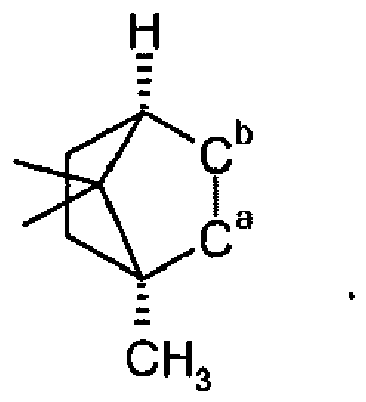
- Composés suivant l'une quelconque des revendications 1 à 3, dans lesquels R1 et R2, conjointement avec les atomes de carbone Ca et Cb auxquels ils sont fixés, forment un groupe

- Composés suivant l'une quelconque des revendications 1 à 3, dans lesquels R1 et R2, conjointement avec les atomes de carbone Ca et Cb auxquels ils sont fixés, forment un groupe

- Composés suivant l'une quelconque des revendications 1 à 7, dans lesquels R3 représente un atome d'hydrogène.
- Composés suivant l'une quelconque des revendications 1 à 7, dans lesquels R3 représente un groupe méthyle.
- Composés suivant l'une quelconque des revendications 1 à 9, dans lesquels R4 représente un groupe 2,2-diméthyl-propyle ou tertiobutyle.
- Composés suivant l'une quelconque des revendications 1 à 9, dans lesquels R4 représente un groupe 3-méthylbutyle.
- Composés suivant l'une quelconque des revendications 1 à 11, dans lesquels R5, R6 et R7 sont choisis indépendamment entre un atome d'hydrogène et un groupe méthyle.
- Composés suivant l'une quelconque des revendications 1 à 12, dans lesquels R5, R5 et R7 représentent des atomes d'hydrogène.
- Composés suivant l'une quelconque des revendications 1 à 13, choisis entre :la 3-(2,2-diméthyl-propyl)-5,6,7,8,9,10-hexahydro-cycloocta[c]pyridazine ;le (1SR,8RS)-5-(2,2-diméthyl-propyl)-3,4-diaza-tricyclo-[6.2.1.02,7]undéca-2,4,6-triène ;le (1S,8R)-5-(2,2-diméthyl-propyl)-1,11,11-triméthyl-3,4-diaza-tricyclo[6.2.1.02,7]undéca-2,4,6-triène;le (1S,8R)-5-tertiobutyl-1,11,11-triméthyl-3,4-diaza-tricyclo[6.2.1.02,7]undéca-2,4,6-triène;la 3-(2,2-diméthyl-propyl)-6,6-diméthyl-6,7-dihydro-5H-cyclopenta[c]pyridazine ;le (1SR,8RS)-5-(2,2-diméthyl-propyl)-6-méthyl-3,4-diaza-tricyclo[6.2.1.02,7]undéca-2,4,6-triène ;la 3-tertiobutyl-6,6-diméthyl-6,7-dihydro-5H-cyclopenta-[c]pyridazine ;le (1SR,8RS)-5-(3-méthyl-butyl)-3,4-diaza-tricyclo-[6.2.1.02,7]undéca-2(7),3,5-triène ;le (1SR,8RS)-5-tertiobutyl-3,4-diaza-tricyclo[6.2.1.02,7]-undéca-2,4,6-triène ;le (1S,8R)-1,11,11-triméthyl-5-(3-méthyl-butyl)-3,4-diaza-tricyclo[6.2.1.02,7]undéca-2,4,6-triène ;le (1S,8R)-5-isopropyl-1,11,11-triméthyl-3,4-diaza-tricyclo[6.2.1.02,7]undéca-2,4,6-triène ;le (1SR,8RS)-5-cyclopropylméthyl-3,4-diaza-tricyclo-[6.2.1.02,7]undéca-2(7)3,5-triène ;le (1S,8R)-5-cyclopropylméthyl-1,11,11-triméthyl-3,4-diaza-tricyclo[6.2.1.02,7]undéca-2(7),3,5-triène ;la 3-cyclopropylméthyl-6,6-diméthyl-6,7-dihydro-5H-cyclopenta[c]pyridazine ; etle (15,8R)-5-cyclopentylméthyl-1,11,11-triméthyl-3,4-diaza-tricyclo[6.2 .1.02,7]undéca-2,4,6-triène.
- Composés suivant l'une quelconque des revendications 1 à 14, choisis entre :le (1SR,8RS)-5-(2,2-diméthyl-propyl)-3,4-diaza-tricyclo-[6.2.1.02,7]undéca-2,4,6-triène ;le (1S,8R)-5-(2,2-diméthyl-propyl)-1,11,11-triméthyl-3,4-diaza-tricyclo[6.2.102,7]undéca-2,4,6-triène;le (1S,8R)-5-tertiobutyl-1,11,11-triméthyl-3,4-diazatricycio[6.2.2.02,7]undéca-2,4,6-triène;le (1SR, 8RS)-5-(2,2-diméthyl-propyl)-6-méthyl-3,4-diaza-tricyclo[6.2.1.02,7]undéca-2,4,6-triène ;la 3-tertiobutyl-6,6-diméthyl-6,7-dihydro-5H-cyclopenta-[C] pyridazine ; etle (1S,8R)-1,11,11-triméthyl-5-(3-méthyl-butyl)-3,4-diaza-tricyclo[6.2.1.02,7]undéca-2,4,6-triène.
- Composés suivant l'une quelconque des revendications 1 à 13, choisis entre :le (1S,8R)-5-(2,2-diméthyl-propyl)-6-méthyl-3,4-diaza-tricyclo[6.2.1.02,7]undéca-2,4,triène;le (1S,8R)-5-(2,2-diméthyl-propyl)-6-méthyl-3,4-diaza-tricyclo[6.2.1.02,7]undéca-2,4,6-triène;le (1S,8R)-5-(3,3-diméthyl-butyl)-1,11,11-triméthyl-3,4-diaza-tricyclo [6.2.1.02,7]undéca-2,4,6-triène ;le (1SR,8RS)-5-tertiobutyl-11,11-diméthyl-3,4-diaza-tricyclo[6.2.1.02,7]undéca-2,4,6-triène;le (1S,8R)-5-tertiobutyl-11,11-diméthyl-3,4-diaza-tricyclo-[6.2.1.02,7]undéca-2,4,6-triène;le (1R,8S)-5-tertiobutyl-11,11-diméthyl-3,4-diaza-tricyclo-[6.2.1.02,7]undéca-2,4,6-triène;le (1SR,8RS)-5-(2,2-diméthyl-propyl)-11,11-diméthyl-3,4-diaza-tricyclo[6.2.1.02,7]undéca-2,4,6-triène ;le (1SR,8RS)-5-(2,2-diméthyl-propyl)-6,11,11-triméthyl-3,4-diaza-tricyclo[6.2.1.02,7] undéca-2,4,6-triène ;le (1SR,8RS)-5-(1-cyclopropyl-1-méthyl-éthyl)-3,4-diaza-tricyclo[6.2.1.02,7]undéca-2,4,6-triène;le (1SR, 8RS)-5-cyclopentylméthyl-3,4-diaza-tricyclo-[6.2.1.02,7]undéca-2,4,6-triène ;le (1R,8S)-S-(2,2-diméthyl-propyl)-1,11,11-triméthyl-3,4-diaza-tricyclo[6.2.7.02,7]undéca-2(7),3,5-triène;le(1S,8R)-5-(2,2-diméthyl-propyl)-8,11,11-triméthyl-3,4-diaza-tricyclo[6.2.1.02,7]undéca-2(7),3,5-triène ;le (1R,85)-5-tertiobutyl-1,11,11-triméthyl-3,4-diaza-tricyclo[6.2.1.02,7]undéca-2(7),3,5-triène;etle (1S,8R)-5-tertiobutyl-8,11,11-triméthyl-3,4-diaza-tricyclo[6.2.1.02,7]undéca-2(7),3,5-triène.
- Composés suivant l'une quelconque des revendications 1 à 13 et 16, choisis entre :le (1S,8R)-5-(2,2-diméthyl-propyl)-6-mé-thyl-3,4-diaza-tricyclo[6.2.1.02,7]undéca-2,4,6-triène;le (1S,8R)-5-(2,2-diméthyl-propyl)-6-méthyl-3,4-diaza-tricyclo[6.2.1.02,7]undéca-2,4,6-triène;le (1S,8R)-5-tertiobutyl-11,11-diméthyl-3,4-diaza-tricyclo-[6.2.1.02,7]undéca-2,4,6-triène;le (1R,8S)-5-tertiobutyl-11,11-diméthyl-3,4-diaza-tricyclo-[6.2.1.02,7]undéca-2,4,6-triène;le (1SR,8RS)-5-(2,2-diméthyl-propyl)-11,11-diméthyl-3,4-diaza-tricyclo [6.2.1.02] undéca-2, 4, 6-triène ;le (1S,8R)-5-(2,2-diméthyl-propyl)-8,11,11-triméthyl-3,4-diaza-tricyclo[6.2.1.02,7]undéca-2(7),3,5-triène ; etle(1S,8R)-5-tertiabutyl-8,11,11-triméthy-3,4-diaza-tricyclo[6.2.1.02,7]undéca-2(7),3,5-triène.
- Procédé pour la préparation d'un composé suivant l'une quelconque des revendications 1 à 17, comprenant la réaction d'un composé répondant à la formule

- Composés suivant l'une quelconque des revendications 1 à 17, pour une utilisation comme substance thérapeutiquement active.
- Composés suivant l'une quelconque des revendications 1 à 17, pour la préparation de médicaments pour la prophylaxie et la thérapie de maladies qui sont provoquées par des troubles associés à l'enzyme 11-bêta-hydroxystéroïde-déshydrogénase 1.
- Composition pharmaceutique comprenant un composé suivant l'une quelconque des revendications 1 à 17, et un support thérapeutiquement inerte.
- Utilisation d'un composé suivant l'une quelconque des revendications 1 à 17, pour la préparation de médicaments pour le traitement et la prophylaxie du diabète, de l'obésité, de troubles de l'alimentation, de dyslipidémies et de l'hypertension.
- Utilisation d'un composé suivant l'une quelconque des revendications 1 à 17, pour la préparation de médicaments pour le traitement et la prophylaxie du diabète de type II.
Priority Applications (1)
| Application Number | Priority Date | Filing Date | Title |
|---|---|---|---|
| EP07765621A EP2044034B1 (fr) | 2006-07-05 | 2007-06-26 | Dérivés d'alkyl-pyridazine en tant qu'inhibiteurs de la 11 bêta hydroxystéroïde déshydrogénase de type 1(11b-hsd 1) |
Applications Claiming Priority (3)
| Application Number | Priority Date | Filing Date | Title |
|---|---|---|---|
| EP06116596 | 2006-07-05 | ||
| PCT/EP2007/056347 WO2008003611A1 (fr) | 2006-07-05 | 2007-06-26 | Dérivés d'alkyl-pyridazine en tant qu'inhibiteurs de la 11 bêta hydroxystéroïde déshydrogénase de type 1(11b-hsd 1) |
| EP07765621A EP2044034B1 (fr) | 2006-07-05 | 2007-06-26 | Dérivés d'alkyl-pyridazine en tant qu'inhibiteurs de la 11 bêta hydroxystéroïde déshydrogénase de type 1(11b-hsd 1) |
Publications (2)
| Publication Number | Publication Date |
|---|---|
| EP2044034A1 EP2044034A1 (fr) | 2009-04-08 |
| EP2044034B1 true EP2044034B1 (fr) | 2012-08-22 |
Family
ID=38566130
Family Applications (1)
| Application Number | Title | Priority Date | Filing Date |
|---|---|---|---|
| EP07765621A Not-in-force EP2044034B1 (fr) | 2006-07-05 | 2007-06-26 | Dérivés d'alkyl-pyridazine en tant qu'inhibiteurs de la 11 bêta hydroxystéroïde déshydrogénase de type 1(11b-hsd 1) |
Country Status (19)
| Country | Link |
|---|---|
| US (1) | US7547697B2 (fr) |
| EP (1) | EP2044034B1 (fr) |
| JP (1) | JP4959794B2 (fr) |
| KR (1) | KR101089012B1 (fr) |
| CN (1) | CN101484428B (fr) |
| AR (1) | AR061806A1 (fr) |
| AU (1) | AU2007271273B2 (fr) |
| BR (1) | BRPI0714200A2 (fr) |
| CA (1) | CA2655692C (fr) |
| CL (1) | CL2007001945A1 (fr) |
| ES (1) | ES2391583T3 (fr) |
| IL (1) | IL196120A (fr) |
| MX (1) | MX2008016426A (fr) |
| NO (1) | NO20090009L (fr) |
| PE (1) | PE20080399A1 (fr) |
| RU (1) | RU2417989C2 (fr) |
| TW (1) | TWI329104B (fr) |
| WO (1) | WO2008003611A1 (fr) |
| ZA (1) | ZA200810862B (fr) |
Families Citing this family (13)
| Publication number | Priority date | Publication date | Assignee | Title |
|---|---|---|---|---|
| CL2008001839A1 (es) | 2007-06-21 | 2009-01-16 | Incyte Holdings Corp | Compuestos derivados de 2,7-diazaespirociclos, inhibidores de 11-beta hidroxil esteroide deshidrogenasa tipo 1; composicion farmaceutica que comprende a dichos compuestos; utiles para tratar la obesidad, diabetes, intolerancia a la glucosa, diabetes tipo ii, entre otras enfermedades. |
| EP2025674A1 (fr) | 2007-08-15 | 2009-02-18 | sanofi-aventis | Tetrahydronaphthaline substituée, son procédé de fabrication et son utilisation en tant que médicament |
| US8501940B2 (en) * | 2008-07-15 | 2013-08-06 | Hoffmann-La Roche Inc. | Tetrahydrocinnoline derivatives |
| WO2011107494A1 (fr) | 2010-03-03 | 2011-09-09 | Sanofi | Nouveaux dérivés aromatiques de glycoside, médicaments contenants ces composés, et leur utilisation |
| US8933024B2 (en) | 2010-06-18 | 2015-01-13 | Sanofi | Azolopyridin-3-one derivatives as inhibitors of lipases and phospholipases |
| US8530413B2 (en) | 2010-06-21 | 2013-09-10 | Sanofi | Heterocyclically substituted methoxyphenyl derivatives with an oxo group, processes for preparation thereof and use thereof as medicaments |
| TW201215387A (en) | 2010-07-05 | 2012-04-16 | Sanofi Aventis | Spirocyclically substituted 1,3-propane dioxide derivatives, processes for preparation thereof and use thereof as a medicament |
| TW201221505A (en) | 2010-07-05 | 2012-06-01 | Sanofi Sa | Aryloxyalkylene-substituted hydroxyphenylhexynoic acids, process for preparation thereof and use thereof as a medicament |
| TW201215388A (en) | 2010-07-05 | 2012-04-16 | Sanofi Sa | (2-aryloxyacetylamino)phenylpropionic acid derivatives, processes for preparation thereof and use thereof as medicaments |
| WO2013037390A1 (fr) | 2011-09-12 | 2013-03-21 | Sanofi | Dérivés amides d'acide 6-(4-hydroxyphényl)-3-styryl-1h-pyrazolo[3,4-b]pyridine-4-carboxylique en tant qu'inhibiteurs de kinase |
| WO2013045413A1 (fr) | 2011-09-27 | 2013-04-04 | Sanofi | Dérivés d'amide d'acide 6-(4-hydroxyphényl)-3-alkyl-1h-pyrazolo[3,4-b] pyridine-4-carboxylique utilisés comme inhibiteurs de kinase |
| WO2013072265A1 (fr) * | 2011-11-14 | 2013-05-23 | F. Hoffmann-La Roche Ag | 1-pyridazinylhydroxyimino-3-phénylpropanes utilisés comme agonistes de gpbar1 |
| EP3235813A1 (fr) | 2016-04-19 | 2017-10-25 | Cidqo 2012, S.L. | Dérivés aza-tétra-cycliques |
Family Cites Families (2)
| Publication number | Priority date | Publication date | Assignee | Title |
|---|---|---|---|---|
| JP2005533858A (ja) * | 2002-07-27 | 2005-11-10 | アストラゼネカ アクチボラグ | 化合物 |
| TW200503994A (en) * | 2003-01-24 | 2005-02-01 | Novartis Ag | Organic compounds |
-
2007
- 2007-06-26 RU RU2009103650/04A patent/RU2417989C2/ru not_active IP Right Cessation
- 2007-06-26 CA CA2655692A patent/CA2655692C/fr not_active Expired - Fee Related
- 2007-06-26 WO PCT/EP2007/056347 patent/WO2008003611A1/fr not_active Ceased
- 2007-06-26 KR KR1020097002289A patent/KR101089012B1/ko not_active Expired - Fee Related
- 2007-06-26 JP JP2009517163A patent/JP4959794B2/ja not_active Expired - Fee Related
- 2007-06-26 BR BRPI0714200-5A patent/BRPI0714200A2/pt not_active IP Right Cessation
- 2007-06-26 AU AU2007271273A patent/AU2007271273B2/en not_active Ceased
- 2007-06-26 MX MX2008016426A patent/MX2008016426A/es active IP Right Grant
- 2007-06-26 CN CN2007800253323A patent/CN101484428B/zh not_active Expired - Fee Related
- 2007-06-26 ES ES07765621T patent/ES2391583T3/es active Active
- 2007-06-26 EP EP07765621A patent/EP2044034B1/fr not_active Not-in-force
- 2007-07-02 US US11/824,971 patent/US7547697B2/en not_active Expired - Fee Related
- 2007-07-03 AR ARP070102974A patent/AR061806A1/es not_active Application Discontinuation
- 2007-07-04 TW TW096124339A patent/TWI329104B/zh not_active IP Right Cessation
- 2007-07-04 PE PE2007000856A patent/PE20080399A1/es not_active Application Discontinuation
- 2007-07-04 CL CL200701945A patent/CL2007001945A1/es unknown
-
2008
- 2008-12-22 IL IL196120A patent/IL196120A/en not_active IP Right Cessation
- 2008-12-23 ZA ZA200810862A patent/ZA200810862B/xx unknown
-
2009
- 2009-01-02 NO NO20090009A patent/NO20090009L/no not_active Application Discontinuation
Also Published As
| Publication number | Publication date |
|---|---|
| TW200811115A (en) | 2008-03-01 |
| TWI329104B (en) | 2010-08-21 |
| JP4959794B2 (ja) | 2012-06-27 |
| IL196120A0 (en) | 2009-09-01 |
| RU2009103650A (ru) | 2010-08-10 |
| CN101484428B (zh) | 2011-11-16 |
| NO20090009L (no) | 2009-01-08 |
| MX2008016426A (es) | 2009-01-19 |
| BRPI0714200A2 (pt) | 2012-12-25 |
| US7547697B2 (en) | 2009-06-16 |
| ES2391583T3 (es) | 2012-11-28 |
| WO2008003611A1 (fr) | 2008-01-10 |
| CA2655692C (fr) | 2012-01-03 |
| AU2007271273B2 (en) | 2011-09-01 |
| JP2009541434A (ja) | 2009-11-26 |
| AU2007271273A1 (en) | 2008-01-10 |
| EP2044034A1 (fr) | 2009-04-08 |
| AR061806A1 (es) | 2008-09-24 |
| RU2417989C2 (ru) | 2011-05-10 |
| CN101484428A (zh) | 2009-07-15 |
| CA2655692A1 (fr) | 2008-01-10 |
| US20080009499A1 (en) | 2008-01-10 |
| PE20080399A1 (es) | 2008-04-28 |
| KR101089012B1 (ko) | 2011-12-01 |
| IL196120A (en) | 2013-02-28 |
| CL2007001945A1 (es) | 2008-02-08 |
| ZA200810862B (en) | 2009-12-30 |
| KR20090026214A (ko) | 2009-03-11 |
Similar Documents
| Publication | Publication Date | Title |
|---|---|---|
| CA2655692C (fr) | Derives d'alkyl-pyridazine en tant qu'inhibiteurs de la 11 beta hydroxysteroide deshydrogenase de type 1(11b-hsd 1) | |
| CA2612740C (fr) | Derives de pyridazine | |
| US8501940B2 (en) | Tetrahydrocinnoline derivatives | |
| JP2011157373A (ja) | 糖尿病のための11−β阻害剤としてのアルキルピリジン | |
| EP1924562A2 (fr) | Derives de pyrazolone | |
| HK1134087B (en) | Pyridazine derivatives as 11beta-hydroxysteroid dehydrogenase type 1 inhibitors |
Legal Events
| Date | Code | Title | Description |
|---|---|---|---|
| PUAI | Public reference made under article 153(3) epc to a published international application that has entered the european phase |
Free format text: ORIGINAL CODE: 0009012 |
|
| 17P | Request for examination filed |
Effective date: 20090205 |
|
| AK | Designated contracting states |
Kind code of ref document: A1 Designated state(s): AT BE BG CH CY CZ DE DK EE ES FI FR GB GR HU IE IS IT LI LT LU LV MC MT NL PL PT RO SE SI SK TR |
|
| AX | Request for extension of the european patent |
Extension state: AL BA HR MK RS |
|
| GRAP | Despatch of communication of intention to grant a patent |
Free format text: ORIGINAL CODE: EPIDOSNIGR1 |
|
| DAX | Request for extension of the european patent (deleted) | ||
| GRAS | Grant fee paid |
Free format text: ORIGINAL CODE: EPIDOSNIGR3 |
|
| GRAA | (expected) grant |
Free format text: ORIGINAL CODE: 0009210 |
|
| AK | Designated contracting states |
Kind code of ref document: B1 Designated state(s): AT BE BG CH CY CZ DE DK EE ES FI FR GB GR HU IE IS IT LI LT LU LV MC MT NL PL PT RO SE SI SK TR |
|
| REG | Reference to a national code |
Ref country code: GB Ref legal event code: FG4D |
|
| REG | Reference to a national code |
Ref country code: CH Ref legal event code: EP |
|
| REG | Reference to a national code |
Ref country code: IE Ref legal event code: FG4D |
|
| REG | Reference to a national code |
Ref country code: AT Ref legal event code: REF Ref document number: 571915 Country of ref document: AT Kind code of ref document: T Effective date: 20120915 |
|
| REG | Reference to a national code |
Ref country code: DE Ref legal event code: R096 Ref document number: 602007024958 Country of ref document: DE Effective date: 20121018 |
|
| REG | Reference to a national code |
Ref country code: ES Ref legal event code: FG2A Ref document number: 2391583 Country of ref document: ES Kind code of ref document: T3 Effective date: 20121128 |
|
| REG | Reference to a national code |
Ref country code: NL Ref legal event code: VDEP Effective date: 20120822 |
|
| REG | Reference to a national code |
Ref country code: AT Ref legal event code: MK05 Ref document number: 571915 Country of ref document: AT Kind code of ref document: T Effective date: 20120822 |
|
| REG | Reference to a national code |
Ref country code: LT Ref legal event code: MG4D Effective date: 20120822 |
|
| PG25 | Lapsed in a contracting state [announced via postgrant information from national office to epo] |
Ref country code: FI Free format text: LAPSE BECAUSE OF FAILURE TO SUBMIT A TRANSLATION OF THE DESCRIPTION OR TO PAY THE FEE WITHIN THE PRESCRIBED TIME-LIMIT Effective date: 20120822 Ref country code: LT Free format text: LAPSE BECAUSE OF FAILURE TO SUBMIT A TRANSLATION OF THE DESCRIPTION OR TO PAY THE FEE WITHIN THE PRESCRIBED TIME-LIMIT Effective date: 20120822 Ref country code: CY Free format text: LAPSE BECAUSE OF FAILURE TO SUBMIT A TRANSLATION OF THE DESCRIPTION OR TO PAY THE FEE WITHIN THE PRESCRIBED TIME-LIMIT Effective date: 20120822 Ref country code: IS Free format text: LAPSE BECAUSE OF FAILURE TO SUBMIT A TRANSLATION OF THE DESCRIPTION OR TO PAY THE FEE WITHIN THE PRESCRIBED TIME-LIMIT Effective date: 20121222 Ref country code: AT Free format text: LAPSE BECAUSE OF FAILURE TO SUBMIT A TRANSLATION OF THE DESCRIPTION OR TO PAY THE FEE WITHIN THE PRESCRIBED TIME-LIMIT Effective date: 20120822 |
|
| PG25 | Lapsed in a contracting state [announced via postgrant information from national office to epo] |
Ref country code: SE Free format text: LAPSE BECAUSE OF FAILURE TO SUBMIT A TRANSLATION OF THE DESCRIPTION OR TO PAY THE FEE WITHIN THE PRESCRIBED TIME-LIMIT Effective date: 20120822 Ref country code: PT Free format text: LAPSE BECAUSE OF FAILURE TO SUBMIT A TRANSLATION OF THE DESCRIPTION OR TO PAY THE FEE WITHIN THE PRESCRIBED TIME-LIMIT Effective date: 20121224 Ref country code: BE Free format text: LAPSE BECAUSE OF FAILURE TO SUBMIT A TRANSLATION OF THE DESCRIPTION OR TO PAY THE FEE WITHIN THE PRESCRIBED TIME-LIMIT Effective date: 20120822 Ref country code: LV Free format text: LAPSE BECAUSE OF FAILURE TO SUBMIT A TRANSLATION OF THE DESCRIPTION OR TO PAY THE FEE WITHIN THE PRESCRIBED TIME-LIMIT Effective date: 20120822 Ref country code: SI Free format text: LAPSE BECAUSE OF FAILURE TO SUBMIT A TRANSLATION OF THE DESCRIPTION OR TO PAY THE FEE WITHIN THE PRESCRIBED TIME-LIMIT Effective date: 20120822 Ref country code: GR Free format text: LAPSE BECAUSE OF FAILURE TO SUBMIT A TRANSLATION OF THE DESCRIPTION OR TO PAY THE FEE WITHIN THE PRESCRIBED TIME-LIMIT Effective date: 20121123 |
|
| PG25 | Lapsed in a contracting state [announced via postgrant information from national office to epo] |
Ref country code: NL Free format text: LAPSE BECAUSE OF FAILURE TO SUBMIT A TRANSLATION OF THE DESCRIPTION OR TO PAY THE FEE WITHIN THE PRESCRIBED TIME-LIMIT Effective date: 20120822 |
|
| PG25 | Lapsed in a contracting state [announced via postgrant information from national office to epo] |
Ref country code: RO Free format text: LAPSE BECAUSE OF FAILURE TO SUBMIT A TRANSLATION OF THE DESCRIPTION OR TO PAY THE FEE WITHIN THE PRESCRIBED TIME-LIMIT Effective date: 20120822 Ref country code: EE Free format text: LAPSE BECAUSE OF FAILURE TO SUBMIT A TRANSLATION OF THE DESCRIPTION OR TO PAY THE FEE WITHIN THE PRESCRIBED TIME-LIMIT Effective date: 20120822 Ref country code: DK Free format text: LAPSE BECAUSE OF FAILURE TO SUBMIT A TRANSLATION OF THE DESCRIPTION OR TO PAY THE FEE WITHIN THE PRESCRIBED TIME-LIMIT Effective date: 20120822 Ref country code: CZ Free format text: LAPSE BECAUSE OF FAILURE TO SUBMIT A TRANSLATION OF THE DESCRIPTION OR TO PAY THE FEE WITHIN THE PRESCRIBED TIME-LIMIT Effective date: 20120822 |
|
| PG25 | Lapsed in a contracting state [announced via postgrant information from national office to epo] |
Ref country code: PL Free format text: LAPSE BECAUSE OF FAILURE TO SUBMIT A TRANSLATION OF THE DESCRIPTION OR TO PAY THE FEE WITHIN THE PRESCRIBED TIME-LIMIT Effective date: 20120822 Ref country code: SK Free format text: LAPSE BECAUSE OF FAILURE TO SUBMIT A TRANSLATION OF THE DESCRIPTION OR TO PAY THE FEE WITHIN THE PRESCRIBED TIME-LIMIT Effective date: 20120822 |
|
| PLBE | No opposition filed within time limit |
Free format text: ORIGINAL CODE: 0009261 |
|
| STAA | Information on the status of an ep patent application or granted ep patent |
Free format text: STATUS: NO OPPOSITION FILED WITHIN TIME LIMIT |
|
| 26N | No opposition filed |
Effective date: 20130523 |
|
| PG25 | Lapsed in a contracting state [announced via postgrant information from national office to epo] |
Ref country code: BG Free format text: LAPSE BECAUSE OF FAILURE TO SUBMIT A TRANSLATION OF THE DESCRIPTION OR TO PAY THE FEE WITHIN THE PRESCRIBED TIME-LIMIT Effective date: 20121122 |
|
| REG | Reference to a national code |
Ref country code: DE Ref legal event code: R097 Ref document number: 602007024958 Country of ref document: DE Effective date: 20130523 |
|
| PG25 | Lapsed in a contracting state [announced via postgrant information from national office to epo] |
Ref country code: MC Free format text: LAPSE BECAUSE OF FAILURE TO SUBMIT A TRANSLATION OF THE DESCRIPTION OR TO PAY THE FEE WITHIN THE PRESCRIBED TIME-LIMIT Effective date: 20120822 |
|
| REG | Reference to a national code |
Ref country code: IE Ref legal event code: MM4A |
|
| PG25 | Lapsed in a contracting state [announced via postgrant information from national office to epo] |
Ref country code: IE Free format text: LAPSE BECAUSE OF NON-PAYMENT OF DUE FEES Effective date: 20130626 |
|
| PGFP | Annual fee paid to national office [announced via postgrant information from national office to epo] |
Ref country code: GB Payment date: 20140527 Year of fee payment: 8 |
|
| PGFP | Annual fee paid to national office [announced via postgrant information from national office to epo] |
Ref country code: FR Payment date: 20140527 Year of fee payment: 8 Ref country code: IT Payment date: 20140625 Year of fee payment: 8 Ref country code: CH Payment date: 20140425 Year of fee payment: 8 Ref country code: TR Payment date: 20140520 Year of fee payment: 8 Ref country code: ES Payment date: 20140609 Year of fee payment: 8 |
|
| PGFP | Annual fee paid to national office [announced via postgrant information from national office to epo] |
Ref country code: DE Payment date: 20140630 Year of fee payment: 8 |
|
| PG25 | Lapsed in a contracting state [announced via postgrant information from national office to epo] |
Ref country code: MT Free format text: LAPSE BECAUSE OF FAILURE TO SUBMIT A TRANSLATION OF THE DESCRIPTION OR TO PAY THE FEE WITHIN THE PRESCRIBED TIME-LIMIT Effective date: 20120822 |
|
| PG25 | Lapsed in a contracting state [announced via postgrant information from national office to epo] |
Ref country code: HU Free format text: LAPSE BECAUSE OF FAILURE TO SUBMIT A TRANSLATION OF THE DESCRIPTION OR TO PAY THE FEE WITHIN THE PRESCRIBED TIME-LIMIT; INVALID AB INITIO Effective date: 20070626 Ref country code: LU Free format text: LAPSE BECAUSE OF NON-PAYMENT OF DUE FEES Effective date: 20130626 |
|
| REG | Reference to a national code |
Ref country code: DE Ref legal event code: R119 Ref document number: 602007024958 Country of ref document: DE |
|
| PG25 | Lapsed in a contracting state [announced via postgrant information from national office to epo] |
Ref country code: IT Free format text: LAPSE BECAUSE OF NON-PAYMENT OF DUE FEES Effective date: 20150626 |
|
| REG | Reference to a national code |
Ref country code: CH Ref legal event code: PL |
|
| GBPC | Gb: european patent ceased through non-payment of renewal fee |
Effective date: 20150626 |
|
| REG | Reference to a national code |
Ref country code: FR Ref legal event code: ST Effective date: 20160229 |
|
| PG25 | Lapsed in a contracting state [announced via postgrant information from national office to epo] |
Ref country code: DE Free format text: LAPSE BECAUSE OF NON-PAYMENT OF DUE FEES Effective date: 20160101 Ref country code: CH Free format text: LAPSE BECAUSE OF NON-PAYMENT OF DUE FEES Effective date: 20150630 Ref country code: LI Free format text: LAPSE BECAUSE OF NON-PAYMENT OF DUE FEES Effective date: 20150630 Ref country code: GB Free format text: LAPSE BECAUSE OF NON-PAYMENT OF DUE FEES Effective date: 20150626 |
|
| PG25 | Lapsed in a contracting state [announced via postgrant information from national office to epo] |
Ref country code: FR Free format text: LAPSE BECAUSE OF NON-PAYMENT OF DUE FEES Effective date: 20150630 |
|
| REG | Reference to a national code |
Ref country code: ES Ref legal event code: FD2A Effective date: 20161202 |
|
| PG25 | Lapsed in a contracting state [announced via postgrant information from national office to epo] |
Ref country code: ES Free format text: LAPSE BECAUSE OF NON-PAYMENT OF DUE FEES Effective date: 20150627 |
|
| PG25 | Lapsed in a contracting state [announced via postgrant information from national office to epo] |
Ref country code: TR Free format text: LAPSE BECAUSE OF NON-PAYMENT OF DUE FEES Effective date: 20150626 |