EP2045010A1 - Catalyseur pour la purification d'un gaz d'échappement - Google Patents
Catalyseur pour la purification d'un gaz d'échappement Download PDFInfo
- Publication number
- EP2045010A1 EP2045010A1 EP07744976A EP07744976A EP2045010A1 EP 2045010 A1 EP2045010 A1 EP 2045010A1 EP 07744976 A EP07744976 A EP 07744976A EP 07744976 A EP07744976 A EP 07744976A EP 2045010 A1 EP2045010 A1 EP 2045010A1
- Authority
- EP
- European Patent Office
- Prior art keywords
- catalyst
- exhaust gas
- base material
- platinum
- oxygen storage
- Prior art date
- Legal status (The legal status is an assumption and is not a legal conclusion. Google has not performed a legal analysis and makes no representation as to the accuracy of the status listed.)
- Granted
Links
Images
Classifications
-
- B—PERFORMING OPERATIONS; TRANSPORTING
- B01—PHYSICAL OR CHEMICAL PROCESSES OR APPARATUS IN GENERAL
- B01J—CHEMICAL OR PHYSICAL PROCESSES, e.g. CATALYSIS OR COLLOID CHEMISTRY; THEIR RELEVANT APPARATUS
- B01J37/00—Processes, in general, for preparing catalysts; Processes, in general, for activation of catalysts
- B01J37/02—Impregnation, coating or precipitation
- B01J37/0234—Impregnation and coating simultaneously
-
- F—MECHANICAL ENGINEERING; LIGHTING; HEATING; WEAPONS; BLASTING
- F01—MACHINES OR ENGINES IN GENERAL; ENGINE PLANTS IN GENERAL; STEAM ENGINES
- F01N—GAS-FLOW SILENCERS OR EXHAUST APPARATUS FOR MACHINES OR ENGINES IN GENERAL; GAS-FLOW SILENCERS OR EXHAUST APPARATUS FOR INTERNAL-COMBUSTION ENGINES
- F01N3/00—Exhaust or silencing apparatus having means for purifying, rendering innocuous, or otherwise treating exhaust
- F01N3/08—Exhaust or silencing apparatus having means for purifying, rendering innocuous, or otherwise treating exhaust for rendering innocuous
- F01N3/10—Exhaust or silencing apparatus having means for purifying, rendering innocuous, or otherwise treating exhaust for rendering innocuous by thermal or catalytic conversion of noxious components of exhaust
-
- B—PERFORMING OPERATIONS; TRANSPORTING
- B01—PHYSICAL OR CHEMICAL PROCESSES OR APPARATUS IN GENERAL
- B01D—SEPARATION
- B01D53/00—Separation of gases or vapours; Recovering vapours of volatile solvents from gases; Chemical or biological purification of waste gases, e.g. engine exhaust gases, smoke, fumes, flue gases, aerosols
- B01D53/34—Chemical or biological purification of waste gases
- B01D53/92—Chemical or biological purification of waste gases of engine exhaust gases
- B01D53/94—Chemical or biological purification of waste gases of engine exhaust gases by catalytic processes
-
- B—PERFORMING OPERATIONS; TRANSPORTING
- B01—PHYSICAL OR CHEMICAL PROCESSES OR APPARATUS IN GENERAL
- B01D—SEPARATION
- B01D53/00—Separation of gases or vapours; Recovering vapours of volatile solvents from gases; Chemical or biological purification of waste gases, e.g. engine exhaust gases, smoke, fumes, flue gases, aerosols
- B01D53/34—Chemical or biological purification of waste gases
- B01D53/92—Chemical or biological purification of waste gases of engine exhaust gases
- B01D53/94—Chemical or biological purification of waste gases of engine exhaust gases by catalytic processes
- B01D53/9445—Simultaneously removing carbon monoxide, hydrocarbons or nitrogen oxides making use of three-way catalysts [TWC] or four-way-catalysts [FWC]
- B01D53/945—Simultaneously removing carbon monoxide, hydrocarbons or nitrogen oxides making use of three-way catalysts [TWC] or four-way-catalysts [FWC] characterised by a specific catalyst
-
- B—PERFORMING OPERATIONS; TRANSPORTING
- B01—PHYSICAL OR CHEMICAL PROCESSES OR APPARATUS IN GENERAL
- B01J—CHEMICAL OR PHYSICAL PROCESSES, e.g. CATALYSIS OR COLLOID CHEMISTRY; THEIR RELEVANT APPARATUS
- B01J23/00—Catalysts comprising metals or metal oxides or hydroxides, not provided for in group B01J21/00
- B01J23/38—Catalysts comprising metals or metal oxides or hydroxides, not provided for in group B01J21/00 of noble metals
- B01J23/54—Catalysts comprising metals or metal oxides or hydroxides, not provided for in group B01J21/00 of noble metals combined with metals, oxides or hydroxides provided for in groups B01J23/02 - B01J23/36
- B01J23/56—Platinum group metals
- B01J23/63—Platinum group metals with rare earths or actinides
-
- B—PERFORMING OPERATIONS; TRANSPORTING
- B01—PHYSICAL OR CHEMICAL PROCESSES OR APPARATUS IN GENERAL
- B01J—CHEMICAL OR PHYSICAL PROCESSES, e.g. CATALYSIS OR COLLOID CHEMISTRY; THEIR RELEVANT APPARATUS
- B01J35/00—Catalysts, in general, characterised by their form or physical properties
- B01J35/60—Catalysts, in general, characterised by their form or physical properties characterised by their surface properties or porosity
-
- B—PERFORMING OPERATIONS; TRANSPORTING
- B01—PHYSICAL OR CHEMICAL PROCESSES OR APPARATUS IN GENERAL
- B01J—CHEMICAL OR PHYSICAL PROCESSES, e.g. CATALYSIS OR COLLOID CHEMISTRY; THEIR RELEVANT APPARATUS
- B01J37/00—Processes, in general, for preparing catalysts; Processes, in general, for activation of catalysts
- B01J37/02—Impregnation, coating or precipitation
- B01J37/024—Multiple impregnation or coating
- B01J37/0244—Coatings comprising several layers
-
- B—PERFORMING OPERATIONS; TRANSPORTING
- B01—PHYSICAL OR CHEMICAL PROCESSES OR APPARATUS IN GENERAL
- B01D—SEPARATION
- B01D2255/00—Catalysts
- B01D2255/10—Noble metals or compounds thereof
- B01D2255/102—Platinum group metals
- B01D2255/1021—Platinum
-
- B—PERFORMING OPERATIONS; TRANSPORTING
- B01—PHYSICAL OR CHEMICAL PROCESSES OR APPARATUS IN GENERAL
- B01D—SEPARATION
- B01D2255/00—Catalysts
- B01D2255/10—Noble metals or compounds thereof
- B01D2255/102—Platinum group metals
- B01D2255/1023—Palladium
-
- B—PERFORMING OPERATIONS; TRANSPORTING
- B01—PHYSICAL OR CHEMICAL PROCESSES OR APPARATUS IN GENERAL
- B01D—SEPARATION
- B01D2255/00—Catalysts
- B01D2255/10—Noble metals or compounds thereof
- B01D2255/102—Platinum group metals
- B01D2255/1026—Ruthenium
-
- B—PERFORMING OPERATIONS; TRANSPORTING
- B01—PHYSICAL OR CHEMICAL PROCESSES OR APPARATUS IN GENERAL
- B01D—SEPARATION
- B01D2255/00—Catalysts
- B01D2255/20—Metals or compounds thereof
- B01D2255/206—Rare earth metals
- B01D2255/2065—Cerium
-
- B—PERFORMING OPERATIONS; TRANSPORTING
- B01—PHYSICAL OR CHEMICAL PROCESSES OR APPARATUS IN GENERAL
- B01D—SEPARATION
- B01D2255/00—Catalysts
- B01D2255/20—Metals or compounds thereof
- B01D2255/206—Rare earth metals
- B01D2255/2068—Neodymium
-
- B—PERFORMING OPERATIONS; TRANSPORTING
- B01—PHYSICAL OR CHEMICAL PROCESSES OR APPARATUS IN GENERAL
- B01D—SEPARATION
- B01D2255/00—Catalysts
- B01D2255/90—Physical characteristics of catalysts
- B01D2255/902—Multilayered catalyst
- B01D2255/9022—Two layers
-
- B—PERFORMING OPERATIONS; TRANSPORTING
- B01—PHYSICAL OR CHEMICAL PROCESSES OR APPARATUS IN GENERAL
- B01D—SEPARATION
- B01D2255/00—Catalysts
- B01D2255/90—Physical characteristics of catalysts
- B01D2255/908—O2-storage component incorporated in the catalyst
-
- F—MECHANICAL ENGINEERING; LIGHTING; HEATING; WEAPONS; BLASTING
- F01—MACHINES OR ENGINES IN GENERAL; ENGINE PLANTS IN GENERAL; STEAM ENGINES
- F01N—GAS-FLOW SILENCERS OR EXHAUST APPARATUS FOR MACHINES OR ENGINES IN GENERAL; GAS-FLOW SILENCERS OR EXHAUST APPARATUS FOR INTERNAL-COMBUSTION ENGINES
- F01N2510/00—Surface coverings
- F01N2510/06—Surface coverings for exhaust purification, e.g. catalytic reaction
- F01N2510/068—Surface coverings for exhaust purification, e.g. catalytic reaction characterised by the distribution of the catalytic coatings
- F01N2510/0682—Surface coverings for exhaust purification, e.g. catalytic reaction characterised by the distribution of the catalytic coatings having a discontinuous, uneven or partially overlapping coating of catalytic material, e.g. higher amount of material upstream than downstream or vice versa
-
- F—MECHANICAL ENGINEERING; LIGHTING; HEATING; WEAPONS; BLASTING
- F01—MACHINES OR ENGINES IN GENERAL; ENGINE PLANTS IN GENERAL; STEAM ENGINES
- F01N—GAS-FLOW SILENCERS OR EXHAUST APPARATUS FOR MACHINES OR ENGINES IN GENERAL; GAS-FLOW SILENCERS OR EXHAUST APPARATUS FOR INTERNAL-COMBUSTION ENGINES
- F01N2570/00—Exhaust treating apparatus eliminating, absorbing or adsorbing specific elements or compounds
- F01N2570/24—Hydrogen sulfide (H2S)
-
- Y—GENERAL TAGGING OF NEW TECHNOLOGICAL DEVELOPMENTS; GENERAL TAGGING OF CROSS-SECTIONAL TECHNOLOGIES SPANNING OVER SEVERAL SECTIONS OF THE IPC; TECHNICAL SUBJECTS COVERED BY FORMER USPC CROSS-REFERENCE ART COLLECTIONS [XRACs] AND DIGESTS
- Y02—TECHNOLOGIES OR APPLICATIONS FOR MITIGATION OR ADAPTATION AGAINST CLIMATE CHANGE
- Y02T—CLIMATE CHANGE MITIGATION TECHNOLOGIES RELATED TO TRANSPORTATION
- Y02T10/00—Road transport of goods or passengers
- Y02T10/10—Internal combustion engine [ICE] based vehicles
- Y02T10/12—Improving ICE efficiencies
Definitions
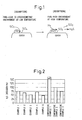
- the present invention relates to a two-layered exhaust gas purification catalyst which achieves reduced emission of hydrogen sulfide by disposing a noble metal as a catalyst component, in particular, platinum and an oxygen storage/release material as a carrier, which are contained in the two-layered coating layer, so that they can be segregated as much as possible.
- An automobile fuel including gasoline and the like contains a sulfur component, S, wherein the sulfur component forms sulfur dioxide, SO 2 during combustion.
- S sulfur component
- SO 2 sulfur dioxide
- H 2 hydrogen sulfide
- H 2 S hydrogen sulfide
- Japanese Unexamined Patent Publication (Kokai) No. 4-219140 discloses an exhaust gas purification catalyst with a two-layered coating layer, wherein oxidized nickel is added into the layer in order to reduce hydrogen sulfide.
- platinum catalyst component
- ceria oxygen storage/release material
- platinum catalyst component
- ceria oxygen storage/release material
- the present inventors have found that reduced emission of hydrogen sulfide while maintaining the purification performance can be achieved in the absence of nickel by disposing a noble metal as a catalyst component which contributes to an absorption-desorption reaction of sulfur components, and an oxygen storage/release material as a carrier, both of which are contained in the layer, on the carrier so that they can be segregated as much as possible.
- the present inventors clarified that a further improved reduction of emission of hydrogen sulfide can be obtained by decreasing a specific surface area of the oxygen storage/release material in the catalyst so as to inhibit the adsorption of sulfur components on the oxygen storage/release material.
- an exhaust gas purification catalyst comprising a base material, and a two or more layered catalyst coating layer, formed on the base material, wherein the two or more layers have upper and lower layers which do not contain nickel, and wherein the upper layer contains a large amount of noble metal per liter of the base material more than that of the lower layer, and the lower layer contains a large amount of an oxygen storage/release material per liter of the base material more than that of the upper layer.
- the reduced emission of hydrogen sulfide while maintaining the same level of the exhaust gas purification performance as those of conventional catalysts can be accomplished by disposing the noble metal and oxygen storage/release material, which act as a trigger for the absorption-desorption reaction of sulfur components in the catalyst so that the noble metal and oxygen storage/release material can be segregated as much as possible.
- the noble metals in particular, platinum has a profound reduced effect of emission of hydrogen sulfide due to the segregation from the oxygen storage/release material.
- the oxygen storage/release material which can adsorb not only oxygen but also sulfur also may contribute to the reduced emission of hydrogen sulfide because disposing a large amount of the oxygen storage/release material on the lower layer rather than the upper layer may result in reducing the amount of sulfur to be adsorbed on the whole catalyst layer. For this reason, it is believed that the emission of hydrogen sulfide can be reduced even in a fuel-rich environment at high-temperature.
- the said reduced emission of hydrogen sulfide can be further improved by decreasing a specific surface area of the oxygen storage/release material such that the adsorption of sulfur components on the oxygen storage/release material is inhibited.
- the present invention is desired in avoiding use of nickel being an environmental load substance while maintaining the exhaust gas purification performance as compared with conventional exhaust gas purification catalysts.
- base material refers to a material for carrying thereon a slurry coating solution which comprises catalyst components and oxygen storage/release materials, and wherein it is intended as the one commonly used for production of the exhaust gas purification catalysts.
- the base material is preferably a porous base material formed by cordierite and the other material, like honeycomb, from the viewpoint of supporting the catalyst components thereon to be dispersed.
- a catalyst coating layer is formed on the base material, wherein the layer contains catalyst components and oxygen storage/release materials.
- the catalyst coating layer of the present invention has a two or more layered structure comprising upper and lower layers. In a preferred embodiment, the catalyst coating layer does not contain nickel.
- the above mentioned catalyst coating layer contains one or more noble metals as the catalyst components in the upper and lower layers.
- the noble metals are disposed more in the upper layer than the lower layer so that they can be segregated from the oxygen storage/release materials as much as possible, wherein the oxygen storage/release materials are disposed more in the lower layer.
- Preferred noble metals are platinum and/or rhodium for the upper layer and palladium and/or rhodium and/or platinum for the lower layer.
- platinum allows for more efficient reduction of the emission of hydrogen sulfide due to the segregation from the oxygen storage/release materials. Therefore, the noble metal to be contained in the lower layer is more preferably palladium or rhodium.
- the suppressed production of H 2 S according to the present invention can be attained in the presence of palladium as well as palladium or rhodium.
- reducing the amount of platinum to be contained in the lower layer to 0.3 g or less per litter of the base material can suppress the production of H 2 S as compared with conventional exhaust gas purification catalysts.
- the catalyst components in the upper and lower layers are not limited to the above-mentioned noble metals, and these layers may contain any other noble metals and the like except for nickel.
- each amount of the noble metals is not limited unless their total amount is higher than the one to be contained in the lower layer.
- the palladium is preferably present therein in an amount of 0.1 to 5 g, more preferably 0.5 to 1.5 g per litter of the base material
- the rhodium is preferably present therein in an amount of 0.1 to 1.0 g, more preferably 0.2 to 0.5 g per litter of the base material
- the platinum is preferably present therein in an amount of 0.3 g or less, more preferably 0.1 g or less per litter of the base material.
- the amount of the noble metals to be contained in the upper layer is regulated accordingly so that it does not fall below the amount in the lower layer.
- the amount of the noble metals in the lower layer is limited to the above-mentioned ones.
- catalyst activities depend upon noble metal species to be used. Accordingly, in response to noble metals to be used, disposition of the catalyst components may have to be studied such that the catalyst activity in the upper layer is more than the lower layer, considering not only total amount of the noble metals but also whole catalyst activities in each layer.
- the oxygen storage/release material to be contained in the catalyst coating layer as used herein refers to a material having a capacity to store oxygen in oxidizing atmosphere or release oxygen under reducing atmosphere (oxygen storage/release capacity (OSC)), which acts as a carrier for carrying thereon the catalyst components.
- oxygen storage/release capacity (OSC)
- the carrier to be used for carrying thereon the catalyst components is not limited to the oxygen storage/release material.
- it may be used together with alumina, zirconia, and these composite oxides, and the like.
- an example of the oxygen storage/release material includes ceria (also referred to as "cerium oxide” herein), rare-earth metal oxides including Pr 6 O 11 and the like, transition metal oxides including Fe 2 O 3 , CuO, Mn 2 O 5 and the like, and Ce-Zr composite oxides.
- the oxygen storage/release material in the present invention is preferably ceria or Ce-Zr composite oxides.
- the oxygen storage/release materials can suppress the adsorption of sulfur components thereon by reducing its specific surface area, and consequently the reaction for conversion into hydrogen sulfide can be inhibited under a reducing atmosphere.
- the specific surface area can be reduced, for example by firing a oxygen storage/release material having a given specific surface area at elevated temperature.
- the term "specific surface area" as used herein refers to a BET specific surface area per gram of the catalyst, measured by a surface area measuring instrument (MicroData 4232 from Kawachu Co. Ltd) .
- the oxygen storage/release material is disposed more in the lower layer than the upper layer in order to segregate it from the noble metals to be mainly contained in the upper catalyst coating layer as much as possible.
- the amount of ceria in the upper layer can be controlled to 0.08 mole or less per litter of the base material.
- the upper catalyst coating layer preferably does not contain the oxygen storage/release material.
- the catalyst coating layer includes, but not limited to the above catalyst components and the oxygen storage/release material, any possible substances to be carried on the base material for constituting the catalysts.
- the catalyst coating layer may contain oxide of neodymium, iron, praseodymium, strontium, barium and the like, which are effective for suppression of the emission of hydrogen sulfide. These substances have an ability to adsorb sulfur, and thus can decrease the production of hydrogen sulfide.
- the H 2 S purification performance according to the present invention can be more improved by containing these substances in the catalyst coating layer.
- neodymium oxide is in particular preferred because it is superior in reducing the H 2 S emission (result not shown).
- these substances for reducing the H 2 S emission are combined with the catalyst components and the like in a slurry coating solution, and then coated on the base material.
- Preferred amount of the substances for reducing the H 2 S emission is 0.05 to 0.2 mole per litter of the base material, but is not limited thereto.
- the substances for reducing the H 2 S emission may be disposed in the upper or lower catalyst coating layer or both.
- the present catalyst can be produced, such as by impregnating the base material in a slurry coating solution containing catalyst components, oxygen storage/release materials, and carriers and the like, adsorbing the coating solution onto the surface of the base material, and then drying and firing it, repeatedly.
- the catalyst may be produced by previously carrying the catalyst components onto the carrier, and then coating a slurry containing them on the base material.
- a palladium nitrate solution (containing about 0.5 g of palladium) was combined with 40 g of alumina, 52 g of ceria with surface area of 25m 2 /g, and 60g of alumina sol (10 wt %) to prepare slurry 1.
- slurry 2 was prepared by combining a solution made by dissolving platinum in nitric acid (hereinafter referred to as "platinum nitrate solution": containing about 0.5 g of platinum), 60 g of alumina, and 40 g of alumina sol (10 wt %).
- a monolith honeycomb type of base material (volume of 1L) was coated with slurry 1, dried at 150 °C for one hour, and fired at 500 °C for one hour to prepare a lower layer.
- the catalyst according to the present invention (the catalyst of Example 1) was prepared by top coating the lower layer with slurry 2, drying it at 150 or for one hour, and then firing it at 500 °C for one hour.
- the composition of the catalyst of Example 1 was as follows:
- a platinum nitrate solution (containing about 0.2 g of platinum) was combined with 40 g of alumina, 52 g of ceria with surface area of 25 m 2 /g, and 60 g of alumina sol (10 wt %) to prepare slurry 3.
- slurry 4 was prepared by combining a platinum nitrate solution (containing about 0.8 g of platinum), a rhodium nitrate solution (containing about 0.2 g of rhodium), 60 g of alumina, and 40 g of alumina sol (10 wt %).
- the catalyst of the present invention (the catalyst of Example 2) was prepared by using slurry 3 for the lower layer and slurry 4 for the upper layer according to the procedure of Example 1.
- the composition of the catalyst of Example 2 was as follows:
- a platinum nitrate solution (containing about 0.2 g of platinum) was combined with 50 g of alumina, 52g of ceria with surface area of 25 m 2 /g, 8.4 g of neodymium oxide, and 50 g of alumina sol (10 wt %) to prepare slurry 5.
- slurry 6 was prepared by combining a platinum nitrate solution (containing about 0.8 g of platinum), a rhodium nitrate solution (containing about 0.2 g of rhodium), 50 g of alumina, 37 g of zirconium oxide and 50 g of alumina sol (10 wt %).
- the catalyst of the present invention (the catalyst of Example 3) was prepared by using slurry 5 for the lower layer and slurry 6 for the upper layer according to the procedure of Examples 1 and 2.
- the composition of the catalyst of Example 3 was as follows:
- a platinum nitrate solution (containing about 0.2 g of platinum) was combined with 60 g of alumina, 47g of ceria with surface area of 25 m 2 /g, and 60 g of alumina sol (10 wt %) to prepare slurry 7.
- slurry 8 was prepared by combining a platinum nitrate solution (containing about 0.8 g of platinum), a rhodium nitrate solution (containing about 0.2 g of rhodium), 40 g of alumina, 42 g of cerium oxide (CeO 2 )-stabilized zirconium powder (12 wt%) and 40 g of alumina sol (10 wt %).
- the catalyst of the present invention (the catalyst of Example 4) was prepared by using slurry 7 for the lower layer and slurry 8 for the upper layer according to the procedure of Examples 1-3.
- the composition of the catalyst of Example 4 was as follows:
- a rhodium nitrate solution (containing about 0.1 g of rhodium) was combined with 40 g of alumina, 52 g of ceria with surface area of 25 m 2 /g, and 60g of alumina sol (10 wt %) to prepare slurry 9.
- the catalyst of the present invention (the catalyst of Example 5) was prepared by using slurry 9 for the lower layer and slurry 2 used in Example 1 for the upper layer according to the procedure of Examples 1-4.
- the composition of the catalyst of Example 5 was as follows:
- a platinum nitrate solution (containing about 1g of platinum) was combined with a rhodium nitrate solution (containing about 0.2 g of rhodium), 100 g of alumina, 52 g of ceria with surface area of 100 m 2 /g, and 100g of alumina sol (10 wt %) to prepare slurry 7.
- a monolith honeycomb type of base material (volume of 1L) was coated with slurry 7, dried at 150 °C for one hour, and fired at 500 °C for one hour to prepare a catalyst with a one-layered catalyst coating layer (the catalyst of Comparative Example 1).
- the composition of the catalyst of Comparative Example 1 was as follows:
- a platinum nitrate solution (containing about 1g of platinum) was combined with a rhodium nitrate solution (containing about 0.2 g of rhodium), 100 g of alumina, 52 g of ceria with surface area of 100 m 2 /g, 7.5g of oxidized nickel, and 100 g of alumina sol (10 wt %) to prepare slurry 8.
- a monolith honeycomb type of base material (volume of 1 L) was coated with slurry 8, dried at 150 °C for one hour, and fired at 500 °C for one hour to prepare a catalyst with a one-layered coating layer which contains oxidized nickel (the catalyst of Comparative Example 2).
- the composition of the catalyst of Comparative Example 2 was as follows:
- Slurry 9 was prepared by carrying a platinum nitrate solution which contains about 0.6 g of platinum onto 60 g of alumina, and adding thereto 47 g of ceria with surface area of 100 m 2 /g, 7.5 g of oxidized nickel, and 60 g of alumina sol (10 wt %).
- Slurry 10 was prepared by carrying a platinum nitrate solution containing about 0.4 g of platinum and a rhodium nitrate solution which contains about 0.2 g of rhodium onto 40 g of alumina and 42 g of cerium oxide (CeO 2 )-stabilize zirconium powder (12 wt%), respectively, and combining it with 40 g of alumina sol (10 wt %).
- a catalyst with a two-layered coating layer which contains oxidized nickel (the catalyst of Comparative Example 3) was prepared by using slurry 9 for the lower layer and slurry 10 for the upper layer according to the procedure of Examples 1-3.
- the composition of the catalyst of Comparative Example 3 was as follows:
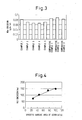
- a vehicle with 1.5-liter, inline-four engine having the above-mentioned catalyst was used to adsorb sulfur onto the catalyst by running the vehicle at 40 km/hour. Then, the vehicle was accelerated at WOT (wide open throttle), and the emission of H 2 S was measured at where the vehicle reached 100 km/hour. The result is shown in Fig. 2 .
- the emission of H 2 S was significantly reduced when the catalysts of Examples 1-3 were used as compared with the catalyst with the one-layered coating layer which does not contain nickel (Comparative Example 1). They also show reduced emission of H 2 S by about 25 to 50 % of the catalyst with the one-layered coating layer which contains nickel (Comparative Example 2). The emission of H 2 S when using catalysts of Examples 1-5 was reduced to the same level or less even as compared with the catalyst with the two-layered catalysts coating layer which contains nickel (Comparative Example 2).
- the catalysts of Examples 3 and 5 have in particular reduced emission of H 2 S, wherein neodymium oxide was added into the catalyst of Example 3 as a promoter, and wherein rhodium was contained in the lower layer of the catalyst of Example 5.
- the catalyst according to the present invention even without nickel being an environmental load substance, has more excellent H 2 S purification performance as compared with conventional catalysts while maintaining the purification performance against NOx and the other exhaust gas components.
Landscapes
- Chemical & Material Sciences (AREA)
- Engineering & Computer Science (AREA)
- Chemical Kinetics & Catalysis (AREA)
- Organic Chemistry (AREA)
- Materials Engineering (AREA)
- Combustion & Propulsion (AREA)
- Health & Medical Sciences (AREA)
- Oil, Petroleum & Natural Gas (AREA)
- General Chemical & Material Sciences (AREA)
- Analytical Chemistry (AREA)
- Environmental & Geological Engineering (AREA)
- Biomedical Technology (AREA)
- Toxicology (AREA)
- Mechanical Engineering (AREA)
- General Engineering & Computer Science (AREA)
- Catalysts (AREA)
- Exhaust Gas After Treatment (AREA)
Applications Claiming Priority (2)
| Application Number | Priority Date | Filing Date | Title |
|---|---|---|---|
| JP2006164900 | 2006-06-14 | ||
| PCT/JP2007/061684 WO2007145152A1 (fr) | 2006-06-14 | 2007-06-05 | Catalyseur pour la purification d'un gaz d'échappement |
Publications (3)
| Publication Number | Publication Date |
|---|---|
| EP2045010A1 true EP2045010A1 (fr) | 2009-04-08 |
| EP2045010A4 EP2045010A4 (fr) | 2010-06-09 |
| EP2045010B1 EP2045010B1 (fr) | 2011-09-21 |
Family
ID=38831666
Family Applications (1)
| Application Number | Title | Priority Date | Filing Date |
|---|---|---|---|
| EP07744976A Ceased EP2045010B1 (fr) | 2006-06-14 | 2007-06-05 | Catalyseur pour la purification d'un gaz d'échappement |
Country Status (6)
| Country | Link |
|---|---|
| US (1) | US7816300B2 (fr) |
| EP (1) | EP2045010B1 (fr) |
| JP (1) | JP5305904B2 (fr) |
| KR (1) | KR101155847B1 (fr) |
| CN (1) | CN101466468B (fr) |
| WO (1) | WO2007145152A1 (fr) |
Cited By (2)
| Publication number | Priority date | Publication date | Assignee | Title |
|---|---|---|---|---|
| EP2457653A4 (fr) * | 2009-07-24 | 2014-03-19 | Cataler Corp | Catalyseur de purification de gaz d échappement |
| DE102020131773B4 (de) * | 2019-12-26 | 2025-07-10 | Cataler Corporation | Abgasreinigungskatalysator |
Families Citing this family (12)
| Publication number | Priority date | Publication date | Assignee | Title |
|---|---|---|---|---|
| JP5492448B2 (ja) * | 2009-04-28 | 2014-05-14 | 株式会社キャタラー | 排ガス浄化用触媒 |
| US8833064B2 (en) * | 2009-11-06 | 2014-09-16 | Basf Corporation | Small engine layered catalyst article and method of making |
| US8828343B2 (en) * | 2010-03-05 | 2014-09-09 | Basf Corporation | Carbon monoxide conversion catalyst |
| JP5376261B2 (ja) * | 2011-03-10 | 2013-12-25 | トヨタ自動車株式会社 | 排ガス浄化用触媒 |
| JP5578369B2 (ja) * | 2011-06-24 | 2014-08-27 | トヨタ自動車株式会社 | 排ガス浄化用触媒 |
| IL301603A (en) | 2011-10-14 | 2023-05-01 | Genentech Inc | Pertuzumab, trastuzumab, docetaxel and carboplatin for use in the preoperative treatment of a patient |
| JP5807782B2 (ja) * | 2011-12-28 | 2015-11-10 | トヨタ自動車株式会社 | 排ガス浄化用触媒 |
| JP5939010B2 (ja) * | 2012-04-18 | 2016-06-22 | マツダ株式会社 | 排気ガス浄化用触媒装置 |
| US9266092B2 (en) | 2013-01-24 | 2016-02-23 | Basf Corporation | Automotive catalyst composites having a two-metal layer |
| JP6637643B1 (ja) | 2018-03-28 | 2020-01-29 | 三井金属鉱業株式会社 | 排ガス浄化用触媒 |
| JP7372052B2 (ja) * | 2019-05-15 | 2023-10-31 | 株式会社キャタラー | 排ガス浄化触媒装置 |
| US11788450B2 (en) * | 2020-10-30 | 2023-10-17 | Johnson Matthey Public Limited Company | TWC catalysts for gasoline engine exhaust gas treatments |
Family Cites Families (19)
| Publication number | Priority date | Publication date | Assignee | Title |
|---|---|---|---|---|
| ES2033398T3 (es) * | 1987-10-30 | 1993-03-16 | Degussa Aktiengesellschaft | Catalizador trivalente exento de rodio. |
| ES2042687T3 (es) * | 1987-10-30 | 1993-12-16 | Degussa | Catalizador trivalente exento de platino. |
| US5254519A (en) * | 1990-02-22 | 1993-10-19 | Engelhard Corporation | Catalyst composition containing platinum and rhodium components |
| US5057483A (en) | 1990-02-22 | 1991-10-15 | Engelhard Corporation | Catalyst composition containing segregated platinum and rhodium components |
| JPH0427430A (ja) * | 1990-05-23 | 1992-01-30 | Mazda Motor Corp | エンジンの排気ガス浄化用触媒 |
| US5597771A (en) * | 1993-06-25 | 1997-01-28 | Engelhard Corporation | Layered catalyst composite |
| JP3358766B2 (ja) * | 1994-12-16 | 2002-12-24 | トヨタ自動車株式会社 | 排ガス浄化用触媒 |
| US6090744A (en) * | 1996-03-28 | 2000-07-18 | Mazda Motor Corporation | Catalyst for cleaning exhaust gas |
| US6348430B1 (en) * | 1997-06-20 | 2002-02-19 | Degussa Ag | Exhaust gas treatment catalyst for internal combustion engines with two catalytically active layers on a carrier structure |
| JP4090547B2 (ja) | 1997-12-17 | 2008-05-28 | ジョンソン・マッセイ・ジャパン・インコーポレイテッド | 排ガス浄化用触媒 |
| JP2001104785A (ja) * | 1999-10-08 | 2001-04-17 | Daihatsu Motor Co Ltd | 排気ガス浄化用触媒 |
| JP4228278B2 (ja) * | 2002-03-19 | 2009-02-25 | トヨタ自動車株式会社 | 排ガス浄化用触媒 |
| US7022646B2 (en) * | 2003-01-31 | 2006-04-04 | Engelhard Corporation | Layered catalyst composite |
| FR2852596B1 (fr) * | 2003-03-18 | 2007-02-23 | Rhodia Elect & Catalysis | Composition a base d'oxydes de cerium et de zirconium a surface specifique stable entre 900 c et 1000 c, son procede de preparation et son utilisation comme catalyseur |
| JP3884719B2 (ja) * | 2003-03-20 | 2007-02-21 | 株式会社デンソー | セラミック触媒体の製造方法 |
| JP2004322022A (ja) | 2003-04-28 | 2004-11-18 | Babcock Hitachi Kk | 排ガス浄化用触媒 |
| JP2005169203A (ja) * | 2003-12-09 | 2005-06-30 | Nissan Motor Co Ltd | 排気ガス浄化触媒及びその製造方法 |
| US20060217263A1 (en) * | 2005-03-24 | 2006-09-28 | Tokyo Roki Co., Ltd | Exhaust gas purification catalyst |
| JP5094049B2 (ja) * | 2006-06-14 | 2012-12-12 | 株式会社キャタラー | 排ガス浄化用触媒 |
-
2007
- 2007-06-05 CN CN2007800213862A patent/CN101466468B/zh not_active Expired - Fee Related
- 2007-06-05 KR KR1020087030309A patent/KR101155847B1/ko not_active Expired - Fee Related
- 2007-06-05 EP EP07744976A patent/EP2045010B1/fr not_active Ceased
- 2007-06-05 US US12/227,523 patent/US7816300B2/en not_active Expired - Fee Related
- 2007-06-05 WO PCT/JP2007/061684 patent/WO2007145152A1/fr not_active Ceased
- 2007-06-05 JP JP2008521182A patent/JP5305904B2/ja not_active Expired - Fee Related
Cited By (3)
| Publication number | Priority date | Publication date | Assignee | Title |
|---|---|---|---|---|
| EP2457653A4 (fr) * | 2009-07-24 | 2014-03-19 | Cataler Corp | Catalyseur de purification de gaz d échappement |
| US9295945B2 (en) | 2009-07-24 | 2016-03-29 | Cataler Corporation | Exhaust gas-purifying catalyst |
| DE102020131773B4 (de) * | 2019-12-26 | 2025-07-10 | Cataler Corporation | Abgasreinigungskatalysator |
Also Published As
| Publication number | Publication date |
|---|---|
| CN101466468A (zh) | 2009-06-24 |
| US20090137387A1 (en) | 2009-05-28 |
| US7816300B2 (en) | 2010-10-19 |
| CN101466468B (zh) | 2012-05-23 |
| KR101155847B1 (ko) | 2012-06-20 |
| EP2045010B1 (fr) | 2011-09-21 |
| EP2045010A4 (fr) | 2010-06-09 |
| JP5305904B2 (ja) | 2013-10-02 |
| JPWO2007145152A1 (ja) | 2009-10-29 |
| KR20090017594A (ko) | 2009-02-18 |
| WO2007145152A1 (fr) | 2007-12-21 |
Similar Documents
| Publication | Publication Date | Title |
|---|---|---|
| EP2045010B1 (fr) | Catalyseur pour la purification d'un gaz d'échappement | |
| US5958828A (en) | Catalyst for purifying exhaust gas | |
| US6221804B1 (en) | Catalyst for purifying exhaust gas and manufacturing method thereof | |
| US4675308A (en) | Three-way catalyst for lean operating engines | |
| JP3741303B2 (ja) | 排ガス浄化用触媒 | |
| US6022825A (en) | Thermally durable low H2 S three-way catalysts | |
| KR101419687B1 (ko) | 감소된 탈황 온도를 특징으로 하는 질소 산화물 저장 촉매 | |
| EP0852966B1 (fr) | Catalyseur et méthode pour la purification de gaz d'échappement | |
| US6348430B1 (en) | Exhaust gas treatment catalyst for internal combustion engines with two catalytically active layers on a carrier structure | |
| EP0171151B1 (fr) | Catalyseur à trois voies pour systèmes d'échappement pauvre | |
| KR100300825B1 (ko) | 배기가스정화용촉매및배기가스정화방법 | |
| EP1095702B1 (fr) | Catalyseur pour la purification des gaz d'echappement, procede de production dudit catalyseur et procede de purification de gaz d'echappement | |
| EP0562516B1 (fr) | Méthode pour la purification de gaz d'échappement | |
| WO1998042437A1 (fr) | Composition catalyseur contenant un oxyde de cerium et de praseodyme intimement melange | |
| WO1998045027A1 (fr) | Composition de catalyseur contenant des oxydes de cerium, de zirconium et de neodyme | |
| EP2078562A1 (fr) | Catalyseur d'épuration de gaz d'échappement | |
| US6468484B1 (en) | NO2 abatement composition with enhanced sulfur resistance | |
| JP3769803B2 (ja) | 排気ガス浄化用触媒 | |
| US7622095B2 (en) | Catalyst composition for use in a lean NOx trap and method of using | |
| US20020076373A1 (en) | Use of lithium in NOx adsorbers for improved low temperature performance | |
| US20050255992A1 (en) | Rhodium-rich catalysts doped with rare earth oxides | |
| JP2007330879A (ja) | 排ガス浄化用触媒 | |
| JP4019351B2 (ja) | NOx浄化触媒及びNOx浄化システム | |
| JP2018164896A (ja) | 希薄混合気燃焼エンジンからの排出ガス浄化用吸蔵還元型触媒 | |
| JP5540521B2 (ja) | 排気ガス浄化触媒及びその製造方法 |
Legal Events
| Date | Code | Title | Description |
|---|---|---|---|
| PUAI | Public reference made under article 153(3) epc to a published international application that has entered the european phase |
Free format text: ORIGINAL CODE: 0009012 |
|
| 17P | Request for examination filed |
Effective date: 20090114 |
|
| AK | Designated contracting states |
Kind code of ref document: A1 Designated state(s): AT BE BG CH CY CZ DE DK EE ES FI FR GB GR HU IE IS IT LI LT LU LV MC MT NL PL PT RO SE SI SK TR |
|
| AX | Request for extension of the european patent |
Extension state: AL BA HR MK RS |
|
| DAX | Request for extension of the european patent (deleted) | ||
| RBV | Designated contracting states (corrected) |
Designated state(s): DE FR GB |
|
| A4 | Supplementary search report drawn up and despatched |
Effective date: 20100511 |
|
| GRAP | Despatch of communication of intention to grant a patent |
Free format text: ORIGINAL CODE: EPIDOSNIGR1 |
|
| RIC1 | Information provided on ipc code assigned before grant |
Ipc: F01N 3/10 20060101ALI20110228BHEP Ipc: B01J 35/10 20060101ALI20110228BHEP Ipc: B01D 53/94 20060101ALI20110228BHEP Ipc: B01J 23/63 20060101AFI20110228BHEP |
|
| GRAS | Grant fee paid |
Free format text: ORIGINAL CODE: EPIDOSNIGR3 |
|
| GRAA | (expected) grant |
Free format text: ORIGINAL CODE: 0009210 |
|
| RIN1 | Information on inventor provided before grant (corrected) |
Inventor name: HACHISUKA, ICHIRO Inventor name: ISHIBASHI, KAZUNOBU Inventor name: YOSHIDA, TAKERU Inventor name: ORI, HIROTAKA Inventor name: TAKEUCHI, MICHIHIKO |
|
| AK | Designated contracting states |
Kind code of ref document: B1 Designated state(s): DE FR GB |
|
| REG | Reference to a national code |
Ref country code: GB Ref legal event code: FG4D |
|
| REG | Reference to a national code |
Ref country code: DE Ref legal event code: R096 Ref document number: 602007017376 Country of ref document: DE Effective date: 20111124 |
|
| PLBE | No opposition filed within time limit |
Free format text: ORIGINAL CODE: 0009261 |
|
| STAA | Information on the status of an ep patent application or granted ep patent |
Free format text: STATUS: NO OPPOSITION FILED WITHIN TIME LIMIT |
|
| 26N | No opposition filed |
Effective date: 20120622 |
|
| REG | Reference to a national code |
Ref country code: DE Ref legal event code: R097 Ref document number: 602007017376 Country of ref document: DE Effective date: 20120622 |
|
| REG | Reference to a national code |
Ref country code: FR Ref legal event code: PLFP Year of fee payment: 10 |
|
| REG | Reference to a national code |
Ref country code: FR Ref legal event code: PLFP Year of fee payment: 11 |
|
| REG | Reference to a national code |
Ref country code: FR Ref legal event code: PLFP Year of fee payment: 12 |
|
| PGFP | Annual fee paid to national office [announced via postgrant information from national office to epo] |
Ref country code: GB Payment date: 20220620 Year of fee payment: 16 Ref country code: DE Payment date: 20220610 Year of fee payment: 16 |
|
| PGFP | Annual fee paid to national office [announced via postgrant information from national office to epo] |
Ref country code: FR Payment date: 20220630 Year of fee payment: 16 |
|
| REG | Reference to a national code |
Ref country code: DE Ref legal event code: R119 Ref document number: 602007017376 Country of ref document: DE |
|
| GBPC | Gb: european patent ceased through non-payment of renewal fee |
Effective date: 20230605 |
|
| PG25 | Lapsed in a contracting state [announced via postgrant information from national office to epo] |
Ref country code: DE Free format text: LAPSE BECAUSE OF NON-PAYMENT OF DUE FEES Effective date: 20240103 Ref country code: GB Free format text: LAPSE BECAUSE OF NON-PAYMENT OF DUE FEES Effective date: 20230605 |
|
| PG25 | Lapsed in a contracting state [announced via postgrant information from national office to epo] |
Ref country code: FR Free format text: LAPSE BECAUSE OF NON-PAYMENT OF DUE FEES Effective date: 20230630 |