EP2047653B1 - Transmission de flux de donnees en fragmentation des messages - Google Patents
Transmission de flux de donnees en fragmentation des messages Download PDFInfo
- Publication number
- EP2047653B1 EP2047653B1 EP07787940A EP07787940A EP2047653B1 EP 2047653 B1 EP2047653 B1 EP 2047653B1 EP 07787940 A EP07787940 A EP 07787940A EP 07787940 A EP07787940 A EP 07787940A EP 2047653 B1 EP2047653 B1 EP 2047653B1
- Authority
- EP
- European Patent Office
- Prior art keywords
- datagrams
- flow
- bursts
- emitting
- datagram
- Prior art date
- Legal status (The legal status is an assumption and is not a legal conclusion. Google has not performed a legal analysis and makes no representation as to the accuracy of the status listed.)
- Not-in-force
Links
- 230000005540 biological transmission Effects 0.000 title claims abstract description 20
- 238000013467 fragmentation Methods 0.000 title description 3
- 238000006062 fragmentation reaction Methods 0.000 title description 3
- 238000000034 method Methods 0.000 claims abstract description 20
- 239000012634 fragment Substances 0.000 claims abstract description 10
- 238000003672 processing method Methods 0.000 claims 1
- 238000011144 upstream manufacturing Methods 0.000 claims 1
- 230000004907 flux Effects 0.000 description 15
- HRULVFRXEOZUMJ-UHFFFAOYSA-K potassium;disodium;2-(4-chloro-2-methylphenoxy)propanoate;methyl-dioxido-oxo-$l^{5}-arsane Chemical compound [Na+].[Na+].[K+].C[As]([O-])([O-])=O.[O-]C(=O)C(C)OC1=CC=C(Cl)C=C1C HRULVFRXEOZUMJ-UHFFFAOYSA-K 0.000 description 7
- 238000004458 analytical method Methods 0.000 description 5
- 230000008901 benefit Effects 0.000 description 3
- 230000008859 change Effects 0.000 description 3
- 238000005538 encapsulation Methods 0.000 description 3
- 230000003750 conditioning effect Effects 0.000 description 2
- 230000007246 mechanism Effects 0.000 description 2
- 239000002674 ointment Substances 0.000 description 2
- 230000008569 process Effects 0.000 description 2
- 230000015572 biosynthetic process Effects 0.000 description 1
- 238000012512 characterization method Methods 0.000 description 1
- 238000005206 flow analysis Methods 0.000 description 1
- 238000005457 optimization Methods 0.000 description 1
- 230000008520 organization Effects 0.000 description 1
- 238000004806 packaging method and process Methods 0.000 description 1
- 238000012797 qualification Methods 0.000 description 1
Images
Classifications
-
- H—ELECTRICITY
- H04—ELECTRIC COMMUNICATION TECHNIQUE
- H04L—TRANSMISSION OF DIGITAL INFORMATION, e.g. TELEGRAPHIC COMMUNICATION
- H04L47/00—Traffic control in data switching networks
- H04L47/10—Flow control; Congestion control
-
- H—ELECTRICITY
- H04—ELECTRIC COMMUNICATION TECHNIQUE
- H04L—TRANSMISSION OF DIGITAL INFORMATION, e.g. TELEGRAPHIC COMMUNICATION
- H04L47/00—Traffic control in data switching networks
- H04L47/10—Flow control; Congestion control
- H04L47/22—Traffic shaping
-
- H—ELECTRICITY
- H04—ELECTRIC COMMUNICATION TECHNIQUE
- H04L—TRANSMISSION OF DIGITAL INFORMATION, e.g. TELEGRAPHIC COMMUNICATION
- H04L47/00—Traffic control in data switching networks
- H04L47/10—Flow control; Congestion control
- H04L47/24—Traffic characterised by specific attributes, e.g. priority or QoS
- H04L47/2441—Traffic characterised by specific attributes, e.g. priority or QoS relying on flow classification, e.g. using integrated services [IntServ]
-
- H—ELECTRICITY
- H04—ELECTRIC COMMUNICATION TECHNIQUE
- H04L—TRANSMISSION OF DIGITAL INFORMATION, e.g. TELEGRAPHIC COMMUNICATION
- H04L47/00—Traffic control in data switching networks
- H04L47/10—Flow control; Congestion control
- H04L47/36—Flow control; Congestion control by determining packet size, e.g. maximum transfer unit [MTU]
-
- H—ELECTRICITY
- H04—ELECTRIC COMMUNICATION TECHNIQUE
- H04L—TRANSMISSION OF DIGITAL INFORMATION, e.g. TELEGRAPHIC COMMUNICATION
- H04L69/00—Network arrangements, protocols or services independent of the application payload and not provided for in the other groups of this subclass
- H04L69/30—Definitions, standards or architectural aspects of layered protocol stacks
- H04L69/32—Architecture of open systems interconnection [OSI] 7-layer type protocol stacks, e.g. the interfaces between the data link level and the physical level
- H04L69/321—Interlayer communication protocols or service data unit [SDU] definitions; Interfaces between layers
-
- H—ELECTRICITY
- H04—ELECTRIC COMMUNICATION TECHNIQUE
- H04N—PICTORIAL COMMUNICATION, e.g. TELEVISION
- H04N21/00—Selective content distribution, e.g. interactive television or video on demand [VOD]
- H04N21/20—Servers specifically adapted for the distribution of content, e.g. VOD servers; Operations thereof
- H04N21/23—Processing of content or additional data; Elementary server operations; Server middleware
- H04N21/236—Assembling of a multiplex stream, e.g. transport stream, by combining a video stream with other content or additional data, e.g. inserting a URL [Uniform Resource Locator] into a video stream, multiplexing software data into a video stream; Remultiplexing of multiplex streams; Insertion of stuffing bits into the multiplex stream, e.g. to obtain a constant bit-rate; Assembling of a packetised elementary stream
-
- H—ELECTRICITY
- H04—ELECTRIC COMMUNICATION TECHNIQUE
- H04N—PICTORIAL COMMUNICATION, e.g. TELEVISION
- H04N21/00—Selective content distribution, e.g. interactive television or video on demand [VOD]
- H04N21/20—Servers specifically adapted for the distribution of content, e.g. VOD servers; Operations thereof
- H04N21/23—Processing of content or additional data; Elementary server operations; Server middleware
- H04N21/238—Interfacing the downstream path of the transmission network, e.g. adapting the transmission rate of a video stream to network bandwidth; Processing of multiplex streams
- H04N21/2389—Multiplex stream processing, e.g. multiplex stream encrypting
- H04N21/23895—Multiplex stream processing, e.g. multiplex stream encrypting involving multiplex stream encryption
-
- H—ELECTRICITY
- H04—ELECTRIC COMMUNICATION TECHNIQUE
- H04N—PICTORIAL COMMUNICATION, e.g. TELEVISION
- H04N21/00—Selective content distribution, e.g. interactive television or video on demand [VOD]
- H04N21/60—Network structure or processes for video distribution between server and client or between remote clients; Control signalling between clients, server and network components; Transmission of management data between server and client, e.g. sending from server to client commands for recording incoming content stream; Communication details between server and client
- H04N21/61—Network physical structure; Signal processing
- H04N21/6106—Network physical structure; Signal processing specially adapted to the downstream path of the transmission network
- H04N21/6131—Network physical structure; Signal processing specially adapted to the downstream path of the transmission network involving transmission via a mobile phone network
-
- H—ELECTRICITY
- H04—ELECTRIC COMMUNICATION TECHNIQUE
- H04N—PICTORIAL COMMUNICATION, e.g. TELEVISION
- H04N21/00—Selective content distribution, e.g. interactive television or video on demand [VOD]
- H04N21/60—Network structure or processes for video distribution between server and client or between remote clients; Control signalling between clients, server and network components; Transmission of management data between server and client, e.g. sending from server to client commands for recording incoming content stream; Communication details between server and client
- H04N21/63—Control signaling related to video distribution between client, server and network components; Network processes for video distribution between server and clients or between remote clients, e.g. transmitting basic layer and enhancement layers over different transmission paths, setting up a peer-to-peer communication via Internet between remote STB's; Communication protocols; Addressing
- H04N21/643—Communication protocols
- H04N21/64315—DVB-H
-
- H—ELECTRICITY
- H04—ELECTRIC COMMUNICATION TECHNIQUE
- H04N—PICTORIAL COMMUNICATION, e.g. TELEVISION
- H04N21/00—Selective content distribution, e.g. interactive television or video on demand [VOD]
- H04N21/60—Network structure or processes for video distribution between server and client or between remote clients; Control signalling between clients, server and network components; Transmission of management data between server and client, e.g. sending from server to client commands for recording incoming content stream; Communication details between server and client
- H04N21/63—Control signaling related to video distribution between client, server and network components; Network processes for video distribution between server and clients or between remote clients, e.g. transmitting basic layer and enhancement layers over different transmission paths, setting up a peer-to-peer communication via Internet between remote STB's; Communication protocols; Addressing
- H04N21/643—Communication protocols
- H04N21/64322—IP
Definitions
- the present invention relates to a transmission of data flows of the type implementing a layered architecture protocol and fragmentation of the messages.
- the invention finds in particular advantageously - but not exclusively - application for the transmission-reception of IP streams in mobile telephony, and in particular for the transmission-reception of DVBH streams.
- Information exchanges in the Internet are governed by layered architectures, for example of the type of the OSI (Open System Interconnection) model of the ISO (International Standard Organization).
- OSI Open System Interconnection
- ISO International Standard Organization
- Each layer is characterized by a protocol defining message exchange rules (also called data units exchanged or PDU in the following text (in English "Protocol Data Units”)).
- the N-PDU (N-PDU) PDU consists of a header, an information block, and an end.
- the header and the end carry the service information specific to the N protocol, the information block carrying all or part of the data unit (PDU) of the N + 1 layer.
- MTU maximum transfer unit
- this length may be less than the length required or desired for the exchanged data units (PDU) of the upper layers.
- an application of a network file server connected on an Ethernet network will exchange at the "Application" level PDUs (application PDUs or APDUs in the rest of the text) of 8 kilobytes or more, which will be transported to the ""Network" (IP) in 1500 bytes of network PDUs (IP datagrams), themselves conveyed in 1514-byte Ethernet frames.
- IP Network
- the application PDU will be fragmented in several PDUs at the level of IP datagrams and Ethernet frames.
- An object of the invention is to optimize this fragmentation and to implement a processing of cutting and encapsulation of the data units which makes it possible to facilitate the transmission of messages and to avoid high reception times.
- Another object of the invention is to optimize this splitting and encapsulation to limit the time during which the terminals need to be operational, and thus substantially save their battery.
- burst rather than continuous transmission makes it possible to take advantage of the high speeds generally offered by the transmission channels (for example, but not exclusively in DVB), while the burst filling that is proposed makes it possible to avoid, at the reception level, too much access time to the information.
- the invention also relates to a reception method implementing an inverse processing of the transmission method for reconstituting datagrams, as well as terminals and a transmission system implementing the transmission method or the reception method.
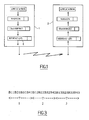
- a transmitter 1 and a receiver 2 which exchange, as well as the different layers of the protocol they implement (application layers and encapsulation layers: session, transport and network).
- the transmitting terminal 1 notably comprises, at the level of the "IP network" layer, an encapsulator E intended to process the IP datagrams.
- IP datagrams are for example in the form of streams of different types containing different information (multicast audio stream, video, data).
- This encapsulator E encapsulates IP datagrams and broadcasts them in the Mpeg2 DVB output stream by implementing burst transmission (bursts).
- the DVB transmission channel allows a bit rate of a few megabits, while the streams to be transmitted have a rate of a few hundred kilobits.
- the streams are transmitted at the speed of the channel for very short times (for example 100 milliseconds) repeated with a periodicity which is for example from one to several seconds.
- an average flow rate of 500 kilobits can be transmitted without loss over a 10 megabit channel per 100 millisecond bursts repeated every 2 seconds.
- Such a mechanism allows the terminal to have its radio circuit operational for 95% of its time, and thus substantially save its battery.
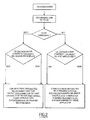
- the filling of the bursts which is implemented by the encapsulator E is illustrated on the figure 2 and makes it possible to optimize program access times, especially when the user decides to change programs ("zapping"), or to optimize the efficiency of local dropouts or the efficiency of data transmission protocols multicast.
- the encapsulator E analyzes the IP datagrams that it receives and determines for each of them: if it belongs to a given stream, for each IP datagram carrying a homogeneous stream fragment, whether it contains or not a beginning of PDU application, for each IP datagram carrying a heterogeneous stream fragment, whether or not it contains a main frame start.
- the encapsulator E constitutes the bursts homogeneously, starting with an IP datagram containing a start of application PDU and completing the burst by the IP datagram or datagrams containing other fragments of this application PDU. .
- each burst integrates an integer number of application PDUs, so that the operation of the receiver does not face high reception times for the APDUs.
- the encapsulator constitutes the bursts starting with an IP datagram containing a beginning of the main frame and completing it with one or more other secondary frames until the next excluded main frame.
- the program change time will be at most equal to the burst repetition interval (when the arrival program salvo is just before the start program burst). This is illustrated by figure 3 .
- the encapsulator E can for example analyze the information contained in the headers of the network layers (IP) or Transport (TCP UDP), or Session (RTP , SRTP) and Application.
- IP network layers
- TCP UDP Transport
- RTP Session
- SRTP Session
- a special case, however, is that of encrypted traffic, where the header fields to be analyzed are a priori also encrypted.
- the traffic is encrypted at the IP (IPSEC) level
- IP IP
- Transport, Session and Application layers are made opaque to any analysis
- SRTP Session level
- An encapsulator downstream of this conditioning treatment can exploit this information to optimize its burst filling function.
- the identification of the streams is for example determined from the source / destination port / destination IP address and possibly from the SSRC field (RFC3550) of the RTP header.
- the homogeneous / heterogeneous qualification of the stream is obtained by configuration by IP address and the source / destination port.
- RTP streams are characterized by their source / destination IP address, source port address, destination port address, and SSRC.
- the source / destination port and SSRC addresses can be made opaque by downstream encryption.
- For each pair source IP address / destination IP address a unique number is assigned to each pair (source port address, destination port address, SSRC) on n bits. For example by adding the modulo nbits fields.
- the encapsulator even in an encrypted transmission context, has clear fields in the IP header allowing it to determine the source / destination addresses, the stream identifier and the DSCP codes.
- IP addresses and possibly the stream identifier uses the IP addresses and possibly the stream identifier to determine the burst to convey the IP datagram.
- the receiving terminal 2 which is illustrated on the figure 1 for its part, implements a method of processing that is inverse to that of the transmission terminal, so as to reconstitute the datagrams, then all the messages at the Application level.
Landscapes
- Engineering & Computer Science (AREA)
- Signal Processing (AREA)
- Computer Networks & Wireless Communication (AREA)
- Multimedia (AREA)
- Computer Security & Cryptography (AREA)
- Data Exchanges In Wide-Area Networks (AREA)
- Communication Control (AREA)
- Amplifiers (AREA)
- Transmitters (AREA)
- Logic Circuits (AREA)
Description
- La présente invention est relative à une transmission de flux de données du type mettant en oeuvre un protocole à architecture en couches et une fragmentation des messages.
- L'invention trouve en particulier avantageusement - mais non limitativement - application pour l'émission-réception de flux IP en téléphonie mobile, et notamment pour l'émission-réception de flux DVBH.
- Les échanges d'information dans l'Internet sont régis par des architectures en couches, par exemple du type de celles du modèle OSI (Open System Interconnection) de l'ISO (International Standard Organization).
- Chaque couche y est caractérisée par un protocole définissant des règles d'échange de messages (encore appelées unités de données échangées ou PDU dans la suite du texte (en anglais « Protocol Data Units »)). Selon ce protocole, le PDU de la couche N (N-PDU) est composé d'un en-tête, d'un bloc d'informations et d'une fin. L'en-tête et la fin transportent les informations de service propres au protocole N, le bloc d'informations transportant en totalité ou en partie l'unité de données (PDU) de la couche N+1.
- Les protocoles des couches basses, et en particulier celui de la couche liaison de données, impose de façon drastique une longueur maximum (MTU ou Maximum Transfer Unit) pour la longueur des trames, par exemple 1500 octets pour l'Ethernet. Or, cette longueur peut être inférieure à la longueur requise ou souhaitée pour les unités de données échangées (PDU) des couches supérieures. Par exemple, une application d'un serveur de fichiers réseau connecté sur un réseau Ethernet échangera au niveau « Application » des PDU (PDU applicatif ou APDU dans la suite du texte) de 8 kilo-octets ou plus, qui seront transportés au niveau « Réseau » (IP) dans des PDU réseau (datagrammes IP) de 1500 octets, eux-mêmes véhiculés dans des trames Ethernet de 1514 octets. Dans ce cas, le PDU applicatif sera fragmenté dans plusieurs PDU au niveau des datagrammes IP et des trames Ethernet.
- L'article de Grundlach et al. "Dynamic, power-aware scheduling for mobile clients using a transparent proxy" (Int. Conf. on Parallel Processing, Montréal, QC, Canada 15-08-2004) publié par IEEE (ISBN : 0-7695-2197-5) présente un procédé d'émission de flux de données comme résumé dans le préambule de la revendication 1.
- Un but de l'invention est d'optimiser cette fragmentation et de mettre en oeuvre un traitement de découpage et d'encapsulation des unités de données qui permette de faciliter la transmission des messages et d'éviter des temps de réception élevés.
- Un autre but de l'invention est d'optimiser ce découpage et cette encapsulation pour limiter le temps pendant lequel les terminaux ont besoin d'être opérationnels, et ainsi économiser substantiellement leur batterie.
- Il est notamment proposé dans le cas où la transmission s'opère par salves de mettre en oeuvre un traitement de constitu tion des salves qui tient compte du caractère homogène ou hétérogène des flux applicatifs.
- En considérant en effet les flux applicatifs, on peut établir deux catégories :
- Les flux à importance homogène : dans de tels flux, toutes les informations contenues dans les APDU ont une importance égale, et les divers APDU ont une importance équivalente. Les flux délivrés par serveur de fichier réseau (unicast, multicast) en phase transfert de données entrent dans cette catégorie.
- Les flux à importance hétérogène : dans de tels flux, certaines informations sont plus importantes que d'autres. Par exemple les codages vidéo sont basés habituellement sur l'existence de trames principales (KeyFrames ou Iframes) contenant une image complète, qui sont suivies de trames secondaires (B frames) donnant uniquement les différences par rapport à cette trame principale.
- Plus précisément, l'invention propose un procédé d'émission de flux de données pour une transmission selon un protocole à architecture en couches, selon lequel on fragmente les messages transmis en fonction de la longueur maximum imposée par les différentes couches, caractérisé en ce qu'on transmet les datagrammes par salves et en ce qu'on construit les salves en analysant et associant des datagrammes provenant de flux de différents types, de la façon suivante :
- on détermine pour les différents datagrammes le flux auquel il appartient et on caractérise l'homogénéité ou l'hétérogénéité de ce flux ;
- on encapsule dans une même salve des datagrammes correspondant à un même flux ;
- ■ lorsque ce flux est homogène, en commençant par un datagramme IP contenant le début d'un PDU applicatif, et en complétant par les datagrammes IP du même PDU applicatif ; ou
- ■ lorsque le flux est hétérogène, en commençant par un datagramme IP contenant une trame principale, et en complétant par un ou plusieurs datagrammes IP contenant des trames secondaires.
- Une telle transmission par salves plutôt qu'en continu permet de tirer partie des débits importants qu'offrent généralement les canaux de transmission (par exemple, mais non limitativement en DVB), tandis que le remplissage des salves qui est proposé permet quant à lui d'éviter, au niveau de la réception, des temps d'accès trop importants à l'information.
- L'invention concerne également un procédé de réception mettant en oeuvre un traitement inverse du procédé d'émission pour reconstituer les datagrammes, ainsi que des terminaux et un système de transmission mettant en oeuvre le procédé d'émission ou le procédé de réception.
- D'autres caractéristiques et avantages de l'invention ressortiront encore de la description qui suit, laquelle est purement illustrative et non limitative et doit être lue en regard des figures annexées sur lesquelles :
- la
figure 1 illustre des terminaux d'émission et de réception mettant en oeuvre des procédés conformes à l'invention ; - la
figure 2 est un organigramme qui illustre différentes étapes d'un mode de mise en oeuvre de l'invention ; - la
figure 3 illustre des salves constituées selon un mode de mise en oeuvre de l'invention. - On se place, à titre d'illustration, dans la suite du texte dans le cas d'une transmission de télévision mobile, par exemple DVBH.
- On a illustré schématiquement sur la
figure 1 un émetteur 1 et un récepteur 2, qui échangent, ainsi que les différentes couches du protocole qu'ils mettent en oeuvre (couches d'applications et couches d'encapsulation : session, transport et réseau). - Le terminal émetteur 1 comprend notamment, au niveau de la couche « réseau IP » un encapsulateur E destiné à traiter les datagrammes IP.
- Les datagrammes IP se présentent par exemple sous la forme de flux de différents types contenant différentes informations (flux multicast audio, vidéo, data).
- Cet encapsulateur E encapsule les datagrammes IP et les diffuse dans le flux de sortie Mpeg2 DVB en mettant en oeuvre une transmission par salves (bursts).
- Le canal de transmission DVB permet en effet un débit de quelques mégabits, alors que les flux à transmettre ont un débit de quelques centaines de kilobits.
- Ainsi, plutôt que d'être transmis en continu, les flux sont transmis à la vitesse du canal pendant des temps très courts (par exemple 100 millisecondes) répétés avec une périodicité qui est par exemple d'une à plusieurs secondes.
- De cette façon, un flux de débit moyen de 500 kilobits peut être transmis sans perte sur un canal de 10 mégabits par salves de 100 millisecondes répétées toutes les 2 secondes.
- Un tel mécanisme permet au terminal de n'avoir son circuit radio opérationnel que pendant 95% de son temps, et donc d'économiser substantiellement sa batterie.
- Le remplissage des salves qui est mis en oeuvre par l'encapsulateur E est illustré sur la
figure 2 et permet d'optimiser les temps d'accès aux programmes, notamment lorsque l'utilisateur décide de changer de programme (« zapping »), ou encore d'optimiser l'efficacité des décrochages locaux ou l'efficacité des protocoles de transmission des données multicast. - A cet effet, l'encapsulateur E analyse les datagrammes IP qu'il reçoit et détermine pour chacun, d'eux : s'il appartient à un flux donné, pour chaque datagramme IP transportant un fragment de flux homogène, s'il contient ou non un début d'applicatif PDU, pour chaque datagramme IP transportant un fragment de flux hétérogène, s'il contient ou non un début de trame principale.
- S'agissant des flux homogènes, l'encapsulateur E constitue les salves de façon homogène, en commençant par un datagramme IP contenant un début de PDU applicatif et en complétant la salve par le ou les datagrammes IP contenant d'autres fragments de ce PDU applicatif.
- Ainsi, dans chaque salve, on intègre un nombre entier de PDU applicatifs, de sorte que le fonctionnement du récepteur n'est pas confronté à des temps de réception élevés pour les APDU.
- S'agissant des flux hétérogènes, l'encapsulateur constitue les salves en commençant par un datagramme IP contenant un début de trame principale et en le complétant par une ou plusieurs autres trames secondaires jusqu'à la prochaine trame principale exclue. De cette façon, le temps de changement de programmes sera au maximum égal à l'intervalle de répétition de la salve (cas où la salve du programme d'arrivée est juste avant la salve du programme de départ). C'est ce qu'illustre la
figure 3 . - On se place en effet sur cette figure dans le cas où pendant l'intervalle T2, un terminal passe d'un programme 4 (B42) à un programme 3 (B33).
- Dans cette hypothèse :
- Si B33 contient un groupe d'images (principales + secondaires), le terminal pourra afficher le nouveau programme de réception de B33 dans un temps inférieur à la période de répétition T, c'est-à-dire dans un temps en moyenne égal à T/2 ;
- Si, au contraire, B33 ne contient pas d'images principales ou un nombre insuffisant d'images secondaires, alors le terminal devra attendre (B34, B35 ...) de sorte que le temps de changement de programmes est alors supérieur à T et donc est plus élevé.
- Ainsi que cela sera détaillé plus loin dans un exemple, pour mettre en oeuvre ce traitement, l'encapsulateur E peut par exemple analyser les informations contenues dans les entêtes des couches réseau (IP) ou Transport (TCP UDP), ou encore Session (RTP, SRTP) et Application.
- Un cas particulier est toutefois celui d'un trafic crypté, où les champs d'en-tête à analyser sont a priori également cryptés.
- Ainsi, si par exemple le trafic est crypté au niveau IP (IPSEC), seules les informations de l'entête IP sont en clair, et les informations des couches Transport, Session et Application sont rendues opaques à toute analyse ; si le trafic est par contre crypté au niveau Session (SRTP), ce sont alors les informations des couches Application qui sont inaccessibles.
- Pour palier cet inconvénient, il est proposé un conditionnement de trafic qui analyse le trafic au niveau des diverses couches (Réseau, Transport, Session, Application) et marque en conséquence l'entête des datagrammes IP, en lui permettant d'être véhiculé en clair. De cette façon, l'analyse du trafic est possible même dans le cas le plus défavorable d'un trafic crypté au niveau IP.
- Un encapsulateur en aval de ce traitement de conditionnement peut exploiter ces informations pour optimiser sa fonction de remplissage des salves.
- Donc cette technique présente un double avantage :
- d'une part, permettre un travail d'optimisation dans un contexte d'échange crypté ; et
- d'autre part, alléger la complexité et la charge de travail de l'encapsulateur E qui manipule les indicateurs trouvés dans les entêtes IP et est dispensé d'un travail plus complexe d'analyse des flux au niveau des couches supérieures.
- Cette fonction de conditionnement est mise en oeuvre alors que le trafic est en clair :
- dans le pire des cas, dans le serveur lui-même, ou ;
- dans un boîtier dédié placé avant tout dispositif d'encryptage ou de protection de contenu.
- L'identification des flux est par exemple déterminée à partir de l'adresse IP source/destination port source/destination et éventuellement du champ SSRC (RFC3550) de l'entête RTP.
- La qualification homogène/hétérogène du flux est obtenue par configuration par adresse IP et du port source/destination.
- Les flux RTP sont caractérisés par leur adresse IP source/destination, adresse port source, adresse port destination et SSRC. Les adresses port source/destination et SSRC peuvent être rendues opaques par un cryptage en aval. On associe, pour chaque couple adresse IP source / adresse IP destination un numéro unique à chaque couple (adresse port source, adresse port destination, SSRC) sur n bits. Par exemple par addition des champs modulo nbits.
- Cette information d'identification du flux pour un couple d'adresses IP transport source destination est transportée dans l'entête IP de la façon suivante :
- IP V4 : n premiers bits du champ « packet identifier » (le champ « packet identifier » devient hiérarchique, c'est-à-dire identificateur du flux datagramme) ;
- IP V6 : « flow identifier » qui est le champ prévu à cet effet par le protocole IP V6.
-
- Dans le cas des trames principales des flux hétérogènes : déterminées par analyse du flux au niveau applicatif (Mpeg2, Mpeg4) dans le cas où le flux transporte du Mpeg4/RTP. On utilise à cet effet l'indicateur idoine : « Random Access Point Flag » dans l'entête de l'APDU Mpeg4 (RFC3640 RAP-flag). Quand il vaut 1, il indique que l'unité d'accès est associée à un point d'accès aléatoire au contenu du flux. Si l'unité d'accès est fragmentée, l'indicateur RAP-flag, s'il existe, doit être remis à zéro pour chaque fragment qui n'est pas le premier de l'unité applicative.
- Dans le cas de début APDU des flux homogènes : déterminé par analyse des entêtes des APDU.
- Ces indications sur la présence d'informations importantes dans le fragment contenu dans la partie information du datagramme IP sont transportées dans l'entête du datagramme IP de la façon suivante :
- IP V4 : Dans le champ TOS DSCP par exemple utilisation des priorités (« drop precedence ») dans les classes « Assured Forwarding » (AF) par exemple utilisation de la classe « Assured Forwarding 1 » (AF1) et des codes DSCP = AF11 si le datagramme contient un début d'APDU d'un flux homogène ou le début de trame principale d'un flux hétérogène et DSCP = AF12 dans les cas contraires ;
- IP V6 : idem IP V4 et/ou option privée dans l'entête IP.
- Avec les mécanismes décrits plus haut, l'encapsulateur, même dans un contexte de transmission cryptée, dispose en clair dans l'entête IP des champs lui permettant de déterminer les adresses source/destination, l'identificateur de flux ainsi que les codes DSCP.
- Il utilise les adresses IP et éventuellement l'identificateur de flux pour déterminer la salve (burst) devant véhiculer le datagramme IP.
- Il constitue ses salves en mettant en oeuvre les instructions logiques suivantes :

- Le terminal de réception 2 qui est illustré sur la
figure 1 met en oeuvre quant à lui un procédé de traitement inverse de celui du terminal d'émission, de façon à reconstituer les datagrammes, puis l'ensemble des messages au niveau Application.
Claims (8)
- Procédé de transmission avec une partie d'émission de flux de données pour la transmission selon un protocole à architecture en couches (1, 2), selon lequel on fragmente les messages transmis en fonction de la longueur maximum imposée par les différentes couches, et selon lequel on transmet les datagrammes transportant des fragments par salves, avec les salves construites en analysant et associant des datagrammes provenant de flux de différents types, de la façon suivante :- on détermine pour chacun des différents datagrammes le flux auquel il appartient et le caractère homogène ou l'hétérogène de ce flux ;- on encapsule dans une même salve des datagrammes correspondant à un même flux et caractérisé par les étapes :- en commençant, lorsque ce flux est homogène, par un datagramme IP contenant le début d'un PDU applicatif et en complétant par les datagrammes IP contenant les autres fragments du même PDU applicatif ; ou- lorsque le flux est hétérogène, en commençant par un datagramme IP contenant une trame principale et en le complétant par un ou plusieurs datagrammes IP contenant des trames secondaires.
- Procédé selon la revendication 1, caractérisé en ce que, pour déterminer le caractère homogène ou hétérogène d'un flux et analyser le contenu des fragments de datagrammes, on analyse les informations contenues dans les en-têtes des datagrammes au niveau d'au moins une couche de l'architecture.
- Procédé selon la revendication 2, caractérisé en ce que, pour une transmission cryptée, on analyse les flux de données au niveau d'au moins une couche avant cryptage, et on marque en conséquence l'en-tête des datagrammes ; l'en-tête ainsi marquée étant ensuite véhiculée en clair et utilisée pour l'analyse du flux et des fragments de datagrammes qui permet la construction des salves.
- Procédé selon l'une des revendications précédentes avec une partie de réception pour reconstituer les datagramme, mettant en oeuvre un procédé de traitement inverse au procédé d'émission.
- Terminal émetteur, caractérisé en ce qu'il comporte un encapsulateur apte à mettre en oeuvre la construction de salves d'un procédé d'émission selon la revendication 1 ou la revendication 2.
- Terminal émetteur selon la revendication 5, caractérisé en ce qu'il comporte en amont de l'encapsulateur des moyens pour mettre en oeuvre l'analyse des flux de données et le marquage d'un procédé d'émission selon la revendication 3.
- Terminal récepteur, caractérisé en ce qu'il comporte des moyens pour mettre en oeuvre le procédé de réception selon la revendication 4.
- Système de transmission comportant au moins un terminal émetteur selon l'une des revendications 5 ou 6 et au moins un terminal récepteur selon la revendication 7.
Applications Claiming Priority (2)
| Application Number | Priority Date | Filing Date | Title |
|---|---|---|---|
| FR0606927A FR2904502B1 (fr) | 2006-07-28 | 2006-07-28 | Transmission de flux de donnees mettant en oeuvre un protocole a architecture en couches et une fragmentation des messages |
| PCT/EP2007/057718 WO2008012348A1 (fr) | 2006-07-28 | 2007-07-26 | Transmission de flux de donnees en fragmentation des messages |
Publications (2)
| Publication Number | Publication Date |
|---|---|
| EP2047653A1 EP2047653A1 (fr) | 2009-04-15 |
| EP2047653B1 true EP2047653B1 (fr) | 2010-01-13 |
Family
ID=37831621
Family Applications (1)
| Application Number | Title | Priority Date | Filing Date |
|---|---|---|---|
| EP07787940A Not-in-force EP2047653B1 (fr) | 2006-07-28 | 2007-07-26 | Transmission de flux de donnees en fragmentation des messages |
Country Status (5)
| Country | Link |
|---|---|
| EP (1) | EP2047653B1 (fr) |
| AT (1) | ATE455426T1 (fr) |
| DE (1) | DE602007004341D1 (fr) |
| FR (1) | FR2904502B1 (fr) |
| WO (1) | WO2008012348A1 (fr) |
Families Citing this family (1)
| Publication number | Priority date | Publication date | Assignee | Title |
|---|---|---|---|---|
| CN114513335B (zh) * | 2022-01-18 | 2022-11-29 | 郑州大学 | 一种基于单向光闸的数据流融合高效传输方法 |
Family Cites Families (2)
| Publication number | Priority date | Publication date | Assignee | Title |
|---|---|---|---|---|
| US6075814A (en) * | 1997-05-09 | 2000-06-13 | Broadcom Homenetworking, Inc. | Method and apparatus for reducing signal processing requirements for transmitting packet-based data with a modem |
| US7042833B1 (en) * | 2000-11-28 | 2006-05-09 | Texas Instruments Incorporated | Modem transmission over packet networks |
-
2006
- 2006-07-28 FR FR0606927A patent/FR2904502B1/fr not_active Expired - Fee Related
-
2007
- 2007-07-26 WO PCT/EP2007/057718 patent/WO2008012348A1/fr not_active Ceased
- 2007-07-26 EP EP07787940A patent/EP2047653B1/fr not_active Not-in-force
- 2007-07-26 AT AT07787940T patent/ATE455426T1/de not_active IP Right Cessation
- 2007-07-26 DE DE602007004341T patent/DE602007004341D1/de not_active Expired - Fee Related
Also Published As
| Publication number | Publication date |
|---|---|
| WO2008012348A1 (fr) | 2008-01-31 |
| DE602007004341D1 (de) | 2010-03-04 |
| FR2904502A1 (fr) | 2008-02-01 |
| EP2047653A1 (fr) | 2009-04-15 |
| ATE455426T1 (de) | 2010-01-15 |
| FR2904502B1 (fr) | 2008-10-17 |
Similar Documents
| Publication | Publication Date | Title |
|---|---|---|
| EP2064853B1 (fr) | Procédé d'optimisation du contrôle du trafic dans un réseau de télécommunication par paquets | |
| CA2674414C (fr) | Procede de transmission/reception en temps reel de donnees par paquets entre un serveur et un terminal client, serveur et terminal correspondants | |
| EP3053303B1 (fr) | Procede d'abonnement a des flux en provenance de clients multicast | |
| FR2939993A1 (fr) | Procede de transmission d'un flux de donnees multi-canal sur un tunnel multi-transport, produit programme d'ordinateur, moyen de stockage et tetes de tunnel correspondantes | |
| FR2933834A1 (fr) | Procede de gestion d'une transmission de flux de donnees sur un canal de transport d'un tunnel, tete de tunnel, produit programme d'ordinateur et moyen de stockage correspondants. | |
| FR2949931A1 (fr) | Procedes et dispositifs de transmission d'un flux de donnees, produit programme d'ordinateur et moyen de stockage correspondants. | |
| FR3006534A1 (fr) | Procedes de transmission et de reception de donnees entre un terminal et une passerelle, en particulier via une liaison satellite | |
| FR2954029A1 (fr) | Procede de transmission de paquets d'un flux de donnees bidirectionnel passager, dispositif gestionnaire, produit programme d'ordinateur et moyen de stockage correspondants | |
| FR2939994A1 (fr) | Procede de transmission d'un flux de donnees multi-canal sur un tunnel multi-transport, produit programme d'ordinateur, moyen de stockage et tetes de tunnel correspondantes | |
| JP2006246466A (ja) | 通信ネットワーク上でデータを伝送する方法、データ・ネットワーク上で伝送するためにデータを処理する方法、コンピュータ読み取り可能な命令の組を含む媒体または波形、および集積回路チップ | |
| FR2929789A1 (fr) | Procede de gestion de mecanismes d'amelioration de transmission de flux de donnees sur un tunnel, produit programme d'ordinateur, moyen de stockage et tete de tunnel correspondants | |
| FR2925808A1 (fr) | Procede de communication dans un reseau comprenant un reseau primaire et un reseau secondaire | |
| US6741556B1 (en) | Method for classifying persistent TCP flows | |
| FR2909241A1 (fr) | Procedes et dispositifs de gestion dynamique des erreurs de transmission par des points d'interconnexion de reseaux. | |
| EP2047653B1 (fr) | Transmission de flux de donnees en fragmentation des messages | |
| EP3311545B1 (fr) | Procédé et dispositif de gestion de paquets dans une connexion multi-flux et multi-protocole | |
| CN107508828A (zh) | 一种超远程数据交互系统及方法 | |
| EP1401175A1 (fr) | Procédé d'interception de données de contrôle, notamment de qualité de service, et dispositif associé | |
| CN106790576A (zh) | 一种互动桌面同步方法 | |
| FR2888441A1 (fr) | Appareil et procede d'estimation du taux de remplissage des tampons d'entree de clients d'une distribution de contenu temps reel. | |
| CN103841380B (zh) | 一种媒体流转分发的方法及其系统 | |
| CN114422823A (zh) | 一种改进的云游戏流稳定传输方法 | |
| FR2915650A1 (fr) | Procede et dispositif d'interface entre les protocoles udp ou tcp et sctp | |
| FR2951045A1 (fr) | Procede de gestion de la taille de paquets de donnees d'un flux de donnees, produit programme d'ordinateur, moyen de stockage, et tete de tunnel correspondants. | |
| FR2851705A1 (fr) | Procede de transmission des donnees reposant sur la hierarchie sonet/sdh |
Legal Events
| Date | Code | Title | Description |
|---|---|---|---|
| PUAI | Public reference made under article 153(3) epc to a published international application that has entered the european phase |
Free format text: ORIGINAL CODE: 0009012 |
|
| 17P | Request for examination filed |
Effective date: 20090219 |
|
| AK | Designated contracting states |
Kind code of ref document: A1 Designated state(s): AT BE BG CH CY CZ DE DK EE ES FI FR GB GR HU IE IS IT LI LT LU LV MC MT NL PL PT RO SE SI SK TR |
|
| AX | Request for extension of the european patent |
Extension state: AL BA HR MK RS |
|
| GRAP | Despatch of communication of intention to grant a patent |
Free format text: ORIGINAL CODE: EPIDOSNIGR1 |
|
| DAX | Request for extension of the european patent (deleted) | ||
| GRAS | Grant fee paid |
Free format text: ORIGINAL CODE: EPIDOSNIGR3 |
|
| GRAA | (expected) grant |
Free format text: ORIGINAL CODE: 0009210 |
|
| AK | Designated contracting states |
Kind code of ref document: B1 Designated state(s): AT BE BG CH CY CZ DE DK EE ES FI FR GB GR HU IE IS IT LI LT LU LV MC MT NL PL PT RO SE SI SK TR |
|
| REG | Reference to a national code |
Ref country code: GB Ref legal event code: FG4D Free format text: NOT ENGLISH |
|
| REG | Reference to a national code |
Ref country code: CH Ref legal event code: EP |
|
| REG | Reference to a national code |
Ref country code: IE Ref legal event code: FG4D |
|
| REF | Corresponds to: |
Ref document number: 602007004341 Country of ref document: DE Date of ref document: 20100304 Kind code of ref document: P |
|
| REG | Reference to a national code |
Ref country code: NL Ref legal event code: VDEP Effective date: 20100113 |
|
| LTIE | Lt: invalidation of european patent or patent extension |
Effective date: 20100113 |
|
| PG25 | Lapsed in a contracting state [announced via postgrant information from national office to epo] |
Ref country code: AT Free format text: LAPSE BECAUSE OF FAILURE TO SUBMIT A TRANSLATION OF THE DESCRIPTION OR TO PAY THE FEE WITHIN THE PRESCRIBED TIME-LIMIT Effective date: 20100113 |
|
| PG25 | Lapsed in a contracting state [announced via postgrant information from national office to epo] |
Ref country code: NL Free format text: LAPSE BECAUSE OF FAILURE TO SUBMIT A TRANSLATION OF THE DESCRIPTION OR TO PAY THE FEE WITHIN THE PRESCRIBED TIME-LIMIT Effective date: 20100113 Ref country code: LT Free format text: LAPSE BECAUSE OF FAILURE TO SUBMIT A TRANSLATION OF THE DESCRIPTION OR TO PAY THE FEE WITHIN THE PRESCRIBED TIME-LIMIT Effective date: 20100113 Ref country code: PT Free format text: LAPSE BECAUSE OF FAILURE TO SUBMIT A TRANSLATION OF THE DESCRIPTION OR TO PAY THE FEE WITHIN THE PRESCRIBED TIME-LIMIT Effective date: 20100513 Ref country code: IS Free format text: LAPSE BECAUSE OF FAILURE TO SUBMIT A TRANSLATION OF THE DESCRIPTION OR TO PAY THE FEE WITHIN THE PRESCRIBED TIME-LIMIT Effective date: 20100513 Ref country code: ES Free format text: LAPSE BECAUSE OF FAILURE TO SUBMIT A TRANSLATION OF THE DESCRIPTION OR TO PAY THE FEE WITHIN THE PRESCRIBED TIME-LIMIT Effective date: 20100424 |
|
| REG | Reference to a national code |
Ref country code: IE Ref legal event code: FD4D |
|
| PG25 | Lapsed in a contracting state [announced via postgrant information from national office to epo] |
Ref country code: PL Free format text: LAPSE BECAUSE OF FAILURE TO SUBMIT A TRANSLATION OF THE DESCRIPTION OR TO PAY THE FEE WITHIN THE PRESCRIBED TIME-LIMIT Effective date: 20100113 Ref country code: LV Free format text: LAPSE BECAUSE OF FAILURE TO SUBMIT A TRANSLATION OF THE DESCRIPTION OR TO PAY THE FEE WITHIN THE PRESCRIBED TIME-LIMIT Effective date: 20100113 Ref country code: FI Free format text: LAPSE BECAUSE OF FAILURE TO SUBMIT A TRANSLATION OF THE DESCRIPTION OR TO PAY THE FEE WITHIN THE PRESCRIBED TIME-LIMIT Effective date: 20100113 Ref country code: SI Free format text: LAPSE BECAUSE OF FAILURE TO SUBMIT A TRANSLATION OF THE DESCRIPTION OR TO PAY THE FEE WITHIN THE PRESCRIBED TIME-LIMIT Effective date: 20100113 |
|
| PG25 | Lapsed in a contracting state [announced via postgrant information from national office to epo] |
Ref country code: SE Free format text: LAPSE BECAUSE OF FAILURE TO SUBMIT A TRANSLATION OF THE DESCRIPTION OR TO PAY THE FEE WITHIN THE PRESCRIBED TIME-LIMIT Effective date: 20100113 Ref country code: IE Free format text: LAPSE BECAUSE OF FAILURE TO SUBMIT A TRANSLATION OF THE DESCRIPTION OR TO PAY THE FEE WITHIN THE PRESCRIBED TIME-LIMIT Effective date: 20100113 Ref country code: CY Free format text: LAPSE BECAUSE OF FAILURE TO SUBMIT A TRANSLATION OF THE DESCRIPTION OR TO PAY THE FEE WITHIN THE PRESCRIBED TIME-LIMIT Effective date: 20100113 Ref country code: EE Free format text: LAPSE BECAUSE OF FAILURE TO SUBMIT A TRANSLATION OF THE DESCRIPTION OR TO PAY THE FEE WITHIN THE PRESCRIBED TIME-LIMIT Effective date: 20100113 Ref country code: RO Free format text: LAPSE BECAUSE OF FAILURE TO SUBMIT A TRANSLATION OF THE DESCRIPTION OR TO PAY THE FEE WITHIN THE PRESCRIBED TIME-LIMIT Effective date: 20100113 |
|
| PLBE | No opposition filed within time limit |
Free format text: ORIGINAL CODE: 0009261 |
|
| STAA | Information on the status of an ep patent application or granted ep patent |
Free format text: STATUS: NO OPPOSITION FILED WITHIN TIME LIMIT |
|
| PG25 | Lapsed in a contracting state [announced via postgrant information from national office to epo] |
Ref country code: CZ Free format text: LAPSE BECAUSE OF FAILURE TO SUBMIT A TRANSLATION OF THE DESCRIPTION OR TO PAY THE FEE WITHIN THE PRESCRIBED TIME-LIMIT Effective date: 20100113 Ref country code: SK Free format text: LAPSE BECAUSE OF FAILURE TO SUBMIT A TRANSLATION OF THE DESCRIPTION OR TO PAY THE FEE WITHIN THE PRESCRIBED TIME-LIMIT Effective date: 20100113 Ref country code: BG Free format text: LAPSE BECAUSE OF FAILURE TO SUBMIT A TRANSLATION OF THE DESCRIPTION OR TO PAY THE FEE WITHIN THE PRESCRIBED TIME-LIMIT Effective date: 20100413 |
|
| PGFP | Annual fee paid to national office [announced via postgrant information from national office to epo] |
Ref country code: FR Payment date: 20100728 Year of fee payment: 4 |
|
| 26N | No opposition filed |
Effective date: 20101014 |
|
| BERE | Be: lapsed |
Owner name: UDCAST Effective date: 20100731 |
|
| PG25 | Lapsed in a contracting state [announced via postgrant information from national office to epo] |
Ref country code: DK Free format text: LAPSE BECAUSE OF FAILURE TO SUBMIT A TRANSLATION OF THE DESCRIPTION OR TO PAY THE FEE WITHIN THE PRESCRIBED TIME-LIMIT Effective date: 20100113 |
|
| PG25 | Lapsed in a contracting state [announced via postgrant information from national office to epo] |
Ref country code: MC Free format text: LAPSE BECAUSE OF NON-PAYMENT OF DUE FEES Effective date: 20100731 |
|
| PG25 | Lapsed in a contracting state [announced via postgrant information from national office to epo] |
Ref country code: IT Free format text: LAPSE BECAUSE OF FAILURE TO SUBMIT A TRANSLATION OF THE DESCRIPTION OR TO PAY THE FEE WITHIN THE PRESCRIBED TIME-LIMIT Effective date: 20100113 |
|
| PG25 | Lapsed in a contracting state [announced via postgrant information from national office to epo] |
Ref country code: DE Free format text: LAPSE BECAUSE OF NON-PAYMENT OF DUE FEES Effective date: 20110201 |
|
| REG | Reference to a national code |
Ref country code: DE Ref legal event code: R119 Ref document number: 602007004341 Country of ref document: DE Effective date: 20110201 |
|
| PG25 | Lapsed in a contracting state [announced via postgrant information from national office to epo] |
Ref country code: BE Free format text: LAPSE BECAUSE OF NON-PAYMENT OF DUE FEES Effective date: 20100731 |
|
| PG25 | Lapsed in a contracting state [announced via postgrant information from national office to epo] |
Ref country code: MT Free format text: LAPSE BECAUSE OF FAILURE TO SUBMIT A TRANSLATION OF THE DESCRIPTION OR TO PAY THE FEE WITHIN THE PRESCRIBED TIME-LIMIT Effective date: 20100113 |
|
| REG | Reference to a national code |
Ref country code: CH Ref legal event code: PL |
|
| GBPC | Gb: european patent ceased through non-payment of renewal fee |
Effective date: 20110726 |
|
| REG | Reference to a national code |
Ref country code: FR Ref legal event code: ST Effective date: 20120330 |
|
| PG25 | Lapsed in a contracting state [announced via postgrant information from national office to epo] |
Ref country code: FR Free format text: LAPSE BECAUSE OF NON-PAYMENT OF DUE FEES Effective date: 20110801 Ref country code: LI Free format text: LAPSE BECAUSE OF NON-PAYMENT OF DUE FEES Effective date: 20110731 Ref country code: CH Free format text: LAPSE BECAUSE OF NON-PAYMENT OF DUE FEES Effective date: 20110731 |
|
| PG25 | Lapsed in a contracting state [announced via postgrant information from national office to epo] |
Ref country code: GB Free format text: LAPSE BECAUSE OF NON-PAYMENT OF DUE FEES Effective date: 20110726 |
|
| PG25 | Lapsed in a contracting state [announced via postgrant information from national office to epo] |
Ref country code: LU Free format text: LAPSE BECAUSE OF NON-PAYMENT OF DUE FEES Effective date: 20100726 Ref country code: HU Free format text: LAPSE BECAUSE OF FAILURE TO SUBMIT A TRANSLATION OF THE DESCRIPTION OR TO PAY THE FEE WITHIN THE PRESCRIBED TIME-LIMIT Effective date: 20100714 |
|
| PG25 | Lapsed in a contracting state [announced via postgrant information from national office to epo] |
Ref country code: TR Free format text: LAPSE BECAUSE OF FAILURE TO SUBMIT A TRANSLATION OF THE DESCRIPTION OR TO PAY THE FEE WITHIN THE PRESCRIBED TIME-LIMIT Effective date: 20100113 |
|
| PG25 | Lapsed in a contracting state [announced via postgrant information from national office to epo] |
Ref country code: GR Free format text: LAPSE BECAUSE OF FAILURE TO SUBMIT A TRANSLATION OF THE DESCRIPTION OR TO PAY THE FEE WITHIN THE PRESCRIBED TIME-LIMIT Effective date: 20100113 |