EP2052232B1 - Détermination de substances contenues dans des matériaux biologiques - Google Patents
Détermination de substances contenues dans des matériaux biologiques Download PDFInfo
- Publication number
- EP2052232B1 EP2052232B1 EP07803476.6A EP07803476A EP2052232B1 EP 2052232 B1 EP2052232 B1 EP 2052232B1 EP 07803476 A EP07803476 A EP 07803476A EP 2052232 B1 EP2052232 B1 EP 2052232B1
- Authority
- EP
- European Patent Office
- Prior art keywords
- biological materials
- ingredients
- extraction
- solvent
- solvents
- Prior art date
- Legal status (The legal status is an assumption and is not a legal conclusion. Google has not performed a legal analysis and makes no representation as to the accuracy of the status listed.)
- Active
Links
Images



Classifications
-
- G—PHYSICS
- G01—MEASURING; TESTING
- G01N—INVESTIGATING OR ANALYSING MATERIALS BY DETERMINING THEIR CHEMICAL OR PHYSICAL PROPERTIES
- G01N1/00—Sampling; Preparing specimens for investigation
- G01N1/28—Preparing specimens for investigation including physical details of (bio-)chemical methods covered elsewhere, e.g. G01N33/50, C12Q
- G01N1/40—Concentrating samples
- G01N1/4055—Concentrating samples by solubility techniques
-
- G—PHYSICS
- G01—MEASURING; TESTING
- G01N—INVESTIGATING OR ANALYSING MATERIALS BY DETERMINING THEIR CHEMICAL OR PHYSICAL PROPERTIES
- G01N33/00—Investigating or analysing materials by specific methods not covered by groups G01N1/00 - G01N31/00
- G01N33/48—Biological material, e.g. blood, urine; Haemocytometers
- G01N33/50—Chemical analysis of biological material, e.g. blood, urine; Testing involving biospecific ligand binding methods; Immunological testing
- G01N33/82—Chemical analysis of biological material, e.g. blood, urine; Testing involving biospecific ligand binding methods; Immunological testing involving vitamins or their receptors
-
- G—PHYSICS
- G01—MEASURING; TESTING
- G01N—INVESTIGATING OR ANALYSING MATERIALS BY DETERMINING THEIR CHEMICAL OR PHYSICAL PROPERTIES
- G01N33/00—Investigating or analysing materials by specific methods not covered by groups G01N1/00 - G01N31/00
- G01N33/48—Biological material, e.g. blood, urine; Haemocytometers
- G01N33/50—Chemical analysis of biological material, e.g. blood, urine; Testing involving biospecific ligand binding methods; Immunological testing
- G01N33/92—Chemical analysis of biological material, e.g. blood, urine; Testing involving biospecific ligand binding methods; Immunological testing involving lipids, e.g. cholesterol, lipoproteins, or their receptors
-
- G—PHYSICS
- G01—MEASURING; TESTING
- G01N—INVESTIGATING OR ANALYSING MATERIALS BY DETERMINING THEIR CHEMICAL OR PHYSICAL PROPERTIES
- G01N1/00—Sampling; Preparing specimens for investigation
- G01N1/28—Preparing specimens for investigation including physical details of (bio-)chemical methods covered elsewhere, e.g. G01N33/50, C12Q
- G01N1/40—Concentrating samples
- G01N1/4055—Concentrating samples by solubility techniques
- G01N2001/4061—Solvent extraction
Definitions
- the present invention relates to a. Method for analyzing ingredients, in particular lipids and / or vitamins, of biological materials with an accumulation of the ingredients from the biological materials, in which the biological materials, which are in a vessel with a hydrophobic surface suitable for spectroscopic examinations, are located in a single step adding a solvent mixture comprising polar organic solvents and nonpolar organic solvents which extracts the ingredients, wherein the biological materials are converted to a solidified form upon extraction, wherein solidification means an increase in the viscosity of the biological materials such that a solidified sediment and soil is formed a liquid organic phase as a supernatant purely due to gravitational forces are formed by sinking to the bottom of the biological materials without centrifugation, and the extracted into the supernatant ingredients in the s same vessel be examined directly spectrophotometrically or fluorimetrically.
- Modern methods for analyzing biological materials often include steps for separating, extracting, isolating and / or enriching components and ingredients of the biological materials. Such process steps are indispensable in both qualitative and quantitative analysis for the separation of interfering substances or substances which distort results. Furthermore, so-called high-throughput methods or microfluidic systems in the analytical field prevail, which provide their entire functionality reduced to chip card size. Such methods or systems are colloquially subsumed under terms such as vest laboratory, lab-on-a-chip, or point-of-care systems (diagnostic systems that can be used on-site to patients). For such a type of analysis, a substantial miniaturization is required.
- the separation of such corpuscular constituents serves to avoid possible disruptive effects of both cells and cell fragments as well as of lysis products, in particular in chip laboratory analysis. Usually, the separation also takes place conventionally in the chip laboratory analysis by means of centrifugation or filtration steps. For direct separation of the cells, filtration on the chip laboratories is preferred.
- the main problem is a rapid clogging of capillaries, regardless of the filter system used. As a result, only volumes of a few microliters can usually be applied as a limit quantity. Similar problems also affect the analysis of food.
- the state of the art consists of multi-step processes, such as those described in the WO 01 / 01117A1 and the WO 01/01116 A1 are described. Both writings differ only in that the first uses a qualitative UV evaluation of the samples, whereas the second uses a semi-quantitative fluorometric evaluation.
- the main embodiment is a multi-step process in which biological materials are added in a first step with an organic solvent, which is preferably polar in nature.
- the resulting liquid phase (the extract) is taken off and then added in a second step with a mixture of water, salt and a non-water-miscible organic solvent.
- the resulting extract is taken and then examined.
- the disadvantage here is that several steps are required.
- Simplifications of this method are that either the polar solvent is omitted from the first step and treated in a first step with the non-water-miscible solvent and then treated in a second step with the mixture of water and salt, or it will treated directly with a mixture of non-water-miscible solvent, water and salt in a one-step process.
- a relevant drawback is that the presence of salt (and water) is essential in all cases. These components are necessary to break up the emulsions between the water-miscible and the water-immiscible solvents.
- the present invention solves the underlying technical problem by the aforementioned.
- microorganisms is intended to encompass not only, for example, eukaryotes, such as algae, prokaryotes and / or fungi, such as yeasts, but also viruses.
- biological materials shall include organisms derived from culture as well as culture supernatants.
- samples of the biological materials are used in the method according to the invention, preferably samples taken from humans or from animal organisms. Conveniently, dispensed or secreted biological materials may also be used. Furthermore, it is also possible to use the biological materials prior to their use in the invention Process to cultivate, especially outside of the human or animal body.
- a solidification is understood to mean an increase in viscosity of the biological materials, so that a solidified sediment is formed. Furthermore, a viscosity can be achieved which lies between that of a liquid and that of a solid. The solidification can be achieved for example by a failure.
- Gels or gelatinous states are described as solidified or solidified. From a technical point of view, it is relatively easy to describe gels or gelatinous states. However, a generally accepted comprehensive definition of the gels is still being sought.
- the gels are commonly described as finely dispersed (colloidal) systems of at least one solid phase and one liquid phase.
- the solid phase may be in the form of a spongy, three-dimensional network in which the liquid phase is incorporated.
- the gels are in a solid-like state with regard to their mechanical properties. Such a state is characterized by evenly distributed throughout the system components.
- the gels can be aggregated both by uniform structures, in particular ordered structures, as well as by disordered structures, in particular in the case of networks Polymers, be characterized.
- the gels can be characterized by physical and chemical nature of their binding forces as well as their liquid phases. If the liquid phase is aqueous media, the gel is referred to as a "hydrogel". In the case of organic media, the gel is referred to as "organogel”.
- amphiphile gel refers to gels which have surface-active substances as the liquid phase.
- a gel is formed by dissolving a gelator in a heated solvent. By cooling, the solution begins to gel. Gelation begins when the solubility of the gel or gelling agent in the solvent is reduced. This leads to an aggregation of gelator molecules (self-aggregation). Portions of the solvent are bound in the gelator. As a result, the solvent solidifies in its volume, in particular its entire volume, and it can carry its own weight.
- gelators various low molecular weight substances.
- gelling agents which bind water or swell in water, especially in foods as additives, d. H.
- agar-agar, alginic acid, carrageenan, gelatin, guar gum, gum arabic, locust bean gum, pectin, especially amidated pectin, and modified starches are known to cause gelation.
- Suitable gelators for organogels are, for example, fatty acids, fatty acid derivatives, in particular metal salts of fatty acids, steroid derivatives, in particular cholesterol derivatives, amino acid-containing gelators, aromatic gelators, in particular anthraquinone derivatives, for example antryl derivatives, calixarenes, pyridines, as well as sorbitol and polyol derivatives.
- a known organogel is formed by lecithin.
- For the solidification of the biological samples in addition to the gelation also other techniques known in the art.
- the method according to the present invention is intended for the analysis of ingredients, preferably lipids and / or vitamins, biological material techniques.
- the method is used for extraction of lipophilic ingredients.
- the biological materials are added in a single step, the aforementioned solvent mixtures, in which the ingredients are transferred during the extraction.
- the biological materials are preferably present in an aqueous medium.
- the biological materials are converted into a solidified form during the extraction by the process according to the invention.
- a multiphase system in particular a two-phase system, is formed.
- the biological materials in particular samples of the biological materials, are extracted.
- the treatment of the biological materials with the solvent mixtures can be carried out by adding the biological materials to the solvent mixtures, but it is also possible to add the solvent mixtures to the biological materials.
- the solvents intended for extraction are separated from the biological materials.
- a solidified sediment and a supernatant are formed.
- the supernatant comprises the solvents intended for extraction and the ingredients, especially lipophilic ingredients, which have been converted to the organic solvents.
- the biological materials are separated by the solidified form of the extracted in the supernatant ingredients.
- the biological materials form the solidified sediment, the ingredients are in the organic solvent mixture above and can be further investigated by known analytical techniques.
- the polar organic solvent is essentially in accordance with its distribution coefficient in the biological material, which is an aqueous phase. Since ingredients, preferably lipophilic ingredients, for example in the form of membrane constituents and lipoproteins, are present in the aqueous phase, the polar organic solvent accumulates in these structures.
- the polar organic solvents can penetrate cell membranes, such as the cell membrane of erythrocytes in whole blood, and interact with the lipid moiety. There are two effects: Strongly lipophilic ingredients are released from their composite and can be extracted into the supernatant.
- Suitable lipids for the viscosity increase leading effects are occurring in cell walls and lipoproteins phospholipids.
- Biological membranes have a variety of phospholipids of different chemical composition.
- clear solutions are formed as supernatants by the method according to the invention, which can be supplied to a further analysis without further treatment.
- solvent mixtures are used which have a lower specific gravity than water. This ensures that forms a liquid supernatant.
- biological materials are used which provide the desired solidification during having an implementation of the method.
- the biological materials comprise plant, animal, human and / or microbial materials, which originate in particular from cell cultures.
- the biological materials are subjected to pretreatments, in particular cleaning operations, before they are used.
- digestions come into consideration.
- Digestions are treatments with homogenizers.
- cutters, Ultraturrax devices, mills, etc. may be mentioned as homogenizers.
- the biological materials are thereby subjected to comminution to increase their surface area. By crushing the extraction is increased in their efficiency.
- the outcrops are used to release ingredients from the biological materials, and thus to make an extraction accessible.
- the biological materials can be subjected as pretreatment also to a separation of impurities and / or interfering substances, in particular washing processes, for example with buffer solutions.
- tissues, organs and / or body fluids are used as biological materials.
- such biological materials are used, which are used in the medical field for diagnostics and / or therapy tracking.
- blood, plasma, serum, urine, amniotic fluid, uterine fluid, follicular fluid, synovia, sperm, lung fluid and / or secretions are used as body fluids.
- the secretions are milk, sweat, tear fluid, saliva and / or gastrointestinal secretions, in particular bile fluids and / or pancreatic secretions.
- blood preferably whole blood
- blood is used as the biological material in the method of the invention.
- the blood is preferably treated with anticoagulants, in particular with polyanionic polysaccharides, preferably with heparin and / or heparinoids.
- anticoagulants anti-thrombin III, in particular in the form of heparin anti-thrombin complexes, can be used.
- foreign body anticoagulants can also be used.
- vitamin K antagonists or calcium complexing agents are suitable as foreign anticoagulants.
- Cumarins, in particular citrate, oxalate, preferably ethylenediamine tetraacetate (EDTA) may be mentioned as calcium complexing agents.
- hemolysis of the blood in particular of the blood cells, is avoided by the method according to the invention.
- the blood cells are embedded in a gel-like environment and thus protected against hemolysis.
- the extraction is carried out manually by shaking, in particular careful, hemolysis-avoiding shaking.
- Auxiliaries in particular vibrating tables, pivoting rockers, overhead shakers, magnetic stirrers and other stirring techniques can also be used for the extraction of the blood with the solvents.
- Manual mixing has the advantage of being able to carry out the extraction independently of a power source or of electrical devices.
- foods of animal and / or plant origin in particular homogenates of foods, are used as biological materials.
- Eggs preferably whole egg yolks, fruits, vegetables, in particular carrots, and / or fish and / or meat are suitable as foods.
- juices in particular fruit and / or vegetable juices, preferably carrot juices, can be investigated with the method according to the invention as food.
- foods which have essential ingredients for the nutrition of humans are preferably suitable.
- polar organic solvent polar protic solvents in particular alcohols.
- the polar protic solvents are selected from the group comprising
- Methanol ethanol, ethanol, 1-propanol, 2-propanol (isopropanol), butanol, pentanol, hexanol and mixtures thereof.
- alcohols in the process according to the invention causes the solidification of the biological samples. Preference is given to using mixtures of ethanol and 2-propanol (isopropanol).
- At least one polar aprotic solvent is used as the polar organic solvent, in particular esters, preferably ethyl acetate, are used.
- polar aprotic solvents as the polar organic solvent in the process according to the invention.
- nitriles preferably acetonitrile, are used as polar aprotic solvents.
- ketones preferably acetone
- dimethylsulfoxide and / or N, N-dimethylformamide are used as polar aprotic solvents.
- ethers in particular diethyl ether, are used as polar aprotic solvents.
- the previously mentioned solvents serve to solidify the biological materials.
- the polar solvents depending on the biological materials used in the form of mixtures.
- Alkanes preferably C5 to C12 alkanes, are used in particular as nonpolar organic solvents.
- the nonpolar organic solvents used are hexane, heptane and / or octane, in particular isooctane.
- aromatics in particular toluene and / or benzene, are used as nonpolar organic solvents.
- the said non-polar solvents are used in the process according to the invention, i. in the solvent mixture according to the invention, as extractant for the ingredients, in particular for the lipophilic ingredients.
- the solvents may be anhydrous, hydrous, branched, unbranched, cyclic, acyclic, halogenated or unhalogenated.
- a classification into polar or non-polar solvents can be done in the art from various points of view. For example, definitions of polarity or solvent behavior known from chemistry may be used.
- polar solvents or solvent mixtures are understood as meaning a solvent or solvent mixture having a polarity index of from 4 to 8, in particular from 5 to 7, preferably from 5.5 to 6.5, according to Snyder.
- Polar solvents not according to the invention are, for example, water, in particular aqueous solutions. Examples of polar aprotic solvents are acetone, acetonitrile, ethyl acetate, dimethyl sulfoxide or N, N-dimethylformamide.
- Polar protic solvents are, for example, alcohols which have an alkyl radical having 1 to 6 carbon atoms, for example methanol, ethanol, 1-propanol, 2-propanol (isopropanol), butanol, pentanol or hexanol.
- a non-polar solvent or non-polar solvent mixture is understood as meaning a solvent or solvent mixture which has a polarity index smaller by 0.3 or more compared to a reference solvent or reference solvent mixture.
- a polarity index smaller by 0.5, in particular a smaller polarity index by 1, is preferably a smaller polarity index by more than 2. Consequently, the polarity index of the non-polar solvent or solvent mixture has a value of 5 to 1, in particular from 4 to 2, preferably from 3.5 to 2.5, according to Snyder.
- a solvent mixture of 60% methanol / 40% dichloromethane, for example, has a polarity index of 3.1 according to Snyder.
- halogen-containing solvents such as chloroform, dichloromethane or carbon tetrachloride are suitable as non-polar solvents.
- aliphatic solvents such as pentane, hexane, heptane or cyclohexane.
- nonpolar solvents include aromatic solvents such as toluene or benzene.
- ethers such as diethyl ether, tert-butyl methyl ether or tetrahydrofuran.
- the solvents are used in the form of solvent mixtures comprising polar organic solvents and non-polar organic solvents.
- the polar organic and non-polar organic solvents are used in a ratio of 1: 1, in particular in a ratio of 1: 2, preferably in a ratio of 1:10 (polar: nonpolar).
- This measure has the advantage that, depending on the nature of the biological materials, solvent mixtures can be produced in an adapted manner. In this way, a variety of separation problems can be edited.
- surfactants in particular nonionic surfactants, are also used.
- the surfactants used are copolymers, in particular copolymers of polyethylene oxides and polypropylene oxides.
- the increase in viscosity is delayed by the addition of surface-active substances, the so-called surfactants.
- surfactants As a result of the delay in viscosity increase, there is a longer interaction between the organic solvents and the gelling biological materials.
- the extraction of the ingredients is improved, in particular the extraction of the lipophilic ingredients.
- the improved extraction of the ingredients, especially the lipophilic ingredients in the case of blood based on a displacement of the ingredients from cell membranes, especially in lipids on a displacement of protein bonds.
- the use of the surfactants leads to an improvement of spectroscopic Properties of the ingredients of the supernatants to be examined, preferably to an increased absorption of the ingredients.
- those surfactants are used which are soluble in the solvent mixture, free of toxic properties and / or leave the analysis of the ingredients in the supernatant unaffected. Preferably, absorption and / or fluorescence of the ingredients remain measurable undiminished.
- the surfactants are used in concentrations which preclude the hemolysis of blood.
- the surfactants used are copolymers, in particular copolymers of polyethylene oxides and polypropylene oxides.
- copolymer surfactants commercially available Pluronic ® surfactants are suitable, preferably Pluronic ® one hundred and first
- the biological materials are treated with the organic solvent mixtures in a ratio of 1:50, in particular in a ratio of 1:10, preferably in a ratio of 1: 3.
- the ratio is selected such that the detection or determination limit is taken into account in the analysis of the ingredients.
- the process is carried out at a temperature in the range from 5 ° C to 60 ° C, in particular in the range from 10 ° C to 40 ° C.
- the process is carried out at a pressure between 0.5 bar to 5 bar, in particular between 0.8 bar to 2 bar.
- the process can be carried out in temperature and / or pressure ranges at which gel formation is to be expected.
- solvent properties in particular melting point, boiling point, flash point, must be taken into account.
- the process is carried out at room temperature and atmospheric pressure.
- the biological materials for the extraction of the ingredients are treated for a period of 10 seconds to 10 minutes, in particular of 10 seconds to 5 minutes, preferably of 10 seconds to 3 minutes.
- the solidification of the biological materials according to the invention is carried out in parallel to the extraction of the ingredients.
- the period of solidification can be controlled by the treatment of the biological materials with the solvent mixtures in the desired manner.
- the addition of surfactants prolongs the extraction time.
- the biological materials in particular blood, preferably whole blood, are solidified within a few minutes by the treatment according to the method according to the invention. Due to gravitational forces, a solidified sediment and an overlying supernatant are formed by the biological materials sinking to the bottom. The supernatant can be easily removed if necessary. In the supernatant dissolved ingredients of the biological materials are fed to the more detailed analysis. Separation of the biological materials from the extract by centrifugation and / or filtration is unnecessary.
- the process carried out according to the invention thus results in a time saving in the analysis.
- the biological materials are transferred to a solvent resistant environment prior to treatment with the organic solvent mixtures.
- the solvent-resistant environment used is a vessel having a hydrophobic surface, in particular a vessel having a surface rendered hydrophobic by silanization.
- a vessel with a hydrophobic surface in particular a plastic vessel, preferably made of polypropylene.
- vessels with hydrophobic surfaces can be used in the process according to the invention.
- the hydrophobic surfaces can be prepared by silanizing the glass surface or by etching with hydrogen fluoride.
- plastic containers preferably made of polypropylene, and the use of composite materials for the containers, in particular plastic-coated containers according to the invention. According to the invention vessels are used which are such that they are suitable for spectroscopic investigations.
- the ingredients are converted into a lipophilic form and / or lipophilically modified prior to extraction.
- the supernatant is assayed for lipophilic ingredients.
- the lipophilic ingredients may be present in the biological materials in bound form, in particular in physically and / or chemically bound form. In addition, it may be of interest to study ingredients of lipophobic or hydrophilic nature.
- the lipophilization of the ingredients is achieved by chemical and / or physical means.
- a chemically induced lipophilization enzyme-substrate reactions are mentioned, leading to defined products.
- a cleavage of fatty acid esters by means of lipases or the reaction of lipophilic modified substrates by other enzymes might be mentioned.
- a starch molecule coupled to a dye molecule, such as DABCYL-NHS ester is still water-soluble, despite the lipophilic dye. With the digestion caused by the amylase, the starch macromolecule is gradually broken down into smaller units. As a result, the hydrophilic part becomes smaller and the total molecule more and more lipophilic until the dye molecule dominates the solution properties and changes into the organic phase.
- Lipophilic substances Physically induced lipophilization is binding to lipophilic substances.
- hydrophilic substances can bind to antibodies that cause lipophilicity through their lipophilic moieties for such a total complex.
- chelators can also be used as lipophilic molecules. For example, iron from the blood passes through the binding to a lipophilic chelator in the organic phase and can be analyzed there.
- At least one of the ingredients is carbohydrates, lipids, nucleic acids, proteins, quantitative elements, trace elements and / or vitamins.
- Suitable carbohydrates are saccharides, in particular polysaccharides, preferably monosaccharides.
- lipids are fatty acids, triglycerides (triacylglycerides, fatty acid esters of glycerol), glycerophospholipids such as phosphatidic acids, lecithins, cardiolipins, plasmalogens, etc .; Sphingolipids such as sphingosines, ceramides, sphingophospho- and sphingoglycolipids; Isoprenoids (terpenes), such as steroids, especially steroid derivatives, carotenoids, etc .; Waxes (esters of long-chain aliphatic alcohols with fatty acids), and lipopolysaccharides (components of the cell surface Gram-negative bacteria) in question.
- triglycerides triacylglycerides, fatty acid esters of glycerol
- glycerophospholipids such as phosphatidic acids, lecithins, cardiolipins, plasmalogens, etc .
- Suitable vitamins are, for example, lipophilic vitamins, in particular vitamin A, vitamin D, vitamin E and / or vitamin K.
- suitable ingredients include provitamins, profactors and / or retinoids (vitamin A derivatives).
- the lipids are triglycerides, fatty acids, cholesterols and / or carotenes, in particular beta-carotene.
- ingredients that occur in several classes of substances in particular hormones are mentioned.
- the ingredients are phytochemicals.
- phytochemicals come alkaloids, flavonoids and / or carotenoids, especially xantophylls and / or carotenes, preferably beta-carotenes, in question.
- the ingredients are examined spectrophotometrically or fluorometrically.
- Described for the subsequent analysis of the ingredients are all known or previously unknown analysis techniques. Separation of the ingredients, for example by chromatographic techniques, especially high performance liquid chromatography (HPLC), may prove beneficial for further analysis.
- the supernatant is supplied to analytical methods which examine the ingredients spectrophotometrically or fluorometrically. Described as spectrometric methods are those which examine the ingredients by an interaction with electromagnetic radiation, for example NMR, IR, UV-Vis, laser Raman spectroscopy.
- electromagnetic radiation for example NMR, IR, UV-Vis, laser Raman spectroscopy.
- all known mass spectrometric methods can be used.
- the analysis is described for the diagnosis and / or therapy tracking of diseases, in particular of metabolic diseases and / or deficiency diseases.
- Metabolic diseases and / or deficiency diseases generally lead to an excess or a deficiency, in particular a lack of substances in the human and / or animal organism. This can result in illnesses.
- the present invention is suitable for the diagnosis of such diseases.
- a therapy tracking in particular for the analysis of pharmacologically active substances and / or nutrients used for the therapy, preferably for the purpose of monitoring a supplementation of nutrients, is in principle feasible with the present invention.
- the ingredients are essentially lipophilic substances.
- the measurement can be carried out with a spectrophotometer, in particular a hand-held photometer, for measuring constituents of biological materials in a cylindrical vessel, the beam path of the photometer being set so that the measurement covers an upper half of the vessel.
- a spectrophotometer in particular a hand-held photometer
- a cylindrical vessel is understood to mean a vessel which has a constant profile over its entire length.
- a constant profile is a rectangular cross section, in particular a square cross section, as it is used in spectroscopic cuvettes, in question.
- the vessels in which the method according to the invention has been carried out are used for the measurement of the constituents of the biological materials. This is followed by analysis of the ingredients after extraction with no time delay in the spectrophotometer.
- the present invention enables the extraction of ingredients from biological materials and facilitates further analysis of the ingredients.
- the analysis of blood is thereby simplified. It comes to barely measurable temperature fluctuations in carrying out the method according to the invention, hemolysis of blood was not observed. Furthermore, complicated separation steps, such as filtration and / or centrifugation of the samples, are not required.
- the invention can be carried out in one step. It is therefore particularly suitable for the miniaturized methods, in particular high-throughput methods which are known in the form of chip laboratories and which are preferably used in the so-called point-of-care systems.
- the whole blood derived from cattle, horse, dog, cat, bat or human was initially rendered impracticable with anticoagulants, preferably with ethylenediaminetetraacetate (EDTA). Then, a sample of the whole blood was put into a plastic tube (polypropylene, PP for comparison) or surface-treated (silanized) glass tube. The sample was then treated with a mixture of organic solvents. A mixture of polar organic and nonpolar organic solvents (ethanol / isopropanol / isooctane; 1: 4: 10) was added by syringe or pipette to the blood in a vessel. A mixture obtained in this way was shaken vigorously and carefully for 10 seconds manually. The blood sample showed an increase in its viscosity.
- Colloidal milk from bovine or human was used as biological material. Experimental procedure and measurement were carried out as indicated.
- the liquid to viscous homogenate was used, the experimental procedure and measurement were carried out as indicated.
- lipophilic ingredients were first extracted into the organic supernatant. Cholesterol was then determined in an aliquot of the organic extract by known enzymatic methods (for comparison purposes).
- the lipophilic ingredients were first extracted into the organic supernatant.
- the NEFA were first complexed by copper, then a fatty acid-copper complex was detected by a color reaction.
- the color reaction was measured in the spectrophotometer. All steps are carried out in the same extraction tube during the procedure.
- the copper reagent used was a mixture of copper triethanolamine solution 1 M TEA, 1 N acetic acid, 6.45% Cu (NO 3 ) 2 ; 9: 1: 10 v / v).
- the copper reagent is added to the organic supernatant after a significant solidification of the whole blood has set.
- the Supernatant added a color reagent (0.5% solution of diphenylcarbazone and diphenylcarbazide (5:95%) or a 0.5% solution of diphenylcarbazone in methanol) and shaken.
- the color change was measured in the spectrophotometer at 550 nm.
- whole blood samples or serum samples were first supplied with substrate.
- substrate a fatty acid ester having a fluorescent fatty acid emulsified in bile acid was used. Lipase present in the sample cleaves the substrate. After incubation of the sample, it is extracted with one of the described solvent mixtures and the liberated labeled fatty acids are measured. The signal intensity is proportional to the concentration of the enzyme in the blood.
- FIG. 1 A first figure.
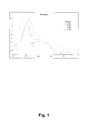
- FIG. 1 shows a diagram in which five different UV-Vis spectra of beta-carotene extracts from bovine serum samples (RS73, RS75, RS76, RS79 RS80) in the wavelength range of 360 nm to 580 nm are shown with their absorptions.
- Techniques known in the art have been used to remove blood cells from blood samples and to obtain blood sera.
- Beta-carotene was measured directly in the blood sera.
- characteristic bands for beta-carotene are usually expected to be at 450 nm and 480 nm with a slight shoulder at 425 nm. All samples provided spectrums affected by hemolysis of erythrocytes. There was a shift of the characteristic bands to larger ones Wavelengths detected. Three of the samples were so heavily contaminated by the hemolysis that evaluation due to heavy serum staining became impossible.
- FIG. 2 shows another five UV-Vis spectra of beta-carotene.
- the beta-carotene was taken from the in Fig. 1 obtained bovine blood, but the extraction was carried out from whole blood by a method according to the invention. In all samples, only the spectrum typical for beta-carotene was seen.
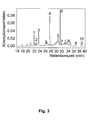
- FIG. 3 shows for comparison purposes an HPLC chromatogram of a recovered extract.
- the signals are nearly symmetrical, ie nearly free of so-called signal tailing ("peak-tailing"), and in some cases baseline-separated.
- FIG. 4 shows a table indicating a course of beta-carotene concentrations depending on various additions of a surfactant.
- the surfactant used was Pluronic 101 in various concentrations (0.1% - 3.0%).
- the surfactant was added at the indicated concentrations to aliquots of two different bovine blood samples.
- the absorptions of beta-carotene were determined spectrophotometrically, concentrations of beta-carotene are calculated as the mean ⁇ standard deviation in mg / L.
- An increase in the surfactant concentration resulted in an increase in beta carotene concentrations in the extracts in both blood samples.
- FIG. 5 shows results of experiments on the recovery of alpha-tocopherol (vitamin E), retinol (vitamin A) and beta-carotene.
- Bovine whole blood was aliquoted into four parts and extracted by the method of the invention. Each aliquot was 250 ⁇ L.
- HPLC was used for analysis as analysis.
- Retinol was determined as analyte with a recovery of at least 65% in the methanol / isooctane mixture and a maximum of 88% in the isopropanol / isooctane mixture.
- Alpha-tocopherol was recovered with a minimum of 21% in the ethyl acetate / isooctane mixture and with a maximum of 107% isopropanol / isooctane mixture.
- a comparatively poorer recovery to the other analytes was found in the solvent mixtures 1 to 3 for beta-carotene with a minimum of 13% and maximum 40% determined.
- An optimal recovery was determined for all analytes in the isopropanol / isooctane mixture.
- FIG. 6 shows results of experiments (for comparison purposes) for the recovery of alpha-tocopherol (vitamin E), retinol (vitamin A) and beta-carotene.
- the recovery was, as in the description FIG. 5 specified, performed.
- the solvent mixtures 5 to 10 were compared to the solvent mixture 11, the solvent mixture 4 from FIG. 5 corresponds, but here in duplicate, used.
- various protic solvents such as alcohols, water, saline, were added to the "basic solvent mixture isopropanol / iso-octane.” It was found that alpha-tocopherol and beta-carotene both gave comparable decreases and increases in their recovery in solvent mixtures 5-10
- the ethanol / isopropanol / isooctane mixture also showed high recoveries for all analytes.
- Fig. 7 shows a comparison of extraction results between the classical extraction of serum with the extraction of the inventive method from whole blood.
- beta-carotene was studied in 10 different blood samples from cows.
- the recovery of the analyte in the method according to the invention is almost identical to the classical method in all blood samples.
- Fig. 8 investigates an influence of the solvent ratio of ethanol to isopropanol in the solvent mixture ethanol / isopropanol / isooctane on the extraction of the analytes alpha-tocopherol (vitamin E), retinol (vitamin A) and beta-carotene.
- Legend information refers to a proportion of the respective polar solvent in ⁇ L.
- As a proportion of the nonpolar solvent isooctane 1 mL was used.
- the whole blood sample from cattle was 250 ⁇ L.
- FIG. 9 shows an influence of vascular surfaces on adhesion of the blood cells and the result of solidification.
- FIG. 9A is the extraction in a vessel with untreated surface
- FIG. 9B in a vessel with hydrophobized surface silanized
- FIG. 9C the complete solidification of the blood cells is demonstrated after about 10 minutes by turning the tube over.
Landscapes
- Health & Medical Sciences (AREA)
- Life Sciences & Earth Sciences (AREA)
- Engineering & Computer Science (AREA)
- Chemical & Material Sciences (AREA)
- Molecular Biology (AREA)
- Immunology (AREA)
- Hematology (AREA)
- Urology & Nephrology (AREA)
- Biomedical Technology (AREA)
- General Health & Medical Sciences (AREA)
- Pathology (AREA)
- General Physics & Mathematics (AREA)
- Physics & Mathematics (AREA)
- Biochemistry (AREA)
- Analytical Chemistry (AREA)
- Biotechnology (AREA)
- Microbiology (AREA)
- Cell Biology (AREA)
- Food Science & Technology (AREA)
- Medicinal Chemistry (AREA)
- Biophysics (AREA)
- Endocrinology (AREA)
- Investigating Or Analysing Biological Materials (AREA)
- Investigating Or Analysing Materials By Optical Means (AREA)
Claims (22)
- Procédé permettant d'analyser des constituants, notamment des lipides et/ou des vitamines, de matières biologiques, comportant un enrichissement en lesdits constituants issus de matières biologiques et consistant à ajouter, en une seule étape, un mélange de solvants auxdites matières biologiques se trouvant dans un récipient lequel est adapté à des analyses spectroscopiques et lequel présente une surface hydrophobe, ledit mélange comprenant des solvants organiques polaires et des solvants organiques non-polaires et permettant d'extraire lesdits constituants, lesdites matières biologiques étant lors de cette extraction transformées de manière à adopter un état solidifié, ladite solidification se traduisant par une augmentation de la viscosité desdites matières biologiques, faisant en sorte qu'un sédiment solidifié et une phase organique liquide en tant que surnageant soient formés uniquement par l'action de la gravité précipitant lesdites matières biologiques vers le fond et sans centrifugation, et à procéder directement dans le même récipient à une analyse spectrophotométrique ou fluorimétrique desdits constituants se trouvant dans le surnageant suite à ladite extraction.
- Procédé selon la revendication 1, caractérisé en ce que lesdites matières biologiques comprennent des matières végétales, animales, humaines et/ou microbiennes, issues notamment de cultures cellulaires.
- Procédé selon les revendications 1 ou 2, caractérisé en ce que lesdites matières biologiques subissent des traitements préalables, notamment des processus de purification, avant d'être mises en oeuvre.
- Procédé selon l'une des revendications précédentes, caractérisé en ce que l'on utilise en tant que matières biologiques des tissus, des organes et/ou des liquides biologiques.
- Procédé selon la revendication 4, caractérisé en ce que l'on utilise en tant liquides biologiques du sang, du plasma, du sérum, de l'urine, du liquide amniotique, du liquide utérin, du liquide folliculaire, du liquide synovial, du sperme, du liquide issu des poumons et/ou des produits sécrétés.
- Procédé selon l'une des revendications 1 à 3, caractérisé en ce que l'on met en oeuvre en tant que matières biologiques des aliments d'origine animale et/ou végétale, notamment des aliments homogénéisés.
- Procédé selon l'une des revendications précédentes, caractérisé en ce que l'on utilise en tant que solvant organique polaire des solvants polaires protiques, notamment des alcools.
- Procédé selon la revendication 7, caractérisé en ce que lesdits solvants polaires protiques sont choisis dans le groupe comprenant le méthanol, l'éthanol, le 1-propanol, le 2-propanol (isopropanol), le butanol, le pentanol, l'héxanol ainsi que leurs mélanges.
- Procédé selon l'une des revendications 1 à 6, caractérisé en ce que l'on utilise en tant que solvant organique non-polaire notamment des alcanes, de préférence des alcanes en C5 à C12.
- Procédé selon la revendication 9, caractérisé en ce que l'on utilise, en tant que solvants organiques non-polaires l'hexane, l'heptane et/ou l'octane, notamment l'isooctane, s'agissant préférentiellement de leurs mélanges.
- Procédé selon l'une des revendications précédentes, caractérisé en ce que l'on met en oeuvre, en outre, des agents tensioactifs, notamment des agents tensioactifs non-ioniques.
- Procédé selon la revendication 11, caractérisé en ce que l'on utilise en tant qu'agents tensioactifs des copolymères, notamment des copolymères à base de polyoxyéthylène et de polyoxypropylène.
- Procédé selon l'une des revendications précédentes, caractérisé en ce que lesdites matières biologiques sont traitées avec le mélange de solvants dans un rapport de 1 : 50, notamment dans un rapport de 1 : 10, de préférence dans un rapport de 1 : 3.
- Procédé selon l'une des revendications précédentes, caractérisé en ce que ledit procédé est mis en oeuvre à une température comprise entre 5 °C et 60 °C, notamment comprise entre 10 °C et 40 °C.
- Procédé selon l'une des revendications précédentes, caractérisé en ce que ledit procédé est mis en oeuvre à une pression entre 0,5 bar et jusqu'à 5 bar, notamment entre 0,8 bar et jusqu'à 2 bar.
- Procédé selon l'une des revendications précédentes, caractérisé en ce que lesdites matières biologiques sont traitées durant un laps de temps de 10 secondes à 10 minutes, notamment de 10 secondes à 5 minutes, préférentiellement de 10 secondes à 3 minutes, pour en extraire lesdits constituant.
- Procédé selon l'une des revendications précédentes, caractérisé en ce qu'avant ladite extraction, lesdits constituants sont transformés de manière à adopter un état lipophile et/ou subissent une modification les rendant lipophiles.
- Procédé selon la revendication 17, caractérisé en ce qu'avant ladite extraction, les constituants hydrosolubles forment un complexe lipophile avec une molécule lipophile et/ou une molécule rendue lipophile par modification.
- Procédé selon l'une des revendications précédentes, caractérisé en ce que des constituants hydrosolubles sont détectés en extrayant des produits lipophiles ou rendus lipophiles par modification lesquels sont issus d'une réaction de type enzyme-substrat.
- Procédé selon l'une des revendications précédentes, caractérisé en ce qu'au moins un desdits constituants est un glucide, un lipide, un acide nucléique, une protéine, un macroélément, un oligoélément et/ou une vitamine.
- Procédé selon la revendication 20, caractérisé en ce qu'au moins un des lipides est un triglycéride, un acide gras, un cholestérol et/ou un carotène, notamment le bêta-carotène.
- Procédé selon la revendication 1, le récipient en verre utilisé présentant une surface hydrophobée par silanisation ou par gravure chimique à l'aide de fluorure d'hydrogène.
Applications Claiming Priority (2)
| Application Number | Priority Date | Filing Date | Title |
|---|---|---|---|
| DE102006044795A DE102006044795A1 (de) | 2006-09-13 | 2006-09-13 | Bestimmung von Inhaltsstoffen aus biologischen Materialien |
| PCT/EP2007/059664 WO2008031874A1 (fr) | 2006-09-13 | 2007-09-13 | détermination de substances contenues dans des matériaux biologiques |
Publications (2)
| Publication Number | Publication Date |
|---|---|
| EP2052232A1 EP2052232A1 (fr) | 2009-04-29 |
| EP2052232B1 true EP2052232B1 (fr) | 2013-08-07 |
Family
ID=38626934
Family Applications (1)
| Application Number | Title | Priority Date | Filing Date |
|---|---|---|---|
| EP07803476.6A Active EP2052232B1 (fr) | 2006-09-13 | 2007-09-13 | Détermination de substances contenues dans des matériaux biologiques |
Country Status (6)
| Country | Link |
|---|---|
| US (1) | US8501430B2 (fr) |
| EP (1) | EP2052232B1 (fr) |
| JP (1) | JP5677741B2 (fr) |
| CN (1) | CN101535791A (fr) |
| DE (1) | DE102006044795A1 (fr) |
| WO (1) | WO2008031874A1 (fr) |
Families Citing this family (12)
| Publication number | Priority date | Publication date | Assignee | Title |
|---|---|---|---|---|
| US20120156794A1 (en) * | 2008-03-19 | 2012-06-21 | Florian Schweigert | Method for the extraction and detection of fat-soluble components from biological materials |
| EP2103309A3 (fr) * | 2008-03-19 | 2012-09-12 | SCHWEIGERT, Florian | Procédé d'extraction et de vérification de substances liposolubles composées de matériaux biologiques |
| JP5360476B2 (ja) * | 2009-03-26 | 2013-12-04 | 広島県 | 家畜の血中ビタミンa及びベータカロテン濃度測定方法並びに家畜の血中ビタミンa及びベータカロテン濃度測定装置 |
| US20130034873A1 (en) * | 2009-09-23 | 2013-02-07 | Schweigert Florian J | Method for the extraction and detection of fat-soluble components from biological materials |
| CN102023109A (zh) * | 2009-09-23 | 2011-04-20 | 帝斯曼知识产权资产管理有限公司 | 用于从生物材料中提取和检测脂溶性组分的方法 |
| DE102010046912A1 (de) | 2010-09-22 | 2012-03-22 | Bapat Gmbh | Verfahren zum Nachweis von fettlöslichen Vitaminen |
| US9334491B2 (en) | 2011-12-22 | 2016-05-10 | Ibis Biosciences, Inc. | Systems and methods for isolating nucleic acids from cellular samples |
| EP3139149A1 (fr) * | 2011-12-29 | 2017-03-08 | Ibis Biosciences, Inc. | Compositions et procédés de préparation d'échantillons |
| SG11201504217UA (en) * | 2012-12-11 | 2015-06-29 | Pall Technology Uk Ltd | System and method for detachment of cells in fixed bed reactors |
| CN108474775A (zh) * | 2015-12-31 | 2018-08-31 | Wm.雷格利 Jr.公司 | 用于鉴定源自于天然来源的碳的方法 |
| CN106706526B (zh) * | 2016-10-12 | 2019-08-20 | 潘仲巍 | 离子液体萃取–紫外可见分光光度法测定盐酸美西律的方法 |
| CN113391008B (zh) * | 2021-02-03 | 2023-08-22 | 杭州凯莱谱精准医疗检测技术有限公司 | 基于自动化移液工作站的脂溶性维生素样本前处理方法 |
Family Cites Families (15)
| Publication number | Priority date | Publication date | Assignee | Title |
|---|---|---|---|---|
| DE2816229C2 (de) * | 1978-04-14 | 1983-11-10 | Boehringer Mannheim Gmbh, 6800 Mannheim | Verfahren und Mittel zur Beseitigung von Trübungen |
| FI940823A0 (fi) * | 1994-02-22 | 1994-02-22 | Orion Yhtymae Oy | Analysatorkyvett foer turbidimetriska och nefelometriska bestaemningar av helblodsprov |
| US5518615A (en) * | 1994-04-22 | 1996-05-21 | Becton, Dickinson And Company | Blood compatible, shear sensitive gels |
| US5665602A (en) * | 1995-09-04 | 1997-09-09 | Buchi Labortechnik Ag | Method for the determination of the fat content of samples, preferably organic samples |
| US5824555A (en) * | 1996-05-30 | 1998-10-20 | The Cleveland Clinic Foundation | Method of detecting gynecological carcinomas |
| DE19838377C2 (de) * | 1998-08-24 | 2000-10-26 | Fiegert Seibt Edda | Verfahren und Vorrichtung zur Extraktherstellung aus pflanzlichem Material |
| US6150172A (en) * | 1999-01-08 | 2000-11-21 | The United States Of America As Represented By The Secretary Of Agriculture | Method and kit for extracting prion protein |
| AU5333300A (en) * | 1999-06-25 | 2001-01-31 | Novus International Inc | Qualitative ultraviolet test for detection of ethoxyquin |
| AU5736600A (en) * | 1999-06-25 | 2001-01-31 | Novus International Inc | Semi-quantitative fluorometric method for detection of ethoxyquin |
| US6642055B1 (en) * | 2000-03-31 | 2003-11-04 | Arbogast Pharmaceuticals, Inc. | Method for the prediction of preeclampsia and other diseases |
| EP1277760A4 (fr) * | 2000-04-28 | 2004-03-31 | Takeda Chemical Industries Ltd | Procede de recherche d'inhibiteurs de l'arteriosclerose et d'agents de retraction |
| EP1335984A1 (fr) * | 2000-11-10 | 2003-08-20 | Biosensor APS | Detection d'esters de coenzyme a hydrophobes et d'autres lipides au moyen d'un biodetecteur comprenant une proteine fixant la coenzyme a et l'acyl-coa (acbp) |
| ATE353699T1 (de) * | 2001-11-13 | 2007-03-15 | Metanomics Gmbh | Verfahren zur extraktion und analyse von inhaltsstoffen aus organischem material |
| JP2004313019A (ja) * | 2003-04-11 | 2004-11-11 | Mitsubishi Kagaku Iatron Inc | 組織抽出液の製造方法 |
| EP1626264A1 (fr) * | 2004-08-11 | 2006-02-15 | Büchi Labortechnik AG | Procédé pour estimer la teneur d'un échantillon organique en matières grasses et méthode d'extraction de matières grasses d'un échantillon |
-
2006
- 2006-09-13 DE DE102006044795A patent/DE102006044795A1/de not_active Ceased
-
2007
- 2007-09-13 EP EP07803476.6A patent/EP2052232B1/fr active Active
- 2007-09-13 WO PCT/EP2007/059664 patent/WO2008031874A1/fr not_active Ceased
- 2007-09-13 CN CNA2007800415760A patent/CN101535791A/zh active Pending
- 2007-09-13 JP JP2009527827A patent/JP5677741B2/ja not_active Expired - Fee Related
- 2007-09-13 US US12/310,897 patent/US8501430B2/en active Active
Non-Patent Citations (10)
| Title |
|---|
| DAVID S NICHOLS ED - ZDZIS AW E SIKORSKI ET AL: "Chapter 9: Principles of lipid analysis 9.2 Extraction of lipids from foods", 1 January 2002, CHEMICAL AND FUNCTIONAL PROPERTIES OF FOOD LIPIDS, CRC PRESS, USA, PAGE(S) 167 - 188, ISBN: 978-1-58716-105-6, XP008157760 * |
| GARCES R ET AL: "One-Step Lipid Extraction and Fatty Acid Methyl Esters Preparation from Fresh Plant Tissues", ANALYTICAL BIOCHEMISTRY, ACADEMIC PRESS INC, NEW YORK, vol. 211, no. 1, 15 May 1993 (1993-05-15), pages 139 - 143, XP024763895, ISSN: 0003-2697, [retrieved on 19930515], DOI: 10.1006/ABIO.1993.1244 * |
| JULIAN MCCLEMENT: "5. Analysis of lipids", 30 March 2004 (2004-03-30), pages 1 - 14, XP055007361, Retrieved from the Internet <URL:http://people.umass.edu/~mcclemen/581Lipids.html> [retrieved on 20110916] * |
| KYUNG-JIN YEUM ET AL: "Human plasma carotenoid response to the ingestion of controlled diets high in fruits and vegetabIes", AMERICAN JOURNAL OF CLINICAL NUTRITION, vol. 64, no. 4, 1 October 1996 (1996-10-01), pages 594 - 602, XP055007380, ISSN: 0002-9165 * |
| N RUIZ-LÓPEZ: "Sequential one-step extraction and analysis of triacylglycerols and fatty acids in plant tissues", ANALYTICAL BIOCHEMISTRY, vol. 317, no. 2, 15 June 2003 (2003-06-15), pages 247 - 254, XP055007375, ISSN: 0003-2697, DOI: 10.1016/S0003-2697(03)00139-8 * |
| NICHOLS JORDAN ET AL: "Principles of lipid analysis - extraction of lipids from foods, Chapter 3", CHEMICAL, BIOLOGICAL, AND FUNCTIONAL ASPECTS OF FOOD LIPIDS / ED. BY ZDZIS AW E. SIKORSKI; ANNA KO AKOWSKA, BOCA RATON, FLA. [U.A.] : CRC PRESS, 2011, US, vol. Second edition, 1 October 2010 (2010-10-01), pages 36 - 42, XP008142479, ISBN: 978-1-4398-0237-3 * |
| O'CONNOR ET AL: "Candida cylindracea lipase -catalyzed synthesis of retinyl and oleyl palmitates;carbon chain length dependence of esterase activity", AUSTRALIAN JOURNAL OF CHEMISTRY, CSIRO, AU, vol. 45, 22 June 1992 (1992-06-22), pages 641 - 649, XP002013342, ISSN: 0004-9425 * |
| PETERSON J E ET AL: "Simplified extraction and cleanup for determining organochlorine pesticides in small biological samples", BULLETIN OF ENVIRONMENTAL CONTAMINATION AND TOXICOLOGY, SPRINGER VERLAG, NEW YORK, NY, US, vol. 15, no. 2, 1 February 1976 (1976-02-01), pages 135 - 139, XP008142495, ISSN: 0007-4861 * |
| SHAHIDI AND P K J P D WANASUNDARA F: "Chapter 5: Extraction and Analysis of Lipids", FOOD LIPIDS: CHEMISTRY, NUTRITION, AND BIOTECHNOLOGY, SECOND EDITION,, 1 January 2002 (2002-01-01), pages 133 - 168, XP008142572, ISBN: 0-8247-4448-9 * |
| VINCENT G NEALIS ET AL: "Seasonal Changes in Foliar Terpenes Indicate Suitability Of Douglas-fir Buds for Western Spruce Budworm", JOURNAL OF CHEMICAL ECOLOGY, KLUWER ACADEMIC PUBLISHERS-PLENUM PUBLISHERS, NE, vol. 31, no. 4, 1 April 2005 (2005-04-01), pages 683 - 696, XP019370470, ISSN: 1573-1561, DOI: 10.1007/S10886-005-3538-8 * |
Also Published As
| Publication number | Publication date |
|---|---|
| EP2052232A1 (fr) | 2009-04-29 |
| DE102006044795A1 (de) | 2008-03-27 |
| US8501430B2 (en) | 2013-08-06 |
| JP5677741B2 (ja) | 2015-02-25 |
| WO2008031874A1 (fr) | 2008-03-20 |
| JP2010503838A (ja) | 2010-02-04 |
| CN101535791A (zh) | 2009-09-16 |
| US20110256566A1 (en) | 2011-10-20 |
Similar Documents
| Publication | Publication Date | Title |
|---|---|---|
| EP2052232A1 (fr) | Détermination de substances contenues dans des matériaux biologiques | |
| WO2009115352A1 (fr) | Procédé d'extraction et de détection d'ingrédients liposolubles contenus dans des substances biologiques | |
| DE69327100T2 (de) | Gemisch mit hohem gehalt an cis beta-carotin | |
| DE3021259A1 (de) | Mit amidopyrin verbessertes trinder-reagens und verfahren zur quantitativen bestimmung mit diesem reagens des wasserstoffperoxids zur enzymatischen oxidation von stoffwechselprodukten | |
| de Castro et al. | Ultrasound: a subexploited tool for sample preparation in metabolomics | |
| DE2655084A1 (de) | Verfahren zur kopplung biologischer substanzen durch covalente bindungen | |
| DE3854326T2 (de) | Aufbereitungstechnik für vollblutmuster. | |
| EP3293521B1 (fr) | Fabrication d'echantillons de serum ou de plasma lipemique pour la determination d'une interference lipidique | |
| US20120156794A1 (en) | Method for the extraction and detection of fat-soluble components from biological materials | |
| DE10102071A1 (de) | Verfahren zur Gewinnung von nativen, organischen Stoffen mit Hilfe der Zentrifugalkraft | |
| DE69713596T2 (de) | Antipsoriatische zusammensetzungen enthaltend einen extrakt von asphodelus, verfahren zur herstellung und verwendung | |
| EP3149133A1 (fr) | Procédé de clarification de phases lipidiques raffinées | |
| EP3143029B1 (fr) | Procédé d'obtention d'un ou de plusieurs matières à partir de graines | |
| DE2345129C3 (de) | Verfahren zum Abtrennen von Gluten aus Weizenmehl | |
| DE102008046227A1 (de) | Hochdurchsatzmethode zur Analyse der Fettsäurezusammensetzung in Plasmaphosphoglyceriden | |
| DE3152847C2 (en) | Ribulose-1,5-diphosphate carboxylase and process for obtaining it | |
| EP2550872B1 (fr) | Procédé de production d'une composition comprenant de l'anthocyane et compositions correspondantes | |
| DE2730806A1 (de) | Verfahren und vorrichtung zur hydrolyse einer staerkedispersion in einem waessrigen medium | |
| EP1658360A1 (fr) | Optimisation de processus biotechnologique dans le cadre d'une extraction d'huile | |
| DE60211714T2 (de) | Isolierung membrangebundener ligandenspezifischer komplexe | |
| DE10103211C1 (de) | Kulturmedium | |
| WO2019137890A1 (fr) | Analyse quantitative d'acétaminophène | |
| WO2018036901A1 (fr) | Produit de valeur et procédé d'obtention d'une phase de matière de valeur | |
| EP1899044A2 (fr) | Dispositif pour l'homogeneisation par rotor/stator des echantillons inhomogenes et son utilisation | |
| Minor | Compositional heterogeneity within oceanic POM: a study using flow cytometry and mass spectrometry |
Legal Events
| Date | Code | Title | Description |
|---|---|---|---|
| PUAI | Public reference made under article 153(3) epc to a published international application that has entered the european phase |
Free format text: ORIGINAL CODE: 0009012 |
|
| 17P | Request for examination filed |
Effective date: 20090310 |
|
| AK | Designated contracting states |
Kind code of ref document: A1 Designated state(s): AT BE BG CH CY CZ DE DK EE ES FI FR GB GR HU IE IS IT LI LT LU LV MC MT NL PL PT RO SE SI SK TR |
|
| AX | Request for extension of the european patent |
Extension state: AL BA HR MK RS |
|
| 17Q | First examination report despatched |
Effective date: 20100226 |
|
| DAX | Request for extension of the european patent (deleted) | ||
| REG | Reference to a national code |
Ref country code: DE Ref legal event code: R079 Ref document number: 502007012134 Country of ref document: DE Free format text: PREVIOUS MAIN CLASS: G01N0001280000 Ipc: G01N0033820000 |
|
| RIC1 | Information provided on ipc code assigned before grant |
Ipc: G01N 1/40 20060101ALI20121108BHEP Ipc: G01N 33/82 20060101AFI20121108BHEP Ipc: G01N 33/92 20060101ALI20121108BHEP |
|
| GRAP | Despatch of communication of intention to grant a patent |
Free format text: ORIGINAL CODE: EPIDOSNIGR1 |
|
| GRAS | Grant fee paid |
Free format text: ORIGINAL CODE: EPIDOSNIGR3 |
|
| RAP1 | Party data changed (applicant data changed or rights of an application transferred) |
Owner name: BAPAT GMBH |
|
| RIN1 | Information on inventor provided before grant (corrected) |
Inventor name: BAPAT GMBH |
|
| GRAA | (expected) grant |
Free format text: ORIGINAL CODE: 0009210 |
|
| RIN1 | Information on inventor provided before grant (corrected) |
Inventor name: BAPAT GMBH |
|
| AK | Designated contracting states |
Kind code of ref document: B1 Designated state(s): AT BE BG CH CY CZ DE DK EE ES FI FR GB GR HU IE IS IT LI LT LU LV MC MT NL PL PT RO SE SI SK TR |
|
| REG | Reference to a national code |
Ref country code: GB Ref legal event code: FG4D Free format text: NOT ENGLISH |
|
| RIN1 | Information on inventor provided before grant (corrected) |
Inventor name: SCHWEIGERT, FLORIAN |
|
| REG | Reference to a national code |
Ref country code: AT Ref legal event code: REF Ref document number: 625979 Country of ref document: AT Kind code of ref document: T Effective date: 20130815 Ref country code: CH Ref legal event code: EP |
|
| REG | Reference to a national code |
Ref country code: IE Ref legal event code: FG4D Free format text: LANGUAGE OF EP DOCUMENT: GERMAN |
|
| REG | Reference to a national code |
Ref country code: DE Ref legal event code: R096 Ref document number: 502007012134 Country of ref document: DE Effective date: 20131010 |
|
| REG | Reference to a national code |
Ref country code: CH Ref legal event code: NV Representative=s name: ANDRE ROLAND S.A., CH |
|
| REG | Reference to a national code |
Ref country code: NL Ref legal event code: VDEP Effective date: 20130807 |
|
| REG | Reference to a national code |
Ref country code: LT Ref legal event code: MG4D |
|
| PG25 | Lapsed in a contracting state [announced via postgrant information from national office to epo] |
Ref country code: PT Free format text: LAPSE BECAUSE OF FAILURE TO SUBMIT A TRANSLATION OF THE DESCRIPTION OR TO PAY THE FEE WITHIN THE PRESCRIBED TIME-LIMIT Effective date: 20131209 Ref country code: IS Free format text: LAPSE BECAUSE OF FAILURE TO SUBMIT A TRANSLATION OF THE DESCRIPTION OR TO PAY THE FEE WITHIN THE PRESCRIBED TIME-LIMIT Effective date: 20131207 Ref country code: SE Free format text: LAPSE BECAUSE OF FAILURE TO SUBMIT A TRANSLATION OF THE DESCRIPTION OR TO PAY THE FEE WITHIN THE PRESCRIBED TIME-LIMIT Effective date: 20130807 Ref country code: LT Free format text: LAPSE BECAUSE OF FAILURE TO SUBMIT A TRANSLATION OF THE DESCRIPTION OR TO PAY THE FEE WITHIN THE PRESCRIBED TIME-LIMIT Effective date: 20130807 Ref country code: CY Free format text: LAPSE BECAUSE OF FAILURE TO SUBMIT A TRANSLATION OF THE DESCRIPTION OR TO PAY THE FEE WITHIN THE PRESCRIBED TIME-LIMIT Effective date: 20130731 |
|
| PG25 | Lapsed in a contracting state [announced via postgrant information from national office to epo] |
Ref country code: FI Free format text: LAPSE BECAUSE OF FAILURE TO SUBMIT A TRANSLATION OF THE DESCRIPTION OR TO PAY THE FEE WITHIN THE PRESCRIBED TIME-LIMIT Effective date: 20130807 Ref country code: SI Free format text: LAPSE BECAUSE OF FAILURE TO SUBMIT A TRANSLATION OF THE DESCRIPTION OR TO PAY THE FEE WITHIN THE PRESCRIBED TIME-LIMIT Effective date: 20130807 Ref country code: GR Free format text: LAPSE BECAUSE OF FAILURE TO SUBMIT A TRANSLATION OF THE DESCRIPTION OR TO PAY THE FEE WITHIN THE PRESCRIBED TIME-LIMIT Effective date: 20131108 Ref country code: NL Free format text: LAPSE BECAUSE OF FAILURE TO SUBMIT A TRANSLATION OF THE DESCRIPTION OR TO PAY THE FEE WITHIN THE PRESCRIBED TIME-LIMIT Effective date: 20130807 Ref country code: PL Free format text: LAPSE BECAUSE OF FAILURE TO SUBMIT A TRANSLATION OF THE DESCRIPTION OR TO PAY THE FEE WITHIN THE PRESCRIBED TIME-LIMIT Effective date: 20130807 Ref country code: LV Free format text: LAPSE BECAUSE OF FAILURE TO SUBMIT A TRANSLATION OF THE DESCRIPTION OR TO PAY THE FEE WITHIN THE PRESCRIBED TIME-LIMIT Effective date: 20130807 Ref country code: ES Free format text: LAPSE BECAUSE OF FAILURE TO SUBMIT A TRANSLATION OF THE DESCRIPTION OR TO PAY THE FEE WITHIN THE PRESCRIBED TIME-LIMIT Effective date: 20130807 |
|
| BERE | Be: lapsed |
Owner name: BAPAT G.M.B.H. Effective date: 20130930 |
|
| PG25 | Lapsed in a contracting state [announced via postgrant information from national office to epo] |
Ref country code: CY Free format text: LAPSE BECAUSE OF FAILURE TO SUBMIT A TRANSLATION OF THE DESCRIPTION OR TO PAY THE FEE WITHIN THE PRESCRIBED TIME-LIMIT Effective date: 20130807 |
|
| PG25 | Lapsed in a contracting state [announced via postgrant information from national office to epo] |
Ref country code: EE Free format text: LAPSE BECAUSE OF FAILURE TO SUBMIT A TRANSLATION OF THE DESCRIPTION OR TO PAY THE FEE WITHIN THE PRESCRIBED TIME-LIMIT Effective date: 20130807 Ref country code: RO Free format text: LAPSE BECAUSE OF FAILURE TO SUBMIT A TRANSLATION OF THE DESCRIPTION OR TO PAY THE FEE WITHIN THE PRESCRIBED TIME-LIMIT Effective date: 20130807 Ref country code: CZ Free format text: LAPSE BECAUSE OF FAILURE TO SUBMIT A TRANSLATION OF THE DESCRIPTION OR TO PAY THE FEE WITHIN THE PRESCRIBED TIME-LIMIT Effective date: 20130807 Ref country code: DK Free format text: LAPSE BECAUSE OF FAILURE TO SUBMIT A TRANSLATION OF THE DESCRIPTION OR TO PAY THE FEE WITHIN THE PRESCRIBED TIME-LIMIT Effective date: 20130807 Ref country code: SK Free format text: LAPSE BECAUSE OF FAILURE TO SUBMIT A TRANSLATION OF THE DESCRIPTION OR TO PAY THE FEE WITHIN THE PRESCRIBED TIME-LIMIT Effective date: 20130807 |
|
| PG25 | Lapsed in a contracting state [announced via postgrant information from national office to epo] |
Ref country code: MC Free format text: LAPSE BECAUSE OF FAILURE TO SUBMIT A TRANSLATION OF THE DESCRIPTION OR TO PAY THE FEE WITHIN THE PRESCRIBED TIME-LIMIT Effective date: 20130807 Ref country code: IT Free format text: LAPSE BECAUSE OF FAILURE TO SUBMIT A TRANSLATION OF THE DESCRIPTION OR TO PAY THE FEE WITHIN THE PRESCRIBED TIME-LIMIT Effective date: 20130807 |
|
| PLBE | No opposition filed within time limit |
Free format text: ORIGINAL CODE: 0009261 |
|
| STAA | Information on the status of an ep patent application or granted ep patent |
Free format text: STATUS: NO OPPOSITION FILED WITHIN TIME LIMIT |
|
| REG | Reference to a national code |
Ref country code: IE Ref legal event code: MM4A |
|
| 26N | No opposition filed |
Effective date: 20140508 |
|
| PG25 | Lapsed in a contracting state [announced via postgrant information from national office to epo] |
Ref country code: IE Free format text: LAPSE BECAUSE OF NON-PAYMENT OF DUE FEES Effective date: 20130913 Ref country code: BE Free format text: LAPSE BECAUSE OF NON-PAYMENT OF DUE FEES Effective date: 20130930 |
|
| REG | Reference to a national code |
Ref country code: DE Ref legal event code: R097 Ref document number: 502007012134 Country of ref document: DE Effective date: 20140508 |
|
| REG | Reference to a national code |
Ref country code: AT Ref legal event code: MM01 Ref document number: 625979 Country of ref document: AT Kind code of ref document: T Effective date: 20130913 |
|
| PG25 | Lapsed in a contracting state [announced via postgrant information from national office to epo] |
Ref country code: AT Free format text: LAPSE BECAUSE OF NON-PAYMENT OF DUE FEES Effective date: 20130913 |
|
| PG25 | Lapsed in a contracting state [announced via postgrant information from national office to epo] |
Ref country code: TR Free format text: LAPSE BECAUSE OF FAILURE TO SUBMIT A TRANSLATION OF THE DESCRIPTION OR TO PAY THE FEE WITHIN THE PRESCRIBED TIME-LIMIT Effective date: 20130807 Ref country code: MT Free format text: LAPSE BECAUSE OF FAILURE TO SUBMIT A TRANSLATION OF THE DESCRIPTION OR TO PAY THE FEE WITHIN THE PRESCRIBED TIME-LIMIT Effective date: 20130807 |
|
| PG25 | Lapsed in a contracting state [announced via postgrant information from national office to epo] |
Ref country code: HU Free format text: LAPSE BECAUSE OF FAILURE TO SUBMIT A TRANSLATION OF THE DESCRIPTION OR TO PAY THE FEE WITHIN THE PRESCRIBED TIME-LIMIT; INVALID AB INITIO Effective date: 20070913 Ref country code: BG Free format text: LAPSE BECAUSE OF FAILURE TO SUBMIT A TRANSLATION OF THE DESCRIPTION OR TO PAY THE FEE WITHIN THE PRESCRIBED TIME-LIMIT Effective date: 20130807 Ref country code: LU Free format text: LAPSE BECAUSE OF NON-PAYMENT OF DUE FEES Effective date: 20130913 |
|
| REG | Reference to a national code |
Ref country code: FR Ref legal event code: PLFP Year of fee payment: 10 |
|
| REG | Reference to a national code |
Ref country code: FR Ref legal event code: PLFP Year of fee payment: 11 |
|
| REG | Reference to a national code |
Ref country code: FR Ref legal event code: PLFP Year of fee payment: 12 |
|
| REG | Reference to a national code |
Ref country code: DE Ref legal event code: R082 Ref document number: 502007012134 Country of ref document: DE Representative=s name: ETL IP PATENTANWALTSGESELLSCHAFT MBH, DE Ref country code: DE Ref legal event code: R082 Ref document number: 502007012134 Country of ref document: DE Representative=s name: ETL WABLAT & KOLLEGEN PATENT- UND RECHTSANWALT, DE Ref country code: DE Ref legal event code: R082 Ref document number: 502007012134 Country of ref document: DE Representative=s name: ETL IP PATENT- UND RECHTSANWALTSGESELLSCHAFT M, DE |
|
| REG | Reference to a national code |
Ref country code: DE Ref legal event code: R082 Ref document number: 502007012134 Country of ref document: DE Representative=s name: ETL IP PATENTANWALTSGESELLSCHAFT MBH, DE Ref country code: DE Ref legal event code: R082 Ref document number: 502007012134 Country of ref document: DE Representative=s name: ETL IP PATENT- UND RECHTSANWALTSGESELLSCHAFT M, DE |
|
| PGFP | Annual fee paid to national office [announced via postgrant information from national office to epo] |
Ref country code: GB Payment date: 20220927 Year of fee payment: 16 |
|
| PGFP | Annual fee paid to national office [announced via postgrant information from national office to epo] |
Ref country code: FR Payment date: 20220920 Year of fee payment: 16 |
|
| PGFP | Annual fee paid to national office [announced via postgrant information from national office to epo] |
Ref country code: CH Payment date: 20220928 Year of fee payment: 16 |
|
| PGFP | Annual fee paid to national office [announced via postgrant information from national office to epo] |
Ref country code: DE Payment date: 20230911 Year of fee payment: 17 |
|
| REG | Reference to a national code |
Ref country code: CH Ref legal event code: PL |
|
| GBPC | Gb: european patent ceased through non-payment of renewal fee |
Effective date: 20230913 |
|
| PG25 | Lapsed in a contracting state [announced via postgrant information from national office to epo] |
Ref country code: GB Free format text: LAPSE BECAUSE OF NON-PAYMENT OF DUE FEES Effective date: 20230913 |
|
| PG25 | Lapsed in a contracting state [announced via postgrant information from national office to epo] |
Ref country code: CH Free format text: LAPSE BECAUSE OF NON-PAYMENT OF DUE FEES Effective date: 20230930 |
|
| PG25 | Lapsed in a contracting state [announced via postgrant information from national office to epo] |
Ref country code: GB Free format text: LAPSE BECAUSE OF NON-PAYMENT OF DUE FEES Effective date: 20230913 Ref country code: FR Free format text: LAPSE BECAUSE OF NON-PAYMENT OF DUE FEES Effective date: 20230930 Ref country code: CH Free format text: LAPSE BECAUSE OF NON-PAYMENT OF DUE FEES Effective date: 20230930 |
|
| REG | Reference to a national code |
Ref country code: DE Ref legal event code: R119 Ref document number: 502007012134 Country of ref document: DE |
|
| PG25 | Lapsed in a contracting state [announced via postgrant information from national office to epo] |
Ref country code: DE Free format text: LAPSE BECAUSE OF NON-PAYMENT OF DUE FEES Effective date: 20250401 |