EP2059166B1 - Procédé et dispositif de détermination de la fréquence respiratoire - Google Patents
Procédé et dispositif de détermination de la fréquence respiratoire Download PDFInfo
- Publication number
- EP2059166B1 EP2059166B1 EP07846880.8A EP07846880A EP2059166B1 EP 2059166 B1 EP2059166 B1 EP 2059166B1 EP 07846880 A EP07846880 A EP 07846880A EP 2059166 B1 EP2059166 B1 EP 2059166B1
- Authority
- EP
- European Patent Office
- Prior art keywords
- respiratory
- signal
- accordance
- signals
- determined
- Prior art date
- Legal status (The legal status is an assumption and is not a legal conclusion. Google has not performed a legal analysis and makes no representation as to the accuracy of the status listed.)
- Not-in-force
Links
- 238000000034 method Methods 0.000 title claims description 88
- 230000000241 respiratory effect Effects 0.000 claims description 113
- 230000036387 respiratory rate Effects 0.000 claims description 95
- 230000036962 time dependent Effects 0.000 claims description 37
- 238000012935 Averaging Methods 0.000 claims description 28
- 238000005259 measurement Methods 0.000 claims description 14
- 238000011156 evaluation Methods 0.000 claims description 13
- 230000009466 transformation Effects 0.000 claims description 11
- 238000012545 processing Methods 0.000 claims description 6
- 239000008280 blood Substances 0.000 claims description 5
- 210000004369 blood Anatomy 0.000 claims description 5
- 238000001514 detection method Methods 0.000 claims description 4
- 210000000707 wrist Anatomy 0.000 claims description 3
- 230000029058 respiratory gaseous exchange Effects 0.000 description 33
- 230000036391 respiratory frequency Effects 0.000 description 24
- 230000033764 rhythmic process Effects 0.000 description 18
- 230000036772 blood pressure Effects 0.000 description 16
- 238000001228 spectrum Methods 0.000 description 12
- 239000013256 coordination polymer Substances 0.000 description 10
- 208000004301 Sinus Arrhythmia Diseases 0.000 description 8
- 230000005540 biological transmission Effects 0.000 description 8
- 238000004364 calculation method Methods 0.000 description 8
- 230000001419 dependent effect Effects 0.000 description 8
- 230000008901 benefit Effects 0.000 description 7
- 210000000038 chest Anatomy 0.000 description 7
- 230000000694 effects Effects 0.000 description 7
- 238000012544 monitoring process Methods 0.000 description 7
- 239000000654 additive Substances 0.000 description 6
- 230000000996 additive effect Effects 0.000 description 6
- 230000002123 temporal effect Effects 0.000 description 6
- 230000033001 locomotion Effects 0.000 description 5
- 230000010355 oscillation Effects 0.000 description 5
- 230000035581 baroreflex Effects 0.000 description 4
- 230000000875 corresponding effect Effects 0.000 description 4
- 230000009897 systematic effect Effects 0.000 description 4
- 101100129500 Caenorhabditis elegans max-2 gene Proteins 0.000 description 3
- 210000001367 artery Anatomy 0.000 description 3
- 230000000747 cardiac effect Effects 0.000 description 3
- 230000008859 change Effects 0.000 description 3
- 238000000502 dialysis Methods 0.000 description 3
- 238000000605 extraction Methods 0.000 description 3
- 230000002093 peripheral effect Effects 0.000 description 3
- 230000002889 sympathetic effect Effects 0.000 description 3
- 230000035488 systolic blood pressure Effects 0.000 description 3
- 210000000115 thoracic cavity Anatomy 0.000 description 3
- 206010005746 Blood pressure fluctuation Diseases 0.000 description 2
- 208000008784 apnea Diseases 0.000 description 2
- 230000015572 biosynthetic process Effects 0.000 description 2
- 230000007423 decrease Effects 0.000 description 2
- 238000001914 filtration Methods 0.000 description 2
- 230000005764 inhibitory process Effects 0.000 description 2
- 230000003434 inspiratory effect Effects 0.000 description 2
- 230000002452 interceptive effect Effects 0.000 description 2
- 230000000737 periodic effect Effects 0.000 description 2
- 238000013186 photoplethysmography Methods 0.000 description 2
- 238000004393 prognosis Methods 0.000 description 2
- 230000011514 reflex Effects 0.000 description 2
- 230000028016 temperature homeostasis Effects 0.000 description 2
- 238000012360 testing method Methods 0.000 description 2
- 230000001331 thermoregulatory effect Effects 0.000 description 2
- 230000006442 vascular tone Effects 0.000 description 2
- 229930003347 Atropine Natural products 0.000 description 1
- RKUNBYITZUJHSG-UHFFFAOYSA-N Hyosciamin-hydrochlorid Natural products CN1C(C2)CCC1CC2OC(=O)C(CO)C1=CC=CC=C1 RKUNBYITZUJHSG-UHFFFAOYSA-N 0.000 description 1
- RKUNBYITZUJHSG-SPUOUPEWSA-N atropine Chemical compound O([C@H]1C[C@H]2CC[C@@H](C1)N2C)C(=O)C(CO)C1=CC=CC=C1 RKUNBYITZUJHSG-SPUOUPEWSA-N 0.000 description 1
- 229960000396 atropine Drugs 0.000 description 1
- 108091008698 baroreceptors Proteins 0.000 description 1
- 230000033228 biological regulation Effects 0.000 description 1
- 230000017531 blood circulation Effects 0.000 description 1
- 210000000133 brain stem Anatomy 0.000 description 1
- 230000002596 correlated effect Effects 0.000 description 1
- 238000013461 design Methods 0.000 description 1
- 230000002526 effect on cardiovascular system Effects 0.000 description 1
- 230000002500 effect on skin Effects 0.000 description 1
- 238000002565 electrocardiography Methods 0.000 description 1
- 230000008753 endothelial function Effects 0.000 description 1
- 230000001435 haemodynamic effect Effects 0.000 description 1
- 230000010247 heart contraction Effects 0.000 description 1
- 230000006872 improvement Effects 0.000 description 1
- 230000006698 induction Effects 0.000 description 1
- 230000003993 interaction Effects 0.000 description 1
- 238000013178 mathematical model Methods 0.000 description 1
- 238000000691 measurement method Methods 0.000 description 1
- 230000007246 mechanism Effects 0.000 description 1
- 210000000412 mechanoreceptor Anatomy 0.000 description 1
- 230000001404 mediated effect Effects 0.000 description 1
- 108091008709 muscle spindles Proteins 0.000 description 1
- 230000001734 parasympathetic effect Effects 0.000 description 1
- 230000036513 peripheral conductance Effects 0.000 description 1
- 230000036581 peripheral resistance Effects 0.000 description 1
- 230000035790 physiological processes and functions Effects 0.000 description 1
- 210000001774 pressoreceptor Anatomy 0.000 description 1
- 230000002685 pulmonary effect Effects 0.000 description 1
- 108020003175 receptors Proteins 0.000 description 1
- 230000036454 renin-angiotensin system Effects 0.000 description 1
- 210000001034 respiratory center Anatomy 0.000 description 1
- 238000009531 respiratory rate measurement Methods 0.000 description 1
- 230000035945 sensitivity Effects 0.000 description 1
- 210000002023 somite Anatomy 0.000 description 1
- 230000000638 stimulation Effects 0.000 description 1
- 230000001629 suppression Effects 0.000 description 1
- 230000001360 synchronised effect Effects 0.000 description 1
- 230000001131 transforming effect Effects 0.000 description 1
- 230000001515 vagal effect Effects 0.000 description 1
- 210000001186 vagus nerve Anatomy 0.000 description 1
- 230000002792 vascular Effects 0.000 description 1
- 230000001457 vasomotor Effects 0.000 description 1
Images



Classifications
-
- A—HUMAN NECESSITIES
- A61—MEDICAL OR VETERINARY SCIENCE; HYGIENE
- A61B—DIAGNOSIS; SURGERY; IDENTIFICATION
- A61B5/00—Measuring for diagnostic purposes; Identification of persons
- A61B5/08—Measuring devices for evaluating the respiratory organs
- A61B5/0816—Measuring devices for examining respiratory frequency
-
- A—HUMAN NECESSITIES
- A61—MEDICAL OR VETERINARY SCIENCE; HYGIENE
- A61B—DIAGNOSIS; SURGERY; IDENTIFICATION
- A61B5/00—Measuring for diagnostic purposes; Identification of persons
- A61B5/72—Signal processing specially adapted for physiological signals or for diagnostic purposes
- A61B5/7235—Details of waveform analysis
- A61B5/7253—Details of waveform analysis characterised by using transforms
- A61B5/7257—Details of waveform analysis characterised by using transforms using Fourier transforms
Definitions
- the present invention relates to a method and a device for determining the respiratory rate of a patient, which serve for the metrological monitoring of the respiratory activity of a patient.
- respiratory rate measurements are influenced by a variety of interfering signals due to these methods. It has been shown that an evaluation of the quality of the individual signals is hardly possible due to the complexity of the interference signals.
- IP impedance plethysmography
- PPG photo-plethysmography
- IP impedance plethysmography
- PPG photo-plethysmography
- a special mathematical model is used to obtain prognosis values, which makes a separate prediction for both measurement channels.
- the prediction is based only on past measured values for the respective channel and a factor which takes into account standard deviations in frequency, ie the output signal of each channel is smoothed and extrapolated.
- the measured frequencies are now compared with the predicted values and the weights for the averaging of the frequencies are determined via this difference.
- the weighting is based solely on the difference to the model for the respective measuring channel. Therefore, this procedure assumes that the model describes the reality better than the measurements, since there is no feedback from the measurement results to the model structure. As a result, only temporary disturbances, such as those caused by patient movements, can be damped, while permanent or systematic disturbances can not be eliminated. In particular, errors due to physiological disruptive factors such as Mayer waves, however, are taken over and taken care of and continue to significantly distort the respiratory rate determined by such a system. In addition, the calculation using the forecasting models is complex and complicated.
- the object of the present invention is therefore to provide an improved method for determining the respiratory rate of a patient, which can increase the reliability of the specific respiratory rate in a simple manner and, in particular, can also eliminate physiological interference factors.
- this object is achieved by a method for determining the respiratory rate of a patient according to claim 1.
- Such a weighting can be used to suppress interference signals and errors in the individual respiratory signals. If there is a disturbance in only one respiratory signal and thus only one respiratory frequency, the difference between this respiratory frequency and the estimated value f s will be large, which in turn leads to a low weight of this respiratory frequency during the averaging. This results in a feedback on the weighting of the individual channels, through which systematic or permanent interference can be eliminated. In particular, it is possible to eliminate the influence of physiological interfering factors such as Mayer waves.
- the estimated value f s (n) is determined on the basis of a previously determined average respiratory frequency f ( n -1).
- the bandpass filter advantageously allows frequencies in a range from about 0.12 Hz to 0.42 Hz to pass through, while other frequencies which are outside this range of the respiratory frequencies are suppressed by the bandpass filter.
- the determination of the instantaneous respiratory rate is effected by determining the time interval t max (k) -t max (k-1) between adjacent maxima of the time-dependent respiratory signal.
- the time interval between two consecutive maxima of the time-dependent respiratory signal is inversely proportional to the instantaneous respiratory rate f i ( k ).
- the instantaneous respiratory rate is determined from three respiratory signals: f hr ( m ), f amp ( n ), f ptt ( k ).
- a consistency check of the time indices m, n and k takes place.
- the time indexes must be within a predefined time window. For example, you can use 50% of the current respiratory period for the time window.
- erroneous signals can be identified and suppressed in the determination of the respiratory rate f .
- a consistency check is also of great advantage, irrespective of the specific averaging.
- This makes it possible in a simple manner to check the consistency of the individual respiratory frequencies f i (n) (i 1, 2,%), So that inconsistent values can be sorted out and the quality of the signal can be determined from these differences.
- the more matches between the different respiratory rates f i (n) (i 1, 2, ...) are found in the consistency check, the higher the signal quality is evaluated.
- ⁇ a permitted tolerance
- the number of respiratory frequencies that pass the consistency check can be used to evaluate the signal quality.
- the present invention comprises a method in which the signal quality is determined in particular as described above via a consistency check and optionally displayed. It is obvious to a person skilled in the art that such a determination of the signal quality provides important information for the evaluation of the measurement results and is also of great advantage independently of the features of the method described above.
- this method is a method independent of the above-described averaging in time-space, but which can advantageously be combined therewith eg for the initialization of the weighted averaging or for bridging in the event of severe interference.
- the geometric mean value is calculated.
- the respiratory frequency f is now advantageously determined by peak detection of the frequency signal FT (f) , so that the average respiratory frequency f can be derived directly from the frequency signal.
- the respiratory frequency f can also be determined by inverse transformation of the frequency signal FT (f) and an evaluation of the resulting signal s (t) . This evaluation can then be carried out as already described above by determining the maxima of the signal s (t) .
- All of these respiratory signals can then be evaluated and used to determine the respiratory rate f of the patient.
- all four breathing signals are used in the method according to the invention in order to achieve the highest possible reliability and accuracy of the result.
- a high number of respiratory signals is advantageous.
- the present invention further includes a device for determining the respiratory rate of a patient by one of the methods described above.
- a device for determining the respiratory rate of a patient comprises sensors for measuring physiological signals from which the at least two time-dependent respiratory signals can be determined, as well as a data processing means which are designed such that they carry out the method according to the invention.
- the present invention comprises a device for determining the respiratory rate of a patient, in particular for carrying out the method according to the invention, with a separate sensor unit for measuring the physiological signals from which the at least two time-dependent respiratory signals can be determined, and a computing unit for the evaluation of the Sensor unit transmitted data. Due to the fact that at least a major part of the method for determining the respiratory rate of a patient is not carried out in the sensor unit but in the arithmetic unit, the computing power of the sensor unit required for carrying out the method steps performed in the sensor unit need not be oversized, resulting in a cost-effective and space-saving design allows.
- the data generated by the sensor unit are wirelessly transmitted to the arithmetic unit.
- no complicated cabling is necessary, which in turn increases the user-friendliness and operating safety of the device according to the invention.
- the sensor unit is attached to the wrist of the patient.
- Such z. B. designed as a wrist unit sensor unit allows a particularly simple operation, which is not very stressful for the patient.
- any known type of wireless transmission can be used for data transmission, wherein, in particular, radio transmission of the data is advantageous.
- the data are transmitted wirelessly from the sensor unit to the arithmetic unit, which z. B. is arranged in a device for the treatment or monitoring of the patient.
- Parts of the method for determining the respiratory rate can already be carried out in the sensor unit, so that further processed data are transmitted to the arithmetic unit.
- the data volumes to be transmitted from the sensor unit to the arithmetic unit are smaller, so that the data transmission means can be dimensioned less expensively by the sensor unit to the arithmetic unit.
- this has considerable advantages.
- the at least two time-dependent respiration signals in the sensor unit are determined from the physiological signals and then applied the arithmetic unit transmitted.
- the evaluation by means of bandpass and the subsequent steps of the method according to the invention are then carried out by the electronics of the arithmetic unit.
- the device according to the invention has sensors for measuring the ECG signal and the PPG signal. From these two physiological signals, the at least two time-dependent respiratory signals of the method according to the invention can be determined, wherein any errors in the individual signals can be eliminated by the averaging according to the invention. Furthermore advantageously, the heart rate, the pulse amplitude and the pulse wave transit time are determined from the ECG signal and the PPG signal. As a result, three different time-dependent respiratory signals are available, by means of which averaging according to the invention also systematic errors in the output signals can be eliminated.
- the arithmetic unit is part of a medical device, in particular a medical device for extracorporeal blood treatment such.
- a medical device for extracorporeal blood treatment such as a dialysis machine, a Hämoflitrationsmaschine or a hemodiafiltration machine.
- the data transmission and further evaluation of the data according to the invention can also take place in conjunction with any other medical device.
- the arithmetic unit of the device according to the invention also part of a computer network z. B. a hospital or a dialysis clinic.
- a computer network z. B. a hospital or a dialysis clinic This has the advantage that the complex hardware for the evaluation of the Sensor unit transmitted data in the computer network of the hospital or the dialysis clinic can be accommodated.
- the physiological aspect explains why the ECG and PPG signals contain information about respiration.
- Table 1 Rhythm in blood pressure and possible cause Blood pressure fluctuation Frequency range (Hz) possible causes I. Order 0,5 ⁇ 2,0 cardiac contraction II. Order 0,15 ⁇ 0,40 Respiration - mechanical effects of breathing on blood pressure 0,04 ⁇ 0,15 Mayer waves - The sympathetic mediates a part of these fluctuations.
- the LF power is subject to regulation by baroreflex and homorale influences.
- the frequency modulation by respiration can be demodulated by first determining the instantaneous heart rate from the ECG signal or from the PPG signal on a "beat-to-beat" basis. Thereafter, the heart rate variability signal and thus the temporal breathing signal s HR (t) extracted using a bandpass filter of 0.12 Hz - 0.42 Hz.
- PPG t PPG ⁇ heart ⁇ s ⁇ re sp ⁇ t + k ppg ⁇ s ⁇ re sp ⁇ t .
- k ppg represents the strength of the additive expression of s ( ⁇ Re sp ⁇ t ) in the PPG signal.
- the envelope of the PPG signal can first be formed by the "beat-to-beat" determination of the local maxima or minima in the PPG signal, and then the temporal breathing signal s PPG (t) can be extracted with the aid of the bandpass filter ,
- breath activity can be extracted from the PTT signal.
- the basis of this method is the assumption that the transmission path of the electrical signals from the heart via the thorax to the skin surface can be regarded as a linear time-varying system whose properties are determined by the state of the body.
- a characteristic of the system is the impedance of the ribcage, which is changed by breathing.
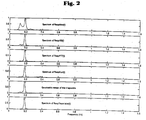
- Fig. 1 and Fig. 2 show four such respiratory signals in the time or in the frequency domain.
- the signal evaluation also shows that the characteristics of the disruptive rhythms in the four respiratory signals are person-dependent and time-variant. For this reason, it is usually difficult to judge the quality of the extracted respiratory signals. For example, one can not simply state that s hr ( t ) is definitely better or worse than s ptt ( t ).
- the basic idea of the method combination in the time or frequency domain is based on the above observation. It serves to increase the reliability of the respiratory information extracted from the ECG and PPG.
- a weighted average For a weighted average, first the 4 measured respiratory rates are compared with an estimate of the current respiratory rate and their differences to the estimated value calculated. Then the weight factors are calculated in Dependence on the differences. The larger the difference, the smaller the weighting factor. Finally, a final respiratory rate is determined by the weighted averaging.
- the four respiratory rates of fhr ( n ), f max ( n ), f ptt ( n ) and f kurt ( n ) are checked for agreement with each other taking into account a given tolerance. Thereafter, depending on the number of matches, a final respiratory rate is calculated by arithmetic or weighted averaging from the matched respiratory rates. The more matches there are, the more reliable the final respiratory rate.
- the formation of a geometrically averaged spectrum is the key point of the combination in the frequency domain. This is intended to completely or partially eliminate the disturbing rhythms in the signals. This method is based on the observation that on the one hand the disturbing rhythms are very different and on the other hand the respiratory rhythm is relatively consistent in the extracted respiratory signals of s hr ( t), s max ( t ), s ptt ( t ) and s kurt ( t ).
- the combination in the frequency domain has the disadvantage that more computing and time has to be used.
- signals from three different channels are combined, whereby all three combination methods described above, ie the combination by weighted averaging, by a consistency check as well as by averaging in frequency space, are used.
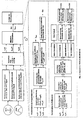
- a schematic of this embodiment is shown in FIG Fig. 3 to see.
- the formation of the geometrically averaged spectrum is the key point in the combination in the frequency domain. This is intended to completely or partially eliminate the disturbing rhythms that lie within the bandpass filter's frequency range (0.12 Hz-0.42 Hz) and thus can not be eliminated by the filter in the extracted respiratory signals. This method is based on the observation that on the one hand the disturbing rhythms are very different and on the other hand the respiratory rhythm is relatively consistently pronounced in the extracted respiratory signals of s hr ( t ), s amp ( t ) and s ptt ( t ).
- Fig. 4 represents from top to bottom the thermistor signal s therm ( t ) (reference), the extracted respiratory signals of s ptt ( t ) from the pulse wave transit time , s hr ( t ) from the heart rate and s amp ( t ) from the pulse amplitude.
- Fig. 5 shows the from the in Fig. 4 displayed signals respiratory rates and the respiratory rate from the combination in the time domain. The thin curves in Fig. 5 show the respiratory rate from the thermistor signal.
- the individual respiratory frequencies from the respective extracted respiratory signals differ in some places from the respiratory frequencies from the thermistor signal , eg f ptt between 60 s and 70 s; f hr between 60 s and 80 s to 140 s, after 220 s; f amp 180 s, after 200 s.
- the respiratory rate from the combination is very consistent with the respiratory rate from the thermistor signal.
- the respiratory rate disturbances between 60 s and 70 s are eliminated by the combination. The reason for this is the consistency check, which did not pass the disturbed signals.
- the above combination of methods is not limited to s hr ( t ), s max ( t ), s ptt ( t ) and s kurt ( t ) signals. It can be used both for respiratory signals extracted from the ECG and / or PPG signal and for respiratory signals acquired with other sensors / methods (eg, thermistor, impedance pneumography, induction plethysmography).
- the different alternatives of the method combination e.g. the weighted averaging, the consistency check and the combination in the frequency domain are in turn combined.
Landscapes
- Health & Medical Sciences (AREA)
- Life Sciences & Earth Sciences (AREA)
- Pulmonology (AREA)
- Biomedical Technology (AREA)
- Medical Informatics (AREA)
- Biophysics (AREA)
- Pathology (AREA)
- Engineering & Computer Science (AREA)
- Physiology (AREA)
- Heart & Thoracic Surgery (AREA)
- Physics & Mathematics (AREA)
- Molecular Biology (AREA)
- Surgery (AREA)
- Animal Behavior & Ethology (AREA)
- General Health & Medical Sciences (AREA)
- Public Health (AREA)
- Veterinary Medicine (AREA)
- Measurement Of The Respiration, Hearing Ability, Form, And Blood Characteristics Of Living Organisms (AREA)
- Measuring Pulse, Heart Rate, Blood Pressure Or Blood Flow (AREA)
Claims (30)
- Procédé de détermination de la fréquence respiratoire d'un patient, comprenant les étapes consistant à :- déterminer au moins deux signaux de respiration dépendants du temps si (t) (i = 1, 2, ...) par au moins deux méthodes de mesure différentes ;- déterminer les fréquences respiratoires fi (n) (i = 1, 2, ...) momentanées respectives résultant des au moins deux signaux de respiration dépendants du temps si (t) (i = 1, 2, ...)- déterminer une fréquence respiratoire moyenne f(n) par le calcul pondéré d'une moyenne des fréquences respiratoires fi (n) (i = 1, 2, ...),
caractérisé en ce que
les poids ki (n) (i = 1, 2, ...) des différentes fréquences respiratoires fi (n) (i = 1, 2, ...) dépendent d'une différence entre les fréquences respiratoires fi (n) (i = 1, 2, ...) respectives et une valeur estimée fs (n), qui est déterminée sur la base des au moins deux signaux de respiration dépendants du temps si (t) (i = 1, 2, ...). - Procédé selon la revendication 1, dans lequel la valeur estimée fs(n) est déterminée sur la base d'une fréquence respiratoire moyenne précédente f(n -1) déjà déterminée.
- Procédé selon la revendication 1, dans lequel la valeur estimée fs(n) est déterminée, en particulier pour l'initialisation, par une combinaison d'informations de fréquence d'au moins deux signaux de respiration dépendants du temps si (t) (i = 1, 2, ...) ou par la formation d'une valeur moyenne des fréquences respiratoires fi (n) (i = 1, 2, ...) actuelles.
- Procédé selon la revendication 1, dans lequel les au moins deux signaux de respiration dépendants du temps si(t) (i = 1, 2, ...) sont déterminés à partir de signaux physiologiques mesurés.
- Procédé selon la revendication 4, dans lequel les signaux physiologiques mesurés forment une sélection des signaux suivants :- signal de bio-impédance,- signal de variabilité de fréquence cardiaque,- signal photopléthysmographique (signal PPG),- signal de statistique de source de l'ECG,- signal du temps de propagation des ondes pulsées (signal PTT).
- Procédé selon la revendication 4, dans lequel la détermination des au moins deux signaux de respiration dépendants du temps si(t) (i = 1, 2, ...) est effectuée par un filtre passe-bande à partir des signaux physiologiques mesurés.
- Procédé selon la revendication 6, dans lequel le filtre passe-bande laisse passer des fréquences dans une plage allant d'environ 0,12 Hz à 0,42 Hz.
- Procédé selon la revendication 1, dans lequel la détermination des fréquences respiratoires momentanées respectives fi (ki ), en particulier de fhr (m), famp (n) et fptt (k), est effectuée à partir des signaux de respiration dépendants du temps si (t) (i = 1, 2, ...) par la détermination des indices de temps tmax (ki), en particulier tmax (m), tmax (n) et tmax (k), des maxima des signaux de respiration dépendants du temps si(t) (i = 1, 2, ...).
- Procédé selon la revendication 8, dans lequel un contrôle de cohérence pour les indices de temps ki(i = 1, 2, ...), en particulier m, n et k, des fréquences respiratoires momentanées est effectué.
- Procédé selon la revendication 1, dans lequel un contrôle de cohérence des fréquences respiratoires fi(n) (i = 1, 2, ...) est exécuté.
- Procédé selon la revendication 10, dans lequel le contrôle de cohérence est effectué par une comparaison des fréquences respiratoires fi(n) (i = 1, 2, ...) entre elles.
- Procédé selon la revendication 11, dans lequel les différences entre les fréquences respiratoires fi(n) (i = 1, 2, ...) respectives sont déterminées et comparées à une tolérance Δ autorisée.
- Procédé selon la revendication 10, dans lequel, pour le calcul pondéré de la moyenne des fréquences respiratoires fi(n) (i = 1, 2,...), seules les fréquences respiratoires qui passent avec succès le contrôle de cohérence sont prises en compte.
- Procédé selon l'une des revendications précédentes, dans lequel la qualité du signal est déterminée en particulier par un contrôle de cohérence et elle est indiquée le cas échéant.
- Procédé selon la revendication 1, qui comprend- la génération d'au moins deux signaux de fréquence FTi(f) (i = 1, 2,...) par la transformation d'au moins deux signaux de respiration dépendants du temps si(t) (i = 1, 2, ...) dans l'espace de fréquence- la détermination d'un signal de fréquence FT(f) par une combinaison des signaux de fréquence FTi(f) (i = 1, 2, ...),
dans lequel une fréquence respiratoire f est déterminée sur la base du signal de fréquence FT(f). - Procédé selon la revendication 15, dans lequel le signal de fréquence FT(f) est déterminé par un calcul de la moyenne des signaux de fréquence FTi(f) (i = 1, 2, ...).
- Procédé selon la revendication 15, dans lequel la fréquence respiratoire f est déterminée par détection de crête du signal de fréquence FT(f).
- Procédé selon la revendication 15, dans lequel la fréquence respiratoire f est déterminée par transformation inverse du signal de fréquence FT(f) et une évaluation du signal s(t) obtenu.
- Procédé selon la revendication 1 et 15, dans lequel la fréquence respiratoire f est utilisée pour l'initialisation du calcul pondéré de la moyenne.
- Procédé selon l'une des revendications précédentes, dans lequel les au moins deux signaux de respiration dépendants du temps si(t) (i = 1, 2, ...) sont obtenus à partir d'un signal PPG et d'un signal ECG.
- Procédé selon l'une des revendications précédentes, dans lequel les au moins deux signaux de respiration dépendants du temps si(t) (i = 1, 2, ...) forment une sélection des signaux suivants :- un signal de respiration déterminé à partir de la fréquence cardiaque sHR (t),- un signal de respiration déterminé à partir du signal PPG sPPG(t),- un signal de respiration déterminé à partir du signal PTT sPTT(t),- un signal de respiration déterminé à partir du kurtosis du signal ECG skurt(t).
- Procédé selon la revendication 21, dans lequel au moins trois signaux de respiration sont utilisés.
- Dispositif de détermination de la fréquence respiratoire d'un patient au moyen d'un procédé selon l'une des revendications précédentes, comprenant une unité de détection séparée destinée à mesurer les signaux physiologiques, à partir desquels les au moins deux signaux de respiration dépendants du temps peuvent être déterminés, et une unité de calcul destinée à évaluer les données transmises par l'unité de détection.
- Dispositif selon la revendication 23, dans lequel les données générées par l'unité de détection sont transmises sans fil à l'unité de calcul.
- Dispositif selon la revendication 23 ou 24, dans lequel l'unité de détection est fixée au poignet du patient.
- Dispositif selon l'une des revendications 23 à 25, dans lequel les au moins deux signaux de respiration dépendants du temps sont déterminés dans l'unité de détection à partir des signaux physiologiques et sont ensuite transmis à l'unité de calcul.
- Dispositif selon l'une des revendications 23 à 26, comprenant des capteurs destinés à mesurer le signal ECG et le signal PPG.
- Dispositif selon la revendication 27, dans lequel la fréquence cardiaque, la pression pulsée et le temps de propagation d'onde pulsée sont déterminés à partir du signal ECG et du signal PPG.
- Dispositif selon l'une des revendications 23 à 28, dans lequel l'unité de calcul fait partie d'un appareil médical, en particulier d'un appareil médical pour le traitement extracorporel du sang.
- Dispositif selon l'une des revendications 23 à 28, dans lequel l'unité de calcul fait partie d'un réseau informatique.
Applications Claiming Priority (2)
| Application Number | Priority Date | Filing Date | Title |
|---|---|---|---|
| DE102006060819A DE102006060819A1 (de) | 2006-12-21 | 2006-12-21 | Verfahren und Vorrichtung zur Bestimmung der Atemfrequenz |
| PCT/EP2007/010355 WO2008080469A1 (fr) | 2006-12-21 | 2007-11-28 | Procédé et dispositif de détermination de la fréquence respiratoire |
Publications (2)
| Publication Number | Publication Date |
|---|---|
| EP2059166A1 EP2059166A1 (fr) | 2009-05-20 |
| EP2059166B1 true EP2059166B1 (fr) | 2016-11-16 |
Family
ID=39153968
Family Applications (1)
| Application Number | Title | Priority Date | Filing Date |
|---|---|---|---|
| EP07846880.8A Not-in-force EP2059166B1 (fr) | 2006-12-21 | 2007-11-28 | Procédé et dispositif de détermination de la fréquence respiratoire |
Country Status (6)
| Country | Link |
|---|---|
| US (1) | US20100004552A1 (fr) |
| EP (1) | EP2059166B1 (fr) |
| JP (1) | JP5581057B2 (fr) |
| CN (1) | CN101528126B (fr) |
| DE (1) | DE102006060819A1 (fr) |
| WO (1) | WO2008080469A1 (fr) |
Cited By (1)
| Publication number | Priority date | Publication date | Assignee | Title |
|---|---|---|---|---|
| WO2022243235A1 (fr) | 2021-05-18 | 2022-11-24 | Age Impulse | Dispositif portable permettant de caractériser avec précision et d'une façon synthétique l'état de forme physique d'individus en activité ainsi que de calculer et détecter en temps réel et avec précision leurs seuils ventilatoires |
Families Citing this family (47)
| Publication number | Priority date | Publication date | Assignee | Title |
|---|---|---|---|---|
| DE102006057709B4 (de) * | 2006-12-07 | 2015-04-02 | Dräger Medical GmbH | Vorrichtung und Verfahren zum Bestimmen einer Atemfrequenz |
| WO2009024273A1 (fr) * | 2007-08-21 | 2009-02-26 | University College Dublin, National University Of Ireland, Dublin | Procédé et système pour surveiller le sommeil |
| JP5549092B2 (ja) * | 2009-03-19 | 2014-07-16 | 富士通株式会社 | 血圧値測定装置及び血圧値測定方法 |
| JP5448515B2 (ja) * | 2009-03-25 | 2014-03-19 | シチズンホールディングス株式会社 | 生体信号測定装置 |
| AU2014250616B2 (en) * | 2009-06-26 | 2016-05-05 | Gambro Lundia Ab | Devices, a computer program product and a method for data extraction |
| ES2620580T3 (es) | 2009-06-26 | 2017-06-29 | Gambro Lundia Ab | Dispositivo y método para la extracción de datos |
| US8430817B1 (en) | 2009-10-15 | 2013-04-30 | Masimo Corporation | System for determining confidence in respiratory rate measurements |
| US9724016B1 (en) * | 2009-10-16 | 2017-08-08 | Masimo Corp. | Respiration processor |
| WO2011096240A1 (fr) * | 2010-02-05 | 2011-08-11 | 日本電気株式会社 | Instrument de mesure d'informations relatives à un organisme, dispositif terminal portable, procédé de mesure d'informations relatives à un organisme et programme |
| US9307928B1 (en) | 2010-03-30 | 2016-04-12 | Masimo Corporation | Plethysmographic respiration processor |
| US20110270048A1 (en) * | 2010-04-30 | 2011-11-03 | Nellcor Puritan Bennett Ireland | Systems and methods for ppg sensors incorporating ekg sensors |
| US9215995B2 (en) * | 2010-06-23 | 2015-12-22 | Medtronic Minimed, Inc. | Sensor systems having multiple probes and electrode arrays |
| US10216893B2 (en) * | 2010-09-30 | 2019-02-26 | Fitbit, Inc. | Multimode sensor devices |
| US9693709B2 (en) | 2011-09-23 | 2017-07-04 | Nellcot Puritan Bennett Ireland | Systems and methods for determining respiration information from a photoplethysmograph |
| US9119597B2 (en) | 2011-09-23 | 2015-09-01 | Nellcor Puritan Bennett Ireland | Systems and methods for determining respiration information from a photoplethysmograph |
| US9402554B2 (en) * | 2011-09-23 | 2016-08-02 | Nellcor Puritan Bennett Ireland | Systems and methods for determining respiration information from a photoplethysmograph |
| US9675274B2 (en) * | 2011-09-23 | 2017-06-13 | Nellcor Puritan Bennett Ireland | Systems and methods for determining respiration information from a photoplethysmograph |
| US9693736B2 (en) | 2011-11-30 | 2017-07-04 | Nellcor Puritan Bennett Ireland | Systems and methods for determining respiration information using historical distribution |
| GB201209413D0 (en) * | 2012-05-28 | 2012-07-11 | Obs Medical Ltd | Respiration rate extraction from cardiac signals |
| FR3001625B1 (fr) * | 2013-02-05 | 2015-02-20 | Chru Lille | Procede de mesure d'un parametre physiologique tel qu'un rythme biologique. dispositif de mesure d'un parametre physiologique pour la mise en oeuvre dudit procede |
| US9872634B2 (en) * | 2013-02-08 | 2018-01-23 | Vital Connect, Inc. | Respiratory rate measurement using a combination of respiration signals |
| US10441181B1 (en) | 2013-03-13 | 2019-10-15 | Masimo Corporation | Acoustic pulse and respiration monitoring system |
| US20140275879A1 (en) * | 2013-03-15 | 2014-09-18 | Paul Stanley Addison | Systems and methods for determining respiration information based on independent component analysis |
| CN104665768B (zh) * | 2013-10-03 | 2019-07-23 | 塔塔咨询服务有限公司 | 生理参数的监测 |
| EP3094248B1 (fr) * | 2014-01-16 | 2020-05-27 | Nokia Technologies Oy | Procédé et dispositif de détection d'une fréquence respiratoire |
| CN104161505A (zh) * | 2014-08-13 | 2014-11-26 | 北京邮电大学 | 一种适用于可穿戴式心率监测设备的运动和噪声干扰消除方法 |
| GB2537173B (en) * | 2015-04-10 | 2021-05-12 | Huma Therapeutics Ltd | Device and method for providing feedback on breathing rate. |
| CN105147293A (zh) * | 2015-08-21 | 2015-12-16 | 姚丽峰 | 实现呼吸频率测量的系统及方法 |
| CN105105728B (zh) * | 2015-09-07 | 2018-10-02 | 中国科学院微电子研究所 | 脉搏波测定方法及装置 |
| EP3375368B1 (fr) * | 2015-11-10 | 2020-06-17 | Nippon Telegraph and Telephone Corporation | Procédé et dispositif d'estimation de la frequence respiratoire |
| CN105919568A (zh) * | 2016-05-24 | 2016-09-07 | 北京千安哲信息技术有限公司 | 基于伽柏变换的呼吸与心跳信号的提取分析方法和装置 |
| CN106073784B (zh) * | 2016-08-17 | 2019-01-08 | 广州视源电子科技股份有限公司 | 一种呼吸率提取方法及装置 |
| CN106539586B (zh) * | 2016-11-07 | 2019-07-16 | 广州视源电子科技股份有限公司 | 一种呼吸率计算方法及装置 |
| CN106361342B (zh) * | 2016-11-25 | 2019-05-31 | 钟春兰 | 一种护理用呼吸检测装置 |
| DE102017102169A1 (de) | 2017-02-03 | 2018-08-09 | B. Braun Avitum Ag | Vorrichtung zur extrakorporalen Blutbehandlung mit automatischer Atemfrequenzüberwachung |
| CN106725491A (zh) * | 2017-02-16 | 2017-05-31 | 王丽燕 | 一种用于确定儿童患者的呼吸频率方法 |
| CN106901694A (zh) * | 2017-02-20 | 2017-06-30 | 广州视源电子科技股份有限公司 | 一种呼吸率提取方法及装置 |
| JP6923426B2 (ja) * | 2017-11-30 | 2021-08-18 | パラマウントベッド株式会社 | 異常判定装置及びそれに用いるプログラム |
| CN110236527A (zh) * | 2019-07-05 | 2019-09-17 | 北京理工大学 | 一种获取呼吸信息的方法及装置 |
| DE102019125174A1 (de) | 2019-09-18 | 2021-03-18 | B.Braun Avitum Ag | Medizinisches Gerät und Gehäuseabschnitt und Verfahren zum Schalten eines Gehäuseabschnitts und Behandlungsplatz |
| US12078555B2 (en) | 2020-04-17 | 2024-09-03 | Telligent Metrics LLC | Thermistor based respiration measurement |
| CN114451873B (zh) * | 2020-10-30 | 2024-11-29 | 华为技术有限公司 | 一种信号处理方法及设备 |
| CN116236175B (zh) * | 2021-12-08 | 2026-01-06 | 华为终端有限公司 | 可穿戴设备及呼吸道感染评估方法 |
| CN115005803A (zh) * | 2022-04-22 | 2022-09-06 | 杭州回车电子科技有限公司 | 呼吸检测方法和装置 |
| CN115836856A (zh) * | 2022-12-19 | 2023-03-24 | 北京中科心研科技有限公司 | 一种基于ppg信号的呼吸率测量方法、装置及电子设备 |
| CN118873116B (zh) * | 2024-07-05 | 2025-09-30 | 大连海事大学 | 一种船上环境的呼吸频率预测方法及装置 |
| CN120284214A (zh) * | 2025-06-10 | 2025-07-11 | 深圳京柏医疗科技股份有限公司 | 睡眠呼吸暂停监测方法、装置、电子监测设备和存储介质 |
Family Cites Families (22)
| Publication number | Priority date | Publication date | Assignee | Title |
|---|---|---|---|---|
| US4370983A (en) * | 1971-01-20 | 1983-02-01 | Lichtenstein Eric Stefan | Computer-control medical care system |
| JPS62224801A (ja) * | 1986-03-26 | 1987-10-02 | Hitachi Ltd | 三個の数値信号より一個の高信頼度数値信号を得る装置 |
| JP3104430B2 (ja) * | 1992-10-13 | 2000-10-30 | 株式会社豊田自動織機製作所 | 粗紡機における粗糸の紡出張力の制御パラメータの演算方法 |
| JPH08583A (ja) * | 1994-06-22 | 1996-01-09 | Minolta Co Ltd | 脈波伝達時間監視装置 |
| US5626140A (en) * | 1995-11-01 | 1997-05-06 | Spacelabs Medical, Inc. | System and method of multi-sensor fusion of physiological measurements |
| GB2341233B (en) * | 1998-02-16 | 2003-08-13 | Seiko Epson Corp | Biometric measuring device |
| DE10014077B4 (de) | 2000-03-22 | 2006-02-16 | Fresenius Medical Care Deutschland Gmbh | Verfahren und Vorrichtung zur Bestimmung der Atemaktivität eines Lebewesens |
| GB0014855D0 (en) * | 2000-06-16 | 2000-08-09 | Isis Innovation | Combining measurements from different sensors |
| US7038588B2 (en) * | 2001-05-04 | 2006-05-02 | Draeger Medical Infant Care, Inc. | Apparatus and method for patient point-of-care data management |
| US6503206B1 (en) * | 2001-07-27 | 2003-01-07 | Vsm Medtech Ltd | Apparatus having redundant sensors for continuous monitoring of vital signs and related methods |
| GB0130010D0 (en) | 2001-12-14 | 2002-02-06 | Isis Innovation | Combining measurements from breathing rate sensors |
| EP1485009A1 (fr) * | 2002-02-22 | 2004-12-15 | Datex-Ohmeda, Inc. | Surveillance de parametres physiologiques basee sur des variations dans un signal de photoplethysmographie |
| US6702752B2 (en) * | 2002-02-22 | 2004-03-09 | Datex-Ohmeda, Inc. | Monitoring respiration based on plethysmographic heart rate signal |
| US7065465B2 (en) * | 2002-03-26 | 2006-06-20 | Lockheed Martin Corporation | Method and system for multi-sensor data fusion |
| EP2428159B1 (fr) * | 2003-02-27 | 2016-04-20 | Nellcor Puritan Bennett Ireland | Analyse et traitement de signaux photoplethysmographiques par analyse de transformées par ondelettes |
| US7396333B2 (en) * | 2003-08-18 | 2008-07-08 | Cardiac Pacemakers, Inc. | Prediction of disordered breathing |
| CN1267055C (zh) * | 2004-02-16 | 2006-08-02 | 深圳迈瑞生物医疗电子股份有限公司 | 基于阻抗变化原理的人体呼吸波监控方法和装置 |
| JP4568825B2 (ja) * | 2004-05-07 | 2010-10-27 | 富山県 | 副交感神経活動指標の算出方法 |
| JP2008520384A (ja) * | 2004-11-19 | 2008-06-19 | ヴィーヴォメトリックス インコーポレイテッド | 限られたプロセッサ資源で呼吸数を実時間判定するための方法及びシステム |
| US7346469B2 (en) * | 2005-03-31 | 2008-03-18 | General Electric Company | System and method for sensor data validation |
| DE102006015291B4 (de) * | 2006-04-01 | 2015-10-29 | Drägerwerk AG & Co. KGaA | Verfahren zur Einstellung eines Patientenmonitors |
| DE102006057709B4 (de) * | 2006-12-07 | 2015-04-02 | Dräger Medical GmbH | Vorrichtung und Verfahren zum Bestimmen einer Atemfrequenz |
-
2006
- 2006-12-21 DE DE102006060819A patent/DE102006060819A1/de not_active Ceased
-
2007
- 2007-11-28 CN CN2007800398835A patent/CN101528126B/zh not_active Expired - Fee Related
- 2007-11-28 EP EP07846880.8A patent/EP2059166B1/fr not_active Not-in-force
- 2007-11-28 WO PCT/EP2007/010355 patent/WO2008080469A1/fr not_active Ceased
- 2007-11-28 US US12/448,312 patent/US20100004552A1/en not_active Abandoned
- 2007-11-28 JP JP2009541806A patent/JP5581057B2/ja not_active Expired - Fee Related
Cited By (1)
| Publication number | Priority date | Publication date | Assignee | Title |
|---|---|---|---|---|
| WO2022243235A1 (fr) | 2021-05-18 | 2022-11-24 | Age Impulse | Dispositif portable permettant de caractériser avec précision et d'une façon synthétique l'état de forme physique d'individus en activité ainsi que de calculer et détecter en temps réel et avec précision leurs seuils ventilatoires |
Also Published As
| Publication number | Publication date |
|---|---|
| EP2059166A1 (fr) | 2009-05-20 |
| DE102006060819A1 (de) | 2008-07-03 |
| CN101528126B (zh) | 2012-03-14 |
| CN101528126A (zh) | 2009-09-09 |
| US20100004552A1 (en) | 2010-01-07 |
| JP2010512868A (ja) | 2010-04-30 |
| WO2008080469A1 (fr) | 2008-07-10 |
| JP5581057B2 (ja) | 2014-08-27 |
Similar Documents
| Publication | Publication Date | Title |
|---|---|---|
| EP2059166B1 (fr) | Procédé et dispositif de détermination de la fréquence respiratoire | |
| DE3854732T2 (de) | Physiologische Herz- und Lungenuntersuchung durch intrakardielle Messungen mit einem einzelnen Sensor. | |
| EP2059163B1 (fr) | Procédé de déduction et d'évaluation d'informations cardiovasculaires à partir de courbes du courant cardiaque, en particulier pour des utilisations télémédicales | |
| DE69531728T2 (de) | Gerät zur messung und auswertung der elektrischen stabilität des herzens | |
| EP3145394B1 (fr) | Procédé et dispositif de détermination de la pression sanguine systolique centrale | |
| EP2836112A1 (fr) | Procédé et dispositif pour la surveillance à long terme de la rigidité artérielle et de la calcification des vaisseaux sanguins d'un patient | |
| EP2473101B1 (fr) | Dispositif pour la détermination non invasive de la tension artérielle | |
| EP2415396A1 (fr) | Moniteur cardiaque | |
| WO2018060162A1 (fr) | Surveillance de signaux biologiques, en particulier d'électrocardiogrammes | |
| WO2017050321A1 (fr) | Procédé et dispositif pour quantifier une arythmie sinusale respiratoire et utilisation d'un tel procédé ou d'un tel dispositif | |
| EP2908720B1 (fr) | Dispositif et procédé pour détecter et signaler un état de tension d'une personne | |
| EP3316768B1 (fr) | Dispositif et procédé pour la surveillance et la mesure du mécanisme d'autorégulation de la pression sanguine chez un être vivant | |
| WO2017108854A1 (fr) | Moniteur de pression sanguine à risque pour la surveillance adaptive de la pression sanguine artérielle | |
| WO2013060322A1 (fr) | Procédé et dispositif de surveillance non invasive et de détermination de l'intensité de la douleur et de la profondeur de l'anesthésie | |
| EP3803896B1 (fr) | Dispositif d'analyse médicale permettant d'évaluer l'aptitude à narcose d'un patient | |
| DE102023118804A1 (de) | Verfahren und Signalverarbeitungseinheit zum Berechnen eines kardiogenen Referenz-Signalabschnitts | |
| DE10048649A1 (de) | Risikomontoring | |
| AT518929B1 (de) | Sensorband zur multi-parametrischen Herz-Lungen-Diagnostik | |
| DE10319361A1 (de) | Vorrichtung und Verfahren zum Messen der vegetativen Balance | |
| EP3621513B1 (fr) | Dispositif pour déterminer un paramètre permettant le diagnostic de l'hydrocéphalie et d'autres troubles de la pression intra-crânienne | |
| DE10014077B4 (de) | Verfahren und Vorrichtung zur Bestimmung der Atemaktivität eines Lebewesens | |
| EP2745770B1 (fr) | Procédé et dispositif de mesure de la variabilité de la fréquence cardiaque d'un être vivant | |
| EP4520260A1 (fr) | Procédé de mesure de la pression sanguine | |
| DE102023124287A1 (de) | Blutdruckmessverfahren | |
| DE29612119U1 (de) | Anordnung zur synchronen Registrierung der Leistungsfähigkeit von Herz und Lunge |
Legal Events
| Date | Code | Title | Description |
|---|---|---|---|
| PUAI | Public reference made under article 153(3) epc to a published international application that has entered the european phase |
Free format text: ORIGINAL CODE: 0009012 |
|
| 17P | Request for examination filed |
Effective date: 20090326 |
|
| AK | Designated contracting states |
Kind code of ref document: A1 Designated state(s): AT BE BG CH CY CZ DE DK EE ES FI FR GB GR HU IE IS IT LI LT LU LV MC MT NL PL PT RO SE SI SK TR |
|
| AX | Request for extension of the european patent |
Extension state: AL BA HR MK RS |
|
| 17Q | First examination report despatched |
Effective date: 20120423 |
|
| DAX | Request for extension of the european patent (deleted) | ||
| GRAP | Despatch of communication of intention to grant a patent |
Free format text: ORIGINAL CODE: EPIDOSNIGR1 |
|
| INTG | Intention to grant announced |
Effective date: 20160602 |
|
| GRAS | Grant fee paid |
Free format text: ORIGINAL CODE: EPIDOSNIGR3 |
|
| GRAA | (expected) grant |
Free format text: ORIGINAL CODE: 0009210 |
|
| AK | Designated contracting states |
Kind code of ref document: B1 Designated state(s): AT BE BG CH CY CZ DE DK EE ES FI FR GB GR HU IE IS IT LI LT LU LV MC MT NL PL PT RO SE SI SK TR |
|
| REG | Reference to a national code |
Ref country code: GB Ref legal event code: FG4D Free format text: NOT ENGLISH |
|
| REG | Reference to a national code |
Ref country code: CH Ref legal event code: EP |
|
| REG | Reference to a national code |
Ref country code: IE Ref legal event code: FG4D Free format text: LANGUAGE OF EP DOCUMENT: GERMAN |
|
| REG | Reference to a national code |
Ref country code: AT Ref legal event code: REF Ref document number: 845104 Country of ref document: AT Kind code of ref document: T Effective date: 20161215 |
|
| REG | Reference to a national code |
Ref country code: FR Ref legal event code: PLFP Year of fee payment: 10 |
|
| REG | Reference to a national code |
Ref country code: DE Ref legal event code: R096 Ref document number: 502007015267 Country of ref document: DE |
|
| REG | Reference to a national code |
Ref country code: DE Ref legal event code: R096 Ref document number: 502007015267 Country of ref document: DE |
|
| REG | Reference to a national code |
Ref country code: SE Ref legal event code: TRGR |
|
| PG25 | Lapsed in a contracting state [announced via postgrant information from national office to epo] |
Ref country code: LV Free format text: LAPSE BECAUSE OF FAILURE TO SUBMIT A TRANSLATION OF THE DESCRIPTION OR TO PAY THE FEE WITHIN THE PRESCRIBED TIME-LIMIT Effective date: 20161116 |
|
| REG | Reference to a national code |
Ref country code: NL Ref legal event code: MP Effective date: 20161116 |
|
| REG | Reference to a national code |
Ref country code: LT Ref legal event code: MG4D |
|
| PG25 | Lapsed in a contracting state [announced via postgrant information from national office to epo] |
Ref country code: NL Free format text: LAPSE BECAUSE OF FAILURE TO SUBMIT A TRANSLATION OF THE DESCRIPTION OR TO PAY THE FEE WITHIN THE PRESCRIBED TIME-LIMIT Effective date: 20161116 Ref country code: GR Free format text: LAPSE BECAUSE OF FAILURE TO SUBMIT A TRANSLATION OF THE DESCRIPTION OR TO PAY THE FEE WITHIN THE PRESCRIBED TIME-LIMIT Effective date: 20170217 Ref country code: LT Free format text: LAPSE BECAUSE OF FAILURE TO SUBMIT A TRANSLATION OF THE DESCRIPTION OR TO PAY THE FEE WITHIN THE PRESCRIBED TIME-LIMIT Effective date: 20161116 |
|
| PG25 | Lapsed in a contracting state [announced via postgrant information from national office to epo] |
Ref country code: PL Free format text: LAPSE BECAUSE OF FAILURE TO SUBMIT A TRANSLATION OF THE DESCRIPTION OR TO PAY THE FEE WITHIN THE PRESCRIBED TIME-LIMIT Effective date: 20161116 Ref country code: FI Free format text: LAPSE BECAUSE OF FAILURE TO SUBMIT A TRANSLATION OF THE DESCRIPTION OR TO PAY THE FEE WITHIN THE PRESCRIBED TIME-LIMIT Effective date: 20161116 Ref country code: PT Free format text: LAPSE BECAUSE OF FAILURE TO SUBMIT A TRANSLATION OF THE DESCRIPTION OR TO PAY THE FEE WITHIN THE PRESCRIBED TIME-LIMIT Effective date: 20170316 Ref country code: BE Free format text: LAPSE BECAUSE OF NON-PAYMENT OF DUE FEES Effective date: 20161130 Ref country code: ES Free format text: LAPSE BECAUSE OF FAILURE TO SUBMIT A TRANSLATION OF THE DESCRIPTION OR TO PAY THE FEE WITHIN THE PRESCRIBED TIME-LIMIT Effective date: 20161116 |
|
| REG | Reference to a national code |
Ref country code: CH Ref legal event code: PL |
|
| PG25 | Lapsed in a contracting state [announced via postgrant information from national office to epo] |
Ref country code: DK Free format text: LAPSE BECAUSE OF FAILURE TO SUBMIT A TRANSLATION OF THE DESCRIPTION OR TO PAY THE FEE WITHIN THE PRESCRIBED TIME-LIMIT Effective date: 20161116 Ref country code: LI Free format text: LAPSE BECAUSE OF NON-PAYMENT OF DUE FEES Effective date: 20161130 Ref country code: RO Free format text: LAPSE BECAUSE OF FAILURE TO SUBMIT A TRANSLATION OF THE DESCRIPTION OR TO PAY THE FEE WITHIN THE PRESCRIBED TIME-LIMIT Effective date: 20161116 Ref country code: SK Free format text: LAPSE BECAUSE OF FAILURE TO SUBMIT A TRANSLATION OF THE DESCRIPTION OR TO PAY THE FEE WITHIN THE PRESCRIBED TIME-LIMIT Effective date: 20161116 Ref country code: CZ Free format text: LAPSE BECAUSE OF FAILURE TO SUBMIT A TRANSLATION OF THE DESCRIPTION OR TO PAY THE FEE WITHIN THE PRESCRIBED TIME-LIMIT Effective date: 20161116 Ref country code: EE Free format text: LAPSE BECAUSE OF FAILURE TO SUBMIT A TRANSLATION OF THE DESCRIPTION OR TO PAY THE FEE WITHIN THE PRESCRIBED TIME-LIMIT Effective date: 20161116 Ref country code: CH Free format text: LAPSE BECAUSE OF NON-PAYMENT OF DUE FEES Effective date: 20161130 |
|
| REG | Reference to a national code |
Ref country code: DE Ref legal event code: R097 Ref document number: 502007015267 Country of ref document: DE |
|
| REG | Reference to a national code |
Ref country code: IE Ref legal event code: MM4A |
|
| PG25 | Lapsed in a contracting state [announced via postgrant information from national office to epo] |
Ref country code: BG Free format text: LAPSE BECAUSE OF FAILURE TO SUBMIT A TRANSLATION OF THE DESCRIPTION OR TO PAY THE FEE WITHIN THE PRESCRIBED TIME-LIMIT Effective date: 20170216 |
|
| PLBE | No opposition filed within time limit |
Free format text: ORIGINAL CODE: 0009261 |
|
| STAA | Information on the status of an ep patent application or granted ep patent |
Free format text: STATUS: NO OPPOSITION FILED WITHIN TIME LIMIT |
|
| PG25 | Lapsed in a contracting state [announced via postgrant information from national office to epo] |
Ref country code: MC Free format text: LAPSE BECAUSE OF FAILURE TO SUBMIT A TRANSLATION OF THE DESCRIPTION OR TO PAY THE FEE WITHIN THE PRESCRIBED TIME-LIMIT Effective date: 20161116 Ref country code: LU Free format text: LAPSE BECAUSE OF NON-PAYMENT OF DUE FEES Effective date: 20161130 |
|
| REG | Reference to a national code |
Ref country code: FR Ref legal event code: PLFP Year of fee payment: 11 |
|
| 26N | No opposition filed |
Effective date: 20170817 |
|
| PG25 | Lapsed in a contracting state [announced via postgrant information from national office to epo] |
Ref country code: SI Free format text: LAPSE BECAUSE OF FAILURE TO SUBMIT A TRANSLATION OF THE DESCRIPTION OR TO PAY THE FEE WITHIN THE PRESCRIBED TIME-LIMIT Effective date: 20161116 Ref country code: IE Free format text: LAPSE BECAUSE OF NON-PAYMENT OF DUE FEES Effective date: 20161128 |
|
| REG | Reference to a national code |
Ref country code: AT Ref legal event code: MM01 Ref document number: 845104 Country of ref document: AT Kind code of ref document: T Effective date: 20161128 |
|
| PG25 | Lapsed in a contracting state [announced via postgrant information from national office to epo] |
Ref country code: AT Free format text: LAPSE BECAUSE OF NON-PAYMENT OF DUE FEES Effective date: 20161128 |
|
| REG | Reference to a national code |
Ref country code: BE Ref legal event code: MM Effective date: 20161130 |
|
| PG25 | Lapsed in a contracting state [announced via postgrant information from national office to epo] |
Ref country code: CY Free format text: LAPSE BECAUSE OF FAILURE TO SUBMIT A TRANSLATION OF THE DESCRIPTION OR TO PAY THE FEE WITHIN THE PRESCRIBED TIME-LIMIT Effective date: 20161116 Ref country code: HU Free format text: LAPSE BECAUSE OF FAILURE TO SUBMIT A TRANSLATION OF THE DESCRIPTION OR TO PAY THE FEE WITHIN THE PRESCRIBED TIME-LIMIT; INVALID AB INITIO Effective date: 20071128 |
|
| PG25 | Lapsed in a contracting state [announced via postgrant information from national office to epo] |
Ref country code: TR Free format text: LAPSE BECAUSE OF FAILURE TO SUBMIT A TRANSLATION OF THE DESCRIPTION OR TO PAY THE FEE WITHIN THE PRESCRIBED TIME-LIMIT Effective date: 20161116 Ref country code: IS Free format text: LAPSE BECAUSE OF FAILURE TO SUBMIT A TRANSLATION OF THE DESCRIPTION OR TO PAY THE FEE WITHIN THE PRESCRIBED TIME-LIMIT Effective date: 20161116 |
|
| PG25 | Lapsed in a contracting state [announced via postgrant information from national office to epo] |
Ref country code: MT Free format text: LAPSE BECAUSE OF FAILURE TO SUBMIT A TRANSLATION OF THE DESCRIPTION OR TO PAY THE FEE WITHIN THE PRESCRIBED TIME-LIMIT Effective date: 20161116 |
|
| REG | Reference to a national code |
Ref country code: FR Ref legal event code: PLFP Year of fee payment: 12 |
|
| PGFP | Annual fee paid to national office [announced via postgrant information from national office to epo] |
Ref country code: DE Payment date: 20201020 Year of fee payment: 14 Ref country code: FR Payment date: 20201021 Year of fee payment: 14 Ref country code: GB Payment date: 20201021 Year of fee payment: 14 Ref country code: SE Payment date: 20201026 Year of fee payment: 14 Ref country code: IT Payment date: 20201021 Year of fee payment: 14 |
|
| REG | Reference to a national code |
Ref country code: DE Ref legal event code: R119 Ref document number: 502007015267 Country of ref document: DE |
|
| GBPC | Gb: european patent ceased through non-payment of renewal fee |
Effective date: 20211128 |
|
| PG25 | Lapsed in a contracting state [announced via postgrant information from national office to epo] |
Ref country code: SE Free format text: LAPSE BECAUSE OF NON-PAYMENT OF DUE FEES Effective date: 20211129 |
|
| PG25 | Lapsed in a contracting state [announced via postgrant information from national office to epo] |
Ref country code: GB Free format text: LAPSE BECAUSE OF NON-PAYMENT OF DUE FEES Effective date: 20211128 Ref country code: DE Free format text: LAPSE BECAUSE OF NON-PAYMENT OF DUE FEES Effective date: 20220601 |
|
| PG25 | Lapsed in a contracting state [announced via postgrant information from national office to epo] |
Ref country code: FR Free format text: LAPSE BECAUSE OF NON-PAYMENT OF DUE FEES Effective date: 20211130 |
|
| PG25 | Lapsed in a contracting state [announced via postgrant information from national office to epo] |
Ref country code: IT Free format text: LAPSE BECAUSE OF NON-PAYMENT OF DUE FEES Effective date: 20211128 |