EP2060272A2 - Vitamin-Mitomycinkonjugate - Google Patents
Vitamin-Mitomycinkonjugate Download PDFInfo
- Publication number
- EP2060272A2 EP2060272A2 EP09002632A EP09002632A EP2060272A2 EP 2060272 A2 EP2060272 A2 EP 2060272A2 EP 09002632 A EP09002632 A EP 09002632A EP 09002632 A EP09002632 A EP 09002632A EP 2060272 A2 EP2060272 A2 EP 2060272A2
- Authority
- EP
- European Patent Office
- Prior art keywords
- mitomycin
- conjugate
- vitamin
- cells
- population
- Prior art date
- Legal status (The legal status is an assumption and is not a legal conclusion. Google has not performed a legal analysis and makes no representation as to the accuracy of the status listed.)
- Withdrawn
Links
Images




Classifications
-
- C—CHEMISTRY; METALLURGY
- C07—ORGANIC CHEMISTRY
- C07D—HETEROCYCLIC COMPOUNDS
- C07D487/00—Heterocyclic compounds containing nitrogen atoms as the only ring hetero atoms in the condensed system, not provided for by groups C07D451/00 - C07D477/00
- C07D487/12—Heterocyclic compounds containing nitrogen atoms as the only ring hetero atoms in the condensed system, not provided for by groups C07D451/00 - C07D477/00 in which the condensed system contains three hetero rings
- C07D487/14—Ortho-condensed systems
-
- C—CHEMISTRY; METALLURGY
- C07—ORGANIC CHEMISTRY
- C07D—HETEROCYCLIC COMPOUNDS
- C07D475/00—Heterocyclic compounds containing pteridine ring systems
- C07D475/02—Heterocyclic compounds containing pteridine ring systems with an oxygen atom directly attached in position 4
- C07D475/04—Heterocyclic compounds containing pteridine ring systems with an oxygen atom directly attached in position 4 with a nitrogen atom directly attached in position 2
-
- A—HUMAN NECESSITIES
- A61—MEDICAL OR VETERINARY SCIENCE; HYGIENE
- A61K—PREPARATIONS FOR MEDICAL, DENTAL OR TOILETRY PURPOSES
- A61K47/00—Medicinal preparations characterised by the non-active ingredients used, e.g. carriers or inert additives; Targeting or modifying agents chemically bound to the active ingredient
- A61K47/50—Medicinal preparations characterised by the non-active ingredients used, e.g. carriers or inert additives; Targeting or modifying agents chemically bound to the active ingredient the non-active ingredient being chemically bound to the active ingredient, e.g. polymer-drug conjugates
- A61K47/51—Medicinal preparations characterised by the non-active ingredients used, e.g. carriers or inert additives; Targeting or modifying agents chemically bound to the active ingredient the non-active ingredient being chemically bound to the active ingredient, e.g. polymer-drug conjugates the non-active ingredient being a modifying agent
- A61K47/54—Medicinal preparations characterised by the non-active ingredients used, e.g. carriers or inert additives; Targeting or modifying agents chemically bound to the active ingredient the non-active ingredient being chemically bound to the active ingredient, e.g. polymer-drug conjugates the non-active ingredient being a modifying agent the modifying agent being an organic compound
- A61K47/55—Medicinal preparations characterised by the non-active ingredients used, e.g. carriers or inert additives; Targeting or modifying agents chemically bound to the active ingredient the non-active ingredient being chemically bound to the active ingredient, e.g. polymer-drug conjugates the non-active ingredient being a modifying agent the modifying agent being an organic compound the modifying agent being also a pharmacologically or therapeutically active agent, i.e. the entire conjugate being a codrug
- A61K47/551—Medicinal preparations characterised by the non-active ingredients used, e.g. carriers or inert additives; Targeting or modifying agents chemically bound to the active ingredient the non-active ingredient being chemically bound to the active ingredient, e.g. polymer-drug conjugates the non-active ingredient being a modifying agent the modifying agent being an organic compound the modifying agent being also a pharmacologically or therapeutically active agent, i.e. the entire conjugate being a codrug one of the codrug's components being a vitamin, e.g. niacinamide, vitamin B3, cobalamin, vitamin B12, folate, vitamin A or retinoic acid
-
- A—HUMAN NECESSITIES
- A61—MEDICAL OR VETERINARY SCIENCE; HYGIENE
- A61P—SPECIFIC THERAPEUTIC ACTIVITY OF CHEMICAL COMPOUNDS OR MEDICINAL PREPARATIONS
- A61P35/00—Antineoplastic agents
-
- A—HUMAN NECESSITIES
- A61—MEDICAL OR VETERINARY SCIENCE; HYGIENE
- A61P—SPECIFIC THERAPEUTIC ACTIVITY OF CHEMICAL COMPOUNDS OR MEDICINAL PREPARATIONS
- A61P43/00—Drugs for specific purposes, not provided for in groups A61P1/00-A61P41/00
Definitions
- This invention relates to compositions and methods for use in treating disease states characterized by the proliferation of pathogenic cell populations. More particularly, the invention relates to vitamin-mitomycin conjugates, to a method of using the conjugates to selectively eliminate a population of pathogenic cells in a host animal, and to a method of preparation of the conjugates.
- the mammalian immune system provides a means for the recognition and elimination of tumor cells, other pathogenic cells, and invading foreign pathogens. While the immune system normally provides a strong line of defense, there are many instances where cancer cells, other pathogenic cells, or infectious agents evade a host immune response and proliferate or persist with concomitant host pathogenicity. Chemotherapeutic agents and radiation therapies have been developed to eliminate replicating neoplasms. However, most, if not all, of the currently available chemotherapeutic agents and radiation therapy regimens have adverse side effects because they work not only to destroy cancer cells, but they also affect normal host cells, such as cells of the hematopoietic system. The adverse side effects of the currently available anticancer drugs highlight the need for the development of new therapies specific for pathogenic cell populations and with reduced host toxicity.
- Another approach for targeting populations of cancer cells or foreign pathogens in a host is to enhance the host immune response against the pathogenic cells to avoid the need for administration of compounds that may also exhibit independent host toxicity.
- One reported strategy for immunotherapy is to bind antibodies, for example, genetically engineered multimeric antibodies, to the tumor cell surface to display the constant region of the antibodies on the cell surface and thereby induce tumor cell killing by various immune-system mediated processes ( De Vita, V.T., Biologic Therapy of Cancer, 2d ed. Philadelphia, Lippincott, 1995 ; Soulillou, J.P., U.S. Patent 5,672,486 ).
- these approaches have been complicated by the difficulties in defining tumor-specific antigens.
- Mitomycins are natural products known to exhibit anti-tumor activity. Mitomycins can be produced by fermentation of Streptomyces caespitosus , and representive known mitomycins include mitomycin A, mitomycin B, mitomycin C, mitomycin D, mitomycin E, mitomycin F, and porfiromycin. The structures of these compounds are depicted by the following generic formula with substituents as shown in Table 1.
- Mitomycins are a class of cytotoxic drugs known as quinone-containing alkylating agents. Reduction of the quinone moiety results in the formation of bi-functional alkylating species that can form covalent bonds with a variety of cellular components including DNA. The interaction with DNA results in the formation of DNA crosslinks leading to the induction of apoptosis and cell death, and this interaction is thought to be the most important contributor to the anti-tumor activity of mitomycin compounds.
- the present invention relates to conjugates comprising a vitamin moiety linked to a mitomycin compound by a cleavable linker, to their use in the treatment of disease states characterized by the proliferation of a pathogenic cell population, and to a method of preparation of the conjugates.
- the vitamin-mitomycin conjugates in accordance with the invention can be used to selectively eliminate a population of pathogenic cells in an affected host.
- the selective elimination of the pathogenic cells is mediated by the binding of the vitamin moiety of the vitamin-mitomycin conjugate to a vitamin receptor, transporter, or other surface-presented protein that specifically binds the targeting vitamin, and which is uniquely expressed, overexpressed, or preferentially expressed by the pathogenic cells.
- the vitamin-mitomycin conjugates can be internalized into the targeted cells upon binding of the vitamin moiety to such a receptor, transporter, or surface-expressed protein, and, with the presence of a cleavable linker used to conjugate the vitamin moiety to the mitomycin compound, the vitamin moiety and the mitomycin compound can dissociate intracellularly.
- the dissociated mitomycin compound thereafter interacts with DNA, such as by forming crosslinks with DNA, resulting in killing or inhibition of proliferation of the pathogenic cells.
- vitamin receptors such as the high-affinity folate receptor
- Epithelial cancers of the ovary, mammary gland, colon, lung, nose, throat, and brain have all been reported to express elevated levels of the folate receptor.
- greater than 90% of all human ovarian tumors are known to express large amounts of this receptor. Accordingly, the present invention can be used for killing or inhibiting the proliferation of a variety of tumor cell types, and of other types of pathogenic cells that overexpress vitamin receptors.
- mitomycins are known to exhibit excellent anti-tumor activity, mitomycins also exhibit cytoxicity towards leukocytes in the host animal treated with these compounds.
- derivatives of mitomycins have been prepared which contain a variety of modifications at the C-7-amino group in the aminomitosane skeleton.
- the known mitomycin derivatives with reduced toxicity are unsymmetrical dialkyl disulfides containing C-7 substituents of the formula RSS(CH 2 ) 2 NH- in which i) R is an alkyl group (see European Patent Application No. 0116208A1 and Japanese Patent Application No.
- R contains an aromatic ring (see European Patent Application Nos. 0116208A1 and 0163550A2 , Japanese Patent Application No. 255789/85 , and U.S. Patent No. 4,866,180 ), and iii) R is structurally related to amino acid or peptide fragments (see European Patent Application No. 0163550A2 , Japanese Patent Application No. 255789/85 , and U.S. Patent No. 4,691,024 ).
- the vitamin-mitomycin conjugates in accordance with the present invention can be prepared using such transthiolation methods or, for example, by a novel process for the preparation of unsymmetrical dialkyl disulfides that is based on the thiophilicity of thiosulfonate reagents.
- the instantaneous disulfide formation produces a vitamin-mitomycin conjugate, for example, a pteroyl-Glu-Cys-S-mitomycin C conjugate 5, a Pte-Glu-Asp-Arg-Asp-Cys-S-mitomycin C-OH conjugate 7, or a Pte-Glu-Arg-Cys-S-mitomycin C-Ala-Gly-O conjugate 9, in almost quantitative yield.
- a vitamin-mitomycin conjugate for example, a pteroyl-Glu-Cys-S-mitomycin C conjugate 5, a Pte-Glu-Asp-Arg-Asp-Cys-S-mitomycin C-OH conjugate 7, or a Pte-Glu-Arg-Cys-S-mitomycin C-Ala-Gly-O conjugate 9, in almost quantitative yield.
- the vitamin-mitomycin conjugates selectively eliminate the pathogenic cells, and have reduced toxicity towards normal cells.
- the vitamin moiety and mitomycin compound can dissociate under the reducing conditions that exist intracellularly.
- a conjugate of the general formula B - L - X wherein the group B is a vitamin, or an analog or a derivative thereof, that binds to a surface accessible vitamin receptor that is uniquely expressed, overexpressed, or preferentially expressed by a population of pathogenic cells, wherein the group L comprises a cleavable linker, and wherein the group X comprises a mitomycin compound or an analog or a derivative thereof.
- a method of selectively eliminating a population of pathogenic cells in a host animal harboring the population of cells wherein the members of the cell population have a surface accessible binding site for a vitamin comprises the steps of administering to the host a conjugate of the general formula B - L - X wherein the group B is a vitamin, or an analog or a derivative thereof, that binds to a surface accessible vitamin receptor that is uniquely expressed, overexpressed, or preferentially expressed by the population of pathogenic cells, wherein the group L comprises a cleavable linker, and wherein the group X comprises a mitomycin compound or an analog or a derivative thereof, and selectively eliminating the population of pathogenic cells.
- the method can further comprise the step of administering to the host animal a chemotherapeutic agent such as paclitaxel.
- a pharmaceutical composition comprising a conjugate of the general formula B - L - X wherein the group B is a vitamin, or an analog or a derivative thereof, that binds to a surface accessible vitamin receptor that is uniquely expressed, overexpressed, or preferentially expressed by a population of pathogenic cells, wherein the group L comprises a cleavable linker, and wherein the group X comprises a mitomycin compound or an analog or a derivative thereof, and a pharmaceutically acceptable carrier therefor.
- the pharmaceutical composition can further comprise a chemotherapeutic agent such as paclitaxel.
- a method of preparing a biologically active conjugate of the formula B - L - X wherein B is a vitamin or a vitamin-receptor-binding analog or derivative thereof; X comprises a mitomycin compound or an analog or derivative thereof; and L is a divalent linker comprising a disulfide bond, the method comprising the steps of forming a thiosulfonate intermediate of the formula B-(L') n SSO 2 R or an intermediate of the formula X-(L') n SSO 2 R and reacting the thiosulfonate intermediate with a compound of the formula X-(L') n' -SH or B-(L") n' -SH, respectively, wherein L' and L" are, independently, divalent linkers through which the thiol group SH is covalently bonded to B and X, respectively; n and n' are 1 or 0; and R is alkyl, substituted alkyl, ary
- the present invention relates to conjugates comprising a vitamin moiety linked to a mitomycin compound by a cleavable linker.
- the vitamin-mitomycin conjugates in accordance with the invention can be used to selectively eliminate a population of pathogenic cells in an affected host.
- the selective elimination of the pathogenic cells is mediated by the binding of the vitamin moiety of the vitamin-mitomycin conjugate to a vitamin receptor, transporter, or other surface-presented protein that specifically binds vitamins or vitamin analogs and which is uniquely expressed, overexpressed, or preferentially expressed by the pathogenic cells.
- a surface-presented protein uniquely expressed, overexpressed, or preferentially expressed by the pathogenic cells is preferably a receptor not present or present at lower concentrations on non-pathogenic cells providing a means for selective elimination of the pathogenic cells.
- the vitamin-mitomycin conjugates are internalized upon binding of the vitamin moiety to such a receptor, transporter, or surface-expressed protein and the vitamin moiety and the mitomycin compound can dissociate intracellularly upon cleavage of a cleavable linker used to covalently link the vitamin moiety to the mitomycin compound.
- the cleavable linker can be, for example, a disulfide linkage which results in reduced toxicity of the vitamin-mitomycin conjugate towards normal cells.
- the vitamin moiety and mitomycin compound can dissociate under the reducing conditions that exist intracellularly.
- the mitomycin compound can interact with DNA, such as by forming crosslinks with DNA, resulting in killing or inhibiting the proliferation of the pathogenic cells.
- the vitamin moiety of the conjugate can bind to the pathogenic cell placing the mitomycin compound in close association with the cell surface.
- the drug can then be released by cleavage of the disulfide linkage, for example, by a protein disulfide isomerase.
- the mitomycin compound can be taken up by the pathogenic cell to which the vitamin-mitomycin conjugate is bound, or the mitomycin compound can be taken up by another pathogenic cell in close proximity thereto to interact with the cell's DNA and kill or inhibit proliferation of the pathogenic cell.
- the drug could be released by a protein disulfide isomerase inside the cell where the releasable linker is a disulfide group.
- the vitamin-mitomycin conjugates can act through a mechanism independent of cellular vitamin receptors.
- the conjugates can bind to soluble vitamin receptors present in the serum or to serum proteins, such as albumin, resulting in prolonged circulation of the conjugates relative to unconjugated mitomycin, and in increased activity of the conjugates towards the pathogenic cell population relative to unconjugated mitomycin.
- the vitamin-mitomycin conjugates in accordance with the invention are utilized to selectively eliminate a population of pathogenic cells in a host animal harboring the population of pathogenic cells.
- the invention is applicable to populations of pathogenic cells that cause a variety of pathologies including cancer, diseases mediated by activated macrophages, and diseases mediated by any other type of pathogenic cells that overexpress vitamin receptors or receptors that bind analogs or derivatives of vitamins.
- the population of pathogenic cells can be a cancer cell population that is tumorigenic, including benign tumors and malignant tumors, or it can be non-tumorigenic.
- the cancer cell population can arise spontaneously or by such processes as mutations present in the germline of the host animal or somatic mutations, or it can be chemically-, virally-, or radiation-induced.
- the invention can be utilized to treat such cancers as carcinomas, sarcomas, lymphomas, Hodgekin's disease, melanomas, mesotheliomas, Burkitt's lymphoma, nasopharyngeal carcinomas, leukemias, and myelomas.
- the cancer cell population can include, but is not limited to, oral, thyroid, endocrine, skin, gastric, esophageal, laryngeal, pancreatic, colon, bladder, bone, ovarian, cervical, uterine, breast, testicular, prostate, rectal, kidney, liver, and lung cancers.
- the effect of conjugate administration is a therapeutic response measured by reduction or elimination of tumor mass, maintenance of tumor mass, or of inhibition of tumor cell proliferation.
- the elimination can be an elimination of cells of the primary tumor or of cells that have metastasized or are in the process of dissociating from the primary tumor.
- a prophylactic treatment with the vitamin-mitomycin conjugate to prevent return of a tumor after its removal by any therapeutic approach including surgical removal of the tumor, radiation therapy, chemotherapy, or biological therapy is also contemplated in accordance with this invention.
- the prophylactic treatment can be an initial treatment with the vitamin-mitomycin conjugate, such as treatment in a multiple dose daily regimen, and/or can be an additional treatment or series of treatments after an interval of days or months following the initial treatments(s). Accordingly, elimination of the pathogenic cell population includes elimination of cells, inhibition of proliferation of pathogenic cells, maintenance of tumor mass, or a prophylactic treatment that prevents return of pathogenic cells.
- the method of the present invention can be used for both human clinical medicine and veterinary applications.
- the host animal harboring the population of pathogenic cells and treated with vitamin-mitomycin conjugates can be human or, in the case of veterinary applications, can be a laboratory, agricultural, domestic, or wild animal.
- the present invention can be applied to host animals including, but not limited to, humans, laboratory animals such rodents (e.g ., mice, rats, hamsters, etc.), rabbits, monkeys, chimpanzees, domestic animals such as dogs, cats, and rabbits, agricultural animals such as cows, horses, pigs, sheep, goats, and wild animals in captivity such as bears, pandas, lions, tigers, leopards, elephants, zebras, giraffes, gorillas, dolphins, and whales.
- rodents e.g ., mice, rats, hamsters, etc.
- rabbits, monkeys, chimpanzees domestic animals
- domestic animals such as dogs, cats
- rabbits agricultural animals
- cows, horses, pigs, sheep, goats and wild animals in captivity
- the vitamin-mitomycin conjugates can be formed from a wide variety of vitamins or receptor-binding vitamin analogs/derivatives and mitomycins.
- the vitamin-mitomycin conjugates are capable of selectively targeting a population of pathogenic cells in the host animal due to preferential expression of a receptor for the vitamin, accessible for vitamin binding, on the pathogenic cells.
- Acceptable vitamin moieties include niacin, pantothenic acid, folic acid, riboflavin, thiamine, biotin, vitamin B 12 , and the lipid soluble vitamins A, D, E and K.
- vitamins, and their receptor-binding analogs and derivatives constitute the targeting entity that can be coupled with mitomycins by a cleavable linker to form the vitamin-mitomycin conjugates for use in accordance with the invention.
- Preferred vitamin moieties include folic acid, biotin, riboflavin, thiamine, vitamin B 12 , and receptor-binding analogs and derivatives of these vitamin molecules, and other related vitamin receptor-binding molecules (see U.S. Patent No. 5,688,488 , incorporated herein by reference).
- Exemplary of a vitamin analog is a folate analog containing a glutamic acid residue in the D configuration (folic acid normally contains one glutamic acid in the L configuration linked to pteroic acid).
- the mitomycin compound can be any of the mitomycins or mitomycin-related compounds shown in Table 1 including mitomycin A, mitomycin B, mitomycin C, mitomycin D, mitomycin E, mitomycin F, mitomycin J, and porfiromycin, or analogs or derivatives thereof.
- the binding site for the vitamin can include receptors for any vitamin molecule, or a derivative or analog thereof, capable of specifically binding to a receptor wherein the receptor or other protein is uniquely expressed, overexpressed, or preferentially expressed by a population of pathogenic cells.
- a surface-presented protein uniquely expressed, overexpressed, or preferentially expressed by the pathogenic cells is typically a receptor that is either not present or present at lower concentrations on non-pathogenic cells providing a means for selective elimination of the pathogenic cells.
- ligands that can be used in the conjugates of the present invention include those that bind to receptors expressed specifically on activated macrophages, such as the folate receptor, which binds folate or an analog or derivative thereof.
- the vitamin-mitomycin conjugates are capable of high affinity binding to receptors on cancer cells or other pathogenic cells.
- the high affinity binding can be inherent to the vitamin moiety or the binding affinity can be enhanced by the use of a chemically modified vitamin (i.e ., an analog or a derivative) or by the particular chemical linkage between the vitamin and the mitomycin compound that is present in the conjugate.
- the linker can be any biocompatible cleavable linker, such as a linker susceptible to cleavage under the reducing conditions present in cells, an acid-labile linker, or an enzyme-labile linker.
- the linker comprises about 1 to about 30 carbon atoms, more typically about 2 to about 20 carbon atoms.
- Lower molecular weight linkers i.e ., those having an approximate molecular weight of about 30 to about 300 are typically employed.
- any manner of forming a complex between the linker and the vitamin, or vitamin receptor binding derivative or analog, and between the linker and the mitomycin can be utilized in accordance with the present invention.
- the complex can be formed by direct conjugation of the cleavable linker with the vitamin and the mitomycin, for example, through hydrogen, ionic, or covalent bonds.
- Covalent bonding of the vitamin, or vitamin receptor binding derivative or analog, and the mitomycin with the linker can occur, for example, through the formation of amide, ester, disulfide, or imino bonds between acid, aldehyde, hydroxy, amino, sulfhydryl, or hydrazo groups.
- the linker can comprise an indirect means for associating the vitamin with the mitomycin, such as by connection through intermediary linkers, spacer arms, or bridging molecules. Both direct and indirect means for association should not prevent the binding of the vitamin, or vitamin receptor binding derivative or analog, to the vitamin receptor on the cell membrane for operation of the method of the present invention.
- the invention also provides a method of preparing a biologically active conjugate of the formula B - L - X wherein B is a vitamin or a vitamin-receptor-binding analog or derivative thereof; X comprises a mitomycin compound or an analog or derivative thereof; and L is a divalent linker comprising a disulfide bond, said method comprising the steps of forming a thiosulfonate intermediate of the formula B-(L') n SSO 2 R or an intermediate of the formula X-(L') n SSO 2 R and reacting said thiosulfonate intermediate with a compound of the formula X-(L') n' -SH or B-(L") n' -SH, respectively, wherein L' and L" are, independently, divalent linkers through which the thiol group SH is covalently bonded to B and X, respectively; n and n' are 1 or 0; and
- R is alkyl, substituted alkyl, aryl, heteroaryl or substituted aryl or heteroaryl.
- linking groups L' and L" in the intermediates are not critical except that the linkers are preferably cleavable; nor is the nature of the group R on the thiosulfonate critical to the preparation of the vitamin conjugates.
- Precursors to such linking groups are typically selected to have either nucleophilic or electrophilic functional groups, or both, optionally in a protected form with a readily cleavable protecting group to facilitate their use in synthesis of the intermediate species.
- the linking group -L- in the conjugate by virtue of the synthetic preparative procedure, can be represented as a composite of the intermediate linking group L' and L" by the formula -(L') n -S-S-(L") n '-. In the case of -L'-, the entity X-(L') n -SH should retain cytotoxic activity.
- the invention is also directed to pharmaceutical compositions comprising an amount of a vitamin-mitomycin conjugate effective to eliminate a population of pathogenic cells in a host animal when administered in one or more doses.
- the vitamin-mitomycin conjugate is preferably administered to the host animal parenterally, e.g. , intradermally, subcutaneously, intramuscularly, intraperitoneally, intravenously, or intrathecally.
- the conjugate can be administered to the host animal by other medically useful processes, and any effective dose and suitable therapeutic dosage form, including prolonged release dosage forms, can be used.
- the method of the present invention can be used in combination with surgical removal of a tumor, radiation therapy, chemotherapy, or biological therapies such as other immunotherapies including, but not limited to, monoclonal antibody therapy, treatment with immunomodulatory agents, adoptive transfer of immune effector cells, treatment with hematopoietic growth factors, cytokines and vaccination.
- immunotherapies including, but not limited to, monoclonal antibody therapy, treatment with immunomodulatory agents, adoptive transfer of immune effector cells, treatment with hematopoietic growth factors, cytokines and vaccination.
- parenteral dosage forms include aqueous solutions of the active agent, in an isotonic saline, 5% glucose or other well-known pharmaceutically acceptable liquid carriers such as liquid alcohols, glycols, esters, and amides.
- the parenteral dosage form in accordance with this invention can be in the form of a reconstitutable lyophilizate comprising the dose of the vitamin-mitomycin conjugate.
- any of a number of prolonged release dosage forms known in the art can be administered such as, for example, the biodegradable carbohydrate matrices described in U.S. Patent Nos.
- At least one additional composition comprising a therapeutic factor can be administered to the host in combination or as an adjuvant to the above-detailed methodology, to enhance the vitamin-mitomycin mediated elimination of the population of pathogenic cells, or more than one additional therapeutic factor can be administered.
- the therapeutic factor(s) can be selected from a compound capable of stimulating an endogenous immune response, a chemotherapeutic agent, or another therapeutic factor capable of complementing the efficacy of the administered vitamin-mitomycin complex.
- the method of the invention can be performed by administering to the host, in addition to the above-described conjugates, compounds or compositions capable of stimulating an endogenous immune response including, but not limited to, cytokines or immune cell growth factors such as interleukins 1-18, stem cell factor, basic FGF, EGF, G-CSF, GM-CSF, FLK-2 ligand, HILDA, MIP-1 ⁇ , TGF ⁇ , TGF ⁇ , M-CSF, IFN ⁇ , IFN ⁇ , IFN ⁇ , soluble CD23, LIF, and combinations thereof.
- cytokines or immune cell growth factors such as interleukins 1-18, stem cell factor, basic FGF, EGF, G-CSF, GM-CSF, FLK-2 ligand, HILDA, MIP-1 ⁇ , TGF ⁇ , TGF ⁇ , M-CSF, IFN ⁇ , IFN ⁇ , IFN ⁇ , soluble CD23, LIF, and combinations thereof.
- therapeutically effective combinations of these factors can be used.
- therapeutically effective amounts of IL-2 for example, in amounts ranging from about 5000 IU/dose /day to about 500,000 IU/dose/day in a multiple dose daily regimen, or, for example, in amounts ranging from about 7500 IU/dose/day to about 150,000 IU/dose/day in a multiple dose daily regimen, can be used along with the vitamin-mitomycin conjugates to eliminate pathogenic cells in a host animal harboring such a population of cells.
- IL-12 and IFN- ⁇ are used in therapeutically effective amounts, and in yet another embodiment IL-15 and IFN- ⁇ are used in therapeutically effective amounts.
- IL-2, IFN- ⁇ or IFN- ⁇ , and GM-CSF are used in combination.
- the invention also contemplates the use of any other effective combination of cytokines including combinations of other interleukins and interferons and colony stimulating factors.
- Chemotherapeutic agents which are cytotoxic themselves, can work to enhance tumor permeability, can inhibit tumor growth or tumor cell proliferation, and the like, are also suitable for use in the method of the invention in combination with vitamin-mitomycin conjugates.
- Such chemotherapeutic agents include adrenocorticoids, alkylating agents, antiandrogens, antiestrogens, androgens, estrogens, antimetabolites such as cytosine arabinoside, purine analogs, pyrimidine analogs, and methotrexate, actinomycin D, gemcitabine, busulfan, carboplatin, chlorambucil, cisplatin and other platinum compounds, trimethoprim, dicloxacillin, daunorubicin, doxorubicin, epirubicin, mitoxantrone, topotecan, etoposide, tamoxiphen, TAXOL® ( i.e ., paclitaxel), cyclophosphamide,
- the additional therapeutic factor can be administered to the host animal prior to, after, or at the same time as the vitamin-mitomycin conjugate and the therapeutic factor can be administered as part of the same composition containing the conjugate or as part of a different composition than the vitamin-mitomycin conjugate.
- Any such therapeutic composition containing the therapeutic factor at a therapeutically effective dose can be used in the present invention including compositions containing multiple therapeutic factors.
- the additional therapeutic factor is TAXOL® (i.e., paclitaxel; sold by Bristol Myers Squibb Company under the trademark TAXOL® and by Ivax Corporation under the trademark ONXOL TM ).
- TAXOL® i.e., paclitaxel; sold by Bristol Myers Squibb Company under the trademark TAXOL® and by Ivax Corporation under the trademark ONXOL TM .
- ONXOL TM any other generic form of TAXOL®, or any related compound can be used in combination with the vitamin-mitomycin conjugates.
- TAXOL® generic forms of TAXOL®, or related compounds can be administered, for example, to patients at doses of about 10 to about 500 mg/square meter, about 50 to about 400 mg/square meter, about 100 to about 300 mg/square meter, or about 100 to about 200 mg/square meter, but any effective dose in combination with the vitamin-mitomycin conjugates can be used.
- any effective regimen for administering TAXOL®, generic forms of TAXOL®, or a related compound can be used.
- TAXOL® or generic or related compounds can be administered over 3 hours once every 3 weeks for a total of 18 weeks, but any other effective regimen is contemplated in accordance with this invention.
- TAXOL® or generic or related compounds can be administered by any effective route such as orally or parenterally, e.g. , intradermally, subcutaneously, intramuscularly, intraperitoneally, intravenously, or intrathecally.
- More than one type of drug delivery conjugate can be used.
- the host animal can be treated with conjugates with different vitamins (e.g ., folate-mitomycin conjugates and vitamin B 12 -mitomycin conjugates) in a co-dosing protocol.
- the host animal can be treated with conjugates comprising various vitamins linked to various mitomycins.
- the host animal could be treated with a folate-mitomycin C and a folate-mitomycin A conjugate, or with a folate-mitomycin C conjugate and a vitamin B 12 -mitomycin A conjugate.
- drug delivery conjugates with the same or different vitamins and the same or different mitomycins comprising multiple vitamins and multiple mitomycins as part of the same drug delivery conjugate could be used.
- the unitary daily dosage of the vitamin-mitomycin conjugate can vary significantly depending on the host condition, the disease state being treated, the molecular weight of the conjugate, its route of administration and tissue distribution, and the possibility of co-usage of other therapeutic treatments such as radiation therapy.
- the effective amount to be administered to a patient is based on body surface area, patient weight, and physician assessment of patient condition.
- An effective dose can range from about 1 ng/kg to about 1 mg/kg, more preferably from about 1 ⁇ g/kg to about 500 ⁇ g/kg, and most preferably from about 1 ⁇ g/kg to about 100 ⁇ g/kg.
- any effective regimen for administering the vitamin-mitomycin conjugate can be used.
- the vitamin-mitomycin conjugate can be administered as single doses, or it can be divided and administered as a multiple-dose daily regimen.
- a staggered regimen for example, one to three days per week can be used as an alternative to daily treatment, and for the purpose of defining this invention such intermittent or staggered daily regimen is considered to be equivalent to every day treatment and within the scope of this invention.
- the host is treated with multiple injections of the vitamin-mitomycin conjugate to eliminate the population of pathogenic cells.
- the host is injected multiple times (preferably about 2 up to about 50 times) with the vitamin-mitomycin conjugate, for example, at 12-72 hour intervals or at 48-72 hour intervals. Additional injections of the vitamin-mitomycin conjugate can be administered to the patient at an interval of days or months after the initial injections(s) and the additional injections prevent recurrence of the disease state caused by the pathogenic cells. Any additional therapeutic factor, such as a chemotherapeutic agent (e.g ., paclitaxel), can also be administered after initial injections to prevent recurrence of disease.
- a chemotherapeutic agent e.g ., paclitaxel
- ligands that can be used in the conjugates of the present invention include those that bind to receptors expressed specifically on activated macrophages, such as the folate receptor which binds folate, or an analog or derivative thereof.
- the folate-mitomycin conjugates can be used to kill or suppress the activity of activated macrophages that cause disease states in the host.
- Such macrophage targeting conjugates when administered to a patient suffering from an activated macrophage-mediated disease state, work to concentrate and associate the conjugated mitomycin in the population of activated macrophages to kill the activated macrophages or suppress macrophage function.
- Elimination or deactivation of the activated macrophage population works to stop or reduce the activated macrophage-mediated pathogenesis characteristic of the disease state being treated.
- diseases known to be mediated by activated macrophages include rheumatoid arthritis, ulcerative colitis, Crohn's disease, psoriasis, osteomyelitis, multiple sclerosis, atherosclerosis, pulmonary fibrosis, sarcoidosis, systemic sclerosis, organ transplant rejection (GVHD) and chronic inflammations.
- Conjugate administration is typically continued until symptoms of the disease state are reduced or eliminated, and the conjugate can be administered in combination with any additional therapeutic factor, such as a chemotherapeutic agent (e.g. , paclitaxel).
- a chemotherapeutic agent e.g. , paclitaxel
- the conjugates administered in accordance with the methods of this invention are preferably administered parenterally to the animal or patient suffering from the disease state, for example, intradermally, subcutaneously, intramuscularly, intraperitoneally, or intravenously in combination with a pharmaceutically acceptable carrier.
- the conjugates can be administered to the animal or patient by other medically useful procedures and effective doses can be administered in standard or prolonged release dosage forms.
- the therapeutic method of the present invention can be used alone or in combination with other therapeutic methods recognized for treatment of macrophage mediated disease states.
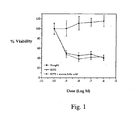
- a compound denominated as EC72 was evaluated using an in vitro cytotoxicity assay that predicts the ability of the drug to inhibit the growth of folate receptor-positive KB cells.
- This compound comprises a folate analog linked to mitomycin C prepared according to the protocol depicted in scheme 2.
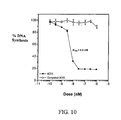
- the KB cells were exposed for 15 minutes at 37°C to the indicated concentrations of EC72, free mitomyicn C (drug #1), or to EC72 and at least a 100-fold excess of folic acid.
- the cells were then rinsed once with fresh culture medium and incubated in fresh culture medium for 72 hours at 37°C. Cell viability was assessed using a bromodeoxyuridine-based ELISA assay.
- cytotoxicity of EC72 was equal to that of free mitomycin C (see Fig. 1 ).
- the cytotoxicity of EC72 was blocked in the presence of excess free folic acid, indicating that the observed cell killing was mediated by folate binding to its receptor.
- this result also suggests that normal tissues that express little to no folate receptor should not be affected by the EC72 conjugate.
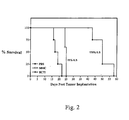
- EC72 for promoting survival of tumor-bearing mice was evaluated in vivo using M109 tumor-bearing Balb/c mice. There were two goals of this study: i) to determine if daily intraperitoneal treatment with EC72 could prolong the lives of folate receptor-positive tumor-bearing mice beyond what mitomycin C could do when tested under an identical dosing regimen, and ii) to examine the pathological effects of EC72 treatment on normal tissues, including kidney tissue which is folate receptor-positive tissue. Although most normal tissues contain very low levels of folate receptor, the proximal tubules of the kidney express appreciable numbers of folate receptors. Thus, the in vivo evaluation of EC72 also enabled evaluation of the extent of kidney-specific damage caused by the systemic administration of folate-mitomycin conjugates.
- ILS increased life span ( i.e., median survival time)
- Bone (femur) was completely depleted of marrow cells Abnormal spleen: loss of all spleen-derived marrow tissue Liver, kidney, heart, brain, lung, muscle and intestine visually appeared normal No evidence of neoplasia in major organs EC72 1800 nmol/kg q1d, i.p. 44 days Bone marrow (femur) was normal Spleen appeared normal Kidney appeared normal Occasional neoplasia found In liver, lung and intestine; no evidence of hemorrhage or degeneration Animals died from tumor burden
- mice were administered intravenously (i.v.) to tumor-bearing animals.
- i.v. intravenously
- mice were administered i.v. (described below) and the tumors were subcutaneous.
- mice were injected i.v. qd x 5 for six weeks with 1800 nmoles/kg of EC72.
- Tumor growth was determined at 2-day intervals in each treatment group until the tumors grew to at least 1500 mm3. The tail veins became excessively bruised and inaccessible after 12 i.v.
- EC72 treatment was effective in delaying the growth of the M109 tumor.
- the tumors did begin to increase their growth rate shortly after the switch was made to i.p. dosing.
- EC72 may not have reached the distal subcutaneous tumor efficiently following i.p. administration of EC72, a limitation not encountered when EC72 was administered i.v. during the initial phase of the therapy.
- mice were injected i.v. throughout the treatment period and were treated with EC72 for 4 weeks.
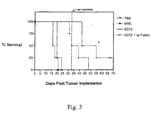
- EC72 was administered i.v. beginning on the designated day post tumor cell inoculation (PTI; see Table 3). Animal survival was monitored daily, and mice showing a complete response were those that were tumor-free at day 60 PTI.
- PTI day post tumor cell inoculation
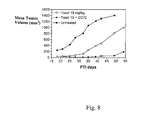
- the mice were then treated with TAXOL® (i.e. , paclitaxel) with or without EC72, and both primary tumor volumes and survival of the animals were measured.
- mice Twelve days PTI, the mice were treated with TAXOL® (20 mg/kg, i.v. on days 12, 15, 19, 22, and 26 PTI) with or without EC72 (1800 nmol/kg qd x 5 for 4 weeks; i.v. on days 12, 15, 19, 22, and 26 PTI, and i.p. all remaining days).
- mice treated with TAXOL® and EC72 in combination decreased in size during the dosing period, and this regimen resulted in a 1.8 LCK in 3 of the 5 mice in this cohort, and 2 of 5 mice were tumor-free at 90 days PTI. Furthermore, all of the mice treated with TAXOL® in combination with EC72 maintained their weight and appeared healthy throughout the dosing period. These results show that EC72 and TAXOL® act synergistically to prevent tumor growth because EC72 alone failed to produce an anti-tumor response in this subcutaneous tumor model when EC72 treatment was initiated 12 days PTI (see Table 3), and the response with EC72 and TAXOL® in combination was much greater than with TAXOL® alone.
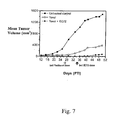
- TAXOL® was dosed at 15 mg/kg and 6 mice/cohort were tested.
- Fig. 8 tumors in untreated control animals grew at an exponential rate, and by day 50 PTI, they reached a size where euthanasia was required.
- tumors in TAXOL®-treated mice failed to grow until day 21 PTI, after which they resumed apparent normal exponential growth.
- Taxol Dose (mg/kg) EC72 Dose (nmol/kg) Log Cell Kill (LCK) Mean Survival Time (%T/C) CR PR NR 15 0 0.6 135 2 4 0 15 1800 1.5 187 4 2 0
- FR-positive KB cells were gently trypsinized in 0.25% trypsin in phosphate-buffered saline (PBS) at room temperature for 3 minutes and then diluted in folate-free RPMI (FFRPMI) containing 10% heat-inactivated fetal calf serum (HIFCS). Following a 5 min 800 x g spin and one PBS wash, the final cell pellet was suspended in FFRPMI 1640 (no serum).
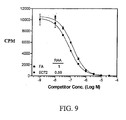
- relative affinities were defined as the inverse molar ratio of compound required to displace 50% of 3 H-folic acid bound to the FR on KB cells, and the relative affinity of folic acid for the FR was set to 1.
- EC72 has a relative affinity of 0.59, indicating that this conjugate can effectively compete with folic acid (the native ligand) for binding to the folate receptor.
- KB cells were seeded in 12-well Falcon plates and allowed to form near-confluent monolayers overnight. Following one rinse with 1 mL of fresh FFRPMI/HIFCS, each well received 0.5 mL of FFRPNH/HIFCS containing increasing concentrations of EC72 in the presence of absence of 0.1 mM folic acid (competitor). Cells were incubated for 15 min at 37°C and then rinsed four times with 0.5 mL of FFRPMI/HIFCS. 0.5 mL of fresh FFRPMI/HIFCS was then added to each well, and cells were chased for a total of 72 h at 37°C.
- mice Female Balb/C strain
- the mice were maintained on Harlan's folate-free chow for a total of three weeks prior to the onset of and during this experiment.
- Folate receptor-positive M109 P 0 tumor cells (0.5 x 10 6 cells per animal) were inoculated in the upper peritoneal cavity 4 days prior to the onset of dosing.
- the formulations indicated in Fig. 11 were dosed intraperitoneally qd x 30 starting on day 4 post tumor inoculation, and animal survival was monitored daily.
- EC72 displayed dose-dependent activity in M109 tumor-bearing mice. At the 1800 nmol/kg dose level of EC72 (saturable to folate receptors in vivo ), a 240% increase in lifespan was observed with 1 of 4 animals showing a complete response.
- mice Female Balb/C strain
- Harlan, Inc. Female Balb/C strain
- the mice were maintained on Harlan's folate-free chow for a total of three weeks prior to the onset of and during this experiment.
- Folate receptor-negative 4T-1 tumor cells (1 x 10⁶ cells per animal) were inoculated in the subcutis of the right axilla.
- the formulations indicated in Fig. 12 were dosed intraperitoneally qd x 30 starting on day 4 post tumor inoculation, and tumor volume as well as animal survival were monitored daily.
- EC72 had no activity against a subcutaneous folate-receptor-negative 4T-1 tumor.
Landscapes
- Chemical & Material Sciences (AREA)
- Organic Chemistry (AREA)
- Health & Medical Sciences (AREA)
- Bioinformatics & Cheminformatics (AREA)
- Engineering & Computer Science (AREA)
- General Health & Medical Sciences (AREA)
- Veterinary Medicine (AREA)
- Medicinal Chemistry (AREA)
- Public Health (AREA)
- Pharmacology & Pharmacy (AREA)
- Life Sciences & Earth Sciences (AREA)
- Animal Behavior & Ethology (AREA)
- General Chemical & Material Sciences (AREA)
- Nuclear Medicine, Radiotherapy & Molecular Imaging (AREA)
- Chemical Kinetics & Catalysis (AREA)
- Epidemiology (AREA)
- Pharmaceuticals Containing Other Organic And Inorganic Compounds (AREA)
- Medicinal Preparation (AREA)
- Nitrogen Condensed Heterocyclic Rings (AREA)
- Medicines That Contain Protein Lipid Enzymes And Other Medicines (AREA)
Applications Claiming Priority (3)
| Application Number | Priority Date | Filing Date | Title |
|---|---|---|---|
| US38057902P | 2002-05-15 | 2002-05-15 | |
| US42591802P | 2002-11-13 | 2002-11-13 | |
| EP03752681A EP1504010B1 (de) | 2002-05-15 | 2003-05-13 | Vitamin-mitomycin-konjugate |
Related Parent Applications (1)
| Application Number | Title | Priority Date | Filing Date |
|---|---|---|---|
| EP03752681A Division EP1504010B1 (de) | 2002-05-15 | 2003-05-13 | Vitamin-mitomycin-konjugate |
Publications (2)
| Publication Number | Publication Date |
|---|---|
| EP2060272A2 true EP2060272A2 (de) | 2009-05-20 |
| EP2060272A3 EP2060272A3 (de) | 2009-05-27 |
Family
ID=29553501
Family Applications (2)
| Application Number | Title | Priority Date | Filing Date |
|---|---|---|---|
| EP03752681A Expired - Lifetime EP1504010B1 (de) | 2002-05-15 | 2003-05-13 | Vitamin-mitomycin-konjugate |
| EP09002632A Withdrawn EP2060272A3 (de) | 2002-05-15 | 2003-05-13 | Vitamin-Mitomycinkonjugate |
Family Applications Before (1)
| Application Number | Title | Priority Date | Filing Date |
|---|---|---|---|
| EP03752681A Expired - Lifetime EP1504010B1 (de) | 2002-05-15 | 2003-05-13 | Vitamin-mitomycin-konjugate |
Country Status (10)
| Country | Link |
|---|---|
| US (1) | US7910594B2 (de) |
| EP (2) | EP1504010B1 (de) |
| JP (1) | JP4814520B2 (de) |
| KR (1) | KR20040106547A (de) |
| AT (1) | ATE426414T1 (de) |
| AU (1) | AU2003243226A1 (de) |
| CA (1) | CA2484640C (de) |
| DE (1) | DE60326833D1 (de) |
| ES (1) | ES2324708T3 (de) |
| WO (1) | WO2003097647A1 (de) |
Families Citing this family (43)
| Publication number | Priority date | Publication date | Assignee | Title |
|---|---|---|---|---|
| ATE427948T1 (de) | 2001-04-24 | 2009-04-15 | Purdue Research Foundation | Folat-mimetika und deren folatrezeptorbindende konjugate |
| CA2484640C (en) | 2002-05-15 | 2012-01-17 | Endocyte, Inc. | Vitamin-mitomycin conjugates |
| CN101239190B (zh) * | 2003-01-27 | 2013-09-25 | 恩多塞特公司 | 维生素受体结合递药缀合物 |
| WO2004069159A2 (en) * | 2003-01-27 | 2004-08-19 | Endocyte, Inc. | Vitamin receptor binding drug delivery conjugates |
| CN101098854B (zh) * | 2004-07-23 | 2012-12-05 | 恩多塞特公司 | 二价连接体及其轭合物 |
| HUE056941T2 (hu) | 2004-12-22 | 2022-04-28 | Nitto Denko Corp | Gyógyszerhordozó és gyógyszerhordozó kit fibrózis gátlására |
| JP2009221164A (ja) | 2008-03-17 | 2009-10-01 | Nitto Denko Corp | 肺線維症処置剤 |
| US20120269886A1 (en) | 2004-12-22 | 2012-10-25 | Nitto Denko Corporation | Therapeutic agent for pulmonary fibrosis |
| CN101175757B (zh) * | 2005-03-16 | 2012-11-14 | 恩多塞特公司 | 蝶酸及其缀合物的合成和纯化 |
| ATE460668T1 (de) | 2005-03-30 | 2010-03-15 | Purdue Research Foundation | Verfahren zur prognose von brustkrebs mittels quantifizierung von zellulären folat vitamin rezeptoren |
| BRPI0615354A2 (pt) * | 2005-08-19 | 2011-05-17 | Endocyte, Inc. | conjugado de liberação de fármaco de ligação de receptor, composição farmacêutica que o compreende, bem como seu uso |
| EP2382995A3 (de) * | 2005-08-19 | 2013-09-25 | Endocyte, Inc. | Ligandenkonjugate von Vincaalkaloiden, Analoga und Derivaten |
| US9572886B2 (en) | 2005-12-22 | 2017-02-21 | Nitto Denko Corporation | Agent for treating myelofibrosis |
| EP1832575A1 (de) * | 2006-03-06 | 2007-09-12 | Sulfidris S.r.l. | Entzündungshemmende Mittel |
| US20100104626A1 (en) * | 2007-02-16 | 2010-04-29 | Endocyte, Inc. | Methods and compositions for treating and diagnosing kidney disease |
| AU2008224988A1 (en) | 2007-03-14 | 2008-09-18 | Endocyte, Inc. | Binding ligand linked drug delivery conjugates of tubulysins |
| TWI407971B (zh) | 2007-03-30 | 2013-09-11 | 日東電工股份有限公司 | Cancer cells and tumor-related fibroblasts |
| US9877965B2 (en) | 2007-06-25 | 2018-01-30 | Endocyte, Inc. | Vitamin receptor drug delivery conjugates for treating inflammation |
| CN101784565B (zh) | 2007-06-25 | 2014-12-10 | 恩多塞特公司 | 含有亲水性间隔区接头的共轭物 |
| PL2187965T3 (pl) | 2007-08-17 | 2020-05-18 | Purdue Research Foundation | Koniugaty wiążący psma ligand-łącznik i sposoby ich zastosowania |
| CN101970012A (zh) | 2007-09-14 | 2011-02-09 | 日东电工株式会社 | 药物载体 |
| CN101909441B (zh) | 2007-10-25 | 2015-05-13 | 恩多塞特公司 | 微管蛋白抑制剂及其制备方法 |
| US9951324B2 (en) | 2010-02-25 | 2018-04-24 | Purdue Research Foundation | PSMA binding ligand-linker conjugates and methods for using |
| JP5950428B2 (ja) | 2010-08-05 | 2016-07-13 | 日東電工株式会社 | 線維化組織から正常組織を再生するための組成物 |
| KR20130140032A (ko) * | 2010-11-12 | 2013-12-23 | 엔도사이트, 인코포레이티드 | 암을 치료하는 방법들 |
| US10080805B2 (en) | 2012-02-24 | 2018-09-25 | Purdue Research Foundation | Cholecystokinin B receptor targeting for imaging and therapy |
| WO2013130776A1 (en) | 2012-02-29 | 2013-09-06 | Purdue Research Foundation | Folate receptor alpha binding ligands |
| US20140080175A1 (en) | 2012-03-29 | 2014-03-20 | Endocyte, Inc. | Processes for preparing tubulysin derivatives and conjugates thereof |
| BR112015008365A2 (pt) | 2012-10-16 | 2017-07-04 | Endocyte Inc | composto da fórmula b-l(d)x, ou um sal farmaceuticamente aceitável do mesmo, composição farmacêutica, uso de um composto, composição de forma de dosagem unitária ou dose unitária, composição para tratar um câncer em um paciente, e método para tratar um câncer em um paciente |
| EA201590783A1 (ru) | 2012-11-15 | 2015-11-30 | Эндосайт, Инк. | Конъюгаты для доставки лекарственных средств и способы лечения заболеваний, вызванных клетками, экспрессирующими psma |
| CA2891280C (en) | 2012-11-24 | 2018-03-20 | Hangzhou Dac Biotech Co., Ltd. | Hydrophilic linkers and their uses for conjugation of drugs to cell binding molecules |
| JP6340162B2 (ja) | 2012-12-20 | 2018-06-06 | 日東電工株式会社 | アポトーシス誘導剤 |
| EP3456700A1 (de) | 2013-10-18 | 2019-03-20 | Deutsches Krebsforschungszentrum | Markierte inhibitoren des prostataspezifischen membranantigens (psma), deren verwendung als kontrastmittel und pharmazeutika zur behandlung von prostatakrebs |
| EP3533473A3 (de) | 2013-11-14 | 2019-12-18 | Endocyte, Inc. | Verbindungen für positronenemissionstomografie |
| US10464955B2 (en) | 2014-02-28 | 2019-11-05 | Hangzhou Dac Biotech Co., Ltd. | Charged linkers and their uses for conjugation |
| US9976142B2 (en) | 2014-04-02 | 2018-05-22 | Nitto Denko Corporation | Targeting molecule and a use thereof |
| AU2014390729B2 (en) | 2014-04-07 | 2018-11-29 | Nitto Denko Corporation | Novel polymer-based hydrotropes for hydrophobic drug delivery |
| US10188759B2 (en) | 2015-01-07 | 2019-01-29 | Endocyte, Inc. | Conjugates for imaging |
| WO2016149516A1 (en) * | 2015-03-17 | 2016-09-22 | Lipomedix Pharmaceuticals Ltd. | Methods for the treatment of bladder cancer |
| JP6869187B2 (ja) | 2015-04-07 | 2021-05-12 | メモリアル スローン ケタリング キャンサー センター | ナノ粒子イムノコンジュゲート |
| US10406238B2 (en) | 2015-05-11 | 2019-09-10 | Purdue Research Foundation | Ligand ionophore conjugates |
| CN112368024A (zh) | 2018-04-17 | 2021-02-12 | 恩多塞特公司 | 治疗癌症的方法 |
| CN114096264B (zh) | 2019-05-20 | 2025-03-14 | 因多塞特股份有限公司 | 制备psma缀合物的方法 |
Citations (12)
| Publication number | Priority date | Publication date | Assignee | Title |
|---|---|---|---|---|
| EP0116208A1 (de) | 1982-12-07 | 1984-08-22 | Kyowa Hakko Kogyo Co., Ltd. | Mitomycin-Analoge |
| JPS59175493A (ja) | 1983-03-25 | 1984-10-04 | Kyowa Hakko Kogyo Co Ltd | マイトマイシン誘導体 |
| EP0163550A2 (de) | 1984-06-01 | 1985-12-04 | Kyowa Hakko Kogyo Kabushiki Kaisha | Mitomycinderivate, ihre Herstellung und diese enthaltende pharmazeutische Zubereitungen |
| US4713249A (en) | 1981-11-12 | 1987-12-15 | Schroeder Ulf | Crystallized carbohydrate matrix for biologically active substances, a process of preparing said matrix, and the use thereof |
| WO1988001622A1 (fr) | 1986-08-29 | 1988-03-10 | Kyowa Hakko Kogyo Kabusiki Kaisha | Derives de mitomycine |
| US4866180A (en) | 1984-02-24 | 1989-09-12 | Bristol-Myers Company | Amino disulfide thiol exchange products |
| WO1991007418A1 (en) | 1989-11-13 | 1991-05-30 | Xoma Corporation | Chimeric mouse-human a10 antibody with specificity to a human tumor cell antigen |
| US5266333A (en) | 1985-03-06 | 1993-11-30 | American Cyanamid Company | Water dispersible and water soluble carbohydrate polymer compositions for parenteral administration of growth hormone |
| US5416016A (en) | 1989-04-03 | 1995-05-16 | Purdue Research Foundation | Method for enhancing transmembrane transport of exogenous molecules |
| US5417982A (en) | 1994-02-17 | 1995-05-23 | Modi; Pankaj | Controlled release of drugs or hormones in biodegradable polymer microspheres |
| US5672486A (en) | 1990-08-29 | 1997-09-30 | Centre Hospitalier Regional De Nantes | Protein polyligands joined to a stable protein core |
| US5688488A (en) | 1989-04-03 | 1997-11-18 | Purdue Research Foundation | Composition and method for tumor imaging |
Family Cites Families (80)
| Publication number | Priority date | Publication date | Assignee | Title |
|---|---|---|---|---|
| US2515483A (en) * | 1946-08-10 | 1950-07-18 | Merck & Co Inc | Diacylated pteroic acid and process for preparing same |
| US2816110A (en) * | 1956-11-23 | 1957-12-10 | Merck & Co Inc | Methods for the production of substituted pteridines |
| US3392173A (en) * | 1964-03-09 | 1968-07-09 | Lilly Co Eli | Novel acyl derivatives of desacetyl-vincaleukoblastine and processes for their preparation |
| US3387001A (en) * | 1964-10-19 | 1968-06-04 | Lilly Co Eli | Novel aminoacyl esters of desacetyl vincaleukoblastine |
| US4203898A (en) * | 1977-08-29 | 1980-05-20 | Eli Lilly And Company | Amide derivatives of VLB, leurosidine, leurocristine and related dimeric alkaloids |
| US4166810A (en) * | 1978-04-20 | 1979-09-04 | Eli Lilly And Company | Derivatives of 4-desacetyl VLB C-3 carboxyhydrazide |
| US4337339A (en) * | 1979-04-30 | 1982-06-29 | Baker Instruments Corp. | Process for preparation of folic acid derivatives |
| US5140104A (en) * | 1982-03-09 | 1992-08-18 | Cytogen Corporation | Amine derivatives of folic acid analogs |
| US4801688A (en) * | 1986-05-27 | 1989-01-31 | Eli Lilly And Company | Hydrazone immunoglobulin conjugates |
| ZA873600B (en) | 1986-05-27 | 1988-12-28 | Lilly Co Eli | Immunoglobulin conjugates |
| US5006652A (en) | 1988-08-08 | 1991-04-09 | Eli Lilly And Company | Intermediates for antibody-vinca drug conjugates |
| US5094849A (en) * | 1988-08-08 | 1992-03-10 | Eli Lilly And Company | Cytotoxic antibody conjugates of hydrazide derivatized vinca analogs via simple organic linkers |
| US5998603A (en) * | 1994-09-29 | 1999-12-07 | Isis Pharmaceuticals, Inc. | 4'-desmethyl nucleoside analogs, and oligomers thereof |
| US6335434B1 (en) * | 1998-06-16 | 2002-01-01 | Isis Pharmaceuticals, Inc., | Nucleosidic and non-nucleosidic folate conjugates |
| US5159079A (en) * | 1991-12-20 | 1992-10-27 | Eli Lilly And Company | 2-piperidones as intermediates for 5-deaza-10-oxo- and 5-deaza-10-thio-5,6,7,8-tetrahydrofolic acids |
| US6004555A (en) * | 1992-03-05 | 1999-12-21 | Board Of Regents, The University Of Texas System | Methods for the specific coagulation of vasculature |
| ES2295093T3 (es) * | 1993-04-23 | 2008-04-16 | Wyeth | Conjugados y anticuerpos de rapamicina. |
| IL112873A (en) * | 1994-03-08 | 2005-03-20 | Wyeth Corp | Rapamycin-fkbp12 binding proteins, their isolation and their use |
| US6171859B1 (en) * | 1994-03-30 | 2001-01-09 | Mitokor | Method of targeting conjugate molecules to mitochondria |
| US5547668A (en) * | 1995-05-05 | 1996-08-20 | The Board Of Trustees Of The University Of Illinois | Conjugates of folate anti-effector cell antibodies |
| US6207157B1 (en) * | 1996-04-23 | 2001-03-27 | The United States Of America As Represented By The Department Of Health And Human Services | Conjugate vaccine for nontypeable Haemophilus influenzae |
| US6030941A (en) * | 1996-05-01 | 2000-02-29 | Avi Biopharma, Inc. | Polymer composition for delivering substances in living organisms |
| EP0954340B1 (de) * | 1996-05-03 | 2007-06-27 | Immunomedics, Inc. | Zielgerichtete kombinations-immuntherapie für krebs |
| DE19621133A1 (de) * | 1996-05-24 | 1997-11-27 | Boehringer Mannheim Gmbh | Bestimmungsverfahren mit oligomerisierten Rezeptoren |
| JP2001501601A (ja) | 1996-09-12 | 2001-02-06 | メルク エンド カンパニー インコーポレーテッド | 前立腺ガンの治療において有用な共役体 |
| US6056973A (en) * | 1996-10-11 | 2000-05-02 | Sequus Pharmaceuticals, Inc. | Therapeutic liposome composition and method of preparation |
| US6071532A (en) * | 1996-10-15 | 2000-06-06 | Emory University | Synthesis of glycophospholipid and peptide-phospholipid conjugates and uses thereof |
| US6177404B1 (en) * | 1996-10-15 | 2001-01-23 | Merck & Co., Inc. | Conjugates useful in the treatment of benign prostatic hyperplasia |
| US6291673B1 (en) * | 1997-10-17 | 2001-09-18 | Purdue Research Foundation | Folic acid derivatives |
| GB9723669D0 (en) * | 1997-11-07 | 1998-01-07 | Univ Aberdeen | Skin penetration enhancing components |
| US6399638B1 (en) * | 1998-04-21 | 2002-06-04 | Bristol-Myers Squibb Company | 12,13-modified epothilone derivatives |
| US6093382A (en) * | 1998-05-16 | 2000-07-25 | Bracco Research Usa Inc. | Metal complexes derivatized with folate for use in diagnostic and therapeutic applications |
| US6291684B1 (en) * | 1999-03-29 | 2001-09-18 | Bristol-Myers Squibb Company | Process for the preparation of aziridinyl epothilones from oxiranyl epothilones |
| ATE340592T1 (de) * | 1999-04-23 | 2006-10-15 | Alza Corp | Konjugate enthaltend eine spaltbare bindung zur anwendung in einem liposom |
| AUPQ014799A0 (en) | 1999-05-04 | 1999-05-27 | Access Pharmaceuticals Australia Pty Limited | Amplification of folate-mediated targeting to tumor cells using polymers |
| AUPQ071299A0 (en) * | 1999-06-02 | 1999-06-24 | Access Pharmaceuticals Australia Pty Limited | Vitamin directed dual targeting therapy |
| MXPA02003771A (es) * | 1999-10-15 | 2005-04-28 | Mayo Foundation | Conjugados de cobalamina, utiles como agentes para obtencion de imagen y como agentes anti-tumor. |
| US7067111B1 (en) * | 1999-10-25 | 2006-06-27 | Board Of Regents, University Of Texas System | Ethylenedicysteine (EC)-drug conjugates, compositions and methods for tissue specific disease imaging |
| CN1441676B (zh) * | 2000-03-31 | 2012-08-22 | 普渡研究基金会 | 用配体-免疫原缀合物治疗的方法 |
| US6670355B2 (en) * | 2000-06-16 | 2003-12-30 | Wyeth | Method of treating cardiovascular disease |
| JP2004507465A (ja) * | 2000-08-11 | 2004-03-11 | ワイス | エストロゲン受容体陽性癌腫の治療方法 |
| ATE411321T1 (de) * | 2000-09-19 | 2008-10-15 | Wyeth Corp | Wasserlösliche rapamycin-ester |
| US6399625B1 (en) * | 2000-09-27 | 2002-06-04 | Wyeth | 1-oxorapamycins |
| US6399626B1 (en) * | 2000-10-02 | 2002-06-04 | Wyeth | Hydroxyesters of 7-desmethylrapamycin |
| US6440991B1 (en) * | 2000-10-02 | 2002-08-27 | Wyeth | Ethers of 7-desmethlrapamycin |
| CA2429722A1 (en) * | 2000-11-28 | 2002-06-06 | Wyeth | Expression analysis of fkbp nucleic acids and polypeptides useful in the diagnosis and treatment of prostate cancer |
| AR036993A1 (es) * | 2001-04-02 | 2004-10-20 | Wyeth Corp | Uso de agentes que modulan la interaccion entre pd-1 y sus ligandos en la submodulacion de respuestas inmunologicas |
| WO2002079499A1 (en) * | 2001-04-02 | 2002-10-10 | Wyeth | Pd-1, a receptor for b7-4, and uses therefor |
| ATE427948T1 (de) * | 2001-04-24 | 2009-04-15 | Purdue Research Foundation | Folat-mimetika und deren folatrezeptorbindende konjugate |
| US7109165B2 (en) * | 2001-05-18 | 2006-09-19 | Sirna Therapeutics, Inc. | Conjugates and compositions for cellular delivery |
| MXPA03010909A (es) * | 2001-06-01 | 2004-02-17 | Bristol Myers Squibb Co | Derivados de epotilona. |
| US20040018203A1 (en) * | 2001-06-08 | 2004-01-29 | Ira Pastan | Pegylation of linkers improves antitumor activity and reduces toxicity of immunoconjugates |
| IL160126A0 (en) * | 2001-07-31 | 2004-06-20 | Immunomedics Inc | A kit for targeting a target site containing a polymer conjugate |
| UA77200C2 (en) * | 2001-08-07 | 2006-11-15 | Wyeth Corp | Antineoplastic combination of cci-779 and bkb-569 |
| EP1419153A1 (de) * | 2001-08-22 | 2004-05-19 | Wyeth | Rapamycindialdehyde |
| DK1419154T3 (da) * | 2001-08-22 | 2006-01-09 | Wyeth Corp | Rapamycin-29-enoler |
| EP2168598A1 (de) * | 2001-09-28 | 2010-03-31 | Purdue Research Foundation | Verfahren zur Behandlung mit Ligand-Immunogen-Konjugaten |
| AU2002337954C1 (en) * | 2001-10-22 | 2008-10-23 | The Scripps Research Institute | Integrin targeting compounds |
| GR1004163B (el) | 2001-11-01 | 2003-02-21 | Πολυκυκλικα παραγωγα τροποποιησης των οπτικων ιδιοτητων και των ιδιοτητων αντοχης στο πλασμα των πολυμερων λιθογραφιας | |
| US8043602B2 (en) * | 2002-02-07 | 2011-10-25 | Endocyte, Inc. | Folate targeted enhanced tumor and folate receptor positive tissue optical imaging technology |
| US7000695B2 (en) * | 2002-05-02 | 2006-02-21 | Halliburton Energy Services, Inc. | Expanding wellbore junction |
| JP4801348B2 (ja) * | 2002-05-06 | 2011-10-26 | エンドサイト,インコーポレイテッド | ビタミンを標的とした造影剤 |
| US6596757B1 (en) * | 2002-05-14 | 2003-07-22 | Immunogen Inc. | Cytotoxic agents comprising polyethylene glycol-containing taxanes and their therapeutic use |
| CA2484640C (en) | 2002-05-15 | 2012-01-17 | Endocyte, Inc. | Vitamin-mitomycin conjugates |
| DK1523493T3 (da) * | 2002-07-09 | 2013-12-02 | Alexander Doemling | Nye tubulysinanaloge |
| CA2501752A1 (en) * | 2002-10-10 | 2004-04-22 | Wyeth | Compositions, organisms and methodologies employing a novel human kinase |
| DE10254439A1 (de) * | 2002-11-21 | 2004-06-03 | GESELLSCHAFT FüR BIOTECHNOLOGISCHE FORSCHUNG MBH (GBF) | Tubulysine, Herstellungsverfahren und Tubulysin-Mittel |
| EP1578197A4 (de) * | 2002-11-21 | 2006-05-17 | Wyeth Corp | Zusammensetzung und verfahren zurbehandlung von lupus nephritis |
| WO2004069159A2 (en) * | 2003-01-27 | 2004-08-19 | Endocyte, Inc. | Vitamin receptor binding drug delivery conjugates |
| AR042938A1 (es) * | 2003-02-06 | 2005-07-06 | Wyeth Corp | Uso del cci-779 en el tratamiento de la fibrosis hepatica |
| ES2702942T3 (es) * | 2003-04-17 | 2019-03-06 | Alnylam Pharmaceuticals Inc | Agentes de ARNi modificados |
| WO2004101803A2 (en) * | 2003-05-12 | 2004-11-25 | Wyeth Holdings Corporation | Process for producing anticancer agent ll-d45042 |
| EP1646635A1 (de) * | 2003-07-16 | 2006-04-19 | Wyeth | Cci-779-isomer c |
| JP4227649B2 (ja) * | 2003-08-07 | 2009-02-18 | ワイス | Cci−779の位置選択的合成 |
| EP1791567B1 (de) * | 2004-08-10 | 2015-07-29 | Alnylam Pharmaceuticals Inc. | Chemisch modifizierte oligonucleotide |
| US7290958B2 (en) * | 2004-12-03 | 2007-11-06 | Airfield Systems, Llc | Subsurface drainage system and drain structure therefor |
| ATE460668T1 (de) | 2005-03-30 | 2010-03-15 | Purdue Research Foundation | Verfahren zur prognose von brustkrebs mittels quantifizierung von zellulären folat vitamin rezeptoren |
| EP1904183B1 (de) * | 2005-07-05 | 2014-10-15 | Purdue Research Foundation | Pharmazeutische Zusammensetzung zur Behandlung von Arthrose |
| AR062448A1 (es) * | 2006-05-25 | 2008-11-12 | Endocyte Inc | Conjugados de analogos de aziridinil-epotilona y composiciones farmaceuticas que comprenden los mismos |
| US20100104626A1 (en) * | 2007-02-16 | 2010-04-29 | Endocyte, Inc. | Methods and compositions for treating and diagnosing kidney disease |
-
2003
- 2003-05-13 CA CA2484640A patent/CA2484640C/en not_active Expired - Fee Related
- 2003-05-13 DE DE60326833T patent/DE60326833D1/de not_active Expired - Lifetime
- 2003-05-13 JP JP2004505379A patent/JP4814520B2/ja not_active Expired - Fee Related
- 2003-05-13 AT AT03752681T patent/ATE426414T1/de not_active IP Right Cessation
- 2003-05-13 ES ES03752681T patent/ES2324708T3/es not_active Expired - Lifetime
- 2003-05-13 US US10/513,372 patent/US7910594B2/en not_active Expired - Fee Related
- 2003-05-13 EP EP03752681A patent/EP1504010B1/de not_active Expired - Lifetime
- 2003-05-13 WO PCT/US2003/014969 patent/WO2003097647A1/en not_active Ceased
- 2003-05-13 KR KR10-2004-7018375A patent/KR20040106547A/ko not_active Ceased
- 2003-05-13 AU AU2003243226A patent/AU2003243226A1/en not_active Abandoned
- 2003-05-13 EP EP09002632A patent/EP2060272A3/de not_active Withdrawn
Patent Citations (14)
| Publication number | Priority date | Publication date | Assignee | Title |
|---|---|---|---|---|
| US4713249A (en) | 1981-11-12 | 1987-12-15 | Schroeder Ulf | Crystallized carbohydrate matrix for biologically active substances, a process of preparing said matrix, and the use thereof |
| EP0116208A1 (de) | 1982-12-07 | 1984-08-22 | Kyowa Hakko Kogyo Co., Ltd. | Mitomycin-Analoge |
| JPS59175493A (ja) | 1983-03-25 | 1984-10-04 | Kyowa Hakko Kogyo Co Ltd | マイトマイシン誘導体 |
| US4866180A (en) | 1984-02-24 | 1989-09-12 | Bristol-Myers Company | Amino disulfide thiol exchange products |
| EP0163550A2 (de) | 1984-06-01 | 1985-12-04 | Kyowa Hakko Kogyo Kabushiki Kaisha | Mitomycinderivate, ihre Herstellung und diese enthaltende pharmazeutische Zubereitungen |
| JPS60255789A (ja) | 1984-06-01 | 1985-12-17 | Kyowa Hakko Kogyo Co Ltd | マイトマイシン誘導体,その製造法および抗腫瘍剤 |
| US4691024A (en) | 1984-06-01 | 1987-09-01 | Kyowa Hakko Kogyo Kabushiki Kaisha | New mitomycin derivatives, preparation thereof and pharmaceutical compositions containing them |
| US5266333A (en) | 1985-03-06 | 1993-11-30 | American Cyanamid Company | Water dispersible and water soluble carbohydrate polymer compositions for parenteral administration of growth hormone |
| WO1988001622A1 (fr) | 1986-08-29 | 1988-03-10 | Kyowa Hakko Kogyo Kabusiki Kaisha | Derives de mitomycine |
| US5416016A (en) | 1989-04-03 | 1995-05-16 | Purdue Research Foundation | Method for enhancing transmembrane transport of exogenous molecules |
| US5688488A (en) | 1989-04-03 | 1997-11-18 | Purdue Research Foundation | Composition and method for tumor imaging |
| WO1991007418A1 (en) | 1989-11-13 | 1991-05-30 | Xoma Corporation | Chimeric mouse-human a10 antibody with specificity to a human tumor cell antigen |
| US5672486A (en) | 1990-08-29 | 1997-09-30 | Centre Hospitalier Regional De Nantes | Protein polyligands joined to a stable protein core |
| US5417982A (en) | 1994-02-17 | 1995-05-23 | Modi; Pankaj | Controlled release of drugs or hormones in biodegradable polymer microspheres |
Non-Patent Citations (4)
| Title |
|---|
| DE VITA, V.T.: "Biologic Therapy of Cancer", 1995, LIPPINCOTT |
| MELBY, E.L., CANCER RES., vol. 53, no. 8, 1993, pages 1755 - 1760 |
| OLSNES, S., IMMUNOL. TODAY, vol. 10, 1989, pages 291 - 295 |
| WESTERHOF, G. R.; J. H. SCHORNAGEL ET AL., MOL. PHARM., vol. 48, 1995, pages 459 - 471 |
Also Published As
| Publication number | Publication date |
|---|---|
| WO2003097647A1 (en) | 2003-11-27 |
| JP4814520B2 (ja) | 2011-11-16 |
| US7910594B2 (en) | 2011-03-22 |
| DE60326833D1 (de) | 2009-05-07 |
| ATE426414T1 (de) | 2009-04-15 |
| ES2324708T3 (es) | 2009-08-13 |
| AU2003243226A1 (en) | 2003-12-02 |
| JP2005531564A (ja) | 2005-10-20 |
| EP1504010B1 (de) | 2009-03-25 |
| EP1504010A1 (de) | 2005-02-09 |
| KR20040106547A (ko) | 2004-12-17 |
| CA2484640A1 (en) | 2003-11-27 |
| EP2060272A3 (de) | 2009-05-27 |
| CA2484640C (en) | 2012-01-17 |
| US20050165227A1 (en) | 2005-07-28 |
| EP1504010A4 (de) | 2007-03-28 |
Similar Documents
| Publication | Publication Date | Title |
|---|---|---|
| EP1504010B1 (de) | Vitamin-mitomycin-konjugate | |
| US8465724B2 (en) | Multi-drug ligand conjugates | |
| EP1592457B1 (de) | Folat-vinblastin konjugat als arzneimittel | |
| US9555139B2 (en) | Binding ligand linked drug delivery conjugates of tubulysins | |
| EP2382995A2 (de) | Ligandenkonjugate von Vincaalkaloiden, Analoga und Derivaten | |
| CN100381177C (zh) | 维生素受体结合递药缀合物 | |
| US20170035894A1 (en) | Drug delivery conjugates for treating resistant cancer and for use in combination therapy |
Legal Events
| Date | Code | Title | Description |
|---|---|---|---|
| PUAI | Public reference made under article 153(3) epc to a published international application that has entered the european phase |
Free format text: ORIGINAL CODE: 0009012 |
|
| PUAL | Search report despatched |
Free format text: ORIGINAL CODE: 0009013 |
|
| AC | Divisional application: reference to earlier application |
Ref document number: 1504010 Country of ref document: EP Kind code of ref document: P |
|
| AK | Designated contracting states |
Kind code of ref document: A2 Designated state(s): AT BE BG CH CY CZ DE DK EE ES FI FR GB GR HU IE IT LI LU MC NL PT RO SE SI SK TR |
|
| AK | Designated contracting states |
Kind code of ref document: A3 Designated state(s): AT BE BG CH CY CZ DE DK EE ES FI FR GB GR HU IE IT LI LU MC NL PT RO SE SI SK TR |
|
| RIN1 | Information on inventor provided before grant (corrected) |
Inventor name: VLAHOV, IONTCHO, RADOSLAVOV Inventor name: LEAMON, CHRISTOPHER, PAUL |
|
| 17P | Request for examination filed |
Effective date: 20091123 |
|
| AKX | Designation fees paid |
Designated state(s): AT BE BG CH CY CZ DE DK EE ES FI FR GB GR HU IE IT LI LU MC NL PT RO SE SI SK TR |
|
| 17Q | First examination report despatched |
Effective date: 20100721 |
|
| STAA | Information on the status of an ep patent application or granted ep patent |
Free format text: STATUS: THE APPLICATION IS DEEMED TO BE WITHDRAWN |
|
| 18D | Application deemed to be withdrawn |
Effective date: 20110201 |