EP2071027B1 - Verfahren zur Erzeugung von Rho°-Zellen - Google Patents
Verfahren zur Erzeugung von Rho°-Zellen Download PDFInfo
- Publication number
- EP2071027B1 EP2071027B1 EP07024062A EP07024062A EP2071027B1 EP 2071027 B1 EP2071027 B1 EP 2071027B1 EP 07024062 A EP07024062 A EP 07024062A EP 07024062 A EP07024062 A EP 07024062A EP 2071027 B1 EP2071027 B1 EP 2071027B1
- Authority
- EP
- European Patent Office
- Prior art keywords
- cells
- mitochondrial
- vector
- mtdna
- restriction endonuclease
- Prior art date
- Legal status (The legal status is an assumption and is not a legal conclusion. Google has not performed a legal analysis and makes no representation as to the accuracy of the status listed.)
- Not-in-force
Links
Images



Classifications
-
- C—CHEMISTRY; METALLURGY
- C12—BIOCHEMISTRY; BEER; SPIRITS; WINE; VINEGAR; MICROBIOLOGY; ENZYMOLOGY; MUTATION OR GENETIC ENGINEERING
- C12N—MICROORGANISMS OR ENZYMES; COMPOSITIONS THEREOF; PROPAGATING, PRESERVING, OR MAINTAINING MICROORGANISMS; MUTATION OR GENETIC ENGINEERING; CULTURE MEDIA
- C12N9/00—Enzymes; Proenzymes; Compositions thereof; Processes for preparing, activating, inhibiting, separating or purifying enzymes
- C12N9/14—Hydrolases (3)
- C12N9/16—Hydrolases (3) acting on ester bonds (3.1)
- C12N9/22—Ribonucleases [RNase]; Deoxyribonucleases [DNase]
-
- C—CHEMISTRY; METALLURGY
- C12—BIOCHEMISTRY; BEER; SPIRITS; WINE; VINEGAR; MICROBIOLOGY; ENZYMOLOGY; MUTATION OR GENETIC ENGINEERING
- C12N—MICROORGANISMS OR ENZYMES; COMPOSITIONS THEREOF; PROPAGATING, PRESERVING, OR MAINTAINING MICROORGANISMS; MUTATION OR GENETIC ENGINEERING; CULTURE MEDIA
- C12N9/00—Enzymes; Proenzymes; Compositions thereof; Processes for preparing, activating, inhibiting, separating or purifying enzymes
- C12N9/0004—Oxidoreductases (1.)
- C12N9/0053—Oxidoreductases (1.) acting on a heme group of donors (1.9)
-
- C—CHEMISTRY; METALLURGY
- C07—ORGANIC CHEMISTRY
- C07K—PEPTIDES
- C07K2319/00—Fusion polypeptide
- C07K2319/01—Fusion polypeptide containing a localisation/targetting motif
- C07K2319/07—Fusion polypeptide containing a localisation/targetting motif containing a mitochondrial localisation signal
-
- C—CHEMISTRY; METALLURGY
- C07—ORGANIC CHEMISTRY
- C07K—PEPTIDES
- C07K2319/00—Fusion polypeptide
- C07K2319/60—Fusion polypeptide containing spectroscopic/fluorescent detection, e.g. green fluorescent protein [GFP]
Definitions
- the present invention relates to a method of the generation of 0 cells using a mitochondrial targeted restriction endonuclease.
- Mitochondria are organelles that can be found in most eukaryotic cells. Mitochondria harbour critical biochemical processes, such as the Krebs cycle or the aerobic energy supply of the cell. More recently, however, it was shown that they are key-players in the ageing process and the programed cell death. One factor closely linked to all these functions is the genome of the organelle, the mitochondrial DNA. Numerous neurological and neuromuscular diseases with a variety of symptoms have been associated with mutations of the mitochondrial genome ( Wallace (2001) Novartis. Found Symp., 235, 247-263 ). Mitochondrial encephalopathies for example are a class of diseases which result from dysfunction of the mitochondria's oxidative phosphorylation system (OXPHOS).
- OXPHOS oxidative phosphorylation system
- the oxidative phosphorylation system involves five enzyme complexes that assemble from subunits encoded by the nuclear DNA (nDNA) and the mitochondrial DNA (mtDNA).
- nDNA nuclear DNA
- mtDNA mitochondrial DNA
- the mitochondrial genome is organized in a circular fashion, encompassing 16569 bp and encoding 13 polypeptides involved in OXPHOS, a set of 22 essential tRNAs as well as the large (16S) and small (12S) ribosomal RNA required for mitochondrial translation.
- mtDNA depletion in vitro using a restriction endonuclease linked to a mitochondrial targeting sequence is described in Gene Therapy, voL 14, pages 1309-1318, 2007 and Biomed Sci., vol. 9, pages 534-541, 2002 .
- the selective destruction of mutant but not wild-type mtDNA which allows repopulation of wild-type DNA is described. This mtDNA depletion is modulated through the mtDNA heteroplasmy of the targeted cells.
- the technical problem underlying the present invention is to provide a method for the generation of 0 cells overcoming the disadvantages of the methods of the prior art.
- the solution to the above technical problem has been achieved by providing the embodiments characterized in the claims.
- the present inventors developed a strategy based on a restriction endonuclease targeted to the matrix of mitochondria that allows the destruction of all endogenous mtDNA.
- the mtDNA is cleaved by the restriction endonuclease and endogenous nucleases act to fully disintegrate the mtDNA.
- This strategy was realized by selecting the gene for the restriction endonuclease EcoRI that is known to cleave human mtDNA approximately 3 - 5 times.
- 143B.TK- 0 cell line generated by incubation with low doses of ethidium bromide and the newly developed 143B.TK-K7 cell clone were compared to wild type cells for growth rate, glucose consumption as well as lactate and proton production rate.
- the transport of lactate and other monocarboxylates within and between cells is accomplished by a family of monocarboxylate transport proteins (MCTs).
- MCTs monocarboxylate transport proteins
- the mitochondrial lactate/pyruvate exchanger probably collaborates with a mitochondrial lactate dehydrogenase that enables the oxidation of lactate in active respiring cells ( Brooks (2002) Biochem. Soc. Trans., 30, 258-264 ). This pathway can not take place in 0 cells, so that the total amount of lactate produced must be released into the surrounding medium.
- lactate is co-transported with protons ( Poole and Halestrap (1993) Am. J. Physiol., 264, C761-C782 ) accounting for the decrease in pH value of the culture medium in the 0 cells.
- the morphology of the mitochondria in the denoted cell lines was studied with confocal microscopy using MitoTracker Red CMXRos to stain the organelles.
- the observations of a widespread mitochondrial network in wild type cells in contrast to punctated mitochondria which often seem to be swollen in 0 cells constitute typical changes of mitochondrial morphology due to a loss of mitochondrial genomes. Additionally, the total amount of mitochondrial volume seemed not to be altered between the normal and 0 cells. Even more morphological changes of the 0 mitochondria were detected by ultrastructural studies.
- the TEM images of the 0 cells show an apparent altered morphology of the mitochondria.
- the present invention provides a method of the generation of a 0 cell comprising the following steps: (a) transfecting mtDNA containing cells with an expression vector containing a gene encoding a fusion protein comprising a mitochondrial targeting sequence (MTS) and a restriction endonuclease operatively linked to a suitable promoter wherein the restriction endonuclease cleaves the not DNA 3 to 10 times, (b) culturing the transfected cells over a sufficient period of time; and (c) selecting 0 cells.
- MTS mitochondrial targeting sequence
- transfection by calcium phosphate there are various methods of introducing foreign DNA into a prokaryotic or eukaryotic cell available that are well known to the person skilled in the art, e.g., transfection by calcium phosphate.
- Other methods of transfection include electroporation, heat shock, magnetofection or are based on the use of proprietary transfection reagents such as Lipofectamine TM , Fugene TM , jetPEITM, Effectene TM or DreamFect TM .
- the recombinant (expression) vectors (as well as genes encoding a fusion protein) can be constructed according to methods well known to the person skilled in the art; see, e.g., Sambrook (1989), Molecular Cloning A Laboratory Manual, Cold Spring Harbor Laboratory N.Y .
- a variety of expression vectors may be utilised to contain and express sequences encoding the fusion protein of the present invention.
- expression vectors preferably expression vectors for stable expression, may be utilised to contain and express sequences encoding the fusion protein of the present invention.
- These include recombinant bacteriophages, plasmids, or cosmid DNA expression vectors, e.g., yeast expression vectors, virus expression vectors (e.g., baculovirus); plant cell expression vectors (e.g., cauliflower mosaic virus, CaMV; tobacco mosaic virus, TMV), bacterial expression vectors (e.g., Ti or pBR322 plasmids) or animal expression vectors, e.g., vectors based on retroviruses, lentiviruses, adenoviruses or adeno-associated viruses.
- for transfection nanoengineered substances may be used.
- Methods for the cultivation of cells and appropriate culture media are known to the skilled person and depend on the kind of cell to be cultivated.
- the term "culturing the transfected cells over a sufficient period of time” means cultivation allowing the complete destruction of the mtDNA, i.e., expression of the foreign gene, i.e., synthesis of the fusion protein, delivery of the fusion protein into the mitochondria and cleavage of the mtDNA by the restriction enzyme being a part of the fusion protein.
- the time that is sufficient for achieving this aim depends on various factors, e.g., the kind of vector and promoter used, the particular cultivation conditions and the kind of cells but can be easily determined by the skilled person using established assays, e.g., the assays described in the examples, below.
- a "sufficient period of time" might be in the range of 12 hours to 20 days.
- the restriction endonuclease is a so-called "rare cutter” that cleaves the mtDNA 3 to 10 times, preferably 3 to 7 times.
- Such restriction enzymes are well known to the person skilled in the art and genes encoding these enzymes have been published and can, thus, be used for constructing a fusion protein additionally comprising a mitochondrial target sequence.
- Examples of preferred restriction enzymes are AflII, BamHI, BclI, EcoRI, HaeIII, HindII, HindIII, NdeI, PvuII and SpeI.
- the method of the present invention is generally applicable to any cell containing mitochondria, i.e., any eukaryotic cell.
- Preferred eukaryotic cells are animal cells. Mammalian cells, e.g., monkey, rat, guinea pig, porcine or human cells are particularly preferred.
- a strong eukaryotic promoter such as the CMV immediate early (IE) promoter, the Rous sarcoma virus (RSV) LTR, the Mouse mammary tumor viral promoter with Dioxane response elements, the ⁇ -Actin gene promoter; the Metallothionin promoter with NRE or GRE elements.and the SV40 virus early promoter.
- the CMV IE promoter can be the human promoter (HCMV IE) or the murine promoter (MCMV IE), or alternatively a CMV IE promoter of another origin, for example of monkey, rat, guinea pig or porcine oxigin. In general, a promoter for constitutive expression is preferable.
- the expression vector is a vector for animal cells.
- Suitable vectors are well known to the skilled person and examples of such vectors have already be given above.
- Particularly preferred animal vectors are human papova viral based vectors (BKV), SV40 derived vectors, vaccinia derived vectors, adeno viral derived vectors, baculo viral vectors, or retroviral derived vectors.
- BKV human papova viral based vectors
- SV40 derived vectors vaccinia derived vectors
- adeno viral derived vectors adeno viral derived vectors
- baculo viral vectors or retroviral derived vectors.
- non-viral mammalian vectors such as TRE2hyg can be employed.
- Proteins are targeted to submitochondrial compartments (the outer membrane, intermembrane space, inner membrane and matrix) by multiple signals and several pathways. Most mitochondrial proteins are synthesized as cytosolic precursors containing uptake peptide signals. Cytosolic chaperons deliver preproteins to channel linked receptors in the mitochondrial membrane. The preprotein with a presequence targeted for the mitochondria is bound by receptors and the General Import Pore (GIP) (Receptors and GIP are collectively known as Translocase of Outer Membrane or TOM) at the outer membrane. The preprotein is translocated through TOM as bairpin loops.
- GIP General Import Pore
- the preprotein is transported through the intermembrane space by small TIMs (which also acts as molecular chaperones) to the TIM23 or 22 (Translocase of Inner Membrane) at the inner membrane.
- TIMs which also acts as molecular chaperones
- TIM23 or 22 Translocase of Inner Membrane
- the targeting sequence is cleaved off by mtHsp70.
- Three mitochondrial outer membrane receptors arc known: TOM20, TOM22 and TOM70.
- TOM70 binds to internal targeting peptides and acts as a docking point for cytosolic chapetopes.
- TOM20 binds presequences and TOM22 binds both presequences and internal targeting peptides
- the TOM channel is a cation specific high conductance channel with a molecular weight of 410 kDa and a pore diameter of 21 ⁇ .
- the presequence translocase 23 (TIM23) is localized to the mitochondial inner membrane and acts a pore forming protein which binds precursor proteins with its N-terminal.
- TIM23 acts a translocator for preproteins for the mitochondrial matrix, the inner mitochondrial membrane as well as for the intermembrane space.
- TIM50 is bound to TIM23 at the inner mitocondrial side and found to bind presequences.
- TIM44 is bound on the matrix side and found binding to mtHsp70.
- the presequence translocase22 (TIM22) binds preproteins exclusively bound for the inner mitochondrial membrane.
- Mitochondrial matrix targeting sequences are rich in positively charged amino acids and hydroxylated ones.
- Mitochondrial target sequences suitable for the method of the present invention are well known to the person skilled in the art.
- MTS to the mitochondrial matrix are preferred and a preferred member of such MTS is a targeting peptide from the cytochrome c oxidase subunit 4 (COX IV) or subunit 8 (COX VIII).
- COX IV cytochrome c oxidase subunit 4
- COX VIII subunit 8
- any target sequence derived from any nuclear encoded mitochondrial matrix or inner membrane enzyme or an artificial sequence that is capable of rendering the fusion protein into a mitochondrial imported protein hydrophobic moment greater than 5.5, at least two basic residues, amphiphilic alpha-helical conformation; see Bedwell et al., Mol Cell Biol. 9(3) (1989), 1014-1035 ) is useful for the purposes of the present invention.
- the fusion protein furthermore comprises a detectable polypeptide, preferably a fluorescence protein, allowing (a) to monitor the expression of the gene encoding the fusion protein in the cells and/or (b) to carry out FACS analyses so that transfected cells can be selected for rho 0 cells.
- Suitable fluorescence proteins are known in the art such as Reef Coral Fluorescent proteins, AmCyan Fluorescent Protein, Asked Fluorescent Protein, DsRed Fluorescent Protein, HcRed Fluorescent Protein, ZsGreen Fluorescent Protein, ZsYellow Fluorescent Protein, GFP, YFP, CFP, EGFP. Examples of preferred fluorescence proteins are GFP and EGFP.
- BFP derivatives contain the Y66H substitution.
- the critical mutation in cyan derivatives is the Y66W substitution, which causes the chromophore to form with an indole rather than phenol component
- a red-shifted wavelength of the YFP derivatives is accomplished by the T203Y mutation. All of these fluorescence proteins can be used for the method of the present invention.
- the person skilled in the art also knows methods for analysing 0 cells and for separating 0 cells from - or + cells.
- the rho0 cells are selected by FACS analysis, tissue culture cloning techniques (cloning ring method, cell dilution method etc), metabolic testing (growing on uridine/pyruvate supplemented medium, while dying on uridine/pyruvate depleted growth medium) or genetic testing, for example by PCR or Southern Blot analysis.
- Cloning was performed according to standard procedures, and all polymerase chain reaction (PCR) products were versified by sequencing.
- the plasmid pAN4 (a kind gift of A- Kiss and constructed by P. Modrich and coworkers, Newman et al. (1981) J. Biol. Chem., 256, 2131-2139 .) coding for the EcoRI gene was used as template in a PCR with following primers: EcoRIR-001-FOR ( Anderson et al.
- the EGFP gene from the plasmid pEGFP-Mito (Clonetech Europe, Saiot-Germain-en-Laye, France) was amplified with the primers prGFP-Mtito-0597-FOR 5'-ggccaaatgtccgtectgacg-3' which generates a Nod-restriction site and pEGFP-Mito-1421-REV 5'-cdgtacagctcgtccatgccg-3' which amplifies the EGFP without the stop-cndon.
- Human osteosarcoma cells 143B.TK- (ATCC CRL-8303) were cultured under standard conditions in Dulbecco's modified Eagle's medium (high glucose) with Glutamaxx (Invitrogen, Düsseldorf, Germany) supplemented with 10 % fetal calf serum, 1% bromdeoxyuridine, 100 units penicillin and 100 ⁇ g/ml streptomycine.
- the 0 cell line referred to as 143B.TK- 0 was generated by incubation of 143B.TK- with low doses of ethidium bromide.
- 0 cell lines of the parental 143B.TK- and cells after transfection procedure were maintained as indicated with additional supplementation with 100 ⁇ g/ml pyruvate and 50 ⁇ g ml uridine.
- Transient transfections of 143B.TK- and 143B.DsRedl-Mito were performed using Effectene (Qiagen, Hilden, Germany) according to manufacturer's conditions. Geneticin selection with 700 ⁇ g/ml was carried out 24 h after transfection for 5 days.
- 143B.TK-K7 An isolated clone named as 143B.TK-K7 was aliquoted and metabolically tested for existing oxidative phosphorylation with DMEM (high glucose) with Glutamaxx, 10 % dialysed FCS, with 1 % bromdeoxyuridine, 100 units penicillin and 100 ⁇ g/ml streptomycine without pyruvate and uridine for 30 days.
- mice line LMTK- ATCC CCL-1.3
- rat line NRK52E ATCC CRL-1571
- MitoTraeker CMXRos Invitrogen, Düsseldorf, Germany was used to label mitochondria according to manufacrurer's protocol at a concentration of 100 nM.
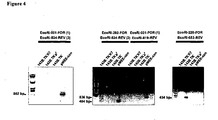
- the genomic DNA was isolated and used as a template in a PCR. Controls were accomplished by using the genomic DNA isolated from the 143B.TK- wild type and a corresponding 0 cell-line generated by incubation with ethidium bromide as described before. The following primers binding in the mtDNA region were utilized: 15501-FOR 5'-acccagacaattaiaccctagc-3' and 630 REV 5'-gagcccgtctaaacattttcaatg-3'.
- the control-PCR was performed with primers that amplify the human histone H1 gene (Histon H1 5' 5'-atgagctcatgaccgagaattccacgtccg-3' and Histon H1 3' 5'-accccgggcaaacttcttcugcc-3')-
- the annealing temperature was 55°C for 35 cycles with an elongation time of one minute.
- Total DNA (15 ⁇ g) extracted from cells was digested with the restriction endonucleases BamHI or PvuII. Restricted fragments were separated on a 0.6 % agarose gel, transferred onto a nylon membrane and hybridized with a digoxygenin-dUTP-labeled human mtDNA probe amplified with mtDNA primers annealing to nucleotides 4831-4846 (For) and 5628-5651 (Rev). The membrane was washed, and the fragments were detected with the DIG Nucleic Acid Detection Kit (Roche Applied Sciences, Mannheim Germany) according to the manufacturer's instructions. Chemoluminescence of the fragments was analysed with a bioimaging system (Alpha Imager, Biozym, Hessisch Oldendorf, Germany).
- the aim of this experiment was to develop a system for generating cells devoid of any endogenous mitochondrial DNA without using mutagenic substances like ethidium bromide, ditercalinum or 2'3'-dideoxycytidin.
- the basis of this system was the vector pMEE-con that after transfection in cells constitutively expresses the restriction endonuclease EcoRI as functional unit.
- EcoRI is known to cleave human mtDNA 3 - 5 times depending on the cells ethnic background.
- Laboratory mouse mtDNA also has 3 EcoRI sites, while Rattus norvegicus, the source of the NRK52E cell line, has 7 sites.
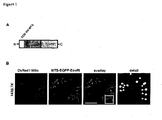
- EcoRI was fused to a mitochondrial targeting peptide derived from the human cytochrome c oxidase subunit 8 (COX VIII). Furthermore, this construct was fused to the enhanced green fluorescent protein EGFP ( Fig.1A ) on the one hand to observe the expression in the cells ( Fig 1B ) and to have a selection market suitable for FACS analysis on the other hand so that transfected cells can be selected to purity. Confocal fluorescence microscopy showed that the polypeptide was expressed and presented a mitochondrial localisation in punctate structure presumably in close contact to mtDNA. in nucleoids ( Fig. 1B ).
- 143B.TK-K7 was metabolically tested for its dependency on pyruvate and uridine. The cells exhibited only poor proliferation during cultivation in medium without pyruvate und uridine and finally died, strongly suggesting a 0 -state of the cell line.
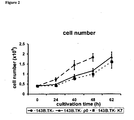
- the energy production of 0 cells completely depends on anaerobic glycolysis. Additionally, all 0 cell lines known so fat exhibit a dependence on supplementation with pyruvate and uridine as well as an increasing acidification of the culture medium by excessive lactic acid production- Both characteristic features could be observed in the 143B-TK-K7 cells and the mouse and rat 0 clones. Therefore the 143B.TK-K7 cells were analysed after 24, 40, 48 and 62 hours of cultivation for glucose concentration, lactate concentration and pH value in the culture medium additionally to the determination of cell number. The glucose and lactate concentration as well as the proton concentration were standardised to 10 6 cells and graphically illustrated. Reference values were obtained by the examination of 143B.TK- and 143B.TK- 0 cells.
- the glucose consumption ( Fig. 5A ) of the 0 cells exceeds the amount of the wild type cells (5 g/l, dashed line). Furthermore it is obvious that the glucose consumption decreases during cultivation time ( ⁇ 88 % in 0 cells and 75 % in wild type cells).
- the graphical documentation of lactate production standardised to 10 6 cells shows a higher lactate production rate of the 0 cells (143B.TK- 0 , solid line and 143B.TK-K7, dotted line) than the wild type. While the values initially increase during 24 until 40 hours cultivation, the curve progression resembles a saturation thereafter and then stays at an almost constant level (143B.TK-K7: 17 g/l, 143B.TK- 0 : 15 g/l, 143B-TK-: 11 g/l).
- the proton concentration standardised to the cell number at different cultivation times exhibits that the proton discharging rate in the medium of 0 cells (143B.TK- 0 , solid line and 143B.TK-K7, dotted line) highly exceeds the demand of the wild type cells (25 - 3.5 x 10 -8 mol/l, dashed line).
- the morphology of the mitochondria in the denoted cell lines was studied with confocal microscopy using MitoTracker Red CMXRos to stain the organelles ( Fig. 6 ).
- the mitochondria of 143B.TK-wild type cells ( FIG. 6A1 ) exist as reticular network evenly distributed within the cell.
- the prevalent mitochondrial Structure was elongated and rod shaped.
- the network structure appears disrupted, yielding a distribution of small individual mitochondrial units. This fragmentation is highlighted in the higher magnification images.
- some of these single organelles seemed to be swollen, this result could not be observed in the wild type.
- Fig. 7A1 details a highly interconnected mitochondrial network structure in the wild type.
- the cross-section through the mitochondrial reticulum in normal 143B.TK - cells showed a distinct outer and inner membrane with electron dense matrix full of regular arranged cistae sttuctures.
- the TEM images of the 0 cells show an apparent altered morphology of the mitochondria.
- the network is degraded in single mitochondrial units, often with swollen appearance.
- the matrix seems to be electron empty probably due to a dilution of tube matrix by increasing influx of water that also explains the swollen appearance.
- the mitochondria in 0 cells still exhibit the distinct outer and inner membranes seen in normal cells; but the cristae displayed gross changes of structure. Most cristae appear curved or as concentric rings consisting of two membranes in close contact, an appearance denoted as "fuzzy onions” ( Hales and Fuller (1997) Cell., 90, 121-129 ; Halestrap (1989) Biochim. Biophys. Acta, 973, 355-382 ). Additionally, these membranous rings showed only few contact sites with the mitochondrial border membrane. It could not be distinguished whether these double membranes consist of two inner membranes or one outer and one inner membrane.
Landscapes
- Health & Medical Sciences (AREA)
- Life Sciences & Earth Sciences (AREA)
- Chemical & Material Sciences (AREA)
- Organic Chemistry (AREA)
- Engineering & Computer Science (AREA)
- Bioinformatics & Cheminformatics (AREA)
- Zoology (AREA)
- Wood Science & Technology (AREA)
- Genetics & Genomics (AREA)
- Molecular Biology (AREA)
- Microbiology (AREA)
- Biotechnology (AREA)
- Biomedical Technology (AREA)
- Biochemistry (AREA)
- General Engineering & Computer Science (AREA)
- General Health & Medical Sciences (AREA)
- Medicinal Chemistry (AREA)
- Micro-Organisms Or Cultivation Processes Thereof (AREA)
- Measuring Or Testing Involving Enzymes Or Micro-Organisms (AREA)
- Enzymes And Modification Thereof (AREA)
Claims (14)
- In-vitro-Verfahren zur Erzeugung einer0-Zelle, die folgenden Schritte umfassend:
 (a) Transfizieren von mtDNA enthaltenden Zellen mit einem Expressionsvektor, der ein Gen enthält, das ein Fusionsprotein codiert, welches eine mitochondriale Targeting-Sequenz (MTS) und eine Restriktions-Endonuklease enthält, die operativ an einen geeigneten Promoter gebunden ist, wobei die Restriktions-Endonuklease die mtDNA 3 bis 10 Mal aufspaltet;(b) Heranzüchten der transfizierten Zellen über einen ausreichenden Zeitraum; und(c) Auswählen von0-Zellen.
 - Verfahren nach Anspruch 1, wobei die Restriktions-Endonuklease AflII, BamHI, BclI, EcoRI, HaeIII, HindII, HindIII, NdeI, PvuII oder SpeI ist.
- Verfahren nach Anspruch 1 oder 2, wobei es sich bei den Zellen um tierische Zellen handelt.
- Verfahren nach Anspruch 3, wobei es sich bei den tierischen Zellen um Säugetierzellen handelt.
- Verfahren nach einem der Ansprüche 1 bis 4, wobei der Promoter der unmittelbare frühe (IE) Promoter von CMV, der Rous Sarkoma-Virus (RSV) LTR oder der frühe Promoter des SV 40-Virus ist.
- Verfahren nach einem der Ansprüche 1 bis 5, wobei der Expressionsvektor ein Vektor für tierische Zellen ist.
- Verfahren nach Anspruch 6, wobei der Vektor ein menschlicher Papova-Virus basierter Vektor (BKV), ein von SV40 abgeleiteter Vektor, ein von Kuhpocken abgeleiteter Vektor, ein vom Adenovirus abgeleiteter Vektor, ein vom Baculo-Virus abgeleiteter Vektor, oder ein retroviraler abgeleiteter Vektor ist.
- Verfahren nach einem der Ansprüche 1 bis 7, wobei die MTS auf die mitochondriale Matrix abzielt.
- Verfahren nach Anspruch 8, wobei die MTS ein zielgerichtet fungierendes Peptid ist, das aus der Cytochrom-C-Oxidase Untereinheit 8 (COX VIII) abgeleitet ist.
- Verfahren nach einem der Ansprüche 1 bis 9, wobei das Fusionsprotein darüber hinaus ein detektierbares Polypeptid umfasst.
- Verfahren nach Anspruch 10, wobei das detektierbare Polypeptid ein Fluoreszenzprotein ist.
- Verfahren nach Anspruch 11, wobei das Fluoreszenzprotein GFP oder EGFP ist.
- Verfahren nach einem der Ansprüche 1 bis 12, wobei die0-Zellen durch eine FACS-Analyse, metabolische Untersuchung und/oder genetische Untersuchung ausgewählt werden.
- Verfahren nach Anspruch 13, wobei die genetische Untersuchung eine PCR- oder Southern-Blot-Analyse ist.
Priority Applications (7)
| Application Number | Priority Date | Filing Date | Title |
|---|---|---|---|
| EP07024062A EP2071027B1 (de) | 2007-12-12 | 2007-12-12 | Verfahren zur Erzeugung von Rho°-Zellen |
| AT07024062T ATE530647T1 (de) | 2007-12-12 | 2007-12-12 | Verfahren zur erzeugung von rhoo-zellen |
| US12/747,771 US20110008778A1 (en) | 2007-12-12 | 2008-12-12 | Method of Generating p° Cells |
| CA2707732A CA2707732A1 (en) | 2007-12-12 | 2008-12-12 | Method of generating .rho.0 cells |
| AU2008334910A AU2008334910A1 (en) | 2007-12-12 | 2008-12-12 | Method of generating RHO 0 cells |
| PCT/EP2008/010586 WO2009074337A1 (en) | 2007-12-12 | 2008-12-12 | METHOD OF GENERATING ρ0 CELLS |
| JP2010537323A JP2011505813A (ja) | 2007-12-12 | 2008-12-12 | ρ0細胞を生成させる方法 |
Applications Claiming Priority (1)
| Application Number | Priority Date | Filing Date | Title |
|---|---|---|---|
| EP07024062A EP2071027B1 (de) | 2007-12-12 | 2007-12-12 | Verfahren zur Erzeugung von Rho°-Zellen |
Publications (2)
| Publication Number | Publication Date |
|---|---|
| EP2071027A1 EP2071027A1 (de) | 2009-06-17 |
| EP2071027B1 true EP2071027B1 (de) | 2011-10-26 |
Family
ID=39381907
Family Applications (1)
| Application Number | Title | Priority Date | Filing Date |
|---|---|---|---|
| EP07024062A Not-in-force EP2071027B1 (de) | 2007-12-12 | 2007-12-12 | Verfahren zur Erzeugung von Rho°-Zellen |
Country Status (7)
| Country | Link |
|---|---|
| US (1) | US20110008778A1 (de) |
| EP (1) | EP2071027B1 (de) |
| JP (1) | JP2011505813A (de) |
| AT (1) | ATE530647T1 (de) |
| AU (1) | AU2008334910A1 (de) |
| CA (1) | CA2707732A1 (de) |
| WO (1) | WO2009074337A1 (de) |
Families Citing this family (3)
| Publication number | Priority date | Publication date | Assignee | Title |
|---|---|---|---|---|
| US9385945B2 (en) * | 2012-10-05 | 2016-07-05 | Cisco Technology, Inc. | Identifying, translating and filtering shared risk groups in communications networks |
| US20200054682A1 (en) * | 2018-08-14 | 2020-02-20 | Imel Biotherapeutics, Inc. | Methods and compositions for treating mitochondrial disease or disorders and heteroplasmy |
| JP7745544B2 (ja) | 2019-10-24 | 2025-09-29 | イメル バイオセラピューティクス,インク. | ミトコンドリアdna中のマクロヘテロプラスミー及びミクロヘテロプラスミーを検出するための方法 |
Family Cites Families (2)
| Publication number | Priority date | Publication date | Assignee | Title |
|---|---|---|---|---|
| WO1999055845A1 (en) * | 1998-04-28 | 1999-11-04 | Mitokor | Cellular and animal models for diseases associated with altered mitochondrial function |
| CA2543257C (en) * | 2003-10-24 | 2013-12-31 | Gencia Corporation | Methods and compositions for delivering polynucleotides |
-
2007
- 2007-12-12 AT AT07024062T patent/ATE530647T1/de not_active IP Right Cessation
- 2007-12-12 EP EP07024062A patent/EP2071027B1/de not_active Not-in-force
-
2008
- 2008-12-12 AU AU2008334910A patent/AU2008334910A1/en not_active Abandoned
- 2008-12-12 US US12/747,771 patent/US20110008778A1/en not_active Abandoned
- 2008-12-12 JP JP2010537323A patent/JP2011505813A/ja not_active Withdrawn
- 2008-12-12 CA CA2707732A patent/CA2707732A1/en not_active Abandoned
- 2008-12-12 WO PCT/EP2008/010586 patent/WO2009074337A1/en not_active Ceased
Also Published As
| Publication number | Publication date |
|---|---|
| CA2707732A1 (en) | 2009-06-18 |
| EP2071027A1 (de) | 2009-06-17 |
| US20110008778A1 (en) | 2011-01-13 |
| AU2008334910A1 (en) | 2009-06-18 |
| JP2011505813A (ja) | 2011-03-03 |
| WO2009074337A1 (en) | 2009-06-18 |
| ATE530647T1 (de) | 2011-11-15 |
Similar Documents
| Publication | Publication Date | Title |
|---|---|---|
| Michael et al. | The K nuclear shuttling domain: a novel signal for nuclear import and nuclear export in the hnRNP K protein | |
| EP0934425B1 (de) | Renilla luciferase und green fluorescent protein fusionsgene | |
| US5670356A (en) | Modified luciferase | |
| EP0874903B1 (de) | Humanisiertes grünes-fluoreszenzprotein und methoden | |
| AU751163B2 (en) | Rapidly degrading GFP-fusion proteins and methods of use | |
| US20160145645A1 (en) | Targeted integration | |
| KR20130054955A (ko) | 내생적으로 태그된 단백질을 생성하기 위한 방법 | |
| WO2014018601A2 (en) | New modular base-specific nucleic acid binding domains from burkholderia rhizoxinica proteins | |
| US20050158833A1 (en) | Rapidly degrading GFP-fusion proteins and methods of use | |
| Ling et al. | The C-terminal appended domain of human cytosolic leucyl-tRNA synthetase is indispensable in its interaction with arginyl-tRNA synthetase in the multi-tRNA synthetase complex | |
| Marter et al. | Optimized mRuby3 is a Suitable Fluorescent Protein for in vivo Co-localization Studies with GFP in the Diatom Phaeodactylum tricornutum | |
| EP2071027B1 (de) | Verfahren zur Erzeugung von Rho°-Zellen | |
| US9102750B2 (en) | Branchiostoma derived fluorescent proteins | |
| JP2000506396A (ja) | ホスファチジルイノシトール―3′―キナーゼ関連タンパク質をコードするヌクレオチド配列及びその利用 | |
| CN108471732A (zh) | 与肿瘤分析相关的组合物和方法 | |
| US20070212707A1 (en) | Cell cycle markers | |
| CN114213549B (zh) | 定位于线粒体的融合蛋白、接头及其用途 | |
| KR102945326B1 (ko) | 세포 간 네트워크를 규명할 수 있는 근접분자 표지기술 | |
| KR101646597B1 (ko) | Pten 융합 단백질 및 이의 용도 | |
| JP7356749B2 (ja) | 改変型ルシフェラーゼ | |
| Butler | Functional Domains of ARMC2 A Cargo Adapter for IFT of Radial Spokes | |
| Magalhães et al. | Targeting of bioluminescent probes and calcium | |
| JPH07501934A (ja) | Gpa神経栄養因子の製造 | |
| Proctor-Kent | Developing tools to investigate initiating events of mitochondrial translation | |
| EP3954699A1 (de) | Nukleinsäurebindungsprotein |
Legal Events
| Date | Code | Title | Description |
|---|---|---|---|
| PUAI | Public reference made under article 153(3) epc to a published international application that has entered the european phase |
Free format text: ORIGINAL CODE: 0009012 |
|
| 17P | Request for examination filed |
Effective date: 20080718 |
|
| AK | Designated contracting states |
Kind code of ref document: A1 Designated state(s): AT BE BG CH CY CZ DE DK EE ES FI FR GB GR HU IE IS IT LI LT LU LV MC MT NL PL PT RO SE SI SK TR |
|
| AX | Request for extension of the european patent |
Extension state: AL BA HR MK RS |
|
| AKX | Designation fees paid |
Designated state(s): AT BE BG CH CY CZ DE DK EE ES FI FR GB GR HU IE IS IT LI LT LU LV MC MT NL PL PT RO SE SI SK TR |
|
| GRAP | Despatch of communication of intention to grant a patent |
Free format text: ORIGINAL CODE: EPIDOSNIGR1 |
|
| RAP1 | Party data changed (applicant data changed or rights of an application transferred) |
Owner name: MITOGENOMIX GMBH |
|
| GRAS | Grant fee paid |
Free format text: ORIGINAL CODE: EPIDOSNIGR3 |
|
| GRAA | (expected) grant |
Free format text: ORIGINAL CODE: 0009210 |
|
| AK | Designated contracting states |
Kind code of ref document: B1 Designated state(s): AT BE BG CH CY CZ DE DK EE ES FI FR GB GR HU IE IS IT LI LT LU LV MC MT NL PL PT RO SE SI SK TR |
|
| REG | Reference to a national code |
Ref country code: GB Ref legal event code: FG4D |
|
| REG | Reference to a national code |
Ref country code: CH Ref legal event code: EP |
|
| REG | Reference to a national code |
Ref country code: IE Ref legal event code: FG4D |
|
| REG | Reference to a national code |
Ref country code: DE Ref legal event code: R096 Ref document number: 602007018145 Country of ref document: DE Effective date: 20111222 |
|
| REG | Reference to a national code |
Ref country code: CH Ref legal event code: NV Representative=s name: ING. MARCO ZARDI C/O M. ZARDI & CO. S.A. |
|
| REG | Reference to a national code |
Ref country code: NL Ref legal event code: VDEP Effective date: 20111026 |
|
| LTIE | Lt: invalidation of european patent or patent extension |
Effective date: 20111026 |
|
| REG | Reference to a national code |
Ref country code: AT Ref legal event code: MK05 Ref document number: 530647 Country of ref document: AT Kind code of ref document: T Effective date: 20111026 |
|
| PG25 | Lapsed in a contracting state [announced via postgrant information from national office to epo] |
Ref country code: IS Free format text: LAPSE BECAUSE OF FAILURE TO SUBMIT A TRANSLATION OF THE DESCRIPTION OR TO PAY THE FEE WITHIN THE PRESCRIBED TIME-LIMIT Effective date: 20120226 Ref country code: LT Free format text: LAPSE BECAUSE OF FAILURE TO SUBMIT A TRANSLATION OF THE DESCRIPTION OR TO PAY THE FEE WITHIN THE PRESCRIBED TIME-LIMIT Effective date: 20111026 Ref country code: BE Free format text: LAPSE BECAUSE OF FAILURE TO SUBMIT A TRANSLATION OF THE DESCRIPTION OR TO PAY THE FEE WITHIN THE PRESCRIBED TIME-LIMIT Effective date: 20111026 |
|
| PG25 | Lapsed in a contracting state [announced via postgrant information from national office to epo] |
Ref country code: SI Free format text: LAPSE BECAUSE OF FAILURE TO SUBMIT A TRANSLATION OF THE DESCRIPTION OR TO PAY THE FEE WITHIN THE PRESCRIBED TIME-LIMIT Effective date: 20111026 Ref country code: LV Free format text: LAPSE BECAUSE OF FAILURE TO SUBMIT A TRANSLATION OF THE DESCRIPTION OR TO PAY THE FEE WITHIN THE PRESCRIBED TIME-LIMIT Effective date: 20111026 Ref country code: PL Free format text: LAPSE BECAUSE OF FAILURE TO SUBMIT A TRANSLATION OF THE DESCRIPTION OR TO PAY THE FEE WITHIN THE PRESCRIBED TIME-LIMIT Effective date: 20111026 Ref country code: NL Free format text: LAPSE BECAUSE OF FAILURE TO SUBMIT A TRANSLATION OF THE DESCRIPTION OR TO PAY THE FEE WITHIN THE PRESCRIBED TIME-LIMIT Effective date: 20111026 Ref country code: SE Free format text: LAPSE BECAUSE OF FAILURE TO SUBMIT A TRANSLATION OF THE DESCRIPTION OR TO PAY THE FEE WITHIN THE PRESCRIBED TIME-LIMIT Effective date: 20111026 Ref country code: PT Free format text: LAPSE BECAUSE OF FAILURE TO SUBMIT A TRANSLATION OF THE DESCRIPTION OR TO PAY THE FEE WITHIN THE PRESCRIBED TIME-LIMIT Effective date: 20120227 |
|
| PG25 | Lapsed in a contracting state [announced via postgrant information from national office to epo] |
Ref country code: CY Free format text: LAPSE BECAUSE OF FAILURE TO SUBMIT A TRANSLATION OF THE DESCRIPTION OR TO PAY THE FEE WITHIN THE PRESCRIBED TIME-LIMIT Effective date: 20111026 |
|
| PG25 | Lapsed in a contracting state [announced via postgrant information from national office to epo] |
Ref country code: DK Free format text: LAPSE BECAUSE OF FAILURE TO SUBMIT A TRANSLATION OF THE DESCRIPTION OR TO PAY THE FEE WITHIN THE PRESCRIBED TIME-LIMIT Effective date: 20111026 Ref country code: MC Free format text: LAPSE BECAUSE OF NON-PAYMENT OF DUE FEES Effective date: 20111231 Ref country code: SK Free format text: LAPSE BECAUSE OF FAILURE TO SUBMIT A TRANSLATION OF THE DESCRIPTION OR TO PAY THE FEE WITHIN THE PRESCRIBED TIME-LIMIT Effective date: 20111026 Ref country code: CZ Free format text: LAPSE BECAUSE OF FAILURE TO SUBMIT A TRANSLATION OF THE DESCRIPTION OR TO PAY THE FEE WITHIN THE PRESCRIBED TIME-LIMIT Effective date: 20111026 Ref country code: BG Free format text: LAPSE BECAUSE OF FAILURE TO SUBMIT A TRANSLATION OF THE DESCRIPTION OR TO PAY THE FEE WITHIN THE PRESCRIBED TIME-LIMIT Effective date: 20120126 Ref country code: EE Free format text: LAPSE BECAUSE OF FAILURE TO SUBMIT A TRANSLATION OF THE DESCRIPTION OR TO PAY THE FEE WITHIN THE PRESCRIBED TIME-LIMIT Effective date: 20111026 |
|
| PG25 | Lapsed in a contracting state [announced via postgrant information from national office to epo] |
Ref country code: IT Free format text: LAPSE BECAUSE OF FAILURE TO SUBMIT A TRANSLATION OF THE DESCRIPTION OR TO PAY THE FEE WITHIN THE PRESCRIBED TIME-LIMIT Effective date: 20111026 Ref country code: RO Free format text: LAPSE BECAUSE OF FAILURE TO SUBMIT A TRANSLATION OF THE DESCRIPTION OR TO PAY THE FEE WITHIN THE PRESCRIBED TIME-LIMIT Effective date: 20111026 |
|
| PLBE | No opposition filed within time limit |
Free format text: ORIGINAL CODE: 0009261 |
|
| STAA | Information on the status of an ep patent application or granted ep patent |
Free format text: STATUS: NO OPPOSITION FILED WITHIN TIME LIMIT |
|
| REG | Reference to a national code |
Ref country code: IE Ref legal event code: MM4A |
|
| 26N | No opposition filed |
Effective date: 20120727 |
|
| PG25 | Lapsed in a contracting state [announced via postgrant information from national office to epo] |
Ref country code: IE Free format text: LAPSE BECAUSE OF NON-PAYMENT OF DUE FEES Effective date: 20111212 |
|
| REG | Reference to a national code |
Ref country code: DE Ref legal event code: R097 Ref document number: 602007018145 Country of ref document: DE Effective date: 20120727 |
|
| PG25 | Lapsed in a contracting state [announced via postgrant information from national office to epo] |
Ref country code: AT Free format text: LAPSE BECAUSE OF FAILURE TO SUBMIT A TRANSLATION OF THE DESCRIPTION OR TO PAY THE FEE WITHIN THE PRESCRIBED TIME-LIMIT Effective date: 20111026 |
|
| PG25 | Lapsed in a contracting state [announced via postgrant information from national office to epo] |
Ref country code: MT Free format text: LAPSE BECAUSE OF FAILURE TO SUBMIT A TRANSLATION OF THE DESCRIPTION OR TO PAY THE FEE WITHIN THE PRESCRIBED TIME-LIMIT Effective date: 20111026 |
|
| PG25 | Lapsed in a contracting state [announced via postgrant information from national office to epo] |
Ref country code: ES Free format text: LAPSE BECAUSE OF FAILURE TO SUBMIT A TRANSLATION OF THE DESCRIPTION OR TO PAY THE FEE WITHIN THE PRESCRIBED TIME-LIMIT Effective date: 20120206 |
|
| PG25 | Lapsed in a contracting state [announced via postgrant information from national office to epo] |
Ref country code: LU Free format text: LAPSE BECAUSE OF NON-PAYMENT OF DUE FEES Effective date: 20111212 |
|
| PG25 | Lapsed in a contracting state [announced via postgrant information from national office to epo] |
Ref country code: FI Free format text: LAPSE BECAUSE OF FAILURE TO SUBMIT A TRANSLATION OF THE DESCRIPTION OR TO PAY THE FEE WITHIN THE PRESCRIBED TIME-LIMIT Effective date: 20111026 |
|
| PG25 | Lapsed in a contracting state [announced via postgrant information from national office to epo] |
Ref country code: TR Free format text: LAPSE BECAUSE OF FAILURE TO SUBMIT A TRANSLATION OF THE DESCRIPTION OR TO PAY THE FEE WITHIN THE PRESCRIBED TIME-LIMIT Effective date: 20111026 |
|
| PG25 | Lapsed in a contracting state [announced via postgrant information from national office to epo] |
Ref country code: HU Free format text: LAPSE BECAUSE OF FAILURE TO SUBMIT A TRANSLATION OF THE DESCRIPTION OR TO PAY THE FEE WITHIN THE PRESCRIBED TIME-LIMIT Effective date: 20111026 |
|
| PG25 | Lapsed in a contracting state [announced via postgrant information from national office to epo] |
Ref country code: GR Free format text: LAPSE BECAUSE OF FAILURE TO SUBMIT A TRANSLATION OF THE DESCRIPTION OR TO PAY THE FEE WITHIN THE PRESCRIBED TIME-LIMIT Effective date: 20111026 |
|
| REG | Reference to a national code |
Ref country code: FR Ref legal event code: PLFP Year of fee payment: 9 |
|
| REG | Reference to a national code |
Ref country code: FR Ref legal event code: PLFP Year of fee payment: 10 |
|
| PGFP | Annual fee paid to national office [announced via postgrant information from national office to epo] |
Ref country code: CH Payment date: 20161223 Year of fee payment: 10 Ref country code: GB Payment date: 20161228 Year of fee payment: 10 |
|
| PGFP | Annual fee paid to national office [announced via postgrant information from national office to epo] |
Ref country code: FR Payment date: 20161222 Year of fee payment: 10 |
|
| PGFP | Annual fee paid to national office [announced via postgrant information from national office to epo] |
Ref country code: DE Payment date: 20170119 Year of fee payment: 10 |
|
| REG | Reference to a national code |
Ref country code: DE Ref legal event code: R119 Ref document number: 602007018145 Country of ref document: DE |
|
| REG | Reference to a national code |
Ref country code: CH Ref legal event code: PL |
|
| GBPC | Gb: european patent ceased through non-payment of renewal fee |
Effective date: 20171212 |
|
| REG | Reference to a national code |
Ref country code: FR Ref legal event code: ST Effective date: 20180831 |
|
| PG25 | Lapsed in a contracting state [announced via postgrant information from national office to epo] |
Ref country code: FR Free format text: LAPSE BECAUSE OF NON-PAYMENT OF DUE FEES Effective date: 20180102 Ref country code: DE Free format text: LAPSE BECAUSE OF NON-PAYMENT OF DUE FEES Effective date: 20180703 |
|
| PG25 | Lapsed in a contracting state [announced via postgrant information from national office to epo] |
Ref country code: GB Free format text: LAPSE BECAUSE OF NON-PAYMENT OF DUE FEES Effective date: 20171212 Ref country code: CH Free format text: LAPSE BECAUSE OF NON-PAYMENT OF DUE FEES Effective date: 20171231 Ref country code: LI Free format text: LAPSE BECAUSE OF NON-PAYMENT OF DUE FEES Effective date: 20171231 |