EP2071749B1 - Appareil de réception d'informations multimédias - Google Patents
Appareil de réception d'informations multimédias Download PDFInfo
- Publication number
- EP2071749B1 EP2071749B1 EP06811219.2A EP06811219A EP2071749B1 EP 2071749 B1 EP2071749 B1 EP 2071749B1 EP 06811219 A EP06811219 A EP 06811219A EP 2071749 B1 EP2071749 B1 EP 2071749B1
- Authority
- EP
- European Patent Office
- Prior art keywords
- elements
- information
- candidate
- degree
- broadcast system
- Prior art date
- Legal status (The legal status is an assumption and is not a legal conclusion. Google has not performed a legal analysis and makes no representation as to the accuracy of the status listed.)
- Not-in-force
Links
Images




Classifications
-
- H—ELECTRICITY
- H04—ELECTRIC COMMUNICATION TECHNIQUE
- H04L—TRANSMISSION OF DIGITAL INFORMATION, e.g. TELEGRAPHIC COMMUNICATION
- H04L65/00—Network arrangements, protocols or services for supporting real-time applications in data packet communication
- H04L65/60—Network streaming of media packets
- H04L65/75—Media network packet handling
- H04L65/764—Media network packet handling at the destination
-
- H—ELECTRICITY
- H04—ELECTRIC COMMUNICATION TECHNIQUE
- H04H—BROADCAST COMMUNICATION
- H04H20/00—Arrangements for broadcast or for distribution combined with broadcast
- H04H20/20—Arrangements for broadcast or distribution of identical information via plural systems
- H04H20/24—Arrangements for distribution of identical information via broadcast system and non-broadcast system
-
- H—ELECTRICITY
- H04—ELECTRIC COMMUNICATION TECHNIQUE
- H04L—TRANSMISSION OF DIGITAL INFORMATION, e.g. TELEGRAPHIC COMMUNICATION
- H04L1/00—Arrangements for detecting or preventing errors in the information received
- H04L1/02—Arrangements for detecting or preventing errors in the information received by diversity reception
-
- H—ELECTRICITY
- H04—ELECTRIC COMMUNICATION TECHNIQUE
- H04L—TRANSMISSION OF DIGITAL INFORMATION, e.g. TELEGRAPHIC COMMUNICATION
- H04L1/00—Arrangements for detecting or preventing errors in the information received
- H04L1/02—Arrangements for detecting or preventing errors in the information received by diversity reception
- H04L1/06—Arrangements for detecting or preventing errors in the information received by diversity reception using space diversity
-
- H—ELECTRICITY
- H04—ELECTRIC COMMUNICATION TECHNIQUE
- H04L—TRANSMISSION OF DIGITAL INFORMATION, e.g. TELEGRAPHIC COMMUNICATION
- H04L1/00—Arrangements for detecting or preventing errors in the information received
- H04L1/22—Arrangements for detecting or preventing errors in the information received using redundant apparatus to increase reliability
-
- H—ELECTRICITY
- H04—ELECTRIC COMMUNICATION TECHNIQUE
- H04L—TRANSMISSION OF DIGITAL INFORMATION, e.g. TELEGRAPHIC COMMUNICATION
- H04L12/00—Data switching networks
- H04L12/02—Details
- H04L12/16—Arrangements for providing special services to substations
- H04L12/18—Arrangements for providing special services to substations for broadcast or conference, e.g. multicast
- H04L12/1863—Arrangements for providing special services to substations for broadcast or conference, e.g. multicast comprising mechanisms for improved reliability, e.g. status reports
- H04L12/1877—Measures taken prior to transmission
-
- H—ELECTRICITY
- H04—ELECTRIC COMMUNICATION TECHNIQUE
- H04N—PICTORIAL COMMUNICATION, e.g. TELEVISION
- H04N21/00—Selective content distribution, e.g. interactive television or video on demand [VOD]
- H04N21/40—Client devices specifically adapted for the reception of or interaction with content, e.g. set-top-box [STB]; Operations thereof
- H04N21/43—Processing of content or additional data, e.g. demultiplexing additional data from a digital video stream; Elementary client operations, e.g. monitoring of home network or synchronising decoder's clock; Client middleware
- H04N21/434—Disassembling of a multiplex stream, e.g. demultiplexing audio and video streams, extraction of additional data from a video stream; Remultiplexing of multiplex streams; Extraction or processing of SI; Disassembling of packetised elementary stream
-
- H—ELECTRICITY
- H04—ELECTRIC COMMUNICATION TECHNIQUE
- H04N—PICTORIAL COMMUNICATION, e.g. TELEVISION
- H04N21/00—Selective content distribution, e.g. interactive television or video on demand [VOD]
- H04N21/40—Client devices specifically adapted for the reception of or interaction with content, e.g. set-top-box [STB]; Operations thereof
- H04N21/43—Processing of content or additional data, e.g. demultiplexing additional data from a digital video stream; Elementary client operations, e.g. monitoring of home network or synchronising decoder's clock; Client middleware
- H04N21/435—Processing of additional data, e.g. decrypting of additional data, reconstructing software from modules extracted from the transport stream
- H04N21/4351—Processing of additional data, e.g. decrypting of additional data, reconstructing software from modules extracted from the transport stream involving reassembling additional data, e.g. rebuilding an executable program from recovered modules
-
- H—ELECTRICITY
- H04—ELECTRIC COMMUNICATION TECHNIQUE
- H04N—PICTORIAL COMMUNICATION, e.g. TELEVISION
- H04N21/00—Selective content distribution, e.g. interactive television or video on demand [VOD]
- H04N21/40—Client devices specifically adapted for the reception of or interaction with content, e.g. set-top-box [STB]; Operations thereof
- H04N21/43—Processing of content or additional data, e.g. demultiplexing additional data from a digital video stream; Elementary client operations, e.g. monitoring of home network or synchronising decoder's clock; Client middleware
- H04N21/442—Monitoring of processes or resources, e.g. detecting the failure of a recording device, monitoring the downstream bandwidth, the number of times a movie has been viewed, the storage space available from the internal hard disk
- H04N21/44209—Monitoring of downstream path of the transmission network originating from a server, e.g. bandwidth variations of a wireless network
-
- H—ELECTRICITY
- H04—ELECTRIC COMMUNICATION TECHNIQUE
- H04N—PICTORIAL COMMUNICATION, e.g. TELEVISION
- H04N21/00—Selective content distribution, e.g. interactive television or video on demand [VOD]
- H04N21/40—Client devices specifically adapted for the reception of or interaction with content, e.g. set-top-box [STB]; Operations thereof
- H04N21/43—Processing of content or additional data, e.g. demultiplexing additional data from a digital video stream; Elementary client operations, e.g. monitoring of home network or synchronising decoder's clock; Client middleware
- H04N21/442—Monitoring of processes or resources, e.g. detecting the failure of a recording device, monitoring the downstream bandwidth, the number of times a movie has been viewed, the storage space available from the internal hard disk
- H04N21/4425—Monitoring of client processing errors or hardware failure
-
- H—ELECTRICITY
- H04—ELECTRIC COMMUNICATION TECHNIQUE
- H04N—PICTORIAL COMMUNICATION, e.g. TELEVISION
- H04N21/00—Selective content distribution, e.g. interactive television or video on demand [VOD]
- H04N21/40—Client devices specifically adapted for the reception of or interaction with content, e.g. set-top-box [STB]; Operations thereof
- H04N21/45—Management operations performed by the client for facilitating the reception of or the interaction with the content or administrating data related to the end-user or to the client device itself, e.g. learning user preferences for recommending movies, resolving scheduling conflicts
- H04N21/462—Content or additional data management e.g. creating a master electronic programme guide from data received from the Internet and a Head-end or controlling the complexity of a video stream by scaling the resolution or bit-rate based on the client capabilities
- H04N21/4622—Retrieving content or additional data from different sources, e.g. from a broadcast channel and the Internet
-
- H—ELECTRICITY
- H04—ELECTRIC COMMUNICATION TECHNIQUE
- H04L—TRANSMISSION OF DIGITAL INFORMATION, e.g. TELEGRAPHIC COMMUNICATION
- H04L1/00—Arrangements for detecting or preventing errors in the information received
- H04L2001/0092—Error control systems characterised by the topology of the transmission link
- H04L2001/0096—Channel splitting in point-to-point links
Definitions
- the present invention relates to a multimedia information receiving apparatus that complements a stream via broadcast system by using a stream via network system to reduce transmission errors in a case in which multimedia information having the same description as a broadcast is distributed via a communication network.
- a multimedia information receiving apparatus that improves the quality of a video by combining main information which is transmitted by way of a broadcast system and supplement information which is transmitted by way of an IP (Internet Protocol) communication system (for example, refer to patent reference 1).
- the main information which is handled by this apparatus is I picture data and P picture data having higher priorities which construct video data which comply with the MPEG (Moving Picture Expert Group) 2 standards, while the supplement information is B picture data having a lower priority.
- These main information and supplement information are generated beforehand by a transmit side in such a way that they are separated from multimedia information, and are transmitted by way of different systems. For example, for a user who desires high quality, the receiving apparatus then combines the main information and the supplement information to reproduce a high quality video.
- the transmit side needs to have equipment which generates different data for one program.
- broadcast data having the same description are not transmitted by way of a different transmission system, it is difficult for the receiving apparatus to make users enjoy a program having an adequate image quality by using only supplement information transmitted by way of, for example, an IP system.
- patent reference 1 does not refer to any solutions of transmission errors at all.
- EP1139589 A2 discloses a dual band digital audio broadcast (DAB) receiver wherein two digital audio broadcast signals are received. Either none of the signals is selected for further processing or both signals are combined before further processing.
- US 2005/0153650 A1 discloses a mobile terminal, which is able to receive a program through broadcasting or through a communication channel. Depending on the state of broadcast reception, the mobile terminal switches between reception of the broadcast program and reception of the program received through the communication channel.
- Patent reference 1 JP,2003-37571,A EP 1521382 discloses a mobile station receiving same data via a plurality of radio links and selecting data having the highest reception quality for decoding.
- the present invention is made in order to solve the above-mentioned problems, and it is therefore an object of the present invention to provide a multimedia information receiving apparatus that reconstructs multimedia information with the amount of transmission errors being reduced and that enables reproduction of a high-quality image or sound in an environment where two pieces of multimedia information about an identical program are simultaneously transmitted in parallel by way of two different systems, respectively.
- the multimedia information receiving apparatus can always lower the error rate of the multimedia information which it uses for playback, and can also reduce degradations in the image quality and the audio quality.
- TS Transport Stream
- the present invention is not limited to this example, and can be similarly applied to methods of forming successive data from elements which are small units, such as packets, into which multimedia information is divided, and then transmitting the successive data, the methods including DSM-CC (Digital Storage Media-Command and Control) transmission, and IP over DVB (Digital Video Broadcasting) transmission.
- DSM-CC Digital Storage Media-Command and Control
- IP over DVB Digital Video Broadcasting
- Fig. 1 is a block diagram showing the function configuration of the multimedia information receiving apparatus 100 in accordance with Embodiment 1 of the present invention.
- the multimedia information receiving apparatus 100 includes a broadcast receiving unit (a broadcast system receiving means) 101, an IP communication receiving unit (an other transmission system receiving means) 102, a combining unit 103, and a decoding unit 104.
- the broadcast receiving unit 101 is a means for receiving multimedia information transmitted thereto by way of the broadcast system, and for demodulating the multimedia information to generate a broadcast system TS (broadcast system information) which is an MPEG-TS.
- the IP communication receiving unit 102 is a means for receiving multimedia information which is simultaneously transmitted, in parallel with that transmitted by way of the broadcast system, by way of the IP communication system which is a transmission system different from the broadcast system, and which is the same as that transmitted by way of the broadcast system, and for demodulating the multimedia information to generate an IP system TS (other transmission system information) which is an MPEG-TS.
- the combining unit 103 is a means for generating one combined MPEG-TS by selecting TS packets having a few errors from the TS packets of the broadcast system TS (the elements of the broadcast system information) and the TS packets of the IP system TS (the elements of the other transmission system information), and then arranging the TS packets which the combining unit has selected.
- the decoding unit 104 is a means for decoding the combined MPEG-TS to reproduce video and audio data.
- a multimedia information transmitting apparatus 200 transmits MPEG-TSs which are two pieces of multimedia information about an identical program simultaneously in parallel by way of a broadcast electric wave and an IP communication network.
- the broadcast receiving unit 101 receives and demodulates the broadcast wave to acquire a broadcast system TS s1 about the program, and outputs the acquired broadcast system TS s1 to the combining unit 103.
- the IP communication receiving unit 102 receives an IP communication signal (other transmission system information) transmitted thereto via the IP system network, and extracts an IP system TS s2 from the IP communication signal and outputs the IP system TS s2 to the combining unit 103.
- the combining unit 103 selects a TS packet having a few errors from each TS packet of the broadcast system TS s1 input thereto and a corresponding TS packet of the IP system TS s2 input thereto and then arranges the TS packet which the combining unit has selected to generate a received MPEG-TS s3, and outputs this MPEG-TS s3 to the decoding unit 104.
- the decoding unit 104 decodes the combined MPEG-TS s3 inputted thereto to generate and output video and audio data s4.
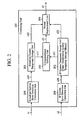
- the combining unit 103 includes a broadcast system temporary storage unit 201, an IP system temporary storage unit (an other transmission system temporary storage means) 202, a correspondence defining unit 203, a mutual replacement unit 204, a broadcast system error detection correction unit 205, and an IP system error detection correction unit 206.
- the broadcast system error detection correction unit 205 is a means for performing an error detection and a correction on the broadcast system TS which the broadcast receiving unit 101 has acquired by demodulating the broadcast wave, and for adding the error condition of the broadcast system TS to the corrected broadcast system TS and outputting this broadcast system TS.
- the IP system error detection correction unit 206 is a means for performing an error detection and a correction on the IP system TS which the IP communication receiving unit 102 has acquired by demodulating the IP communication signal, and for adding the error condition of the IP system TS to the corrected IP system TS and outputting this IP system TS.
- the broadcast system temporary storage unit 201 is a means for storing the error-corrected broadcast system TS temporarily, and for outputting, as a unit to be processed, a broadcast system TS about a predetermined time range.
- the IP system temporary storage unit 202 is a means for storing the error-corrected IP system TS temporarily, and for outputting, as a unit to be processed, an IP system TS about a predetermined time range.
- the correspondence defining unit 203 is a means for defining correspondences between TS packets of the broadcast system TS about the predetermined time range and TS packets of the IP system TS about the predetermined time range, respectively, and for determining TS packet pairs as replacement candidates by evaluating the degree of similarity between the TS packets of each pair which are brought into correspondence with each other to output, as replacement candidate information, the identification symbols of the TS packets of each pair which is determined as a replacement candidate.
- the mutual replacement unit 204 is a means for extracting the broadcast system TS about the predetermined time range which is subjected to the correspondence defining process from the broadcast system temporary storage unit 201, and also extracting the IP system TS about the predetermined region which is subjected to the same correspondence defining process from the IP system temporary storage unit 202, and for selecting TS packets having a few errors from the TS packets of the broadcast system TS and the TS packets of the IP system TS on the basis of an identification signal specified by the replacement candidate information, and then arranging the TS packets which the mutual replacement unit has selected to generate a combined MPEG-TS about the predetermined time range.
- the broadcast system error detection correction unit 205 detects an error which may occur in each TS packet included in the broadcast system TS s1 inputted thereto by using an error correcting code added to each TS packet, and then makes a correction to the error.
- the broadcast system error detection correction unit then adds the error condition to each TS packet which has been corrected, and outputting each TS packet in turn to acquire a TS s10.
- the IP system error detection correction unit 206 detects an error which may occur in each TS packet included in the IP system TS s2 inputted thereto by using an error correcting code added to each TS packet in an application layer, and then makes a correction to the error.
- the IP system error detection correction unit then adds the error condition to each TS packet which has been corrected, and outputting each TS packet in turn to acquire a TS s20.
- the broadcast system temporary storage unit 201 temporarily stores the broadcast system TS s10 on which the error correction process has been performed by the broadcast system error detection correction unit 205, and outputs a broadcast system TS s11 about a predetermined time range to the correspondence defining unit 203.
- the IP system temporary storage unit 202 temporarily stores the IP system TS s20 on which the error correction process has been performed by the IP system error detection correction unit 206, and outputs an IP system TS s21 about a predetermined time range to the correspondence defining unit 203.
- the correspondence defining unit 203 defines correspondences between TS packets which are elements of the broadcast system temporal TS s11 about the predetermined time range inputted thereto, and TS packets which are elements of the IP system temporal TS s21 about the predetermined time range inputted thereto by using a method which will be mentioned below.
- the correspondence defining unit determines TS packet pairs as replacement candidates by evaluating the degree of similarity between the TS packets of each pair which are brought into correspondence with each other to output, as replacement candidate information d3, the identification symbols of the TS packets of each pair which is determined as a replacement candidate.
- the mutual replacement unit 204 When receiving the replacement candidate information d3, the mutual replacement unit 204 extracts the broadcast system TS packets s12 about the predetermined region which are subjected to the correspondence defining process from the broadcast system temporary storage unit 201, and also extracts the IP system TS packets s22 about the predetermined region which are subjected to the same correspondence defining process from the IP system temporary storage unit 202.
- the mutual replacement unit 204 examines both the error condition of the TS packet of the broadcast system TS s12, the TS packet corresponding to one of the identification symbols of the TS packets of the TS packet pair specified by the replacement candidate information d3, and the error condition of the TS packet of the IP system TS s22, the TS packet corresponding to the other one of the identification symbols of the TS packets of the TS packet pair, and selects one of the TS packets having a few errors and arranges the TS packet which the mutual replacement unit has selected to generate and output a combined MPEG-TS s3 about the predetermined time range. This process is performed serially for each predetermined time range of the broadcast system TS s1 and for each predetermined time range of the IP system TSs 2.
- the broadcast system error detection correction unit 205 and the IP system error detection correction unit 206 perform error reduction on the TS packets included in the broadcast system TS s1 and the TS packets included in the IP system TS s2, respectively, errors which can occur in the correspondence defining process performed by the correspondence defining unit 203 can be reduced.
- the IP communication receiving unit 102 can be alternatively constructed in such a way as to perform a detection and a correction of errors which occur in the IP system in advance.
- This error detection and correction method is implemented by using, for example, an error detecting code or an error correcting code added in a data link layer, such as Ethernet (registered trademark), so that IP packets having an error are removed.
- the IP system error detection correction unit 206 of Fig. 2 can be eliminated, and the combining unit can be constructed in such a way as to provide the IP system TS s2 directly to the IP system temporary storage unit 202.
- the combining unit 103 can be alternatively constructed as shown in Fig. 7 .
- a broadcast system error correcting unit 207 makes an error correction to the TS packet s12 which the mutual replacement unit 204 has acquired from the broadcast system temporary storage unit 201 by using an error correcting code added to the TS packet as much as possible, and provides a corrected TS packet s13 to the mutual replacement unit 204.
- the broadcast system error correcting unit does not have to make any correction to the broadcast system TS packet s12, the additional process can be reduced accordingly.
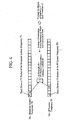
- the correspondence defining unit 203 includes a TS packet correspondence defining candidate generating unit (an element correspondence defining candidate generating means) 301, a correspondence defining candidate evaluating unit 302 which consists of one or more degree-of-similarity evaluating means, and a replacement candidate generating unit 303.
- the TS packet correspondence defining candidate generating unit 301 is a means for defining correspondences between the TS packets of a broadcast system TS about a predetermined time range which is a unit to be processed, and the TS packets of an IP system TS about the same predetermined time range to generate in turn TS packet correspondence defining candidates (element correspondence defining candidates).
- the correspondence defining candidate evaluating unit 302 is a means for evaluating the degree of similarity between a TS packet of the broadcast system TS and a TS packet of the IP system TS which are the ones of a TS packet correspondence defining candidate by using each of the one or more degree-of-similarity evaluating means on the basis of a preset evaluation criterion of the one or more degree-of-similarity evaluating means so as to acquire a TS packet degree-of-similarity evaluation result (an element degree-of-similarity evaluation result).
- the replacement candidate generating unit 303 is a means for assigning priorities to a series of TS packet degree-of-similarity evaluation results, which are acquired for a combination of some of the TS packet correspondence defining candidates, according to a predetermined criterion, for determining, as a replacement candidate, a TS packet pair which is a TS correspondence defining candidate having a higher priority, and for generating replacement candidate information which consists of the pair of the identification symbols of the TS packets which are the replacement candidate determined.
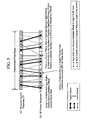
- the TS packet correspondence defining candidate generating unit 301 defines correspondences between the TS packets which construct the broadcast system TS and the TS packets which construct the IP system TS. As illustrated in Fig.
- one TS packet of the broadcast system is brought into correspondences with some TS packets of the IP system including a corresponding TS packet and TS packets before and behind the corresponding TS packet, respectively, so that some TS packet pairs are formed in turn.
- Each of these formed TS packet pairs is provided, as a correspondence defining candidate d1, to the correspondence defining candidate evaluating unit 302.
- the correspondence defining candidate evaluating unit 302 evaluates the degree of similarity between the TS packets of the candidate d1 by using one or more of the evaluation criteria of the degree-of-similarity evaluating means 1, 2, ..., andn. It is assumed that the plurality of degree-of-similarity evaluating means 1, 2,..., and n include degree-of-similarity evaluating means each of which provides one of two levels of evaluation results, i.e., similarity or difference, and degree-of-similarity evaluating means each of which provides one of multiple numeric values as one of multiple levels of evaluation results of the degree of similarity.
- the evaluation criterion of the one or more degree-of-similarity evaluating means for example, time information on the MPEG-TS (the multimedia information), a bit matching degree between the TS packet (element) of the broadcast system TS (the broadcast system information) and the TS packet (element) of the IP system TS (the other transmission system information), delimiter information on the MPEG-TS, and the error conditions of the target TS packets are used.
- time information for example, time information on the MPEG-TS (the multimedia information), a bit matching degree between the TS packet (element) of the broadcast system TS (the broadcast system information) and the TS packet (element) of the IP system TS (the other transmission system information), delimiter information on the MPEG-TS, and the error conditions of the target TS packets are used.
- time information PCR (Program Clock Reference; reference time for determining information presentation time PTS and decoding start time DTS), PTS (Presentation Time Stamp; time of presentation of video and audio), DTS (De
- the evaluation of the degree of similarity is performed as follows.
- the degree-of-similarity evaluating means 1 evaluates that the broadcast system TS packet and the IP system TS packet are similar to each other, otherwise the degree-of-similarity evaluating means 1 evaluates that they are different from each other.
- the degree-of-similarity evaluating means 2 evaluates that the broadcast system TS packet and the IP system TS packet are similar to each other, otherwise the degree-of-similarity evaluating means 2 evaluates that they are different from each other.
- the degree-of-similarity evaluating means 3 evaluates that the higher matching degree those packets have, the higher degree of similarity they have.
- the evaluations acquired by the degree-of-similarity evaluating means 1, 2, ..., and n are outputted to the replacement candidate generating unit 303 as TS packet degree-of-similarity evaluation results d2.
- priorities are assigned to the evaluations acquired by the degree-of-similarity evaluating means 1, 2, ..., and n in advance, and, when receiving the TS packet degree-of-similarity evaluation results d2, the replacement candidate generating unit selectively determines a TS packet pair as a replacement candidate in consideration of the priorities assigned to the TS packet degree-of-similarity evaluation results in such a way that no contradiction arises.
- priorities are assigned to the evaluation results acquired by the degree-of-similarity evaluating means in such a way as "similarity shown by the degree-of-similarity evaluating means 1 > similarity shown by the degree-of-similarity evaluating means 2 > similarity shown by the degree-of-similarity evaluating means.3".
- a higher priority is given to one candidate having a higher degree of similarity.
- a threshold about the degree of similarity is provided for each degree-of-similarity evaluating means, and TS packets whose degree-of-similarity is less than the threshold can be determined to be not similar to each other and can be removed.
- the replacement candidate generating unit 303 performs this process on the correspondence defining candidates (a plurality of TS packet pairs) within the predetermined time range according to the following procedure.
- STEP1 Determine the TS packet correspondence defining candidate having a degree-of-similarity evaluation result whose priority is the highest as a replacement candidate. However, when there is a contradiction between correspondences having the same priority, both of the correspondences are removed.
- STEP2 Remove correspondence defining candidates having a lower priority which are contradictory to the TS packet correspondence defining candidate determined as a replacement candidate.
- STEP3 Examine the TS packet correspondence defining candidates associated with the next degree-of-similarity evaluation results.
- a contradiction between correspondence defining candidates means a case in which there are a plurality of correspondence defining candidates, and one TS packet of one system is brought into correspondences with a plurality of different TS packets of another system, or a case in which a plurality of correspondence defining candidates intersect with one another.
- Intersection mentioned hereafter shows such a case as that in which when the time sequence of two packets of system 1 is A->B and the time sequence of two packets of system 2 is C->D, the following correspondences; A-D and B-C are defined.
- a priority and a threshold are provided for each degree-of-similarity evaluating means that generates a TS packet degree-of-similarity evaluation result d2.
- the replacement candidate generating unit selects in turn a correspondence defining candidate which do not intersect any other correspondence defining candidates having a higher priority than that assigned to the correspondence defining candidate with respect to time from the TS packet correspondence defining candidates whose degree of similarity is equal to or larger than the threshold, and defines the selected correspondence defining candidate as replacement candidate information.
- Another example of the generation method of generating replacement candidates is provided as follows.
- the replacement candidate generating unit generates in turn all combinations of TS packet degree-of-similarity evaluation results d2 each of which shows whether to include a TS packet correspondence defining candidate. Then, the replacement candidate generating unit determines an evaluated value for each TS packet correspondence defining candidate included in each of all the combinations in such a way that the evaluated value becomes equal to the sum total of values (a) to (d) as will be shown below.
- the replacement candidate generating unit calculates the sum total of the values which the TS packet correspondence defining candidates included in each combination of TS packet degree-of-similarity evaluation results d2 have, and selects a combination whose sum total is the largest and defines each of the TS packet correspondence defining candidates in the selected combination of TS packet degree-of-similarity evaluation result d2 as a replacement candidate.
- the value (b) which is acquired by multiplying a difference of an average of input time differences between the TS packets of the broadcast system information and the TS packets of the transmission system information in the replacement candidates which are included within a predetermined time interval after a current time, and an input time difference of the TS packet correspondence defining candidate in question by a predetermined weight;
- the replacement candidate generating unit 303 extracts the identification symbols of the TS packets from a TS packet pair which is each replacement candidate generated by using the above-mentioned method, and outputs the pair of identification symbols of each TS packet pair to the mutual replacement unit 204 as replacement candidate information d3.
- the replacement candidate information d3 indicates a combination of one or more TS packet correspondence defining candidates d1 (TS packet pairs) which are determined selectively from the TS within the predetermined time range.
- Data about the replacement candidate information d3 are comprised of a pair of one identification symbol showing a TS packet of the broadcast system temporary TS s11 and one identification symbol showing a TS packet of the IP system temporary TS s21
- the mutual replacement unit 204 performs a mutual replacement process of selecting a TS packet from each TS packet of the broadcast system TS s12 and a corresponding TS packet of the IP system TS s22 and arranging the TS packet which the mutual replacement unit has selected to generate a combined MPEG-TS s3 having a few errors.
- This mutual replacement processing method will be explained below.
- the mutual replacement unit selects either of them (e.g., the TS packet of the broadcast system TS) when both the TS packets do not have any errors.
- the mutual replacement unit selects the other TS packet which does not have any errors.
- the mutual replacement unit arranges the packets in an arbitrary order when they have different PIDs (Packet IDs).
- the mutual replacement unit arranges the TS packets in order of the indexes of continuity, whereas when the pair of TS packets has the same PID, but any indexes of continuity cannot be detected (the TS packets do not have any indexes of continuity, or it is assumed that the indexes of continuity have been broken due to errors), the mutual replacement unit arranges the TS packets in an order that is consistent with a higher-layer format than TS packets to combine the TS packets into a stream.
- the data in a higher layer than TS packets are, for example, PES (Packetized Elementary Stream) and Section.
- the multimedia information receiving apparatus in accordance with this Embodiment 1 receives the MPEG-TSs transmitted thereto by way of both the systems, and combines one received MPEG-TS by selecting good-quality TS packets having a few errors from the TS packets which construct the MPEG-TSs transmitted thereto by way of both the systems. Therefore, even when errors or data dropouts occur in one of the systems during transmission, the multimedia information receiving apparatus can always lower the error rate of the MPEG-TS which it uses for playback, and can also reduce degradations in the image quality and the audio quality.
- the multimedia information receiving apparatus in accordance with the present invention is constructed in such a way as to receive two pieces of multimedia information which are simultaneously transmitted in parallel with each other by way of a broadcast system and another transmission system different from this broadcast system, and combine the pieces of information received by way of the both systems so as to reduce transmission errors. Therefore, the multimedia information receiving apparatus in accordance with the present invention can be applied to a service for simultaneously providing the same program as a broadcast by using IP system distribution, which has been scheduled to be provided in recent years.
Landscapes
- Engineering & Computer Science (AREA)
- Signal Processing (AREA)
- Multimedia (AREA)
- Computer Networks & Wireless Communication (AREA)
- Databases & Information Systems (AREA)
- Two-Way Televisions, Distribution Of Moving Picture Or The Like (AREA)
- Television Systems (AREA)
- Data Exchanges In Wide-Area Networks (AREA)
Claims (7)
- Appareil de réception d'informations multimédias, comprenant :des moyens de réception d'un système de diffusion (101) destinés à recevoir des informations multimédias qui sont émises par l'intermédiaire d'un système de diffusion et à acquérir les informations multimédias reçues en tant qu'informations du système de diffusion ;des moyens de réception d'un autre système d'émission (102) destinés à recevoir des informations multimédias qui sont émises de manière simultanée par l'intermédiaire d'un système d'émission, différent du système de diffusion, et à acquérir lesdites informations multimédias reçues en tant qu'informations de l'autre système d'émission, dans lequel les informations multimédias émises par le système de diffusion et le système d'émission présentent un contenu identique ;des moyens de combinaison (103) destinés à choisir des éléments qui présentent moins d'erreurs parmi des éléments desdites informations acquises du système de diffusion et des éléments correspondants desdites informations acquises de l'autre système d'émission, et à générer une série d'informations multimédias reçues en combinant les éléments sélectionnés ; etdes moyens de décodage (104) destinés à décoder la série d'informations multimédias reçues générée par les moyens de combinaison (103), et à reproduire des données en utilisant les informations décodées, dans lequel les moyens de combinaison (103) comprennent :des moyens de stockage temporaire du système de diffusion (201) destinés à stocker de manière temporaire les informations du système de diffusion qui sont démodulées par les moyens de réception du système de diffusion (101), et à délivrer en sortie, en tant qu'une unité à traiter, les informations du système de diffusion pendant un intervalle de temps prédéterminé ;des moyens de stockage temporaire de l'autre système d'émission (202) destinés à stocker de manière temporaire les informations de l'autre système d'émission qui sont démodulées par les moyens de réception de l'autre système d'émission (102), et à délivrer en sortie les informations de l'autre système d'émission pendant ledit intervalle de temps prédéterminé ;caractérisé par :des moyens de définition de correspondance (203) destinés à définir des correspondances entre des éléments des informations du système de diffusion pendant ledit intervalle de temps prédéterminé, et des éléments des informations de l'autre système d'émission pendant ledit intervalle de temps prédéterminé, respectivement, de façon à évaluer un degré de similitude entre les éléments de chaque paire qui sont mis en correspondance les uns avec les autres de manière à déterminer des paires d'éléments en tant que candidats de remplacement, et à délivrer en sortie des symboles d'identification des éléments de chacune des paires qui sont déterminés en tant que candidats de remplacement en tant qu'informations de candidat de remplacement ; etdes moyens de remplacement mutuel (204) destinés à extraire les informations du système de diffusion pendant l'intervalle de temps prédéterminé, qui sont soumises au processus de définition de correspondance par lesdits moyens de stockage temporaire du système de diffusion (201), et à extraire également les informations de l'autre système d'émission pendant l'intervalle de temps prédéterminé, qui sont soumises au processus de définition de correspondance par lesdits moyens de stockage temporaire de l'autre système d'émission (202), de façon à choisie des éléments qui présentent moins d'erreurs parmi les éléments desdites informations du système de diffusion et les éléments desdites informations de l'autre système d'émission, sur la base d'un signal d'identification spécifié par lesdites informations de candidat de remplacement, et à générer une série d'informations multimédias reçues pendant ledit intervalle de temps prédéterminé en combinant les éléments choisis.
- Appareil de réception d'informations multimédias selon la revendication 1, caractérisé en ce que les moyens de définition de correspondance (203) comprennent :des moyens de génération de candidat de définition de correspondance d'éléments (301) destinés à définir des correspondances entre les éléments des informations du système de diffusion pendant l'intervalle de temps prédéterminé qui sont une unité à traiter, et les éléments des informations de l'autre système d'émission pendant le même intervalle de temps prédéterminé, de façon à générer ensuite des candidats de définition de correspondance d'éléments ;des moyens d'évaluation de candidat de définition de correspondance (302) destinés à évaluer un degré de similitude entre un élément des informations du système de diffusion et un élément des informations de l'autre système d'émission qui sont un dit candidat de définition de correspondance d'éléments pour chacun d'un ou de plusieurs moyens d'évaluation de degré de similitude sur la base d'un critère d'évaluation préétabli dudit un ou desdits moyens d'évaluation de degré de similitude, de façon à acquérir un résultat de l'évaluation du degré de similitude entre les éléments ; etdes moyens de génération de candidat de remplacement (303) destinés à attribuer des priorités à une série de résultats de l'évaluation du degré de similitude entre les éléments, qui sont acquis pour une combinaison de certains desdits candidats de définition de correspondance d'éléments, selon un critère prédéterminé, de façon à déterminer des candidats de définition de correspondance d'éléments qui présentent une priorité plus élevée en tant que candidats de remplacement, et à générer des informations de candidat de remplacement qui se composent d'une paire de symboles d'identification des éléments de chacun des candidats de remplacement déterminés.
- Appareil de réception d'informations multimédias selon la revendication 2, caractérisé en ce que, lorsqu'un élément des informations du système de diffusion et un élément des informations de l'autre système d'émission qui correspondent aux symboles d'identification décrits dans les informations de candidat de remplacement, ne comprennent aucune erreur, les moyens de remplacement mutuel (204) sélectionnent l'un des éléments, ou, lorsqu'un seul des éléments comprend une erreur, sélectionnent l'autre élément qui ne comprend aucune erreur, et les moyens de remplacement mutuel (204) agencent les éléments qui n'ont pas de symboles d'identification correspondants dans les informations de candidat de remplacement et pour lesquels il existe des éléments qui sont un candidat de remplacement avant et après lesdits éléments dans un ordre arbitraire lorsque lesdits éléments sont de types différents, ou, lorsque lesdits éléments sont d'un même type, agencent lesdits éléments de telle manière que, lorsqu'ils présentent des indices de continuité, ils soient agencés dans l'ordre des indices, ou, lorsqu'il est impossible de détecter un indice de continuité, ils soient agencés dans un ordre qui est cohérent avec un format de couche plus élevée de façon à combiner les éléments, en acquérant de ce fait les informations multimédias combinées.
- Appareil de réception d'informations multimédias selon la revendication 2, caractérisé en ce que les moyens de génération de candidat de remplacement fournissent à chacun des moyens d'évaluation de degré de similitude (303) une priorité prédéterminée et un seuil des résultats d'évaluation de degré de similitude d'élément, et choisissent ainsi un candidat de définition de correspondance d'élément qui présente un résultat d'évaluation de degré de similitude d'élément égal ou supérieur audit seuil en tant que caractéristique de celui-ci, qui indique un élément différent d'un candidat de définition de correspondance d'élément qui présente un résultat d'évaluation de degré de similitude d'élément qui présente une priorité plus élevée que ledit résultat d'évaluation de degré de similitude d'élément que présente ledit candidat de définition de correspondance d'élément, et qui n'intersecte aucun autre candidat de définition de correspondance d'élément par rapport à une direction du temps, de façon à définir ledit candidat de définition de correspondance d'élément en tant que candidat de remplacement.
- Appareil de réception d'informations multimédias selon la revendication 2, caractérisé en ce que les moyens de génération de candidat de remplacement génèrent ainsi toutes les combinaisons des résultats d'évaluation de degré de similitude d'élément, chacune d'elles montrant s'il convient d'inclure un candidat de définition de correspondance d'élément, déterminent une valeur évaluée de chacun des candidats de définition de correspondance d'élément inclus dans chacune des combinaisons de telle manière que la valeur évaluée soit égale à la somme totale des valeurs suivantes (a) à (d) :la valeur (a) qui est acquise en multipliant les résultats d'évaluation de degré de similitude d'élément par un poids prédéterminé qui est donné pour le ou les moyens d'évaluation de degré de similitude, respectivement, et en ajoutant les résultats d'évaluation de degré de similitude des élément multipliés respectivement par le poids prédéterminé ;la valeur (b) qui est acquise en multipliant une différence d'une moyenne des différences temporelles d'entrée entre les éléments des informations du système de diffusion et les éléments des informations du système d'émission dans les candidats de remplacement qui sont inclus à l'intérieur d'un intervalle de temps prédéterminé après un temps actuel, et une différence temporelle d'entrée dudit candidat de définition de correspondance d'élément en question par un poids prédéterminé ;la valeur (c) qui est acquise en multipliant une valeur évaluée d'un autre candidat de définition de correspondance d'élément qui est associé à un même élément que celui qui est associé audit candidat de définition de correspondance d'élément, par un poids supérieur à -1 et égal ou inférieur à 0 ; etla valeur (d) qui est acquise en multipliant une valeur évaluée d'un autre candidat de définition de correspondance d'élément qui intersecte ledit candidat de définition de correspondance d'élément, par un poids supérieur à -1 et égal ou inférieur à 0 ;calculent la somme totale des valeurs que présentent les candidats de définition de correspondance d'élément inclus dans chaque combinaison desdits résultats d'évaluation de degré de similitude d'élément, choisissent une combinaison dont la somme totale est la plus grande parmi toutes les combinaisons, et définissent ensuite chacun des candidats de définition de correspondance d'élément inclus dans la combinaison choisie desdits résultats d'évaluation de degré de similitude d'élément en tant que candidat de remplacement.
- Appareil de réception d'informations multimédias selon la revendication 1, caractérisé en ce que les informations du système de diffusion et les informations de l'autre système d'émission sont des informations MPEG - TS, et chaque élément des informations du système de diffusion et des informations de l'autre système d'émission est un paquet TS.
- Appareil de réception d'informations multimédias selon la revendication 2, caractérisé en ce que le critère d'évaluation du ou des moyens d'évaluation du degré de similitude dans les moyens d'évaluation de candidat de définition de correspondance (302), est une combinaison appropriée d'informations temporelles qui concernent les informations multimédias, d'un degré de correspondance de bit entre l'élément des informations du système de diffusion et l'élément des informations de l'autre système d'émission, d'informations de séparateur qui concernent les informations multimédias, et de conditions d'erreur des éléments cibles.
Applications Claiming Priority (1)
| Application Number | Priority Date | Filing Date | Title |
|---|---|---|---|
| PCT/JP2006/319879 WO2008041336A1 (fr) | 2006-10-04 | 2006-10-04 | Appareil de rÉception d'informations multimÉdias |
Publications (3)
| Publication Number | Publication Date |
|---|---|
| EP2071749A1 EP2071749A1 (fr) | 2009-06-17 |
| EP2071749A4 EP2071749A4 (fr) | 2012-03-21 |
| EP2071749B1 true EP2071749B1 (fr) | 2014-12-10 |
Family
ID=39268204
Family Applications (1)
| Application Number | Title | Priority Date | Filing Date |
|---|---|---|---|
| EP06811219.2A Not-in-force EP2071749B1 (fr) | 2006-10-04 | 2006-10-04 | Appareil de réception d'informations multimédias |
Country Status (5)
| Country | Link |
|---|---|
| US (1) | US8726318B2 (fr) |
| EP (1) | EP2071749B1 (fr) |
| JP (1) | JP4425980B2 (fr) |
| CN (1) | CN101517903B (fr) |
| WO (1) | WO2008041336A1 (fr) |
Families Citing this family (8)
| Publication number | Priority date | Publication date | Assignee | Title |
|---|---|---|---|---|
| JP5519332B2 (ja) * | 2010-03-01 | 2014-06-11 | ソフトバンクBb株式会社 | 視聴率調査システム、コンテンツサーバー、クライアント端末及び視聴率調査方法 |
| JP5924728B2 (ja) * | 2012-02-02 | 2016-05-25 | 日本放送協会 | 信号処理装置及びプログラム |
| US20130271655A1 (en) * | 2012-04-12 | 2013-10-17 | Google Inc. | System, apparatus and method to facilitate live video streaming |
| US20140099879A1 (en) * | 2012-10-04 | 2014-04-10 | Sirius XM Radio, Inc. | Hybrid Satellite and Internet Mobile Broadcast System |
| JP6192155B2 (ja) * | 2013-01-08 | 2017-09-06 | 株式会社アイ・オー・データ機器 | 受信装置、テレビジョン、および録画装置 |
| WO2015198545A1 (fr) * | 2014-06-24 | 2015-12-30 | 株式会社ソシオネクスト | Dispositif d'interface et dispositif de réception le comprenant |
| FR3055175B1 (fr) * | 2016-08-19 | 2018-08-10 | Tdf | Synchronisation de flux dans un recepteur |
| JP7322484B2 (ja) * | 2019-04-16 | 2023-08-08 | 日本電気株式会社 | 放送信号中継装置、放送信号中継システム、及び、放送信号中継方法 |
Citations (1)
| Publication number | Priority date | Publication date | Assignee | Title |
|---|---|---|---|---|
| EP1521382A2 (fr) * | 2003-10-02 | 2005-04-06 | NTT DoCoMo, Inc. | Station mobile pour transfert intercellulaire en diversité |
Family Cites Families (14)
| Publication number | Priority date | Publication date | Assignee | Title |
|---|---|---|---|---|
| GB9219486D0 (en) | 1992-09-15 | 1992-10-28 | British Broadcasting Corp | Digital audio broadcasts |
| US6247158B1 (en) | 1998-11-30 | 2001-06-12 | Itt Manufacturing Enterprises, Inc. | Digital broadcasting system and method |
| JP3464981B2 (ja) * | 1998-12-03 | 2003-11-10 | フラウンホーファー−ゲゼルシャフト・ツール・フェルデルング・デル・アンゲヴァンテン・フォルシュング・アインゲトラーゲネル・フェライン | 情報送信装置及びその方法並びに情報受信装置及びその方法 |
| GB9908675D0 (en) | 1999-04-15 | 1999-06-09 | British Broadcasting Corp | Diversity reception method and diversity receivers |
| JP2000354023A (ja) | 1999-06-14 | 2000-12-19 | Mitsubishi Electric Corp | 伝送方式 |
| CN100393110C (zh) * | 2001-07-19 | 2008-06-04 | 汤姆森许可公司 | 数字广播传输可靠接收的方法和系统 |
| JP2003037571A (ja) | 2001-07-26 | 2003-02-07 | Mitsubishi Electric Corp | マルチメディア情報送信装置、マルチメディア情報中継装置およびマルチメディア情報受信装置 |
| JP2003134064A (ja) * | 2001-10-26 | 2003-05-09 | Hitachi Ltd | デジタル放送補完方法およびデジタル放送受信システム |
| WO2004080011A1 (fr) * | 2003-03-03 | 2004-09-16 | Matsushita Electric Industrial Co., Ltd. | Terminal mobile a fonctions de reception de programme par diffusion et de reception de programme par communication, respectivement, et procede de commande de reception de programme |
| JP2004297628A (ja) | 2003-03-27 | 2004-10-21 | Sanyo Electric Co Ltd | ストリーム切替装置およびその装置にコンテンツを提供する装置 |
| JP2004357124A (ja) * | 2003-05-30 | 2004-12-16 | Toshiba Corp | 放送システムおよび受信装置 |
| JP4442238B2 (ja) | 2004-02-04 | 2010-03-31 | ソニー株式会社 | 受信装置 |
| JP2005260758A (ja) * | 2004-03-12 | 2005-09-22 | Hitachi Ltd | 携帯端末、ディジタルデータ配信サーバ、及びデータ送/受信システム |
| JP4707385B2 (ja) * | 2004-12-17 | 2011-06-22 | 京セラ株式会社 | ディジタル放送受信装置 |
-
2006
- 2006-10-04 US US12/444,107 patent/US8726318B2/en not_active Expired - Fee Related
- 2006-10-04 EP EP06811219.2A patent/EP2071749B1/fr not_active Not-in-force
- 2006-10-04 CN CN2006800560204A patent/CN101517903B/zh not_active Expired - Fee Related
- 2006-10-04 JP JP2008537390A patent/JP4425980B2/ja not_active Expired - Fee Related
- 2006-10-04 WO PCT/JP2006/319879 patent/WO2008041336A1/fr not_active Ceased
Patent Citations (1)
| Publication number | Priority date | Publication date | Assignee | Title |
|---|---|---|---|---|
| EP1521382A2 (fr) * | 2003-10-02 | 2005-04-06 | NTT DoCoMo, Inc. | Station mobile pour transfert intercellulaire en diversité |
Also Published As
| Publication number | Publication date |
|---|---|
| EP2071749A4 (fr) | 2012-03-21 |
| CN101517903A (zh) | 2009-08-26 |
| EP2071749A1 (fr) | 2009-06-17 |
| US20100115569A1 (en) | 2010-05-06 |
| US8726318B2 (en) | 2014-05-13 |
| JP4425980B2 (ja) | 2010-03-03 |
| JPWO2008041336A1 (ja) | 2010-02-04 |
| CN101517903B (zh) | 2012-05-09 |
| WO2008041336A1 (fr) | 2008-04-10 |
Similar Documents
| Publication | Publication Date | Title |
|---|---|---|
| US8199781B2 (en) | Device and method for demultiplexing received transport stream in digital broadcasting receiver | |
| CN101345605B (zh) | 发送设备和发送方法、接收设备、错误校正系统及其方法 | |
| US20200059688A1 (en) | Decoding device, reception device, transmission device, transmission/reception system, decoding method, and storage medium having decoding program stored therein | |
| JP6298305B2 (ja) | 放送信号ip伝送システムおよび放送信号ip伝送方法 | |
| US11128911B2 (en) | Decoding device, reception device, transmission device, transmission/reception system, decoding method, and storage medium having decoding program stored therein | |
| US9648391B2 (en) | Multimedia content broadcast procedure | |
| US8726318B2 (en) | Multimedia information receiving apparatus | |
| JP5059343B2 (ja) | ストリーム生成方法および放送受信装置 | |
| US8369418B2 (en) | Digital data receiver | |
| EP1914993A2 (fr) | Récepteur de diffusion numérique et son procédé de détermination de canal brouillé | |
| EP1474888B1 (fr) | Retransmission d'une copie de rafale dans un reseau numerique a large bande | |
| US7796599B2 (en) | Multiplexing and demultiplexing apparatus for delivering MPEG-2 TS packet error signal through cablecard interface and multiplexing and demultiplexing method using the same | |
| JPH11122556A (ja) | ディジタル放送受信装置 | |
| US20100125889A1 (en) | Digital broadcasting system and data processing method thereof | |
| JP2004320394A (ja) | デジタル放送送信システム,デジタル放送の受信装置,デジタル放送再生方法 | |
| JP2017143509A (ja) | スタガーキャストでのパケット損失を検出する方法及び装置 | |
| JP5184757B2 (ja) | 放送受信装置および表示方法 | |
| EP2202976A1 (fr) | Appareil de réception de diffusion numérique et procédé de traitement de signal | |
| JP3559454B2 (ja) | ディジタル信号伝送システム及びその信号伝送装置 | |
| JP4831469B2 (ja) | 地上デジタルテレビジョン放送受信システムおよび受信機 | |
| WO2023013124A1 (fr) | Dispositif de retransmission, procédé de retransmission, dispositif de réception et procédé de réception | |
| JP5161514B2 (ja) | デジタル放送受信装置、および、デジタル放送受信方法 | |
| JP2007067532A (ja) | デジタル放送受信装置 | |
| JP4181334B2 (ja) | デジタル放送における送信方法及び送信機 | |
| US20110055868A1 (en) | Method and device for receiving a digital television conveyance stream, and corresponding digital television receiver and computer software |
Legal Events
| Date | Code | Title | Description |
|---|---|---|---|
| PUAI | Public reference made under article 153(3) epc to a published international application that has entered the european phase |
Free format text: ORIGINAL CODE: 0009012 |
|
| 17P | Request for examination filed |
Effective date: 20090331 |
|
| AK | Designated contracting states |
Kind code of ref document: A1 Designated state(s): AT BE BG CH CY CZ DE DK EE ES FI FR GB GR HU IE IS IT LI LT LU LV MC NL PL PT RO SE SI SK TR |
|
| AX | Request for extension of the european patent |
Extension state: AL BA HR MK RS |
|
| RBV | Designated contracting states (corrected) |
Designated state(s): DE FR GB |
|
| A4 | Supplementary search report drawn up and despatched |
Effective date: 20120216 |
|
| RIC1 | Information provided on ipc code assigned before grant |
Ipc: H04L 1/06 20060101ALI20120220BHEP Ipc: H04L 1/02 20060101ALI20120220BHEP Ipc: H04N 7/173 20110101ALI20120220BHEP Ipc: H04B 1/16 20060101AFI20120220BHEP Ipc: H04L 1/22 20060101ALI20120220BHEP Ipc: H04L 12/56 20060101ALI20120220BHEP |
|
| DAX | Request for extension of the european patent (deleted) | ||
| 17Q | First examination report despatched |
Effective date: 20121204 |
|
| REG | Reference to a national code |
Ref country code: DE Ref legal event code: R079 Ref document number: 602006043979 Country of ref document: DE Free format text: PREVIOUS MAIN CLASS: H04H0001000000 Ipc: H04L0001020000 |
|
| RIC1 | Information provided on ipc code assigned before grant |
Ipc: H04B 1/16 20060101ALI20131031BHEP Ipc: H04L 1/06 20060101ALI20131031BHEP Ipc: H04N 7/173 20110101ALI20131031BHEP Ipc: H04L 1/02 20060101AFI20131031BHEP Ipc: H04L 1/22 20060101ALI20131031BHEP Ipc: H04L 1/00 20060101ALI20131031BHEP |
|
| GRAP | Despatch of communication of intention to grant a patent |
Free format text: ORIGINAL CODE: EPIDOSNIGR1 |
|
| INTG | Intention to grant announced |
Effective date: 20131216 |
|
| GRAS | Grant fee paid |
Free format text: ORIGINAL CODE: EPIDOSNIGR3 |
|
| GRAA | (expected) grant |
Free format text: ORIGINAL CODE: 0009210 |
|
| AK | Designated contracting states |
Kind code of ref document: B1 Designated state(s): DE FR GB |
|
| REG | Reference to a national code |
Ref country code: GB Ref legal event code: FG4D |
|
| REG | Reference to a national code |
Ref country code: DE Ref legal event code: R096 Ref document number: 602006043979 Country of ref document: DE Effective date: 20150129 |
|
| REG | Reference to a national code |
Ref country code: DE Ref legal event code: R097 Ref document number: 602006043979 Country of ref document: DE |
|
| PLBE | No opposition filed within time limit |
Free format text: ORIGINAL CODE: 0009261 |
|
| STAA | Information on the status of an ep patent application or granted ep patent |
Free format text: STATUS: NO OPPOSITION FILED WITHIN TIME LIMIT |
|
| 26N | No opposition filed |
Effective date: 20150911 |
|
| REG | Reference to a national code |
Ref country code: FR Ref legal event code: PLFP Year of fee payment: 11 |
|
| PGFP | Annual fee paid to national office [announced via postgrant information from national office to epo] |
Ref country code: GB Payment date: 20160928 Year of fee payment: 11 |
|
| PGFP | Annual fee paid to national office [announced via postgrant information from national office to epo] |
Ref country code: FR Payment date: 20160919 Year of fee payment: 11 |
|
| PGFP | Annual fee paid to national office [announced via postgrant information from national office to epo] |
Ref country code: DE Payment date: 20160927 Year of fee payment: 11 |
|
| REG | Reference to a national code |
Ref country code: DE Ref legal event code: R119 Ref document number: 602006043979 Country of ref document: DE |
|
| GBPC | Gb: european patent ceased through non-payment of renewal fee |
Effective date: 20171004 |
|
| REG | Reference to a national code |
Ref country code: FR Ref legal event code: ST Effective date: 20180629 |
|
| PG25 | Lapsed in a contracting state [announced via postgrant information from national office to epo] |
Ref country code: DE Free format text: LAPSE BECAUSE OF NON-PAYMENT OF DUE FEES Effective date: 20180501 Ref country code: GB Free format text: LAPSE BECAUSE OF NON-PAYMENT OF DUE FEES Effective date: 20171004 |
|
| PG25 | Lapsed in a contracting state [announced via postgrant information from national office to epo] |
Ref country code: FR Free format text: LAPSE BECAUSE OF NON-PAYMENT OF DUE FEES Effective date: 20171031 |