EP2071892A2 - Système de communication mobile, nýud de définition de période d'enregistrement de localisation, terminal mobile, et procédé d'enregistrement de localisation dans une communication mobile - Google Patents
Système de communication mobile, nýud de définition de période d'enregistrement de localisation, terminal mobile, et procédé d'enregistrement de localisation dans une communication mobile Download PDFInfo
- Publication number
- EP2071892A2 EP2071892A2 EP08021325A EP08021325A EP2071892A2 EP 2071892 A2 EP2071892 A2 EP 2071892A2 EP 08021325 A EP08021325 A EP 08021325A EP 08021325 A EP08021325 A EP 08021325A EP 2071892 A2 EP2071892 A2 EP 2071892A2
- Authority
- EP
- European Patent Office
- Prior art keywords
- location registration
- period
- mobile terminal
- subscriber information
- defining
- Prior art date
- Legal status (The legal status is an assumption and is not a legal conclusion. Google has not performed a legal analysis and makes no representation as to the accuracy of the status listed.)
- Withdrawn
Links
Images

Classifications
-
- H—ELECTRICITY
- H04—ELECTRIC COMMUNICATION TECHNIQUE
- H04W—WIRELESS COMMUNICATION NETWORKS
- H04W60/00—Affiliation to network, e.g. registration; Terminating affiliation with the network, e.g. de-registration
- H04W60/02—Affiliation to network, e.g. registration; Terminating affiliation with the network, e.g. de-registration by periodical registration
Definitions
- the present invention relates to mobile communication systems, location registration period defining nodes, mobile terminals, and location registration methods in mobile communication.
- each mobile terminal performs an operation for location registration (transmission of a location registration request) in a mobile communication system.
- the location registration is carried out as an initial location registration, when a mobile terminal has not been registered in the mobile communication system, yet. Then, when the mobile terminal moves to another location registration area (cell), the same location registration is carried out.
- a constant location registration period is set for the mobile terminal, so that there will be no occurrence of a disagreement between the location that has been registered in the mobile communication system and the actual location of the mobile terminal, since the initial location registration.
- the mobile terminal After the setting, the mobile terminal performs the location registration operation repeatedly, keeping such a location registration period.
- the above-described location registration period is uniformly defined, regardless of the contents in the information of a subscriber who owns a mobile terminal.
- the mobile terminal According to a location registration control in the mobile communication system in compliance with the Third Generation Partnership Projects (3GPP) recommendations, the mobile terminal performs the location registration in a period designated by the mobile communication system continuously and repeatedly so that there will be no occurrence of a disagreement between the location that has been registered in the mobile communication system and the actual location of the mobile terminal, even if the mobile terminal does not move to another location registration area.
- 3GPP Third Generation Partnership Projects
- a radio terminal device having a function of a mobile terminal is included in a beverage or cigarette vending machine, for example, to be used for inventory management or authentication of purchasers.
- the replenishment work that meets the actual inventory is enabled, instead of the replenishment of the sales items of the vending machine by solely depending on the person who is in charge of the management of the vending machine in an old way. A certain effect is also achieved for ensuring the security.
- the number of the mobile terminals accommodated in the mobile communication system is not limited to those carried by subscribers as before. There are also a large number of mobile terminals incorporated into vending machines or general-purpose equipment, as described above.
- the number of the mobile terminals (the number of the subscribers, accordingly) incorporated into vending machines or the like as a latter case shows a tendency of dramatic increase. It is therefore easy to estimate that the increase in the number of the mobile terminals will exceed the increase in the traffic of the actual data flow.
- the mobile communication systems of these days include not only mobile terminals frequently moving and having high mobility originally, such as cellular phones, but also mobile terminals incorporated into vending machines or the like having low mobility in usual operations or use states and having a weak probability of the mobile terminals being change in the range of service.
- the increase in the latter ones is outstanding.
- the location registration is performed repeatedly in a uniformly defined period so as to be suited for the cellular phone having high mobility originally, regardless of the level of the mobility of each mobile terminal.
- the location registration is excessively frequently carried out for a great number of mobile terminals with low mobility of hardly moving in reality.
- the inventors of the present are concerned that the assignment of radio resources will be constrained.
- the location registration period can be selected by setting any value at a periodic timer. Also, the location registration period can be changed at a later point of time than the originally set time.
- JP 7-30960 A (Abstract, claim 1, paragraphs 0015, 0028, 0034, 0060, and 0066) proposes solving of the problem of the increase in the load of the whole system.
- To control the period of the location registration by using a periodic timer when the shortest location registration period is uniformly set, the primarily unnecessary location registration process is generated thereby increasing the load of the whole system.
- JP 7-30960 A also proposes a technique of comparing the results of the location registration of the past two times, and gradually shortening the location registration period until an accurate location registration is performed with respect to a cordless handset (mobile terminal) with a high movement speed and showing a degradation tendency, but conversely, gradually extending the location registration period as far as the results do not show the degradation tendency.
- JP 11-341545 A (Abstract, paragraph 0007) makes a proposal for reducing the power consumption by suppressing the frequency of a location registration request from a mobile terminal device, so as to enable the mobile terminal device of a long talk time with a limited capacity of its battery.
- JP 2002-142243 A (Abstract, paragraphs 0014, 0015, and 0024) discloses the change in the frequency of the location registration request according to the wideness of the location registration area so as to reduce the occurrence of the location registration request, when the wideness of the location registration area in which a mobile terminal is registered is changed.
- JP 11-234729 A (Abstract, paragraphs 0012 and 0013) discloses a mobile terminal, which issues a location registration request to each base transceiver station with respect to the reestablishment of Home Location Register (HLR), adds the location registration performing request information to the periodic location registration information column of the notification information to send from the base transceiver station to the mobile terminal, and upon receipt of the location registration performing request information, performs a location registration.
- HLR Home Location Register
- JP 11-23472 A also discloses grouping of the mobile terminals into several groups so as not to concentrate the location registration processes, making each of the groups perform the location registration in turn at slightly different timings, and adjusting the period of the location registration request by use of the location registration performing request information that is supplied to a location registration timer section.
- any of the above-described techniques is directed to selecting or changing of the period for location registration.
- none of the above-described documents is aware of the problem or tries to solve the problem in which a great number of mobile terminals that hardly move in reality are existent in the range of service and the location registration is carried out excessively frequently, so the assignment of radio resources is constrained.
- the present invention has been made in view of the above circumstances and provides a mobile communication system including: a subscriber information management device for managing subscriber information; and a location registration period defining node for determining a period of location registration based upon the subscriber information retained by the subscriber information management device, and supplying each of corresponding mobile terminals with a location registration period defining instruction for defining the period of the location registration that has been determined.
- a mobile communication system comprising: a subscriber information management device for managing subscriber information; and a location registration period defining node for determining a period of a location registration based upon the subscriber information retained by the subscriber information management device, and supplying each of corresponding mobile terminals with a location registration period defining instruction for defining the period of the location registration that has been determined.
- the location registration period defining node determines a period of a location registration appropriate for the mobile terminal in the range of service, based upon the subscriber information on the subscriber information management device, and supplies each of the corresponding mobile terminals with a location registration period defining instruction for defining the period of the location registration that has been determined.
- the subscriber information includes mobile terminal information indicative of the corresponding mobile terminal and contract information. Hence, information suited for the setting of the location registration period of the mobile device can be recognized based upon the contract information.
- An example case is that the mobile device is mounted on a vending machine and in practice its use without being moved is recognized. In such a case, it is reasonable to set a long location registration period.
- various types of subscriber information can be supplied for determining the period of the location registration.
- the location registration period defining node may be a MSC (Mobile Switching Center).
- the location registration period can be set in an appropriate manner, as a function of MSC, in the above mobile communication system.
- the location registration period defining node may be a VLR (Visitor Location Register).
- the subscriber information retained on HLR or VLR may be acquired and referred to, in this type of mobile communication system.
- the location registration period defining node may generate the location registration period defining instruction so as to set a relatively long period of the location registration, when a relatively low frequency of movement of a mobile terminal is defined according to the subscriber information.
- the location registration period defining instruction may be generated to set a relatively long location registration period of the mobile terminal.
- a location registration period defining node comprising: means for determining a period of a location registration of each of corresponding mobile terminals based upon subscriber information managed by a given subscriber information management device; and means for supplying each of the corresponding mobile terminals with a location registration period defining instruction for defining the period of the location registration that has been determined by the means for determining.
- the location registration period determining means determines the period of the location registration of each of the mobile terminals, based upon the subscriber information managed by the subscriber information management device.
- the location registration defining instruction for defining the location registration period that has been determined as described above is supplied to each of the corresponding mobile terminals by the location registration defining instruction supplying means.
- An appropriate period of the location registration is set for each mobile terminal based upon the subscriber information. Therefore, even with respect to the mobile terminal that has a weak probability of movement, the wasteful location registration in a uniform period with the mobile terminal that often moves is omitted to avoid the situation in which the assignment of the radio resources is constrained.
- the location registration period defining node may be configured to be a MSC (Mobile Switching Center).
- MSC Mobile Switching Center
- the location registration period defining node eliminates the need for the provision of another device, thereby enabling the setting of the location registration period of the mobile terminal in an appropriate manner as one of the functions of MSC.
- the location registration period defining node may be configured to be a SGSN (Serving General packet radio service Support Node).
- SGSN Serving General packet radio service Support Node
- the location registration period defining node eliminates the need for the provision of another device, thereby enabling the setting of the location registration period of the mobile terminal in an appropriate manner as one of the functions of SGSN.
- the location registration period defining node according to the above configuration, wherein the means for determining may determine a relatively long period of the location registration, when a relatively low frequency of movement of a mobile terminal is set according to the subscriber information.
- an appropriate period of the location registration is set for each mobile terminal, based upon the subscriber information. Accordingly, even with respect to the mobile terminal that has a weak probability of movement, the wasteful location registration in a uniform period with the mobile terminal that often moves is omitted to avoid the situation in which the assignment of the radio resources is constrained.
- a mobile terminal comprising: means for receiving a location registration period defining instruction for defining a period of a location registration from an upper node, and then setting a location registration performing period of the mobile terminal corresponding to given subscriber information according to the location registration period defining instruction; and means for performing the location registration in the location registration performing period corresponding to the subscriber information that has been set, after the location registration performing period is set by the means for receiving.
- the means for receiving comprises: means for determining the location registration period of the mobile terminal, based upon the subscriber information; and means for supplying the mobile terminal with a location registration defining instruction for defining the location registration period that has been determined by the means for determining.
- the means for receiving the location registration period defining instruction and setting the location registration performing period receives supply of the location registration period defining instruction for defining the period of the location registration from an upper node such as a MSC or the like, and then sets the location registration performing period of its own device according to the subscriber information upon receipt of the location registration period defining instruction.
- the upper node such as a MSC includes: location registration period determining means for determining the period of the location registration of each of the corresponding mobile terminals based upon given subscriber information; and location registration defining instruction supplying means for supplying each mobile terminal with the location registration defining instruction for defining the location registration period that has been determined by the location registration period determining means.
- a location registration method in mobile communication comprising determining a location registration performing period of each of corresponding mobile devices, based upon corresponding subscriber information.
- a MSC Mobile Switching Center
- a MSC Mobile Switching Center
- the location registration method in mobile communication determines the location registration performing period of each of the corresponding mobile terminal, based upon the corresponding subscriber information.
- the location registration performing period for each of the mobile terminals is determined based upon the subscriber information.
- the location registration method in a mobile communication with such a configuration may employ an embodiment in which the MSC determines the location registration performing period of each of the corresponding mobile terminals.
- the location registration method in a mobile communication with such a configuration eliminates the need for the provision of another device, thereby enabling the setting of the location registration period of the mobile terminal in an appropriate manner as one of the functions of MSC.
- FIG. 1 illustrates a schematic view of a mobile communication system according to one aspect of the present invention
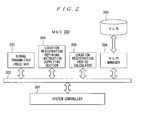
- FIG. 2 illustrates a block diagram indicative of a location registration period defining node according to one aspect of the present invention
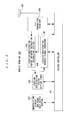
- FIG. 3 illustrates a block diagram of the configuration of a mobile terminal according to one aspect of the present invention.
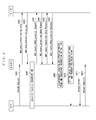
- FIG. 4 illustrates a communication sequence (of an initial location registration) in a mobile communication system according to another aspect of the present invention.
- FIG. 1 illustrates a schematic view of a mobile communication system according to one aspect of the present invention.
- a mobile communication system 10 as illustrated includes: a Home Location Register (HLR) 101 and a Visitor Location Register (VLR) 102, both of which are operable as a subscriber information management device for managing subscriber information; and a Mobile Switching Center (MSC) 200, serving as a location registration period defining node, for determining the period of the location registration based upon the subscriber information relating to each mobile terminal retained by the subscriber information management devices 101 and 102, and for supplying the corresponding mobile terminal 300 with a location registration period defining instruction for defining the determined period of the location registration.
- HLR Home Location Register
- VLR Visitor Location Register
- MSC Mobile Switching Center
- BSC Base Station controller
- BTS Base Transceiver Station
- the mobile terminals 300 include ones with high mobility, which are recognized to be used while moving, such as a cellular phone 310, whereas the mobile terminals 300 include others with low mobility, which have a very weak possibility of moving in fact, such as a mobile terminal 320 incorporated into a vending machine 500.
- the MSC 200 serving as a location registration period defining node determines the period of the location registration suited for the mobile terminal 300 (310, 320) in the range of service, based upon the subscriber information in the VLR 102 serving as a subscriber information management device.
- the period of the location registration suited for each of the corresponding mobile terminals 310 and 320 is determined.
- the mobile communication system 10 is configured to fulfill the function of a location registration period defining node, as one of functions of the MSC 200, without the need of a separate device.
- the period of the location registration is determined by referring to the subscriber information retained by the HLR 101 and the VLR 102, each serving as a subscriber information management device, the subscriber information of the HLR 101 and the VLR 102 is utilized in the above system for determining the period of the location registration.
- the HLR 101 is installed as a device for managing original record information of subscribers, whereas the VLR 102 functions as a subscriber information management device that is locally provided.
- the subscriber information is downloaded from the HLR to the VLR of each mobile switching center (MSC in FIG. 1 ) for the range where the mobile terminal is existent, with the location registration of the corresponding mobile terminal used as a trigger, so that the location information and the subscriber information of the mobile terminal are managed.
- the mobile terminal like a cellular phone has high mobility, so the location registration in accordance with its movement is frequently needed.
- the mobile terminal incorporated into a vending machine or general-purpose equipment has a weak probability of changing its existing location in usual operations. Therefore, the necessity of a location registration with its movement used as a trigger rarely occurs.
- the level of mobility of the mobile terminal can be learned based upon the subscriber information retained by the VLR 102 (accordingly, the subscriber information retained by the HLR 101 which is arranged at its upstream).
- the level of mobility of the mobile terminal is determined based upon the subscriber information retained by the subscriber information management device such as the HLR 101 or the VLR 102, and then the period of the location registration appropriate for the mobility of the mobile terminal is set according to the determination.
- the period of the appropriate location registration is set for each mobile terminal based upon the subscriber information. Therefore, even for the mobile terminal with a weak probability of movement such as the mobile terminal 320, the wasteful location registration period uniformly with the mobile terminal 310 that often moves is omitted to avoid the situation in which the assignment of the radio resources is constrained.
- the subscriber information includes mobile terminal information representing the mobile terminal and contract information, so various items included in the subscriber information can be provided for the basis of determining the period of the location registration.
- POS Point Of Sales
- the subscriber information since the mobile terminal 320 is installed in the vending machine 500, the subscriber information, in some cases, exhibits that the mobile terminal 320 is used without being moved in fact. In such a case, it is reasonable to set a long period of the location registration.
- FIG. 2 illustrates a block diagram indicative of a location registration period defining node according to one aspect of the present invention.
- the location registration period defining node illustrated in FIG. 2 is the MSC 200 in the above-described mobile communication system 10, as described above with reference to FIG. 1 .
- a system controller 201 is connected to components of the location registration period defining node via a bus 202 so that the components are managed in an overall manner by the system controller 201.
- a Visitor Location Register (VLR) 203 serving as a subscriber information management device is connected to a VLR manager 204, so information retained by the VLR 203 is managed by the VLR manager 204 or the retained information is read out and used.
- VLR Visitor Location Register
- the VLR 203 may be arranged outside the MSC 200 in the same manner with the VLR 102 of FIG. 1 , or may be arranged inside the MSC 200.
- a location registration period calculator 205 is provided as location registration period determining means for determining the period of the location registration of each mobile terminal, based upon the subscriber information retained and managed by the VLR 203, as described above.
- a location registration defining instruction supplying section 206 is also provided as location registration defining instruction supplying means for supplying each mobile terminal with a location registration defining instruction for defining the location registration period that has been determined by the location registration period calculator 205.
- a signal transmitter/receiver 207 is provided for transmitting and receiving various types of information that are objectives of transmission and reception.
- the corresponding period of the location registration of each mobile terminal is determined by the location registration period calculator 205 based upon the subscriber information managed by the VLR 203.
- the location registration defining instruction for defining the location registration period that has been determined by the location registration period calculator 205 is supplied to each of the corresponding mobile terminals from the location registration defining instruction supplying section 206.
- the location registration defining instruction from the location registration period calculator 205 to each of the mobile terminals 310 and the mobile terminal 320 is passed through the BSC 210 and the BTS 220.
- the above-described operation of the MSC 200 sets an appropriate period of the location registration based upon the subscriber information on each mobile terminal.
- the wasteful location registration in a uniform period with the mobile terminal that often moves is omitted to avoid the situation in which the assignment of the radio resources is constrained.
- the MSC 200 functions as the above-described location registration period defining node, thereby eliminating the need of providing a separate device and allowing the location registration period of the mobile terminal to be set in an appropriate manner.
- the mobile communication system 10 may be configured, as described above, such that the calculation of the location registration period in the MSC 200 (the location registration period calculator 205 therein) determines a relatively long period of the location registration by referring to the subscriber information, when the frequency of movement is defined to be relatively low like the mobile terminal 320 installed in the vending machine 500.
- an appropriate location registration period is set for each mobile terminal based upon the subscriber information of each mobile terminal. Therefore, even with respect to the mobile terminal that has a weak probability of movement, the wasteful location registration in a uniform period with the mobile terminal that often moves is omitted to avoid the situation in which the assignment of the radio resources is constrained.
- FIG. 3 illustrates a block diagram of the configuration of a mobile terminal according to one aspect of the present invention.
- the mobile terminal, according to one aspect of the present invention, of FIG. 3 corresponds to the mobile terminal 300 described with reference to FIG. 1 .
- Both the mobile terminal 310 and the mobile terminal 320 have the same configuration in the functionally conceptual block diagram of FIG. 3 .
- the mobile terminal 300 is configured such that respective components of the mobile terminal 300 are managed in an overall manner.
- An RF transmitter/receiver 303 to which an antenna 302 is connected, is provided for transmitting and receiving signals of radio segments on the communication path of a mobile communication system.
- the location registration period defining instruction is separated from the signals received by the antenna 302 and is recognized by a location registration period defining instruction recognizing section 304.
- a location registration period setting timer 305 sets the period of the location registration corresponding to the location registration period defining instruction, based upon the location registration period defining instruction that has been separated and recognized by the location registration period defining instruction recognizing section 304.
- a location registration request signal generator 306 generates a location registration request signal by use of the period defined by the timer of the location registration period setting timer 305.
- the location registration request signal that has been thus generated is transmitted from the RF transmitter/receiver 303 through the antenna 302 to the MSC 200 (directly to the BTS 220).
- a manipulation, display, and sound input/output section 307 is provided for performing the manipulation and display for verbal communication or mail exchange.
- the mobile terminal 300 receives the supply of the location registration period defining instruction by means of the antenna 302, the RF transmitter/receiver 303, the location registration period defining instruction recognizing section 304 and the location registration period setting timer 305, and serves as means for receiving a location registration period defining instruction and setting a location registration performing period of its own mobile terminal according to the location registration period defining instruction.
- the location registration performing means for performing the location registration (operation of transmitting the location registration request signal) in the location registration performing period that has been set is carried out.
- means for receiving a location registration period defining instruction and setting a location registration performing period receives the supply of the location registration period defining instruction for defining the period of the location registration from its upper node such as, for example, the MSC 200, and then sets the location registration performing period according to the location registration period defining instruction.
- the location registration performing means (305, 306, 303, 302) performs the location registration in the location registration performing period that has been set.
- the mobile terminal receives the supply of the location registration period defining instruction for defining the period of the location registration from its upper node (an example is the MSC 200 of FIG. 1 and FIG. 2 ) including the location registration period determining means for determining the period of the location registration of each mobile terminal based upon given subscriber information and location registration defining instruction supplying means for supplying each of the corresponding mobile terminals with the location registration defining instruction for defining the location registration period that has been determined by the location registration period determining means. Subsequently, the location registration period defining instruction is received, separated, and recognized.
- the location registration period defining instruction is received, separated, and recognized.
- the location registration period setting timer 305 sets the period of the location registration corresponding to the location registration period defining instruction, based upon the location registration period defining instruction corresponding to the above-described subscriber information that has been output from the RF transmitter/receiver 303 and then separated and recognized by the location registration period defining instruction recognizing section 304.
- the location registration request signal generator 306 generates the location registration request signal by use of the period corresponding to the subscriber information, as described above, defined by the timer of the location registration period setting timer 305.
- the wasteful location registration in a uniform period with the mobile terminal that often moves is omitted to avoid the situation in which the assignment of the radio resources is constrained.
- FIG. 4 illustrates a communication sequence in a mobile communication system according to another aspect of the present invention. Specifically, FIG. 4 illustrates a sequence diagram of determining a performing period of the location registration with respect to the initial location registration in a packet communication.
- Attach Request which is a location registration request, is transmitted to a node (SGSN: Serving General packet radio service Supporting Node) in the range of service from a mobile terminal (MT) (Step S401).
- SGSN Serving General packet radio service Supporting Node
- SGSN transmits MAP_Send_Authentication_info, which is an authentication information acquiring request of a subscriber, to a Home Location Register (HLR) serving as a subscriber's original record information management device (Step S402).
- HLR Home Location Register
- Step S404 When there is MAP_Send_Authentication_ack, which is a response to a request of MAP_Send_Authentication_info of Step S402 (Step S403), Security Function is carried out between MT and SGSN (Step S404).
- SGSN acquires International Mobile Equipment Identity (IMEI) data.
- IMEI International Mobile Equipment Identity
- SGSN transmits to HLR a location registration request, namely MAP_Update_GPRS Location Request relating to the corresponding mobile terminal (Step S405).
- HLR transmits MAP_Insert_Subscriber_Data Request signal, which is a subscriber information acquiring request (Step S406).
- SGSN responds MAP_Insert_Subscriber_Data Response to HLR (Step S407).
- HLR gives MAP_Update_GPRS Location Response, which is a location registration completion report, to SGSN (Step S408).
- SGSN determines the location registration period, based upon IMEI and the subscriber information (Step S409).
- SGSN transmits to MT the location registration period defining instruction indicative of the location registration period that has been determined at Step S409 (Step S410).
- Step S412 SGSN issues Attach Accept, which is a location registration completion report, to MT (Step S411), and then MT responds Attach Complete, which is a receipt confirmation notification, to SGSN.
- Attach Accept which is a location registration completion report
- MT sends Attach Complete
- Attach Complete which is a receipt confirmation notification
- the wasteful location registration in a uniform period with the mobile terminal that often moves is omitted for an efficient use of radio resources. This enables the establishment of a mobile communication system that is capable of handling the increase in mobile terminals existent in the range of service with the use of the current equipment.
Landscapes
- Engineering & Computer Science (AREA)
- Computer Networks & Wireless Communication (AREA)
- Signal Processing (AREA)
- Mobile Radio Communication Systems (AREA)
Applications Claiming Priority (1)
| Application Number | Priority Date | Filing Date | Title |
|---|---|---|---|
| JP2007318375A JP4538046B2 (ja) | 2007-12-10 | 2007-12-10 | 移動通信システム、位置登録周期規定ノード、移動機、および、移動通信の位置登録方法 |
Publications (2)
| Publication Number | Publication Date |
|---|---|
| EP2071892A2 true EP2071892A2 (fr) | 2009-06-17 |
| EP2071892A3 EP2071892A3 (fr) | 2009-11-25 |
Family
ID=40482012
Family Applications (1)
| Application Number | Title | Priority Date | Filing Date |
|---|---|---|---|
| EP08021325A Withdrawn EP2071892A3 (fr) | 2007-12-10 | 2008-12-09 | Système de communication mobile, nýud de définition de période d'enregistrement de localisation, terminal mobile, et procédé d'enregistrement de localisation dans une communication mobile |
Country Status (4)
| Country | Link |
|---|---|
| US (1) | US20090149177A1 (fr) |
| EP (1) | EP2071892A3 (fr) |
| JP (1) | JP4538046B2 (fr) |
| CN (1) | CN101459961A (fr) |
Cited By (4)
| Publication number | Priority date | Publication date | Assignee | Title |
|---|---|---|---|---|
| WO2011082674A1 (fr) | 2010-01-11 | 2011-07-14 | 华为终端有限公司 | Procédé de gestion de mobilité, nœud de support de gprs de service ou entité de gestion de mobilité et terminal |
| GB2492624A (en) * | 2011-06-13 | 2013-01-09 | Neul Ltd | Selection of registration strategy for a mobile terminal |
| CN102056131B (zh) * | 2009-10-28 | 2014-07-09 | 华为技术有限公司 | 提供移动性管理策略的方法、网络侧实体和m2m终端 |
| EP2744245A4 (fr) * | 2012-06-15 | 2015-07-08 | Ntt Docomo Inc | Appareil de contrôle de communications mobiles, système de communication mobile, procédé de contrôle de communications mobiles, et programme de contrôle de communications mobiles |
Families Citing this family (9)
| Publication number | Priority date | Publication date | Assignee | Title |
|---|---|---|---|---|
| CN102137383A (zh) * | 2010-01-22 | 2011-07-27 | 中兴通讯股份有限公司 | 获取mtc设备移动性相关信息及优化配置的方法和系统 |
| CN102158911A (zh) | 2010-02-11 | 2011-08-17 | 华为技术有限公司 | 机器对机器业务的承载建立方法及网络传输设备 |
| US9237542B2 (en) | 2010-09-08 | 2016-01-12 | Samsung Electronics Co., Ltd. | Apparatus and method for supporting location update registration process in machine to machine communication system |
| US9119171B2 (en) * | 2010-09-08 | 2015-08-25 | Samsung Electronics Co., Ltd. | Apparatus and method for supporting location update registration process in machine to machine communication system |
| CN102076082A (zh) * | 2010-11-19 | 2011-05-25 | 厦门雅迅网络股份有限公司 | 一种动态自适应的基站定位方法 |
| CN103222318B (zh) * | 2011-06-23 | 2016-08-31 | 华为技术有限公司 | 获取定时器时间的方法、网关和系统 |
| JP5796633B2 (ja) | 2011-09-30 | 2015-10-21 | 日本電気株式会社 | 処理装置、通信システム、通信端末、端末装置制御方法、及びプログラム |
| US10123302B2 (en) * | 2012-07-20 | 2018-11-06 | Nec Corporation | Paging control apparatus, paging method, wireless terminal, and non-transitory computer-readable medium |
| WO2025203695A1 (fr) * | 2024-03-29 | 2025-10-02 | 株式会社Nttドコモ | Terminal, nœud de réseau et procédé de communication |
Citations (5)
| Publication number | Priority date | Publication date | Assignee | Title |
|---|---|---|---|---|
| JPH0730960A (ja) | 1993-07-14 | 1995-01-31 | Toshiba Corp | 無線電話システム |
| JPH1123472A (ja) | 1997-07-08 | 1999-01-29 | Aloka Co Ltd | 発光検査装置 |
| JPH11234729A (ja) | 1998-02-18 | 1999-08-27 | Fujitsu Ltd | 移動無線通信システムの位置登録方法 |
| JPH11341545A (ja) | 1998-05-25 | 1999-12-10 | Toshiba Corp | 位置登録方式およびこの位置登録方式に対応した移動通信網にて用いられる交換局装置、端末位置管理装置ならびに移動端末装置 |
| JP2002142243A (ja) | 2000-11-02 | 2002-05-17 | Fujitsu Ltd | 移動通信システム及び移動機及び位置登録方法 |
Family Cites Families (18)
| Publication number | Priority date | Publication date | Assignee | Title |
|---|---|---|---|---|
| JPS61245639A (ja) * | 1985-04-23 | 1986-10-31 | Nec Corp | 移動通信方式 |
| JPH06113358A (ja) * | 1992-09-25 | 1994-04-22 | Fujitsu Ltd | コードレス電話交換システム |
| JPH11298945A (ja) * | 1998-04-08 | 1999-10-29 | Oki Electric Ind Co Ltd | 移動体、移動体位置登録装置及び移動体通信システム |
| GB2340344A (en) * | 1998-07-29 | 2000-02-16 | Nokia Mobile Phones Ltd | Bilateral Data Transfer Verification for Programming a Cellular Phone |
| JP2001014297A (ja) * | 1999-06-28 | 2001-01-19 | Sony Corp | 行動予測方法、情報提供方法及びそれらの装置 |
| JP3762214B2 (ja) * | 2000-11-28 | 2006-04-05 | 株式会社エヌ・ティ・ティ・ドコモ | 位置登録制御方法、移動通信網および通信端末 |
| JP2002209247A (ja) * | 2001-01-11 | 2002-07-26 | Ntt Docomo Inc | ロケーションレジスタ、位置登録システム及び位置登録方法 |
| JP2003023655A (ja) * | 2001-07-10 | 2003-01-24 | Ntt Docomo Inc | 位置登録システム、位置登録システムにおける移動通信端末、制御装置、位置登録方法 |
| KR20030042396A (ko) * | 2001-11-22 | 2003-05-28 | 삼성전자주식회사 | 이동 단말의 적응적인 위치등록 방법 및 장치 |
| JP3651598B2 (ja) * | 2002-01-07 | 2005-05-25 | 日本電気株式会社 | 移動端末装置及び位置情報システム |
| US7155205B2 (en) * | 2002-03-12 | 2006-12-26 | Bellsouth Intellectual Property Corporation | System and method for verifying subscriber data records in a telephone system |
| JP4282400B2 (ja) * | 2003-07-23 | 2009-06-17 | 日本電気通信システム株式会社 | 移動通信システム及びそれに用いる動的リソース制御方法 |
| JP2005101897A (ja) * | 2003-09-25 | 2005-04-14 | Vodafone Kk | 携帯端末装置 |
| KR100705450B1 (ko) * | 2005-12-07 | 2007-04-09 | 한국전자통신연구원 | 휴대 인터넷 시스템에서 유휴 상태 단말의 위치 정보업데이트 장치 및 방법 |
| GB0600601D0 (en) * | 2006-01-12 | 2006-02-22 | Vodafone Plc | Telecommunications networks and devices |
| US7664496B1 (en) * | 2006-07-14 | 2010-02-16 | At&T Mobility Ii Llc | Local number portability for mobility management |
| KR20080038797A (ko) * | 2006-10-31 | 2008-05-07 | 삼성전자주식회사 | 광대역 무선통신 시스템에서 페이징 그룹 크기를 결정하기위한 장치 및 방법 |
| US7953036B2 (en) * | 2007-07-27 | 2011-05-31 | At&T Intellectual Property I, Lp | System for registration of communication devices |
-
2007
- 2007-12-10 JP JP2007318375A patent/JP4538046B2/ja active Active
-
2008
- 2008-12-09 CN CNA2008101838218A patent/CN101459961A/zh active Pending
- 2008-12-09 US US12/331,034 patent/US20090149177A1/en not_active Abandoned
- 2008-12-09 EP EP08021325A patent/EP2071892A3/fr not_active Withdrawn
Patent Citations (5)
| Publication number | Priority date | Publication date | Assignee | Title |
|---|---|---|---|---|
| JPH0730960A (ja) | 1993-07-14 | 1995-01-31 | Toshiba Corp | 無線電話システム |
| JPH1123472A (ja) | 1997-07-08 | 1999-01-29 | Aloka Co Ltd | 発光検査装置 |
| JPH11234729A (ja) | 1998-02-18 | 1999-08-27 | Fujitsu Ltd | 移動無線通信システムの位置登録方法 |
| JPH11341545A (ja) | 1998-05-25 | 1999-12-10 | Toshiba Corp | 位置登録方式およびこの位置登録方式に対応した移動通信網にて用いられる交換局装置、端末位置管理装置ならびに移動端末装置 |
| JP2002142243A (ja) | 2000-11-02 | 2002-05-17 | Fujitsu Ltd | 移動通信システム及び移動機及び位置登録方法 |
Cited By (7)
| Publication number | Priority date | Publication date | Assignee | Title |
|---|---|---|---|---|
| CN102056131B (zh) * | 2009-10-28 | 2014-07-09 | 华为技术有限公司 | 提供移动性管理策略的方法、网络侧实体和m2m终端 |
| WO2011082674A1 (fr) | 2010-01-11 | 2011-07-14 | 华为终端有限公司 | Procédé de gestion de mobilité, nœud de support de gprs de service ou entité de gestion de mobilité et terminal |
| EP2515561A4 (fr) * | 2010-01-11 | 2012-11-14 | Huawei Device Co Ltd | Procédé de gestion de mobilité, n ud de support de gprs de service ou entité de gestion de mobilité et terminal |
| US8554233B2 (en) | 2010-01-11 | 2013-10-08 | Huawei Device Co., Ltd | Mobility management method, serving GPRS support node or mobility management entity, and terminal |
| US10306457B2 (en) | 2010-01-11 | 2019-05-28 | Huawei Device Co., Ltd. | Mobility management method, serving GPRS support node or mobility management entity, and terminal |
| GB2492624A (en) * | 2011-06-13 | 2013-01-09 | Neul Ltd | Selection of registration strategy for a mobile terminal |
| EP2744245A4 (fr) * | 2012-06-15 | 2015-07-08 | Ntt Docomo Inc | Appareil de contrôle de communications mobiles, système de communication mobile, procédé de contrôle de communications mobiles, et programme de contrôle de communications mobiles |
Also Published As
| Publication number | Publication date |
|---|---|
| JP2009141855A (ja) | 2009-06-25 |
| US20090149177A1 (en) | 2009-06-11 |
| CN101459961A (zh) | 2009-06-17 |
| JP4538046B2 (ja) | 2010-09-08 |
| EP2071892A3 (fr) | 2009-11-25 |
Similar Documents
| Publication | Publication Date | Title |
|---|---|---|
| EP2071892A2 (fr) | Système de communication mobile, nýud de définition de période d'enregistrement de localisation, terminal mobile, et procédé d'enregistrement de localisation dans une communication mobile | |
| US9940141B2 (en) | Method and apparatus for selecting bootstrap ESIMs | |
| US7848750B2 (en) | System for changing location registration | |
| KR100582655B1 (ko) | 위치등록 제어방법, 이동 통신망 및 통신단말 | |
| CN101369912B (zh) | 一种用户设备上下文更新方法与装置 | |
| US9363391B2 (en) | Wireless device access to communication services through another wireless device | |
| EP3782390B1 (fr) | Procédé et dispositif électronique pour commuter automatiquement parmi une pluralité de profils dans un esim | |
| US7251472B2 (en) | Communication method and system for selecting public land mobile network | |
| US20050266845A1 (en) | Apparatus and method for multimode terminals | |
| US8406757B1 (en) | Wireless device network rescan rate determination based on wireless coverage availability | |
| JP6580839B2 (ja) | 通信機、通信システム、通信方法およびプログラム | |
| JP3863861B2 (ja) | Gsm端末機のsmsメッセージ格納方法 | |
| KR20170127520A (ko) | 통신 시스템, 기지국, 판정 방법, 통신 단말 및 접속 방법 | |
| CN102333386A (zh) | 终端附着方法和设备 | |
| CN117641517A (zh) | 多功能sim卡及其分配方法、分卡系统和电子设备 | |
| KR20140005317A (ko) | 통신들에서의 용량 할당 | |
| US7894813B2 (en) | Method and apparatus for utilizing historical network information for mitigating excessive network updates when selecting a communications channel | |
| EP2173120A2 (fr) | Procédé de commande à distance d'un terminal portable et système correspondant | |
| US20240259922A1 (en) | Electronic device | |
| EP2890204B1 (fr) | Procédé et système de commande de liaison de signalisation entre un réseau et un terminal | |
| CN102547624A (zh) | C2g国际漫游用户切换imsi的方法、系统和网关 | |
| CN103200681A (zh) | 一种寻呼方法和设备 | |
| JP7683771B2 (ja) | 電子情報記憶媒体、切替制御方法、及び切替制御プログラム | |
| JP2000261575A (ja) | 課金情報通知装置、方法、無線端末、通信システム及びコンピュータ読み取り可能な記憶媒体 | |
| KR101024285B1 (ko) | 통신 시스템 및 데이터 서비스 이용 가능 알림 방법 |
Legal Events
| Date | Code | Title | Description |
|---|---|---|---|
| PUAI | Public reference made under article 153(3) epc to a published international application that has entered the european phase |
Free format text: ORIGINAL CODE: 0009012 |
|
| 17P | Request for examination filed |
Effective date: 20081209 |
|
| AK | Designated contracting states |
Kind code of ref document: A2 Designated state(s): AT BE BG CH CY CZ DE DK EE ES FI FR GB GR HR HU IE IS IT LI LT LU LV MC MT NL NO PL PT RO SE SI SK TR |
|
| AX | Request for extension of the european patent |
Extension state: AL BA MK RS |
|
| PUAL | Search report despatched |
Free format text: ORIGINAL CODE: 0009013 |
|
| AK | Designated contracting states |
Kind code of ref document: A3 Designated state(s): AT BE BG CH CY CZ DE DK EE ES FI FR GB GR HR HU IE IS IT LI LT LU LV MC MT NL NO PL PT RO SE SI SK TR |
|
| AX | Request for extension of the european patent |
Extension state: AL BA MK RS |
|
| AKX | Designation fees paid |
Designated state(s): DE GB |
|
| 17Q | First examination report despatched |
Effective date: 20110310 |
|
| STAA | Information on the status of an ep patent application or granted ep patent |
Free format text: STATUS: THE APPLICATION IS DEEMED TO BE WITHDRAWN |
|
| 18D | Application deemed to be withdrawn |
Effective date: 20150714 |