EP2072746A2 - Türmodulsystem für eine Haustür, Türblatt, und Tür - Google Patents
Türmodulsystem für eine Haustür, Türblatt, und Tür Download PDFInfo
- Publication number
- EP2072746A2 EP2072746A2 EP08172028A EP08172028A EP2072746A2 EP 2072746 A2 EP2072746 A2 EP 2072746A2 EP 08172028 A EP08172028 A EP 08172028A EP 08172028 A EP08172028 A EP 08172028A EP 2072746 A2 EP2072746 A2 EP 2072746A2
- Authority
- EP
- European Patent Office
- Prior art keywords
- door
- receiving
- module system
- unit
- leaf
- Prior art date
- Legal status (The legal status is an assumption and is not a legal conclusion. Google has not performed a legal analysis and makes no representation as to the accuracy of the status listed.)
- Withdrawn
Links
- 238000005192 partition Methods 0.000 claims description 8
- 238000012544 monitoring process Methods 0.000 claims description 3
- 230000001747 exhibiting effect Effects 0.000 abstract 1
- 230000001681 protective effect Effects 0.000 description 3
- 238000011161 development Methods 0.000 description 2
- 230000018109 developmental process Effects 0.000 description 2
- 239000011521 glass Substances 0.000 description 2
- 239000000203 mixture Substances 0.000 description 2
- 241000544076 Whipplea modesta Species 0.000 description 1
- 230000000295 complement effect Effects 0.000 description 1
- 230000001419 dependent effect Effects 0.000 description 1
- 230000000694 effects Effects 0.000 description 1
- 230000002452 interceptive effect Effects 0.000 description 1
- 230000001788 irregular Effects 0.000 description 1
- 238000004519 manufacturing process Methods 0.000 description 1
- 239000000463 material Substances 0.000 description 1
Images





Classifications
-
- E—FIXED CONSTRUCTIONS
- E06—DOORS, WINDOWS, SHUTTERS, OR ROLLER BLINDS IN GENERAL; LADDERS
- E06B—FIXED OR MOVABLE CLOSURES FOR OPENINGS IN BUILDINGS, VEHICLES, FENCES OR LIKE ENCLOSURES IN GENERAL, e.g. DOORS, WINDOWS, BLINDS, GATES
- E06B3/00—Window sashes, door leaves, or like elements for closing wall or like openings; Layout of fixed or moving closures, e.g. windows in wall or like openings; Features of rigidly-mounted outer frames relating to the mounting of wing frames
- E06B3/70—Door leaves
-
- E—FIXED CONSTRUCTIONS
- E06—DOORS, WINDOWS, SHUTTERS, OR ROLLER BLINDS IN GENERAL; LADDERS
- E06B—FIXED OR MOVABLE CLOSURES FOR OPENINGS IN BUILDINGS, VEHICLES, FENCES OR LIKE ENCLOSURES IN GENERAL, e.g. DOORS, WINDOWS, BLINDS, GATES
- E06B3/00—Window sashes, door leaves, or like elements for closing wall or like openings; Layout of fixed or moving closures, e.g. windows in wall or like openings; Features of rigidly-mounted outer frames relating to the mounting of wing frames
- E06B3/70—Door leaves
- E06B2003/7046—Door leaves with provisions for locks, hinges or other fittings
Definitions
- the present invention relates to a door module system for a front door, a door leaf, in particular a front door leaf, with such a door module system and a door, in particular a front door, with such a door module system or such a door leaf.
- a door plate with a dynamically controllable display in particular in the form of an LCD display disclosed.
- An interface allows the input of information, in particular by means of keyboard or Bluetooth receiver.
- an output means for outputting information in font / image representation can be provided.
- the DE 20 2006 019 731 U1 a door system with a door leaf, in which an electronic display is integrated, on which an interactive user interface can be displayed.
- the DE 20 2006 000 931 U1 a door fitting for receiving a door handle with a motion detector, which is activated by a twilight switch in the dark.
- the door fitting has a door handle combined with an illuminated handle.
- the door handle takes on a light-emitting diode, which is turned on in the dark and emits light in the handle.
- the invention has for its object to provide a simple to produce and at the same time flexible door system.
- a door panel equipped with such a door module system as well as a door equipped with such a door panel or such a door module system are objects of the secondary claims.
- One idea of the invention is to provide a multifunctional door module system with a plurality of door function modules, which are optionally distributed on a plurality of receiving places, in particular optionally.
- the user can therefore select which door function module is to be positioned in which location.
- the door function modules can be interchangeable, for example, fixed with a detachable connection, optionally at the receiving stations and / or removed.
- this interchangeability is designed so that the door is sufficiently secure protected against burglary and / or sabotage.
- it is in the door module system is a kind of modular system, where composed of a variety of door function modules according to the customer a desired variation and the selected door function modules can be mounted in the desired position in the receiving locations.
- door module system is understood in particular to be a type of modular system, ie a specific number of module units and one or more types of module units are assembled from a group of several modules. In other words, it is a multifunctional door system, whereby the door can be used for building completion or even inside a building.
- At least two of the receiving stations have the same dimensions and form a first group of seats, wherein at least one of the door function modules is adapted to these dimensions of the first receiving space group, that the door function module can be accommodated in one of the receiving locations of the first receiving space group.
- a plurality of receiving locations each provide a receiving space, each having the same width, the same height and the same depth.
- several door function modules of different types can be provided with the appropriate dimensions, so that the customer can bring the door function modules depending on his needs in the desired seats.
- the door module system may also comprise adapter modules with which, for example, a door function module tuned to the second reception space group can be introduced into the first reception space group.
- the door function module comprises at least one functional unit and a fastening unit, wherein the fastening unit is connectable by means of a detachable or a permanent connection with the receptacle.
- the configuration and the dimensions of the fastening unit are preferably determined by the receiving places.
- the outer surface of the fastening unit may be formed complementary to the receiving space, ie to the space provided by the receiving space.
- the fastening unit connectable by means of a detachable or a permanent connection with the recording.
- flexibility of the door module system is made possible during the entire service life of the door module system or the door.
- the releasable connection may for example comprise a latching connection or consist of such.
- the attachment unit has a latching element, such as a latching head, and the associated receiving space having an associated latching groove. Even with a detachable connection measures can be taken to prevent burglary and / or sabotage.
- a monitoring unit As a functional unit of the door function module, a monitoring unit, an operating unit (eg bell switch), a lighting unit, a display unit (eg display), a communication unit, a microphone unit, a speaker unit, a screen unit, a protective screen unit or a door handle unit can be provided. Furthermore, a camera, a motion detector, a display, an interface, a mechanical safety device, such as a door lock, a biometric safety device (for example a fingerprint sensor), an RFID sensor, a Bluetooth receiver, a keyboard and also a door fitting as a functional unit be used. Furthermore, a door handle can be integrated into one of the functional units, provided separately on the door leaf or the receptacle are shaped accordingly to serve as a handle.
- the receptacle has a receiving housing which can be fixed to a door leaf.
- This receiving housing may be formed one or more parts.
- the receiving housing extends along the height of the door in the installed state.
- at least a portion of the receiving housing may be adapted to be gripped by a hand for operating the door.
- the receiving housing in cross-section may be formed approximately T-shaped.
- the receiving housing may be formed such that for mounting the receptacle on the door fastening means, such as screws, are positioned at a position later, d. H. after assembly, are not accessible from the outside.
- the door module system, the receptacle or a receiving housing of the receptacle can be designed in the form of a door strip which can be fastened to the door leaf and have at least one connection for attachment to the door leaf.
- the connection may be formed as a connection surface extending over the entire strip or in the form of two connection regions in the end regions of the door strip. When forming a connection surface, this can thus be completely attached to a mounting surface of a door leaf.
- the connection surface and thus the door strip can extend over the entire height or width of the door leaf or a corresponding partial area.
- the door strip on a receiving channel, which provides the recording slots.
- the receiving channel can be designed such that the receiving places are flexibly divisible or adjustable along the longitudinal direction of the door strip. So, for example be provided variably positionable partitions to divide the seats flexible along the longitudinal direction of the door bar or to adjust. It can be provided slots in which the partitions can be inserted and removed if necessary. In this way, the position of the individual door function module, but also the size of the receiving space is determined by positioning the partitions. For example, the partitions in different slots can be plugged in and out.
- the slots can be grid-like distributed over the receiving channel in the same or different distances. For example, the customer may, in coordination with the compilation of the door function modules, select a corresponding basic system for a door strip with a receiving channel with a predetermined grid for the slots.
- the door leaf according to the invention in particular in the form of a front door leaf, comprises such a door module system according to the invention and thus makes use of its advantages.
- the door leaf comprises a recess, wherein the receptacle is at least partially received in the recess or the door leaf has an outer side, wherein the receptacle are attached to the outside.
- the receiving housing and / or the door strip can be received in the recess or attached to the outside.
- at least one section for example a fastening section, can be fixed in the recess.
- at least one of the door function modules can be operated or accessed from an inner side and / or an outer side of the door leaf. For example, from the outside of a keyboard or bell and from the inside of a touchscreen screen and / or a door handle can be operated.
- the door according to the invention in particular in the form of a front door, comprises a door module system according to one of claims 1 to 11 or a door leaf according to one of claims 12 to 14.
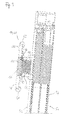
- FIGS. 1 to 5 show a first embodiment of a door module system according to the invention of a door leaf 50 of a front door.
- Fig. 2 shows a cross section through the entire door leaf 50 along the line II-II in Fig. 1 ,
- the door leaf is rotatably mounted about a rotation axis 58 and has an inner side 54 and an outer side 56.
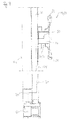
- Fig. 3 shows an enlarged section Fig. 2 and shows the door module system in the form of a door bar 60 which is attached to the outside 56 of the door panel 50.
- the show FIGS. 4 and 5 further cross sections through the door leaf 50.
- the door module system includes a plurality of door function modules 10 and a receptacle 20 having a plurality of receiving seats 22, 23, 24, 25 and 26 for mounting the door function modules 10.
- the receiving places 22 to 24 form a first receiving place group 27 and the receiving place 25 a second receiving place group 28.
- the receiving places 22 to 24 can have the same dimensions, i. for example, based on the width, the height and the depth of the receiving space forming free space, with irregular cross-sectional shapes are possible.
- the door function modules 10 are correspondingly adapted to these dimensions in order to be received in the receiving places 22 to 26.
- the door function modules 10 can also be subdivided into different groups, which then have dimensions assigned to the reception space groups. In this way, a kind of modular system is provided, from which the user then depending on his requirements, the desired door function modules 10 and a receptacle 20, for example in the form of a T-shaped receiving housing 30, select and attach to the door rail 60.
- each door function module 10 is equipped with a functional unit 14 to 18 and a fastening unit 12.
- the attachment unit 12 is essentially intended to be a temporary one or to allow permanent attachment of the door function module 10 in a receiving space of the receptacle 20.
- the functional unit may comprise a monitoring unit, an operating unit, a lighting unit, a door handle unit, a screen unit, a display unit, a speaker unit, a communication unit and / or a microphone unit.
- a functional unit can also fulfill several functions. How out Fig.
- a functional unit 14 comprises a code button, as a functional unit 15 a bell button, as a functional unit 16 a light switch, as a functional unit 17 a Fingerscanech and as a functional unit 18, a display unit for displaying street and / or house number.
- the receiving housing 30 of the receptacle 20 comprises a receiving channel 32 which extends along the height of the door leaf 50 and which provides the receiving locations 22 to 26.
- a first terminal 34 of the receiving housing 30 is attached to the door panel 50.
- a second terminal 36 is attached to the door panel 50 in the region of a second end of the bar 60.
- Fig. 4 shows, in the present embodiment for the first terminal 34 and accordingly for the second terminal 36 as fastening means in each case two screws 59 are provided which connect the door bar 60 with the door panel 50.
- a module carrier 40 is provided (see Fig. 3 ).
- the door function modules 10 are introduced with their attachment unit 12 in the desired receiving space 22 to 26 and then fixed to the module carrier 40. It is also possible to fix a plurality of door function modules 10 to a module carrier 40. In an alternative attachment can a latching connection for fixing the door function module 10 and the door function modules 10 are used on the receptacle 20.
- a screen 42 or a protective cover 44 on the receiving housing 30 and / or the door function module 10 or the door function modules 10 are fixed so that the door function modules 10 are protected against unauthorized access.
- a screen 42 for example, a design sheet
- Fig. 5 in an upper region of the door strip 60, a glass element as a screen 42, which in turn is fixed to the module carrier 40.
- a protective screen 44 for example also with a glass pane element, can be provided in the Fig. 1
- the door strip 60 has a total of a T-shape viewed in cross section, wherein a first end 62 and a second end 64 are each formed in the form of a free end.
- This T-shape has the advantage that on the one hand, the receiving channel 32 can be provided with the receiving stations 22 to 26 and also created by the two free ends 62, 64 one or two outer door handles in that the two ends 62, 64 are adapted to be grasped for opening or closing from the outside 56 of a hand.
- FIGS. 6 to 8 show a second embodiment of a door module system according to the invention of a door leaf 70 of a front door.
- the front door further comprises a door frame 100.
- Those reference numerals already to of the first embodiment are provided in an analog form in the second embodiment. For the sake of simplicity, reference is made in this regard to the explanations on the first embodiment.
- FIG. 7 shows a cross section through the door panel 70, which has an inner side 72 and an outer side 74.
- the FIGS. 6 and 7 show a cable guide 90, which can be supplied via the frame 100, for example in the region of an upper and / or lower hinge hinge in the door panel 70.
- the cable guide 90 may include, for example, a power line and / or a data line and provide the function modules 10 to 19 of the door function modules 10 with power and / or data.
- Fig. 8 shows in a similar way as the Figures 2 and 3 a cross section through the door panel 70 in the field of functional units.
- the door module system comprises a plurality of door function modules 10, which are described in greater detail below, and a receptacle 20 having a receptacle housing 30.
- the receptacle housing 30 forms a receptacle 32, which provides a plurality of receptacles 22 to 26 for attaching the door function modules 10.
- the receptacle 20 or the receiving housing 30 is in the form of a door strip 80, which is fastened to the outer side 74 of the door leaf 70.
- the door strip 80 is considered in its entire longitudinal direction over the entire surface on the outside 74 and is fixed there.
- the receiving channel 32 may, for example, be designed such that the receiving places 22 to 26 are flexibly divisible or adjustable along the longitudinal direction of the door strip 80.
- variably positionable partitions can be provided in order to divide or adjust the receiving places 22 to 26 flexibly along the longitudinal direction of the door strip 80 or of the receiving channel 32.
- Next slots can be provided for the partitions.
- the door module system comprises purely by way of example as a functional unit 15 a doorbell and / or a code button, as a functional unit 18, a display unit for displaying street and / or house number and as a functional unit 19, a communication unit, such as an intercom.
- the door strip 80 has a total of a T-shape viewed in cross-section, wherein a first end 82 and a second end 84 are each formed in the form of a free end.
- This T-shape has the advantage that on the one hand, the receiving channel 32 can be provided with the receiving stations 22 to 26 and also created by the two free ends 82, 84 one or two outer door handles in that the two ends 82, 84 are adapted to be grasped for opening or closing from the outside 74 of one hand.
- FIG. 8 shows are for fixing the door strip 80 on the door panel 70, so that the door strip 80 rests on the outside 74 of the door leaf 70, viewed in cross section as fastening means, for example, two screws 79, two nuts 76, two setscrews 77 and two nuts 78 is provided.
- the outer side 74 thus represents a connection surface which can extend over the entire height (or width) of the door leaf 70 or a corresponding partial area.
- a plurality of these fastening means can be provided distributed over the longitudinal direction of the door strip 80.
- the screws 79 e.g., jet nut
- the plate 50 can also be referred to as a panel and optionally serve as a fastening unit 12.
- the described embodiments enable a multifunctional door module system, whereby a diverse combination of different door function modules and their attachment in a simpler manner is possible.
- a desired door module system can be selected and fastened, for example, as a door strip 60, 80 on the outside 56, 74 of the door leaf 50, 70.
- the door strip 60, 80 could also be introduced into a recess of the door leaf 50, 70, for example also such that the outer surface of the door module system is flush with the outer side 54, 74 of the door leaf 50.
- this flexible design allows a change in the composition and optionally a different positioning of the door function modules 10 along the door rail 60, 80, so that over the life of the door leaf 50, 70 and / or the door module system, a change of the door module system and its door function modules 10 is possible.
Landscapes
- Engineering & Computer Science (AREA)
- Civil Engineering (AREA)
- Structural Engineering (AREA)
- Wing Frames And Configurations (AREA)
- Casings For Electric Apparatus (AREA)
Abstract
Description
- Die vorliegende Erfindung betrifft ein Türmodulsystem für eine Haustür, ein Türblatt, insbesondere ein Haustürblatt, mit einem derartigen Türmodulsystem sowie eine Tür, insbesondere eine Haustür, mit einem solchen Türmodulsystem oder einem solchen Türblatt.
- Aus der
DE 203 020 302 U1 ist ein Türschild mit einer dynamisch steuerbaren Anzeige, insbesondere in Form eines LCD-Displays, offenbart. Ein Interface ermöglicht die Eingabe von Informationen, insbesondere mittels Tastatur oder Bluetooth-Empfänger. Ebenfalls kann ein Ausgabemittel zur Ausgabe von Informationen in Schrift-/Bilddarstellung vorgesehen sein. Weiter ist aus derDE 20 2006 019 731 U1 eine Türanlage mit einem Türblatt bekannt, in das ein elektronisches Display integriert ist, auf dem eine interaktive Benutzeroberfläche darstellbar ist. Ferner offenbart dieDE 20 2006 000 931 U1 einen Türbeschlag zur Aufnahme eines Türdrückers mit einem Bewegungsmelder, der von einem Dämmerungsschalter bei Dunkelheit aktiviert wird. Der Türbeschlag weist einen Türgriff kombiniert mit einem beleuchtbaren Handgriff auf. Hierbei nimmt der Türgriff eine Leuchtdiode auf, die bei Dunkelheit eingeschaltet wird und in den Handgriff Licht abgibt. - Bei diesen bekannten Türen muss für jede veränderte Zusammenstellung eine neue Produktlinie hergestellt werden. Dies erweist sich hinsichtlich der Kosten für Material und Herstellung als sehr aufwändig.
- Der Erfindung liegt die Aufgabe zugrunde, ein einfach herstellbares und gleichzeitig flexibles Türsystem anzugeben.
- Diese Aufgabe wird durch ein Türmodulsystem mit den Merkmalen des Anspruchs 1 gelöst. Ein mit einem solchen Türmodulsystem ausgestattetes Türblatt sowie eine mit einem solchen Türblatt oder einem solchen Türmodulsystem ausgestattete Tür sind Gegenstände der Nebenansprüche.
- Vorteilhafte Ausgestaltungen der Erfindung sind Gegenstand der Unteransprüche.
- Eine Idee der Erfindung liegt darin, ein multifunktionales Türmodulsystem mit mehreren, auf mehreren Aufnahmeplätzen insbesondere wahlweise verteilten Türfunktionsmodulen bereitzustellen. Der Benutzer kann also auswählen, welches Türfunktionsmodul in welchem Aufnahmeplatz zu positionieren ist. Insbesondere können die Türfunktionsmodule auswechselbar, beispielsweise mit einer lösbaren Verbindung, wahlweise an den Aufnahmeplätzen fixiert und/oder entfernt werden. Selbstverständlich ist diese Auswechselbarkeit derart gestaltet, dass die Tür ausreichend sicher gegen Einbruch und/oder Sabotage geschützt ist. Mit anderen Worten handelt es sich bei dem Türmodulsystem um eine Art Baukastensystem, wobei aus einer Vielzahl von Türfunktionsmodulen je nach Kundenwunsch eine gewünschte Variation zusammengestellt und die ausgewählten Türfunktionsmodule in der gewünschten Position in den Aufnahmeplätzen befestigt werden können.
- Unter dem Begriff "Türmodulsystem" wird insbesondere eine Art Baukastensystem verstanden, d. h. es wird aus einer Gruppe mehrerer Module eine bestimmte Anzahl von Moduleinheiten und eine oder mehrere Arten von Moduleinheiten zusammengestellt. Mit anderen Worten handelt es sich um ein multifunktionales Türsystem, wobei die Tür zum Gebäudeabschluss oder auch im Inneren eines Gebäudes eingesetzt werden kann.
- Vorteilhafterweise können wenigstens zwei der Aufnahmeplätze die gleichen Abmessungen aufweisen und eine erste Aufnahmeplatzgruppe bilden, wobei wenigstens eines der Türfunktionsmodule derart an diese Abmessungen der ersten Aufnahmeplatzgruppe angepasst ist, dass das Türfunktionsmodul in einem der Aufnahmeplätze der ersten Aufnahmeplatzgruppe aufnehmbar ist. So können beispielsweise mehrere Aufnahmeplätze jeweils einen Aufnahmeraum bereitstellen, der jeweils die gleiche Breite, die gleiche Höhe und die gleiche Tiefe aufweist. Auch können mehrere Türfunktionsmodule unterschiedlicher Art mit den entsprechenden Abmessungen bereitgestellt werden, so dass der Kunde die Türfunktionsmodule je nach seinen Bedürfnissen in die gewünschten Aufnahmeplätze einbringen kann.
- Darüber hinaus kann wenigstens eine zweite Aufnahmeplatzgruppe mit Aufnahmeplätzen, die jeweils gleiche Abmessungen haben, vorhanden sein. Beispielsweise hat diese zweite Aufnahmeplatzgruppe größere Abmessungen wie die erste Aufnahmeplatzgruppe, um Türfunktionsmodule mit größeren Abmessungen aufnehmen zu können. Gleichermaßen können auch kleinere Abmessungen vorgesehen werden. Darüber hinaus kann das Türmodulsystem auch Adaptermodule umfassen, mit denen beispielsweise ein an sich auf die zweite Aufnahmeplatzgruppe abgestimmtes Türfunktionsmodul in die erste Aufnahmeplatzgruppe eingebracht werden kann.
- Vorzugsweise umfasst das Türfunktionsmodul wenigstens eine Funktionseinheit und eine Befestigungseinheit, wobei die Befestigungseinheit mittels einer lösbaren oder einer dauerhaften Verbindung mit der Aufnahme verbindbar ist. Die Ausgestaltung und die Abmessungen der Befestigungseinheit sind bevorzugterweise durch die Aufnahmeplätze bestimmt. So kann beispielsweise die Außenoberfläche der Befestigungseinheit komplementär zu dem Aufnahmeplatz ausgebildet sein, d.h. zu dem von dem Aufnahmeplatz bereitgestellter Freiraum. In vorteilhafter Weiterbildung ist die Befestigungseinheit mittels einer lösbaren oder einer dauerhaften Verbindung mit der Aufnahme verbindbar. Insbesondere bei einer lösbaren Verbindung wird eine Flexibilität des Türmodulsystems während der gesamten Gebrauchsdauer des Türmodulsystems bzw. der Tür ermöglicht. Sollten sich beispielsweise über die Gebrauchsdauer der Tür die Anforderungen der die Tür benutzenden Personen ändern, kann die Art und/oder die Anzahl der Türfunktionsmodule verändert werden. Selbst bei einer dauerhaften Verbindung der Befestigungseinheit mit der Aufnahme ist eine Flexibilität des Türmodulsystems dahingehend gegeben, dass sich der Erwerber des Türmodulsystems vor dem Zusammenbau oder der Montage der Tür die entsprechende Zusammenstellung von Türfunktionsmodulen auswählen kann, bevor diese dann dauerhaft fest mit der Aufnahme bzw. der Tür verbunden werden. So kann auch eine zusätzliche Sicherheit gegen Einbruch und Sabotage erreicht werden. Die lösbare Verbindung kann beispielsweise eine Rastverbindung umfassen oder aus einer solchen bestehen. Hierzu kann beispielsweise die Befestigungseinheit ein Rastelement, wie beispielsweise einen Rastkopf, und der zugehörige Aufnahmeplatz eine zugehörige Rastnut aufweisen. Auch bei einer lösbaren Verbindung können Maßnahmen getroffen werden, um Einbruch und/oder Sabotage zur verhindern.
- Als Funktionseinheit des Türfunktionsmoduls kann eine Überwachungseinheit, eine Bedieneinheit (z.B. Klingelschalter) eine Beleuchtungseinheit, eine Anzeigeeinheit (z.B. Display), eine Kommunikationseinheit, eine Mikrofoneinheit, eine Lautsprechereinheit, eine Sichtblendeneinheit, eine Schutzblendeneinheit oder eine Türgriffeinheit vorgesehen werden. Ferner kann eine Kamera, ein Bewegungsmelder, ein Display, eine Schnittstelle, eine mechanische Sicherheitseinrichtung, wie beispielsweise ein Türschloss, eine biometrische Sicherheitseinrichtung (beispielsweise ein Fingerprintsensor), ein RFID-Sensor, ein Bluetooth-Empfänger, eine Tastatur und auch ein Türbeschlag als Funktionseinheit verwendet werden. Ferner kann ein Türgriff in eine der Funktionseinheiten integriert werden, separat an dem Türblatt vorgesehen oder die Aufnahme entsprechend ausgeformt werden, um als Griff dienen zu können.
- Bei einer bevorzugten Weiterbildung weist die Aufnahme ein an einem Türblatt festlegbares Aufnahmegehäuse auf. Dieses Aufnahmegehäuse kann ein oder mehrteilig ausgebildet sein. Vorteilhafterweise erstreckt sich das Aufnahmegehäuse entlang der Höhe der Tür im eingebauten Zustand. Ferner kann wenigstens ein Abschnitt des Aufnahmegehäuses geeignet ausgebildet sein, um von einer Hand zur Betätigung der Tür umgriffen zu werden. Beispielsweise kann das Aufnahmegehäuse im Querschnitt betrachtet etwa T-förmig ausgebildet sein. Weiterhin kann das Aufnahmegehäuse derart ausgebildet sein, so dass zur Montage der Aufnahme an der Tür Befestigungsmittel, beispielsweise Schrauben, an einer Stelle positionierbar sind, die später, d. h. nach der Montage, nicht von außen zugänglich sind.
- Bei einer bevorzugten Weiterbildung kann das Türmodulsystem, die Aufnahme oder ein Aufnahmegehäuse der Aufnahme in Form einer an dem Türblatt befestigbaren Türleiste ausgebildet sein und wenigstens einen Anschluss zur Befestigung an dem Türblatt aufweisen. Beispielsweise kann der Anschluss als sich über die gesamte Leiste erstreckende Anschlussfläche oder in Form zweier Anschlussbereiche in den Endbereichen der Türleiste ausgebildet sein. Bei Ausbildung einer Anschlussfläche kann diese somit vollständig an einer Befestigungsfläche eines Türblattes angebracht werden. Beispielsweise kann sich die Anschlussfläche und somit die Türleiste über die gesamte Höhe oder Breite des Türblattes oder einen entsprechenden Teilbereich erstrecken.
- Bei einer bevorzugten Ausgestaltung weist die Türleiste einen Aufnahmekanal auf, der die Aufnahmeplätze bereitstellt. Hierbei kann der Aufnahmekanal derart gestaltet sein, dass die Aufnahmeplätze flexibel entlang der Längsrichtung der Türleiste einteilbar oder verstellbar sind. So können beispielsweise variabel positionierbare Trennwände vorgesehen sein, um die Aufnahmeplätze flexibel entlang der Längsrichtung der Türleiste einzuteilen oder zu verstellen. Es können Steckplätze vorgesehen sein, in die die Trennwände eingesteckt und bei Bedarf wieder entfernt werden können. Auf diese Weise kann durch Positionieren der Trennwände die Lage des einzelnen Türfunktionsmoduls, aber auch die Größe des Aufnahmeplatzes festgelegt wird. Beispielsweise können die Trennwände in verschiedenen Steckplätzen ein- und ausgesteckt werden. Die Steckplätze können rasterartig über den Aufnahmekanal in gleichen oder verschieden großen Abständen verteilt sein. Beispielsweise kann sich der Kunde in Abstimmung mit der Zusammenstellung der Türfunktionsmodule ein entsprechendes Grundsystem für eine Türleiste mit einem Aufnahmekanal mit einem vorbestimmten Raster für die Steckplätze auswählen.
- Das erfindungsgemäße Türblatt, insbesondere in Form eines Haustürblattes, umfasst ein solches erfindungsgemäßes Türmodulsystem und macht sich insofern dessen Vorteile zu Nutze.
- Bei weiteren bevorzugten Weiterbildungen umfasst das Türblatt eine Ausnehmung, wobei die Aufnahme wenigstens teilweise in der Ausnehmung aufgenommen ist oder das Türblatt weist eine Aussenseite auf, wobei die Aufnahme an der Aussenseite befestigt sind. Insbesondere kann das Aufnahmegehäuse und/oder die Türleiste in der Ausnehmung aufgenommen oder an der Aussenseite befestigt sein. Beispielsweise kann wenigstens ein Abschnitt, zum Beispiel ein Befestigungsabschnitt, in der Ausnehmung fixiert sein. Vorteilhafterweise ist wenigstens eines der Türfunktionsmodule von einer Innenseite und/oder einer Außenseite des Türblattes bedienbar bzw. zugänglich. Beispielsweise ist von der Außenseite eine Tastatur oder Klingel und von der Innenseite ein Touchscreen-Bildschirm und/oder ein Türgriff bedienbar.
- Schließlich umfasst die erfindungsgemäße Tür, insbesondere in Form einer Haustür, ein Türmodulsystem nach einem der Ansprüche 1 bis 11 oder ein Türblatt nach einem der Ansprüche 12 bis 14.
- Ausführungsbeispiele der Erfindung werden nachfolgend unter Bezugnahme auf die Zeichnungen weiter erläutert. Dabei zeigen schematisch:
- Fig. 1
- eine perspektivische Ansicht einer ersten Ausführungsform eines erfindungsgemäßen Türblattes mit einem erfindungsgemäßen Türmodulsystem;
- Fig. 2
- einen Querschnitt durch das Türblatt gemäß der Linie II-II in
Fig. 1 ; - Fig. 3
- einen vergrößerten Ausschnitt des Querschnitts gemäß
Fig. 2 ; - Fig. 4
- einen weiteren Querschnitt durch das Türblatt gemäß
Fig. 1 und gemäß der dort gezeigten Linie IV-IV, - Fig. 5
- einen weiteren Querschnitt gemäß der Linie V-V in
Fig. 1 ; - Fig. 6
- eine Ansicht einer zweiten Ausführungsform eines erfindungsgemäßen Türblattes mit einem erfindungsgemäßen Türmodulsystem und einer Kabelführung;
- Fig. 7
- einen Querschnitt durch das Türblatt gemäß
Fig. 6 gemäß der dort gezeigten Linie VII-VII mit der Kabelführung, und - Fig. 8
- einen weiteren Querschnitt durch das Türblatt gemäß
Fig. 6 und gemäß der dort gezeigten Linie VIII-VIII. - Die
Figuren 1 bis 5 zeigen eine erste Ausführungsform eines erfindungsgemäßen Türmodulsystems eines Türblattes 50 einer Haustür.Fig. 2 zeigt einen Querschnitt durch das gesamte Türblatt 50 gemäß der Linie II-II inFig. 1 . Das Türblatt ist um eine Drehachse 58 drehbeweglich gelagert und weist eine Innenseite 54 und eine Außenseite 56 auf.Fig. 3 zeigt einen vergrößerten Ausschnitt ausFig. 2 und zeigt das Türmodulsystem in Form einer Türleiste 60, die an der Außenseite 56 des Türblattes 50 befestigt ist. Ferner zeigen dieFiguren 4 und5 weitere Querschnitte durch das Türblatt 50. - Das Türmodulsystem umfasst mehrere Türfunktionsmodule 10 und eine Aufnahme 20, die mehrere Aufnahmeplätze 22, 23, 24, 25 und 26 zur Anbringung der Türfunktionsmodule 10 aufweist. Hierbei bilden die Aufnahmeplätze 22 bis 24 eine erste Aufnahmeplatzgruppe 27 und der Aufnahmeplatz 25 eine zweite Aufnahmeplatzgruppe 28. Die Aufnahmeplätze 22 bis 24 können die gleichen Abmessungen aufweisen, d.h. beispielsweise bezogen auf die Breite, die Höhe und die Tiefe des den Aufnahmeplatz bildenden freien Raums, wobei auch unregelmäßige Querschnittsformen möglich sind. An diese Abmessungen sind die Türfunktionsmodule 10 entsprechend angepasst, um in die Aufnahmeplätze 22 bis 26 aufgenommen zu werden. Mit anderen Worten können auch die Türfunktionsmodule 10 in verschiedene Gruppen unterteilt werden, die dann den Aufnahmeplatzgruppen zugeordnete Abmessungen haben. Auf diese Weise wird eine Art Baukastensystem bereitgestellt, aus dem der Benutzer dann je nach seinen Anforderungen die gewünschten Türfunktionsmodule 10 und eine Aufnahme 20, beispielsweise in Form eines T-förmigen Aufnahmegehäuses 30, auswählen und an der Türleiste 60 befestigen kann.
- Ferner kann der Benutzer die Türfunktionsmodule 10 anhand der bereitzustellenden Funktion auswählen. So ist jedes Türfunktionsmodul 10 mit einer Funktionseinheit 14 bis 18 und einer Befestigungseinheit 12 ausgestattet. Die Befestigungseinheit 12 ist im Wesentlichen dazu vorgesehen, eine vorübergehende oder dauerhafte Befestigung des Türfunktionsmoduls 10 in einem Aufnahmeplatz der Aufnahme 20 zu ermöglichen. Die Funktionseinheit kann eine Überwachungseinheit, eine Bedieneinheit, eine Beleuchtungseinheit, eine Türgriffeinheit, eine Sichtblendeneinheit, eine Anzeigeeinheit, eine Lautsprechereinheit, eine Kommunikationseinheit und/oder eine Mikrofoneinheit umfassen. Ebenso kann eine Funktionseinheit auch mehrere Funktionen erfüllen. Wie aus
Fig. 1 zu erkennen, umfasst das Türmodulsystem als Funktionseinheit 14 einen Codetaster, als Funktionseinheit 15 einen Klingeltaster, als Funktionseinheit 16 einen Lichtschalter, als Funktionseinheit 17 eine Fingerscaneinheit und als Funktionseinheit 18 eine Anzeigeeinheit zur Anzeige von Straße und/oder Hausnummer. - Das Aufnahmegehäuse 30 der Aufnahme 20 umfasst einen sich entlang der Höhe des Türblattes 50 erstreckenden Aufnahmekanal 32, der die Aufnahmeplätze 22 bis 26 bereitstellt. Im Bereich eines ersten Endes der Türleiste 60 ist ein erster Anschluss 34 des Aufnahmegehäuses 30 an dem Türblatt 50 angebracht. Dementsprechend ist ein zweiter Anschluss 36 im Bereich eines zweiten Endes der Leiste 60 an dem Türblatt 50 befestigt. Wie
Fig. 4 zeigt, sind bei dem vorliegenden Ausführungsbeispiel für den ersten Anschluss 34 und dementsprechend für den zweiten Anschluss 36 als Befestigungsmittel jeweils zwei Schrauben 59 vorgesehen, die die Türleiste 60 mit dem Türblatt 50 verbinden. - Um die Türfunktionsmodule 10 jeweils mittels der Befestigungseinheit 12 fest mit der Aufnahme 20 zu verbinden, ist ein Modulträger 40 vorgesehen (siehe
Fig. 3 ). Zur Montage der Türfunktionsmodule 10 an dem Aufnahmegehäuse 30 werden die Türfunktionsmodule 10 mit ihrer Befestigungseinheit 12 in den gewünschten Aufnahmeplatz 22 bis 26 eingeführt und dann an dem Modulträger 40 festgelegt. Es können auch mehrere Türfunktionsmodule 10 an einem Modulträger 40 fixiert werden. Bei einer alternativen Befestigung kann eine Rastverbindung zur Fixierung des Türfunktionsmoduls 10 bzw. der Türfunktionsmodule 10 an der Aufnahme 20 eingesetzt werden. - Nach dem Einsetzen des Türfunktionsmoduls 10 in den Aufnahmeplatz 22 bis 26 kann dann eine Sichtblende 42 oder eine Schutzblende 44 an dem Aufnahmegehäuse 30 und/oder dem Türfunktionsmodul 10 oder den Türfunktionsmodulen 10 derart fixiert werden, dass die Türfunktionsmodule 10 vor einem unberechtigten Zugriff geschützt sind. Wie
Fig. 4 zeigt, kann in denjenigen Bereichen der Türleiste 60, in denen keine Türfunktionsmodule 10 vorgesehen werden, eine Sichtblende 42, beispielsweise ein Designblech, angeordnet werden. Ferner zeigtFig. 5 in einem oberen Bereich der Türleiste 60 ein Glaselement als Sichtblende 42, das wiederum an dem Modulträger 40 festgelegt ist. Weiterhin kann im Bereich des zweiten Endes 64 zum Schutz der Funktionseinheit 18 eine Schutzblende 44, beispielsweise auch mit einem Glasscheibenelement, vorgesehen werden. Die inFig. 1 gezeigte Schutzblendeneinheit 44 kann beispielsweise aus einen Blech bestehen und eine unbefugte Entnahme der Funktionseinheiten 14 bis 18 verhindern. - Wie aus den
Figuren 1 bis 5 ersichtlich, weist die Türleiste 60 im Querschnitt betrachtet insgesamt eine T-Form auf, wobei ein erstes Ende 62 und ein zweites Ende 64 jeweils in Form eines freien Endes ausgebildet sind. Diese T-Form hat den Vorteil, dass zum einen der Aufnahmekanal 32 mit den Aufnahmeplätzen 22 bis 26 bereit gestellt werden kann und zudem durch die beiden freien Enden 62, 64 ein bzw. zwei äußere Türgriffe dadurch geschaffen werden, dass die beiden Enden 62, 64 ausgebildet sind, um zum Öffnen oder Schließen von der Außenseite 56 von einer Hand umgriffen werden können. - Die
Figuren 6 bis 8 zeigen eine zweite Ausführungsform eines erfindungsgemäßen Türmodulsystems eines Türblattes 70 einer Haustür. Die Haustür umfasst ferner eine Türzarge 100. Diejenigen Bezugszeichen, die bereits zu der ersten Ausführungsform erläutert wurden, sind in analoger Form bei der zweiten Ausführungsform vorhanden. Der Einfachheit halber wird diesbezüglich auf die Erläuterungen zur ersten Ausführungsform verwiesen. -
Fig. 7 zeigt einen Querschnitt durch das Türblatt 70, welche eine Innenseite 72 und eine Außenseite 74 aufweist. DieFiguren 6 und7 zeigen eine Kabelführung 90, die über die Zarge 100, beispielsweise im Bereich eines oberen und/oder unteren Türbandlappens in das Türblatt 70 zugeführt werden kann. Die Kabelführung 90 kann beispielsweise eine Stromleitung und/oder eine Datenleitung umfassen und die Funktionsmodule 10 bis 19 der Türfunktionsmodule 10 mit Strom und/oder Daten versorgen.Fig. 8 zeigt in ähnlicher Weise wie dieFiguren 2 und3 einen Querschnitt durch das Türblatt 70 im Bereich der Funktionseinheiten. - Das Türmodulsystem umfasst mehrere, weiter unter noch näher beschriebene Türfunktionsmodule 10 und eine Aufnahme 20 mit einem Aufnahmegehäuse 30. Das Aufnahmegehäuse 30 bildet einen Aufnahmekanal 32, der mehrere Aufnahmeplätze 22 bis 26 zur Anbringung der Türfunktionsmodule 10 bereitstellt. Die Aufnahme 20 bzw. das Aufnahmegehäuse 30 ist in Form einer Türleiste 80 ausgebildet, die an der Außenseite 74 des Türblattes 70 befestigt ist. Die Türleiste 80 liegt in ihrer gesamten Längsrichtung betrachtet vollflächig an der Außenseite 74 auf und ist dort befestigt.
- Der Aufnahmekanal 32 kann beispielsweise derart gestaltet ist, dass die Aufnahmeplätze 22 bis 26 flexibel entlang der Längsrichtung der Türleiste 80 einteilbar oder verstellbar sind. Hierzu können variabel positionierbare Trennwände vorgesehen sein, um die Aufnahmeplätze 22 bis 26 flexibel entlang der Längsrichtung der Türleiste 80 bzw. des Aufnahmekanals 32 einzuteilen oder zu verstellen. Weiter können Steckplätze für die Trennwände vorgesehen sein.
- Wie aus
Fig. 6 zu erkennen, umfasst das Türmodulsystem rein beispielhaft als Funktionseinheit 15 einen Klingeltaster und/oder einen Codetaster, als Funktionseinheit 18 eine Anzeigeeinheit zur Anzeige von Straße und/oder Hausnummer und als Funktionseinheit 19 eine Kommunikationseinheit, wie beispielsweise eine Gegensprechanlage. - Wie aus den
Figuren 7 und8 ersichtlich, weist die Türleiste 80 im Querschnitt betrachtet insgesamt eine T-Form auf, wobei ein erstes Ende 82 und ein zweites Ende 84 jeweils in Form eines freien Endes ausgebildet sind. Diese T-Form hat den Vorteil, dass zum einen der Aufnahmekanal 32 mit den Aufnahmeplätzen 22 bis 26 bereit gestellt werden kann und zudem durch die beiden freien Enden 82, 84 ein bzw. zwei äußere Türgriffe dadurch geschaffen werden, dass die beiden Enden 82, 84 ausgebildet sind, um zum Öffnen oder Schließen von der Außenseite 74 von einer Hand umgriffen werden können. - Wie
Figur 8 zeigt, sind zur Befestigung der Türleiste 80 an dem Türblatt 70, derart dass die Türleiste 80 an der Aussenseite 74 des Türblattes 70 aufliegt, im Querschnitt betrachtet als Befestigungsmittel beispielsweise zwei Schrauben 79, zwei Nutensteine 76, zwei Gewindestifte 77 und zwei Muttern 78 vorgesehen. Die Aussenseite 74 stellt also eine Anschlussfläche dar, die sich über die gesamte Höhe (oder Breite) des Türblattes 70 oder einen entsprechenden Teilbereich erstrecken kann. Selbstverständlich können auch mehrerer dieser Befestigungsmittel über die Längsrichtung der Türleiste 80 verteilt vorgesehen werden. Die Schrauben 79 (beispielsweise Jetnut-Mutter) werden über eine Platte 75 in die Muttern 78 geschraubt. Die Platte 50 kann auch als Paneel bezeichnet werden und gegebenenfalls als Befestigungseinheit 12 dienen. - Die beschriebenen Ausführungsformen ermöglichen ein multifunktionales Türmodulsystems, wobei eine vielfältige Zusammenstellung verschiedener Türfunktionsmodule und deren Befestigung auf einfachere Weise möglich ist.
- So kann nach Auswahl des gewünschten Türblattes 50,70 ein gewünschtes Türmodulsystem ausgewählt werden und beispielsweise als Türleiste 60, 80 an der Außenseite 56, 74 des Türblattes 50, 70 befestigt werden. Alternativ könnte die Türleiste 60, 80 auch in eine Ausnehmung des Türblattes 50, 70 eingebracht werden, beispielsweise auch derart dass die Außenoberfläche des Türmodulsystems plan mit der Außenseite 54, 74 des Türblattes 50 abschließt.
- Ferner ermöglicht diese flexible Ausgestaltung eine Veränderung der Zusammenstellung und gegebenenfalls eine unterschiedliche Positionierung der Türfunktionsmodule 10 entlang der Türleiste 60, 80, so dass über die Lebensdauer des Türblattes 50, 70 und/oder des Türmodulsystems eine Veränderung des Türmodulsystems und dessen Türfunktionsmodule 10 möglich ist.
-
- 10
- Türfunktionsmodul
- 12
- Befestigungseinheit
- 14
- Funktionseinheit
- 15
- Funktionseinheit
- 16
- Funktionseinheit
- 17
- Funktionseinheit
- 18
- Funktionseinheit
- 19
- Funktionseinheit
- 20
- Aufnahme
- 22
- Aufnahmeplatz
- 23
- Aufnahmeplatz
- 24
- Aufnahmeplatz
- 25
- Aufnahmeplatz
- 26
- Aufnahmeplatz
- 27
- erste Aufnahmeplatz-gruppe
- 28
- zweite Aufnahmeplatzgruppe
- 30
- Aufnahmegehäuse
- 32
- Aufnahmekanal
- 34
- erster Anschluss
- 36
- zweiter Anschluss
- 40
- Modulträger
- 42
- Sichtblende
- 44
- Schutzblende
- 50
- Türblatt
- 52
- Türgriff
- 54
- Innenseite
- 56
- Außenseite
- 58
- Drehachse
- 59
- Schraube
- 60
- Türleiste
- 62
- erstes Ende
- 64
- zweites Ende
- 70
- Türblatt
- 72
- Innenseite
- 74
- Außenseite
- 75
- Platte
- 76
- Nutensteine
- 77
- Gewindestift
- 78
- Mutter
- 79
- Schraube
- 80
- Türleiste
- 82
- erstes Ende
- 84
- zweites Ende
- 90
- Kabelführung
- 100
- Zarge
Claims (15)
- Türmodulsystem für eine Haustür, gekennzeichnet durch mehrere Türfunktionsmodule (10) und eine Aufnahme (20), die mehrere Aufnahmeplätze (22, 23, 24, 25, 26) zur Anbringung der Türfunktionsmodule (10) aufweist.
- Türmodulsystem nach Anspruch 1, dadurch gekennzeichnet, dass wenigstens zwei Aufnahmeplätze (22, 23, 24, 25, 26) die gleichen Abmessungen aufweisen und eine erste Aufnahmeplatzgruppe (27) bilden und wenigstens eines der Türfunktionsmodule (10) derart an diese Abmessungen der ersten Aufnahmeplatzgruppe (27) angepasst ist, dass das Türfunktionsmodul (10) in einem der Aufnahmeplätze (22, 23, 24, 25, 26) der ersten Aufnahmeplatzgruppe (27) aufnehmbar ist.
- Türmodulsystem nach einem der Ansprüche 1 oder 2, dadurch gekennzeichnet, dass wenigstens eine zweite Aufnahmeplatzgruppe (28) mit Aufnahmeplätzen (22, 23, 24, 25, 26) gleicher Abmessungen vorhanden ist.
- Türmodulsystem nach einem der vorhergehenden Ansprüche, dadurch gekennzeichnet, dass das Türfunktionsmodul (10) wenigstens eine Funktionseinheit (14, 15, 16,17,18) und eine Befestigungseinheit (12) umfasst, wobei die Befestigungseinheit (12) mittels einer lösbaren oder einer dauerhaften Verbindung mit der Aufnahme (20) verbindbar ist.
- Türmodulsystem nach Anspruch 4, dadurch gekennzeichnet, dass die lösbare Verbindung eine Rastverbindung umfasst.
- Türmodulsystem nach einem der vorhergehenden Ansprüche, dadurch gekennzeichnet, dass die Funktionseinheit (14, 15, 16,17,18, 19) eine Überwachungseinheit, eine Bedieneinheit (15), eine Beleuchtungseinheit, eine Anzeigeeinheit (18), eine Kommunikationseinheit (19), eine Sichtblendeneinheit (42), eine Schutzblendeneinheit (44) oder eine Türgriffeinheit umfasst.
- Türmodulsystem nach einem der vorhergehenden Ansprüche, dadurch gekennzeichnet, dass die Aufnahme (20) oder ein Aufnahmegehäuse (30) der Aufnahme (20) in Form einer an dem Türblatt (50, 70) befestigbaren Türleiste (60, 80) ausgebildet ist und wenigstens einen Anschluss (34, 36) zur Befestigung an dem Türblatt (50, 70) aufweist.
- Türmodulsystem nach Anspruch 7, dadurch gekennzeichnet, dass die Türleiste (60, 80) einen Aufnahmekanal (32) aufweist, der die Aufnahmeplätze (22, 23, 24, 25, 26) bereitstellt.
- Türmodulsystem nach Anspruch 8, dadurch gekennzeichnet, dass der Aufnahmekanal (32) derart gestaltet ist, dass die Aufnahmeplätze (22, 23, 24, 25, 26) flexibel entlang der Längsrichtung der Türleiste (60, 80) einteilbar oder verstellbar sind.
- Türmodulsystem nach Anspruch 9, dadurch gekennzeichnet, dass variabel positionierbare Trennwände vorgesehen sind, um die Aufnahmeplätze (22, 23, 24, 25, 26) flexibel entlang der Längsrichtung der Türleiste (60, 80) einzuteilen oder zu verstellen.
- Türmodulsystem nach Anspruch 10, dadurch gekennzeichnet, dass Steckplätze vorgesehen sind, in die die Trennwände eingesteckt werden können.
- Türblatt, insbesondere Haustürblatt, gekennzeichnet durch ein Türmodulsystem nach einem der vorhergehenden Ansprüche.
- Türblatt nach Anspruch 12, dadurch gekennzeichnet, dass das Türblatt (50, 70) eine Ausnehmung (58) umfasst, wobei die Aufnahme (20) wenigstens teilweise in der Ausnehmung (58) aufgenommen ist oder dass das Türblatt (50, 70) eine Aussenseite (56, 74) aufweist, wobei die Aufnahme (20) an der Aussenseite (56, 74) befestigt sind.
- Türblatt nach einem der Ansprüche 12 oder 13, dadurch gekennzeichnet, dass wenigstens eines der Türfunktionsmodule (10) von einer Innenseite (54) und/oder der Aussenseite (56, 74) des Türblattes (50, 70) bedienbar ist.
- Tür, insbesondere Haustür, gekennzeichnet durch ein Türmodulsystem nach einem der Ansprüche 1 bis 11 oder ein Türblatt (50, 70) nach einem der Ansprüche 12 bis 14.
Applications Claiming Priority (1)
| Application Number | Priority Date | Filing Date | Title |
|---|---|---|---|
| DE200720017581 DE202007017581U1 (de) | 2007-12-17 | 2007-12-17 | Türmodulsystem für eine Haustür, Türblatt und Tür |
Publications (2)
| Publication Number | Publication Date |
|---|---|
| EP2072746A2 true EP2072746A2 (de) | 2009-06-24 |
| EP2072746A3 EP2072746A3 (de) | 2013-04-10 |
Family
ID=40428065
Family Applications (1)
| Application Number | Title | Priority Date | Filing Date |
|---|---|---|---|
| EP08172028.6A Withdrawn EP2072746A3 (de) | 2007-12-17 | 2008-12-17 | Türmodulsystem für eine Haustür, Türblatt, und Tür |
Country Status (2)
| Country | Link |
|---|---|
| EP (1) | EP2072746A3 (de) |
| DE (1) | DE202007017581U1 (de) |
Cited By (5)
| Publication number | Priority date | Publication date | Assignee | Title |
|---|---|---|---|---|
| CZ306008B6 (cs) * | 2015-03-25 | 2016-06-15 | Václav Ridl | Bezpečnostní zařízení na dveře |
| EP2241715B2 (de) † | 2009-04-06 | 2018-02-14 | Hörmann KG Eckelhausen | Haustür mit faserverstärktem Kunststoffmaterial |
| CN108868492A (zh) * | 2018-07-19 | 2018-11-23 | 南乐千禧人门业有限公司 | 一种双层模块化外门 |
| CN113187356A (zh) * | 2021-04-26 | 2021-07-30 | 泰森日盛集团有限公司 | 一种基于rfid技术的木门及其使用方法 |
| DE102012102514C5 (de) | 2011-03-23 | 2023-12-21 | Zoran Sencar | Türblatt |
Families Citing this family (2)
| Publication number | Priority date | Publication date | Assignee | Title |
|---|---|---|---|---|
| DE202017006423U1 (de) | 2017-12-13 | 2018-04-03 | Herbert Bäumchen | Smart Home Haustür |
| US20190257142A1 (en) * | 2018-02-18 | 2019-08-22 | Russet Labs, Llc | System and method for a modular door structure |
Citations (5)
| Publication number | Priority date | Publication date | Assignee | Title |
|---|---|---|---|---|
| DE1640316B1 (de) * | 1965-04-22 | 1970-12-23 | Tech Unie N V | Leitungsschiene |
| DE2801852A1 (de) * | 1977-02-04 | 1978-08-10 | Bassani Spa | Installationsmittel fuer die anordnung einer tv-kamera fuer den video-wechselsprechverkehr in einem tableau fuer einen elektrischen tueroeffner |
| DE20302302U1 (de) | 2003-02-13 | 2003-04-30 | Deutsch, Alexander Maximilian, 40597 Düsseldorf | Türschild mit dynamisch steuerbarer Anzeige |
| DE202006000931U1 (de) | 2006-01-21 | 2006-03-30 | Kobusch, Klaus, Dipl.-Ing. | Türbeschlag mit integriertem, netzunabhängigem Bewegungsmelder und Beleuchtung |
| DE202006019731U1 (de) | 2006-12-29 | 2007-04-12 | Buchal Thomas | Türanlage |
Family Cites Families (10)
| Publication number | Priority date | Publication date | Assignee | Title |
|---|---|---|---|---|
| CH671803A5 (de) * | 1986-11-04 | 1989-09-29 | Geilinger Ag | |
| DE29717647U1 (de) * | 1997-10-05 | 1999-02-04 | HEWI Heinrich Wilke GmbH, 34454 Bad Arolsen | Informations- und Kommunikationseinrichtung |
| DE19816390C2 (de) * | 1998-04-11 | 2000-02-24 | Loh Kg Ritto Werk | Aufnahmegehäuse für Moduleinheiten einer Türstation einer Türsprechanlage |
| FR2785324B1 (fr) * | 1998-11-02 | 2001-01-19 | Unitechniques | Dispositif de controle de l'ouverture d'une porte |
| DE19943041A1 (de) * | 1999-09-09 | 2001-03-15 | Geze Gmbh | Gebäudeausgangsvorrichtung |
| DE20014556U1 (de) * | 2000-08-23 | 2001-01-18 | Buchal, Thomas, 58091 Hagen | Türaußengriff |
| DE10043979A1 (de) * | 2000-09-05 | 2002-03-14 | Geze Gmbh | Sicherungs- und/oder Überwachungsvorrichtung |
| EP1229189A1 (de) * | 2001-02-05 | 2002-08-07 | Schneider + Fichtel GmbH | Türgriff |
| DE20312860U1 (de) * | 2003-08-20 | 2003-10-30 | Lebo Türenwerke Johann Lensing GmbH & Co KG, 46395 Bocholt | Tür |
| DE102005001628A1 (de) * | 2005-01-12 | 2006-07-20 | Dorma Gmbh + Co. Kg | Profil |
-
2007
- 2007-12-17 DE DE200720017581 patent/DE202007017581U1/de not_active Expired - Lifetime
-
2008
- 2008-12-17 EP EP08172028.6A patent/EP2072746A3/de not_active Withdrawn
Patent Citations (5)
| Publication number | Priority date | Publication date | Assignee | Title |
|---|---|---|---|---|
| DE1640316B1 (de) * | 1965-04-22 | 1970-12-23 | Tech Unie N V | Leitungsschiene |
| DE2801852A1 (de) * | 1977-02-04 | 1978-08-10 | Bassani Spa | Installationsmittel fuer die anordnung einer tv-kamera fuer den video-wechselsprechverkehr in einem tableau fuer einen elektrischen tueroeffner |
| DE20302302U1 (de) | 2003-02-13 | 2003-04-30 | Deutsch, Alexander Maximilian, 40597 Düsseldorf | Türschild mit dynamisch steuerbarer Anzeige |
| DE202006000931U1 (de) | 2006-01-21 | 2006-03-30 | Kobusch, Klaus, Dipl.-Ing. | Türbeschlag mit integriertem, netzunabhängigem Bewegungsmelder und Beleuchtung |
| DE202006019731U1 (de) | 2006-12-29 | 2007-04-12 | Buchal Thomas | Türanlage |
Cited By (6)
| Publication number | Priority date | Publication date | Assignee | Title |
|---|---|---|---|---|
| EP2241715B2 (de) † | 2009-04-06 | 2018-02-14 | Hörmann KG Eckelhausen | Haustür mit faserverstärktem Kunststoffmaterial |
| DE102012102514C5 (de) | 2011-03-23 | 2023-12-21 | Zoran Sencar | Türblatt |
| CZ306008B6 (cs) * | 2015-03-25 | 2016-06-15 | Václav Ridl | Bezpečnostní zařízení na dveře |
| CN108868492A (zh) * | 2018-07-19 | 2018-11-23 | 南乐千禧人门业有限公司 | 一种双层模块化外门 |
| CN108868492B (zh) * | 2018-07-19 | 2023-12-29 | 南乐千禧人门业有限公司 | 一种双层模块化外门 |
| CN113187356A (zh) * | 2021-04-26 | 2021-07-30 | 泰森日盛集团有限公司 | 一种基于rfid技术的木门及其使用方法 |
Also Published As
| Publication number | Publication date |
|---|---|
| DE202007017581U1 (de) | 2009-04-30 |
| EP2072746A3 (de) | 2013-04-10 |
Similar Documents
| Publication | Publication Date | Title |
|---|---|---|
| EP2072746A2 (de) | Türmodulsystem für eine Haustür, Türblatt, und Tür | |
| EP0756661B1 (de) | Verschluss mit variablem schlosseinsatz | |
| EP0972124B1 (de) | Modularer stangenverschluss | |
| DE29507235U1 (de) | Kraftfahrzeugtür | |
| DE3419773C2 (de) | Taxameter | |
| DE102015111560B4 (de) | Adapter für die Kontaktierung eines Leistungsschalters an einem Sammelschienensystem | |
| EP0862252B1 (de) | Schrank zur Aufnahme von elektrischen und elektronischen Komponenten | |
| EP1856355B1 (de) | Fenster oder tür | |
| EP1455034A2 (de) | Schliessleiste | |
| EP1736622A1 (de) | Knaufzylinder | |
| DE102007002397B4 (de) | Elektrisches Gerät zur Steuerung eines Haustechniksystems | |
| DE4411290A1 (de) | Sensor | |
| DE102014113637A1 (de) | Fluchtwegsicherungseinrichtung | |
| EP1612362A1 (de) | Flügel in einem Blendrahmen mit einem Antrieb | |
| EP2644063B1 (de) | Modulares Montagesystem | |
| DE19963022A1 (de) | Sicherheitsvorrichtung für mindestens eine Tür, vorzugsweise in Flucht- und Rettungswegen | |
| EP1650512A2 (de) | Kühlschrank | |
| EP2930809B1 (de) | Elektrisches/elektronisches Installationsgerät | |
| EP0951117A1 (de) | Fenstereinheit | |
| EP1449988B1 (de) | Rastmodul für Fenster- und/oder Türbeschläge | |
| EP3118396B1 (de) | Kantriegel mit elektrischem motor | |
| EP2998488A1 (de) | Fluchtwegsicherungseinrichtung | |
| DE29604113U1 (de) | Computergehäuse | |
| DE102013105893B3 (de) | Elektrisches/elektronisches Installationsgerät | |
| EP2437364A2 (de) | Rahmenprofileinsatz, damit ausgestattete Flügelanlage und Montageverfahren dafür |
Legal Events
| Date | Code | Title | Description |
|---|---|---|---|
| PUAI | Public reference made under article 153(3) epc to a published international application that has entered the european phase |
Free format text: ORIGINAL CODE: 0009012 |
|
| AK | Designated contracting states |
Kind code of ref document: A2 Designated state(s): AT BE BG CH CY CZ DE DK EE ES FI FR GB GR HR HU IE IS IT LI LT LU LV MC MT NL NO PL PT RO SE SI SK TR |
|
| AX | Request for extension of the european patent |
Extension state: AL BA MK RS |
|
| PUAL | Search report despatched |
Free format text: ORIGINAL CODE: 0009013 |
|
| AK | Designated contracting states |
Kind code of ref document: A3 Designated state(s): AT BE BG CH CY CZ DE DK EE ES FI FR GB GR HR HU IE IS IT LI LT LU LV MC MT NL NO PL PT RO SE SI SK TR |
|
| AX | Request for extension of the european patent |
Extension state: AL BA MK RS |
|
| RIC1 | Information provided on ipc code assigned before grant |
Ipc: E06B 3/70 20060101AFI20130305BHEP |
|
| 17P | Request for examination filed |
Effective date: 20131008 |
|
| RBV | Designated contracting states (corrected) |
Designated state(s): AT BE BG CH CY CZ DE DK EE ES FI FR GB GR HR HU IE IS IT LI LT LU LV MC MT NL NO PL PT RO SE SI SK TR |
|
| AKX | Designation fees paid |
Designated state(s): AT CH DE LI |
|
| 17Q | First examination report despatched |
Effective date: 20160831 |
|
| GRAP | Despatch of communication of intention to grant a patent |
Free format text: ORIGINAL CODE: EPIDOSNIGR1 |
|
| INTG | Intention to grant announced |
Effective date: 20170606 |
|
| STAA | Information on the status of an ep patent application or granted ep patent |
Free format text: STATUS: THE APPLICATION IS DEEMED TO BE WITHDRAWN |
|
| 18D | Application deemed to be withdrawn |
Effective date: 20171017 |